All posts in “Cars”

Unicat MD56c 6×6 Expedition Vehicle

We’ve covered more than our fair share of completely absurd, over-the-top, apocalypse-ready expedition vehicles over the years. Part expensive off-road camper, part mobile command center and part emergency shelter, the expedition vehicle is something we’ve…

5 Outstanding Lexus Cars and SUVs You Can Buy for Less Than $10,000

As you likely know unless you’ve been parked under a rock for the last 30 years, Lexus is Toyota’s luxury division, built to take on competitors like Mercedes, BMW, and Audi. The Germans can usually be copunted on to deliver fancy cars that outdo Lexus in sportiness, sybaritic features and frequency of updates.  But the Japanese brand delivers the composed, tranquil experience many luxury buyers want, and also has one superpower its rivals can’t match: impeccable build quality and reliability.

Lexus cars don’t break down much. In fact, they have some of the lowest ownership costs of any vehicle. How long will your Lexus last? It’s basically an open question, because Lexus has only been around for about 30 years and many of them are still on the road. (At least one hit the million-mile mark.)

Buying a used Audi with 100,000 miles may feel like a one-way ticket to check engine lights and fiscal pain. But a Lexus at that stage may still have a decade or more of vitality left on them — and they are quite affordable.

Here, then, are five Lexus vehicles we found on sale for less than $10,000, each of which would make a solid addition to your garage.

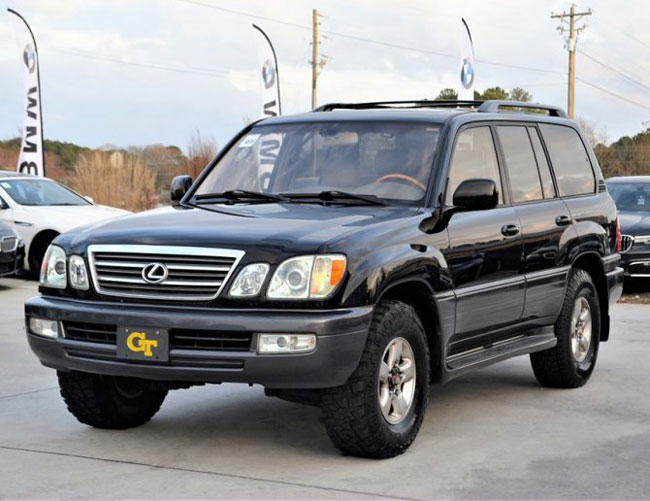
2003 Lexus LX 470 – $8,995

The Notorious B.I.G. fave Lexus LX is a rebadged Toyota Land Cruiser with no loss of charm (at least for now). This LX has seen some use, but with a little under 130,000 miles, the powertrain is just getting broken in. It has a lot of family beach runs left.

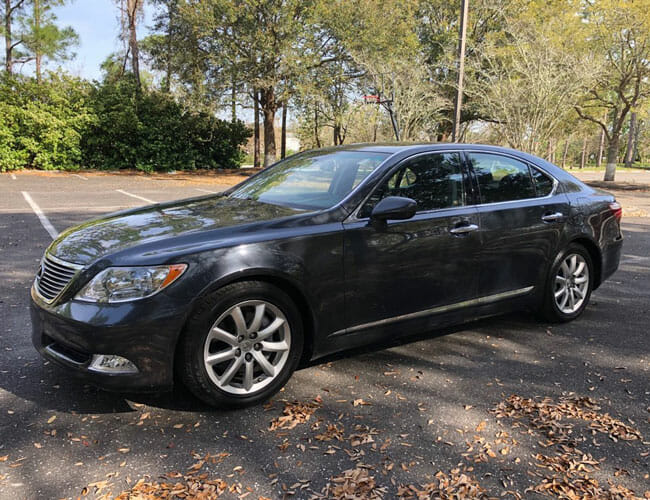
2008 Lexus LS 460 – $9,900

The LS is Lexus’s flagship sedan, the brand’s answer to the Mercedes-Benz S-Class. This fetching gray and black model has a little under 91,000 miles, and may hang on for another couple decades.

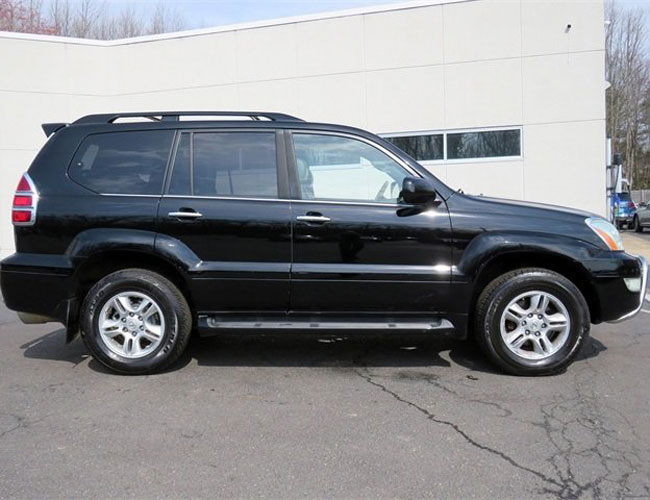
2006 Lexus GX 470 — $9,975

The Toyota Land Cruiser Prado made it to the U.S. as the Lexus GX. It’s smaller than the LX, and cheaper too — but it’s still a robust off-roader. This one is still rumbling along, with just over 106,000 miles.

2007 Lexus ES 350 – $9,995

The Lexus ES is not very sporty — but, in pretty much every other way, it’s what buyers want in a luxury sedan. Here’s a sparingly driven example with only 58,000 miles.

2002 Lexus SC 430 – $9,998

The SC 430 has developed a bad reputation, mainly because Top Gear infamously declared it to be the “worst car in the history of the world.” The counterpoint is Lexus gave its buyers what they needed. It’s a grand tourer with a smooth V8 and comfy seats. Owners actually love them. Plus, this one only has 80,000 miles.

Note: Purchasing products through our links may earn us a portion of the sale, which supports our editorial team’s mission. Learn more here.
Tyler Duffy

Tyler Duffy is Gear Patrol’s Motoring Staff Writer. He used to write about sports for The Big Lead and The Athletic. He has a black belt in toddler wrangling. He’s based outside Detroit.

More by Tyler Duffy | Follow on Facebook · Instagram · Twitter · Contact via Email

For Singer Vehicle Design, ‘Everything Is Important’ Isn’t Just a Slogan

This story is part of our Summer Preview, a collection of features, guides and reviews to help you navigate warmer months ahead.

A little more than a decade ago, “Singer” didn’t mean much to gearheads. The nerdiest among them might have known it as the surname of a talented Porsche engineer whose friends called him Norbert, but generally speaking, it brought to mind sewing machines, not speed machines. Accelerate to 2020, though, and “Singer” has become shorthand for the créme de la créme of automotive restoration and modification.

You can thank Singer Vehicle Design founder Rob Dickinson for that.

[embedded content]

“We’re fascinated by making something as good as it can be,” Dickinson says. “I think the fact that we’ve watched this idea that began in the corner of a workshop ten years ago find a home across the world is testament to the importance of that mission.”

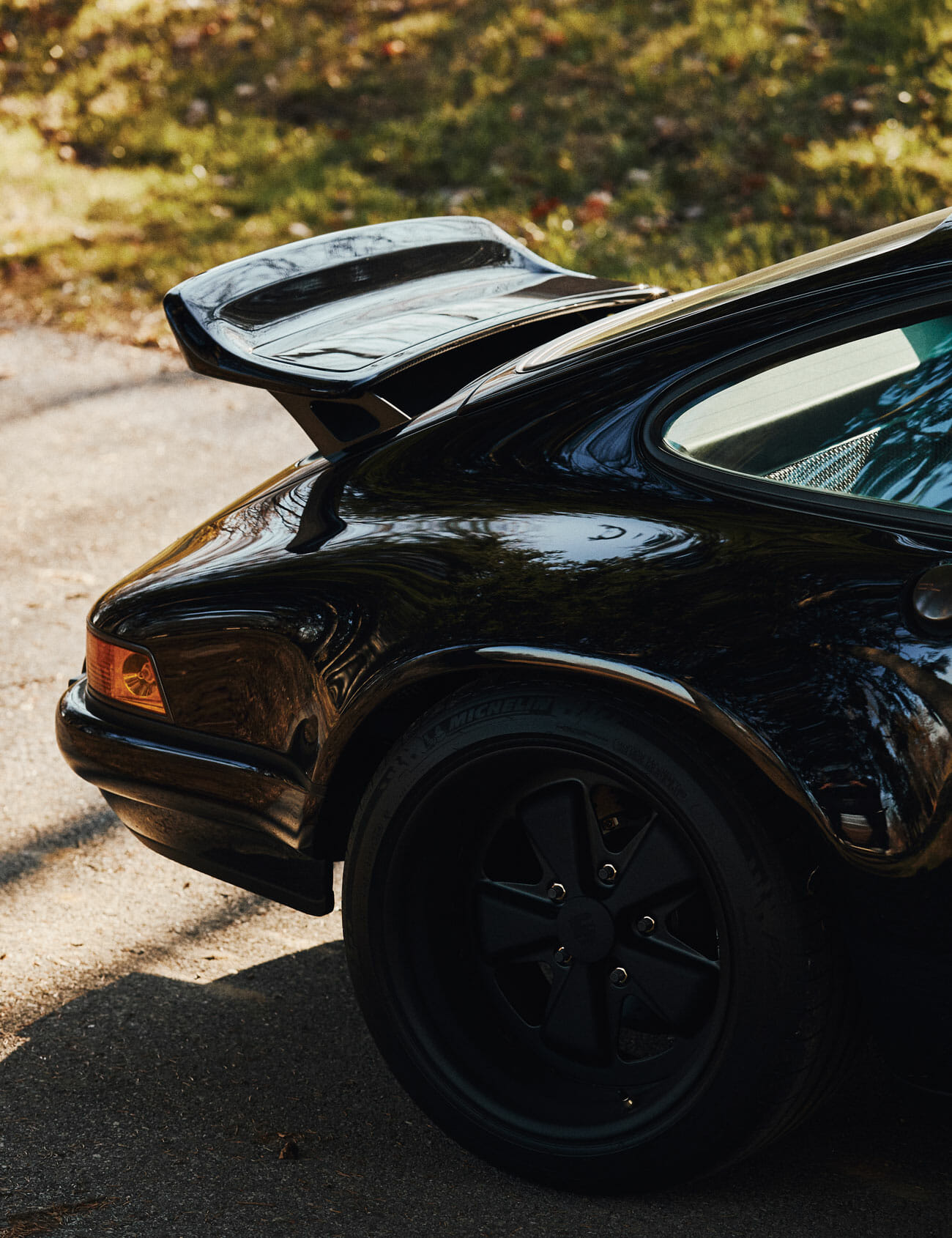
Singer Vehicle Design rebuilds and restores — or, as Dickinson puts it, “reimagines” — Porsche 911s. While the company keeps many specifics close to the vest, it’s willing to admit that it’s worked on about 150 vehicles since 2009. Every Singer is whipped up from an example of the generation of Porsche 911 known as the 964, manufactured from 1989 to 1994.

While every Singer-customized car is still legally (and clearly) a Porsche, each one shares about as many pieces with its original self as the Six Million Dollar Man. Once an owner brings his or her old Porsche 964 to the company’s California shop, it’s then stripped down to its bones and remade piece by piece with upgraded components. The body panels are subbed for carbon fiber; the trim nickel-plated; the vinyl dashboard reupholstered in woven leather that’s designed to pay homage to an original Porsche pattern. Even the engine is yanked loose and transformed into one of Singer’s blueprinted masterpieces, ranging from 3.8 to 4.0 liters and delivering up to 390 hp.

From start to finish, a restoration takes about two years to complete. The company’s motto is “everything is important,” and it’s no empty slogan.

The lines say “Porsche 911,” but the attention to detail proves it’s something special.

Given the time, cost and depth of personalization that goes into making each Singer-customized Porsche 911, Dickinson and his team welcome client feedback throughout the process.

“The relationship Singer has with their customers is the most special relationship of a high-end brand,” Singer client Drew Coblitz says. Singer enables soon-to-be-owners to work closely with the company as the car progresses, making them feel more like proud parents than customers. “The process [of working] with [Singer’s employees] wound up being almost as much fun as when the car [was] finished,” Coblitz adds.

Almost being the operative word. Coblitz’s dark blue car, which he describes as “the café racer version of a Singer,” was finished last year, complete with custom dark nickel trim and fog lamps for spotting the deer that dot the roads where he lives outside of Philadelphia. A ride through those farmlands demonstrated not just how meticulously built the company’s modified 911s are, but how engaging they are to drive; they respond with a directness and connection to the occupants that few cars — new or old — can match.

Pictures can’t capture the quality handiwork of Singer’s interiors.

And while its roots may lie with cars of the past, Singer’s future is poised to be bright. The company has already expanded into watchmaking, and is working with renowned racing supplier Williams on a new varietal of customized Porsche 911 that’s lighter, faster and more advanced than the machines Singer has been rehabbing for the last 10 years.

“The Singer philosophy is to distill the essential elements of an experience like driving — what makes a car deliver an emotional connection, whether it’s visually or dynamically,” Dickinson says. “Our work in the future will be built on insisting that all these elements are recognized and preserved, so that truly engaging, jewel-like machines are around for a long time yet.”

A version of this story originally appeared in a print issue of Gear Patrol Magazine. Subscribe today.

Note: Purchasing products through our links may earn us a portion of the sale, which supports our editorial team’s mission. Learn more here.
Will Sabel Courtney

Will Sabel Courtney is Gear Patrol’s Motoring Editor, formerly of The Drive and RIDES Magazine. You can often find him test-driving new cars in New York City, cursing the slow-moving traffic surrounding him.

More by Will Sabel Courtney | Follow on Instagram · Twitter · Contact via Email

This Tough, Cheap Off-Road Camping Trailer Can Follow a Jeep Wrangler Anywhere

<!–Here’s the Affordable Off-Road Camping Trailer You Really Want • Gear Patrol<!– –>

starts under $20,000


Australia is renown for heavy-duty all-terrain vehicles that can withstand the torturous Outback. So you can be more or less guaranteed that a company calling itself Australian Off Road would produce exactly that — even if the vehicle in question is actually designed to be towed behind another vehicle. Last year, we wrote about AOR’s Sierra trailer,  which is basically a mobile bunker in case your weekend goes all Mad Max. Now, AOR is offering a cheaper, pared-down version: the Sierra ZR.

The Sierra ZR offers pretty much maximum versatility, enabling you to turn it into whatever you want. It can be a fully out-fitted mobile campsite with a tent platform, a well-equipped kitchen, fridge and barbecue setup, awnings, even a shower; or, it can simply be a stripped-out rig to store your gear. Whatever your setup, the common element with all Sierra ZR is off-road capability; with dual Outback Armour Offroad shocks on each wheel and a 40.7-degree departure angle, it can follow your off-road vehicle of choice pretty much anywhere.

The Sierra ZR starts at a little above $19,000 in U.S. dollars — which is about $10,000 cheaper than the Sierra with its sleeper cabin. Neither trailer, alas, is available for sale in the United States as of this moment. But if you’re looking for an American alternative, the awesomely-named Taxa Outdoors Woolly Bear has a similar concept, and a base model costs less than $10,000.

Note: Purchasing products through our links may earn us a portion of the sale, which supports our editorial team’s mission. Learn more here.
Tyler Duffy

Tyler Duffy is Gear Patrol’s Motoring Staff Writer. He used to write about sports for The Big Lead and The Athletic. He has a black belt in toddler wrangling. He’s based outside Detroit.

More by Tyler Duffy | Follow on Facebook · Instagram · Twitter · Contact via Email

<!–

–>

<!– –><!–

–>

The Volvo XC40 Is the Perfect Little Crossover, So Long As Driving Fun Isn’t Your Goal

No segment in the car industry these days is growing bigger faster than small SUVs. Compact crossovers, cute ‘utes, whatever you want to call them — they’re what the people want these days. Cars are about convenience for most of us, after all, and the pint-size sport-ute blends many conveniences into a single package: convenient entry and exit, convenient sight lines, convenient ground clearance, convenient fuel economy, convenient proportions for parking — all at a convenient price.

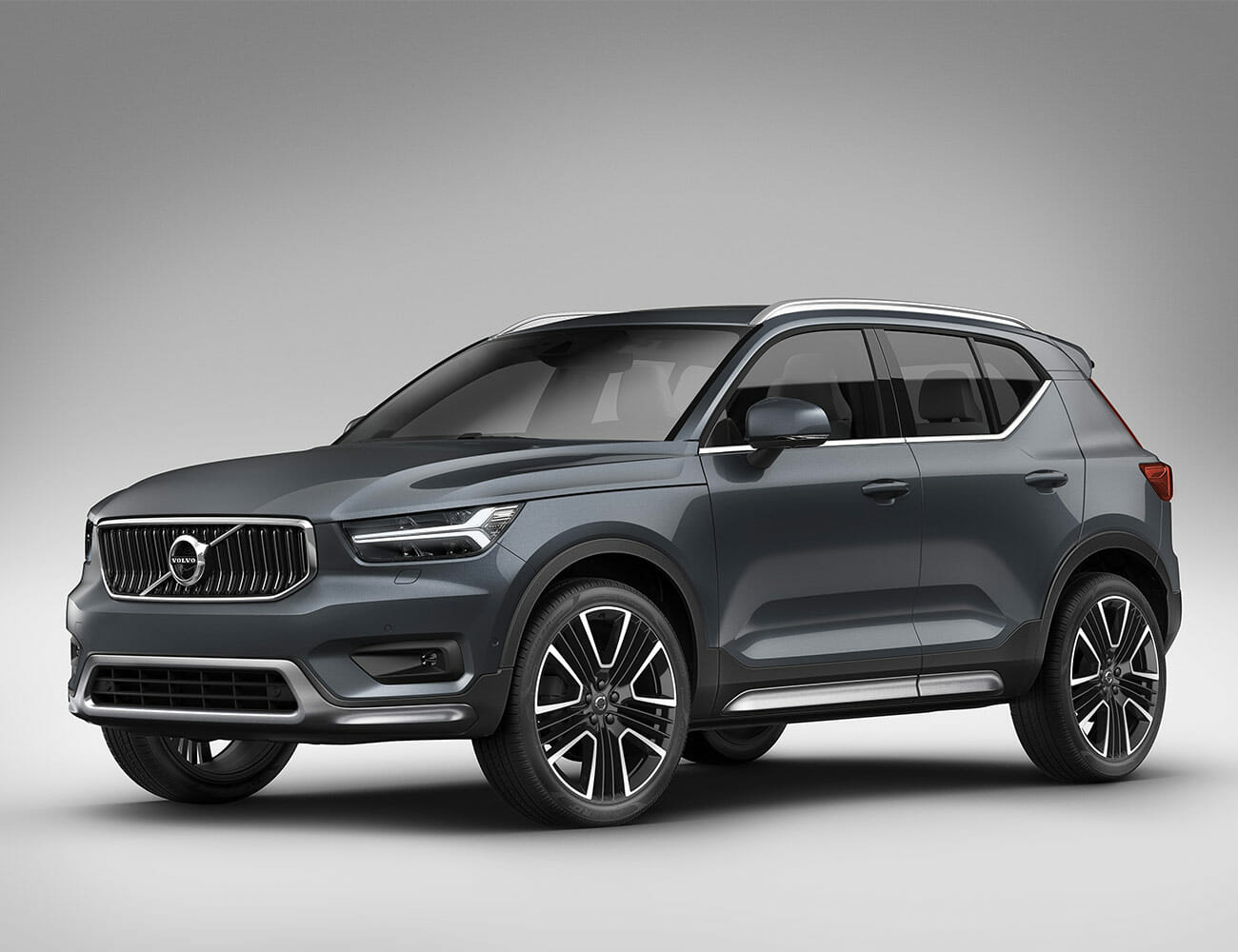
Admittedly, the latter is less so the further upmarket you climb, but even premium brands these days are launching forays into the compact crossover market that start, at least, below the average new car transaction price. Volvo’s XC40 is a prime example of the breed: it brings all the qualities you’ve come to expect from the Swedish carmaker, just in a smaller, upright package. It’s safe, it’s attractive — and like all Volvos on sale right now, it’s just a Nice Car.

All the Volvo charm

To build on the above, Volvo very much belongs to the group of carmakers who deliver a fleet of vehicular options differentiated more by size and height than distinctive character. No matter what Volvo you choose — sedan, SUV or station wagon — it’s liable to look and feel much the same as any other. In the case of the XC40, that pays dividends in terms of the features. Safety, of course, is a Volvo hallmark, and this SUV packs plenty of features designed to ensure it, both active and passive. The latter blessedly went untested during my time with the car, though only through the quick action of the former, which seized control of the brakes when a sketchy box truck decided to decelerate rapidly and unexpectedly in front of me on Interstate 95.

Outside, the XC40 is clearly a Volvo, boasting the same square-jawed Swedish good looks as your average Skarsgård — especially in the R-Design trim of my tester, where the Crystal White paint was nicely set off by the contrasting black roof. The interior lives with a little more differentiation, mostly in the name of watching the budget to help the car come in at a rather-affordable base price below $34,000. There’s odd mouse-fur trim here and there; the plastic bits feel a bit less premium than, say, the ones you’d find in a top-shelf XC60 or V90, and while the optional Harmon Kardon stereo offers 13 speakers and various listening modes, it doesn’t pack the same punch as the fancy stereos in other Volvos.

Still, the XC40 boasts an all-digital instrument panel that’s crisp and clear, a tablet-style infotainment display that uses the same efficient layout as other Volvos, comfortable leather seats, and handy little convenience features scattered about. (Why every carmaker doesn’t offer a removable waist bin in the center console is beyond me.)

Oh, and one pro tip: Save yourself $100 and skip the burnt orange-colored Lava Carpet.

The XC40 isn’t much fun to drive, but that’s okay

If you count yourself among those driving enthusiasts who’s been forced into buying a crossover due to circumstance but still want some zippiness in their cute ‘ute, the XC40 ain’t for you. (The Mazda CX-30 beckons from the inexpensive side of the XC40, while the Porsche Macan awaits above it on the price scale.) That said, if you’re among the much larger chunk of SUV buyers who place utility, design and convenience far above driving fun, this Volvo is a fine little machine.

The engine — the more powerful T5 version of the turbocharged inline-four found in AWD versions, versus the 187-hp T4 version in the FWD — sounds coarse and a bit strained when you mat the gas, but it’s plenty peppy enough for around-town driving and highway cruising. Likewise, the handling isn’t likely to inspire the envy of BMW engineers, but it rides well enough on rough pavement that you won’t regret opting for the 20-inch wheels.

Be careful with the shifter, though; unlike most shift-by-wire levers, it forces you to stop at Neutral when shifting from Drive to Reverse or vice versa, adding an extra step to the process. It doesn’t seem like a big idea…until you wind up revving the engine madly to no effect while blocking the street in the middle of a three-point turn.

The XC40 is a good car made better by Volvo’s subscription service

The XC40 was the first vehicle eligible for lease through the Swedish carmaker’s Care by Volvo program, which is designed to make sliding into a car easier than ever. For one single monthly payment, Volvo provides the vehicle (and an allocation for 15,000 miles per year), the insurance, and the maintenance. Plus, like many a cell phone payment plan, while the lease goes for two years, you can change to a different model as early as 12 months in, should your needs change.

The XC40’s Care by Volvo subscription offers just one well-equipped model, the R-Design I drove, and runs buyers $700 per month. That only sounds hefty for a compact crossover until you remember that it folds in the regularly scheduled maintenance and insurance; depending on where you live and what your insurance would otherwise be, you could wind up coming out ahead even before you factor in the convenience of online ordering

(A regular lease, for what it’s worth, would come to about $525 per month; maintenance would be at least $400, probably more, so as long as your insurance winds up being more than $165 per month, the Care plan likely works out as a deal.)

Price as Tested: $46,795
Drivetrain: Turbocharged 2.0-liter inline-four, eight-speed automatic, all-wheel-drive
Power: 245 hp, 258 lb-ft
Fuel Economy: 22 mpg city, 30 mpg highway
Seats: 5

Volvo provided this product for review.

Will Sabel Courtney

Will Sabel Courtney is Gear Patrol’s Motoring Editor, formerly of The Drive and RIDES Magazine. You can often find him test-driving new cars in New York City, cursing the slow-moving traffic surrounding him.

More by Will Sabel Courtney | Follow on Instagram · Twitter · Contact via Email

We Drove 1,400 Miles Across the West in America’s Most Powerful Muscle Cars

This story is part of our Summer Preview, a collection of features, guides and reviews to help you navigate warmer months ahead.

Westward Ho

Go West, young man, goes the old saw ascribed to Horace Greely. It was meant to encourage 19th-century Americans to pursue their dreams in the vast, untapped land beyond the Mississippi River. But it’s a saying that applies just as well to today’s road trippers. The West (capital W) has been emblematic of the rugged independence at the heart of our national identity practically as long as we’ve had a nation. It’s a land of breathtaking beauty, soul-stirring silence and abundant peace.

It’s also a perfect venue to uncork seriously powerful cars. Here, you’ll find constant elevation changes, sweeping curves, four-mile straightaways and, most importantly, barely any other vehicles or people to pass. Speed limits are higher, and drivers seem more likely to push beyond them than in other, denser states. (Montana actually abandoned highway speed limits for a few years in the late ’90s.)

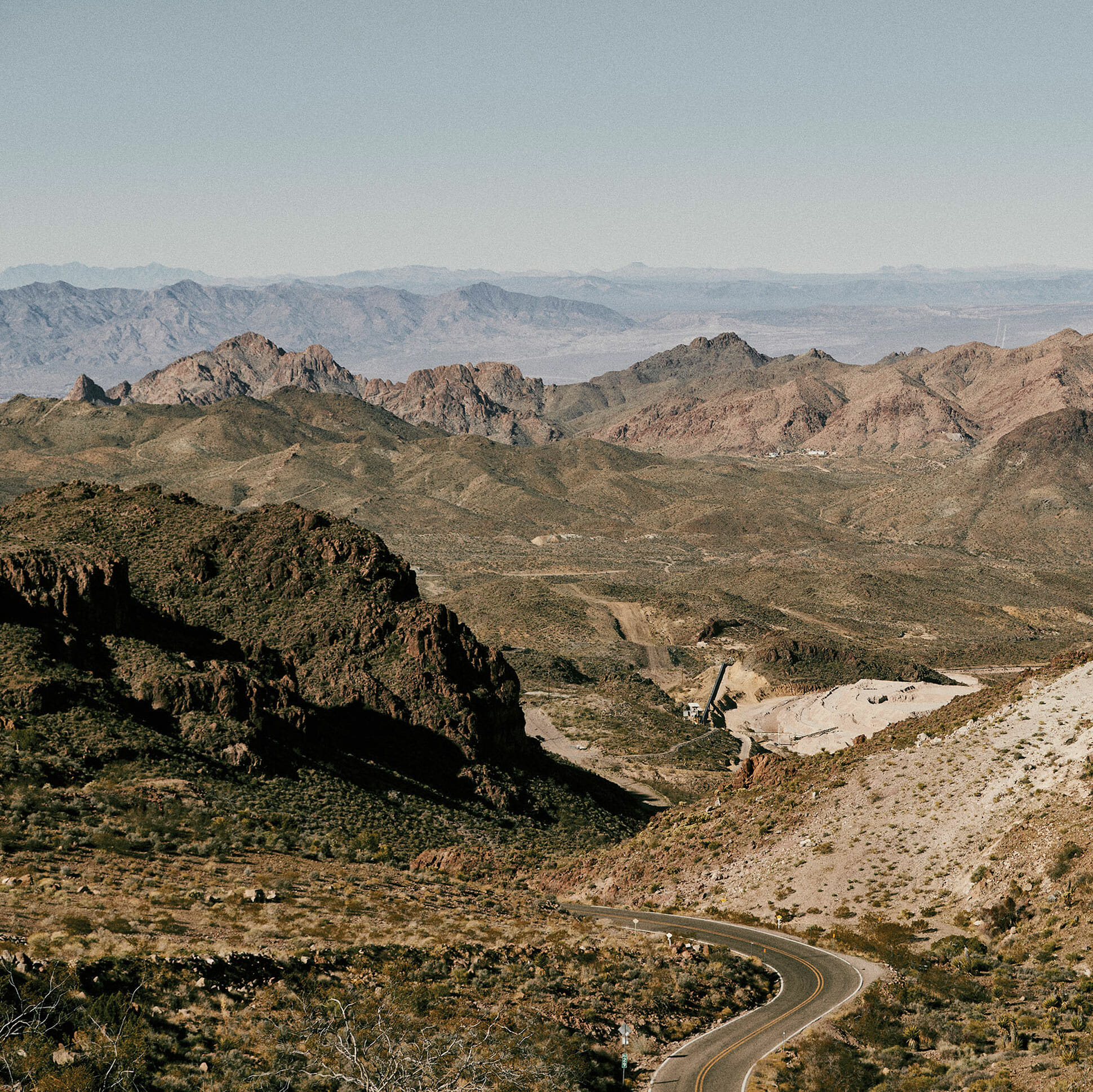
This landscape calls for speed, and not just any variety. European exotics and Japanese sports cars, though they have the chops, would seem incongruous here. No, these roads were made for American muscle. And 2020 turns out to be a serendipitous year for a three-way shoot-out between the best — and perhaps last — of their breed.

2,207 Horses, No Waiting

Less than a decade ago, people spoke of the late ‘60s and early ‘70s as having been the golden age of American muscle. How times change. Today, each of Detroit’s Big Three offers up a two-door four-seater with the sort of power even the wildest hot-rodders of the wonder years couldn’t have dreamt of.

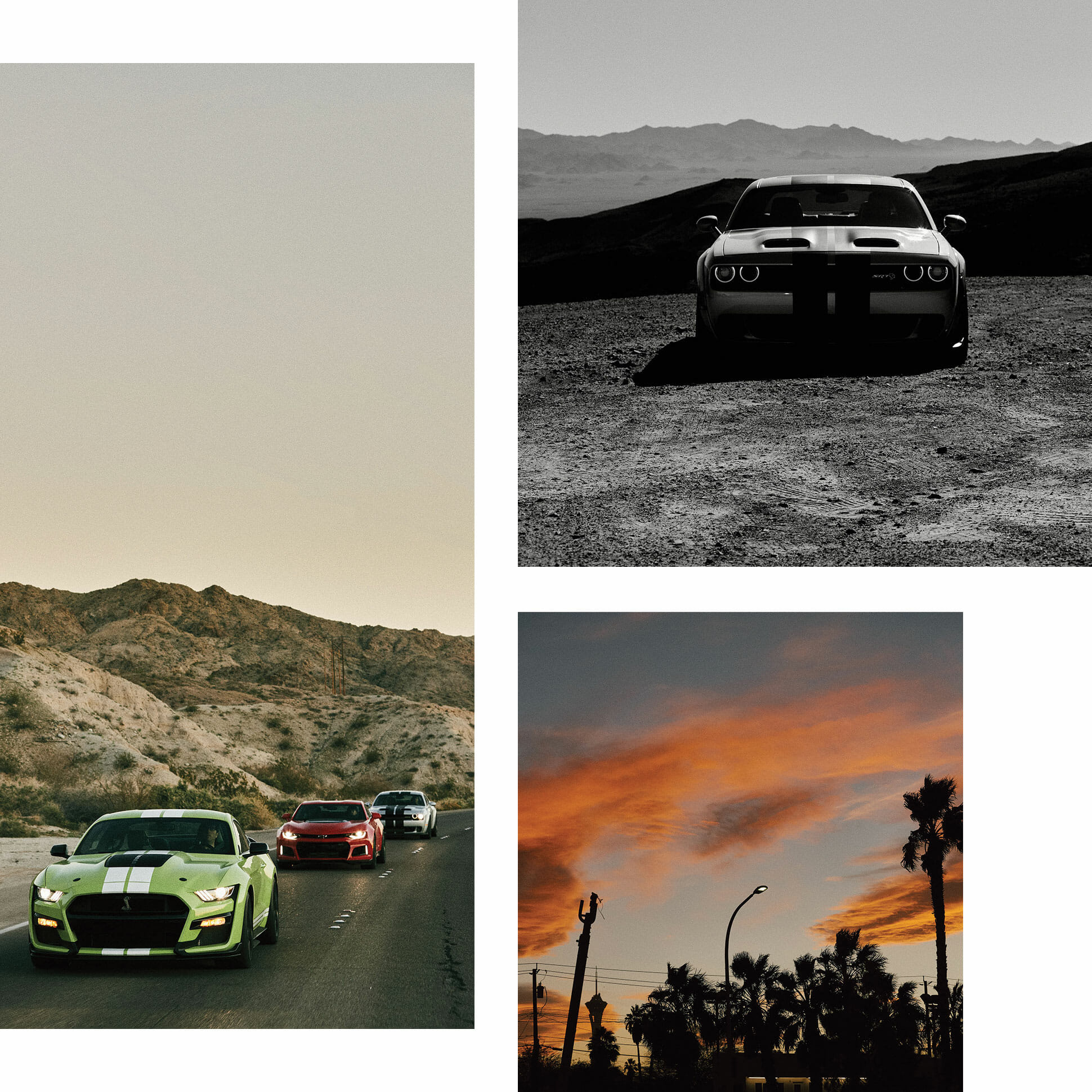
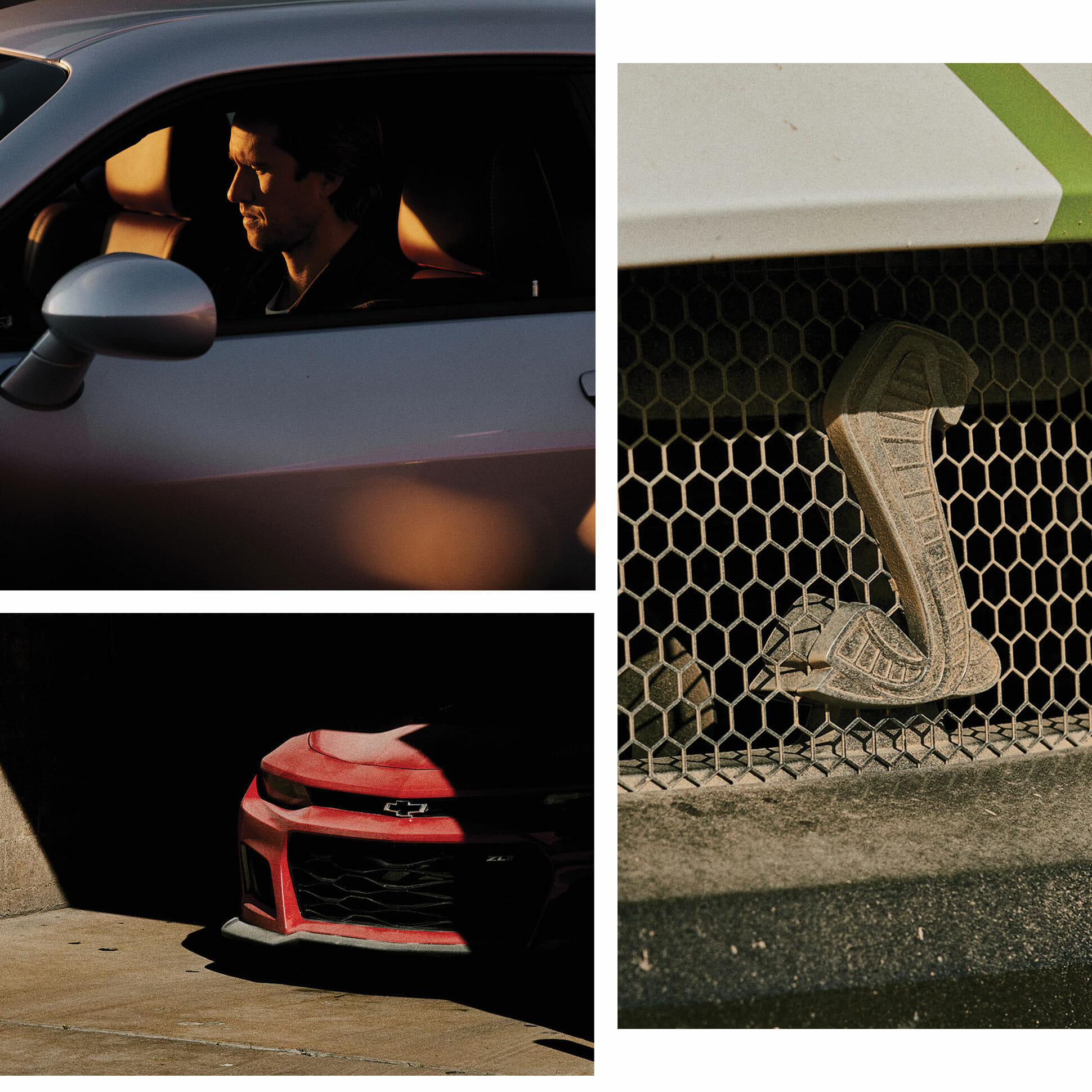
Chevrolet’s Camaro ZL1 is the least powerful of the bunch, but that’s like being the worst player at the Pro Bowl; it makes a mere 650 horsepower and 650 pound-feet of torque. The new-for-2020 Ford Mustang Shelby GT500 is down 25 lb-ft to the Camaro, but it kicks Chevy’s ass in the horsepower race with a stunning 760 ponies. Yet even it’s not the most powerful horse in this race. That would be the Dodge Challenger Hellcat Redeye Widebody, a true brute that screams out 797 horses and 707 lb-ft.
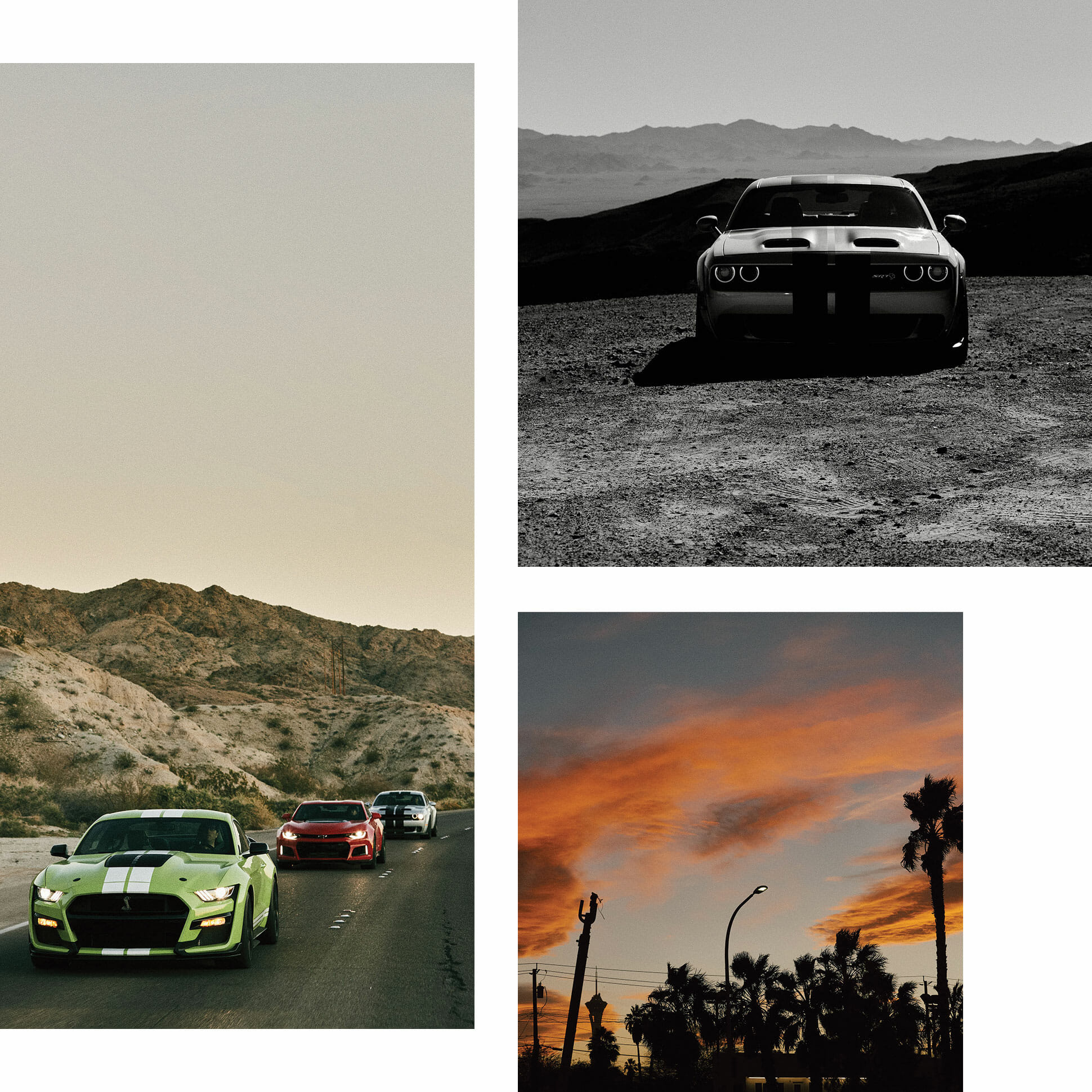
Each car gets its power from a supercharged V8 and each channels it to the rear wheels alone — but that’s where they part ways. The Camaro is the only one to offer a manual transmission; there’s a 10-speed automatic available, but we opted for the six-speed stick because, well, of course we would. The Redeye comes only with an eight-speed automatic, presumably so you never have to put down your coffee to shift. And the Ford packs a newly developed seven-speed dual-clutch automated manual gearbox, just like the speediest European cars do. That comparison isn’t a stretch; Ford’s new gearbox is every bit as fast and smart as the ones in those super sports cars.

The Long Road Here

Neither this land nor these cars are strangers to change, yet you wouldn’t think it looking at them. Somewhere outside Tuba City, we flash past a sign advertising dinosaur footprints, stamped into mud that turned to stone then disappeared beneath the ground for 200 million years before the wind carved them loose. Less than 15,000 years ago, mammoths, saber-toothed cats and two-ton sloths roamed this earth, before climate change and humans brought in by the end of the Ice Age wiped them all out. A few hundred years back, tribes like the Navajo, Hopi, Paiute and Ute roamed freely; then the U.S. government marched in and decimated and isolated them to make room for American settlers, who used the land for cattle grazing. Nowadays, cell coverage stretches across the deserts and prairies. But even if solar panels pop up here and there, the West looks much as it did when cowboys roamed freely.
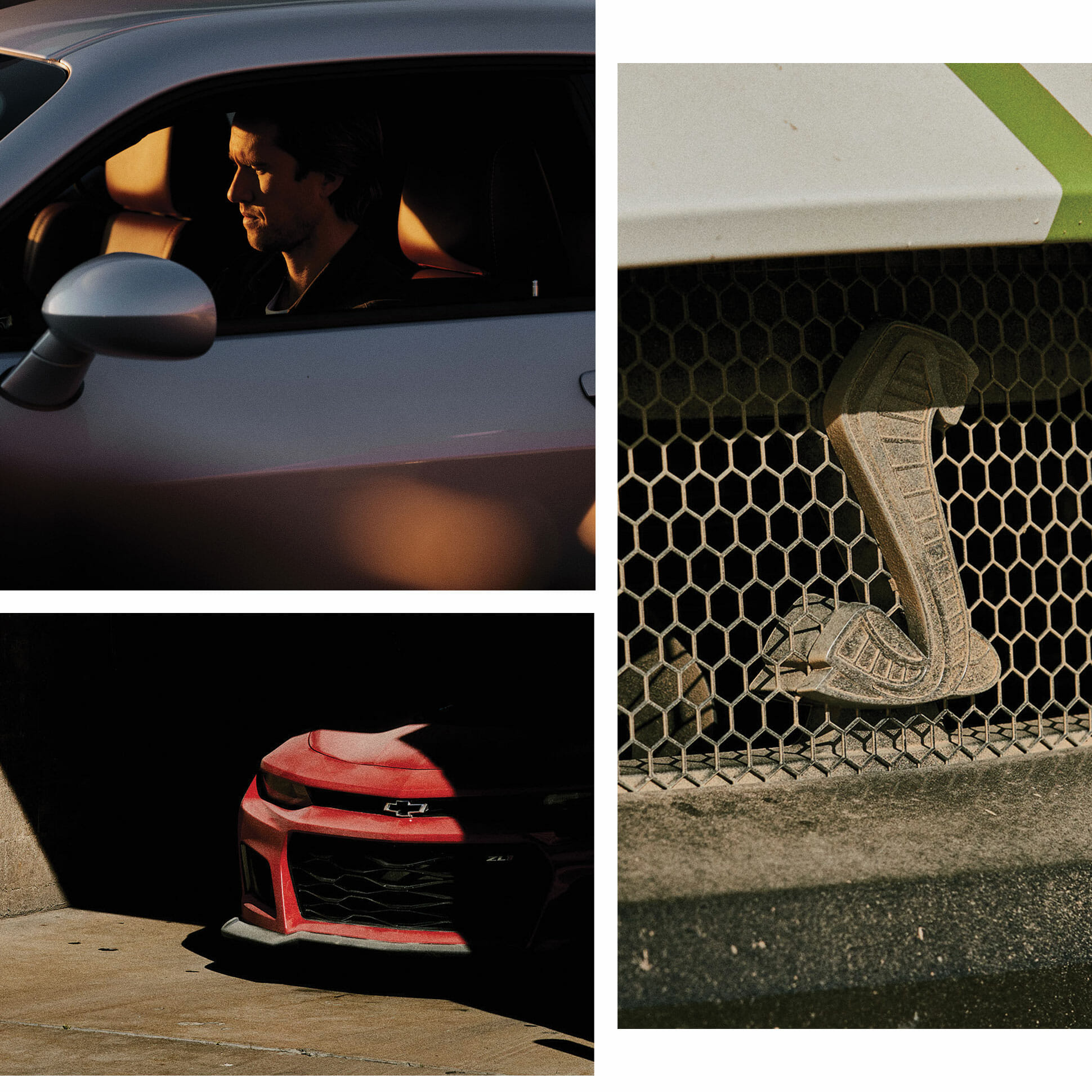
Ford, Chevy and Dodge have come a long way, too. The Mustang was the first to arrive back in 1964, a stylish compact car that made just 105 horsepower in basic form; the first Shelby GT500 arrived in 1967, making 355 horses. The Camaro debuted that same year, out to steal the Mustang’s thunder; the sportiest version, the Z/28 that serves as the ZL1’s spiritual forefather, cranked out around 360 horses, though Chevrolet quoted it at a mere 290 for insurance reasons. Like its modern-day descendant, the first Challenger that arrived in late 1969 was a bigger car than the Mustang and Camaro — and like today’s Redeye, it came with the most power, packing a 7.0-liter Hemi V8 delivering 425 horsepower.

But even today’s incredible engine outputs undersell just how improved today’s muscle cars are. The 2020 models deliver quality, reliability and comfort that no car made in the ‘60s could dream of matching, let alone the mass-produced rides turned out by the Big Three. Each one packs more processing power than the mightiest computer on Earth in 1970. Yet at a glance, they still bear a resemblance to those cars that roamed the roads half a century ago.

Into The Great Wide Open

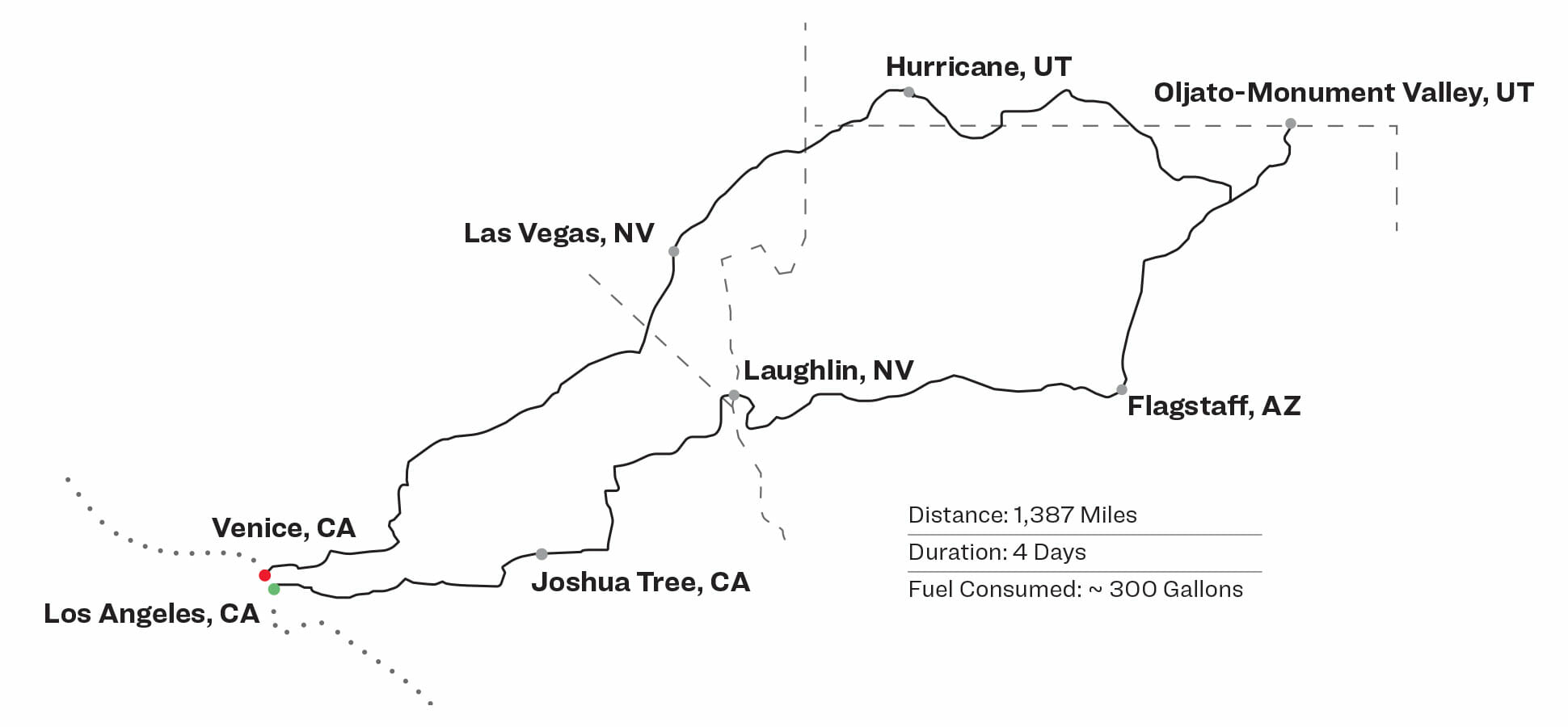
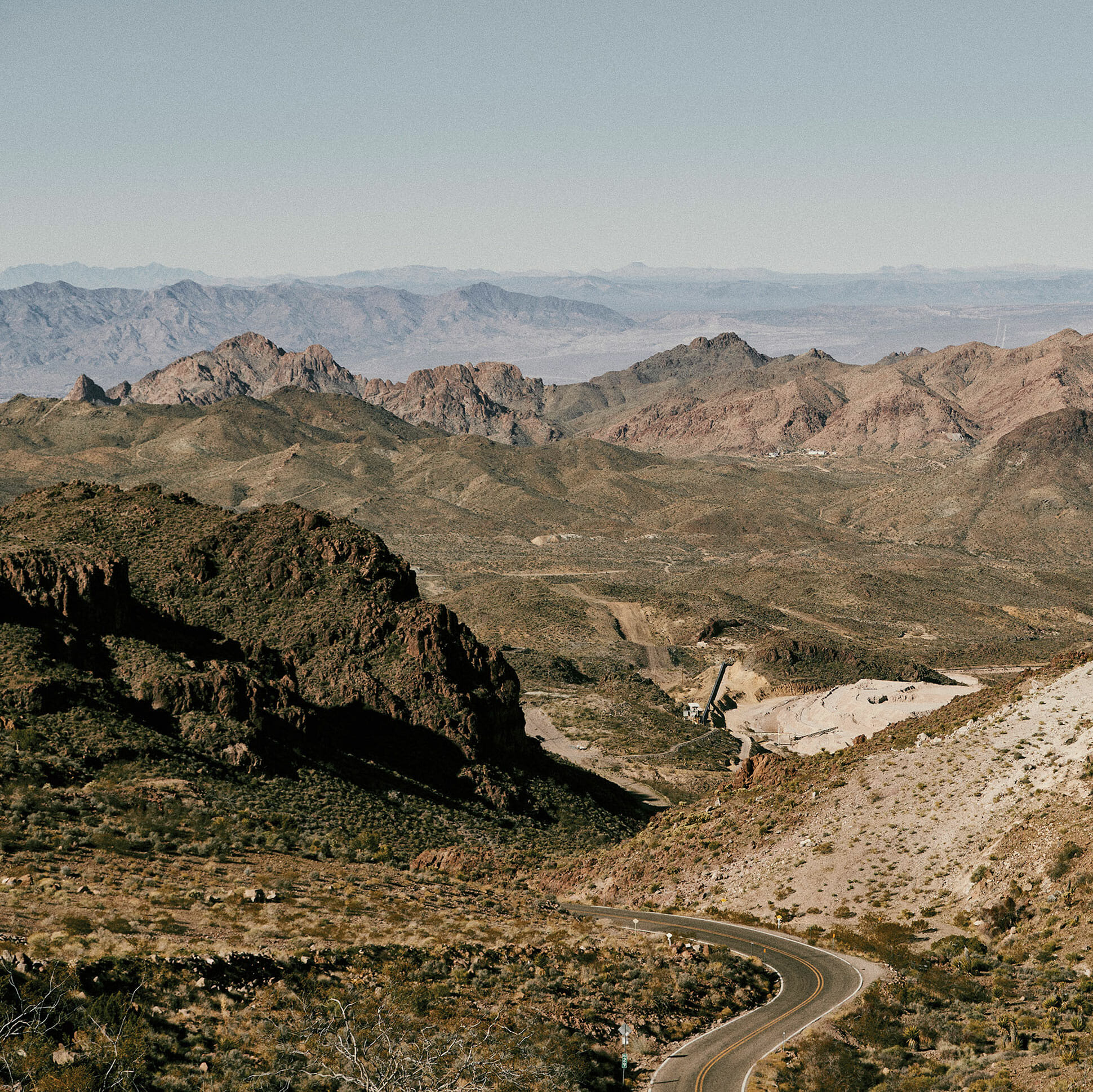
Maps can’t capture the scale of the West. Towns that seem neighborly on the map turn out to be half an hour apart, even at the what-we’re-dealing-with-here-is-a-complete-lack-of-respect-for-the-law speeds these cars are all too happy to lope along at. Add up the West’s 11 states and you wind up with 1,174,143 square miles; if it were its own nation, it’d be bigger than all of Argentina. Yet apart from the dense cities that cling to the Pacific Ocean, it’s largely empty, long stretches of road connecting tiny dots on the atlas. And the road to our destination of Monument Valley, perched on the border of Arizona and Utah, is emptier still, carving a path through the Navajo Nation — a land half again as large as New Jersey but with four percent of the population.

On the flip side, the blank spots between those thin lines on the map hide the grandeur of the place. Every bend in the road reveals some new wonder to be discovered, the scenery rendered in HDR crispness in the clean, dry air. Words like awesome and epic have long been overused past the point of cliché; the sights and scale of the West, though, remind you what they really mean.

The West has always been larger than life. That’s been central to its appeal, for as long as it’s been sold to us. And it has, indeed, been sold to us — ever since America bought it from France in the Louisiana Purchase and started selling it off again in the form of Manifest Destiny and the Homestead Act. By the time John Ford first filmed John Wayne riding past Monument Valley’s mesas, Americans had already considered the West some sort of promised land for more than a century. The West was, is, and likely always will be a commodity, promoted as the embodiment of freedom. The same goes for muscle cars. All cars represent independence, but muscle cars epitomize it; they’re four-wheeled freedom distilled to its sharpest form.

Steel Ponies

Every mile of open road reveals more about these machines. The Mustang is the newest of the trio, and it’s the one with the boldest goals: it seeks to deliver all-around supercar performance. An impossible task, it might seem — yet it delivers, serving up not just Ferrari-rivaling acceleration but Porsche-like handling. It picks up speed with a ferocity that boggles the mind, then clings to it through every turn, tracking flat and smooth even as its fat tires howl while sticking the beefy car to the ground. Yet it’s no penalty box; shock absorbers filled with magnetic fluid that adjusts its viscosity in milliseconds serve up a comfortable ride no matter how bad the pavement turns.

The Camaro feels even lighter and more nimble on the road, an épee to the Shelby’s saber. Its six-speed manual means you’re forced to take command of the big V8 in a way you aren’t with the others, appreciating the nuances of the power as it flows past your right hand on its way astern. Still, it’s not as quick as the Mustang; the Ford’s gearbox shifts with a speed and intuition no manual can match, and the extra 110 horsepower feels like 200 when the Shelby’s ire is up. (Part of that is due to the red-blooded howl that spews from the GT500’s exhaust pipes, which could make a Formula 1 car tuck its tail between its legs.) And even the ZL1’s biggest fan among our cohort complained about the lack of visibility from the pillbox-like cabin.

The Challenger feels like the third wheel here. It wallows and bobs where the other two tuck and weave; as a result, it falls behind in the turns, depending on its absurd power to close the gap on the straightaways. Between its body motions, its squared-off hood that stretches halfway to the horizon and its atomic power plant, driving the Redeye feels like helming a nuclear aircraft carrier.

It has plenty of appeal, though — especially from the curb. The group’s opinion is unanimous: not only is the widebody Challenger the most chiseled of the trio, it’s the best-looking. Period. It’s also the roomiest, with a back seat actually suitable for adults (albeit not for multistate trips). And while all three of these cars can vaporize their rear tires without issue, the other two don’t do it quite as happily as the Hellcat.

The Last Cowboys

If the beauty of the West is to survive, cars like this may well need to die. Power comes at a cost, and in this case, it’s at the expense of the environment. Over the course of our 1,500-mile road trip, our trio of muscle machines burned more than 300 gallons of gasoline — each working out to 20 pounds of carbon dioxide. That means our four-day jaunt was responsible for adding three tons of CO2 to the atmosphere. (For context: the average American creates 16.1 tons of CO2 per year.) Climate change is already impacting the West, much as it is everywhere else. Temperatures are higher, rain is less frequent. Cars that average 15 miles per gallon rank high on the list of the last things the planet needs.

They may not be long for this world anyway. The Camaro’s sales have fallen each of the last five years, and rumors suggest it may not be replaced when the current model ages out of the lineup in a couple years. The Challenger’s sales have held steady, but at 12 years old, it’s long been eligible for automotive AARP, and a successor remains a question mark. The Mustang seems the most likely to stick around, but it may well evolve in the process; the next vehicle to wear the badge, after all, will be an Tesla-fighting electric crossover.

One day, perhaps sooner than we imagine, electric cars will be the ones racing along under these Western skies. They may be faster, even more fun than these; they’ll certainly be better for the winds and waters. But the canyons and buttes will no longer echo with the roar of their engines. Just like the cowboys, they’ll be left to legend.

A version of this story originally appeared in a print issue of Gear Patrol Magazine under the title “Blaze of Glory.” Subscribe today.

Note: Purchasing products through our links may earn us a portion of the sale, which supports our editorial team’s mission. Learn more here.
Will Sabel Courtney

Will Sabel Courtney is Gear Patrol’s Motoring Editor, formerly of The Drive and RIDES Magazine. You can often find him test-driving new cars in New York City, cursing the slow-moving traffic surrounding him.

More by Will Sabel Courtney | Follow on Instagram · Twitter · Contact via Email

Don’t Wait for Summer; Grab These Great Motorcycle Jackets While They’re On Sale

<!–Don’t Wait; It’s Time to Grab These Motorcycle Jacket Deals • Gear Patrol<!– –>

2020 may seem like it’s already lasted the better part of a decade, but there’s good news on the horizon: summer is on its way. Earth’s axis cares little for society’s issues, and it’s tilting the Northern Hemisphere back towards the sun’s warm gaze; in a month and a half, summer will be here, in fact if not in name. For millions, that means it’s almost time to jump back on their motorcycles and hit the roads, to release the worries and frustrations piled up over a cold winter and dreary spring into the warm air at 50 miles per hour.

That said, you don’t want to wait until summer to grab the gear you’ll need for riding, because that’ll just delay you getting back on the road. Instead, take advantage of these gray days stuck at home to fill out the holes in your moto-riding kit. Right now, RevZilla has a ton of solid motorcycle jackets on sale that you can have in your house well before the truly nice weather rolls up, ranging across all types and styles of riding apparel. Whatever you ride and however you ride, they’ve got the jacket for you.

We’ve pulled together a few of our favorite deals from their selection, but if there’s nothing here that strikes your fancy, don’t sweat; they have hundreds more jackets on sale, too. Just be sure to place your order soon so you’ll be ready when the sunshine comes. (And no, we won’t judge you if you wear your new jacket around the house beforehand, Jeff Lowe-style.)

Air Master Jacket by Dainese $300 $210

Blake Air Jacket by Rev’It! $500 $250

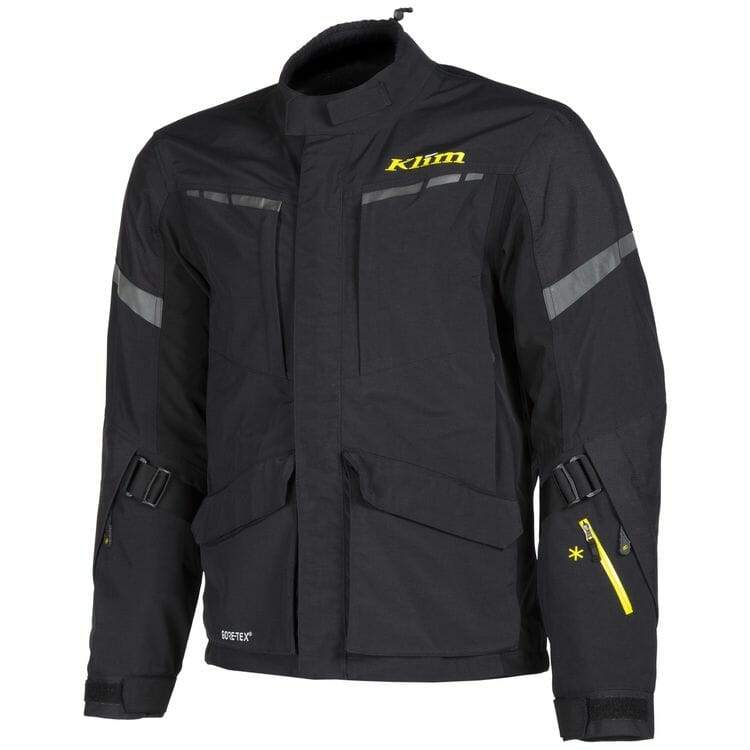
Carlsbad Jacket by Klim $580 $380

Folsom Leather Jacket by Reax $429 $279

AirAll Jacket by Rukka $449 $314

Troy Jacket by Olympia $300 $200
Note: Purchasing products through our links may earn us a portion of the sale, which supports our editorial team’s mission. Learn more here.
Will Sabel Courtney

Will Sabel Courtney is Gear Patrol’s Motoring Editor, formerly of The Drive and RIDES Magazine. You can often find him test-driving new cars in New York City, cursing the slow-moving traffic surrounding him.

More by Will Sabel Courtney | Follow on Instagram · Twitter · Contact via Email

<!–

–>

<!– –><!–

–>

The Quickest Teslas Are Getting Even Quicker, Thanks to a Free Upgrade

Even people who don’t know much about cars know about Tesla. Over the last decade, Elon Musk‘s California-based carmaker single-handedly made electric cars cool by showing just how stylish, fast and futuristic they could be. But the company has also burnished their brand through a simple tactic that would be familiar to any conventional automaker: Make Cars Go Fast. Their super-powerful powertrains and clever software optimization have enabled Tesla’s high-performance sedans and SUVs to deliver acceleration that can humble supercars (if, admittedly, the conditions are right).

And now, the quickest Teslas are getting even quicker, thanks to one of the company’s free over-the-air software updates.

See, Tesla’s cars aren’t like most vehicles that require burdensome dealership visits to upgrade any software buried beneath the virtual hood; they can receive tweaks over Wi-Fi, just like your smartphone. One of the newest ones, as Motor Trend found out via DragTimes, improves the Launch Mode for the newest Model S Performance and Model X Performance models; not only does it make Launch Mode easier to use by giving you more time to brace yourself before firing your Tesla down the straight, it also shaves, by DragTimes‘s testing, roughly a tenth of a second from the 0-60 mph dash (knocking that down to 2.4 seconds) and two-tenths from the quarter-mile (bringing that to 10.5 seconds at 128 mph).

How’s it do that? Well, in part by simply adding power. The upgrade reportedly allows the electric motors and batteries to squeeze out an extra 40 horsepower or so during a launch. (Tesla doesn’t quote horsepower for its cars, but according to Wikipedia, that means the Model S Performance should be putting out around 790 horsepower at max attack.)

The other part of the upgrade, however, is a little more unusual. It’s called “cheetah stance,” according to Motor Trend; when the car goes into Launch Mode, the adaptive suspension preemptively drops the front end of the car closer to the ground ahead of it leaving the blocks, counteracting the inertia of the launch that throws the weight backwards. This, in theory, gives the front tires more grip and keeps the power from overwhelming the rear ones, improving traction.

If you’ve already got a Tesla Model S Performance or Model X Performance, you should be seeing the upgrade arrive on your car’s CPUs soon, if it isn’t there already. And if you don’t have one but really, really want a car that tucks its head down like the world’s fastest cat before launching, you can snag one from Tesla for as little as $99,990.

Note: Purchasing products through our links may earn us a portion of the sale, which supports our editorial team’s mission. Learn more here.
Will Sabel Courtney

Will Sabel Courtney is Gear Patrol’s Motoring Editor, formerly of The Drive and RIDES Magazine. You can often find him test-driving new cars in New York City, cursing the slow-moving traffic surrounding him.

More by Will Sabel Courtney | Follow on Instagram · Twitter · Contact via Email

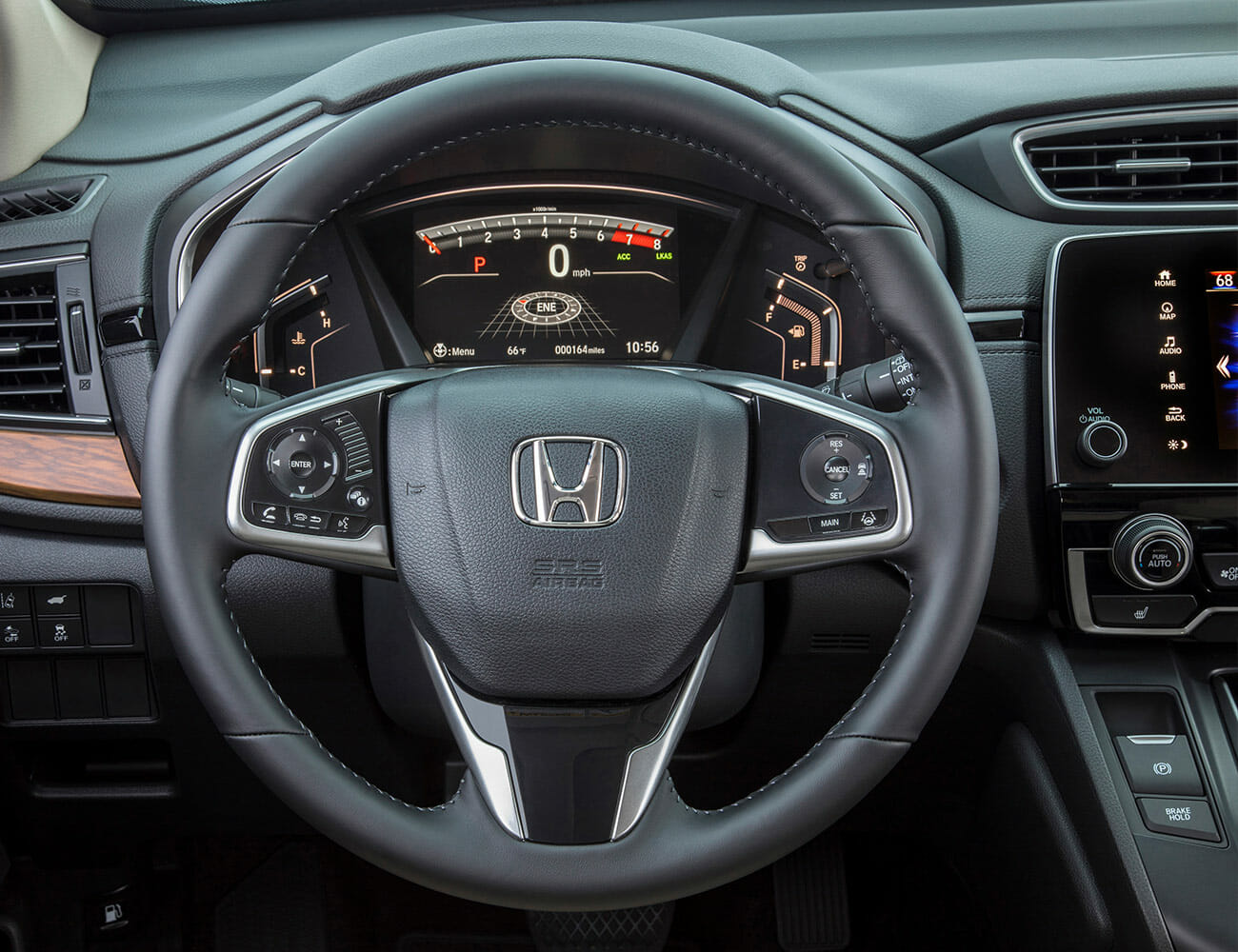
Go Ahead and Hate Me, But I Kind of Love the 2020 Honda CR-V

Car people generally prefer very particular types of vehicle. It could be a supreme off-roader, or a pared-down track beast; maybe it just makes a sweet, sweet racket with that big V8. But that beloved car is typically a specialist. It does one or two things with exceptional proficiency — even if the average owner may never use that feature.

The Honda CR-V is the antithesis of that car. It’s brilliant in an entirely different way: it’s the ultimate generalist.

With the CR-V, Honda set out to build the consummate useful car. The company has been refining that vision for more than two decades. The CR-V has the practical body style everyone wants these days — a spacious compact crossover. Instead of a superpower, the CR-V is simply good at just about every normal car activity…assuming normal for you doesn’t include towing a giant camping trailer, rock crawling, or accelerating like an absolute loon.

I consider myself a car person. Writing about cars for a living, I want every manufacturer to swing for the fences with a car, succeed or fail wildly, and include a manual transmission option as much as possible. But, in my real life, my hair keeps getting grayer. My family — and consequent responsibilities — keeps expanding. As depressing as it may be to admit, a practical family car like the Honda CR-V makes a whole lot of sense.

I spent a week with a Honda CR-V Touring — ironically, a week where social distancing meant I had almost nothing practical to do. It wasn’t rollicking fun. But the car was flawless.

I haven’t abandoned my dream of one day being Mercedes-AMG E 63 S wagon dad — or perhaps, given the present climate crisis, Jaguar I-Pace dad. But I now understand why the over/under is set at 8.5 CR-Vs in every parking lot I enter — and I support it.

The CR-V is affordable

The CR-V starts a little above $25,000. You probably want to jump a trim level to the EX trim ($27,650) for a reasonably appointed one. Even my fully-loaded, media reviewer-spec Touring trim CR-V with fancy wood trim came in only a tad under $36,000 — less than the average price an American pays for a new car.

This Honda really does do pretty much everything well

The CR-V looks solid and unpretentious, thanks to the recent styling refresh. The interior feels pleasant and upscale, even if it’s not sumptuous. It handles decently, especially for a crossover; it stays composed on twisty roads and over pockmarked terrain. It’s not especially quick, but nor is it achingly slow.

It’s easy to get in and out of. It gets darn good gas mileage — 29 mpg combined — especially for a non-hybrid. (Though you can get one of those now, too.) The brakes work well. It’s safe. If I have forgotten anything, presume the CR-V can do that adequately too.

It has a massive trunk, even for an SUV

I’ll spare you a groan-worthy double entendre; let’s just say the CR-V has a lot of room for junk back there. Most compact crossovers can seat five comfortably or hold luggage; the CR-V can do both at once. It has a little over 39 cubic feet of trunk space with the seats up, and more than 75 cubic feet with the seats down.

I took the CR-V on a grocery trip — not just a daily run, but a shelter-in-place-let’s-get-a-ton-of-food mission. That haul had the cart struggling, but it fit in the cavernous trunk with ease. The extra space almost enticed me to go foraging for toilet paper and paper towels.

The Honda CR-V is the only new car you ever need to buy — maybe literally

A Honda CR-V, with basic maintenance, should last pretty much forever — at least, in automotive terms. You’re more likely to quit on it before it quits on you. A quick AutoTrader search found more than 200 CR-Vs for sale nationwide with more than 200,000 miles on the clock — and their prices, some approaching $10,000, were higher than far less-used Land Rovers we found. The CR-V is a car you can keep for 10–15 years…then bequeath to your children.

Price as Tested: $35,845
Drivetrain: Turbocharged 1.5-liter inline-four, CVT, all-wheel-drive
Power: 190 hp, 179 lb-ft
Fuel Economy: 27 mpg city, 32 mpg highway
Seats: 5

Honda provided this product for review.

Note: Purchasing products through our links may earn us a portion of the sale, which supports our editorial team’s mission. Learn more here.
Tyler Duffy

Tyler Duffy is Gear Patrol’s Motoring Staff Writer. He used to write about sports for The Big Lead and The Athletic. He has a black belt in toddler wrangling. He’s based outside Detroit.

More by Tyler Duffy | Follow on Facebook · Instagram · Twitter · Contact via Email

Live #VanLife to Its Fullest with This Overlanding-Ready Volkswagen Vanagon

<!–Go Overlanding in This Custom Volkswagen Vanagon Syncro • Gear Patrol<!– –>

ready for instagram and the trail


We love camper vans at Gear Patrol. And while that #vanlife can take many forms, the Volkswagen Vanagon is the quintessential vehicle for that lifestyle. There’s an incredible, custom pop-top Vanagon up for auction on Bring a Trailer right now — it’s outfitted for overlanding duty, and it also has an interesting back story.

The van is a 1990 Volkswagen Vanagon T3 Syncro 16″, the the four-wheel-drive version of the Synchro developed by VW and Steyr-Puch. The van’s original owner was Volkswagen AG itself, who had it converted into an overland camper by Ulrich Phillips at Special-Mobils in Germany. The German magazine Off Road profiled it in 1991.

Subsequent owners substantially refurbished the van over the past decade. It received a replacement 1.6-liter turbodiesel engine and had the four-speed manual transmission with low gear rebuilt. Rust treatment has been performed on both bumpers. Off-road features include a reinforced chassis, flared black wheel arches, locking differentials, and larger brakes.

Eagle-eyed readers will spot the Gear Patrol decal on the windshield, as this Vanagon resided with our friends at Classic Car Club in Manhattan. Our staffers have driven it and can confirm that it is a blast to drive.

The bidding, as of this writing, is just north of $10,000, with five days remaining on the auction.

Note: Purchasing products through our links may earn us a portion of the sale, which supports our editorial team’s mission. Learn more here.
Tyler Duffy

Tyler Duffy is Gear Patrol’s Motoring Staff Writer. He used to write about sports for The Big Lead and The Athletic. He has a black belt in toddler wrangling. He’s based outside Detroit.

More by Tyler Duffy | Follow on Facebook · Instagram · Twitter · Contact via Email

<!–

–>

<!– –><!–

–>

12 Malaise-Era Cars That Managed to Avoid Being Awful

Many cars from the 1960s are considered timeless classics. Rad 1980s–1990s vehicles, meanwhile, are undergoing a renaissance with collectors. The period between those two eras? It’s best left forgotten. The “Malaise Era,” generally considered the decade of cars that stretched from 1973 to 1983, was perhaps the single worst period for automotive manufacturing. Oil crises and new environmental regulations melded with industry inertia and a shortage of imagination to realize 10 years of cars that were, for the most part, bloated, underpowered, and uninspired. (One sad example: here’s what that era’s Ford Mustang looked like.)

The Malaise Era, however, was not wholly bleak. The era saw some bold designs hit the streets. We also saw the progenitors of some of our favorite, brand-defining vehicles of the 1980s and beyond arrive.

Below are 12 great cars that bucked the trend and managed to be great. And not just ironically great in retrospect, like the Subaru BRAT.

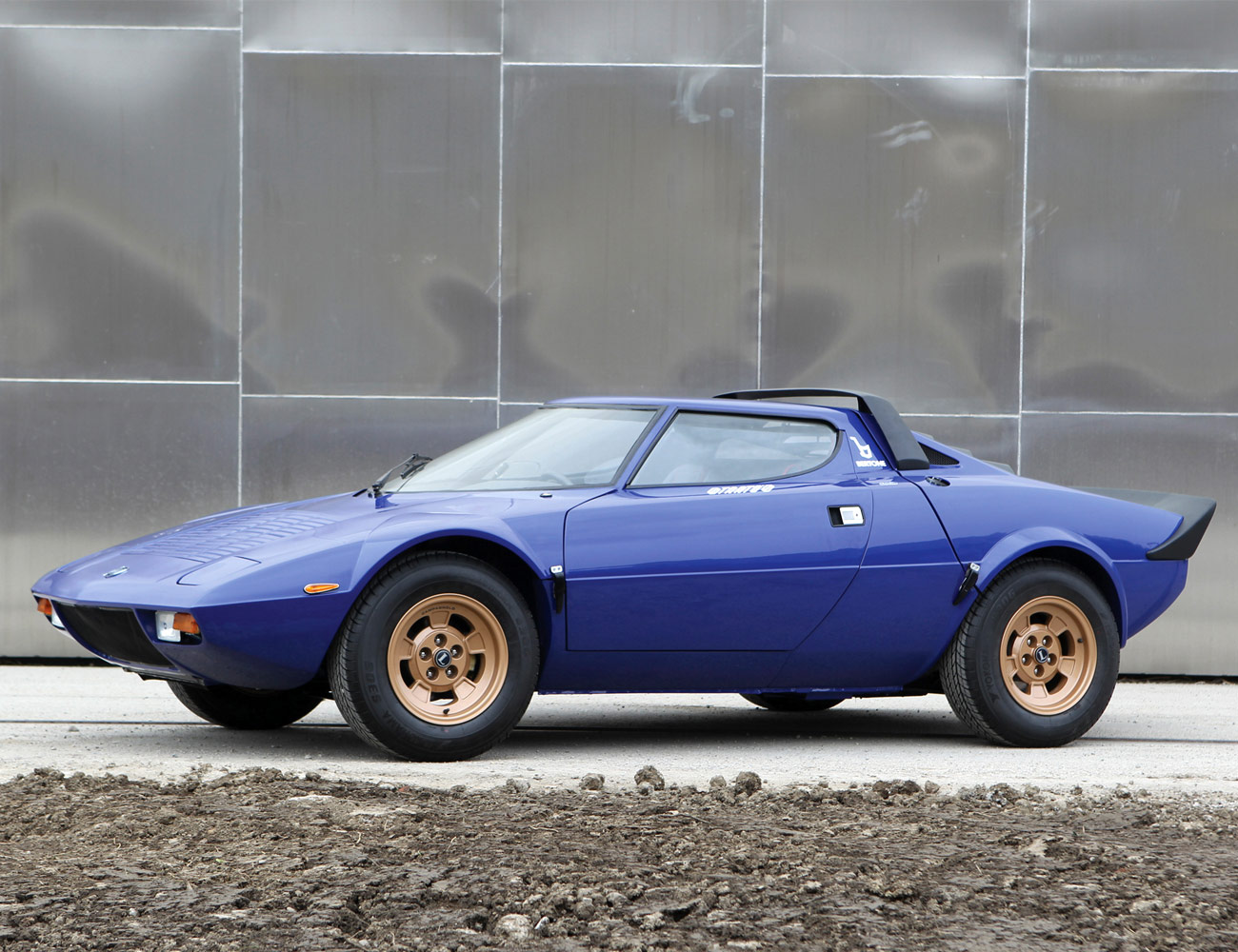
Lancia Stratos (1973)

As stunning to behold as it was successful at rallying. (And thankfully, not quite as nutso and Cybertruck-like as the Stratos Zero.)

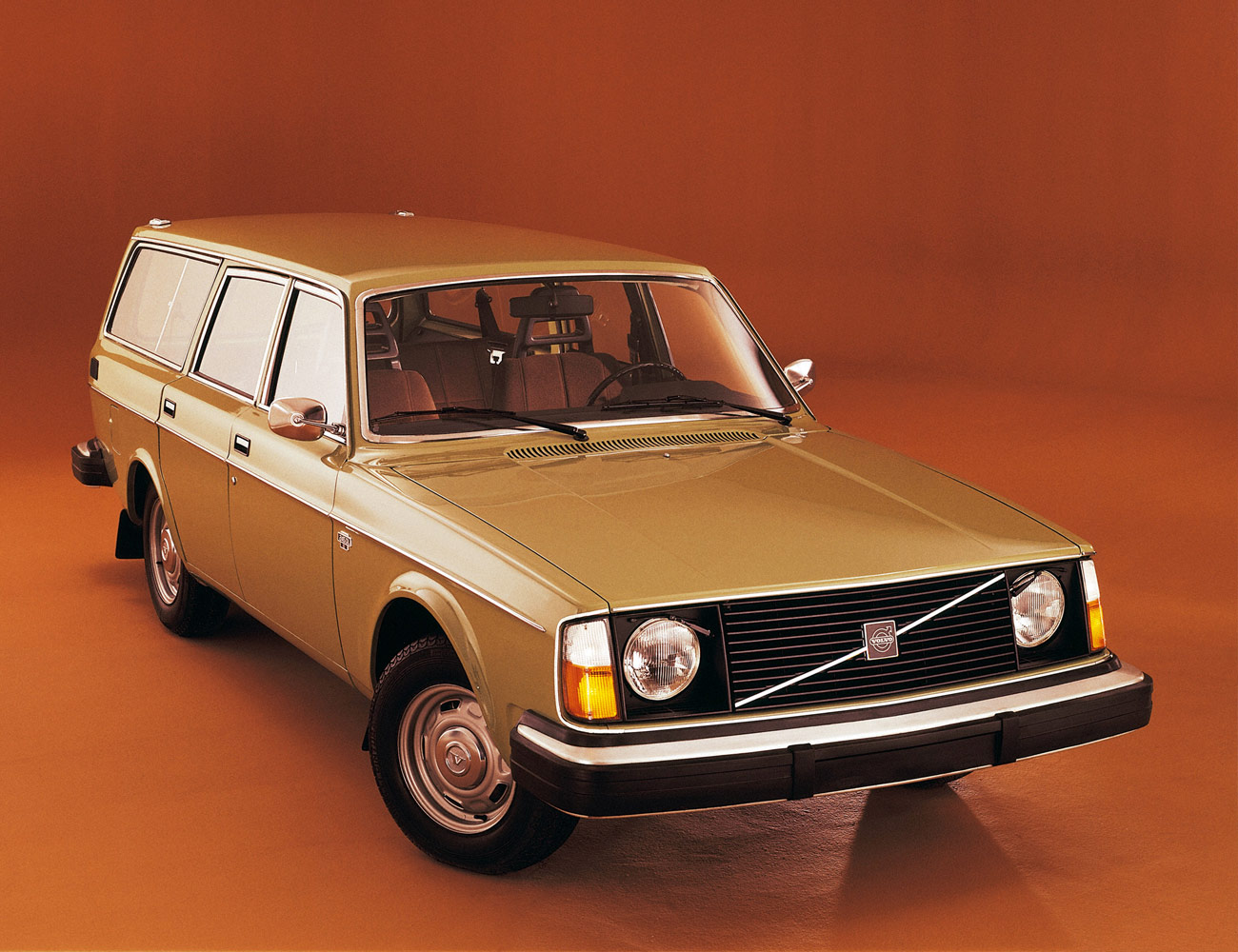
Volvo 240 (1974)

The Brooklyn-chic and bulletproof Volvo 240 stayed in production for 19 years after going on sale towards at the end of the Nixon Administration.

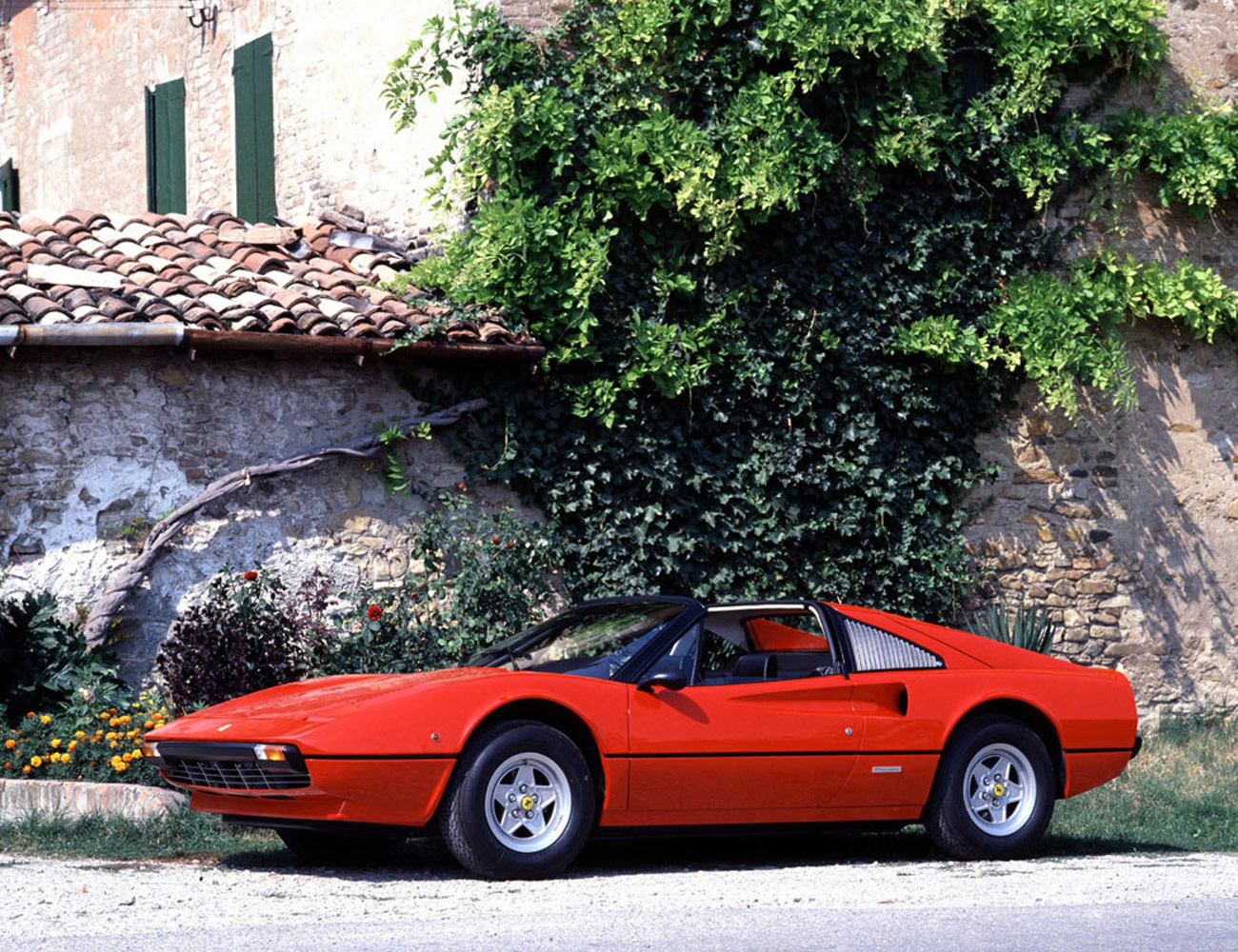
Ferrari 308 GTS (1975)

Designed by Pininfarina. Driven by Tom Selleck in Magnum P.I.

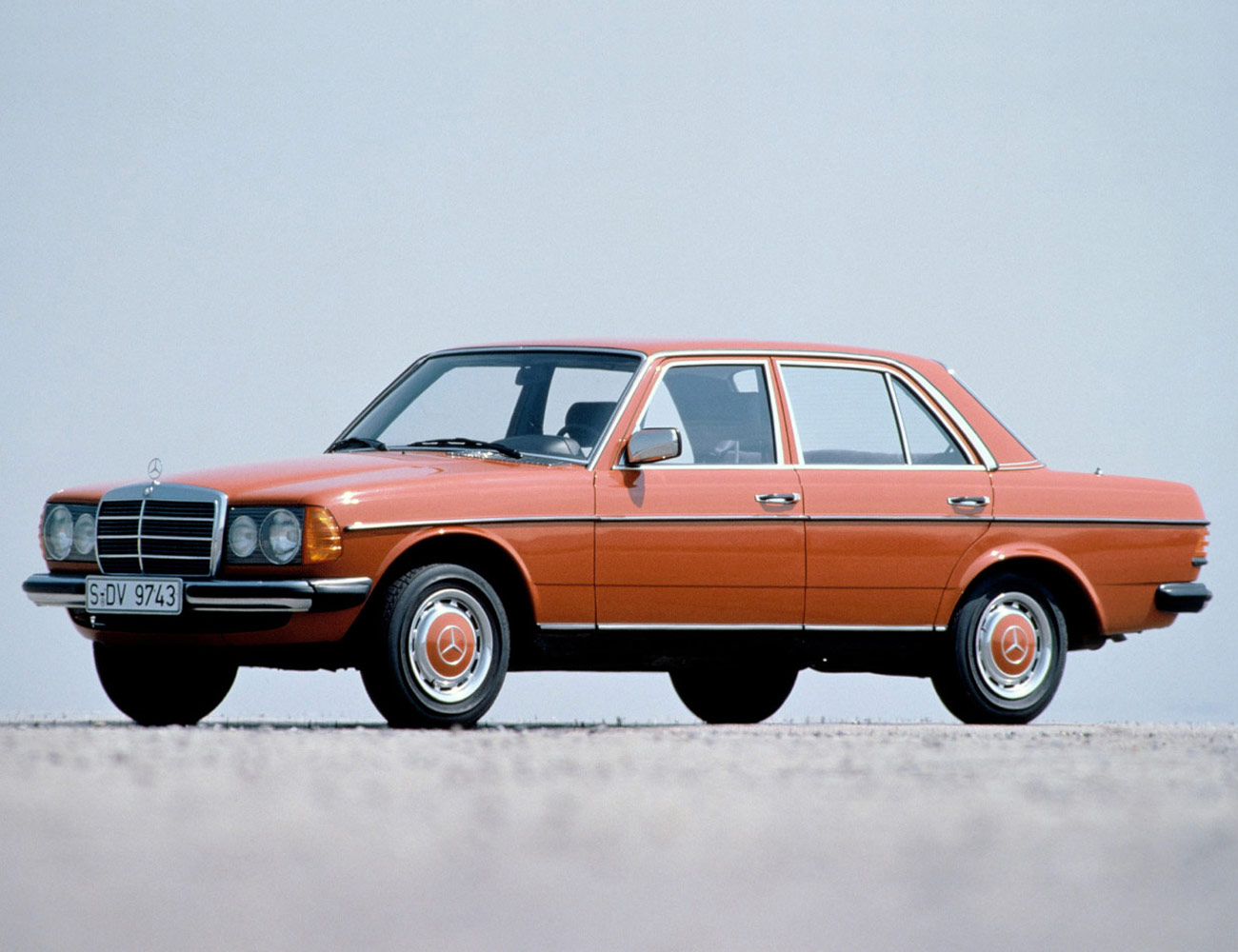
Mercedes Benz W123 (1975)

This Mercedes was virtually indestructible, and helped solidify the brand’s reputation for making such cars. John Lennon used one as his daily driver in his post-Beatles years, too.

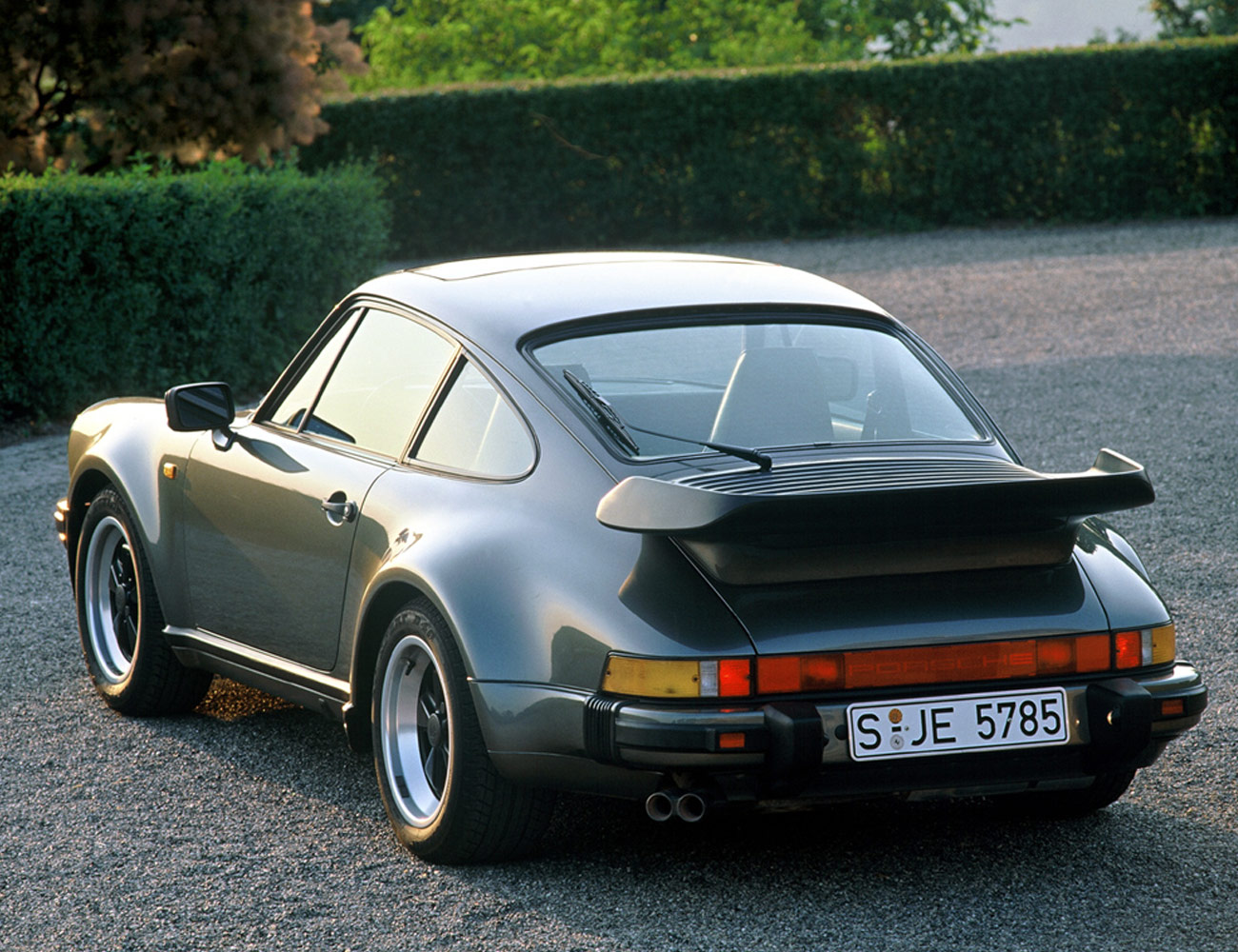
Porsche 930 (1975)

The Porsche 930 was the first-ever 911 Turbo. Both its poster-friendly aesthetics and mind-bending performance left a permanent mark on the 911 lineage.

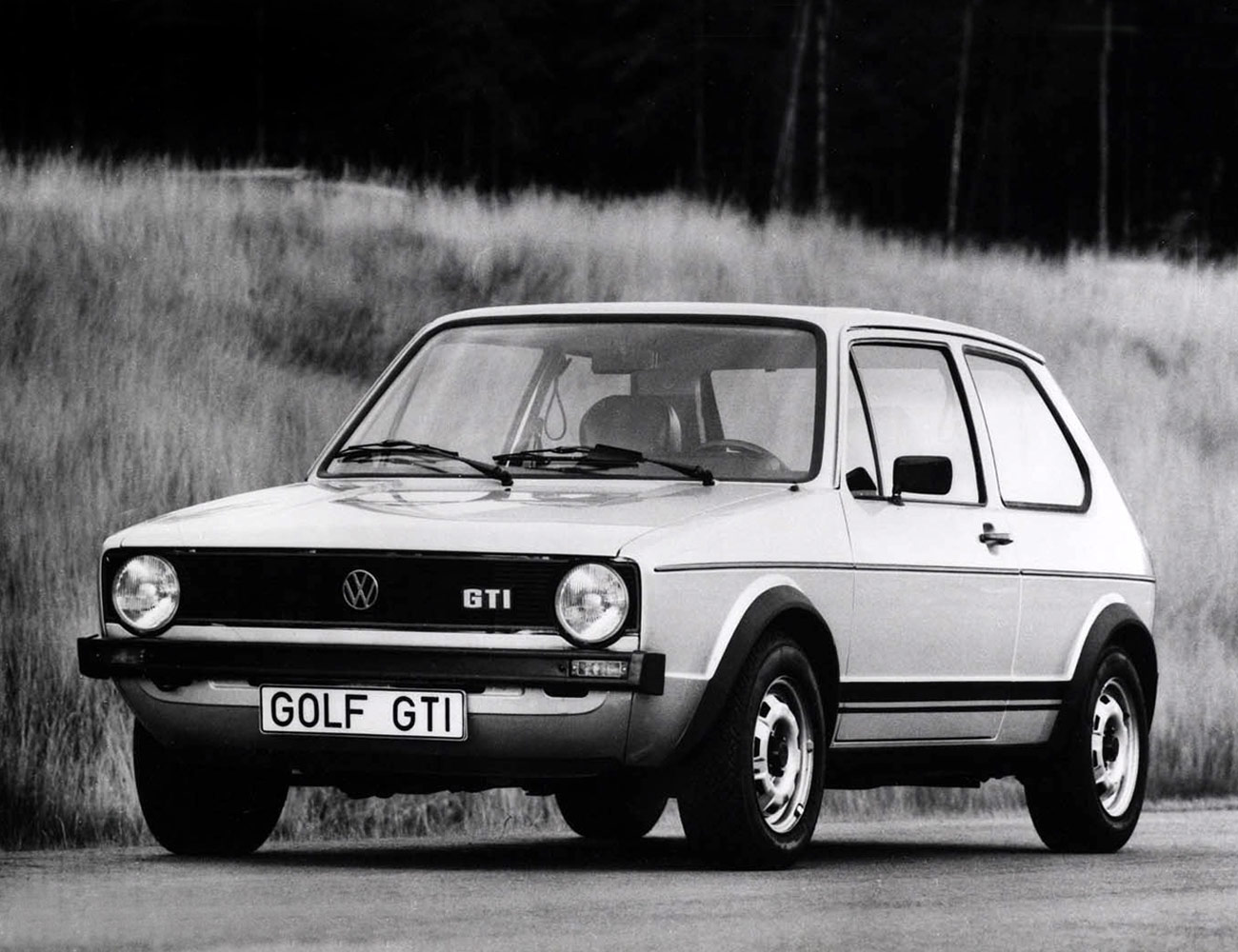
Volkswagen Mk1 GTI (1975)

Often imitated, never equaled. The racing Golf set a template VW has stuck with for nearly 50 years.

Jeep CJ7 (1976)

The CJ7 kept the goodness of earlier generations of Jeep, but made the product safer and more practical, thanks to a longer wheelbase and full doors.

Lotus Espirit S1 (1976)

A wedge-shaped work of art — and, of course, one of the most memorable Bond cars of all-time.

Alfa Romeo GTV 6 2.5 (1980)

This Alfa may be the owner of the best-sounding six-cylinder of all-time. Alas, it can’t be cool, because Jeremy Clarkson once owned one.

Renault 5 Turbo (1980)

A mid-engine alignment and crazy fender flares turned the dumpy Renault 5 into a performance icon. Driving a Renault 5 Turbo has been the undoubted highlight of Daniel Ricciardo’s time with the Renault F1 team.

Toyota FJ60 Land Cruiser (1980)

The first and best-looking Land Cruiser of the present wagon era. Even well-worn examples are still kicking around (and coveted).

BMW E30 3 Series (1982)

The E21 3 Series was good, but it was the second generation that established the 3 Series as perhaps the iconic BMW for decades to come.

Note: Purchasing products through our links may earn us a portion of the sale, which supports our editorial team’s mission. Learn more here.
Tyler Duffy

Tyler Duffy is Gear Patrol’s Motoring Staff Writer. He used to write about sports for The Big Lead and The Athletic. He has a black belt in toddler wrangling. He’s based outside Detroit.

More by Tyler Duffy | Follow on Facebook · Instagram · Twitter · Contact via Email

The New Ford Bronco Could Boast Crazy Suspension Tricks to Help It Fight the Wrangler

<!–Ford’s New Bronco Could Get a Crazy Off-Road Suspension • Gear Patrol<!– –>

Greatest Of All Terrain


Ford had to cancel the Bronco launch originally scheduled for last month due to the coronavirus pandemic. Those of us eagerly awaiting the new off-roader have been left grasping for whatever news trickles out from the company in spite.

Well, we’re in luck: on Tuesday, Motor Trend uncovered a Ford patent detailing what could be an incredibly complex and tech-forward suspension setup for the new Bronco. Maybe this has something to do with the fact that Ford has also trademarked something called “G.O.A.T.” modes?

The patent Motor Trend dug up is for something that calls itself “Anomaly Mitigation Suspension Mode.” The system would monitor factors like terrain, traffic and weather, as well as user inputs, to optimize the vehicle’s ride height and suspension setup. The patent lists more than 20 different modes. A “Daredevil” mode would let the vehicle drive on two or three wheels, presumably to clear off-road obstacles. A
“Music” mode would let the car bop around along to music — presumably for those wanting the Bronco to literally back that ass up. There are also “Expert” and “Novice” modes that could help cater the vehicle to a driver’s abilities.

Admittedly, Ford patents some really weird stuff, and not every idea makes it to production vehicles, so there’s a chance this is all just vaporware. That said, this sophisticated suspension system seems like it could give the Bronco — not to mention the Ranger and new F-150 — some exciting capability both on and off the road that would help it battle the likes of the Jeep Wrangler and other off-road icons.

Note: Purchasing products through our links may earn us a portion of the sale, which supports our editorial team’s mission. Learn more here.
Tyler Duffy

Tyler Duffy is Gear Patrol’s Motoring Staff Writer. He used to write about sports for The Big Lead and The Athletic. He has a black belt in toddler wrangling. He’s based outside Detroit.

More by Tyler Duffy | Follow on Facebook · Instagram · Twitter · Contact via Email

<!–

–>

<!– –><!–

–>

Bored at Home? Here Are 9 Great Lego Car Sets to Build

<!–Bored at Home? Here Are 9 Great Lego Car Sets to Build • Gear Patrol<!– –>

lego maniacs


There’s a pretty good chance that you’re reading this from home right now — and wishing you weren’t. Social distancing and staying home may be the best way to battle the coronavirus pandemic, but cooping active, able adults up for weeks on end in their domiciles is sure to leave them hunting for distractions. And even in this golden age of streaming content, sometimes, you just want to do something a little more hands-on to pass the time. So why not dust off an old childhood hobby and start building some Legos?

“But Legos are for kids, and I’m a grown-up!” you probably said to yourself just now, because a month with minimal human interaction has left you talking to yourself way more than you used to. Well, not exactly. While the simple blocks and yellow-headed people you played with decades ago may have been more suited for young brains and hands, these days, Lego makes collections that range from the easy to the maddeningly complex (and surprisingly expensive).

And those collections include quite a few different automotive designs. Carmakers far and wide have given Lego rein to whip up snap-together models of their own models classic and modern alike. We’ve pulled together a few of our favorite car Lego kits below, spread across various price points and levels of realism and complexity — but if none of them strike your fancy, you can also check out way more options right here.

McLaren Senna

Ferrari F8 Tributo

“>Buy Now: $20[/button]

1985 Audi Sport Quattro S1

Volkswagen T1 Camper Van

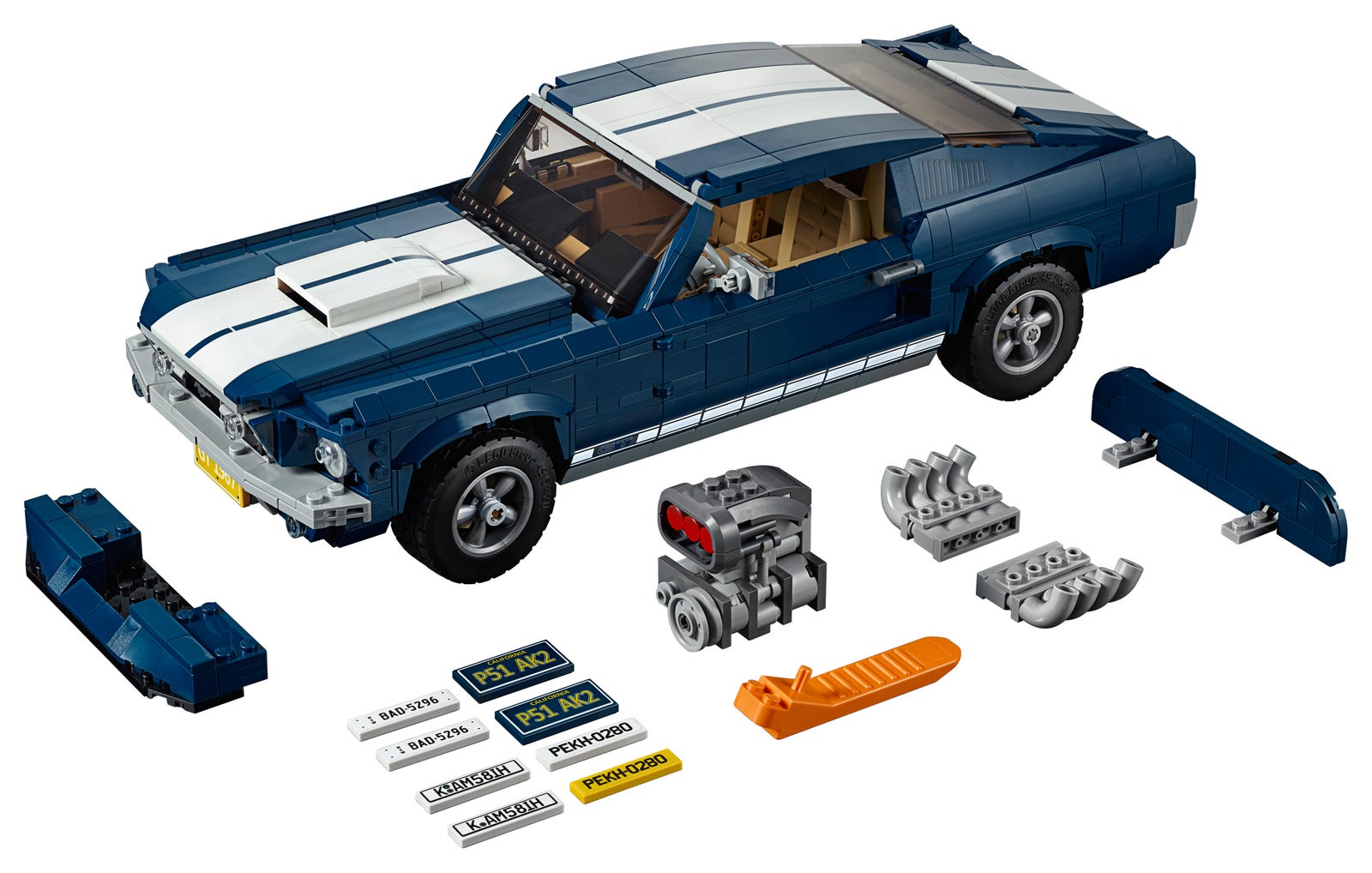
1967 Ford Mustang

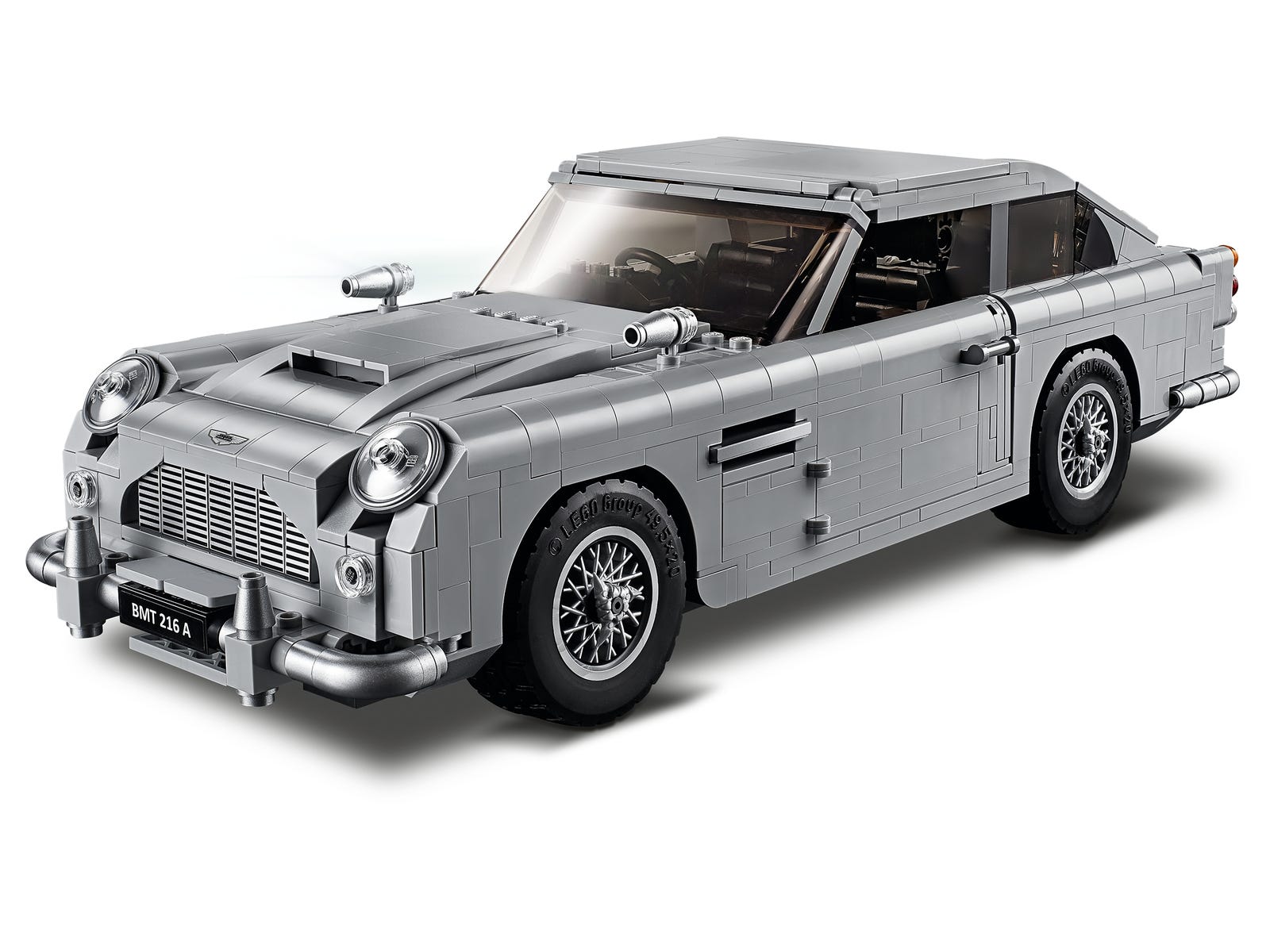
James Bond’s Aston Martin DB5

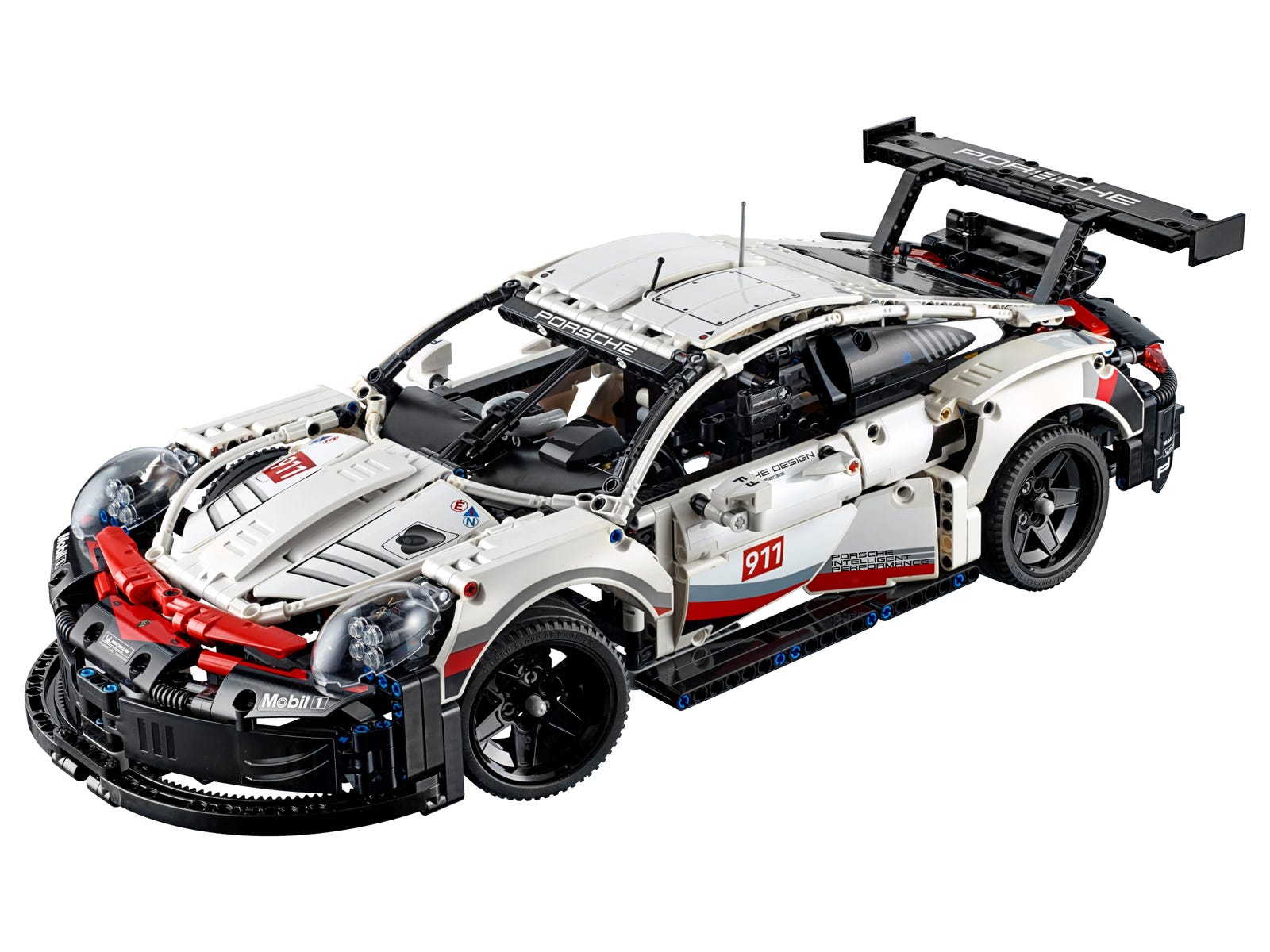
Porsche 911 RSR

Land Rover Defender

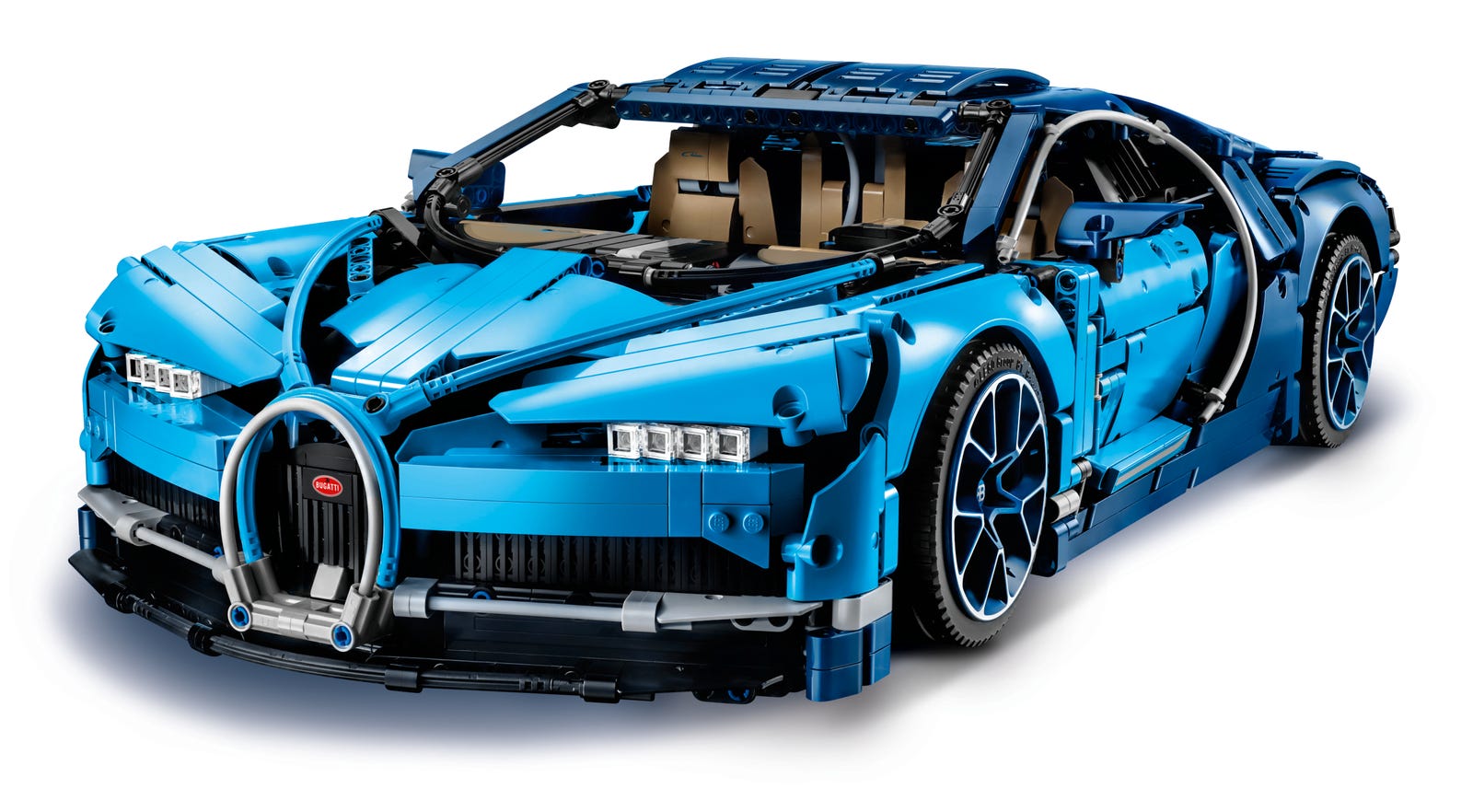
Bugatti Chiron

.

Note: Purchasing products through our links may earn us a portion of the sale, which supports our editorial team’s mission. Learn more here.
Will Sabel Courtney

Will Sabel Courtney is Gear Patrol’s Motoring Editor, formerly of The Drive and RIDES Magazine. You can often find him test-driving new cars in New York City, cursing the slow-moving traffic surrounding him.

More by Will Sabel Courtney | Follow on Instagram · Twitter · Contact via Email

<!–

–>

<!– –><!–

–>

5 Fun Cars You (Yes, You) Can Buy With Your Tax Refund

Under normal conditions, April 15th would be the deadline to file your taxes. (This year, the deadline has been pushed back to July.) According to the Washington Post, the average American tax refund comes out to a little more than $3,000.

Now, you could (and arguably should) put that refund toward something more prudent, like building up your savings or investing. Or, of course…you could add a fun car to your garage. Three grand may not sound like much when it comes to a working automobile, but when you look around online, you can actually find decent rides for the money. And while they may not all qualify as “fun” under the traditional definition, it’s hard not to argue a car that’s so cheap that you bought with what’s practically free money won’t be fun in a who-cares-if-it-breaks way, if nothing else.

Here are five fun used cars we found for $3,000 or less. They all appear to be in good running order, with at least a few years of life left. (That said, you may need to grin and bear some excessive early-2000s body cladding.)

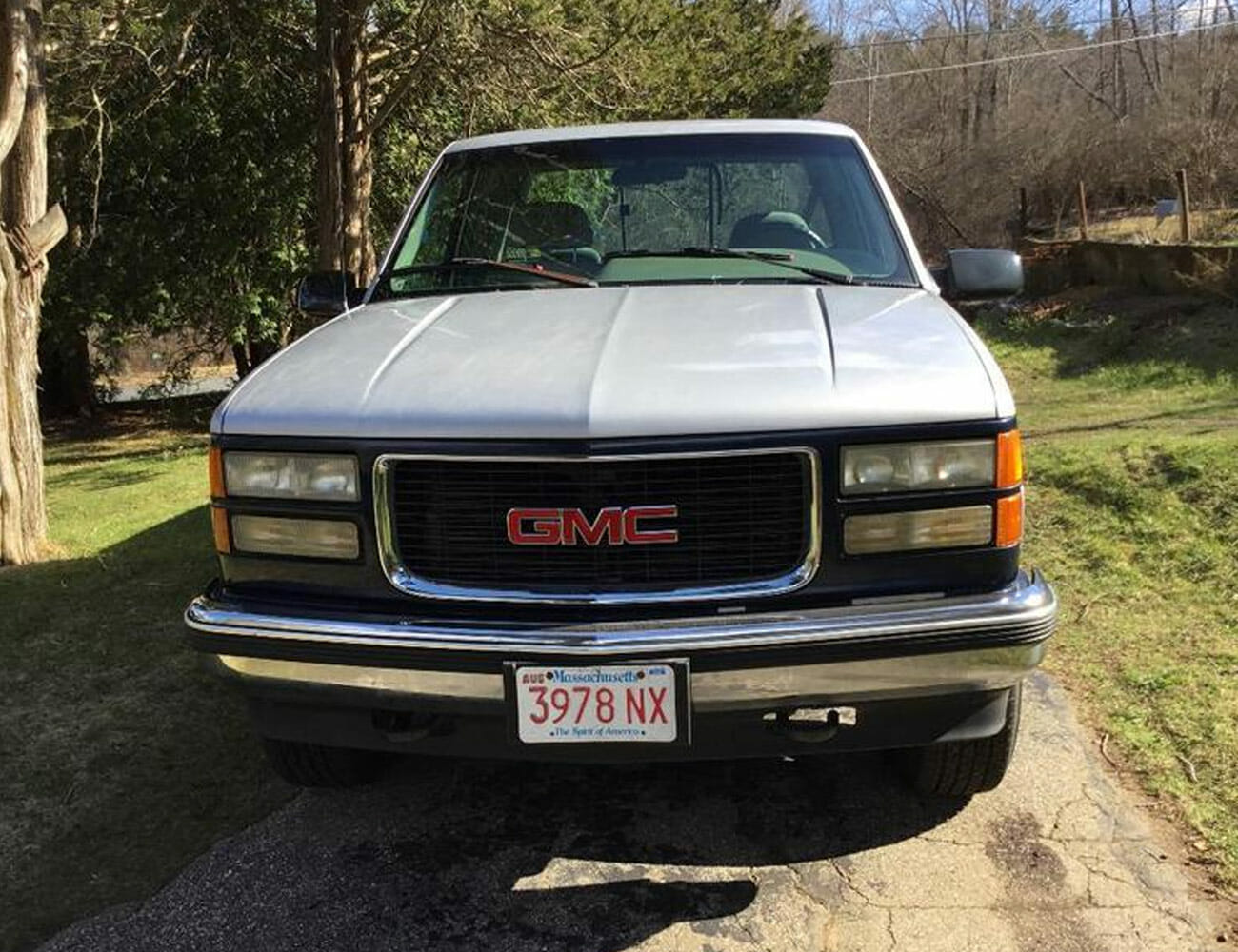
1995 GMC Sierra 1500 – $2,500

This truck is a one-owner Sierra that has been sparingly but regularly driven for a little more than 100,000 miles. It looks clean, with a fetching two-tone blue and gray paint job and the Z71 off-road package.

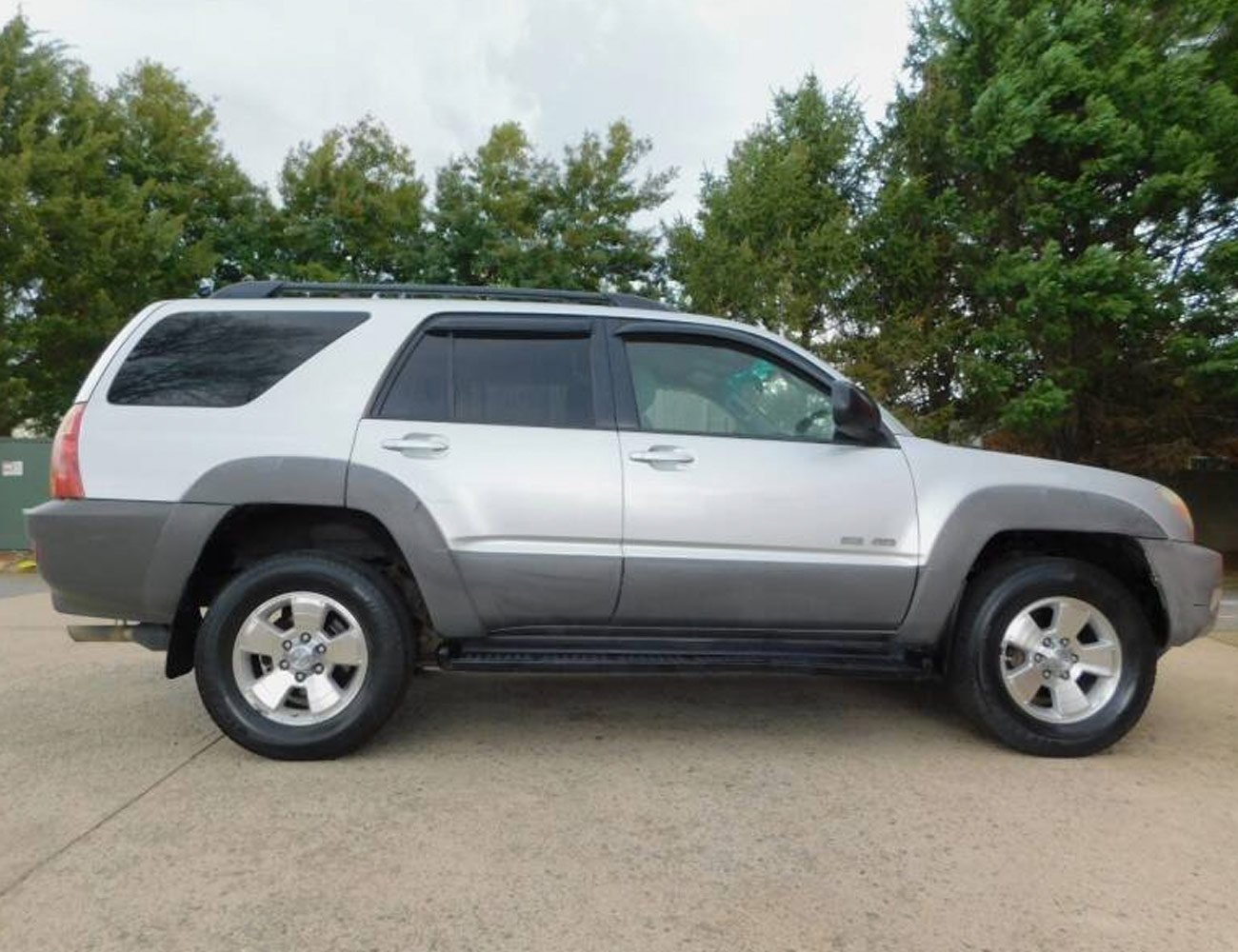
2003 Toyota 4Runner – $2,995


It’s not the most attractive 4Runner generation, what with all of the cladding. But if any vehicle will have a lot of life left in it with 210,000 miles on the clock, it’s a 4Runner.

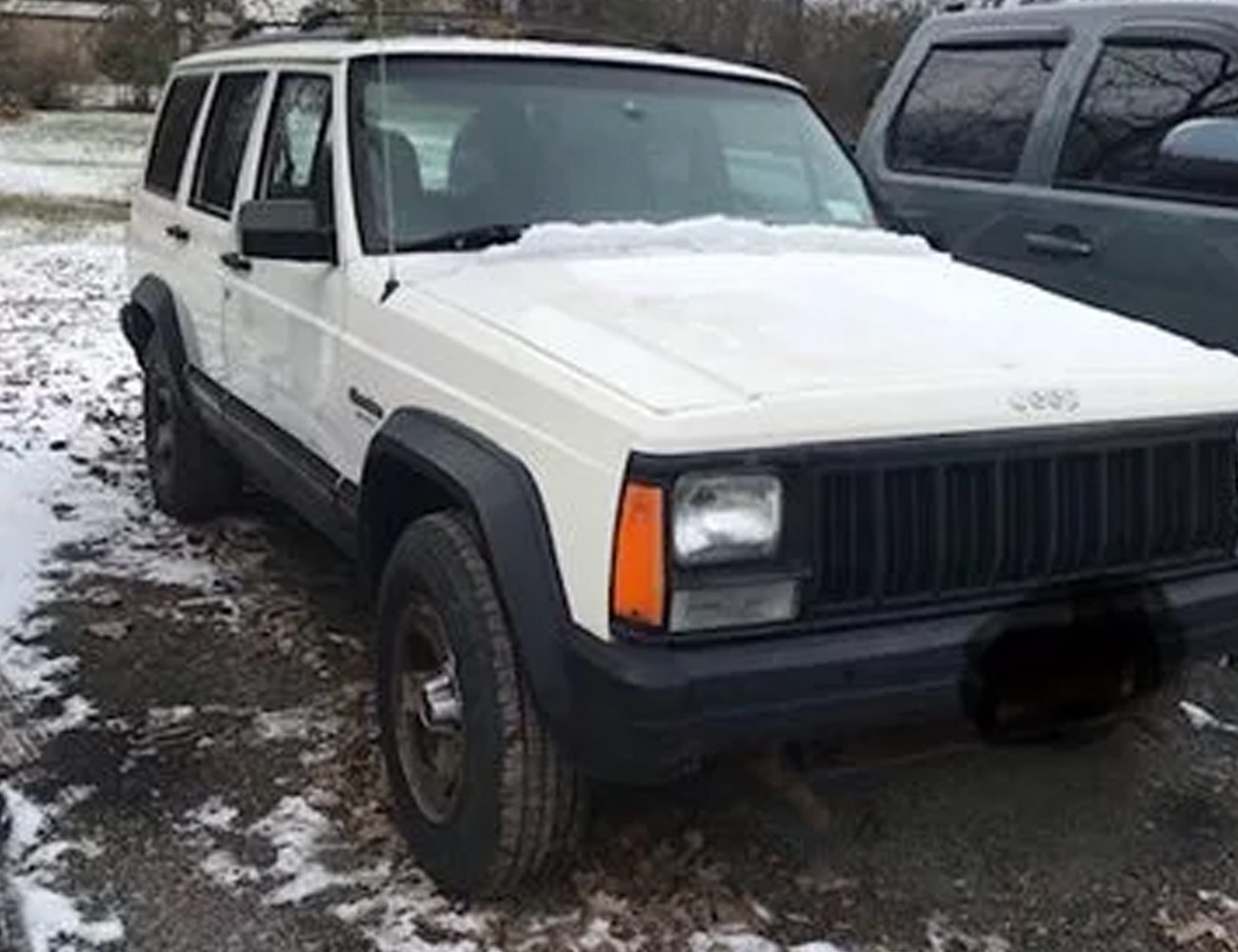
1996 Jeep Cherokee Sport – $3,000

The Jeep Cherokee XJ stayed in production for 18 years. It’s bullet-proof, and widely regarded as one of the best SUVs ever made. It’s also a lot cheaper than the Wrangler on the used market. Here’s one with a reasonable 120,000 miles.

2005 Volkswagen Jetta GLS – $2,995

Manual transmission VWs are great fun, even if they aren’t GTIs. This 2005 Jetta GLS is a California car with only about 90K miles on the odometer.

2002 Volvo V40 – $2,995

Who doesn’t love a Volvo wagon? This silver one would blend right in on a Brooklyn Heights street. It has some life left, with only 122,000 miles.

Note: Purchasing products through our links may earn us a portion of the sale, which supports our editorial team’s mission. Learn more here.
Tyler Duffy

Tyler Duffy is Gear Patrol’s Motoring Staff Writer. He used to write about sports for The Big Lead and The Athletic. He has a black belt in toddler wrangling. He’s based outside Detroit.

More by Tyler Duffy | Follow on Facebook · Instagram · Twitter · Contact via Email

Is Mazda About to Build the Affordable Sport Sedan We’ve Always Wanted?

<!–Is Mazda Creating the Cheap Sport Sedan You Always Wanted? • Gear Patrol<!– –>

more power is coming


Mazda has produced some outstanding cars in the past few years. The MX-5 Miata is a perennial standout, and the CX-9 has proven to be an exceptional SUV. Mazda did not win the 2020 World Car of the Year award; that went to the Kia Telluride. But the other two finalists for that award were the Mazda 3…and the Mazda CX-30.

Those successes bode well for what’s coming next from Mazda. One car to keep an eye on will be the new generation of the Mazda 6 sedan, expected to arrive in late 2022. Car and Driver reports significant changes that could take the midsize car in a performance-oriented direction.

According to the report, the new Mazda 6 will be rear-wheel-drive-based,  and bump up to an inline-six engine from the current inline-four. The new engine would use a 48-volt hybrid system and could produce close to 350 horsepower — a massive jump from the current Mazda 6’s output of 227 hp. (Sadly, there’s no mention of a return of the six-speed manual, which Mazda dropped from the current sedan.)

Kia made a similar market play with the Stinger in 2018, attempting to undercut the European luxury sedan market with a performance-oriented four-door. That car — especially the 365-hp Stinger GT version — has been a critical success, but not a raging sales success like the Telluride. Mazda may have some advantages Kia does not, however. The brand’s established reputation for performance and driving dynamics could help it, especially in a segment where that matters. So could Mazda’s more sophisticated and upscale design aesthetic. Guess we’ll have to wait until 2022 to see.

Note: Purchasing products through our links may earn us a portion of the sale, which supports our editorial team’s mission. Learn more here.
Tyler Duffy

Tyler Duffy is Gear Patrol’s Motoring Staff Writer. He used to write about sports for The Big Lead and The Athletic. He has a black belt in toddler wrangling. He’s based outside Detroit.

More by Tyler Duffy | Follow on Facebook · Instagram · Twitter · Contact via Email

<!–

–>

<!– –><!–

–>

This Game-Changing Electric Camping Trailer Should Hit the Road This Year

<!–This Game-Changing Camping Trailer Should Arrive in 2020 • Gear Patrol<!– –>

towable with any vehicle


Back in 2018, German camping vehicle manufacturer Dethleffs unveiled the e.Home Coco concept. It’s a small, lightweight camping trailer, albeit with a key innovation that sets it apart from just about every similar item on the market: a lithium-ion battery pack and a dual-motor electric system. The e.Home Coco could be an absolute game-changer for the camping trailer world  — none other than Airstream has been working on similar ideas behind the scenes — and Dethleffs has been working toward making it a reality by the end of 2020.

The trailer would be able to power itself as needed, enabling it to be hauled around by lighter vehicles than normally would be able to tow it. Unlike some of our favorite camping trailers, the e.Home Coco would be able to be towed by practically any passenger vehicle — including electric cars, where the trailer would help EVs haul it around without destroying their range.

Dethleffs wants the e.Home Coco to be able to maneuver itself 360-degrees on the spot for self-parking while being steered with a mobile device, like this OzXcorp trailer prototype. By recouping electricity via both solar power and regenerative braking, Dethleffs also expects the trailer to serve as a portable power source.

The e.Home Coco would be particularly useful in Europe, where camping via vans and trailers is a popular hobby and many consumers will be switching to EVs over the coming decade. Still, it’ll have to handle some challenges first; one major endurance test the company plans is to have the trailer cross the Alps while being towed by an EV on a single charge. That test is supposed to happen by 2020. Here’s hoping the current coronavirus pandemic doesn’t push that timeline back too much.

Note: Purchasing products through our links may earn us a portion of the sale, which supports our editorial team’s mission. Learn more here.
Tyler Duffy

Tyler Duffy is Gear Patrol’s Motoring Staff Writer. He used to write about sports for The Big Lead and The Athletic. He has a black belt in toddler wrangling. He’s based outside Detroit.

More by Tyler Duffy | Follow on Facebook · Instagram · Twitter · Contact via Email

<!–

–>

<!– –><!–

–>

1,400 Miles, 2,200 Horsepower: Crossing the West in America’s 3 Most Powerful Muscle Cars

This story is part of our Summer Preview, a collection of features, guides and reviews to help you navigate warmer months ahead.

Westward Ho

Go West, young man, goes the old saw ascribed to Horace Greely. It was meant to encourage 19th-century Americans to pursue their dreams in the vast, untapped land beyond the Mississippi River. But it’s a saying that applies just as well to today’s road trippers. The West (capital W) has been emblematic of the rugged independence at the heart of our national identity practically as long as we’ve had a nation. It’s a land of breathtaking beauty, soul-stirring silence and abundant peace.

It’s also a perfect venue to uncork seriously powerful cars. Here, you’ll find constant elevation changes, sweeping curves, four-mile straightaways and, most importantly, barely any other vehicles or people to pass. Speed limits are higher, and drivers seem more likely to push beyond them than in other, denser states. (Montana actually abandoned highway speed limits for a few years in the late ’90s.)

This landscape calls for speed, and not just any variety. European exotics and Japanese sports cars, though they have the chops, would seem incongruous here. No, these roads were made for American muscle. And 2020 turns out to be a serendipitous year for a three-way shoot-out between the best — and perhaps last — of their breed.

2,207 Horses, No Waiting

Less than a decade ago, people spoke of the late ‘60s and early ‘70s as having been the golden age of American muscle. How times change. Today, each of Detroit’s Big Three offers up a two-door four-seater with the sort of power even the wildest hot-rodders of the wonder years couldn’t have dreamt of.

Chevrolet’s Camaro ZL1 is the least powerful of the bunch, but that’s like being the worst player at the Pro Bowl; it makes a mere 650 horsepower and 650 pound-feet of torque. The new-for-2020 Ford Mustang Shelby GT500 is down 25 lb-ft to the Camaro, but it kicks Chevy’s ass in the horsepower race with a stunning 760 ponies. Yet even it’s not the most powerful horse in this race. That would be the Dodge Challenger Hellcat Redeye Widebody, a true brute that screams out 797 horses and 707 lb-ft.

Each car gets its power from a supercharged V8 and each channels it to the rear wheels alone — but that’s where they part ways. The Camaro is the only one to offer a manual transmission; there’s a 10-speed automatic available, but we opted for the six-speed stick because, well, of course we would. The Redeye comes only with an eight-speed automatic, presumably so you never have to put down your coffee to shift. And the Ford packs a newly developed seven-speed dual-clutch automated manual gearbox, just like the speediest European cars do. That comparison isn’t a stretch; Ford’s new gearbox is every bit as fast and smart as the ones in those super sports cars.

The Long Road Here

Neither this land nor these cars are strangers to change, yet you wouldn’t think it looking at them. Somewhere outside Tuba City, we flash past a sign advertising dinosaur footprints, stamped into mud that turned to stone then disappeared beneath the ground for 200 million years before the wind carved them loose. Less than 15,000 years ago, mammoths, saber-toothed cats and two-ton sloths roamed this earth, before climate change and humans brought in by the end of the Ice Age wiped them all out. A few hundred years back, tribes like the Navajo, Hopi, Paiute and Ute roamed freely; then the U.S. government marched in and decimated and isolated them to make room for American settlers, who used the land for cattle grazing. Nowadays, cell coverage stretches across the deserts and prairies. But even if solar panels pop up here and there, the West looks much as it did when cowboys roamed freely.

Ford, Chevy and Dodge have come a long way, too. The Mustang was the first to arrive back in 1964, a stylish compact car that made just 105 horsepower in basic form; the first Shelby GT500 arrived in 1967, making 355 horses. The Camaro debuted that same year, out to steal the Mustang’s thunder; the sportiest version, the Z/28 that serves as the ZL1’s spiritual forefather, cranked out around 360 horses, though Chevrolet quoted it at a mere 290 for insurance reasons. Like its modern-day descendant, the first Challenger that arrived in late 1969 was a bigger car than the Mustang and Camaro — and like today’s Redeye, it came with the most power, packing a 7.0-liter Hemi V8 delivering 425 horsepower.

But even today’s incredible engine outputs undersell just how improved today’s muscle cars are. The 2020 models deliver quality, reliability and comfort that no car made in the ‘60s could dream of matching, let alone the mass-produced rides turned out by the Big Three. Each one packs more processing power than the mightiest computer on Earth in 1970. Yet at a glance, they still bear a resemblance to those cars that roamed the roads half a century ago.

Into The Great Wide Open

Maps can’t capture the scale of the West. Towns that seem neighborly on the map turn out to be half an hour apart, even at the what-we’re-dealing-with-here-is-a-complete-lack-of-respect-for-the-law speeds these cars are all too happy to lope along at. Add up the West’s 11 states and you wind up with 1,174,143 square miles; if it were its own nation, it’d be bigger than all of Argentina. Yet apart from the dense cities that cling to the Pacific Ocean, it’s largely empty, long stretches of road connecting tiny dots on the atlas. And the road to our destination of Monument Valley, perched on the border of Arizona and Utah, is emptier still, carving a path through the Navajo Nation — a land half again as large as New Jersey but with four percent of the population.

On the flip side, the blank spots between those thin lines on the map hide the grandeur of the place. Every bend in the road reveals some new wonder to be discovered, the scenery rendered in HDR crispness in the clean, dry air. Words like awesome and epic have long been overused past the point of cliché; the sights and scale of the West, though, remind you what they really mean.

The West has always been larger than life. That’s been central to its appeal, for as long as it’s been sold to us. And it has, indeed, been sold to us — ever since America bought it from France in the Louisiana Purchase and started selling it off again in the form of Manifest Destiny and the Homestead Act. By the time John Ford first filmed John Wayne riding past Monument Valley’s mesas, Americans had already considered the West some sort of promised land for more than a century. The West was, is, and likely always will be a commodity, promoted as the embodiment of freedom. The same goes for muscle cars. All cars represent independence, but muscle cars epitomize it; they’re four-wheeled freedom distilled to its sharpest form.

Steel Ponies

Every mile of open road reveals more about these machines. The Mustang is the newest of the trio, and it’s the one with the boldest goals: it seeks to deliver all-around supercar performance. An impossible task, it might seem — yet it delivers, serving up not just Ferrari-rivaling acceleration but Porsche-like handling. It picks up speed with a ferocity that boggles the mind, then clings to it through every turn, tracking flat and smooth even as its fat tires howl while sticking the beefy car to the ground. Yet it’s no penalty box; shock absorbers filled with magnetic fluid that adjusts its viscosity in milliseconds serve up a comfortable ride no matter how bad the pavement turns.

The Camaro feels even lighter and more nimble on the road, an épee to the Shelby’s saber. Its six-speed manual means you’re forced to take command of the big V8 in a way you aren’t with the others, appreciating the nuances of the power as it flows past your right hand on its way astern. Still, it’s not as quick as the Mustang; the Ford’s gearbox shifts with a speed and intuition no manual can match, and the extra 110 horsepower feels like 200 when the Shelby’s ire is up. (Part of that is due to the red-blooded howl that spews from the GT500’s exhaust pipes, which could make a Formula 1 car tuck its tail between its legs.) And even the ZL1’s biggest fan among our cohort complained about the lack of visibility from the pillbox-like cabin.

The Challenger feels like the third wheel here. It wallows and bobs where the other two tuck and weave; as a result, it falls behind in the turns, depending on its absurd power to close the gap on the straightaways. Between its body motions, its squared-off hood that stretches halfway to the horizon and its atomic power plant, driving the Redeye feels like helming a nuclear aircraft carrier.

It has plenty of appeal, though — especially from the curb. The group’s opinion is unanimous: not only is the widebody Challenger the most chiseled of the trio, it’s the best-looking. Period. It’s also the roomiest, with a back seat actually suitable for adults (albeit not for multistate trips). And while all three of these cars can vaporize their rear tires without issue, the other two don’t do it quite as happily as the Hellcat.

The Last Cowboys

If the beauty of the West is to survive, cars like this may well need to die. Power comes at a cost, and in this case, it’s at the expense of the environment. Over the course of our 1,500-mile road trip, our trio of muscle machines burned more than 300 gallons of gasoline — each working out to 20 pounds of carbon dioxide. That means our four-day jaunt was responsible for adding three tons of CO2 to the atmosphere. (For context: the average American creates 16.1 tons of CO2 per year.) Climate change is already impacting the West, much as it is everywhere else. Temperatures are higher, rain is less frequent. Cars that average 15 miles per gallon rank high on the list of the last things the planet needs.

They may not be long for this world anyway. The Camaro’s sales have fallen each of the last five years, and rumors suggest it may not be replaced when the current model ages out of the lineup in a couple years. The Challenger’s sales have held steady, but at 12 years old, it’s long been eligible for automotive AARP, and a successor remains a question mark. The Mustang seems the most likely to stick around, but it may well evolve in the process; the next vehicle to wear the badge, after all, will be an Tesla-fighting electric crossover.

One day, perhaps sooner than we imagine, electric cars will be the ones racing along under these Western skies. They may be faster, even more fun than these; they’ll certainly be better for the winds and waters. But the canyons and buttes will no longer echo with the roar of their engines. Just like the cowboys, they’ll be left to legend.

A version of this story originally appeared in a print issue of Gear Patrol Magazine under the title “Blaze of Glory.” Subscribe today.

Note: Purchasing products through our links may earn us a portion of the sale, which supports our editorial team’s mission. Learn more here.
Will Sabel Courtney

Will Sabel Courtney is Gear Patrol’s Motoring Editor, formerly of The Drive and RIDES Magazine. You can often find him test-driving new cars in New York City, cursing the slow-moving traffic surrounding him.

More by Will Sabel Courtney | Follow on Instagram · Twitter · Contact via Email

Looking For the Best Affordable Porsche? Buy a Used Macan

Porsche makes quality cars. Few people would quibble with that assertion. For an emphatic majority of us, though, the trouble is affording them. Porsches are expensive to buy new, and if you’re waiting for that choice used 911 or Cayman to depreciate into your price range, you’ll be waiting quite a while (if it happens at all).

There is, however, a way to cheat that truism. You can grab a great, relatively new, low-mileage Porsche at an affordable price…if you buy a used Macan.

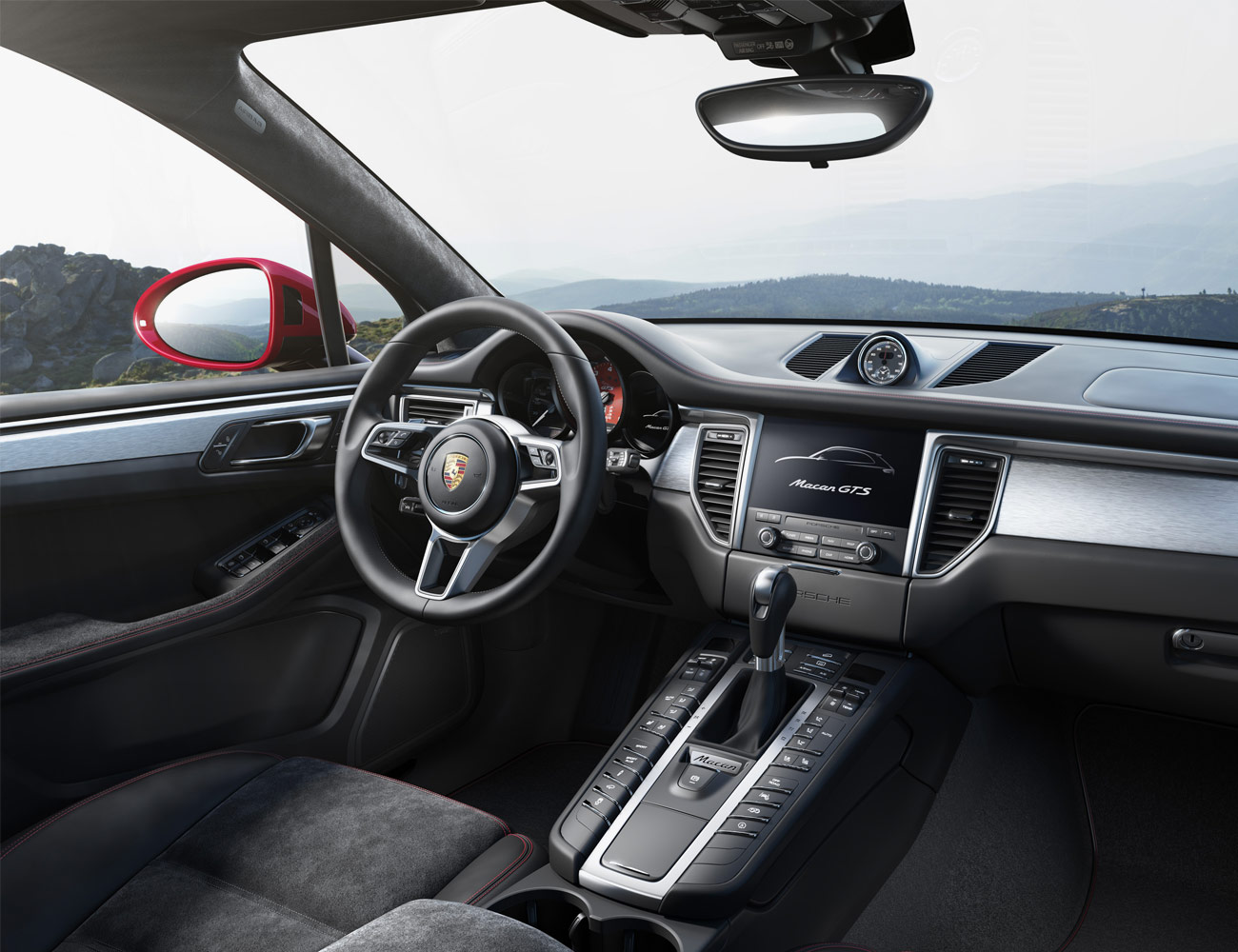
The Macan has been a massive hit since Porsche debuted it in 2014. It’s a compact crossover — the type car most Americans who aren’t buying pickup trucks want. It’s also, simply put, brilliant. We’ve progressed well beyond Porsche SUVs being shameful products to help the company’s bottom line; the Macan has been a fixture on Car and Driver 10 Best lists because it’s excellent to drive, like a proper Porsche should be.

Most years, the Macan is far and away Porsche’s best-selling car. In 2019, the Macan outsold the 911, 718 Cayman/Boxster, Panamera and Taycan — combined. That means there are a lot of Macans kicking around the used-car market. Plus, while people may buy a Boxster and keep it around in the garage for 10 years, the Macan is a daily-driving crossover that many buyers lease. These factors have created a glut of used Macans in the marketplace.

As such, prices are lower than you would think. I ran a quick 40-mile search on Cars.com in my local Detroit area. It’s not Porsche country, but I still turned up 15 Macans from 2016 or newer with asking prices of less than $40,000.

Base models can be had for under $35K; here’s a 2018 Macan with around 18,000 miles for $34,650. We wouldn’t blame you for wanting to upgrade to the Macan S with the 3.0-liter V6 and 86 additional horsepower, though — and luckily, those are cheap too. Here’s a 2016 Macan S with under 20,000 miles on the clock for $38,930. If you can accept a few more miles, here’s a 2015 Macan S I found with around 35,000 miles for $31,777.

Is a Macan the Porsche you’ve been dreaming of? Maybe not. But getting a sparingly used Porsche for about the price you would pay for a loaded Toyota RAV4 is still a spectacular deal.

Note: Purchasing products through our links may earn us a portion of the sale, which supports our editorial team’s mission. Learn more here.
Tyler Duffy

Tyler Duffy is Gear Patrol’s Motoring Staff Writer. He used to write about sports for The Big Lead and The Athletic. He has a black belt in toddler wrangling. He’s based outside Detroit.

More by Tyler Duffy | Follow on Facebook · Instagram · Twitter · Contact via Email

Porsche Is Auctioning Off This Rare, Drool-Worthy 911 to Help Battle Coronavirus

<!–Porsche to Auction Off This Gorgeous 911 to Fight Coronavirus • Gear Patrol<!– –>

bring your virtual checkbook


Last year, Porsche launched the new 992 generation of the 911. But the company still kept the outgoing (and quite well-regarded) 991 generation in production until December 2019. The very last 991, as it turns out, is is a 911 Speedster — and Porsche Cars North America has just announced it will auction it off to benefit United Way Worldwide’s COVID-19 Community Response and Recovery Fund.

The Speedster is, arguably, the most sought-after and exclusive 911 body type. Porsche produced only 1,948 (to celebrate the 356’s birth year) of the 991 versions. American dealers that have 991 Speedsters are asking more than $300,000 for them. This car, like the others, will also come with a 911 Speedster Heritage Design Chronograph watch, which is  exclusive to 991 Speedster owners and matched to the chassis number.

In a nod to social distancing guidelines, PCNA will auction the car on RM Sotheby’s online-only platform. Bidding will begin at 11:00am EDT on April 15, and last until 1:00pm EDT on April 22. Factoring in the magnificence of the 911 being auctioned, the unbridled enthusiasm of well-heeled 911 aficionados and the timely charitable element, expect the price to escalate quickly.

That said, if you don’t have the ducats to compete in that 911 Speedster auction, you can enter to win this Tesla-powered vintage Porsche 911 in a separate charity giveaway to benefit the Petersen Automotive Museum.

Note: Purchasing products through our links may earn us a portion of the sale, which supports our editorial team’s mission. Learn more here.
Tyler Duffy

Tyler Duffy is Gear Patrol’s Motoring Staff Writer. He used to write about sports for The Big Lead and The Athletic. He has a black belt in toddler wrangling. He’s based outside Detroit.

More by Tyler Duffy | Follow on Facebook · Instagram · Twitter · Contact via Email

<!–

–>

<!– –><!–

–>