All posts in “Car Reviews”

2020 Dodge Charger SRT Hellcat Widebody Review

2020 has been a weird year. No one will argue that. And when things get a little too weird, you seek out things that bring you joy, things that bring you hope, and things that put a smile on your face. Things like classic Americana. Like muscle cars – big cars, big engines, big fun. So after a season of “sensible cars” we reached out to Dodge to see what flavor of Hellcat they were serving up this Autumn. The Durango Hellcat wasn’t available yet, but they offered us a Charger SRT Hellcat Widebody instead. The only thing we knew about it was that it had big ol’ fender flares around the wheel wells and manages to look even meaner than the standard Charger SRT Hellcat. We’d give it a shakedown.

The last Charger Hellcat we tested was two years ago. It was big. It was comfortable. It was loud. It looked mean. And it went like hell. We loved it and we laid burned rubber every opportunity we got. All the roads around our office had twin black squiggly stripes on them. Some short, some almost 100 yards long. It was a riot on wheels. So we were looking forward to driving the ol’ girl again.

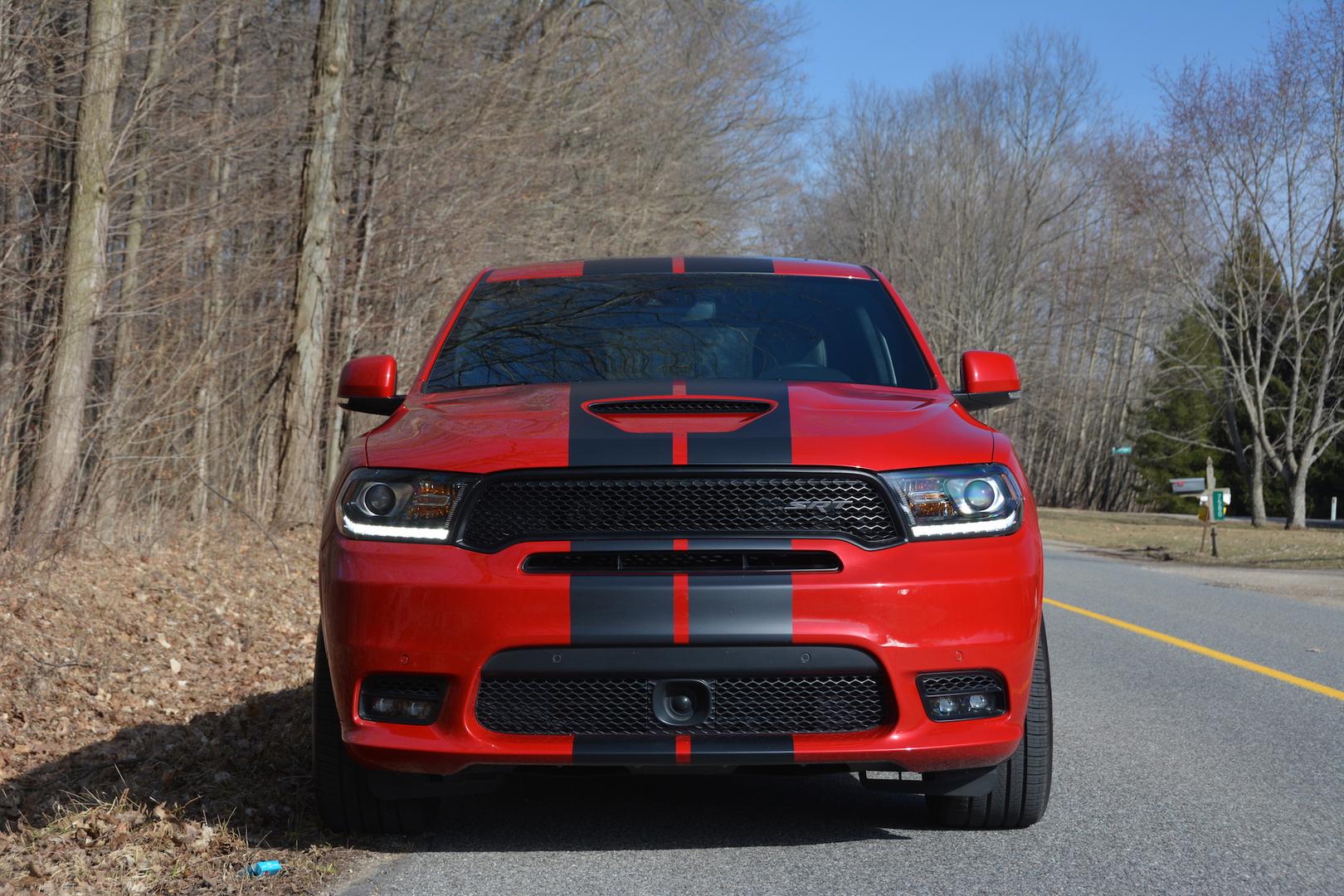
The day it showed up, we heard it before we saw it. We knew it was arriving by the engine sound…a half-mile away. The unmistakable deep rumble of the engine through the exhaust pipes was audible from a literal half-mile away. Think about that. The driver wasn’t revving the engine, nor was he squealing the tires. He was simply driving it conservatively (don’t ask me how). The hair on the back of my neck stood up. As it pulled into view, my knees went a little weak. The TorRed (get it?) colored car with matte black hood, roof, and trunk looked amazing and the fender flares made it look incredibly aggressive. The curves of the myriad scoops and grilles and flares gave it a menacing appearance. The matte black wheels finished off the look nicely.

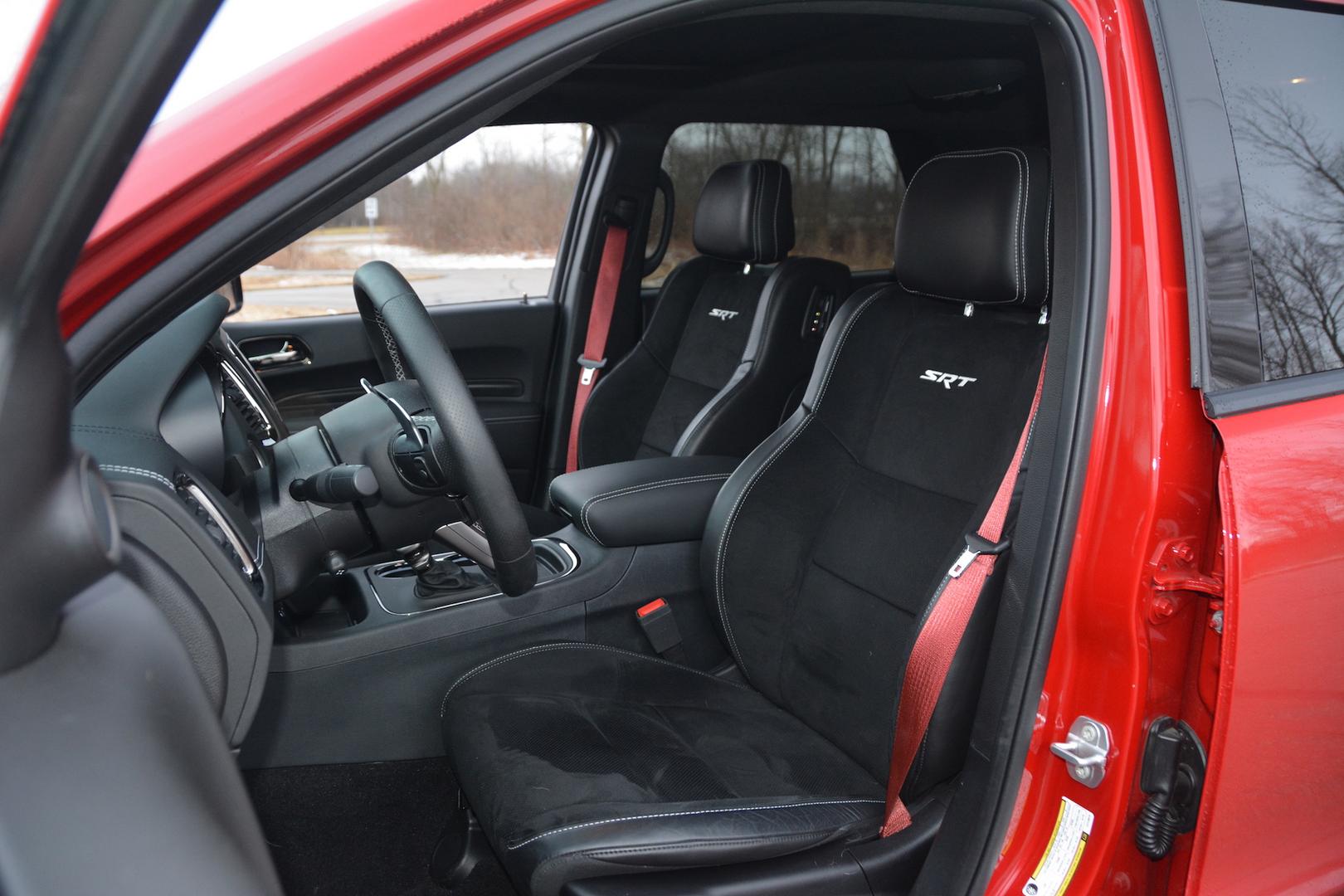
The interior is very straightforward. It’s basic but plush and comfortable. It is a mixture of black leather, caramel colored leather, carbon fiber, and chrome. It was a very comfortable-looking interior and we were not disappointed in that analysis. With a spacious interior and soft seats and surfaces, it proved to be an excellent cockpit from which to pilot the Hellcat, allowing long drives in maximum comfort and sporting drives in well-bolstered stability. Perfect for every Midwestern season, it comes with 10-way electrically adjustable heated seats (both front and rear) and steering wheel. The seats are also ventilated for summer comfort as well. If you can’t get comfortable in this car, you have a serious medical condition. The gauges are a blend of analog and digital. And who doesn’t love a car with a 200-mph speedometer. I was told it’ll make good use of most of that speedometer too, but we didn’t push it anywhere close to that. We like having a drivers license, thank you very much.

The 6.2L supercharged Hemi V8 feels relatively unchanged from our first experience with it. It still makes gobs of torque and horsepower and sounds like a million-bucks. Endowed with 707 hp (!) and 650 lb-ft of torque, it can move the heavy car to 60mph in about 3.6 seconds and keep on scaring the crap out of you all the way to 196 mph. The quarter-mile comes in 10+ seconds. Acceleration in this car literally confuses your brain the first few times you launch it.
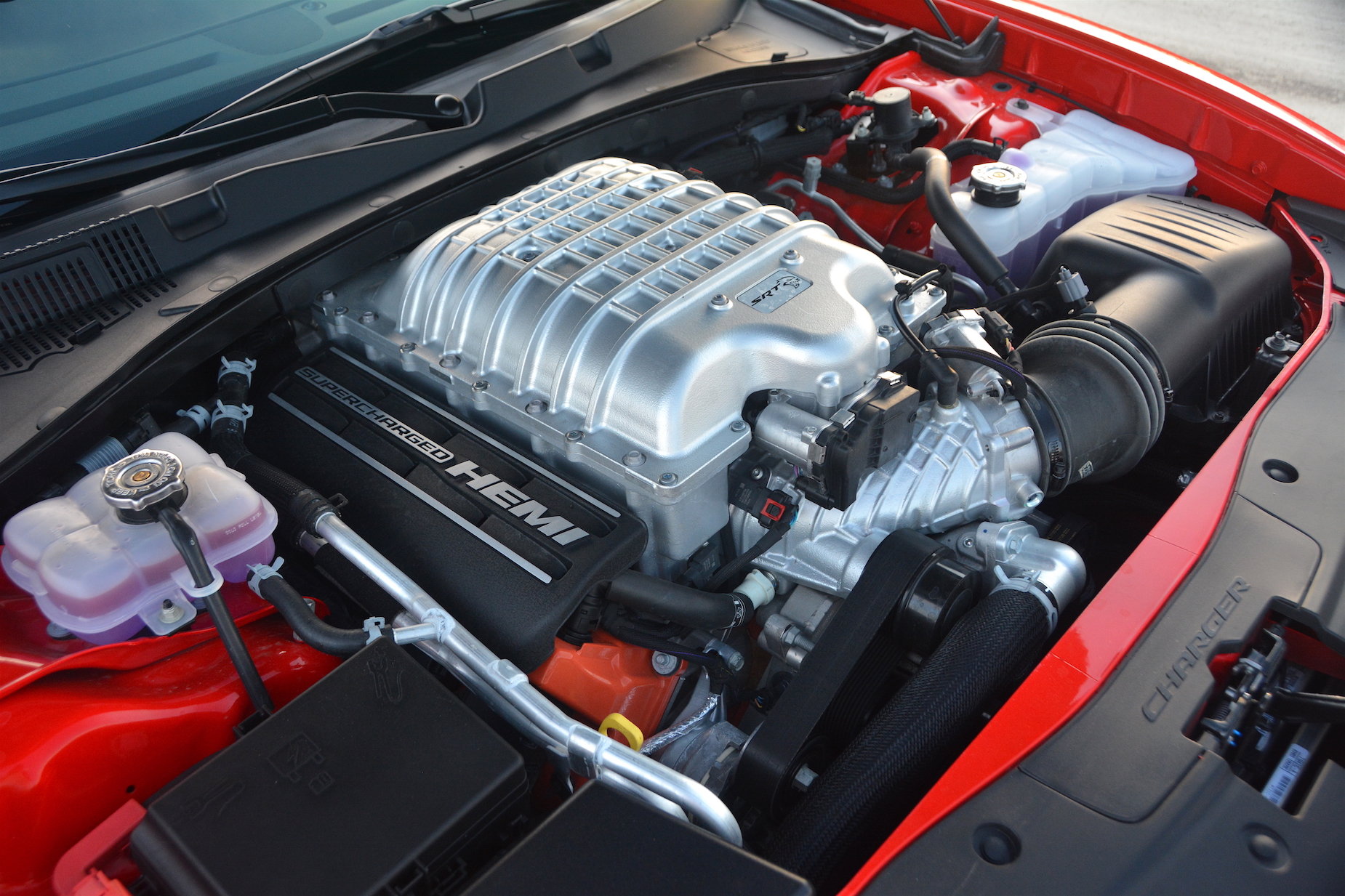
Hellcat Engine

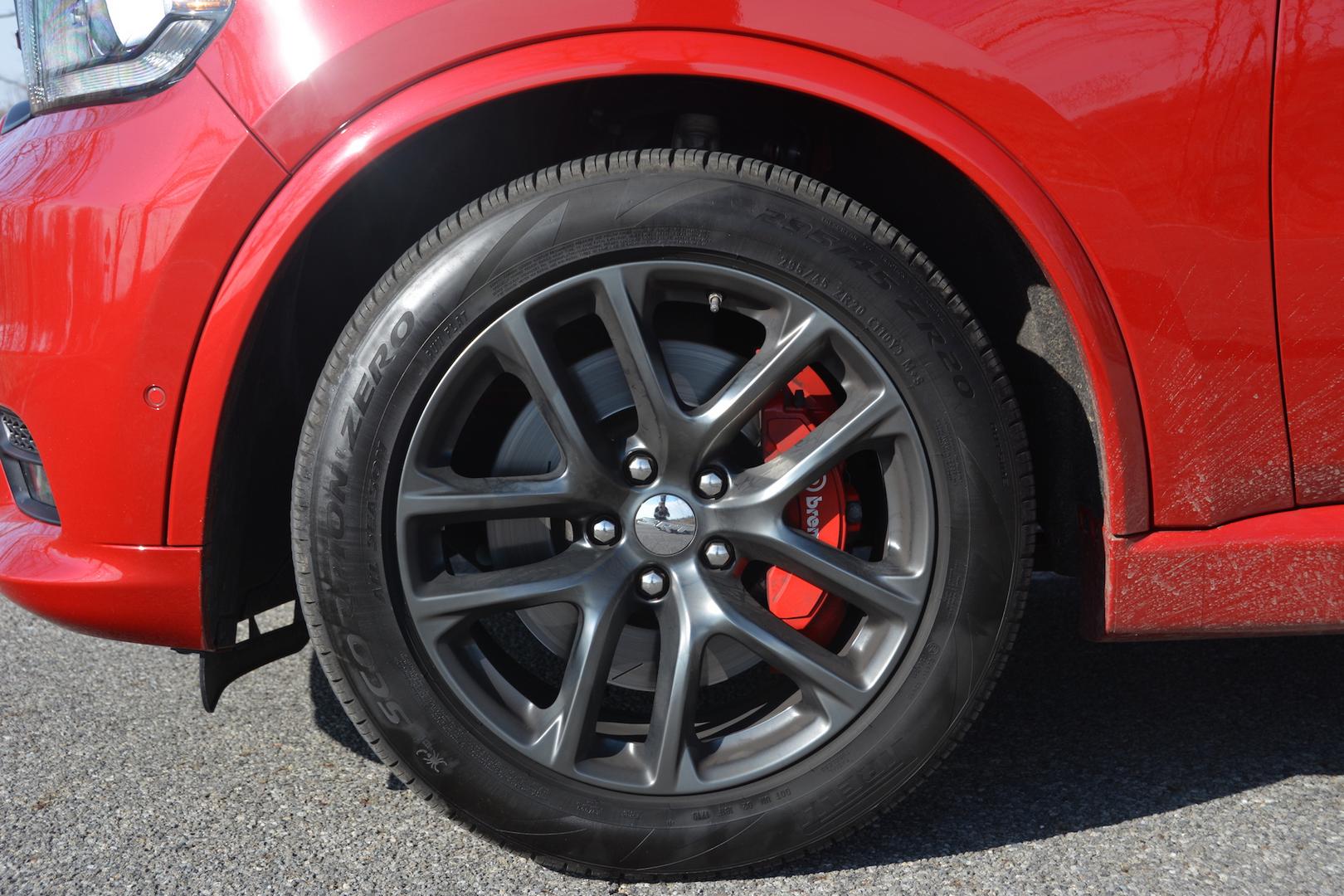
With great power comes great responsibility, so Dodge wisely fitted massive Brembo 6-piston brake calipers and dinner plate-sized vented disks to arrest that speed. They slow the nearly 2.5-ton car as quickly and easily as any lighter sport sedan. Pedal feedback is excellent and allows you to modulate the brakes in a simple, straightforward way.

The transmission is an 8-speed automatic, but offers paddle shifters behind the steering wheel. They’re much more responsive than you’d expect. While big horsepower cars like the Charger Hellcat usually respond better to letting the automatic transmission do it’s thing, In Track mode, I felt they really complemented the driving experience. It was also nice to be able to downshift approaching a stop light and listen to that Hellcat engine growl.

Since our last outing with a Charger Hellcat, Dodge has added a few features that make it easier to extract more performance. To complement their launch control, they’ve included a feature called “Line Lock.” If you engage Line Lock, it electronically disengages the rear brake lines, allowing you to step on the brake pedal and only lock the front brakes so you can send maximum power to the rear wheels for more effective launches. Launch control is still available, allowing you to dial up a pre-set rpm level for launch. A new “after run chiller” cools the engine after a workout.
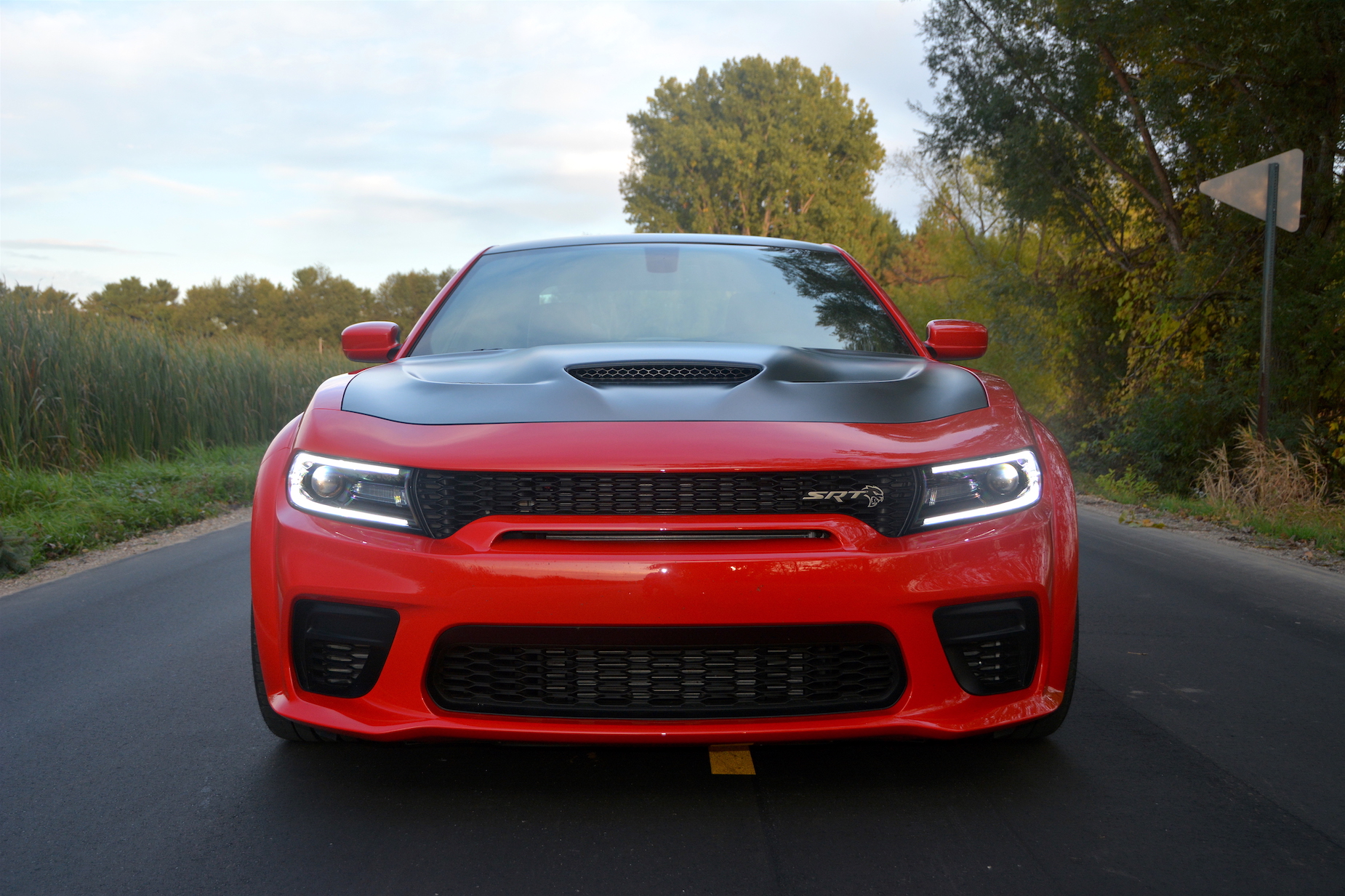
Dodge Charger SRT Hellcat Widebody Headlights

The big draw though, is what comes standard as part of the Widebody option: an improved suspension that gives the car much improved handling. The Widebody Hellcat isn’t just a body change that makes it look cooler and allows wider tires under the fenders. No, it’s really more about the suspension that wheels are connected to. Two years ago when we first drove the standard Charger Hellcat, we found the suspension to be too soft. It was floaty and uninspiring, leaning heavily in corners. It was electronically adjustable though, and switching from Normal to Sport or Track firmed things up, but the base setting was much, much too soft. Even in Sport or Track modes, it was still softer than we liked.

The new Widebody performance adaptive suspension is very firm in Normal mode and feels much more competent right out of the gate. Switch it to Sport mode and it firms up a bit and turns traction control completely off. This is also known as “Burn-the-Tires-Off” mode. This mode really allows you to be a complete hooligan and really play with the car, drifting through roundabouts in smoky lurid drifts. Switch it to Track mode and the traction control returns enough to provide the maximum balance of slip and grip to make the Charger Hellcat Widebody a track-devouring animal. The shock setting on Track is too harsh for everyday roads unless you’re hardcore though. We usually left it in Normal unless we felt like signing our names in rubber paint.

On a winding back country road, in any mode, the Hellcat Widebody just wants to run. It’s suspension is unperturbed by bumps and dips and uneven spots; it stays balanced and controlled and just wants to go faster. On the freeway, it’s comfortable and fast and unflappable. Cloverleaf on-ramps are no challenge – the Charger Hellcat Widebody just rockets around them and allows you to shoot into traffic with surprising ease. This is really the WHOLE package. This isn’t just a one-trick pony muscle car, but a balanced performance car that’s at home on the road and on the track.
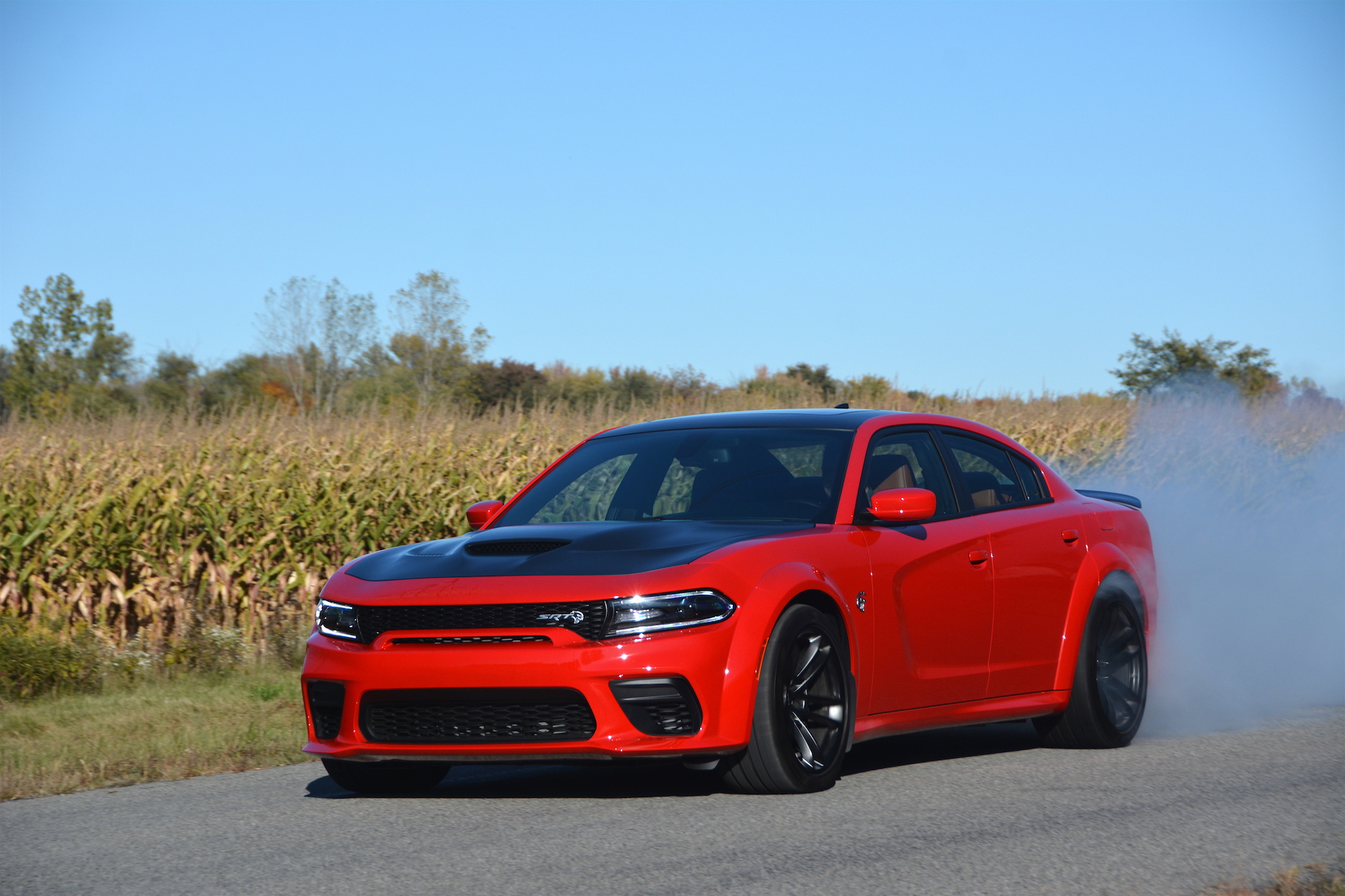
Burnout Charger SRT Hellcat Widebody

And the whole time you’re burning up the tires and terrorizing the freeways, you sit in an airy, spacious cabin enjoying the comforts of the cockpit. The smell of the leather seats mixed with the acrid smell of burnt rubber soothes you. The climate control keeps temps at a comfortable spot. The fantastic stereo cranks out one AC/DC tune after another. And the cupholder holds your 32-ounce pop tightly while you drift the car sideways through yet another corner.

The Hellcat engine may be Chrysler’s greatest gift to the world, but the rest of the car provides a marvelous platform to exhibit it’s abilities in. It’s just about perfect. Are there any flaws? Not really. Everything worked perfectly, as expected. Would we change anything about the car? My first thought is to shrink it down in size, but truthfully I loved the enormity of the car. I’m the guy that usually seeks out the smallest car possible to drive, but I loved the sheer size and heft of this car and the fact that DESPITE that size and heft, it still launches harder than an F/A-18 off a carrier deck. The size also adds an intimidation factor. Nobody wants to mess with the 900-lb gorilla.
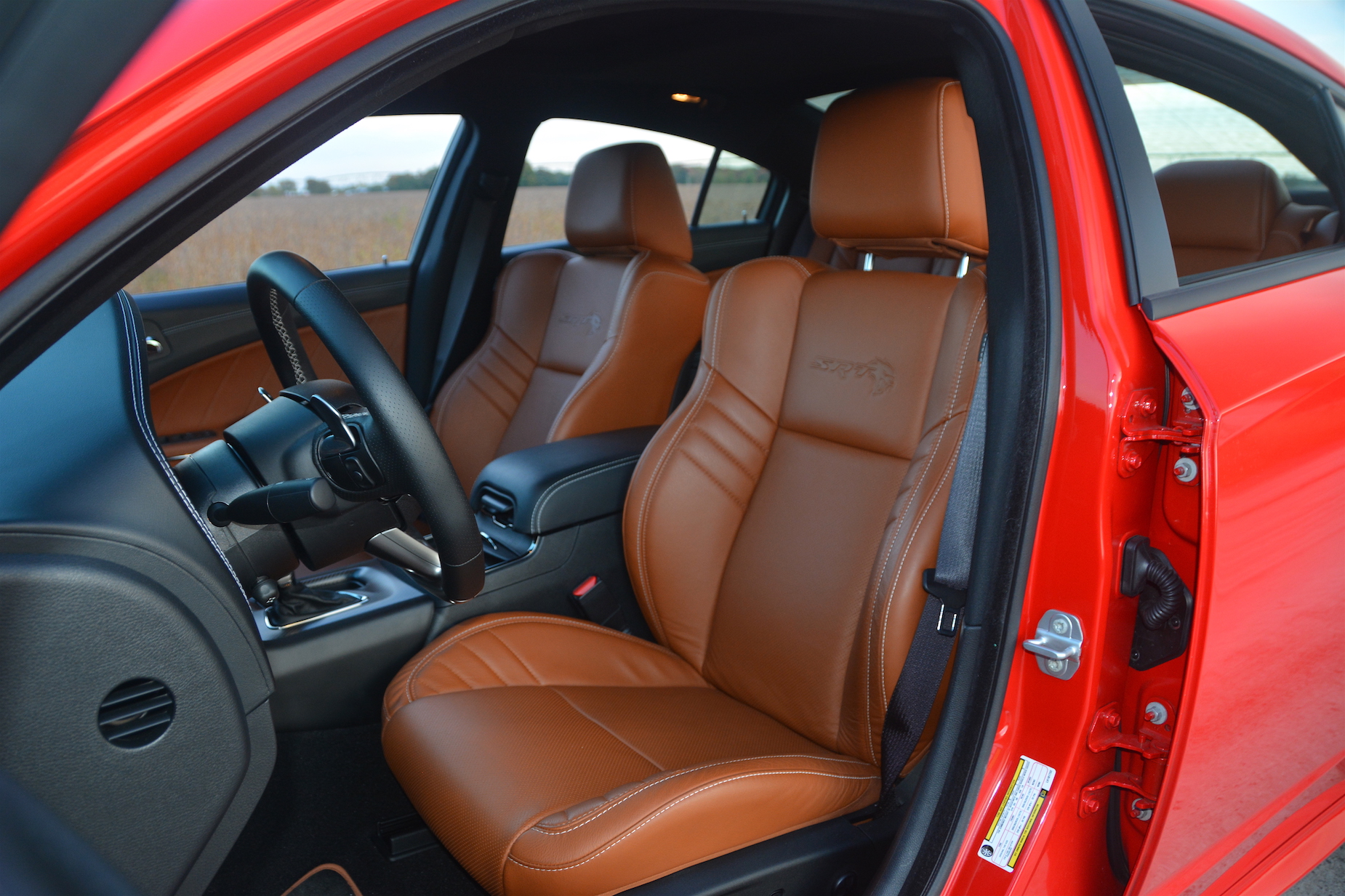
Dodge Charger SRT Hellcat Widebody Seats

If it has a flaw it’s fuel consumption. Fuel consumption is lousy, as you’d expect. There’s a price to be paid for all that fun. But it’s completely worth it. The EPA estimates that you’ll get 12 mpg in the city and 21 mpg on the highway for a combined estimate of 15 mpg. We actually averaged better than that, getting a combined average of 18.5 mpg. Which is pretty darned good for a 707 hp, 2-1/2 ton car.

The base price of the Charger SRT Hellcat Widebody is about $73,000 USD. That’s a pretty reasonable price for such a big comfortable performance rocket like the Hellcat. Our car came in at $85,000 USD with all the various options but it’d be fairly easy to keep the price closer to base if you were so inclined. None of the options on the car were essential, though that Harmon-Kardon stereo system was pretty kick-ass.

It’s amazing to us that for as long as the Charger has been on the market, it neither feels old nor outdated. Dodge does an excellent job keeping it updated and keeping it immensely fun. As long as they keep improving it and expanding the legend, it’ll always keep us wanting more.
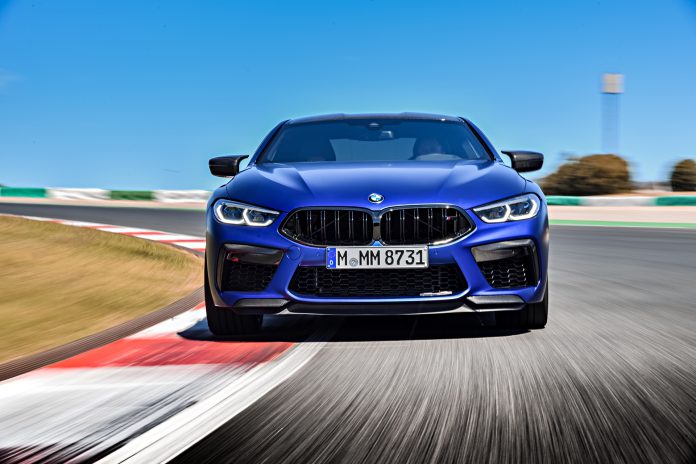
2020 BMW M8 Competition Gran Coupé Review

Size matters – but does 200mm make a difference? This seemingly small measure is what differentiates the 2020 BMW M8 Competition Gran Coupé from the M8, minus the GC nomenclature. However, 200mm means this M8 can accommodate an extra pair of doors and seating for five. With four in the back things are habitable. Headroom is not great, but if you wiggle them around a bit, two 6-foot adults could handle a long journey back there. You can try and shoehorn a fifth in, but they have to straddle the central armrest and make everything a little too cosy in the back seats.

Enough of the practicalities, this is an M car and all I care about is how this massive twin-turbo V8 powered 625bhp brute performs. With xDrive 553lb ft, and 0-100 banished in a supercar worthy 3.2 seconds, the numbers look good near identical to the two-door, making it BMW’s equal-fastest production model.

The xDrive means the power can be utilised, even on the road and in almost any conditions. However, weighing in at 2,055 kilograms means that this is a car which you have to consider the laws of physics in. The way speed builds is borderline scary and you’ll swear that the speedometer is making things up as the numbers rapidly approach and fly past legal limits. With a bewildering number of settings for the steering, engine, suspension and exhaust, you’ll have to find what suits you. With everything in the most aggressive settings things are a handful and the car bounces up and over bumps. Knock the suspension back into comfort and leave everything in full attack mode with the traction control in M Dynamic Mode and you’ll be having a fabulous time. The traction control system in MDM means you can apply proper slip angles on the throttle and let the xDrive system display a true sense of humour. You can, of course go to fourth base and engage rear-wheel-drive mode, but with the weight and all of that power I was not brave enough to explore this on a wet British country road, there is no way to have 100% of the power being sent to the rear with any assistance systems engaged, you are on your own.

The M8 Competition Gran Coupé does handle surprisingly well for a car of this size, I would argue that it is a viable alternative to the Mercedes-AMG GT 4-door which is worthy praise, indeed. There is a surprising amount of feedback in a car this size, but do not expect it to be as engaging as a BMW M2 CS, this is still designed to be a comfortable daily driver. This is where the M8 Competition Gran Coupé excels. The way it can be transformed from a taught speed freak into a sedate city cruiser with undeniable presence is astonishing and impressive in equal measure.

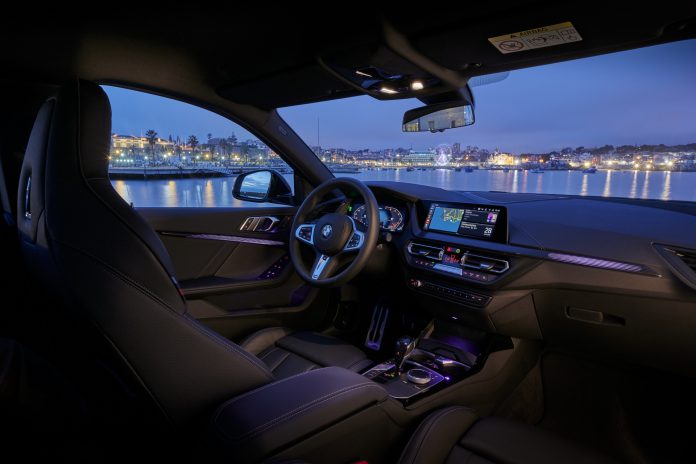
As great as a cruiser/daily driver the M8 Competition Gran Coupé is, it cannot disguise its large dimensions. The M8 coupe felt like a big car with a surprisingly small cabin and the M8 Competition Gran Coupé is not much different. On the road is looks large, I caught a glimpse of the reflection of myself in a shop window and laughed at how gargantuan the car looked. I also noticed that the car is a very good looking thing, to my eye anyway. The interior is a fantastic place to soak up the miles with all of the latest tech you could come to expect from a car priced at more than €130,000.

I would strongly recommend the M8 Competition Gran Coupé. It offers supercar performance, saloon car usability and a compelling breadth of ability. The biggest problem with the M8 Competition Gran Coupé is the BMW M5 Competition. It fulfils the same philosophy at a much lesser price. If I had the choice and did not have to consider price, the striking design and imposing face of the M8 Competition Gran Coupé would have my vote, but both would be a pleasure to own.

2020 BMW M440i xDrive Coupe Review

Don’t judge a book by its cover is the phrase I repeated in my head as I approached the 2020 BMW 4 Series Coupé, the M440i xDrive to be specific. The 4 Series caused something more akin to a tsunami than a stir when the covers were pulled back in May 2020. The design may polarise, but there is more to any BMW than its design. After all, these are supposedly the ‘ultimate driving machines’. The M3 and M4 recently broke cover and I hope to drive them shortly, but for now it is this, the M440i xDrive that is the range topper.

Having driven the M340i xDrive on track last year, my expectations of how the car would drive were high. The numbers look good, too. With a mild-hybrid-assisted 3-litre turbocharged six-cylinder petrol engine and standard xDrive, the M440i puts out 374 horsepower. This includes the 11 horsepower that the 48v system can apply to aid acceleration and economy. This means 0-100km/h is dispatched in a respectable 4.5 seconds – plenty fast for an M Performance model.

There is the typical BMW 50:50 weight distribution and the car feels handy on the twisty country roads around Oxford. That being said, when starting to push on there is a hint of understeer. The xDrive promises to shuffle power between the wheels but often felt overwhelmed, perhaps the car would be better suited to more open flowing roads than tight country lanes to display its true dynamic traits. The benefit of xDrive is, of course, the all-weather usability that was once the USP of Audis.

There is an eight-speed Steptronic Sport transmission which proved to be slick and quick, straight line acceleration felt strong, although the only sign of the 11hp boost being deployed from the mild-hybrid-system was the dashboard letting me know. The steering, like with so many modern cars lacked any discernible feedback and the weighting felt artificial. The same can be said for the synthesised noise that was so obviously being emitted from the speakers.

In the real world these are unlikely to ever be issues or concerns for aspiring buyers. Owners of a 2020 BMW M440i xDrive Coupé are not looking for hardcore thrills and a car that bristles with feel, these are cars that will be driven everyday, have to go to the supermarket and be comfortable over long journeys. On that note, the ride over broken tarmac was a touch harsh – seeing M Sport suspension on the spec list always sends alarm bells ringing, but these are adjustable and much better when set into comfort mode. The interior is familiar BMW with all the tech you could want with fancy bells and whistles such as gesture control and a host of driver assistance systems being offered.

Assuming that potential buyers are not put off by the styling or the price (the car I drove was priced up to an eye-watering £61,100), I am sure that the M440i xDrive Coupé will be a sales success. From my time behind the wheel it is clear that this will be a practical, enjoyable and exciting daily driver. I guess the thrills, adrenaline rushes and track day credentials will be served up by the fistful in the eagerly anticipated M3 and M4.

2020 Mini John Cooper Works GP3 Review

There are few things as exciting as a naughty little hot hatch. There is something cheeky about taking a small car and pumping up the power to deliver accessible thrills on the road. Supercars are all show and no go in a world of poorly surfaced roads, speed bumps and narrow lanes. Other road users won’t turn their noses up at you in a hot hatches and they make sense with modest power figures and relatively modest price tags.

As a result I was giddy with excitement when Mini unveiled the Mini John Cooper Works GP3 with its crazy carbon body extensions, giant wing, the news that it packed a mighty 306 horsepower and that just 3,000 units will be produced – my time to drive the pocket rocket could not come soon enough.

Walking up to the Mini GP3 is an occasion in itself. The car looks like someone sent the blueprints of a base Mini Cooper to an 8-year-old and told them to go crazy with the crayons for their evening homework. There are vents, extensions and wings everywhere you look. I love that it is fit to reside in a mental asylums underground car park, but can understand that your grandmother may be a little embarrassed emerging from the passenger seat outside the bingo hall. Stepping in, things are just as bonkers. There are bucket seats with huge bolsters to hug you, and that’s where the seats end. The rear ones have been removed, replaced by a cavernous space and a red beam which serves no purpose other than to look cool.

Under the fake-grill garnished hood there is the powertrain from the most recent BMW M135i shoehorned into a Mini body. The 2.0-litre turbo 4-cylinder engine sends 306hp and 332lb ft through an eight-speed automatic gearbox. Where the BMW and other hot hatches such as the Mercedes-AMG A35, Audi S3 and VW Golf R, the Mini features no four-wheel-drive trickery. Instead, all the power is sent to the front wheels via a limited-slip differential.

Other changes include 10mm lower springs, beefier brakes and the GP style wheels. The plethora of visual changes are all style and very little substance as it is not stated that there is any aerodynamic benefit or downforce. At 1,255kgs, it is light, but not mind-blowing given its size and when you consider that half of the interior is missing.

Enough on the details and specs, time to drive it. First impressions were that the gearbox feels lethargic, real hot hatches need manuals to be as riotous as they should be. Into the first bend the gearbox decided not to give me the downshift I requested, frustrating, but let’s move on. Turning in, the grip was mighty as was the lack of any conceivable body roll, it just stayed flat. The trade-off of such body control makes itself apparent when I turned onto the first country road on my route. The ride is beyond harsh. I can understand a GT3 RS or Mercedes-AMG GT R being hardcore, but in a Mini? It was one trait I could not put to the back of my mind. Under heavy throttle there was torque steer and the differential felt overwhelmed on many occasions, wildly sending power haphazardly seemingly giving the steering a mind of its own and making me work to keep the car heading in the intended direction.

The Mini GP3 is amusing. The exhaust it loud, not particularly tuneful, but it will make you smirk and the body control had me turning into corners at scarcely believable speeds. Behind traffic, I turned my attention to the interior which does feel special. The seats play a big part in this, the rest of the cabin is funky Mini with functional BMW switchgear scattered around the place. The iDrive system is good, as is the rather odd looking instrument binnacle.

The Mini GP3 is an exciting car, unfortunately to the detriment of the usability and driver satisfaction. It feels blunt, angry and not particularly rewarding. I left the driver’s seat wishing it wasn’t as powerful as it is, was a touch softer and had a manual gearbox as both of its predecessors had. I wanted to love it, I enjoyed that it was a challenge, but it isn’t a car I am left yearning to have the keys again.

McLaren 620R Track Review

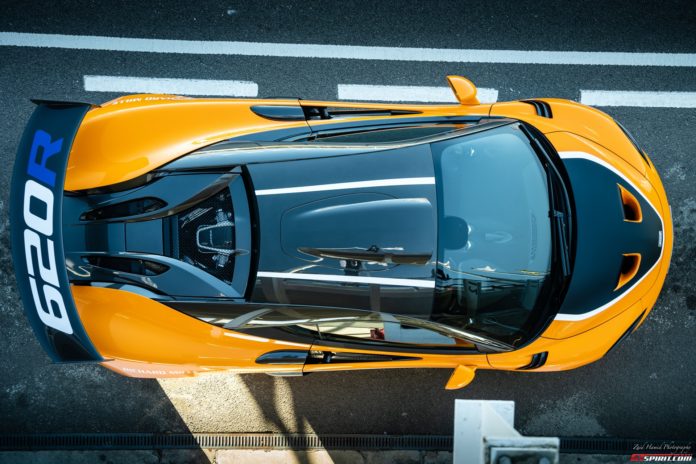
McLaren have a reputation for releasing new models quicker than Apple unveils new iPhones. From the expected LTs and Spiders to the surprise HS, MSO and Carbon Series models, it is fair to say that the line up can be a touch perplexing. One model that was not predicted was the 620R, a car based on the GT4 car which was based off of the 570S. ‘Just buy a 600LT’, I hear you pine – well, this is a different proposition. Where the 600LT is a fine road car with track day credentials, the 620R a race car which can be used on the road.

Whenever pushing a road car on track, even something as focused as a Senna, the general criticism is that the tyres are always the limiting factor. Bolting on a set of slicks is no simple feat as it requires significant geometry adjustments. Being a race car at heart, the 620R is an exception. It requires no chassis adjustments to accommodate a slick, in this case rubber which has specifically been formulated for the 620R by Pirelli. This is an entirely more track focused proposition than the 600LT, a toned down racer, not a turned up road car. So long as you find a way to have a spare set of wheels shod in the slick at the track you’re heading to, you can drive the 620R to the track on Trofeo Rs, swap over to the track tyres before swapping back to the road legal rubber and heading home. In my mind, this makes more sense that the Senna does, and at a fraction of the price of the Ultimate Series car.

I jumped behind the wheel at the Goodwood Motor Circuit during SpeedWeek. There was no road drive, but I hope to remedy this soon. Being cold and damp in places, the Trofeo R was the tyre for my drive, seeing as the circuit is such a high speed one, it was a chance to feel the aero offered up by the slightly altered GT4 package which now produces 185kg of downforce at 250km/h.

It is not just the downforce figure that is impressive, this is the most powerful Sports Series car yet with 612bhp and 620nm on tap meaning the 1,282kg (1,386kg wet) 620R will accelerate from 0-100km/h in 2.9 seconds and onto a top speed of 322km/h. What does this unique package cost? There will be 225 620Rs built, each starting from £250,000. For and additional £25,000 there is an optional R Pack available in EMEA regions which comprises of a titanium SuperSports exhaust, fully-functional roof scoop and visual carbon fibre upgrades to add to the race car vibe.

Enough of the details, what is this race car with numberplates like on circuit? If ever a car drives the way that it looks, this is it. The 620 looks light and extremely aero focused with it large wing, splitter and dive planes. The Goodwood Motor Circuit is an extremely high speed circuit and above 250km/h you can feel the downforce working. This in conjunction with the magnificent hydraulically assisted steering makes the 620R incredibly stable and surefooted. This encourages you to push harder and try to find the limits of the grip. Having only had a few laps to enjoy the car, I was far from exploiting its full potential, but can report that the 620R is one of the most balanced, planted and confidence inspiring cars I have driven on track. I left the drivers seat telling the McLaren team that I wished I could have had a weekend on track with it. This is a car you learn more about with every addition lap you complete.

Where the 765LT makes you think twice about how you deploy full throttle, the 620 is on your side and lets you focus on honing your skills and learning the lines of a circuit. Furthermore, you are treated to a much louder and raw experience courtesy of the titanium exhaust and the whooshing sounds of the air rushing through that towering snorkel. I cannot imagine how much more dialled in it would feel on a slick and look forward to completing this review with a road drive to understand what a road car transformed into a GT4 and then fettled with to become road legal once again, is like to drive on the street.

2020 Toyota 86 GT TRD Performance Review

“Would you be interested in driving the 2020 Toyota GT 86?” the Toyota rep asked.

“We’d love to,” I responded. “But we drove and reviewed it just last year.”

“Yes, but this model has the TRD Handling Package, a TRD performance sway bar, and a TRD exhaust system.”

“And how soon could you bring it by?” I asked, wringing my hands with anticipation.

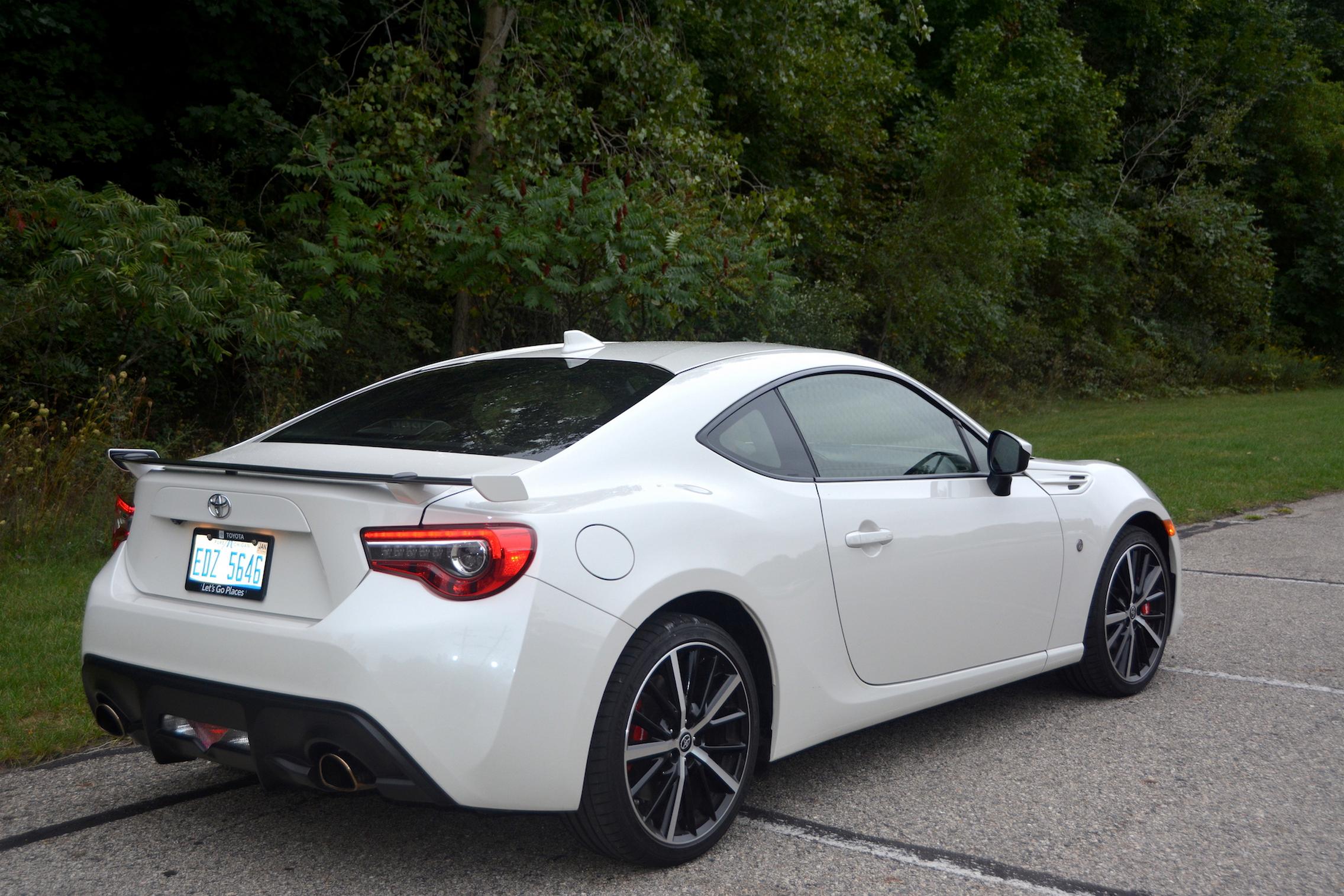
Two weeks later, it rolled into our parking lot dressed in a handsome Halo White with black and silver 18” wheels. We enjoyed the predictable handling dynamics and traditional front-engined, rear-wheel drive layout of the 86 GT the last time we drove it. The manual six-speed transmission kept a smile on our faces as we rowed through the gears, trying to keep the engine on the boil. We were looking forward to wringing out the performance goodies.

The body looked just as sharp and fresh as the 2019 model we drove last year, from the stylized front headlights to the exposed taillights and thin wing spoiler across the rear deck. It’s a nicely balanced design.

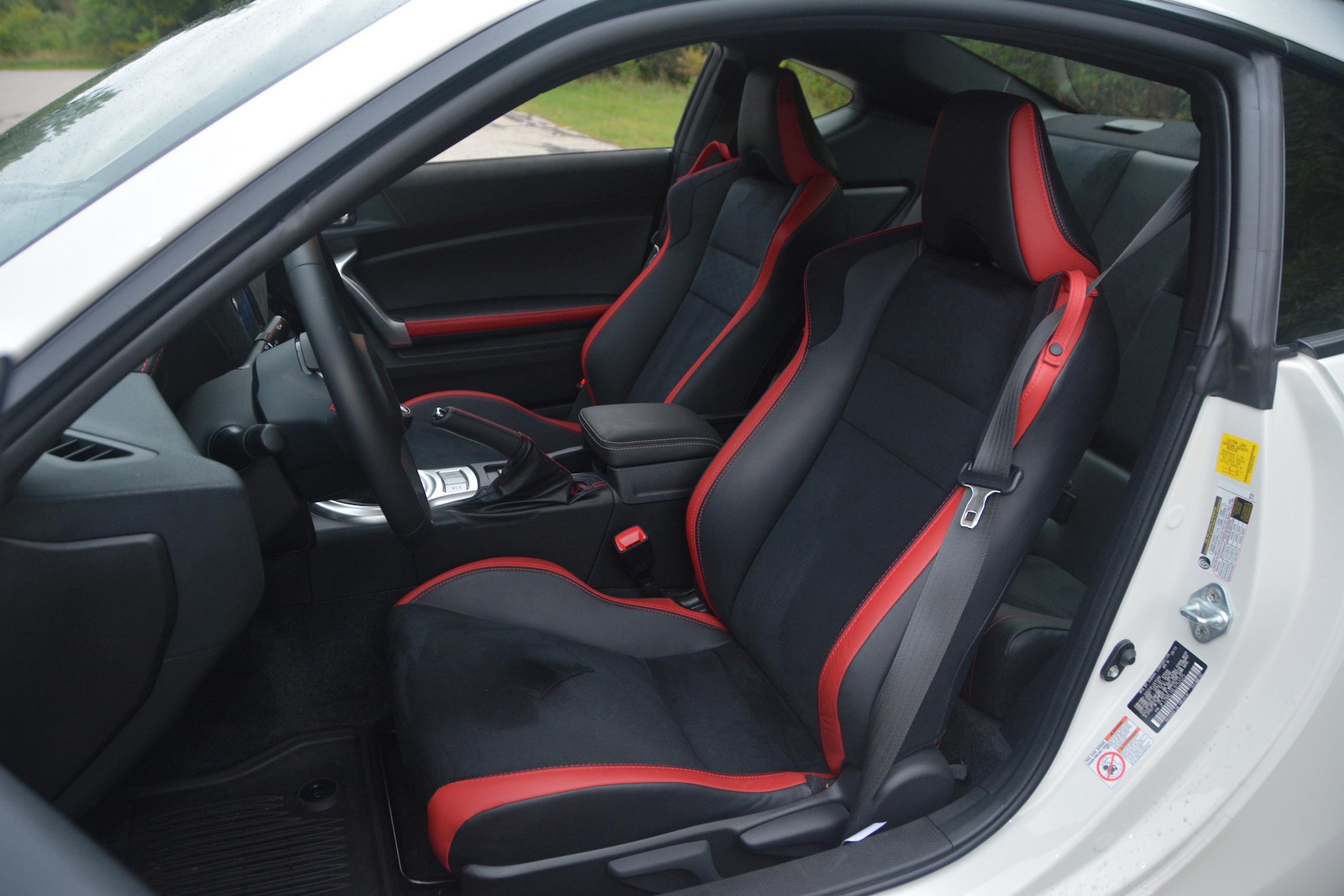
Inside is a more colorful interior than the monochromatic one we spent time in last year. This years car had bright red leather bolsters and red leather swipes in the door cards. While not a radical change, the extra color livens up the interior a bit. Both the driver and passenger seats were also heated.

Under the hood is the red crinkle-painted Subaru 2.0L flat-four, making 205 hp and 151 lb-ft of torque. It redlines at 7500rpm and pulls stronger the closer it gets to it.

It’s hooked to a very nice 6-speed manual transmission. The clutch is light and the shifter readily slips from gear to gear without any notchiness or hesitation.

The power is transmitted to the rear wheels through a limited-slip differential that makes positive traction and keeps the rear power distribution more evenly balanced.

BRZ Seats

But what we were interested in were the TRD (Toyota Racing Development) performance parts. Replacing the MacPherson struts are Sachs dampers and red Brembo brakes. This makes up the TRD Handling Package. The Sachs dampers provide a slightly firmer ride than stock and, combined with the TRD sway bar, less lean in corners. The Brembo calipers and ventilated disc brakes do a great job of stopping the car and they provide great feedback, without sponginess or grabbiness – just firm, controllable, and predictable stopping power.

Driving some entertaining local roads with a variety of dips and hills and a vast assortment of corners, the improved suspension felt more confident than the stock suspension, keeping the motion of the car’s body in check better while keeping the wheels glued to the road and soaking up the road’s imperfections. There was a noticeable improvement over stock, and we’d heartily recommend the TRD Handling Package if you’re a true driver and love a responsive car on good roads or the track.

Our car also came with the TRD Exhaust System. This is more than just larger oval exhausts for show, this improves the sound of the car immensely. As you wind that little 2.0L engine out to redline, you can better enjoy the sounds that the boxer engine makes. And they’re good sounds too. It’s a little louder than stock, but every time you step on the throttle and hear that exhaust sound it’s worth it.

2020 Toyota 86 GT TRD Rear Side

The TRD performance parts and Handling Package take an already great little drivers car and improve it. If you were on the fence about the 86 GT, I’d urge you to spring for the performance parts and go for it. You won’t regret it.

The 86 GT starts at $30,115. The TRD Handling Package is $1,270, installed. The TRD Sway Bar is a dealer option for $550 installed. And the TRD Exhaust System is $1100 installed.

Special Report: Why a Porsche 718 is The Sports Car You Need

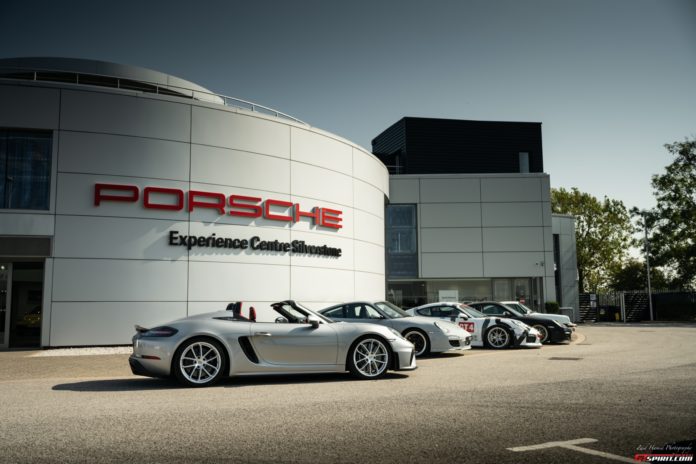
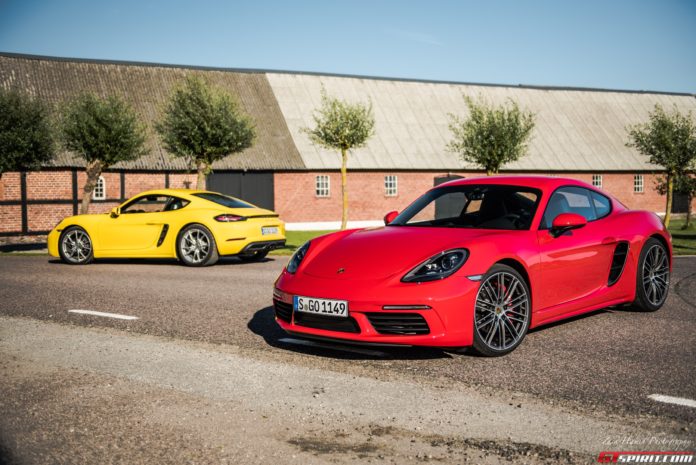
Boxster or Cayman, Base, S, T, GTS, GT4 or Spyder – The Porsche 718 family is broad. There are manuals, PDKs, 4-cylinders and 6-cylinders to choose from. The shared chromosome in the family DNA? The enthusiasm to connect the driver to the tarmac and administer joy like few other automobiles can.

Think mid-engined cars and you’ll most likely conjure images of a howling Ferrari V8 or shrieking Lamborghini V12. It’s all drama, power and fuel exploding glory. The 718s are mid engined cars that still benefit from the dynamic traits of supercars that cost five times as much, but combined with significantly more practicality, usability and accessibility. Regardless of the engine/transmission blend that you choose, you will be driving a class leading car. The competitors in the relevant classes, with perhaps the exception of the Alpine A110 or a Lotus of some flavour, will not be able to match the balance and sublime handling characteristics of the 718. The 718 family can offer the complete package.

I was one of the first people that was not a Porsche employee to pilot a 4-cylinder 718. No, I was not the biggest fan of the Cayman S which I was driving, but then I considered that this was not the flagship model, this was a sports car designed not to just be enjoyed a handful of times a year before being stored in a covered garage and plugged into a trickle charger.

This was a car that could genuinely be driven everyday. Furthermore, there was a band of torque which meant the performance, and that magnificent chassis, could be enjoyed without having to push into the upper echelons of the rev range as you would do in an NA car. Any reservations about the 718 evaporated with the introduction of the GT4 and Spyder. These were the special GT models that felt extraordinary courtesy of the reintroduction of naturally aspirated 6-cylinder engines and a plethora of parts from the 991 GT3, notably the suspension and subframe. But not the GT3 4.0 engine, this was all new and based on the 3.0 Carrera engine bored out and freed of turbocharging. It is so different that Porsche engineers say there is almost no carry over from the 911 engine.

That brings me to this, the 718 Spyder. A side note, it is no longer the Boxster Spyder but carries 718 badge which was reintroduced to help relate to the 4-cylinder, bizarre as this is a 6-cylinder. For the first time, the Spyder shares all of its mechanical organs with the GT4. With the previous 981 generation, the Spyder was a slightly less frisky and less focused than the GT4. This was a decision that I thought was a tad strange, thankfully Andreas Preuninger did too and he is now in charge. The Spyder is now just as potent, making it just as, if not more, appealing than the GT4, in my mind anyway.

Unlike most convertibles which are conceived as coupes with the roof removed and additional strengthening in the floor, the Cayman is derived from the Boxster. This means that there is no compromise having the Boxster (or Spyder) over the Cayman (or GT4), this is reflected in the weight of the cars with both coming in at 1,495 kilograms (wet). That being said, unlike most convertibles, the Spyder has no heavy electric/hydraulic systems to raise and lower the roof, no, that’s powered by you – as with the Speedster, it is a manual affair.

Put the hood down and leave it there. The Spyder is best enjoyed topless on a sunny morning whilst all the boring people are asleep or watching BBC Breakfast. The is all about dynamic driving, just a well as that is what makes it one of the most phenomenal cars on sale today, regardless of purpose or price. The way you can barrel into a corner, enjoy oodles of feedback from what is one of the best EPAS systems in the game and feel the chassis balance through the turn. You may not be adjusting the rear end on the throttle like you might in an M2, but this is a dialled in, focused machine that rewards you with supreme precision and communication.

The same can be said for the rest of the 718 family, but the Spyder is a peach. I would struggle to choose between this and a GTS 4.0 as Porsche have exceeded expectation with the sportiest non-GT car and the full fat Spyder and GT4. Choosing between the two is not a bad problem to have as both pay testament to the class leading engineering and devotion Porsche has towards making drivers cars and not just for the very few. As long as you can cope with having room for a single passenger, there is a 718 for you. I implore you to have a go in one that in any configuration that suits your lifestyle and budget, I assure you that you will not be disappointed.

2020 Mercedes-Benz GLS 400d 4MATIC: 5 Things We Enjoyed

It is Mercedes’ most luxurious SUV, with the Maybach variant sitting at the top. Our test car, the GLS 400d, was equipped with just about every equipment available, which made it the perfect car for touring around.

The GLS 400d is powered by a 3.0 litre inline 6 diesel engine with 330 hp combined with 700 Nm of torque. Sprint from standstill to 100 km/h (62 mph) is done in 6.3 seconds, while the top speed is limited to 238 km/h (148 mph). Here are 5 things we loved about it after driving around in it for a week.

The Looks

Completely in black, Obsidian black as Mercedes calls it. Of course there are other colors to choose from but we loved the road presence it presented in this particular spec. The overall look has also improved and one can easily tell this is a sophisticated luxury SUV just from the looks.

7 Seater

The most common feature of SUVs in this segment is the option for 7 seats or 3 rows. The GLS offers the 2 persons on the last row of seats, a pleasant sitting and comfortable position. A 1000 km drive as an adult might not be fully comfortable, but the GLS will do it better than rivals in this segment without compromising on luggage space. The total length of 5.34 meters is fully used in this way.

Parking in the city

You can’t possibly expect a car like this to park like an A Class. But it still surprised me how easily I could park it even in very small spaces. Of course this is made easier by the all-round 360° camera . Other than underground parking spaces with low roofs, the GLS will give you an easy time driving around in the city.

Going off-road

The real off-road work, up to the belly in the mud and more is rarely spent in a GLS, especially since our test car drove on normal street tires. But still we couldn’t resist a quick off-road detour. We chose a route filled with bunkers of world war 1 through Flanders. At no time did the GLS have any trouble with a hill, a ditch or other obstacles along the way. The suspension does a great job, to give you the most possible comfort.

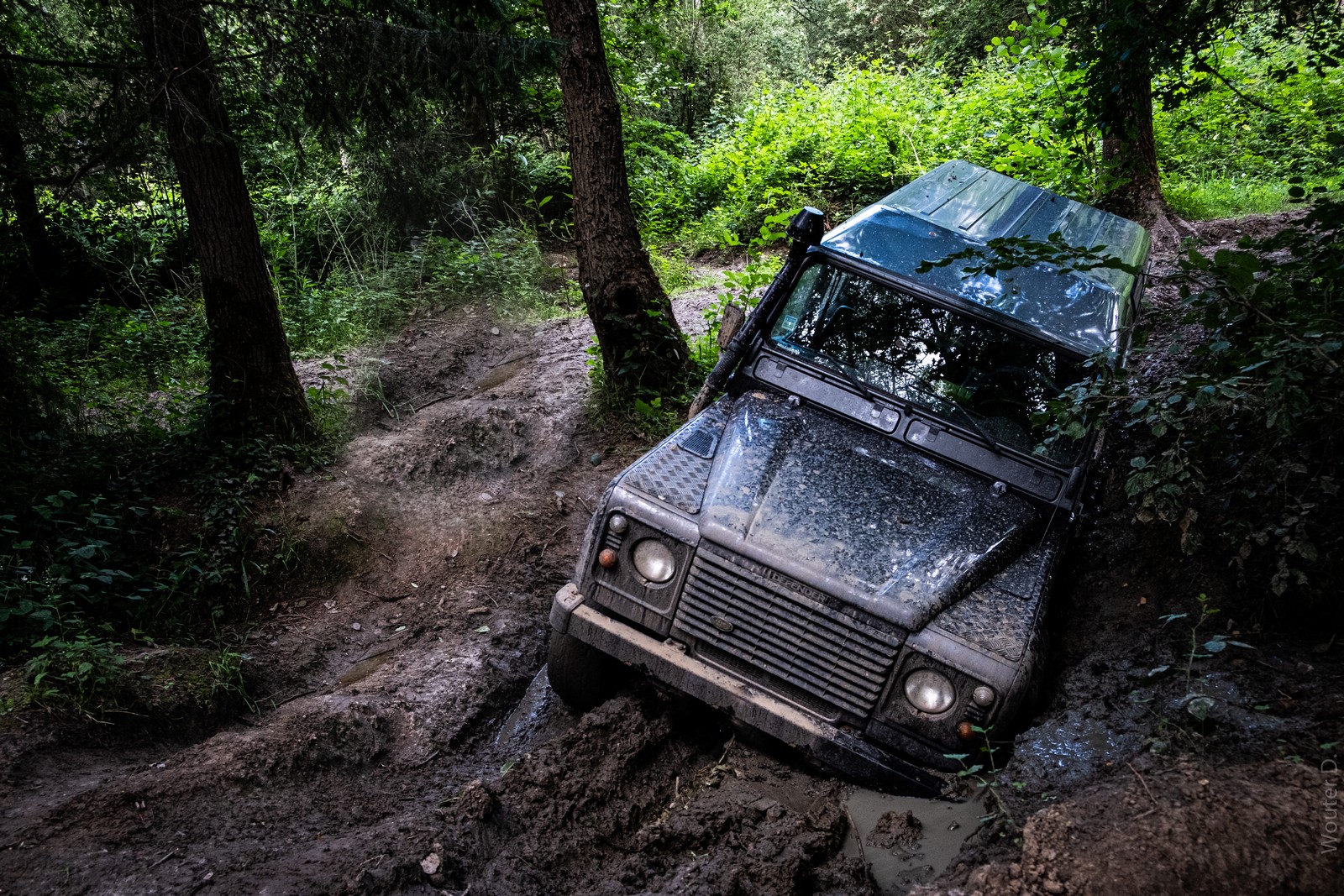
Of course, we played it safe and brought a friend along who owns a Land Rover Defender. However, to our surprise…

The Defender got stuck, and we even had to call 3 friends each with a Defender to pull him back out. What an adventure and fun we had! As you can expect, the part where the Defender was stuck was not part of the route, but our friend wanted to prove what a Defender can do … mission failed if you ask me!

Pictures by Wouter Desmet

2020 BMW M2 CS Review

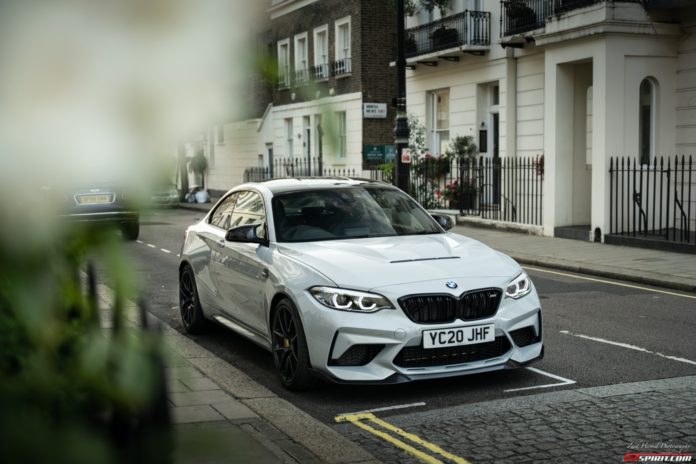
The BMW M2 CS: this is the one I’ve been waiting for. When I first drove the M2 in early 2016, I was perplexed by the choice BMW M made to not drop the M3/4 engine into the M2. A remedy arrived in 2018 with the M2 Competition and the introduction of the S55 from the F80 & F82. On the launch I questioned BMW M directors as to why there was no option of adaptive dampers in the baby M car. It was openly discussed that it was a key differentiator between the M2 and it’s bigger brothers with which it shared an engine. 

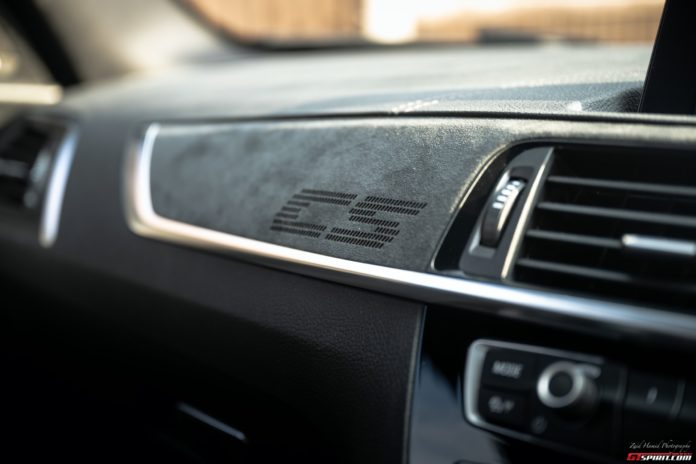
The M3 and M4 are no longer in production and finally, the M2 can be uncorked without fear of it showing up the big boys – meet the M2 CS. It’s got the same S55 as the now discontinued M2 Competition, but it’s putting out the same 444bhp as the F80/82 (up from 404), torque remains unchanged at 406lb ft. As mentioned, it comes with the welcome addition of adaptive dampers and even a carbon roof which is constructed using a stunning chequer board weave. Furthermore, carbon ceramics can be optioned for the first time on an M2 and that’s not where the carbon ends. Inside there are massive lengths of the shiny stuff on both sides of the central tunnel and door handles. Back on the outside, the entire bonnet is carbon and vented, the entire is part is a carbon copy of the one used for the CS Clubsport customer racing car. At the back there is a sizeable spoiler made of carbon that is so tall it can be seen in the rear view mirror. Furthermore, the front splitter and rear diffuser are also constructed out of motorsport inspired material.

Enough of the brochure talk, what is the M2 CS like to drive? It is certainly a step on from the M2 Competition and a large part of that is down to the dampers. As with the steering and engine, there are three settings – Comfort, Sport and Sport Plus, Sport being the default setting when firing the car up. Comfort is where thing are noticeably different, the secondary ride relating to the handling of lumps and bumps brings a new level of composure to the M2 and the way it handles itself when attacking a bumpy road.

Where the original M2 would be bouncing around like a rabbit on a pogo stick, the M2 CS remains calm and collected bringing greater confidence levels which allow the fun to continue over less accommodating tarmac. Sport is well judged and deployable on a good road surface, Sport Plus is best reserved for the track. The engine and dual-clutch transmission are as brilliant as in the Competition but with an added punch in the sportier modes. For those looking for freedom from the electronic nannies, the M Dynamic Mode allows for more slip’n’slide in the M2 CS before cutting in to stop you making it into a YouTube crash compilation. That being said, you’ll have to be on your worst behaviour to unstick the CS now that it is fitted with Michelin Pilot Sport Cup 2 rubber that makes the a significant difference over an M2 Competition and its Pilot Sport 4S compound. The optional carbon ceramics are supreme and the gold callipers look fabulous, to my eyes anyway. 

Much like the M2 Competition, this car wants to be driven hard. The harder you push the M2 CS the more you can feel the additional hardware at work. After my first spirited drive I was not convinced and wanted more, it felt like an M2 Competition. A 5am spanking the next morning revealed just how impressive it is when you really put the M2 CS through the wringer. The front axle grip is beyond belief, turn it in and grips and goes. This is an M2 turned up to 11.

But it is not perfect. The Comfort steering mode is too light and Sport too heavy, Sport plus is best left unused. The interior could be more exciting, the main difference in the CS is the removal of the armrest along with its storage space and the added carbon and alcantara. The steering wheel is still very thick, it can be forgiven as the seating position is sublime. The most significant gripe is the disappointing exhaust tone, although the same can be said for almost any car fitted with particulate filters. 

All up, the changes are significant, but there is an elephant in the room. The M3 & M4 CS were released with a hefty premium over the standard models. The used market for these cars reflects what many believe to be their true values. When new the M4 CS without costly options such as ceramic brakes, cost £87,150. A 5,000 mile used M4 CS can be yours for £57,000 just two years on. The production run of the M2 CS is limited by time not a set number, the base price is £72,600 before options. After adding a the DCT box, carbon ceramics, electric seats and reverse camera, the car I tested came in at an eye watering £83,260 with taxes and fees. That puts it in the direct line of fire of a Cayman GT4, although the GT4 arguably appeals to a different audience with no rear seats and mid-engined layout.  

Without a doubt, the M2 CS is an incredibly exciting proposition. It is one of the best M products I have ever driven, the move from passive to adaptive dampers combined with the boost in power and addition of Michelin Cup 2s really has brought out the best in the M2 chassis. I suspect I would be walking into a BMW dealer to register my interest if I had been given the manual press car to play with, but the price tag sours the package. If the rumours are true and production numbers are very limited, this may become a collectors special. If you can swallow the price and fancy an incredible drivers car, go out and get one – preferably in Misano Blue with gold wheels. If it isn’t justifiable for you, don’t fret, an M2 Competition will give you almost as much joy for substantially less cash. BMW have done brilliantly with the M2 CS (and the Competition). Let’s see what the next generation M2 has to offer, it has big boots to fill.

2020 Caterham Super Seven 1600 Review

When Alpine released the A110, the critics struggled to contain their adoration for the little French sports cars. They pined on about how it was so simple, light and different from the alternatives on the market. Recently, I spent some time in an even skinnier sport car – the Caterham Super Seven 1600.

This is not the first time I’ve driven a Caterham, I was thrown in at the deepest of deep ends last year when I was tossed the keys to one of the most violent and fastest accelerating cars on the planet, the 620R. Having somewhat broken me with its savage sequential gearbox and eye watering speed, I moved down the ladder to a 310R with a traditional 5 speed that was the closest thing to a road legal go kart I have ever experienced.

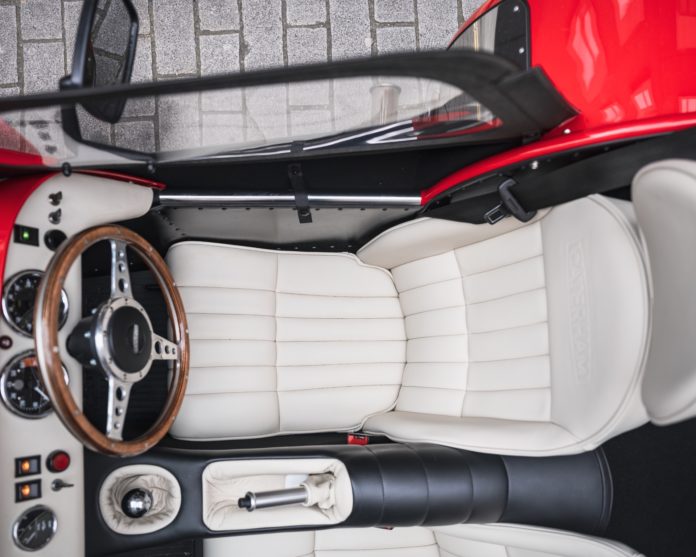
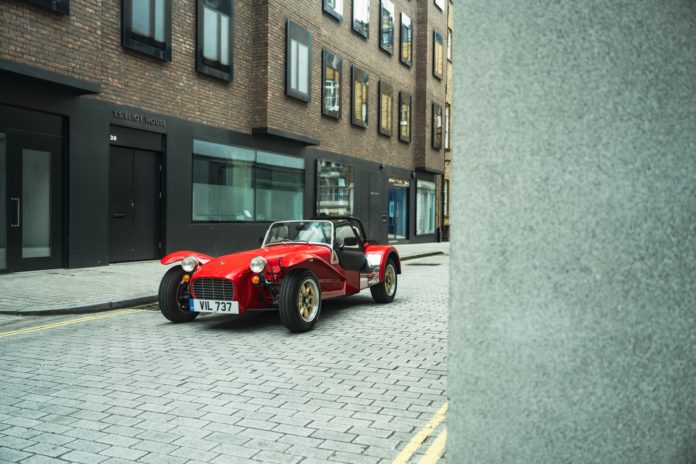
This time the power is being diluted once more with the Super Seven 1600 which is a very different proposition to the 310 and 620R models with a gorgeous wooden steering wheel, leather interior and just 135bhp. It looks like something Stuart Little would drive with its little gold wheels and cartoonish flared front fenders. It immediately looks more retro, road focused and comfort oriented than the rest of the Caterham model range.

Out on the road my visually generated impressions were confirmed. The touch points feel homely, almost like furniture, the steering wheel wouldn’t look out of place on a mantle piece in a quaint cottage and the chrome ball used to shift gears is a far cry from the intimidating black lever I had to slam home in the 620R.

The stats covey a leisurely feel too: there’s only 135bhp on tap, the max speed is a modest 196km/h (122mph) and there’s a 1.6-litre Ford Sigma engine up front. But this is a Caterham meaning the stats are irrelevant in reality as the entire package weighs in at a cute 540 kilograms. 250bhp per tonne means the 1600 will sprint to 97km/h (60mph) in just 5 seconds. It’s when you reach into the upper echelons of the rev range that things start to really come together.

The twin 40s throttle bodies and air filters, which punch their way through the body work, make this a special car. The engine relishes revs, and treat you to a symphony of induction and exhaust parp like no other. It rasps away into a loud and addictive crescendo. The redline is at 7k and you will stay flat until you reach it, the sound builds builds in volume and depth, you engage the clutch and pull for another gear to do it all over again. The beauty of the modest power figures is that you’re grinning from ear-to-ear with the wind in your hair feeling like you’re doing well over the speed limit, but in reality you are travelling at half the speed you feel you’re bumbling along at. Huge power figures are impressive to imagine but in reality are unusable.

This is genuinely useable power, the accompanying sense of fun and joy are off the charts. Find a twisty country road and you’ll be having the time of your driving life. In a car with more than 400bhp you’ll be paying roulette with your driving license before you’re half way through third gear. The lightness means everything feels more alive. Yes, it does not feel as planted as other Caterhams with a touch more suppleness to the damping a more lean courtesy of a softer (non adjustable) suspension setup. Like its bigger brothers there is not a driver aid in sight. No power steering, traction control or ABS put you on high alert, it soon becomes apparent that the 1600 is playful yet secure and the fear fades away, you can push on the limit with confidence.

What’s the catch? Well, it’s not cheap at £40,000 with a couple of options and I view the Super Seven 1600 as a toy. It’s not practical or very comfortable in comparison to a hot hatch or most conventional automobiles in the same price bracket. If you can swallow the price and understand that this is a car for fun, then go out and buy one. I challenge anyone to drive the 1600 on a twisty road on a sunny afternoon and to not laugh out loud. 

Prototype Drive: 2021 Porsche Panamera Facelift

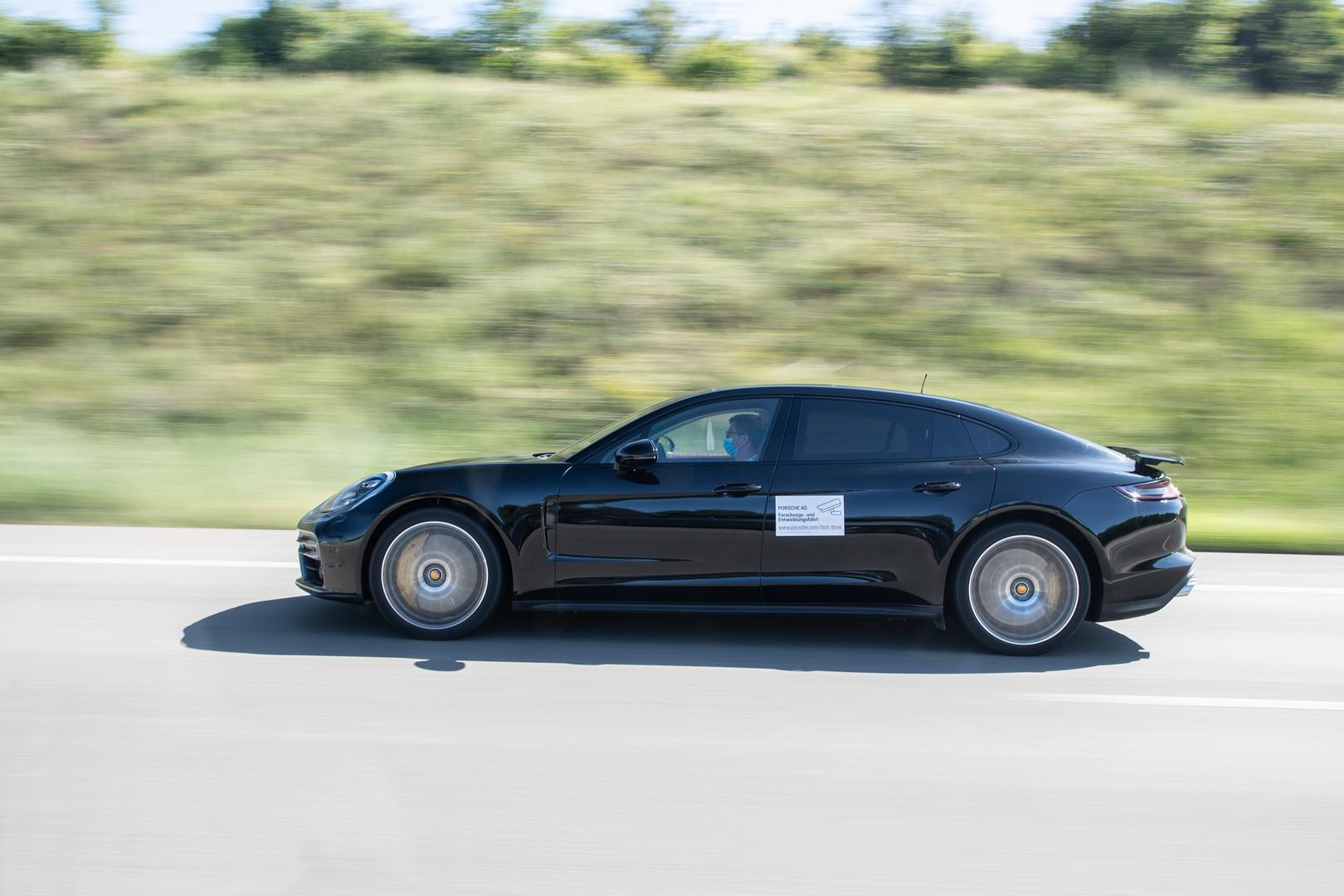
Okay, perhaps Porsche should have skipped the camouflage: It draws more attention to our Panamera than it would have received without the attention-grabbing stickers. We are behind the wheel of the facelifted Porsche Panamera, to be launched in late August; it is fine-tuned in every respect – and still by far the sportiest entry in the luxury car segment.

The Panamera has two faces: Built in two wheelbases and with a Sport Turismo station wagen derivative, it offers all the room of an Audi A8, a BMW 7-series or a Mercedes-Benz S-Class. And since a new, technologically stunning S-Class is just around the corner, Porsche needed to do something to make the Panamera an even better, more comfortable long-distance cruiser.

That’s why it is a bit softer in the comfort-oriented driving modes, and that’s why the infotainment system has been vastly upgraded: It is faster than before, it features a higher-resolution display screen and it has a superior voice recognition system. The Panamera, if so desired by the driver and passengers, offers a serene environment ideally suited to long-distance travel.

But the upgraded chassis and tweaked driving modes can swing the other way, too: Improvements to the adaptive damping system, the anti-roll system, the torque vectoring system and the noticeably sharper steering turn the Porsche Panamera into an even better performer. And that’s important as well, as new competitors such as the four-door AMG GT and the BMW M8 Gran Coupe have arrived on the scene.

Porsche Panamera Facelift Review

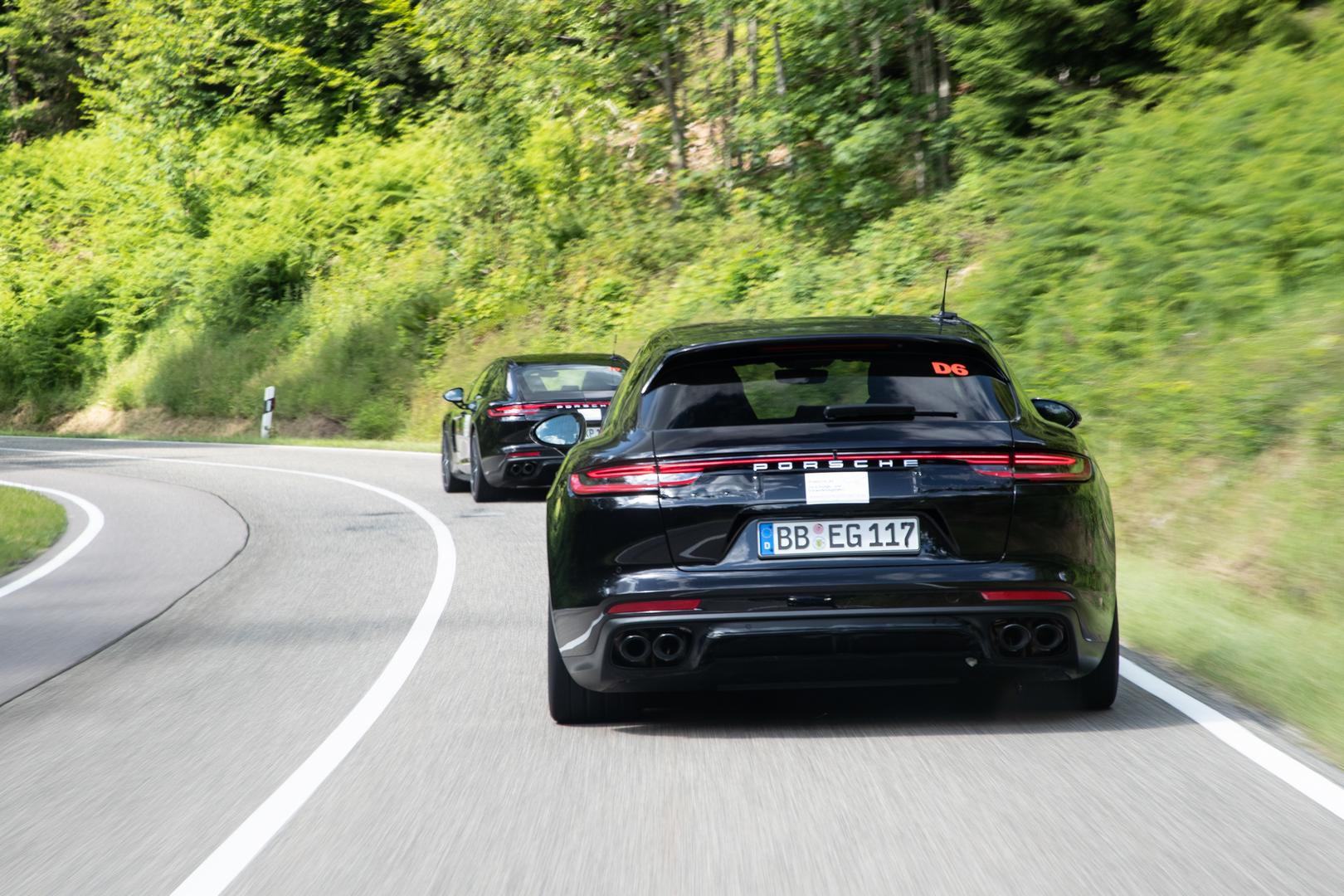
Changes to the exterior are rather minimal: The rear light strip now runs in an unbroken line from side to side, the Sport Design package is henceforth standard, and there are the obligatory new wheels and colors. Inside, there is a new steering wheel and new available wood trim. And we praise Porsche for keeping the traditional gated gear selector that allows the driver to up- and downshift with the flick of the wrist. Alternatively, there are solid and beautifully executed shifter paddles.

The powertrain lineup is significantly upgraded, with two conventional 2.9-liter V-6 models, two 4.0-liter V-8 models and three plug-in hybrids, of which two are based on the V-6 and one on the V-8. The battery is bigger than before, electric range grows by 30 per cent. All-wheel drive is standard with the exception of a few select markets, where Porsche offers and entry-level model with rear-wheel drive, and all models are fitted with a quick-shifting eight-speed dual-clutch automatic, affectionately known as Porsche-Doppelkupplungsgetriebe.

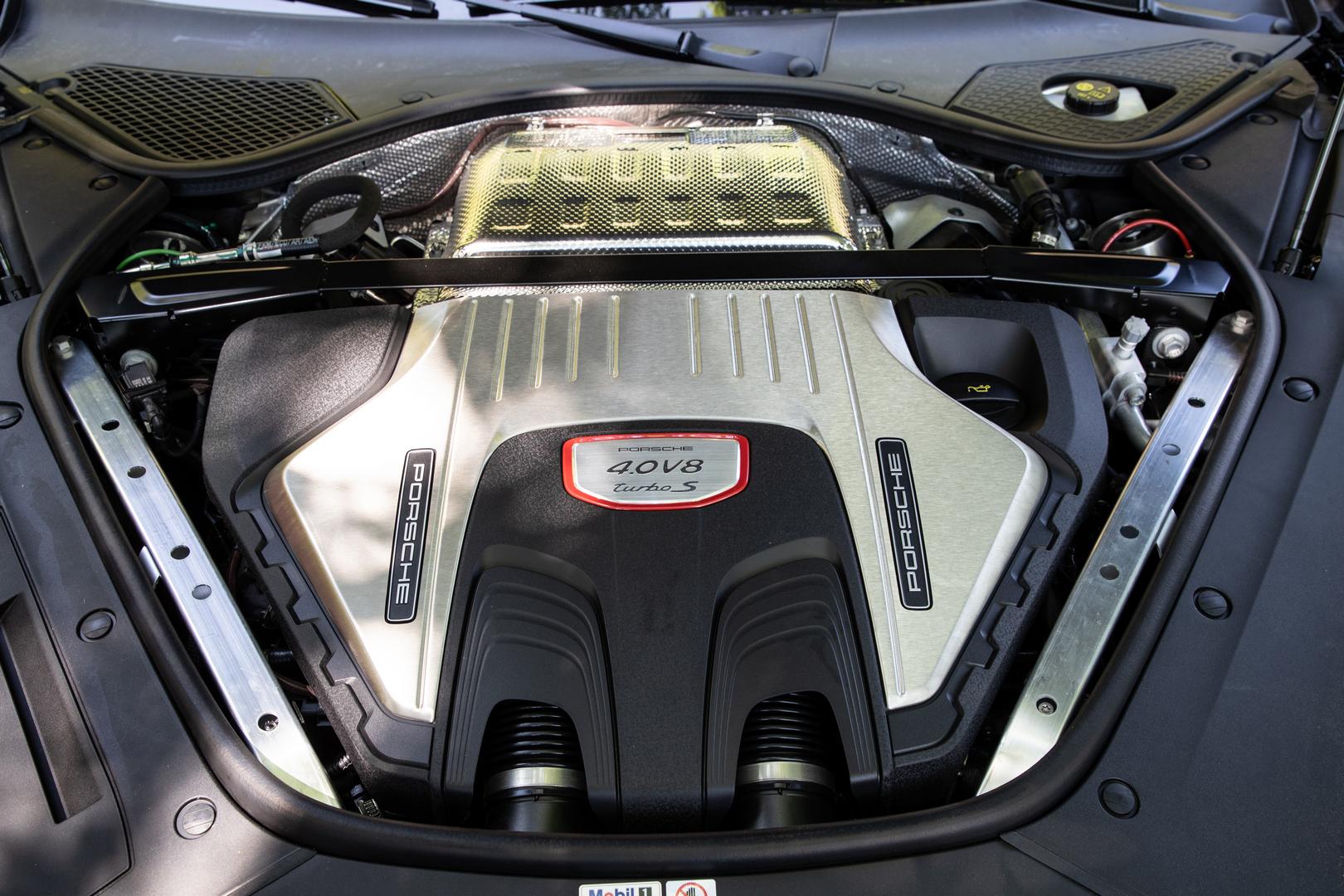
Porsche Panamera Turbo S Engine

The six-cylinder lineup consists of the Panamera 4 with 330 horsepower and the Panamera 4S with 440 horsepower; the Panamera 4 E-Hybrid will make around 460 horsepower, while the Panamera 4S E-Hybrid – a new addition to the lineup – is rated at 560 horsepower.

The V-8 lineup begins with the GTS, which climbs from 460 to 480 horsepower; the 550-horsepower Turbo is killed off in favor of a 630-horsepower Turbo S, and there is only one hybrid here: The Turbo S E-Hybrid, which gets another 70 horsepower to crack 700.

But enthusiasts should know that the Turbo S is fitted with a more interesting engine than the Turbo S E-Hybrid: While the hybrid’s V-8 carries over unchanged and is largely identical to the electronically detuned unit on the GTS, the 630-horsepower unit is significantly fine-tuned with unique pistons, crankshaft and timing chain, larger turbochargers, new injectors and even higher-performance spark plugs. Add to this the fact that it is very significantly less heavy than the hybrid, the enthusiast’s choice should be clear: Pick the regular Turbo S, and it’ll likely be faster on the track, too.

Porsche Panamera Facelift Rear

If it’s comfortable long-distance cruising you’re after, the choice is less clear. The hybrids are economical only when driven over short distances and duly plugged in after each drive. Meanwhile, Porsche has missed the opportunity to bring back the fabulous 4.0-liter V-8 diesel that was briefly available on the pre-facelift model and commands sky-high prices on the used-car market. Our choice would therefore be the GTS: You can’t beat the V-8 rumble – it’s just so soothing.

We loved driving the facelifted Panamera. Look for the cover to come off in late August.

2020 Dodge Durango SRT 392 Review

The good folks at FCA have developed quite a reputation for engineering solid sporting SUV’s, and while I was initially skeptical that any SUV could actually be entertaining to drive, I have been impressed and I have been converted to the dark side. After tuning the rest of it’s lineup, SRT has decided that it’s now the Durango’s turn to be tuned and hot-rodded. Dodge has been making the big Durango for quite a while now.

It enjoys a reputation as a comfortable and solid family hauler and as well as a capable tow vehicle. Something comfortable in which to take six other people to the beach while towing the family motorboat. It hasn’t exactly been anything that a sporting enthusiast would be interested in, other than for towing the race car out to the track on the weekends but that’s all changed with the introduction of the Durango SRT 392.

“It’s not exactly subtle, is it?” a friend asked when I showed up at his house with it.

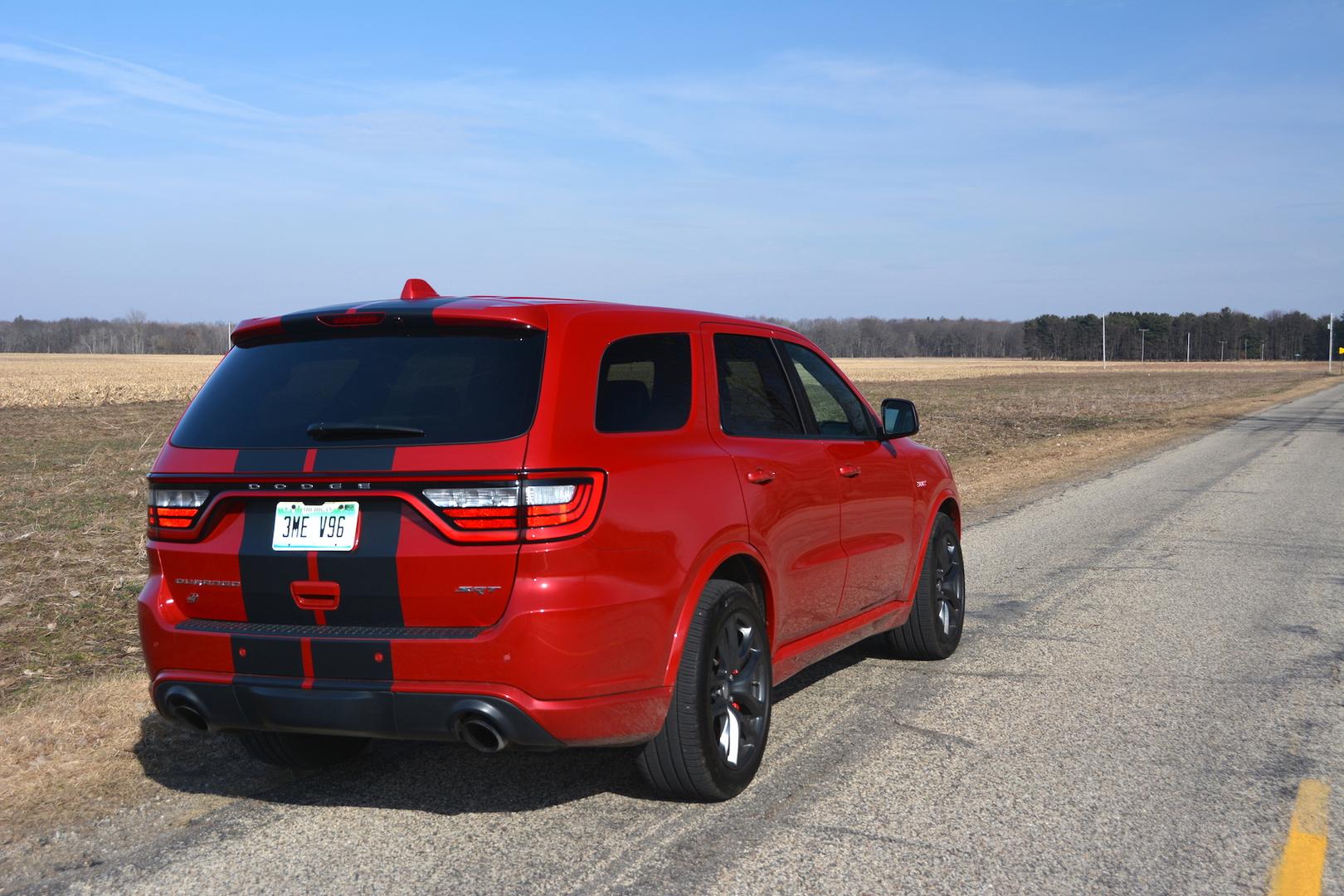
No. No it’s not. Exactly. The Durango SRT 392 is a very large vehicle. And painted up in Redline Pearl paint with twin gunmetal gray racing stripes stretching from front bumper to rear bumper, it gets noticed. Even if you were blind, you’d still hear it a mile away. No, “subtle” is not the world I would use either. But it IS attractive. The Durango has a nice design – very clean and smooth – with muscular lines around the fenders. The additional SRT design features make it much more aggressive than the rest of the Durango line. The large grille, the enormous hood intake, the huge vents. So much so that when driving down the freeway, traffic tends to move quickly to the right in order to let you through. The big aggressive design pays off.

The outside isn’t the only part that’s large. It’s massively spacious inside too. Enough that even a large guy like me felt quite comfortable in it’s roomy cabin. How big and spacious is it? Well, I may or may not have called it a “bus” more than once while referring to it. Not only because it’s big, but also because the view through the rearview mirror is of row after row of seats before you even see out the back window. Besides the driver and passenger seats, there is a middle-row that can seat three. Then, waaaaay out back, is a third row of two seats that are better left to children. Beyond that is a cargo area about 2-1/2’ long and the width of the vehicle.

2020 Dodge Durango SRT 392 Specs

The far back seats fold flat, creating a ton of extra storage space and you can also fold down the second row of seating, which opens up an immense amount of storage space. So it’s versatile. In the SRT 392, the front and middle seats are heated. The steering wheel is also heated. The front seats are also ventilated for those sticky summer days. Our car had the optional rear seat DVD entertainment system to keep the kiddos quiet on long car trips. If you can’t be comfortable in this car, you can’t be comfortable in ANY car.

Under the hood is…..No, not a Hellcat V8. Don’t be dense. It’s got 392 right in the name. Yes, it’s got a tuned 392 cu. in. (6.4L) Hemi V8 and SRT was wise enough to hook it up to some fantastic exhaust pipes that take the engine’s incredible natural sound and broadcasts them for all the world to hear. It sounds so good that I found myself using the paddle shifters to downshift every chance I got. It can get a little boomy in the cabin from time to time, but if you like beautiful muscle car music, it’s a joy to listen to.

The engine makes 475 hp and 470 lb-ft or torque and it moves the big truck much faster than you’d expect. Just mash the throttle and hold on tight. 0-60 mph in 4.2 seconds? Yep. Faster than you’d expect. Fast enough to scramble your synapses and leave you feeling confused. That beautiful engine is hooked up to an 8-speed automatic transmission, though there are paddle shifters behind the steering wheel that work better than a lot of paddle shifters I’ve used. It feels surprisingly natural to crack off shifts using the paddles as you accelerate. The 475hp is transmitted through the Durango’s AWD system, which gives it stability, all-weather capability, and increased performance.

2020 Dodge Durango SRT 392 Headlights

The mileage wasn’t great, but let’s be honest – who cares about mileage when so much performance is available to take advantage of? The EPA estimates 13mpg in the city and 19 on the highway and that’s actually pretty close to what we saw. It’s best if you turn off the mileage display on the dash though so you can enjoy the car.

The suspension is pretty heavy duty, as you’d expect for a vehicle this size, but it also controls the body motions very well. The first time I drove it I got the impression that it was very soft but comfortable. It was only after I started exploring the car’s electronics that I discovered that the Durango SRT 392 has several drive modes available: Auto, Sport, Race, Snow, Tow, Valet, Eco, and Custom. Custom allows you to adjust the suspension, the steering, the stability control, the all-wheel drive, and the transmission response to your personal preference.

Put it in Sport or Race mode and the suspension firms right up making the nearly 3-ton truck feel much tighter and smaller than it really is. There’s still a bit of lean in corners but not nearly as much as you’d expect. I found you can actually hustle the SRT 392 around corners and fun back roads quite competently and capably. Well done, SRT.

2020 Dodge Durango SRT 392 Wheels

It rides on 20” wheels (10” wide!) wrapped in Pirelli all-season tires. They were sticky enough to keep us from sliding off the road when we were taking freeway cloverleaf on-ramps too fast. You’ll find Brembo performance anti-lock brakes at all four corners and they do an admirable job of hauling the big, heavy Durango down from speed. While I suspect you could work them hard all day on back roads, I have doubts they’d hold up too long on a track day but I could be wrong. I’d certainly like to try some day, that’s for sure.

It’s a very entertaining truck overall. I found myself without any deadlines one cold, windy Friday afternoon, grabbed the keys and headed north to where all the fun roads are just to push it and see how it’d do. I put it in Race mode, turned on the paddle shifters, and headed out. The first 60 miles are all freeway miles and it ate those up without any problem. It’s a superb highway hauler – smooth, quiet, comfortable. It effortlessly devoured mile after mile after mile. Need to pass? No worries.

At 85mph, it’ll gain 20-30 mph in speed in mere seconds and you’ll be pulling back into your lane before the guy you passed even realizes he wasn’t buzzed by an F-35. Once I got to the fun roads, I had an opportunity to really push it and see what it was truly capable of. I was quite surprised by how agile it was through curves, how much speed it could accumulate so quickly coming out of those curves, and how quickly a long straight section of road could be traversed.

2020 Dodge Durango SRT 392 Seats

And I remember thinking, as I was wrapping up my drive and settling back into the long freeway slog back home, that this thing was legit. It’s way more capable than I imagined it could be and way more entertaining than I dared hope. I’ve had the opportunity to drive some truly amazing SUV’s over the years – Maserati’s Levante GTS and Trofeo, Alfa Romeo’s Stelvio Quadrifoglio, Jeep’s Grand Cherokee SRT Trackhawk – and I’ve added the Dodge Durango SRT 392 to that short list of magical SUV’s. I’m hearing rumors of a Hellcat-engined version in the works and if that happens, it’s going to be incredible.

The Dodge Durango SRT 392 starts at about $63,000 USD. Ours stickered at $78,000 USD with the options it had, but I’d have been happy with just the base SRT 392. It’s steep, but it’s so capable. If you want a sports car but need a heavy-duty SUV, it’s the perfect intersection between practicality and performance.

GTSPIRIT NEWSLETTER

2020 BMW M235i Gran Coupe Review

The BMW M235i Gran Coupe is a little difficult to wrap your head around if you’re a traditionalist. For one, it is not very closely related to the outgoing, and soon to be replaced, M240i which is a coupe driven by its rear wheels and a 3-litre 6 cylinder engine. Instead, it’s more of a stretched M135i sharing the same 2-litre 4 cylinder engine and front wheel drive biased all wheel drive system (boo hiss). There will be a new M240i Coupe that will feature a 6 cylinder engine and will have the correct number of doors to wear the coupe name. Gran Coupe seems to skew more than just the number of doors in this instance.

The M235i and other 2 Series Gran Coupe models are, obviously, the result of the successes of the Audi A3 Saloon and Mercedes-Benz CLA models. Mercedes-Benz seem to have an appetite for niches and recently added an A Class Saloon to the range that makes no sense in my mind given that it looks like a slightly podgy CLA with no significant space gains. I’m sure the researchers at MB have their justifications…

Visually BMW were quick to flash up profile images of the, to my eyes, gorgeous 8 Series Gran Coupe overlaying sketches of the 2 Series Gran Coupe at the evenings press presentation. Again, to my eyes, one of these cars looks taught, sharp and rather tasty. Unfortunately the scaled down 2 Series doesn’t seem to wear the lines so well, they aren’t striking and melt away into the large and aesthetically heavy rear end.

Maybe it is a peach to drive? Well, the 1 Series is not available in China or the United States of America so it is up to the 2 Series Gran Coupe to whet the appetite of American and Chinese buyers. As a result, this is not just a stretched 1 Series. The suspension set up is softer to better accommodate poorer surfaces. The road route set up by BMW features a variety of road surfaces which the M235i I am piloting takes in its stride.

Make no mistake, the car is very good for doing the tasks that the vast majority of buyers will use their cars for, daily commutes and school runs. It is relatively spacious inside, comfortable, features tech that you would find in a 7 Series and it even feels plenty quick off the line with all wheel drive traction. 0-100 is done in 4.9 and accomplished courtesy of 306 horsepower and 450Nm.

My gripes relate to feedback and feel: there is, literally, none. Yes, the steering rack is quick and BMW have fitted a Torsen limited-slip differential in addition to the BMW Performance Control which ‘intelligently applies the brakes at the wheels on the inside of the bend before the slip threshold has been reached’ a bit like a McLaren does. As great as this sounds, the M235i GC is not engaging or particularly exciting to chuck into the bends.

Understeer still plagues the driving experience and when the front end is not pushing on, the car remains neutral and does not have you lusting to explore your favourite twisty roads with zeal. The M badge typically denotes more dynamic, and adrenaline fuelled drives. The synthesised exhaust noise is very clearly fake, more so than in other BMW models.

By no means does this mean that the 2020 M235i Gran Coupe is a bad car. If you are looking for a car to ferry your family around on short city journeys in comfort with great connectivity and convenience, this could well be the car for you. The M235i variant looks more imposing that lesser models and is well equipped. But if you’re looking for something with a little more zing, the Golf R is more dynamic and the Mercedes CLA 35 AMG is equally well appointed and feels more alive.

GTSPIRIT NEWSLETTER

2020 Volkswagen Golf 8 Review

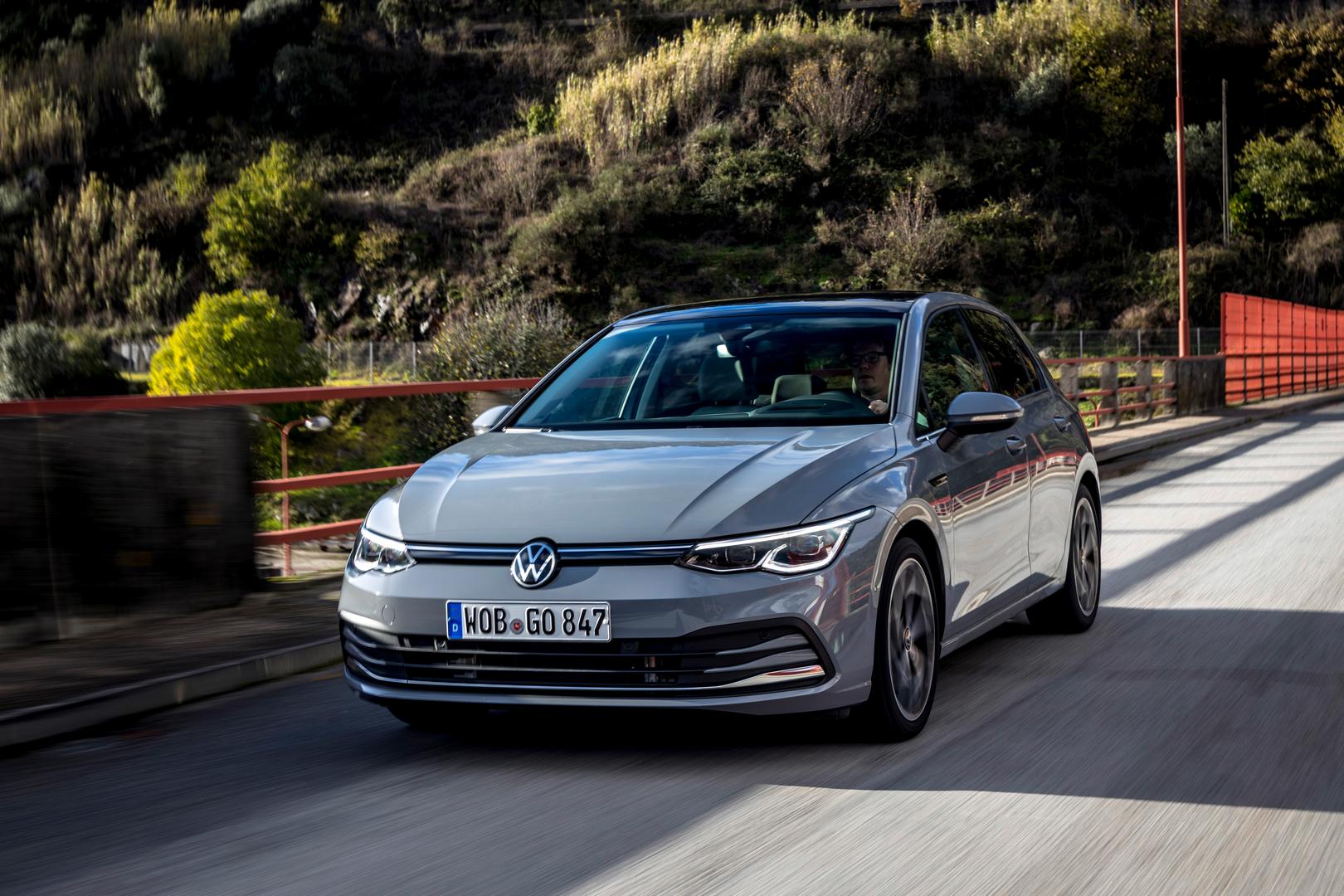
All-new or just a facelift? Not a single exterior panel of the eight-generation Golf is carried over from its predecessor, yet you have to look twice to make it out: The new Golf, just launched near Porto on the Atlantic Coast of Portugal, looks decidedly evolutionary. Only the front end might stir up a discussion: The illuminated eyeliners and the small, thin front grille deviate from the brutalism of many competitors, giving VW’s new core model a rather unintimidating appearance.

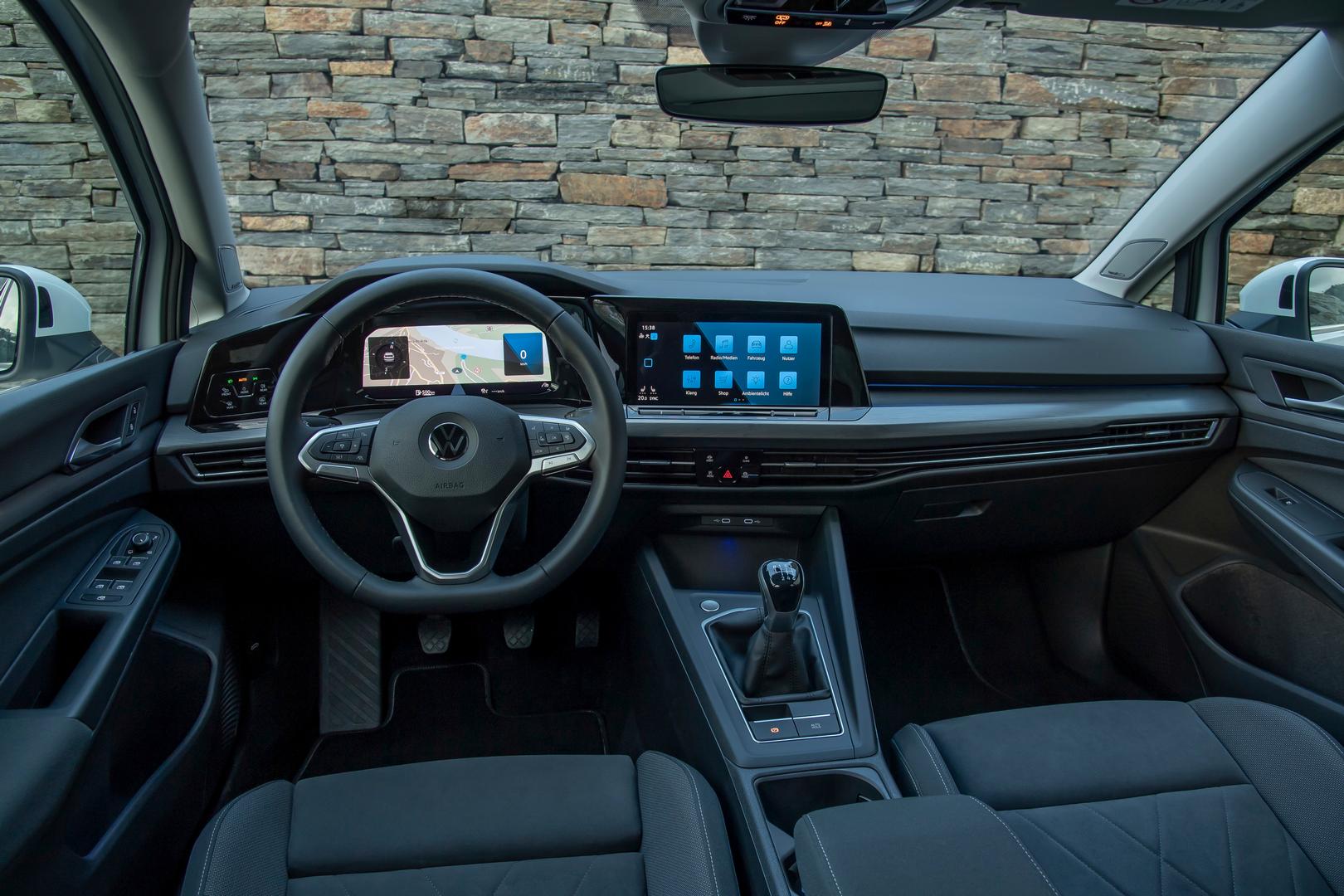
The changes are far more apparent inside the new Golf: The previous, conventional dashboard has been discarded for a fully digital layout with two TFT screens, a high center console and capacitive sensors instead of hard keys and buttons. For a mass-market car, and the Golf is still one of the best-selling cars in the world, this is a remarkable step.

This does not come without risks: First, we are not sure that everyone is really interested in such a futuristic interface, but on top of it, VW had to delay the market launch of the new Golf to deal with electronic gremlins. We are not sure they have worked them all out at this point.

But when the system is operative, it is actually quite impressive and on par with the MBUX system in the Mercedes-Benz A-Class. What’s less impressive: VW ditched Dynaudio as the supplier for the Golf’s high-end audio system – in favour of the decidedly more mainstream Harman/Kardon. Is this the response to Daimler’s Burmester hifi-system?

2020 VW Golf 8 Interior

We like the comfort and the fit and finish in the new Golf’s cabin: Ingress and egress through the four standard doors is easy, the seats are firm but comfortable, and there is plenty of head- and kneeroom on all seats.

We drove two engines with 150 horsepower: The smooth and powerful 2.0-liter TDI – and the somewhat less convincing, mild-hybridised 1.5-liter TSI. We preferred the TDI’s sheer power, its sound, and we suspect it will be more economical than the petrol engine as well, despite the latter’s complex and expensive hybrid module. The seven-speed dual-clutch automatic works flawlessly.

VW GOLF 8 Top Speed

Not only did we like the TDI better than the TSI, we also felt the Golf feels more planted with the diesel engine. Roadholding and steering are at their best in this version, yet the Golf is comfortable enough even for long trips. On those trips, drivers will also appreciate the excellent matrix LED headlights, optional but with class-leading performance.

Going forward, we expect to see more interesting powertrain options: Diesel fans will be able to order the GTD with a full 200 horsepower; there will be two plug-in hybrids, heavy but powerful with 204 and 245 horsepower; the GTI will make close to 250 horsepower, and the next Golf R is expected to deliver around 330 horsepower.

VW GOLF 8 Wallpaper

Europe will get all of these engines, while the US market henceforth gets only the GTI and the Golf R. The new technological basis is impressive, and we can’t wait for VW to bring on the power next year.

GTSPIRIT NEWSLETTER

2020 Porsche Taycan 4S Review

The Porsche Taycan has landed and made not just a splash, but tsunamis in the automotive world. The model was unveiled and released in Turbo and Turbo S forms at first, models that boasted tremendous power and stats aimed at dethroning Tesla as the king of AC/DC power. The Turbo models are astonishing and fulfil the brief of being high performance vehicles that sit as flagships of the range; as a result the pricing was a breathtaking as the acceleration. 750 bhp does not come cheap.

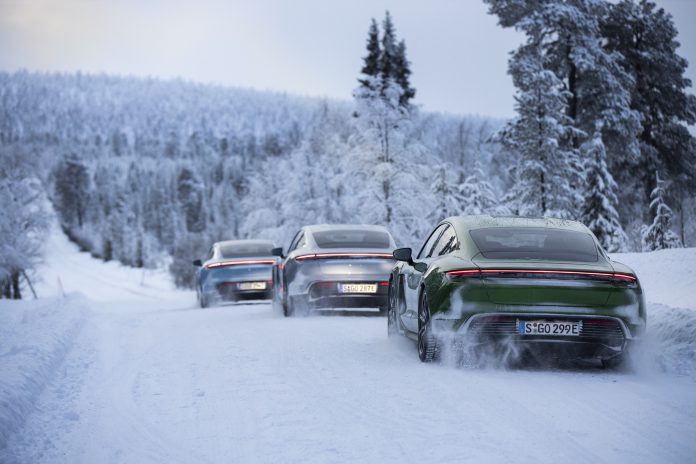
To broaden the appeal of the Taycan Porsche unveiled this, the 4S and I was shipped over to the -19 degree icebox that is Kittilä, Finland to experience the 2020 Porsche Taycan 4S. The 4S is, of course, down on power compared to the Turbo and Turbo S. As standard 523bhp is available on overboost with a range of 405 kilometres. One option that I suspect will be ordered by all customers is the Performance Battery Plus that increases power to 563bhp and the range to 462 kilometres for around €5,000. 0-100 with either battery is done in 4.0 seconds.

At this point I would love to share my driving impressions with you. I will, but it must be noted that it was horrifically cold, this really was a winter wonderland and there is no tarmac in sight, just icy surfaces and standard winter tires to connect with it. There were no spikes in sight. As a result, any feedback in muted and power statistics are almost irrelevant as traction management is far more important.

That being said, I have driven a handful of cars in similar conditions so am somewhat familiar with how cars typically handle when dancing on ice. The first part of the program was a 90-minute road drive in the darkness of the Finnish winter. First impressions are all about traction and the mighty impressive Goodyear winter tires. Although absent of spikes, traction under gentle braking and acceleration. The Taycan 4S felt balanced and incredibly quick, even on the slippery ice. The 992 steering rack that feature in the Taycan still felt well weighted, of course, there was very little feedback on the ice. Braking was still reasonable although the weight became evident when braking harder and the ABS cutting in.

The main event was the Porsche Experience set on a frozen lake, the ideal place to exploit instant torque from the 800volt batteries powering all four wheels. First up was a tight twisty circuit. The aim if the game was to understand the torque split front to rear and swing the car into delicious drift angles. It is harder than you would imagine, opposite lock doesn’t help and you have to be gentle with the power or the car does what it is meant to do and drags itself into a straight line.

Next on the list of activities is a slalom where the weight and its distribution would be tested. The 4S weighs in at 2,215 kilograms and often had me questioning just how thick the ice on this frozen lake was. It is still some 200 kilograms lighter than the Turbo S model but it is still a substantial mass for anything that is considered ‘sporty’. The slalom test highlights the impressive agility that comes courtesy of the antiroll and stability systems.

The third and final test was the drift circle. Again, this is a test of balance and the torque split and where feedback and feel are key. This is a Porsche and at times the Taycan really did feel comparable to a 911, it is spooky, but there is just a level of disconnect that you would never find in a conventional petrol burning 911. The instant torque is spectacular, the acceleration, even on ice, takes you by surprise despite this being the 4S and not a Turbo or Turbo S. The Taycan in 4S is an extremely capable car. If the greater power is not of paramount importance to potential customers, I would strongly argue that the 4S is the pick of the bunch.

The case for the 4S is further heightened by the significant saving over the Turbo models. In the United Kingdom, the 4S starts at under £90,000, a considerable £50,000 less than a base Turbo S. The 4S is the electric car that offers significant steps forward in the industry at a realistic price point with stats and prestige that make it capable and desirable in equal measure. Let’s hope Porsche can build them quickly enough.

GTSPIRIT NEWSLETTER

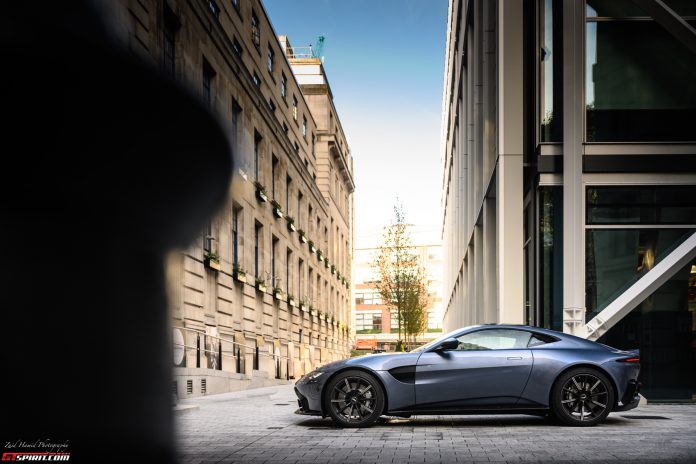
Special Report: The 2019 Aston Martin Vantage, better than a 911?

For decades the Porsche 911 has been the yardstick, the go to car for the affluent man or woman that fancies a great sports car that can thrill on the weekend and, if they so choose, trundle through commuter traffic without fuss or issue in the week. The formula has remained the same too – flat six at the back a couple of seats for the little ones just ahead of the engine a manual or auto transmission in the middle and a reasonably sized boot/frunk at the front. Buying a 911 is a no brainer, they hold value as a result of the ludicrous demand, they are almost all a joy to drive and they are as reliable as a Volkswagen Golf. Few challengers have come and gone, even fewer have the lineage or provenance of the 911 and few are as accomplished all rounders.

An Aston Martin would normally not cross a Porsche 911 buyers mind, the previous generation 2005-2018 Vantage was often considered a competitor. In reality there was a signifiant gulf between the two not only in abilities, but also the ownership experience. That all changed with the introduction of this, the latest generation Vantage. Why the sudden change? Well, the partnership with Mercedes-AMG brought a tried and tested, modern V8. The partnership extended to the infotainment system that was always a point of criticism in Astons of old. These updates significantly boosted the appeal of the Vantage, it started to catch buyers attention. Then the media drove the Vantage on road and track and the rave reviews did wonders for the credibility of the Vantage.

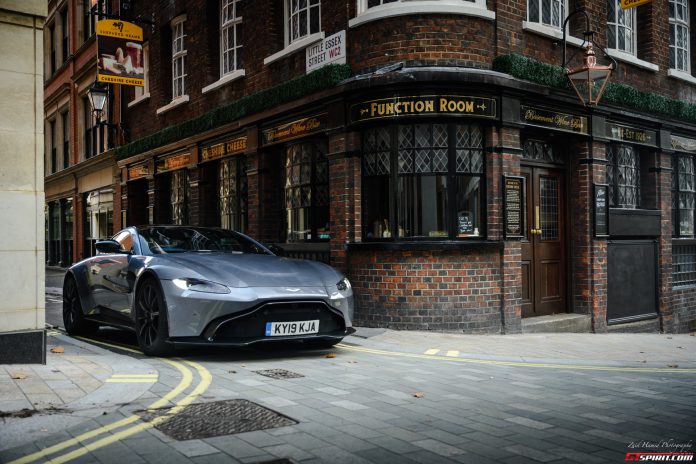
Here I am, in Q4 2019 having recently driven the Porsche 992 911 Carreras in S and 4S guises, both as coupes and cabriolets. I find myself somewhat well placed to draw comparisons with the Vantage that has just been delivered on my driveway. Styling is subjective, but it cannot be denied that the gaping Vulcan like front grill, dramatic taught lines and wide rear haunches provide a visual punch that knockout the subtle, stylish and suited Porsche. These cars are visually sending out different messages.

The same can be said for the interior, the 992 is clean, sharp, functional. The Aston is, again, a lot more dramatic with its button festooned square steering wheel. The dash is also littered with buttons and the gear selector is not a conventional stick, but the buttons that Aston have used for a number of years. The British contender lacks rear seats – for the few that shoehorn their children in the back seat or use them as extra storage space, this may be a dealbreaker. On the topic of space, there is no glovebox in the Aston.

Onto the engines. Once again, this is a story of contrasts. For cars that share a target audience, this is the biggest difference. Front mid engined V8 plays rear engined flat six. Both are turbocharged and both are available with auto and manual gearboxes. Start them up and another sensory contrast makes itself known – sound. This, for me, is a significant differentiator. The 992 sounds the same way as it looks, smooth and sophisticated. It turns heads but does not snap necks. The Aston does the latter, the V8 with the sports exhaust is rude on startup and in Sport+ or Track mode, it warbles like an old school V8, then splatters, bangs and howls as you push on. The whip cracks on up shifts and gun shots on downshifts are a far cry from the 911s image. The relation to the Mercedes-AMG’s noises is there, but the Aston is far more brutal, raucous and hard-edged. It is different enough.

The sounds accompanying the gearshifts may be entertaining, the shifts themselves from the ZF eight-speed cannot match the finesse and scarcely believable speed of the PDK box. The Aston’s steering is not hyper fast as many cars on sale today, but it does lack precious feel. Given that it is the first time Aston has adopted an EPAS system, it is fair to say that it will improve in the future as Porsche’s did.

The Aston wins on power, 503bhp vs a Carrera S with 450. 0-100 times are very similar, both will hit the measure in the mid threes according to their press releases. Porsche, as per, are conservative and in the real world would leave the Aston behind from a standing start.

As a daily driver the Vantage is fantastic. Around the congested London streets it is comfortable, the steering is light, the ride supple and the seats are comfortable. The brake pedal is a touch too sensitive but adjusted modulation over time alleviates this, a little more travel would be an improvement as would a glovebox. I suspect the reason for their being a lack of glovebox is the engine being situated so far behind the front axel, the dash itself is quite high. This means there is a sporty post box like view out of all the windows. Racy, not very good for general visibility. The blindspot from the wing mirror position also takes some getting used to.

The comparisons on tangible elements are all good and well. The majority of measures swing towards the 911, particularly when you consider the Carrera S is around £20,000 less than the Vantage. Then you turn to how the cars make you feel and this is where the Aston sets itself up fabulously. Could you imagine James Bond driving a 911? No. The feeling of rarity, bonafide specialness is part and parcel of owning an Aston Martin. If you drive through London you’ll need an abacus to keep count of the 911s that you’ll cross paths with in just an hour around Kensington and Mayfair. Vantages are far rarer, they command attention, something only the most hardcore 911s can do. This may sound trivial, but to me, and I suspect a genuine sports car owner, the way the car make you feel is taken into consideration. Mute the head and focus on the heart and there is a gulf separating the Porsche and the Aston, the Aston gives you this warm happy feeling that is a charm that few competitors possess.

It cannot be denied that the 911 is more accomplished in its abilities, in equal measure anyone considering a 911 would be foolish not to get behind the wheel of the Vantage, it is a fine machine and one that might just charm them off of their feet, perhaps for the drama and noise alone.

GTSPIRIT NEWSLETTER

2019 Lexus RC 350 F-Sport AWD Review

After driving the capable Lexus RC F a month or so ago, we came away impressed. It was a bit of a monster and we quickly took a liking to it and made sure we put a few good hard miles on it. For, uh, research purposes. It was a solid performer. Handsome too. All fully-fledged F models are though. So when Lexus offered us some seat time in the RC 350 F-Sport AWD, we jumped at the opportunity even though our expectations weren’t quite as high. We were startled and pleasantly surprised though by what a capable performer it was.

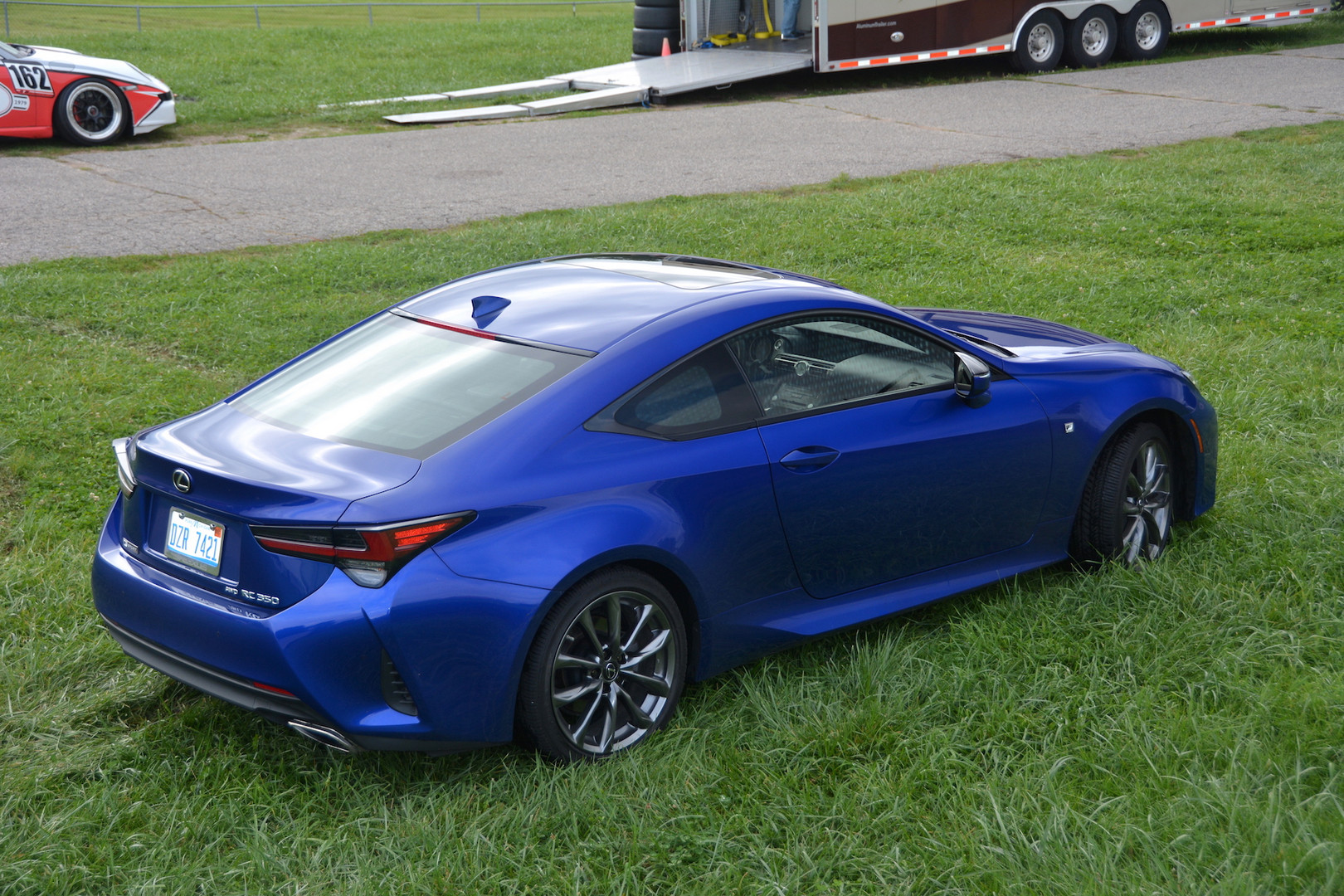
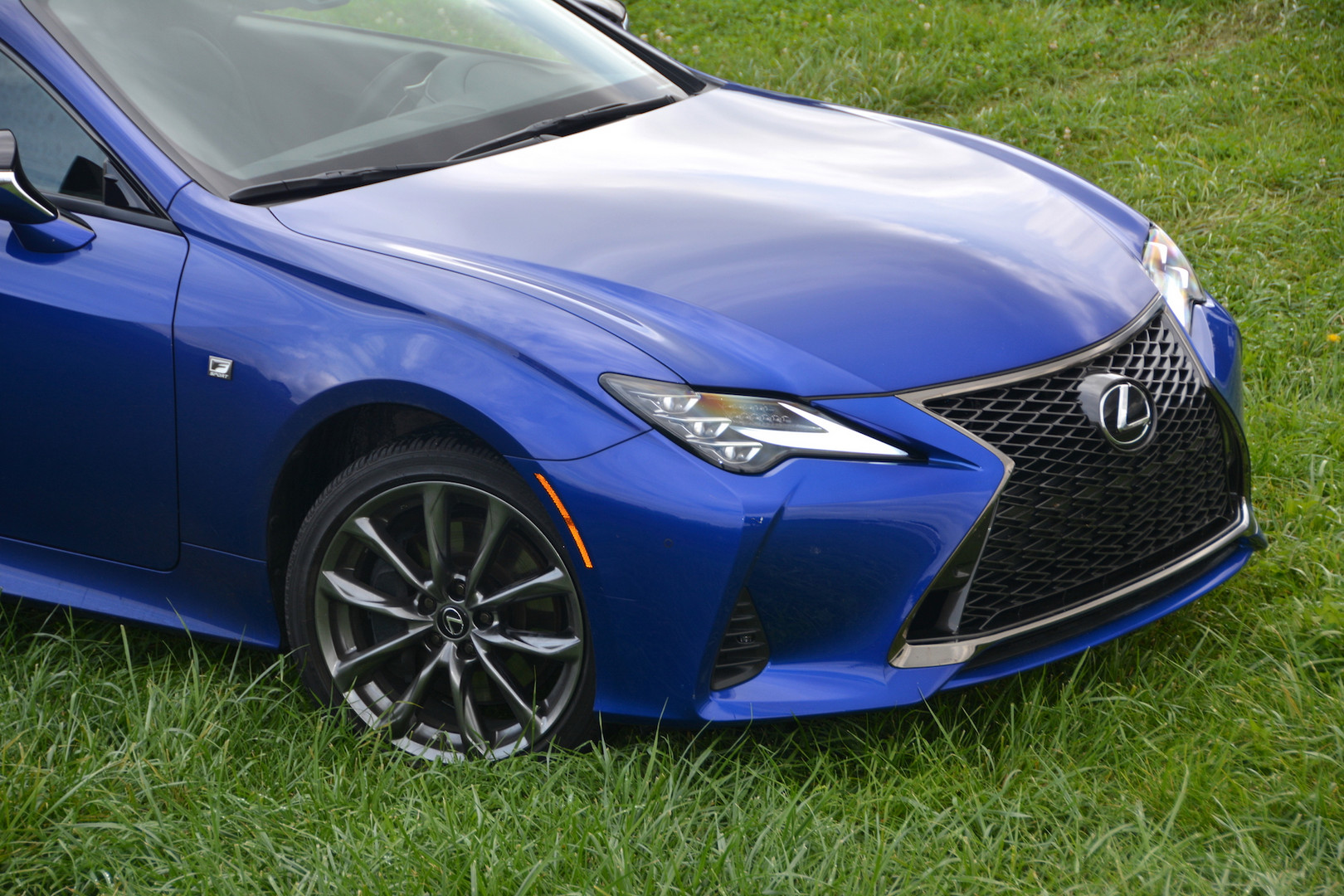
On the outside it looks very similar to the RC F we drove. With it’s sweeping fenders, short wheelbase, and fastback roofline, the RC model is probably the sportiest and sharpest looking model in Lexus line-up right now besides the epiphanal LC 500. The RC 350 F-Sport doesn’t look quite as aggressive as the F. The tall vent on the front fender is gone. The carbon fiber trim is gone as well. But it still looks good. It still looks fast. It looks cleaner actually.

Our review car arrived in Lexus ever-present and ever-attractive Ultrasonic Blue Mica, which really highlights the flowing lines of it’s design. There’s dark gray trim that looks good with the blue paint and an F-Sport specific grille. And the headlights have a different look too – unlike the RC F we drove, there are three vertically-stacked LED lamps under each headlight cover. The dark 19” wheels complete the look, which promises performance.

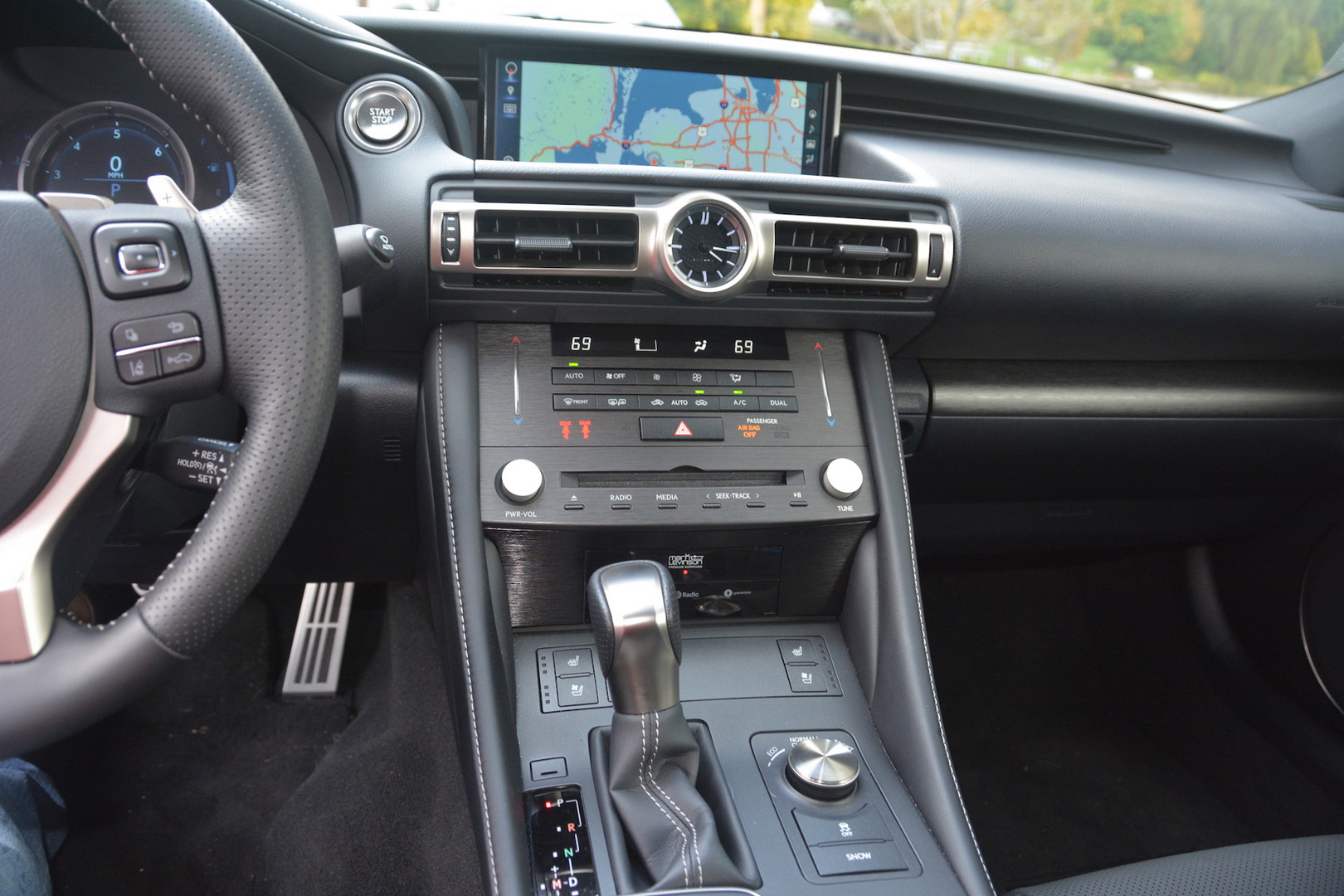
Inside is the familiar and comfortable interior that we recognized from the RC F. The carbon fiber trim is gone, replaced with a dark wood trim that fits in just as well with the dark leather. The F-Sport seats are extremely comfortable and heavily bolstered to hold you in place during sharp turns. They’re both heated and ventilated and 10-way electrically adjustable too. The instrument display consists of a large tachometer with a digital speed display within it.

As is common on the F-Sport models, the press of a button causes it to slide to the right and reveal further information such as tire pressures and trip odometers. The navigation screen is large (10.5”) and easy to read and is navigable via the touchpad on the center console. There’s a performance mode selector knob on the center console, as well as a button to disable the traction-control. There are two cupholders below them. This is the kind of interior you hope to find in every car you drive: comfortable, quiet, and intuitive. This is a near-perfect interior for a daily driver but it also works so well as a performance car interior.

2019 Lexus RC 350 F-Sport Interior

Under the hood lies Lexus well-tested and 3.5L 24-valve V6 engine with variable intake and variable exhaust technology. It makes 311 hp and 280 lb-ft of torque. The engine is strongest in it’s mid- and upper-range, providing excellent passing and overtaking speed very quickly. 0-60 comes in a little over 4 seconds and top speed is electronically limited to 130 mph. The engine is hooked to a 6-speed automatic transmission that offers drivers the option of using the paddle shifters behind the steering wheel, and it distributes the power to the very capable full-time AWD system. The paddle shifters are fairly responsive and get better with each increase of the performance mode selector.

The suspension is tuned to be more sporting than the lower level RC models, but it’s not quite as capable as the suspension on the RC F. Like the F, the 350 F-Sport front suspension consists of double wishbones with coil springs, electronically-adjustable shock absorbers, and anti-roll bars. The rear consists of coils springs, electronically-adjustable shocks, and an anti-roll bar in conjunction with a complex multilink suspension. It’s tuned to be a compromise between comfort and performance, with the greater emphasis on comfort. Not that it’s not capable but the top of the line F model sets the bar so high that anything else just feels softer.

Behind the attractive 19” wheels are 13.2” ventilated discs in front and 12.2” ventilated discs in the rear. These are clamped down by very large calipers. They use anti-lock braking and electronic brakeforce distribution to give excellent feedback when braking. There is no squishiness or vagueness in pedal feel; only firm and communicative braking. Between the large discs and calipers and sticky tires, the RC 350 F-Sport AWD stops very quickly and confidently. In fact, we were also reviewing an Alfa Romeo Giulia Quadrifoglio the same week and we felt that while the brake systems of both cars were extremely effective, those of the RC 350 F-Sport had much better feel and better sense of control over how the brakes worked.

2019 Lexus RC 350 F-Sport Rear

Steering too is confidence inspiring. The electronic rack-and-pinion power steering feels remarkably intuitive and natural. Not too light, not too resistant. The wheel is thick and fits comfortably in your hands.

Start it up and the V6 does a pretty good impression of a V8. Lexus utilizes the stereo system to amplify the engine sound inside the cabin and it sounds good. Pull the gear selector into D and pull away. The engine sounds great, with a deep bass growl. The ride is smooth, absorbing bumps well. They come through the suspension but they’re muted and diminished. Get on the throttle and the engine’s power builds the higher you wind out the engine. Shifts are smooth and clean. The road noise in the RC line seems to be greatly diminished over other Lexus models such as the GS and ES. It’s a smooth cruiser.

Adjusting the Drive Mode Selector instantly changes the character of the car. You have your choice of Eco, Normal, Sport S, Sport S+ (changes suspension electronically), and Snow. We were most interested in Sport S and Sport S+. Both settings quickened the car’s reflexes and responses, making it much more fun and exciting to drive. Engage the paddle shift transmission option and it becomes quite engaging. It’s not RC F fast, by any means, but it’s the next best thing.

The car handles well. I was initially a little disappointed when I experienced some understeer going into a corner. However, after giving it more throttle, the AWD system quickly pulled the front of the car through the corner with confidence. You soon realize that you can push the car hard through corners and count on it to take most of the danger out of the equation.

2019 Lexus RC 350 F-Sport Wheels

On one of our drives on back country roads that wound through and over the hills and valleys of northern Michigan, through an afternoon of heavy rains, the AWD system kept the bright blue Lexus stuck to the wet road instead of spinning through the ditch and farmers fences. The AWD system allowed us to push harder than we otherwise could had it only been RWD and it was a real boon during hard driving in wet conditions.

The Lexus RC 350 F-Sport AWD is a very competent, comfortable, and attractive sport coupe. While we were initially prepared to write it off as a weaker, lesser version of the RC F, we instead found that it is a surprisingly strong, surprisingly capable car and one worth taking a close look at.

GTSPIRIT NEWSLETTER

Porsche Taycan Turbo S Review

This is a big deal and perhaps the most significant car I have ever written about in my short, prepubescent life as an editor writing about cars. I am also a sceptic of electric cars, I am just not a fan, this is a chance for Porsche to change my views. Some 350 journalists have been driving the Taycan before me, specifically the Turbo and Turbo S models, on a mega road trip starting in Oslo. Nineteen days later, the convoy would reach the spiritual home of Porsche, Stuttgart and I had the honour of driving the final leg of the journey from Berlin.

Stepping into the Taycan is quite an overwhelming experience for me. Knowing that I would be able to finally drive a car I have sat in on multiple occasions before and even been a passenger in when in pre production form, it was my time to drive one of the most eagerly anticipated and important cars in a decade.

When I jump behind the wheel the first thought is that there is a wall of screens to comprehend. There are a lot of screens, four in this car (including optional passenger screen). That being said, it all is very clear and logical, futuristic but still familiar in a typical Porsche way. If you have not previously sat in a Taycan you may need a second to: a) know whether or not is is on, b) find the gear selector (it is hidden to the right of the wheel like it was in a 918 Spyder).

Orientation completed, what is it like to drive? Crawling around the congested streets of Berlin in a Taycan is a quiet and tranquil experience. Then you find yourself in the left turning lane but you need to take a right. Sport Plus engaged…red, red, red. GREEN. I am pinned to the seat and crossing four lanes and feeling like a naughty school child. The feeling of speed is intensified by the synthesised spaceship noise the accompanies the neck snapping acceleration, the noise can be turned on or off at the touch of a button. So it goes like a Porsche, a very fast one at that. The Taycan Turbo S will do 0-100 in a blistering 2.8 seconds, that GT2 RS quick, in a family saloon that will fit four adults and has two boots. As I am sure you would have seen, the Taycan Turbo S recently set the fastest Nurburgring lap time for a four door EV with a sterling time of 7min42, a time that was seemingly set on very ordinary tires, bring out the Cup 2 Rs and watch Tesla cry.

Out onto the country roads of rural Germany the Taycan can stretch its legs, and boy, it has legs. The acceleration from standstill is potent, instant and and honestly, takes your breath away. When you’re up to speed you can focus on placing the car fabulously using the brilliant steering, typical Porsche. Thread it through a corner and the acceleration out of the bend dominates again. Into the next one and it dawns upon me that I am chucking a 2.4 tonne car through the corners like a car that weighs a tonne less. The weight is all down in the floor, the Taycan has a lower centre of a 911 and it shows. There is little to no body roll, there is supreme control and composure. The only time the illusion wears thin is under heavy braking, you can’t cheat physics forever. It stops well and hard using the giant carbon ceramics, but the inertia can be felt.

So it is a revelation for electric cars in the way it drives, it has a futuristic interior and it looks the part. The car is fabulous, but then we come to the other side of the coin: the infrastructure.

When setting off from the start line in Berlin the navigation was set and the car displayed an estimated battery change percentage upon arrival. It read 12% to the lunch stop where the car would be charged at one of the Ionity 800watt chargers. 12% is a reasonable level and my passengers and I felt confident that we could arrive without giving the range much thought. Remember that quick lane change in the city that I mentioned earlier?

That switch into Sport Plus and the pedal to the metal acceleration cost 1% of that 12% estimate. A few amusing accelerations from standstill to the speed limit cost a further 5%. A short 3km autobahn blast to the vmax of 260km/h and the estimated battery upon arrival is at 1%. With more than 100kms to go, the famed range anxiety set in. I shift into Range mode to try and earn back some precious power. This is where things get a little dull, there are some stunning roads coming up, but I cannot push or my passengers and I will be stranded on the side of the street playing I Spy.

Some careful driving and arduous steady kilometres later we are close to the destination with around 4% charge remaining. Into sport plus I hope to make the most of the remaining power, only to find the car is warning me to preserve the remaining charge and it has limited the max speed. Killjoy.

Throw in a short unexpected detour, such as dropping a friend to a train station a few kms off the route and you will not make it to your final destination without having to visit another charger on the way, make sure it supports 800watts or you’ll be sat around for far too long staring at the percentage of charge in a service station memorising the Burger King menu.

The Taycan is a fabulous machine, one that has, without a doubt, changed perceptions and the expectations of electric cars. I cannot help but question how the concept of electric cars can be considered feasible in a world where the infrastructure is not yet ready to alleviate the woes of range anxiety. We are so accustomed to the convenience of having endless access to petrol stations where we can brim our tanks with fossil juice in seconds. Until we can charge our batteries in less than the time it takes to do a shot of espresso and chomp down a Snickers bar, there will always be sceptics of the need to build in 20-30 minute stops to recharge a battery. For day-to-day short commutes in congested towns and cities like London, the efforts of the BMW i3s or Renault Zoe are far more compelling. A week of commuting can be completed on a single charge overnight on the weekend, a real alternative to combustion motoring. Why claim that electricity is ready to replace fossil fuels in all scenarios?

GTSPIRIT NEWSLETTER

2019 BMW M8 Competition Coupe and Convertible Review

The BMW M8 Competition is a difficult car to place. The replacement of the M6 is tagged by BMW as being a luxury GT car, but one that packs 625 horsepower and 750Nm of torque. Those aren’t numbers that are used to waft from the country estate to the golf course, something I learnt when I went to The Algarve to put the most powerful series production M car in BMW’s history to the test.

After an evening of being inundated with stats and filled with the finest prawns I’ve ever eaten, it was time to see how the figures felt in the real world. Exploiting 625 horsepower on the street isn’t exactly easy, the infamous Autódromo Internacional do Algarve, colloquially referred to as Portimao, had been booked out for us to put the M8 Competition through its paces (the base M8 was not on offer to test on this occasion). Boy, oh boy there was pace. BMW claims 0-100km/h in 3.3 and it feels every bit as fast. 3.3 isn’t a number typically attributable to a wafty GT car, and neither is the way the M8 Competition handles itself around what is one of the most testing tracks in Europe. Stability and control were a focus for the M division and can be directly linked to three innovations that have been created with sharp handling characteristics in mind: M xDrive, Active M Differential and M-specific Adaptive suspension. They each do what they say on the tin and each element takes the poise of the M850i and turns it up a notch to far more serious, track usable levels.

Yes, the car still feels all of two tonnes when you really start to hustle it into bends and quick direction changes, but you’ve got to be forcing it into such a scenario. I suspect 98%, if not more, of owners will never venture onto a track with their M8, but it’s spectacular to know how capable the car can be. The xDrive system deserves a special mention as it allows you to apply power extremely early after an apex, you feel it dragging the car out with terrific grip and speed. That’s not to say that there isn’t fun to be had, with the traction and stability systems in MDM, the rear end comes in to play and is easily adjustable on the throttle.

The 4.4-litre V8 revs to 7,200 but peak power is done at 6,000. The 750Nms come courtesy of two turbochargers that are nestled between the two cylinder banks for a sharper response and less lag. This unit teams up with an eight-speed M Steptronic transmission which is as good as any dual clutch setup on sale today, you are never left helplessly tugging at paddles for downshifts multiple times before they are delivered.

Braking performance is often a point of criticism on BMW M cars, even the carbon ceramic setups of the past have been known to find themselves in a spot of smokey bother after a couple of intense laps on track, not in the M8. Thanks to cutting-edge technology, the brake activation, brake booster and braking control functions are brought together within a compact module. The brake pressure required is triggered by an electric actuator, which means it can be generated more dynamically, pedal feel is optimised and the interventions from the stability control system are significantly faster and more precise. The driver can choose between two pedal feel settings: one more comfort-oriented and the other a particularly direct, instantaneous setting. I can report that the feel remains remarkably consistent even after a pounding on the track.

As I said, I can never imagine myself seeing an M8 on track except for in special circumstances such as a motoGP safety car. The road is where M8s will be used and that’s where the real world consumer testing needs to be done.

Weighing in at 2.1 tonnes, the convertible M8 Competition is around 100 kilograms more than the Coupe and is the variant assigned for the road testing element of the test. It is 0.1 seconds slower to 100 (3.4 seconds) but with the roof retracted the sensation of speed is heightened.

With every new car review I write, I seem to drone on and on about the crippling OPF that has restrained the exhaust noises that enthusiasts so crave. The story is the same here and the soundtrack is not what you would traditionally associate with a 4.4 V8. That being said, M have worked hard to give the M8 some serious bass. It’s not great, it’s acceptable.

On the billiard table smooth tarmac of the track the steering felt numb, there is more weight in the sportier modes, but the feel is absent. The same can be said for the steering on the road. So not very good then? Hold your horses, the M8 really surprised me on the deserted, tight and twisty roads away from the circuit. The coupe was great on track, the convertible continued to exceed expectations on the street. The xDrive system means you can use the power and mammoth torque without fearing for your life, the systems mentioned before, particularly the suspension and diff shine and come together to make the M8 not only savagely fast, but also very easy to drive at speed.

Then you slow down to admire the scenery and stick everything into comfort and the character of the car completely changes – it demonstrates an impressive breadth of ability. The cabin is comfortable, the seats could be a little more supportive but are well suited to long drives. The back seats are usable for adults too, perhaps not for longer journeys but certainly suitable for children. The infotainment system remains one of the best in the business and there are new M displays to separate this from the rest of the 8 family. Gone is the questionable crystal gear selector from lesser 8 series models.

This brings me back to my opening statement: the M8 is a difficult car to place. Is it a 911 competitor? I feel it’s not sporty enough and lacks feel in comparison to the Porsche. Maybe the Bentley Continental GT or DB11? I feel the M8 is not premium enough. The Aston Martin Vantage or AMG GT could be in the sights of the M8, but neither of those can demonstrate the soft, supple cruising abilities of the M8 Competition. Regardless, the M8 Competition stands tall and proud as the current head of the BMW M table with the ability to cruise quietly or attack a road with seemingly endless torque and power. A mighty fine M car.

GTSPIRIT NEWSLETTER

2020 Audi RS7 Sportback Review

There forever has been and, hopefully, will always be an inexplicable level of cool associated with a fast German saloon car. Perhaps it is that they are based cars on which are typically a little beige, boring and, more often than not, diesel barges that trundle down the autobahn minding their own business. Then the skunkworks departments at the likes of M, AMG and RS get to work and the results are snarling hulks that both look and feel like swollen hulks of the timid cars they once were.

Since the turn of the millennium, there have been a couple of personal highlights: the E60 BMW M5 saloon and estate which both featured derivatives of the Williams F1 V10 that howled like nothing else, and the Audi RS6 Avant that also featured a mighty large V10 taken from the Lamborghini Gallardo. The recently replaced Audi RS6 is also up there nestled amongst the best. The pressure is on for the new one to deliver, but the opportunity to drive the RS6 is a few months away. To whet the appetite, Audi asked if I would like to drive the RS7, a car that seems to have been somewhat overshadowed by the mass hankering the market had for the RS6, despite both cars sharing the same mechanicals underpinnings. Could the latest iteration steal the hearts of many as the RS6s of the past had? To find out, I flew to Frankfurt.

Let’s get the numbers bit out of the way: at the heart of the package sits a 4.0-litre V8 engine producing 600 hp and 800 Nm of torque. 100 km/h is dispatched in just 3.6 seconds with a 250 km/h top speed. The Dynamic package removes the limiter, pushing this up to 305 km/h.

A 48-volt system runs a belt alternator starter with car recover 12 kW of power for use between 55 and 160 km/h. The system is meant to provide instantaneous power to the drive while offering the ability to coast on electrical energy with the engine switched off. The cylinder on demand technology further aids fuel consumption. Power is fed to a Quattro permanent all-wheel-drive system through an eight-speed tiptronic transmission. The RS7 gets a launch control function with torque control provided through a sport differential, part of the optional Dynamic and Dynamic plus packages.

That’s that, what does this all feel like off the paper and on the tarmac? Well, that depends on one decision that owners will have to make, it makes a rather considerable difference: suspension. The RS7 can be optioned with either the standard, more comfortable, RS adaptive air suspension or an optional sport suspension with Dynamic Ride Control, that is the one you want. Why? The optional DRC set up is harder and, yes, it is touch harsher on the road. Make no mistake, it is still comfortable when you’re cruising, but when you get a hustle on, the body control and the limit before understeer and tyre squeal become a factor, is far higher.

I am no track day magician, but I was finding the handling limits of the car in the air suspension fitted cars remarkably easily. The conventionally sprung car felt far more up for a good time, and as a result, I feel it is worth the comfort trade-off. All cars tested rode on massive 22 inch wheels all around.

What about the performance? My first thoughts on the autobahn were ‘oh, it’s not THAT quick’, I then looked down and noticed I had hit the top speed. In gear acceleration in first, second and third in particular, is astonishing. It feels every bit 592bhp quick. At speed, the sensation of power is somewhat stymied by the lack of a certain characteristic: sound. There is a huge 4.0-litre V8 under the hood, but you would have no idea judging by the sound in the cabin. It is a little depressing, but it is a sign of the times in a world muzzled by the legislative necessity for the awful OPF. Audi combated my comment stating that they wanted to keep the noise authentic and refused to pipe fake sounds into the cabin…if you listen carefully you can hear BMW M retreating into the bushes.

Back to the bends, there is a lack of something here too, steering weight and feedback. This is a gripe that I’ve had with Audis for years, the chances of this being remedied in the RS7 were slim, it is a little difficult to understand what the front tires are doing and where the limits of adhesion are when there is such an absence of palpable communication coming through the wheel. That being said, there is good news too. The car is savagely fast out of bends and the 48 volt antiroll system masks the weight as well as you could ask from a car that weighs in at 2,500 kilos. As previously mentioned, the DRC suspension is where the car is at its best. It must also be noted that the gearbox is fine on the way up, but hesitates on downshift – third to second, in particular, seems to take an age.

Inside there are a few niggles, but on the whole, the interior is a very pleasant place to be. There are lashings of leather, alcantara and plenty of room in the front and rear. There are also walls of screen. The dash is impressive and there and a multitude of configuration options to display as much data as I’ve seen in a machine this side of an F16. For me, the two stacked central touch screens are a little fiddly on the move and require more concentration than I would like to give them when pushing on or trying to focus on a twisty stretch of tarmac. This, I guess, is personal preference and others may love them as much as I loathe them. On the whole, I feel there could be more going on in the interior to set the RS apart from the series A7 to reflect the changes to the exterior. It lacks a special touch.

On the whole, the RS7 is a mighty fine piece of kit. If you’re in the market for an M5 to E63, the RS7 really is a viable alternative. It is a little softer and quieter than the aforementioned cars, but is by no means slower. It features all the tech you could ever need, is spacious and in plenty fast. Audi claim 0-100 in 3.6, I saw 3.2 time and time again with the deeply effective launch control activated. To answer my opening question, yes, I really think this car deserves adoring fans as there is plenty to love in this new RS7 as there has been in every RS6 to date. Now we need to see just how impressive the new RS6 is.

GTSPIRIT NEWSLETTER