All posts in “Car News”

Aston Martin Poised For Growth, Greater Things

Aston Martin, that uniquely British builder of beautiful sports luxury cars is planning to expand its horizons and its sexy product portfolio. And it’s now in an excellent position to do so.

Tobias Moers, the man who took the reigns of Aston Martin Lagonda this summer as it’s new CEO, released a positive and optimistic progress report on Aston Martin’s aggressive new business plan today. Moer’s bold ambitions to build and expand Aston Martin’s product portfolio, increase sales, and make Aston Martin one of the greatest luxury car brands in the world are one step closer to reality.

The lynchpin of that plan is a cooperative agreement with Mercedes-Benz AG that was struck last week. This agreement gives Aston Martin access to Mercedes-Benz advanced technologies that will assist Aston Martin in the areas of design, engineering, and manufacturing while easing the associated financial burden. This sharing of technologies is essential to Aston Martin’s future as it will allow it to both remain competitive on the world stage and to focus more of it’s investment capital in the areas that truly differentiate Aston’s products from it’s competitors.

As a result of this cooperation and shared expense, Aston-Martin has been able to retool their business plans to include an expanding product portfolio. As a result, a wide range of new, exciting, and of course beautiful products are in development. According to Moers, they are now in an excellent position with the right management team, the right business partner, and the funding necessary to transform Aston Martin into one of the greatest luxury car brands in the world and a cutting-edge automotive tour de force.

2020 BMW M8 Competition Gran Coupé Review

Size matters – but does 200mm make a difference? This seemingly small measure is what differentiates the 2020 BMW M8 Competition Gran Coupé from the M8, minus the GC nomenclature. However, 200mm means this M8 can accommodate an extra pair of doors and seating for five. With four in the back things are habitable. Headroom is not great, but if you wiggle them around a bit, two 6-foot adults could handle a long journey back there. You can try and shoehorn a fifth in, but they have to straddle the central armrest and make everything a little too cosy in the back seats.

Enough of the practicalities, this is an M car and all I care about is how this massive twin-turbo V8 powered 625bhp brute performs. With xDrive 553lb ft, and 0-100 banished in a supercar worthy 3.2 seconds, the numbers look good near identical to the two-door, making it BMW’s equal-fastest production model.

The xDrive means the power can be utilised, even on the road and in almost any conditions. However, weighing in at 2,055 kilograms means that this is a car which you have to consider the laws of physics in. The way speed builds is borderline scary and you’ll swear that the speedometer is making things up as the numbers rapidly approach and fly past legal limits. With a bewildering number of settings for the steering, engine, suspension and exhaust, you’ll have to find what suits you. With everything in the most aggressive settings things are a handful and the car bounces up and over bumps. Knock the suspension back into comfort and leave everything in full attack mode with the traction control in M Dynamic Mode and you’ll be having a fabulous time. The traction control system in MDM means you can apply proper slip angles on the throttle and let the xDrive system display a true sense of humour. You can, of course go to fourth base and engage rear-wheel-drive mode, but with the weight and all of that power I was not brave enough to explore this on a wet British country road, there is no way to have 100% of the power being sent to the rear with any assistance systems engaged, you are on your own.

The M8 Competition Gran Coupé does handle surprisingly well for a car of this size, I would argue that it is a viable alternative to the Mercedes-AMG GT 4-door which is worthy praise, indeed. There is a surprising amount of feedback in a car this size, but do not expect it to be as engaging as a BMW M2 CS, this is still designed to be a comfortable daily driver. This is where the M8 Competition Gran Coupé excels. The way it can be transformed from a taught speed freak into a sedate city cruiser with undeniable presence is astonishing and impressive in equal measure.

As great as a cruiser/daily driver the M8 Competition Gran Coupé is, it cannot disguise its large dimensions. The M8 coupe felt like a big car with a surprisingly small cabin and the M8 Competition Gran Coupé is not much different. On the road is looks large, I caught a glimpse of the reflection of myself in a shop window and laughed at how gargantuan the car looked. I also noticed that the car is a very good looking thing, to my eye anyway. The interior is a fantastic place to soak up the miles with all of the latest tech you could come to expect from a car priced at more than €130,000.

I would strongly recommend the M8 Competition Gran Coupé. It offers supercar performance, saloon car usability and a compelling breadth of ability. The biggest problem with the M8 Competition Gran Coupé is the BMW M5 Competition. It fulfils the same philosophy at a much lesser price. If I had the choice and did not have to consider price, the striking design and imposing face of the M8 Competition Gran Coupé would have my vote, but both would be a pleasure to own.

Special Report: My First Lotus Experience – Goodwood SpeedWeek

The cliches are strong when it comes to Lotus. ‘It handles like a Lotus’ and ‘the steering wheel brims with feel like in a Lotus’ are phases that have peppered reviews of supercars in magazines for decades. Goodwood SpeedWeek offered up the chance for me to, finally, put the claims to the test and drive a Lotus in anger for the very first time. Could the British built sports cars really live up to the hype?

First up was an opportunity to explore the glorious roads around Goodwood in an Evora GT 410 Sport. This is the less hardcore, more road focused Evora. That being said, it’s still plenty quick – as the name would suggest, there is 410 horsepower and 410Nm of torque on tap from the 3.5 litre supercharged V6. Adding lightness is the Lotus ethos and as a result, the 1,361kg Evora with a 6-speed manual transmission will hit 100km/h in 4.2 seconds.

Our on the road initial impressions are that the GT 410 Sport feels small on the road, heading down narrow lanes in a car this size means that I felt confident in finding the limits without grimacing every time a car passed me in the opposite direction. The other overriding impression is made from the sensational exhaust note. The tone may be a touch too trumpet like, but every time the revs built so did the size of my grin. Chasing the redline is a joy, as is the gear change. The exposed linkage is a cool touch, but the real joy is in shifting that towering metal stick that rises from it. When you’re done with engaging the next gear and jump back onto the throttle, you notice something moving in the rear view mirror over your left shoulder. There is a window directly behind the driver and passenger which gives a view of the engine and the throttle linkage actuating the fuel to air ratio – a very neat touch.

Finally, there is the handling. Much like the gearshift, the steering is fabulous, as are the pedal weightings. Heeling-and-toeing takes some getting used to the as brake and throttle pedal are a couple of centimetres too far apart – the entire pedal box is a touch offset to the left, but it is not uncomfortable. The ride over the broken Chichester roads was a touch on the harsh side, but the road surface really was as bad as it gets.

Trundling back into the Goodwood Paddock, I was sad to hand the keys back, but my dejection was short lived as a Lotus Exige Cup 430 was waiting for me to hustle around the circuit. I’ve had the pleasure of driving a number of cars on track lately. From the McLaren 765LT to a Mini GP3, nothing has immediately felt as dialled in, yet entertaining as this. The mid-engined balance immediately feels sublime, the unassisted steering is a joy at speed and the pull of the 430 horsepower culminate in one of the friendliest and exciting track experiences I’ve had.

All of the feedback, from the base of the seat through to the steering feedback in my palms, is far more concentrated and communicative than any Porsche Cayman I have driven. A Cayman GTS 4.0 is the natural rival for the Cup 430, but the Porsche cannot compete when it comes to track day focus. I suspect that if you could only have one car to live with, the Porsche would be the obvious choice, but if you are looking for something better suited to learning a racetrack in, the Lotus has the Porsche on the ropes and that is not a conclusion I expected to be making. Bravo Lotus, believe the hype. Forget about the 2,000 horsepower electric hypercar race, the Evora and Exige are what Lotus and know for and do best.

McLaren 620R Track Review

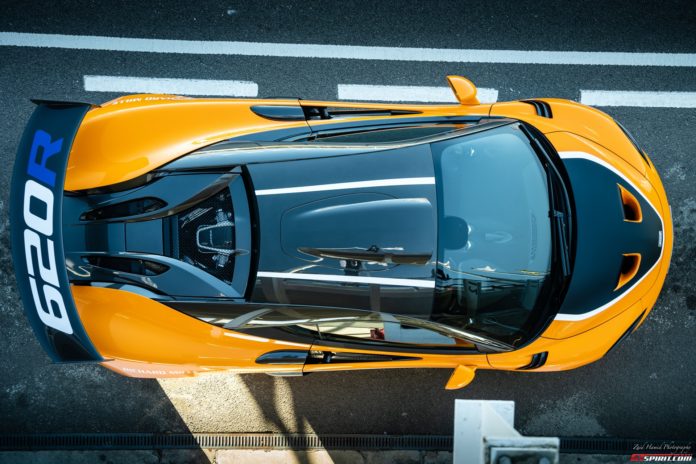
McLaren have a reputation for releasing new models quicker than Apple unveils new iPhones. From the expected LTs and Spiders to the surprise HS, MSO and Carbon Series models, it is fair to say that the line up can be a touch perplexing. One model that was not predicted was the 620R, a car based on the GT4 car which was based off of the 570S. ‘Just buy a 600LT’, I hear you pine – well, this is a different proposition. Where the 600LT is a fine road car with track day credentials, the 620R a race car which can be used on the road.

Whenever pushing a road car on track, even something as focused as a Senna, the general criticism is that the tyres are always the limiting factor. Bolting on a set of slicks is no simple feat as it requires significant geometry adjustments. Being a race car at heart, the 620R is an exception. It requires no chassis adjustments to accommodate a slick, in this case rubber which has specifically been formulated for the 620R by Pirelli. This is an entirely more track focused proposition than the 600LT, a toned down racer, not a turned up road car. So long as you find a way to have a spare set of wheels shod in the slick at the track you’re heading to, you can drive the 620R to the track on Trofeo Rs, swap over to the track tyres before swapping back to the road legal rubber and heading home. In my mind, this makes more sense that the Senna does, and at a fraction of the price of the Ultimate Series car.

I jumped behind the wheel at the Goodwood Motor Circuit during SpeedWeek. There was no road drive, but I hope to remedy this soon. Being cold and damp in places, the Trofeo R was the tyre for my drive, seeing as the circuit is such a high speed one, it was a chance to feel the aero offered up by the slightly altered GT4 package which now produces 185kg of downforce at 250km/h.

It is not just the downforce figure that is impressive, this is the most powerful Sports Series car yet with 612bhp and 620nm on tap meaning the 1,282kg (1,386kg wet) 620R will accelerate from 0-100km/h in 2.9 seconds and onto a top speed of 322km/h. What does this unique package cost? There will be 225 620Rs built, each starting from £250,000. For and additional £25,000 there is an optional R Pack available in EMEA regions which comprises of a titanium SuperSports exhaust, fully-functional roof scoop and visual carbon fibre upgrades to add to the race car vibe.

Enough of the details, what is this race car with numberplates like on circuit? If ever a car drives the way that it looks, this is it. The 620 looks light and extremely aero focused with it large wing, splitter and dive planes. The Goodwood Motor Circuit is an extremely high speed circuit and above 250km/h you can feel the downforce working. This in conjunction with the magnificent hydraulically assisted steering makes the 620R incredibly stable and surefooted. This encourages you to push harder and try to find the limits of the grip. Having only had a few laps to enjoy the car, I was far from exploiting its full potential, but can report that the 620R is one of the most balanced, planted and confidence inspiring cars I have driven on track. I left the drivers seat telling the McLaren team that I wished I could have had a weekend on track with it. This is a car you learn more about with every addition lap you complete.

Where the 765LT makes you think twice about how you deploy full throttle, the 620 is on your side and lets you focus on honing your skills and learning the lines of a circuit. Furthermore, you are treated to a much louder and raw experience courtesy of the titanium exhaust and the whooshing sounds of the air rushing through that towering snorkel. I cannot imagine how much more dialled in it would feel on a slick and look forward to completing this review with a road drive to understand what a road car transformed into a GT4 and then fettled with to become road legal once again, is like to drive on the street.

Subaru Goes Back to Gymkhana: Extreme WRX STI Revealed for the Task

Subaru did the first 2 Gymkhana when Ken Block drove a WRX STI, making the series extremely popular. It was also at a time when Subaru was still very active in world rallying. The next Gymkhana installments would feature different cars altogether, and with Subaru exiting the main world rally stage, the WRX STI (especially the current generation) has lacked the proper attention it deserves. Worth noting Subaru Motorsport USA is still very active in rallying.

In fact, for the 2020 Gymkhana installation, Ken Block will step down for Subaru’s driver Travis Pastrana, who also needs no introduction. Pastrana set a new record at the popular Mt. Washington hill climb in a Subaru WRX STI. For the next Hoonigan Gymkhana series, Subaru USA created a rather wild WRX STI which Pastrana will be driving. High powered, super lightweight and intensely modified.

Pastrana calls the new build “unbelievable” and it’s unlike anything ever seen before on the Gymkhana series. Full raw carbon body with a hood exit exhaust that spits flames, wind tunnel tested aero parts (including those radical dive planes) and so much more.

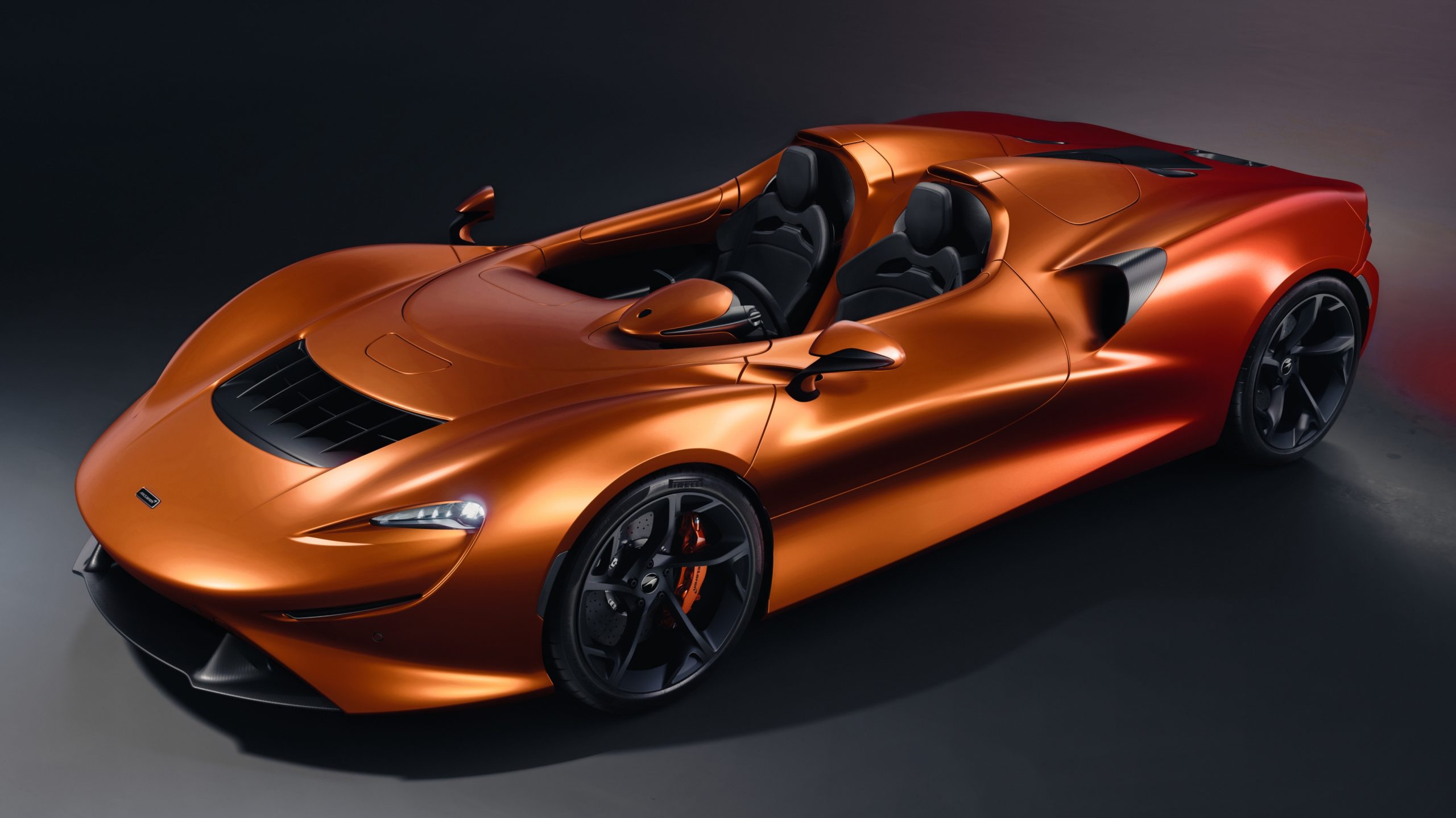
McLaren Elva Production Trimmed Down to 149 Cars Only

A footnote hidden in a McLaren Special Operations (MSO) press release recently revealed that production of the McLaren Eva, which had initially been announced as a 399-car limited edition, would be cut to just 149 cars.

The official reason McLaren gave was that the production shutdown caused by the global Covid-19 pandemic, limited production slots available on recently re-opened production lines and compromised availability of parts had caused the cut-back.

The news follows an earlier announcement that the planned 399-car run had been cut to 249 cars. The earlier decision was said to be a reaction to customer feedback encouraging exclusivity.

With a price tag of $1.7 million, the Elva was always going to be a difficult sell during a pandemic. Those who have secured one of the production slots will not feel short changed though.

The Elva is McLaren’s first open top road-legal sports car. It is designed to compete with similar speedsters produced by the likes of Ferrari and Aston Martin.

McLaren-Elva-Magma

It uses the 4.0 litre twin-turbocharged V8 from the McLaren Senna and Speedtail, rated at 815 hp and 800 Nm of torque.It should manage a sub-3 second 100 km/h sprint time.

The most unique aspect of the McLaren Elva is its cockpit airflow management system.

McLaren has engineered an Active Air Management System (AAMS) into the aerodynamic profile. The system channels air through the nose and out of the front clamshell to divert air over the cockpit. It raises by as much as 150 mm to create a low-pressure zone. The system is activated by a button and works best at high speed.

The bulk of the release which hid the above information dealt with the new McLaren Advanced Visualiser (MAV) software, designed to give customers an accurate representation of what their spec will look like on the finished car.

Each owner is assigned an MSO Bespoke Liaison Manager and Visualisation Specialist once they place their order. The software enables customers to open and close doors in virtual reality to get inside the car and experiment with different interior features, from seat colours and materials to finishes and stitching.

McLaren-Elva-Timeless-Urbane

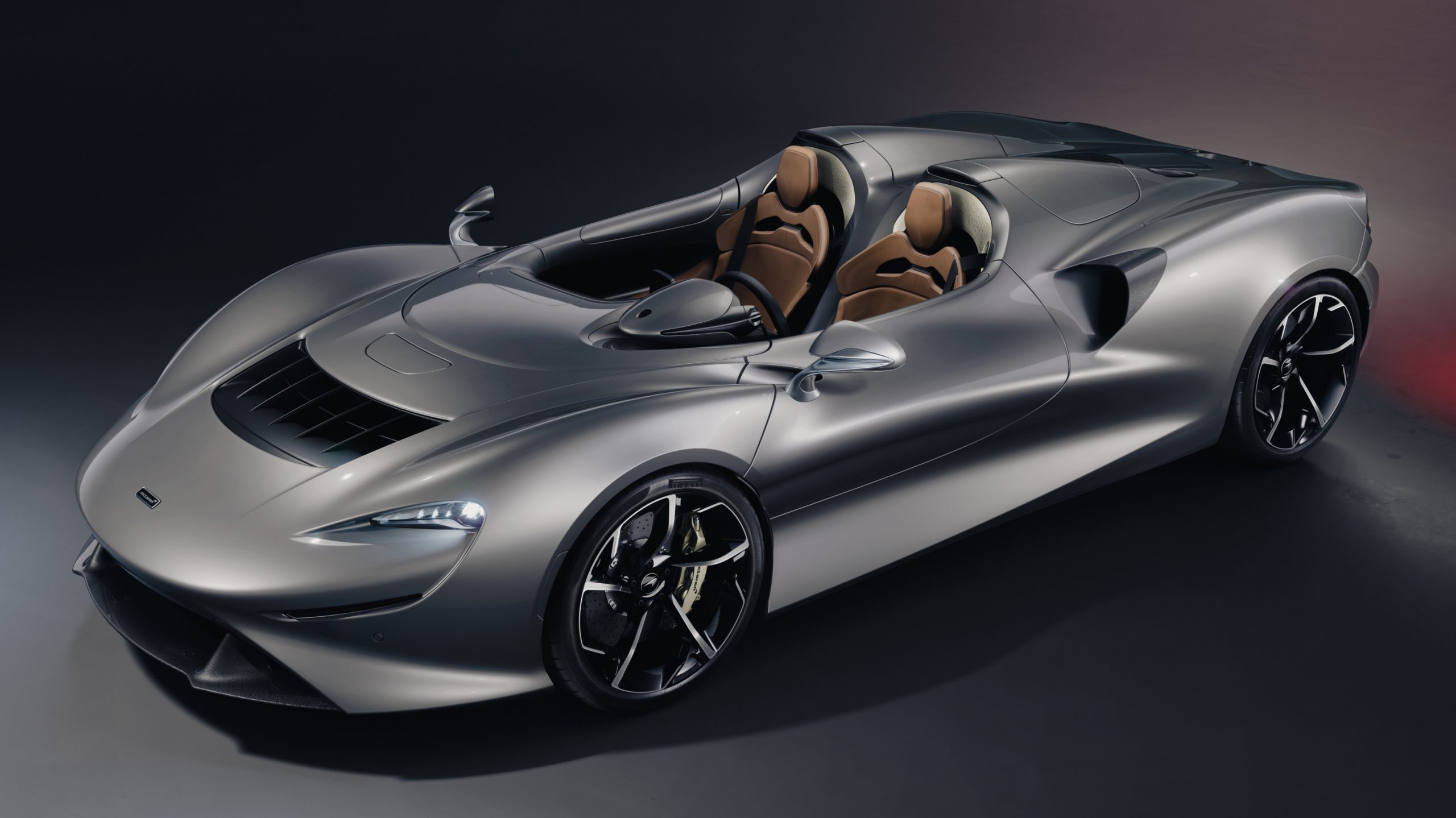
Accompanying the release, McLaren highlighted two two Elva design concepts, Timeless and Explore.

The themes in Explore include a Magma exterior with Satin Azores and Satin Memphis Red Velocity blend of exterior colours, inside Caviar Black Ultrafabrics provide a contrast.

Timeless, gets a combination of Liquid Alloy Gloss exterior paint and Cortado Tan Enhanced Full Aniline leather interior.

Audi R8 Green Hell Pays Tribute to R8 LMS Success at the Nürburgring

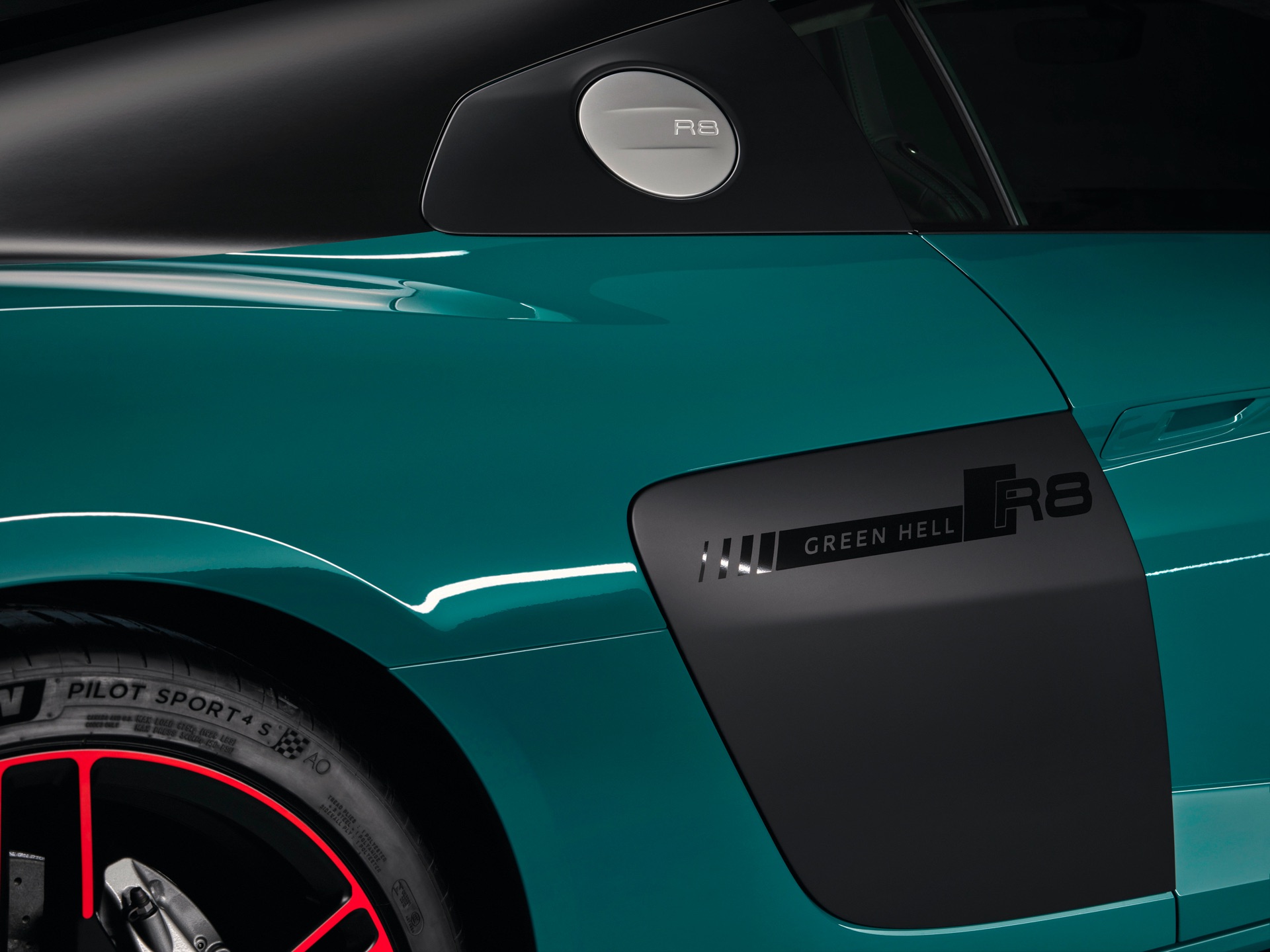
Audi recently announced a limited edition run of 50 Audi R8 Green Hell models. The special edition pays tribute to the Audi R8 LMS and its 5 victories in the 24 Hours on the Nürburgring.

The 24 Hours on the Nürburgring takes place this weekend. Clearly, Audi agree that it is one of the best endurance events. The Audi R8 Green Hell pays tribute in a unique way.

The release colour, the only standard paint scheme, is dark Tioman green. Customers have the option, of ibis white, Daytona gray or mythos black if they prefer something different.

The front hood, A-pillars, roof and rear end are covered partially in matt black foil while the doors get the edition number in large transparent matt figures. They are designed to resemble the 24 Hour starting number.

Green Hell R8 logos are plastered onto the side blade and the windshield. A matt black styling package adds highlights to the front end, sills and diffuser.

Audi R8 Green Hell Side Design

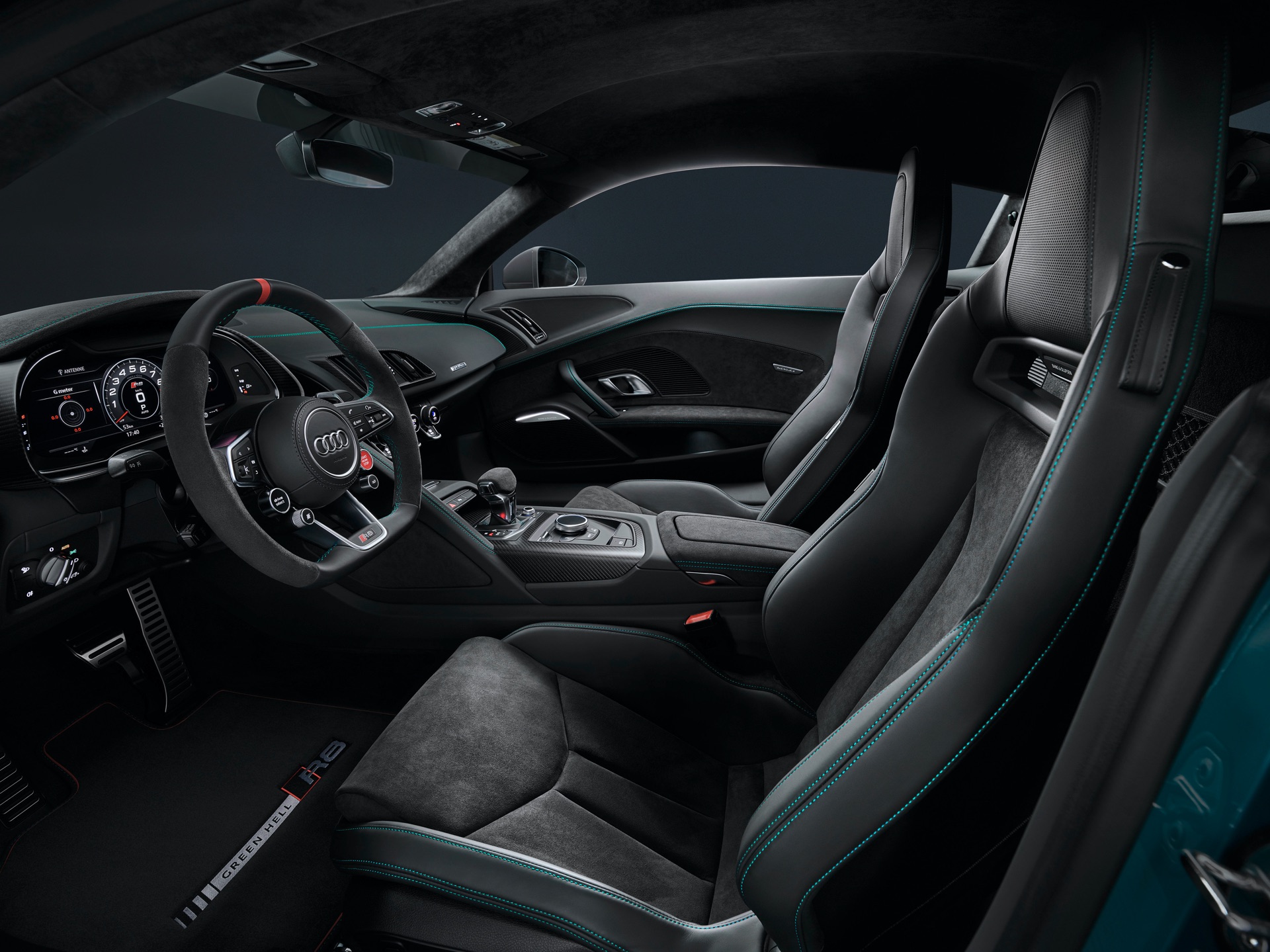
The 20-inch wheels are also painted matt black with red details. Inside, the driver sits on lightweight bucket seats with center panels upholstered in Alcantara.

Red accents are carried across the steering wheel rim, the dash, on the door armrests, knee pads and on the center armrest. Blue-green “Kailash fern” stitching contrasts.

Audi R8 Green Hell Drivers Side Interior

The Audi R8 Green Hell uses the R8 Coupe Performance as its base. It gets a 5.2 litre V10 engine, rated at 620 hp, capable of a 100 km/h sprint in just 3.1 seconds and a top speed of 331 km/h.

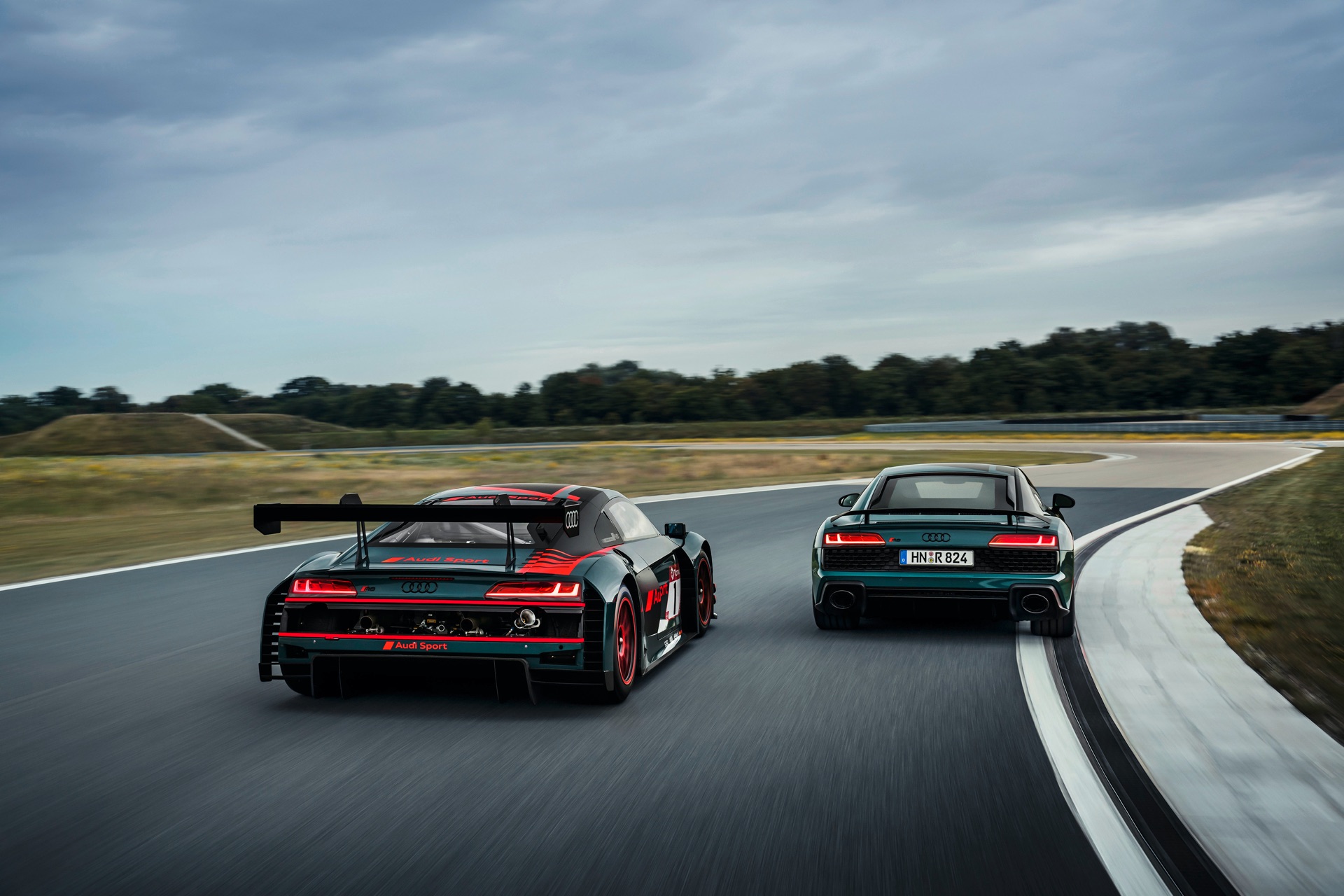
The Audi R8 LMS will be well represented on the Nurburgring this weekend with three factory entrants alongside two Phoenix Racing entrants, two Car Collection entrants and a sole Audi of RaceIng.

Audi R8 Green Hell and R8 LMS Rear

It will compete against a packed grid of seven Porsche’s (less the factory entrant forced to pull out through positive Covid-19 tests for 3 pit crew), seven Mercedes-AMG GT3 Evos, five BMW M6 GT3s, two Ferrari 488 GT3s, a Lamborghini Huracan GT3 Evo and a brand new Glickenhaus SCG004c.

The 50-car Audi R8 Green Hell production run will retail at 233,949.59 euros in Germany.

Range Rover Velar Updated for 2021 With New Plug-in-Hybrid

The Range Rover Velar has been updated today with a new range of engines and a Plug-In Hybrid Range Rover Velar ‘P400e’. It’s the last Land Rover model to offer a hybrid option, completing the modernisation of Land Rover’s range.

Updated Range Rover Velar Engines

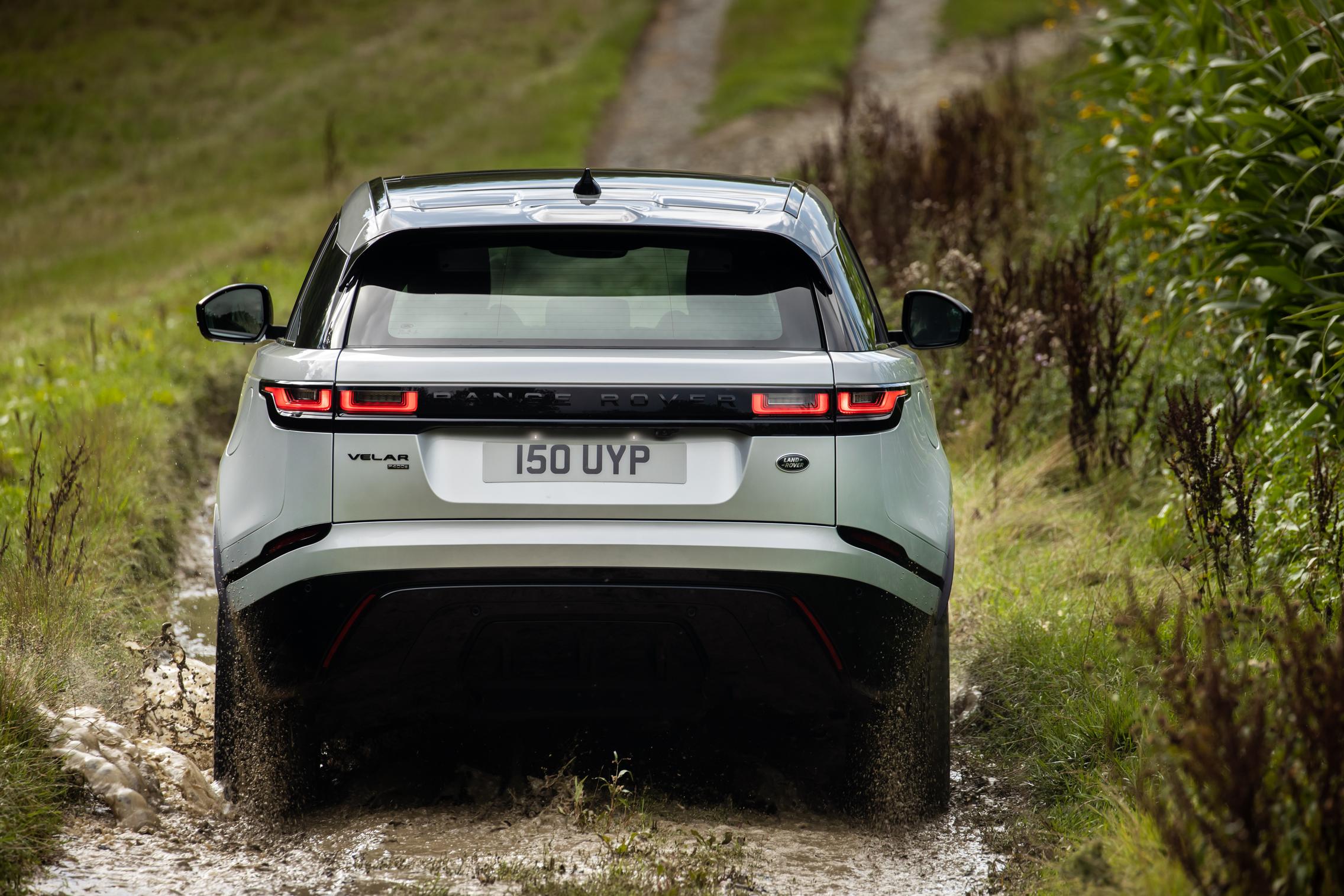
2021 Range Rover Velar Rear

The Range Rover Velar P400e gets a 2.0-litre four-cylinder petrol engine, producing 300 hp, combined with a 105kW electric motor. The total power output is 404 hp and 640 Nm of torque.

Electrification allows the P400e to hit 100 km/h in 5.4 seconds. The 17.1kWh lithium-ion battery can be charged to 80 per cent in just 30 minutes using a fast DC charge point, or 1 hour 40 minutes using a standard 7kW wallbox. It manages a range of 53 km (33 miles).

A new range of 3.0-litre straight-six Ingenium engines also debuts. The petrol and diesel engines are available with 48-volt mild hybrid electric vehicle (MHEV) technology.

It includes two petrol models, a P340 which puts out 340 hp and P400 which produces 400 hp. The former hits 100 km/h in 6.3 seconds with the latter’s 60 additional hp cutting that time to 5.5 seconds. The changes shed 12.9 kg compared to the unit it replaces.

The diesel option is the D300 which produces 300 hp and 650 Nm of torque. It’s the slowest of the bunch with a 100 km/h sprint of 6.5 seconds. Yet it achieves a 52% reduction in NOx emissions. It weighs 7 kg less than the outgoing model.

The MHEV system uses a Belt integrated Starter Generator (BiSG) in the engine bay to harvest energy under deceleration, which is then stored in a 48V lithium-ion battery located beneath the rear loadspace. The power is then used to assist acceleration.

The four-cylinder Ingenium D200 is also available with the same MHEV powertrain, producing 204 hp.

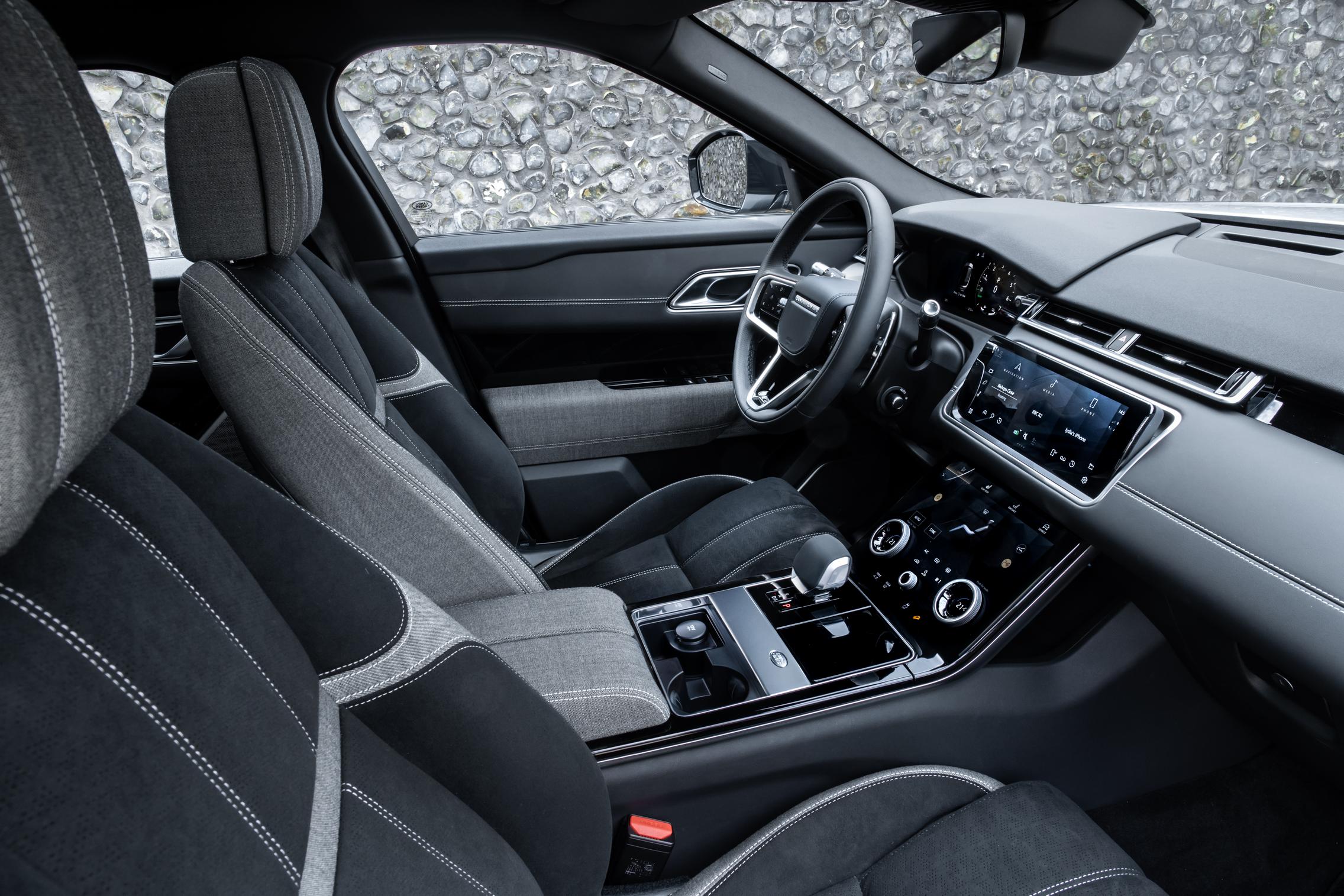
Updated Range Rover Velar Interior

2021 Range Rover Velar Seats

The Range Rover Velar‘s interior benefits from Land Rover’s Pivi and Pivi Pro infotainment systems. It incorporates software updates ‘over-the-air’ and an embedded data connection means you have access to the latest maps, apps and vehicle software modules.

To improve interior comfort, the Range Rover Velar gets Active Road Noise Cancellation, a bit like a set of noise cancellation headphones, it constantly monitoring vibrations from the road surface and calculates the opposite phase sound wave needed to remove the noise heard by the occupants.

Other additions include a Cabin Air Filtration system, a new steering wheel design and a new Drive Selector also replaces the rotary gear selector.

30th Anniversary of the Blue Factory: Bugatti Celebrates Iconic Factory

GTspirit was delighted to be invited to attend 30th anniversary of the legendary Bugatti
factory in Campogalliano (Italy). In this place, in 1990 Romano Artioli dream came true, giving
rebirth to Bugatti brand, developing and producing the wonderful Bugatti EB110s in GT, SS and
even LM versions.

Unfortunately, as everybody knows, the dream lasted not for long as the Bugatti automobili SPA,
due to poor economic conditions, went bankrupt and ceased operations in 1995. What was left of
the Italian adventure after liquidators came is the wonderful factory, now privately owned, and for
30 years had been kept in order by the 2 custodians Enrico and Ezio Pavesi.

Their enthusiasm is what triggered the idea to organise this wonderful and emotional event
reuniting Romano Artioli, old Bugatti employees and naturally all Bugatti enthusiast and a few
collectors as well.

Stephan Winkelmann, the current President of Bugatti, was among the guests of honor and on a
public speech showed his appreciation for the Factory affirming “..The Blue Factory set standards
in the automotive industry at that time; it was more of a manufacturer than an industrial plant.
Romano Artioli had a feel for innovation, but was always conscious of the French history and
significance of Bugatti..”

As a homage to the celebration, Bugatti SAS displayed the two legends that were born under VW
era, the Bugatti Veyron and the Chiron in Super Sport WRE and Sport versions and last but not
least the special model Centodieci concept car.

Well, probably this will be the last time that a celebration will be held in this special location,
keyword now is “look ahead at the future” hoping that the Factory of Campogalliano will be back
again one day as forge of cutting edge technology. A presto!

Photos by Yaron Esposito – @Aaronandcars)

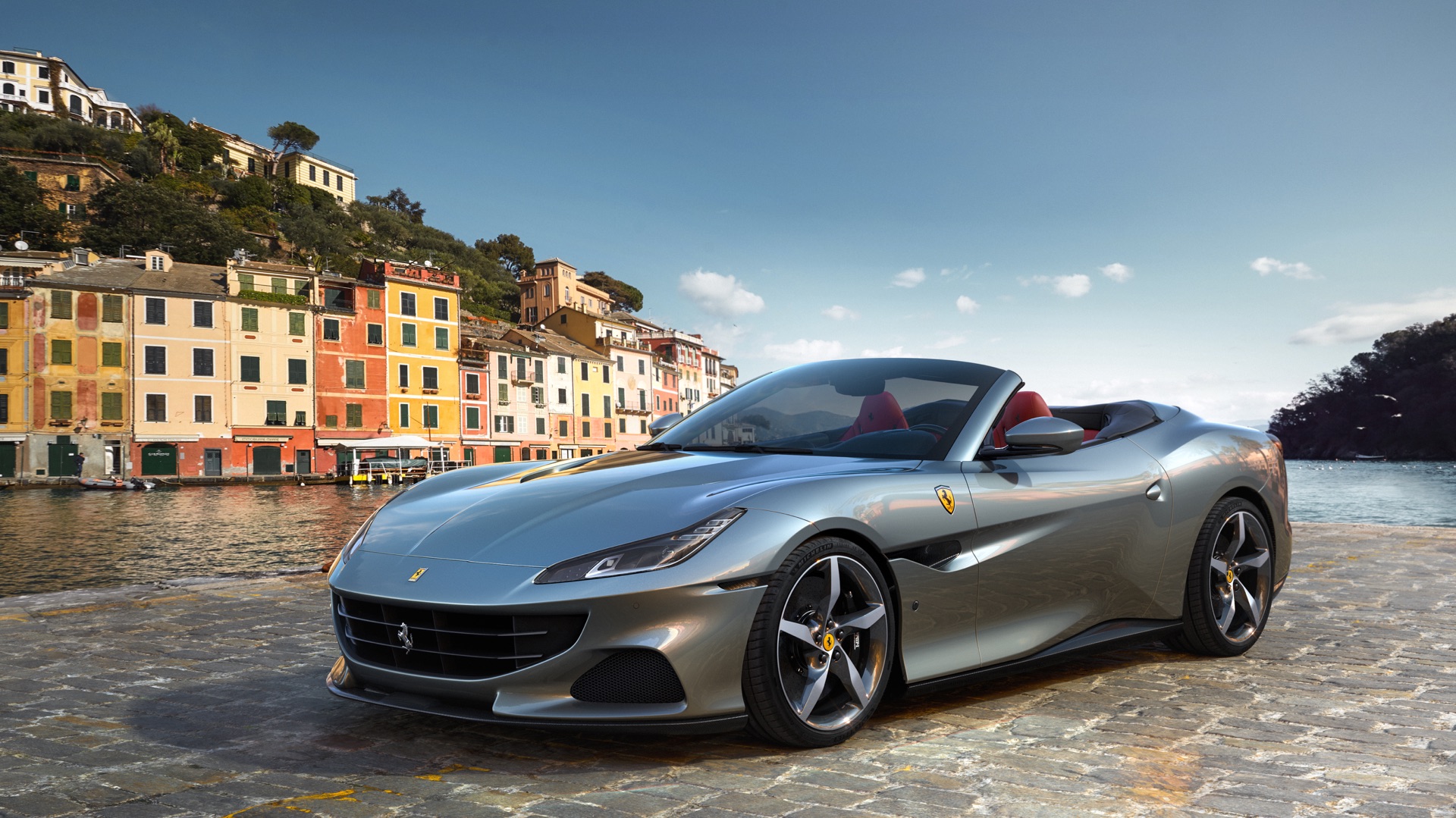
Ferrari Portofino M: Technical Facelift for Italian Droptop

The Ferrari Portofino M has emerged from the Italian supercar giant today. The facelift evolves the entry-level Ferrari droptop to keep it honest.

The Portofino was first released back in 2017, at the Frankfurt Motor Show. Given that the recent Ferrari Roma shares its platform, it was inevitable that the droptop would receive a mid-life facelift.

Ferrari Portofino M: Highlights

Ferrari Portofino M Side

The key statistics for the Ferrari Portofino M facelift include:

– The ‘M’ stands for ‘Modificata’
– Ferrari have uprated the 3.9 litre V8 to produce 620 hp
– A particulate filter has been fitted to meet the upcoming Euro 6d emissions regulations
– A new eight-speed dual-clutch automatic gearbox replaces the old seven-speed box

Ferrari Portofino M: Engine and Chassis

Ferrari Portofino M Rear

The modifications to the Ferrari Portifino M (which stands for ‘Modificata’) are most noticeable under the bonnet.

The Portofino gets a 3.9 litre V8 uprated to 620 hp, from 600 hp. Torque is now rated at 760 Nm.

The power is routed through a new 8-speed gearbox, developed from the SF90 Stradale’s gearbox. Both are based on a dual-clutch oil bath architecture but the Portofino M uses longer gear ratios and a mechanical reverse gear.

The power is released through new cam profiles which increase valve lift and optimise the flow of fuel into the combustion chamber. A new speed sensor in the turbine housing allows the turbine to achieve 5,000 rpm.

The trade off is that a Gasoline Particulate Filter has now been fitted to comply with incoming legislation.

It should still carry its trademark Ferrari soundtrack thanks to the retained flat-plane crankshaft and a new exhaust system. In addition, both rear silencers have been removed.

The sixth-generation Side Slip Control (SSC) makes its debut in the Portofino M. It incorporates the (deep-breath…) E-Diff, F1-TCS, SCM-E Frs and the Ferrari Dynamic Enhancer (FDE).

Ferrari Portofino M: Exterior

Ferrari Portofino M Front

The external changes are minimal. They extend to a new grille design, aluminium slats with contrasting faceted tips. This sits in the middle of two larger side intakes.

At the rear, the removal of the rear silencers makes the rear less bulky. The rear diffuser has been completely redesigned and is now separate to the bumpers. The wheels are exclusive to the Ferrari Portofino M.

Ferrari Portofino M: Interior

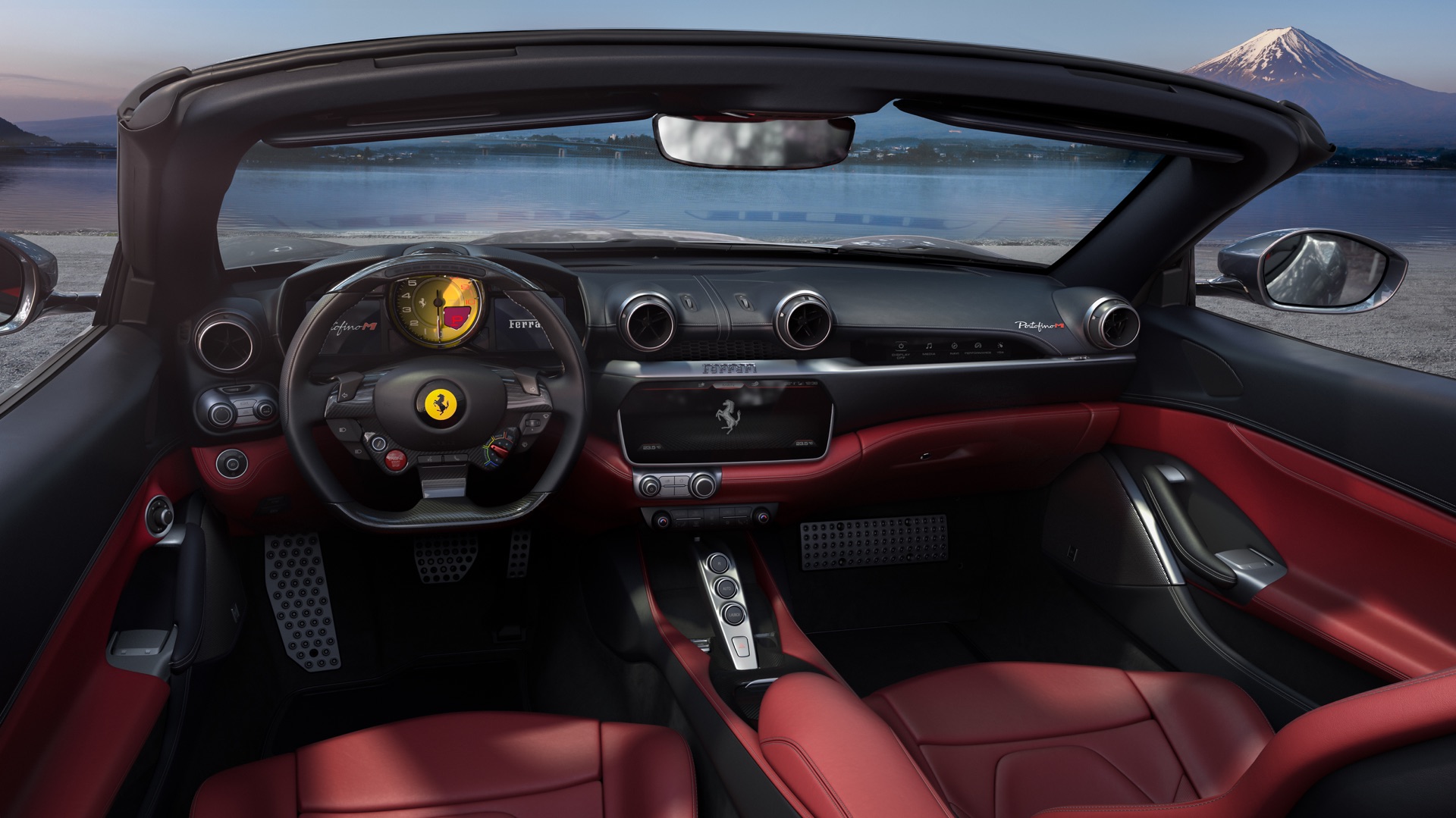
Ferrari Portofino M Interior

Aside from the addition of an M to the interior badging, there is little to show for the facelift inside the cockpit.

The centre-piece of the MMI system remains a 10.25” touchscreen. The passenger can also have an optional 7” colour full HD and Full Touch display.

Project Geländewagen: Virgil Abloh’s Mercedes-Benz G-Class

Earlier in the week, Mercedes-Benz announced a collaboration with Virgil Abloh. The result is called Project Geländewagen.

The one-off Project Geländewagen is a collaboration between Mercedes-Benz and Chief Creative Director and Founder of Off-White and Men’s Artistic Director of Louis Vuitton Virgil Abloh.

A 1:3 maquette of the unique Mercedes-Benz G-Class will be auctioned through Sotheby’s Contemporary Curated with bidding due to begin on 14 September 2020.

Of Project Geländewagen, Virgil Abloh says: “My ultimate goal in this project with Mercedes-Benz is inspiring young artists, engineers, designers to question the status quo, in addition to experimenting with my own design abilities. For me it’s all about providing opportunities for those coming after me and giving this next generation a foundation for success, both here with Mercedes-Benz and through my own Virgil Abloh “Post-Modern” Scholarship Fund.”

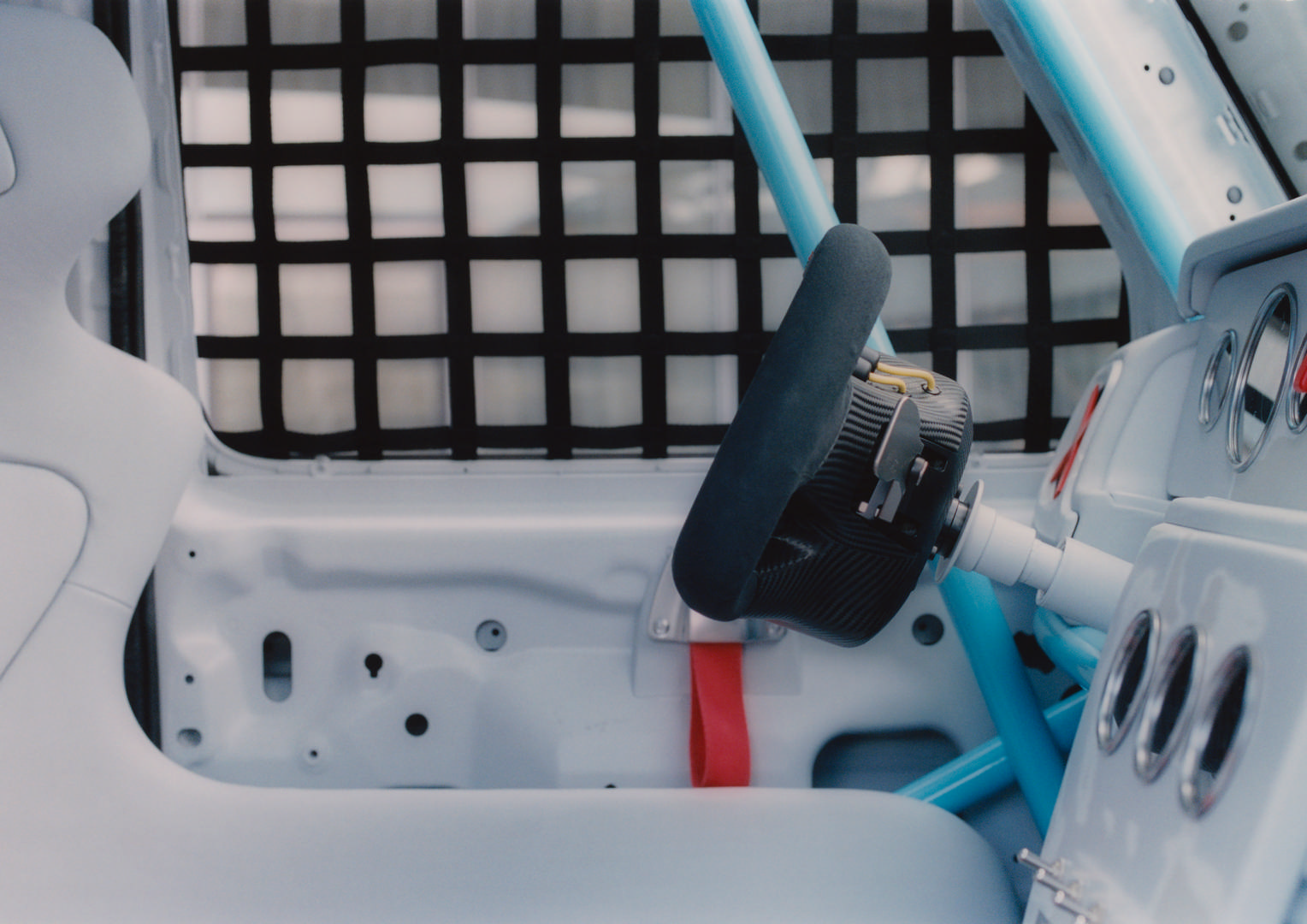
It’s certainly a unique proposition. The typical Mercedes-Benz G-Class shape is clear. Surfaces have been smoother and air vents covered. The indicators, outside mirrors and the bumper bar have all been removed and the body of the car is widened and lowered.

Mercedes-Benz G-Wagon White Interior

The simplicity of the bodywork sits in contrast to some of the racing touches. The car features chunky drag-type tyres, an internal roll cage and window netting; this is the first Mercedes-Benz G-Class race car!

Gorden Wagener, Mercedes-Benz Chief Design Officer says: “With Project Geländewagen we create a unique artwork that showcases future interpretations of luxury and the desire for beauty and the extraordinary. The result is something between reality and future. The collaboration with Virgil has seen two distinct design philosophies unite, for a one-of-a-kind re-imagination of the G that continues to celebrate the extraordinary at its core.”

Maserati MC20 Revealed: New Maserati Supercar!

The Maserati MC20 has now been officially revealed. We saw the photos yesterday, the details have now been confirmed as the covers were removed in Modena.

The Maserati MC20 was designed in Modena and will be built at the Viale Ciro Menotti plant. The Italian brand has created a new production line in the space once occupied by the GranTurismo and GranCabrio models.

Maserati MC20: Key Details

– First of a new Maserati era
– 100% made in Modena
– New Nettuno V6 engine produces 630 horsepower and 730 Nm of torque
– 100 km/h in just 2.9 seconds with a sub 1,500 kg weight

Maserati MC20: Engine & Chassis

Details for the new Nettuno engine were already known. The 3.0 litre V6 is mounted at a 90 degree angle. It is rated to 630 hp and packs 730 Nm of torque.

Maserati confirm a 100 km/h sprint time of 2.9 seconds, a 200 km/h sprint time of 8.8 seconds and a top speed in excess of 325 km/h.

Power is routed through an 8-speed DCT gearbox to the rear wheels via a mechanical limited slip differential. An electronic differential is said to be optional.

The suspension setup includes double-wishbones at the front and rear with an anti-roll bar. The Maserati MC20 weighs in at under 1,500 kg of kerb weight.

The braking system consists of 6 piston Brembo callipers at the front and 4 piston callipers at the rear. The braking power is enough to allow for a 33 metre braking distance from 100 km/h.

Maserati MC20: Design

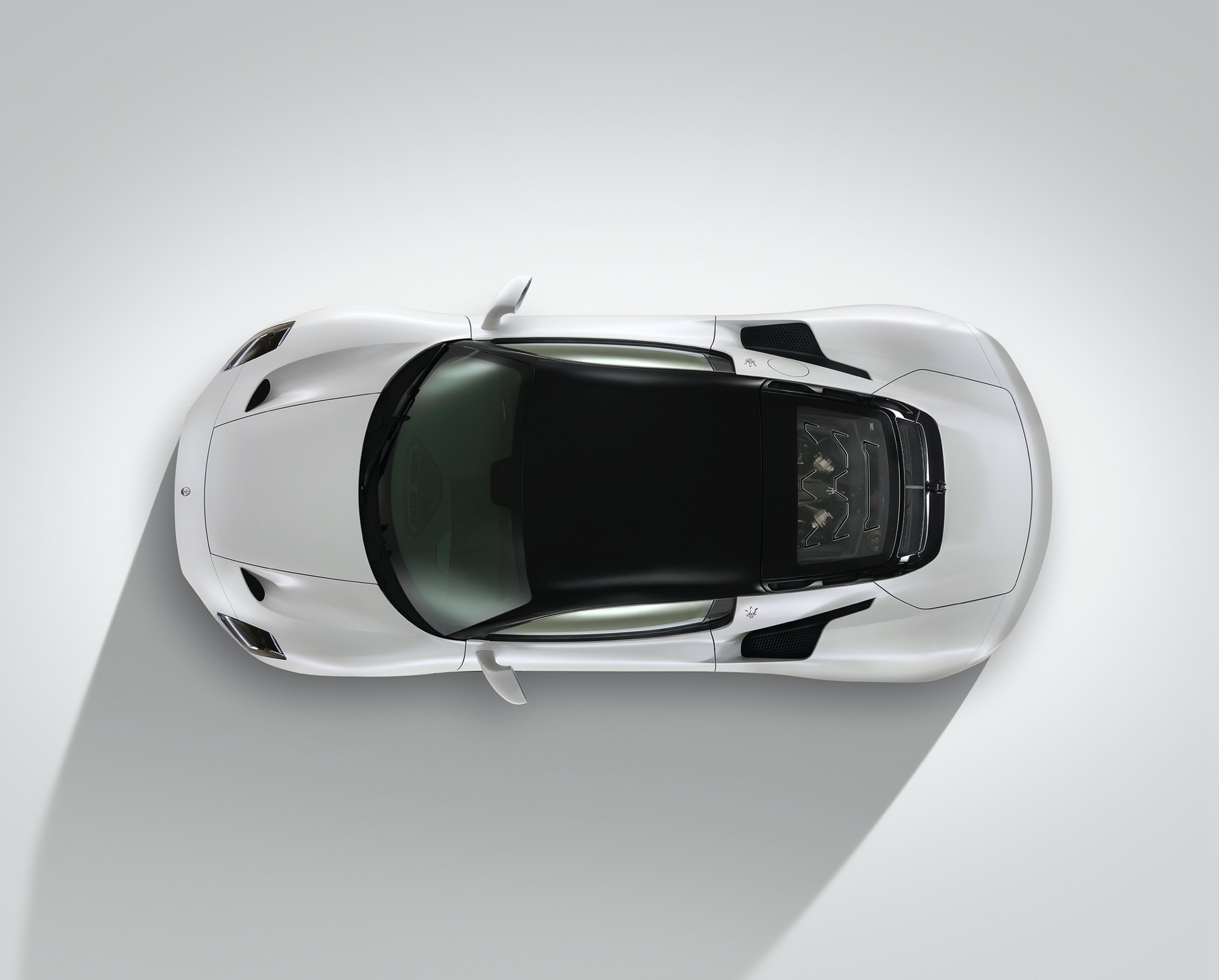
The design is typically mid-engined supercar. The aerodynamics were honed in the Dallara Wind Tunnel with a drag co-efficient of 0.38.

The front end takes cues from the Maserati MC12 with a low air intake and prominent Maserati trident. The bonnet gets two air intakes either side of a flat bonnet. Along the side, deep wheel vents cut into the Maserati MC20 door panel.

The roof line slopes gently towards an uncluttered rear end. The rear taillights are narrow and split by a Maserati logo. Two centrally mounted exhausts are reminiscent of the outgoing Maserati GranTurismo.

The addition of butterfly doors give the Maserati MC20 a visual edge.

Launch colours include Bianco Audace, Giallo Genio, Rosso Vincente, Blu Infinito, Nero Enigma and Grigio Mistero

Expect a convertible version to follow.

Maserati MC20: Interior

Inside, the MC20 uses two 10 inch screens: one for the cockpit and the other for the Maserati Multimedia System (MIA).

The carbon fibre-clad central console gets a wireless smartphone charger, the driving mode selector (GT, Wet, Sport, Corsa and a fifth, ESC Off, which deactivates the control functions), two speed selection buttons, the power window controls, the Multimedia System controls, and a storage compartment underneath the armrest.

All of the other controls are on the steering wheel, with the ignition button on the left and the launch control on the right. The Maserati Connect program makes it easy to access services.

Maserati MC20: Competitors

Pricing has yet to be announced for the MC20. That said, it looks likely that the Maserati MC20 will compete with the McLaren 570S and Porsche 911.

Aston Martin Victor: 1 of 1 Hypercar Built from Vulcan and One-77 Parts

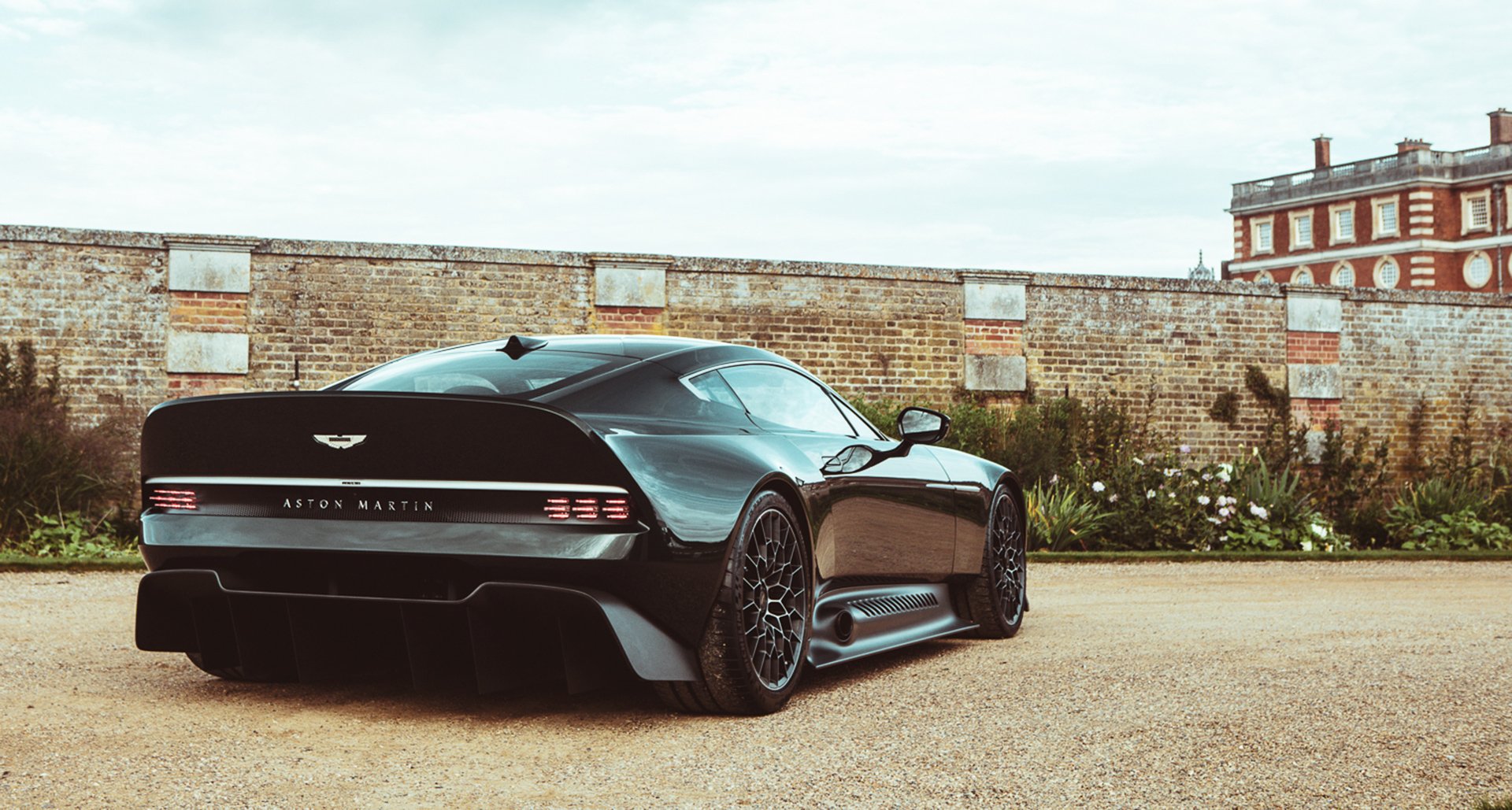
Aston Martin’s Q by Aston Martin recently revealed its most ambitious project to date. The Aston Martin Victor is a one-off. Built from a mix of Vulcan and One-77 parts, it has taken the internet by storm.

The name picks up where the Vulcan left off. The Victor was a jet-powered strategic bomber, the last of three V Bombers which included the Vulcan. Produced by Handley Page, these bombers were designed to carry the British nuclear deterrent.

Aston Martin Victor Highlights

– Inspired by the iconic Aston Martin V8 Vantage of the 1970s and 80s
– Pentland Green exterior
– Forest Green and Conker Bridge of Weir leather, cashmere and carbon interior
– 842 Nm of downforce at 100 mph
– 7.3-litre V12 engine producing 836 bhp
– 6-speed manual with power delivered to the rear

Design

Aston Martin Victor Price

The Victor is a bespoke Aston Martin design. It looks like no other modern Aston Martin. Many of its design elements were inspired by the Aston Martin RHAM/1 racer, itself built off the platform of an Aston Martin DBS V8.

Aston Martin’s iconic front grille sits front and centre. Either side, two simple circular headlights keep the design clear, sitting atop a deep front splitter. The front bonnet includes a deep ‘U’ shaped air vent, similar to the Vantage GT12.

A long design-line runs the entire length of the side with an elongated side air outlet. The side sill is taken directly front the Vulcan. A boat tail rear end blends simplicity with complex details. The 18 individual light strips that make up the rear lights and the deep rear diffuser are highlights.

Chassis & Power

Aston Martin Victor Engine

The Aston Martin Victor uses a One-77 chassis. It weighs less than an original One-77 with GT4 levels of downforce. It is capable of producing 842 Nm of downforce at 100 mph, compared to 525Nm for a race-prepared Vantage GT4.

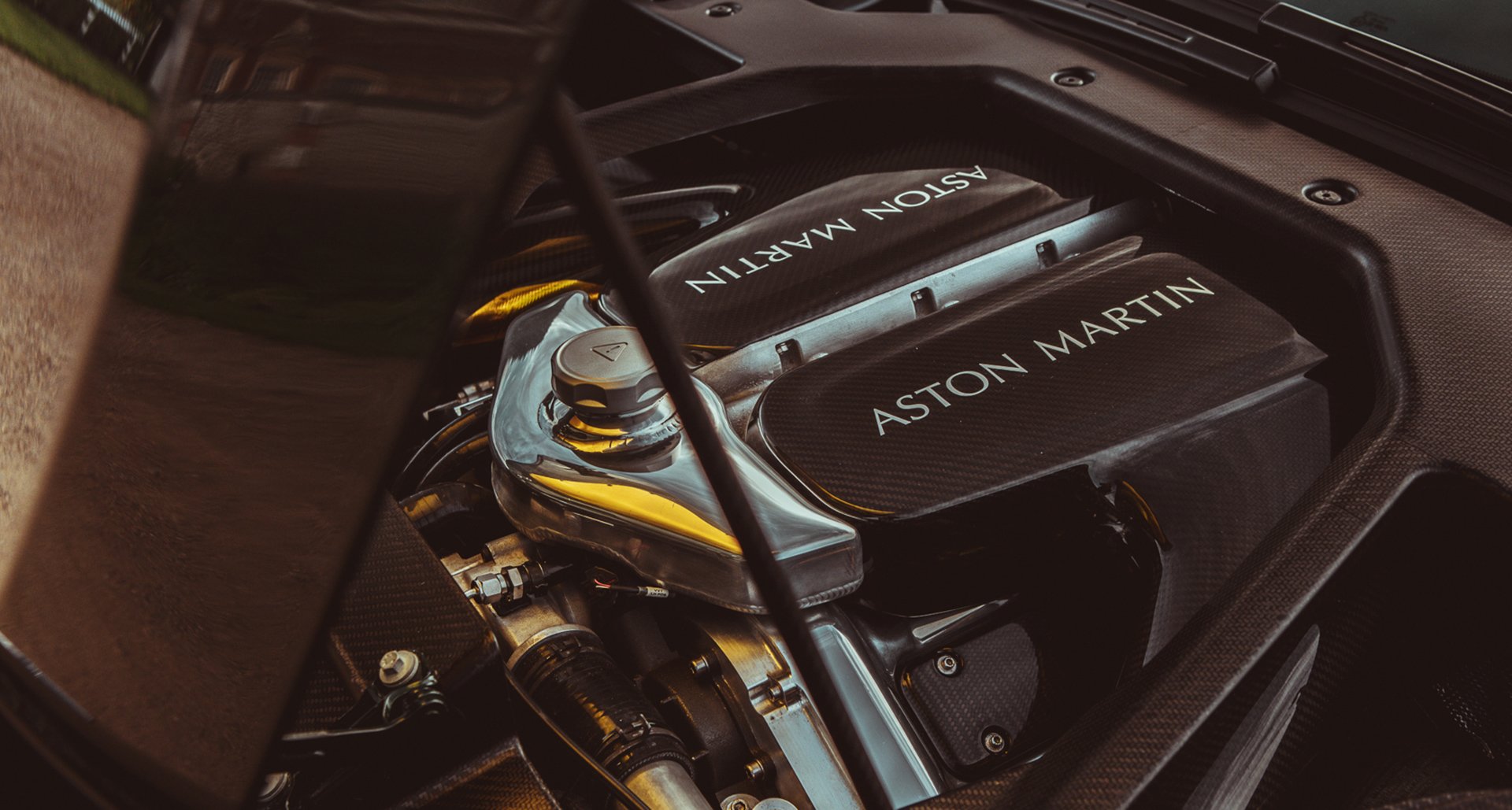
The One-77’s naturally-aspirated 7.3-litre V12 has been rebuilt by Cosworth. It now puts out 836 bhp and 821 Nm of torque, uprated from One-77’s 750 bhp and 750 Nm ratings.

Power is delivered to the rear wheels through a six-speed manual transmission, supplied by Graziano. As the most powerful manual Aston Martin, the Victor includes a bespoke motorsport clutch.

Interior

Aston Martin Victor Interior

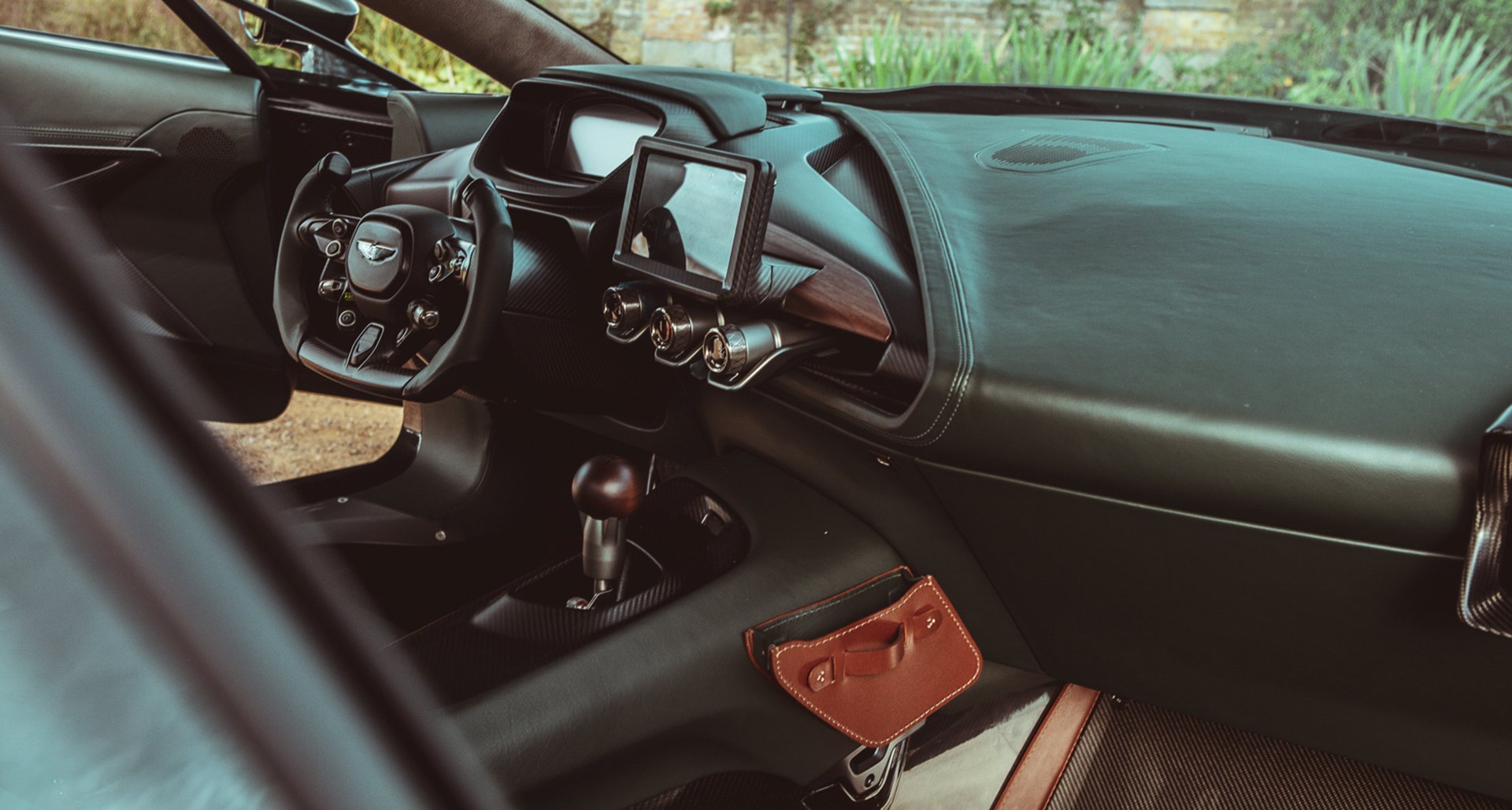
The interior is pure Vulcan. Heavily redesigned, yet retaining the feel of Aston Martin’s unique racer, the Victor includes huge carbon fibre shapes.

The digital dashboard display is complemented by a second central infotainment system. The steering wheel is lifted straight from the Vulcan while the gear shift gets a traditional wooden touch.

Pricing is unknown as the Aston Martin Victor is a one-off. Hopefully Q by Aston Martin takes on more of these projects in years to come!

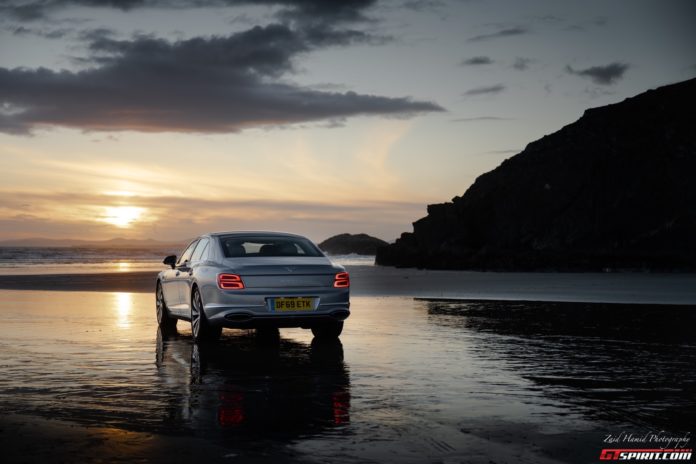
Special Report: Exploring The UK In The 2020 Bentley Flying Spur

There is an element of romance when you travel, not just to reach a destination, but for the thrill of the journey. The ultimate freedom and best way to uncover the undiscovered is by road, guided by a sense of adventure and the desire to make memories. Driving a new exciting road or parking along side one to mentally save an image that will he cherished and looked back upon is one of the greatest automotive experiences you can have. 

When Bentley invited me to create memories in a Flying Spur I was quick to express my desire to accept the brief. It was a not a complicated mission. Have a Flying Spur for a week and drive anywhere I fancied as long as it was in the UK and take a bunch if photos on the way. Simples. This was not the first time I had been set such a task – a few years ago the GTspirit crew took a Bentley Mulsanne all the way up to Scotland to write a story and create a short film. The Bentley took the journey in its stride, not once faltering on the two thousand mile journey and carrying us in supreme comfort and opulence. 

I had no doubt that the 2020 Flying Spur would be any less refined. What I was not expecting was ferocious speed and a breadth of ability that this 2.5 tonne behemoth of a limousine displayed. The size of the FS, literally, is the elephant in the room. It is massive and you notice when you try to negotiate the narrow lanes of London and its, narrower still parking garages. After breathing in an using the plethora of cameras to keep the 21 inch diamond cut wheels unscathed, you’ll find a bay to park in and reverse right to the back of before jumping out and laughing out loud about how the Flying Spur hilariously stretches over the white lines by a considerable length. You’ll never be wondering where you parked it, you can see it poking its chrome grille nose out from quite a distance away. Thankfully manoeuvring the 5.3 metres of metal is far easier than you would expect thanks to the extremely aggressive rear wheels steering. Apply enough lock and you will see the rear wheels turning in the side mirrors, on full lock you will hear them juddering behind you as they shrink the turning circle. 

Back to the task at hand! I adore the South Coast of the UK. Places such as New Forest and Portsmouth are only a couple of hours south of London, waking up at 5am means I am in the forest for sunrise and can spend the day exploring before heading to Portsmouth for a view of sunset on the beach. The massage seats pulsated and kept me relaxed, I was only stopping for coffee and a few splashes of fuel for the W12 to chomp through. And chomp it does, 626bhp and a barmy 0-100 time of 3.8 seconds means the Flying Spur has quite an appetite. Stopping to fill up meant there were plenty of opportunities to exploit the ferocious speed when rejoining the motorway and get back up to cruising speed. The pull in 2nd and 3rd gear is alarming, the numbers build quickly but the sensation of speed is somewhat muzzled by in the cabin that shields occupants from the sounds and harshness of speed. Building velocity in such a manner in any sort of sports car would be significantly more uncomfortable. 

The theme of luxury and comfort continues when I’m off the motorways with the Bentley nonchalantly wafting over horrible road surfaces as though they are marble top smooth. The 48 volt antiroll system that has been around since the first generation of Bentayga is still a marvel, it means the car combats the slightest hint of roll but the air-suspension can remain focused on an keeping occupants isolated from bumps and poor surfaces. The results are sublime. As I arrived at Portsmouth for sunset, I feel as if I can carry on driving for another 7 hours without fearing fatigue. So I do carry on, this time towards Bristol so I can rise early and catch first light in Cheddar Gorge. The 100 mile journey in the dark is just as effortless, the LED lights are terrific and the adaptive cruise control combined with the adaptive high beam assist makes this one of the easiest drives I think I’ve had in any car. 

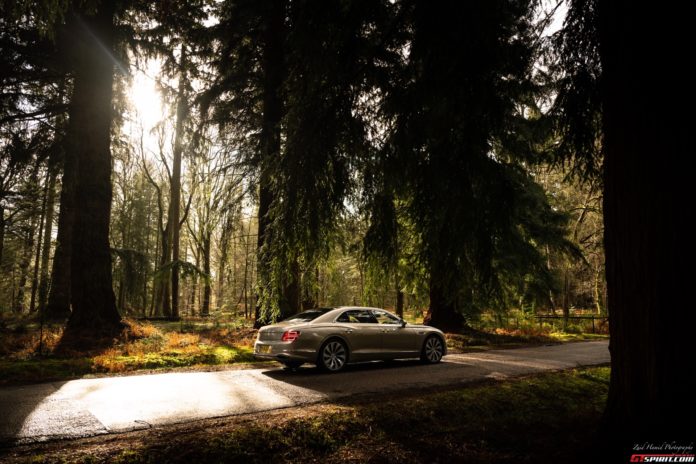
The trip to Wales was the one which would determine if this trip would have been a success or not. The locations in the Brecon Beacon mountains and the surround coast were far more dramatic than those of previous days. The next and final stop was the Bentley factory where I would part ways with the car, so Wales had to deliver. This journey was one focused on natural beauty and the Flying Spur, I hope the photos give you a sense of just how beautiful the car looks in a variety of settings.

New Mercedes-Benz S-Class Revealed – The Seventh-Generation

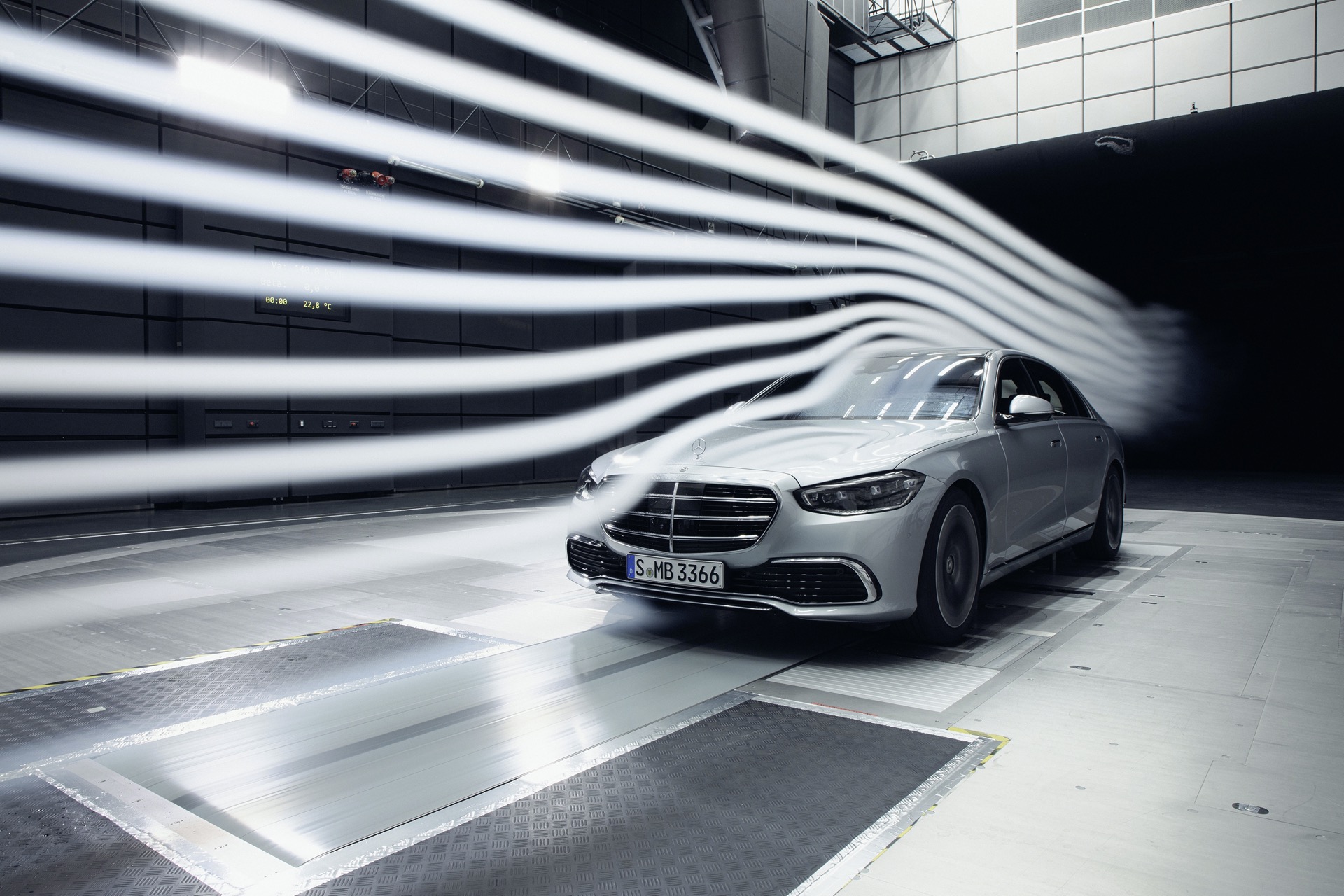
The V223 Mercedes-Benz S-Class has been officially revealed. The German giant’s flagship sedan is always an event. Technology which makes its way into the S-Class normally trickles down to the rest of the industry. The V223 is no different.

V223 Mercedes-Benz S-Class Highlights

2021 Mercedes-Benz S-Class

Highlights for the new Mercedes-Benz S-Class include:

– Second generation MBUX infotainment system
– MBUX Interior Assistant – AI for driver
– Active ambient lighting
– Improvements to the Driver Assistance Package
– Redesigned Rear Airbag
– Rear Axle Steering
– Over the air updates
– Pre-Safe Impulse Side
– Automated Mode for the Drive Pilot
– Digital Light projections onto the road

Exterior

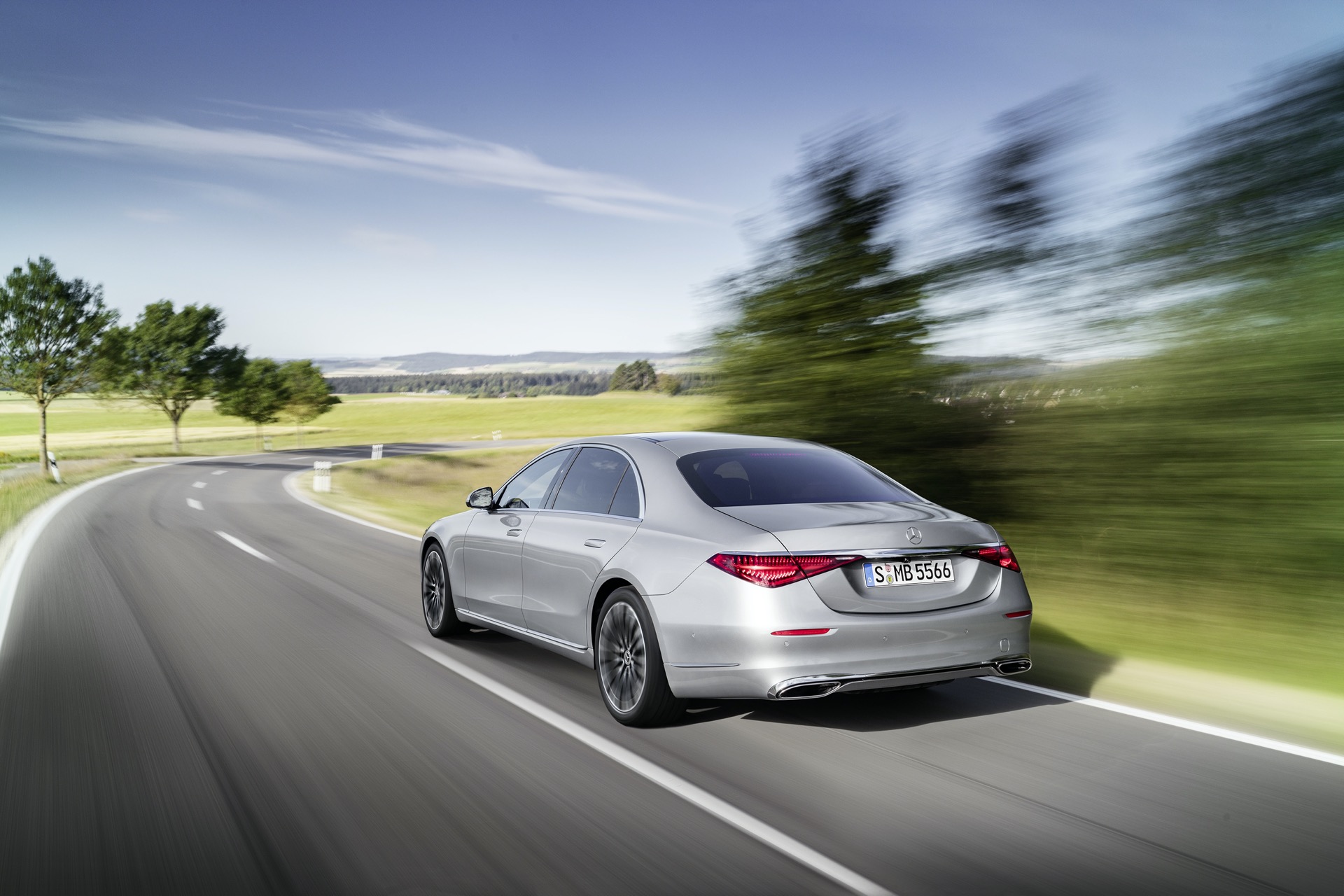
The exterior of the new Mercedes-Benz S-Class doesn’t reinvent the wheel. Using the same basic proportions, Mercedes-Benz brings the S-Class in line with the rest of the range.

The front taillights are flatter and smaller than before, the door handles are mounted flush too. The design lines are less prominent with the design curvier than before.

The rear end borrows its taillight design from the rest of the modern Mercedes-Benz S-Class range.

While there isn’t a great deal of change, the S-Class remains one of the world’s most efficient cars with a 0.22 drag coefficient figure, despite a larger frontal area.

Through use of acoustic foam and double seals on some of the finer details, the S-Class takes the lead on aeroacoustic too.

Chassis and Engines

2021 Mercedes-Benz S-Class

A range of engines will be offered from launch. All will feature an in-line 6 cylinder engine.

Two petrols, the S 450 and S 500 offer 367 hp and 435 hp respectively. Torque is rated at 500 Nm and 520 Nm. These use EQ Boost which provides an additional 250 Nm of torque. The most powerful hits 100 km/h in 4.9 seconds.

The Diesel models range from an S 350 d with 286 hp and 600 Nm of torque to an S 400 d with 330 hp and 700 Nm of torque. The S 400 d hits 100 km/h in 5.4 seconds.

Expect hybrid versions, AMG variants and possibly a replacement Maybach. The next model will be a V8 using a 48 volt system.

Optional E-Active Body Control incorporates a 48 volt system which can be combined with rear wheel steering. The later option reduces the turning circle by 1.9 metres to less than 10.9 metres.

Interior

Breakdowns on the interior specifications were already revealed. Needless to say, the S-Class retains its class-leading status. Read more about the Mercedes-S-Class interior here, and its technology here.

Competition

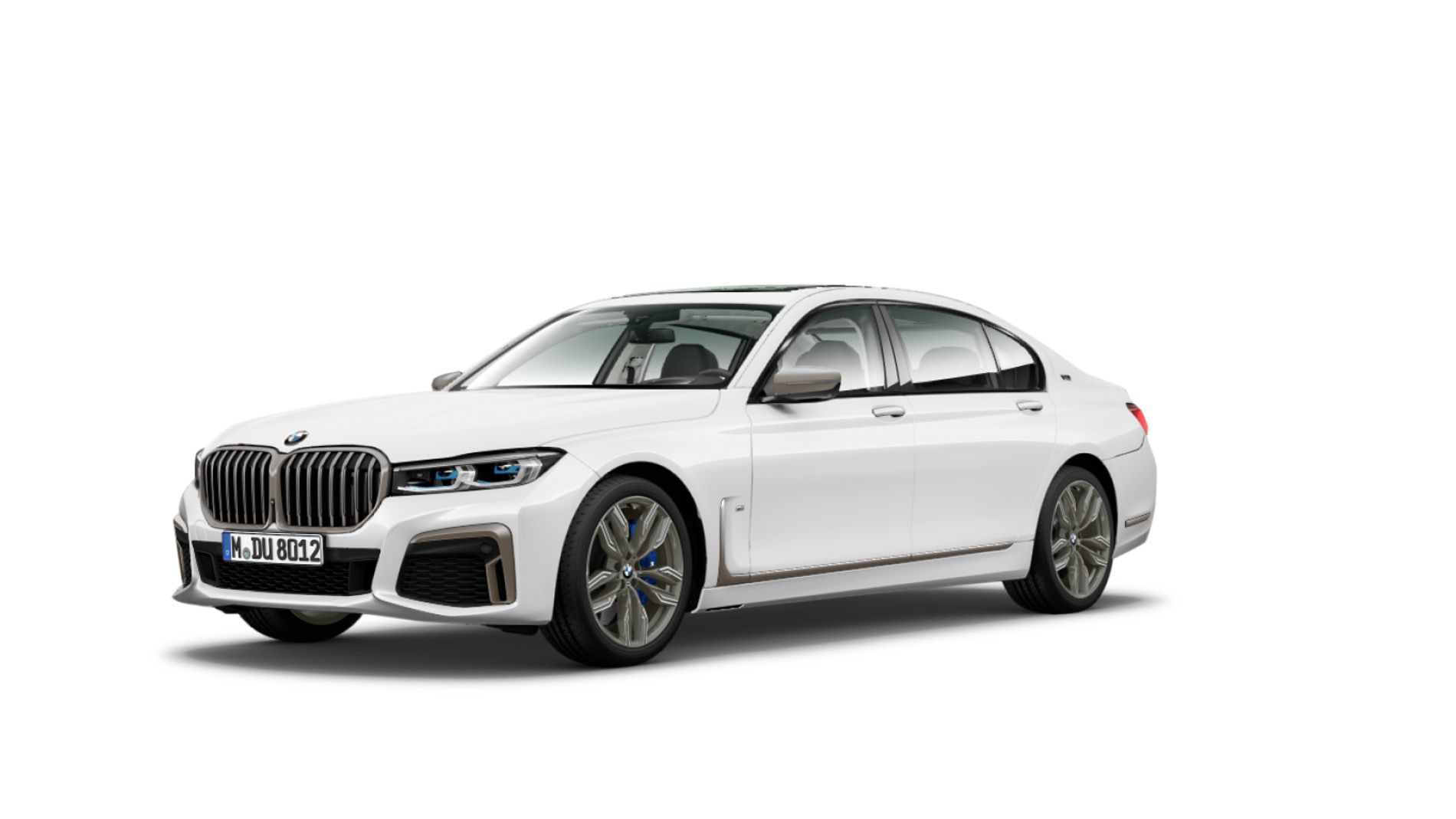
Leaked 2019 BMW 7 Series Facelift

The Mercedes-Benz S-Class retains the same competition, cars like the BMW 7-Series and the Audi A8 are the obvious names.

SUV’s are increasingly popular these days, taking a chunk of the market from the S-Class.

2021 Ford GT Heritage Edition Revealed – 40 Cars Only

A new round of heritage edition Ford GT’s were released recently. The latest Heritage Edition commemorates the original GT40’s maiden endurance win at the 1966 Daytona 24 Hour Continental.

Released in 2017, the Ford GT shows no signs of nearing the end of its production run, although an official end is planned for 2022.

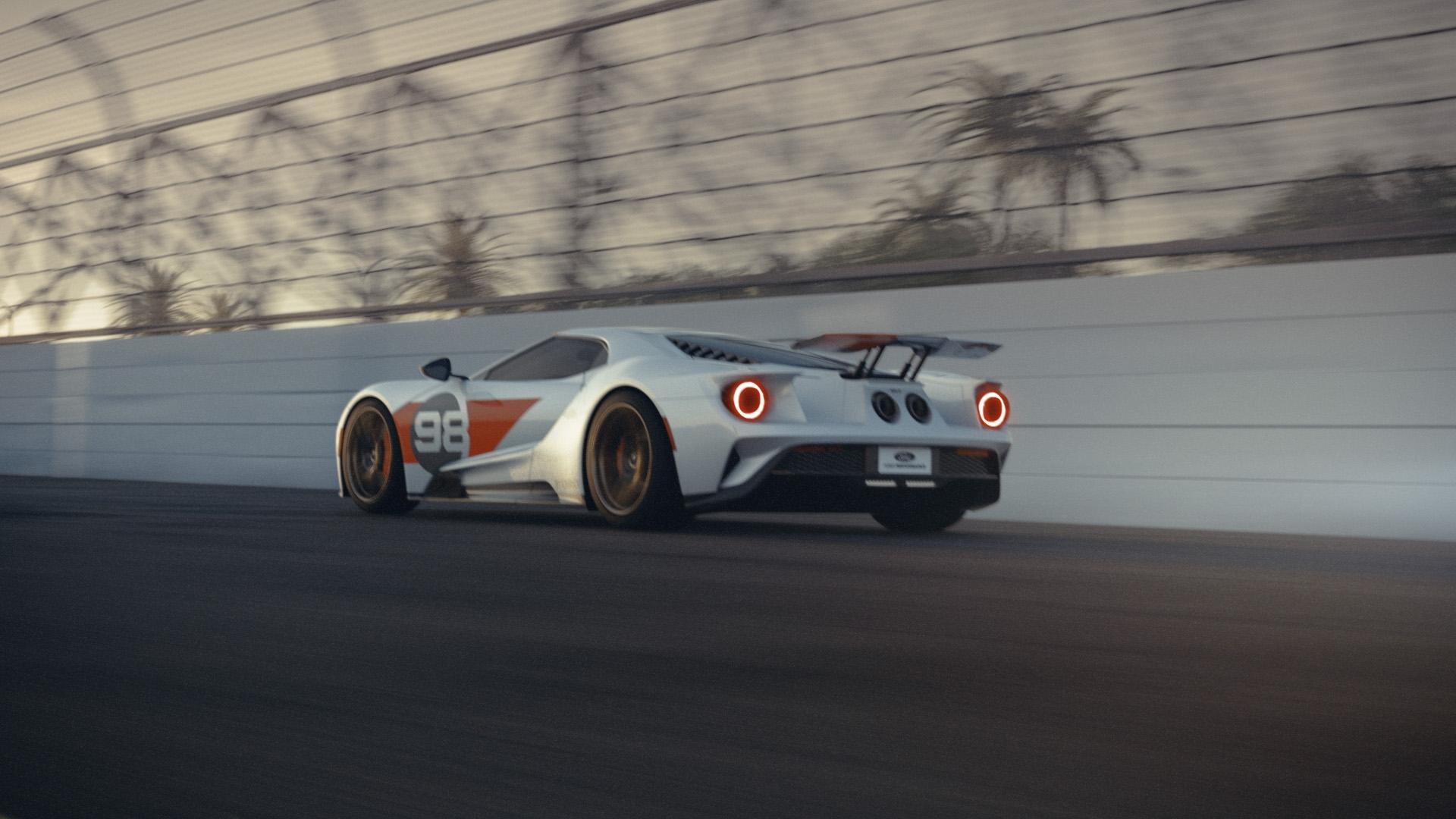
Next year, it will be 55 years since Ford secured its victory at Daytona. To celebrate, Ford will cover the Ford GT in frozen white paint with exposed carbon fiber and race red accents.

The Heritage Edition models debut alongside the Ford GT Studio Collection which is Ford’s customisation program for the Ford GT.

These special edition models also honour co-drivers Ken Miles and Lloyd Ruby who led a 1-2-3-5 Ford domination at Daytona. Those with a working history of the GT will remember that the win kicked off a magical season for the Ford GT40 MK II, with additional 1-2-3 wins at Sebring and Le Mans.

This Ford GT Heritage Edition is the first to feature a livery famous for a race other than Le Mans.

This Ford GT Heritage Edition gets asymmetrical race red accents on the front fascia and roof edge, driver’s side door and underneath the rear wing. Exposed carbon fiber shapes the signature 98 roundel graphics.

2021 Ford GT Heritage Edition Rear

Unique Ford graphics feature on the lower rear-quarter panels. One-piece Heritage Gold 20-inch forged-aluminum wheels paired with red lacquered Brembo monoblock brake calipers complete the new exterior livery.

Inside, black Alcantara suede wraps the instrument panel, headliner and steering wheel rim, while anodized red paddle shifters and red Alcantara suede performance seats add dramatic contrast to the interior.

An optional Heritage Upgrade Package includes 20-inch exposed carbon fiber wheels with a unique gloss red-painted inner accent barrel, while monoblock brake calipers are lacquered in black and detailed with Brembo lettering in red.

Ghosted 98 roundels provide a subtle contrast on both driver and passenger carbon fiber door panels, finishing the latest version of the Ford GT Heritage Edition.

Goodwood Speedweek: New Event Announced for October 2020

Goodwood Speedweek was recently announced to fill a deep void left by the cancellation of the the Goodwood Members Meeting, the Goodwood Festival of Speed, and the Goodwood Revival.

Regular readers will know that the Goodwood events are among our favourites. Now Goodwood has announced a new event which can be enjoyed at a social distance!

Goodwood Speedweek will take place on 16-18 October 2020. It promises to replicate the magic of all three events ‘behind closed doors’.

The event will take place at the Goodwood Motor Circuit. Free from the constraints of putting on a spectator event, the event promises a greater variety of cars, new racing formats, and a new viewing experience.

Goodwood Speedweek will be available to watch through the Goodwood Road & Racing website with a promise that it will have interactive elements.

The event will include supercar demonstration runs, new car launches, next-generation technology from FOS Future Lab, and an online auction.

Expect vintage racing, Goodwood Gymkhana and a Rally Sprint event. The headline will be a SpeedWeek-exclusive Timed Shootout round the challenging 2.4-mile Goodwood Motor Circuit.

Goodwood’s Motor Circuit has never seen modern race cars set timed laps before. Its current lap record was set by Nick Padmore in a Lola T70 Spyder during the Bruce McLaren Trophy at the 2015 Members’ Meeting. That record is sure to fall.

Stay tuned for more information on the event and a link to the action!

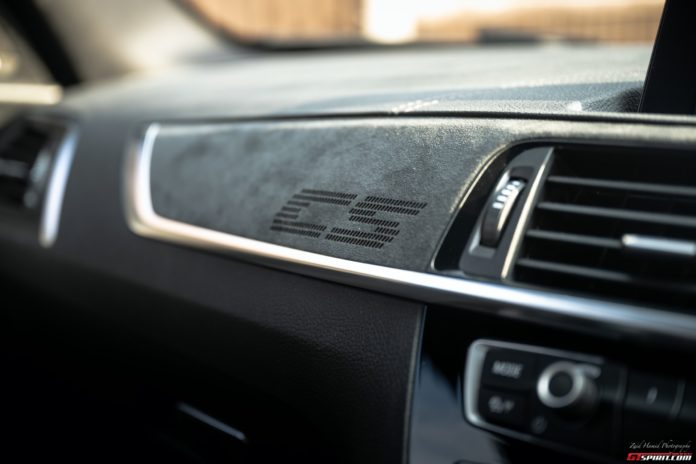
2020 BMW M2 CS Review

The BMW M2 CS: this is the one I’ve been waiting for. When I first drove the M2 in early 2016, I was perplexed by the choice BMW M made to not drop the M3/4 engine into the M2. A remedy arrived in 2018 with the M2 Competition and the introduction of the S55 from the F80 & F82. On the launch I questioned BMW M directors as to why there was no option of adaptive dampers in the baby M car. It was openly discussed that it was a key differentiator between the M2 and it’s bigger brothers with which it shared an engine. 

The M3 and M4 are no longer in production and finally, the M2 can be uncorked without fear of it showing up the big boys – meet the M2 CS. It’s got the same S55 as the now discontinued M2 Competition, but it’s putting out the same 444bhp as the F80/82 (up from 404), torque remains unchanged at 406lb ft. As mentioned, it comes with the welcome addition of adaptive dampers and even a carbon roof which is constructed using a stunning chequer board weave. Furthermore, carbon ceramics can be optioned for the first time on an M2 and that’s not where the carbon ends. Inside there are massive lengths of the shiny stuff on both sides of the central tunnel and door handles. Back on the outside, the entire bonnet is carbon and vented, the entire is part is a carbon copy of the one used for the CS Clubsport customer racing car. At the back there is a sizeable spoiler made of carbon that is so tall it can be seen in the rear view mirror. Furthermore, the front splitter and rear diffuser are also constructed out of motorsport inspired material.

Enough of the brochure talk, what is the M2 CS like to drive? It is certainly a step on from the M2 Competition and a large part of that is down to the dampers. As with the steering and engine, there are three settings – Comfort, Sport and Sport Plus, Sport being the default setting when firing the car up. Comfort is where thing are noticeably different, the secondary ride relating to the handling of lumps and bumps brings a new level of composure to the M2 and the way it handles itself when attacking a bumpy road.

Where the original M2 would be bouncing around like a rabbit on a pogo stick, the M2 CS remains calm and collected bringing greater confidence levels which allow the fun to continue over less accommodating tarmac. Sport is well judged and deployable on a good road surface, Sport Plus is best reserved for the track. The engine and dual-clutch transmission are as brilliant as in the Competition but with an added punch in the sportier modes. For those looking for freedom from the electronic nannies, the M Dynamic Mode allows for more slip’n’slide in the M2 CS before cutting in to stop you making it into a YouTube crash compilation. That being said, you’ll have to be on your worst behaviour to unstick the CS now that it is fitted with Michelin Pilot Sport Cup 2 rubber that makes the a significant difference over an M2 Competition and its Pilot Sport 4S compound. The optional carbon ceramics are supreme and the gold callipers look fabulous, to my eyes anyway. 
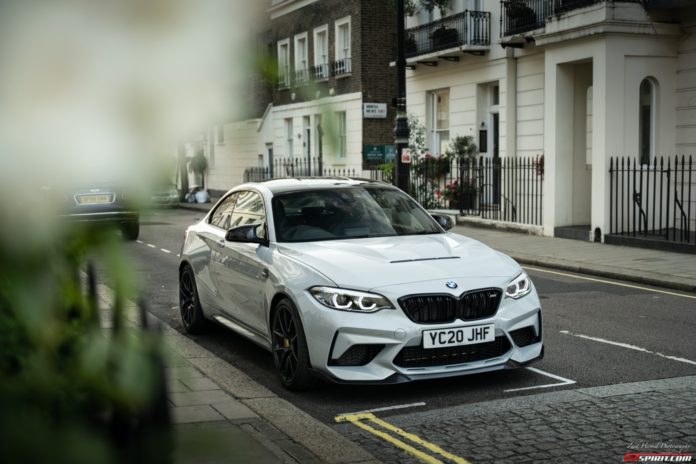
Much like the M2 Competition, this car wants to be driven hard. The harder you push the M2 CS the more you can feel the additional hardware at work. After my first spirited drive I was not convinced and wanted more, it felt like an M2 Competition. A 5am spanking the next morning revealed just how impressive it is when you really put the M2 CS through the wringer. The front axle grip is beyond belief, turn it in and grips and goes. This is an M2 turned up to 11.

But it is not perfect. The Comfort steering mode is too light and Sport too heavy, Sport plus is best left unused. The interior could be more exciting, the main difference in the CS is the removal of the armrest along with its storage space and the added carbon and alcantara. The steering wheel is still very thick, it can be forgiven as the seating position is sublime. The most significant gripe is the disappointing exhaust tone, although the same can be said for almost any car fitted with particulate filters. 

All up, the changes are significant, but there is an elephant in the room. The M3 & M4 CS were released with a hefty premium over the standard models. The used market for these cars reflects what many believe to be their true values. When new the M4 CS without costly options such as ceramic brakes, cost £87,150. A 5,000 mile used M4 CS can be yours for £57,000 just two years on. The production run of the M2 CS is limited by time not a set number, the base price is £72,600 before options. After adding a the DCT box, carbon ceramics, electric seats and reverse camera, the car I tested came in at an eye watering £83,260 with taxes and fees. That puts it in the direct line of fire of a Cayman GT4, although the GT4 arguably appeals to a different audience with no rear seats and mid-engined layout.  

Without a doubt, the M2 CS is an incredibly exciting proposition. It is one of the best M products I have ever driven, the move from passive to adaptive dampers combined with the boost in power and addition of Michelin Cup 2s really has brought out the best in the M2 chassis. I suspect I would be walking into a BMW dealer to register my interest if I had been given the manual press car to play with, but the price tag sours the package. If the rumours are true and production numbers are very limited, this may become a collectors special. If you can swallow the price and fancy an incredible drivers car, go out and get one – preferably in Misano Blue with gold wheels. If it isn’t justifiable for you, don’t fret, an M2 Competition will give you almost as much joy for substantially less cash. BMW have done brilliantly with the M2 CS (and the Competition). Let’s see what the next generation M2 has to offer, it has big boots to fill.

BMW Begins Development of M3 Touring… due in 2022

It’s been a bone of contention with BMW fans for many years. It’s possible to get a Sedan and Coupe variant of the M3 (or M4 as the Coupe is now known), why is can’t BMW produce a BMW M3 Touring?

It appears BMW have been listening. Yesterday, it released a teaser image, confirming that a prototype had left the factory to begin its testing phase.

BMW’s estate-bodied M-cars are among its most sought after. The combination of power, space and practicality magnetises petrol-heads like nothing else.

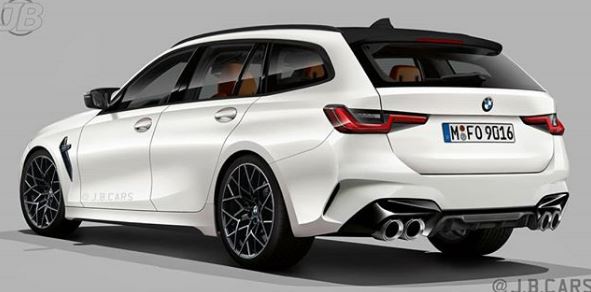
BMW M3 Touring Render

Since BMW’s E61 M5 Touring, there has been a hole in the market. BMW has finally decided to fill this with a new BMW M3 Touring, the first in the long history of the M3 brand.

A press release asks “How about an extra-large and highly variable luggage compartment in a high-performance sports car?”

Specifications for the BMW M3 are all but revealed. Early prototype drives confirm that the 3.0 litre inline-6 will be tuned to produce up to 510 hp in Competition trim.

The all-new BMW M4 Coupe and the new BMW M3 Sedan will be celebrating its world premiere in September. The M4 Convertible will follow next year. The M3 Touring will follow in 2022.

Lamborghini Essenza SCV12 Unveiled: Hardcore, Track-Only!

The Lamborghini Essenza SCV12 joins a growing marketplace for no-limits hypercars. It seems that, for the super-rich, they are the must-have accessory.

Aston Martin has its Vulcan, Ferrari has its FXXK, McLaren has its Senna GTR; and now Lamborghini has the Essenza SCV12. It is also the first GT car developed to respect FIA prototype safety rules.

Developed by Lamborghini Squadra Corse and designed by Lamborghini Centro Stile, the Essenza SCV12 is limited to just 40 examples.

In its press release, Lamborghini evokes some hardcore history. Cars like the Miura Jota and Diablo GTR. The Essenza SCV12 has big boots to fill!

Details remain a little loose. Lamborghini has confirmed that the SCV12 is powered by a V12 rated to 830 hp. The power increase is said to be caused, in part, by RAM effect at high speeds.

Lamborghini has gone outside for the exhaust pipes which were designed by Capristo. A new X-trac sequential six-speed gearbox is structurally mounted to the frame.

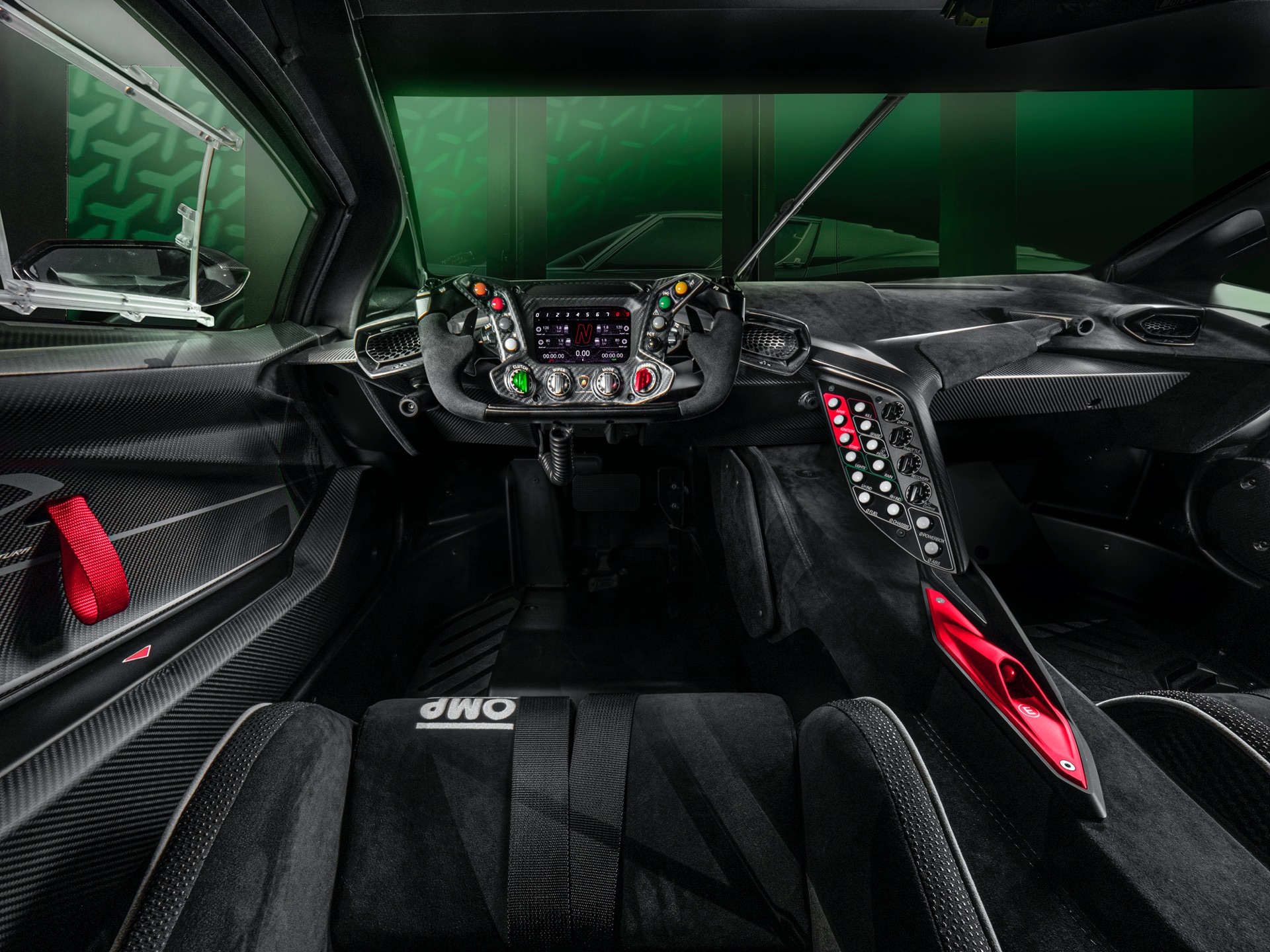
The Essenza SCV12 gets a new-generation carbon fiber monocoque chassis which makes do without an internal rollcage.

Push-rod rear suspension is installed directly onto the gearbox. Pirelli tires are mounted on magnesium rims (19” front, 20” rear), which frame the brake discs and callipers supplied by Brembo.

Lamborghini Essenza SCV12

The unique aerodynamics achieve a staggering 1,200 kg of downforce at 250 km/h. The looks are dominated by a large adjustable double-profile rear wing, while other components are inspired by the Lamborghini Huracan race cars.

Essenza SCV12 customers will become part of an exclusive club with a bespoke program at the most prestigious circuits in the world. It will include a storage service in a new hangar built in Sant’Agata Bolognese exclusively for the Essenza SCV12 club.

Each car will have a personalized garage and dedicated services. The facility will also house the “Lamborghini Squadra Corse Drivers Lab” which offers athletic training programs similar to those followed by the official Lamborghini racing drivers.

The track calendar will start in 2021 with “arrive and drive” events held at FIA Grade 1 homologated circuits. Assistance will be provided by the Squadra Corse technical staff with the support of Emanuele Pirro and Marco Mapelli.

The price for this unique hypercar has not been announced.