All posts in “Car News”

Lamborghini at the Auto Shanghai 2021: Essenza SCV12 Steals the Show

Lamborghini celebrated three premiers at the Auto Shanghai 2021 motor show by unveiling the new Essenza SCV12 which is limited to only 40 units worldwide, a homologated track car Huracan STO made its debut in China and Huracan Flou Capsule which was also unveiled in the Asia Pacific for the first time. The Urus SUV also joined the line-up rounding up to a powerful Lamborghini tour de force.

The Essenza SCV12 has a powerful naturally aspirated V12 engine developed by Lamborghini and a direct descendant of Miura Jota and Diable GTR. The SCV12 generates over 830 hp and also obtains an additional power boost from the RAM effects at high speeds. Its new X-trac sequential gearbox has been fitted on the chassis and combined with a rear wheel drive system to handle the power as well as ensure a greater torsional rigidity.

The track-only Essenza SVC21 has also been fitted with a large rear wing, side fins and a front splitter all inspired by the Huracan Super Trofeo EVO and GT3 EVO to enhance the efficiency as well as generate higher downforce levels compared to a GT3 car, 1,200kg at 250km/h.

In addition, the Essenza features a power-to-weight ratio of 1.66hp/kg as a result of the new generation carbon fiber monocoque chassis without an internal roll cage.

The Lamborghini Huracan STO is a street homologated super sport car that made its first ever appearance in China, the car regenerated from the Lamborghini Squadra motorsport prowess and heritage.

The Huracan STO is powered by a naturally aspirated V10 engine which generates an output of 640 hp and 565 Nm of torque at 6,500rpm. The vehicle can accelerate from 0-100km/h in 3 seconds, 0-200km/h in 9 seconds and the top speed is set at 310km/h.

The new Huracan STO features a high level of downforce as well as best aerodynamic balance thanks to its exterior design which optimises the airflow. The exterior design features a unique cofango and one-piece carbon fibre on the front bonnet, front bumper and on the fender. Other features include rear fenders with air intakes, rear bonnet with air scoop, manually adjustable rear wing and an integrated shark fin.
Over 75% of the exterior panels are made of carbon fibre which gives the car a weight-to-power ratio of 2.09 kg/hp with 1,339kg dry weight. The vehicle features three driving modes, STO, Trofeo and Pioggia. STO mode is default and ideal for curvy roads whereas Trofeo and PIoggia are ideal for wet and dry roads. The Huracan STO has been fitted with new heat resistant Brembo CCM-R braking units derived from F1 applications that ensure performance and consistency.

The new Lamborghini Huracan EVO Flou Capsule debuted in Asia Pacific for the first time, the vehicle was unveiled in matte Verde shock (green). In addition to the show car color scheme, four interior and exterior configurations including Arancio Livrea (orange), Celeste Fedra (blue), Arancio Dac (orange) and Giallo Clarus (yellow) all combined with matte black will be available for the Capsule.

The Lamborghini Urus also joined the lineup at the Shanghai motor show, the unit pictured was fitted with 23 inch wheels and red brake callipers available as an option.

The Lamborghini stand at the Shanghai auto show was completed by a display of branded clothing lines, accessories and projects dedicated to the Lamborghini brand extension.
All New Mercedes-Benz EQB Debuts at Auto Shanghai 2021

Mercedes-Benz arrived at the Shanghai Auto Show 2021 with a range of new models that includes the new EQB, CLS Coupe facelift, new EQS and the new EQA.

In China, the EQB (full EV version of the GLB) will have an official market launch in November 2021 as a fully equipped top model with seven seats and AMG line with an output of 288hp as standard. In Europe clients will be given a chance to choose between five and seven seats, all wheel drive and different output levels. The interior features a maximum boot capacity of 1710L and the inclining backrests in the second row can be adjusted in several stages.

The Mercedes EQB range will include several models with various power ratings – with some exceeding 200kW. There will be batteries with capacities starting from 66.5 kWh and front wheel or all wheel drive versions.

The EQB also features Eco Assist which incorporates traffic signs, navigation data and information from the sensors. A standard navigation with electric intelligence calculates the routes to a destination, ensures the high-voltage battery is charging at an optimal temperature and also contributes to the handling of the car. Green power is set as standard and ensures the renewable energy resources are fed into the grid. Over 200,000 charging stations are available across Europe.

An intelligent driving assistance system that supports Active Lane keeping Assist and active brake Assist is available for the EQB as standard. The enhanced package includes a turning maneuver function, alerting drivers on nearby cars and cyclists and warns the driver when approaching a nearby zebra crossing. Passive safety is also applied on the EQB i.e the body of the EQB was built with special requirements of an electric car, the battery has been fitted in a frame made of extruded sections with a battery guard in the front area to prevent the battery from being pierced by any foreign objects.

The exterior of the EQB also features an EQ black panel grille with central star, a continuous light strip at the front and rear of the car and a fibre-optic strip that connects the full-LED headlamps. Additional features include outward positioned wheels, studded roof rails and exclusive light alloy wheels available in bi- or tri- colour design. The wheels are up to 20 inches in size and are available in Rose Gold or blue decorative trim.

The interior of the EQB features a large dashboard, a widescreen cockpit with MBUX control and display. Aluminium look is used on the door handles, centre console and on the instrument panel on the passengers side. A backlit trim piece and rose gold elements on the air vents, seats and vehicle key is available depending on the equipment line and design of the car.

The EQB can be charged upto 11kW with alternating current (AC) via an onboard charger, charging time depends on the available infrastructure and equipment i.e charging using a Mercedes Wallbox is faster compared to a household socket and even faster if charged using direct current (DC) fast charging stations. Charging from 10% to 80% can take just 30 minutes if the vehicle is charged at a corresponding station with maximum power of 100kW. There are over 500,000 charging stations available for the EQB across 31 countries.

The all-electric EQS luxury saloon, the compact all-electric EQA alongside the long wheelbase version of the EQB were all on display at the Auto Shanghai show for the same time, as part of Mercedes EQ night. All three EQ models debuted during the evening at the Auto Shanghai show.

The Mercedes long wheelbase version of the new C-Class features more legroom, luxury head restraints and large armrests with a storage compartments. Additional features include USB ports, cup holders on the rear seats, comfort suspension and enhanced noise insulation for a quiet interior.

The interior of the new CLS four-door coupe has been upgraded with a new generation steering wheel as well as leather and trim combination. The vehicle also features the latest generation diesel with an integrated starter generator.

There is a special edition of the Mercedes AMG CLS 53 4MATIC+ limited to 300 units only.

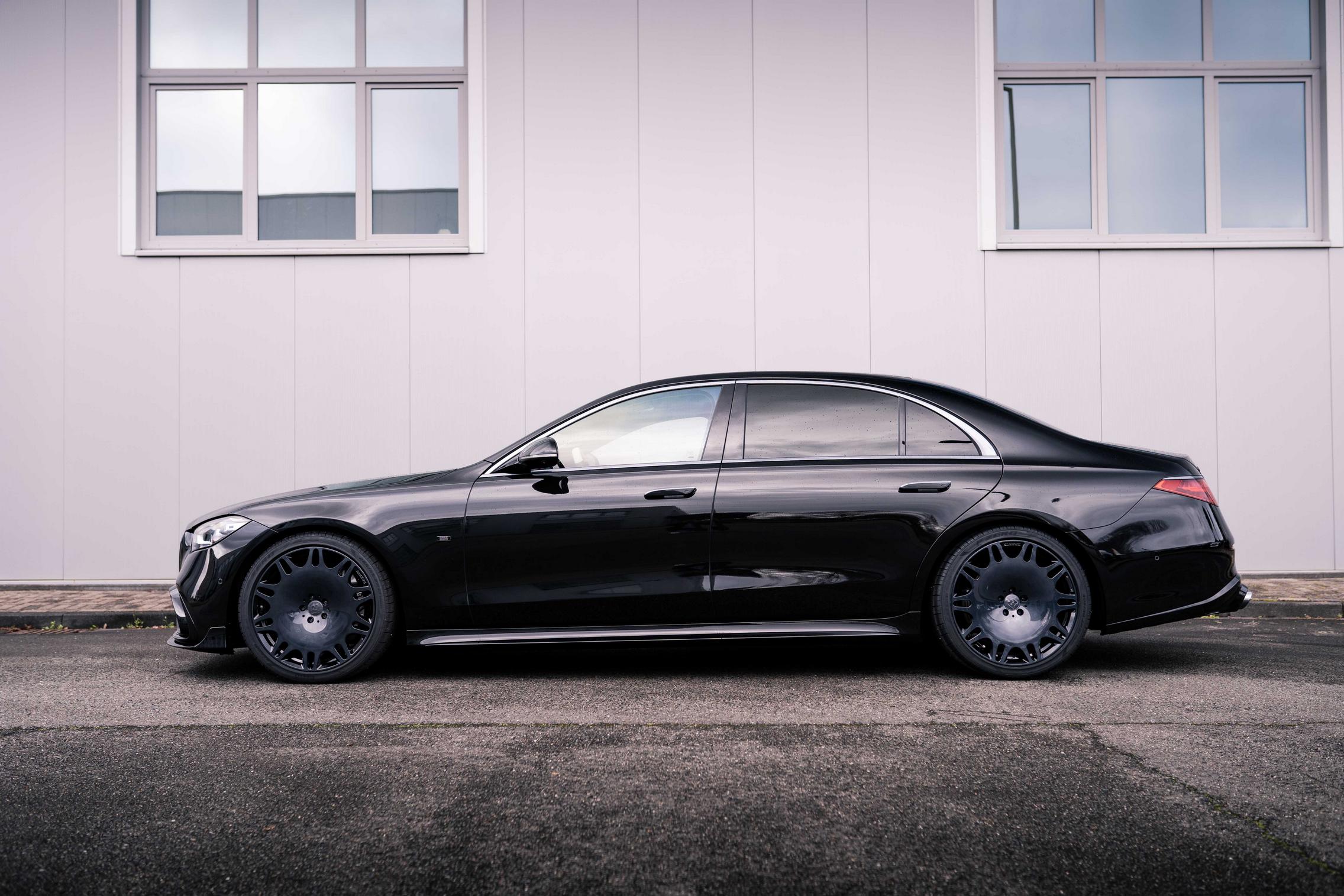
New S-Class Has a Brabus Package Already – S500 Now Produces 500hp

Brabus has refined and upgraded the new Mercedes Benz S-Class, giving both the S500 4Matic and S400d a twist of exclusiveness.

The first step of the upgrade was installing the plug-and-play Brabus B50- 500 PowerXtra performance module on the S 500 4MATIC gasoline engine, the module pumps up the powerplant by 65hp and increases the torque by adding 70Nm of torque.

After the modification, the official output of the new Mercedes S-Class has been increased from 435hp to 500hp horsepower, torque has been improved from 520Nm to 590Nm and is available from 1,800rpm and 5,800rpm. The acceleration from 0-100km/h is now achieved in 4.7 seconds. The top speed remains electronically limited to 250km/h.

Brabus S-Class Full Black

A Brabus PowerXtra D40 performance kit module will also be available for the Mercedes S 400 D 4MATIC and it will boost the output of the diesel engine by 40hp and increase the torque by 50Nm. After installing the module, the engine of the car will have an output of 370hp and 750Nm peak torque at a low 2,500 rpm. Top speed will be 250km/h and the acceleration from 0-100km/h will be achieved in just 5.2 seconds.

The exterior of the vehicle features a Brabus front spoiler that reduces front axle lift to boot, side air intakes with surrounds, integrated LED side markers and a sporting styled insert at the rear bumper. A naked carbon rear spoiler lip will also be available soon.

The interior of the new S-Class includes a range of options from an eight-piece scuff plate set with Brabus logos which can light up in white or change color to match the ambient lighting. There is a two-tone soft and breathable Brabus fine leather on the dashboard and center console, carbon elements on the dashboard and center console and exclusive Brabus signature carbon trim sets specifically designed and developed for the S-Class.

The S 500 4MATIC can be fitted with Brabus signature Monoblock alloy wheels with diameters of 19, 20 and 21 inches all designed for the S-Class. A ‘Platinum Edition’ Forged Brabus alloys will also be available as exclusive wheel/tire combination and in various designs.

The S-Class pictured is fitted with the Platinum Edition wheels in size 9Jx21 on the front axle and 10.5Jx21 on the rear axle. The wheels are manufactured through high-tech forging technology and have been combined with large optimal tires in size 265/35 ZR 21 at the front and 305/30 ZR21 at the rear.

The sporty Brabus suspension improves the agility and handling of the vehicle as well as lowering the ride height by 25 millimeters depending on the drive mode selected.

McLaren Artura Performance Figures [0-100km/h, ¼ mile, Top Speed]

McLaren has finally revealed the performance numbers of their new hybrid supercar, the Artura.

The McLaren Artura is powered by a 3.0L V6 twin-turbo engine that generates 585hp and 585Nm of torque. This engine is 190mm shorter, 220mm narrower and 50kg lighter in weight compared to McLaren’s 4.0L V8 twin-turbo engine. The 120 degree twin-turbocharged M630 unit delivers unmatched performance and ensures compact packaging. A 180-degree angle was considered but dismissed because it raised the centre of gravity as well as the crankshaft.

The wide angle V6 cylinders allows the turbochargers to fit within the banks in a ‘hot vee’ configuration which ensures a less restrictive exhaust layout. The hybrid system is completed by an E-Motor that produces an extra 95hp and 225nm of torque, for a total of 680hp and 810nm of torque when combined with the ICE.

0-100km/h 3.0s
0-200km/h 8.3s
0-300km/h 21.5s
1/4 Mile 10.7s
0-60mph 3.0s
Top Speed 330km/h (205 mph)

A 7.4kWh Five-module Lithium Ion energy dense battery pack provides an electric-only capability and is positioned low down behind the driver. The Artura has an electric range of 30km. This position optimises the centre of gravity, polar moment of inertia and also improves the dynamic agility of the car.

The Hybrid battery is fitted in a cooling manifold together with the new electric heating, air conditioning system and ventilation which are also used to control the air temperatures in the cabin. The batteries of the car are thermally controlled via dielectric oil, a technology used to maintain the E-motor at operating temperatures that delivers high performance.

The batteries take approximately 2.5hrs to charge from 0-80% when charged through EVSE socket and can never truly run out of power even when parked for a long period, the management also ensures that the battery units remain in peak conditions at all times. The battery unit comes with a warranty of years or 75,000km. An integrated power unit(IPU) acts as a DC/DC converter for the 12v system and minimises the weight.

The engine of the Artura powers the rear wheels through an eight-speed transmission that is designed for optimised packaging, the length of the gear cluster has been reduced by 40mm.

The driver can adjust the electric motor deployment to prioritise range, power or to shut off the internal combustion engine for a silent drive. Energy harvesting is enabled from the combustion engine and the battery can be charged from low to 80% within minutes under normal driving conditions which ensures that the driver can shift to electric-only mode.

Doesn’t Get Greenier than This: Rimac Unveils New HQ with Gardens and Animal Farm

Rimac Automobili officially unveiled the designs of its upcoming state-of-the-art campus in Croatia including an on-site test track, museum and accommodation.

Rimac has grown to a global technology powerhouse in just a decade and is now looking forward to bringing people together in one place as the world transitions to an electric future. The complex is engineered and designed by Croatian architects, 3LHD and will be the international production base and R&D for creating prototypes and producing smaller volume projects to high-volume production of its battery system and high-performance electric drivetrain for car companies globally.

The company occupies a site of 200,000m2 and 100,000m2 built area and is located a few kilometers from Rimac’s current home. 3LHD has designed international projects including Riva Waterfront in Split and Hotel LN Garden in Guangzhou in China. The designers have collected inspiration from multiple sources including the curves and movements of the new Rimac flagship, the C_Two.

The complex will contain clever and unique features including urban swamp and meadows, rooftop garden and an on-site accommodation rather than traditional hotel style. A customization showroom, a museum with a bar and merchandise shop will also be available at the complex for customers to preview and experience. There is also a gym, game room, training centre, restaurant, kindergarten and an animal farm constructed and available for the employees wellbeing and learning.

Parking spaces for both employees and the public will be available as well as an auditorium, conference hall and an education room. The complex will be able to accommodate approximately 2,500 employees and substantial facilities for production. The site has been divided into two areas, HQ building and Greyp’s offices.

The production plant at the rear of the complex will house machining, components and vehicle assembly, battery production, composites production and paint shop. Rimac campus is one of the largest buildings in Europe, the investment for the construction will exceed 200 million euros and construction will start in 2021 and will be completed in 2023.

MG Cyberster: UK Car Maker Reveals Full Electric Supercar

MG has officially a new full electric concept car named Cyberster. The car will debut later this month at Shanghai Auto Show and marks MG’s comeback to the sports car scene, taking into consideration the current industry trend of full electric sports cars.

The Cyberster is a two-door, two-seater sports car with high-tech features including 5G connectivity and a gaming cockpit. The styling cues of the car are from the classic MGB Roadster. The EV architecture used on the Cyberster enables approximately 800km of electric range, the acceleration from 0-100km/h takes less than three seconds.

The body of the Cyberster is designed to improve aerodynamic performance, the exterior features MG grille serving as air ducts to ensure airflow to the chassis, classic MG headlight with interactive ‘Magic Eye’ headlights that opens when switched on, ‘laser belt’ LED strip down and LED tail lamps.

The interior features digital fibre design that acquire a driver-centric layout with a separated cockpit between the driver and passenger. There is a large LED instrument cluster with a second central screen, Zero Gravity seats with floating head restraints, red leather door handles and door panels with laser belts connecting to the exterior.

MG has not revealed any output figures of the Cyberstar but judging by the acceleration numbers, it could easily be powered by 2 or 3 electric motors with an output of 800hp+.

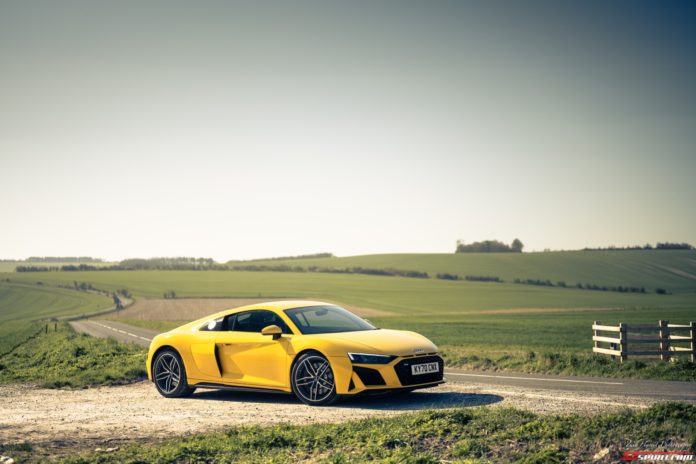
2020 Audi R8 Rear Wheel Drive Review

It is hard to believe that the Audi R8 is almost 15-years-old, seeing the first generation V8 on the road is still a treat – few cars have aged as well. Since its inception, the R8 has morphed from a mid-engined sports cars battling the likes of the Porsche 911 Carrera range, into a red blooded supercar with a heart shared with a Lamborghini and a price tag the makes it a very different proposition from the car Tony Stark used to daily. The current R8 range has shrunk to just three options, gone are the V8 or manual options. All powered by 5.2-litre V10 engines and available in Coupe and Spyder forms, perspective buyers can have the full fat Performance Quattro with 612bhp, the semi-skimmed 562bhp V10 Quattro or the entry level model that is the subject of this review, the V10 RWD with ‘just’ 533bhp. The difference is price between the range topper (£144,950) and the RWD (£114,435) is noteworthy and arguably makes the RWD on of the most attainable entry level supercars on the market, but does it make it any less desirable?

To me, the R8 RWD is the most compelling R8 in the current line up. The Performance variant is great, but to me it was too easy to find the limits, something I discovered just a handful of laps into my stint putting it to the test at the fearsome Ascari Race Resort in Spain in 2018. With all of the driver aids disengaged understeer would creep in earlier than expected before suddenly transitioning into snap oversteer. Admittedly, things were much better when pushing the AWD car when fitted with Cup 2 Michelins and not the PS4S.

The first impression of the 2020 R8 Rear Wheel Drive is that the front feels more immediate and communicative than the rest of the range. That being said, the numbness of the steering has not been cured, yes, you can feel a little more of the road, but there is a distinct lack of understanding of how the rubber is interacting with the surface. But let’s be realistic, this is not a Porsche GT3, the R8 is a car with a much broader appeal. Where the GT3 with its (optional) fire extinguisher, cage and harnesses is set to drive to a track day, set immense apex speeds and then drive you home, the R8 is better focused to being the daily driver that will double as the stylish supercar that will turn heads outside your favourite restaurant. There are no adjustable dampers (optional on the AWD variants) so the ride has to be as well suited to a country road as the city centre speed humps. It is well judged but it is a touch unrefined at lower speeds. Anything above 50km/h is well damped, below that it is what I would describe as ‘jiggly’. The interior is well designed and fairly spacious. Whilst the cabin still feels modern, the MMI does feel dated, CarPlay is a bonus but the entire interface does feel a generation old.

But what is it like to push on a fast flowing road? I drove the banana yellow (technically Las Vegas Yellow) RWD for 600 miles, most of which were on some of the best roads in England. Once you learn to modulate the grabby brakes and not expect to be able to feel the surface of the road you can start to find the limits of the 2020 Audi R8 Rear Wheel Drive. The experience is dominated by that mighty 5.2-litre V10 and the transmission. With a redline at 8,500 and no turbochargers in sight (woohoo!) you really have to eke out the revs. Nothing really happens before 3,000 but then things get interesting.

As you reach 4,000 the V10 really starts to come on song. Hang on and relish the bark of the V10 as it reaches peak torque (540Nm) at 6,400rpm and peak power all the way up at 7,900. By the time you’re at 8,500 you’ll be hurtling towards the next corner having enjoyed one of the greatest automotive symphonies in production today. As you hit the brakes (ceramics are not available on the RWD) you’ll pull on the disappointingly small and plastic downshift paddle and enjoy the yelps of the engine as the 7-speed DCT makes quick work of the shifts. When left to its own devices, the transmission is overly eager and seems to constantly be shifting, but the changes are smooth and seamless. Beware of kick down in the auto modes, the gearbox, alarmingly, likes to downshift into the redline.

The Pirelli P Zeros fitted to my test car and mighty and breaking traction is easier said than done. The traction control system is very quick to cut the power and stop any hooliganism so I was forced to set the traction control to its halfway/dynamic setting which was well judged and allowed a little freedom when really pushing on. But even with all of the systems off, this mid engined layout combined with the Pirelli rubber meant that the RWD would usually fire itself out of a corner with little to no drama unless you’ve got a very open space to let the R8 off the leash. Find some space and the R8 feels fast too, 0-100 is done in 3.1 and the 2020 R8 Rear Wheel Drive will keep going until it reaches 324km/h.

The 2020 Audi R8 Rear Wheel Drive is the cheapest R8 in the range, but it offers more excitement and entertainment than the other cars in the range. Day-to-day it is just as usable, practical and enjoyable as the all-wheel-drive models, aside from the jiggly ride. The engine is marvellous and that alone is a reason to seriously consider this car, after all, it seems this and the RWD Huracan are the only two-wheel-driven supercars armed with a V10 on sale. It may not be the most thrilling, driver focused supercar on sale today, but that does not mean that it is not a joy to jump into a drive.

First Road Legal Pagani Zonda Revolucion: It’s Happening!

TopCar Design has an impressive Pagani collection that boasts of 6 cars including a Huayra Imola – one of the most expensive new Paganis with a start price of $5.4 million. They have recently acquired a 1 of 5 Pagani Zonda Revolucion, car #4 of 5. This is strictly a track car that Pagani introduced back in 2012 as an updated version of the R, another track only model.

After taking ownership, they approached UK based automotive company Lanzante Limited to perform a road legal conversion on the Zonda Revolucion. Lanzante is famed for converting many track only hypercars to road legal status such as the McLaren F1 GTR, McLaren P1 GTR and more. According to TopCar Design, Lanzante is in the process of studying the car ahead of the actual conversion, a list of changes will be made available in the near future.

After conversion, the Zonda Revolucion will effectively get a road license and run on UK plates. They will showcase it around Europe via events organized by the Supercar Owners Circle. Being an extremely rare car, prices start from around 6 million euros – the value is expected to go up once it receives road legal status.

The Zonda Revolucion is powered by the same 6.0L naturally aspirated V12 found on the R variant, now developing 800hp and 730nm of torque. Power is sent to the rear wheels via a 6-speed sequential gearbox. Thanks to the use of carbon-titanium monocoque, the Zonda Revolucion only weighs 1,070 kg.

The Marbella based tuning company also has a Zonda HP Barchetta on order, car #3 of 3. This is the most expensive Pagani model to date, it has a start price of $17.6 million and was created to celebrate Horacio’s 60th birthday.

Read: Top 15 Most Expensive Cars in the World 2020/2021

For now, we can’t wait to see the first road legal Zonda Revolucion on our streets!

Here is the full Pagani collection owned by TopCar Design:
1. Pagani Zonda Unica – 1 of 1 Roadster (Chassis 135)
2. Pagani Zonda Cinque #3 of 5 (Orange)
3. Pagani Huayra BC Roadster 1 of 40
4. Pagani Zonda Revolucion #4 of 5
5. Pagani Huayra Imola #1 of 5
6. Pagani Zonda HP Barchetta #3 of 3 (chassis 137)

A total of 140 Zondas have been made to date.

2022 Mercedes-Benz EQS: 7 Key Interior Features

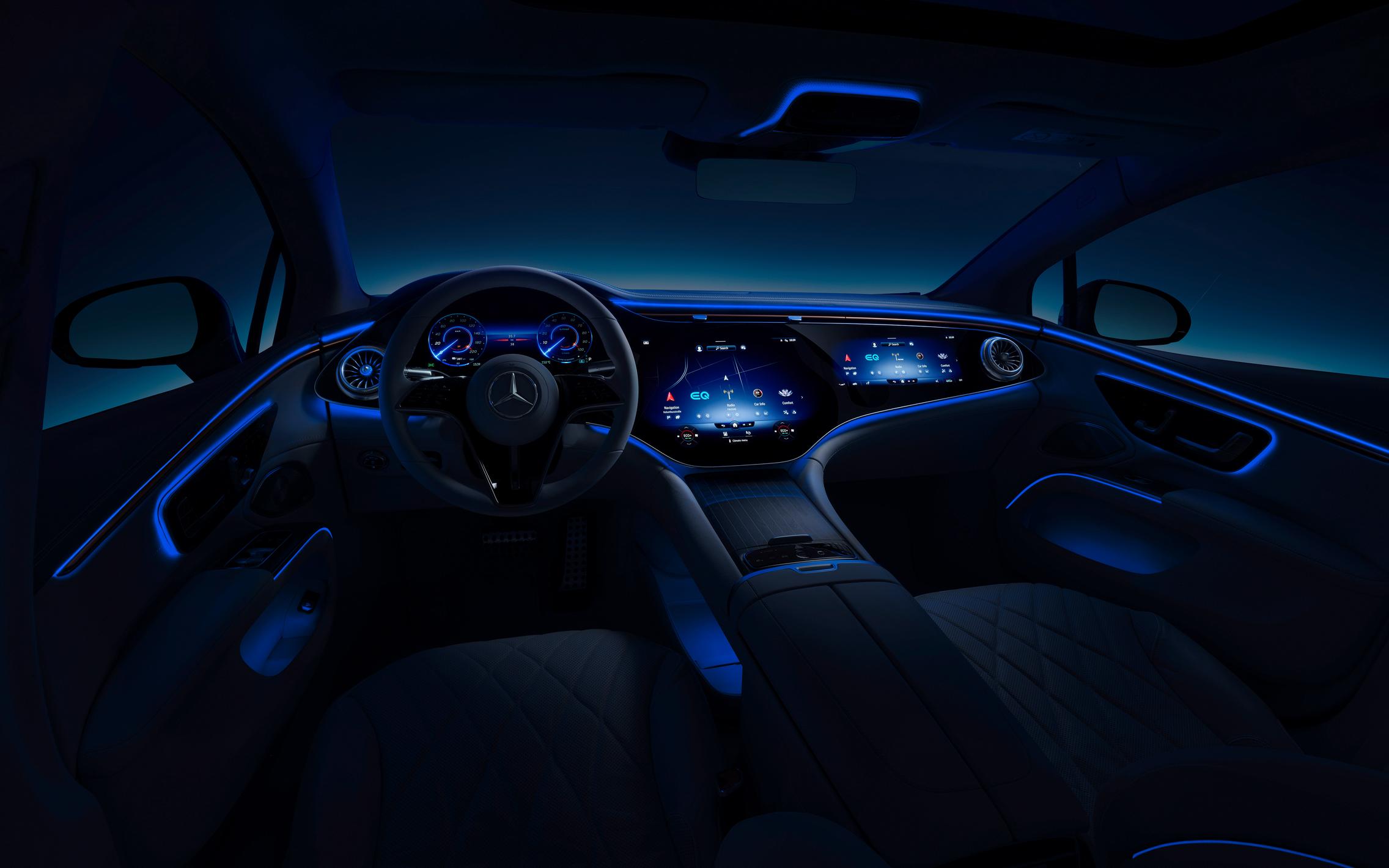
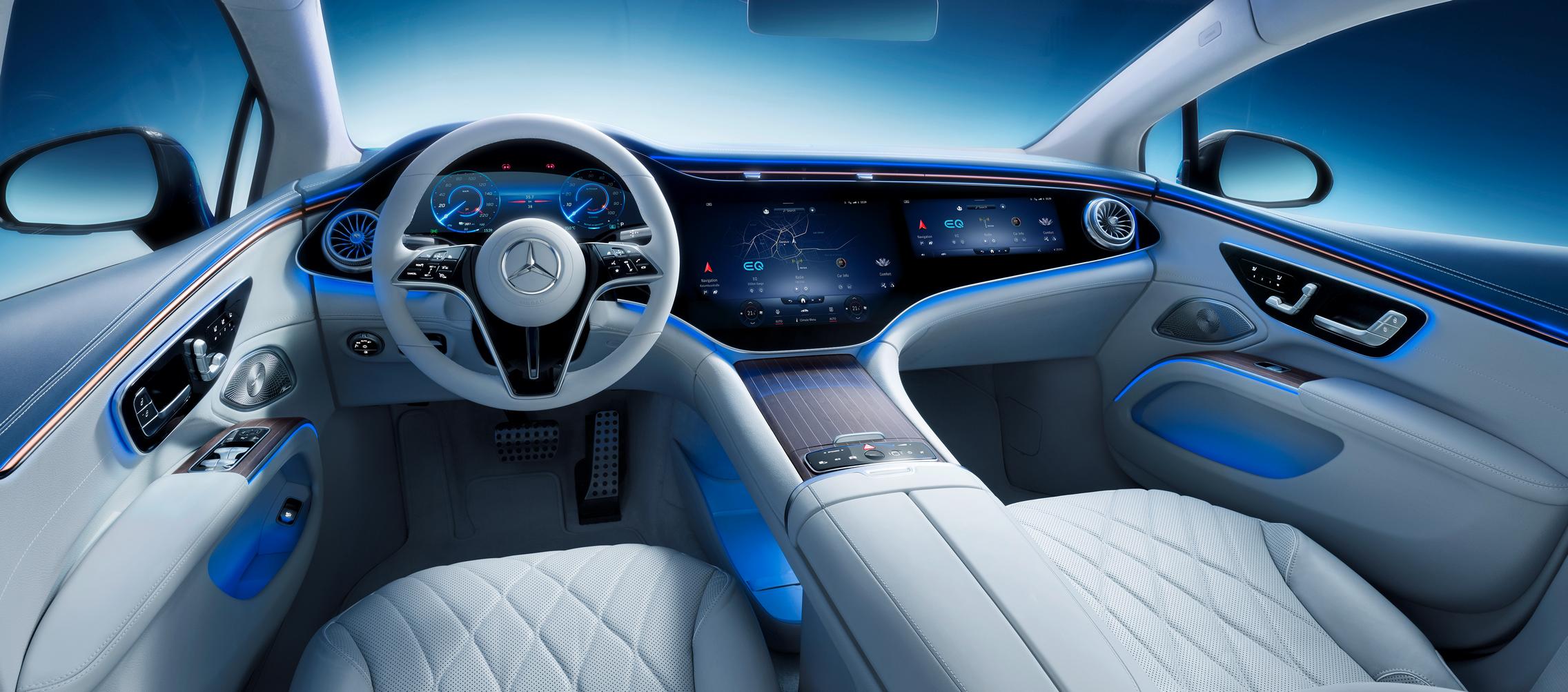
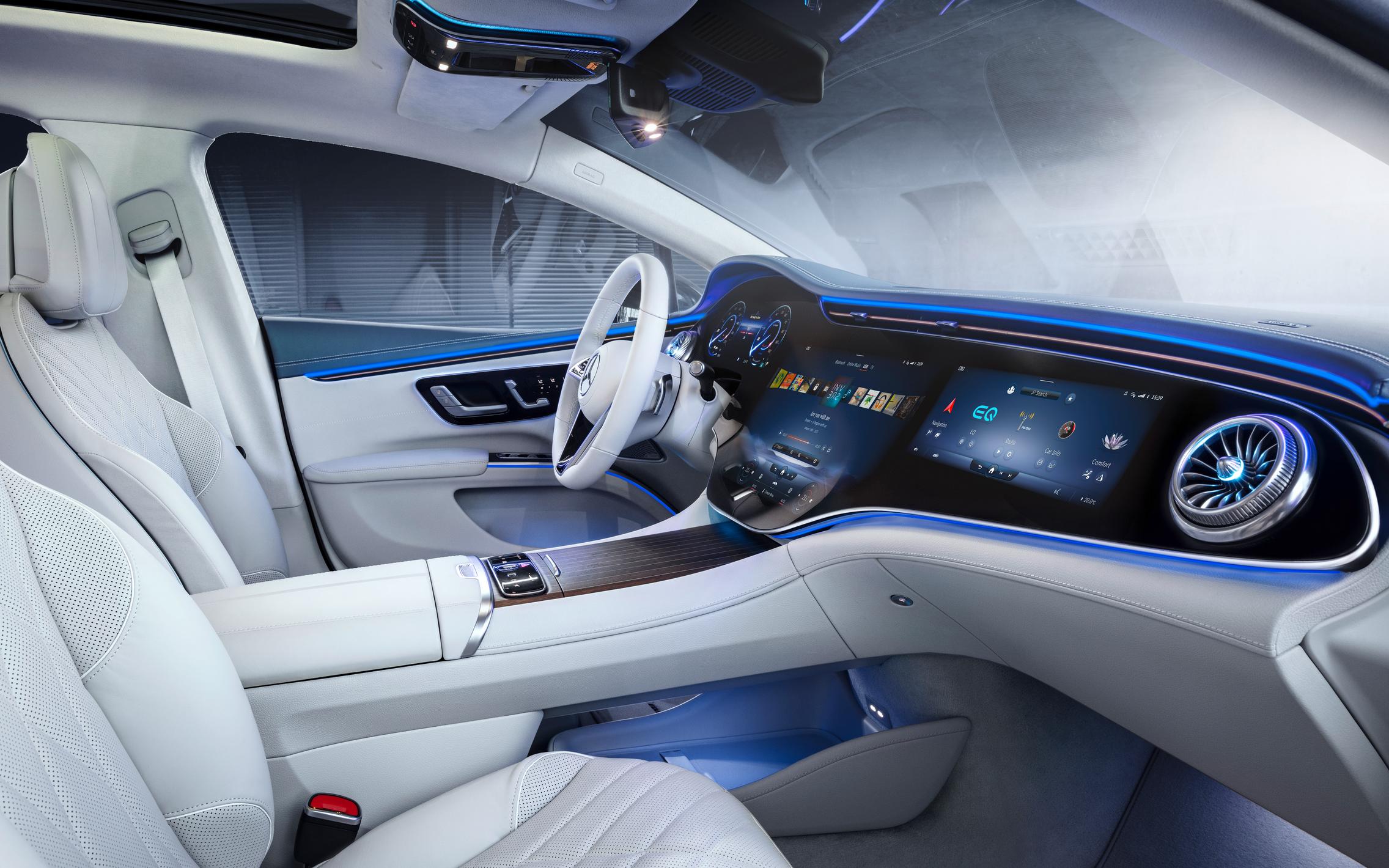
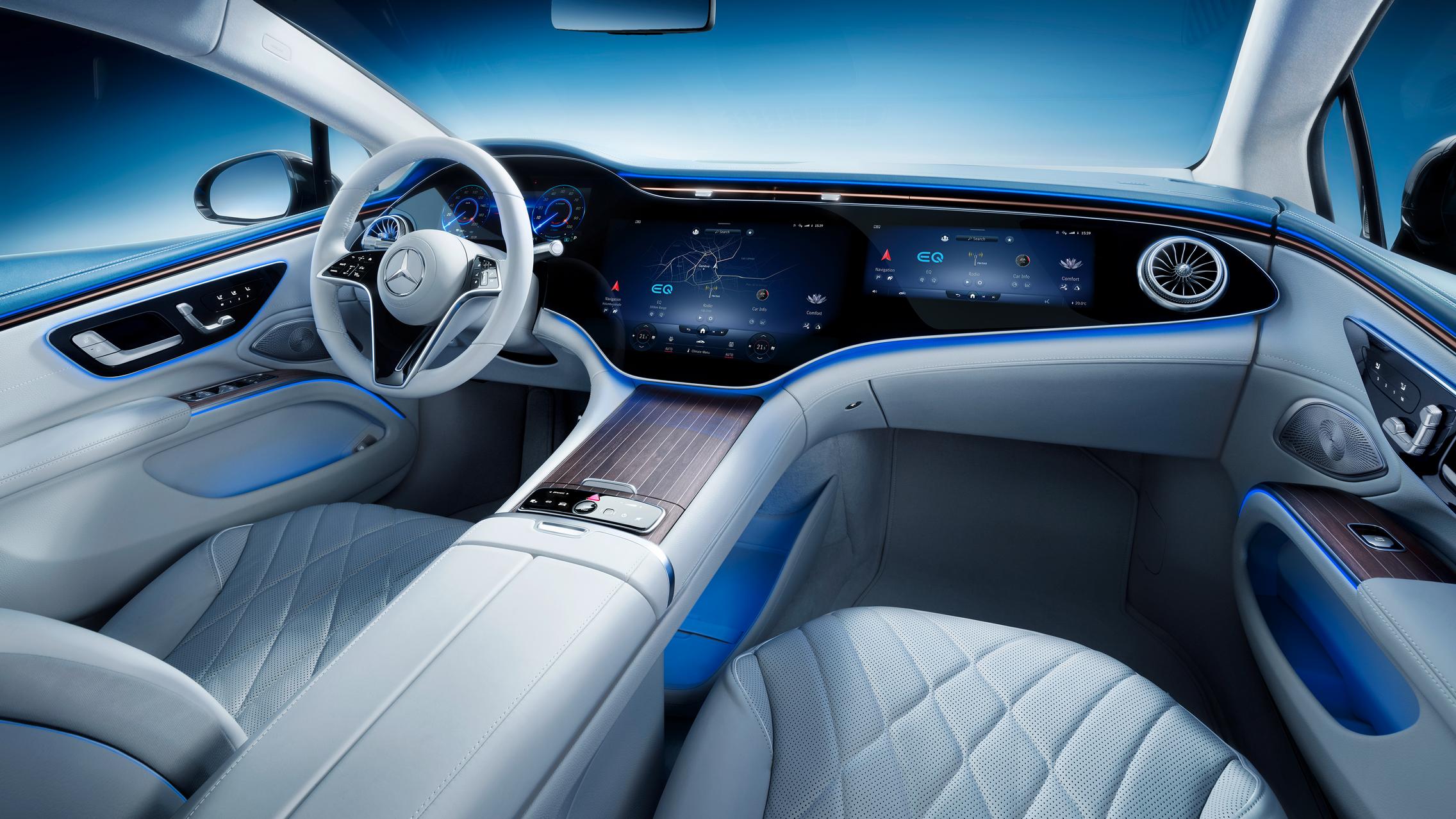
The Mercedes-Benz EQS is an all-electric luxury saloon which is essentially a full electric S-Class. The EQS is manufactured together with the S-Class and the Mercedes-Maybach S-Class on a neutral-carbon basis. It is expected to make an official launch in Europe in August 2021. Interior photos have just been revealed and we have rounded up the key features.

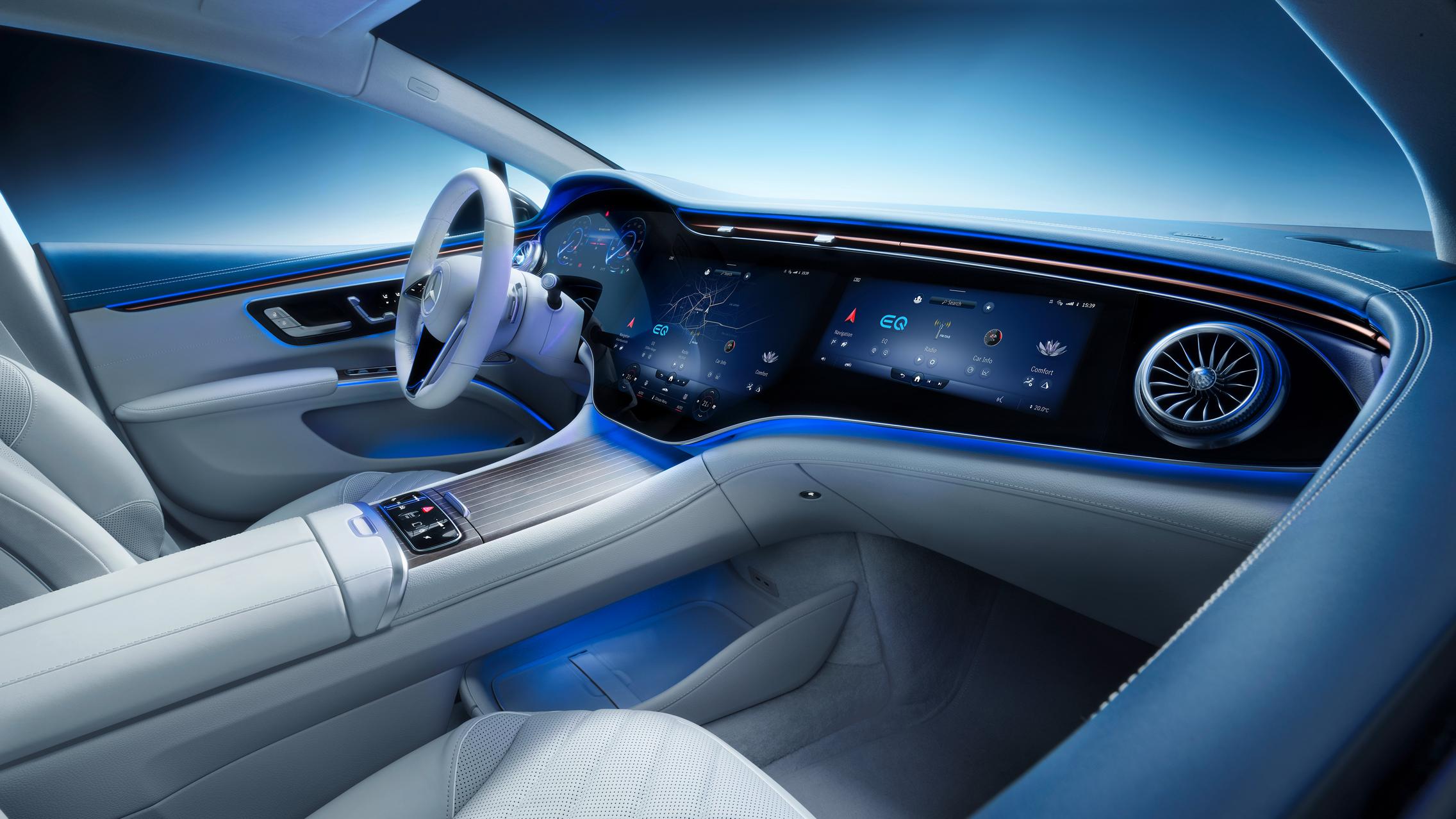
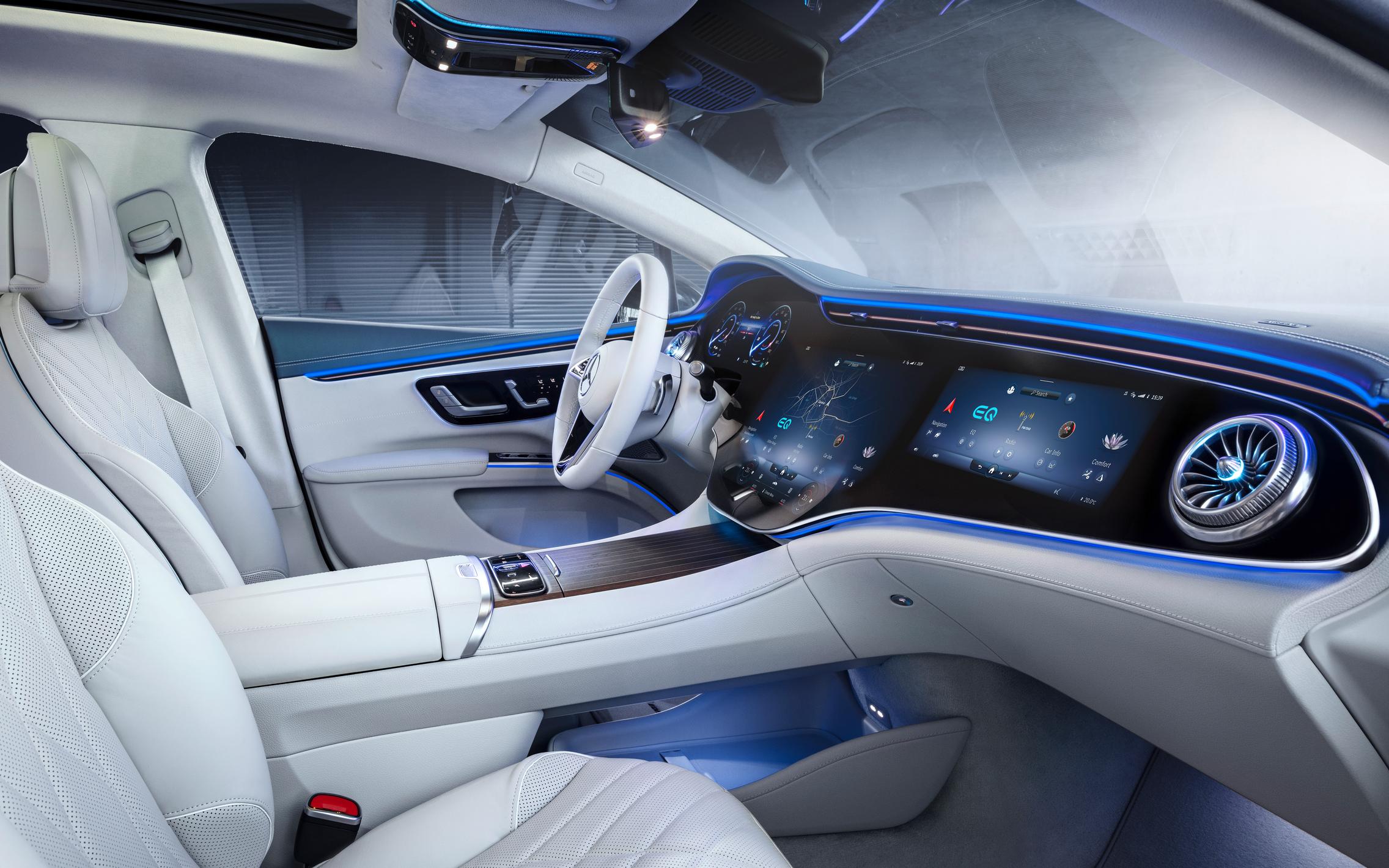
  1. The EQS features MBUX Hyperscreen (which we featured a while ago) with multiple displays merging smoothly to initiate a 141 cm wide curved screen band. The MBUX Hyperscreen is covered with a large glass curved in three dimensions to allow a distortion-free view across the width of the car. The large glass was curved through a moulding process that uses an approximate temperature of 650 degrees celsius. The display of the hyperscreen on the passenger area comes with up to 7 profiles and can be individualised. A total of 12 actuators under the touchscreen surfaces of the hyperscreen facilitate haptic feedback during operations. Mercedes-Benz EQS Interior
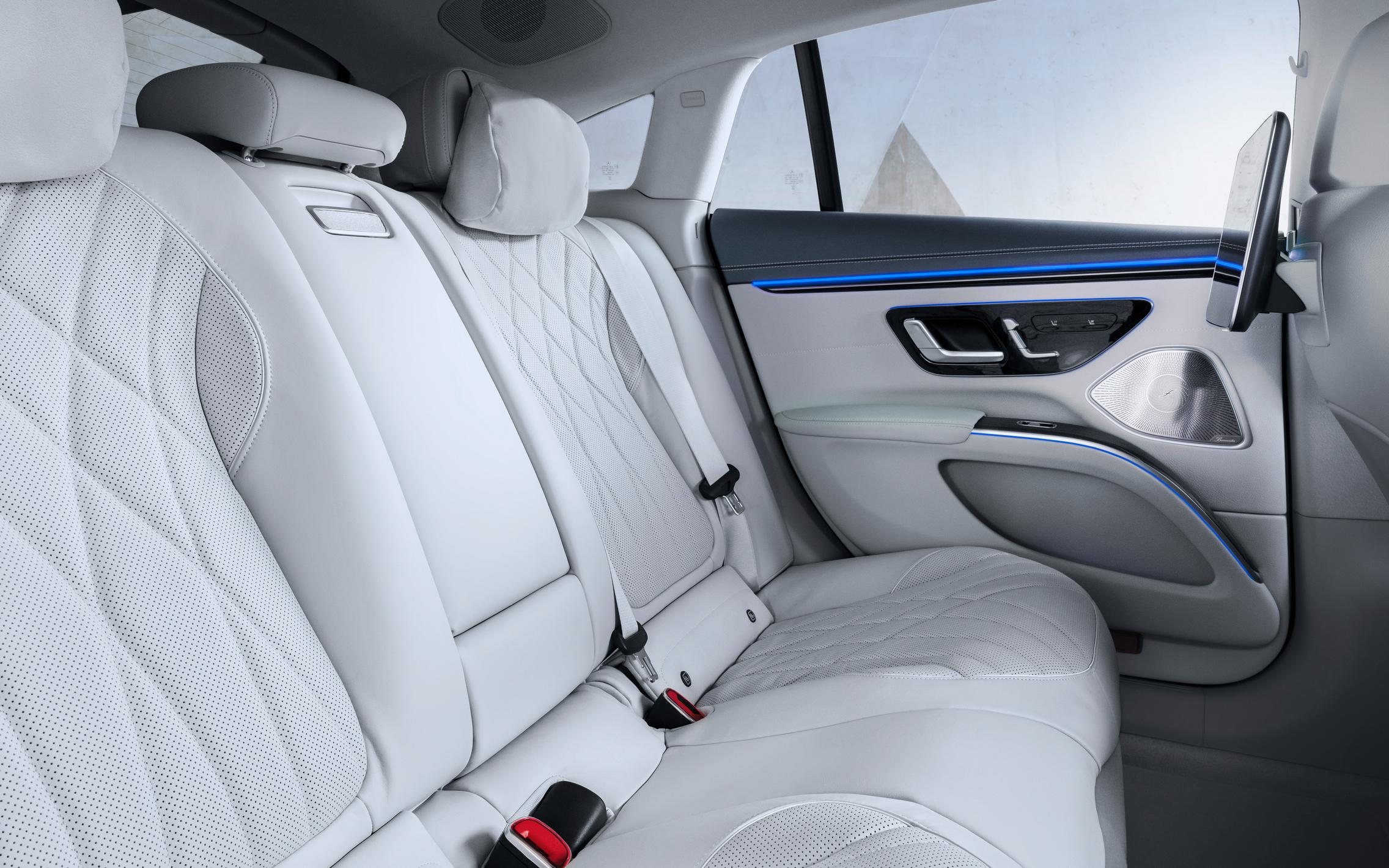
  2. The car is surrounded with up to 350 Sensors excluding the antennas to monitor the functions of the EQS. The sensors are for such tasks as measuring distances, lighting conditions, occupancy of the seats, drivers eye movements, passengers’ language, speed and acceleration and precipitation and temperatures. The EQS has an optional driving sound that interacts and reacts to a dozen different parameters including the accelerator pedal, recuperation or speed. Mercedes-Benz EQS seats
  3. The fragrance built specifically for the EQS is the No.6 Mood Linen, the number “6” comes from 1906 when the first electric cars were added to the ‘Mercedes Electrique’ model range. The larger head-up display is available as an option and corresponds to a screen with diagonal of 77 inches with an imaging unit that consists of 1.3 million individual mirrors of high-resolution matrix. Mercedes-Benz EQS
  4. The HEPA filter and Energizing Air Control with a 9.82dm cleans the air coming from outside at high filtration level which in general eliminates over 99.65% of particles of all sizes. Odours are neutralised through 600grams of activated charcoal and the absorption area is equivalent to approximately 150 football fields. Mercedes-Benz EQS
  5. The EQS is also fitted with a Burmester surround system comprising 15 speakers with a total output of 710 watts and comes with a Burmester ‘feel-good sound’ as standard. Mercedes-Benz EQS
  6. The Mercedes voice recognition system comes with Natural Language Understanding and supports 27 languages.
  7. The interior of the EQS features Mercedes Benz patterns that can be found in backlit trim elements with laser cuts or as decorative images on the passenger display. Mercedes-Benz EQS

Cozzi Museum: The Eternal Love for Alfa Romeo

Not everybody knows that in Legnano (Italy), not far away from to historical Alfa Romeo plant of Arese (Milan) a little but great Alfa museum is open for visits. I’m talking about The Fratelli Cozzi Museum which opened its doors in October 2015 thanks to Pietro Cozzi’s passion for the Alfa Romeo brand.

His passion for Alfas led him to collect, from 1955, the year the homonymous dealership was founded, an example of each model ever produced by “la Casa del Biscione”, wisely selected to represent the best performing or the most interesting piece for collecting purposes (like limited or special production series).

The Museum houses over 60 cars, including unique cars and some very rare models. One example that caught my eye was the Alfa 155 Q4 (the one with the Delta HF integrale engine) that in 1992 set the new record at 297.333 Km/h in the G/PS class on Bonneville salt flats. Bear in mind this car ran stock tires and brakes (with the addition of a little parachute to increase the stopping power), Milan road legal reg plate and Abarth tuned engine.

Among the others, the museum displays some very interesting pieces like the 75 Turbo Evoluzione, the Montreal, the Giulia SS, Giulia 1600 T.I. Super QV, the R.Z and S.Z by Zagato.

In addition to cars, the Cozzi. LAB contains more than 300 original posters, thousands of photographs, brochures, user manuals, car and spare parts catalogs, repair manuals, trophies, art objects along with the major magazines and books in the sector. All the documents that testify the commercial path, the sales and marketing techniques of the dealership that sold them. There are many stories that the Museum tells and, among these, that of Pietro Cozzi: an entrepreneur who has made his passion a profession, which he wanted to share with everyone through the Museum.

Words and Photos by Yaron Esposito
Instagram: @Aaronandcars

Ferrari 812 VS to be Limited to 999 Coupes and 499 Spiders

Production of the Ferrari 812 model range is coming to an end, traditionally Ferrari closes the books on their series models with a special edition. The 360 had a Challenge Stradale, the F430 had the 430 Scuderia, the 599 had a GTO and the SA Aperta, the F12 had the TDF while the 458 and 488 had the Speciale and Pista respectively.

The 812 Superfast and GTS are series models albeit the latter is limited by production time. Now in the final stages of testing, a new special edition known as the VS – will be revealed in coming weeks, it’s based on the 812. We understand Ferrari had some issues with permits on this new model and that it should have debuted a few weeks ago.

Dubbed the “Versione Speciale” or simply “VS”, this will be the last – and truly – naturally aspirated V12 model from Ferrari. The successor will likely adopt a mild hybrid setup in order to beat tighter emission rules. Lamborghini has already demonstrated that with the Sian where they use the same 48v e-motor found on cars like the E53 AMG but instead of storing the power in batteries, they store it in supercapacitors.

As for the numbers, Ferrari plans to produce only 899 VS coupes and 499 Spiders. That’s a bit higher than the 799 units of the F12tdf – but Ferrari is now a public company and the more money they can make the better it is for investors. Low production numbers will however still be allocated to special convertibles or Icona Series models. We expect the price to settle above the SF90 Spider’s which starts at around 390k Euros excluding taxes, that means somewhere between 400-450k euros.

Render image by alberto.tosi

Toyota GR Supra Jarama Racetrack Edition: European Model Limited to 90 Cars

Toyota has revealed the new Toyota GR Supra Jarama Racetrack limited to just 90 units in Europe, with 30 heading to the UK market.

The GR Supra Jarama Racetrack edition got its name from Spain’s Madrid Circuitand is powered by the same 3.0L turbocharged I6 engine found on the regular GR Supra. It’s paired to an 8-speed sports automatic transmission, the acceleration from 0-100km\h is achieved in 4.3 seconds. The output is capped at 340hp while the maximum torque is set to 500Nm and can be tapped from anywhere between between 1,600 rpm and 4,500 rpm.

The exterior features an exclusive Horizon Blue paint, Matte Black 19 inch alloy wheels and red brake calipers.while the interior includes a carbon fiber dashboard, Toyota GR Supra logo and black Alcantara seats.

Additional performance features include adaptive suspension, active differentials, sport tuned steering wheel, Brembo sport brakes and ventilated 348mm discs on the front axle. The stability and agility of the car is further enhanced by the low centre of gravity and low weight. Altogether, the high rigidity bodywork and high aerodynamic efficiency results in a balanced sports car thanks to the short wheelbase.

1.5 Years to Paint it: Meet the Bugatti Divo ‘Lady Bug’

Bugatti Divo Lady Bug

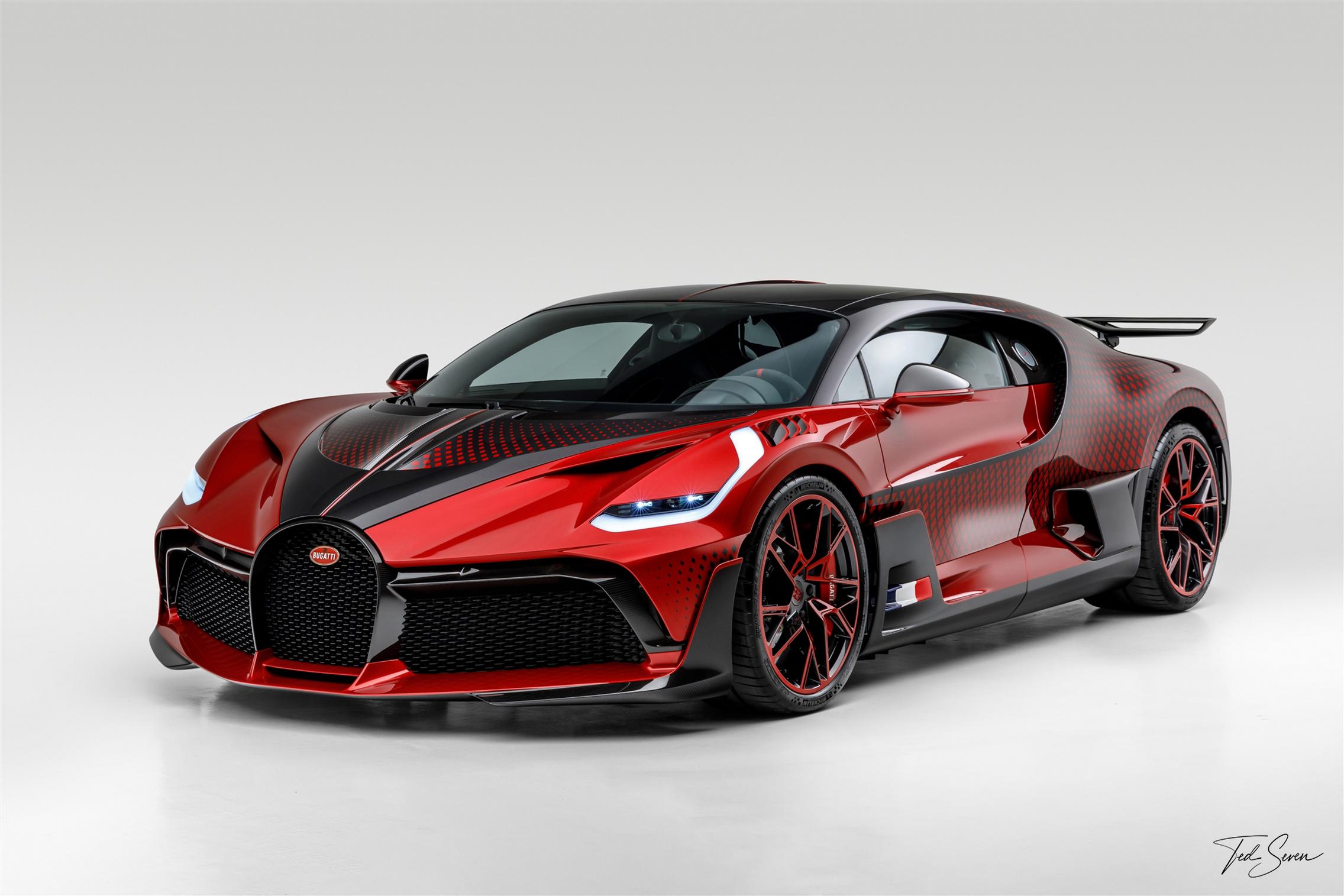
Bugatti recently completed a custom Divo named “Lady Bug” featuring geometric patterns on the body in the shapes of diamonds – finished in special Red and Graphite metallic.

The Bugatti Divo is powered by an 8.0 liter W16 engine with 1,479hp and a top speed of 380 km\h. The car is limited to 40 units worldwide each priced from 5million euros excluding options. Deliveries started in August 2020 and are expected to finish within the first months of 2021.

It took one year and a half for the team to perfect the diamond shaped patterns to exact definition and eventually they had to be modified digitally and positioned on the roofline, doors and rear fender edge. The diamond patterns were separated and transferred into a film which was then stuck on the body. The shapes were replicated with 1600 diamonds all around the body.

After each diamond was checked and passed as perfect, the next task was painting the actual color and removing each diamond. In this process, the paint job was sanded, smoothed, re-touched and re-sanded all over again. The multiple layers of paint blended the diamond patterns into the anthracite color gradient.

The owner of the customized Divo was impressed by the job done and stated “ The thought of this project becoming a reality was exciting and a dream of mine, I was absolutely floored upon delivery”.

Additional Photos by Ted 7

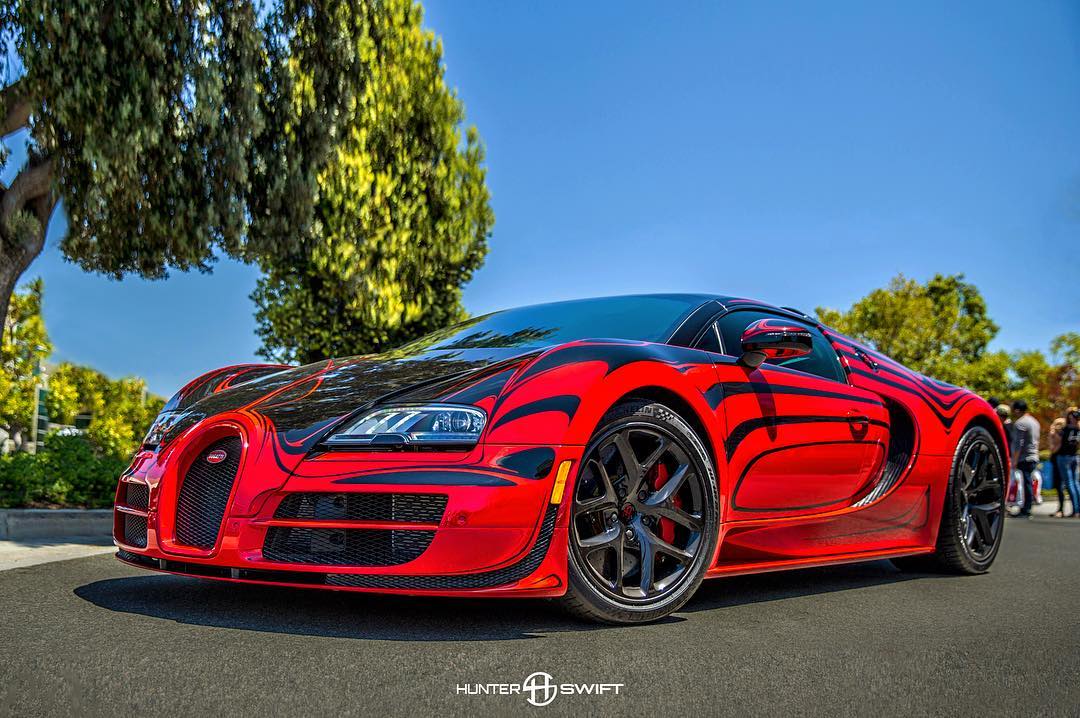
In addition to this Divo, he also owns a Bugatti Veyron Grand Sport Vitesse known as “Hellbug” due to its unique paint work. It was famous for hitting 230mph at an Idaho Freeway during the 2016 Sun Valley Road Rally.

Bugatti Veyron Vitesse Hellbug

Photos by Hunter Swift

2022 Lexus IS 500 F Sport Performance: a V8 is Still Available

Following hot on the heels of the new IS make-over last year, Lexus is giving it a much-needed shot of performance to match the powerful coupes in its line-up. Lexus just introduced the IS 500 F-Sport, which will put the wonderful 5.0L V8 under the hood and make it a performance contender. The ferocious-sounding 5.0L V8 boasts 472 hp and 395 lb-ft of torque yet only adds 143 pounds to the vehicles overall curb weight. It pushes the heavy 3,890-lb car to 60 mph in 4.5 seconds while achieving 24 mpg on the highway.

The immense V8 power is routed through Lexus 8-speed Sport Direct Shift automatic transmission. The two performance drive modes, “Sport S”, which quickens the engine and transmission responses, and “Sport S+”, which also adjusts steering ratio and suspension response, are included. Also included is the Dynamic Handling Package, which consists of an Adaptive Variable Suspension and a Torsen limited slip differential that should improve handling.

Visually, the IS 500 will be identifiable from the other IS-series cars by unique black badging, a quad-exhaust system, a revised lower rear diffuser, rear lip spoiler, and the unique 19” Enkei 10-spoke wheels that shave a combined 6 lbs of unsprung weight from the car. Behind those wheels will be 14” two-piece aluminum front brake rotors and 12.7” rear rotors to haul the massive car down from speed. Inside differences include black F-sport badging on the heated leather-wrapped steering wheel and door scuff plates, as well as exclusive pedals.

In the safety department, the IS 500 gets several updates. The first is the updated Lexus Safety System+ 2.5, which includes the Front Collision Warning system, Automatic Emergency Braking, and Pedestrian Detection, and Bicyclist Detection. These last two not only help detect traffic immediately ahead of you but also a preceding bicyclist pedestrian in daylight conditions and a preceding pedestrian in daytime and low-light conditions. The system also can detect oncoming vehicle and pedestrians when performing a left-hand turn and is designed to activate typical pre-collision system if needed. The All-Speed Dynamic Radar Cruise Control has been updated, and a Lane Departure Alert with Steering Assist has also been added, and Intelligent High Beams and Road Sign Assist will be standard.

We’re looking forward to getting behind the wheel and checking out the improved IS 500 as soon as it’s available. Stay tuned!

Maserati Grecale: New SUV Teased Ahead of Launch

The upcoming Maserati Grecale SUV prototype was spotted outside the factory plant on Viale CiroMenotti in Modena. The name Grecale means “fierce north-east wind of the mediterranian sea”. Pictures were shared by Maserati employees.

The Grecale will be built at Cassino (Italy) where an investment of 800 million euros has been organized and it will receive its World Premier before the end of 2021. The prototype cars are currently going through road and off-road tests to ensure safety as well as collect data for the preparation of the new SUV’s final setup. Grecale will be Maserati’s second SUV after Levante which is now available in hybrid version. It will share the same platform as the Alfa Romeo Stelvio.

The flagship Quattroporte, Ghibli sports sedan ( now available in hybrid version) and Levante indicate that Maserati produces cars that are recognizable anywhere with their main focus on style, technology, comfort, performance and safety. A complete range including V6 and V8 petrol, 4 cylinder hybrid and V6 diesel power plant was recently improved by the introduction of the new Trofeo collection that features Ghibli, Quattroporte and Levante equipped with 580hp V8 engine. The MC20 supercar powered by Nettuno V6 engine is currently at the top of the range.

Maserati Grecale Prototype rear

Marc Philipp Gemballa’s Off-Road Porsche 992 Turbo to Use a 750hp RUF Engine

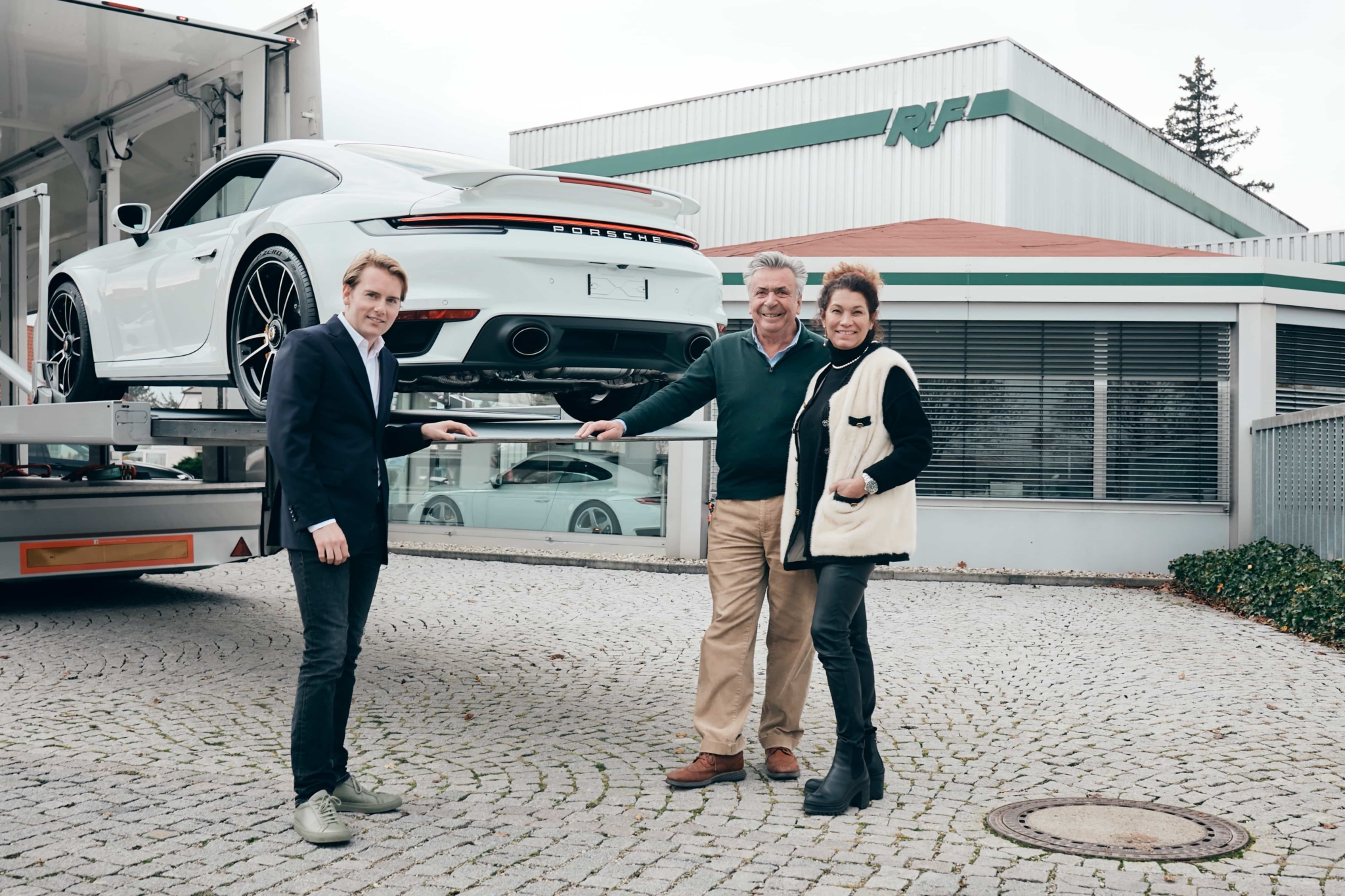
Uwe Gemballa already partnered with Porsche specialist Alois Ruf on engine development back in the 1980s. The two families have teamed up again this time led by Uwe Gemballa’s Son Phillip Gemballa. Phillip Gemballa will launch his first project in 2021 starting a new era with his new company Marc Philipp Gemballa GmbH (not associated with Gemballa GmbH) 10 years after the passing of his father.. The engine development designed by Marc Phillip Gemballa will be under the name “powered by Ruf”.

The collaboration’s first project will be an off-road supercar dubbed “project Sandbox” based on the new Porsche 911 Turbo S from the 992 series. The project is said to be inspired by the infamous Porsche 959 ‘Dakar’ car.

The engine upgrade allows the six-cylinder boxer engine to provide an output of over 750hp and 930Nm of torque and it adheres to the latest EURO 6 emissions regulations despite the increment in power.

The exclusive edition is limited to 40 units and 10 are already spoken for before the official launch leaving 30 units only. The company will be revealing more information later this year.

Porsche 992 Turbo S Gemballa

Specs

Base vehicle: Porsche 911 Turbo S (992 series)
Engine: 6-cylinder twin-turbocharged flat-six
Power (kW): 552 kW (Series: 478 kW)
Power (hp): 750+ hp (Series: 650 hp)
Max. torque: 930 Nm torque (Series: 800 Nm torque)

Lotus E-R9 Electric Racer Previews Le Mans in 2030

Lotus has taken a shot at what the future of enduro racing could look like, with the new E-R9, a new design study for the next generation of full electric vehicles as their vision 2030.

E-R stands for Endurance Racer while 9 is the car’s competition number which was chosen in tribute to Lotus’ racing past. In 1955, the Lotus Mark IX made its appearance at Le Mans 24 Hours meaning if the E-R9 is to race in 2030, it would be in celebration of the Mark IX’s 75th anniversary.

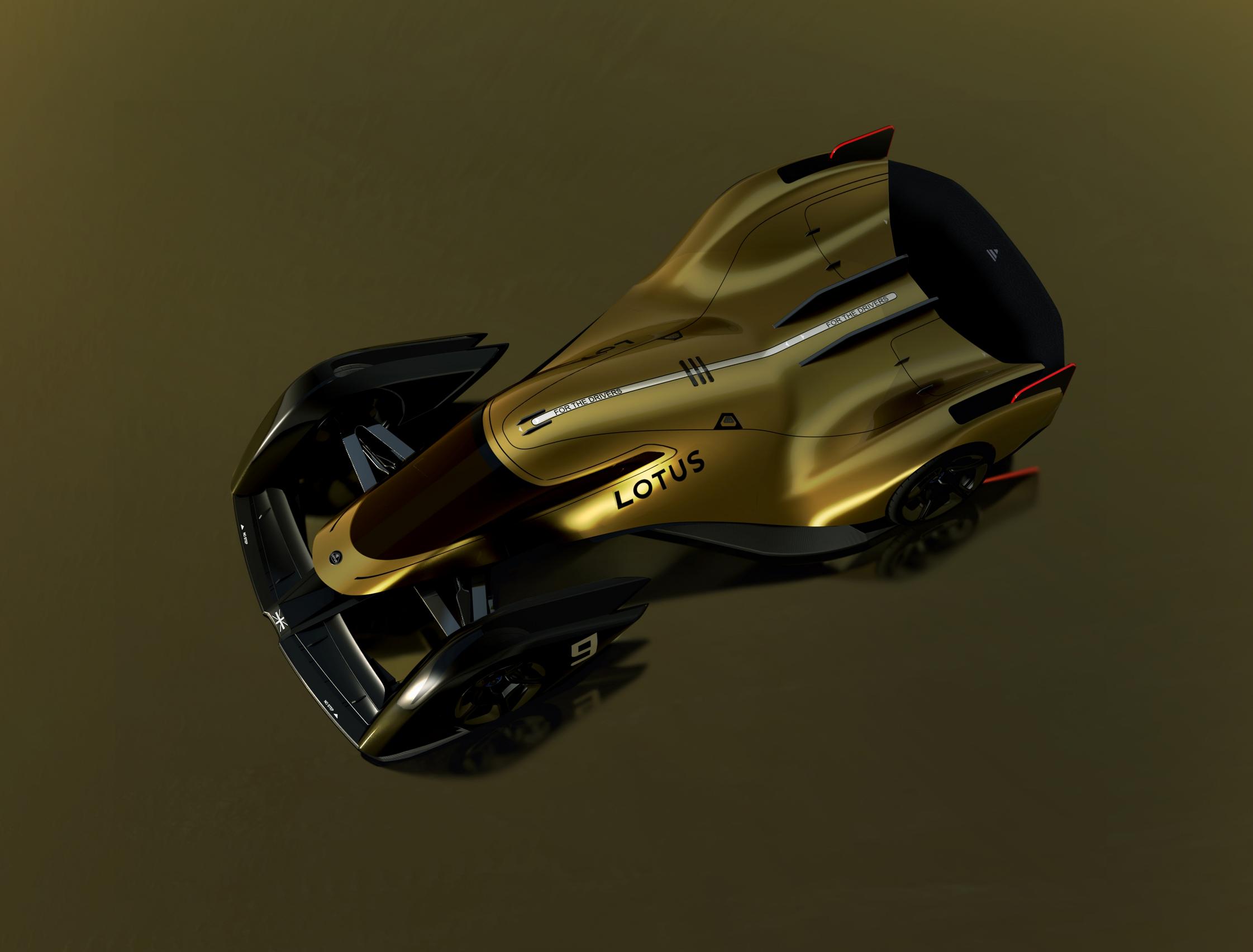
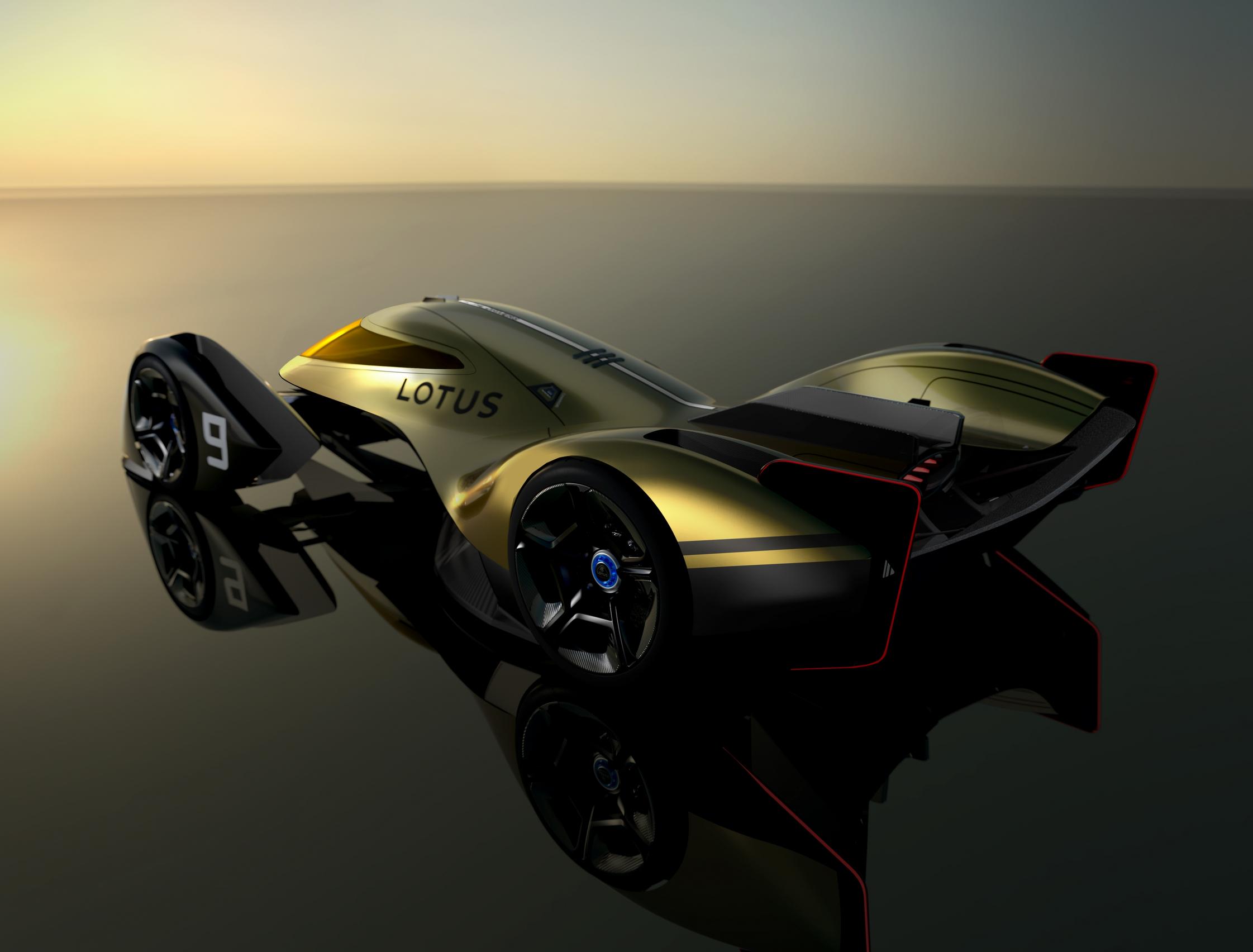
The E-R9 is finished in Black and Gold and features a fighter jet-style canopy mounted in a delta-wing upper body in the center. Changes include improved active aerodynamics with “morphing” body panels and vertically mounted control surfaces to assist with high-speed cornering.

The main aerodynamic transformations in the E-R9 are the Morphing body panels found across the delta-wing profile, the flexibility allows active surfaces to change their shape and attitude to the air flow by either a touch of a button or performance sensors which would provide minimum drag on the straight and maximum downforce in the corners. Vertical control surfaces at the rear distribute aerodynamic forces to help the car change direction without limiting the grip at the tyre contact patch.

The E-R9 powers each wheel independently thanks to the advanced electric powertrain system enhanced with torque-vectoring and would be fully adjustable by the driver while on the move. One of the engineers announced that they are developing mixed cell chemistry batteries that will improve the performance as well as enable “hot-swap” during pit stops.

Lotus E-R9 racer

Lotus E-R9 side

Lotus E-R9 rear

$3.2 Million Valentine’s Gift: 1 of 1 Bugatti Chiron Sport Gifted to Wife

A lucky Lady named Alice will be the recipient of a one off Bugatti Chiron Sport commissioned by her husband as a gift, revealed by Bugatti just one day before Valentine’s. The gentleman ordered it through HR Owen Bugatti in London, every bit of the car has been personalized to meet Alice’s taste. The $3.2 million plus Bugatti Chiron Sport “Alice” is finished in Matt Blanc and Silk Rose – the only Chiron in this combination thus making it a 1 of 1.

The Silk Rose exterior color was combined with Matt Blanc color which dominates the outer shell, lower trim and the alloy wheels. The interior consists of a mix of leather and Alcantara materials finished in Gris Rafale, Alice logo stitching on the headrest of the seats and Chiron Sport stitchings elsewhere in the cabin. The Alice logo can also be found on the silk rose door sills finished in aluminum.

Revealed in 2018, the Chiron Sport has a firmer chassis that provides sharper handling and agility. It’s lighter than the standard Chiron due to the use of more carbon fiber, the 8.0L W16 engine still produces 1500hp. A quad tip exhaust system differentiates it from the regular Chiron. Each unit is going for a price of 2.65 million euros.

A fitting Valentine’s Gift, isn’t it?

Fastest McLaren 765LT: 1/4 Mile in 8.9s with Tune and Downpipes Only!

The McLaren 765LT is already very fast from the factory, building on the success of the 720S that shattered records on drag strips around the world. It one of the new age cars leaving the factory with a 1/4 mile time of <10s, McLaren quotes 9.9s. The 4.0L V8 twin-turbo has been upgraded to produce 755hp and 800nm of torque, a 0-62mph time of 2.8s and a top speed of 205mph. The latter is lower than the 720S’ 212mph top speed due to added downforce parts that create more drag.

A group of supercar owners gathered on a Florida dragstrip and among the cars was a new McLaren 765LT. This particular car owned by @Petfred already received a tune from M Engineering after upgrading to IPE downpipes. Those were the only modifications done to the car prior to the 1/4 mile run. Driven by @Gidi28, the 765LT managed an ET of 8.916s with a trap speed of 157.85mph. That makes it the very first McLaren 765LT in the 8s, what’s even more impressive is only two modifications were responsible for this achievement. That means an extensive engine upgrade including turbos would easily put it in the 7s or 6s like Gidi has done with his GT-R.

In comparison, Petfred’s 800hp GT2 RS with a tune and straight pipes managed 10.1s, he has since upgraded the turbos but is yet to attempt another run. The 765LT’s journey on the other hand is just beginning. Popular YouTube drag racing channel DragTimes was the first to show just how quick the 765LT is, his bone stock car ran an ET of 9.3s with a 150.87mph trap speed. Petfred’s 765LT ran on Toyo R888 tires at the rear.

Weather variables like air density and density altitude were not optimum, on a better day/location they believe 8.8s is achievable with similar motor settings.

FCA Heritage Officine Classiche Workshops: The Value of Excellence

Close to the FCA Heritage Hub Museum, inside the former Officina 83 of Mirafiori plant in Turin, the history preservation continues through the Officine Classiche Workshop area.

This particular area hosts repair, restoration and certification activities concerning classic Alfa Romeo, Fiat, Lancia and Abarth cars, whether belonging to private collectors or to the magnificent FCA Heritage collection.

In our first part of the visit, we highlighted the Certification process offered to Private clients. this process covers every aspect of the vintage car: Engine, transmission, suspensions, electrical components, interior and exteriors. Those parts are analysed in detail and verified by ensuring that they match with technical specifications stored in the company archives.

At the end of the review, a Certification of Authenticity, a metal plate, a Certificate of origin and obviously the overall results of the certification process are issued. After this, words like “authentic” and “fully Original” will sound different to you.

Well, not all cars will go through this examination with a 100% pass results. In this case, if your car needs minor or total overhaul, the guys at FCA heritage have the expertise and craftmanship to go through all the necessary interventions.

In the second part of our visit, we have been guided though the workshops and we had been able to witness the various steps of the restoration process. Look, what you will find here is not the typical repair shop attached to a standard dealership. Here you will find real craftsmen (coming from racing teams or have simply worked for FCA back in the glorious days) handling good old tools and machinery taken from the original assembly line of your vintage car.

Believe me, you should have looked at my face when I was told that the metallic pavement where one Abarth 600 body shell was sitting on had been transplanted from the original Abarth workshop in Corso Marche in Turin, and where most of the Lancia Delta S4 and 037 rally car had been assembled on.. Crazy stuff!

Words and Photos by Yaron Esposito
Instagram: @Aaronandcars