All posts in “Car News”

Photos: 2022 Bugatti Chiron Super Sport in New Colors – Gold and Black

The new Bugatti Chiron Super Sport is limited to just 30 units. This is the fastest Bugatti car to date, and easily the fastest car in the world. It is after all built upon the Bugatti Chiron Super Sport 300+ which became the first car to cross the 300MPH barrier by achieving a top speed of 304.773 mph (490.484 km/h) back in 2019. The Super Sport 300+ was a prototype, the road going versions will have a speed limiter just like the Veyron Super Sport. The new (limited) top speed will be 440km/h.

The price of the Bugatti Chiron Super Sport is €3.2 million euros or an equivalent of $3.9 million dollars.

Moving on to the car, the body of the new Chiron Super Sport generates immense downforce in order to counter the uplift forces exerted on the body when the vehicle is at speeds of over 440km/h as well as improve the balance.

The rear part of the vehicle has been increased by 25cm so as to hold the laminar flow for a long period of time, the diffuser cross-section has also been enlarged and as a result, the rear trailing surface is 44cm lower and the slipstream and wind resistance generated are reduced as well.

Bugatti shifted the exhaust system of the new Chiron from the central to the side with the pipes aligned vertically in order to enhance the performance of the diffuser and create more space. Additionally, the side air curtains and the air intakes at the front minimizes drag and improves the air flow from the front to the wheel arches and over the side radiators.

Each fender consists of nine exhaust air holes for releasing air pressure from the wells of the front wheels ergo streamlined downforce is generated at the front axle, the outlets at the back of the front wheel arches help balance out the aerodynamic loads.

The Chiron Super Sport is powered an improved 8.0 liter W16 quad turbo engine that generates a maximum power output of 1,176kW/ 1,600PS and 1,600Nm of torque accessible between 2000 rpm and 7000 rpm instead of up to 6000rpm. The rpm of the engine was increased from 6,800 rpm to 7,100 rpm in order to improve the agility and performance of the vehicle.

In addition, the Chiron is capable of accelerating from 0-200km/h in 5.8 seconds, 0-300km/h in 12.1 seconds and the acceleration from 0-400km/h is 7% faster compared to the standard Chiron. The performance improvement of the Chiron Super Sport was created by the larger turbochargers with efficient compressor wheels, therefore the seven-gear dual-clutch transmission is at full load and full speed transitions from 6th to 7th gear at 403 km/h. The 7th gear boasts a 3.6% longer transmission.

The new Chiron Super Sports features newly developed Michelin Pilot Sport Cup 2 tires which have been optimized for top speeds, offer greater rigidity and they are the only tires capable of up to 500km/h consistently. This is made possible due to the reinforced belts capable of coping with immense forces.

Porsche Macan: Final testing for the facelift

How far can you stretch a nameplate? There are virtually no limits since Ford has decided to name a portly electric SUV the Mustang Mach-E – while simultaneously selling the real thing. Now Porsche is taking the same approach with its Macan: Going forward, there will be an electric Macan – and a conventionally powered Macan.

It’s no surprise that Porsche is taking this dual approach: The Macan is the best-selling Porsche of all, thanks not least to its popularity on the Chinese market.

It is still unclear how quickly electric mobility will take off – or whether alternatives will prevail, such as hydrogen-powered cars or even conventionally powered cars that are more efficient than today and presumably powered by carbon-neutral synthetic fuels.

China, in particular, has taken a decidedly cautious approach on E-mobility, and Porsche understandably doesn’t want to take undue risks with its crossover cash cow. And therefore there will henceforth be two entirely different Macan models.

“When it launches in the 2023 calendar year, the Macan Electric will be the first Porsche off the PPE platform,” says Porsche spokesman Ben Weinberger. That platform is currently being co-developed with Audi, and the Macan Electric is a close sibling of the upcoming Audi Q6 crossover SUV and the next-gen Audi A6, which was previewed with a concept car at the Shanghai motor show this spring.

In off-the-record conversations, we are told that the Macan Electric will come in several power levels, and it is important to Porsche that its range significantly tops the Taycan’s. It will likely come to the US as a 2024 model.

But before that, the brand will launch the next generation of the conventionally powered Macan; we had a close look at a slightly camouflaged protoype. If it doesn’t look a lot different from the current model, that’s because it isn’t. To be launched later this year, it is the second big facelift of a model that initially launched in 2014 as a close relative of the Audi Q5.

What we can expect is a bolder, wider front fascia, and a new rear bumper with a black diffuser. That’s pretty much it, as far as the still-fresh looking exterior is concerned. “A good proportion never gets old,” says Weinberger. The Macan was styled by Mitja Borkert, who is now chief designer at Lamborghini.

Inside, the changes are more significant: There will be a new center console with a large glass area with touch-screen functionality. The number of buttons is sharply reduced, and the infotainment system boasts a 10.9-inch touch screen. There are new materials, the gear selector is shortened, and there is now a standard analog clock. Steering wheels are shared with the 911 – for the first time.

In the new Macan, Porsche will offer three power levels, down from four: The standard 2.0-liter four will now make 265 horsepower and serve up 400 Nm of torque, both significantly more than before.

One level up is the Macan S, powered by a 2.9-liter V-6 that will make 380 horsepower and 520 Nm of torque; that’s exactly the engine that was fitted in the pre-facelift Macan GTS. The ultra-aggressive application is unchanged from the former GTS, and thus Macan S customers get a car that’s a lot more interesting to drive than before.

The GTS itself rises to a whopping 440 horsepower and 550 Nm, exactly on the level of the former Macan Turbo. But the application has been sharpened in order to achieve the more boisterous temperament associated with the GTS nameplate.

The top-level Turbo version is gone; Porsche is not looking to go beyond the 434-horsepower power level, for several reasons: They want to give the uplevel versions of the Cayenne room to breathe, and both the 2.9-liter V-6 and the 7-speed PDK dual-clutch gearbox are close to their limits with the former Turbo and the upcoming GTS power level.

The future GTS top model will be lowered and include the PASM system; the dampers are new, the air suspension is stiffer. And an optional GTS Sport package will be fitted with Porsche Torque Vectoring Plus (PTV Plus), the Sport Chrono package and sports seats.

Our impressions of the new Macan, which will be unveiled next month and launch as a 2022 model, are decidedly positive. It looks like the electric Macan will meet a formidable competitor when it launches a few years down the road…

Land Rover Defender Gets New Look from Startech

Startech has redesigned the new Land Rover Defender with a sporty bodywork developed for on-road driving, 23 inch tailor-made wheels and an exclusive refined interior. All the bodywork elements have been manufactured in OEM quality from ABS plastics.

The company upgraded the front bumper of the Defender with a three-piece front spoiler whose center section takes visual cues from a skid plate with two vertical ribs. The two side sections have been shaped to ensure the front-axle lift force is reduced when the vehicle is at high speeds. The rear spoiler extending from the roof to the rear is their aerodynamic counterpart.

A Startech tailor-made cover for the rear door is available to customers who do not like the externally mounted spare at the back. The accessory conceals the mounting points when the spare together with the brackets have been removed. Additionally, the Startech trim panel features the contour of the Union Jack, the British national flag. The accessory is also available in the colors of the flag as an option.

The new Defender has been fitted with king-sized Monostar E wheels of size 10.5Jx22 at the front and rear axle combined with the largest TUV-certified YOKOHAMA street tires of size 305/35 R 23. The hub covers of the wheels have been designed like a centre lock to emphasize the sporty appearance of the alloys and the 10 pairs of spokes.

The Chassis of the new Defender has been upgraded to further boost the handling qualities of the tires. Startech engineers devised a special control module for the standard air suspension, the control module enables the driver to lower the ride height of the vehicle up to 35mm (lower than standard configurations) when on-road mode is activated from the cockpit.

The company also offers exclusive interior options ranging from red, blue or black anodized sets of bolts to replace the standard bolts and high-quality paint finish in various colors to replace the standard silver aluminium panels on the door trims, dashboard and the centre console. A list of exclusive accessories ranges from floor mats to aluminium pedals and footrest.

Startech also offers three tailor-made interior packages consisting of the finest leather and Alcantara in many colors, patterns and design to further enhance the interior as well as high-quality painting of all ex-factory silver or matt black bodywork components.

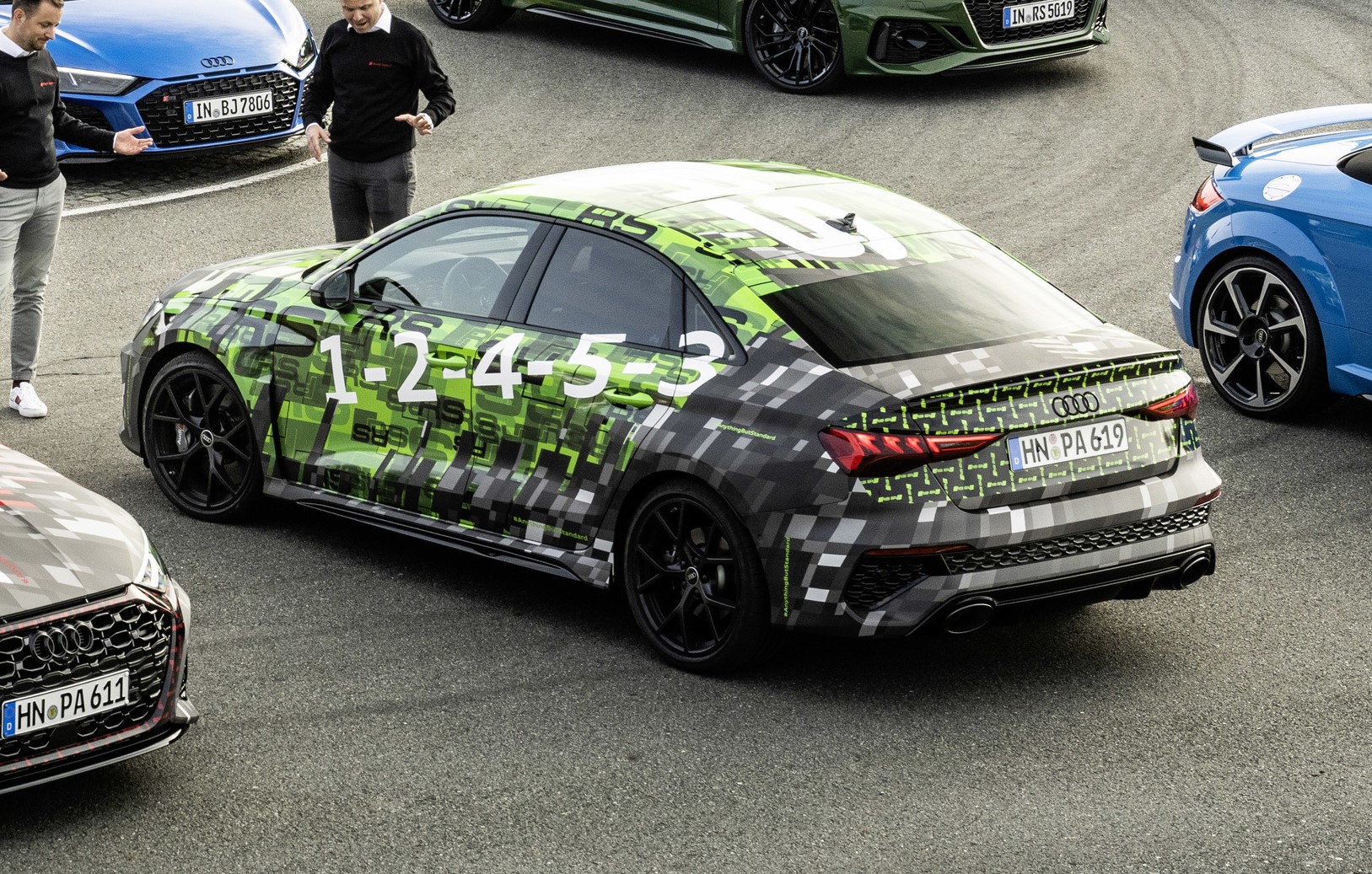
Super Hatch Territory: 2022 Audi RS3 to Launch in July, Rivals A45 S AMG

During a briefing on the company’s R and RS models, Audi released images of the upcoming Audi RS3 Sportback and Sedan. The official launch will take place in July and while no information on the cars was dished out, we expect the new model to usher in a new level of performance while retaining the popular 5-cylinder engine.

The outgoing RS3 model stood out as the most powerful hothatch on the market up until the launch of AMG’s A45 S. The 2017 facelift brought increased power to the 5 pot engine, a total of 395hp and 480nm of torque. This was a significant increase from the pre-facelift models that had an output of 362hp and 465nm of torque.

With the super hatch market leveling around the 400hp mark, we expect the new RS3 Sportback and Sedan to have an output within that range. 400hp on the lower end and 430hp on the higher end, 480-500nm of torque is expected.

2022 Audi RS 3 Sedan

Track Only Bugatti Bolide Makes Appearance on the Streets of Milan

Bugatti is attending the Milano Monza Open Air Motor Show with a lineup of their latest hypercars. Making it’s first ever public appearance is the Bugatti Bolide, a track only experimental hypercar that was sold to a long standing Bugatti client. The new Chiron Super Sport also made its first public appearance here. Both cars were driven on the streets of Milan for the public to see.

The new Chiron Super Sport presents a long elegant streamlined bodywork and a combination of top speed and comfort. It is powered by an 8.0 litre W16 quad turbo engine with an output of 1,600hp and a limited top speed of 440km/h. Only 30 units will be produced each at a price of $3.9 million.

The Bolide on the other hand is an experimental vehicle from Bugatti with a power-to-weight ratio of 0.67kg/PS and delivers a maximum output of 1,850hp, it weighs 1,240kgs. The Bolide is developed around a W16 power train with minimal bodywork for improved performance. Bugatti could already be planning to produce a small number of the Bolide which it would then sell for around 10+ million euros a piece.

The Milano Monza Motor Show (MIMO) is running from 10th to 13th of June 2021 as an open-air event, the event will be in collaboration with the cities of Milan, Monza and the region of Lombardy. New models of over 50 automobile and motorcycle manufacturers will be presented at the motor show.

In addition to the Chiron Super Sport and Bolide, Bugatti will also present the full lineup of the Chiron family including the Chiron Pur Sport and Chiron Sport.

A List of Bugatti Super Sport Models from 1931 to 2021 – the Speed DNA

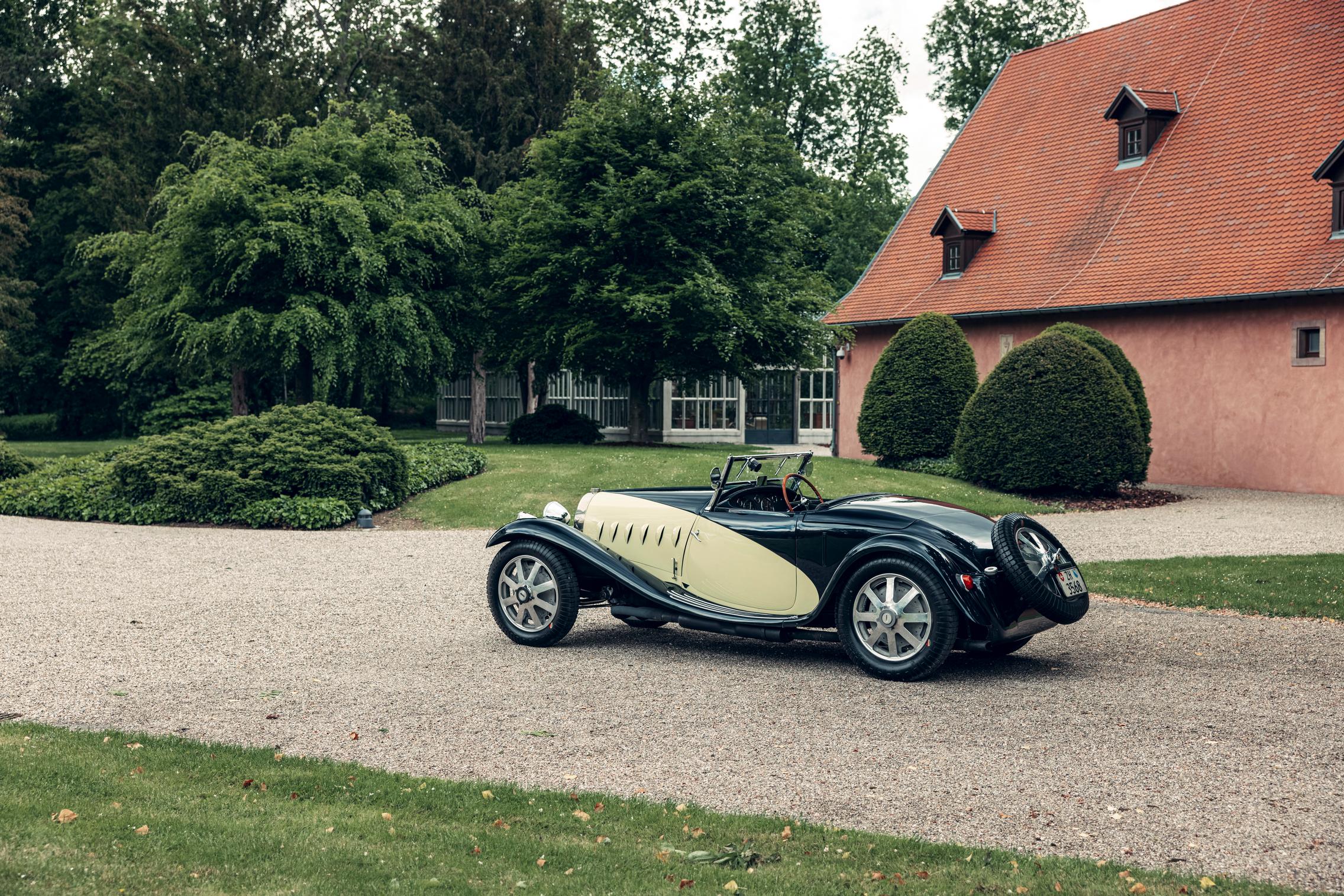
These are some of the Bugatti models that shaped the world of hypercars, aptly wearing the Super Sport moniker. The first Bugatti Super Sport ever created was the Type 55 which was designed 90 years ago by a young Jean Bugatti.

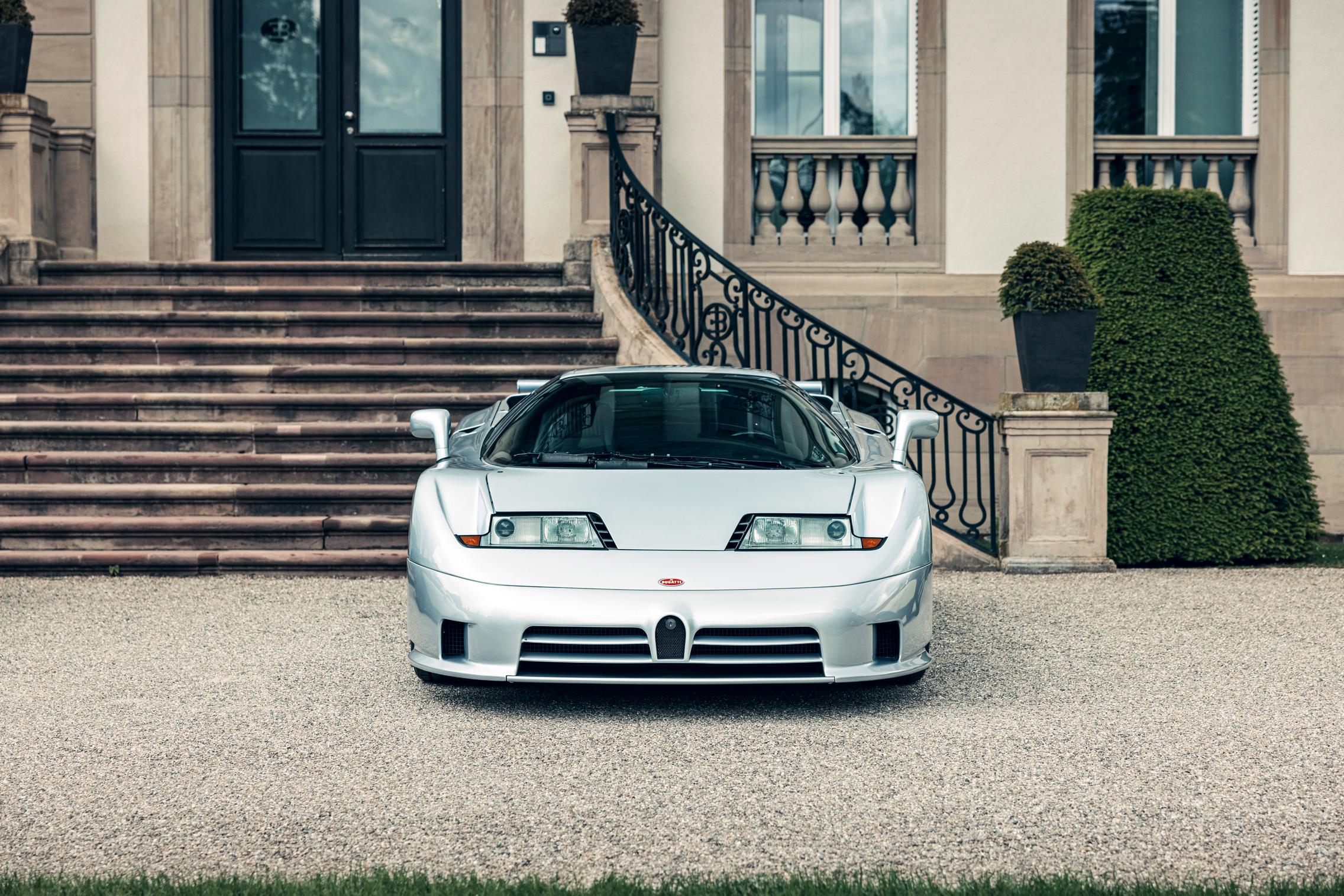
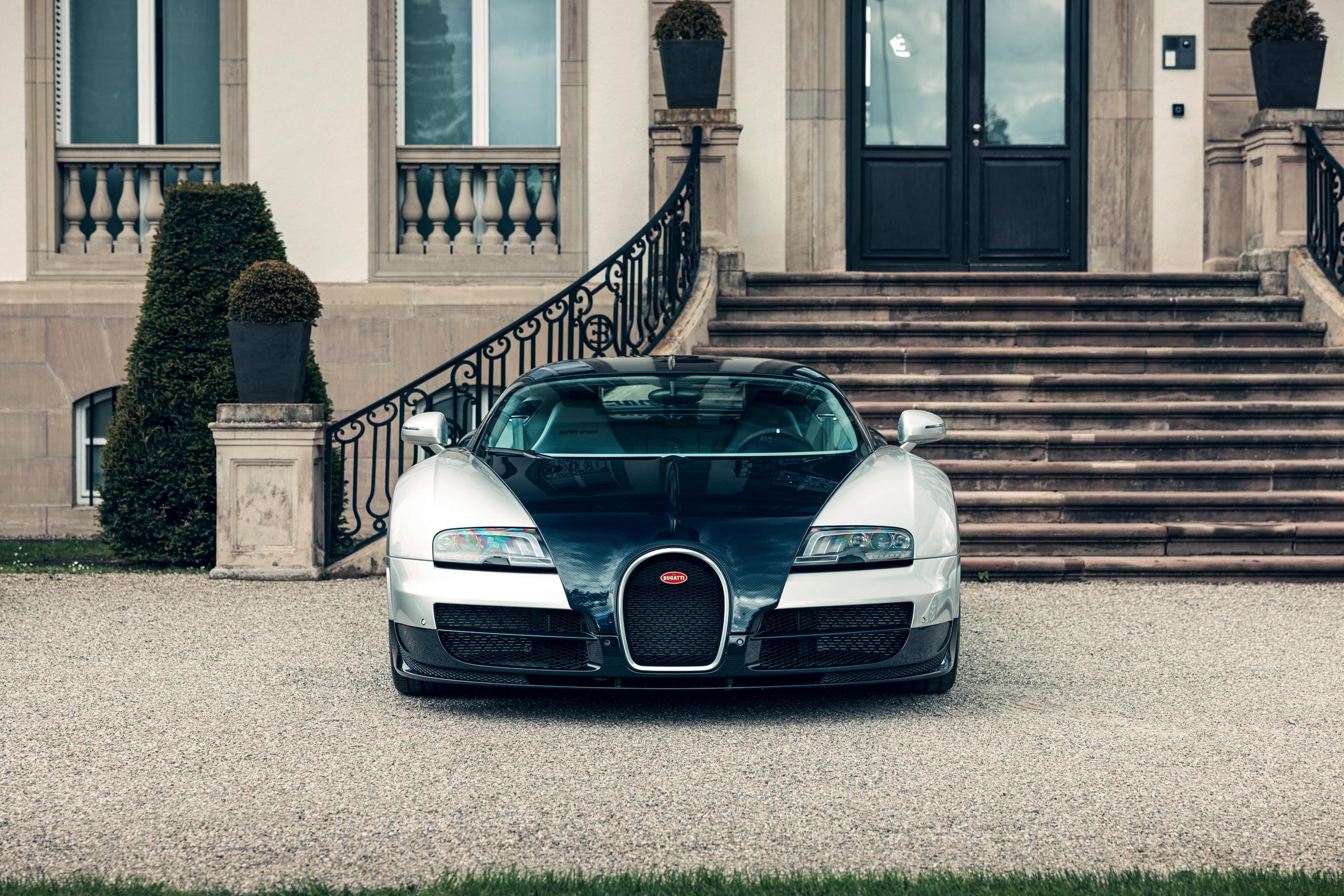
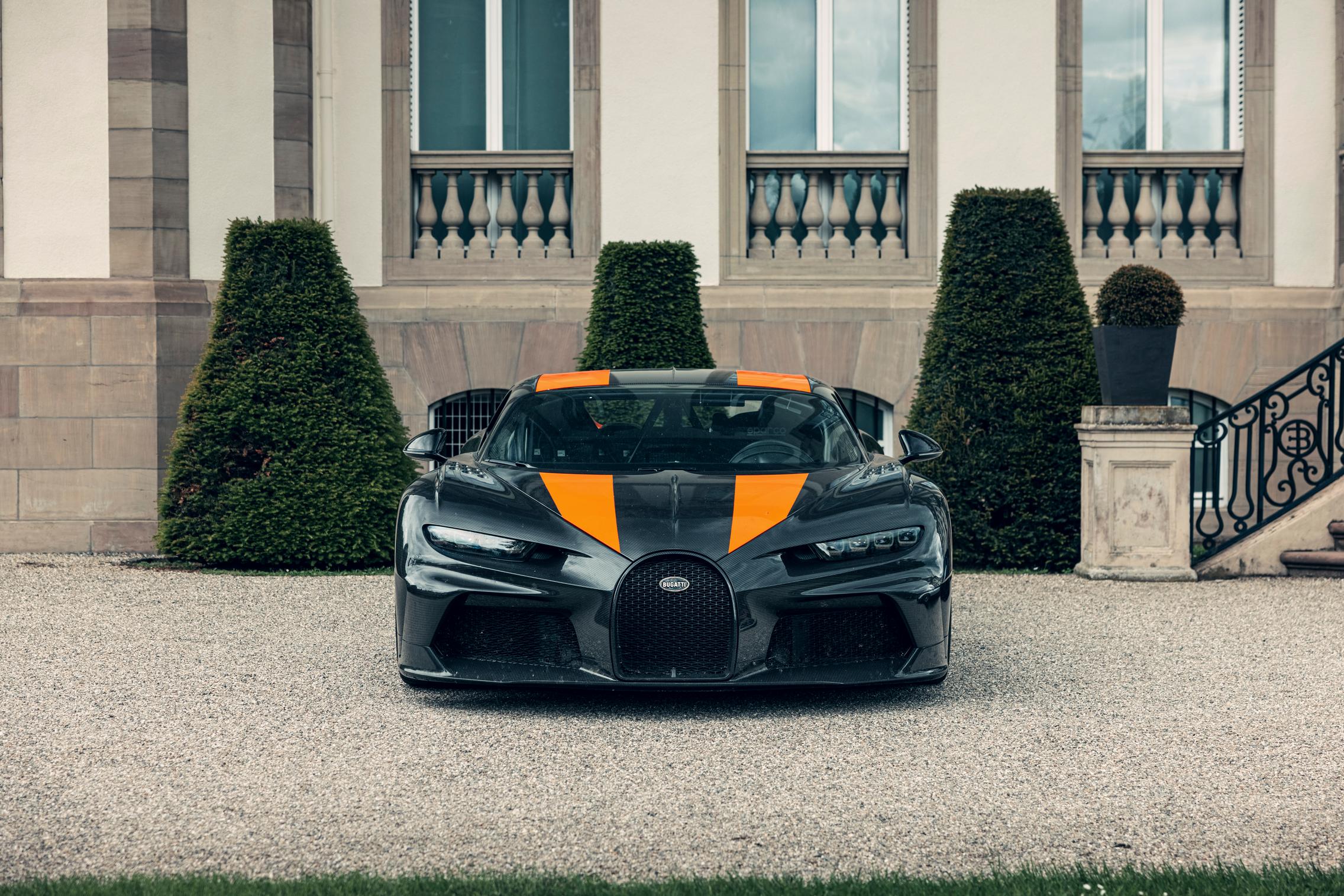
The three following models ; EB 110 Super Sport, Veyron 16.4 and the Chiron Super Sport 300+ together with their drivers have set new benchmarks in the decade in which they appeared. The three Bugatti drivers Loris Bicocchi, Pierre Henri Raphanel and Andy Wallace recently visited Bugatti headquarters to take a trip down memory lane.

1931 Bugatti Type 55

Bugatti Type 55 price

The Type 55 is the only Super Sport vehicle from the Ettore Bugatti era which is equipped with a supercharged 2.3 litre straight-eight engine, the vehicle was unveiled at the 1931 Paris Motor Show 90 years ago and got praises for its top speed, acceleration as well as road holding.

The Type 55 accelerated twice as fast as the Type 43 and could achieve a top speed of over 180km/h. Jean Bugatti designed the Type 55 with a new two-tone color split which ultimately inspired Bugatti to create the horizontal color split in 2010 which was then offered with the Veyron 16.4 Super Sport.

The Type 55 was limited to only 38 units Worldwide making it a perfect collector’s piece.

Bugatti EB 110 Super Sport

Bugatti EB110 SS

Loris Bicocchi was involved in creating the EB 110 Super Sport from scratch in the early 1990’s, the first prototypes of this model were given the code names A1, A2 and A5 and they featured an aluminium chassis. Not long after, it was decided that Carbon would be a better option to use on the model and as a result, the EB 110 Super Sport became the first production car with a carbon fibre bodywork.

The EB 110 Super Sport got its propulsion from a V12 engine with four turbochargers, the vehicle delivers a maximum output of 610 PS and accelerates from 0-100km/h in 3.26 seconds. The EB 110 SS broke speed records of 351km/h in Nardo, 296km/h on ice and 342.7 running on CNG.

Additionally, the power from the engine of the EB 110 is transferred to all four wheels and the quick repulsion and control of the vehicle is as a result of the manual six-speed transmission, rear LSD and the all-wheel limited-slip differential.

The bodywork of the EB 110 SS features aluminium and carbon elements, magnesium cast wheels and titanium screws. Approximately 96 EB 110 GTs together with the lightweight 39 EB 110 SS with 610PS were produced between the years 1993-1995.

Bugatti Veyron 16.4 Super Sport.

Veyron SS

Pierre-Henri Raphanel set a speed record in a Veyron 16.4 Super Sport for a road-legal series sports car in June 2010. The driver attained an average speed of 431.072km/h – 427.933km/h on the first run and 434.211km/h driving in the opposite direction.

The Veyron 16.4 Super Sport is powered by an 8.0 litre W16 engine that produces an output of 1,001 PS and 1,250 Nm of torque. The acceleration from 0-100km/h is achieved in 2.5 seconds, 0-200km/h in 7.3 seconds and all the power is transferred to the road by an all-wheel drive system.

After several engine modifications, Bugatti engineers successfully increased the power output of the Veyron to 1,200 PS. The Veyron model was limited to 450 units up to 2015 and 48 of the units were Veyron 16.4 Super Sport.

Bugatti Chiron Super Sport 300+

Bugatti Chiron Super Sport 300+

Andy Wallace was the first person to pass the 300mph mark with the Chiron Super Sport 300+ at a top speed of 490.484km/h in September 2019.

The Bugatti Chiron Super Sport 300+ is powered by an 8.0 litre W16 engine delivering an output of 1,600hp and 1,600 Nm of torque and it is designed and built for extreme speeds of more than 420km/h.

In addition, the Chiron Super Sport 300+ became the most powerful Bugatti ever made. Only 30 will be made each at a price of $3.9 million.

Project Exposure: World’s Only BMW M3 CS Wagon – The Netherlands

It was one of those Sunday afternoons where you have a baby on the way, a couple of sports cars in the garage and a boring F1 race on TV. Then it suddenly hits you that one of your precious toys has to go in order to make room for the dreaded family minivan.

But for Sander a car tuner based in The Netherlands, this meant a new opportunity to get creative. It all began in 2019 when he acquired a BMW M3 CS which if we are being entirely honest isn’t the first choice that comes to mind when shopping for a family car. The 2018 BMW M3 CS weighs 50kg lighter than the regular M3 sedan, engine output was increased to 460hp and 601nm of torque. Production was limited to just 1,200 units worldwide.

He bought the car with a low mileage of only 5,000km at a time when they were trading above the €120,000 mark. In the car enthusiast world, a family car is defined as a vehicle that combines performance, spacious cabin and extra room for the dogs while retaining good looks or an acceptable design. So instead of acquiring a soulless minivan like regular people, Sander decided to convert his newly acquired M3 CS sedan into a wagon or Touring in BMW language.

I recently had a quick seat down with him where he answered key questions regarding his 1 of 1 project car, below is the script.

1. What was your motivation for the project?

Sander: I have had many sport cars but when we were expecting a baby I wanted to make my ultimate family racer and that’s when i decided to build a performance wagon using my already existing M3 CS sedan.

2. When did you start the project?

Sander: I bought the M3 CS on 6-12-2019, and from that moment we have worked every spare minute on the project to where it is now.

3. What is the base car/donor car?

Sander: The Base car was a 2013 BMW F31 316d Touring. The donor car was my then newly acquired 2018 BMW F80 M3 CS. I only used the body and trunk lid from the F31, all the other parts until the last bolt has come off the M3 CS.

4. What modifications did you do.

Sander: I could list a whole notebook of parts especially since the project is evolving on a daily basis. Nonetheless, here are the key modifications.
– Concaver Forged Wheels 20×9,5 and 20x11j
– KW HAS spring set
– Carbonworks Caron Front Lip
– Carbonworks Carbon Side Skirts
– Carbonworks Carbon Rear Diffuser
– Custom made Rear Spoiler

All major parts are still OEM, and these were basically copy and paste from the M3 CS.

5. What are your current output numbers (hp/torque)

Sander: It’s still the stock CS engine with 460hp and 601nm torque

6. How long did it take?

Sander: 9 months or 600 hours to complete the project.

7. How much does it cost to build an F81 M3 Wagon.

Sander: Depends on how you do it. The donor M3 CS was only 6 months old and 5000km on the cluster so that was very expensive. But I have done almost all the work myself. If you would take a crashed 2015 M3 and do most work yourself you will end up spending around 50 to 60K.

8. What do you think of upcoming G81 M3 Wagon, will you get one?

Sander: I love it, I wasn’t too sure about the new front but it’s slowly growing on me. But when I compare it with the F8x front I still do think the F8x front looks better. Maybe I should built one with a custom front??

9. What did you do with the MC CS chassis?

Sander: I already sold that old iron and got 60 euro for it ?

You can follow Sander and his project on Instagram at @f81cs

Fastest Car in the World: $3.9 Million Bugatti Chiron Super Sport Revealed

It’s now official! Meet the new Bugatti Chiron Super Sport which is limited to just 30 units. This is the fastest Bugatti car to date, and easily the fastest car in the world. It is after all built upon the Bugatti Chiron Super Sport 300+ which became the first car to cross the 300MPH barrier by achieving a top speed of 304.773 mph (490.484 km/h) back in 2019. The Super Sport 300+ was a prototype, the road going versions will have a speed limiter just like the Veyron Super Sport. The new (limited) top speed will be 440km/h.

The price of the Bugatti Chiron Super Sport is €3.2 million euros or an equivalent of $3.9 million dollars.

Moving on to the car, the body of the new Chiron Super Sport generates immense downforce in order to counter the uplift forces exerted on the body when the vehicle is at speeds of over 440km/h as well as improve the balance.

The rear part of the vehicle has been increased by 25cm so as to hold the laminar flow for a long period of time, the diffuser cross-section has also been enlarged and as a result, the rear trailing surface is 44cm lower and the slipstream and wind resistance generated are reduced as well.

Bugatti shifted the exhaust system of the new Chiron from the central to the side with the pipes aligned vertically in order to enhance the performance of the diffuser and create more space. Additionally, the side air curtains and the air intakes at the front minimizes drag and improves the air flow from the front to the wheel arches and over the side radiators.

Each fender consists of nine exhaust air holes for releasing air pressure from the wells of the front wheels ergo streamlined downforce is generated at the front axle, the outlets at the back of the front wheel arches help balance out the aerodynamic loads.

The Chiron Super Sport is powered an improved 8.0 liter W16 quad turbo engine that generates a maximum power output of 1,176kW/ 1,600PS and 1,600Nm of torque accessible between 2000 rpm and 7000 rpm instead of up to 6000rpm. The rpm of the engine was increased from 6,800 rpm to 7,100 rpm in order to improve the agility and performance of the vehicle.

In addition, the Chiron is capable of accelerating from 0-200km/h in 5.8 seconds, 0-300km/h in 12.1 seconds and the acceleration from 0-400km/h is 7% faster compared to the standard Chiron. The performance improvement of the Chiron Super Sport was created by the larger turbochargers with efficient compressor wheels, therefore the seven-gear dual-clutch transmission is at full load and full speed transitions from 6th to 7th gear at 403 km/h. The 7th gear boasts a 3.6% longer transmission.

The new Chiron Super Sports features newly developed Michelin Pilot Sport Cup 2 tires which have been optimized for top speeds, offer greater rigidity and they are the only tires capable of up to 500km/h consistently. This is made possible due to the reinforced belts capable of coping with immense forces.

The interior of the Chiron Super Sport consists of a blend of leather and polished aluminium as well as hi-tech carbon fiber applications. The interior is suited to high speed continental trips. On the other hand, the exterior features carbon fibre elements, inclined headlamps and new five-Y-spoke design aluminium wheels available for the Super Sport exclusively.

Additionally, wheels in a diamond-cut design and Magnesium wheels that further reduce weight of the mass are also available as options.

The Chiron Super Sport will be limited to 30 units only featuring similar design and color elements. The first nine units are scheduled for delivery in early 2022 at a price tag of 3.2million euros each.

940hp Super Wagon: 2021 Mercedes-AMG E63 S Tuned by Posaidon

Mercedes-AMG tuner Posaidon have unveiled their new E63 RS 830+ based on the 2021 Mercedes-AMG E63 S 4MATIC+ T Model.

The new Posaidon E63 RS 830 is one of three hardware based power levels for the current generation of the E63 AMG. The new model is TUV approved and it features specially configured turbochargers, sports air filter and sports downpipes with catalytic converters. Additionally, the model also features a transmission control unit, tweaks to the engine software control unit as well as a central powertrain controller (CPC).

The E63 RS 830 has been fitted with new turbochargers together with the previous level adjustments that enhances the maximum output of the vehicle to 880hp and 1200 Nm of torque. The acceleration from 0-100km/h is achieved in 3.1 seconds and Posaidon has increased the top speed to 350km/h.

Even more powerful is the E63 RS 830+ and it features modified cylinder heads, valve seats and an additional water/methanol injection system which increases the maximum output to 940hp and 1280 Nm of torque. The acceleration from 0-100km/h is achieved in 3 seconds.

Posaidon also offers a Powerbox as an option for customers who are interested in upgrades but are looking to avoid adjustments to the control unit or software. The additional control unit increases the power of the E 63 by 95hp and 150 Nm of torque. As a result, the S model has a maximum output of 707hp and 1000 Nm of torque.

The pictured model has been lowered with an electronic module and is fitted with blow-off valves.

2022 BMW M4 Convertible Joins the M Family

This is the new 2022 BMW M4 Competition Convertible with M xDrive, it is powered by a six-cylinder in-line engine with M TwinPower Turbo technology which has increased the output by 60hp over the former model. The vehicle is capable of generating a maximum output of 510hp and 650Nm of torque and the acceleration from 0-100km/h is achieved in 3.7 seconds.

The power of the vehicle is channeled through an eight-speed M Steptronic transmission with Drivelogic.

The new model breaks new ground for M cars as an open-top high-performance Sports car with all-wheel drive, the model features the Classic M formula of dynamism, agility and precision combined with usability as well as long-distance capabilities. The open-top feature enables the driver to experience unobstructed access to the sun, wind as well as the sound of the engine which ensures a performance experience.

The new Panel bow soft top can be opened or closed in 18 seconds even when the vehicle is moving. Additionally, the soft top is 40% lighter than the roof of the previous model and the boot capacity is 80 litres larger.

The exterior of the new M4 Convertible features a large, vertical BMW kidney grille in M-specific design, large air intakes for cooling the engine and brakes, M Side Gills and an exhaust system with two pairs of tailpipes joined with M specific diffuser. The exhaust system consists of electronically controlled flaps to ensure a rich soundtrack.

The interior features an ergonomically optimised cockpit with M specific display and controls, new M sport seats with optional ventilation system and Merino leather trim as standard. Bucket sports seats are also available as optional.

The M carbon exterior package together with the BMW M performance parts are available as options.

The M xDrive all-wheel-drive system as well as the Active M Differentials improve the traction, stability and dynamism of the vehicle. The company also offers a rear-biased setup and three modes i.e 4WD, 4WD Sport and 2WD for simple rear wheel drive with the stability control system deactivated.

The vehicle also features an adaptive M suspension with electronically controlled dampers, M Servotronic steering wheel with shifting ratios and M Compound Brakes all as standard. On the other hand, the M Carbon ceramic brakes are available as an option.

The vehicle has been set up with an M-specific control button that enables direct access to the engine, chassis, steering, braking system and M xDrive settings. The M mode button enables personalised configurations from the driver assistance system and the displays in the instrument cluster and Head-up display. Road and Sport driving modes are available as standard whereas Track mode is activated when M Drive Professional is selected.

The new model also features a wide selection of driver assistance systems including steering and lane control assistant, active navigation function and Emergency lane assistant. Parking and Reversing assistants are also available but optional.

In addition, three zone automatic climate control, ambient lighting, hi-fi sound system and the BMW Live Cockpit Professional system with digital display grouping, BMW maps and BMW Intelligent Personal Assistant are available as standard specification for the model.

An M Race Track package available as optional reduces the weight of the vehicle by 25kgs with features like M Carbon ceramic brakes, M light-alloy wheels and M carbon bucket seats.

Rimac Nevera Revealed with 1914hp and a $2.4 Million Price Tag

Rimac Automobili officially unveiled the new all-electric Nevera hypercar based on the Rimac C_two concept car which was released in 2018 at the Geneva Motor Show.

Nevera is a Croatian name of a mighty Mediterrenean storm that races across the open sea off Croatia, the name reflects the performance of the vehicle. In addition, the next generation Rimac hypercar shares the name and design of Nevera and it’s just as proficient at transforming its character from a grand tourer to a performance vehicle in an instant.

The bodywork of the all-electric vehicle features air diffusers and intakes that improve the aerodynamic efficiency by 34%. In addition, the bonnet, splitters and radiators, design of the diffuser and shape of the pillars have been examined and clarified to improve the airflow and downforce. The inlets and air intakes have improved and increased the cooling efficiency of the engine and the brakes by 30% at low speeds and 7% at high speeds.

Additionally, the front bonnet, underbody flap, rear diffuser and the rear spoiler enhance the performance, stability and efficiency of the vehicle and each can move independently thanks to the complex algorithms that provide optimum aerodynamic settings for every driving condition. Switching from ‘high downforce’ to ‘low drag’ mode reduces the drag by 17.5% to create a coefficient drag of 0.3 whereas switching back to ‘high downforce’ mode increases the downforce by 326%.

The interior of the vehicle features a cockpit divided into two zones, high-definition TFT screens and tactile billet aluminium rotary controls and switches.

The vehicle’s monocoque features a bonded carbon roof, integrated structural battery pack and a rear carbon subframe that forms a large single carbon fibre piece. The monocoque encases the battery pack and it weighs less than 200kg and utilises 2200 carbon fibre plys and 222 aluminium inserts.

The 6960 cell battery of the Nevera is H-shaped, liquid cooled and 120kWh was developed by Rimac, it is capable of producing 1.4MW of power. The battery forms an essential part of the car’s core and increases structural stiffness to the carbon fibre monocoque by 37%. The battery has been fitted at the central low part of the vehicle To contribute to the low centre of gravity as well as balance the weight distribution and stability of the vehicle.

The four bespoke surface-mounted permanent magnet motors enables the vehicle to produce a maximum output of 1914hp and 2360Nm of torque. The vehicle can accelerate from 0-100km/h in 4.3 seconds, 0-300km/h in 9.3 seconds and complete a quarter-mile distance in 8.6 seconds. The top speed is limited to 412km/h.

Furthermore, the front and rear wheels are each connected to a pair of single-speed gearboxes.

The Nevera also features 390mm Brembo CCMR carbon ceramic brake disks and six-piston calipers, double wishbone suspensions with electronically controlled dampers and ride height adjustments and R-AWTV 2 system that enables drivetrain calibrations through seven drive modes i.e Sport, Comfort, Drift, Track, Range and Custom. The vehicle also features Artificial Intelligence (AI) Driver Coach and the latest operating system.

Czinger 21C: American Hypercar with a 1350hp V8 and 11,000 rpm Redline

California based Czinger have revealed full specifications of their Czinger 21C hypercar. The car is now production ready after receiving key updates within the last few months. They were prepared to showcase two cars at the Geneva Motor Show 2021 but that was postponed alongside the show itself.

The 21C enters the scene at a time when most car makers are moving away from combustion engines, they have combined a V8 engine and two electric motors meaning it should be able to pass most emission regulations especially in California and Europe in general.

Despite the added weight that comes with a hybrid system, Czinger managed to get a 1:1 power-weight-ratio. The combined output is 1,250hp and the weight is rated at 1.240kg. An optional power upgrade of 100hp is also available, bringing the total power output to 1,350hp. In comparison, the Ferrari SF90 Stradale has a similar V8 hybrid setup but weighs in at 1600kg and produces 986hp.

Even more interesting is the nature of the engine used on the Czinger 21C, a 2.88L twin-turbo V8 developed in-house. This is the most power dense production engine in the world right now. While the engine drives the rear wheels, two electric motors are responsible for driving the front wheels. In addition, the powertrain benefits from a 800v system.

Czinger 21C Specs

Top Speed 281mph / 452kmh
0-100km/h (0-62mph) 1.9s
0-300km/h (0-186mph) 8.5s
1/4 Mile 8.1s
Engine 2.88L V8 Twin-Turbo
Output 1250hp (1350hp with power upgrade option)
Weight 1240kg
Electric Drive 2 e-motors + Lithium batteries
Gearbox 7 Speed Sequential
Redline 11,000rpm

The lithium batteries are charged through regenerative braking and via a Motor Generator Unit (MGU) which is connected to the engine.

The Czinger 21C will be built in Los Angeles and is limited to just 80 cars worldwide each priced at $2,050,000.

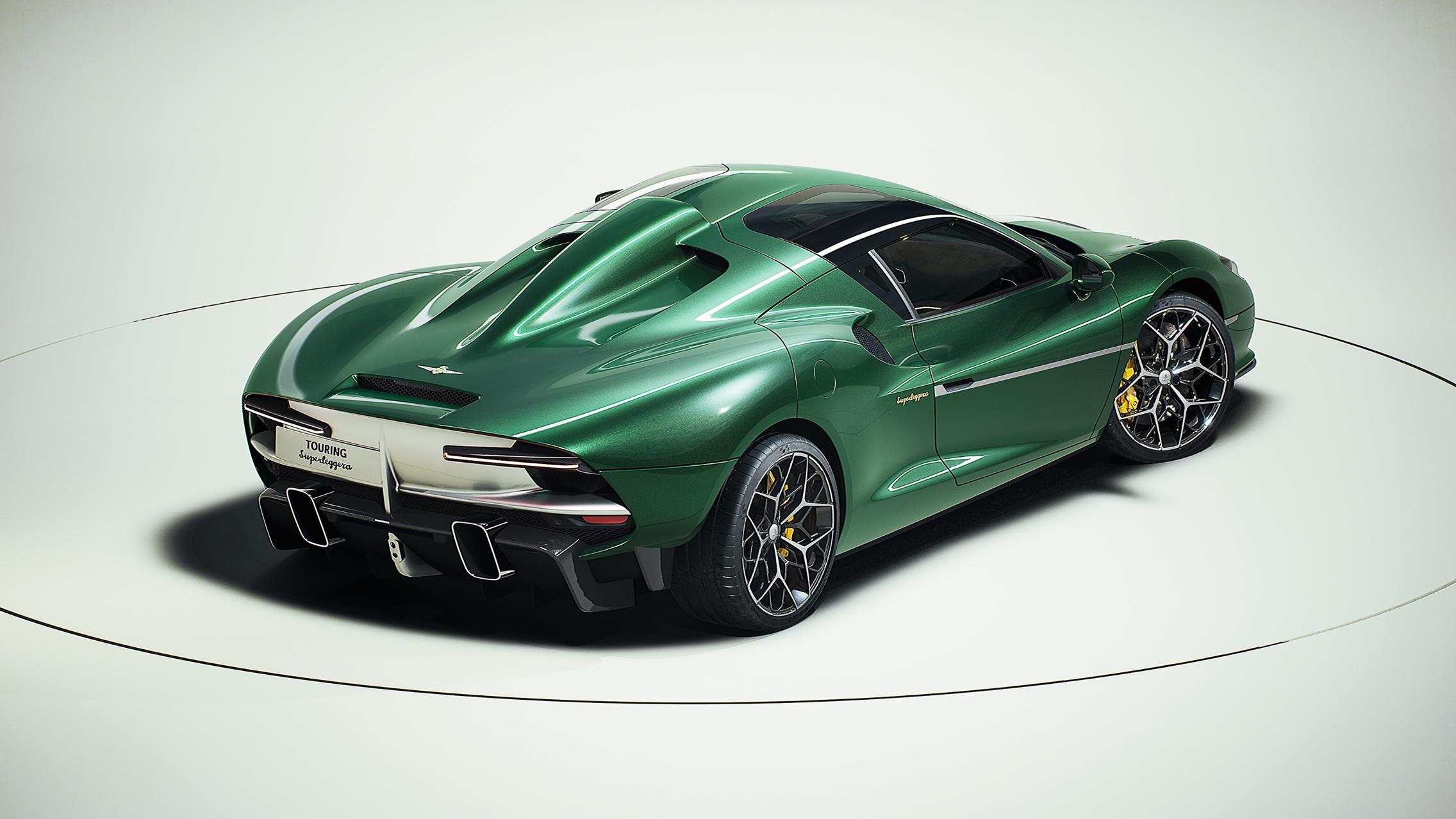
Arese RH95: A Mid-Engine V8 Supercar by Carrozzeria Touring

Carrozzeria Touring released their first mid-engined V8 supercar the ‘ Arese RH95’ to celebrate their 95th anniversary. The Arese RH95 is named after the Touring base in the Arese suburbs of Milan and the ‘RH’ represents initials of the first client.

The vehicle represents a technical milestone for the company as its first mid-engined V8 supercar, the new model also promises to be a sports car as well as a high-performance vehicle with luxurious specifications i.e Scissor doors and a spacious luggage compartment.

Carrozzeria Touring has not released the performance details of the new V8 but it is possible that the engine will have an output of approximately 670bhp at 8000rpm and 760 Nm of torque at a low 3000rpm. The vehicle is expected to achieve the acceleration from 0-100km/h in 3 seconds at a top speed of 340km/h.

Touring-ARESE_RH95 rear

The Arese RH95 features an all-carbon bodywork in respect to the ‘Superlegerra’ moniker as well as optimised aerodynamics including 3-derived grille, front air ‘nostrils’ and a rear clamshell with a dorsal scoop that allows air to pass through into the engine and out through the rear vent. The shoulder scoops are for cooling the V8 engine.

The new mid-engined V8 will be limited to only 18 units each tailored as per the customer’s specifications. The pictured vehicle is finished in Verde Pino color complemented by a caramel and cocoa colored leather interior with Saffron colored seat facings. The second car will be finished in a red hue of Alfa 8C Competizione whereas the third vehicle will be completed in Gulf Oil colors of blue and orange.

In addition, the first RH95 model will be ready for delivery a month from now, further versions will take approximately 6 month to build and every part manufactured by Carrozzeria will be offered with a two-year warranty.

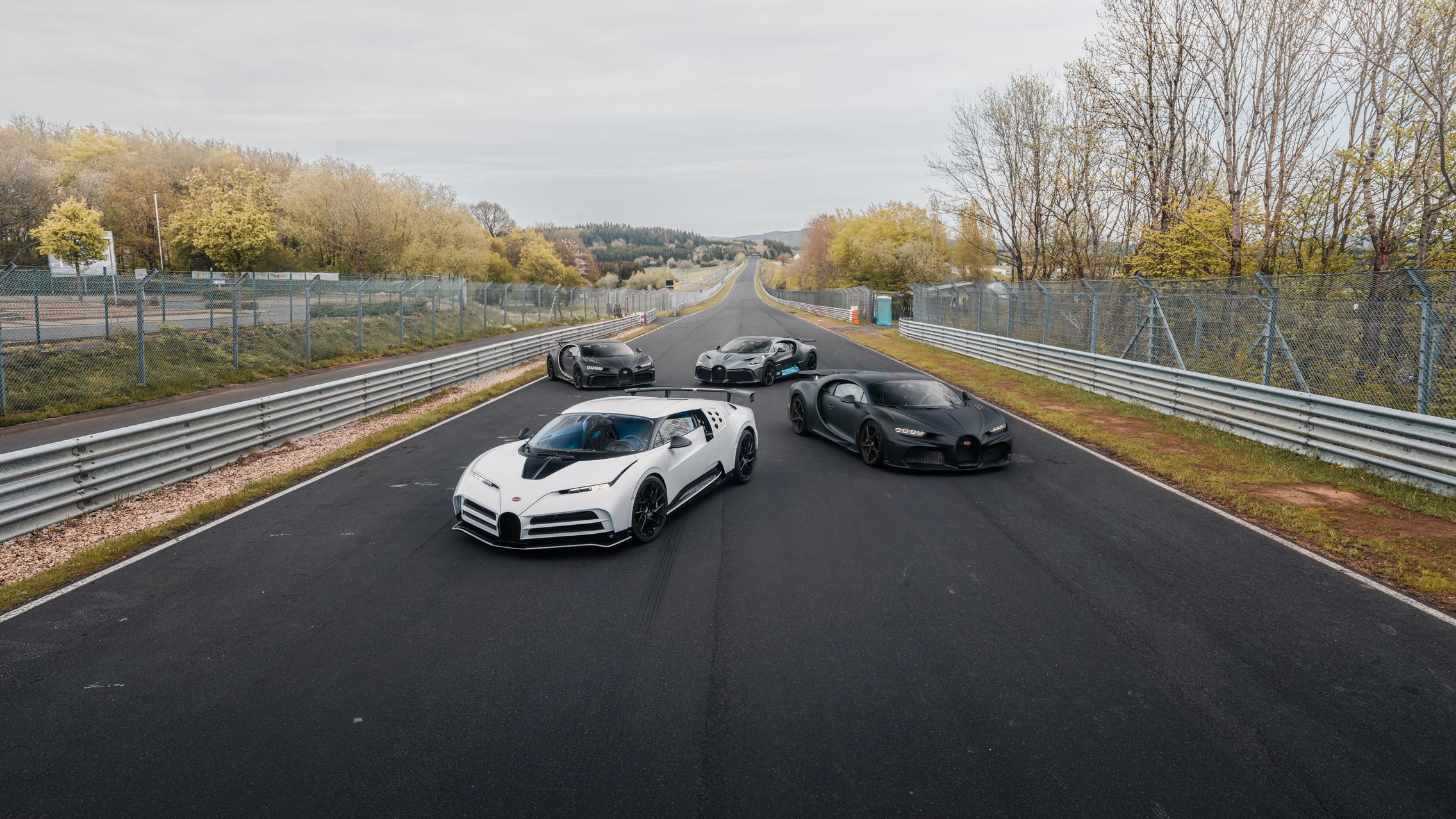
The $24 Million Bugatti Lineup: Just 4 Cars Only

All hyper sports cars manufactured by Bugatti are required to undergo extensive tests in order to meet exceptional quality standards. The Bugatti development team set out for the demanding Nurburgring circuit with not less than four models and six engineers. They took over the Nurburgring with the Bugatti Centodieci, Chiron Pur Sport, Divo and the Chiron Super Sport 300+.

The lineup featured the most exclusive vehicle fleet in the world with a net value of just under 20 million euros. The Centodieci is priced at 8m euros, the Divo at 5 million euros, the Chiron Pur Sport at 3 million euros and the Chiron Super Sport 300+ at 3.5m euros.

The Nurburgring circuit is considered to be the world’s most ideal testing circuit with an unusual topography, the circuit consists of 33 left bends, 40 right bends, 17% gradient and an altitude difference of 300 metres. The total distance of the test circuit is 20.832km.

When the vehicles are competing on the circuit, the engineers will note down the overall performance of each vehicle to ensure it delivers perfect differentiation within the performance range of the Bugatti Chiron. After the test drives, the results are further analyzed and transmitted to the development team for further execution.

Bugatti Desktop Wallpaper

In the case of the Chiron Super Sport 300+, the developers and engineers check and verify the chassis series setup as finalized before, the hyper sports car was primarily built for top speeds of upto 440km/h. In addition, the developers take the handling and characteristics of the Divo and Chiron Pur Sport models as benchmarks for the new Chiron Super Sport 300+ and the Centodieci.

Turn Your McLaren 720S into a Senna GTR with this $18k Bodykit

The McLaren 720S has helped put McLaren back on the supercar map, with impressive performance worthy of it’s price tag. It rivals the likes of the Ferrari 488, F8 Tributo, Porsche 911 Turbo S, AMG GT R and more. It is one of the last few supercars still made in Britain.

McLaren offers a variety of products that fall under different price brackets, the 720S is housed within the supercar category alongside it’s limited 765LT variant. Above the supercar category you will find the McLaren Senna, Elva and Speedtail from the ultimate series. The Senna GTR and 720S share the same 4.0L V8 twin-turbo engine, producing 814hp and 710hp respectively. The latter is a road legal series production car while the former is a track only car produced in limited numbers (75 only).

A tuner known as DarwinPRO Aerodynamics has now come up with a bodykit for those who want a Senna GTR look alike without having to pay the $1.7 million market price for an actual Senna GTR. The conversion is based upon a normal 720S Coupe or Spider and involves heavy modification of the front bumper, rear bumper, rear wing and side skirts.

According to their website, the bodykit is priced from $18,550. The McLaren 720S retails for about $300k for new cars, but you are likely to find cheaper ones when dealer discounts are applied. Used ones should be considerably cheaper with an average price of about $250k.

Brabus Reveals Mercedes-AMG GLE 63 S with 800hp

Brabus has released their second SUV this week, this time focusing on the Mercedes-AMG GLE 63 S. The new package is available for both the coupe and SUV versions.

The engineers have programmed the mapping of the electronic engine control so as to recalibrate the electronic boost pressure control as well as optimize the power delivery without risking the durability of the vehicle. Brabus has done extensive tests both on the racetracks and public roads to ensure safety and performance.

The GLE 63 S is powered by a 4.0 litre twin-turbo V8 engine producing upto 612 hp and 850 nm of torque. The Brabus PowerXtra B40-S-800 conversion has increased the power of the vehicle by 188hp and further boosted the torque by 150 Nm of torque. As a result, the maximum power output of the vehicle is 800hp at 5,900 rpm and 1000 Nm at a low 3,500rpm and the acceleration from 0-100km/h is achieved in 3.4 seconds. The top speed is electronically limited to 280km/h.

The gears of the vehicle can be shifted either automatically or manually via the ergonomic Brabus Race paddle shifters on the steering wheel. In addition, a Brabus Memory System that can permanently deactivate the standard automatic start-stop setup is available as optional. Brabus also offers a 3 year warranty or 100,000km tuning warranty for all units.

The company has also fitted the GLE 63 S with a high-performance stainless steel sports exhaust system with actively controlled flaps that optimises the engine performance as well as control the sound depending on the drive mode selected by the driver.

The exterior of the vehicle features a front spoiler that minimises front-axle lift at high speeds and gives the vehicle a sporty look, a touch of racing flair to refine the side view and a Brabus diffuser insert that was designed for the the rear fascia to showcase the titanium/carbon tailpipes. The front spoiler also improves the stability of the vehicle when driving at high speed.

The interior features Alcantara and Brabus Mastic breathable leather on the seats, dashboard door panels and headliners. In addition, the interior also consists of aluminium door lock pins, aluminium pedals, stainless-steel cuffs with a backlit Brabus logo that changes color and carbon fibre elements with high-gloss finish sealer.

The GLE 63 S has been fitted with a set of Brabus alloy wheels which are available in different designs and diameters of 21, 22, 23 or 24 inches. The wheels have been combined with a Brabus choice of low profile tires of size 295/30 R 24 for the vehicle. An exclusive Brabus Monoblock Z ‘Platinum Edition’ hi-tech forged wheels in 10Jx24 king-sized format is also available as an option.

A control module for the Airmatic air suspension system is also available. The air suspension lowers the ride height of the vehicle by 25mm and improves the stance and driving dynamics of the vehicle due to the low centre of gravity.

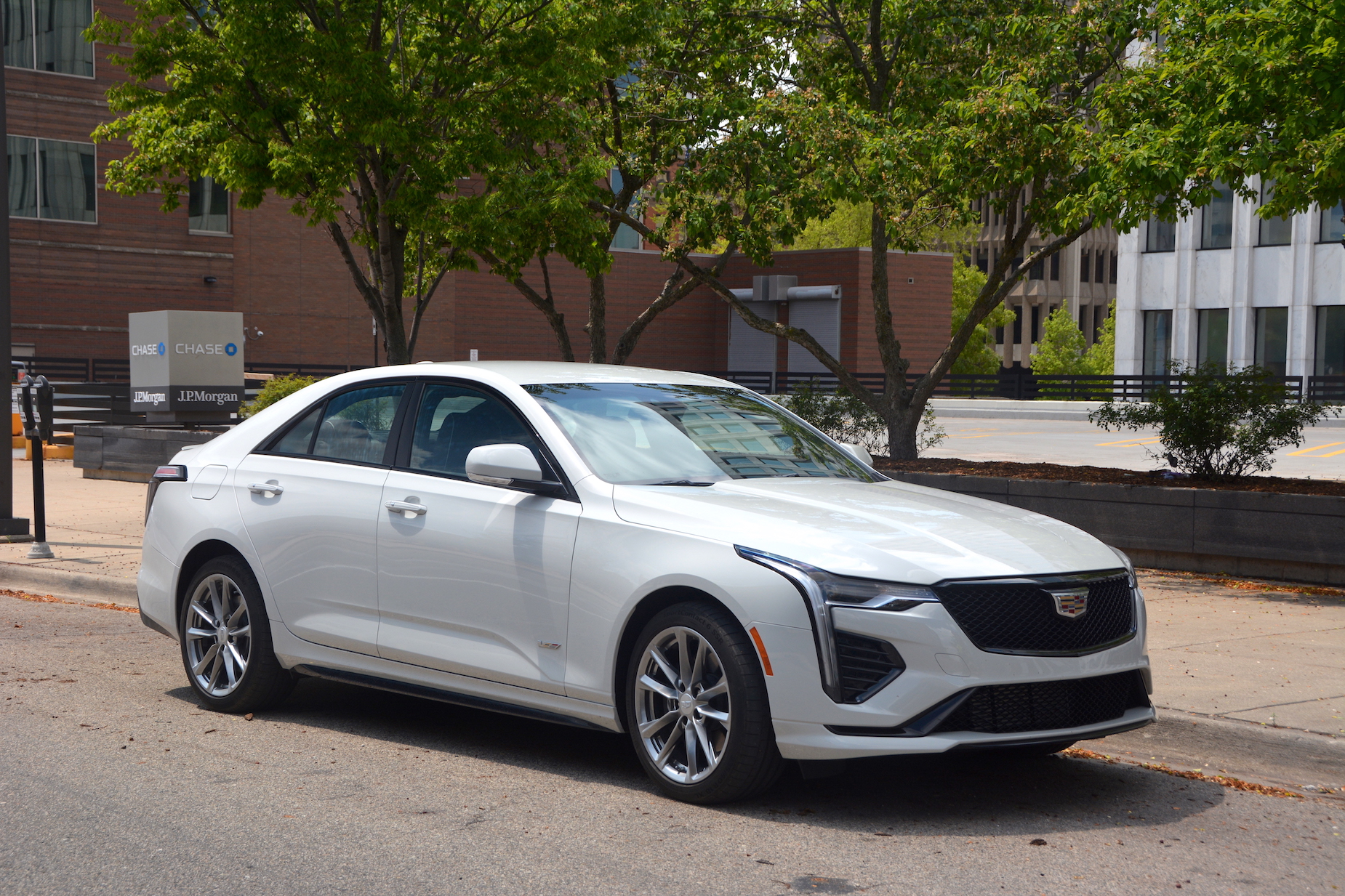
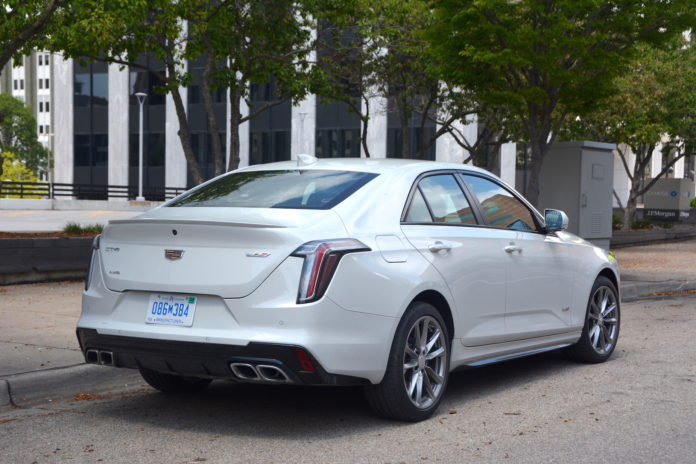
2021 Cadillac CT4-V AWD Review

2021 Cadillac CT4-V

Change is good….ish. We here at GT Spirit have had an abiding respect, if not outright love, for Cadillac’s V-Series cars. The CTS-V and the ATS-V were autobahn rockets and track warriors, able to run with some of the best cars in the world and hold their heads proudly. So when Cadillac switched over to from the CTS and ATS nameplates to the CT4 and CT5, we eagerly hoped they would bring out a set of V-series twins to fill out the roster and continue this enjoyable performance tradition. Cadillac didn’t disappoint and recently allowed us some seat time in the CT4-V. What we found both surprised and intrigued us.

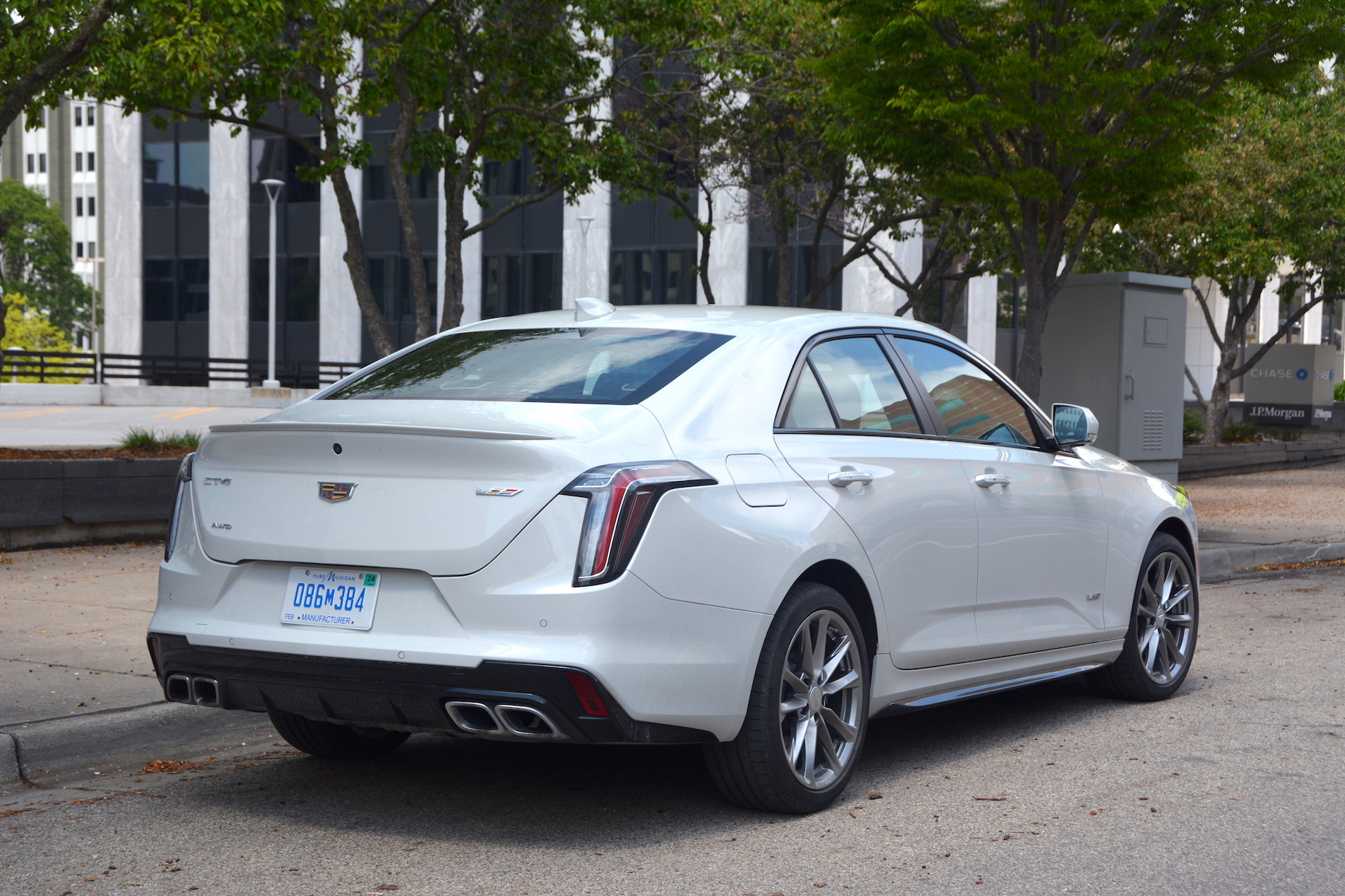
A walk around the car reveals standard Cadillac design cues but striking new lines. There’s an understated elegance to the lines, refined but aggressive at the same time. More than one person complimented me on “my” car while I drove it. Design is subjective but I find it quite attractive and purposeful looking. It lacks the uber-aggressive performance details that made the CTS-V and ATS-V so aggressive – the carbon fiber splitters and venturi tunnels in the back, The steep spoiler on the rear decklid – but it’s less likely to be noticed by the police. Not necessarily a bad thing.

Inside, the seats are comfortable but less bolstered than the ATS-V we drove two years ago – MUCH less bolstered. They’re electrically adjustable, both heated and ventilated, with lumbar controls and (if you’re lucky enough to be the driver) massage controls. A narrow center console separates you from the passenger seat. Instead of a 6-speed manual gearbox, an automatic transmission selector dominates the console. No manual transmissions in these V-cars. It’s surrounded by infotainment control knob, drive mode selector buttons, and cupholders. It’s all tastefully laid out amidst real carbon fiber and aluminum trim. Climate controls dominate the stack above the console, and the infotainment screen – a disappointingly small one at that, given what Tesla provides these days – sits atop that. The steering wheel is attractive, all rich leather and aluminum with the Cadillac crest squarely in the middle. The gauges are easy to read and the space between them has myriad informational readouts to choose from. The back seats are comfortable but getting back there is a bit tough with the low roof line. I hit my head a few times trying to get in.

Under the hood lies a “2.7L turbocharged engine with twin volutes” hooked to GM’s new 10-speed automatic transmission. What kind of engine, you ask? Excellent question. Cadillac tries to evade the questions both on the window sticker and on their website, repeating the “2.7L turbocharged engine” description. Power-wise, it felt like a turbocharged V6, but the sounds it made and the way it felt at low speed made me suspicious that it might be a four-cylinder. And sure enough, if you pop the hood, you’ll find a turbocharged four-cylinder engine. This disturbed me, possibly more than it should have. This is supposed to be a mighty V-Series Cadillac. It says it right on the rump of the car, in fact. A four-cylinder engine in a V-Series? Who made this decision?

I suppose the $51,000 price tag should have given me a clue. This car isn’t nearly as expensive as the last ATS-V we drove. Is Cadillac diluting the V-Series name for sales? I mean, I’m sure they’ll move a LOT more $51k cars than $80k ones, and few drivers were really ever able to exploit the performance potential of the original V-Series cars, but.…a four?

Here’s the thing though: this turbocharged four-cylinder generates SO MUCH thrust and the 10-speed transmission holds it right in the powerband and cracks off shifts so rapidly that it feels like a giant wave of torque and thrust are pushing the car up the road so rapidly that it might never end. You certainly don’t want it to when you’re experiencing that acceleration. It made me think of the hotly turbocharged rally cars during the heyday of rallying. According to Cadillac, it generates 320hp and 380lb-ft of torque. Those are impressive numbers for a turbo-four and to move a platform as heavy as the AWD CT4 as quickly as it does means there’s some magic taking place somewhere.

First off, it’s one of the largest four-cylinders on the market, if not the largest. And it’s direct-injected and turbocharged as well. But what’s new about it is that it uses a “dual-volute” turbocharger for greater efficiency. Greater efficiency means less wasted power. Less wasted power means more speed. It’s a complex system but in a nutshell, the exhaust manifolds for cylinders one and four don’t mix with cylinders two and three. They’ve been paired up with the cylinder with which they share an exhaust power pulse. By not mixing the exhaust manifolds, there’s zero chance that the power pulse from one cylinder can bleed off into a cylinder that’s not pulsing at the time, which makes things more efficient. These two exhaust runners feed separately into the turbo on opposite sides of the scroll, balancing it out and spinning it more efficiently. This creates more power with a much faster throttle response. It’s all very technical but trust me, it works and the mad rush of acceleration proves it. In fact, it’s acceleration matches that of Cadillac’s twin-turbo V6 engine, which is darned impressive.
2021 Cadillac CT4-V specs

The chassis is both capable and compliant. It’s got adjustable shocks that firm up from Touring Mode to Sports Mode and on to Track Mode. The ride is remarkably smooth. It doesn’t beat you up, even on the worst pavement. It absorbs the worst bumps and keeps the platform stable, level, and controlled. At freeway speeds, tire and wind noise are minimal. The tires are grippy and between the suspension and tires, you feel confident in corners and traffic maneuvers.

The brakes are capable of great things when you’re driving hard. They scrub off speed without complaint and they do it in linear, intuitive fashion. However, when they’re cold and you’re trying to drive sedately they can feel grabby. A little pedal action can buy a lot of stop. It’s not hard to get used to, but it’d be nice if you didn’t have to try.

Cadillac and the EPA estimate that you’ll get 20mpg in the city and 28 on the highway. Those are decent numbers and are close to what we got in the week that we drove it.

We did have some minor gripes. When you first put the car in gear, the drivetrain lunges against the brakes like an impatient dog eager to go for a walk. Some obedience training is recommended. The brakes can be grabby when they’re cold. These two items kind of make you question the whole “luxury car” title the first time you drive it. Luxury cars should have better manners, even if they are marketed as performance cars. Finally, the sound of a four-cylinder isn’t an inspiring sound, nor does it suggest “expensive luxury.” But it certainly delivers the goods, even if the sound isn’t inspiring.

So is it a true V-Series? Well, it is and it isn’t. It’s certainly impressive and enjoyable to drive, but it’s not the fire-breathing monster that the earlier V-series cars were. But it’s a better everyday driver with more accessible performance for everyday conditions. And it’s much more affordable too. It’s a middling performance car. We liked it a lot, but it’s not quite as exciting as the older V cars. As we understand it, later this year, Cadillac is introducing the V-series Blackwing cars, which should be more in line with the older V-series cars. We’re hopeful for the opportunity to drive and report on them. Until then, the current V-series cars will do.

Brabus 800 GLS 63 AMG is the Epitome of Luxury and Power

Brabus has officially released the performance details of the exclusive high-performance Brabus 800 SUV based on the 2021 Mercedes-AMG GLS 63 4MATIC+.

The Mercedes-AMG GLS 63 4MATIC+ is powered by a 4.0 litre V8 twin-turbo engine. To ensure a maximum boost pressure of 1.6 bar is produced, the vehicle has been fitted with two special Brabus turbochargers with large compressor units and a modified core assembly with reinforced axial bearings.

In addition, new mapping for the injection and and ignition has been programmed throughout extensive test bench and long test drives. The vehicle also features a modified software that is introduced into the control unit of the engine via the plug-and-play Brabus PowerXtra module.

Brabus has fitted the SUV with a Brabus PowerXtra B40S-800 performance upgrade module. The performance upgrade conversion increases the power output of the vehicle by adding 188hp and 150 Nm of torque at driver’s command. The upgrade ensures an increase in power delivery as well as durability and is offered together with a 3-year warranty or 100,000km Tuning warranty.

The maximum output power of the vehicle after the conversion is 800hp at 5,900rpm and 1000Nm peak torque at a low 3,500rpm. The acceleration from 0-100km/h is achieved in 3.8 seconds while top speed is limited to 280km/h.

The Brabus 800 GLS 63 is fitted with a quad stainless-steel high-performance exhaust system with actively controlled exhaust flaps. This system enables the driver to switch between Sport mode and Coming Home mode. Sport mode is loud whereas Coming Home mode is silent and subtle.

In addition, the Brabus front spoiler mounted on the lower part of the fascia gives the SUV a sporty appearance, the shape of the spoiler prevents the front axle from lifting when the vehicle is at a high speed as well as improve the handling & stability. The air deflectors are tailor-made to improve the air intake, these components are made from carbon fibre with a choice of matt sealing or high gloss.

The GLS 800 is further fitted with a set of Monoblock M 24 inch Platinum Edition hi-tech forged wheels and high-performance tires. The wheels are of size 10Jx24 whereas the tires are in size 295/35 ZR 24 mounted on the front and rear axle.

The Brabus Airmatic air suspension features a special control module that further optimizes driving dynamics as well as lowering the ride height by 25mm.

The interior of the SUV features breathable black leather with grey contrasting stitchings to match the black paint finish. The seat surfaces and the door panels are designed in Arrow Wave design with precision and perforated equally. The perforated parts are adorned with red fabric to match the highlights on the bodywork and the engine cover.

The Fulminea: 2040hp Full Electric Hypercar that will do 0-320kmh in 10s

The UK will have an official debut for a new all-electric Automobili Estrema Fulminea at this year’s Salon Prive.

The Fulminea is a full-electric vehicle built by Automobili Estrema, the company was founded in 2020 by Gianfranco Pizzuto with the aim of making Fulminea the fastest electric vehicle as well as specialise in the design and production of limited edition hypercars.

The Fulminea set-up is able to provide 100kWh of energy to power all four electric motors thanks to its innovative ‘hybrid’ battery pack that is combining Li-ion cells with solid-state electrolyte and ultracapacitors which are in use for the first time.

The total output of the vehicle is 2040hp and the acceleration from 0-320kph is achieved in 10 seconds. In addition, the predicted range is 520km, the battery weighs 300kg and the total weight of the vehicle is only 1500kg. Quite impressive for a full electric car.

Lightweight composite materials have been used to build and design the Fulminea, the designs were optimised through the use of CFD testing which features active aerodynamic elements like the retractable rear wing and the front air intakes.

Salon Privé Concours d’Élégance will feature new concepts and prototype classes that the Fulminea will also take part in. The top ten innovative designs selected will be presented throughout the week at the Cricket square on the South Lawn of Blenheim Palace in a covered display.

In addition, the exclusive enclave will be overlooked by guests dining on their private terraces as well as present collectors and enthusiasts an opportunity to engage with the designers and manufactures. Beyond the Concours, a lawn full of luxury supercar manufacturers will also present showcasing their latest releases.

Gulf Livery is Back: MSO Reveals Special Gulf McLaren 720S

McLaren Special Operations (MSO) have recreated a bespoke 720S in the legendary Gulf oil-livery and iconic racing colors to celebrate two brands and personalization possibilities.

The project is part of the renewed relationship which was made public last summer between McLaren and Gulf as partners and as an official strategy in demonstrating the customization possibilities available for McLaren supercars.

The 720S is powered by a twin-turbocharged V8 engine producing a maximum output of 720PS and 770Nm of torque. The acceleration from 0-100km/h is achieved in 2.9 seconds and the top speed is limited to 341km\h whereas the dry weight of the vehicle is 1,283kg.

Gulf has become the preferred lubricant supplier for McLaren automotive since the partnership, all McLaren vehicles are now to be fueled with Gulf oil and fuel optimized for the high performance engines.

A limited number of customers will have the opportunity to have their McLaren vehicles hand painted exclusively by MSO in Gulf livery. The 720S is the high point project between MSO and Gulf to ensure a range of metallic and solid paints and finishes capture both identities.

To create the perfect finish for the vehicle, McLaren automotive partnered up with AkzoNobel’s pallet to create premium automotive paint hues. The definitive version alone took 20 days to finish.

In addition to the Racing Blue and Orange colors used on the Exterior body, the vehicle also features Gulf solid Orange on the brake calipers and matching blue and orange stitching in the bespoke interior. The interior also features gulf logos embroidered on the headrests and painted on the sills and a McLaren steering wheel with a centre band in Gulf solid Orange and Blue to match the exterior carbon fibre spokes.