All posts in “Audi”

Audi R8 Green Hell Pays Tribute to R8 LMS Success at the Nürburgring

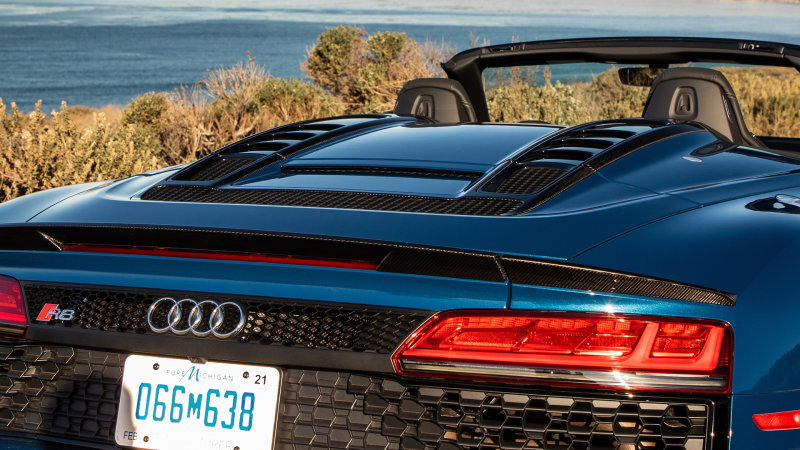
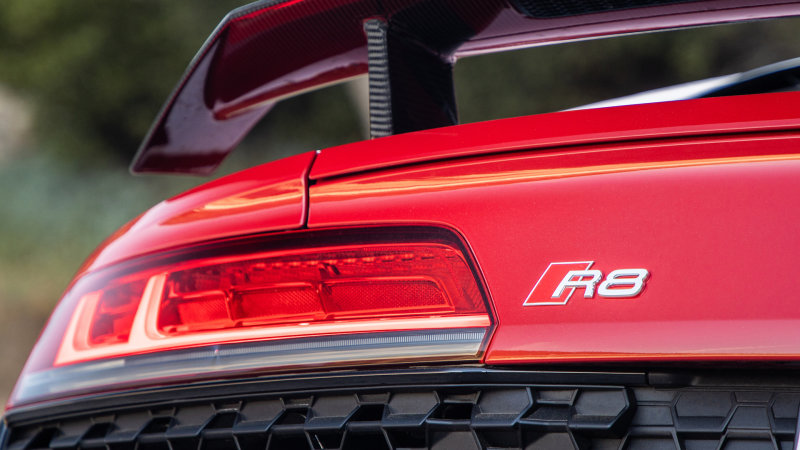
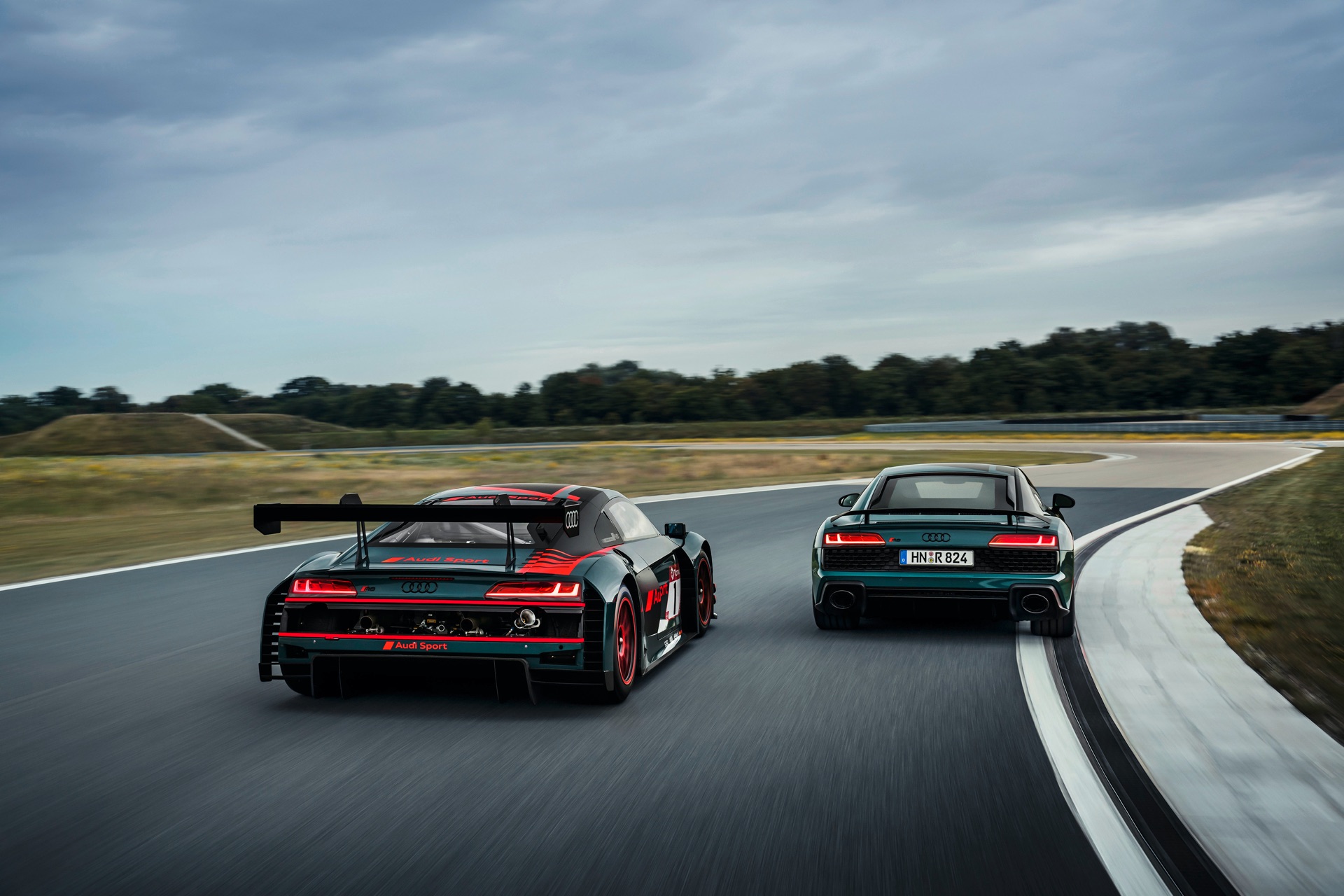
Audi recently announced a limited edition run of 50 Audi R8 Green Hell models. The special edition pays tribute to the Audi R8 LMS and its 5 victories in the 24 Hours on the Nürburgring.

The 24 Hours on the Nürburgring takes place this weekend. Clearly, Audi agree that it is one of the best endurance events. The Audi R8 Green Hell pays tribute in a unique way.

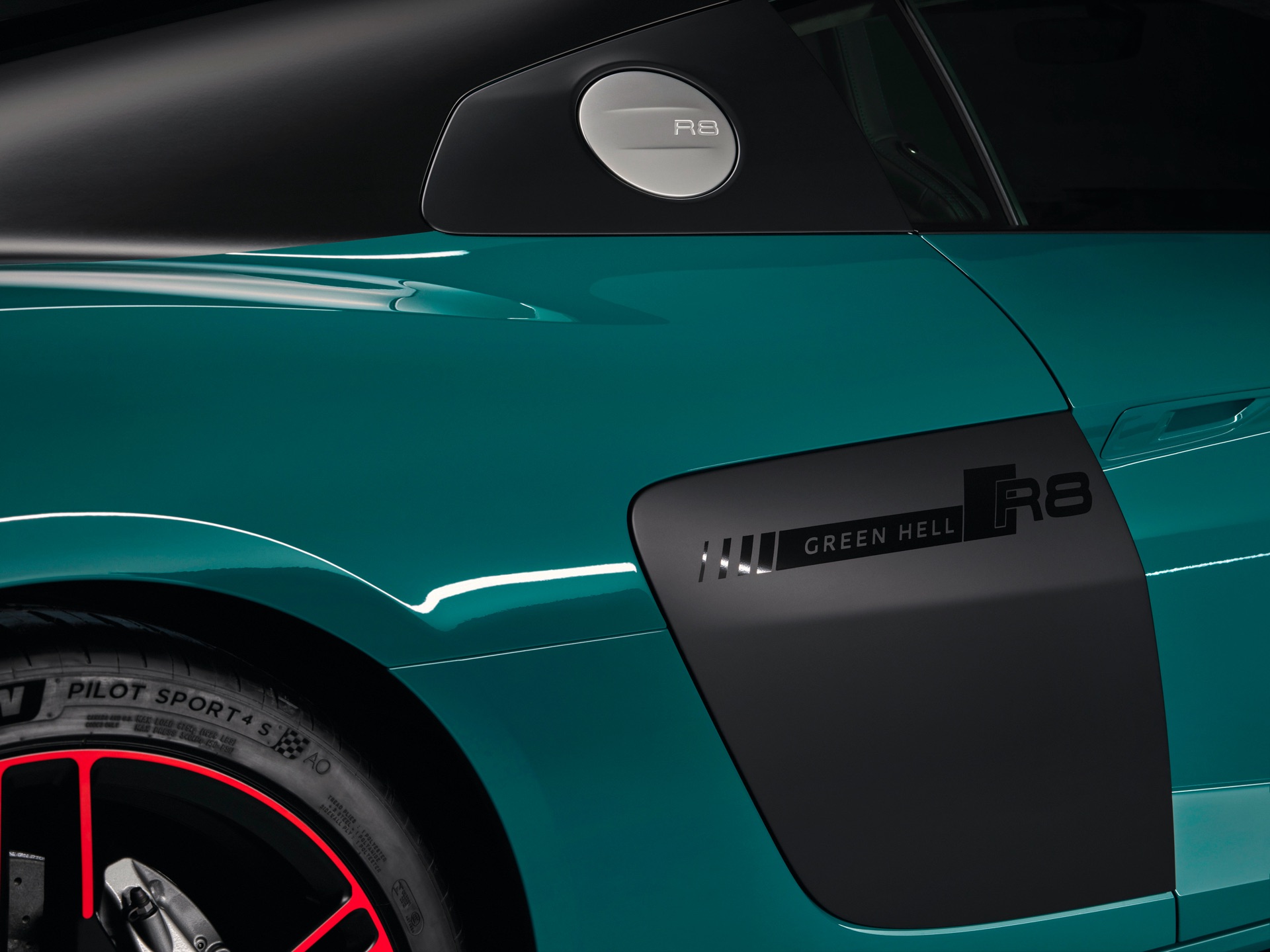
The release colour, the only standard paint scheme, is dark Tioman green. Customers have the option, of ibis white, Daytona gray or mythos black if they prefer something different.

The front hood, A-pillars, roof and rear end are covered partially in matt black foil while the doors get the edition number in large transparent matt figures. They are designed to resemble the 24 Hour starting number.

Green Hell R8 logos are plastered onto the side blade and the windshield. A matt black styling package adds highlights to the front end, sills and diffuser.

Audi R8 Green Hell Side Design

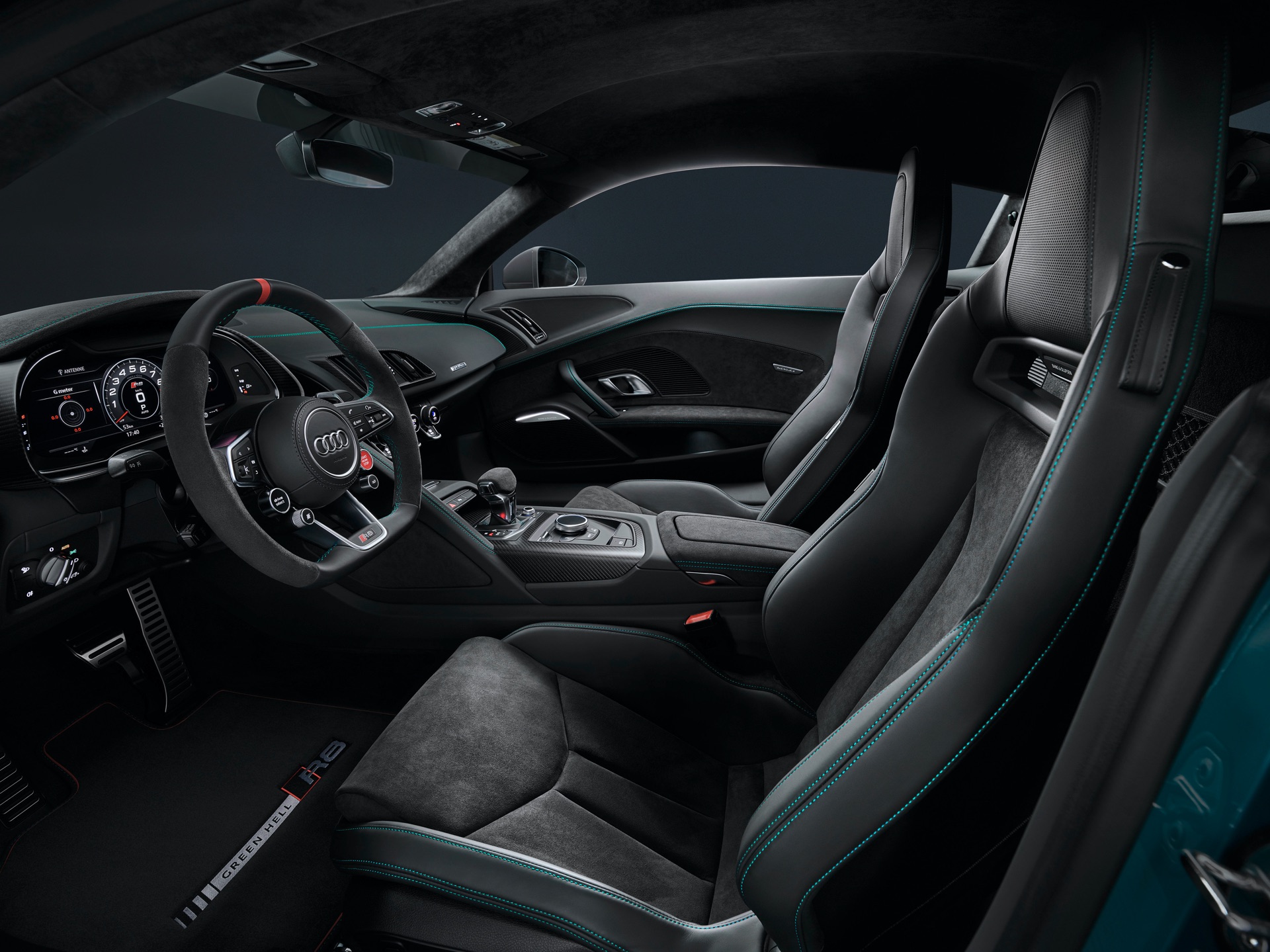
The 20-inch wheels are also painted matt black with red details. Inside, the driver sits on lightweight bucket seats with center panels upholstered in Alcantara.

Red accents are carried across the steering wheel rim, the dash, on the door armrests, knee pads and on the center armrest. Blue-green “Kailash fern” stitching contrasts.

Audi R8 Green Hell Drivers Side Interior

The Audi R8 Green Hell uses the R8 Coupe Performance as its base. It gets a 5.2 litre V10 engine, rated at 620 hp, capable of a 100 km/h sprint in just 3.1 seconds and a top speed of 331 km/h.

The Audi R8 LMS will be well represented on the Nurburgring this weekend with three factory entrants alongside two Phoenix Racing entrants, two Car Collection entrants and a sole Audi of RaceIng.

Audi R8 Green Hell and R8 LMS Rear

It will compete against a packed grid of seven Porsche’s (less the factory entrant forced to pull out through positive Covid-19 tests for 3 pit crew), seven Mercedes-AMG GT3 Evos, five BMW M6 GT3s, two Ferrari 488 GT3s, a Lamborghini Huracan GT3 Evo and a brand new Glickenhaus SCG004c.

The 50-car Audi R8 Green Hell production run will retail at 233,949.59 euros in Germany.

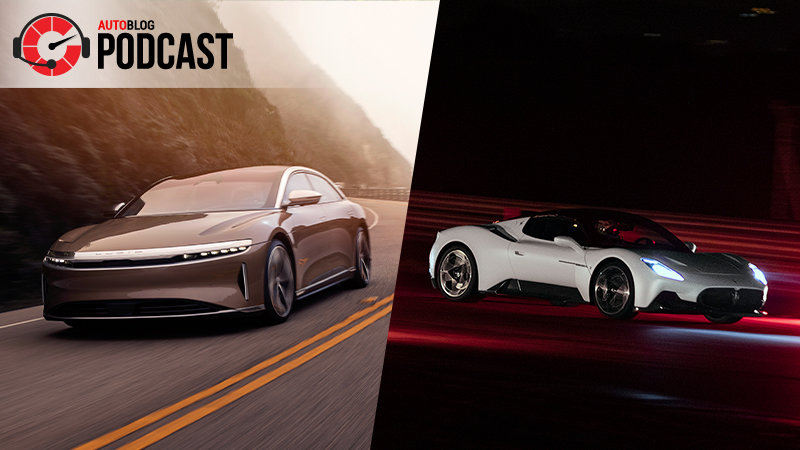
Lucid Air and Maserati MC20 unveiled | Autoblog Podcast #644

In this week’s Autoblog Podcast, Editor-in-Chief Greg Migliore is joined by Associate Editor Byron Hurd. Before they get to the juicy news of the week, they chat about the cars they’ve been driving, including a Ford Mustang Shelby GT350R, Audi A6 Allroad, Mazda CX-9 and Kia Niro. It’s been a busy week in the news department, with GM investing in Nikola, Lucid Motors launching the Air electric sedan, Maserati unveiling the MC20 mid-engined supercar and a farewell to the Lexus GS. Then they talk about having a newfound respect for the Fox Body Mustang and the Mazda CX-9.

Autoblog Podcast #644

Get The Podcast

  • iTunes – Subscribe to the Autoblog Podcast in iTunes
  • RSS – Add the Autoblog Podcast feed to your RSS aggregator
  • MP3 – Download the MP3 directly

Rundown

Feedback

Related Video:

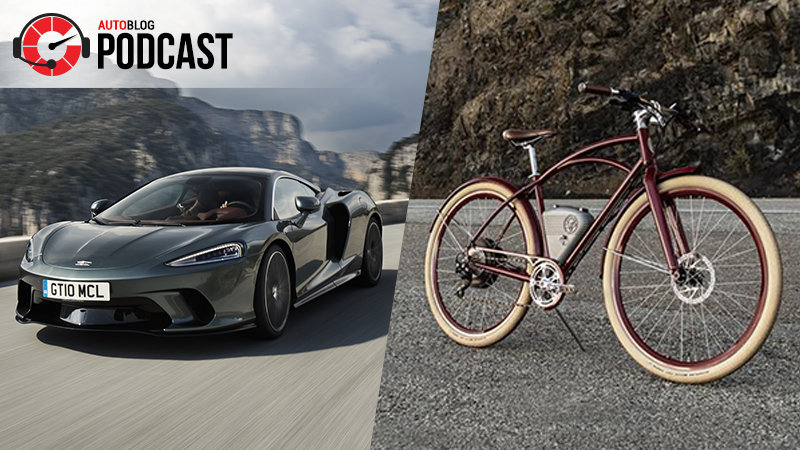
Driving the McLaren GT, Audi S7 and Vintage Electric Cafe bicycle | Autoblog Podcast #639

In this week’s Autoblog Podcast, Editor-in-Chief Greg Migliore is joined by West Coast Editor James Riswick and Road Test Editor Zac Palmer. This week, they’ve been having some fun in the McLaren GT and the Toyota 86 GT. James has spent some time with the very lovely Vintage Electric Cafe e-bike. They’ve also been driving the Ford Ranger and Audi S7. In the news, Ford gets new leadership, and Micro Machines are back, baby!

Autoblog Podcast #639

Get The Podcast

  • iTunes – Subscribe to the Autoblog Podcast in iTunes
  • RSS – Add the Autoblog Podcast feed to your RSS aggregator
  • MP3 – Download the MP3 directly

Rundown

Feedback

Related Video:

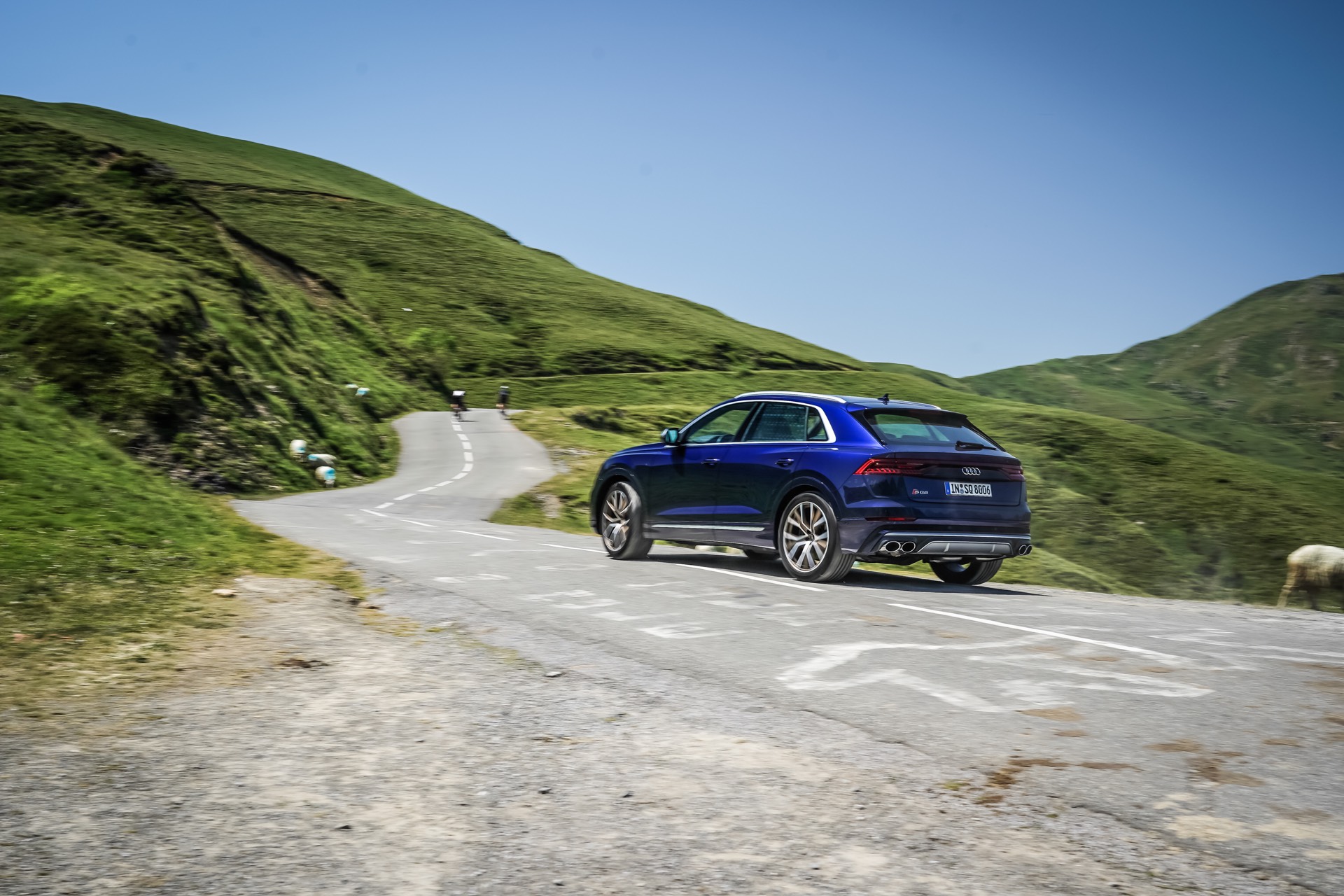
Audi Expands SUV Offerings with Petrol SQ7, SQ8

Audi’s SQ7 and SQ8 offerings emerged last year. Against the market, the German behemoth chose to release the performance models with diesel power.

A little over a year after the diesel models debuted, Audi has released petrol versions.

The TFSI models both use the 4.0 TFSI V8. Power output is 507 hp, while torque is 770 Nm. That’s enough to get both cars to 100 km/h in 4.1 seconds with a top speed limited to 250 km/h.

Compared to the SQ7 and SQ8 TDI, that’s an improvement of 0.7 seconds. Of course, part of the difference is down to weight.

The petrol model will carry around 300 kg less than the diesel variant. This is mainly due to the fact that it does without the 48 volt system found in the TDI.

The SQ7 and SQ8 TFSI, instead make do with twin-scroll turbochargers. To improve efficiency, Audi also offers a cylinder on demand (COD) system.

Of course, you can’t pack this much power and performance without making changes to the chassis. As with the TDI, the TFSI comes equipped with adaptive air suspension, controlled dampers and all-wheel steering.

Audi SQ7 TFSI Rear

Audi’s excellent electromechanical active roll stabilization (eAWS) system is also on offer. It includes a sport differential.

In the looks department, the Audi SQ7 now comes with 20-inch wheels as standard, with wheels up to 22 inches available as an option.

The SQ8 gets larger 21 inch rims as standard with 22- and 23-inch wheels optional. Both cars feature front brake discs measuring 400 millimeters in diameter.

If you want one, Audi will launch them in the Autumn of this year. List prices in Germany are 93,287.40 for the SQ7 and 101,085.72 euros for the SQ8. Both undercut their respective RS models by about 26,000 euros.

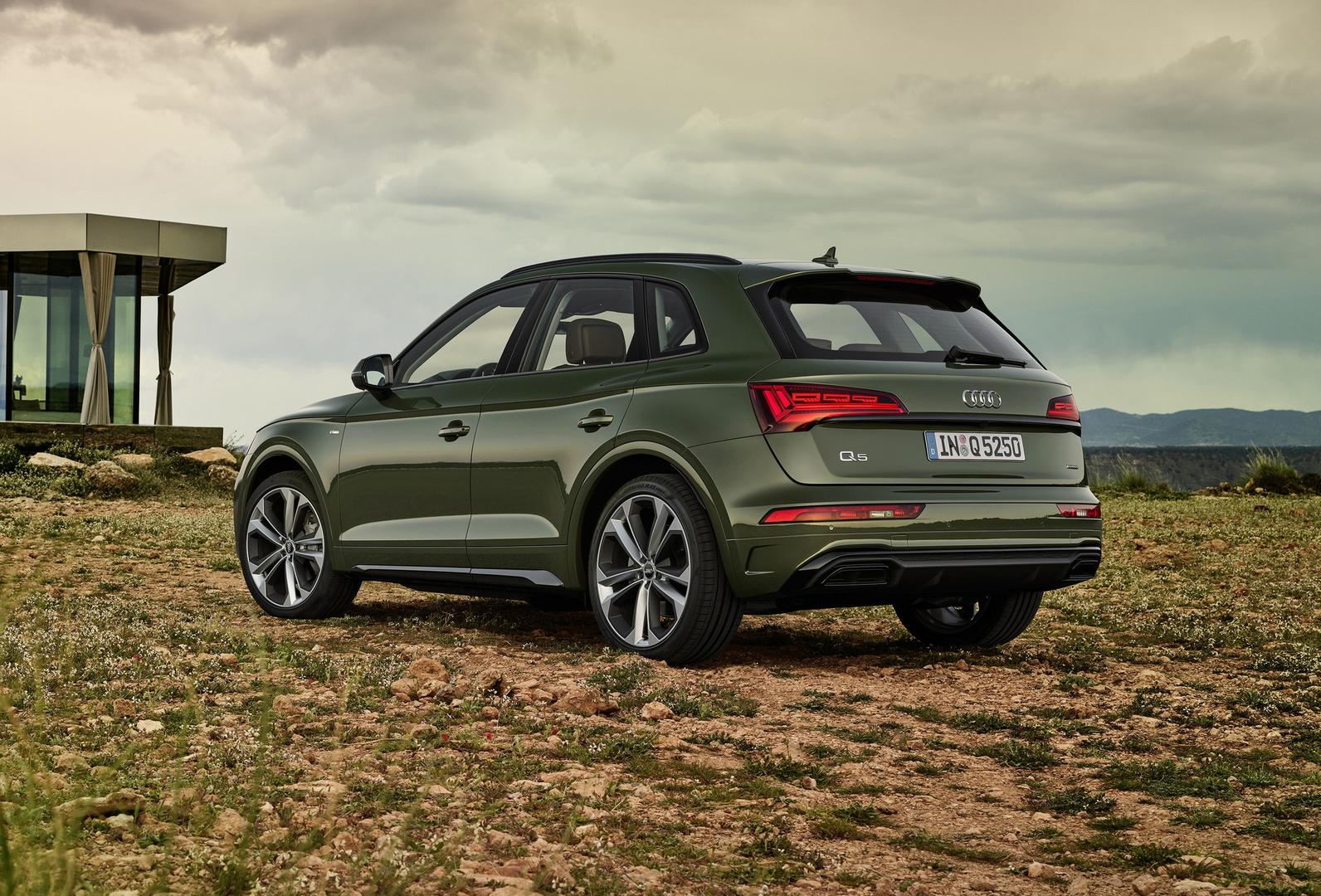
Audi Q5 Facelift: Popular SUV Gets Update

The Audi Q5 facelift was officially unveiled earlier this week. It is one of Audi’s best-selling models at the moment, which makes it an important update for the German behemoth!

The facelift is fairly light touch, but extends to the styling, technology, and to the drivetrain.

A market launch is planned for Autumn 2020. The press release reveals that the Q5 facelift will be built at Audi’s San José Chiapa plant in Mexico.

Audi Q5 Facelift

So what’s new for the Audi Q5 facelift? The answer is, a fair bit! You just have to look closely.

One of the biggest changes, as with any facelift model, is the updated lighting setup.

OLED lighting technology is available in the Q5 for the first time. The optional OLED rear light is split into three tiles of six segments each.

At the front, the basic equipment for the Q5 is now LED headlamps, with matrix LED headlamps an optional extra.

Elsewhere, the octagonal Singleframe is now shallower and wider than before, the side air intakes are larger. At the back, there is a new trim element between the light clusters and a new diffusor insert.

2021 Audi Q5 Side Rear

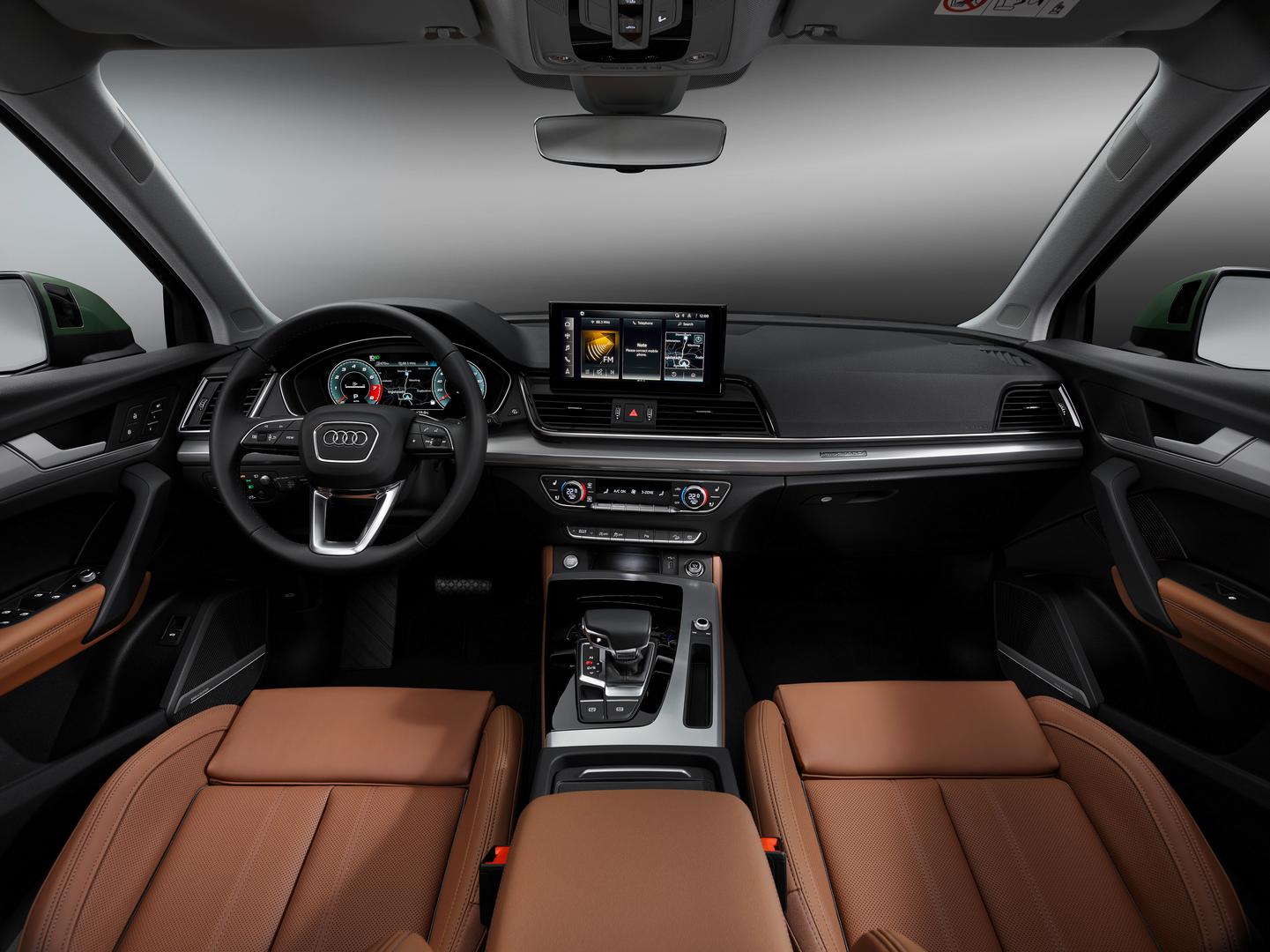
Inside, Audi’s redesigned dashboard echoes the Audi A4. Its adopts a free-standing central 10.1 inch touchscreen Audi’s latest MMI infotainment software.

Audi has dispensed with the rotary/push control on the transmission tunnel.

While width and height remain unchanged, the Audi Q5 facelift grows by 19 millimeters in length. The sliding rear bench option increases rear luggage space.

A single variant is on offer in Europe from launch. The Audi Q5 40 TDI gets a 2.0 litre, four-cylinder turbodiesel engine.

It generates 204 hp and 400 Nm of torque, combined with a mild hybrid system (MHEV). Work on the aluminium crankcase and crankshaft has saved 22.5 kg of weight.

Best Selling SUV

2021 Audi Q5 Interior

The Audi Q5 facelift is incredibly important to Audi. During the first 9 months of 2019, the German giant produced 212,336 Audi Q5’s compared to just 169,577 Audi A4’s.

However, the figures are roughly comparable to the BMW X3 and the Mercedes-Benz GLC, both of which were recently updated and are now much more competitive than they have been in the past.

What’s Next for Audi?

Audi is expected to launch more power units in the coming months, and before the Audi Q5 facelift hits the market in Autumn.

Audi is also expected to produce a Q5-sized electric SUV, the Audi Q4 E-tron, which is sure to be a success.

ABT RS7-R: Audi RS7 Sportback Gets 740hp Upgrade

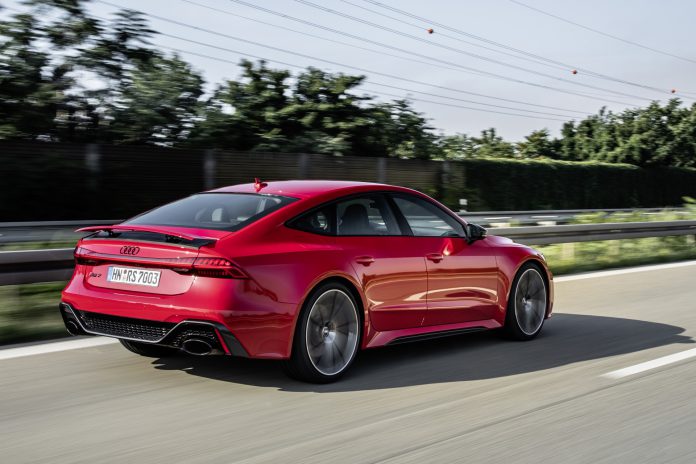
ABT has finally turned its attention to the RS7 Sportback. The ABT RS7-R turns the RS7 into a monster sports sedan thanks to a healthy boost in performance, additional carbon fibre body parts and a unique wrap.

The ABT RS7-R is limited to just 125 copies. At the heart of the package is a power boost. The ABT Power R package boosts output from 600 hp and 800 Nm of torque, up to 740 hp and 920 Nm of torque. There is little explanation as to how the boost is achieved but it should be reassuring to learn that the improvements come with a 2-year guarantee.

The suspension also receives a set of modifications. Customers have two options. A set of ABT coilover suspension springs can be specced with a height-adjustable front (5 – 25 mm) and rear axle (5 – 30 mm). A set of sports anti-roll bars are also on offer constructed from high-tensile steel with forged ends.

The ABT front grille frame add-on and front lip add-on are new. These combine with an ABT rear spoiler and rear skirt add-on. Further optional extras such as an extended interior package or the optionally available 22-inch ABT HR Aero wheels can be found in the ABT Configurator.

The example in the photos belongs to Daniel Abt, the founder’s son and current Formula E drive. It’s called the ALLTHEWAYABT RS7-R, adorned with a special orange-coloured design. They combine with a painted set of brake callipers and a set of 22-inch HR wheels which are options for any other RS7-R.

Inside, ABT are able to offer a complete set of interior enhancements with ABT leather and carbon fibre available for the steering wheel. This ABT RS7-R also gets a new seat set.

Of course, if you want something a little less subtle, ABT also offer a 700 hp upgrade.

GTSPIRIT NEWSLETTER

Audi A3 Sportback Revealed for 4th Generation

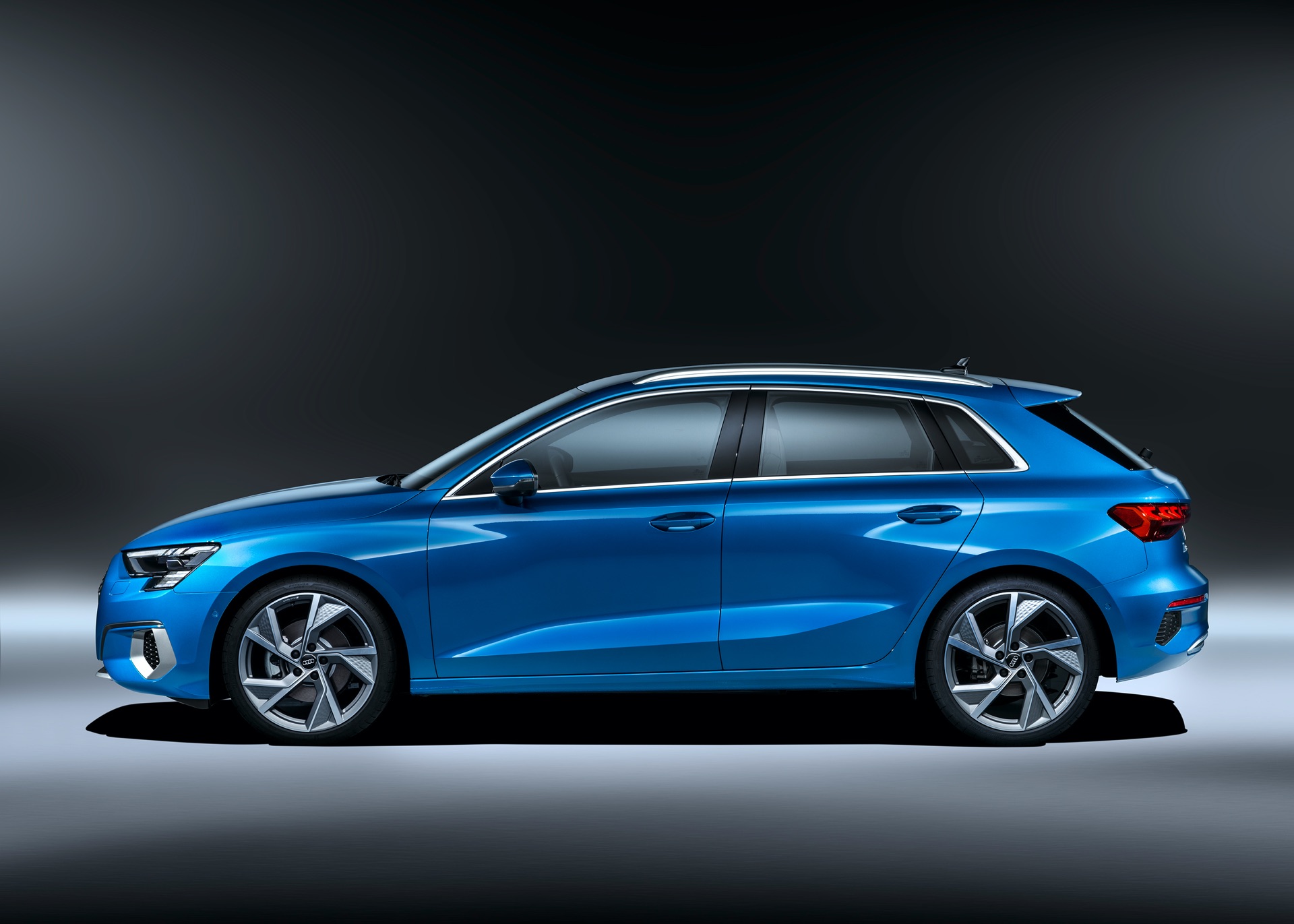
Audi’s A3 is one of the longest established premium hatchbacks on the market. The Audi A3 has been available since 1996, long before BMW and Mercedes-Benz established themselves with the 1 Series and A Class. In its fourth generation, the new Audi A3 injects more sport, technology and connectivity than ever before. and fully connected.

The changes for the new Audi A3 Sportback are all-encompassing. They include a new Singleframe grille with large air inlets at the front end. The styling is all-new, retaining the general proportions with smooth lines front to rear and a wider took to the rear arches. The digital daytime running lights and Matrix LED headlights are now available too, previously reserved for Audi’s top models.

Power comes from a choice of three engine versions – a 1.5 TFSI with 150 hp, and a 2.0 TDI that delivers 116 hp or 150 hp. All engine versions, from launch, will be combined with front-wheel drive. Customers will get a choice of either a six-speed manual transmission or a seven-speed S tronic automatic box. More versions will follow with electrified drive systems and quattro.

The suspension of the new A3 Sportback includes a four-link rear axle for engines of 150 hp or more. As an option, customers can spec adaptive damper control which lowers the ride by 10 mm. With the sport suspension, standard with the S line exterior, the A3 is lowered by 15 mm.

The new Audi A3 gets a range of driver assistance tech too. Audi pre sense front, swerve assist and lane departure warning are standard. Lane change and exit warnings as well as the cross-traffic and park assist systems, are available as an option. Adaptive cruise assist is also available.

Inside, the new A3 Sportback offers more space It grows by just over three centimetres compared with its predecessor. It carries between 380 and 1,200 litres depending on the configuration of the rear seats.

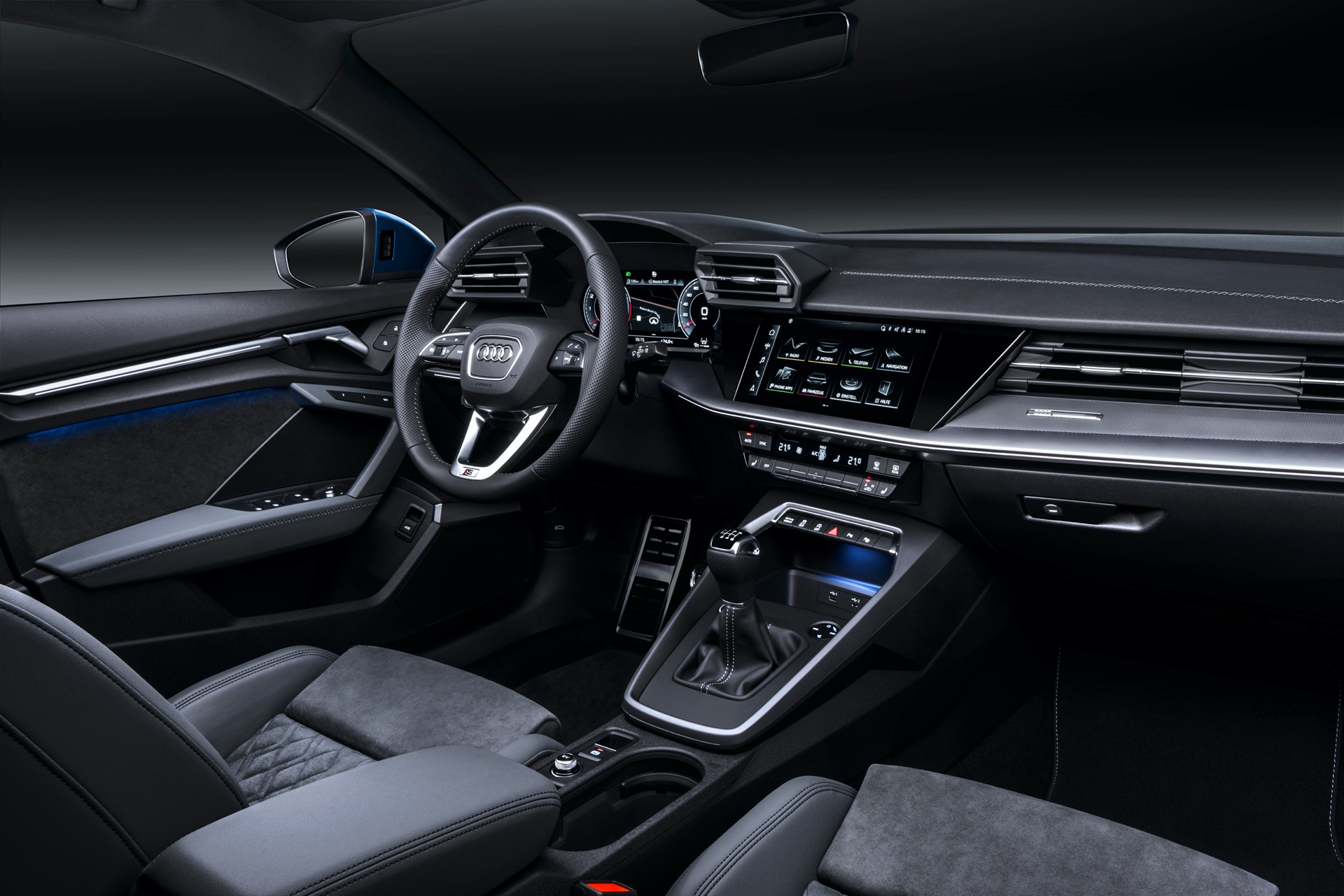
The new interior includes a new shifter, aluminium or carbon inlays, door openers and an instrument panel with a black-panel look. The seat upholstery is made of recycled PET bottles and adorned with contrasting stitching.

As with most hot hatches these days, the Audi A3 Sportback gets a wealth of technology through the MMI screens. It comes equipped with a 10.1-inch touch display as standard, which is integrated into the centre of the instrument panel. This recognizes letters entered by hand, provides acoustic feedback and can be controlled using natural language.

The instrument cluster, which the driver operates via the multifunction steering wheel, is also digital as standard. The Audi virtual cockpit offers additional functions such as a large display of the navigation map. The plus version measures 12.3 inches and offers three different views, including graphics with a sporty look.

The operating system is powered by the new third-generation modular infotainment system. Its computing power is ten times higher than that of its predecessor controlling connectivity, telephony and the Audi connect services with LTE Advanced speed. It also has an integrated Wi-Fi hotspot.

Individual settings can be stored in up to six user profiles. These include settings for the climate control and the seat position. The DAB+ digital radio is standard and the online or hybrid radio is available as an option. Route guidance is more advanced than ever before with predictions on the development of the traffic situation, high-resolution satellite images from Google Earth and detailed 3D models of many major European cities.

Connect services also include the car-to-X service. This helps to find free parking spots on the roadside or to predict traffic lights. The A3 Sportback is also connected to your smartphone via the myAudi app, Apple CarPlay or Android Auto.

Presales of the new Audi A3 Sportback start in Europe in March 2020 with the first deliveries in May. The 1.5 TFSI starts at 28,900 euros with a special-edition A3 Sportback edition one on offer.

GTSPIRIT NEWSLETTER

Lego Speed Champions Ferrari F8 Tributo and 1985 Audi Sport Quattro S1 are 25% bigger

During a week when auto manufacturers are at the 2019 Los Angeles Auto Show debuting real, drivable cars, Lego has debuted two new toy car kits modeled after the 1985 Audi Sport Quattro S1 and the Ferrari F8 Tributo. The new models also show off an improvement to the Lego Speed Champions series: the kits are now 25 percent bigger.

Lego is expanding its Speed Champions line of blocky car kits with two high-performance rides with very different purposes from very different times. One is a modern supercar, the other is a classic Group B rally car.

The F8 Tributo is an inch high, five inches long, and three inches wide. It wears a clean red color scheme with a black splitter and black diffuser, and the only stickers are the headlights and the badges. The toy design carries over features of the F8 such as the hood and side body scoops, and the tiered taillights. and the rear engine cover.

The S1, which is celebrating its 35th anniversary, has a much busier design. The main body of the car is white and yellow with retrolicious yellow body graphics. Black, gray and red striping add to the scheme, and “Audi,” “Audi Sport,” “Audi Team” and “quattro” stickers are seen on the body, the windshield, the hood and the rear wing. Clustered front rally lights, wheel flares, angular aerodynamic pieces and two sets of wheel designs help make the quattro look as authentic as possible. The car also comes with a miniature racer who can sit in the car and grip the stick shift.

Both the Ferrari and the Audi will be released for January 2020. Each model is listed at $19.99, plus tax.

2020 Audi R8 Coupe and Spyder First Drive | V10 > turbo

SANTA BARBARA, Calif. — It’s usually a bad sign: Rocking out of Los Padres National Forest in the updated 2020 Audi R8, I spot two California Highway Patrol cars lying in wait on Highway 33, one of the fantasy driving roads the state is known for. But these officers aren’t here to hand out tickets, but to lend a hand — closing off the road so we can run repeated launch-control starts in these mid-engine, all-wheel-drive supercars.

The drag-racing demo, in both coupes and Spyder convertibles, highlights reasons why one might drop $197,150 on the R8’s V10 Performance edition, or $209,350 on the Spyder V10 Performance. (They replace last year’s V10 “Plus” models). One is the 602-hp, naturally aspirated 5.2-liter V10. It’s a spectacular anomaly in a world dominated by turbocharged powerplants, the last of two production cars in the world with a V10. The other is its Italian cousin, the Lamborghini Huracan. Audi powers its R8 LMS race car with the identical V10, and both R8 coupes and racers are built on the same assembly line.

We stand in awe as Audi after Audi crackles off the line and sprints into the distance, rending the air with throaty howls en route to a wicked 8,700-rpm redline. (A Sport exhaust button that amplifies the sound is right there on the steering wheel, and owners are likely to wear it out). Audi plays it cool with a conservative 3.2-second 0-60-mph estimate for the R8 Performance coupe; 2.9 seconds is closer to the truth, as achieved in previous tests of the R8 in this engine spec. The Spyder is estimated to run only a tenth slower to 60 mph. Both models deliver the 200-mph bona fides of a self-respecting supercar, at a 205-mph peak for the Coupe and a hair-mussing 204 mph for the Spyder.

The 2020 update also brings a healthy 30-horsepower bump for the base R8 coupe and convertible, from 532 to 562 horsepower, and eight additional pound-feet of torque, now at 406 pound-feet. Audi pegs their 0-60-mph dashes at 3.4 and 3.5 seconds for the base coupe and Spyder, respectively, and sets their prices at $171,150 and $183,350. There’s also a coupe-only Decennium edition, limited to 222 copies, with the final 50 coming to the States. It’s a trim package that comes only in Mythos Black paint and all-black interior, with an intake manifold and wheels in matte-bronze finish and side blades, rear wing and other components in gloss carbon fiber.

On the 2020 design front, a reworked front bumper features a more horizontal perspective that accentuates the Audi’s lowness and width. That includes a dramatically stretched, black honeycomb grille, a new spoiler lip and lateral air intakes. That front end now incorporates a faux, winged inlet that bookends the bumper — and whose plastic-capped “opening” seems more from the Lexus school of overworked design than Audi’s typical understatement. Headlight lenses have been darkened, and a redesigned rocker panel gets a new inlay. Audi’s Laser Light high beam is standard on Performance versions, and their crisp, ultra-long-range illumination steps in for conventional high-beams at speeds above 40 mph. The Laser Light’s decorative blue element illuminates on European-market models, but U.S. regulations forbid any trace of blue lighting.
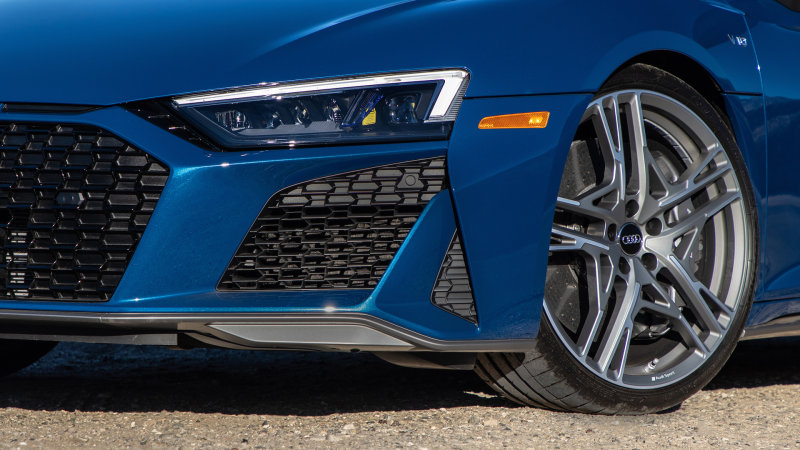
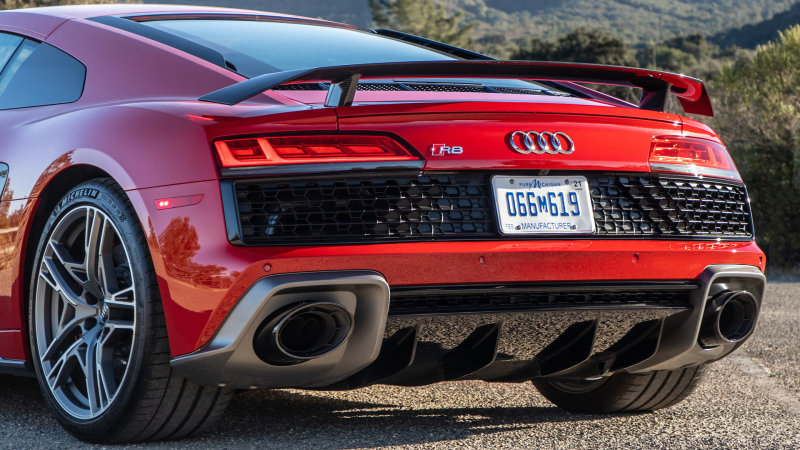
The new rear bumper adds a pair of generously sized oval exhaust outlets, more honeycomb for air outlets, and a new rear diffuser. Basic V10 models get standard 19-inch forged wheels, with optional 20s. Performance editions now come standard with 20-inch forged wheels with a somewhat busy, milled-cut design with a black-and-titanium finish. Our colorful selection of R8s tended to look better with optional 20-inchers with a simpler profile and titanium finish.

Two lovely new colors join the R8 palette: Kemora Gray and Ascari Blue metallic, the latter only available on V10 Performance cars. Ceramic brakes, standard on V10 Performance models, offer a choice of red calipers in addition to standard gray. Finally, the Performance coupe alone offers a world first for Audi: a carbon-fiber front sway bar that trims 4.4 pounds of weight. Every little bit helps for the R8, a relatively chunky sports car — especially compared with carbon-fiber monocoque McLarens — that plops as much as 3,957 pounds on the scales (for a base Spyder). All told, the wide-flanked R8 looks familiar, yet formidable, its ability to draw admirers undimmed by time.

Our day begins in Santa Barbara with a Spyder Performance, its fabric top down and its wind-deflecting rear glass up. After heading along coastal Highway 101, we’re soon detouring into California’s bone-dry, tinderbox canyons, even as fire crews battle new blazes in nearby Los Angeles. The Audi saves its scorching for the pavement, as I dial its dimpled, asymmetric steering wheel and get into a nice rhythm through the twisting mountain roads. 

This R8 is dearly priced by any standard, but you get what you pay for in the high-design interior, decked out with carbon fiber, burnished aluminum and diamond-stitched leather on 18-way power sport seats. Racing-style shell seats are available, but those aggressive chairs don’t seem to fit the Audi’s daily-driving personality. Audi might disagree, considering the R8’s impressive race record, including three wins at the 24 Hours of Nürburgring.
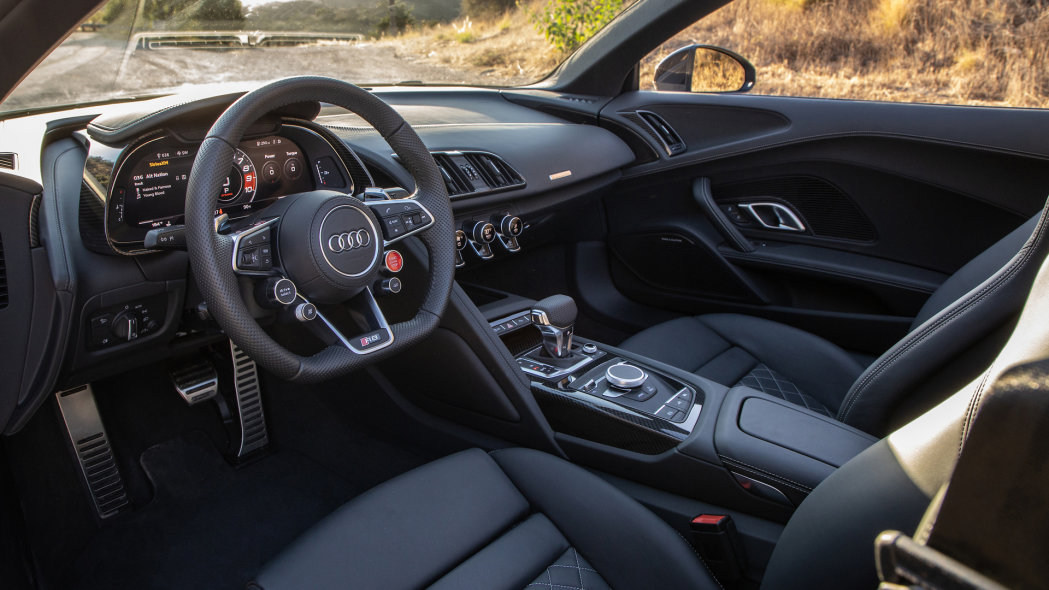
That personality combines accommodation and excitation like few cars; the R8 helped create the notion of the “everyday supercar,” and its precision build quality and user-friendly technology remain strong points. That extends to Audi’s Google-mapping virtual cockpit infotainment system and 13-speaker Bang & Olufsen sound system (standard on Performance models), which continue to set the standard in its class. If all-black Audi cabins strike you as boring, Pastel Silver or Palomino brown are new interior colors.

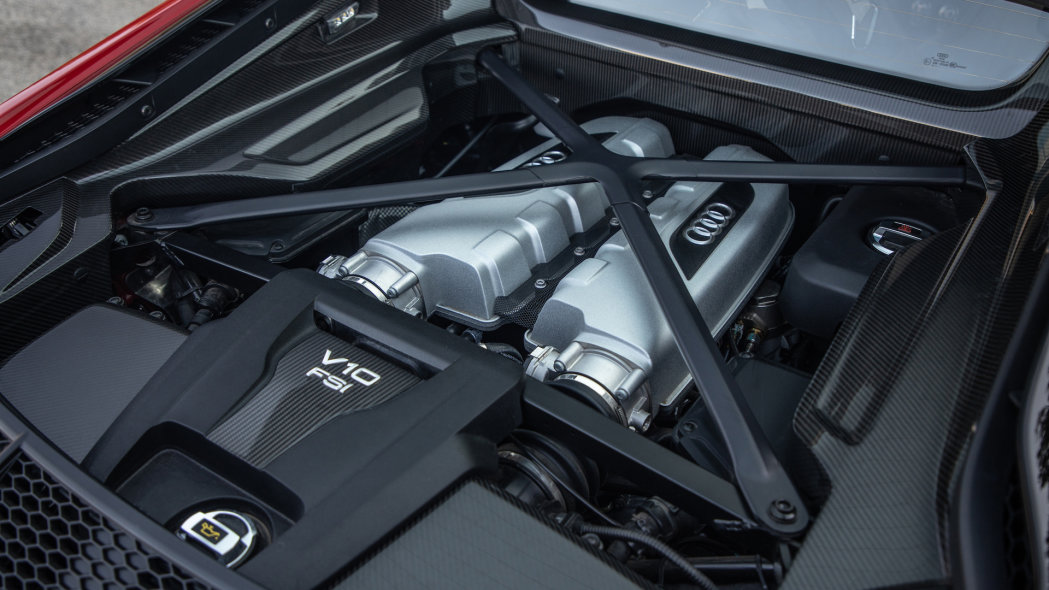
The Spyder looks sweet top-down, and admits more of that glorious 10-chamber orchestra, but those advantages don’t seem enough to overcome its drawbacks: a shortage of seat travel (the chairs wedge right up against the rear firewall), and the attendant lack of useful recline from the seatbacks. The coupe, in contrast, carves out room behind seats for small bags, backpacks or odds-and-ends — not a ton, but enough to make a difference in a car that’s otherwise limited to a modest frunk below the hood. And where the coupe proudly exhibits its signature V10 under glass, topped with a black X-brace, the Spyder’s engine stays out of sight below its vented, power-folding tonneau cover.

As it’s evolved, the R8 has steadily become more rewarding to drive, less victimized by understeer and more limber-feeling at the helm. For 2020, the electrically assisted steering reduces the assist during cornering to deliver more weight and feedback though the wheel. Optional Dynamic Steering (at $1,400) aims for more-natural feel as well, with less-aggressive ratio adjustments relative to vehicle speed and steering angle.
Where standard models come with a versatile, adjustable magnetically controlled suspension, Performance editions get a stiffer, fixed steel suspension for superior control, though with a notably firmer ride. For 2020, Audi has traded the R8’s previous Pirelli P Zero tires for a grippier set of Michelin Pilot Sport 2s with a custom rubber compound. (You’ll spot a little “AO” symbol on the sidewall, for “Audi original”). Stability control and ABS programming are mildly retuned to account for the improved grip, and the (optional) variable-ratio steering makes subtler ratio adjustments than before. Throw in a seven-speed dual-clutch S-Tronic transmission — which Audi says can swap speeds in as little as 120 milliseconds — and it’s a delight to rip through those gears to the tip-top of redline, whether in full automatic mode or by thwacking the finely weighted, metal paddle shifters. Hold that left paddle down, and the Audi will limbo to the lowest possible gear, skipping from, say, fifth gear to second in one swoop. This is an extremely short-geared car, with second gear topping out at around 67 mph, and fourth gear running out at barely 105 mph.

On one long, canyon-blasting descent, I employ left-foot braking to balance the Audi into blind apexes, then roll onto the throttle and feel the Haldex-based front axle come online, maximizing grip and exit speed as I hurtle toward the next corner like a barrel over Niagara Falls. This is one fast, confident sports car, and its V10 gushes power and never quits, as evidenced by that 200-mph-plus top speed.

The R8 still makes a vivid statement of design and performance, yet it’s always run a bit below the radar, including in sales. Since its debut in 2007, Audi has moved about 800 R8’s a year in America on average, including a high-water mark of 1,145 cars in 2011.  This is a supercar for a more practical-minded, German-favoring buyer, a contrast to the flashier form and naked emotionalism of the Lamborghini Huracán. Those Audi fans are just the type to do some practical math as well: The standard R8 Coupe undercuts the Huracan Evo’s price by about $90,000. 

2020 Audi RS4 Avant Updated with a Fresh Look

The Audi RS4 Avant has fallen out of favour in recent years. There was a time when the RS4 was the darling child of the Audi Sport range. In recent years, it is the Audi RS6 Avant which has driven the fortunes. Audi will be hoping that its latest update to the baby Avant will push sales back to where they belong.

The Audi RS4 Avant gets updates that mirror those applied to the Audi A4 range earlier this year. The front has been completely redesigned. It gets a wider and flatter single-frame grille, similar in style to the version found on the recently released Audi RS6 Avant. It is fitted with black gloss, three-dimensional honeycomb, typical of RS models.

The LED headlights also receive a refresh. Optional matrix LED units get darkened bezels. They complement the gloss black, matt aluminium and carbon fibre styling packages which add sill inlays, exterior mirror housings and elements to the front and rear bumper.

The side profile remains unchanged. The wheel arches are 30 mm wider at the front and the back compared to the A4 Avant. At the rear, a new twilight design should make it clear to the rest of the world that you are driving the latest and greatest. New air vents next to the tailpipes are also evident. Otherwise, everything else appears untouched.

The power unit is what really matters with the RS4 Avant though. The 2.9 litre V6 receives some work. It now produces 450 hp and 600 Nm of torque, sprinting from zero to 100 km/h in just 4.1 seconds. Audi engineers the twin turbochargers to act on each individual side of the cylinder bank, mounted within the V.

Power is routed through the quattro system via an eight-speed tiptronic gearbox. A torque vectoring system is on offer too, assisting with handling on difficult surfaces. An optional quattro sport differential provides an even better response.

Inside, the latest 10.1 inch MMI touch display welcomes the driver with the option of the Audi Virtual Cockpit with unique RS displays showing information on tire pressure, torque, power output and other performance-oriented details.

The Audi RS 4 Avant will make its debut at the DTM finale at the Hockenheimring on 4 to 6 October 2019. Sales in Germany and other European countries will start in October 2019. Prices for the RS4 Avant should start at 81,400 euros.

GTSPIRIT NEWSLETTER

Abt Creates One-Off 400hp Audi A1 as Ultimate Pocket Rocket

Not content with waiting for a performance version of the Audi A1, Abt recently announced a one-of-one tuning package. The Abt A1 “1of1” was built for Daniel Abt, Abt racing driver and the son of owner and principal of the Abt Sportsline team, Hans-Jürgen Abt. The ultimate pocket rocket features a unique set of updates.

The Abt A1 is fitted with a bespoke Abt bodykit. The design is clearly inspired by DTM with new front fascia, incorporating a deep front splitter and a new set of air intake surrounds and multiple canard-style air channels. The fenders receive a bolt over look, widening the bodywork significantly. There is a new bonnet, side skirt and mirror coverings. At the back, Abt have fitted a massive rear spoiler alongside a new rear diffuser.

The package is finished with a new set of wheels. The 19-inch ABT ER-F forged wheels are finished in black and recieve a set of internally mounted golden aero-rings, evocative of Abt’s Formula E car.

Based upon the 40 TFSI model, ABT has breathed new life into the 2.0 litre TFSI engine. How have they managed to generate 400 hp? The explanation is complicated, because Abt have infact switched the engine from a standard 2.0 litre TFSI to an unspecified 2.0 litre TFSI, likely with racing parts.

Still, should you wish to have your own version, Abt will hapily forego the engine transplant and fit a set of modest performance enhancements, with a new stainless steel exhaust system and 114 mm tailpipes, booting power to 240 hp.

The “1of1” is complete with a set of H & R suspension sprints, rear seat roll bar and a complete Alcantara interior upgrade. Last but not least, Abt are proud of the Erik Aleksanjan, geometric pattern designed which they have termed the “polygon split design”. The design was penned by the same man who styled Jon Olsson’s Audi RS6 Avant!

GTSPIRIT NEWSLETTER

2020 Audi RS7 Sportback Review

There forever has been and, hopefully, will always be an inexplicable level of cool associated with a fast German saloon car. Perhaps it is that they are based cars on which are typically a little beige, boring and, more often than not, diesel barges that trundle down the autobahn minding their own business. Then the skunkworks departments at the likes of M, AMG and RS get to work and the results are snarling hulks that both look and feel like swollen hulks of the timid cars they once were.

Since the turn of the millennium, there have been a couple of personal highlights: the E60 BMW M5 saloon and estate which both featured derivatives of the Williams F1 V10 that howled like nothing else, and the Audi RS6 Avant that also featured a mighty large V10 taken from the Lamborghini Gallardo. The recently replaced Audi RS6 is also up there nestled amongst the best. The pressure is on for the new one to deliver, but the opportunity to drive the RS6 is a few months away. To whet the appetite, Audi asked if I would like to drive the RS7, a car that seems to have been somewhat overshadowed by the mass hankering the market had for the RS6, despite both cars sharing the same mechanicals underpinnings. Could the latest iteration steal the hearts of many as the RS6s of the past had? To find out, I flew to Frankfurt.

Let’s get the numbers bit out of the way: at the heart of the package sits a 4.0-litre V8 engine producing 600 hp and 800 Nm of torque. 100 km/h is dispatched in just 3.6 seconds with a 250 km/h top speed. The Dynamic package removes the limiter, pushing this up to 305 km/h.

A 48-volt system runs a belt alternator starter with car recover 12 kW of power for use between 55 and 160 km/h. The system is meant to provide instantaneous power to the drive while offering the ability to coast on electrical energy with the engine switched off. The cylinder on demand technology further aids fuel consumption. Power is fed to a Quattro permanent all-wheel-drive system through an eight-speed tiptronic transmission. The RS7 gets a launch control function with torque control provided through a sport differential, part of the optional Dynamic and Dynamic plus packages.

That’s that, what does this all feel like off the paper and on the tarmac? Well, that depends on one decision that owners will have to make, it makes a rather considerable difference: suspension. The RS7 can be optioned with either the standard, more comfortable, RS adaptive air suspension or an optional sport suspension with Dynamic Ride Control, that is the one you want. Why? The optional DRC set up is harder and, yes, it is touch harsher on the road. Make no mistake, it is still comfortable when you’re cruising, but when you get a hustle on, the body control and the limit before understeer and tyre squeal become a factor, is far higher.

I am no track day magician, but I was finding the handling limits of the car in the air suspension fitted cars remarkably easily. The conventionally sprung car felt far more up for a good time, and as a result, I feel it is worth the comfort trade-off. All cars tested rode on massive 22 inch wheels all around.

What about the performance? My first thoughts on the autobahn were ‘oh, it’s not THAT quick’, I then looked down and noticed I had hit the top speed. In gear acceleration in first, second and third in particular, is astonishing. It feels every bit 592bhp quick. At speed, the sensation of power is somewhat stymied by the lack of a certain characteristic: sound. There is a huge 4.0-litre V8 under the hood, but you would have no idea judging by the sound in the cabin. It is a little depressing, but it is a sign of the times in a world muzzled by the legislative necessity for the awful OPF. Audi combated my comment stating that they wanted to keep the noise authentic and refused to pipe fake sounds into the cabin…if you listen carefully you can hear BMW M retreating into the bushes.

Back to the bends, there is a lack of something here too, steering weight and feedback. This is a gripe that I’ve had with Audis for years, the chances of this being remedied in the RS7 were slim, it is a little difficult to understand what the front tires are doing and where the limits of adhesion are when there is such an absence of palpable communication coming through the wheel. That being said, there is good news too. The car is savagely fast out of bends and the 48 volt antiroll system masks the weight as well as you could ask from a car that weighs in at 2,500 kilos. As previously mentioned, the DRC suspension is where the car is at its best. It must also be noted that the gearbox is fine on the way up, but hesitates on downshift – third to second, in particular, seems to take an age.

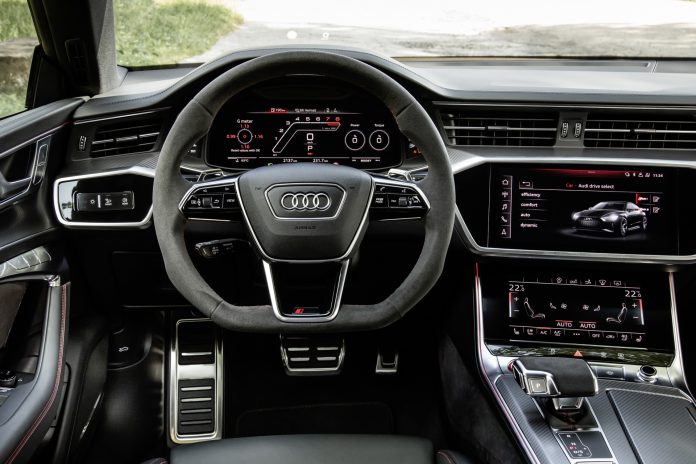
Inside there are a few niggles, but on the whole, the interior is a very pleasant place to be. There are lashings of leather, alcantara and plenty of room in the front and rear. There are also walls of screen. The dash is impressive and there and a multitude of configuration options to display as much data as I’ve seen in a machine this side of an F16. For me, the two stacked central touch screens are a little fiddly on the move and require more concentration than I would like to give them when pushing on or trying to focus on a twisty stretch of tarmac. This, I guess, is personal preference and others may love them as much as I loathe them. On the whole, I feel there could be more going on in the interior to set the RS apart from the series A7 to reflect the changes to the exterior. It lacks a special touch.

On the whole, the RS7 is a mighty fine piece of kit. If you’re in the market for an M5 to E63, the RS7 really is a viable alternative. It is a little softer and quieter than the aforementioned cars, but is by no means slower. It features all the tech you could ever need, is spacious and in plenty fast. Audi claim 0-100 in 3.6, I saw 3.2 time and time again with the deeply effective launch control activated. To answer my opening question, yes, I really think this car deserves adoring fans as there is plenty to love in this new RS7 as there has been in every RS6 to date. Now we need to see just how impressive the new RS6 is.

GTSPIRIT NEWSLETTER

Audi AI:TRAIL quattro – Electric Off-Roader to be Revealed at IAA 2019

The bi-annual Frankfurt Motor Show is getting closer. We are starting the heat about what to expect. One of the concepts to be unveiled is the Audi AI:TRAIL quattro, an all-electric off-roader concept.

The Audi AI:TRAIL quattro is the last of four concepts unveiled since the Frankfurt Show in 2017, which preview Audi’s future. These included the Aicon concept car which debuted at the 2017 Frankfurt Show, the PB18 e-tron sportscar and the Audi AI-ME Concept which debuted at Shanghai earlier this year.

The Audi AI:TRAIL quattro is very experimental. It features a boxy shape with short overhangs and a set of massive off-road tyres. It’s no thinly veiled production model! Instead, it provides an insight into how the off-road segment might evolve in the future.

When the Audi AI:TRAIL quattro makes its debut in Frankfurt next month, it will be on display alongside the other three concepts.

GTSPIRIT NEWSLETTER

The Audi RS 6 Avant Is Coming to America

A Mild Hybrid Rocket of a Wagon

The Audi RS 6 Avant is a powerful wagon with a mild-hybrid powertrain. The vehicle utilizes a 48-volt hybrid system. That system restarts the engine and helps manage electrical power. At the heard of the car is the twin-turbo 4.0-liter V8 engine that puts out a whopping 591 hp and 590 lb-ft of torque. This is the first RS wagon to come to America, and Audi wants to make it count. 

The car comes with dramatically different sheet metal shapes than the regular A6 model. According to Road & Track, the car only shares its front doors, roof, and tailgate with the regular version of the car. Everything else has been tweaked to make the RS 6 more enticing. The car is 1.6-inches wider, giving the car a more capable, muscular look. It has 22-inch wheels and dark accents. The thing looks sleek and dangerous. Enough so that even AMG owners will be gawking. 

The numbers are impressive, too. The burly turbo V8 lets the car sprint from 0-62 mph in just 3.6 seconds. The car tops out at 155 mph. Road and Track noted that the car can actually do 189.5 mph when properly specced (the U.S. car is electronically limited to 155 mph). 

The car uses a 40:60 front-to-rear torque split for its all-wheel drive and the car can shift power side to side as needed as well. Adaptive air suspension comes as standard equipment. The RS sport suspension with Dynamic Ride Control is available for those who want it. 

Audi will bring the car here in 2020 and says it will take orders on the car closer to the date that it’s available. That date and the official price of the car will be announced at a later date. 

2020 Audi SQ7 TDI Next to Receive V8 Diesel

The Audi SQ7 TDI follows on from the release of the Audi SQ8 TDI last month. The facelift model for the second generation receives the same technology as its sportier brother combined with the visual updates applied to the Q7 range at the start of the year.

The previous generation 2 model of the Audi SQ7 TDI featured the same 4.0 litre V8 power plant. Audi’s system for the V8 includes twin turbochargers mounted close to the engine with a supplemental third electric compressor. The third compressor is powered from Audi’s 48-volt system and fills the gap between the turbos spooling and the arrival of that diesel power.

Power remains exactly the same as the outgoing model; 429 hp and 664 lb-ft of torque. The SQ7 TDI hits the 100 km/h mark slightly quicker though with a 4.8 seconds, although the reason why is not entirely clear!

The SQ7 TDI gets all of the trappings of the Q7’s mid-life refresh. These include sharper styling, slimmer headlights and a new front grill. On top of this, the SQ7 gets S-specific details. They include a revamped grille, aluminium mirror details, quad chrome exhaust pipes and 21-inch cast aluminium wheels.

The Audi SQ7 TDI goes on sale in Germany at the end of July and will cost €94,900, with the seven-seat model starting at €96,420.

GTSPIRIT NEWSLETTER

Audi SQ8 TDI Review

In the wake of the diesel-gate scandal, public scrutiny of Diesel engined passenger vehicles has been intense. It seemed that the diesel engine had been condemned. Both Porsche and Bentley have taken the decision to remove high-performance diesel engines from their ranges. Governments have also moved to make diesel ownership less attractive. It made us wonder whether there was a future for the diesel engine. Clearly, Audi thinks that there is with the announcement of the Audi SQ8 TDI!

Audi has re-geared its range in response to the changing markets. It now offers more petrol alternatives in segments traditionally dominated by diesel. The benefits of a diesel engine have always been superior economy and low-down torque. These qualities are being replicated in with a growing number of clever hybrid models. Using electronic motors, most manufacturers have been able to increase power and performance across the rev-range while also boosting efficiency.

Audi’s SQ8 TDI uses the best of both worlds; a twin-turbocharged, 4.0 litre V8 power unit with mild hybrid technology. The 48-volt system powers an electronic compressor which fills the turbo gap in the same way as Audi’s petrol units. Power is rated at 435 hp and a barnstorming 900 Nm of torque. All told, this makes the SQ8 a very quick machine. Power is routed through an eight-speed tiptronic gearbox. Audi quotes a 100 km/h sprint time of 4.8 seconds and a top speed limited to 250 km/h.

The technology does not take away from the fact that the SQ8 is still powered by diesel. After all, there are downsides. Despite Audi’s best intentions, the sound is industrial, not sonorous. Those quad-exhausts put out a consistent rumble, not a bad sound (and definitely indicative of the supreme pulling power) but it is unable to compete with similarly powered petrol engines. As a result, the SQ8 TDI lacks in the dramatics department. That said, the sound is subtle, something which might appeal to the type of buyers Audi hopes to attract.

The chassis is also helped technology. The SQ8 TDI is a near 2.5 tonne SUV. To control that weight and the new turn of pace, Audi has made air suspension standard all round. Options fitted to our test vehicle included all-wheel steering, the rear sport differential and electromechanical active roll stabilisation. The latter is particularly interesting, carried over from the Bentley Bentayga, the anti-roll bars actively decouple in a straight line to allow a more compliant ride. The combination of features makes for a well-controlled ride.

Audi SQ8 TDI Review

The Audi drive select system allows a variety of different settings from comfort through to dynamic modes. As with most setups these days, we found individual mode to be the best of all. Being able to isolate the characteristics, combining a comfort chassis setup with dynamic steering in traffic on a country road, gives the SQ8 an impressive range of skills. Our one criticism is that Audi’s drive select function can be a little difficult to navigate, buried in the central infotainment system. Switching between settings requires diverting your attention away from the road. At times, individual buttons might seem to provide greater accessibility.

No amount of chassis wizardry can help the SQ8 TDI escape the fact that it is a very heavy car, not much suited to narrow mountain roads. The combination of torque vectoring systems and all-wheel steering gives the SQ8 a fair run into the corners with little body roll. Grip is available but is limited by the laws of physics! Truth be told, most SQ8 TDI owners will use their vehicles on the highway or in the city. The majority won’t see this as a limitation.

The SQ8 TDI is instantly recognisable from the outside. Traditional Audi S-badge traits are present. These include a set of silver, brushed aluminium-effect wing mirrors, quad-exhaust pipes, larger wheels and a lower stance. The single-frame grille gets the same silver colouring applied to the frame. It is the traditional blend of subtle changes which are important to the overall feel of the car.

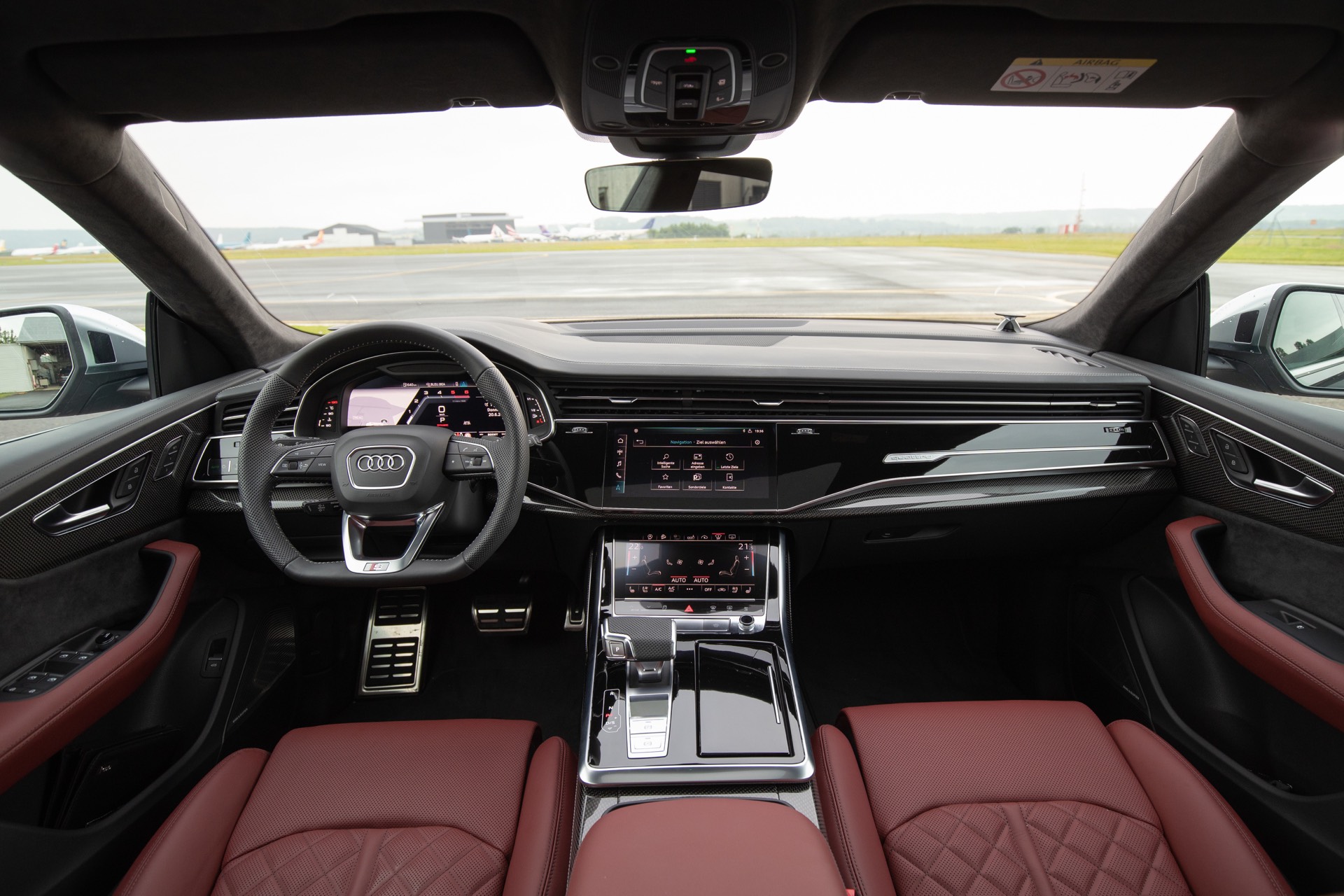
Interior comfort is typical of Audi. Very few changes have been made over the rest of the range. This is for good reason. The Audi interior works very well with comfortable seats incorporating air conditioning, heaters and massage functions. It has a head-up display and plenty of space in the rear. The only noticeable addition comes in the form of optional carbon fibre trim.

The Infotainment system is superb. The digital dashboard is clear with two views and information customised to preference. The traditional dual disks can be replaced at the touch of a button to reveal a full-sized sat nav screen. This frees the central display for something different.

Audi SQ8 TDI Review

The Audi SQ8 TDI will be available in Europe, Australia and Taiwan only. Demand dictates that Audi will not sell the SQ8 in other markets. German pricing starts from 102,900 euros and grows considerably, once you add some of the must-have options to the list (rear wheel steering, electromechanical active roll stabilisation).

Diesel is alive and kicking at Audi. The SQ8 TDI is proof of that. If you are after the fastest diesel-powered luxury SUV on the market then it is the best option.

New Audi S8 Revealed with 571 hp V8

The Audi S8 has been officially revealed. Details have been released for the performance model, confirming that the range-topping limousine uses V8 power once again. The combination of power and technology is likely to place the S8 close to the top of the pile when it comes to sports-focused limousines!

The engine fitted to the S8 should be familiar by now. It featured in the Porsche Panamera Turbo two years ago and can also be found under the bonnet of the Bentley Continental GT. A 4.0-litre TFSI unit, it uses Audi’s favoured bi-turbo setup with the turbochargers mounted inside the V, supplemented by a belt-alternator started and a lithium-ion battery. The setup allows Audi to counter turbo-lag whilst also offering strong fuel efficiency through the use of coasting and cylinder on demand.

In the S8, the power unit is rated to 571 hp and 800 Nm of torque. This is enough for a 250 km/h top speed with performance figures yet to be announced. The S8 gets iron-lined cylinder barrels and actuated flaps in the exhaust system which should mean that the sound will match to sledgehammer performance.

As with other Audi models, the A8 also runs a sophisticated suspension setup. Predictive active suspension, which features as an option on the standard A8, is now delivered as standard equipment, in combination with the adaptive air suspension. The former uses cameras to determine the road surface. The Audi drive select system differs slightly from other Audi models with five profiles, including a new “Comfort+” mode. As you would expect, the suspension parameters in this mode contribute to the smoothest possible ride with the body actively leaning into curves by as much as 3 degrees to reduce lateral forces.

All-wheel steering features on the Audi S8. A sport differential is fitted to the rear wheels which pushes power to the outside wheel under heavy cornering. Both systems are fitted as standard. The ceramic brake discs are an optional extra, measuring 420 mm at the front axle and 370 mm at the rear.

Visually, the S8 gains a set of 21-inch wheels. The front bumper is enhanced, together with the side sills. Audi’s characteristic silver mirror housings and quad tailpipes are also included as part of the package. Nine exterior colours arena option with carbon trim available inside. HD matrix LED headlights with Audi laser light and OLED rear lights are optional extras. New seats are fitted with ventilation and massage functions.

The Audi S8 will be made available in China, the US, Canada and South Korea, exclusively as a long wheelbase model. Pricing has not yet been announced.

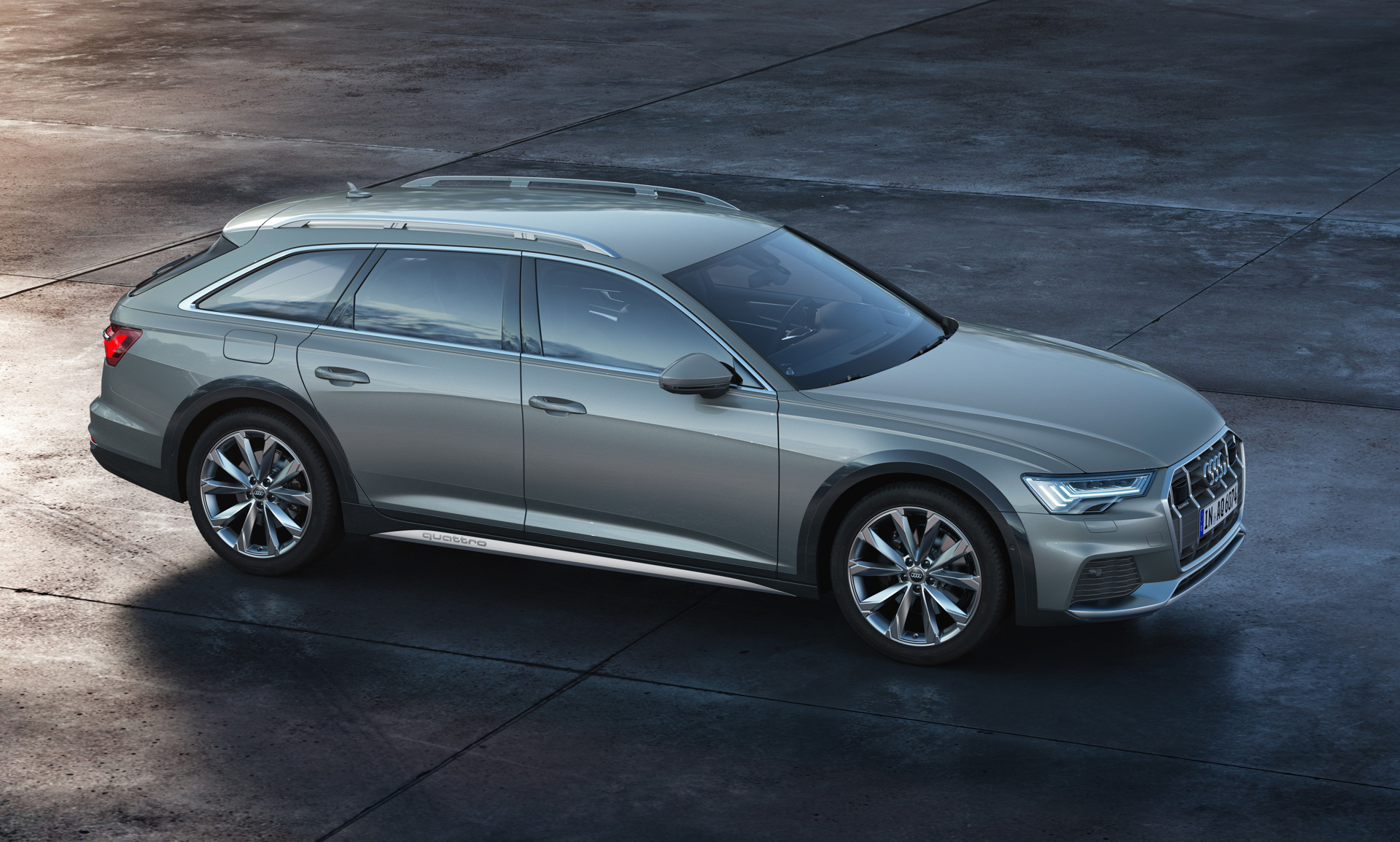
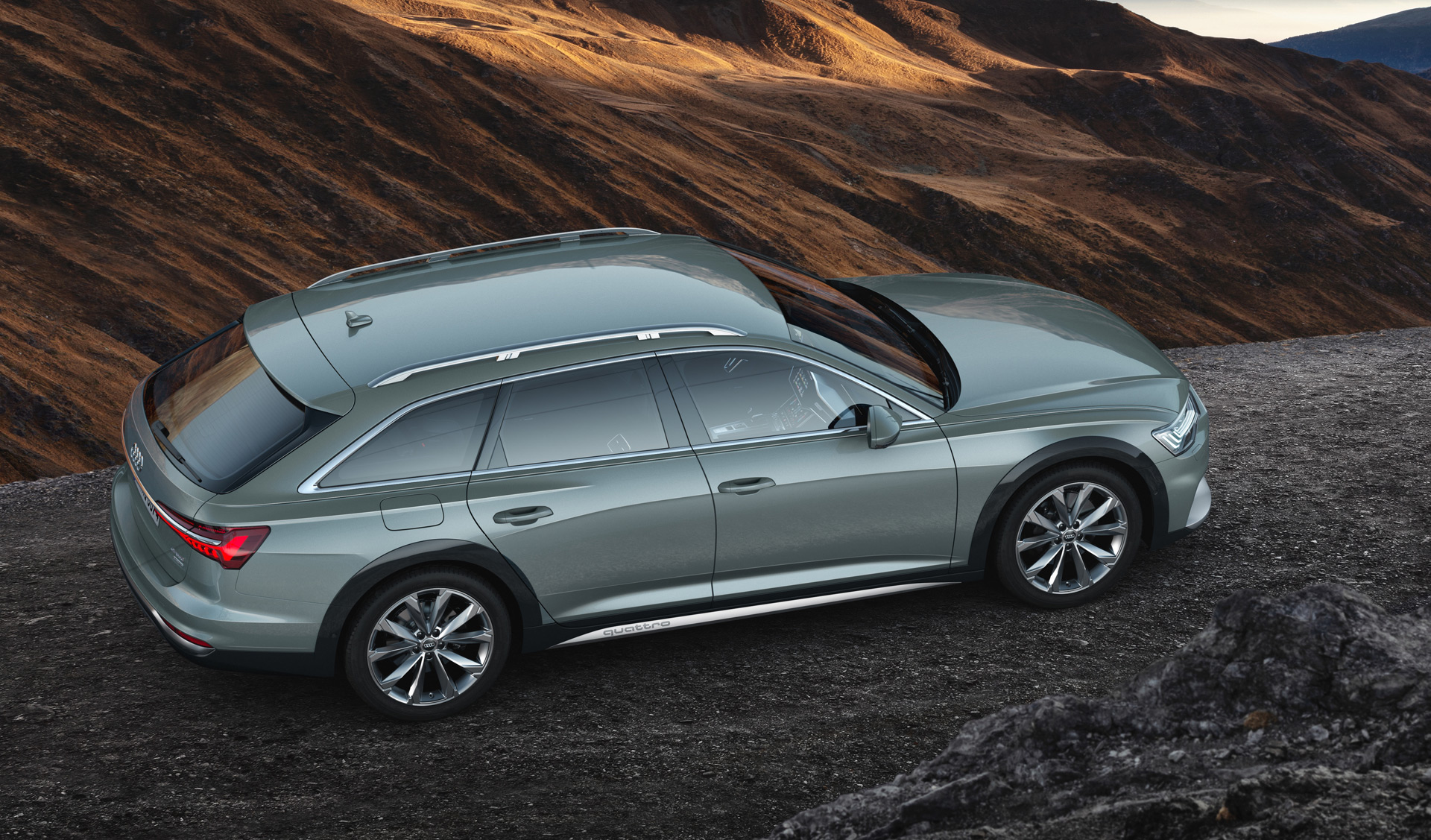
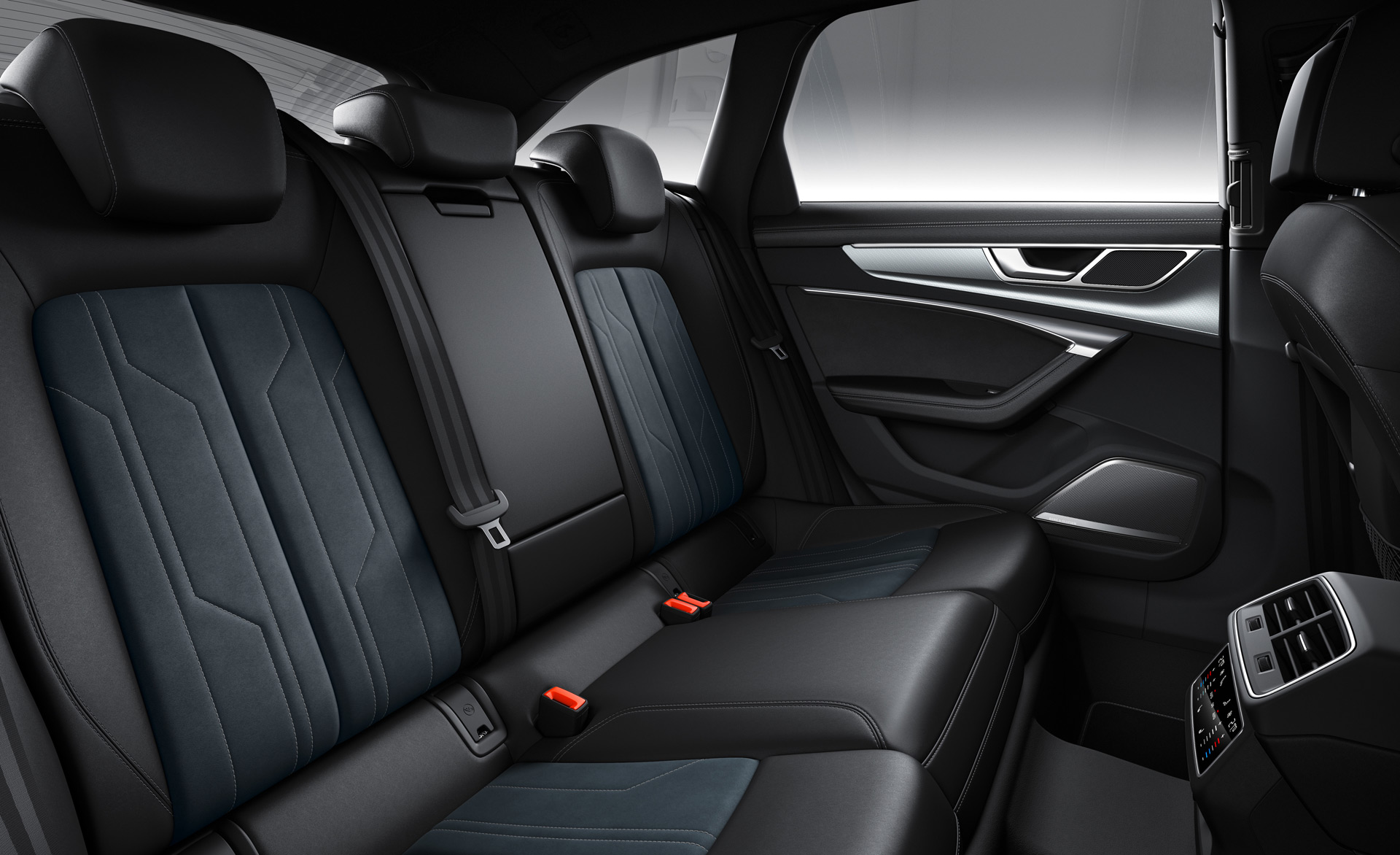
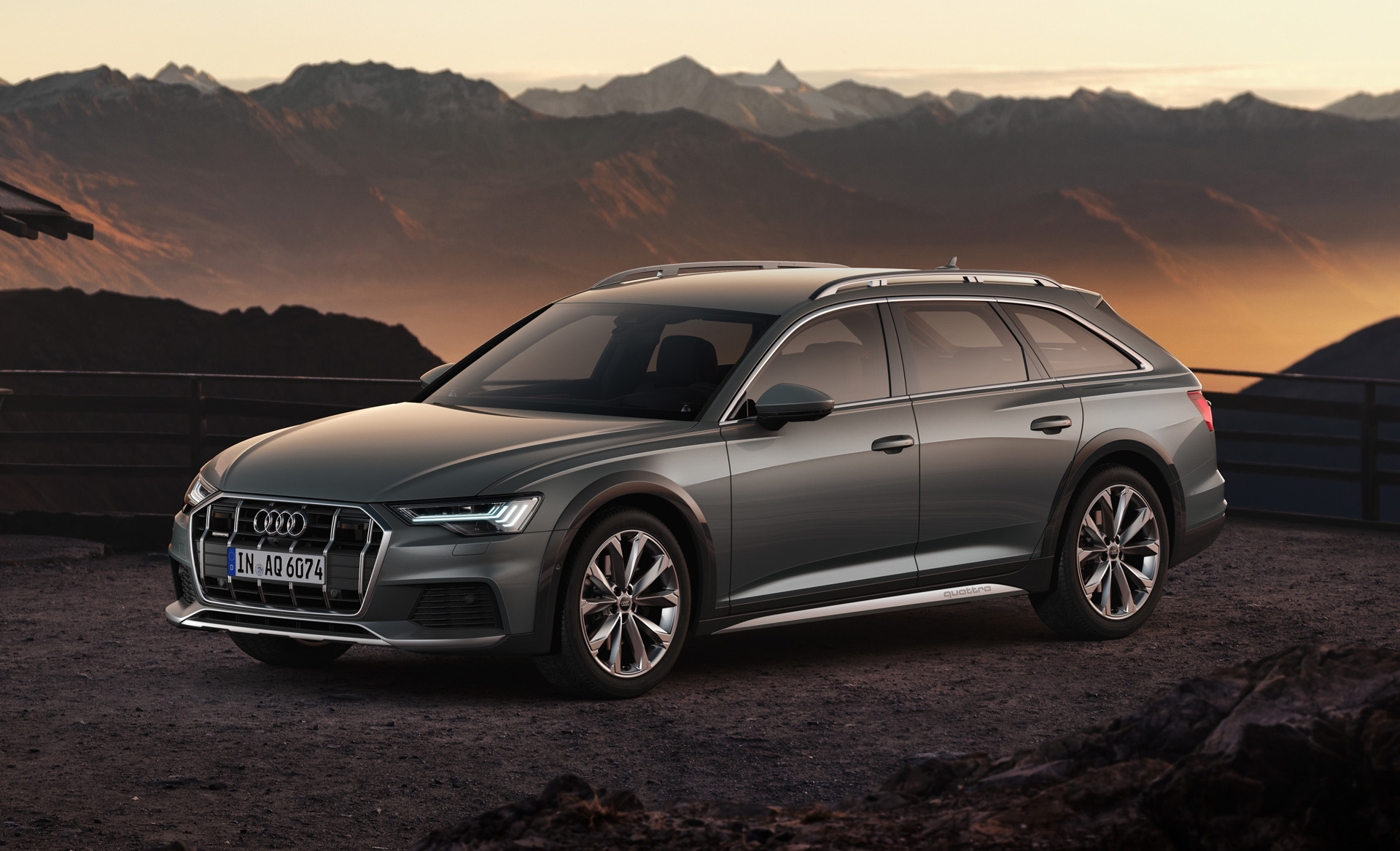
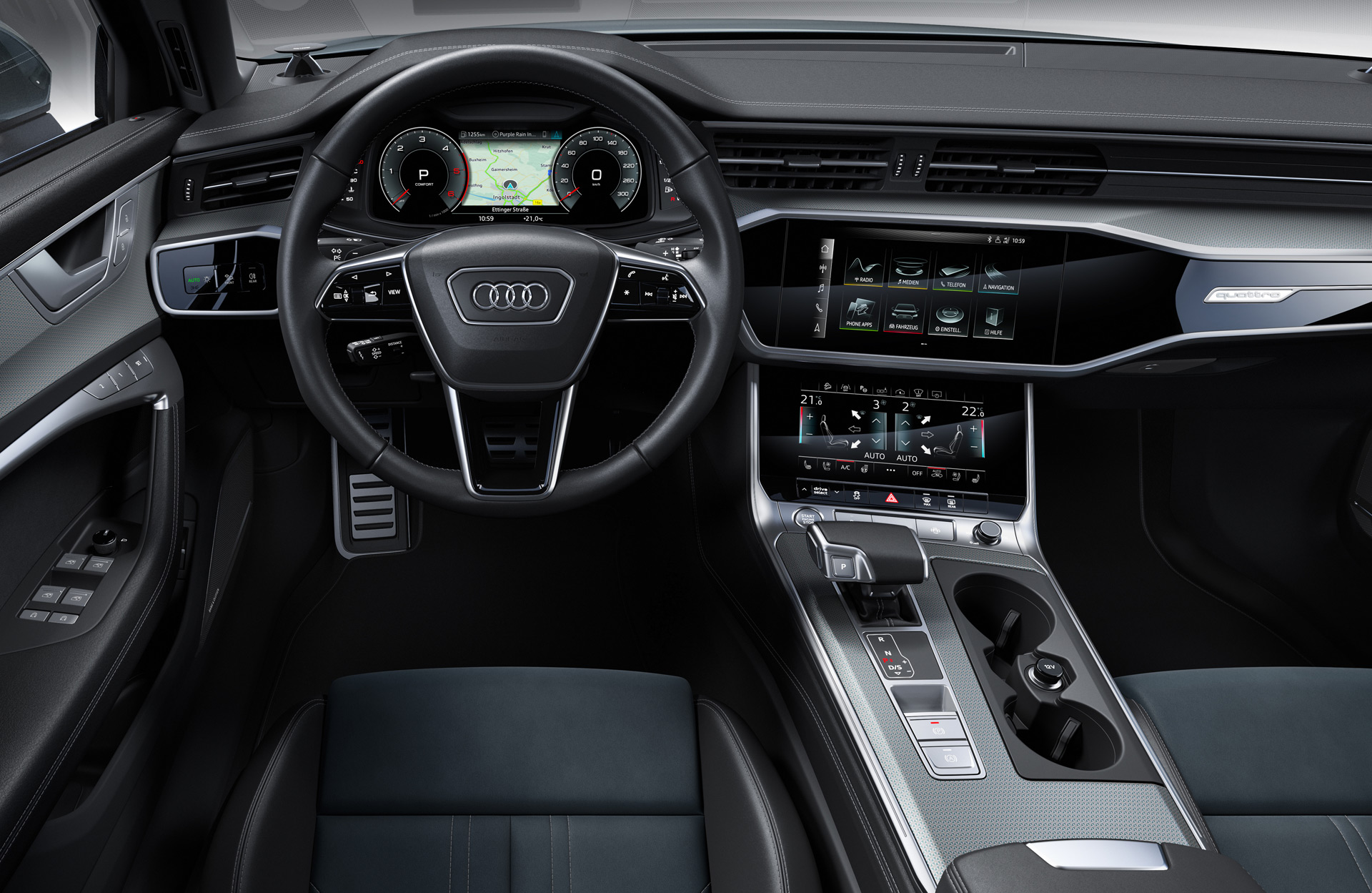
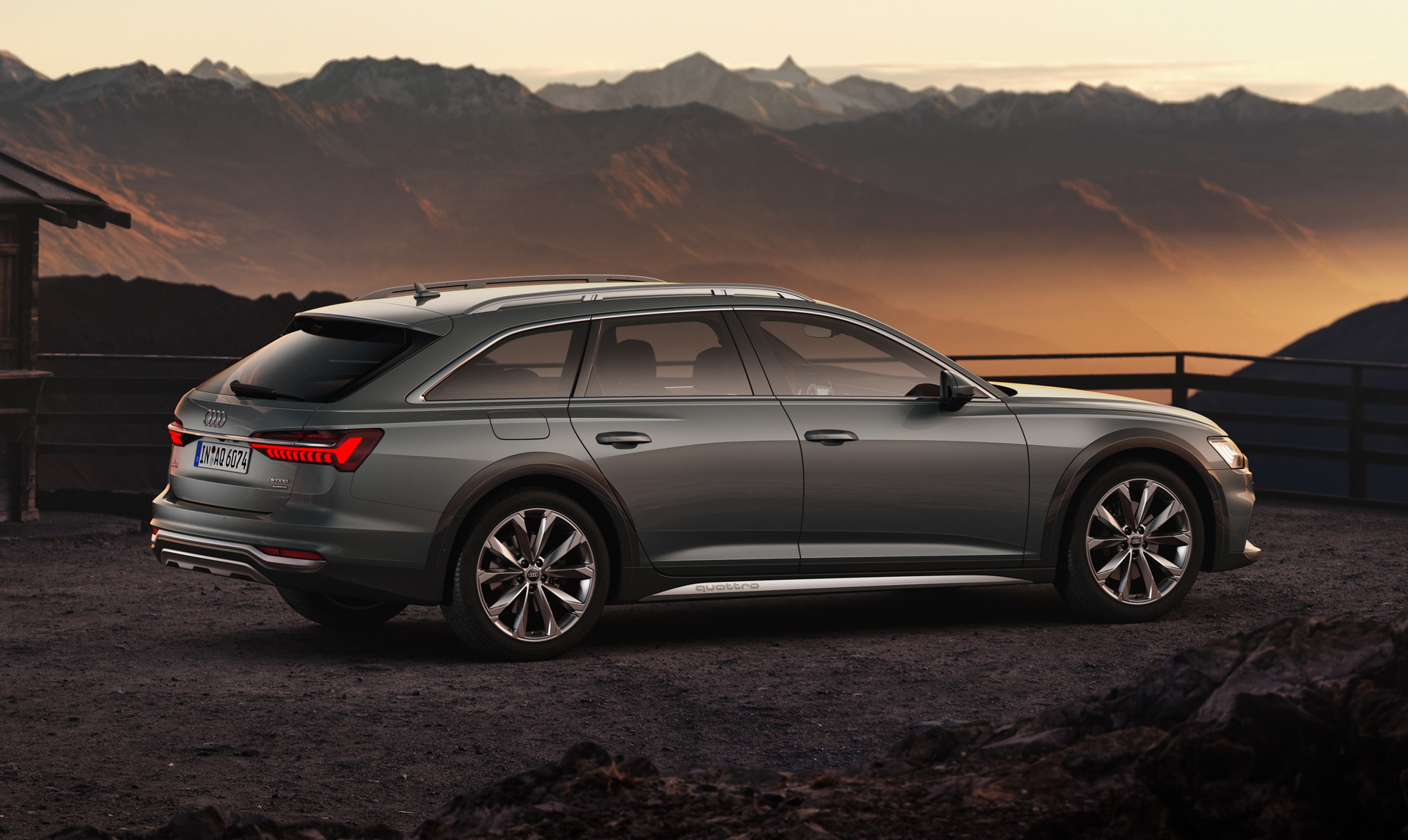
Audi A6 Allroad

Audi has officially revealed its new A6 Allroad, which includes a handful of updates to the adaptive air suspension. This new iteration makes the iconic classic more beastly on the tarmac.

The Audi A6 Allroad is meant to compete with the Mercedes-Benz E-Class All-Terrain and Volvo V90 Cross Country. Drawing from the fifth-generation mid-size Z6 launched in sedan form, the new platform brings weight savings, extra cabin space, and compatibility with plug-in hybrid options.

Audi increased the ground clearance to 7.3 inches at maximum height, and the adaptive air suspensions now comes with self-levelling. As a result, that should provide customers with an alternative to the crossover SUV. Other allroad additions include steeper departure angles, underbody protection, hill descent control, and tilt angle assist.

Thus far, Audi has only announced powertrain, though it offers three outputs. There’s a 3-liter turbocharged V-6 diesel engine that delivers 349 ponies and 516 pound-feet of torque in its most potent. With an eight-speed automatic transmission, the engine hits zero to 62 in just 5.2 seconds and tow up to 5,000 pounds. As standard, the engines also comes fitted with mild-hybrid technology. This consists of a belt-drive electric motor-generator that acts as the starter motor. It recovers energy even under braking. This setup also allows the Audi A6 Allroad to coast even when the engine’s switched off over wide speed ranges.

The ride will hit the road in July. To commemorate 20 years since Audi last rolled out the A6 allroad, the carmaker will offer a special version of the latest model with black exterior accents.

LEARN MORE HERE

Photos courtesy of Audi

Bram Schot Confirms the Audi TT’s Death, Electric Car Coming

Say Goodbye After Two Wonderful Decades

When the Audi TT came out it was a fresh new car for Audi with a beautiful style. As the years went on the car only got better and better. Now, Audi will kill the TT in favor of another electric car. Bram Schot, the brand’s chairman, announced the car’s demise on Thursday, according to Motor Authority. In a blunt and straightforward address to the public, Schot said that the future of Audi will be focused on the simplification of the lineup, electrification, and fuel cell technology. 

Essentially, the TT didn’t fit into the company’s view for the brand as it moves forward. Schot said the car would be replaced by an electric car. The speculation at this time is that it will be an electric sports car, but there’s always the chance that might not be the case.

Audi could easily turn to a more profitable vehicle type, like a crossover. If it did that, enthusiasts around the world would cringe. The TT was an influential car. It’s also a car that had people whispering of its demise long before this moment. While it’s a shame to see it disappear, it’s really not a surprise. 

The TT isn’t the only sports car that could be ending. The automaker has said in the past that the R8 in its current form could disappear. It would likely be replaced by an electric car much like the e-tron GTR. While there’s a lot of speculation at the moment, one thing’s for certain, the Audi of tomorrow will look dramatically different from the Audi of today.