All posts in “Stuff”

The Aston Martin DBX Bowmore® Edition

Aston Martin’s SUV, the DBX, has been revealed in an exclusive ‘Q by Aston Martin’ specification to celebrate the brand’s innovative partnership with legendary single malt whisky distillery, Bowmore.


The striking Aston Martin DBX Bowmore Edition has been created by the marque’s personalization service, Q by Aston Martin, in celebration of the partnership between the two British luxury brands. Just 18 special edition Bowmore DBX’s will be built before they are delivered to customers at a private lifestyle experience in Scotland.


Marek Reichman, Aston Martin Executive Vice President & Chief Creative Officer said: “Aston Martin DBX has provided the perfect canvas for the highest level of Q by Aston Martin customization. The Aston Martin and Bowmore brands share the same vision of creating timeless beauty and a lasting legacy, loyal to their heritage but also embracing new methods and this is reflected in the DBX Bowmore edition. Strips from the copper whiskey stills are inlaid into the side strakes and Bowmore Tweed accents the interior, Q by Aston Martin has once again created a beautiful, limited edition, Aston Martin.”


The Bowmore DBX is enrobed in a striking paint color, named Bowmore Blue, an existing archive color that has been brought back exclusively by Q by Aston Martin for this car. Customers will have the option to choose an alternative exterior paint color should they so wish. Xenon Grey paint, which displays a blue metallic fleck throughout, will be offered as an additional exterior option. Bowmore-branded copper inlays using copper from the original whisky still have been used to accent the side strakes of the DBX, as a nod to the traditions maintained by the company.


Optional black brake calipers provide a subtlety to the smoked wheels and the overall elegance of the exterior is highlighted by both script and wing Aston Martin badges and Q by Aston Martin fender badges.


Customers can choose either the Obsidian Monotone or Copper Tan Metallic/Obsidian Duotone interior, both choices accented throughout by flashes of Bowmore Tweed, reflecting the company’s Islay ancestry. Created by the world-renowned Islay Woollen Mill, which was first established in 1883, the subtle and sophisticated design incorporates copper and blue inspired by the island’s terroir and lochs, making it inherently unique to Bowmore and its island home.

In addition, the interior holds many Q by Aston Martin design details such as polished copper cupholders, and sill plaques, made of recycled copper from the original Bowmore still. The gloss black center console trim inlay features bespoke hand-laid, copper foil detailing. Each car comes with a selection of specially designed Q by Aston Martin accessories such as a Bowmore tweed picnic blanket and leather holdall.


Launched in 2019, DBX celebrates the Aston Martin design language in a new form. With a unique body architecture engineered just for DBX, the design and proportions reflect the unmistakable style. The 5-seater SUV provides a world of luxury and features a 4.0-liter twin-turbo V8, tuned to deliver 550PS and 700Nm of torque, providing the exhilaration of a modern GT. While it’s not a traditional Aston Martin sports car, the DBX is everything an Aston Martin should be: beautiful, hand-built, and technologically-advanced.

Each of the 18 Bowmore DBX owners will be invited to an exclusive Aston Martin Art of Living experience in Scotland.  Guests will travel to Edinburgh where they will be presented with their own special edition DBX, before embarking on a 170-mile road trip through the spectacular Scottish countryside, taking in Loch Lomond and the Trossachs National Park before driving onto the ferry bound for Islay.

Alongside a trip to Islay Woollen Mill and fine-dining throughout their three-night stay, owners will be treated to a private tour of the Bowmore Distillery. During this very special tour they will have the opportunity to hand-fill their own bottle of a 39-year-old, specially selected Bowmore straight from the cask.  They will also be given exclusive access to the No 1 Vaults the oldest maturation warehouse in the world which has played host to a number of VIPs over the years, including members of the Royal Family.


Aston Martin’s unique partnership with Bowmore has already created ‘Black Bowmore DB5 1964’, bringing together an exceptional single malt and a genuine piston from the legendary Aston Martin DB5. As the two iconic brands continue to collaborate, further luxury products and incredible lifestyle experiences will follow.

Francois Bazini, Global Managing Director of Scotch at Beam Suntory, owners of Bowmore, commented: “Our partnership with Aston Martin continues to be an exciting and enthralling collaboration and the unveiling of this special edition Bowmore DBX is another exciting step on our collective journey.  We cannot wait to welcome each of the owners of this beautiful car to our distillery on Islay and show them all that Bowmore and our island home have to offer. Although we make entirely different products, our shared values and passion are very much aligned so you can expect more exciting announcements in the future.”

The Q by Aston Martin DBX Bowmore Edition is on sale globally now and customer deliveries will take place in Q4 2021.
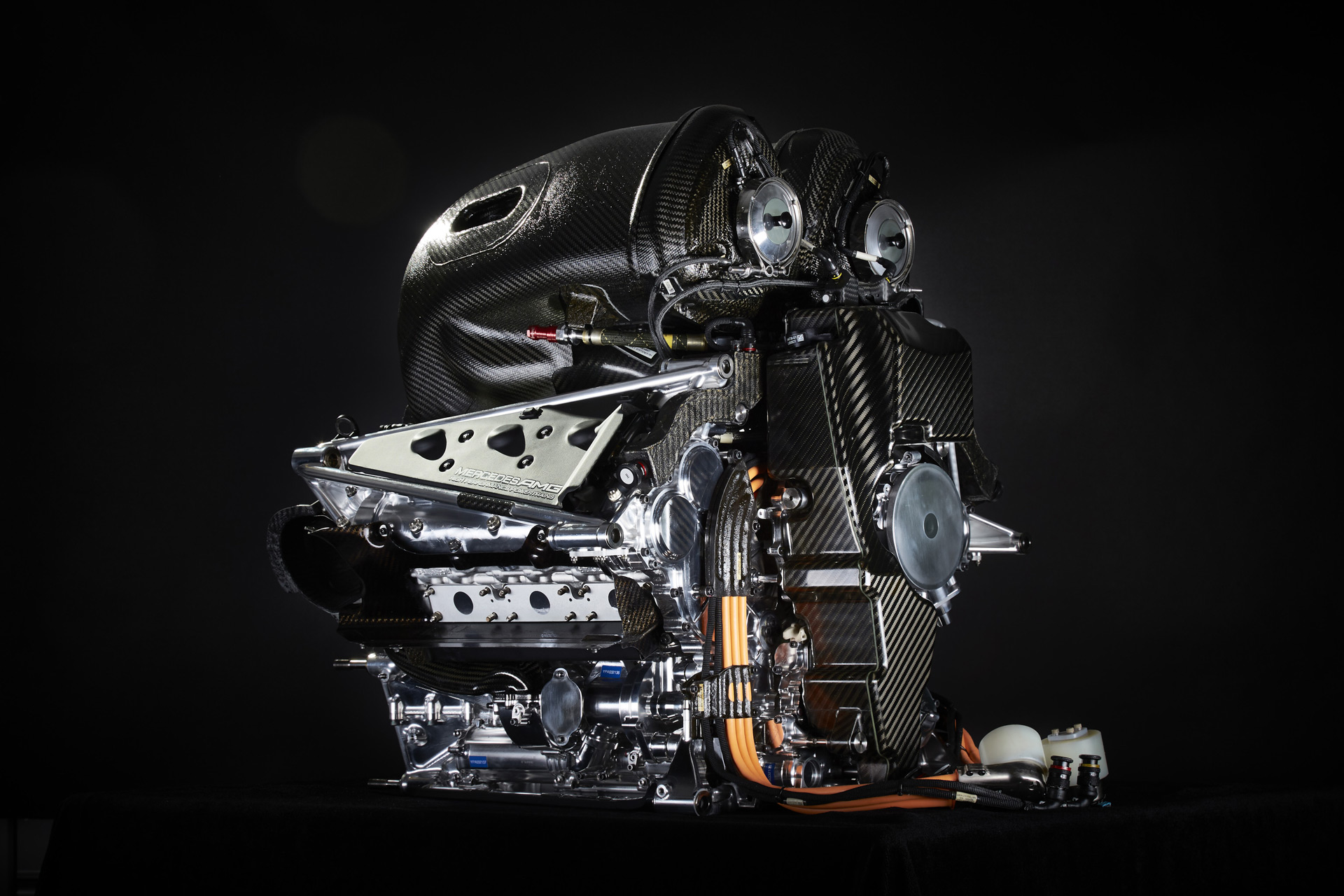
Mercedes-Benz AMG to deliver Project ONE This Year

Unveiled as a concept at the 2017 Frankfurt International Motor Show, the Mercedes-Benz AMG Project One will finally ready for the streets. This anticipation comes after the car was to be released in 2019, well long story short, that didn’t happen. 

After such a long wait, the company has uploaded a video of the AMG One being pushed to the limits on the racetrack. And you’re probably wondering what the car’s engine sounds like, here’s a hint, it’s out of an F1 car: It sounds eargasmic.

This hypercar uses the same engine found in the Mercedes-Benz AMG F1 racecar. It is a 1.6-liter turbocharged V-6, the same unit used to win the 2015 season championship.

MB AMG Project ONE
Mercedes-Benz AMG-W07 2016 F1 Engine

The One comes with more sophistication than just a plain ol’ turbocharged V-6. It comes with four electric motors, one powering the rear, two powering each side of the front, and one assisting the turbocharger. This gives the AMG One an all-wheel-drive system with the ability to operate on only electricity. 

[embedded content]

This means that Mercedes-Benz AMG has been able to claim their performance hybrid, Project One “will produce over 1,000 horsepower at a maximum speed of over 350 km/h” according to their website. 

As mentioned earlier, the One was to be released in 2019 however that changed after the AMG realized how difficult it was to transform a track-focused powerplant into an appropriate engine for road use. But as they have taken the time to properly convert the engine for the street, it has turned into a thing of beauty. 

Mercedes-Benz AMG has limited the Project One to just 275 units and deliveries to take place in 2021. 
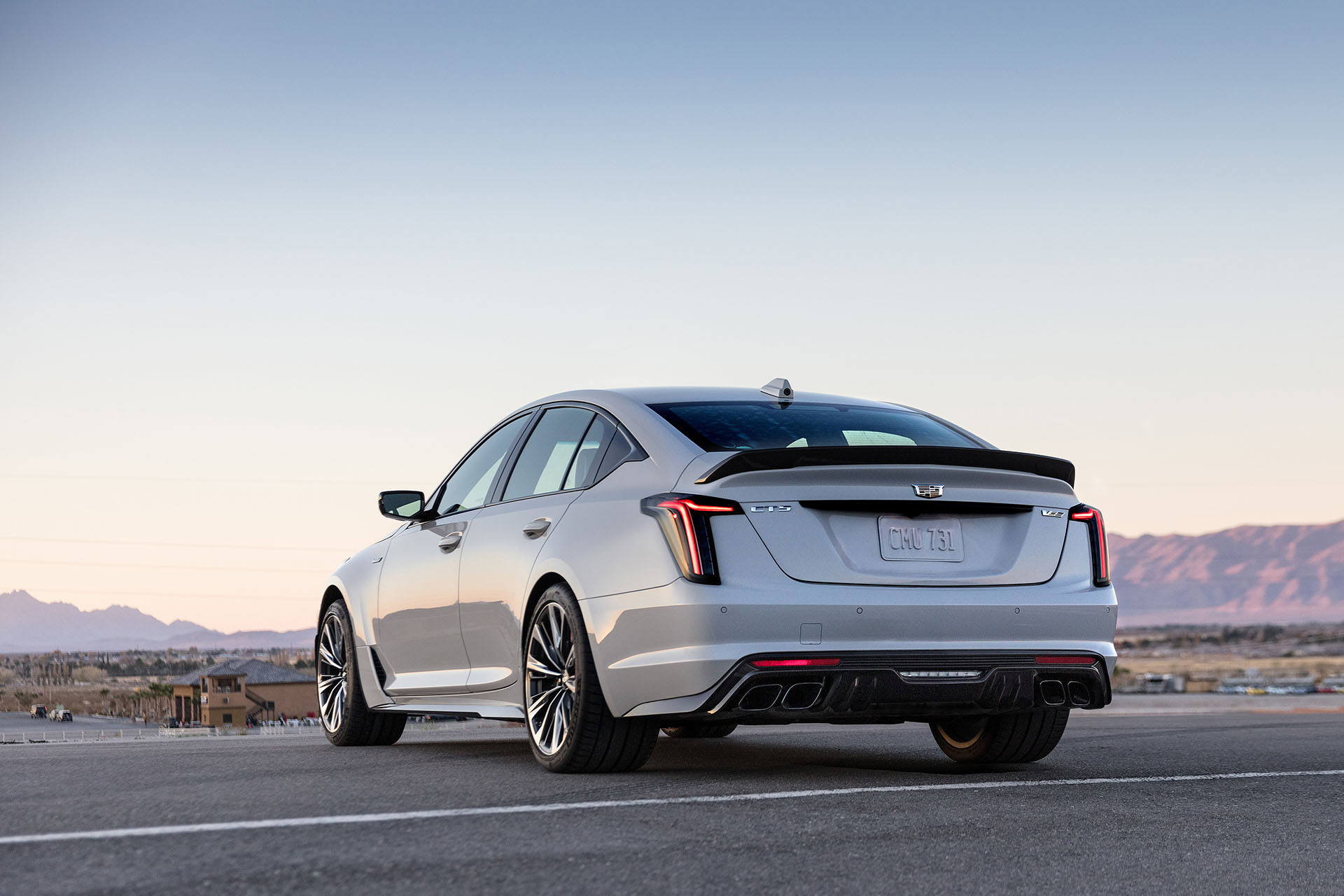
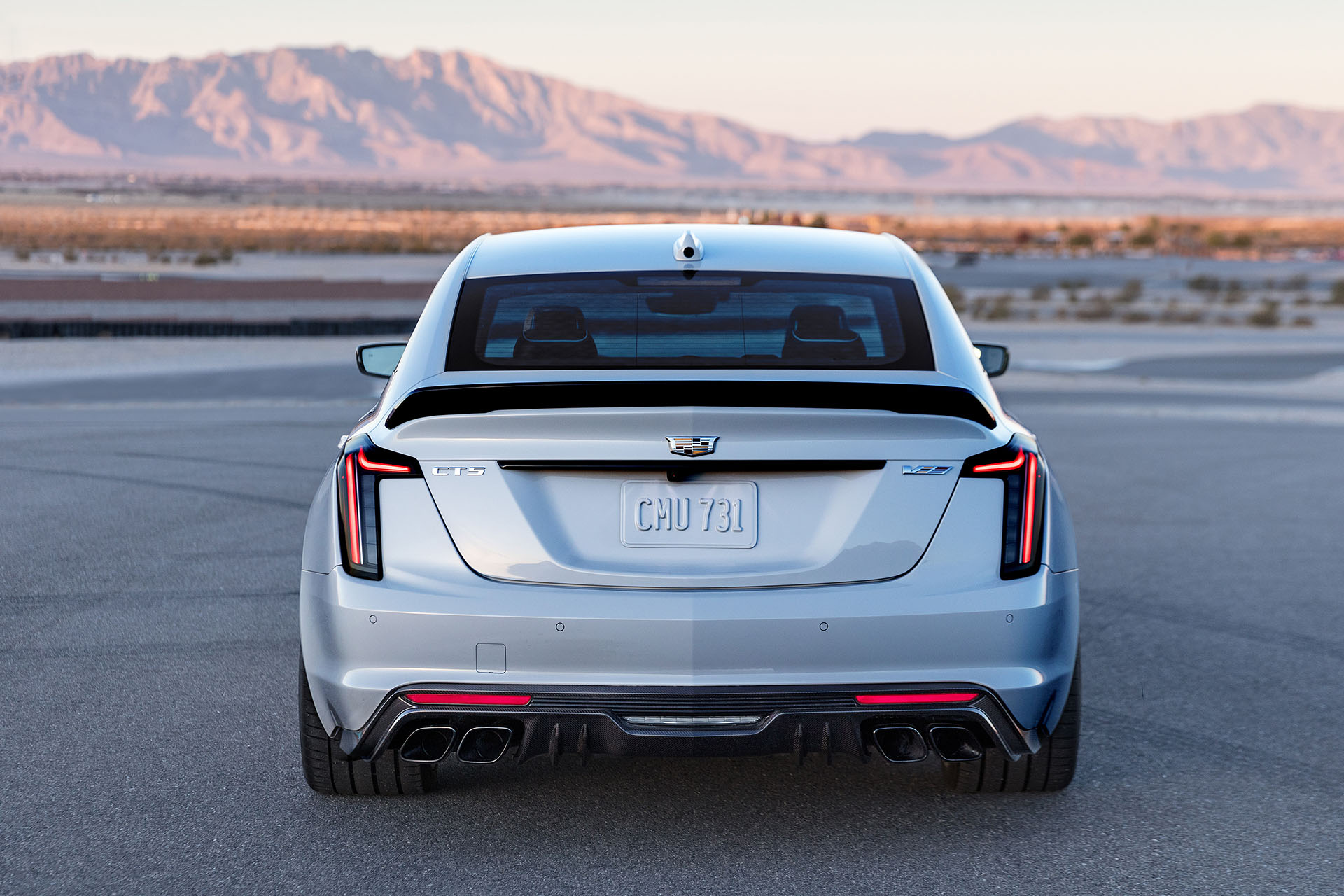
The Cadillac CT5-V Blackwing beats Audi RS6, Mercedes E63S AMG and BMW M5 at only $84,990

Remember our article on the new BMW M5 CS, a limited-run, highly tuned 635 hp sedan from Germany? That was the most powerful BMW M-Series car in history, it effortlessly beats rivals like the Audi RS6 (591 hp), the Mercedes E63S AMG (603 hp), or the Bentley Flying Spur (636 hp) … but those cars are well over the $100,000 mark, so mostly aimed at the lucky few.
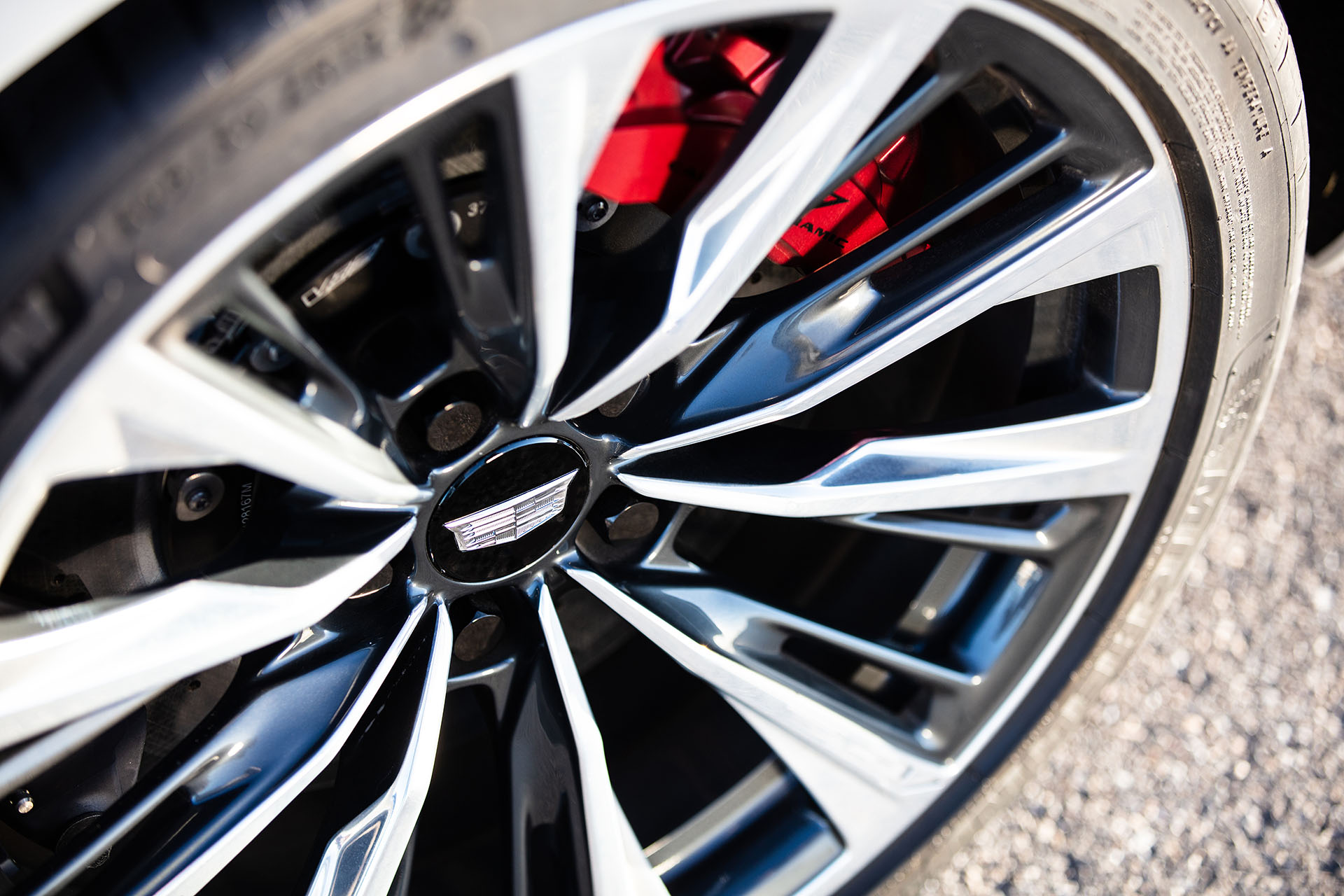
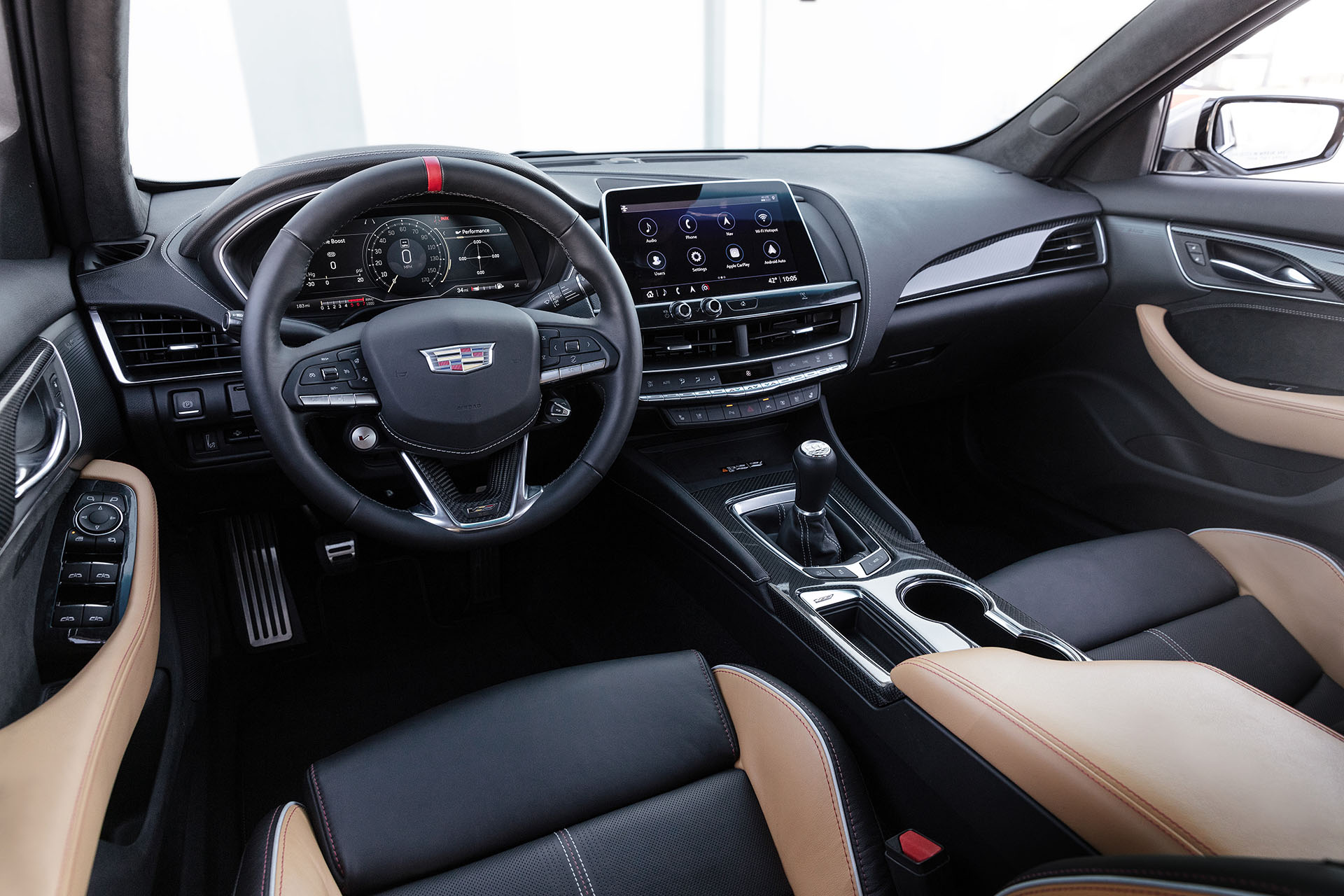
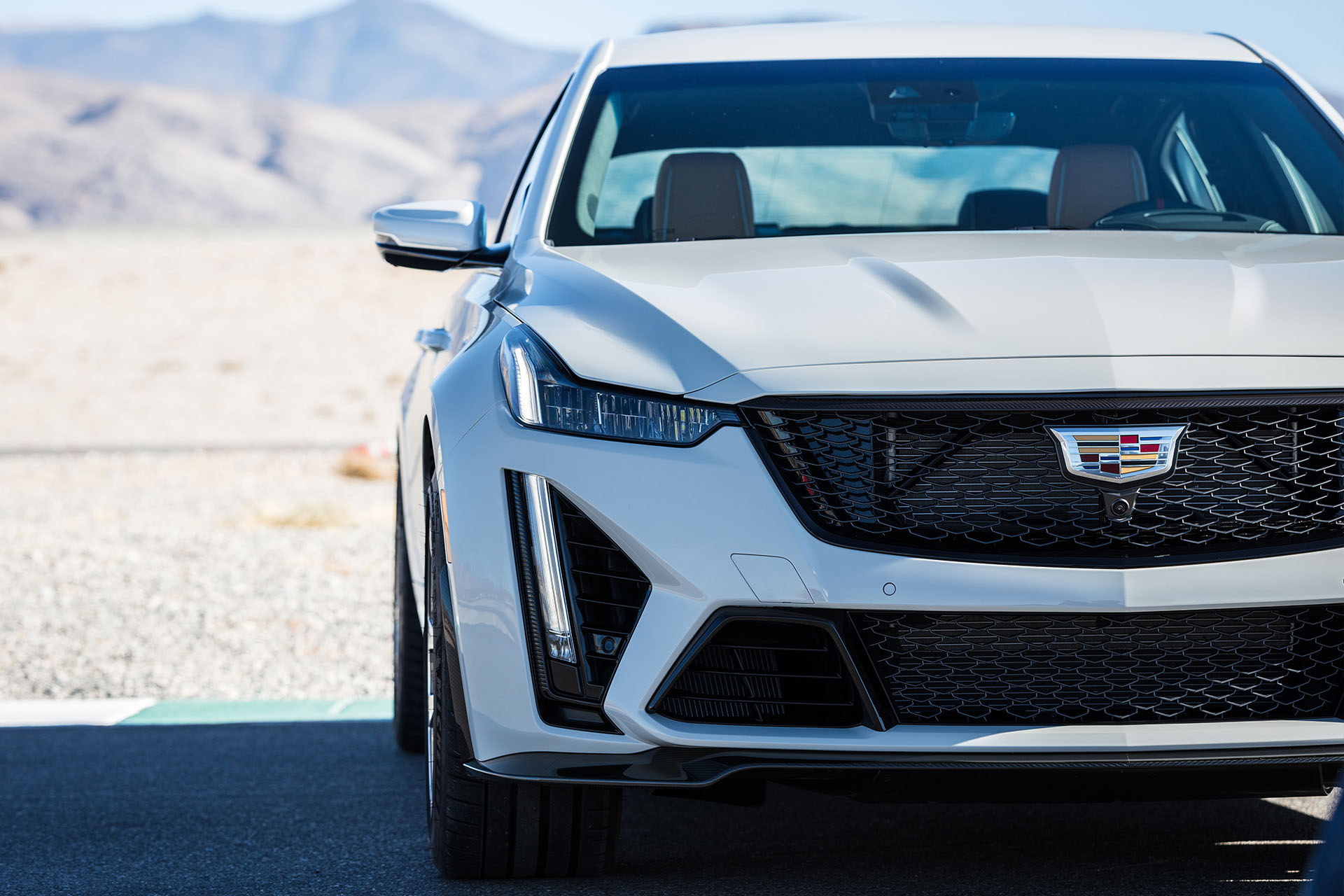
Cadillac is about to stir up the market of the high-power sedans with the 2022 CT5-V Blackwing, packing a 6.2L Supercharged V8 engine with 668 hp and 659 lb-ft of torque, and for all those purest out there … a 6-speed manual transmission. You can opt for a 10-speed automatic too if you really want to while stopping power comes from a set of renowned Brembo calipers available in grey, blue, red, and bronze, hiding behind forged aluminum 19-inch wheels, 10-inch wide at the front, 11-inch wide for the rear.

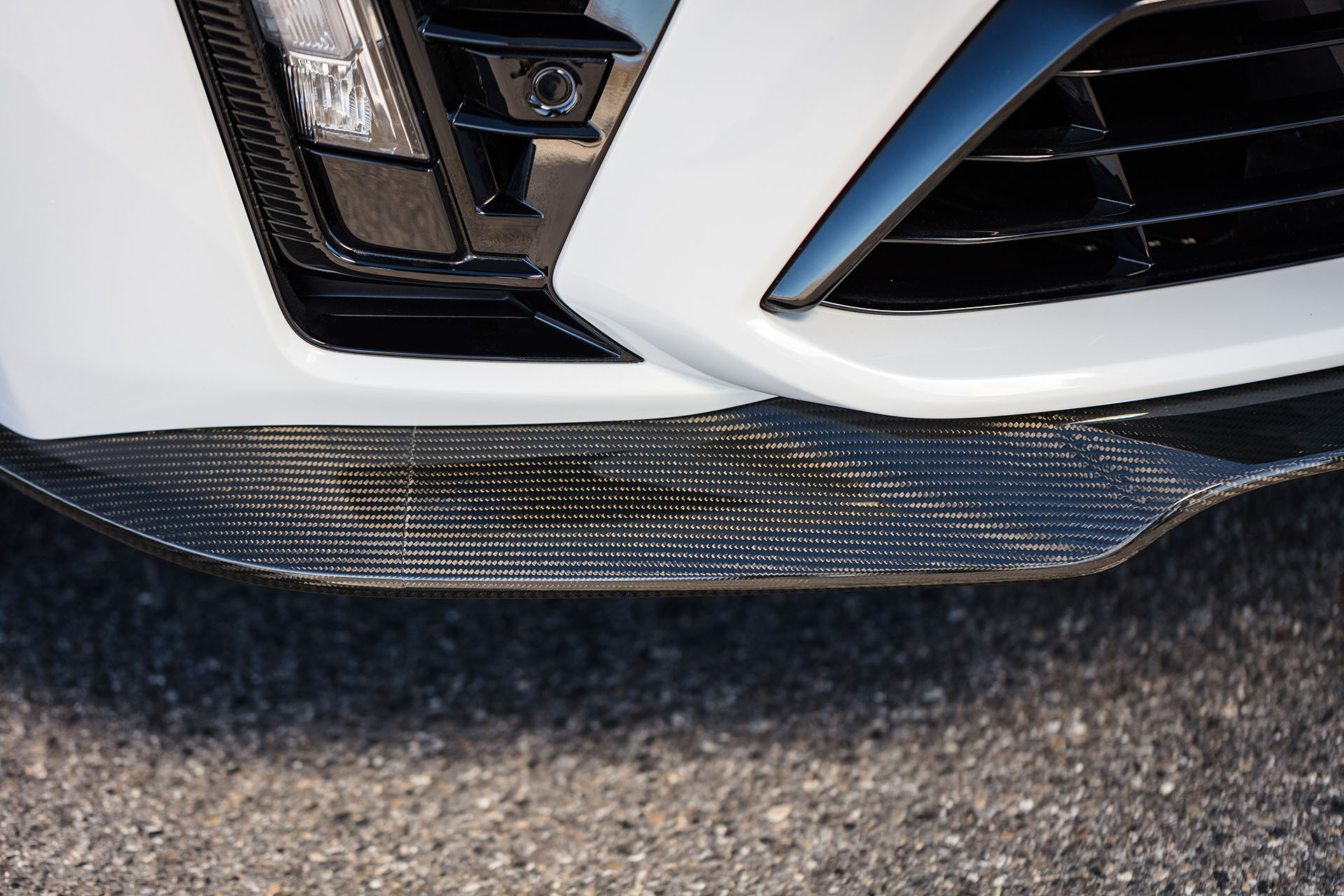
Naturally, a host of carbon fiber is used on the exterior and interior of these Blackwing models, also note the steering wheel comes with a serialized plaque on each car, each of the front grilles is functional at directing cool air where it’s needed, no fake vents on this Cadillac, and they make the race car look complete for this four-door sedan.

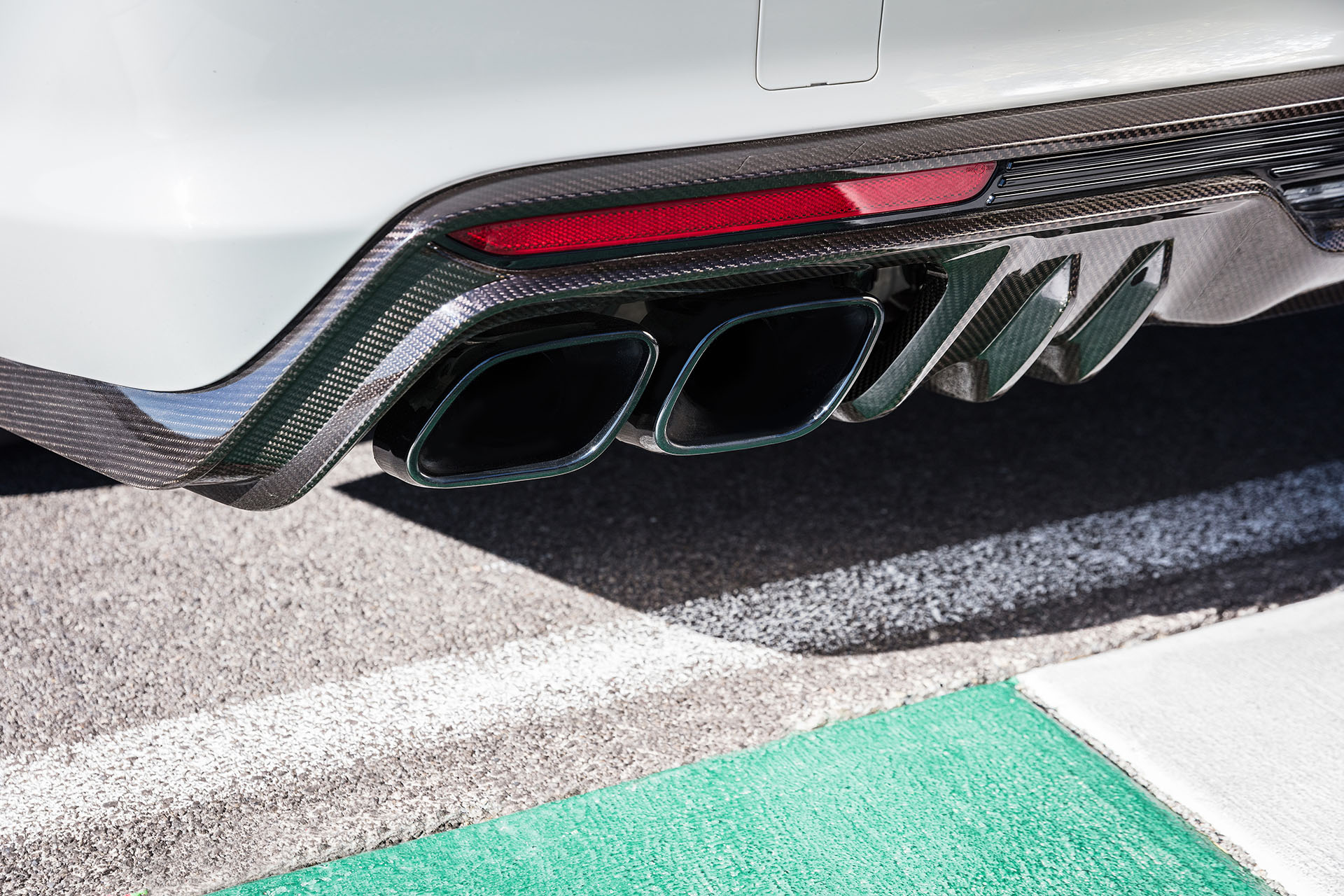
Add the exterior carbon-fiber package for even more downforce and stability, and it also looks good too, including a rear wing and front splitter. But there are also side sill extensions, an aerodynamic rear diffuser, and even panels under the body to direct airflow and keep the car as planted to the track as possible … you can take your kids to school during the week, and go to the track on Sunday to have some fun.

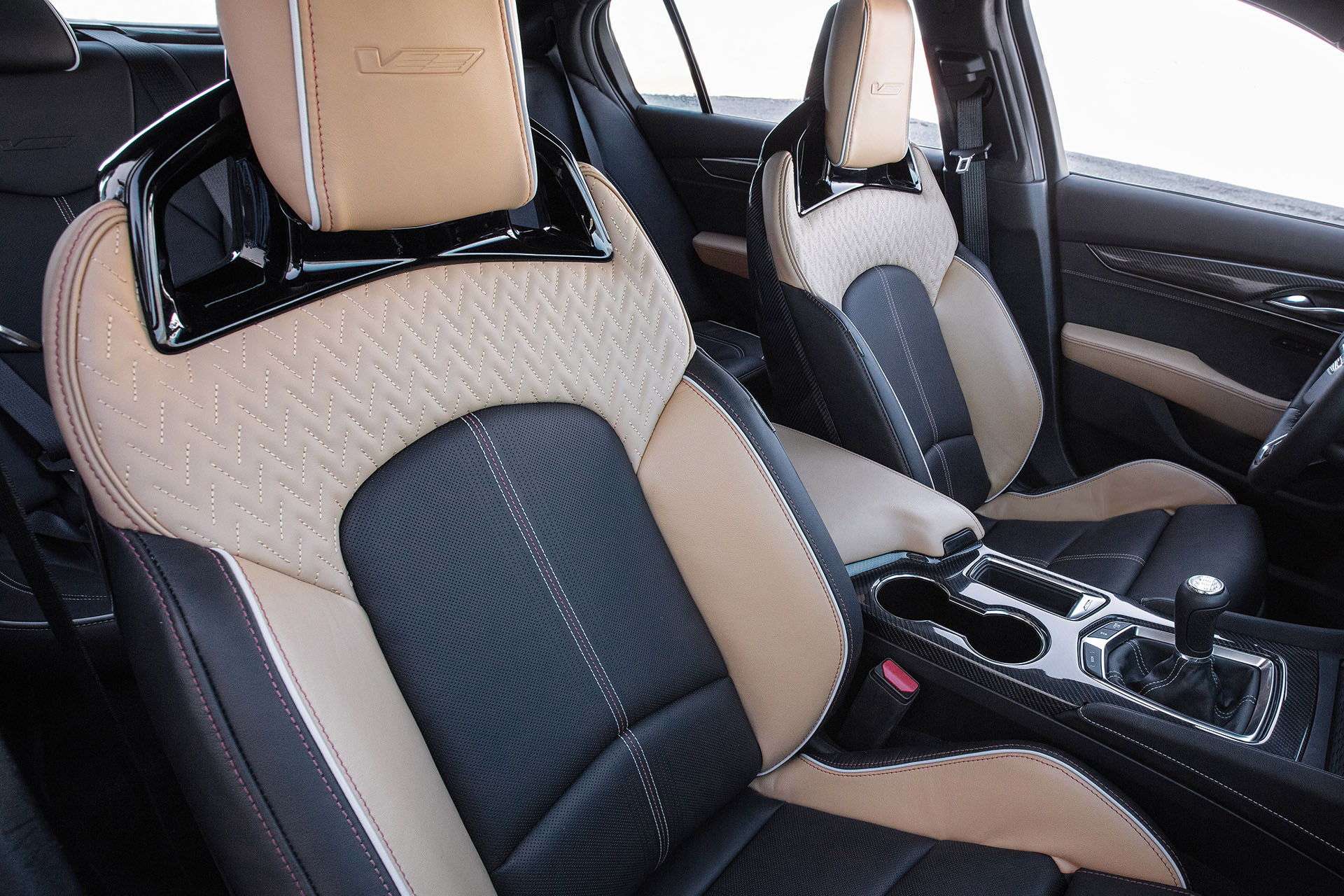
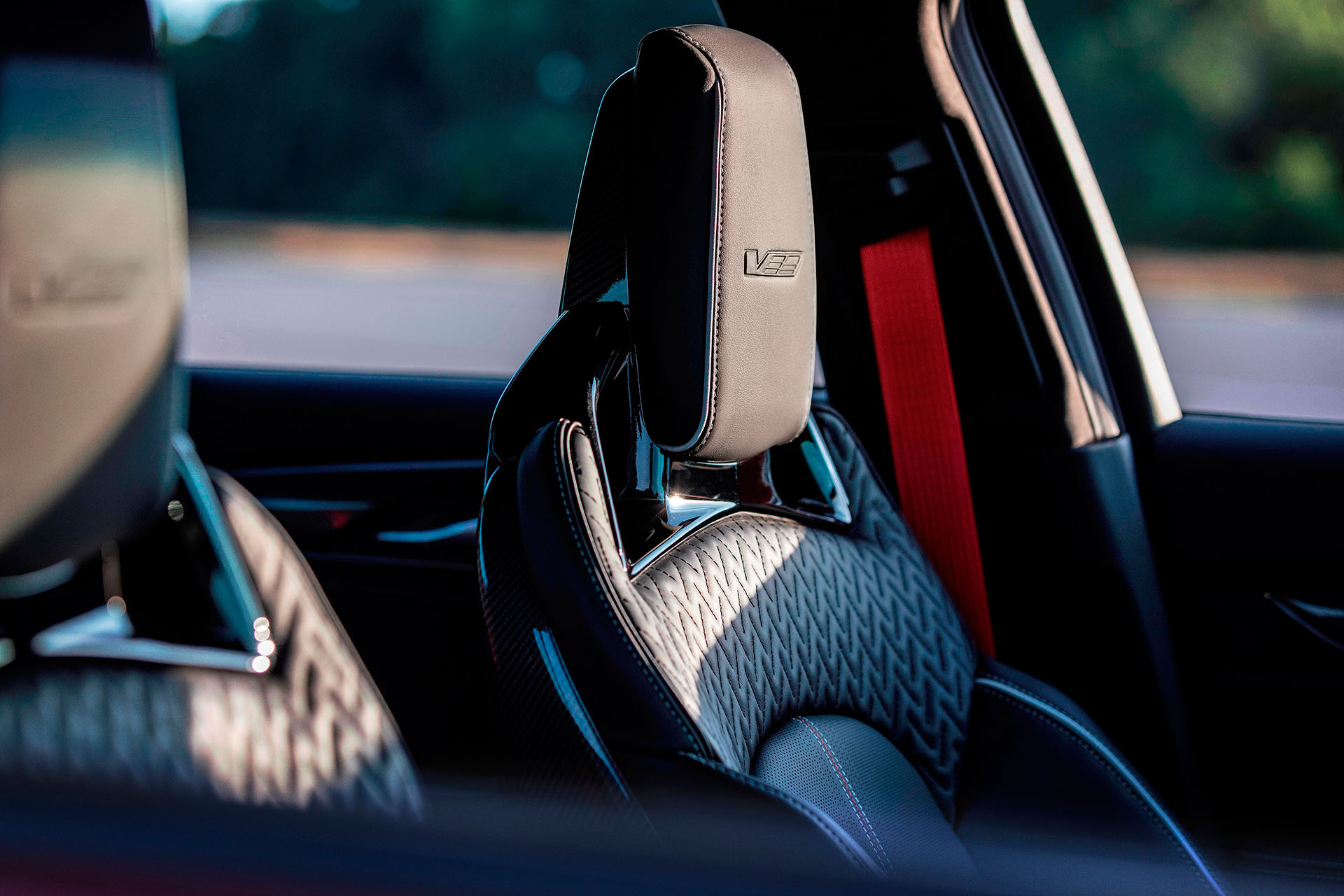
And that fun continues on the inside, with impressive sport seats, with microfibre cloth details on the seats, door panels, and the dashboard, while the entire headliner is made from that same material.  Optional high-performance seats can come with carbon fiber backs, while a special steering wheel is also available, on the CT5-V you can even spec a leather upholstery, while you just have to check the ‘Torch red seatbelts’ option on the order form.

To really set apart this Cadillac CT5-V from ‘normal’ sedans it comes with an integrated performance data recorder, allowing the driver to record every aspect of their driving, including real-time audio and front camera video, as well as 34 channels of performance data for detailed analysis. The dashboard cluster comes as a 12-inch, configurable display in front of the driver, while the head-up display matches the three display personas: Tour, Sport, and Track.

At the moment you can put your name on the waiting list for this limited edition Cadillac CT5-V Blackwing as first cars will only be available towards the end of the Summer of 2021, but that will secure you an amazing car that will easily go beyond 200 mph and do 0 to 60 mph in 3.5 seconds, all while riding on a next-generation Magnetic Ride Control that measures the road 1,000 times per second for the ultimate ride.

Naran Automotive shows ‘Celare Pack’ for their hyper-coupé

Naran Automotive is a new manufacturer of luxury ultra-high performance cars, their debut model – The Naran, will be available later this years, but they already revealed a unique “Celare Pack” now.

The “Celare Pack”, derived from the Latin word for “to conceal or hide”, shows the dual personality of The Naran, customers can have this pack fitted by Naran Automotive engineers in 20-minutes. This pack will transform the four-seat hypercar from an understated luxury coupe into a track-ready aerodynamic racer.

The Naran has the engine mid-mounted at the front and can accelerate from 0 to 60 mph in less than 2.3 seconds, 0 to 100 mph only takes 4.56 seconds while Naran Automotive expects a top speed over 230 mph thanks to optimized aerodynamics while retaining the classic, but elegant coupe silhouette.

The Celare Pack is inspired by motorsport, where adjustable parts are widespread, removing the rear wing for instance, customers receive a carbon fiber cradle to store the wing when not used. The Naran has been designed to offer invisible fixtures for the Celare Pack, the carbon composite add-ons are fixed directly to the front wishbone for improved airflow. The completely flat under-tray and a dual rear diffuser direct air onto the rear wing while intakes pull air onto the brake disks, engine intake, and cooling radiators, air vents on the front hood increase down-force.

The design for The Naran is conducted with the help of  Jowyn Wong, founder of Wyn Design and visionary behind the Apollo IE and De Tomaso P72, while a bespoke 5.0-litre twin-turbo V8 engine produces 1,048 bhp and 1,036Nm of torque is sourced in Germany from Racing Dynamics.

The Naran will be a limited production car, only 49 units will be made, each one of those a truly custom, bespoke build for the customer, complete with individual naming … something taken from the world of high-end superyachts.

Classic Bugatti cars achieved record results at auctions in 2020

Bugatti vehicles have always been exclusive. But as their age increases, so does their value – as shown by an analysis carried out by Classic Analytics, a company specializing in international market analysis and valuation of classic cars worldwide. “Bugattis from the Ettore and Jean Bugatti era, especially in their original condition and with a history of racing, have always been among the most expensive classic cars on the market. This trend has held steady and in fact, even increased despite the general decline in interest in pre-war vehicles,” says Frank Wilke, Managing Director of Classic Analytics. Classic Analytics belongs to the Hagerty Group, the largest classic car service provider in the USA. The top ten ranking is based on an internal auction database in which all international classic car auctions over the course of a year are observed and evaluated.

“The current situation has certainly brought about a change in the auction market, from face-to-face to online auctions. But prices for exclusive, classic vehicles remain stable at a high level,” says Frank Wilke. “Every historic Bugatti vehicle is unique. Those built between 1920 and the end of the 1930s set standards in both performance and design. But this year’s auctioned vehicles were particularly outstanding in terms of history and originality,” Wilke explains.

“This year certainly presented challenges, but it opened the door for Gooding & Company to create new opportunities to maintain our connection with our automotive community and enthusiasts around the world,” says David Gooding, Gooding & Company President and Founder. “We held our first-ever UK sale which set many new records that include selling the most expensive Bugatti at public auction and selling the top two most valuable lots of 2020; the 1934 Bugatti Type 59 Sports and the 1937 Bugatti Type 57S Atalante.”

“We were honored and extremely proud to have been entrusted with these exceptional and historic Molsheim masterpieces,” said James Knight, Chairman of Bonhams Group. “Both represented superb Type 55S – one a special coachbuilt convertible by Figoni, the other the iconic artistry of the Jean Bugatti Super Sport roadster. As one would expect, both cars attracted multiple bidders. Not surprisingly, the Bugattis won the accolade as the most valuable motorcars sold at their respective auctions. and both also achieved the highest results at auction during Paris Rétromobile 2020 and the 2020 Amelia Car Week respectively.”

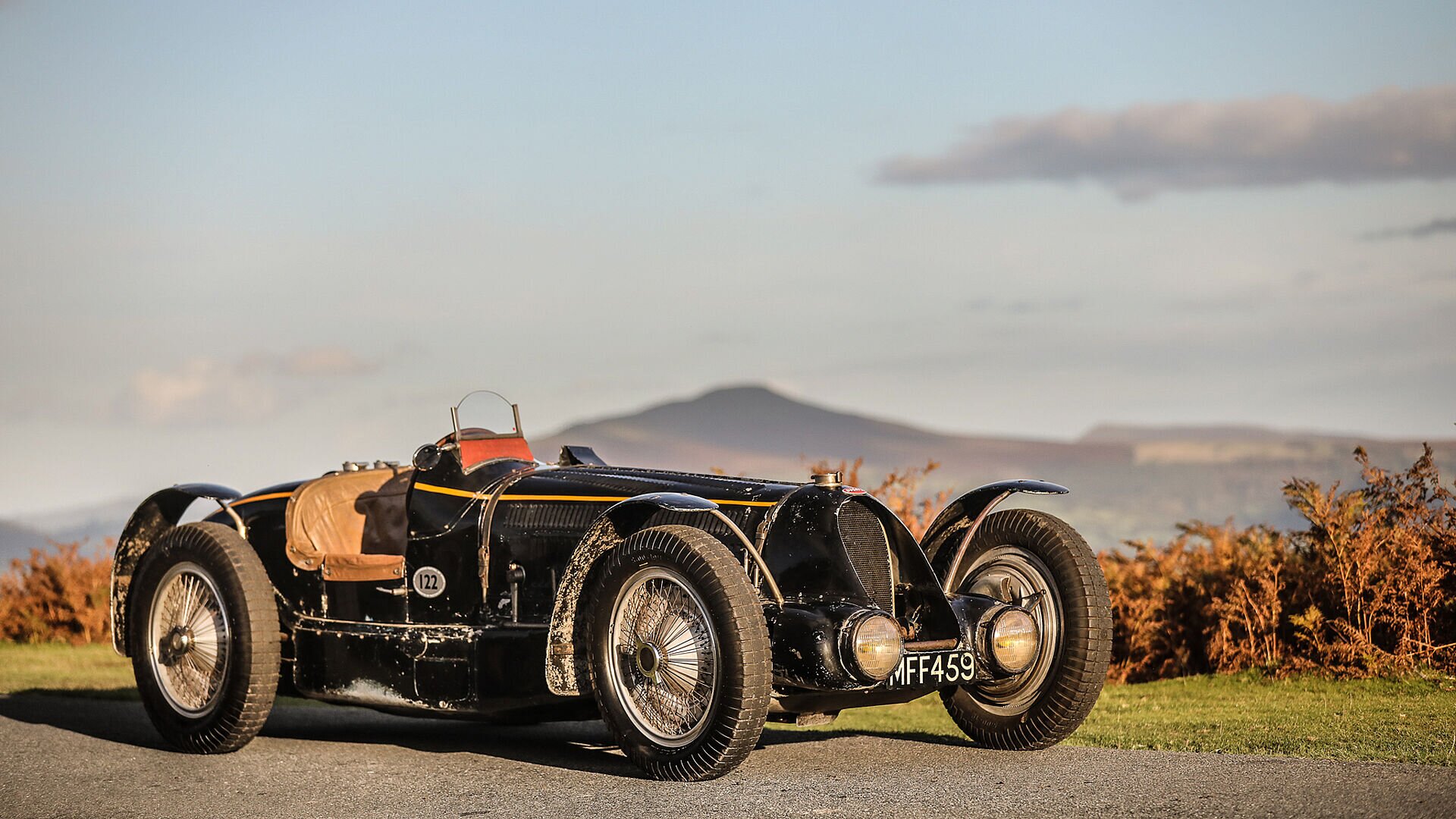
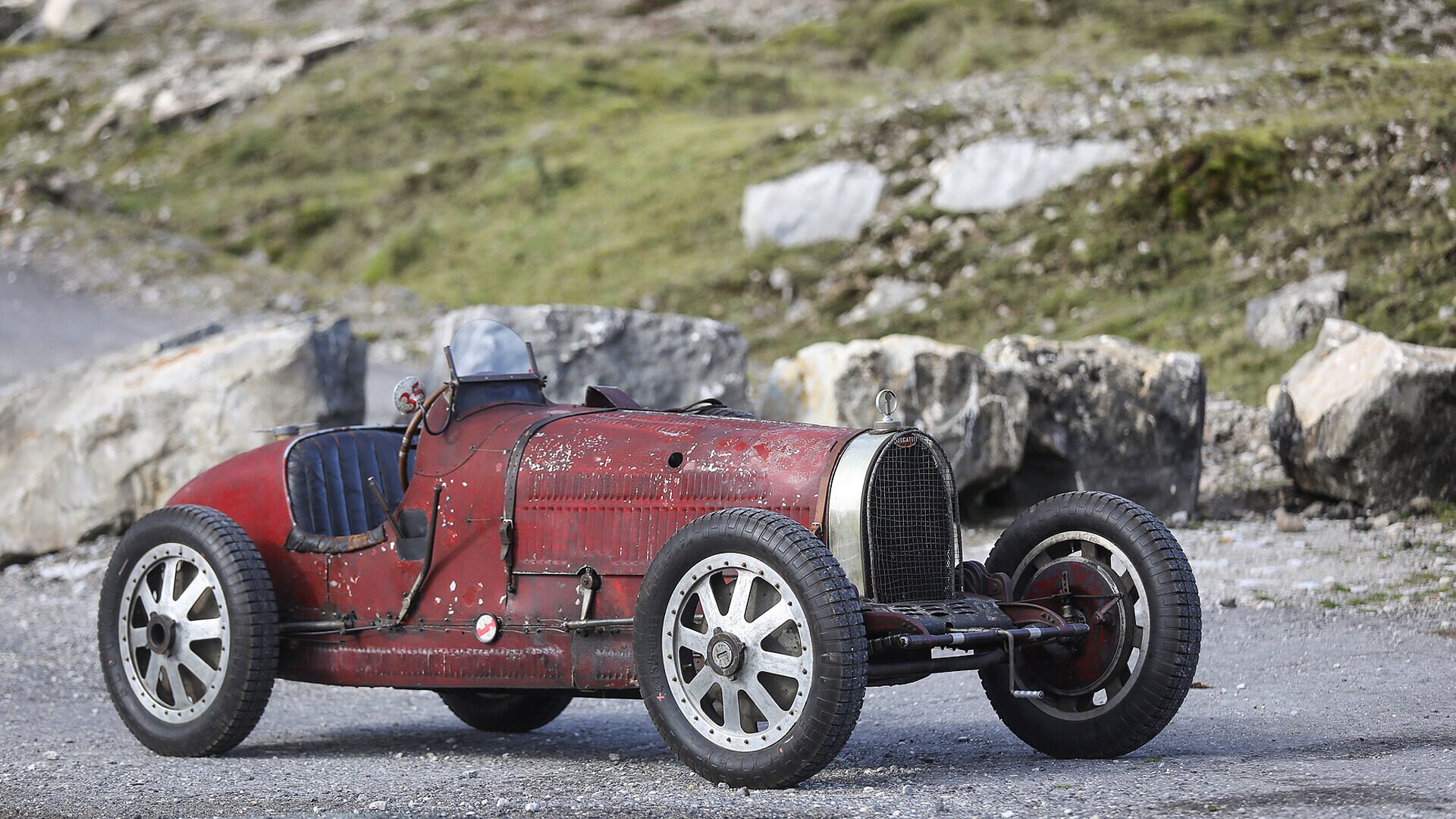
Bugatti Type 59 Sports (Chassis 57248)

A 1934 Bugatti Type 59 Sports with the chassis number 57248 was auctioned for USD 12,681 million at Gooding & Company in London in September 2020. This makes it one of the most expensive Bugattis ever to come under the hammer at a public auction. The Bugatti Type 59 Sports was created as a racing car for the Bugatti Grand Prix factory team and won the Belgian Grand Prix at Spa, later finishing third in the Monaco Grand Prix. Some of the most famous and successful Bugatti racing drivers were at the wheel of this car – including Robert Benoist, Louis Chiron, René Dreyfus, Achille Varzi and Jean-Pierre Wimille. After the successful racing season, Bugatti converted the Type 59 into a sports car. King Leopold of Belgium purchased it in 1937. The vehicle remains in its original, unrestored condition to this day. It is powered by an 8-cylinder in-line engine with a capacity of 3.3 litres and a supercharger. The power output was around 250 PS; other engine variants reached up to 380 PS in the Type 59, which was built until 1936.

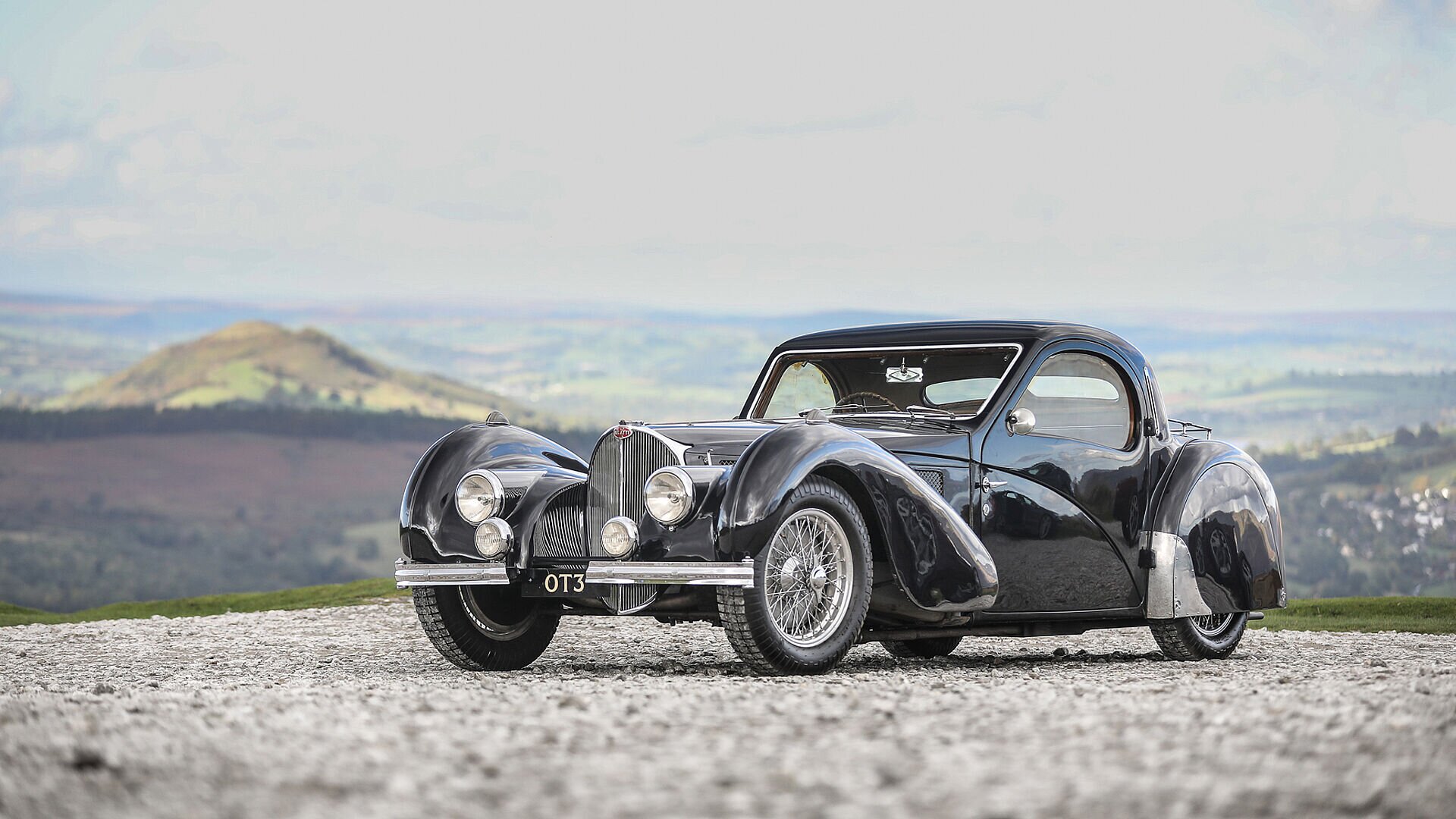
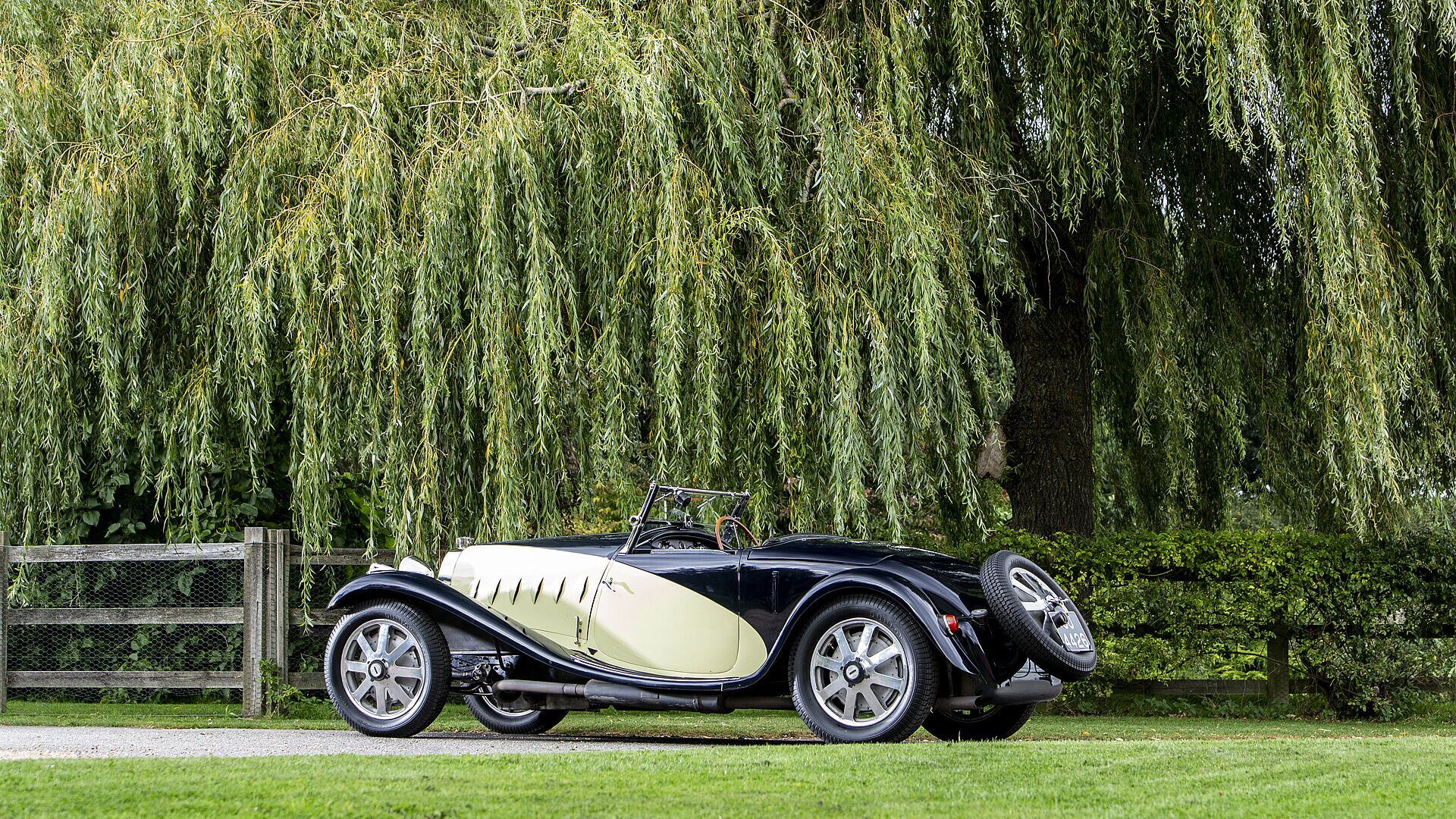
Bugatti Type 57S Atalante (Chassis 57502)

A sum of EUR 10.44 million was paid by the buyer of a rare and highly desirable 1937 Type 57S Atalante with the chassis number 57502 at the Gooding & Company auction in London. It is a genuinely distinctive model that was purchased by British racing driver and Bugatti enthusiast Earl Howe in 1937. The Bugatti Type 57S Atalante is one of only 17 cars that Jean Bugatti fitted with his sensational Atalante body. The power unit is a turbocharged 3.3-litre eight-cylinder engine that delivers an output of up to 175 PS in the Type 57S.

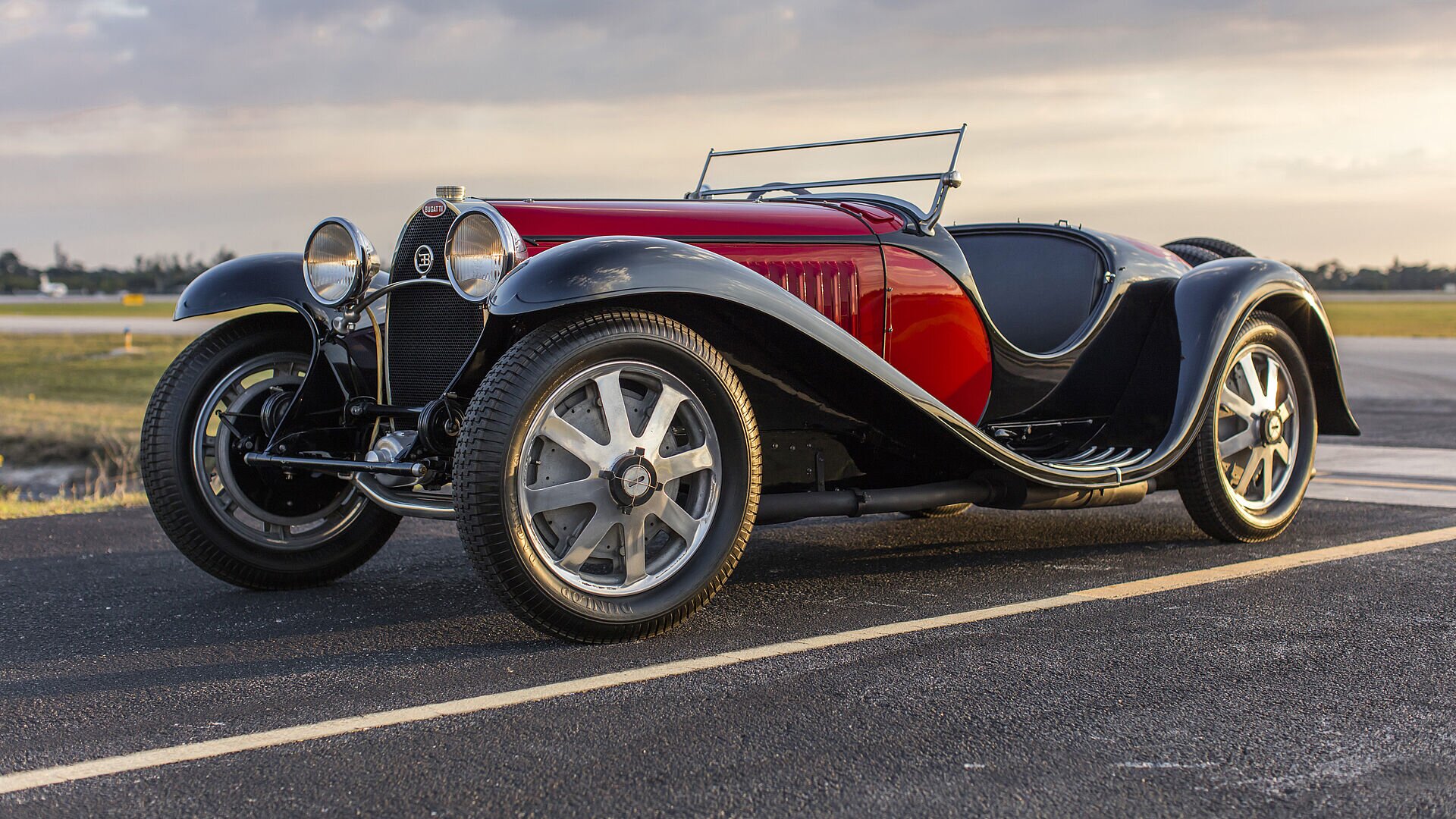
Bugatti Type 55 Super Sport Roadster (Chassis 55220)

A 1932 Bugatti Type 55 Super Sport Roadster with a factory body designed by Jean Bugatti fetched USD 7.1 million at Bonhams’ Amelia Island auction in March 2020. Bugatti produced a total of just 38 Type 55 Super Sport chassis up until 1935. Eleven of the 14 roadster-bodied vehicles built by Jean Bugatti are still in existence today. Victor Rothschild, later the third Baron Rothschild, purchased the Type 55 as a new car and kept it in his collection for many decades. In 1985, Boston professor Dean S. Edmonds Jr. acquired this Bugatti with the chassis number 55220 for GBP 440,000. This made it the most expensive car ever sold in Britain at the time. In Edmonds’ ownership, the Bugatti was restored and won first place in its class at Pebble Beach in 1993.

Bugatti Type 35C (Chassis 4871)

A Bugatti Type 35C Grand Prix dating from 1928 fetched USD 5.23 million at a Gooding & Company auction in London – a record for the Type 35. This car with the chassis number 4871 was originally built for the Targa Florio 1928. The first private owner was Jannine Jennky, a French racing driver who drove it to overall victory in the first ever Coupe de Bourgogne in Dijon. Now more than 90 years old, the vehicle had only four owners after 1932. It remains in its original, unrestored condition. Up until 1930, Bugatti produced the Type 35C with an 8-cylinder in-line engine and a capacity of two litres. With the help of a Roots-type supercharger, the power unit delivers an output of 125 PS, enabling a top speed of over 200 km/h more than 90 years ago.

Bugatti Type 55 Super Sport (Chassis 55221)

A Bugatti enthusiast paid USD 5.07 million for a 1931 Type 55 in Paris last February. This made the vehicle with the chassis number 55221 the most expensive car to be sold at one of the Rétromobile 2020 auctions. This is an outstanding vehicle: Louis Chiron and Count Guy Bouriat-Quintart co-drove it as a factory racing car in the 24 Hours of Le Mans in 1932. The later owner had a unique Figoni body put on the chassis. With this body, the Type 55 remained in the family for over 60 years. Its 2.3-litre 8-cylinder turbocharged engine produces an output of some 160 PS.

The prices paid in 2020 are not surprising to experts. Bugattis are considered the most valuable cars of all time anyway. Between 1936 and 1938, only four of the Type 57 SC Atlantic were produced, three of which still exist after more than 80 years. The fourth Bugatti Type 57 SC Atlantic is considered the Amber Room of the automotive world and is still missing today.. If it were found, its speculative value would probably be much higher.

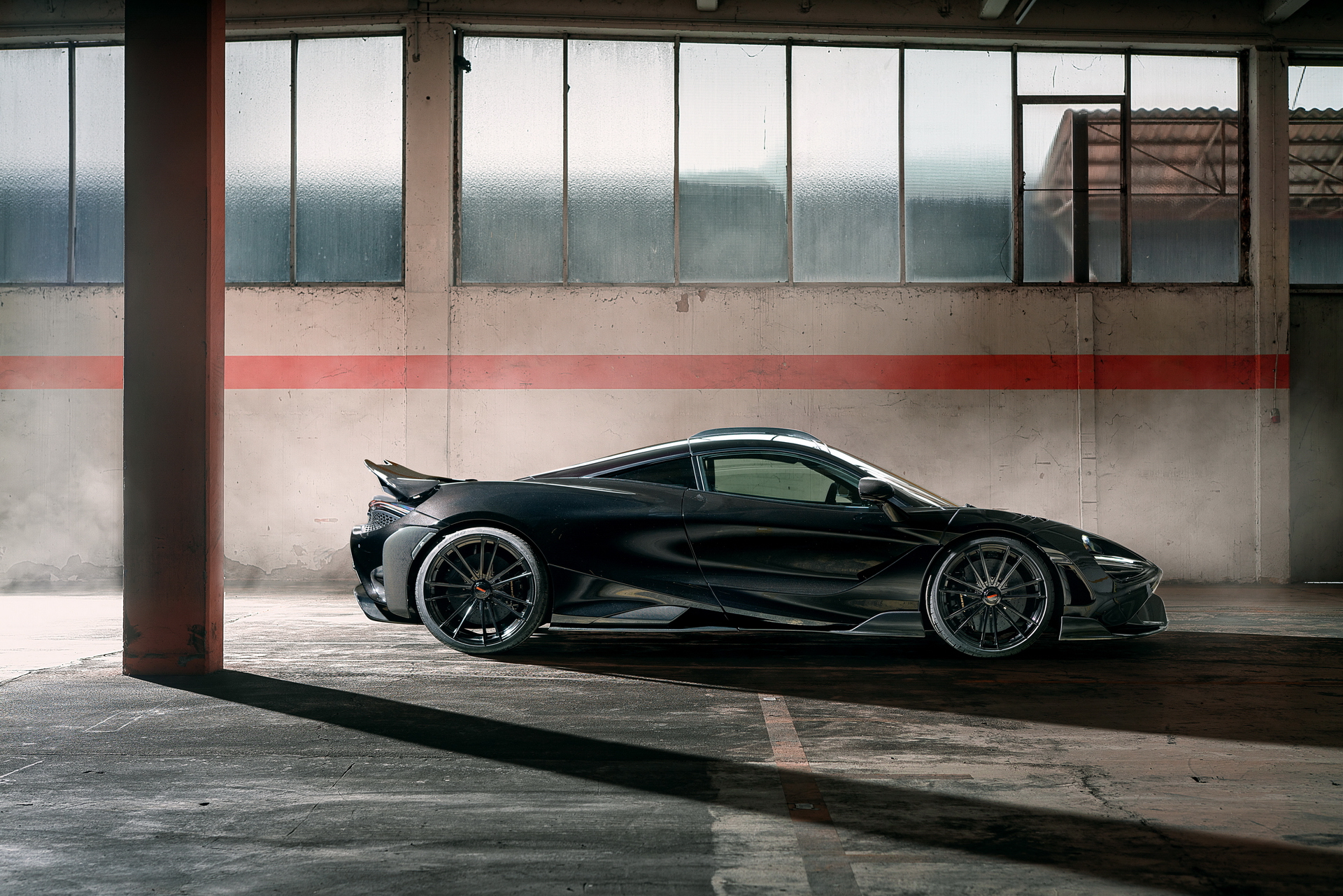
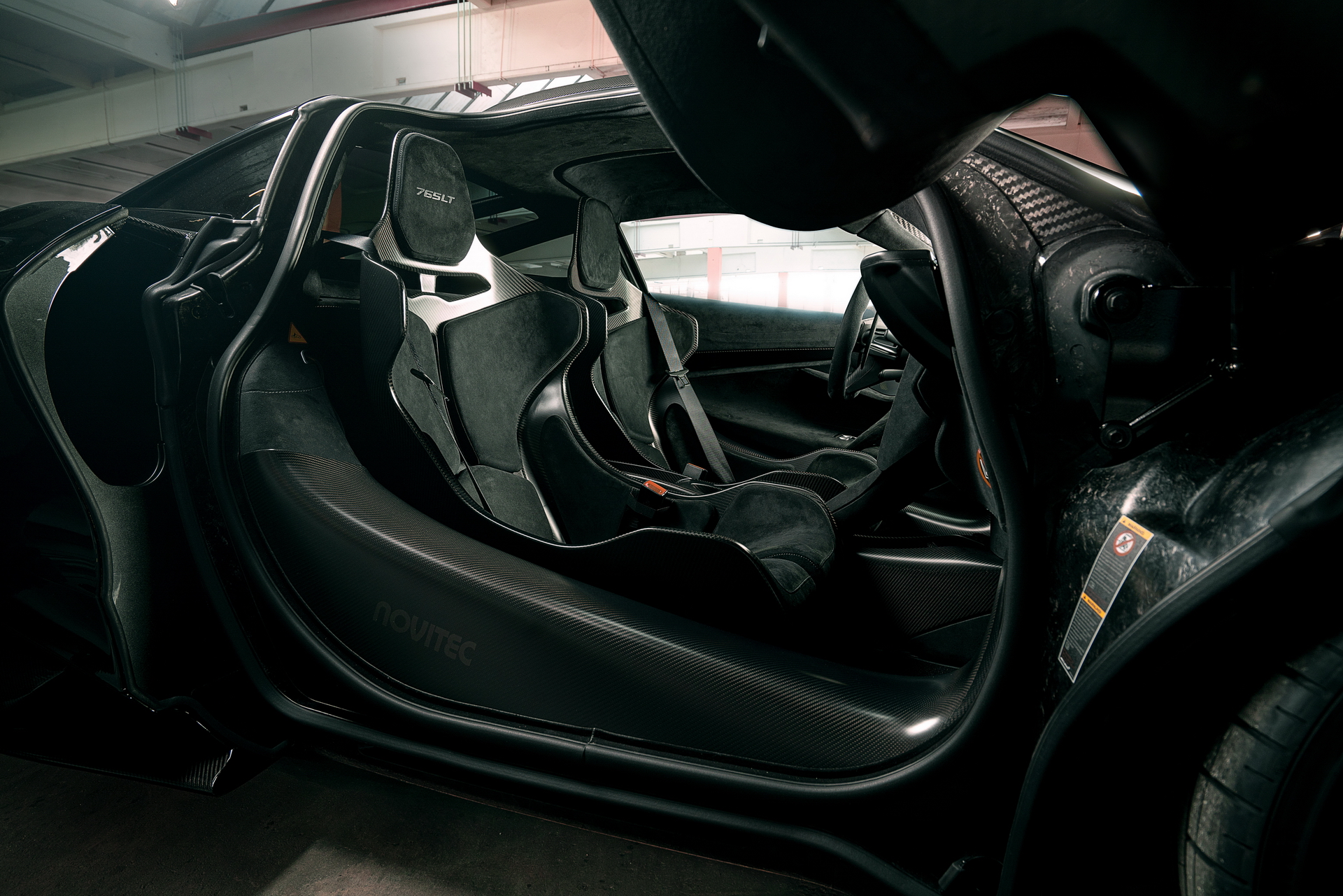
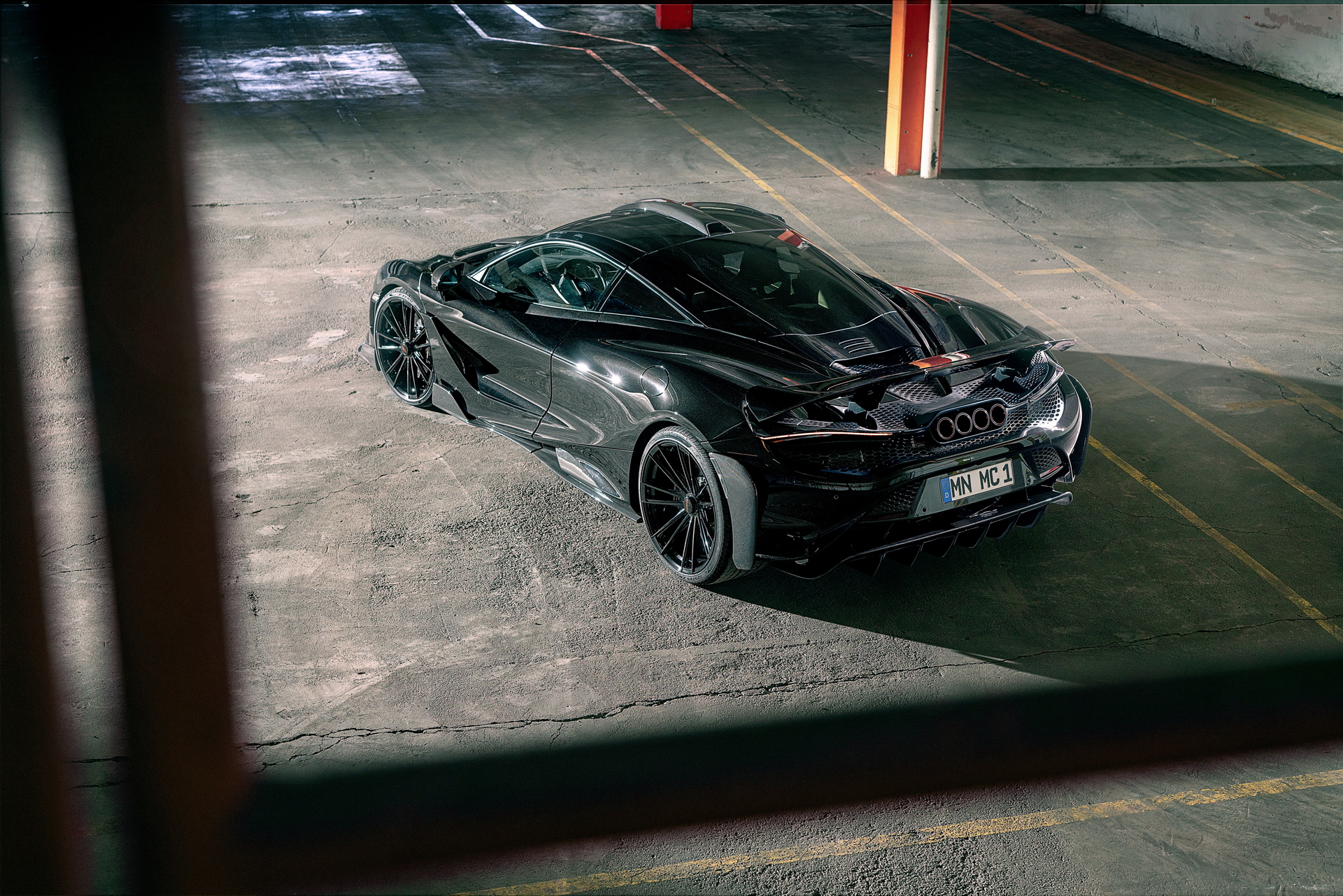
The McLaren 765LT, longtail, tuned by Novitec

In 1997, the McLaren F1 GTR Longtail won the GT1 class at the world’s most famous endurance race, the 24 Hours of Le Mans. With the McLaren 765LT, the UK based sports car manufacturer takes the longtail principle to the road once more, and NOVITEC takes the already impressive base to the next level with an uprated engine reaching 855 hp.

The McLaren 765LT is already a very potent car when it leaves the factory doors, with a twin-turbo, 4-Liter, V8 engine, but NOVITEC offers three versions of their professional engine tuning for this car from Woking. These kits are based on the NOVITEC N-TRONIC add-on control unit, which allows ‘plug-and-play’ performance upgrades.

The top of the line upgrade is called the Performance Stage 2 kit, complete with RACE exhaust system, ceramic coated turbo inlets, and the N-TRONIC box … the result is a 90 hp boost, torque peaks at 898 Nm at 6,300 rpm with a maximum power of 629 kW or 855 p at 7,400 rpm. Going from 0 to 100 km/h only takes 2.5 seconds now, reaching 200 km/h in just 6.5 seconds, with a top speed over 330 km/h, also thanks to the low weight of only 1,350 kg.

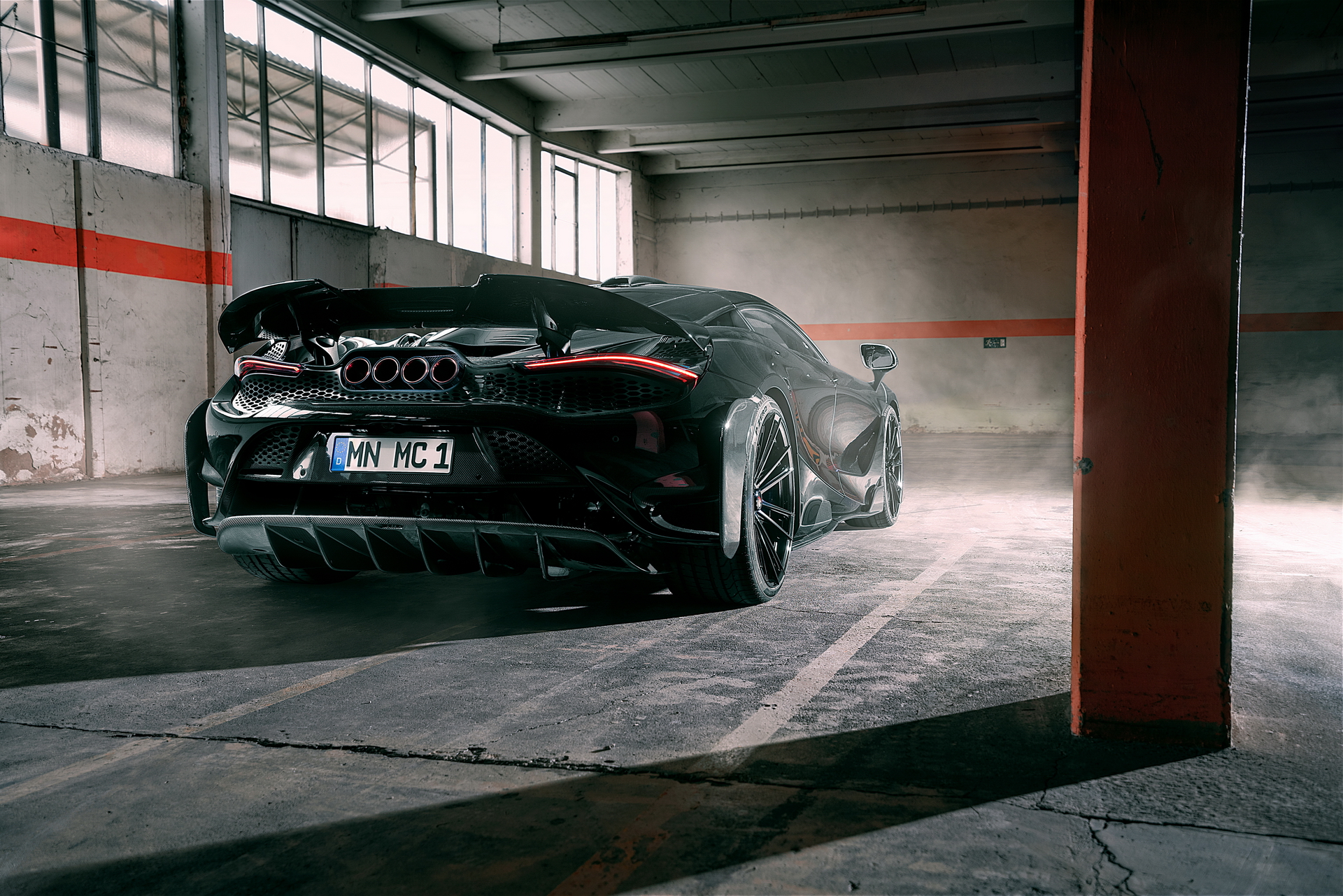
The high-performance exhaust upgrade from NOVITEC is made from Inconel, straight from the Formula One scene, weighing even less than titanium, it comes with full thermal insulation to keep the heat down in the engine bay … NOVITEC even offers 999 gold plating, and this includes the quartet of exhaust tips at the rear. Or you can opt for carbon fiber tips, or go for a more subtle matt black finish … to make the exhaust system conversion complete a 100-cell sports metal catalyst is also on the options list.

Novitec tuning wouldn’t be complete without a set of stunning wheels, again from Vossen, these machined NOVITEC MC3 forged wheels show seven double spokes and a track-derived center lock. 20 inches and 21 inches give that staggered look, 9×20 inches with 255/30 ZR 20 for the front, massive 12×21 inches with 325/25 ZR 21 high-performance tires to keep the rear on track. As usual, a 20mm lowering set of NOVITEC sports springs are the final touch you just need to add.

But you’ll want to have your McLaren 765LT by NOVITEC to look good standing still too, and while the wheels do help in that respect, the clear carbon fiber parts from NOVITEC are the cherry on the cake here. A pair of inserts for the headlights, the N-LARGO trunk lid, and let’s not forget the impressive air scoop on the roof … all available in ‘naked carbon fiber’ as NOVITEC likes to call it. Inserts for the side sills and air intakes on either side of the hood come in the same lightweight material.

More images of this amazing looking NOVITEC McLaren 765LT LongTail

The most powerful BMW M is the four-door, four-seat M5 CS

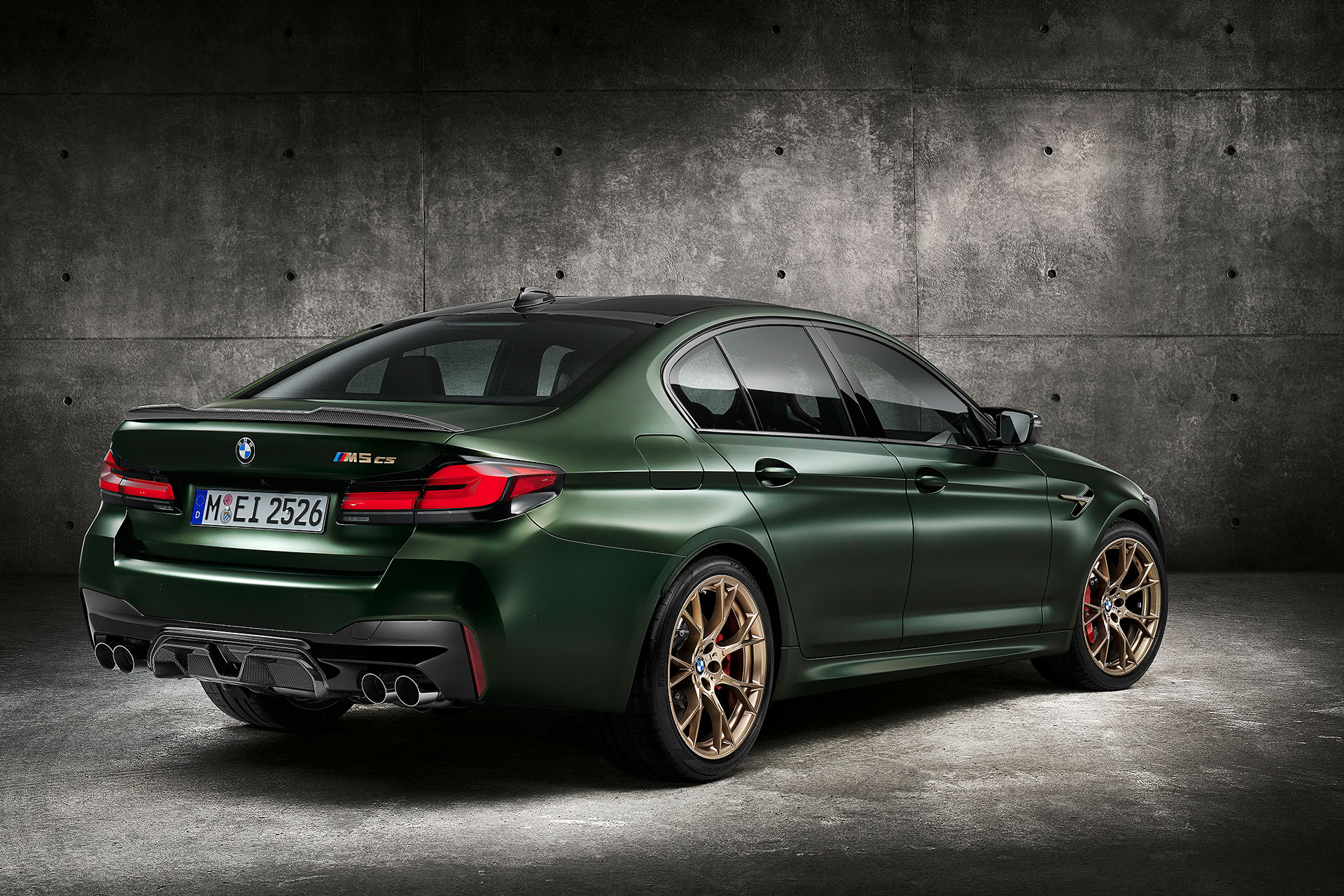
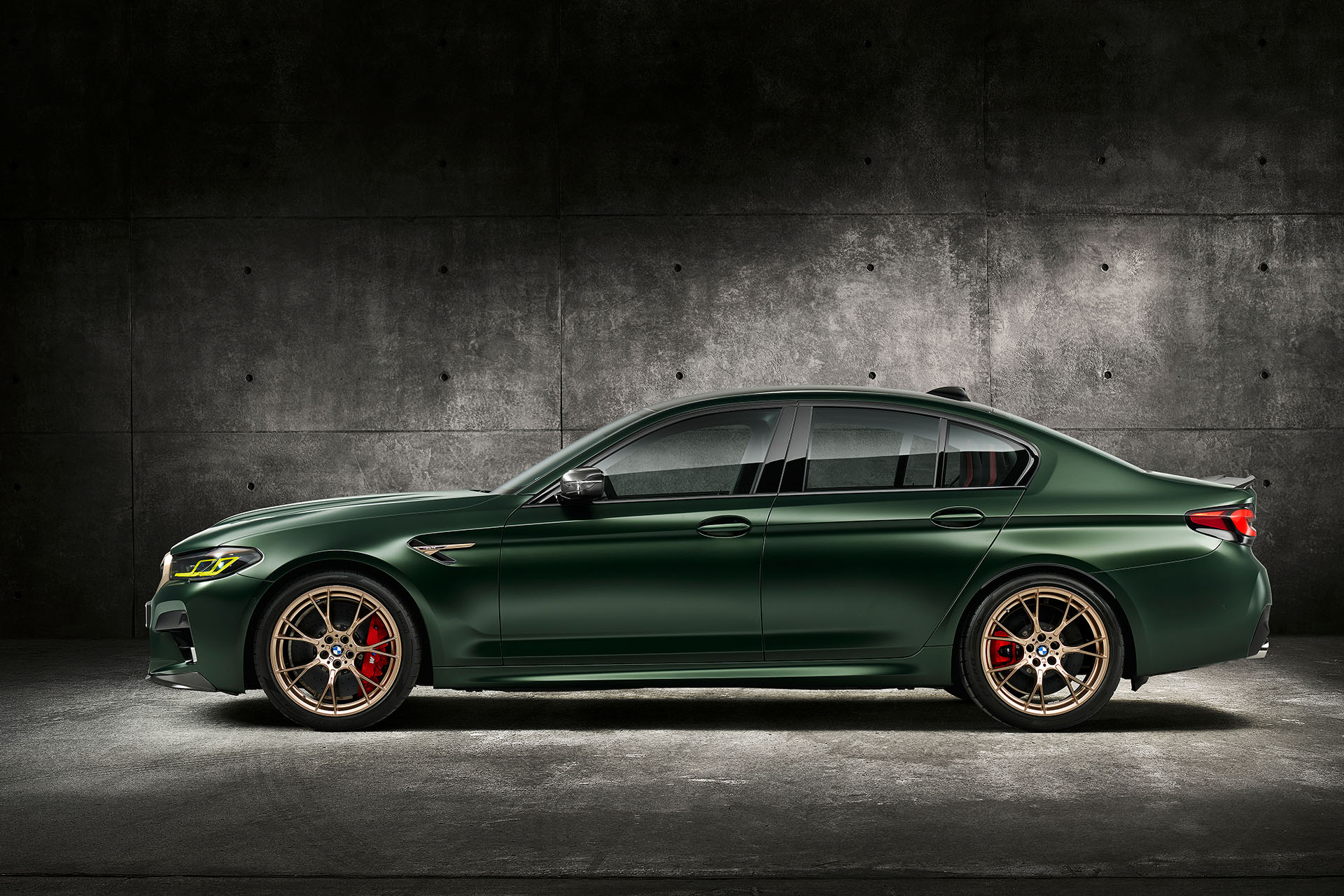
We all love those BMW M models, from the smallest, right up to the largest, they are all masterpieces of German Engineering, and the CS models mark the most sporty of them all, with bespoke, lightweight modifications to create the ultimate M-series version … now BMW took the already impressive M5 to the next level … the BMW M5 CS limited run, exclusive special-edition. To be launched in the spring of 2021 in Germany at a base price of €180,400.

The new BMW M5 CS will come with the most powerful engine of any M-Series model in history, 635 hp, which is a 10 hp increase over the BMW M5 Competition … this is really supercar territory, in a four-door sedan. To put that into perspective, the amazing 2021 Audi RS6 comes with 591 hp, the 2021 Mercedes E63S AMG packs 603 hp … even a Bentley Flying Spur with her 6-Liter engine only has 626 hp … so this new BMW M5 CS beats them all.

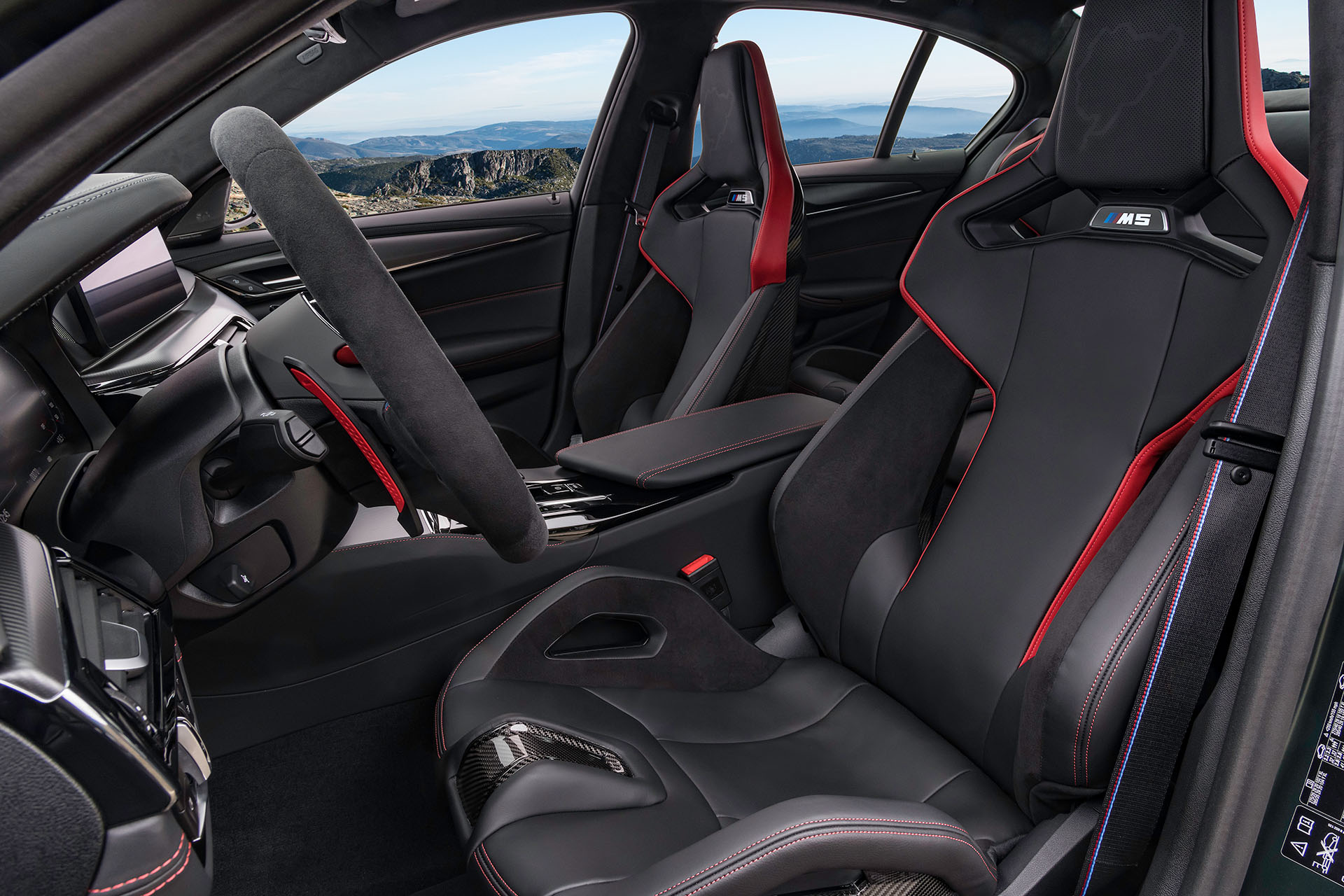
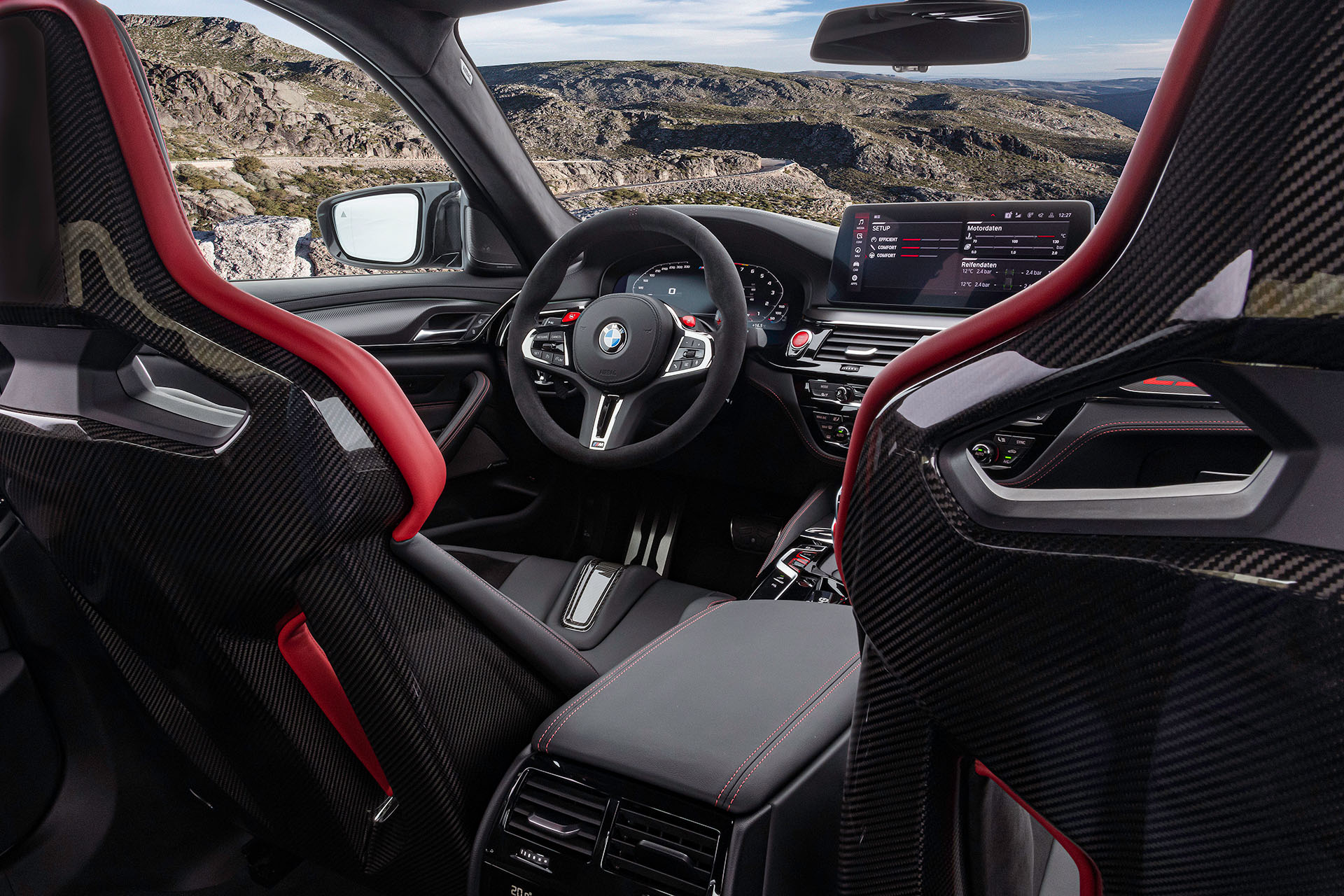
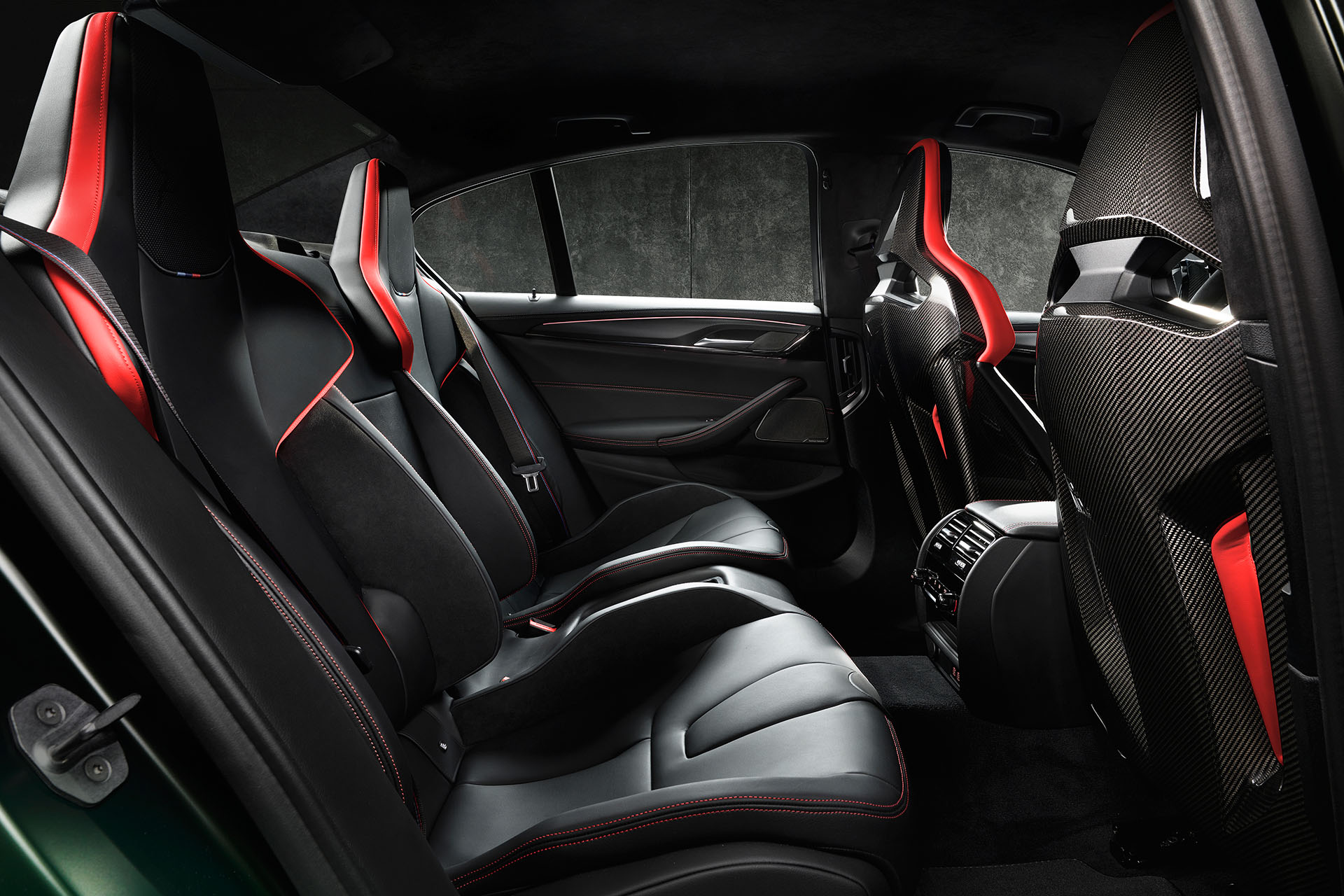
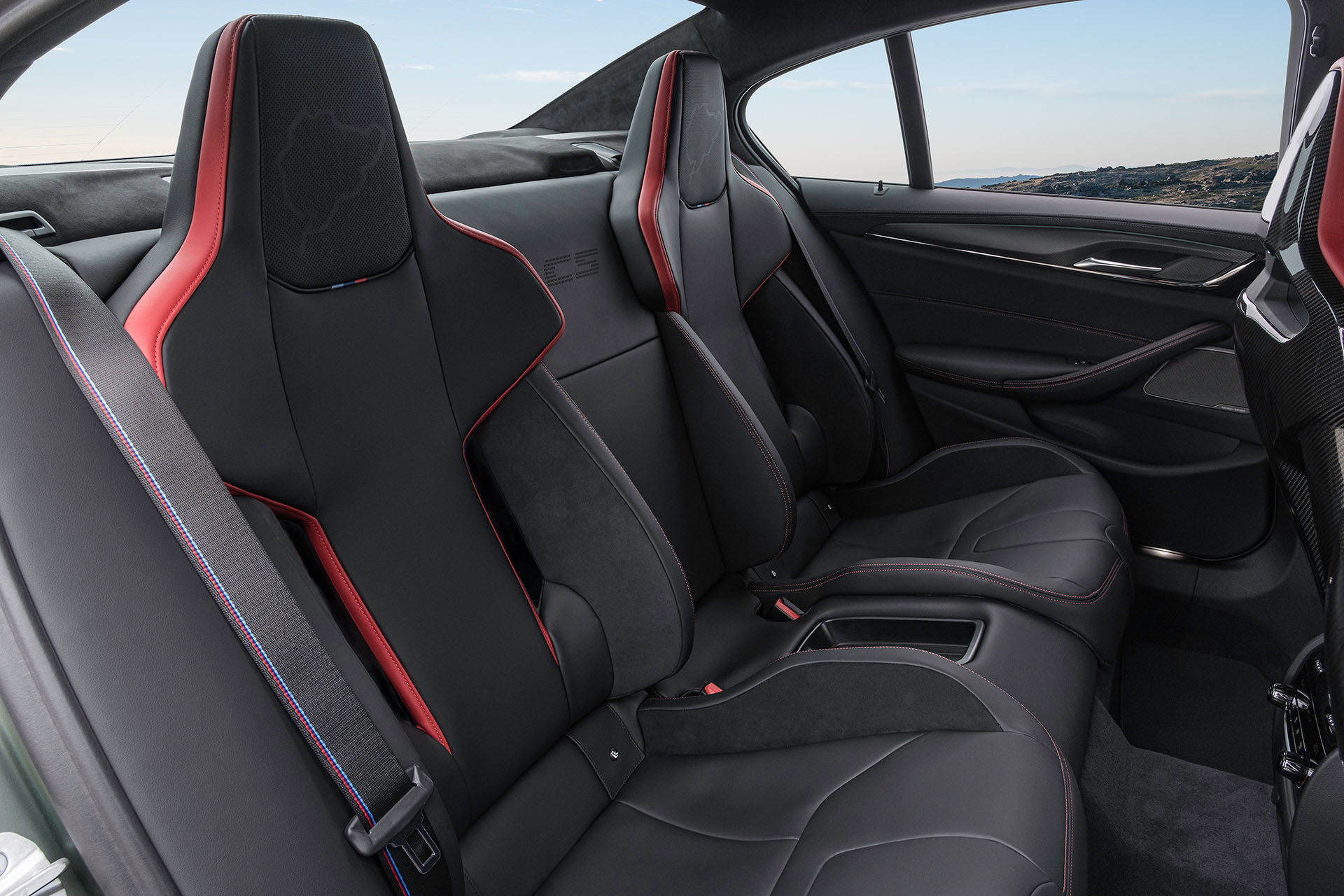
In fact, this new BMW M5 CS even narrowly beats the V10, 630 hp Lamborghini Huracán EVO, and this German comes with two more seats and decent luggage space! Yes, you are reading that correctly, the BMW M5 CS is a four-door sedan, with four seats, unlike the regular M5 or the M5 Competition which are technically five-seat models. The BMW M5 CS ditches the rear seats of these ‘lesser’ models and replaces it with a pair of body-hugging sport buckets .. and they match the absolutely stunning, carbon fiber front seats perfectly.

The leather used on the interior of the BMW M5 CS is a fine-grain Merino, on the press release car finished in black with Mugello Red contrast sections and stitching. Naturally an illuminated M5 logo is displayed on the backrest of the front seats, but probably the most attention to detail is that embossed outline of the famous Nürburgring track on all four headrests.

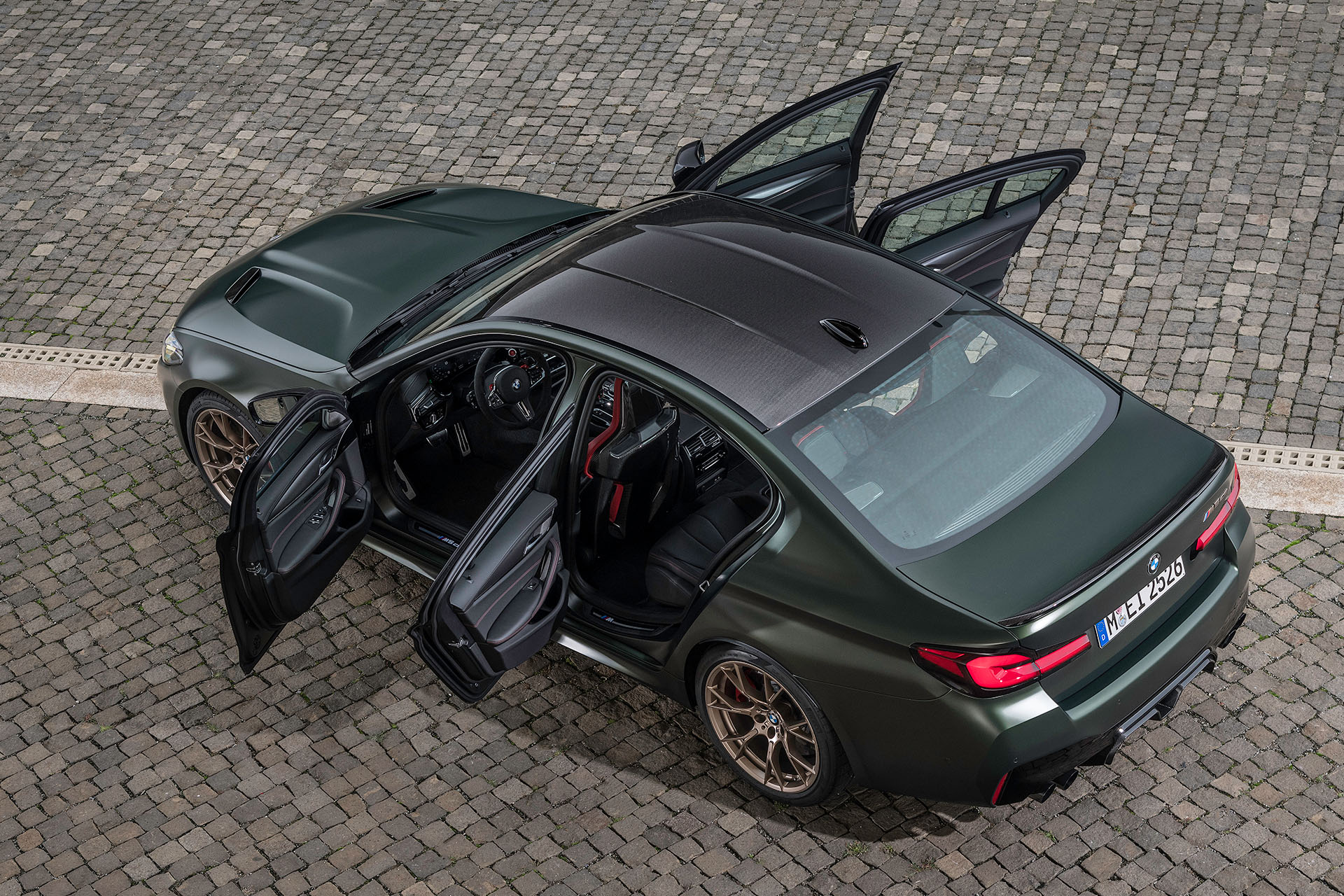
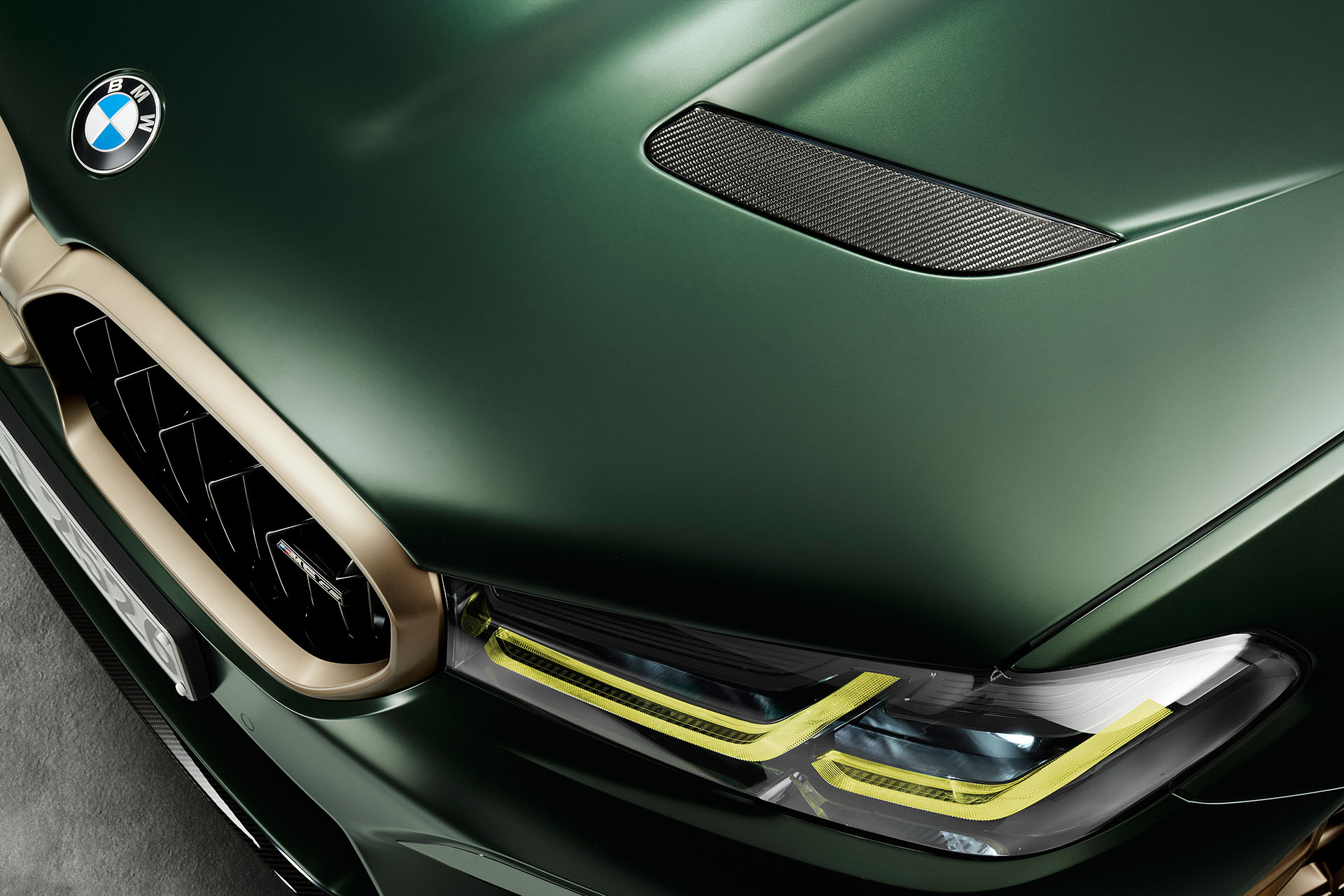
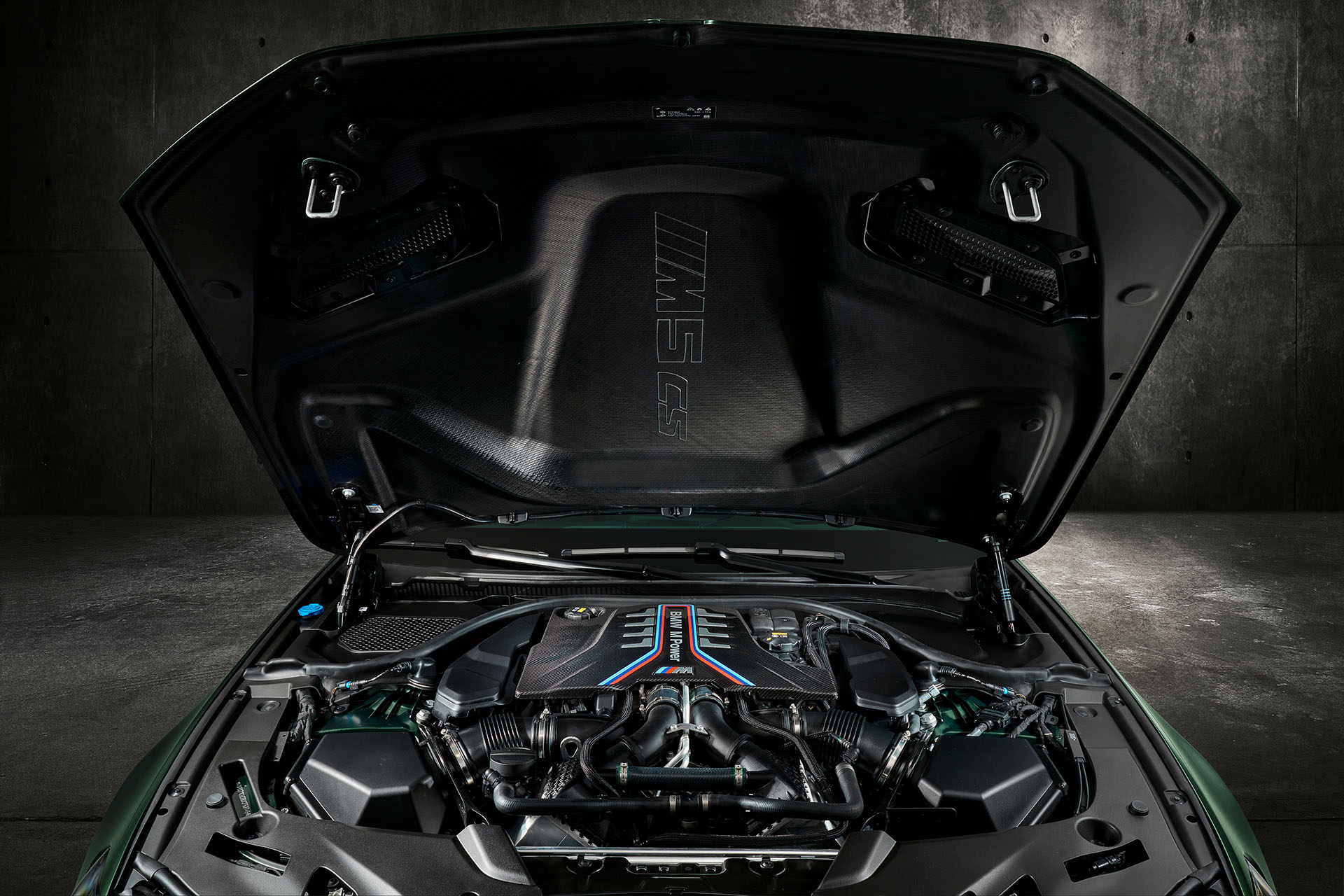
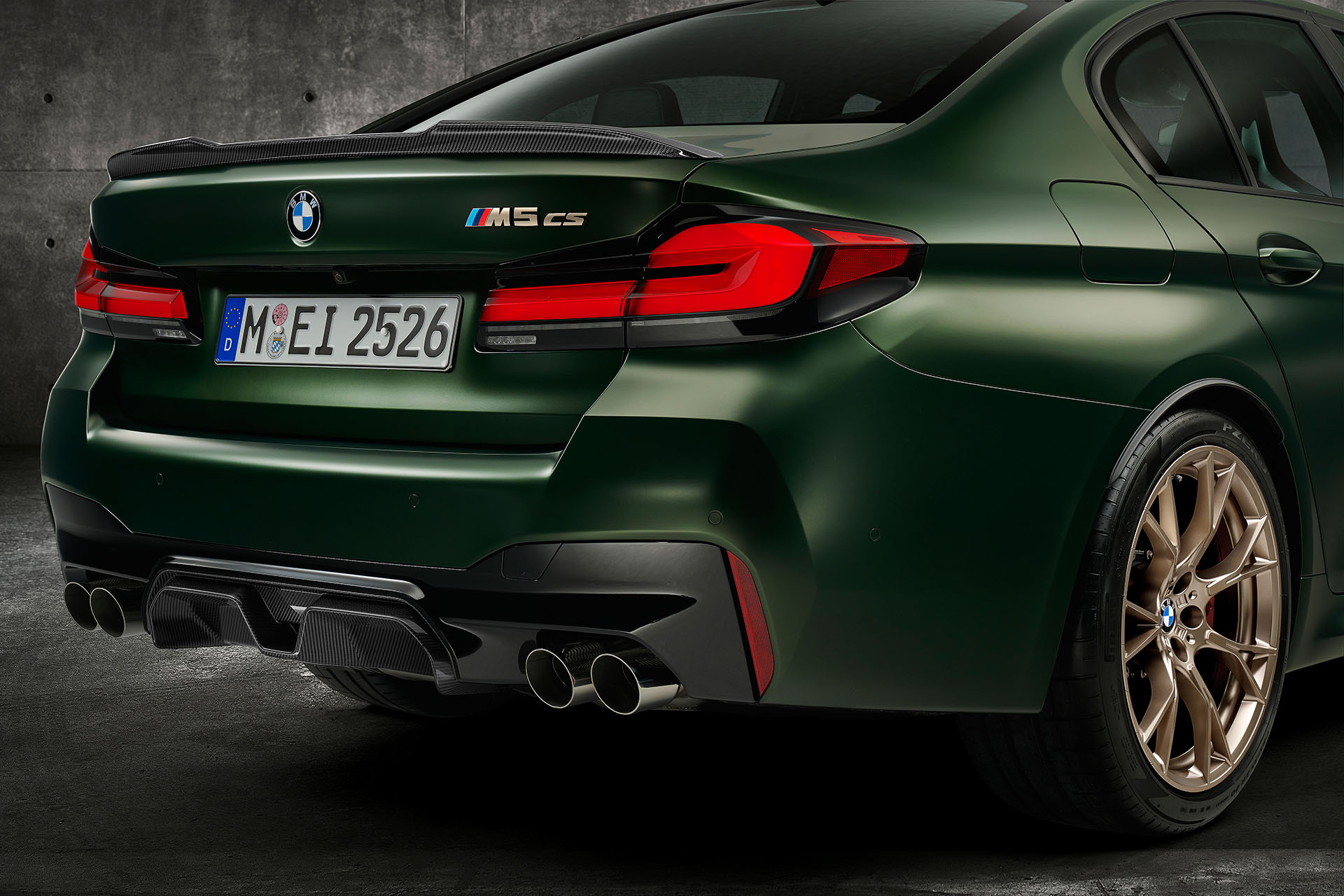
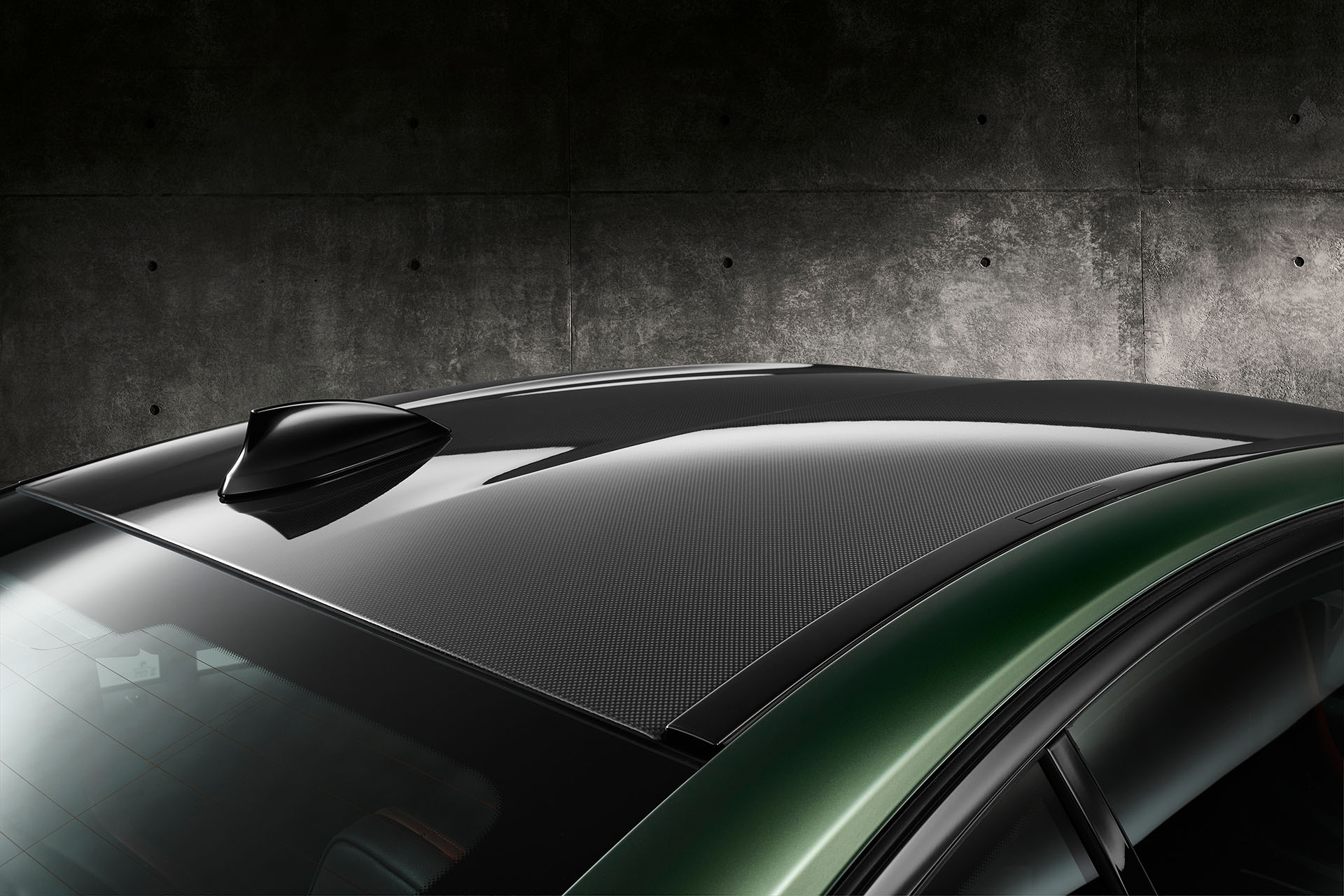
The BMW M5 CS also went on a diet … loosing 70 kg compared to the M5 Competition, the M5 CS comes with a bespoke chassis tuning and custom M xDrive setup. The engine cover on the M5 CS is made from CRFP and includes exclusive air vents, the front splitter, the mirror covers, the special rear wing, the rear diffuser … all made from CRFP too … even the roof shows exposed carbon fiber on this car. For the CS version, BMW even changed the exhaust tips, and yes, there are still four of them.

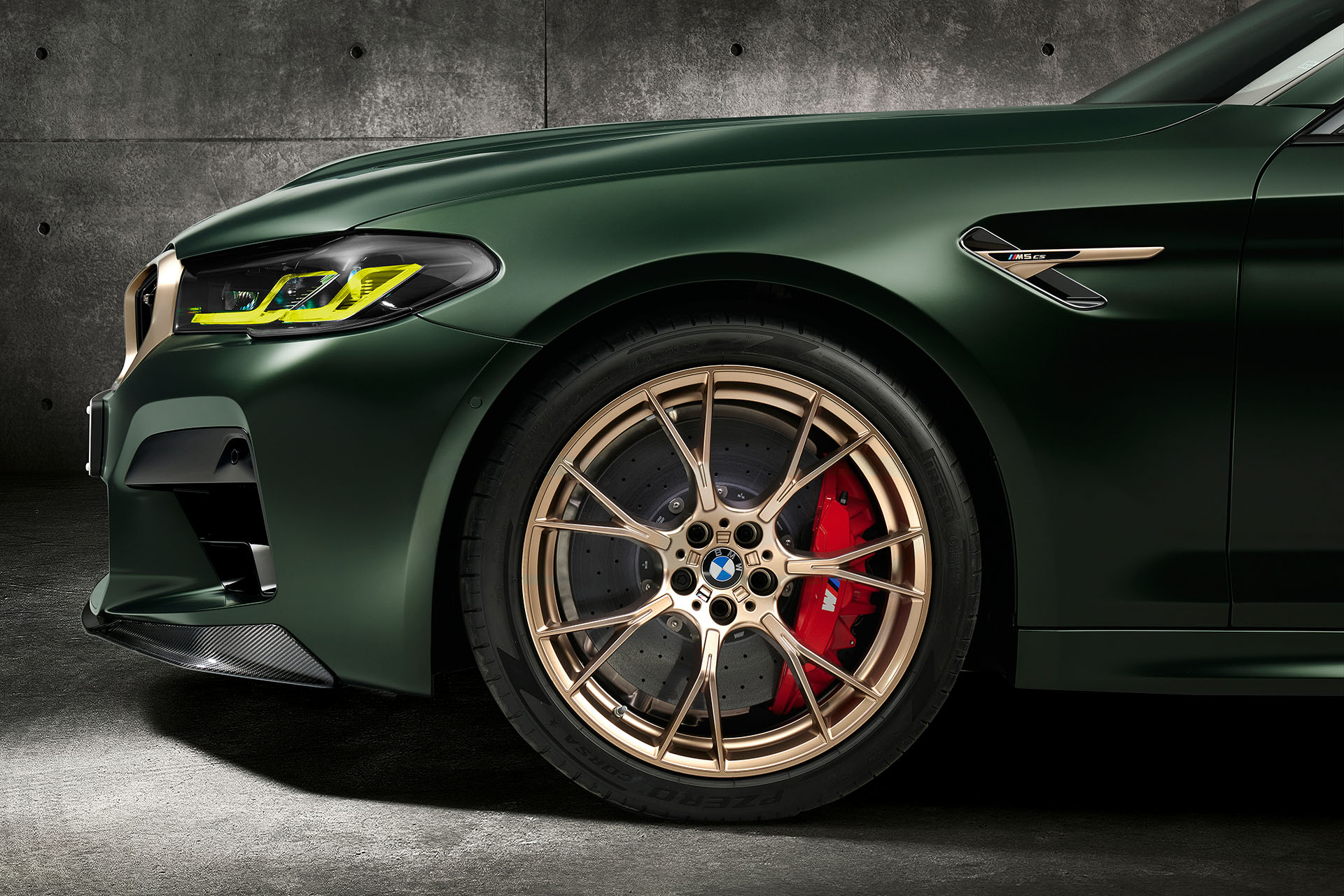
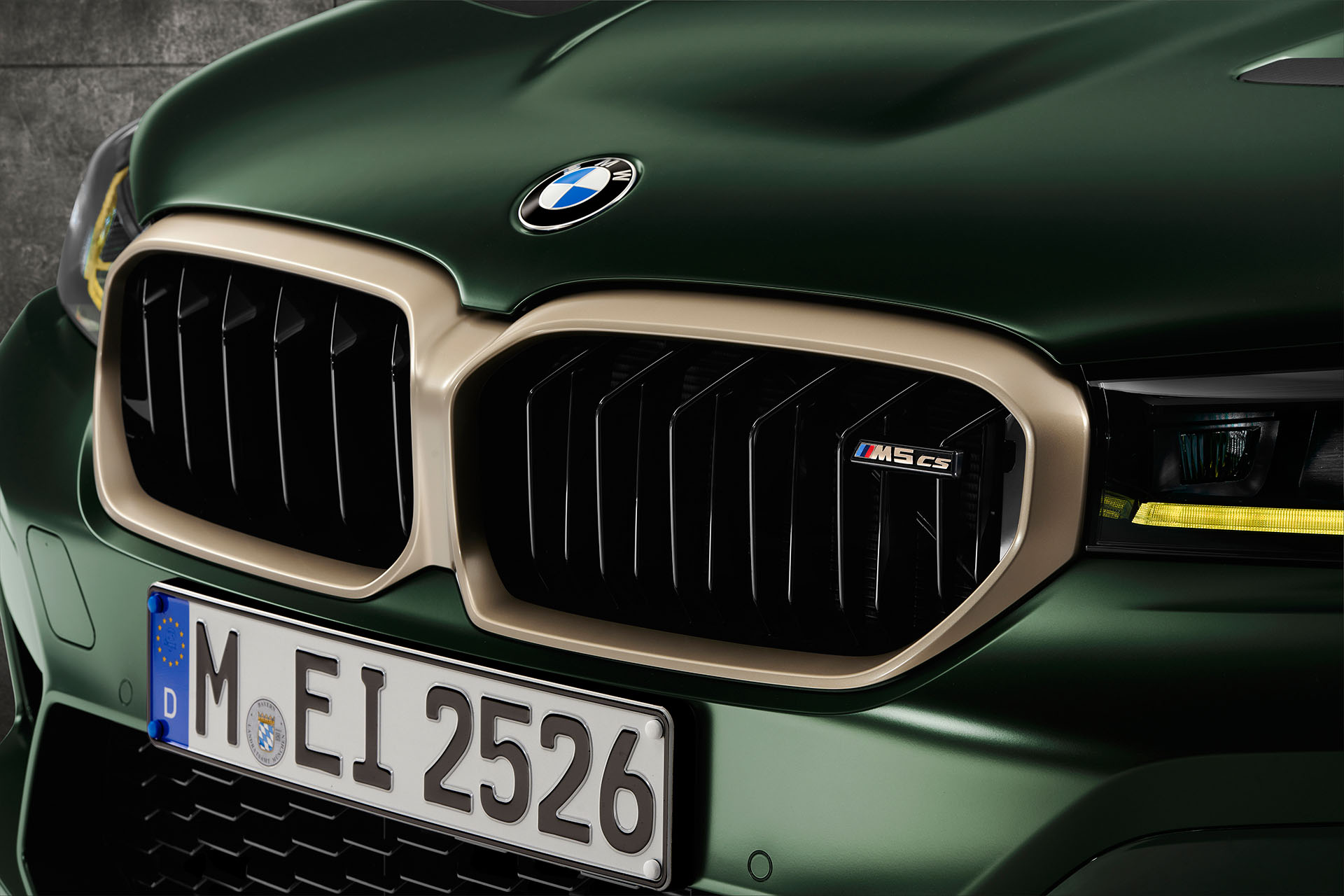
The BMW M5 CS comes with bespoke Goldbronze details, like the typical BMW kidney surround, the “M5 CS” badges at the front and the rear, the air vents on the fenders, and the 20-inch M Forged Y-spoke wheels … all finished in this special shade of gold for CS only. The BMW M5 CS comes standard with BMW Laserlight, and just to match the Goldbronze details, the L-shapes running lights are switching to yellow when low or high beam is activated, just to set this car apart from the other M5 models.

The body of the BMW M5 CS can be finished in some special shades too, like Brands Hatch Grey metallic for instance, or a more distinctive matt paint from the BMW Individual option list, Frozen Brands Hatch Grey metallic or an absolutely stunning Frozen Deep Green metallic as seen on the photos of the M5 CS in this article.

Going back to the interior, the steering wheel comes in Alcantara with a bright red ring at the top, behind it you’ll find a pair of shifting paddles made from carbon fiber, while black Alcantara is also used for the headliner, note that there is no more storage under the arm rest on the central console … on the M5 CS this is a fixed arm rest … all in the name of weight reduction.

Naturally the seat belts come with the M style red and blue stitching, while re CS badges can be found on multiple places inside the BMW M5 CS cockpit, even the floor mats come with M5 badges, most of the stitching on the interior is finished in double line red …

And let’s talk about driving the BMW M5 CS, 635 hp might sound a bit frightening at first glance, but this special-edition model comes with it’s bespoke M xDrive all-wheel-drive mode … only for those fearless drivers that really insist, you can get those special track tires to really come loose when you go into 2WD mode without DSC help.

For the BMW M5 CS the engineers went back to work on the already impressive suspension of the M5 Competition, adding dampers developed for the M8 Gran Coupé, modified springs and anti-roll bars … the M5 CS offers an 7 mm lowered ride height. The BMW M specialists have retuned the bearing springs at the front and rear axle of the BMW M5 CS and also refined damper control.

The wheels for this limited-edition BMW M5 CS are 9.5×20 at the front with 275/35R20 Pirelli P Zero Corsa tires, for the rear axle BMW went with 10.5×20 with 285/35R30 tires, naturally only a set of M Carbon ceramic disk brakes would match this much power, these brakes are 23 kg lighter than the M Compound brakes on the M5 Competition, and car be finished in either red, or optionally in gold to match the wheels.

With the reduction in weight compared to the BMW M5 Competition, and the slight increase in power, it is no surprise the CS evolution beats the M5 Competition in acceleration, 0 to 100 km/h takes only 3 seconds (compared to 3.3 sec for the M5 Competition), reaching 200 km/h is achieved in a mere 10. seconds (the M5 Competition needs 0.5 seconds more) … BMW did limit the top speed of this M5 CS to 305 km/h (189 mph).

Bentley just built the 80,000th Continental GT in Crewe

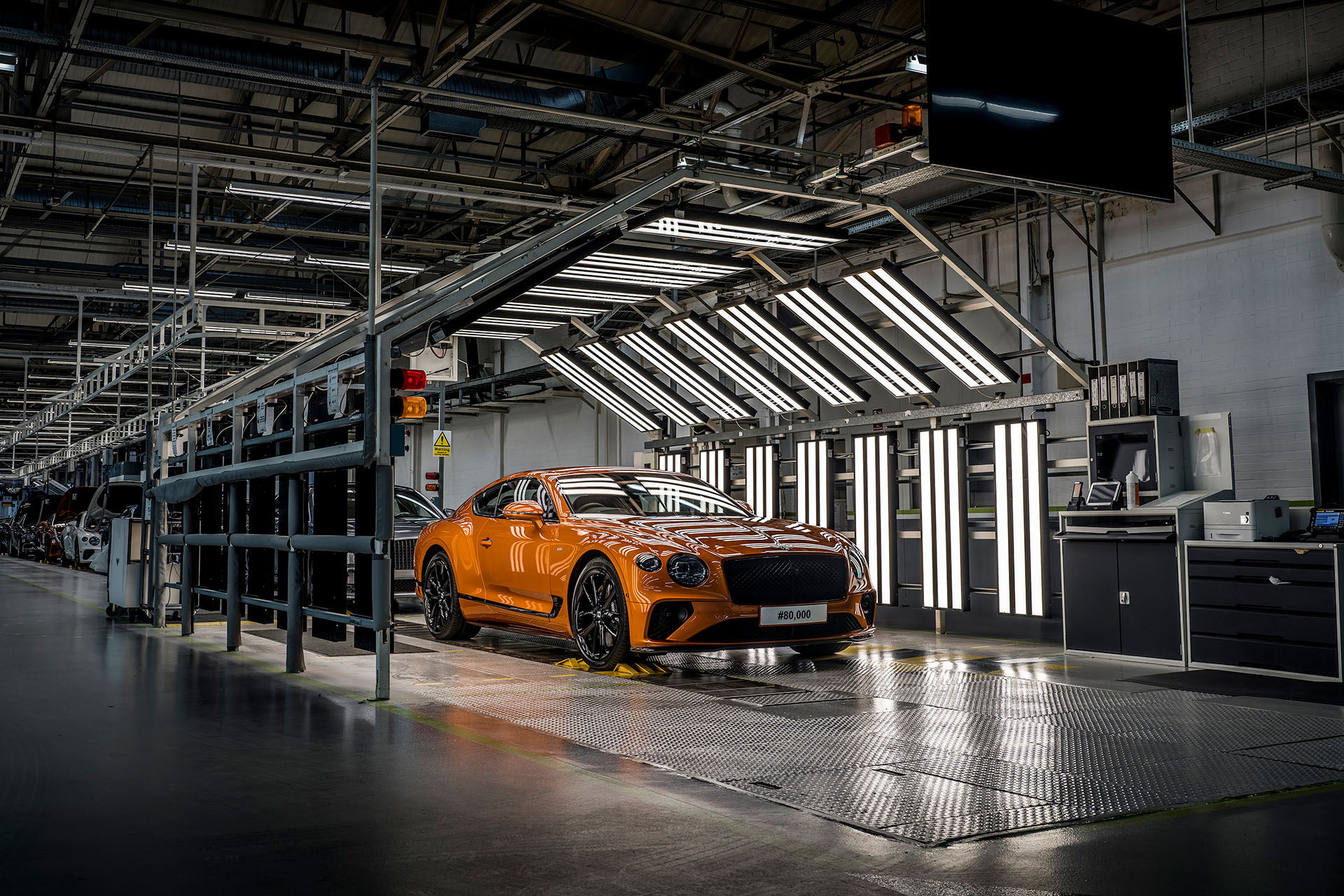
The Home of Bentley in Crewe, UK has produced the 80,000th individual, made-to-order example of the Continental GT – the world’s definitive luxury grand tourer. The 80,000th car – a right-hand drive Continental GT V8 in Orange Flame – was handcrafted earlier this week, in the world’s first carbon neutral factory for luxury car production.

In 1952, the Bentley R-Type Continental made its debut; a Mulliner-bodied coupe with a top speed of just less than 120 mph. It was the fastest four-seater car in the world and very quickly earned a reputation as the ultimate in high-speed luxury.

In 2003, the Continental GT was launched – the first car of the modern Bentley era. Inspired by the R-Type, the first Continental GT established an entirely new market segment – the modern luxury Grand Tourer. Ever since, it has been the unchallenged benchmark for the sector that it founded, with an average of nearly 5,000 examples a year being delivered to customers around the world.

Today, eighteen years later, Bentley’s skilled craftspeople – many of whom will have worked on the very first example of the Continental GT (still owned by Bentley) – have handcrafted the 80,000th car. Over this period the style, technology and engineering beneath the car has evolved significantly, seeing an increase of up to 27 per cent in peak power, whilst models within the range have also achieved a reduction over the original Continental GT of 48 per cent in CO2 emissions.

Bentley’s Chairman and Chief Executive, Adrian Hallmark, comments:

“At its launch in 2003, Bentley redefined the modern grand tourer with the revolutionary Continental GT. Now in 2021, the GT continues to be the ultimate luxury grand tourer, encompassing the latest technology, performance and style. This success is a testament to the skills of our designers, engineers and craftspeople here in Crewe.”

“I had the pleasure of launching the original GT in 2003 in my first stint at Bentley, and being here for the launch of the latest generation – and the iterations that have followed – has been a source of great pride for me personally. It will continue to be the iconic backbone of the Bentley business for years to come, even as we transition to the world’s leading provider of sustainable luxury mobility.”

The platform beneath the car was upgraded to a Bentley design for the third generation, allowing a totally new stance, proportions and levels of dynamic ability that raised the bar again. Wrapped in a totally new bodywork design, with sharper lines and more flowing surfaces, the Continental GT remains a stylish and thoroughly contemporary grand tourer.

A statement of true luxury, the third generation Continental GT represents the pinnacle of Bentley’s two-door design and engineering achievements. Effortlessly elegant and more sculpted and sharply defined, the body and materials combine to create truly breath-taking cars.

With a choice of powertrains, one of the most extensive colour palettes in the world and with almost limitless interior options, unique configurations can run into billions of variations. Indeed, there are currently a total of 17 billion ways in which a customer can specify a Continental GT. Beyond that, through the services of Bentley Mulliner – Bentley’s in-house bespoke division – the only limitation is the imagination of the customer. Owning a Continental GT guarantees both individuality and exclusivity, despite being part of a family now 80,000 strong.

The 80,000th vehicle is an eye catching Continental GT V8 in Orange Flame, finished with the optional Blackline Specification and Styling Specification, both adding to the car’s presence and hinting at the GT’s performance credentials.

A Family Gathering to Celebrate
To mark the production milestone, Bentley drew on its heritage fleet to show the evolution and achievements of the Continental GT since 2003.

Marking the car through its generations were:

  • The very first production Continental GT, VIN 0001, still a taxed-and-tested car on Bentley’s fleet
  • A Continental Supersports coupe, considered by many to be the pinnacle of the first generation GT family
  • A second generation Continental GT V8 S coupe, finished in Jetstream
  • From the current press fleet, a Dragon Red Continental GT Convertible

The Continental GT has also supported Bentley’s long tradition of racing and record breaking that started in the 1920s when the Bentley Boys set the pace at European circuits. In 1922, John Duff drove his Bentley 3 Litre single handed for 24 hours, at an average speed of almost 87 mph at Brooklands to secure 39 Class D records. And in 1928, another 3 Litre driven by Dudley Froy became the first car to achieve more than 115 mph over a distance of 100 miles at the same venue.

To mark recent achievements, the line-up was joined by some of the most exciting performance-focused Continental GTs:

  • The first Ice Speed Record GT, driven by four-times World Rally Champion Juha Kankkunen, which smashed the world ice speed record in 2007, reaching an average speed of 199.86 mph (321.65 km/h) on frozen sea off the coast of Finland.
  • The first-generation Continental GT3 racecar, that returned Bentley to winning ways on the racetrack in 2014 and secured victories on tracks all around the world
  • The 2019 Pikes Peak GT, which still holds the Production Class record at the Pikes Peak International Hill Climb. Driven by three-time champion Rhys Millen, the car took 8.4 seconds off the previous record along the 12.42-mile course, climbing 5,000 ft through 156 bends in just 10 minutes, 18.4 seconds.
  • The 2020 Ice Race GT, which took part in the GP Ice Race at Zell Am See in February last year on the same weekend that the final member of the line-up – the latest-generation Continental GT3 – won the Bathurst 12 Hour in Australia.

After 18 years and three generations, the Continental GT is still the quintessential grand tourer – phenomenally powerful, beautifully designed and exquisitely crafted.

Rimac C_Two wind tunnel test shows a 34% improvement on aerodynamic efficiency

It has been three years since Rimac unveiled their electric hypercar, still known as the Rimac C_Two concept, and at the moment we still haven’t seen any deliveries, or even plans for a customer car yet, we’re still in the prototype stage. But things are shaping up, and Rimac has been continuously tweaking the C_Two, making it better, and more importantly, more aerodynamic.

During recent wind tunnel testing of the third generation of the C_Two prototypes, they managed an impressive 34% improvement of aerodynamic efficiency compared to the initial prototype from 2018. As this is a fully electric hypercar, aerodynamic efficiency is extremely important, not only to offer the best possible performance figures in terms of acceleration and top speed but also in terms of range … the less drag directly converts into more range from the batteries.

Rimac has been doing simulations over the last three years too, but CFD simulations only go so far, even when each simulation model holds between 120 to 180 million elements on heat transfer … only real-time testing shows the results, either expected or unexpected, but engineers can learn a lot from wind tunnel testing, or actual track testing.

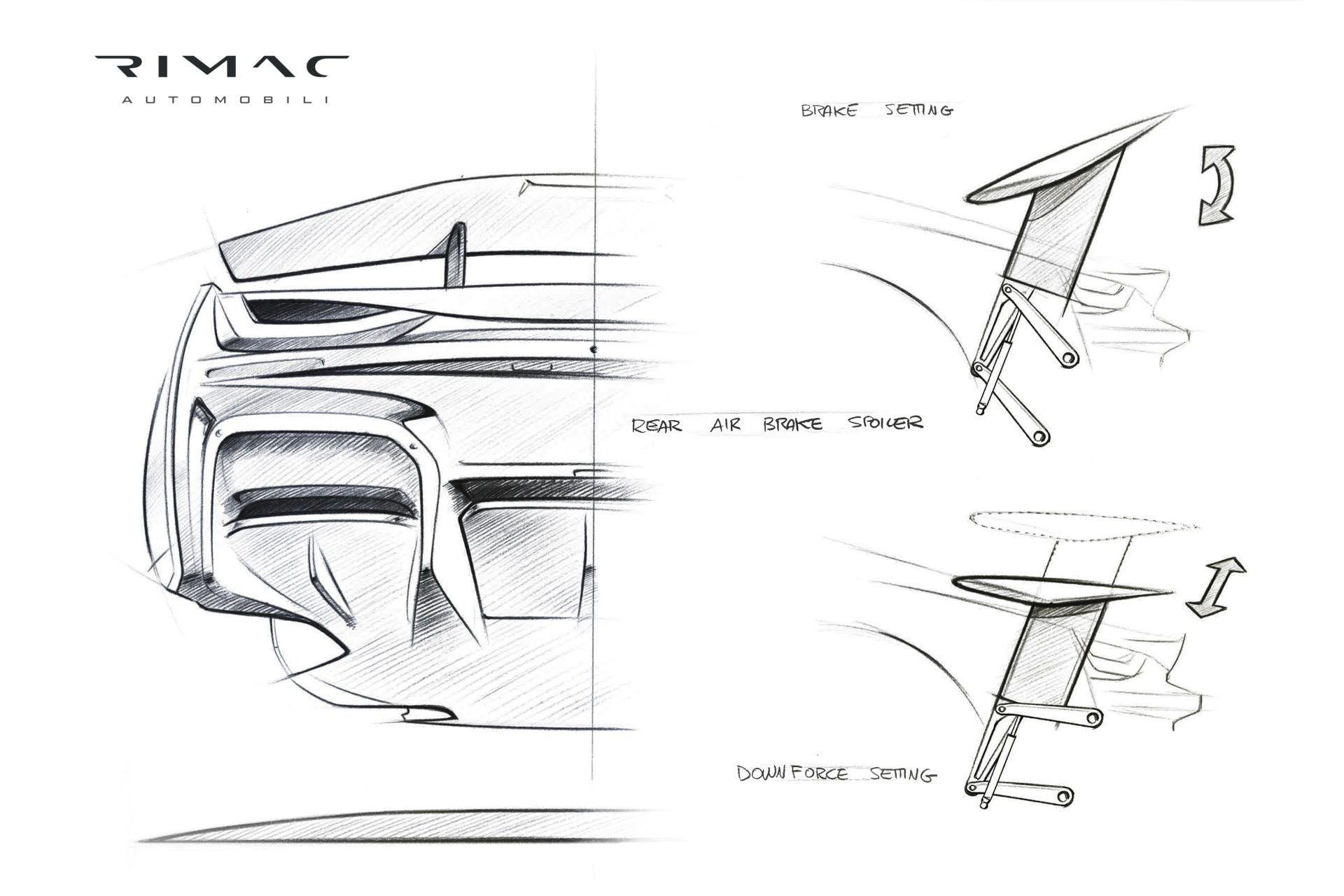
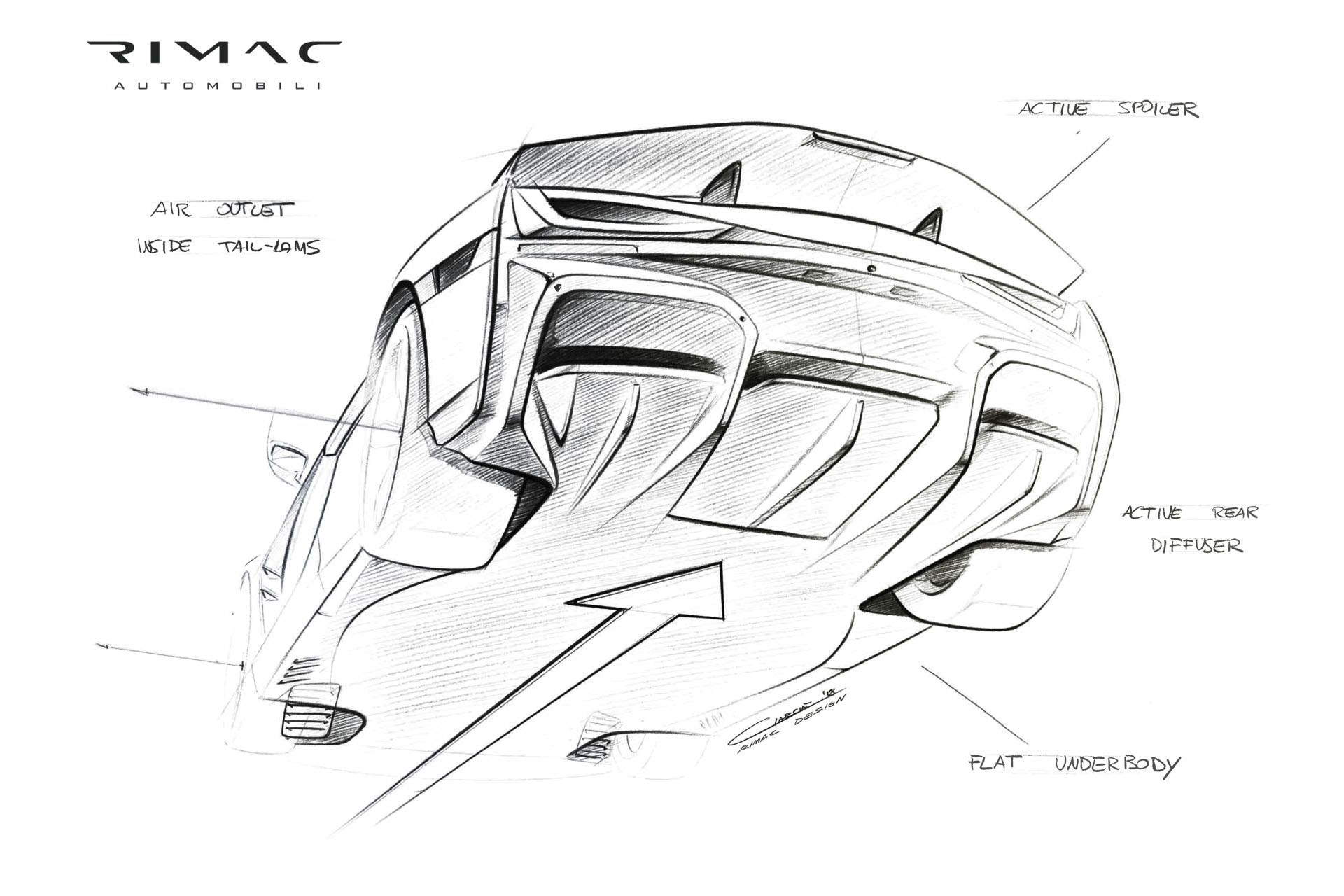
Let’s not forget the Rimac C_Two comes with active aero parts, the front splitter is adjustable, there are moveable flaps on the undertray of this car, while an adaptable air brake rear wing completes the setup for pure performance.

If you are looking to add your name to the order list for the Rimac C_Two, prepare to have about $ 2,000,000 ready, as mentioned in our earlier article.

Gronos 2021 – a Mansory modified Mercedes G-Class G63

Kourosh Mansory, located in Brand, Germany, is a well-known manufacturer of exclusive cars, most of which might be designed with Far-East, or Asian customers in mind, but their workmanship is at such a level you can’t resist admiring their creations, even if they aren’t always to your exact taste.

In 2013 MANSORY revealed the Gronos, a complete vehicle conversion taking Mercedes-Benz G 63 AMG and G 65 AMG and completely transforming it into a beast, called the Gronos after the god Cronos who led the twelve Titans. The interior of the original Gronos didn’t have seats anymore, MANSORY calls them thrones now, upholstered in the finest leather possible, with amazing, bespoke stitching patterns. Together with perfect carbon fiber, made in-house in MANSORY’s own autoclave.

Back in 2013 MANSORY mounted 23-inch wheels with 305/35ZR23 tires, the original V8 engine is taken apart by MANSORY and gets rebuilt, together with a custom, stainless steel exhaust system, power output was 840 hp with an electronically limited torque figure of 1,000 Nm.

But MANSORY wasn’t finished with the Gronos, they also made a ‘Black Edition’ that had a full carbon fiber body, later a Gronos Facelift was released, with a carbon fiber redesigned body, wider fenders, new front hood, new front spoiler … and still with 840 hp.

Last year MANSORY came up with two new models based on the Mercedes G-Class, the ‘Star Trooper Pickup’, which was created in collaboration with Philipp Plein, and a ‘special protection’ version that is in line with the ‘invisible armoring’ idea from MANSORY, people that can afford this kind of exclusivity need to feel safe inside their car after all.

Now it’s time to take the Gronos into 2021 with a new evolution that takes the original design and modernizes it for the current market requirements. The entire aerodynamic program from the previous Gronos has been redesigned, a new front bumper and lower spoiler, even more exclusive, wide fenders, and a new rear diffuser. Note that all MANSORY aero parts are made from carbon fiber, and they even show special ‘Forged Carbon’ details finished in high-gloss.

While the car’s exterior is finished in a stunning, dark green shade referred to as ‘British Racing Green’, the front engine cover stays unpainted to display the perfect finish of the carbon fiber it’s made of, additional cooling vents just finish the amazing look. Additional DRL, daytime running lights, complete the aggressive look of the front and let’s not forget the extra, very bright, LED added to the roof above the windshield.

The Mercedes G-Class is one of those SUV that keeps the spare tire on the outside, on a large door, on this MANSORY Gronos 2021 the cover for this spare is made from Forged Carbon naturally, what else would you expect, and it matches numerous other parts on the exterior of the 2021 edition of the Gronos.

The factory standard Mercedes G63 AMG can’t be called underpowered with a healthy 585 hp available from the turbocharged V8 engine, still, MANSORY takes it apart and modifies the ECU, adds larges turbochargers, new downpipes, and a bespoke exhaust system. After MANSORY dials in the engine, the power output is raised to an impressive 850 hp, torque goes from 850 Nm to 1,000 Nm … acceleration is now only 3.5 seconds to reach 100 km/h from standstill, and the top speed is limited to 250 km/h.

With all that power and torque, those massive 295/30R24 tires might need changing quicker than you think, but those forged YN.5 MANSORY wheels, finished in glossy black, are just a feast to admire, so who cares about four new tires on a car like this. Just be careful when exiting the rear of this Gronos 2021, the two massive, round exhaust pipes exit just ahead of the rear wheels, and they might be burning hot!

And that brings us to the interior, if you think the exterior of this Gronos 2021 looks impressive, just admire that brown leather interior, MANSORY calls it ‘Fawn Brown’. And when you think about some of the other MANSORY creations, like a yellow Lamborghini Urus with a bright yellow leather interior, or a blue Rolls Royce with … you guessed it, a blue leather interior … this Gronos 2021 actually looks rather timid.

And this shade of brown leather complements the British Racing Green exterior perfectly, and if you look closely, you’ll notice MANSORY didn’t leave anything untouched inside this Gronos 2021, a new steering wheel, naturally with visible carbon fiber, dark carbon fiber inlays all over the interior. And that bespoke stitching pattern is executed to perfection, complete with embroidered MANSORY logo on the seats and floor mats.

The carpet in the MANSORY Gronos 2021 is finished in black for a nice contrast, but they added finely made floor mats that match the leather on the seats, even the inner door panel of that large, rear door gets the MANSORY treatment, and a custom floor mat just had to be added to the luggage space … even the entire headliner is replaced with the finest ‘Fawn Brown’ leather, how’s that for attention to detail?

But now comes the bad news … and no, it isn’t the price, because customers for this kind of total conversion don’t even have to ask ‘how much’, they just sign a blank cheque. No, the really bad news is that MANSORY will only make 10 units of this Gronos 2021, and while the CO2 emissions are 312 g/km and fuel consumption is a combined 13,6 l/100km … I don’t think this will deter people from buying the MANSORY Gronos 2021 … heck, most of MANSORY’s customers have their own oil fields anyway.

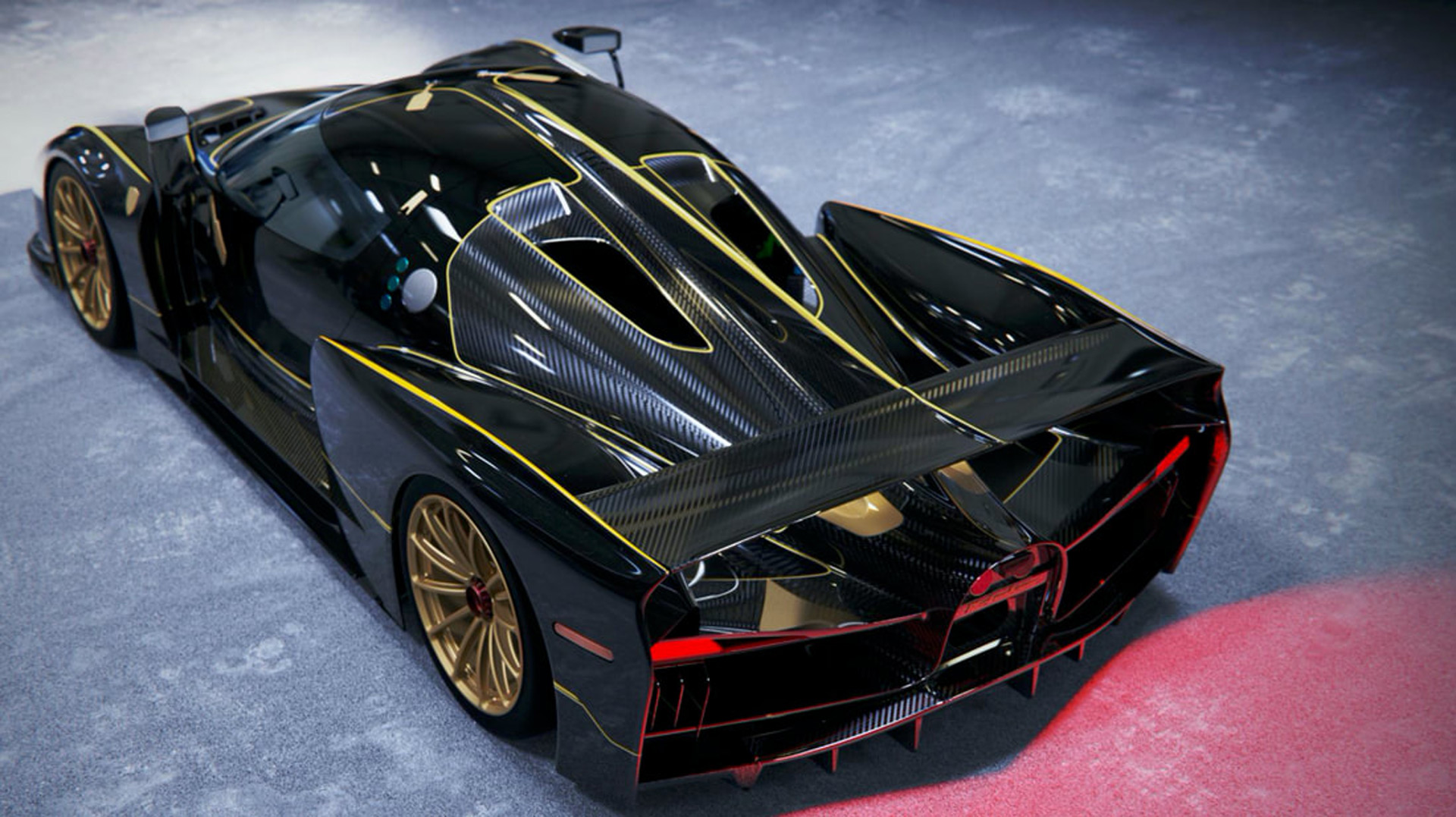
You Can Buy This Freshly Built SCG 003S

It’s been five years since the debut of the 003 by Scuderia Cameron Glickenhaus at the Geneva Motor Show. 

Since the 003’s release, SCG has now replaced it with the 004 and is also working on the 007 hypercar to compete in the World Endurance Championship’s, Le Mans Hypercar top class. 

SCG 003S

Five years since its release in Geneva, the 003 is still up to snuff as far as performance goes, even in today’s competitive supercar market. The 003S model was built as the road-legal variation and will come packing a twin-turbo 4.4-liter V-8 BMW engine that produces 700 horsepower at the wheels. The 3-seater 003S was built as a track car for the road and it is a thing of beauty.

According to an Instagram post made by authorized SCG dealer HK Motorcars, they have just finished a fresh build of an 003S. You can make a purchase inquiry on their website. The price tag on the 003S supercar is set at $2.5 million. 

HK Motorcars’ website also includes the other SCG models that can be made to order, along with their specifications.

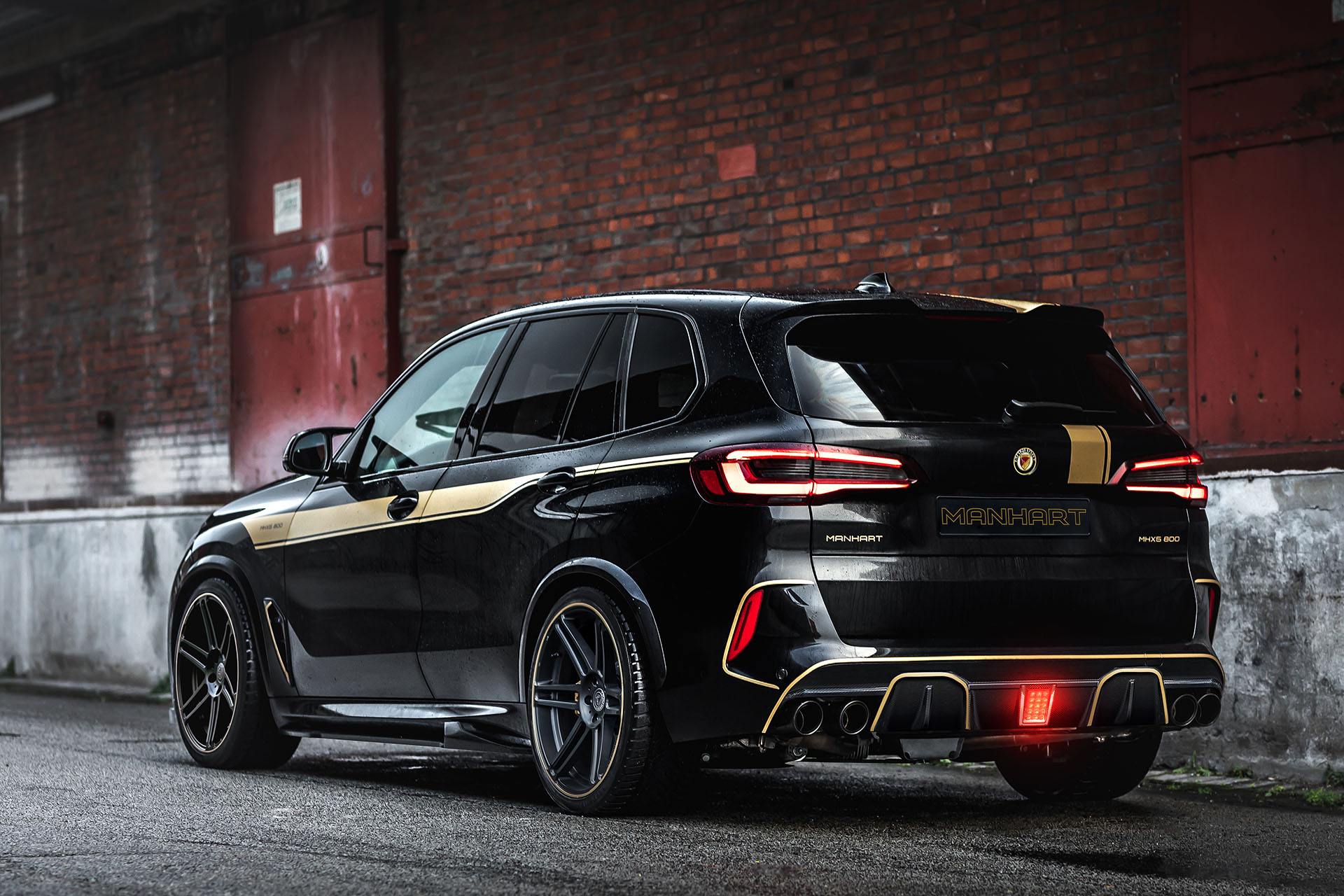
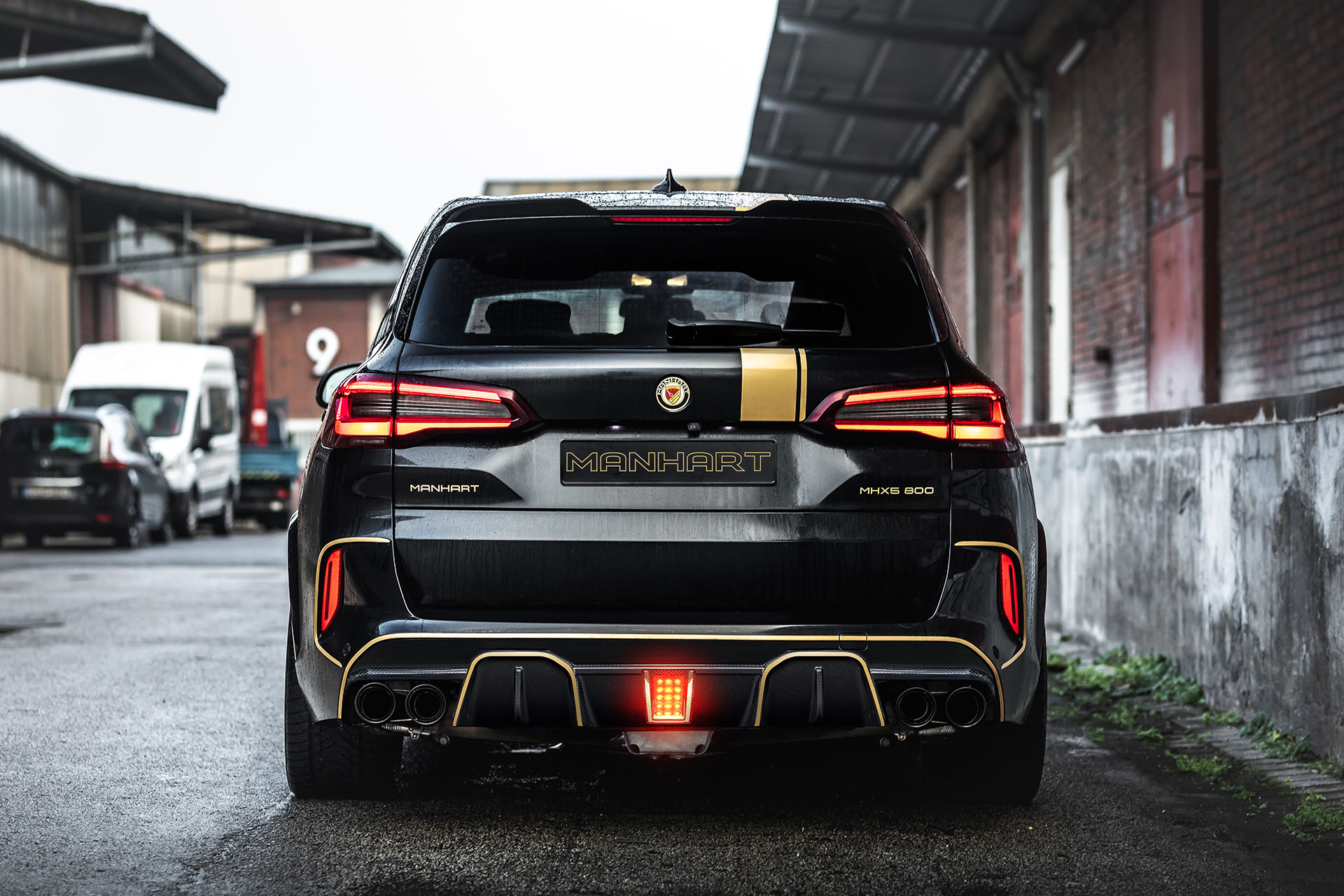
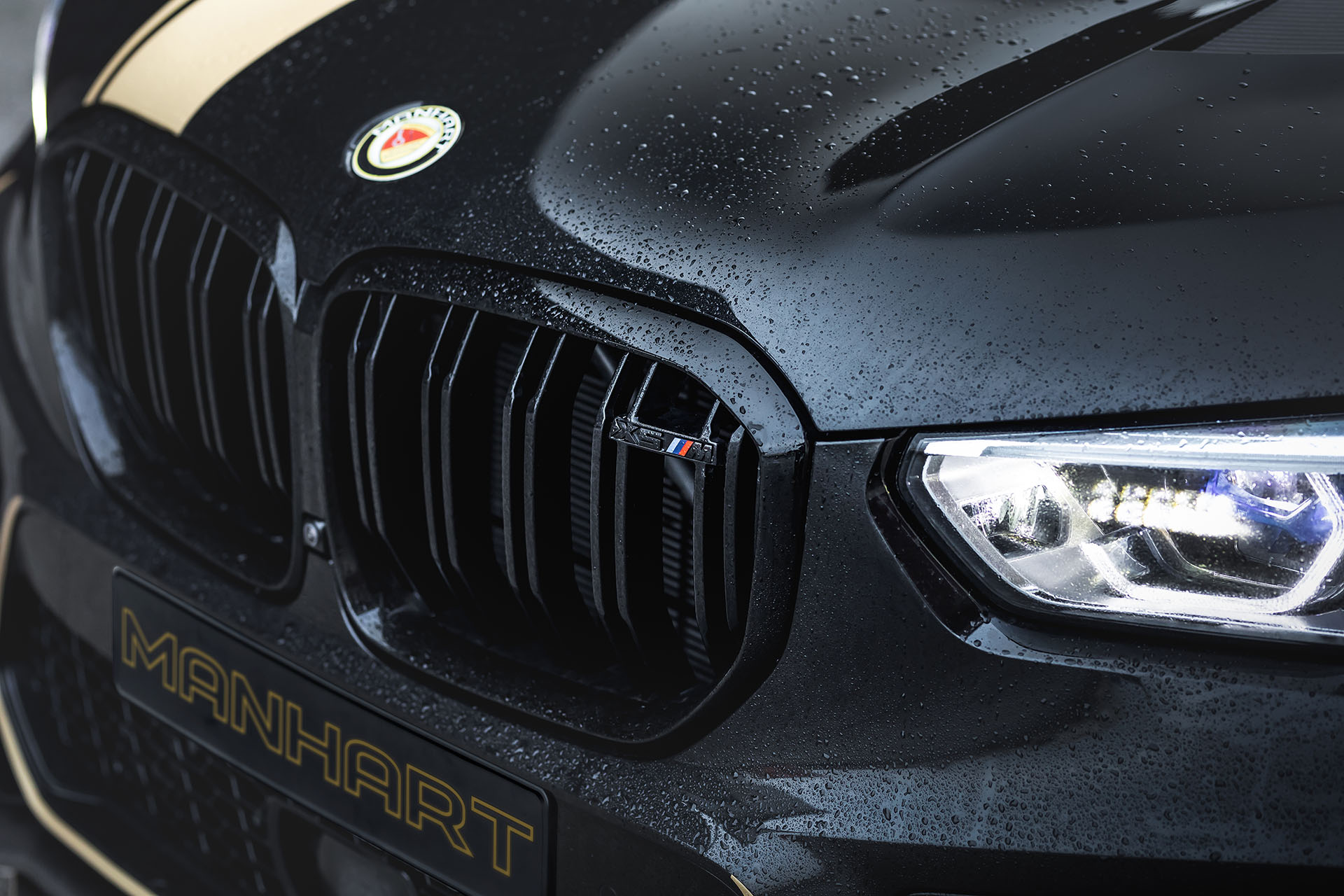
Manhart takes the BMW F95 X5 M Competition to the next level with the MHX5 800

Today the SUV market is crowded, there is a model for just any kind of customer, from practical, to fast, to spacious … you name it, there is an SUV that matches perfectly. But then there is the Super SUV segment, with the likes of the Bentley Bentayga which is fast and luxurious with 600 hp, or the Porsche Cayenne Turbo S E-Hybrid with 680 hp. And let’s not forget my favorite SUV, the Lamborghini Urus that dumps 640 hp onto the street … but that’s nothing compared to the massive 823 hp in the Manhart MHX5 800.

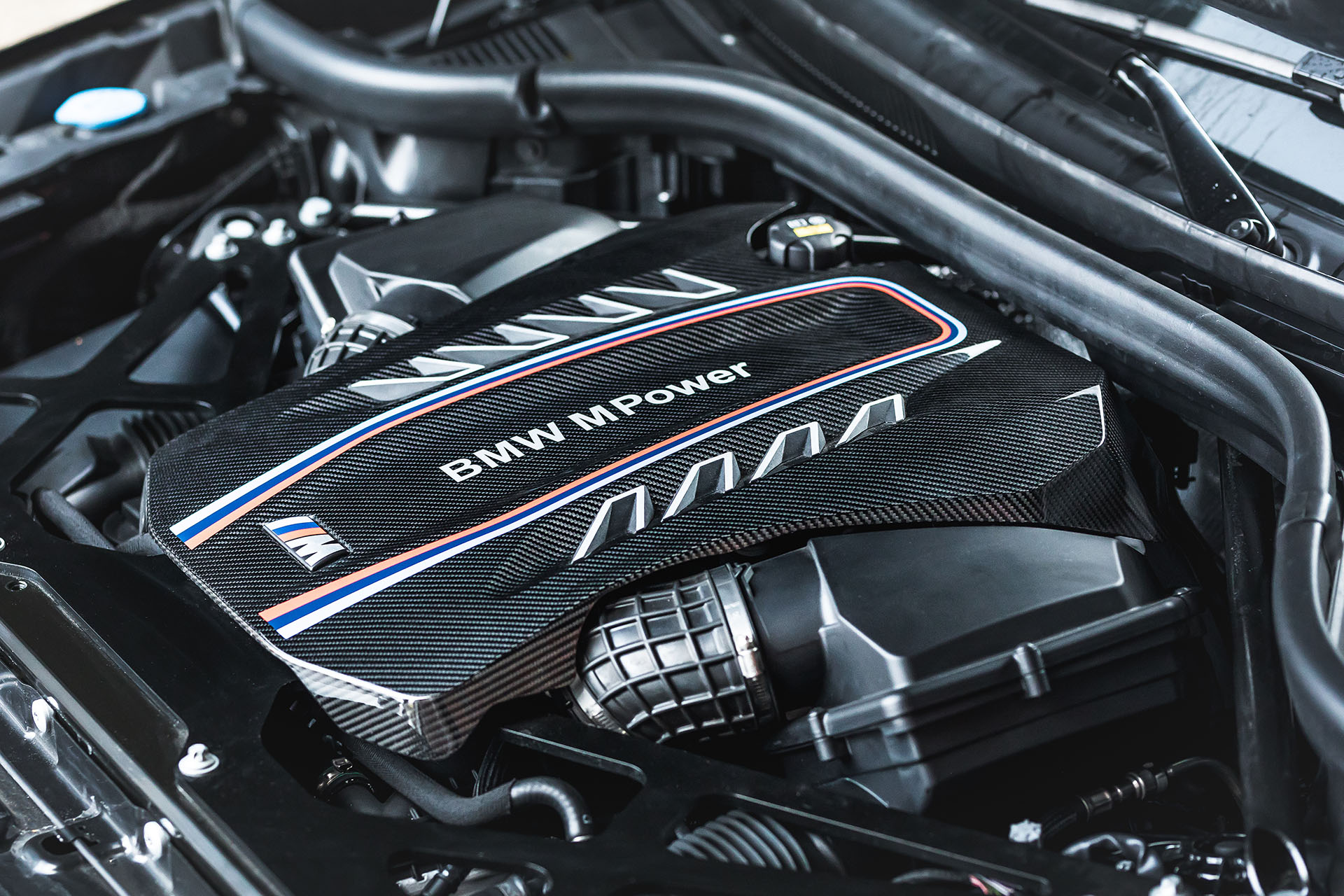
Yes, you are reading that figure correctly, German-based Manhart Performance GmbH and Co. KG takes the already impressive 625 hp from the twin-turbocharged, 4.4-Liter, V8 engine in the BMW X5 M Competition well over 800 hp. Manhart changes the factory ECU with their in-house developed MHTronik version, puts in a bespoke Manhart turbo power kit, complete with a new inter-cooler and creates the MHX5 800.

Going from 625 hp to 823 hp, and boosting torque from the standard 750 Nm to a massive 1,080 Nm, should come with some impressive sounds, so Manhart installs new rear mufflers. Valve-controlled, quadruple 100mm carbon or ceramic-coated tailpipes to cater to your needs. If you really want to go to the extreme, Manhart offers ‘Race-edition’ down-pipes that remove the catalytic converters and come with OPF-Delete pipes from stainless steel … but this option might not be street-legal … just don’t tell anyone.

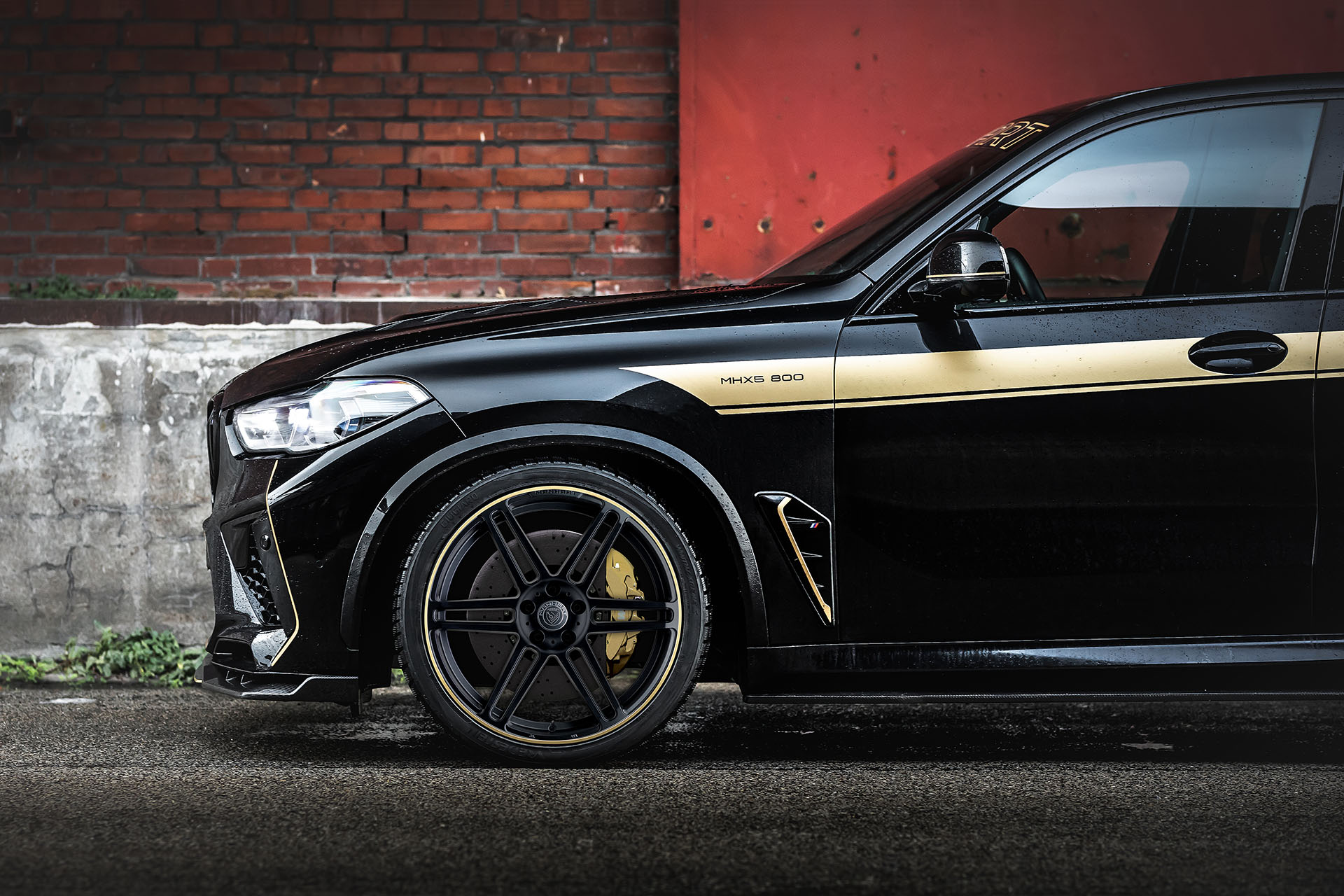
Because of the 30% power increase, the 8-Speed Steptronic needs a Manhart upgrade too, while the adjustable suspension gets the Manhart treatment that allows a 30mm lowering to clearly show off those new Concave One forged wheels Manhart installs. Massively wide 10.5×22 inch wheels with 29/30ZR22 tires on them, cover the standard disk brakes, Manhart can however offer more powerful brakes if the customer requests them.

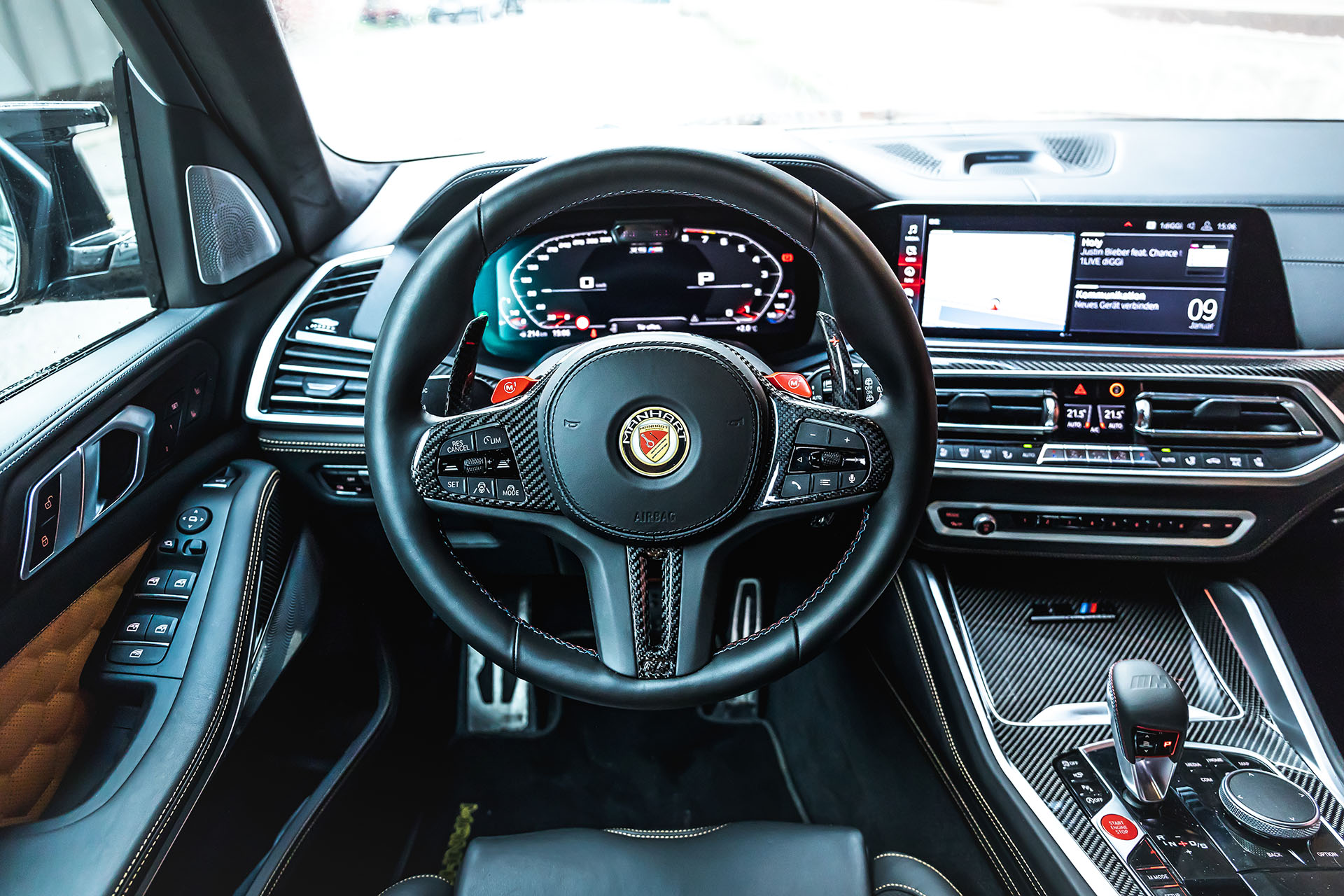
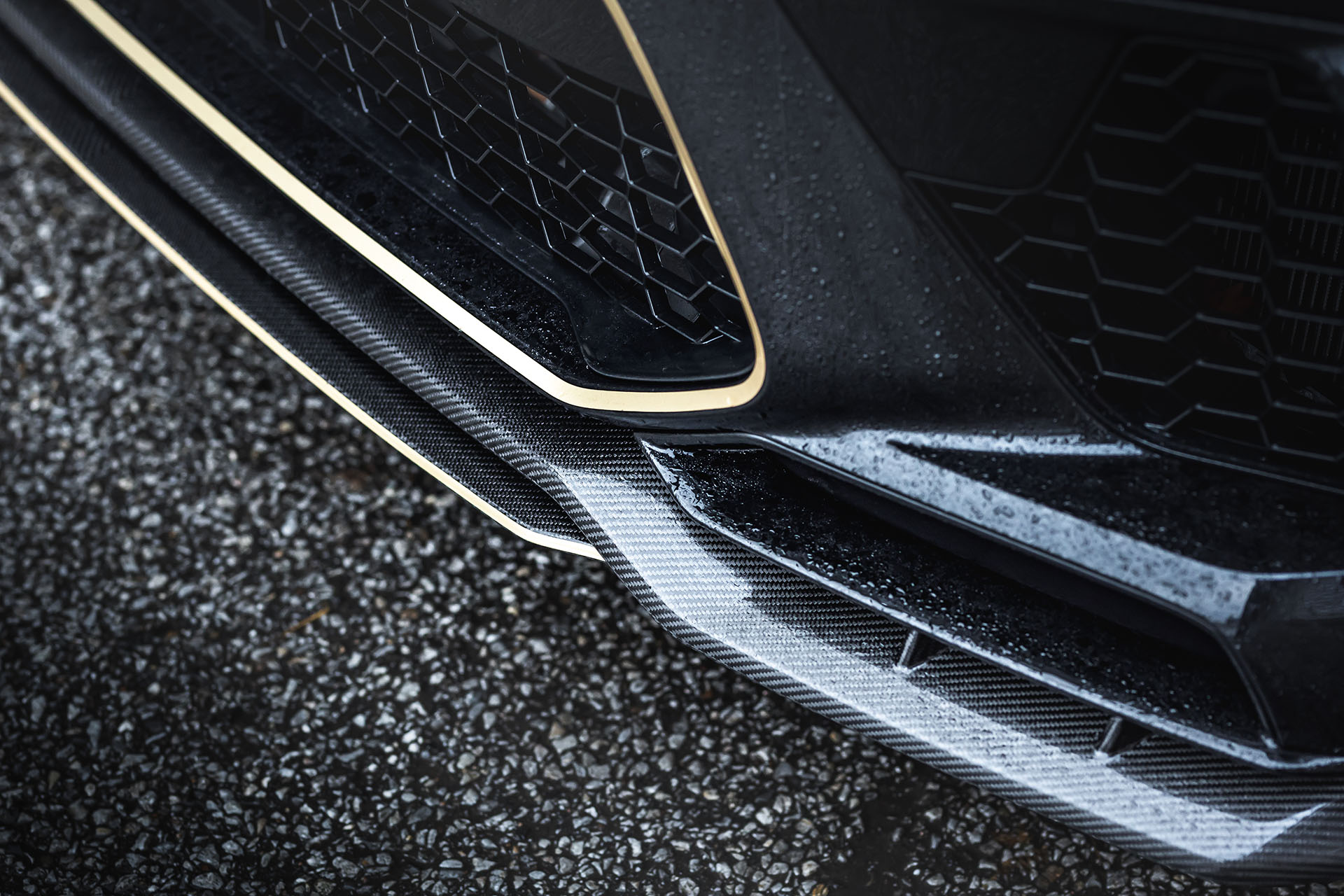
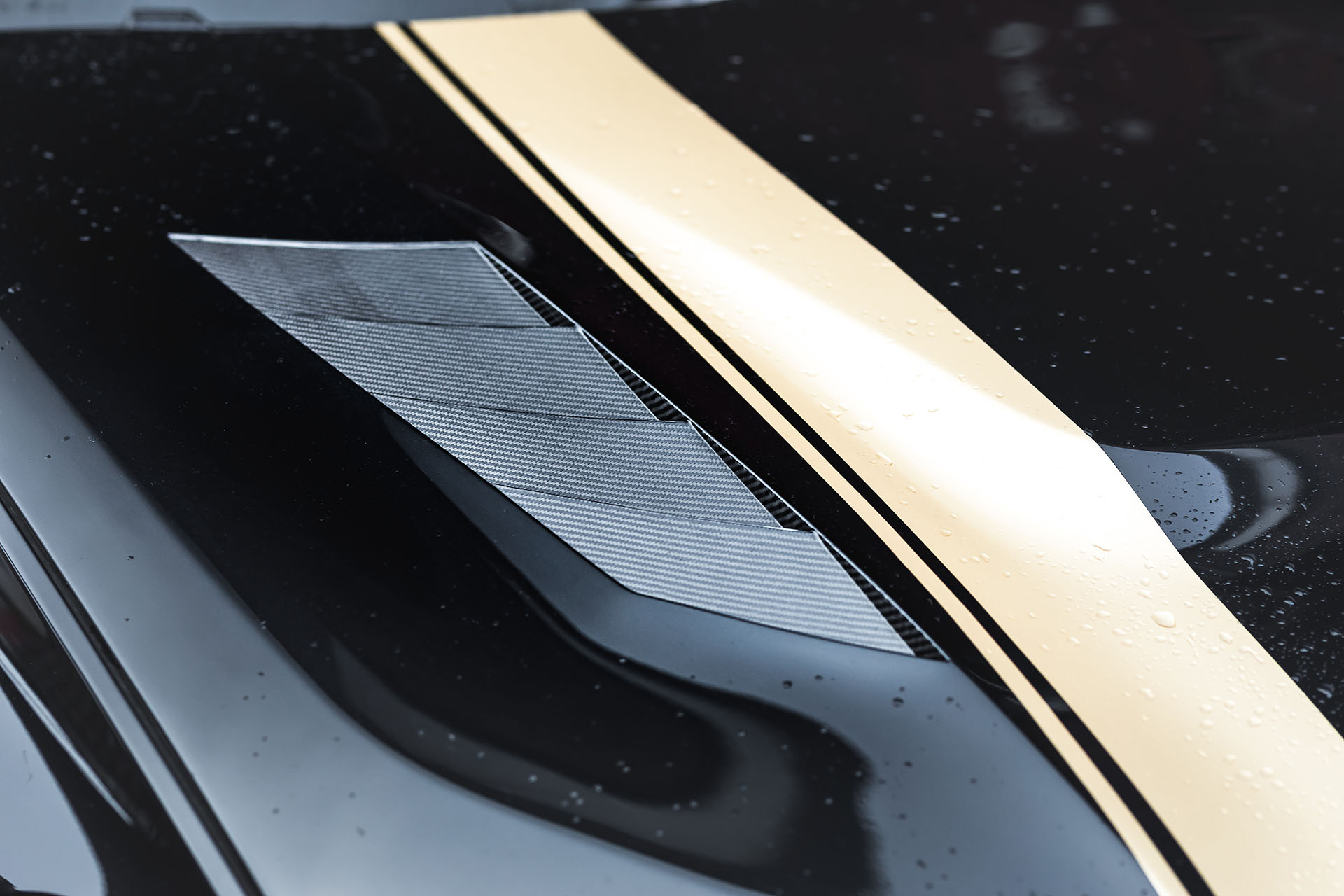
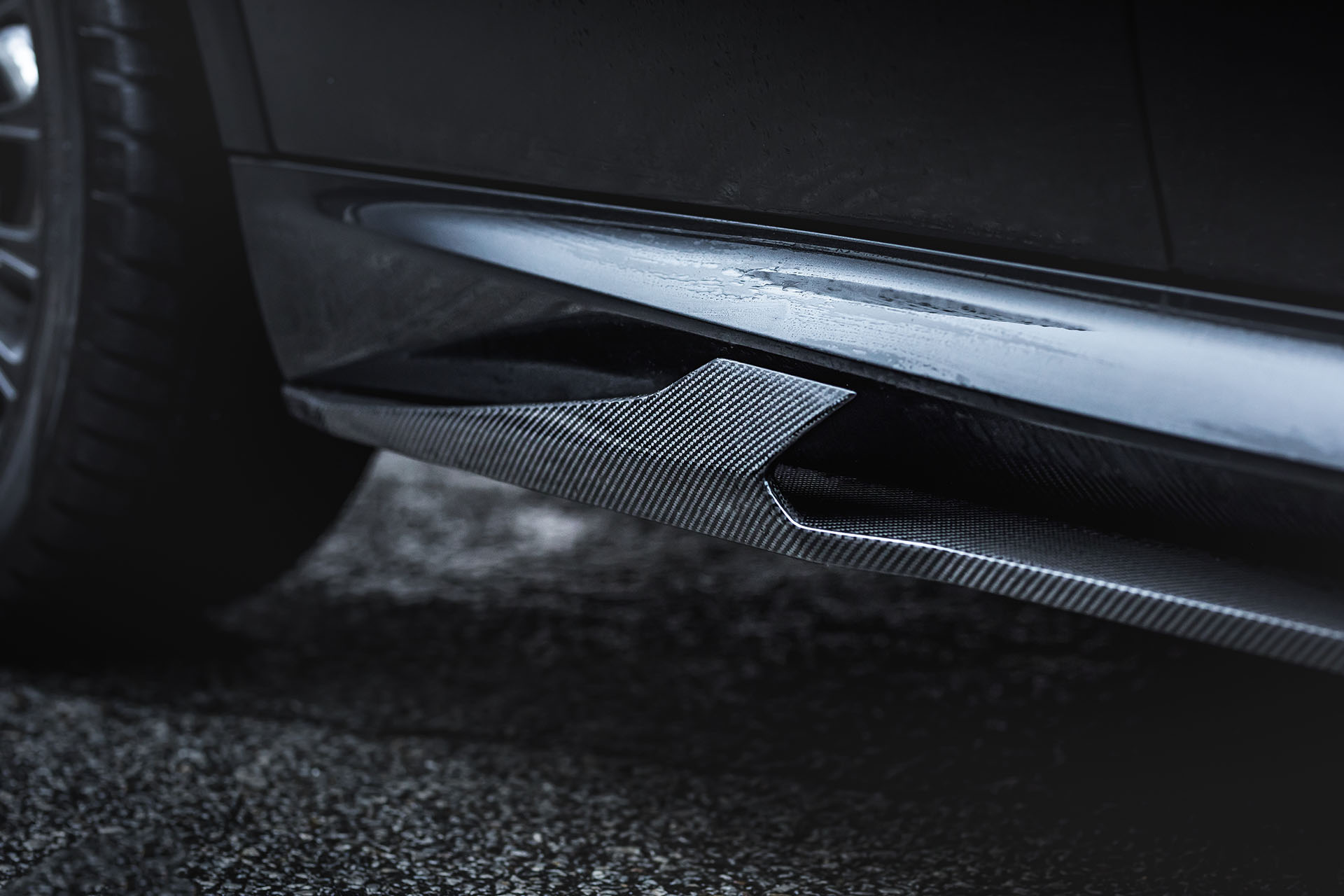
The Manhart MHX5 800 not only receives engine upgrades, or wheels, the exterior is modified too. First off with the traditional Manhart gold trim, but they add carbon fiber parts into the mix too, a new engine cover with race style air vents for instance. But also a new front spoiler, side skirts and a rear diffuser are part of the deal from Manhart, while the interior gets some bespoke carbon fiber parts on the steering wheel and shift paddles.

Personally I wouldn’t fit the gold trim or striping on my car, but it is part of the Manhart look-and-feel …

The Bugatti Bolide is voted the most beautiful hyper car of the year

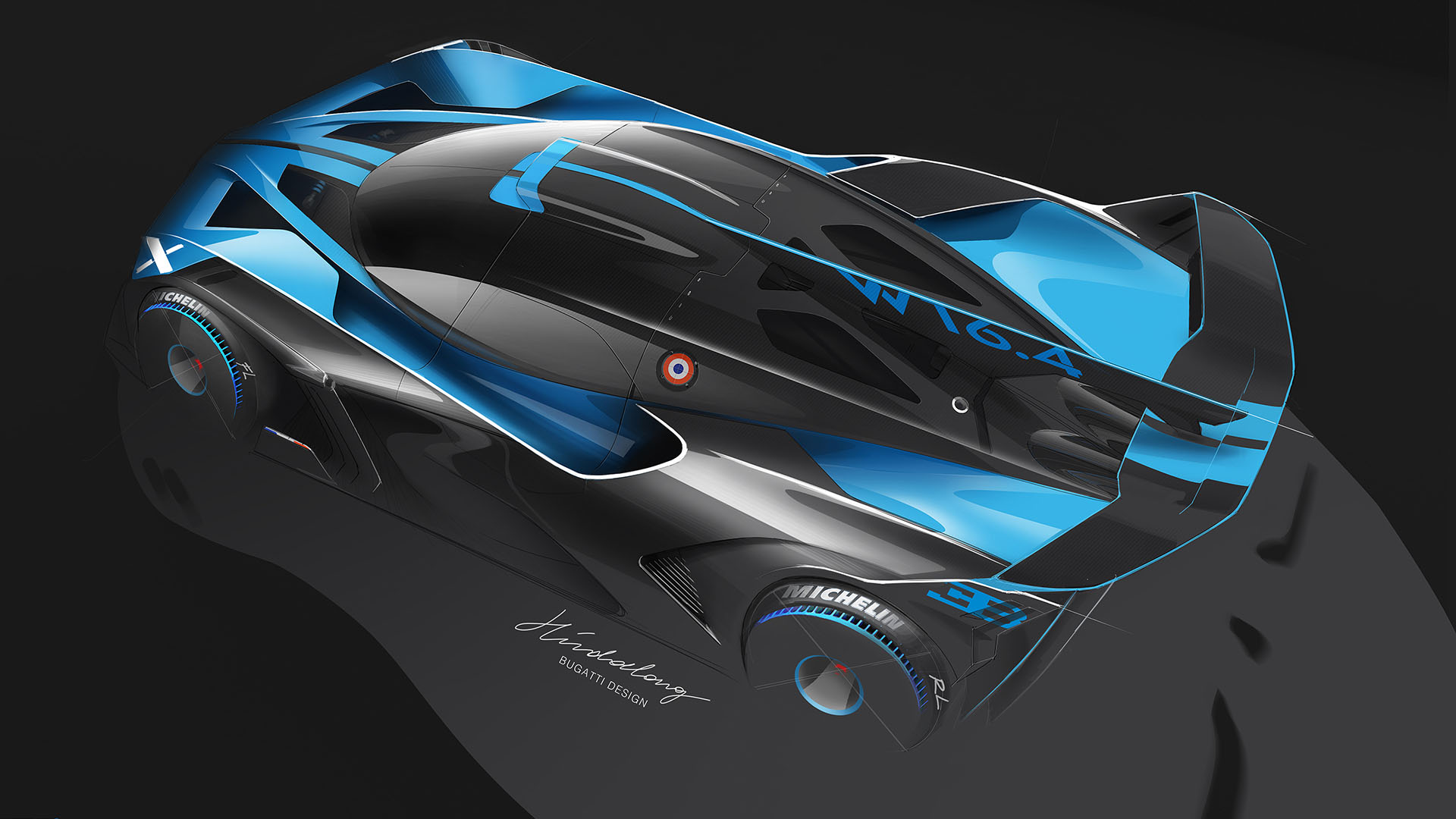
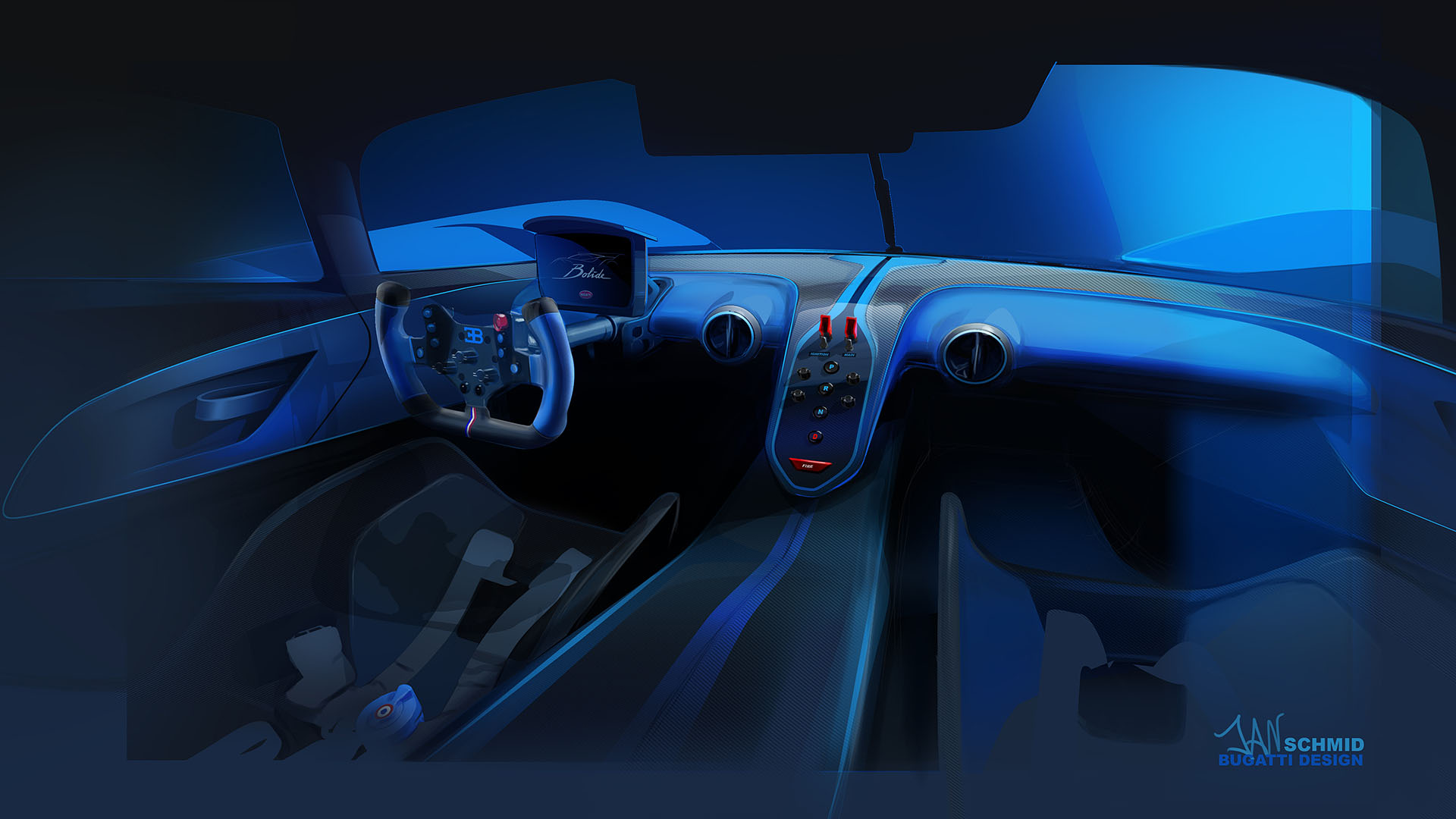
With the presentation of the Bugatti Bolide last autumn, the French luxury brand Bugatti unveiled its most extreme car to date. Now the Bolide has been officially voted the most beautiful and aesthetic hyper sports car in the world. The Bugatti Bolide won the “Hypercars” category at the prestigious Festival Automobile International in Paris. An expert jury voted the experimental vehicle from Molsheim the most beautiful hyper sports car of 2020 by a substantial margin from a total of four finalists.

In its 36th year, the Festival Automobile International gave awards to cars from a range of categories according to their beauty, aesthetics, form and design. The expert judging panel was made up of 14 judges, chaired by the architect Jean-Michel Wilmotte and Anne Asensio, Vice President of Design Experience at Dassault Systèmes. The jury selected a winner in each of a total of 15 categories.

Since 1985, the Festival Automobile International has celebrated the automobile in its most beautiful, creative and exciting forms. The industry itself as well as the changes taking place within it are examined, and the trends analysed. The Festival is also committed to shining a spotlight on those men and women who make the car what it is each and every day, who transform it and adapt it to meet changes in society, environmental requirements, economic upheavals and geopolitical challenges. Each year, the Festival judges reward not only major innovations but also the bold ideas and talent of those involved in the automotive field.

“We are extraordinarily proud that the Festival Automobile International judges were as enthusiastic about the design of the Bugatti Bolide as Bugatti fans all around the world. The experiment to demonstrate the brute force of our W16 engine in a lightweight and high-performance car has resulted in a driving experience akin to riding on a cannonball. My thanks goes to the entire Bugatti team, who have once again demonstrated with this incredible car the full extent of their creativity and technological expertise,” says Stephan Winkelmann, President of Bugatti. “Our focus has always been on innovation and aesthetics from the very beginning. Receiving this award is an affirmation of our work.”

With the presentation of the Bolide in October 2020, Bugatti introduced the most extreme, uncompromising, fastest and lightest vehicle concept in the company’s recent history. The French luxury car manufacturer designed an ultra-lightweight shell around the iconic 8.0-litre W16 engine with up to 1,850 PS. Weighing just 1,240 kilograms, the Bolide achieves a phenomenal weight-to-power ratio of just 0.67 kilograms per PS. The top speed has been calculated at well over 500 km/h – without sacrificing maximum handling and agility.

“The Bugatti Bolide has been both the greatest joy and the greatest challenge of my 17-year career in Bugatti Design,” says Achim Anscheidt, Design Director at Bugatti. “Combining the extreme aerodynamic and thermodynamic requirements into a complete and integral expression of Bugatti’s unique DNA is the clearest demonstration of our motto ‘Form follows performance’. The fact that this sequential iteration between technical development and design has been recognised by the jury on a stylistic level is a source of enormous pride for the Bugatti design team, and we are extremely grateful for that.”

Tesla Model S Receives Plaid+: Supercar or Family Sedan?

Tesla has been keeping the EV market on its toes for years and today is no different. In Q4, Tesla announced that there would be some major changes to an upcoming Model S. Production for that much-needed model refresh are to start production in the coming weeks. 

Typically when a vehicle model update takes place, the exterior is what receives the most attention, not the case for Tesla. The new Model S interior received a lot of attention, with good reason. It will now feature a 17.0-inch display that is very similar to the one in the Model 3 and Model Y. Tesla says the new tablet display has a brighter screen with a resolution of 2200×1300 and improved responsiveness.

Model S Plaid

In the released photos of the Model S, it appears that Tesla has cut the steering wheel in half. It appears to be a larger, minimalist rendition of an F1 steering wheel. It is also missing the indicator stalks, which tells us these controls will likely be mounted on the steering wheel. The dash and ventless HVAC systems appear to be similar to the Model 3.

Model S Plaid

The images released also show an additional display where you would normally see climate controls for passengers in the rear. The rear seats also receive bolstering on both sides, giving the new Model S a welcome refresh as it has been the same for years. 

Model S Plaid

As far as exterior updates are concerned, the new Model S appears to have a more aggressive look overall. The lower section of the front fascia comes with the majority of the updates, though Tesla has included new wheels for the Model S. It now looks a bit more sporty and more reflective of its performance. 

A new trim level has been added to the Model S and Model X. The Long Range base models will still include dual-motors, while the performance models will be replaced with the Plaid model. This is simply just a rebranding of the performance model name. However, the Model S will have a Plaid+ option to come later this year, which will have Tesla’s new batteries incorporated into its structure. The Plaid+’s new batteries will provide 0-60 times of less than 1.99 seconds and a range of 520 miles on a single charge.

According to Motor1, Tesla has also confirmed that the Model X will receive the same interior and exterior updates as the new Model S. 

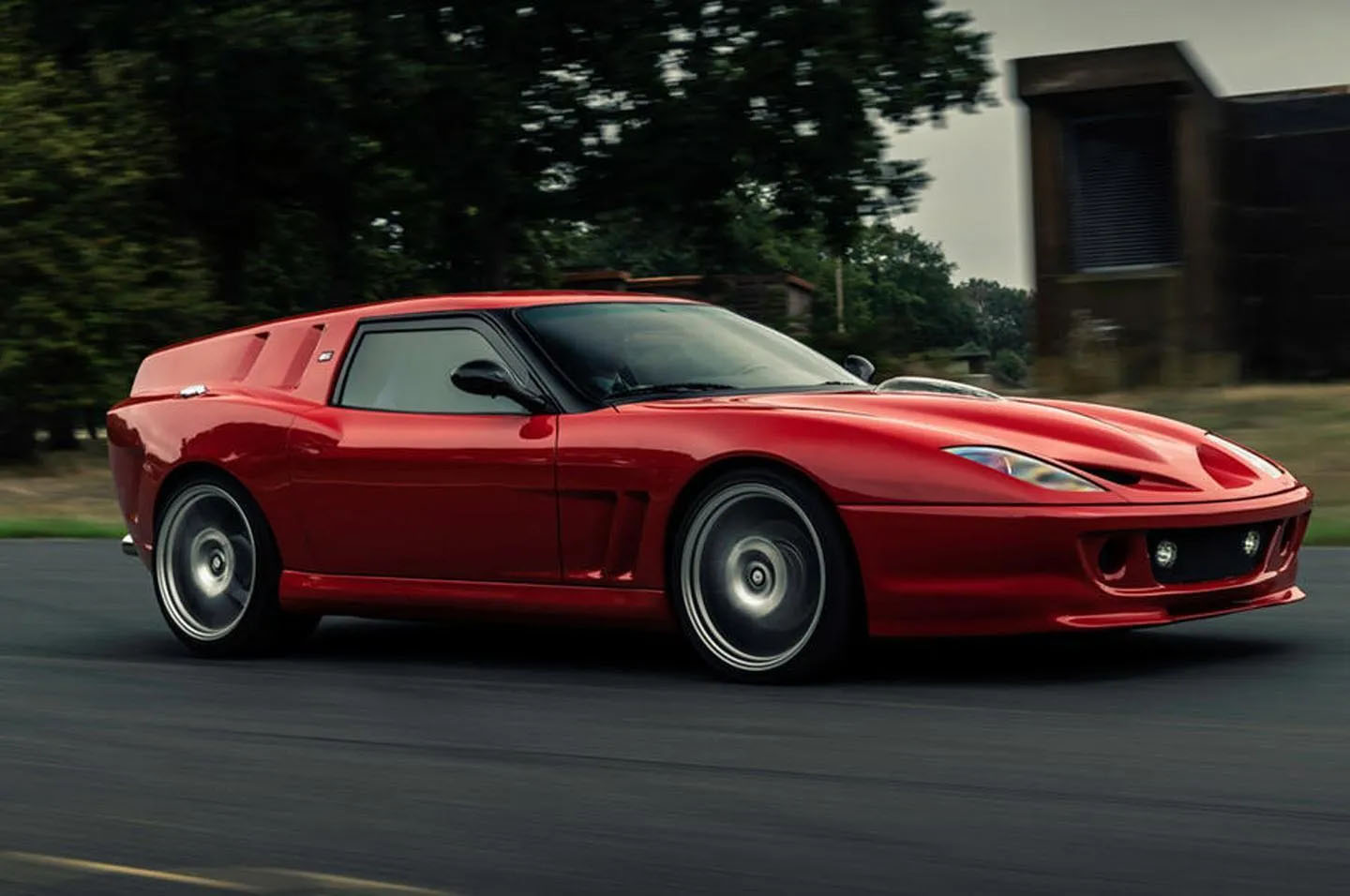
One-of-a-kind 1962 Ferrari 250 GT ‘Breadvan Hommage’

Remember the 1962 Ferrari 250 GT SWB that was built specifically to attack the factory 250 GTO race cars at Le Mans? Oh wait, you might know it better by its nickname: ‘Breadvan’ … a little offensive as this was one of the fastest race cars in the early Sixties. Read about this amazing car in detail in our earlier article: ‘1962 Ferrari 250 GT Breadvan’.

Back in 1961, there was a bit of trouble at the Ferrari headquarters, Enzo’s wife had a dispute with several high placed employees, and it caused many of them to leave the company altogether, among them Giotto Bizzarrini and Carlo Chiti. Both of them joined the largest Ferrari race team of the time: Scuderia Serenissima, owned by Count Giovanni Volpi of Misurata.

Scuderia SSS had two Ferrari 250 GTO on order for their 1962 racing season, a car that was developed with the help of Bizzarrini when he still worked at Ferrari … Enzo was zo angry with the latter going to work for Scuderia SSS that he canceled the order, so no race cars for the team … now what?

Giotto Bizzarrini and Carlo Chiti managed to get hold of a competition built Ferrari 250 GT SWB, chassis 2819GT, and set to work on creating a masterpiece. Adding dry-sump lubrication, lowering the engine into the chassis, and moving it 12cm to the back … but more importantly, they created a totally unique design for the body of this ‘Breadvan’.

Breadvan Hommage – photo copyright Niels van Roij Design

Piero Drogo and his coachbuilders modified the original 250 GT SWB body completely, a longer nose with aggressive air intakes, a transparent dome over the intakes, and the most distinctive feature: a roof that went all the way to the back, only to be finished in a vertical panel to the bottom of the car, taking the aerodynamic theory of Dr. Kamm to the rear of this car.

It turned out the ‘Breadvan’ would outperform the other Ferrari GTO at Le Mans consistently in 1962, rumored to be 7 km/h faster on the Le Hunaudières straight, beating not only the 250 GTO’s but also the 250 Testarossa models … sadly the ‘Breadvan’ wasn’t entered into the GT class at Le Mans, and even more unfortunate, it has to retire after four hours due to a broken driveshaft.

The ‘Breadvan’ would be entered in more races during the 1962 season, secured two GT wins and even set a track record, but Count Volpi couldn’t afford further development and ended up using her as a daily driver … all the time this car didn’t have any Ferrari badges mind you. The car would change hands several times over the next years, repainted in black at one time, restored multiple times during which the body shape got altered.

But in 2007, Dutch Coachbuilder Alwin Hietbrink took it onto himself to fully restore chassis 2819GT to her former, original glory, just the way she was made for the 1962 Le Mans race, complete with the V12 engine nr. 942/62E and refinished in original Rosso Corsa over a black interior with racing seats and multi-point seatbelt harness … today this unique car is valued at over $20,000,000.

Breadvan Hommage – photo copyright Niels van Roij Design

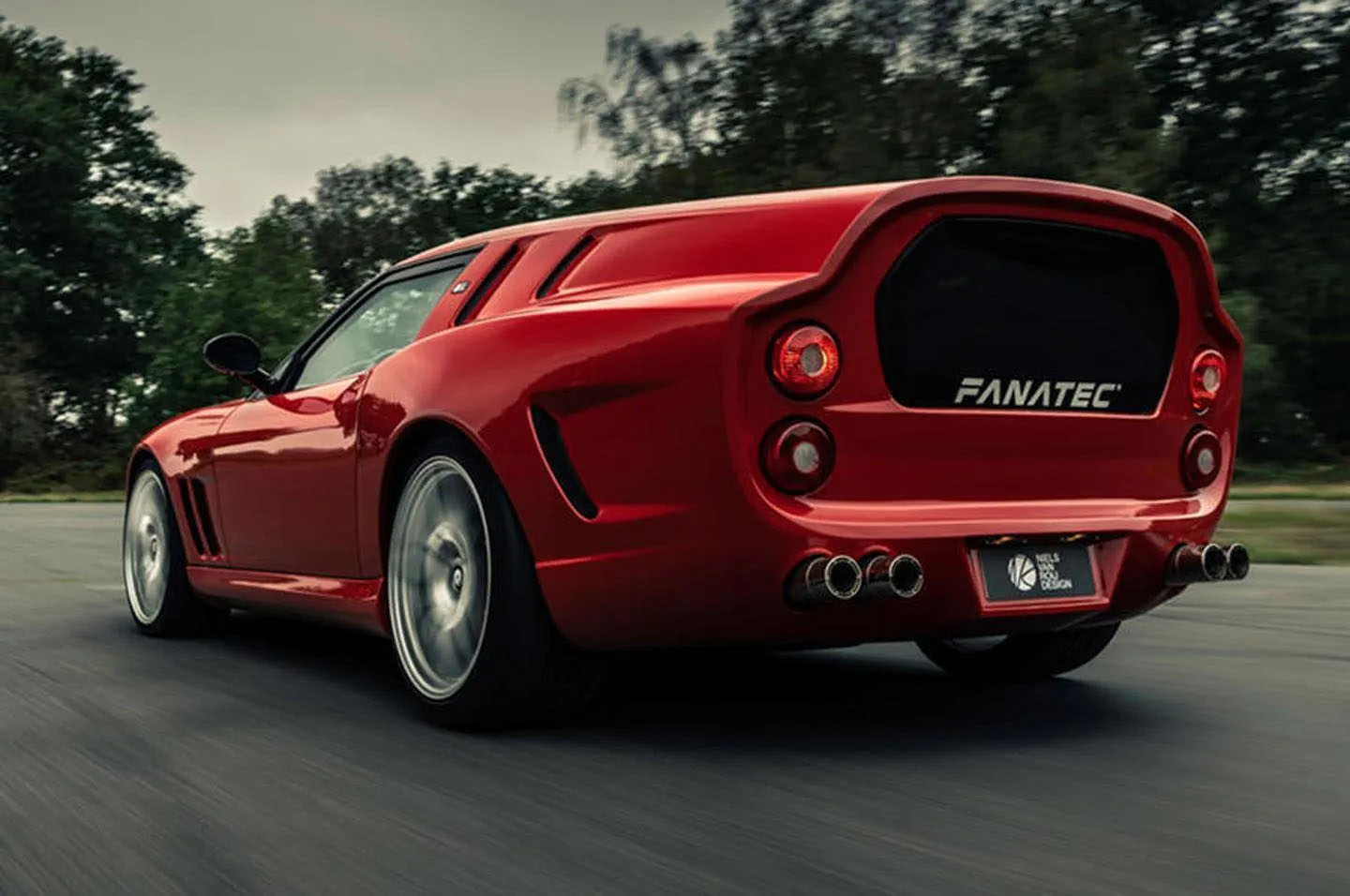
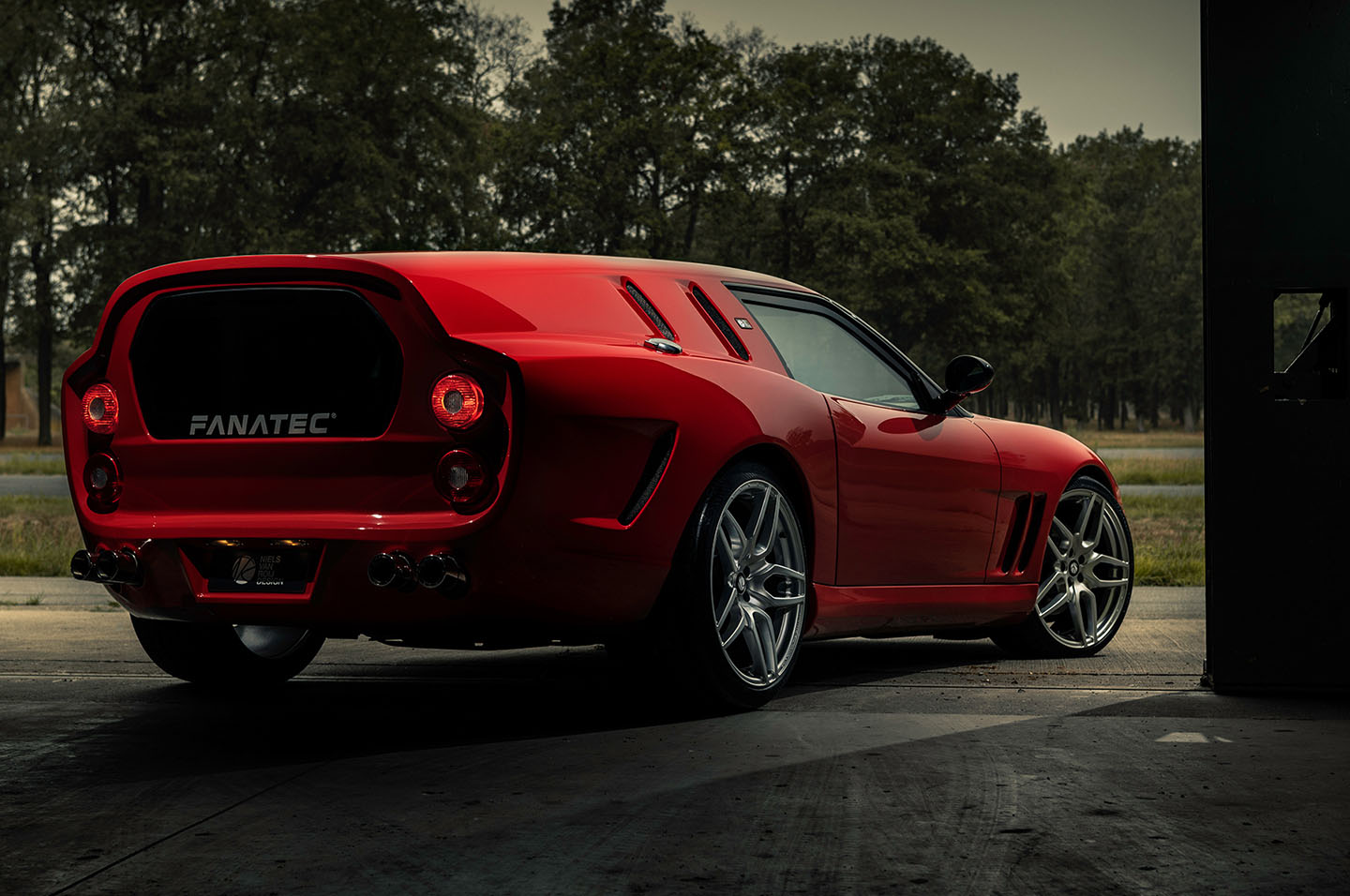
But there is another option now … a customer of Niels van Roij Design loves this Italian one-off so much, he requested to have his very own coachbuilding project created, taking a Ferrari 550 Maranello and convert it into the Breadvan Hommage, at whatever cost … but trust me, it’s bound to be cheaper than getting the real deal into your garage.

Breadvan Hommage – photo copyright Niels van Roij Design

The Ferrari 550 Maranello was built between 1996 and 2002, and little over 3,000 were built, but more importantly, the 550 was the first Ferrari V12 with the engine at the front after the 365 GTB/4 from the Seventies … every new Ferrari V12 would be a mid-engine model before the 550 was unveiled, so this was the perfect candidate for the Breadvan Hommage.

Breadvan Hommage – photo copyright Niels van Roij Design

But the task of creating a modern interpretation of the 1962 race car wasn’t easy for Niels van Roij, as it involved restyling the entire donor car from front to back, including the interior, in the end, we’ve been told only the windshield remained of the original 550, and this mainly for practical reasoning in case a replacement would be needed, as the owner of this one-off intends to drive it regularly.

Breadvan Hommage – photo copyright Niels van Roij Design

The entire project starts with sketches, various designs to show the customer, and goes back and forth until a final decision is made, after which that sketch gets turned into a clay model … on top of the actual donor car, that had been stripped completely by now and got a space frame skeleton to hold the clay.

Breadvan Hommage – photo copyright Niels van Roij Design

Van Roij: “A car is a complex, three-dimensional sculpture, which has to look right from all angles and under different light circumstances. Like sketching, the clay modeling process is iterative and the Breadvan Hommage was reshaped many times, to get it spot on. After establishing the correct proportions the search for sophistication in the surfacing, or skin, started: finding the right subtleties for transitions from one element to another. It includes exterior graphics like the richly sculpted air vents on the front fenders. The body of the Breadvan Hommage was hand-beaten by coachbuilder Bas van Roomen. Bas also worked on the clay model of the Breadvan Hommage. Only the windscreen of that car remained OEM and it was painted in one of the eight specially designed reds.”

Breadvan Hommage – photo copyright Niels van Roij Design

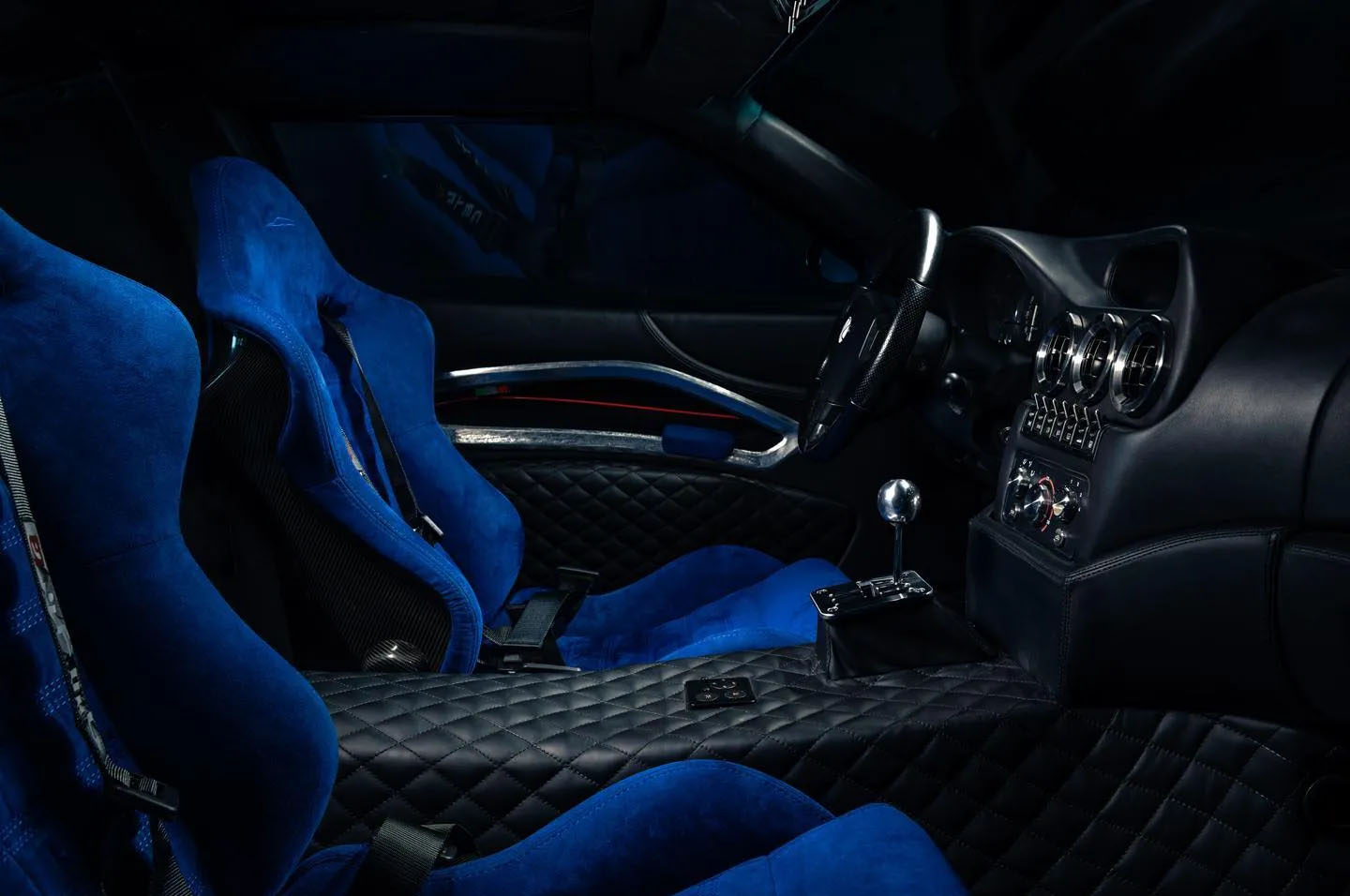
For the interior Van Roij just couldn’t leave the original 550 Maranello seats and dashboard in place, he did keep the base of the seats, as the donor 550 came with the rare, lightweight, carbon-fiber seats, but Van Roij replaced the upholstery with stunning blue Alcantara, as seen in many Ferrari 250 GTO of that era (little detail, the original Breadvan had a black leather interior…).

Breadvan Hommage – photo copyright Niels van Roij Design

But he didn’t stop there … the dials were restyled with a font reminiscent of the one used on the Sixties, and the central tunnel, the lower parts of the door, and the entire headliner from the windshield down to the rear was made of black, quilted leather to recall that feeling you get in a true classic car.

Breadvan Hommage – photo copyright Niels van Roij Design

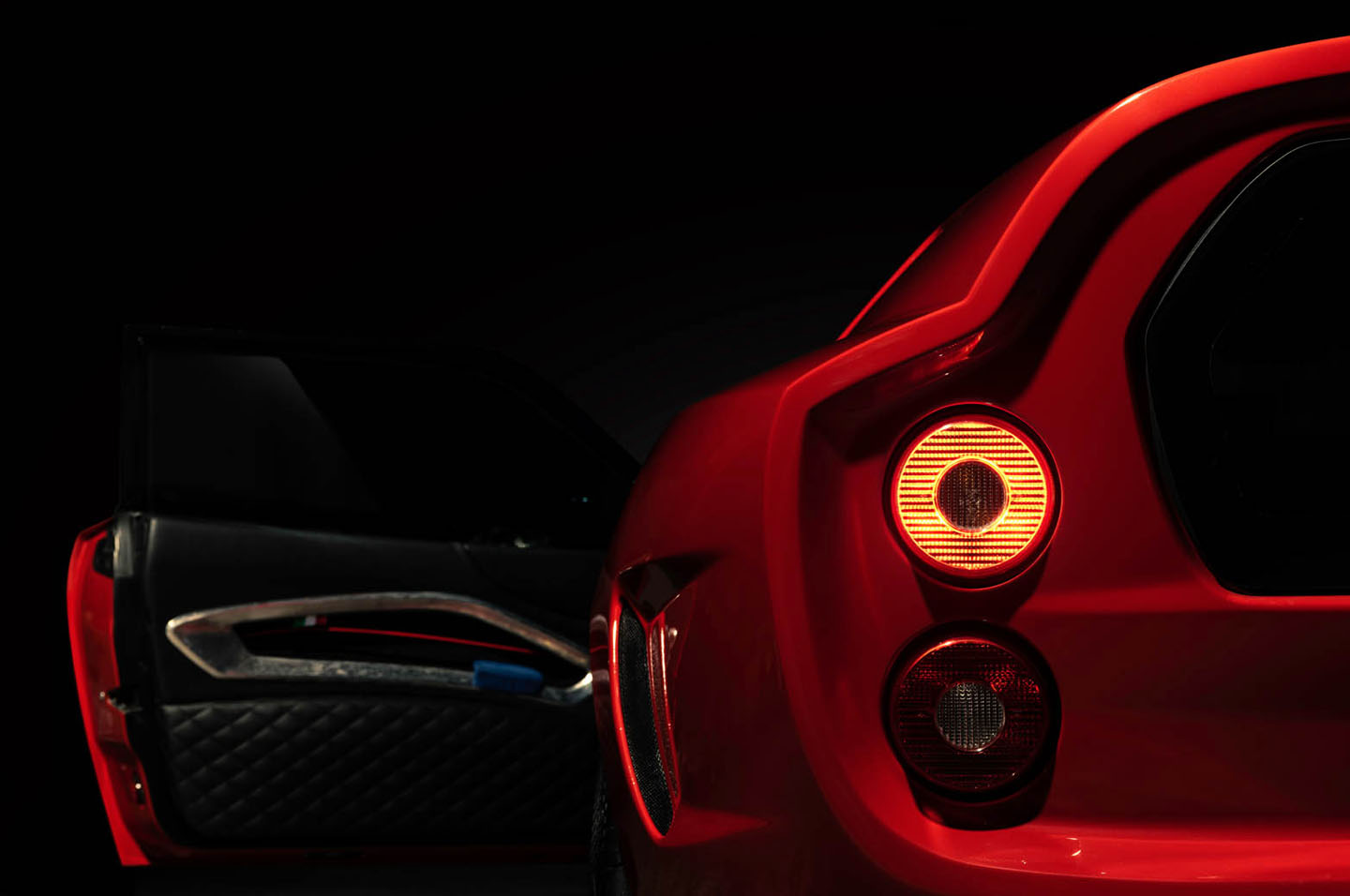
That attention to detail continues on the door cards, you pull them close with a small, blue Alcantara section, but there is also a large, aluminum part on the door, left bare … no topcoat, no fine finishing, you can still see the hammer strikes to give you that raw, race car feeling … the same aluminum was used to shape the exterior by the way. Opening the door involves pulling a red cord inside this aluminum surround … back to basics for sure.

Breadvan Hommage – photo copyright Niels van Roij Design

There is no word on pricing for this one-off, bespoke build, and Niels van Roij confirms there will not be a second Breadvan Hommage built, this car will remain a unique car on the road and on the track …

You Can Own Paul Walker’s 1980 BMW M1

Every car fanatic is aware of the incredible car collection of the late Paul Walker. Since Paul’s passing, we’ve seen cars from his collection changings hands via online auctions, and this is one of the best to date. 

This exact 1980 BMW M1 was in a collection owned by Paul Walker and Roger Rodas before going to the current owner in 2014. Right now you can find the auction listing for this amazing M1 on Bring A Trailer’s website. 

This BMW M1 received modifications in the early ’80s by an authorized BMW dealer, AHG. These goodies consisted of a Procar-style body kit, a custom BMW Motorsport colorway, and some awesome 16-inch BBS wheels. 

1980 BMW M1
Bring A Trailer

Modifications also lead to the 3.5liter inline-six putting down about 350 brake-horsepower along with a custom exhaust system, you can almost hear it by looking at the photos. 

1980 BMW M1

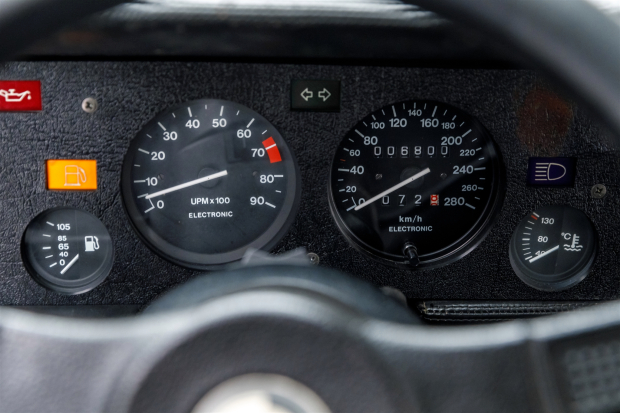
The current owner of the M1 put just 50 miles on it in 7 years of ownership, our hats are off, the self-control involved would be insane. The odometer reads exactly 6,800 kilometers (4,225 miles) which is extremely low for a car in its 41st year. Would it surprise you if it went for over a million dollars?

The multi-million dollar Shelby 427 Cobra

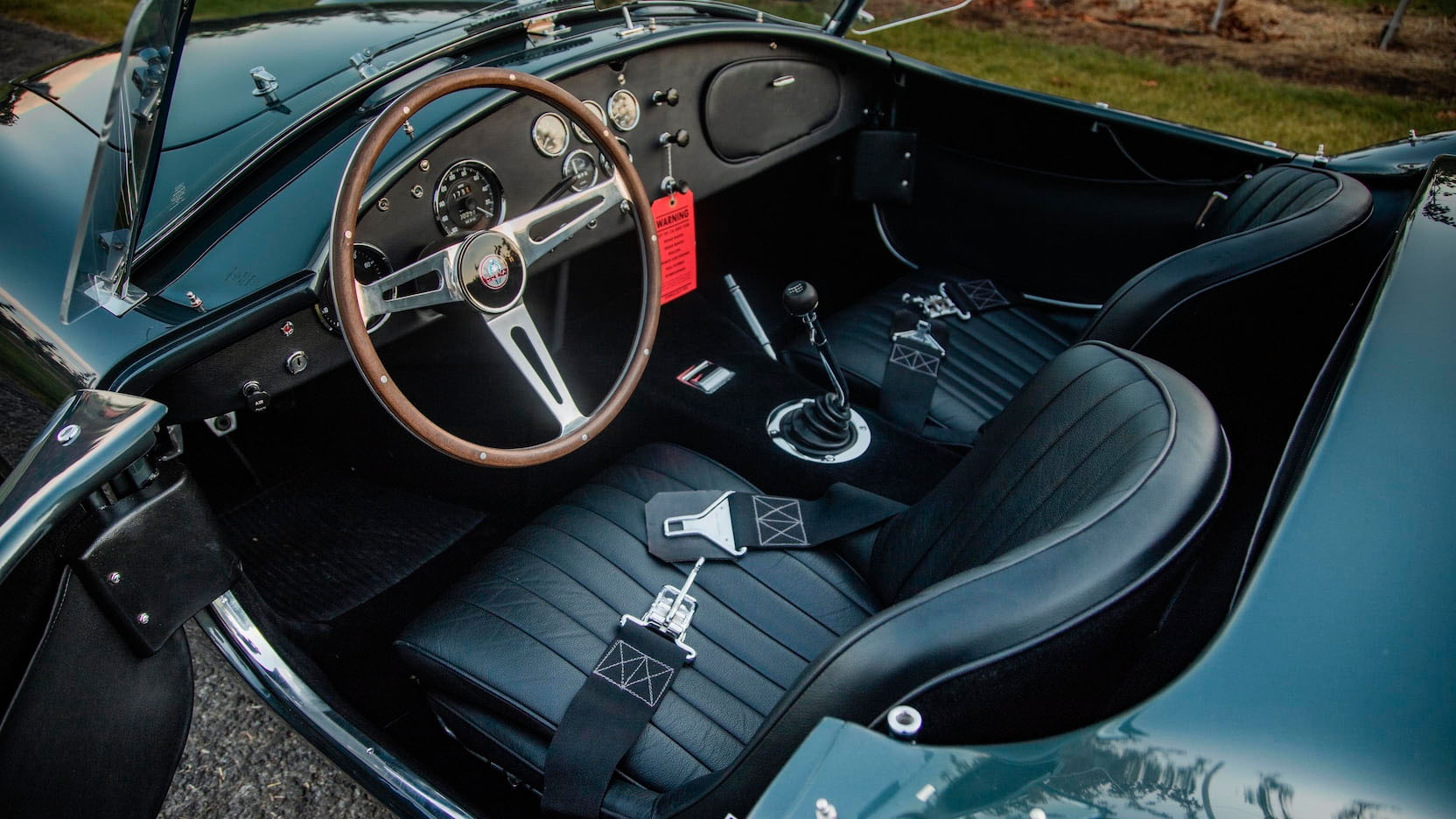
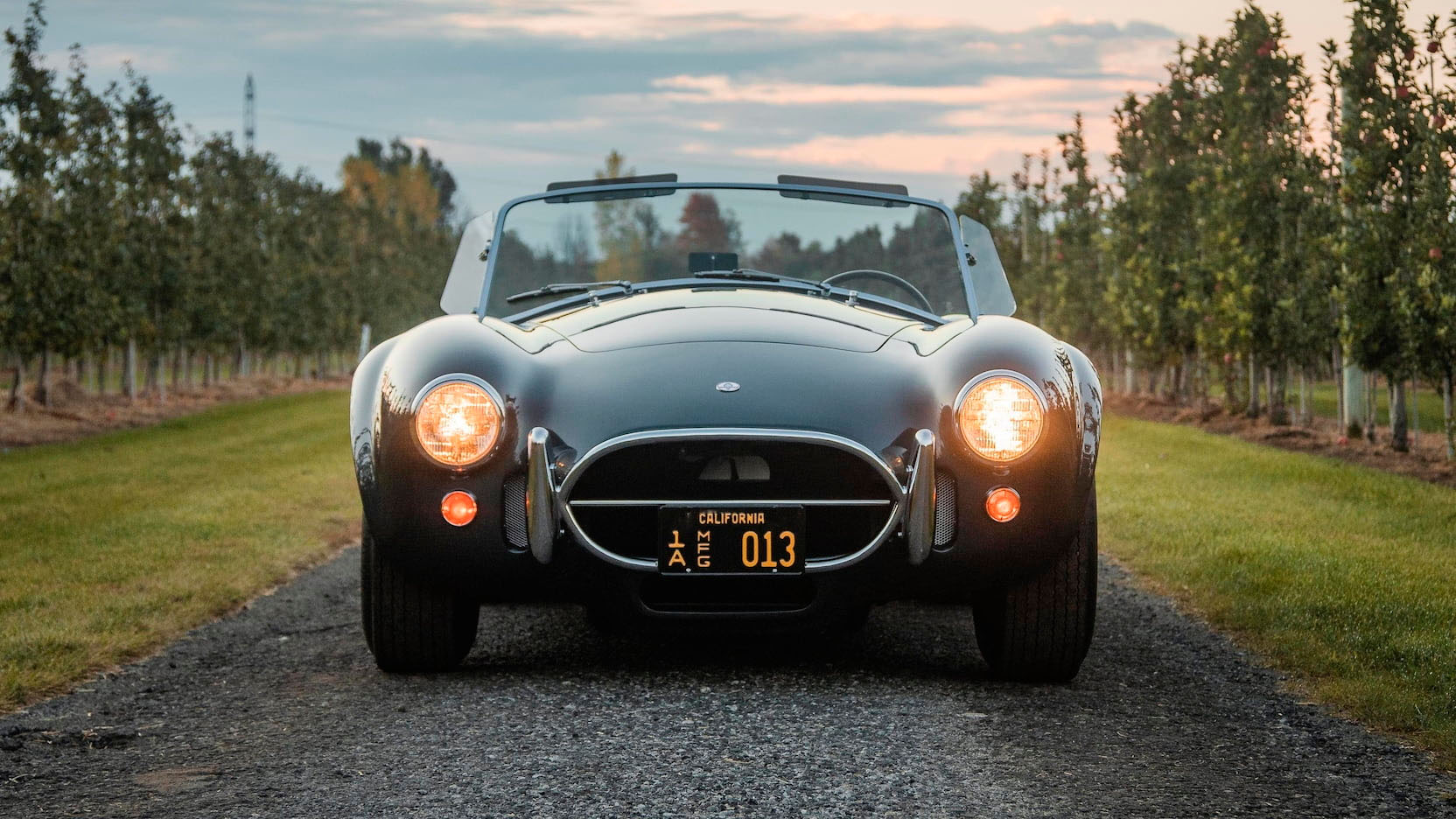
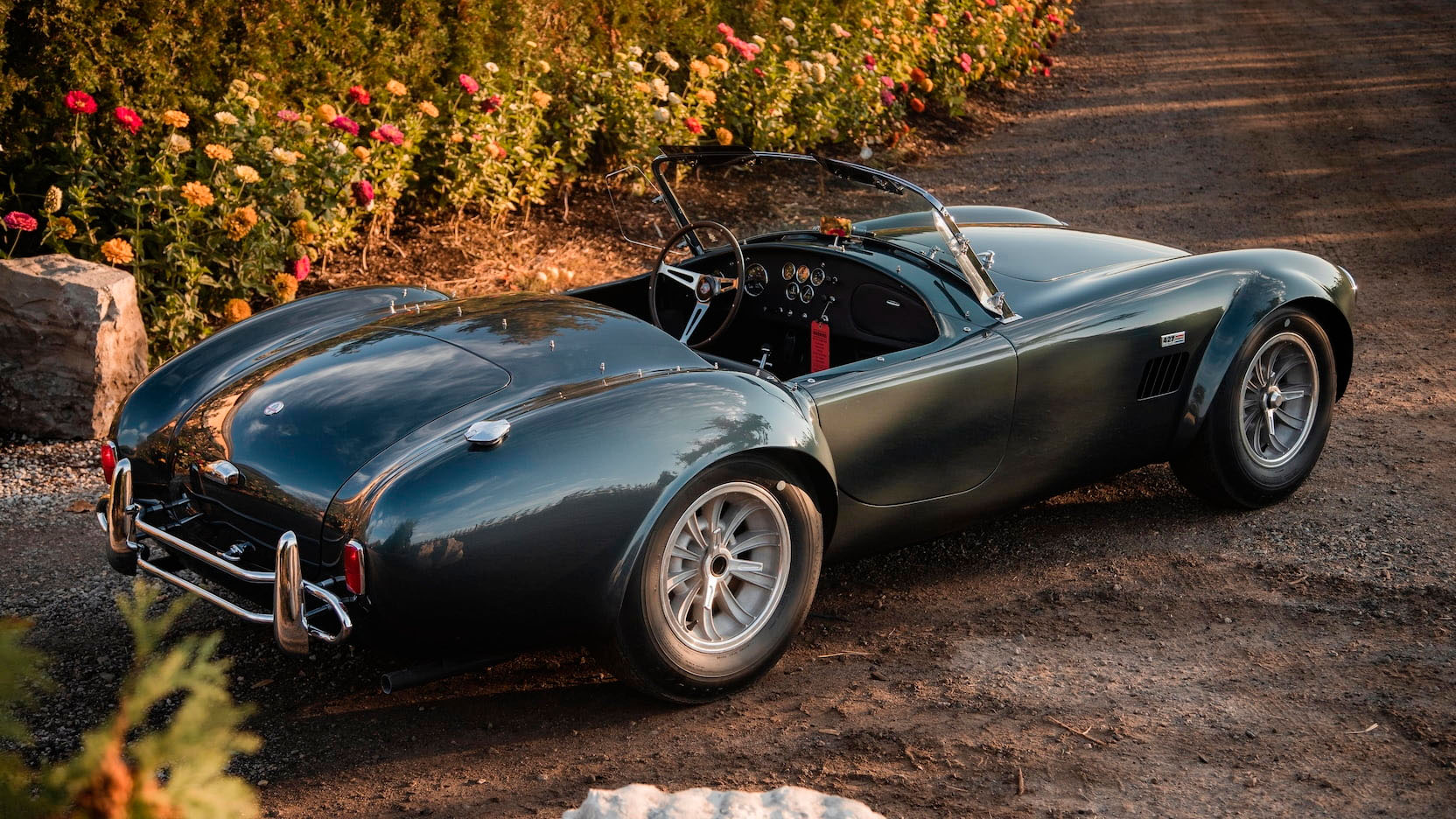
We all know one of the original Shelby 427 Cobra from the Sixties is a very expensive car to park in your garage, but how does $5,940,000 sound to you? A bit expensive? Perhaps, but the 1965 Shelby 427 Cobra Roadster that fetched this high bid at Mecum’s Kissimmee auction in January 2021 wasn’t a normal Cobra from the Sixties.

1965 Shelby 427 Cobra – Photo copyright Mecum Auctions

Chassis CSX3178 was in fact Carroll Shelby’s personal 427 Cobra, she was built in March 1966 and went directly to Carroll, and he kept onto this stunning dark grey metallic beauty (one of only five in this shade) for the rest of his life. The Mecum listing mentions “The Shelby American work order specifying ‘Build 427 Street Cobra CSX3178’ was opened on January 7, 1966, and closed on March 3, when it was shipped to Carroll Shelby’s Dallas home sporting a 427 with dual quads and a 4-speed Toploader transmission.”

1965 Shelby 427 Cobra – Photo copyright Mecum Auctions

But the car would change a lot over time, in 1972 Mike McCluskey restored the car, painted it in Guardsman Blue with a gold nose. Later the car was modified with an aluminum-head 427 side-oiler V8 coupled to an automatic gearbox, while in 2002 the car was again repainted, this time in bright red.

1965 Shelby 427 Cobra – Photo copyright Mecum Auctions

Legendary Motorcar Company got the task of performing a concourse level restoration after the car was sold from the Carroll Shelby estate in 2016, CSX3178 went back to wear her Charcoal painted dress, got the original 427 V8 engine back, including the four-speed transmission, just like she was finished back in March of 1966.

1965 Shelby 427 Cobra – Photo copyright Mecum Auctions

Carroll Shelby also owned chassis CSX2000, which was a small-block Cobra that changed hands recently for $14,000,000, but CSX3178 was the only car Carroll held onto until he passed away, this is a once-in-a-lifetime opportunity to get a real piece of Shelby Cobra history, the new owner just had to spend almost $6,000,000 to be able to add her to his collection, I’m sure he will have several other interesting cars in his collection.

1965 Shelby 427 Cobra – Photo copyright Mecum Auctions

The B45 – 450 performance upgrade from Brabus

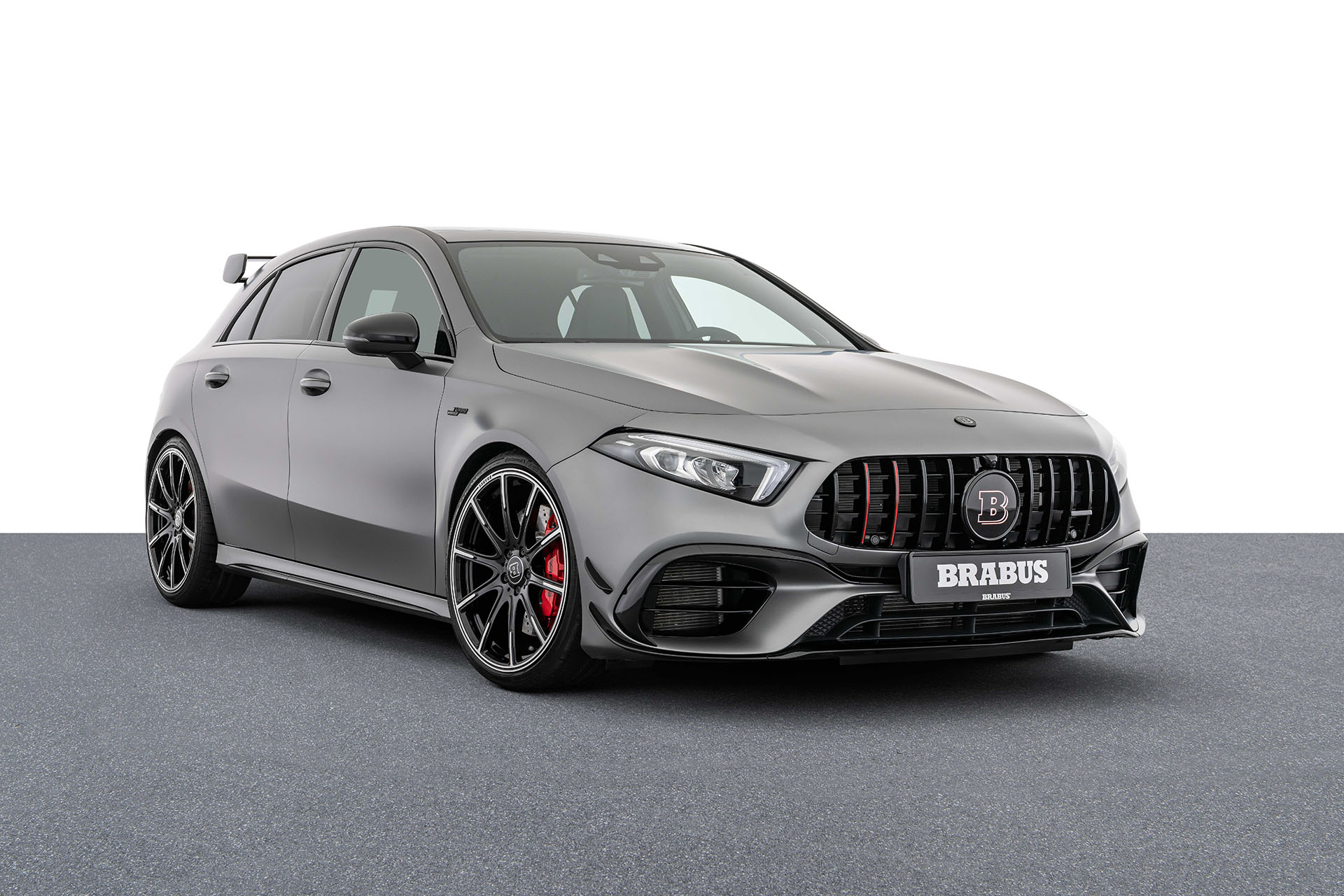
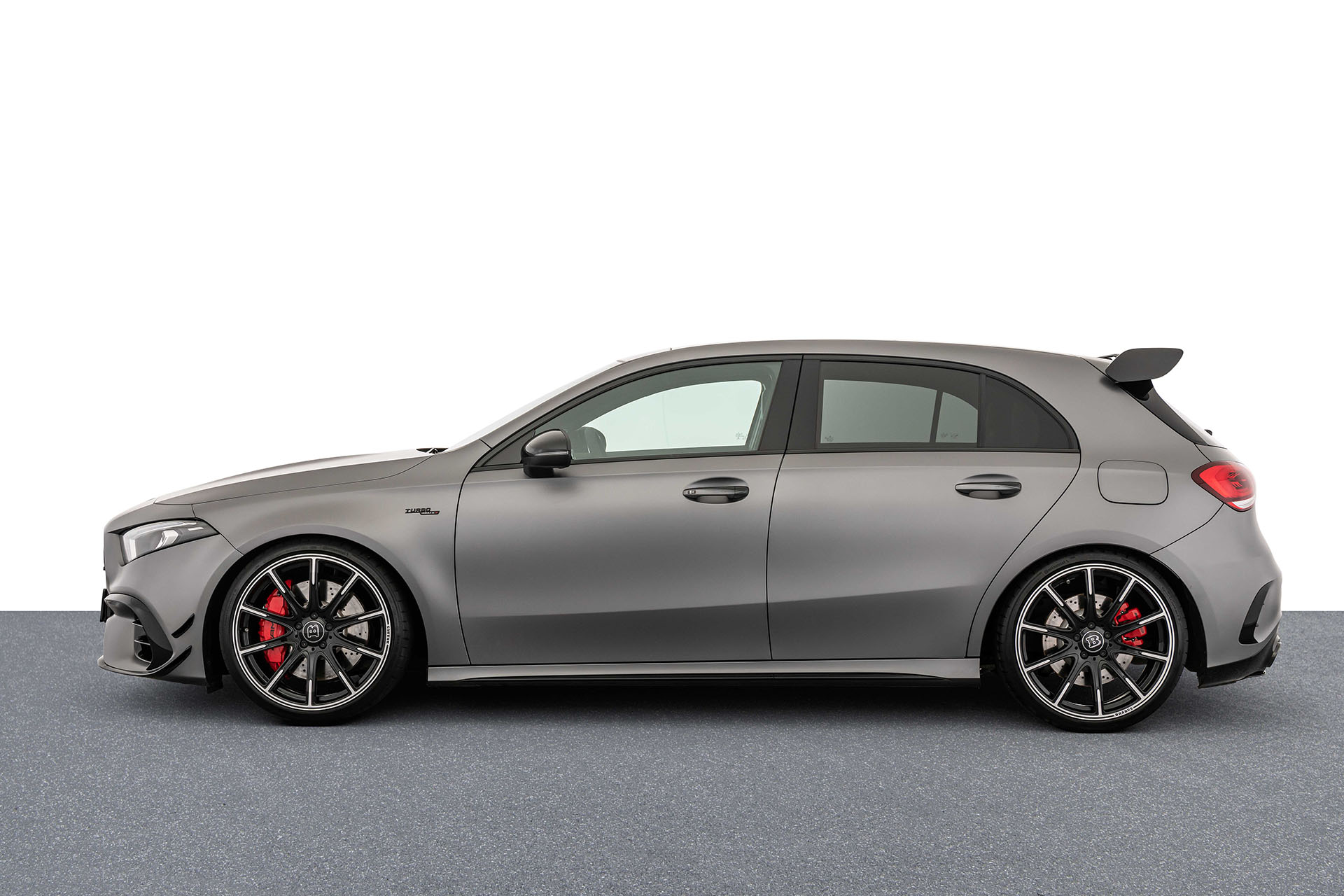
When I first saw this Brabus B45 for the first time, the term ‘Pocket Rocket’ came to mind, this car is based on the Mercedes A-class compact hatchback model, but it packs 450 hp now thanks to a performance upgrade from Brabus. Straight from the Mercedes factory the AMG A 45 S 4MATIC+ comes with 310 kW of power, but Brabus takes this up to 331 kW (450 hp) and a massive 550 Nm of torque, which is a 10% increase over the original figures.

The Brabus B45 – 450 accelerates from 0 to 100 km/h in just 3.7 seconds (0.2 seconds faster), but what’s even more impressive is the fact Brabus does this with full TÜV approval and the exemplary three-year or 100,000-kilometer/62,000-mile BRABUS Tuning Warranty®, which is very rare in the engine tuning business altogether.

Just think about this for a second, we are looking at a 450 hp output from a turbocharged four-cylinder inside a hatchback Mercedes … only a few years ago this kind of power came from true supercars like a Ferrari F430 (2004 – 2009 with 480 hp from a V8), or the Lamborghini Gallardo that came with 500 hp (built from 2003 – 2006). But today a relatively comfortable hatchback model is getting very close to these harsh two-seater supercars with double the number of cylinders or more.

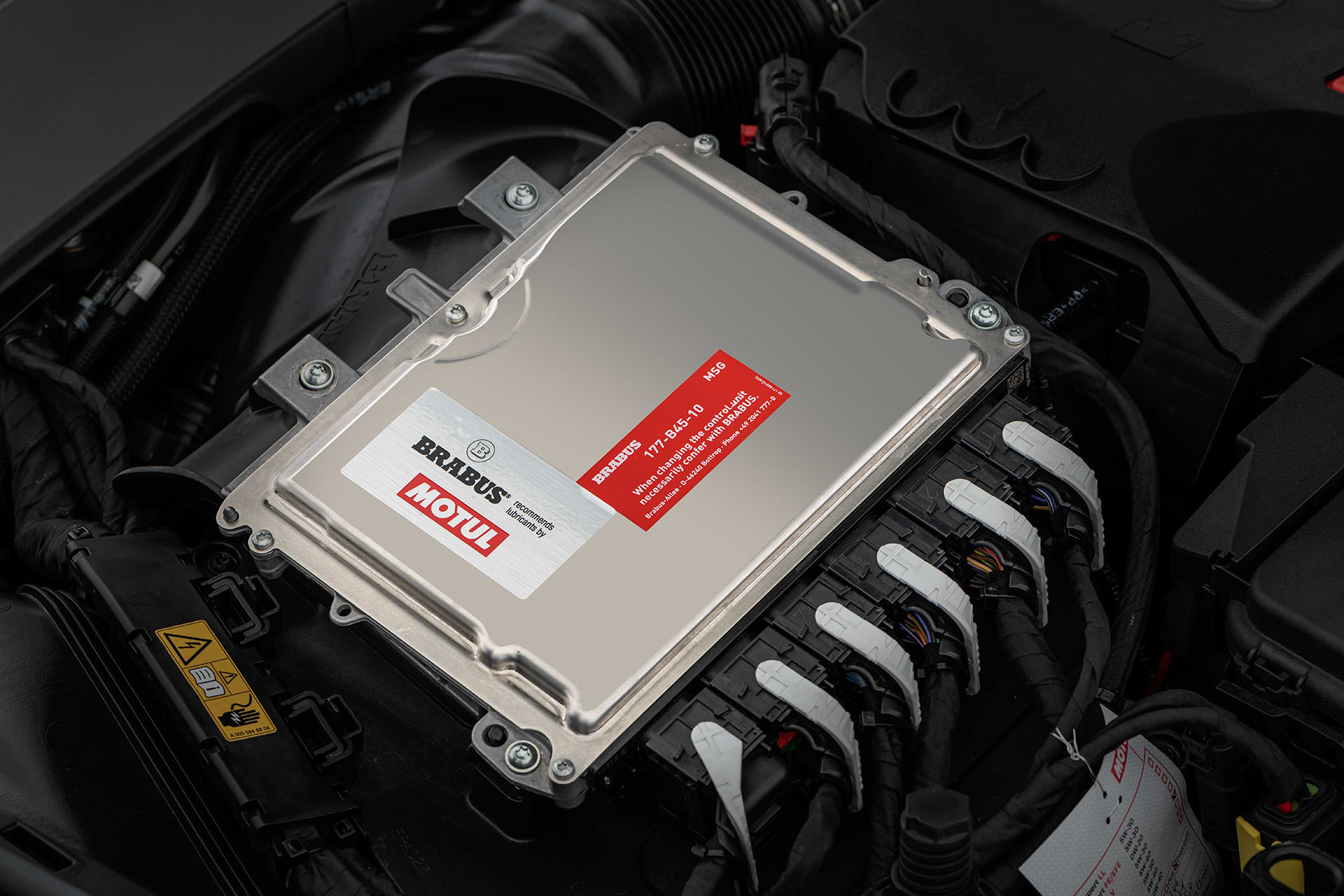
The press release stipulates: “The engine tuning comprises more than just special mapping for the A 45 S’s electronic engine management system. The conversion also includes a BRABUS PowerXtra CPC auxiliary control unit, the BRABUS BoostXtra adapter, which lets the engine produce a sporty blow-off noise like a racecar, and a special duct for the air box.”

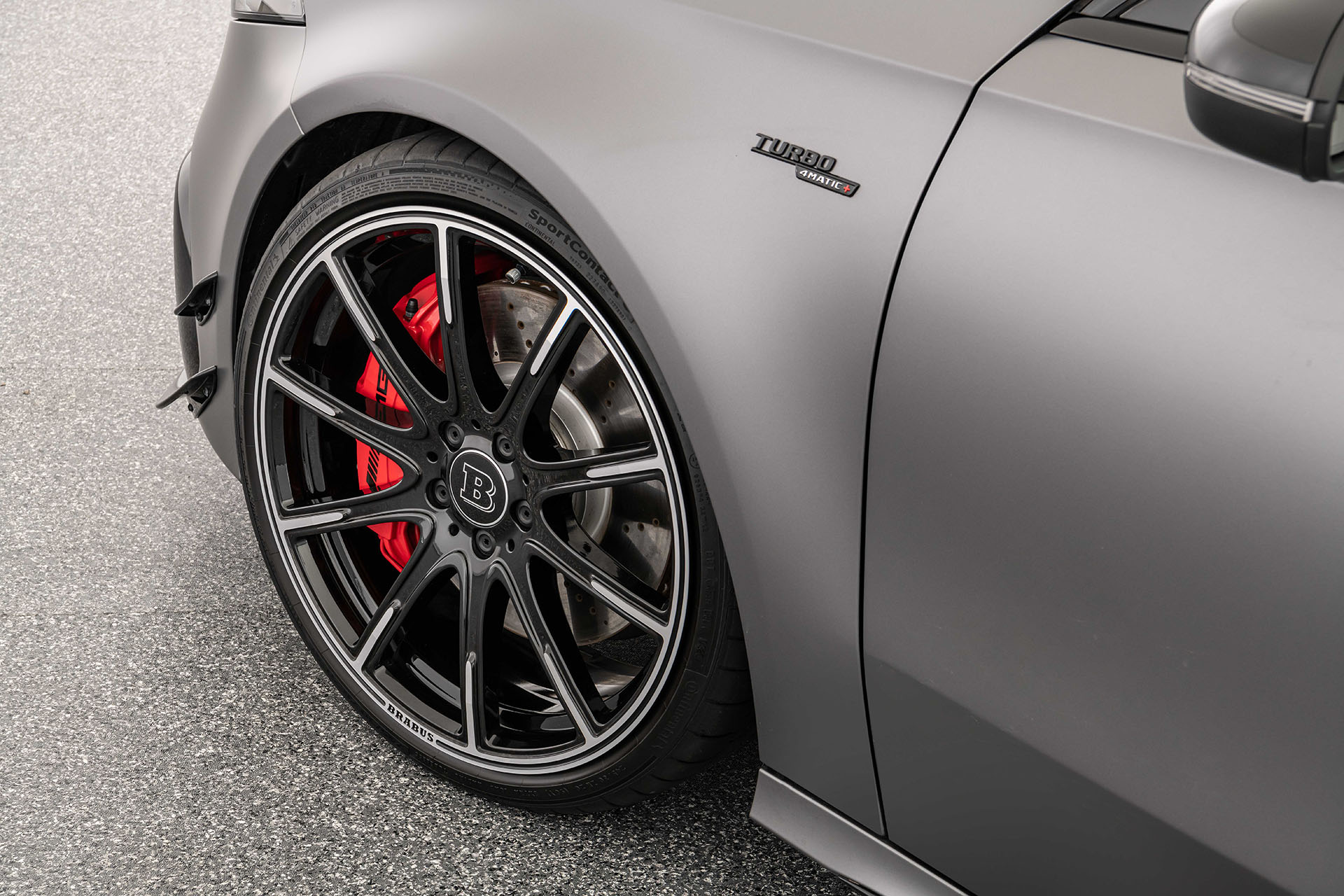
In this case, Brabus didn’t add any aero parts or other appendages to the already potent looking Mercedes-AMG A 45 S 4MATIC+, but you can fit a set of adjustable lowering springs, which can bring this car down from 0mm to 30mm (1.2 inch). And you have to admit this lowered stance makes those bespoke 20 inch, monoblock Z wheels look even better. 8.5×20 inch on both axles boasting ten spokes, these black wheels with a polished lip get a set of Continental tires, 245/30ZR20 preferably.

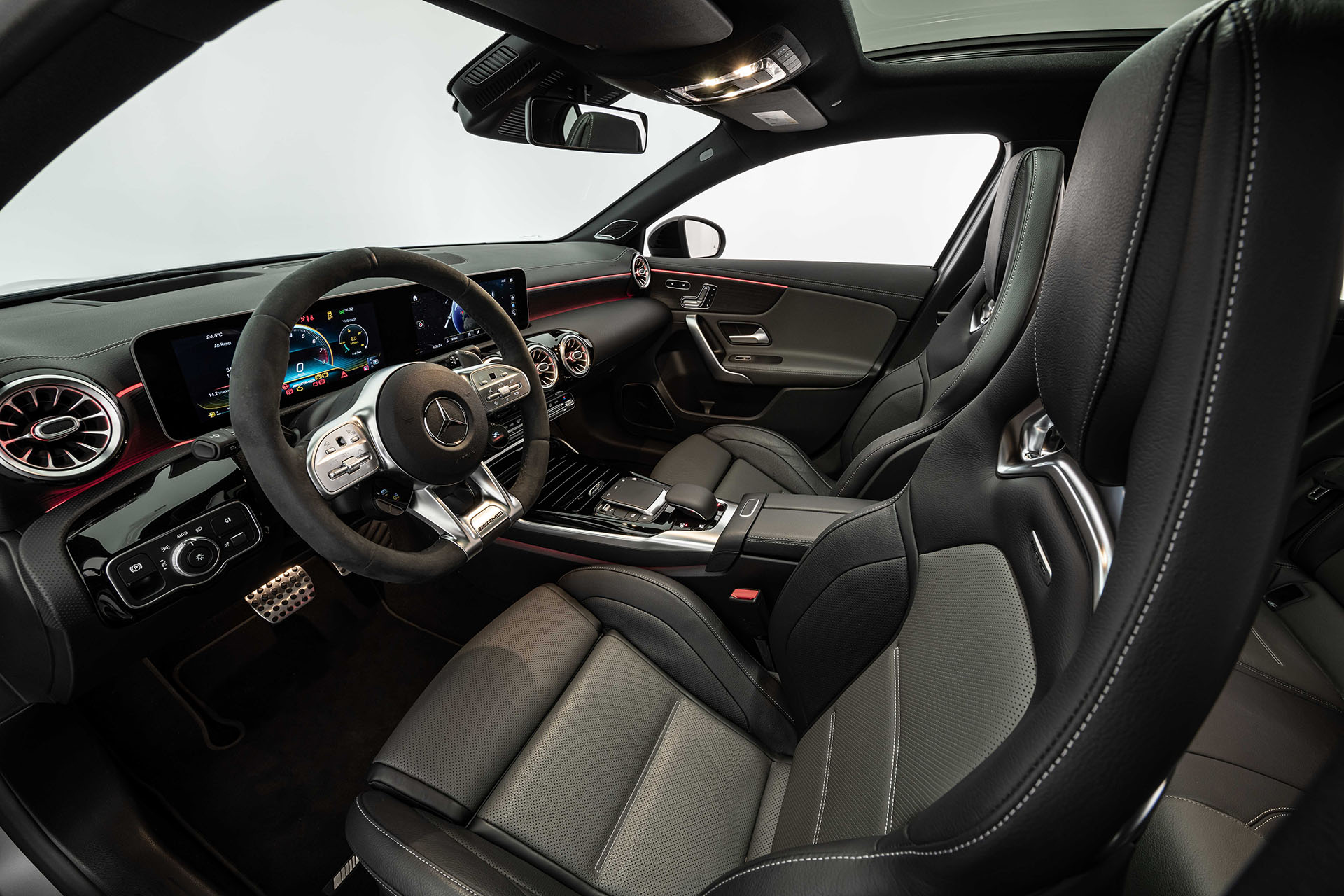
If you really want to have your Brabus B45 – 450 look different where it matters, the interior, the Brabus upholstery shop can transform the entire cockpit of the Mercedes-AMG A 45 S 4MATIC+ to your liking. Different, high-end leather with just about any stitching pattern you like, bespoke Brabus floor mats, aluminum pedals … or how about a set of Brabus stainless steel scuff plates, complete with illuminated logo to match the 64 shades of the ambient lighting?

The Mercedes-AMG A 45 S 4MATIC+ based Brabus B45 – 450 might come in a small package, but she packs a serious punch.

Mazzanti Evantra MILLECAVALLI 1,200 hp made in Italy

When you think about an Italian supercar the makes like Lamborghini, Ferrari, and Pagani come to mind … but there are other out there too, like Mazzanti Automobili from Pontedera, and Luca Mazzanti wants to put his legacy into automotive history with some very impressive looking cars like the Evantra, and the Evantra Millecavalli.

Unveiled as a prototype in 2016, the Mazzanti Evantra Millecavalli boasted 1,000 hp (hence the Millecavalli name) from a twin-turbo charged LS7 7.2-Liter V8 engine, but during development this was changed into 1,200 hp from an enlarged 7.3-Liter version. Mazzanti claims a top speed of 402 km/h (250 mph) and acceleration from 0 to 60 mph in only 2.7 seconds … thanks to the carbon ceramic brakes the Evantra Millecavalli will stop from 300 km/h (186 mph) in only 7 seconds!

Over the last years Mazzanti engineers have been working on shifter system strategies for the bespoke six-speed sequential gearbox , a new forced heated airflow system, M.A.S. (Mazzanti Ala Soffiata), a new suspension setup, new aerodynamics add-on and exhaust system improvements. Mazzanti intends to create the most powerful street-legal hypercar ever made in Italy.

Mazzanti Automobili plans to build only 25 units of the Evantra Millecavalli, at a rate of 5 cars per year, each of them tailor made for the lucky customer, and while no pricing has been published, rumor has it each one of these Italian hypercars will be over $1,200,000 … also there are no numbers on how many, if any, have been sold already.

On the design, the official press release states: “The brand new ‘Biplano’ rear wing is extremely important, not only for being a refined stylistic element, but for marking a relevant evolutionary step for the performance of Evantra Millecavalli. This rear wing has the task of balance the Hypercar at high speed, still granting an effective grip over 400 kph. Moreover, the system that extract forcedly the heat from the engine compartment, thanks to two fans specifically designed and engineered, directs the hot flux to the wing, making it working effectively also at low speed. This solutions was introduced in recent time by Formula 1 cars, and Evantra Millecavalli by Mazzanti Automobili is the first street-legal car that uses this technology.

The Biplano wing is equipped with three LED bars that can be programmed with different function, as tail lights or brake lights.”

At the rear, the Mazzanti Evantra Millecavalli comes with a red light between the exhausts … this can be used either as a fog light, or as a pit lane light during track days, while the doors are hinged at the rear and open upwards like wings, it makes the Millecavalli look like she’s ready to attack her prey … the road.

Mazzanti uses a carbon fiber body for the Evantra Millecavalli which keeps the weight down to 1,300 kg on this 2,008 mm wide, 1,225 mm tall, Italian beauty. But a customer can request the exterior of his Evantra Millecavalli to receive bespoke parts and add-ons to make his car really a one-of-a-kind.

And that level of customization is also available for the interior, where Mazzanti states “a full “all-natural leather” interiors, permit the use of precious leather refined with special aniline leather treatment that gives an incredible soft touch. The client can ask for every customization, so the imagination is the limit. Drawing from tints, special materials, including exotic leather and precious fibers. “

The customer will have to visit the Mazzanti Atelier for test fittings, so the seat inside his Evantra Millecavalli can be made to fit perfectly, and this isn’t even the end, the paddle shifters behind the steering wheel are also custom made to fit the palms of the driver, while he, or she, can also specify a different steering wheel with LED lights integrated to show when it’s time to shift gears … just like in a race car.

The performance of the Evantra Millecavalli is transferred onto the tarmac thanks to special high performance tires from Pirelli, Trofeo R, 265/35 R19 front and 335/30 R20 rear, mounted on special OZ alloy wheels. The Carbon-ceramic* braking system is specifically developed for Evantra Millecavalli and is equipped with 390mm discs in the front and 360mm discs in the rear axle, with Brembo 6 piston calipers in the front and 4 piston calipers in the back.

All these characteristics show that well-known worldwide companies participate enthusiastically in our project with partnerships; their experience and their belief in us, push us in setting our limits higher every time, always trying to offer our clients something new, high performing and top quality, but always characterized by the genuine passion of the unmistakable Italian style.

The Lamborghini Diablo could have looked like the Cizeta V16T, and that latter one is going to auction

Back in the late Eighties Lamborghini was developing the successor to their Countach, which was undoubtedly the most futuristic car on the road in the late Seventies when the LP400 was sold in 1974. Evolved into the wide fender, big rear wing, and massive 345mm wide rear tires Countach S in 1978, moving onto a 5-Liter V12 in 1982, and finally getting four valves per cylinder as the Quattrovalvole in 1985 … it was time for a replacement flagship.

Work got underway to have a brand new V12 model to celebrate 25 years of Automobili Lamborghini SpA in 1988 … but they ran out of time in Sant’Agata, and they quickly did a redesign on the Countach that created the 25th Anniversary edition, intended as a limited production model to bridge the gap until the new model would be built … it turned out this final model would stay in production for 2 years and reached 657 units, making her the most successful Countach ever.

1993 Cizeta V16T Jasen Delgado ©2020 Courtesy of RM Auctions

Remember Marcello Gandini? He designed the Lamborghini Miura at Bertone, but he also designed the Countach … so he was the perfect candidate to design the successor to the Countach too, and he did. But on April 23rd 1987 Chrysler bought Automobili Lamborghini SpA, and they deemed the Gandini design for P132, the internal development number for what would become the Diablo in 1990, wasn’t what they wanted. So the intermediate Countach 25th Anniversary was created, and designers in the United States, working for Chrysler, reworked Gandini’s proposal into what we now know of the Lamborghini Diablo from the Nineties.

In comes Claudio Zampolli, a former Lamborghini test driver and engineer, who moved to Los Angeles and setup a supercar shop, doing maintenance and upgrades on cars from the rich and famous. But he wanted more, he was dreaming about having his own car to compete with the likes from Ferrari and Lamborghini, he teamed up with Giorgio Moroder, a wealthy music producer, and they created Cizeta-Moroder V16T.

1993 Cizeta V16T Jasen Delgado ©2020 Courtesy of RM Auctions

The world hadn’t seen many V16 cars, and that’s exactly why Claudio Zampolli wanted his supercar to come with this exotic engine, he actually used two V-8 engines to get a 6-Liter engine coupled to a five-speed gearbox, and while no horsepower figures were ever published, the Cizeta V16T should reach 328 km/h (204 mph) and accelerate to 60 mph in 4 seconds … naturally such an exotic car needed a bespoke body design.

And this is where Marcello Gandini’s initial Lamborghini P132 design comes into the picture … Zampolli asked Gandini for his design to be used on his new Cizeta model, he did go for normal opening doors and some impressive headlight design, but it is clearly based on Gandini’s design for the Lamborghini Diablo.

1993 Cizeta V16T Jasen Delgado ©2020 Courtesy of RM Auctions

By the time the first car was built in 1991 by Claudio Zampolli he had broken up with Giorgio Moroder, so the car was now called the Cizeta V16T and came with an MSRP of $650,000 (for comparison: a Lamborghini Diablo was about $290,000 at that time). Between 1991 and 1995 only 12 cars would be built, Zampolli moved the assembly of the Cizeta in 1995, but it would take until 1999 for another Cizeta V16T to be built, and as late as 2003 the unique Cizeta V16TTJ Spyder was built, on special order for customer in Japan.

So a Cizeta V16T is a very rare car today, and they are rarely changing owners … but you now have a chance to own one of these extremely rare V16 engine cars, and to be honest, this one is even more special. Chassis ZA9V16T00MMD38101 was ordered by Hong Seh Motors in Singapore for none other than the Brunei Royal Family, the Sultan of Brunei had already ordered three Cizeta V16T, two black ones, and this blue one, but chassis 101 was special.

1993 Cizeta V16T Jasen Delgado ©2020 Courtesy of RM Auctions

This specific Cizeta V16T was a RHD version, and it was the show car for the 1993 Geneva Motor Show before it was shipped to Singapore in late March 1993, one more detail, this car came with horizontal fins on the side air intakes, which only the prototype showed, the production cars came with vertical fins.

1993 Cizeta V16T Jasen Delgado ©2020 Courtesy of RM Auctions

It’s unclear why, but this car never made it to Brunei, it was kept at Hong Seh Motors for the next 25 years, which turned out to be good thing, as the Sultan of Brunei had his other two Cizeta V16T converted by Pininfarina to use Ferrari flat-12 engines. In 2020 the car was sold to it’s current owner who had it restored to driving condition … there’s nothing like hearing that V16 engine just inches behind your head it seems.

This extremely rare, V16 supercar was listed at RM-Sotheby’s Arizona auction on January 22, 2021 with an estimate between $600,000 and $750,000 … the results aren’t listed yet, but I am really interested in how much this car reached when passing under the hammer.

UPDATE January 26, 2021: this Cizeta V16T sold for $665,000