All posts in “Events”

The Aria FXE looks great, but will it ever be made?

Share

  • Pinterest

Oftentimes in life, particularly in this automotive life, the two toughest words to bring together are “supercar” and “production.” Automotive history is littered with failed attempts, from the Argyll GT to the Vanda Dendrobium. Remember the Foose Hemisfear? Heck, plain old “car” and “production” ain’t exactly easy — just ask those guys in Fremont, California, trying to build Model 3s. So when you see the fantabulous Aria FXE supercar at the LA Auto Show and you hear they want to make 400 of them, should you believe?

Aw, quit being such a nattering naybob of negativism. Believe already!

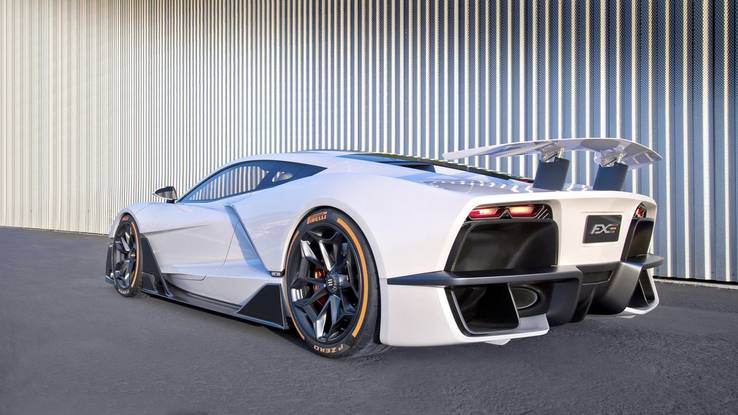
Aria FXE	rear three quarter

Aria FXE makes 1150 hp

The Aria FXE is the product of the Aria Group of sunny suburban Irvine, Calif. This is not just some group of daydreaming rich-guy investors who think they can throw this thing together. No, Aria has built cars, planes and even space capsules for almost every carmaker in America and plenty of plane- and trainmakers, too, and has built parts and interiors for many more. Most famously, they make the carbon-fiber bodies for those Singer 911s everyone’s raving about. So they are capable of putting together vehicles that move.

And this one should really move. The basis is a supercharged Corvette LT4 engine bolted into a carbon-fiber tub. It may be more than just bolted, since Aria has new processes for carbon fiber that’ll be used here. The LT4 drives the rear wheels. The fronts are driven by a pair of “axial-flux induction motors.” 

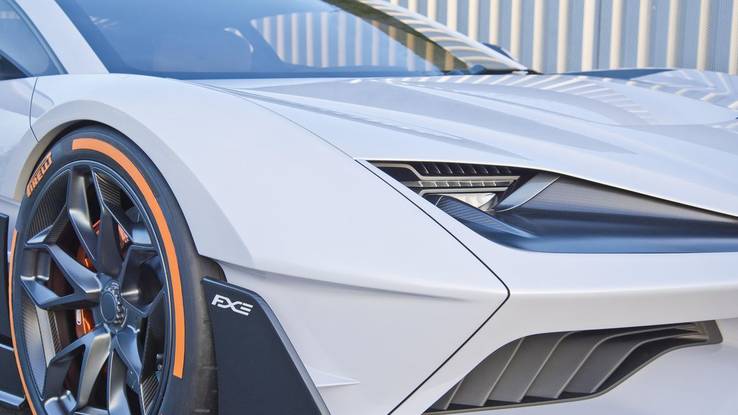
Aria FXE	wheel

HRE wheels, 20s in front, 21s in back, wrapped by Pirelli PZero Trofeo R tires

The LT4 we can grasp. It powers the Corvette Z06 and does a heckuva job at it. In Z06 form, the blown 6.2-liter V8 makes 650 hp and 650 lb-ft of torque with direct injection, active fuel management and continuously variable valve timing. The LT4 engine in the Aria will make 720 hp because … well, we haven’t heard exactly why it’ll make 90 more hp than it does in the Z06, but don’t let yourself get bogged down in the details while you’re in the process of believing.

Axial-flux induction, on the other hand, we had to look up. No less an authority than the IEEE (Institute of Electrical and Electronics Engineers — pronounce it “eye triple eee” if you want to sound like a hip engineering insider) likes them, saying in a paper beautifully titled “Review of axial flux induction motor for automotive applications” that the little suckers are “an interesting solution” for hybrid and electric vehicles. Aria says its axial-flux induction motors –- there are two of them, one for each front wheel –- add 540 hp to the powertrain. Remember, you can’t simply add up the two power figures in a hybrid because they hit peak output at different revs, but together these power sources are listed at 1,150 hp and 1,316 lb-ft of torque.

iAye Chihuahua!

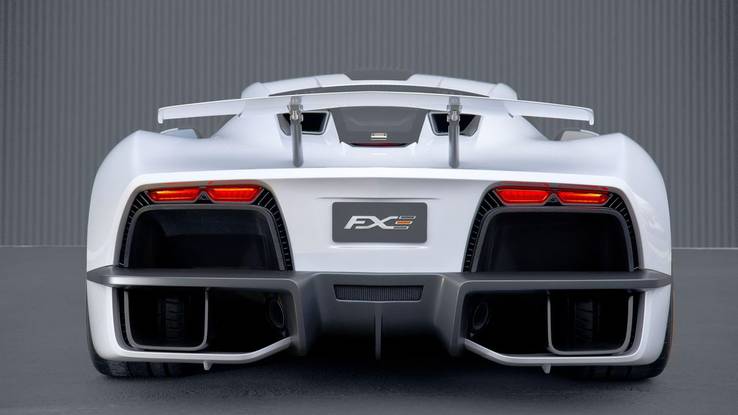
Aria FXE rear

Aria FXE looks like a Star Wars car from the rear

Consider that the curb weight listed by Aria for the FXE is 3,450 pounds and you get an outrageous 3 pounds per hp. That’s despite a 10-kWh lithium-ion battery pack in there somewhere which could weigh, what, 100 pounds?

Since the sticker price for just one of these will likely be over a million dollars, we’re guessing, Aria is also offering a model that does not have the hybrid component. That will have just the LT4 and be called simply the FE.

OK, so you’ve got our attention, Aria. Now let’s see you manufacture more than five, or 14 or however many it takes to be considered a “success.” Plans call for a late-2019 launch, with assembly to be done right there in the tract-home and concrete-tilt-up paradise of Irvine, which many compare to Modena. Hey, isn’t Irvine where Saleen used to be?

Are car subscriptions the next frontier in ownership?

Share

  • Pinterest

The Los Angeles Auto Show is the only major U.S. show that isn’t overseen by the local dealer association. And this year, it showed, with more automakers promoting alternatives to the basic retail sales model and the American tradition of personal car ownership.

Volvo and Lincoln said they are diving into the business of monthly vehicle subscriptions, which are more flexible than leases, though not necessarily less expensive. Their announcements come on the heels of pilot programs launched this year by Cadillac, Hyundai and Porsche and plans sketched out by Volvo affiliate Polestar and some electric vehicle startups.

The initiatives vary in scale and execution, a sign that although companies are willing to experiment in this area, they haven’t yet figured out which model will work best with consumers, how to measure their success and whether subscriptions are ultimately good for business. Also unclear is what role local dealers would play if these programs expand beyond small pilot projects.

In the near term, though, the programs promise a wealth of data about consumer preferences and a modest revenue stream to support other initiatives under the broad umbrella of mobility services.

“Automakers are experimenting with a lot of different models to see what customers will accept or want and how much they are willing to pay for it,” said Sam Abuelsamid, a senior analyst at Navigant Research. “The thing about all of these plans is that for the OEM, by bundling, if they price it right, they can also build in some revenue to fund things like ongoing support for software and map updates. While this isn’t a big thing today, going forward, it will be more important.”

A survey of consumers by technology advisory firm Gartner found that nearly half of respondents would consider using a subscription service for access to a car — and 12 percent would “strongly” consider it.

“However, among people who already use mobility services like Uber or Lyft frequently, the response rate is about double,” said Michael Ramsey, research director at Gartner.

“Cost is not going to be the primary motivation for getting people to switch from personal ownership,” Ramsey said. “It will be because subscribing is easier than owning.”

Lincoln’s test of month-to-month subscriptions comes as the brand aims to project a view of luxury that’s centered on customer convenience rather than technology or performance. Executives said the pilot likely will start next year in a few cities in California. Marketing chief Robert Parker promised significantly lower rates than similar subscription services from rival brands. (Book by Cadillac charges $1,800 a month; Porsche’s Passport starts at $2,000.)

The fee for the Lincoln service will include insurance, maintenance, roadside assistance and vehicle pickup and delivery. Customers can change vehicles every month, and the pricing will depend on the vehicle, although executives declined to discuss specifics.

“Long-term leases will obviously play a role in our overall portfolio, but in the spirit of effortlessness, there is a consumer out there who doesn’t really need a three-year lease,” Lincoln President Kumar Galhotra told reporters ahead of the show. “We’re coming up with a different ownership model for them.”
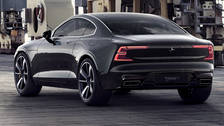
Polestar could give Tesla and BMW i a challenge in China

Galhotra said Lincoln will employ the same technology used by Canvas, a similar subscription service run by Ford Credit for used cars.

Volvo last week released pricing details for its Care by Volvo service and took its first subscription order — for a blue XC40 R-Design — during a press conference at the show. Care by Volvo charges $700 a month for that model on a 24-month subscription.

Before the pricing announcement, Volvo said it had 2,000 people raise their hands to try the service.

Though ordering takes place online, Volvo North America CEO Anders Gustafsson said dealers will play an integral role in the service. When a customer selects a vehicle on the Volvo website, the customer is directed to a dealership, which completes the sale and arranges delivery. Maintenance and subscription services also are handled through the dealership.

When Care by Volvo was announced in September, Gustafsson said, about 80 percent of Volvo retailers were skeptical of the service, and he has been meeting with dealers to ease concerns as new mobility technologies and services threaten to disrupt the industry.

“Care by Volvo supports the dealer’s value chain,” said Gustafsson. “It builds up loyalty to dealers but also with the customer.”

The subscription requires no deposit, and the flat monthly fee includes insurance, maintenance and roadside assistance. Gustafsson said Volvo is able to offer a set insurance rate to customers of all profiles across the U.S. through a partnership with Liberty Mutual.

“Everyone wants to simplify, and we handle and balance this all on our own books,” he said.

Volvo said it will decide whether to roll out the service to other vehicles depending on the success of the XC40 launch.

Hyundai offers a subscription plan for its Ioniq battery-electric model sold in California as it tries to hook more consumers on the EV lifestyle. But it’s looking to expand that program to other cars and its Genesis luxury brand.

The Ioniq subscription is available for a 36-month term for about $300 a month, plus a $2,500 down payment. That down payment can be offset by California’s EV tax rebate, and it also includes the first monthly payment.

Users are allowed unlimited miles and are reimbursed for charging costs up to the first 50,000 miles; maintenance and service are also covered.

The subscription plan “happens to be a combination that really has worked for our buyers,” said Brian Smith, COO of Hyundai Motor America, “and I would like to figure out how we can offer it in a couple of different iterations. So something for Genesis would look different than what we did with Ioniq.”

Klaus Zellmer, Porsche Cars North America CEO, said the sign-up for the brand’s small, month-to-month Passport subscription pilot in the Atlanta area has been “overwhelmingly positive.”

The early subscribers, who began getting cars in November, are younger and spending more than Porsche anticipated, with 80 percent between ages 25 and 44, and 60 percent opting for the more expensive subscription tier at $3,000 a month, Zellmer said.

A Porsche at the tip of your fingers

Younger people “do not want to engage with a commitment for three years,” Zellmer said, adding: “They want to change their phones; they want to change their TV channels. It’s all about subscriptions.”

Porsche has worked hard to assuage dealers’ concerns about where they fit in. Zellmer said he was able to respond to those questions at a dealer meeting in South Africa for the introduction of the redesigned Cayenne.

“I hope that explaining what we’re trying to do helps people forget about this typical mistrust between dealer partners and manufacturers that we’re trying to bypass them,” Zellmer said. “We’re trying to learn. That’s why it’s a pilot.”

The projects around the industry will be watched carefully by other automakers, even if they’re not ready to jump in yet. Jaguar Land Rover says it’s steering clear of subscription services until everyone else figures out whether it’s a viable business model.

Lexus officials say they’re in study mode, intrigued about the potential to attract younger buyers who are comfortable with putting a lot of their bills on one credit card.

“I think there’s just a generation of people who find that it won’t necessarily be cheaper, and it may actually be more expensive,” said Brian Bolain, general manager for Lexus marketing, “but it’s simple.”

Sebastian Blanco, Laurence Iliff, Michael Martinez, David Undercoffler and Amy Wilson contributed to this report.

L.A.’s hot new model? Subscriptions” originally appeared in Automotive News on 12/4/2017

By Sharon Silke Carty

2019 Corvette ZR1 first ride: Right-seat laps prove it’s a monster

Share

  • Pinterest

The 2019 Corvette ZR1 is easily the fastest, most powerful and officially the loudest production car GM has ever built. So when they asked if I wanted to come to Willow Springs and … ride in it … well, I must admit for a second or two there I was disappointed with the word “ride” when I was hoping for “drive.” But what the heck, it beat attending the second day of press conferences at the LA Auto Show (just kidding LA Auto Show — please don’t cancel my credentials). And it was the toweringly powerful ZR1, after all. I’d pay to watch that drive by.

Plus, I looked forward to someday echoing what GM executive vice president Mark Reuss had said at the ZR1’s launch in Dubai: “I’ve never driven a Corvette like this before, and nobody else has either, because there’s never been one like this before.”

Indeed, Reuss is right. This is the most powerful and best-handling Corvette ever made, the proverbial Best ‘Vette Yet, to quote every car magazine ever made, and it will certainly give the European supercar makers a run for their euros. As you no doubt know by now, the new ZR1’s supercharged direct- and port-injected LT5 engine makes 755 peak hp and 715 lb-ft of torque, more than any production car on the market except one Ferrari (and the Dodge Demon/Bugatti Chiron, depending upon your definition of ‘production’). Yes, it even beats the Hellcat, and probably turns a lot better.

In a straight line, the ZR1 is officially listed with a 212-mph top speed. That’s in the standard coupe with the “low wing.” It would probably go faster but they got the 212-mph number on a closed course, so they had to take some corners. The 212 is a two-way average on a measured mile, too, so if you were at, say, Bonneville, you could probably go 216 or higher. In any case, the fuel cutoff comes on at 215 because the tires are rated for that speed. They don’t want to have to go out and recertify more tires. 

At a drag strip, the ZR1 coupe will hit 60 in “under three seconds,” according to Chevy, and do the quarter-mile in the “high 10-second range at over 130 mph.” Top speed of the convertible is 208 mph because of that car’s aerodynamics.

“Yes, yes, I know that,” you’re saying. How does it handle on a road course? It’s a monster. Chevy invited me to Willow Springs to experience full ZR1 at full tilt. We’d be on Big Willow, the self-proclaimed “Fastest Road in the West.” There’s a long back stretch and an even longer front stretch to Big Willow, connected by the long, long right-hander of turn 2, the fun uphill lefthander of 3, the terribly confusing section before the back stretch and finishing up with the death-defying turns 8 and 9.

Strap me in!

My driver was suspension development engineer Michael Tung, officially in charge of chassis controls, ABS, traction and stability control on Corvettes and Camaros, and who looks way too young to be a suspension engineer. In we strapped and off we roared. The ZR1 has four settings that affect the exhaust. We were in the loudest of the four.

“The ZR1 will make the loudest and most aggressive sound in Corvette history,” Tadge Juechter had said earlier, before he went on to describe, “…screaming down the front straightaway.”

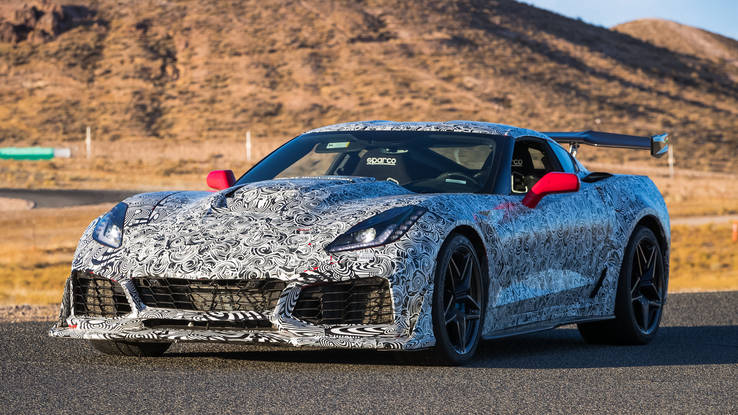
ZR1 at speed at Willow

ZR1 at speed at Willow. This was a pre-production prototype. It still had the camo on.

So right out of the pits we pretty much did that. It is loud, even from the inside of a helmet. And the acceleration was mighty quick. Down the short straight to turn 2, Tung hit 112 mph and then got on the brakes hard, harder than I remember ever feeling brakes at this point on the track. Then we ground around the long turn 2 at just under 100 mph and up the hill toward Willow’s “Budweiser Balcony,” one of the greatest marketing partnerships in motorsports. Tung was not sliding the car around, he was simply hammering fast through all the turns. The ZR1 held on well, banging up against the g-meter that only recorded up to 1.25 gs. This might be your favorite track car, but only if you want to beat everyone else every time you go out. You might get tired of winning.

We hit 143 mph on the back straight and sailed through 8 and 9 at over 100 mph before hitting 158 on front straight in fifth gear. It was enthralling.

Later, I timed some laps and found them in the lower half of the 1:20s. This car felt fast from my perspective in the passenger seat, but it seemed like it would inspire confidence in drivers, too. I don’t think I’d be going quite as fast as Tung through 8 and 9, but the rest of the track it felt like the ZR1 was stable enough to warrant safely pushing the edges of adhesion. We never got the rear end sliding around and I never felt any significant understeer from the front seat, though there surely had to be some slippage, especially up in turns 4 and 5.

The fun part will be when I or some other lucky Autoweek staffer gets to try this thing out for ourselves. It is truly the greatest Corvette ever made, if and until that mid-engine thing comes out. And they ain’t talking about that yet.

On Sale: Spring 2018

Base Price: $119,995

Powertrain: 6.2-liter supercharged V8, 7-speed manual, rwd

Output: 755 hp at 6300 rpm, 715 lb ft at 4400 rpm

Curb Weight: 3524 lbs

0-60 MPH: “Under 3.0 seconds” (mfg.)

Fuel Economy: 15/22 city/hwy(EPA City/Hwy/Combined)

Pros: BwaaaAAAAAAAAHHHHHHHH!

Cons: No stowable third-row seat

Opinion: Toyota should build the FT-AC

Share

  • Pinterest

I just returned from the LA Auto Show, and a decent one it was, too, with the ZR1 convertible, Subaru’s new three-row Ascent, Lexus’ new three-row RX and, of course, Jeep’s new Wrangler. Speaking of the Wrangler, among the more important LA concepts is Toyota’s FT-AC, or Future Toyota Adventure Concept in Toyotaspeak. As concepts go it isn’t the best-looking or the flashiest I’ve seen, but it has significance in spades: As one of the more off-roadie trucklets Toyota has shown, I could see it taking aim straight at the Wrangler.

And about time, too. Small crossover/SUV sales continue to boom, and yet the Wrangler’s off-road prowess and bare-bones-ness sort of leaves it in its own category. Why other automakers haven’t tried to steal some Jeep thunder over the years is beyond me. Toyota looking at maybe taking a shot seems like a no-brainer.

With sunny Southern California’s outdoorsy lifestyle, the LA Auto Show is the perfect place to measure whether taking that shot is a good idea or not. According to Toyota, “this is a city with a population that likes to head for the hills, deserts or beaches for their much-needed weekend recharges.” I don’t blame ’em for wanting to get away from the god-awful traffic. Makes me wonder why Toyota got rid of the FJ Cruiser a few years ago …

Toyota is testing the baby crossover waters again with another concept

Anyway, the FT-AC’s roof-mounted LEDs front and rear are able to light up the area around the truck, plus there are heavy-duty skid plates, tow hooks and 20-inch wheels. The side mirrors have infrared cameras to record your off-road hijinks, and an integrated Wi-Fi hotspot allows you to upload the videos and save them for later. Out back is a built-in, retractable bike rack.

Other than that, Toyota gave very few details. Officials wouldn’t even tell us how big it actually is, though it looks slightly smaller than an FJ Cruiser but bigger than the little CH-R. No powertrain information was revealed, but the C-HR’s naturally aspirated 2.0-liter four (144 hp/139 lb-ft) would be a perfect starting point. Toyota did say the concept has torque-vectoring all-wheel drive, variable terrain settings and four-wheel lock, and also says a production version could be a hybrid. I’d make sure a six-speed manual was available and I’d make sure the CH-R’s CVT was not. Come to think of it, since it already builds Toyota’s 86, maybe Subaru builds on the relationship, jacks up the Crosstrek’s platform and drops the FT-AC’s body on it.

Whatever, it needs to happen sooner rather than later.

Wes Raynal

Wes Raynal – Wes Raynal joined Crain Communications’ circulation department while still in college. When he graduated in 1986, he became a reporter for Autoweek sister publication Automotive News. He has worked as Autoweek’s associate editor, news editor, motorsports editor and executive editor before being named editor in 2009.
See more by this author»

Plug-in hybrid Porsche 911 likely in the near future

Share

  • Pinterest

The Porsche 911 will likely get a plug-in hybrid variant mid-way through its next generation, Porsche CEO Oliver Blume says.

With the redesigned 911 set to go on sale in 2019, that means the mid-cycle update — and thus the plug-in — would arrive about four years later or around 2023.

“We will come with the plug-in hybrid with the next battery generation and with the next evolution step,” Blume told Automotive News at an event here at the Los Angeles auto show. “It will be very important for the 911 to have a plug-in hybrid.”

That decision hasn’t gone through final confirmation yet, but Blume said it’s “my opinion that we will go for it.”

Blume’s comments clear up uncertainty about whether and when Porsche will electrify its flagship sports car. The company had previously indicated it was exploring a plug-in hybrid for the 911 but said this spring it had dropped the option in part because battery weight would drag performance to unacceptable levels.

Porsche already has done the foundational work by preparing the next 911’s platform to accommodate the battery system for the plug-in hybrid, Blume said. But waiting until the mid-cycle update will allow Porsche to get more power and more range from the batteries, he said.

Blume is targeting a 47 ampere hours battery system that would allow for range of about 43 miles of pure electric operation for the plug-in hybrid 911.

“The potential is very good with the new generation of batteries,” he said.

Porsche likely to add 911 plug-in hybrid variant, CEO says” originally appeared in Automotive News on 11/30/2017
By Amy Wilson at Automotive News

2018 LA Auto Show: Everything we saw

Of course, an LA show without solid sports car reveals would be a big miss — Chevy showed the Corvette ZR1 to the United States for the first time and BMW (finally) showed off the production version of its i8 Roadster. Even with big reveals from nearly every booth, the talk of the halls was Jeep’s newest Wrangler.

Check out everything that we saw at the LA Auto Show below to plan your visit.

Land Rover’s Lynfel Owen explains how the Range Rover Hybrid works and what comes next

Share

  • Pinterest

Lynfel Owen is Land Rover’s vehicle engineering senior manager in charge of the Range Rover and Range Rover Sport plug-in hybrid (PHEV). We asked him to describe how the complex system works and what the future holds for electrified Land Rovers and four-wheel drive. 

Autoweek: Are there differences between in the calibration of the Range Rover PHEV system and the one in the Range Rover Sport PHEV?

Owen: The hardware is obviously very similar. But the tuning is different. If you are in the Range Rover Sport PHEV, and you’ve selected dynamic mode, sport in the transmission and turned traction control off, you are telling the car you want it set up for optimum performance. There’s a sweet spot in the battery for getting power in and out quickly — we use that window of charge and we make sure you have full power when you need it. And as soon as you lift off the throttle, we’re using heavy regen to top off that battery more quickly.  

Autoweek: How is the electric motor integrated with the transmission?

Owen: The electric motor is installed where the torque converter would normally be in the bell housing. So, you’ve got the motor and the primary clutch at the front of the gearbox. Then you’ve got the eight-speed gearset behind it and then the second clutch. It’s the two clutches that allow you to have the EV drive, combined drive or solely engine propulsion. The rear driveshaft is common between the PHEV and non-PHEV Range Rover. And that was really important because we wanted to have an EV with a low range. This configuration allows us to use the common low range transfer case with the gas and diesel Range Rover. 

5 Things Land Rover Got Right with the 2018 Range Rover PHEV and Range Rover Sport PHEV

Autoweek: Do you buy the transmission and electric componentry directly from ZF?

Owen: That’s correct. ZF is obviously a transmission specialist so we buy the actual hardware from them and then we do all the calibration. And that’s where we really tune it for our application. However, there are some specific changes to the casing and how we mount it to the vehicle. But the actual internals are ZF intellectual property. 

Autoweek: What are the advantages of using a hybrid system like the one you’ve chosen for the Range Rover PHEV?

Owen: When we designed the aluminum architecture for Range Rover and Range Rover Sport, we knew we wanted to electrify it. So, that’s what really drove us, having the common hard point to engine with the gas and diesel Range Rovers. We wanted to use that integrated technology in a gearbox because we really didn’t want to repackage the powertrain elsewhere. It was also very important, from a complexity point of view, to maintain the suspension articulation and all the off-road performance. We really didn’t want to redesign all of that for a different solution. 

Autoweek: Who makes the battery pack for you?

Owen: So, this battery pack is a collaboration with Samsung. We designed elements of it, and it’s their cell technology. The battery case itself is an aluminum casting. And that was quite important. Having the aluminum casting allows us to quite efficiently package all the cells. And it fits underneath the cargo floor.

Autoweek: How quickly can the Range Rover PHEV charge?

Owen: There are a range of charging options, but it takes 2 hours, 45 minutes from a quick charge. We provide the 110V home charge kit standard with the car. But at the dealer they’ll have a choice of charging options. And for each market, we have a partner with one of the major charging suppliers who will talk to the customers in parallel about whether they’d like to have a home installation or any other options. The vehicle has a 7-kW on-board charger so it’s capable of any supply. 

Autoweek: How did you arrive at the size of the battery pack?

Owen: Sizing the battery is definitely an art in itself. It’s a balance of fuel range, electric range and overall vehicle weight. We looked at data that said what we expected people would want to do with the vehicle — what would be a reasonable range that people would want and then worked back from that. 

Autoweek: Land Rover has diesel expertise. And it has diesel hybrid expertise. A diesel power source could make an interesting complement to a plug-in hybrid and increase efficiency. Did you look at a diesel, specifically the 2.0-liter diesel in the XE as an option?

Owen: We learned a lot from our previous hybrid program in terms of diesel. (Land Rover sells the SDV6, a V6-powered diesel hybrid Range Rover in markets outside the U.S.) We realized there are some big advantages in going with the gasoline engine. The CO2 output, as well as the integration and character of the car, fit better with the gasoline engine. Four-cylinder turbocharged engines are excellent at delivering refined performance at low speed. And you get the benefits of turbocharging when you work that engine harder too. So, the gas four-cylinder gives you that duality of performance. And that really complements a PHEV powertrain. The maximum torque of a diesel is at very low revs. But with a turbo gas engine, combined with the electric drive, we have a wider spread of torque. That combination of factors made it the right choice.

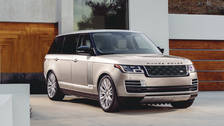
Land Rover reveals the 2018 Range Rover SVAutobiography at Los Angeles Auto Show

AW: How Did you calibrate the EV mode for off-road driving? 

Owen: So, in terms of the Terrain Response system for 2018, we’ve made a lot of improvements and simplified a lot of the modes. For Range Rover, we’ve added a comfort mode and dynamic mode as bookends. And then we’ve looked at each of the terrain response modes and decided what the most appropriate powertrain calibration is for each one. For example, mud and ruts mode is a good off-road setting to use EV mode because you’re picking your way through the trail more quickly than rock crawl mode. It’s not ultra-slow and it’s not too fast — that’s where the electric mode comes into its own. We decided that grass, gravel, snow should also be available in EV mode, as well as comfort. Sand mode has its own challenges. It’s typically used in a hot environment where you have a high AC load, use a lot of power and there’s quite a bit of drag on the wheels. So, in a pure EV mode, you’d use a lot of battery power very quickly. We got the best performance in sand by tuning in both engine and electric power. In rock crawl, we found in testing that even though the torque was excellent for low-speed maneuvers in places like Moab, we again had better performance using both engine and electrics combined. Rock crawling tends to be a very long, slow and precise process. And we don’t want to use up the battery, get halfway down the trail and then have the engine kick in at some crucial moment and upset the chassis. 

AW: Electrification has great potential as a power source for off-road vehicles. The systems could be completely sealed from mud and water — and provide nearly instant torque for slow-speed work. Do you think a pure electric powertrain would pair well with a future Defender model?

Owen: We are looking at all options. We want to show how capable this Range Rover PHEV is with electric drive in low range. I think it’s a really important step to say to people, you know you can do all the stuff you want to do in low range — in EV. That’s the message we want to get out now, this is really the first one. No one else has done a PHEV with low range. I’m a huge believer that you can enhance the off-road performance with electrification. 

5 questions: Infiniti’s Randy Parker talks variable-compression engines

Share

  • Pinterest

With double-digit year-over-year sales growth this year, Infiniti is optimistic about its prospects going into 2018. Yet despite the fact that they’ve been selling cars in the United States for nearly three decades, the company has had some difficultly establishing its own unique brand identity, both within the industry and independent of parent company Nissan. 
It’s an issue that Randy Parker, Infiniti’s vice president of the Americas, says they’re looking to rectify with models like the 2019 QX50. The midsize crossover rides on an all-new platform and debuts technology that is not only a first for Infiniti, but for production vehicles as a whole. Autoweek sat down with Parker at the 2017 Los Angeles Auto Show to talk about the innovations that Infiniti is bringing to market with its new VC-Turbo engine, the company’s current and future model mix, and how Infiniti design will attempt to differentiate the brand going forward. 
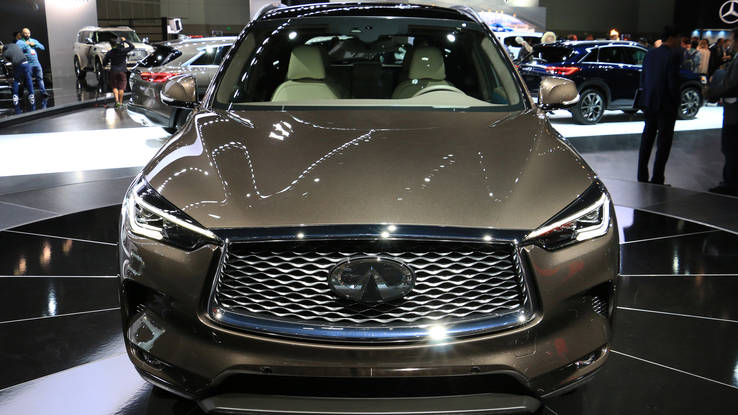
Infiniti QX50 Front

The 2019 Infiniti QX50 will have a variable compression engine.

Autoweek: With the debut of the 2019 QX50, Infiniti introduced the VC-Turbo engine and its variable compression ratio technology, which we understand to be the technology’s first use in a mass-produced vehicle. Can you tell us a bit about how this design is unique within the industry and why Infiniti chose this approach to increasing efficiency?

RP: Sure — it’s a really cool design and one that we’re obviously proud of. What’s really interesting about the VC-Turbo engine is that it behaves like a diesel engine without the emissions. It’s really two engines in one — the fact that it can seamlessly transition from a high-performance engine to a fuel-efficient engine is a new standard in the industry, and it means that we don’t really need to have a hybrid setup in this space to achieve the level of efficiency that we wanted.  

Autoweek: Do you foresee this technology being applied to upcoming engines for other Infiniti models down the road? Also, you mentioned that because of the VC-Turbo’s variable compression ratio capability, a hybrid setup was not necessary to reach the efficiency goals set for the QX50. But could that technology be applied to a hybrid powertrain setup if there was a potential need in a different vehicle?

RP: From my vantage point, both are scenarios I’d love to see take place. For now we want people to come out and experience the new engine and this technology, and we’ll see where it takes us. But I would certainly like to see this technology expand into other areas of the business. 

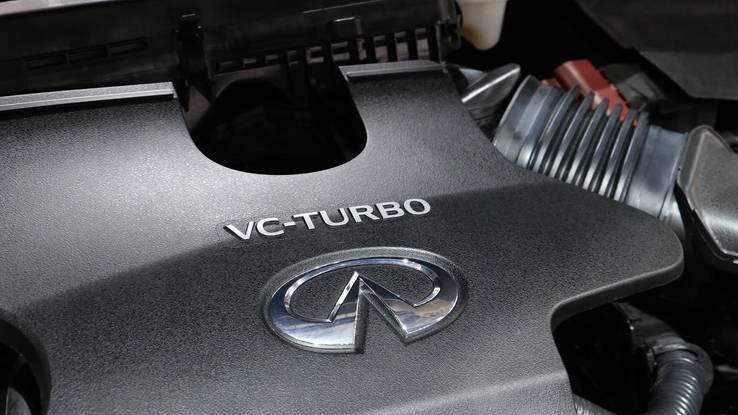
QX50 VC-Turbo

The Infiniti VC-Turbo engine can adjust its compression ratio while running to promote either fuel economy or performance as conditions require.

Autoweek: Can you tell us a bit about Infiniti’s current model mix, and how it will evolve over the next few years?

RP: When you look around what we call our “showroom” (at the Los Angeles Auto Show), you’ll notice that we decided not to put any passenger cars on display during the press event. We did that purposely because here in the United States, the market has shifted from passenger cars to crossovers and SUVs, and we wanted to make sure that it’s clearly articulated that if you’re in the market for a crossover or SUV, Infiniti has the right vehicle with the right technology to fit your needs, right here and now. And obviously that all starts with our latest showpiece, the all-new QX50. 

Autoweek: Infiniti often gets characterized as “Nissan’s luxury brand” rather than its own unique entity. Going forward, is there a strategy to better differentiate Infiniti from its parent company?

RP: To be quite honest, I think we already have our own unique identity. Leveraging the power of Nissan, and all of what I could call the “back office functions,” is certainly something I want to continue to advocate. Nissan is obviously a very technologically advanced company and performance-driven, so being able to take the best of Nissan and bring a premium element to those developments is something I see nothing wrong with. 
At the same time, we will keep the brands separated. But where we can leverage platforms, chassis and other technology, and put that type of thing into the premium space, that’s what we aim to do at Infiniti. A good example of that would be the QX60. It’s built in our Smyrna Vehicle Assembly Plant in Smyrna, Tennessee, which is where Nissan also builds the Pathfinder, and consumers really don’t know that those two vehicles come from the same platform. But it is a good example of how we’re able to utilize the best of what Nissan has to offer –- we can come in, bend the sheetmetal and deliver a premium automobile. 

Variable compression engine are coming to an Infiniti near you

Autoweek: To that end, it’s interesting to see new technology like the VC-Turbo engine debuting first in an Infiniti vehicle rather than with a Nissan product. Do you foresee that happening with increasing frequency in the future?

RP: For selfish reasons, of course I’d love to see that — I always want to go first. But we have to remember that at the end of the day, it’s Nissan that pays the bills — without Nissan, there is no Infiniti. So with that in mind, our ability to leverage the best of what Nissan has to offer is perfectly fine with me. 

By Bradley Iger

Volvo’s XC40 subscription: $600 a month gets you a car, insurance, maintenance, and concierge service

Share

  • Pinterest

Volvo Cars will allow customers to subscribe to the 2019 XC40 compact crossover for a flat fee of $600 a month.

The Chinese-owned Swedish automaker released the details of Care by Volvo, a 24-month subscription service, to journalists Wednesday. The pricing, which includes insurance, maintenance and concierge services, comes in well below competitive offerings from Cadillac and Porsche.

“This is a national program, not a pilot or a test,” Anders Gustafsson, CEO of Volvo Cars of North America, told Automotive News. “Everyone wants to simplify, and we handle and balance this all on our own books.”

Volvo introduced the service at the XC40 launch in September, and Gustafsson has spent the last month educating U.S. retailers on the program.

The automaker said 2,000 people already have raised their hands to use the service, and customers can sign up to subscribe to the XC40 — which hits dealership lots in March — on Wednesday.

Cadillac introduced its Book by Cadillac service in January, which now gives customers in New York, Los Angeles and Dallas access to its stable of vehicles for $1,800 a month. Porsche Passport, introduced in October, offers Porsche vehicles to the Atlanta market for $2,000 or $3,000 a month.

The XC40’s Momentum luxury trim, equipped with premium packages, will be available at the $600 monthly fee, and the R-Design sport trim, with premium packages, will be available for $700 a month. Subscribers will have the option to swap out vehicles 12 months into the 24-month service term.

Volvo plans to charge $600 a month for XC40 subscription service” originally appeared in Automotive News on 11/29/2017
By Katie Burke at Automotive News

2018 Mitsubishi Eclipse Cross tries to trade on its nostalgic name

Share

  • Pinterest

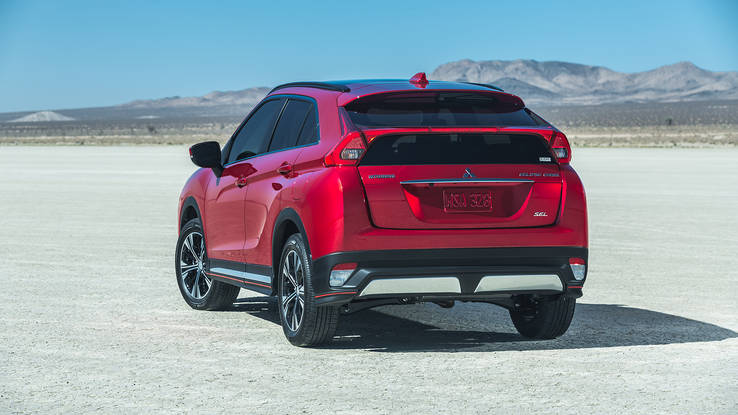
Mitsubishi is adding to its SUV and crossover lineup by resurrecting a nameplate that’s been dormant for a while. The Eclipse Cross, which debuted at the LA Auto Show this week, combines the coupe shape of the defunct Eclipse sporty car from Mitsubishi’s past with a crossover body style. Intended to be positioned between the Outlander Sport and the larger Outlander, the Eclipse Cross is an attempt to expand the brand in the U.S. by capitalizing on our national crossover buying spree.

The Eclipse Cross features the brand’s current Dynamic Shield front design, similar to that worn by the Outlander and Outlander Sport, but it has a sharp and distinctive beltline that runs from the A-pillar all the way to the back, with a noticeable kick. The new CUV also features more pronounced wheel arches: Rear arches transition into the rear bumper while the front arches extend from the large fog light housings positioned below the headlights, meant to look like air intakes. Out back, the Eclipse Cross features a rakish rear hatch and C-pillar, while LED brake lights that run across the rear glass give it a unified appearance.

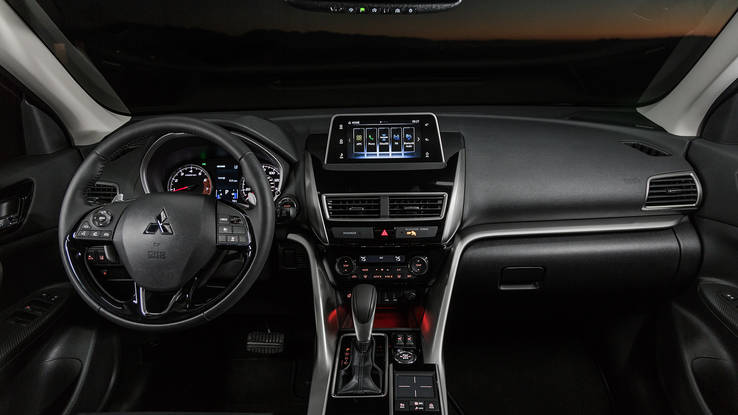
The new Eclipse Cross is powered by a 1.5-liter direct-injected and turbocharged engine producing 152 hp and 184 lb-ft of torque, sending power to all four wheels via Mitsubishi’s own S-AWC (Super All-Wheel Control) system. The S-AWC system uses antilock brakes, Active Stability Control (ASC) and Active Yaw Control (AYC) to distribute torque between the four wheels, sending driving torque to the rear wheels and between the left and right wheels via brake force. Inside, the Eclipse Cross offers a full-color head-up display, along with a 7-inch smartphone-linked infotainment screen and a dual-pane power-sliding panoramic roof.

2018 Mitsubishi Eclipse Cross rear

The rear of the 2018 Mitsubishi Eclipse Cross features a rakish rear hatch.

What you need to know about the 2017 Honda CR-V
2017 Honda CR-V: A perennial crossover all-star
The Honda CR-V is the small crossover sales leader, and for good reason — there’s tons of interior space, comfy seats and it gets good gas mileage. I’d wager small crossover buyers value …

When it comes to safety systems the Eclipse Cross will offer rear cross traffic alert, forward collision mitigation, adaptive cruise control, a lane-departure warning system, blind-spot warning and a lane-change assist system.

The new crossover is also launching Mitsubishi Connect, a subscription-based service that uses the 4G LTE cellular modem and GPS capability to provide a voice and data connection to a call center. Similar to OnStar, this system will provide automatic collision notification, SOS emergency assistance, roadside assistance, information assistance, stolen vehicle assistance, a mileage tracker and alarm notification. The system will also feature two emergency buttons, one for SOS emergency assistance and the other for information/roadside assistance.

2018 Mitsubishi Eclipse Cross interior

The Eclipse Cross will be positioned between the two Outlander models in Mitsubishi’s lineup.

2017 Hyundai Santa Fe Sport 2.0T

The Eclipse Cross will be offered in four trims when it goes on sale: base ES, LE, SE and the range-topping SEL.

The base ES trim will offer such convenience and safety features as a backup camera, heated mirrors, a color display screen, automatic climate control, cruise control and seven airbags. The LE trim will add 18-inch alloy wheels and black exterior trim, in addition to a 7-inch display audio system with Android Auto and Apple CarPlay capability. The SE trim will offer a blind-spot warning system, rear cross-traffic alert and heated front seats. The range-topping SEL trim, meanwhile, will add leather seats, LED headlights, the head-up display and a multiview camera system. The Touring pack for the SEL trim will also offer a Rockford Fosgate premium audio system, a heated steering wheel, heated rear seats and other convenience items.

The Eclipse Cross will go on sale in March 2018 and will start at around $24,000 for the base ES model.

5 things Land Rover got right with the 2018 Range Rover plug-in hybrids

Share

  • Pinterest

1) There’s plenty of electric range

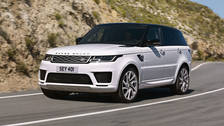
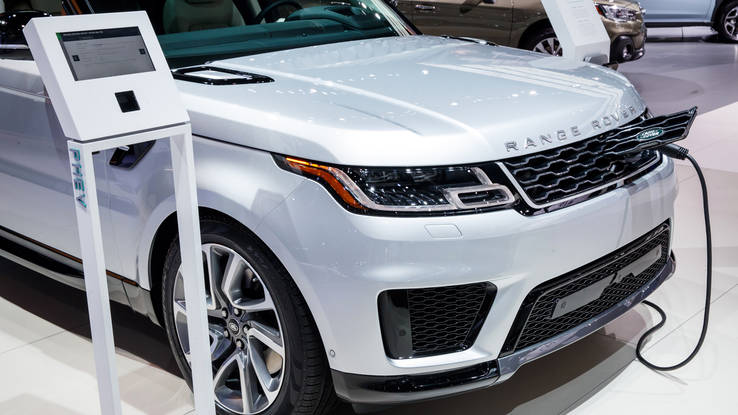
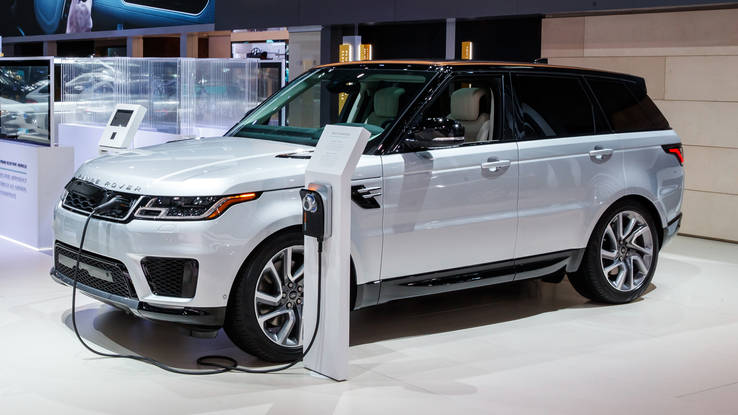
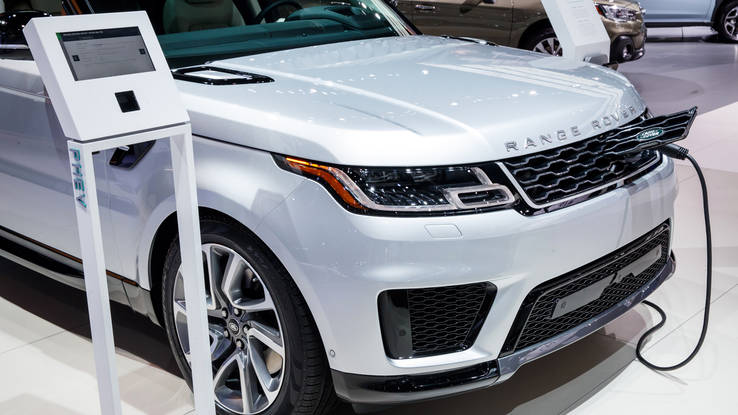
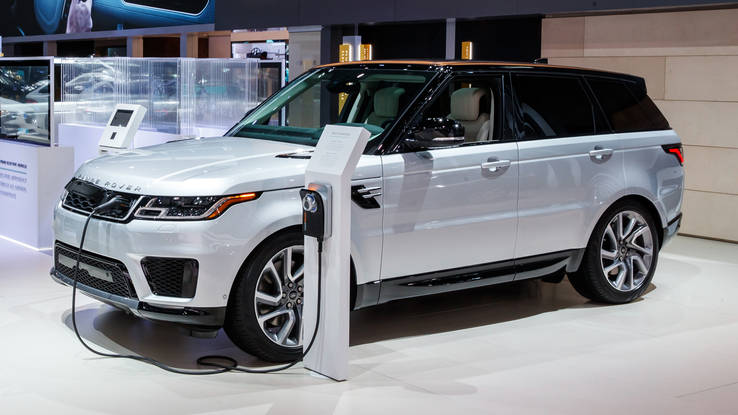
The Range Rover PHEV and Range Rover Sport PHEV use a 2.0-liter turbocharged four-cylinder engine mated to an eight-speed automatic with an integrated electric motor. The total system output is just shy of 400 hp. The PHEV’s 13.3 kWh battery pack is made by Samsung, wrapped in an aluminum case under the cargo hold and sized to allow a claimed 31 miles of electric-only range. Since average round-trip commute distances in metropolitan areas around the country are just shy of 27 miles, most owners will be able to drive to and from work on a single charge. Rover engineers say it’s a good balance between battery capacity and overall vehicle weight. And 31 miles should provide enough headroom for even longer commutes — if owners are able to charge at work. 

Range Rover PHEV

The Range Rover PHEV and Range Rover Sport PHEV use a 2.0-liter turbocharged four-cylinder engine mated to an 8-speed automatic with an integrated electric motor.

2) You can “save” battery power until you need it

Engineers typically say the most efficient way to drive a hybrid is to let the complex systems onboard decide when to deploy the electric motor(s) and when to run the gas engine. But there could be times when you’d like to choose exactly when to drive the vehicle as an EV. And to do that, you could use the Range Rover’s “Save” function. Say you’re planning a weekend camping trip — you could decide to drive most of the trip using gas power. Then, as you head into the woods on a dirt road, you could elect to use that electric power to minimize noise and pollution — and make the other campers happy. 

Land Rover reveals the 2018 Range Rover SVAutobiography at Los Angeles Auto Show

3) It’s the first 4X4 with electric drive in low range

If you save some of your electric range until you hit the trail, the Range Rover PHEV will allow off-roading on pure electric power in both grass/gravel/snow and mud/ruts modes. No other 4X4 is equipped to deliver this driving experience — and that’s very cool. Rest assured, the PHEV model still maintains the 35.4-inch water fording capability of the normal Range Rover. However, there’s a catch. The company doesn’t advise water fording in EV mode. That’s because in EV mode, with the engine off, a water fording will flood the exhaust system. And Land Rover found that the muddy deposits from repeated floodings will ruin the catalytic converter.

When owners prepare for a deep-water crossing, they typically raise the suspension. So, to protect the exhaust, Land Rover programmed the gas engine to turn on anytime the suspension is raised. But if you want that raised suspension and don’t plan on any water crossings, you can select EV mode once the suspension is up and run on pure battery power again. 

Rang Rover PHEV side view

Range Rover PHEV will allow off-roading on pure electric power in both Grass, Gravel Snow and Mud and Ruts modes.

4) The nav system can program the most fuel-efficient route

The upgraded next-generation infotainment system on the 2018 Range Rover and Range Rover Sport contains more information than ever before. And that includes elevation changes in the navigation system that allowed engineers to develop a feature called Predictive Energy Optimization. Plug in your destination and the system takes a look at the available routes, then figures out which one is the most efficient. The quickest route may be completely flat. But the system can use the gradient data to determine that the most efficient route might actually have a few hills. On the hilly route, the Rover can use pure electric torque to go up those grades because it knows the battery will have a chance to regenerate some of that power on the way down. And more time spent using electric propulsion means more fuel is saved.

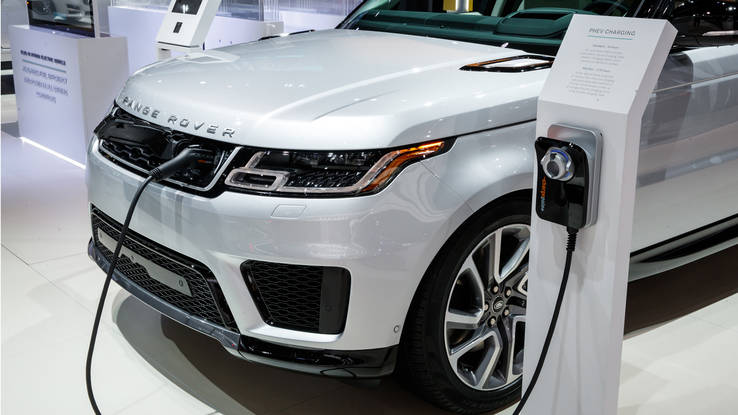
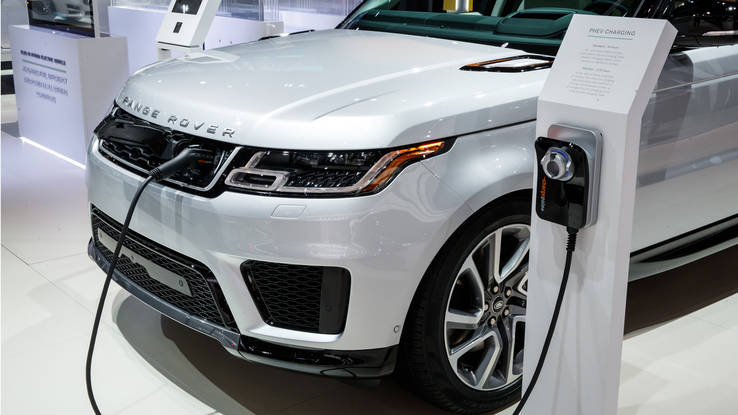
Range Rover charging port

The plug-in hybrid system hardware used on the Range Rover and the Range Rover Sport are nearly identical. But the engineers have tuned the systems differently.

5) The Range Rover PHEV and Range Rover Sport PHEV powertrains are tuned differently

The plug-in hybrid system hardware used on the Range Rover and the Range Rover Sport is nearly identical, but the engineers have tuned the systems differently. And that’s most noticeable, according to Land Rover, when the Range Rover Sport is in dynamic mode with the transmission in sport and the traction control turned off. That tells the vehicle you want it set up for optimum performance, according to Lynfel Owen, vehicle engineering senior manager. He says there’s a sweet spot in the battery state-of-charge for getting power in and out of the pack quickly. In this most aggressive vehicle setup, they use that window of charge to provide the maximum electric power when needed. And when the driver lifts off the throttle, say, for that tight downhill sweeper, the system can use heavy regenerative braking to top off the battery.

5 things Land Rover got right with the 2019 Range Rover plug-in hybrids

Share

  • Pinterest

1) There’s plenty of electric range

The Range Rover PHEV and Range Rover Sport PHEV use a 2.0-liter turbocharged four-cylinder engine mated to an eight-speed automatic with an integrated electric motor. The total system output is just shy of 400 hp. The PHEV’s 13.3 kWh battery pack is made by Samsung, wrapped in an aluminum case under the cargo hold and sized to allow a claimed 31 miles of electric-only range. Since average round-trip commute distances in metropolitan areas around the country are just shy of 27 miles, most owners will be able to drive to and from work on a single charge. Rover engineers say it’s a good balance between battery capacity and overall vehicle weight. And 31 miles should provide enough headroom for even longer commutes — if owners are able to charge at work. 

Range Rover PHEV

The Range Rover PHEV and Range Rover Sport PHEV use a 2.0-liter turbocharged four-cylinder engine mated to an 8-speed automatic with an integrated electric motor.

2) You can “save” battery power until you need it

Engineers typically say the most efficient way to drive a hybrid is to let the complex systems onboard decide when to deploy the electric motor(s) and when to run the gas engine. But there could be times when you’d like to choose exactly when to drive the vehicle as an EV. And to do that, you could use the Range Rover’s “Save” function. Say you’re planning a weekend camping trip — you could decide to drive most of the trip using gas power. Then, as you head into the woods on a dirt road, you could elect to use that electric power to minimize noise and pollution — and make the other campers happy. 

Land Rover reveals the 2018 Range Rover SVAutobiography at Los Angeles Auto Show

3) It’s the first 4X4 with electric drive in low range

If you save some of your electric range until you hit the trail, the Range Rover PHEV will allow off-roading on pure electric power in both grass/gravel/snow and mud/ruts modes. No other 4X4 is equipped to deliver this driving experience — and that’s very cool. Rest assured, the PHEV model still maintains the 35.4-inch water fording capability of the normal Range Rover. However, there’s a catch. The company doesn’t advise water fording in EV mode. That’s because in EV mode, with the engine off, a water fording will flood the exhaust system. And Land Rover found that the muddy deposits from repeated floodings will ruin the catalytic converter.

When owners prepare for a deep-water crossing, they typically raise the suspension. So, to protect the exhaust, Land Rover programmed the gas engine to turn on anytime the suspension is raised. But if you want that raised suspension and don’t plan on any water crossings, you can select EV mode once the suspension is up and run on pure battery power again. 

Rang Rover PHEV side view

Range Rover PHEV will allow off-roading on pure electric power in both Grass, Gravel Snow and Mud and Ruts modes.

4) The nav system can program the most fuel-efficient route

The upgraded next-generation infotainment system on the 2019 Range Rover and Range Rover Sport contains more information than ever before. And that includes elevation changes in the navigation system that allowed engineers to develop a feature called Predictive Energy Optimization. Plug in your destination and the system takes a look at the available routes, then figures out which one is the most efficient. The quickest route may be completely flat. But the system can use the gradient data to determine that the most efficient route might actually have a few hills. On the hilly route, the Rover can use pure electric torque to go up those grades because it knows the battery will have a chance to regenerate some of that power on the way down. And more time spent using electric propulsion means more fuel is saved.

Range Rover charging port

The plug-in hybrid system hardware used on the Range Rover and the Range Rover Sport are nearly identical. But the engineers have tuned the systems differently.

5) The Range Rover PHEV and Range Rover Sport PHEV powertrains are tuned differently

The plug-in hybrid system hardware used on the Range Rover and the Range Rover Sport is nearly identical, but the engineers have tuned the systems differently. And that’s most noticeable, according to Land Rover, when the Range Rover Sport is in dynamic mode with the transmission in sport and the traction control turned off. That tells the vehicle you want it set up for optimum performance, according to Lynfel Owen, vehicle engineering senior manager. He says there’s a sweet spot in the battery state-of-charge for getting power in and out of the pack quickly. In this most aggressive vehicle setup, they use that window of charge to provide the maximum electric power when needed. And when the driver lifts off the throttle, say, for that tight downhill sweeper, the system can use heavy regenerative braking to top off the battery.

2018 Jeep Wrangler JL: 5 of our favorite design details

Share

  • Pinterest

The 2018 Jeep Wrangler JL is here (finally), and its big LA Auto Show reveal necessarily focused on the big-ticket items. Output and ground clearance are all very important things, to be sure, but there’s much more to this adventuremobile than approach and departure angles (44 and 37 degrees for a two-door Rubicon, respectively).

Here are a handful of little things that are worth separating from the sea of impressive specs. Some of them will make it easier to wring maximum enjoyment out of your new Wrangler; others demonstrate just how much thought and attention to detail went into the JL’s design and engineering.

2018 Jeep Wrangler JL two-door top and windshield down

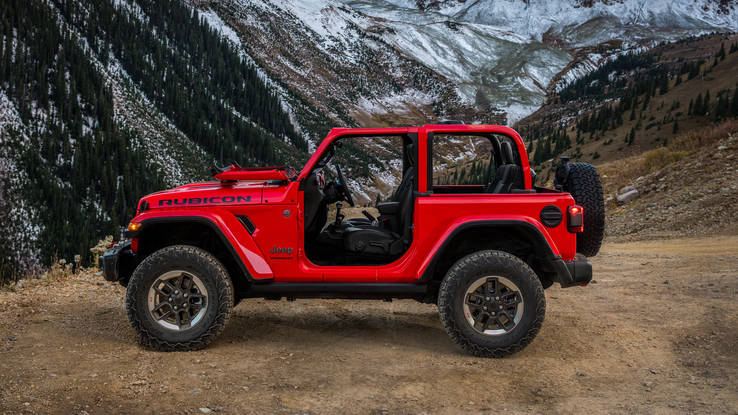
Ragtop removed, doors yanked, windshield folded: It’s easier than ever to make your Wrangler look like this.

The soft top: Now free of zippers

One of the best parts about the Wrangler is that it’s a convertible. One of the worst parts is that Wrangler convertible tops have, historically, sucked when it comes to ease of use. Sure, when everything is new and clean and temperatures are optimal, they work, if only just barely, but raising or lowering the ragtop has never been a joyful operation even under ideal conditions. Mis-feed one zipper and you’re gonna get real frustrated, real fast (keep those needle nose pliers handy).

And good luck wrestling with the contraption when cooler morning or evening temps stiffen the canvas and vinyl. From personal experience, the tops get to be such a pain in the ass that after a while, you either leave them up despite the sunshine or leave them down despite the rain. No bueno.

On the 2018 models, Jeep has banished the accursed zippers entirely; a series of channels and retainers now keeps side windows attached, and built-in clock springs make lowering and raising the soft tops easier and faster. To anyone who as has ever wrangled with a Wrangler soft top as storm clouds approach, on a two-door or especially on an Unlimited, this is a big deal.

2018 Jeep Wrangler JL door hinges and logo

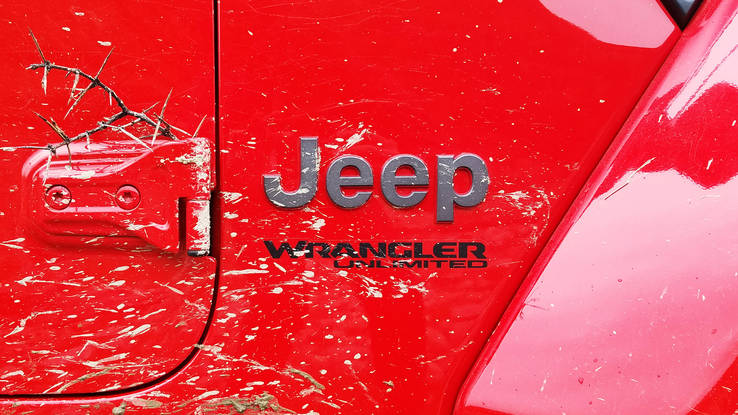
“T50” is stamped right on the hinges — that’s the size of the Torx bit you’ll need to liberate the doors.

The door hinges and pins

A theoretical benefit of Wrangler ownership is that you can drive around with the doors off … except that, just like the soft top, removing and especially reinstalling the doors is easier said than done, particularly solo. Enter staggered pin lengths on the doors, an obvious-in-hindsight development that makes it easier to align doors and hinges during reinstallation.

Plus, the doors are now made of aluminum; this reduces overall vehicle weight and thus helps fuel economy, but also makes it easier to heft the doors off and on the vehicle. Determined Wrangler owners never let something like this deter them from going doorless, but if it makes easier for the average person to use their vehicle to the fullest, I’m all for it.

Stampings right on the hinges remind you what size Torx bit you’ll need to free the doors (it’s a T50, for the record), but this is more of a fun detail than anything useful on a day-to-day basis.

Speaking of hinges, those on the tailgate have been freed of their plastic cladding — part of an effort to reduce clunky plastic bits all over the truck. I’m probably going to sound like Gustav Stickley here, but honesty in materials is important to me in any vehicle — and especially in something as honest and essential as the Wrangler. The less cheesy plastic covering things, the better. The decision to ditch the cladding and let those metal tailgate hinges stand alone as metal hinges might not make or break the JL, but it does add something to the overall experience.

New Legend Scout II restomod

2018 Jeep Wrangler JL Unlimited Rubicon front on road

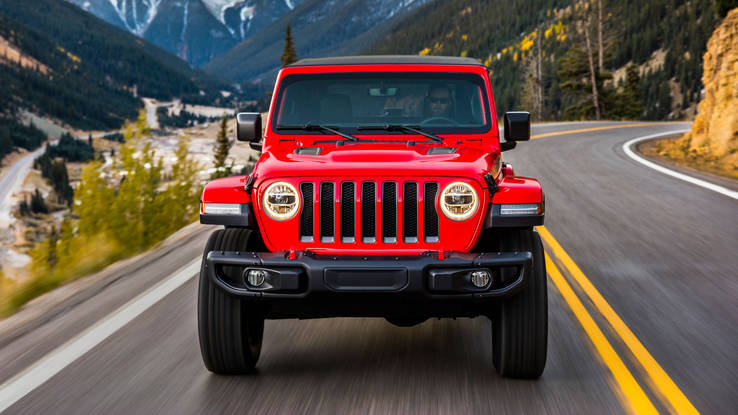
Take a close look at the grille — there’s no “JEEP” logo above the slats.

Logo placement

This is the kind of thing you don’t notice until someone points it out, after which you can’t unsee it. From the CJ-5 right up to the Wrangler TJ, the “JEEP” logo was on the side of the body. On the JK, it moved up to the top of that seven-slot grille. Perched there, it looks dainty and tacked-on — because it was.

Purists, I imagine, were furious, but did anybody else notice? I didn’t for a long time, but once I thought about it, it seemed weird; that signature Jeep grille speaks for itself, after all. The JL corrects this admittedly minor shortcoming by moving the logo back to the side — just, designer Mark Allen told us, as God intended.

To be clear, this isn’t going to make the Wrangler better off-road, unless I have a very poor grasp on the factors that go into that “Trail Rated” judgment. But it does reveal the sensitivity to Jeep’s heritage that permeates the JL’s design from grille to tailgate.

2018 Jeep Wrangler JL Rubicon on trail windshield down

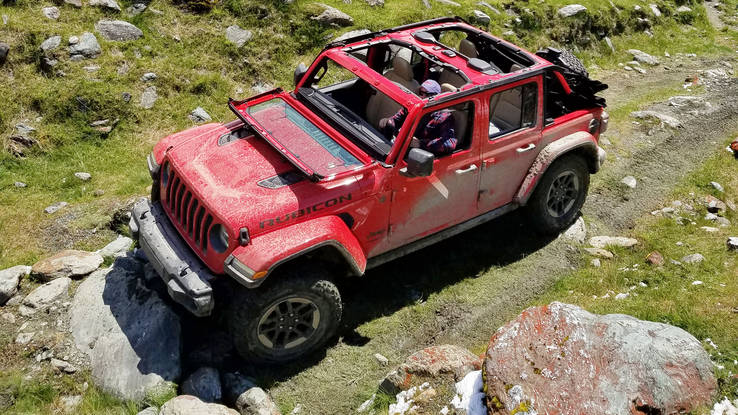
The 2018 Wrangler keeps the folding windshield, but this time around dropping the glass leaves the A-pillars in place.

The fold-down windshield

There was some debate about whether a fold-down windshield would make it to the JL Wrangler at all. It’s an old-school feature that few actually took advantage of, or, I’d venture, even knew about. It didn’t help that folding down a JK Wrangler windshield was tricky: it took 28 (!) bolts to do the job, and because the vehicle was painted with the windshield up, you had to crack the factory finish to get the wind-in-your-face experience. Owners reported trouble getting windshields to align properly once they’d been lowered, to boot.

On the JL, it takes just four bolts to fold down the windshield and frame. Even better: Those four bolts are all inside the cabin, where they (ideally) won’t become corroded and frozen into place by the elements. And the vehicle is painted with the windshield frame angled forward, so you won’t have to break the paint finish to fold it the first time. If you buy a JL, there’s really no excuse not to at least try this out at least once.

A caveat: On JK and older Wranglers, folding the windshield meant folding down the truck’s A-pillars as well. Not so on the JL — the windshield drops, but the A-pillars remain in place. It’s safer, sure, and makes more sense from a structural rigidity perspective, but it doesn’t look as cool.

Even so, and as with the reworked soft top, this is an example of Jeep taking a look at a feature that sets the Wrangler apart from the competition — and one that hard-core Jeep fans, at least, demanded — and figuring out how to make it more accessible and easier to use.

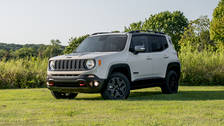
2017 Jeep Renegade Desert Hawk

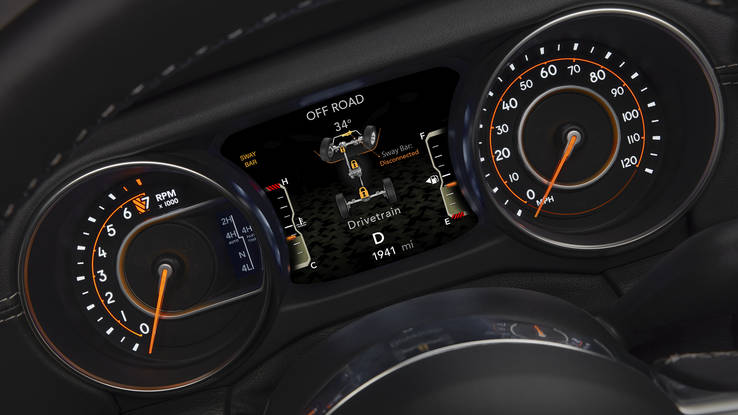
2018 Jeep Wrangler JL front wheel angle position indicator instrument cluster

Sometimes, it’s nice to know exactly which direction your front wheels are pointing.

The front wheel angle indicator

For the first time, you can get a front wheel angle indicator built in to the Wrangler’s instrument cluster. On an old CJ-2, or any Wrangler with the doors off, this might be unnecessary — you can just stick your head out and see where the wheels are pointing. Today’s Wrangler is bigger, and with the doors on at least, there’s no way to see what’s going on up front.

Expert off-roaders might not need an indicator to know what’s happening in the wheel wells, but a relative novice like myself will take all the information he can get. The available “Off Road Pages” app displays all this information (and more) on the center stack’s screen. But I like it right there in the instrument cluster, where you barely have to take your eyes off the trail to get a front wheel status update. This isn’t a feature unique to the Wrangler by any means, but it’s a welcome update.

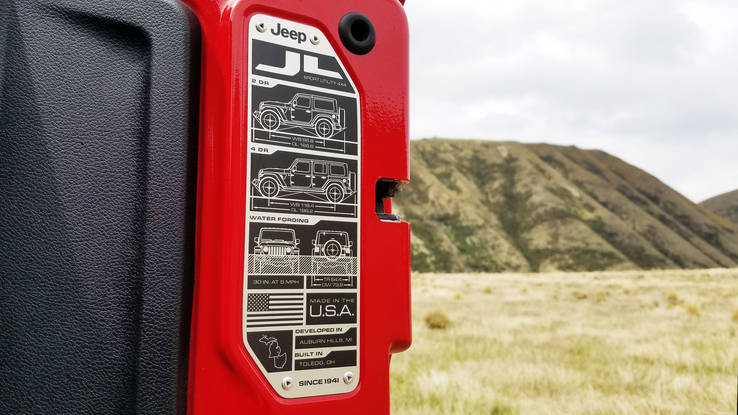
Bonus: This nifty vehicle info plate

There probably aren’t going to be many times when you find yourself out there in the wilderness, far, far beyond the reach of cell networks, desperately needing to know the wheelbase and overall length of your Jeep. And you should probably have a good grasp of your truck’s water fording capabilities before you contemplate plunging into a river (it’s 30 inches at 5 mph for the JL, by the way).

Still, this data plate, which you’ll find riveted to the tailgate jamb, is a nice nod to the informational plaques found on the dashboards of the Jeeps of yore and a cool little detail in its own right.

2018 Jeep Wrangler JL tailgate data plate

Vital Wrangler JL specs, right there on the inside of the tailgate.

Graham Kozak

Graham Kozak – Graham Kozak drove a 1951 Packard 200 sedan in high school because he wanted something that would be easy to find in a parking lot. He thinks all the things they’re doing with fuel injection and seatbelts these days are pretty nifty too.
See more by this author»

New 2018 Lexus LX 570 five-passenger trim eyes Range Rover, G-Wagen buyers

Share

  • Pinterest

While the Lexus RX crossover added a third row at the Los Angeles Auto Show, the 2018 LX 570 lost one — at least it can be ordered that way. In addition to the three-row models coming out next year, Lexus will now offer a two-row version of its biggest SUV. The “mono-spec” trim level will start at $86,175 with customers only picking interior and exterior colors.

The new two-row trim will come standard with a leather-trimmed interior, four-zone automatic climate control, power tailgate, moonroof, 20-inch wheels and a bunch of safety features — including park assist, blind-spot monitoring rear cross-traffic alert and panoramic view, which gives a 360-degree look around the car.

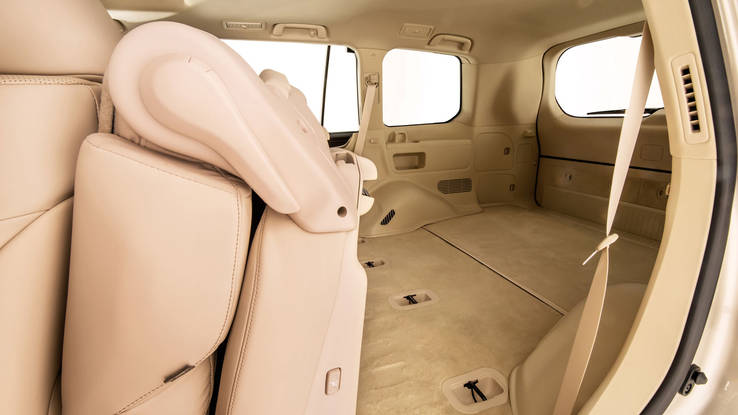
The new version of the LX 570 seats five, obviously, and offers 50.5 cubic feet of cargo space behind the middle row, versus 44.7 for the three-row model. For those on a really, really long trip, it also comes with roof rails for extra storage capability.

Under the hood we’re looking at a 5.7-liter V8, hence the 570 name, making 383 hp and 403 lb-ft of torque. An eight-speed automatic transmission sends power to all four wheels. The standard integrated tow hitch receiver means the LX is good for a 7,000-pound towing capacity.

2018 Lexus LX 570 comes with two rows instead of three

The 2018 Lexus LX 570 seats five and offers 50.5 cubic feet of cargo space behind the middle row.

The LX 570 will offer a drive mode selection dial on the center console, affecting the powertrain and suspension, while a multiterrain select system lets the driver choose special modes for road surfaces like rock, dirt, mud, sand and more. Like a real off-roader, it also gets a driver-selectable low-range with systems like crawl control and hill-start assist.

Inside, buyers will see a 12.3-inch screen with three segments to display different functions such as navigation, audio and climate info. A nine-speaker stereo system will play from whatever source you connect. The driver’s seat has 14 power adjustments, while the passenger gets 12.

Lexus Enform Safety Connect, now complimentary for the first 10 years of ownership, includes an emergency assistance button (SOS), roadside assistance, automatic collision notification and stolen vehicle notification.

The two-row Lexus LX 570 goes on sale early next year.

Check out the rest of our LA Auto Show coverage here.

Ex-BMW designer Chris Bangle has created the funkiest car ever

Share

  • Pinterest

Chris Bangle is the tortured artist railing against the society that doesn’t appreciate his genius. His tenure as head of design at BMW was marked by controversy. His 2002 7-Series was loved by some and loathed by others. The loathers may have outnumbered the lovers, though a fair vote was never held (and the loathers probably couldn’t tell you the difference between styling and design). The rear deck of that 7-Series, in particular, was referred to by some as “The Bangle Butt.” The name stuck.

In 2009, after functioning as a lightning rod for criticism in seemingly everything he did there, he left BMW and formed Chris Bangle Associates in Turin. For years, CBA designed bottles, buildings and maybe even bocce balls — everything but cars.

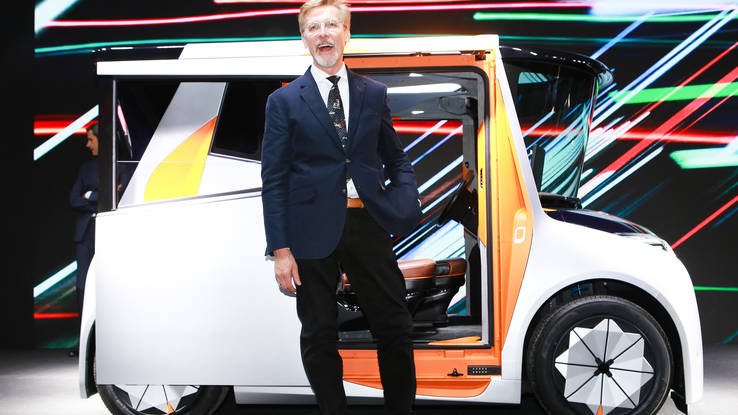
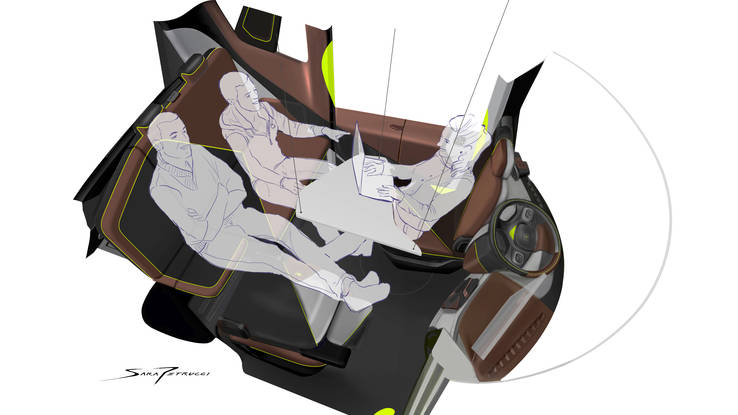
Well, Chris Bangle is back, baby! And The Bangle Butt is now not just the rear end of a car but the entire car — an entirely new way of looking at transportation, even. Last night, Nov. 28, at his alma mater, the Art Center College of Design in Pasadena, California, Bangle took the wraps off his latest creation, which he calls REDS. 

Bangle and his car

Bangle and his car

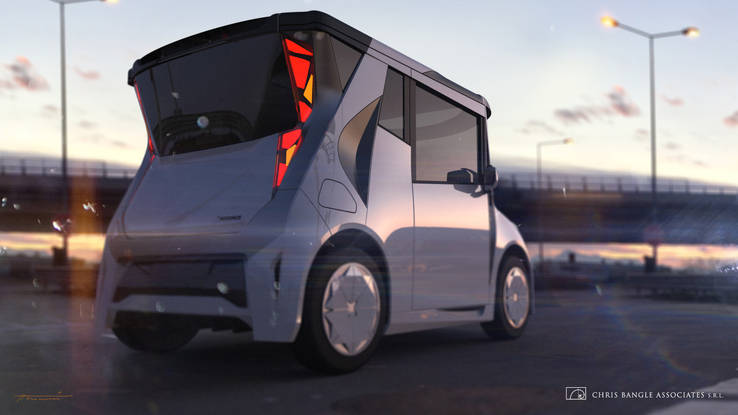
REDS has a distinct look not unlike the Airstream Basecamp trailer we tried out last summer — if you turned it around and drove it backward. It also looks a little like an air-traffic control turret. Or one of those early drive-through windows of burger joints where you paid your money through the little window. Or an ice cream truck that serves marijuana ice cream. Or maybe a Helms Bakery truck, a reference you’d know only if you grew up in Southern California.

But one thing is certain: This ain’t no mainstream anything. 

REDS taillights

REDS’ taillights

The REDS is meant not so much for driving as for sitting in traffic, specifically traffic in China. Yes, that’s what Bangle himself said, or at least he is quoted in his own press material as saying that. It would have been nice to talk to him in person, but our invitation to the design shindig of the year was lost in the mail between here and Turin.

CBA was approached by a Chinese firm called the China Hi-Tech Group Corp. to build a car for sitting in Chinese traffic, where 90 percent of the time cars don’t move, we are told in the release.

How did they come up with this particular shape? Here is how Bangle described the creative process to our sister publication Automotive News (It’ll help if you read it in the accent of Hans und Franz or that guy on SNL who used to say, “Now is the time on Sprockets when we dance”):

“He related a story about one of his designers, a veteran stylist whom Bangle asked to do something quite radical. The designer told him, ‘Every bone in my body refuses to do this.’ He said, ‘I can’t do this,’ and he got sick, literally sick. He came down with a bad flu and he spent three days in his hotel room eating soup — and drawing what I asked him to draw. And when he came out, he had created something no one had ever seen, and he said to me, ‘I am liberated.”

We use the same process when writing about cars.

Three-person configuration

Three-person configuration

So did the REDS come from the flu? We don’t know, but here it is.

REDS has seating for four adults when it’s moving and five when stopped; it has space for one or two suitcases and the driver’s seat spins around. Beyond that, things get vague. Bangle’s press material claims it has a best-in-class 0-50 kph time but doesn’t say what that time is or what a 0-60 mph might be, assuming it will go 60 mph; range is supposed to be “at the top of its class,” which could mean anything, depending on how you classify the class. That range is supposed to be “supported by the largest solar-panel roof in its category,” but those solar roof panels provide very little actual electricity — in another statement, the roof panels are said only to run the air conditioning (and again, what IS the category?); it has “excellent crash-test results thanks to the aluminum spaceframe surrounding the batteries” but how about whatever’s surrounding the passengers? How will they do in a crash? It also has a “suspension system designed by Italian race engineers,” which, again, could mean absolutely anything. After wading through the design speak of the press material we got, it’s not even clear if this will be autonomous or not. There are a lot of unanswered questions about this rolling art project.

But don’t let that stop you. Even though specifics are sorely lacking from this thing, Bangle’s material suggests that it’s coming soon: “It is not a concept car, a research program or a design exercise for an indefinite future; Instead it is the first phase of a program with the aim to start manufacturing in the near term.”

But, sadly, cars don’t run on design rhetoric alone (“… this disturbance only serves to center the eye on the hypnotic trapezoid of color…”). At some point, you have to manufacture them and make them go forward, turn and brake. We look forward to actual information and less blah-blah.

Better late than never: The 2019 BMW i8 Roadster is finally here

Share

  • Pinterest

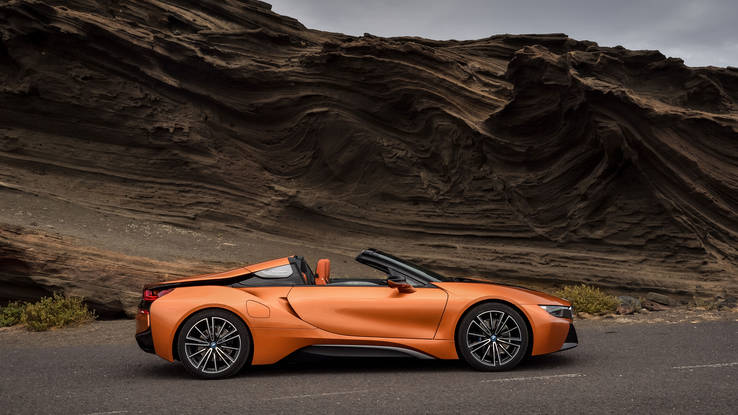
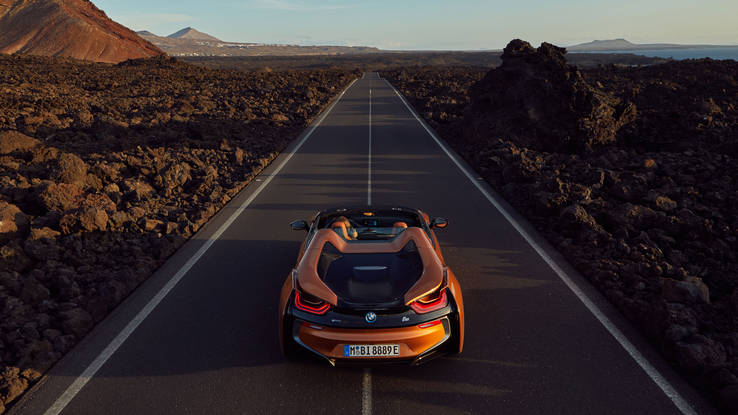
One of the most remarkable things about the 2019 BMW i8 Roadster, which just made its debut at the 2017 LA Auto Show, is how closely it resembles the concept we saw way, way back in the spring 2012 — an eternity in automotive design years. We’re not sure what the holdup was, but it was probably for the best that BMW reached so far into future for its looks; the thing still looks fairly fresh today (assuming you’re into scoops, finlets and flying buttresses).

When it was shown as a concept — then called the i8 Spyder — it was unclear just what sort of roof it would have; now we know it gets a folding ragtop that tucks out of sight without eating up too much cargo space. Speaking of, there’s a fair amount of storage, 3.5 cubic feet, where the rear seats used to be (not that those seats were suitable for adult use anyway). Add in the 4.7 cubic feet in the rear compartment, and this thing might actually be better equipped for weekend getaways than the Coupe.

2019 BMW i8 Roadster profile view top down

This picture doesn’t show it, but the Roadster keeps the i8 Coupe’s signature flip-up doors.

The Roadster wasn’t the only i8-related development BMW unveiled in LA; since the i8 Coupe was introduced, electrification technology has evolved, and it benefits from the implements that have gone into the Roadster. The battery pack capacity has been improved, from 7.1 to 11.6 kilowatt-hours. Output has been increased along with it: Total system horsepower is up 12 to 369, thanks to boosted power on the electric side of the powertrain. Still not supercar territory. Neither is the acceleration, though the 0-60 mph times now stand at 4.2 seconds for the Coupe and 4.4 seconds for the roadster; 155 mph remains the limited top speed.

Electric-only range is up to 18 miles — a gain of 3 miles. Make of that what you will.

The i8 was and is a curious vehicle. From a performance standpoint, it can’t contend with the Acura NSX, nor can it hope to compete with any hypothetical pure-electric sports cars. But from its composite construction to its hybrid powertrain to its wild looks, it’s a true exotic — the perfect candidate for a Roadster variant.

Both the 2019 i8 Roadster and the updated 2019 i8 Coupe will be available beginning spring 2018; stay tuned for pricing information. For reference, an i8 Coupe starts at $144,395 today.
 

2019 BMW i8 Roadster rear view on road top down

Is it just us, or does this thing look angry from the rear?

Graham Kozak

Graham Kozak – Graham Kozak drove a 1951 Packard 200 sedan in high school because he wanted something that would be easy to find in a parking lot. He thinks all the things they’re doing with fuel injection and seatbelts these days are pretty nifty too.
See more by this author»

The 2018 Lexus RX 350L is here, with space for 7

Share

  • Pinterest

Hoping to sway more folks into its popular midsize crossover, Lexus showed off a stretched version of the RX 350 at the Los Angeles Auto Show. Lengthening the body by 4.3 inches, the longer RX, now called the RX 350L, can haul up to seven passengers. The wheelbase is the same as the two-row version of the RX 350, but the longer Lexus adds standard three-row climate control to help keep the rearmost passengers happy. The RX 350L also lets folks choose between the standard seating for seven with a middle-row bench seat or six with middle-row captain’s chairs.

Drivetrain options carry over from the two-row version, with the 3.5-liter V6 sending 290 hp and 263 lb-ft of twist to the front wheels on standard issue cars. All-wheel drive is optional but will set you back $1,400. Lexus also offers the longer version of its RX SUV with a hybrid driveline: The RX 450hL adds two electric motors into the mix — netting 18 hp over the standard 3.5-liter V6 for a grand total of 308 hp.

Everything you need to know about the 2017 Lexus RX350

2017 Lexus RX350 review: Best-seller for a reason

Any Lexus RX discussion has to start with the exterior shape. The floating roof, the edgy sheetmetal, the square-ish wheel wells, the front end — love it or hate it, you gotta admit that is one hell …

Absent a longer wheelbase, you may be curious where Lexus found space for its third row: It’s been carved out of the cargo area. With the third row present, cargo space is on the tight side, with enough space for maybe a stroller or a couple of carry-on suitcases. Of course, putting the seats down will give you a spacious place to haul groceries or spare parts for chief engineer Takeaki Kato’s Japanese endurance race car.

Lexus says the RX 350L will be hitting dealer lots in January as 2018 models, with a starting price tag of $48,665 (including destination). With more and more people shifting to three-row crossovers, adding some extra seats to the RX seems like a natural move.

Lincoln’s new names (and designs) push its rebranding in the right direction

Share

  • Pinterest

Lincoln’s debut of the Nautilus, the crossover formerly known as the MKX, at the LA Auto Show this week brought along with it yet another change in the company’s naming scheme, part of a gradual rebranding effort. The automaker started formally calling itself Lincoln Motor Company five years ago, and it has also brought back the Continental nameplate, dormant since 2002. 

The Nautilus name did not come as a complete surprise: Since the 1980s, Lincoln marketing had been saturated with sailing and nautical themes, demonstrated by several special-edition models tied to the America’s Cup and other races. The name Nautilus, then, was perhaps overdue.

Lincoln boss Kumar Galhotra confirmed that MK prefixes are on their way out, after a little over a decade of confusing consumers. The changeover will be complete within the next two years, he added.

The MK names themselves were a relatively recent trend that dates back 11 years. In this naming scheme, the midsize Zephyr sedan was renamed the MKZ, which Lincoln alternatively pitched as Mark-Zee or Em-Kay-Zee, while a large sedan that debuted in 2008 bore the MKS nameplate. Two additional crossovers landed earlier in this decade, including the aforementioned MKX and the smaller MKC compact crossover. The Navigator was the sole model that kept its name from the 1990s.

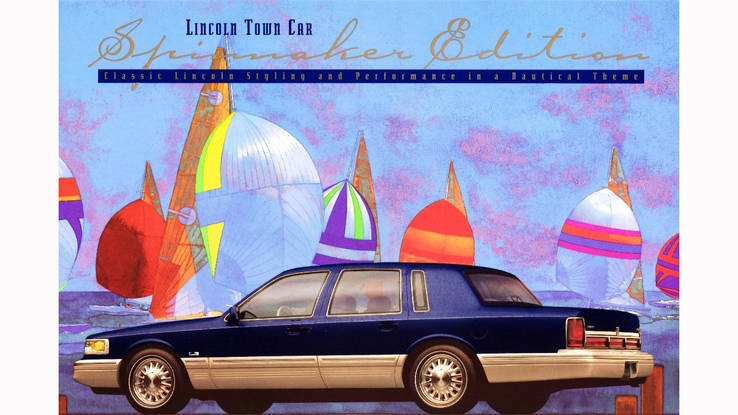
Lincoln Town Car Spinnaker edition

In the recent past the automaker sought to offer “Classic Lincoln style and performance in a nautical theme,” courting associations with sailing.

2017 Lincoln Continental Reserve review with price, horsepower and photo gallery

One of the problems with this approach was that consumers used to nameplates like Town Car had trouble keeping MKS, MKT, MKX and MKC apart. It helped that MKS ended with S, to suggest a sedan of some sort, while the last letter in MKT stood for Touring. But that was about all the mnemonic help that this naming scheme provided. It was also problematic that, as with Cadillac, the letters had a very weak connection to what the cars actually were, how much they cost, and what rung they occupied in the lineup. It also didn’t help that early on Lincoln executives pronounced these names as Mark Ex and Mark Ess, to mirror the example set by the Mark LT model, though this was quickly dropped. The only bright spot in this effort was that the letters were not followed by various numbers, in the German alphanumeric naming tradition Cadillac has co-opted.

The outgoing 2006-era Lincoln naming system closely followed Cadillac’s own switch to a (pardon this next phrase) three-letter system, which debuted with the CTS in 2003. Cadillac quickly changed the entire lineup to this new three-letter convention with the exception of the Escalade, which kept its name like the Navigator.

But Lincoln’s latest change in naming strategy also differs from Cadillac’s most-recent change, which was inaugurated by Cadillac president Johan de Nysschen in 2014. Cadillac’s recent rebranding tweaked the corporate design language and introduced a naming scheme with the CT prefix, denoting Cadillac Touring, followed by a number. Cadillac’s new naming convention keeps the three-character formula, with the last number corresponding (vaguely) to the model’s size. In this manner a new large sedan adopted the CT6 name, denoting Cadillac Touring 6, while the replacement of the midsize SRX crossover adopted the XT5 name, denoting Crossover Touring 5.

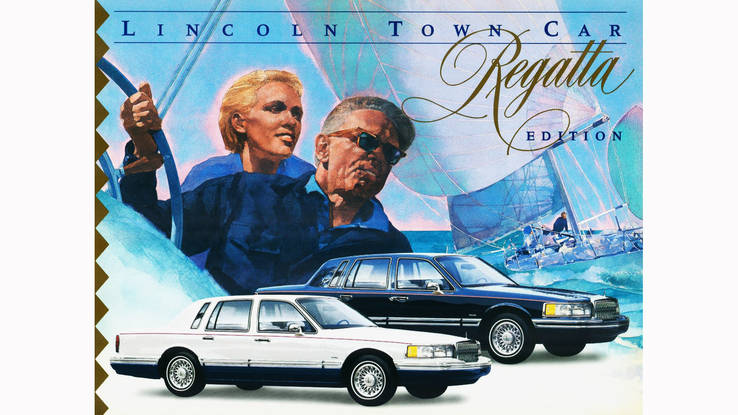
Lincoln Town Car Regatta edition

Expect to see more nautical names in Lincoln lineup; the MKC and the MKZ are due for new names.

2019 Lincoln MKC updatad and refreshed

5 things to know about the 2019 Lincoln MKC

Lincoln’s smallest crossover, the MKC, has received a dramatic refresh for the 2019 model year, ahead of its on-sale date next summer. The MKC has been a popular model in Lincoln’s …

Needless to say, Cadillac’s naming scheme requires some knowledge of what’s going in the lineup, and the numbers denoting the size of the model are not particularly helpful absent knowledge of this system. For instance, the XT5 also seats five people, but the CT6 certainly does not seat six people. The XT5 also appears larger than the CT6 on the inside simply because it’s a crossover, so the numbering is not particularly helpful in this case. The Escalade, a valuable brand name in itself for two decades, is exempted from Cadillac’s new naming scheme.   

Lincoln’s latest rebranding effort shows plenty of promise aside from rescuing the company from badging doldrums. Company president Galhotra is intent on overhauling the entire brand experience while also pushing the Black Label concierge services and exclusive design themes into the spotlight. Black Label is very much a part of the rebranded Lincoln and is constantly experimenting with new customer-service programs focused on luxury experiences and travel convenience.

What’s next for Lincoln? More models than the six that the company currently offers, as Galhotra indicated at the LA auto show this week. The company won’t be chasing every segment, but there are still a few niches filled by other luxury brands that Lincoln will have to address.

Expect to see more nautical themes: The MKC and the MKZ are next in line for new names.

2017 Cadillac XT5 Platinum AWD review notes

2018 Mazda 6 Signature gets a 250-hp turbo motor and upscale touches inspired by Japanese temples

Share

  • Pinterest

Maybe you looked at the Mazda 6 sedan, with its great styling, well-designed interior and agile handling and said something along the lines of: I really like this thing, but I sure do wish it had a punchier motor — maybe the 2.5-liter turbo-four from the CX-9 crossover, for example.

Well, Mazda must have dozens of covert listening devices installed all around your home and or office — because that’s exactly what they just announced at the 2017 Los Angeles Auto Show. For the 2018 model year, higher-trim Mazda 6 sedans will use the SKYACTIV-G 2.5T motor; when run on 93-octane fuel, the turbocharged 2.5-liter produces 250 hp and 310 lb-ft of torque — a healthy bump over the 184 hp/185 lb-ft of the naturally aspirated 2.5-liter already found in the 6.

Other Mazda 6s will stick with the naturally aspirated inline-four. The non-turbo motor is the only way to go if you want a six-speed manual; the 2.5T gets a six-speed auto exclusively. Hey, don’t complain to us; send your angry letters to Mazda.
 

2018 Mazda 6 Signature interior dashboard

Mazda’s premium push continues with the just-announced 2018 Mazda 6 Signature. Note the band of wood, leather and metal stretching across the dashboard, interrupted only by the steering wheel — a nice touch!

Crossovers are the future for Mazda in the US

Like the CX-9 from which it borrows its engine, range-topping 6 sedans will also get the Signature trim treatment — more evidence of Mazda’s shift to premium, or at least its own unique interpretation of it. That means a slate of nice materials drawn from the brand’s Japanese roots and … actually, we’re just going to pull right from the Mazda press release for this. There’s no sense in trying to paraphrase it:

Mazda6’s Signature interior features authentic materials — brown napa leather, whose color is inspired by the aged wood in ancient Japanese temples; UltraSuede NU that is adorned with a subtle gold tint, using a similar technique to that which is used to make ornate kimonos; and Sen wood accents, a type of wood often used in taiko drums and Japanese furniture.

Last, but not least: The seats get a big upgrade; the front seats are wider — trying to tell us something, Mazda? — and for the first time, ventilation is available.

Plus, Mazda says the 2018 6 is even quieter than 2017 model because of body reinforcements, thicker rear wheel well sheetmetal, extra bracing and thicker suspension trailing link mounts. And it should handle better thanks in part to a revised suspension geometry steering rack that is now rigid-mounted to the chassis (we suspect the rack was mounted on business before, but the handling was already great).

The 2018 Mazda 6 should go on sale in the spring. We expect pricing information (and fuel economy specs for the new 2.5T) ahead of that.

Graham Kozak

Graham Kozak – Graham Kozak drove a 1951 Packard 200 sedan in high school because he wanted something that would be easy to find in a parking lot. He thinks all the things they’re doing with fuel injection and seatbelts these days are pretty nifty too.
See more by this author»

This is the 2018 SVAutobiography: King of the Range Rovers makes Los Angeles Auto Show debut

Share

  • Pinterest

Range Rovers are synonymous with both luxury and comfort. But when a pedestrian Range Rover, or even an upscale Autobiography, just won’t do, there’s a step above them all: the SVAutobiography. This top Range Rover model has been around for a couple seasons, but it gets some serious upgrades for 2018. The cabin has been redesigned with dual 10-inch touchscreens and a new infotainment system. And the SV Autobiography receives a unique front seat design for added comfort, plus special veneers and color themes.

But it’s the second row where the experience gets especially sweet. We spent a few minutes in the rear seats and they are supremely comfortable. Land Rover says there’s nearly 4 feet of legroom thanks to the long wheelbase, and the thrones recline up to 40 degrees. There’s even an extra level of padding that makes them softer than any seat we’ve felt in a Rover. The center console is beautifully finished and houses tables that deploy electronically, along with a refrigerated compartment for drinks. Even the rear doors are electrically operated. And yes, there are two more 10-inch screens with 4G Wi-Fi capability.

The luxury-focused, long-wheelbase flagship was developed within Land Rover’s Special Vehicle Operations, so it’s plenty quick too. Under the hood of this $207,900 Rover is a 557-hp (up 7 over last year) 5.0-liter supercharged V8 paired to an 8-speed automatic transmission. Land Rover says 60 mph comes up in just 5.2 seconds. And for something this big, heavy and lavishly appointed, that’s seriously brisk.