All posts in “Rides”

Ferrari’s Upcoming Retro-Inspired Supercar Spotted!

There has recently been some buzz that Ferrari is working to release their very own retro-inspired supercar.

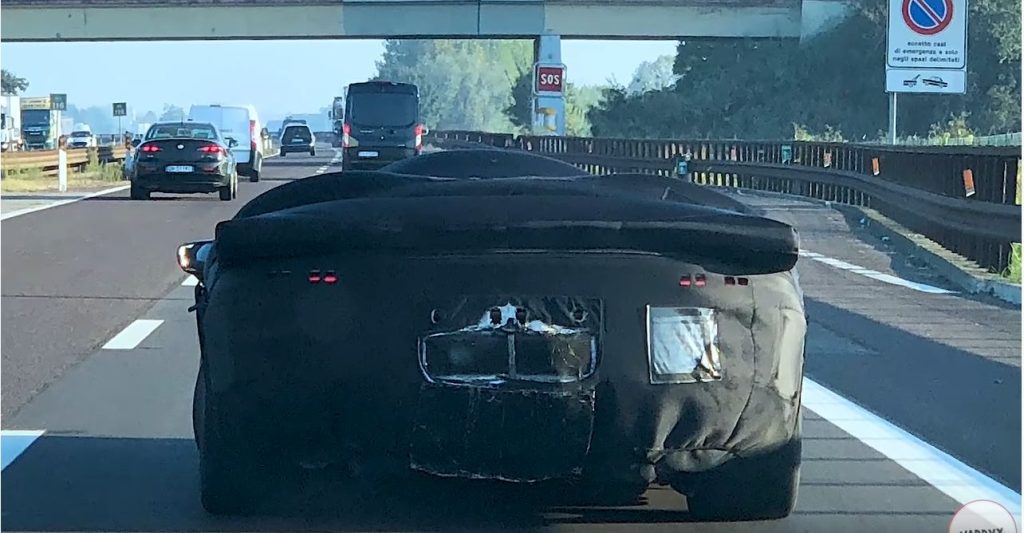
For the past few months, Ferrari has been seen testing a variety of mysterious prototypes that are speculated to be based on the LaFerrari. Recently, what is thought to be the Monza SP1 and SP2 successor has been said to have been seen being test driven in the highway.

The Ferrari prototype that was caught on video was extensively covered in thick body cladding, hiding design details from prying eyes. It is highly suggestive that under the body cladding is what could possibly be the final production design of what looks like a car based on the Ferrari LaFerrari Aperta.

There have been some rumors floating around that it could be designed to look like Ferrari 330 P4 Le Mans racer from the 1960s. It is the one that famously went up against the Ford GT40.

Screenshot from youtube.com/varryx

One of the first things that is noticeable in the encased car is the position of its side mirrors. The side mirrors on the test car are placed on the front fenders similar to the ones on the 330 P4 compared to the side mirrors of the LaFerrari which had it mounted on the A-pillars.

There are also some things that even a camo cannot hide, like the lower stance, wider fenders, and as well as the prominent rear wing. It seems like the upcoming supercar will look track-ready, more so than the LaFerrari it is based on.

Screenshot from youtube.com/varryx

Under the hood of the supposed Ferrari Icona is the same 6.5-liter, naturally aspirated V-12 engine that is equipped in the 812 Competizione. The powerful engine can produce 819 horsepower and 510 lb-ft of torque. It is very much possible that the retro inspired Icona will be even more powerful as this will have a seven figure price tag.

Combined, only 499 examples of the SP1 Monza and SP2 Monza were produced. It is said that for the 330 P4, only 300 examples are planned for production. Each are estimated to cost around $2.5 million to $3 million.

There has also been some buzz that the new retro-inspired Icona will be presented by Ferrari at the Ferrari World Finals which is happening next month in Italy.

[embedded content] [embedded content]

Most Expensive Car in the World Revealed in Public: $28 Million Price Tag

Rolls-Royce officially unveiled their new coachbuilt ‘Boat Tail’. The unique masterpiece was presented to the public for the first time at Concorso d’Eleganza Villa d’Este on 2nd and 3rd of October. The Rolls-Royce Boat Tail is the most expensive new car in the world, surpassing the Swept Tail from 2017 which was sold at a price of $13 million. The Boat Tail costs a whooping $28 million, only 3 will be built.

This was the the first time the Boat Tail was displayed in public for guests and journalists to examine and admire, the detailing and construction of the vehicle was designed and hand built at the home of Rolls Royce, a project which lasted almost four years.

The Boat Tail represents a pivotal moment for the wider luxury goods sector, both the interior and exterior bodywork have been designed and finished to the client’s specifications and new possibilities for patrons of contemporary designs and fine craftsmanship have also been opened.

This 1000hp Audi RS7 C8 Wants to Take on the GT63 S AMG E Performance

Wheelsandmore have revealed their latest work on the Audi RS7 Sportback C8.

The engine of the Audi RS7 has been tuned to produce an output of 1045hp, the exhaust system has been equipped with a remote-controlled flap control and the wheels swapped to larger 22 inch concaves.

The performance enhancements have been tailored to ensure fun and good mood in the car, and when driving in the fast lane the vehicle consumes 1 litre less fuel per 100km thanks to the increase in torque. The performance upgrades available are from stage 1 to stage 5 each increasing the standard power output of 600PS and 800 Nm of torque.

Stage 1 increases the power output from standard to 700 PS and 945 Nm, Stage 1+ increases the output from standard to 740PS and 1002 Nm, Stage 2 increases the output power from standard to 780 PS and 1102 Nm, Stage 3 increases the power from standard to 840PSand 1108 Nm, Stage 4 increases the power from standard to 915PS and 1149 Nm and Stage 5 increases the output power from standard to 980 PS and 1292 Nm of torque.

The new RS7 C8 has been fitted with a hand-made stainless steel exhaust system with valve control from Capristo Automotive, the system increases the power by approximately 15hp and its weight has been reduced by 50% compared to the standard exhaust.

The coil springs fitted in the RS7 are height-adjustable and the adaptive series damper control remains active on the coil springs. The coil springs are exclusively made in Germany and are TUV-tested and approved.

The vehicle has been fitted with a set of 22 inch alloy wheels from Germany with TUV approval. These are three-piece rims with forged rim stars and stainless steel rim beds for all RS7 models. Additionally, the rims are available in all colors and combinations with a carbon look and high-gloss finish.

Top 7 Most Expensive James Bond Movie Cars

Hagerty just released some of the most valuable Bond cars in history due to their appearance in James Bond films.

The valuation analyst compared the value between the cars used during the production of Bond films to the prices of the standard units of the same models, the results showed that James Bond movies increased the value of the cars featured by an average over 1000 per cent.

Land Rover Defender “Winter Water Wolf”

The original Land Rover Defender is a lot like Chuck Norris. Old, tough as nails, and ugly handsome. Then there’s the Land Rover Winter Water Wolf, kinda like Arctic Special Forces Chuck Norris. Only 50…

The post Land Rover Defender “Winter Water Wolf” first appeared on Cool Material.

1971 Lamborghini Countach LP prototype 500 lives again

On March 11, 1971, Lamborghini unveiled the Countach LP 500 prototype at the Geneva Motor Show on the Carrozzeria Bertone stand. Lamborghini had also brought the reworked Miura P400 SV to the show, and believing it would be the star, had placed the Miura at its own stand and dispatched the Countach to the design house stand. Admittedly, Lamborghini had done the same thing in 1966 when the Miura debuted in Geneva. The Countach ruled the 1971 show and was soon on magazine covers around the world. The Italian house spent three years developing the prototype for production, putting the Countach LP 400 on sale in 1974. The prototype sacrificed its life during crash testing for the production model.

Now the prototype is back, or the best facsimile thereof. Lamborghini says “an important collector” approached the firm in 2017 asking if they could recreate the yellow shock that started the 50-year craze for V12 engines and scissor doors. That customer might have got his idea from the 1971 Miura P400 SV prototype that Lamborghini restored in 2017 using archival documents. So the automaker’s classics division, Polo Storico, went back to the archives for drawings, documents, meeting notes and pictures; interviewed people who were there at the time; and contacted suppliers like Pirelli for an updated version of the Cinturato CN12 and paint maker PPG for the Giallo Fly Yellow Speciale color.

It took 2,000 hours for the design house, Lamborghini Centro Stile, to reproduce the bodywork, all of it hand-beaten as it was in 1971. It took more than 25,000 hours to recreate the entire coupe with parts that were either original, restored, or fabricated from scratch ranging from the platform frame (instead of the tubular frame in the production car) to the partially electronic instrumentation. Lamborghini didn’t mention the engine, though. The prototype contained a 5.0-liter V12; the production model downsized that for a more reliable 4.0-liter unit. We’ll guess a collector committed enough to pay for 25,000 hours of Lamborghini work wouldn’t compromise on the heart of the matter. Whatever’s back there, it sounds righteous in the video. 

The result is now on display in the concept class at the Concorso d’Eleganza Villa d’Este. Lamborghini didn’t mention a price, either, not that it matters; there’s enough money in the world that the company brought back the Countach, it might as well revive the true original.

Related Video:

Best Naturally Aspirated Cars Ever Made

Top 20 Naturally Aspirated Cars Ever

As a preamble, it is important to note the context and the era in which this list is being created. The automotive industry has already begun its transition towards a future dominated by electrically powered vehicles, with the vast majority of automakers aiming to have their entire lineups at the bare minimum, hybridized, before the turn of this decade.

Going back just a little further, the wheels were already in motion for the sweeping changes we’re seeing today. It can be argued that the first step towards a more fuel-efficient (and eventually, fuel-less) future started with the mass proliferation of turbocharged engines. For long before that, turbochargers were perceived as a centerpiece for many high-performance sports cars, which hardly had a reputation for being eco-friendly. However, with improvements in technology, their application evolved to that of a more widespread and economical nature.

We’ve already crested over the peak of this transition period in recent times; the likes of Ferrari and Porsche forgoing naturally aspirated engines in favor of the more emissions-friendly, forced-fed power plants. Today, we’re seeing the EV and high-performance hybrid taking the stage. The absence of the naturally aspirated automobile leaves a gaping void; one which will likely never be filled.

Suffice to say, the process of phasing out of the naturally aspirated engine has been long and drawn out but hardly subtle nor evitable. Now that process looks to be on a trajectory that is accelerating exponentially with perpetual improvements to EV technology, driven by the acknowledgement and acceptance of this changeover on a global scale.

This has brought us to a stage of reminiscing and nostalgia; our favorite atmospherically-strung power plants are soon to be a thing of the past. There was, is, and always will be, a lot to love about the most iconic NA cars ever produced – astronomically high revs, a satisfyingly linear power delivery, unparalleled aural soundtracks, instantaneous throttle response, underappreciated durability, and some of the world’s most epic displays of technology on four wheels.

Here are some of the best naturally aspirated cars made, ever, in no particular order.

Ferrari 812 Superfast
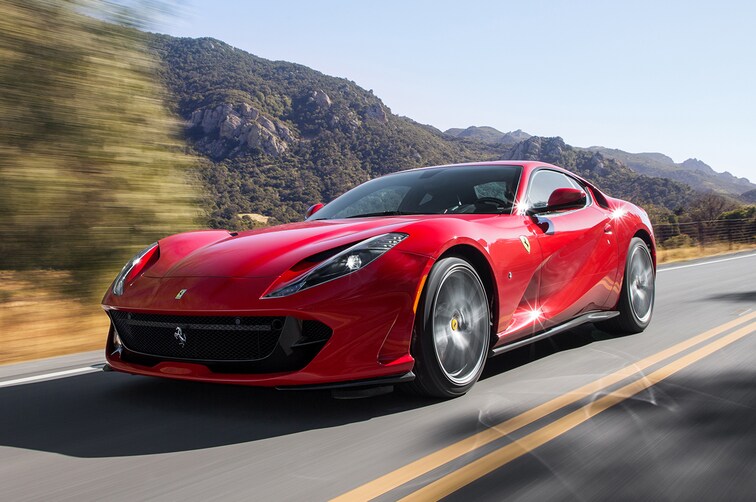
The Ferrari 812 Superfast is the successor to the Ferrari F12 and is now the company’s fastest front-engined GT Car. Wrapped in a curvaceous Italian body and paired to one of the greatest chassis we have ever experienced, the 812 Superfast is one for the ages.

The 812 Superfast carries a new 6.5L V12 engine that delivers an astounding 789 hp @ 8,500 rpm and a maximum torque of 718 Nm @ 7,000 rpm. The engine is still front-mid mounted, making the car that much more unique in the already crowded luxury grand touring segment. It can reach speeds of 340 km/h and can sprint from 0-100 km/h in just 2.9 seconds.

It features a 7-speed dual-clutch gearbox, advanced active aerodynamics, and four-wheel steering. Despite the controversy that is sometimes associated with a Ferrari engine sitting in front of the driver, the 812 Superfast remains an absolutely engaging and soul-satisfying Ferrari experience every single time you get into it. The perfect car. The perfect Ferrari.

Porsche 911 R / Speedster

Arguably the purest form of the 911 model range, the 2016 Porsche 119R pays homage to the brand’s epic heritage with the most modern of concoctions. Providing a manual transmission alternative for Porsche’s range-topping-naturally aspirated model is what the 911R is known best for, but it ends up being so much more than just that.

It is the perfect blend of spartanism and elegance that you can call upon in the crowded lineup of 911 models. The absence of outrageous aerodynamics purposes the car more for canyon runs than Nürburgring records, but that’s also the beauty of it. For those who want the absolute best of the 991-gen 911 – without the obligation of having to prove its value on the race track – the 911R is undoubtedly a very proper and special car. 

The 911 Speedster is spiritually the convertible version of the 911R, following the same purist principles as its coupé counterpart. Released in 2019, it has some slightly newer tech and a bit more power too. Its schematic has forged a 911 with a silhouette based on the 4S Cabriolet body, carbon fiber bits borrowed off the 911 R, and front and rear bumpers from the GT3 Touring. That is not to say that there aren’t any unique offerings on the Speedster, with its shorter, more inclined windshield frame and lower fly-line being amongst its exclusive features.

Honorable mention: The 997 GT3RS 4.0, for being the grandfather of these cars.

Honda S2000

For many years, Honda’s beloved roadster held the distinction of producing the most hp per liter of any car on the planet via its F20C engine. Despite being a convertible, the S2000 is renowned for its rigid chassis, which helps to provide one of the most raw driving experiences one can have in a production road car. The slick 6-speed manual – the only choice of transmission – was a perfect match to the car’s 2.0L VTEC powerplant, which produced 240 hp and revved all the way up to 9,000 rpm. Later variants of the S2000 featured a strokered 2.2L engine which delivered more power in the lower rev-range and had slightly shorter gearing to improve acceleration.

Speaking of nostalgia, the Honda S2000 has found a way to tug at many car lovers’ heartstrings, with the used market completely blowing up over the last 10 years. Many examples are going for prices near brand new MSRP, with newer and more rare models (such as the CR) commanding even higher amounts. The Honda S2000 embodies everything that is awesome about a naturally aspirated sports car that is built around the driver; and now, many enthusiasts and collectors alike are seeking to own their piece of its brilliant history.

Lexus LFA

The Lexus LFA features a naturally aspirated 4.8L V10 engine which produces 552 hp and 354 lb-ft of torque. That may seem rather modest in this age of 1,000 hp hypercars, but the LFA is more of an analog machine than most of those vehicles and is regarded by many as one of the best supercars from the last decade.

Lexus only made 500 units, and I assumed those 500 sold out quickly. I was wrong. Despite the fact that the automaker hasn’t produced the Lexus LFA since 2012, there are still seven brand new LFA models for sale in the US, according to CarscoopsWith all that said, the LFA came with one of the best V8s ever produced by a Japanese automaker. This makes the car ripe for following a similar fate to the Porsche Carrera GT, which didn’t sell well when it was first released before going on to establish a cult following many years later. I would imagine that someday these cars will be worth a lot more than their original MSRP. 

Dodge Viper ACR

Even if the Dodge Hellcat is hogging all the headlines these days, there’s always something you have to admire about the lunacy of having a two-seater sports car powered by a naturally aspirated 8.4L V10 engine. No, the Dodge Viper ACR doesn’t do subtlety very well. Yes, it does happen to fall under the ‘Old Testament’ definition of awesome.

With 640 hp and 600 lb-ft of torque being produced from that colossus of an all-aluminum engine, the Viper has the exhaust note of a semi-dormant volcano. It would make absolutely no sense at all if it weren’t just so damn fast.

Variants such as the SRT-10 and ACR-X took the road-going version of the car to the next level, with the latter being a turn-key, non-street legal race car that participates in Viper racing leagues around the world. The Dodge Viper SRT-10 in particular boasts more of what performance aficionados crave: kick-in-the-pants, throw-back-in-the-seat power, combined with benchmark braking, world-class ride and handling, a race-inspired interior, and bold exterior styling.

Ferrari 458 Italia

Collectively, the Ferrari 458 Italia is one of our most-loved vehicles here at supercars.net. You wouldn’t have to dive very deep to find out why that might be the case, as even just a cursory glance at the car is more than suggestive enough.

Whether it be its sleek and timeless Pininfarina design or its epic 562 hp naturally aspirated V8 engine with a 9,000 rpm redline; the 458 was destined for greatness the moment the first car drove off the production line. It has already become a modern classic. Let’s also mention that its F136-FB V8 engine provides one of the most thrilling soundtracks produced by any road-going vehicle out there, courtesy of an orchestra that octaves all the way to 9,000 rpm. Bellissima!

Such was the car’s influence that it would also go on to serve as the platform for the models which followed – namely, the 488 GTB and F8 Tributo – with the original spirit of the 458 Italia remaining intact and on full display through its successors.

Subsequent models and trims such as the Spider, Speciale and Challenge commanded varying degrees of premium in terms of performance, features, and price, over the original car.

Chevrolet Corvette C8 Z06

The C8 Corvette serves as an example of keeping things simple and going back to what worked best. The previous-gen C7 Corvette Z06 was the first of its kind to feature a supercharged version of its V8 engine. While this certainly made it the most powerful Z06 ever produced, the force-inducted unit was widely susceptible to overheating issues on the race track.

Chevrolet has already confirmed that their upcoming Z06 – based on the new mid-engined C8 platform – will be reverting back to a naturally aspirated power plant. This will undoubtedly address most of the shortcomings of the outgoing Z06 and make it much more viable for track use.

While many Corvette enthusiasts were hoping for a return of the monstrous 7.0L naturally aspirated LS7 engine from the C6 generation, we’re currently being told to expect a 5.5L V8 flat-plane crank engine which will redline at close to 9,000 rpm and produce roughly 650 hp – around the same as the C7’s supercharged unit. This smaller, lighter engine will be an essential part of the new Corvette’s mid-ship design, and we can’t wait to see it.

Honorable mention: The C6 Corvette, for reminding Chevy that less can still do more.

BMW E36 M3

BMW has a long history of building amazing cars and an equally long history of powering those cars with awesome engines. There isn’t just one path to producing a great engine, and the folks at BMW have shown over the years that they are adept at trying new things and experimenting with technology to great effect.

The E36 M3 was the model that really launched BMW’s M division to the masses. It targeted the executive buyer who wanted performance but in a tamer package than the original E30 (which was more of a true enthusiast’s car). The second iteration of the M3 brought classiness and refinement that the first generation didn’t deliver.

With a 240 hp 3.0L naturally aspirated inline-6 that was silky smooth and rock-solid, the car had plenty of low-end power and was easy to drive right off the bat. Our pick of the lot is for the 1996 model year cars; the engines were upgraded to a 3.2L displacement, producing the same horsepower but with more torque than the original unit.

Honorable mention: The E30 M3 and E46 M3, for being almost as cool.

Honda Integra Type R

Known for producing legendary naturally aspirated engines and front-wheel-drive cars in its heyday, Honda built the Integra Type R to have both of those things. Nimble like a go-kart and durable like… well, a Honda… the Integra Type R was a popular choice for the weekend racer on a budget. The DC2 platform (1996-2001) is certainly the most popular, with its 4-cylinder B18C5 VTEC engine able to produce 197 hp @8,000 rpm and 130 lb-ft of torque @ 5,700 rpm.  Already a classic because of these inherent characteristics, the Integra Type R is becoming a bit of a collector’s car.

Like the Honda S2000, the aforementioned DC2 ITR has created a bubble in the used marketplace, with many examples currently going for astronomically high prices. The newer DC5 (2001-2005) Integra Type R variants are far less popular as a whole, although their engines (K20A) are often swapped into the DC2 platforms. While the idea of doing so would irk preservationists, the K20A / DC2 combo is widely considered to be an all-around performance upgrade.

McLaren F1

Launched in 1992, the McLaren F1 would go on to revolutionize the supercar industry with many of its core characteristics still referenced in the production of today’s most exotic vehicles. It paved the way for increasingly mainstream use of materials such as carbon fiber, kevlar, and titanium in sports cars and was the first production car to use a monocoque chassis.

Designed by the legendary Gordon Murray, who had one goal in mind, the McLaren F1 was built to be the fastest and best-handling production car in the world. Namely, the ultimate road car – one that is enjoyable in everyday conditions while still at the zenith of road car performance.

To plug Honda and its enthusiasts, Murray has been less than coy when it comes to where he drew his inspiration for the creation of the F1. Indeed, it was the Honda NSX that set the precedence and direction for the F1 and its overall design directive, ultimately having a profound effect on the end product.

Furthermore, Murray initially wanted to leverage McLaren’s relationship with the Japanese automaker and had initially envisioned Honda supplying the engine for the McLaren F1. However, they would end up partnering with BMW’s M Division to commission a power plant exact to Murray’s desired specifications – he wanted an engine with at least 4.5L in a V10 or V12 configuration and without forced induction. 

This collaboration would end up being the catalyst in creating one of the best engines ever made – a naturally aspirated 6.1L V12 with 627-horsepower. Throughout the project, Murray was adamant about not using turbochargers or superchargers to achieve those figures, as he felt that this would help in emulating the resilience of the Honda NSX’s immensely reliable motor.

Ford Mustang GT350

The Shelby GT350 is a powerful yet nimble version of the Mustang that is equally at home on the race track as it is on the city streets. One of its most remarkable traits is its super high revving 5.2L V8 engine which redlines at an astronomical 8,250 rpm. The sport-tuned suspension is very capable on the circuit but refined enough for daily use.

The GT350R is available for those who prefer to have a more hardcore track-toy or weekend warrior via an even firmer chassis and a set of lighter carbon fiber wheels. Arguably better than its faster supercharged big brother, as it is a more balanced unit, with the NA engine making for a better feeling experience.

Our favorite version of the GT350 / GT350 R is the Heritage Edition. Ken Miles is best-known for driving the Ford GT at Le Mans to help Ford beat Ferrari. However, Miles also raced a 1965 Ford Mustang GT350 fastback on occasion. To commemorate this, Ford has rolled out a new Shelby GT350 and GT350 R in the same colors colorways as Miles’ race car. The car features a Wimbledon White paint job with Guardsman Blue stripes. The car also gets GT350 rocker lettering at the rear.

Lamborghini Aventador SVJ

In late July 2018, the Lamborghini Aventador SVJ became the latest production car to break the lap record at the legendary testing ground that is the Nürburgring Nordschleife. It would be more than a month later before the car was officially unveiled to the public, during Monterey Car Week taking place in Pebble Beach, California. It was going to take nothing short of special to dethrone the Porsche 911 GT2 RS, and Lamborghini’s new flagship car is something beyond even that.

Becoming a production car lap record holder at the ‘Ring takes a lot more than just a flashy paint job and hype. To power it’s way around this treacherous course, the Aventador SVJ employs a naturally aspirated 6.5L V12 engine which delivers 770-horsepower at 8,500 rpm and 530 lb-ft of torque at 6,750 rpm to its all-wheel-drive system. It is able to do 0-100 km/h in only 2.8 seconds and has a top speed of over 349 km/h.

With the prolific use of carbon fiber and lightweight materials throughout the car, the SVJ weighs only 1,525 kg. Four-wheel steering remains a feature on the SVJ, and it also benefits from suspension upgrades over the regular Aventador to improve overall mechanical grip, rigidity, and driving feel. Production numbers of the Aventador SVJ will be limited to just 900 units (which is includes the special edition SVJ 63).

Lamborghini Huracán STO

No Lamborghini model range would be complete without a healthy serving of special editions and one-off versions, and this is certainly no different when it comes to the Huracán. While it doesn’t yet boast the plethora of uber-rare cars that its predecessor (the Gallardo) can, special edition models are coming in thick and fast as we approach the final 3 years of the Huracán era.

The Lamborghini Huracán STO is the latest of this batch and also functions as the latest track-focused variant of the Huracán. Too hardcore to simply be considered a replacement for the Performanté (of which an Evo version is likely on the way), the STO possesses remarkable aerodynamic features such as a roof snorkel and extra-large rear wing. Carbon bucket seats with race harnesses also come standard.   

The 2021 Lamborghini Huracán Super Trofeo Omologata (STO) is inspired by the Huracán Evo Super Trofeo race car developed by Lamborghini’s motorsport division – Squadra Corse – to run in its own competitive race series. The key difference between the two cars is that the STO is completely street-legal.

The STO has clearly been made to carve up any race track, which is highlighted by a 5.2L naturally aspirated V10 engine that produces 640 hp and is mated to a 7-speed dual-clutch transmission sending power to the rear wheels. Around a lap, the STO will be the fastest street-legal Huracán by a considerable margin. The base price is listed at US$334,133, with the first deliveries expected to arrive later in 2021.

Honorable mention: The Huracán Performanté, for being the basis upon which the new Evo variants and the STO were inspired.

Aston Martin One-77

Probably the least well-known car on this list – as there were only 77 ever produced – the One-77 is considered to be Aston Martin’s ultimate expression of design, engineering, and craftsmanship. The proverbial blank check along with the green light to do as they sought fit…if you will.

After three years of teasers and prototypes, Aston Martin put the One-77 into production in early 2011. This completely hand-built supercar was boldly marketed as an alternative to the Bugatti Veyron. The 7.3L naturally aspirated V12 engine was based on the power plant used in the DB9 and was designed by engine builder Cosworth. Producing 750 hp and 750 Nm of torque, the One-77 was the most powerful naturally aspirated road car in the world when it was first released.

Porsche Carrera GT

The Porsche Carrera GT has become one of the most iconic and sought-after Porsche models in the realm of exotic car idolization and ownership. It is hard to believe that things didn’t really start off that way.

When the Porsche Carrera GT was released in 2004, it was anticipated to stir up plenty of fervor. It certainly had all the attributes to do so. It was a mid-engined V10 hypercar – one of the first to be considered a step beyond supercar status – and introduced a variety of industry-first technologies and features to the production car market.It was hard to argue against the Carrera GT having the performance, appearance, and stature to justify its $440,000 USD price tag when brand new.

Nevertheless, Porsche dealerships would have a difficult time selling them despite costing over $200,000 USD less than a new Ferrari Enzo; the Carrera GT’s intended target and rival. The slower than forecasted sales are likely the cause for Porsche ending production after just 1,270 units. Though a run of 1,500 units were originally planned, the German marque went on record to blame “changing airbag regulations” for their decision to ax the car. Thankfully, this turn of events would not prove ominous for the Porsche Carrera GT over the long run. In fact, quite the opposite.

Interestingly enough, we can thank the ongoing technological advancements taking place in the automotive industry for the Porsche Carrera GT’s resurgence into the limelight. Besides being equipped with a wicked state-of-the-art, naturally aspirated, 612 hp engine which was ahead of its time, the Carrera GT was otherwise an extremely analog machine, and it is this very characteristic that would elevate its appeal over time. This was helped on mainly by the fact that since the Porsche Carrera GT was released, the exotic car landscape has shifted dramatically to the production of more user-friendly, technologically refined, and easy-to-live-with supercars – the fastest for the masses, if you will.

Ferrari Enzo

Branding race-derived technology to road cars is not a new idea, especially to Ferrari. Up until the late 1950s, Ferrari’s road cars and racing cars were essentially the same product. Since that time, safety regulations, manufacturing costs, and practicality have more clearly distinguished the cars we race from the cars we drive on the streets. The goal of the Enzo was to bridge this gap.

Racing-inspired technology lays the foundation of the Ferrari Enzo. As such, the chassis is built from carbon fiber and aluminum honeycomb panels, forming a rigid tub. At the center of the chassis is an all-new, 12-cylinder naturally aspirated engine. Dubbed the F140, it is one of the largest Ferrari engines, only being eclipsed by the Can-Am units. Having such a large displacement allows the Enzo to deliver a healthy amount of torque; specifically, 137 ft-lb more than the F50 and at 1,000 rpm sooner. Despite the engine’s large displacement, it still manages to achieve 110 hp per liter, thanks to many variable systems.

With no hybrid setup, no turbochargers, and no dual-clutch transmission, the Ferrari Enzo is the last old-school Ferrari supercar before those dang hypercars came around. It is also the last naturally aspirated Ferrari supercar, with a wonderful 6.0L V12 that just screams. With 650 hp, a claimed 0-60 mph time of 3.1 seconds, and a top speed of 217 mph, the Enzo had performance figures that spoke for themselves. The Enzo’s sharp detailing and Formula 1-derived aerodynamics look just as good today as they did back then. It’s  a tough car to drive fast, and that’s what we love about it – a true old-school supercar.

Honorable mention:  The Pagani Zonda for sharing the same engine.

Ferrari F12berlinetta

The most exciting car to be announced by Ferrari in 2012 was the F12berlinetta. It is the third-gen Ferrari GT which follows the 599 GTB Fiorano and 550 Maranello and would be eventually become the predecessor of the 812 Superfast also mentioned in this list. When released, Ferrari called it the fastest Ferrari ever built and cited a lap time around the Fiorano test track of 1:23.

A highlight of the car is its 65º V12 engine which produces 750 hp without the aid of turbochargers or superchargers. This unit uses variable timing and direct gasoline injection for improved efficiency. Power is sent to the rear wheels through a dual-clutch transmission and an active electronic differential.

In 2015, Ferrari revealed the F12tdf which pays homage to the Tour de France – the legendary endurance road race that Ferrari dominated in the 1950s and 1960s, particularly with the 1956 250 GT Berlinetta which won four consecutive editions in a row. The F12tdf shares the same engine with the F12berlinetta and is the ultimate expression of an extreme road car that is equally at home on the track. Only 799 were built.

Mercedes Benz AMG SLS Black Series

Inspired by the SLS AMG GT3 racing version, the fifth Black Series model from Mercedes-AMG boasts a fascinating mix of breath-taking design, outstanding driving dynamics, and uncompromising lightweight construction. The Black Series features a 6.3L naturally aspirated V8 engine which produces 631 hp @ 7,400 rpm and accelerates the most iconic ‘gullwing model from 0-100 km/h in just 3.6 seconds, on its way to a top speed of 315 km/h.

The Black Series’ engine is an improvement over the one found inside the regular AMG SLS in many key areas; the redline was increased from 7,200 to 8,000 rpm, revised camshafts were installed, restrictions were reduced, and the ECU retuned. As a front mid-engine configuration, the power plant was mounted behind the front axle, which helps to provide a weight distribution that is favorable to high-performance driving.

Audi R8 V10

The Audi R8 underwent a facelift recently. It now has more aggressive styling. It’s the best looking the R8 has ever been. The front fascia is different, and it has new side skirts, a new rear bumper, a new rear diffuser, and a new spoiler. Inside, the cabin looks more or less the same.

For the 2021 model year, Audi has announced that the R8 will be permanently available in the rear-wheel drive configuration going forward. The 532 hp rear-wheel-drive R8 takes its place in the lineup as the entry-level R8 variant; if you want Quattro, you will have to opt for the Performance model. Both variants continue to be powered by a 5.2L naturally aspirated V10 engine. Thanks to the rear-wheel-drive now being the standard offering, the base price of the car is almost $30,000 lower than the previous year – making the Audi R8 as attractive a buy as perhaps it has ever been.

If the regular R8 is not enough, you can make the jump to the Audi R8 V10 Performance and get 602 hp and 413 lb-ft of torque. Naturally, all-wheel-drive continues to come standard in this trim, although this year makes for a more significant case with the elimination of Quattro in the non-Performance (now known as RWD) version. The power bump and addition of all-wheel drive go a long way to padding the performance figures in a desirable fashion, with the 0 to 60 mph time down to 3.2 seconds and top speed up to 205 mph. The Audi R8 has always been a true performer, and now it looks better than ever, too.

Gordon Murray Automotive T.50

The T.50 represents a culmination of Gordon Murray’s lifetime of aerodynamics, design, engineering, and Formula 1 experience. He was the original architect of the McLaren F1; to this day, still one of the greatest cars, let alone supercars, ever made. Ok, so the T.50 isn’t the F1. However, Murray himself said, “It’s not £20 million, so I point out to customers this is a car that delivers the same experience [as the F1], but better in every way, and with an 80 percent discount.” Well…when you put it that way, the GMA T.50‘s $2.6 million sticker price sounds like a steal.

According to EVO, the T.50 features a naturally-aspirated V12 engine that was built by the well-known engine developer Cosworth. This engine powers the rear wheels through a traditional six-speed manual transmission. It offers a 3.98L displacement, a 12,100 rpm redline, and will act as a stressed member of the chassis. There is, though, a 48-volt mild hybrid system that will work in tandem with the V12, producing a combined output of about 700 hp. While this technically means that the T.50 isn’t naturally aspirated by the letter of the law, the 12,000 rpm redline tells us that we ought to let this one slide.

The Bugatti Bolide is The Most Beautiful Hypercar

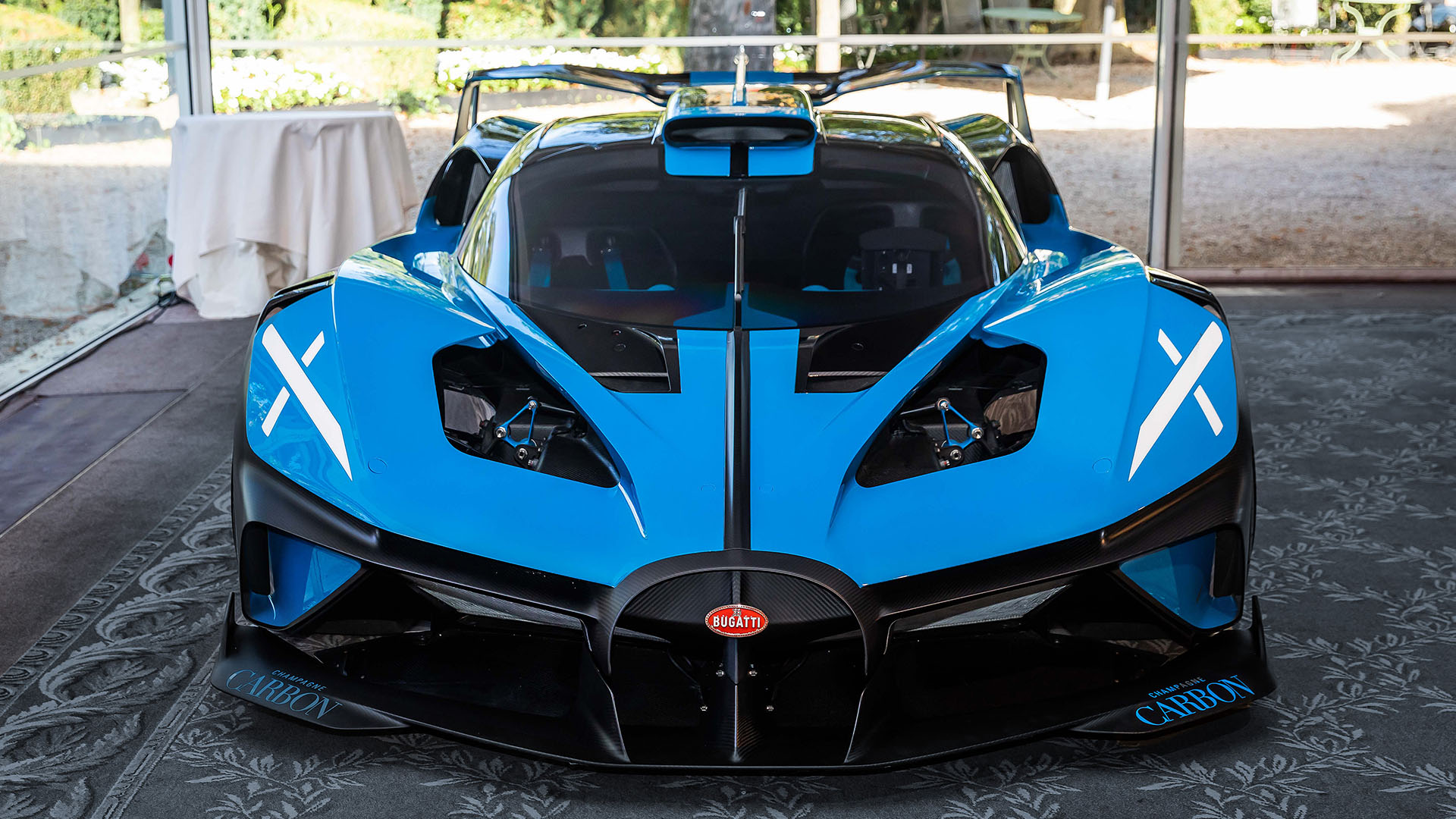
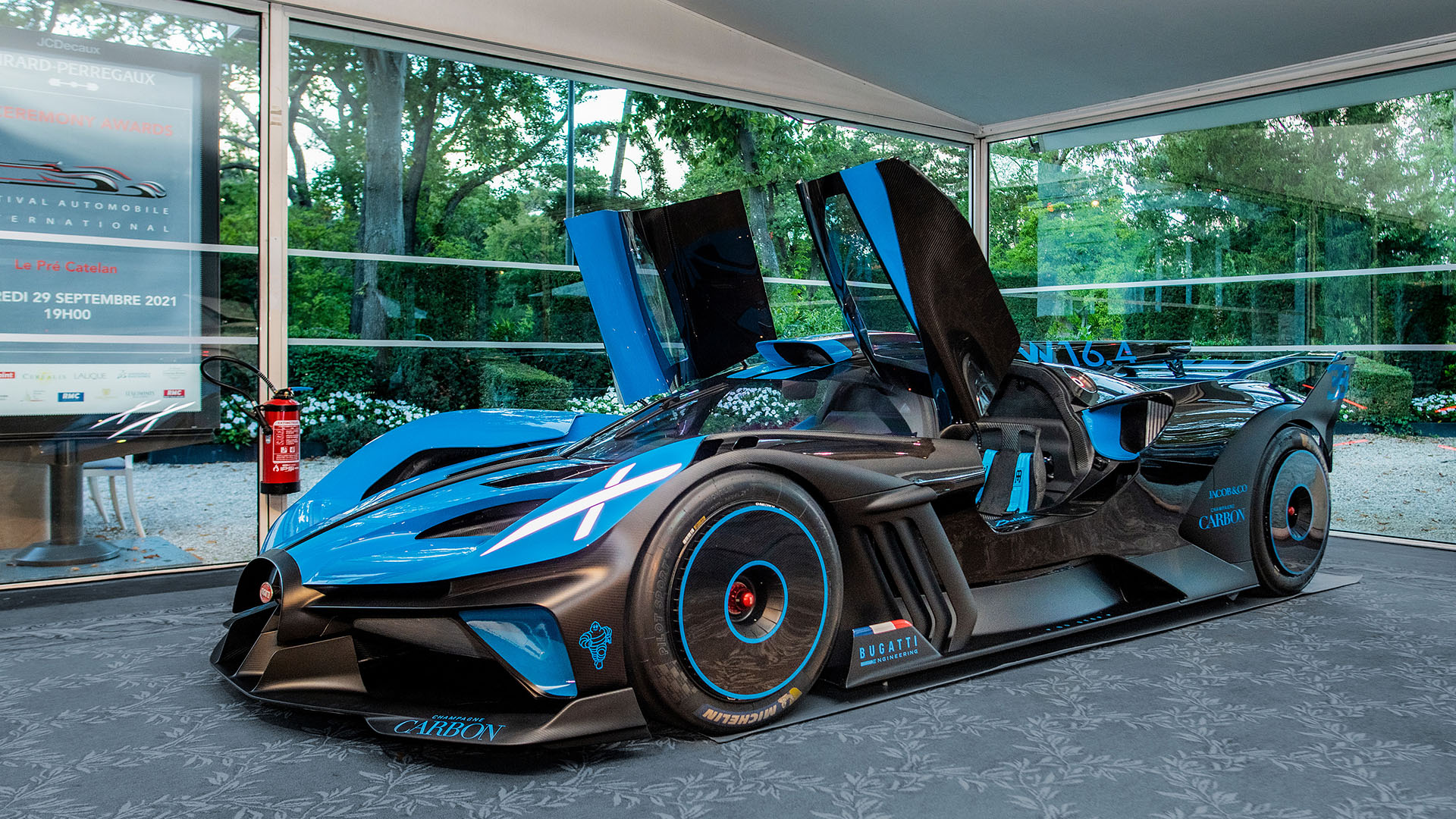
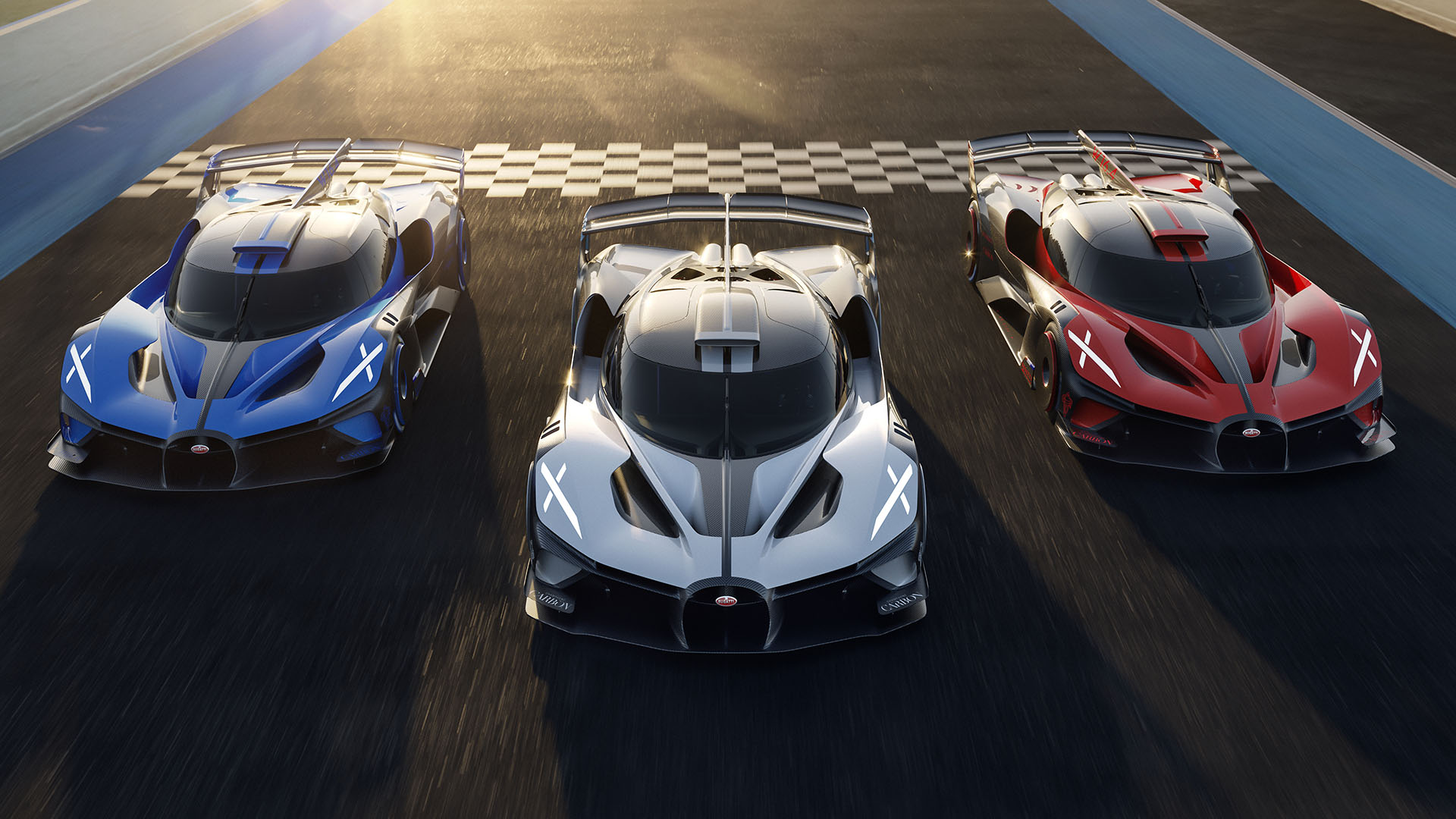
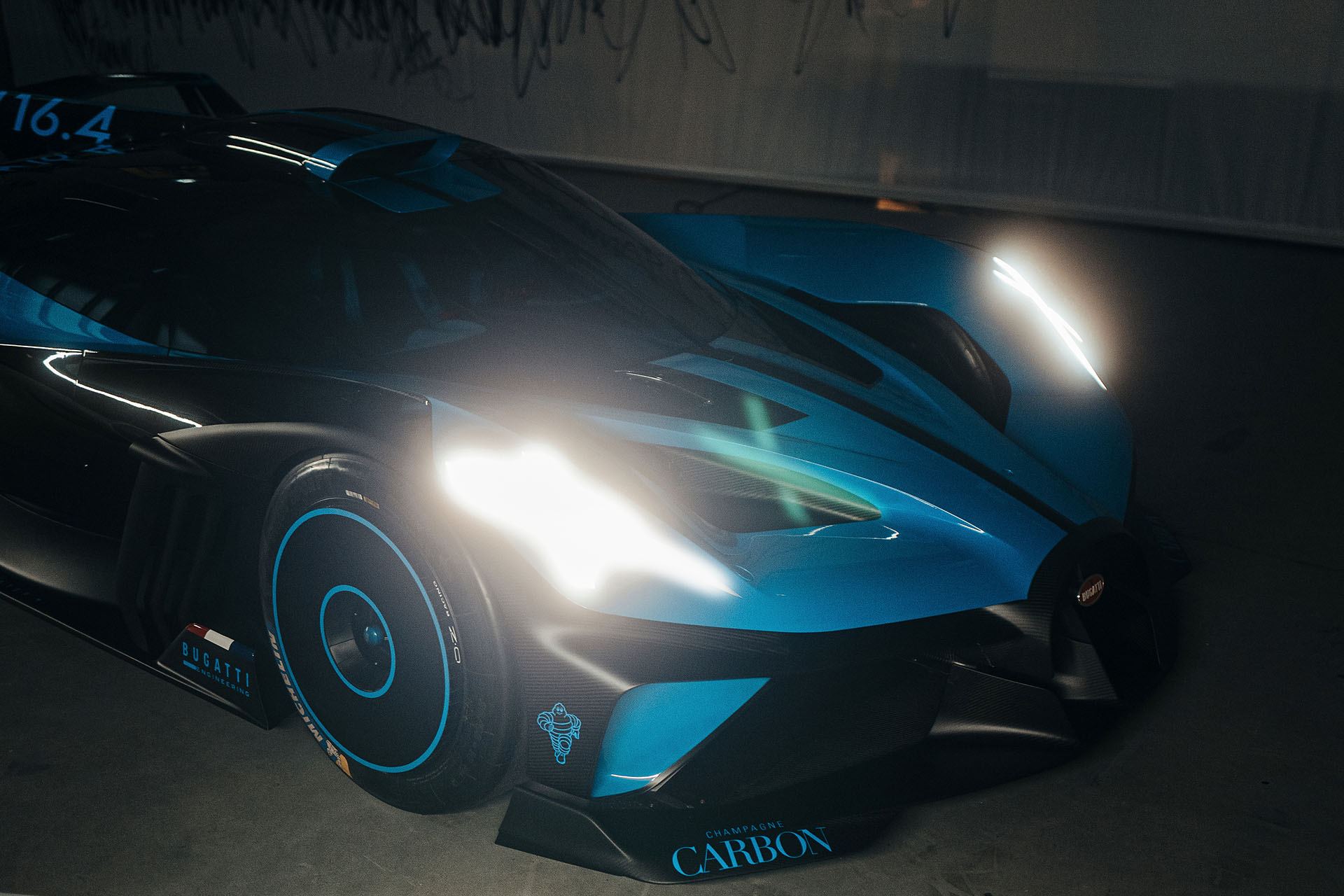
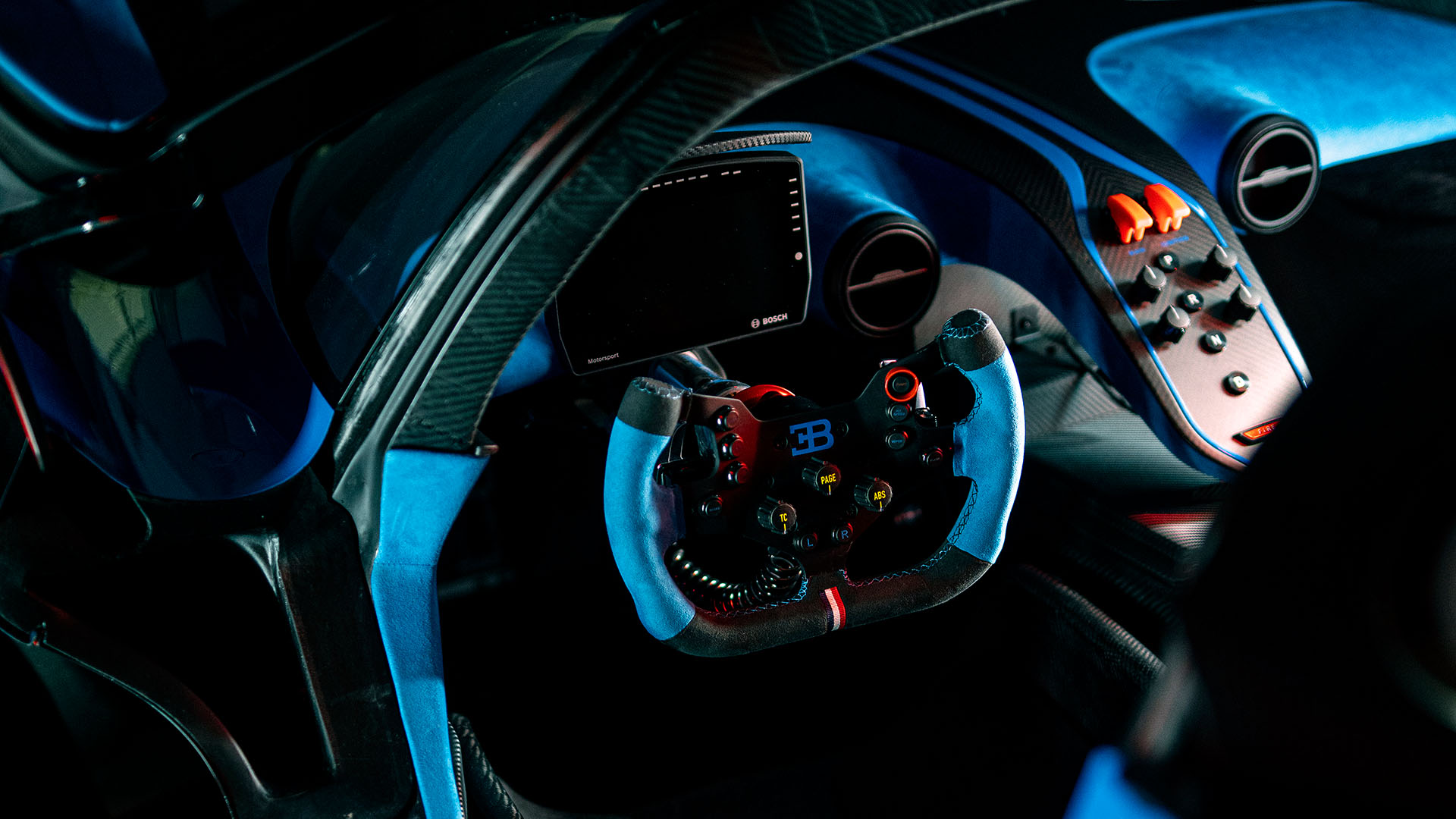
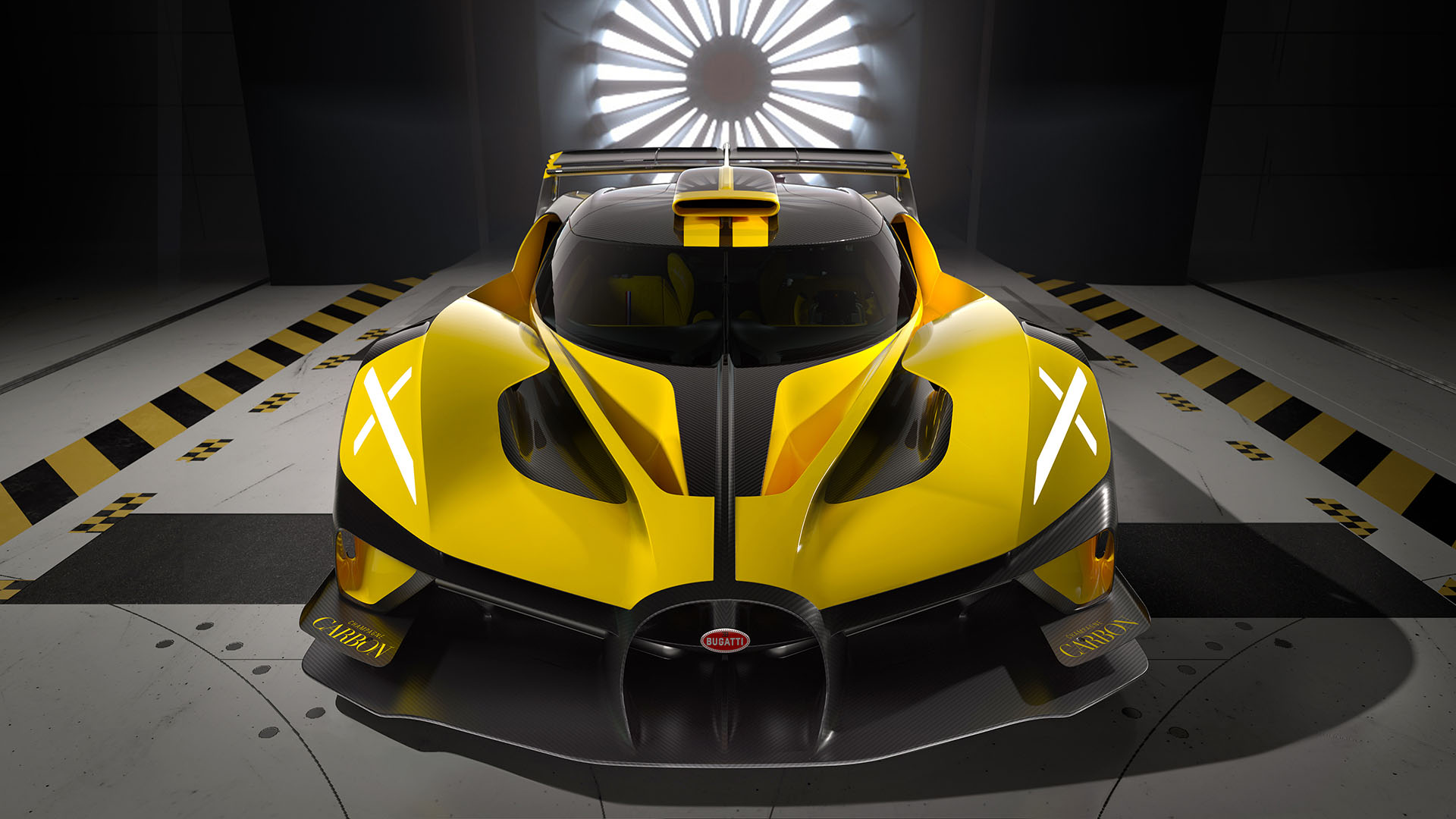
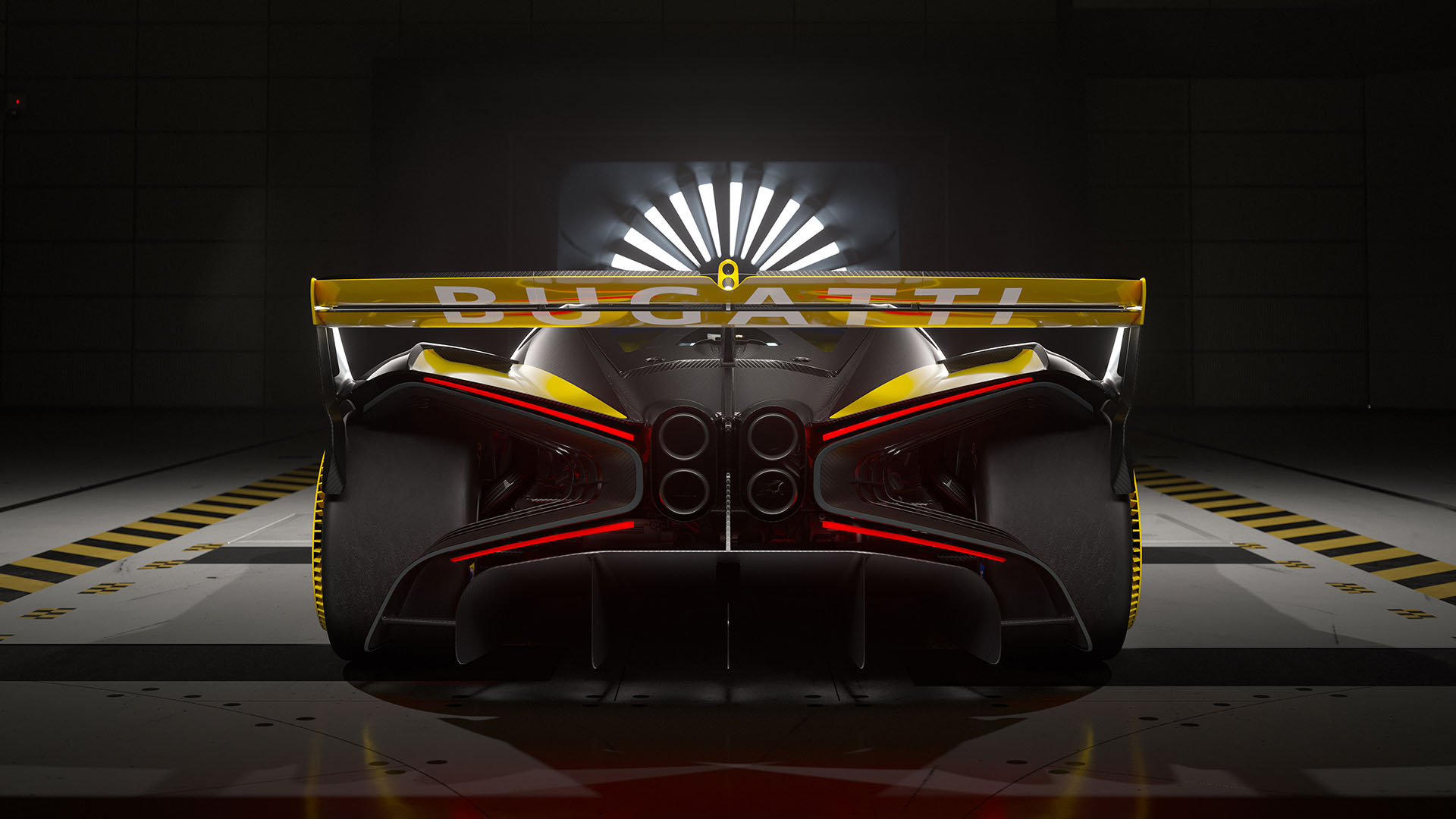
Back in 2020 famous hypercar make Bugatti unveiled something really special … La Bolide. A design exercise from the Bugatti Atelier to show what they could do if they had a brief to design the best, fastest, no-bars held hypercar that had to adhere to no regulations whatsoever … neither for the road nor for the track, the result was the most radical-looking Bugatti ever with a massive power output of 1825 hp.

But La Bolide was a design concept, fully driveable, but just a test mule for a ‘what if’ question … until Pebble Beach 2021, when Bugatti Automobiles S.A.S. revealed they would turn the La Bolide into a limited edition production car, still track-only, but at least some high-net-worth individuals would be able to obtain the best of the best from the Bugatti Atelier in Molsheim.

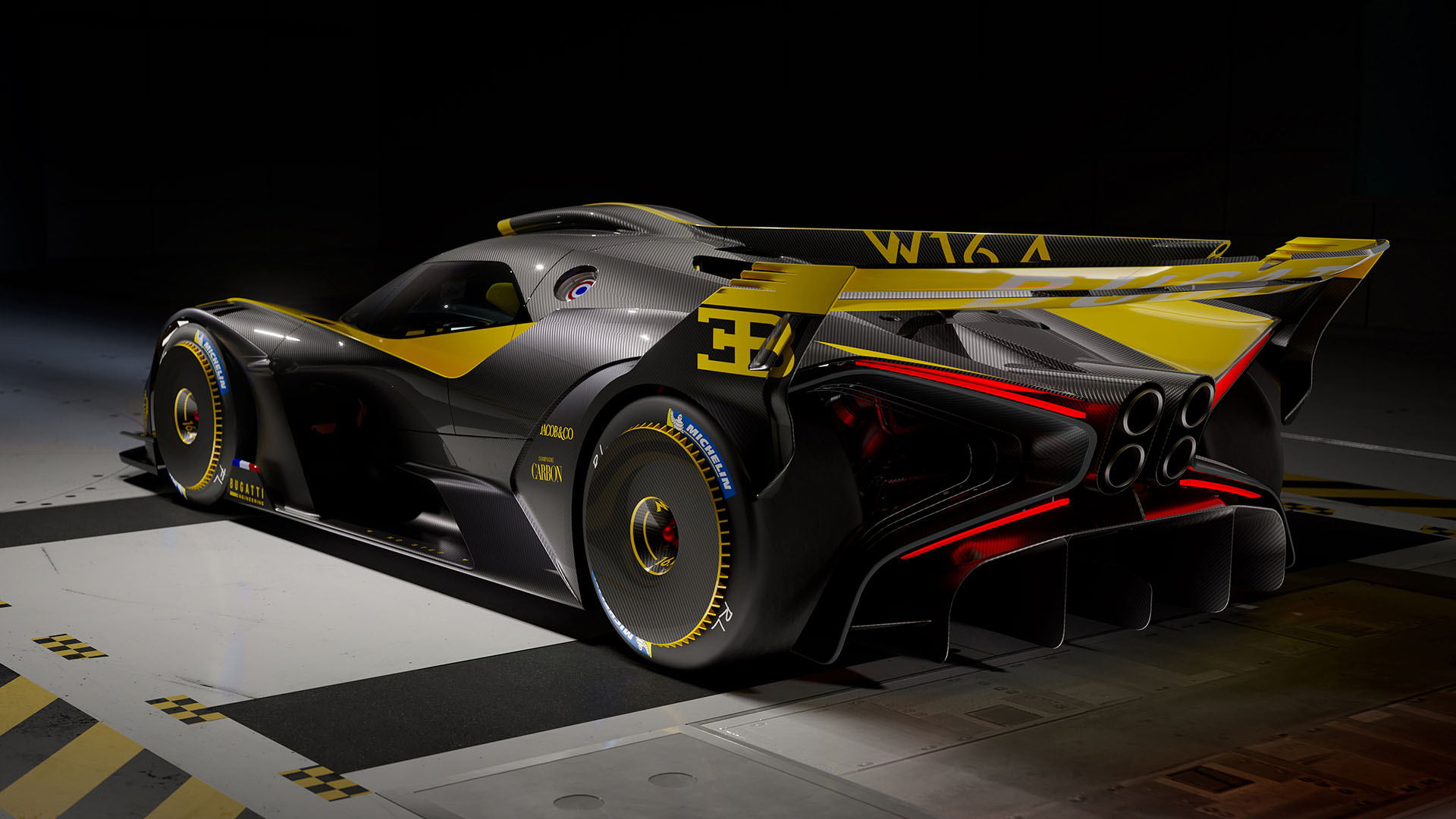
Only 40 units of the Bugatti Bolide will be made for the entire world, and chances are that by the time you are reading this, all of them are sold out already with a price set at €4,000,000 before taxes, that’s about $4,700,000 in the United States of America. Power comes from the famous W16 engine, which on 110 Octane racing fuel is capable of 1,850 PS, but it seems the production version will be set to 98 RON fuel, which compromises power to ‘only’ 1,600 PS, keep in mind this Bugatti comes with a monstrous torque output of 1,600 Nm at just 2,250 rpm … that will rip up the pavement for sure.

At the 36th Festival Automobile International de Paris, an expert jury comprised of design professionals selected the La Bolide from Molsheim as the world’s most beautiful hypercar, taking the victory in the ‘Hypercars’ category by a substantial margin, among a total of four finalists. “It’s an honour for us that the resulting design has won such a highly coveted award, voted for by experts in our field. Praise must go to the entire design team, each dedicated to their craft in harmonizing and perfecting all aspects of the Bolide’s design during an innovative four-months, purely digital process” explains Bugatti Design Director Achim Anscheidt.

It will take the development team at Bugatti three more years to create a production-ready version of the current experimental concept, but they promise the final car customers will be receiving by 2024 will be very close to the prototype we can admire today, with very few changes, technically or visually. The intention is to optimize the areas of design, aerodynamics, quality, and safety for a production version of the Bugatti Bolide with a weight of just 1,450 kgs to achieve a weight-to-power ratio of 0.9 kg per PS when 98 RON gas is used.

“Although extremely functional, the Bolide is brimming with Bugatti’s distinctive personality and tradition. Its creation was inspired by the weight-to-power philosophy of a young Ettore Bugatti, who upturned the world of motorsport in the 1920s by designing lightweight and nimble cars, such as the Type 35, that became practically unbeatable. Bolide is the ultimate culmination of that philosophy, pure in its design and its purpose. Just like those early 1920s racers, that purity brings with it an inescapable beauty,” explains Nils Sajonz, Bugatti Design Head of Special Projects.

Enjoy some more photos of the aggressive but beautiful and instantly recognizable as a Bugatti, La Bolide:

All of the Bond cars of ‘No Time To Die’ (caution for spoilers)

Note: The following overview of the cars in No Time To Die contains spoilers. Read at your own risk, or come back after seeing the film to make sure you caught everything.

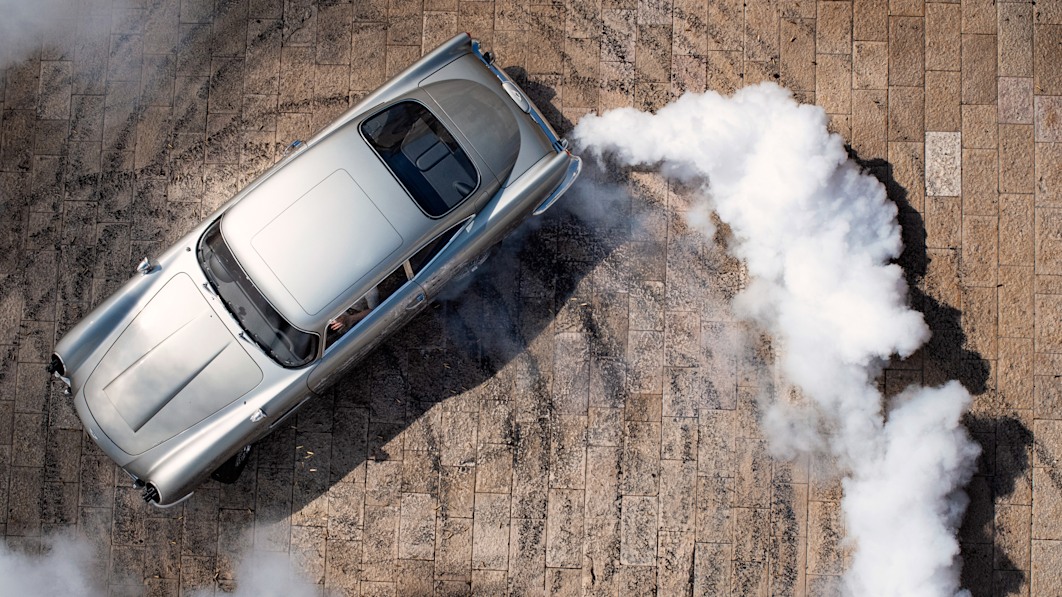
No Time To Die picks up right around where Spectre leaves us. James Bond (Daniel Craig) and Madeleine Swann (Léa Seydoux) are driving along in Bond’s restored and iconic DB5 in Matera, Italy. Things don’t stay all that cheery for long in picturesque Matera, though. As is tradition in Bond films, the first car chase hits us with an explosion of action in what’s a super-long opening scene.

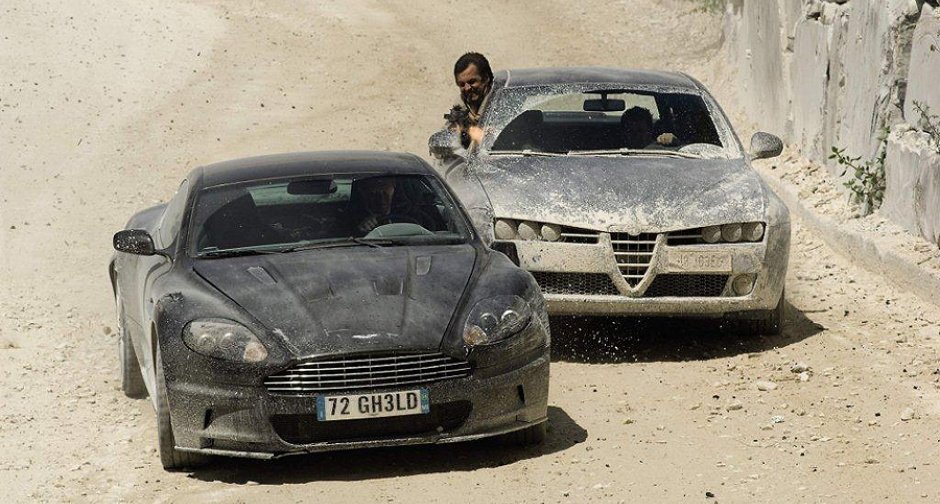
Fourth-gen Maserati Quattroporte: The baddies in the beginning are driving a Maserati and chasing after Bond in the DB5. Specifically, they’re in a fourth-gen Quattroporte, which feels right for a chase scene in Italy. Its squared-off looks are mean enough, and its Italian growl is a good background soundtrack to the DB5’s inline-six.

In addition to the Quattroporte, the chase scene in Matera is home to a couple of the best stunts of the entire movie, including the arch jump done with a Triumph motorcycle seen in trailers — Matera is extremely hilly.

Eventually, Bond and Swann find themselves in the DB5 again together, which is where the famous gatling gun scene from the trailer commences, but not before the bulletproof windows and body of the DB5 are thoroughly tested. RIP to the first-gen Range Rover Classics and Jaguar XFs that joined the Maserati in pursuit of Bond (here’s a list of other Bond cars over the years).

As the DB5 escape scene concludes, we catch a glimpse of what appears to be a Ferrari from the 1970s. However, the view was far enough away that we’ll need a second look to be sure of the exact model.

Land Rover Series III: Next time we see Bond, he’s fishing in Jamaica and driving around a blue Land Rover Series III. It’s yet another of the many Land Rover products featured throughout the film, and unlike most of Bond’s Aston Martins, this one doesn’t seem to have any unique features. The other intriguing vehicle out of Jamaica? An old Chevrolet Bel-Air expertly and effectively piloted by Bond newcomer, Ana de Armas.

Next up, we get a few shots of the new and still-not-for-sale Aston Martin Valhalla mid-engine supercar (also seen in trailers). Bond’s old boss M is in the scene which appears to have been shot in some secret wind tunnel of sorts. Much to our dismay, nobody ends up driving the Valhalla in the film. Could it be a teaser for what the next 007’s car is? There’s a decent chance of that, considering the Valhalla played such a small role in this Bond film.

Aston Martin V8 Vantage: Boy were we happy to see the original V8 Vantage from the late 1970s and 1980s make an appearance. In fact, it made multiple appearances throughout the film. It’s difficult to get a more badass combo than Daniel Craig behind the wheel of a blacked-out Aston Martin Mustang.

Off-road vehicles aplenty: As seen on several trailers, things take a turn to the off-road side of things with flying Land Rover Defenders — Land Rover even made special James Bond versions of the SUV. Bond wasn’t behind the wheel of any of these Defenders, though. Instead, he pilots a Toyota Land Cruiser in the Norway portion of the film as he’s pursued by Range Rover Sport SVRs and Defender V8s with double the horsepower. Plus, Triumph motorcycles are back again for the two-wheel enthusiasts in this bumpy chase scene.

Aston Martin DBS Superleggera: The stunning and still relatively new DBS Superleggera rocks up to the party in Norway, too, quickly showing everybody its bonkers 715-horsepower V12 is nothing to sneeze at. This two-seat Aston is piloted by Nomi, Bond’s 007 replacement, and she’s clearly gone through the same secret agent driving training that Bond did.

And that, ladies and gentlemen, is where we’ll leave you without getting too spoiler-heavy. There are plenty of classic Bond gadgets and gizmos throughout the film. Plus, a bizarre plane/submarine combo vehicle makes an appearance at some point. In short, though, the cars of Daniel Craig’s last Bond film don’t disappoint, and neither do the stunts. 

There is plenty for car enthusiasts to ogle at when No Time To Die opens in theaters on October 8.

Related video:

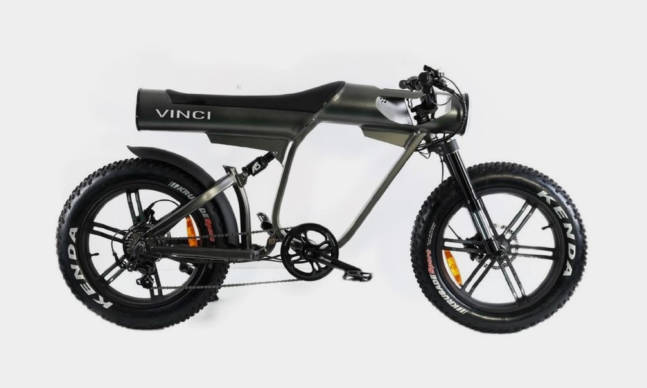
The Vinci e-Bike Pairs High Performance with an Affordable Price Tag

We love bicycles. We also love the idea of strapping battery packs and motors to bicycles to get them performing closer to a motorcycle without us having to do all the work. But the current…

The post The Vinci e-Bike Pairs High Performance with an Affordable Price Tag first appeared on Cool Material.

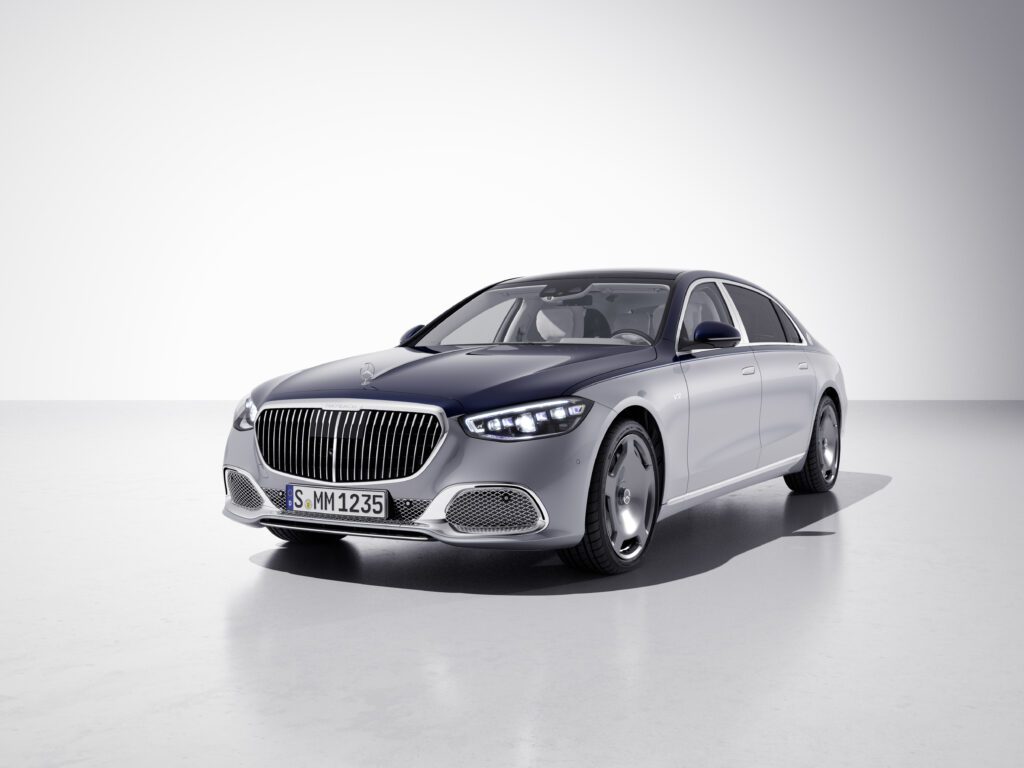
Maybach Announces Limited Edition “Edition 100”

The father and son Wilhelm and Karl Maybach were gifted designers, and they lived their credo of “What is good must also be beautiful.” And it showed as they were pioneers in style and known trailblazers in terms of automotive luxury. Their formula may sound simple, but they created wonders; they were able to bring together perfection and craftsmanship with technical and design innovations. And until today, those values are synonymous to the name Maybach.

The Mercedes-Maybach brand has continued to grow and innovate, creating new models, and soon, they will also offer electric vehicles. Recently, Mercedes-Maybach presented the “Concept EQS” at the IAA Mobility 2021 in Munich. It was a slight preview of their first fully electric model series from 2023. The concept will be based on premium-class electric vehicles from Mercedes-Benz and the modular architecture for luxury.

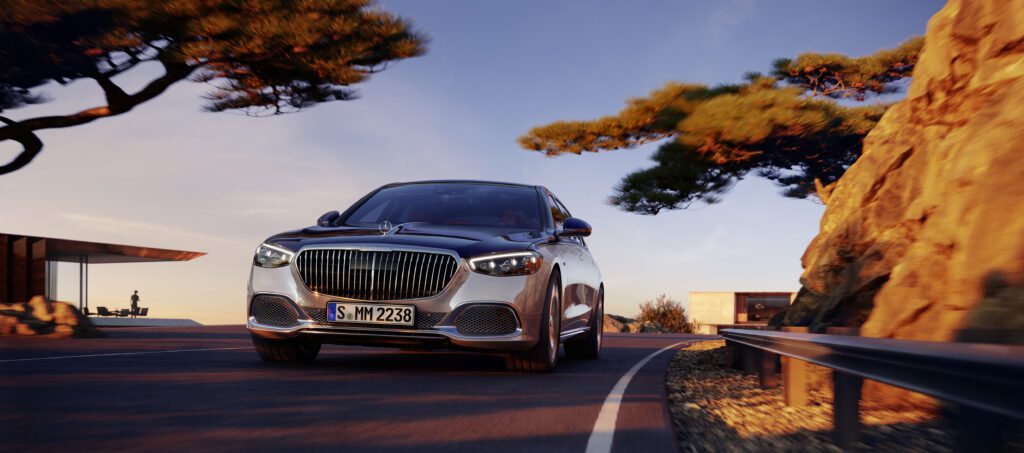
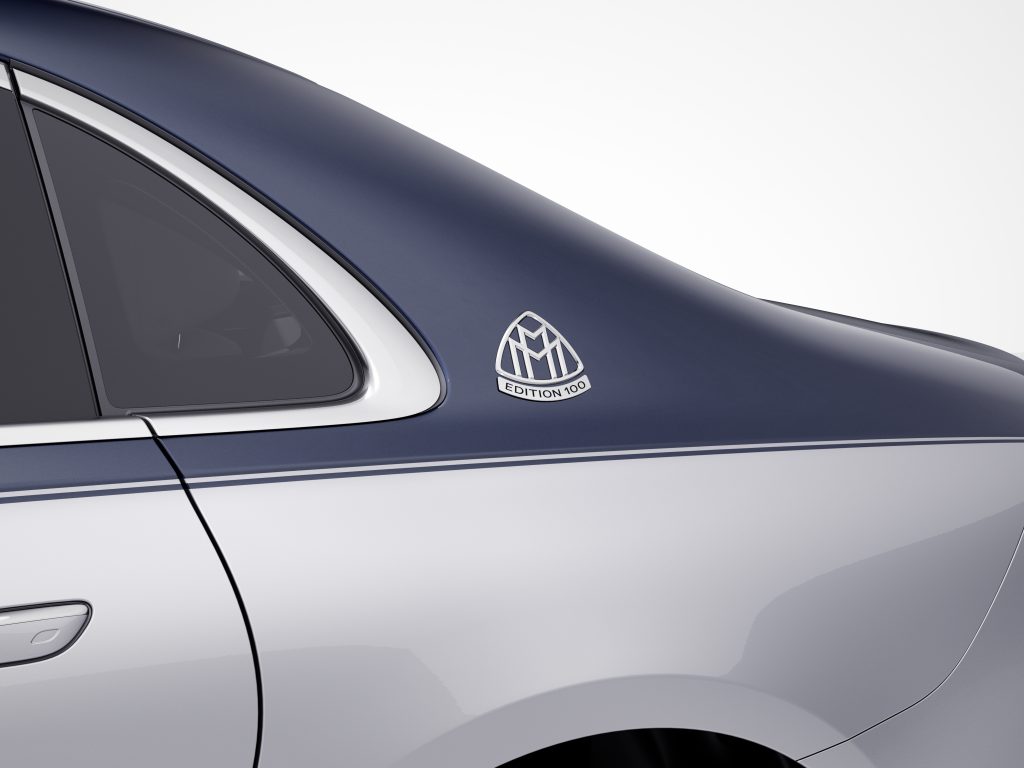
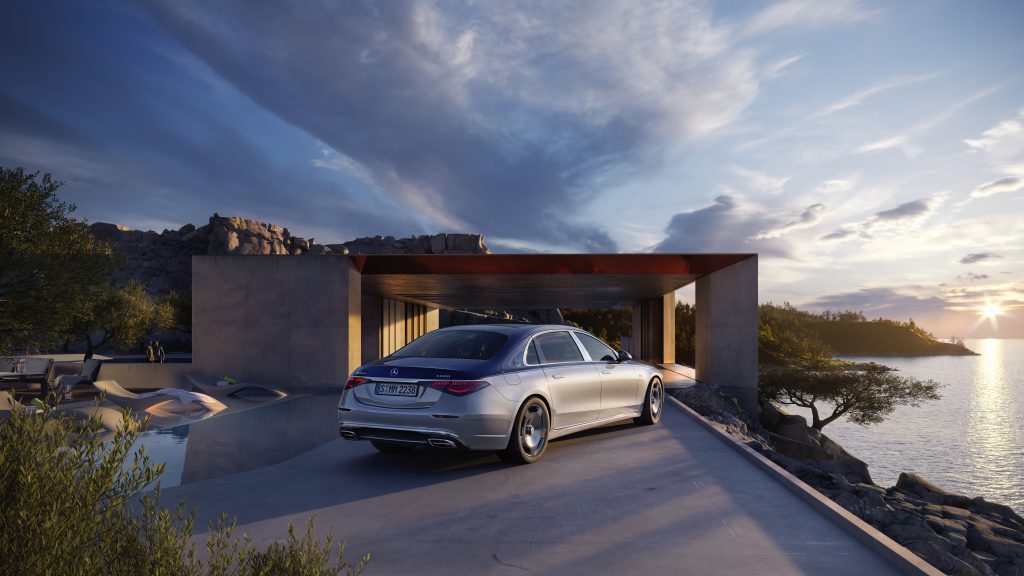
To celebrate its 100th anniversary, Mercedes-Maybach presented the “Edition 100” which is a special edition of the current S-Class. The “Edition 100” will be limited to only 100 units worldwide and will be available in the US during the first half of 2022.

Mercedes-Maybach Edition 100

Mercedes-Maybach Edition 100

Maybach History

Wilhelm Maybach was born in 1846 and was a close friend of Gottlieb Daimler. He initially worked for Daimler – Motoren – Gesellschaft. He had many innovations and among them is the first Mercedes, and it completely ruled the Nice Race Week in 1901. For this achievement, he was given the nickname “Roi des Constructeurs” which means King of the Constructors. Wilhelm and his son, Karl, wanted to create “the best of the best” so they made sure to merge progress with form.

Wilhelm stated, “I think about it around the clock, a constant impulse: the perfection of the technology.”

In September 1921, in a motor show in Berlin, Maybach Motorenbau GmbH unveiled their first mass-produced car. The W 3 was like a moving work of art. It was the first German production car with epicyclic gear system, four-wheel brakes, and a luxury interior. It excited the audience, and it became an instant legend. “Motor” magazine described them saying, “A new star in the automotive firmament is beginning to shine.”

During the 1920s and 1930s, the Maybach name was the epitome of craftsmanship and technical refinement and embodying character and social position. Maybach meant custom-made luxury. Since then, kings, industrialists, artists, and the like were driven around in regal limousines and majestic Pullman sedans. They were able to travel the world in cabriolets, roadsters, and chic coupes. Each Maybach model was equipped differently. In 1928, there was even an Indian maharajah who had his limousine decorated with rubies and gold.

In 1960, after the death of Karl Maybach, Daimler-Benz entered the picture.

Mercedes-Maybach Edition 100

Mercedes-Maybach Edition 100

Daimler-Benz AG and Maybach Motorenbau GmbH

Maybach was revived as an independent brand in 2002. Until the early part of 2013, customers all over the world received their legendary vehicles like the Maybach 57, Maybach 62, and Maybach 62 Landaulet. Still, the driving force of the Maybach engineers and designers was automotive excellence.

In 2014, Mercedes-Maybach became a Mercedes-Benz brand. Alongside the standard Mercedes-Maybach S-Class and GLD models, they will also be launching the S 600 Pullmant. They also had limited-edition special models like the S 650 Cabriolet and the G 650 Landaulet. Their core markets are China, South Korea, Russia, Germany, and the USA.

Each model released embodies being the ‘best of the best’ and they were all made in consultation with customers at the Center of Excellence in Sindelfingen near Stuttgart. The vehicles can also be customized on request to the Mercedes-Maybach MANUFAKTUR program, offering craftsmanship and perfection with every unit.

Head of Top End Vehicle Group Mercedes-Benz AG and CEO Mercedes- AMG GmbH Philipp Schiemer stated, “It’s about the passionate combination of every detail, no matter how small, that makes a luxury car a Maybach – all in combination with state-of-the-art technology from Mercedes-Benz. Every Mercedes- Maybach stands for Sophisticated Luxury in all its facets – for our customers who are looking for something very special.”

Mercedes-Maybach Edition 100

Mercedes-Maybach Edition 100

Mercedes-Maybach “Edition 100”

To celebrate its 100-year anniversary, the brand continues its quest to provide maximum individuality, independence, and comfort with a new high-tech model.

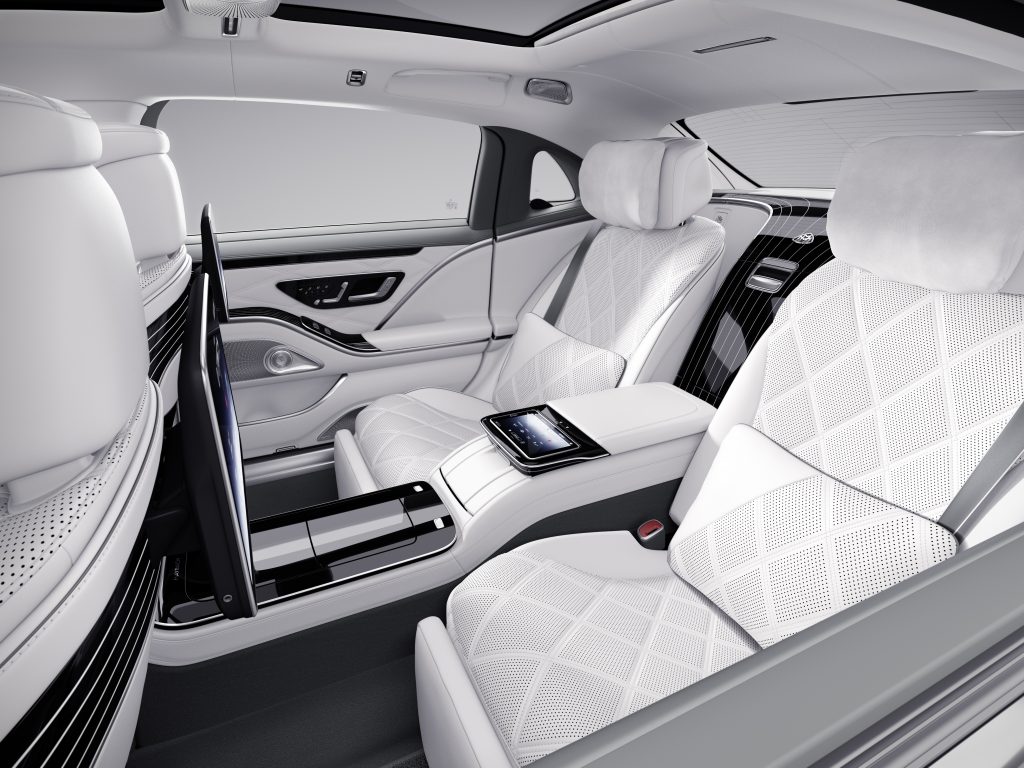
The Mercedes-Maybach S-Class is the perfect luxury sedan equipped with a V12 engine that can produce 621 hp. It has noise-insulated first-class rear compartment with Burmester 4D surround sound system. The seats have heat and massage functions, as well as high-tech infotainment screens. The model has a 7-inch longer wheelbase compared to the long-wheelbase version of the S-Class and for the first time, it is equipped with an all-wheel drive.

There is no better tribute to the Mercedes-Maybach S-Class than having a limited run “Edition 100” that is limited to only 100 units worldwide. The S-Class is hand-painted to have a two-tone Cirrus Silver/Nautical Blue finish. For the interior, it was given a special design in MANUFAKTUR Crystal White/Silver Gray Pearl. The impressive radiator grille sports the brand emblem. The C-pillar carries the brand logo as well as the “Edition 100” inscription and it can also be seen in various stowage compartments and illuminated panels in the interior. The hub caps also proudly bear the “Edition 100” emblem, and the wheels are given a new grey finish.

There will also be a car cover that has the iconic double M. Clients will also be given a beautiful handmade case made from soft crystal white or black leather that is made to store keys and papers to further show the exclusivity of the edition. As part of the anniversary edition, Mercedes-Maybach’s partners are also designing and creating limited special series items. One of them is the Maybach icons of Luxury that will be offering a diamond-studded fountain pen from the Maybach the Peak collection.

On the first half of 2022, the “Edition 100” will be available in the US.

Mercedes-Maybach Edition 100

Mercedes-Maybach Edition 100

“Creator Brand” Mercedes-Maybach

Even as early as a hundred years ago, Karl Maybach was already partnering with the best specialist companies to give his customers their wishes and be able to create the bodies in their style. He provided the perfect blend of technical quality with individual design and perfect craftsmanship. Each car was different. The coachbuilders are a perfect match to the chassis and engines partnered with high-quality equipment and handcrafted bodies.

Each vehicle shows the character of each customer. They created elegant and unique pieces that are perfect for connoisseurs and collectors.

The core of Maybach luxury is centered on constant innovation. To provide this, inspiration is needed, and inputs from creative partners like the early coachbuilders were welcome. For Mercedes-Maybach, ultimate luxury is the perfect blend of creativity and harmonious aesthetics between technology and individual experience.

Mercedes-Maybach relies on and respects the expertise of their partners creating a strong partnership between traditional businesses, visionaries, and manufacturers.

Philipp Schiemer added, “We see ourselves as a creator brand. Every vehicle has always been configured and manufactured with veritable artistic ambition. Customers and producers have always been creative together – we want to preserve this spirit and further strengthen it in the future.”

Mercedes-Maybach Edition 100

Mercedes-Maybach Edition 100

Exclusive Maybach for other areas of life

For the Maybach anniversary year, silver manufacturer Robbe & Berking will be offering a special series of champagne flutes. It will have the raised Maybach logo on the base, and it will also sport the Maybach “100 Years” logo engraved.

Flensburgers also made matching water or long drink tumblers for connoisseurs and lovers of classics, and they will be available to everyone, not just Mercedes-Maybach owners.

Since 2008, Robbe & Berking Classics has been creating and restoring wood sailing yachts in their own shipyard. The two companies are united in their love for travel and beauty.

Robbe & Berking Silbermanufaktur seit 1874 GmbH & Co KG Managing Director Oliver Berking shared, “The large and small masterpieces of both companies are among the best of their kind in the world. In both manufactories, unique works of timeless elegance are produced from selected materials in a perfection that arouses emotions among collectors and customers all over the world.”

There will also be matching lifestyle accessories like leather goods, exclusive travel bags, clothing, and eyewear. All the items are made in Germany to enrich their client’s lifestyle beyond the car. The collections are developed by licensing partner Maybach Icons of Luxury with the mythical brand emblem. They use sustainable materials like natural horn, titanium, precious woods, cashmere, or leather types that meet the highest environmental standards but doesn’t compromise on quality. The creative understatement of the products shows the fascination of the brand and delivers the desire for personal expression. CEO Jutta Kahlbetzer explains, “We are driven by the goal of making the exclusive Maybach feeling tangible in as many areas of life as possible.”

As part of the 100-year anniversary, the Maybach the Peak collection will be offering a limited-edition fountain pen with an 18-carat gold nib. It will have a serial number in a stylish wooden gift box. The clip of the pen will have 100 diamonds and the client will have the option of either black or white. The cap tip will be made of mother-of-pearl while the body will be lacquered in the same blue metallic shade that will be seen in the “Edition 100” vehicles.

Mercedes-Maybach Edition 100

Mercedes-Maybach Edition 100

Mercedes-Maybach in the discovery of the best possible future

Even in the fourth generation, Ulrich Schmid-Maybach, the great-grandson of Wilhelm, and the grandson of Karl Maybach, the values of the family business run true; he shows innovation, creativity, enthusiasm, and quality. Schmid-Maybach shared, “There is no greater luxury than knowing you have the best. Maybach’s self-image as the ‘ultimate inventor’ goes back to its own history of origin, and to the quality claim ‘Made in Germany.’ To that origin, to create something out of nothing, to transmit that wisdom to subsequent generations and to foster a culture of creativity and innovation.”

In 2005, Schmid-Maybach started The Maybach Foundation. It is a non-profit organization that pays homage to Wilhelm and Karl Maybach’s life work. They have built the virtual Maybach Museum, and they also foster the next generation of designers and innovators through their mentoring programs.

Gottlieb Daimler sponsored Wilhelm Maybach which is where the idea of the mentoring concept started. It helps the Maybach Foundation to focus on the gifted individuals who has shown talent in a particular field. The Maybach Foundation is active in a lot of different fields like ethics, society, technology, science, sustainability, and art.

Ulrich Schmid-Maybach stated, “Your best possible future helps others find theirs.”

The Maybach Foundation has the support of world-renowned artists like the musician Quincy Jones, writer Paulo Coelho, and painter and director Julian Schnabel as they also aim to bring and share the legacy of the founders into the future.

“For the future, we will deepen the dialogue with outstanding personalities such as artists, architects and companies. Just like them, we will not stop perfecting our products. The brand will reinvent itself once again after 100 years: sustainable, artistic, visionary. With more models – and these will also be electric,” Philipp Schiemer added.

Mercedes-Maybach: upholding traditions, embodying luxury, with visions that push technology and innovations even further.

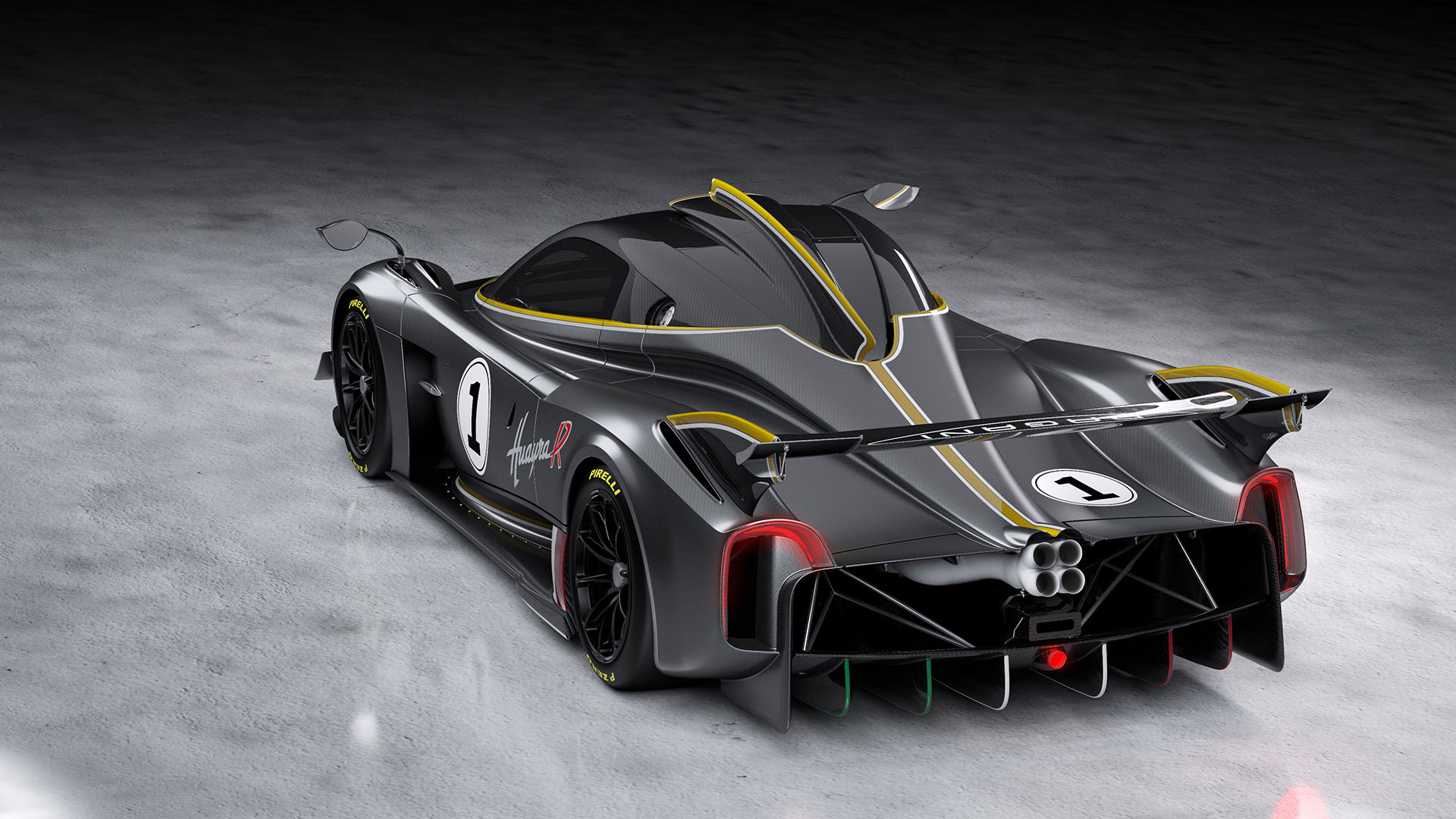
The Pagani Huayra R … on the street?

Yes, you are reading that title right, it seems someone was able to get the track-only Pagani Huayra R and drive it on public roads, in the middle of a city no less, the sound this race version of the Pagani Huayra makes is just tremendous, make sure to use headphones when you view the video below:

[embedded content] [embedded content]

The above video was made during the 2021 edition of the Supercarownerscircle event in Zagreb, Croatia, where we see the Huayra R driving on the city streets, but also doing some acceleration runs on the Velika Gorica Airport, where it looks like there is no reverse gear as they need to push the car back as it can’t make the turn on the narrow runway.

Power in the Pagani Huayra R comes from a V12, 6-litre NAracing engine, designed from the ground up in partnership with HWA AG specifically to meet the Atelier’s need to equip its new creation with the lightest, most powerful, and efficient track-ready V12 ever created with peak performance on the track up to the red line of 9000 rpm while the dry weight of the Huayra R is just 1,050 kg with a maximum power output of 850 hp at 8250 rpm, only 30 units of the Pagani Huayra R will be built, at €2,600,000 each, before taxes.

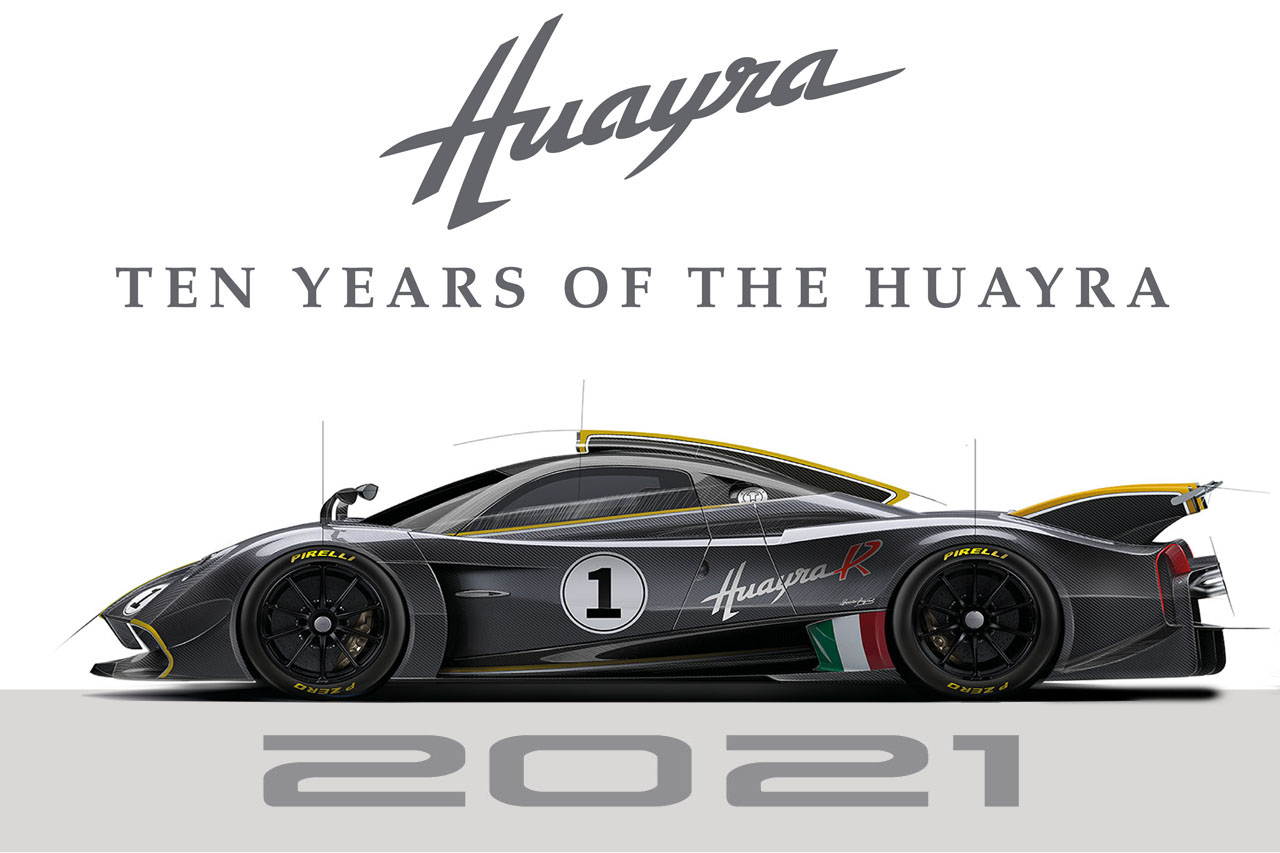
Back in August 2021, at the Monterey Car Week, Pagani celebrated the 10th anniversary of the Huayra, but they only showcased some key elements of the Huayra R, it seemed the car wasn’t ready yet for a public unveil, and let’s not forget the video where Tim shows us around a 1:1 scale mockup of this race-track only version … it seems they managed to get the first production prototype ready for Zagreb now …

Best of the Current BMW Model Lineup

BMW continues to be a globally trusted brand when it comes to consistently delivering exceptional luxury sports cars.

In their pursuit of being a leader in innovation and design, the Bavarian company is ever-present around the world with production facilities in 15 countries and a massive global sales network. This has enabled them to keep their finger on the pulse of the many markets they participate in, bolstering their commitments to continually improve their products.

Despite their ongoing evolution, the lineup of BMW vehicles remains familiar and recognizable – with the BMW M series of cars continuing to showcase the company’s high-performance offerings. Other cars, such as the BMW Z4 and BMW i8 offer more unique tastes from the brand; respectively bringing to life, the company’s philosophy in roadster and hybrid form.

For 2021, BMW has opted not to unsettle the status quo too much, with virtually all models remaining largely unchanged since 2020. This is with one key exception though, in that a newly designed M3/M4 (also available in Competition trim) has been released this year. The incoming products ushered in the 6th generation of BMW’s most popular performance model.

Like any of the other mainstream car manufacturers today, BMW is hunkering down on being innovative in order to stay relevant. The next generation of BMW vehicles is set to diversify the brand with a number of new performance and all-electric vehicle debutants – such cars are already available for pre-orders, so there will indeed be something for everyone.

Here are the best brand new BMW models you can purchase today.

BMW M3/M4 Competition

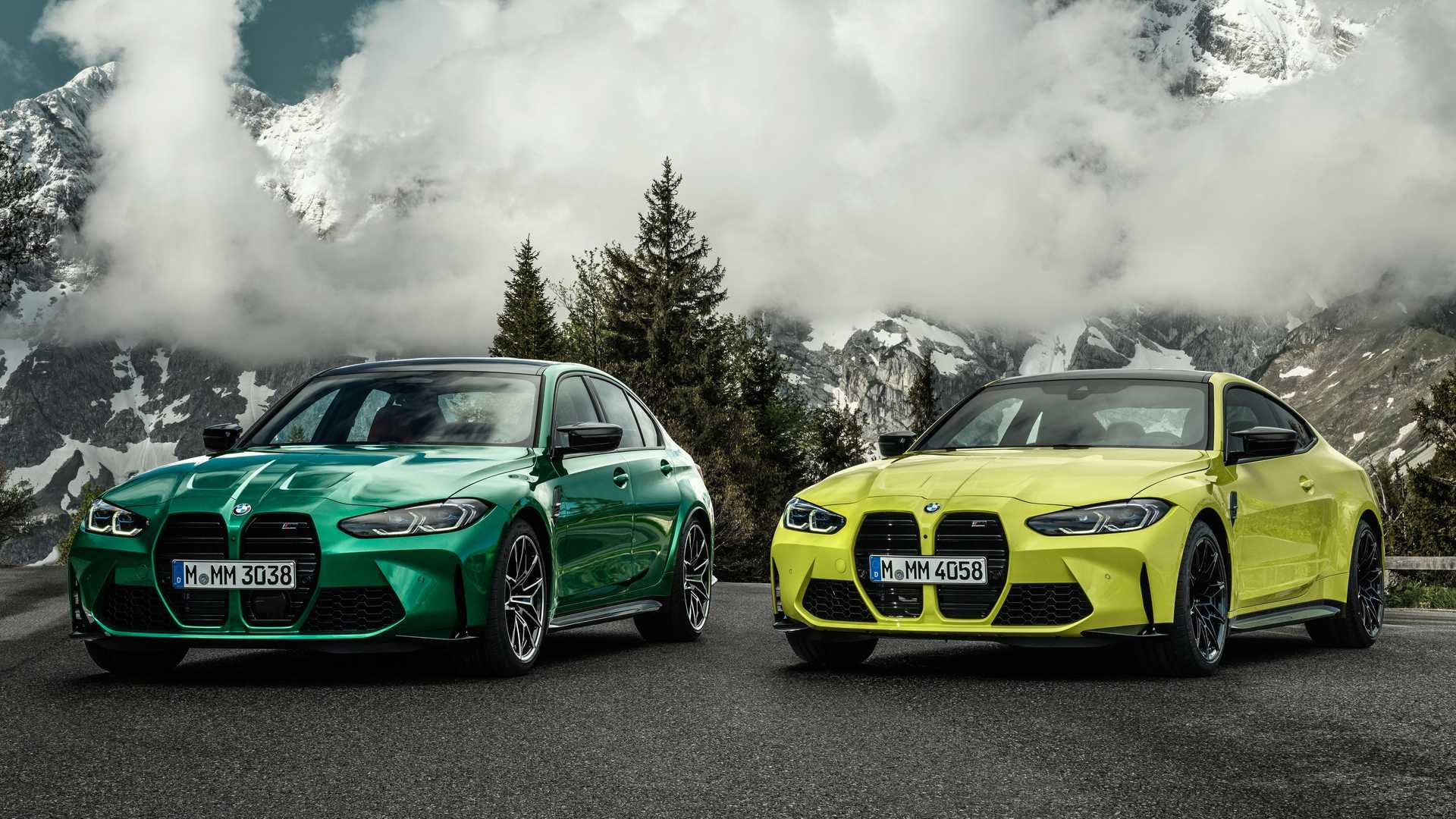
2021 BMW M3 and M4

BMW has refreshed the M3 sedan and M4 coupe for 2021, and the 6th-gen siblings remain as driver-focused as ever. By not caving in to conventional wisdom – and in doing so, honoring the wishes of its enthusiast fanbase – BMW is offering the base versions of the cars with a 6-speed manual transmission as standard. By all important metrics, the M3/M4 are superior cars to their predecessors in every regard; a bump in power, a better chassis, fresh styling, and more luxuries all coming together in a very formidable looking and high-performing package.

The Competition version of the incoming generation is going to be my pick of the lot. Besides the notable increase in power and torque over the regular M3/M4, the Competition models will exclusively have the option of adding xDrive all-wheel drive. BMW has promised that the rear-biased system will offer all of the traction benefits, without any drawbacks on the thrill-o-meter. Inevitably, the potent power plant was decidedly a better match for the 8-speed M Steptronic transmission. While this may not be the purists’ first choice, the Competition models are better equipped for those who find lap times to be the more pressing matter at hand.

BMW M2 CS

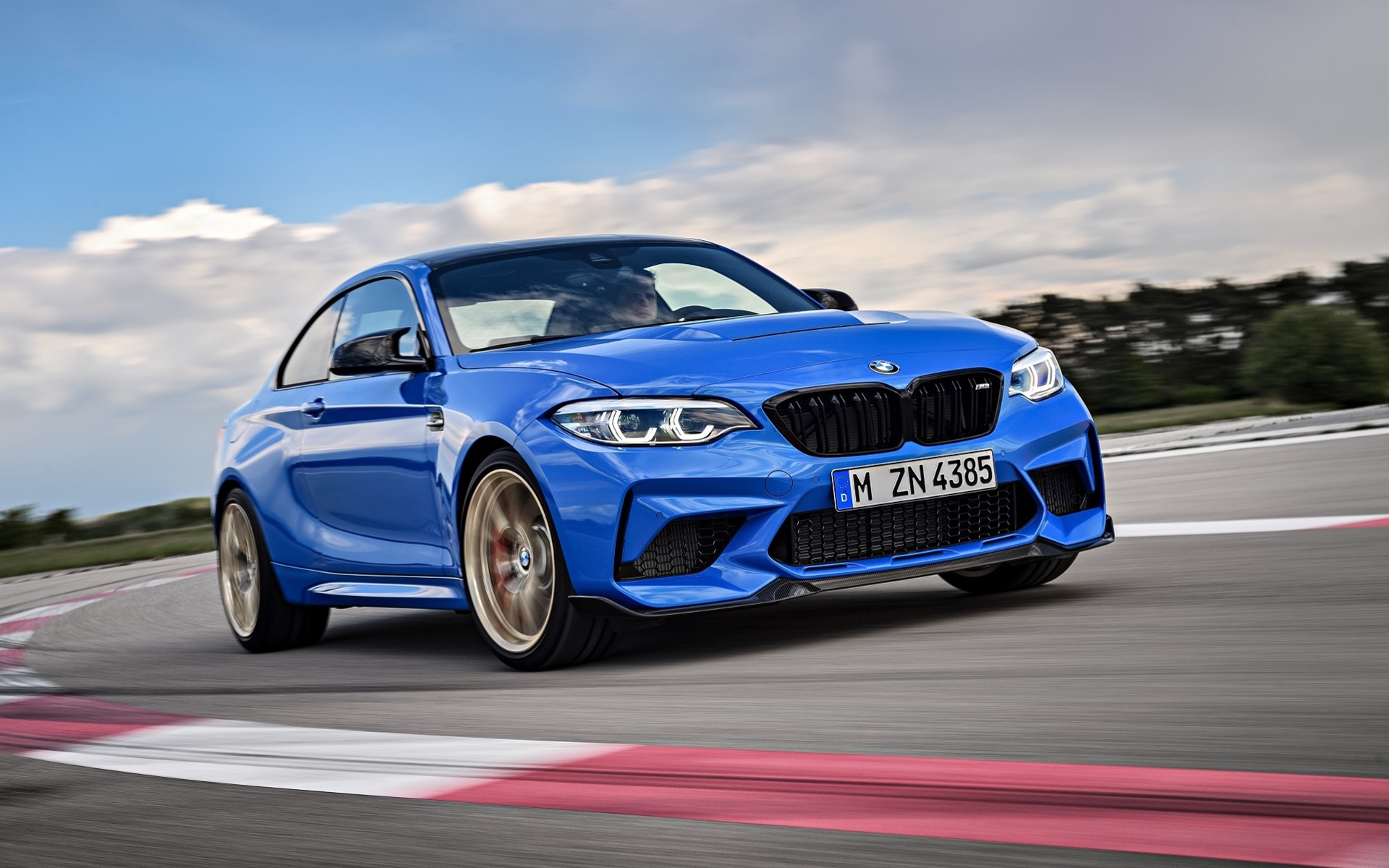
2021 BMW M2 CS

The BMW M2 CS is the company’s interpretation of the ultimate sport compact car – and it’s a pretty damn good one at that. As a step above the already capable M2 Competition, the CS offers more power and improved performance. Oh, and a manual transmission too. Automotive purists, rejoice! The M2 CS also comes with slightly tweaked looks, and is the smallest super-fast sports car from BMW right now. The car features a twin-turbocharged inline-6 engine that makes 444 horsepower and 406 lb-ft of torque – that’s a bump of 34 additional horsepower over the Competition model.

It looks to be the perfect car for track-junkies who are also purists; the M2 CS has all the attributes to be clipping apexes with aplomb, while providing those perpetually satisfying 3-pedal gear shifts that few cars being produced today are capable of. As a quintessential M car, the M2 Competition still comes with enough practicality to be a great daily driver, too.

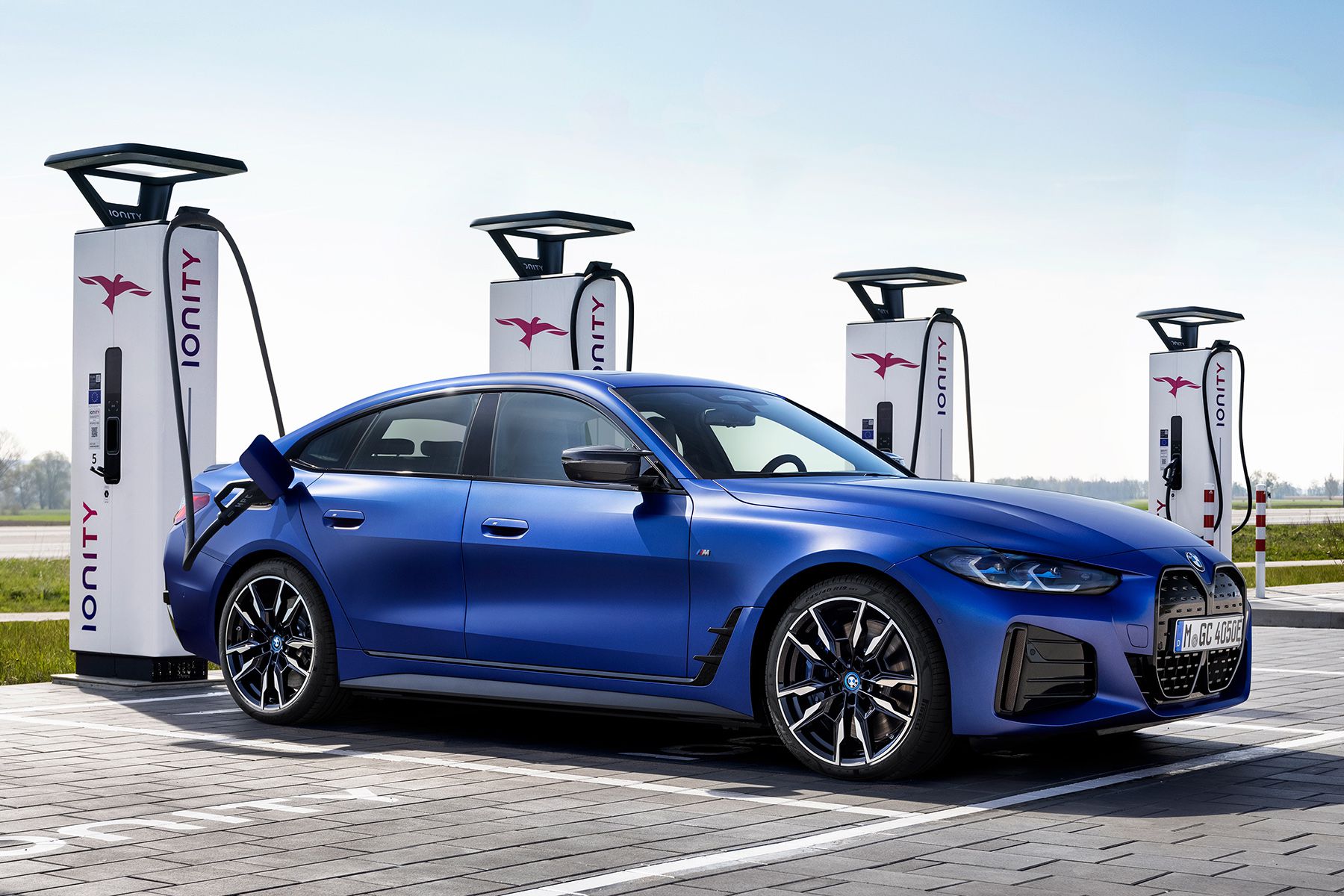
BMW i4 M50 xDrive

2022 BMW i4 M50

In the introduction, we mentioned that electrification is the next step towards BMW’s vision for the future; it appears that this future is now upon us, and that this vision is now a reality. The BMW i4 M50 xDrive is one of a number of fully electric BMW vehicles set to debut in the short term. The M50 has the distinction of being the very first (and only, for now) BMW EV to part of the M family. With that said, you can be confident that this car will have all of the performance credentials required for it to be a contemporary within this distinguished group of automobiles.

The easiest comparison that can be made with the sporty sedan is that it offers M3-like performance with an all-electric drivetrain. An 84 kWh battery pack and two electric motors, through which 536 hp and 586 lb-ft of torque can be produced certainly backs up those claims, while putting it in direct competition with the Porsche Taycan 4S and Audi e-tron GT. BMW has also claimed range figures of around 250 miles, compared to 300 miles that the more tame and economical i4 eDrive40 (the platform on which the M50 is based) is capable of. The BMW i4 M50 xDrive is not on public roads yet, but you can certainly order one today. The base price of the M50 is around $4,000 less than the entry-level M3 – something to ponder, while we wait for deliveries to begin early in 2022.

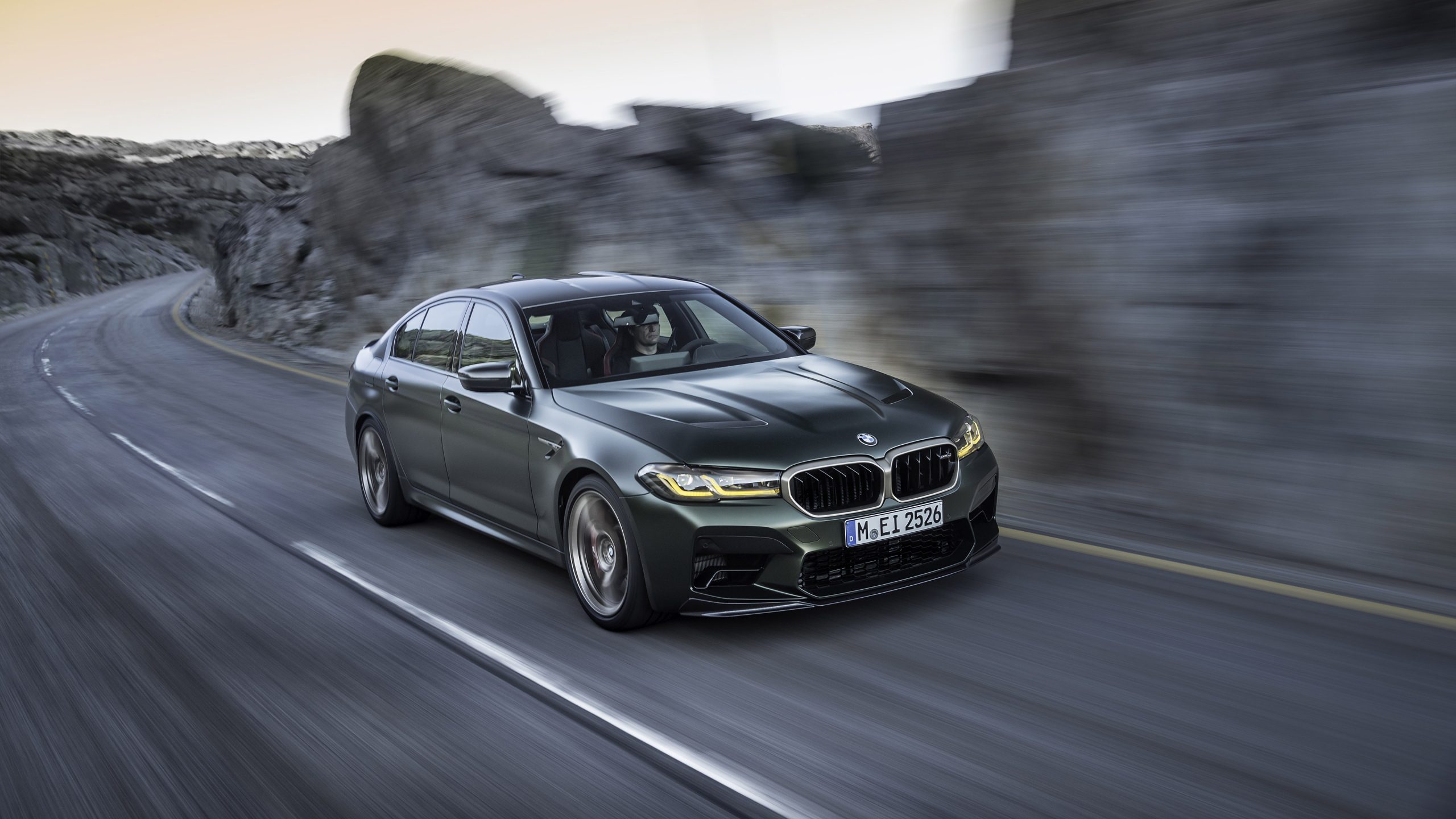
BMW M5 CS

2021 BMW M5 CS

If you’re in the market for an M5, it’s really a no brainer – for us, anyway – to spend the wee-bit extra to step up to the M5 Competition. Just a touch more powerful, the M5 Competition comes with 617 horsepower and 553 lb-ft of torque. Where you really get your money’s worth is through the stiffer dampers, stiffer anti-roll bars, and a .28” lower ride height. All things considered the M5 Competition is a sharper, stiffer, and an even more performance-oriented version of the M5.

The Competition model gets a new full Merino leather color scheme, a new Track drive mode, and new shock absorbers. These dampers benefit from a recalibrated control system that BMW says should improve ride comfort, especially at high speeds. Still not enough? Well, there also happens to be a new range-topping CS model for the M5 which puts out an additional 10 hp, for a grand total of 627 hp. That’s nothing to write home about, but where the CS truly begins to differentiate itself is on the scales; it’s some 230 lbs less than the Competition model, thanks in large part to a strict diet of carbon fiber.

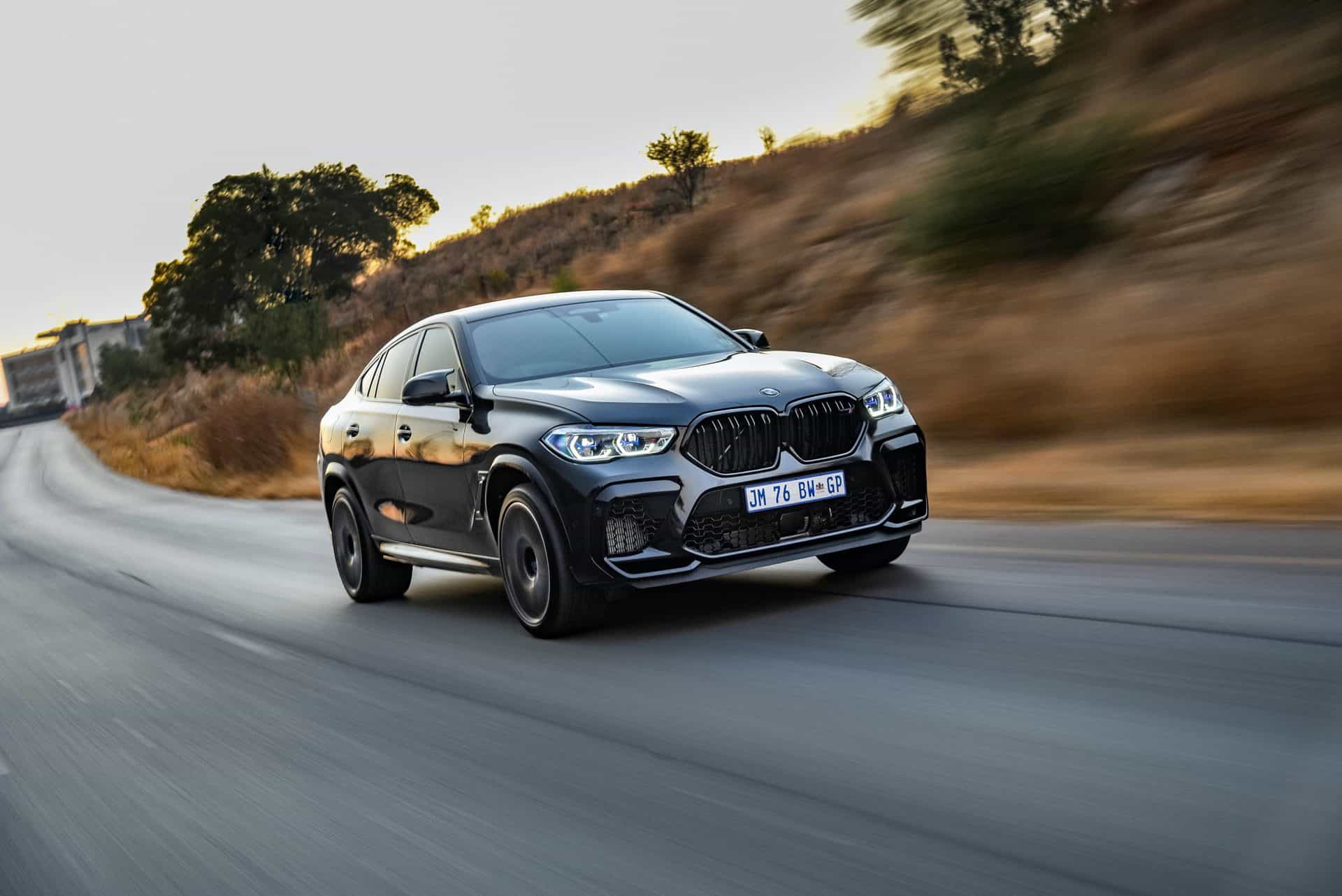
BMW X5/X6 M

BMW X6 M Competition

More practical than the M5 sedan, the 2021 BMW X5 M is a beast that can easily handle any family-oriented duties you can throw at it. Ignore anyone that tells you these are “track capable” performance SUVs – even in the optional Competition trim – because nobody spending this kind of money is keen to take it to a track. What they are however, is serious performance, packaged in an luxury SUV body that has coupe-like agility. It might be more of a kid hauler than a weekend warrior, but it’s epic all the same.

Like the X5 M, the 2021 X6 M is available in both regular and Competition trims, and is mechanically identical to its sibling. Both the non-Competition models make 600 hp and 553 lb-ft of torque. When in Competition trim, the SUVs crank out 617 horsepower and the same 553 lb-ft torque. Sound familiar? That’s because they’re equipped with the same engine used in the M5 Competition. Even more epic. Updates for 2021: Mechanically unchanged, with some new standard features such as Android Auto. Previously optional items such as roof rails, night vision, and rear-seat entertainment have been eliminated, however.

Best Sports & Performance Cars From The 1970s

The 1970s: Discomania. The Hippie Movement. Bell-bottom jeans and platform shoes. Those lava lamps that everyone seemed to have on their nightstand. Oh, and let’s not forget Happy Days – which was actually about the ’50s, but I digress – and that still-sorta-catchy Y.M.C.A song by Village People. There are so many more memorable things to mention from that decade, but let’s get to talking about how the ’70s were also responsible for producing some amazing automobiles.

We say that these cars were ‘amazing’ both because of, and in spite of, the political climate as it related to petroleum during the era. The ‘gas crisis’ as they called it, was a period when gas prices were relatively exorbitant due to severe shortages caused by an oil embargo. In significant numbers – particulary in the US – consumers began to shift towards buying smaller, economical, and more fuel-efficient vehicles. While some of the cars on this list were net beneficiaries of this change, others would need to make an even more convincing value proposition in order to persevere; some would do just that, even to this day.

Through the lens of a car enthusiast, the decade was typified by European wedge-shaped exotics, indisputably-American muscle cars, and peculiarly impressive Japanese imports. While angular silhouettes appeared to be the dominating design philosophy, there was also a cohort of manufacturers who opted for sleeker, more curvy lines. Performance by today’s standards will of course seem meager, but that didn’t preclude the existence of roaring 12-cylinder configurations and large-displacement engines. However, it was also an opportune time for manufacturers to develop and improve smaller power plants, many of which would end up being the key reason behind their respective models’ successes.

Here’s our shortlist of 15 such cars, which we have curated:

BMW M1

BMW M1 Red

The BMW M1 is a bit of an enigma. Those who love it, really love it – and for all the right reasons too. First off, it should be stated that we have the M1 to thank for beginning a long line of BMW M cars which have come to define, and propagate BMW sports car performance globally. The M1 was BMW’s first mid-engined sports car and fashioned the much adored wedge-shaped silhouette; the dominating design philosophy for exotic cars at the time. It featured an impressive 3.5L naturally-aspirated inline-6 engine which produced 273 hp. So, what’s not to love? Well, BMW would have to eventually chalk the M1 up as a learning opportunity, as the car ended up being a commercial flop.

Starting off as a collaboration between BMW and Lamborghini, the car had lofty ambitions right off the bat as well; to dominate all the racing series’ it was envisioned to compete in. This particular plan never came to fruition as Lamborghini – tasked with building the cars – ended up filing for bankruptcy before production ramped up. BMW managed to scrape together some new partners to get a production version on the road, but only 455 units were ever built before it was axed for good; its asking price of 100,000 DM had a lot to do with that.

Some of those units were even built for competition, but none of them ever saw any noteworthy success on the circuit. While the BMW M1 didn’t realize its main objectives, it nevertheless remains one of the best and most important BMW cars produced to this day.

Chrysler “Aero Warriors”

1970 Plymouth Superbird

The Dodge Charger Daytona and Plymouth Superbird were produced under the direction of their parent company, Chrysler. Dubbed the “Aero Warriors”, the two “sister” cars which were part of an ensemble which included the Ford Torino Talladega and Mercury Cyclone Spoiler II. All of these cars earned those nicknames because of their huge nose cones and enormous rear spoilers that made them legendary among the competition. They are considered to amongst the very first stock cars to be modified aerodynamically.

Due to homologation requirements, both Dodge any Plymouth had to produce the Aero Warriors in substantial numbers. Dodge would only end up producing 503 examples of the Charger Daytona, though in Plymouth’s case, 1,920 Superbirds would roll off the assembly line. While the race versions got full blown Hemi engines, most of the cars got 440 Super Commandos or 440 6-packs rated at 385 hp. Only a small fraction of models would come equipped with the top-gun Hemi 426, which produced 550 hp. The Aero Warriors were so successful in competition that NASCAR had to change the rules to make the playing field more even in 1971.

Porsche 930 (911 Turbo)

Porsche 930 Turbo

In 1974, Porsche introduced the first production version of a turbocharged 911. Although it was referred to as the Porsche 911 Turbo in Europe, the car was marketed as the Porsche 930 in North America. Porsche had injected all of its sportscar experience with exhaust-gas turbochargers into its series production models. At the onset only a small number of Turbos were planned. However, in the light of its amazing impact, production figures were boosted. Compared to other 911 trims, the Turbo was visually unique with wider wheel-arches, larger wheels and tires, and a large and soon-to-be-iconic “Whale Tail” rear spoiler. Early models were equipped with a 3.0L 260 hp engine. which was eventually upgraded to a 3.3L unit producing 300 hp, for the 1978 refresh.

The Porsche 930 Turbo is widely considered to be the original “widowmaker”, as it was the first car to really become synonymous with the term. This reputation was earned due to the car’s difficulty to be controlled at the limit, and was one of the scariest road-going Porsches ever built. A less foreboding distinction the 930 had is that it is the very first turbocharged 911, making it the forefather of the long and successive line of series production 911 Turbo models that followed it.

Lamborghini Countach

1974 Lamborghini Countach

The Lamborghini Countach represents the early beginnings of the legend that has become ‘Lamborghini’ as we know it today. Sure, the Miura came first and wowed crowds, but it was the Countach that took the brand to an entirely new level. Once again, designer Marcello Gandini managed to draw a fascinating, unconventional car that left everyone speechless. Lamborghini wanted to build the most spectacular supercar ever made; one that would be far more advanced than its time, one that would make an even bigger impact than Miura did, one that would become the poster car plastered on every young person’s bedroom walls.

The first generation of the Countach was given the codename “LP 400“. The bodywork was made of aluminum alloy, bonded to a lightweight tubular spaceframe chassis which was designed by Paolo Stanzani. The suspension was designed such that it was double-wishbones all around, coupled with strong ventilated disc brakes. The engine was originally supposed to be a 5.0L V12 good for around 440 hp, but overheating and reliability problems would force Lamborghini to settle on its proven Bizzarrini-designed 3.9L V12.

The innovations in engine and transmission placement worked marvelously, with the first-gen Countach producing 325 hp @ 7,500 rpm and 260 lb-ft of torque @ 5,500 rpm – this translated to a very quick 0-60 mph sprint in just 5.9 seconds, and an impressive top speed of 181 mph. Lamborghini has just released a remake of the Countach, but will it ever be able to compete with the original car?

Pontiac Firebird Trans Am

1970 Pontiac Trans Am

In March of 1969, Pontiac quietly announced a new performance/trim option for its popular Firebird model, but things did not stay silent for long. Dubbed the Trans Am (after the Trans American Racing Series), it quickly became a pony car icon and one of the best-known American muscle cars ever produced, ultimately dethroning the mighty GTO as Pontiac’s most popular performance model. This event also marked the end of the first generation Firebird, though the Trans Am would pick up right where things left off when the second generation car was introduced in 1970.

Styling changes aside, the Trans Am remained entirely familiar in terms of being Pontiac’s flagship performance model. Although things started out with a bang for the second-gen series – and particularly the Trans Am models – the aforementioned oil embargo amongst other factors, would see the car subjected to significantly decreased power outputs halfway through the model’s lifecycle.

While the the option of having a V8 engine persevered through the entire 11 years that the model was produced, the most powerful engine option from 1975 onwards, produced just 220 hp in comparison to the 370 hp which was available during the 1970 model year. Examples equipped with the “Ram Air IV” V8 are the most powerful, and generally most desirable versions of the Trans Am, and were exclusive to the first 2 model years.

Lancia Stratos

1972 Lancia Stratos HF Stradale

Built from scratch to contest the World Rally Championship, the Lancia Stratos was the first car of its kind. It practically changed the rally sport, and kickstarted a new era where auto manufacturers would commonly produce road cars thinly disguised race cars in order to navigate the often times, convoluted homologation requirements. The Lancia Stratos is definitely up there as one of the most badass looking cars on this list. Its eccentric design – even in its rally form – made it more akin to an exotic road-going supercar than it did to a purpose-built rally machine.

It was homologated in 1974 as a Group 4 contender in the World Rally Championship, after a production order of 500 examples commenced in 1973. Like the road-going Stradale version, the Group 4 rally car used Ferrari’s by-then-phased-out Dino 2.4L V6 engine but tuned to 265 bhp for the 12-valve version and 320 hp for the 24-valve version. However, regulations for that year meant that only the 12-valve version of the car would be allowed to compete, although this did not encumber it from success whatsoever.

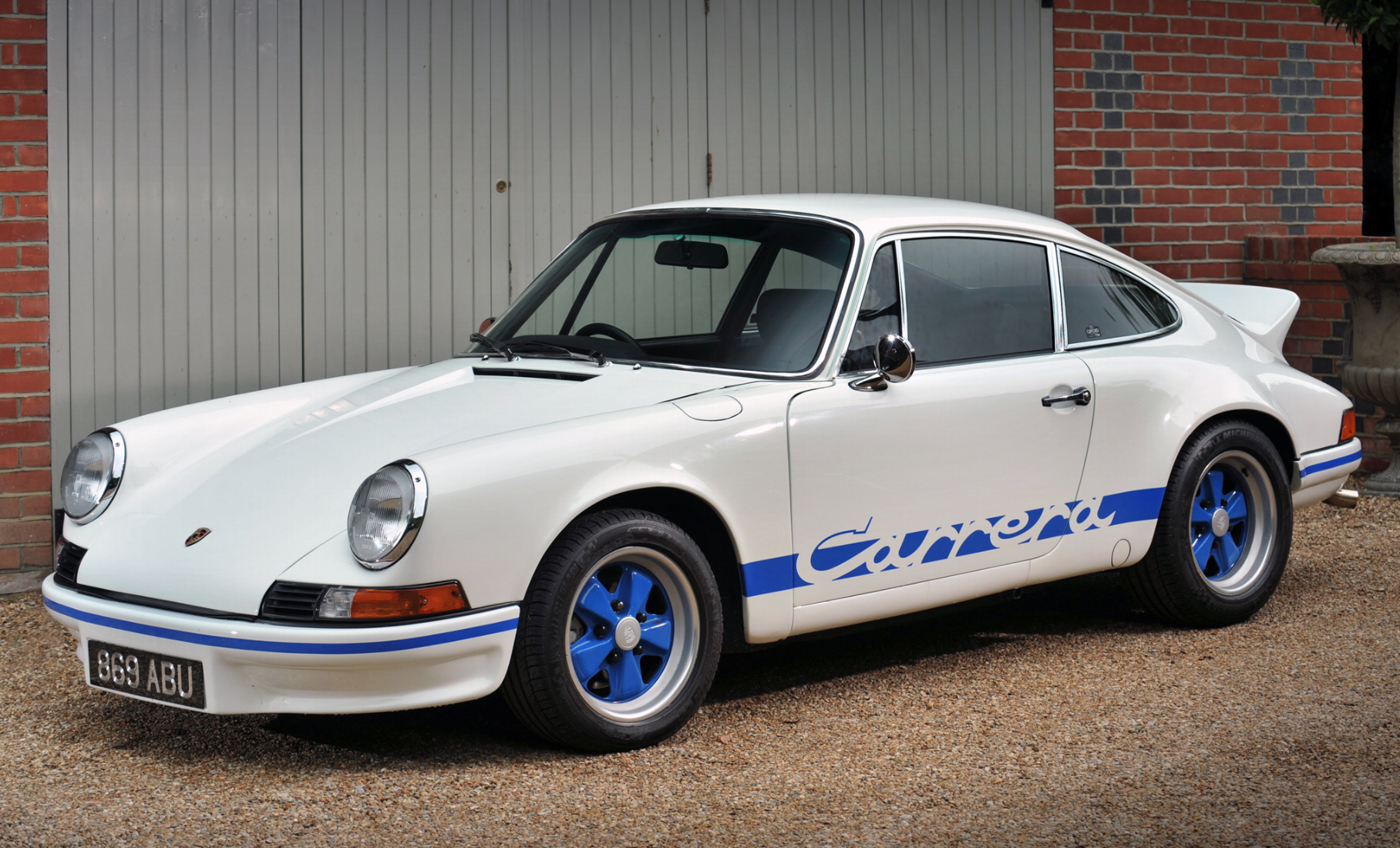
Porsche 911 Carrera RS 2.7 Touring

Porsche 911 Carrera RS 2.7

The Carrera RS debuted in October 1972 at the Paris Motor Show, and is considered to be Porsche’s de facto first-gen 911 halo car. It’s surely one of the best road cars of all time. It was the fastest production 911 and had proven pedigree on the racing circuits. Some feel it is still the best 911 ever produced by Porsche, and definitely makes the Top 10 on our “Best Porsches Ever Made” list. Initial production for the 2.7 was only 500 cars and it sold out almost immediately. Three versions were available, including a lightweight Sports trim, a Race trim or more the opulent Touring trim for the road. The lightweight version was substantially lighter with thin-gauge body panels, lighter windows and a stripped out interior.

Fitted with flared wheel arches, a distinctive ducktail spoiler, and a highly tuned flat-6 engine, the brilliant Carrera 2.7 RS is the model against which all subsequent high-performance 911s are judged. The 2.7 RS road car also served as the platform for homologating the parts needed for racing. The 210 hp 2.7L flat-6 engine – benefitting from Porsche’s experience gained from the 917 racing program – elevated the 911 into the 2500 cc – 3000 cc class, alongside heavyweight opposition such as the Ferrari Daytona and DeTomaso Pantera.

Fun fact: the ducktail rear spoiler is the first proper wing to feature on a 911 from the factory, while the widened wheel arches allowed more rubber to come in contact with the road. What a superb machine.

Datsun 240z

1969 Datsun 240Z

The Nissan S30 (Datsun 240Z) was the first generation of Nissan’s two-seater grand touring “Z” coupe. The Z models had a production run which lasted from 1969 to 1978. All models had a 4-wheel independent suspension with MacPherson struts in front and Chapman struts in back. Front disc brakes and rear drums were standard on all models. The 240Z and 260Z used twin-variable venturi Hitachi one-barrel side-draft SU-like carburetors. The first-generation “Fairlady Z”, launched in November 1969, was available with the same high-performance ‘432’ engine – an inline-6 DOHC 24-valve unit which produced 160 hp – as seen in the Skyline GT-R (PGC10).

The carburetors were changed beginning in the 1973 model year in order to comply with emissions regulations, though the earlier carburetors offered superior performance as compared to the later Weber carburetors. Fuel injection – L-Jetronic electronic fuel injection, designed by Bosch – was added for the 280Z in 1975 for US models. This was primarily done in order to cope with the increased difficulty manufacturers faced in getting enough power output through the use of carburetors, while still being able to satisfy US emissions regulations. The Datsun 240Z is easily one of the most beautiful cars on this list.

Lamborghini Miura P400 SV

1971 Lamborghini Miura P400 SV Gallery

The Lamborghini P400 Miura is considered – by virtually anyone qualified to make the call – to be the first “supercar” ever produced. That’s a pretty hefty distinction to have, but it certainly didn’t get there without earning it. Although the Miura’s chassis design could be mistakenly interpreted as a race chassis, Ferruccio Lamborghini had a strict “no-racing” attitude when it came to the purpose of the car. He even wrote a policy in the company’s bylaws that prohibited the model from being used for racing; instead, the Miura was destined to be a production road car of the highest order.

The first completed prototype was painted orange and personally driven by Bertone to the 1966 Geneva Motor Show, where it became the highlight of the event and overshadowed the Ferrari 330 GTC which was also a debutant.

The “Spinto Veloce” (SV) model is the final and most developed version of Lamborghini’s seminal supercar. Like all Miuras, it has an exotic specification and sleek profile which epitomizes Lamborghini’s image more than any other model. The main focus of the SV was a new rear suspension that made the car much wider. Longer wishbones were fitted that added 1.5 inches of length. Furthermore, larger Campagnolo cast magnesium wheels were added with wider Pirelli Cintaurato tires. While it’s common to hear the Miura being described as the world’s first supercar, we prefer to expand on this by calling it the first modern supercar, since the Ferrari 275 GTB and Mercedes 300 SL came immediately before it.

Chevrolet Corvette Stingray (C3)

C3 Chevrolet Corvette Stingray

While all Corvettes are iconic, and although each has its own loyal following of owners and enthusiasts who claim that “their generation” is the best, there is little doubt that the third-generation Corvette is one of the most iconic generations of them all. The C3 still holds the record for having the longest production run for any generation of the Corvette. It was during this generation that we saw the Corvette “grow-up” from being a powerful track car and Le Mans racer, to an iconic sports car synonymous with the American Dream.

Introduced in 1968 and produced until 1982, the third-generation Corvette has a storied history full of highs-and-lows throughout its 15-year production run. Much of the car’s evolution during this generation was closely tied to the economic and political climate in the United States during the late ’60s and ’70s. While early model years (1968-1972) featured big engines producing massive horsepower, stricter Federal emissions regulations would force Chevrolet to reduce engine output ratings in later models (1973-1982).

At the same time, these changes forced Chevrolet to improve upon their engineering standards; by innovating methods to reduce the car’s weight and enhance its overall design, the automaker was able to keep the Corvette relevant, even with all the restrictions in place.

Ferrari 308 GTB

Ferrari 308 GTB

There is often some confusion with the Ferrari 308/208/328 model range so we will take a minute to explain the differences here. Firstly, the 308 replaced the Dino 246 GT and GTS in 1975. The two-seater Ferrari 308 came in both a 308 GTB berlinetta and 308 GTS Targa top body style. Both were mid-engined and powered by naturally-aspirated V8s. The 308 models were produced by Ferrari from 1975 to 1985. The similar 208 GTB and 208 GTS were equipped with a smaller (initially naturally-aspirated, later turbocharged) 2.0L engine.  The 308 range was updated in 1985, when it would become the 328.

The beautiful Pininfarina designed body had a pronounced wedge profile, with a rectangular egg-crate aluminum radiator grille below a slim full width satin black front bumper. However, there were numerous key design elements of the Dino 246 GT carried through into the body details. These included the scalloped door intakes, twin circular rear light assemblies, and the vertical concave rear screen bounded by buttressed sail panels.

The 308 was equipped with a transversely mid-mounted V8 engine with four twin-choke Weber 40DCNF carburetors, single coil ignition, and dry sump lubrication (in European models). The European versions produced 252 hp @ 6,600 rpm. For US market cars, power was detuned to 237 hp in order to satisfy the relatively stricter  emissions regulations.

De Tomaso Pantera

De Tomaso Pantera

The De Tomaso Pantera is the product of one of the very few (but more prominent) American x Italian automotive collaborations. Mixing Italian design language with the soul of a cast-iron American V8 engine, the Pantera had plenty of appeal on both sides of the pond. It was unlikely result of Lee Iacocca and Alessandro de Tomaso coming together to produce a version of the AMX/3; a move that set off a chain of events which would eventually bring Ford Motor Company to the exotic car landscape – and the rest as they say, is “history”.

The overall design that De Tomaso envisioned was brought to fruition by Dallara, with a possible production capacity of 5,000 cars / year originally proposed. The car had all the right ingredients  to be a success, including a double wishbone suspension, disc brakes, rack and pinion steering, and most importantly: a 351 Cleveland V8. Once the design was finalized, coachwork was done by Vignale and the shells were then shipped to De Tomaso in Modena upon completion, where the suspension and drivetrain would be put in.

In 1971 Road and Track described the car as “Exciting-but not a finished product.” De Tomaso himself argued that an exotic car couldn’t be delivered to corporate engineering standards, at least not for $10,000 USD a unit. In 1973 the model was replaced the Pantera L which had less power and larger rubber bumpers. Nevertheless, it remains one of the most fascinating cars ever produced.

Ford Mustang Mach 1

1969 Ford Mustang Boss 429

The “Mach 1″ was a performance package that Ford began offering for its quintessential American muscle car in 1969. The Mach 1 designation would be available for Mustang until 1978, when the model was overhauled and entered its third-generation. Within the Mach 1 range was variety of engine options, with the potent 428 fitted with the “Cobra Jet”, serving as a cheaper alternative to the BOSS 429. For drag racing a “Super Cobra Jet” engine was available, and was essentially the same package with a reinforced drive shaft.

To compete with the Mopar HEMI engine in NASCAR, Ford launched the BOSS 429 V8 that same year. It was built as a limited production Mustang Fastback to meet the required homologation of 500 units. The ’69 BOSS is considered to be the ultimate Mustang from this era, after the less popular “clydesdale” body was used for the 1970 version. Ford prepared the 429 for inclusion into NASCAR’s Grand National Division. They modified a version Ford’s big block V8 design known as the ‘Ford 385 engine’ and changed the stroke from 3.85 inches to 3.59.

Built as a full-on race engine, the exhaust ports were so large it was nicknamed the ‘Shotgun engine’. Power was legally claimed to be 375 hp, although more than 500 hp was possible with just a few tweaks. To meet emissions regulations, a mild cam was fitted along with a smog pump and small carburetor.

Ferrari 512 BB

1976→1981 Ferrari 512 BB

In 1976, Ferrari enlarged their flat-12 engine to 4,942 cc and created the Ferrari 512 Berlinetta Boxer (commonly abbreviated to ‘BB’). As a replacement for its flagship 365 GTB/4 model, the BB marked a big shift in Ferrari’s design protocols. For starters, switching to a horizontally opposed boxer engine layout for its new flagship car was new territory for the company. It also marked the significant milestone, of mounting the 12-cylinder engine behind the driver for the first time in a Ferrari car.

Mindful that a longitudinal engine with the gearbox behind would add inches to the wheelbase and/or diminish cabin space, Ferrari had decided that the BB should have its transmission placed below the engine. This would allow a shorter wheelbase and a roomier cabin. Most of the magazines and press at the time, loved the clean Pininfarina design and were shocked by its blistering performance. Acceleration was strong, with the sprint from 0-60 mph over in just 5.4 seconds. Handling and overall dynamics were class-leading at the time. Over a five year production run, nearly 1,000 512 BB models were produced.

Mazda RX-7

1986→1988 Mazda Savanna RX-7 GT Limited

It’s not a very well kept secret that the FC3S Mazda RX-7 was generally considered – and at times, even marketed – as a poor man’s Porsche 924. The rotary-powered car was inherently unique because of how it moved, but its decidedly ’80s-era Japanese styling also contributes to its overall charm. Boxy features, pop-up headlights and a delightfully analog interior, the RX-7 depicted that era of JDM-ness to an absolute ‘T’.

The Turbo II was a cut above the other models, featuring – as its name suggests – a turbocharged power plant instead of the naturally-aspirated wankel engines seen in the rest of the line-up. The rear-driven Turbo II outputs 182 hp and 183 lb-ft of torque with the help of a single turbocharger. Mazda recently announced that it will be offering a heritage parts program for the RX-7, which will make it easier for owners to restore their cars with factory parts.

Mansory Shows Off their New Rolls-Royce Ghost Styling Kit – 720hp Now

Mansory has unveiled their new complete conversion kit for the 2021 Rolls-Royce Ghost, the second generation Ghost.

The conversion features modified body components in design and carbon materials, the front part of the Ghost has been fitted with an integrated lip with side flaps finished in carbon fiber and the radiator grille can be illuminated in any respective color of choice to match the color concept of the conversion.

In addition, the vehicle also features an ultra-light carbon bonnet with visible carbon structure, LED daytime running lights, sills in dark carbon, carbon air outlets in the wings and door handles finished in black.

The tailgate and roof spoiler have been installed to reduce the lift forces at the rear axle when the vehicle is moving at high speeds whereas the rear diffuser compliments the sports exhaust system.

The new Ghost also received performance upgrades from Mansory, the V12 engine benefits from a modified ECU unit, new turbochargers and a new sport exhaust system with high-performance catalytic converters which improve the acceleration and the overall performance of the vehicle.

The engine delivers an output power of 720hp and 1020 Nm of torque. The acceleration from 0-100km/h is achieved in 4.4 seconds and the standard top speed can be increased on request. Additionally, the engine cover has also been finished in visible carbon fiber.

The interior of the vehicle features a fine white leather with applications in ‘Mandarin’ color, a leather-carbon sports steering wheel and carbon inlays. The seats, door panels and the dashboard have been equipped with LEDs. A ‘Cool bag’ made of leather with a capacity of 14 litres is available on request.

The model has been fitted with a set of glossy black type ‘V.6’ cast wheels in the size 9.5×22 inches at the front axle and 10.0×22 inches for the rear axle. The high performance tires pictured have dimensions of 256/35 R22 in the front axle and 295/30 R22 in the rear axle.

Audi RS Q e-tron preparation for Dakar

In January 2022 the next edition of the famous Dakar Rally will start, and over the years we’ve seen some really spectacular cars, bikes, and trucks competing in this grueling desert race, but the 2022 edition will see a rather special entry at the starting grid, the Audi Sport RS Q e-tron … yes, you are reading that correctly, a hybrid rally car.

You can only do so much testing in Germany or Spain, so to get some more ‘real time’ data Audi Sport took their RS Q e-tron together with the three driver crews to Morocco, none other than previous Dakar record winner Stéphane Peterhansel, Carlos Sainz and Mattias Ekström would be taking this highly complex prototype into the desert where temperatures above 40 degrees Celsius (or 104°F) were measured during these hard test sessions.

“We expect much lower temperatures at the Dakar Rally,” says Andreas Roos. “Nevertheless, we deliberately went to Morocco to test our concept under the most extreme conditions. Components such as the MGU, for example, were basically not developed for use in such high ambient temperatures, but the drivetrain and other components were also pushed to their limits or even beyond by the heat. The insights we gained in Morocco are invaluable, but they also show us that we still have a lot to do before the Dakar Rally and there is not much time left.”

To make sure this Audi RS Q e-tron has any chance at finishing the Dakar rally, they developed a bespoke high-voltage battery, where the main focus is on managing the temperature while being able to pull the maximum amount of power from this power cell for sustained periods of time, in a hot and dusty environment like the Dakar desert.

Power in the Audi RS Q e-tron comes from two Formula E electric motors, found in the FE07, one on each axle, while a turbocharged 2-Liter four-cylinder engine taken from the 2020 DTM RS5 race car will charge the 50 kWh battery as a generator … total power output is said to be 671 hp before regulations might come in to restrict that number.

In January we will be seeing three RS Q e-tron start the Dakar Rally, over the two weeks following the departure there will be daily stages, some nearly 500 miles, that will really put the new Audi electric powertrain to the test, and the Dakar Rally is only the first stop for Audi Sport, as they have left Formula E and the DTM now to focus entirely on Le Mans next.

Techart GTstreet R Cabrio is a Convertible GT2 RS that Porsche Will Never Build

Techart has officially presented an open top Techart GTstreet R Cabriolet, the new model is based on the Porsche 911 Turbo and 911 Turbo S Cabriolet and is limited to 87 units worldwide.

The new Techart GTstreet R Cabriolet has been equipped with lightweight carbon fibre components with improved aerodynamics. The exterior of the vehicle features an athletic aero kit with a new front apron, carbon fibre aero hood, lightweight fenders with wheel arch extensions, side skirts, rear apron and a carbon rear wing.

The interior of the vehicle features a handcrafted sports steering wheel and a combination of high-quality Alcantara, leather, heritage fabrics as well as carbon fibre packages.

Additionally, the large air intakes installed deliver sufficient air flow to the intercoolers and improves the performance of the vehicle.

Techart GTstreet R Cabriolet features two power upgrades, the TA092/T1.1 powerkit with Techtronic managements increases the total output power to 710 hp and the maximum torque to 900 Nm.

The powerkit TA092/T2.1 on the other hand delivers an output power of 800 hp and 950 Nm of torque. The top speed after this upgrade jumps to 350km/h. Additionally, a new coilover kit enables a lowering range from 5mm to 30mm.

The company has fitted the vehicle with a set of Formula VI forged wheels available in 20 and 21 inch with a central lock and with or without aero discs.

Four Renowned British Companies Are Developing The Roofless Aura EV Concept

Let’s face it, traditional combustion engines are gradually on their way out. Consistent advancements in battery technology and electric powertrains tell us what to expect from the future. Sustainable platforms have come a long way from being just a niche in the automotive market. Now, vehicles such as the Aura EV fconcept tell a different story.

Climate change and rising costs of fuel require action. It won’t be long before noise pollution from our daily commute goes down significantly. Instead of a roar or growl, we hear a gentle hum as electric motors spring to life. Electric mobility solutions also keep the air we breathe free of dangerous pollutants.

The Aura EV sees four prominent British companies pool their talents to turn this eco-friendly long-range roadster into reality. Funding this project is the Office for Zero Emissions Vehicles via the Niche Vehicle Network. They’re developing and building everything from the ground up.

You can see this on the sleek outline that flows seamlessly from front to back. Astheimer is handling the minimalistic profile of the interior and exterior with help of bio-composite parts from BAMD. The modern cockpit seats two and features a massive infotainment system.

You won’t find the instrument cluster on the dashboard because it’s integrated into the steering wheel. The human-machine interface 9HMI) of the status screen runs on Android Automotive OS and is developed by Conjure. Potenza is supplying the electric drivetrain and batteries.

Two 44 kWh units combine for a 88 kWh total capacity which gives it an impressive range of 400 miles on a full charge. One is located in the engine bay up front, while the other is below the chassis. The optimal weight distribution gives the Aura EV excellent driving dynamics.

Discover more

imageimageimageimageimageimageimageimage

Images courtesy of Aura

2022 Ram 1500 TRX Ignition Edition: Most Powerful Truck in the World Gets New Trim

Ram officially unveiled the new 2022 Ram 1500 TRX Ignition Edition, a limited edition of the most powerful mass produced truck in the world. Only 875 units will be made each costing $91,585. The Ram 1500 TRX is powered by a 6.2L supercharged HEMI V8 that delivers an output of 702hp and 881nm of torque. The 0-60mph time is achieved in just 4.5s.

Alongside the TRX Ignition Edition, a 2022 Ram 1500 Longhorn SouthFork and a 2022 Ram (RAM) RED edition were also revealed at the State Fair of Texas. The display features a lineup of Ram trucks and will run from September 24th to October 17th at Dallas Fair Park.

The Ram 1500 TRX Ignition Edition enhances the TRX trim and offers a wider selection of unique content and great personalization for performance truck buyers. The model features a combination of graphics, technology, performance and exterior appearance from the factory.

2022 Ram 1500 TRX Ingition Edition interior

Additionally, RAM 1500 TRX Ignition Edition models are available with TRX Level 2 Equipment Group and features unique exterior color and graphics, 18 inch machine face black wheels, panoramic sunroof, cargo tie-downs, bed step, spay-in bedliner and LED brake lights.

The interior features Copperhead Orange stitchings, TRX seat logo, copper carbon fibre accents, orange centre console badge, head-up display, driver’s screen and an emergency braking system.

The Ram 1500 TRX Ignition Edition is powered by a 6.2 L supercharged HEMI V8 engine, the retail price starts at $91,585 plus $1,695 destination and the sale will go in the fourth quarter of 2021.

Ram 1500 Longhorn SouthFork has replaced the Limited Longhorn 10th anniversary in the lineup, the model features a multi-function tailgate, deployable bed step, spray-in bedliner, metal pedal kit, Falken Wildpeak all-terrain tires, adjustable cargo tie-down hooks and LED box lighting

2022 Ram 1500 Longhorn Southfork

The interior of the Ram 1500 Longhorn SouthFork features standard bucket seats, suede door bolsters with leather inserts and a laser filigree detail. The interior has been finished in an exclusive Mountain Brown color.

The retail price for the Ram 1500 Longhorn SouthFork starts at $61,620 plus $1,695 destination and the sale is scheduled for the fourth quarter of 2021.

Ram 1500 (RAM) RED Edition has committed a minimum of $4 million to the Global fund between 2021-2023 with RED to help fight health emergencies.

2022 Ram 1500 (RAM)RED Edition

The model is available in Limited Crew Cab configuration in a choice of both V8 engines or EcoDiesel and it features a red R-A-M grille, RED badge on the centre console lid as well as door badging.

The retail price for the Ram 1500 (RAM) RED Edition starts at $63,250 plus $1,695 destination.

Ford Mustang Mach E Gets Ready for Police Work in America

A new Ford Pro Police Pilot has officially passed the intensive Michigan state Police 2022 model year evaluation, the all-electric police pilot vehicle was built on the 2021 Mustang Mach-E SUV.

The thorough tests included acceleration, top speed, braking, high speed pursuit and emergency response handling characteristics.

The success of the Mustang Mach-E proved that Ford is capable of building tough, reliable and capable electric vehicles for even challenging jobs. Michigan State Police will release the results of other vehicles they’ve tested in Fall.