All posts in “Porsche”

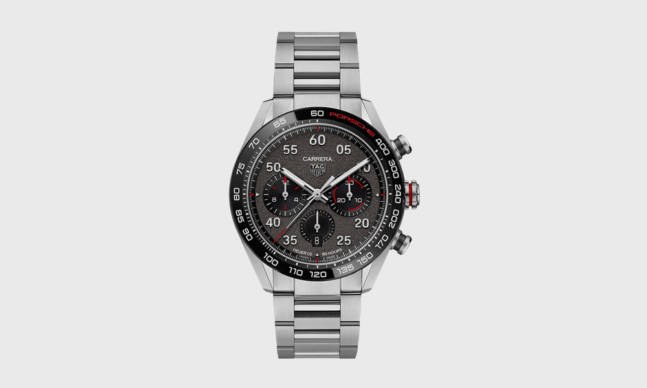
TAG Heuer Carrera Porsche Chronograph

When two motorsports juggernauts like Porsche and TAG Heuer come together, you know something great will come of it. The new TAG Heuer Carrera Porsche Chronograph marks the first collaboration between the two, and it…

The post TAG Heuer Carrera Porsche Chronograph first appeared on Cool Material.

The 1973 Porsche 911 RSR tribute

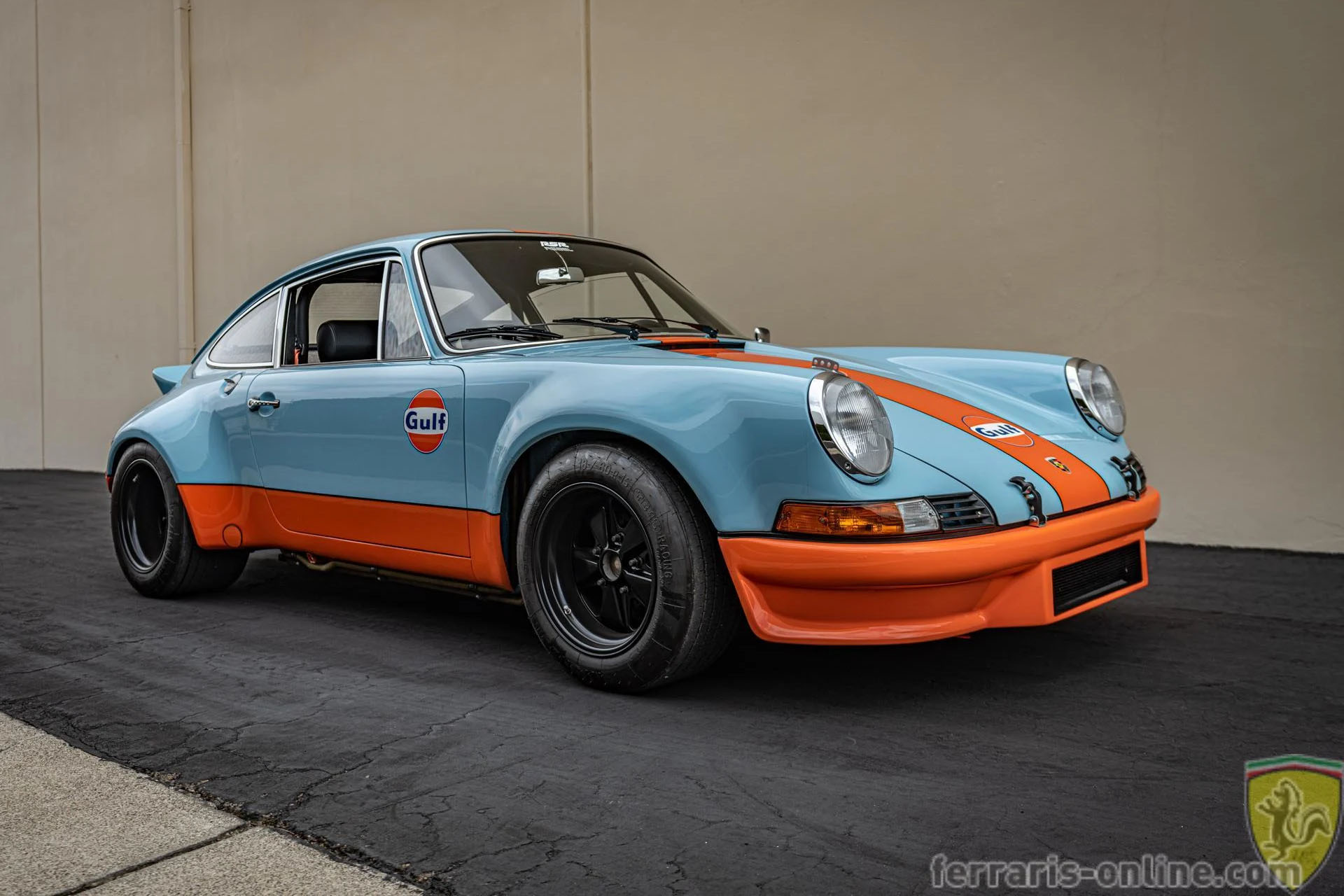
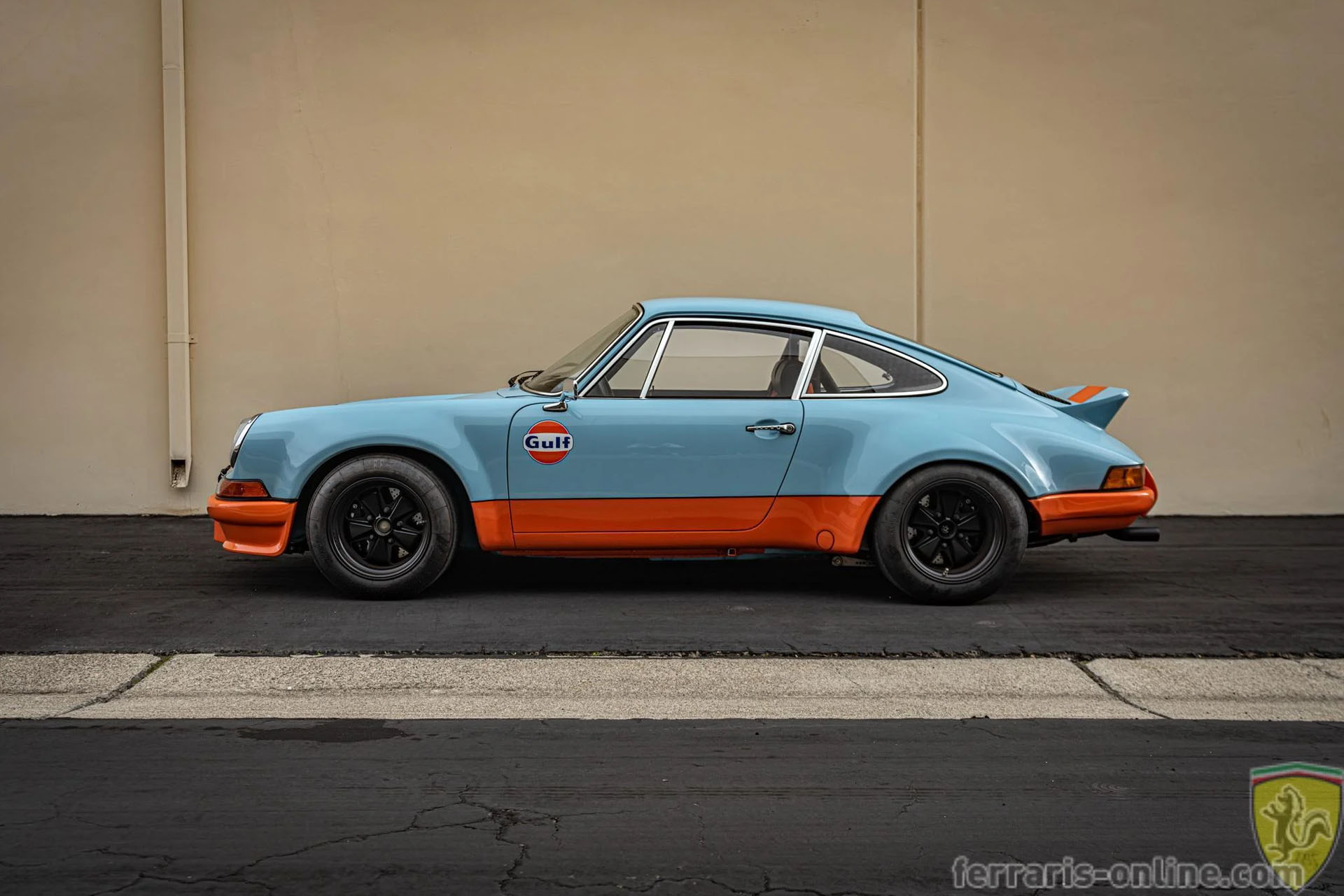
Adding a genuine 1973 Porsche 911 RSR to your collection at this point in time will set you back several million, but there is another option … how about a 1973 Porsche 911 RSR Rebel Gulf Porsche tribute for less than $300,000?

Ok, I admit, it’s not a real ’73 RSR, but it’s also only about 10% of the price, and it comes with a bigger engine. The car in question is listed for sale at Ferraris Online and has chassis number 102808, it is the first of only three Porsche RSR ‘Art Cars’ built by Jon Gunderson, renowned for ground-up Ferrari 246 GT and 246 GTS rotisserie restorations.

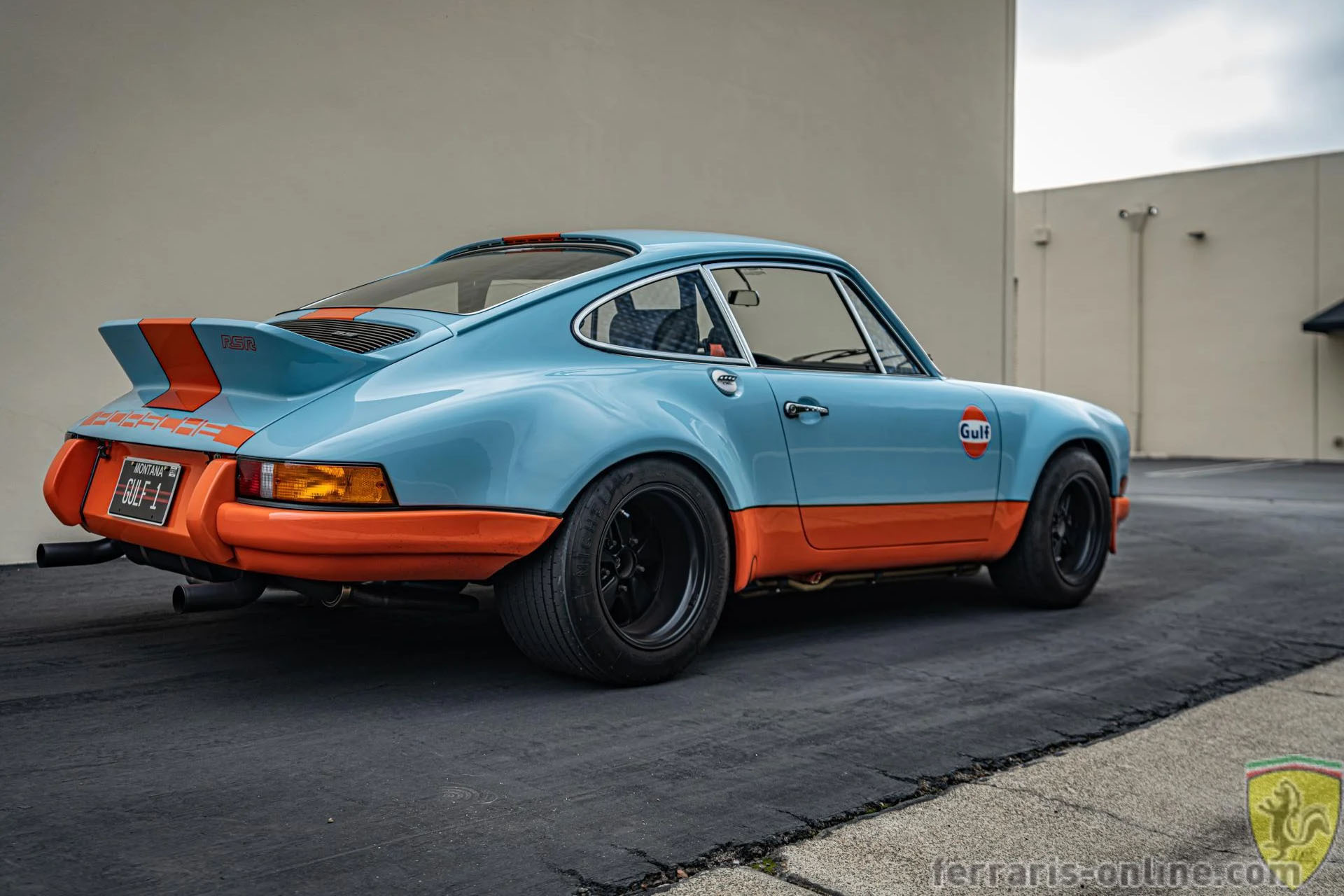
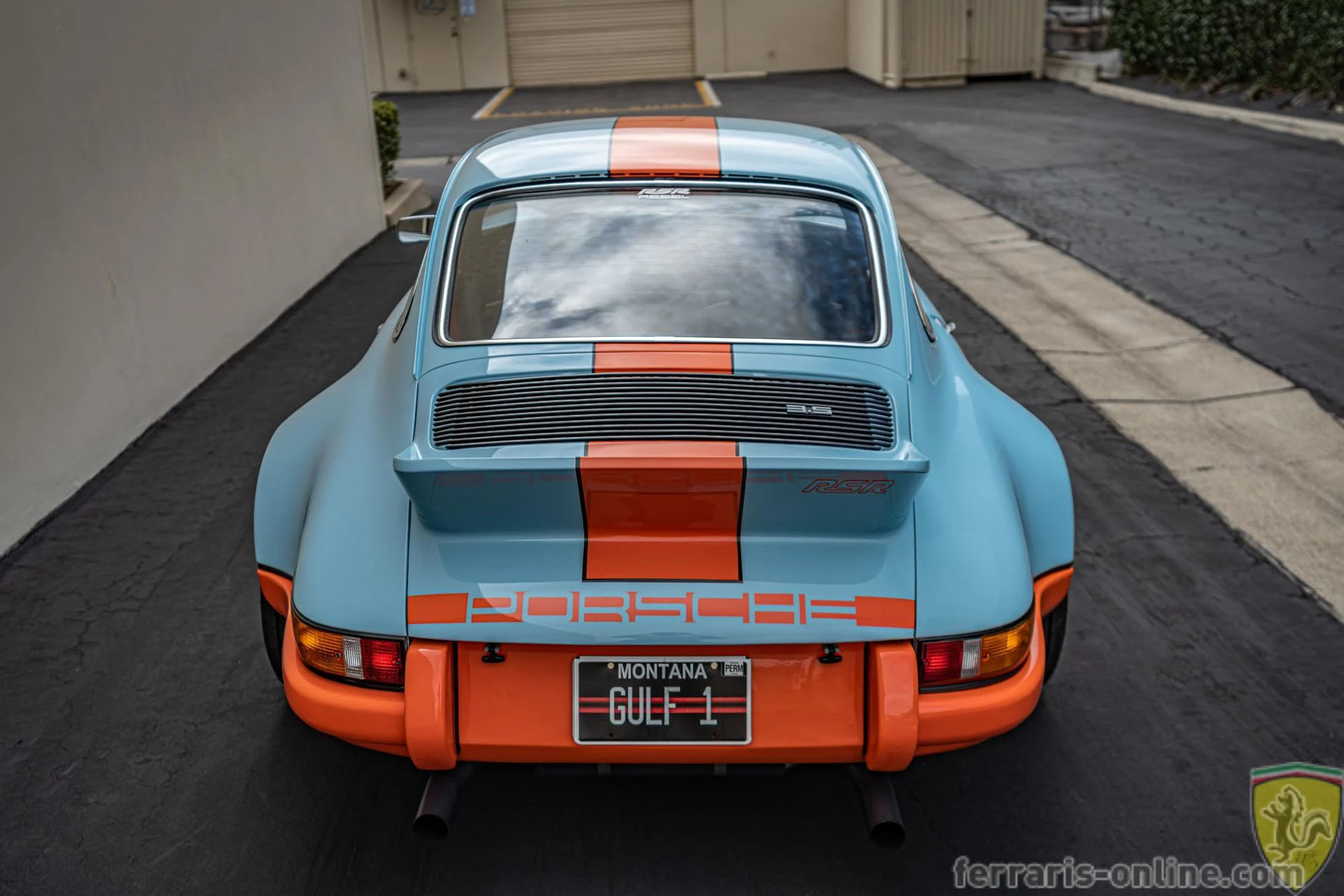
Chassis 102808 comes in the classic 917 Gulf livery combining light blue and orange on the exterior … note that this Porsche RSR Tribute scheme is completely painted, there is no vinyl used anywhere, every detail is painstakingly painted by hand, even the famous Porsche crest on the hood, and this attention to detail is visible throughout this amazing looking 911.

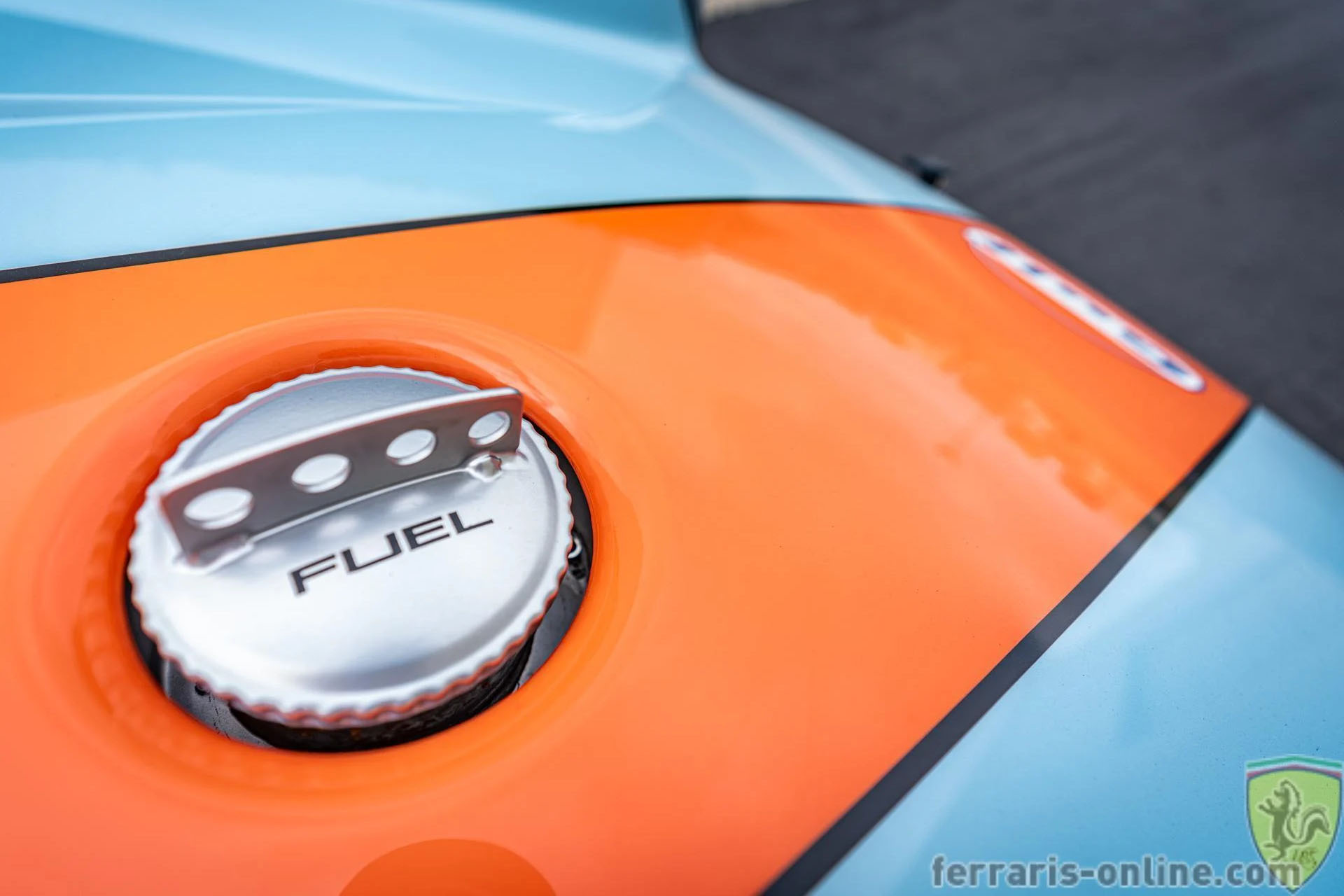
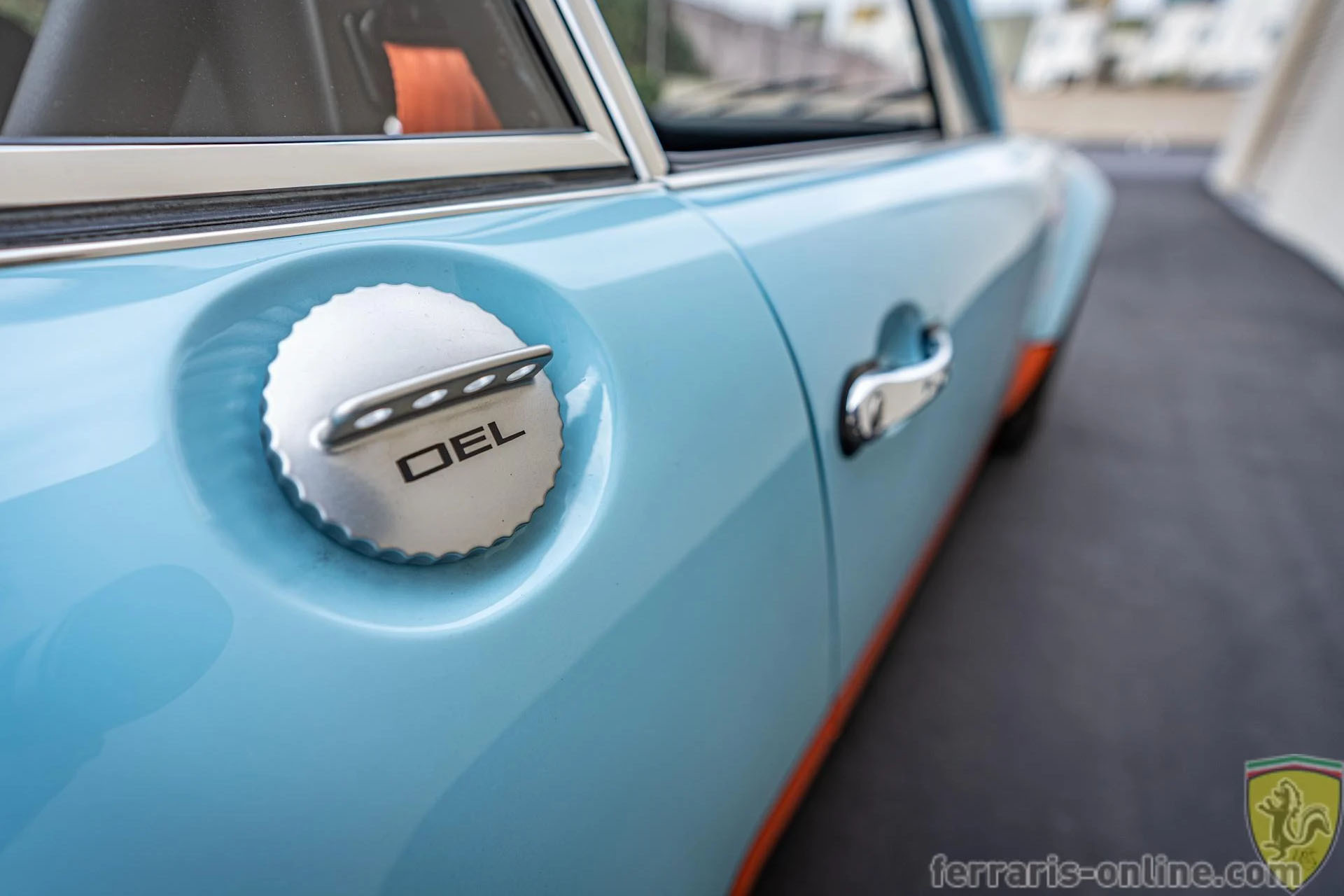
Both the front and rear bumper have been formed manually, as is the new front hood that has a center-mounted fuel-filler, machined from a single metal piece, to fill up the 100-liter tank underneath.

The traditional ‘Ducktail’ rear wing on this RSR tribute has been made by hand too, and on the grille, the 3.5 badge indicates this car isn’t using the 2.8-liter engine found in the genuine 1973 RSR, but a completely rebuilt 3.5-liter version.

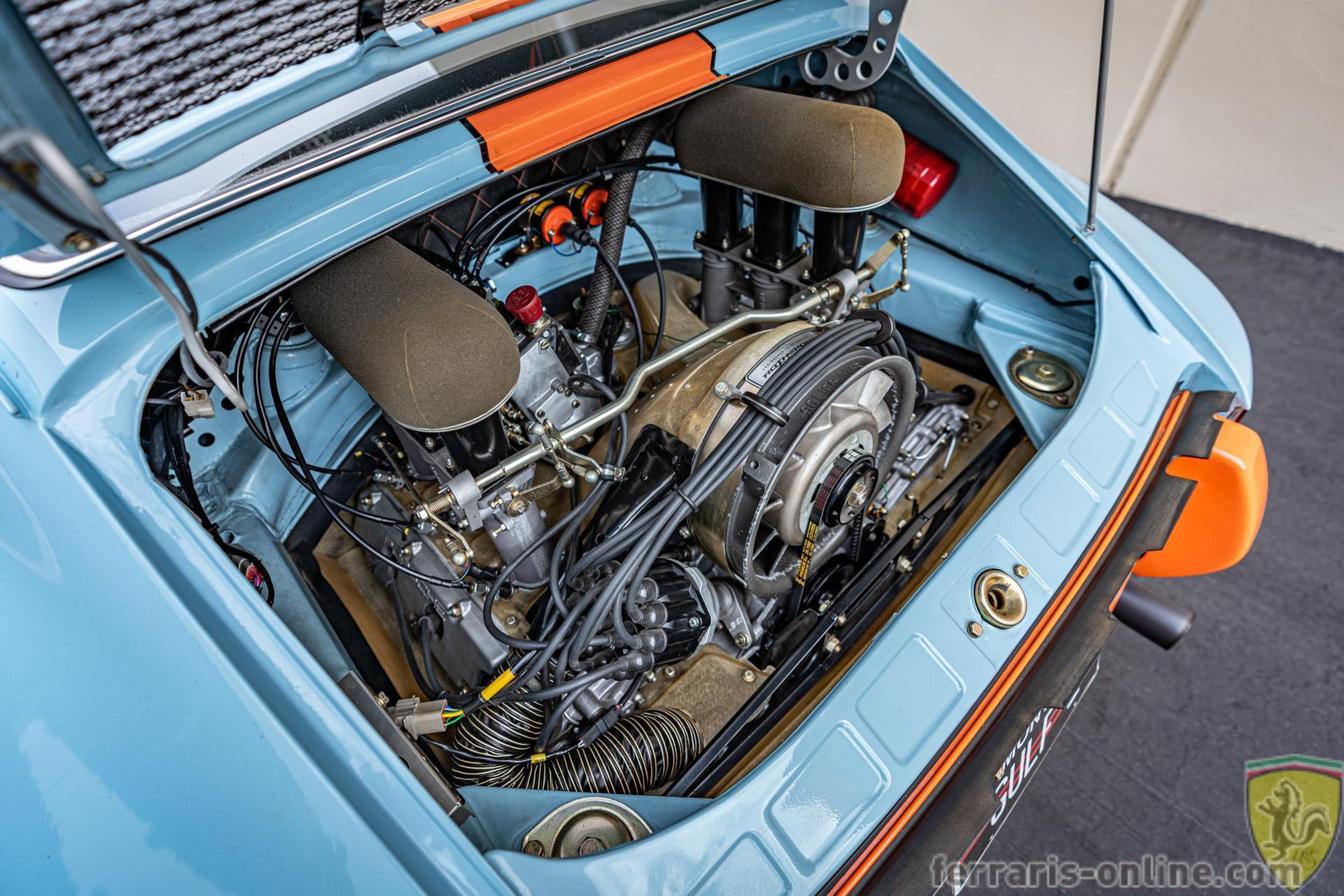
The engine inside this RSR tribute is built from the ground up as a fuel-injected Rothsport Racing 3.5L flat-six combined with a Type 915 5-speed manual transaxle with a Giken limited-slip differential … work started in 2017 and took three years to complete … to date this engine has little over 3,000 miles on her. Instead of the original 280 hp from the 2.8-liter engine, this new 3.5L Rothsport Racing version was dyno-tested after tuning by Sakata Motorsports at 355 hp.

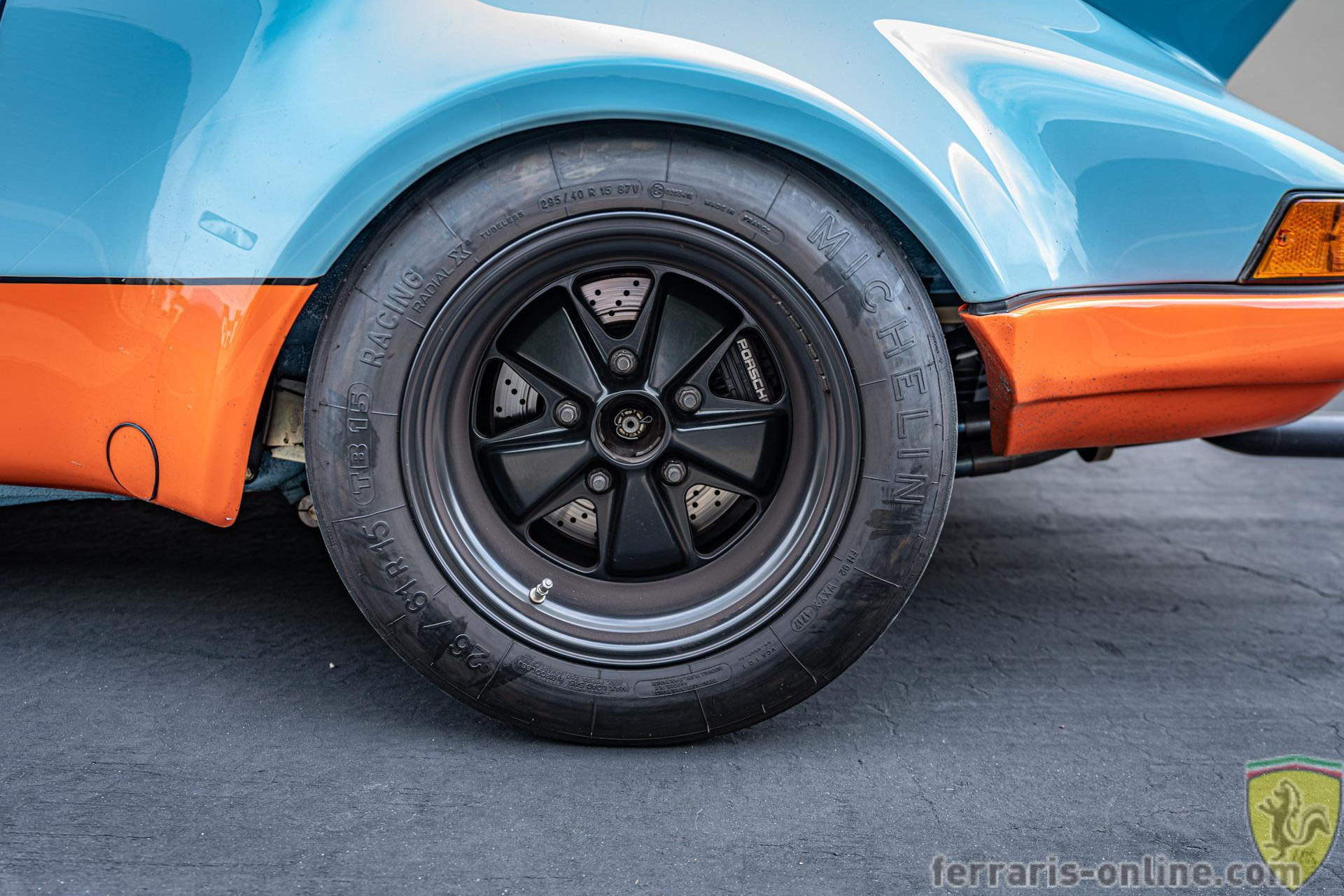
The impressive black wheels on this Porsche RSR tribute are 15-inch Braid units. Michelin TB5 Racing Radial X tires are fitted, 215/55 R15 for the front wheels (9×15″) while wide 295/40 R15 was fitted to the rear wheels, which measure a massive 11×15 inches, they are almost square. The chassis is fitted with Elephant Racing suspension components including Poly bronze bushings, sway bars, shock mounts, and a matched set of torsion bars and Von shocks. Porsche 930 trailing arms have also been added. Porsche 930 finned brake calipers and cross-drilled and vented 930 rotors at all four corners haul it down from high speed. RSR tribute s/n 102808 was corner-balanced by Rothsport Racing after the engine was installed.

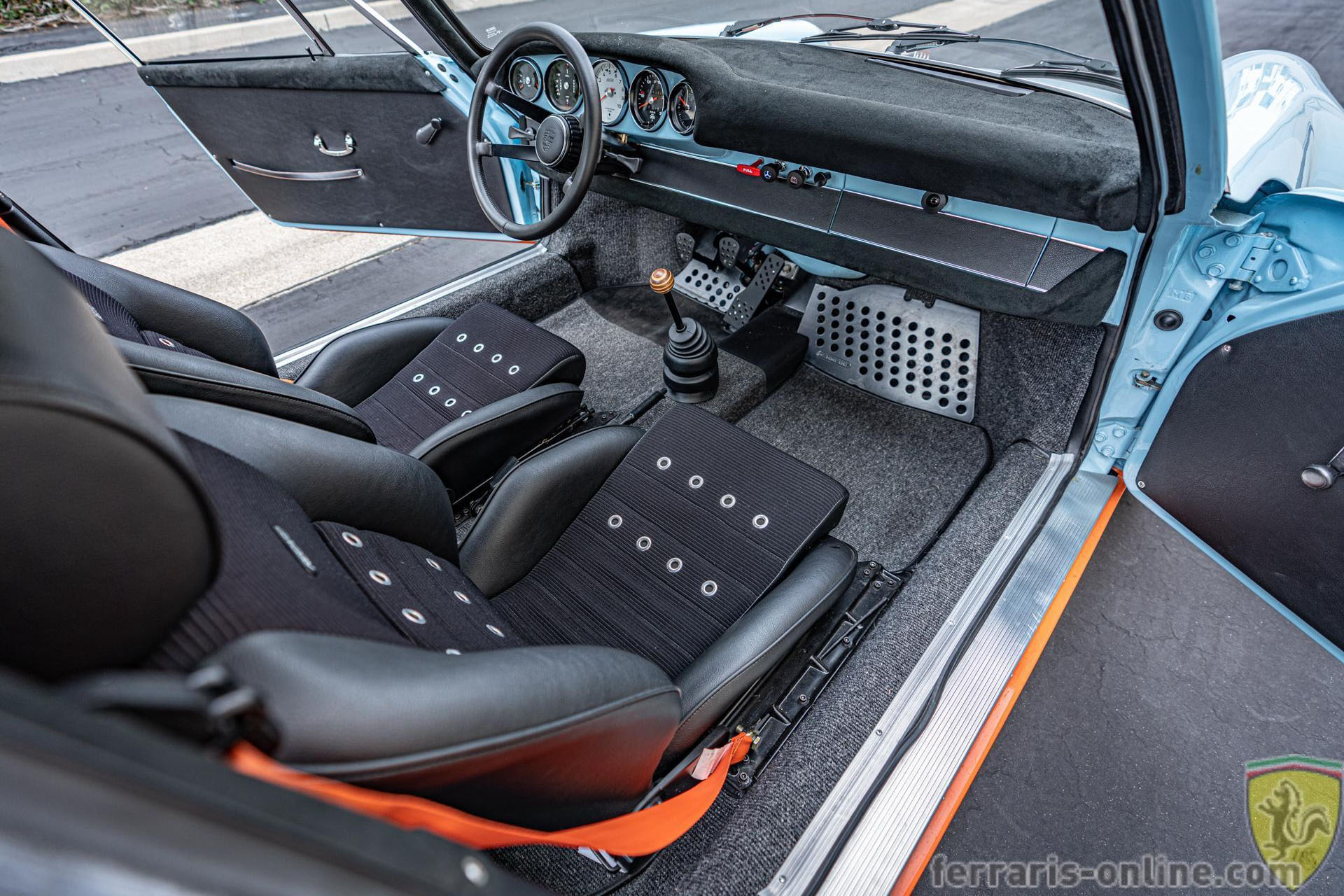
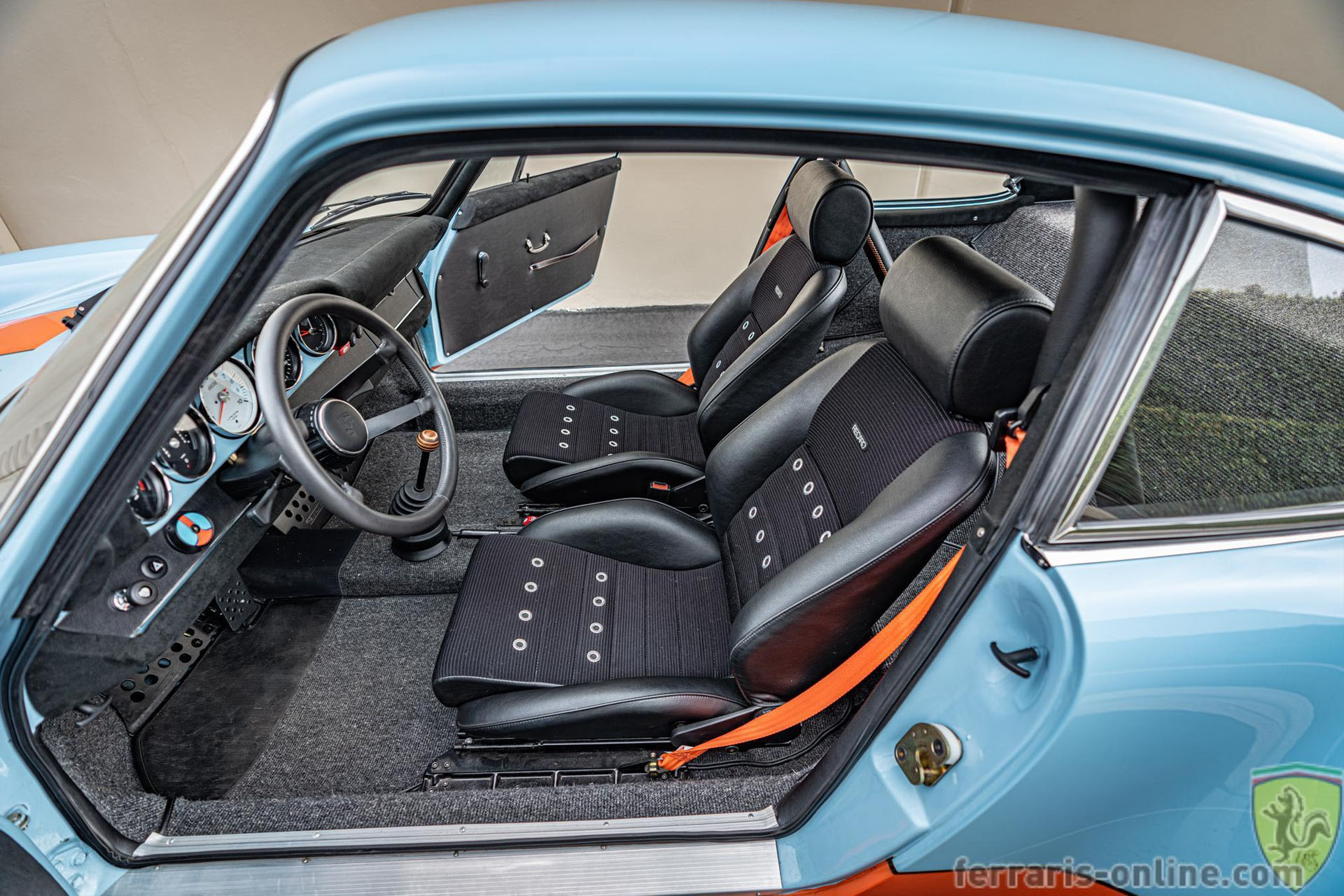
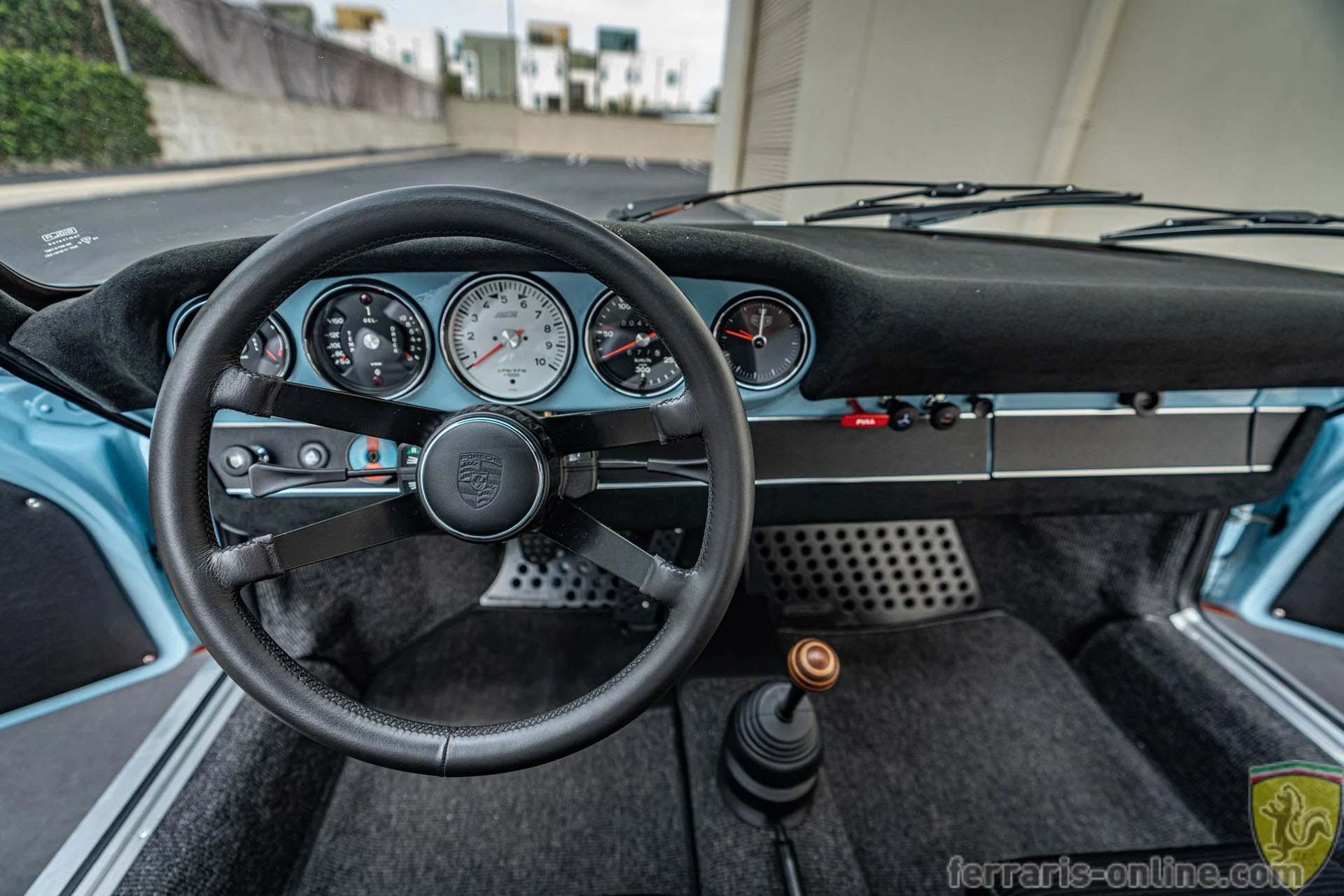
Autos International, a well-known shop for Porsche interiors, created the beautiful black interior for this tribute car combining black Alcantara and leather. The dashboard and door panels received black Alcantara while the steering wheel and adjustable Recaro RSR seats got leather wrapped around them.

Same with the built-in roll bar, black leather with contrasting orange stitching to match the seatbelts, while the headliner comes in black Alcantara, the dials consist of a single, white tachometer flanked by black auxiliary gauges, all rebuilt by Joe’s Speedometer. Weight saving is visible everywhere with thin side windows and a special wiring harness, if you look closely at the door handles, they are even cross-drilled to safe weight, while on the door panels, you’ll notice RSR leather door pulls.

Built as a passion project, no expense was spared and no budget was set, so the attention to detail is on par with the bespoke quality of a Singer, this car cost over $500,000 to build, but it’s now listed for a quick sale at $299,500.

New Porsche Taycan with RWD Revealed: Cheapest Model to Buy

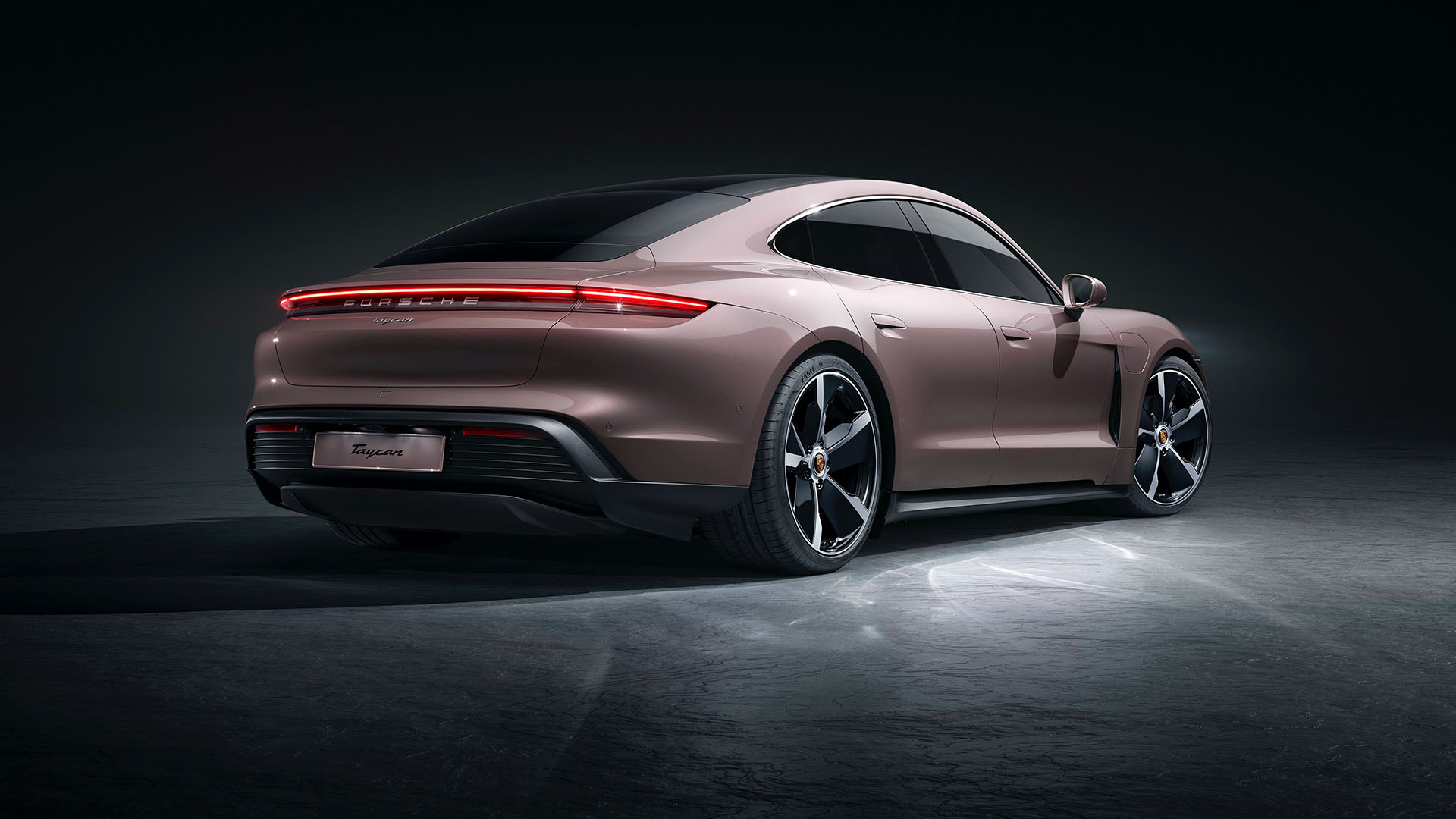
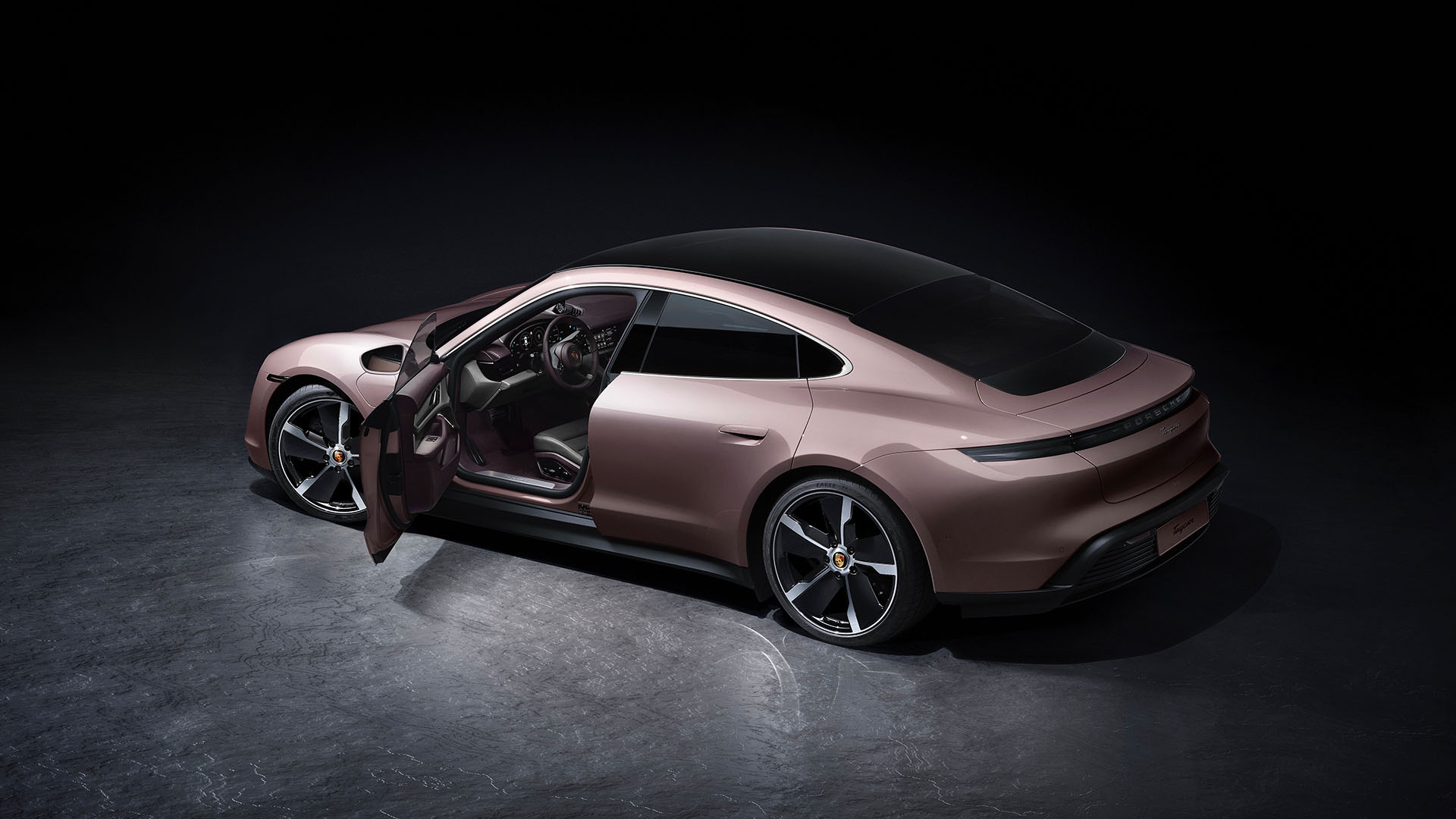
Porsche has launched the fourth variant of its first all-electric sports saloon which lines up alongside the Taycan Turbo S, Taycan Turbo and Taycan 4S. The model is available in two sizes of batteries and for the first time in RWD, effectively making it the cheapest Porsche Taycan on the market.

The new-entry model with standard performance battery provides up to 300kW or 408hp, fuel consumption combined 0L/100km, CO2 emissions 0 g/km and electric consumption combined of 28.0 kwh/ 100km. Overboost mode with launch control increases the output to 350 kW or 476hp and electricity consumption increases to 28.7 kwh/100km with the optional performance battery plus. Models fitted with the regular non performance battery can deliver 240 kW (326hp) or 280 kW (380hp) respectively.

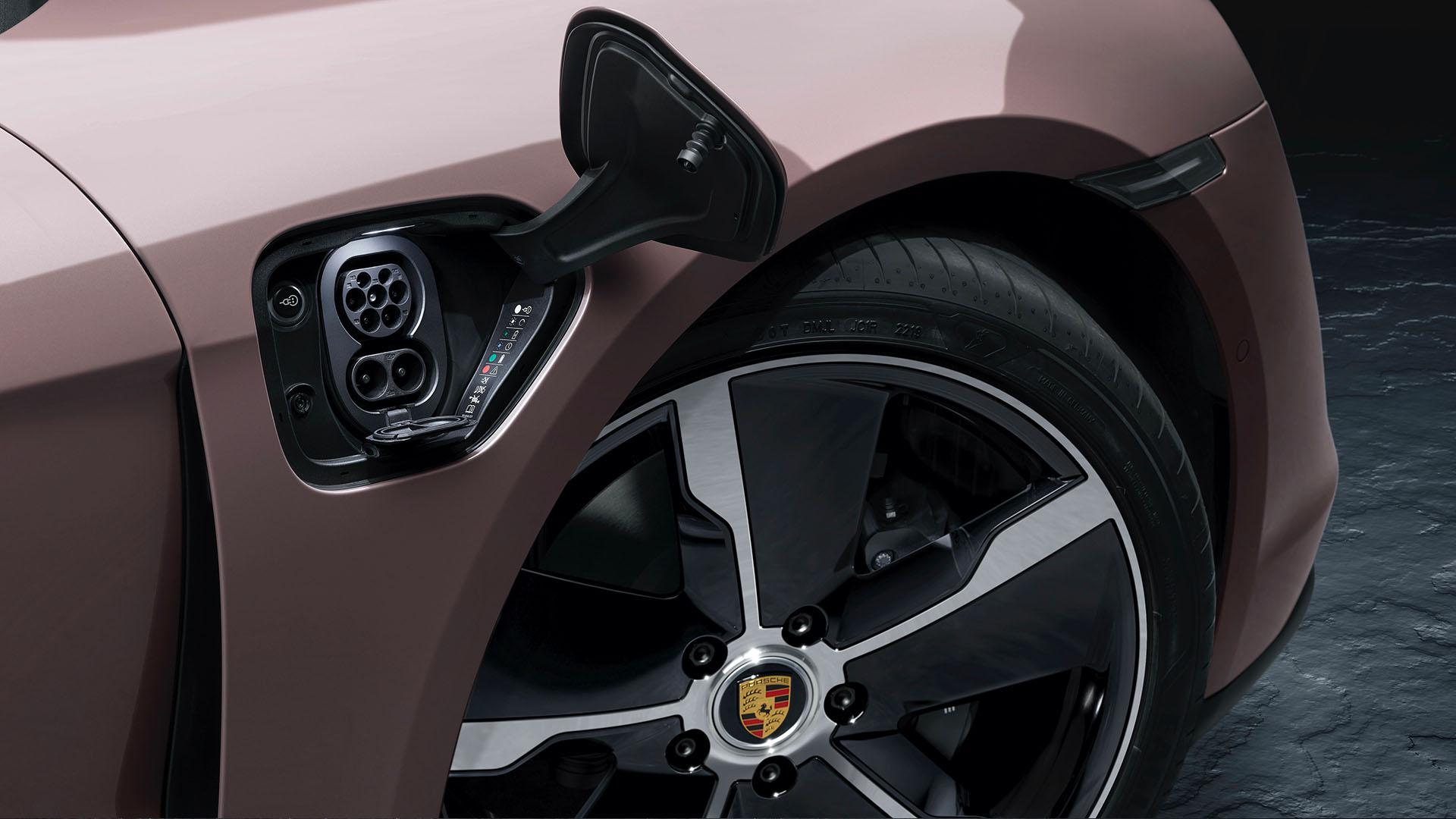
The new Taycan has a top speed of 230km/h and the acceleration from 0-100km/h takes 5.4 seconds. The maximum charging capacity of the car is 225kW for the performance battery and 270kW for performance battery plus. Both batteries can be charged from 5% to 80% in 22.5 minutes.

The Plug and Charge option on the Taycan model enables convenient charging and payments are processed automatically. Optional equipment on other variants include a colour head-up display and an on-board charger.

Porsche Taycan has a choice of 2 batteries, a Single-deck performance battery with gross capacity of 79.2 kWh as standard and the Two-deck performance battery with gross capacity of 93.4 kWh. The range of the batteries are up to 431km and 484 km respectively.

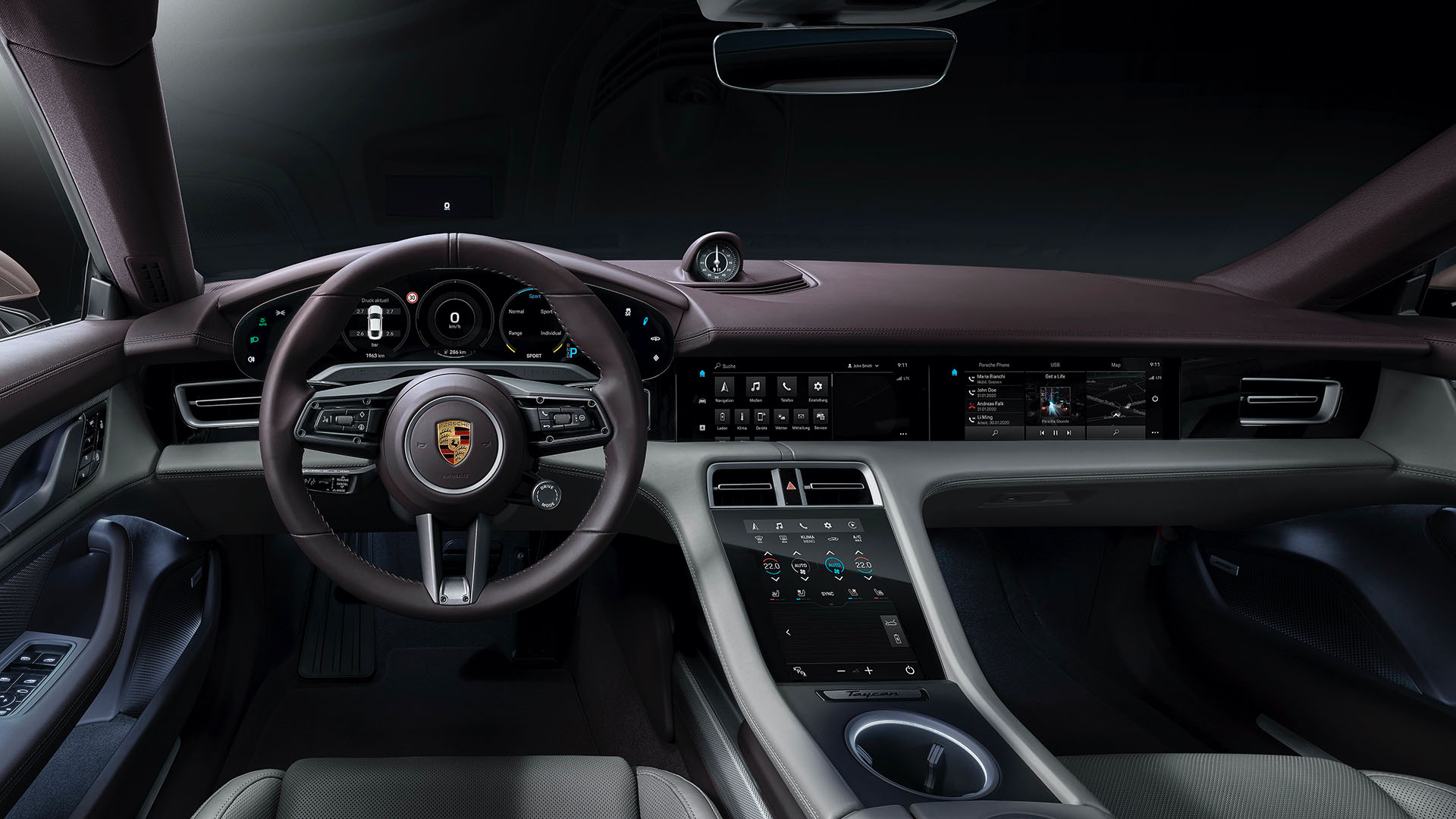
The car is fitted with a set of aerodynamically optimised 19 inch Taycan Aero wheels and black anodised brake callipers. The synchronous motor on the rear axle is 130mm long, same length as the one the Taycan 4S and the pulse- controlled inverter operates up to 600 amps. The standard interior features partial leather and front comfort seats with eight-way electrical adjustment.

The Taycan has had a successful start in the market, with over 20,000 units sold in 2020. In Norway, 70% of the Porsches sold are Taycans. Deliveries of the new RWD model will begin in mid 2021.

Price: £70k in the UK, $81,250 in the USA.

New Porsche Taycan version comes with an MSRP of only $79,900 !

It seems Porsche is going into a different market segment with their all-electric Taycan model, we already know the Taycan 4S, Taycan Turbo, and Taycan Turbo S. But those are priced between $103,800 and $185,000 … now Porsche is releasing a more entry-level version, simply called Taycan, and it will be listed at dealers for $79,900.

This new Porsche Taycan variant will come with rear-wheel drive only, and it was previously only sold in China, but it seems Porsche thinks there is also a market for a lower-priced Taycan on other markets too. Making this Taycan RWD only means Porsche removed the front-drive unit, and while you might think having no all-wheel-drive anymore is a bad thing … think about the 90 kg (200 pounds) weight saving this brings.

As with the Taycan 4s, this new version can be ordered with either the 79.2 kWh Performance battery, or the 93.4 kWh Plus battery, unfortunately, the latter is also 77 kg (170 pounds) heavier, so you’ll have to decide which is more important to you. With the Performance battery, the Taycan comes with 402 hp (300 kW) and a 344 Nm torque … on the other hand, the Plus battery rises those numbers to 469 hp (350 kW) and 357 nM.

Acceleration figures stay the same no matter which battery option you go for, 0 to 60 mph takes 5.1 seconds while the top speed of this Taycan is 230 km/h (or 143 mph) … strangely enough only the EURO spec Taycan gets a range rating from Porsche, 431 km (268 miles) with the Performance battery, or 484 km (301 miles) with the Plus battery … why Porsche didn’t give range figures for the US model to be available in the spring of 2021 is unclear.

Too Good to Miss Out: Porsche to Make Le Mans Return in 2023

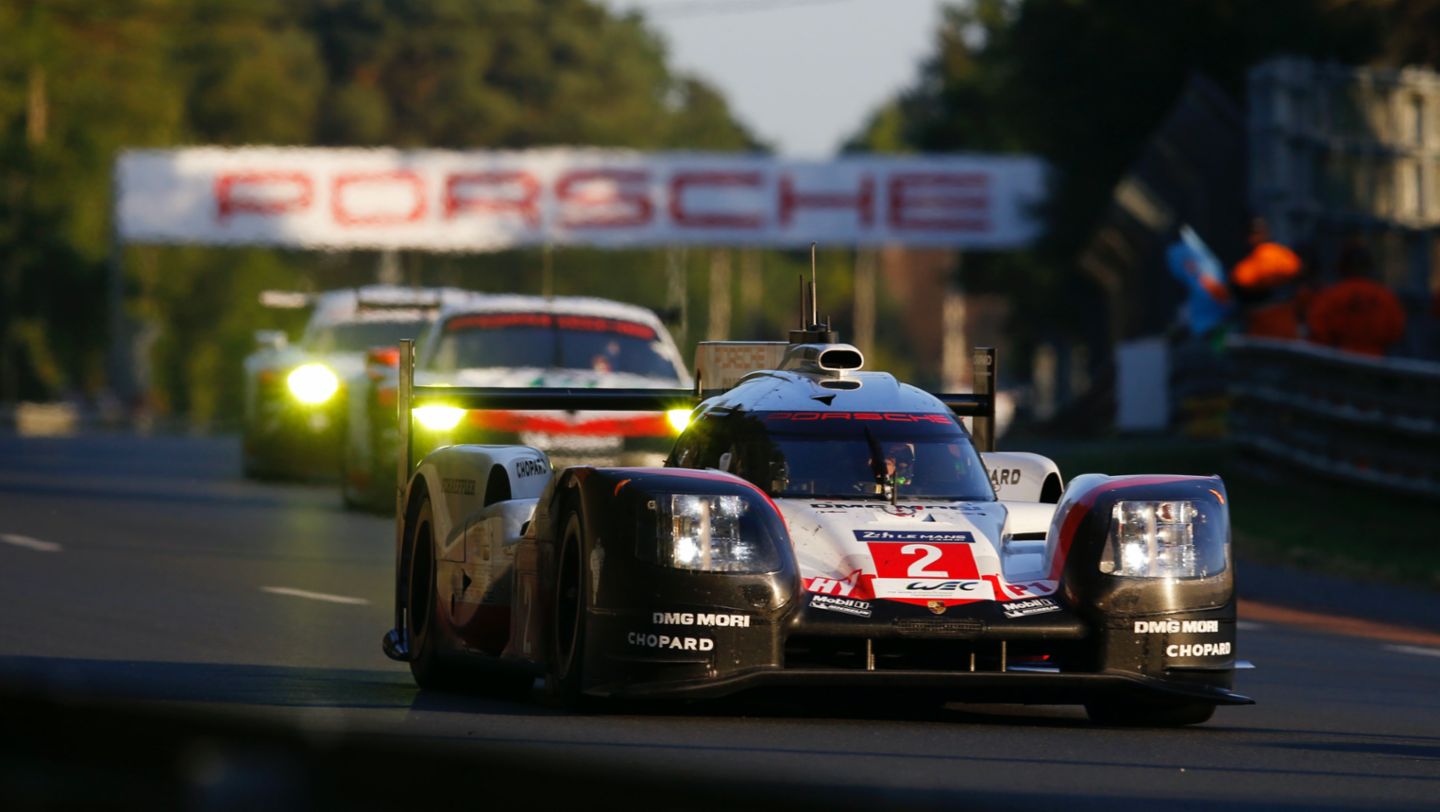
Porsche has announced a return to Le Mans under the new IMSA and WEC rules. They will enter the championship series in 2023 with a LMDh car and a mission to continue their Le Mans dominance where they hold 19 undisputed wins. This follows Audi’s decision to return to WEC in the same LMDh class, both teams have a healthy rivalry as formidable opponents.

Porsche LMP1

IMSA and FIA WEC have done almost everything possible to entice manufacturers back to top tier racing. They came up with two main classes: LMH and LMDh. LMH will see the use of bespoke hypercars from teams such as Aston Martin with a Valkyrie (TBC), Glickenhaus, Ferrari, Peugeot and more. These racers can be one-offs created solely for racing or versions of pre-existing road going hypercars. The LMDh on the other hand is an evolution of LMP2, there will be 4 chassis suppliers namely ORECA, Ligier, Dallara
and Multimatic. The engines and bodywork will be unique to each manufacturer.

Porsche’s LMDh car will feature a chassis from one of the 4 aforementioned suppliers, while their hybrid engine will be developed internally. Output is capped at 680hp while the maximum weight allowed is 1030kg. The racing budget under the new rules is also comfortable for Porsche and incoming teams thanks to the latest revision of rules. Porsche even hopes for synthetic fuels in the sports, the latest GT3 Cup car will be taking advantage of synthetic fuels.

Porsche LMDh side view

Buy a private jet, get a matching Porsche 911 Turbo S

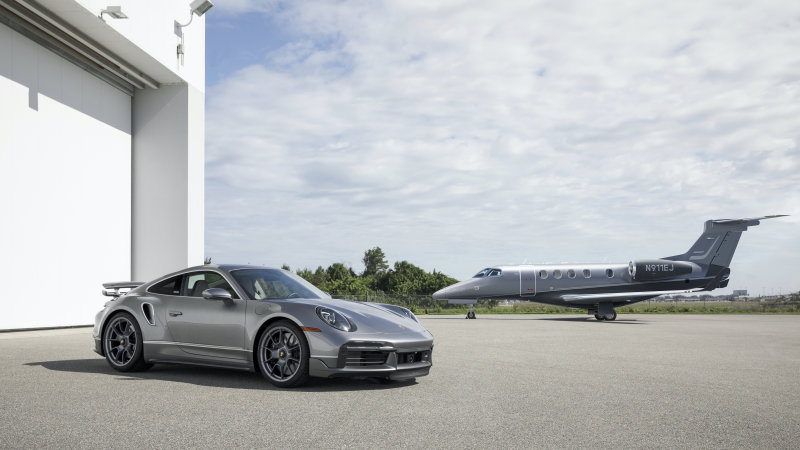
Here’s an opportunity for the top 0.01% earners in the world. Porsche and Embraer are collaborating on a limited-edition project in which you buy a Phenom 300E private jet and get a matching Porsche 911 Turbo S to go with it.

If you can’t afford the approximately $10 million jet, then you won’t have the opportunity to buy a Porsche in this spec, either. Porsche and Embraer are calling this collaboration “Duet,” as the Porsche was specifically designed to pair with the jet’s styling and color scheme. There will only be 10 of these 911s ever made, which is probably a fine number considering the price of entry is about 50 times higher than that of a standard 911 Turbo S.

Porsche painted the upper part of the 911 in the same Platinum Silver Metallic as the jet is painted in. However, the two-tone jet necessitated the lower portion of the 911 be painted in Jet Grey Metallic. The Porsche also has the same strips of chrome and blue running along the lower portion of its body. All of this paint work and trim work is done by hand, similar to the painting process of the jet. Embraer and Porsche collaborated on a special logo for this pair, which the Porsche wears proudly. Its rear wing takes inspiration from the jet, too, as Porsche painted the underside blue and added the jet’s tail number to it: N911EJ.

The thoughtful and special touches don’t end there. Unique wheels are painted in Platinum Silver Metallic and have a blue rim line that was put there using laser technology. Even the chrome surround on the side air intakes are reminiscent of the chrome surround on the jet’s engines.

Inside, Porsche developed a special black/Chalk two-tone color scheme to match the seats in the jet. Even the steering wheel is two-tone, which is meant to copy the plane’s yoke design. More blue accents abound; the special logo is placed in a few spots, and the entire interior is hand-crafted. Porsche also placed an illuminated “No step” plate on the door sills to reference the same lettering seen on the plane’s wings.

There isn’t one aspect of this build that hasn’t been worked over with a fine-tooth comb. You get a special key painted in blue with the jet’s registration. The car cover says “Remove before flight” on it. You even get a custom watch and luggage set that perfectly matches the car. It all sounds fit for a billionaire or a multi-millionaire who likes to live large.

And in case you were wondering about the jet, it’s about the best you can get for a five-person, single-pilot private jet. With a range of 2,010 nautical miles and a cabin fit for a king, it’s about as dreamy as air travel gets.

2021 Porsche 718 GT4/Spyder & GTS 4.0 PDK Review

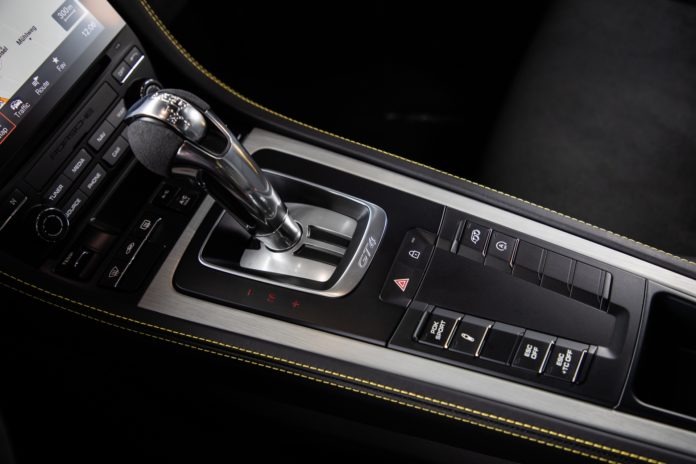
‘Boo hiss!’, you can hear the purists bashing away at their keyboards ending rants with #SaveTheManuals. I would be lying if I told you that I was not one of the old school folk that insists a real driver’s car should have three pedals down low and a wiggly stick in the middle to be considered a car for the true enthusiast. Porsche learnt this the hard way, you only have to look back at the 991 GT3 that was offered only with a PDK transmission before making a U-turn with the 991.2 GT3 which saw the return of the fantastic 6 speed manual. This generation of GT3 is revered and hailed as possibly being the best and most complete GT3 in history. The 718 Cayman and Boxster GTS 4.0 as well as the 718 GT4 and Spyder were only available with manual gearboxes, until now. The double clutch PDK has been held in the highest regard and known to be the best auto option on the industry.

The pressure is on for Porsche, the Boxster/Cayman GTS 4.0 and GT4/Spyder are phenomenal cars and the premiums and waiting lists pay testament to their credentials. The manual transmission suited the character of the car so well, all be it with very long ratios. Has the PDK option fixed this? Well, yes and no. Yes as you can drive the can in auto and not have to think about the gearing and no as chasing the redline still takes an age. The most significant change, aside from the redundancy of your left foot (unless you are a left-foot-breaking-badass) is the near instant and seamless shifts which make the 718 models feel even more potent, because they are.

In comparison with 718 models featuring the standard manual transmission, the 414 horsepower GT models – the 718 Spyder and 718 Cayman GT4 now accelerate from 100km/h half a second faster(!), in 3.9 secs. Where permitted, they can reach 200km/h in 13.4 secs (0.4 secs faster). The 718 Cayman GTS 4.0 and 718 Boxster GTS 4.0, both with 395 horsepower, also improve on the standard sprint from 0-100km/h by half a second to 4.0 secs, and then reach the 200 km/h mark in 13.7 secs (0.4 secs quicker). These are substantial and tangible gains, but what is this like in reality? I headed over to Germany to see if the PDK option had blunted the charms of the 4.0 and GT variants of the 718 family.

The answer unsurprisingly, is no. Yes, it is different, but every variant I drove felt just as engaging and ever more potent than before. The PDK shifts are so unbelievably quick and smooth that you just get the best of the power and torque band whenever you demand kick down or pull for a downshift. Of course, there is a level on detachment, but the chassis, steering and the redline up at 8,000 (in the GT cars) are so seductive that you focus on other elements which mean these 718 models still shine.

On the savage handling track at the Porsche Experience Centre, Hockenheim, I struggled to keep up with the shifts when using the wheel mounted paddles. The nature of the tight, barrier lined track meant that avoiding an embarrassing crash was a priority. Simply put, I would have been unable to shift gears manually and maintain the frantic pace that I was. This is where the PDK shone and allowed me to make the most of the power and torque on offer.

The addition of a PDK option to the 718 GTS 4.0 & GT models makes the cars an ever more tempting proposition to those that want a great road car that they can comfortably take to a track and be tremendously quick. If the choice was mine, I would still prefer the manual, but if sector times and daily drives are more of a priority to you, do not feel short changed optioning the PDK, it is still a thrilling experience. This simply broadens the appeal of the finest sports cars on sale today. The PDK transmission option includes a Launch Control function. On the 718 GTS 4.0 models it is priced at £2,303, and on the 718 Spyder and 718 Cayman GT4 it is priced at £2,000. On the GT models, a lap trigger and Track Precision App is also included.

1977 Porsche 911 Turbo ‘Cyberpunk 2077’

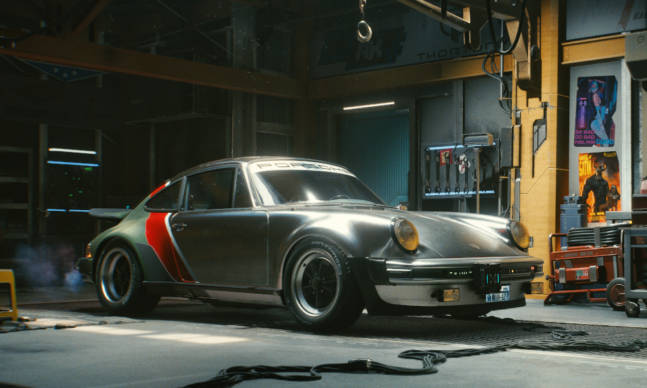
The upcoming and much-heralded CD Projekt videogame, “Cyberpunk 2077” should prove to be a thrill to play. The lead, Johnny Silverhand (actually based on Keanu Reeves) drives a 100-year old Porsche 911 Turbo (the iconic…

Mansory Porsche Cayenne Turbo Coupe Gets 700 hp

Mansory has a number of new models on the horizon. It has teased six in the past week. The latest reveal is this orange Porsche Cayenne Turbo Coupe.

The subtle package of modifications is entirely new. It fits all variants of the 3rd generation Porsche Cayenne, not just the Coupe.

The Mansory Porsche Cayenne Turbo Coupe gets a bodykit which includes a new carbon fibre bonnet with additional carbon fibre components including front air intakes, a front apron, side sills (partly painted in the colour of the car), outside mirrors and a new rear apron.

The spoiler and wheel arch extensions are also finished in carbon fibre.

The wheels are Mansory’s Y.5 design and measure 23 inches. Changes to the ECU unit increase the power output of the Mansory Porsche Cayenne Turbo Coupe’s V8 to 700 hp and 900 Nm of torque. It’s now capable of hitting 100 km/h in just 3.2 seconds.

The demo Mansory Porsche Cayenne Turbo Coupe is also for sale. Mansory have listed it with a price tag of €249,400.

Prototype Drive: 2021 Porsche Panamera Facelift

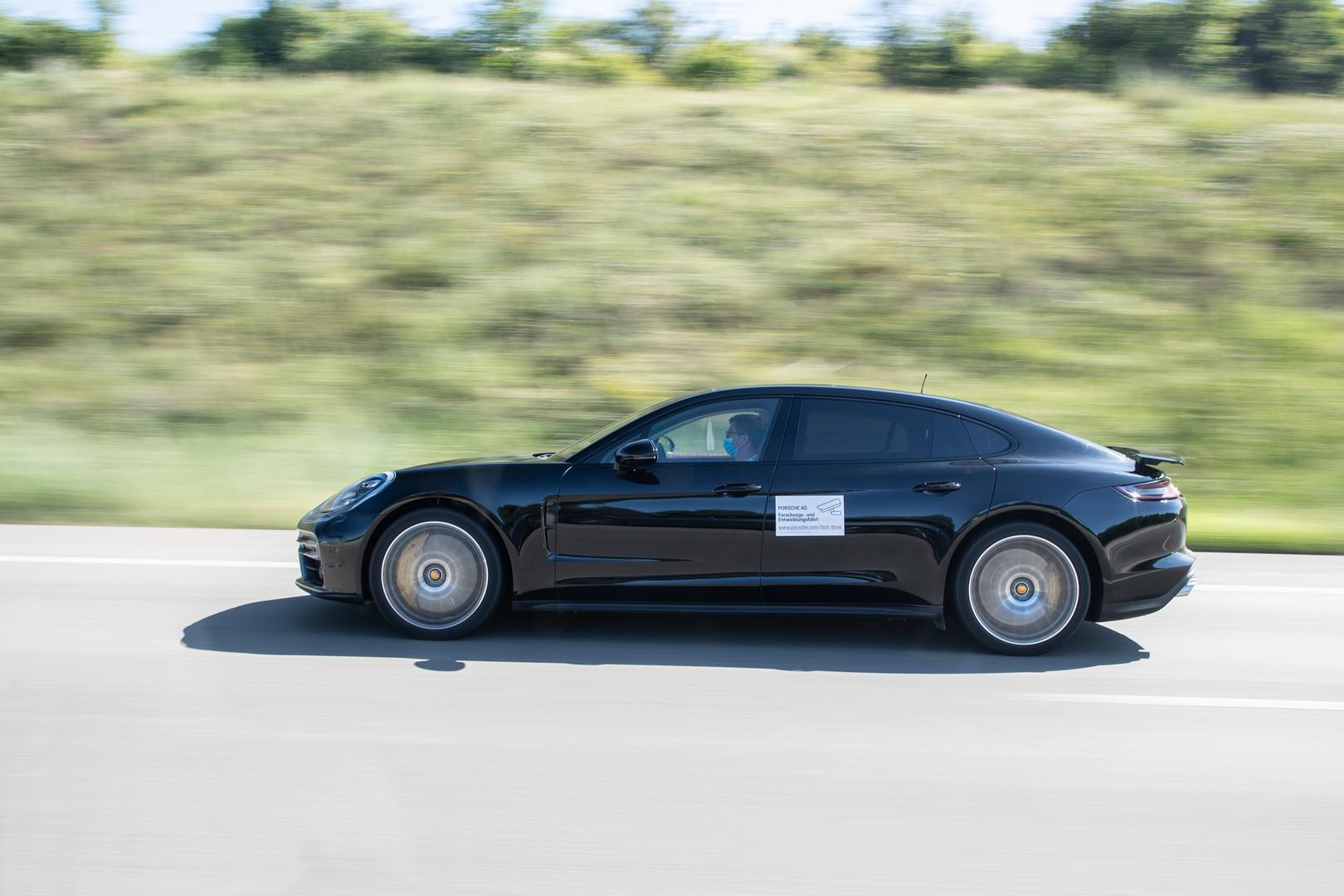
Okay, perhaps Porsche should have skipped the camouflage: It draws more attention to our Panamera than it would have received without the attention-grabbing stickers. We are behind the wheel of the facelifted Porsche Panamera, to be launched in late August; it is fine-tuned in every respect – and still by far the sportiest entry in the luxury car segment.

The Panamera has two faces: Built in two wheelbases and with a Sport Turismo station wagen derivative, it offers all the room of an Audi A8, a BMW 7-series or a Mercedes-Benz S-Class. And since a new, technologically stunning S-Class is just around the corner, Porsche needed to do something to make the Panamera an even better, more comfortable long-distance cruiser.

That’s why it is a bit softer in the comfort-oriented driving modes, and that’s why the infotainment system has been vastly upgraded: It is faster than before, it features a higher-resolution display screen and it has a superior voice recognition system. The Panamera, if so desired by the driver and passengers, offers a serene environment ideally suited to long-distance travel.

But the upgraded chassis and tweaked driving modes can swing the other way, too: Improvements to the adaptive damping system, the anti-roll system, the torque vectoring system and the noticeably sharper steering turn the Porsche Panamera into an even better performer. And that’s important as well, as new competitors such as the four-door AMG GT and the BMW M8 Gran Coupe have arrived on the scene.

Porsche Panamera Facelift Review

Changes to the exterior are rather minimal: The rear light strip now runs in an unbroken line from side to side, the Sport Design package is henceforth standard, and there are the obligatory new wheels and colors. Inside, there is a new steering wheel and new available wood trim. And we praise Porsche for keeping the traditional gated gear selector that allows the driver to up- and downshift with the flick of the wrist. Alternatively, there are solid and beautifully executed shifter paddles.

The powertrain lineup is significantly upgraded, with two conventional 2.9-liter V-6 models, two 4.0-liter V-8 models and three plug-in hybrids, of which two are based on the V-6 and one on the V-8. The battery is bigger than before, electric range grows by 30 per cent. All-wheel drive is standard with the exception of a few select markets, where Porsche offers and entry-level model with rear-wheel drive, and all models are fitted with a quick-shifting eight-speed dual-clutch automatic, affectionately known as Porsche-Doppelkupplungsgetriebe.

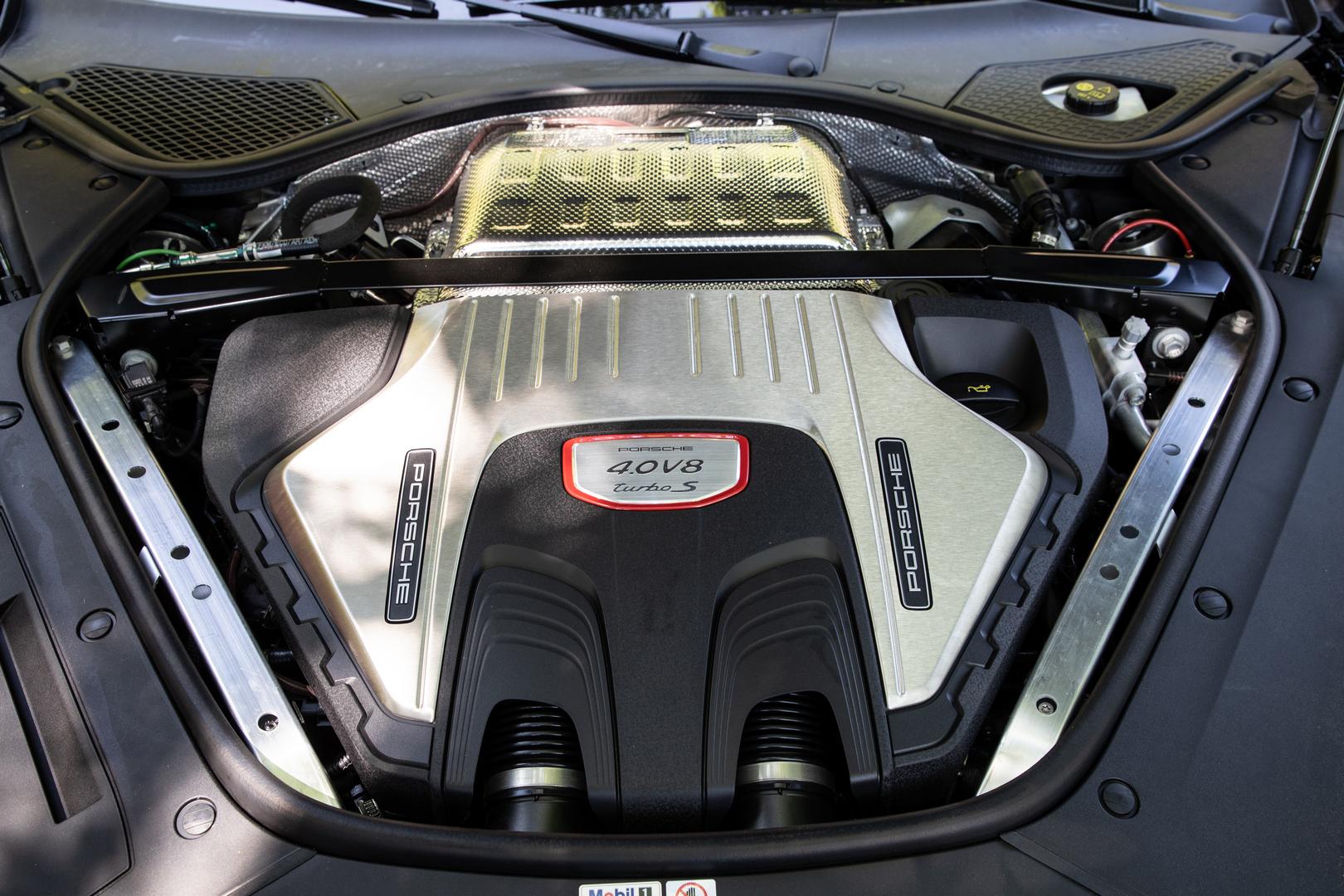
Porsche Panamera Turbo S Engine

The six-cylinder lineup consists of the Panamera 4 with 330 horsepower and the Panamera 4S with 440 horsepower; the Panamera 4 E-Hybrid will make around 460 horsepower, while the Panamera 4S E-Hybrid – a new addition to the lineup – is rated at 560 horsepower.

The V-8 lineup begins with the GTS, which climbs from 460 to 480 horsepower; the 550-horsepower Turbo is killed off in favor of a 630-horsepower Turbo S, and there is only one hybrid here: The Turbo S E-Hybrid, which gets another 70 horsepower to crack 700.

But enthusiasts should know that the Turbo S is fitted with a more interesting engine than the Turbo S E-Hybrid: While the hybrid’s V-8 carries over unchanged and is largely identical to the electronically detuned unit on the GTS, the 630-horsepower unit is significantly fine-tuned with unique pistons, crankshaft and timing chain, larger turbochargers, new injectors and even higher-performance spark plugs. Add to this the fact that it is very significantly less heavy than the hybrid, the enthusiast’s choice should be clear: Pick the regular Turbo S, and it’ll likely be faster on the track, too.

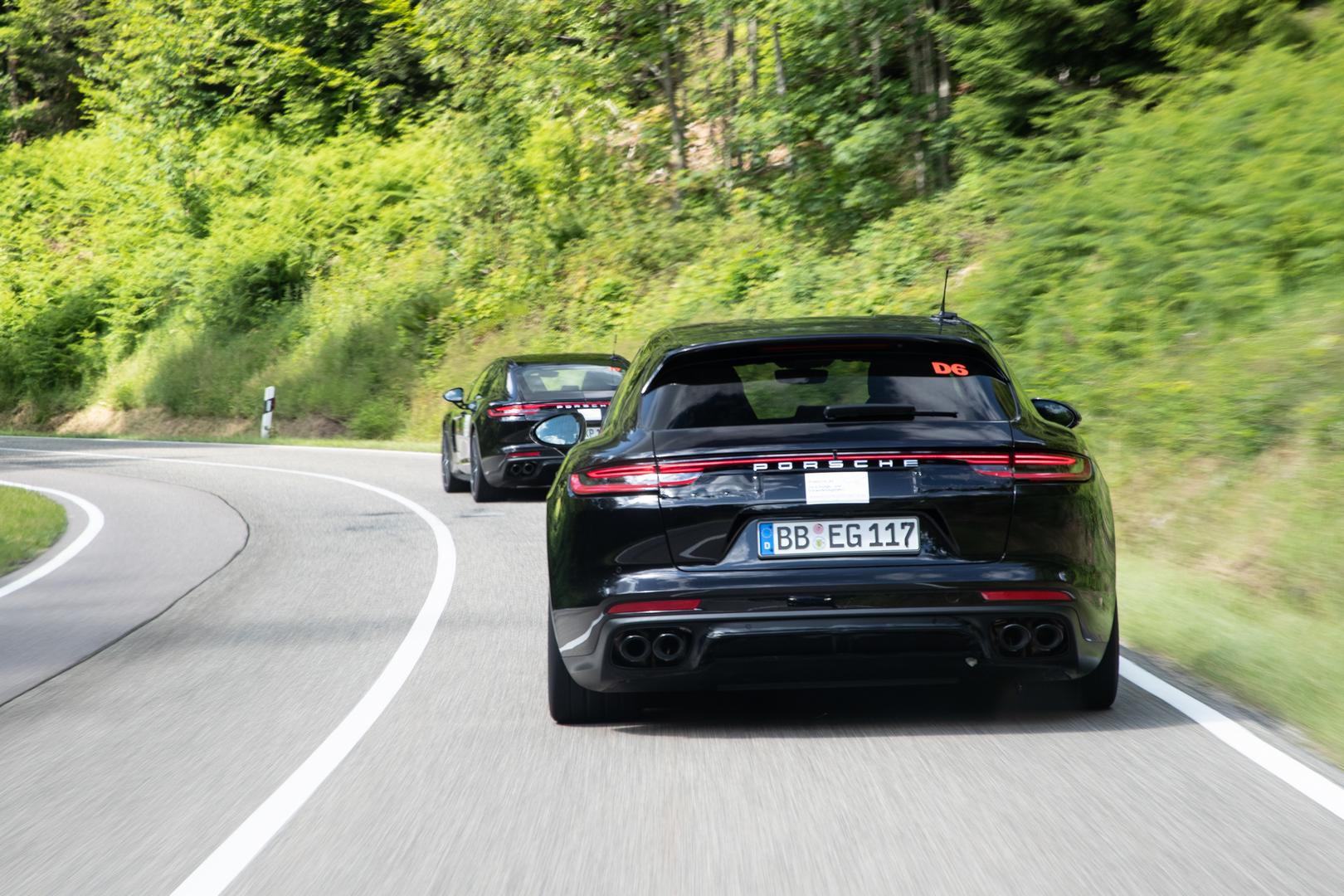
Porsche Panamera Facelift Rear

If it’s comfortable long-distance cruising you’re after, the choice is less clear. The hybrids are economical only when driven over short distances and duly plugged in after each drive. Meanwhile, Porsche has missed the opportunity to bring back the fabulous 4.0-liter V-8 diesel that was briefly available on the pre-facelift model and commands sky-high prices on the used-car market. Our choice would therefore be the GTS: You can’t beat the V-8 rumble – it’s just so soothing.

We loved driving the facelifted Panamera. Look for the cover to come off in late August.

2021 Porsche 911 Turbo S First Drive | Turbo by name, turbo by nature

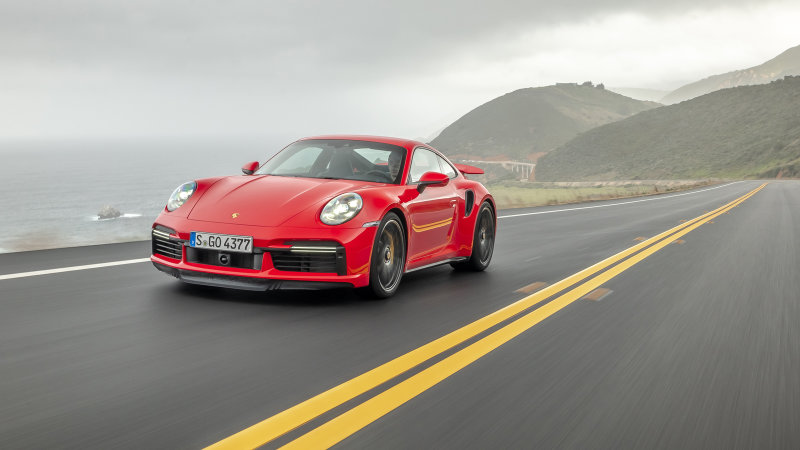
NEWBURY, England — There are Porsches with turbocharged gasoline engines not badged as such, while electric ones now carry the famous script despite lacking an internal-combustion engine of any sort. There is, thankfully, no such confusion with the new 2021 911 Turbo S and the excesses of power, performance, tech and swagger it stands for.

We were supposed to experience this around Laguna Seca (plus the Central California roads shown in these pictures), where 1,000-plus horsepower turbocharged Porsches of the legendary Can-Am era once prowled. Instead, more modest, localized drives have been arranged. Hence the key to the Turbo S comes wrapped in a Ziploc bag, pushed at arm’s length across a screened counter with firm instructions to be back by 3 p.m. for full decontamination.

With some 200 horsepower and 200 pound-feet more than a 992 Carrera S, the new Turbo S is unequivocal in its superiority over regular 911s, that huge firepower augmented with expanded aero and tech I’d love to have tested at Laguna Seca. Narrow, twisty English lanes don’t hold quite the same romance, but exploring the huge disparity between the Turbo’s abilities and what you can responsibly get away with at road speeds is an interesting challenge in its own right.

There is still plenty to appreciate. The basic format is familiar, given a 3.8-liter, twin-turbo flat-six driving all four wheels through a PDK transmission (now an eight-speed), active anti-roll bars, four-wheel steering and more. Up to 368 pound-feet of drive can now go to the front axle, and the car’s footprint has increased, thanks to a 1.8-inch wider front track and bigger wheels, now 20 inches up front and 21 at the rear. The scope and modes of the active aero have also been greatly expanded, with a variable-position rear wing and three-piece, deployable front splitter. To protect the latter, an optional nose-lift system is also available and will, at a later date, gain GPS-enabled actuation to remember locations of steep curbs encountered on regular drives, be that your driveway at home or the entrance to the parking lot of your favorite morning coffee stop.

The engine is new and based on the 3.0-liter in regular 992 Carreras, employing bigger, variable-vane turbos in a new “symmetrical” layout fed by the scoops on the rear fenders and new, additional intakes ahead of the rear wing. Power is up from 580 horsepower to 640 with torque now at 590 pound-feet, the latter increased by 37 pound-feet. Top speed is still 205 mph, but the car gets there quicker, with 0 to 60 mph coming in just 2.6 seconds, while the quarter-mile is demolished three tenths sooner at 10.5 seconds. So, it’s fast. Really, really fast.

You knew that, though. The important thing for the 911 Turbo is not how fast it goes, it’s how it goes fast. And an area Porsche has been working on since the previous 991. In general, the 992 is more refined and GT-like than any 911 that’s gone before. Does the new Turbo follow this path? Or has it been permitted to retain a little of the rawness engineered into its predecessor?

The answer, thankfully, is both. When cruising, you appreciate the improved refinement and reduction in the tire roar that made previous Turbos a bit of a chore on poor surfaces. As in regular 992s, the new PDK is so slick your only notification of a shift is a twitch in the tachometer needle and slight change in tone. The low-slung cabin is comfortable, expensively finished and full of tech.   

Then you turn the little mode selector on the wheel to Sport Plus and realize the $203,500 MSRP is fair, given that you effectively get two cars for the price of one. Increased tech bandwidth puts greater distance between the extremes of the Turbo’s nature, accentuated further by the optional PASM Sport suspension and Sport Exhaust System on our test car. The former drops the car 0.39 inch closer to the ground while the latter unleashes exciting rasps, gargles and whooshes from the engine bay to remind you the Turbo script represents more than just a trim level.

The swell — and sound — of boost is a thrilling appetizer for the explosive rush of acceleration that comes fractions of a second later, this merest hint of lag actually more exciting than the more binary power delivery of older Turbos. Want it even more hardcore? A Lightweight package saving 66 pounds through removal of the rear seats, reduced sound deadening, thinner glass, fixed buckets and a lightweight battery also will be available (at a price yet to be confirmed).

Even without that, there’s a sense of tension and focus in the sportier modes contrasting with the more relaxed vibe in the normal setting. You know everything is synthesized, augmented and filtered. But it feels so seamlessly harmonized. Any slack to the wheel is instantly dialed out, the response sharp but faithful, the extra range of movement in the rear-wheel steering helping to shrink the car around you, no matter that it measures 6 feet 3 inches across the rear.

It’s now nearly as wide at the front but, through the corners, that characteristic 911 weight transfer endures. Even at street speeds, you get a whisper of hip shimmy under braking, a lightness in the nose if you don’t settle it before turning in, the squat and rotation as you nail the throttle and the violent eruption of boost-enhanced acceleration as the wheel unwinds on corner exit. That Porsche has used tech as a means to communicate these sensations even at relatively modest speeds is a relief to those fearing a digitized Turbo experience. And you know it could deliver the same 365 days a year on any road, come rain or shine.

There is nothing revolutionary about the new 911 Turbo S. But that’s not what anyone wants. Based on more than four decades of rich heritage, there is absolutely no confusion about what Turbo stands for.

Related video:

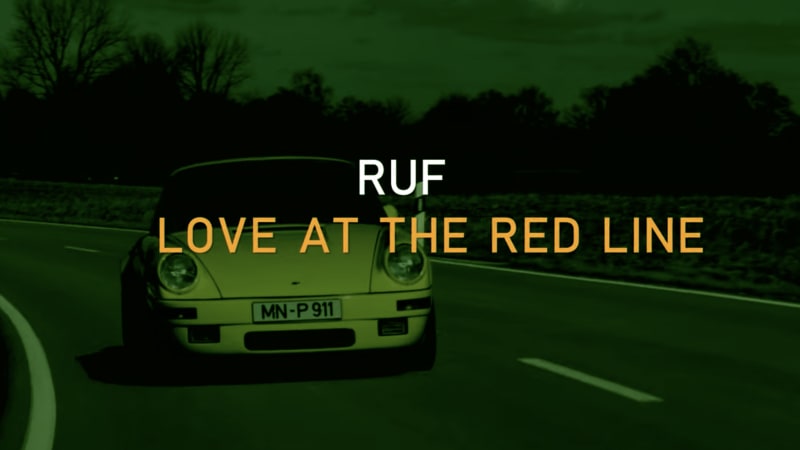
Alois Ruf details 80 years of history in ‘RUF: Love at the Red Line’

Alois Ruf, Jr. knows the exact moment he and his father Alois Ruf, Sr. realized just how fanatic Porsche people are about their cars. While sitting at a stoplight in their Porsche 356 Karmann hardtop one Sunday afternoon, a stranger knocked on the window and begged for a chance to buy that exact car. The Rufs agreed to follow the person to his house, and the random buyer used cash from a candy box to overpay for the car that same day. After handing the cash over, the trusting stranger then loaned the Rufs a different Porsche to use to grab the necessary paperwork. “These Porsche people, they must be crazy,” Alois, Jr. remembers his father saying. “Everything is different with these people. Something is there that is not normal.” The Rufs went on to use craziness to build an 80-year business that is now engrained in Porsche lore.

Marking eight decades of service, Ruf put together a 30-minute documentary about its own history and recently released the project in full on YouTube. The video is spearheaded by Alois, Jr., and includes several other notable Porsche employees, owners, historians and fans. Ruf remains headquartered at Pfaffenhausen, Germany, where Alois, Sr. first opened a small repair shop.

Senior’s first Porsche was the result of a terrible crash. In 1963, while driving a Mercedes-Benz O 321 HL, he witnessed a Porsche 356 Karmann hardtop pass his slow-moving omnibus. When the Porsche try to correct into the proper lane, it lost control, drove into a ditch and flipped twice. Senior calmed the man down, brought him to the hospital, and explained he had an auto shop that could repair the car. But the owner ended up selling the car to Alois, and Alois sold it about a year later in the previously mentioned scenario. From that seed, a lasting relationship grew.

The car RUF is known for, the Yellowbird, came from an idea that emerged back in 1979. At the time, Junior called it the 945 R, and he planned to give it 450 horsepower with a twin-turbo version of the 935 engine. He ended up building the CTR 1 out of a shell from a 911 Carrera 3.2, and the car’s pure performance characteristics filled a gap left by Porsche at the time. In part due to a popular VHS tape, that car later became a legend.

Learn more about RUF’s beginnings, and how the business progressed, straight from Alois, Jr., in the video above.

Related Video:
The Last Porsche 991 is Auctioned in Aid of Coronavirus Charity

The 991 production run was one of Porsche’s best 911 series to date. It has now come to an end with the limited-edition Porsche 991 Speedster. As we move into the 992 generation, during very uncertain times, Porsche has decided to offer one final 991 as a donation towards the United Way Worldwide’s COVID-19 Community Response and Recovery Fund.

Porsche North America has joined RM Sotheby’s to offer the vehicle for public auction. The auction is happening online with bidding opened from 15 April 2020. It runs through to 22 April 2020 when the winning bid will take this final 991. With 4 days left, 17 bids have pushed the asking price up to $385,000.

Supercar driver totals Gemballa Mirage GT in massive NYC wreck

Police arrested the driver of Gemballa Mirage GT — an ultra-rare exotic based on the Porsche Carrera GT — after it struck several other vehicles and left a trail of destruction on 11th Avenue in the Hell’s Kitchen neighborhood of Manhattan Tuesday morning.

Police did not release the name of the driver, but said he was the owner of the vehicle and charges are pending, per reports. Road & Track did some sleuthing and reports that it was likely Benjamin Chen, a supercar collector and the co-founder of Gold Rush Rally, an annual rally of exotic and luxury vehicles that he once described as a “rolling party with over 200 of your friends.” And sure enough, the car looks just like the one he talked about in 2014 with the DuPont Registry Daily. There’s even an Instagram video of the hoodie-wearing driver, who resembles Chen, being ordered out of the vehicle. He initially appears to stumble when exiting the cockpit.

The car, a modified Porsche Carrera GT that can cost north of $750,000, had Massachusetts plates reading “Nine 80” and came to a stop at 11th Avenue and 44th Street on Manhattan’s west side, just north of the Javits Center, which is being used as a makeshift field hospital for coronavirus patients. The car looks to be a total loss, its entire front right corner sustained heavy damage, with the panels missing and the body structure badly mangled. Other photos showed the wheels cocked at different angles, windshield shattered, part of the rear fender missing and its hood lying on the sidewalk. Helicopter footage from Fox 5 in New York showed it surrounded by ambulances and other emergency vehicles after it was stopped.

One video showed it careening out of control at high speed down a mostly abandoned 11th Avenue and slamming into a white Toyota Sienna minivan, but then trying to flee.

Chen was involved in a wreck while driving a McLaren 12C Spider during the goldRush Rally in 2013 in Texas.

2021 Porsche 911 Turbo S dressed up with Exclusive Manufaktur parts

The last time the Porsche Exclusive Manufaktur overhauled a 911 Turbo S, the result was a more powerful limited edition called the Exclusive Series, with carbon fiber racing stripes and carbon wheels. Stuttgart’s couturier is at it again with the 2021 911 Turbo S, this time to show off what’s possible with off-the-shelf Exclusive Manufaktur components, the same way it did recently with the Taycan’s SportDesign Package Carbon.

The makeover begins with a coat of Indian Red paint. As far as we can tell from perusing Porsche forums, Indian Red has a long and convoluted history with, but little difference from, Guards Red. The naming seems dependent on international market, model year, and which Porsche factory built the car. We make the point because the Porsche USA configurator offers Guards Red but not Indian Red. 

The configurator does, however, present the choice of the staggered, center-lock Exclusive Manufaktur wheels that were fitted to that low-volume 911 Turbo S Exclusive Series. The rims add $2,490 to the price. Normally painted Platinum Silver, for this application the wheels receive a silver and black finish that could cost more. The exterior comes with additional alterations including black-rimmed LED Matrix Design headlights for $970, clear taillights for $990, and rear side air intakes in high gloss black for $600.

Plenty of Indian Red has bled into the cabin, the hue running along the doors, the length of the instrument panel, and around the center console. That is a no-cost option, which is pretty special from a carmaker that charges $370 for a rear windshield wiper and considers the $900 painted black brake calipers an exterior performance option. There are no such gimmies for the extended red accents in the tachometer ($420) and dash-mounted Sport Chrono clock (also $420). Deleting the “S” logo on the seat headrests in order to put the Porsche crest there requires $290. In case that switcheroo causes occupants to forget the particular model they left the garage with, embossing the center console lid with the Turbo S logo can be done for $340.

Those aren’t the only upgrades being prepared for the new GT. CarBuzz found early photos of a new SportDesign Package and Aerokit designed for the Turbo S. On the Carrera Coupe, the optional SportDesign Kit costs $4,890 to add a new lower front bumper and splitter, deeper, body-colored side sills, and new rear bumper with a matte black diffuser. Carrera buyers can also get just the SportDesign front fascia for $3,240, while the Aerokit includes all of that and adds a fixed, high-rise rear wing for $6,910. We don’t have detailed info yet on the breakdown of the Turbo S packages, but combined, they install the new lower front fascia, sharp side sill extensions, new rear fascia with a reshaped diffuser, two large oval exhaust pipes instead of the four square pipes, and a new active rear wing design with curled-up edges.

Related Video: