All posts in “Cars”

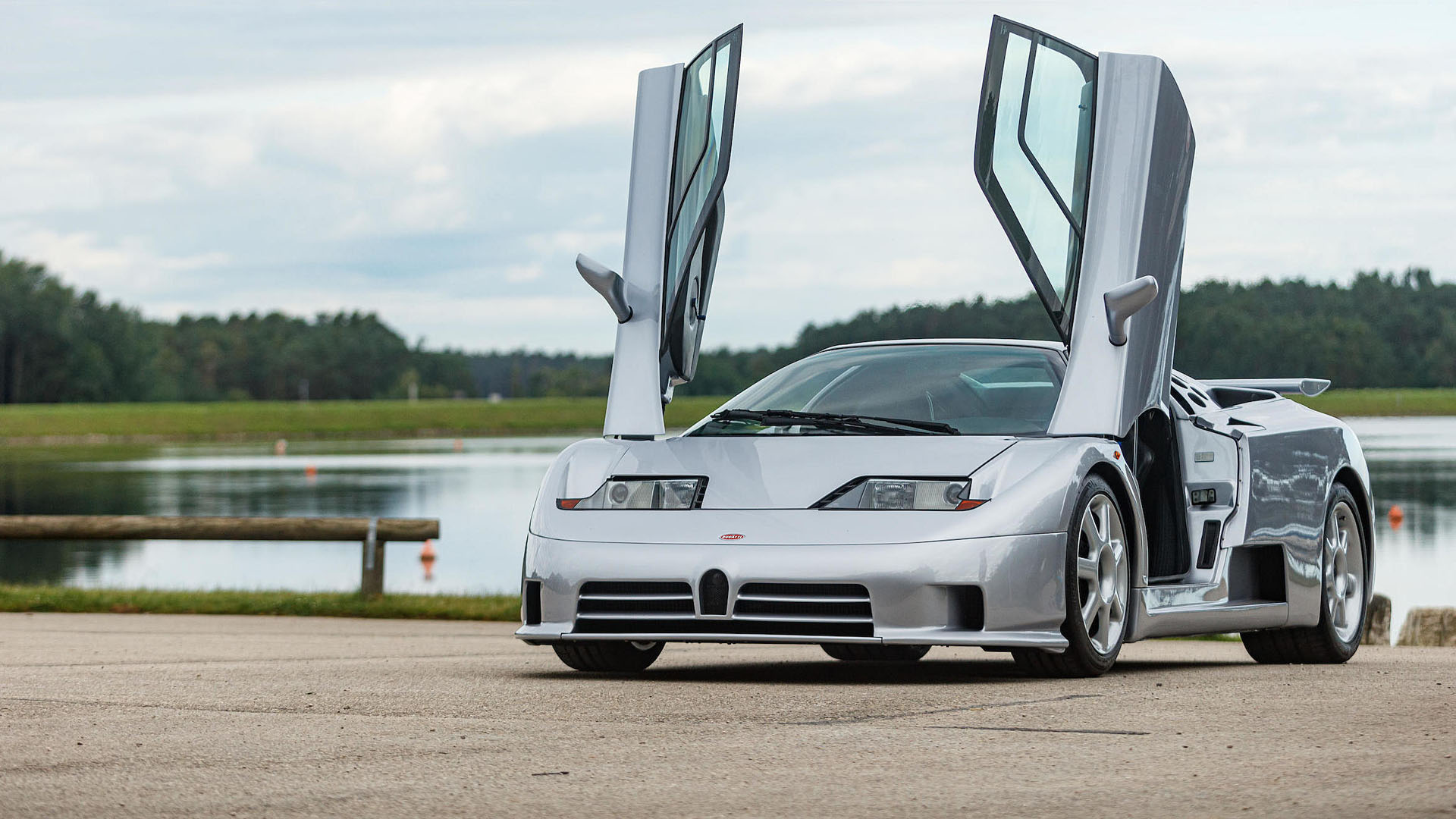
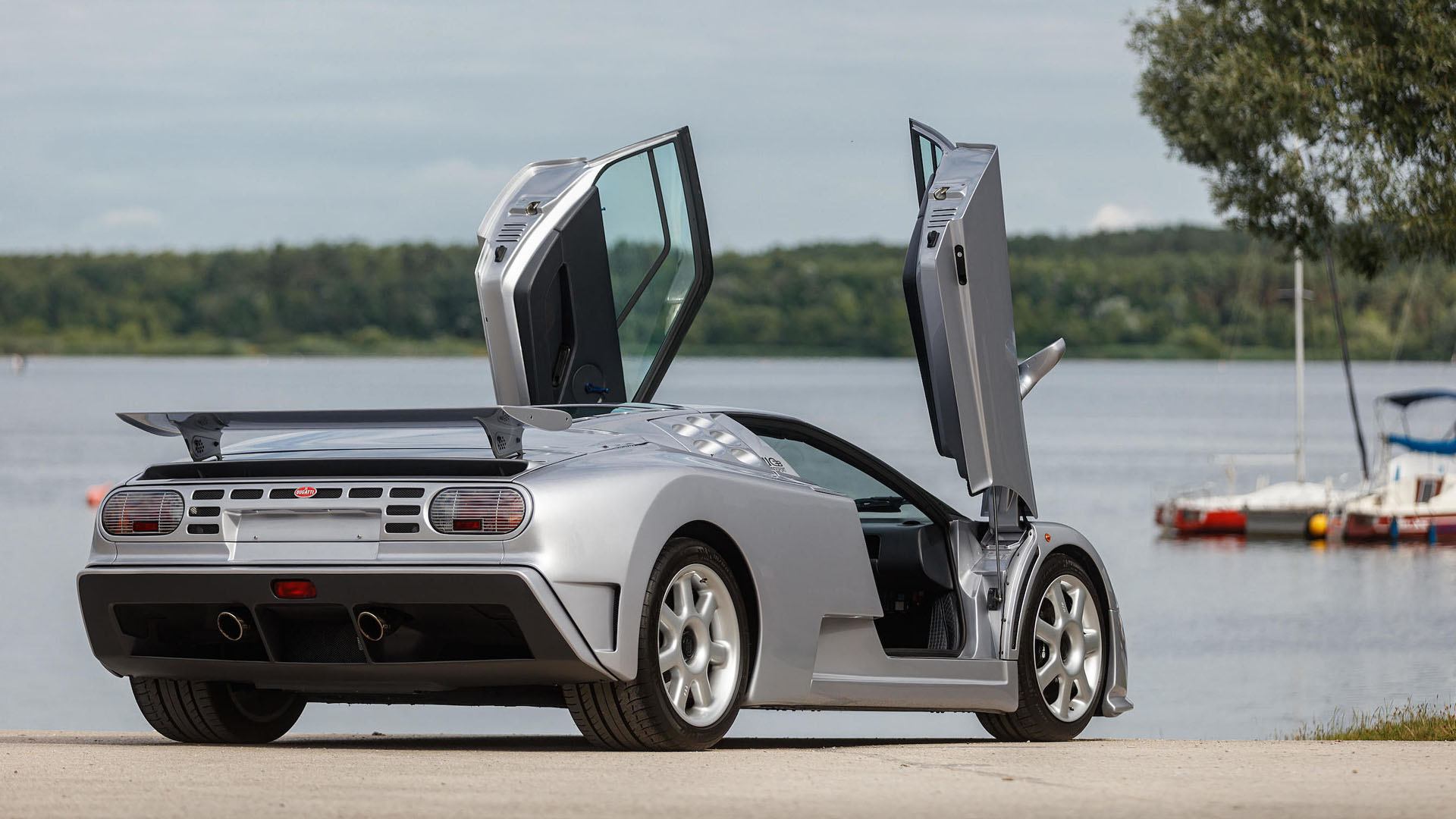
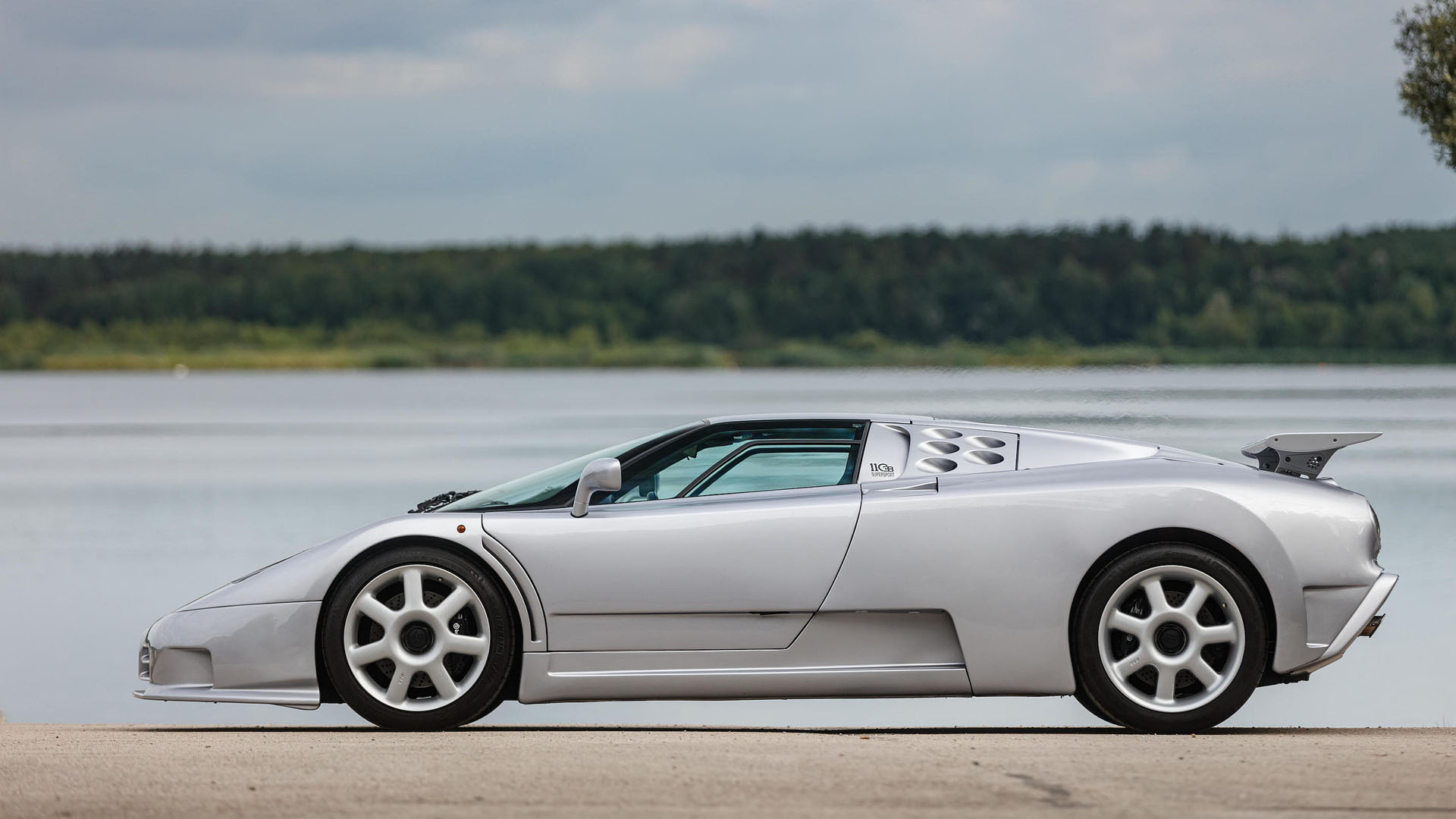
One of 30 Bugatti EB110 SS

We’ve mentioned The Zoute Sale by Bonhams in Knokke-Heist, Belgium, Europe a few days ago when we talked about an amazing opportunity to buy a rare Ferrari F40 with only just over 1,000 miles on the counter, but that’s not even the highlight of the upcoming auction, with an estimate between US$ 1,155,000 and $1,734,000, this Ferrari surpassed with ease by this 1994 Bugatti EB110 Super Sport Coupé, estimated to reach an auction price between US$ 2,300,000 and $2,900,000 … almost double the value of the Ferrari F40, so why is that you might ask.

Photo courtesy of Bonhams

It because of rarity, provenance, and the current market climate for high-value super and hypercars, there are countless millionaires and billionaires out there that are willing to spend a lot of money to buy an older, classic supercar to complete their collection, most of these will probably never leave their airconditioned, heated, moisture regulated garage, but that’s the current market, prices on cars have skyrocketed over the last year or so, and it all comes down to supply and demand, and with nearly 1,400 units of the Ferrari F40 in this case, there were only 30 Bugatti EB110 SS built, so it’s a lot rarer in the automotive world.

The Bugatti EB110 was the brainchild of the Italian entrepreneur Romano Artioli, who resurrected the Bugatti name in the car world when he built a state-of-the-art factory in Modena, near Ferrari, Maserati, and Lamborghini, for the production of the EB110, as an homage to Ettore Bugatti’s birthday exactly 110 years earlier, with a design by Marcello Gandini, yes, the very same Bertone designer that gave us the Miura and the Countach from Lamborghini. While engineering behind the Bugatti EB110 GT was thanks to Paolo Stanzani, also related to Lamborghini, and while the upward-opening doors on the EB110 were a clear hint of Lamborghini influence, the engine was something totally different, still a V12, but with no less than four turbochargers, the Bugatti EB110 could reach 340 km/h with her 561 bhp power output.

Photo courtesy of Bonhams

But that was just the ‘base model’ from Bugatti, only six months after the official unveiling of the EB110 GT, Bugatti amazed the world at the 1992 Geneva Motor Show with the EB110 SS, or Super Sport, the lightweight version of the GT model, Bugatti managed to remove a lot of weight from the original GT by using carbon-kevlar parts instead of aluminum ones and by fitting BBS wheels. Changing the ECU, installing larger fuel injectors, and fitting a different exhaust system caused power output to rise beyond the 600 bhp mark … top speed of the Bugatti EB110 SS: 355 km/h (or 220 mph), in 1992!

Photo courtesy of Bonhams

But all that power and exclusivity came at a price, $380,000 back in 1992, unfortunately, the early Nineties saw a devastating economic recession which meant the company would go into receivership in 1994, only two years later, after 125 units left the factory gates to customers around the world (Formula 1 World Champion Michael Schumacher and HRH the Sultan of Brunei both owned EB110 SS cars), among those 95 were the more luxurious EB110 GT version, while just 30 of the EB110 Super Sport lightweight were built, and the car presented here is among the last ever to be built at Modena.

Photo courtesy of Bonhams

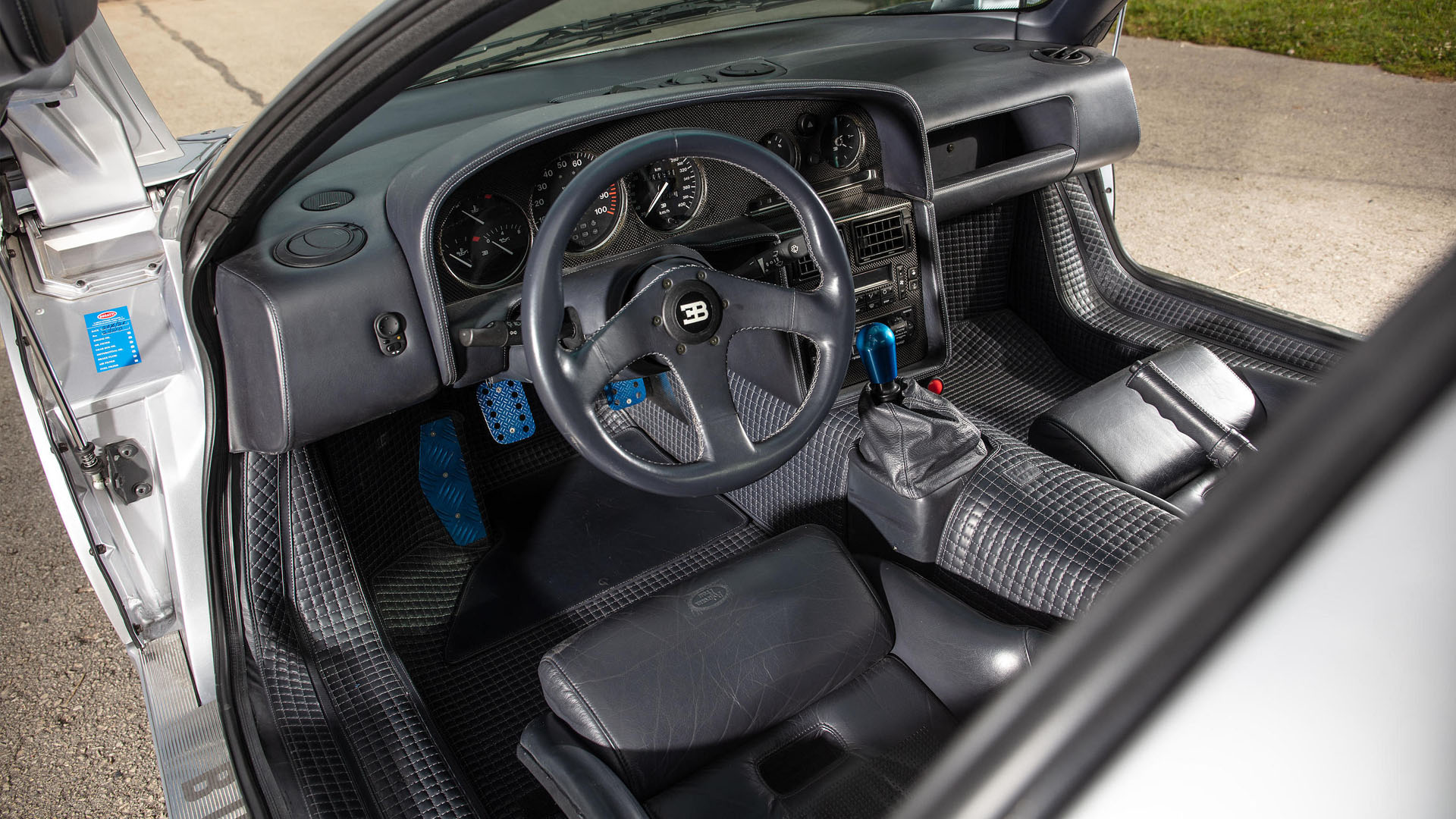
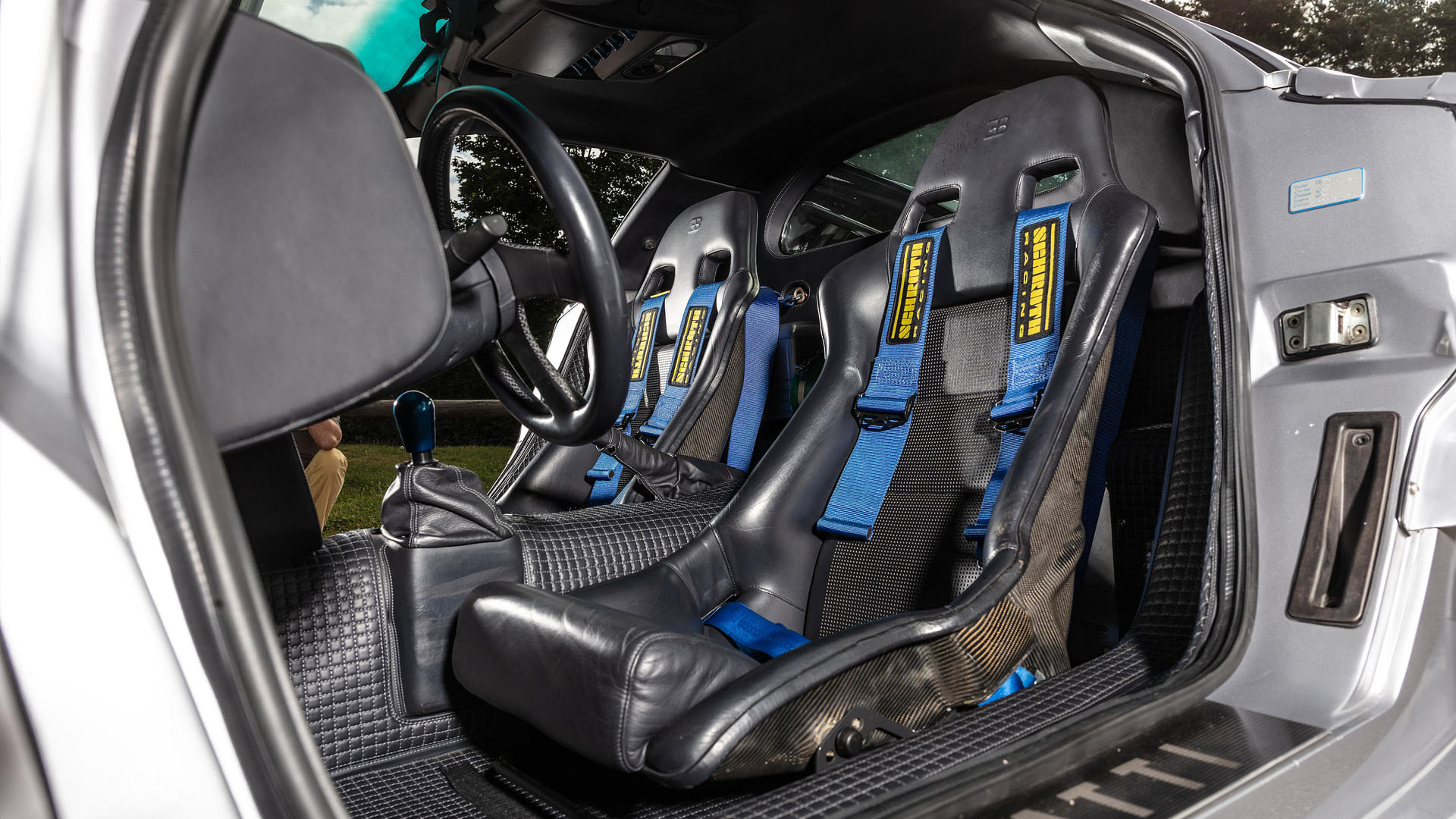
Just as it happens to be today, ordering a supercar puts you in for a long wait, almost a year went on between ordering this car in June 1993 and taking delivery in April 1994, keeping in mind Bugatti Automobili SpA ceased operations in September 1995, the car was delivered to a Bavarian Dr by Auto König in Germany, but this specific EB110 SS came with some additional options: blue anodized aluminum control pedals, gear shift knob, and window switches that matched the dark blue leather interior, the customer had an additional request: upgrade the power even further, making this Bugatti number ‘B110.01 085’ one of the most powerful in the world.

The car would change hands a few times over the years after Dr Bernd Pöhlmann sold her in 1997 to Mr Jürgen Jaudszims, who subsequently sold her again in 2003 to Jan Van Stuivenberg in the Netherlands. The latter would keep this special Bugatti EB110 SS for a period of ten years before he decided to part with her in 2013, when this Italian lady returned to Germany, to Munich more precisely where she would stay until being put up for auction today by Bonhams at The Zoute Sale in Belgium … note the car is still registered in Germany today as the last owner regularly drove her and she was maintained perfectly over the years.

Photo courtesy of Bonhams

While this metallic grey lady is now 27 years old, she showed no signs of any accidents during a complete inspection by B.Engineering in Campogalliano, they also performed a full service just prior to the auction and even certified this rare Bugatti EB110 SS, finished in Grigio Chiaro metallizzato (or Light Grey metallic), she comes with paperwork that shows the car was serviced at the Bugatti Customers Service Department just three times, in November 2005, in February 2014, and finally, just recently in July 2021, this EB110 SS now shows 29,995 kilometers on the clock.

This really is a masterpiece from the Nineties, and being so rare, a Bugatti EB110 SS really is in a world of her own, which reflects in the auction estimate naturally, which could be a lot higher when the hammer comes down if the right person is bidding on this amazing piece of automotive history, she comes complete with a huge file of service and maintenance invoices, and the all-important Certificato di Autenticità supplied by Bugatti, just in case you are wondering, there is even a sports exhaust included, and if you are a larger person, this car comes with a special seat to accommodate you, how cool is that?

Photo courtesy of Bonhams

Interested in this car? From an enthusiast point of view, or perhaps as a buyer … just head over the official Bonhams page and register now.

$2 Million Pininfarina Battista Looks Stunning in Verde Paradiso!

The Pininfarina Battista made an appearance at the Villa d’Este 2021, sporting a shade of Verde Paradiso. The car went ahead to win the coveted Design Award at the same event, adding to the list of awards it has won since its debut at the Geneva Motor Show in 2019.

The model features hand-finished exterior elements, these include the Verde Paradiso metallic paint, Carbon Accent Pack for the lower body and diffuser, ‘Goccia roof’ with Black Exposed Signature Carbon combined with a Nero finish and an Exterior Jewellery Pack with anodised aluminium accents.

In addition, the exterior of the vehicle has also been equipped with a set of forged aluminium Impulso Gloss Black alloy wheels with anodised aluminium centre-lock rings and brake calipers finished in Silver.

The interior on the other hand features a Tan leather upholstery with quilting for a more luxurious outlook, the seats have been fitted with matching Tan seat belts and a Black Exposed Signature Carbon detailing and the Interior Jewellery Pack consists of anodised aluminium detailing with the floor mats and steering wheel finished in Black.

The Battista is powered by 4 liquid-cooled permanent magnet synchronous electric motors that are located on each wheel. They have a total output of 1900hp, the 120 kW⋅h battery pack comes from Rimac. Pininfarina claims a 0-100km/h time of under 2 seconds and a top speed of 350km/h. Pricing starts from $2 million.

Concorso d’Eleganza Villa d’Este 2021 – the Highlights

After being postponed for more than a year The Concourse of elegance of Villa d’Este returned but in a smaller form. Due to Covid restriction in place this year BMW decided to ditch the motorcycle show and the public parade that usually took place at Villa Erba on Sunday in exchange for a smaller and cozy event all focused on Villa d’Este.

Nevertheless the car selection consisted of almost 50 automobile jewels presented in eight Award Classes that, as by tradition, captured the heart of every aficionado of the genre with their immaculate condition, their significant contribution to automobile history and their fascinating individual stories. And that’s what you expect from Villa d’Este.

The Jury of international vehicle experts made awards for the “Best of Show”, the Class Winners and the Mentions of Honour in the individual Award Classes. The Ferrari 250 GT TDF won the Best in Show, the Lancia Dilambda Serie I owned by Italian collector Filippo Sole won the Coppa Oro Prize while the voting in the Public Referendum on the most beautiful Concept Cars and Prototypes went to the Battista study presented by Pininfarina.

As GTspirit is more focused on performance cars, we can’t forget to mention other two prices awarded in the class the Birth of the Supercar: Latin Style Landmarks and The Next Generation: Hypercars of the 1990s, won respectively by the Lamborghini Countach LP 4000S prototype Walter Wolf Special and the magnificent one of one Isdera Commendatore 112i that my contemporaries will remember from its appearance on Need For Speed 2 (1997).

Special mention of honour (by the Jury and from GTspirit team) went to Ferrari F40 and McLaren F1 (the famous chassis 12 that used to wear Tag Heuer livery).

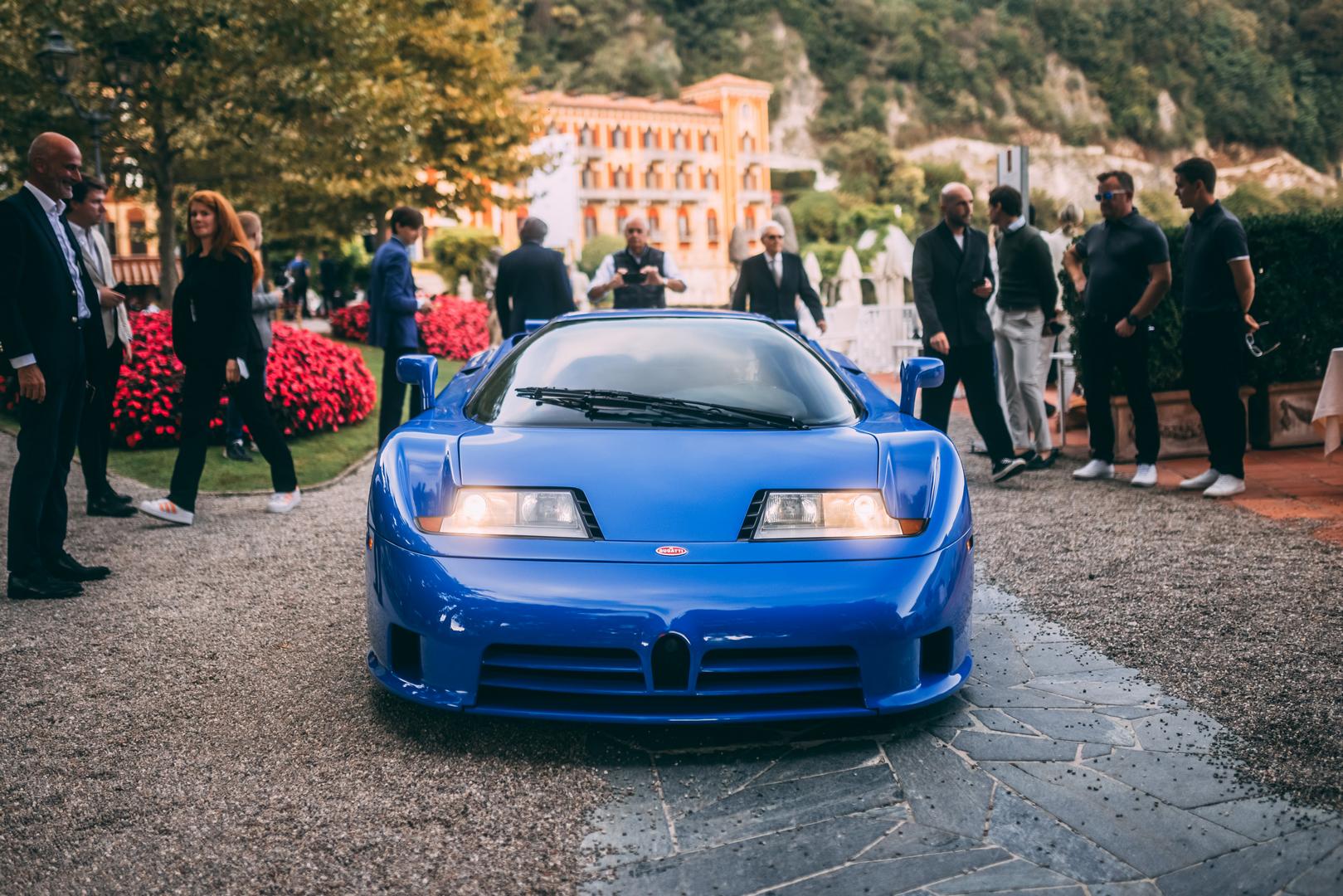
2021 also marked the 30th anniversary of the Bugatti EB110 and for this reason La Maison pur Sang displayed an immaculate EB110 Super Sport (a very rare US bumper spec) and its reincarnation the Bugatti Centodieci concept car.

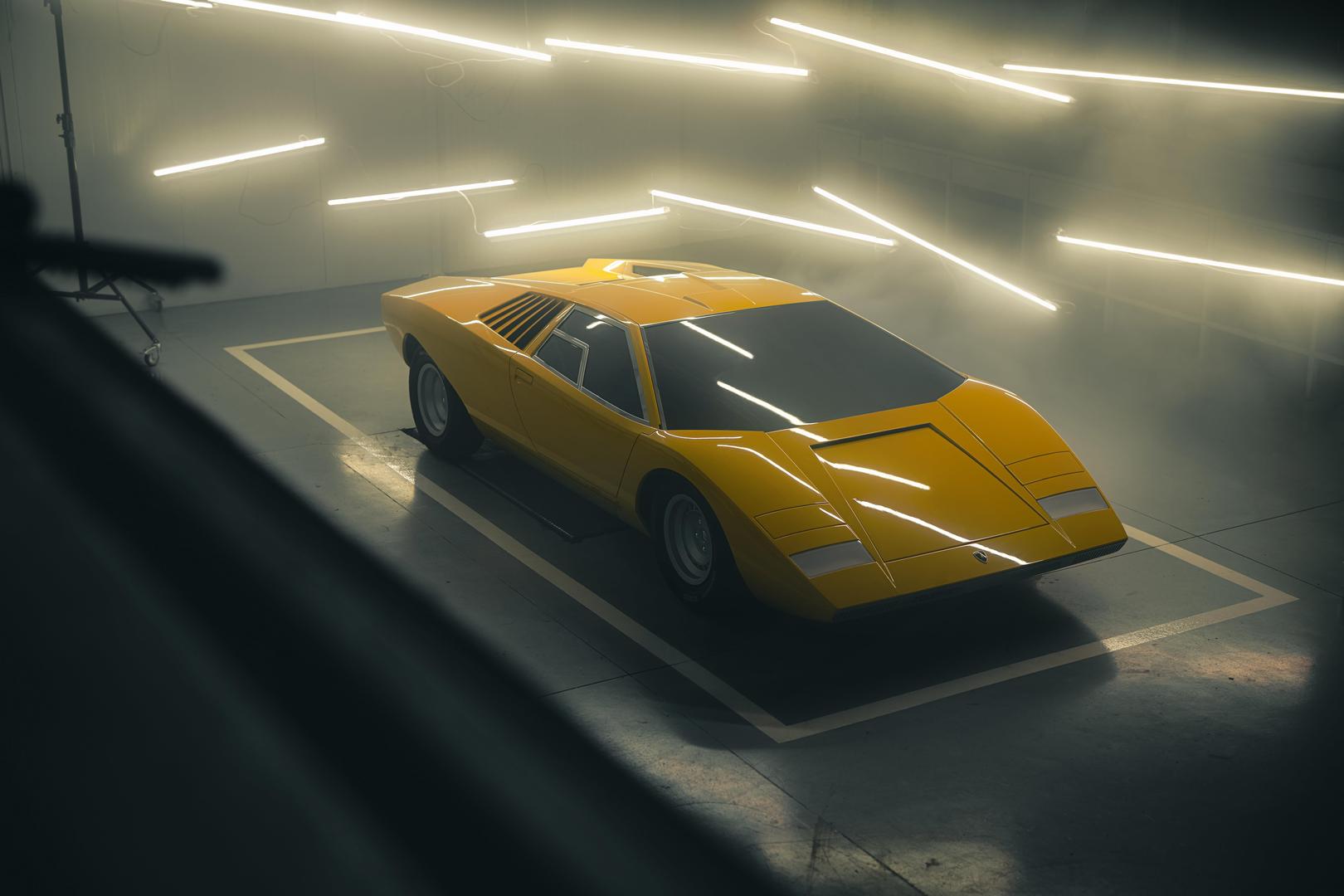
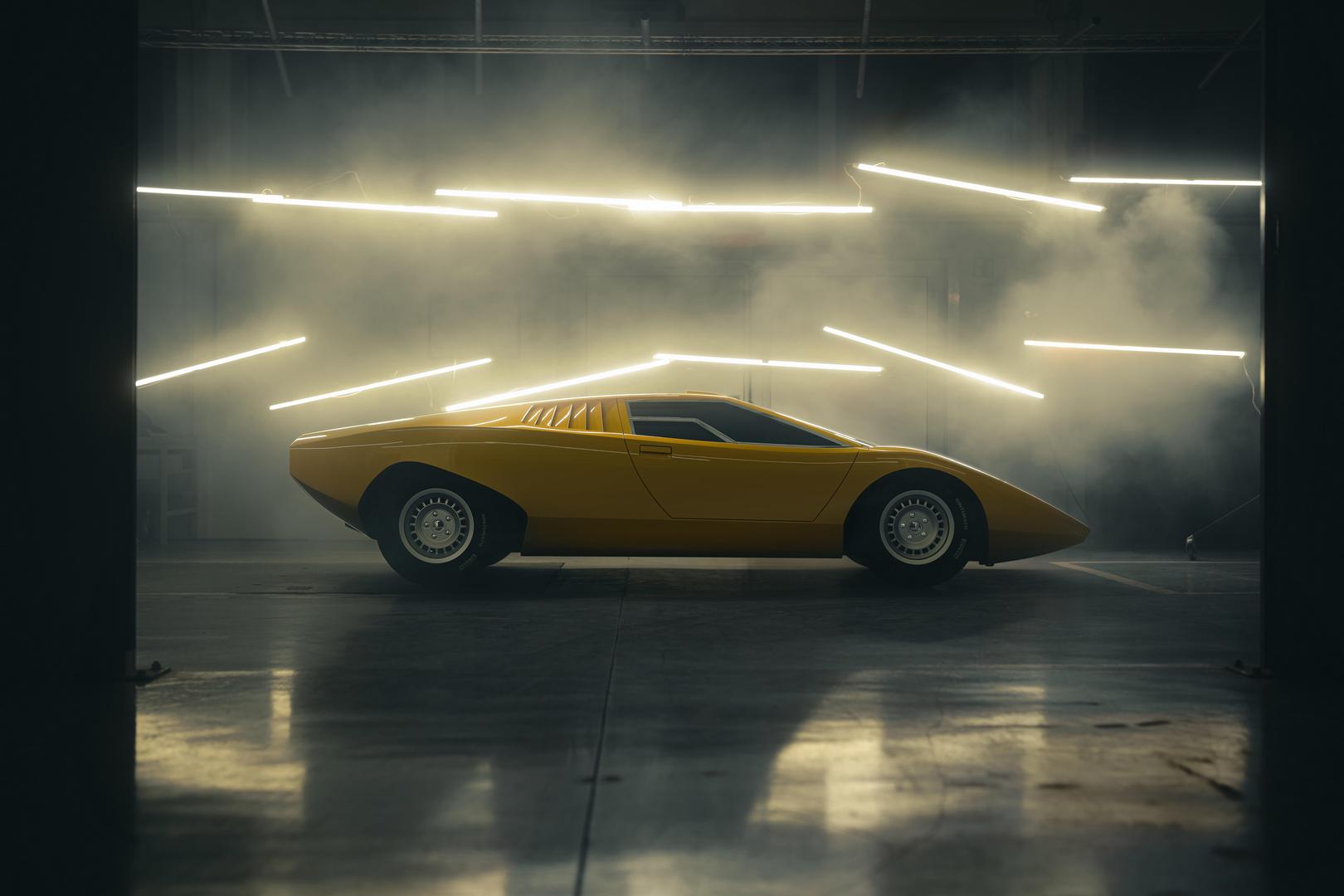
Lamborghini also celebrated the 50th anniversary of the Countach presenting to the world the Polo storico’s Lamborghini Countach LP500 that recreated from scratch the original concept car presented at Geneva Motorshow in 1971.

As tradition, Rolls Royce chose the Como venue to unveil the four-seater luxury convertible Rolls-Royce “Boat Tail”. The name of the utterly unique bespoke motor car highlights the narrow and fluid dynamically swept-back rear, emulating the deck of a yacht with a surface fashioned in luxury wood. The flaps of the boat- tail deck open up at the touch of a button to reveal all the accoutrements necessary for a lavishly stylish picnic: cooled drinks, appropriate glassware and high-end cutlery, a parasol and two stools made of carbon-fibre reinforced plastic.

What can I say, well done Villa d’Este, and welcome back! We are really looking forward to next year!

Photos and Words by Yaron Esposito

Concorso d’Eleganza Villa d’Este Gives Coveted Design Award To The Pure-Electric Battista

At the 2021 Concorso d’Eleganza Villa d’Este, the production ready Automobili Pininfarina Battista had an award-winning European debut bagging the event’s most coveted Design Award.

In Monterey Car Week, the pure-electric hyper GT already made its appearance in an unseen specification. It was in August when it made its successful world premiere joining the exclusive Battista Anniversario to celebrate the example’s debut in the US.

On October 1-3, the Battista made its first public debut as a bespoke specification of the pure electric hyper GT. At Villa d’Este, on the shores of Lake Como, just a few hours away from the Cambiano production facility of Automobili Pininfarina, the Battista was given the Design Award.

Verde Paradiso Battista © Eros Maggi
Verde Paradiso Battista © Eros Maggi Verde Paradiso Battista © Eros Maggi

Automobili Pininfarina Chief Design Officer Luca Borgogno shared, “We took a unique Battista to Villa d’Este to showcase the diverse colour and material choices that our discerning clients can choose from when personalising their vehicle. To win the Design Award is a fantastic way for us to begin the countdown to making our first customer deliveries later this year. It’s always exciting for us to show new bespoke combinations of the Battista in different parts of the world, but especially so in our home country alongside other legendary classic Pininfarina-designed masterpieces.”

The prestigious Design Award given at Villa d’Este, which came from votes by event guests is another laurel given to the pure-electric masterpiece. It has been given GC’s Electric Hypercar of the Year award, and Electrifying.com’s Electric Dream award under the Concept Cars & Prototypes category.

Verde Paradiso Battista © Eros Maggi
Verde Paradiso Battista © Eros Maggi Verde Paradiso Battista © Eros Maggi

Gorgeous Finish

Automobili Pininfarina unveiled a truly distinct and sophisticated version of the typical color combination at Villa d’Este. The finish brought the beautiful proportions and elegant design of the Battista in a completely different level.

The Battista was hand-finished in a striking Verde Paradiso metallic paint. Its front nose and rear wing were given the Carbon Accent Pack on the rear diffuser and lower body. The Black Exposed Signature Carbon elements were paired with a Nero finish to give it the trademark ‘Goccia roof’. The Exterior Jewelry Pack gave it its anodized aluminum accents.

Verde Paradiso Battista © Eros Maggi
Verde Paradiso Battista © Eros Maggi Verde Paradiso Battista © Eros Maggi

Complementing the exterior color scheme is the precision-polished forged aluminum Impulso Gloss Black alloy wheels that had brushed anodized aluminum center-lock rings, with the brake calipers painted in simple silver.

The interior is decked in sustainable Tan leather upholstery with quilting to give it an even more luxurious atmosphere. The GT seats were given matching Tan seatbelts, with the Black Exposed Signature Carbon detail giving a great contrast. The Interior Jewelry Pack gave it brushed anodized aluminum detailing, matched with a black finish for the steering wheel and floor mats.

Verde Paradiso Battista © Eros Maggi
Verde Paradiso Battista © Eros Maggi Verde Paradiso Battista © Eros Maggi

Final Stage of Development

The European debut of the production-ready Battista came just after a highly successful world premiere in California at the Monterey Car Week.

It was the first time that US clients were able to experience the production-specification Battista on the road. Only a limited run of a maximum of 150 units of Battistas will be produced. During the event, it was displayed beside an even more exclusive Battista Anniversario, of which only five units will be made.

The production of the pre-series Battista is now complete, so the first clients can expect their pure-electric Hyper GT to be delivered around the end of the year.

Verde Paradiso Battista © Eros Maggi
Verde Paradiso Battista © Eros Maggi Verde Paradiso Battista © Eros Maggi

Rare Ferrari F40 up for auction

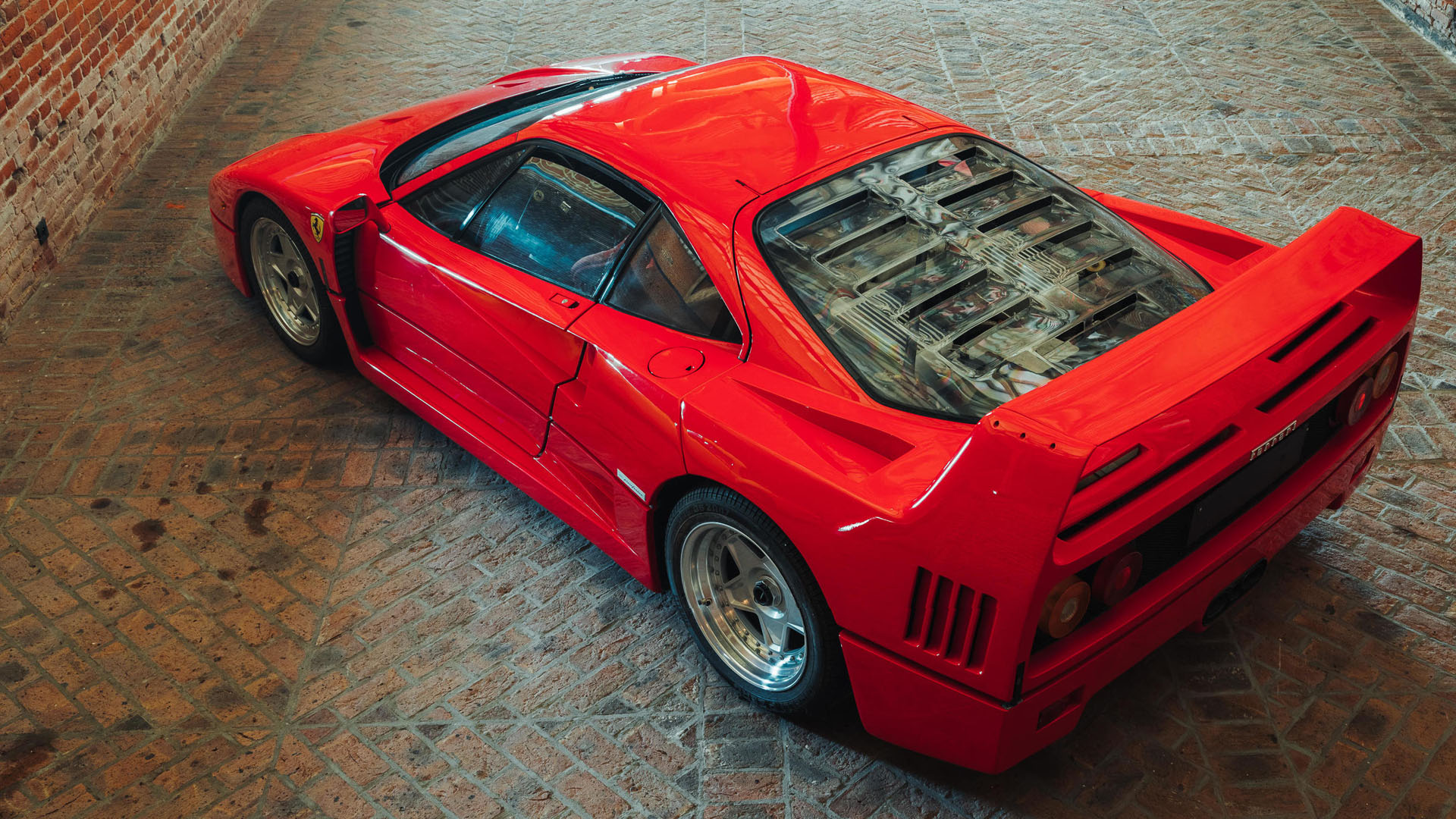
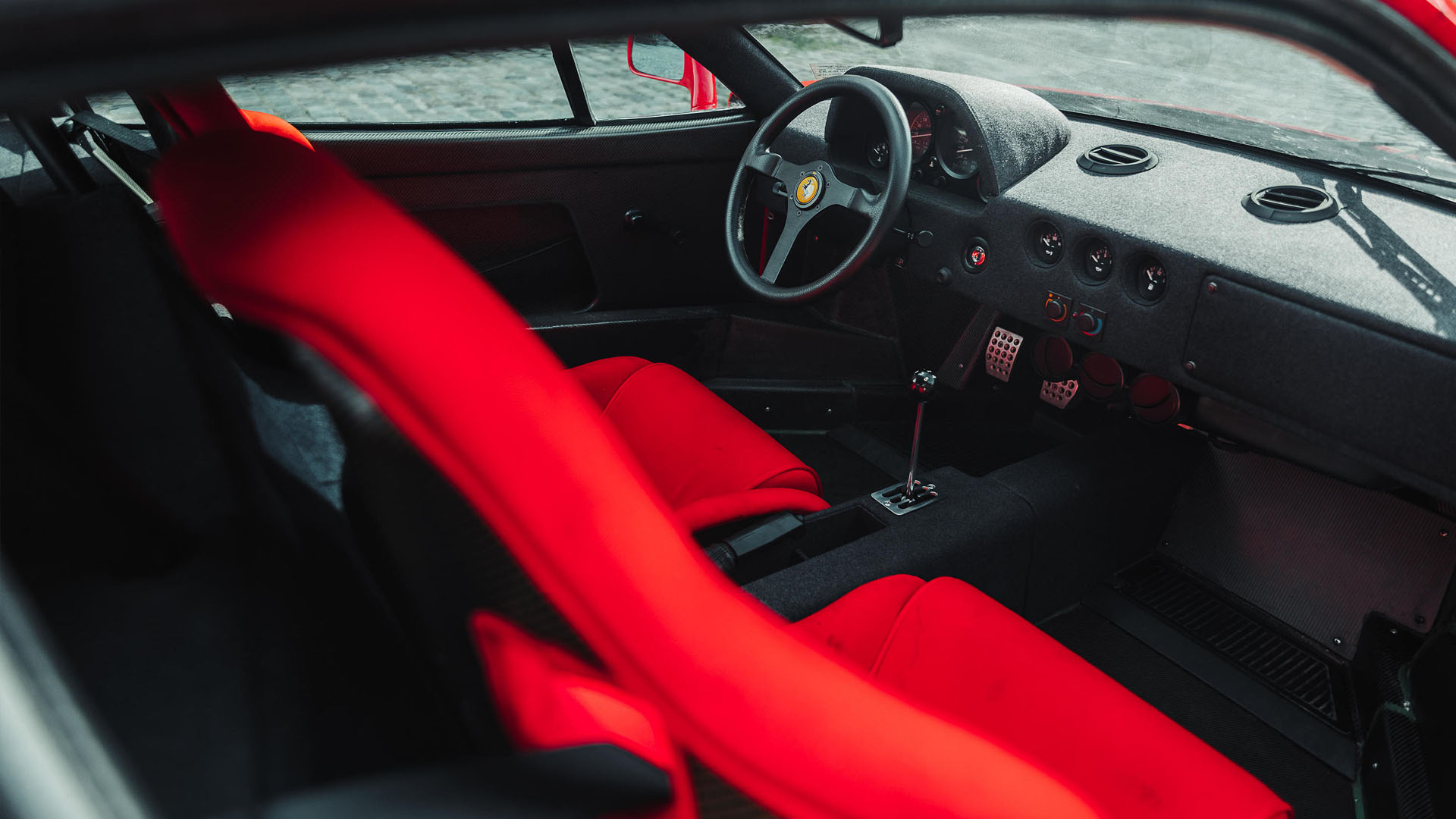
Imagine you are a wealthy individual back in the late Eighties, you’ve got some money to spend on cars, and you already have a nice collection of Prancing Horses in your garage you’ve all bought brand new since the Seventies when Ferrari unveils their F40 in 1988, the top of the line V8, a stripped-down, street-legal race car almost. So you think about it for a while, not too long, and you head over to your local Ferrari dealership to put your name on an order sheet … which is exactly what happened in Belgium back in June 1989, at the famous Garage Francorchamps, where this specific F40 got ordered, albeit with some creature comforts, the client requested the optional airconditioning and regular, wind-down side windows for practicality.

Photo courtesy of Bonhams

To make it even more interesting, business-wise, the car was put into a lease agreement for the owner’s company in mid-December 1989, making this a very late 89 model, but the story gets a lot more interesting when the lease is canceled in 1992 and the car is stored in a heated facility, never to be registered nor driven for the next 29 years, with just 1,790 km on the odometer, barely broken-in I guess.

Photo courtesy of Bonhams

Now we are talking about a ‘non-cat, non-adjust’ model of the rare Ferrari F40, one the most sought-after, pure versions of this legendary supercar from the Eighties, this was the car that came with a top speed in excess of 320 km/h, in 1988! Powered by a 3-Liter V8 four-valve per cylinder engine with dual IHI turbochargers, the F40 delivered 478 bhp in standard trim, while another 200 bhp could be added with a factory tune.

Photo courtesy of Bonhams

The Ferrari F40 took Formula One experience onto the road by using composite technology, the body was a single-piece molding that would be bonded onto a tubular steel chassis while the doors, front hood, engine cover, and various add-on panels were made from lightweight carbon fiber styled by the legendary Pininfarina with the entire front section tilting upward (much like the current Lamborghini Huracan STO) while most part of the rear section, including that massive, integrated rear wing, is also hinged at the back of the roof, and you didn’t even have to open the engine cover to admire that impressive V8 because the F40 came with a transparent cover so you could admire the engine ‘as-is’.

Photo courtesy of Bonhams

The Ferrari F40 was built up to 1992 as production reached 1,315 units, and apart from some special order models, all of them were left-hand drive and came in red, just like chassis ZFFGJ34B000083620 we now see listed for auction by Bonhams during their The Zoute Sale in Knokke-Heist, Belgium, where this very special Ferrari F40 has been hiding for so long, because this is such an important, early production car, the estimate on this specific car is set at €1,000,000 to €1,500,000 (US$ 1,155,000 to $1,734,000).

What makes these early Ferrari F40 even more interesting compared to the later production versions is the fact these are still the pure performance models Ferrari intended the F40 to be, uncompromising with a focus on speed and performance, without too much comfort and without electronics to watch your back when your experience can’t keep up with the car, these F40 were rather unforgiving. Later during production, the F40 got a little more refined, Ferrari added ABS, catalytic converters, and adjustable suspension.

Photo courtesy of Bonhams

Keep in mind this Ferrari F40 has been sitting in a garage for almost 30 years, the maintenance records even show the car was expected for her second visit in the Garage Francorchamps workshop when she reached 6,000 km, which they estimated would be 1993 … that didn’t happen as the car was unregistered since 1992, this probably means this is not a driver at this point in time. A major overhaul will be required, including some new tires for this beauty, but in return, you will be able to obtain a car so close to new the red seats show virtually no wear at all, neither does the entire interior, as matter of fact the entire car, both inside and outside, looks like she was just delivered a few weeks ago, this is a time-capsule Ferrari F40 and I’m sure the next owner will enjoy adding this beauty to the collection.

10 Supercars Whose Tech Changed the Industry

There’s no shortage of adequate supercars in the industry. Carmakers devote significant time and resources to harnessing available technology to create performance machines that do all that’s asked of them. But every once in a while, a particular car comes along that is simply exceptional. The best supercars throughout history have been unicorns that pushed against the boundaries of automotive technology and innovation to deliver the ultimate adrenaline high behind the wheel.

These are supercars that shake up existing standards and blaze trails for others to follow. They include cars like the Porsche 959, McLaren F1, or Bugatti Veyron, which are so extreme in terms of performance, power, and price that they either kickstart a new automotive trend or, in some cases, spawn an entirely new class of cars. This list is not exhaustive, but it does showcase some of these game-changing supercars that sent shockwaves through the automobile industry.

Supercar #10: Porsche 959

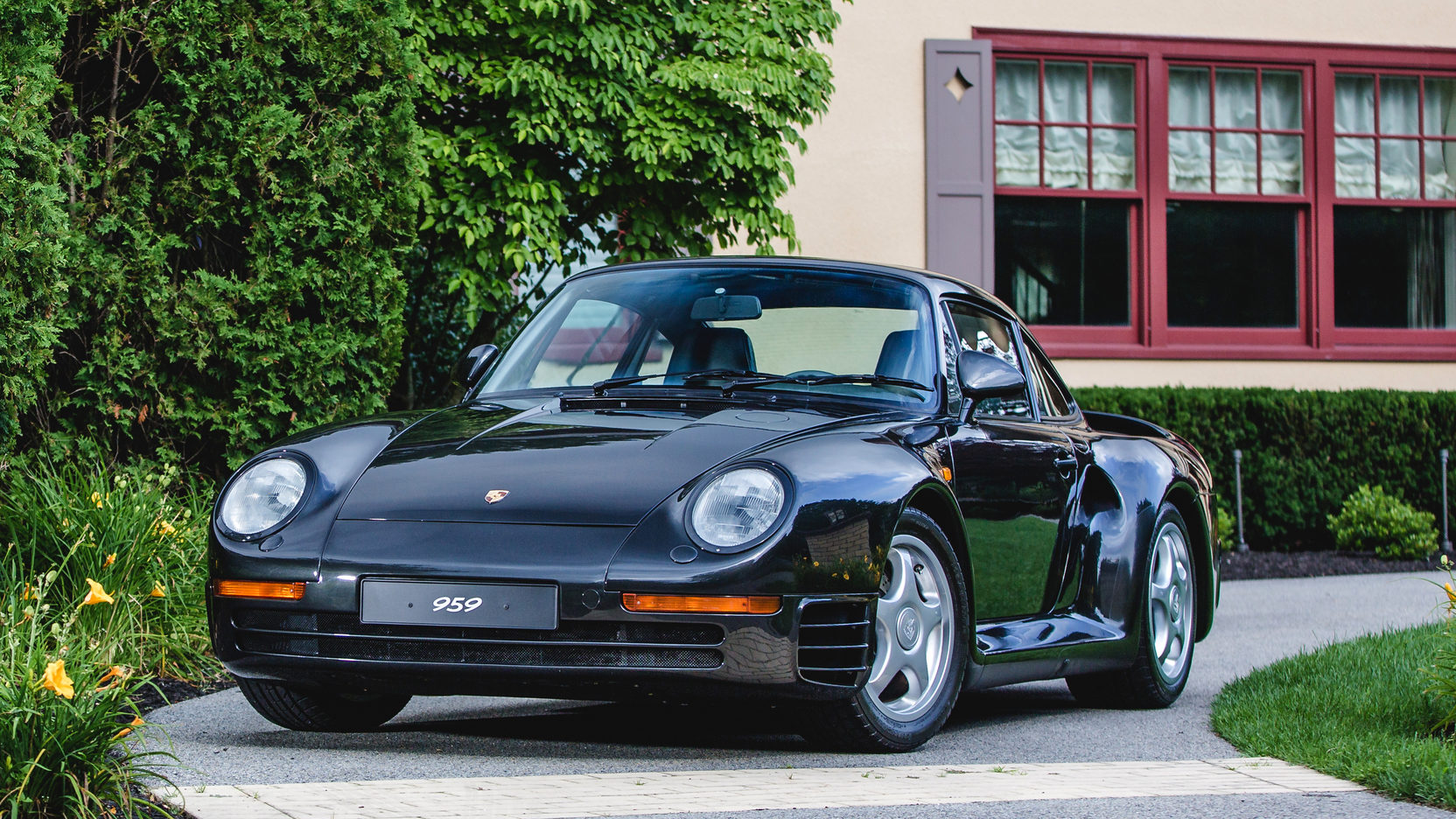
The Porsche 959 is the first in Porsche’s line of flagship supercars that includes the Carrera GT and, most recently, the 918 Spyder. It had its debut in 1983 as a prototype, but various delays meant first customer deliveries of the road-going variants did not start until 1987. The delays resulted from Porsche’s desire to create something never seen before in the automobile industry.

Black Porsche 959 sitting in driveway outside houseVia Mecum.

This German supercar boasted a raft of innovative technologies and was undeniably one of the automotive icons that emerged during the ‘80s. An adjustable ride height, carbon-kevlar construction, active aerodynamics, lightweight hollow wheels, and adjustable suspension dampening were just some of the revolutionary features found on the Porsche 959. It all made for a complicated setup that required a total of seven onboard computers to manage at a time when most other vehicles had just one—if they had any at all.

The original intention behind the car’s development was participation in the Group B racing series, but that racing program was canceled in 1986 before the 959 had any real chance to stretch its legs. However, it was still able to race at the 1986 Paris-Dakar rally, where it clinched the first two positions (and the sixth, for good measure). Away from the racing circuits, the road-legal 959 was also one of the fastest production cars, bested only by the legendary Ferrari F40.

Supercar #9: Ferrari F40

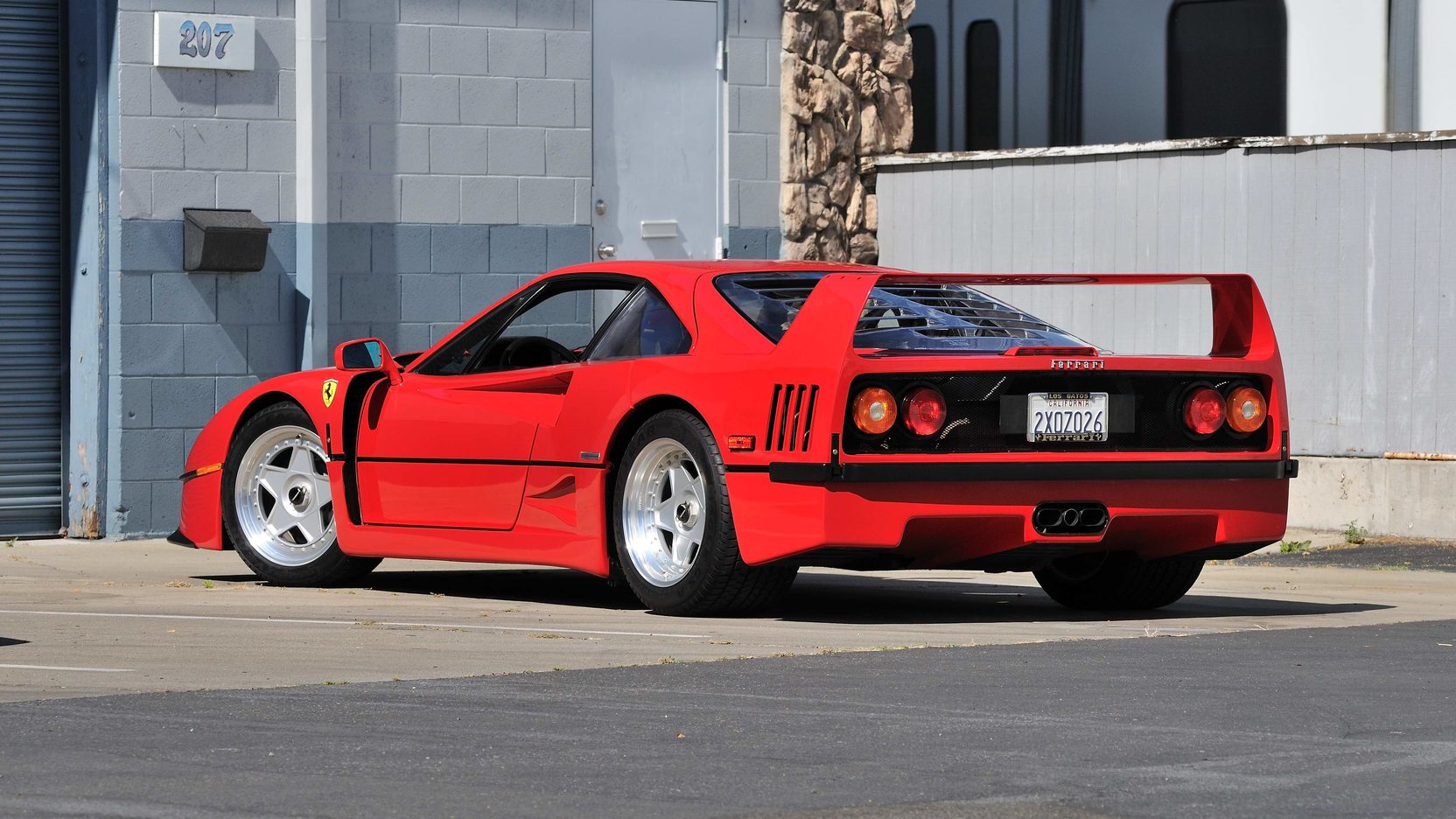
The Ferrari F40 may have been less advanced than the Porsche 959, but it was infinitely more popular. Created to celebrate Ferrari’s 40th anniversary, the F40 was the poster car for an entire generation of car enthusiasts.

Everything about the car was geared towards performance. Creature comforts were, therefore, furthest from the minds of the designers and engineers. As such, they ditched items like carpets, door trims, and a radio.

Not even the door handles were spared. The US-bound F40 supercars got an air-conditioning system only because it would have been otherwise impossible to sit in the sweltering cabin. Driver aids like power steering and ABS were also noticeably absent.

Red Ferrari F40 sitting in parking lot behind buildingVia Mecum.

The flipside of all these compromises was a brutally focused, high-performance auto that demanded all of the driver’s attention. The F40 had a blistering turn of pace, too. In 1987, it became the first production car to crack the mythical 200mph speed barrier.

That feat quickly attracted the attention of other carmakers. The F40 was soon joined in its elite club by vehicles like the Jaguar XJ220, Bugatti EB110, RufCTR Yellowbird, and the famous McLaren F1.

Supercar #8: McLaren F1

Even today, we still speak of the imperious McLaren F1 supercar with a sense of awe and reverence. This British beast, designed by the legendary Gordon Murray, completely rewrote the supercar rule book.

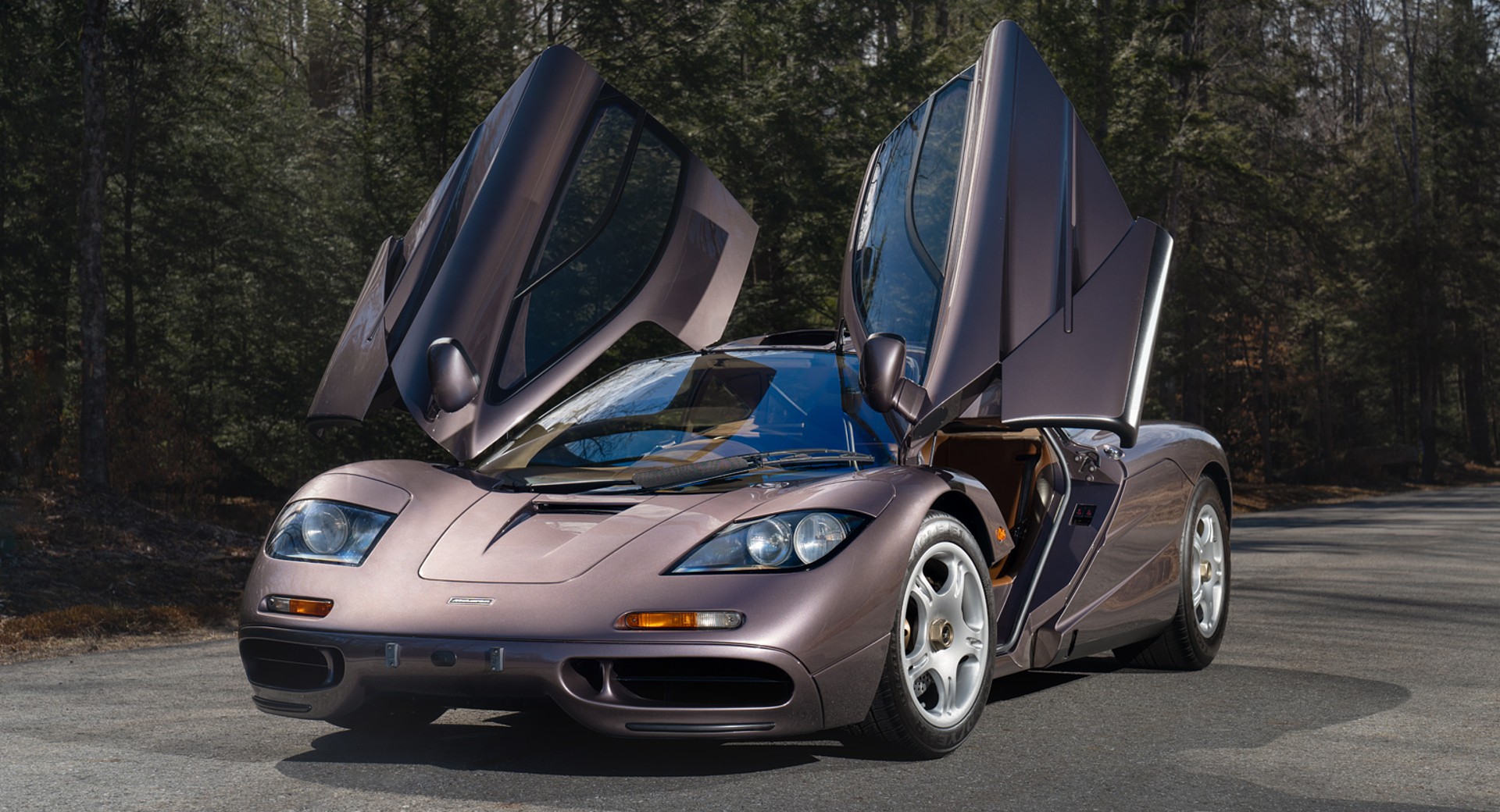
It’s still one of the fastest naturally-aspirated cars ever made, and some of the technology it pioneered for road-going cars is still in use today. The McLaren F1 is widely regarded as the first production car to use a complete carbon fiber reinforced polymer (CFRP) monocoque chassis structure.

Grey McLaren F1 sitting on road in forest with doors openVia Gooding & Company.

That carbon fiber monocoque has since been used on every other McLaren, in one form or the other. Pagani, Koenigsegg, and Bugatti are examples of other carmakers using carbon fiber monocoque in their supercars. The material helps save weight while offering high stiffness and strength at the same time.

Another unique feature of the McLaren F1 was the gold foil lining in the engine bay. This is not a fashion statement; gold is an excellent reflector of heat and helps keep the heat generated by the BMW-sourced 6.1-liter V12 away from the fuel cell.

Supercar #7: Jaguar XJR-15

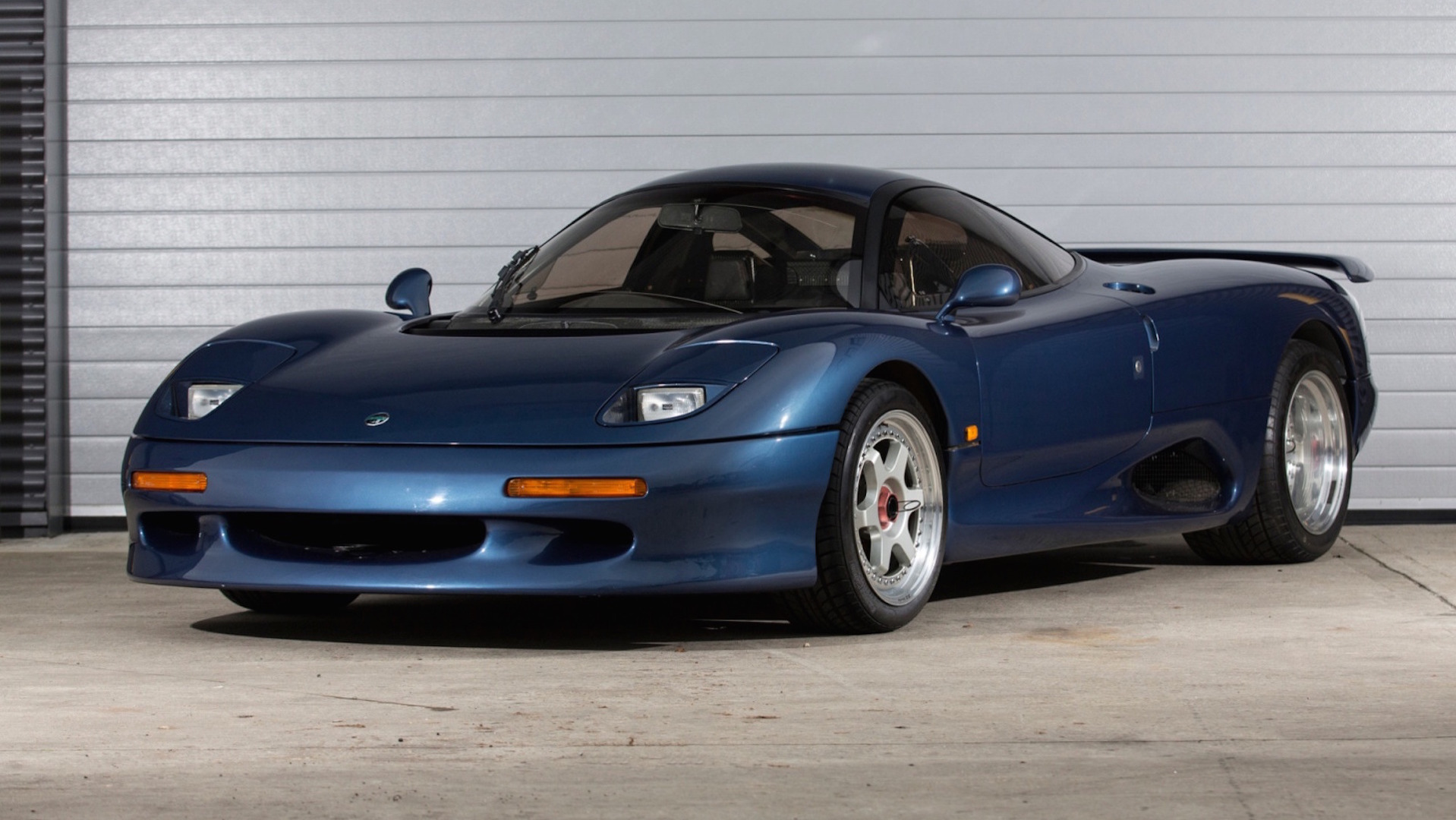
The McLaren F1 might have pioneered using a carbon-fiber monocoque, but the little-known Jaguar XJR-15 was the first production car constructed entirely from carbon fiber. The car had a production run of 53 units and was manufactured by JaguarSport, a subsidiary of Jaguar and Tom Walkinshaw Racing. The intention behind using carbon fiber was straightforward: make the car as light as possible and maximize the 450 hp power output from the 6.0-liter V12 engine.

Navy Jaguar XJR-15 sitting on tarmac outside garageVia Classic Driver.

The Jaguar XJR-15 weighed just 2,341 pounds and needed only 3.2 seconds to hit 60 mph. It could continue accelerating until it peaked at a maximum speed of 191 mph. It did not take long for the carbon fiber idea to catch on in the industry, and today, there’s hardly any carmaker that does not use carbon fiber in some form during the manufacturing process.

Supercar #6: Lamborghini Miura

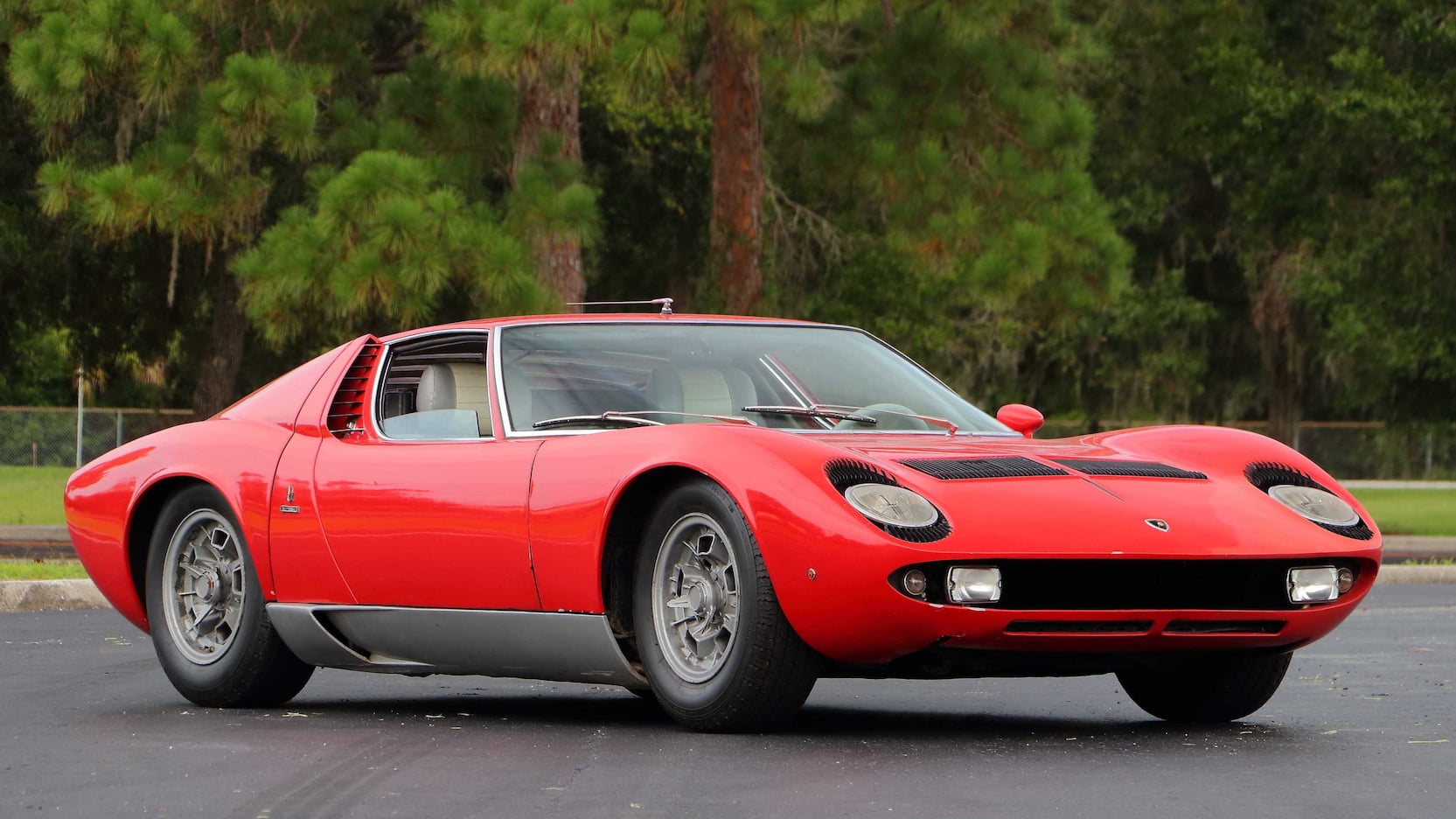
Heralded as the first true supercar, the Miura impressed with its sleek lines and low-slung profile upon its debut at the 1966 Geneva Auto Show. However, aesthetics were only a small part of why the car was such a game-changer for the raging bull brand.

Bright red Lamborghini Miura sitting on road with trees in backgroundVia Mecum.

Lamborghini engineers broke with tradition and opted for a transverse, mid-mounted V12 engine positioned just behind the cockpit in designing the Miura. It improved the Miura’s silhouette and gave the car excellent weight distribution and superior handling. The Miura was the first supercar with this engine placement, but it soon kickstarted a widespread industry trend that continues to this day.

Supercar #5: Honda NSX

Honda stunned the car community when it released the first-generation NSX. Here was a car that decisively challenged assumptions about the affordability of supercars. It was also easy and fun to use, with reliability levels that made it ideally suited to the demands of daily driving—and that was just the beginning.

Honda cut no corners in developing their supercar. The company relied on extensive consultation from Aryton Senna—one of Formula One’s greatest names—to create something truly magical.

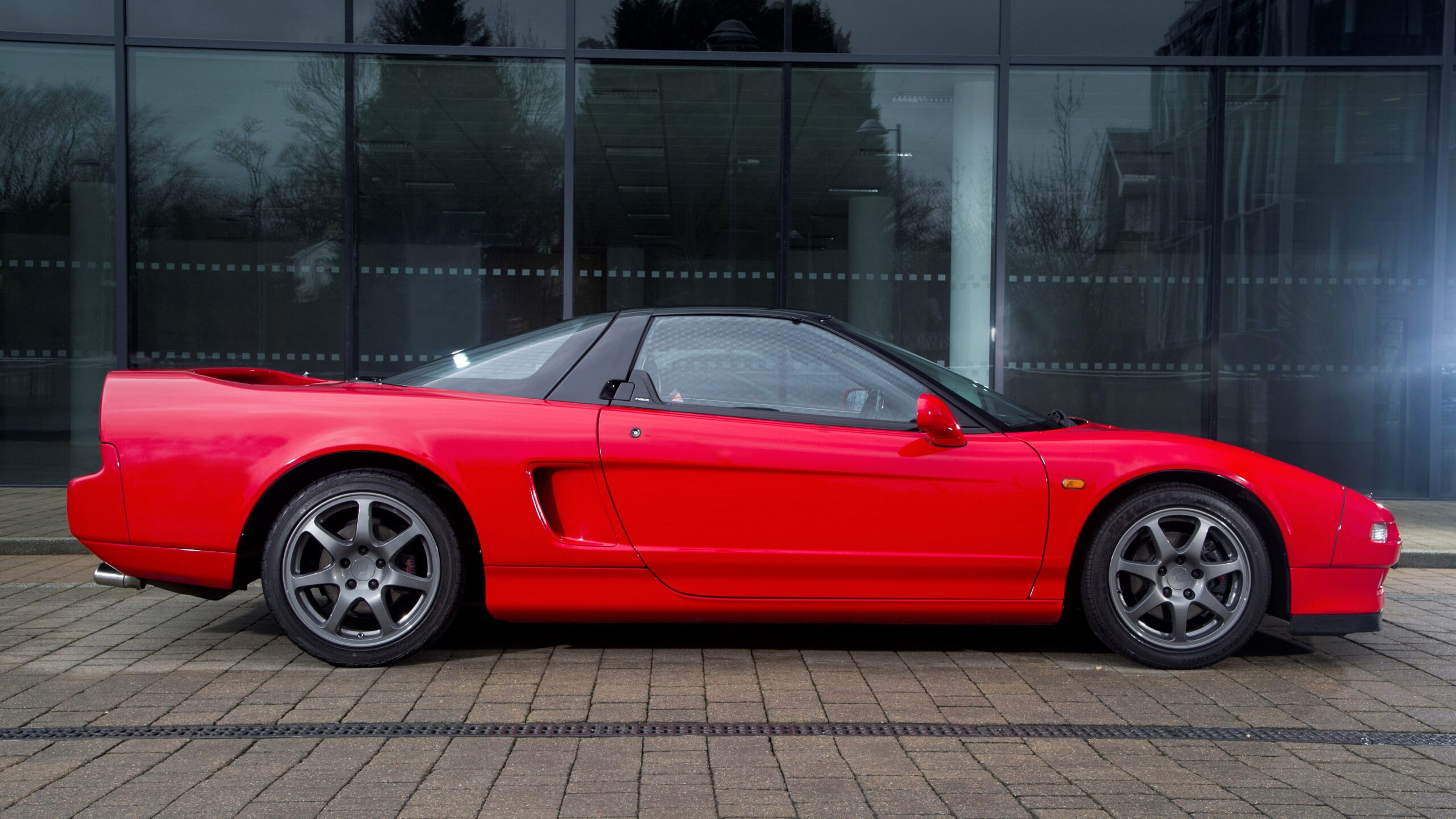
Bright red 1991 Honda NSX sitting on cobblestones outside buildingVia Top Gear.

The car’s list of innovations includes the world’s first all-aluminum body, the first-ever independent 4-wheel ABS on a production car, electronic power steering, titanium connecting rods, and variable valve timing. Few vehicles could match that level of sophistication and functionality at the time. It’s no wonder then that the car is still highly sought after today by collectors and car purists.

Supercar #4: Porsche Carrera GT

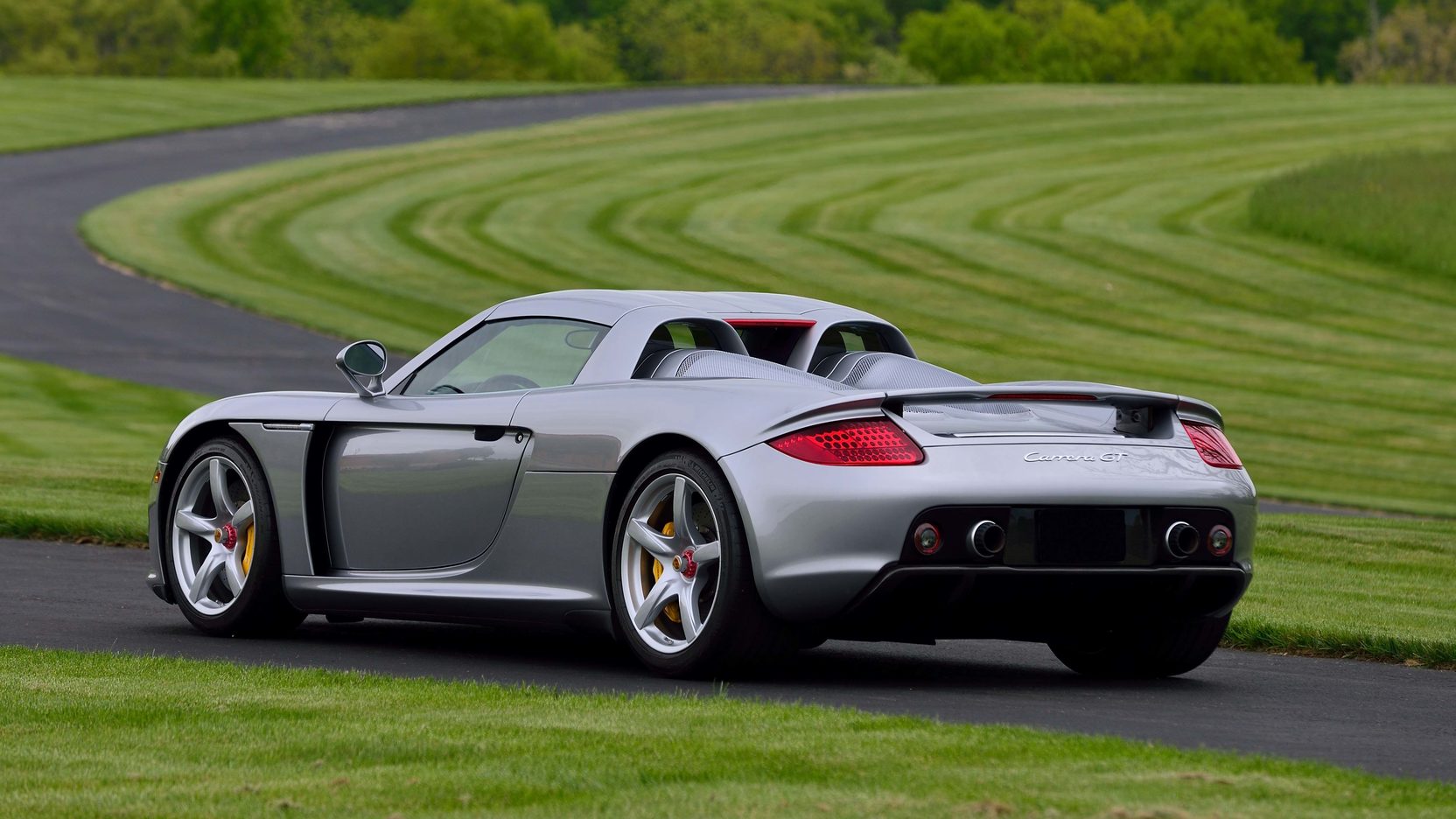
In 2004, shortly after its official launch, the Carrera GT was awarded the ‘Engineering Excellence of the Year’ award at the 34th Annual Innovation Awards Program. The event is hosted annually by the Automotive Division of the Society of Plastic Engineers to recognize breakthrough engineering feats. The Carrera GT earned praise for its carbon fiber reinforced plastic engine frame (CFRP) and ceramic composite clutch plate, a first in the automotive industry.

Grey Porsche Carrera GT on road cutting through grassy fieldVia Mecum.

The carbon fiber engine frame was one of several critical weight-saving measures implemented for the car. The Carrera GT also pioneered the use of forged magnesium wheels, saving up to 25% in weight compared to aluminum alloy wheels without compromising durability. Meanwhile, the ceramic clutch plate offered a much longer lifespan than other alternatives, amongst other advantages.

It required skilled hands at the wheel to exploit the full extent of the Carrera GT’s tech, and those who qualified were rewarded with a driving experience unlike anything else on the road at the time. Even today, the Carrera GT, with its awesome-sounding V10 power plant, remains the stuff of legend.

Supercar #3: Bugatti Veyron

Financial hardships forced Bugatti into bankruptcy in 1995—but three years later, the Volkswagen Group stepped in and acquired the brand, injecting new life into the company. The company busied itself developing concepts for the next couple of years, displaying them at various auto shows.

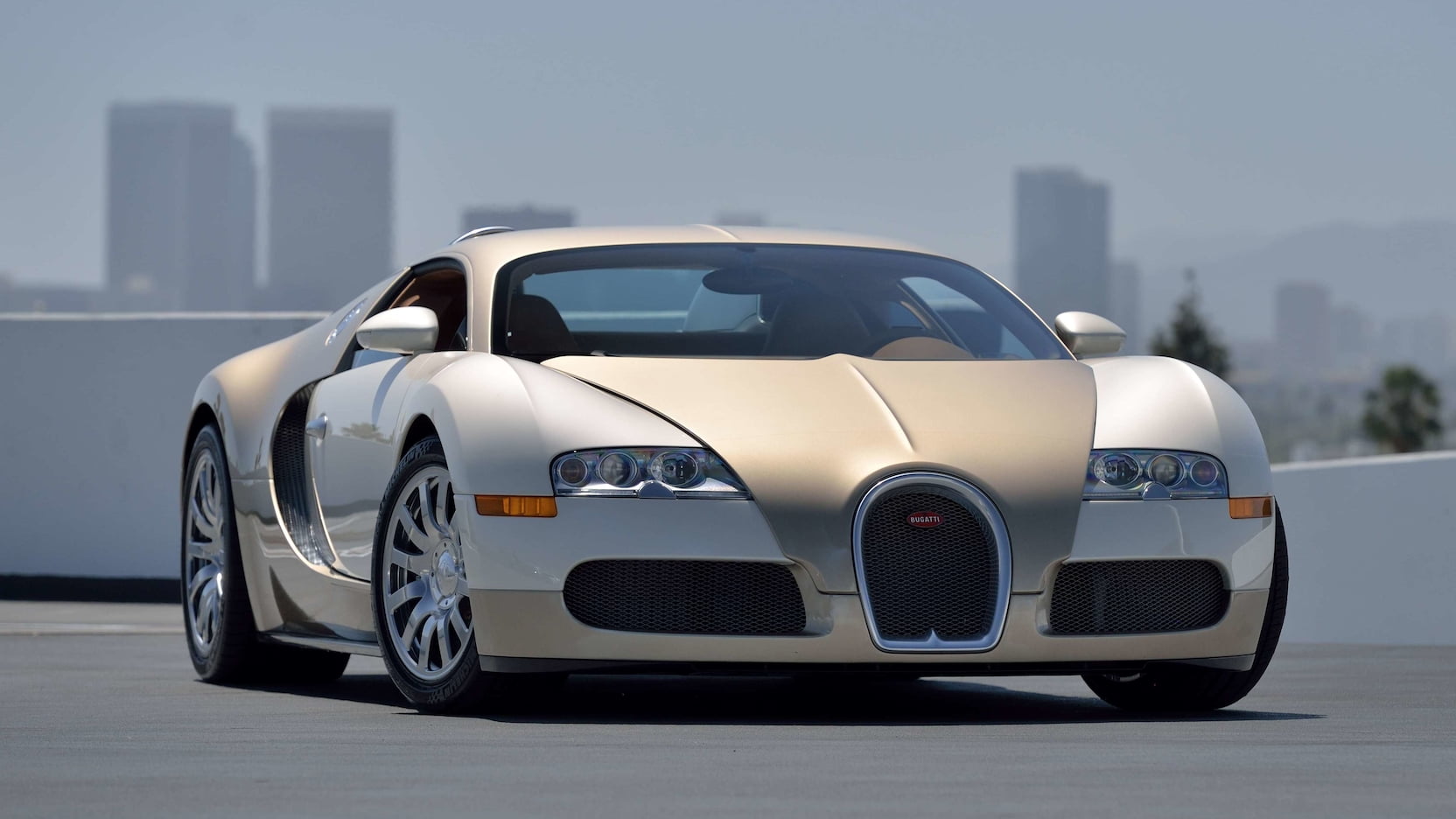
Then in 2005, the first production model under Volkwagen ownership was unveiled—the formidable Bugatti Veyron, with an 8.0-liter W16 engine and four turbochargers. That power plant squeezed out 1,001 metric horsepower and was enough to propel the 2-ton behemoth to a top speed of 253.51 mph, a world record for production cars at the time.

Gold and white Bugatti Veyron on city street with skyscrapers in backgroundVia Mecum.

A total of 450 Veyrons were built (including the different variants) over ten years. The Veyron’s speed and acceleration were its main strengths and gave it bragging rights over competitor offerings. It ushered in a new era of obsession with horsepower and speed. It was not long before other carmakers like Hennessey and Koenigsegg responded with road rockets of their own to challenge for the title of the ultimate speed king.

Supercar #2: Ferrari LaFerrari

The lads at Ferrari weren’t mucking around when they named their flagship model ‘LaFerrari’ back in 2013. That name simply translates to ‘The Ferrari’ and was meant as a clear statement of intent. Then-Ferrari Chairman Luca Cordero di Montezemolo said, ‘We chose to call this model LaFerrari because it is the finest expression of our company’s unique, unparalleled engineering and design know-how, including that acquired in Formula One.’

The LaFerrari represented the peak of the brand’s engineering excellence at the time and was a worthy rival to anything competitors had to offer, including the McLaren P1 and Porsche 918 Spyder.

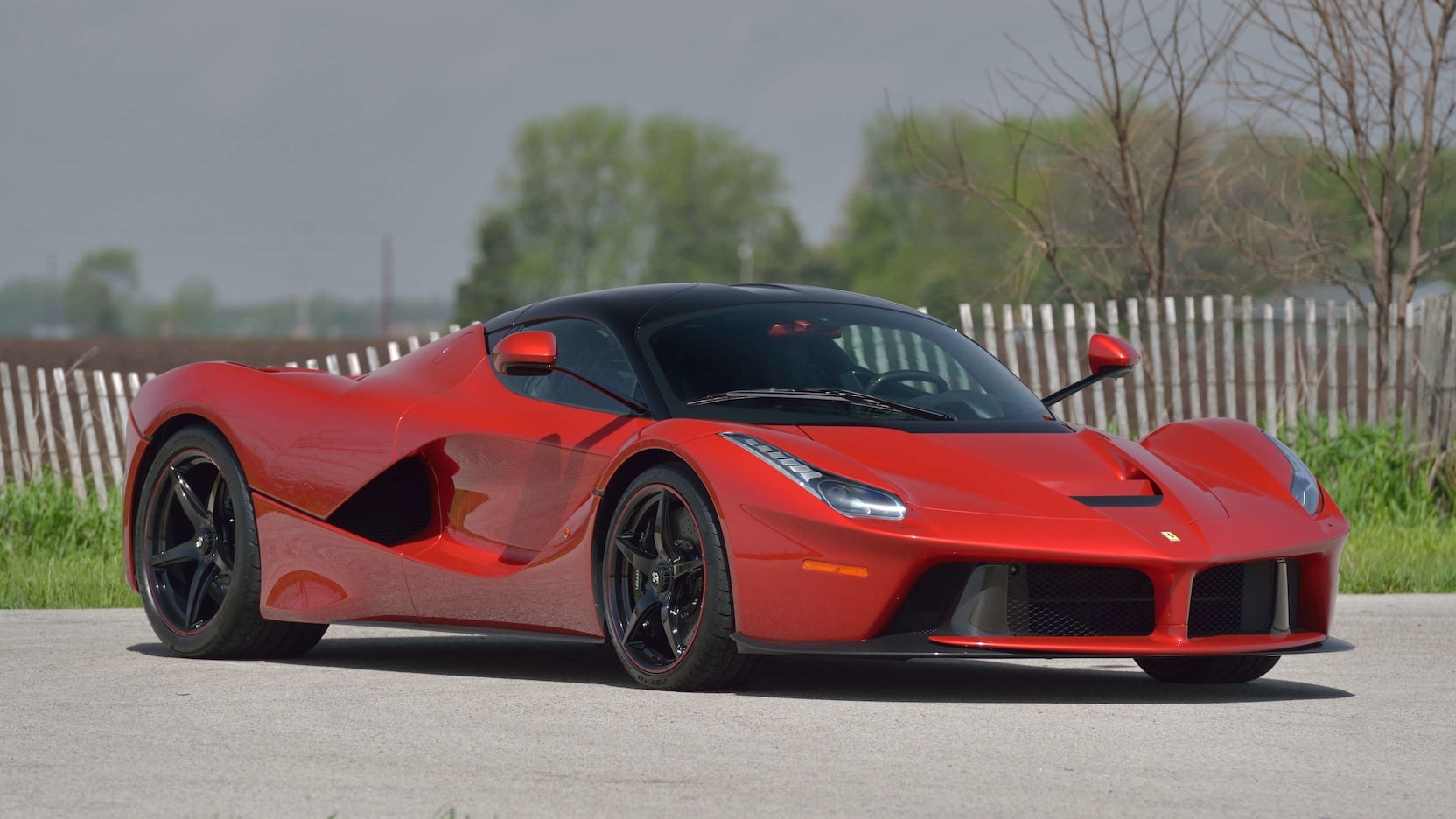
Bright red Ferrari LaFerrari on road with white fence and trees in backgroundVia Mecum.

A highlight of the LaFerrari was its Formula One derived HY-KERS hybrid setup. This system consisted of an electric motor and a Kinetic Energy Recovery System (KERS) to complement the naturally aspirated V12 power plant.

The LaFerrari, together with fellow hybrid hypercars—the McLaren P1 and the 918 Spyder, commonly referred to collectively as the ‘Hypercar Trinity’—ushered in a new performance age in the automobile industry. The LaFerrari was also a testbed of sorts for technology that has now found its way, in some form or another, to Ferrari’s latest hybrid creation—the SF90 Stradale.

Supercar #1: Rimac Nevera

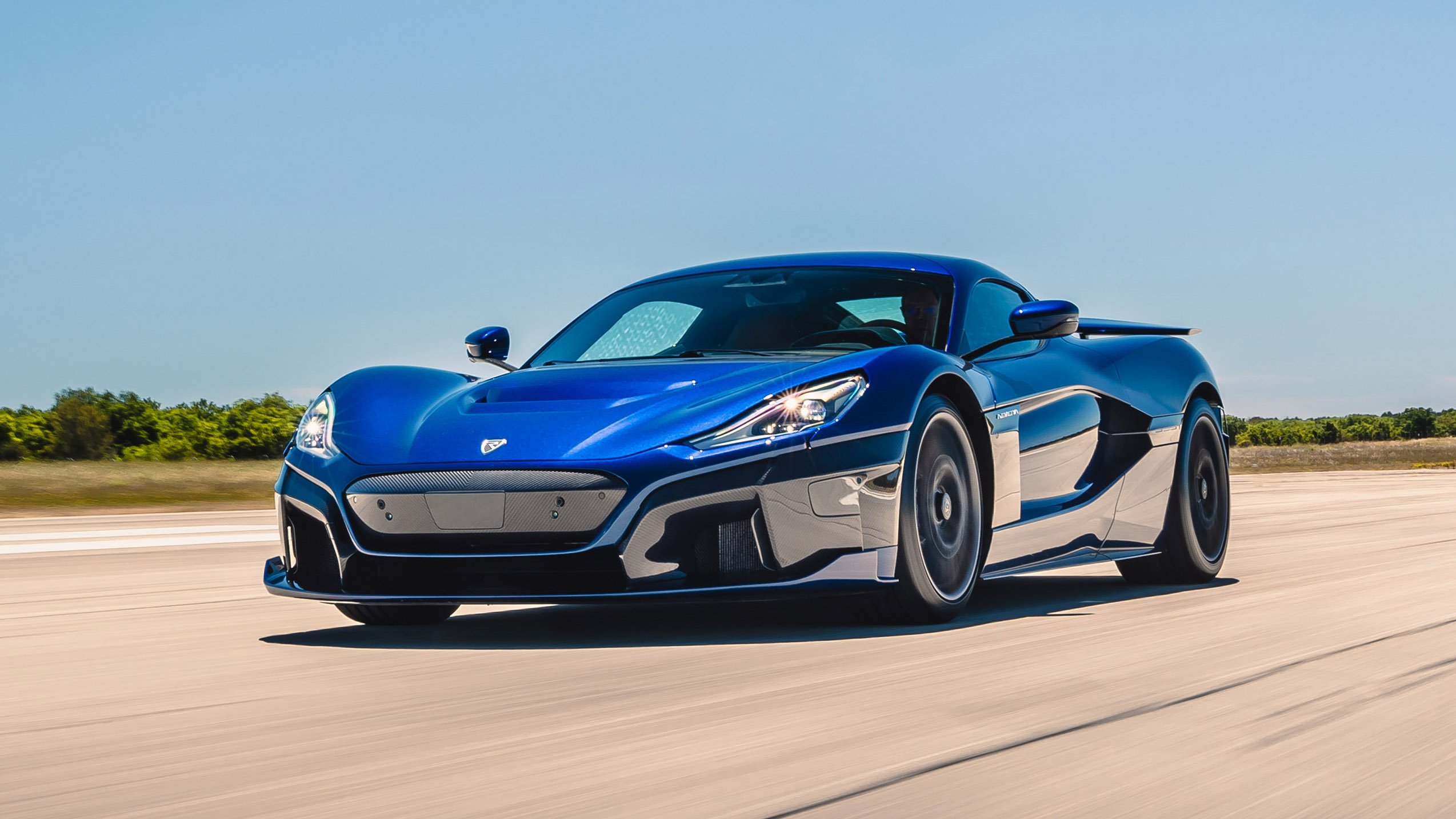
Yes, the production-spec Nevera was only unveiled earlier this year, and customer deliveries haven’t even begun. However, make no mistake: this Hyper-EV is already making big waves in the automobile industry—and this is only the beginning.

The car’s ground-breaking technology was enough to make Bugatti take notice and come calling. Their interest eventually resulted in a Bugatti-Rimac joint venture while Bugatti prepares for a future headlined by a new lineup of all-electric (or hybrid) high-performance vehicles. Pininfarina is another carmaker interested in Rimac’s technology, and they’re already using the company’s quad-motor powertrain in their hypercar—the Pininfarina Battista.

Via Top Gear.

Mate Rimac, Founder and CEO of Rimac Automobili, said, ‘This is it. This is the car I had in mind when I embarked on the ‘impossible’ journey ten years ago. All our hard work has resulted in the Nevera – our record-breaking hypercar. This car was born to outperform and to raise the bar, redefining the norm for performance cars. And not only in performance—but as an all-around package.’

It’s hard to doubt his words. One of the car’s most exciting features is its unique torque vectoring system, capable of sending instant power to the wheel with the least amount of wheelspin. That, coupled with a 1,914-hp powertrain, has enabled the car to blitz its way to several speed records already, setting the stage for an enthralling future in the EV space as far as performance vehicles are concerned.

This is the Most Beautiful Lamborghini You Will See Today

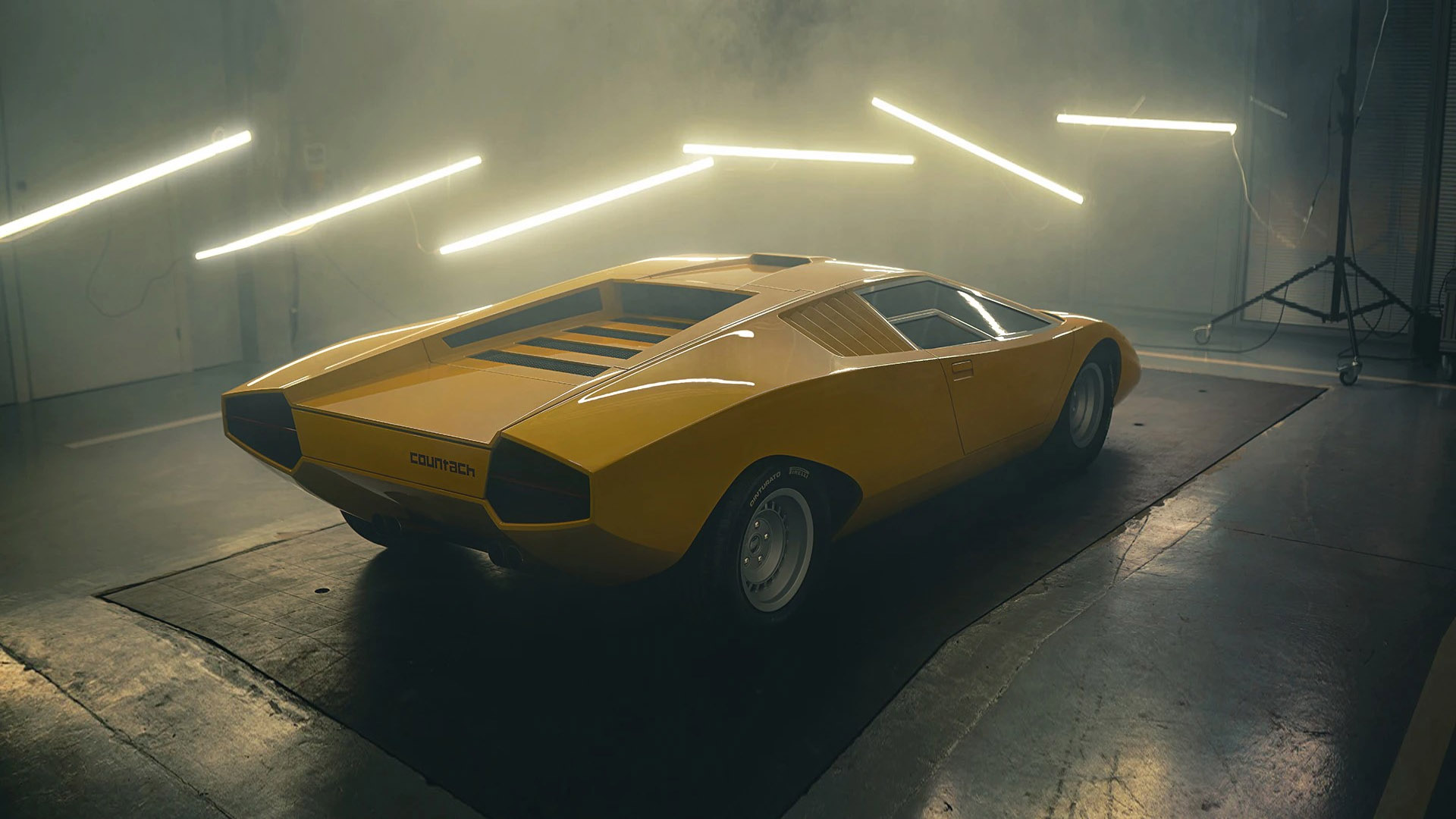
This is the newly unveiled Lamborghini Countach LP 500, a recreation of the 1971 LP 500 built entirely from scratch by Polo Storico – Lamborghini’s restoration department. It was officially unveiled at the Concorso d’Eleganza Villa d’Este on 1st October 2021.

The reconstruction of the LP 500 was requested by a VIP Lamborghini customer, the first month of the project was spent acquiring all the materials needed and Fondazione Pirelli also offered support in providing historical materials for recreating the tires on the new LP 500 model.

Lamborghini Countach restoration

The project began on the platform chassis, Polo Storico had to physically redesign the vehicle as well as choose a suitable work system whilst respecting the production methods of the time.

Once the sheet metal beating phase was reached, technology gave way to the traditional system and the interior was also finished in a similar process. Additionally, the interior featured the lighted diagnostic instrument similar to the one on the 1971 prototype.

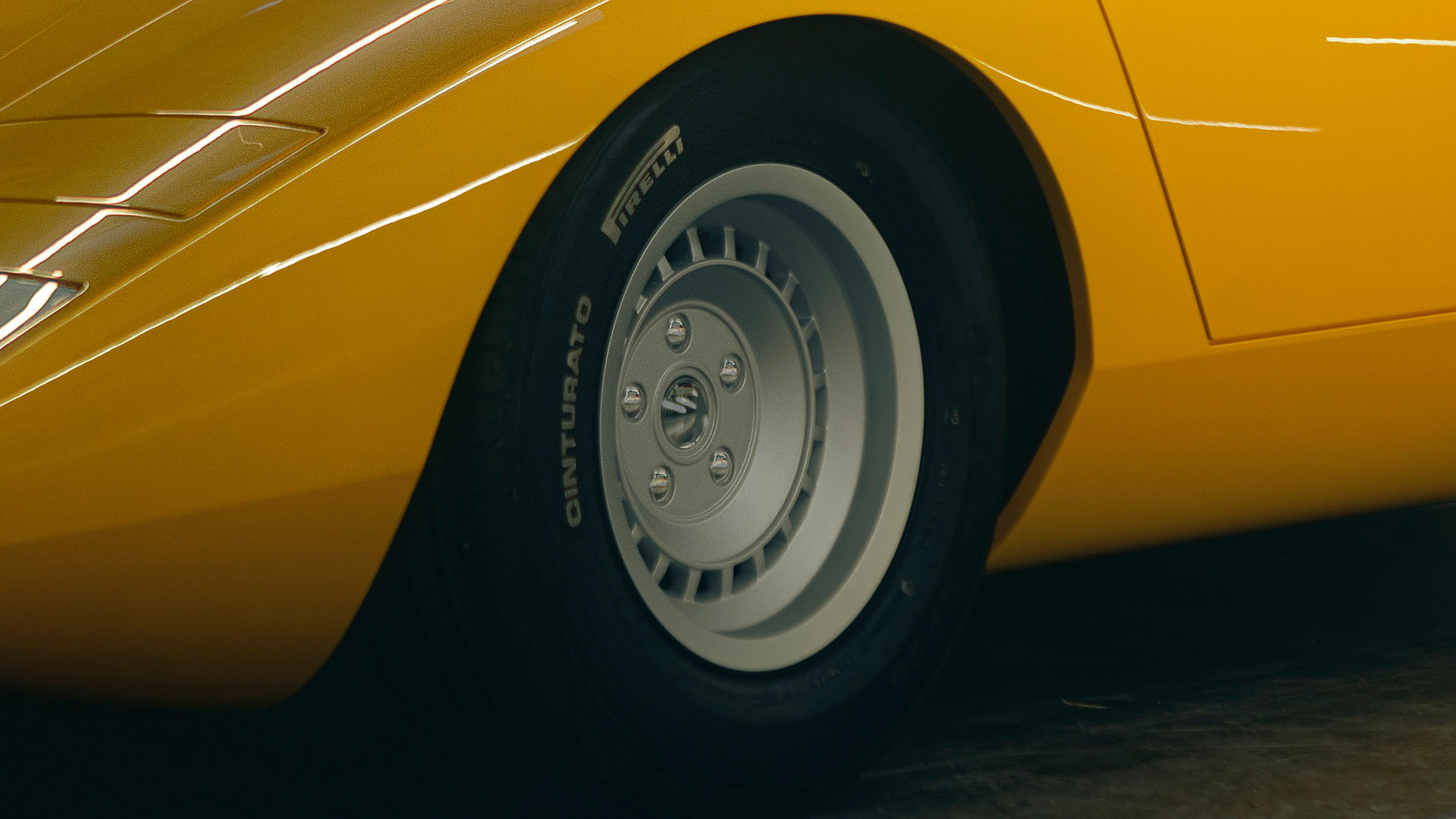
Fondazione Pirelli used the original plans of the Cinturato to fit the LP500 with a set of CN12 tires for its Geneva debut. The tires fitted were supplied in the size 245/60R14 for the front axle and 265/60R14 for the rear axle. The tread pattern and aesthetic on the tires was the same as in the 1971 model but with modern compound and structure.

Lamborghini Countach side

The new Countach LP500 has been finished in a Yellow color identified as ‘Giallo Fly Speciale’.

Bugatti Centodieci Deliveries to Begin Next Year: $9.2 Million Each

On 2nd and 3rd of October 2021, the Bugatti Centodieci was presented at the Concorso d’Eleganza Villa d’Este under the category of ‘Concept Cars and Prototypes’ alongside the EB110 SuperSport ‘America’. Production of the Centodieci is expected to start soon, only 10 cars will be made each costing 8 million euros.

The Centodieci was unveiled at the Quail in 2019 during the Monterey Car Week in California to celebrate the company’s 110th anniversary. It’s based on the legendary Bugatti EB110, the vehicle is powered by an 8.0 litre W16 engine which delivers an output of 1,600PS.

All the 10 units have already were accounted for by customers during the unveiling, they will be hand-built at Bugatti’s Molsheim Atelier and deliveries will start next year.

The EB110 on the other celebrates its 30th anniversary this year, the model featured a unique engineering package that consisted of a carbon fibre chassis. The 3.5L 12-cylinder engine delivers an output of 560hp and has five valves per cylinder and quadruple turbochargers. The Super Sport trim received a power bump to 612hp, the acceleration from 0-100 is achieved in 3.2 seconds and the top speed is 351km/h.

Bugatti EB110 Super Sport

The Countach is back!

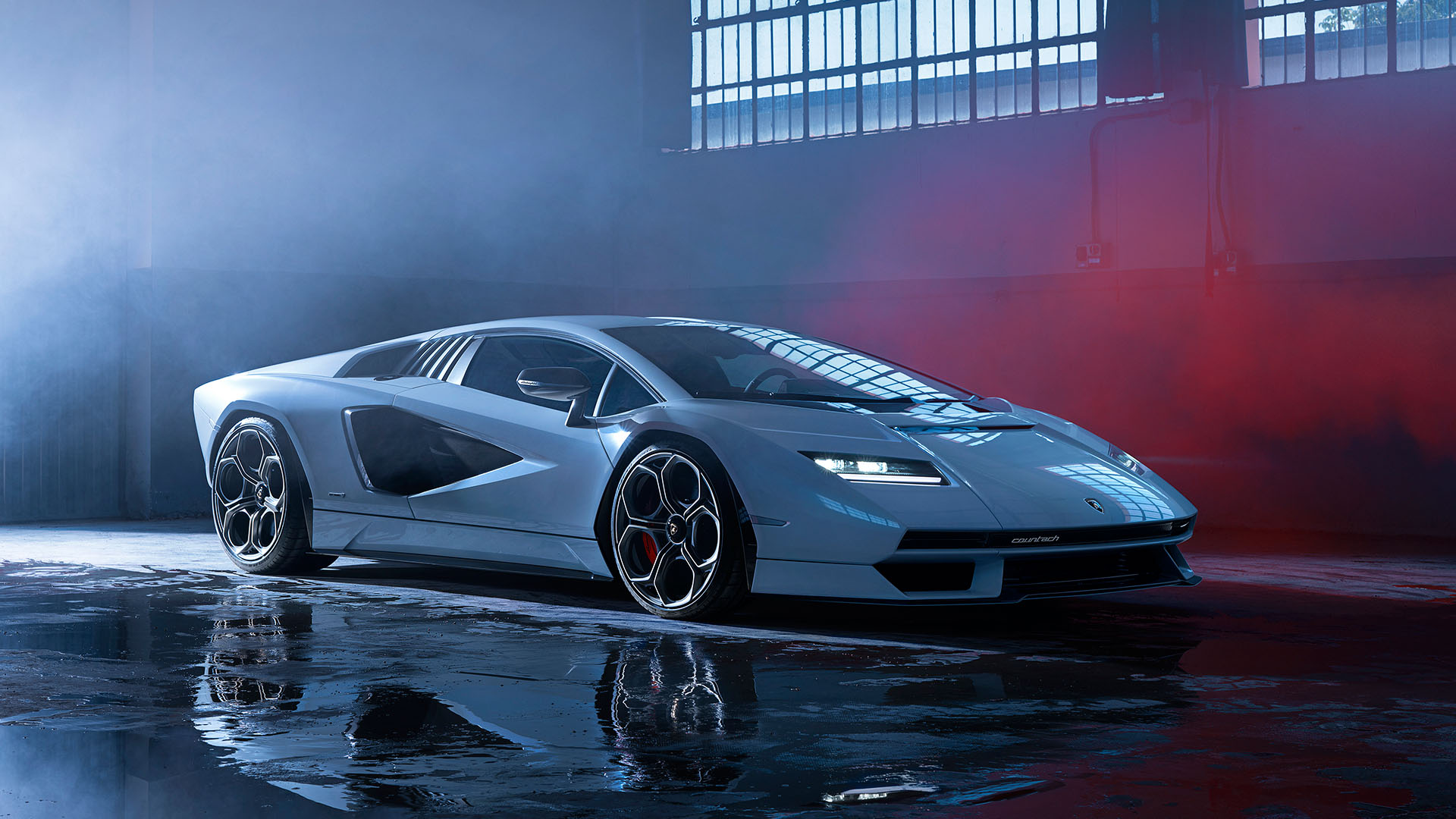
Some of the more avid Lamborghini enthusiasts were rather disappointed when the company from Sant’Agata unveiled the Lamborghini Countach LPI 800-4 in Pebble Beach during the 2021 edition of Monterey Car Week in the United States of America, while the idea of celebrating the 50th anniversary of probably the most iconic Lamborghini ever appealed to many, the resulting homage model didn’t get a warm welcome by all, especially not the older generation of both owners and fans that hold the classic Countach from the Seventies and Eighties in their heart.

Lamborghini released a contemporary interpretation of the classic Countach but was forced to use the underpinnings from the current Aventador, and while both are constructed in Sant’Agata and come with a massive V12 engine and feature the well-known upward opening, scissor doors … that is where the similarities end. There are some styling queues to be recognized in the 2021 edition, but not enough according to many, while the 112 units in the limited production run of the new Countach LPI 800-4 sold out even before the official public unveiling, each at an MSRP of US$2,600,000 before options and taxes, a lot of people would have loved to see a more traditionally styled homage to her majesty the Lamborghini Countach.

In comes a big-time Lamborghini collector, who got talking to Lamborghini back in 2017 and had one request for their in-house restoration department, the celebrated Polo Storico: build me a 1971 Countach LP500 prototype. I’m sure he had a blanc cheque in his hand to convince Lamborghini to actually build a replica of the actual prototype shown at the 1971 Geneva Motor Show from scratch, because the real car had a very hard life during the development of the Countach between 1971 and 1974, only to have it end up against the barrier for crash-testing at MIRA in the UK, the real prototype was lost, it doesn’t exist anymore.

Now you have to understand Automobili Lamborghini SpA didn’t always have ‘keeping records’ high on their ‘to do’ list, so that made this challenge rather difficult for Polo Storico: there is no car to use as a base, no original to take measurements from, and the actual Lamborghini Countach LP400 that still exist aren’t even built on the same chassis as the 1971 prototype, the latter had a steel plate chassis while the production car was built around a stunning, round tubed spaceframe.

Giuliano Cassataro, Head of Service and Polo Storico even stated: “The collection of documents was crucial, there had been so much attention paid to all the details of the car, to their overall consistency and to the technical specifications.” … Lamborghini had to dig through whatever records they managed to find, some of the original drawings were unearthed, but photos and magazine articles from the actual prototype published back in the Seventies had to be sourced from outside of the factory, they even had to enlist the help of Centro Stile to make this dream come true for that one fortunate client.

As the overall dimensions of the prototype were more or less similar to the Countach LP400, Mitja Borkert had the green production prototype from the factory museum taken into a massive 3D scanner for digitalization, it would take the Centro Stile another 2,000 hours of combining the scanned data with photos, articles, actual homologation sheets, and even relying on the memory of people that worked on the prototype back in the Seventies to have a perfect digital model of the real car … time to pass it on to Polo Storico now for the actual build.

To recreate the Lamborghini Countach LP500 as accurately as possible, the artisans at Polo Storico reverted to the metal hammering method used fifty years ago, going so far as to employ real “battilastra” with their inherited creativity and old-school tools from the Seventies, it would take over 25,000 hours to get to the result that was unveiled at the 2021 edition of the Concorso d’Eleganza Villa d’Este, and she is a beauty for sure.

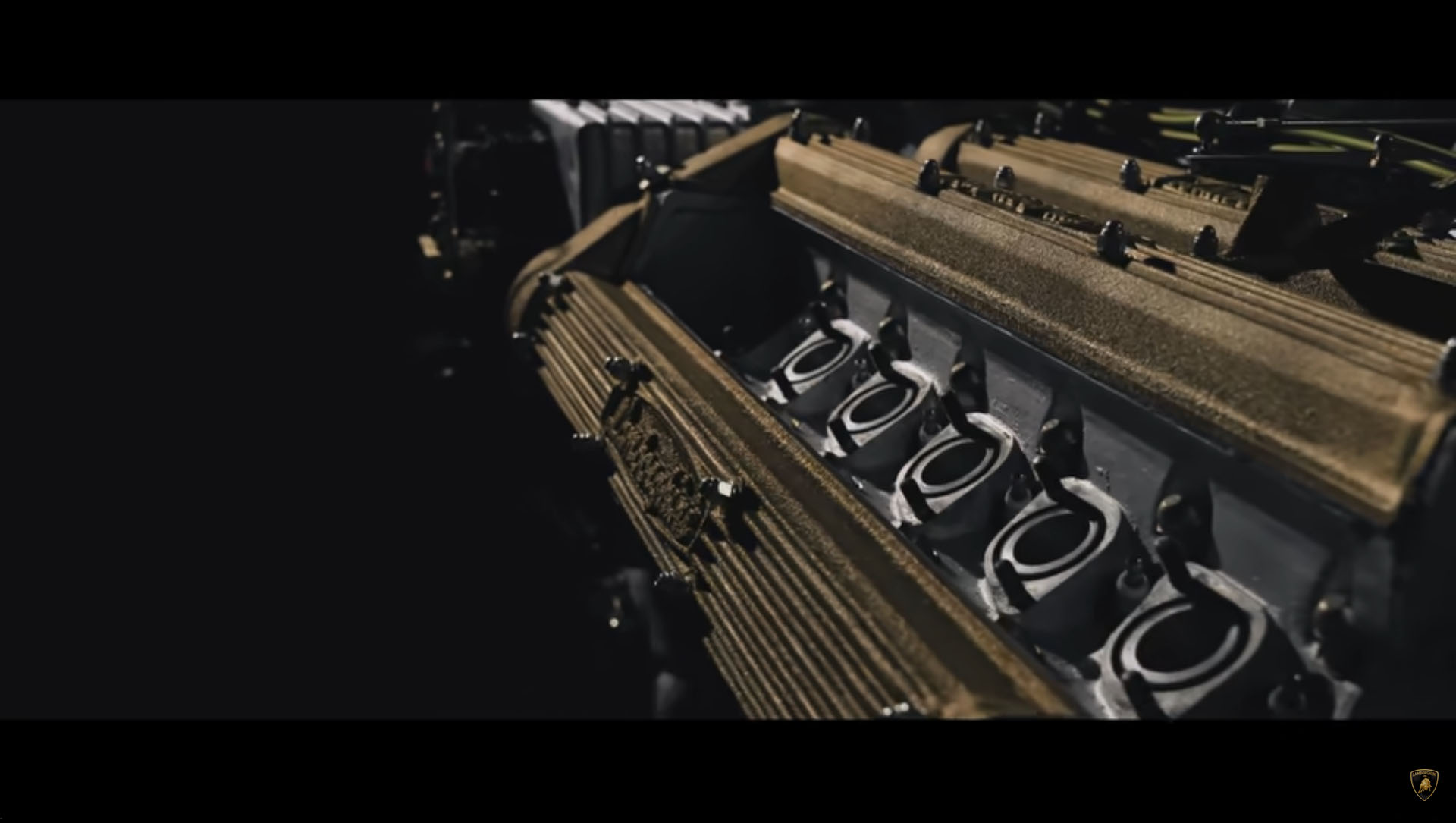
The attention to detail also went into the engine, remember the prototype had an experimental 5-Liter V12 that didn’t make it into production, the Countach LP400 came with a 4-Liter V12, but for this recreation rumor has it they made a bespoke 4.8-Liter unit just to make it period-correct, right down to the gold-finished covers, which were black on the LP400 production version.

But that’s not the only return to the Seventies, the 1971 Lamborghini Countach LP500 was fitted with Pirelli Cinturato CN12 tires, these no longer exist today, but the archives of Fondazione Pirelli still had the original plans for this old tire, complete with images and preserved materials, so it was possible for the Milanese company to make four Cinturato CN12 in the Pirelli Collezione series to be fitted to the recreation, 245/60R14 for the front and 265/60R14 for the rear, fitted with the identical tread pattern and aesthetics from 1971, but using a modern compound and structure for safety.

And then we come to one of the things I personally felt strongly about when Lamborghini unveiled the Countach LPI 800-4 … the color, the new, limited edition homage was unveiled in Bianco Siderale, pearl metallic white, while the car it celebrates was finished in yellow … fortunately this bespoke commission for the Countach LP500 was done in the exact same shade the original car had in 1971, recreated specifically for this build by PPG, the LP500 was painted in ‘Giallo Fly Speciale’, and combined with the black leather interior this looks just right … exactly how she should look.

Please enjoy this official video from Lamborghini on the most important car in their history, the Lamborghini Countach, a true icon in automotive history:

[embedded content] [embedded content]

1974 IROC RSR 911 Owned By Pablo Escobar On Offer

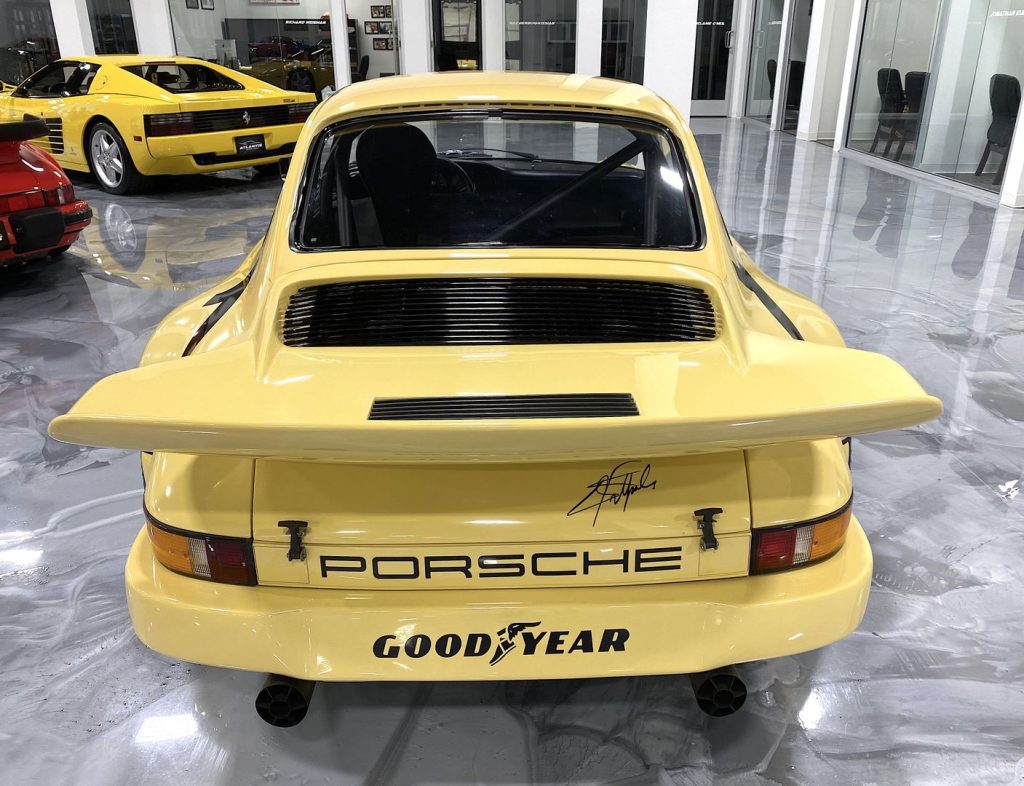
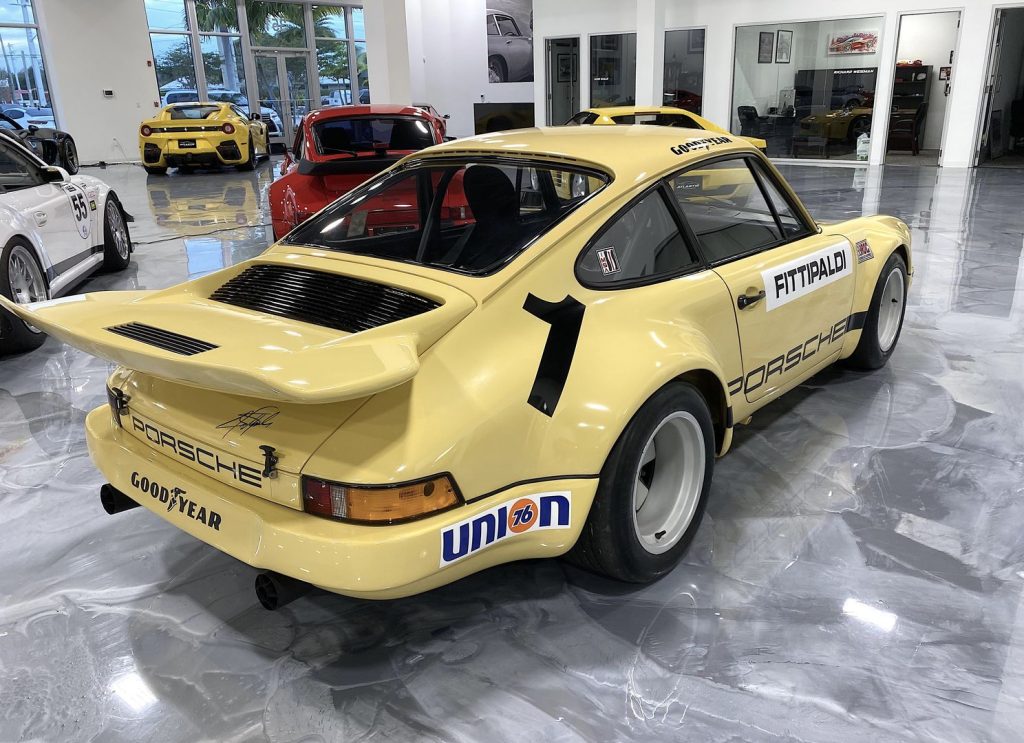
The International Race of Champions’ (IROC) RSR are not just extremely rare, they’re also a very interesting model. Porsche only made 15 examples, and they really set it apart from the 1973 RSR as well as the 1974 RSR by taking features from both models so it ended up being on a class of its own.

The IROC used the new 1974 “short hood” body style, but it was matched with a rear deck lid that was just for the model. The five lug Fuchs wheels with the High Butterfly style injection of the 1973 RSR can be seen in the IROC, but they used the 3-liter displacement of the ‘customer’ 1974 RSR that had the Slide Valve Injection and center-lock BBS wheels.

The shared features and distinct changes that Porsche made on the IROC partnered with its rarity of having only 15 units manufactured, easily makes the IROC the rarest early air cooled RSRs.

1974 IROC RSR 911
1974 IROC RSR 911 1974 IROC RSR 911

David Lockton developed the International Race of Champions in 1972. The race would have identically prepared race cars to be driven by champions and top drivers in different racing series, with the thought that the best driver would be the victor.

The first season of the IROC Series had the fifteen identical 1974 Porsche RSR’s with the assistance of Roger Penske. The twelve champions would use the twelve cars to compete for the best of the best title, and three cars would be on reserve.

In October 1973, the first three elimination races were done at the Riverside International Speedway in just one weekend. Using a points system, six drivers would be eliminated after the weekend is over. The final six would once again go up against each other in the final race at Daytona International Speedway on April 4, 1974.

1974 IROC RSR 911
1974 IROC RSR 911 1974 IROC RSR 911

The Sahara Beige car, chassis 911 460 0100, was driven by the very popular Formula One Champion Emerson Fittipaldi. For the first IROC race, he qualified on pole at Riverside.

At only 25, Fittipaldi won the 1972 Formula One Championship, making him the youngest F1 Champion at the time. In 1974, he won another F1 Championship. At age 47, he raced and won at the 1993 Indianapolis 500, making him the oldest driver to win in that race. He had previously won the Indianapolis 500 in 1989. He also had the CART Championship under his belt.

The Sahara Beige IROC RSR will always be dubbed “The Fittipaldi car” despite not being raced for the whole IROC event. Unfortunately, Fittipaldi was penalized for being a few minutes late during the drivers meeting and he had to start at 11th place during the inaugural race. Fittipaldi immediately overcame the hurdle and he moved up the field.

In another unfortunate event, he went off track and also had a fuel leak forcing him to retire.

1974 IROC RSR 911
1974 IROC RSR 911 1974 IROC RSR 911

With three other cars on reserve, the Fittipaldi #1 was never again seen on track for the remainder of the weekend, and neither was it used in Daytona.

Volkswagen of America, Inc. Porsche Audi sold the IROC Porsches to Penske Productions. Since there will only be one final race with the top six drivers competing, Penske knew he did not need 15 cars. Just four days after the Riverside race, on October 31, the IROC was sold to North Lake Porsche Audi. North Lake sold the IROC to T. & C. Racing, Inc. based in Sarasota, Florida. T & C is basically just John Turnstall.

1974 IROC RSR 911
1974 IROC RSR 911 1974 IROC RSR 911

As a privateer, he ran a reduced IMSA schedule which was fairly common then. He took part in a lot of IMSA races like the Sebring 12 Hours which he joined twice. He once raced in the Daytona 24 Hours. His best record was a 23rd overall at the Sebring 12 hours.

In 1974, Charlie Kemp also raced the example recording a top-ten finish at the Mid-Ohio and Lime Rock. It is assumed that the example’s last IMSA race was at the 1978 Daytona 24 Hours.

The infamous drug kingpin Pablo Escobar is one of its previous owners who also tried to race the example.

It has been kept in storage for quite some time because it was given a restoration to bring it back to its IROC Fittipaldi livery. The Fittipaldi car has a well-documented unbroken history

James Bond’s latest Aston Martin is coming to ‘Rocket League’

It wouldn’t be a new James Bond movie without a few tie-ins, and No Time to Die is clearly sticking to that rule. Psyonix and Epic Games have revealed that Bond‘s Aston Martin Valhalla, the first hybrid car in the game, will be available in Rocket League (complete with matching audio, decal and wheels) for 1100 Credits starting October 7th. You’ll also find three in-game challenges to unlock a Bond-themed avatar border, banner and player title.

Completists will have the option of buying a Bond 007 Collection between October 7th and October 13th that includes both the Valhalla and the classic DB5 for 2,000 Credits. The DB5 was released in July, but this could represent a better deal for Bond aficionados.

The expansion isn’t a surprise when Epic has lots of money to throw at promotional deals. This could boost interest in Rocket League among either diehard Bond fans or newcomers looking for more real-world cars. If nothing else, it should be amusing to watch 007 score a flying, upside-down goal or two.

Reporting by J. Fingas for Engadget.

Related Video:

This is the Oldest Bentley Color, And You Can Order it Today

Mulliner’s team recently discovered a number of exterior paints dating back to the 1930’s in recognition of Bentley’s design department’s 70th anniversary, four of the colors are available for order i.e Dove Grey, Claret, Old English White and Oxford Blue. Dove Grey is the longest-standing color which is also part of the extended colors dating back to the Derby-era Bentleys of 1930s.

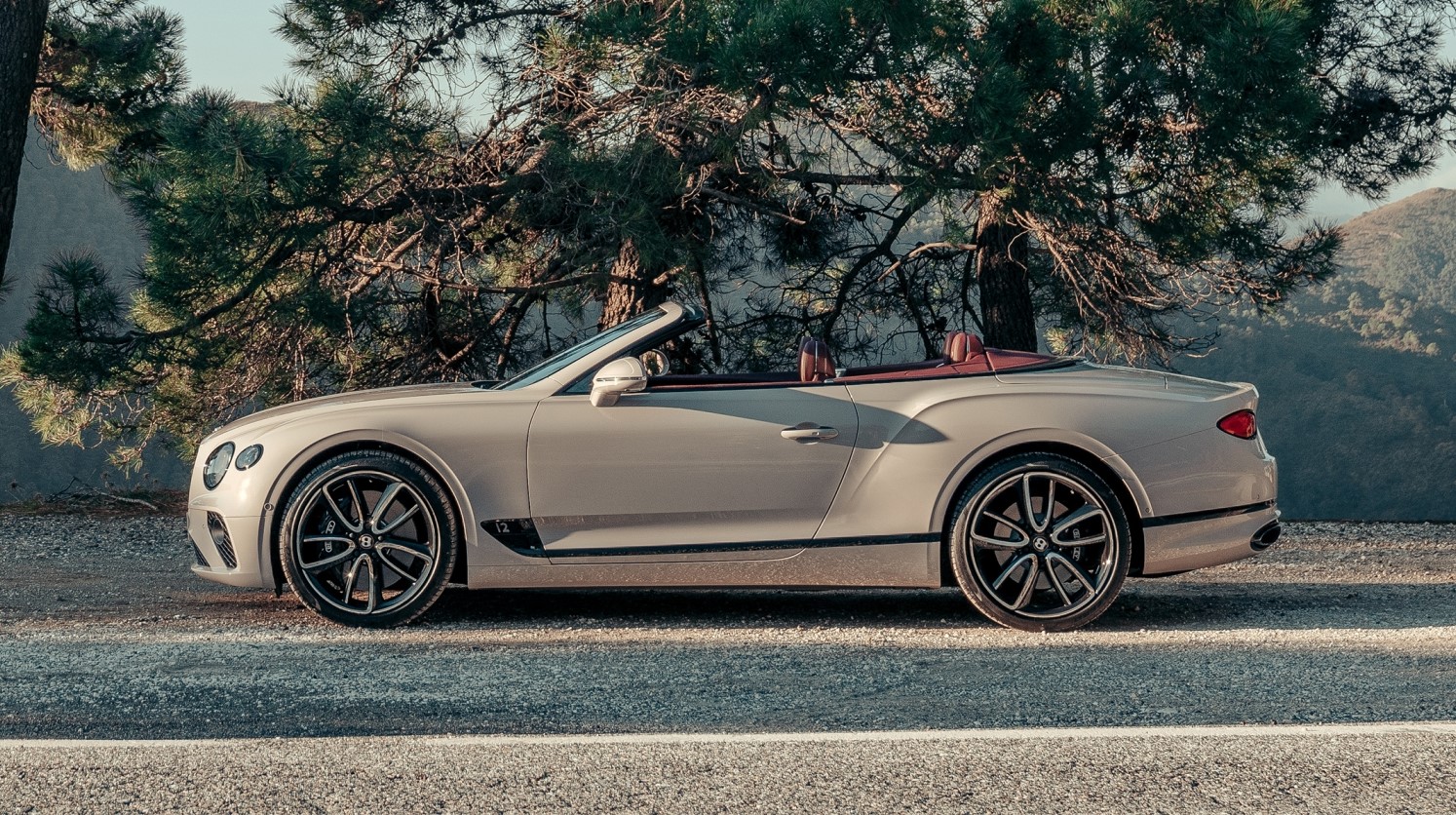
Dove Grey Bentley
Dove Grey Bentley Continental GTC

15 colors which have been in service for over 50 years have also been identified, one of the colors which can be found at Bentley’s headquarters in Crewe is Sage Green which has been used on the powerful Flying Spur V8. All the paints are applied by hand spraying complimented by the latest robotic technology.

The Flying Spur V8 finished in Sage Green is a luxury Grand Touring sedan that offers performance agility and exclusive four-door, limousine-style comfort. The paint is from the 1950s and the color split of the interior has been specified with carbon fibre finish for a more modern appearance.

Additionally, the Blackline specification features a black finish on the iconic Flying B mascot, radiator vanes, matrix grilles, side window surround and lower door and rear bumper blades. The front and rear bezels, exhaust outlets, door handle and the wing vents have also received the darkened treatment.

Claret is a duo-tone color inspired by Royal Claret and it was exclusively created for Queen Elizabeth ll’s Golden Jubilee Bentley in the 1940’s.

The Old English White paint was created in the 1950’s whereas Oxford Blue was first created in the 1960’s and then relaunched in 1998 as part of the Diamond series.

Customers can now easily customize their own heritage-inspired color thanks to the new palette with historical significance.

2023 Honda Civic Type R Gets Ready to Reclaim Nurburgring Lap Record

Honda will officially reveal the new Civic Type R in 2022. Code named FL, the 6th generation Honda Civic Type R will replace the FK8 generation which has been on sale for 5 years. The FK8 became a sensational hit among Honda fans despite its controversial design, it went ahead to set the fastest time on the Nurburgring by breaking the FWD lap record.

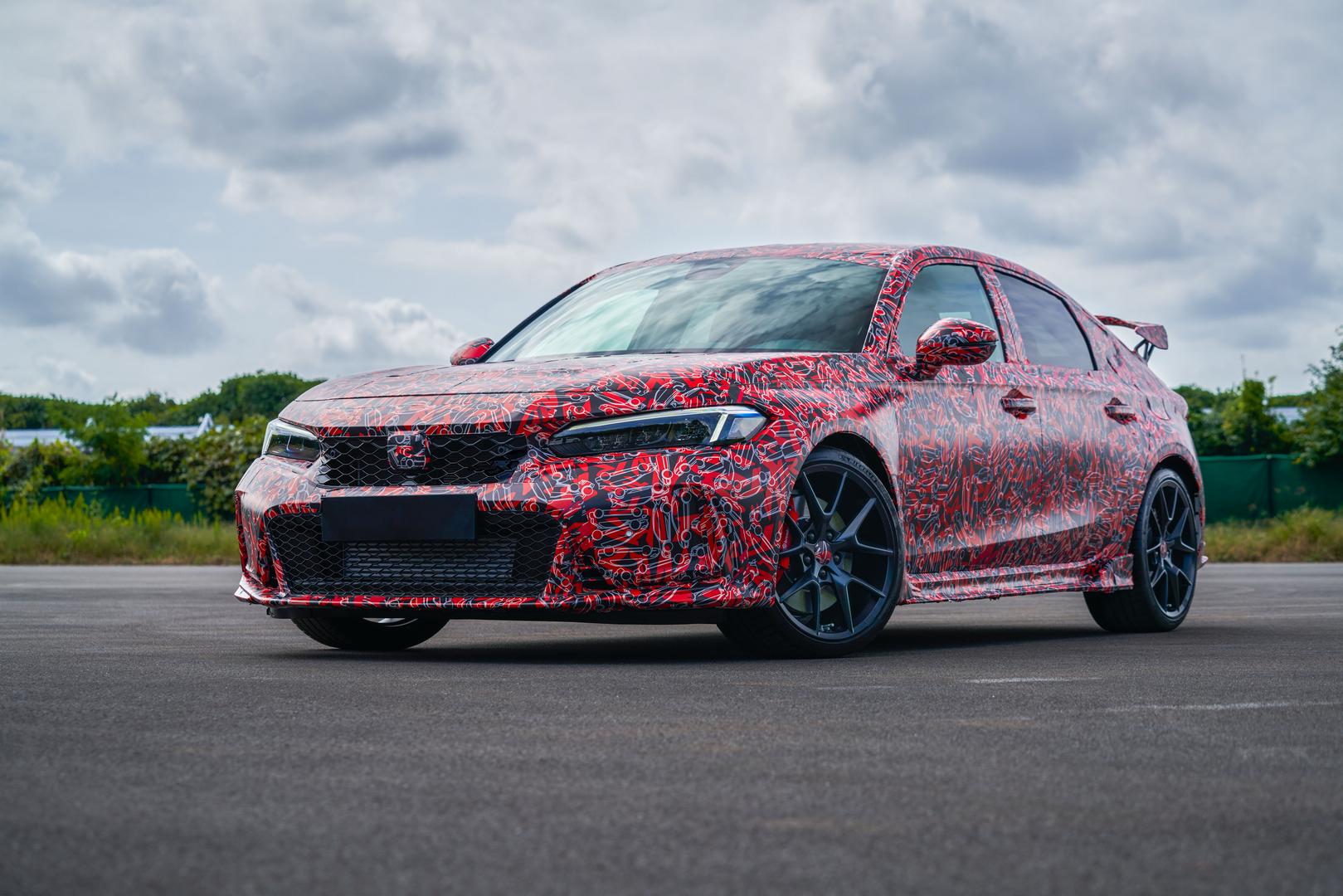
These are the first images of the upcoming Civic Type R, shown here in nearly full camo while undergoing final tests at the Nurburgring. Honda has not mentioned any plans to attempt a new lap record at the German racetrack, the FWD record is currently held by Renault with the Megane RS Trophy-R.

2023 Honda Civic Type R front

The Civic Type R sits high when it comes to retention of value on the used car market. That trend only indicates that its still one of the most desirable Japanese sports cars. It comes with a FWD layout and a six speed manual that has now adopted modern technology such as rev matching. The 2.0L turbo-4 engine produces over 320hp. Rivals include AWD sports cars such as the WRX STI, VW Golf R and a list of FWD hot hatches including the Megane RS.

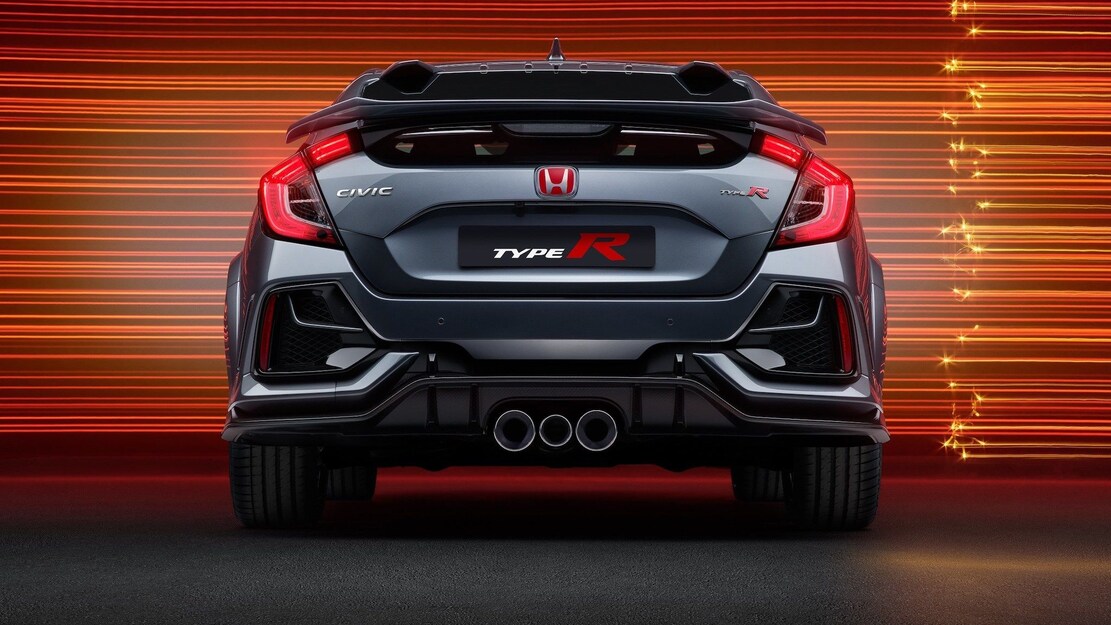
Honda Civic Type R Sport Line: An In-depth Look

Introduction

Now more than ever, I think it’s accurate to say that the “gentleman’s sports car” is in vogue. Made popular by the likes of Porsche – currently exemplified by the 911 GT3 Touring, in their case – there’s a growing call for performance models to start offering a less extroverted version of themselves. Of course, this does not have to come at the exclusion of automakers continuing to produce their more race-inspired cars, but rather as a complement to them. For an increasing number of car enthusiasts, less often means more, and subtlety is what makes the ultimate statement.

Let’s also establish the fact that the CTR is every bit as deserving as any other car that gets featured on our website. From a performance standpoint, the car is a proven winner: I continue to see this in person at just about every track day I attend where, when under the control of a capable driver, the Type R always gives exotic cars a run for their money and humbles more of their respective owners than they’d prefer to admit.

Honda Civic Type R Race Track

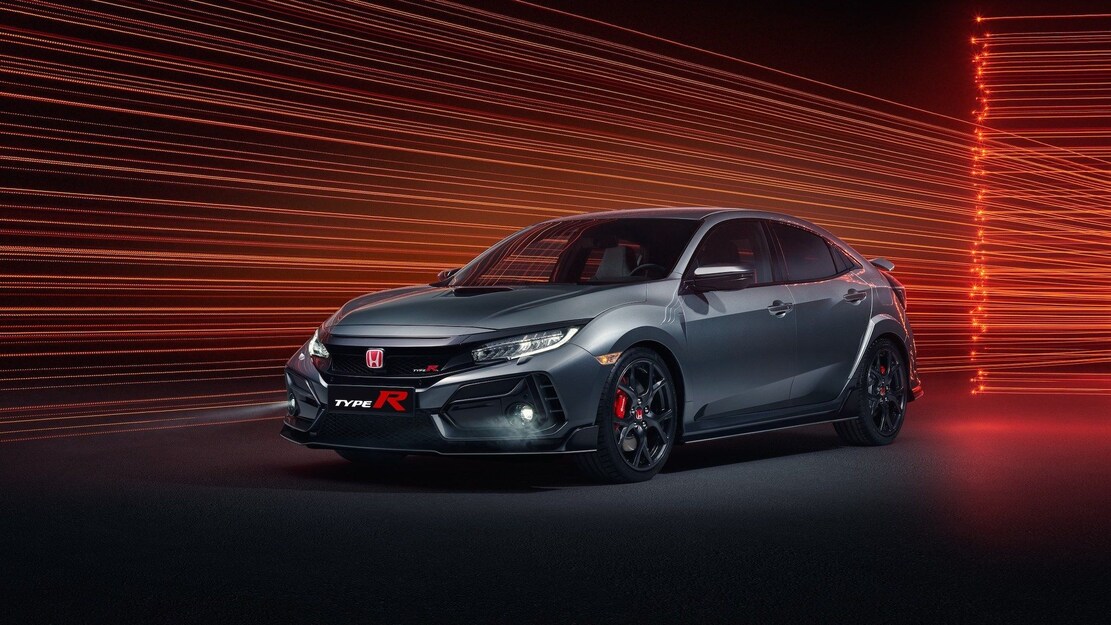
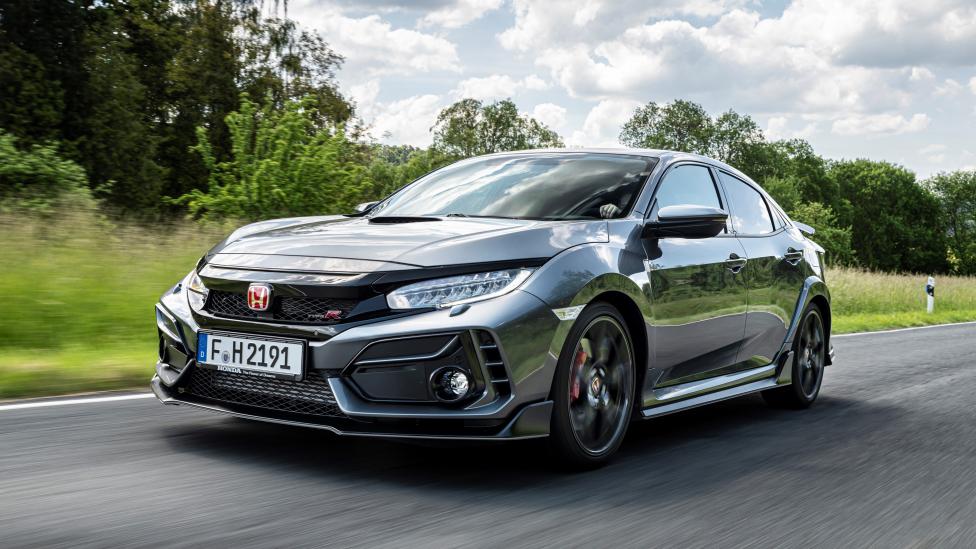
Now with that settled, Honda has followed a tried-and-tested formula with their latest rendition of the CTR – the Honda Civic Type R Sport Line. As the third distinctive variant (with the standard and Limited Edition models being the other two), the Sport Line model looks to scrap the boy racer image, with a more refined and grown-up persona to take its place. This is an evolution of visual details above all else, with the absence of a large rear wing being, by far, the most notable difference. Other relatively discreet changes – such as smaller 19″ wheels, plus the removal of most of the red exterior accents – collectively proclaim that the Sport Line is more about class than it is about sass.

Engine & Performance

Under the skin, the Sport Line shares all of the same underpinnings with the regular model. After all, the whole philosophy behind the “gentleman’s sports car” has never revolved around emasculating the car’s performance credentials. With all that being said, nothing has been changed in this department.

The CTR Sport Line continues to be powered by Honda’s most advanced K series engine to date – the turbocharged K20C1 – which sends up to 306 hp @ 6,500 rpm and 295 lb-ft of torque @ 2,500 rpm to the front wheels. This allows the car to accelerate from 0-60 mph in 5.3 seconds, on its way to a top speed of 168 mph. Mated to the engine is the same super-slick-and-buttery-smooth 6-speed manual transmission, which continues to be one of the CTR line-up’s most defining and impressive features.

These figures are virtually identical to the standard model, suggesting that the larger rear wing produces no drag penalty (and likewise offers no advantages) for those popular (albeit not truly meaningful) performance metrics. The CTR Limited Edition, however, can hit a higher top speed of 180 mph thanks to its lower weight.

Chassis & Handling

One complaint I have about the pre-2020 cars is that the electric power steering felt a bit numb and was way too light for a sports car. While this probably encourages more swashbuckling inputs from the driver – which is sometimes good for getting the front-wheel-drive car to properly rotate during turns and even get the rear end to slide a bit – I would’ve preferred a more analog experience.

After being released in 2016, Honda presented an updated version of the CTR at the 2020 Tokyo Auto Salon. Subsequent production models, including the Limited Edition and now the Sport Line, are based on that car, of which changes included a modified front suspension with new dampers. Honda claims that this should allow the car to handle more smoothly and steer with improved feel.

The most notable transformation for the Sport Line, other than the absence of the massive rear wing, would be the use of 19″ wheels (instead of 20″ as used on all other models). Not only is this a more understated styling cue, but it also gives the Sport Line an extra inch of tire sidewall, which helps improves ride quality and comfort on public roads. The chassis and suspension remain otherwise unchanged compared to the standard model; it’s hard to tell if the performance-related side effects from what effectively appears to be a cosmetic revision were intentional. Either way, it blends in well with the whole image of the car.

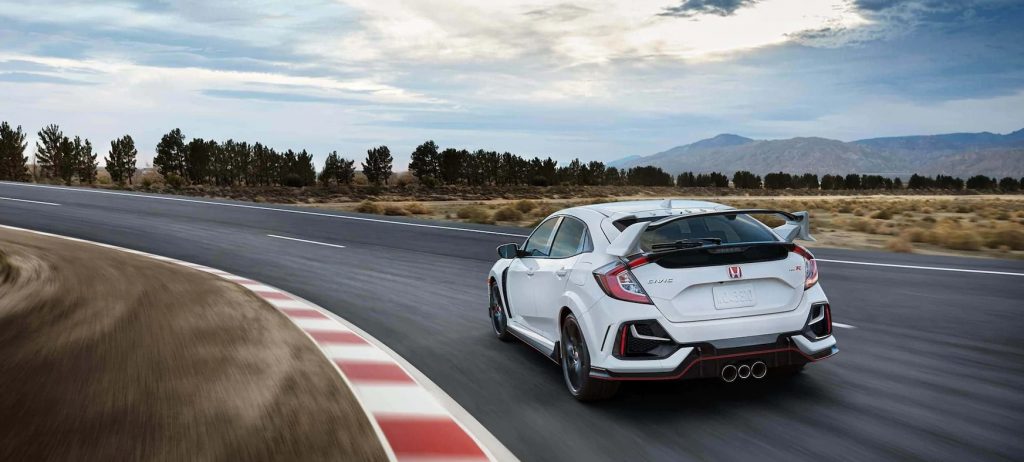
Honda Civic Type R Sport Line Rear

Feelings aside, the Civic Type R became the fastest front-wheel-drive car around the Nürburgring when it set a time of 7:43.80 back in 2017. So it is, by all accounts that matter, a legitimately fast car around the track. I would expect the newer versions of the CTR – particularly the Limited Edition model – to be even faster.

Design, Styling & Interior

Some other improvements to the 2020 CTR included a larger front grille being fitted to improve engine cooling, which the Sport Line is also the beneficiary of. Then, of course, there’s the aforementioned removal of the large rear wing, which is replaced by a much smaller decklid spoiler. The deletion of the red stripping normally highlighting the front lip, side skirts, and rear valance is a more subtle hint of the Sport Line’s pedigree, while the 19″ wheels provide the finishing touches on a more unassuming combination of form and function. Otherwise, the rest of the parts bin remains communal in all regards to exterior styling.

In terms of appearances, I’d like to think of the new Sport Line as what would happen if you gave a 20-year-old a $7,000 budget and a base Civic, then told them to option it using only OEM Honda parts (and that the standard rear wing was no longer available). That is neither a compliment nor a dig at the car’s subjective styling but more of an observation.

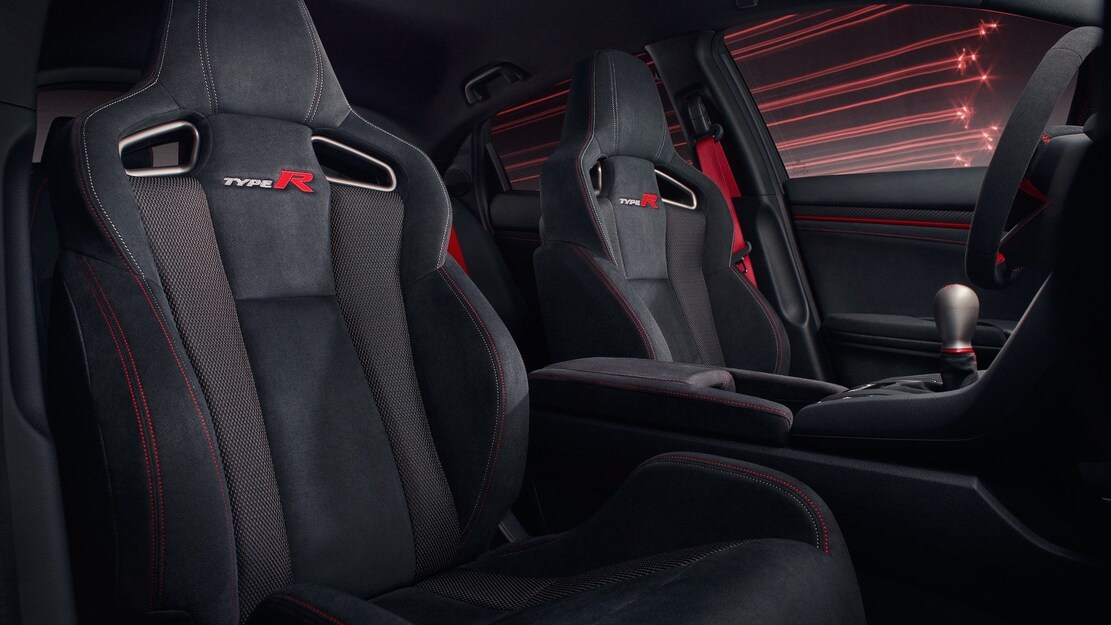
Inside, extra sound-deadening materials have been installed to enhance the grand touring experience, while black fabric seats replace the more popping red ones. The only immediately identifiable traits which suggest that the Sport Line is indeed still a Civic Type R are quintessential and iconic red Honda badges on the front grille and rear bumper, as well as the red Brembo brake calipers.

Honda Civic Type R Sport Line Seats

In the end, the more indistinct styling of the Sport Line won’t prevent the latest Civic Type R from remaining a polarizing figure amongst the car enthusiast community. Those who love it love it, but overall the CTR has never been overwhelmingly popular for its looks. In a way, this speaks volumes about how great of a performer it has to be in order to continue garnering the huge amount of praise it receives. So, did the Sport Line transform the CTR from a lively teen heartthrob to an introspective silver fox? Perhaps not, but overall, its intentions are completely transparent, so mission accomplished, I suppose.

Pricing

The Honda Civic Type R Sport Line will have an MSRP of £34,450 in Europe, though it will not be available in North America, at least for now. With the closure of the UK-based Swindon plant in 2019 – where the vast majority of CTRs were produced – there has been a much lower supply of new examples worldwide. This has been reflected in the soaring values of CTR models on the used market. Dealers were often seen listing brand new examples for way above their sticker prices, although Honda’s corporate branches have been cracking down on this practice as of late. Still, getting hold of a brand new CTR remains more challenging than it was in the past.

Verdict

supercars.net – 9/10

Honda Civic Type R Sport Line Side

For the US marketplace, it is clear that Honda is happy with keeping the status quo of this “hot market” for CTRs, though Honda North America executives have not ruled out the possibility of bringing the Sport Line to our shores. For now, the company believes that the current roster of the standard car and Limited Edition model provides a happy medium for both the company and its loyal customers. I have to say, I agree with this decision; as much as I’d like to see the Sport Line over here, I think the “gentleman’s sports car” concept is more openly embraced on the other side of the Atlantic.

Objectively, the Honda Civic Type R Sport Line is a transparent, if not outright gimmicky, attempt at giving Honda’s popular sports car broader appeal. Aimed particularly at what looks to be an older and more mature customer base, the Sport Line ticks enough of the boxes that you’d expect; however, it ultimately falls short of shaking its reputation of being a predominantly younger enthusiast’s kind-of-car, even sans the massive rear wing. The upside? It’s still very much the Civic Type R we’ve come to love – and that’s not a bad thing.

What Other Experts Are Saying

Top Gear – 9/10

Honda Civic Type R Sport Line Top Gear

Ferrari’s Upcoming Retro-Inspired Supercar Spotted!

There has recently been some buzz that Ferrari is working to release their very own retro-inspired supercar.

For the past few months, Ferrari has been seen testing a variety of mysterious prototypes that are speculated to be based on the LaFerrari. Recently, what is thought to be the Monza SP1 and SP2 successor has been said to have been seen being test driven in the highway.

The Ferrari prototype that was caught on video was extensively covered in thick body cladding, hiding design details from prying eyes. It is highly suggestive that under the body cladding is what could possibly be the final production design of what looks like a car based on the Ferrari LaFerrari Aperta.

There have been some rumors floating around that it could be designed to look like Ferrari 330 P4 Le Mans racer from the 1960s. It is the one that famously went up against the Ford GT40.

Screenshot from youtube.com/varryx

One of the first things that is noticeable in the encased car is the position of its side mirrors. The side mirrors on the test car are placed on the front fenders similar to the ones on the 330 P4 compared to the side mirrors of the LaFerrari which had it mounted on the A-pillars.

There are also some things that even a camo cannot hide, like the lower stance, wider fenders, and as well as the prominent rear wing. It seems like the upcoming supercar will look track-ready, more so than the LaFerrari it is based on.

Screenshot from youtube.com/varryx

Under the hood of the supposed Ferrari Icona is the same 6.5-liter, naturally aspirated V-12 engine that is equipped in the 812 Competizione. The powerful engine can produce 819 horsepower and 510 lb-ft of torque. It is very much possible that the retro inspired Icona will be even more powerful as this will have a seven figure price tag.

Combined, only 499 examples of the SP1 Monza and SP2 Monza were produced. It is said that for the 330 P4, only 300 examples are planned for production. Each are estimated to cost around $2.5 million to $3 million.

There has also been some buzz that the new retro-inspired Icona will be presented by Ferrari at the Ferrari World Finals which is happening next month in Italy.

[embedded content] [embedded content]

Most Expensive Car in the World Revealed in Public: $28 Million Price Tag

Rolls-Royce officially unveiled their new coachbuilt ‘Boat Tail’. The unique masterpiece was presented to the public for the first time at Concorso d’Eleganza Villa d’Este on 2nd and 3rd of October. The Rolls-Royce Boat Tail is the most expensive new car in the world, surpassing the Swept Tail from 2017 which was sold at a price of $13 million. The Boat Tail costs a whooping $28 million, only 3 will be built.

This was the the first time the Boat Tail was displayed in public for guests and journalists to examine and admire, the detailing and construction of the vehicle was designed and hand built at the home of Rolls Royce, a project which lasted almost four years.

The Boat Tail represents a pivotal moment for the wider luxury goods sector, both the interior and exterior bodywork have been designed and finished to the client’s specifications and new possibilities for patrons of contemporary designs and fine craftsmanship have also been opened.

This 1000hp Audi RS7 C8 Wants to Take on the GT63 S AMG E Performance

Wheelsandmore have revealed their latest work on the Audi RS7 Sportback C8.

The engine of the Audi RS7 has been tuned to produce an output of 1045hp, the exhaust system has been equipped with a remote-controlled flap control and the wheels swapped to larger 22 inch concaves.

The performance enhancements have been tailored to ensure fun and good mood in the car, and when driving in the fast lane the vehicle consumes 1 litre less fuel per 100km thanks to the increase in torque. The performance upgrades available are from stage 1 to stage 5 each increasing the standard power output of 600PS and 800 Nm of torque.

Stage 1 increases the power output from standard to 700 PS and 945 Nm, Stage 1+ increases the output from standard to 740PS and 1002 Nm, Stage 2 increases the output power from standard to 780 PS and 1102 Nm, Stage 3 increases the power from standard to 840PSand 1108 Nm, Stage 4 increases the power from standard to 915PS and 1149 Nm and Stage 5 increases the output power from standard to 980 PS and 1292 Nm of torque.

The new RS7 C8 has been fitted with a hand-made stainless steel exhaust system with valve control from Capristo Automotive, the system increases the power by approximately 15hp and its weight has been reduced by 50% compared to the standard exhaust.

The coil springs fitted in the RS7 are height-adjustable and the adaptive series damper control remains active on the coil springs. The coil springs are exclusively made in Germany and are TUV-tested and approved.

The vehicle has been fitted with a set of 22 inch alloy wheels from Germany with TUV approval. These are three-piece rims with forged rim stars and stainless steel rim beds for all RS7 models. Additionally, the rims are available in all colors and combinations with a carbon look and high-gloss finish.

Top 7 Most Expensive James Bond Movie Cars

Hagerty just released some of the most valuable Bond cars in history due to their appearance in James Bond films.

The valuation analyst compared the value between the cars used during the production of Bond films to the prices of the standard units of the same models, the results showed that James Bond movies increased the value of the cars featured by an average over 1000 per cent.

Land Rover Defender “Winter Water Wolf”

The original Land Rover Defender is a lot like Chuck Norris. Old, tough as nails, and ugly handsome. Then there’s the Land Rover Winter Water Wolf, kinda like Arctic Special Forces Chuck Norris. Only 50…

The post Land Rover Defender “Winter Water Wolf” first appeared on Cool Material.