All posts in “Cars”

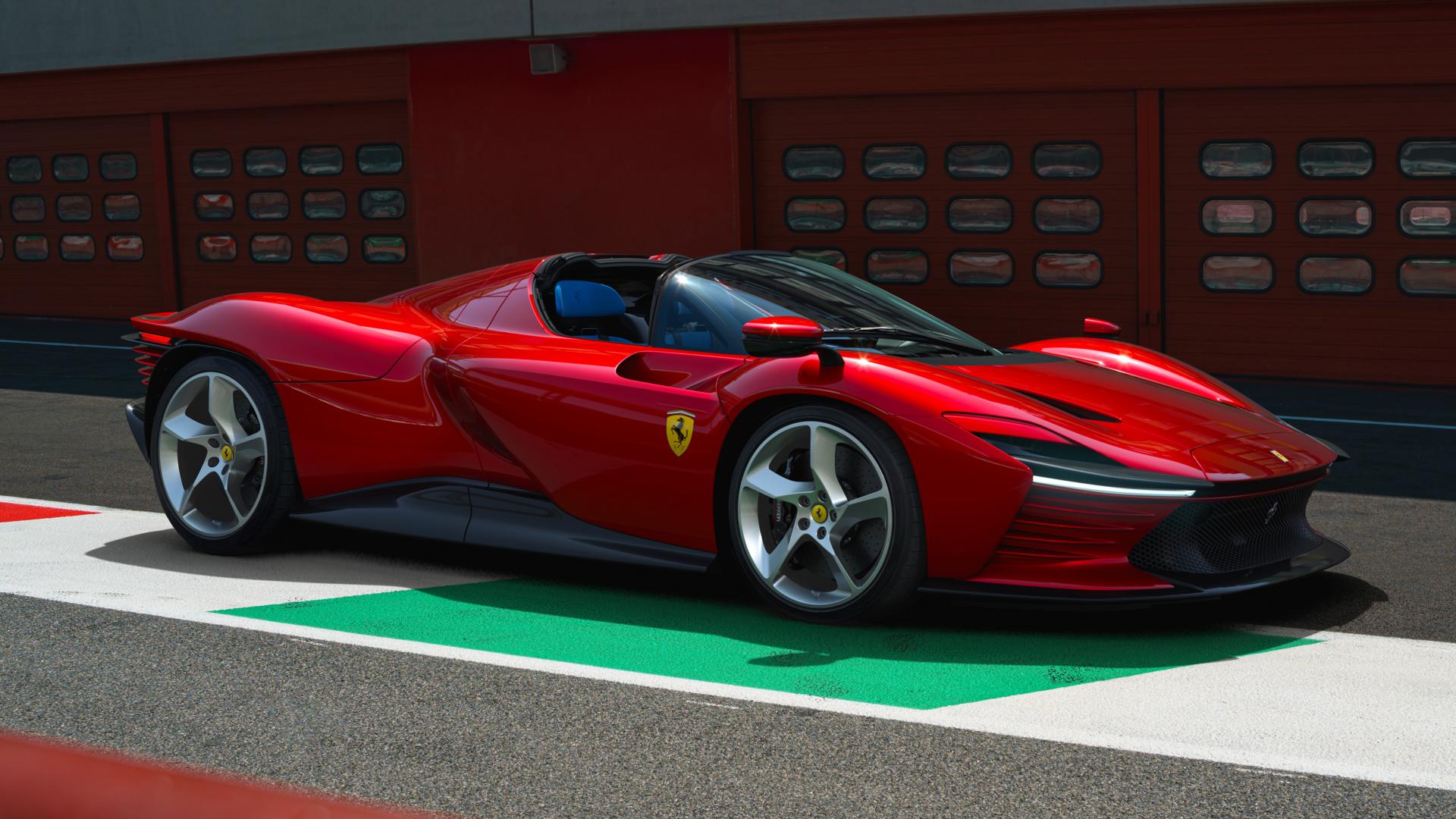
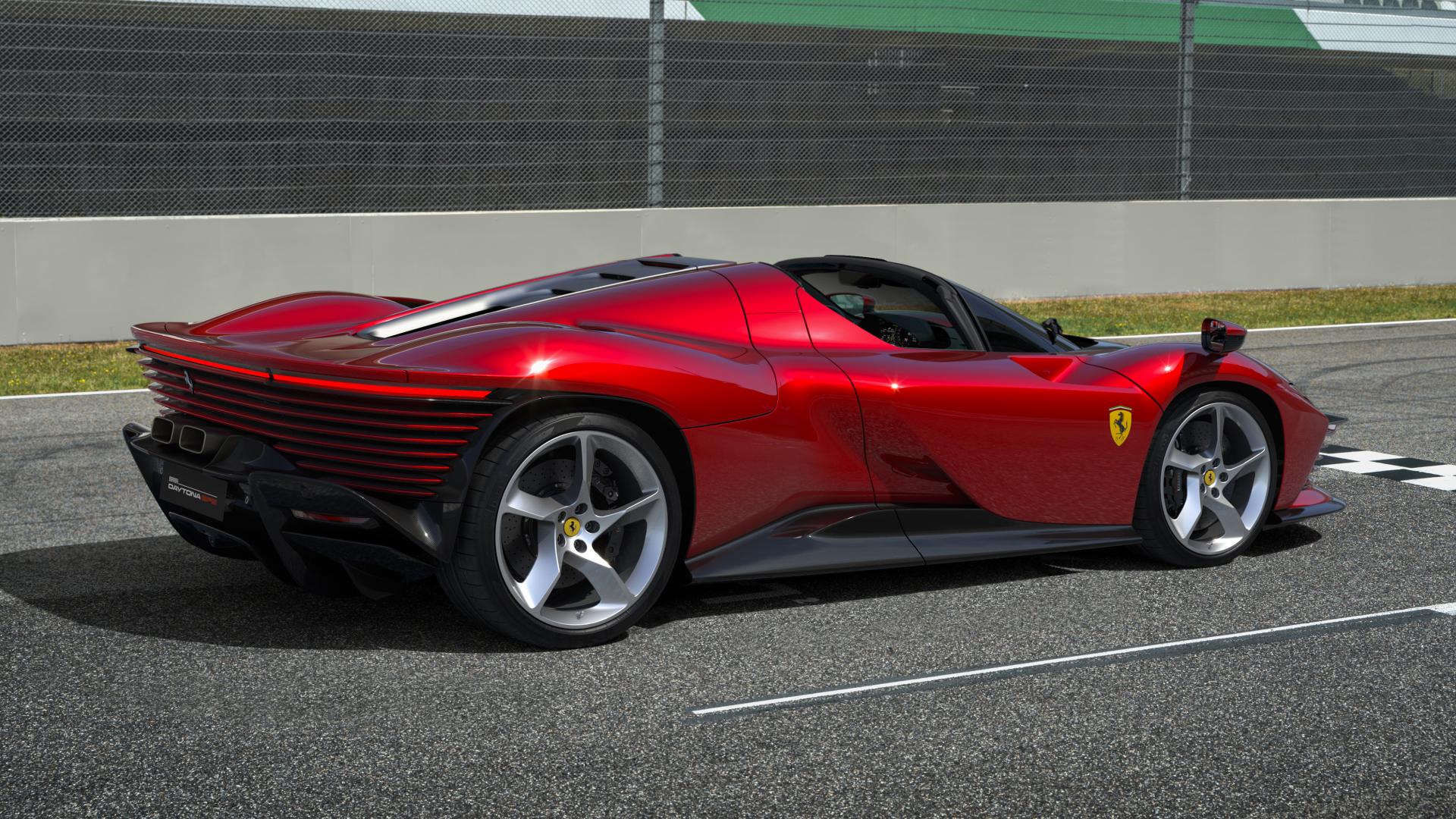
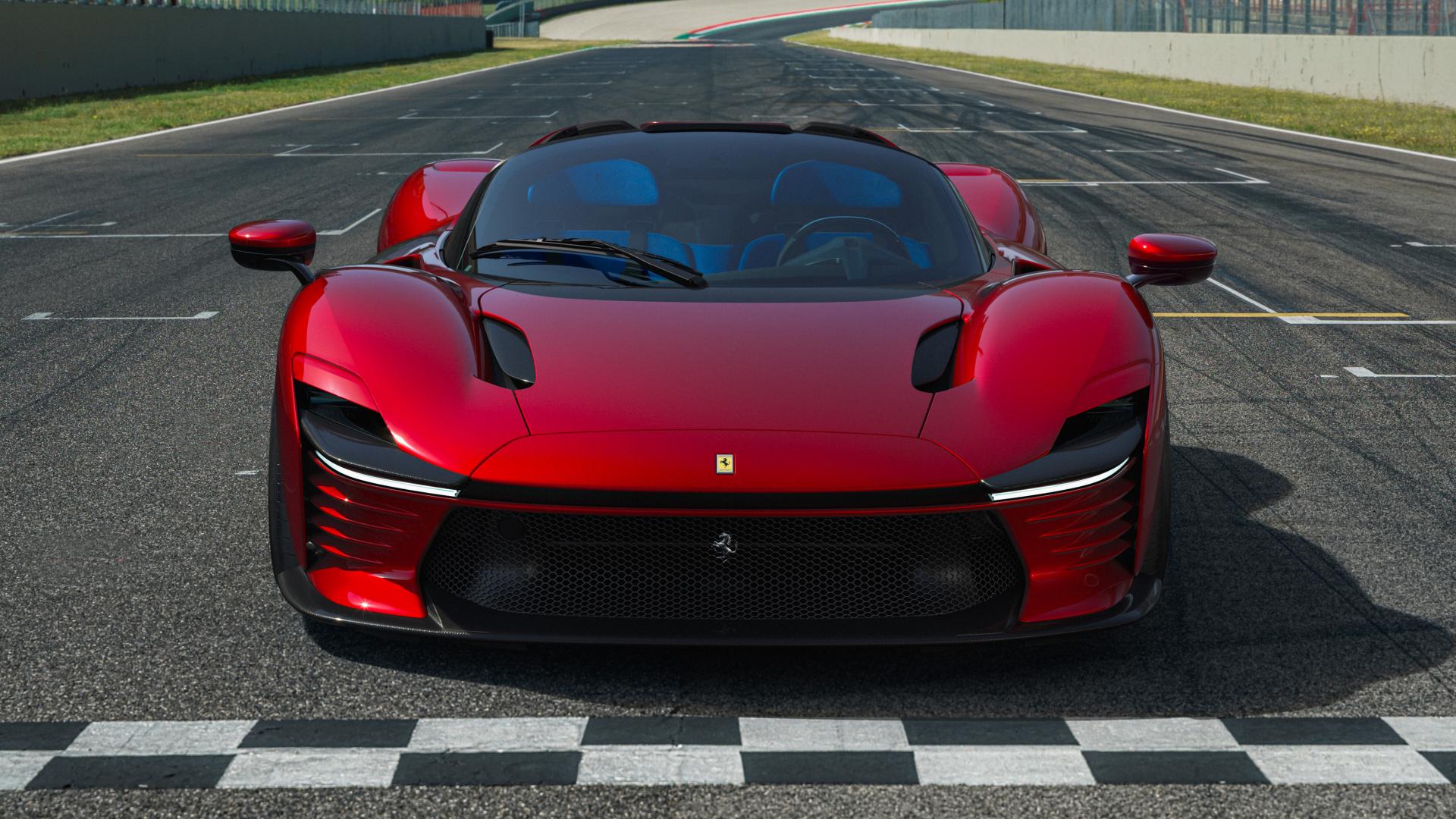
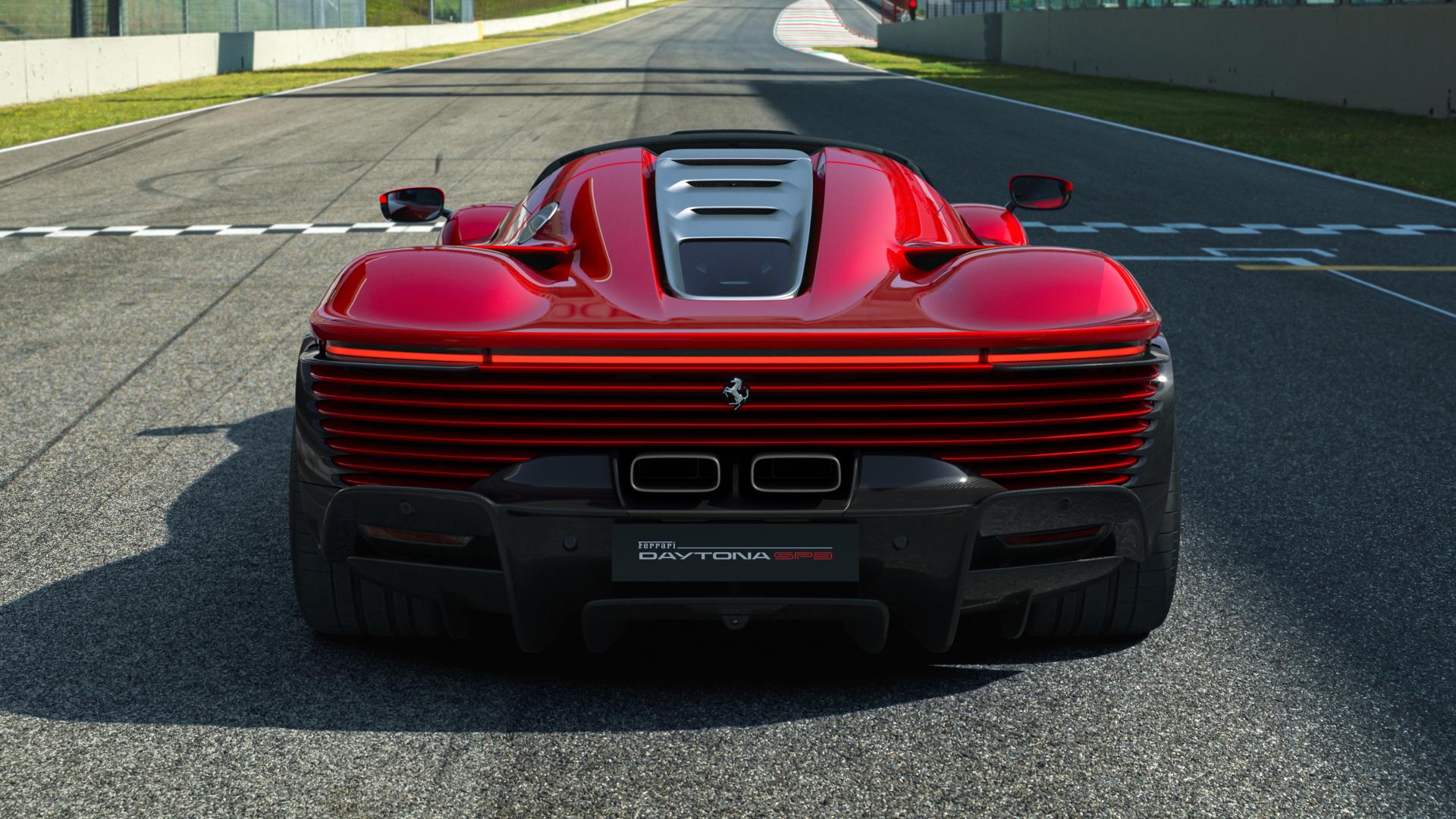
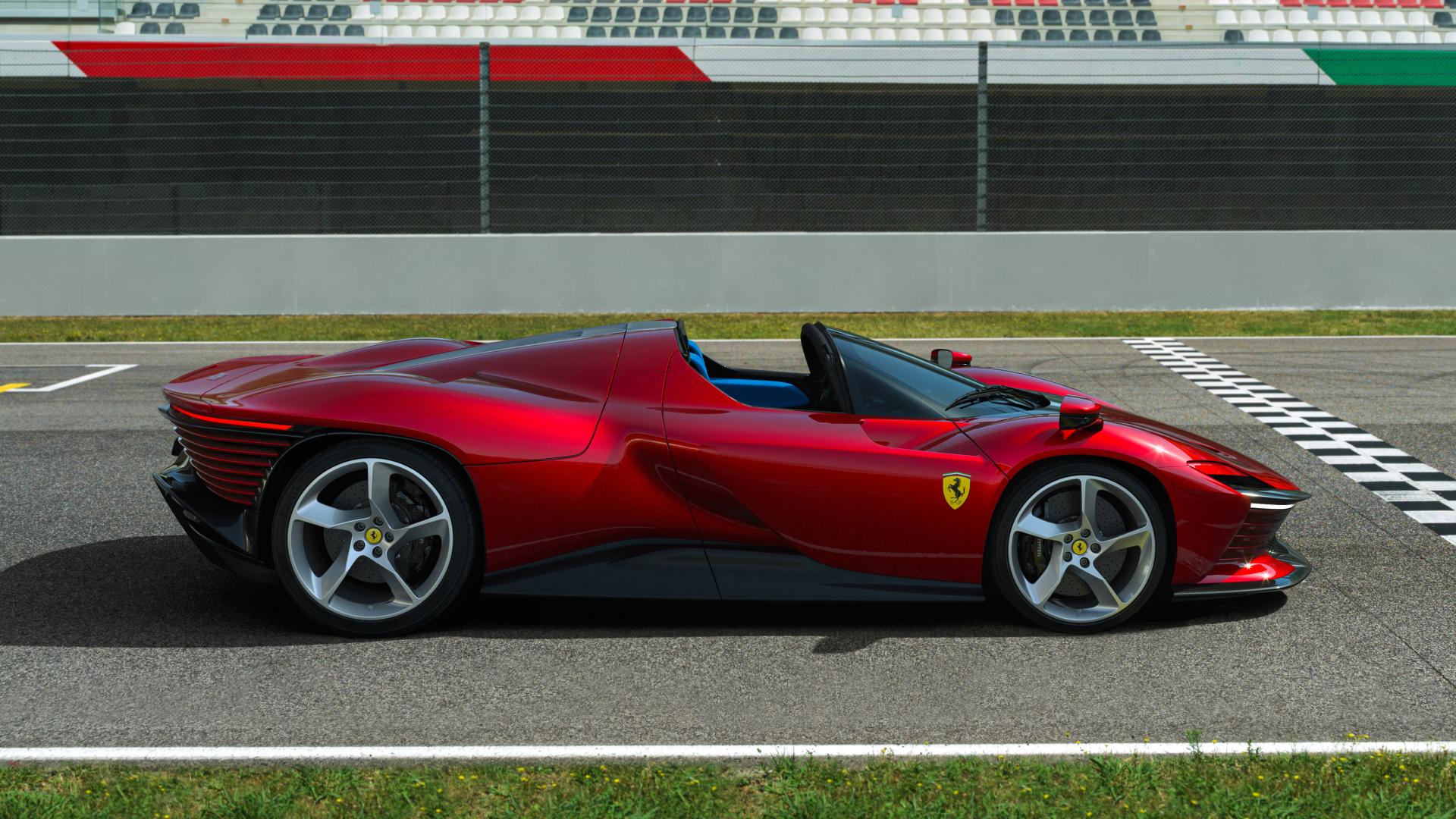
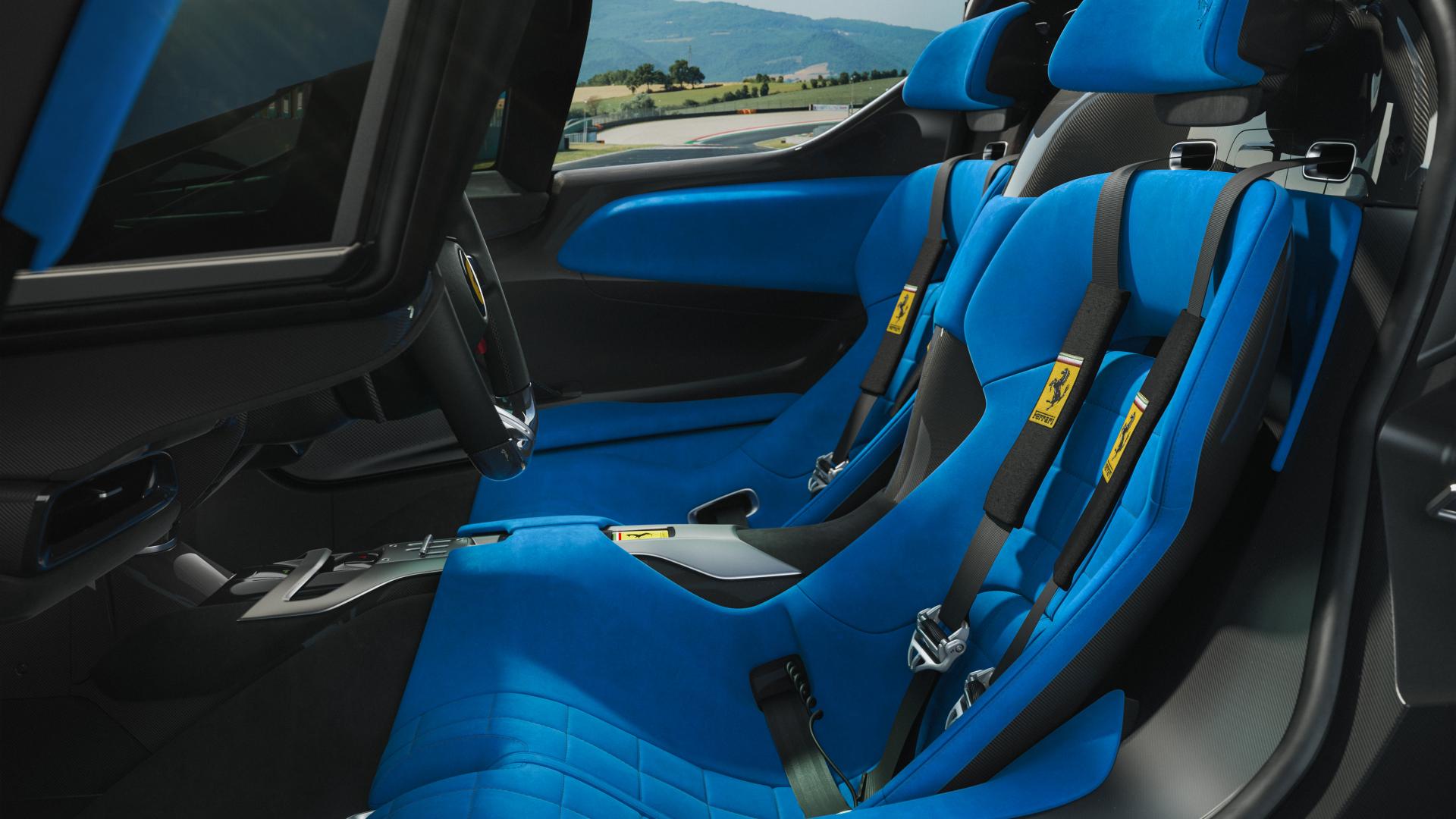
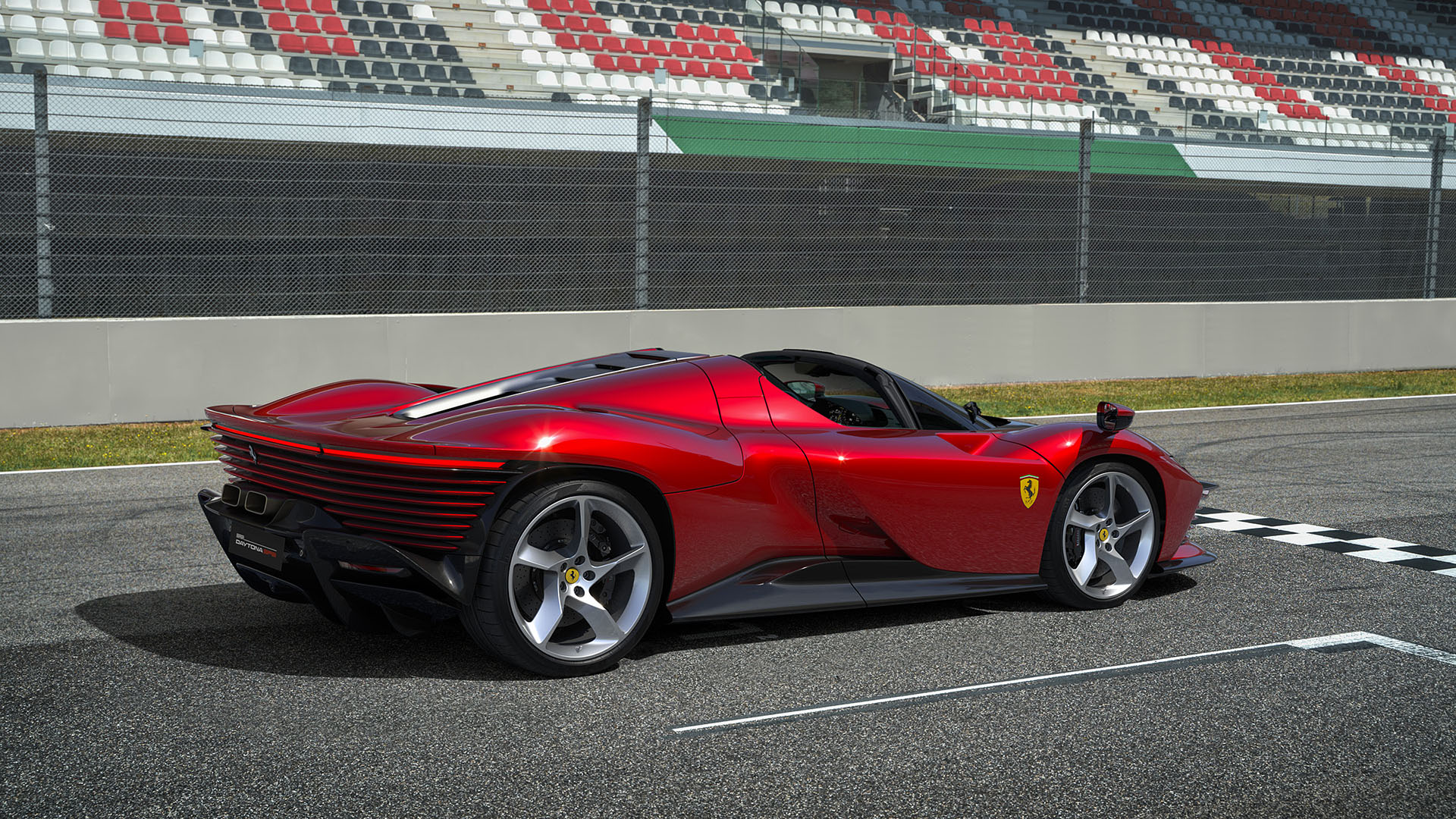
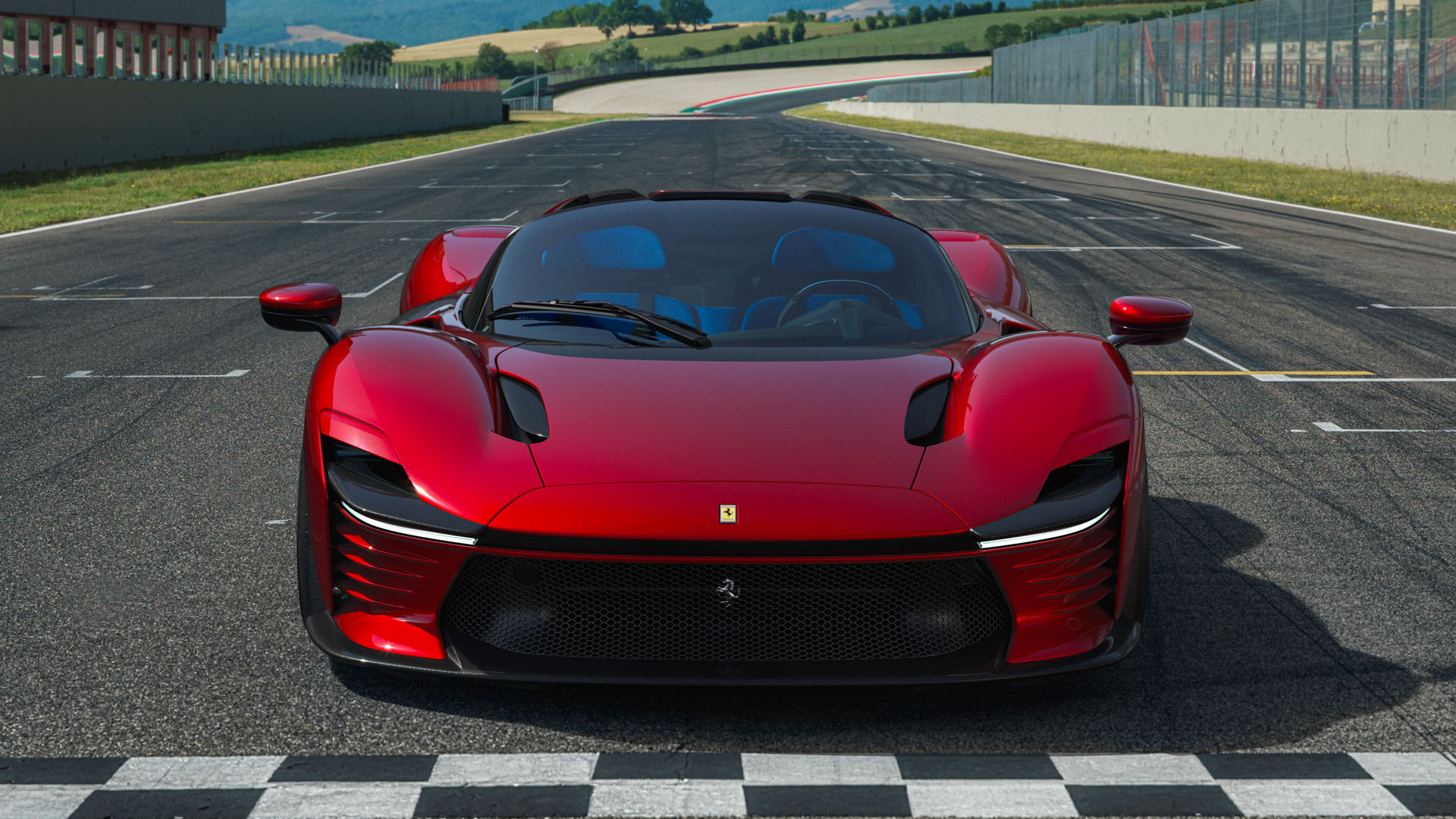
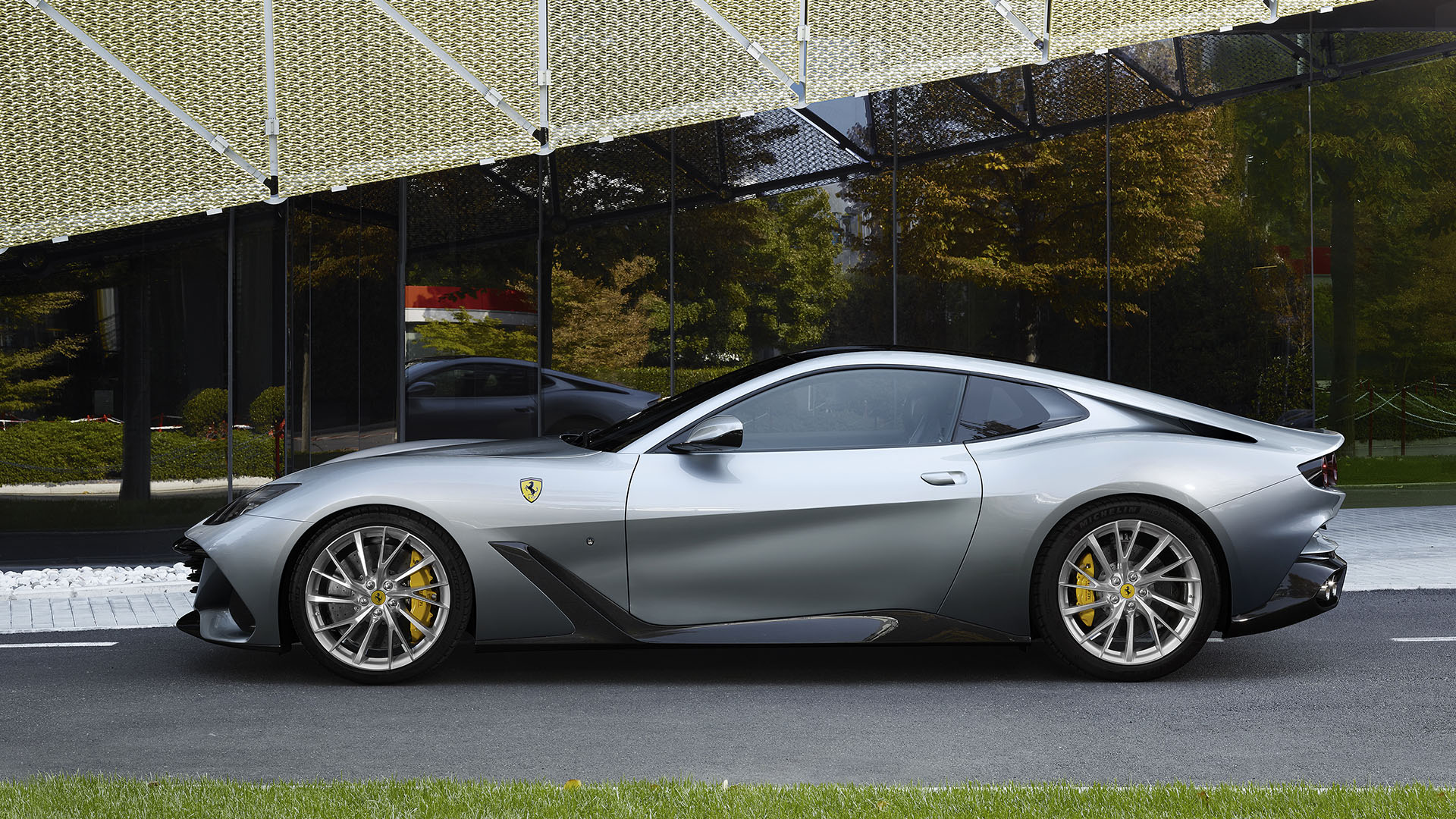
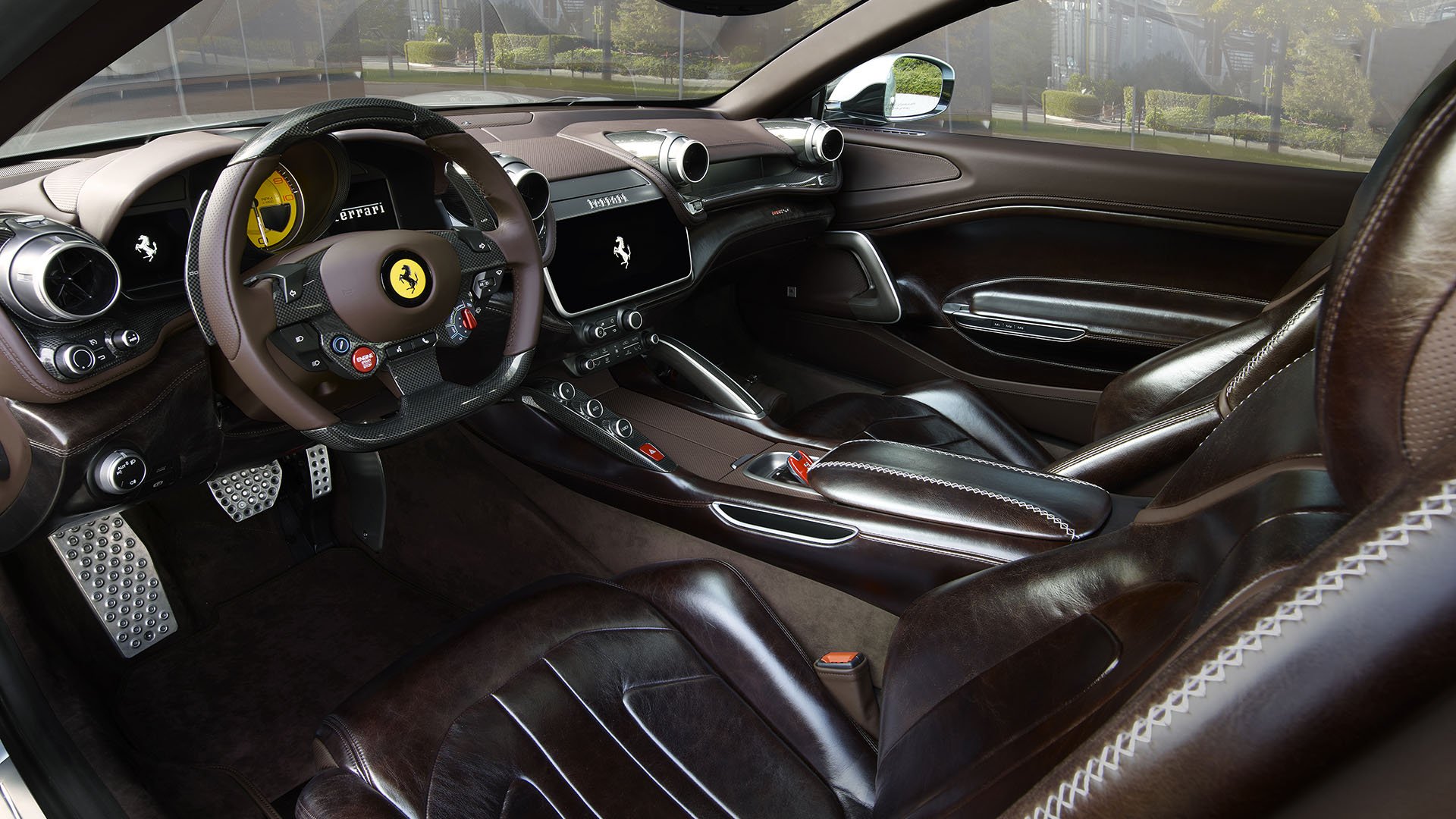
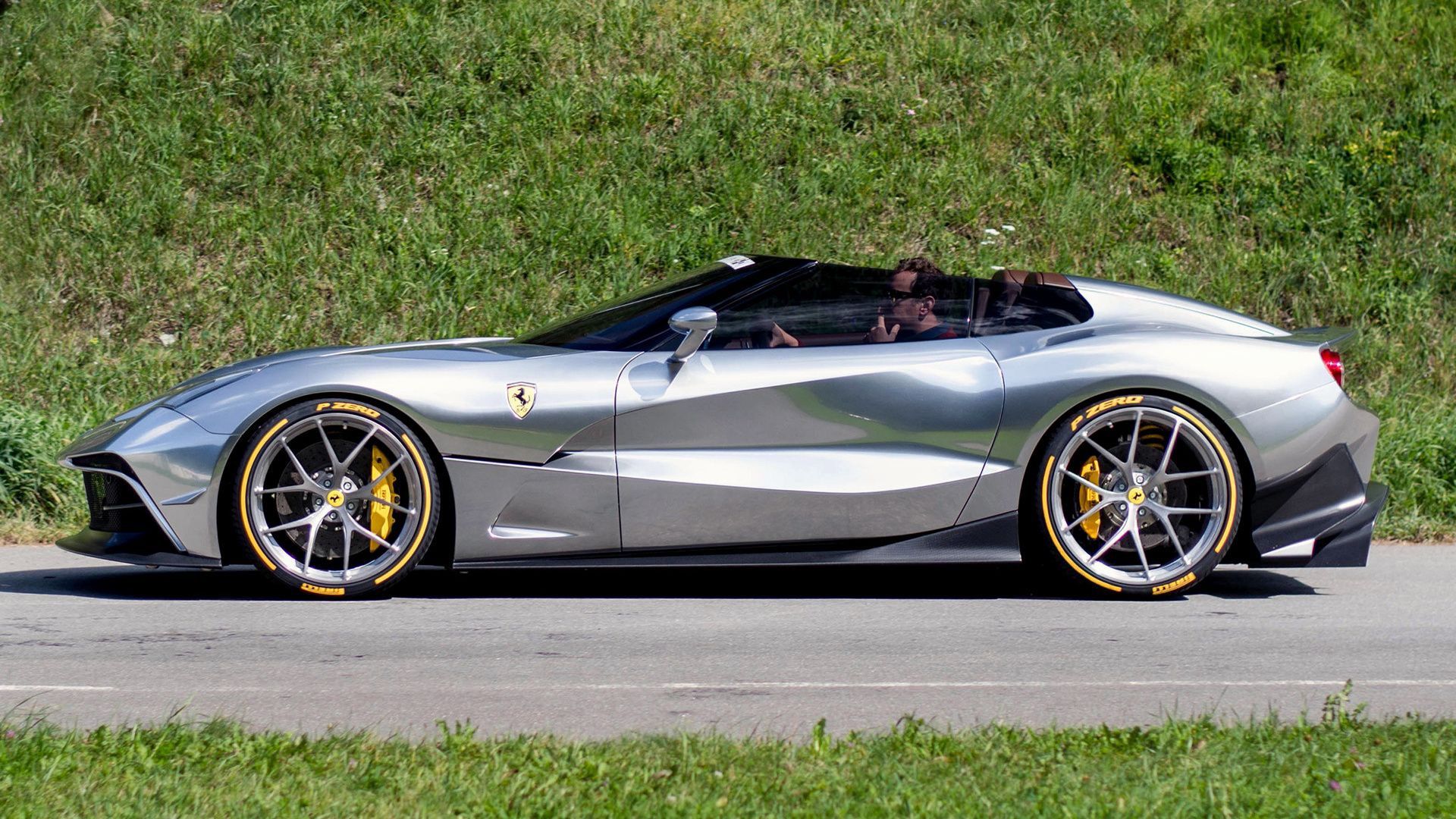
The new Ferrari Icona: Daytona SP3

February 6, 1967, will forever be a date in Ferrari’s history that nobody could ever forget, it’s the first round of the 1967 International World Sports Car Championship, the legendary 24 Hours of Daytona, right at the heart of Ford’s racing team, Ferrari takes all three leading positions, a 330 P3/4 took home the victory, second place was secured by a 330 P4 while the third position was secured by a 412 P … the Prancing horse obliterated the competition during a time that is now considered as being the golden era of closed wheel endurance racing, those cars would become a reference for the next generation of engineers and designers.

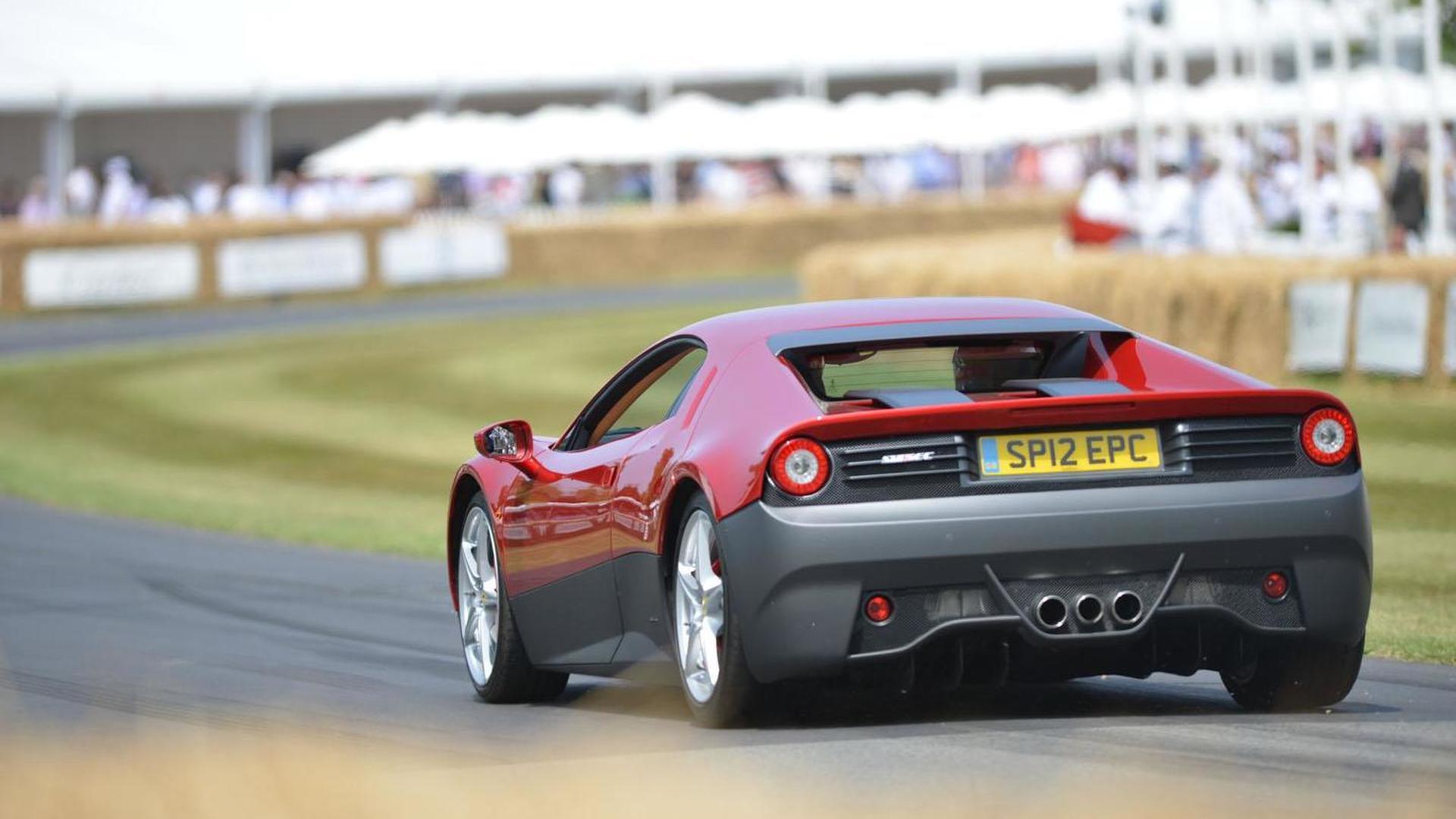
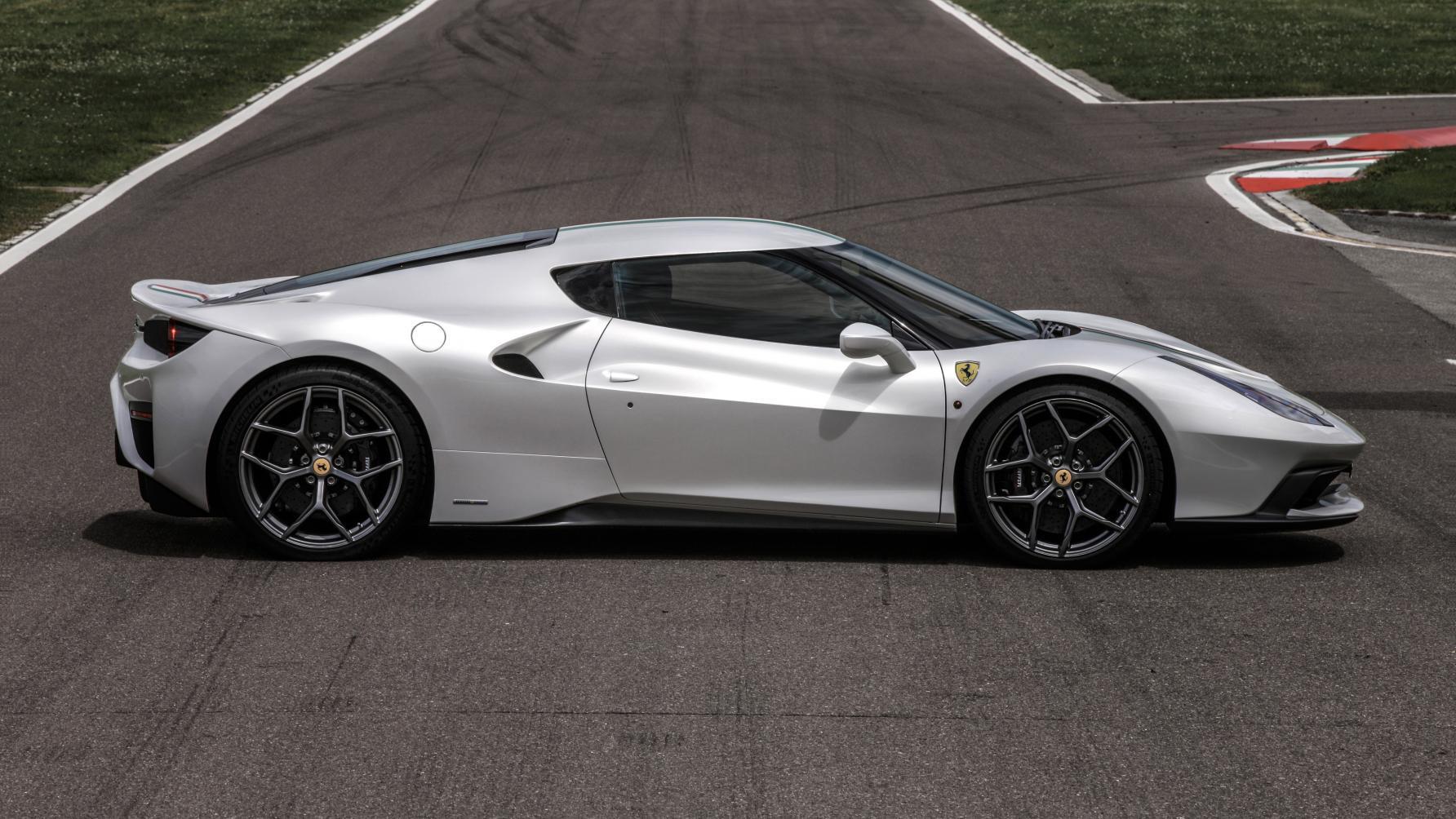
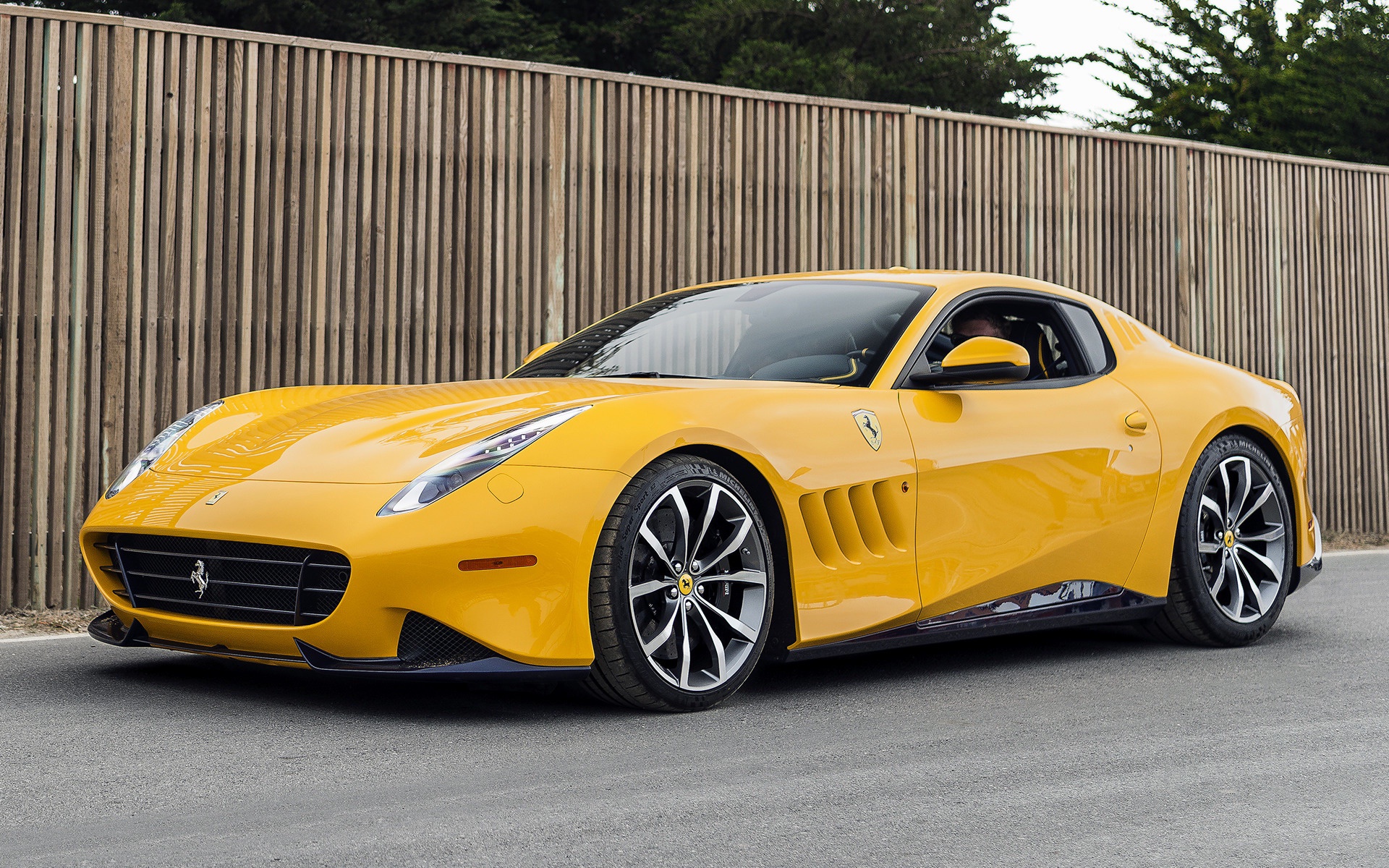
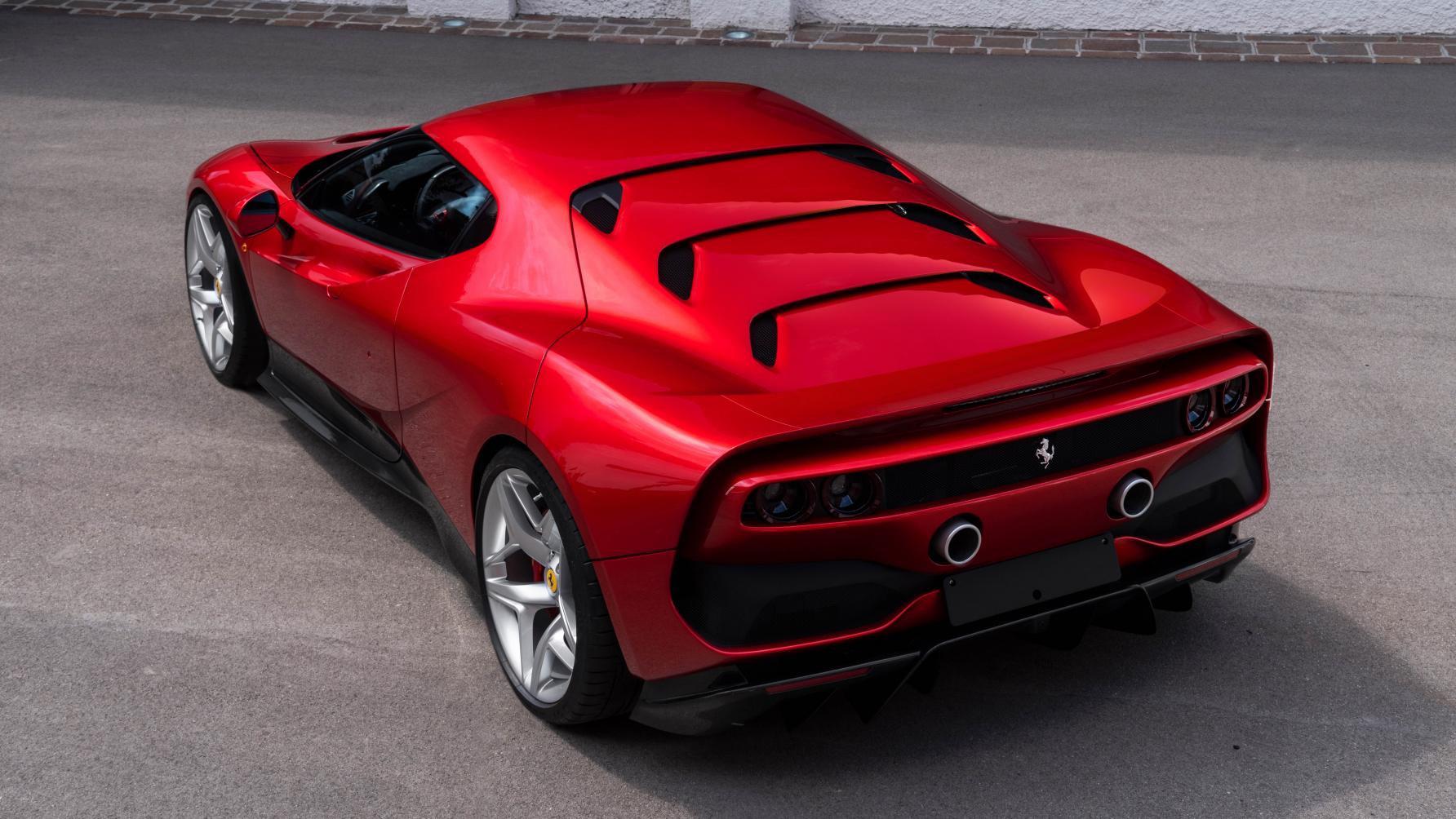
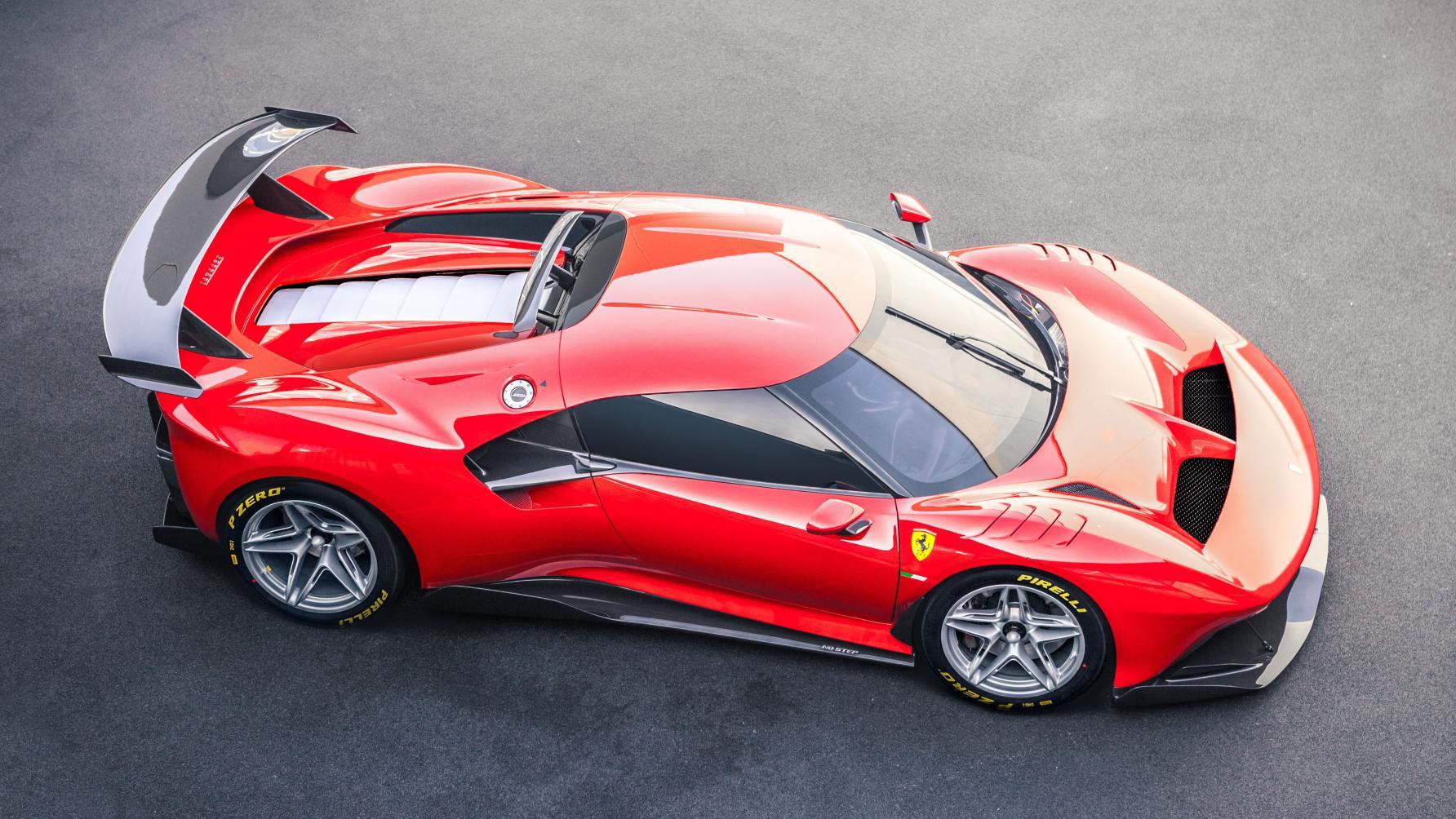
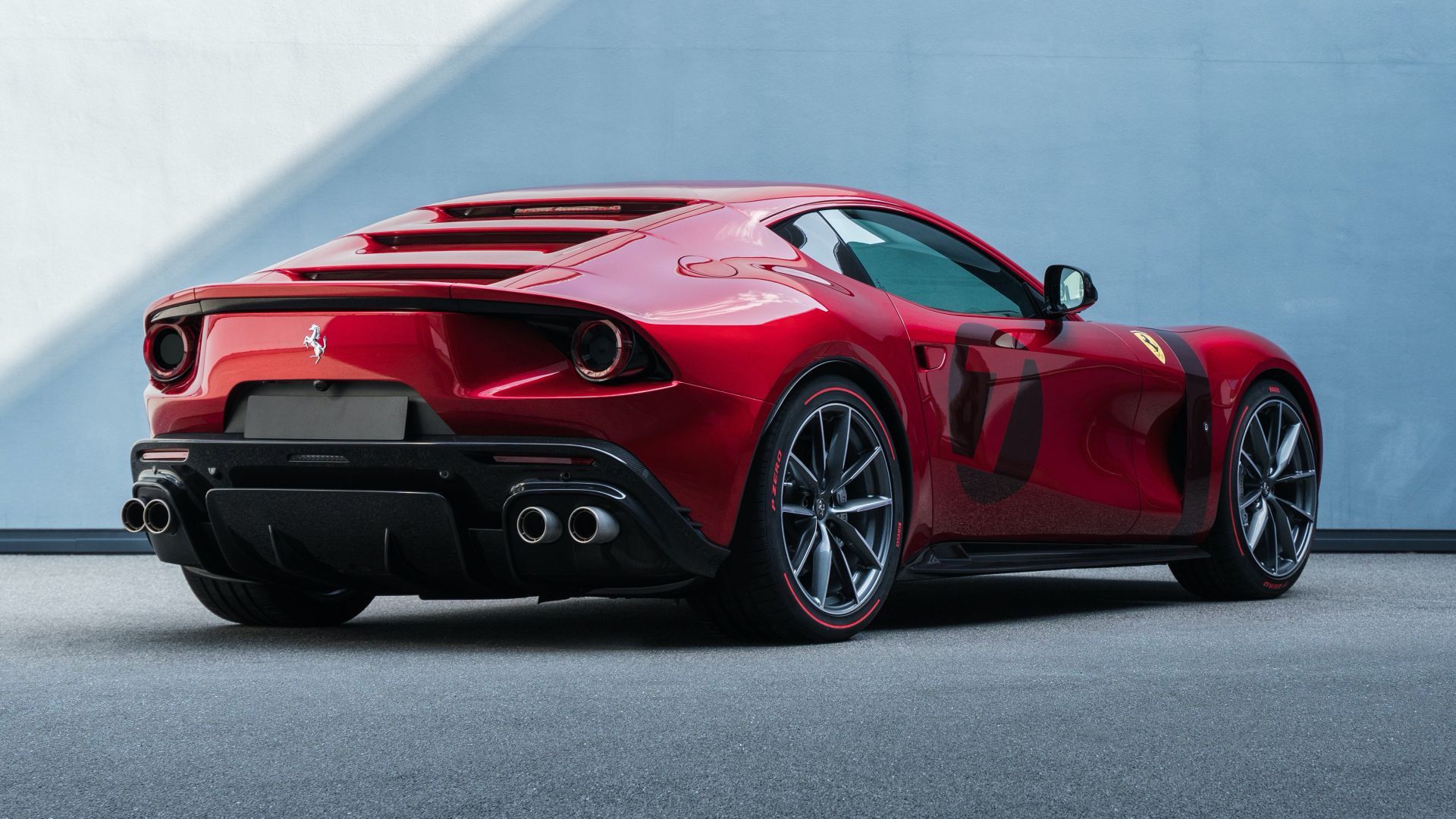
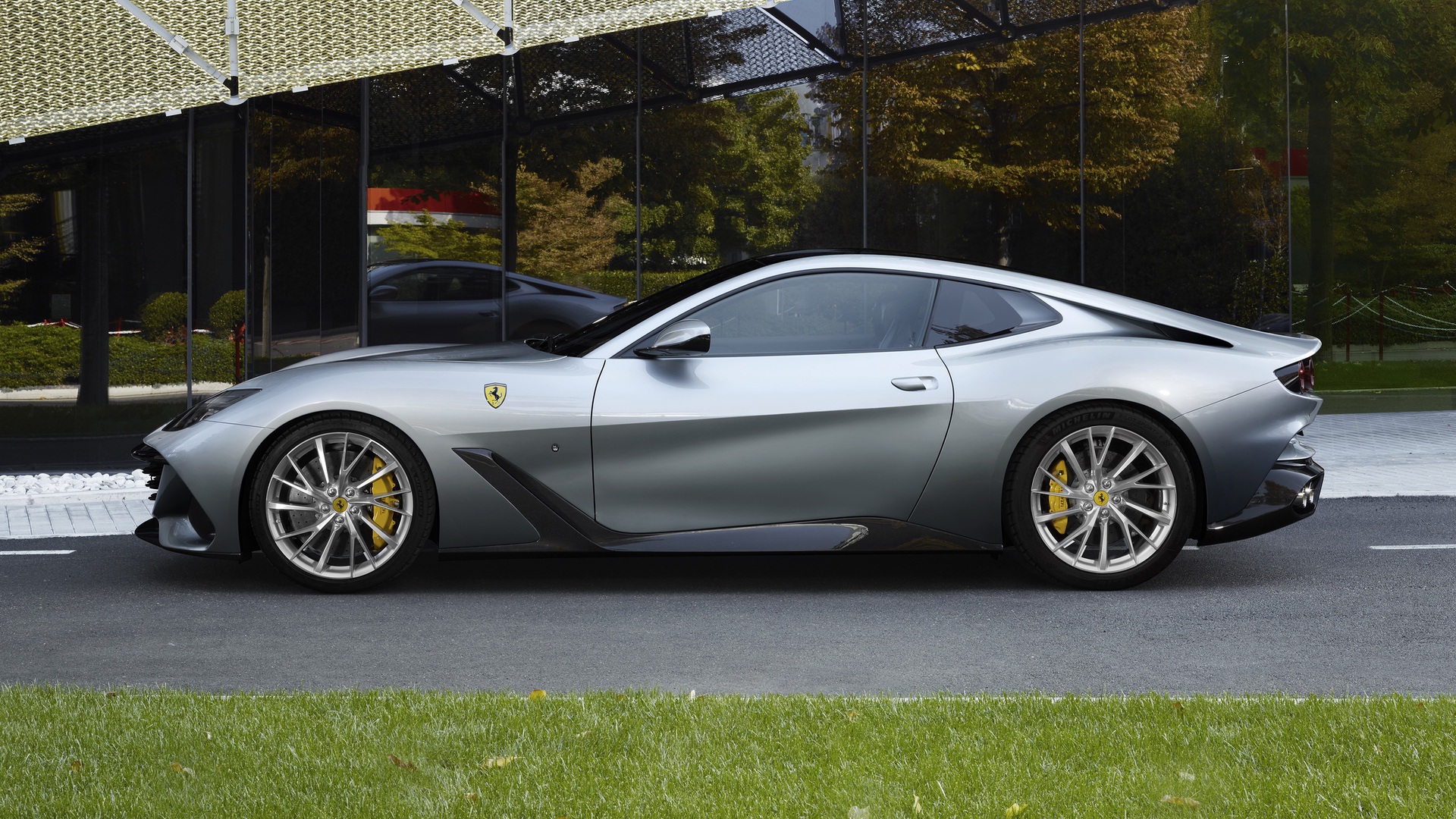
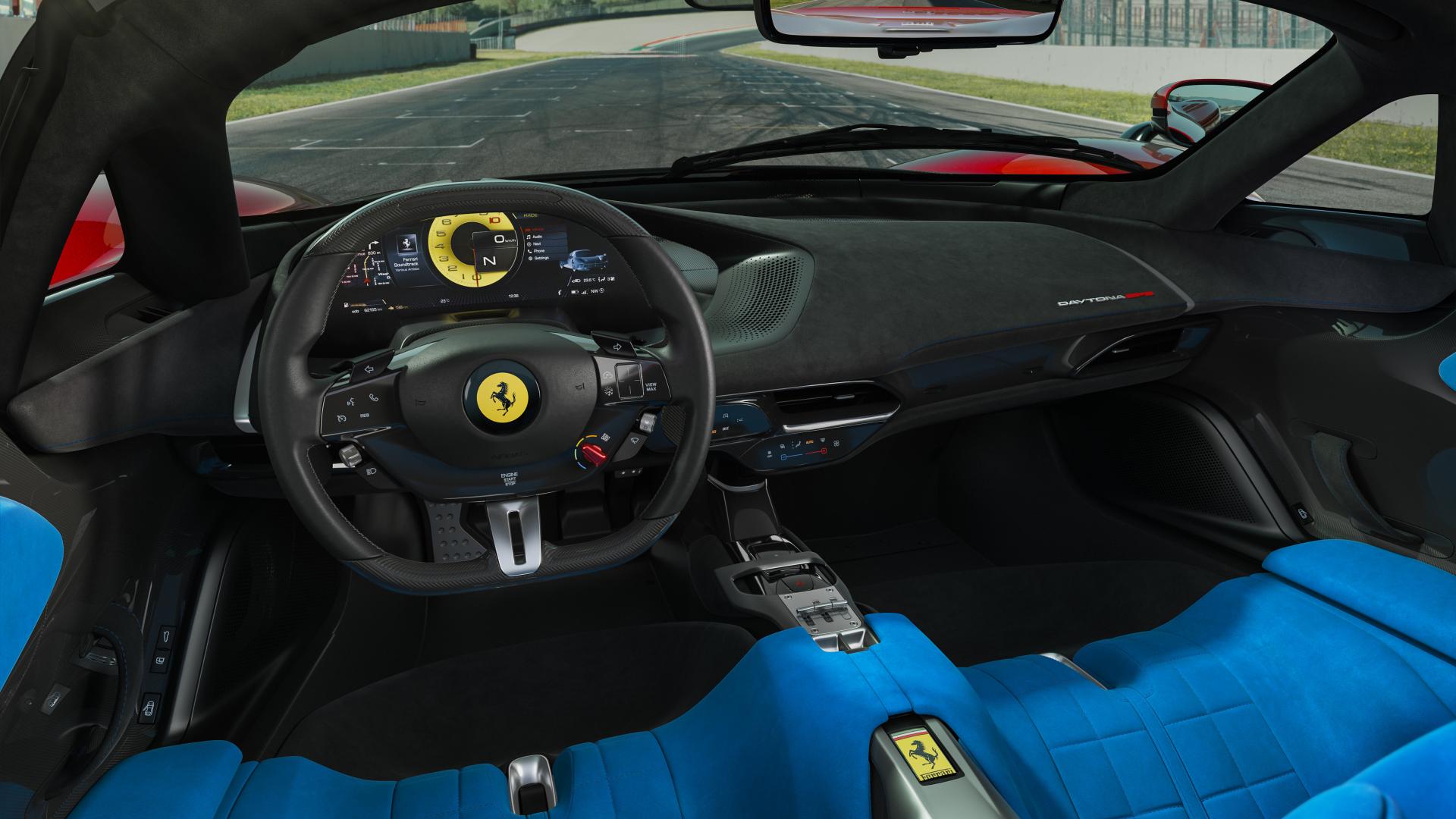
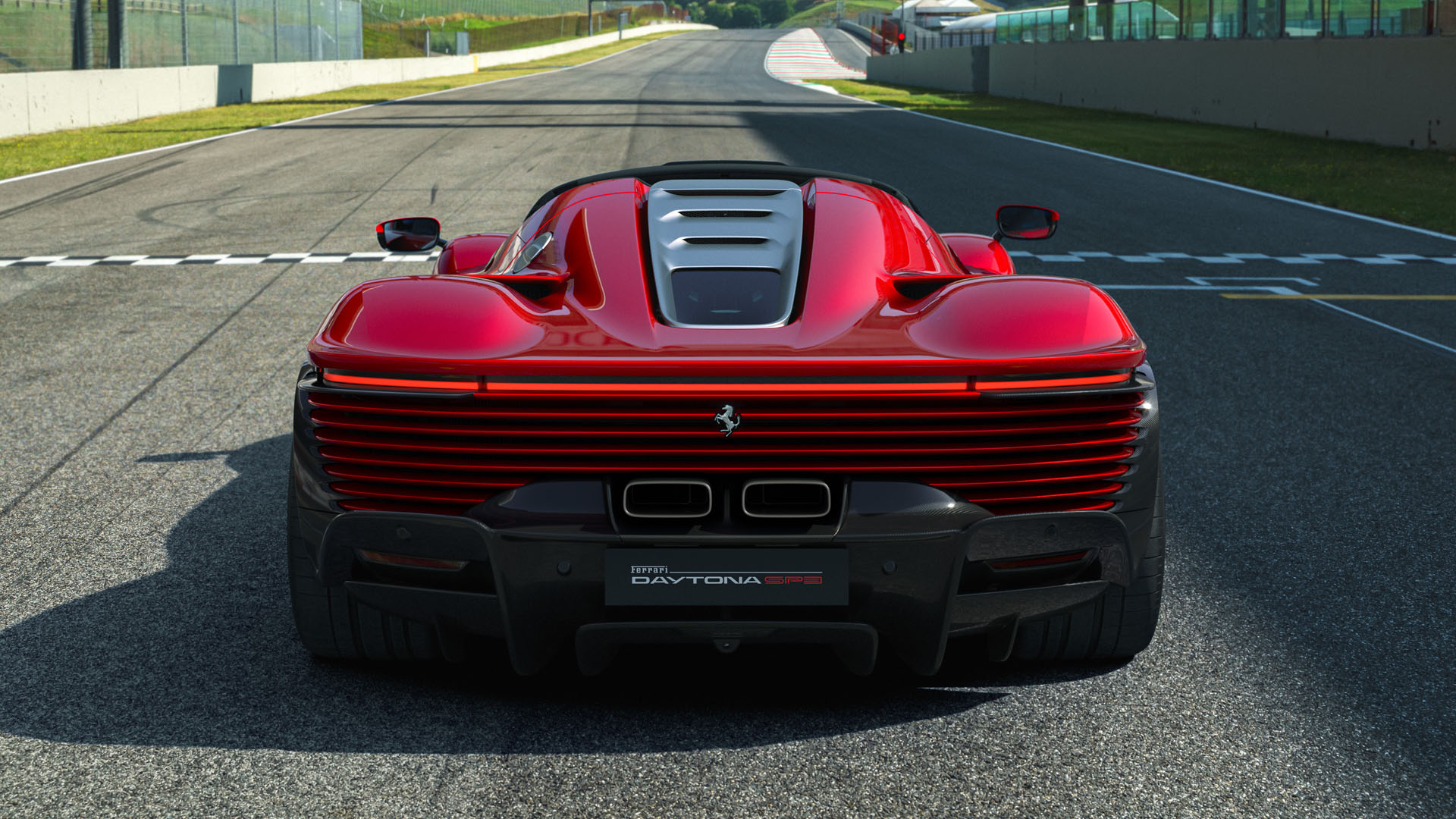
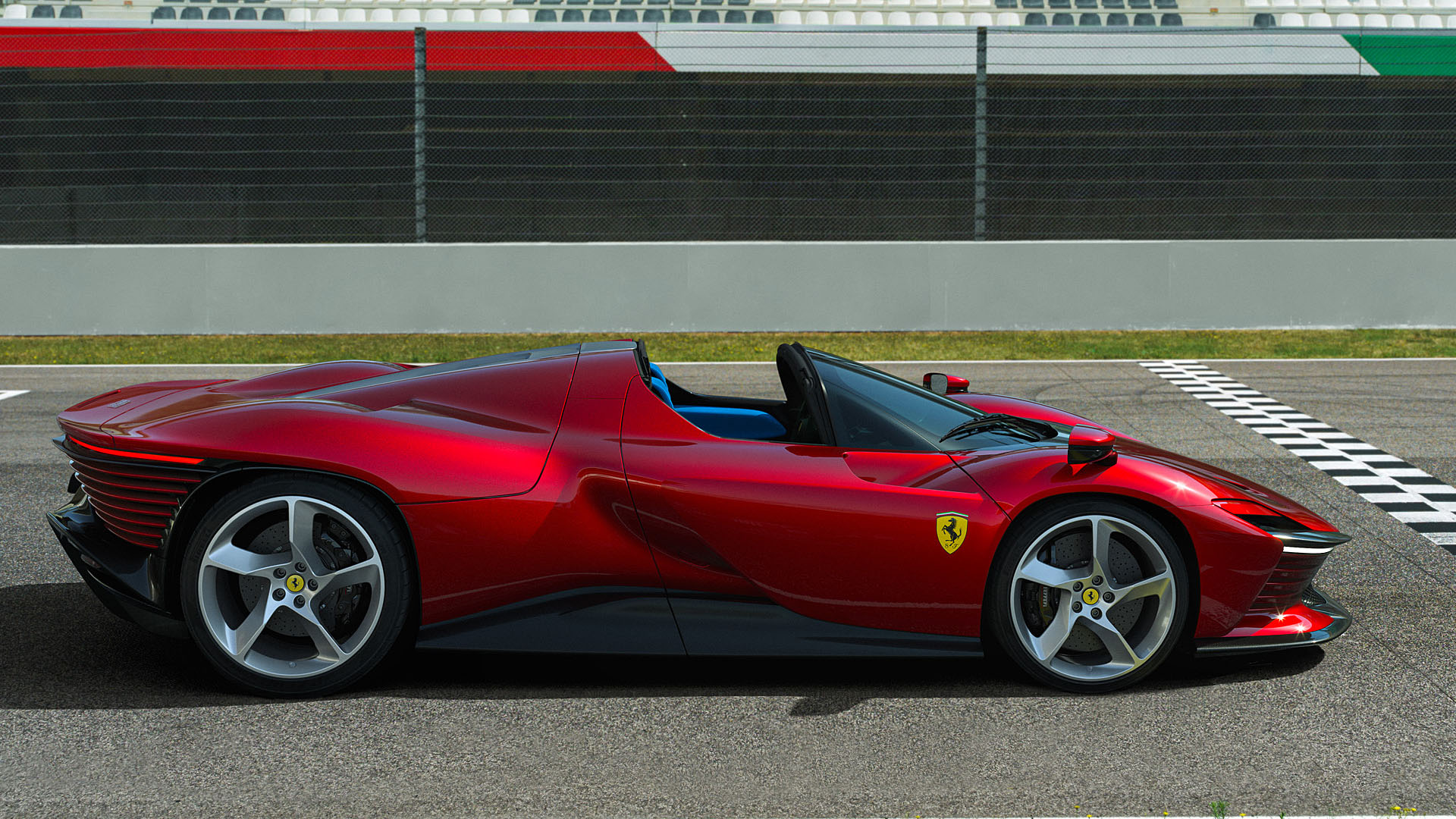
In 2018 Ferrari created the first of their Icona series to pay tribute to this amazing feat in 1967, to celebrate the 1-2-3 finish these were called the Monza SP1 and SP2, but today, November 20, 2021, Ferrari unveiled the Daytona SP3, a limited-edition Targa model that was presented on the famous Mugello Circuit during the 2021 Ferrari Finali Mondiali.

The new Daytona SP3 design is clearly inspired by the legendary 330 P4 racers, while the Targa hardtop was taken from the sports prototype world, as an homage to cars from the sixties, the choice of using a naturally-aspirated V12 was obvious, mid-rear mounted, this beauty comes with 840 cv and a torque number of 679 Nm at 9,500 rpm, this is the most powerful engine Ferrari ever made for a road car.

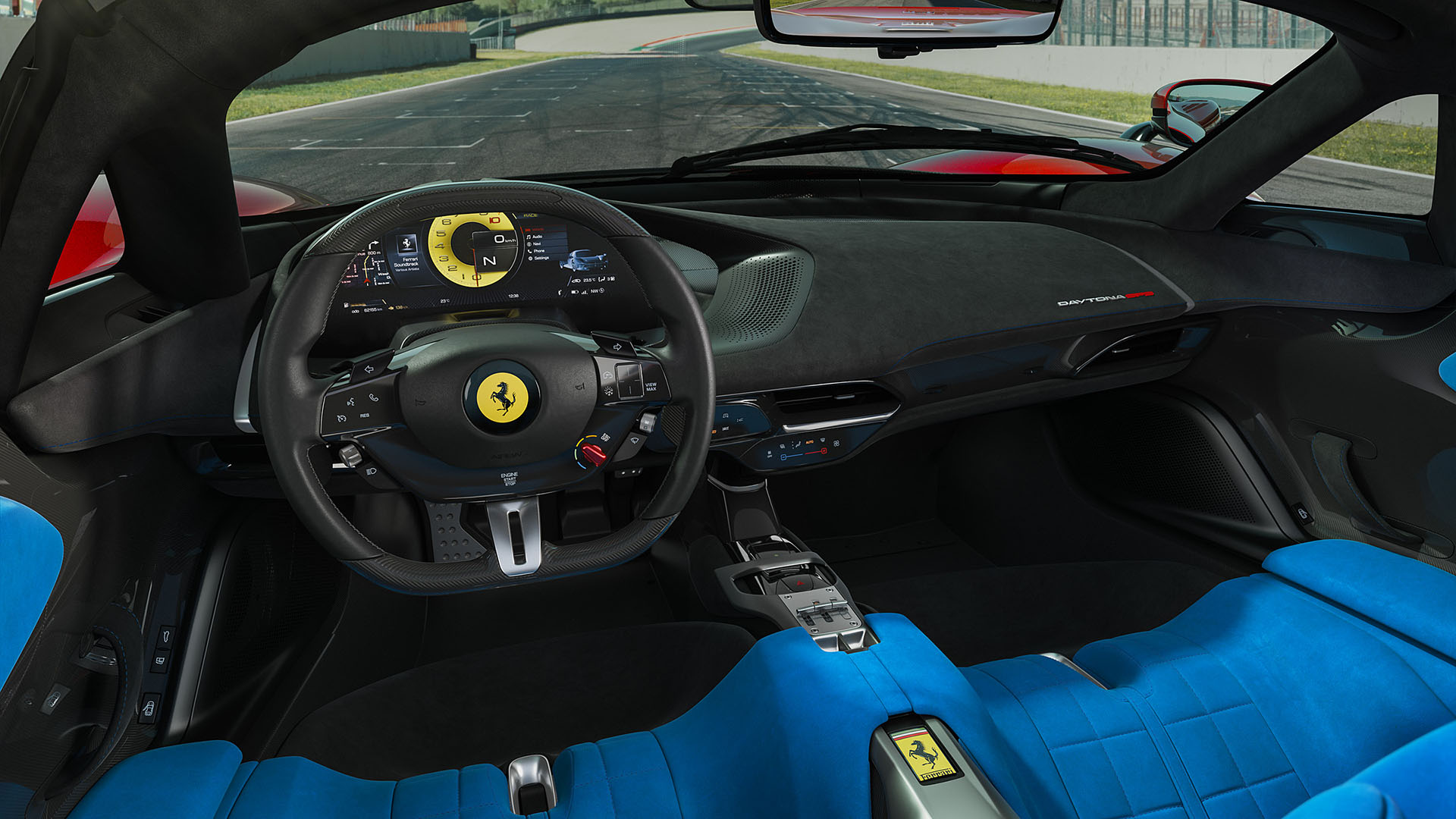
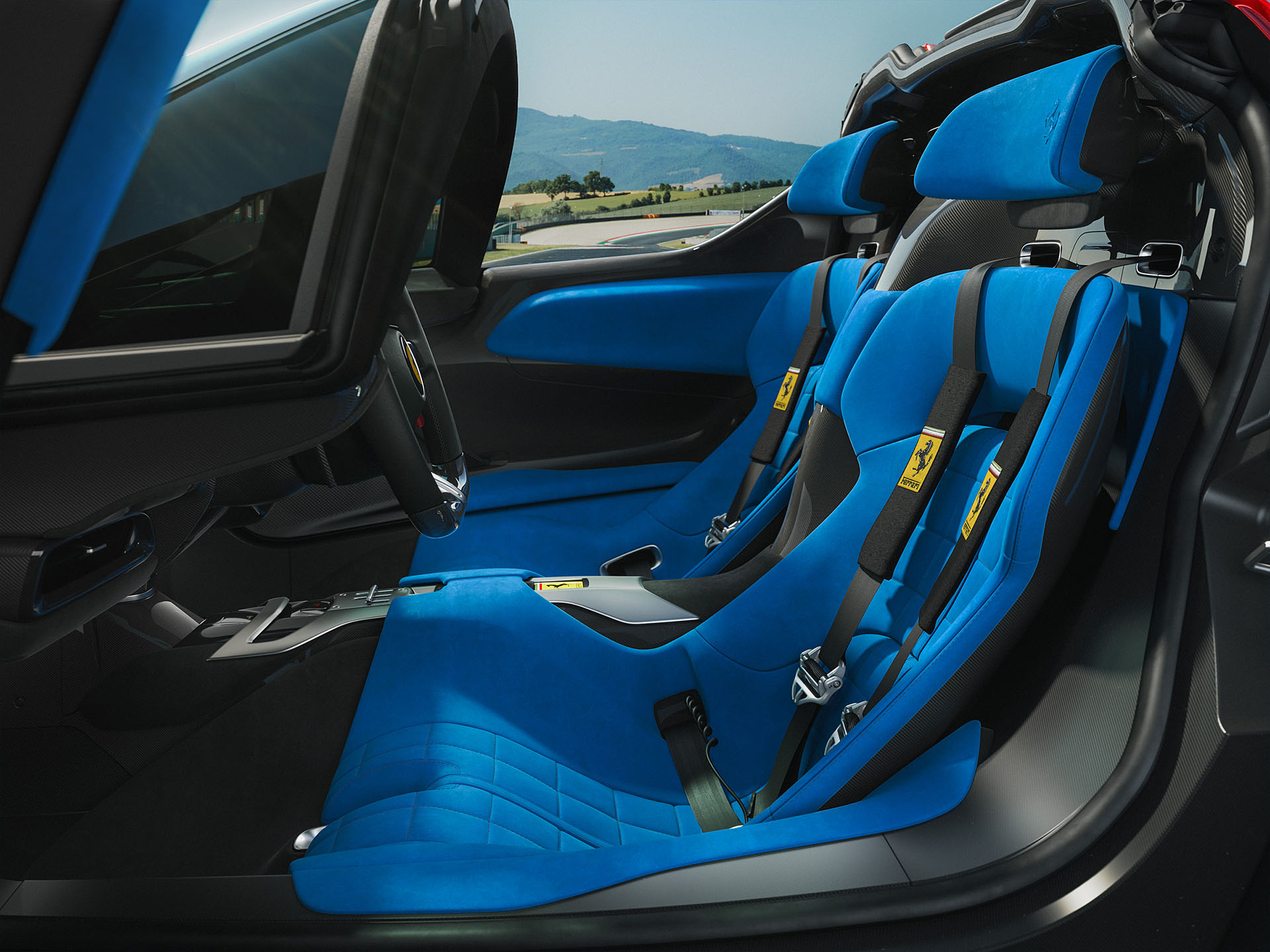
And while the new Daytona SP3 has no active aero, they created the design in such a way this is the most aerodynamically efficient car ever made at Maranello, the chassis is completely made from composite material taken from Formula One technology, unseen since the LaFerrari, to keep the weight down as much as possible, the seats are an integral part of the chassis on this new limited-edition beauty, and she’s fast too, 2.85 seconds to reach 100 km/h from a standstill, just 7.4 seconds before 200 km/h flies by.

The engine chosen for the Daytona SP3 comes from the magnificent 812 Competizione, but for this model, the V12 was moved to the mid-rear position, at a 6.5-liter capacity this new engine is called the F140C and puts her power through a 7-speed transmission and comes with a host of improvements over the F140B unit in the 812 Competizione, polluting emissions and particulate formation have been reduced by 30% (WLTC cycle) compared to the 812 Superfast.

The Ferrari Icona series was launched in 2018 with the Ferrari Monza SP1 and SP2, inspired by the competition barchettas of the 1950s while the Daytona SP3 takes inspiration from the endurance car from the 1960s, the Icona series celebrates Ferrari history by reinterpreting the timeless styling of the marque’s most iconic cars into the 21st century, these all boast exclusive solutions not seen in the rest of the range and are aimed solely at Ferrari’s top clients and collectors, proud ambassadors for the Prancing Horse marque.

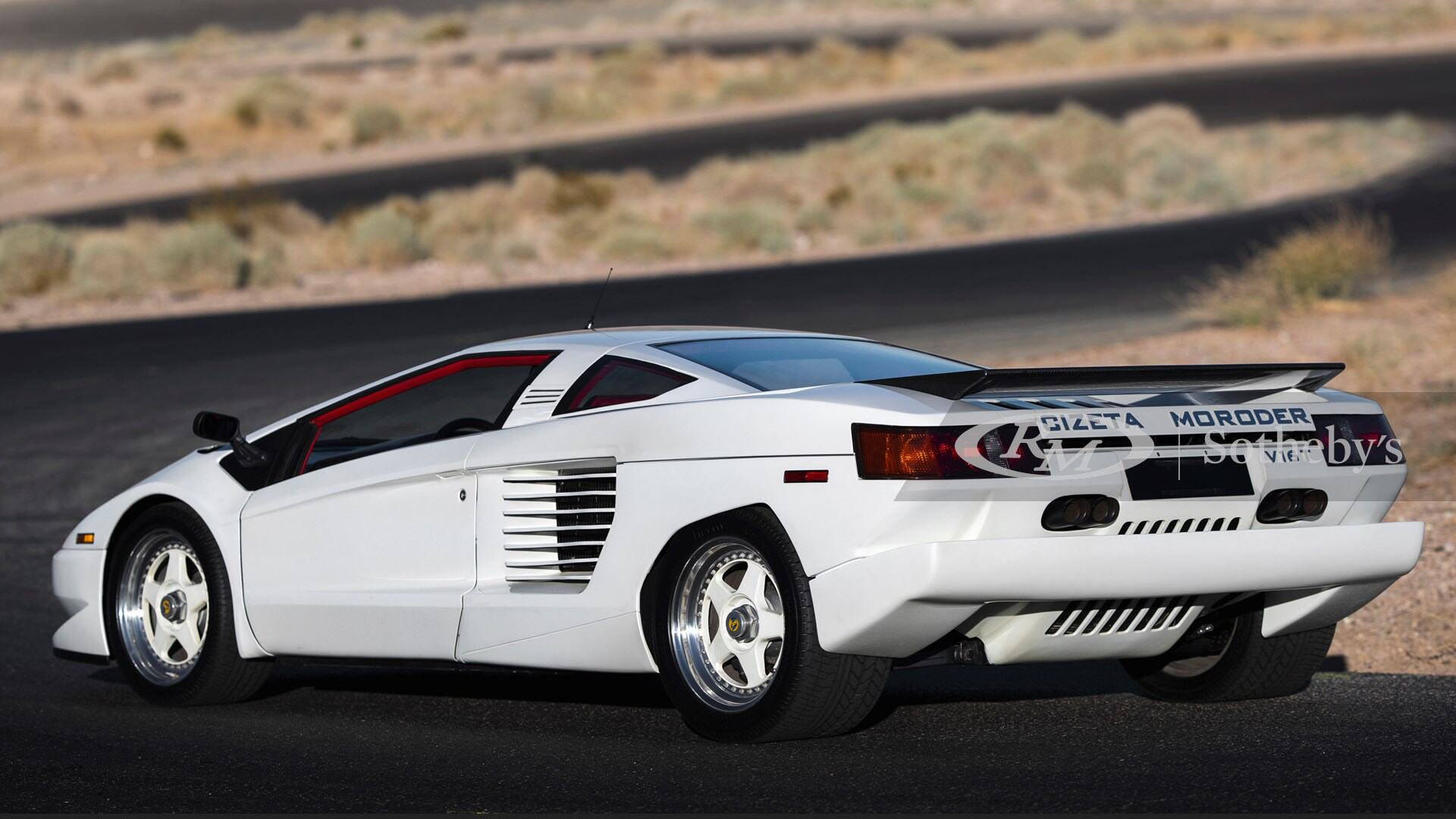
The Cizeta-Moroder V16T prototype is for sale

If history was just a little off back in the Nineties we would have seen a totally different Lamborghini Diablo on the road at that time, but with Chrysler taking over the Sant’Agata company, the original Marcello Gandini design for the Lamborghini Countach successor was rejected and a small sidestep was taken with a Zagato design until the design studio from Chrysler in the US together with Gandini created the Lamborghini Diablo we know today … but Marcello’s original design wouldn’t be lost in the archives.

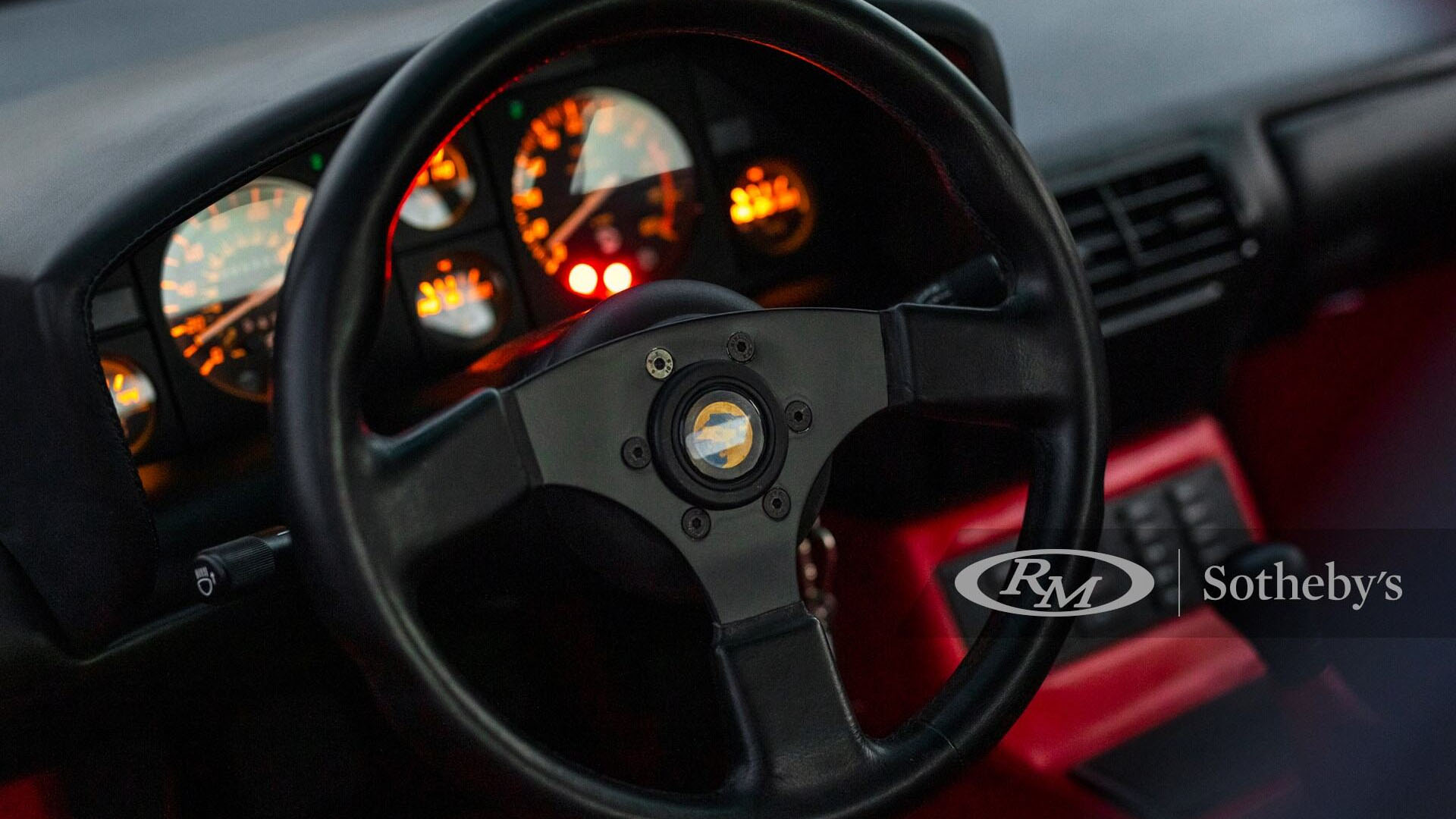
1988 Cizeta-Moroder V16T Patrick Ernzen ©2021 Courtesy of RM Sotheby’s

Claudio Zampolli, a former Lamborghini test driver and development engineer moved to the United States in the eighties to start an exotic car service point, but his dream was to build an exotic car himself, long story short, Zampoli teamed up with Giorgio Moroder, a famous music composer, and producer, in the late eighties to build a car the likes the world had never seen before … a 6-Liter, V16 supercar.

1988 Cizeta-Moroder V16T Patrick Ernzen ©2021 Courtesy of RM Sotheby’s

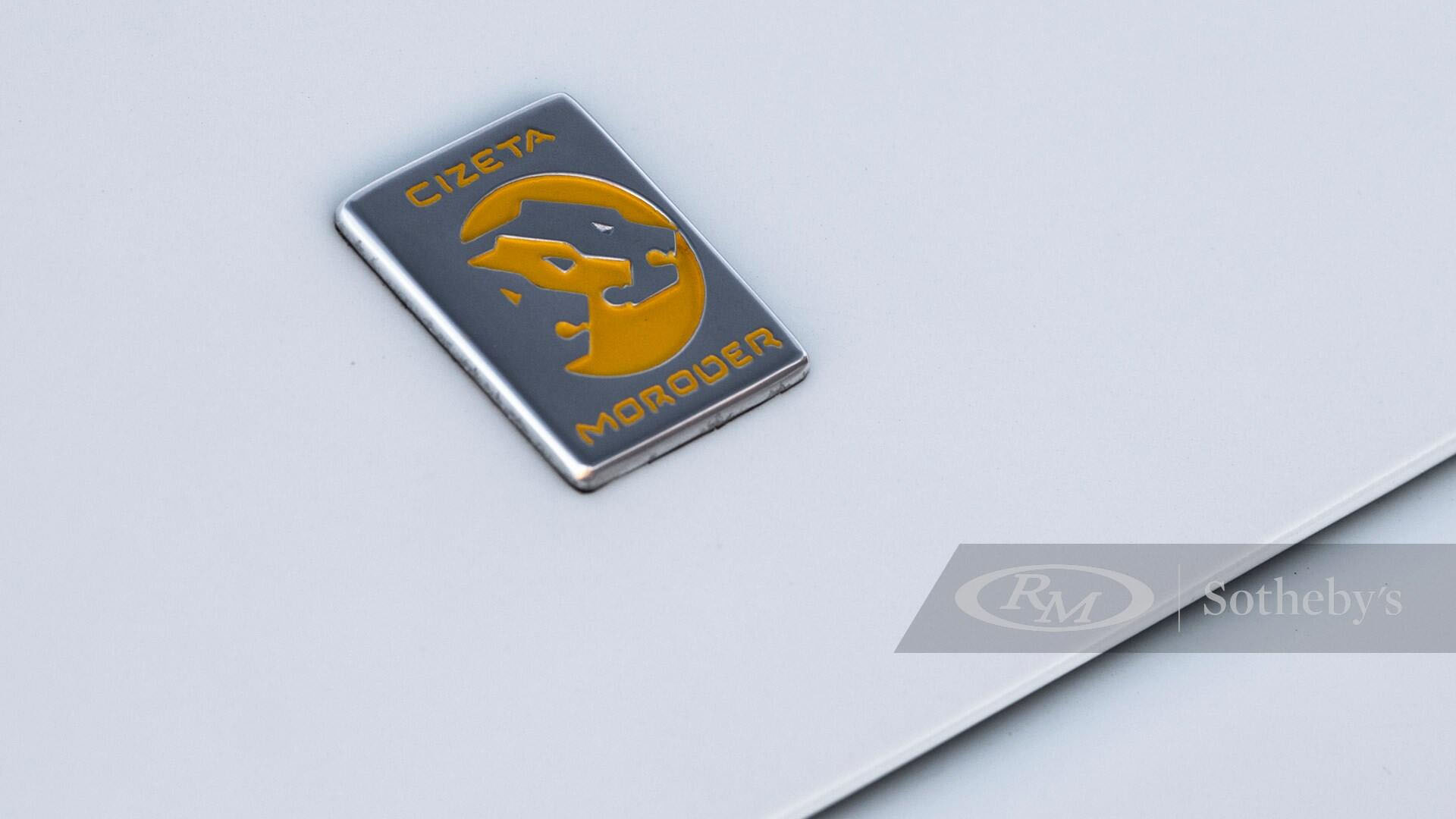
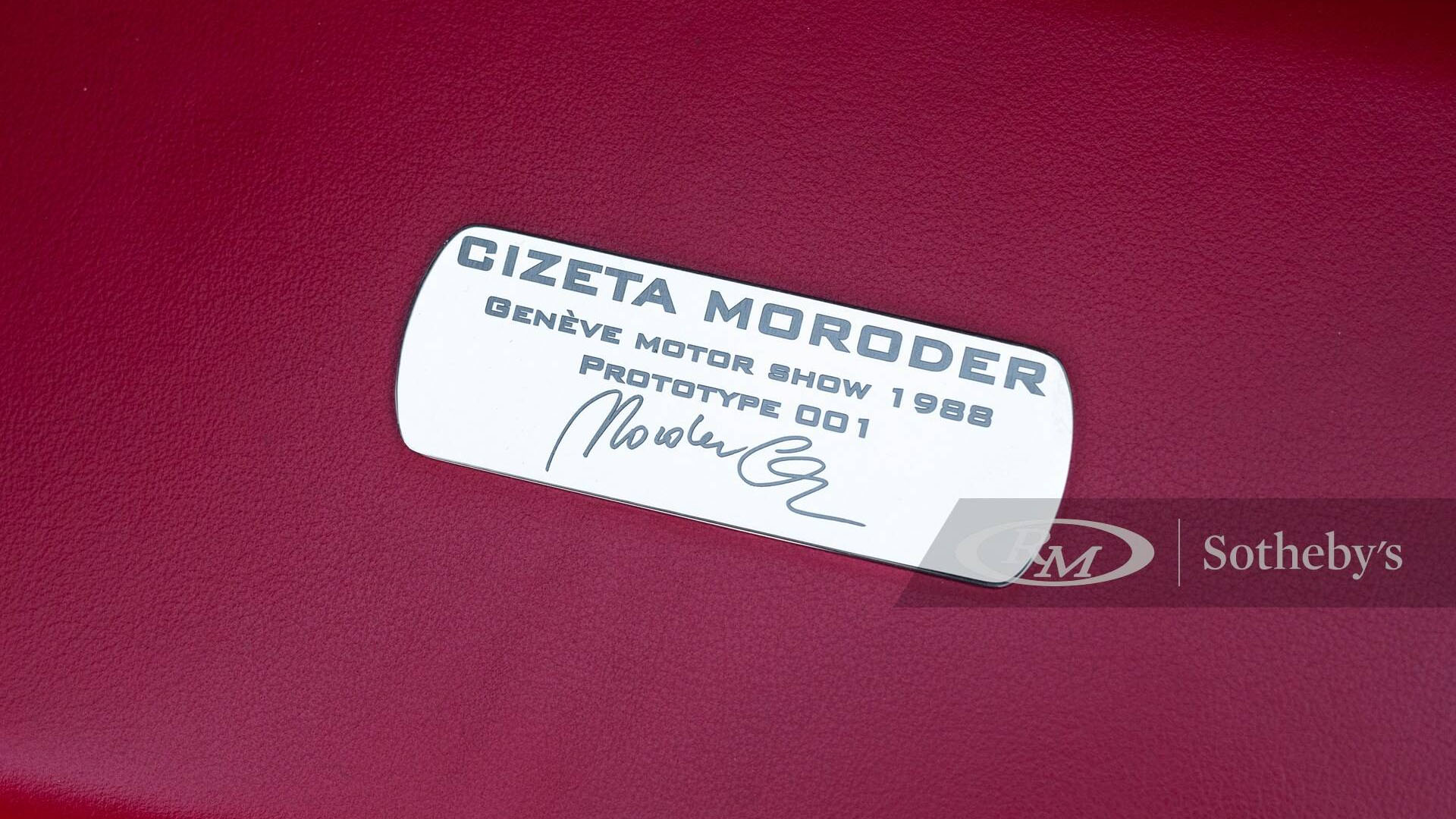
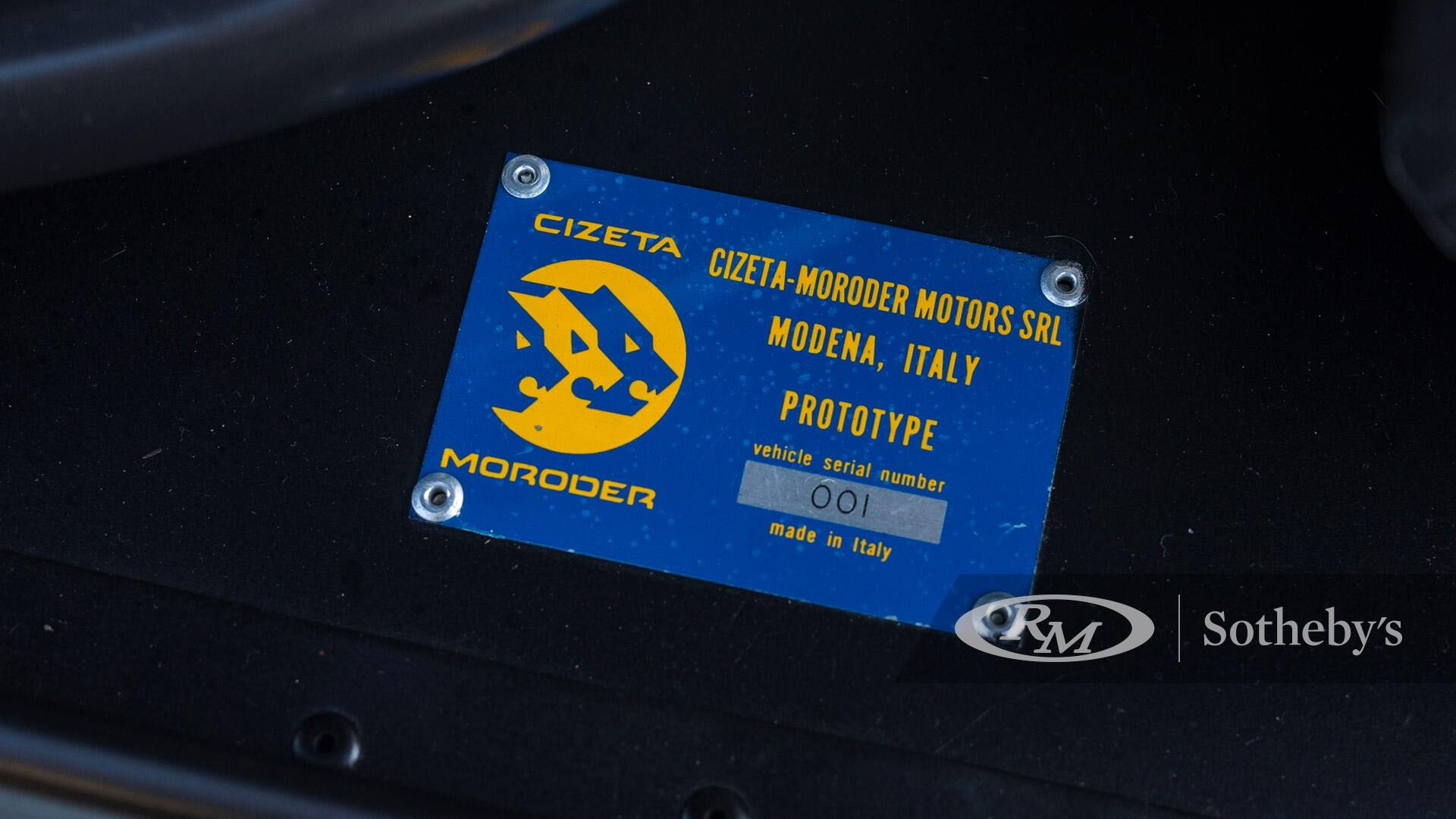
As usual in business deals that involve a lot of money or the creation of a brand new car maker with their first model being built from scratch, problems came up during the build, and due to delays in building the first prototype, Giorgio Moroder pulled out of the deal before the first customer car was ever finished, only a prototype show car was completed, which is the only one in the world that comes with the Cizeta Moroder name tag, the subsequent production cars were just called the Cizeta V16T.

1988 Cizeta-Moroder V16T Patrick Ernzen ©2021 Courtesy of RM Sotheby’s

The world hadn’t seen many V16 cars, and that’s exactly why Claudio Zampolli wanted his supercar to come with this exotic engine, he actually combined two V-8 engines to achieve a 6-Liter V16 engine coupled to a five-speed gearbox, and while no horsepower figures were ever published, the Cizeta V16T should reach 328 km/h (204 mph) and accelerate to 60 mph in 4 seconds … naturally, such an exotic car needed a bespoke body design that would be equally impressive as the engine itself.

1988 Cizeta-Moroder V16T Patrick Ernzen ©2021 Courtesy of RM Sotheby’s

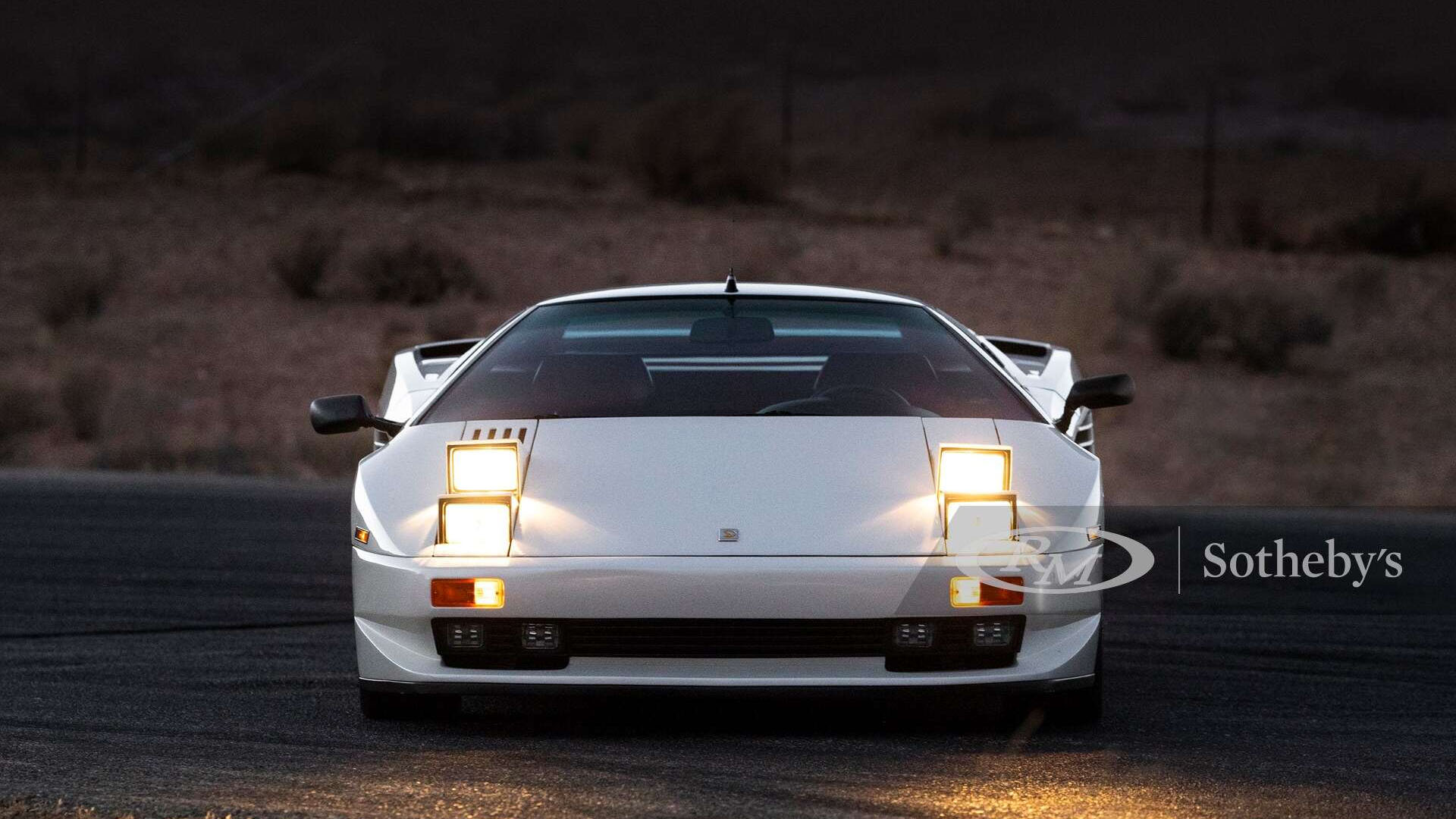
The design of the Cizeta V16T was clearly inspired by Gandini’s original design for the Lamborghini Diablo, but Zampoli did ask to drop the famous upward-opening doors, on the Cizeta the doors open in a regular fashion, to the side, but you have to admire the way the Cizeta headlights work … remember we’re talking late eighties, early nineties, and pop-up headlights were in style at that time, and with a V16 engine behind the seats, why not go for a total of four pop-up pods holding lights at the front.

1988 Cizeta-Moroder V16T Patrick Ernzen ©2021 Courtesy of RM Sotheby’s

This Cizeta Moroder V16T prototype, chassis 001, was the official show car at the 1989 Geneva Motor Show, but it would take two more years before the first production car was sold to a customer, in 1991, with an MSRP of $650,000 (compare that to a Lamborghini Diablo that was $290,000 back in 1991), and while the Cizeta V16T was an incredible looking car, in the end only 9 customer cars were ever made, at an auction held by RM Sotheby’s back in January 2021 one of the RHD production models was sold for $668,000, but the car we are looking at in this article is even more exclusive.

1988 Cizeta-Moroder V16T Patrick Ernzen ©2021 Courtesy of RM Sotheby’s

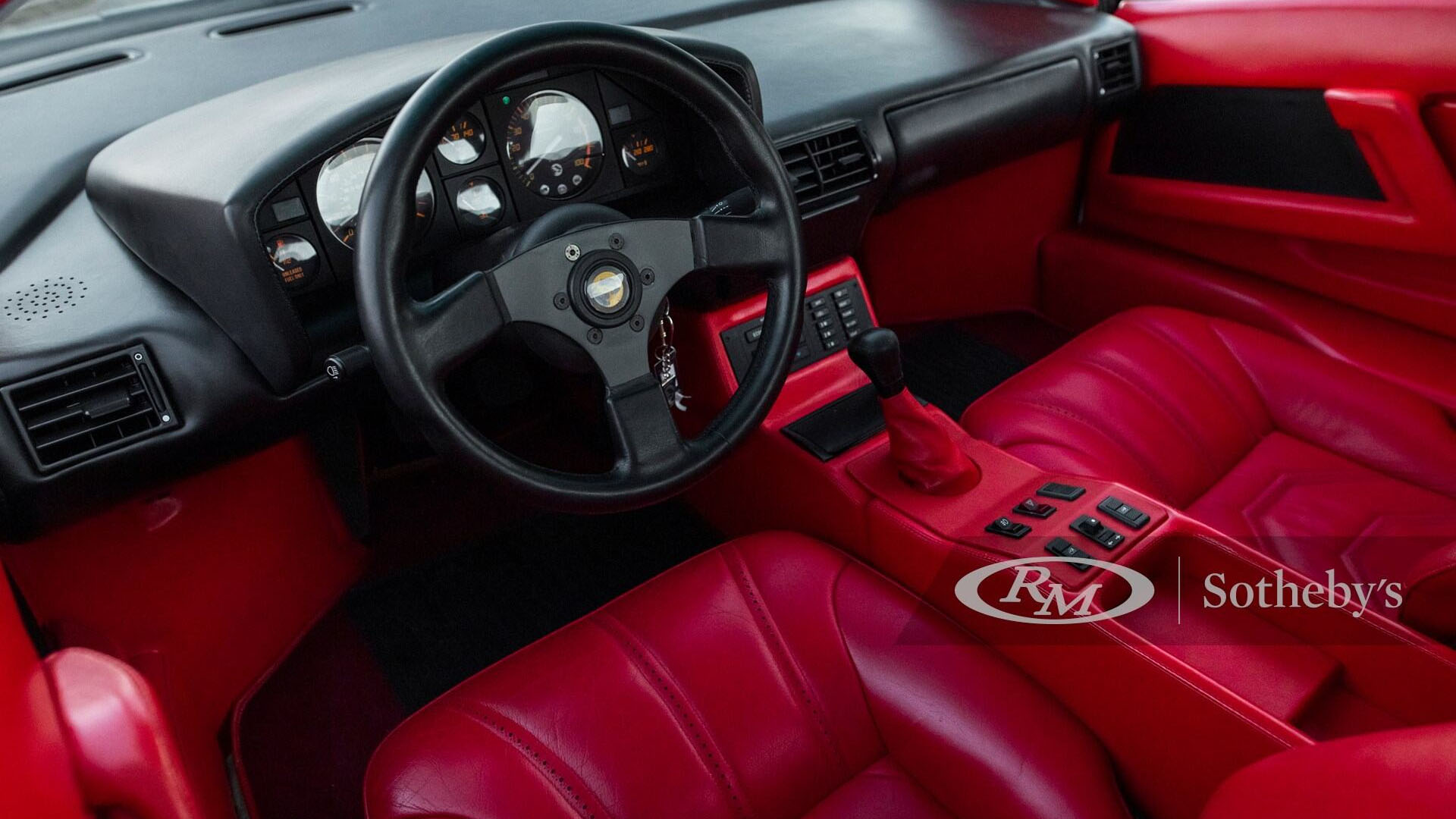
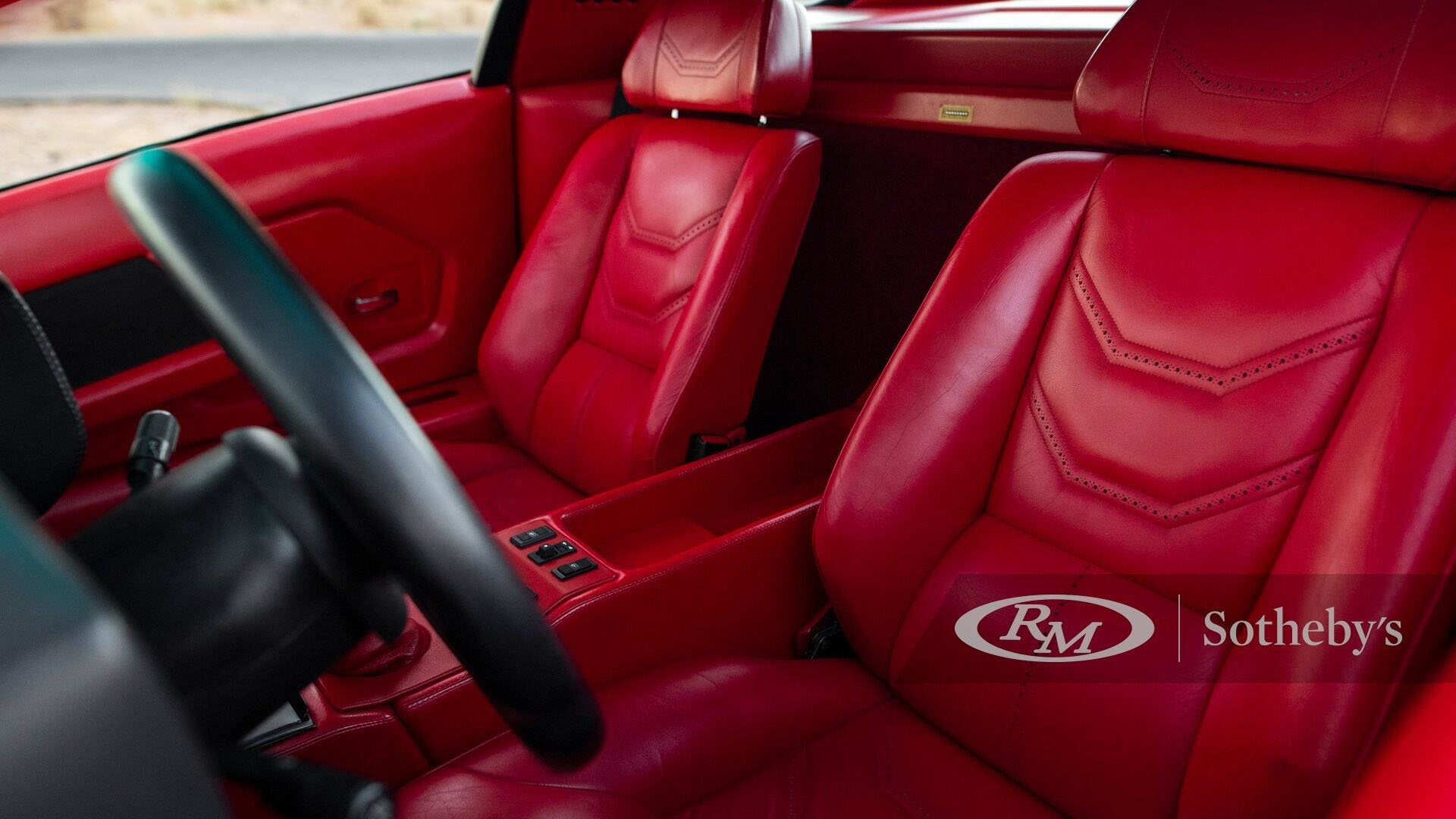
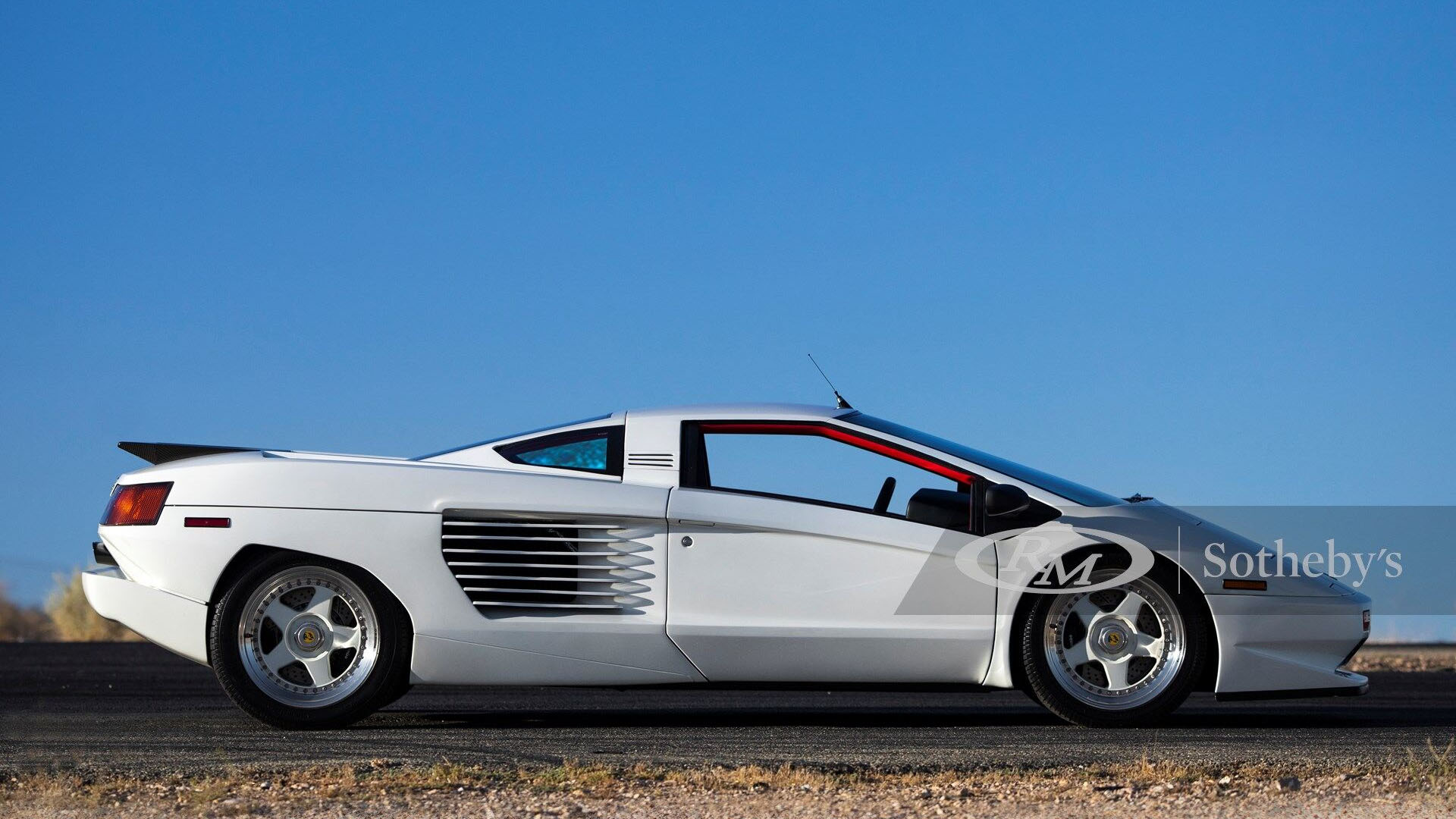
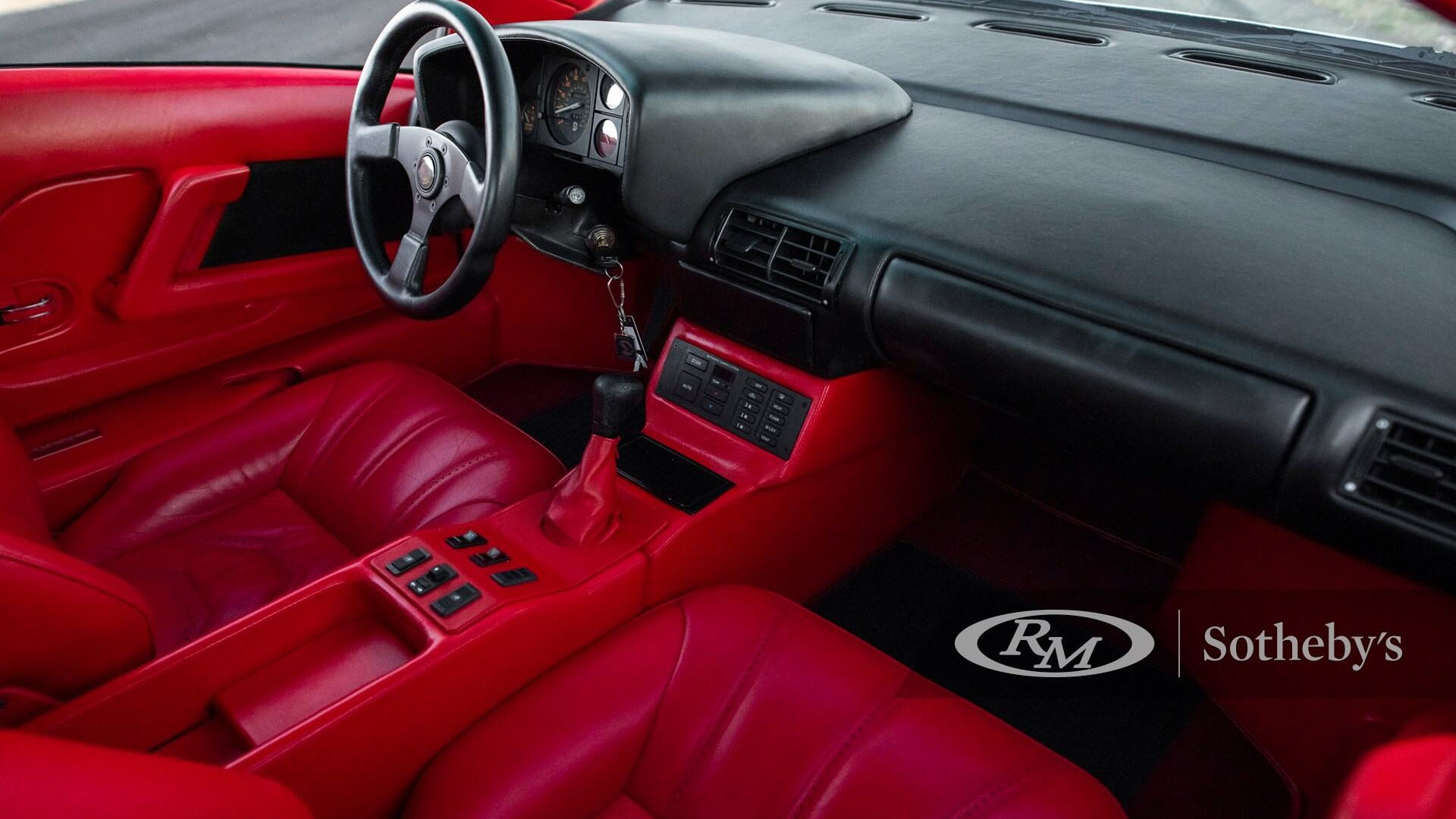
For one this is the actual prototype, the only car that is called the Cizeta Moroder V16T and the one with a large number of horizontal slats on the side intake, the production cars came with vertical slots, apart from the special RHD model at the 1993 Geneva Show that also came with horizontal slats, 6 in total, this prototype has seven in total. This prototype is also the only model with this dashboard and steering wheel, both were changed for the nine production cars, in fact just about the entire interior was altered before the first customer car left the assembly line.

1988 Cizeta-Moroder V16T Patrick Ernzen ©2021 Courtesy of RM Sotheby’s

Chassis number 001 was unveiled in Los Angeles on December 5, 1988, during an event hosted by none other than Jay Leno, later the car would be shipped to Los Angeles for the Auto Show and all the way to Switzerland for the March 1989 Geneva Motor Show, finished in pearl-white metallic over a bright red leather interior, the car would remain in this color combination throughout its entire life, and more importantly, the car was owned by Giorgio Moroder ever since, he kept her in storage for all these years.

1988 Cizeta-Moroder V16T Patrick Ernzen ©2021 Courtesy of RM Sotheby’s

However, we are talking about a 30-year-old prototype car here, so over time there are bound to be some issues, being in storage for decades isn’t necessarily a good thing, so in 2018 Moroder decided to have Canepa Design do a full mechanical restoration, the latter found that this functional prototype needed some improvements made to make sure it could be used on the open road like for instance extra heat shielding around the fuel tanks. After the team at Canepa Design was happy with the mechanicals they took the car on a road test to make sure she was completely sorted before returning her to Mr. Moroder.

1988 Cizeta-Moroder V16T Patrick Ernzen ©2021 Courtesy of RM Sotheby’s

Today Giorgio Moroder decided it was time to part with this illustrious prototype, the one and only Cizeta Moroder V16T in the world, chassis 001 of less than 15 cars ever made, one single Cizeta Moroder V16T and 12 or 13 Cizeta V16T, the opportunity to obtain an actual show car prototype rarely comes around in a lifetime, and this one is looking you right into the eyes, the RM Sotheby’s auction listing isn’t even showing an estimate on this one for their Arizona action on January 27, 2022, but with the 1993 model sold in January 2021 for $665,000, my guess is this one will go over the $1,000,000 mark in a few months.

1988 Cizeta-Moroder V16T Patrick Ernzen ©2021 Courtesy of RM Sotheby’s

The famous Ghostbusters Ecto-1

Ghostbuster hit the movie theatres in 1984 to become a massive phenomenon, mixing a comedy with both science fiction and horror, all bundled into an action movie, and let’s not forget the 1984 release grossed a total of $295,000,000 in her first run, making it the first movie blockbuster in history according to the Hagerty press release. In 1989 a sequel was released, while a new attempt was made in 2016 with a reboot … but now, 37 years later, Ghostbusters Afterlife is released.

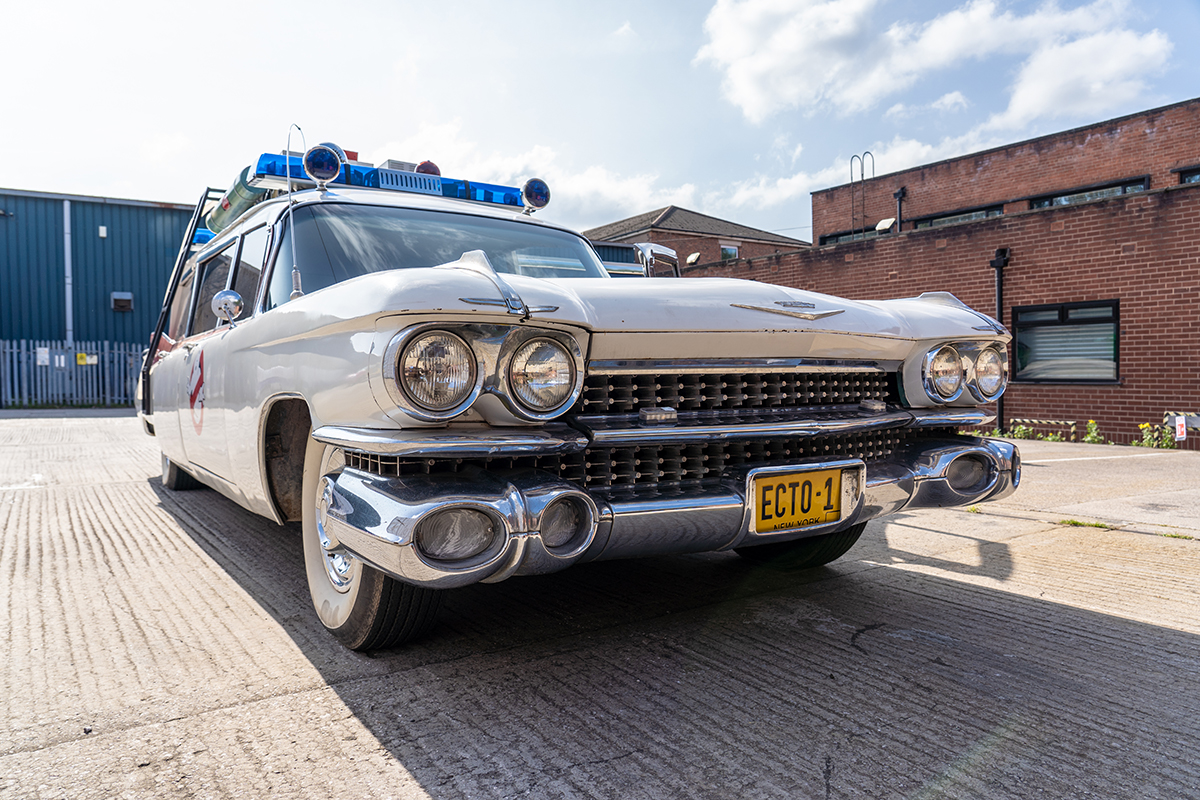
And while we loved the actors in the 1984 release, you can’t deny one of the stars was a massive car, the 1959 Cadillac with the famous license plate Ecto-1, one of those illustrious movie cars that would gain cult status over the years, and a slew of replicas have been built ever since, even today while sourcing the original base car is getting more and more difficult.

For the 1984 movie, the producers found a 1959 Miller-Meteor Futura, a custom-built using a Series 75 Commercial Chassis from Cadillac, usually destined to become either ambulances or a hearse, adding the large rear door that was hinged at the side, characterized by the big fins at the rear, a massively long, creased front bonnet and spats covering the rear wheels, design features taken from other famous Caddies of the time such as the Eldorado.

But make no mistake, as Murray and Aykroyd used to transport their ghostbusting kit around New York at speed, this massive car was 21 feet long (about 6.4 meters) and came with a large displacement 390 ci (6.4-litre) V8 engine that produced 325 hp at 4,800 rpm while guzzling gas at an alarming rate … archived mention at least two of these Miller-Meteor Futura were acquired by Sony for the movie.

With only two movie cars ever, it is no surprise the value of a real Ecto-1 is increasing all the time, experts from Hagerty state an original movie used Ecto-1 could be worth $500,000 or more, and that would make sense as the car itself is already rare, let alone with the Ghostbusters pedigree added.

Hagerty Editor, James Mills, said of the Ghostbusters star car “It’s spooky just how well-known Ecto-1 is. Ghostbusters made it one of the most famous movie cars ever to emerge from a props department. Despite its place in pop culture, few film fans will be aware of the values of an Ectomobile; the real-deal could be worth up to half a million dollars, and even replica examples are valuable. Owners should make sure they’re insured for the correct sum, or they could be in for a nasty fright.”

Rumor has it only 25 units of the original Miller-Meteor Futura were ever built, and Sony got two of those to be used in the movie and added a third one as a show car for promotional reasons … that’s about 10% of the entire production already spoken for. When you look at the value of a standard 1959 Cadillac Series 75 Commercial Chassis at $52,000 right now, you might frown at the prices the movie-related Ecto-1 cars changed hands in the past.

A listing in the Hemmings magazine from 2007 had one of the movie cars for sale at $149,000, while a car built for the Universal Studio theme park in Florida got listed on eBay for just $45,000 in 2008, a Barrett-Jackson auction from 2020 offered one of these two cars … she changed hands for $88,000 … but don’t start dreaming of adding a genuine Ecto-1.

Fast forward to 2021, and the estimated value of a genuine, certified movie-used Ecto-1 Miller-Meteor Futura is set at $500,000 … or more by Hagerty, but there is another, slightly cheaper option possible … a replica, last year the same Barrett-Jackson auction house sold a fan-made Ecto-1 replica for $220,000, not based on an ambulance but on an original 1959 Cadillac Superior hearse.

In the UK we find Peter Dale who bought an earlier conversion replica for only £70,000 … over time he spent another £80,000 to get this 1959 Cadillac to the glorious Ecto-1 replica we see here.

What’s Ecto-1 like to drive? Peter said: “Although it’s a very big car, it’s easy to drive. Visibility is great through all the glass and it’s got power steering and assisted brakes. Surprisingly for something so long, the turning circle is quite good. The biggest problem is that it attracts so much attention. You go to change lanes and there’s someone alongside filming on a smartphone, so you have to have your wits about you.”

Live Photos: New Range Rover, Cayman GT4 RS, 2023 Corvette Z06 and More

These are live images from the LA Auto Show 2021 which is currently underway. We now get to see how the latest batch of car debuts looks in real life.

New 2022 Range Rover Photos

Leading pack is the all new 5th generation Range Rover. The new Range Rover once again defines modern luxury and provides more refinements and personalisation than ever before. It comes with a suite of efficient mild-hybrid and plug-in hybrid powertrains. It is available in a choice of four, five or seven seats across Standard and Long Wheelbase body designs.

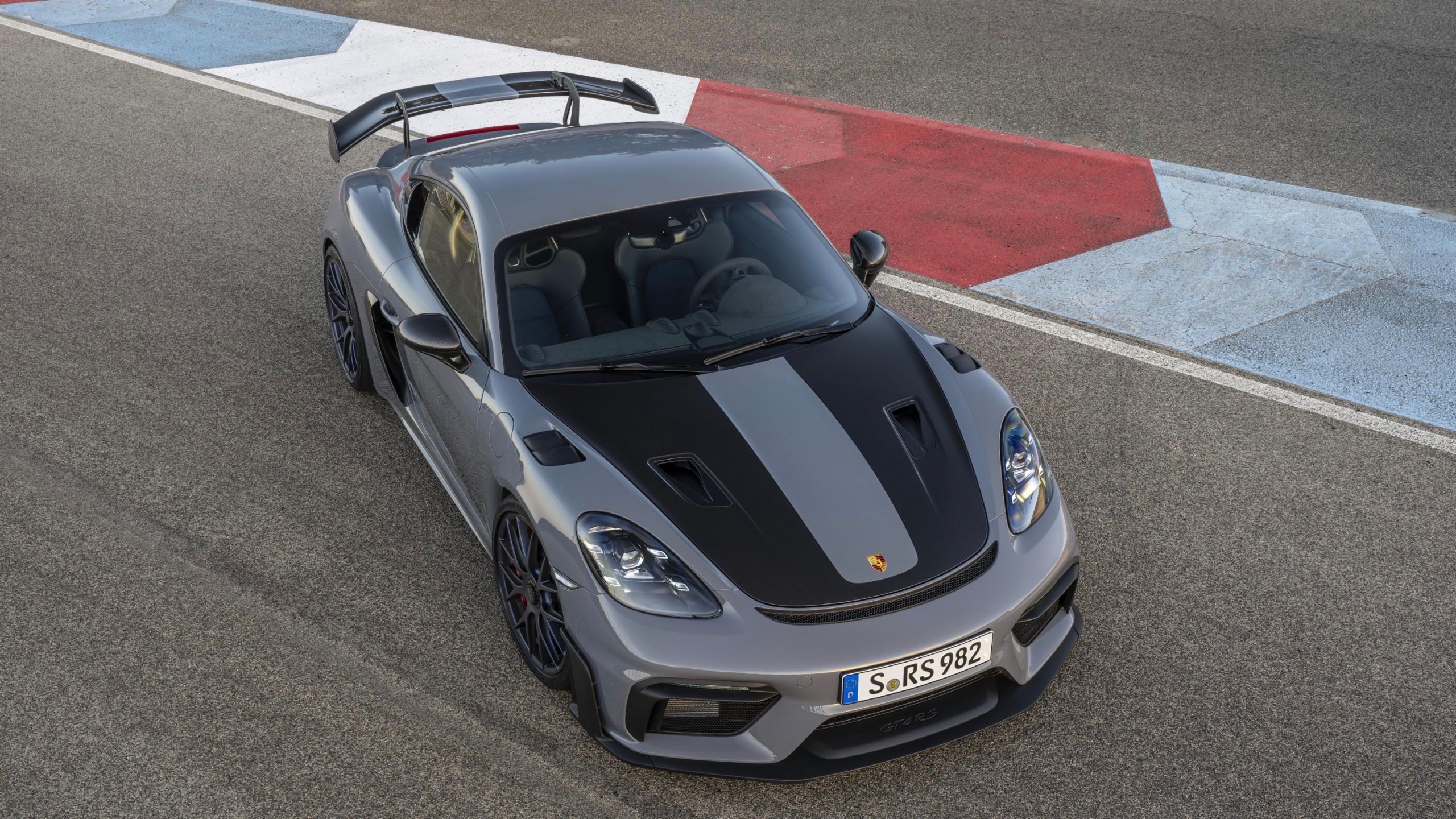
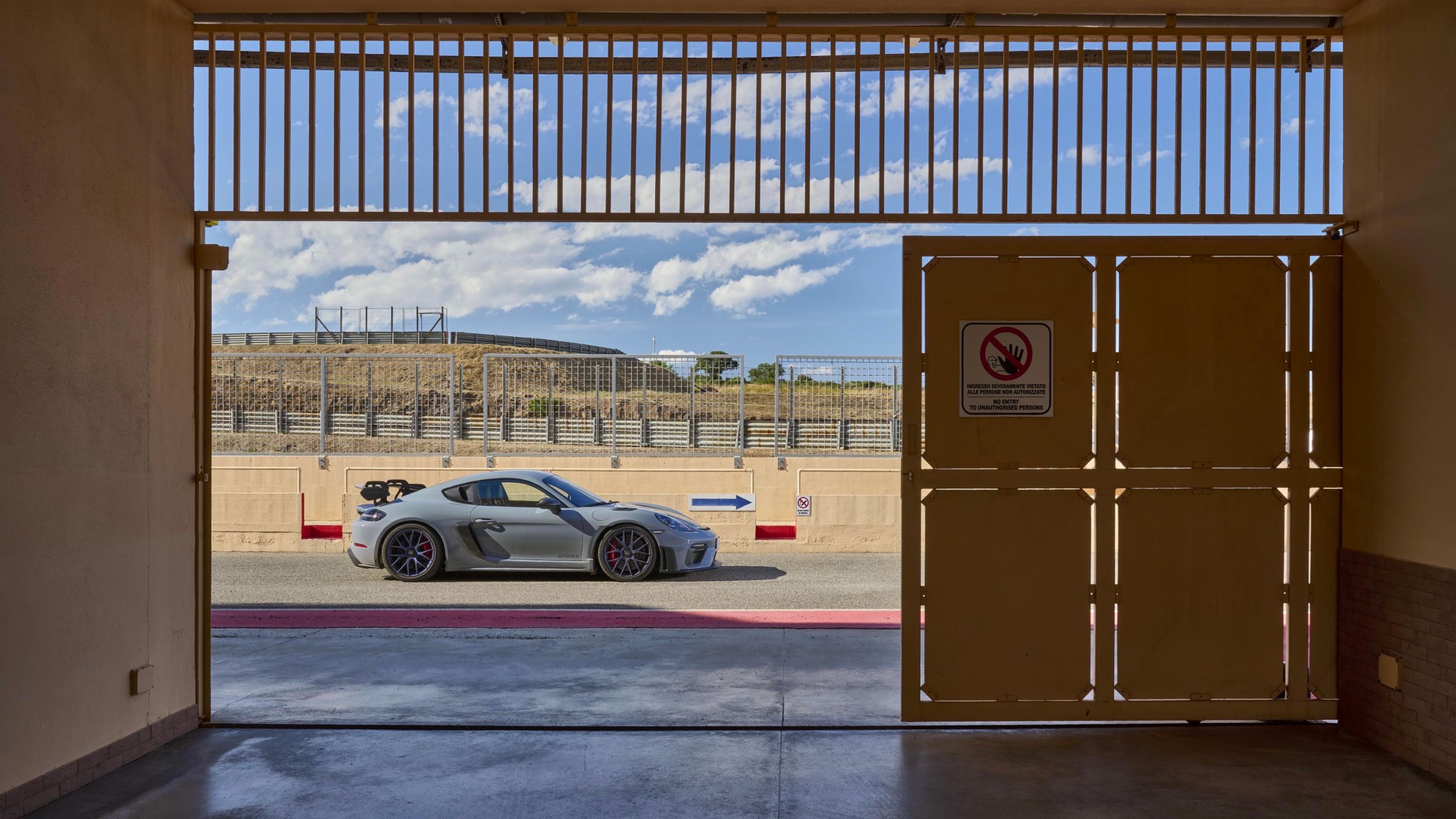
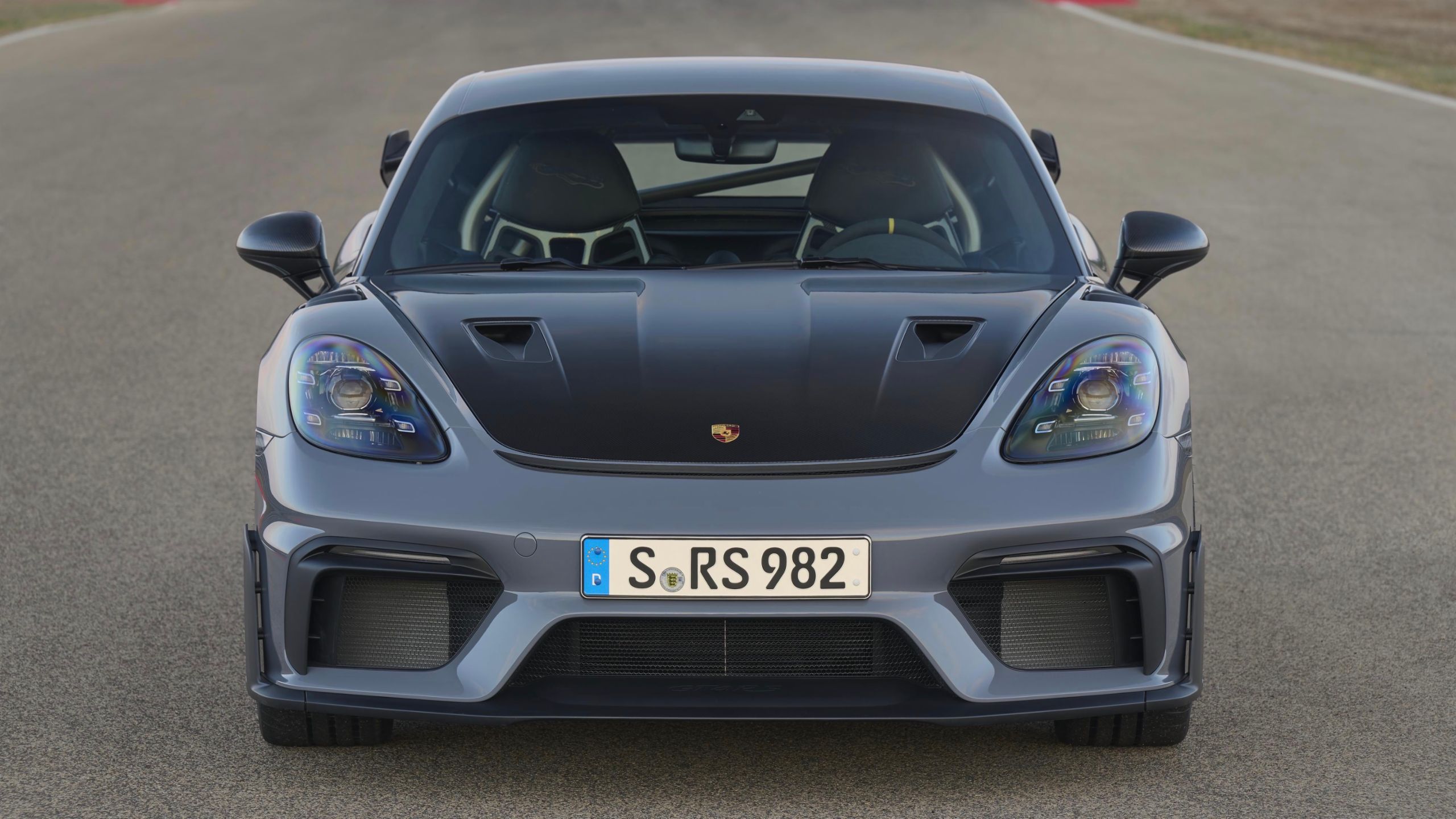
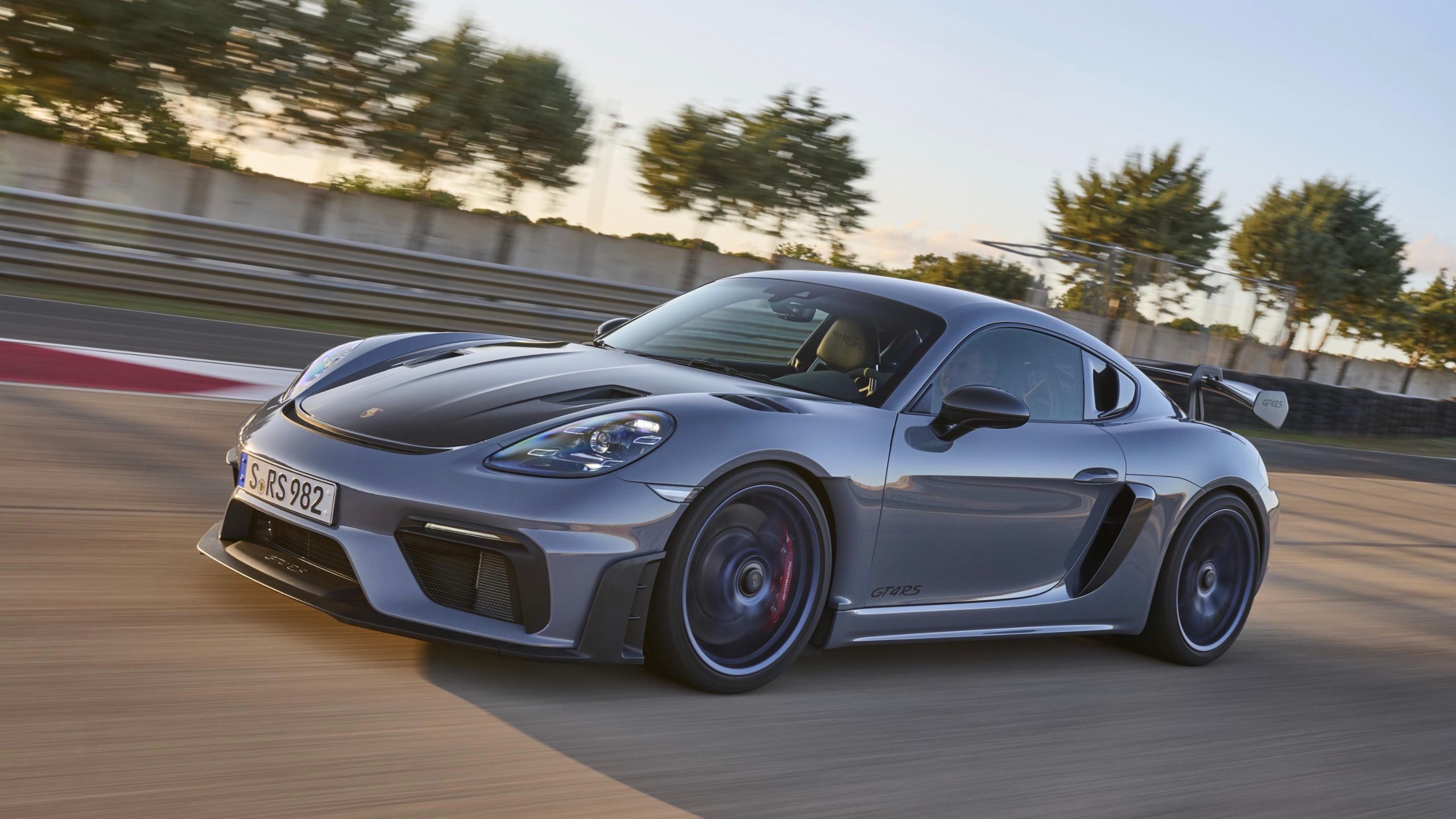
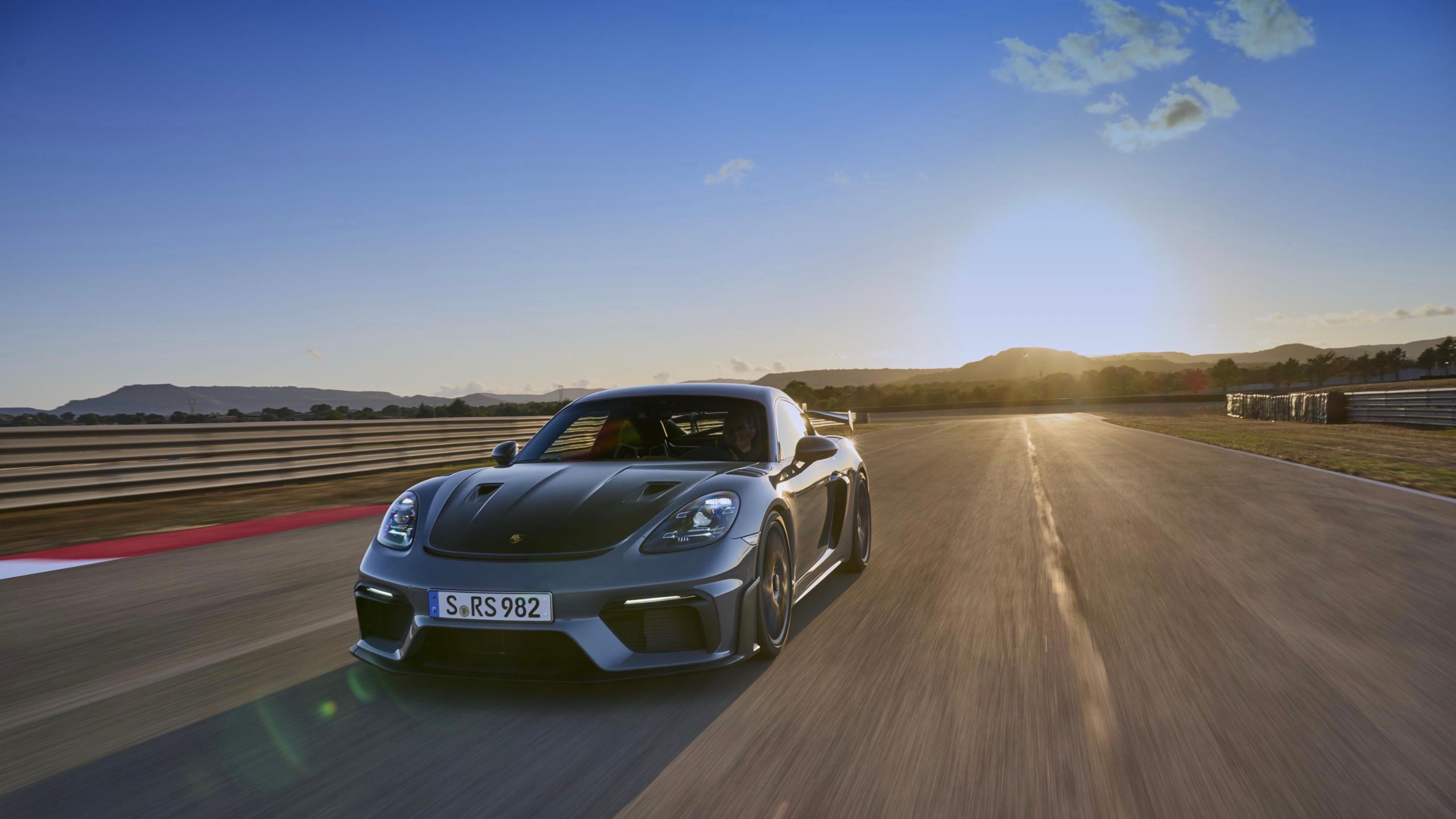
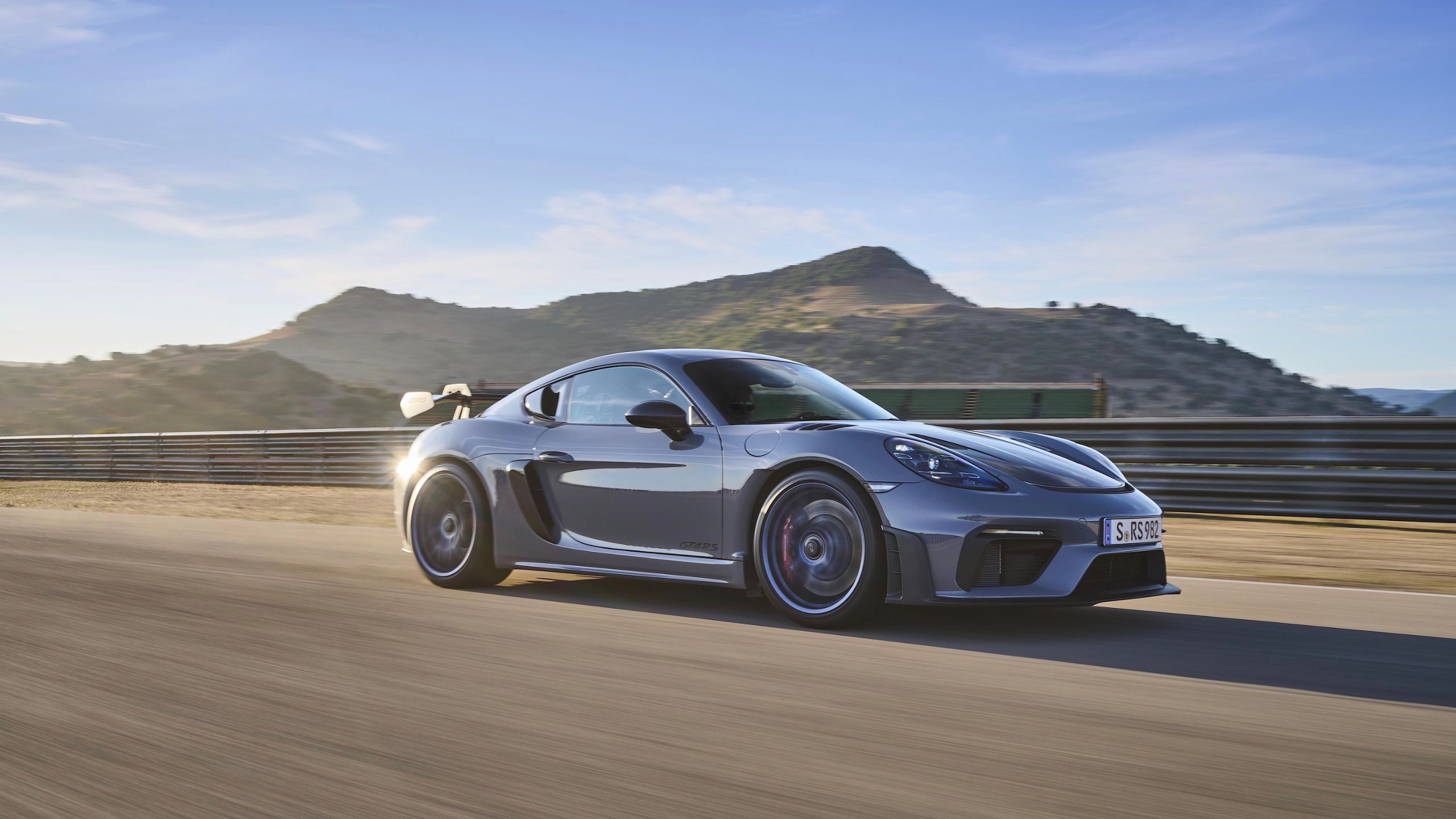
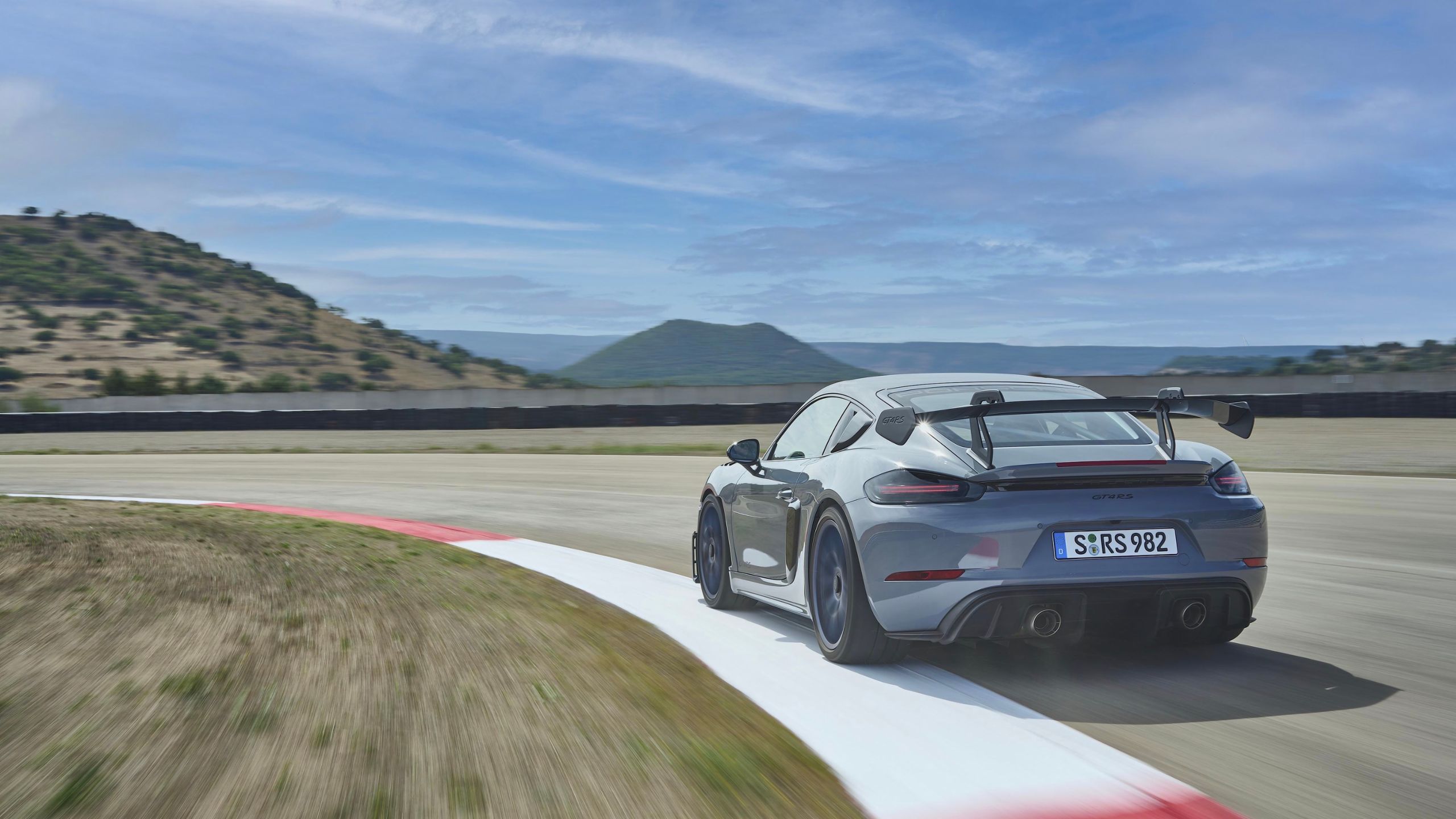
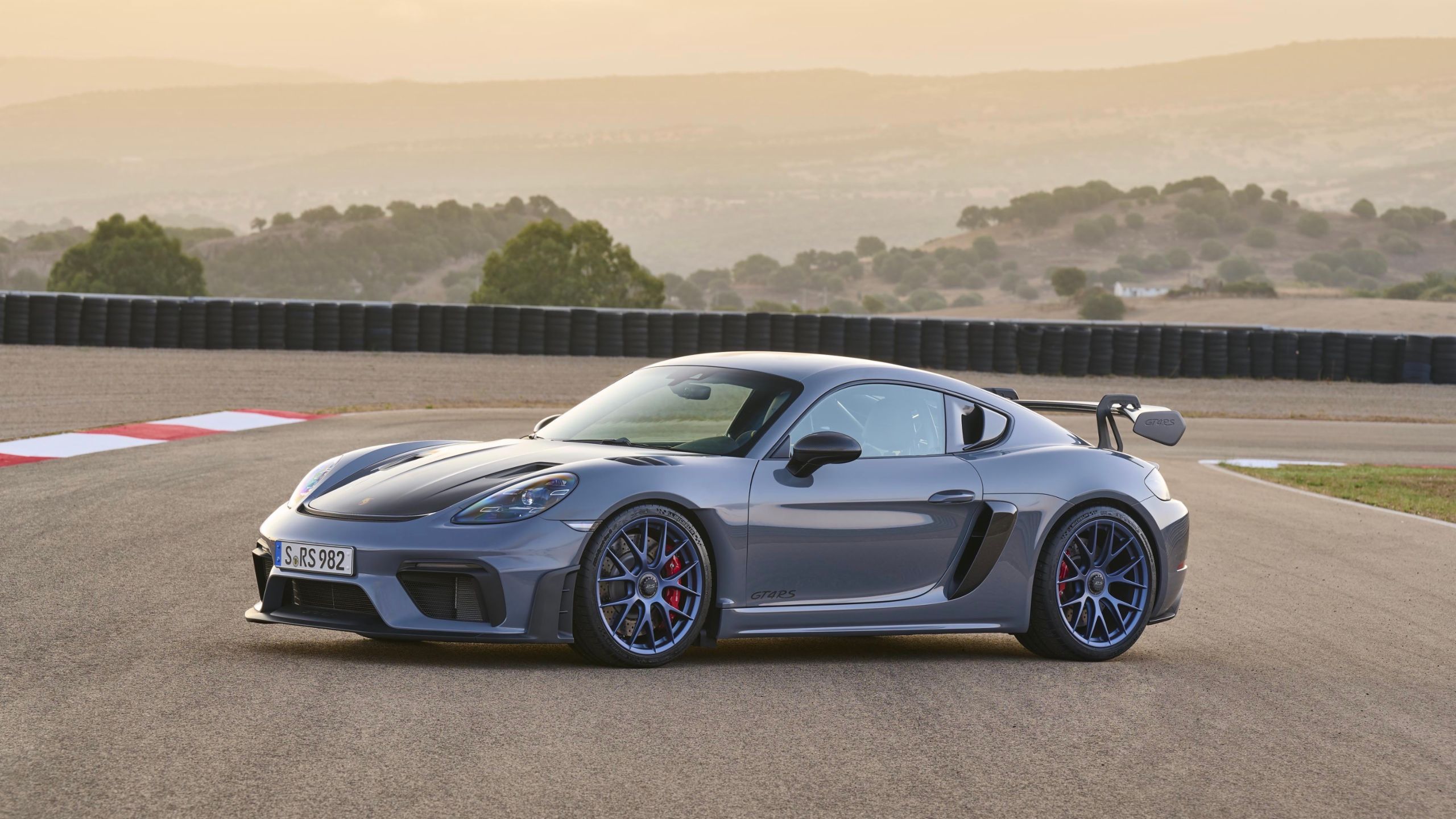
Porsche Cayman GT4 RS Photos

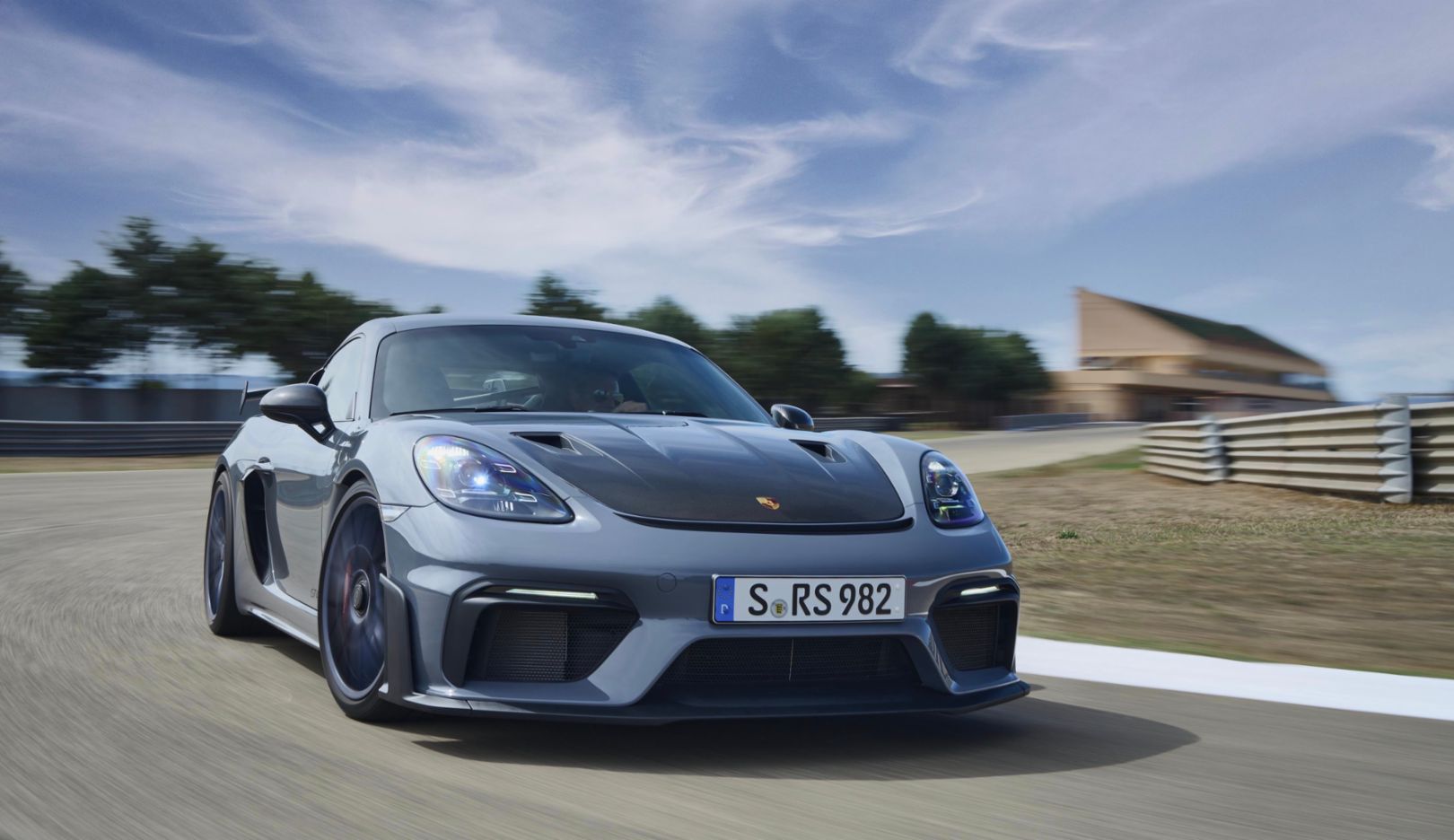
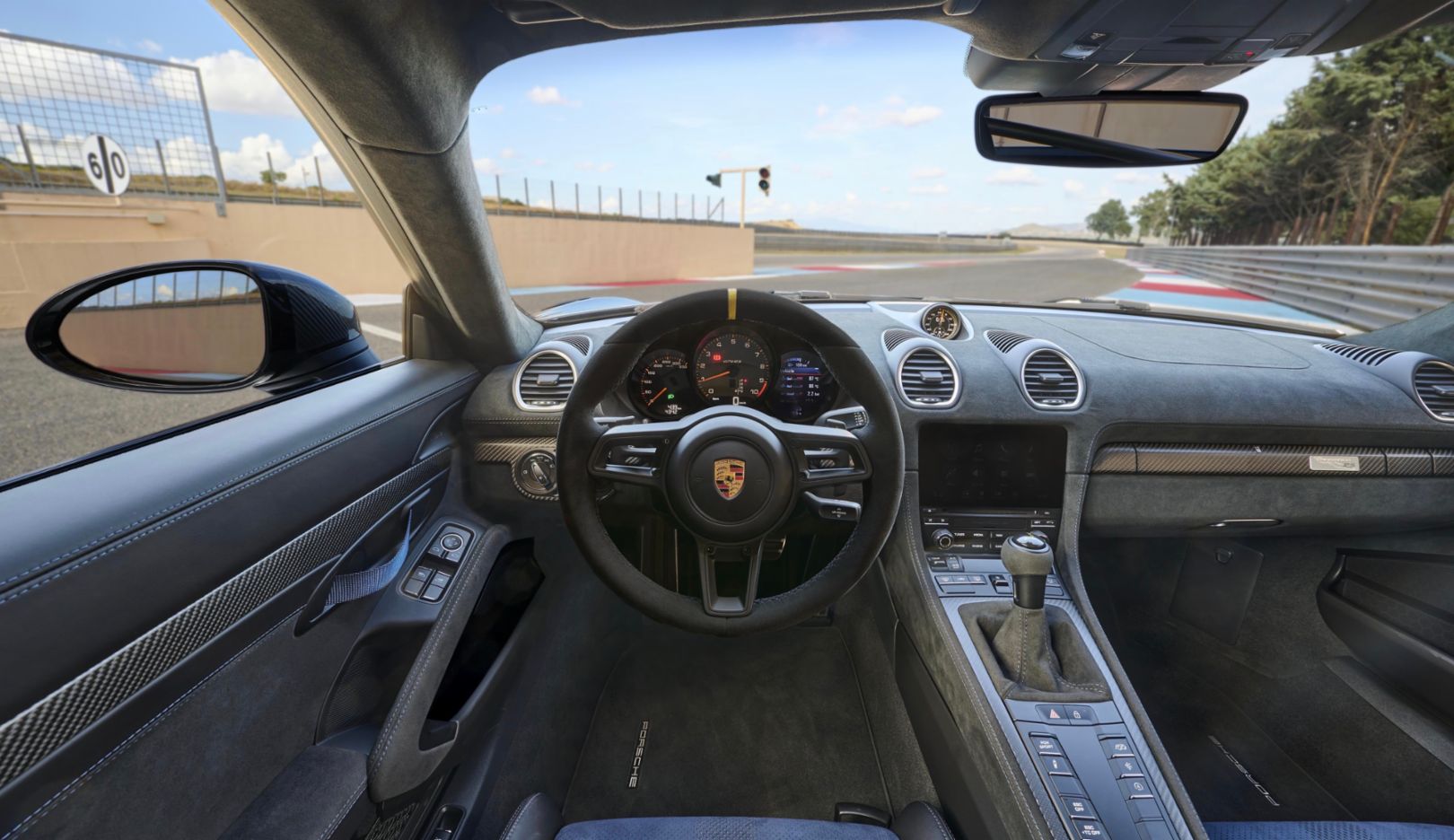
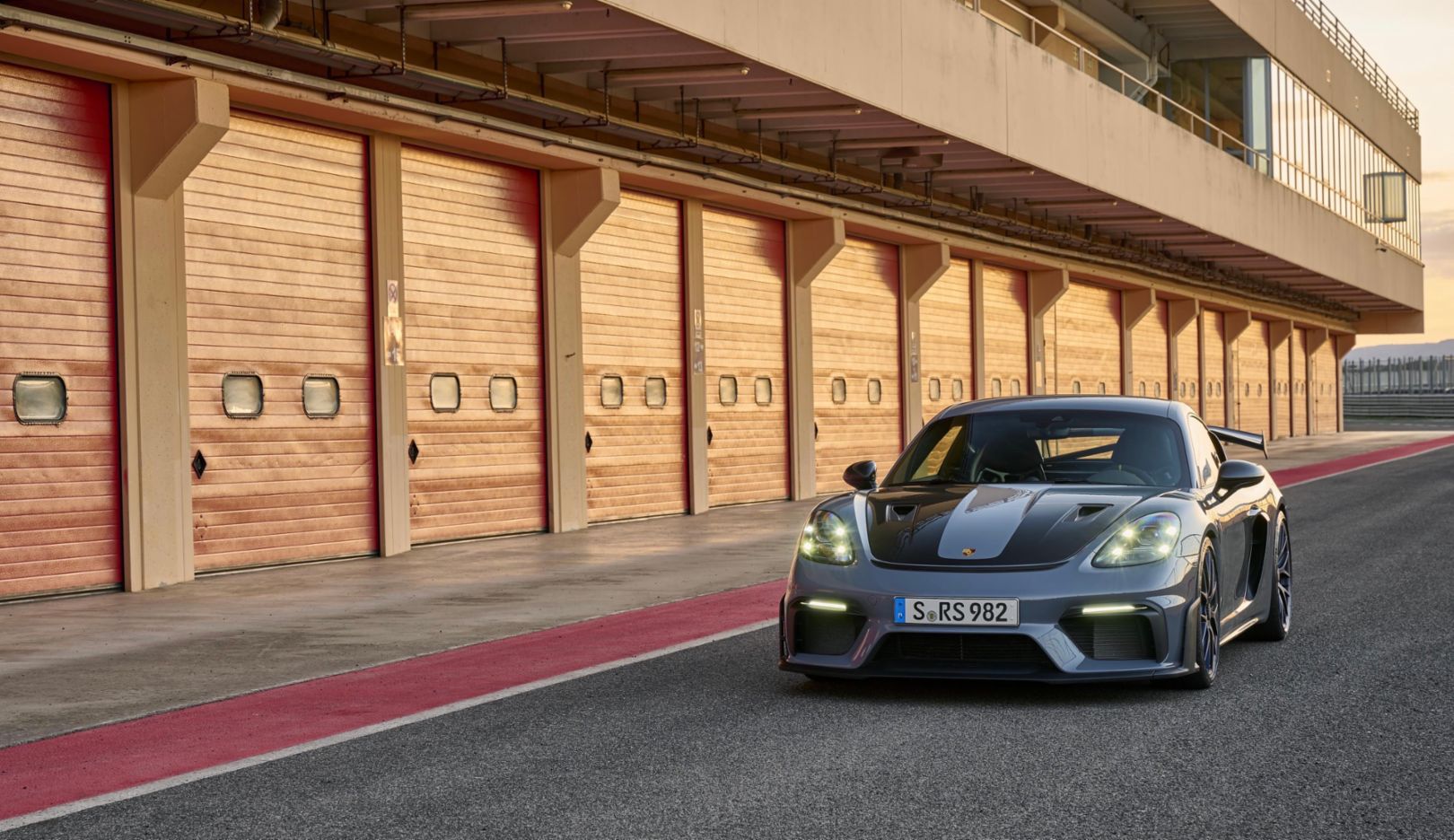
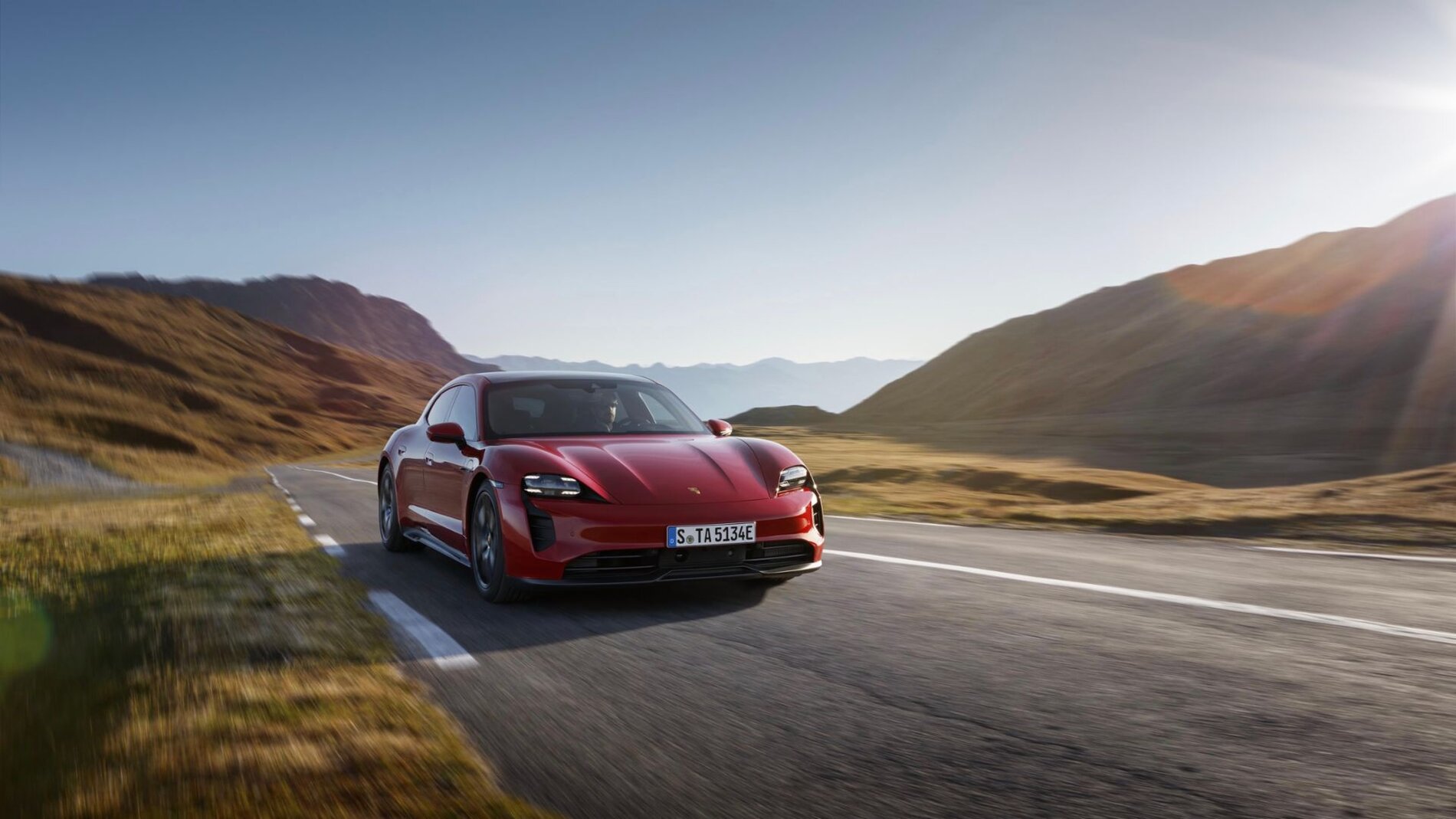
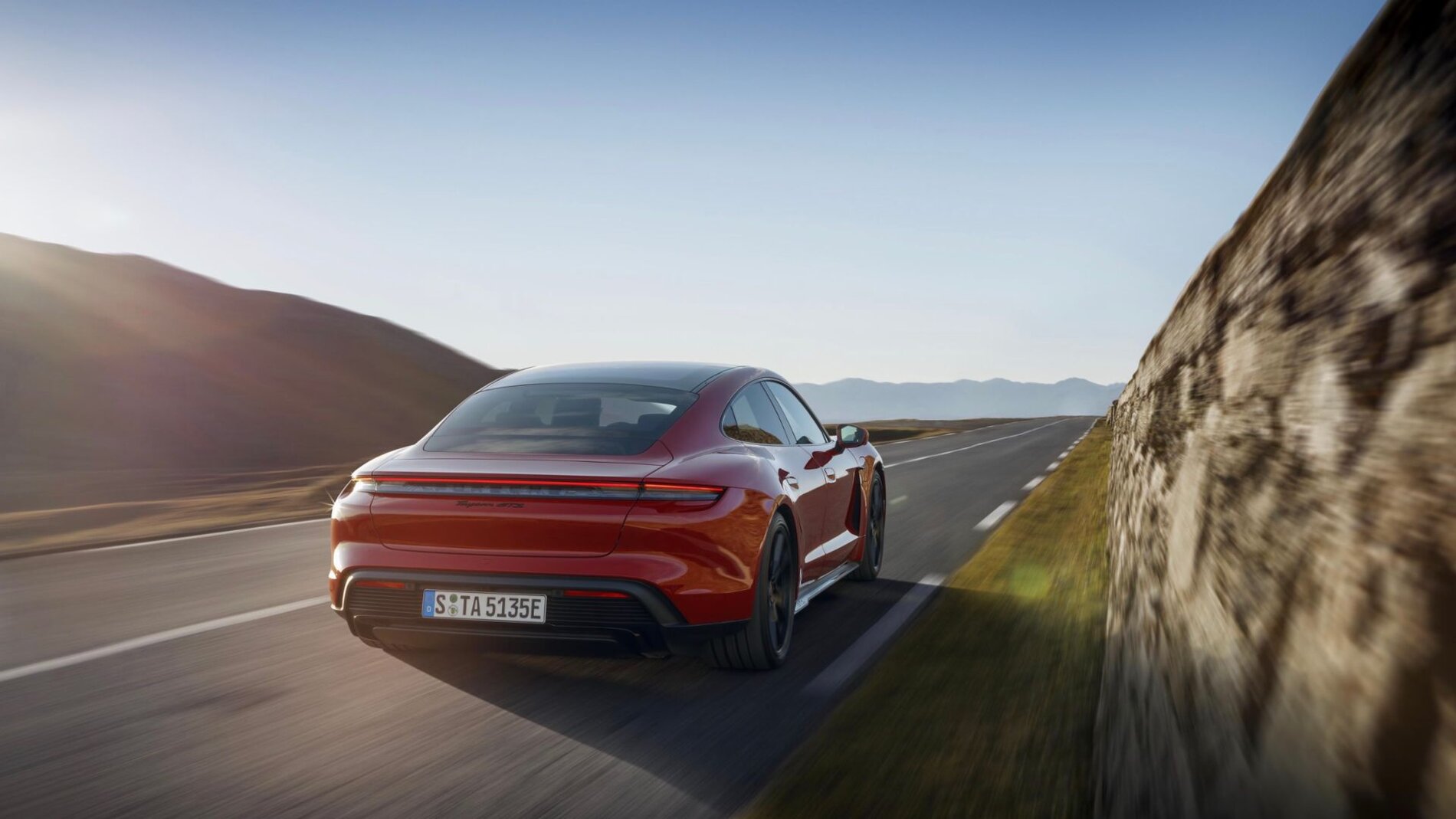
The new king of compact supercars, the first ever RS model in the Cayman family. This is the new Cayman GT4 RS and it comes with a 992 GT3 engine in mid-engine layout. 500hp and 450nm of torque sent to the rear wheels exclusively by a PDK gearbox. Bonus photos of the new Taycan GTS and Taycan GTS Sport Turismo. Yes, the Taycan now has a Sport Turismo model joining the sedan and Cross Turismo variants.

Porsche 718 Cayman GT4 RS Specs and Pricing

Engine 4.0L Flat 6, Naturally Aspirated
Output 500hp, 450nm torque
Gearbox 7-Speed PDK ONLY
0-100km/h 3.4s
Top Speed 315km/h
Price in USA $141,700 (USD)
Price in Germany €141,338 (Euros)
Price in UK £ 108,370 (GBP)
Price in Canada $166,000 (CAD)

2023 Corvette Z06 Photos

The all American supercar for the masses with a price that rivals anything that wears the supercar title out there. This is the 2023 Corvette Z06 and it has the most powerful naturally aspirated engine ever put in a production car.

2023 Corvette Z06 Specs and Price

Engine 5.5L LT6 V8, Naturally Aspirated, Flat Plane Crankshaft
Output: 670hp and 623nm torque
Redline 8,600rpm
Gearbox 8-speed DCT
Oil System Dry Sump
Price from $97,000

Chevrolet Silverado ZR2

This is the new Chevrolet Silverado ZR2 and it’s flagship Silverado model, Chevy’s latest addition to the off-road, factory-installed lifted trucks. It’s big, has a big V8 and will only be sold in America. It’s main competitor is the Ram 1500 and the Ford F-150 Raptor which stepped away from a V8 powertrain to a V6 eco-boost engine (although a supercharged V8 will make a comeback in the upcoming Raptor R to rival Ram’s supercharged TRX).

Below are additional photos live from the LA Auto Show 2021. Anyone knows what is happening with those two Defenders?

For Sale: 300MPH 1964 Turbosonic Dragster with 1000hp Turbine Engine

The 1964 Turbosonic Custom Dragster was built, designed and styled at Barris Kustom in California by George Barris, Les Tompkins, Dick Dean and Tom Daniels. The vehicle was co-owned by R.E. Barret.

The three-wheel racing car uses a 50 pound fuel-burning turbine engine to generate 1000 hp, the V-Drive gear reduction unit and the 2-speed manual transmission delivers power directly to the rear end to ensure the vehicle reaches 300mph in just a quarter mile.

Stopping the Turbosonic at lower speeds requires an Airheart disc brakes only, whereas when the vehicle is at high speed, a combination of an offset blown parachute and four stabilizer wing flaps are used.

Furthermore, the vehicle features a fireproof cockpit encased in a unitized cross-tube roll bar for protecting the driver, a four-stage solenoid electrical system operates the controls and a two-way radio is used between the driver and his crew for transmitting the dial readings and controlling effects of the car.

The exterior of the vehicle has been finished in Flame Pearl Yellow, Wild Cherry, red, gold and tangerine and features lightweight wings made of fireproof fiberglass. The structure of the car is a combination of monocoque and cross-frame construction with alloy tube frame and the vehicle weighs 850 pounds only.

The Turbospnic will be sold on a bill of sale and postcards and vintage photos will also be included at the Mecum Kissimmee auction in January 2022.

Top Gear Dives Into The New Porsche Cayman 718 GT4 RS

As part of the recent “Green Promise” that many car manufacturers are heading for, we all know that the most powerful, fastest, extreme, and best handling supercars and hypercars of the near and distant future will be electric. Bugatti Rimac has been formed as part of that promise, and Porsche has a major stake in the company through both its own investments and through its parent, Volkswagen Group.

Porsche Cayman 718 GT4 RS
Porsche Cayman 718 GT4 RS The new 2022 Porsche Cayman 718 GT4 RS with the Weissach Pack option

This is not to say, however, that Porsche is going to quietly shuffle their engines that run on recycled dinosaurs into the storage room, however, not at all. Instead, they’ve turned around and let the GT department, their skunkworks team, at Stuttgart go slightly (read: completely) insane. The result is a $145,000 USD Porsche Cayman that carries a 4.0L flat-six engine from a Type 992 GT3 with the wick turned up to 11, has exhausts with the bare minimum of baffles to pass road legality making it the loudest Cayman ever made, and can keep up with a Lotus Exige in terms of handling.

Porsche Cayman 718 GT4 RS
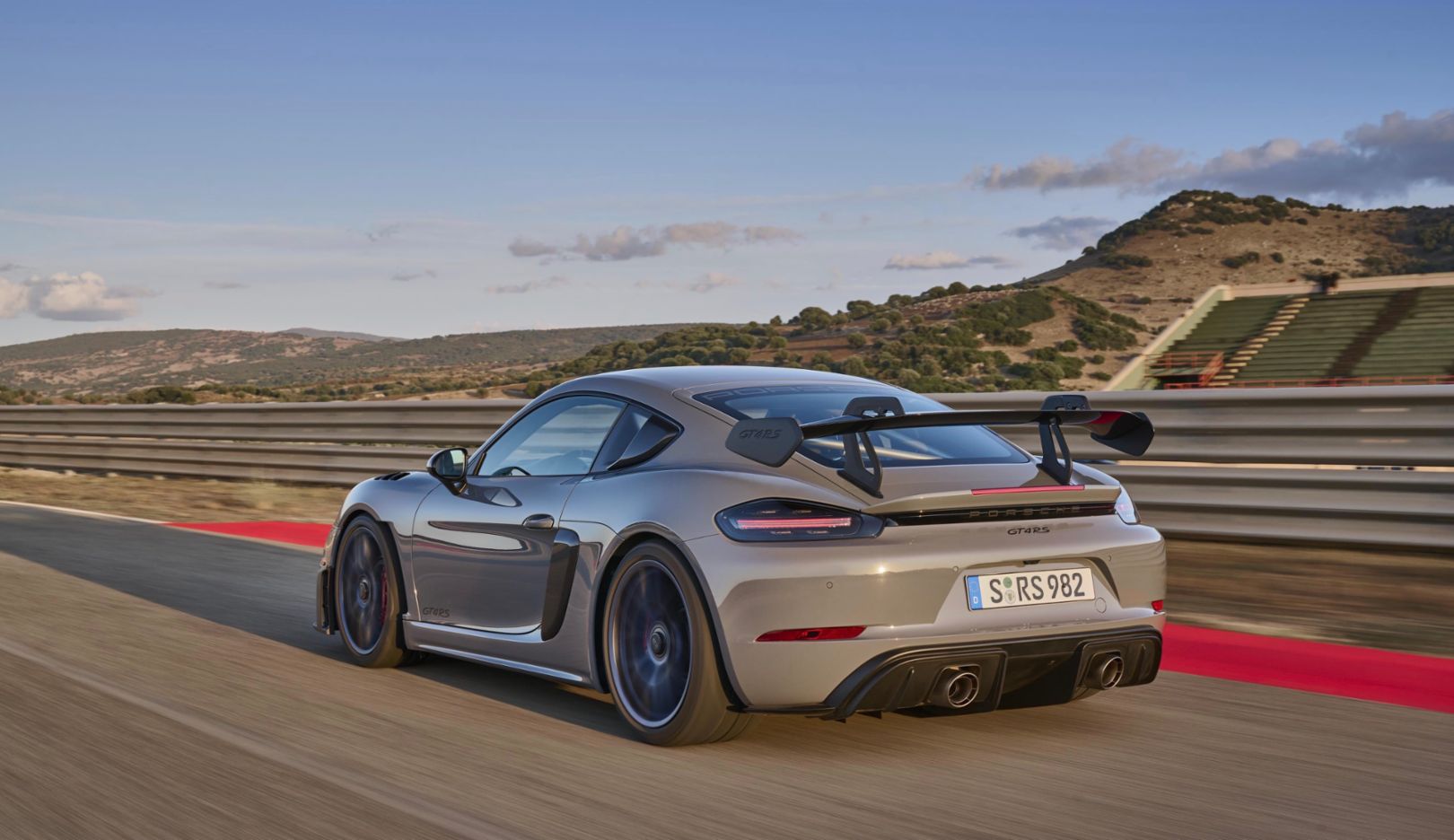
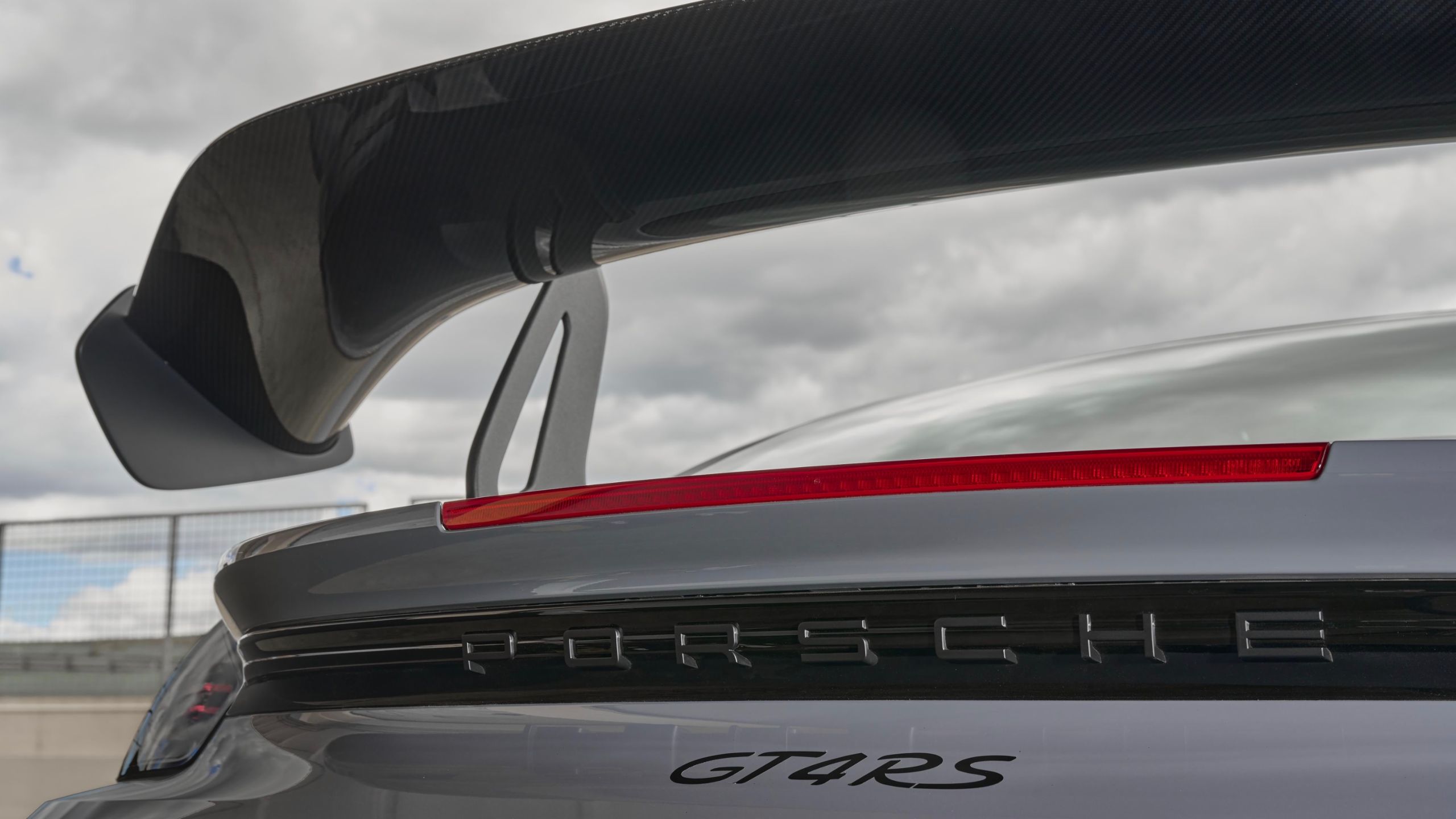
Porsche Cayman 718 GT4 RS Part of what makes the Cayman GT4 RS handle as well as it does is the specifically tuned aerodynamics that give it downforce without adding any more drag to the car

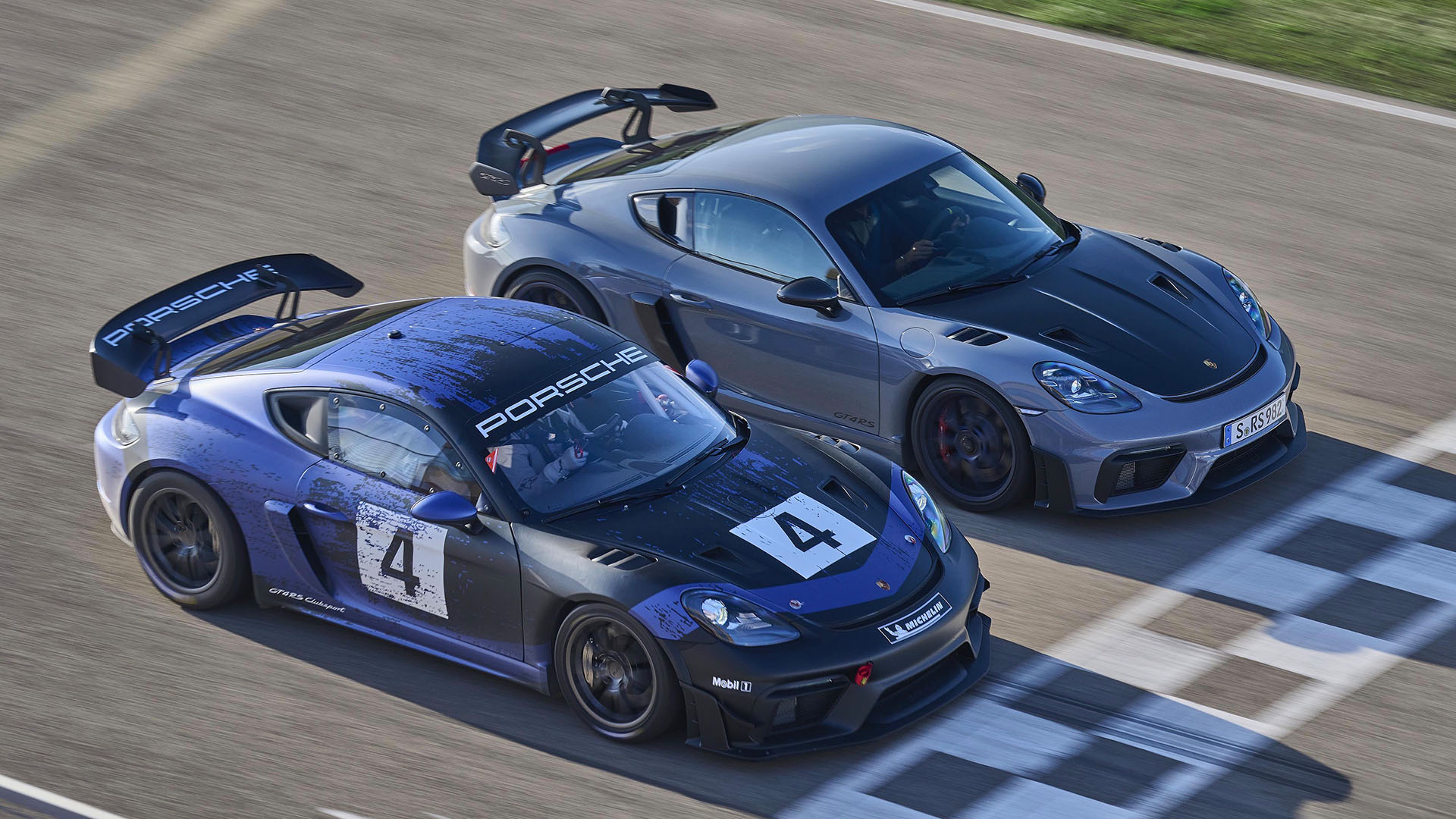
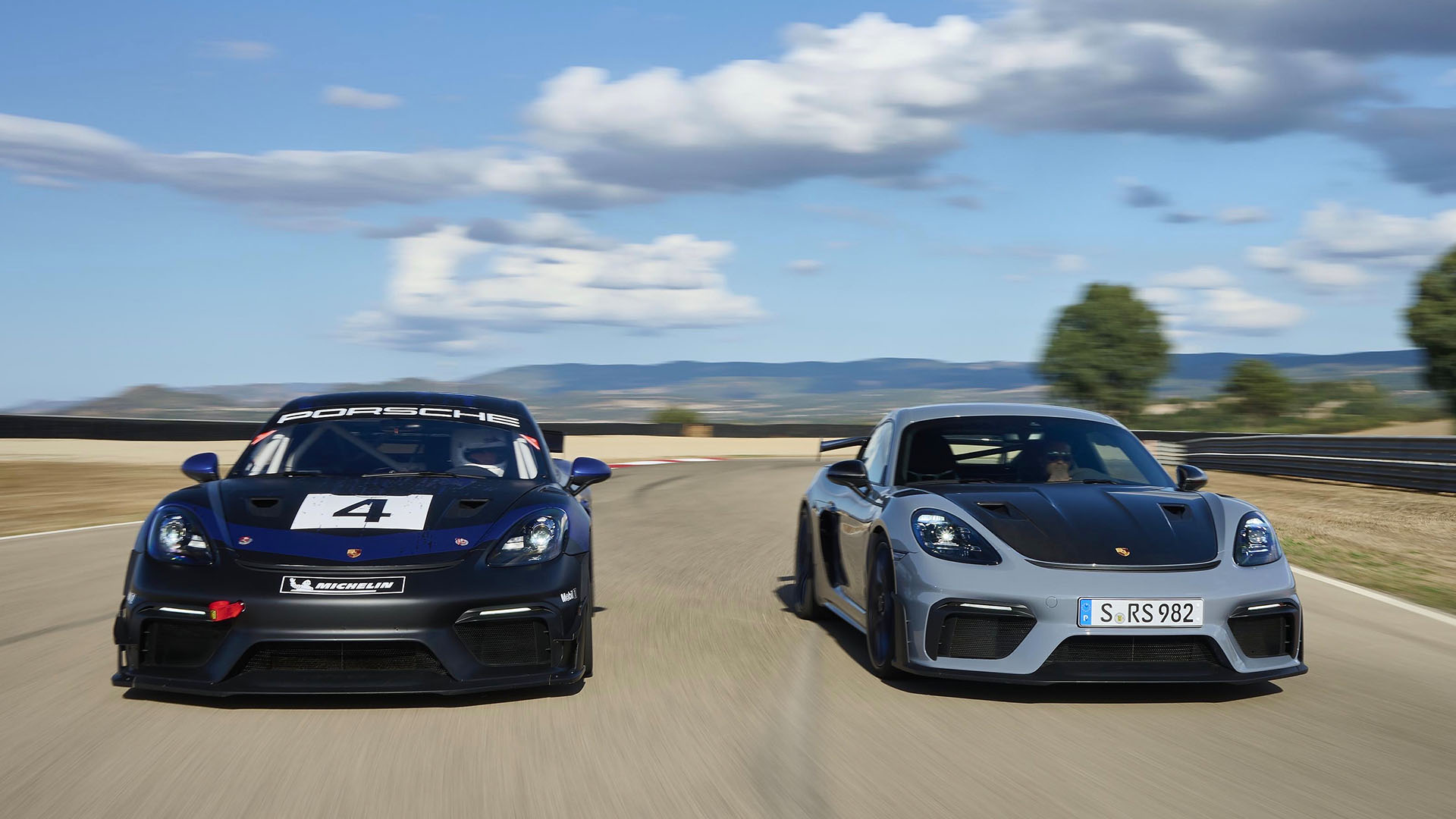
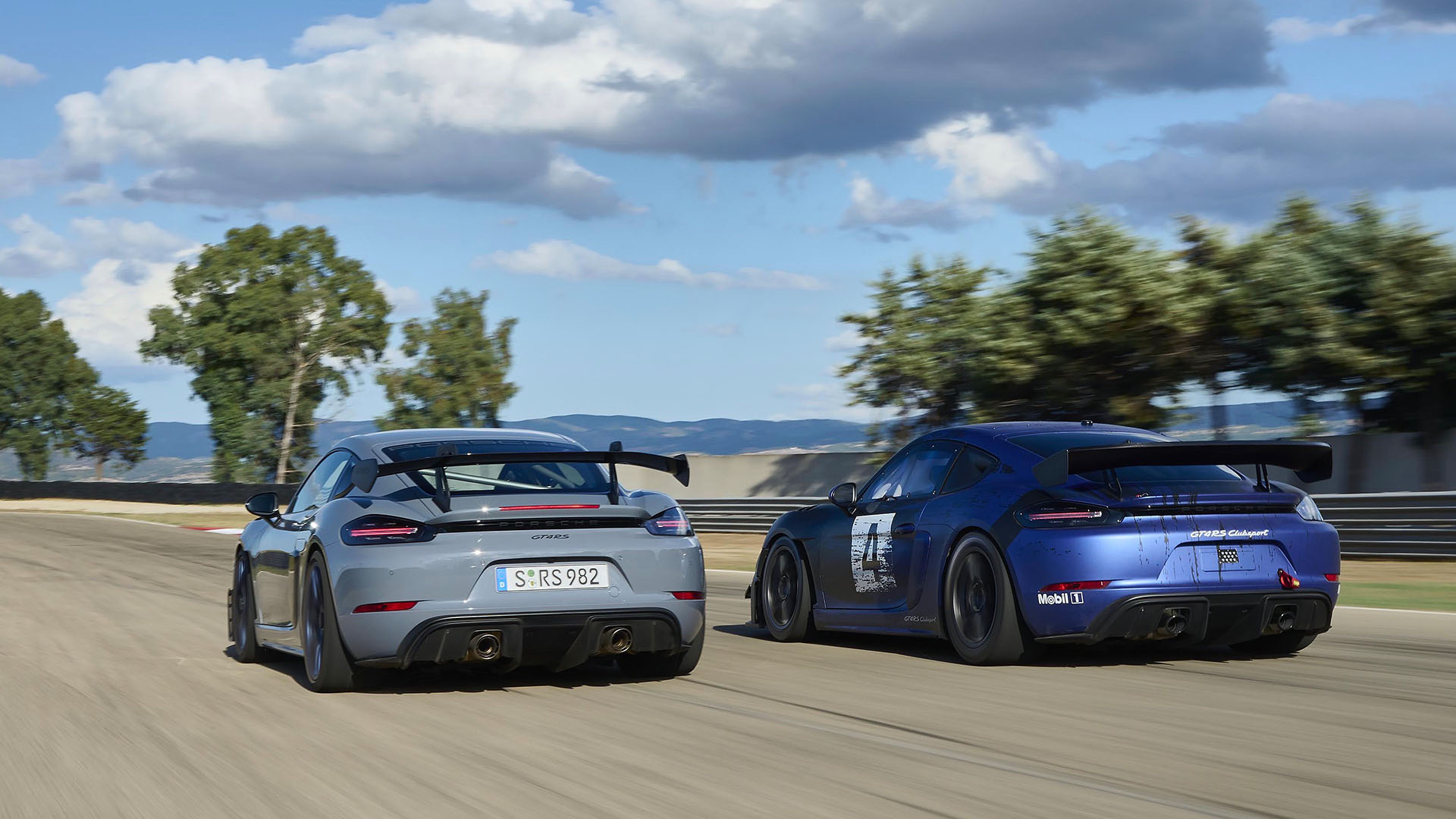
The new Cayman 718 GT4 RS, according to Porsche themselves at least, is not meant to be a track monster. It certainly can be, and there is a customer-spec version of the GT4 race car coming in the GT4 RS Clubsport, dedicated to track only use. This beast is meant to be an “experience,” a car that makes the driver become part of the machine, the two symbiotically working together to scream bloody murder out those nearly direct-port exhausts and catapult the car to the horizon as fast as possible.

Top Gear GT4 RS overview
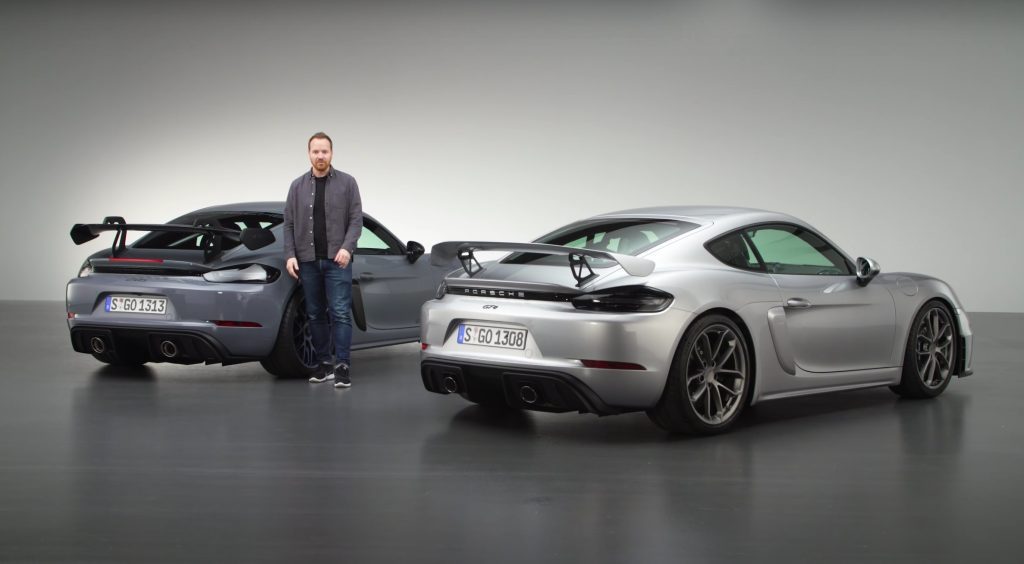
Top Gear GT4 RS overview Regular GT4 on the right, GT4 RS on the left. Notice the far more aggressive diffuser, “hang down” wing, and larger exhaust exits

Sure, it can lap the Nurburgring’s famous Nordschleife track in 7 minutes and 4 seconds. Sure, it has unbelievably good handling and its aerodynamics are machined and tuned to precision German standards. But by letting the GT department off the leash, they’ve also made, as Top Gear describes it in the video below, a car that is steeped in the highest levels of “engineering nerdery.”

[embedded content] [embedded content]

Our take? While there are still petrol-powered engines around, Porsche should let the GT department off the leash more often, if this is what results from the German equivalent of going mental!

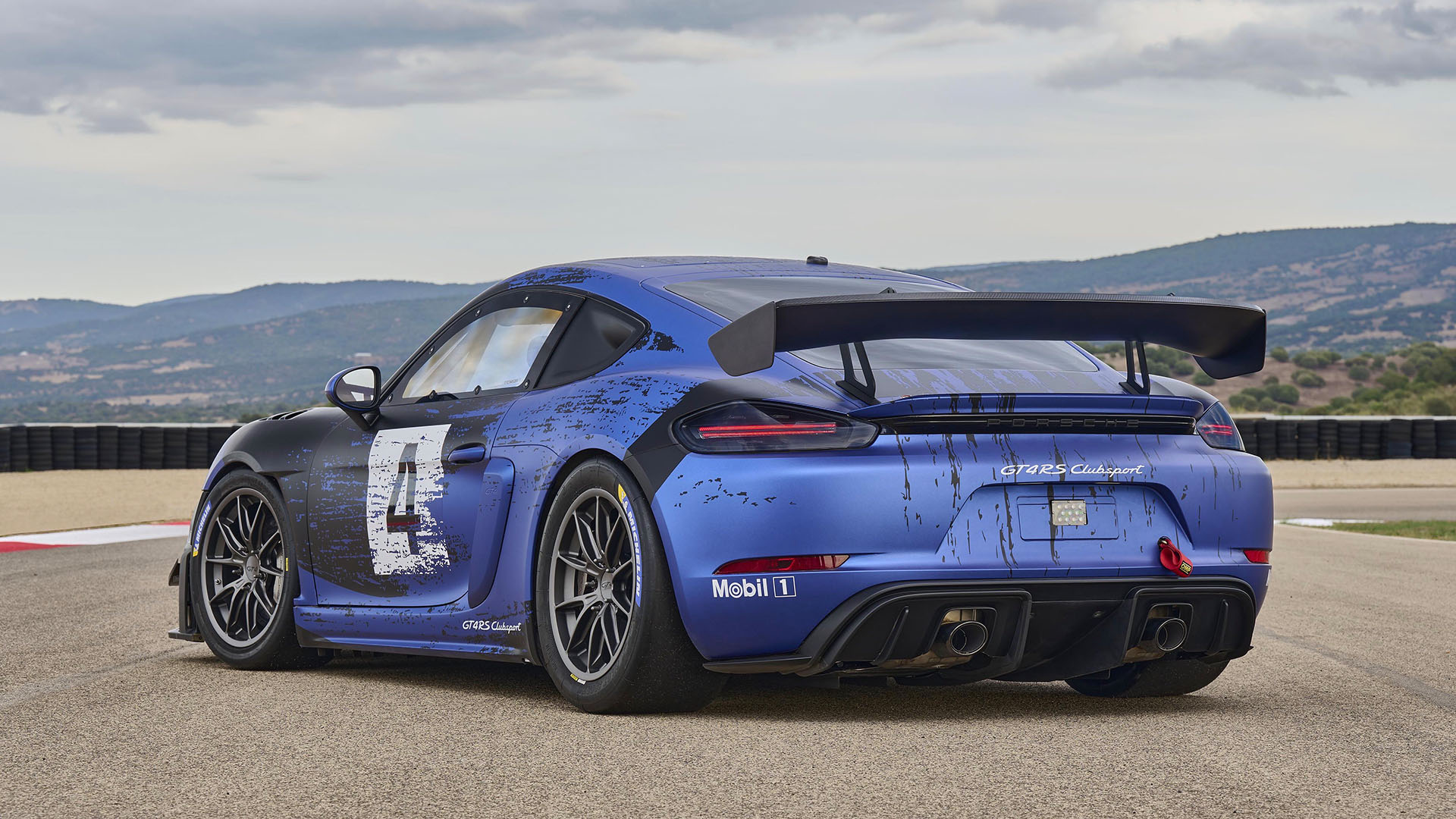
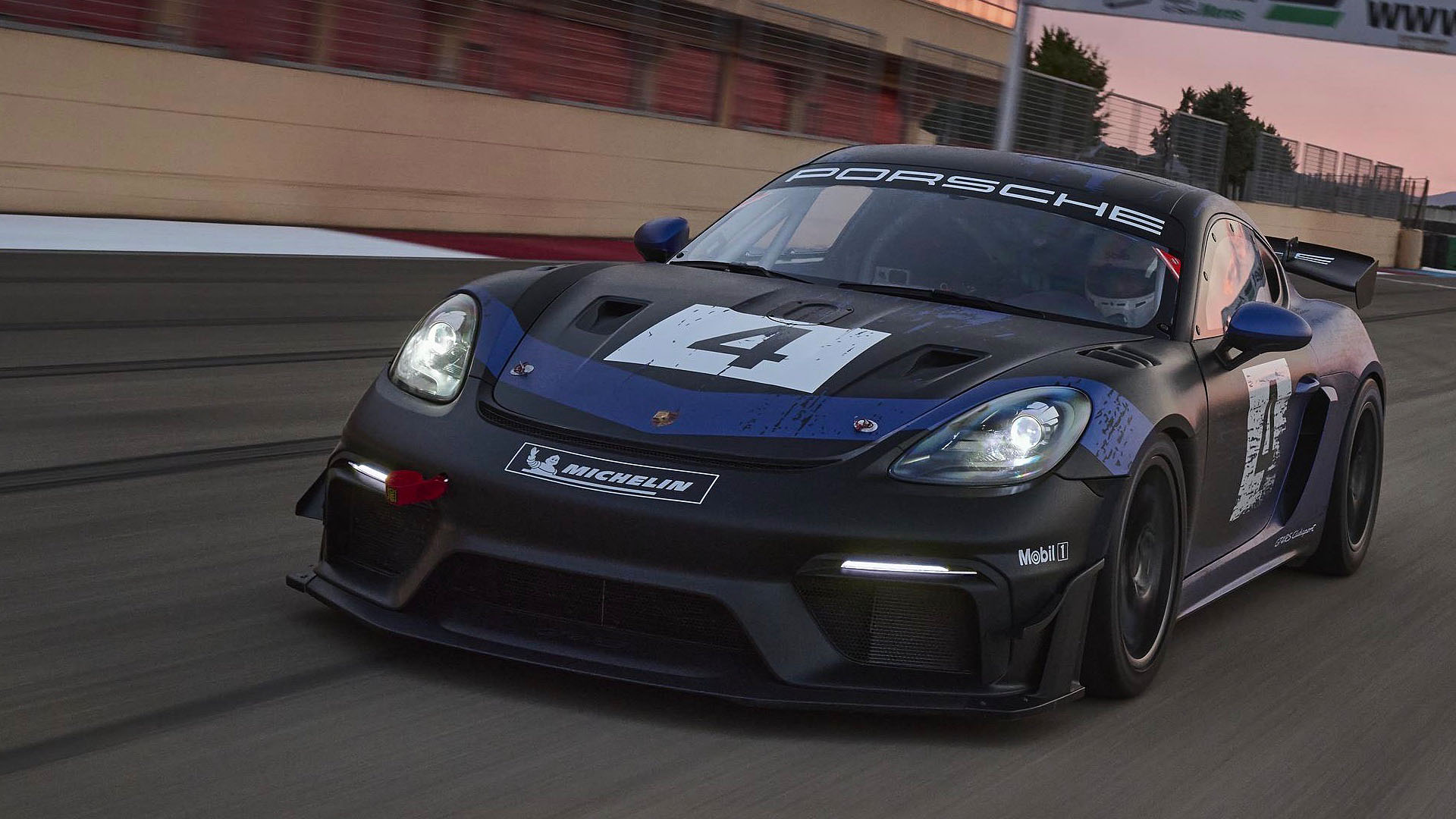
The new Porsche 718 Cayman GT4 RS Clubsport

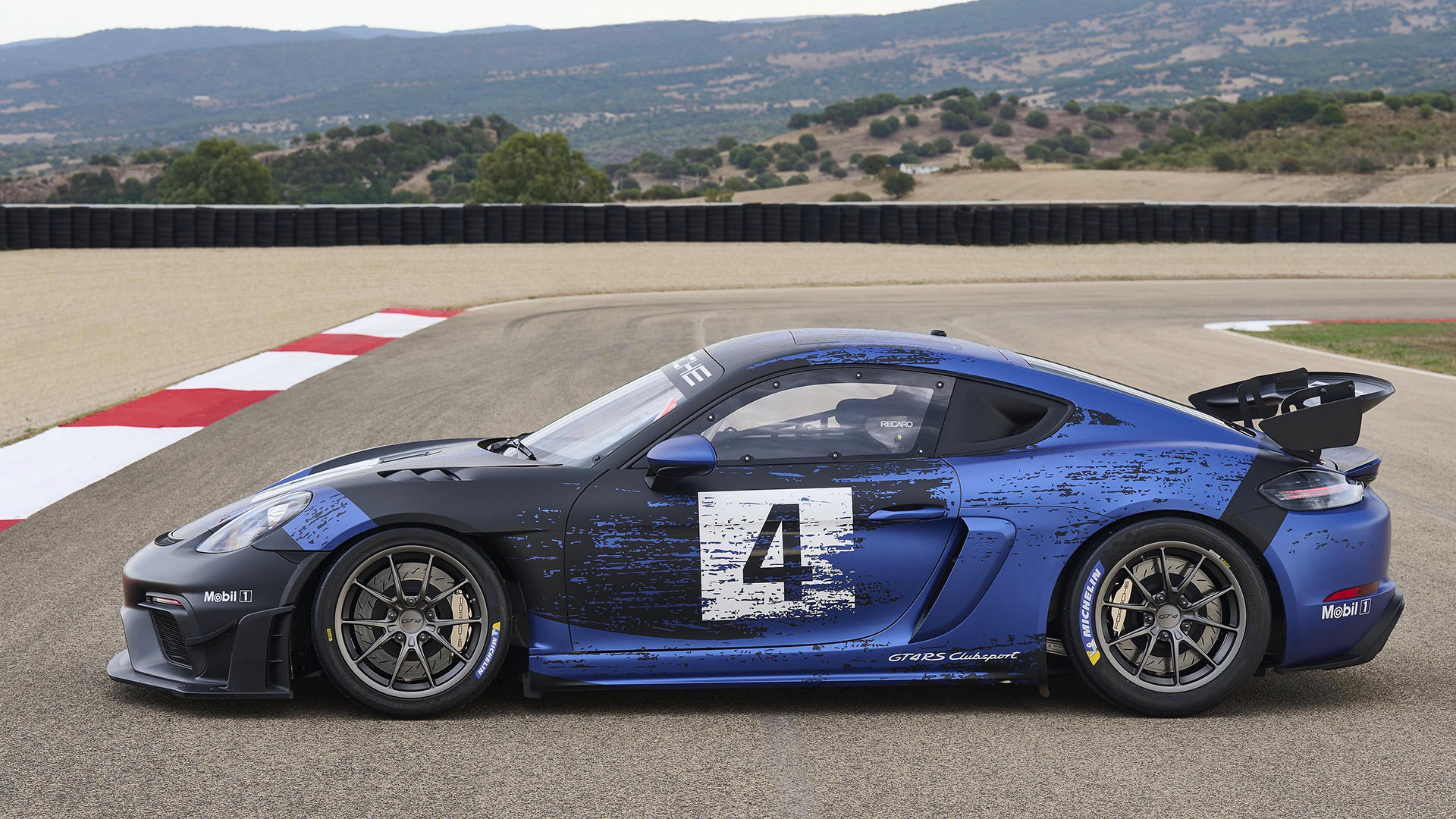
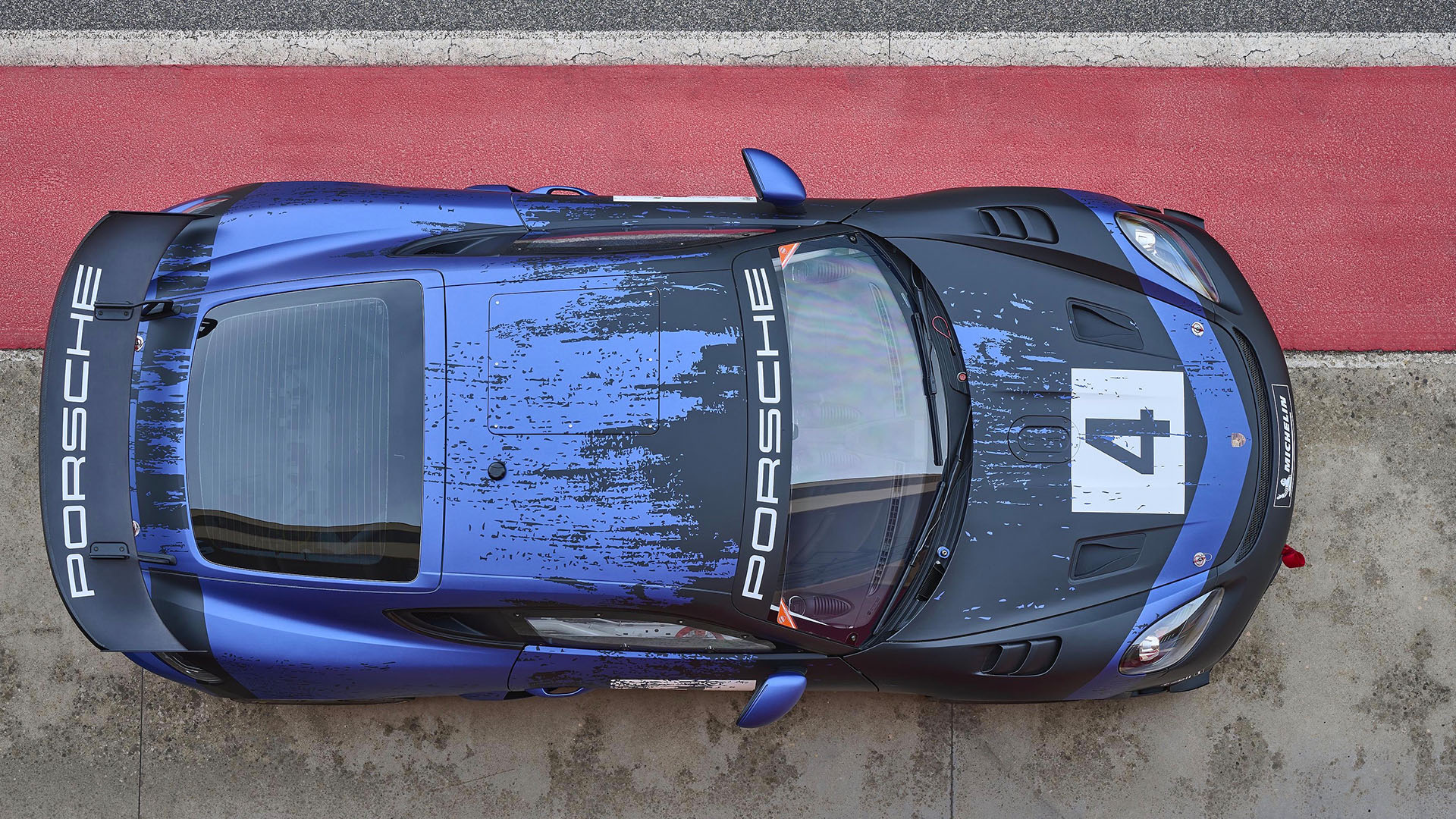
Porsche only just revealed the new 718 Cayman GT4 RS at the Los Angeles Auto Show, but there is even more news in their 718 range, simultaneous Porsche also unveiled their latest mid-engined race car, the 718 Cayman GT4 RS Clubsport, with the 4-Liter six-cylinder boxer engine taken directly from the 911 GT3 Cup race car, pumping out 500 PS in the 718 Clubsport version, an increase of 75 PS compared to the previous GT4 Clubsport edition.

Depending on the track and series-specific regulations, the new 718 Cayman GT4 RS Clubsport can achieve lap times that are over two percent quicker than the previous model. The homologated vehicle is track-ready straight from the factory in Weissach and can be used in SRO racing series around the world without the need for additional modifications, pricing starts at 196.000 Euro or 229.000 Dollars, not including specific taxes.

“We have incorporated our experience of the last three years of running the previous GT4 Clubsport as well as customer wishes into the development of the new car,” said Michael Dreiser, Manager of Sales and Distribution at Porsche Motorsport. “Faster lap times combined with a further improvement in driveability offer our customers a competitive product for the upcoming racing seasons in GT4 class racing competitions around the world.”

The first Cayman GT4 Clubsport was introduced back in 2016 already based on the 981 generation, to offer customers a very competitive race car, in just two years a total of 421 were built, for 2019 a new model based on the 718 Cayman GT4 debuted, of which about 500 would find clients, mostly thanks to the low running costs of these GT4 race cars in the hands of customer teams.

This tradition is continued with the brand new 2022 718 Cayman GT4 RS Clubsport, the 4-Liter boxer engine replaces the previous 3.8-liter six-cylinder unit, and it is about 18% more powerful with its 500 PS at 8,300 rpm thanks to an optimized air intake, also note this new engine car sustain up to 9,000 rpm while it comes with a torque of 425 Nm at 6,600 rpm, resulting in a broad speed band, making the car easier to handle for amateur drivers, but still powerful enough for professional race car drivers.

Upgrades include the use of two-way adjustable shock absorbers with improved characteristics, in addition to adjustable sword-type anti-roll bars front and rear. Vehicle height, camber, and toe are also adjustable. Furthermore, three different spring rates for front and rear axles are now available. Special NACA ducts in the bonnet are designed to direct the airflow more efficiently to the large racing brake-ing system fitted with 380-millimeter steel brake discs.

The 718 Cayman GT4 RS Clubsport comes with a further extended front spoiler lip compared to the road car for additional downforce, while vents on the wheel arches were inspired by the 911 GT3 R model and vertical fins on the front bumper create an air curtain for the front wheels, naturally, the entire underbody is closed for this race car and it doubles as an optimization for the rear diffuser.

The ‘hanging’ rear wing, also called swan neck, comes with a 20mm long Gurney flap, with an additional pair of adjustment ranges added for more personalization during racing.

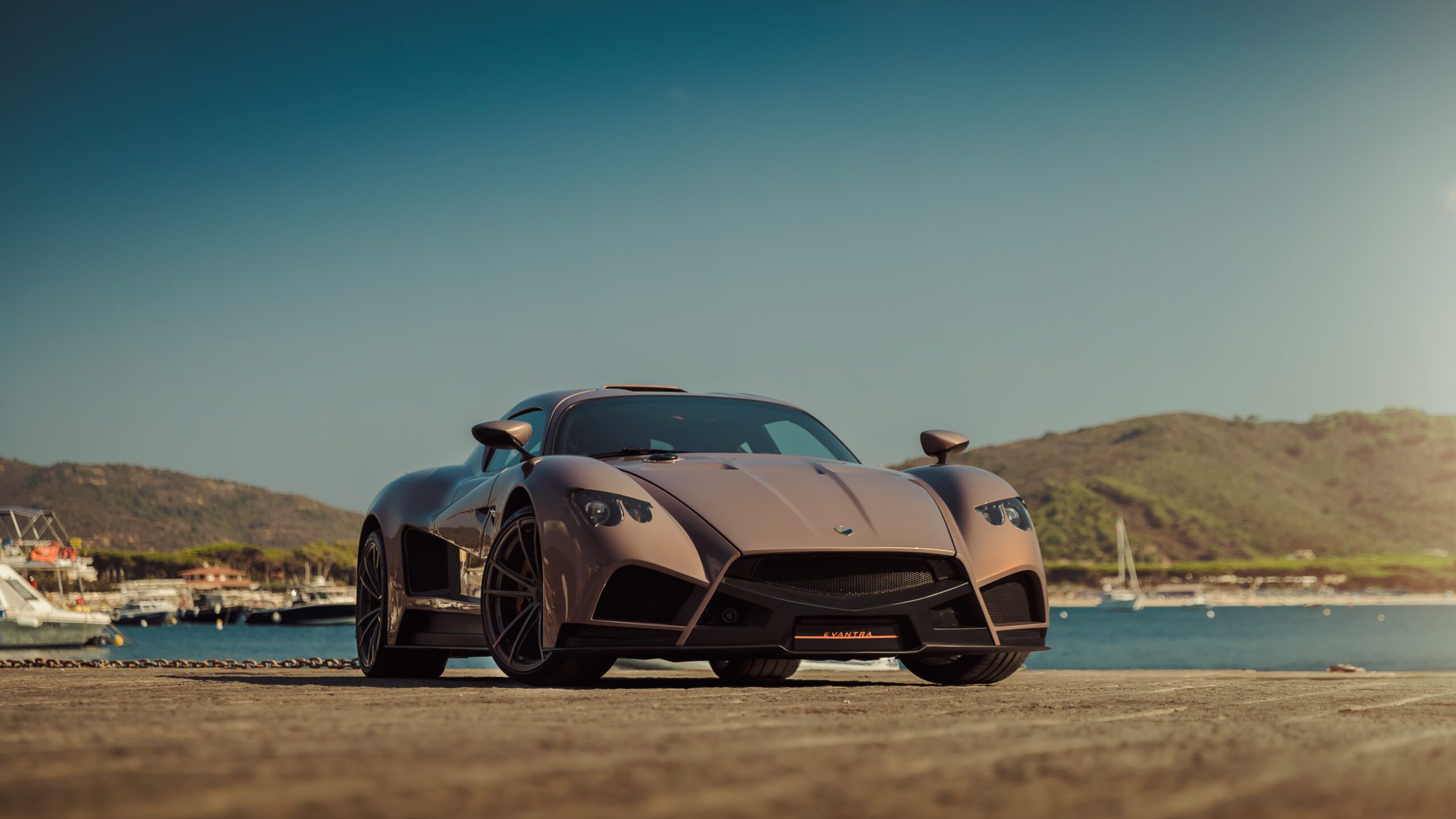
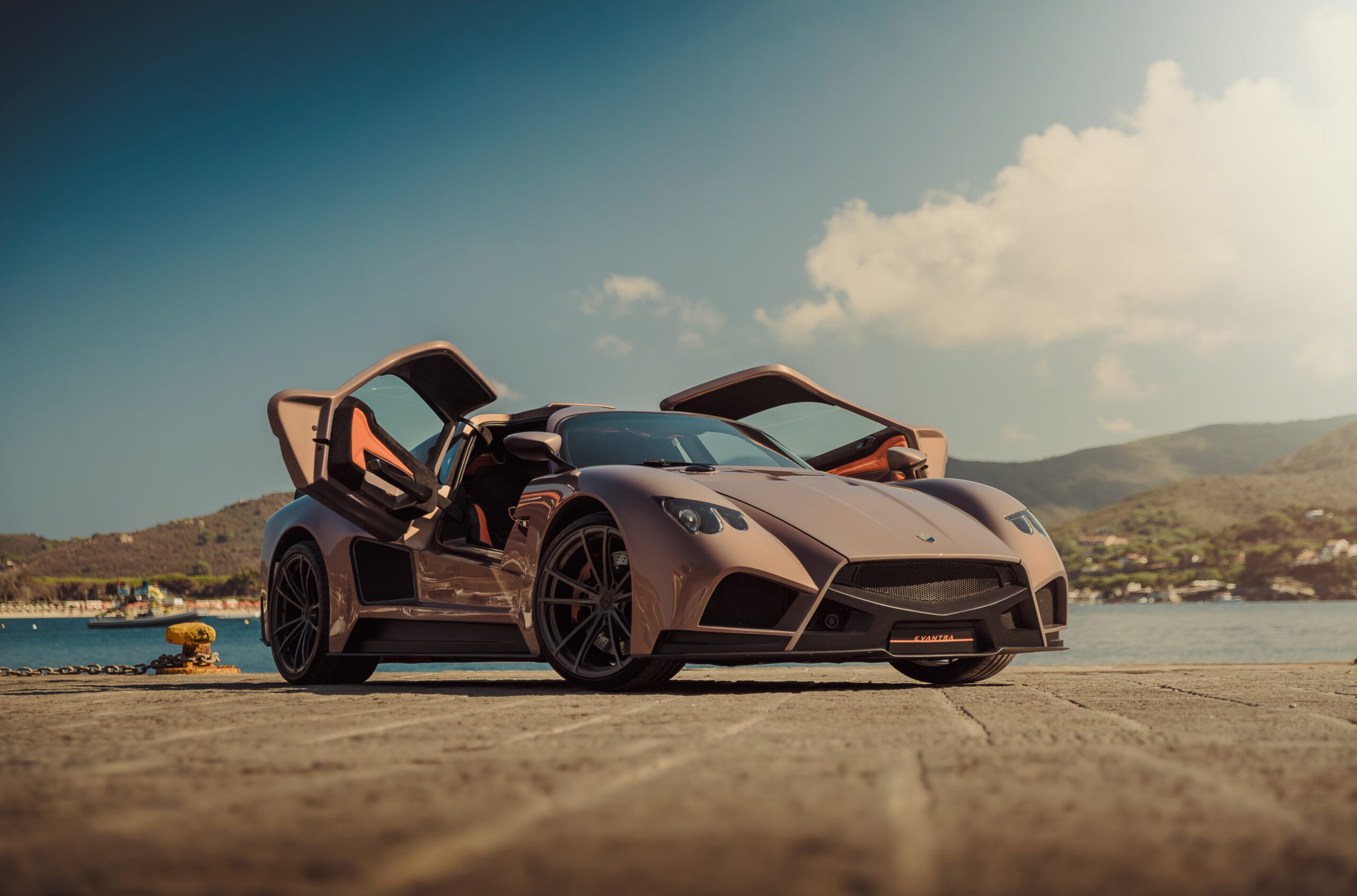
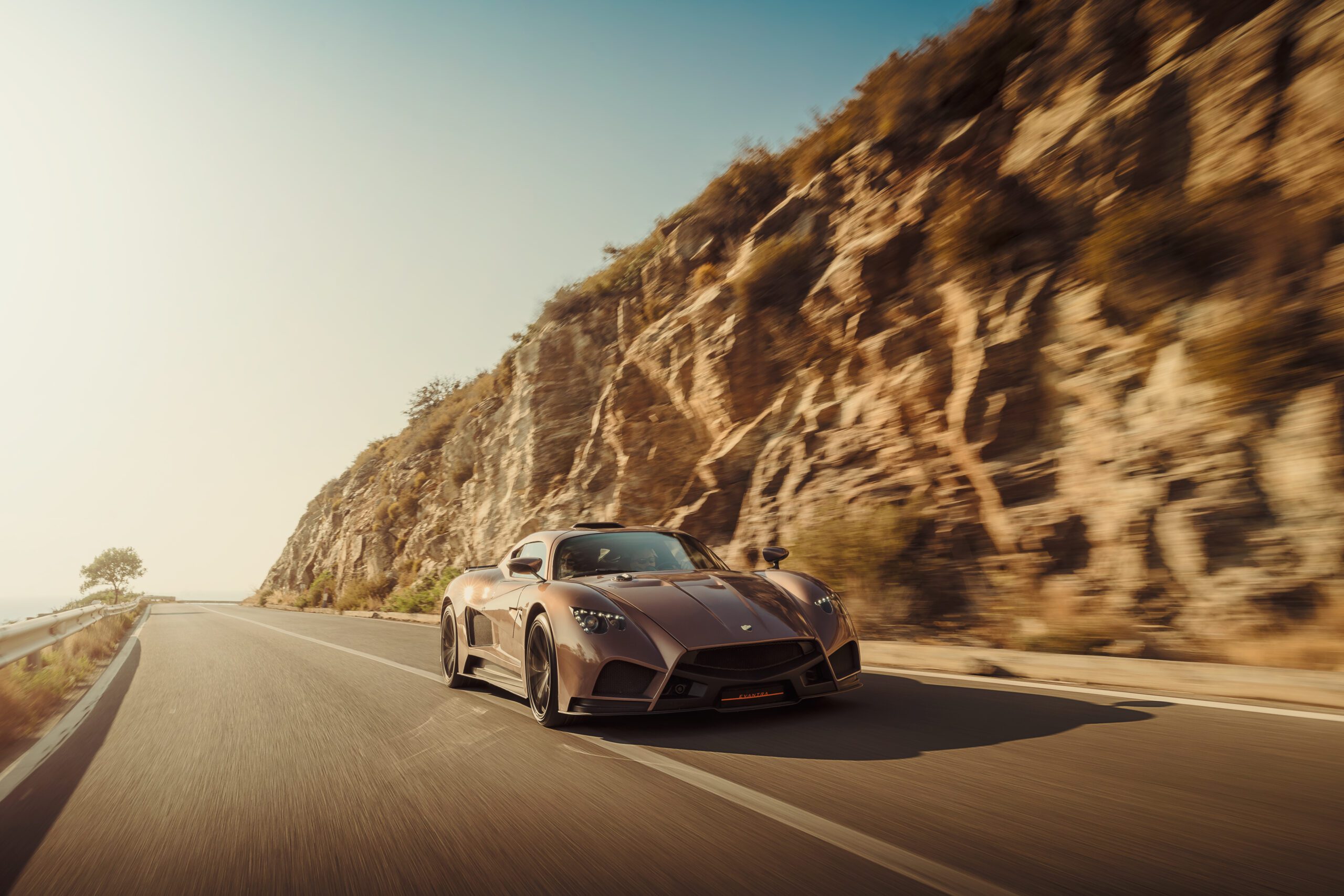
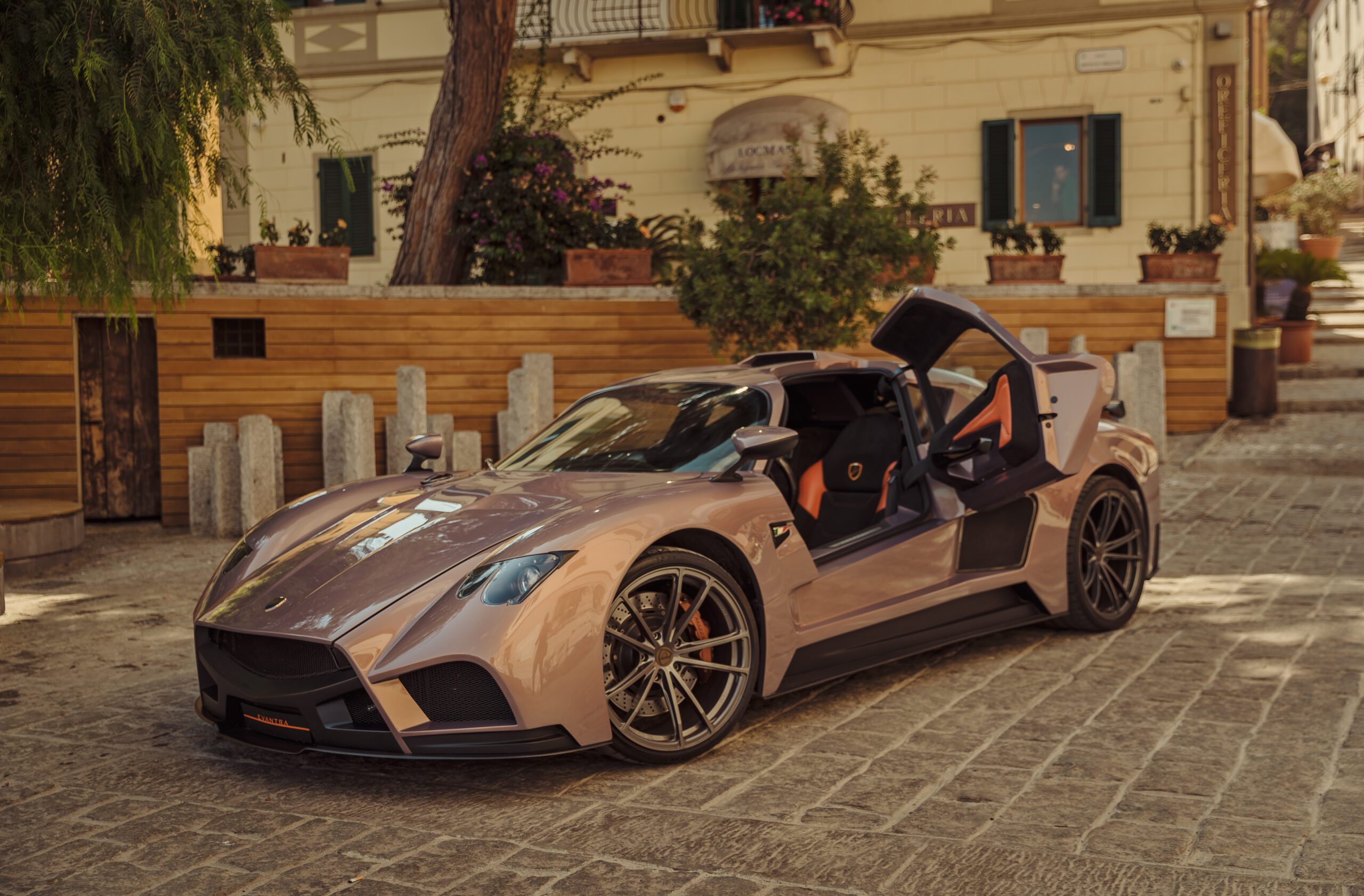
Mazzanti Announces UK Tour For The Evantra

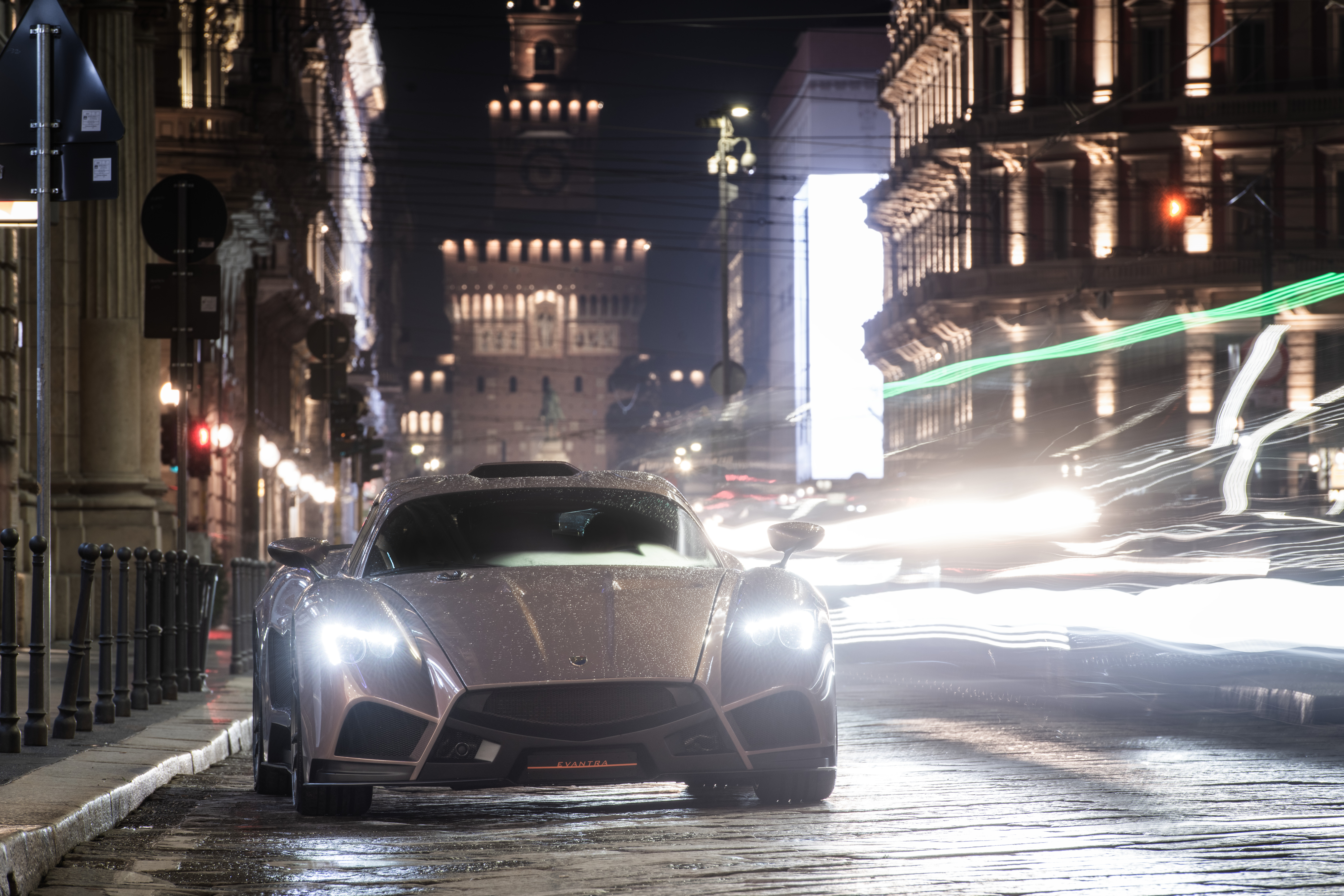
Mazzanti Automobili, the iconic hypercar-producer from Tuscany, recently announced that they will be having their first ever Tour to the United Kingdom from November 18 to 28, 2021. HWM Sportscars will be hosting the UK Tour in Walton-on-Thames, Surrey. There will also be some appearances outside of the showroom during the tour.

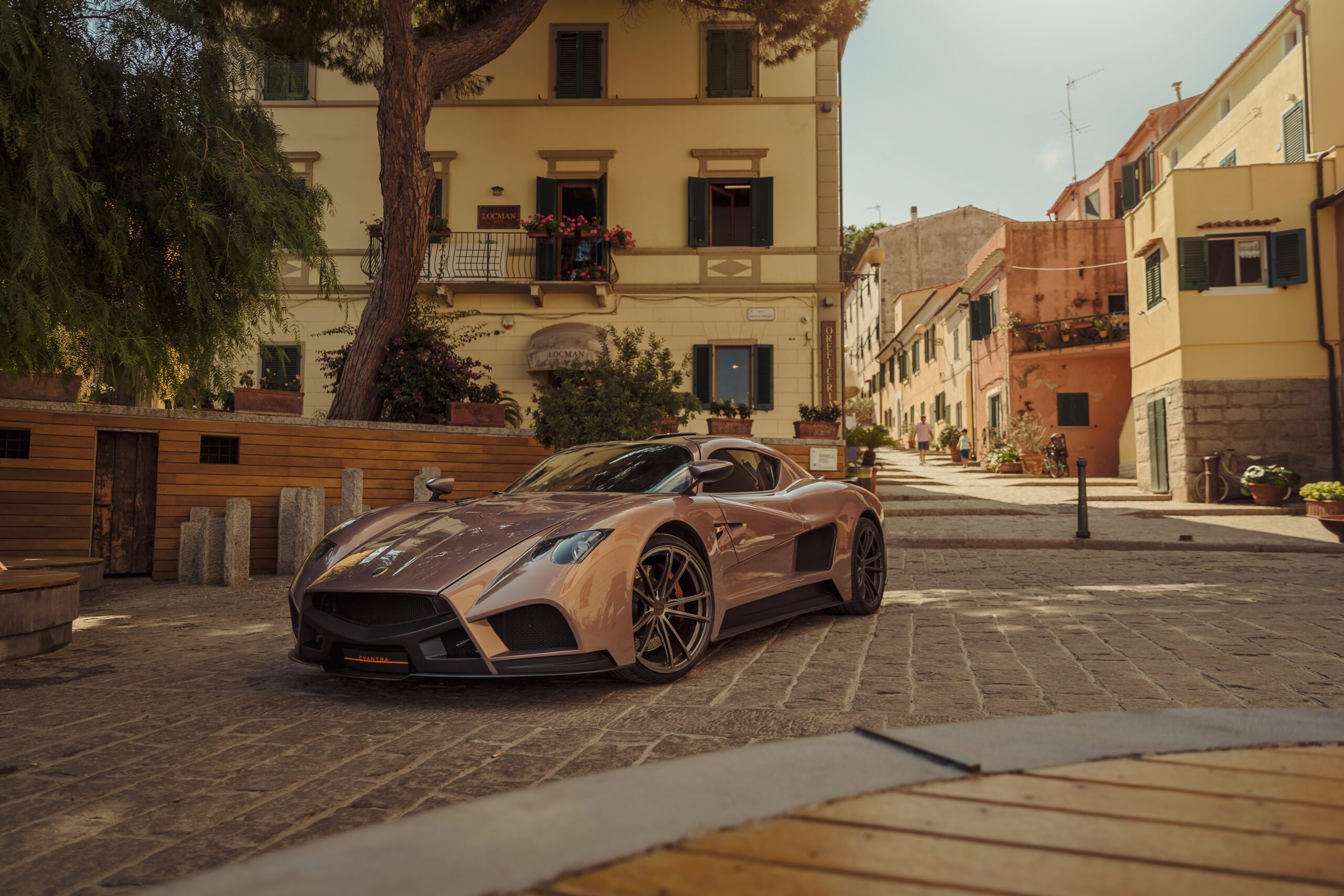
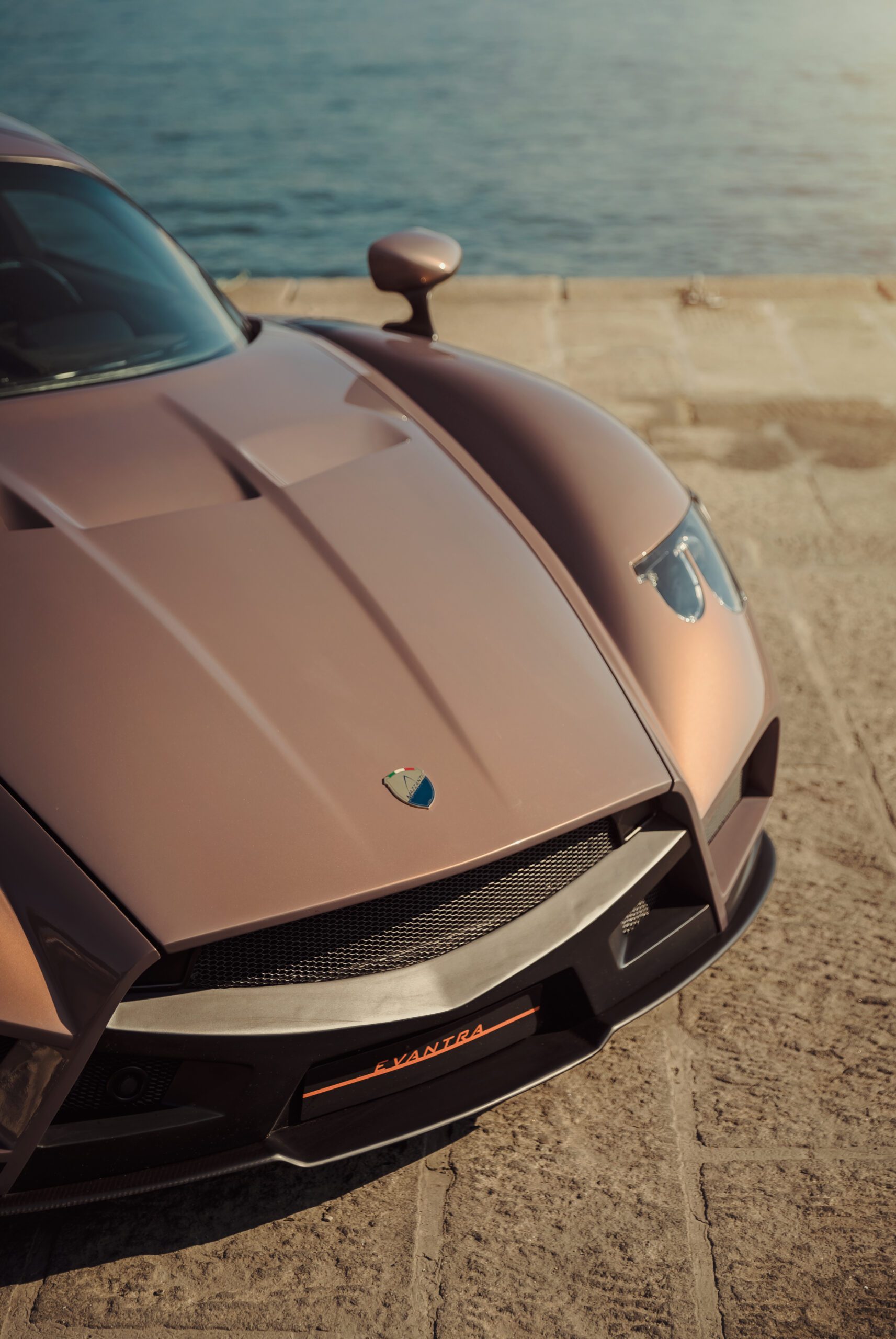
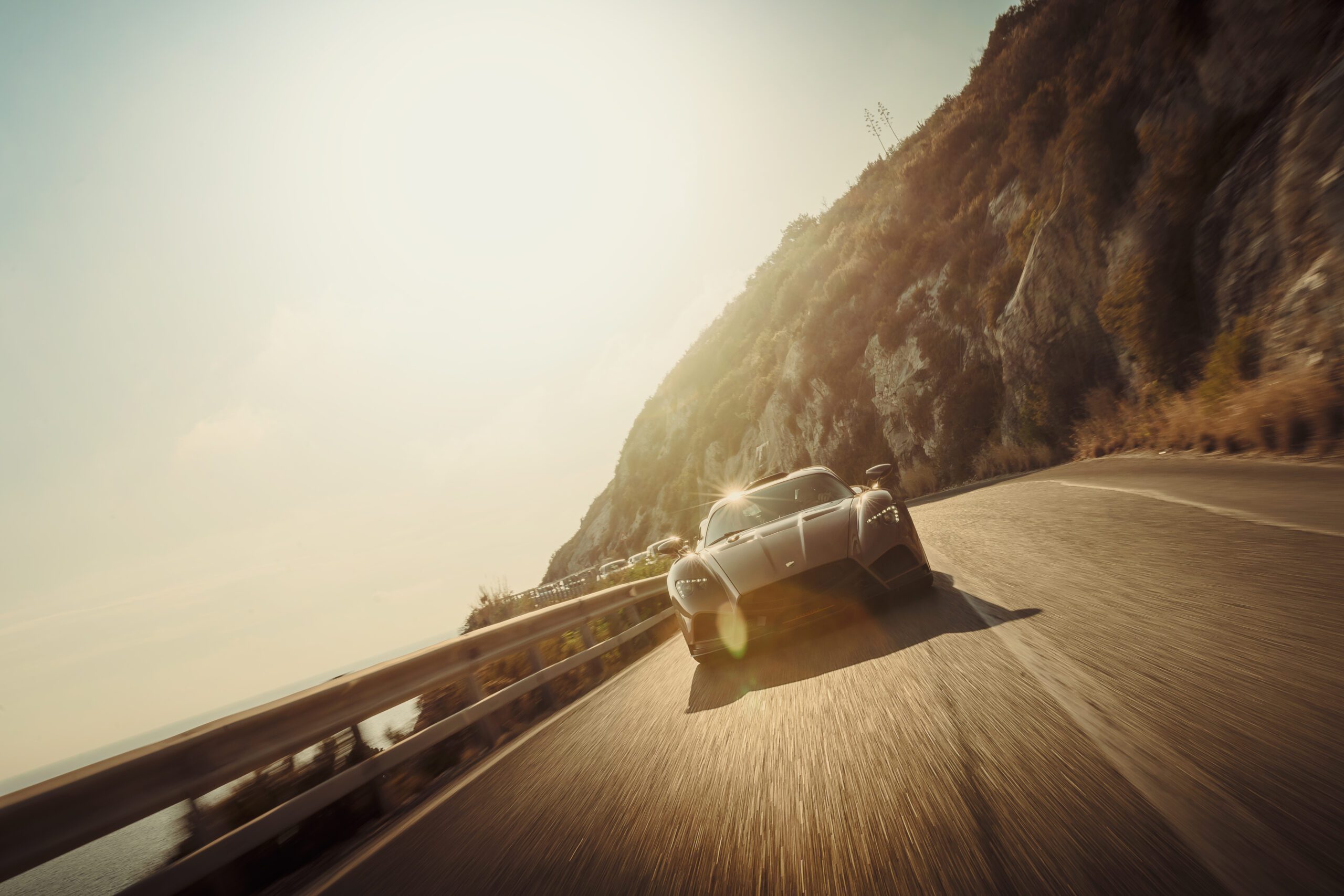
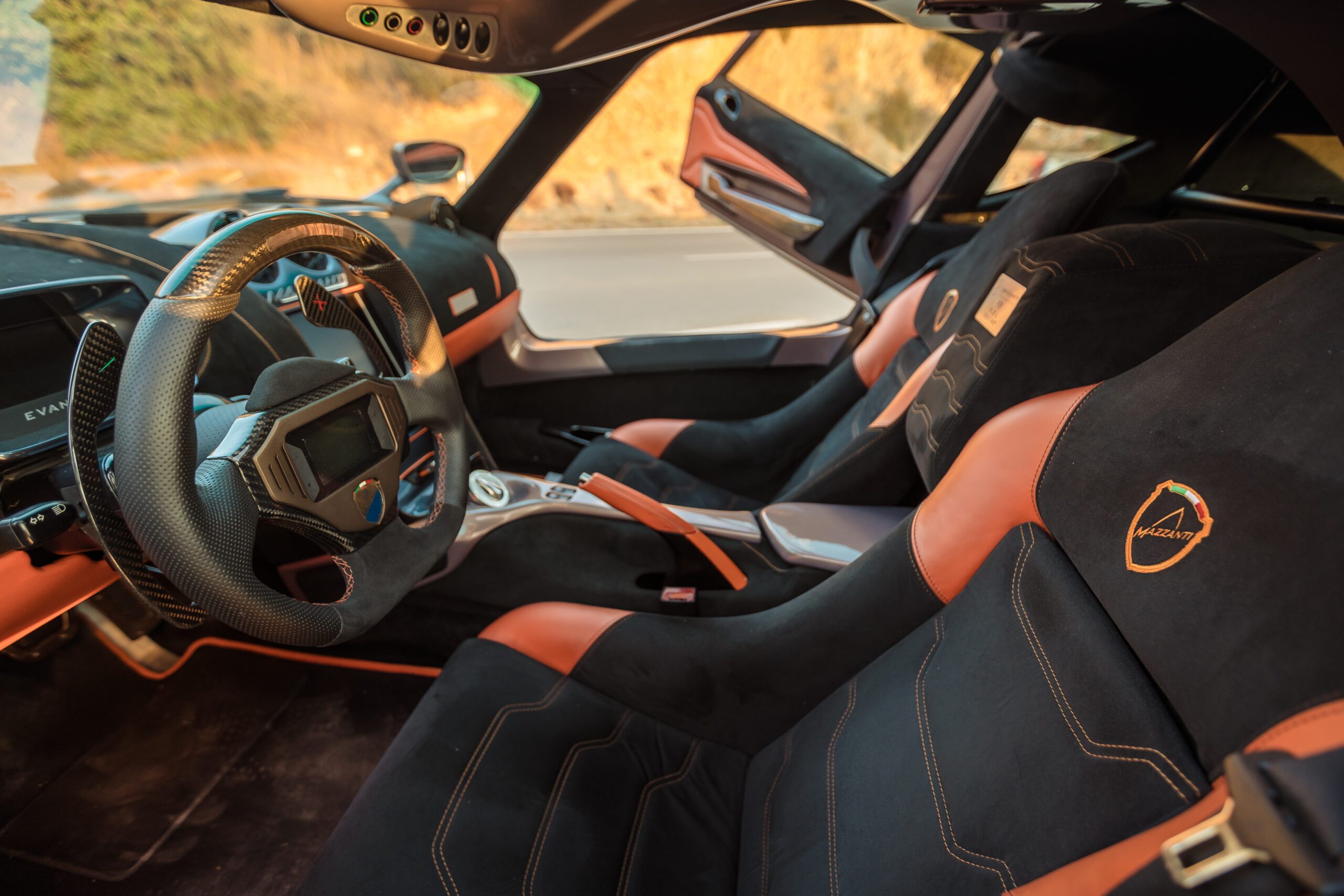
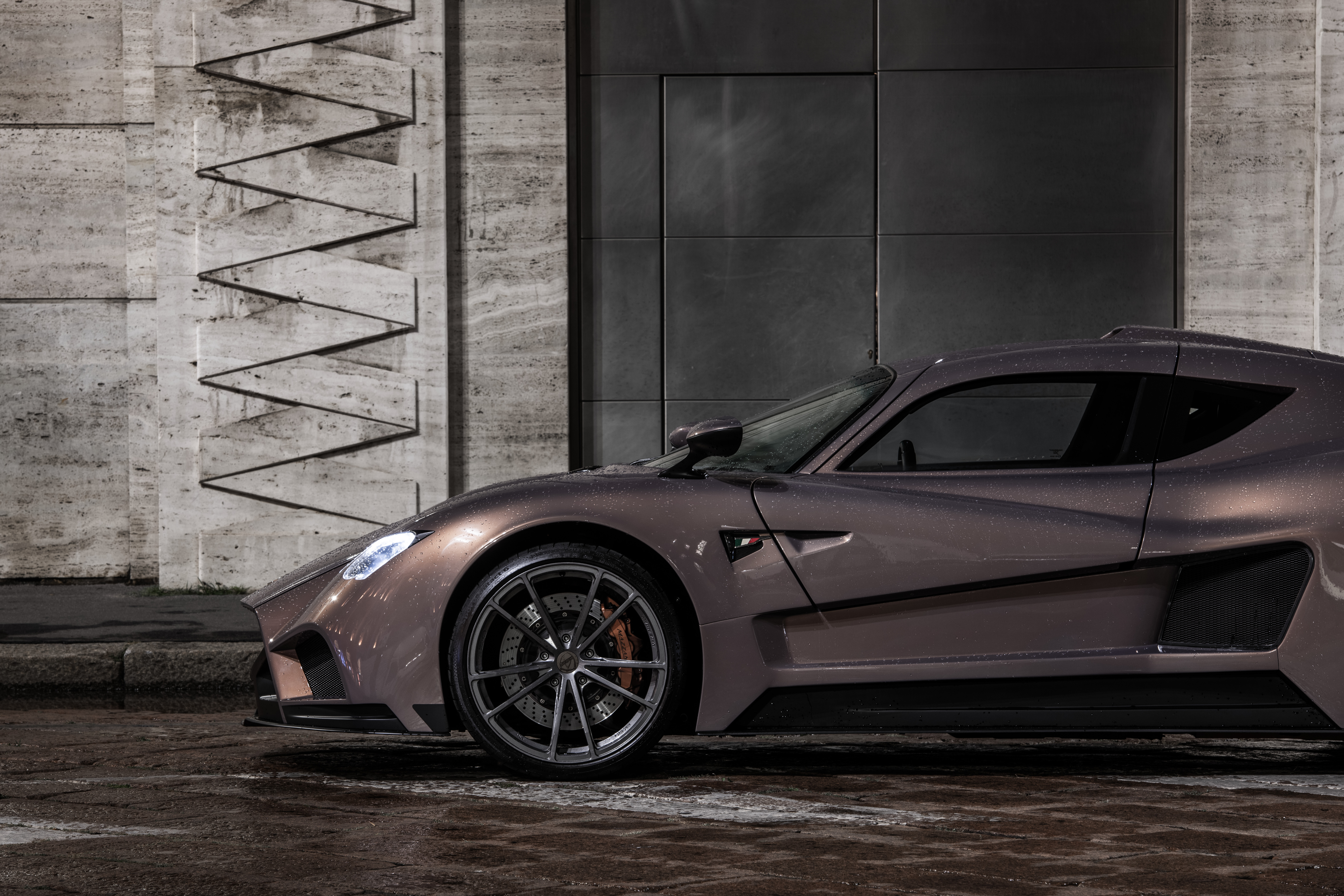
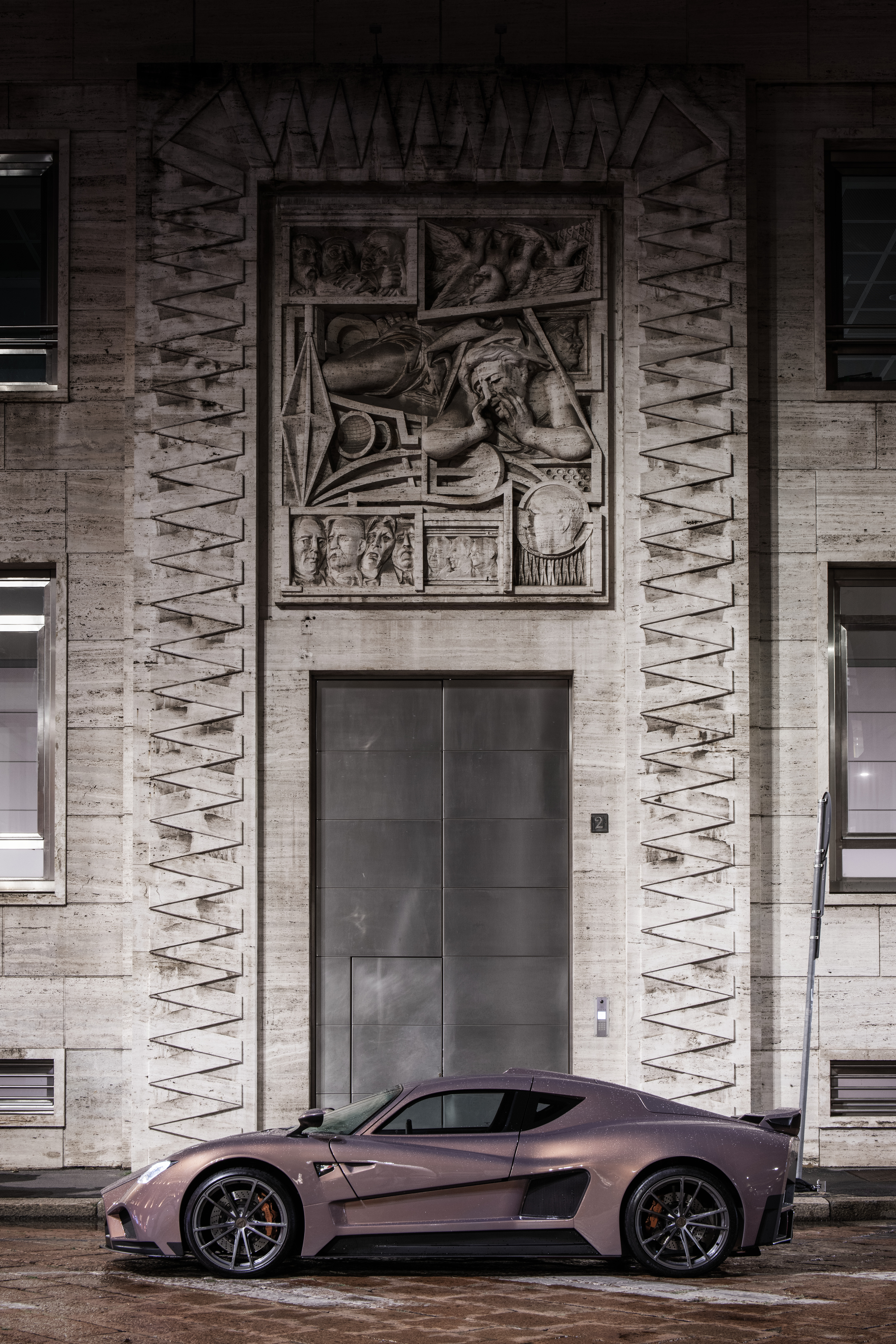
The ‘ambassador’ for Mazzanti during the tour will be the bronze-colored Classic Evantra. One of the most interesting about this Evantra is its versatile finish. The finish seems much like a chameleon adapting to its surroundings wherever it goes.
Luca Mazzanti has dubbed the finish “Sunset Bronze.” Inspired by the gorgeous sunsets on the Tuscan hills, it is metalized, triple-layered iridescent color. It starts from bronze and in sunlight, changes color to gold while in the evening shadows it takes on a violet hue.

The engine is every Evantra’s crowning glory. Each engine is crafted by Mazzanti Automobilli at its Pontedera atelier. Weighing roughly around 1300 kg depending on the model, each Evantra produced is lightweight. Matched with the powerful engine, it enables the car to go more than 360 kph. It can go from 0 to 100 kph in just 2.9 seconds, and the Mazzanti Millecavalli R version promises to deliver even better and a more powerful performance.
Each hypercar produced by Mazzanti Automobili is one of a kind. Mazzanti’s ethos of handmade-in-Italy and their ability and capability to accustom the model to the client’s specifications results in a car that is truly unique.

Every Mazzanti produced is a collaboration between the client’s design and imagination, and as they connect with the company’s founder, Luca Mazzanti in Tuscany, it is a truly exhilarating journey where it ends with their fully customized hypercar.

To know more about the upcoming UK Tour and for opportunities to see the car, as well as to schedule private viewings, please contact: uktour@mazzantiautomobili.com

Porsche Taycan GTS Specs and Pricing

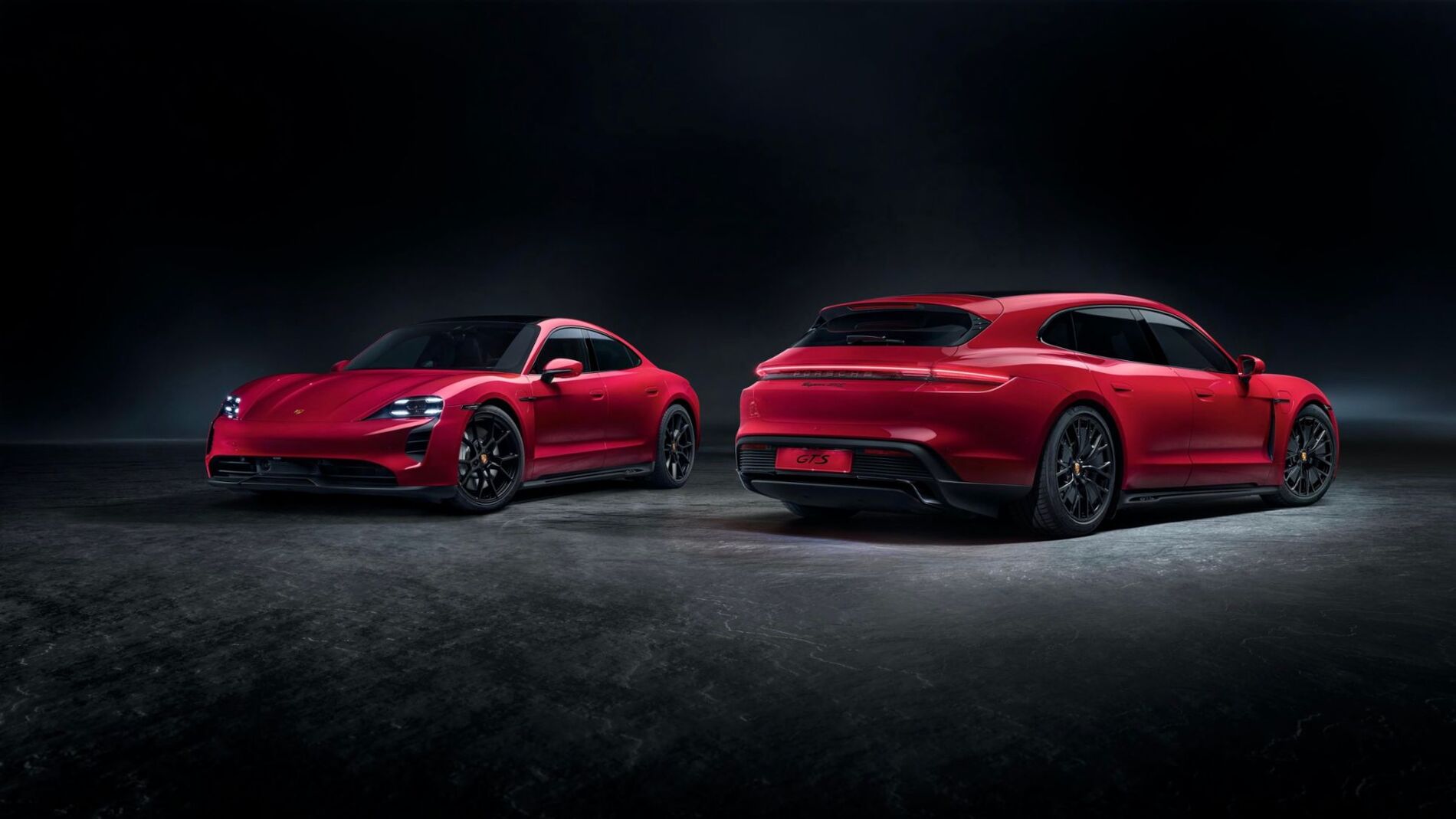
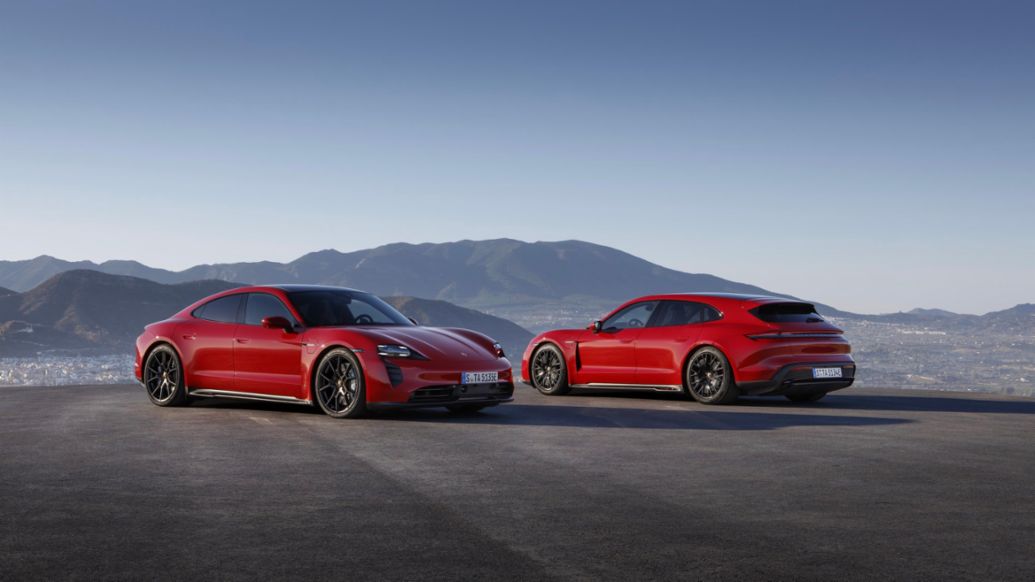
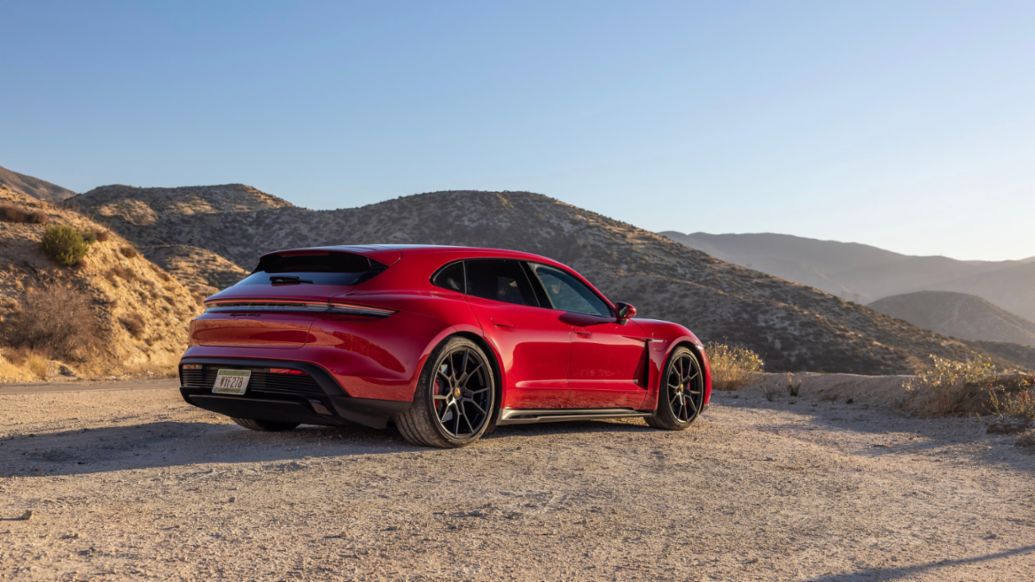
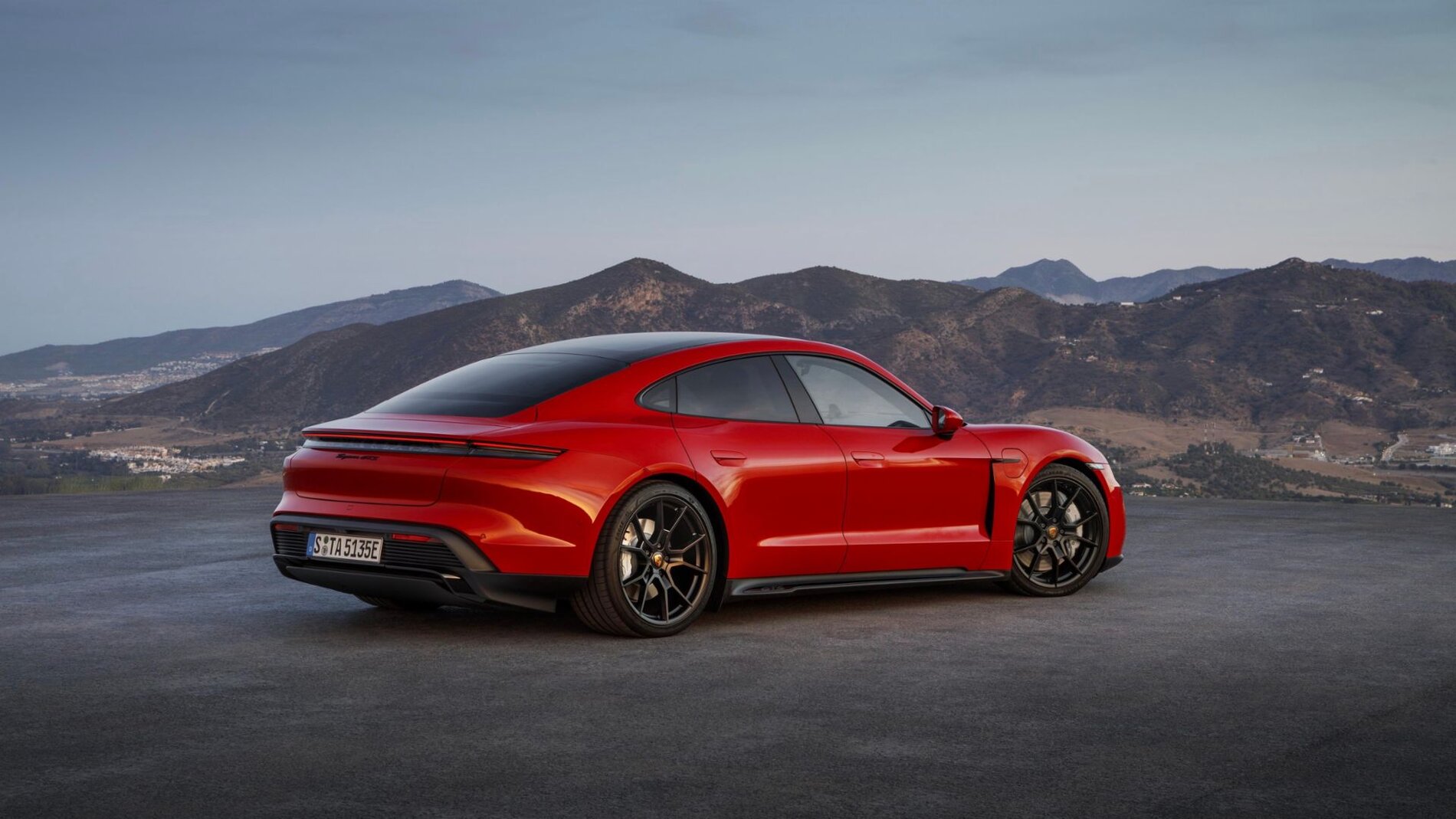
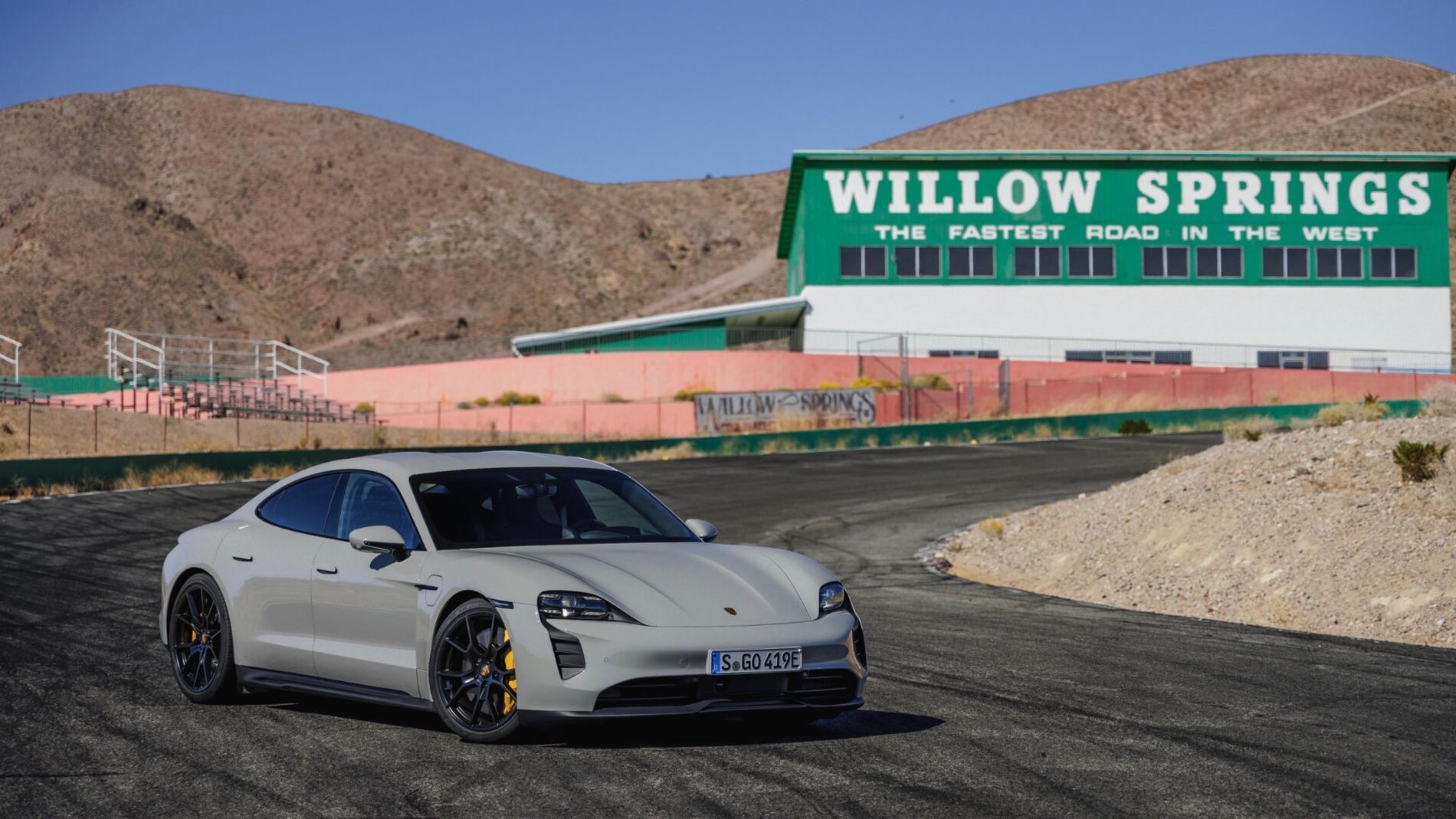
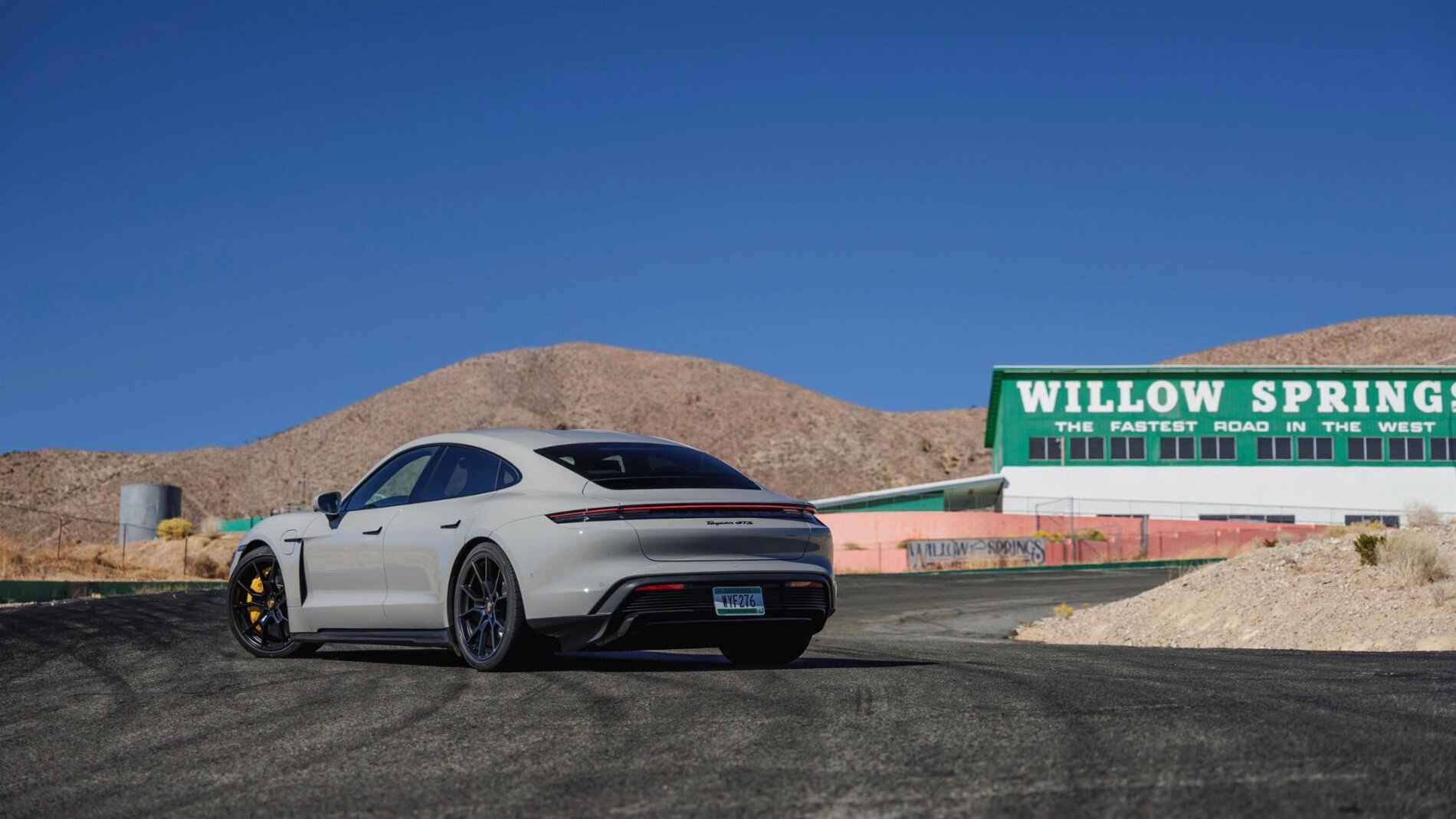
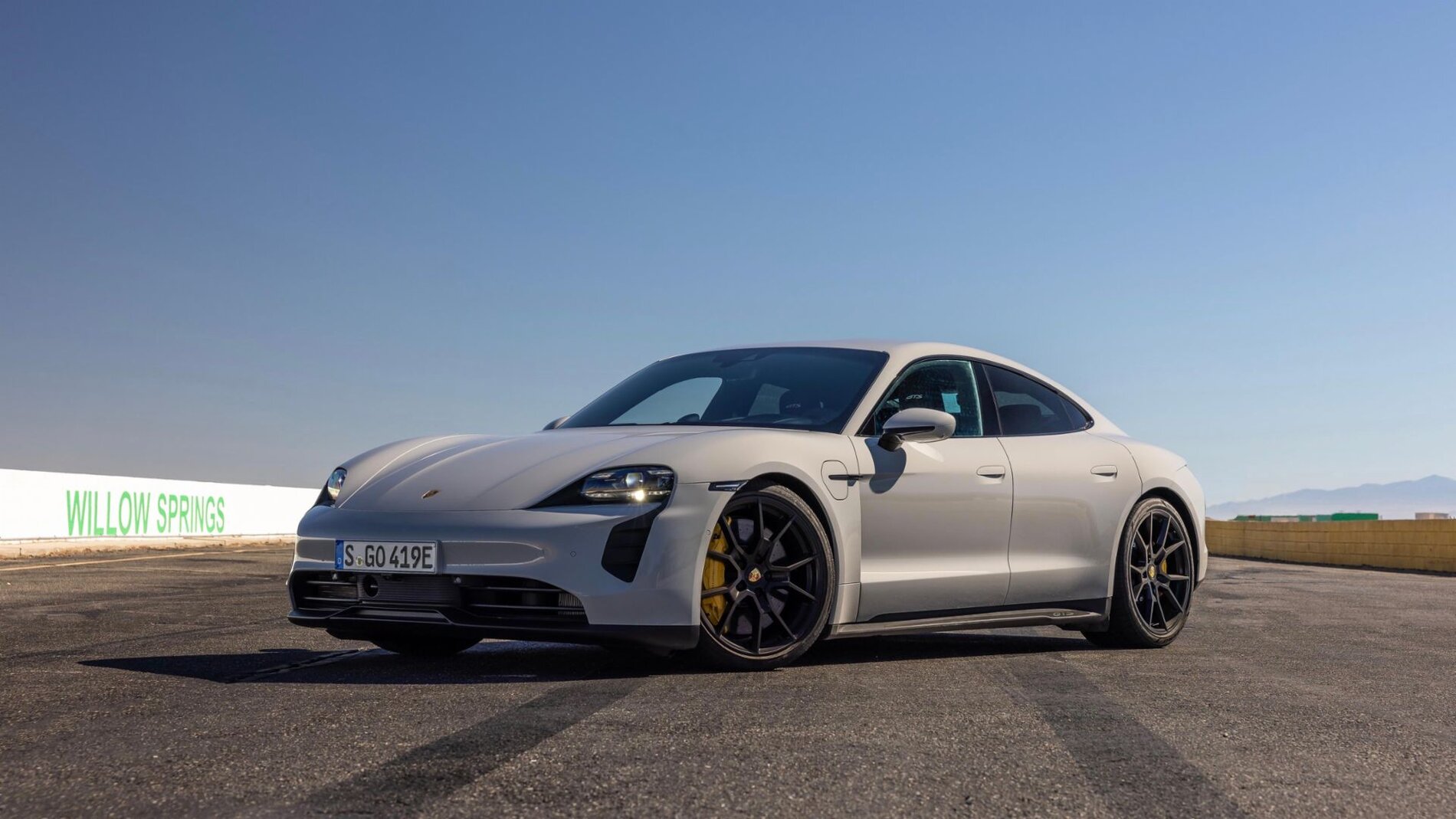
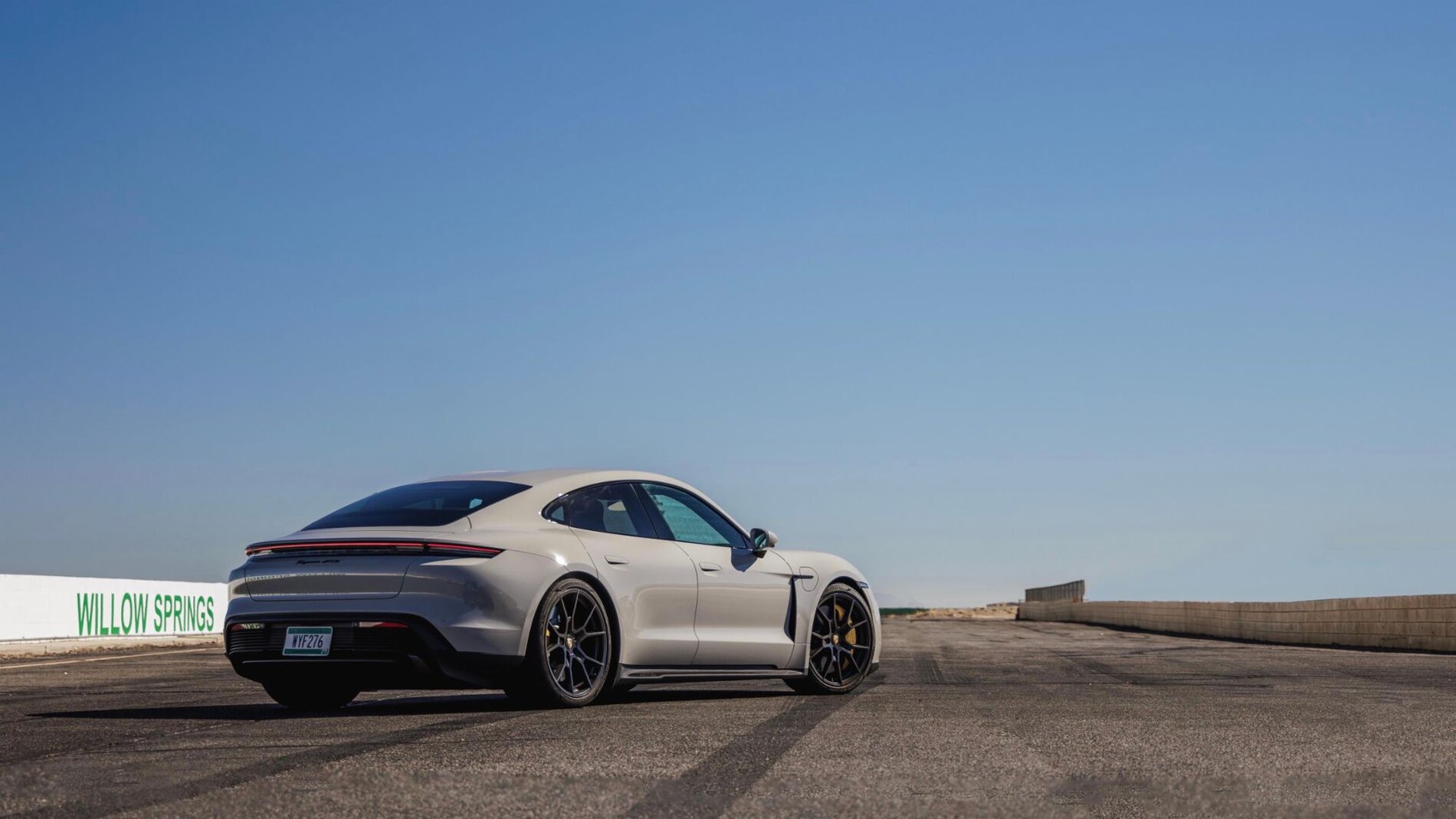
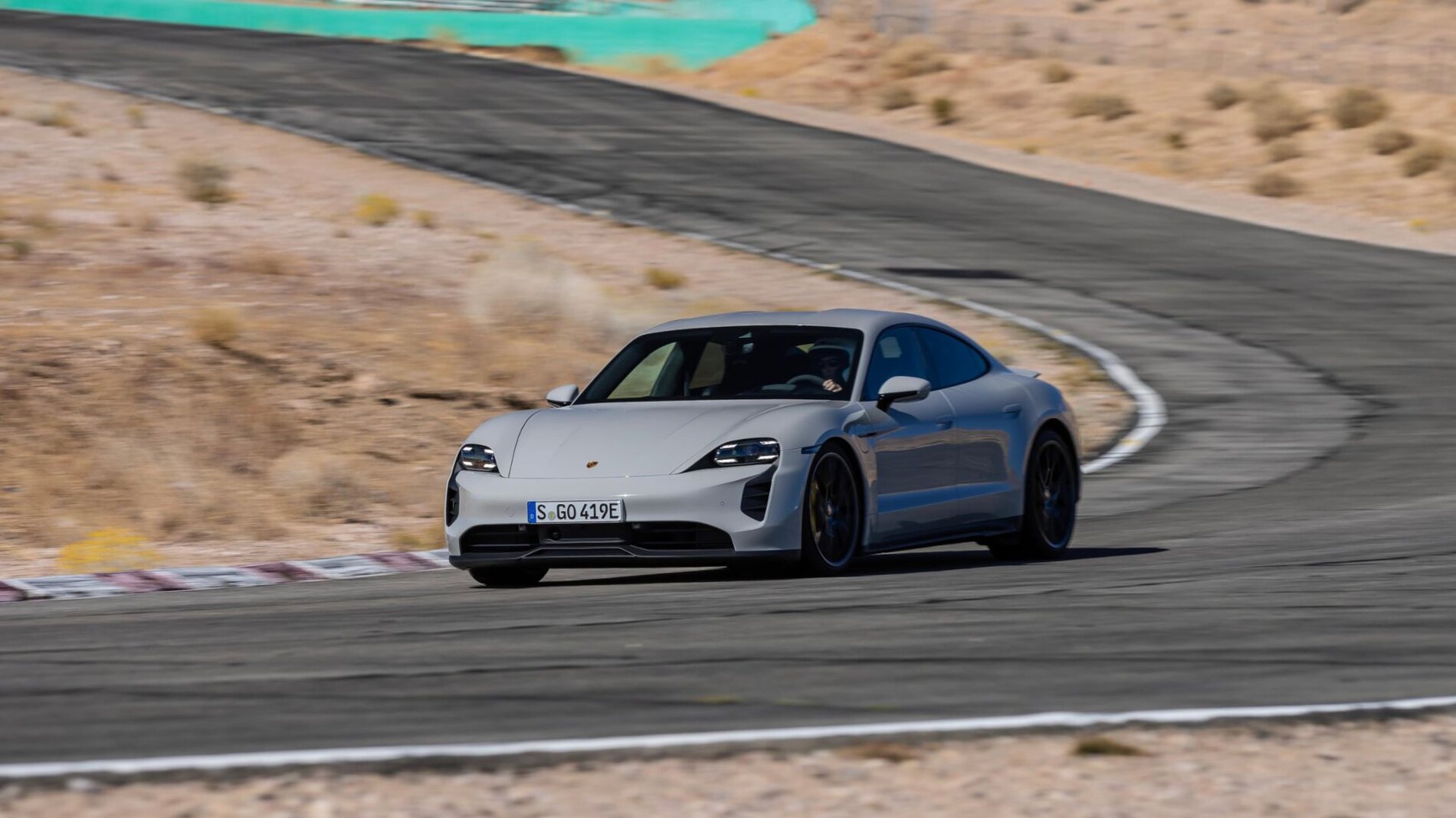
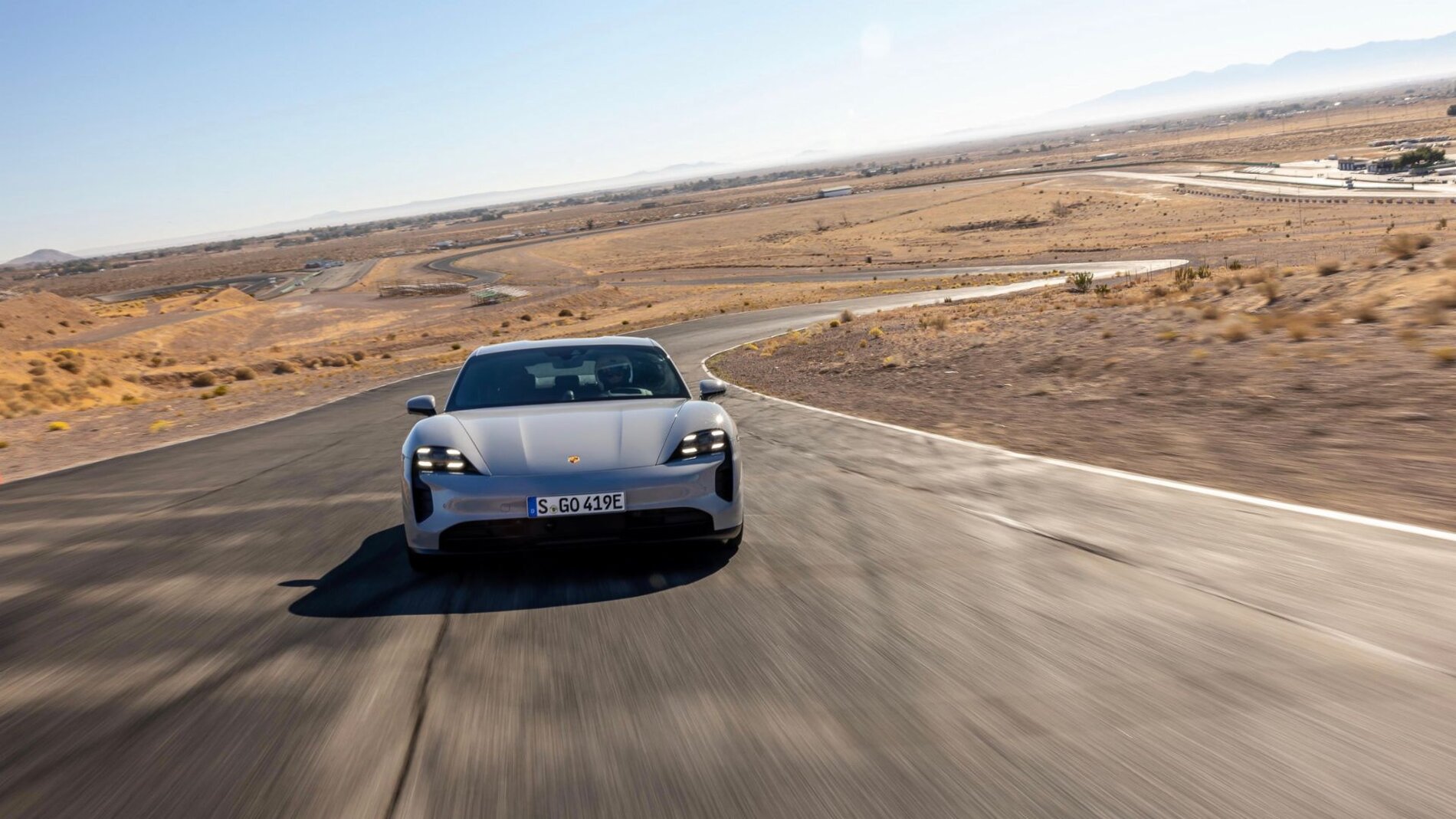
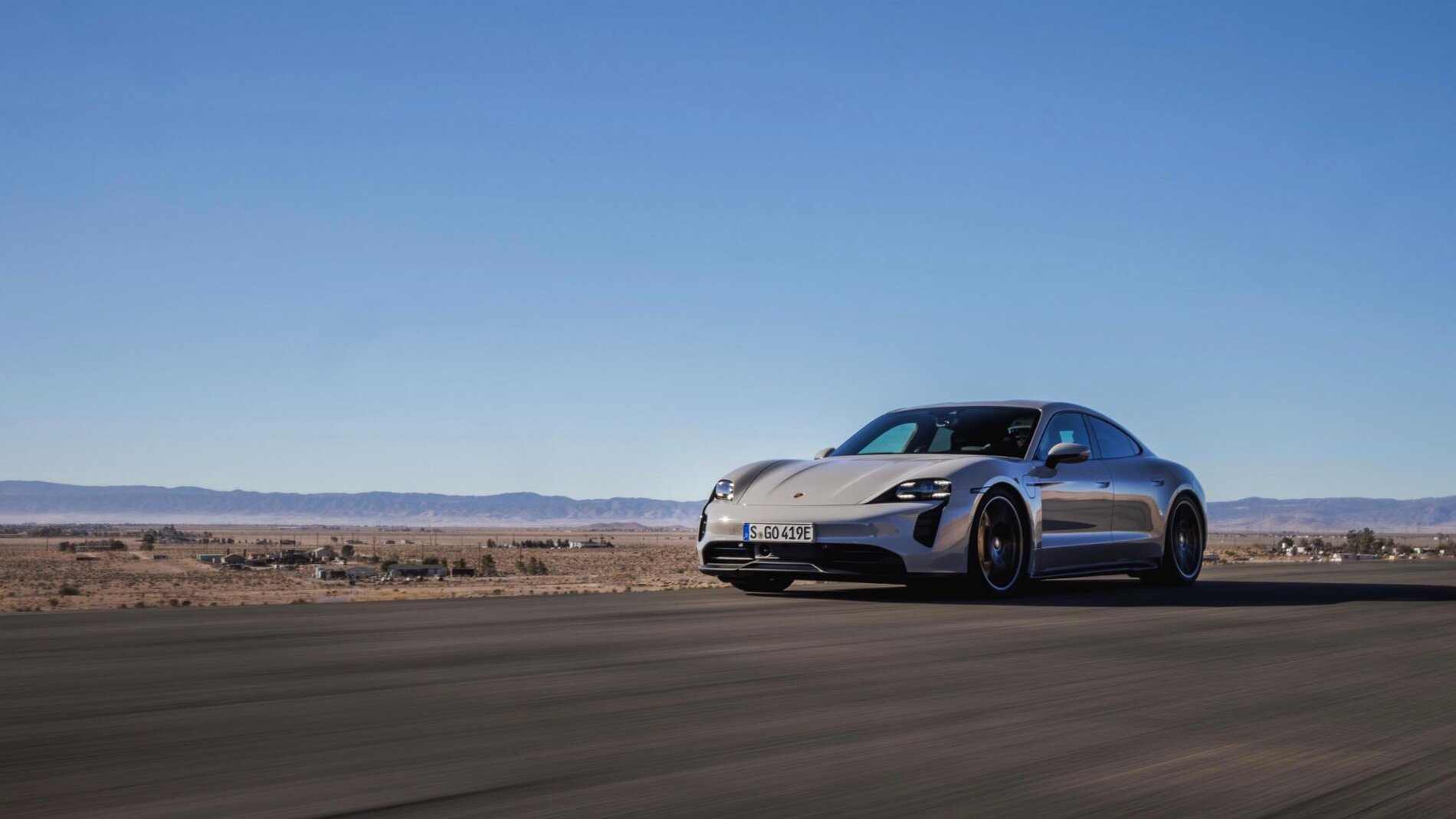
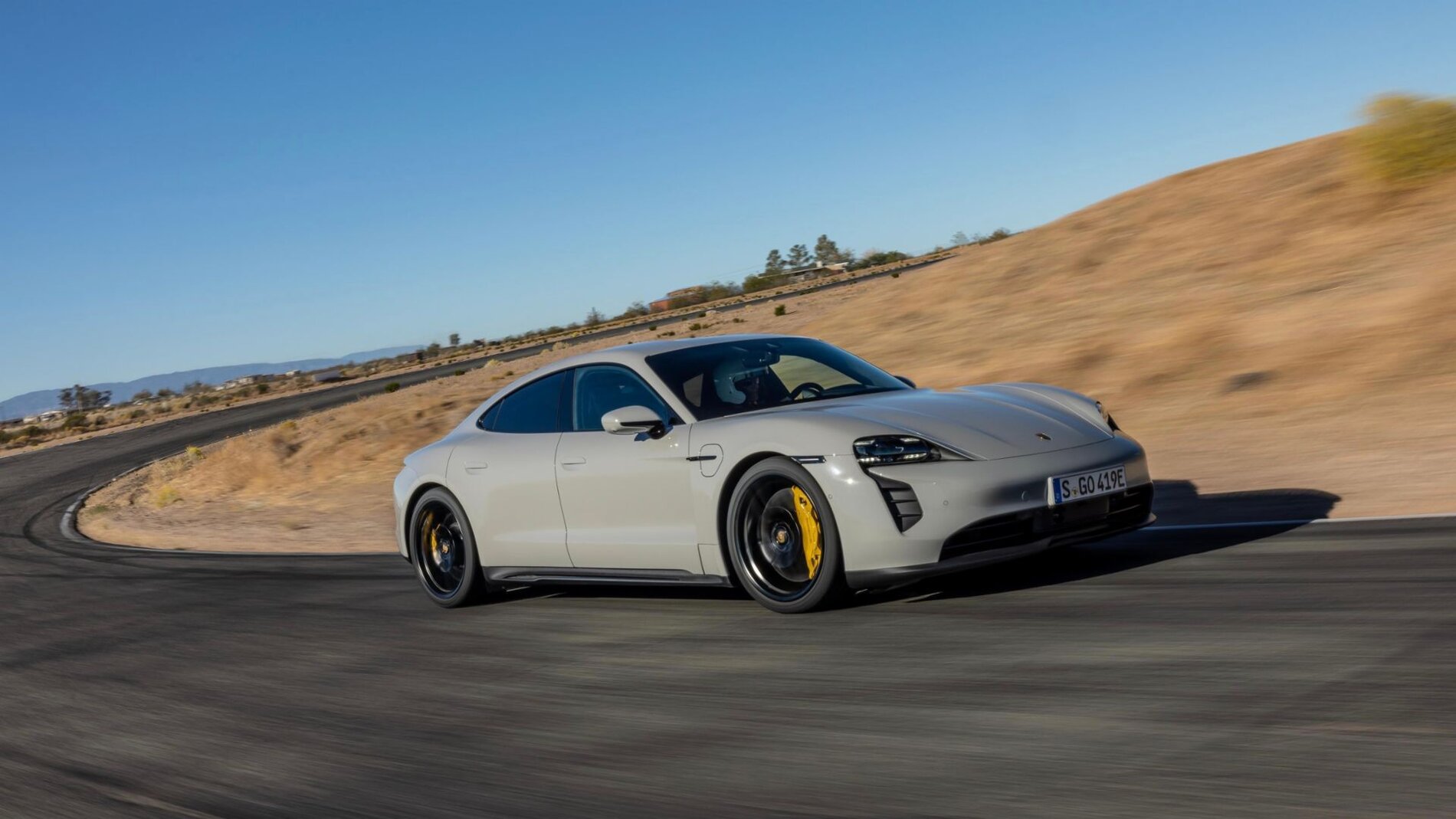
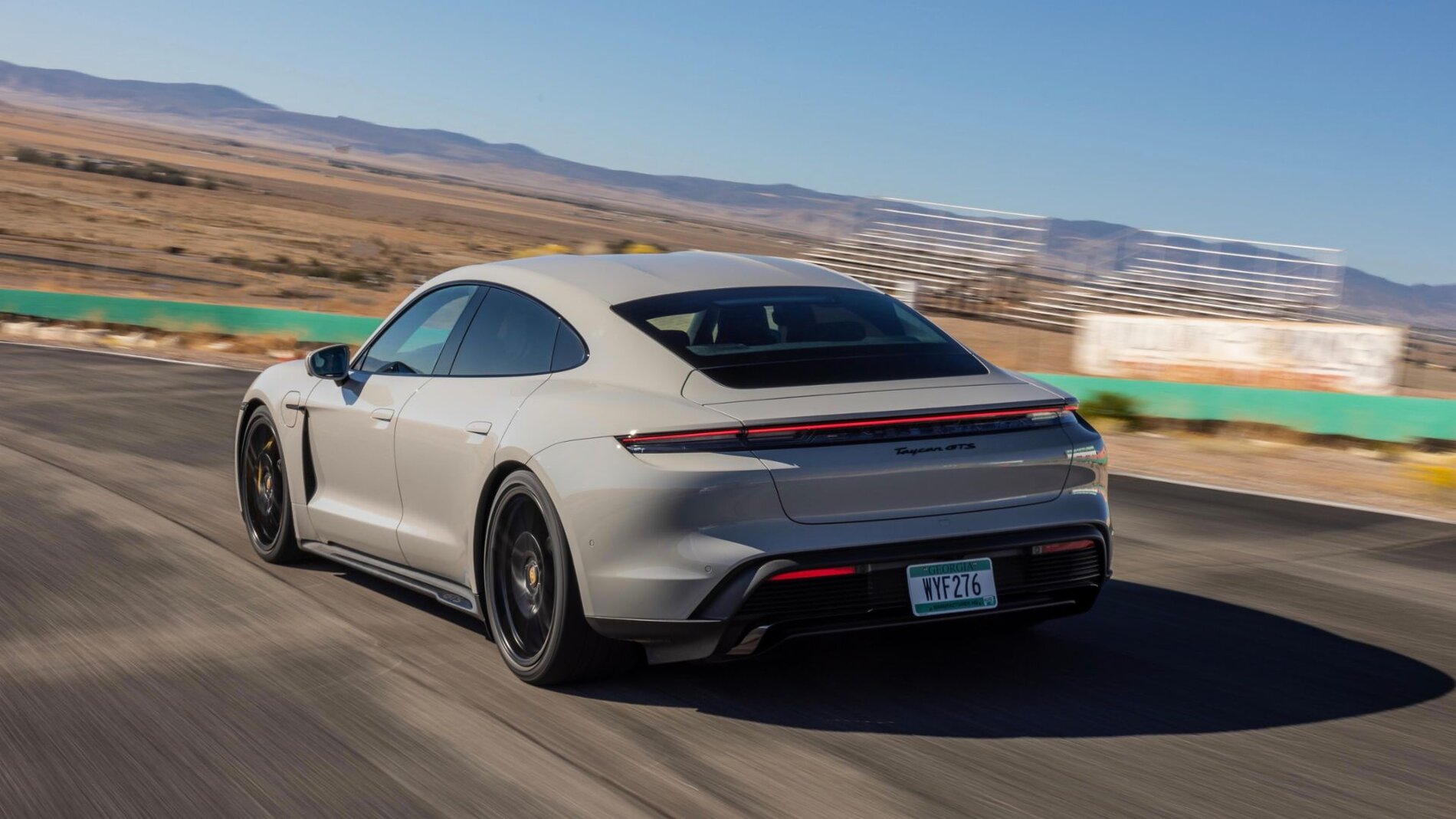
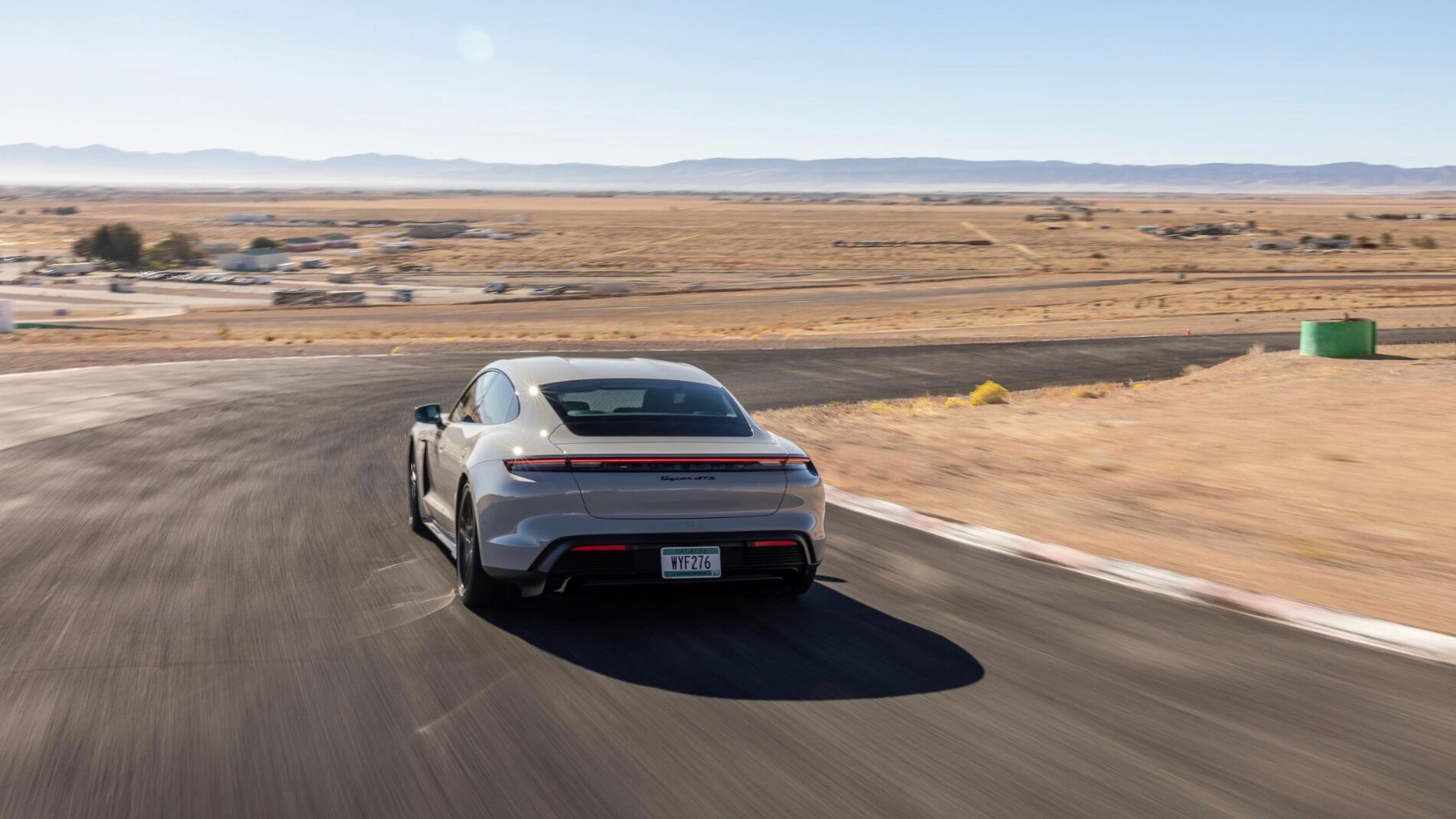
Porsche has revealed the new Taycan GTS electric sports car at the LA Auto Show 2021 together with the third body version of the first all-electric Porsche model series in the form of the Taycan GTS Sport Turismo. The Sport Turismo joins the Cross Turismo and sedan body variants in the model lineup.

The new Taycan GTS is the sporty all-rounder of the Taycan range. The model delivers an output power of 598 PS when using launch control. The acceleration from 0-100km/h is achieved in 3.7 seconds and the maximum speed is limited to 250km/h. Additionally, the new GTS features a range of up to 504 km based on WLTP figures making it the first Taycan to break the 500km mark.
Porsche Taycan GTS Specs and Pricing

Power 2 Electric Motors, one on each axle
Transmission All Wheel Drive
Gearbox 1 Speed Direct Drive at the front axle
2 Speed Auto at the rear axle
Output 598hp
Range 504km
0-100km/h 3.7s
Top Speed 250km/h
Price in USA Taycan GTS: $131,400 (USD)

Taycan GTS Sport Turismo: $133,300 (USD)

Price in UK Taycan GTS: £104,190 (GBP)

Taycan GTS Sport Turismo: £104,990 (GBP)

Price in Norway To be Announced
Price in Canada Taycan GTS: $150,100 (CAD)

Taycan GTS Sport Turismo: $152,700 (CAD)

Price in Germany Taycan GTS: €131,834 (euros)

Taycan GTS Sport Turismo: €132,786 (euros)

The model also features an adaptive air suspension, Porsche Active Suspension Management (PASM) fitted to the benefit of the lateral dynamics and a sportier rear axle steering as optional.

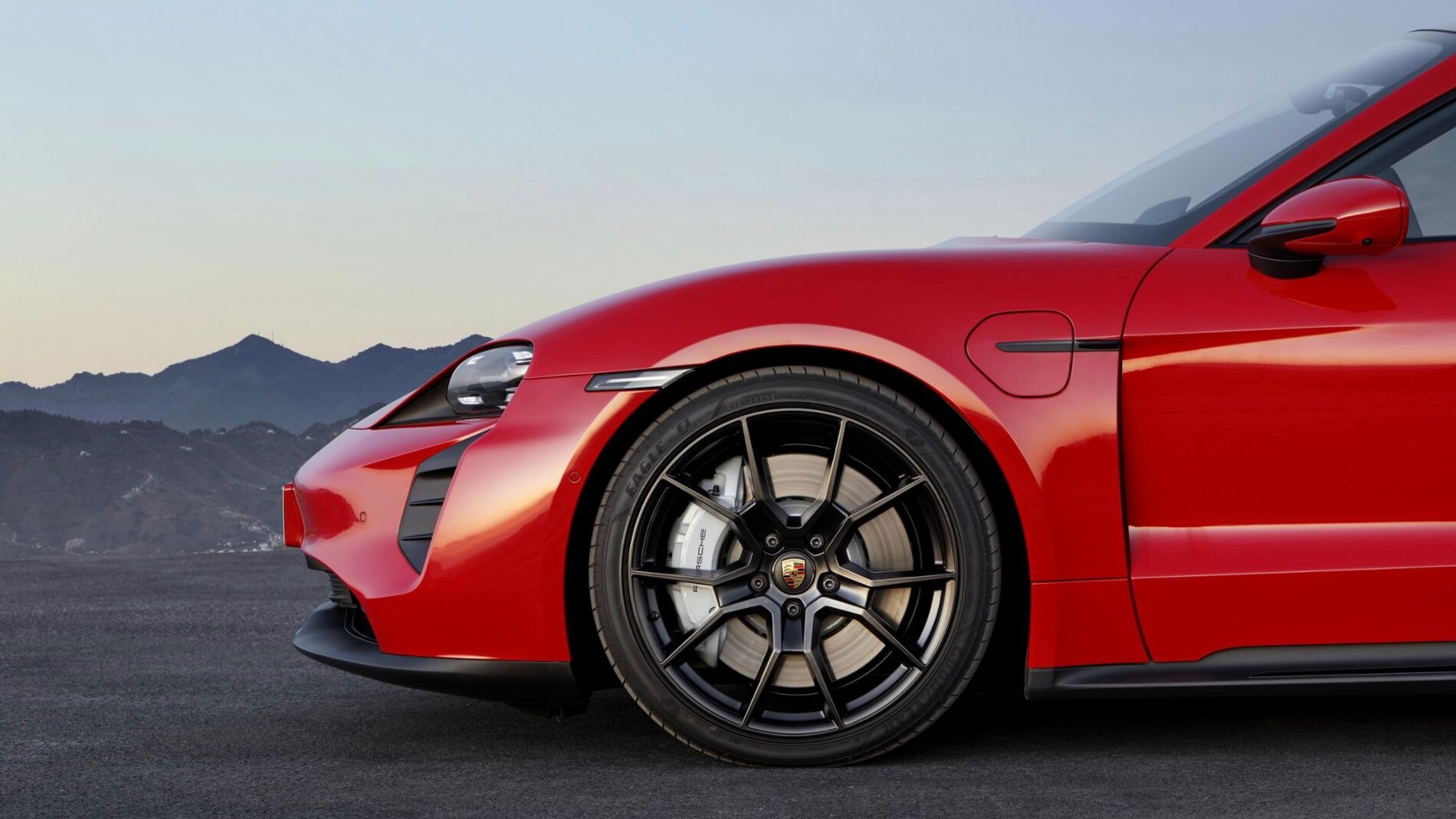
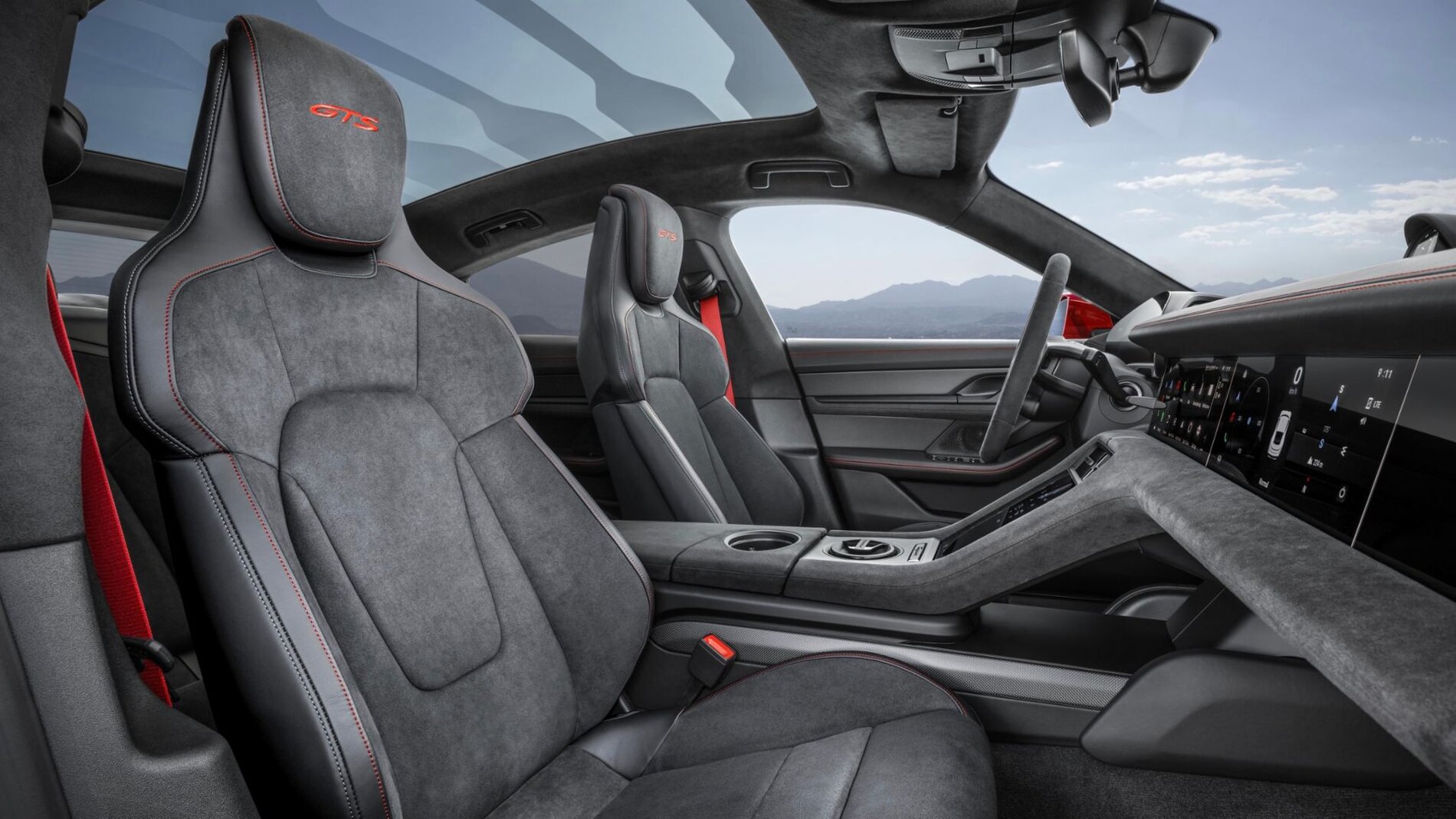
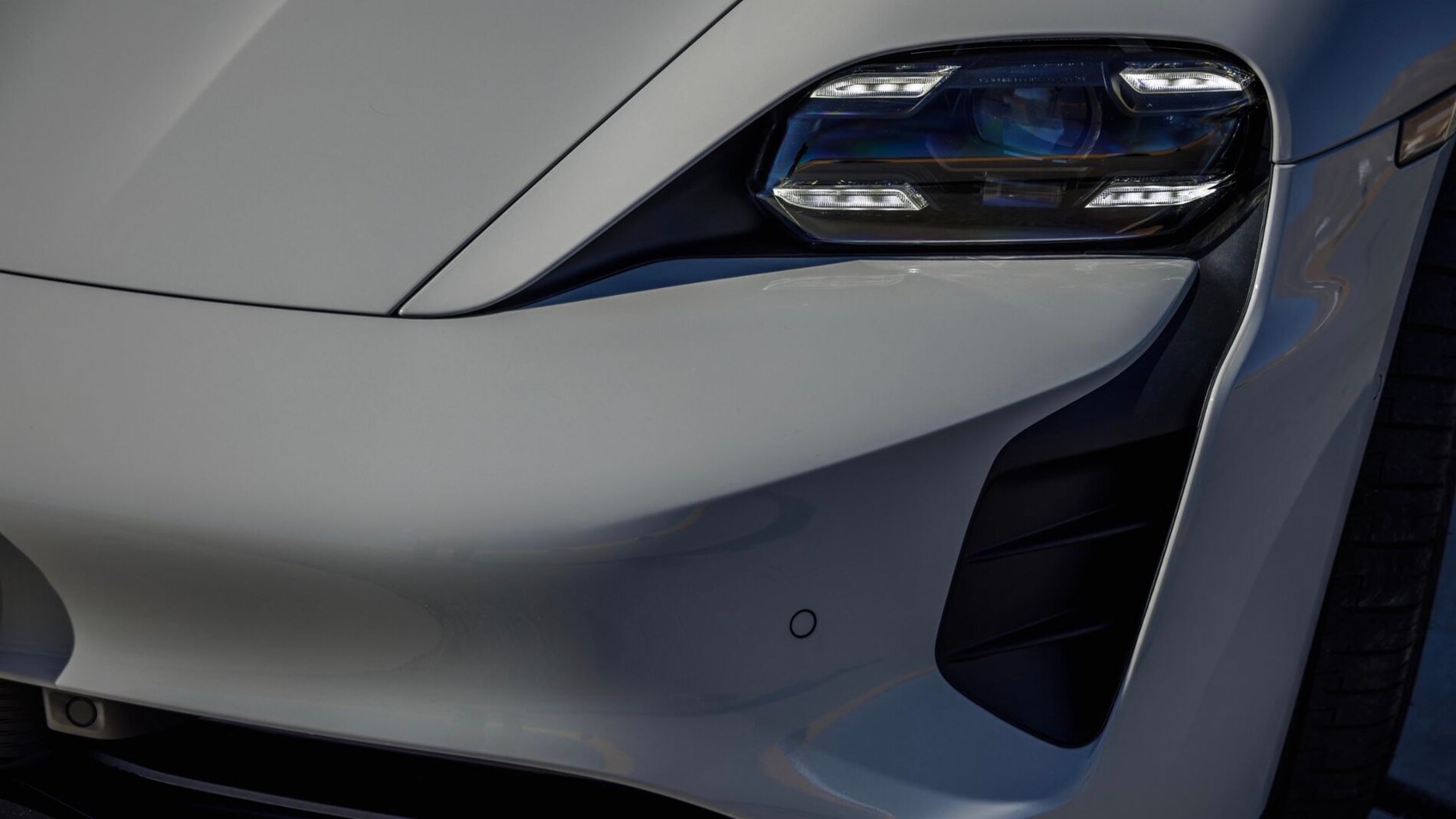
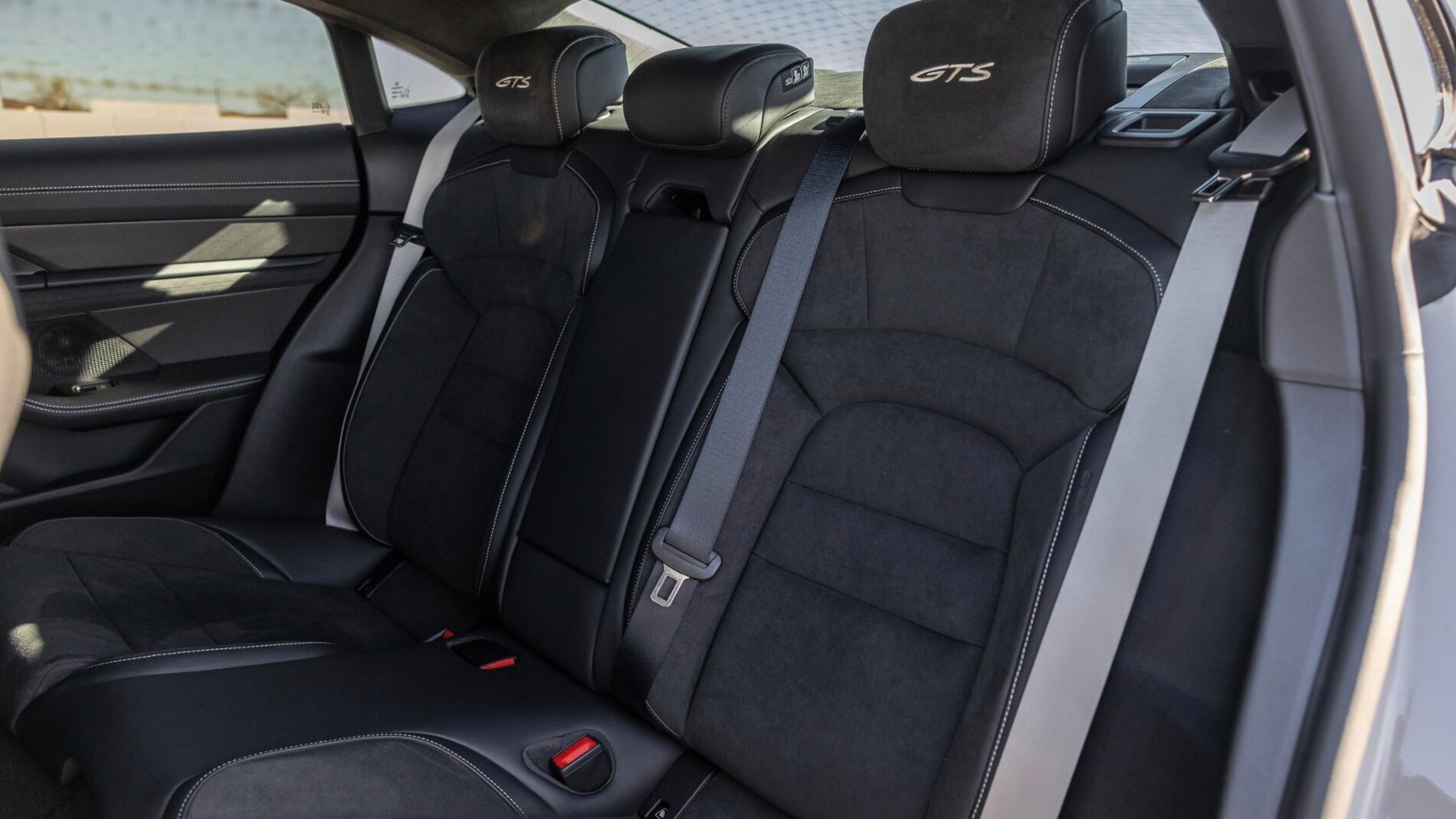
The Taycan GTS features a unique interior and exterior design. The exterior consists of black or dark details on the front apron, bases of the mirrors and on the side window trims. On the other hand, the interior has been finished in numerous Black Race-Tex features and the brushed aluminium interior package with Black anodized finish is fitted as standard.

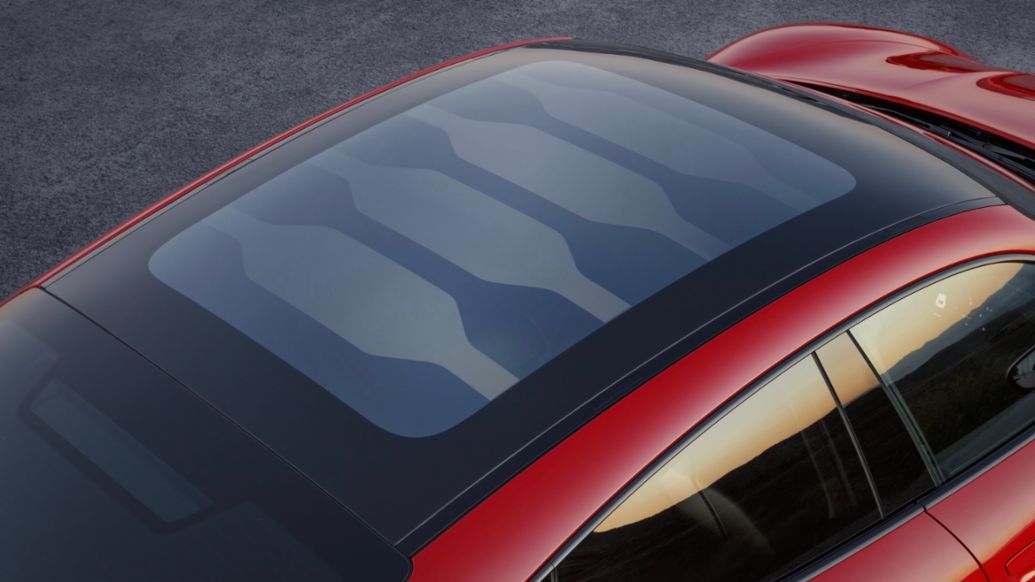
The Taycan GTS also features a new panoramic roof with Sunshine Control as optional. The roof can be changed from clear to matt through an electrically switchable liquid crystal film thus protecting the occupants from glare without darkening the interior.

The roof is divided into nine segments that can be switched individually and in addition to the clear or matte settings, semi and bold can also be selected for a choice of wide or narrow segments.

The Taycan Sport Turismo is aimed at customers who want a similar level of everyday practicality as offered by the Taycan Cross Turismo as well as on-road performance similar to the Taycan sport saloon. This new derivative is simply the best of both Taycan worlds and means the model family now includes three body variants.

The Taycan Sport Turismo features a sporty silhouette, a rearward-sloping roofline and the functional design of the Taycan Cross Turismo. The rear headroom is larger than that in the Taycan Sport Saloon and the load capacity under the tailgate is more than 1200 litres. However, the Taycan Sport Turismo does not have off-road design elements or packages.

Prices for the Taycan GTS and Taycan GTS Sport Turismo start from 131,834 euros and 132,786 euros. German prices include 19% VAT and country specific equipment.

Porsche x LA Auto Show: Porsche 718 Cayman GT4 RS Specs Revealed

Late last month, we brought you coverage of Porsche’s confirmation that there would be a GT4 RS model after all. Not a whole lot was known at that time, though what was presented to us was more than sufficient in painting the picture of just how great of a car it was shaping up to be. The most noteworthy fact was that it set a blistering lap time of 7:04.511 at the Nürburgring Nordschleife. This is some 23.6 seconds quicker than the 718 Cayman GT4, suggesting that virtually no part of the car was spared the ‘RS’ treatment.

Now we know a lot more about the ‘how’ and the ‘why’, and Porsche has decided to provide those details to us as part of their participation in the 2021 LA Auto Show, alongside their unveiling of the new Taycan GTS models and the Panamera Platinum Edition. At the forefront of this is the GT4 RS’ engine. It was public knowledge that the powerplant would be a 4.0L naturally-aspirated flat-6 unit, likely a derivative (read: detuned version) of those used in current 992 GT3 and GT3 Touring. Porsche have certainly fulfilled these parameters. You can view a recording of the livestream event, below:

[embedded content] [embedded content]

What was much less expected or known, was how the confirmed power figures would tally up. There were some suggestions that based on the Nürburgring lap time, as much as 500 hp would be on tap for the 718 Cayman GT4 RS. At the time, that still felt a bit farfetched for a number of reasons, the most notable of that being it would mean the new range-topping 718 would be infringing too deep into 911 GT-level territory. However, that prediction has essentially come good, with the GT4 RS producing 493 hp (500 PS)—the same as a 991.1 GT3 RS.

It revs to 9,000 rpm and makes a bit less torque—331 lb-ft vs 346 lb-ft in the 992 GT3—which Porsche says is the result of a more complicated exhaust design, but that’s not likely to matter in the grand scheme of things. After all, the platform known best for its extraordinary balance and superb handling dynamics, is still good from a blistering 0-60 mph time of 3.2 seconds in its new RS-guise. That’s plenty quick. As we correctly predicted, the GT4 RS comes exclusively with a 7-speed PDK transmission, which further highlights the car’s race-bred intentions and stays true to the (modern) ‘GTx RS’ mantra.

[embedded content] [embedded content]

According to Dr. Frank Walliser—Vice President of 911 and 718 Product Lines—the GT4 RS will tip the scales at 3,120 lbs, making it around 49 lbs lighter than a similarly-equipped 718 GT4 with PDK. Much of the weight savings are the result of a healthy carbon fiber diet, with the front fenders, bonnet, door panels and other fixings now made from the good stuff. It will also sit 30 millimeters lower than a regular Cayman and now comes standard with a ball joint suspension system, replacing the rubber bushings used in previous models. The dampers, springs and sway bars have also been revised for more hardcore applications. All of these will afford the RS superior handling precision and a heightened connection with the tarmac.

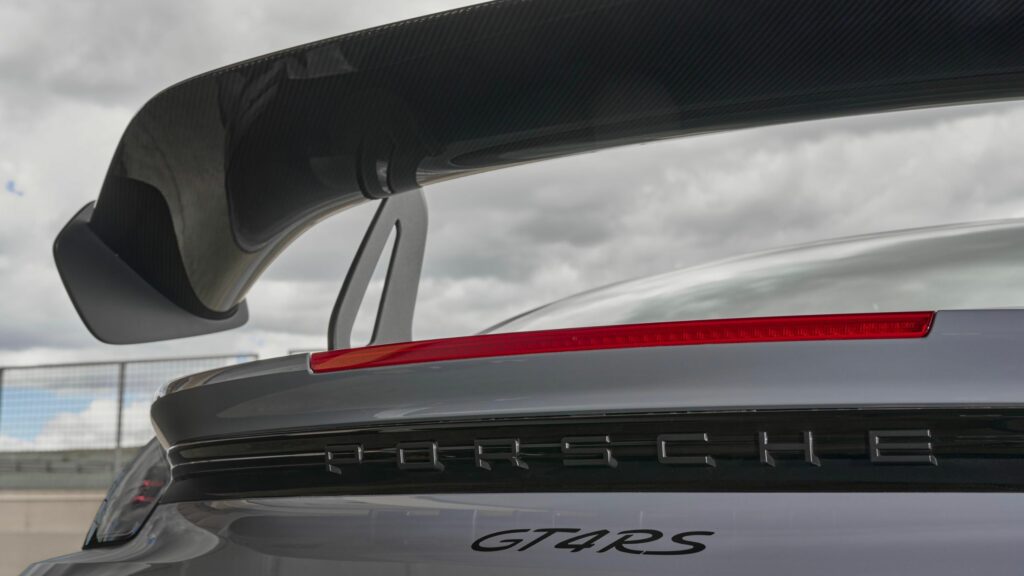
At a glance, the biggest differences between the GT4 RS and the other models are ones that are visually telling, with the swan-neck rear wing being the most eye catching of its features. The rest of the body gets the typical RS workout, with streamlined underbody panels, a more aggressive (and adjustable) front splitter, a larger rear diffuser, side blades and huge air intakes, all forming part of this new equation. These of course, are all completely functional changes as well, with the GT4 RS able to produce up to 25% more downforce than the GT4, while also improving engine and brake cooling.

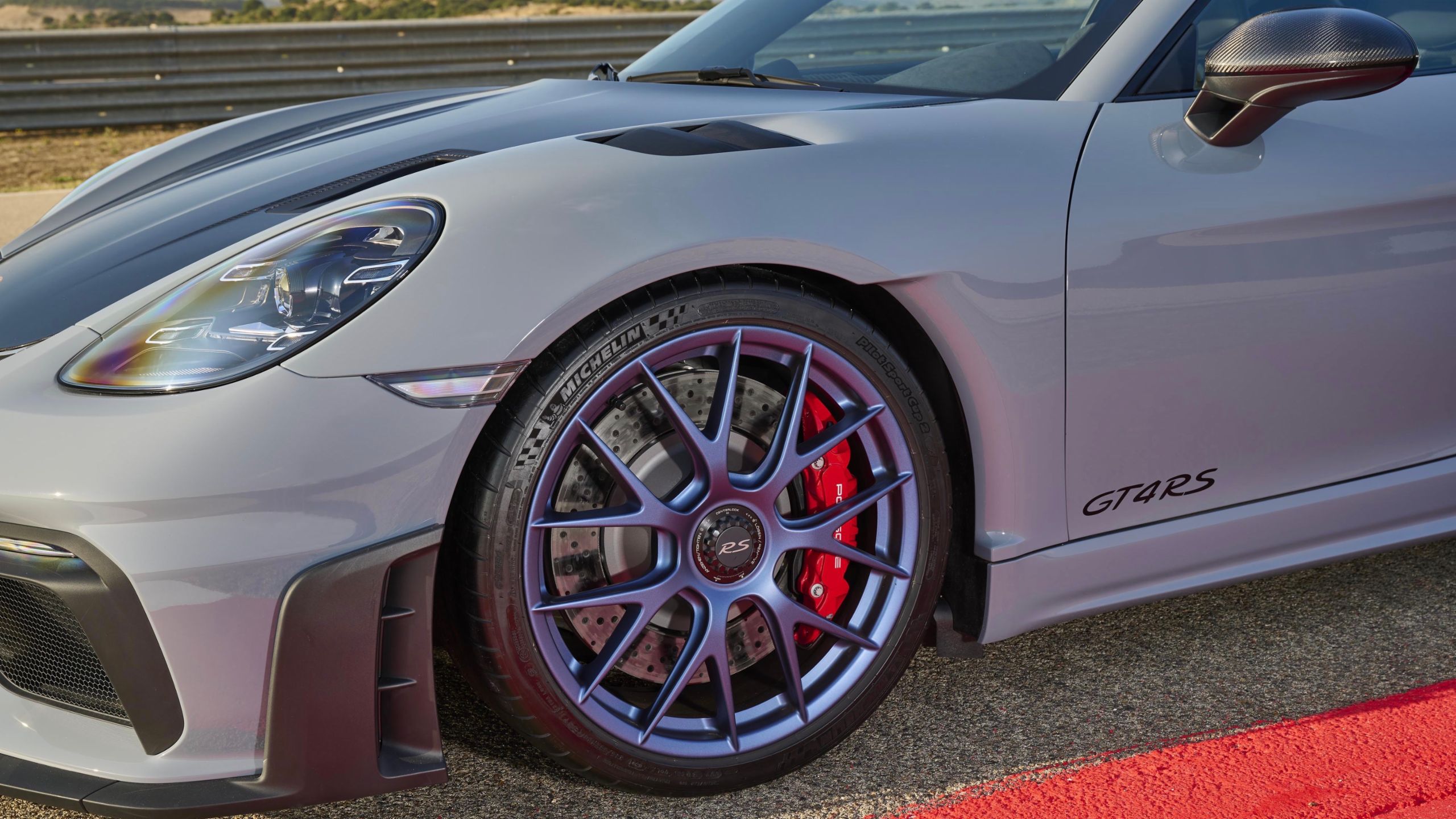
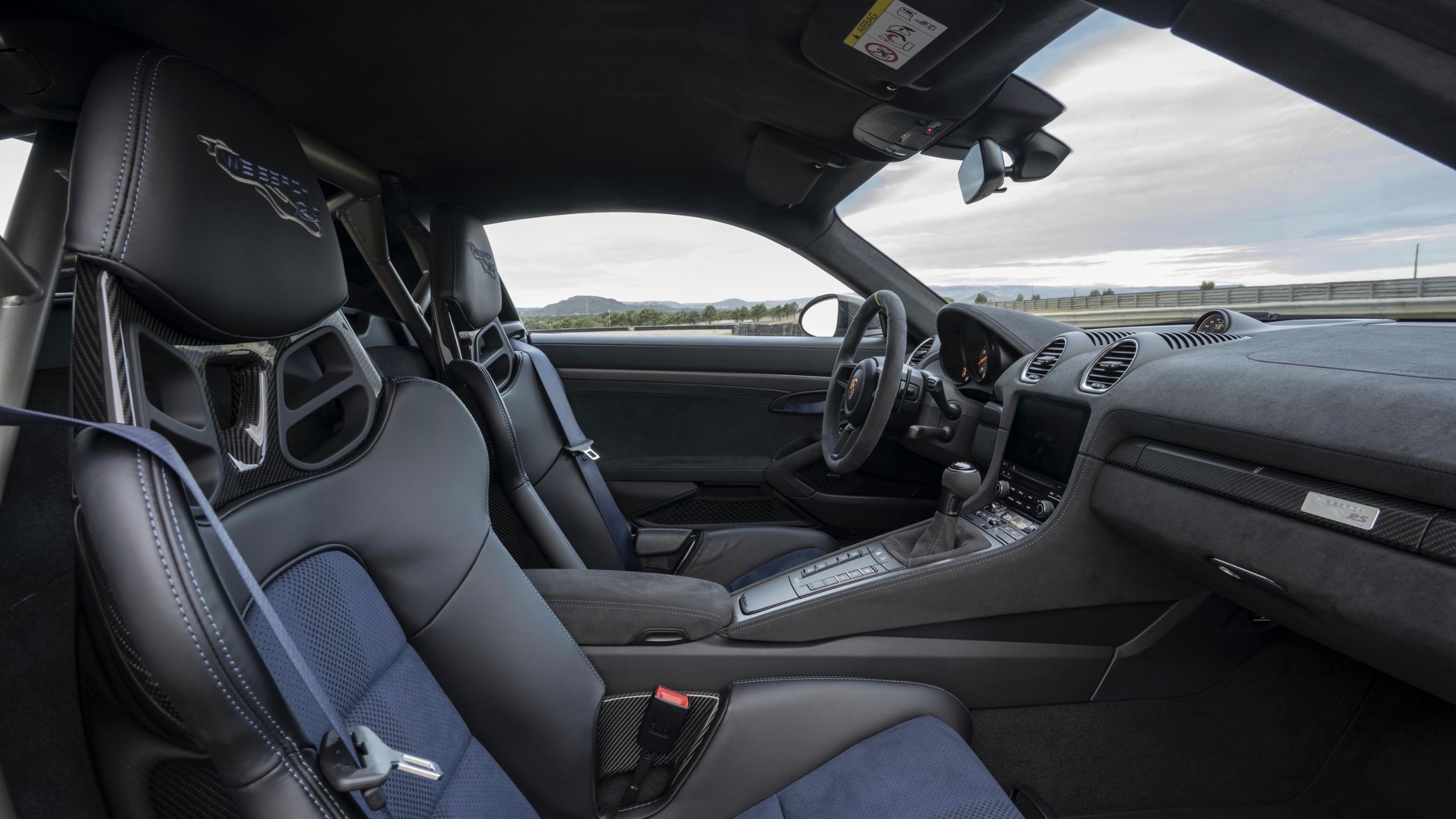
The new Porsche 718 Cayman GT4 RS is also responsible for a few important ‘firsts’ in the history of the Cayman. Besides being the platform’s inaugural RS representative, it’ll also be the first time the Weissach Package is offered for the model, following the trend made popular by the most recent GT3 RS and GT2 RS. The Weissach Package for the GT4 RS will use the same formula which incorporates exposed carbon fiber exterior panels, titanium exhaust tips, magnesium wheels and a roll cage (in jurisdictions where it’s legal to have one from the factory). Center-lock wheels are also a debutant feature on the Cayman, via the RS.

Compared to other trims, there isn’t a significant list of other notable options to pick from—notwithstanding front-axle lift, and a unique Porsche Design watch—because the RS already comes comprehensively equipped, as anyone buying a car with the badge should expect. I was also pretty bang on with my prediction in terms of pricing, with the base MSRP of the Porsche 718 Cayman GT4 RS sitting at $141,700 USD. Waiting lists are already looking long, relative to the number of allocations being given, so you should get your name in the hat now, if you’re interested in picking up Porsche’s latest—and arguably, their most impressive—RS model.

Porsche 718 Cayman GT4 RS Porsche 718 Cayman GT4 RS Porsche 718 Cayman GT4 RS Porsche 718 Cayman GT4 RS Porsche 718 Cayman GT4 RS Porsche 718 Cayman GT4 RS Porsche 718 Cayman GT4 RS Porsche 718 Cayman GT4 RS Porsche 718 Cayman GT4 RS Porsche 718 Cayman GT4 RS Porsche 718 Cayman GT4 RS Porsche 718 Cayman GT4 RS Porsche 718 Cayman GT4 RS Porsche 718 Cayman GT4 RS Porsche 718 Cayman GT4 RS Porsche 718 Cayman GT4 RS

2022 Porsche 718 Cayman GT4 RS Specs and Pricing

The Porsche 718 family recently welcomed a new flagship model, the Porsche 718 Cayman GT4 RS which has been designed for maximum driving pleasure.

The 718 Cayman GT4 RS is powered by a naturally aspirated flat-six engine, and delivers a power output of 500PS at high 9000 rpm revs. Compared to the 718 Cayman GT4, the new model has an extra power of 80 PS and the maximum torque has been increased from 430 Nm to 450 Nm of torque.

Additionally, the 718 GT4 RS can accelerate from 0-100km/h in just 3.4 seconds and has a top speed of 315km/h which it reaches in the seventh gear.

Porsche 718 Cayman GT4 RS Specs and Pricing

Engine 4.0L Flat 6, Naturally Aspirated
Output 500hp, 450nm torque
Gearbox 7-Speed PDK ONLY
0-100km/h 3.4s
Top Speed 315km/h
Price in USA $141,700 (USD)
Price in Germany €141,338 (Euros)
Price in UK £ 108,370 (GBP)
Price in Canada $166,000 (CAD)

Striking features on the new model include, new process air intakes behind the driver and passenger window designed to improve the airflow and creating a thrilling intake noise and air intake in front of the rear wheels for cooling the engine.

The new 718 GT4 RS is exclusively available with the Porsche dual clutch transmission (PDK). The gearbox shifts easily and quickly through its seven gears and guarantees maximum performance, whereas the gearshift paddles allow the drivers to keep their hands on the steering wheel even when changing the gear manually.

The new model has been built using lightweight materials and weighs 1,415 kilograms which is 35 kgs less than the PDK-equipped 718 GT4. The weight reduction has been achieved through the use of carbon fibre reinforced plastic (CFRP) on the bonnet and front wings.

Other components that take part in the weight reduction include, the lightweight carpets, the rear windows made of lightweight glass, lightweight door panels with textile opening loops and nets on the storage compartment.

The exterior of the vehicle features a new fixed rear wing with a swan-neck attachment and aluminium wing supports. The GT4 RS generates approximately 25% more downforce than the GT4 thanks to the aerodynamically optimised underbody panelling with connected rear diffuser, the multi-adjustable front diffuser, new front spoiler lip with flow-around side blades, air vents on the front wheel arches and the 30mm lower ride height.

Modifications to the chassis also contribute to the overall performance of the vehicle. The adjustable, circuit-ready chassis features an RS-specific shock absorber set-up, a modified spring and anti-roll bar rates.

The Weissach design package for the GT4 RS is available as option. The package features a carbon-weave finish on the front luggage compartment lid, process air intakes, cooling air intakes, airbox cover, exterior mirror upper trim and on the rear wing. Additionally, the tailpipes and the fitted roll cage at the rear are made of titanium, the upper section of the dashboard is adorned in Race-Tex material and a large Porsche logo is integrated into the rear window.

The package also features 20 inch forged magnesium wheels which can be ordered at an additional cost.
The new model is currently the sharpest and the most uncompromising member of the 718 family. During the final phase lap at the Nurburgring Nordschleife, the GT4 RS completed the 20.6 km lap in 7:04:511 minutes which is 23.6 seconds faster than the 718 Cayman GT4.

The new Porsche 718 Cayman GT4 RS is celebrating its world premiere at the Los Angeles Auto Show and is available for order at a base price of 141,338 euros. Deliveries are scheduled to begin in December.

The 718 Cayman GT4 RS Clubsport racing version is also celebrating its premier in Los Angeles and will be launched in 2022.

Porsche x LA Auto Show: Porsche Taycan GTS Models Unveiled

As part of their LA Auto Show appearance, Porsche has just unveiled their new Taycan GTS models. Available for both the sedan and new Cross Turismo body-styles, the GTS—as has been the tradition with other Porsche models—slots into the Taycan range between the 4S and Turbo trims. This also marks the first time that the venerable GTS badge will feature on an all-electric car.

[embedded content] [embedded content]

Much like its GTS predecessors, this places the new model in that “sweet spot” within the existing roster. What this translates to for the Taycan GTS, is a model that continues to provide an exemplary performance package without the need to opt for the Turbo models, the latter of which tend to come with an excess of features (and with them, a higher price) that the typically-pragmatic GTS owner would rather forgo.

Just a cursory glance at the specs and features immediately suggest that the Taycan GTS also strikes that perfect balance of power and handling, making it not only the better choice as an everyday car, but arguably for the race track too. Both the Taycan GTS and Taycan GTS Cross Turismo come standard with the 93.4 kWh battery and carry over the 800-volt architecture. They also retain the same dual motor all-wheel drive configuration and produce 590 hp, compared to 426 hp and 670 hp in the 4S and Turbo respectively. This makes the GTS models good for 0-60 mph in 3.5 seconds.

Porsche also states that the GTS models incorporate the suspension setup from range-topping Taycan Turbo S, though they’ve also done further tuning and tweaking in order to optimize the geometry for the models and their intended audience. This should make it the most spirted trim in the lineup in terms of driving dynamics, road feel and responsiveness, making for a Taycan that is more driver-focused and fun to drive than any other model in the roster.

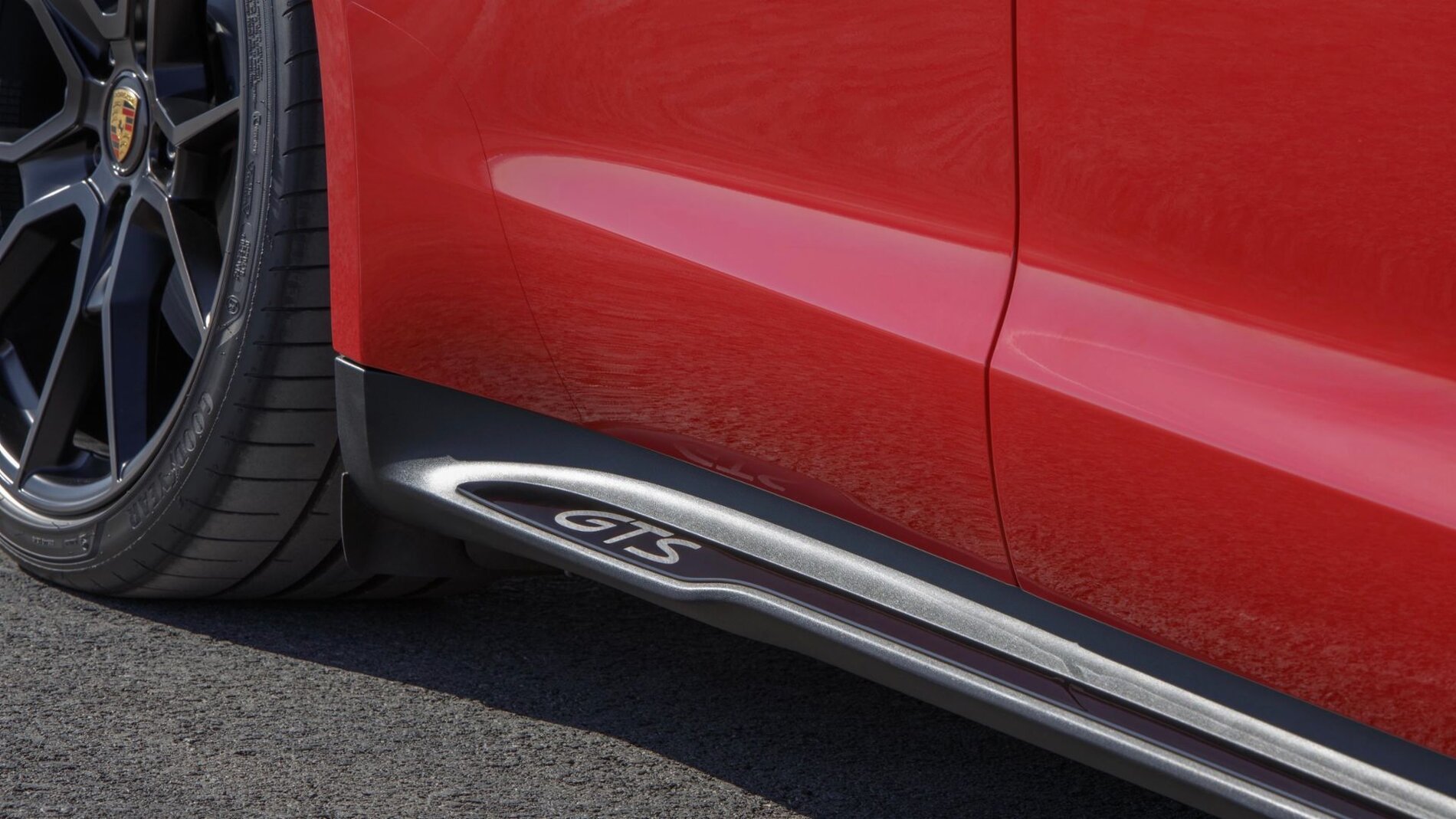
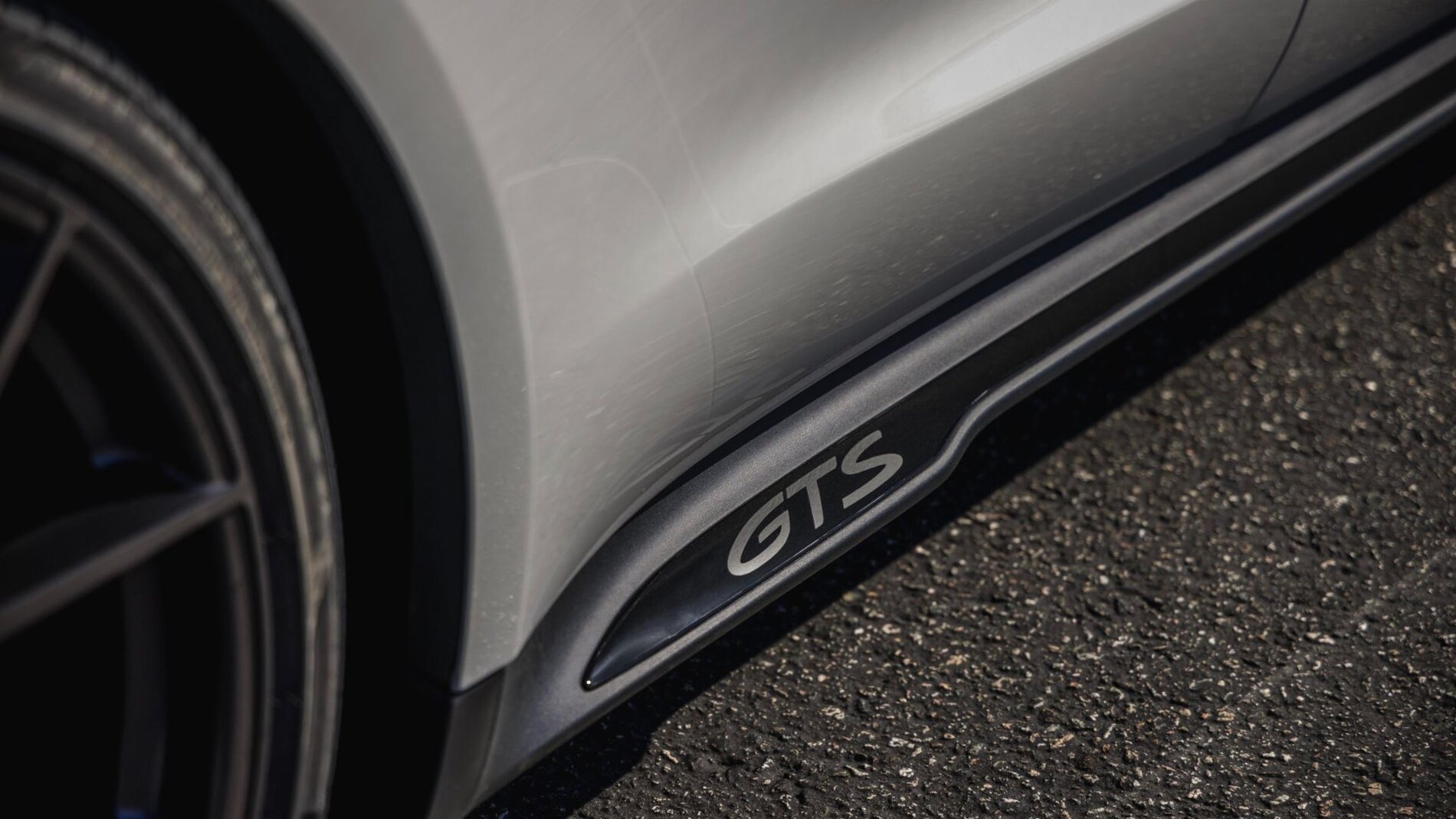
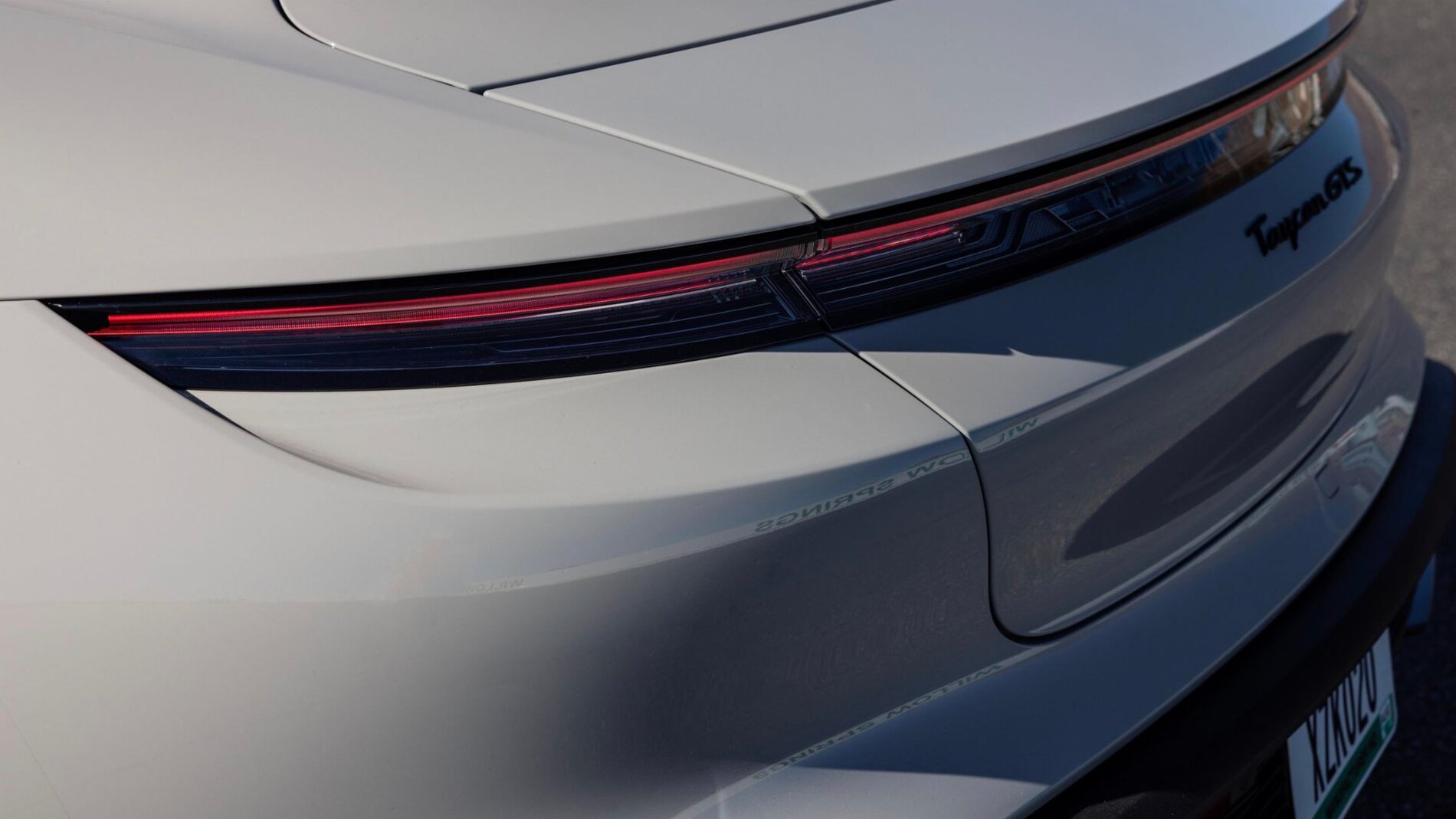
The Taycan GTS models also distinguish themselves visually, with the latest trim coming standard with the SportDesign exterior package along with special GTS logos. The side skirts, rear diffuser and window trim are also painted in high-gloss black as standard. The Cross Turismo GTS also differs from other CT models by having its rear spoiler painted to match the main body color, and most notably, there is an absence of plastic cladding over the wheel arches seen on all other trims.

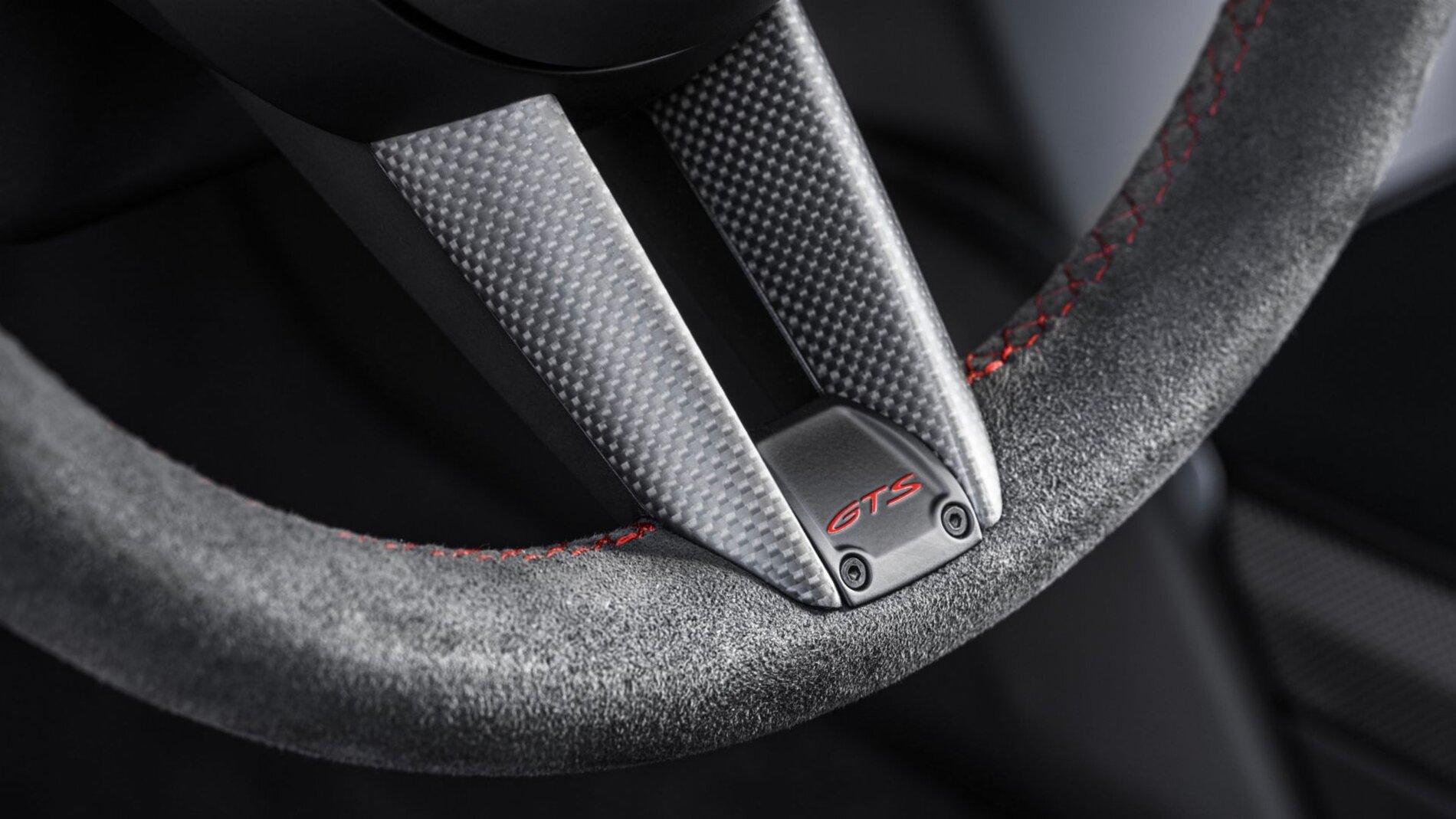
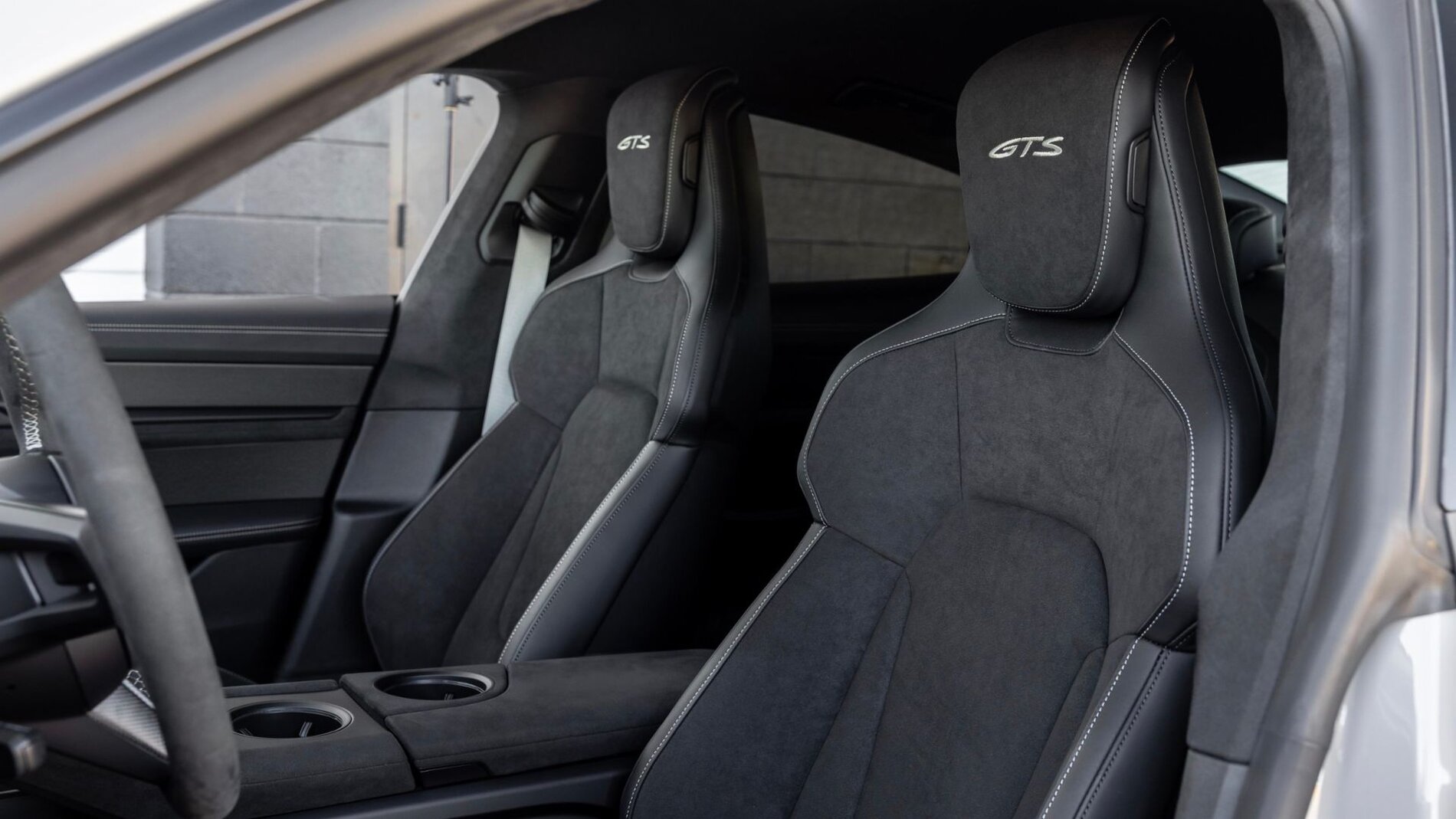
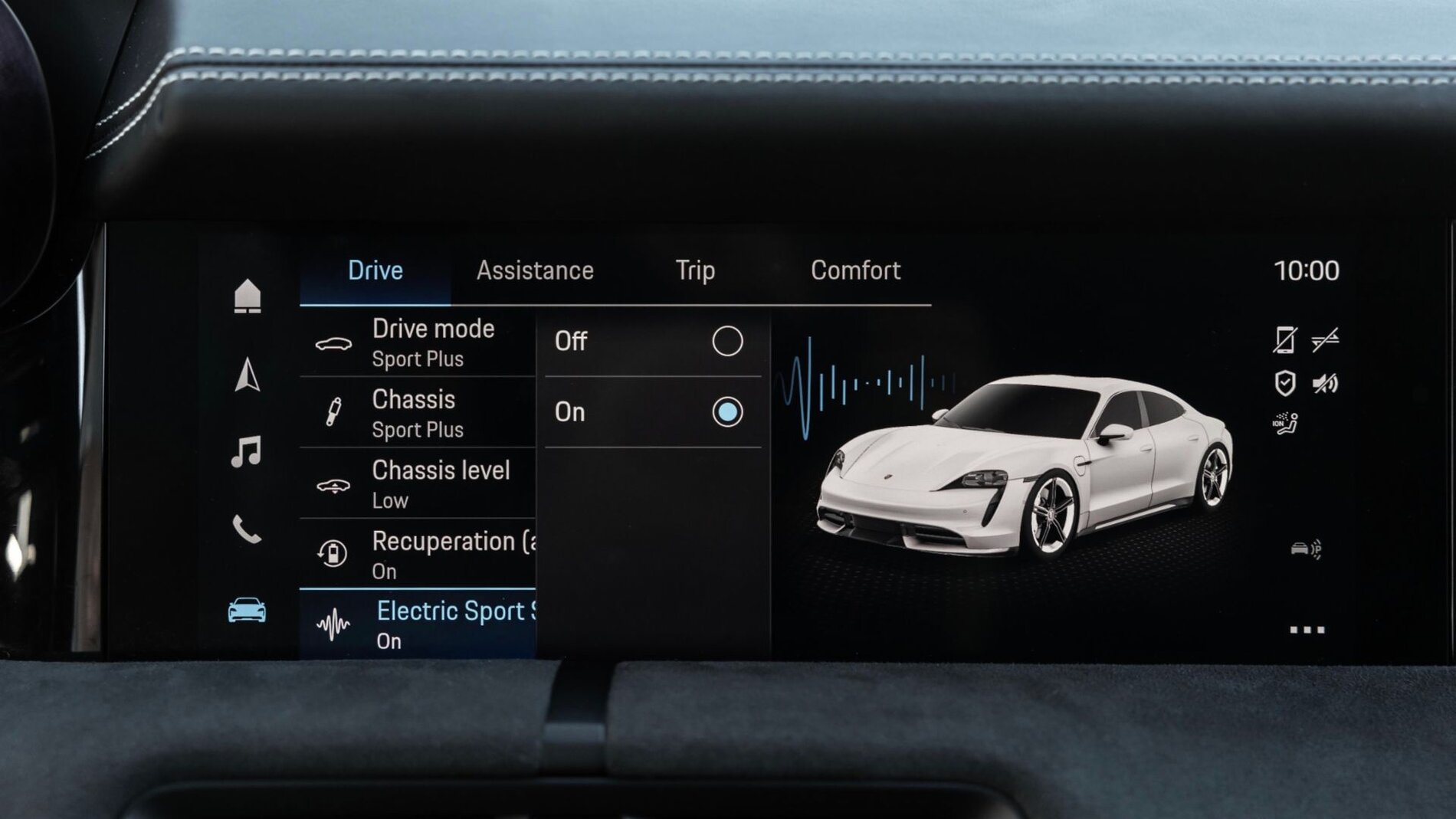
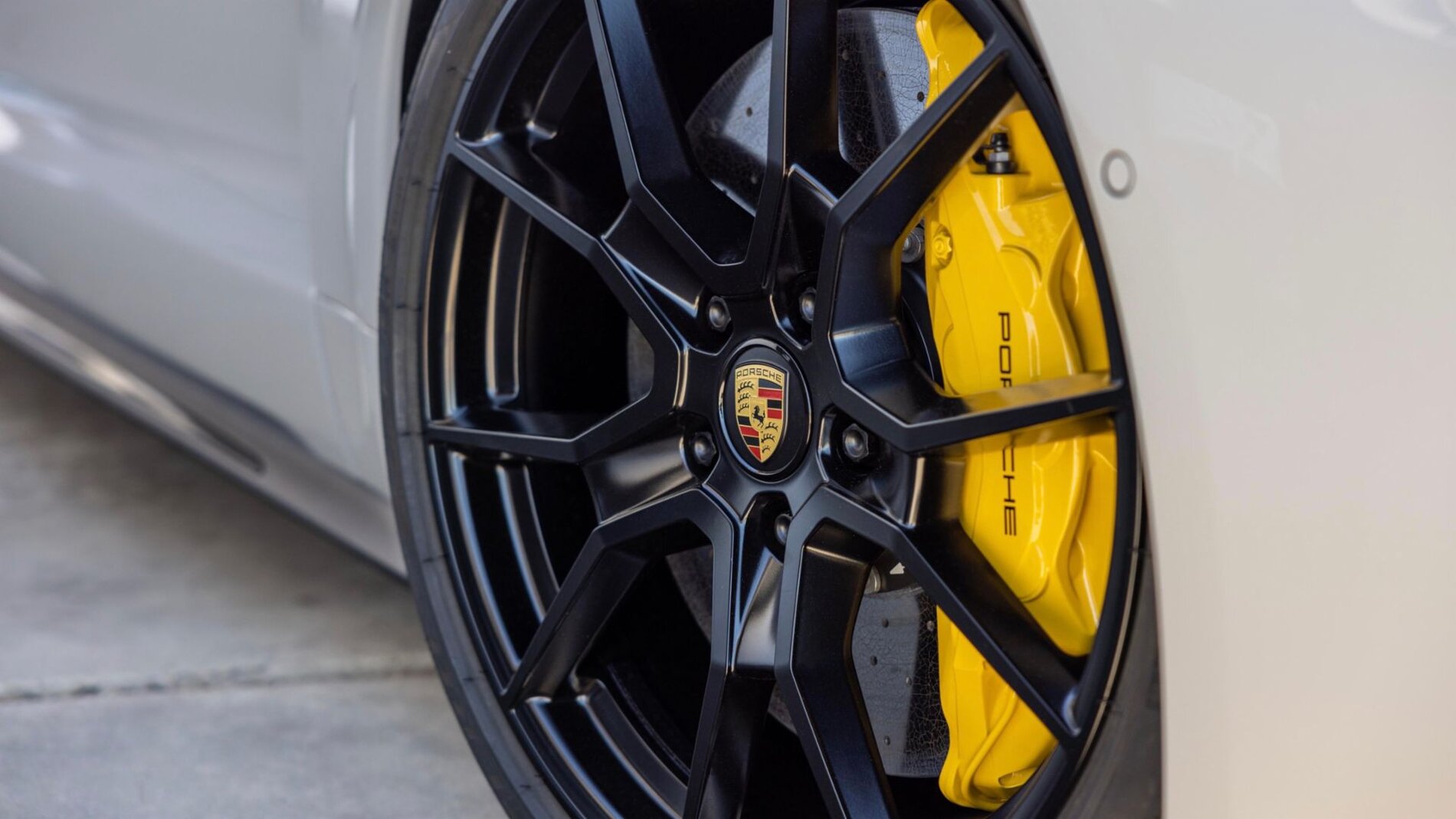
Other distinctive standard features include larger front rotors (390 mm) than those on baseline 4S models (360 mm), and the GTS also has a unique Race-Tex interior that’s similar to what is seen in other GTS-badged Porsche cars. According to Porsche, the Electric Sport Sound is now “deeper and louder” from both inside and outside the car. Also standard fare are Adaptive Air Suspension, PASM, PTV Plus and Sport Chrono Package. Features such as PDCC, PCCB, 21″ wheels and rear-axle steering remain as options. Also exclusive to the GTS is the optional “GTS Interior Package” which includes deviated stitching, unique embroidery and matte carbon fiber finishes.

As for pricing, the GTS sedan starts at $131,400 USD while the GTS Cross Turismo has a base price of $133,300 USD. Porsche is taking orders right now, with deliveries scheduled to begin in the second-quarter of 2022.

Considering the total package, I believe that the Porsche Taycan GTS and Porsche Taycan GTS Cross Turismo models are the most impressive Taycan models to date. For most of us, this shouldn’t be surprising if even up for debate—after all, the GTS badge and the word “best”, have become somewhat synonymous over the past few years when it comes to Porsche cars. It’s definitely the one I would buy, if I had to do it all over again.

Porsche Taycan GTS Red Porsche Taycan GTS Red Porsche Taycan GTS Red Cross Turismo Porsche Taycan GTS Red Porsche Taycan GTS Red Porsche Taycan GTS Red Porsche Taycan GTS Red Porsche Taycan GTS Red Porsche Taycan GTS Red Porsche Taycan GTS Red Porsche Taycan GTS Chalk Porsche Taycan GTS Chalk Porsche Taycan GTS Chalk Porsche Taycan GTS Chalk Porsche Taycan GTS Chalk Porsche Taycan GTS Chalk Porsche Taycan GTS Chalk Porsche Taycan GTS Chalk Porsche Taycan GTS Chalk Porsche Taycan GTS Chalk Porsche Taycan GTS Chalk Porsche Taycan GTS Chalk Porsche Taycan GTS Chalk Porsche Taycan GTS Chalk Porsche Taycan GTS Chalk Porsche Taycan GTS Chalk Porsche Taycan GTS Chalk Porsche Taycan GTS Chalk Porsche Taycan GTS Chalk Porsche Taycan GTS Chalk Porsche Taycan GTS Chalk

New Mustang added to the MY2022 lineup

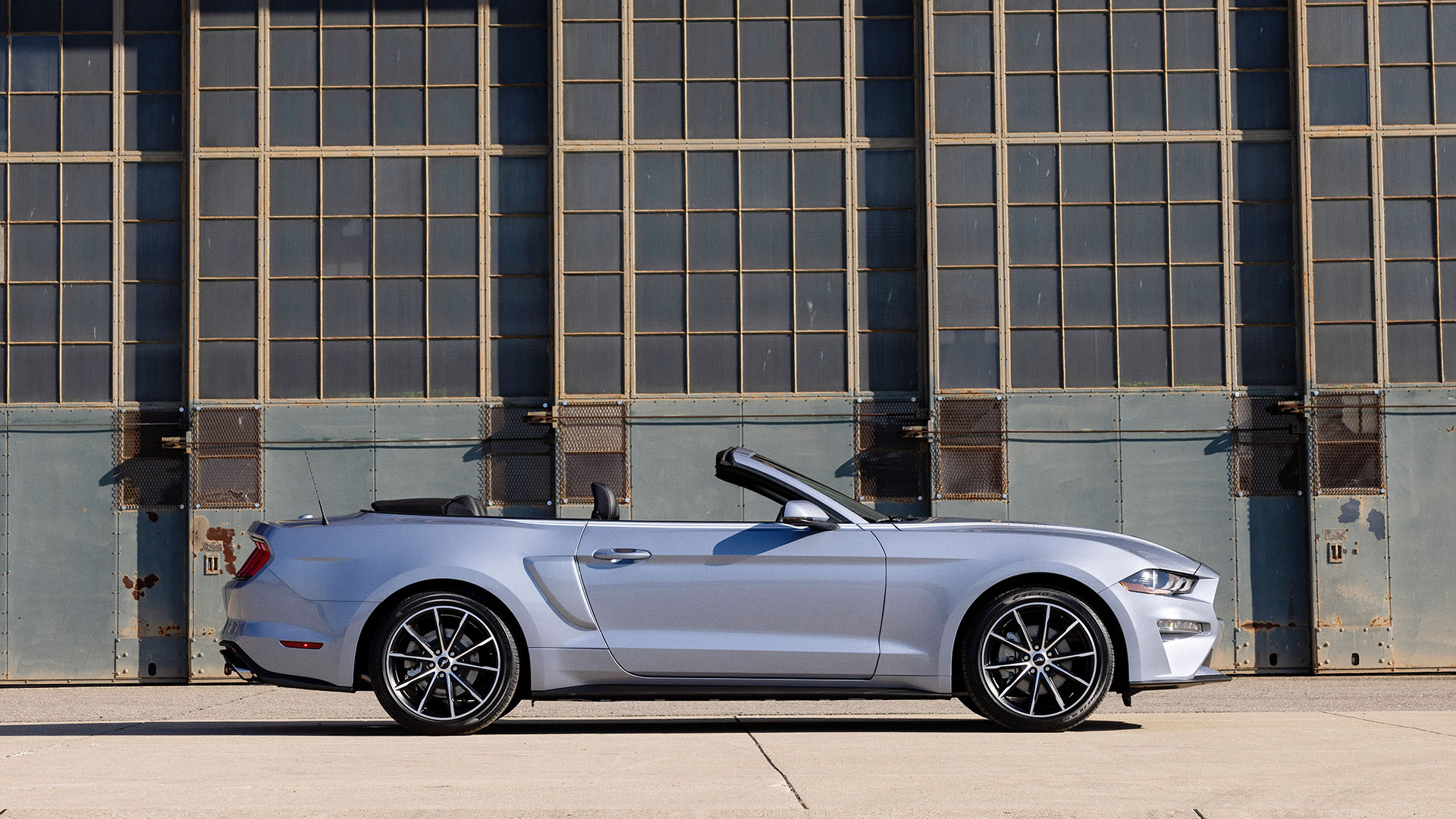
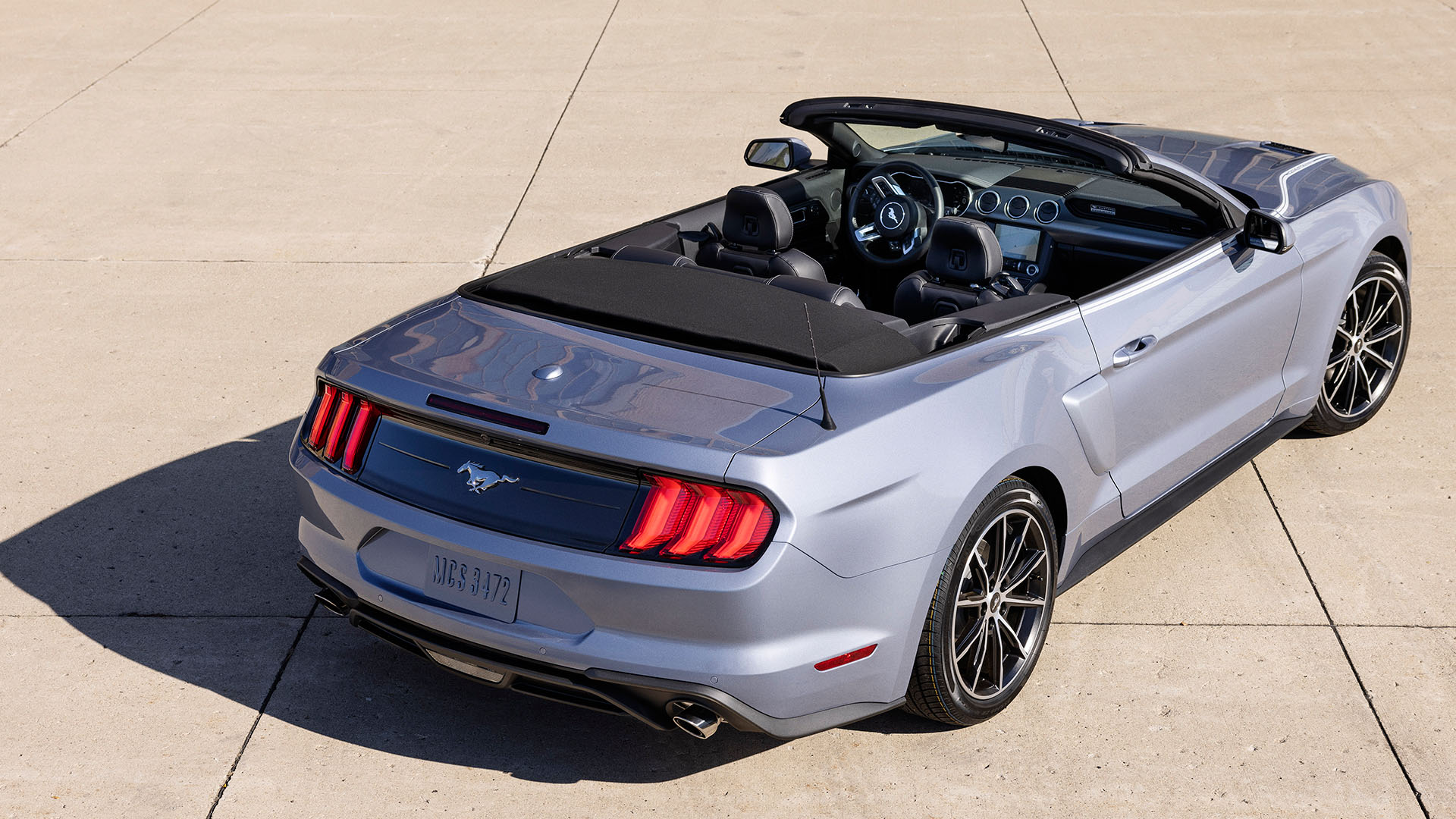
The Coastal Limited Edition

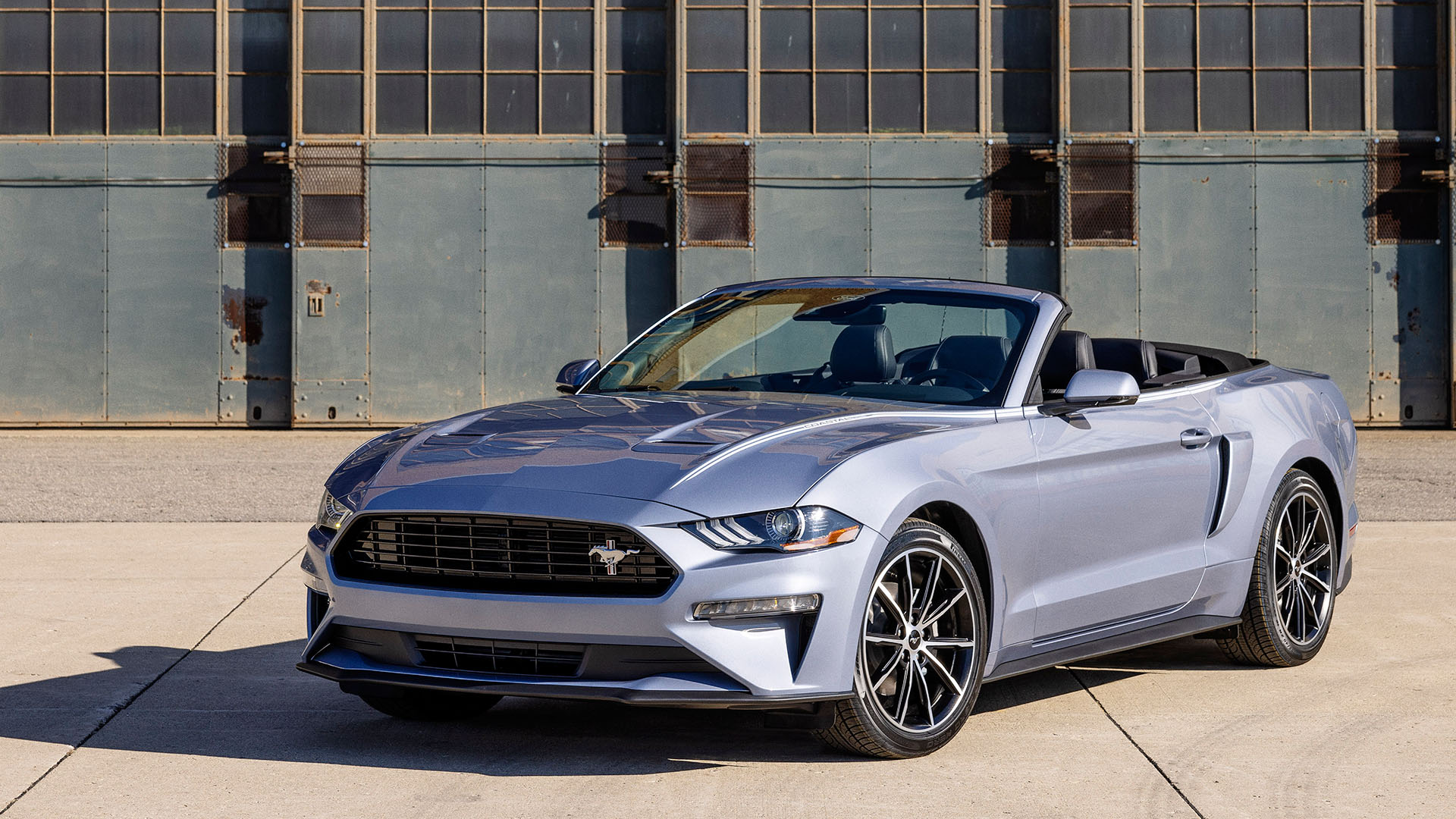
There will be a new special edition in 2022 based on the 310-turbocharged-horsepower Mustang EcoBoost Premium fastback and convertible model, called the Coastal Limited Edition, embodying freedom while keeping the traditional style alive.

The optional ‘Coastal package’ comes with 19-inch machined-face aluminum wheels with dark-painted contrast, bespoke vinyl stripes along the side, and the engine hood. But also a signature Mustang rear fender side scoop, while a black grille makes her look more intimidating, a rear spoiler. When you open the doors a special ‘Coastal’ lighted sill plate is shown, while a special ‘Coastal’ badge is fitted on the dashboard in front of the passenger.

While the 2022 Mustang EcoBoost Premium comes with a U.S. MSRP of $32,225 before destination charges, the Coastal Limited Edition option adds $1,995 to the order sheet, but this option will limit the number of available exterior paints to Brittany Blue, Cyber Orange, and Rapid Red, with first deliveries intended for the Spring of 2022.

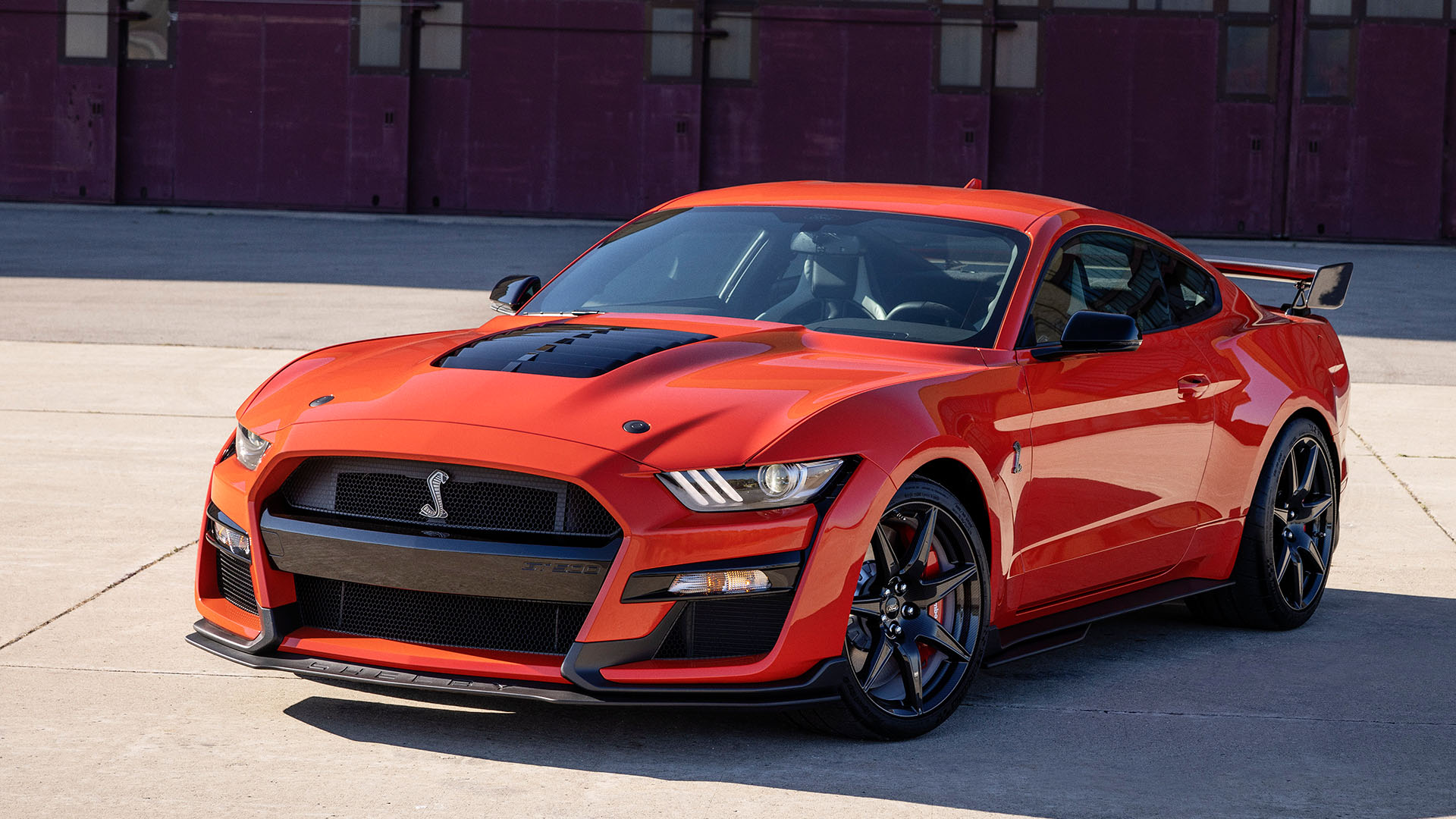
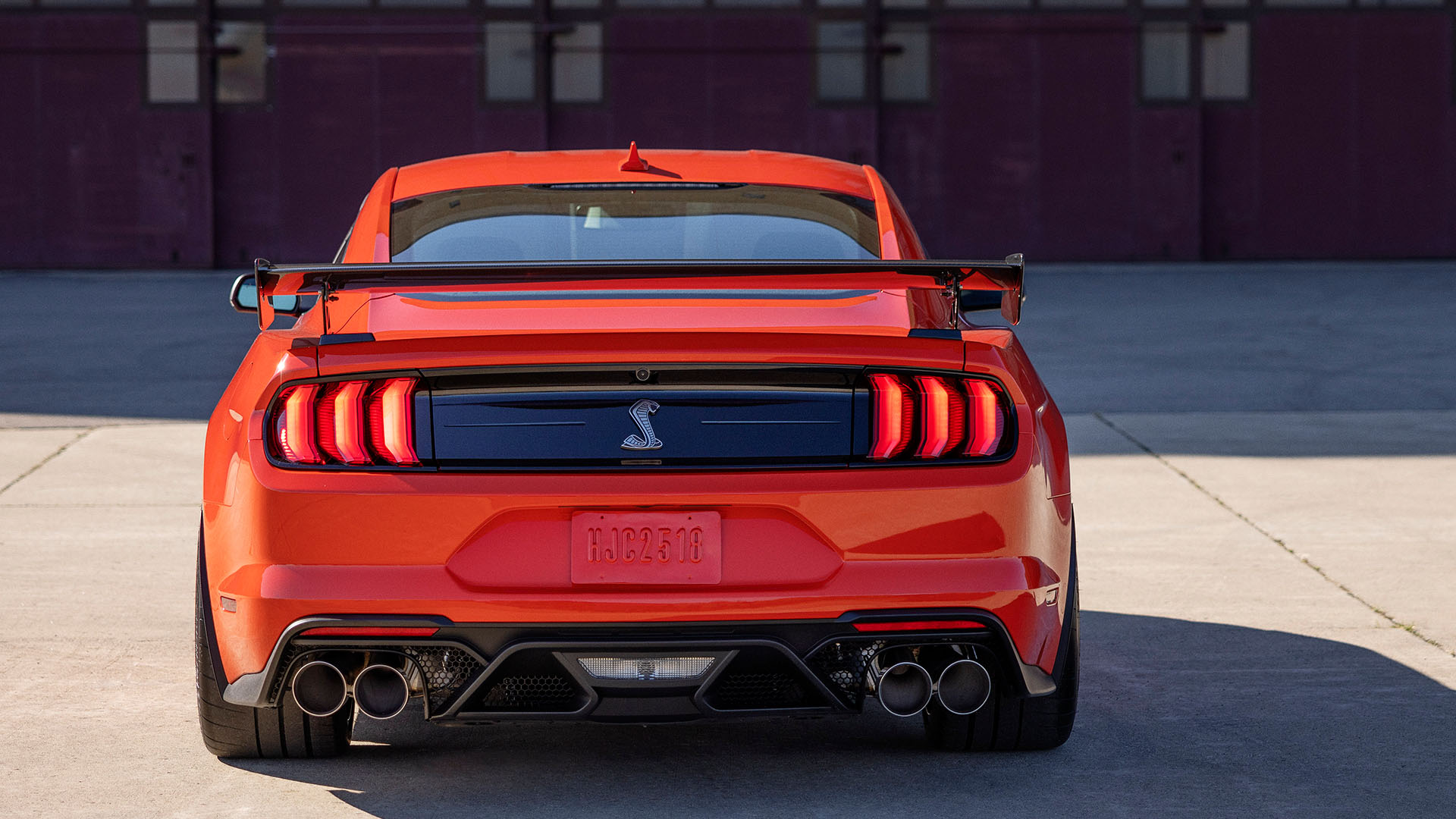
Code Orange now available exclusively on Shelby GT500

This very bright color, called Code Orange is an exclusive Ford Performance paint color that was previously available on the Ford F-150 Raptor, the Bronco Raptor, and the impressive Ford GT Le Mans-winning supercar, and it now comes to the Shelby GT500.

With the addition of Code Orange, the color palette for the 2022 Ford Mustang grows to nine shades: Atlas Blue Metallic, Brittany Blue Metallic (available on GT500 Heritage and Coastal Editions only), Cyber Orange Metallic Tri-Coat, Dark Matter Gray Metallic, Eruption Green Metallic, Grabber Blue Metallic, and Mischievous Purple Metallic.

The Shelby GT500 Heritage Edition

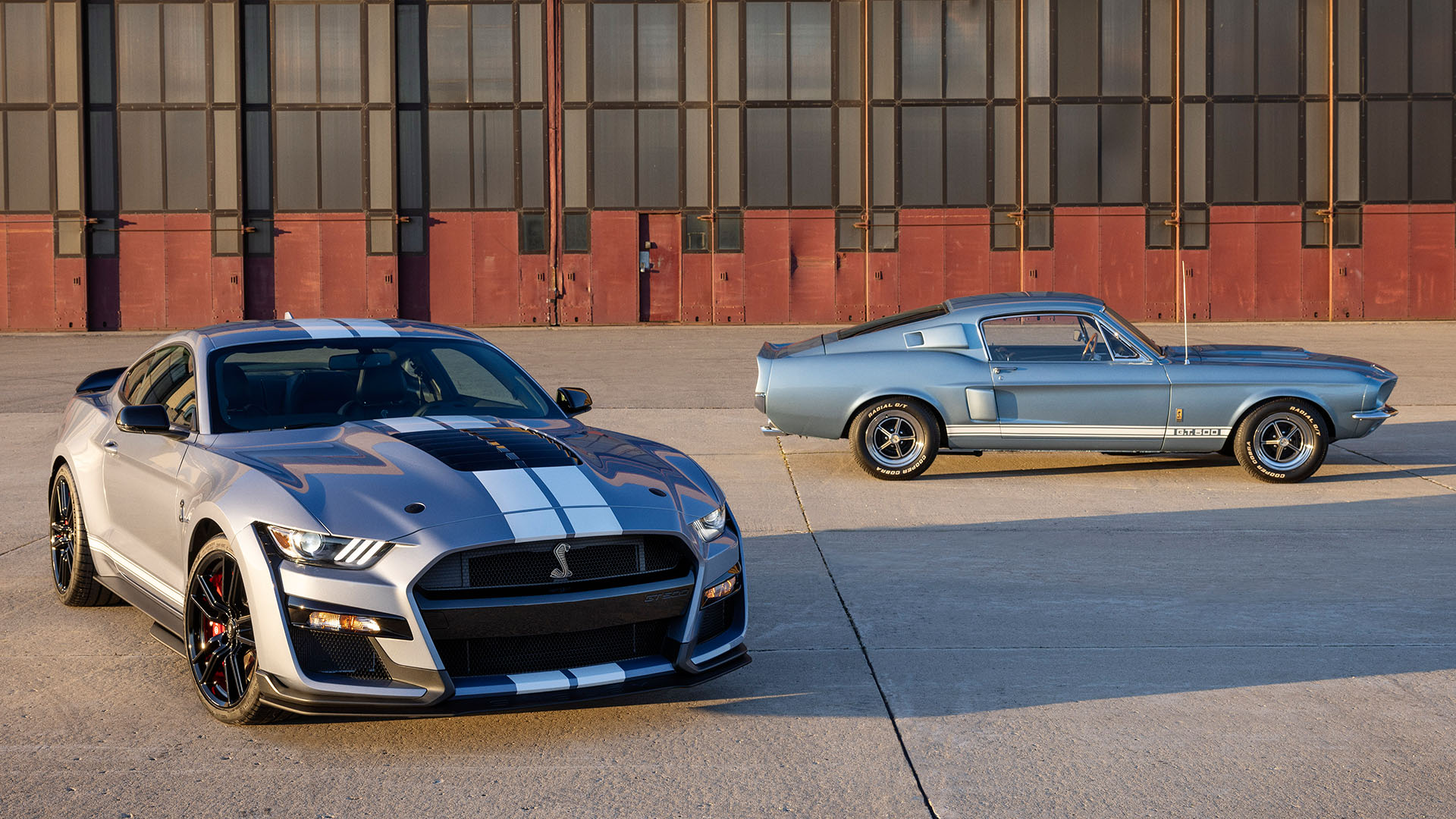
There has been a Shelby GT500 back in 1967 already, and these are widely regarded as the top of the line when it comes to performance in the Ford Mustang range, building on the impressive legacy of Carroll Shelby, the GT500 is all about transforming a Ford Mustang into a street-legal racecar.

Back in 1967 Carroll Shelby, the famous American racer upgraded his legendary Mustang GT350 into the first-generation Shelby GT500 with a modified 428-cubic-inch V8 inspired by his team’s 1-2-3 finish at Le Mans, he called the Shelby GT500 “the first real car I’m really proud of.” And that feeling is still alive today, the Shelby GT500 is just as iconic today, being the most powerful and most advanced Mustang ever, just as it was 55 years ago when the first iteration was made.

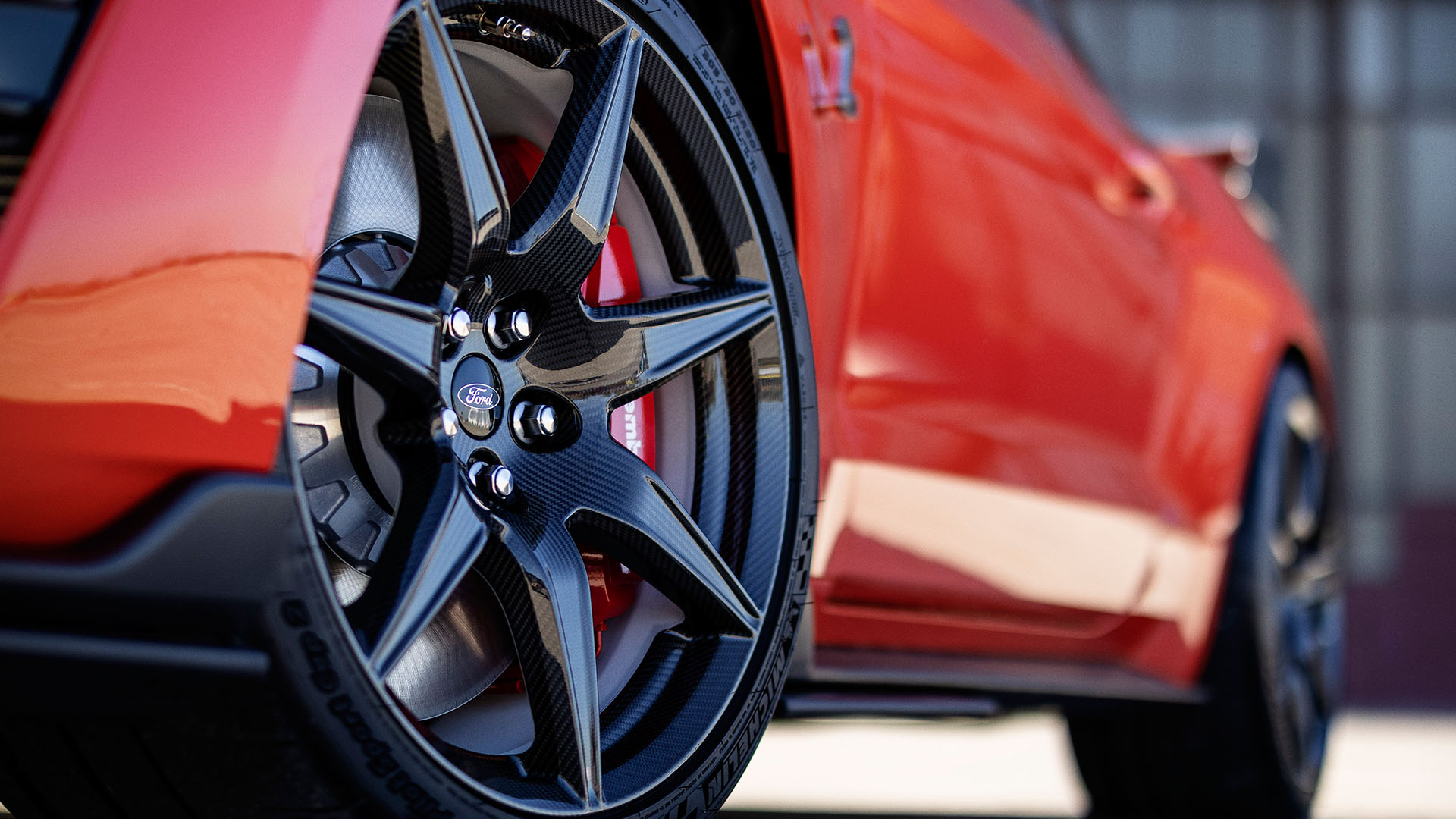
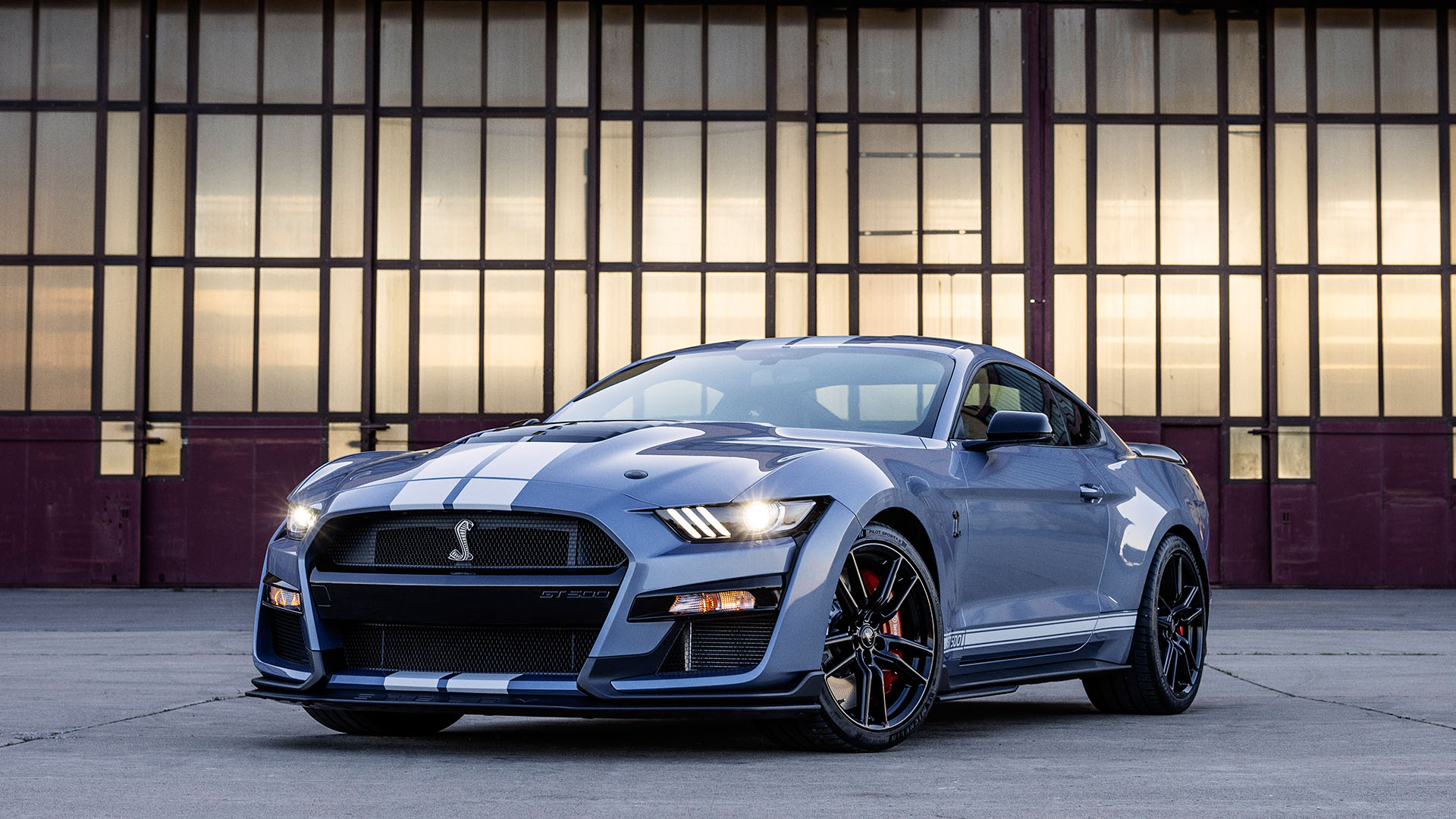
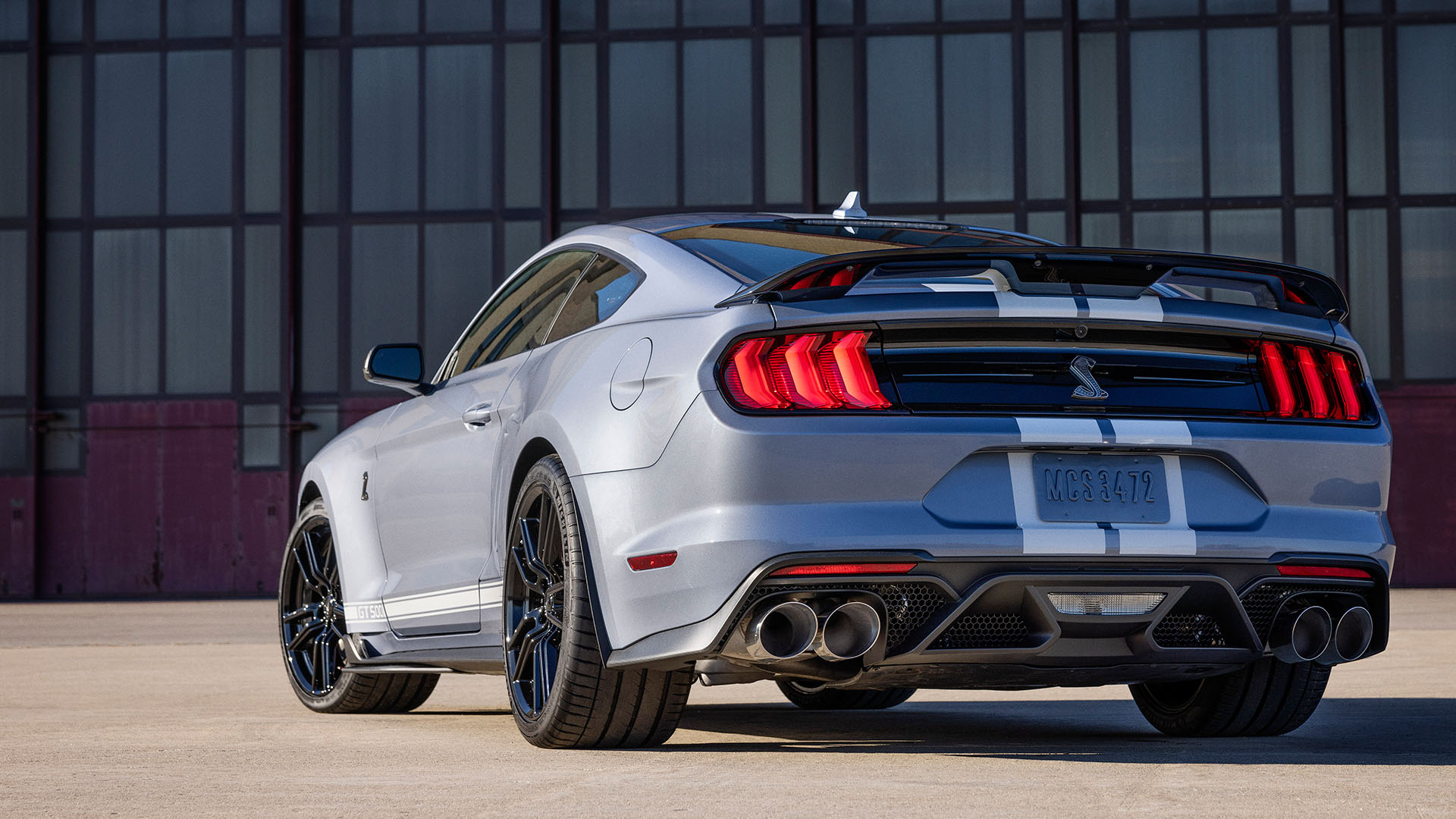
The 2022 Mustang Shelby GT500 Heritage Edition is an homage to the 1967 model, only available as a fastback body style, and made in limited numbers, all of them finished in the exclusive Brittany Blue combined with two different Wimbledon White exterior stripe options, either painted or vinyl, whichever you prefer.

This 2022 evolution is Ford Performance most powerful street-legal Ford ever, with world-class muscle and powertrain technology that brings the Shelby GT500 Heritage Edition into the roam of supercar performance, the impressive 7-speed DCT is backed up by race-derived control strategies and multiple driving modes to offer an unforgettable experience to the driver.

A standard 2022 Mustang Shelby GT500 comes with a U.S. MSRP of $72,900, but that does not include the $1,195 destination fee, nor the $2,600 Gas Guzzler Tax, but you really want to add the Shelby GT500 Heritage Edition package for just $2,140 more. However, if you insist on having the hand-painted stripes on the GT500 Heritage Edition package the additional cost rises to $12,140 on top of the Shelby GT500’s base U.S. MSRP.

Best New Sports & Performance Cars < $50K USD

It is my belief that the vast majority of true automotive enthusiasts are simple and pragmatic folk. This is by no means an evaluation of one’s IQ or financial means; rather, it’s an assertion that a good sports car only needs to deliver on some very basic but necessary principles.

Of course, the most important of those principles would be that the car provides an engaging experience and is fun to drive. Affordability will inevitably factor in as well, based on varying budget allowances—but for the most part, anything above and beyond that is kind of just fluff.

Needless to say, for those who enjoy a spirited drive in the canyons or a quick jaunt around town, just about any car that fits the aforementioned criteria will do just fine. A $30,000 sports car  brimming with the right qualities will invariably offer the same sensations as a $200,000 supercar in those circumstances.

Sure, the supercar is going to accelerate faster, turn sharper and have a more exotic disposition, but this isn’t a competition for the best lap times; at this point, it’s all about how many grins and smiles were achieved.

Even in a motorsports setting, many of the cars on this list have built a reputation for offering superior bang-for-buck when it comes to the outcomes they produce during weekend track days or high performance driving events. When properly driven, any of the cars we’ve selected can give an exotic car a run for its money, subsequently giving the owners of those vehicles something to think about when the go to sleep at night—and it’s priceless moments like those that can be the most meaningful.

Here are the best new sports & performance cars under $50K USD.

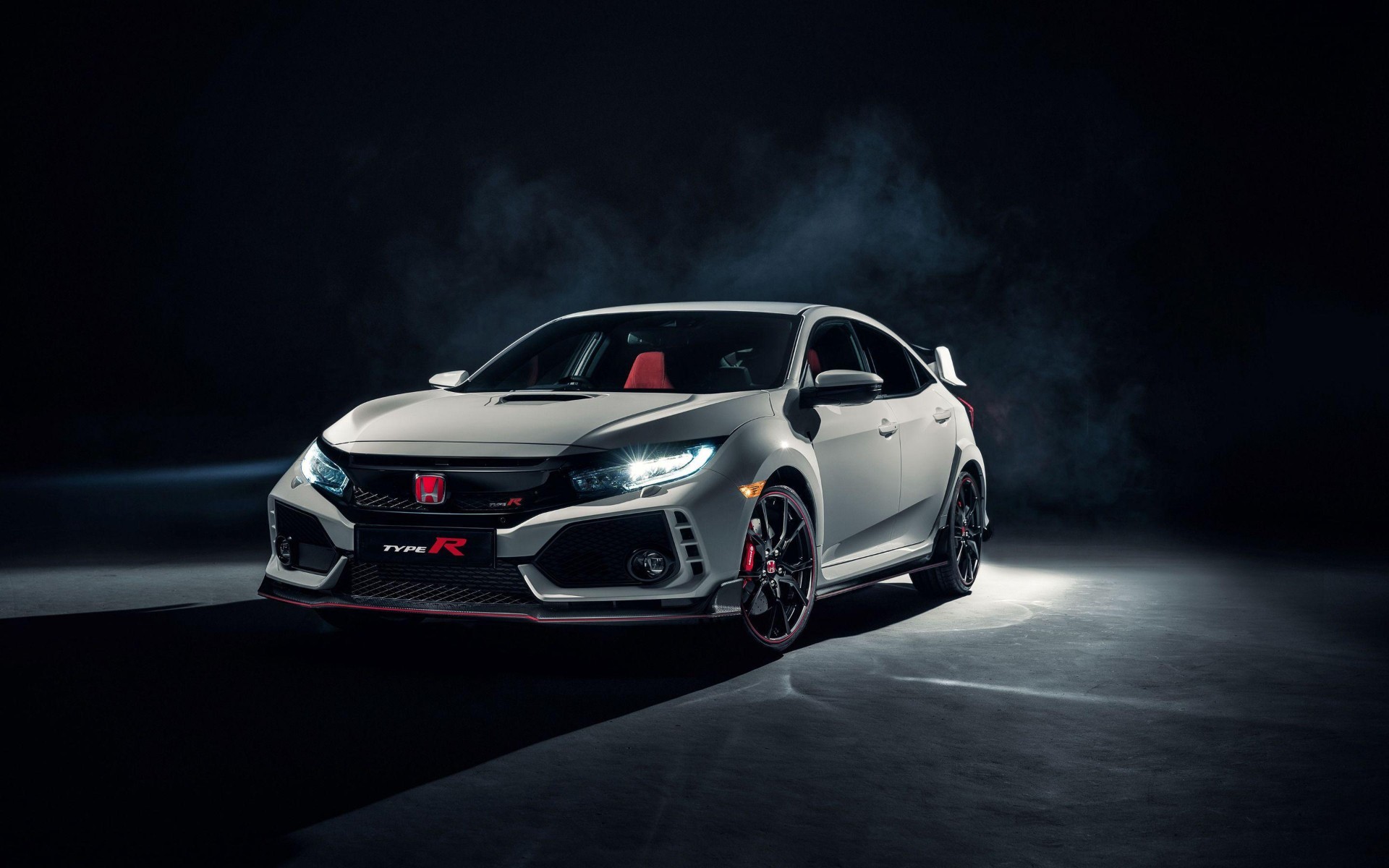
Honda Civic Type R

Honda Civic Type R

Price:

Those who know me know how much I love this car. The Honda Civic Type R is the quintessential example of how performance and affordability can be synonymous, and I experience this with regularity on the race track as both a driver and observer.

The CTR continues to be powered by Honda’s most advanced K series engine to date—the turbocharged K20C1—which sends up to 306 hp @ 6,500 rpm and 295 lb-ft of torque @ 2,500 rpm to the front wheels.

New for 2021 is a Sport Line trim, which looks to scrap original car’s boy racer image, with a more refined and grown-up persona to take its place. This is an evolution of visual details above all else, with the absence of a large rear wing being by far the most notable difference. The Sport Line trim is, however, exclusive to European markets for now.

Ford Mustang GT

Ford Mustang GT parked in lot

Price:

  • $37,480 USD (GT)
  • $41,480 (GT Premium)

The Ford Mustang GT is the most powerful entry on this list, producing 460 hp from its 5.0L naturally-aspirated V8 engine. While there’s a natural tendency to immediately compare it to other American cars in its category, the Ford Mustang GT also provides legitimate competition for the European heavyweights that operate in the affordable-high-performance-car space.

This is in large part thanks to an interior that’s on par with the very best available in this price range, while an advanced chassis—complimented by more standard safety, convenience and comfort features than ever before—really elevates the car into a fearsome contender in the grand touring playing field.

Stepping up to the GT Premium trim doesn’t improve performance, but it does provide a number of interior upgrades, such as a 9-speaker audio system and heated/ventilated seats.

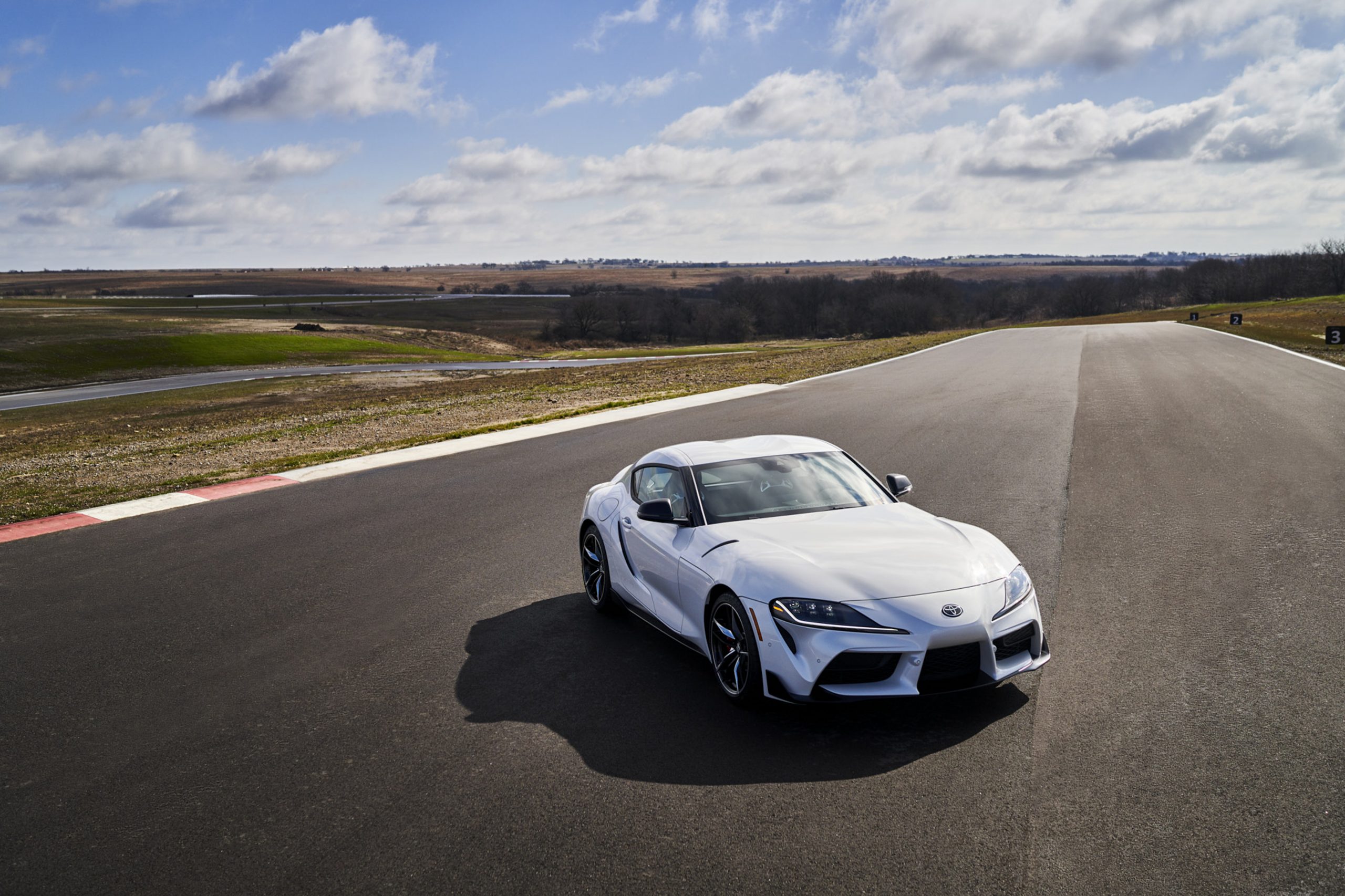
Toyota GR Supra 2.0

White 2021 Toyota GR Supra on road

Price:

  • $43,190 USD

While the sub-$50K restriction means that only the base model Toyota GR Supra qualifies, it still makes it onto this list because, well, the base model Supra is still a supremely good car.

Yes, the 382 hp 3.0L turbocharged straight-six version is a much more seductive proposition, but the 255 hp 2.0L turbocharged inline-4 in the base car will do just fine for those who have idealized the Supra’s chassis and appearances above all else. After all, you’re still getting an ideal 50:50 weight distribution, along with Adaptive Variable Suspension featuring a double-strut spring front suspension up front and multi-link suspension in the rear.

Only adrenaline junkies would find all that extra power useful in any way, and unless they’re on the race track, it’s probably not for legal purposes either. All of this allows the Supra to occupy a very attractive low-$40k entry in to the market, which is impressive for a car that bears such an iconic name.

BMW M240i

BMW M240i speeding down road

Price:

  • $47,345 USD (sDrive)
  • $49,545 USD (xDrive)

The BMW M240i is probably my favorite car on this list. Not only does the compact sports car boast a powerful 382 hp 3.0L turbocharged inline-6, but it’s available in both rear-wheel drive (sDrive) and all-wheel drive (xDrive) configurations, allowing the car to excel in just about any situation its owner demands.

The M240i is remarkably agile (as you would come to expect from such a taut figure), with a retuned suspension, larger brakes, variable-ratio steering system, and electronic rear-diff coming standard on the model.

The lower-trim 230i offers the same sensations as its M counterpart, but we’re going to go ahead and suggest you look exclusively at the M240i if you’re willing to spend around $50K on a car. Besides, forgoing the M240i will have you wanting all the things the 230i can only provide so much of.

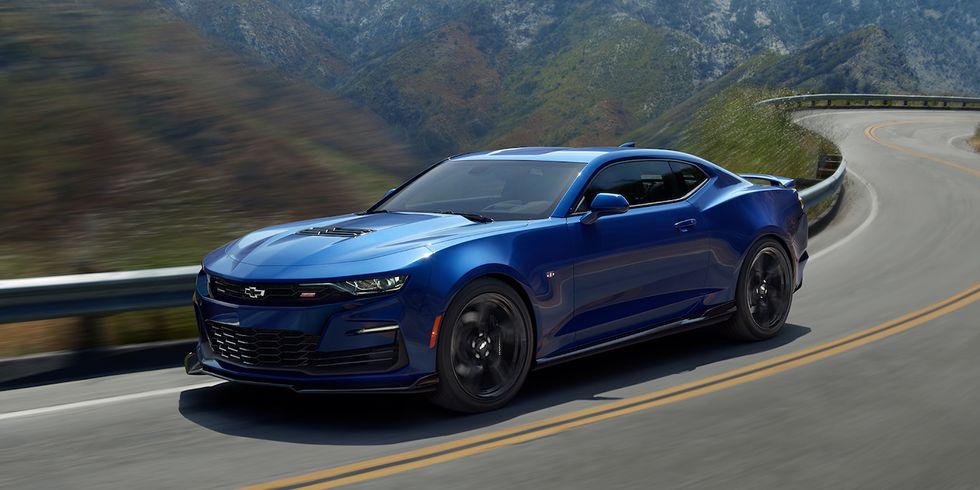
Chevrolet Camaro LT1 / SS

Blue 2021 Chevrolet Camaro SS on mountain road

Price:

  • $35,195 USD (LT1)
  • $38,695 USD (1SS)
  • $43,695 USD (2SS)

The Chevrolet Camaro LT1 is the model’s first foray into V8 territory, which allows it to offer a relatively low-priced entry into the world of 8-cylinder performance. Already producing as much as 455 hp from its 6.2L naturally-aspirated V8 engine, the LT1 is a fantastic choice for those who want an unadulterated, no-nonsense sports car.

Stepping up to the 1SS and 2SS models doesn’t add any more power, but it provides more performance and convenience amenities—such as a transmission cooler, rear Brembo brakes, magnetic ride control, wider wheels, a different front bumper, and a standard 8″ touchscreen.

The Chevrolet Camaro LT1 and SS trims provide a modern interpretation of the iconic American muscle car, while packaging it in an everyday-livable package.

Mazda Miata

2021 Mazda Miata MX-5 on city street

Price:

  • $26,830 USD (Sport)
  • $30,290 USD (Club)
  • $31,770 USD (Grand Touring)

The Mazda Miata has long staked its claim to being the world’s most beloved “driver’s car”. Despite being unapologetically simple and perpetually affordable, none of this has overshadowed the Miata’s capability and reputation as a fun-packed roadster over the past 3 decades.

Now in its fourth generation (ND), the latest Miata continues to embody all of that spirit while incorporating the latest automotive technologies, making for an even better performer without any penalty to its well established charisma.

All current Miata trims (Sport, Club, Grand Touring) are equipped with the same 181 hp 2.0L naturally-aspirated inline-4, though we would highly recommend going with the Club trim as it is the only one which offers the Brembo/Recaro/BBS package as an option. This would make it the sportiest model out of the three.

Tesla Model 3

Red Tesla Model 3

Price:

  • $44,990 USD (Rear-wheel Drive)
  • $50,990 USD (Long Range)
  • $58,990 (Performance)

The Tesla Model 3 itself is a pretty revolutionary car, offering a currently unrivaled combination of performance, utility, range, and price. While our price ceiling restricts us to the Rear-Wheel Drive model (which uses a single electric motor), upgrading to the Long Range ($50,990) and Performance ($58,990) models would only take you just over the $50K mark, so they are certainly worth mentioning as well.

Aside from their dual-motor electric drivetrains offering better performance, these cars offer better range as well. The Long Range and Performance models offer well over 300 miles of range, while the Rear-wheel Drive is good for around 272 miles.

The Performance model would obviously be our pick of the lot, with its 450 hp and all-wheel drive allowing the car to accelerate from 0-60 mph in an impressive 3.1 seconds. It also benefits from a more sporty suspension, better better brakes, stickier tires, and a selectable Track Mode.

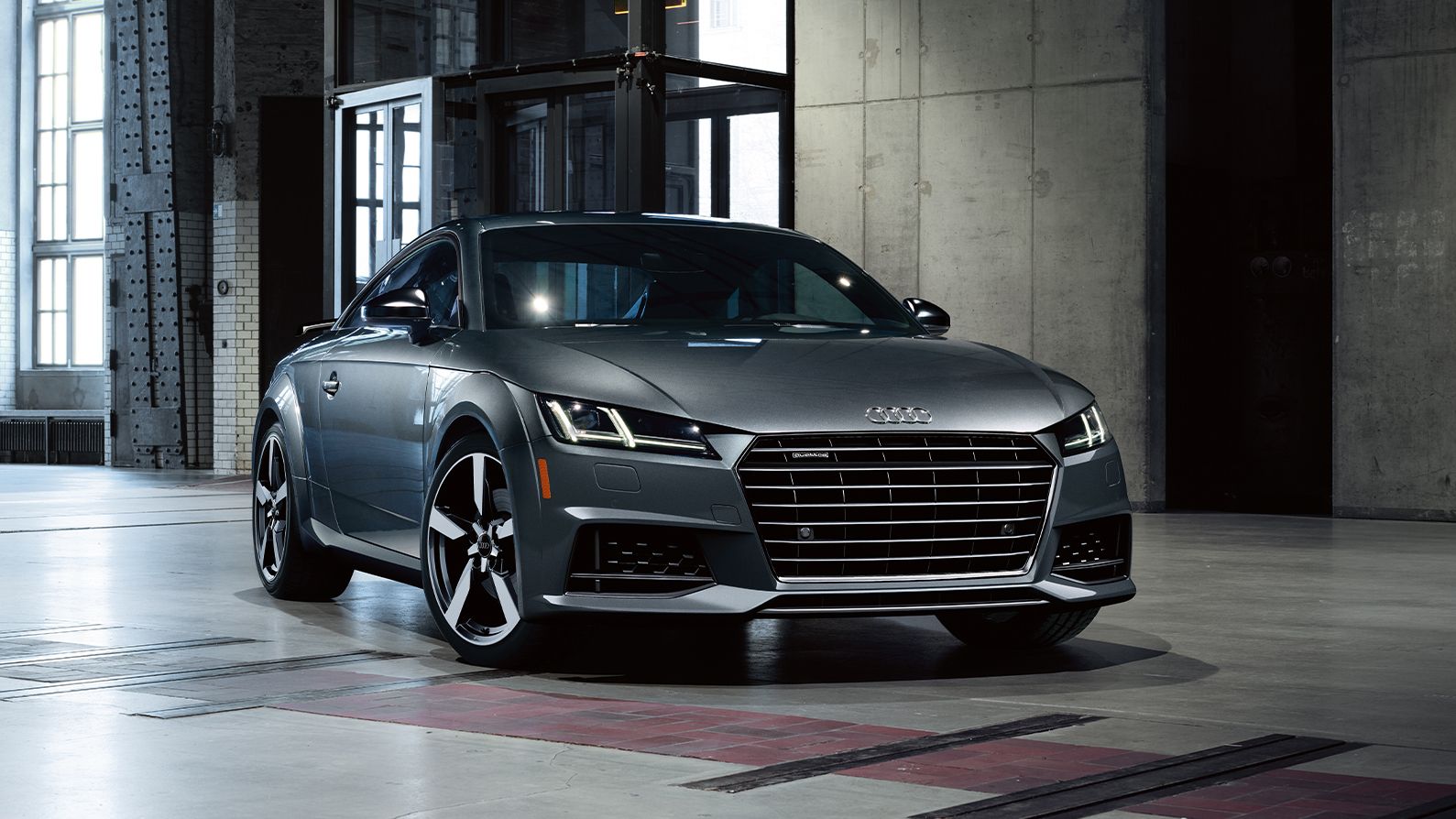
Audi TT Coupé

2021 Audi TT Coupé parked inside

Price:

  • $49,800 USD

Ok, so the Audi TT only meets the criteria by a hair, and consideration of taxes, freight and other fees will certainly take it above the $50K mark. Nevertheless, we feel that it’s important to mention it on this list, as the Audi TT is still amongst the lowest priced cars in the luxury sports car category and it deserves to stand out. After all, its 228 hp 2.0L TFSI engine is class-leading, and you can always count on Audi’s craftsmanship and interior build quality.

While there’s always that temptation to describe the typical luxury sports car as “dull”, “numb” and “soft” , the Audi TT is anything but. It has sharp, agile handling character and possesses the driving dynamics of much more expensive cars.

While we’re obliged to recommend the RS trim—as it turns all of the above up to 11—we would be well into $70K territory, and that would be a big no-no for the purposes of this list.

Mini Cooper JCW GP

Rear view of 2021 Mini Cooper JCW GP

Price:

  • $44,900 USD

Dishing out north of forty-five grand for a Mini Cooper seems a bit hefty, but the John Cooper Works (JCW) GP is not your typical Mini Cooper, nor is it an ordinary car by any stretch of the imagination.

In fact, the JCW GP has extraordinary performance to go with its extraordinary appearance, with 301 hp produced from its compact but robust 2.0L turbocharged inline-4 engine. Arguably, that’s not even the most notable feature, as extroverted carbon fiber fender flares and a rear seat delete transform this Mini Cooper from cutesy-car to bold-showboater.

It has every right to beat its chest too, as it is one of the quickest production front-wheel drive cars in the world, able to crush the 0-60 mph benchmark in just 4.7 seconds. Its direct competitors are the likes of the Honda Civic Type R and Hyundai Veloster N, but as few would expect, the JCW GP is the most extreme of those, and would be more at home on the race track than on public streets.

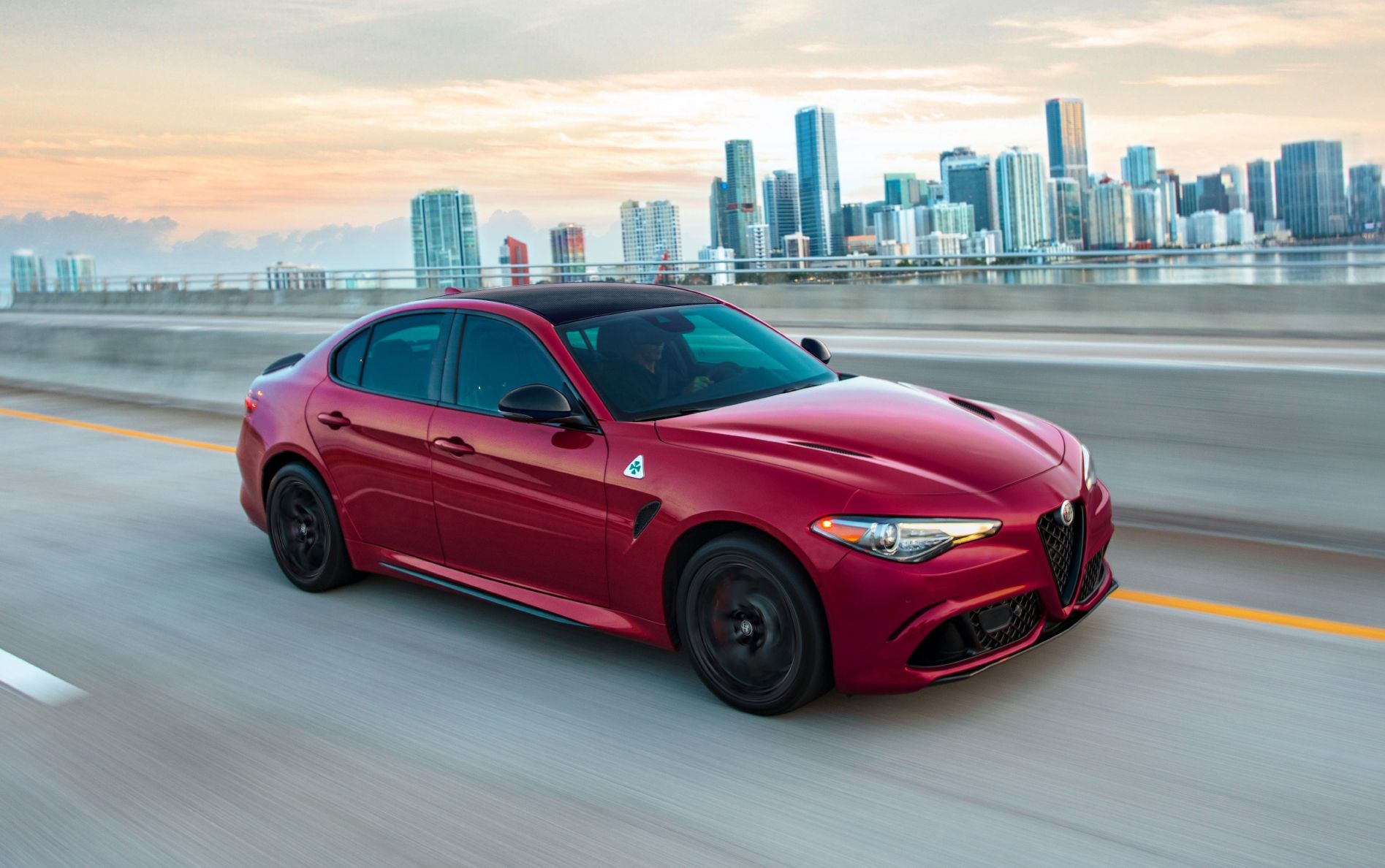
Alfa Romeo Giulia

Red 2021 Alfa Romeo Giulia on city street

Price:

  • $39,400 USD (Base)
  • $40,795 USD (Sport)
  • $41,345 USD (Ti)
  • $43,845 USD (Ti Lusso)
  • $44,345 USD (Ti Sport)

After an overhaul of the model in 2020, Alfa Romeo focused on smaller and more subtle improvements to the Giulia for the 2021 model year. Across the board, this means nicer interior materials, a new touchscreen infotainment system, and additional active-safety tech, which bring Alfa Romeo’s core sedan inline with its competition.

They sound like small changes, but together they make a huge difference. Alfa Romeo has raised the standard on its luxury and technology components—and you can see it, feel it and experience it.

There are five trim levels for the Giulia, each of which start under the $50K mark. All of them use the same 280 hp 2.0L turbocharged inline-4 engine, with upstream trims offering more high-end amenities such as larger alloy wheels, 14-way power seats, luxury leather finishes, and more sporty features.

Kia Stinger

Orange 2021 Kia Stinger on highway

Price:

  • $33,090 USD (GT-Line)
  • $39,590 USD (GT)
  • $45,490 USD (GT1)
  • $50,390 USD (GT2)

While the Kia Stinger hasn’t uprooted the market like some thought it would, it is still one of the most attractive buys in the luxury small car class. It looks impressive, performs well and is priced about the same as most non-luxury brands’ comparable offerings.

It has been widely praised by the automotive press and generally receives high marks in all categories. That is what you would expect from luxury cars that command luxury prices, but you can get into a Kia Stinger for as low as $33,090.

That’ll get you the peppy 255 hp 2.0L turbocharged inline-4 GT-Line model, but stepping up to the GT, GT1 and GT2 trims will unlock the 3.3L twin-turbocharged V6 engine which produces 365 hp. This transforms the Stinger from sporty 4-door to athletic sports sedan, with the performance-oriented models also benefiting from a more robust suspension and bigger brakes.

Cadillac CT5-V

2021 Cadillac CT5-V parked in front of hedge

Price:

  • $47,795 USD

The Cadillac CT5-V is another car that just manages to cajole its way onto this list, being a smidge under the $50K threshold. The V-series transforms the otherwise underwhelming mid-sized luxury sedan from an uninspiring point-A-to-B-er into a muscular American saloon.

Spearheading this evolution is a 360 hp 3.0L twin-turbocharged V6 engine mated to a 10-speed automatic transmission. The V also benefits from magnetorheological dampers and stickier Michelin Pilot Sport 4S tires as standard fare, helping to provide drivers of this souped up CT5 with a more engaging experience centered around improved handling dynamics.

At under $50K before options, the CT5-V offers excellent value and costs less than its direct competition, which is comprised mainly of the luxury German marques.

Toyota 86 / Subaru BRZ

White 2021 Subaru BRZ on desert road

Price:

  • $26,985 USD (86)
  • $28,845 USD (BRZ)

After much speculation, Toyota and Subaru recently confirmed that there will be a second generation of the popular sports car ‘twins’, which should be released sometime during 2022. Both companies will continue to co-develop and co-produce their own versions of the car, as they have done for the now-outgoing platform.

Naturally, there will be some improvements to the new car—most notably in the power department—but this will likely come at a higher sticker price. This means the current BRZ and 86 remain a strong buy, and we should also expect some special edition trims to be released before production comes to a close.

Some dealers may be incentivized to clear inventory in preparation for the new generation, so there may be some bargains to be had here, too. Either way, the hugely popular and affordable coupe and its ideal marriage to its 205 hp 2.0L naturally-aspirated boxer-4 engine is in no need of a new value proposition.

Mercedes-AMG A 35

Mercedes-AMG A 35 parked in lot

Price: $46,900 USD

The Mercedes A-Class range may be the company’s entry-level offering, but once you give it the good ol’ AMG treatment, you can count on it being an impressive car. That’s where the Mercedes-AMG A 35 comes in, with the range-topping model getting an upgraded 2.0L turbocharged inline-4 engine which produces 302 hp and 295 lb-ft of torque.

All-wheel drive is also standard, as is a seven-speed dual clutch transmission, making for a package that starts to sound like a bargain at the sub-$50K mark. The optional adaptive suspension will take it above that territory, but this will be justified by the transformative nature it provides to the A 35’s handling and agility.

While there is certainly a plethora of AMG options which offer more performance, the A 35 is a highly desirable and capable option in the category in which it competes.

Dodge Charger R/T / Challenger R/T

Red Dodge Challenger R/T

Price:

  • $40,950 USD (Charger R/T)
  • $38,825 USD (Challenger R/T)

If you want V8 power for under $40K, then a Dodge Challenger (coupé) is your only choice. The Charger (sedan) comes in at just north of that mark. However, we don’t believe that anyone should feel as though they’re being pigeonholed into a decision, as they are both excellent cars on their own merits.

After all, the R/T trim in both platforms come equipped with a 5.7L naturally-aspirated hemi V8 which produces 370 hp. Amongst the other trims available, it really hits that “sweet spot” in the lineup, as it slots in between the economical V6 models and the more bonkers Scat/Hellcat versions.

The aforementioned Scat Pack will still keep the cars at around the $45K-$50K mark, but we feel that the R/T is a much better all-rounder and will certainly appeal to more buyers who are cross-shopping in this price range.

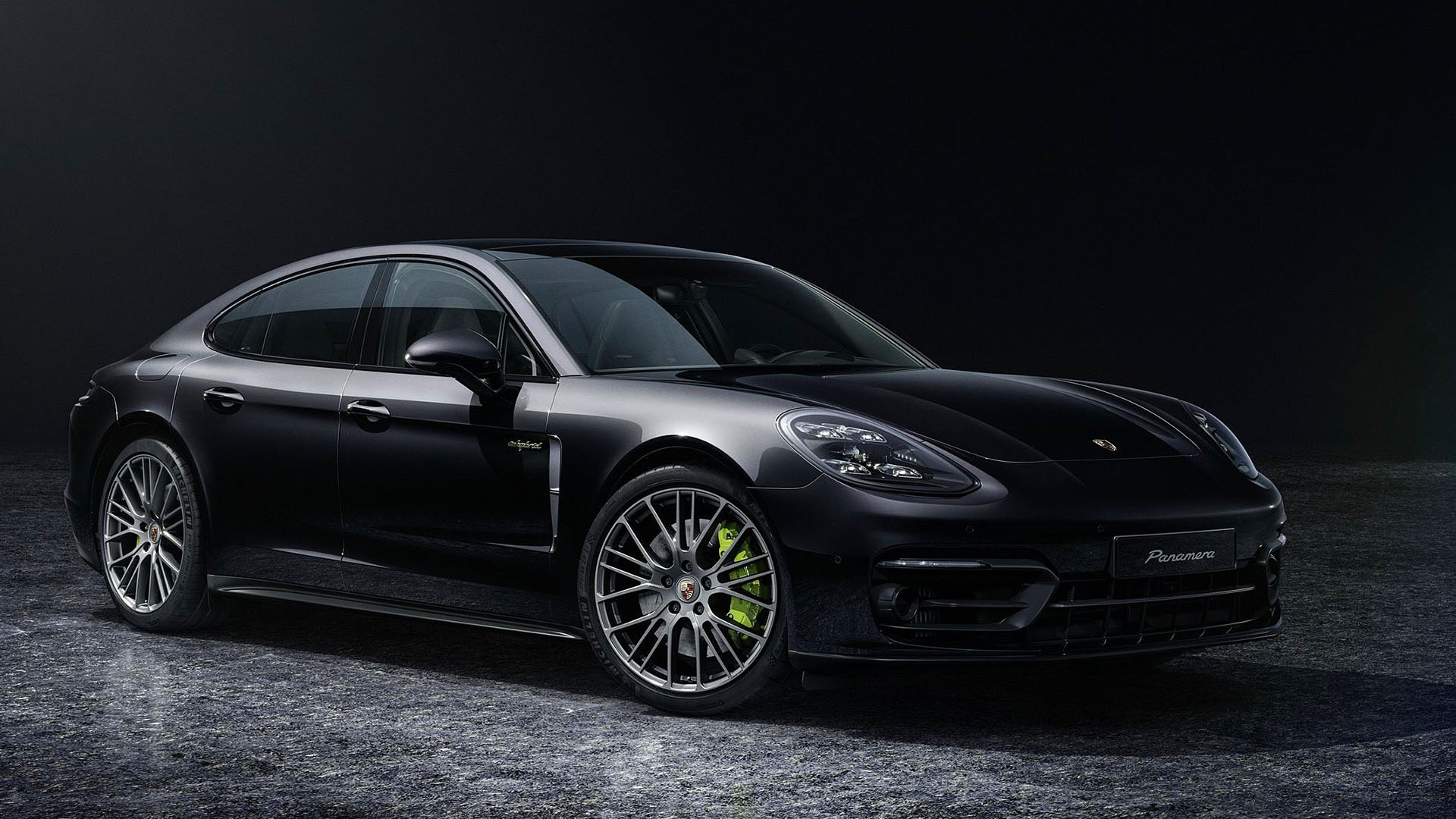
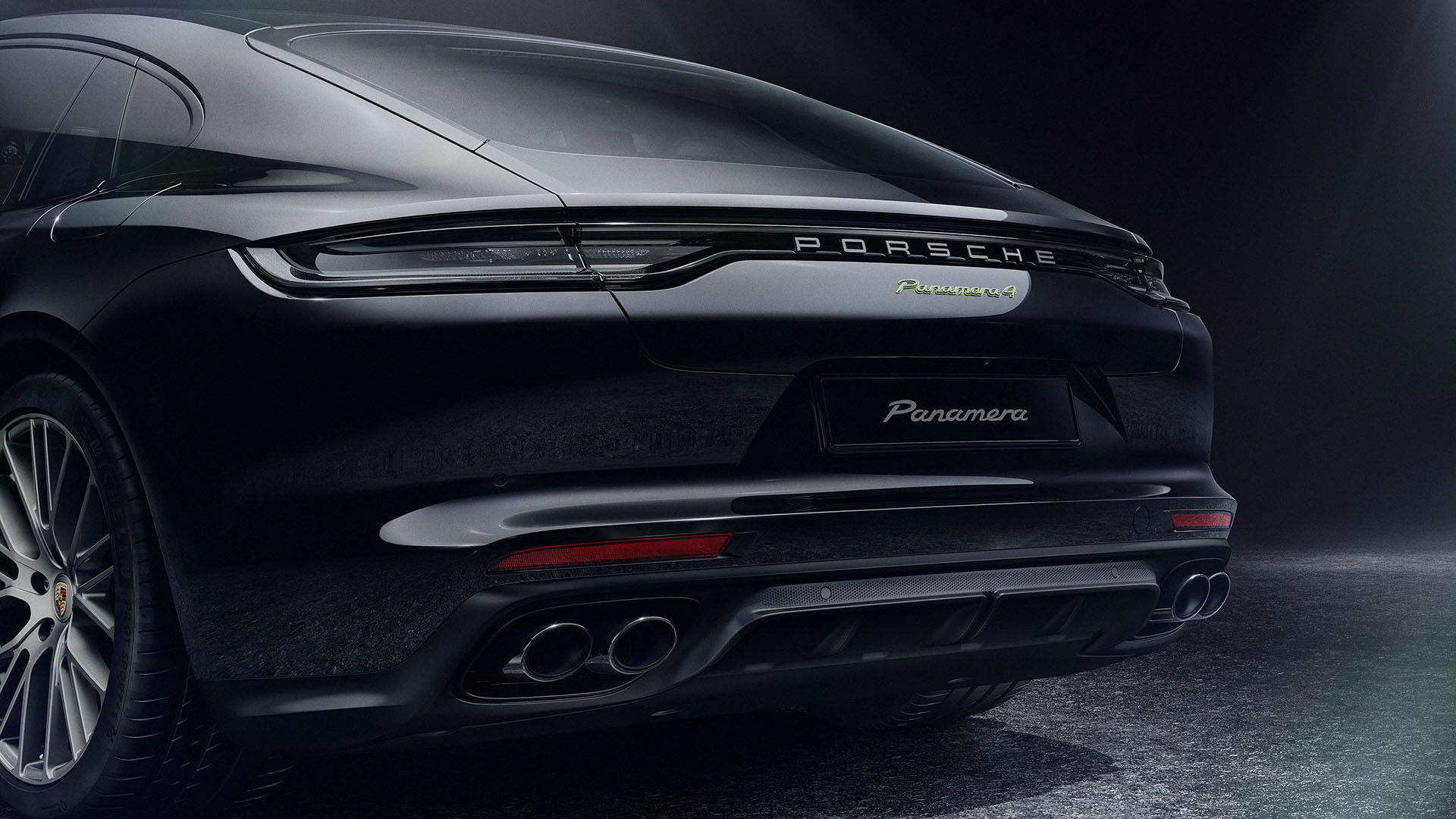
The Porsche Panamera Platinum Edition

At the Los Angeles Auto Show on November 17 Porsche will unveil their latest addition to the successful Panamera line up, the Platinum Edition, a top of the line spec available on either the Panamera (not in Europe), the Panamera 4, and even the Panamera 4 E-Hybrid, while only in Europe you can order this Platinum Edition also on the Sport Turismo models while the Chinese market includes the Porsche Panamera Executive models, which come with an extended wheelbase, first deliveries are foreseen for late January 2022, pricing in Germany start at €111,945 VAT included.

This special trim level combines the discretion of the Satin Gloss Platinum design features with a vast array of standard equipment that’s optionally available on the regular Porsche Panamera, and as usual with a ‘package deal’, the sum of all options would be a lot more expensive than the premium for this Platinum Edition option.

For starters, the Platinum Edition comes with the must-have option of adaptive air suspension with Porsche Active Suspension Management (PASM), but also includes automatic dimming exterior mirrors, LED matrix headlights with Porsche Dynamic Light System Plus (PDLS Plus), the large panoramic roof, and just in case, the Park Assist with reversing camera, If you opt for the E-Hybrid version an on-board AC charger with 7.2 kW charging power comes as standard too.

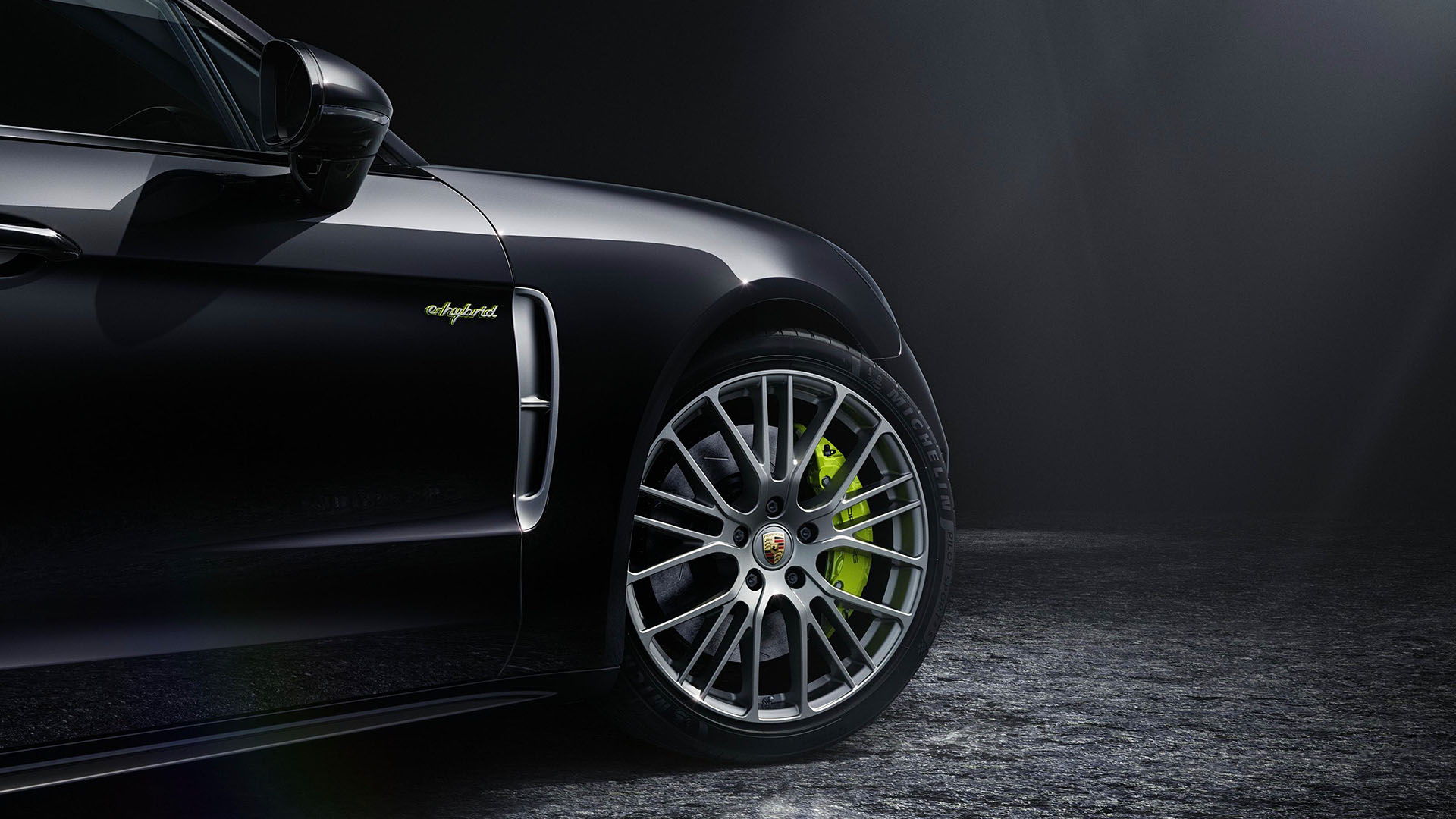
The Platinum-painted 21-inch Exclusive Design Sport wheels look amazing, and for that really intimidating look, Porsche fits black sports tailpipes and dark-tinted privacy glass while the side windows are trimmed high-gloss black, as a final statement the Exclusive Design taillights emphasize the Porsche Panamera’s dynamic elegance.

The Panamera Platinum Edition wouldn’t be complete without platinum painted details on the exterior, like the air vents behind the front wheels, same as the famous Porsche logo and Panamera model designation on the rear hatch, in case of the E-Hybrid, the logo on the side gets a platinum finish too, and if you’re not a fan of massive 21-inch wheels, the options list includes 20-inch Panamera Style wheels in Platinum too.

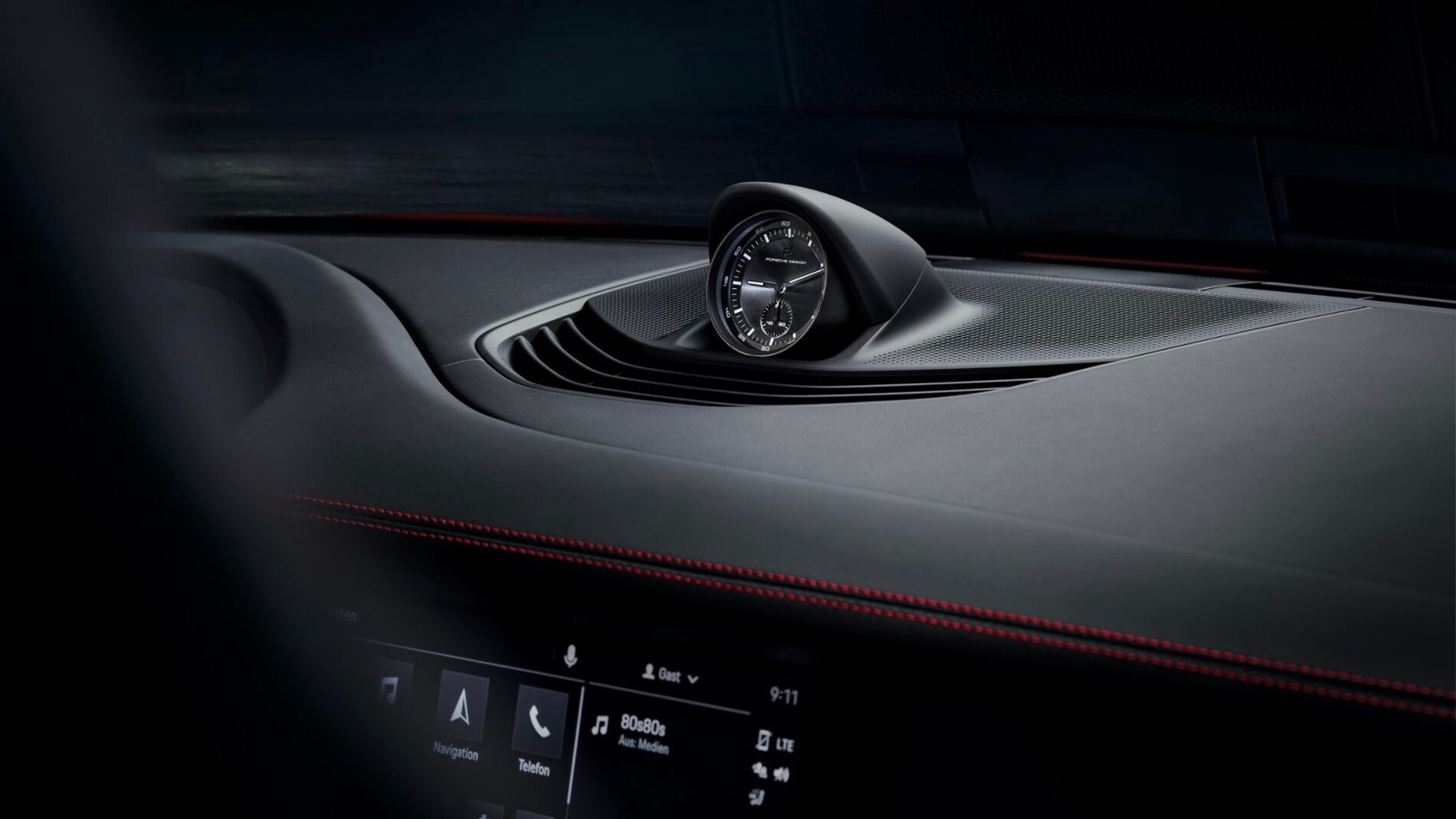
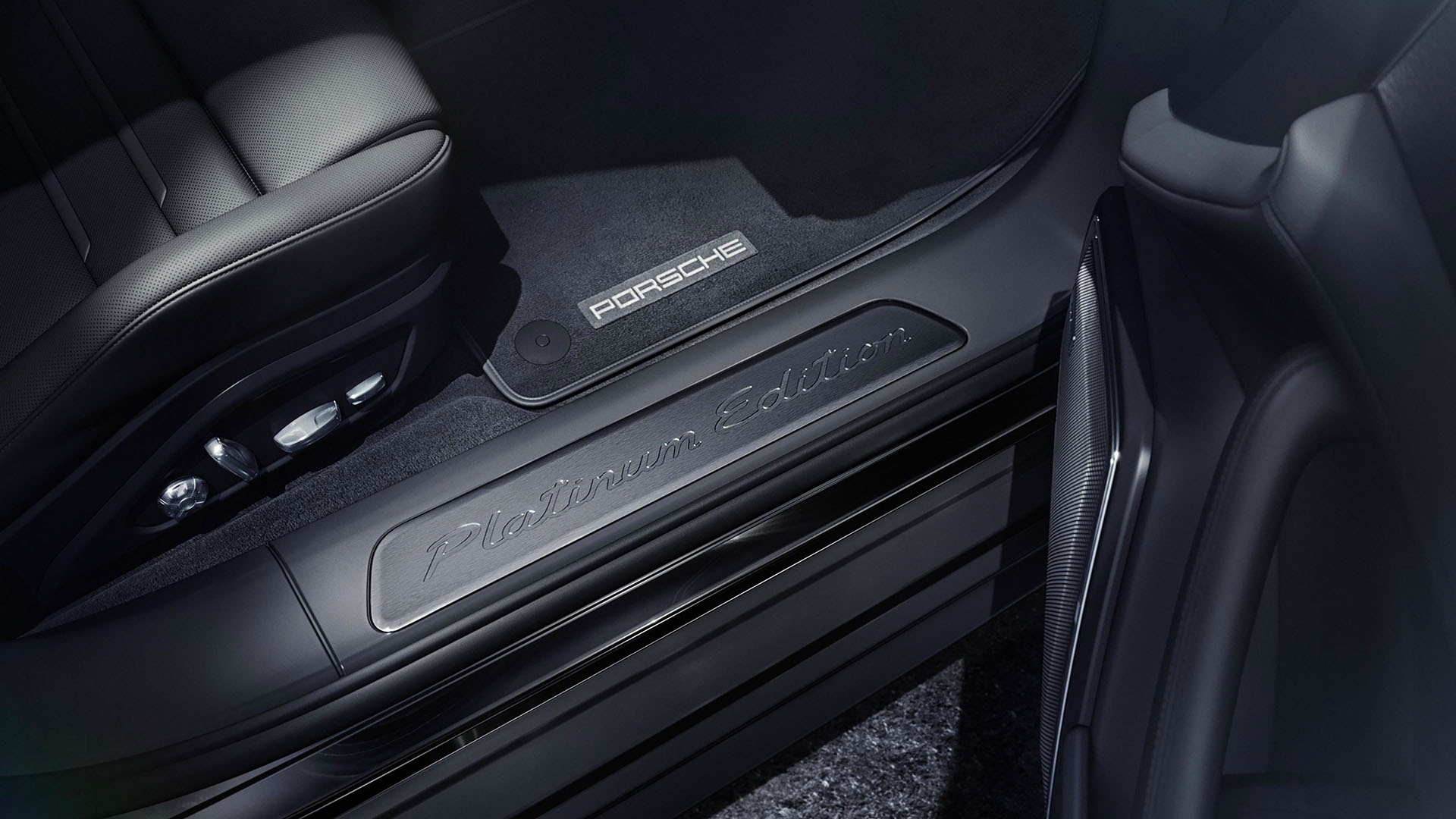
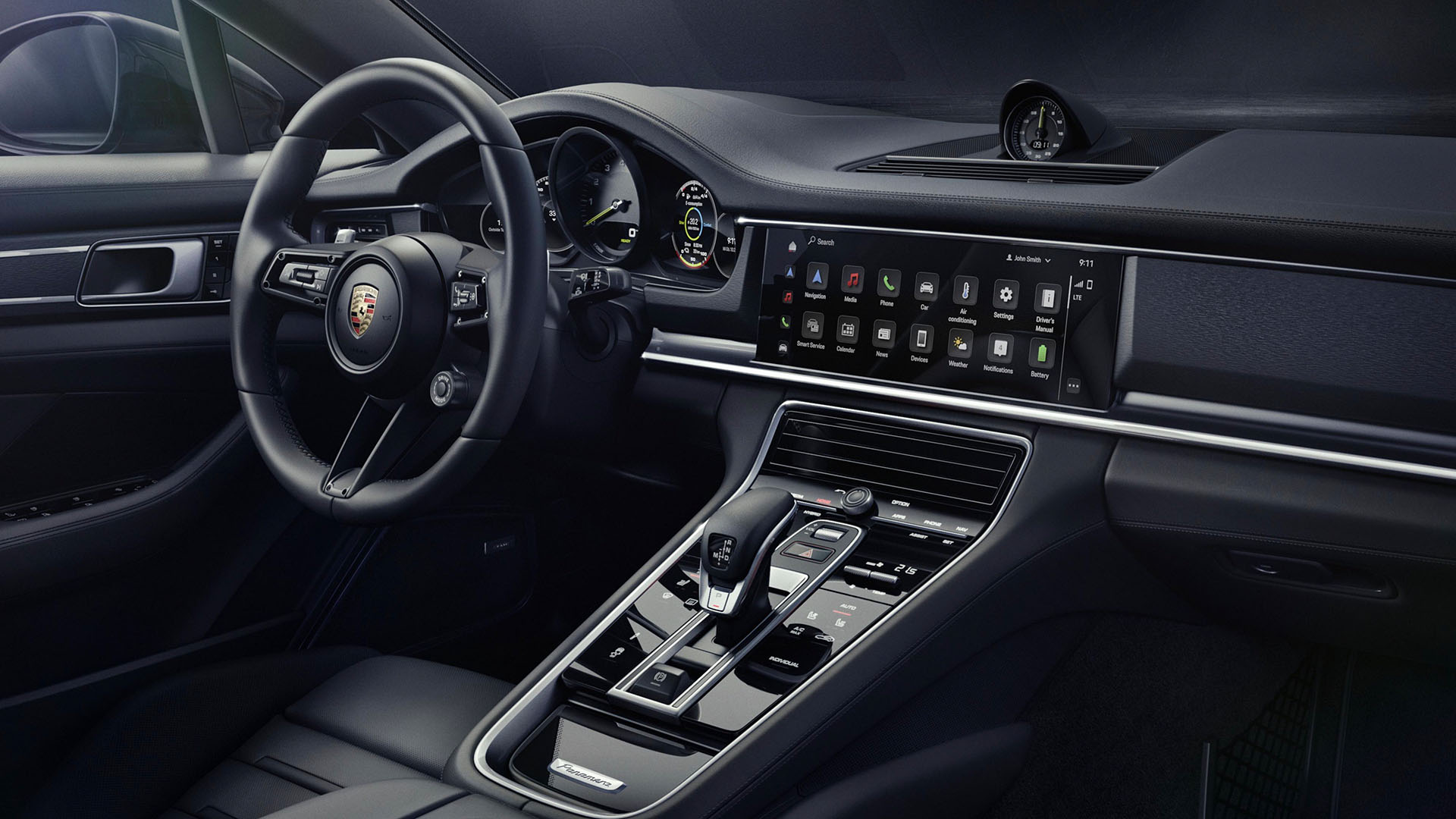
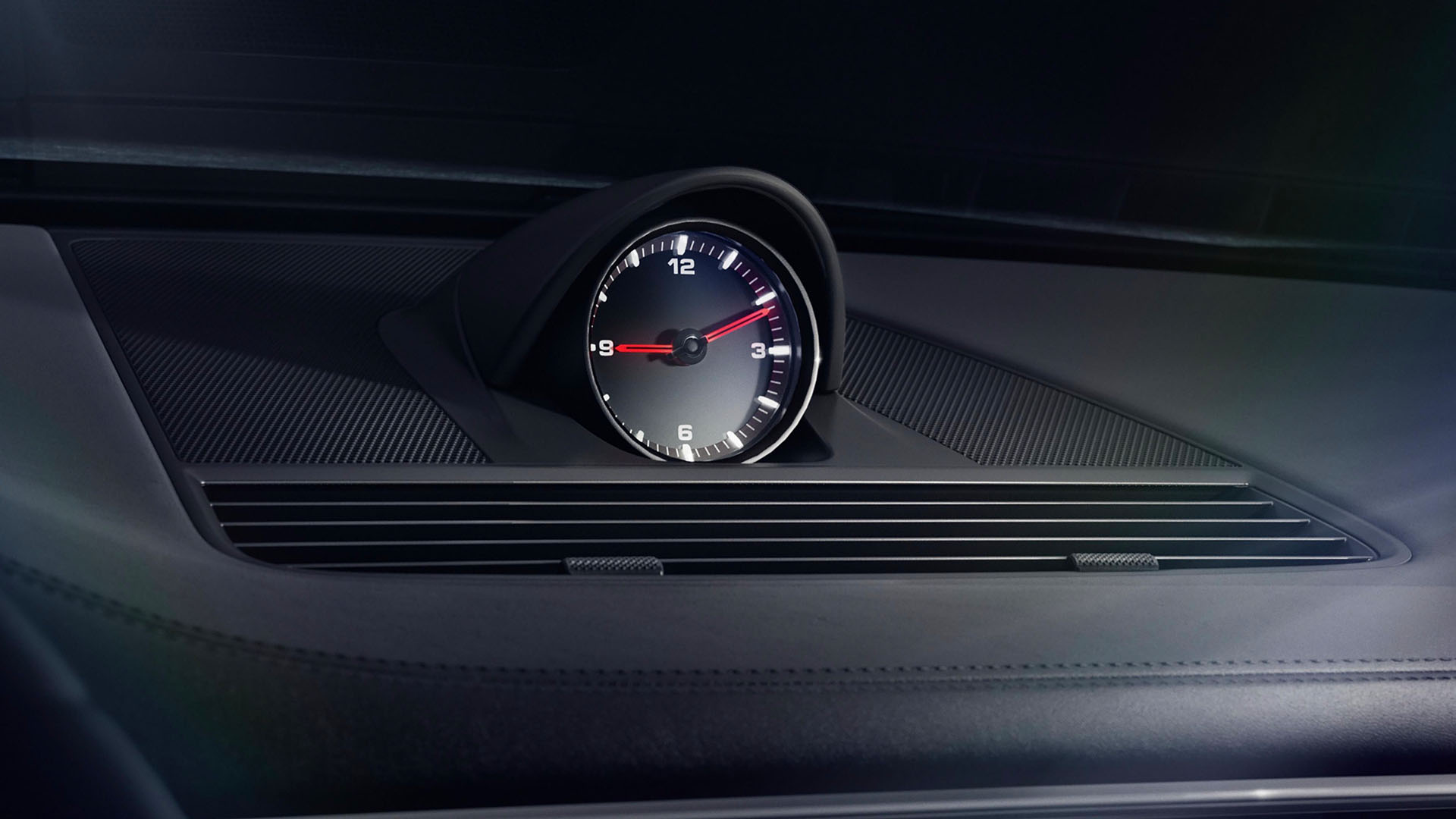
Opening the door will bring you into the lap of luxury, with the GT sports steering wheel complete with Power Steering Plus, Lane Change Assist, but the Platinum Edition also offers soft-close doors with Comfort Entry, 14-way electrically adjustable comfort front seats with memory package, heated rear seats, the magnificent sounding BOSE® Surround Sound system. Furthermore, the brushed aluminum interior package in black and naturally the Porsche crest on the headrests had to be included in this package too, and just as a final touch of class, all Platinum Edition will come with an analogue clock in the dashboard as standard.

Audi denies McLaren purchase report

BERLIN — Early Monday morning, Audi denied reports that the company was closing a deal to purchase McLaren, leaning on a previous statement saying that the company is continuously looking at different ideas for cooperation and saying that the rumor of a completed purchase was “wholly inaccurate.”

“As part of our strategic considerations, we are constantly looking at various cooperation ideas,” an Audi spokesperson said in response to an earlier Autocar report that indicated a deal to purchase the supercar manufacturer was in the works to help the company secure a Formula 1 team. The report cited a source who said Audi had taken over the British sportscar maker. 

“McLaren’s technology strategy has always involved ongoing discussions and collaboration with relevant partners and suppliers, including other carmakers, however, there has been no change in the ownership structure of the McLaren Group,” Audi said. 

McLaren later joined Audi in denying the story, using a statement saying, “McLaren Group is aware of a news media report stating it has been sold to Audi. This is wholly inaccurate and McLaren is seeking to have the story removed. McLaren’s technology strategy has always involved ongoing discussions and collaboration with relevant partners and suppliers, including other carmakers, however, there has been no change in the ownership structure of the McLaren Group,” the spokesperson said.

Audi said to Reuters it was “looking at various cooperation ideas” but neither confirmed nor denied whether it was in discussion with McLaren about a possible sale.

McLaren CEO Mike Flewitt announced in October that he would be step down after eight years leading the financially troubled company, which is now searching for a successor. 

This article contains reporting by Reuters.

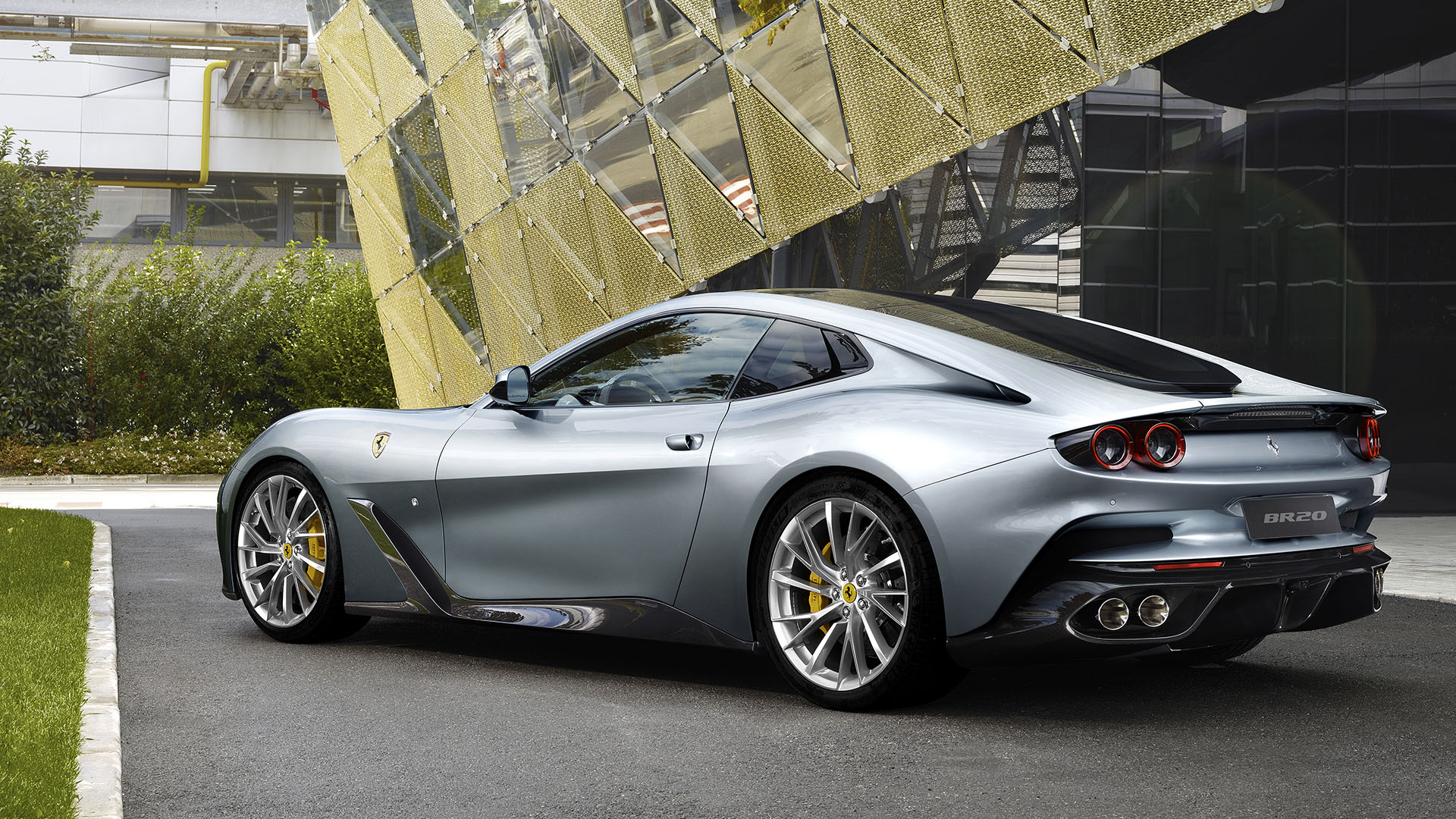
Ferrari BR20: Maranello’s new One-Off

The Ferrari BR20, the latest addition to the Prancing Horse’s One-Off series, was unveiled today and joins the most exclusive group in Maranello’s range: unique, absolutely bespoke cars crafted to the specifications of a client and designed as a clear expression of their own unique requirements.

The BR20 is a two-seater V12 coupé developed on the GTC4Lusso platform, which in terms of its philosophy and styling approach, cleverly references the magnificent Ferrari coupés of the 1950s and 60s, without the slightest hint of nostalgia. Instead, it pulls off the challenging feat of marrying timeless elegance with muscular sportiness, effortlessly incorporating styling themes typical of some of the most iconic 12-cylinders in Ferrari history, including the 410 SA and 500 Superfast.

The GTC4Lusso’s two rear seats have been removed to add extra dynamism to the BR20’s ultra-sleek fastback line. The new car is three inches longer than the original, thanks to a specific rear overhang treatment designed to create a silhouette that beautifully emphasizes its proportions. One of the cornerstones of the design process for this one-off was the radical modification made to the cabin volume. This in turn gave the design team, led by Flavio Manzoni, the freedom to conceive the innovative proportions that ultimately produced a powerful yet stylistically coherent exterior design theme.

The new cabin design solution creates the impression of a pair of arches running lengthwise from A-pillar to rear spoiler. The rear volume of the arch has been hollowed out to create an aerodynamic channel with the air outlet concealed by the black rear fascia under the spoiler. This modern take on Ferrari’s “flying buttress” theme firmly connects the car to signature Prancing Horse styling cues not just from Ferrari’s GT tradition, but also sports cars such as the 599 GTB Fiorano. To visually lighten the cabin, the black paint of the roof visually connects the windscreen to the rear screen, which stands above the surface of the rear tailgate as if to channel the airflow.

A muscular rear bumper melds beautifully with the aggressive look of the rest of the car: twin taillights create a visual dialogue with the tailpipes, which are lower and set into a prominent aerodynamic diffuser with active flaps on the underbody. Even the BR20’s twin round exhaust tips were designed especially for this bespoke model.

The BR20’s many carbon-fiber details highlight the edgy dynamic characteristics and powerful performance of this extraordinary four-wheel drive car. High, sinuous sills add an extra hint of dynamism to the lower section of the flanks as well as emphasize the front air vents on the wheel arches. The wide front grille sports an upper carbon-fiber element, a note of stylistic consistency with other recent Ferrari one-offs, while unusual chrome side inserts help underline the car’s dynamic front stance.

The BR20’s unique identity is further underscored by the front grille’s striking new horizontal slats that lend a powerful sense of three-dimensionality. A virtually endless list of elements was designed specifically for the BR20, not least its modified headlights. They are lower in height compared to those of the GTC4Lusso with slimmer DRLs, which makes the bonnet seem even longer and sleeker. The 20” tone-on-tone diamond-finish wheels were also created especially for this unique car.

The BR20’s interior is no less impressive, trimmed in two shades of brown leather and carbon fiber, an exquisite combination developed according to the client’s indications. The seats are trimmed in dark brown Heritage Testa di Moro leather and sport an exclusive pattern at the front as well as silver cross-stitching. The cabin volume runs uninterrupted from the windscreen to the luggage compartment at the rear, creating a sense of unique lightness and airiness for occupants. Oak trim with carbon-fiber inserts adorns the rear bench and luggage deck, which conceals a deeper loading area when folded flat, as well as the door handles.

Designed for a longstanding client who was deeply involved in every step of its creation, the Ferrari BR20 represents a true interpretation of the traditional coachbuilder’s art, successfully transforming an existing model in a masterful and unique way taking inspiration from and paying homage to the company’s core values of innovation and passion.

SPECIAL PROJECTS
The Special Projects program is aimed at creating unique Ferraris (the so-called “One-Offs”) characterized by an exclusive design crafted according to the requirements of the client, who thus becomes the owner of a one-of-a-kind model. Each project originates from an idea put forward by the client and developed with a team of designers from Ferrari’s Styling Centre; after having defined the car’s proportion and forms, detailed design blueprints and a styling buck are produced before starting the manufacturing process of the new One-Off. The entire process lasts on average more than one year, during which the client is closely involved in assessing the design and verification phases. The result? A unique Ferrari, which sports the Prancing Horse logo and is engineered to the same levels of excellence that characterize every other Maranello production car.

An In-Depth Look at the Ford Focus RS

Blisteringly fast, sometimes unforgiving and exclusively blue, the Mark I Ford Focus RS is a sublime analog sports car disguised as a boy-racer-ish hot hatchback. In the two decades since its introduction, this Euro-only limited production Ford has matured into a pretty desirable classic.

The first Ford Focus RS is one of the finest examples of affordable power at the dawn of the third millennium. Saying that this hot hatchback was worthy of the famous RS insignia is an understatement, because it is way more than just a Focus with a lower stance and the strongest production engine that could fit in the engine bay. It was conjured, engineered and executed out of sheer enthusiasm rather than for profits, and that shows from the moment you step on the gas.

If you’re lucky enough to live in Europe, continue on to see why you may want to get one of these cars for yourself right now (or as soon as it turns 25 if you’re in the US).

Ford Focus RS Background and Development

Starting with the British Escort RS1600 two-door sedan in 1970, the European Ford and Cosworth embarked on a joint venture to create a number of RS cars—fast Blue Ovals for rally and sport. Though the RS insignia appeared on the Capri Coupé, the Sierra sedan and as a standalone badge on the RS200 Group B special, it was really the Escort RS that had the strongest impact on the masses.

Whether it was a rear-wheel drive sedan or a front-wheel drive hot hatch, with or without turbochargers, the Escort RS never failed to give power to the people—becoming an integral part of European automotive folklore for three decades. On the other hand, each regular Escort couldn’t be farther from its RS-badged counterparts, as it was getting increasingly dull, stripped of any joy and character with each new generation that entered the market.

In its sixth and final generation, the Escort RS got a dramatic sendoff in 1992, as the Ford Escort RS Cosworth. A phenomenal version of an otherwise terrible car, this masterclass in hot hatch engineering was built on a shortened Sierra RS chassis, meaning it had four-wheel drive and a 2.0-liter, 224 horsepower Cosworth YBT T34 four-pot.

This Group A homologation special didn’t manage to win a WRC title, but its whale tail spoiler and mean attitude ensured it a place in the British automotive pantheon.

The Ford Focus in the New Millennium

The Escort survived throughout the nineties and the early aughts and was desperately in need of being replaced by an all-new philosophy. With a history of building joyless cars, Ford had to reinvent itself to stay relevant globally. Moreover, as per the Ford 2000 plan, the new millennium asked for a true world car to spearhead the Blue Oval’s lineup in all corners of the Earth.

That car was the Focus—the funky compact hatchback that debuted in 1998 in Europe and got to the US in 1999. Developed under the brilliant Richard Parry-Jones, the Focus was more than just a new name in the C-segment; it was a disruptive force.

What Parry-Jones wanted was an affordable car people would actually enjoy driving. He pushed to make a car that steered more precisely and had better road holding while still being affordable for the customer and commercially viable for the company.

The risk he took with a novel rear suspension design paid off, and the Focus eclipsed both its predecessor and head-on competitors, making their engineering solutions seem dated and inferior.

Conceiving the Mark 1 Ford Focus

Thanks to Parry-Jones, the Focus was an entry level family car that felt fun, comfortable and involving—something the competition could hardly follow. With such a foundation, Ford naturally had sporty ambitions for the new nameplate.

Still, the idea of a really hot Mark 1 Focus was still a European affair. After all, hot hatchbacks always felt more at home in Europe, and Ford didn’t abandon its rallying efforts, teaming up with M-Sport to build and run the Focus WRC and signing superstar driver Colin McRae for the 1999 season.

The same year, Ford showcased the Focus Cosworth concept car at the Los Angeles Motor Show—but behind the curtains, the upcoming Focus was distanced from Cosworth, and the high performance model was entrusted to a team of 60 engineers from Ford and Tickford Engineering.

To make the hot Focus a reality, Tickford re-engineered 70% of the base car, sourcing specialized high quality components from Quaife, Garrett, Brembo and Sparco, among others.

Initially, this hot hatchback was supposed to be a Ford Racing Focus, but after the Ford Racing Puma was not met with the reception it frankly deserved, Ford decided to revive the evocative RS badge—which turned out to be just the right decision.

Close up of radiator on blue Ford Focus RS

The Birth of the Ford Focus RS

Still in development, the pre-production car was shown at the Birmingham Motor Show in 2000 and the 2001 Geneva Motor Show, but the production took longer than expected. So the Focus RS hit the showrooms in late 2002, a year and a half later than originally planned.

In the meantime, Ford unveiled the 170-horsepower SVT Focus for the US market in 2001, whereas Europe got the spiced up ST170 in 2002.

Despite the development being carried out in the United Kingdom, Ford produced the Focus RS in the Saarlouis plant in Germany between 2002 and 2003, making it available in 4501 copies only. Unsurprisingly, the UK market was the biggest one, with 2147 cars being right-hand drive, whereas the remainder was scattered throughout Europe.

The RS model was based on the pre-restyle Focus, despite the regular model receiving a refresh in 2001. However, halfway through the production run, it did get a number of mild changes colloquially known as Phase 2.

From a cynical point of view, the Focus RS was a parts bin special, but the choice of high quality suppliers and how all their parts worked together made the final product well worth the RS badge (and the wait). The Focus RS was received as an instant hit, praised for its physics-defying handling, and revered for its turbocharged power delivery—all at a competitive price of only 19,995 pounds.

Front and left side view of blue Ford Focus RS in field near forest

For a multitude of reasons, the Focus RS became a hot topic in all echelons of European car culture. On the streets, the tracksuit-wearing crowd was charmed by its looks and performance, whereas the racing community appreciated all the engineering that went into it, making it a solid foundation for rallying.

So, two decades later, how does the original Focus RS hold up? Is it still hailed for all its traits and what made it a crown jewel of the Focus range in the first place? Let’s see!

Chassis, Body, & Interior of the Ford Focus RS

Exterior Impressions of the Ford Focus RS

The looks of the Focus were the most distilled expression of Ford’s New Edge design language, but the final execution didn’t sit well when the Focus came out in 1998. Unlike the whimsical Ka supermini and the handsome little Puma, the Focus was just too odd and radical, especially for a car in a segment that had to appeal to the widest of audiences.

Rear three quarter view of blue Ford Focus RS

Under Jack Telnack and Claude Lobo’s guidance, John Doughty blended straight lines and curves with sharp angles and clean geometric surfaces, making the Focus stand out from its relatively conservative contemporary competition. Today, this clean and simple look has aged exceptionally well, making the original Ford Focus an exemplary piece of turn of the millennium car design.

For the RS model, the structurally sound 3-door Focus shell underwent a comprehensive overhaul, transforming the clean, futuristic silhouette into a car that would be more aggressive and appealing to the new generation of hot hatch aficionados.

Front view of blue Ford Focus RS in field

With flared wheel arches, a tailgate spoiler, a unique front bumper adorned with a gaping air intake, fog lights, and air extracting louver-like vents, the Focus RS looked quite like its increasingly popular rallying counterpart.

Beneath the surface, the unibody shell was strengthened throughout, increasing the car’s rigidity and ability to withstand punishment when pushed to its limits. As a final touch to this special treatment, the original Focus RS could be painted any color the customer wanted—as long as it was Imperial Blue.

Interior of Ford Focus RS

Inside the Ford Focus RS

The true blue theme continued on in the interior as well, with Sparco bucket seats finished in black and blue vertical stripes with black Alcantara accents. Breaking the tradition, Ford chose Sparco over Recaro as a supplier for all other RS-specific parts, so the interior got bespoke aluminum pedals, a handbrake lever, a gear stick, and a ball-shaped knob, too.

Sparco bucket seats in Ford Focus RS

Other details unique to the RS were custom blue gauges and a steering wheel wrapped in blue and black leather with a blue 12 o’clock marker. Rather inexplicably, the water temperature gauge inside the instrument cluster was omitted in favor of a turbo boost gauge, prompting many owners to find aftermarket solutions for reading out vital engine parameters.

Ford Focus RS engine start button and serial number stamp

Finally, the last RS-specific interior bit was a unique carbon fiber gearbox console with a green starter button and a stamped serial number of each car produced. The Phase 2 model got “ENGINE START” written around the green button, as well as additional stitching on the seats.

Ford Focus RS Engine & Transmission

The Focus RS was powered by a transversely mounted 2.0-liter DOHC inline four from the Zetec-R family, yet branded as Duratec RS. This 16-valve four pot has a cast iron block and aluminum head and was thoroughly re-engineered to withstand additional power coming from forced induction.

That being said, Duratec RS got forged pistons and connecting rods, sodium-filled valves, a more capable water pump, an oil cooler, and high flowing injectors.

Ford Focus RS Duratec RS engine

The aviation grade Inconel-made Garrett GT2560LS turbo was developed exclusively for the Focus RS, allowing the Duratec RS to produce a total of 212 horsepower at 5,500 RPM and 229 lb-ft of torque at 3,500 RPM. This power gave the 2,817 lb car a 0-60 time of 6.3 seconds and a top speed of 144 miles per hour—quite a punch for an early 2000s hot hatch and still respectable today.

In Phase 2, the car got a new engine map, making it less thirsty and more friendly for daily use.

Ford Focus RS instrument cluster with turbo boost gauge

Power delivery was as direct as could be, with Ford bypassing turbo lag by cooling the compressed intake air via a liquid circuit with a separate radiator instead of using a conventional intercooler system. By saving space like this, the engineering team improved responsiveness, cutting on lag one would usually find in turbocharged cars of similar vintage.

Via a composite AP Racing clutch, the engine was mated to the only transmission that could fit the Focus and withstand the engine’s torque output. It was the Ford MTX-75 transmission, a close-ratio 5-speed unit with a short shifter kit, sending power to the front wheels through a bespoke Quaife automatic torque biasing differential.

Ford Focus RS MTX-75 transmission

Distributing torque to the wheel with more traction, the worm gear Quaife ATB diff was a key piece for the Focus RS’ exceptional handling, though the car also gained a reputation for torque steer, especially in wet weather and despite Tickford’s efforts to minimize it.

What definitely didn’t help is that the original Focus RS had a front-biased weight distribution of 59.5:40.5 and no form of traction or stability control, making it too challenging in the hands of inexperienced drivers.

Ford Focus RS Suspension & Handling

The Focus’ main selling point was its MacPherson suspension at the front (similar to what you’d find in a Mustang) and what Ford called Control Blade at the rear. Richard Parry-Jones’ brainchild, this compact multi link suspension blended the packaging of a trailing arm setup with geometry of a double wishbone suspension.

In this setup, the Control Blade steel trailing arm took care of the braking and traction loads, whereas the long rear lateral arm controlled the toe and two shorter front lateral arms controlled the camber.

This engineering solution increased ride quality and enhanced the car’s maneuverability in many ways, giving the engineers greater ability to fine tune it on the RS model, while the clever design also lowered the center of gravity by eliminating the need for rear shock towers. The fact that it was fairly cheap to produce and easy to assemble created a breakthrough in the segment, giving the Focus a huge advantage on the market.

For the RS, the engineering team completely overhauled the suspension, redesigning new front arms, lower arms and trailing arms, stronger bushings, and anti-roll bars, and installing stiffer Sachs dampers.

As a result, the Focus RS was lowered by 25mm (compared to the standard version) and, in addition to that, it had revised geometry and wider track on both axles, matching the Focus WRC 03 rally car’s track.

As the final piece of the handling puzzle, the RS got a quicker steering rack too—amping up its responsiveness and allowing for more direct feedback at the steering wheel.

Ford Focus RS Brakes, Wheels, & Tires

Stopping power was granted through a Brembo system with 324 mm ventilated and grooved steel discs at the front and and 280 mm solid discs at the back. The rotors were gripped by four-piston calipers front and single-piston floating calipers in the rear.

Ford Focus RS Mark 1 OZ Racing 18 by 8 inch wheels

The Focus RS was exclusively equipped with lightweight 18×8-inch five-spoke OZ Racing wheels with a 4×10⁸ bolt pattern, and wrapped in 225/40ZR18 Michelin Pilot Sport high grip tires.

Legacy of the Ford Focus RS

Offering a raw and thrilling analog run for quite an affordable price, the original Ford Focus RS succeeded in becoming another street racing hero for the Playstation generation, while McRae’s rallying escapades between 1999 and 2005 wrote its name in Y2K’s motorsport history.

Although the road going Ford Focus RS wasn’t directly a homologation car for the radical Focus RS WRC 03, strong associations between the two cemented the car’s cult status—making it a worthy successor to everything the Escort had accomplished in past decades.

Front view of blue Ford Focus RS parked in grassy field

But before it became cherished as a legitimate modern classic, Focus RS was first loved for its immense tuning potential. Its bulletproof engine and turbo setup made it ideal for various modifications, be it for road, track or rallying use. This in turn means that the number of surviving examples is limited even further, especially those in their original condition.

As it usually goes with limited supplies of cars that happen to be amazing, the increasing demand for this model has driven values back up to its original price tag. And the fact that it is another phenomenally fast Ford that America never got will make it even more valuable when it reaches 25 years of age.

The automotive industry has shown us too many times that looks can be deceiving. With its street-fighter-esque, cartoonish features providing cover for a mature and compelling sports car, the Mark I Ford Focus RS is one of the brightest examples of how the art of deception can amaze you once you look beyond the surface.

All photos by Djordje Sugaris.

Porsche 911 Hybrid: It’s Real and It’s Happening. Right Now.

Amidst all the fanfare surrounding EVs—much of it starting from within Porsche’s own camp—the thought of the company’s flagship 911 model being subjected to some form of electrification has often been overlooked. This sentiment is overwhelmingly a reflection of enthusiasts and consumers who, deep down inside, are resigned to the fact that this is inevitable if the 911 lineage is to continue in the years and decades to follow. Porsche themselves though—reluctantly, or not—have already been hard at work embracing this notion, and are now showing tangible evidence of what the path forward will look like.

In my personal experience, I believe that Porsche’s fully-electric platform—exclusively represented by the Taycan range for now—provides very promising prospects and a solid template for a future with ICE-less 911 models. But that’s something we won’t have to think about much, at least for now, as hybridization, rather than full-on electrification, will be Porsche’s immediate solution to address the changing automotive landscape; and it’s more than likely that we’ll see this come to fruition during the current 992-generation.

To quell any doubts of this being the case, the proof is in the pudding, as they used to say. The video below (credit: CarSpyMedia) shows what conspicuously appears to be a 911 Hybrid being tested at the Nürburgring Nordschleife earlier this month.

[embedded content] [embedded content]

As the video footage reveals, these are still the very early days of prototyping; the car appears to struggle from handling issues likely born from all the extra weight the car is carrying with the new hybrid system installed. We can all remain confident that Porsche will take the necessary steps to balance the car and engineer a happy medium between the chassis and its xeno-drivetrain—after all, they’ve already proven they can do as much via the 5,000 lbs+ Taycan platform.

Few details about the car are known, but we do know that Porsche’s ‘E-Hybrid’ nomenclature—currently used in the Panamera and Cayenne lineups—will be adopted for the 911 range. The first 911 trim likely to be ‘E-Hybridized’ will be the Turbo S model, and it will likely sit at the very top of the range in terms of price and overall performance. The current word is that Porsche 911 Turbo S E-Hybrid will feature a 400-volt system, which will compliment the existing 3.7L twin-turbocharged flat-6 petrol engine.

Some outlets are suggesting that it won’t be a plug-in hybrid model, though I’d be surprised if this was the case; the fully-electric Taycan uses 800-volt architecture, while conventional ‘mild’ hybrid systems (which aren’t plug-ins) are well under 100-volts. But then again, EV technology is improving at a rapid pace. As a hybrid, we can expect the new 911 to be mechanically the same, or similar, everywhere else. That should mean no changes in the transmission department, with a 7-speed or 8-speed dual clutch transmission sending power to all four wheels. The suspension and chassis are sure to be tweaked and tinkered with to ensure that the essence of the 911’s driving dynamics remain intact, if not enhanced, by the hybrid drivetrain—it should turn out to be the very same 911 that we’ve all come to love, only with some slightly different hardware.

Just how soon will the Porsche 911 Turbo S E-Hybrid be a real thing? We’re told that it’ll likely arrive as a 2023 or 2024 model, meaning it could debut as early as the tail-end of next year —yes, it’s coming that fast and just in time to usher in the ‘992.2’ era. Porsche has yet to officially confirm that such a car even exists, but as has been proven before—most recently with the new GT4 RS—actions certainly speak louder than words, or lack thereof. In fact, the 911 isn’t even the first Porsche model to feature in recent conversations with regards to hybridization or electrification; Porsche has already announced that it plans to introduce an EV to the 718 range no later than 2025.

My Thoughts:

While the development of eFuels is a positive step in extending the life of the 911 without having to consider full-on electrification, hybridization is a rather obvious next-step in the timeline of Stuttgart’s most iconic and long-standing model. The big-wigs at Porsche are already suggesting that this latest version of eFuels may even allow internal combustion cars to achieve a smaller overall carbon footprint than an electric car, particularly when taking into consideration, the byproducts created from battery manufacturing. “This technology is particularly important because the combustion engine will continue to dominate the automotive world for many years to come,” said Porsche R&D Executive, Michael Steiner. “If you want to operate the existing fleet in a sustainable manner, eFuels are a fundamental component.”

“Porsche is committed to three powertrains: purely electric, plug-in-hybrids, and highly efficient gasoline engines. From Porsche’s point of view, eFuels open up an opportunity for our plug-in hybrid models as well as our icon, the 911—either with a combustion engine or as a very sporty hybrid. This means that we could continue to drive the 911 for many years to come, which will certainly make our customers and fans happy.”

Either way, the existence of the combustion engine—either as a standalone unit, or complimented by electric motors—is realistically viable for “many years to come”, to quote Michael Steiner. For fans of the 911 this can only be good news; even if you’re not a fan of hybrids, today’s hypercars have certainly showcased how impressive the technology is from just a performance standpoint, and if the prospect of that (that being, a 1,000 hp+ Porsche 911 from the factory) doesn’t excite any car enthusiast, I don’t know what will.

Porsche 911 Turbo S E-Hybrid Porsche 911 Turbo S E-Hybrid Porsche 911 Turbo S E-Hybrid

Porsche 911 Turbo S E-Hybrid

Porsche 911 Turbo S E-Hybrid

Porsche 911 Turbo S E-Hybrid

Porsche 911 Turbo S E-Hybrid

Mercedes-AMG One specs revealed in Forza but seem off

The story of the Mercedes-AMG One has been long and drawn-out, and the latest chapter contains the first specific horsepower and torque figures we’ve seen. The information comes from a surprising source, the new “Forza Horizon 5″ video game, which includes the hybrid performance car in its huge selection of virtual cars. Unfortunately, the figures seems oddly low.

The AMG One doesn’t just play a minor role in the game; it’s the most prominently featured car on the X-Box title’s cover. As noticed by Motor 1, however, when players delve into the specs of the car the figures are plainly there for all to see: 877 horsepower, 535 pound-feet of torque. If that’s true, it would be a shocking letdown, considering that Mercedes-AMG has, since its debut at the Frankfurt Motor Show, repeatedly said the One would have in excess of 1,000 horsepower. In 2018, AMG chief Tobias Moers even said that the final figure might come in closer to 1,100.

The game also reveals that the One has a 3,737-pound curb weight and a 49/51 front/rear weight balance. The car has been billed as a road-going Formula One racer. It’s powered by a quad-motor hybrid system mated to a mid-mounted, turbocharged 1.6-liter V6 that reportedly soars to 11,000 rpm. 

Game makers often work closely with manufacturers when they have cars from the real world in their titles. At the very least, the automaker needs to sign off on licensing their names, logos, and vehicle likenesses to the publisher. However, each company has various levels of scrutiny as to what they will or won’t allow (such as colors, modifications, and so on).

It seems highly unlikely that Mercedes-AMG would give its flagship car “just” 877 horsepower after promising over 1,000 for years. Perhaps the game designers simply inserted specs that allowed the car to rank highly and keep it competitive. But if the specs are true, it wouldn’t be the first time a toy company worked closely with an OEM and then mistakenly revealed something ahead of the real car’s debut.