All posts in “Cars”

BMW Vision iNEXT Concept

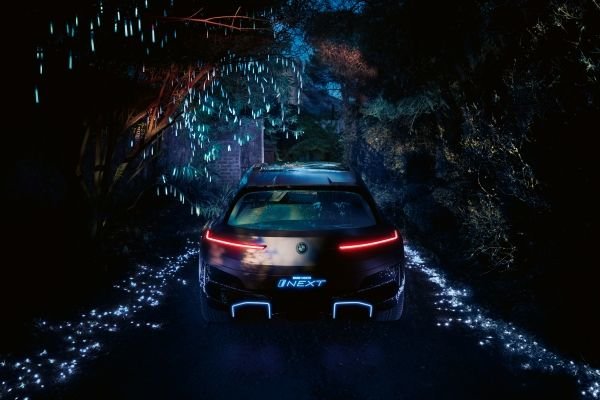
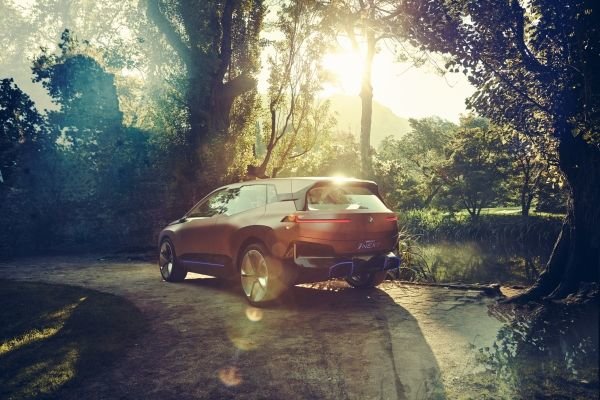
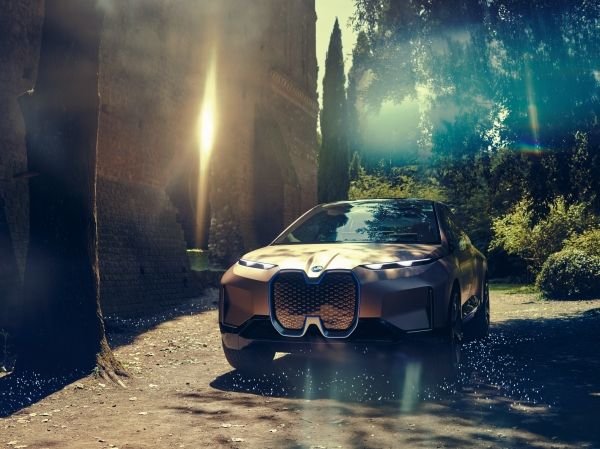
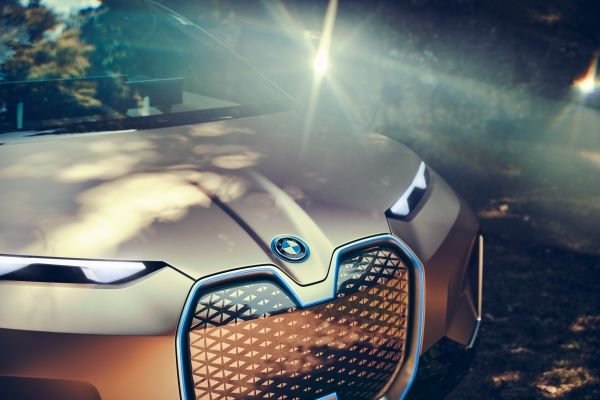
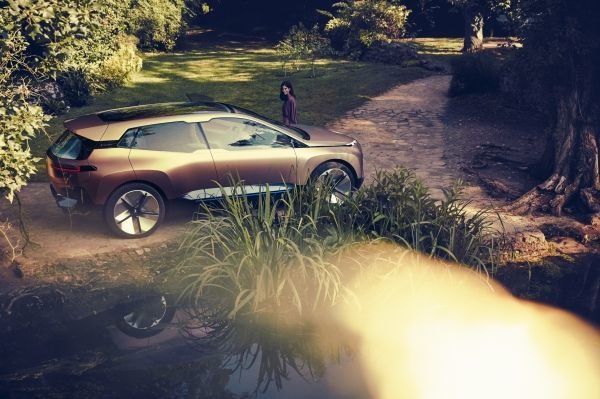
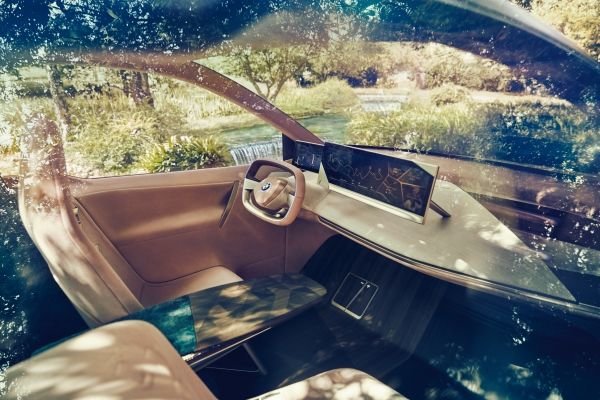
What you see above is the Vision iNEXT, BMW’s latest all-electric concept car that’s partly autonomous. While it’s still very much a “concept” at this point, BMW has every intention of turning it into a reality — a car based on iNEXT is heading into production in 2021.

According to BMW chief Harald Krüger, the Vision iNEXT “represents a new era of sheer driving pleasure,” and is a car from which other manufacturers can imagine the future of electric, driverless vehicles.

BMW based the Vision iNEXT on the X5 large SUV, but it features an all-new interior not previously seen in any of BMW’s past or current models. The back is notable for its sleek garishness, with a wraparound couch-style seat that innovates the cramped three-person pew on newer vehicles. But the most impressive part of all is the panoramic glass roof and large windows, giving the car an almost living room-like feel. It’s very much like Tesla’s enormous signature windshield, but in the case of the Vision iNEXT, all the windows are given this treatment.

As we mentioned, the car is only partly autonomous, so you’ll still find a steering wheel up front. There are two driving modes: Boost and Ease. You drive the car manually while in Boost and in Ease, the car drives itself.

BMW’s Vision iNEXT concept is a more practical take on driverless cars. It acknowledges that driverless is the future, but at the same time it admits that the technology is far from perfect and could lead to serious and life-threatening disasters.

“BMW cars will always have a steering wheel,” says Klaus Fröhlich, BMW’s development boss.

LEARN MORE HERE

Photos courtesy of BMW

Supercars.Net’s Comprehensive Guide To The 2019 McLaren 600LT

Introduction

It is by no means a stretch to say that when McLaren releases a new car, that car becomes the best they have ever made. The British supercar maker has an impeccable track record in this regard, thanks in huge part to its unclouded focus on producing only exotic sports cars; no dubious SUVs, no ornate saloons, no cumbersome grand tourers – only performance-extraordinaire.

The new 600LT is based on the McLaren 570S, and is the latest rendition of the “Longtail” Sports Series cars, hence the moniker. Essentially, the 600LT is designed to possess nearly 3 inches longer of aerodynamic bodywork and is given a slight power bump, weight reduction, and other performance upgrades. While these changes may appear to be rudimentary, the intricacies of each improvement sum up to make the 600LT a car in its own right.

In fact, the McLaren 600LT is considered by many to be gateway car to the top of the line Senna, providing drivers with the sensation of its driving dynamics, at one-quarter of its price. After all, upgrades such as the electric vacuum pump and carbon bucket seats, are borrowed from the Senna.

If we were to create a reference point for this car – in a comprehensive line up of McLaren sports cars, exotics and halosthe 600LT would be more akin to a Senna-lite than a 570S-plus. With a base price of $242,500 USD, eyebrows will certainly be raised; not for its outright price, but for its inherent value considering what you get for that kind of money.

These credentials certainly put the 600LT in the running to be the ‘best McLaren ever made’.

Engine & Performance

At the heart of the McLaren 600LT is an evolved version of the 3.8L twin-turbocharged V8 found in the 570S. An extra 30-horsepower and 14 lb-ft of torque are wrung out this industrious engine, bringing the 600LT’s final figures to 592-horsepower and 457 lb-ft of torque. Not an astronomical change by any means, which gives you the hint that this relatively modest, but important upgrade is a part of something greater and is nothing to balk at.

This boost in power along with a more instant throttle response is greatly attributed to its shortened exhaust which greatly reduces back pressure. Inspired by the Senna, this exhaust is actually even shorter and more extreme than the one used by its role model.

Delivering the power to the wheels is a 7-speed dual clutch transmission. While the transmission is a robust unit which slots into each gear like a race car, its overall brutality in doing so precludes it from any sense of refinement at lower speeds where drivers will experience some jerkiness.

Overall the numbers are ultimately impressive, with the McLaren 600LT achieving a power-to-weight ratio of 481-horsepower per tonne (with every weight reduction option added) and a 0-62 mph time of 2.9 seconds.

Chassis & Handling

It is in these areas of the car where the more significant changes were made over the 570S. No consideration was spared with particular regards to weight reduction, braking, and suspension. At the heart of it all is McLaren’s carbon fiber MonoCell II chassis and lightweight aluminum body panels.

Naturally, a carbon fiber diet is a huge part of the order with new sport bucket seats, and much of the front and rear bodywork made of the lightweight good stuff. Other servings such as new 10-spoke ultra-light wheels, A/C delete, a stainless steel top exit exhaust and suspension components borrowed from the 720S, combine for over 96 kg in extracted mass. This is quite significant in the grand scheme of things, considering that the 570S was no porker, to begin with, and now has a more powerful engine to boot.

The 600LT has a wider track and lower ride height than the car it has now become loosely based on. Thanks to components such as redesigned dampers with forged double wishbones, upgraded anti-roll bars, and firmer engine mounts, the car has become lighter, stiffer and more precise in its handling. Spring rates have been increased 13 percent in the front and 34 percent in the rear, though McLaren insists that streetability and comfort in this regard have not been compromised.

The standard carbon-ceramic brakes are borrowed from the 720S, measuring 390mm and 380mm and accompanied by six-piston and four-piston aluminum calipers in the front and rear respectively.

This braking system is a perfect match for the Pirelli Trofeo Tires which should instill an extraordinary level of confidence in the driver. The overall transformation of the chassis allows the car to change direction and speed with such favorable track manners, making for a more balanced vehicle than the 720S, and a less overwhelming machine than the halo Senna. It remarkably gives you the best of both worlds, or more accurately, the best in one McLaren.

Design, Styling & Interior

The most notable design cue in the 600LT would likely be the exhaust exits at the top of the engine cover, rather than through the rear bumper. Far from just being a crowd pleaser, this setup also saves weight and allows room for a larger rear diffuser which works in conjunction with the rest of the car’s aero pieces to produce over 220 pounds of downforce at 155 mph.

McLaren was preemptive in cooling any areas of concern, quite literally, by coating the rear wing in a ceramic material which deflects heat – very necessary as that area of the car can get as hot as 210 degrees Celsius when the exhaust is on full blast. A more aggressive front splitter, side skirts and “aero planes” more efficiently channel airflow across the body and assist with downforce.

With weight reduction being a key design philosophy for the 600 LT, amenities such as A/C, interior carpeting and a sound system are forgone; they can be added as no-cost options. Should buyers opt for such practicalities, they would have to do with about 16 kg of added weight. To offset some of this weight, or take the base car to the next stage, the MSO (McLaren Special Operations) Clubsport Pack adds a carbon fibre roof and fenders, titanium wheel lugs, the same bucket seats used in the Senna, and other lightweight fixtures which altogether cost $25,000 USD and shed around 5 kg.

The McLaren 600LT with every lightweight option fitted, measures in at just 1,247 kg.

Pricing

Base price of the 2019 McLaren 600LT is $242,500 USD and should be well within the $300k mark even when specced with some of the pricier options.

This means that in terms of pricing, the 600LT slots in between the Porsche 911 GT3 RS and the Lamborghini Huracan Performante – both naturally aspirated cars. For buyers who have a soft spot for high revving turbo-less engines, both those cars may become tough competitors.

The GT3 RS can be had for $40k less. Although the Porsche may lack the wow-factor of the more exotic 600LT, this is something that can be remedied by spending an extra $30k for the V10 Lamborghini.

At the end of the day, it is no secret that McLaren’s Sport Series range of cars, which now includes the new 600LT, can tussle with cars that are well above its price point – even within the McLaren line-up. In current times, this includes the likes of the Ferrari 488 GTB, the aforementioned Lamborghini Huracan Performante and McLaren’s own 720S and million-dollar Senna, which it mimics with considerable veracity.

For those who know exactly what they want in a car, the McLaren 600LT would be a bargain if all the right boxes are checked; and considering everything the car has to offer compared to its competition.

Performance & Specifications Summary

Model & Price Info

Make McLaren
Model 600LT
Generation Sport Series
Sub-Model Longtail
Car type Coupe
Category Series Production Car
Built At Woking, UK
Introduced 2019
Base Price (US) $242,500
Base Price (UK) £185,500
Units built TBD

Chassis, Suspension & Powertrain

Curb Weight 1,356 kg (2,989 lbs)
Layout Mid-engined, rear-wheel drive
Body / Frame Carbon fibre MonoCell II monocoque, with aluminium front and rear crash structures
Suspension Independent adaptive dampers, dual aluminium wishbones. Normal, Sport and Track modes
Steering Electro-hydraulic; power-assisted
Brakes Carbon Ceramic Discs (390mm front; 380mm rear); Aluminium Calipers (6-piston front; 4-piston rear)
Tires

Pirelli P-ZERO™ Trofeo R (P-ZERO™ no-cost option)

Front: 225/35/R19; Rear: 285/35/R20

Transmission 7 Speed SSG. Normal, Sport and Track modes

Engine & Output

Engine V8
Displacement (Litres) 3.8L
Position Longitudinal
Aspiration Twin-turbocharged, intercooled
Power (hp) 592 hp @ 7,500 rpm
Power (hp) / litre 155.8 hp / litre
Power (hp) / weight 0.44 hp / kg
Torque 457 lb-ft @ 5,500-6,500 rpm
Average Fuel Consumption 11.7 L/100 km (combined)

Performance, Acceleration & Braking Stats

Top speed 204 mph
0 – 60 mph 2.8 s
0 – 62 mph 2.9 s
0 – 124mph 8.2 s
0 – 186mph 24.9 s
¼ mile (standing) 10.4 s
124 mph – 0 384 ft
62 mph – 0 102 ft

Gallery & Videos

Image Gallery

McLaren has taken the 570S to the next level, with some reimagined design elements to set the 600LT apart from its donor. Weight savings, aerodynamics, cooling and a bit of showmanship are all emphatically bundled into this package.

In my opinion, the McLaren 600LT’s extroverted looks are as beautiful as they are functional – making for a car that radiates the pinnacle of McLaren’s current offerings.

Video Review Gallery

Here are some YouTube video reviews from some of my favorite car reviewers and auto personalities. All of them provide feedback from an “everyday guy” perspective – but aren’t afraid to thrash the car around a racetrack when given the opportunity – providing commentary that is both technical and easy to absorb.

First up is Top Gear Magazine’s Jack Rix, providing his expert opinion on the 600LT. He goes into detail about what makes this car so great.

[embedded content]Next, Steve Sutcliffe from Auto Express takes the 600LT around the Hungaroring GP circuit. It is clear that he thinks that this car is something quite special.

[embedded content]

Here we have Carfection’s Henry Catchpole having a chance to take the McLaren 600LT on the track in Portugal. His commentary is both technical and emotionally engaging.
[embedded content]

Last but not least is McLaren’s beautifully cinematic official ad for the car.

[embedded content]

Original Press Release

World debut for new McLaren 600LT at Goodwood Festival of Speed, plus full technical details and new images of the quickest, most extreme road-legal Sports Series McLaren

11 Jul 2018

  • The lightest, most powerful and quickest road-legal Sports Series McLaren makes its world dynamic debut on July 12 in the UK, at the Goodwood Festival of Speed
  • 600PS and 620Nm ensures blistering acceleration: 0-100km/h (62mph) is the equal of a McLaren 675LT at 2.9 seconds (0-60mph in 2.8 seconds); 0 – 200km/h (124mph) in just 8.2 seconds
  • New aerodynamic carbon fiber bodywork – including front splitter, side sills, extended diffuser, and fixed rear wing – contributes to 100kg of downforce at 250km/h (155mph)
  • 100kg lighter* than 570S Coupé DIN kerbweight, with a lightest dry weight of 1,247kg giving a power-to-weight ratio of 481PS/tonne
  • Optional Clubsport and Clubsport Pro packs available from McLaren Special Operations (MSO) for even lighter weight and more track-focused features
  • Nearly a quarter of McLaren 600LT parts new compared to McLaren 570S Coupé, including unique top-exit exhaust system and two all-new, ultra-lightweight alloy wheel designs
  • Forged aluminum double wishbone suspension derived from the McLaren Super Series combines with stiffer anti-roll bars and an 8mm reduction in ride height to help deliver enhanced dynamic performance and new heights of driver engagement
  • Bespoke Pirelli P Zero™ Trofeo R tires work in harmony with increased downforce to generate circuit cornering speeds that exceed those of a McLaren 675LT
  • Latest-generation lightweight brake calipers, carbon ceramic discs and a McLaren Senna-inspired brake booster ensure precise pedal feel and phenomenal stopping power: 200km/h to standstill in just 117 meters
  • 600LT opens next chapter in the McLaren ‘Longtail’ (LT) story; production volume strictly limited
  • Available to order now, priced from £185,500 with taxes (UK), which includes** a Pure McLaren Road Owner Track Day experience with driver training

The quickest, most powerful and most track-focused – yet road legal – Sports Series McLaren will make its dynamic world debut tomorrow (July 12) at the 2018 Goodwood Festival of Speed. The arrival of the new 600LT, which is built to excel on roads and race circuits alike, marks both the beginning of the next chapter in the McLaren ‘Longtail’ (LT) story and the setting of a new benchmark for super-sportscar performance.

“The new McLaren 600LT is our most extreme road-legal Sports Series model and possesses the optimized aerodynamics, increased power, reduced weight, track-focused dynamics and enhanced driver engagement that are the hallmarks of any McLaren LT. Only the fourth McLaren in more than two decades to be designated a ‘Longtail’, the 600LT redefines expectations of super-sportscar performance, delivering astonishing acceleration and outstanding track cornering speeds with a truly extraordinary dynamic connection between driver and car.”

Mike Flewitt, Chief Executive Officer, McLaren Automotive

The new McLaren 600LT epitomizes the McLaren philosophy of producing lightweight super-sportscars that deliver extreme performance and are exceptionally rewarding to drive. With the engine management system of the 3.8-litre twin-turbocharged V8 recalibrated and less back pressure from a top-exit exhaust system that is even shorter and more extreme than that of the McLaren Senna allowing the engine to breathe more freely, the 600LT can call on peak power of 600PS (592bhp) at 7,500rpm and a maximum torque output of 620 Nm (457 lb ft) at 5,500-6,500rpm.

These outputs deliver astonishing levels of performance: 0-100km/h (62mph) takes just 2.9 seconds, matching the acceleration of the revered McLaren 675LT Super Series model. 0-200km/h (124mph) is achieved in a remarkable 8.2 seconds and the 600LT can continue gathering speed to a top speed of 328 km/h (204 mph).

Inspired by the renowned McLaren 675LT models and their iconic ‘Longtail’ McLaren F1 GTR racing predecessor, the new addition to the LT family has all the physical hallmarks of a true McLaren ‘Longtail’, including an extended front splitter, lengthened rear diffuser, fixed rear wing and elongated silhouette – in this case by 74mm compared to a McLaren 570S Coupé.

The unique bodywork optimizes aerodynamic performance, working in conjunction with the flat carbon fiber floor of the 600LT to produce the 100kg of downforce at 250km/h (155mph) that generates more grip and greater high-speed stability and is a significant contributor to the car’s excellence on a track.

Extensive use of carbon fiber – including for the monocoque chassis that is some 25 percent stiffer than a comparable aluminum chassis and for the new aerodynamic features– together with lightweight materials throughout the track-focused cockpit, helps the McLaren 600LT to achieve a lightest dry weight of 1,247kg and equivalent power-to-weight ratio of 481PS/tonne. With the optional Super-Lightweight Carbon Fibre Racing Seats developed for the McLaren Senna fitted, the 600LT weighs 100kg less than a 570S Coupé – a remarkable reduction that delivers tangible benefits in every aspect of the car’s performance.

McLaren 600LT buyers wanting to go to another level of weight-saving can specify the MSO Clubsport or MSO Clubsport Pro packs from McLaren Special Operations. The MSO Clubsport Pack, which adds £24,170 to the price of a new 600LT, features the Super-Lightweight Carbon Fibre Racing Seats; a Carbon Fibre Interior Upgrade that includes extended gearshift paddles and steering wheel spokes and switches and IRIS display surrounds in the lightweight material; Carbon Fibre Roof and Cantrails, Visual Carbon Fibre Fender Louvres in gloss finish; and titanium wheel bolts.

The MSO Clubsport Pro Pack, which adds an MSO Defined Harness Bar and 6-Point harness for track use, in either black, blue, red or McLaren Orange, is priced at £28,480. The Super-Lightweight Carbon Fibre Racing Seats are available as a stand-alone option, costing £4,990.

The remit of any McLaren ‘Longtail’ model is to engage and excite to the absolute maximum, encouraging – and enabling – drivers to fully exploit the dynamic performance inherent in the car. The ethos underpinning every aspect of the development of the McLaren 600LT was, therefore, a determination to deliver the purest possible connection between car and driver.

To this end, the 600LT has lighter and stiffer suspension components from the McLaren 720S, the adoption of the forged aluminum double wishbones and uprights not only improving dynamic capabilities but also reducing weight by 10.2kg. Ride height is reduced by 8mm over other Sports Series models and front track is increased by 10mm, to deliver a more precise driving experience.

The independent, continuously variable adaptive dampers and front and rear anti-roll bars featuring on all McLaren Sports Series models have been retained but are significantly re-engineered to work with the new suspension geometry and create the track-focused performance demanded of the new 600LT.

The adoption of the braking system from the McLaren Super Series, which features lightweight aluminum calipers and stiffer carbon ceramic discs, reduces weight by 4kg, working in conjunction with an all-new brake booster developed using learnings from the McLaren Senna, the result is incredibly responsive and progressive pedal feel during braking and a 200km/h (124mph) to standstill distance of 117m – just 1m more than a McLaren P1™.

Two new designs of ultra-lightweight aluminum alloy wheels – 10-spoke as standard and a 5-spoke alternative as a £4,080 option – are the lightest wheels ever fitted to a Sports Series, the reduction in unsprung weight bringing a noticeable benefit to the dynamic qualities of the car.

Bespoke P Zero™ Trofeo R tires – developed with McLaren Technical Partner, Pirelli – feature for the first time on a Sports Series model and this unique track-focused tire is a crucial element in the enhanced dynamic abilities of the McLaren 600LT. Tuned to deliver the immediacy and steering feel for which McLaren is renowned, as well as excellent rear axle stability, the ultra-high-performance tire features a softer sidewall structure than is usual to improve compliance and so grip levels by ensuring the contact patch with the ground is maintained, even on less-than-perfect surfaces. By contrast, the belt construction of the Trofeo R tire is stiffer than on any previous Sports Series, to enhance lateral acceleration and improve cornering ability.

The cockpit of the McLaren 600LT exemplifies both weight reduction and a driver-focused environment. Lightweight Alcantara® trim material is used extensively throughout and the absence of carpet in the driver and passenger footwells and beneath the seats saves 5.7kg, while also exposing the carbon fiber beauty of the MonoCell II chassis construction.

The glovebox has been removed and the door pockets replaced with lightweight nets; air-conditioning, satellite navigation, and an audio system are all available as no-cost options, not being fitted as standard. Carbon fiber Racing Seats, first seen on the McLaren P1™ and subsequently used in the McLaren 675LT, are standard-fit and save a remarkable 21kg.

Production of the 600LT Coupé will begin in October 2018 and last for around 12 months, with build slots scheduled around existing Sports and Super Series models, as well as the sell-out Senna, Senna GTR and BP23. Availability will be strictly limited, the carbon fiber body panels that require specialist tooling just one of the reasons that the new ‘Longtail’ will be rarer than its Sports Series brethren. Available to order now from McLaren retailers – subject to availability – the 600LT Coupé is priced from £185,500 with taxes (UK), which includes** a Pure McLaren Road Owner Track Day at a race circuit, with expert driving tuition.

To discover more about the new McLaren 600LT, visit McLaren.

A film showing the car in action can be viewed here:
[embedded content]

Ends

* with optional Super-Lightweight Carbon Fibre Racing Seats fitted

**Included in North America and European markets (including UK). Please confirm further details with a McLaren retailer.

Final Verdict

As my fellow Supercars.net colleague, Nick Dellis once remarked, “The world is full of armchair commentators when it comes to cars. At Supercars.net we have a number of journalists and automotive publications we rely on when we want to get unbiased opinions from people we admire.”

Below are snippets from some of our favorite car reviewers and automotive personalities regarding the McLaren 600LT. As always, we ask that you support the amazing publications they release, so that the automotive community continues to benefit from the hard work and enthusiasm they put into providing us with content that we love.

Evo – “More powerful, more raw, more pure – McLaren’s Sport Series at its best yet.” – 5/5

2019 McLaren 600LT profile2019 McLaren 600LT profile

Adam Towler from Evo had high expectations going in, despite the 720S rewriting the supercar rulebook and being awarded ‘Evo Car of the Year’ in 2017. The 600 LT’s “increased focus on driver thrills might just make it our favorite McLaren yet.”, he says.

Direct comparisons to the car it is based on – the 570S – were always going to be made, and Adam remarks that “impressive as a 570 is, every aspect of that car feels tempered with a nod to usability. With the 600LT this restraint has been removed and you feel as if you are gaining access the Sports Series’ raw ingredients. There’s no hint of vagueness, of squidge and imprecision, instead, everything the 600LT does is ruthlessly, but delightfully, transparent and true.”

He goes on to summarize that based on its price and offerings compared to its competition, that “McLaren has, therefore, found a rather handy niche for the 600LT, and has filled it with an extremely desirable and capable supercar. ”

The Good

  • Natural, sharp and transparent driving connection
  • Beautifully balanced cornering attitude
  • Top-mounted exhaust that spits flames

The Bad

  • There’s nowhere to store your travel sweets
  • Almost too fast for the streets

More: Read full review

Motoring Research – “It’s very probably the best driver’s car of the year” – 5/5

2019 McLaren 600LT frontal view2019 McLaren 600LT frontal view

Tim Pitt from Motoring Research was one of a few lucky journalists to track the 600LT on the Hungaroring. He can’t help but note that “Even for a supercar, it looks special. Forget the joy of specs for a moment: the 600LT looks sensational. From upwards-opening dihedral doors to an exuberant paint palette, its styling screams ‘supercar’. An Audi R8 seems plain by comparison.”

At the end of the day, Tim, who is an obvious Porsche fan and admits that “the obvious stumbling block here is the Porsche 911 GT3 RS, with its equally talented chassis and fearsome, 9,000rpm flat-six.” However, he goes on to say “But since you can’t actually buy a ‘991.2’ RS unless you’re one of the favored few – or prepared to pay vastly over the odds – the McLaren claims victory by default. Well played Woking”.

The Good

  • Ultimate driver’s car
  • Special looks
  • Both agile and docile

The Bad

  • Rudimentary media system and creature comforts
  • Expensive options for a tiny bit of extra weight reduction

More: Read full review

Auto Express – “McLaren’s best road car yet” – 5/5

2019 McLaren 600LT side view2019 McLaren 600LT side view

Steve Sutcliffe from Auto Express is another reviewer who believes that the 600LT is the best car McLaren has made to date.

“The new 600LT is sensational on a track and far sharper than the regular 570S. But it also appears typically usable and impressively civilized. While we’re yet to try the car on the road, it’s immediately obvious the 600LT is more than just a sometime track-day weapon. McLaren has hit the bullseye once again.”

The Good

  • Best McLaren road car ever made
  • Not too hardcore or over the top

The Bad

  • Could still be mistaken for a 570S from afar

More: Read full review

My Final Verdict – 5/5

There is no doubt that amongst contemporaries, the McLaren 600LT is quite simply the best McLaren road car, and arguably the best driver’s car on the market.

McLaren improves its remarkable track record of producing progressively better cars, with a focus on designing them to deliver at the highest echelons of performance while being refined enough for daily driving.

The McLaren 600LT does all that, pretty much to perfection. This is all without yet mentioning that with pricing considered, the 600LT can be likened to a giant-killer with its relatively modest costs, which allow it to punch above its weight class.

Perhaps the biggest compliment that is being paid to the 600LT is its likeness to the Senna – McLaren’s million-dollar halo car. The 600LT delivers the same driving dynamics and arguably more fun factor, at a third of the cost of the aforementioned. Knowing that someone would have spent a million-plus to keep up with you and have as much fun as you on the race track, says that this car is something quite groundbreaking indeed.

In my opinion, the McLaren 600LT is a car that is really going to shake up the $200,000-ish supercar segment. Competitors are going to have to step up their game and look very closely at their strategies if they don’t want McLaren to become the de facto car of choice for pragmatic supercar buyers. The McLaren 600LT might not just be the best McLaren ever made – it may also be the best supercar ever made.

Rivals

Lamborghini Huracan Performante
Ferrari 488 Pista
Mercedes AMG GTR
McLaren 720S
Porsche 911 GT3 RS

14 concept cars that should have gone into production

  • Image Credit: Ford

These concepts shouldn’t just gather dust

Concept cars shine just long enough to showcase what’s possible but not currently available in terms of design, technology and performance. When they become unfashionable, they’re generally sent to a warehouse where they gather dust with other one-offs and might-have-beens for decades on end.

We’ve explored the pantheon of forgotten concept cars and selected some of the models we would have liked to see make the transition to production. Some are simply cool, while others represent missed opportunities for automakers.

  • Image Credit: Jaguar

Jaguar C-X75 (2010)

Extremely quick and technologically innovative, the C-X75 could have fueled Jaguar to the upper echelons of the automotive industry. It would have picked up where the mighty XJ220 left off. The company’s decision-makers knew this so they proudly announced a production run strictly limited to 250 units and a correspondingly high price tag of about $1.1 million.

Citing the aftermath of the global recession, Jaguar canceled the C-X75 project shortly after giving well-heeled enthusiasts the hope of one day owning one. It nonetheless made seven cars (including five used for stunts) that starred in the 2015 James Bond movie Spectre.

Research the Jaguar

  • Image Credit: Volkswagen

Volkswagen BlueSport (2009)

The BlueSport concept was a two-seater, mid-engined roadster with a Volkswagen emblem on its nose. In other words, it was a Porsche Boxster for the working class. If built, and its chances of reaching production were spectacularly high at one point, it would have propelled Volkswagen into a new segment. It would have been fairly affordable, too, because it was set to use the modular MQB platform as well as proven components (including its turbodiesel four-cylinder engine) borrowed from the Golf and the Polo.

Volkswagen claimed it needed to sell 40,000 to 50,000 examples of the roadster annually for it to make sense. After a long period of hesitation, executives called off the project in the early 2010s due to a perceived lack of demand.

Research the Volkswagen

  • Image Credit: Bugatti

Bugatti 16C Galibier (2009)

Selling a 16C Galibier-inspired four-door model alongside the Veyron would have made the Bugatti brand accessible to a slightly different type of buyer. We’re not talking about diluting its hard-earned image or stepping down into lower segments of the market. The 16C could have been just as rare, powerful and expensive as the Veyron while offering space for four passengers.

As of 2018, Bugatti is open to the idea of launching a four-door model but it hasn’t revealed what form it will take yet.

Research the Bugatti

  • Image Credit: Suzuki

Suzuki LC (2005)

Cute as a button, the Suzuki LC concept unveiled at the 2005 Tokyo auto show was a modern interpretation of the Suzulight, the company’s very first car. It was designed to comply with kei car regulations in Japan. Suzuki missed a golden opportunity by not turning it into a production model. Made slightly bigger, the LC could have competed against the Fiat 500.

Research the Suzuki

  • Image Credit: Chevrolet

Chevrolet Nomad (2004)

Chevrolet made headlines in 1999 with the Nomad concept, a sporty shooting brake built on a Camaro platform. It tugged at enthusiasts’ heartstrings with a design that borrowed styling cues from the Bel Air-based Nomad made in the 1950s. Many assumed the 2004 Nomad concept – which was completely redesigned to channel the eponymous design study from 1954 – finally previewed the production model.

Chevrolet had approved wilder models for production, like the SSR. The Nomad looked tame in comparison and it would have let the firm continue to surf the retro wave sweeping across the automotive industry. Building it would have been cost-efficient because it would have shared mechanical parts with the Pontiac Solstice but Chevrolet couldn’t make a business case for a retro, rear-wheel drive grocery-getter.

Research the Chevrolet

  • Image Credit: Buick

Buick Velite (2004)

In the early 2000s, Buick’s line-up looked as stale as a week-old pint of Miller Lite. The 2004 Velite concept embodied one way the firm could add much-needed allure to its line-up. It was a convertible, a body style that had been absent from the Buick portfolio since the Reatta’s demise in the early 1990s, and it looked much sharper than the retiree-friendly models the brand was building at the time.

The Velite remained a concept – parent company General Motors’ shaky financial situation certainly didn’t help its cause – and Buick’s customer base continued to age. Buick returned to the convertible segment in 2016 when it introduced the Opel-sourced Cascada.

Research the Buick

  • Image Credit: Subaru

Subaru B9 Scrambler (2003)

Mazda’s headquarters fell silent when Subaru introduced the B9 Scrambler concept at the 2003 Tokyo auto show. The shapely roadster alluded to what an alternative to the MX-5 Miata could look like. It differed from its would-be rival by offering all-wheel drive (a Subaru staple) and a hybrid drivetrain made up of a 138-horsepower four-cylinder engine and a 134-horsepower electric motor.

Officially, the B9 Scrambler provided a preview of Subaru’s next design language. There is little indication decision-makers seriously considered the B9 Scrambler for mass production. Subaru resurrected the B9 nameplate in 2005 on the Tribeca SUV and it entered the compact sports car segment when it launched the BRZ in 2012.

Research the Subaru

  • Image Credit: Alfa Romeo

Alfa Romeo Kamal (2003)

Perhaps inspired by the Porsche Cayenne and the BMW X5, Alfa Romeo demonstrated a surprising amount of foresight when it unveiled the Kamal concept at the 2003 Geneva auto show. It showed the company’s idea of a quick, sporty SUV capable of holding its own off the beaten path. The Kamal’s drivetrain consisted of a V6 engine tuned to send 250 horsepower to the four wheels through three differentials.

The Kamal could have arrived in showrooms in time to grab a significant share of the then-burgeoning luxury SUV segment. While insiders suggested the concept was on its way to production, it didn’t get past the design study stage. Alfa didn’t enter the luxury SUV segment until it introduced the Stelvio in 2016.

Research the 2018 Alfa Romeo Stelvio

  • Image Credit: Lincoln

Lincoln Continental (2002)

The Continental was one of several concepts Lincoln introduced in the early 2000s in a bid to prove it hadn’t become irrelevant in the luxury car segment. With a wide grille, round headlights and suicide doors, its designed harked back to the 1960s, an era during which Lincoln provided the White House with limousines for the president and other high-ranking officials. Times had changed and the Ford-owned brand wanted to turn back the clock.

Lincoln began developing a rear-wheel drive flagship sedan in the late 2000s to replace the outdated, body-on-frame Town Car. Work on what could have become a born-again Continental stopped abruptly when fuel prices sky-rocketed. The nameplate nonetheless made a comeback in 2016.

Research the 2018 Lincoln Continental

  • Image Credit: FCA

Dodge Razor (2002)

Dodge sought a way to give younger buyers a reason to visit its showrooms. It teamed up with Razor, the scooter manufacturer, and developed a Mazda MX-5 Miata-like two-seater with an athletic design. Power came from a turbocharged four-cylinder engine tuned to send 250 horsepower to the rear wheels through a six-speed manual transmission. And, to really highlight the collaborative effort, Dodge replaced the spare tire with a pair of Razor scooters.

The reports claiming the Razor would spawn a production model – hopefully one with a proper spare tire – named Scooter were wrong. As of 2018, Dodge hasn’t dared to invade Miata territory. We doubt it will.

Research the Dodge

  • Image Credit: Ford

Ford 021C (1999)

“Ask children to draw a car and they’ll draw something like this,” explained Marc Newson, the Ford 021C’s designer, after the concept made its debut at the 1999 Tokyo auto show.

Never intended for production, the design study illustrated what a 21st century car could look like when stripped down to just the bare minimum. And yet, it wasn’t overly basic, outdated or grotesquely cheap. It remained stylish, in tune with the times and generally desirable. Ford missed a rare opportunity to produce what could, in 2018, be remembered as the iPhone of the automotive world.

Research the Ford

  • Image Credit: Renault

Renault Fiftie (1996)

Renault simply envisioned the Fiftie as a retro-styled design study built to celebrate the 4CV’s 50th birthday. We bet that, in hindsight, the French company would move quickly to turn the Fiftie into a production model aimed right at the Volkswagen New Beetle. Renault could have even beat its German rival to the punch by moving the engine to the front and using existing components – the platform and drivetrain from the Clio, for example.

  • Image Credit: Audi

Audi Quattro Spyder (1991)

All-wheel drive and mid-engined, the Audi Quattro Spyder concept is the 1990s R8 that never was. Its production-ready body hid a 172-horsepower V6 engine so it wouldn’t have been nearly as quick as the R8 but its smaller dimensions would have made it nimbler. The Quattro Spyder almost joined the Audi catalog but insiders working on the car later revealed the project got canceled because they couldn’t meet the 100,000-Deutsche Mark target set by the product planning team.

Research the Audi

  • Image Credit: FCA

Chrysler Portofino (1987)

Chrysler made the Portofino concept largely to flaunt its acquisition of Lamborghini. Fully functional, the design study boasted two sets of scissor-style doors that opened in separate directions and a mid-mounted V8 engine borrowed from the Jalpa. If launched, it would have likely cost a small fortune and arrived as an expensive limited-edition model. It wouldn’t have been a hit, unless we’re talking about the financial hit Chrysler would have taken after developing it, but a Chrysler built on a stretched Jalpa platform would make for a fascinating classic car in 2018.

Research the Chrysler

McLaren 720S Spider Teased ahead of December Reveal
McLaren have announced a date for the reveal of the upcoming McLaren 720S Spider. The second Track25 car will debut on the evening of Saturday 8th December 2018, presumably during McLaren’s annual Christmas party!

Keen McLaren fans will remember that McLaren used its annual Christmas party to debut the McLaren Senna last year. Deliveries of that car have only recently began. While it might seem strange timing to release a convertible, in the depths of winter, it does ensure that McLaren will be able to begin deliveries in time for summer 2019!

The new McLaren supercar will be revealed online at 20:10 GMT on Saturday December 8, 2018.

In terms of what we expect to see, this is fairly predictable. It will use the 4.0 litre V8 twin turbocharged engine with a power output of 720 hp and 770 Nm of torque. It should manage 100 km/h in around 3 seconds and a slightly reduced top speed over its Coupe brother.

The McLaren 720S Spider is expected to follow in the footsteps of the 650S Spider in the sense that it will get a folding electric hardtop. The 720S was most likely designed with a convertible in mind which means that the engineering work required to realise the chopped top will be minimal.

2019 Range Rover Evoque Revealed

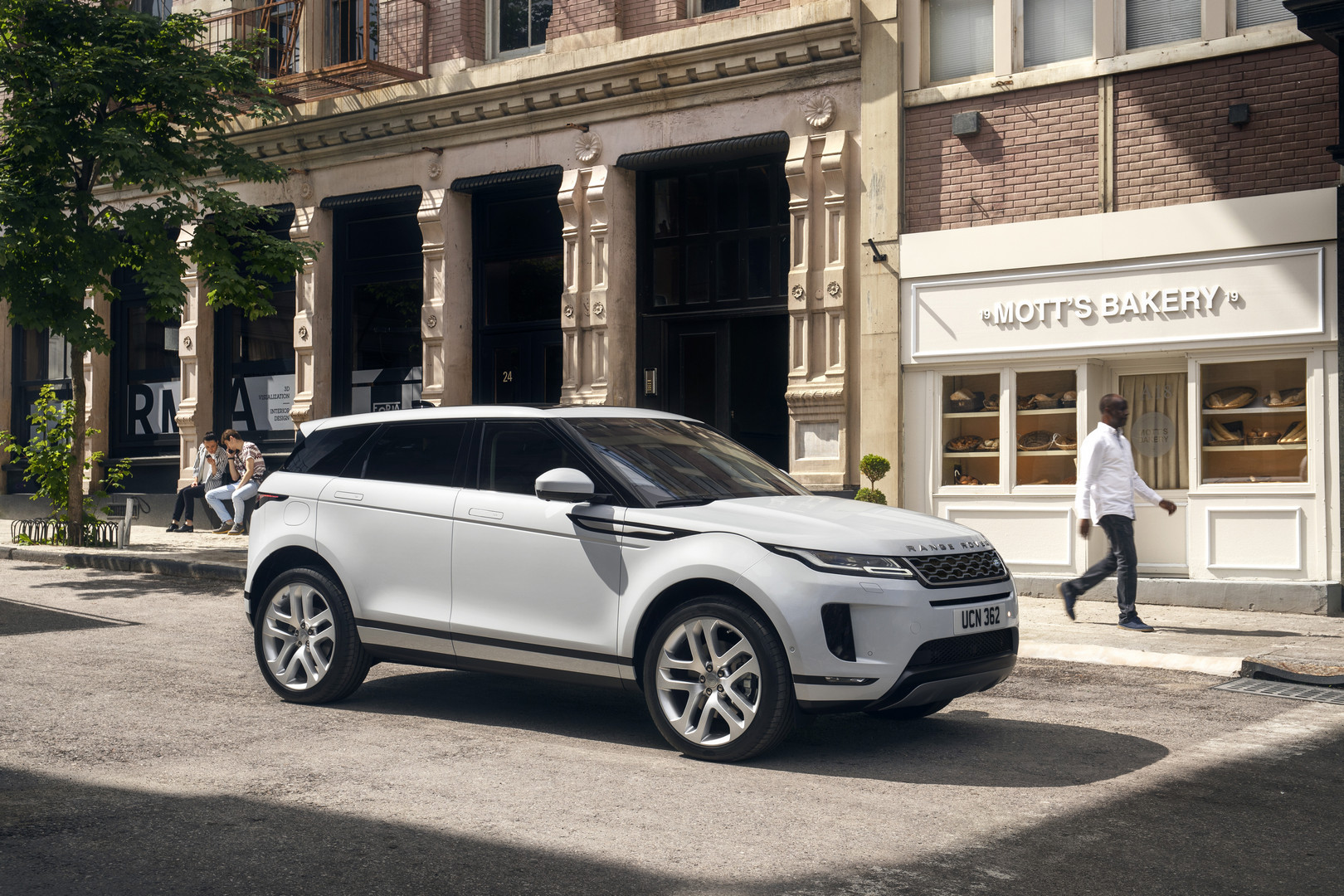
Land Rover have finally announced a second generation Range Rover Evoque. Since its launch in 2010, the Range Rover Evoque has sold a staggering 772,096 units, won 217 international awards and “pioneered the luxury compact SUV market”. While that last claim has been met with some scepticism, there is no denying that the Evoque has been one of Land Rover’s most successful models.

The second generation retains much of the same features of the first. It gets a coupé-like silhouette, with a rising waist, a characteristic of the Range Rover family. Swollen wheel arches and pronounced shoulders also feature heavily, the wheel arches are filled by new 21 inch wheels.

Land Rover have introduced a new, super-slim matrix LED headlight for a new light profile. Flush door handles allow a smooth, flowing design and the sweeping indicators give a sophisticated look.

The chassis is completely new, yet mirrors the size of the outgoing model. It is built on Land Rover’s new mixed-material Premium Transverse Architecture. There is an extra 20 mm leg room in the back with larger glove box and centre cubby. Luggage space is expanded to 591 litres with the seats up, 1,383 litres with the seats down. The rear bench gets a flexible 40:20:40 divide.

Land Rover have also been thinking about the future. A 48-volt mild-hybrid will be available at launch and a plug-in hybrid model within 12 months. The 48-volt system harvests energy from deceleration storing it in an under-floor battery. Below 17 km/h, the engine shuts off when the driver applies the brake. It is available with all automatic gearboxes across the range of models.

2019 Range Rover Evoque Interior

From launch, Land Rover plan to offer a 2.0 litre inline four cylinder engine with three power options; 150 hp, 180 hp and 240 hp. Petrol options will revolve around an inline 2.0 litre, four cylinder engine with a choice of 200 hp, 249 hp and 300 hp. Further engine options will follow.

The Evoque gets Land Rover’s go-anywhere technology too. All models get All-Wheel Drive, as well as a second-generation Active Driveline with Driveline Disconnect to enhance efficiency and Adaptive Dynamics. The Evoque will be offered with the Range Rover’s Terrain Response 2 option which automatically detects the surface being driven on and adjusts the set-up accordingly. Land Rover brag that the new Evoque can wade through water up to 600 mm, 100 mm higher than before. The Evoque also realises ClearSight Ground View, Land Rover’s technology which hit headlines a few years back, making the bonnet ‘disappear’.

2019 Range Rover Evoque Exterior

Inside, the Touch Pro Duo infotainment system has also received significant improvements. It now features two 10-inch high-definition glass touchscreens and a 12.3-inch interactive driver display combined with a full-colour head-up display. A ‘smart settings’ system learns the drivers habits over a period of time, elsewhere, the car incorporates Apple CarPlay and Android Auto, as well as Click & Go rear-seat tablet holders with charging capability, 4G WiFi hotspot (for up to eight devices) and six USB slots.

In the UK, the Range Rover Evoque will be priced between £31,600 and £40,350 with ‘first edition models commanding prices nudging £50,000.

2020 Range Rover Evoque: Everything You Need to Know

The Range Rover Evoque compact SUV has been around since 2010 – it’s the raked and trimmer alternative to its big brother Range Rover variants as well as the newer Range Rover Velar. There have been few changes over the Evoque’s lifetime – notably, Land Rover added a truly weird convertible to its lineup a few years back – so it’s due for this update bowing for the 2020 model year. Below are styling, performance and technology highlights of the new Evoque; pricing will be announced in February 2019 at the Chicago Auto Show. (The 2019 model starts at a base price of $48,400.)

Styling

The new Evoque’s exterior styling is not drastically changed and the updated model retains essentially the same footprint. A slightly longer wheelbase allows for very modest increases in rear passenger legroom and cargo space.

Slim LED headlights and more streamlined door handles, a long black panel on the vehicle’s rear and some new colors and interior materials round out visual changes.

Performance

In addition to a 346-horsepower, gasoline-powered inline-four, the 2020 Evoque will offer a 296-horsepower “mild hybrid” powertrain (a small battery supplements power and reduces emissions).

Land Rover’s “Terrain Response 2” tech is introduced the Evoque lineup, including an automatic setting, which detects surface conditions and adapts on its own for optimal traction.

Technology

“ClearSight Ground View” is a supplement to the Evoque’s industry-common 360-degree camera system. It shows drivers a view from under the front of the car (as opposed to only outward-facing cameras), which is actually quite novel. Additionally, an optional HD digital rearview camera is new.

Also available is a comprehensive tech package that incorporates dual 10-inch touchscreen interfaces, a 12.3-inch gauge cluster display and a color HUD.

The Best Gifts for the At-Home Mechanic

At-home mechanics are essentially hyper-focused DIYers, so anything that makes garage life and work easier is a surefire holiday-gift win. A brand-new full socket set to replace and supplement their existing collection? You bet. A light bar with lumens that give sun a run for its money? Definitely. A magnetic telescoping pick up tool to get in the most unreachable places? You better believe it. These are just some of the best gifts for the at-home mechanic — you can’t go wrong with anything below.

Haynes Manual

Factory repair manuals can get pretty pricey and most likely have more information then you’ll ever need, which is why Haynes Manuals are a staple in any at-home mechanic’s garage. There’s still plenty of information to help you repair your car, but it comes at a veery reasonable $30.

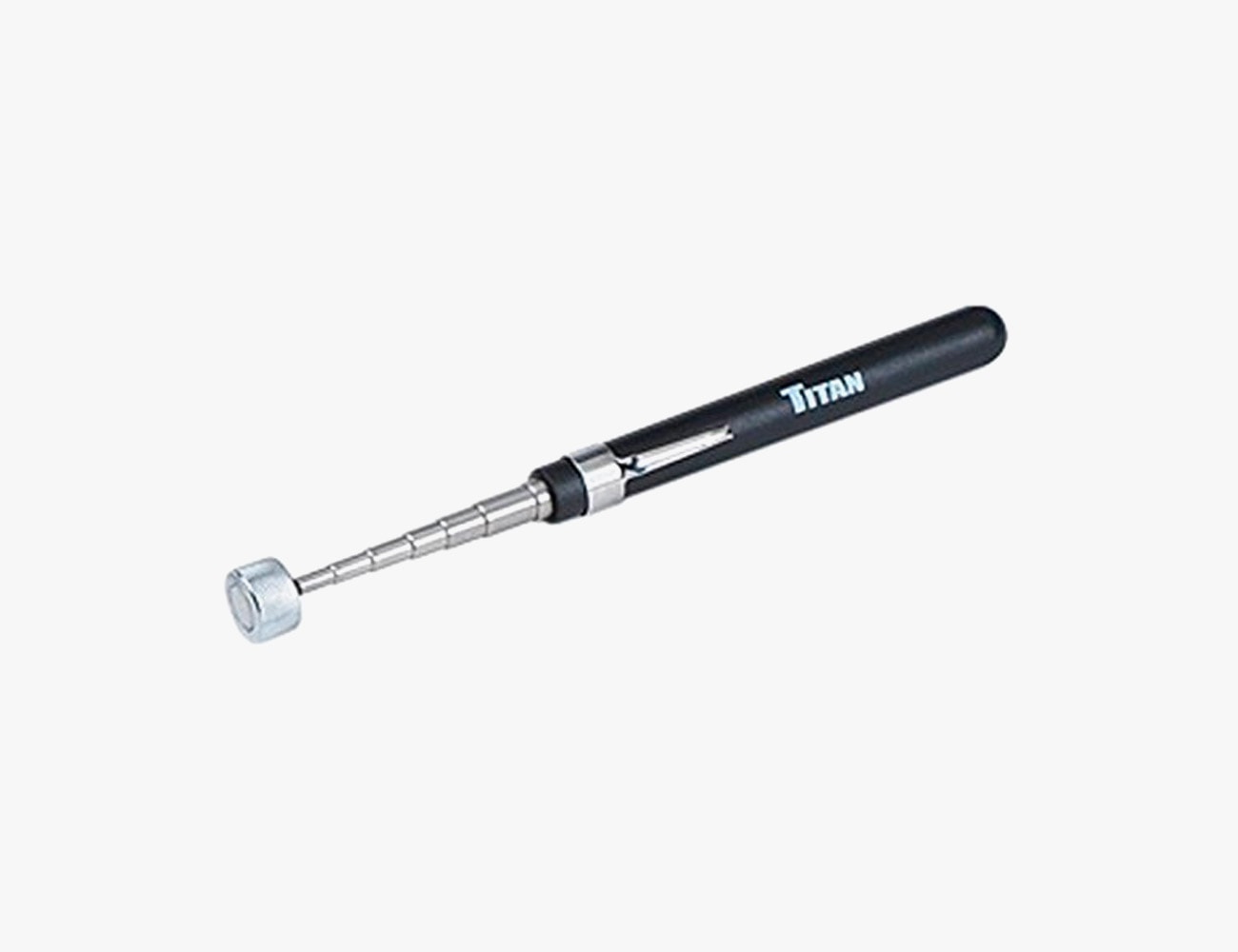
Telescoping Magnetic Pick Up Tool

The bane of all mechanics’ existence is dropping a socket, bolt or washer into the dark abyss of a full oil pan or down a narrow chasm in the engine bay. A telescoping magnet is incredibly simple but wildly helpful.

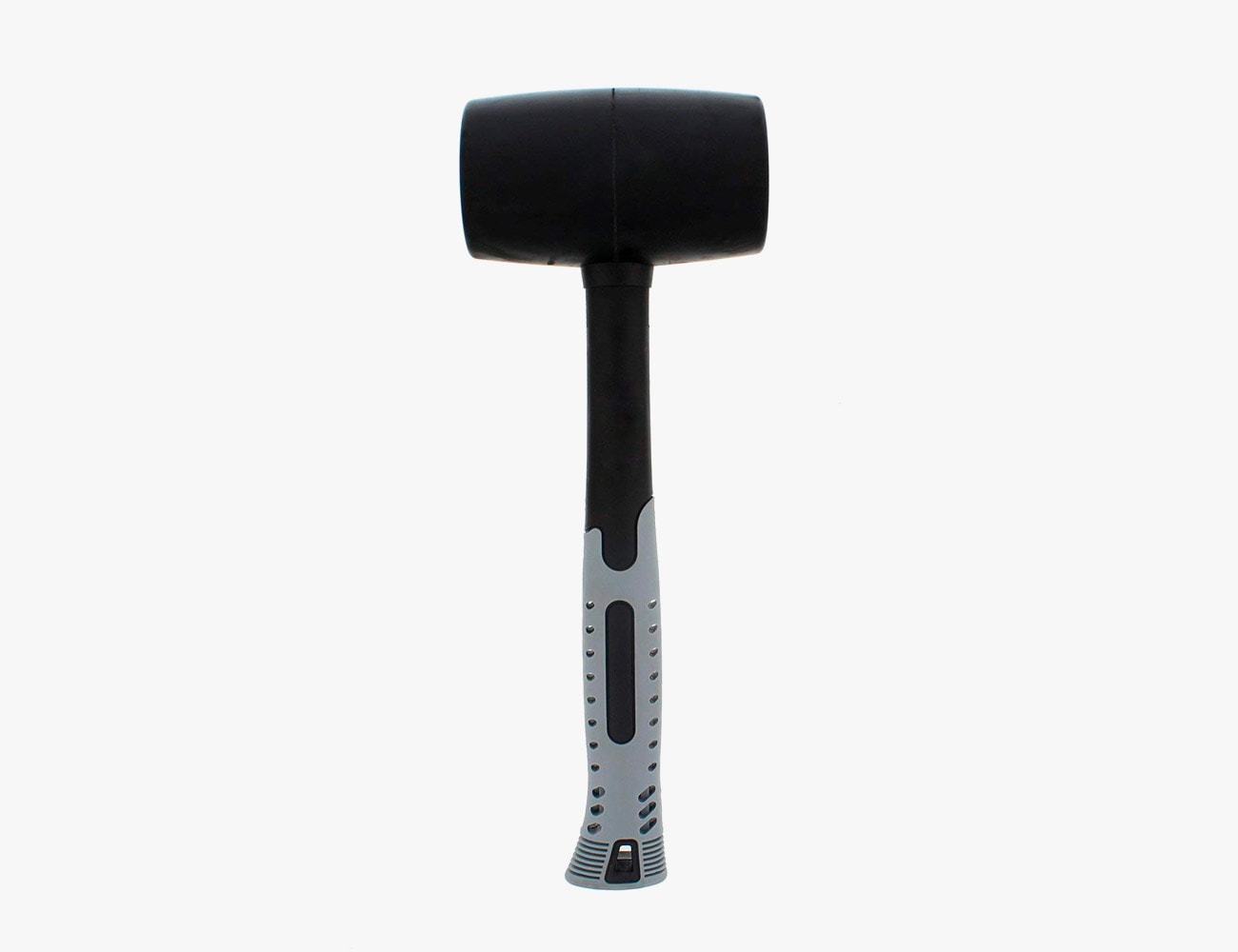
Shock Absorbing Rubber Mallet

There are very few times in at-home mechanic’s career where the sound of a metal-on-metal impact is welcomed. When the job does call for a hammer, a little more finesse is usually required. A rubber mallet not only takes the sting out of the energy traveling through the handle, but it also is kinder on metal and painted surfaces.

Big Ass Light Bar

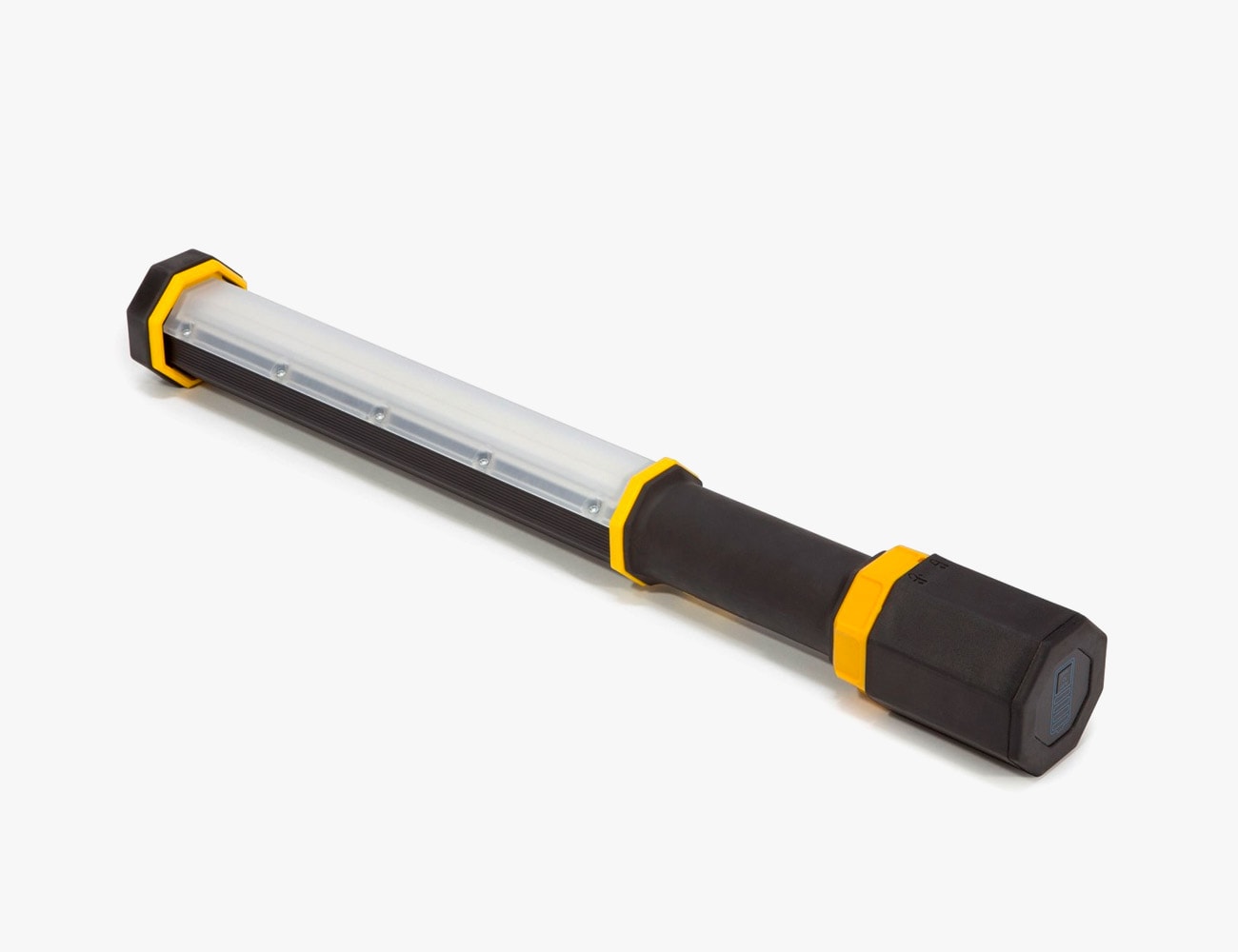
Six leveles of brightness, a 5,000 lumen output and a chemical resistant body pretty much ensures the Big Ass Light Bar will replace any flashlight you currently have – and will be the last one you ever need.

Steelgrip Nut Splitter Set

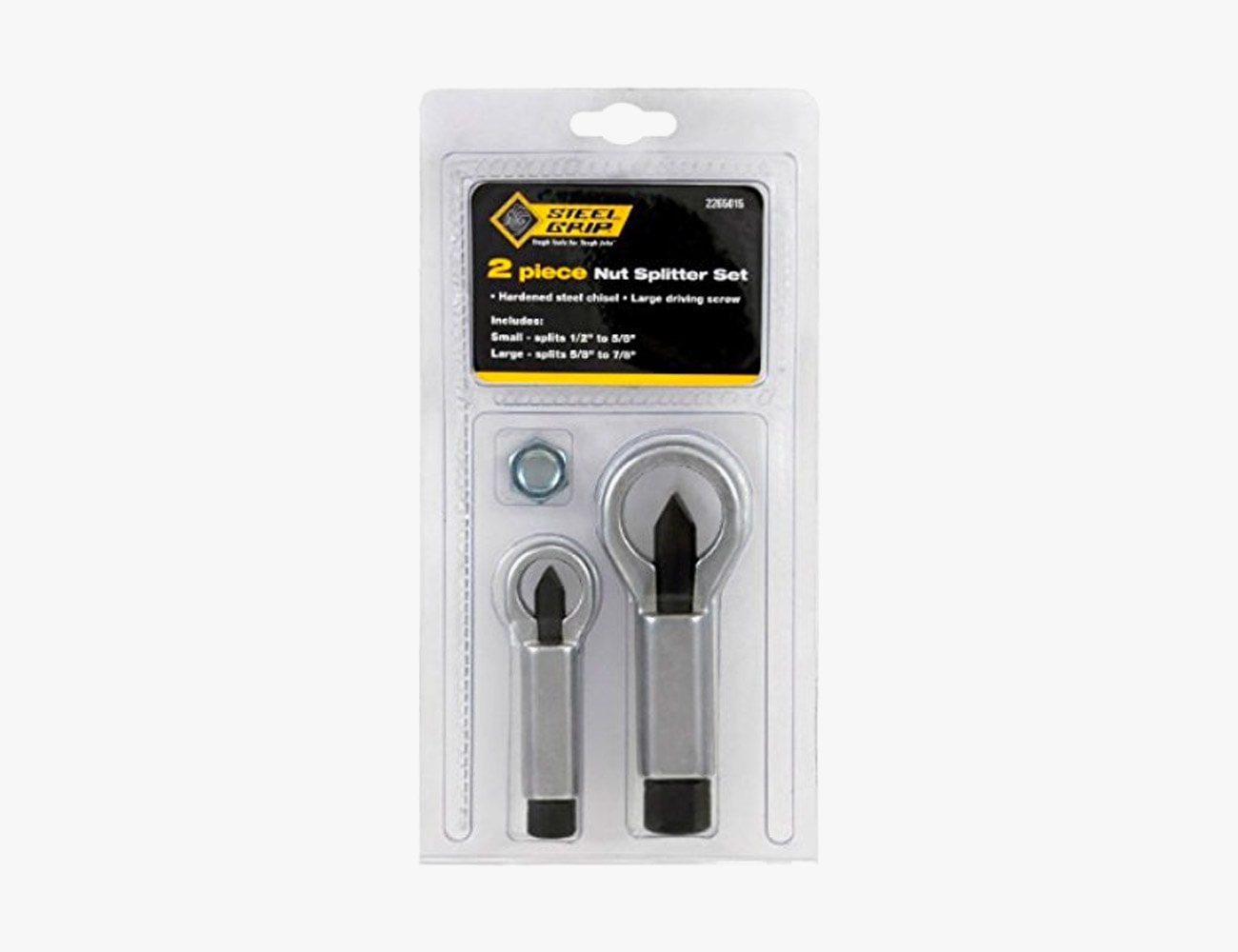
When all the conventional methods of loosening a seized nut fail but defeat is not an option, a nut splitter will finish the job. Using a point splitter and focus pressure, the nut splitter does exactly what its name entails and cracks the nut of the bolt, allowing for easy removal.

Magnetic Fender Cover

If you look into the garage of any professional mechanic shop you’ll see fender covers up and down the maintenance bays. It’s important to protect the fenders from accidental scratches caused by tools and clothing while leaning and working under the hood.

Streamlight Enduro Pro Headlamp

When a job requires two-hands (spoiler: most of them do) and you need a light source a headlamp is the way to go. This one from Streamlight gives you bright LED light exactly where you need it.

Car Battery Carrier

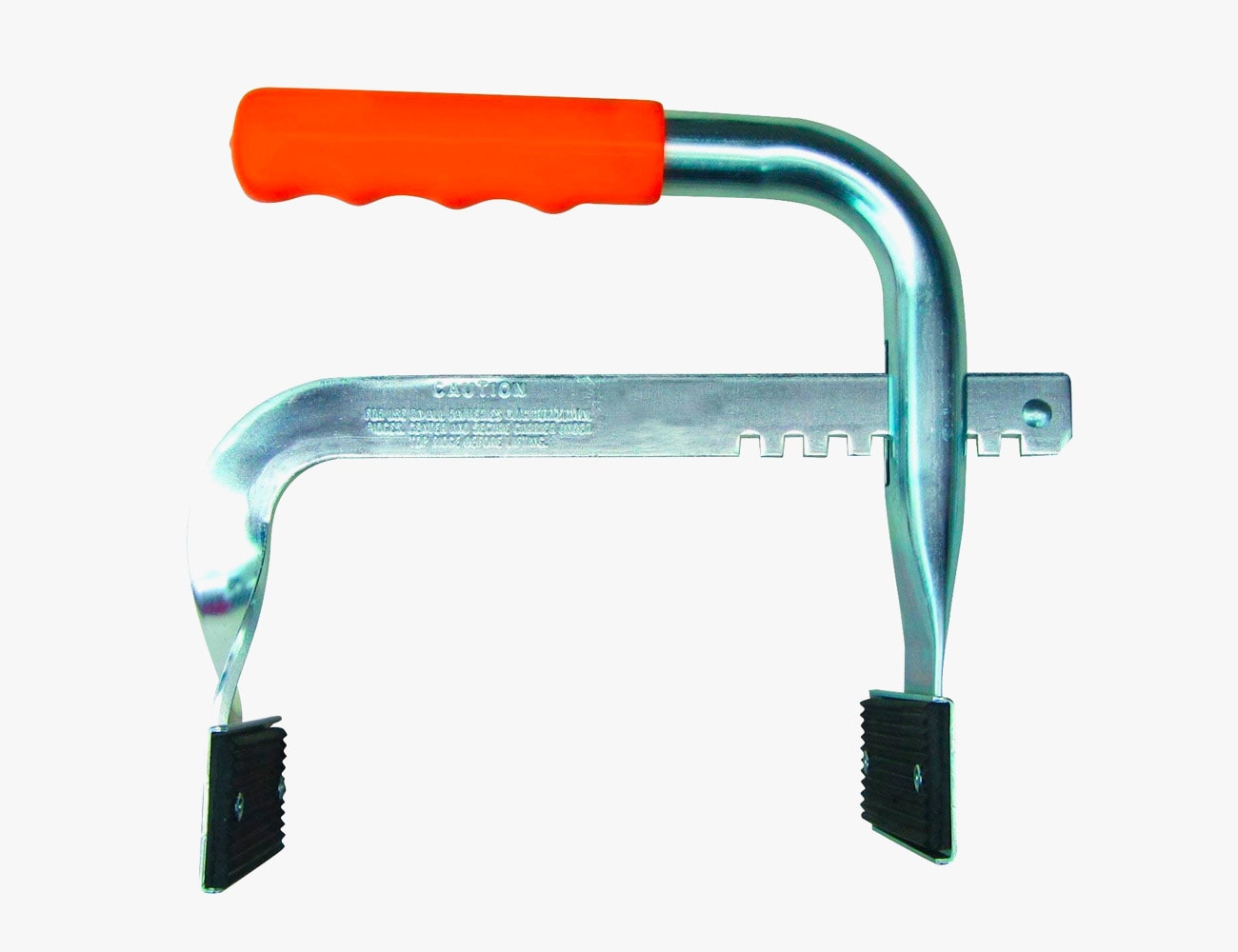
Most batteries live in tight quarters, which means getting a grip on them when they need replacing isn’t so easy. A car battery carrier makes life less difficult and lets you get into tighter spaces on the sides of the battery. It also is a great way to handle older or damaged batteries without directly touching them.

Utopia Shop Towels

Red shop towels are fairly iconic – every home mechanic knows they’re a must in every garage. They’re not tough on hands or skin but do an amazing job of scrubbing greasy surfaces and cleaning any spills. They’re also machine-washable, and so a pack of 100 Utopia Shop Towels can go a long way.

Mechanix Wear Original High Abrasion Gloves

As much as the home mechanic likes to work under the hood of their car, it’s not the most friendly place for bare hands. Hard, sharp surfaces and edges are everywhere, and if you’ve ever slipped a wrench in a tight space in an engine bay, you’ll appreciate the protection of high abrasion gloves. Made with extra grip on the fingers and abrasion-resistant material, they’re an essential defensive weapon in an at-home mechanic’s arsenal.

Pro-Lift Double Pin 6-Ton Jack Stand

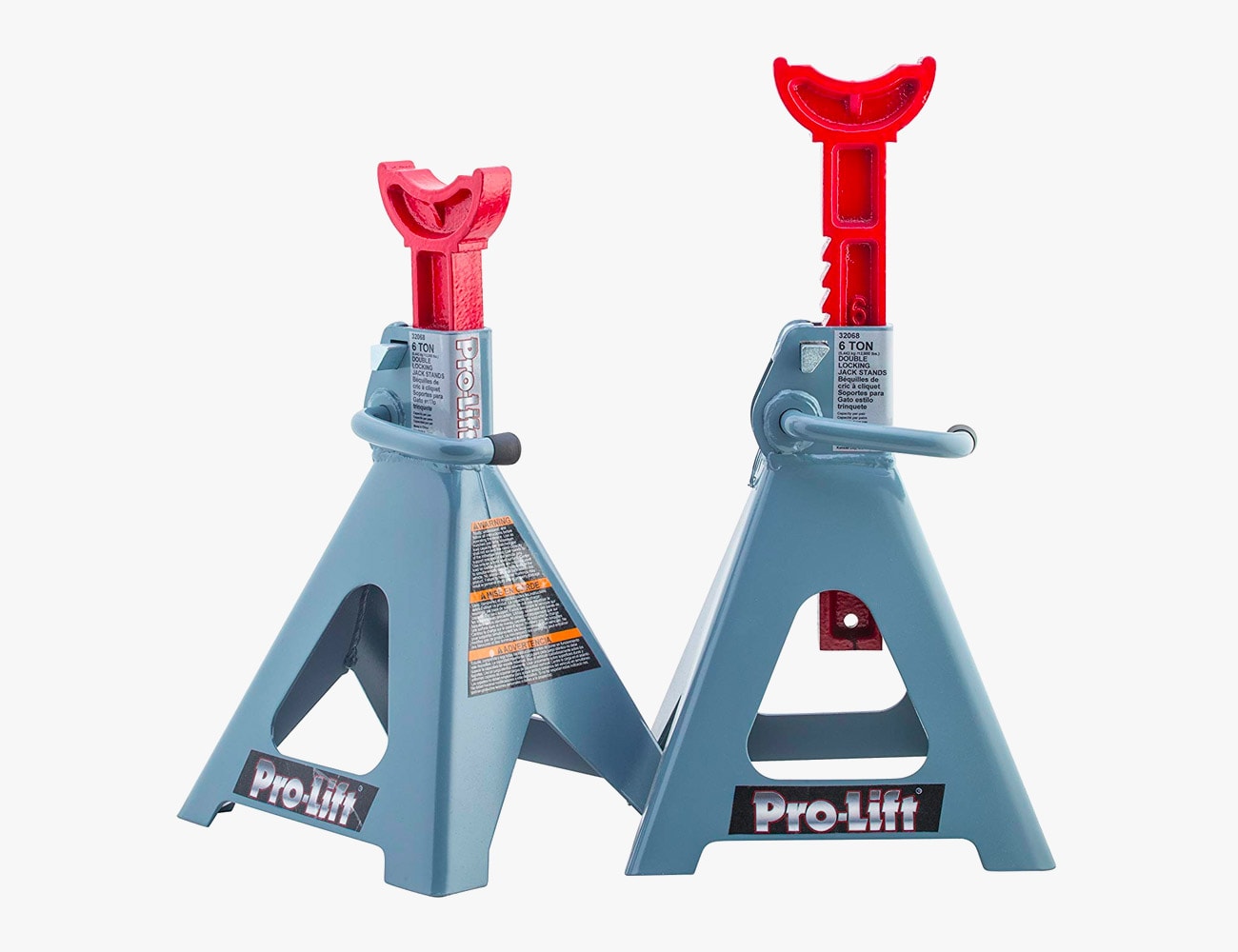
Unless you’re one of the fortunate ones and have a full car lift in your garage, jack stands are a must. Each Pro-Lift Double Pin Jack Stand can hold up to six tons, so having one at each corner of the average car, truck or SUV is more than enough support.

Black+Decker Rotary Tool

Getting into tight spaces to clean and polish a surface or cut a bolt or shear an edge is a regular activity in thee garage. The Black+Decker Rotary Tool’s slim body and 27-piece set turns laborous, time consuming chores into simple, stress-free tasks.

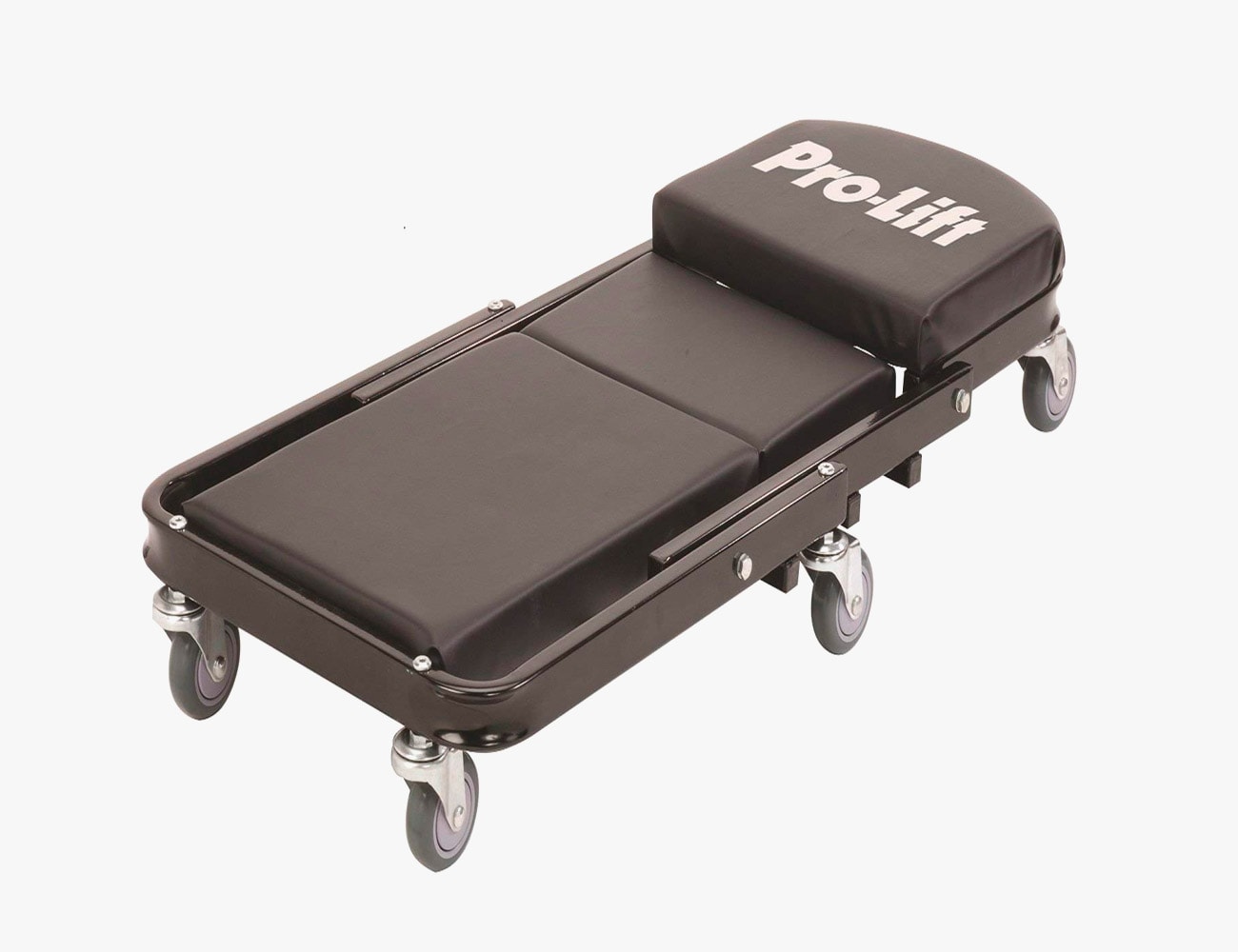
Pro-Lift Foldable Mechanic’s Creeper

For the longest time, the creeper wasn’t much more than a plank of wood with a few wheels bolted on the bottom. The Pro-Lift Foldable Mechanic’s Creeper not only has six three-inch polyurethane, oil resistant, full-bearing casters for a smooth ride across the shop floor, it also folds up and becomes a stool, eliminating crouching and hunching for jobs like tire changes.

Craftsman Digital Torque Wrench

A torque wrench is an essential tool for any mechanic looking even to do simple maintenance. When using a conventional torque wrench, you’re essentially eye-balling it – converting foot-pounds to inch pounds or Nm on the fly. The Craftsman Digital Torque Wrench takes the guesswork out of the equation by doing all the conversions at the touch of a button and displaying the exact force you need on an LED backlit screen.

Dewalt 168-Piece Mechanics Tool Set

There’s nothing worse than setting out to do a job only to find you don’t have the sockets you need. With a Dewalt 168-Piece Mechanics Tool Set, there’s a good chance you’ll have every size socket to take your entire car apart and put it back together.

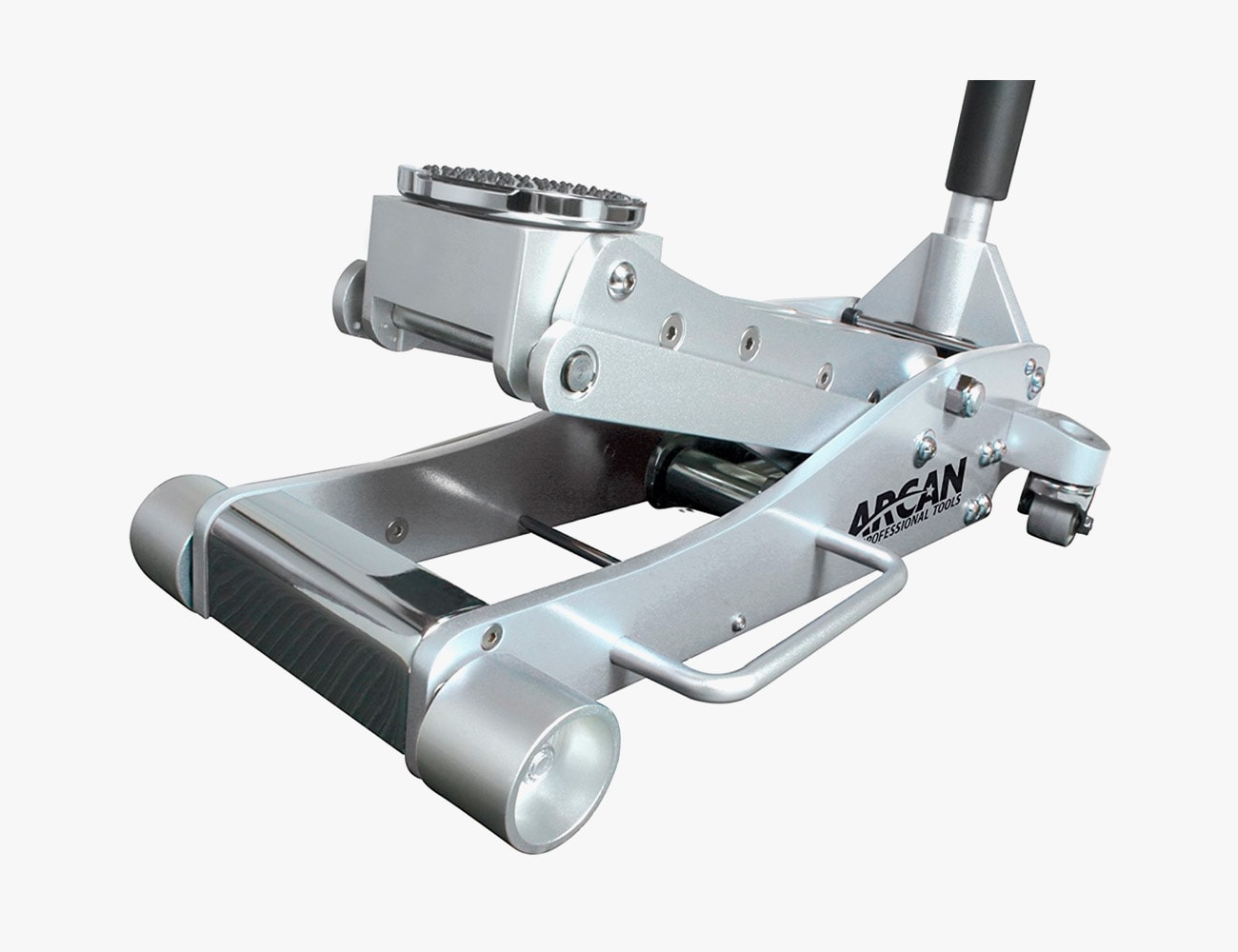
Arcan Aluminum Floor Jack

Again, unless you’re one of the fortunate souls to have a full lift or drive over bay, you’re going to need a floor jack. The Arcan Aluminum Floor Jack has a three-ton capacity and is relatively light at 65 pounds, so it’s not a complete workout moving it across the garage floor.

Note: Purchasing products through our links may earn us a portion of the sale, which supports our editorial team’s mission. Learn more here.

This Is the Ultimate Defender. It Has Every Essential You’ll Need. Honestly

Custom Land Rover Defender run rampant on today’s roads. Some are hot-rodded to hell and back. Others are simply period-correct restorations to back to the original glory. You might consider some of them too much and over the top or not enough and slightly uninspiring. This modified 1989 Defender 110, on the other hand, doesn’t fit into any of those categories — this glorious green wagon just might be the perfect Defender.

When you peel away all the romanticism and legendary pedestal-earning stories, the average Land Rover Defender is just primitive farm vehicle, a tractor with doors, a roof and a heater (which probably works, sometimes). To get a Defender to a tolerable daily-driver status, you have to upgrade it, give it better suspension, swap out the electronics and wiring, replace the all the seals and clear out all the rust. With that said, a stock Defender is more like a blank canvas, ready to become the car you want it to be.

I’m here to say this 1989 Land Rover Defender 110 V8 is now the bar to which all future Defenders will be measured. As a baseline, it’s painted a deep Keswick Green with custom tan canvas and leather seat covers. Under the hood, there’s a rebuilt 3.5-liter V8 connected to a new exhaust and accompanied by a new transfer case, brakes and wheels fitted with BFGoodrich Mud-Terrain KM2 tires. All pretty standard stuff.

What makes this Defender standout among the rest isn’t the Front Runner full-length roof rack or the Big Country 4×4 clamshell tent mounted on top. It’s not even the bull bar, LED flood lights, rock sliders, high lift jack and snorkel. Which, by the way, all make fantastic additions to any Defender. No, the pièce de résistance is the Big Country 4×4 sliding storage system, National Luna refrigerator/freezer, 10-gallon freshwater tank replacing the rear jump seats, air compressor and custom bar fitted in the rear window which is opened with a ‘Keep Calm & Drink Beer’ button.

Half of the fun of overlanding is taking in the whole experience, enjoying life and relaxing with friends while you’re doing. This Defender is perfectly equipped to handle all of that. Take the road less traveled out to the middle of nowhere, set up camp and crack a beer with friends. You won’t find a more idyllic Land Rover Defender for $30,000.

The 100 Best Products of 2018, Now in Print

Introducing Issue Eight, the sixth iteration of the GP100 and the first-ever in print. Get Your Copy Today

Citroen 2CV: A Classic Exercise in Profound Minimalism

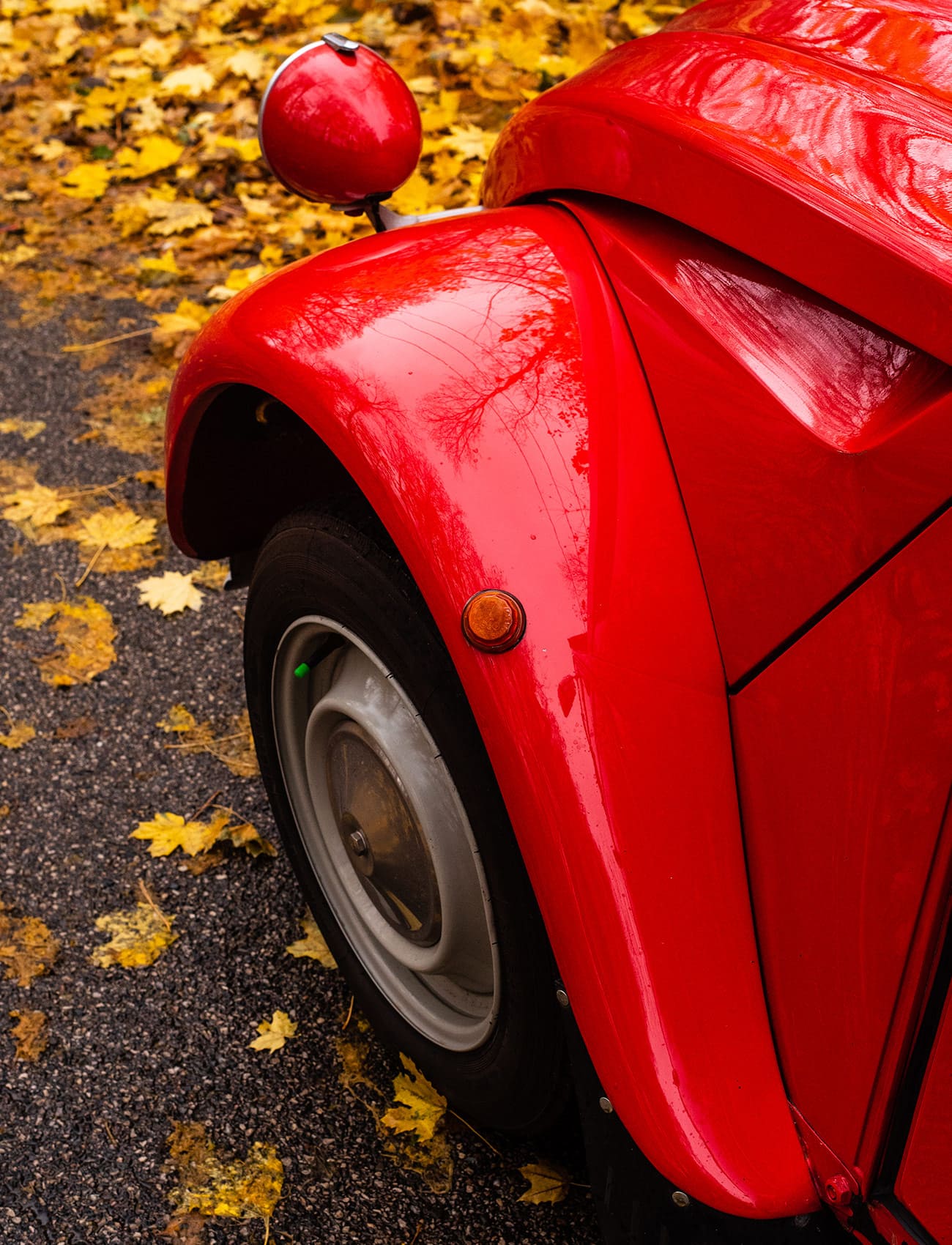
On October 8th, 1948, the Citroën 2CV debuted at the Paris Motor Show to an unimpressed crowd. One American purportedly remarked upon its reveal, “Does it come with a can-opener?” Meanwhile, a correspondent for Autocar called it “the work of a designer who has kissed the lash of austerity with almost masochistic fervor.” Despite the kneejerk criticism, though, the 2CV was a hit with the buying public and remained in production for over 40 years. Today it is as synonymous with France as a Breton shirt, the Eiffel tower, a smoky corner cafe or a flaky croissant.

Of course, austerity was pretty much the entire point of the 2CV, and to fully understand why, you’d have to go back to the very beginning of its development: 1936, a time when the rural dwelling French still relied on horse-drawn carriages, and even the humblest cars were priced out of reach. Wanting to create a true car of the people, Citroën Vice-President Pierre Boulanger challenged his team to create an “umbrella on wheels” of sorts, a minimalist car that was cheap to buy and so stupidly simple it could be easily repaired and maintained, even on a shoestring budget.

His design brief went something like this: The car should carry four people, and 50 kilos of potatoes (or a keg of beer, depending on who you ask) at 60 kph while consuming three liters of fuel for every 100 kilometers. Similarly, it should be able to traverse rugged terrains and drive through a freshly-plowed field without cracking a basket of eggs. Looks were more or less irrelevant.

The product of this brief was the TPV (Toute Petite Voiture, or “Very Small Car”), a rudimentary, aluminum-bodied car with hammock-like seats that hung from the interior ceiling. The TPV was set to debut at the 1939 Paris Auto show, but once France had declared war Germany, the project was scrapped. All working prototypes of the TPV were either dismantled, buried or hidden away. Boulanger didn’t want to see his creation seized and become a part of the Nazi war machine.

After the war, France was in much worse position to mobilize its people, and just about 100,000 of France’s two million pre-war cars in France were left. What’s more, the government instituted a “Plan Pons” to regulate car production with scarce materials which, in short, limited Citroën to only producing the more upscale Traction Avant. It wasn’t until the government disbanded this plan that the 2CV could come back to fulfill its original vision, though revised with a redesigned steel body (aluminum was too expensive at this point), steel-tubed seats with rubber support (instead of roof-mounted hammocks) and a 375cc air-cooled flat-twin engine producing nine horsepower and achieving a top speed of around 35 miles per hour.

Basic though it was, the car resonated with a recovering Europe and eventually went on to be a success in export markets like South America, Africa and Asia. All in all, nearly 9 million 2CVs were built, and production lasted until 1990. Though the 2CV was bound to change somewhat with the times — more “luxurious” features and larger engines would eventually enter the mix — the car stayed true to its humble roots.

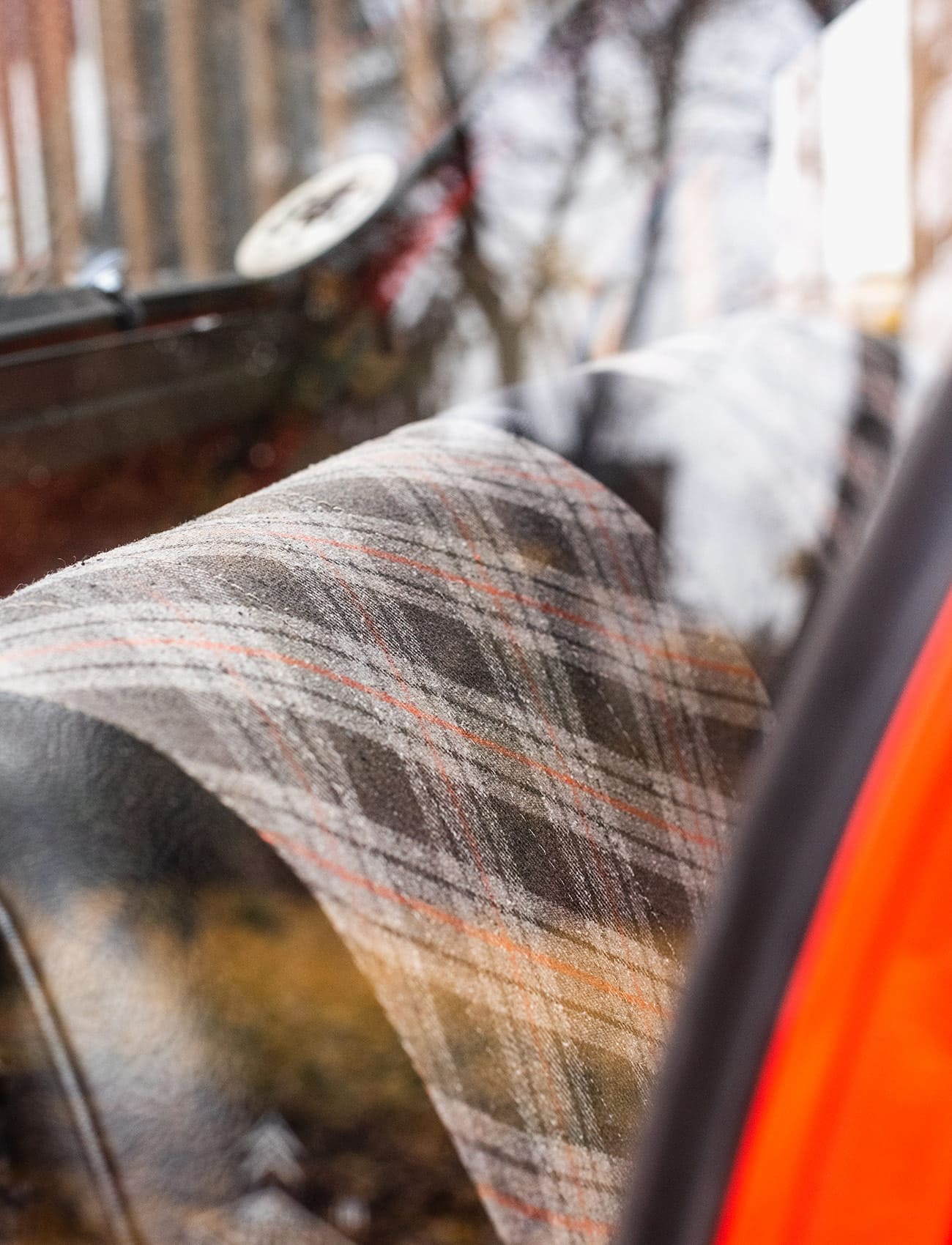
That much is obvious when driving one of the 2CV’s later iterations. In my case a mid-’80s “Club” model. Step in, and you can tell that there are a few small upgrades made throughout, including a more ergonomic steering wheel, better interior trim pieces and, most notably, a finer plaid upholstery with the look and texture of a Penfield flannel.

That said, even with these improvements, the car is still an exercise in profound minimalism as it was on the original. The body panels are crêpe-like thin, so much so that the hood flexes upon opening. Air conditioning is reduced to two small, vents above the dash that channel oncoming headwinds into the cabin aimed at your face and upper torso. The seats can be removed and used to have a roadside picnic, if you like. The windows open by flipping upward and out, and the vinyl roof manually peels all the way back, the like top on a tin of sardines, to expose the interior to the kiss of the sun on a warm summer day.

But the most notable addition to this later 2CV is the engine, the 602cc flat-twin that became the standard on late model 2CVs making around 30 horsepower which bestowed it with the ability to (barely) hit modern highway speeds, though I’m not entirely sure how badly I wanted to test that out. My time in the 2CV was mostly concerned with around-town driving, and even then the sensation of speed was amplified well beyond the reality shown on the speedometer.

The best analog I can think of is an old two-stroke moped. You really need to push and rev to eke out every smidge of power, and with that come vibrations and noise that combined with its light weight make the whole experience feel weirdly visceral despite how slow you’re going. Amplifying that is the four-speed manual which is unlike anything you’re likely to experience in another car. The 2CV has a standard(ish) H-pattern with a dogleg layout (which means first gear is down and to the left) but rather than pushing a lever forward and back, you’re pushing the shifter in and out of the dash while twisting it.

It goes something like this: Twist the lever to the left so it’s angled towards you, then pull out to go into first. Then, push it back inward while twisting it to the right (so the knob is standing straight up) to go into second. Pull it straight back to go into third. Then, twist the shifter to the right (so the knob is angled away from you) while pushing back inward to put it into fourth. Make sense? No? I’m sorry.

But whatever. It takes about thirty seconds after ham-fistedly trying it in person to make sense, and the shifting action (at least in this lovingly cared for example) is crisp, intuitive and satisfying. That, combined with the fact that you have to drive the car at ten-tenths all the time (remember: moped) yields a decidedly raw driving experience. What’s more, that soft, long-travel suspension — the one designed to save a basket of eggs from Humpty Dumpty-esque fate — provides both a smooth ride and a… unique cornering experience. This thing leans. You haven’t truly experienced body roll until you’ve driven a 2CV, yet the car has proven nigh impossible to topple, even during hard driving.

It’s hard to think of another car that offers such a distinct driving experience, which I think has a lot to do with why the 2CV has become canonized as an automotive icon. Yes, we tend to measure cars regarding their overall performance and their backstory, but these are figures and yarns that are more often than not regurgitated, telephone-style, by the enthusiast community. But our most distinguished automotive memories, more than anything, are characterized by the tactile experiences we have in a car and the personal stories we share.

Consider this: the owner of this 2CV, whom hails from the Netherlands, acquired it because she had one in her family growing up. She and her sister would drive it from Amsterdam to the South of France in the summertime. Just imagine that, more than 700 miles — one way — through the French countryside, the top rolled down and sun beaming, the thrum of a flat-twin engine reverberating throughout the tin-like cabin, with the car vigorously leaning into every corner.

Her story is just one of, literally, millions — and there really are millions because of the 2CV’s initial raison d’etre as a simple, affordable car for the people. Today we have much more modern, safer and better-appointed cars to fulfill that mission. And that’s fine. Because today, I could imagine owning a 2CV as fun, daily runabout, driving it to the store to buy brie cheese and a baguette, inspiring smiles both from drivers and pedestrian along the way. The car still lives on, a sublime little umbrella on wheels, still creating stories.

Viva la 2CV.

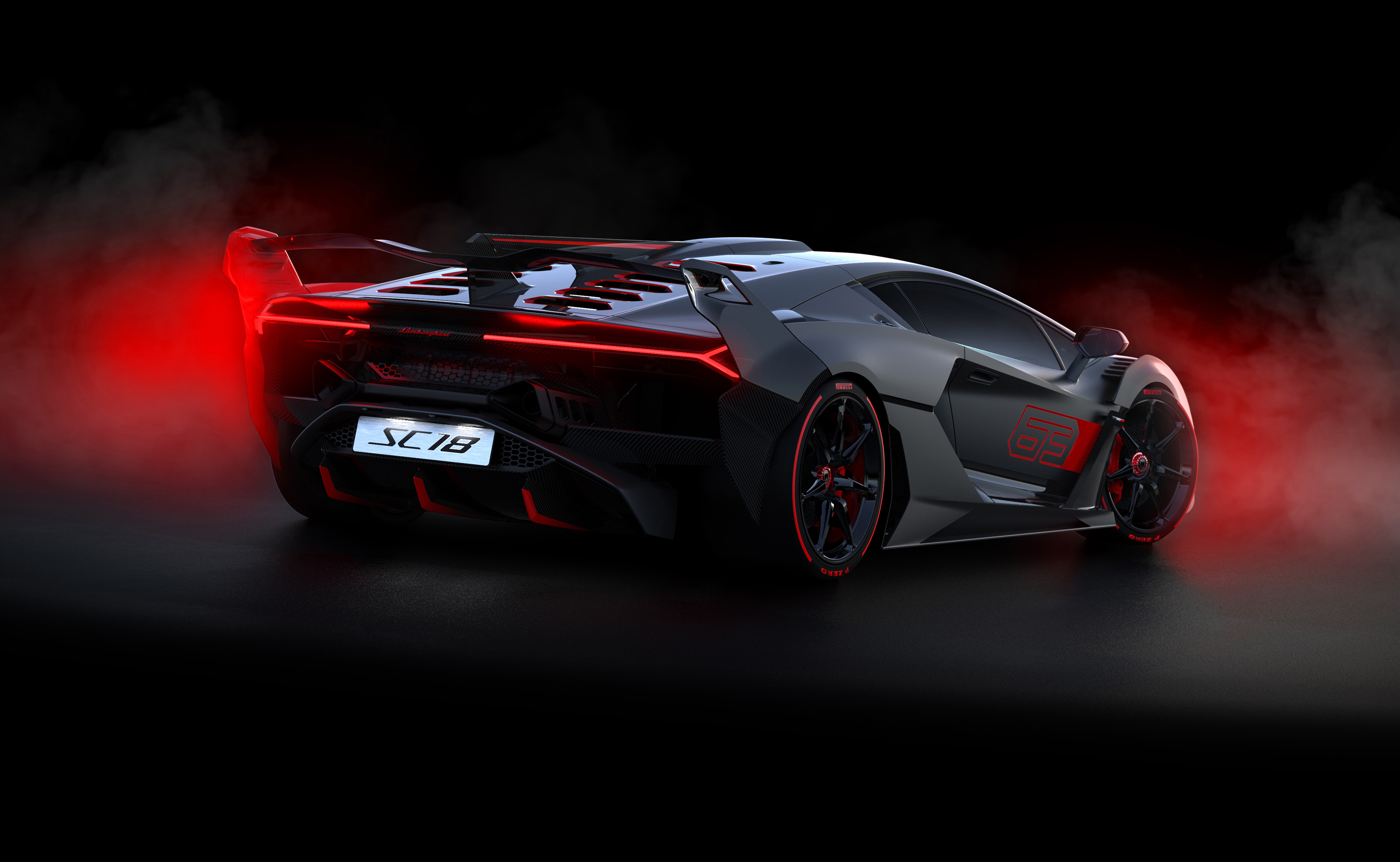
Lamborghini SC18 – A One-Off Lambo

Bespoke Lamborghini SC18 Built by Squadra Corse

The Lamborghini SC18 is the latest iteration of what we hope becomes a perpetual lineage of limited-edition and one-off raging bulls. In a relatively short and recent time in Lamborghini’s storied history, we have been treated to the likes of the Veneno (20 were made), and the one-off Egoista and Aventador J.

Commissioned by a very fortunate client, the SC18 is designed to be a completely road-legal car that maximizes track-oriented performance. It therefore seems serendipitous that Squadra Corse – Lamborghini’s racing division – would be the creator-in-chief for this bespoke project.

The canvas on which the SC18 would be imagined is the Aventador SVJ, which most notably is the donor of a 6.5L naturally-aspirated V12 engine; good for over 759-horsepower @ 8,800 rpm and 531 lb-ft of torque @ 6,750 rpm. A single clutch transmission with semi-automatic gearbox delivers power to the SC18’s all-wheel-drive system.

While the chassis is also shared with the SVJ, most of the body elements that are visible have been replaced with pieces that are inspired by the marque’s GT race cars such as the Huracan GT3 and Huracan Super Trofeo EVO. As such, the extensive use of carbon fibre and ultra aggressive splitters, vents and diffusers adorn the car with its massive rear wing providing the final exclamation point. A staggered wheel setup is used for the SC18, with Pirelli-wrapped 20” and 21” center-locking wheels used in the front and rear respectively.

There are no official figures at this time for the SC18 as far as performance and pricing are concerned.  We expect that acceleration will be mostly similar, if not the same, as the ‘regular’ Aventador SVJ’s 0-62 mph time of 2.8 seconds, as well as its top speed of 217 mph. With lighter and more aggressive aero bits, we are guessing that the improvements will be most noticeable during the most demanding and g-force-inducing situations at the racetrack.

As for pricing, we don’t expect that type of information to be common knowledge given the nature of this project. With today’s production hypercars demanding 7-figure price tags, one can only begin to speculate what the client has shelled out for their Mona Lisa on wheels. Well, with its custom exhaust which offers a completely “unique” sound, I’m sure he or she is ultimately very happy with what they got.  

McLaren 720S Stealth isn’t all that stealthy

Plenty of supercar and ultra-luxury car brands have bespoke vehicle programs. However, we don’t always get a peek behind the curtains at what exactly comes out of those. Ferrari has Tailor Made; Bentley has Mulliner; Aston Martin has Q and so on. McLaren might just have the most public and outspoken of all these programs with MSO, or McLaren Special Operations. Today it released all the details on one of its latest creations: the MSO 720S Stealth Theme.

It’s not particularly accurate to call a 720S “stealthy,” but the Sarthe Grey paint does the best job it can. That color is inspired by the 1995 Le Mans-winning McLaren F1 GTR, and is broken up by red accents throughout the vehicle. This red detailing was hand-painted and took nearly 200 hours to finish, according to McLaren. A unique satin finish is used for all the visual carbon fiber components, including the front air intakes, door mirrors and arms, rear deck and engine cover and rear fender air intakes.

Extra lightweight MSO wheels get finished in black and the same red accents as the rest of the car. The interior continues the red and carbon fiber theme with bright accents everywhere you look. Having the economic freedom to write a blank check to McLaren is how you’re going to build yourself a car like this. The London McLaren dealer commissioned this one to be made, so it’ll be staying on the other side of the pond for now. It’s always neat to check these ultra-unique type of cars out — Lamborghini just took it a full step beyond this one and built a one-off car for a wealthy client. This McLaren will end up drawing a few extra stares too.

Related video:

Lamborghini Urus ST-X Concept: SUV Racecar Revealed

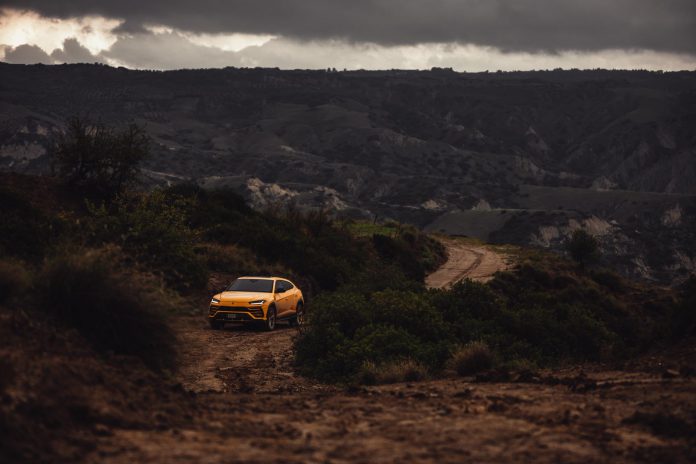
Lamborghini have announced a concept version of the Urus today. The Lamborghini Urus ST-X Concept is a race car primarily. The ST-X is accompanied by an announcement that Lamborghini are looking to commence a one-make race involving the Urus to begin in 2020.

The Lamborghini Urus ST-X Concept was unveiled at the Lamborghini Squadra Corse World Finals 2018. A racing version of the company’s new SUV, Lamborghini conceive a single-brand championship with an on-track and off-road element, taking place at FIA circuits in Europe an the Middle East.

Lamborghini set out a vision of an “arrive and drive” event formula where customer cars are prepared and technical support provided to allow owners to simply turn up at the track and race over the weekend.

The Lamborghini Urus ST-X Concept does away with the complicated and fussy styling of the front grille, exposing the radiators in the process. Lamborghini have also fitted new side sills, front bonnet and rear diffuser. The paintwork is a matt finish Verde Martin with elements of exposed visible carbon fibre.

The V8, which sits under the new carbon fibre hood, gets the same output as the road version, 650 hp with 850 Nm of torque. With a planned 25 % weight reduction it should feel considerably quicker.

Lamborghini also plan to fit a new set of racing exhausts, 21 inch centre locking aluminium wheels as well as the usual motorsport safety elements, including steel roll cage, fire suppression system, and FT3 fuel tank.

Lamborghini will now work on the Concept to bring it to reality. They have set a target in the sense that they plan to put the Urus ST-X out for its track debut during the 2019 Lamborghini World Finals.

Lamborghini SC18 Alston is a ferocious first from Squadra Corse

Lamborghini has worked up a number of limited-editions and one-offs over the past decade, from the run-of-20 Veneno to the one-of-one Egoista and Aventador J. The standard production-car division worked up those previous efforts. Now, Lamborghini’s racing division, Squadra Corse, has dreamed up a one-off for the first time as a commission for a client. Called the SC18 Alston, the Aventador-based coupe starts at the marker laid down by the SVJ and takes a few barbarous steps beyond.

The point, apparently, was a road-going car with maximum track performance. Squadra Corse designers, working with the customer and Lamborghini Centro Stile, penned an aero package that borrows elements from Huracán race cars. The front hood air intakes were derived from the Huracán GT3 EVO, while the side and rear fenders, the fins and the scoops take inspiration from the Huracán Super Trofeo EVO. The three-stanchion wing hearkens to the Veneno, the rear taillight pattern and valance curve reference the Centenario, and the way the rear wing endplates rise from the fenders suggests the Bugatti Vision GT.

The power unit comes untouched from the Aventador SVJ, meaning a 6.5-liter V12 with 759 horsepower and 531 pound-feet of torque, shifting through the seven-speed ISR gearbox. An engine cover with 12 vents, also derived from the racing programs, keeps the fury cool, and a new exhaust design produces a new sound.

Lighter carbon fiber bodywork drenched in Grigio Daytona hides the internals and reduces weight. Screenprinted red accents on the body panels coordinate with accents on the center-lock wheels — 20 inches in front, 20 in back — and specially developed Pirelli P Zero tires. The cabin’s been dressed in Nero Ade Alcantara with red cross-stitching, and a pair of carbon fiber buckets.

There’s nothing not to like here, and we suspect this won’t be the last unique effort we see from the Squadra Corse brand.

Related Video:

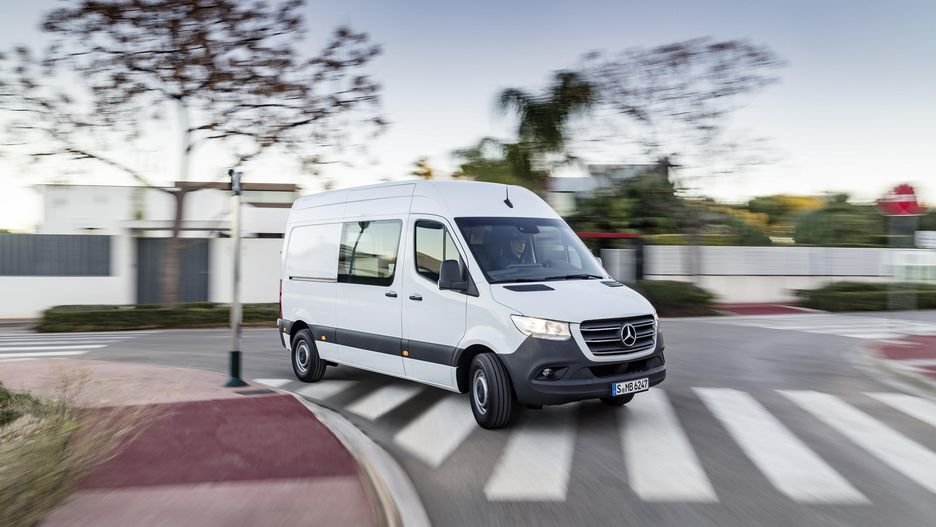
2019 Mercedes-Benz Sprinter

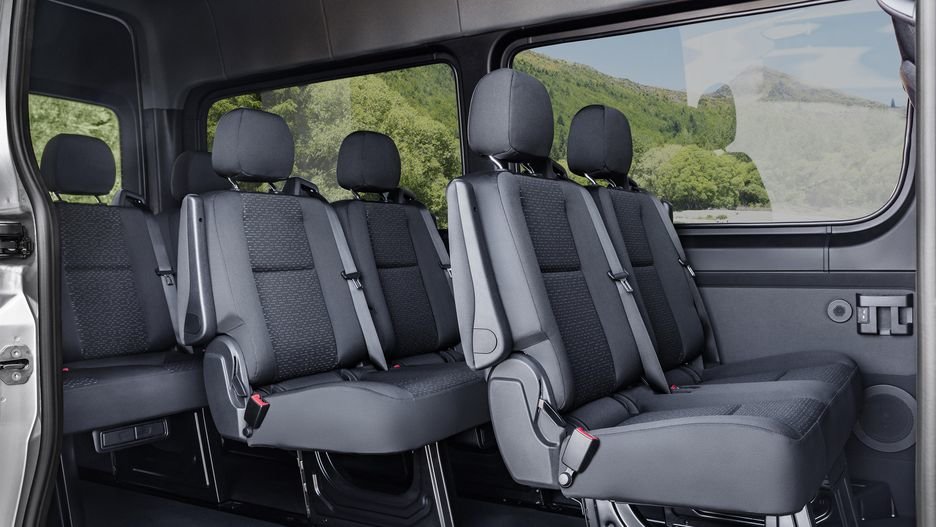
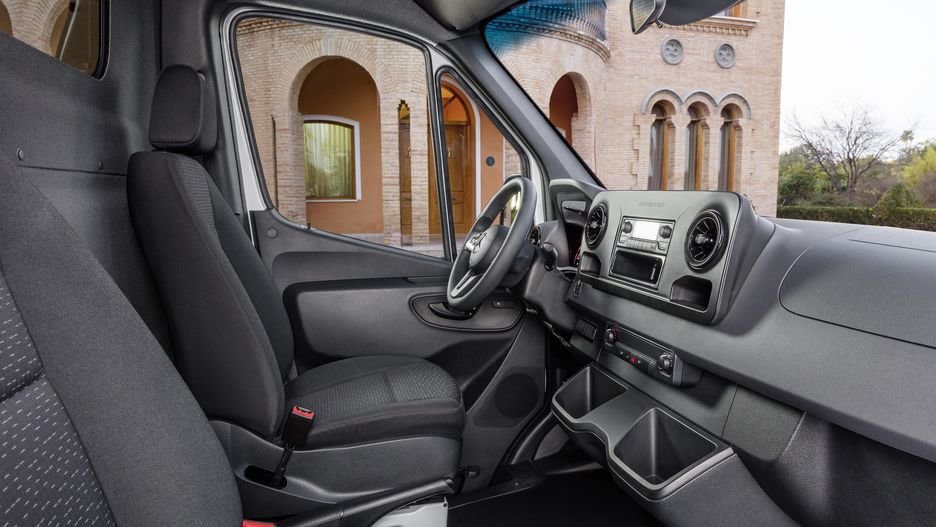
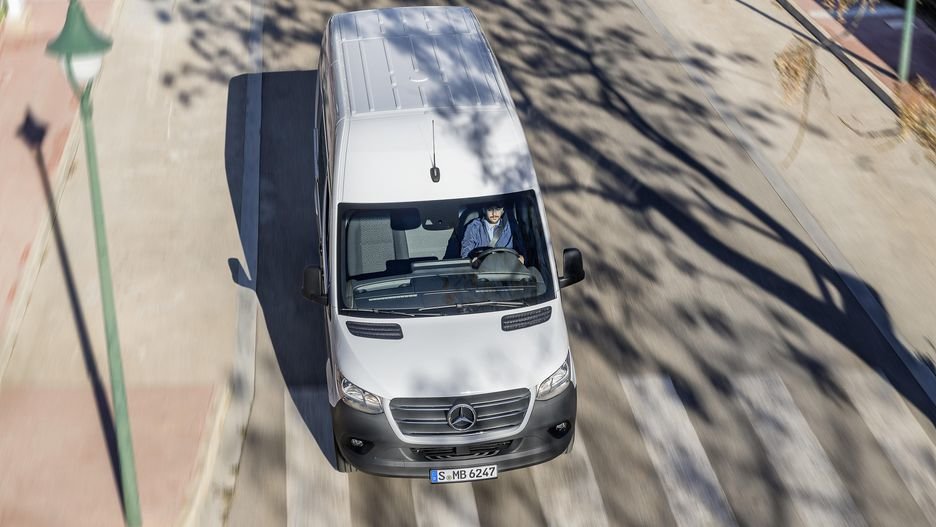
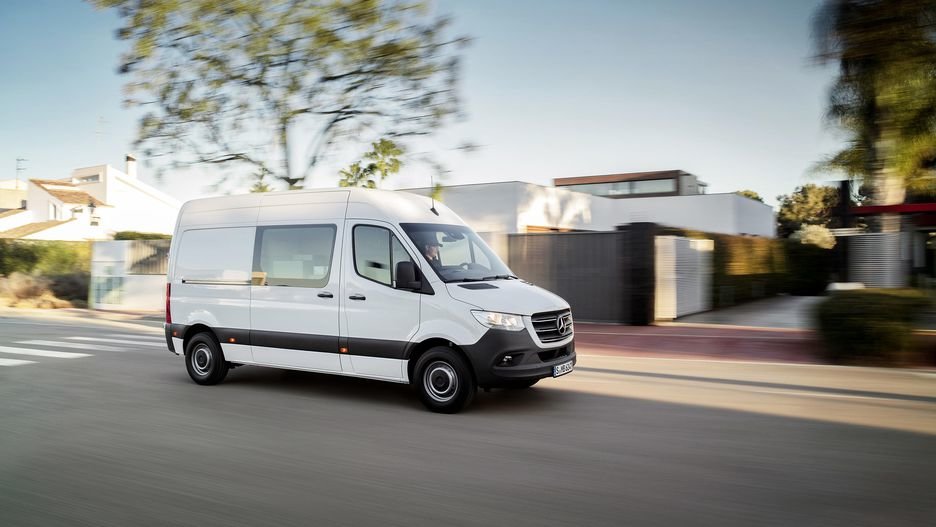
The 2019 Mercedes-Benz Sprinter is the automaker’s third-generation van, which has been on sale for nearly two decades now. The Sprinter line has somewhat been the de facto alternative for consumers who want to break away from conventional truck-style vans, and now Mercedes-Benz has come up with something new to spice it up.

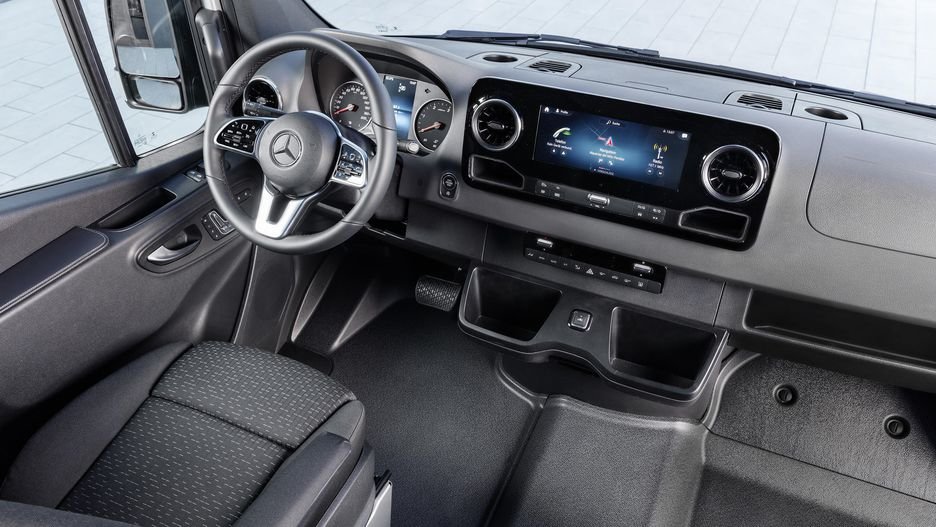
The company is carrying over tech from its luxury cars to its vans. That means you get features like adaptive cruise control, autonomous emergency braking, and a 10.25-inch touchscreen infotainment system. In other words, basically all the SUV modernities cramped into a van.

More on the infotainment system, though. The 2019 Sprinter gets the new Mercedes-Benz User Experience (MBUX) system that is only just now being rolled out on all the company’s passenger cars. Natural-language voice recognition is its most outstanding feature, claims Mercedes-Benz. It’s what sets it apart from rival infotainment systems, even. With a simple “Hey, Mercedes” wake word, you can say things like, “I need gas,” or, “How’s the weather?” to get help. Bear in mind that the MBUX is an optional feature. If you decide to add it in, you’ll also be getting 7.0-inch or 10.25-inch touchscreens. It works with both Apple CarPlay and Android Auto, so you don’t have to worry about pairing your device.

The commercial van also gets a narrower grille, thinner and wider headlights that are higher up, and an optional front-wheel drive if you want to have more payload capacity. Stateside folks get a nine-speed automatic transmission, while those in Europe will get manual options. The van will be available in 1,700-plus variants (you read that right), according to Mercedes-Benz, thanks to all the different body types, powertrains, body lengths and other options.

LEARN MORE HERE

Photos courtesy of Mercedes-Benz

6 Beautiful Car Design and Engineering Details

From Issue Seven of Gear Patrol Magazine.

It makes sense that a beautiful car would be made of beautiful parts. And while the smaller components of some luxury vehicles aren’t aesthetic masterpieces in their own right, they’re often interesting works of engineering (and proper middle fingers to design conventions). It’s only a bonus, then, that the following elements are attached to uniquely desirable automobiles. Here’s a handful of notable details that, in a sea of relatively homogenous vehicles, stand out as beacons of style and design.

Volvo Gearshift by Orrefors

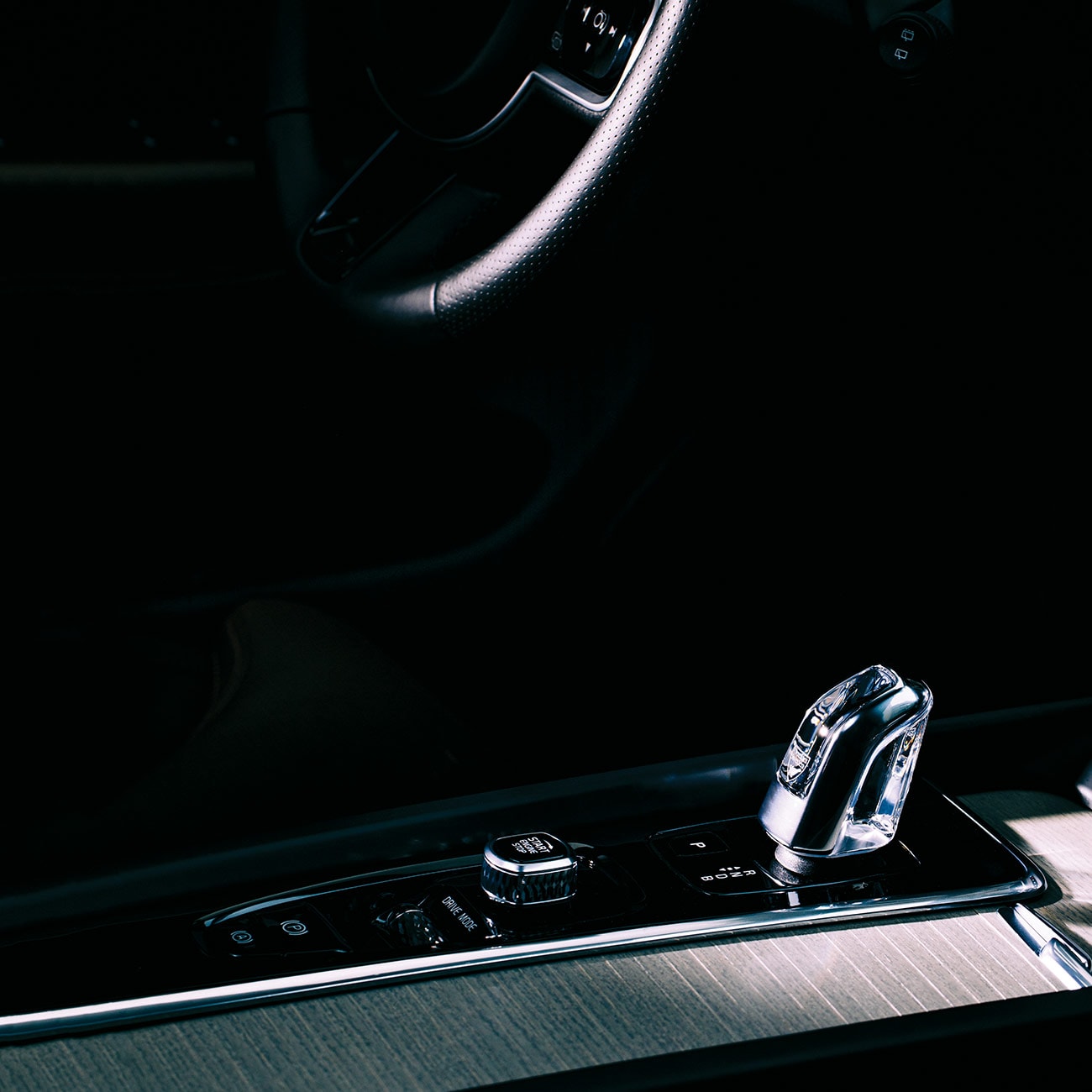
Leave it to a decidedly Swedish premium automaker to offer an attractive yet understated crystal shift knob on top-trim levels of select vehicles. Volvo has been killing it design-wise as of late, with gorgeous new models debuting in rapid succession. But its attention to detail doesn’t stop at the sheet metal. Inside the spartan yet luxurious cabin of Volvo’s XC60 T8 is a crown jewel handmade by the Swedish crystal makers Orrefors. The brilliantly clear, stubby shifter in this top-end, four-seat SUV is as pleasing to the eye as in the hand. There have been many superb shift knobs and levers in the history of the automobile, but as modern examples go, this one is king.

XC60 Inscription T8 Specs
Engine: supercharged and turbocharged 2.0-liter inline 4; 9.2-kW-hr lithium-ion battery-powered electric motor
Transmission:8-speed automatic; all-wheel drive
Horsepower: 313; 87; 400 combined
Torque: 295 lb-ft; 177 lb-ft; 472 lb-ft combined
Price: $57,695

Second-Generation Ford GT Buttress

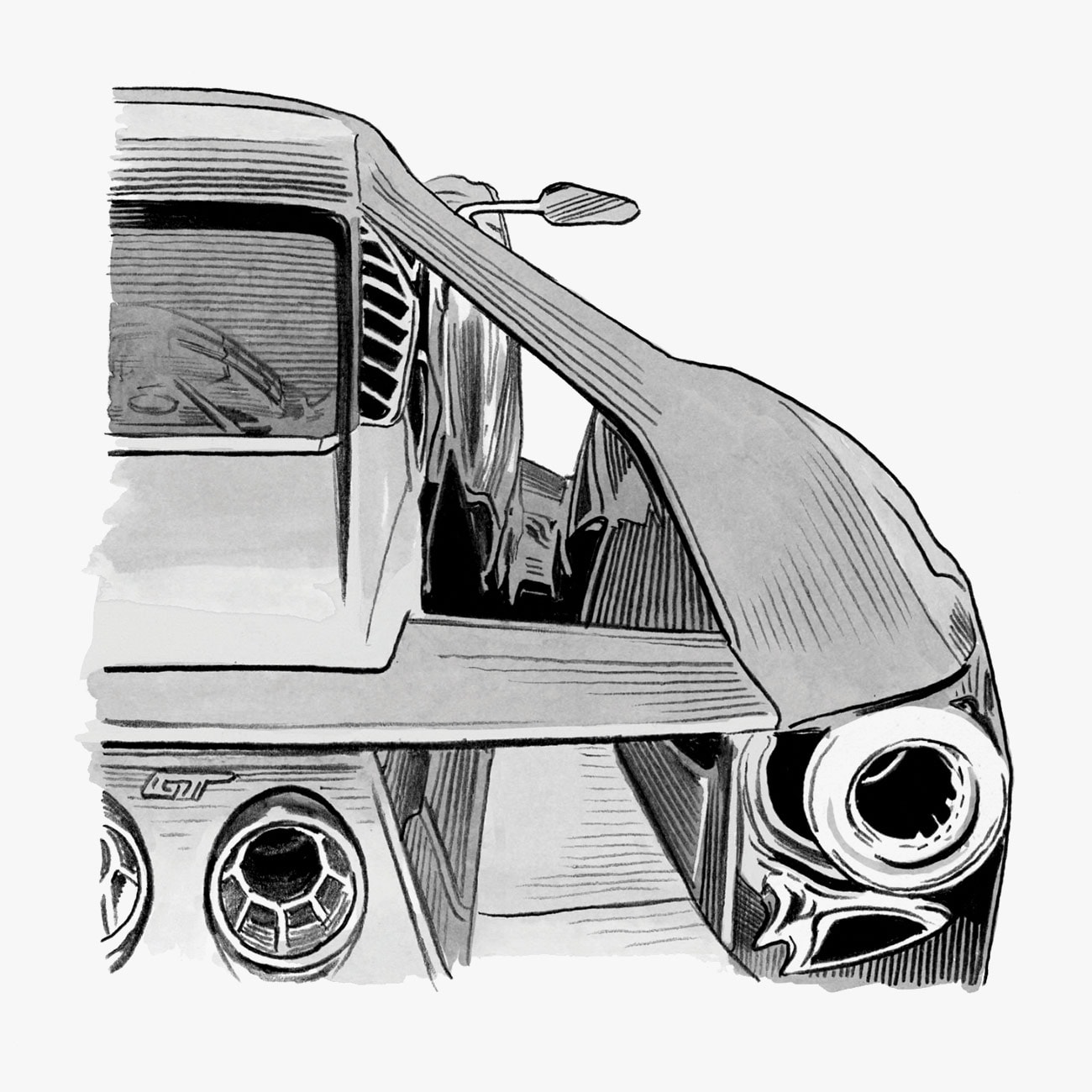
At once aerodynamically functional and outrageous, this buttress is unlike almost anything else you’ll find on a road car. It connects the rear-wheel housing to the main cabin, giving what would otherwise be a relatively skeletal carbon-fiber body the appearance of having much more surface area. It also allows you to see straight through the side of the car. In addition to looking alien, the buttress diverts airflow, reduces drag and increases downforce.

Second-Generation Ford GT Specs
Engine: 3.5-liter twin-turbocharged V6
Transmission: 7-speed dual-clutch; rear-wheel drive
Horsepower: 647
Torque: 550 lb-ft
Curb weight: 3,354 lbs
0-60 mph: 2.8 seconds
Top speed: 216 mph
Price: ~$450,000
Total built: 1,000

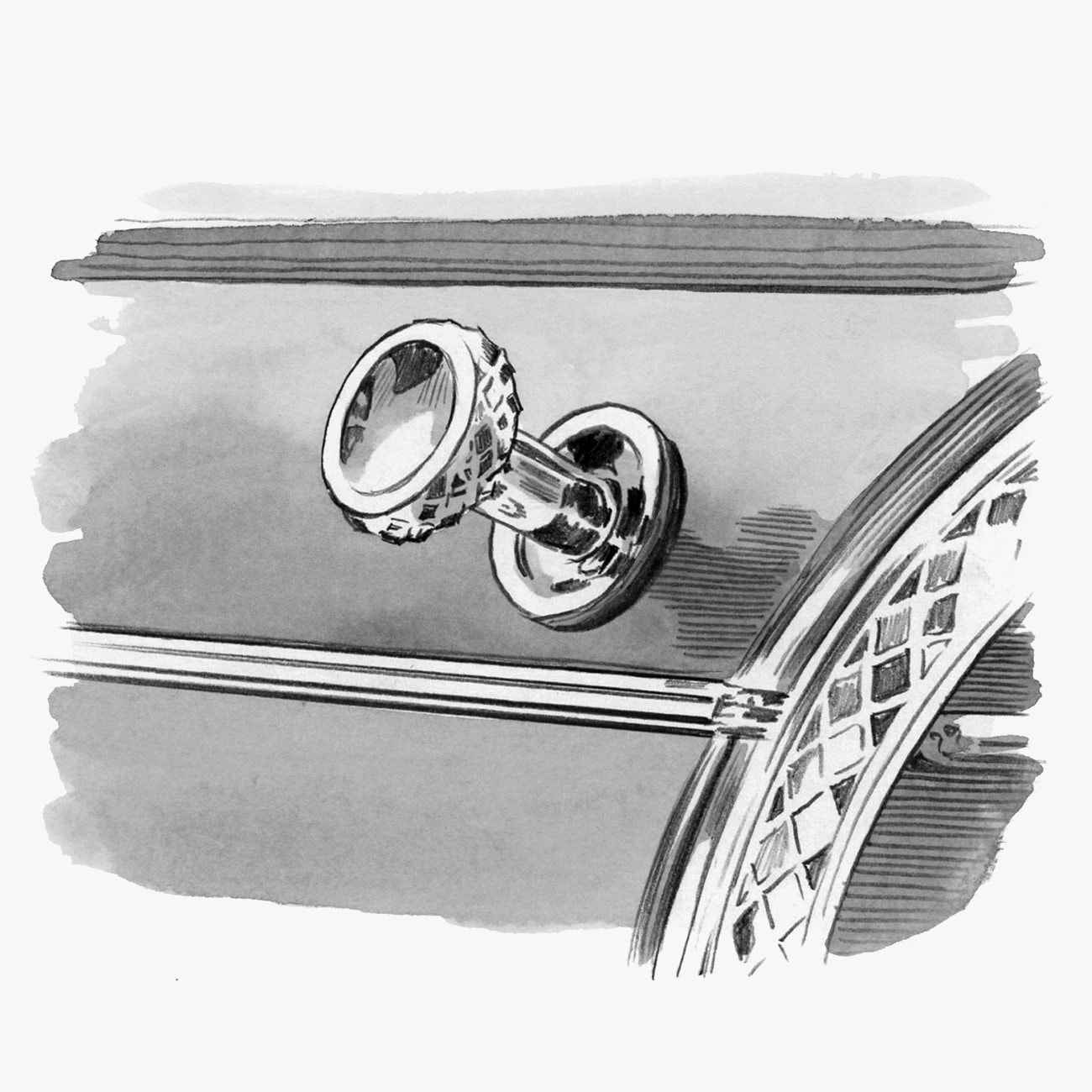
Bentley ‘Organ Stop’ HVAC Vent Knobs

Bentley’s charming, stodgy British nature shines through in this detail. Instead of a small flip-style tab like you’d see in virtually any other car, these organ-stop pulls open and close each HVAC vent, giving an otherwise plain dashboard a lot of blingy texture. They also harken back to a time when everything on a car — whether it was on a coach-built Bentley or a Model T — was handcrafted and manually operated.

2019 Bentley Continental GT Specs
Engine: 6.0-liter, twin-turbocharged W12
Transmission: 8-speed dual-clutch
Horsepower: 626
Torque: 664 ft-lbs
Curb weight: 4,947 lbs
Top speed: 207 mph
0-60: 3.6 seconds
Price: $214,600

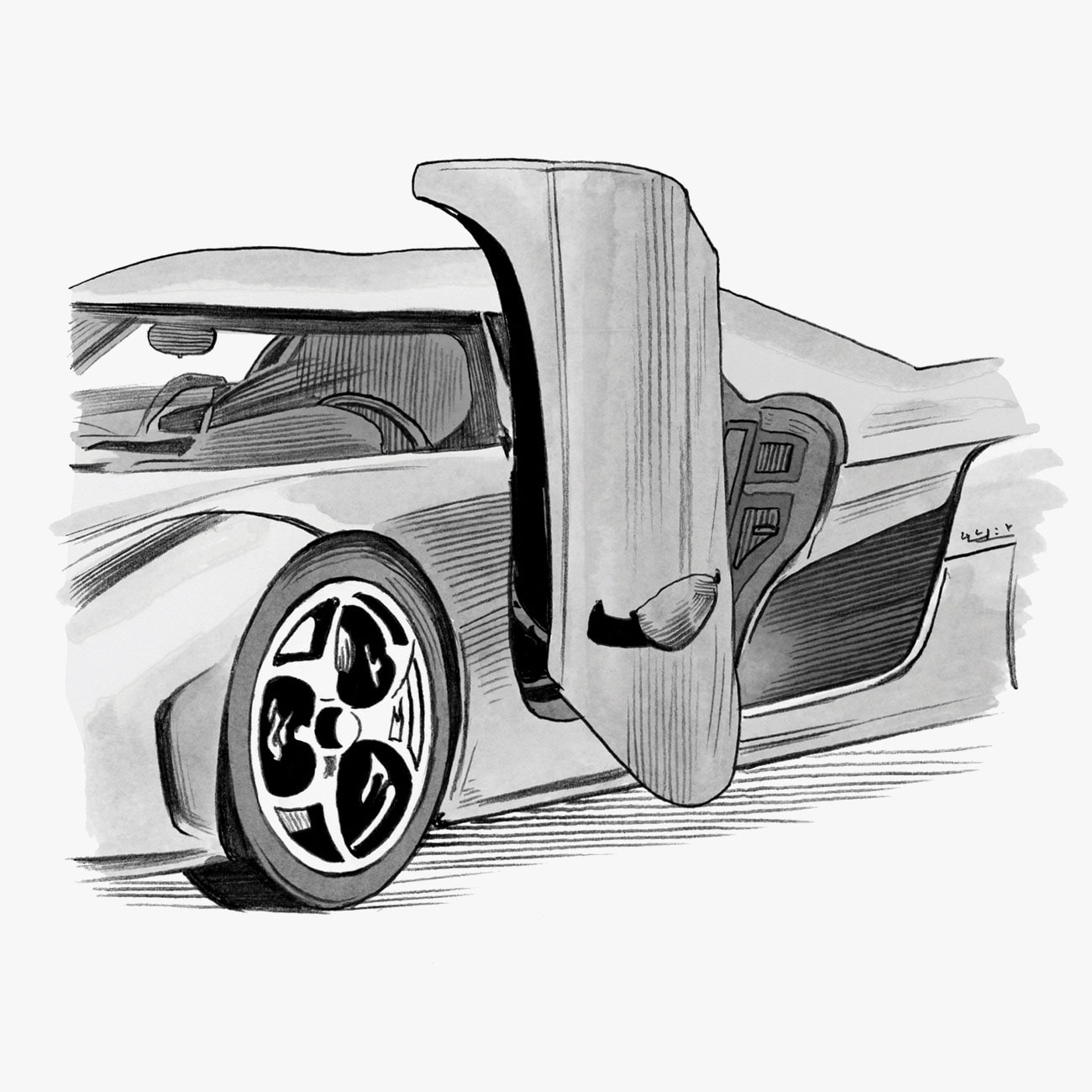
Koenigsegg Dihedral Doors

Unconventional door hinges can be functionally necessary — there isn’t room in the real world for a wide supercar’s doors to swing outward — but sometimes their existence is nothing but ostentatious peacocking. The Koenigsegg dihedral doors are mostly the former, but with a tangible dose of the latter: they push outward horizontally then rotate around an axis, eventually settling at a 90-degree angle.

Koenigsegg Regera Specs
Engine: 5.0-liter twin-turbocharged V8; three electric motors
Transmission: Koenigsegg Direct Drive; rear-wheel drive
Horsepower: 1,500 (V8 and electric motors combined)
Torque: 1,475 lb-ft
Curb weight: 3,510 lbs
Top speed: 250+ mph (est.)
0-60: 2.8 seconds
Price: $1.9 million (est.)

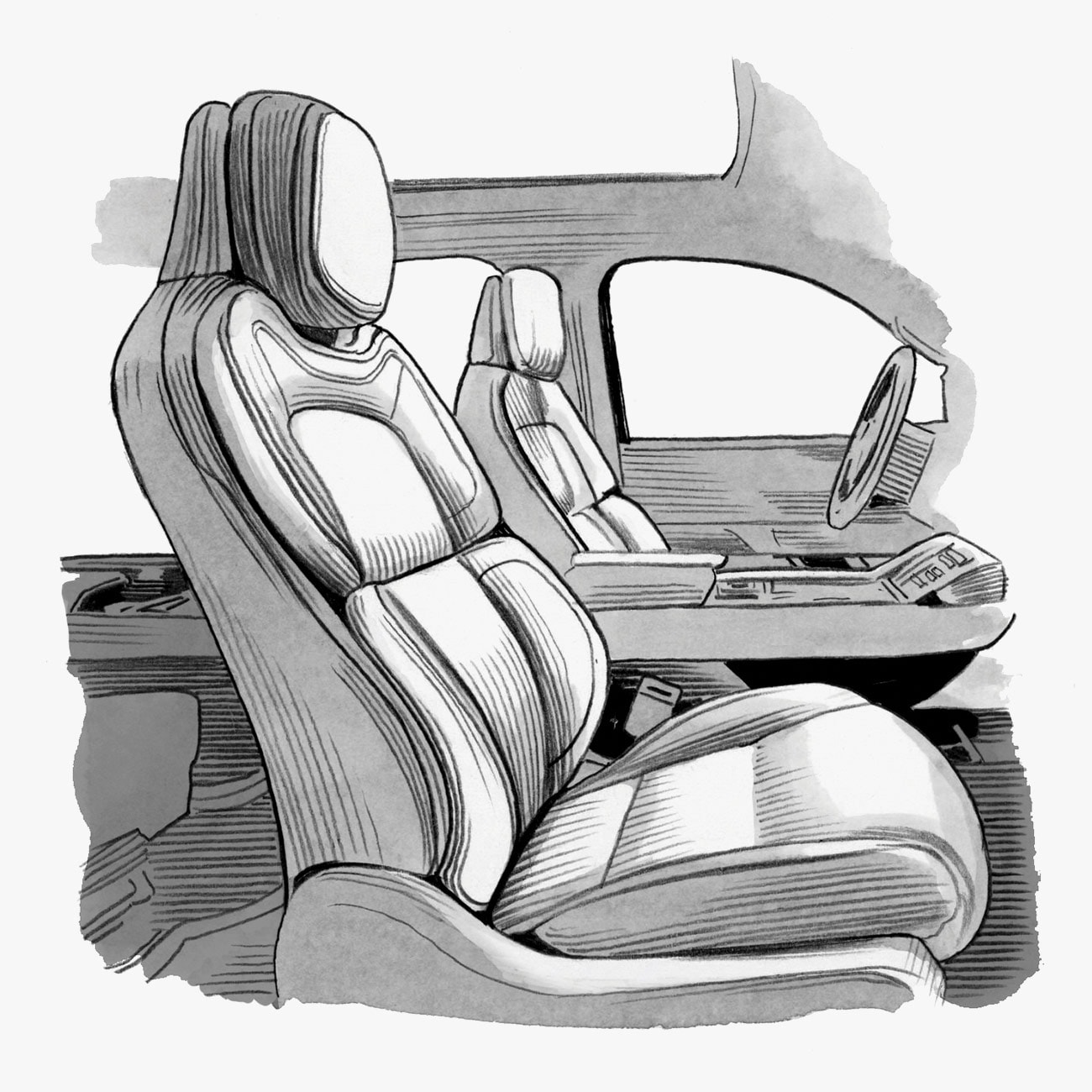
Lincoln 30-Way Perfect Position Seats

Most rental-car seats adjust four ways (they recline and slide forward and backward), while your dad’s “nice” car may have an eight-way seat that also rises and lowers. Thanks to 11 separate air cushions, Lincoln’s seats are customizable in 30 directions, meaning you can almost literally find the perfect position for your posterior (and back). Their articulation and appointment are second to none.

2018 Lincoln Navigator Specs
Engine: 3.5-liter twin-turbocharged V6
Transmission: 10-speed automatic; four-wheel drive
Horsepower: 450
Torque: 510 lb-ft
Top speed: 115 mph
0-60: 5.5 seconds
Towing capacity: 8,700 lbs
Price: $72,555 (base)

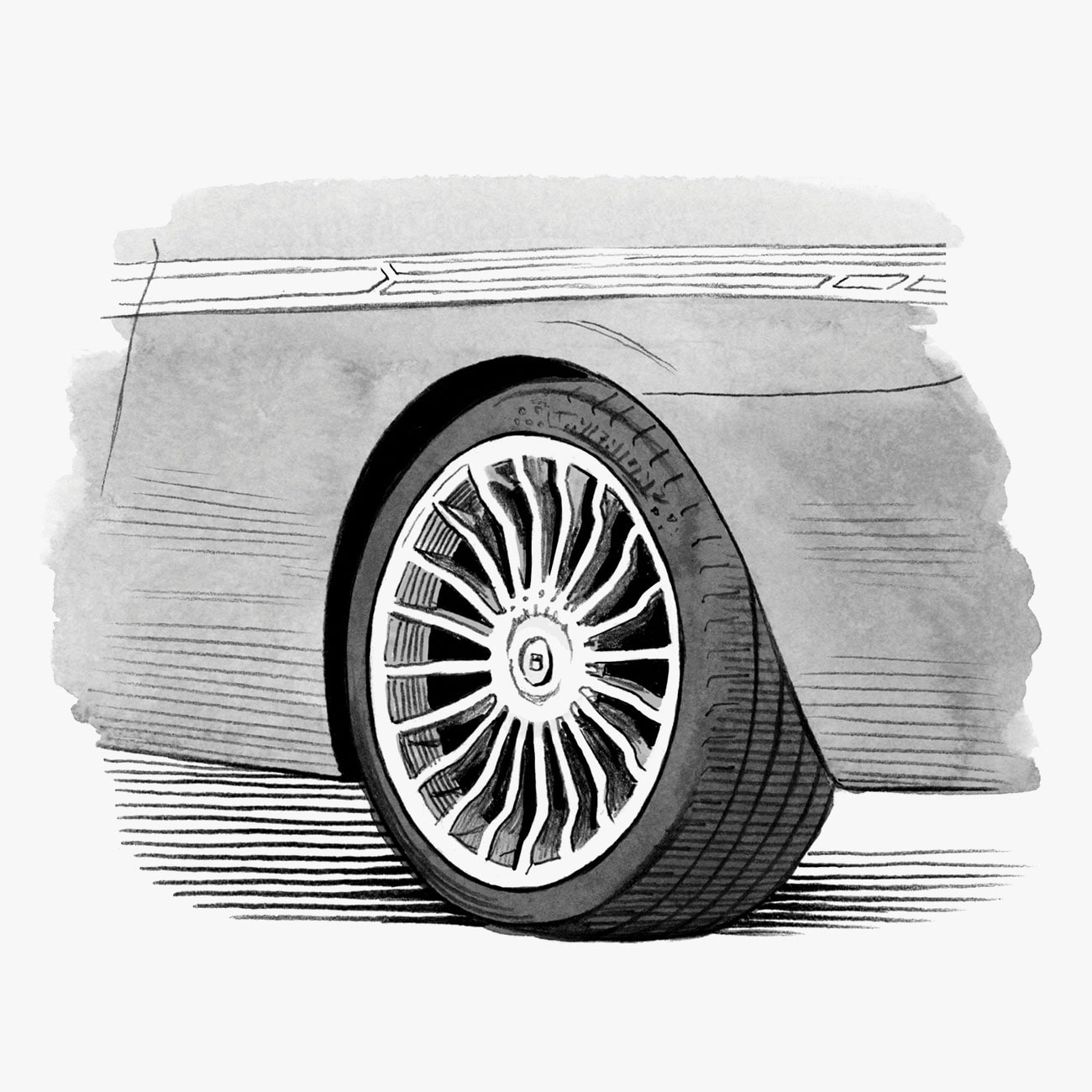
Alpina B6 Gran Coupe Wheels

Alpina-modified BMW cars are hyperbole on wheels. Faster than a streak, these cars are big and brash, but they tend to feature minimal bodywork and solar additions. The wheels of the BMW Gran Coupe, however, are a dead giveaway that car has been magicked into something special. The 20-spoke rims look magnificent at speed, but standing still is when they truly shimmer.

Alpina B6 Gran Coupe Specs
Engine: 4.4-liter twin-turbocharged V8
Transmission: either-speed automatic; all-wheel drive
Horsepower: 591
Torque: 590 lb-ft
Curb weight: 4780 lbs
Top speed: 199 mph
0-60: 3.6 seconds
Price: $124,000 (base)

2019 Jaguar F-Type Coupe Tail End

In an homage to the inimitable 1960s Jaguar E-Type, the F-Type is a modern miracle of retro design. It doesn’t look hokey, as some other recent retro-inspired vehicles have, but instead offers a contemporary take on a very sexy shape. The rear end lifts to such a sharp point that it impinges on trunk space; the kind of impracticality only the most dedicated enthusiasts accept.

2019 Jaguar F-Type SVR Coupe Specs
Engine: 5.0-liter supercharged V8
Transmission: 8-speed automatic; all-wheel drive
Horsepower: 575
Torque: 516 lb-ft
Top speed: 200 mph
0-60: 3.5 seconds
Price: $122,750 (base)
Note: Purchasing products through our links may earn us a portion of the sale, which supports our editorial team’s mission. Learn more here.

Mercedes-Benz Vision URBANETIC

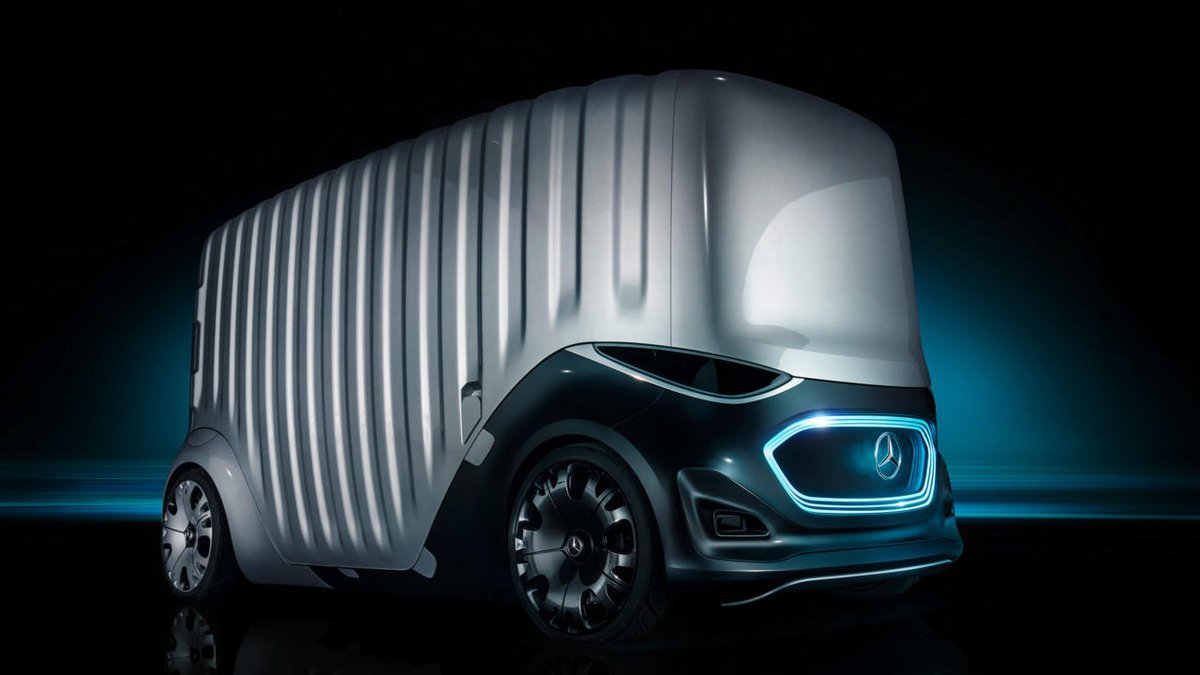
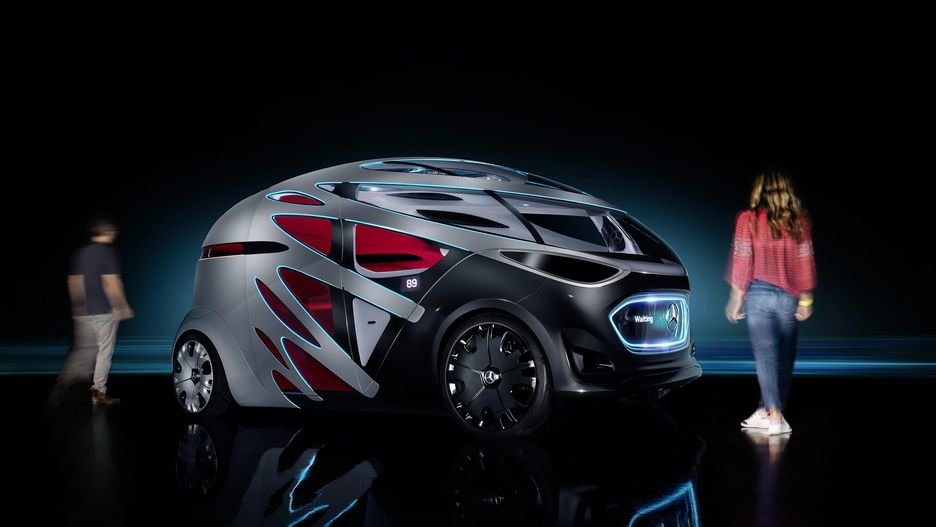
Mercedes-Benz now shows off latest concept car, called Vision URBANETIC. The autonomous vehicle can ferry passengers, cargo, and goods at the same time. Therefore, it blurs the lines between transport and delivery.

Unsurprisingly, URBANETIC runs on an all-electric chassis that can switch bodies depending on its required use. In that regard, it’s basically like a huge skateboard you can attach bodies on top of. As a ride-sharing vehicle, it can accommodate up to 12 passengers. However, as a cargo module, it can carry up to 10 pallets.

Here’s how the company describes its newest notional ride:

“Vision URBANETIC is a completely new mobility concept for the smart city where widespread fully automated driverless transport will exist or where purely autonomous zones will be defined.” Its interchangeable modules, which primarily address commuting and delivery, will take a huge amount of pressure off city centers, according to Volker Mornhinweg, head of Mercedes-Benz Vans.

“Vision URBANETIC is part of a holistic ecosystem. The system analyses the transport needs of people and goods and compiles a highly flexible, needs-based fleet.”

URBANETIC is only one of a handful of concepts that flirt with the idea of modularity. Cars that can be swapped out with different parts to provide different services is very promising. Suppose Mercedes-Benz miraculously produces it, its impact on the broader transport industry is unimaginable.

Besides the features mentioned above, the car also boasts a dynamic communications system. Interestingly, this system apparently captures and processes data in real time. As a result, it can determine what vehicles people need, and where. Game-changing stuff, truly.

LEARN MORE HERE

Photos courtesy of Mercedes-Benz

2019 Ford GT Heritage Edition 001 to be Auctioned for Charity

Ford confirmed earlier this week that it would donate a 2019 Ford GT Heritage Edition for auction with the proceeds of the sale going to the charity United Way for Southeastern Michigan. The car will be auctioned by Barrett-Jackson at their Scottsdale Auction on 19 January 2019.

The proceeds of the sale will benefit the charity United Way which is based in Southeastern Michigan. The charity aims to discuss the challenges that face the local communities, raise awareness and make change.

Ford have experienced massive demand for their latest Ford GT. Unlike its predecessor, which sold 4,038 copies, Ford have limited production of the new Ford GT to just 1,350 cars. These cars were sold with a two year sales restriction which means very few have hit the market, the ones that have command a sale price well in excess of the sticker price.

The version Ford have donated for the sale bears chassis number 001. It is finished in the same famous baby-blue-and-orange scheme as the Gulf liveried car that took down the dominant Ferrari 50 years ago. Ford fans will recall that GT40 chassis number 1075, which wore the Gulf livery, won the Le Mans 24 Hour race in 1968 and 1969.

Barrett-Jackson will sell a huge number of vehicles in Scottsdale. The advance preview suggests that the 2019 Ford GT Heritage Edition will be joined by at least three other 2006 Ford GT Heritage Editions, meaning you could start your own Gulf liveried collection from this auction alone.

If Amercian supercars are not quite your thing, fear not! Barrett-Jackson will also offer a number of other collectors cars that might peak your interest. A 2012 Lexus LFA Nurburging Edition has been announced together with one of 10 2012 MacLaren MP4-12C High Sport finished in Vodafone Racing Team colors.

The 2019 Ford GT Heritage Edition is expect to achieve a massive hammer price. Mecum Auctions recently sold chassis number 077 for a staggering $1,320,000. Earlier in the year, chassis number 48 also achieved $1,815,000. Barrett-Jackson sold another Ford GT at its 2018 Scottsdale auction, on that occasion, the hammer dropped at $2,550,000. Could this example break the magic $2,000,000 mark?

Gallery: The Lamborghini Urus Exploring Italy

Driving a Lamborghini in Italy is something special. Local residents, school children and any others passers by stop, stare and smile with glee at the sight of Italy’s prized export. The thing is, Lamborghinis are starting to look a little different since a rather distinct SUV was added to the lineup – the Lamborghini Urus. A few weeks ago Lamborghini invited a few influencers to Matera, Italy, to realize the dream and drive a Lamborghini in Italy.

Matera is an amazing city perched on a rocky outcrop in the region of Basilicata, in southern Italy. The stunning Aquatio Hotel was home for the evening and the morning sunrise illuminated the squadron of Lamborghinis awaiting the narrow streets. As you would imagine, it was quite a spectacle and the jewel in the crown of photography, Philipp Rupprecht, was there to capture every moment.

As the galleries demonstrate, it was an incredible opportunity to put the Urus through it paces on narrow streets, open road and dirt tracks that allowed the super SUV to flex its V8 muscles.

The front-mounted engine produces 641 bhp at 6,800 rpm and 627 lb ft of torque. 0 to 100 km/h happens in just 3.6 seconds and 200 km/h, in 12.8 seconds. The power is routed through an eight-speed automatic box. It uses a torque converter to ensure maximum engine response.

Naturally, the Urus is four-wheel drive. It uses a Torsen self-locking differential. The power is deliverer 40% to the front and 60% to the rear with the ability to shift as much as 70% to the front or 87% to the rear. Torque vectoring and rear-wheel steering also assist with traction.

There is no doubt then that the Urus performs like a Lamborghini should despite its 2,200 kg kerb weight.

We look forward to experiencing such an epic event soon, until then we will absorb the sensational photos from Philipp!

Lincoln Navigator Review: After 20 Years, the All-New SUV Is On Top of Its Game

It’s an obvious assertion that the new Navigator is aimed squarely at Cadillac’s bling-king SUV. The long and short of that discussion is that the Navigator is, without a shred of doubt, leaps and bounds better in every discernible way. Regardless of your take on that rivalry, what’s more amazing to me is who else Lincoln is now successfully competing with: in terms of luxury, capability and technology, the 2018 Navigator, the first complete redesign in the vehicle’s 20-year history, is worthy of comparison with much, much bigger dogs, like Mercedes-Benz’s GLS and Bentley’s Bentayga. This is a serious, serious SUV — an absolute mic-drop benchmark for its price range. Though Cadillac, et al. likely aren’t scared, I do imagine they’re quickly wearing through plenty of whiteboards with furious brainstorm scribbles.

Lincoln’s goal is to make “the ultimate family vehicle.” Now, I don’t have a family, per se, but I do have opinionated adult friends; instead of suburbs and daycare runs, at my disposal are the beautiful environs of upstate New York. We loaded up early in the day and hit the road in earnest, covering hundreds of miles of highways, country roads, small towns, driveways, parking lots, narrow city streets and light gravel lanes. Even when a three-hour, late evening traffic jam impeded our return, there was nary a complaint.

This completely new, titanic vehicle is replete with technology and comfort and convenience features that are, simply put, on par with those found in the quarter-million-dollar luxury stratus. This is where super upscale competitors should take note. The seats are cosseting thrones, positioned and appointed so well that no one gets shorted on space or of the full-on comfort experience. In between the optional second-row captain’s chairs is a console that rivals some furniture pieces in my actual apartment in terms of size. Like the middle console between driver and passenger, it also features a storage compartment that swallowed a camera bag, a liter of water and shopping bag full of snacks, and it had room to spare. It’s a comfortable, beautiful, airy, bright and spacious living room on wheels (with 11 standard power outlets). My friends, guys whose heights hover around six feet, could all easily cross their legs in even the power-reclining third row.

2018 Lincoln Navigator Black Label

Engine: turbocharged 3.5-liter V6
Transmission: 10-speed automatic
Horsepower: 450
Torque: 510 lb-ft
MSRP: $73,055 (base)

Beholding the interior of the new Navigator is an endless exercise in appreciation of design, though my favorite element is the horizontal dash section on the passenger side, which stands out as a singular and deeply emotional detail. Opt for the high-end wood trim in your Navigator and every wood applique will be sourced from the same tree, meaning their grain matches flawlessly. This is something you’ll only find in vehicles twice the price of the Navigator and it’s best showcased on the marvelous center console. The piece de resistance, however, is the Lincoln insignia inlaid on the far right end — a proud nod to Lincolns of yesteryear.

The Navigator’s overall design draws more heavily on the concept-vehicle version touted a couple years back than I expected it would; most manufacturers only tease hints of their future vehicles with auto-show art pieces. Save a few concept-car features, like a retractable side staircase and gullwing doors, this is essentially the same vehicle Lincoln revealed at the 2016 New York Auto Show. There are horizontal lines galore, mostly inside, drawing your eye from left to right over pleasantly varied materials. Outside, there is absolutely no mistaking this for anything but a Lincoln Navigator. The roof stands higher than I do, and the emblem on what seems like a ten-acre chrome grille is a full nine inches tall. The shockingly large wheels, reminiscent of an airplane’s spinning prop, really do give a sense of motion when standing still.

And yet it’s not ostentatious. Bold? Yes, very. But in a sensical, moderated fashion. In the same way Lincoln’s ’60s Continental was a monolithic — but not gaudy — brute of a luxury sedan, the Navigator doesn’t exhibit wince-inducing tackiness. Instead, it’s handsome and properly impactful and draws admiration of form more than it does attention for attention’s sake. I have a strong feeling that this is what a big, progressively styled SUV should look like. It’s a design win.

Lincoln’s desire to make the new Navigator an “ultimate” SUV translates into a vehicle that drives very, very well

Lincoln is also heavily emphasizing the literal experience of being in the Navigator more than any other element. This starts, of course, with the driver. Different drive modes are available — it does seem a little irresponsible to put such a large vehicle into anything like a sport mode, but it’s there mostly to keep the powertrain responsive should conditions call for it. A key feature is the heads-up display (HUD), on which vital data like speed, miles-to-empty and more projects onto the windshield in front of the steering wheel. Most anything the driver needs to know can be displayed there, on what Lincoln claims is the “biggest and brightest” HUD on the market. It’s also intelligently designed and intuitive: when you move a function to the HUD, it’s gone from the standard physical digital gauge cluster, eliminating redundant distractions.

Most importantly, Lincoln’s desire to make the new Navigator an “ultimate” SUV translates into a vehicle that drives very, very well. The steering has proper weight and, combined with a premier seating position and visibility, offers a supreme sense of command. Its twin-turbocharged V6’s 450 horsepower feels like nuclear propulsion when coaxed with the throttle. What the Navigator doesn’t feel like from the front left seat is a big, loping truck. It drives big, but it’s manipulated as easy as a family sedan half its size.

While I was busy enjoying driving dynamics, my “family” was constantly noting, in half-whispered, awed voices, observations like “even the windows are smooth.” The panoramic glass roof is so large they figured it must be several massive sliding windows put together. Discovering the rear-seat entertainment tablet/Bluetooth headset combos was like a gateway drug — the second-row friends, who acted, I assume, much like eagerly curious children, continued to find new features and delights until I dropped them off late into the evening.

I, frankly, have almost no complaints beyond the quality of very few interior materials — for instance, molded plastic “knurling” on some knobs is unfortunate but totally fine for the price range. It’s not right to complain about the sheer mass of the thing — here, mass is, of course, necessary and unavoidable since its goal is to transport full-sized adults in total comfort. Others who prefer small vehicles will be very satisfied when using the 360-degree camera system for parking maneuvers. In something this big, they’re a godsend when you’re trying to… navigate.

The big question: Is it worth it? The Navigator will start around $73,000, and top-end models like the one I drove will sticker for just under $100,000, a price comparable to the Navigator’s main competition, the Escalade. And yet, that’s less than half what the top-tier competition charges. The Bentayga starts around $225,000, for instance, and while that premium is deserved for many reasons, the price delta cannot be overlooked. In fact, it should be heavily considered by any luxury SUV buyer. Escalade shoppers, though, should know this: the Navigator is a worthy entry into the “big luxury SUV” thing; it does the whole “experience” thing better; it looks better; drives better. It’s just better. So yes, the Navigator is absolutely worth it — just ask my family.

Still Not Convinced? 15 Reasons to Immediately Sell Your House and Buy a Bentley Bentayga

Your IKEA furniture does not count as “handbuilt.” A Bentayga, though… Read the Story

2020 BMW M340i xDrive Revealed

BMW have released official details for the BMW M340i xDrive ahead of its release at the Los Angeles Motor Show 2018 which starts in two weeks. The 3 Series was officially unveiled a month ago at the Paris Motor Show. At that time, BMW had only released details of its four cylinder offering. For the Los Angeles show, BMW have unveiled a powerful straight six version!

The M340i has been released with in both rear wheel drive and xDrive formats. The current range topper gets a 3.0 litre. six cylinder engine producing 382 hp and 369 lb-ft. of torque. It will be the most potent 3 Series in the normal range. The M3 should be the next step up in terms of performance.

The power will propel the sedan to 60 mph in just 4.2 second. The engine features an aluminium crankcase and cylinder head with a new, single, twin scroll turbocharger. The engine benefits from a 25 % reduction in weight over the previous model which should transform performance.

The BMW M340i sits 10 mm lower to the ground thanks to the M Sport suspension (which also receive optional adaptive dampers) and a wider track. Visual enhancements include a new grille, rear spoiler and 18 inch alloys as standard. Inside, M Performance improvements are on offer with a new set of sports seats.

BMW M340i xDrive