All posts in “Cars”

Top 5 Sports Cars Girls Will Totally Like

Cars and Women. Women and Cars. Many men think that finding the right sports car can make a woman’s heart beat faster. We know it isn’t any woman, but a special car loving kind will certainly appreciate a ride in a fast, flashy ride.  Check out these sports cars that are sure to top the list of any girl and then try Snapchat dating to find a special girl who loves sports cars.

1. Lamborghini Aventador S Roadster

The first place on the list of the best sports cars rightfully goes to Lamborghini Aventador S Roadster, one of the most expensive and unique.  This year, the Italian manufacturer pleased fans of high speeds by presenting the sports car on the Frankfurt motor show – the modernized Aventador S Roadster. A distinctive feature of this sports car is the availability of removable roof panels. Under the hood, in the engine compartment, a V-shaped engine with 740-hp is installed. With such performance, the Italian sports car can accelerate from 0 to 60 mph in a couple of seconds. The maximum speed is 217 mph. Its price starts at $460K. 

2. Dodge Challenger SRT Demon

The second place is taken by Dodge Challenger SRT Demon, a car primed for the under 30 crowds. The premiere of the long-awaited car from the American company was waiting for a long time, and recently, at the New York Motor Show, the manufacturer presented the sports car – Demon. Let’s note that the brand kept the information concerning technical and dynamic characteristics of the car a secret until the last moment. Under the hood of the car, the engine is combined with an eight-band automatic transmission. This engine allows the American sports car to gain speed in just 2.6 seconds. The maximum speed is 208 mph.

3. Bentley Continental GT

The third spot in the TOP-5 of the best sports cars goes to Bentley Continental GT. At the international exhibition in Frankfurt, the British brand introduced the third generation of the GT coupe. The sports car is built on a new platform developed by German engineers from Porsche. The car received a four-wheel drive. In the engine compartment, there is a bi-turbo six-liter W12 engine with a power of 635 horses. With this arsenal, the British sports car accelerates in 3.7 seconds from 0 to 60 mph, and the maximum speed is 207 mph. We promise you that no woman in the world can resist such a car.

4. Ferrari Portofino 2018

The fourth position is occupied by Ferrari Portofino with its modern style, reliable technology, and efficiency. The model line of the Italian company Ferrari was updated by an absolutely new sports car called Portofino. This name was given to a cabriolet in honor of the proud resort located in Italy. The global debut of the car took place in autumn, at the Frankfurt Motor Show. And sales began at the beginning of this year. The Italian car is offered with a V-shaped twin-turbo engine with a working volume of 3.9 liters with a power output of 600 horses. With this performance, the Italian sports car accelerates to 60 mph in 3.5 seconds; the top speed is 198 mph.

5. Audi R8 V10 RWS 2018

Women love the style and status that invariably distinguish Audi R8 RWS. Last year, a new front-wheel-drive, mid-engine model RWS was added to the German sports car lineup. A future car owner can choose between two types of cars – coupe and roadster. The global premiere of the car was held at the Frankfurt Motor Show. In the engine compartment, there is a 5.2-liter, 540-horsepower V10 FSI engine which is aggregated with a seven-speed robotic transmission. The maximum speed is 198 mph.

10 Best Cars of the 2018 LA Auto Show

The 2018 LA Auto Show kicks off this weekend, and there are head turners and important launches all over the show floor. If you’re heading to the convention center, pick up tickets and read up on the whole show here. Check out our top picks below whether you’re heading to the show or not.

Porsche 911 992

2020 will herald in the eighth generation Porsche 911 and by all accounts, the namesake continues to honor its heritage while pushing into the 21st century. The new 911 Carrera S will come with a turbocharged rear-mounted flat-six and produce 443 horsepower. This makes for a 0-60 time of 3.5 seconds; opt for the Sport Chrono package with launch control and that time drops to 3.3 seconds. The 4S will incorporate an all-wheel-drive system and claims a 0-60 time of 3.2 seconds.

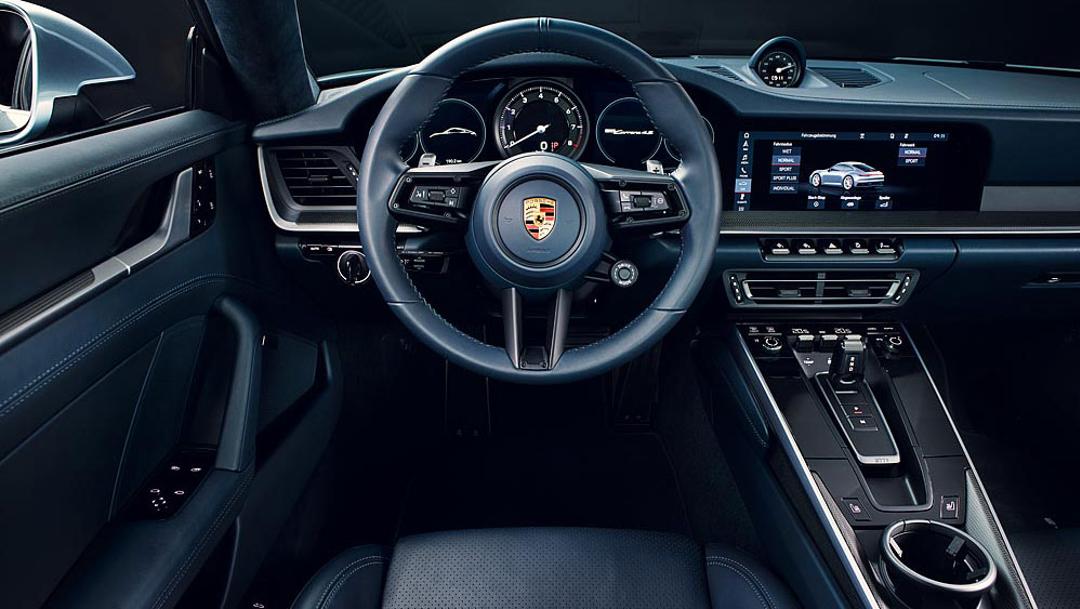
This new 911 might look similar to previous 911’s on the outside but the interior boasts a more horizontal and minimalist aesthetic. Buttons, switches and the upright shifter appear trimmed and refined.

The 2020 911 Carrera S and 4S will eventually be available in manual transmission but not immediately.

Pricing for the 2020 911 Carrera S begins at $113,200 and the 4S will run you $120,600. These bad boys will hit the showroom floor come summer 2019 so break out that checkbook or American Express now and put down a deposit.

Rivian R1T and R1S

The world of electric vehicles are taking over and Rivian aims to carve out an undeveloped piece of the market. Electric adventure trucks. Built in Illinois in a former Mitsubishi factory, the new electric Rivian is proud to be assembled in America.

With a large platform to house big batteries, the R1T and R1S expect a range of around 400 miles. Which would be necessary if you are to seek out adventure and roam the world off-piste.

Four identical electric motors in each wheel operating off a single-speed gearbox are responsible for putting power to the tarmac (or dirt). Each motor is rated for 147 kilowatts or 197 horsepower each, which equates to 788 total combined horsepower. Each motor and the battery sled are reinforced with composite materials and kevlar to minimize damage from rocks and debris. Also, important, the battery casing is fully waterproof.

The interior is svelte and minimal with two large screens and a healthy helping of leather, wood, and metal. Both vehicles will also incorporate high-level driver safety aids but Rivian remains tight-lipped on what that will include.

Both vehicles will utilize DC fast charging up to 160 kilowatts and obtain 200 miles of charge in as little as 30 minutes.

The R1T will start at $69,000, or $61,500 with a $7,500 federal tax rebate, though pricing will vary depending on battery pack and various options. Rivian has yet to announce R1S pricing. The R1T will be available for purchase in 2021.

Jeep Gladiator

The Jeep Gladiator brings the pickup truck back to its lineup after almost 26 years. With four-wheel drive standard and featuring a six-speed manual transmission standard and an eight-speed automatic transmission available as an option, the Gladiator will know no bounds.

The first runs of 2019 Gladiators launching in Q2 of 2019 will be powered by a 3.6-liter Pentastar V6 that pumps out a 285 horsepower and 260 pound-feet of torque. In 2020, the Gladiator will see the introduction of a 3.0-liter diesel V6 which will pump out 260 horsepower and 442 pound-feet of torque. The diesel will only be available with an eight-speed automatic.

All Gladiators will come standard with four-wheel drive and have a tow capability of 7,650 pounds and a payload capacity nearing 1,600 pounds.

Pricing on the Jeep Gladiator has yet to be announced.

Mazda 3 Hatchback

Mazda continues to make bold and beautiful vehicles across its entire line up. The Mazda3 Hatchback and sedan are no exception to the rule. Along with minor exterior changes which push the bounds between concept and production, it continues to be one of the best-looking entry level cars on the market. Both Mazda3 hatch and sedan will come with a 2.5-liter inline-four, with either six-speed manual or automatic transmissions and feature Mazda’s SkyActive-X compression ignition engine which utilizes a supercharger and hybrid motor assist for added performance.

Mazda3 pricing begins at $18,990.

Nissan Kicks

You might be wondering why the Nissan Kicks is on this list. It came out earlier this year and not much about it is fancy, but for under $20k it’s one of the best entry-level cars for younger and older-generation drivers. The 125 horsepower, 1.6-liter four-cylinder engine won’t win you any races but it’s perfectly capable of getting you through the city and taking you to far off places. But that’s not where the glory of this CUV lies. The headrest mounted Bose audio takes the Nissan Kicks from an average car to one of greatness faster than you can turn the volume dial up to 11. With an EPA average of 31 city / 36 highway, spacious and minimalist inspired interior, I consider the Kicks one of the smartest and most satisfying automotive purchases you’ll ever make. Especially if you are balling on a budget.

Audi E-Tron GT

The Audi E-Tron GT is only a concept for now, but Audi claims the vehicle will go into production in 2020. What it looks like in its final production form remains to be seen. Utilizing a 90-kilowatt hour battery Audi estimates the E-Tron GT will get around 248 miles to charge. With an equivalent output of 590 horsepower the E-Tron GT will stamp out a 0-60 time in 3.5 seconds but outright speed and acceleration is nothing without agility and to increase stability and handling, the E-Tron GT will include rear-axle steering.

Honda Passport

Honda looks like it might finally have a rugged and fun SUV back in their lineup. The Passport is back after a 16-year hiatus and is built on the very same Global Light Truck platform used for the Pilot and Ridgeline. Powered by a 3.5-liter V6 engine pumping out 280 horsepower and 262 pound-feet of torque, the Passport will certainly have enough punch for ambitious explorers and will be capable of towing up to 5,000 pounds. No adventure SUV would be complete without a set of roof racks and utility basket. Expect to get this Passport stamped every time you cross state lines.

BMW X7

BMW is doubling down on luxury with the final production of the 8-Series hitting shores, and now the X7 rounds out their full-size ultra-swank SUV category. The X7 bolsters itself beyond the X5 in both size and opulence. It carries more passengers thanks to its third row, includes more cargo space, and the interior is unabashedly luxurious with two-tone leather interior, second row passenger displays, a new driver focused digital gauge cluster, and updated iDrive system.

As plush and luxurious as the interior might be, the exterior holds onto many of the design cues introduced in the concept version from last year’s LA Auto Show.

The X7 won’t be a slouch when it hits the road either. Buyers will have two options when it comes to their choice of powerplant: an in-line six-cylinder xDrive40i which pumps out 335 horsepower and 330 lb-ft of torque or the V-8 xDrive50i which pumps out 456 horsepower and 479 lb-ft of torque. Both will only be available with an eight-speed automatic transmission.

Pricing on the BMW X7 begins at $74,895 for the six-cylinder and $93,595 for the V8.

Mercedes-AMG GT R Pro

The Mercedes AMG GT R Pro is a slightly reworked version of the current GT R. While the GT R Pro sees no noticeable power increase from the 4.0-liter twin-turbo V8 which puts out a lovely 577 horsepower and 516 pound-feet of torque, the GT R Pro receives a number of external and internal performance upgrades that hone the already savage GT R. The GT R Pro will receive a revised coilover suspension, lightweight construction, carbon-ceramic brakes, adjustable anti-roll bars and re-tuned dynamic engine mounts. Mercedes also includes an update to the AMG Dynamics stability control system which includes Basic, Advanced, Pro and Master driving modes.

Infiniti Prototype 10

The Infiniti Prototype 10 is more of an honorable mention on this list because it’s a pure prototype and there are no future plans to bring this vehicle into production. However, if Infiniti did announce the Prototype 10 as an ultra-rare limited run, I am sure they would sell out before the press conference was over. Granted it had some kind of supercar level powerplant and handling system. The Prototype 10 is impressive to behold and Infiniti says it is an attempt to “recapture the spirit of early speedsters” from the early years of racing. It definitely stands out on the show floor.

Note: Purchasing products through our links may earn us a portion of the sale, which supports our editorial team’s mission. Learn more here.

Ferrari SP3JC one-off channels vintage roadsters with a color-wheel twist

Not long after we posted on rumors of a Ferrari 812 Spider, we get this, the Ferrari SP3JC. This is no 812 Superfast, though, it’s a one-off commission based on running gear from the limited edition F12 TDF. John Collins, owner of classic Ferrari dealer Talacrest in the UK, provided the dream, the funds, and therefore the “JC” in the open-top’s name. We’ll assume this being Ferrari’s third Special Project this year contributed the rest of the alphanumeric. Collins said the project took 3.5 years from dream to completion, and Ferrari said the design process consumed two of them.

While there have been at least six special editions and commissions based off the F12, this is the first one-off to use the F12 TDF. The Italians say the SP3JC is “designed to pay homage to company’s classic 1950s and 1960s roadsters.” A much wider power bulge in the hood falls all the way into the grille of the redrawn front fascia. New vents appear at the corners of the bumper. Above, instead of the F12 TDF’s small hood vents, two large, transparent panels provide views of the 6.3-liter V12.

At the side, instead of the modern rising fender line from front wheel to cowl, the fender descends on its way rearward akin to Ferraris of old. The redrawn panels move the donor car’s vent to above the rocker panel, and erases the three vents over the rear wheels. In back, 812 Superfast taillights preside over a layered fascia with three full-width vents and a jutting diffuser. The 812 Superfast also donated its wheels.

Roll hoops stand guard behind the seats. According to a poster on Ferrari Chat, the SP3JC doesn’t come with a roof.

About that paint scheme: There were plenty of vibrantly hued classic Ferraris, but we don’t know of any that put so many hues on one body. Ferrari says the mashup here was inspired by Collins’ “passion for Pop Art.” Bianco Italia mixes with Azzuro Met and Giallo Modena, right down to the yellow pinstripes on the wheels and the matching blue and white leather inside.

Personally, we’d rather jump off with the F12 TRS when imagining what an 812 Superfast Spider could look like, but this is probably a better place to start.

Related Video:

2019 Mercedes-AMG GT R PRO Officially Revealed

The new Mercedes-AMG GT R PRO has been officially announced at the Los Angeles Motor Show 2018. The two seater will serve as the GT for the race track, taking lessons learned by Mercedes-AMG through its customer racing programs in GT3 and GT4 and applying them to a barely road-legal track day tool.

The official release of the GT R PRO model coincides with the release of facelift AMG GT’s. With four years in the market, it was about time for a fresh look. The AMG GT gets light clusters that closely resemble the four door coupe launched earlier this year. The cars also get new rear diffusers with tailpipes to resemble the four door, the GT and GT S get new sill covers and new alloy wheel options are also available.

The AMG GT retains the 4.0 litre AMG V8 throughout the range. In the standard GT it now produces 476 hp, in the GT S it is boosted to 522 hp, the GT C gets 557 hours and the GT R a healthy 585 hp. On all models, the AMG Dynamics program is increased to add more adjustability to the ESP programs. In conjunction with the normal drive programs, AMG now offers four new settings, ‘basic’, ‘advanced’, ‘pro’ and ‘master’.

Inside, The AMG GT gets a new AMG Performance steering wheel and the centre console and display buttons from the AMG GT 4-Door Coupé. The dashboard is now fully digital with a 12.3-inch instrument cluster and a 10.25-inch multimedia display on the centre console.

The new PRO shares its powertrain with the AMG GT R. It differs in what it offers for the suspension, aerodynamics and weight reduction packages. The PRO gets a new coilover suspension system which can be mechanically adjusted by the driver depending on the circuit they are driving. The front axel gets an adjustable carbon fibre torsion bar, the rear steel unit is also adjustable. Dynamic engine and transmission mounts have been retuned specifically for the PRO.

Cars delivered outside of the Chinese, US and Canadian markets will get the option of a track pack. This adds roll over protection, a four point safety harness and a 2 kg fire extinguisher. Ceramic brakes are fitted as standard in the PRO as well as AMG bucket seats. Aerodynamics are taken care of with a variety of unique carbon fibre pieces. These include two front flicks, a larger front splitter, a larger rear diffuser and rear air vents.

While there are no Nurburgring records to report, Mercedes-AMG have confirmed that Maro Engel completed a circuit of the North Loop in exactly 7.04.632 minutes. An impressive time for the front engined GT R PRO!

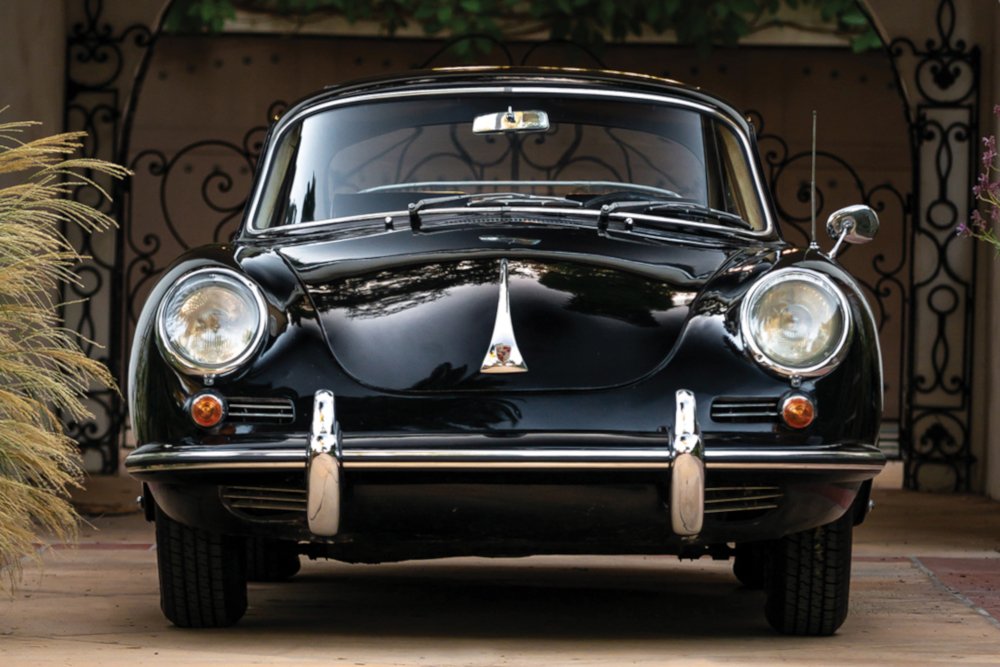
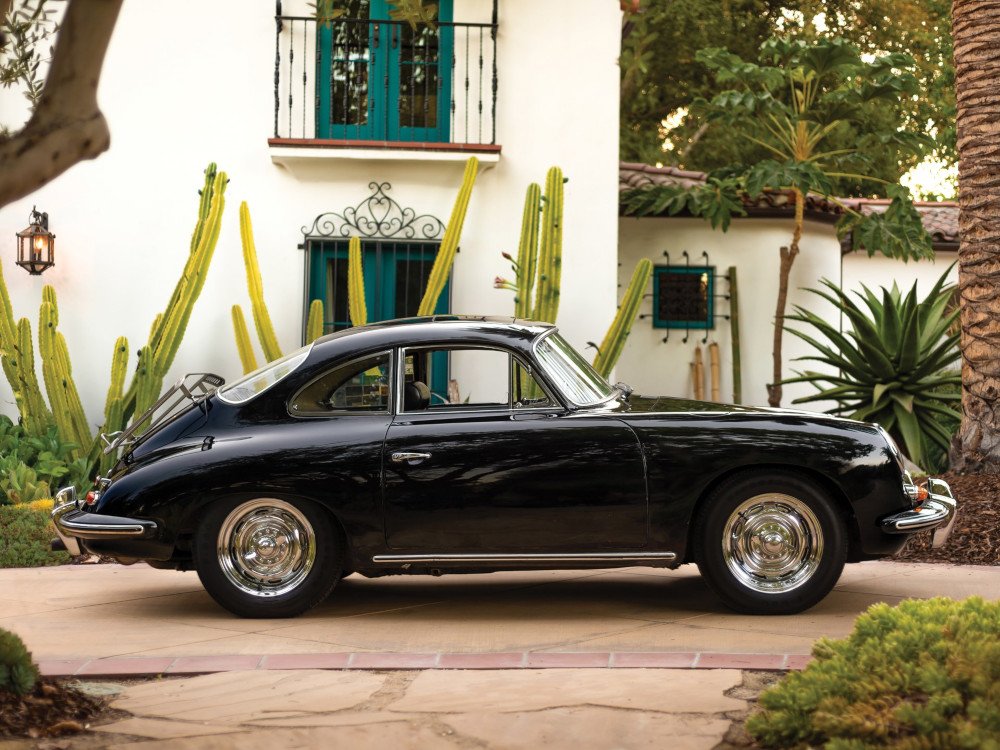
1963 Porsche 356 B 1600 Coupe

Ferdinand Porsche truly believed he could fuse a generously powered engine and a small body together and create the ultimate “fun” driver. And as the Porsche 356 proves, he was right.

A bit of a history lesson: This lightweight rear-wheel-drive, rear-engine sports car was first built in 1948 in Austria. Two years later, Porsche swapped out the aluminum body for a Reutter-built steel-shell, and moved production to Germany. Then, the 356 won its first Le Mans, giving Porsche some much-deserved street cred. With the model still popular, Porsche followed up with the “B” series in 1959. Nearly 31,000 units were built before the “C” series arrived in 1963.

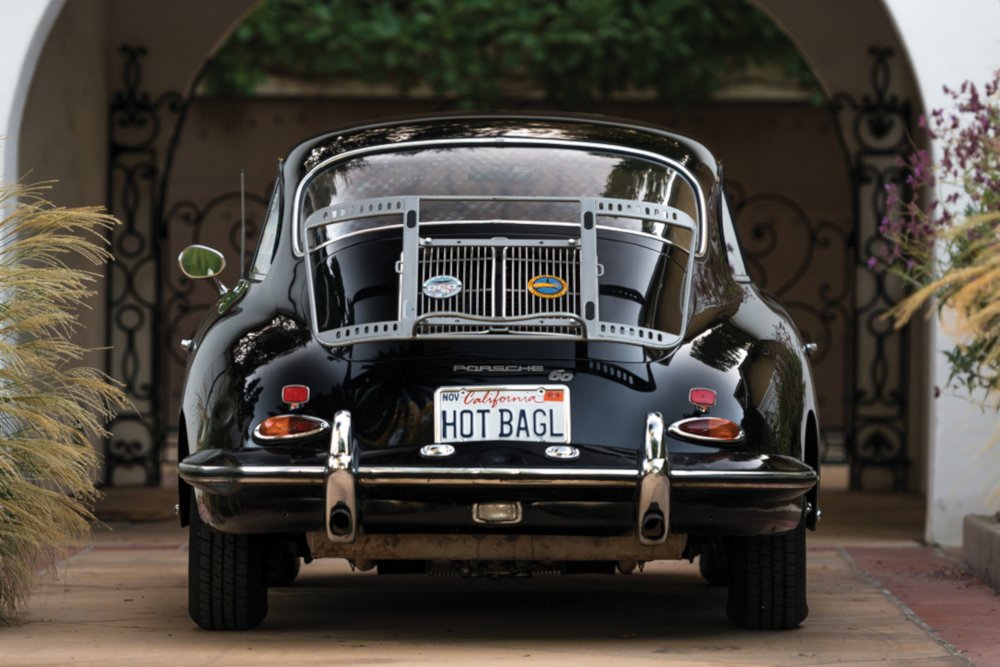
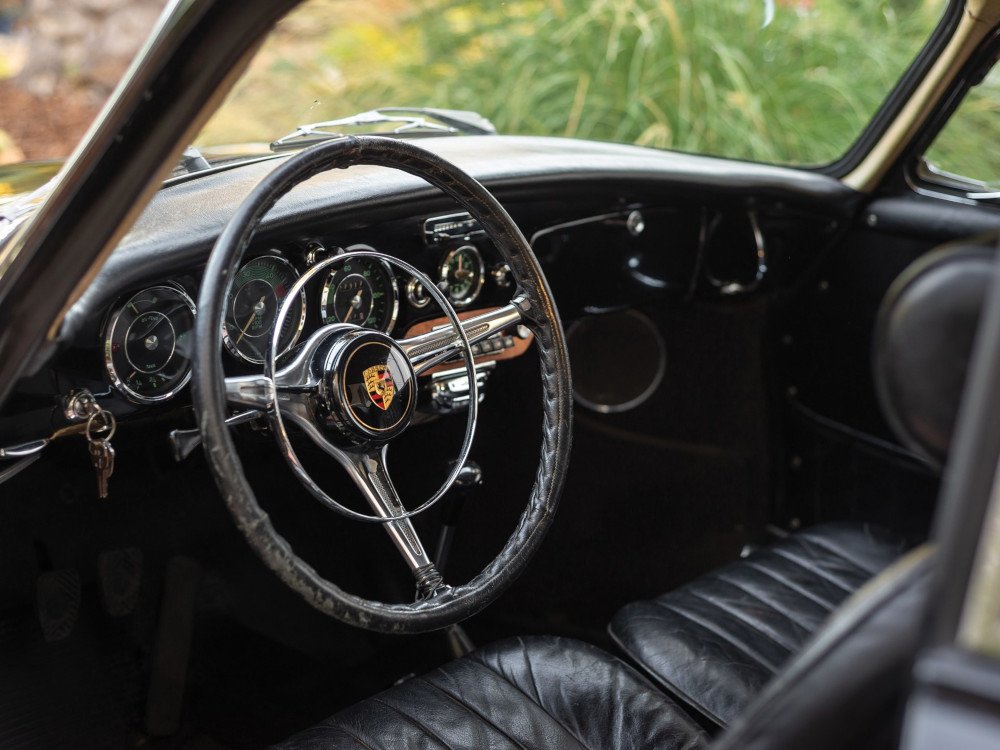
Fast forward to today and you’re now looking at this bad boy, which came straight out of Porsche’s factory in 1963. It comes with an unrestored sunroof, Becker radio with speakers, and black leather seats. Plenty of things to gush about here, like the Leitz luggage rack and deluxe horn ring. There’s also a tinted windshield and Rudge knock-off wheels. A thing of rarity in vintage car circles.

Everything inside is untouched. In fact, the radio suppressor and original voltage regulator are still tethered to the engine. A family in the Hamptons used to own it, but only drove 27,317 miles so it still has plenty of kick left. It also retains more than 50% of its original paint, and mind you, it’s still in excellent running condition. The engine has apparently never been overhauled, although the current owner, a Porsche devotee, will provide receipts for reconditioning if need be.

SEE MORE AT SOTHEBY’S

Photos courtesy of Sotheby’s

Ford and GM Are Investing in a Post-Automobile Future

Detroit gave the world the mass-produced automobile. With torn up rail lines, anemic public transit, and a broad metropolitan expanse, Detroit may bet the major city least suited to living without the personal automobile. With that context, it feels discordant for Big Three automakers to get into the “mobility” game. But, that’s what’s happening.

Ford has been collecting mobility tech firms like it once did luxury British car manufacturers. The blue oval recently bought Spin, a dockless electric scooter company for nearly $100 million and plans an immediate implementation in Detroit. There’s also the “Ford GoBike” program in the Bay Area, a $65 million investment in the commuter shuttle service Chariot, and Jelly, another electric scooter research project with Purdue University.

GM, not to be outdone, is getting into the e-Bike business. The company has prototypes for compact and folding bike models. GM will award $10,000 to the winner of a naming competition. The company also has Maven, a peer-to-peer car sharing app, which will begin allowing competitors’ vehicles in 2019.

Are Ford and GM earnestly preparing for the post-automobile future? Or, is this two companies, primarily in the business of selling gasoline swilling pickups and SUVs, doing a little bit of PR?

The car ownership model will change in the long term. Urbanization is happening globally, whether or not millennials are “killing the suburbs” this week. The rub with developing autonomous vehicles is they immediately raise the question of why non-affluent individuals would bother owning their own car. But, it’s not clear Ford and GM are positioned to survive the next major recession intact, much less a dramatic recalibration of the industry.

Whatever the long-term benefits, those investments make PR sense right now. Mobility and future-facing tech are where the investors are. While Ford has a much better track record building cars than Tesla, Tesla’s stock sells for $340 per share to Ford’s $10. “Ford Expands Mobility Portfolio” is a better financial headline than “F-150 Sales Down Year-Over-Year.”

Besides shareholders, Ford and GM also need to seem cool and down with sustainability to attract talent. Ford may lob shots at Silicon Valley in ads. But, it’s also expanding its workforce there and reorienting its presence in Detroit to seem as young and tech-friendly as possible. Hey, look, we have e-scooters now!

Just as every oil company invests in an alternative energy future, large automakers will be redefining the future of mobility. Consider such investments a hit of vermouth to make the present reality, profiting from an outmoded, destructive, and still lucrative legacy businessfor decades to come, a little more palatable.

Today in Gear


The best way to catch up on the day’s most important product releases and stories. Read the Story

1972 Citroen DS: Still a Source of Design Inspiration

From Issue Seven of Gear Patrol Magazine.

“It is possible that the Déesse marks a change in the mythology of cars. Until now, the ultimate in cars belonged rather to the bestiary of power; here it becomes at once more spiritual and more object-like.” – Roland Barthes, Mythologies (1957)

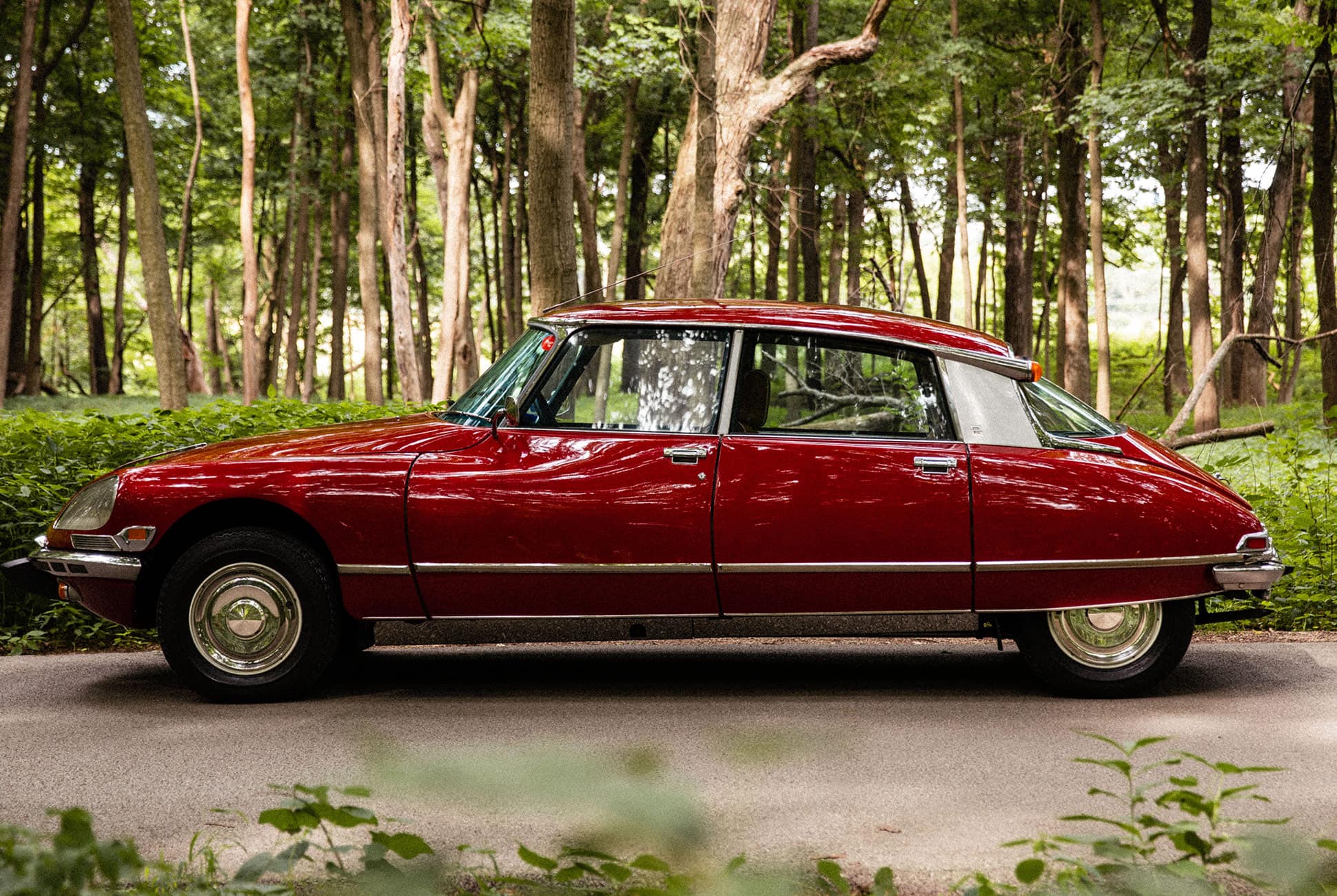
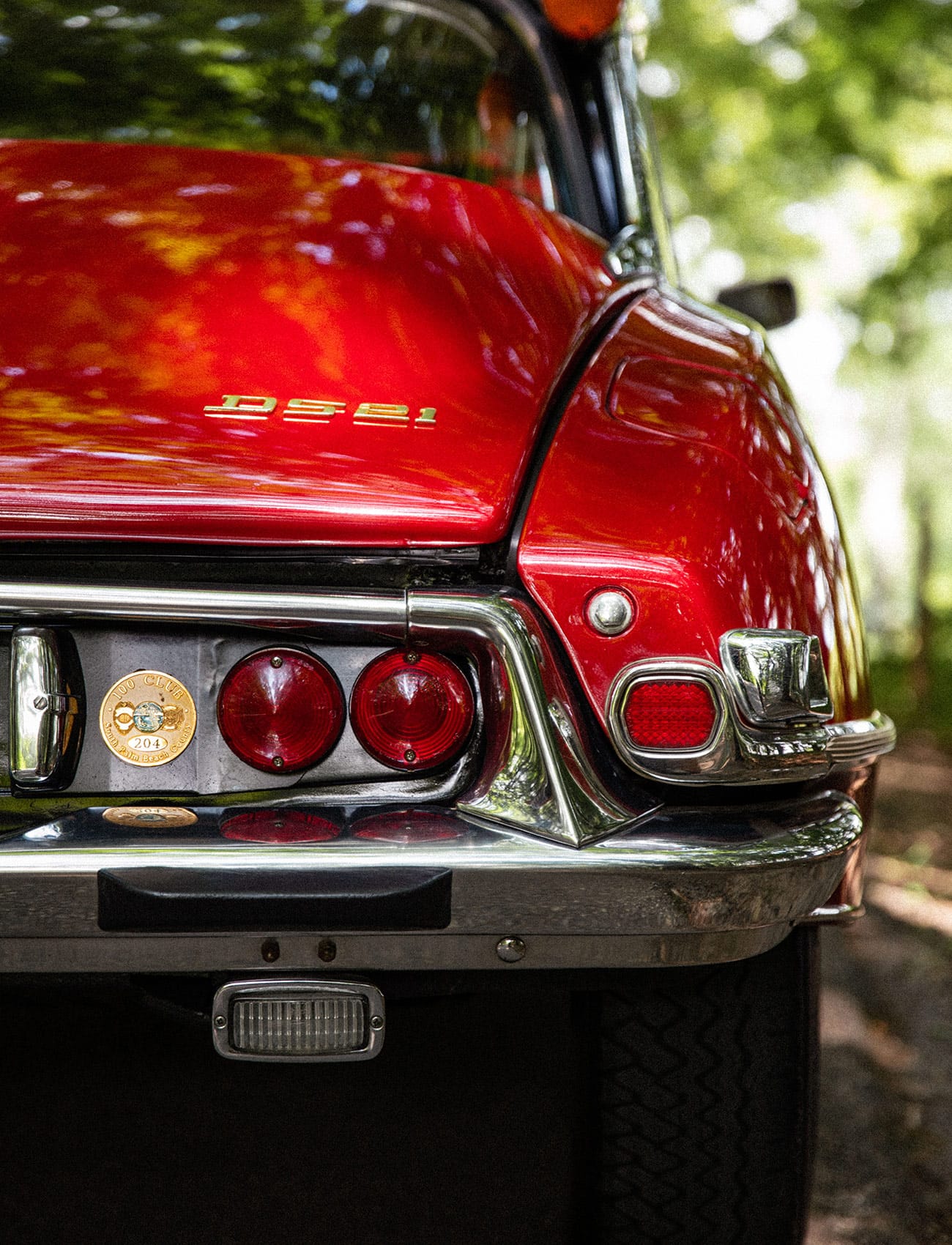
Idon’t know if the French philosopher Roland Barthes had ever ridden in the Citroën DS when he wrote the essay “The New Citroën” for his book Mythologies. But I’m sitting shotgun in a gleaming red DS21 Pallas from 1972, rolling at a leisurely pace through a forest some 25 miles west of Chicago’s city center, and all I can think about is that quote. As sure as the sun will rise, Mythologies will be referenced in almost any discussion of the DS (which, by the way, is a phonetic play on the French word déesee, which means “goddess”). Experience one in person and you almost immediately understand why: Barthes fucking nailed it.

It’s the line “more spiritual and more object-like,” that gets me. Cars, at least good ones, can be more than the sums of their parts, but it’s usually because of their driving characteristics. The DS, though, doesn’t need to be driven. You merely need to observe its details and design up close and in person to see what Barthes meant by “object-like,” and why he and the rest of the European populace viewed it as almost otherworldly when it debuted at the Paris Motor Show 1955. “It is obvious that the new Citroën has fallen from the sky,” Barthes went on.

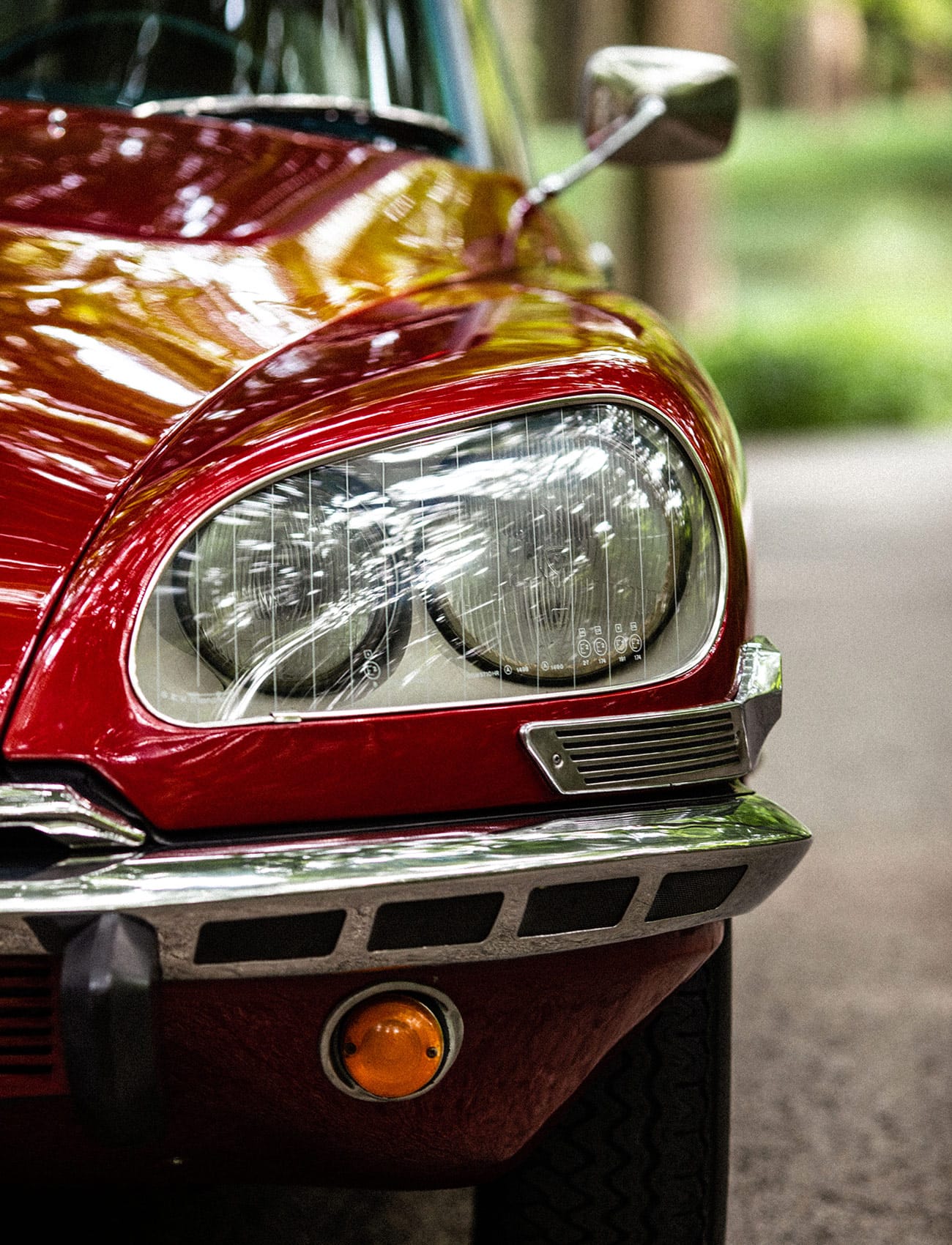
Start at the front where you’ll notice the slim, long chrome hood ornament doubling as a handle. Move to the front quarter and witness the line of the front fender flow smoothly into the beltline of the greenhouse, then ever-so-gently drop off into nothingness at the back, forming a teardrop profile. The chrome strakes that comprise the roofline similarly run uninterrupted and parallel with the bottom of the car, ending gracefully in a pair of rear turn indicators. The pillars holding the lid up are thin, accentuating the glass greenhouse and making the roof appear as though it is floating.

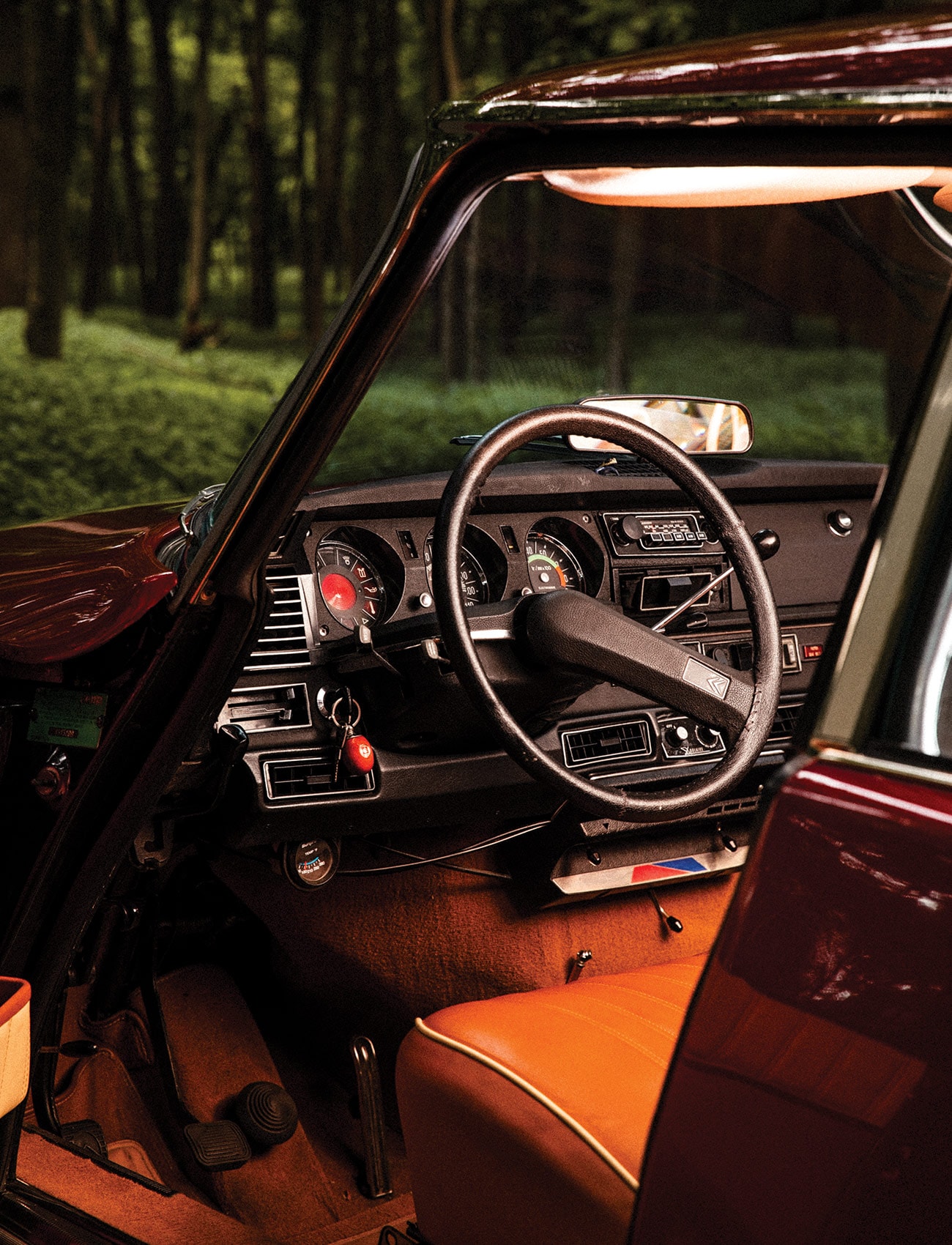
Then open the door and step over the chrome doorsill adorned with subtle, crosshatched texturing. Fall into the plush, cloud-like leather bench, which puts every other car seat ever made to shame. Gaze at the sleek, simple dashboard and the elegant single-spoke steering wheel, which has practically become a minimalist design icon in its own right. Pull the sculpted chrome door handle. Feel the supple leather loop grab handle mounted to the ceiling. Every little detail is a visual and tactile delight.

The DS was so thoughtfully designed, so ahead of its time, that the car remains a source of design inspiration today. In 2009, a panel of influential auto designers crowned the DS — over Ferraris, Jaguars and Lamborghinis — “the most beautiful car of all time.” Giorgetto Giugiaro, the founder of Italdesign, called it “the only example of a car really conceived ‘outside the box’… just impossible to imitate.” Leonardo Fioravanti, who designed some of Ferrari’s most iconic cars, called it “a real road car that, at its time and perhaps still now, has represented the ‘dream’ in its extreme progress.”

Progress. That’s evident in the design, but it’s also prominent in the mechanics. The DS introduced tons of automotive technologies decades before they became mainstream. The European-market version, for example, featured headlights that turned with the steering rack to enhance nighttime visibility while cornering (these were retrofitted to this U.S.-market example). It featured the first disc brakes of any mass-produced car and what’s more, they were actuated by a (very) pressure-sensitive button, rather than a pedal. Most crucial, though, was a self-leveling, hydropneumatic suspension.

When stationary, the DS sits low and flush with the ground, almost as if its wheels are retracted within its body. But upon start-up it slowly, silently and gracefully ascends, rear levitating first and then followed by the nose, until the entire fuselage is level and hovering several inches above the ground. Like a Harrier jet’s vertical takeoff, it’s an effect that feels alien, but it builds anticipation and is irrefutably satisfying to behold.

It also lends itself to a transcendently smooth ride. It simply glides over bumps. It’s not floaty, cushy or wavering like many vintage luxury cars tend to be. You aren’t isolated, either. You feel a connection to the road, yet at the same time, the car effortlessly irons out imperfections as if it instinctively knows where the bumps and potholes are. “Comfortable” is one way to describe it, but there’s more to it than that. The DS provides an idealized feeling of motion, one that lets you feel attuned to the road but without the pesky reality of poorly maintained road surfaces.

You do not have to drive the DS to understand its charm. Just riding in it, even at slow speeds through a serene setting, is a meditative experience. Sitting inside the car, hearing the faint purr of the inline-four engine and gently coasting along is enough to induce pure, relaxed joy. Without fail, people turn their heads and crack a smile as you go by. When you inevitably break down, pedestrians stop and cheerily ask questions as you wait for someone to give you a jump.

Sali Salievski runs Hi-Tech Import, an auto shop just outside of Chicago, and is the owner of this particular red DS. As we drove, he told me about how he’d admired the DSs he saw growing up in his native Yugoslavia, and how he dreamed he would someday own one of his own. He now has three. I asked Salievski the almost reductively straightforward
question, “How does it feel to have and drive this car?” His earnest and succinct response spoke volumes. “It’s such an experience; a pleasure to drive. I am just so happy to have them.”

Hardly gets more spiritual than that.

2020 Bentley Continental GT Convertible

Bentley’s Latest Drop-top is Everything You’d Expect and More   

Earlier this year Bentley released a totally redesigned Continental GT, which was the recipient of worldwide acclaim and fanfare. More recently – at the 2018 LA Auto Show taking place in late November – Bentley debuted the drop-top version of the aforementioned, formally known as the  Continental GT Convertible.

Overall the Continental GT Convertible isn’t far off from it’s coupe counterpart, which isn’t a bad thing at all. The convertible shares the same 6.0L twin-turbocharged W12 engine which produces 626-horsepower and 664 lb-ft of torque and is mated to an 8-speed dual-clutch transmission, delivering power to its all-wheel-drive system. This allows the Convertible to achieve 0-60 mph in just 3.7 seconds and a top speed of 207 mph.

Due to the extra hardware required for the drop-top mechanism, the Convertible does end up weighing in at 5,322 pounds, which is about 375 pounds more than the metal-top. However, this is still an improvement over the previous iteration of the drop-top, coming in at about 250 pounds lighter and with a much more powerful engine to boot. Ultimately I doubt customers will find much, if any significance in the car’s performance relative to its weight, with such differences between the coupe and convertible being virtually negligible anyway.  

Things remain identical with major chassis components as well, with the three-chamber air springs, 48-volt-controlled active anti-roll bars and enormous 10-piston and 4-piston calipers in the front and rear respectively.  Yup, that’s 28-pistons to make sure your modern day Cinderella carriage stops like a thoroughbred race horse.

Moving on to what really makes the Convertible different; its drop-top, of course. In expectedly Bentley fashion, the materials for the roof as well as its folding mechanism are extraordinary in themselves – the canvas Z-fold roof will be available in seven colors, with one being a ‘contemporary interpretation of traditional British tweed’ and can be raised or stowed in just 19 seconds with the car moving (up to 30 mph).

Designer-in-chief Simon Blake describes it best, remarking that “We’re Bentley. It’s fair to say (the roof cost) ‘a lot.’ Not just a couple dollars”.

Inside, the car remains opulent as ever with a rich serving of wood panels and high-grade leathers. The Convertible comes standard with 12.3” rotating touchscreen display, and a 2,000 watt Naim stereo is available as an option. Still important – but almost forgettable thanks to plethora of offerings on hand – are the standard neck warmers, and heated seats, armrest and steering wheel for those nippier top-down moments. Customers may commission a bespoke configuration with Bentley’s Mulliner division, should the standard catalogue be deemed insufficient.   

According to Bentley, they are slated to begin taking orders for the 2020 Bentley Continental GT Convertible early next year, with the first deliveries to be made soon after. Pricing will start at $236,100 USD.

Novitec N-Largo McLaren 720s boasts big presence to match big power

If a carbon tax referred to a penalty based on how much carbon fiber were used to build a car, specialty tuner Novitec Group would be looking at a hefty bill for its most recent creation. The Novitec N-Largo adds not just a styling kit, not just a performance upgrade, not just a suspension adjustment, but all three to the already massively talented 720s supercar.

Based in Germany, Novitec has made a name for itself tuning elite performance and luxury cars, including Ferraris, Lamborghinis, Rolls-Royces, Maseratis, Teslas, and McLarens. In the past, Novitec has offered its takes on McLaren’s 540C, the 570S, the 570GT, and even a different example of the 720s. But this new build has a much more assertive personality than the previously subtle makeover.

Limited to just 15 examples, the N-Largo gives the 720s a look similar to that of the McLaren Senna. Using molded carbon fiber, the N-Largo ditches the soft and suave curves of the stock car for a more aggressive demeanor. The car can been lowered 1.3 inches with sport springs, and it sits on staggered Vossen MC2 forged center-lock wheels, 20-inch in the front and 21-inch in the rear, wrapped in Pirelli P-Zero rubber.

Novitec notes that the new bumpers completely replace the original McLaren parts and bolt to the secure original connection points. The styling kit was not devoid of practical thought, either, as the kit maintains the aerodynamic and cooling bits that help make the 720s such a deadly performance vehicle. The N-Largo also adds a new rear airfoil attachment that is claimed to increase downforce.

Most importantly, Novitec crafted three different levels of performance tunes for the 720s. According to Vossen, an auxiliary control unit plugs in and adapts to the electronic engine controls on the car. In the most powerful stage 2 configuration, which includes a performance exhaust, the N-Largo shows up to the tune of 794 horsepower and 648 lb-ft of torque, 84 more horses and 80 more lb-ft than the standard 710 horsepower and 568 lb-ft of torque from the twin-turbocharged 4.0-liter V8. According to Novitec and Vossen, this gives the N-Largo a 0-62 time of 2.7 seconds, a 0-124 run in 7.5 seconds, and a top speed of about 215 mph.

There’s no word on pricing or availability, but we can tell you this: Novitec is already working on an interpretation of the McLaren 600LT. We have a feeling it might be even more braggadocious than the 720s.

Related Video:

This High-Performance Hatchback Should Be a BMW But It’s Not

At the 2017 LA Auto Show, Mini parked the John Cooper Works GP concept front and center on its show stand. The GP concept looked like a championship rally car with the number of wings, turning vanes and its massive diffuser hanging off the back. It seemed there was no way Mini was going to greenlight it for production – we stand corrected. Mini just confirmed John Cooper Works GP for 2020. It’s fantastic to see Mini bringing something a wild, race-bred hot hatch to the market, and you can certainly see the influence of BMW bubbling to the surface with an injection of old-school ‘ultimate driving machine’ bloodlines.

The massive front splitter is big enough to eat lunch off of, and a cavernous rear diffusor and an imposing rear wing bookend what’s essentially a road-legal race car. Flared fenders are louvered with a handful of wings and on the inside, the cabin is stripped out and replaced with racing bucket seats and a roll cage. Keep in mind this is still all just a concept, so how much Mini decides to translate to the production version is still up in the air. The bare-metal race car interior might be a bit much, but all fingers crossed the bodywork gets the go-ahead.

As for the engine, the JCW uses a 2.0-liter four-cylinder making 228 horsepower. With a lightened chassis and tuned suspension, you wouldn’t need more than that but a little more push couldn’t hurt. If the new JCW GP goes over well, it’d be nice to see BMW cherry pick a few elements and apply them to the 1- or 2-Series, purely for entertainment reasons. BMW does own Mini after all, so it wouldn’t be out of the realm of possibility for the Germans to get a little envious of its British hatchbacks.

Porsche Debuts New 911 at LA Auto Show

Lots of new rides being rolled out at the Los Angeles Auto Show this week. Including these bad boys: the 2020 911 Carrera in both the S & 4S models. Both are powered by the rear-mounted turbocharged flat-six engine that churns out 443 horsepower. The new aluminum body is slightly wider and longer than the outgoing model and the bumpers have been extended for an updated look. Fresh tech features include automatic emergency braking, water-detecting Wet Mode, and a night-vision camera.

Ford GT Carbon Series – Added: Exclusivity, Subtracted: Weight

Special-Edition 2019 Ford GT Carbon Series Revealed

The 2019 Ford GT Carbon Series recently made its public debut at SEMA 2018. As its moniker unambiguously suggests, this new limited production GT model is the lightest iteration of the current generation of Ford’s infamous supercar.

Lightweight components and carbon fiber were already ubiquitary on the ‘regular’ Ford GT, so any further weight reduction measures would have to be creative and unconventional.  Interestingly enough, amenities such as air conditioning and infotainment survive the culling, in an effort to keep the GT relatively comfortable. The Carbon Series also retains the same 3.5L twin-turbocharged V6 which produces 647-horsepower and 550 lb-ft of torque, as well as the seven-speed dual-clutch transmission.

In total, the Carbon Series sheds about 18 kg (or 40 pounds) off the GT with the bulk of this achieved with carbon fiber wheels, a titanium exhaust system and wheel lug nuts, and a polycarbonate engine cover. To round off the diet, the exterior A-pillars and some lower-body panels are replaced with carbon fiber, while cup holders and storage compartments are deleted.

Visually, the Carbon Series most notably sets itself apart with a carbon fiber stripe that runs down the middle of the car. Inside, the Carbon Series is the beneficiary of special nameplating on the instrument cluster, anodized paddle shifters and exclusive seats with silver stitching.

Many of the carbon fiber elements in both the exterior and interior are left unpainted/exposed – a feature that is also unique to the Carbon Series. Additionally, buyers can opt for an Accent Package in either silver, orange, red or blue; side mirrors, brake calipers and the center portion of the aforementioned stripe will don the chosen color.

The 2019 Ford GT Carbon Series will be produced in very limited numbers (1,350 units total) and as such, prospective buyers will need to apply and be approved by Ford for the right to purchase one.

Even those who are lucky enough to get on this list may have to wait a while for their fulfillment – Ford announced that their production allotment for the Carbon Series will be limited to only one unit per week going forward, though it is unclear how many have already been made. Pricing is rumored to start at around $450,000 USD.

Ford GT Carbon Series Image Gallery

The All-New 2020 Lincoln Aviator Is Impressive, Gorgeous and Will Be Stupidly Powerful

Earlier this week, I got a sneak peek at the new Lincoln Aviator in a small Manhattan studio. Its physical presence, led foremost by an indulgently long hood, blends into a smooth, masculine body that will undoubtedly set a new visual benchmark in its segment.

That’s not an easy thing to do – this is Audi Q7 and Range Rover Discovery territory – but on design alone the Aviator will be in the upper echelon. That design leadership continues what Lincoln has been doing for a couple years now, as it calmly and constantly reinvented itself as a crisp, progressive premium brand, first with the Continental and then with the Navigator. The latter is in many way leaps and bounds ahead of its direct competition – in terms of driver and passenger (and passerby) experience, Lincoln knocked it out of the park. The Aviator furthers that trend, pushing Lincoln into low Earth orbit. Its crisp, pleasing lines lack excessive chrome and incorporate clever shapes and a sloping roofline that gathers in the back to accent the brand’s now signature wraparound taillight.

Performance

My in-person experience was with the top-end Aviator Grand Touring, a plug-in hybrid version that, in combining a 3.0 twin-turbo V6 (good for 400 horsepower and 400 lb-ft of torque on its own) with electric motors, will produce 450 horsepower and 600 goddamn lb-ft of torque. In a leather-swathed, probably relatively affordable crossover cruiser. But that doesn’t mean it’s a floaty locomotive; Lincoln is introducing a smart, adaptable air suspension in the Aviator that will sense terrain and adjust accordingly, help tackle curvier sections of road and automatically lower both as a driver approaches the vehicle and once it reaches highway speeds. Moreover, and perhaps most importantly, the Aviator will ride on a new rear-wheel-drive platform, which promises deft handling.

Interior

Inside, the Aviator shines brighter than even the new Navigator, with an athletic but airy cabin that is whisper-quiet with the hatches all battened. To fill the silence, an available 28-speaker Revel sound system is on offer as well. Opt for high-end packages, which Lincoln calls Black Label, and you’ll get fantastic leather and wood options that expertly call to mind vintage dashboards and consoles, but very effectively modernize the look. Captain’s chairs can be outfitted in the middle row too, and even my gangly long legs could cross with room to spare. Though I’d likely want to spend most of my time in the driver’s seat.

Tech and Design

Also new in the Aviator is Phone As A Key. Cumbersomely named, this tech allows drivers (or, perhaps, “users”?) to forego a physical key fob completely, and instead start, unlock, open and drive their car using only a smartphone app. Notably, Lincoln is not actively targeting “younger generations” or ‘Millennials,’ a cringey, condescending marketing strategy that other brands have utilized quite a lot recently. Instead, Lincoln simply introduces features that we, the youth, have come to expect in every part of our lives. Not a bad move.

In addition to tricky tech, Lincoln will also make available new safety and driving assist systems, which keep the vehicle in its lane, initiate emergency braking and maneuvering, will scan the road ahead for potholes and the like in order to prime the suspension and can mostly take over driving duties in traffic jams or in regular cruising. A couple other neat features: notice the rear windshield wiper is seemingly nonexistent – it lives in the housing above the glass to provide increased visibility; the door handles don’t move, but ar fitted with squeezable buttons that pop the door open.

Whether you like the idea of a crossover or not, this is the way forward. And, folks, the Aviator is making a big, bold statement in terms of style, available tech and brand identity. No word on pricing, but the Aviator will slot in above the five-seat Nautilus, whose top-tier Black Label packages start at $57,000. I’d wager you’ll need to spend at least $70K for the Grand Touring setup, and would guess base models will be available at around $45-$50K.

Automobili Pininfarina teases the PF0 electric hypercar

Automobili Pininfarina isn’t at the L.A. Auto Show, but the Italo-German carmaker didn’t want to skip the reveal-happy festivities. From its headquarters in Munich, execs showed off the rear aspect of the coming PF0 in genuine carbon fiber. We saw a drawing of the twin rear wings in August not long after Monterey Car Week. This is the first time we’ve seen what the electric hypercoupe will actually look like.

First impressions are of a giant diffuser with a little bit of car attached. We shouldn’t be surprised that a car with 1,925 horsepower, 1,700 pound-feet of torque, a sub-2-second 0-60 time and a top speed beyond 220 miles per hour would feature bodacious air management. Above the diffuser, an LED sits at the rear edge of the tail flaps. We look forward to seeing how they’ll operate, since we can’t make out any other lights on the back of the PF0 — not even reverse lights. In a shaded rendering of the front three-quarter aspect, we get another glimpse of the full-width LED, some steep headlights, and a lower intake underlined by a deep front spoiler.

Automobili named the design language inaugurated by the PF0 “Pura” and has contracted with design house Pininfarina to turn Pura into a range of vehicles. The car company invested more than 20 million euro ($22.6M) in the design concern to create an electric, luxury performance lineup. So far, we’ve heard that three SUVs will arrive in the next five years.

First, a clarification: Indian conglomerate Mahindra bought the Pininfarina styling and engineering firm in 2015. In April of this year, Mahindra founded Automobili Pininfarina as a wholly separate company, with head offices in Munich, to develop and sell Pininfarina-branded production cars. Hence, the two companies are related by name and ownership, but with separate corporate structures. That explains how the automobile side makes a show of investing in the design side, with the automaker CEO saying, “It is a pleasure and a privilege to partner with the world’s greatest car design house, Pininfarina SpA. This agreement brings us together and marks the beginning of two exciting chapters in our very different histories.” It also explains why the PF0, which was designed by Automobili Pininfarina designers, will be hand-built in the design firm’s Cambiano, Italy, home base.

With nearly 75 percent of the North American allotment of 50 cars accounted for, the PF0 has gone on a European tour for prospective buyers. The electric demon will debut at next year’s Geneva Motor Show, and make first deliveries toward the end of 2020.

Related Video:

The All New Porsche 911 (992) – Everything You Need to Know

The new Porsche 911: more powerful, faster, digital

The German automaker has unwrapped its powerful new 911 on the eve of the Los Angeles motor show, offering folks a first real look at the eighth generation of one of the motoring world’s most recognizable rear-engined icons. It is the eighth generation 911, codenamed the 992 (see all historical models here). This is a big deal, it isn’t often we get a new 911 so when we do we like to obsess. 

The basic structure and footprint of the 991 Porsche was carried over for the 992, but the new Porsche wears updated bodywork that (as expected) evolves the 911 shape rather that do anything too rash. Save for the front and rear fascias, the body is made entirely from aluminum, too. It looks more planted to me, a more muscular look and better stance than the outgoing 991. It has wider arches covering 20-inch wheels up front and 21-inch wheels down back, while the front end has been stretched out by 45 mm (1.77 in) to give it that slightly wider stance. All 911s will now have this wider body (previously it was only the all-wheel drive models). On the outside, we also love the cool electrical pop-out flush doorhandles which mean the side is completely flat as well as the rear end which is modern and old school at the same time.

The new cars have the same twin-turbo 3.0-liter used in current Carrera models. The flat-six turbocharged engine has been further developed and is more powerful than ever before. It gets an improved injection process and a new layout for the turbochargers and charge air cooling system. It is a turbocharged 3 liter flat-six unit with 444 hp in both the 911 Carrera S and Carrera 4S which is up 23 horsepower over the outgoing 991 car. Torque numbers haven’t been released yet. Also standard for 2020 is a brand new eight-speed dual-clutch transmission (Porsche says there will be a manual, but won’t say when).  

Performance-wise, all of this adds up to some great numbers. The rear-wheel-drive Carrera S gets to 60 mph in 3.5 seconds and the all-wheel-drive Carrera 4S does it in 3.4 seconds. The optional Sports Chrono package shaves a further 0.2 seconds of those times. For those counting, that puts the Carrera 4S half a second behind the current GT2 RS. I bet that real world performance will feel markedly better than even those impressive numbers suggest when compared to the current 991. 

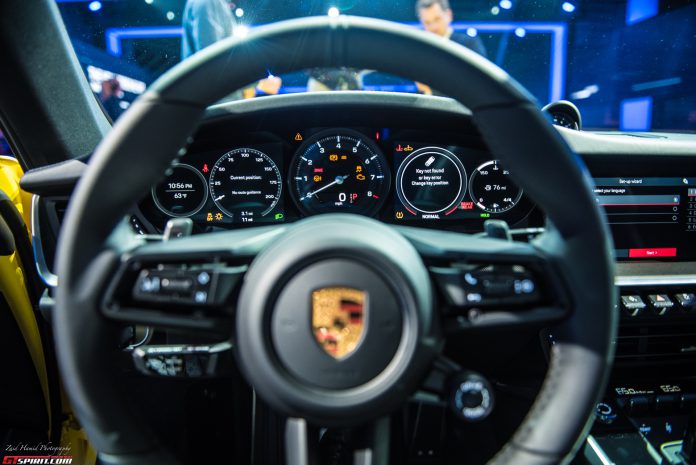
The redesigned interior brings plenty of modern touches for the digital era, spearheaded by a new 10.9-inch center touchscreen. This is a seven-inch upsize from the previous model and displays software like Porsche’s Road Trip planning app with its curated routes, the Porsche 360+ lifestyle assistant, and the web-based emissions calculator. The instrument cluster, meanwhile, is apparently inspired by 911s from the 1970s era, with a central rev counter flanked by two smaller, freeform displays. For the first time, the 911 is complimented by exclusive digital products that go with the car: the Porsche Road Trip app for extraordinary road trips, the Porsche 360+ personal assistant which is a web-based Porsche Impact emissions calculator for neutralizing your individual carbon footprint. 

As always the new 911 gets a host of new technology upgrades. Additional highlights include the new assistance systems, including Porsche Wet mode to make driving on wet roads even safer, and Night Vision Assist with thermal imaging camera, as well as comprehensive connectivity – which now also uses swarm intelligence. In a world first, Porsche has developed Wet mode, included as standard. This function detects water on the road, preconditions the control systems accordingly and warns the driver, who can then set up the vehicle for a particular emphasis on safety, by simply pushing a button or using the mode switch on the steering wheel (Sport Chrono Package). The warning and brake assist system, also fitted as standard, detects the risk of collisions with moving objects and initiates emergency braking if necessary. Night Vision Assist with a thermal imaging camera is optionally available for the 911 for the first time. The adaptive cruise control option includes automatic distance control, stop-and-go function, reversible occupant protection and an innovative autonomous Emergency Assist function.

Prices for the 2020 Porsche 911 Carrera S start at $113,200, while the 4S starts at $120,600. Orders are open, but deliveries won’t start until summer of 2019 in the U.S. 

Photo Gallery

Videos

The new Porsche 911: Exterior & Interior Design.

[embedded content]

The new Porsche 911: First Driving Footage.

[embedded content]

The New Porsche 911 – Highlight Video

[embedded content]

Porsche 911 (992) Announcement

Unmistakably committed to the Porsche design DNA, a much more muscular look, and an interior featuring a 10.9-inch touchscreen monitor, the new 911 is timeless – and modern. Intelligent control and chassis elements as well as innovative assistance systems combine the masterfully uncompromising dynamism that the classic rear-engine sportscar is famed for, with the demands of the digital world.

The next generation of flat-six turbocharged engines has been further developed and is more powerful than ever before, with 331 kW (450 PS) in the S models. The drive efficiency has been increased by way of an improved injection process and a new layout for the turbochargers and charge air cooling system. The power is delivered by a newly developed eight-speed dual-clutch transmission. Additional highlights include the new assistance systems, including Porsche Wet mode to make driving on wet roads even safer, and Night Vision Assist with thermal imaging camera, as well as comprehensive connectivity – which now also uses swarm intelligence. The 911’s features are rounded off by three exclusive digital offerings: the Porsche Road Trip app for extraordinary tours, the Porsche 360+ personal assistant, and the web-based Porsche Impact emissions calculator for neutralising your individual carbon footprint.

Carrera S models start from 450 PS

The turbocharged flat-six engine of the 911 Carrera S and 911 Carrera 4S now produces 331 kW (450 PS; 911 Carrera S: Fuel consumption combined 8.9 l/100 km; CO2 emissions combined 205 g/km; 911 Carrera 4S: Fuel consumption combined 9.0 l/100 km; CO2 emissions combined 206 g/km). This corresponds to an increase of 22 kW (30 PS) compared with the previous model. Both 911 models beat the four-second mark for acceleration from zero to 100 km/h: the rear-wheel-drive Coupé needs 3.7 seconds and the 911 Carrera 4S with all-wheel drive just 3.6 seconds. This makes both cars 0.4 seconds faster than the previous model in each case. This advantage is increased by a further 0.2 seconds with the optional Sport Chrono Package. The top speeds are now 308 km/h (911 Carrera S) and 306 km/h for the all-wheel-drive version. The fuel consumption (NEDC-correlated) of the 911 Carrera S is 8.9 l/100 km, while the 911 Carrera 4 S records this figure as 9.0 l/100 km.

Clear design language, unmistakable identity

The exterior design is completely new and emphasises the leap in performance for the 911 type 992. Significantly wider wheel housings arch over the 20-inch front wheels and 21-inch rear wheels. The rear end is now the same width across all models, highlighting the slimline centre section. At the front, the body is 45 mm wider. Flush integration of the electrical pop-out handles in the doors emphasises the tapered and smooth side contour. Between the new LED headlights, a bonnet with a pronounced recess evokes the design of the first 911 generations. The rear is dominated on all models by the significantly wider, variable-position rear spoiler and the seamless, elegant light bar. Apart from the front and rear sections, the entire outer skin is now made from aluminium.

The completely new interior is characterised by the clear and straight lines of the dashboard with recessed instruments. The 911 models from the 1970s provided the inspiration here. Alongside the central rev counter – typical for Porsche – two thin, frameless freeform displays supply information to the driver. The centre screen of the PCM is now 10.9 inches, and can be operated quickly and without distraction thanks to the new architecture. Located underneath this there is a compact switch unit with five buttons for direct access to important vehicle functions. In terms of digitalisation, the 911 takes the next step into the future with permanent connectivity as well as new functions and services. The standard PCM features include online navigation based on swarm data as well as Porsche Connect Plus.

<a class="fancybox fancybox-gallery" href="https://porschenewsroom.s3.amazonaws.com/porsche_newsroom/produkte/911/992/992-press-release/b-p18_0874jpg/f98ba974-ed8b-4808-a217-79e889b14faa_teaser_original_720.jpg" data-id="" data-fancybox-lowres-url="https://newsroom.porsche.com/download/?id=f98ba974-ed8b-4808-a217-79e889b14faa&size=low" data-fancybox-description="911 Carrera 4S (992), 2018, Porsche AG
911 Carrera 4S: Fuel consumption combined 9.0 l/100 km; CO2 emissions 206 g/km” data-header=”Foto”>911 Carrera 4S (992), 2018, Porsche AG

New assistance systems increase safety and comfort

In a world first, Porsche has developed Wet mode, included as standard. This function detects water on the road, preconditions the control systems accordingly and warns the driver, who can then set up the vehicle for a particular emphasis on safety, by simply pushing a button or using the mode switch on the steering wheel (Sport Chrono Package). The warning and brake assist system, also fitted as standard, detects the risk of collisions with moving objects and initiates emergency braking if necessary. Night Vision Assist with a thermal imaging camera is optionally available for the 911 for the first time. The adaptive cruise control option includes automatic distance control, stop-and-go function, reversible occupant protection and an innovative autonomous Emergency Assist function.

Digital applications: “Road Trip”, “360+” and “Impact”

Porsche Road Trip” supports car enthusiasts in planning, organising and navigating special trips. The curated routes it offers include exclusive hotel and restaurant recommendations as well as points of interest and viewpoints along the route.

Porsche 360+” has the goal of allowing the customer to enjoy the Porsche experience even while away from the vehicle; the heart of “Porsche 360+” is a personal lifestyle assistant that is available to customers around the clock. The assistant is intended to make everyday life easier and exclusive experiences possible.

Porsche Impact” is an emissions calculator. It calculates the financial contributions that Porsche customers can pay to offset their CO2 footprint. They themselves can choose the internationally certified climate projects in which to invest. The projects available are spread out all over the world and focus on wind, hydro and solar power, as well as forest protection.

992 Porsche 911 Press Release

The eighth generation of an icon: World Premiere in Los Angeles

The new Porsche 911: more powerful, faster, digital

Stuttgart, Germany. Sensation in Los Angeles: the Porsche 911 is now entering the eighth generation. The new 911 celebrated its world premiere on the eve of the L.A. Auto Show. It continues to set the standard when it comes to exclusive sportiness. Unmistakably committed to the Porsche design DNA, a much more muscular look, and an interior featuring a 10.9-inch touchscreen monitor, the new 911 is timeless – and modern. Intelligent control and chassis elements as well as innovative assistance sys- tems combine the masterfully uncompromising dynamism that the classic rear-engine sportscar is famed for, with the demands of the digital world.

The next generation of flat-six turbocharged engines has been further developed and is more powerful than ever before, with 331 kW (450 PS) in the S models. The drive efficiency has been increased by way of an improved injection process and a new layout for the turbochargers and charge air cooling system. The power is delivered by a newly developed eight-speed dual-clutch transmission. Additional highlights include the new assistance systems, including Porsche Wet mode to make driving on wet roads even safer, and Night Vision Assist with thermal imaging camera, as well as comprehensive connectivity – which now also uses swarm intelligence. The 911’s fea- tures are rounded off by three exclusive digital offerings: the Porsche Road Trip app for extraordinary tours, the Porsche 360+ personal assistant, and the web-based Por- sche Impact emissions calculator for neutralising your individual carbon footprint.

Carrera S models start from 450 PS

The turbocharged flat-six engine of the 911 Carrera S* and 911 Carrera 4S now pro- duces 331 kW (450 PS). This corresponds to an increase of 22 kW (30 PS) compared with the previous model. Both 911 models beat the four-second mark for acceleration from zero to 100 km/h: the rear-wheel-drive Coupé needs 3.7 seconds and the 911 Carrera 4S with all-wheel drive just 3.6 seconds. This makes both cars 0.4 seconds faster than the previous model in each case. This advantage is increased by a further 0.2 seconds with the optional Sport Chrono Package. The top speeds are now 308 km/h (911 Carrera S) and 306 km/h for the all-wheel-drive version. The fuel consump- tion (NEDC-correlated) of the 911 Carrera S is 8.9 l/100 km, while the 911 Carrera 4 S records this figure as 9.0 l/100 km.

Clear design language, unmistakable identity

The exterior design is completely new and emphasises the leap in performance for the 911 type 992. Significantly wider wheel housings arch over the 20-inch front wheels and 21-inch rear wheels. The rear end is now the same width across all models, high- lighting the slimline centre section. At the front, the body is 45 mm wider. Flush inte- gration of the electrical pop-out handles in the doors emphasises the tapered and smooth side contour. Between the new LED headlights, a bonnet with a pronounced recess evokes the design of the first 911 generations. The rear is dominated on all models by the significantly wider, variable-position rear spoiler and the seamless, ele- gant light bar. Apart from the front and rear sections, the entire outer skin is now made from aluminium.

The completely new interior is characterised by the clear and straight lines of the dash- board with recessed instruments. The 911 models from the 1970s provided the inspi- ration here. Alongside the central rev counter – typical for Porsche – two thin, frame- less freeform displays supply information to the driver. The centre screen of the PCM is now 10.9 inches, and can be operated quickly and without distraction thanks to the new architecture. Located underneath this there is a compact switch unit with five but- tons for direct access to important vehicle functions. In terms of digitalisation, the 911 takes the next step into the future with permanent connectivity as well as new functions and services. The standard PCM features include online navigation based on swarm data as well as Porsche Connect Plus.

New assistance systems increase safety and comfort

In a world first, Porsche has developed Wet mode, included as standard. This function detects water on the road, preconditions the control systems accordingly and warns the driver, who can then set up the vehicle for a particular emphasis on safety, by simply pushing a button or using the mode switch on the steering wheel (Sport Chrono Package). The warning and brake assist system, also fitted as standard, detects the risk of collisions with moving objects and initiates emergency braking if necessary. Night Vision Assist with a thermal imaging camera is optionally available for the 911 for the first time. The adaptive cruise control option includes automatic distance control, stop-and-go function, reversible occupant protection and an innovative autonomous Emergency Assist function.

The 911 Carrera S costs from 120,125 euros in Germany and the 911 Carrera 4S from 127,979 euros, including VAT and country-specific equipment. The new models can be ordered now.

Digital applications: “Road Trip”, “360+” and “Impact”

“Porsche Road Trip” supports car enthusiasts in planning, organising and navigating special trips. The curated routes it offers include exclusive hotel and restaurant recom- mendations as well as points of interest and viewpoints along the route.

“Porsche 360+” has the goal of allowing the customer to enjoy the Porsche experience even while away from the vehicle; the heart of “Porsche 360+” is a personal lifestyle assistant that is available to customers around the clock. The assistant is intended to make everyday life easier and exclusive experiences possible.

“Porsche Impact” is an emissions calculator. It calculates the financial contributions that Porsche customers can pay to offset their CO2 footprint. They themselves can choose the internationally certified climate projects in which to invest. The projects available are spread out all over the world and focus on wind, hydro and solar power, as well as forest protection.

The consumption and CO2 emission values were determined in accordance with the new Worldwide Harmonised Light Vehicle Test Procedure (WLTP). The NEDC values derived from this should continue to be specified for the time being. These values cannot be compared to the values determined in ac- cordance with the NEDC measuring procedure used up to now.

Further information on the official fuel consumption and official, specific CO2 emissions of new passen- ger cars is available in the “Guidelines on fuel consumption, CO2 emissions and power consumption of new passenger cars” [Leitfaden über den Kraftstoffverbrauch, die CO2-Emissionen und den Stromver- brauch neuer Personenkraftwagen], which are available free of charge from all sales outlets and from Deutsche Automobil Treuhand GmbH (DAT).

New Porsche 911 Infographic

New Porsche 911 InfographicNew Porsche 911 Infographic
The Superformance MKIII Is a Direct Connection to the Past

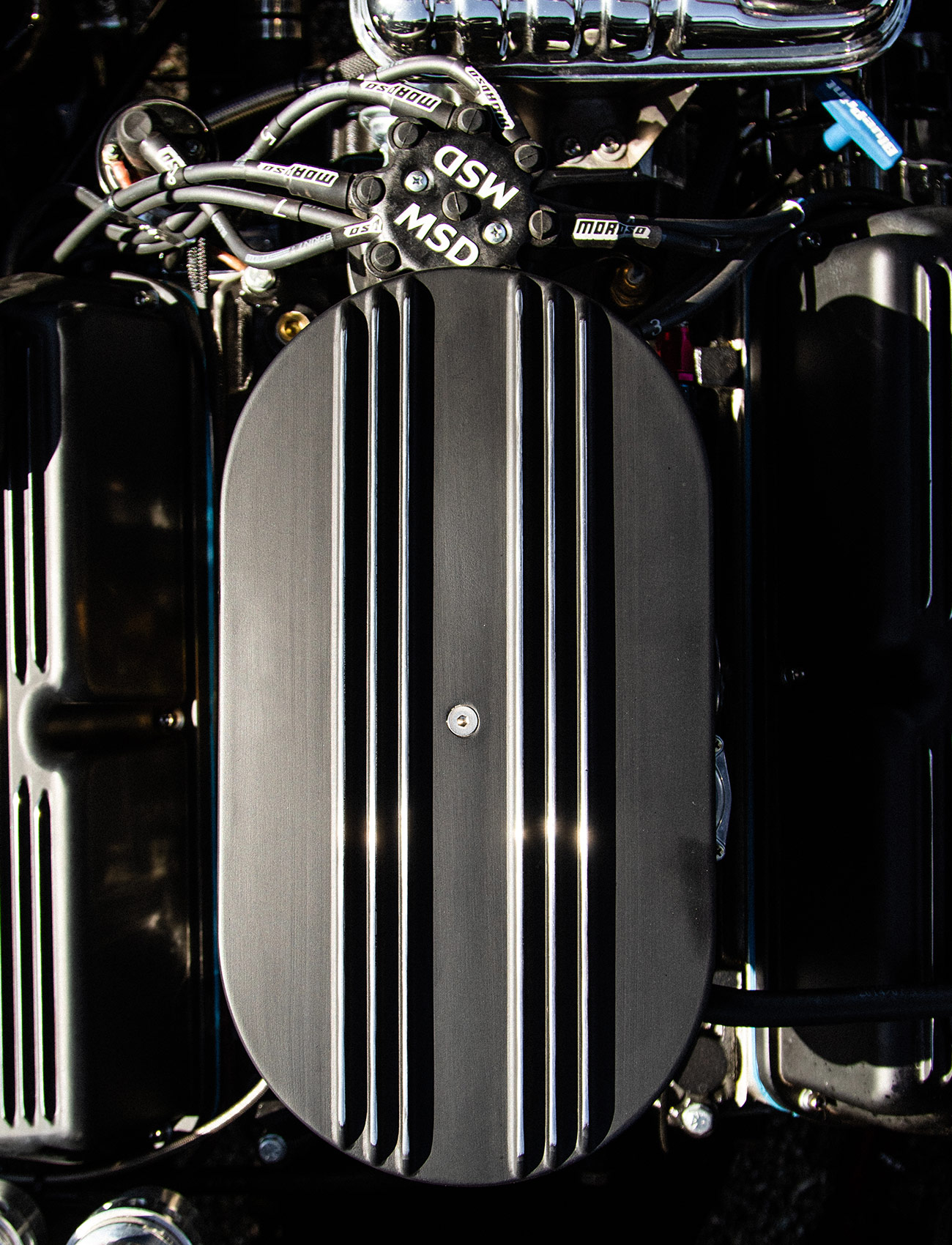
It’s some time before 8 AM on a Sunday in Indio, California. I roll over on the couch of my Airbnb to fight off the morning sun slapping me in the face. Factor in the dry desert air and a friend’s wedding the night before and it’s a miracle my headed isn’t splitting open. After a while I collect myself — breakfast is in order. This quiet little neighborhood would prefer I not do this, but I need a chorizo and eggs Benedict from Sloan’s diner and the 7.0-liter V8 in the Superformance MKIII Shelby Cobra I’m driving needs warming. Half wincing, half smiling, I turn the key — saying “sorry” in my head to the neighborhood — and pump the throttle, trying to coax the engine to life with the starter. There’s a throaty bark and then a steady drum solo from under the hood. A car alarm sounds off from inside a closed garage down the street. Adrenaline and dopamine are fending off any hint of a headache. This car is that good just idling, sitting in a driveway.

Two words come to mind when Superformance crops up in conversation: sacrilege and caveat. There are countless ways to get your hands on a car that looks like an original Shelby Cobra MKIII. Do a quick search, and you’ll find professionally-assembled replicas and home-built kit cars litter classifieds across the internet. They may come with the same curvaceous mid-century styling and familiar soundtrack but rumble up to a Vintage Sports Car Club of America gathering, and you’ll be scoffed at or, worse yet, met with outspoken condescension: “Oh, it’s not a real Shelby MKIII?” According to these folks, if your Cobra wasn’t built at the original shop on Princeton Avenue in Venice Beach or Shelby American’s Hanger near Los Angeles International airport, it’s a false idol and sacrilegious. The caveat? Superformance is the only outfit building Cobras and Daytonas with an official license from Shelby American and official approval from the legendary, late Carroll Shelby himself — think of Superformance cars as new ’65 models. Nonetheless, continuation cars like those Superformance builds are incredibly polarizing.

The original AC Cobras were born out of the hot-rodding spirit sweeping the US in the ’50s and ’60s. The British manufacturer AC Cars was bolting straight-sixes in the front of its factory coupes, but Carroll Shelby approached them asking to drop in a V8 so he could go racing. AC agreed to the job; Shelby just had to source his own engines. He asked Chevrolet, but in fear of competition for the Corvette, GM turned him down. Naturally, he went down the road to Dearborn next, where Ford obliged and gave Shelby a new small-block Windsor V8. The cars weighed next to nothing, put down more power than drivers knew what to do with and took turns like they were on trolley tracks. You can absolutely see why outfits like Superformance, Factory Five or any of the companies selling build-it-yourself kits never want this car to disappear from the road.

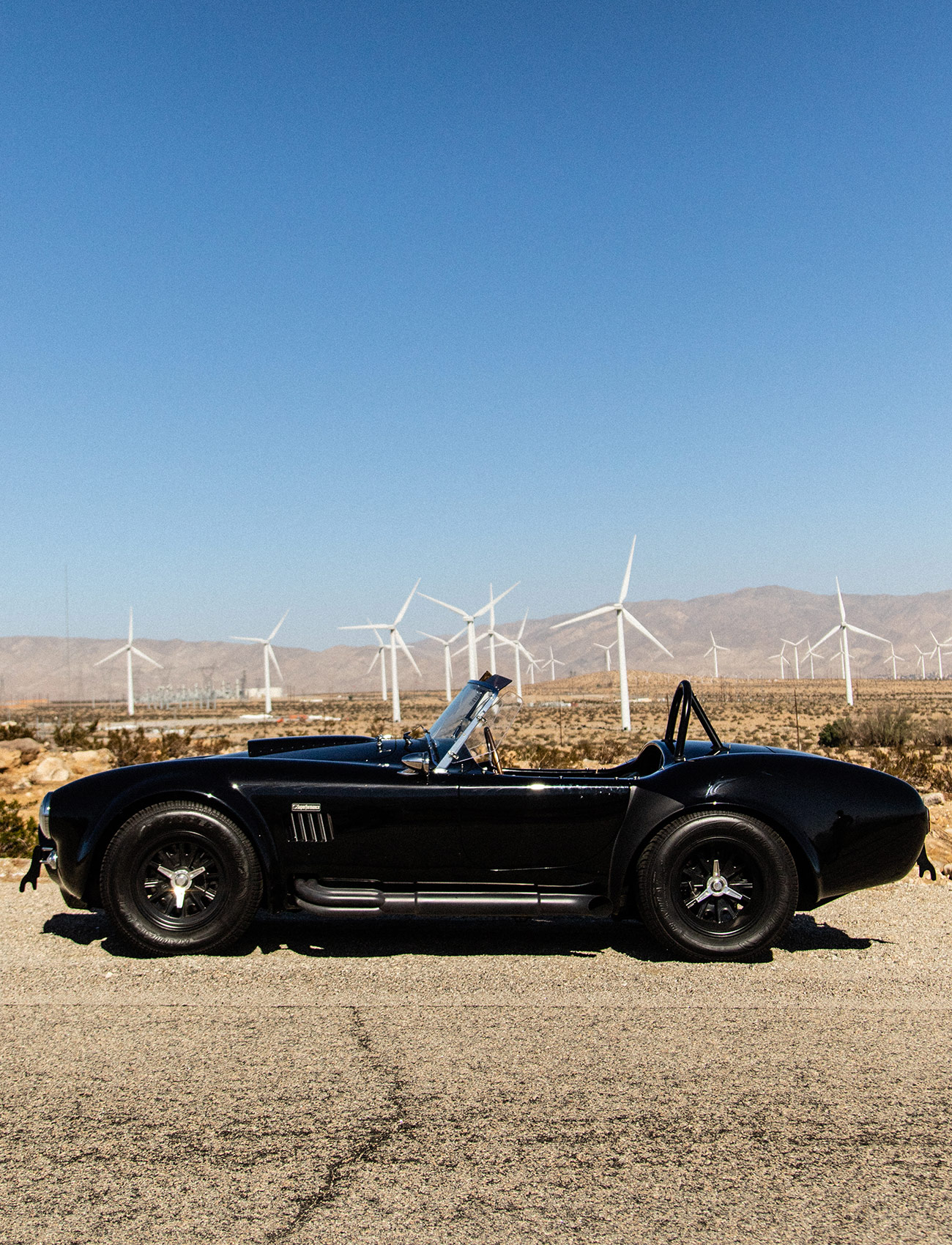
Late in the day before my friend’s wedding, when a friend picks me up at LAX, we make our way to Hillbank Motor Corporation, a Superformance distributor in Irvine, California. It’s dark by the time we get there. The massive aluminum warehouse doors might as well be pearly gates — they open to a warehouse full of GT40s, Cobra coupes and Daytonas parked fender to fender, glistening in blinding fluorescent light. The shopkeeper walks us over to an all black MKIII — black gloss body, black wheels, dual side-exit matte black four-into-one exhausts, and a matte black roll hoop. He does a walk around, fires it up to warm up the engine, and I’m already thinking about making a run for the border with it. I’m also already nervous and intimidated.

As with the original Shelby Cobras, the Superformance MKIII has neither ABS nor power steering and dishes out 427 horsepower and 480 lb-ft of push for my feet to play with. It’s already desert night-cold, and it’ll be pitch black by the time we get to the mountains. The headlights only have two settings – off or high beam – there’s no roof and the heater doesn’t work. There’s just a single driver’s side mirror no bigger than the bottom of a pint glass, plus a rear-view mirror no wider than a letterbox opening which vibrates enough to provide me a mini laser-light show in the reflection… and not much else. None of that bothers me. Thanks to my experience riding a motorcycle, I can handle the cold and the raucous ambiance of the highway, even being eye-level with the underside of an 18-wheeler. I’ve been dreaming of driving a 427 Cobra – replica or real-deal – since my automotive obsession sparked to life.

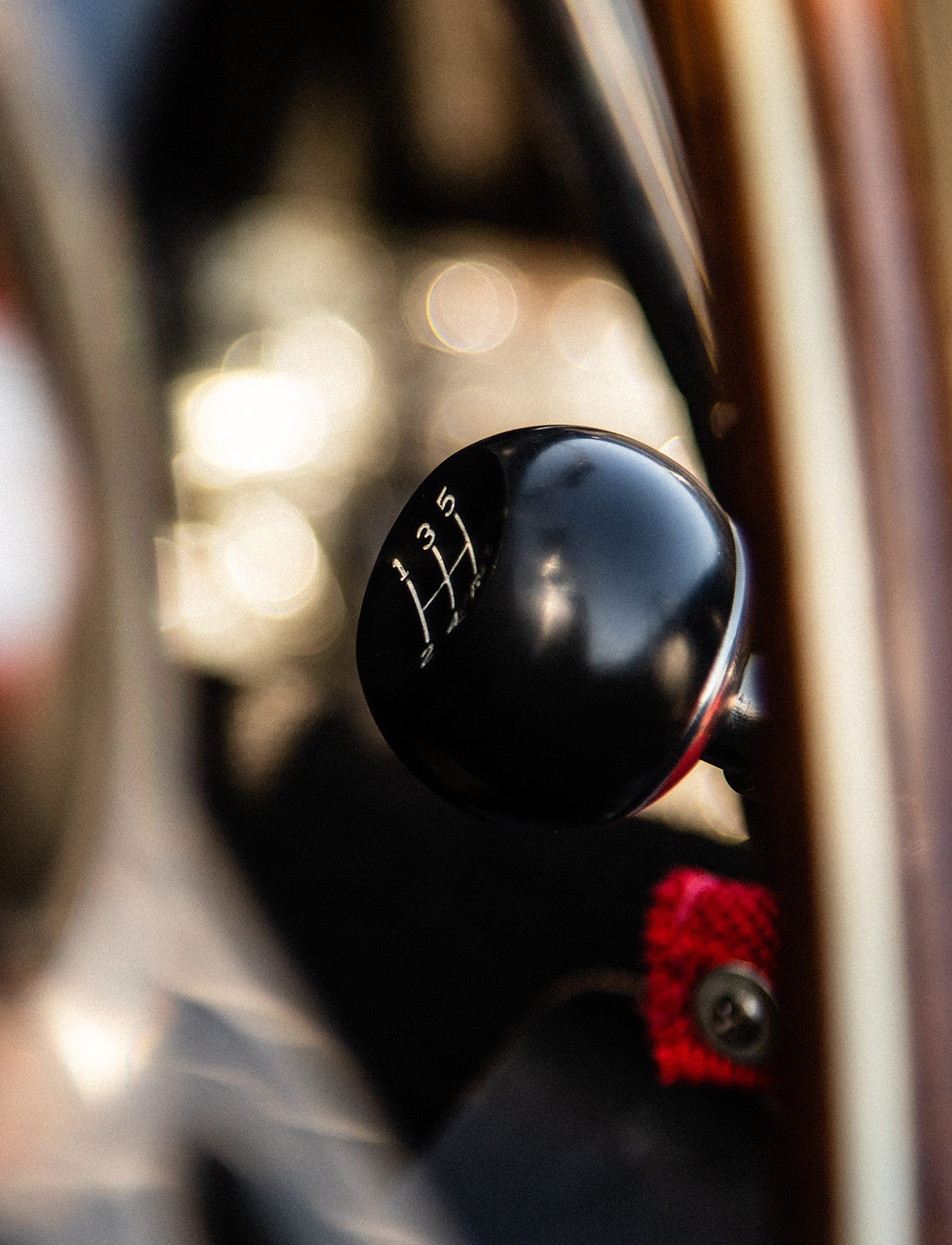
I never believed one should never meet your heroes. As long as you know what you’re going into and keep your expectations realistic, it should all pan out fine, right? Pulling away in a high-performance “vintage” car, I expected the clutch to be heavy and fight back with every shift — but it’s Miata-light. I assumed the steering would be heavy, for it to take two hands to wrestle — but it’s effortless. With a direct cable connection to the throttle, the pedal is a little heavy, but nothing is lost in translation when power is demanded. Gearing in the five-speed transmission is long and sublime for long highway drives and perfect for keeping all that torque on a leash. Just a couple of traffic lights from the garage and we hit our first on-ramp, the first taste of violent acceleration.

The way this machine gathers speed is an absolute assault on the senses. There’s no electronic drive-by-wire throttle or luxurious sound insulation to numb the experience. Open the taps full bore and there’s no doubt that thousands of explosions are going off three feet in front of your chest. The note firing out of the exhaust, just an arm’s length away, tickles your brain and strains your eardrums while the bucket seat bolted to the floor shoves you forward into it all. If you could combine the front-row seats of a rock concert and a roller coaster, you’d have something close. It’s an intoxicating and addictive sensation.

Sunday after the wedding, I promised to drive my buddy from Indio back to his place in Brentwood on the other side of LA. Afterward, I’d snag some photos and capture some video in the mountains on the way back to Indio, drop the car off in Irvine the next morning and catch a flight. How bad will it be? On the way to Brentwood I started doing the math: to make my flight I’d have to leave Indio before 5 AM. And I completely underestimated LA traffic, the distance and how much sooner the sun sets and the temperature drops in the mountains. My itinerary quickly devolved into a long loop from Indio to Brentwood, Brentwood to Indio via the San Bernadino National Forest (for video), back to Irvine to drop off the car and then back to Brentwood to crash at my friend’s place. Nearly 430 miles all said and done.

Riverside. The sun is dipping and the temperatures are dropping. My only regret is underestimating nighttime desert temperatures and wearing only a t-shirt in a car with no roof and a worthless heater. Making my way up route 243, Idyllwild can’t come soon enough — it’s pitch black and freezing and there are massive dropoffs a few feet from the road shoulder. I think about pulling over and using the engine or exhaust to warm myself. I push on through and make it to town, where I buy a coffee, a flannel and down jacket.

Nearly four hours after I leave Brentwood, I make it back to Indio. Dehydrated, hungry, a dry mouth, cracked lips — I feel more hungover from the drive than I did the wedding. I take a breather, take some heat from my friends for planning this out like an idiot, grab a 3×3 at In-and-Out and dread the drive back to Irvine. I pack my bags, graciously accept a wool hat from my friend and set off on the two-hour drive. Once I’m back on the highway, I start to feel like new. It might be the extra layers of down and wool or the mess of burger patties and Animal Sauce in my stomach, but I think it’s the car. A little hair of the dog mainlined through the throttle and exhaust pipe.

Some people are fine paying $1.5 million for the experience. But if you’re not hellbent on a genuine 1965 427 Cobra, Superformance will deliver to you a Carroll Shelby-approved 2018 MKIII for around $60,000. If you love cars and driving, it being an original Shelby shouldn’t matter. A car like this transcends period-correctness, numbers-matching parts, superficial nitpicking. The raw involvement with this car; the way each gear change is partnered with a solid thud; the direct, unfiltered connection with both the stopping power, thrust, and the accompanying orchestral sound is a mental and physical workout. It’s exhausting and so damn rewarding.

More Classic Car Reviews

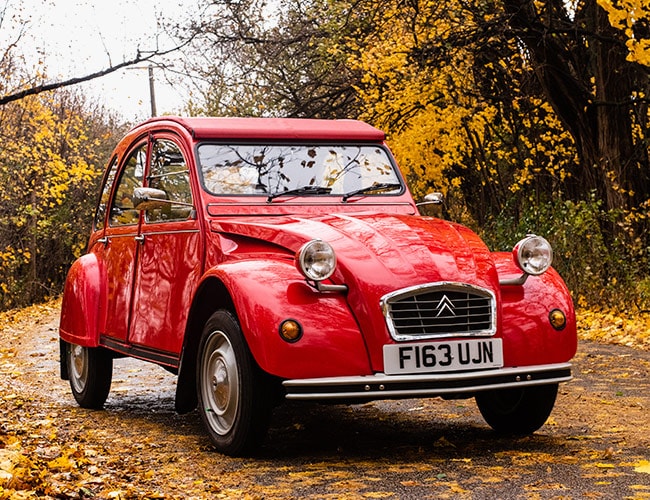
It’s hard to think of another car that offers such a distinct driving experience, which I think has a lot to do with why the 2CV has become canonized as an automotive icon. Read the Story

First Impressions: 2020 Porsche 911 992

It’s that time again, the ultimate sports car has been reborn – meet the eighth generation – the 2020 Porsche 911 992 which has just been unveiled to the world’s media at the Porsche Experience Centre California a night before the LA Motor Show 2019 opens.

The headlines are the performance, styling and interior, so essentially everything. Both 911 models can accelerate from zero to 62 mph in under four seconds: the rear-wheel-drive Coupé can achieve this benchmark in 3.7 seconds and the 911 Carrera 4S with all-wheel drive in 3.6 seconds.

This makes both cars 0.4 seconds faster than the previous model in each case. This advantage is increased by a further 0.2 seconds with the optional Sport Chrono Package. That means the Carrera 4S will hit 100km/h in just 3.4 seconds, that is mighty, how fast will the GT products be!

The styling – ahh yes, it is still, as ever, an evolution not a revolution and this is by no means something to be frowned upon. Things are more curvaceous, smooth and well integrated into rest of the Porsche family with the LED light sabre defining the rear end. The narrow body is no more, now all 911s with be blessed with the widebody Turbo hips.

Inside things are a little more modern. The all analogue dials are a thing of the past, the single physicals rev counter needle is all that remains, the rest is all modern Porsche with the 10.9 inch touch display dominating the cabin.

This is just the start of the 992 family and it is a very welcome one indeed. This is the most advanced, fast and sophisticated 911 yet. This generation promises to deliver what enthusiasts have grown to know and love for decades with the creature comforts that we have come to expect from cars of this day and age. We cannot wait to get the behind the wheel!

[embedded content]

2019 Bentley Continental GTC Officially Revealed

Bentley have released the drop too version of its latest Continental. The release comes days before it is set to be unveiled at the LA Auto Show 2018. The Bentley Continental GTC is expected to perform very well, despite the fact it is the first convertible to be based on this particular chassis!

We recently had the opportunity to drive the Coupe version of the Continental GT. we can report that it drives very well, more on that in the next couple of weeks. The convertible version chips the roof. It is place sits a canvas roof. With the associated modifications, 160 kg of weight is added to the luxury gt car.

Both cars are mechanically identical, save that the GTC goes topless. The mechanism that Bentley use for the top is all new. It features a Z-Fold action, capable of retracting in 19 seconds at speeds of up to 48 km/h. The noise is dampened by 3 decibels over the predecessor with 7 different fabrics on offer.

A subtle difference is the lack of a rear spoiler on the GT Convertible. The rear lip is slightly larger as a result which helps generate more downforce. The rear is also subtly resculpted with the front remaining identical to the Coupe.

2019 Bentley Continental GTC

Under the bonnet sits the Bentley 6.0 litre W12. This powerhouse produces 635 hp and 900 Nm of torque. Disputes the weight disadvantage, the GTC puts in a 3.8 second 100 km/h sprint time, just 0.1 seconds slower than the Coupe. Top speed is pegged at 333 km/h. Pricing and availability is yet to be announced, however, expect a premium of 10 % for the Bentley Continental GTC and deliveries in time for summer next year!

This is the Sexy New Bentley Continental Convertible

The Magazine

Let us take you on a journey of the world. Each issue of the Gear Patrol Magazine comes packed with adventures, guides and stories exclusive to the magazine. Stunningly designed, printed on high quality stock and ready for your coffee table. Biannual. $39.

The Newsletter

Get GEAR PATROL in your inbox with the DISPATCH, including Today in Gear and all our new stories. Daily, 5pm. Free.