All posts in “Cars”

Geneva 2019: Pininfarina Battista Electric Hypercar

This is the new Pininfarina Battista, a full electric hypercar and the most powerful car to ever come from Italy.

The Battista shares its powertrain with the Rimac C_Two which is also in Geneva this week. Although the skeleton of the drivetrain is essentially the same, it has been tuned with its own unique acceleration amplitude and the drive mode characteristics. Four electric motors at each wheel combine to produce 1,900 hp. It will manage a sub-2 second 100 km/h sprint, a 300 km/h print of under 12sec and a top speed of around 350 km/h.

Only 150 units of the Battista hypercar will be made, 50 will go to the US, another 50 for the EU and the final 50 for the Middle East.

For more information on the Pininfarina Battista, See our earlier article here. For more from the Geneva Motor Show 2019, click through to our dedicated news channel. Let us know what you want to see in the comments box below!

BAIC’s Arcfox GT Comes in a Track Version and a Street Version

Made in China to Go Really Fast

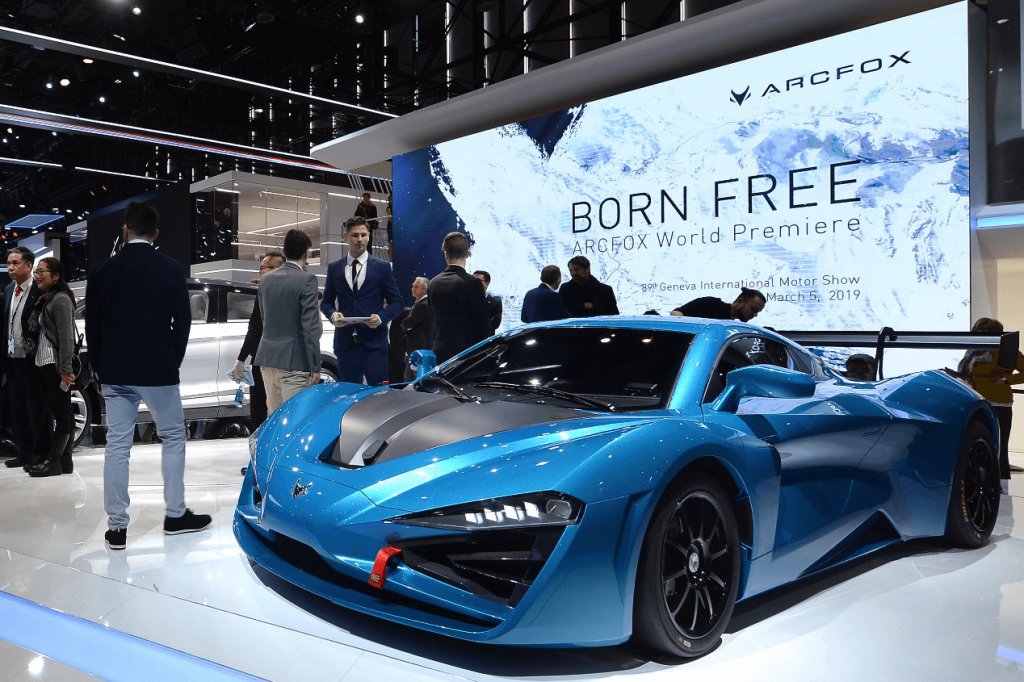
BAIC’s Arcfox GT is no joke of an electric supercar. It’s one of many supercars at the Geneva Motor Show, but the company has big plans for its electric beast. The company sells both a street and track version of the car and wants to expand globally with the vehicle. The Arcfox GT and another vehicle were showed off at the Geneva Motor Show, and it looks like a winner.

Both versions of the car are crazy fast and both versions get an all-electric powertrain. The street version provides 1,005 hp via four electric motors. It also features a super lightweight construction and can do a 0-62 mph run in just 2.59 seconds.

The track version? Yep, it’s even more powerful and faster. It makes a whopping 1,609 hp from a similar setup. We couldn’t find a 0 to 62 mph time on the company’s website, but we assume with that much more power, it’d have to be faster than the street version of the car.

BIAC Arcfox

BIAC Arcfox

“Arcfox is a beam of light that the BAIC Group presents to the world with its innovation and this beam of light is illuminating the way for us to move forward,” said company chairman Mr. Heyi Xu.

The company also debuted a crossover SUV vehicle at the show, so we assume BAIC Group plans to expand to regular consumer vehicle’s, too. It will be interesting to see how this vehicle and BIAC Group progresses and if it can successfully break out of China and onto the world stage.

Geneva 2019: Koenigsegg Jesko Hypercar

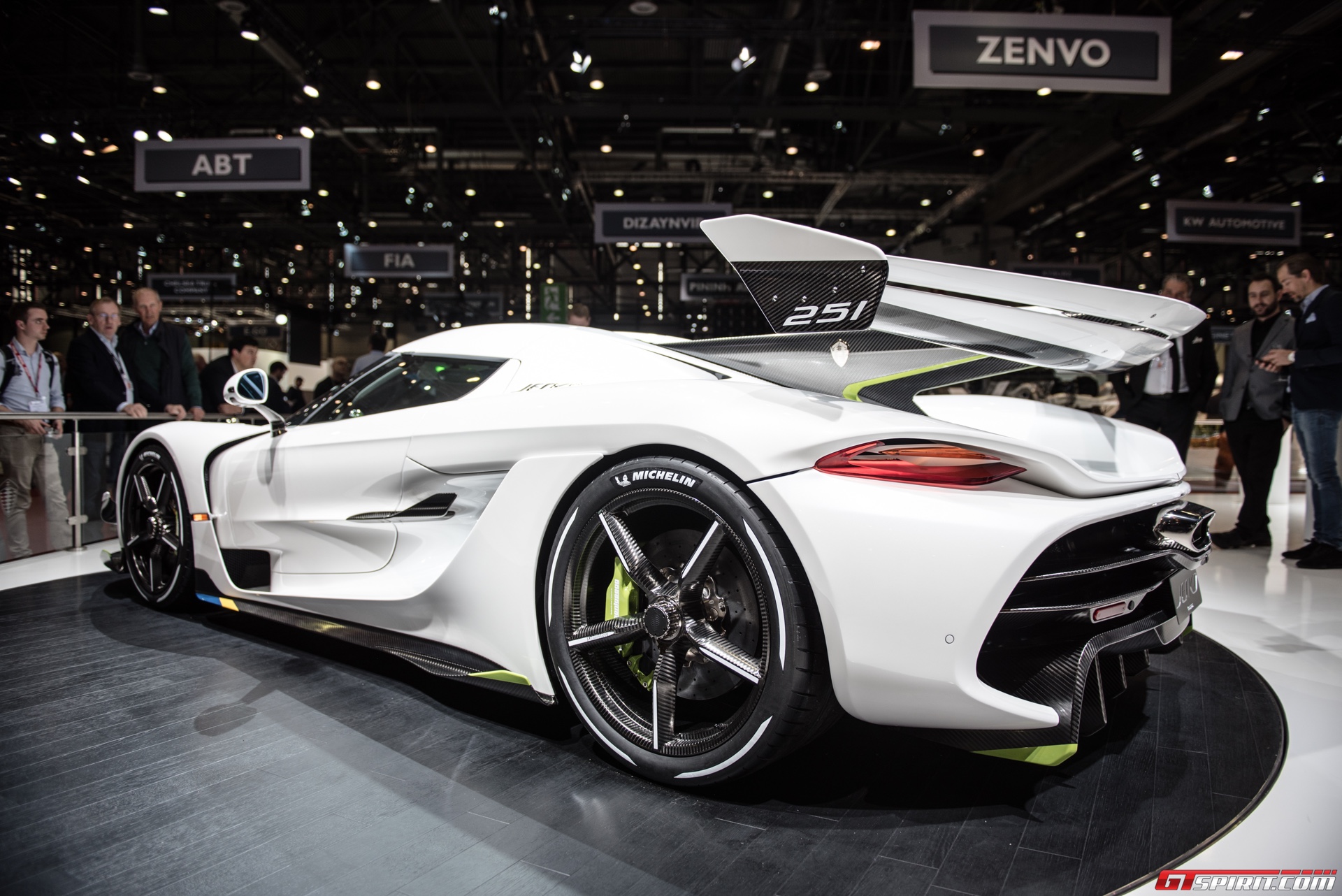
Koenigsegg has revealed the Agera successor at the Geneva Motor Show 2019. Named Jesko after Christian’s father, the new hypercar is built around a re-designed twin-turbocharged V8 engine. It gets a new 180 degree flat-plane crankshaft, intake and larger turbochargers. Flat-plane crankshafts normally suffer from increased vibration which Koenigsegg have addressed with active engine mounts lifted from the Agera. An innovative air-injection system pre-spools the turbocharger for instant response.

Here is a quick look at the specs:
Engine: 5.0L V8 Twin-Turbo
Output: 1280hp or 1600hp on E85 and 1500 Nm torque
Gearbox: 9-speed Koenigsegg Light Speed Transmission (LST)
Rev Limit: 8,500rpm
Downforce: 1000 kg at 275 km/h
Curb Weight: 1420kg
Top Speed: 300mph est.

Geneva Motor Show 2019

For more on the new Koenigsegg Jesko, you can visit our earlier article here.

For more from the Geneva Motor Show 2019, click through to our dedicated news channel. Let us know what you want to see in the comments box below!

Geneva 2019: 1 of 1 Bugatti “La Voiture Noire”

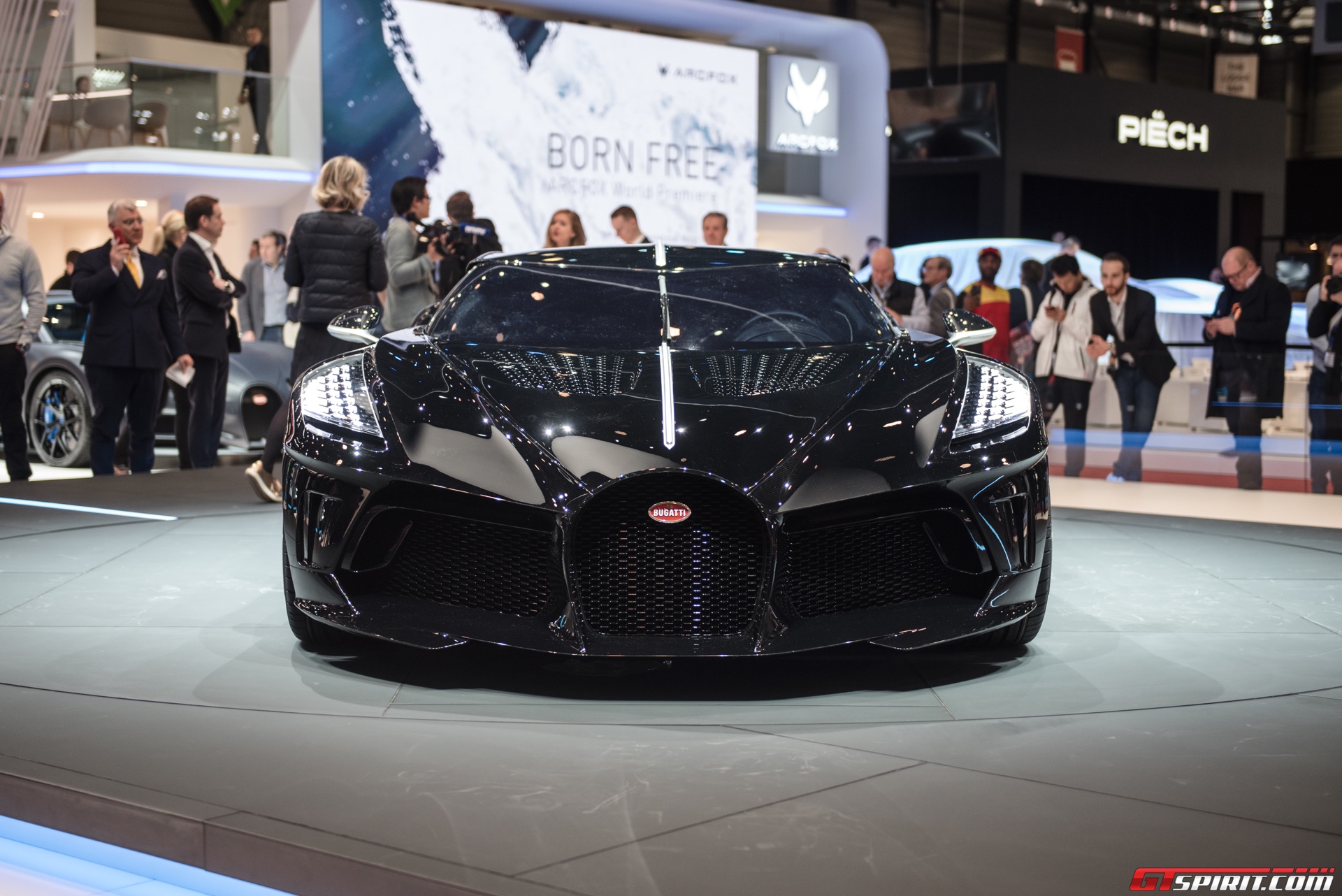
Bugatti have taken a very special title with the unveiling of the Bugatti La Voiture Noire – the most expensive new car ever sold. As you would imagine, La Voiture Noire, is based the the Bugatti Chrion.

Under the rear hatch sits an unmodified 1,500 hp, eight-litre W16 engine with 1,600 Nm of torque. Performance figures have not been announced, however, we suspect the owner has no plans to test these. It will likely join a private collection to be seen by the public only on special occasions.

The styling is certainly splitting opinion. There are significant changes to the look of the car with new headlights mounted much further up the body, much like the Divo. The design has been Inspired by Jean Bugatti’s iconic Type 57 SC Atlantic, four of the most beautiful and valuable cars in existence. At the rear there is a curvy light beam, which reminds us of the McLaren P1, and no less that six exhausts!

Geneva Motor Show 2019

For more info on the new 1 of 1 Bugatti “La Voiture Noire”, check our earlier article here. For more from the Geneva Motor Show 2019, click through to our dedicated news channel. Let us know what you want to see in the comments box below!

Aston Martin Lagonda All-Terrain Concept Officially Revealed

Aston Martin’s Lagonda revival starts in earnest with an all-electric SUV. We know this much from the release that sits centre stage on Aston Martin’s stand at the Geneva Motor Show 2019. The Lagonda All-Terrain Concept carries on the development of this production model, first announced with last year’s Vision Concept.

The production version of the Lagonda SUV will begin production at the new St Athan facility in Wales in 2022. Drivetrain and performance details have not been announced, however, we do know that the Lagonda uses a system similar to the Tesla Model X. A flat ‘skateboard’ style battery pack sits close to the ground and acts as a structural part of the chassis. This gives maximum internal space.

The Concept uses suicide doors in the vein of Rolls-Royce models. To further aid entry and exit into the rear seats, the Lagonda uses a lifting roof section.

The design carries a very distinctive profile. A shorter front bonnet is possible as the Lagonda has nothing to carry in the traditional engine compartment. As a result, the cabin sits further forward than normal. The rear also gets a rakish overhang. In short, it is like nothing we have seen before. It features plenty of gimmicks too. For example, the key is said to float between the front seats “thanks to the wonder of electromagnets”.

Zenvo Automotive Brings the TSR-S Hypercar to Geneva

The Danish Car Company Returns With a Winner

Zenvo Automotive brought its car called the TSR-S to the Geneva Motor Show to be showcased alongside all of the other jaw-dropping reveals that have happened over the last day or so. The track-focused car was showcased in a Grotta Azzura blue livery. It’s a seriously beautiful machine and packs plenty of power to back it up.

The TSR-S comes with a twin-supercharged 5.8-liter V8 engine that produces a whopping 1,177 hp and a neck-wrenching 811 lb-ft of torque. Mated to that insane engine is a seven-speed transmission with paddle shifters. That combination is good for a 0 to 60 mph time of just 2.8 seconds. The car can make it to 124 mph in just 6.8 seconds. Zenvo thought it best to electronically limit the car’s top speed to 202 mph. 

[embedded content]

The engine isn’t the only thing about this car worth taking note. The hypercar also has what’s called a Zentripetal Wing. The wing can act as an air brake, and it can also help in the corners thanks to its multi-axis function. “Like all our cars, the Zenvo TSR-S is 100% Danish-designed and hand-built in an extremely limited number,” said marketing director Peter van Rooy.

Production of the car is currently underway. Unfortunately, Zenvo only plans to build five models per year. The company did not name the price for this car, but we expect it to be quite expensive.

2nd Generation Mercedes-Benz CLA Shooting Brake Revealed

Following the unveiling of the new Mercedes-Benz CLA Sedan at the CES 2019 in Las Vegas earlier this year, the Geneva Motor Show 2019 was the destination for the Mercedes-Benz CLA Shooting Brake. The next generation Shooting Brake gets much the same specification as the Sedan, with the added practicality of a larger rear boot!

The Shooting Brake will be available to order from September. The design is virtually identical to the Coupe until you get to the rear door. It is characterised by a long bonnet, compact greenhouse, coupé-like window lines, muscular shoulders and a crouched rear. The rear design is completely new.

The CLA Shooting Brake is 48 millimetres longer than before, 53 mm wider but 2 mm lower. The boot opening is wider than before and the tailgate is electronically operated with hands-free access. It gets 10 litres additional load space, up to 505 litres from 495 litres.

As with the Coupe, the only model mentioned in the press release is a mid-range CLA 250. It uses a four-cylinder petrol engine to produce 225 hp and 350 Nm of torque. Mercedes-Benz will offer a range of diesel and petrol engines with manual and dual-clutch automatic transmissions. The CLA will also benefit from 4MATIC all-wheel drive.

Mercedes-Benz have been rolling out MBUX across the range recently. The CLA Shooting Brake gets the latest version of the system. The CLA Shooting Brake also gets some of Mercedes-Benz’s latest technology including Active Distance Assist with recourse to maps and navigation data, Active Steer Assist, Active Lange Change Assist and Active Park Assist.

Aston Martin AM-RB 003 Hypercar Unveiled!

The Aston Martin Project 003 announcement today at the Geneva Motor Show 2019 confirmed that the British brand will collaborate with Red Bull Racing once again. The project becomes known as the Aston Martin AM-RB 003 for now with the official name to be unveiled at a later date.

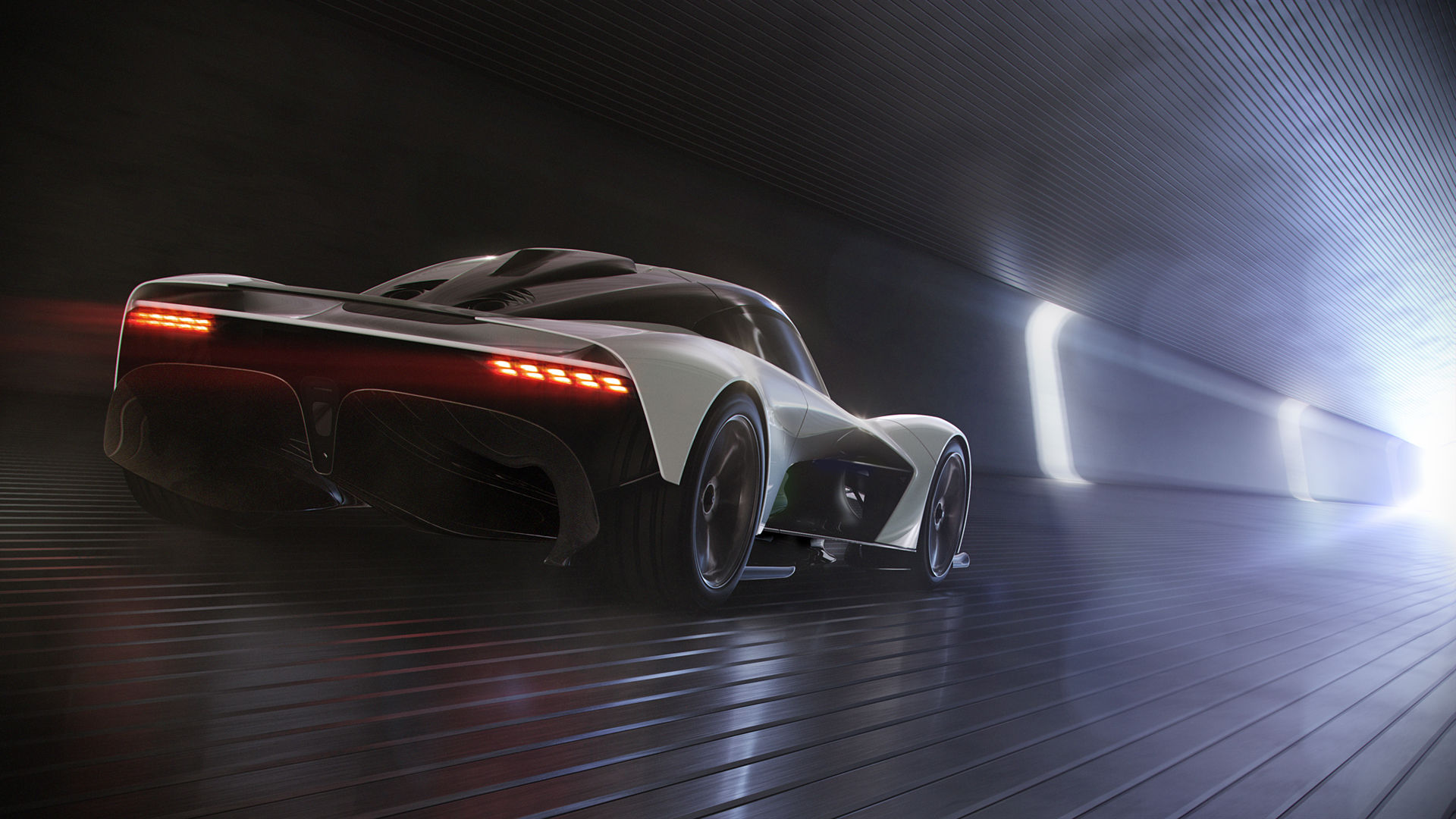
The AM-RB 003 makes greater concessions to practicality and road use than the Valkyrie, the model upon which it is based. The idea is to create a car that is less extreme but shares the same basic ethos. It gets a pronounced front keel and large rear diffuser, with the underfloor generating the bulk of the downforce.

Aston Martin has also confirmed next-generation aircraft morphing technology, to create a variable airfoil across the entirety of the rear wing. The application of FlexFoil is a first for production cars. The design allows downforce to be changed without changing the physical angle of the entire element.

The new lamp shapes at the front and rear give the Aston Martin AM-RB 003 a look of its own. The shape is different but the internals are taken directly from the Aston Martin Valkyrie.

AM-RB 003’s design brief includes greater cockpit space. It uses LMP1-style doors to achieve this. They open forwards taking a section of roof with them. The centre console has been widened, while luggage space is provided via a terrace behind the seats.

The cockpit prescribes to something Aston Martin call ‘Apex Ergonomics’. To start with, the centreline of the driver’s back, steering wheel and pedals are all perfectly aligned. A display screen mounted on the steering column allows for the best possible view through the steering wheel and infotainment is delivered through a smartphone. The setup is extremely minimalist.

Under the rear hatch will sit Aston Martin’s new hybrid turbo V6 engine. It is the first Aston Martin engine designed in-house for the modern era. The AM-RB 003 will be strictly limited to 500 coupes worldwide. It should compete with the McLaren P1, LaFerrari and Porsche 918 Spyder category of hypercars.

Here’s the Hispano Suiza Carmen undisguised

After teasing it out for some time, the Spanish-based and recently re-animated Hispano Suiza has released photos and renderings showing its new electric “Hyper-Lux” Carmen grand tourer in its entirety. The 1,019-horsepower supercar appears to be very retro-futuristic.

The aggressive teardrop shape establishes a link between tomorrow’s electric supercar technology and the early-20th-century Dubonnet Xenia by Hispano Suiza. While the new car is a lot faster, there are visual similarities between it and its spiritual forebearer, made more obvious by the rendering showing them side by side. Both have faired-in rear wheels, which give the Carmen a strong helping of century-old streamliner cool. The aerodynamics are also helped by that, as its drag coefficent of Cd 0.325 is lower than a Porsche 918 Spyder or Koenigsegg Agera R.

Seen from behind, the taillights peek out from the Carmen’s negative area like red jewels from an opened clam. Inside, the Carmen has luxurious leather and high-end audio. The battery electric drivetrain offers a 250-mile range, and Hispano Suiza says the Carmen takes less than 3 seconds to reach 62 mph. Top speed is limited electronically to 155 mph.

Road testing for the Carmen is said to begin in the middle of this year, with the first journalist test drives intended to start in October. Given that this car was “merely a conceptual idea” nine months ago, this is a stunningly quick turnaround. The Spanish company is already taking pre-orders, having priced the car at a cool 1.5 million euros or nearly $1.7 million. Only 19 cars will be made during the 2019-2021 production run. An official customer launch is slated to take place in June 2020.

Gordon Murray’s reborn F1 will reportedly have a V12 and a manual

The McLaren P1 is not a McLaren F1 successor. The Senna is not an F1 successor. Neither is the Lamborghini Centenario, or LaFerrari, or the Bugatti Divo, or the Brabham BT62, or the Aston Martin Valkyrie, or the Koenigsegg Jesko. According to Gordon Murray, an F1 successor does not exist. So he’s going to build one.

In an interview and report from Road & Track, Murray said, “I truly believe nobody’s done another McLaren F1 since the F1. And although very few auto journalists have had the chance to drive an F1, we’re inclined to agree, just based on how specific of a car the F1 was. Not even McLaren’s new Speedtail, which does have a center seating position, can be considered a spiritual successor, as it has a hybrid powertrain.

The F1 was an engineering marvel when it was introduced in 1992, and it remains one in 2019. The combination of the center seating position, the 542-horsepower V12, and the 2,244-pound dry weight is nearly impossible to recreate today, thanks to the loads of safety standards, added technology, and more complicated powertrains. Nearly impossible is not impossible, though.

According to the report, Murray’s new car would have all the features of the old, but better. It will have a V12 powerplant linked to a manual transmission, and the driver will sit in the middle of the car. Like many supercars today (including McLarens), it will use a carbon fiber monocoque, which helped Murray keep the car light. He claims it weighs less than 2,200 pounds, which is bananas.

For full information about timing, pricing, availability, and more details about the car, read the full report and all of Murray’s quotes at Road & Track.

Related Video:

Koenigsegg Jesko shocks at Geneva: $3 million, 1,600 horsepower

Koenigsegg never ceases to amaze, and it’s time to add a new name to your dream car list: Jesko. The Koenigsegg Jesko, named after Christian von Koenigsegg’s father, was just revealed at the Geneva Motor Show as a replacement for the Agera RS. This isn’t just a variation of the Agera, either; it’s a totally new car.

It’s difficult to consider one part of this vehicle the highlight to lead with, since the entire car is filled to the brim with shocking performance technology. The flat-plane crank 5.0-liter twin-turbo V8 engine makes 1,600 horsepower and 1,106 pound-feet of torque when you pump E85 through its veins. Regular old gasoline brings the power down to a still totally bonkers 1,280 horsepower. To keep boost pressure up, Koenigsegg has fitted the Jesko with an air tank and compressor that provide a 20-bar shot of air within the turbocharger system for pre-spooling purposes. Now that’s a pretty metal solution to turbo lag.

The engine is also fitted with what Koenigsegg claims is the world’s lightest production V8 crankshaft, (27.6 pounds) milled from a single billet of Swedish Dievar steel. Koenigsegg says vibrations are quelled by active engine mounts similar to those used in the Regera, along with lighter connecting rods and pistons.

Next up on the list of absurdly awesome things is a new nine-speed transmission with seven(!) clutches. Koenigsegg has a good reason for this obscene number of clutches, though. Dual-clutch units only allow gear changes between adjacent gears. This transmission will allow you to fly into whatever gear is optimal at whatever time. For example, if you want to shift from seventh to fourth gear in a dual-clutch transmission, the gears are changed one at a time going downward. The Jesko is capable of instantly selecting a gear without having to wait for several gear changes to get there (up to five gears away). You access this “optimal gear selection” by giving the paddle an extra hard click versus a normal, lighter click for single gear changes. This multi-clutch transmission is also significantly lighter than traditional dual-clutch units, partly because it does away with synchro rings.

The carbon fiber monocoque is larger in length and height than the Regera’s, giving the interior more space. Koenigsegg says it retained the same suspension design as the Regera, but has “improved” it. Adjustable Ohlins dampers are at all four corners, along with an additional damper in the front suspension meant to maintain an optimal ride height during high aerodynamic loads. The Jesko has a rear-wheel steering system capable of turning the wheels three degrees in either direction depending on the condition. Lightweight carbon fiber wheels are wrapped in Michelin Pilot Sport Cup 2 tires. Pilot Sport Cup 2 Rs are available for dry weather motoring exclusively, featuring a 10 percent larger contact patch and a revised tread design.

Koenigsegg says this is the most aggressive aero package it has ever fitted onto one of its cars. An active wing, active underbody flaps and huge splitter work together to produce 1,764 pounds of downforce at 155 mph. That’s a 30 percent increase in downforce over the One:1 at similar speeds.

The Jesko is probably the easiest to live with Koenigsegg ever made, too. Those fancy, sliding doors now open further and higher away from curbs. It has a nine-inch infotainment system with Bluetooth, USB inputs, wireless phone charging and a top-view camera, and all the systems can be updated over the air via the Koenigsegg Cloud. So yeah, forget iCloud, and give us the Koenigsegg Cloud, please. Your instrument cluster is a five-inch digital screen mounted directly to the steering wheel, and there’s an analog G meter to boot. Also, the roof comes off. What more could you want?

All this comes in a car that weighs only 3,130 pounds. Koenigsegg doesn’t quote a top speed for the Jesko, but there are already plans to make a version called the Jesko 300. This one will be made with the goal of reaching speeds of over 300 mph, so expect a less aggressive aero treatment. A Jesko starts for about $3 million, but there can’t be many buyers who look at the MSRP when Koenigsegg shopping. We do know only 125 will be built, and 80 were spoken for at the time we published this story.

Aston Martin Vanquish Vision concept coming for Ferrari F8 Tributo and company

Aston Martin will restore the Vanquish name on a mid-engined supercar due in 2022, previewed by the Vanquish Vision concept. To be powered by a less potent version of the hybrid twin-turbo V6 powertrain also going in the Project 003, the Vanquish will challenge super-coupes like the Ferrari F8 Tributo, as well as the next-generation hybrid successors to the McLaren 720S and Lamborghini Huracán. The Vanquish will be the fourth mid-engined offering from the Gaydon maker, after the Valkyrie, Valkyrie AMR-Pro, and Project 003, but the first to go into series production.

In spite of the fact that it shares clear lineage with the Valkyrie and Project 003, the Vanquish will make some key departures. The chassis will be fashioned from bonded aluminum instead of carbon fiber. The concept is said to be 85 percent of the final form, with only minor changes to come as Aston Martin learns its way around a mid-engined production car for the first time. The forms are fuller, with less of the negative space employed on the hypercars for a “more seductive and less technical appearance.”

Aggressive touches remain, however, as in the fat rear tire leering through a hefty gap between the bodywork and a serious diffuser. And check out those exhaust tips poking McLaren-style out of the bodywork.

Codenamed AM9, the coming coupe departed from Aston Martin’s own expectations in that it got smaller than originally envisioned. Palmer told Autocar, “One of the real learnings with Adrian Newey is obsession with weight and mass, and package size. Our designers are now pushing our engineers; cars were getting bigger but now we’re heading smaller, with cars packaged around the engine. It’s the reversal of a trend.”

Related Video:

Aston Martin Project 003 is a road-going evolution of Valkyrie

The Aston Martin Project 003 will effectively be the most road-going example of Aston’s mid-engined hypercars. It quite obviously draws heavily from the Valkyrie (aka Project 001), which is as much the result of aerodynamic requirements as it is maintaining a family resemblance. It may not appear to be as extreme in certain respects, and it isn’t, but it does feature a number of advances.

The 003 utilizes the next-generation of “aircraft morphing technology, to create a variable airfoil across the entirety of the rear wing. The technology named FlexFoil … has been validated by NASA through extensive performance and acoustic flight testing, with Aston Martin the first to implement this cutting-edge aerospace technology in the automotive industry. The system allows for the car’s downforce to be changed without changing the physical angle of the entire element.”

So yeah, fancy stuff, and in fact, the production version will feature an even further evolution of the technology.

Aston hasn’t released full details, but did indicate the 003 will be powered by a hybrid powertrain consisting of a new turbocharged V6 developed in-house. This is in contrast to the Mercedes-sourced engines in recent Aston Martins. It will feature a sealed oil system previously utilized in the Aston Martin Vulcan and in multiple 24-hour endurance races that allows for oil changes in 90 seconds and the refinement and reuse of the engine oil itself. The production 003 will be the first road-going car to receive this technology.

Aston Martin Project 003

There is plenty shared with Valkyrie, however, including the active suspension and various electronic systems. Aston says the chassis will be “blessed with next-level precision, control and driver connection for class-leading dynamics on road and truck.”

Also like the Valkyrie, Project 003 utilizes a lightweight carbon fiber structure with carbon fiber bodywork. It was shaped for maximum aerodynamic effect, which results in the two mid-engine hypercars sharing a common shape and general look. One noteworthy visual difference are the front and rear lighting units. Their lightweight technology are shared, however. Aston Martin says the 003’s four lighting units weigh less than one DB11 headlamp.

Inside is where the 003 most ventures away from the Valkyrie, and where it demonstrates its more road-going nature. Greater concessions have been made for usability and comfort, although that is certainly relative. LMP1-style doors bring part of the roof with them when opening, making getting in and out a bit easier. The center console has also been widened to create more space between occupants (although you’re still awfully close together), while storage areas have been added for “oddments” that Aston indicates would include a wallet or mobile phone. The console itself is also 3D printed, like other interior pieces, to reduce 50 percent of the typical mass and allow for integrated switches.

Other distinctive interior elements includes a display screen mounted to the steering column to prevent the wheel rim from impeding the driver’s view (neat, but an Infiniti G35 did that) and a wraparound band of grilling between the dash and windshield that conceals the air vents, speakers and ambient lighting. The infotainment system is your smartphone — as in there’s literally a mount for a smartphone that, as details are scarce, we’d assume can run a car-related app.

Despite being more road-going, there is no trunk, only a “terrace” behind the seats. So, if you want to take your Aston Martin someplace, a DB11 or Vantage is still the better call. The 003 will be a hypercar, not a GT.

It will also not be called the 003 when production starts in late 2021. Aston Martin indicated the name could change during the Geneva Motor Show, and we will update this story should we receive word of that change.

Related Video:

Bugatti La Voiture Noire is absolute elegance and the most expensive new car ever

Cars like these are why we love the Geneva Motor Show. Sure, only one lucky person will get to own this bespoke Bugatti, but man is it cool to know this is out there somewhere. It’s called the Bugatti La Voiture Noire, which literally translates to, Bugatti The Black Car. A certain elegance is lost when we move to English, so let’s just keep calling it La Voiture Noire.

Bugatti built this one-off car as a tribute to the Type 57 SC Atlantic, of which four were built between 1936 and 1938. If you spend any time at the various concours d’elegance around the world, there’s a chance you may have seen one before. Three of the four are known to still be around, and this new car pays homage to Jean Bugatti’s black car specifically.

Right off the bat, it’s easy to see this car is based on the Chiron. Bugatti plopped the Chiron W16 engine in there with all four turbos attached. It makes the exact same power as the new French speed machine with 1,479 horsepower and 1,180 pound-feet of torque. The biggest difference that we can ascertain is in the number of tailpipes. A stunning six pipes poke out between winglets in the diffuser as a tribute to the Type 57 SC Atlantic, which also featured six. The visual difference here is in the piping size and placement — the original, thin pipes from the 1930s are far classier than the massive roundels fitted on La Voiture Noire. That said, this design is still unbelievably cool, and we applaud Bugatti for going for it.

Bugatti didn’t quote a top speed for this bespoke car, but we imagine it can’t be too far off the mark from the Chiron with the amount of power it’s packing. The only glimpse into the driving character comes in this statement: “This is a coupé with the comfort of a luxury limousine and the power of a hyper sports car.” Maybe the individual who bought the car was looking for a faster and more comfortable way to get to their cottage on the weekend? We can only guess, as Bugatti hasn’t revealed the buyer’s name. But one guess is Dr. Ferdinand Piëch, grandson of Ferdinand Porsche and ex-chairman of the Volkswagen Group.

Design-wise, La Voiture Noire tries its best to take cues from the 57 SC Atlantic. You’ll notice a less pronounced dorsal fin running from the front of the car all the way back in an effort to match. The windshield flows seamlessly into the windows and back to the sides like a visor on a helmet. Bugatti says its intentions were to make it “all of a piece,” so there’s nothing to mess with the flowing lines down the car. Every last body component was handmade using carbon fiber with a glossy black carbon fiber finish. The wheel and tire design are especially eye-catching, with the tires done up to make it look like they don’t actually exist. It’s hard to find a line we don’t like on this car, especially gazing at it from the rear. It truly looks like one of those cars you draw on a napkin and wish somebody would make one day.

Not as though any of us will have to worry about it, but Bugatti says the price was $12,503,150, and that was before taxes. With all the taxes and delivery fees included, the price balloons all the way up to 18,795,716. That makes it the most expensive new car of all time, according to Bugatti. Surprised? We’re not either.

Related video:

Automobili Pininfarina Battista Debuts With 1,900 HP

More Power Than a Bugatti Chiron

The Pininfarina Battista was among the most highly anticipated reveals of the Geneva Motor Show, and now it’s finally here with 1,900 hp. The horsepower may be the thing that everyone is talking about, but the vehicle isn’t just a high-powered beast, it’s a legitimate design triumph, toon.

The car looks like what you’d expect a hypercar from Pininfarina to look like. It’s all sweeping lines that have been aerodynamically designed and beautifully crafted. The Battista may be a brute when it comes to power, but its styling is downright elegant. The teardrop style cockpit, long sloping roof, and rear with its floating taillights is gorgeous.

The interior is similarly beautiful with two large screens to either side of the steering wheel and an overall driver-centric cabin. Leather, aluminum and carbon fiber materials are used throughout the cabin.

The Battista features an all-electric powertrain. The 120 kWh battery pack comes from Rimac, and that powers the four electric motors that have a combined output of 1,900 hp and 1,696 lb-ft of torque. It can do a 0 to 60 mph sprint in under two seconds and make it to a top speed of 217 mph. The car is also capable of traveling 280 miles per charge. 

The company will launch the car next year. It plans to make only 150 Battista electric hypercars worldwide. Between 25 and 40 dealers will get the car to sell to customers. Those dealers will be in major cities like New York, Hong Kong, and London. The price of the car has not yet been announced.

Pininfarina Battista debuts in Geneva with 1,900 horsepower and zero emissions

Pininfarina, the storied Italian design house, has been working on its own production car for the past few years. We’ve seen previews, teasers and more for more than a year. Hell, if you have the cash, you can even put in an application to buy one of the 150 that will be built. Finally, at the 2019 Geneva Motor Show, the wraps have been pulled off the Pininfarina Battista, a sleek new 1,900-horsepower all-electric supercar that promises to be the most powerful road car ever to come out of Italy.

Power from the Rimac-supplied 120 kWh battery pack is sent to all four wheels, helping propel the Battista to 62 mph in fewer than 2 seconds and more than 180 mph in just 12 seconds. Torque output peaks at 1,696 pound-feet while the Battista itself tops out at 217 mph. To save weight, the Battista uses a carbon-fiber monocoque with carbon-fiber bodywork and an aluminum crash structure. Pininfarina doesn’t list the car’s weight, but the t-shaped battery resting in the middle of the car should help the Battista’s overall balance. The carbon-ceramic brakes use six-piston calipers both front and rear.

The car is typically Pininfarina and Italian in design. The mid-engine proportions give it a vague Ferrari-like appearance, especially up front. That’s not surprising considering just how many Ferrari designs have come from Pininfarina. The thin LED taillights are capped by an active spoiler. The charging port is in the rear, just at the tail end of the rear window. The Battista is set up for DC fast charging and has an estimated range of about 280 miles.

Only 150 will be built (50 to North America, 50 to Europe and 50 to the Middle East/Asia) and Pininfarina says this is the first in a range of zero-emission performance vehicles. There’s been talk of an SUV to follow the Battista. If it proves to be as bonkers as the Battista, we can’t wait.

Meet the Limited Edition Mercedes-AMG GT R Roadster

There’s Finally a Drop Top Version

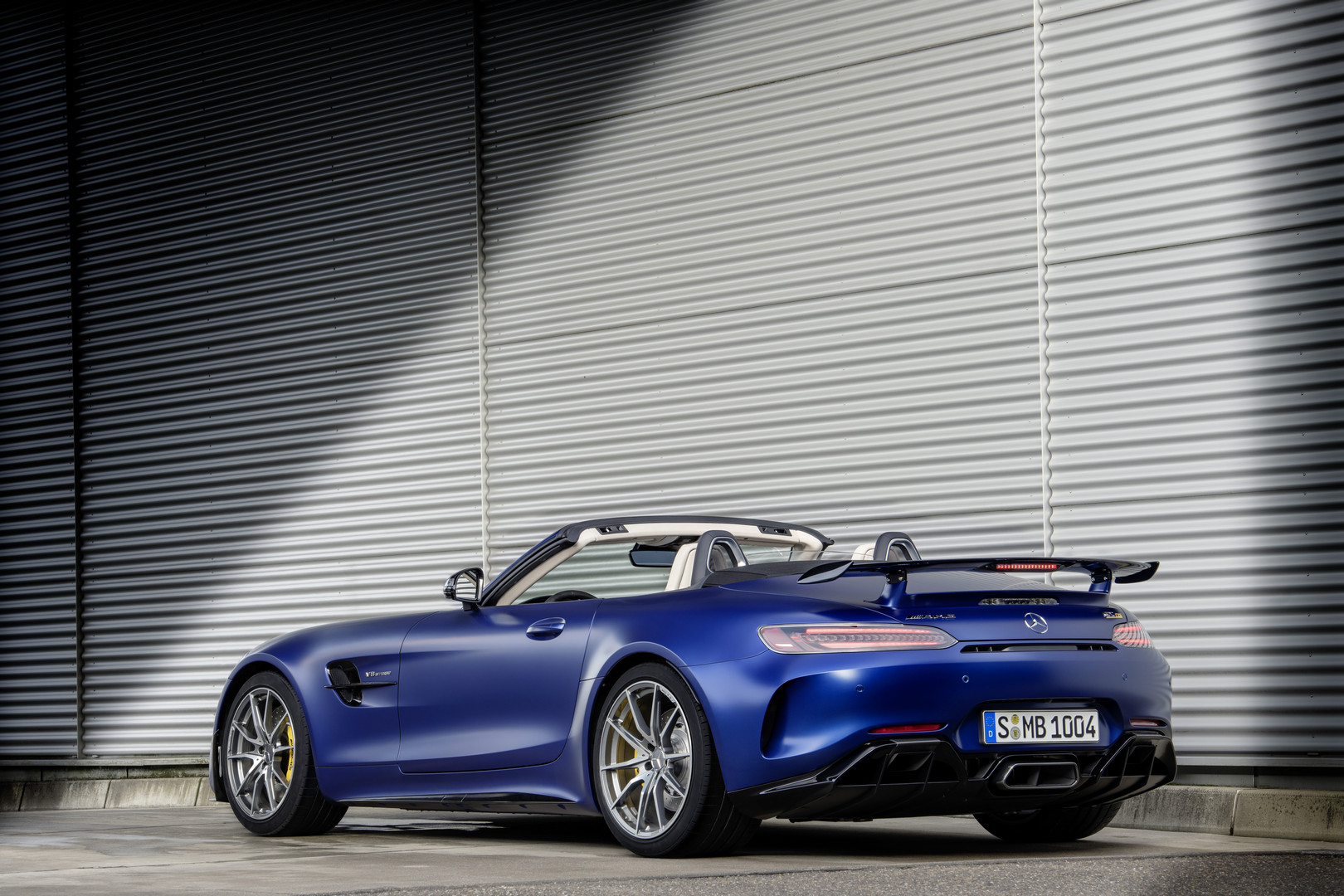
The only problem we had wit the Mercedes-AMG GT R was that you couldn’t get it without a roof. That changes with the Mercedes-AMG GT R Roadster. However, only 750 of the drop-top car will be made. That means if you want one you’d better act fast because this is not just a roofless version of the car. It’s quite special.

The car gets a 4.0-liter twin-turbo V8 that makes 577 hp and 516 lb-ft of torque. A dual-clutch seven-speed transmission routes power to the rear wheels. Put the top up, and you can get from 0 to 60 mph in a quick 3.5 seconds. You can also sprint to a top speed of 197 mph. 

The car’s wheels were widened by 1.8 inches at the front and 2.2 inches at the rear. The aerodynamics package added to this car reduces lift of the front end by 88 percent at 155 mph. Mercedes fitted the car with its active air system, called Airpanel, for cooling.

The carbon ceramic brake rotors (15.3 front and 14.2 rear) are paired with some striking, large yellow brake calipers. The car also gets retuned suspension and steering. It features a nine-mode traction control system, adaptive dampers, speed-sensitive steering, and rear-wheel steering.

As you might expect, the car looks amazing inside, with AMG Performance seats that have diamond-quilted leather along with plenty of leather trim. The rest of the interior features either carbon fiber or piano black material. The special drop-top, fabric, three-layer roof utilizes an aluminum, steel, and magnesium frame. Pricing for this model was not announced.

Lynk & Co 03 Cyan Concept Brings 528 HP to the Street

This Touring Racer Looks Like a Real Killer

Lynk & Co teamed up with Cyan Racing, which is the racing arm of Geely Group Motorsport and formerly Polestar Racing, to build the car you see in the pictures here. It’s the 03 Cyan Concept and it’s the street version of the race car the company showed off in October 2018.

The car’s styling is unique and it offers a usable but compact four-door cabin. It’s shown in a blue that’s reminiscent of the blue from Polestar. “This is a natural step for us together with Lynk & Co. To build a road version of a race car is a great way to learn more about a car and its characteristics,” said Christian Dahl, founder and owner of Cyan Racing, in a press release.

The car features a 2.0-liter turbocharged four-cylinder engine that manages to put out 528 hp and 371 lb-ft of torque. Those are impressive numbers. The engine gets a six-speed sequential gearbox, sending the power to the front wheels. Lynk & Co claims a 0 to 62 mph time of just 4.4 seconds and a 0 to 124 mph time of 10 seconds flat. The car has a 192 mph top speed. 

The engine appears to be a rev-happy beast. Lynk & Co claims it can rev to 8,000 rpm. The sequential gearbox can fire off shifts in just 60 ms. The car is supposed to be able to pull 1.5 Gs in the corners. Stopping the machine are six-piston calipers and 380 mm rotors up front and two-piston calipers and 278 mm rotors in the rear. It rides on 20-inch Cyan wheels.

Best Family SUV Shootout: Subaru Ascent vs VW Atlas

The Volkswagen Atlas and Subaru Ascent exist for a similar reason. Happy customers were procreating their way out of the Volkswagen and Subaru model trees. Adding a three-row SUV made sense. The three-row SUV also has become America’s hottest automotive segment suddenly. Both cars have been popular.

The Ascent debuted strongly for Subaru in 2018, selling about 36,000 over the back half of 2018. The Atlas doubled its sales in 2018, outsold the entire Golf family Stateside, and was Volkswagen’s third-best selling U.S. vehicle behind the Tiguan (another three-row SUV) and the Jetta.

Subaru and Volkswagen have strong reputations for value. Both pursue a similar customer at a similar price point. It seemed right to give their au courant big crossovers a whirl and compare them. I’m the ideal test subject, as I am that target customer. My wife and I are in our mid-30s, parents, both own Volkswagens, and have some potential brood expansion in the near to intermediate future.

One must get the full luxury experience to deliver an authoritative automotive review. So, I drove the top-level trims of both the Atlas (V6 SEL Premium w/4MOTION) and the Ascent (Touring). Here are my thoughts.

STYLE
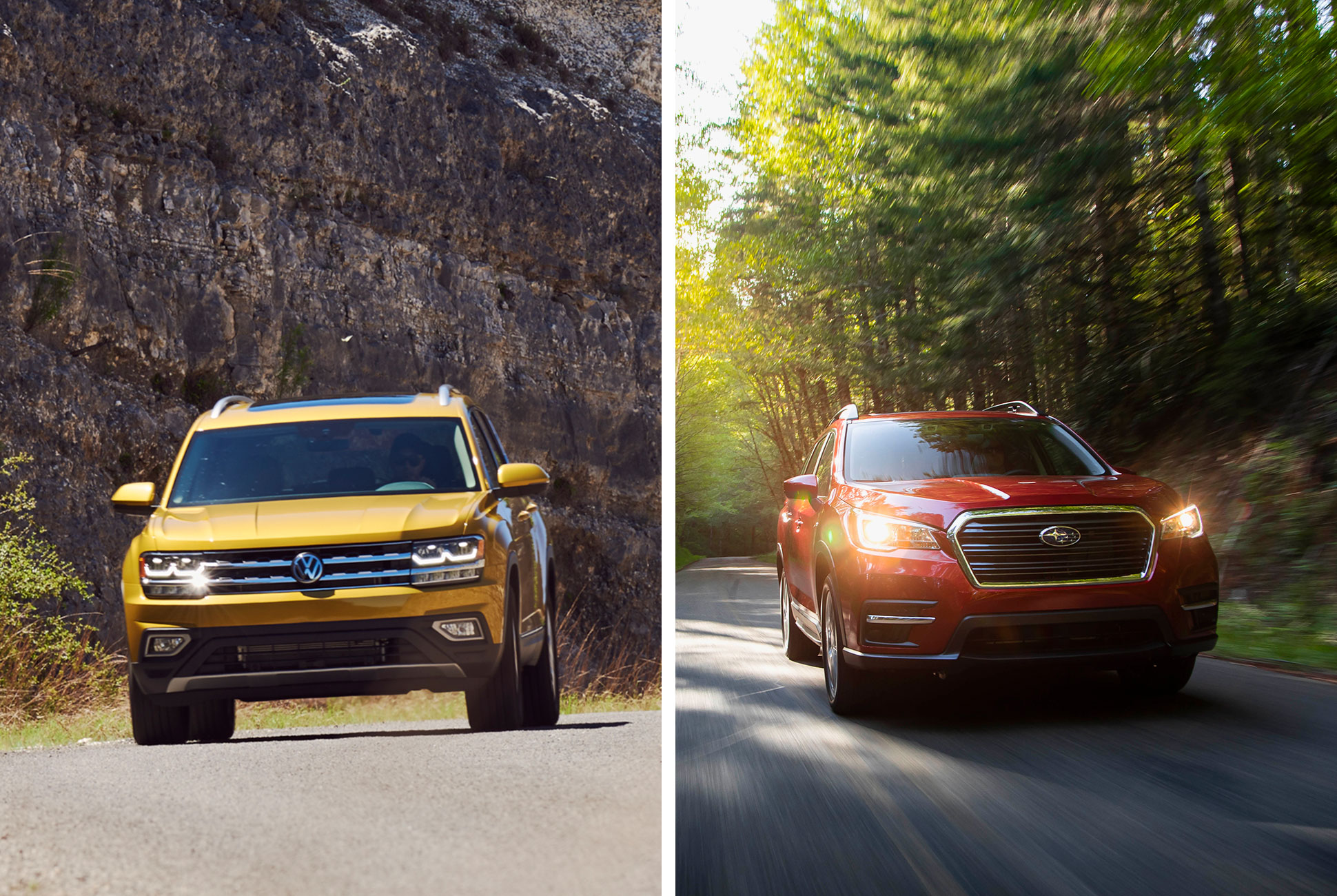
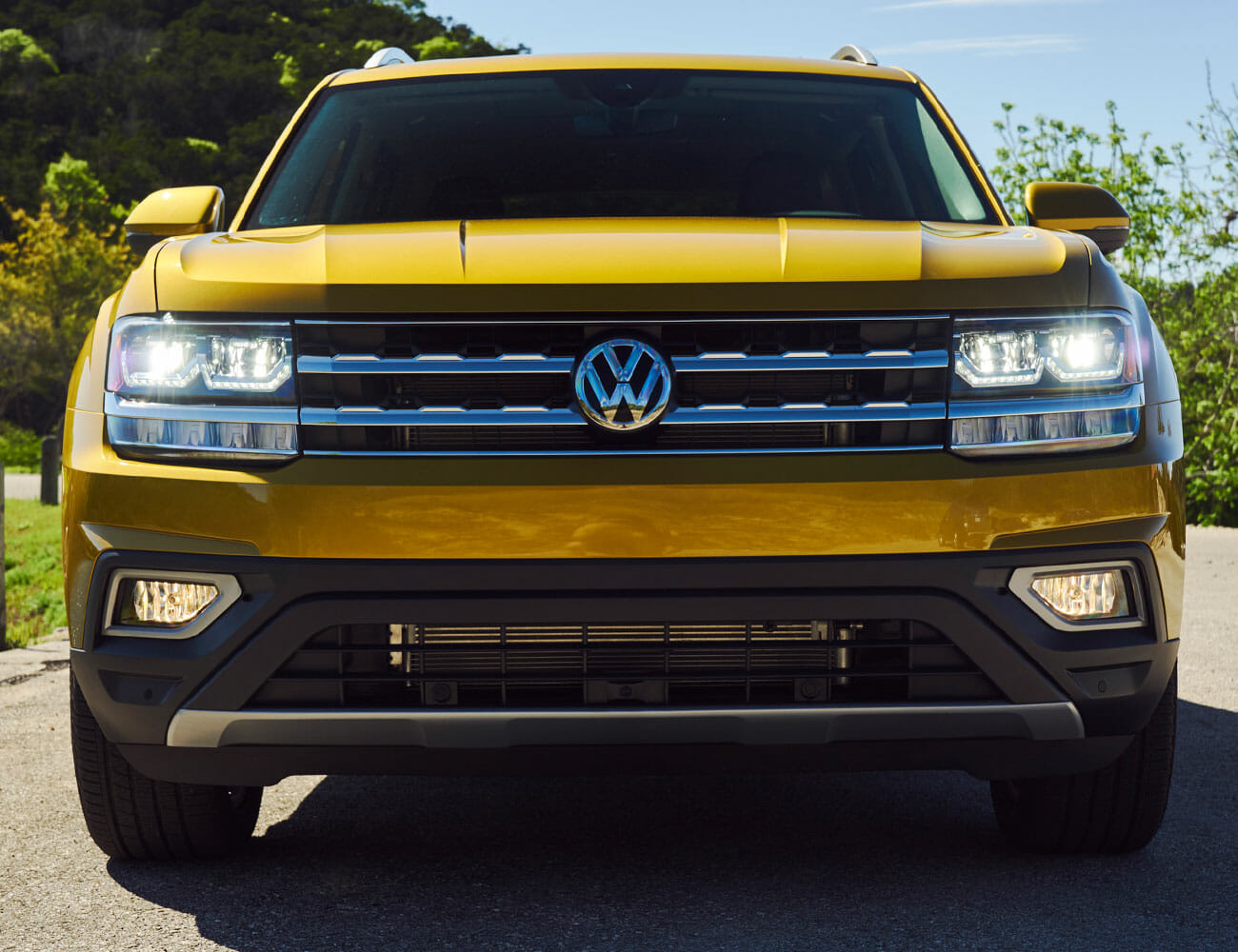
VW and Subaru approached the large SUV differently. The Atlas is Volkswagen’s American-made car for Americans. It takes its cue less from the Volkswagen tree and more from other American SUVs. Bold lines aim for a smart, upscale appearance. It has a commanding grille that looks a tad discordant with a VW logo. My wife said she felt fancy in it when we took it out for a date night.

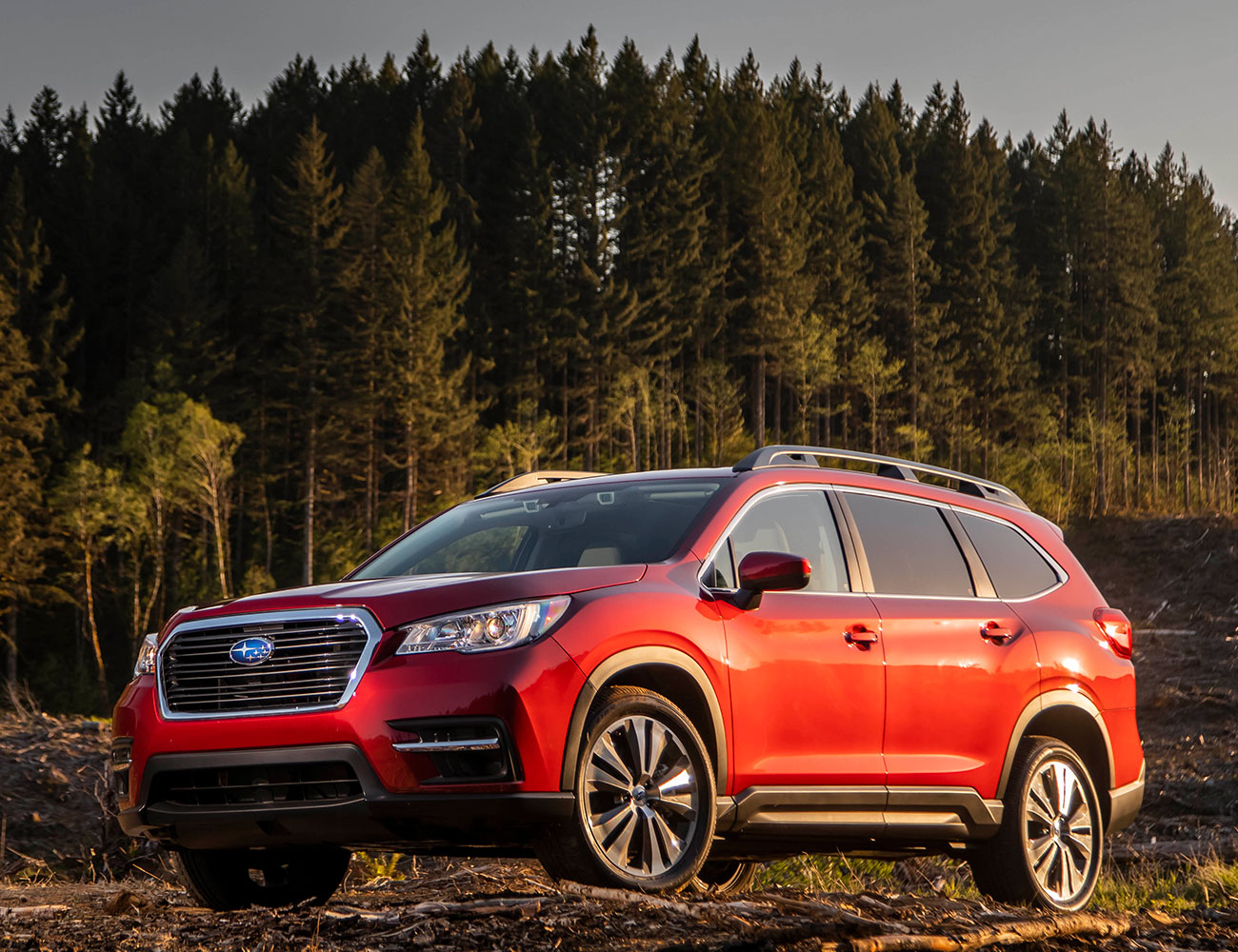
Subaru, in contrast, made a bigger Subaru. The Ascent looks like the instruction was to make a bigger Forester and designers executed that almost too literally. It maintains the company’s rugged, low key, family car aesthetic. It’s the three-row SUV the rabid Subaru base would want.

Neither interior bowled me over. The Atlas had the better, cleaner interior design. But, cheap plastic in certain places ruined the “VW interiors look like an Audi” mantra. The Subaru interior felt busy and a bit dated. My Dad asked me whether I was flying an airplane when he saw the center console. Though, I do think the Ascent incorporated high-end materials like wood-grain paneling better.

Advantage: Tie

Read Now: The Elegant Range Rover Velar Is an Off-Roader for Design Lovers

DRIVING DYNAMICS
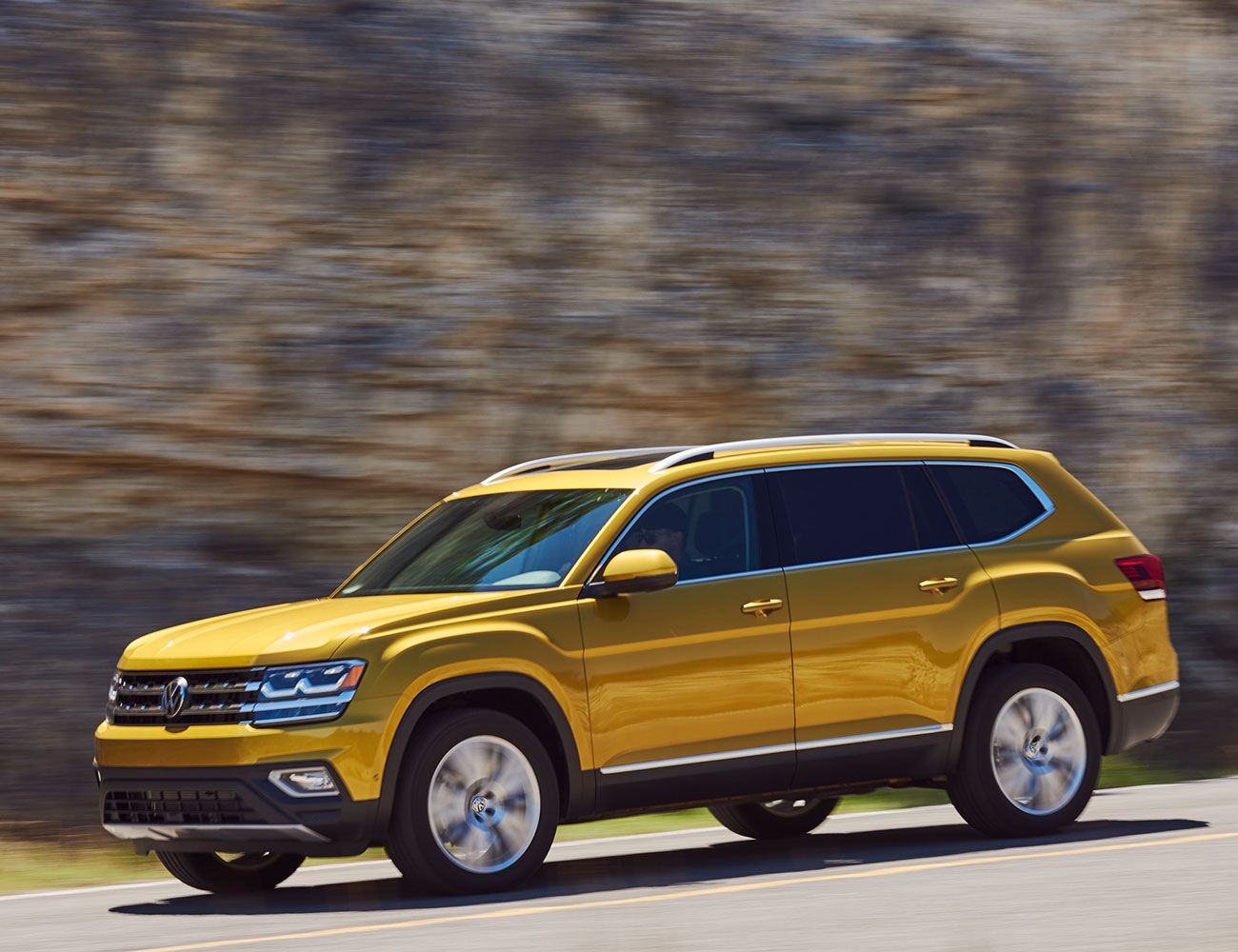
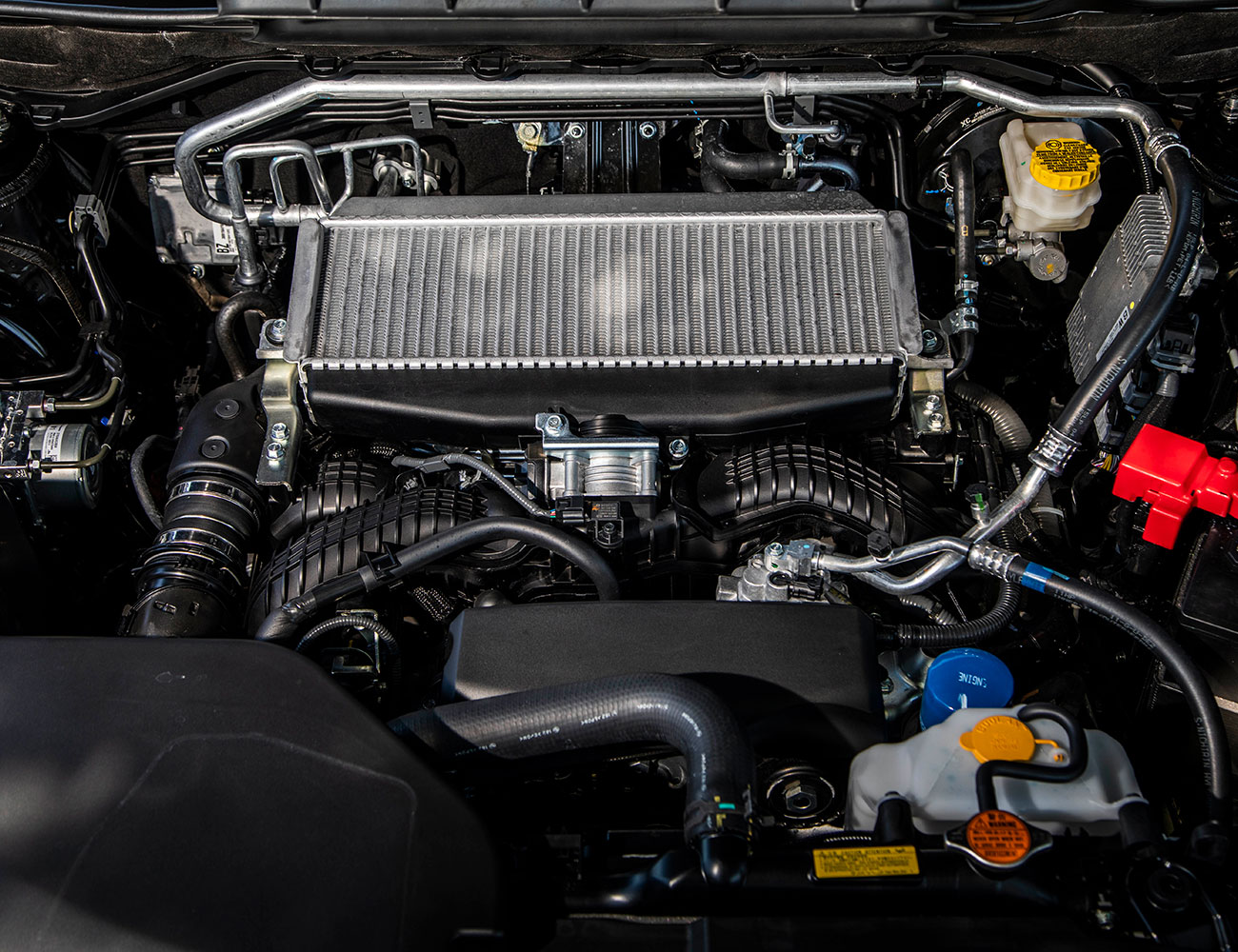
Volkswagen and Subaru swapped stereotypes here. The Atlas got most of the little things right. It was a comfortable cruiser. The suspension delivered a much smoother ride over Michigan potholes. The steering felt better calibrated than the Tiguan. The Atlas drove like a lighter car than it was. But, the 3.6L VR6 was all but lifeless. When pushed, the engine groaned and nothing much happened. That was with a more or less empty load.

Subaru made a better choice with the turbocharged 2.4L Boxer 4. The Ascent had 16 fewer horsepower than the V6 Atlas. But, it had more torque (277lb-ft to 266lb-ft). The Ascent wasn’t quick per se. It won’t change any strong opinions about the CVT. But, it responded more. Neither was as engaging as the Enclave Avenir I drove last summer.

Both AWD systems withstood school-closing level Michigan winter weather. The Atlas and the Ascent felt composed in ice, snow, and slush. No special modes required.

Advantage: Ascent

Read Now: 2019 Mazda CX-9 Review: The Best SUV I’ve Ever Driven

PRACTICALITY
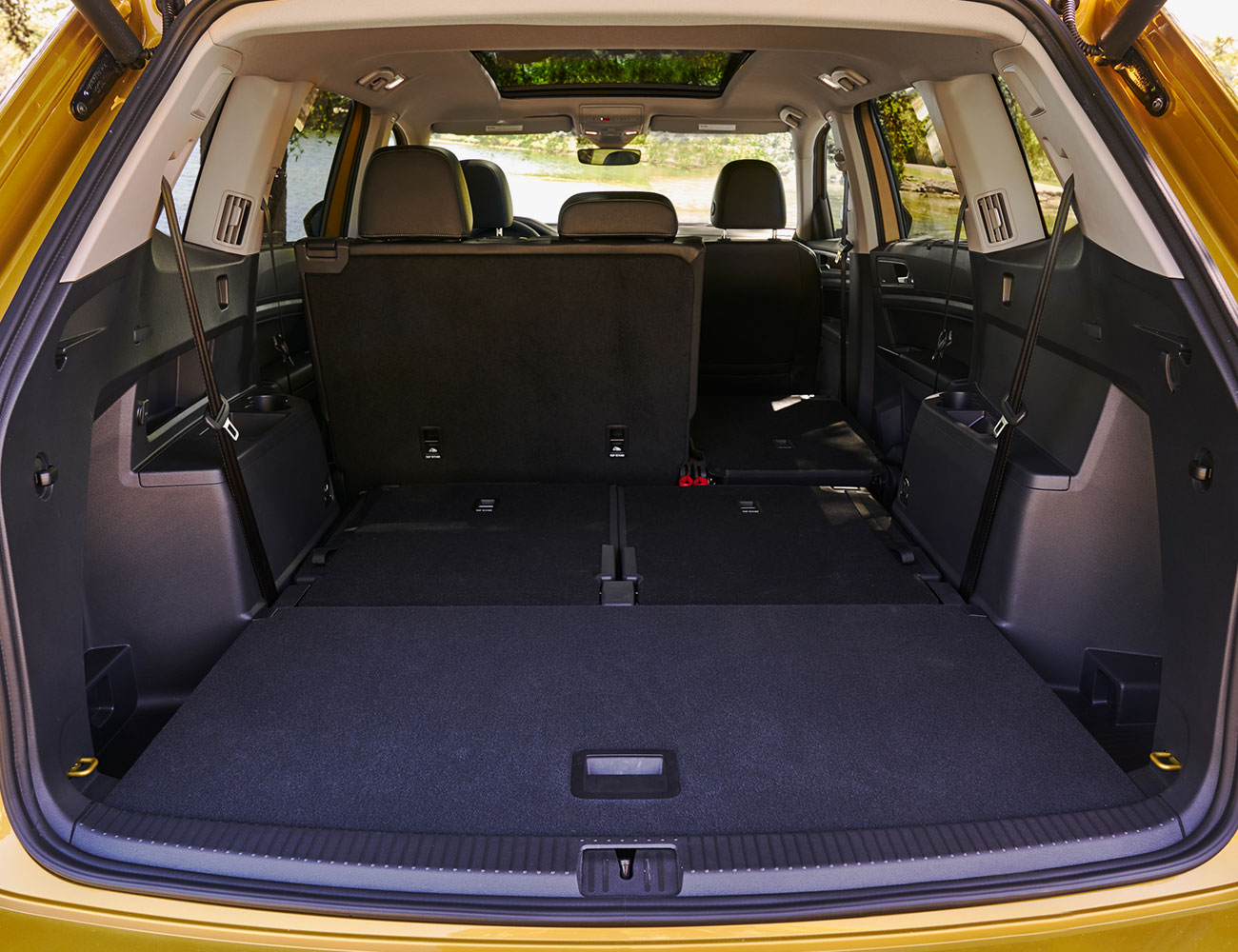
Again, Volkswagen and Subaru swapped stereotypes. The Atlas felt like a cathedral inside. The interior volume almost unnerved me. I had to adjust my driving position because the armrests were so far from the steering wheel. It reminded me of driving an American truck. There was space in the driver’s seat for some rigorous upper body calisthenics.

With both rows folded, the Atlas has an extra 10 cubic feet of potential cargo space (96.8 to 86). That meant, with all seats up, it had a more viable third row and a reasonable-sized trunk behind it. The Ascent trunk with the seats up felt cramped. I had to lower the seats to fit a box of diapers and a couple of small baby gifts.

The Atlas had the more intuitive power liftgate. The Ascent edged the Atlas 19-17 for the number of cupholders. Hydrate to your heart’s content, third-row passenger. Neither car fit in my garage.

Advantage: Atlas

Read Now: The New Rolls-Royce Cullinan SUV Is a Sure-Footed Hulk and Glamorous to a Fault

ANNOYANCES
The Ascent had some not so charming quirks. I abandoned the “auto” lights setting after the second time the lights failed to turn on at night. My fob would not work until the keyless entry activated. The keyless entry activated on the driver’s side. So, I had to walk around the car to unlock it, then walk back around to put my son in his car seat.

EyeSight deactivated and showed false alarms after it snowed. Opening any door sent a spray of snow/ice into the cabin. Shutting down the engine cut power to the phone, but not the radio. So, if you were listening to your phone audio, you got blitzed by whatever was on the radio no matter what. I also felt some wheel rubbing on super sharp turns in a parking garage.

The Atlas had far fewer issues. VW’s greatest innovation over the past decade has been protecting the rearview camera inside the logo. The Atlas doesn’t have that feature. The inevitable occlusion happened during weather. The Atlas displays elaborate graphics for changing driver modes. Those graphics supersede everything else on the infotainment display, including the rearview camera. Don’t change to “Snow Mode” before reversing.

Advantage: Atlas

Read Now: Lamborghini Urus Review: Truly as Crazy as It Looks

EFFICIENCY
With the four-cylinder, the Subaru had the better EPA rating (22mpg combined) vs. the Atlas (19mpg). Even with significant highway stretches, I could not match those numbers for either vehicle in real-world driving.

I averaged about 17mpg flat with the Atlas, which was the EPA city range. It disappointed to get that poor gas mileage and not get any performance for it. With the Ascent, I managed a hair under 18mpg over a week, a long way off the EPA measure. Cold weather may have played a role. It did sound like the Boxer 4 was laboring a lot at low speeds.

Advantage: Ascent, barely

Read Now: Audi E-Tron Review: Simply Put, This Is a Great Car

VALUE
Of the two top-end trims, the Atlas SEL Premium w/4Motion ($50,320) with options for second-row captain’s chairs ($695) and black wheels ($235) was nearly $5,000 more expensive than the Ascent Touring ($45,670). The Ascent was also cheaper on the bottom end. Technically, there’s a 2.0T four-pot S version of the Atlas starting at $30,895. But, the base Ascent with the same engine as the Touring and AWD starts at $31,995. A comparable V6 w/4MOTION Atlas starts at $34,095. You can get an upgraded “Premium” trim Ascent for about that same price.

Essentially, Volkswagen charged a significant premium for 4MOTION while AWD is standard for Subaru. Subaru also offers features lower down the trim range. It’s too early to predict resale value. But, that tends to be a strength for Subaru and not as much of one for Volkswagen.

Advantage: Ascent

Read Now: Volkswagen Tiguan Review: The Style You’d Expect from VW but None of the Charm

VERDICT

I would aim for the middle trims with both crossovers. The base models miss critical comforts. The super-lux versions don’t add that much luxury, even if I do love a good ventilated seat. For the Ascent, I would stick with the Premium ($34,195) or Limited ($38,995) trims. For the Atlas, I would choose one of the V6 SE w/4MOTION trims under $40,000. Nearing $50,000 for a Volkswagen seems excessive when you can buy a 7-seater Land Rover Discovery with 60hp more for $55,000.

Choosing between them was hard. Both present compelling arguments. I would buy both over the Enclave for the cost savings and ability to see out the rear of the vehicle. The Atlas looks fancier. It’s more comfortable. It’s more practical. It’s less annoying. But, I would go with the Ascent. I buy cars to drive them. The Atlas engine would bother me more longterm than Ascent weirdness. Understatement, value, and torque are why we own two Volkswagens. But, it’s the Subaru that provides those qualities in this segment. If the Atlas had a better engine, I might reconsider.

I won’t be trading up for an Ascent or an Atlas in the near future, as neither would fit in my garage.

Specs

2019 Subaru Ascent Touring

Powertrain: 2.4-liter turbocharged Boxer 4; CVT; all-wheel-drive
Horsepower: 260
Torque: 277 lb-ft
Curb Weight: 4603 lbs
EPA Ratings city/highway: 20/26 MPG
Price: $31,995 (base MSRP); $45,670 (as tested)

2019 Atlas V6 SEL Premium w/4MOTION

Powertrain: 3.6-liter VR6 with FSI; eight-speed automatic); all-wheel-drive
Horsepower: 276
Torque: 266 lb-ft
Curb Weight: 4502 lbs
EPA Ratings city/highway: 17/23 MPG
Price: $30,895 (base MSRP); $50,320 (as tested)

Mercedes-AMG GT R Roadster: Hardcore GT R Goes Topless

The Mercedes-AMG GT R was officially unveiled in June 2016 ahead of the Goodwood Festival of Speed that year. Almost three years have passed without a convertible counterpart. We recently saw a facelifted version of that car. Today we finally get to see a convertible version in the form of the Mercedes-AMG GT R Roadster!

The new Mercedes-AMG GT R Roadster is only going to be available as a limited production model. Mercedes-AMG plans to produce 750 of the hardcore roadsters. Its release extends the count of the AMG GT variants to 16, five two-door coupes, four roadsters, two race cars and five four-door coupes.

Under the front bonnet sits a 4.0 litre V8, bi-turbocharged engine producing 585 hp and 700 Nm of torque. In the Roadster, it allows a 100 km/h sprint in just 3.6 seconds with a top speed of 317 km/h.

As with the coupe, it gets an AMG specific grill. The new LED headlights are also shared with the coupe together with the styling and active aerodynamics incorporated into the front end. As with the C Roadster, the R Roadster sits 46 millimeters wider at the front and 57 millimeters wider at the rear. The rear wing is fitted to the bootlid.

The new model also gets the ‘AMG Dynamics’ settings for the stability control functions with Basic, Advanced, Pro and Master settings. Active rear wheel steering is included as standard.

Mercedes-AMG GT R Roadster

The 10 spoke wheels are exclusive to the AMG GT R and measure 19 inches at the front and 20 inches at the rear. The brake callipers are painted in yellow and are hidden under the matt black finish of the wheels.

The three-layer fabric soft top gets acoustic matting to reduce noise. The exterior gets graphite grey magno matt paint, an exclusive colour. There are 14 other colours choices. An AMG carbon fibre package adds carbon fibre elements to various exterior elements.

The AMG GT R Roadster also gets the tech carried over from the facelift models. This includes the new configurable 12.3-inch digital instrument display and a central multimedia display with a new 10.25-inch screen and updated graphics. It gets the new steering wheel with capacitive buttons and TFT screens. The AMG Interior Night Package comes as standard.