The Golden Era – Homologation, The Big Mac and the Rise of the Everyday Supercar. Your Ultimate Guide to the Best Supercars from the 1990s
This is our first in a series of posts about the awesome cars of the 1990s. In this post we curate the best supercars from the 1990s, an era stacked with exotic masterpieces. Some of the defining features of the 1990s supercar era includes the amazing McLaren F1 and the revelation that was the Honda NSX as well as the spirit of competition amongst top manufacturers in prototype racing that created some awesome limited run homologation specials for the road.
The high performance supercar market went from niche to mainstream in the 1980s. Supercars like the Lamborghini Countach, Porsche 959 and Ferrari F40 had collectively wowed car fans the world over in the late 1980s and with Wall Street humming and the global economy in good shape, the appetite for exotic cars only grew going into the early 1990s. As the 1990s started, many pundits wondered however whether we had already reached peak car. After the extraordinary supercars of the eighties, many supercar manufacturers entering the nineties asked “how on earth do we follow that?”
It is impossible to talk about the 1990s supercar era and not mention the impact of the mighty McLaren F1. McLaren came along in the mid-90s with the ultimate supercar, the McLaren F1. The F1 did not just beat the other supercars at the time, it blew them away so convincingly that it wasn’t until the Bugatti Veyron came along more than a decade later that its acceleration and top speed records were beaten. It was Gordon Murray, the former F1 engineer and his obsession with weight savings and attention to detail that redefined what a supercar could be. It was like no other supercar before it (or like any other since), a car that redefined what it meant to be a supercar.
At the other end of the spectrum was the Honda NSX. It came along in the 1990s and shook up Lamborghini, Ferrari and Porsche. Here was a major manufacturer known for small compact Honda Civic cars who created a supercar that was easy to drive, was fast and agile and didn’t break down. Anybody could drive it. It forced all the sports car makers to get better and ushered us all into the world of the everyday supercar. Speaking of everyday Supercar, the 1990s saw the 911 Turbo genuinely scare the top players with more than 400 horsepower, all wheel drive and astonishing performance in a daily driver.
On our list of the best 20 cars, no less than six cars raced. In fact, five of the cars on our top supercars of the ‘90s list were expressly built to race and are known as homologation specials. Carmakers had fully embraced the “win on Sunday, sell on Monday” mantra in the early 1990s and channeled vast amounts of money into trying to find racing glory. Racing homologation rules (stipulating that road-going versions of cars had to be manufactured for homologation) inspired automakers to produce these machines. The FIA GT1 class therefore produced some of the best race cars of the mid-1990s and (thanks to those loosely interpreted homologation requirements), some of the wildest street cars too. These included the Porsche GT1, Mercedes-Benz CLK GTR and the insane Dauer 962 LM.
In terms of awesome supercars, the 1990s were the golden age. Fun times indeed. Please read on for our take on the greatest 1990s supercars.
Criteria note: We focused on the first year of manufacture as our criteria for a car making it into the decade. If the car had first been manufactured in the 1980s and was carried over into the 1990s largely unchanged then it belongs in the 1990s (aka Ferrari F40). If it was initially built in the 1980s but was substantially updated or had a sub-model in the 1990s then it could make the 1990s list (aka Ferrari F512 M).
Author note: This initial article was written by JACK MATTHEWS in May 2017 and was updated by Nick Dellis (with help from car nut Kenny Herman) in May 6th 2019.
20 Best Supercars from the 1990s
Read on for our ranked list of the greatest supercars of the nineties. We discussed whether to rank the cars versus just have an unranked list and realized it was way more fun to have people argue about rankings than not.


The best Lotus of the 1990s. Rare, fun, a little underpowered though.
Power: 349 bhp @ 6500 rpm / Torque: 295.0 ft lbs @ 4250 rpm / Engine: 3.5 liter twin-turbo V8 / Produced: 1999 / Base Price: £64 950 / Units made: 50 / Top Speed: 175 mph (281.6 kph) / Acceleration (0-60 mph): 4.7 seconds
Having raced the Esprit in GT2 and GT3 classes, Lotus began to develop a new version of the car to race in GT1 class racing. Development of the car was entrusted to the newly formed Lotus GT1 Engineering group, which included many staff from the recently dissolved Team Lotus. For us however the more impressive Lotus of the 1990s was the 1999 Lotus Esprit Sport 350.
It was the ultimate incarnation of the Esprit. Only 50 were made. Taking the V8 GT further, the Sport 350 was one of the most exclusive Esprits made. It featured the standard-spec V8 with blue-painted intake manifolds. What set the 350 Sport apart from the VT GT was a number brake, suspension and chassis improvements. Lowering the kerb weight was a primary design focus for Sport 350. Apart from the weight reduction, the other major change to Sport 350 was its braking system. While exclusivity was offered with the Sport 350, it is a shame Lotus never tuned the engine beyond its standard specification. This is strange given the fact that every other aspect of the car was up-rated for track use. It was one of the closest cars to emulate the track experience on the road.
Read more: Lotus Esprit Sport 350.

All wheel drive. Twin turbo flat six engine. Over 400hp. Ludicrous performance. Porsche delivers a daily driver that destroys supercars. The ultimate air cooled 911.
Power: 424bhp @ 6250 rpm / Torque: 423 lb-ft @ 4500 rpm / Engine: 3.6 L twin-turbo Flat-6 / Produced: 1997 / Base Price: N/A / Units sold: 183 cars produced / Top Speed: 183 mph / Acceleration (0-60 mph): 4.4 seconds
Considered by many Porsche enthusiasts as the “ultimate 911”, the type 993 represented a unique blend of power and simple elegance. The car had a more streamlined look and was “lower slung” than earlier versions of the 911. The styling was perfect and it is still the best looking 911 series. This was the last of the “air-cooled” Porsche 911s (insert sad face here).
The turbo-version of the Type 993 Porsche 911 was also introduced in 1995 and featured a bi-turbo engine that was at the top of the performance pack for the time. For Turbo 993s the 3.6 liter got twin KKK K16 turbos and made 402 hp although you could customize your order (on Turbo S and GT2 models) to up that to 444 hp. The 993 Turbo was the first 911 Turbo with all wheel drive, essentially lifted from the 959 flagship model.
During the second to the last year of production of the 993 (1997), Porsche offered the 993 Turbo S. The X50 power pack had larger turbos, intake and exhaust upgrades, and a new computer. Power upgrade got it to 424 hp and included extras like carbon fiber decoration in the interior as well as very cool yellow brake calipers, a slightly larger rear wing, a quad-pipe exhaust system and air scoops behind the doors. This was the last of the air-cooled 911 Turbos and our favorite.
Read more: Porsche 911 Turbo S (993).

The fastest and most expensive Nissan road car ever developed. 0-60 mph in 3.2 seconds and 0-100 mph in 6.5 seconds. Road car was capable of 220 mph.
Power: 549.9 bhp @ 6800 rpm / Torque: 470.0 ft lbs @ 4400 rpm / Engine: 3.5-litre twin-turbo V8 / Produced: 1998 / Base Price: ~US$1,000,000 / Units sold: 1 (road car) / Top Speed: 220 mph / Acceleration (0-60 mph): 3.9 seconds
The ultra-rare Nissan 390R was basically a detuned Le Mans racer offered for sale to the public at a hefty $1,000,000. Only two were made. It was the fastest and most expensive Nissan road car ever developed was created to comply with the Le Mans GT1 Class regulations which required manufacturers to build at least one street-legal version of the race car.
Unlike many others, Nissan built the road car first and built the racing version from it. The R390 GT1 design was the work of Ian Callum at Tom Walkinshaw Racing. Behind the driver sits the heart of this true supercar, the VRH35L twin-turbocharged 3.5-litre double-overhead-camshaft V8 engine with electronic sequential port fuel injection which produces 549.9 bhp @ 6800 rpm while complying with all European market exhaust gas regulations. R390 GT1 performance as one would expect is staggering and includes a sub 4.0 second zero to 60 mph time and top speed north of 220 mph.
Inside are normal road car appliances such as full instrumentation and leather-covered driver and passenger racing seats. The short-throw gear lever for the Xtrac six-speed sequential gearbox and tiny racing steering wheel are reminders of the close alliance between the road car and the vehicle which captured four out of the top-ten spots in the 1998 Le Mans 24-hour race.
Read more: Nissan R390 GT

Big, bruising and totally nuts. This twin-supercharged V8 Aston was the most powerful car in the world for a while. Handling sucked, quality was iffy, but it was still very cool.
Power: 550.0 bhp @ 6500 rpm / Torque: 550.0 ft lbs @ 4000 rpm / Engine: Twin Supercharged V8 / Produced: 1993 – 2000 / Top Speed: 186 mph / Acceleration (0-60 mph): 4.5 seconds / Base Price: NA / Units sold: 281 cars made
Bullish, aggressive and in many ways a tad ham-fisted when compared to today’s lithe, delicate yet calmly aggressive Astons, the Vantage battered its way to 186mph with the help of its 5.3-litre supercharged V8 mounted ahead of the driver and sending power to the rear.
The Vantage was one of the cars that emerged during the era of Aston Martin’s ownership by Ford Motor Company, and featured harsher edges to its styling than had been seen on many Aston Martins previously. This styling was taken a step further in 1999, with the release of the Aston Martin Vantage Le Mans. The special edition’s looks came somewhere between that of a bull and a shark, which fit the 600bhp machine’s personality quite well.
Read more: Aston Martin V8 Vantage

Last production mid-engine flat-12 model and the final iteration of the famed Testarossa. Updated chassis and engine massively improved performance and driving experience.
Power: 440 bhp @ 6750 rpm / Torque: 368.8 lb/ft @ 5500 rpm / Engine: 4.9 L Tipo F113 G Flat-12 / Produced: 1995–1996 / Base Price: N/A / Units sold: 501 produced / Top Speed: 196 mph / Acceleration (0-60 mph): 4.6 seconds
We chose the F512 M over the 512 TR as our favorite Ferrari Testarossa. The result of constant evolution, the 512M shared almost all of its engineering from the 512 TR that came before it. The F512 M was the last version of the Testarossa.
The F512 M sports had the same 4.9-litre Tipo F113 G longitudinally mid mounted flat-12 engine with 440.0 hp at 6,750 rpm. Most of the changes were limited to slight body upgrades that many consider ruin the lines of the original design. In our eyes it looks better so it got the nod over the 512 TR. The front and rear lamps received a design change. The pop-up headlamps were replaced by two fixed square units. The rear tail lamps were round and the bumpers had been restyled to yield a more unified look as well as the addition of cool twin NACA ducts.
Read more: Ferrari F512 M in detail

This is where the GT3 legend begins. Porsche wanted to go racing in the GT3 endurance category and developed this 3.6 liter Mezger engined masterpiece. Thank you Porsche.
Power: 360 @ 7200 rpm / Torque: 273 lb/ft @ 5000 rpm / Engine: 3.6L Water Cooled Flat-6 / Produced: 1999–2001 / Base Price: $90,000 / Units sold: ~1,868 cars produced / Top Speed: 187.7 mph / Acceleration (0-60 mph): 4.5 seconds
The GT3 we love today all started in 1999 with the 996 model GT3 and it all started because Porsche wanted to enter the GT3 class of the FIA. Porsche began investing in developing both the race car and the road-going version which was required by GT class homologation rules and the GT3 was the result. The GT3 became the 996’s range-topping model until a new GT2 was launched.
Based on the 996 Carrera, the 996 GT3 was a really a track focused sports car that was lighter, sharper and more potent than its everyday sports model siblings. To help in the performance stakes, the GT3 the water-cooled flat six was loosely based on the GT1 and got a dry-sump crankcase with an external oil tank making it more powerful and higher revving. Gone were the rear seats, sunroof, air conditioning, radio and a boatload of sound deadening.
Major design changes included a more aggressive front end with larger headlamps shared with the Boxster, a sleeker body, and a more raked windshield. Design and aerodynamic features exclusive to the GT3 included slimmer air vents for the front bumper, a front splitter, new side skirts, a revised rear bumper, new wheels, and massive rear wing.
The GT3 quickly became the choice for drivers because of its remarkably sharp throttle response, better steering, steady balance, and amazing engine. While a Turbo had it beat for outright speed, this was the ultimate drivers Porsche. Its lighter body and race tuned suspension tuning also made it a perfect machine for attacking weekend drivers who wanted a track car.
If you are in the U.S you may at this point wonder why you can’t find any GT3s from the era for sale. Porsche did not bring the GT3 to the United States until 2004 (see the 996.2 model just below).
Read more: 2000 Porsche 911 GT3

Brought back the magic to the supercar world
Power: 550 bhp @ 5500 rpm / Torque: 553.2 lb/ft @ 4100 rpm / Engine: Mercedes AMG V1 (7010 cc) / Produced: 1999-2002 / Top Speed: 210.1 mph (338.0 km/h) / Acceleration (0-60 mph): 3.8 seconds / Base Price: NA / Units sold: US$325,000
My favorite car debuted in 1999. Most people think the Zonda was a car from the early 2000s. While it was the 2002 Zonda with the upgraded 7.3-liter V12 that people remember, Pagani had already been successfully marketing the Zonda for three years up till that point. It was originally launched as the C12-S in 1999.
Read more: Pagani Zonda posts / Pagani Zonda C12-S

8 liters of truly brutal American muscle
Power: 415.0 bhp @ 5200 rpm / Torque: 488.0 ft lbs @ 3600 rpm / Engine: Naturally aspirated 8 liter V10 / Produced: 1996-2002 / Base Price: US$58,500 / Units sold: NA / Top Speed: 170.0 mph (273.6 kph) / Acceleration (0-60 mph): 4.7 seconds
Some might not consider the original Dodge Viper a supercar, but at the time of its release it was a revelation with its aggressive looks and insane 8-liter V10 engine. The 1996 RT/10 could be referred to as a second generation Viper and it featured a host of upgrades over earlier Vipers produced from 1992 to 1995. It was a much better car. Outwardly the main difference to the 1996 Viper was the absence of side exhausts which were replaced with two standard exhausts exiting the rear. The three spoke wheels were also gone and replaced with 5-spoke counterparts. Inside, the cabin remained largely unchanged, but a removable roof was standard as was sliding plastic panels for the windows. Underneath, the chassis was stiffened, suspension geometry revised and a more robust rear differential was installed.
Our pick of the 1990s Viper’s was the GTS which was launched in 1996. It was a more powerful version of the RT/10 with 450 hp and a new double bubble coupe body. Beyond more power though, the GTS had over 90% new parts compared to the RT/10. In 1997 and 1998 model years the Viper would continue to receive minor updates and the GTS would get second-generation airbags, revised exhaust manifolds, and a revised camshaft for 1997, and the RT/10 would gain a power increase up to 450 hp (336 kW; 456 PS) for 1998.
Read more: Dodge Viper RT/10 ‘Phase II SR’

A pure-bred Le Mans car, created specifically to contest the world’s most famous 24-hour race with no compromise in terms of design or engineering. Road version equally nuts.
Power: 600 bhp @ 6,000 rpm / Torque: 479 lb/ft / Engine: 3.6 liter 90-degree V8 twin-turbo / Produced: 1998 / Base Price: US$1,400,000 / Units sold: 2 / Top Speed: 236 mph (380 kph) / Acceleration (0-60 mph): 3.2 seconds
The Toyota TS020, better-known in Europe as the Toyota GT-One, is a pure-bred Le Mans car, created specifically to contest the world’s most famous 24-hour race with no compromise in terms of design or engineering. The engine had its heritage in the twin-turbo V8 which powered Toyota’s Group C cars in the late 1980s.
In accordance with the FIA rules of the day, the GT-One had also to be developed as a legal road car. In fact the differences between the race and road versions were small: in road-going mode, the rear wing was set lower and the suspension ride height was raised. A smaller fuel tank was fitted and the addition of catalytic converters ensured the vehicle complied with emissions regulations. Toyota says the engineers at Toyota Motorsport GmbH created just two ‘production’ TS020 GT-Ones – one is on display in its museum, the other in Japan.
Read more: 1998 Toyota GT-One

Porsche wants race. Takes 993-based 911 and grafts it to the rear-end of a 962. Adds twin-turbo 3.2-liter water-cooled flat-six engine capable of developing 600 hp. Done.
Power: 544 bhp @ 7,000 rpm / Torque: 443 ft lbs @ 4,250 rpm / Engine: 3.2-liter twin-turbo flat-six / Produced: 1996-1998 / Base Price: ~US$900,000 / Units sold: 23 / Top Speed: 193 mph (310 kph) / Acceleration (0-60 mph): 3.4 seconds
Porsche management wanted to compete in factory-based GT racing programs. It developed a brand new car. Basically it was 993-based 911 and essentially grafted it to the rear-end of a 962. dropped a twin-turbocharged 3.2-liter water-cooled flat-six engine capable of developing 600 hp. A futuristic 911-inspired carbon fiber shell finished the exterior packaging.
In order for Porsche to enter the highly competitive GT1 category back in 1996, a total of 23 road going-machines had to be built. To be specific there were two 1996 cars, 20 1997 cars and only one variant was built in 1998. The Strassenversion (road going) uses a 3.2-litre twin-turbo flat-six engine which puts out 536bhp and 443lb ft of torque. Now these might not seem like big numbers compared to modern supercars like the Porsche 918, but considering the GT1 only weighed 1120kg, the GT1 could get to 62mph in around 3.4 seconds. Unfortunately the GT1 was routinely beaten on track by Mercedes’ ferocious CLK-GTR. As a result, Porsche – along with a number of other manufacturers – pulled out of the GT1 class for 1999, effectively killing the championship class.
Read more: Porsche 911 GT1 Strassenversion
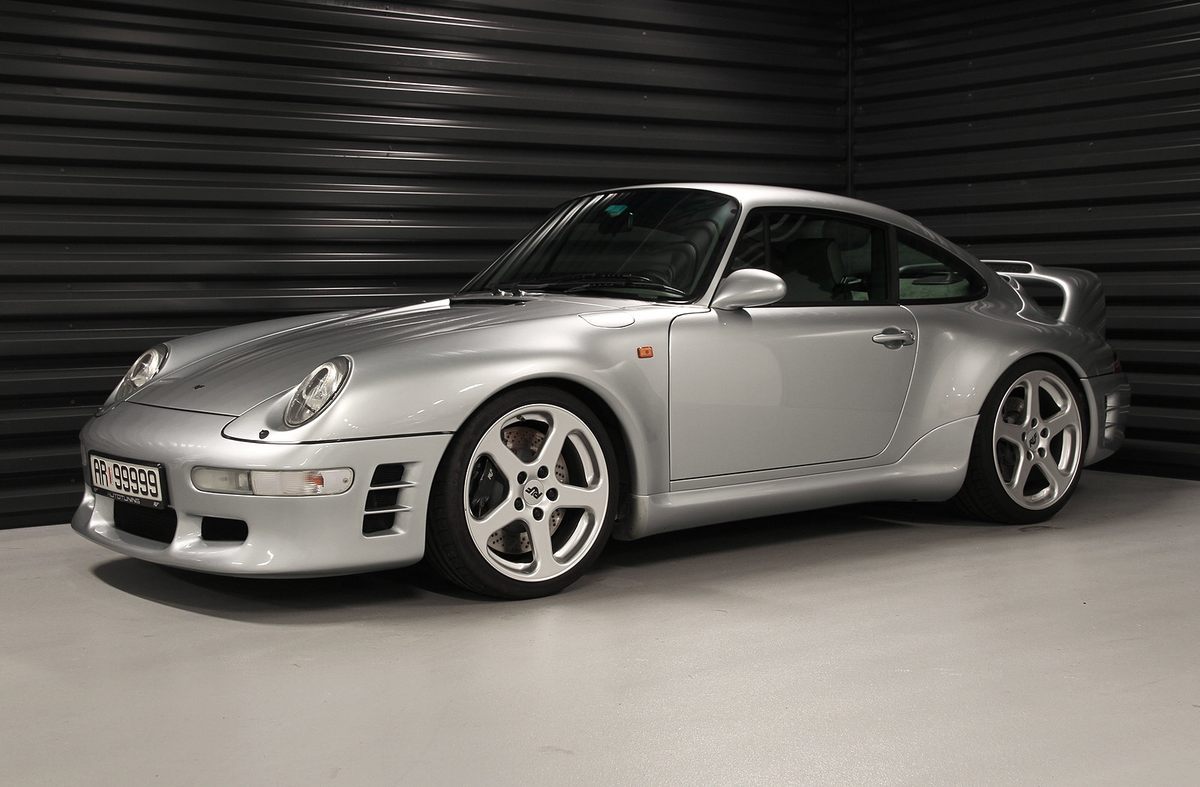
Might be based on a Porsche 911, but the Ruf CTR2 is far from a typical German sports car. Almost 520 hp from a Le Mans-derived twin-turbo engine. Straight line monster.
Power: 520 bhp @ 5800 rpm / Torque: 505.2 ft lbs @ 4800 rpm / Engine: 3.6 liter air-cooled twin-turbo flat-6 / Produced: 1995-1997 / Base Price: US$315,000 / Units sold: 16 standard CTR2, 12 CTR2 “Sport” / Top Speed: 220 mph (354 km/h) / Acceleration (0-60 mph): 3.5 seconds
Based on the 993-chassis 911 Turbo the CTR2 featured either the standard rear-wheel drive or an optional all-wheel-drive. It had a totally upgraded and custom suspension system, uprated brakes and integrated roll-cage as well as a very custom and cool wing. The body was made out of kevlar to save weight. The heart of the CTR2 was the race derived air-cooled Porsche 3.6 litre. It had twin-turbos and was based on the engine used in the Porsche 962 Le Mans Group C car. The team at RUF tuned it to produce 520 hp 505 ft lbs of torque.
In addition to the “regular” CTR2 was the CTR2 Sport. Built up from a Porsche 911 Turbo body-in-white, RUF manufactured the CTR-2 Sport for ultimate outright performance. The specially built engine was tuned to produce almost 600 hp depending on boost. Options included a roll-cage, a clutchless RUF EKS transmission, adjustable torque bias, adjustable boost control. This is the ultimate in straight line insanity, able to accelerate to sixty in 3.5 seconds (in 1995) and onto a top speed north of 220 mph. Crazy.
Read more: 1997 Ruf CTR-2, 1997 Ruf CTR-2 Sport
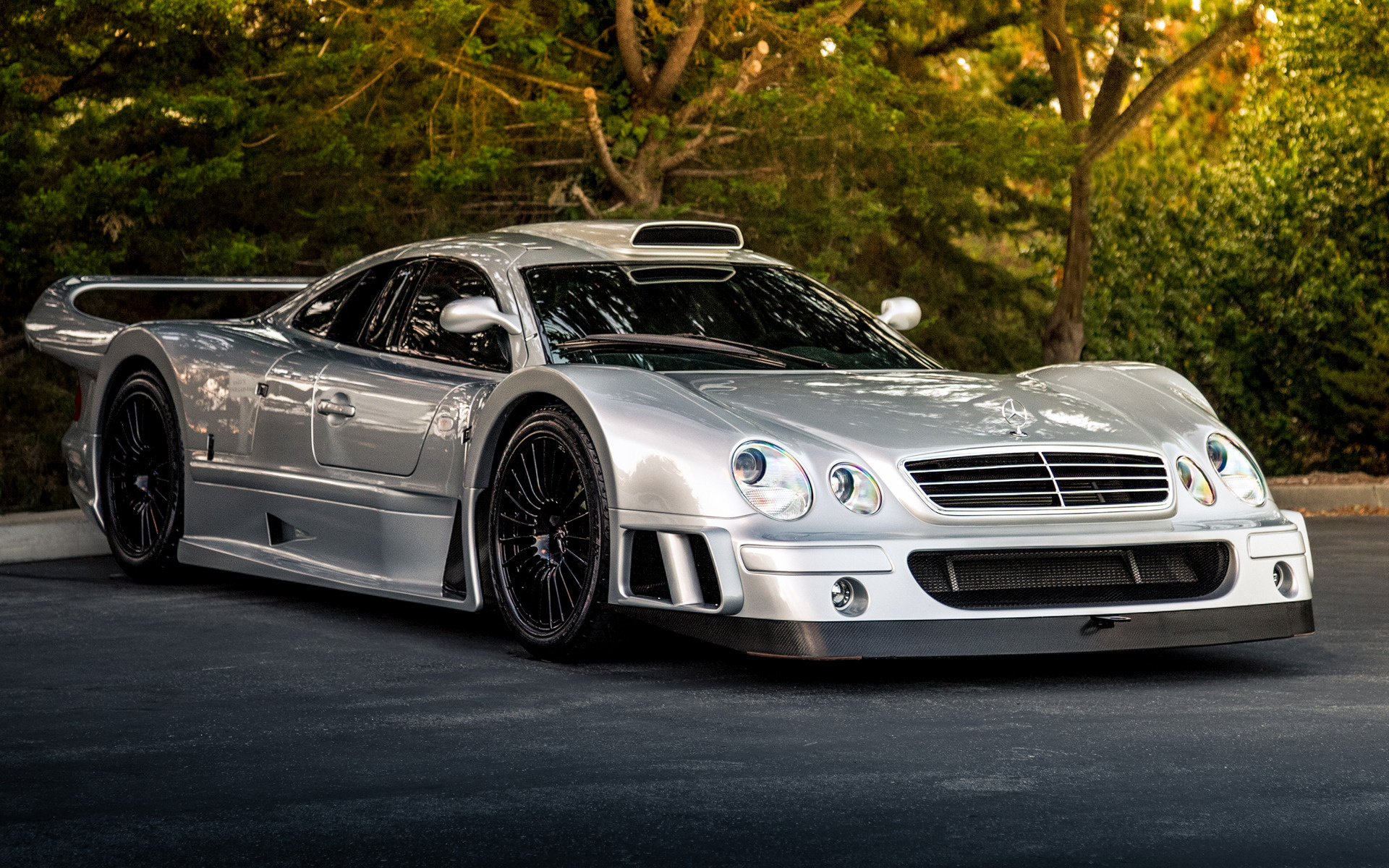
Homologation special madness by the crazy Germans at Mercedes-Benz. Only car here that can easily do a backflip for those fun “what-the-f**k” moments.
Power: 612.0 bhp @ 6800 rpm / Torque: 571.6 ft lbs @ 5250 rpm / Engine: 6.9 liter Mercedes-Benz M120 V12 / Produced: 1998–1999 / Top Speed: 191 mph / Acceleration (0-60 mph): 3.4 seconds / Base Price: US$1,547,000 / Units sold: 20 coupes, 6 roadsters
The CLK GTR was born out of Mercedes-Benz desire to duke it out against Ferrari and Porsche in the FIA GT Championship. Essentially taking elements of a CLK racer and some road car trimmings and mashing them together, they produced the prototype in time for the 1997 season.
Although the 1999 GT1 class was cancelled, Mercedes-Benz had already promised 25 road-going homologation versions to customers and was obliged to produce these. Customer cars featured a 6.9-litre V12 which produced 604bhp, bestowing the GTR with ballistic performance – 0-60mph took 3.8 seconds, on the way to a top speed of 214mph.
This came at a steep price; despite comforts being kept to a minimum in an effort to save both weight and cost, the production CLK GTR was listed at the time as the most expensive production car ever built in the Guinness Book of World Records, costing $1,547,620.
In 1999, Mercedes-Benz were due to race a CLR – a track-focused version of the CLK GTR – at Le Mans, until in qualifying on the back straight of the Circuit du Sarthe Mark Webber’s car took off, flipping several times as it tumbled into the bushes. In the race itself, a second similar incident took place while Peter Dumbreck was at the wheel, leading Mercedes to withdraw from the event and move away from sports car racing.
Read more: 1998 Mercedes-Benz CLK GTR Straßenversion
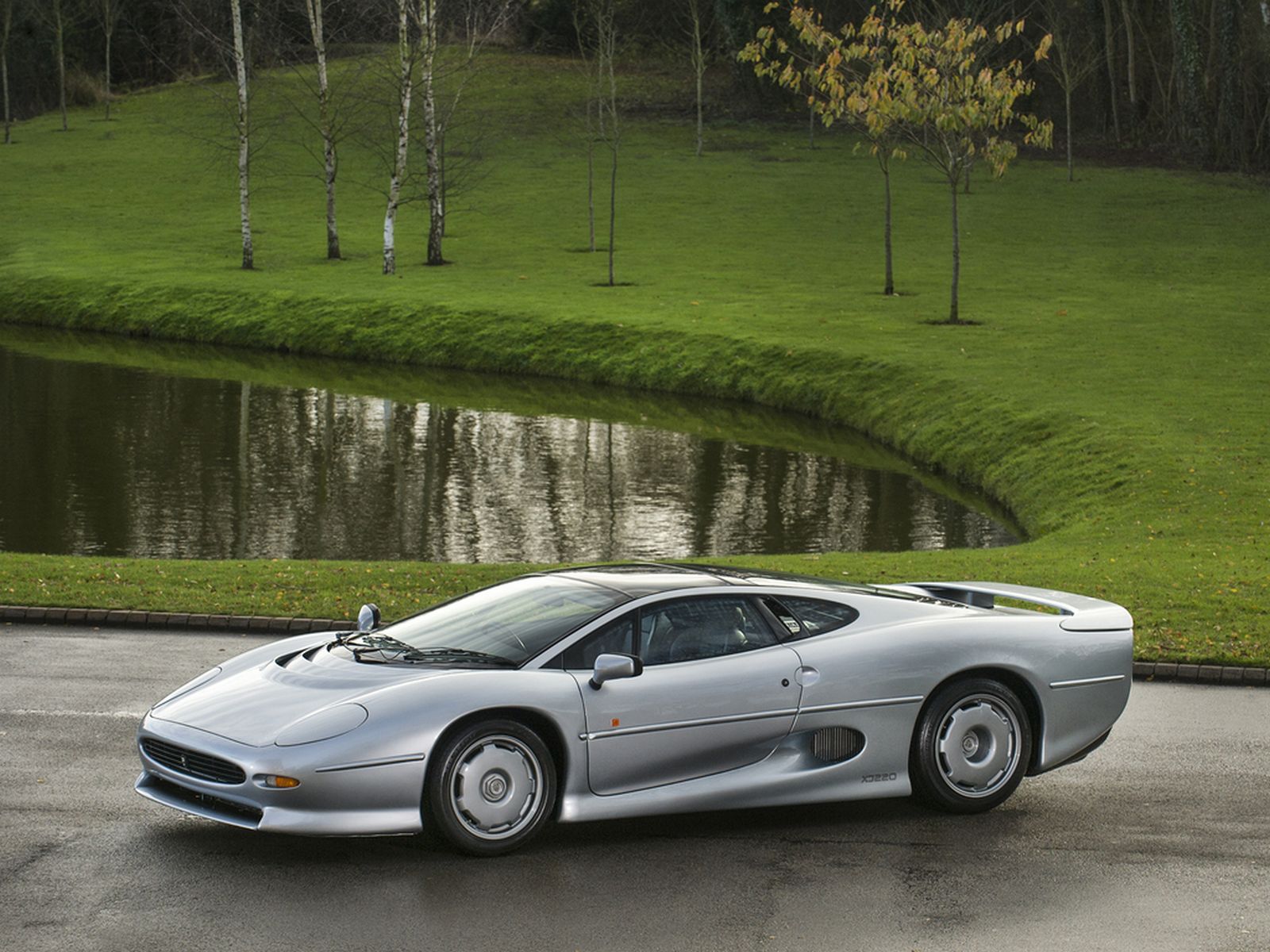
Jaguar’s first production supercar, the XJ220 was a bold step. Crappy sounding engine and huge turbo lag. Held top speed record till McLaren F1 came along.
Power: 542.0 bhp @ 7000 rpm / Torque: 475.0 ft lbs @ 4500 rpm / Engine: TWR 6R4 V6 (twin turbo) / Produced: 1992 – 1994 / Top Speed: 217 mph (349.2 kph) / Acceleration (0-60 mph): 3.9 sec / Base Price: US$700,000 / Units sold: 281 cars made
The XJ220 started life as a mid-engine, four-wheel-drive concept car developed by Jaguar employees in their spare time. That initial concept was planned around a V12 powerplant. By the time the first customer cars were delivered in 1992, a twin-turbo 3.5-litre V6 sat mid ship, delivering 542bhp. The basic shape and aims of the car remained the same however.
With a top speed of 212mph, the XJ220 was the fastest production car from its launch through to 1993, when it was topped by another British-built speed machine. This peaked initial interest in the car, but between the 1990s financial recession and the car’s retail price of £470,000, few took up the offer of ownership and only 281 cars were produced throughout its run.
It was handy on the track too; it went straight to the top of the Nurburgring time sheets in 1991, recording a lap of 7:46:36; Hardly surprising, considering it was built with help from Tom Walkinshaw racing.
Read more: Jaguar XJ220
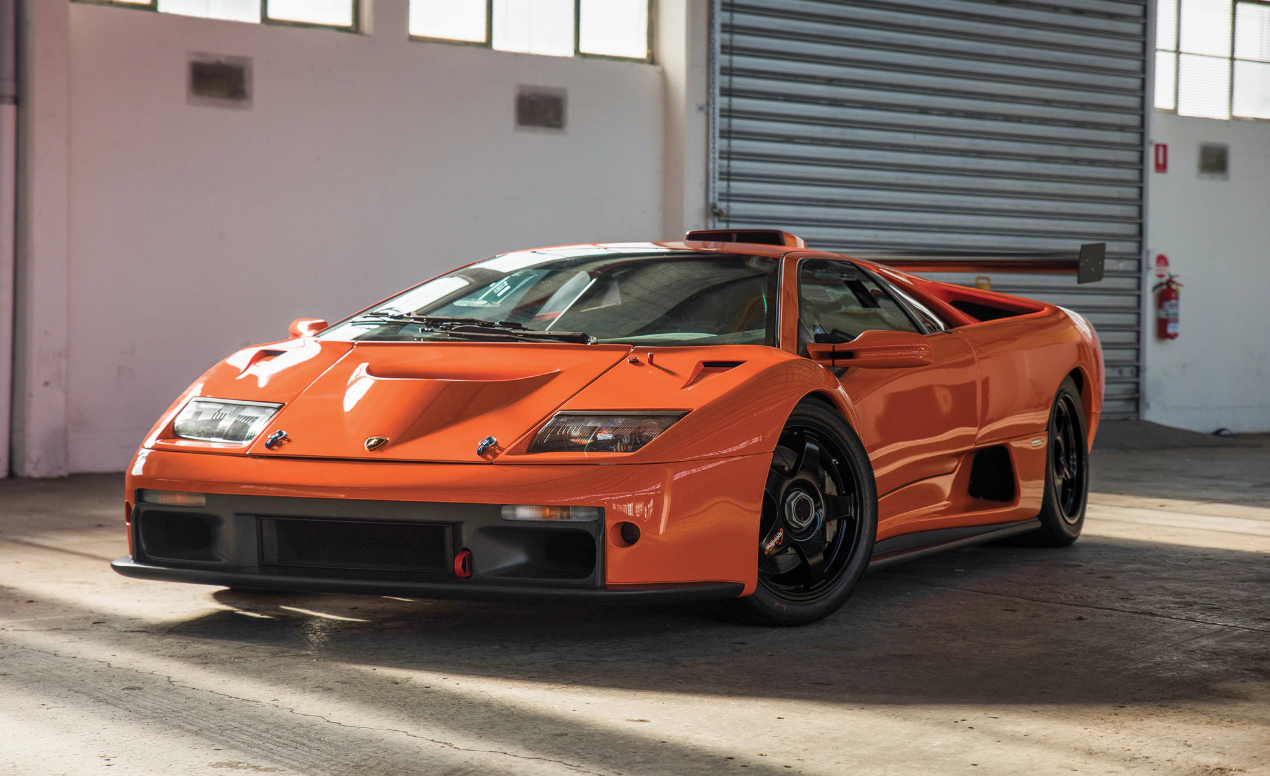
Lighter, faster and better handling than all other Diablos. Race car modifications finally made the outrageous Diablo a serious road racing supercar.
Power: 575.0 bhp @ 7300 rpm / Torque: 465.0 ft lbs @ 5500 rpm / Engine: 6.0 liter 60 Degree V12 / Produced: 1999-2000 (Diablo GT) / Top Speed: 215 mph / Acceleration (0-60 mph): 3.6 seconds / Base Price: US$309,000 / Units sold: 83 cars made
Lamborghini were never ones for making their own job any easier. This is the manufacturer that built the Miura then gave itself the task of following it; they managed that – in terms of impact if not necessarily driving experience – with the incredible Countach. Entering the nineties, they had to do it again.
Enter Diablo, the name literally translating as Devil (check). At launch it was fitted with a 5.7-litre V12 producing 485bhp, enough to launch its sleek and flash, yet still muscular body from 0-60 in 4.5 seconds and on to a top speed of 196bhp.
The Diablo, despite its nefarious name, was somewhat tamer than the car that came before it. It featured carbon fibre in the cockpit, but this was surrounded with luxurious leather trim.
That’s not to say it wasn’t without its evil side, most potent in later iterations the 510bhp SV and the rear-wheel-drive SE30 Jota – featuring that 5.7-litre V12 bumped up to 595bhp and various racing-focused changes that revealed the Diablo’s darker side. Only 15 Jotas were delivered from the factory, though 28 kits were produced, making this one of the rarest Lambos of the era.
Our pick of the litter is the Diablo GT. Lamborghini introduced the Diablo GT in 1998 based on the formula of the SE30 and the SE30 Jota. It combined the modifications of the GT2 race car with the outrageousness of the Diablo to offer serious road racing performance. So much so, it remains as the fastest road-going Diablo ever made by the factory. At the time of delivery in September 1999, the Diablo GT was also one of the fastest supercars as well, reaching a top speed of 215 mph (346 kph). It was easily the best Diablo made.
For the detailed oriented, about is a picture of the GTR. It took the GT and made it even crazier. Interior was stripped bare, it got a full roll cage and things like the stereo, soundproofing, and air conditioning were all removed. Add some Plexiglass windows, a fire suppression system, and single seat with a six-point harness. Hardcore.
Read more: Lamborghini Diablo GT
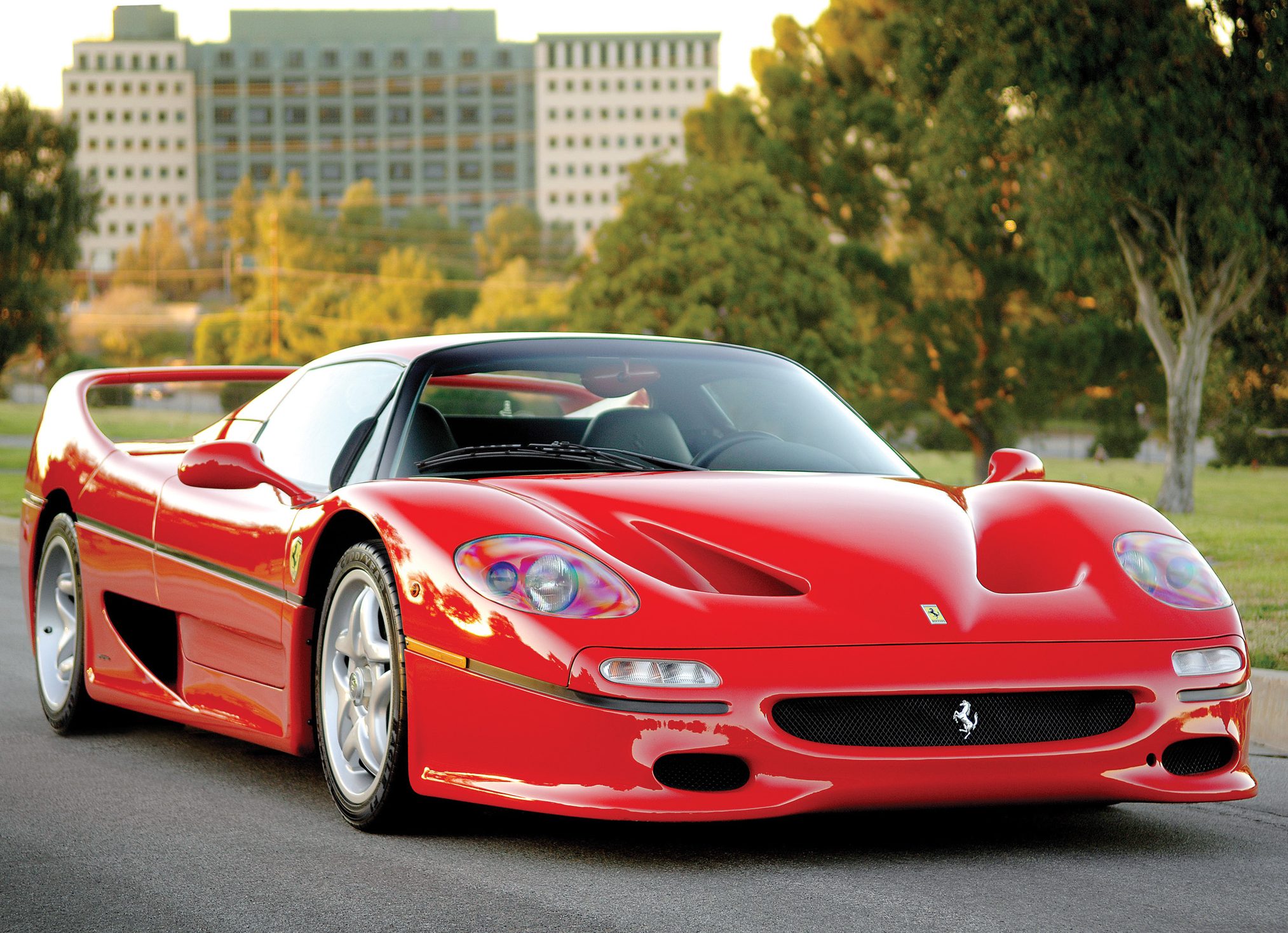
Ferrari’s most undeservedly underrated supercar. Superb.
Power: 513.1 bhp @ 8500 rpm / Torque: 347 lb/ft @ 6500 rpm / Engine: 4.7 L DOHC 65 degree Tipo F130B V12 / Produced: 1995 – 1997 / Top Speed: 202 mph / Acceleration (0-60 mph): 3.7 seconds / Base Price: $480,000 / Units sold: 349
So far in this countdown, we’ve had a lot of homologation-special racing cars repurposed for the road to meet the entry requirements for their respective championships. The F50 was different in that it featured components of an actual racing car, toned down only slightly for the road.
The Ferrari F50 began life with a tough act to follow. Its predecessor, the F40, had blown the motoring world away through the eighties and well into the nineties. Ferrari had to pull something very special out of their hats to follow Enzo’s final sign off for the company.
Their starting point was one of their old racing engines; the 3.5-litre V12 from the company’s 1990 F1 car. This was bored out to 4.7-litres before being mounted mid-ship in a carbon fibre monocoque chassis.
The resulting machine produced 513bhp, sent to the rear wheels in a car that weighed just 1320kg. The result? 0-60 in 3.8 seconds, a claimed top speed of 202mph and a deafening driving experience that shook owners to their cores. For those seeking an even more visceral experience, the roof could be removed.
Sadly the F50 could never live up to its legendary predecessor. In tests, its top speed came up far short of the F40’s 201mph, and the more bloated F50 was never as pure an experience as the car that went before it. Still, we feel it deserves a place on the list of the greatest supercars of the nineties.
Read more: Ferrari F50
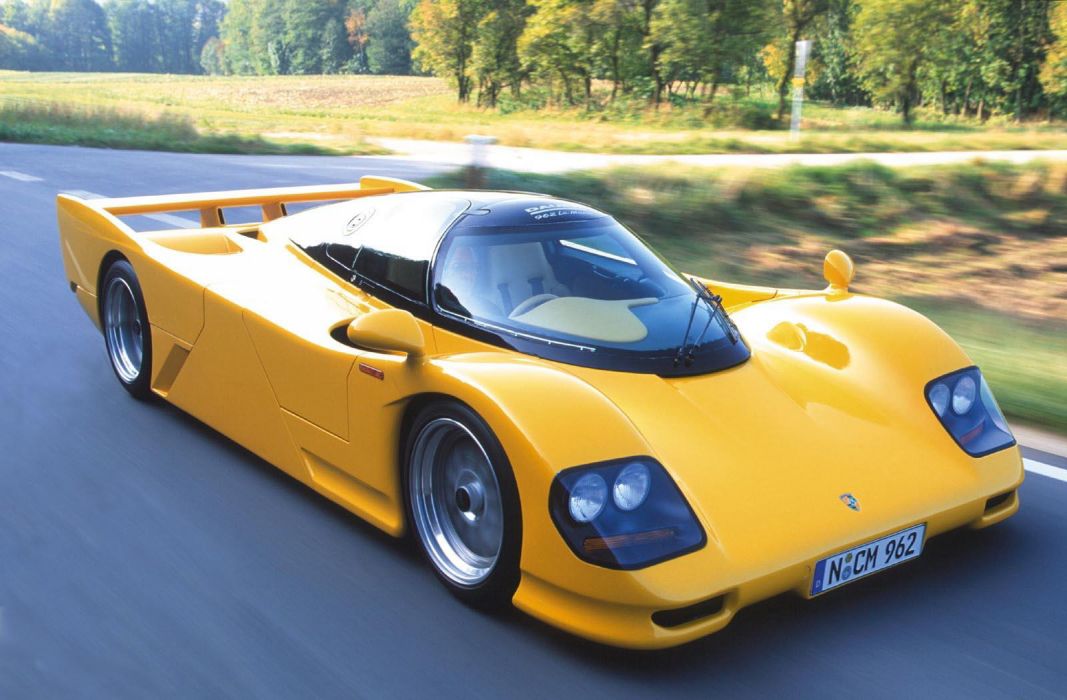
Dauer showed up to Le Mans with road and race versions and promptly won. FIA changed the rules to make sure the 962 wouldn’t be back in 1995. Now that is badass.
Power: 730.0 bhp @ 8250 rpm / Torque: 517.0 lb/ft @ 5000 rpm / Engine: 3 liter water-cooled twin turbo flat-six / Produced: 1994 / Base Price: $1,200,000 / Units sold: 13 / Top Speed: 253 mph (405 kph) / Acceleration (0-60 mph): 2.7 seconds
One of the weirder footnotes in Le Mans history is the Dauer 962, which won the race in 1994 thanks to some creative rulebook interpretation.
From 1983 forward, the Porsche 956 and its 962 IMSA spec version dominated for a decade. Porsche manufactured nearly 150 956/962s and sold many of the cars to private teams. Dauer took a handful of these Porsche 962s and modified them for street use. It is one of the most extraordinary cars to be sold for the streets, but that’s what allowed Porsche to enter the 962 in the GT category at Le Mans in 1994.
Of the companies that have produced a 962 road car, the most successful has been Dauer. After displaying their first 962 at the 1993 Frankfurt Show, Dauer partnered with Porsche to manufacture a contender for the 1994 24 Hours of LeMans. At the 24 hour race, Dauer showed up with both a road version and race version of the Porsches 962, a design which had already won Le Mans six times. After winning the race, the FIA declared it would be creating rules to make sure the 962 wouldn’t be back in 1995. However, with a Le Mans win under their belt, and with support from Porsche, Dauer continued to build their road-going 962.
Read more: Dauer 962 Le Mans.
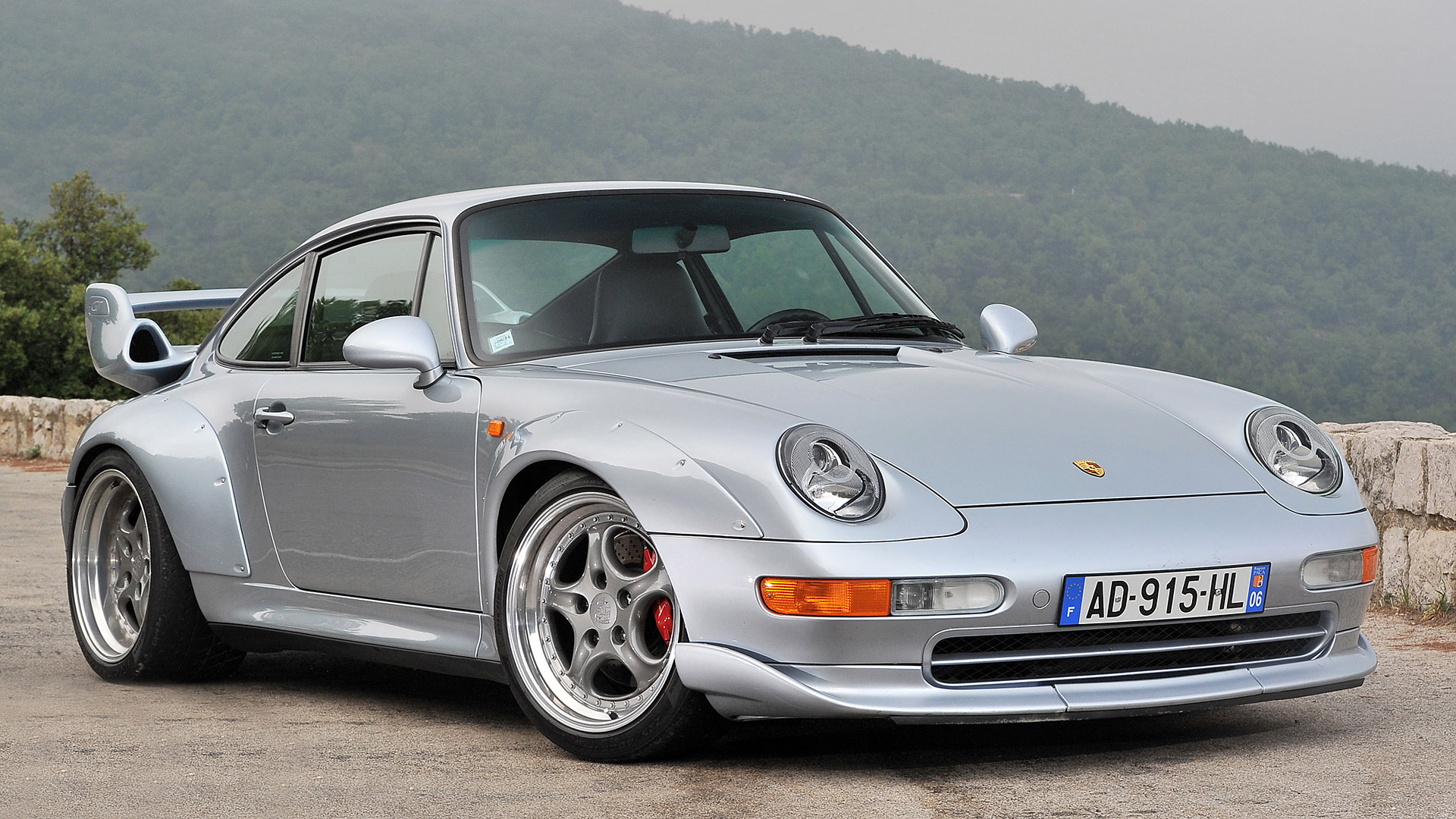
Wide arches, rear wheel drive, Turbo engine. GT2 craziness begins here.
Power: 444 bhp @ 6000 rpm / Torque: 431.5 lb/ft @ 4500 rpm / Engine: 3.6 L twin-turbo Flat-6 / Produced: 1995–1996 / Base Price: NA / Units sold: 57 cars produced / Top Speed: 187 mph / Acceleration (0-60 mph): 3.7 seconds
I dread to think what the nineties supercar scene would have been like had it not been for homologation requirements. The track-focused, road-going 911 GT2 was introduced in 1993, initially to meet the requirements for GT2 regulations.
The formula of ultra-light, high-power and track credentials seemed to strike a chord with Porsche’s customer base, as the German marque kept the twin-turbo track rocket on its order sheets all the way through to 2012.
424bhp came courtesy of the rear-mounted 3.6-litre power plant, fed air through neatly-positioned intakes at either end of the GT2’s colossal rear wing. Other contemporary road-going 911s of the day also had four-wheel-drive, though this was scrapped in the GT2 in favour of racier rear-wheel-drive.
This made the 993-generation GT2 quite the handful on track or on the road, and a certain level of driving prowess is required to keep one pointing in the right direction over a “spirited” series of bends. You know is good when it gets a top 20 finish in our best Porsche’s ever list.
Read more: 1998 Porsche 911 GT2
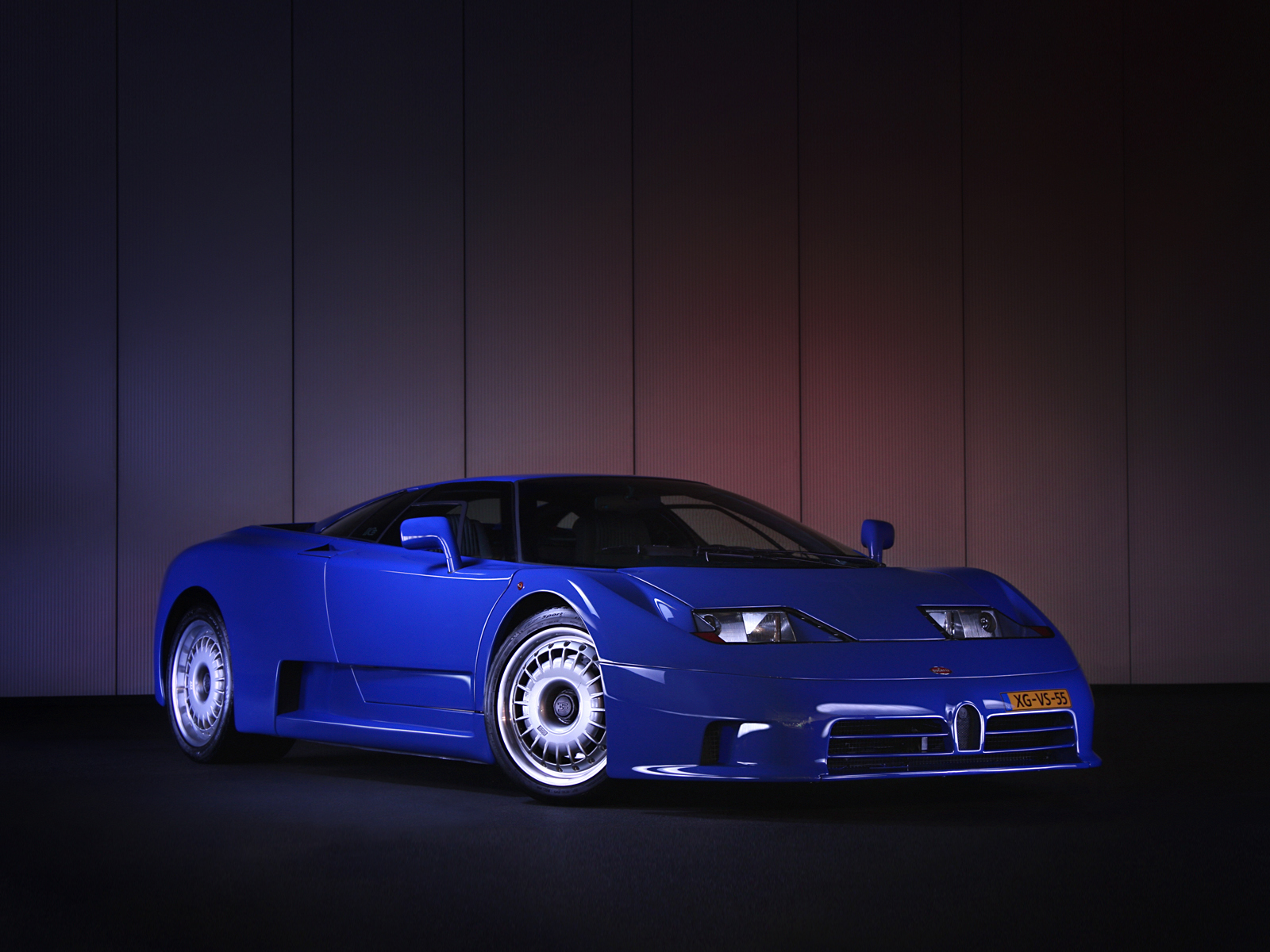
With a quad turbo, 3.5-litre V-12 the Bugatti EB110 GT seemingly defined the term “supercar”. It was one of the most technologically advanced cars of the 1990s.
Power: 650.0 hp @ 8000 rpm / Torque: 477 lb/ft @ 4200 rpm / Engine: 60 Degree quad-turbo V12 / Produced: 1992 – 1995 / Top Speed: 217 mph / Acceleration (0-60 mph): 3.35 seconds / Base Price: US$380,000 / Units sold: 31 cars made
Initially revealed on the company’s founder, Ettore Bugatti’s 110th birthday in 1991, the EB110 came to be the last Italian-produced Bugatti before VAG took over the troubled automaker.
These days the Bugatti name stands purely for all-out speed and refinement, and though the EB110 was never a record breaker at the top end of the speed stakes, topping out at 216mph in the era of the McLaren F1, it was capable of reaching 62mph in just 3.2 seconds in 1992 Supersport trim – one of the fastest cars of its era over that dash.
That rapid acceleration was mostly thanks to the Bugatti’s 3.5-litre, quad-turbo V12, which transferred 604bhp to the road through all four wheels.
There’s something really appealing about all of the little design details on the EB110 which could be easily overlooked; from the cluster of circular air intakes just behind the doors, to the elegantly simple interior, all the way down to the gearshift layout positioned on the transmission tunnel, keeping the gear knob uncluttered.
Read more: Bugatti EB110
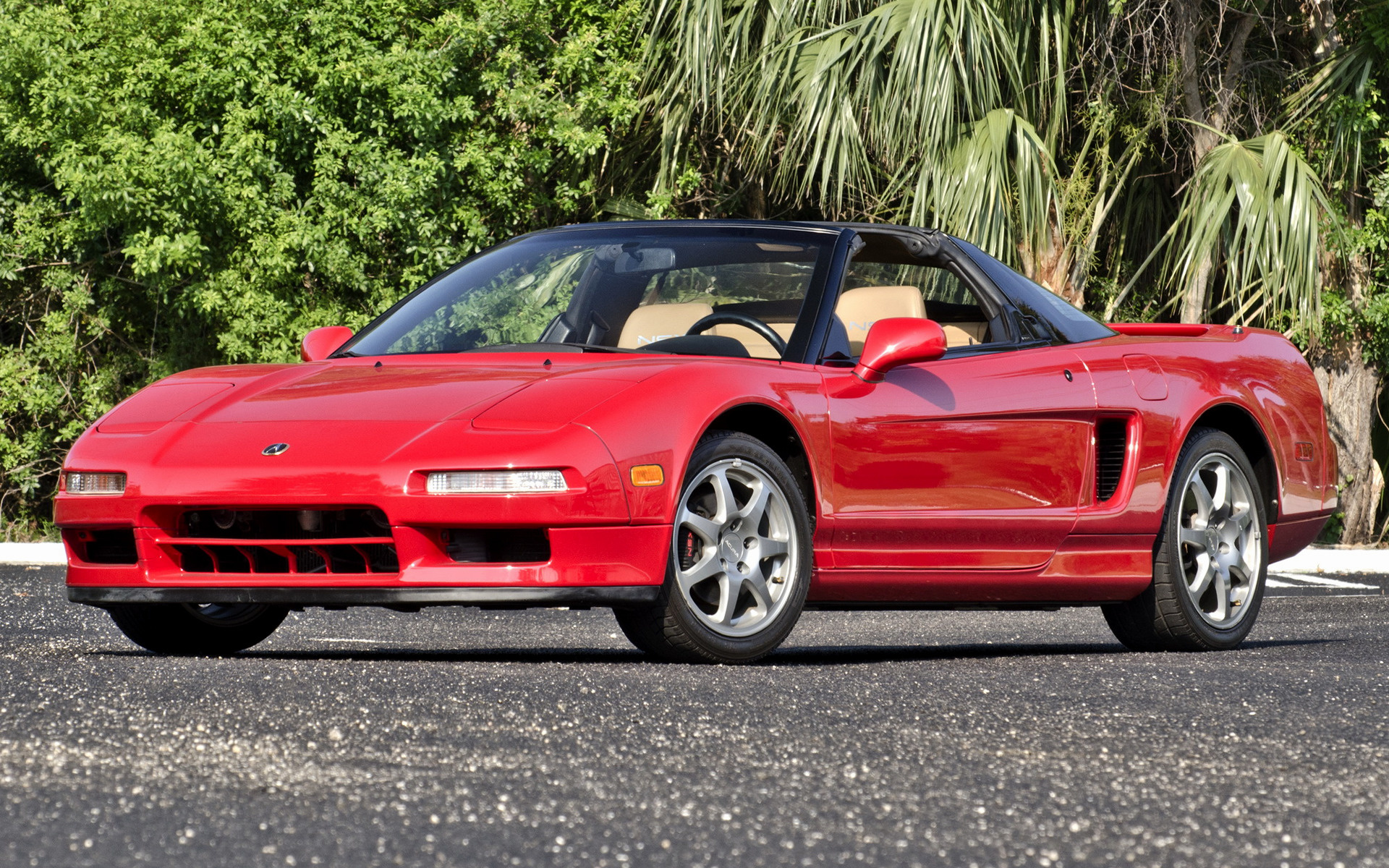
The car that shook the supercar world. A supercar that could be driven every day, didn’t break down and anybody could drive. Thank this car for today’s supercars being usable.
Our Pick: 1998 ACURA NSX-T / Power: 290 bhp @ 7100 rpm / Torque: 224 lb/ft @ 5500 rpm / Engine: 3.2L VTEC 6 Cylinder 290 hp / Produced: 1990-2005 / Top Speed: 162.2-mph / Acceleration (0-60 mph): 4.8 seconds / Base Price: $88,725
1991 saw the launch of a supercar that caused a shock across the whole automotive scene. With the NSX project, Honda set out to build a true supercar that had none of the ergonomic issues or reliability problems that plagued exotica at the time.
Sold under the Acura brand in the States, and the Honda brand across the rest of the world, the NSX featured a 3.0-litre V6 with Honda’s trademark VTEC technology supplying the power, mounted mid-ship with extra consideration to the positioning of the seats and fuel tank for optimal weight distribution.
Honda’s pedantic construction of the car paid off; famous fans of the NSX included none other than Ayrton Senna himself, and the handling was enough to take the fight to the supercar elite of the day and cement the NSX’s place in supercar history – even becoming the reference point for a certain McLaren still to come on our nineties list.
Our pick of the range is the 1997 NSX-T. Acura increased the DOHC 24-valve VTEC V-6’s displacement from 3.0 liters to 3.2 and replaced the five-speed manual with a six-speed box for 1997. That meant 290 horsepower and 224 pound-feet of torque from the normally aspirated, 8000-rpm-redline engine. The immediacy of the NSX’s reflexes is matched with elegance and phenomenal precision and the engine’s flyweight reciprocating assembly loves to rev.
Read more: Honda/Acura NSX
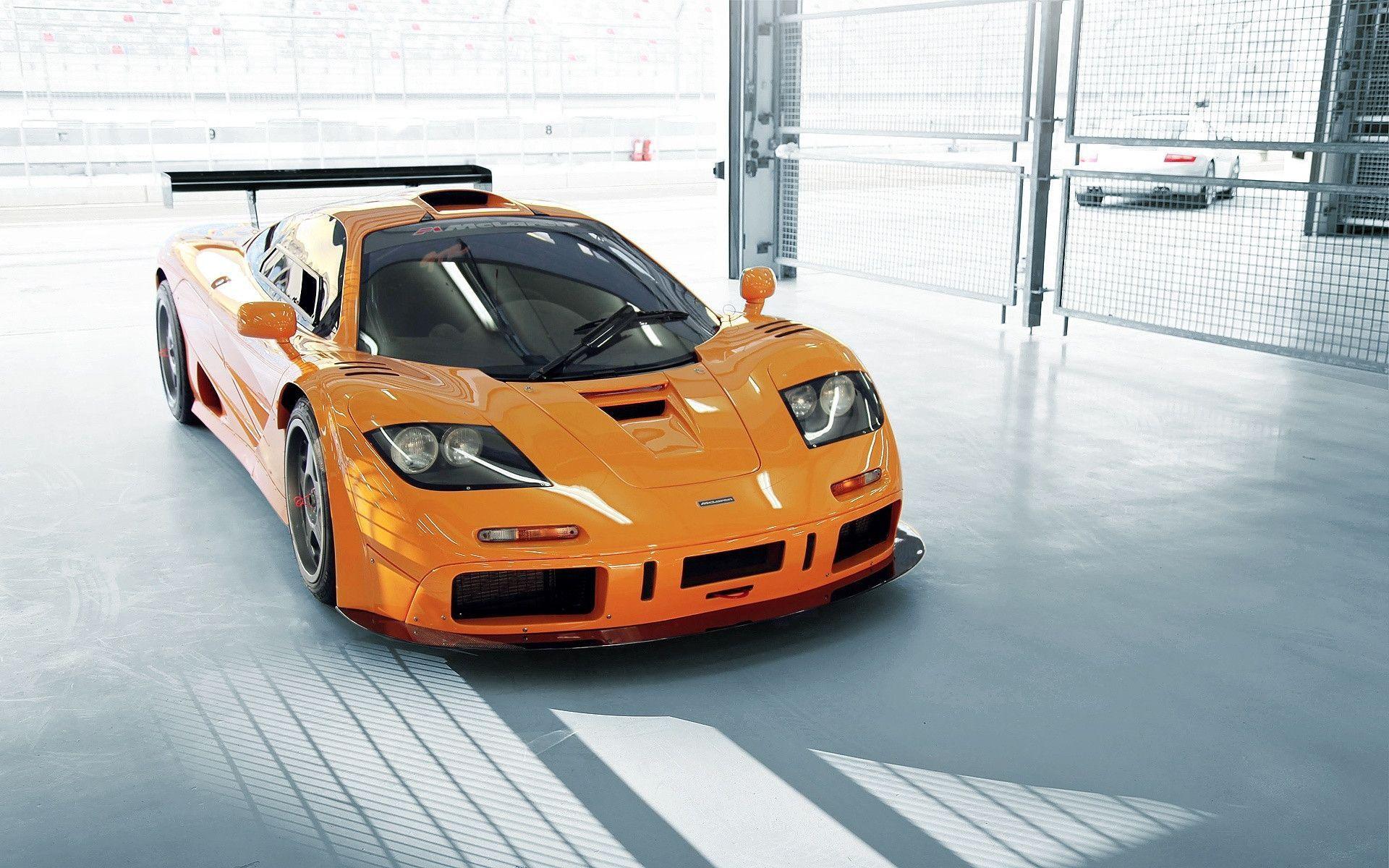
The best ever. Period. The end. Obsessive focus leads to the creation of the greatest supercar of all time.
Our Pick: McLaren F1 LM / Power: 671 bhp @ 7800 rpm (F1 LM) / Torque: 520 lb/ft @ 4500 rpm (F1 LM) / Engine: 6.1 L (6,064 cc) BMW S70/2 V12 / Produced: 1993–1998 / Top Speed: 240.1 mph (386.4 km/h) / Acceleration (0-60 mph): 3.2 seconds / Base Price: ~US$650,000 / Units sold: 106 cars
If cars like the Ferrari F40 and Porsche 959 began the chase for something beyond the supercar, then McLaren birthed it with the F1. Gordon Murray’s masterpiece was for a long time the fastest production car ever made. Its top speed of 240 mph puts much of even today’s supercar crowd to shame, and ergonomic features like the driver-centered, three-seat cockpit have rarely been seen since.
The technical challenge of getting a road car to such incredible speeds was one unlike any other manufacturer had undertaken. McLaren, after initially seeking out Honda power given the two company’s success together in Formula One racing, eventually settled on a 6.1-litre BMW V12. This was mounted in the middle of the car, and put 618bhp through the rear wheels.
The F1 was also the first production car to use a carbon fibre monocoque chassis, and gold famously lined the engine bay to aid with heat dispersal. This effort paid off, granting the F1 a staggering 0-60 time of 3.2 seconds and that all-important 240 mph top speed.
After delivering 100 customer cars McLaren stopped production after seven prototypes, 64 road cars, 5 special F1 LMs (built to commemorate victory at Le Mans in 1995), three F1 GTs (road going versions of the long tail 1997 F1 GTR race car) and 28 F1 GTR road cars. Of these, the Sultan of Brunei owns the most, and has two very special black F1 LMs with striking Pininfarina graphics as well as an exact replica of the F1 GTR that won LeMans.
Read more: All McLaren F1 posts
Save
Save