Perhaps the Best Collection of Supercars In London
As you might imagine, there’s a lot of money in London, and that translates to quite a few people owning amazing supercars. There are some dealers out there that buy and sell these cars, and Joe Macari is one of them. The dealer offers some of the best supercars available. In a recent YouTube video, the channel F1 YMS got to take some time and walk the dealership floors.
There are some truly beautiful cars in the video below. A few of them that catch our eyes are the green Ferrari LaFerrari, the two Ferrari Enzos—one of which features a bare carbon fiber body—two Ferrari F50s, two Ferrari 599 GTOs, a 599 SA Aperta, and a Ferrari 250 SWB. Don’t think it’s all Ferrari’s, though. Joe Macari has multiple McLarens and Lamborghinis, too.
According to Carscoops, most of the cars shown in the video are for sale. You can browse the dealer’s website if you’d like to see prices or are interesting is spending a little (okay, a lot) of money. Many of these cars will run well into seven figures. If you don’t have that kind of money to spend, then just view the video below and enjoy all of the beauty at the dealership.
[embedded content]
May 22, 2019 / Comments Off on Feast Your Eyes on This London Dealership’s Amazing Supercar Inventory
One week from now, Ferrari and its best clients will gather in Maranello for a three-day event to introduce a mid-engined hybrid supercar slotting in above the 812 Superfast. A report in Auto, Motor und Sport purports to fill in some of the engine details and power output we’ve been wondering about. The German magazine says there’ll be a twin-turbo V8 amidships, the same 3.9-liter unit from the F8 Tributo, aided by three electric motors. Total output will be 1,000 PS (metric horsepower) — or 986 U.S. horsepower, 197 more horses than found in the 812.
One of the electric motors will sit inside the gearbox, the other two will reside at the front axles, powering the front wheels. That means we can expect all-wheel drive and finessed torque vectoring up front. With 36 more horsepower than the system output on the LaFerrari, and AWD, it’s claimed that the electrified scarlet star will get from zero to 62 miles per hour in 2 seconds.
The FerrariChat forum, which has a 77-page thread on this car, settled on these same specs well before the AMS report. Wrote one poster, “I’m in Geneva and my dealer told me the BB will have 1000hp, V8 with KERS.” Another chimed in, “Ferr9000 on a Spanish forum … said the BB front axle will be electrified, so we can assume there will be two electrics motors on front axle.” In FerrariChat parlance, the “BB” stands for “Big Brother” to the 812. Another forum member said he expects the coupe to have a respectable all-electric range, which accords with video of a hybrid 488 mule driving silently at Fiorano.
The big question seems to be whether this will be a regular production model or a limited edition, with consensus settling on a proper series production car. AMS puts the price at 600,000 euros, or about $670,000. Yet another FC forum member says there’ll be a public debut at Le Mans, the French race taking place June 15-16. Could that provide a clue to the name?
And remember, there’s plenty more to come from Ferrari this year, with a V6 hybrid sports car slated for debut, and two further cars. One of those additional vehicles is expected to be an 812 Spider.
May 22, 2019 / Comments Off on Coming Ferrari hybrid loaded with twin-turbo V8, three e-motors, 986 hp
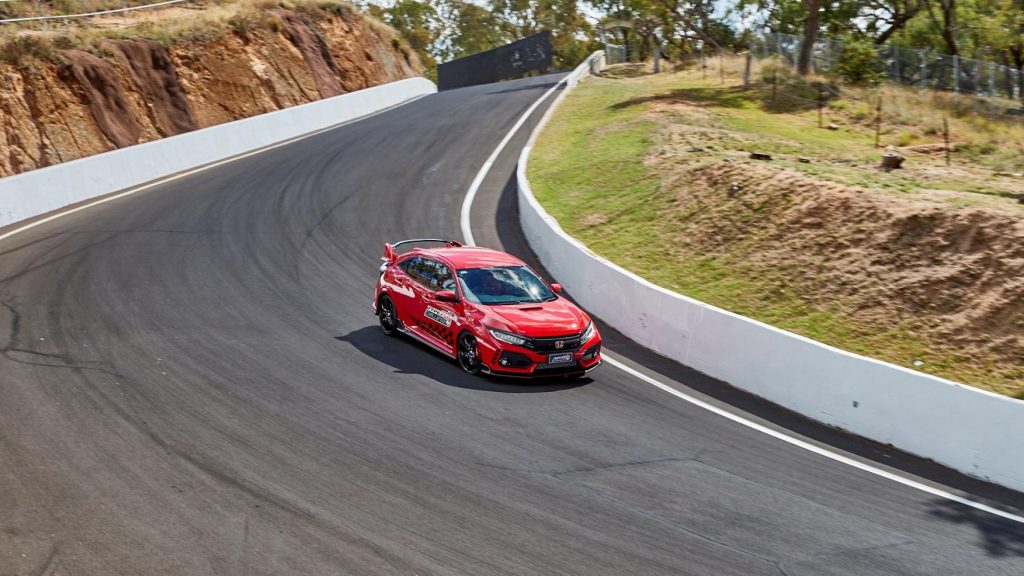
Honda Civic Type-R Sets Another FWD Lap Record with Jenson Button at the Wheel
For those who may not know, Jenson Button is a legendary former Honda F1 driver who is synonymous with Honda’s golden years in the Formula 1 scene. This era, many would argue, also coincides with the most prolific years for the Honda brand commercially. Naturally, this made Button the face and poster boy for Honda’s success in the early 2000s.
His relationship with the Japanese motor company remains amicable as ever in Button’s post-retirement, while his driving skills have remained well intact. As the Honda Civic Type-R continues to tour the world, setting (front-wheel drive) lap records at the most famous race tracks, Jenson Button was called up for the latest job – Mount Panorama Circuit in Bathurst, Australia.
Aside from obviously possessing the raw talent required to pilot the car as quickly as possible around the daunting 3.9 mile circuit, the Briton also has the credentials when it comes to this track specifically. While promoting the Australian GP in 2011, he set the all-time lap record of 1:48.8 at Mount Panorama Circuit while driving an F1 car.
This time around in the Honda Civic Type-R, Button was able to clock a 2:35.2, which was plenty good to be the new front-wheel drive production car lap record. This trip down-under follows a 2018 tour of Europe with the Civic Type-R, where five different drivers set front-wheel drive lap records at five circuits around the continent; with Button being involved with the achievement at Hungaroring.
The Civic Type-R also continues to hold the front-wheel drive production car lap record at the Nürburgring, with a remarkable lap time of 7:43.8 set in April 2017.
[embedded content]
[embedded content]
Image Gallery
May 21, 2019 / Comments Off on Jenson Button Rekindles Honda Heritage at Bathurst
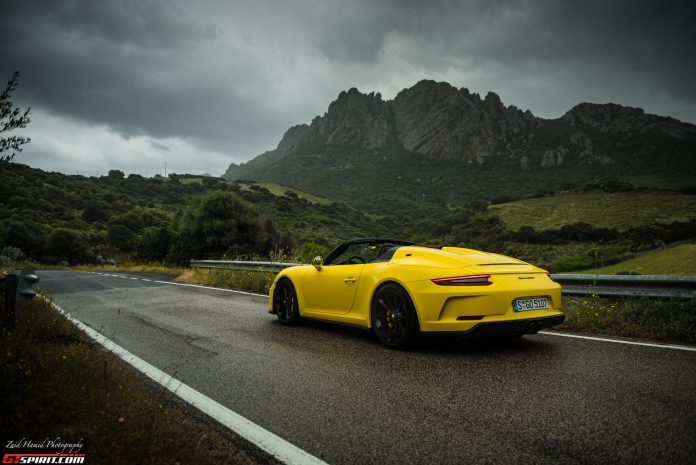
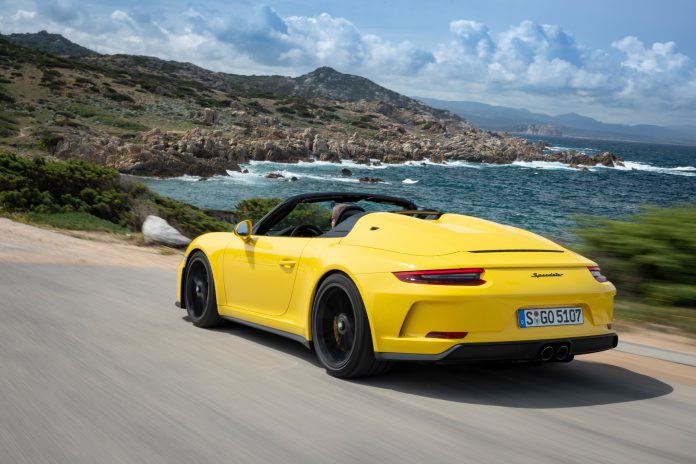
It has been a strange, Porsche dominated few weeks – this is by no means a complaint. A few weeks ago, I was in Trump Land for the New York International Auto Show 2019 to see the Porsche 911 Speedster in its final form, finally unveiled for the first time. I say this having seen two design studies over the past few years. Upon my return to London I drove a 911 GT3 RS for a week before driving it to Zuffenhausen (the Porsche factory). Now I find myself in Sardinia, Italy to drive the Speedster. It is as if the 992 had not yet been released given the amount of 991 seat time I have had of late.
You would think Sardinia would be the ideal place to drive such a special car, one designed to be enjoyed in the Mediterranean heat with the sun beating down on hot sticky tarmac. I envisaged such a scene and eagerly anticipated my chance to drive one of just 1,948 Speedsters. Such opportunities are bonafide once in a life time blasts. I am sure then that you will share my sadness when I woke up, coincidently on my birthday, to find heaving grey clouds shrouding the Italian hill tops. The plan was to hit the road at 0900, the very hour the clouds were due to let loose. Skip the birthday breakfast, I was out at 0800. I would have a birthday every year, who knows when I could next be sat behind the wheel of a Speedster.
With the roof manually retracted, I shifted into first and onto the deserted Italian streets. I say that I shifted into first as there is no PDK option. As sublime as the dual clutch transmission is, the absence of a gearbox option is a statement of intent from Porsche – this is a car designed for the thrill of driving and not much else. Previous missions with similar design briefs include the 911R, GT3 Touring and Cayman GT4, cars that will be noted in history as some of the greatest modern Porsches ever built. The pressure is on for the Speedster to join such illustrious ranks.
This 991 Speedster is a departure from the models of past. Not only will it be produced in the thousands, not the tens or hundreds and is, for the first time, a GT department project. By mating a Carrera 4 Cabriolet rear end with the front end of a GT3 and using the GT3 engine, this is a step into the unknown for the Speedster series of swan songs. It also makes it one of the most exciting propositions yet.
911 Speedster Exterior
Back into the driver’s seat. The 918 buckets are hugging me, I’m in that sublime seating position looking over the analogue dash which I prefer infinitely over the digitised 992 instrument cluster. Grab the stubby carbon fibre trimmed shifter and away I go. It must be said that the clutch pedal is remarkably long, the vast majority of the pedal movement has no impact on the clutch plates – you quickly become accustomed to the effective operating window and no longer flex further than required.
The gearshift throw is short and it is all very sedate crawling through town at less than 3,000rpm. Without a roof in place, it is apparent that this car sounds slightly different to the conventional GT3 or GT3 RS. Low down the sound is slightly flatter, the reason being the introduction of the particulate filter than has been known to rob precious exhaust sound. Boo, hiss. Porsche engineered a masterpiece of a solution to minimise the effect and actually save 10 kilograms in the process. The sound deadening in the exhaust was reduced and the filter used as a substitute. It’s a remarkable feat, but the sound is just a few decibels lesser than before.
Other mechanical changes include the introduction of another impressive engineering addition – individual throttle bodies, proper race car technology. The results of this tech, in conjunction with even higher-pressure direct injection, means that the 4-litre is more responsive and gains 10bhp – the total now a meaty 503bhp.
911 Speedster Interior & Details
In reality I struggled to feel this improvement, the car still feels mighty quick to react to throttle inputs courtesy of a strong torque curve. I am under-qualified to critique such precise changes.
The 911 Speedster will do 0-100km/h in 4 seconds, but that is irrelevant. It’s how it makes you feel getting there – magnificent. Acceleration in second gear is ferocious, ever amplified by the build-up of the noise. I mentioned it sounded a bit flat. When deploying full throttle or anywhere above 4,000rpm the engine lets out a bellow that quickly contracts cheek muscles drawing an involuntary smile. Keep pushing to peak power at 8,500 and the noise is a cacophony of natural aspiration that puts engines with double the number of cylinders to shame. The 503bhp is working at 8,500 but you hang on till 9,000 just to relish and be dumbfounded by the wall of noise.
You can comfortably enjoy the upper echelons of the rev range too. The traction, as with all 911s, is staggering on the supreme Cup 2 Michelins. Approach a bend and the front end is, typically, a tad light but instils confidence, the steering proving just how great electronically power assisted steering has become. The rear wheel steer makes the car pivot and on the exit past the apex you can pile on the throttle and pull for another gear with implicit trust.
911 Speedster Rollers
Things are no worse when downshifting either. The auto blip function matches the revs perfectly, the engine yelping as the revs spike. Slowing down is just as exciting as speeding up, the standard carbon ceramics making their presence known.
I just wanted to drive and drive until I ran out of road. Then came the rain. My time in the dry was all too brief and I hope to, once again, wake up and skip breakfast to be able to revel in the momentous driving experience that the Speedster offers those fortunate enough to own a set of keys. The rain began and I did what I suspect no Speedster owner will ever do. I carried on, not stopping to raise the roof but instead feeling for where the traction was scarce, listening not to the radio – this car had no infotainment system – but to the rain drops pounding the windscreen, the wide tires passing through puddles and feeling the precipitation on my skin. Rain or shine, the Speedster is special. This is Porsche at its best.
May 21, 2019 / Comments Off on 2019 Porsche 911 Speedster Review
It did pretty well according to Rory Reid of Carfection, but it’s not without its faults. The presenter noted that the new Toyota Supra isn’t really a true Toyota car, but with declining sports car sales, Toyota had to get creative to make the Supra and have it make business sense. The first half of the video review almost makes you think Reid didn’t care for the Supra much or was at least unimpressed with it’s decidedly not Toyota construction.
In the second half of the video is a little more positive, with Reid taking the car out on the track. He says the Supra feels “like a fighter jet.” That’s pretty high praise for any sports car. However, it wasn’t all good news on the track either. Reid noted the brakes, gearbox, and exhaust note could be better.
Reid makes a good point at the end of the video. He says even though the car isn’t perfect that it’s still a good sports car, and it should be celebrated as such. He also makes the case that cars like this aren’t about logic. There are other, faster options for roughly the same money as a new Supra. The new Supra and honestly all sports cars are about emotion.
We have to agree with Reid. It’s an emotional purchase buying a sports car, especially a Supra, and that impulse is one worth celebrating. It’s nice to see Toyota embracing it’s sports car heritage with this model, even if it is flawed.
[embedded content]
May 21, 2019 / Comments Off on Rory Reid of Carfection Takes the Supra for a Spin
The Porsche 911 GT3 RS and the Mercedes-AMG GT-R are two amazing performance machines, and there’s no better place for the drivers of these two cars to have some fun than the Nurburgring. The cars are very evenly matched. When Mercedes set its official time in the GT-R it was the fastest rear-wheel-drive sports car with a time of 7:10.9 in 2016. Porsche has managed to best that time since 2016, but it’s safe to say both cars are performance beasts.
In the video below, you can see just how evenly matched the two cars are. The Porsche 911 GT3 RS starts off behind the Mercedes-AMG GT-R and follows pretty closely to its tail. About halfway through the video, the cars change positions and the Porsche GT3 RS takes the lead with the Mercedes following closely behind it.
Both drivers push the cars pretty well in the video and you can tell that these two would make for a hell of an official race. It would be awesome to do a lap of the Nurburgring without all of the other cars out there. These two have to slow down fairly often to make it around other track day goers. However, we’d hate to suggest kicking anyone off the track. It looks like a beautiful day to take on the Green Hell.
[embedded content]
May 21, 2019 / Comments Off on Watch a Porsche 911 GT3 RS And Mercedes-AMG GT R Attack the Nurburgring
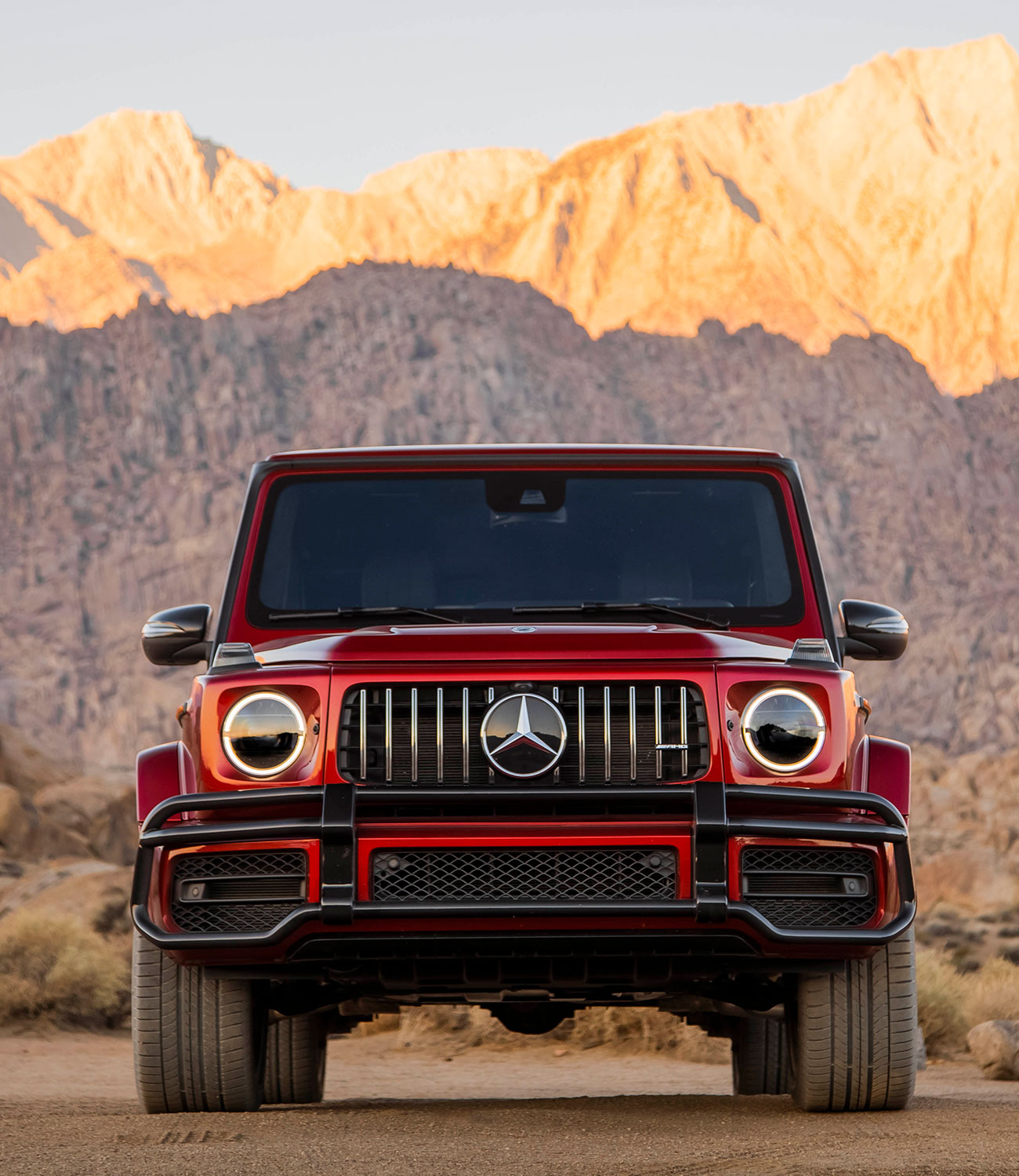
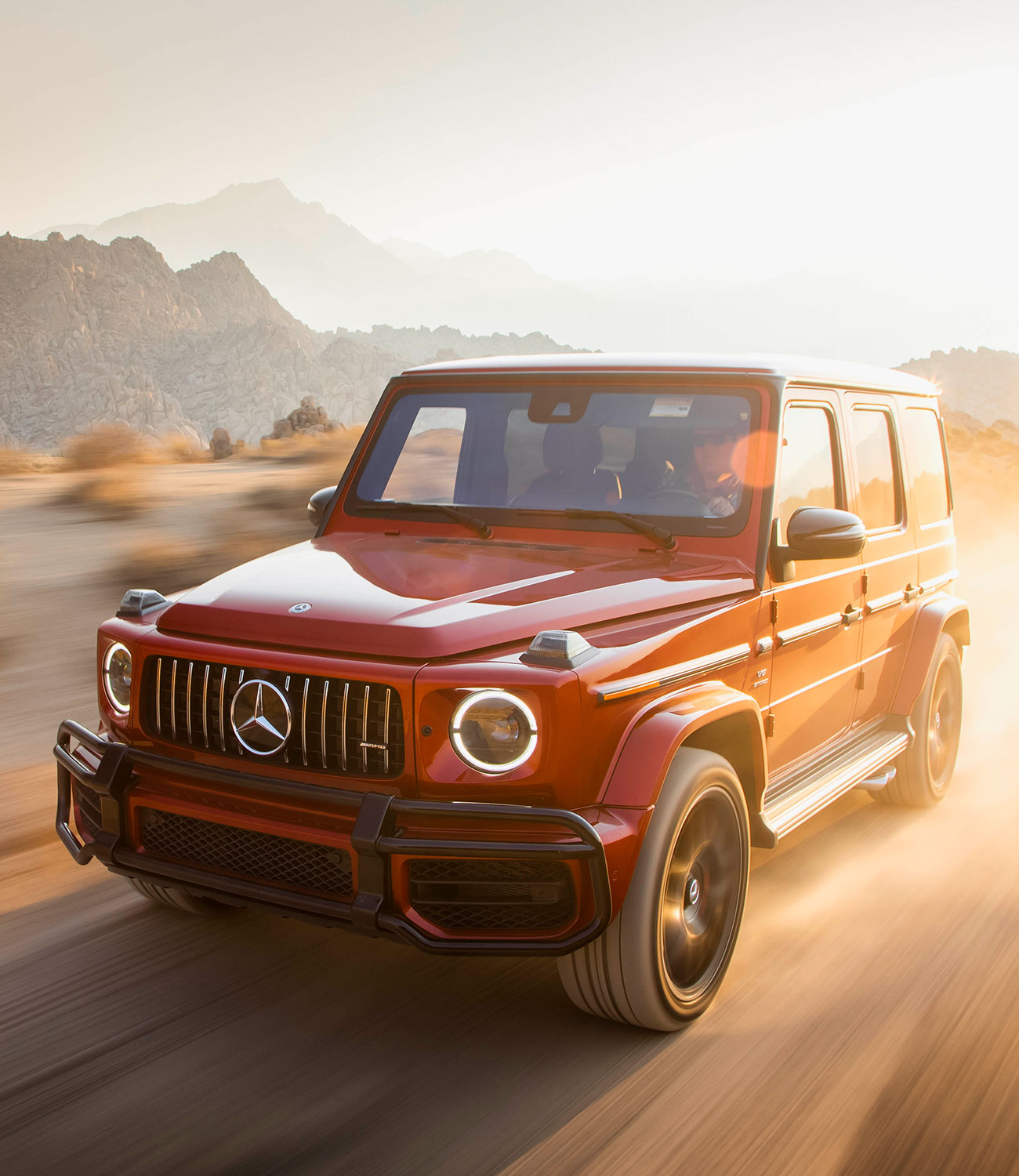
You might well not realize the 2019 Mercedes-AMG G63 is an all-new vehicle at first glance—and that’s largely the point. The old version, in spite of its compromised nature on dry roads and cramped, utilitarian (well, for a $125,000-plus Mercedes) interior, stayed popular among a die-hard group of Gelandewagenliebhaberin all the way until the end of its life. As a result, Daimler was hardly about to throw away all that goodwill by letting the model expire.
The fact that it had also become the darling of well-to-do wealthy folks in pretty much every high-end enclave across America, from Beverly Hills to Beacon Hill? Totally coincidental.
The Good: With the all-new model, the G-Wagen finally offers the levels of luxury you’d expect from a Mercedes-Benz with a six-figure pricetag. Even better, it offers that without trading away any of the square-edged style or all-terrain capability that made the vehicle famous during the last quarter of the 20th Century.
Who It’s For: Anyone with plenty of money who needs maximum breadth of capability in a single vehicle. Or, more realistically, anyone who wants everyone to think they need maximum breadth of capability in a vehicle, but actually will just drive to Whole Foods.
Watch Out For: While the G63 handles better than previous Gelandewagens did, it’s still very much a top-heavy, softly-sprung brute—and not nearly as agile as its sports car-rivaling acceleration might make you think. Even those genius Germans can’t outsmart Isaac Newton and his fancy laws.
Review: By now, the Gelandewagen’s off-road capabilities are pretty much legendary. The latest G63 is able to clamber up 27-degree slopes, plow through 27.6 inches of water, and wander over anything sticking up to 9.5 inches off the ground. In effect, it can climb every mountain and ford every stream, just like those other Austrians did back in the Thirties.
So of course, I wound up using the G63 the way most people will: shuffling about through city streets, down highways, and along country roads. (I did dally onto a sandy beach for a minute or two at one point, just to say I did.) Mercedes-AMG knows this is how most people will drive it, of course. That’s why the G63 comes stock wearing street tires, not knobby off-road rubber.
All that time on actual roads, however, was enough to prove that the 2019 G-Class drives like, well, a modern-day automobile—a stark contrast to the previous generation, which felt about as well-suited to the asphalt jungle as George of the Jungle is. The electrically-assisted rack-and-pinion steering is direct, well-sorted and quick (well, at least, for a 5,842-pound SUV that stands nearly six-foot-six-inches tall), and the ride is well-planted and comfortable, in spite of the all-terrain credentials.
The supple adaptive dampers are forced to try and keep both the Gelandewagen and the AMG sides of this multi-mode beast happy, which proves a difficult task, considering their missions lie at polar opposite ends of the automotive spectrum. I found it best to leave the suspension in Sport Plus mode for most road driving; unlike in most AMG models, the ride is still pliant and comfy in that setting, even over battered pavement. More importantly, it gives the big G added (and much-needed) stability in turns. With the suspension left in its default setting of Comfort, the G-Class feels rather tippy in tight turns; it never feels unsafe, but you’ll definitely be following the doctrine of slow-in-fast-out on any winding two-lane roads.
But if the G63 feels like the tall body-on-frame vehicle it is in tight sweepers, it feels very much a product of Affalterbach when you hammer the go-pedal. The acceleration is less explosive than in other AMG 63s, by sheer virtue of the mass being forced to move. Still, the force it pulls with through the nine-speed gearbox’s first and second cogs is a bit startling; launch it from a stop, and it’ll throw you back in your seat like a carnival ride. Indeed, the acceleration feels more unnatural than anything else, thanks to that height. It may take two hands to count off the number of SUVs that can match the G63’s sub-four-second 0-60 dash nowadays, but none of them are taller than James Harden.
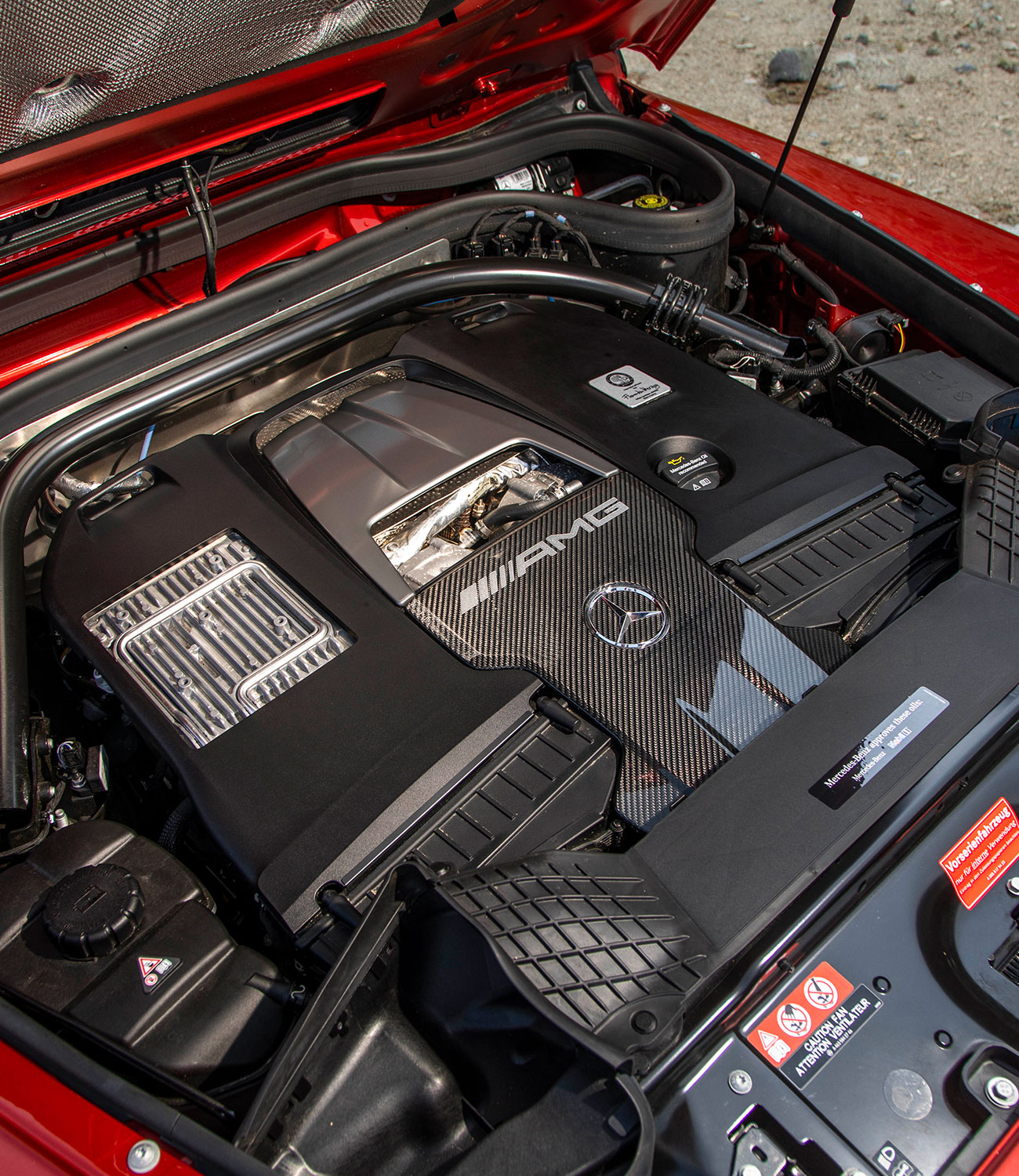
Few of them sound this glorious, either. Those side-mounted exhaust pipes may be a terrible choice for off-roading, but they bring the fury of the 4.0-liter V-8 closer to your ears. AMG’s tuners have been at the top of the engine note game for years, and the entry into the era of forced-induction motors hasn’t broken their stride; the elephantine blast trumpeting from the quad pipes is loud and proud. Indeed, sounds make up much of this rig’s subjective appeal. Mercedes strained to keep the iconic sounds of the doors and locks, and thankfully so; the solid slam each of them make are a callback to overbuilt Benzes of yore, noises that project safety and security straight through to the soul. (I’ll bet more than a couple salespeople have clinched a G-Class sale just by firing the locks shut with the remote in front of the prospective buyers.)
A much-needed update means the G-Class’s interior finally feels worthy of its S-Class-sized price tag. There’s now enough room for Schwarzenegger-sized men (or larger, actually; Arnold’s not really that big) in the front seats. Equally as important, the cabin finally offers the levels of luxury expected from a six-figure Mercedes, with sumptuous seats (especially with the $2,200 box for the Comfort Seat Package checked, adding massage, rapid heating and ventilation) and premium materials everywhere the eyes turn and the fingers touch.
Outside, it’s largely G-wagen status quo, but there are a few noticeable tweaks — some positive, others distracting. The overall look is smoother than the old version, which lets the car’s iconic shape breathe a little. But the LED headlight rings give it a vaguely owlish appearance, as though it were wearing Harry Potter glasses. And the AMG Panamerica grille’s vertical pillars make the vehicle look a little bit like a…well, a Jeep. I prefer the traditional, horizontally-oriented Merc grille found on the current G550; it has the virtue of being unmistakably Benz.
Verdict: The all-new G-Class is a near-perfect reboot — one that captures the spirit and appeal of the original while simultaneously updating it for modern times and sensibilities. By virtues of removing the distracting flaws of the old version, the improvements manage to accentuate the G63’s greatest feature: the sheer breadth of its capabilities.
The Mercedes-AMG G63, after all, is a super-capable off-roader with low range, three locking differentials and multiple off-road driving modes…that also happens to be a legitimate luxury car in terms of materials, technology, and fit & finish…and also accelerates as quickly as a muscle car. Like a multi-tool, it’s not quite as good as the dedicated versions of the products it can replace, but it still manages to pack all their basic capabilities into a single package — which is hard not to see the appeal of, silly as the idea may seem at first.
2019 Mercedes-AMG G63 Specs
Price as Tested: $164,315 Powertrain: 4.0-liter twin-turbo V-8, 577 horsepower, 627 pound-feet of torque; nine-speed automatic; four-wheel-drive Curb Weight: 5,842 pounds 0-60 MPH: 3.9 seconds (Car and Driver testing) EPA Fuel Economy: 13 mpg city, 15 mpg highway
Mercedes-Benz provided this product for review.
Read More Gear Patrol Reviews Hot takes and in-depth reviews on noteworthy, relevant and interesting products. Read the Story
Note: Purchasing products through our links may earn us a portion of the sale, which supports our editorial team’s mission. Learn more here.
May 21, 2019 / Comments Off on 2019 Mercedes-AMG G63 Review: The Automotive Multi-Tool, Now Better Than Ever
Hot Hatches, Rally Weapons, Japanese Rockets & Magic 911s. This is Your Our List of the Greatest Sports & Performance Cars of the 1990s
This is the third post in our series about the best cars of the 1990s. First we ranked the best supercars of the ‘90s. Second, we tackled the forgotten supercars of the ‘90s. In this post we switch things up and move away from supercars to look at everyday sports and performance cars. Our goal is quite simply to curate the ultimate list of the best ‘90s sports and performance cars. A warning for new readers. Our special list posts are very detailed and thorough, we prefer having a list of ALL the awesome 90s cars over some bullshit short top 5 list that gets more clicks.
The 1990s were a great era for sports car enthusiasts at all levels. At the top end there were crazy homologation specials and cars like the McLaren F1. The Honda NSX and Porsche 911s of the era made true sports cars much faster, more usable and significantly more reliable. Dynamically they were much better too that anything from the 1980s. The 90s also ushered in a plethora of fun and fast hot hatches and AWD rally bred cars built on entry level cars anybody could afford. In Japan you had cars like the 300ZX, R32/33/34 GT-Rs and twin turbo Supras fighting Porsches and Ferraris for performance honors. In Australia the local Holden versus Ford rivalry was getting out of hand (in a good way), leading to some epic and iconic muscle cars on they could get away with.
Car design also improved a lot in the 1990s. Misguided enthusiasm for flashy futurism actually gave way to practicality. The frivolity of the ’80s and its flashy techno-paradise of lasers and blinking digital displays gave way to a bunch of hungover engineers who looked at each other, slowly took off their Duran Duran hats, and said, “OK, seriously. Now what?” Gone were the boxy designs, poor fit and finish and horribly ergonomic interiors.
From a technology perspective the 1990s led to a lot of advancements that made cars more efficient, faster and more fun to drive. Fuel injection, ABS and power steering all went mainstream and all three improved dramatically from what we saw in the 1980s when they were fairly new. It was also an era before advanced electronic chassis controls and electric steering. The cars of the 1990s have wonderful feel on the road and you can enjoy the mechanical connection between your hands and wheels.
In terms of raw speed, the cars on this list were fast for the 1990s today but most sub-$20k new cars will beat them in a straight line. Cars today are just too fast and too easy to drive to really enjoy (as an enthusiast). A Tesla Model 3 will destroy a McLaren F1 in a straight line. You can’t wring out a 2019 Nissan GT-R without going to jail within 4 seconds. You can hit 90mph in second gear in a 992 Porsche 911, all shifted for you with a dual clutch auto mode gearbox. Getting the most out of a 1990s sports car took work and that’s what made them fun. The sports and performance cars of the 1990s had the right balance of capabilities that you could really enjoy but you had to work hard to really get the best out of. The golden era of sports cars for sure.
Lets get on with the list. We grouped the best 1990s cars by country. We have the best 90s cars in Japan, United Kingdom, United States and Europe to make it a little easier to navigate. In terms of coverage we have everything from hot hatches to top of the line sports cars just under supercar status and we hope we got all the 90s sports car icons. The 1990s were a golden age of handling and performance for both budget-conscious and sky’s-the-limit budgets and for overall enthusiast enjoyment.
As expected the best European cars of the 90s are a varied bunch.
Audi was starting to build some powerful cars including the Hollywood star that was the S8 in the Ronin movie. Mercedes and AMG (not part of Mercedes at the time) started the trend of stuffing monster engines into small cars and actually engineering them well (unlike the Americans), forever changing what we expect from executive saloons.
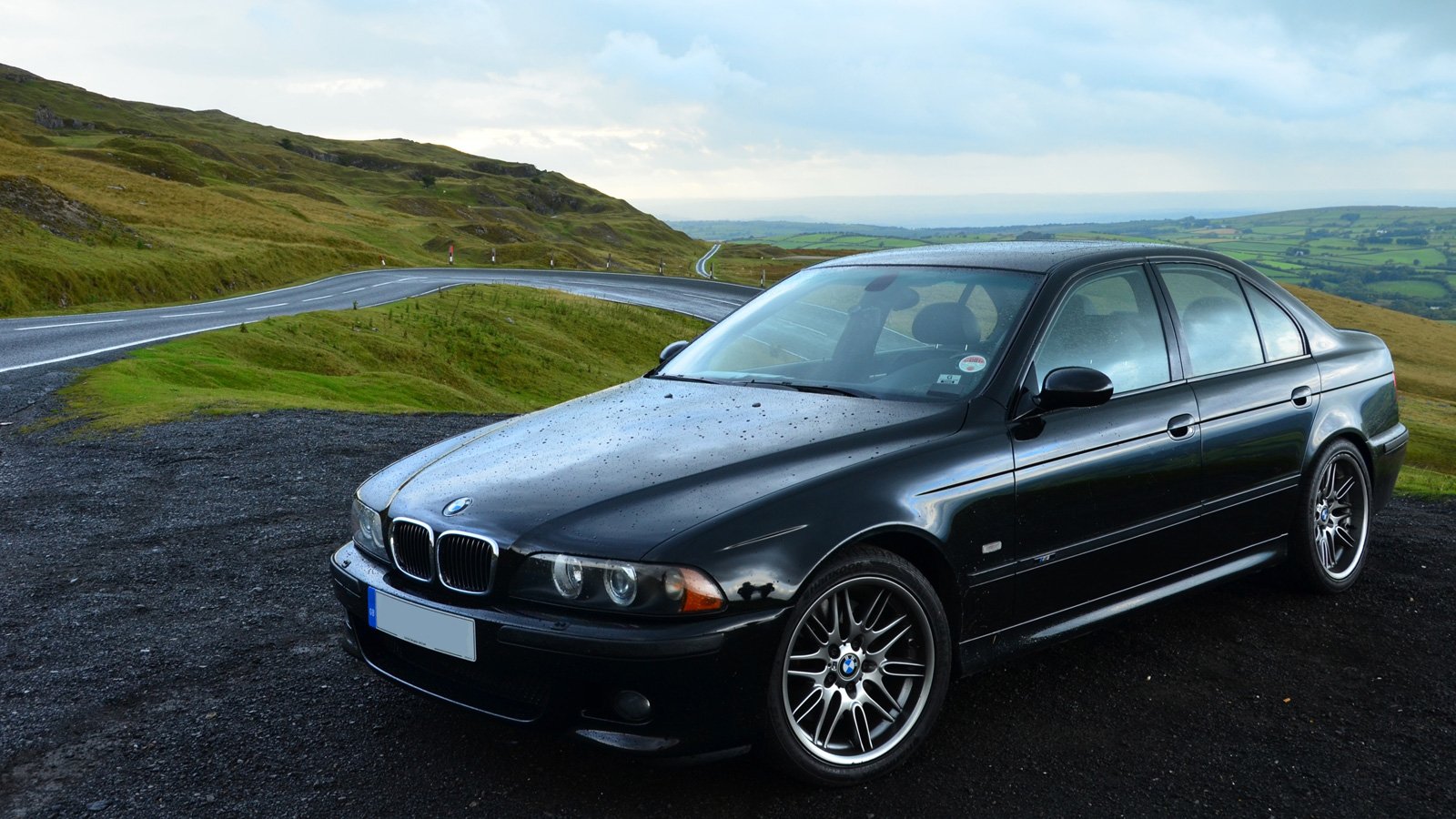
BMW gave us the second iteration of the M3 and E39 M5, both arguably the best the motorsports division has ever delivered. Porsche had really hit its stride in the 1990s too, with the Porsche Boxster, a totally new model at the time and the final special versions of the 993 Porsche 911 as well as the 968 Clubsport.
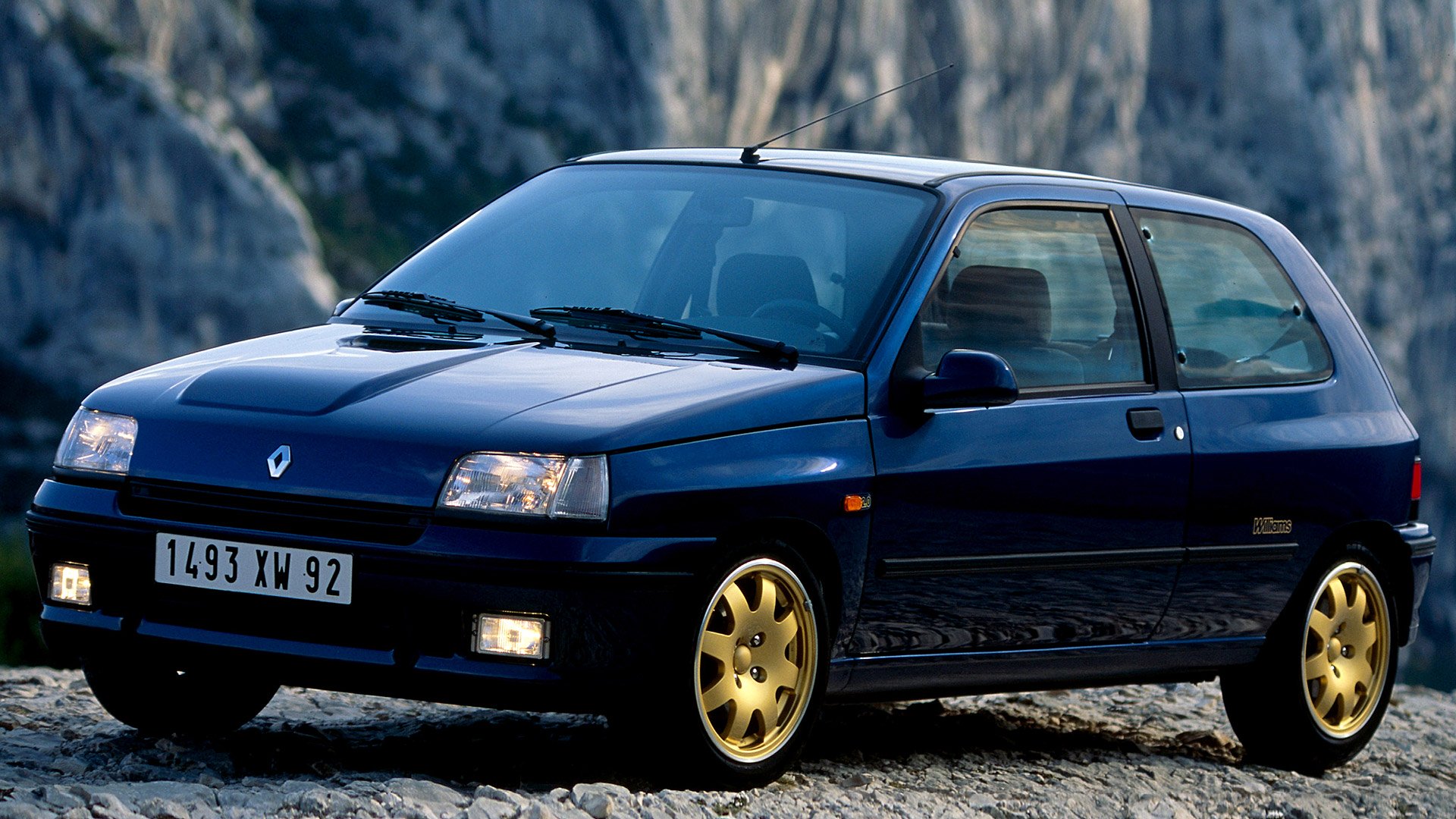
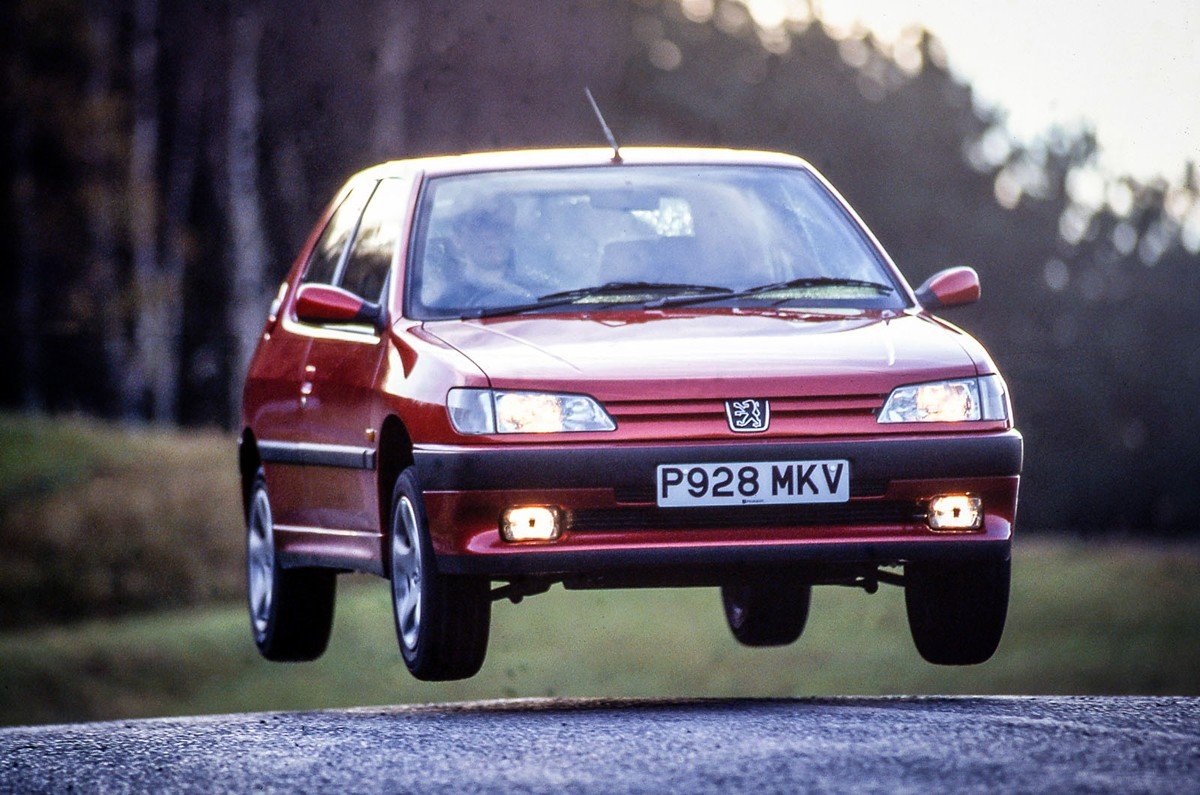
The era of the hot hatch was also on the minds of European carmakers in the 90s, with the Renault Clio Williams and Peugeot 306 GTI-6 coming to market and trying to give it to the VW Mk3 Golf.
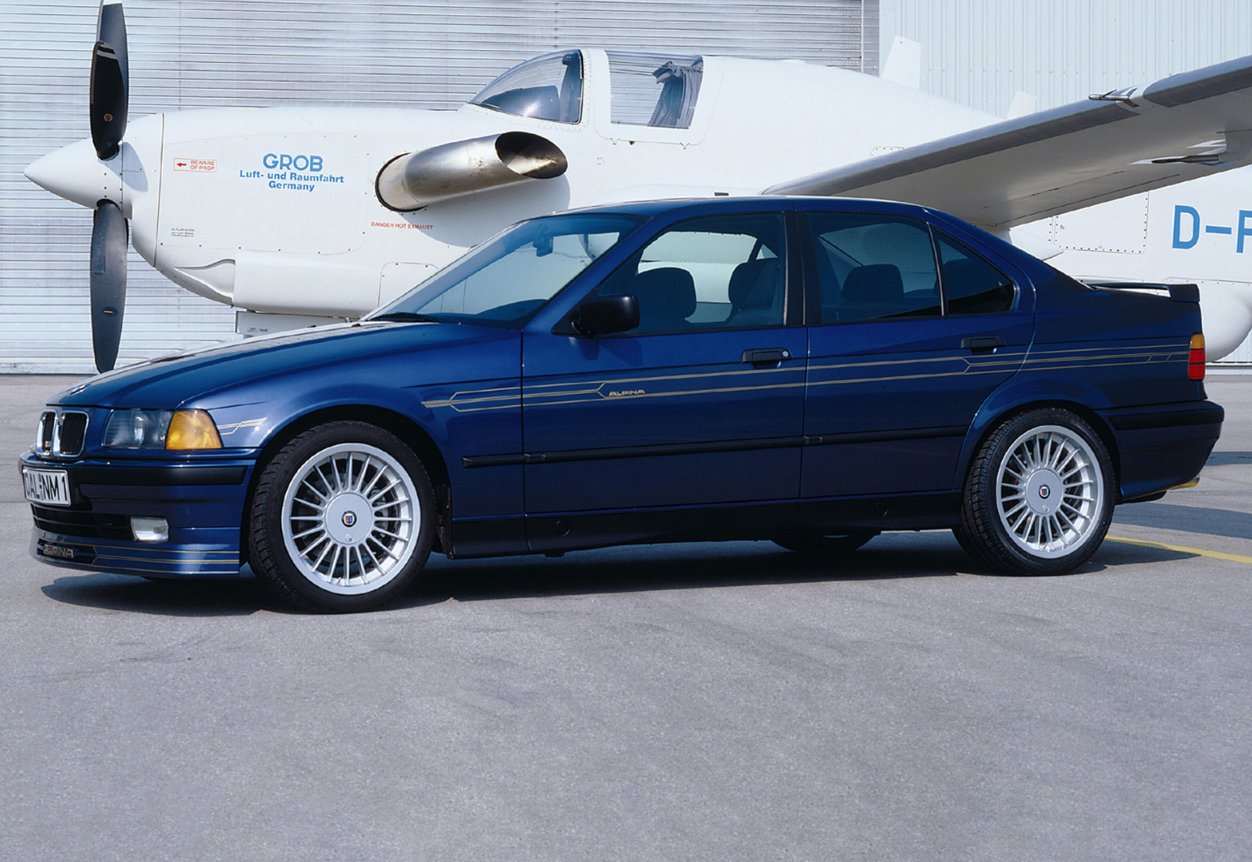
The B8 4.6 is a pretty special car. Alpina managed to shoehorn a V8 into the E36 3 series (it took serious modifications to the engine bay to make it fit). The engine was based on BMW’s 4 liter V8 from the E34 540i. The engine needed a new sump because it sat so low in the chassis. Alpina also added new exhaust system. The result was 333hp and a 0-6-mph time of just 5.5 seconds.
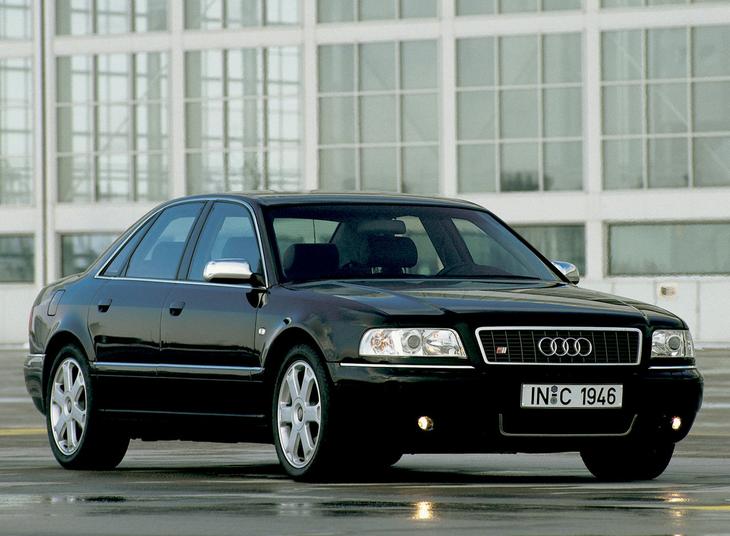
The first generation S8 was a spectacular 90s executive sports car. Based on the A8, the S8 was made to look at little more aggressive. It had solid aluminium alloy door mirror housings, chrome-effect beltline and lower front grille trim, and polished twin exhaust pipes, along with subtle “S8” badging. The biggest change was under the hood. With an uprated 335hp from its 4.2 liter V8 it was the perfect getaway car for the bad guys in Ronin.
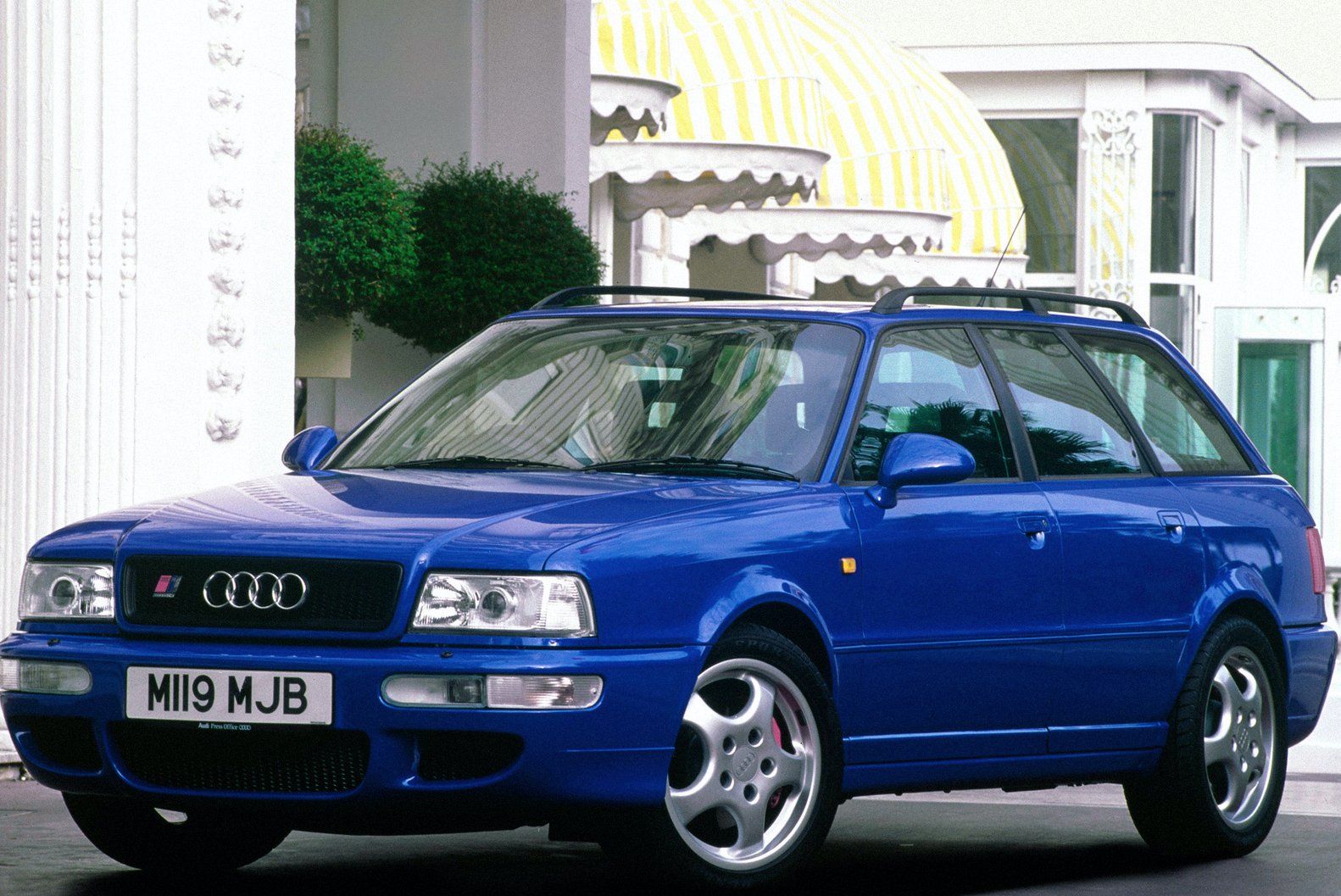
The history of the RS 4 family began in 1994 with the Avant RS 2. It established the high-performance station wagon segment – which comprised sports cars with large luggage compartments. Audi developed the high-flier on the basis of the Audi 80 Avant in cooperation with Porsche.
The engine was Audi’s classic five-cylinder turbo in its last production development stage. The 2.2-liter engine used a large turbocharger, high boost pressure and expanded airways to produce 232 kW (315 hp). 410 Nm of torque (302.40 lb-ft) was available at 3,000 rpm. The Audi Avant RS 2 sprinted from zero to 100 km/h (62.14 mph) in 5.4 seconds and reached a top speed of 262 km/h (162.80 mph).
A six-speed transmission delivered the power to the quattro drive system, which in addition to a Torsen differential included a manually activated locking differential at the rear axle.
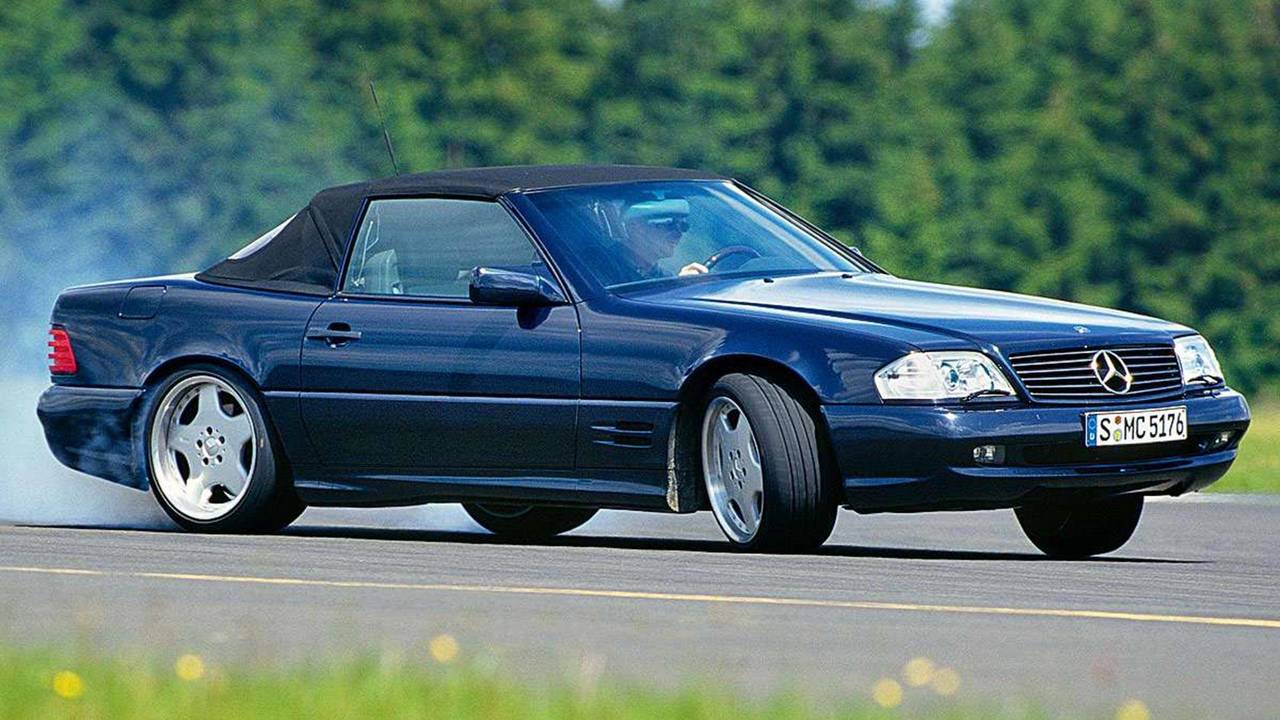
We already talked about the awesome AMG SL73 in our forgotten supercars of the 90s list, but the folks at AMG had a whole host of great sports cars in the 1990s. The SL 60 AMG was the most numerous of these rare cars. Sold from 1993 to 1998, it used a 6.0 litres (5,956 cc) V8 engine producing 375 bhp at 5,500 rpm. AMG claimed a 0–100 km/h (62 mph) speed of 5.4 seconds. Its top speed was limited to 250 km/h (155 mph). AMG also had other rare cars during that era that we should mention. The SL 72 AMG had a 7.12 liter V12 with 500 hp. There was also the SL 55AMG which sold from 1998 to 2001 and had a 5.4 liter naturally aspirated V8 with 350 hp.
This was truly a wolf in sheep’s clothing. It is true to AMGs simple formula of shoehorning monster engines into their everyday family sedans. The E55 had a 5.4 liter V8 with 354 horsepower. Thanks to a longer stroke, a higher compression ratio and an AMG-designed low back pressure exhaust system, the E55 also had a very useful 391 pounds-feet of torque at a low 3,000 rpm. Climb a little further up the rpm scale and there’s a very impressive 349 horsepower at 5,500 rpm.
This was true torque monster. You could get instantaneous response whenever you touched the throttle. Its linear delivery keeps going and the car always felt like it had a lot more in reserve. The smooth 5-speed automatic transmission was a perfect companion to the torque-filled engine. This was a car you could take the kids to school and then hit the backroads and truly enjoy (thank AMG-tuned Bilstein dampers, upgraded coil springs and massive tires). It transformed from mild-mannered family transport to uber sedan whenever you wanted.
The second iteration of the M3 brought classiness and refinement that the first generation didn’t have (more on the first generation later on).
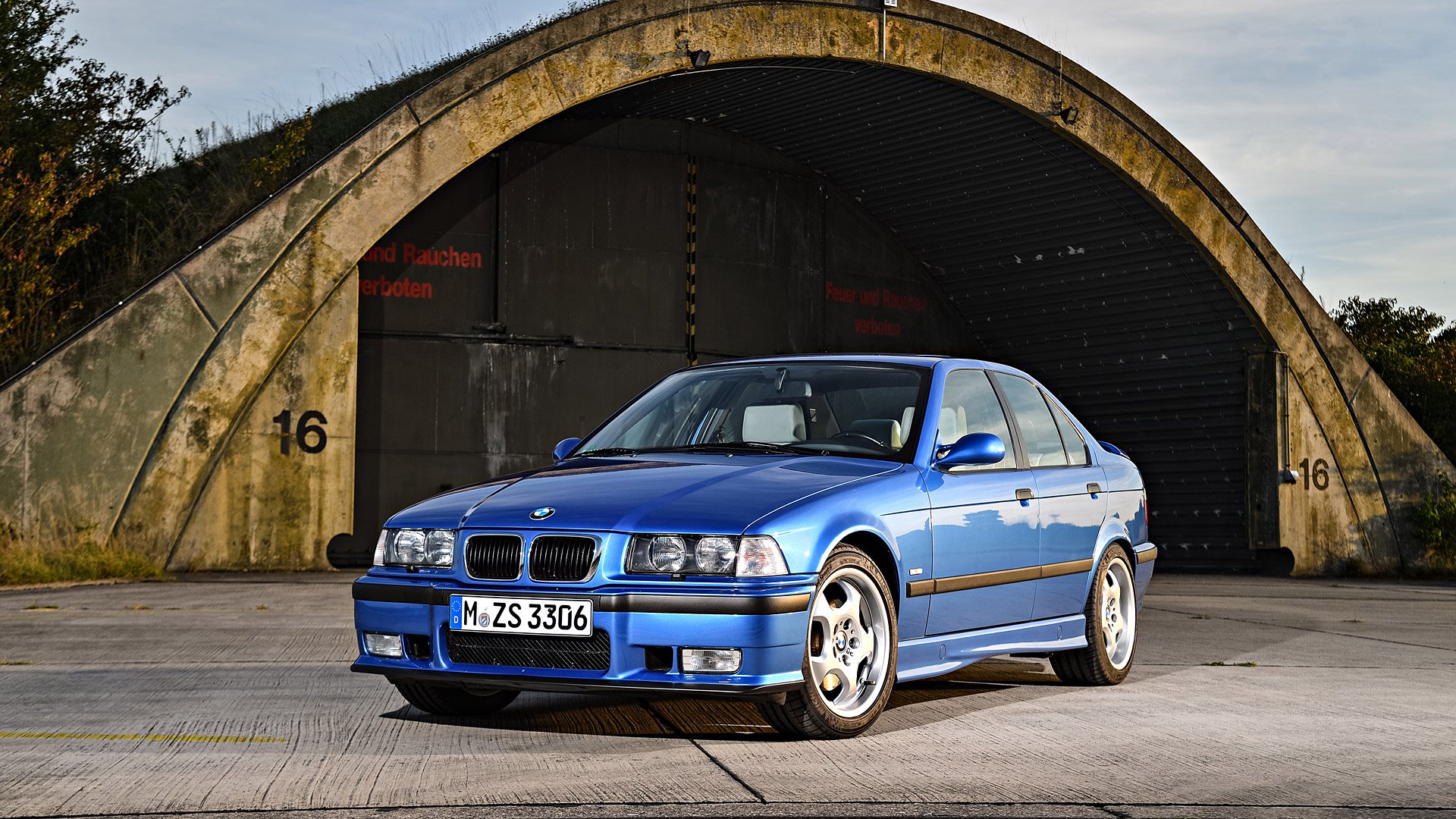
The E36 M3 was the model that really launched BMW’s M division to the masses. It was targeted at the exec who wants speed in a tamer package than the original E30 (which was more of a true enthusiast’s car). With a 240-hp, 3.0-liter inline-six that was silky smooth and rock solid. The motor was torquey and the car was easy to drive. The brakes and the suspension was replaced in the base 3 series to make way for more performance oriented units, the transformation was clear.
In the autumn of 1995, BMW M subjected the M3 E36 to a model upgrade. The engineers lifted the M3 E36 to a new level, especially on the engine side. As well as this facelift, the S50B30 was also further developed. Thanks to the S50B32’s now 3.2-litre displacement and 321 hp, the BMW M3 was able to sprint to 60mph in 5.5 seconds, about half a second faster than before.
One of Lancia’s most successful products was the Delta. It was produced from 1979 to 1994 for many different road and track applications. The car debuted at the Frankfurt motor show as a Giorgio Guigaro design based on Fiat Ritmo components. Surprisingly, this Delta would lead Lancia into its most successful rally program. Many great road-cars have been created for homologation requirements and the Lancia Delta Integrale is one such car. After the Delta HF 4WD’s successful debut year, Lancia started the work on the Integrale. This was a car which integrated the developments from the 1987 season into both a road and rally car.
The final version of the Delta series was the Evoluzione II. It was the only Integrale which was never raced and instead made in honor of the six consecutive victories achieved with the Delta.
With Alcantara-trimmed Recaro seats and additional sound deadening, additional creature comforts highlight the Evoluzione II. Basically the rest of the car is identical to the Evoluzione except for the sixteen inch wheels, remapped engine mototronics and a three-way exhaust catalyst.
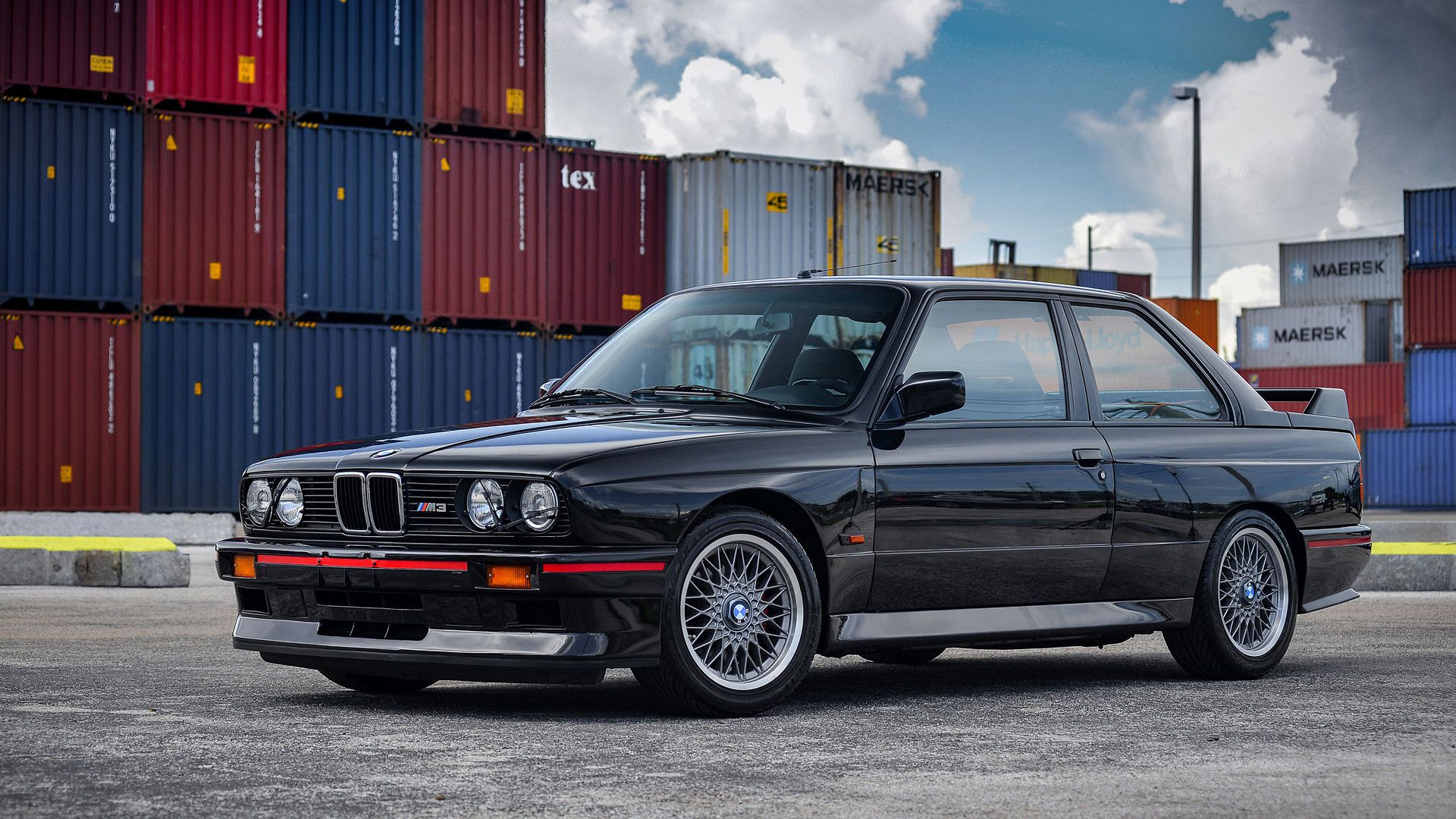
The pinnacle of the E30 series. BMW built several limited run E30 M3 specials over the course of four years, from 1988 through 1991. Our favorite is this Sport Evolution (only 600 units were made).
As the high-profile M3 became the most successful touring car of all time, its civilian version became increasingly exciting. To stay on par with seasonal developments, BMW Motorsports released updated versions each year. These cars mimicked the performance changes required to keep the Group A race car ahead of the competition. The last and most potent evolution of these was the M3 Sport Evolution. When the Touring rules increased capacity limits to 2.5 liters in 1990, BMW endowed the M3 with its largest engine. They increased the stroke and the bores of the four cylinders from 93.4 millimeters each to 95.5 millimeters.
To meet homologation, BMW released a road-going model that featured this new 238 bhp, 2.5 liter engine which used sodium-cooled exhaust valves, a larger intake tract and a signature red spark plug wires. Aside from the engine, each car had an adjustable front apron and rear wing, as well as a special interior with Sparco seats and suede controls. There was no air-conditioning or electric windows and each of the 600 cars had a numbered plaque on the centre console.
The Clio Williams was the first hot hatch to worry the Peugeot 205 GTI. I guess that is what happened when you build a real homologation special to compete with the king at the time. It was built because Renault Sport wanted to go rallying and the class maximum displacement stood at 2 litres. Renault simply had to build 2500 road cars to qualify.
Powering the Renault Clio Williams was a 2 liter naturally aspirated 4 cylinder engine that had 145 bhp at 6100 rpm and 129 lb/ft torque at 4500 rpm. Combined with a tight 5 speed manual gearbox and upgraded suspension it was super fun and very fast.
Sometimes a car is great not because of how fast it goes because of how it makes you feel when driving. The Peugeot 306 GTI-6 is one of those cars. It was a fun car to drive, with great balance, enough power and great turn of speed. Few cars could match its eagerness to slip into corners. Its passive rear-wheel steering – enabled by using soft bushings at its torsion-beam rear axle – resulted in a turn-in sharper than many rear-drive machines.
It started life in 1993 as 306 S16 and in 1996 Peugeot updated it to GTI-6 with a refreshed face, a heavily improved engine and a new 6-speed gearbox. The 2 liter 16-valve engine got a host of updates that made is rev more freely and increased power to 167 hp.
The Ford Escort RS Cosworth was built to qualify as a Group A car for the World Rally Championship. Based on the not-so-exciting Ford Escort, it was a rally homologation special. With advanced AWD and turbocharged 2 liter turbo Inline 4 engines they were victorious at 10 different WRC events from 1993-1997. With its massive rear wing, robust, race-bred twin-cam four and excellent handling, the car remains an absolute icon of the 1990’s homologation era machinery.
A wolf in sheep’s clothing. That’s the best way to describe the E39 BMW M5. It started the “let’s put a massive engine and awesome suspension into a mild-looking body” trend. It is also largely credited as the car that really started the German saloon horsepower war of the 2000s. This was the first M5 to get a V8 under the bonnet and with 400bhp, 370 lb-ft. of torque, it had serious performance. A 4.4 second 0-60mph time and 180+ mph top speed were supercar beating speeds in a sedan you could take the kids to school in.
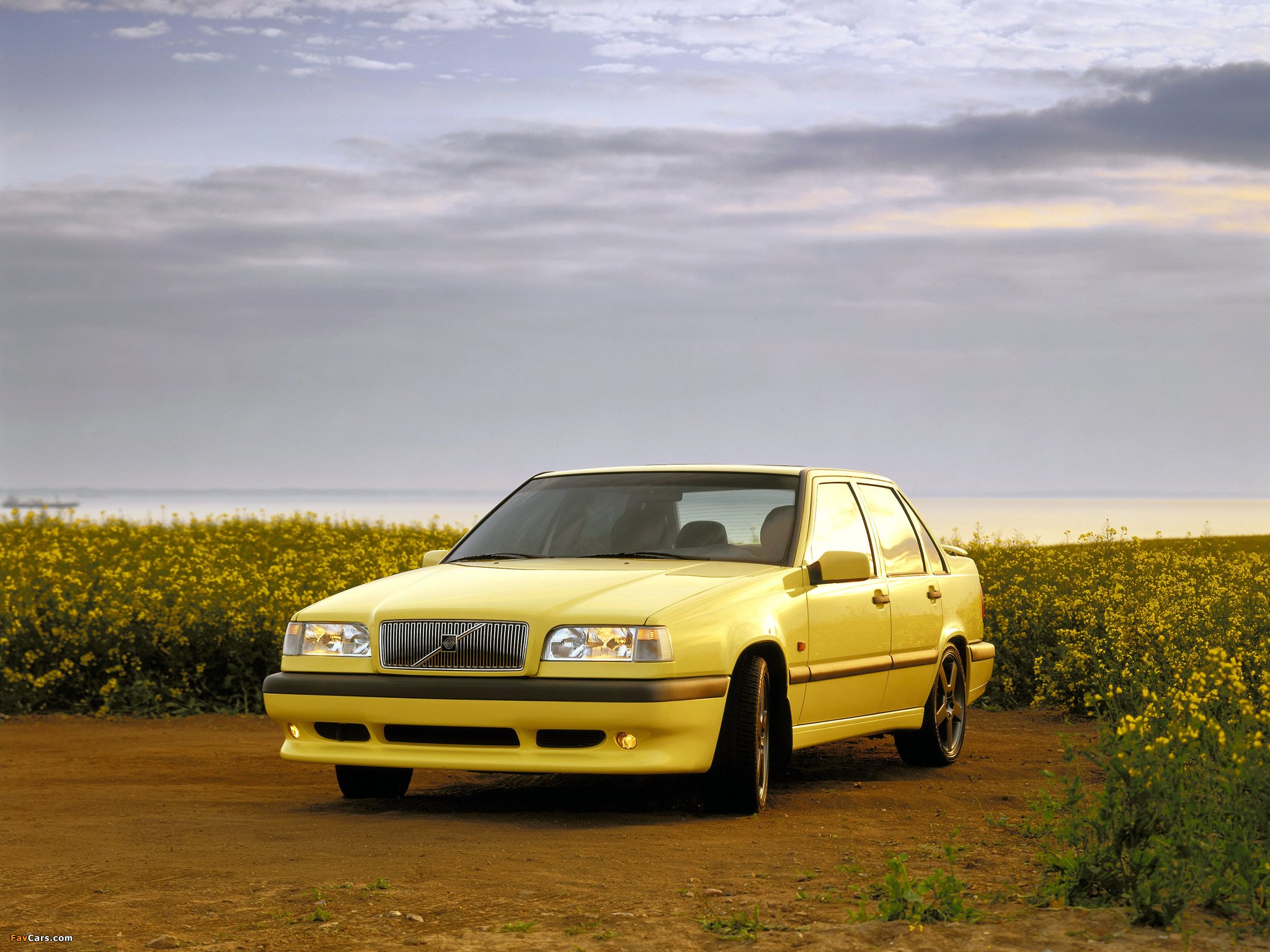
From the days when Volvo has a sense of humor. For 1995, the special limited edition 850 T-5R was offered, and was a commercial success, leading Volvo to produce a second run in 1996. The original Volvo 850 came out in 1993 and it was a cracking car from day one with a solid 170 hp engine. Soon after in 1994 came the “Turbo” model, with 222 horsepower In 1995 was our favorite, the T-5R. The T-5R was available in yellow or black and it was offered as a sedan or a wagon. The T-5R was unique in that it had a cool a rear wing, larger wheels, alcantara seats and a slightly more power, up to 240 horsepower.
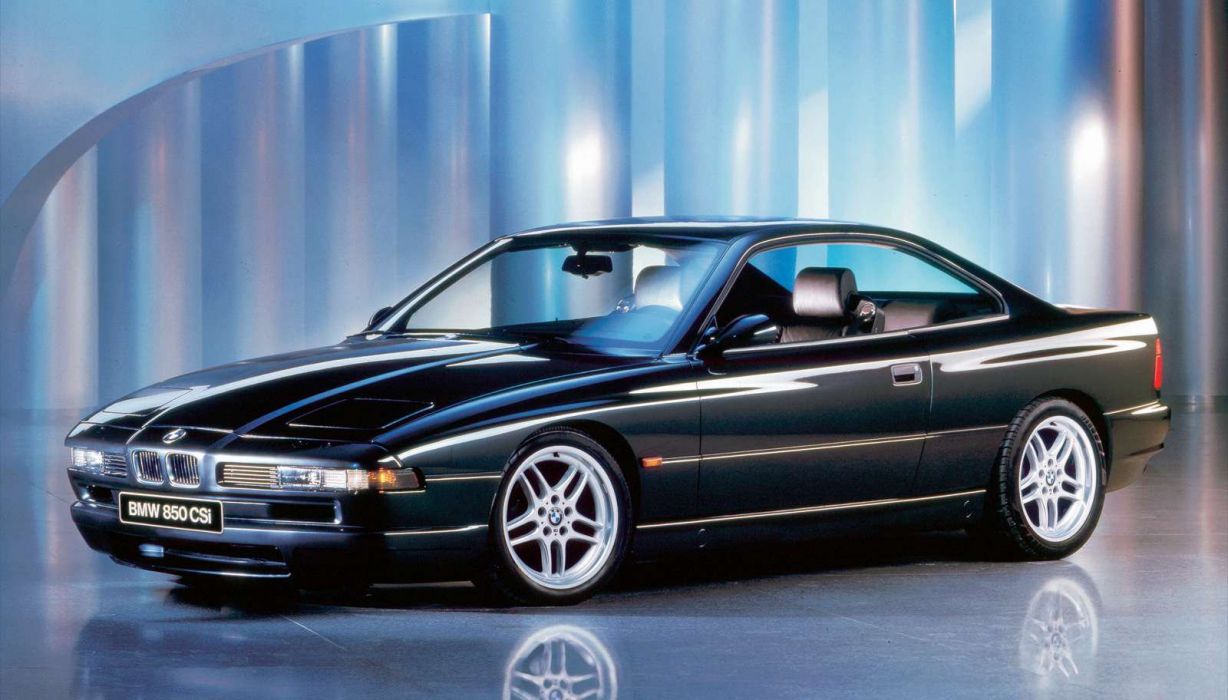
This was the top of the 8 series heap. The 850CSi used the same engine as the 850i, which was tuned significantly. The 8 Series Coupé, of which more than 31,000 units had been sold between 1989 and 1999, was a further technological milestone in BMW’s history of coupés: Powered by eight- and twelve-cylinder engines, it was absolutely no problem for this car to reach a top speed of up to 250 km/h (155 mph). A select circle of fans very much enjoyed the unprecedented driving feel offered by this car. Thank the 850CSi’s modified suspension which included stiffer springs and dampers and recirculating ball steering ratio that was altered for better driving dynamics.
For 1993 through 1995, Porsche offered a lightweight “Club Sport” variant of the Porsche 968 which was specifically developed for owners looking to run their cars at the racetrack. Much of the base model 968’s “luxury-oriented” equipment was stripped out of the car, or simply not offered to consumers purchasing the Clubsport edition. Mechanically, the car was specially set up for use at the race track.
Porsche leveraged the track-ready Porsche 968 to help bolster declining sales of the sports car. The car was named “Performance Car of the Year” in 1993 by United Kingdom-based “Performance Car” magazine. The 968 was the last representative of the four cylinder transaxle models.
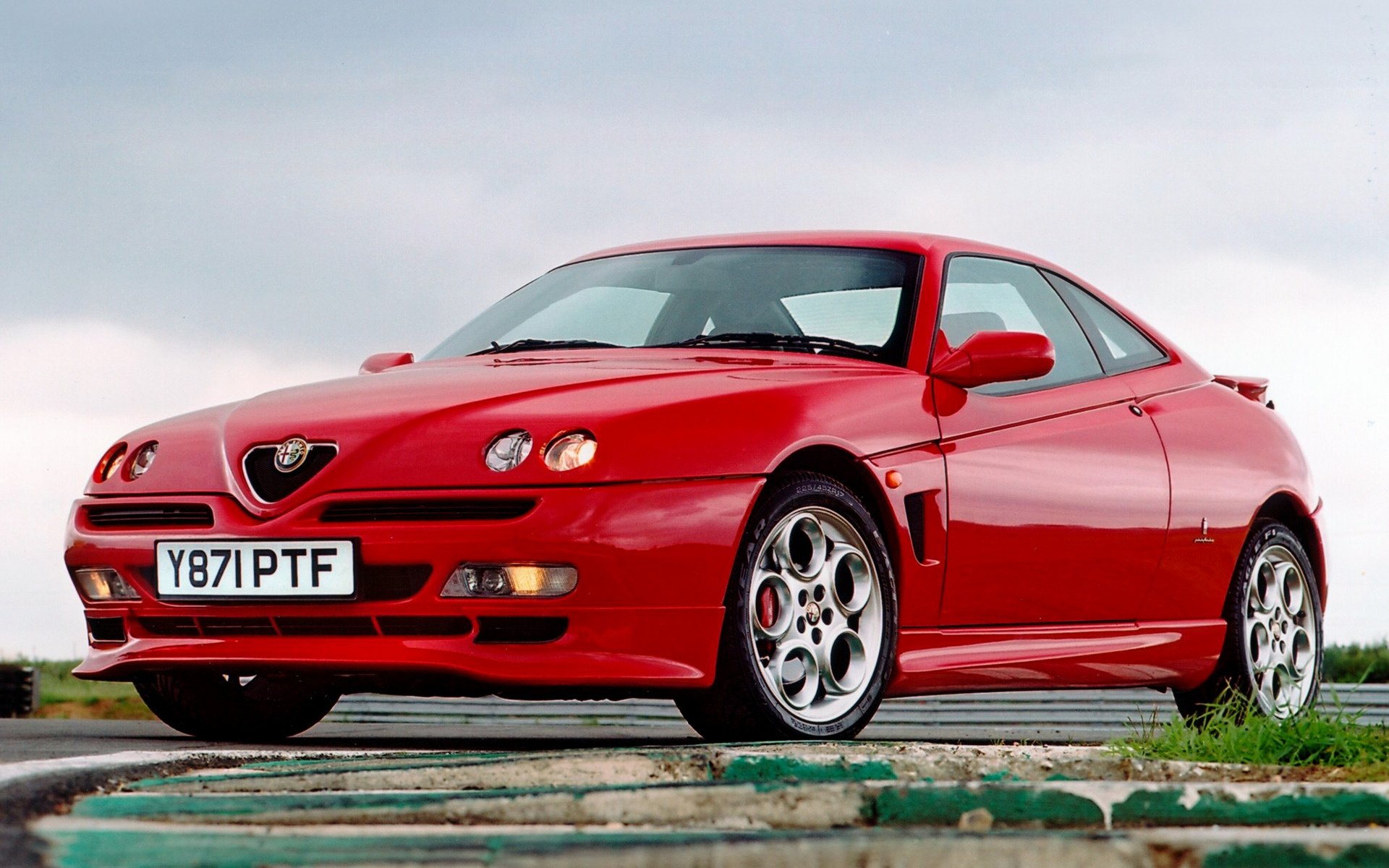
Alfa Romeo GTV/Spider
Year: 1995–2004 / Engine: 24-valve 3.0 litre V / Power: 215 bhp at 6,300 rpm / Torque: 199 lb⋅ft at 5,000 rpm / 0 – 60 mph: 6.7 seconds / Top speed: 149 mph
The 1997 was the sweet spot in the GTV/Spider history. The turbocharged 2.0-litre V6 was a solid engine but as a car guy it is hard to ignore that 1997 saw the introduction of the awesome sounding 24-valve 3.0 litre V6. Fabulous engines, super fast ‘Quick-Rack’ steering and gorgeous styling made it a no brainer for this list. It was also genuinely fun to drive and far more reliable than anyone expected.
When it debuted in the early 1990s, Volkswagen’s VR6 engine was pretty revolutionary. By arranging six cylinders in a zig-zag pattern on one cylinder head, VW managed to put V6-level power in an engine not much larger than an inline-four.
Our favorite use of that engine was in the Golf VR6. Without the hp draining AWD system and less weight to carry around we liked the VR6 more than the R32. The VR6’s front-drive platform was tied down more firmly than a conventional Golf. A journalist at the time said it best, “the VR6 is a ripper way to get into a quicker-than-average car that has all the practicality of a VW Golf and some of the cachet of the mighty R32”.
When Mercedes-Benz pulled out of racing at the end of the tragic 1955 season, it stayed away (at least on a factory-supported basis) for almost 30 years. The company’s first foray back into circuit racing came with the W201 chassis 190E 2.3-16, a special version of the company’s compact sedan fitted with tauter suspension, a body kit, and a variant of the company’s venerable 2.3L inline-four that was fitted with a twin-cam, 16-valve cylinder head designed and built in England by Cosworth. Cossie Benz development culminated with the 190E 2.5-16 Evo II of 1991. The flared fenders, towering (and adjustable) rear wing and super low bumpers and side skirts ensured that the DTM racers based on it generated impressive aero numbers, while the larger 2.5L engine (rated at 232hp in showroom trim) provided some extra boom. The E30 M3 could not have asked for a more fearsome rival.
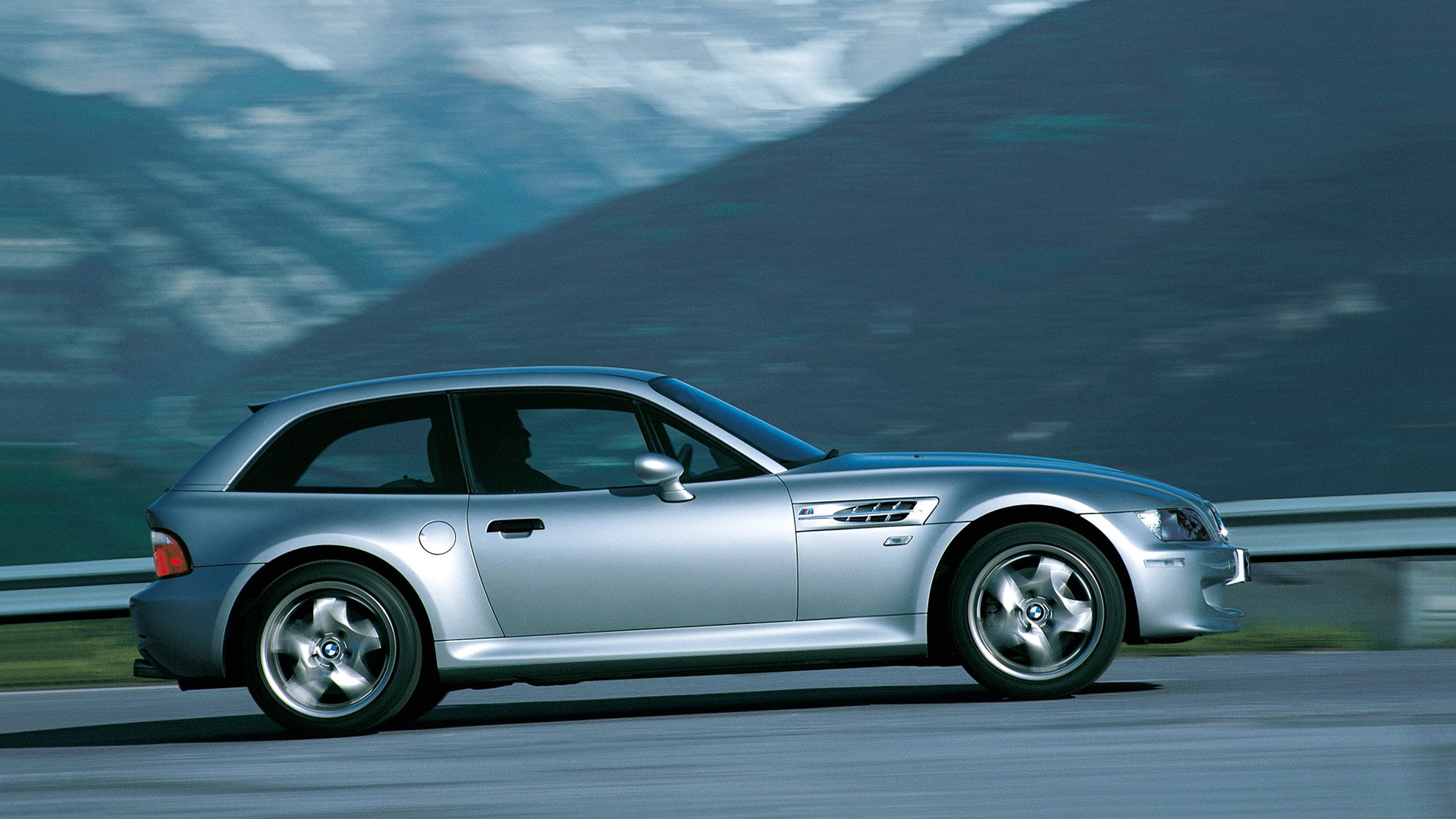
We are sports car purists here at Supercars.net so when deciding between the BMW M Coupe and BMW Z3 M Roadster we went for the coupe. It is the better car. Today it has a cult-like following and having driven one recently I can tell you it is a phenomenal car, an icon for sure.
Lots of begging was needed to get approval from the BMW board to build the coupe. Without much budget to work with the small dedicated team had their work cut out for them.
The focus on improving chassis rigidity (see I told you coupes are better) meant that the engineering team was able to make massive handling improvements over the Z3. It also meant that the chassis could handle more power.
Enter the 3.2-liter S52 inline-six (from the U.S. spec E36 M3). While this is a 1990s post, things got really interesting in 2001 when the M Coupe they upgraded to the S54 spec 3.2-liter inline-six which had 315 hp and 251 lb-ft of torque. A fun sports car for sure.
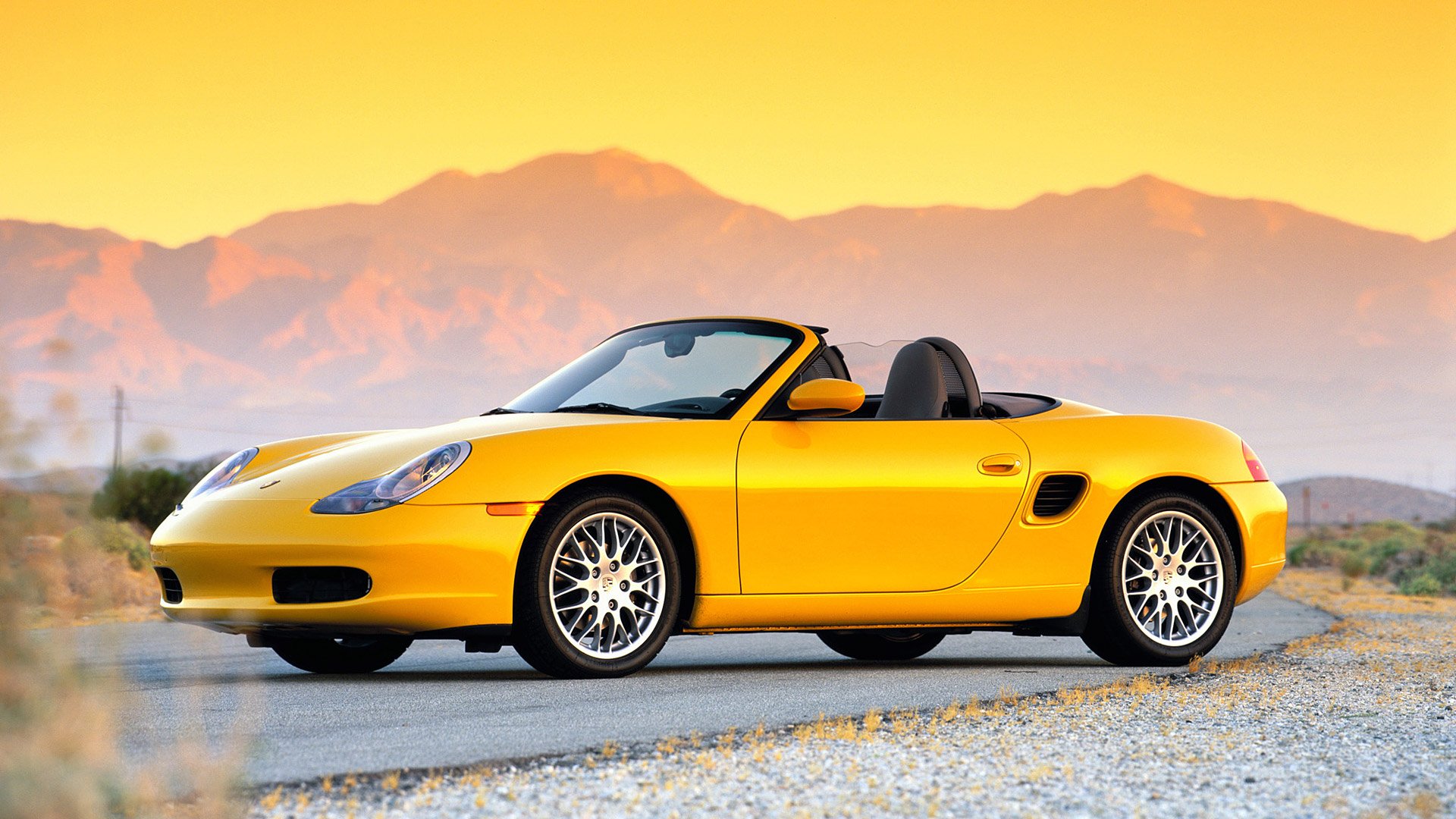
Year: 1996–2004 / Engine: 2.5 L flat-6 (1996–1999), 2.7 L flat-6 (1999–2004), 3.2 L flat-6 (1999–2004) / Power: 201.0 bhp @ 6000 rpm / Torque: 181.0 ft lbs @ 4500 rpm / 0 – 60 mph: 6.1 seconds / Top speed: 149 mph
The Porsche Boxster (Type 986) was introduced in late 1996 as part of Porsche’s 1997 model year lineup. The car featured the Porsche Type M96 engine – a water-cooled, 2.5-liter, flat six-cylinder engine rated at 201 horsepower. The flat, mid-engine layout provided the Boxster with a low center of gravity, near-perfect weight distribution, and neutral handling. The Boxster was released ahead of its big-brother, the new Porsche 911 (type 996), and the initial response the car received was an affirmation to the engineers behind the new 911 that they’d designed a car that would be incredibly well received. The 986 Boxster shared many of the same body components as the new 911 including the same bonnet, front wings, headlights, interior and engine architecture.
The Boxster was the right car at the right time for enthusiasts and for Porsche. When it was released it quickly became a big seller and steadied the ship at Porsche. Reviewers gushed that the car was near perfect. Motor Trend said this in its first Boxster test: “On the road, the drivetrain, suspension, brakes, and rack-and-pinion steering work in concert like a well-rehearsed philharmonic. Each element fuses with the next to create a rewarding, communicative link between driver and car, transforming subtle inputs into controlled responses. It’s all Porsche all the time.”
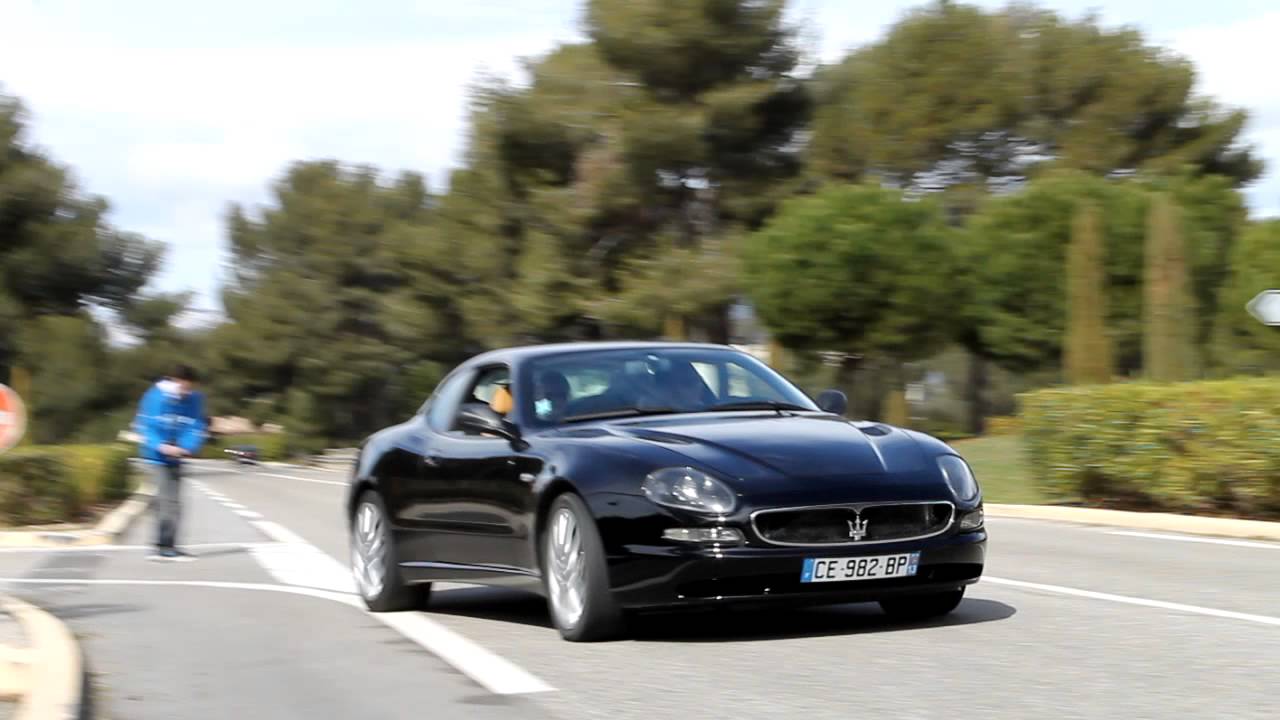
The elegant Maserati four seater coupé was styled by Italdesign. The 3200 GT’s 104.8 inch wheelbase was just a centimetre longer than that of the Quattroporte IV, which explains its class-leading cabin space. The 3200 GT shared the saloon’s twin-turbo 3.2 litre V8, revised and tuned to produce 370 hp (271 kW) at 6,250 rpm and mated to a six-speed gearbox. Mixed flow turbines allowed response times that were 20% quicker compared to conventional turbo set-ups. To guarantee the highest manufacturing standards, the assembly line at the historic Modena factory was completely modernised. Performance was on par with expectations, highlighted by a 280 km/h top speed (174 mph) and a 0 to 100 kph time of just over 5.1 sec. The sleek body returned a 0.34 Cd. Besides its pace, the 3200 GT’s opulent interior added to its appeal. In June 1999, Group President Luca Cordero di Montezemolo could already celebrate the 1000th 3200 GT to roll off the production line.
We got some abuse on our Facebook page for including so many Porsche 911s in our best 90s supercars list. I can’t help it if Porsche created some cracking cars in the 1990s. Extending an olive branch however I decided that I would only include two 911s in this list. One is the best of the 964s and the other is the best of the 993s.
Porsche’s Carrera 2 was the basis for the higher-performance and racing versions that Porsche developed. The first of those was the RS 3.6 of 1992, which was powered by a warmed-up version of the standard twin-plug, normally aspirated 3.6-liter engine. Porsche then upped the ante with its Carrera RS 3.8 for the 1993-1994 model years. The cars served as the homologation base for the 3.8 RSR for international competition.
The Carrera RS is a lightweight variant of the Carrera. It features a naturally aspirated 3.8 liter engine with 300 hp (DIN). On the outside, it is easily distinguishable by a special non-retractable rear wing, small front flaps and 3-piece 18-inch (460 mm) aluminum wheels. The headlight washers were deleted for weight saving reasons. Inside the rear seats were removed, and special racing seats and spartan door cards were installed. Sound proofing was reduced to a minimum.
Most people who have driven the RS say that it’s the ultimate experience in rawness and purity and easily the best of the 964s.
While the 1998 Porsche 911 GT2 is my favorite 993 generation 911 of the era, it already made our top supercar list so we instead went with the Porsche 911 Turbo S instead.
Considered by many Porsche enthusiasts as the “ultimate 911”, the type 993 represented a unique blend of power and simple elegance. The car had a more streamlined look and was “lower slung” than earlier versions of the 911. The styling was perfect and it is still the best looking 911 series. This was the last of the “air-cooled” Porsche 911s (insert sad face here).
The turbo-version of the Type 993 Porsche 911 was also introduced in 1995 and featured a bi-turbo engine that was at the top of the performance pack for the time. For Turbo 993s the 3.6 liter got twin KKK K16 turbos and made 402 hp although you could customize your order (on Turbo S and GT2 models) to up that to 444 hp. The 993 Turbo was the first 911 Turbo with all wheel drive, essentially lifted from the 959 flagship model.
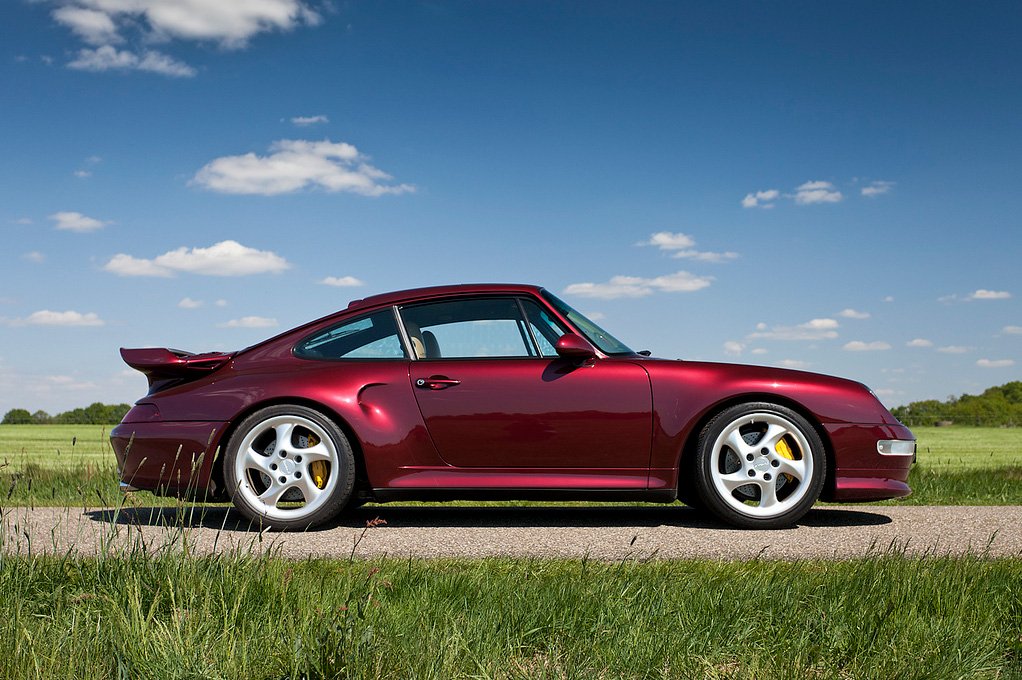
During the second to the last year of production of the 993 (1997), Porsche offered the 993 Turbo S. The X50 power pack had larger turbos, intake and exhaust upgrades, and a new computer. Power upgrade got it to 424 hp and included extras like carbon fiber decoration in the interior as well as very cool yellow brake calipers, a slightly larger rear wing, a quad-pipe exhaust system and air scoops behind the doors. This was the last of the air-cooled 911 Turbos and our favorite.
The United Kingdom motoring public are obsessed with sports cars. Local manufacturers and sportscar makers are a driving force behind a lot of the innovation in motorsports as well as being home to some of the most well known names in the sports car business.
The British are responsible for some of the greatest sports cars the world has ever seen and the 1990s were no different. The McLaren F1 was the best ever (in my humble opinion).
Lotus was on a roll in the 1990s, punching well above its weight in terms of creating cracking cars. The Lotus Carton was a cool collaboration and the Esprit was fun, but it was the Lotus Elise that was so refreshing that it is still considered the ultimate sports car. Super light, stiff, glued to the road and with the right amount of poke to make you wonder why you ever need anything faster. This 90s originality was not unique to Lotus because you had the crazy guys at TVR building some special sports cars and their approach and ideas were truly unlike anything else. Their scariest model was the TVR Cerbera Speed 12 and we love that it even exists, but it was the base TVR Cerbera that won our hearts at the time.
For other British car companies, the success of the sports cars they sold in the 1990s went a long way to helping them survive and eventually thrive. If it wasn’t for the Aston Martin DB7 and Jaguar XKR you could argue that those two brands would be out of the business or at a minimum relegated to the also runs in the performance car side of the game.
With that, please enjoy the best British cars of the 1990s.
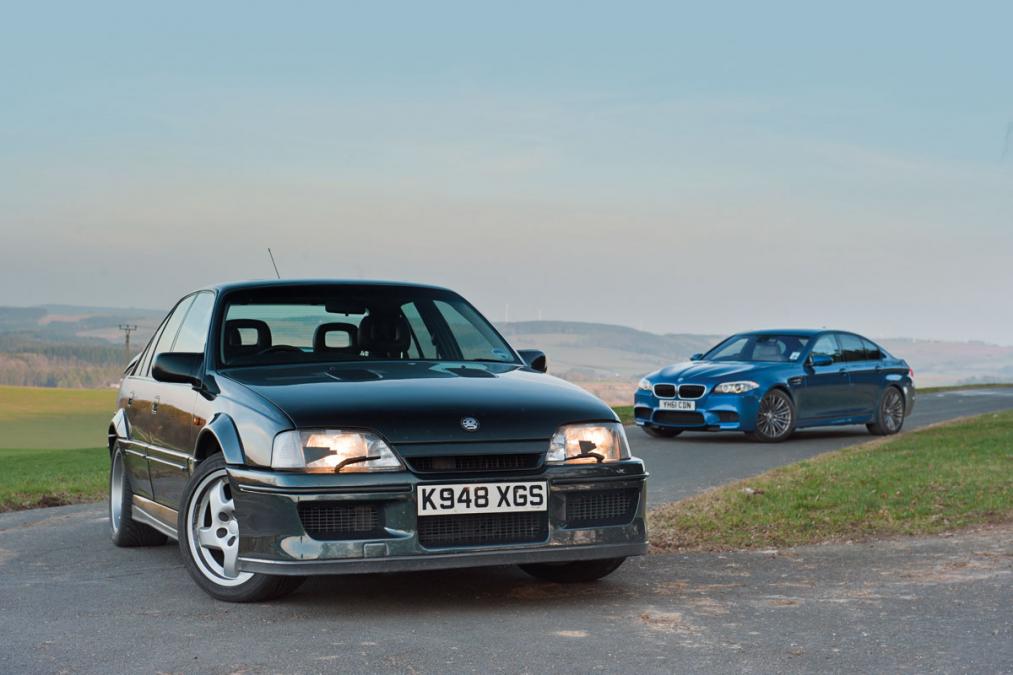
One of the most distinct cars in the Lotus lineup is the Carlton/Omega. The name Omega name was given to the left-hand-drive cars while Carlton’s had their driver on the right. Internally at Lotus the car was known as the Type 104. The motivation behind the car came from Opel and Vauxhall who wanted to improve the image of their platform car. Lotus used the Vauxhall Carlton 3.0 GSi 24v as a base for the car, improving almost every component.
The engine used was a GM inline-6 although the block is the only original component. To cope with the 100 bhp per litre load Lotus replaced the pistons, crankshaft, induction system, cooling manifold and induction bodies. The Inline-6 was bored and stroked to a capacity of 3.6 litres. A redesigned cylinder-head and twin Garett turbochargers were also added in the mix. The result was 377 bhp from an engine that originally had 204 bhp.
As expected, Lotus also reworked the suspension, brakes and aerodynamics.
This super-tuned saloon offered the fastest four-door experience in 1990. It was leaps and bounds ahead of the competition which included the BMW M5. The Lotus Carlton/Omega was built up to 1992 with around 900 examples being built, all in Imperial Green Metallic.
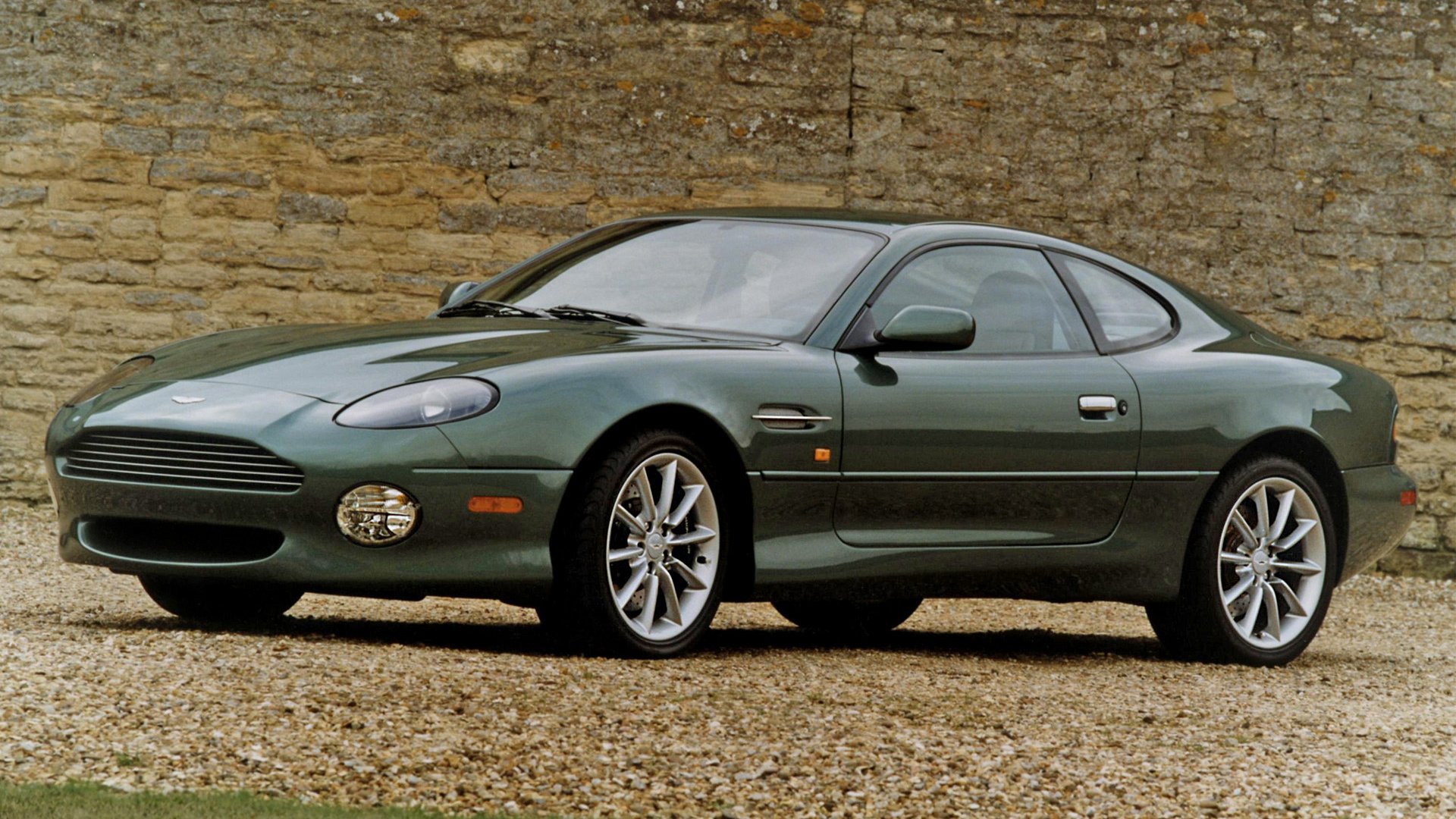
Under the direction of Ford Motor Company, the DB7 was engineered by Tom Walkinshaw Racing as a smaller alternative to the V8 Vantages. TWR worked with both Jaguar & Ford components and the result was the first regular steel bodied Aston Martin.
Ian Callum was responsible for the overall design which bears a slight resemblance to the first generation Jaguar XK8 which uses the same chassis.
TWR was also responsible for the development of the Inline-6 which used a Zytec electronic multi-point fuel injection and water-cooled Eaton Rootes-Type supercharger.
In 1996 a Volante convertible version became available and in 1999 the much more powerful Vantage was released with a 5.9-liter V12.
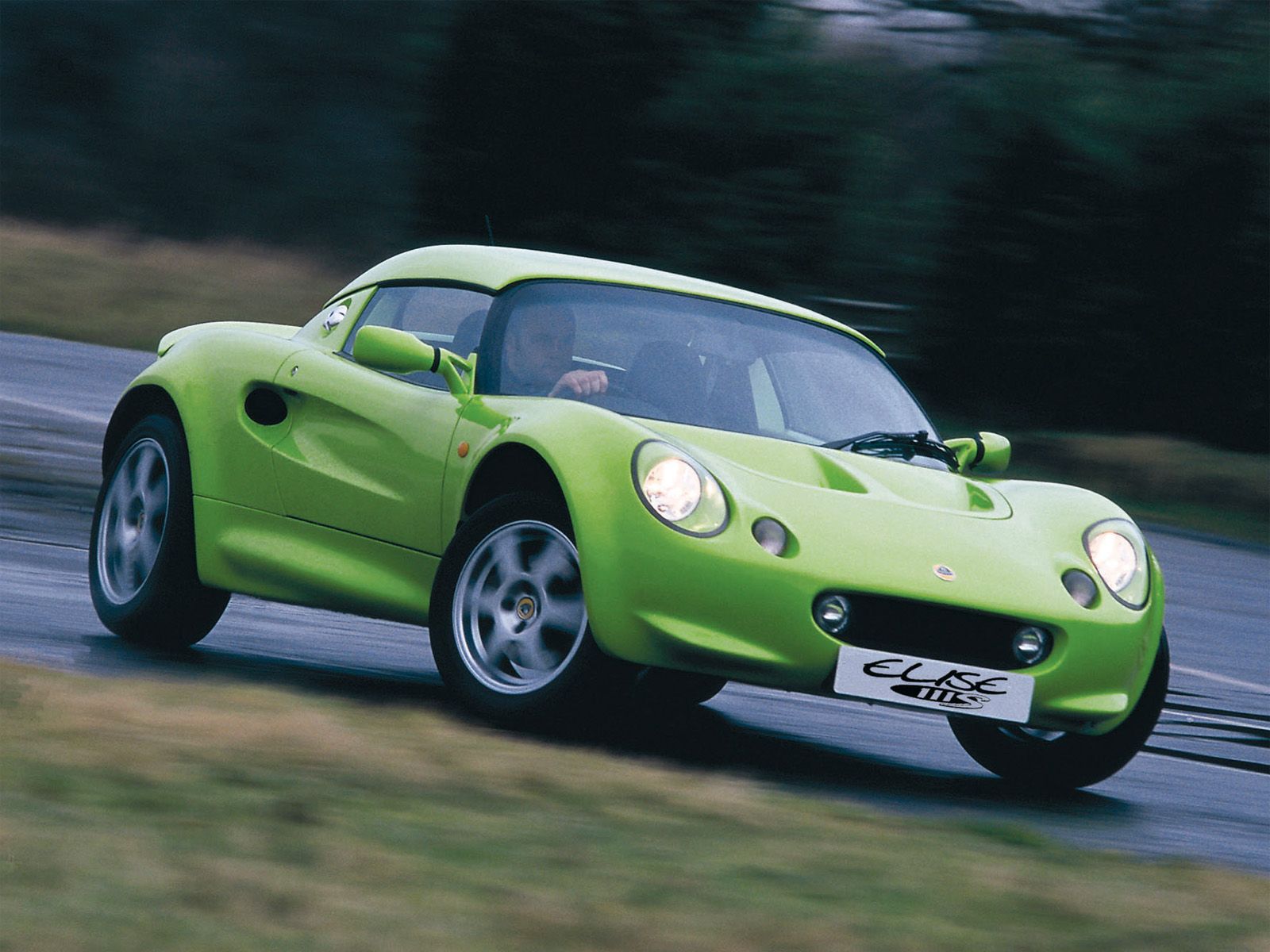
The Lotus Elise was a true sports car that took the world by storm, winning countless awards for handling, innovation and just pure fun. The Elise was first unveiled at the Frankfurt Motor Show in 1995 before entering production with first deliveries in August 1996. The Elise was designed as a sports car to be appreciated by real driving enthusiasts, fashion leaders and those who really appreciate technology and innovation.
The Lotus Elise introduced a range of technologies that revolutionised the automotive industry; such as a chassis made from extruded and bonded aluminium, a composite energy absorbing front crash structure and lightweight composite body panels. The whole car weighed in at half the weight of an average family saloon. This light weight bestowed the car with phenomenal acceleration and handling. In 1996 the Lotus Elise was easily pulling 1g in steady state cornering with standard production tyres and a 0-100km/h in 5.9 seconds. The original Lotus Elise was so special and game changing that it deserved a place on this list, if I had to buy a 1990s Lotus Elise, I’d be looking at the Lotus Elise 111S.
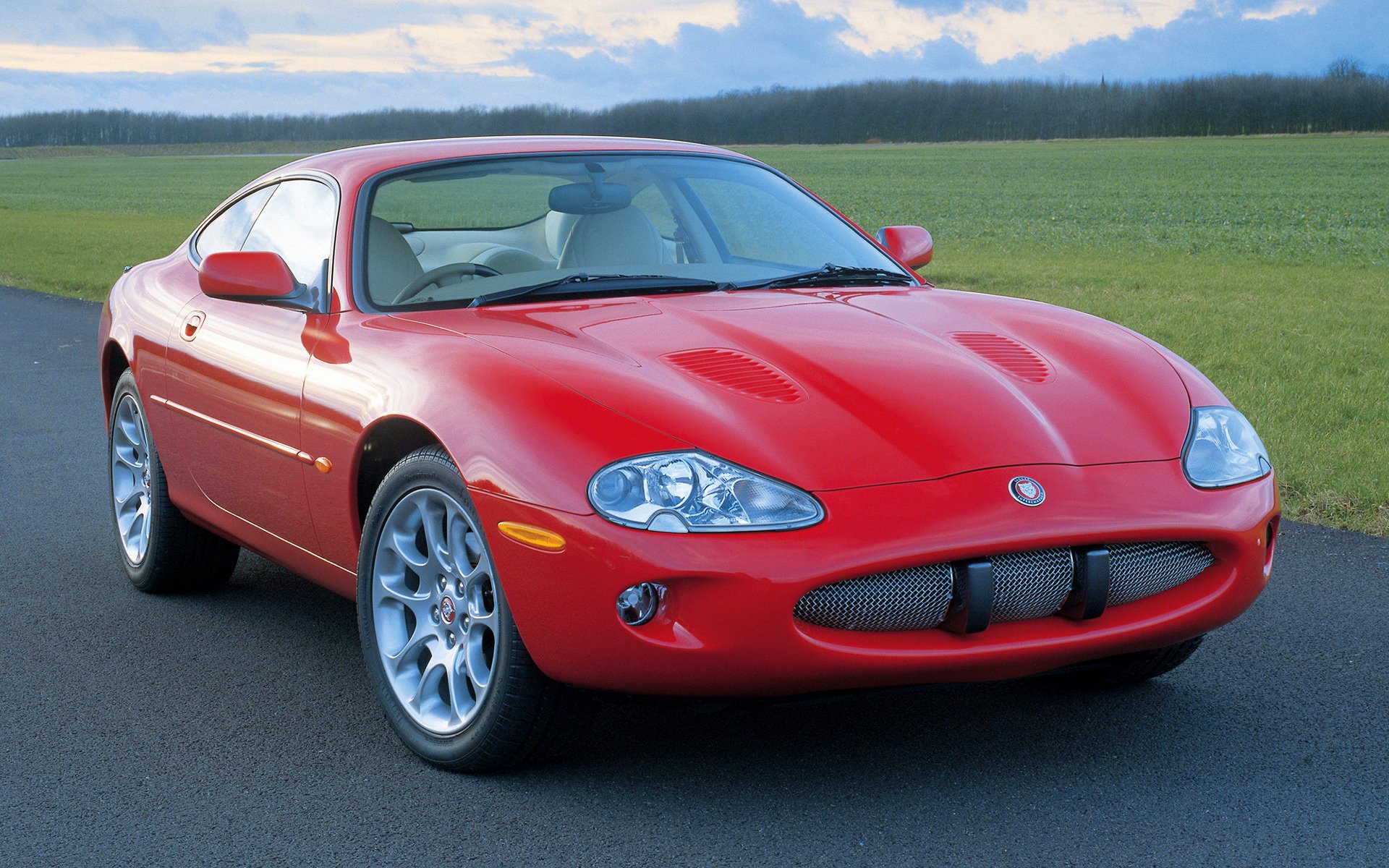
Year: 1998–2003 / Engine: 4.0 L AJ26S supercharged V8 / Power: 370 hp at 6,150 rpm / Torque: 387 lb⋅ft @ 3,600 rpm / 0 – 60 mph: 5.4 seconds (Coupé) 5.6 seconds (Convertible / Top speed: 155.4 mph
It all started with the XK8 which was a new two seater sports car launched by Jaguar in 1996. It was a stunner. The XK8 was available in two-door fastback coupé or two-door convertible body styles with the new 4.0-litre Jaguar AJ-V8 engine. In 1998, the XKR was introduced with a supercharged version of the engine and the addition of a new intercooler and a two-piece driveshaft. The supercharger was manufactured by Eaton and displaced at 2.0-litre. It also looked more aggressive, with visual differences from the XK8 including a rear spoiler, mesh front grille and hood louvres on the bonnet for improved airflow to the engine.
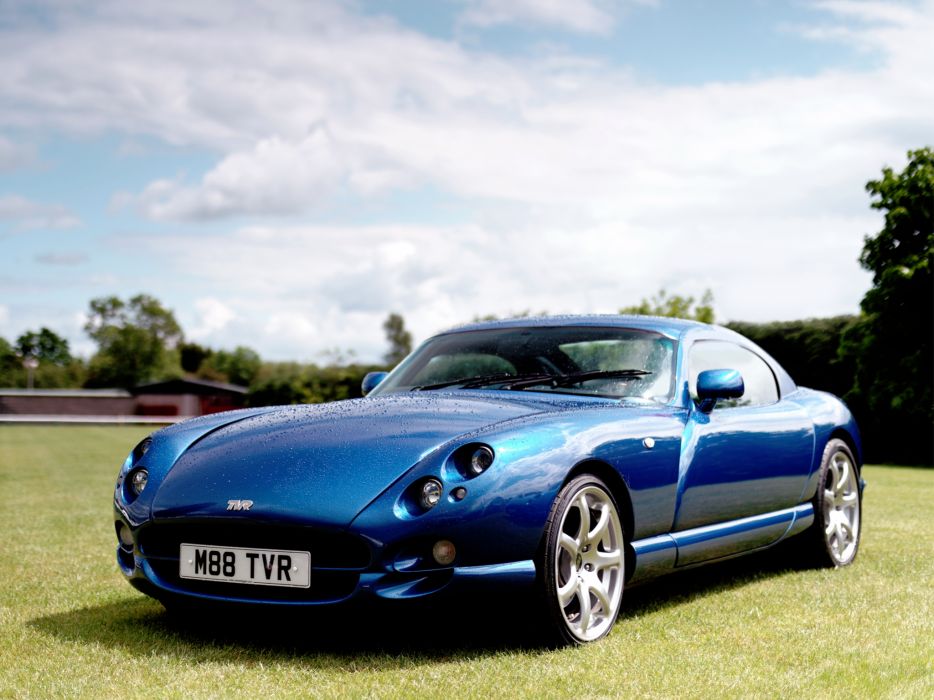
The TVR Cerbera showed that a small boutique company could hang with the big boys when it came to building engaging, beautiful and fast sports cars. It is unthinkable in today’s day and age that we would imagine an upstart building their own engines from scratch and yet that is exactly what TVR did back in the 1990s.
The Cerbera was TVRs coming out party. It was a small sports car that looks out of this world, was really quick, had tons of power and could actually handle. Sure, maintenance was as issue later on and the engines were unreliable, but the Cerbera did the whole pop on overrun thing well before anybody thought it was cool, doesn’t that count for something?
Our pick is the 4.2 liter V8 engine. Known as the AJP8, it had one of the highest specific outputs of any naturally aspirated V8 (83.3 hp/liter) for a total of 350 horsepower.
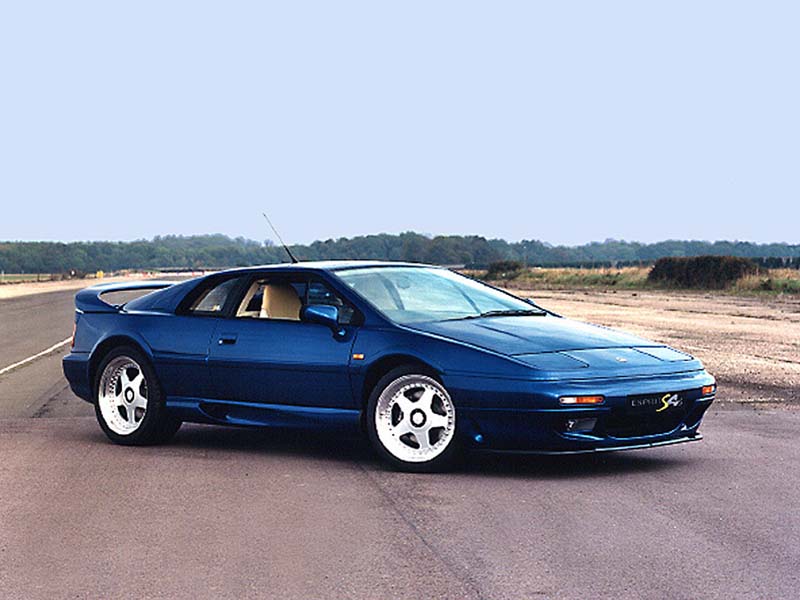
Hailing from the UK, Lotus has a rich motorsport heritage. It was also the Bond’s choice of car in two of the Bond movies. The Esprit was built between 1976 and 2004, the Sport 350 was made only in 1999 as the “ultimate” incarnation of the Esprit with only 50 made.
As the name would suggest, it was tuned to produce 350hp and 295 lb-ft of torque out of a 3.5L V8 force-fed by two Garrett T25 water-cooled ball-bearing turbos mated to a Lotus tweaked Renault 5-speed gearbox. The Sport 350 made the same power as the regular Esprit V8 Turbo, but the “special sauce” comes from the bespoke AP Racing brakes, track-tuned suspension, aero package, and magnesium alloy wheels.
Unfortunately what put this Lotus as the 14th on the list is the French origin gearbox, which limited the reliability of the Esprit as well as the power it could take. Due to the limited production of this specific Esprit, prices are still quite high. However good examples of regular V8 Esprits are less than half the cost of a new Lotus Evora 400 and has similar acceleration and top speed figures, except the Esprit, has that “old-school” cool factor and unique look.
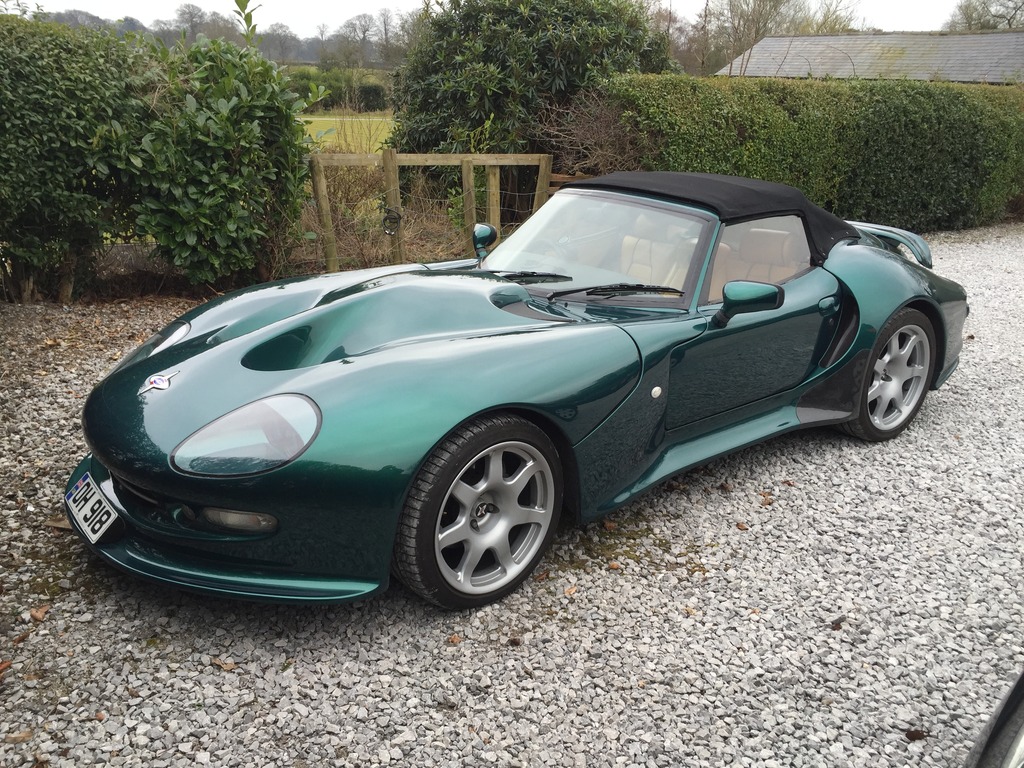
In 1997, Marcos reused the Mantis name for the latest version of the LM-series cars. It had a 4.6 liter quad-cam, small-block, Ford Cobra V8.
The front-end has been improved by smoothing the various aerodynamic addendums into the bonnet, so that it looks sorta like the old GT. The headlamps are now a pair of small, high intensity units that make the old (well, not that old!) units look huge and clumpy, and this further enhances the front-end. From the windscreen back it looks like the LM series cars. Performance was strong with 0-60 in 4.2 secs and a top speed of 170 mph!
Autocar tested this car and reported that “The doors close with a satisfying clunk, the interior doesn’t rattle or squeak and nothing failed or fell off during the course of its time with us – a rare occurrence for any low volume British sportscar in our experience” and commented that “How a company that builds just 70 cars a year can…design, engineer and produce a car as good as the Mantis is beyond comprehension.” Their verdict was “A credible rival to the TVR Griffith”.
Best 90s Japanese Sports Cars
I was a huge Japanese sports car fan boy in the mid 1990s. I even imported Japanese cars into Australia to help pay for college, owning several tasty cars (R32 GTR, Twin turbo Supra, 300ZX and Pulsar GTi-R). The 90s were exciting times and the pinnacle period for Japanese car manufacturers and enthusiasts alike.
For every dull Camry that came out of Japan was a sports car that was purely awesome. Honda had the NSX, Subaru had the WRX, Mitsubishi had the Evo, Nissan had the Skyline GT-R and Toyota had the Supra. Wow what a list.
On top of that you had the aftermarket tuner ecosystem going apeshit. They were tuning Supras and GT-Rs to over 1,000hp and releasing VHS videos (yes, I am old) that showed street racing and quarter mile drag times in the 8 and 9 second range (in street cars). Oh I miss those days.
The impact that the best Japanese cars of the 1990s had on the industry cannot be underestimated. The cars built by Japanese car companies in the 1990s scared the Europeans and Italians legitimately. Cars like the NSX were revolutionary. Great performance, awesome handling and bulletproof in terms of reliability. You could get a 90s Japanese sports car that was so good it would destroy any Ferrari point to point and it cost no more than a Camry to maintain. Ferrari and other sports car makers had to improve quickly (thankfully they did).
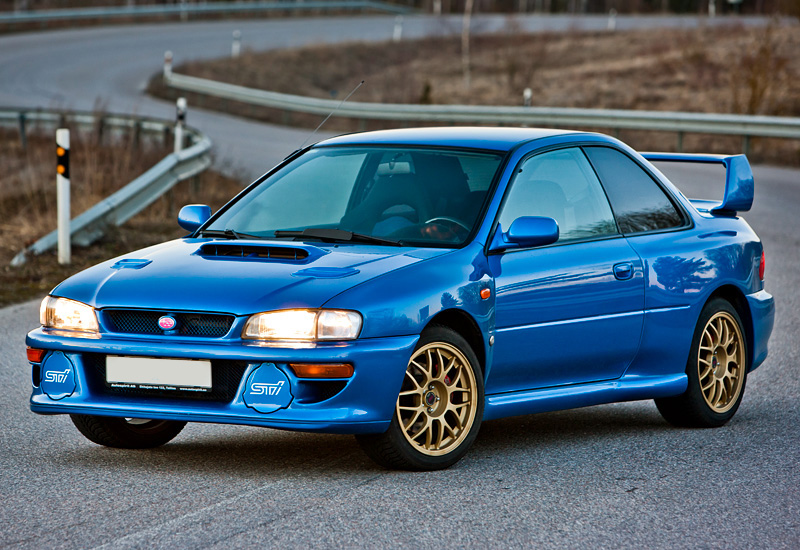
From the Land of the Rising Sun, we have our 6th place entrant on the list of reliable vintage supercars. Car & Driver was so impressed with the 22B STi, that it gave the nickname “The Subaru from Hell”. While the 22B STi didn’t have the price tag of a mainstream supercar, it definitely had supercar levels of performance.
The 2.2L closed-deck flat-4 engine produces 276 hp and about 268 lb-ft torque (at least on paper), however, based on performance tests, the actual numbers should be north of 300 hp Equipped with a driver adjustable center differential (DCCD) and a close ratio 5-speed gearbox driving the symmetrical all-wheel-drive system, the 22B can sprint to 60 mph from a standstill in 4.7s whether it be tarmac or dirt.
There were only 424 copies of this “holy-grail” Subaru ever made, with the addition of 3 prototypes, many rally enthusiasts (Subaru loyal or not) lust after the wide-body haunches and the rally cred this car brings. Due to the rarity and limited production numbers of the car, this Subaru easily fetches six-figures and will likely continue appreciating in value over time, having more than doubled its original sale price since launch.
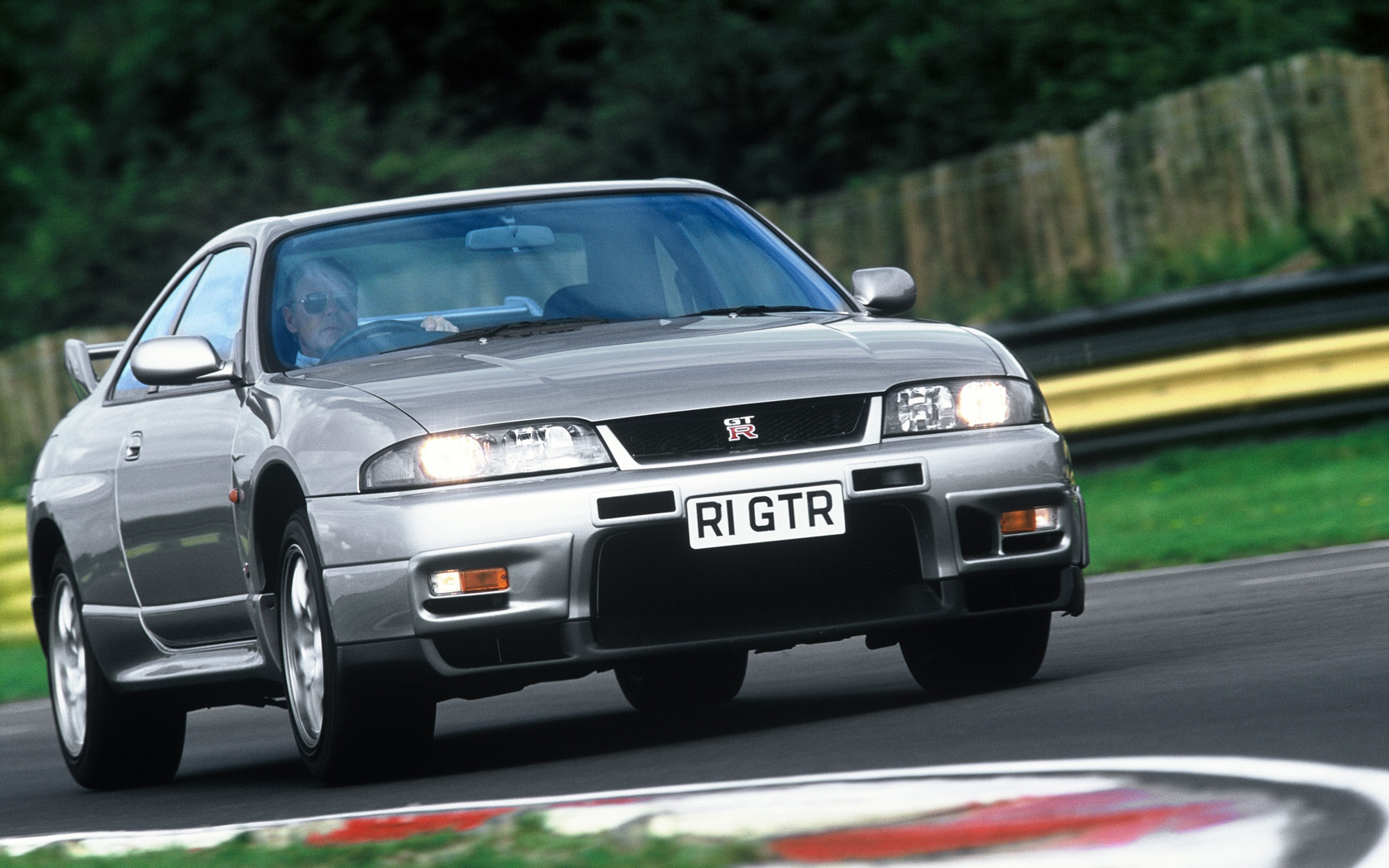
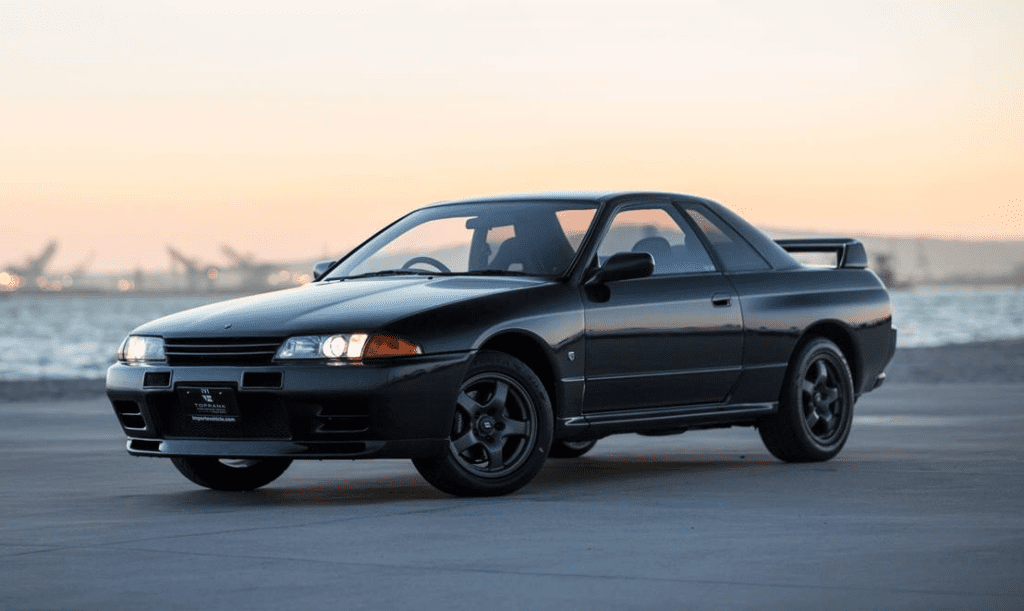
Heading into the top 5 reliable vintage supercars we have the 1994 Nissan Skyline GT-R V Spec II. This was the last variant and one of best road-going versions of the R32 Skyline GT-R’s, featuring bespoke 17” BBS wheels, larger Brembo Brakes and active rear LSD. Originally introduced in 1989, the Skyline GT-R dominated every class of racing that it was entered in Japan. The “Victory” Spec Skyline GT-R’s were built to commemorate this utter domination.
Due to its success in the Australian Touring Car Championship, automotive press in Australia dubbed the Skyline GT-R as “Godzilla” referencing the Japanese monster from the 1954 film. This name stuck and spread like wildfire, and the Skyline GT-R has since been known as “Godzilla” to automotive enthusiasts.
At the heart of Godzilla, is a twin Garrett T28 turbocharged straight-6 engine, known as the RB26, on paper makes 276hp and 271 lb-ft of torque due to the gentleman’s agreement between Japanese manufacturers; however, due to Group A homologation rules, the RB26 is over-engineered and known to reliably make 5-600 hp with few supporting modifications while the 5-speed manual transmission just being as stout as the engine.
Godzilla also features a very advanced rear-biased all-wheel-drive system known as ATTESA E-TS (an acronym for Advanced Total Traction Engineering System for All-Terrain Electronic Torque Split), sending as much as 50% of the power to the front wheels depending on traction condition of the rear tires. With the V Spec II now becoming legal to import in the US in 2019 (having been legal since 2009 in Canada), expect prices to likely go up with the increasing demand from those nostalgic of the Group A touring car era wanting a piece of the action.
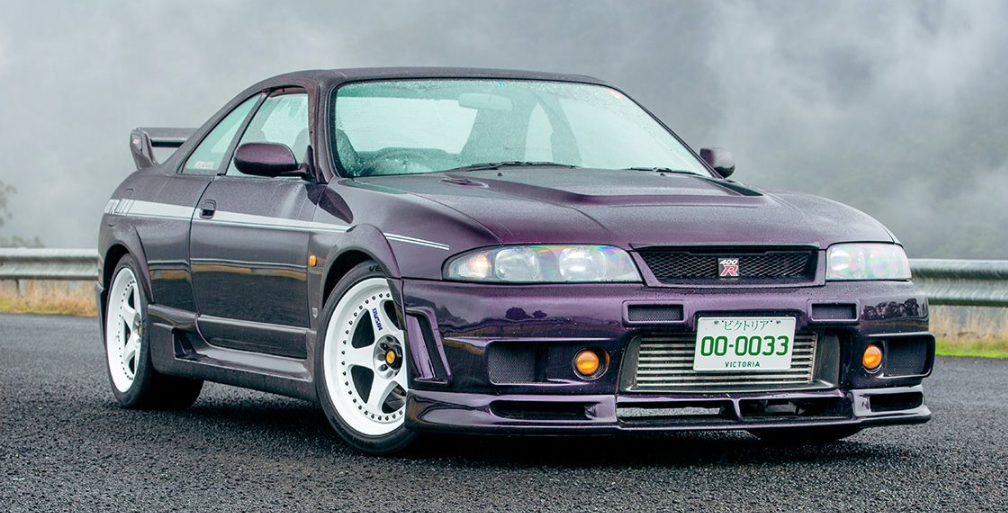
This ultra limited model is a derivative of the R33 Skyline GT-R handcrafted at Nissan’s motorsport division, Nismo, based in Omori. Inspired by the Nismo Le Mans entry of the GT-R LM, the 400R adopts many of these styling cues and performance modifications.
Sitting 30mm lower, sporting a widebody like the GT-R LM, the 400R also has a crown jewel under the hood, a bored and stroked version of the RB26DETT called the RBX-GT2 with a displacement of 2.8L along with uprated billet compressor wheels on the turbos. This incarnation of Godzilla makes a detuned 400 hp and 345.9 lb-ft of torque, giving ample thrust to pin any driver to the seat during acceleration.
Nismo had originally planned for 100 to be produced, but only 44 were ever made, which coincided with the end of production of the R33 body style in 1998. Finding a 400R available for sale might be tough, however finding a good condition, well loved final year R33 GT-R might not be as challenging (at least in Canada) as they have been admissible since 2013.
The R33 GT-R was considered by many to be the bloated compared to the R32 GT-R and not as fast as the R34 GT-R, which is lusted after by the Fast and the Furious generation; however, for those who grew up playing Gran Turismo 1, the 400R is definitely a hero.
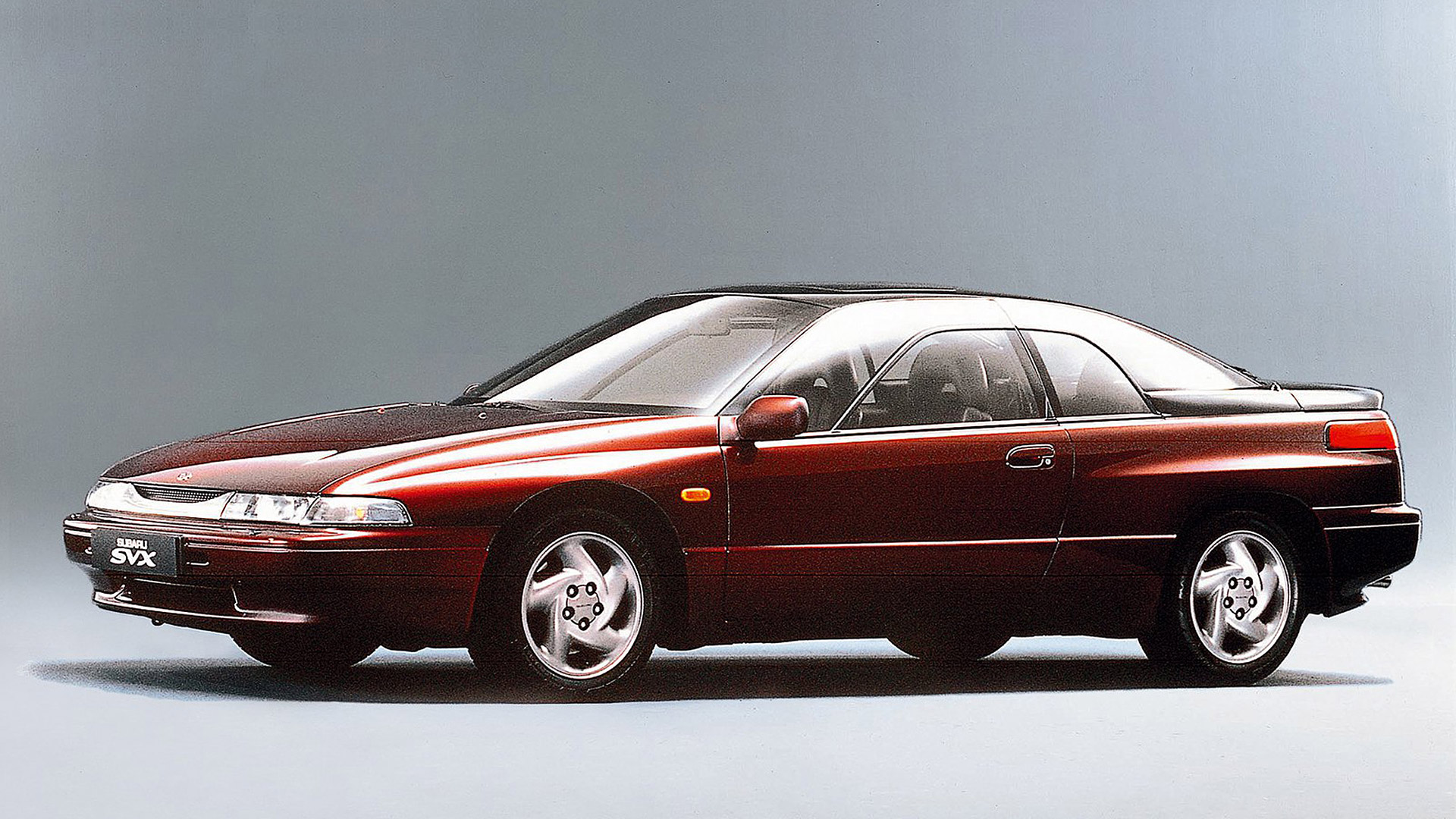
I was on the fence about including the SVX on the list. There are just so many better sports cars from Japan during the 1990s. For some reason it just sucked me in with its unique looks, its flat six its two-tone paint and those cool windows. In this 90s era of cars like the Honda NSX and R32 GT-R the SVX is so outgunned that we aren’t even going to go into pretend it compares performance wise. Ultimately, this was a big deal for Subaru, easily their most powerful car of the time. It had a cool design and unique approach.
Year: 1991 – 1999 / Engine: 3 liter twin turbo V6 / Power: 320 hp at 6000 rpm / Torque: 315 lb⋅ft at 2500 rpm / 0 – 60 mph: 4.7 seconds / Top speed: 158 mph
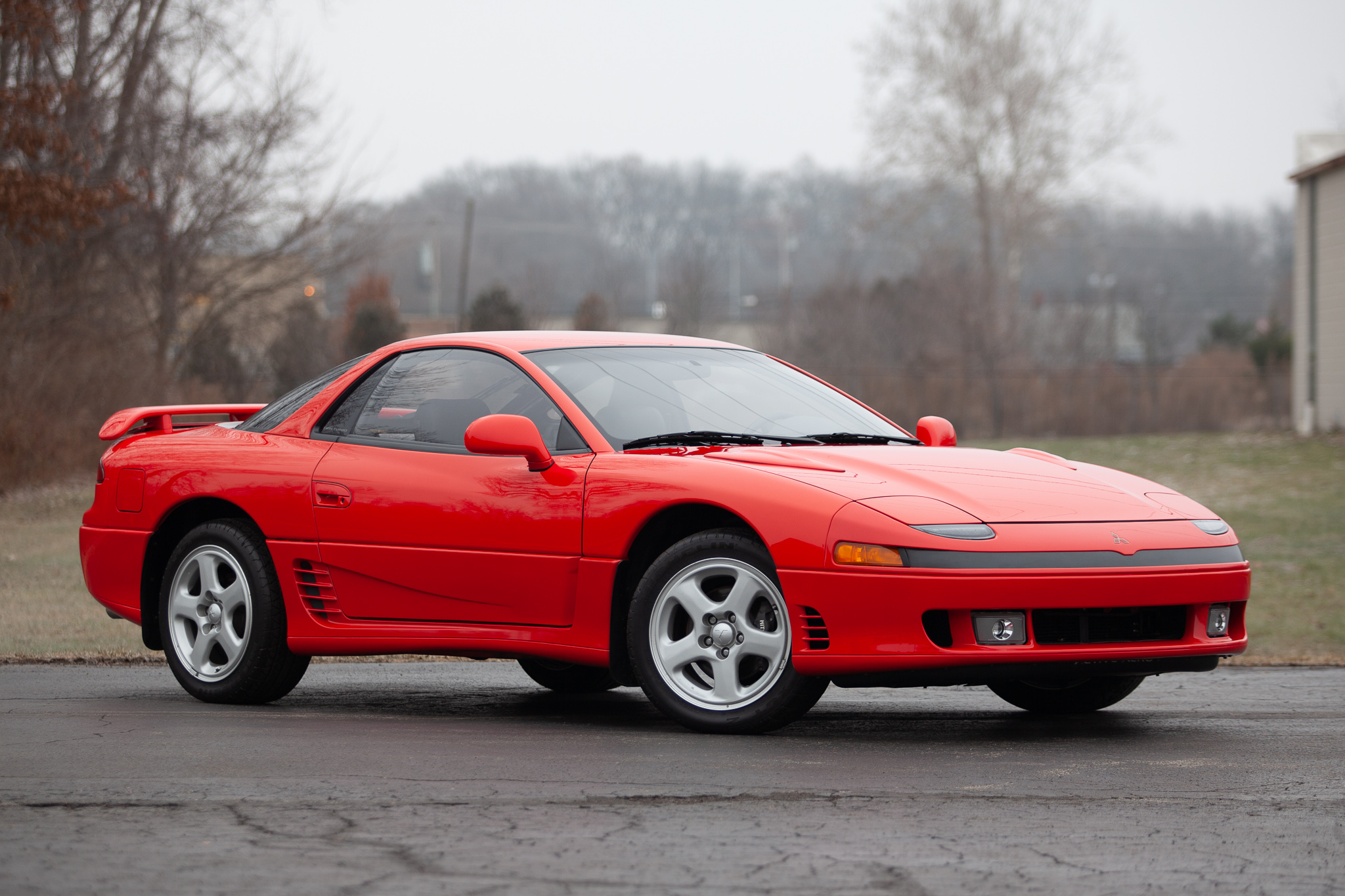
Another car I was reluctant to add to this list is the Mitsubishi 3000GT. It sounded so great on paper with a 3 liter twin turbo V6 engine, all-wheel drive, all-wheel steering, active suspension, active exhaust and active aerodynamics. Too bad it was really heavy and that weight hurt it dynamically and commercially (especially in an era with other epic Japanese cars with none of those issues).
I once drove a 3000GT and remember being disappointed. Not surprisingly, the great mass of the car tempers its performance. The steering is heavy and relatively uncommunicative, and though its disc brakes are capable, the nose dives more than the others while entering a corner.
If we have to pick our favorite version, we would go for the VR-4. In 1999 the car received another exterior makeover, including a new aggressive front bumper, headlamps, turn signals, sail panels, and a true inverted airfoil spoiler coined the “Combat Wing” for the 1999 VR-4 to distinguish it from previous models.
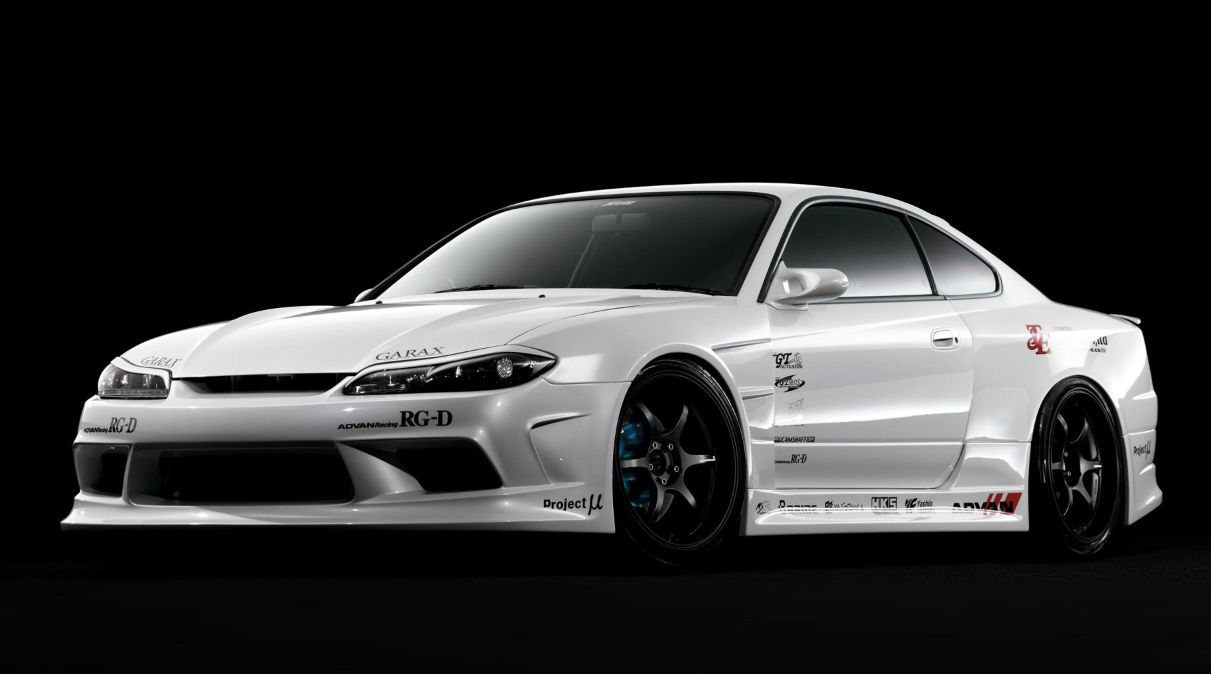
Sold worldwide, the Nissan Silvia is best appreciated in its homeland. It is there, in the Japanese market, where Nissan has provided a 247 horsepower Silvia called the Spec-R.
To understand this 1999 Silvia Spec-R, it is important to look at the previous six generations that came before it. The Silvia range started in 1964 with the CSP311, a twin passenger coupe hand-built upon a modified Fairlady 240Z chassis. Since the bodywork was far more pedestrian than the 240Z, and performance was somewhat lacking, sales of the first generation Silvia finished at just over 500 examples..
Not until the third generation, known as the S10, did the Silvia get a foothold in the markets. Also known as the Gazelle, or 180SX for hatchback versions, this S10 sold well in Japan and abroad.
From generation three forward, the Silvia evolved with engine and styling updates: by 1983, the S12 Silvia set the standard for sports coupes in Japan by having the FJ20DET 190 horsepower engine. The following S13 generation came equipped with Nissan’s HICAS four wheel steering which greatly increased the level of technology for all Silvias thereafter.
The final edition of the Silvia, the S15 was, for most parts of the world, a styling upgrade. However, in Japan, the Silvia was offered in two distinct packages: the performance orientated Spec-R and the slightly more subdued Spec-S which is similar to what shipped for export.
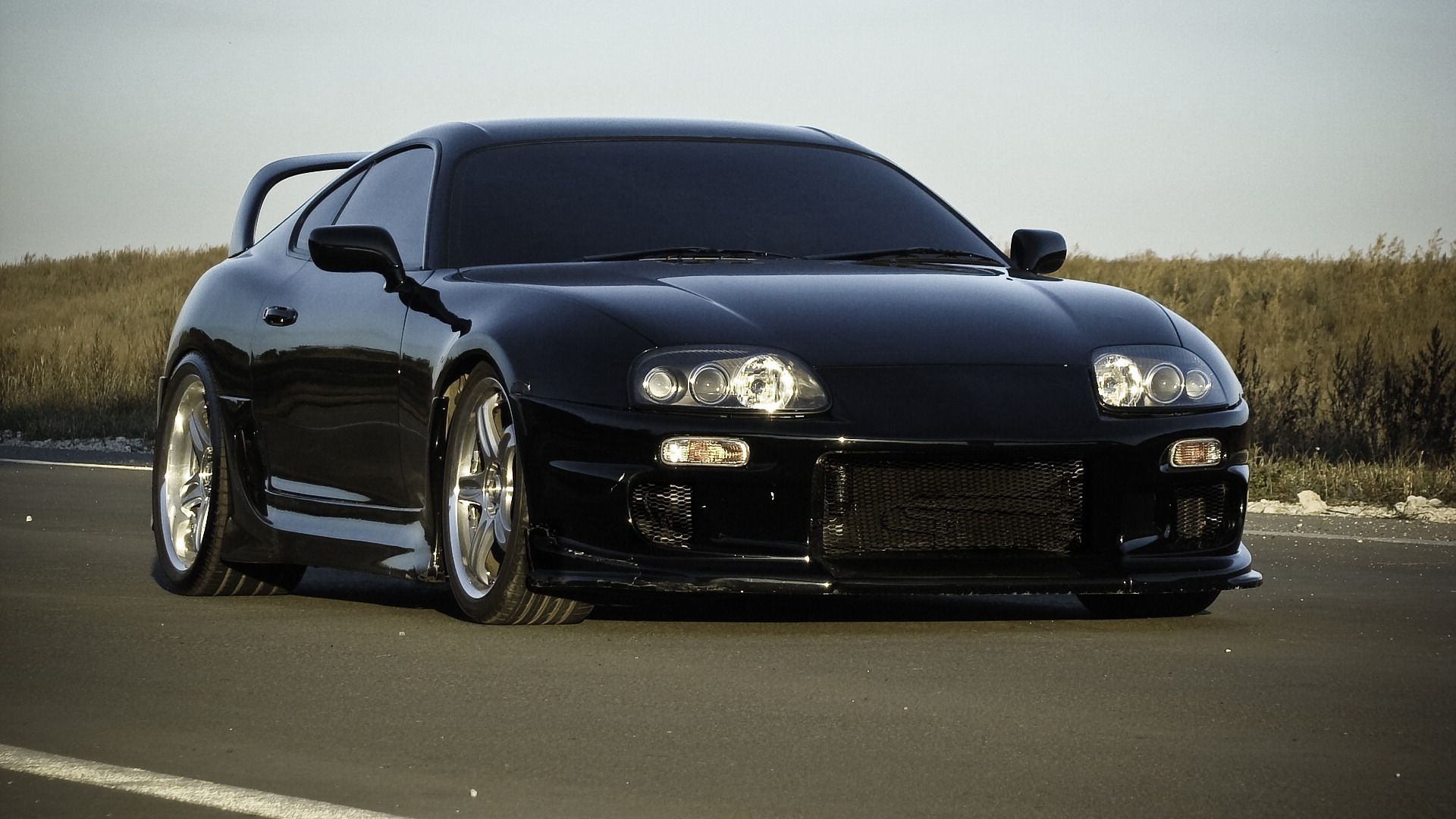
As a previous owner of the JZA80 MKIV Toyota Supra Turbo I am biased because I love this car. When the MKIV Supra was still in production, Japan was in its heyday of making sporty cars. The now legendary 3.0L twin-turbocharged 2JZ-GTE made 320 hp and 315 lb-ft of torque transferring power to the ground via 6-speed Getrag or 4-speed automatic gearbox.
Those who aim to build their MVIV Supra’s into exotic slayers gravitate towards the nearly indestructible 6MT Getrag which has been known to hold over 1000 hp with the proper clutch, care, and use. The 2JZ-GTE is also just as stout, with many enthusiasts easily doubling the power on the stock long-block with less than $10k of modifications to the turbo, fueling, exhaust, ECU, and intercooler.
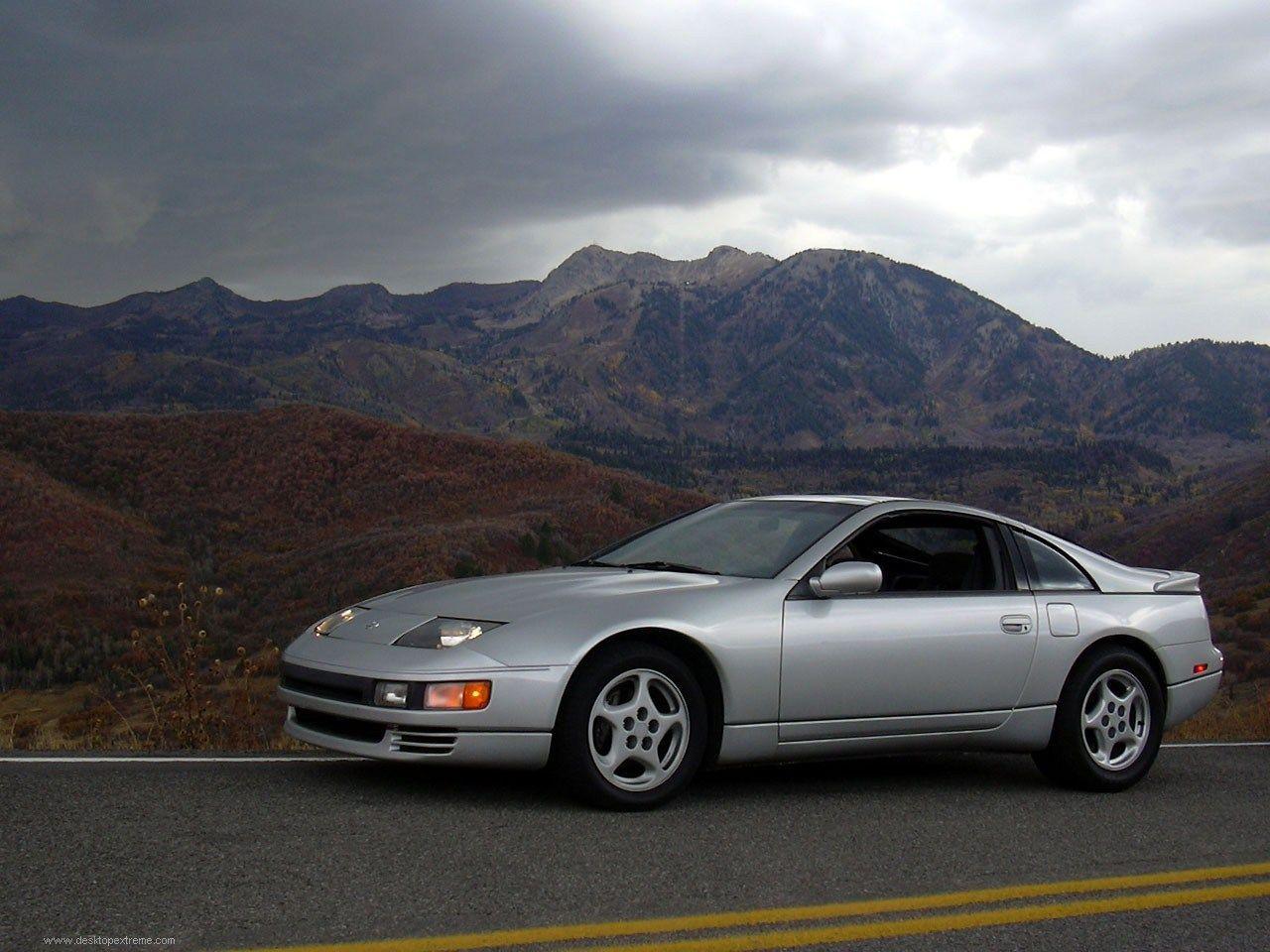
The 300ZX fought Corvettes, Porsches, Supras. The Z32 was a new design. The body was wider with a rounder profile and fewer hard edges. Twin Turbocharged Z32s also featured a then-new active rear wheel steering systems called “Super HICAS”, which was actuated hydraulically until 1994 when Nissan switched to an electric actuator. The 300ZX had a 3 liter engine with dual overhead camshafts (DOHC), variable valve timing (VVT) and producing a rated 222 hp (166 kW) and 198 lb·ft (268 N·m) in naturally aspirated form. The turbo variant was upgraded with twin Garrett turbochargers and dual intercoolers producing 300 hp (224 kW; 304 PS) and 283 lb·ft (384 N·m) of torque. Performance varied from 0-60 times of 5.0-6.0 seconds depending on the source, and it had a governed top speed of 155 mph (249 km/h).
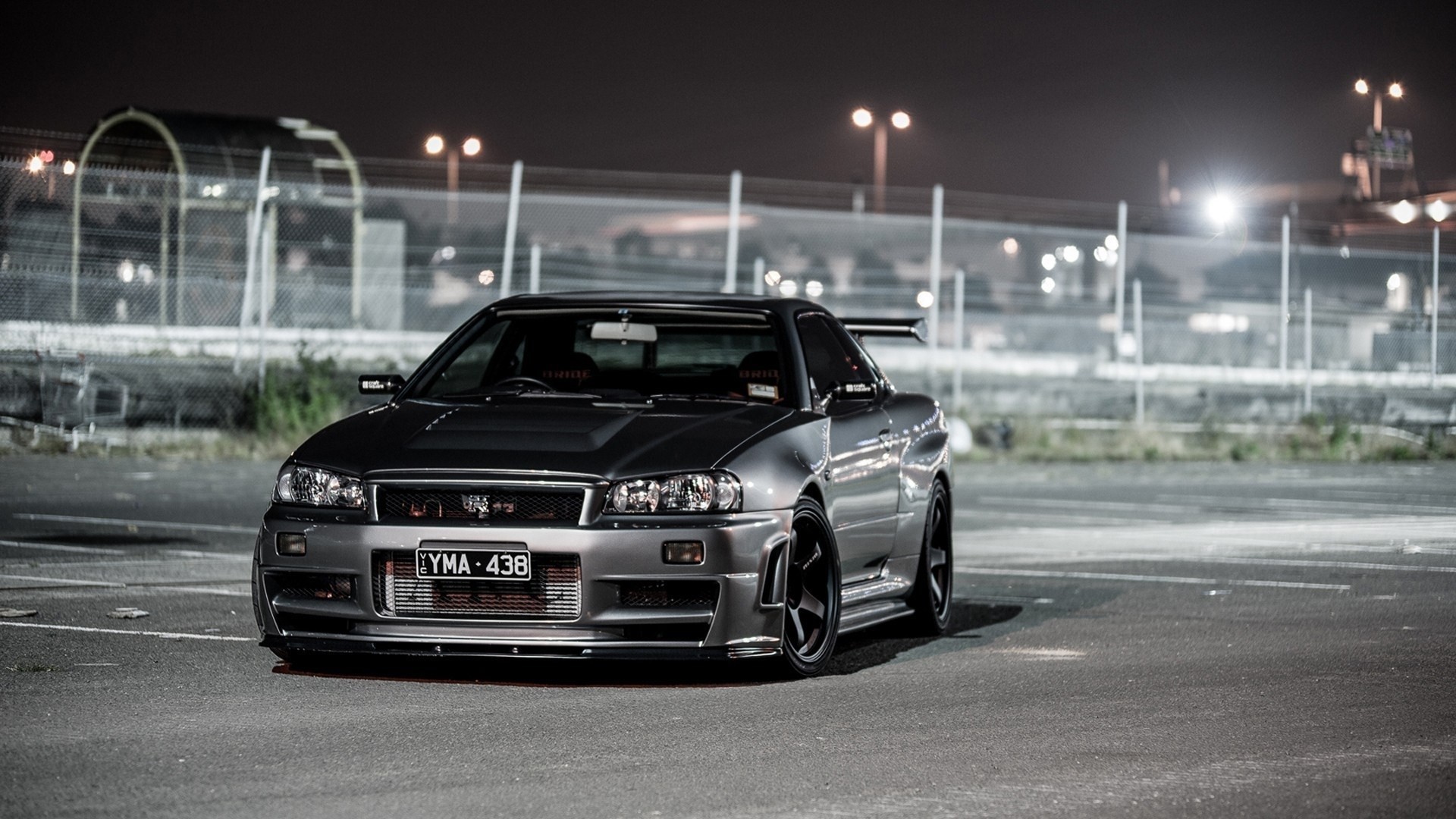
The Nissan Skyline GTR R34 has evolved and fine-tuned through 11 years of competitive racing and extensive testing, which has resulted in one of the best race-bred coupes on the market.
The R33 which it replaced was a great car but the R34 GTR is much more advanced in every area. Under the hood are twin ceramic intercooled turbochargers, which effectively eliminate turbo-lag. The RB26DETT in-line, 2568cc six-cylinder engine retains the 280PS at 6,800 rpm of the R33 it replaced. It also has better power delivery and more torque than it predecessor. Also the R34’s body is stiffer and the aerodynamics of the car have been improved.
The R34’s engine keeps the general layout of straight six-cylinder configuration with twin overhead camshafts and four-valves per cylinder and twin turbochargers. As before, the throttle chamber has six individual throttle valves (one per cylinder) isolating each engine cylinder from the rest and acting like six individual single-cylinder engines. The power is fed through a new six-speed close ratio Getrag gearbox.
Nissan’s electronically controlled four-wheel drive system “ATTESA-E-TS PRO” is specifically designed for both road and racetrack use. Most other all-wheel drive systems are designed for off-road applications or rally cars. The system was designed for more high speed road use, it has a series of sensors and two centrally controlled wet multi-plate clutches to optimise torque split between the front and rear axles. It eliminates understeer and gives optimum traction and stability under acceleration, braking and cornering.
The Nissan Skyline R34 GTR has cut weight in many areas. From the light alloy wheels, which save over 7.7kg, the rear diffuser is now made from a lightweight carbon fibre. All the way to the use of light-weight audio speakers. In addition a new type of aluminium has been used for the front wings and bonnet which has saved about 1kg compared to the hoods of the previous models.
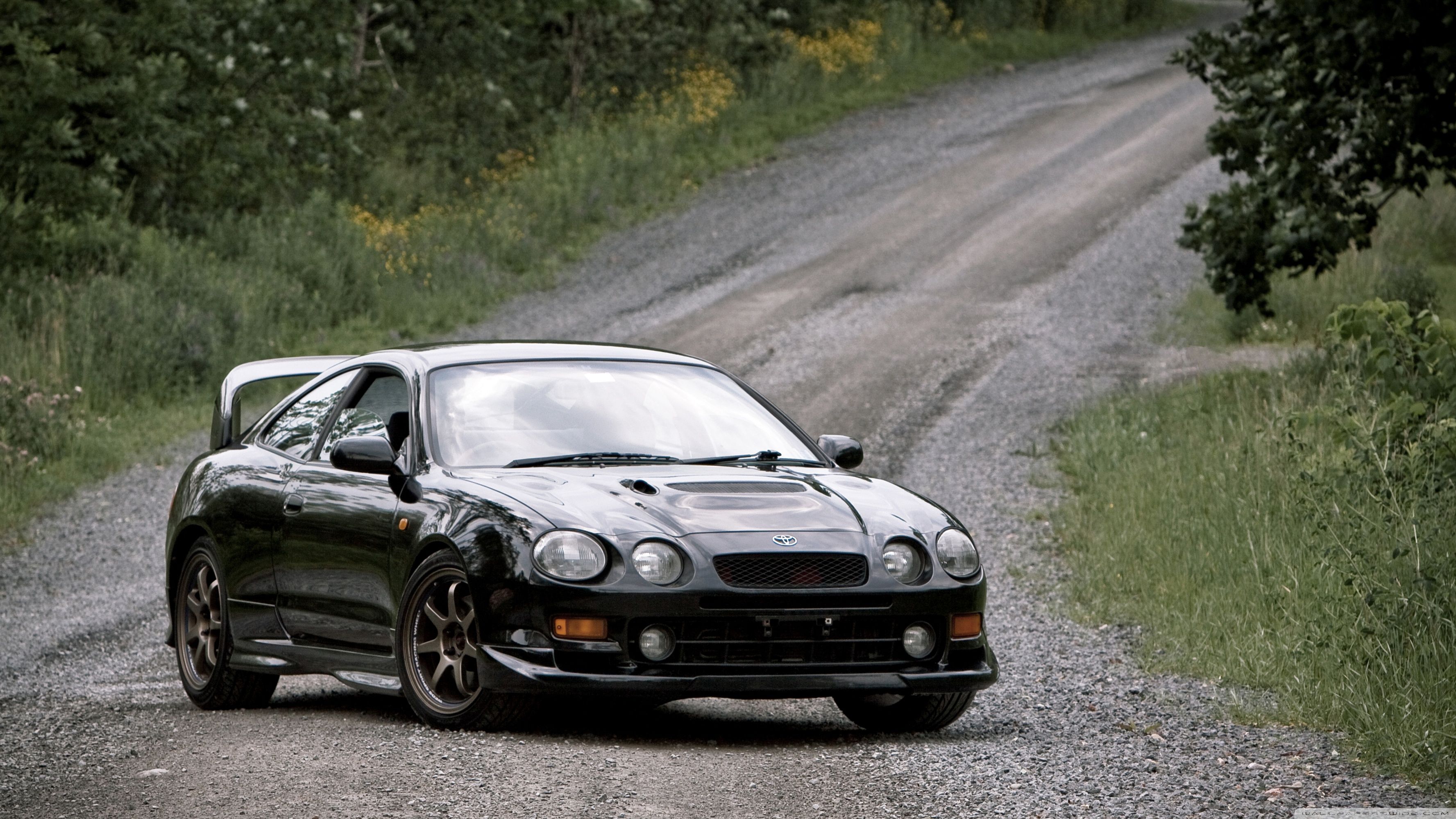
The Toyota Celica GT-Four was a high performance model of the Celica Liftback, with a turbocharged 3S-GTE engine, and full-time AWD. It was created to compete in the World Rally Championship, whose regulations dictate that a manufacturer must build road-going versions of the vehicle in sufficient numbers. These vehicles are referred to as “homologation special vehicles”.
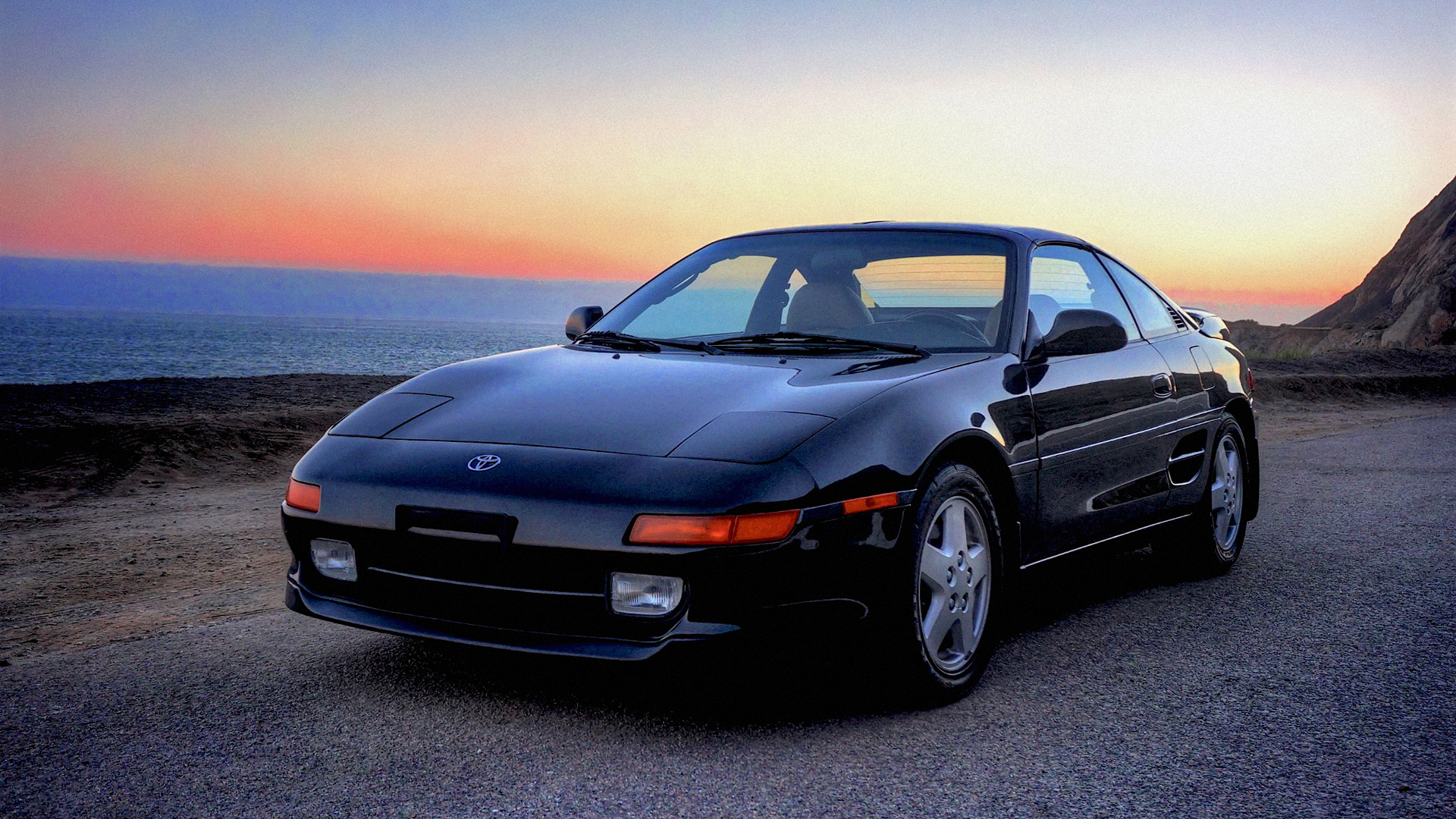
When I was growing up, all I wanted was a turbo MR2. I knew enough reading car magazines in Australia that you wanted a second generation MR2 and not the first generation. It had that Ferrari 355 look about it. The second generation MR2 was better to drive too. With an upgraded suspension components and set up it just was enjoyable to drive fast. It was relatively fast in a straight line, had great feedback through the steering wheel and even gripped around corners and stayed (mostly) flat when pushed.
Motivation for the MR2 Turbo came from a 2 liter turbocharged four-cylinder engine that was good for 200 horsepower and 200 lb/ft of torque. A good old fashioned five-speed manual gearbox completed the package. The end result was a good looking, fun and pretty fast car that was unique. Nothing to complain about here, a great effort by Toyota.
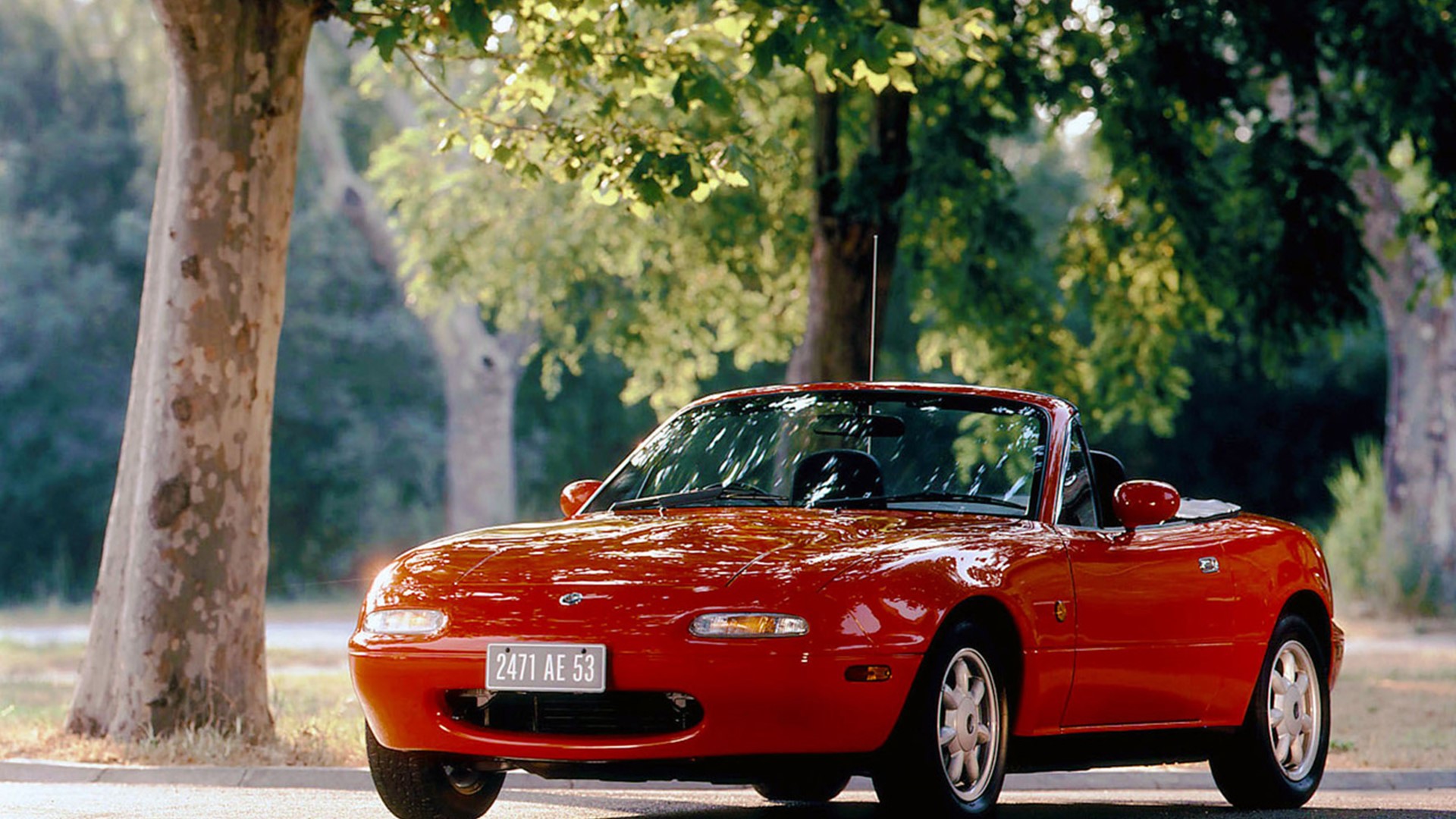
The original MX-5 Miata shook up the sports car world. It was (and still is) a lightweight, rear-wheel-drive roadster with a peppy engine, rigid chassis, manual transmission, excellent balance and perfectly weighted steering. You just get into a Miata and drive. It rewards like no other car on this list. The Miata isn’t fast (and never was) and that’s the beauty. It is not about speed, it is about being balanced with telepathic controls and an incredible degree of driver engagement and having to work to get the most out of the car if you want to hustle along. So refreshing.
The Miata’s impact on the sports car maker goes beyond just the enjoyment for its owners and commercial success for its parent company. It drove other manufacturers to start making smaller two seat sports cars again. something. You can thank the Miata for eventually leading to cars like the BMW Z4 and the Porsche Boxster.
The first generation was basic. No real options, just motoring purity at its most basic levels. Mazda brilliantly took all the great things about old British and Italian roadsters and copied them. The car was just super fun to drive.
For the 1994 model year, a 1.8-liter engine replaced the 1.6 liter unit. We chose the original because it is the one that started it all.
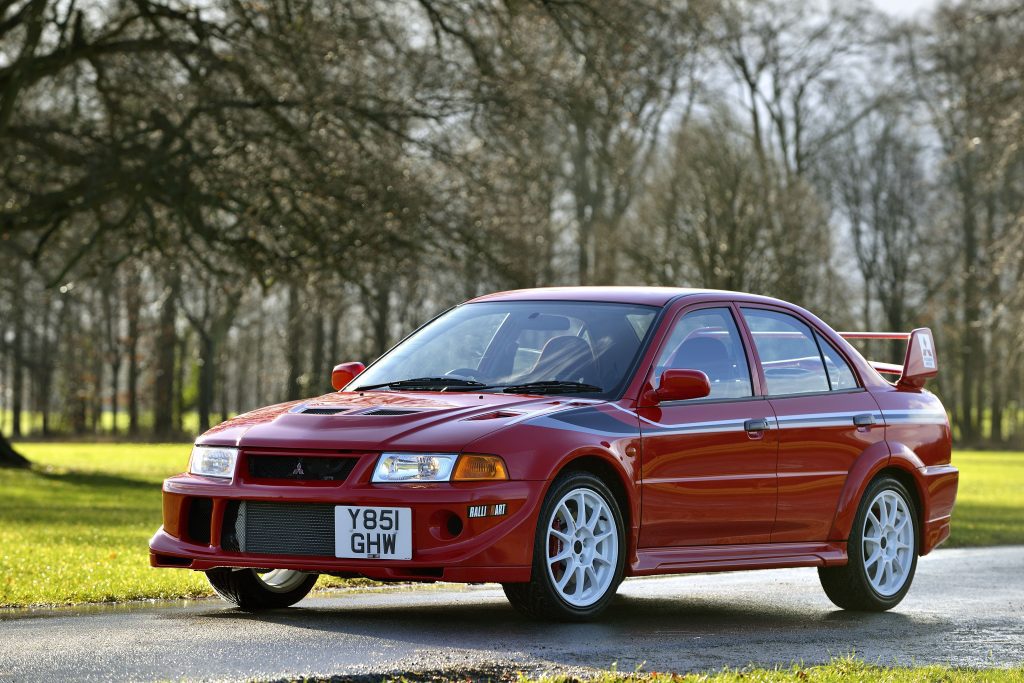
Year: 1999-2001 / Engine: 2 liter turbo inline 4 / Power: 276 hp / Torque: 275 ft lbs / 0 – 60 mph: 4.7 seconds / Top speed: 155 mph
Every generation of the Japanese performance legend should be on this list. Based on the basic Lancer these sports sedans were souped up rally beasts that could beat just about anything else on the road point to point. All of the Evo cars had two liter turbo inline four-cylinder engines and advanced all-wheel drive systems. The Evo VI is easily our favorite of the ten generations of cars. While the EVO V was a solid car, the VI focused on cooling and engine durability. It got larger intercooler, larger oil cooler, and new pistons, along with a titanium-aluminide turbine wheel. Tommi Makinen was the ultimate Evo VI version. It was largely the same as standard RS with close-ratio 5-speed, lowered ride height, Tommi Mäkinen Edition front bumper, and titanium turbine (same option with standard RS).
We think EVO magazine put it best: “You just can’t help but get on the throttle earlier and earlier, revelling in the way the chassis adjusts its balance under power, making the rear wheels ease round to follow the fronts. We sometimes talk about a car pivoting around a point as though a stake has been driven through its roof – in the Mitsubishi that pivotal stake feels as though it’s permanently shifting fore and aft as you move through a corner…the Evo VI Makinen hasn’t been eclipsed by Evos VII to X, and 20 years down the line I think we’ll still be bewitched by the way its Active Yaw Control deals with a turbo spooling up halfway through a tricky third-gear left-hander. If you want a bargain, buy blue, black, white or silver, but if you want an icon to make sure it’s red with stripes.”
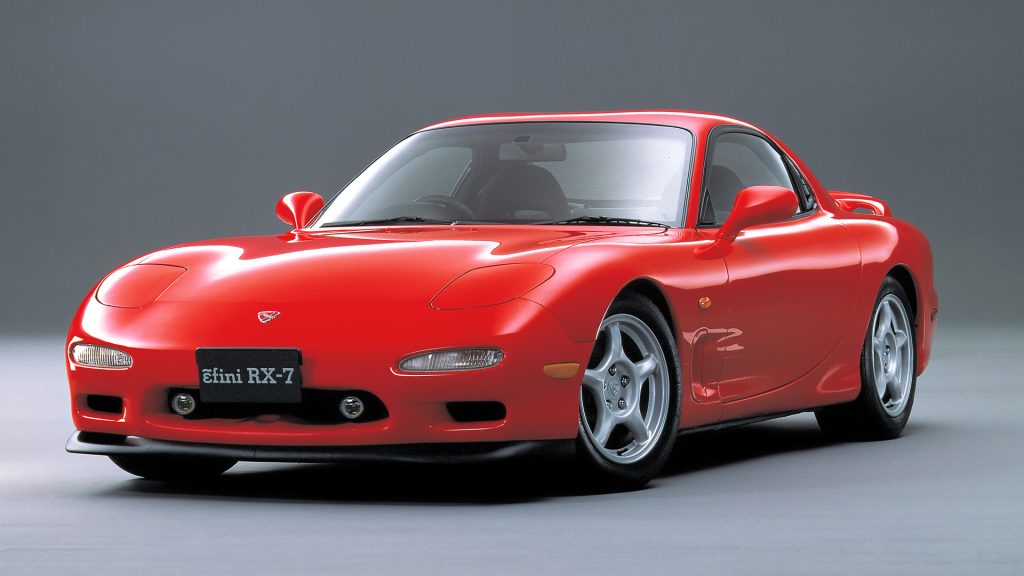
The third generation RX-7 was only sold in the U.S. and Canada for three years despite a Japanese production from 1992–2002. These were produced in the sixth series and had a body called the JM1FD. All cars had the 252 hp 13B-REW engine with twin oil-coolers, an electric sunroof, cruise control and the rear storage bins in place of the back seats.
The 3rd generation RX7 was unveiled at the 1991 Tokyo Motor Show and appeared on North American shores two years later. The car’s reduced weight put it below the Acura NSX, MR2, Nissan 300ZX and the second generation RX7. This was achieved by a systematic analysis of every component which resulted in a lighter harness, muffler, glass and oil cooler.
That 225 horsepower always being on tap and mixed with the exceptional handling cemented the RX-7 as a no-compromise sports car and one of the best-balanced cars of all time.
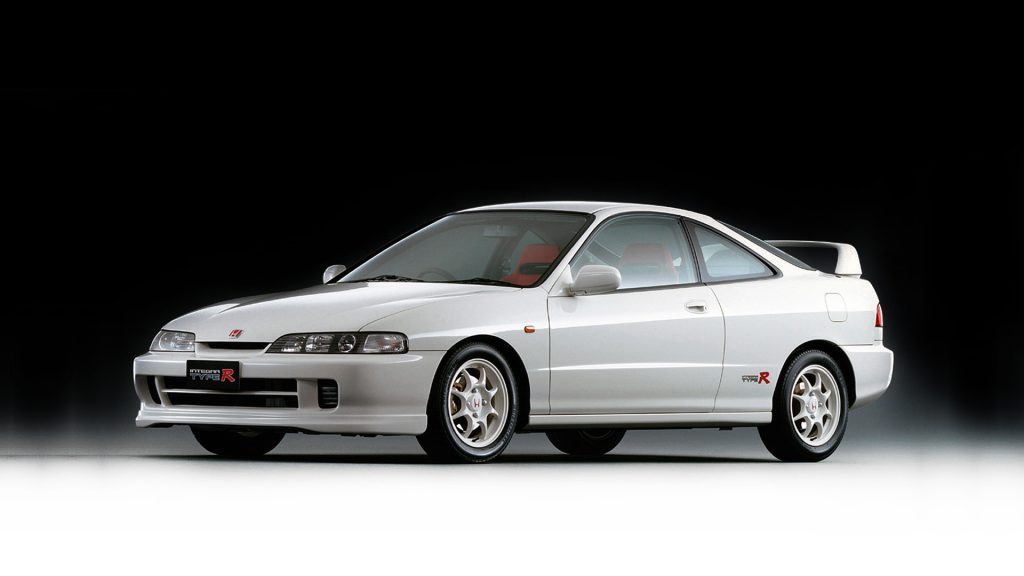
Year: 1997 – 2001 / Engine: 1.8-liter DOHC VTEC in-line 4-cylinder / Power: 195 hp @ 8,000 rpm / Torque: 130 ft lbs @ at 5,700 rpm / 0 – 60 mph: 6.5 seconds / Top speed: 145 mph
The front-wheel drive Type R was one of the sweetest driving and most exciting cars of the 1990s. It had a 1.8-liter four-cylinder VTEC engine that was hand built to produce nearly 200 horsepower. It was the way that it created that 200 horsepower that we remember best. Car & Drive summed up the best: “When the Type R’s tach hits 5700 rpm (or even less, depending on throttle position), the VTEC system switches over from Dr. Jekyll to Mr. Hyde with an audible blare, and the engine sets about scaling its 195-horsepower peak at 8000 rpm with alacrity. Yes, that’s almost 200 hp from a 1797cc engine, but before you reach for that calculator, we can tell you that it works out to a specific output of 108.5 horses per liter. The fabulous Ferrari F355 produces just 107.3 horses per liter from its five-valve V-8”.
And that in a nutshell is what we loved most about The Honda Integra Type R and Japanese sports cars of the 1990s, they were able to do things that the exotics did but at 1/10th the cost. We love that about the 90s.
The Honda Integra Type R was more than just that engine though. Other performance enhancements include a close-ratio five-speed manual transmission, the addition of a limited-slip differential so both front tires pull their weight, larger anti-lock brakes, larger sway bars, and additional body bracing to reduce body flex for improved handling. Most reviewers still consider the Type R as the best-handling front-wheel-drive car of all time.”
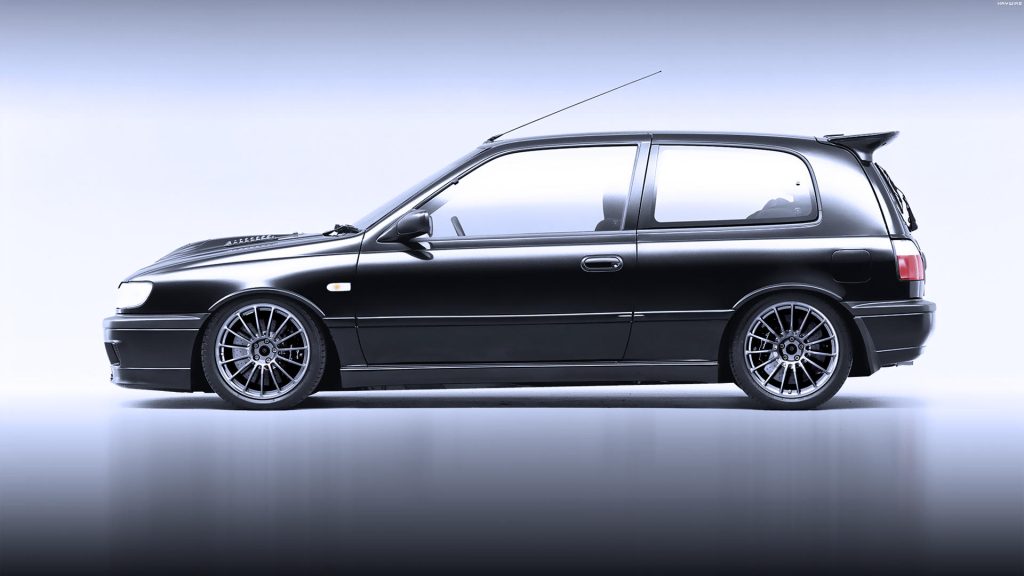
The N14 series also saw the introduction of the Nissan Pulsar GTI-R three-door hatchback (badged as Sunny GTI-R in Europe). This was a homologation variant produced between 1990 and 1994 in order to enter the WRC under Group A rules at that time. It featured the turbocharged 2.0-liter SR20DET engine producing 227 hp and 210 lb·ft. The body is largely the same as the standard N14 three-door model, but distinguished by the large rear wing and bonnet scoop.
It has an ATTESA all-wheel drive system and a unique variant of the SR20DET engine (not used on any other car). With a power-to-weight ratio of 0.083 and AWD, the standard GTI-R is able to accelerate from 0–100 kph in the 5 second bracket, and cover the standing quarter mile in the 13 second bracket.
Most car geeks (and a good many non-car geeks) are familiar with the current Nissan GT-R, but how did Nissan settle on the AWD, twin-turbo six-cylinder formula? Well, it actually started in 1989 with the R32-chassis Skyline GT-R, the first Skyline GT-R since the fastback “Kenmeri” GT-R of the early 1970s. Thanks to a gentlemen’s agreement among Japanese automakers, the 2.6L twin-turbo straight-six was officially rated at 276hp, but the real number was more like 320hp. Couple that with AWD, all-wheel-steering and a beefed-up 5-speed manual transmission and it’s no surprise the first modern GT-R dominated the national touring car championships in both Japan and Australia. In fact, it was Australia that gave it the nickname Godzilla (which has been applied to all GT-Rs since), but it wasn’t necessarily a term of endearment: After the GT-R of Aussie Mark Skaife and Kiwi Jim Richards romped to the win in the 1992 Bathurst 1000, they were greeted by a chorus of boos from the legions of Holden and Ford partisans. And rather than ignoring the crowd’s dissatisfaction or attempting to make peace with it, Richards (in)famously retaliated by calling the spectator mob “a pack of arseholes” (though in his defense he had just been told that his friend and countryman Denny Hulme had died of a heart attack while driving a BMW M3 in the race).
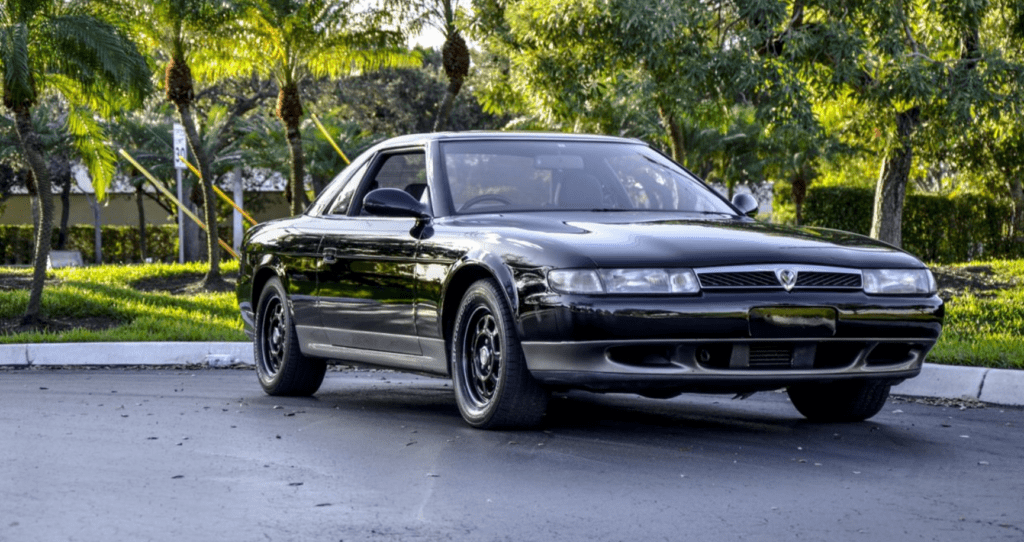
With the fourth and final generation of Cosmos of 1990, Mazda had incorporated all of its trademark rotary engine technologies with a twist. The Cosmos was the first and only Mazda equipped with a triple-rotor engine with twin-turbocharging. Two displacements of 1.3 (230 hp) or 2.0 were available. The larger engine featured a two stage turbocharger that boosted power to 280. Turbo lag, a common trait from the era was eliminated with a sequential boost system similar to what the late Toyota Supra had, but years before it popularized the concept.
The Eunos was such a technology tour de force that many of its goodies would be incorporated in future Mazdas as well as becoming commonplace years later. Although the exterior may not have excited many, the interior was much more inspiring. A curved dash with flowing lines was very much the model of ergonomics best practices, circa 1990.
If you loved speed in the United States, then the 1960s and 1970s was a great time to be alive. Massive V8 engines and scorching straight line performance were the norm. Emissions and other regulations would curtail things in the 1980s and would create tough times for American performance car fans. Towards the end of the decade things started to turn around and by the 1990s things were back to being exciting.
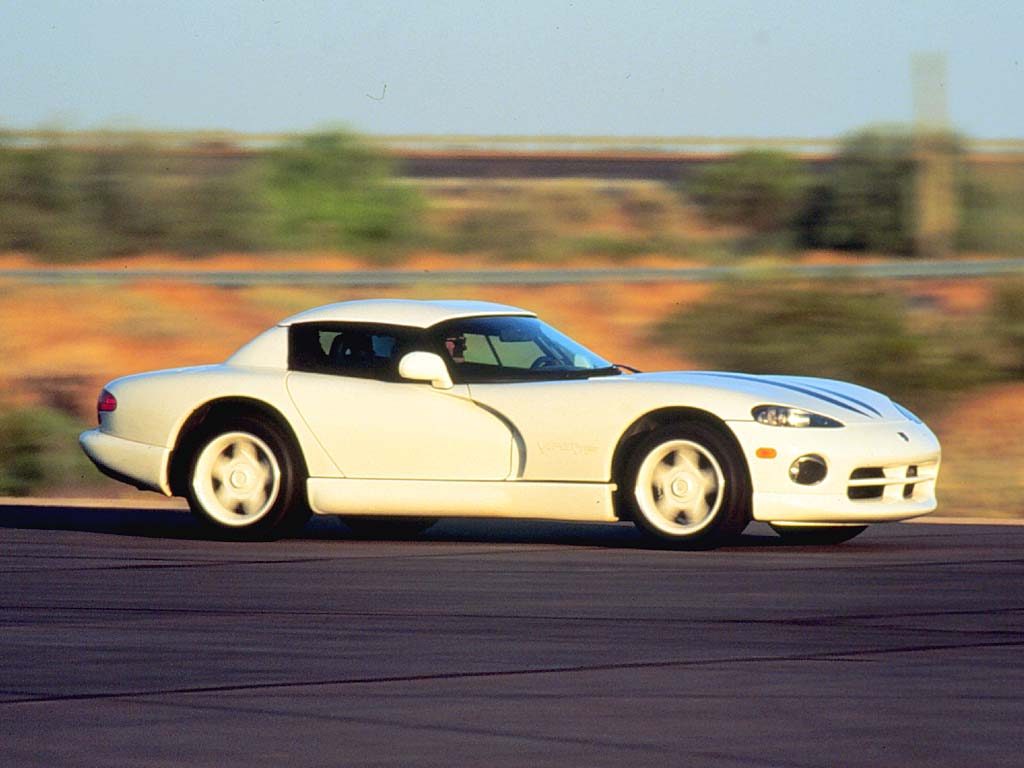
The pinnacle of the 1990s sports car scene in the United States was the Dodge Viper GTS. The GTS delivered 450 HP which was 35 HP more than the 1995 roadster version. The rest of the best included a stable of Corvette or Mustang cars that were great performers. The rest of the American cars are “ok” and a best described as regular cars with a massive V8 added.
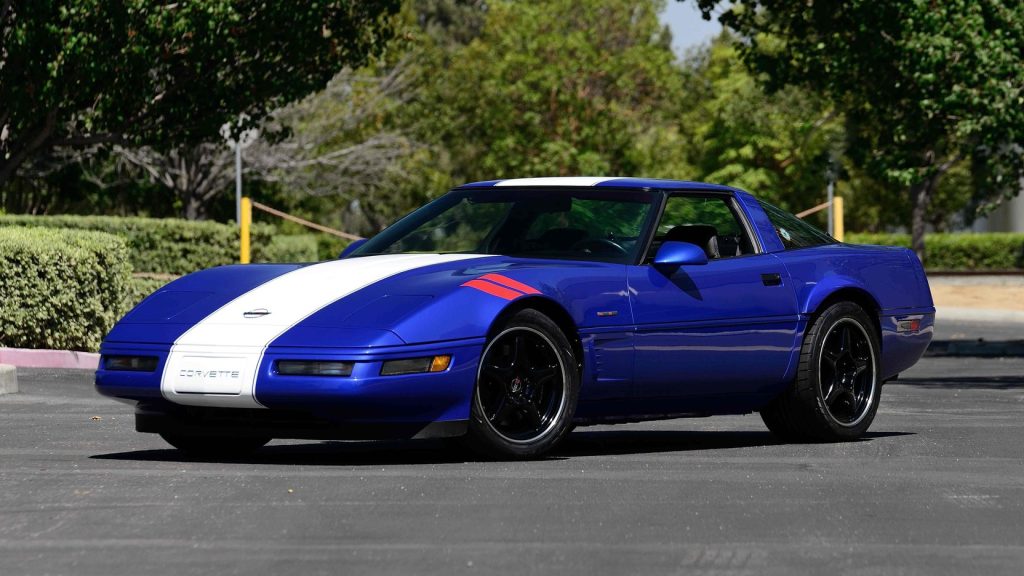
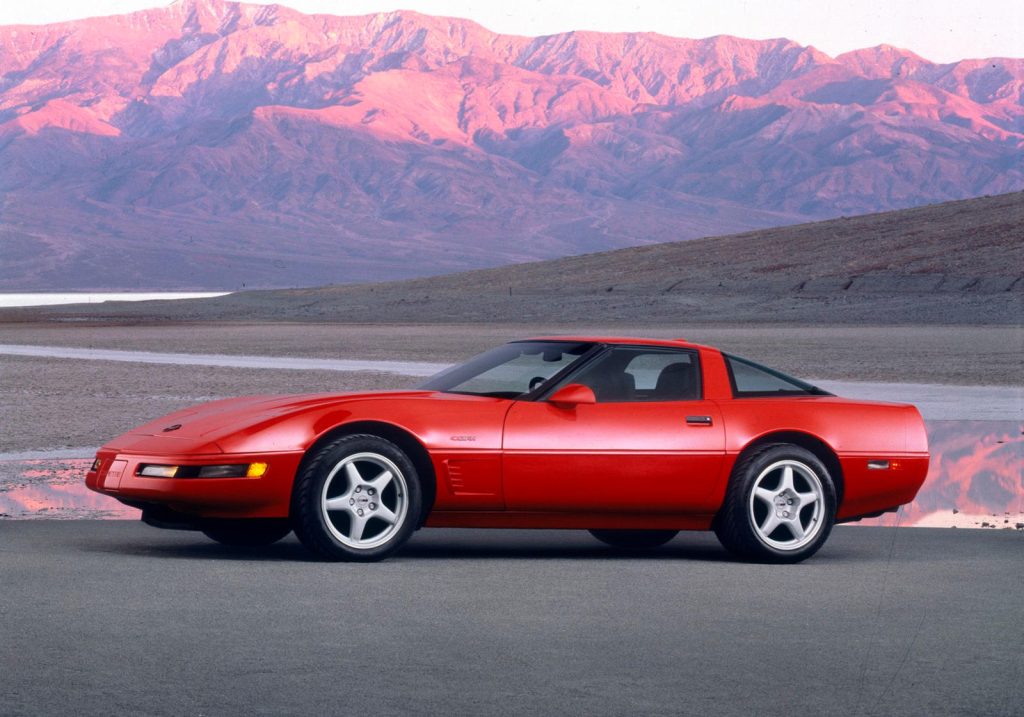
The limited-edition Grand Sport was a fitting end to the C4 Corvette. The Grand Sport package included exclusive Admiral Blue paint and featured a single white stripe that ran the length of the body as well as two red accent stripes on the driver side front fender. Unlike the ZR-1, which showcased a wider backend, the Grand Sport featured rear fender flares to cover the wider back tires.
The Grand Sport’s interior upholstery was offered either in an all black or a sporty red/black combination, and all of the Grand Sport interiors featured a specialized embroidered headrest which featured the Grand Sport emblem. All Grand Sports –both coupes and convertibles- were equipped with a six speed manual transmission. Likewise, all Grand Sports were equipped with the newly revised LT4 5.7 liter small-block V-8 engine. When ordered with the Grand Sport model, the engine received a special “dress” kit that included bright red paint and red ignition wires. In all, Chevy built 1,000 Grand Sports, and each was given a special, sequential serial number.
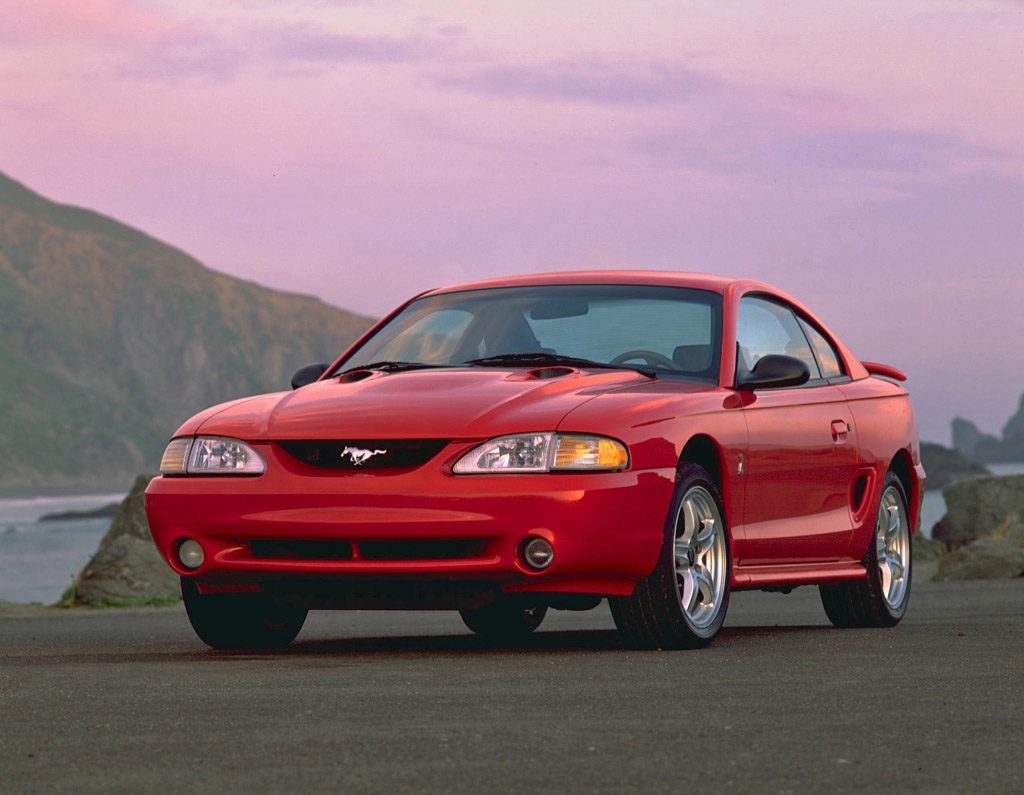
Re-establishing the Mustang as a performance vehicle, the Mustang Cobra was produced by Ford’s Special Vehicle Team. This SVT Cobra is highly reminiscent of the 1983 Ford Mustang SVO which was developed by Ford’s Special Vehicle Operations.
Like the SVO ,the SVT is an upgraded version of what the regular Mustang should be. Necessary horsepower and suspension components help the Cobra keep pace with other sports cars of the period. During the year it was released, the Cobra was the official pace car of the Indianapolis 500.
The fourth generation of the GM F-Body platform debuted in 1993 with the brand new Camaro and Firebird. The new model brought much-needed modernization to the Firebird range. Most importantly for performance car fans was that the Trans Am returned with the powerful LT1 V8 engine with 5.7-liters of displacement and 285 HP. The engine was the same as in the Corvette of similar vintage.
Image source: hagerty.com
Chevrolet Impala SS
The Impala SS name was resurrected it in 1994 as an option on the seventh generation of this Impala. Since the early 90’s marked the return to performance for most American manufacturers, Chevy installed the famous 5.7-liter LT1 V8 engine in the full-size rear wheel drive sedan. They also added a heavy-duty suspension and updated components to create this modern-day muscle legend. For two years, Chevrolet produced almost 70,000 Impala SS models in several colors, with dark purple being the most popular hue. The engine delivered 260 HP and propelled this big sedan to 0 to 60 mph time of 7 seconds. Not exactly spectacular numbers, but for the mid-90’s, those were impressive results.
Corvette ZR1
While the C4 generation Corvette languishes for the most part in the bargain bin of classified adverts, the ZR1 is a sought-after gem. After toying with the idea of turbocharging the existing V8, the decision was taken to develop an overhead camshaft engine.
The now legendary LT5 was born with 375 hp and helped build one of GM’s finest cars to date. It’s not an overstatement to say the C4 Corvette ZR1 could play with Ferraris that cost double to drive off of the showroom floor. When Chevrolet introduced the ZR-1, it brought back the confidence in American performance cars. The Chevrolet engineers knew the C4 chassis had enormous potential, so they were looking for ways to improve its power and performance.
The Corvette ZR1 could accelerate from 0 to 60 mph in 4.5 seconds.
Some might not consider the original Dodge Viper a supercar, but at the time of its release it was a revelation with its aggressive looks and insane 8-liter V10 engine. The 1996 RT/10 could be referred to as a second generation Viper and it featured a host of upgrades over earlier Vipers produced from 1992 to 1995. It was a much better car. Outwardly the main difference to the 1996 Viper was the absence of side exhausts which were replaced with two standard exhausts exiting the rear. The three spoke wheels were also gone and replaced with 5-spoke counterparts. Inside, the cabin remained largely unchanged, but a removable roof was standard as was sliding plastic panels for the windows. Underneath, the chassis was stiffened, suspension geometry revised and a more robust rear differential was installed.
Our pick of the 1990s Viper’s was the GTS which was launched in 1996. It was a more powerful version of the RT/10 with 450 hp and a new double bubble coupe body. Beyond more power though, the GTS had over 90% new parts compared to the RT/10. In 1997 and 1998 model years the Viper would continue to receive minor updates and the GTS would get second-generation airbags, revised exhaust manifolds, and a revised camshaft for 1997, and the RT/10 would gain a power increase up to 450 hp (336 kW; 456 PS) for 1998.
Callaway has built a firm reputation for producing some of the most sophisticated and advanced Corvette-based automobiles. Introduced in 1998, Callaway’s C12 continued this proud legacy. Designed, developed and constructed by two top German engineering and development companies, Callaway and IVM, the C12 was intended as a bespoke, high-performance car that offered its occupants a civilized interior and relaxed ride.
The Callaway C12 serial number is the same as a standard production Corvette, but the C12 is in no way standard. With aerodynamic bodywork fabricated from fiberglass, carbon fiber and Kevlar™, a massaged aluminum V-8 engine, heavily revised suspension, enormous disc brakes and a thoughtfully upgraded interior, the Callaway C12 is a custom-built American supercar. It is so different from its Corvette base that cars sent to Europe were titled as Callaways. Very few of these exclusive cars were made, as most were custom-made to the specifications of the clients.
Porsche appears to have made a decision that will thrill sports car enthusiasts and Porsche enthusiasts everywhere. The company will bring it’s silky smooth flat-six to the Boxster and the 718 Cayman. The flat-six mill will be in a car that sits below the model line toppers for both cars.
According to Automobile, a source within Porsche let this information come out. The expectation is that the six-cylinder version of the car will slot in between the GTS and the GT4. This would make sense. There is a gap to fill there. The GT4 is just too much of a hardcore racer for some people. The six-cylinder variant could offer more luxurious accouterments on the interior of the car with near GT4 levels of performance.
Automobile points out that it would also make sense for Porsche to ditch the turbocharged four-cylinder in the 718 Cayman and Boxster S models. If the S models had a six-cylinder instead of the turbo four, it would be a real reason for people to upgrade to the S. The base 718 Cayman and Boxster cars could still use the turbo four-cylinder. That sounds like sound reasoning to us.
The specifications of the six-cylinder engine are not yet known. Automobile suggests the 3.8 flat six that was used from 2012 to 2015. However, there are rumors of Porsche using the bigger 4.0-liter from the 991.2 911 GT3. That is unlikely, but it would be exciting if the company chose to do so. We’ll keep you posted with any updates.
May 20, 2019 / Comments Off on Porsche Will Offer the Cayman and Boxster With a Flat-Six Engine
While the original Acura NSX is a brilliant supercar in any of its iterations, we never got the best version of it here in America: the Type R. Those came with Honda badges and are right-hand drive only. Unless you’re in Japan or are lucky enough to come see an imported example elsewhere, you’re not going to come across one of these. To see two practically perfect examples go up for auction at the same time is an even rarer sight.
Some first-generation NSX Type R models (1992-1995 model years) can be imported to the U.S. now that they have surpassed the 25-year mark. However, this 1995 model is still a hair too new. Should that stop you from buying it and waiting a few months to take U.S. delivery? Certainly not. This car being offered at Tokyo’s BH Auction with a grand total of 534 miles on its odometer. The seller claims it’s 100% original and in pristine condition.
Honda did a lot to transform the NSX into the first Type R of many to come. To start, engineers cut 308 pounds out of the car by using aluminum in even more places than before, deleting sound deadening, eliminating the A/C and stereo and using carbon-kevlar Recaro bucket seats. The 3.0-liter V6 was balanced and blueprinted. Then the suspension was given a full makeover with stiffer dampers, springs, bushings and a larger front sway bar. There were plenty of other little things throughout, but we’ll spare you the long list. The number you need to know most is the estimated auction price. BH Auction thinks this NSX Type R will go for $227,000 – $272,000.
Next up is the ultra-rare 2005 Honda NSX-R. This R was based-off the NA2 NSX, so it has a 3.2-liter V6 and six-speed manual transmission with the new bodystyle that ditches the pop-up headlights. The 2005 model year was the last for the first-gen NSX, meaning this R is just about as new as they come. Many of the modifications that Honda did for the first Type R were repeated here. This model used carbon fiber more judiciously, though, replacing the hood, deck lid and spoiler with the lightweight material. The auction house claims just 140 NA2 NSX-Rs were made, so this is an incredibly rare car. Sadly, nobody here will be able to import it and drive it on American roads for quite some time yet. The price is estimated to come in at $345,000 – $436,000. That’s pricey but this NSX has an even lower odometer reading than the other at just 348 miles.
Both these Japanese legends will be up for auction at BH in June this year if you fancy to buy yourself some of Honda’s best history.
May 20, 2019 / Comments Off on Pair of perfect Honda NSX Type Rs go up for auction in Tokyo
At a certain point, we guess we could see getting a little bored with the regular Nissan GT-R. That’s when you’d go wild and do all sorts of modifications and create something like the Litchfield GT-R. The car offers 631 hp and 600 lb-ft of torque. It can do a 0-60 mph sprint in just 2.9 seconds. That means it’s a very fast machine, indeed.
What’s also fast? The Acura NSX. It comes with 573 hp and 476 lb-ft of torque and can make the 0-60 mph run in just 3.3 seconds it also weighs just a little less than the GT-R. It’s fast, but is it fast enough?
Top Gear decided to put the Acura NSX up against the Litchfield GT-R to see how the two would compare on a quarter-mile dragstrip. On paper, the Litchfield GT-R seems to have the advantage, but Honda’s NSX always seems to be able to surprise us. To be honest, upon first watch of this video we were rooting for it to win.
Rory Reid asks the all-important question. Is it better to buy a supercar and leave it alone, or buy a high-end sports car and make some modifications? It seems, based on the results at the dragstrip the latter might be the way to go. However, if you take these cars off the drag strip and put them on a true racing circuit, we’d be willing to wager there’s a different outcome. However, that’s a test for another day. Check out the drag race in the video below.
[embedded content]
May 20, 2019 / Comments Off on Top Gear Puts the Honda NSX Up Against the Litchfield GT-R in a Dragrace
Jaguar Classic will debut an electric E-Type prototype this summer that will cost $1 million. The car will be based on the legendary sports car from the 1960s. While the Jaguar Classic E-Type Zero will be an amazing machine, it won’t be the only electric E-Type out there. Evolution E-Types and Electrifi will have their own version of an electric E-Type, according to Carscoops, and it will be fast and special.
The companies will base the car on the original E-Type but strengthen the chassis to cope with the torque and power of the new electric motor. The car will first be offered as a roadster and then later as a coupe. Obviously, this car won’t be built from scratch, and if you want one, you’ll need an E-Type to start the conversion with. The company states the conversion is fully reversible, though, so if you ever wanted to switch back to an internal combustion engine, you could.
There aren’t many details out there about the powertrain. However, the companies did say the car will have around 450 hp and be able to do a 0-60 mph sprint in under four seconds. Its top speed will be about 165 mph. Despite adding in the electric powertrain and all of the components that come with it, the car is supossed to weigh about the same as the original.
The company plans to set the price at $1,081,934. That’s a lot of money for an electric car, but with the E-Type’s good looks and the strong reported performance numbers, it could be worth it.
May 20, 2019 / Comments Off on Evolution E-Types and Electrifi Will Build An Electric E-Type
For the longest time, an Italian carmaker that flaunts a raging bull emblem is recognized for its supercars. The recognizable touch of excellence clearly flows within every new model that rolls out of the assembly line. Hence, the public was admittedly blindsided when the company unveiled an SUV in 2017. Furthermore, it drew mixed reactions from the press and consumers alike. Now, it’s making some changes to tap into its rich racing legacy with the Lamborghini Urus ST-X.
It’s easy to see that the ST-X is a Lamborghini Urus upgrade. It’s hard to believe that a four-door four-seat SUV will be burning rubber on the race track. However, there’s no stopping the manufacturer from turning it into a high-performance race car. Engineers are taking the stock model and replacing metal components with carbon fiber make it more lightweight. Sources close to the project claim that this procedure will shave off around 25 percent from the overall weight.
Not only does the company want to prove that the Urus can dominate the tracks, but it will also do so with minimal tweaks. Additionally, the Lamborghini Urus ST-X will be hosting a one-make racing series. This will be a challenging test for professional drivers as they push the vehicle’s performance to its limits. Ultimately, we will be seeing close-to-stock models competing in races akin to that of a Rallycross event. Rumors are suggesting that the track-ready version of the Urus is a teaser for a new model in the pipeline. We’re not sure if it will bear the same name, but the idea is simply exhilarating.
Audi has now unveiled the 2020 Audi A4, which looks sharper and fresh compared to last-generation’s entry. For real — the styling is more aggressive this time, perhaps in keeping up with how bold Audi’s other cars are.
For starters, there’s the immediately eye-catching hexagonal grille accentuating the front fascia. Yes, the headlamps have lashes. All kidding aside, though, they look pretty sick. The lines are a nice touch, bringing some heft sensibility to what’s already a pretty car. These are new LED DR you’re looking at, by the way, which just adds to the overall formidable look of the ride.
The car comes with LED headlamps by default, but you can opt for Matrix LED technology if need be. Off to the back, you’ll find an equally sharp-looking rear bumper. That’s on top of LED tail lights that punctuate intimidation even further.
Inside, things have changed, too. There’s a new infotainment system, which is Audi’s MMI that introduces a 10.1-inch touchscreen. Music lovers will have a field day during commute thanks to the in-built acoustic feedback and more user-friendly navigation system. You can choose between two partially analog clusters or go for the all-virtual cockpit option.
There will be a range of engines. First, there’s the 2.0-litre TDI engine, which will churn out 187 horsepower. Then the 2.0-litre TFSI petrol engine, which tops out to 241 horsepower. Finally, you can go all out with the 3.0-litre TDI option, which should produce 227 ponies. A4 is coming to India later this year. If not, early next year.
Camperhus Conversions of Great Britain has a slightly different idea, though: Instead of trying to make it drive better or look better, the company is turning the famous four-wheel-drive into a camper.
The basic idea isn’t all that different from the concept pioneered by the likes of the Volkswagen Westphalia decades ago: take a boxy passenger vehicle, rip out everything inside behind the front seats and replace it with an Ant-Man-sized version of the basics of a home, then add a pop-up roof to free up some added space. For the case of the Land Rover Camper, as Camperhus calls it, the company starts with a long-wheelbase Defender 110 — shorter Defender 90 models don’t have the space for a full-size bed — and outfits it with a sink, refrigerator, stove, and a roughly-full-size bed that folds out when it’s time to sleep. Water tanks come in 9.5- and 10.5-gallon capacities, while there’s a space for a midsized cooking and heating gas bottle, as well. And while the pop-top isn’t large enough for adults to lie down up there — it’s primarily there to give users space to stand upright in back — it’s possible to fit sleeping arrangements for kids there.
Of course, you’ll have to BYO Defender, but finding one in England shouldn’t be too hard. Sneaking one over to the United States might take a little more work; so long as you base your conversion around a Landie made in 1994 or earlier, however, the government’s classic vehicle import rules mean you should be able to overlander across America in one-of-a-kind style without too much trouble.
May 17, 2019 / Comments Off on Is This Land Rover Defender Camper the Ultimate Overlander?
The modern 935 Clubsport from Porsche is a car that’s simply to die for. It’s drop-dead gorgeous and features a 700 hp and a body reminiscent of the legendary Porsche 935/78. Now the modern car will really look the part thanks to some new images of the vehicle in retro-inspired liveries.
Porsche recently released images of the new 935 in seven different liveries. Each and every single one of them is absolutely breathtaking and makes the most of the car’s sleek exterior. However, the mint green one shown above is our favorite. It makes the most of the car’s body.
There are several others. There’s the Gulf livery, which is blue and orange. There’s a Sachs theme, featuring a white and blue livery. The John Player Special is a black and gold livery. Interscope a black and orange theme. The Momo Racing livery uses a red and yellow racing theme. The final one is the Salzburg theme, which is red and white.
As we said above each one does a wonderful job of showing off the car’s sleek curves. The mint green is the one that stands out the most, though. It’s just not a color you see very often.
The Porsche 935 Clubsport is based on the 911 GT2 RS. The company unveiled it to rabid fanfare at the Rennsport Reunion last year. Porsche will build only 77 of the cars. Customer deliveries are expected next month.
May 17, 2019 / Comments Off on These Modern Porsche 935 Retro Livery Images Are What You Need to Start Your Weekend
On Thursday, at the at the 2019 Overland Expo West, Nissan unveiled the Destination Frontier: a sharp-looking one-off version of the mid-size Frontier pickup, modded out into an overlanding beast.
Mods for the Destination Frontier — which started life as a Frontier Crew Cab Midnight Edition ($32,295) — include a Nisstec 3-inch lift kit, a CVT Mt. Shasta rooftop tent, a Leitner designs bed rack, Baja Designs LP6 Pro Lights, a Hefty Fabworks bumper, skid plates, and rock sliders, a WARN Industries winch setup, and a Dometic freezer/fridge. It also has Nitto Trail Grappler off-road tires on American Racing AX201 wheels.
Nissan’s hook for the Destination Frontier revolves around value, describing it as a “highly capable, high-quality overlanding truck built on a budget.” Nissan claims one can outfit a Frontier similarly for roughly $40,000, thousands less than a premium, kitted-out Toyota TacomaTRD Pro, Chevrolet Colorado ZR2 Bison, or Jeep Gladiator Rubicon would run. (That said, one major caveat: labor costs, which don’t seem to have been factored in.)
This build is definitely on trend for the midsize truck segment, dipping into the multi-billion-dollar aftermarket in-house with off-roading and overlanding mods. Customers love getting their perfect, customized truck off the lot under warranty and without time and effort. Manufacturers like turning a $30,000 truck into a $50,000 truck without upgrading the powertrain.
The project is cheap in large part because the Frontier itself — the venerable elder of the midsize truck segment — is cheap. Nissan still sells the second generation Frontier, which debuted for the 2005 model year, in Canada and the U.S. Buyers will be partying like it’s 2005 with a 4.0-liter V-6 and a five-speed automatic transmission…a combination that, somewhat ironically, is still about on par with smaller-engined whippersnapper mid-sized trucks when it comes to fuel economy.
May 16, 2019 / Comments Off on Nissan’s New Frontier Concept Is All About Overlanding On the Cheap
Need any more proof that 2019 is the year of the adventure vehicle? Probably not — but that’s not stopping Honda from serving it up in the form of the cumbersomely-named Honda Passport Adventure Lifestyle Project. Just think of it as the Passport you’d create if you were given a blank check to build a crossover-based two-row overlander.
The carmaker revealed the adventurous Passport Elite on Thursday at the 2019 Overland Expo West in Flagstaff, Arizona, along with a bevy of other outdoors-y gear, such as motorcycles like the new 2019 Africa Twin Adventure Sports and the CRF250L Rally and power equipment like the EU3000i Handi generator and WX10T Water Pump. (Sexy, right?)
While the powertrain goes unchanged — there’s still a 3.5-liter V-6 making 280 horsepower and 262 pound-feet of torque under the hood, connected to a nine-speed automatic and an all-wheel-drive system — the Passport Adventure Lifestyle does score a few mods designed to pump up its off-roading powers. A Jsport lift kit adds 1.5 inches of height up front and 0.75 inches in the rear to provide more clearance over terrain, while a skid plate provides protection against the errant piece of said terrain that looms up higher than the rest. 18-inch Nitto RidgeGrappler off-road rubber mounted on Jsport KMC XD wheels serves up more grip for all types of surfaces, while an outboard-mounted full-sized spare sits astern in case one of the Nittos succumbs to an unseen sharp rock or stick.
Of course, overlanding is about more than just driving past where the pavement ends. To make sure there’s room for the extra gear needed for such pursuits, a Jsport Plateau roof rack sits atop the rig, along with minimalist side steps from the same brand to make accessing the roof easier. Since those hitting the trails for a few days will need to lay their heads down eventually, said roof rack is equipped with a Roofnest Sandpiper tent, which not only offers a 3-inch foam mattress and retractable aluminum ladder, but also offers a mini-rack on top that can accommodate up to 100 pounds of gear itself. Rounding out the package is a beefier front bumper ready to mess up any shrubbery in the Passport Adventure’s way, along with off-road lights front and rear from Baja Designs.
For those who prefer a little more cargo space in their country-crossing vehicle, Honda also unveiled a similarly adventure-minded custom Ridgeline pickup truck alongside the Passport. The Honda Ridgeline Adventure Lifestyle Project comes with a soimilar suite of off-road optimized accessories — roof tent, skid plates, dirt-grabbing tires, et cetera — but adds on a Mesa bed rack and Honda’s own EU2200i generator, which offers up to 2,200 watts of power and can run for more than eight hours on a tank.
The good news? Any overlanding enthusiasts who like what Honda’s doing here can more or less recreate these builds; the carmaker points out that the Ridgeline mods are all available for purchase now, and replicating the Passport’s tweaks shouldn’t be too difficult. The better news? Honda says there’s a chance we at Gear Patrol may be able to lay our hands on this Passport before long. If we do, you can bet we’ll be telling you all about it shortly thereafter.
May 16, 2019 / Comments Off on Honda Absolutely Needs to Build This Overlanding Passport Concept
Lotus has an upcoming all-electric hypercar called the Type 130. It’s a car that could transform the brand and make Lotus into the car company it wants to and deserves to become. It will debut in the middle of the year. Car Magazine recently reported that the boss of Lotus, Phil Popham, told reporters the car would be fantastic. His exact words were, “a mind-blowing hypercar, designed, engineered and built in the UK.”
That’s some seriously high praise, and we hope for the sake of Popham’s reputation that he’s right. Plus, a mind-blowing car from Lotus just sounds cool. Popham went on and said he wants to re-establish Lotus with this vehicle. He then said:
We’re very much focused on rebuilding the sports car business. When we’ve done that this brand has the strength to go beyond that. It could be GTs, crossovers, sporting sedans… the premium segment is large beyond sports cars. We have to produce cars that are loyal to our DNA.
This is all very good news. Lotus has made some of history’s best sports cars ever, and to see the company working to expand as it currently wants to gives us hope for the future. Popham said the company will focus not just on the product but on the experience of electric cars.
He hinted at future cars being autonomous and sounded like he wanted to position Lotus as a car company that sells cars for people who really want to drive. This is an interesting distinction. Popham seems to think there will be two areas of the market, one where the machines drive themselves and one for enthusiasts and people who love to drive. We can’t say we disagree with him. Lotus could have a bright future ahead of it.
May 16, 2019 / Comments Off on The Lotus Type 130 Hypercar Will be Mind Blowing According to CEO
In what appears to be a pretty unorganized event where supercars take on various wet roads, grass, and giant puddles, a YouTuber followed a LaFerrari as it took on roads and weather conditions that would surely keep most Ferrari owners indoors. According to Carscoops, the YouTuber was TheTFJJ, but the video included in the article was from a channel called ItsFrankMemes. No matter what channel is ultimately responsible, we’re glad this footage exists.
The LaFerrari wears a license plate that’s very fitting. It says simply WTF1. We assume the standard WTF was taken when he went to the BMV. While that’s a shame, what isn’t a shame is the footage of this very expensive car sliding around on wet pavement, powering through muddy puddles like a low-to-the-ground 4X4, and slipping around on some wet and muddy grass.
It’s a hilarious and maddening sight to see, especially, when the LaFerrari does donuts in a grassy field as sheep look on. While we’re not sure we’d ever do this with a LaFerrari or any car nearing its price and performance, we have to give a nod of appreciation to the owner. The grassy scenes are a bit hard to watch, but we love that he took the LaFerrari out in the wet for some fun.
The car owner’s identity was not disclosed, but we know he’s either totally crazy or very cool. Likely both. You can check out the full video below.
[embedded content]
May 16, 2019 / Comments Off on Watch a LaFerrari Get Wild in the Rain