All posts in “Cars”

Ford’s Package Delivery Robots Deploy From Autonomous Cars

Apparently, Ford wants to make your life more convenient and scare the crap out of you at the same time with their package delivery robots that fold up inside autonomous vehicles. Digit is the new…

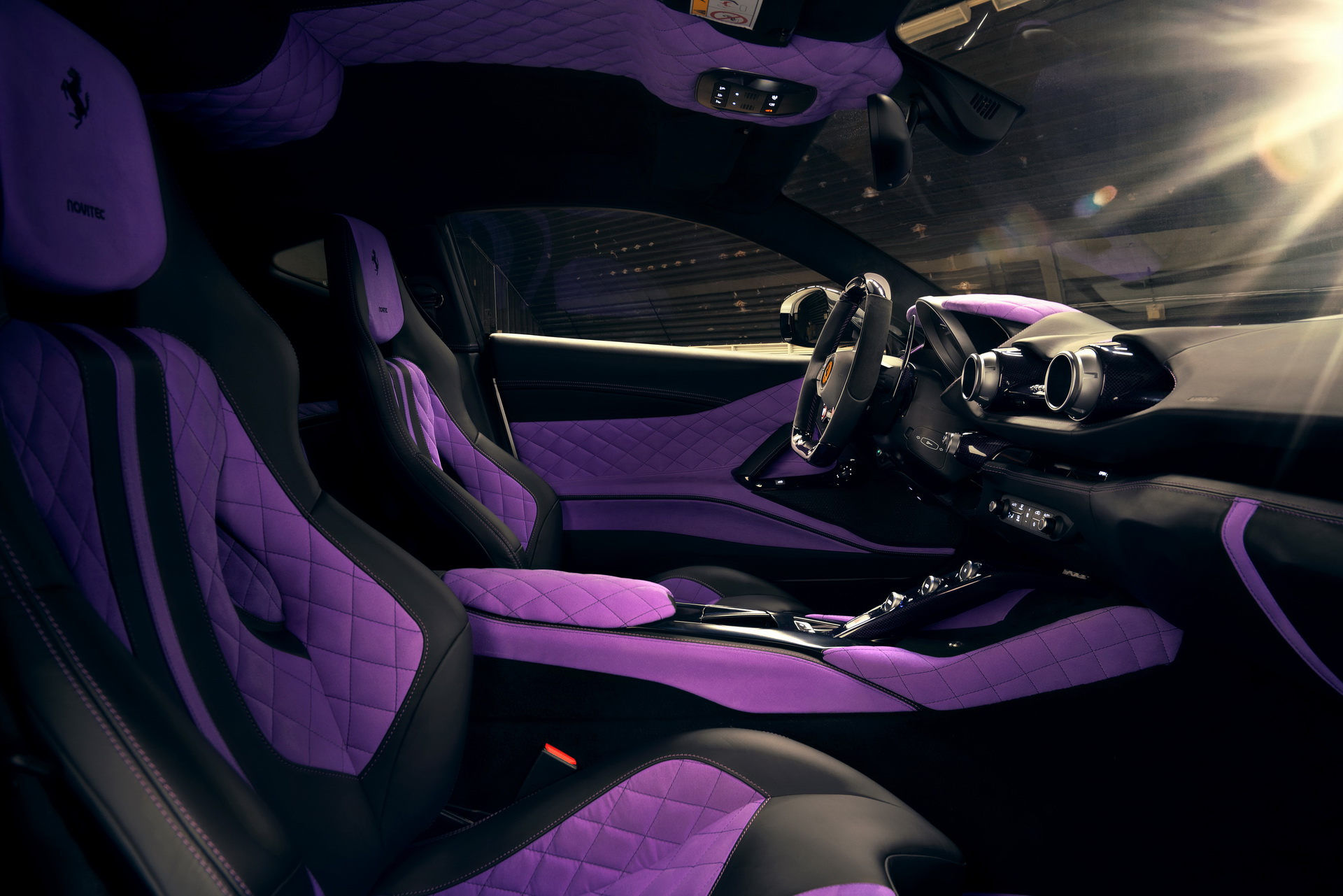
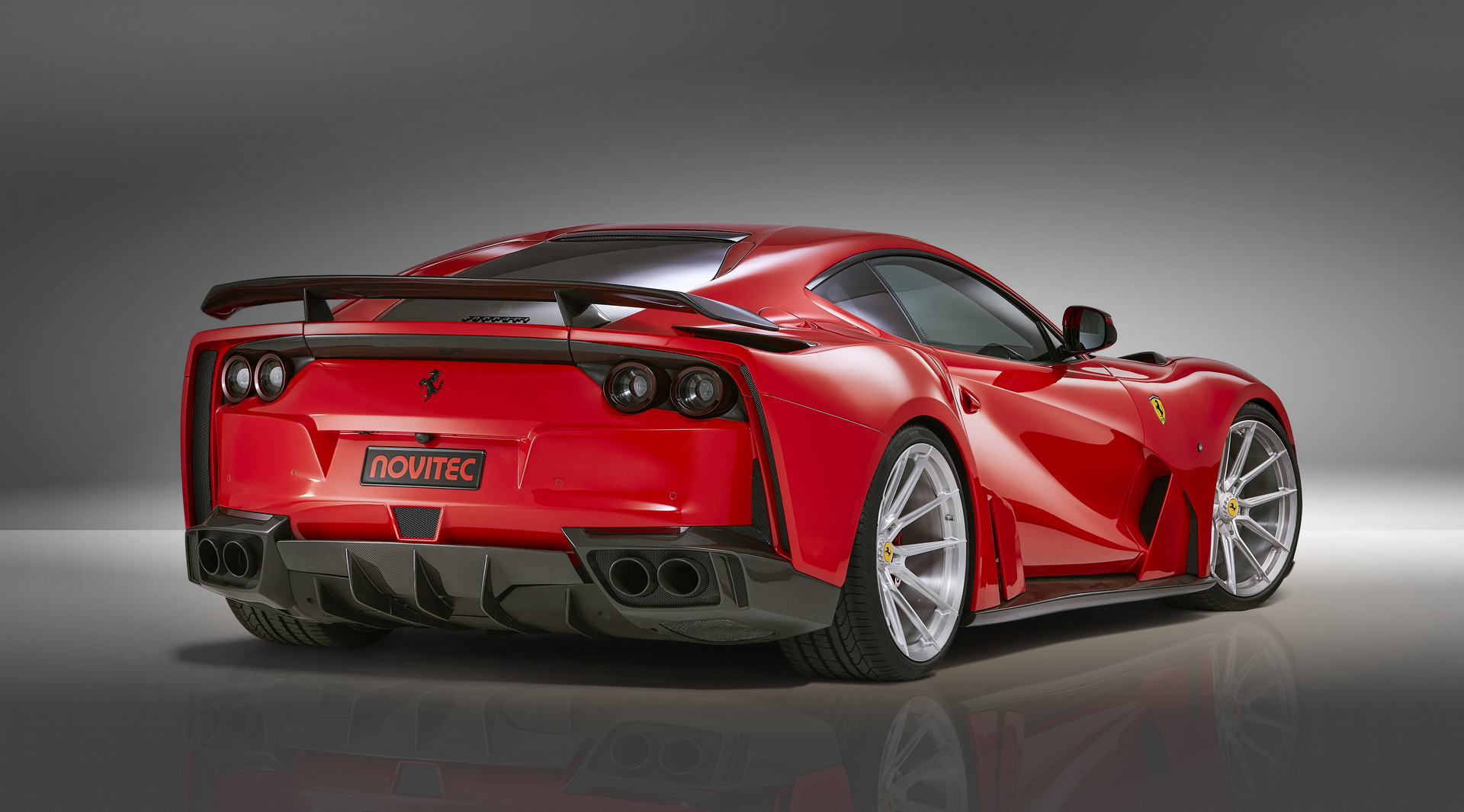
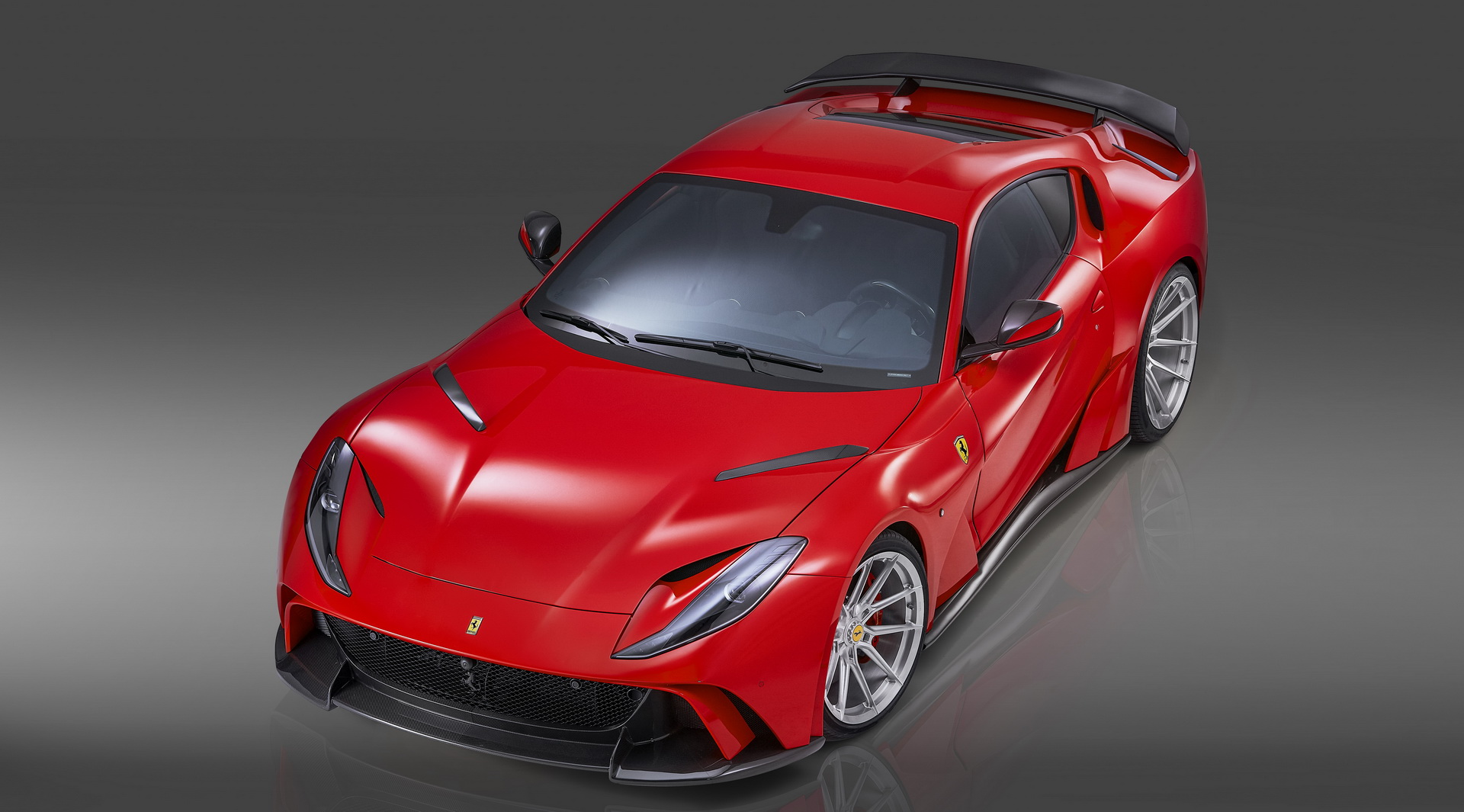
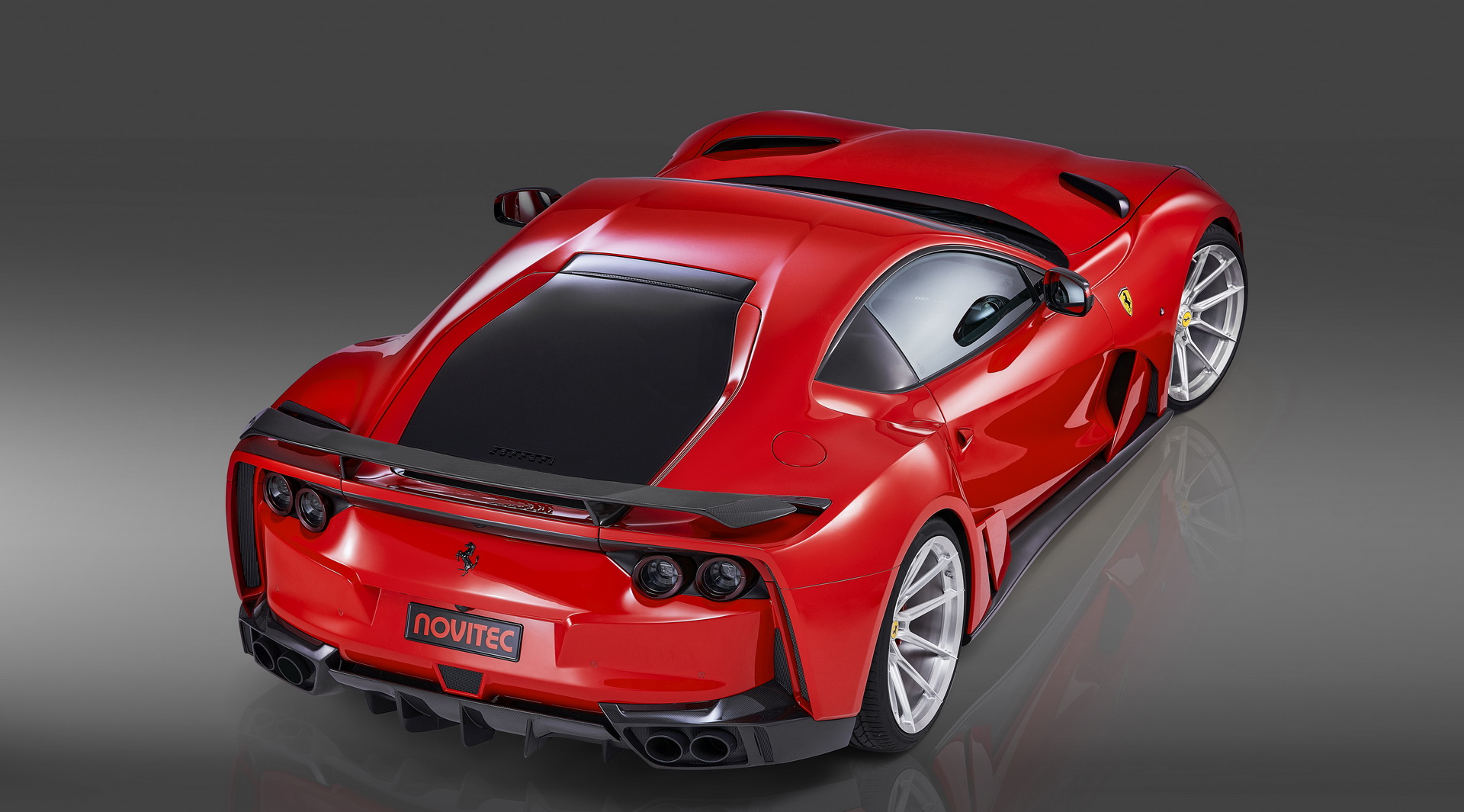
Ferrari 812 Superfast N-Largo Kit By Novitec

As if the Ferrari 812 Superfast wasn’t nearly enough, here comes Novitec thinking what other boundaries can it push?

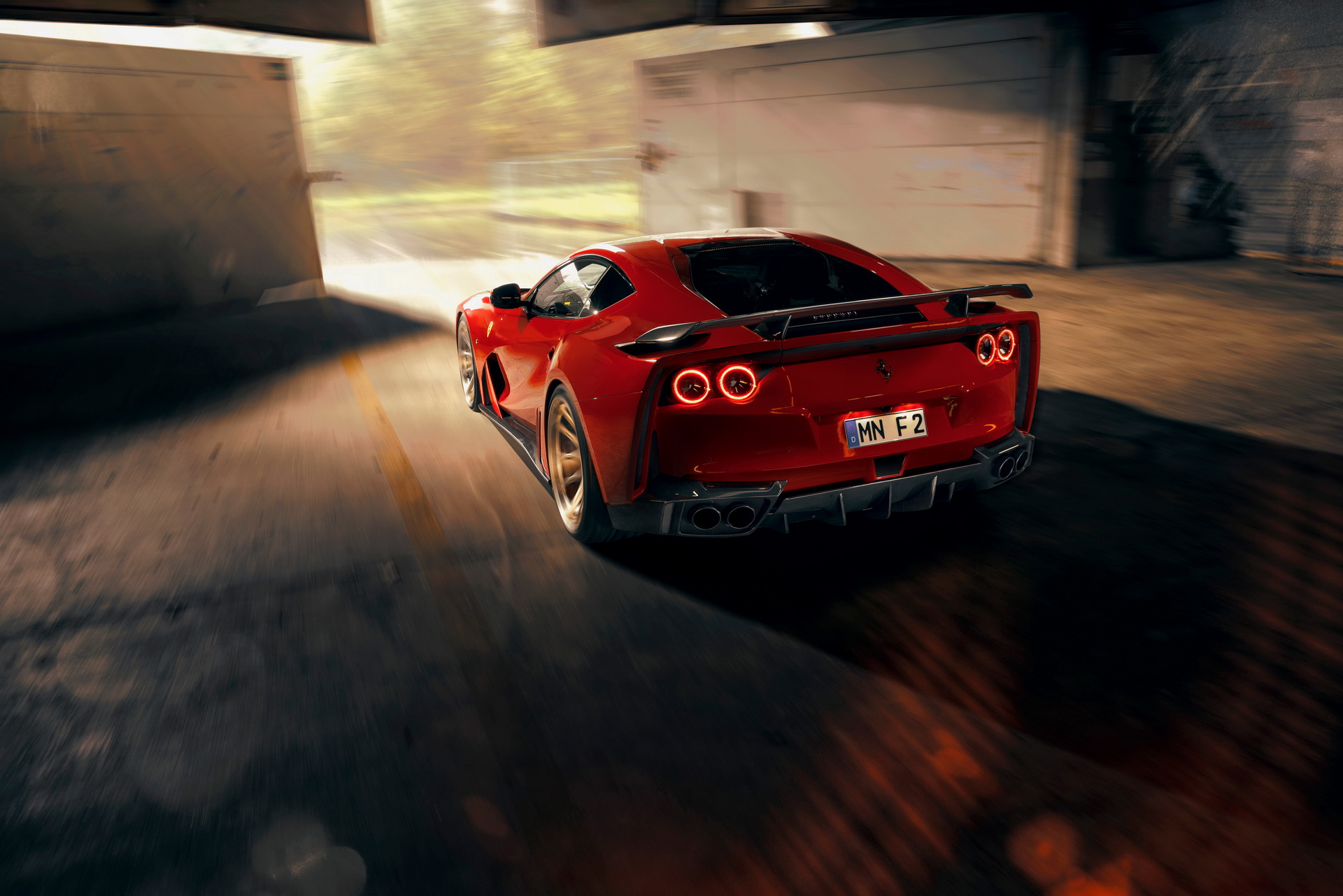
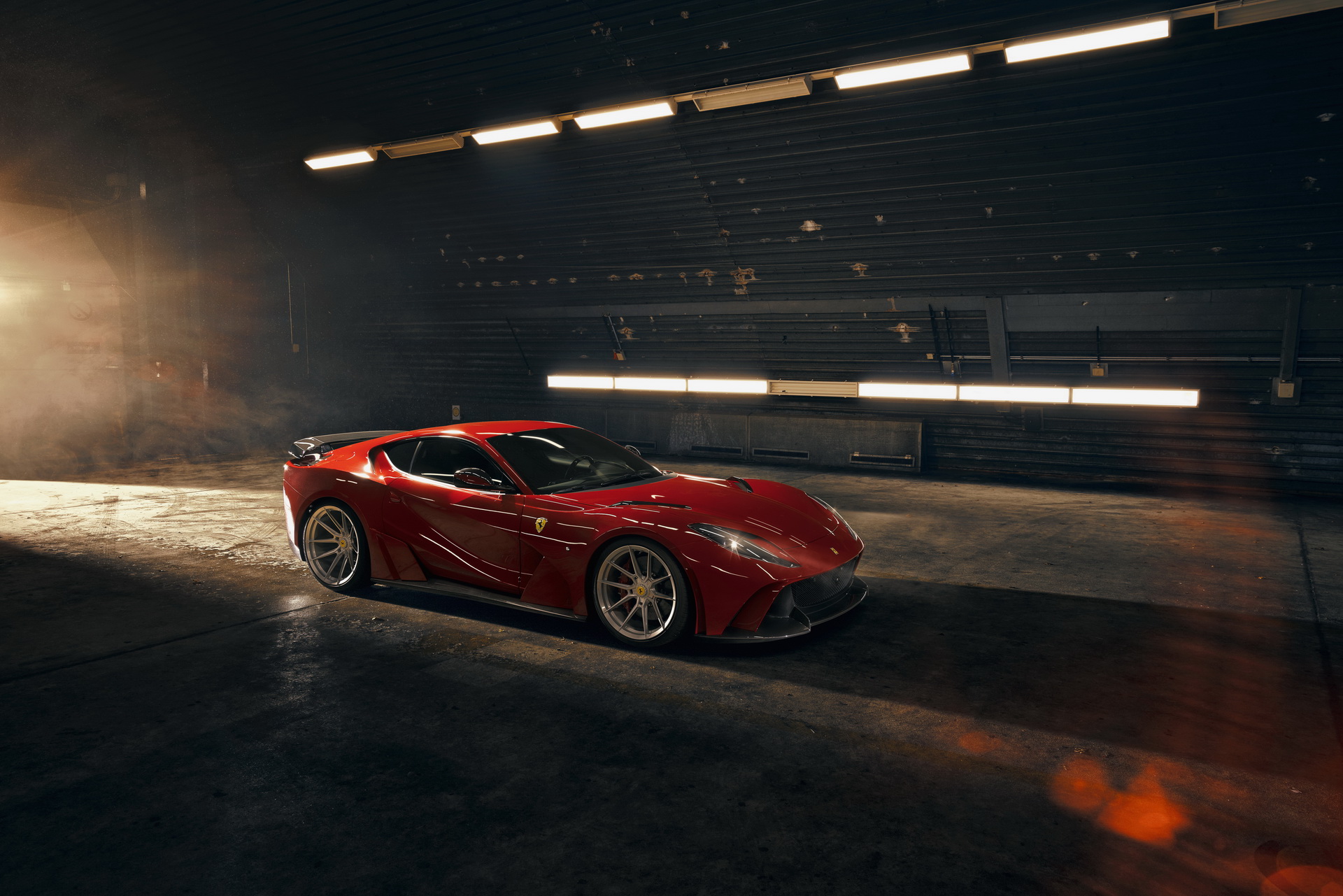
Thanks to its fierce drive to make already excellent cars even better, we get this Ferrari 812 Superfast N-Largo kit, which brings a new visual language alongside performance upgrades to Ferrari’s supercar.

The modification adds 5.5 inches of width to the vehicle’s rear end, in large part thanks to fender flares tailored atop the original body. And quite aggressively so, if we might add. There’s also a 2.8-inch addition on the front, care of custom carbon fiber rocker panels. That helps bring the car closer to the blackop while improving its aerodynamic performance in the process.

We’re also talking a subtle roof-mounted spoiler and big rear wing, with restyled air vents and a new bumper orientation, to boot. It gets 21-inch front wheels, while 22-inch ones round it all out on the back. Wrapped in Pirelli P-Zero high-performance tires, no less.

The concave design is striking, and gives the whole ride a sleek and feisty profile. Novitec also changed the suspension, changing the springs and ride height. It also added a front lift system that raises the front of the car with the push of a button.

In terms of performance, there’s a new ECU mapping that boosts power to 829 horsepower. That’s drops the zero to 60 mph time to just 2.8 seconds. You also get a breakneck top speed of 214 mph. It’s not called “Superfast” for anything, after all.

SEE IT IN ACTION

Photos courtesy of Novitec

Most Beautiful & Best Looking Cars Of The 1940s

24 of the Best Looking & Most Gorgeous Cars from the 1940s

At the top end of the car market, the early 1940’s were still a time for luxurious and large coaches that screamed status. These cars were few and far and only for the rich, with coachbuilders creating one off cars for their well to do clients. With the war in full force and automotive production essentially at a standstill globally for first four years of the 1940s, the rest of the auto industry didn’t restart until early 1946 when we started to see great new cars roll off the production lines.

When the war ended it took a few years to retool factories. There were also a lot of war-parts left over. That means a lot of most beautiful 1940s cars were a hodgepodge of parts. The great looking cars were designed with whatever parts were around and combined with car designs and concepts left over from before the war. It is remarkable that the cars that came out during that era would as good looking and gorgeous as they were. 

As the consumer automotive market started to gain speed again in the late 1940s, we saw a lot of innovation technically both in manufacturing and in car technology itself. While the first mid-1940s cars copied the design of the pre-war cars, and a lot of small car companies tried to fill the void left by the big carmakers and started to push design. The end of the 1940s saw car sales pick up steam and a serious uptick in the  sheer number of innovative and beautiful cars being created. In fact, the most beautiful cars of the 1940s set the design tone for car designers for the following decade and beyond.

So here they are, the most beautiful cars of the 1940s, a stop-start era in automotive history.

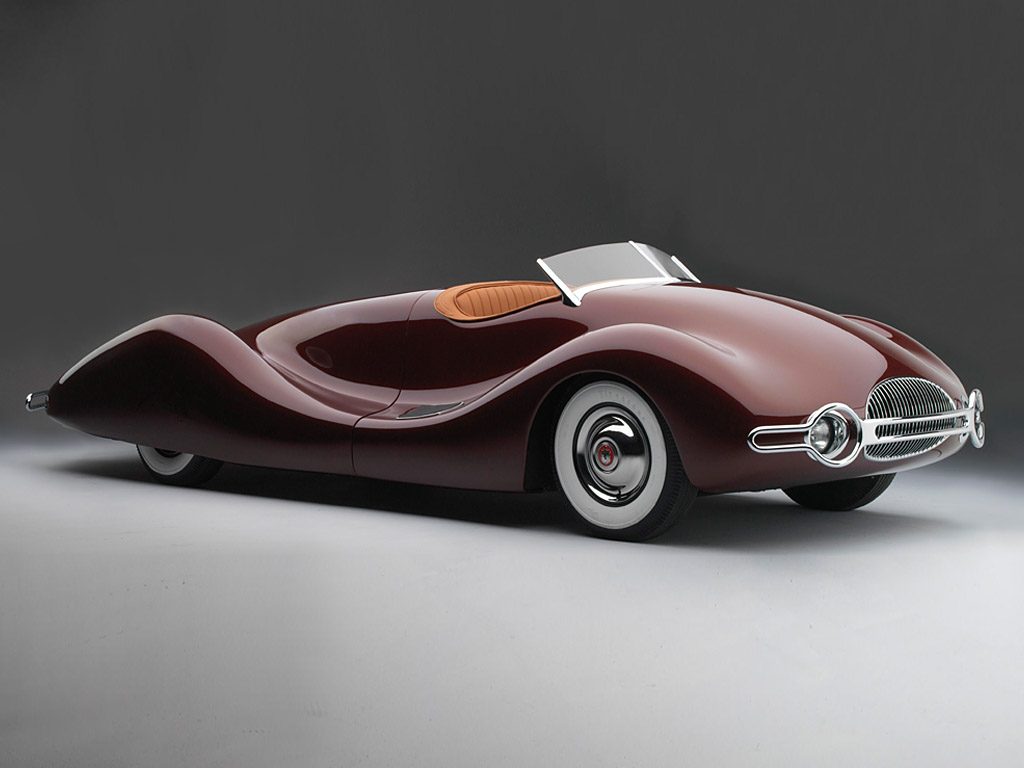
Norman E Timbs Buick StreamlinerNorman E Timbs Buick Streamliner

Norman E. Timbs Buick Streamliner

Mechanical engineer Norman E. Timbs created this dramatic streamliner in the 1940s which in many ways was the ultimate American hot rod. He designed and fabricated much of the project himself which included a custom aluminum body and steel chassis. It took him over two years to finish and the resulting chic roadster was good enough for cover of Motor Trend as well as features in Mechanix Illustrated, Popular Mechanics and Motor Life. Easily the most beautiful car of the 1940s. 

Learn more: 1948 Norman E. Timbs Buick Streamliner
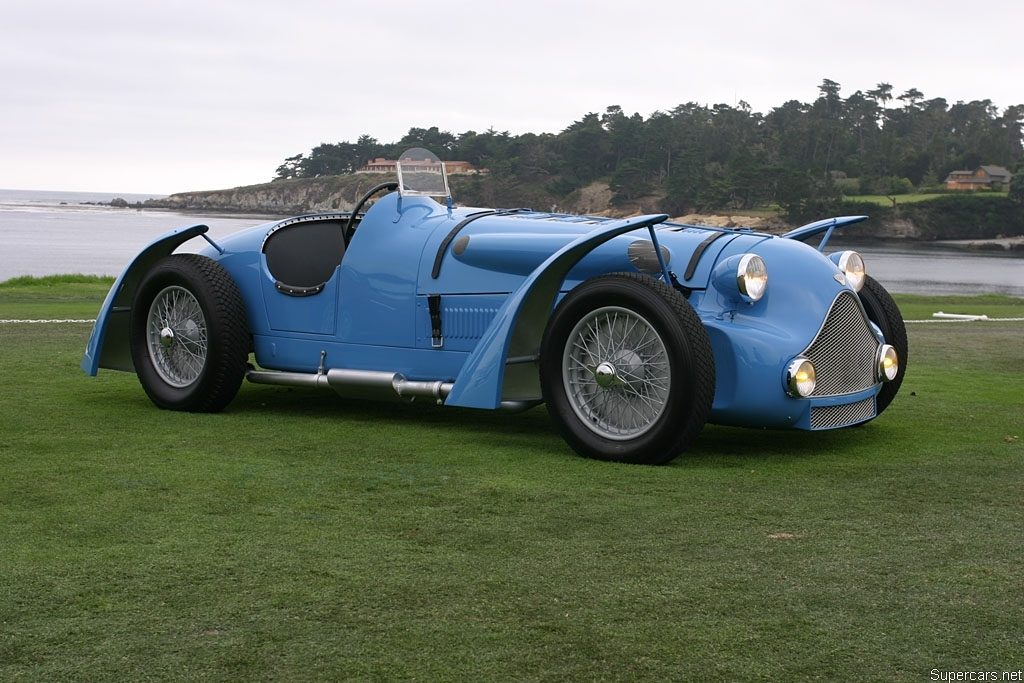
Delahaye 175 SDelahaye 175 S

Delahaye 175 S

After the war Delahaye continued to make cars largely based on their prewar cars. The Type 175 S was released in 1948 alongside similar chassis made with a longer wheelbase.

Most models were styled at the factory by Philippe Charbonneaux and used a seven bearing 4.5 liter six-cylinder with a DeDion-Type rear axle. Fitted with competition bodywork, the 175 S competed only briefly and was unsuccessful during its initial year.

this stylish Delahaye 175 Sport Cabriolet was specially ordered as a left hand drive two-seater, with unique cabriolet coachwork by Henri Chapron. Looking very much the part of a show car, the short 175 chassis is clothed in a rakish cabriolet body, with beautifully integrated lines and contrasting paint sitting atop delicate Rudge wire wheels. 

Learn more: 1948 Delahaye 175 S
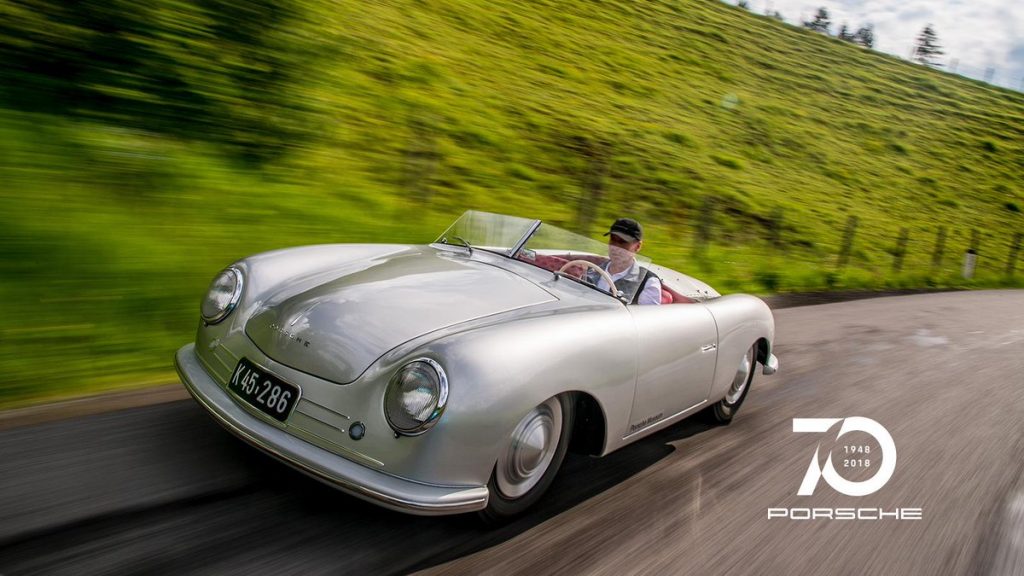
Porsche 356 No. 1Porsche 356 No. 1

Porsche 356 No. 1

The first Porsche, chassis 356-001, was produced in Gmünd as two-seat roadster using VW parts. Work on the project started as early as 1947 and was authorized by Ferry Porsche to begin construction in March of 1958 of the new Sportwagen Typ 356. He was undoubtedly influenced by Cisitalia which was making cars based on Porsche designs from basic Fiat components. The prototype, called the first Porsche by many and known as Porsche No. 1 was completed in March on 1948 in Austria. It was tested in chassis form before Erwin Komenda designed the bodywork. Details such as pop-out door handles, integrated bumpers and a decorative aluminum license plate surround separated the car from its VW roots. Inside Komenda fitted a bench seat, spartan controls and minimal upholstery.

Learn more: Porsche 356 No. 1
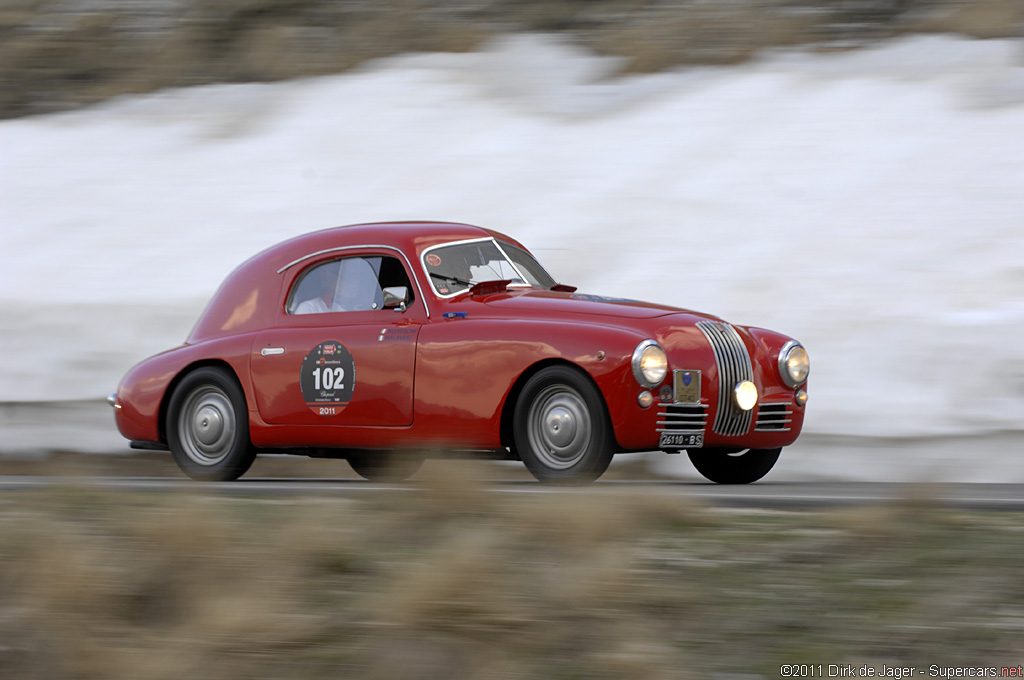
Fiat 1100 SFiat 1100 S

Fiat 1100 S

One of Fiats first post-war efforts was a racing variant of the 1100 known simply as the 1100 S. It featured a tuned engine and a dramatic streamlined body by Fiat which was loosely based off the pre-war 508 CMM and helped the car achieve nearly 100 mph.

The two-seat body was produced by Carrozzerie Speciali at Fiat’s own Officine Lingotto under the direction of Giuseppe Cogno. Several of the early cars don a badge with this script.

The structure itself was an aluminum body built over the Fiat 1100B chassis.

Learn more: 1947 Fiat 1100 S
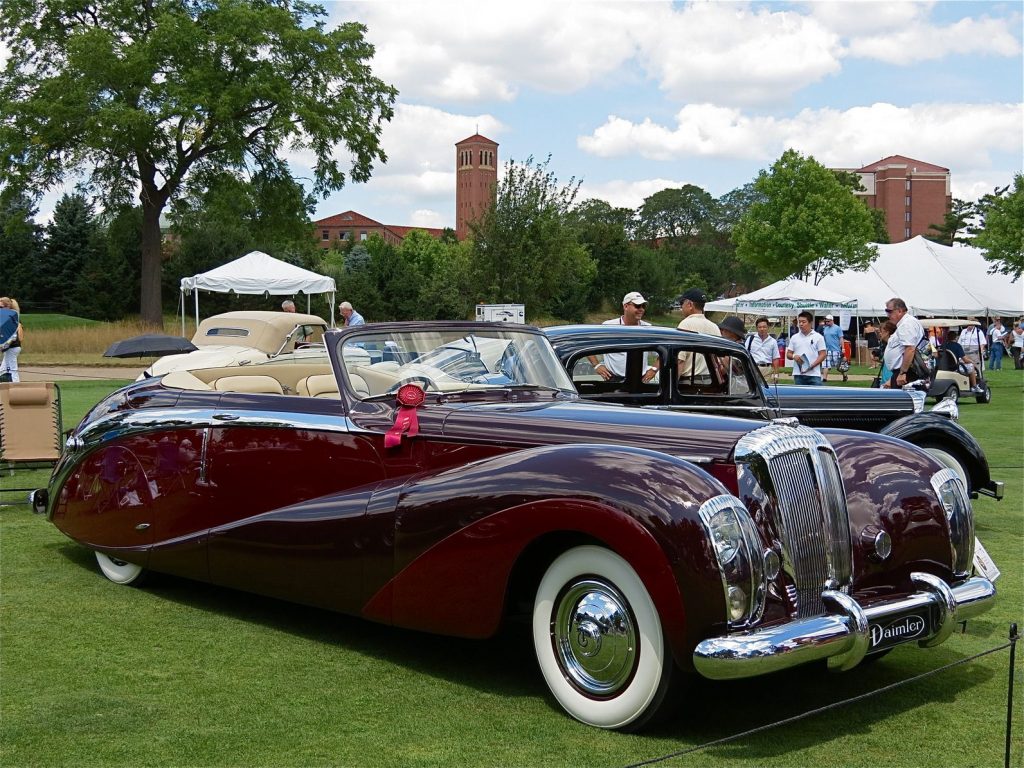
Daimler DE-36Daimler DE-36

Daimler DE-36

The 147-inch wheelbase Daimler DE-36 chassis was powered by a 150hp straight-eight displacing 5460cc (5.4L). The large, silky smooth engine was coupled to a Daimler Fluid Flywheel transmission, controlled by a pre-selector mechanism. Factory documents indicate as many as 216 DE-36 chassis were built, with the final units being dispatched in 1953.

As would be expected, the lengthy DE-36 chassis were most often fitted with heavy, formal limousine coachwork. Delightful exceptions to the rule were the six magnificent DE-36 drop-head coupes created by Hooper’s in the style of Sir Bernard’s prototypical 1948 show car. Although delivered in various colors, all of the Hooper DE-36 drop-heads are popularly known today as Green Goddesses.

Learn more: 1946→1953 Daimler DE-36
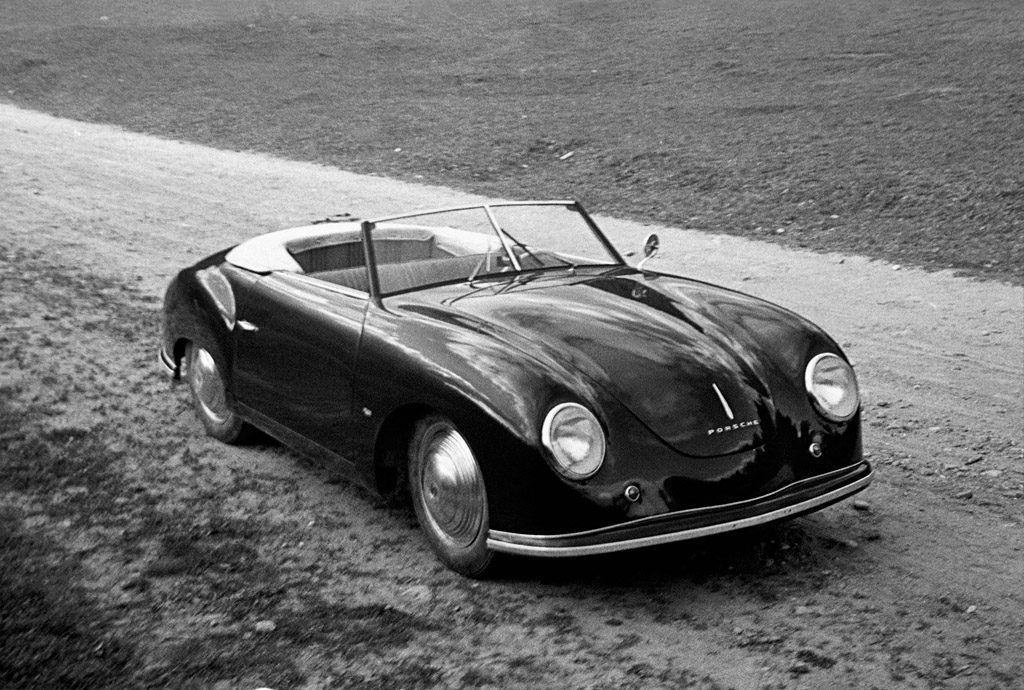
Porsche 356/2 Gmünd CabrioletPorsche 356/2 Gmünd Cabriolet

Porsche 356/2 Gmünd Cabriolet

Of the 50 cars made in Gmünd, only eight were built up as cabriolets. Each was outsourced for its body and interior construction. The coupe is also beautiful but for me the cabriolet looks just so perfect.

Six cars were sent to Beutler who constructed them with a slightly different shape than the factory coupes. Included was a kicked-up rear fender line which was used on several of the Buetler cabriolets. Furthermore the dashboard was unique to these cars.

Built to factory designs, Karosseriefabrik Ferdinand Keibl in Vienna produced an entirely different cabriolet of which only two were produced.

Porsche 356/2 Gmünd Cabriolet
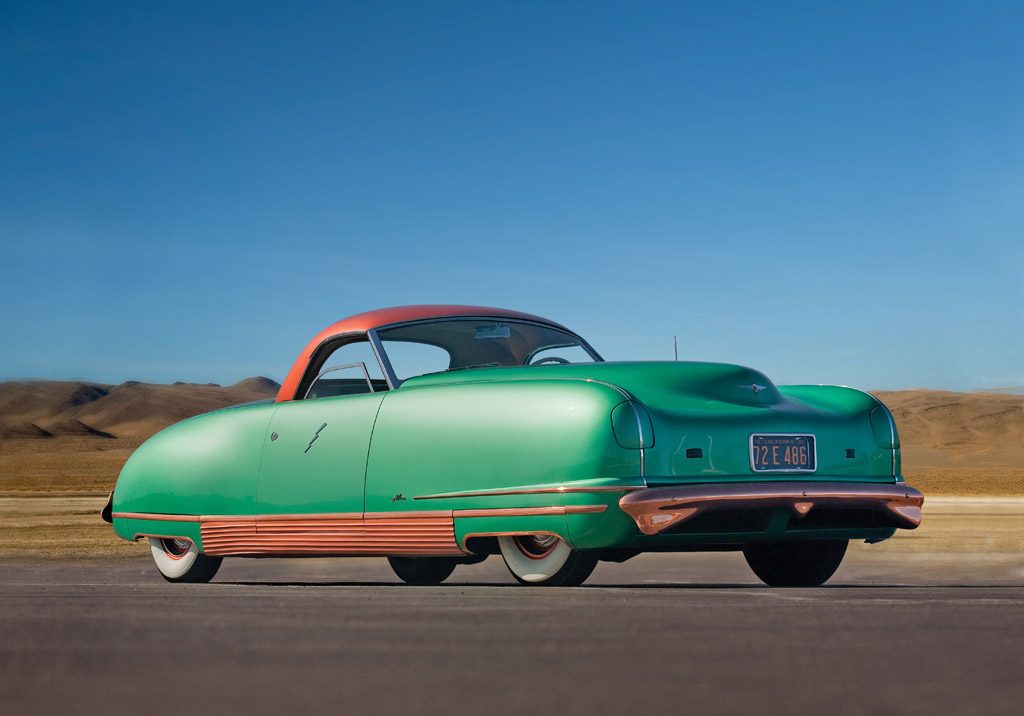
Chrysler ThunderboltChrysler Thunderbolt

Chrysler Thunderbolt

This concept by Chrysler was stunning in 1941 and still looks great today. It easily my favorite of the best designed cars of the 1940s. It was built during the popular Art Deco deco movement before the Jet Age of transportation design. The body was executed by Lebaron in Detroit to a design by Alex Tremulis. It was built as a tribute to George Eyston’s 1938 Thunderbolt which reached 357.53 mph on the Bonneville Salt Flats.

Only five or six Thunderbolts were built. They were first seen at the 1940 New York Auto show and subsequently displayed across the United States. Each had a different paint scheme and some had polished brass accents. Later on the name was resurrected by Chrysler in 1993 as a concept car.

Learn more: 1941 Chrysler Thunderbolt
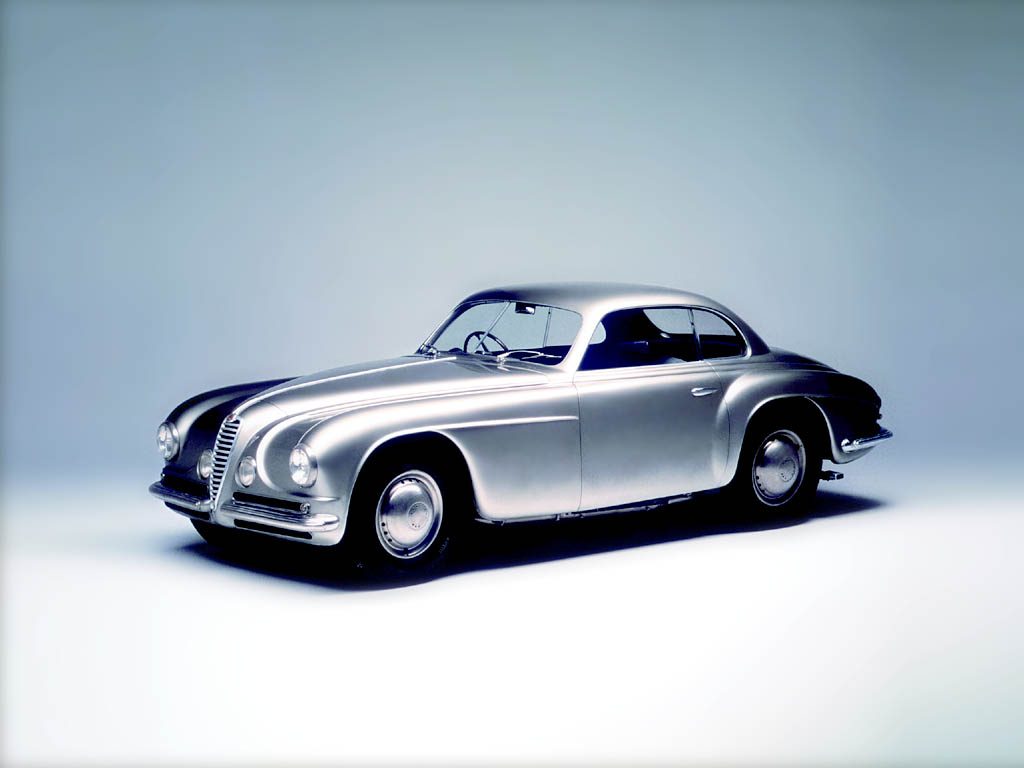
Alfa Romeo 6C 2500 ‘Villa D’Este’Alfa Romeo 6C 2500 ‘Villa D’Este’

Alfa Romeo 6C 2500 ‘Villa D’Este’

The classic Villa d’Este version of the 6C 2500 introduced in 1949 was named after its triumph in the concours d’elegance of the same name and is a perfect example of how the lines of a truly successful car are timeless. Its 2,443 cc six-cylinder engine has triple Weber carburettors. Not only that , it was capable of a top speed of 165 km/h with its Superleggera (extra lightweight) body, by Touring. Only 36 were built.

1949 Alfa Romeo 6C 2500 ‘Villa D’Este’
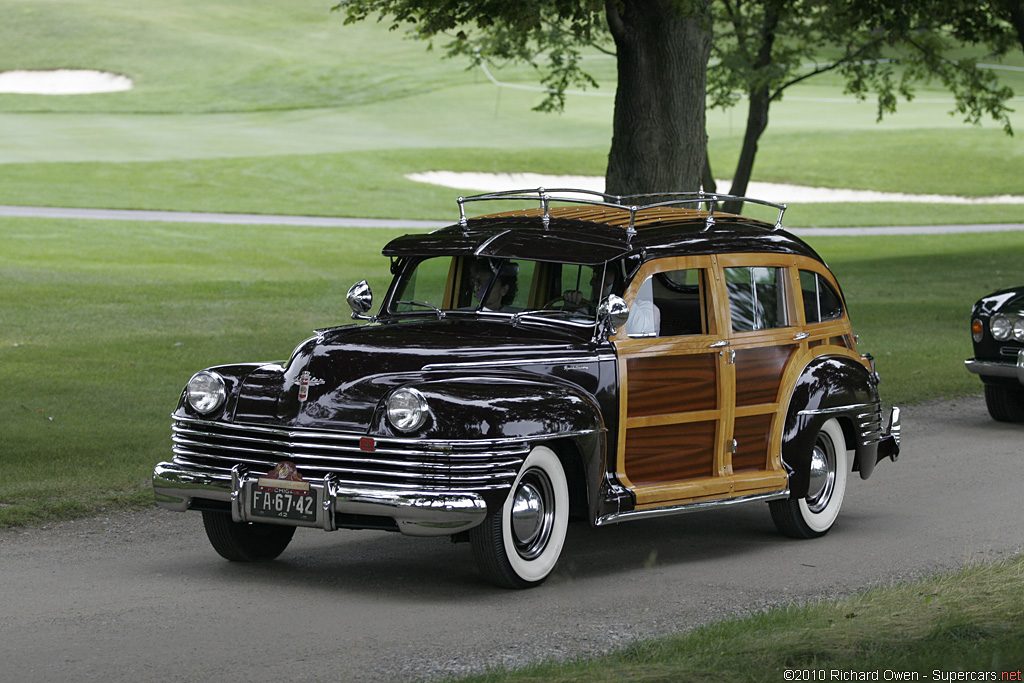
Chrysler Town & Country ‘Barrelback’ WagonChrysler Town & Country ‘Barrelback’ Wagon

Chrysler Town & Country ‘Barrelback’ Wagon

The ‘Barrelback’ Wagon makes our list because it was so unique and did an amazing job of capturing the public’s attention.

For 1941 and 1942, Chrysler built their Town & Country Wagon as a “limousine for the country” with deluxe appointments and lavish a lavish wooden frame. This nine-passenger station wagon, became known as the Barrelback for their curved rear bodywork which was only seen on the early cars. The Wagon was built on Chrysler’s windsor chassis and benefited from its 241.5 cu. in. L-head inline six-cylinder engine that produced 1018 bhp. It was the first to include genuine wood exterior panels.

Learn more: Chrysler Town & Country ‘Barrelback’ Wagon
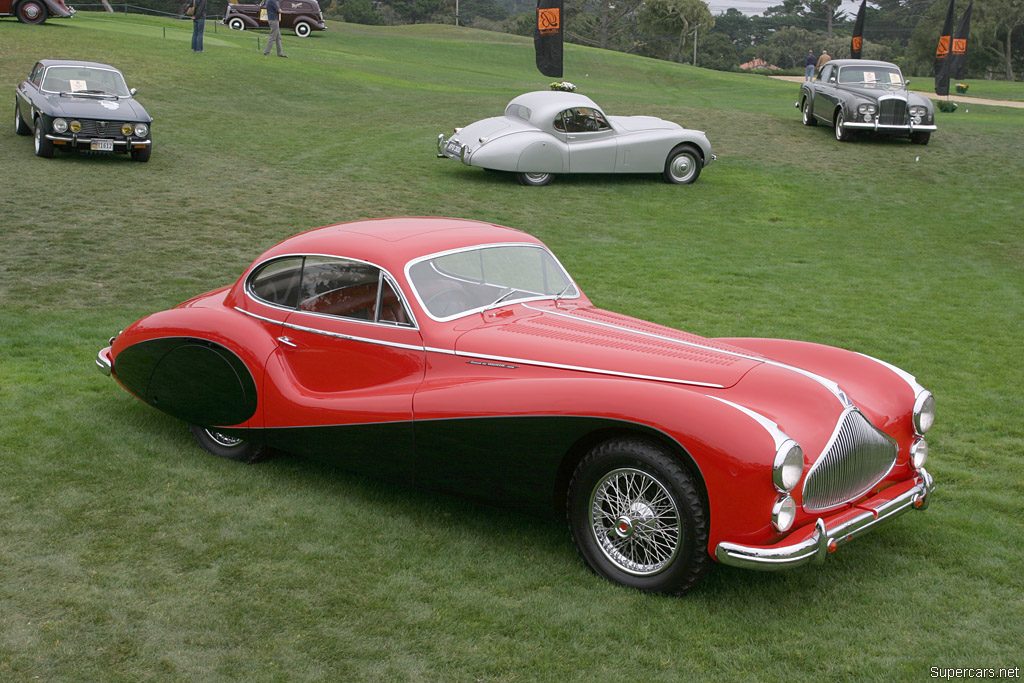
Talbot-Lago T26 Grand SportTalbot-Lago T26 Grand Sport

Talbot-Lago T26 Grand Sport

One of the immediate post-war cars that received notoriety for its speed was the T26 Grand Sport (GS). It was built for either racing or luxury and benefited directly from Talbot’s successful T26 Course Grand Prix car. As such it was expensive, rare and helped Louis Rosier win the LeMans 24 Hour race.

The GS replaced the Record chassis which was named for its remarkable top speed. Having a 4.5-liter, inline-6 with aluminum cylinder heads and triple carburetor fuel feed from the T26 the Grand Prix cars, the GS was one of the world’s most powerful production cars. It produced 190 bhp which was good for around 125 mph depending on the body that was fitted.

Learn more: 1948 Talbot-Lago T26 Grand Sport, 1948 Talbot-Lago T26 Record
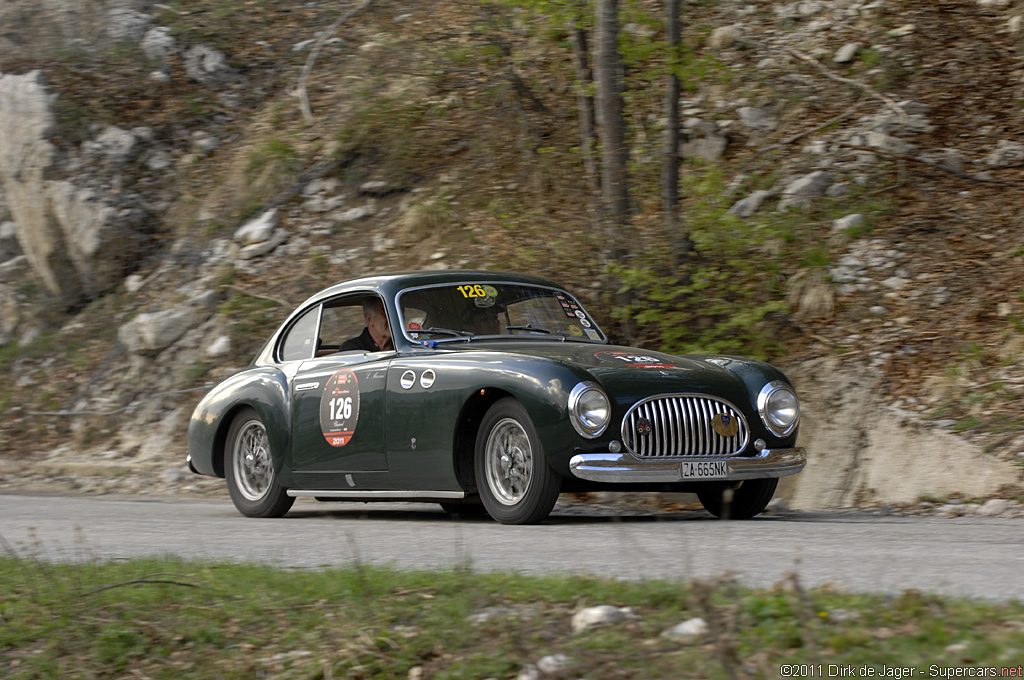
Cisitalia 202Cisitalia 202

Cisitalia 202

After producing a several customer D46s, and achieving a debut victory in the Brezzi Cup in Turin, Cisitalia focused on building small passenger car based on the D46, including it’s Fiat components and space frame chassis. Called the 202, each cars was finished as a rolling chassis and bodied by various design houses. Pinin Farina was responsible for a definitive coupe which set the visual standard for all future sports car bodies having a low and flat hood.

Learn more: 1946 Cisitalia 202
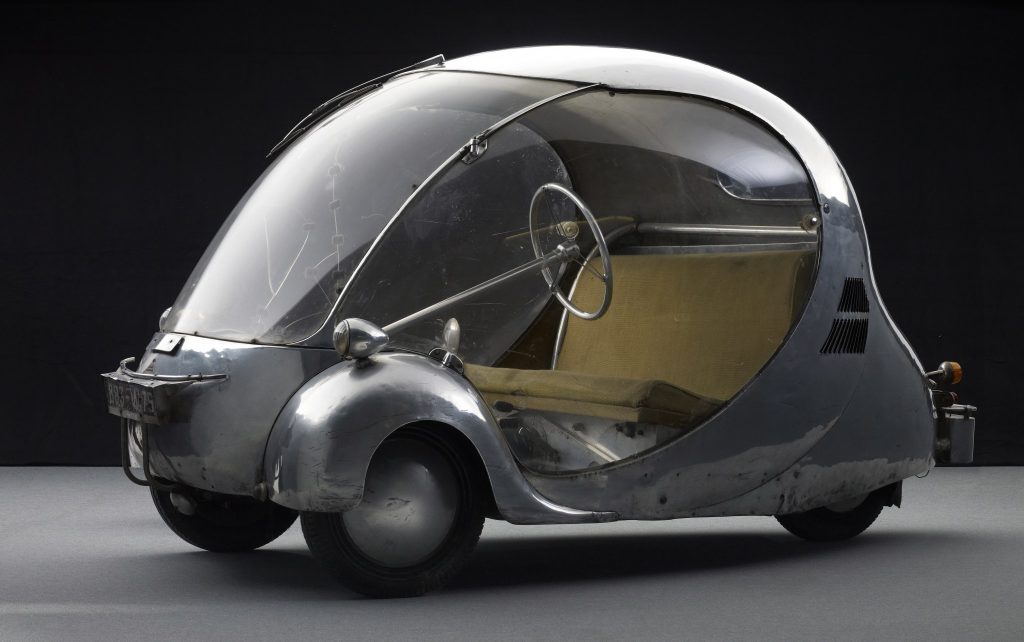
L'Oeuf electriqueL'Oeuf electrique

L’Oeuf electrique

Eat your heart out Tesla. L’Oeuf electrique, literally ‘the electric egg,’ was built by French artist, designer, and engineer Paul Arzens in 1942 for personal use. With a 60-mile range and a 37 mph top speed, the egg was the ultimate urban vehicle years before the first electric Smart ForTwo took to the streets. It was futuristic, unique and a design masterpiece. The car was made of aluminum and Plexiglass and Arzens chose the electric powertrain due to shortages in petrol due to the war. It had 100 km range and could hit 70 km/h.
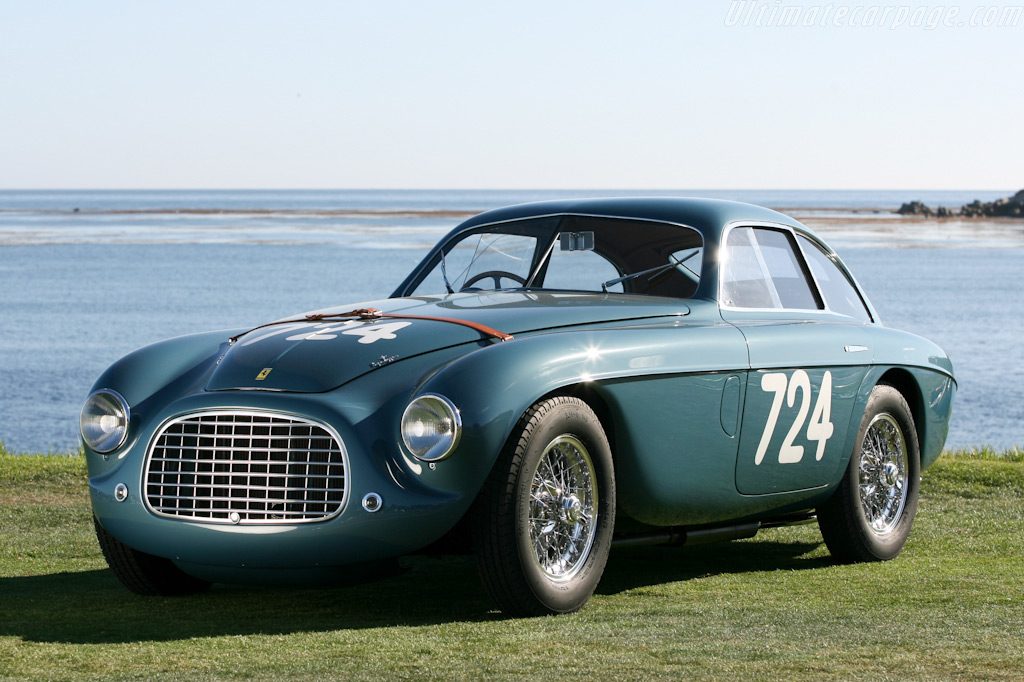
Ferrari 166 MM Zagato Panoramica

Zagato and Ferrari’s associations began at Alfa Romeo, when Zagato’s light weight aluminum bodies helped Alfa during their most dominant period in history. After Enzo Ferrari left Alfa as race driver, and then later as head of the racing team, he started manufacturing cars under his own name which won races from their onset. Several customers requested Zagato bodies for their Ferrari, and this, chassis 0018M, marks the first Ferrari-Zagato collaboration.

Not only was this Zagato’s first Ferrari, it was Ferrari’s first coupe and Gioacchino Colombo, one of Ferrari’s consultants, collaborated with Zagato to reach the final design. Called the Panoramica, the coupe was a thoroughly modern design and had a very curious greenhouse, with Plexiglas windows that curved with the roof.

Learn more: 1948 Ferrari 166 MM Zagato Panoramica
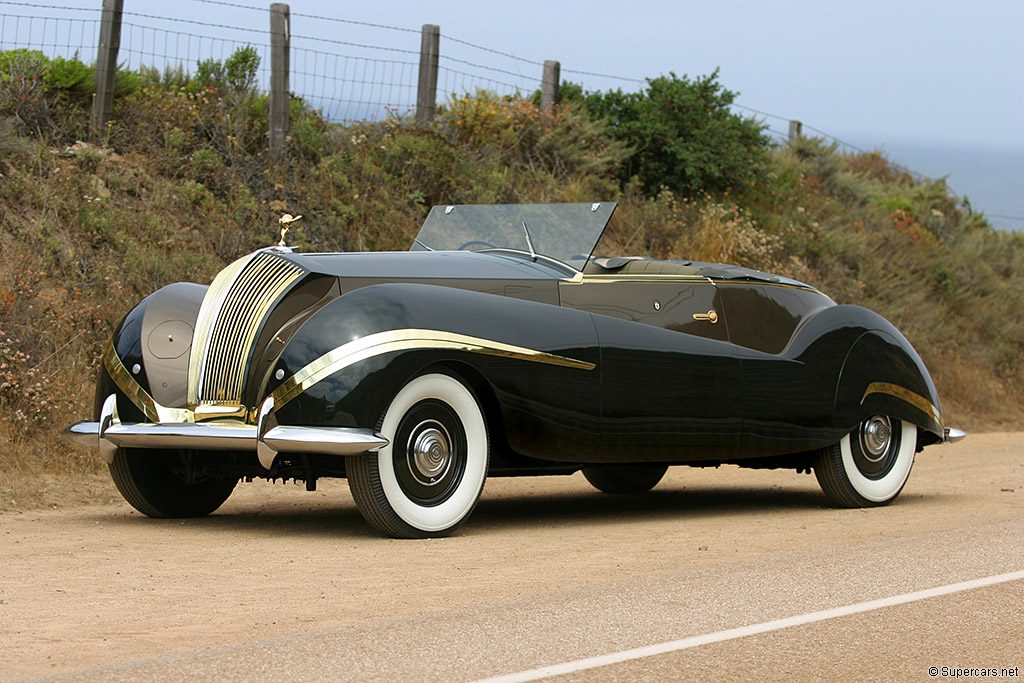
Rolls-Royce Phantom III Labourdette Vutotal CabrioletRolls-Royce Phantom III Labourdette Vutotal Cabriolet

Rolls-Royce Phantom III Labourdette Vutotal Cabriolet

Rebodied in 1947 by Labourdette of Paris, this Phantom III was the designer’s last and arguably most daring work. It was commissioned by the flamboyant Louis Ritter who let Labourdette go all out, so much so, the body alone cost $44 000 which made it one of the most expensive of its time- equal to around $375 000 in 2003.

Learn more: 1947 Rolls-Royce Phantom III Labourdette Vutotal Cabriolet
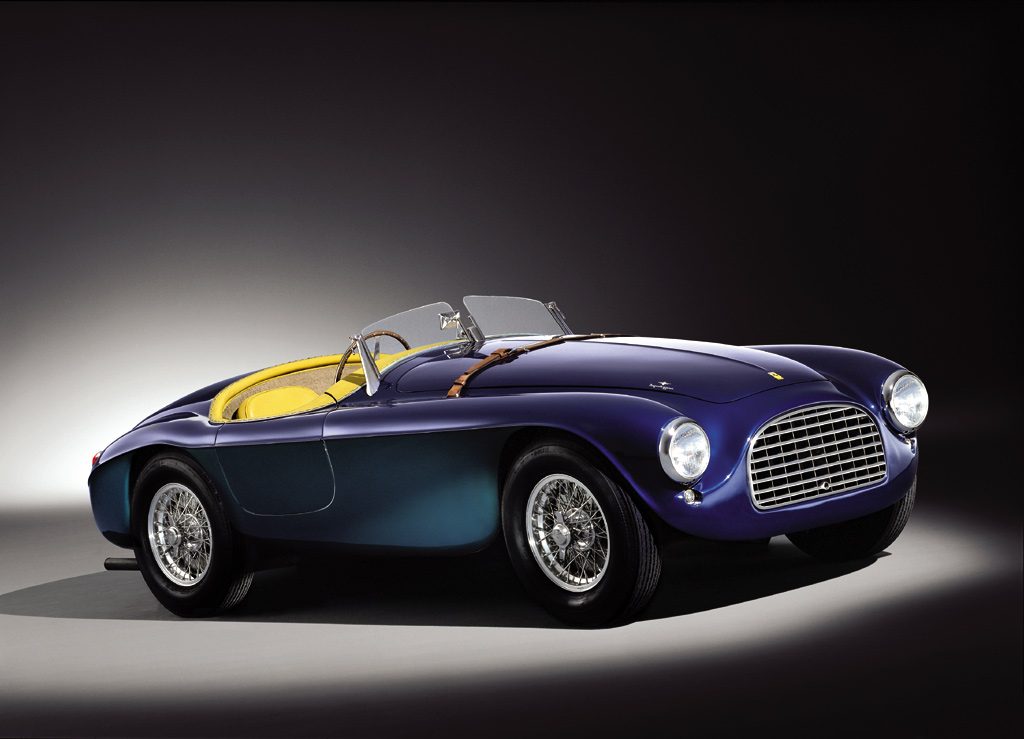
Ferrari 166 MM Touring BarchettaFerrari 166 MM Touring Barchetta

Ferrari 166 MM Touring Barchetta

To commemorate their first major success at the prestigious 1948 Mille Miglia, Ferrari upgraded their successful 166 Sport and made a series of cars called the 166 MM. These contributed more than any other previous type, scoring many of Ferrari’s first international victories and established the company as a serious manufacturer of sports cars.

For their new series, Ferrari outsourced production of the bodies to Touring of Milan who made 25 roadsters using their patented Superleggera technique. It fixed aluminum-alloy panels directly to a tubular space frame which was both light and rigid.

Learn more: Ferrari 166 MM Barchetta
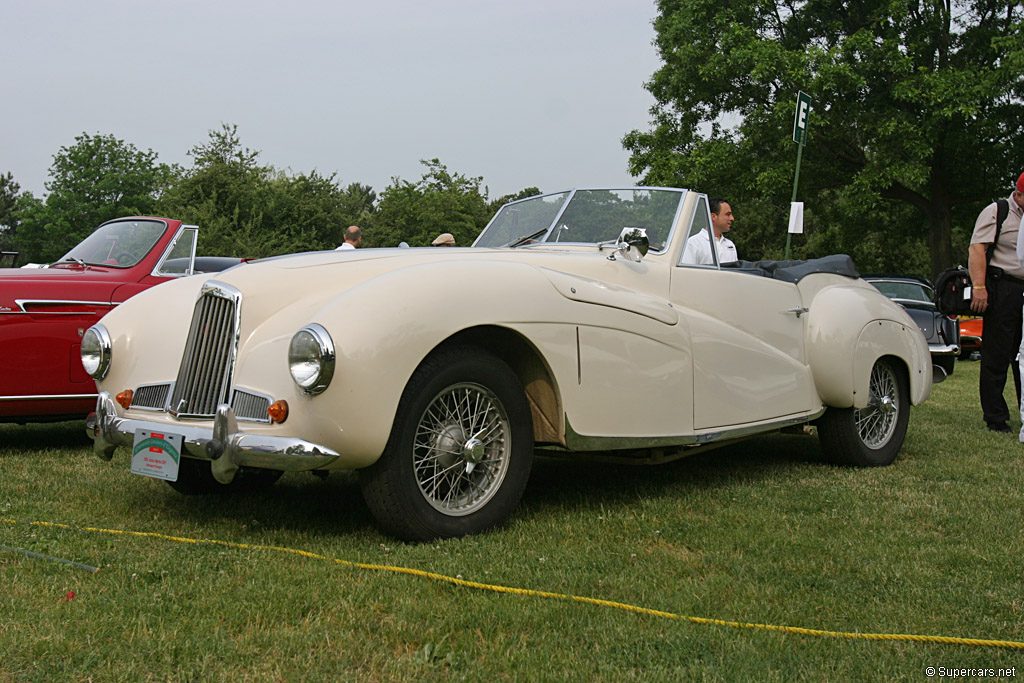
Aston Martin DB1Aston Martin DB1

Aston Martin DB1

After David Brown briefly tested Aston Martin’s Atom prototype, he paid 20 000 GBP and the company was his. He had grand ideas for his new purchase, but started out with a new drop-head coupe that became the DB1.

The underpinnings for the DB1 came from a 1939 Aston Martin prototype called the Atom. It used a SOHC, 8-valve, 2-liter engine that produced 90 bhp. The chassis was a unique multi-tube affair and provided support for an awkward 4-seat sedan. David Brown decided that a convertible or drop-head coupe version of the Atom would be a good launch point for this new venture. He had Claude Hill stiffen the chassis to accept a new flowing body. The design used lateral supports that were tall enough to support the top of the body.

Learn more: Aston Martin DB1
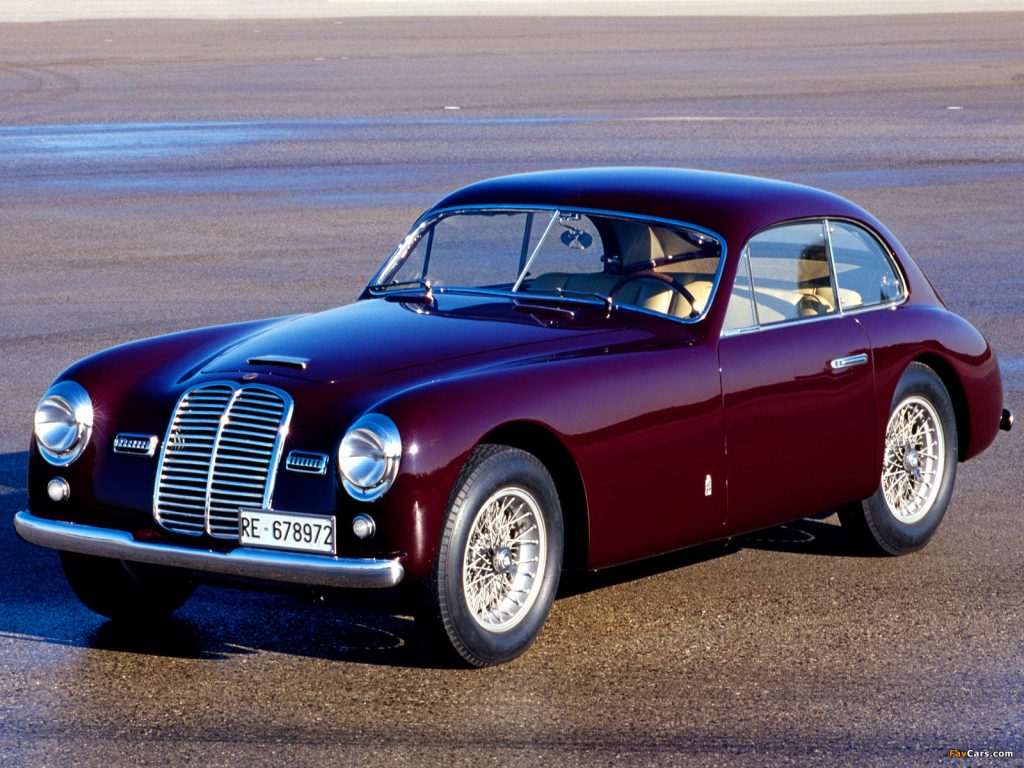
Maserati A6 1500Maserati A6 1500

Maserati A6 1500

The first Pinin Farina 1500 appeared on the stand at the 1947 Geneva Motor Show. Painted in grey, the car was well received. At the time, the car’s aluminum 1.5-litre engine produced only 65 bhp which was ample for the roads of Italy. Most cars were fitted with a single Weber 36 DCR, but a few were fitted with a triple carburetor setup and even more were retrofitted with it.

Learn more: Maserati A6 1500
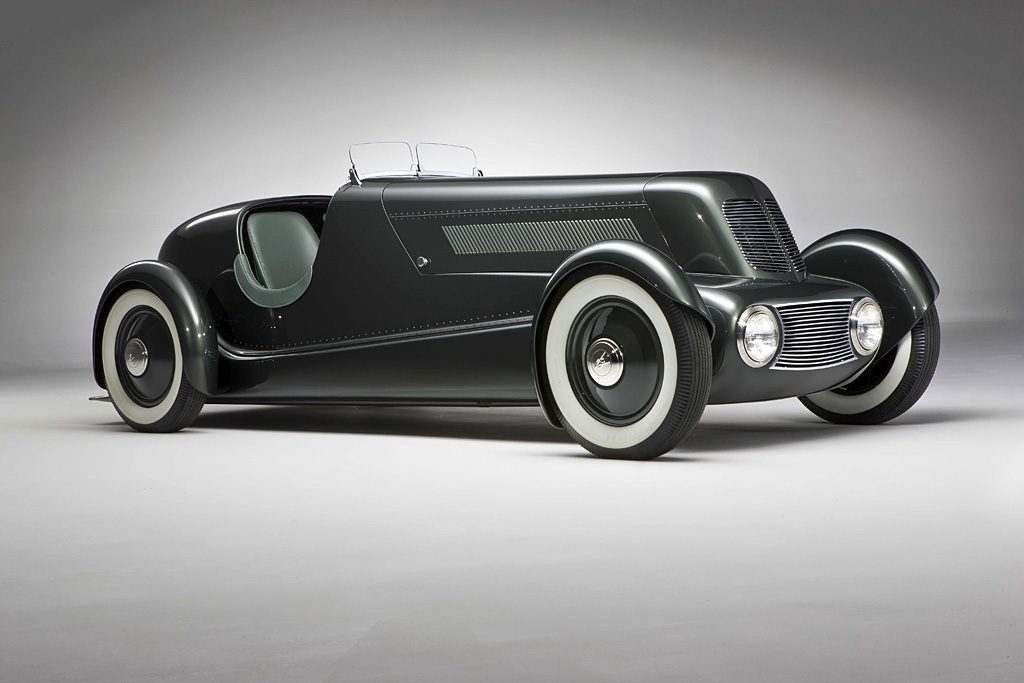
Lincoln Ford 40 Special SpeedsterLincoln Ford 40 Special Speedster

Lincoln Ford 40 Special Speedster

Built using aircraft engineering, the 1940 Special Speedster was one of several cars that were made for the personal collection of Edsel Ford. He had Lincoln-designer Bob Gregorie design a new Speedster on the Ford V8 platform. The result was six boat-tail Speedsters that were custom built a modified chassis and unique aluminum body. The second was built in 1934 and was much more streamlined than the initial car.

Learn more: 1940 Lincoln Ford 40 Special Speedster
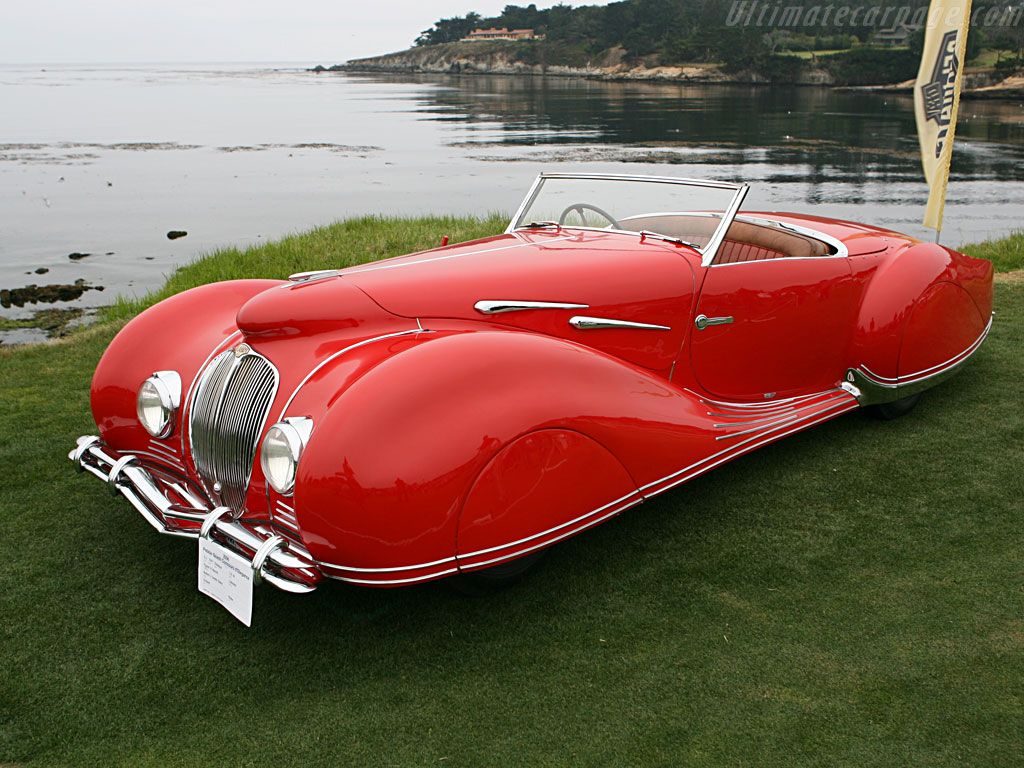
Figoni & Falaschi Delahaye 135 MS 'Narval'Figoni & Falaschi Delahaye 135 MS 'Narval'

Figoni & Falaschi Delahaye 135 MS ‘Narval’ (1946)

Giuseppe Figoni was one of the most renowned coachbuilders before the war, but perhaps his greatest creation came in 1946, just after WWII. This Delahaye Narval, named for a noble sea creature, was one of just seven built for the Salon de l’Automobile de Paris of 1946. It’s also arguably the most beautiful car of the forties.
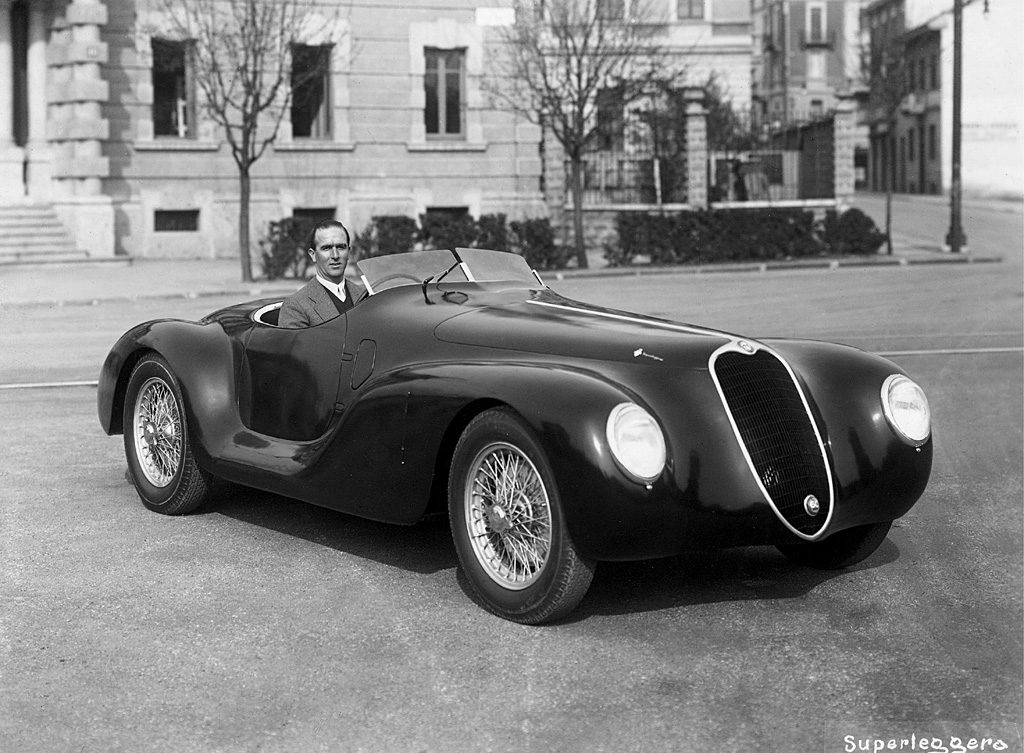
Alfa Romeo 6C 2500 SS ‘Torpedino Brescia’Alfa Romeo 6C 2500 SS ‘Torpedino Brescia’

Alfa Romeo 6C 2500 SS ‘Torpedino Brescia’

In 1940 Carrozzeria Touring Superleggera built three roadsters for the upcoming Mille Miglia known as the “Torpedino tipo Brescia”. These were built on the most developed version of the 6C 2500 known as the Tipo 256. Alfa Romeo switched focus from the 8C to the un-supercharged 6C in accordance with the 1939 ‘Sport Nazionale’ class.

Shape for the Torpedino came from a sole car built for Righetti for the Targa Abruzzo in August 1939. The three Mille Miglia cars were slightly different in detail, but had the same overall shape as the car which debuted at the Targa Abruzzo.

Learn more: 1940 Alfa Romeo 6C 2500 SS ‘Torpedino Brescia’
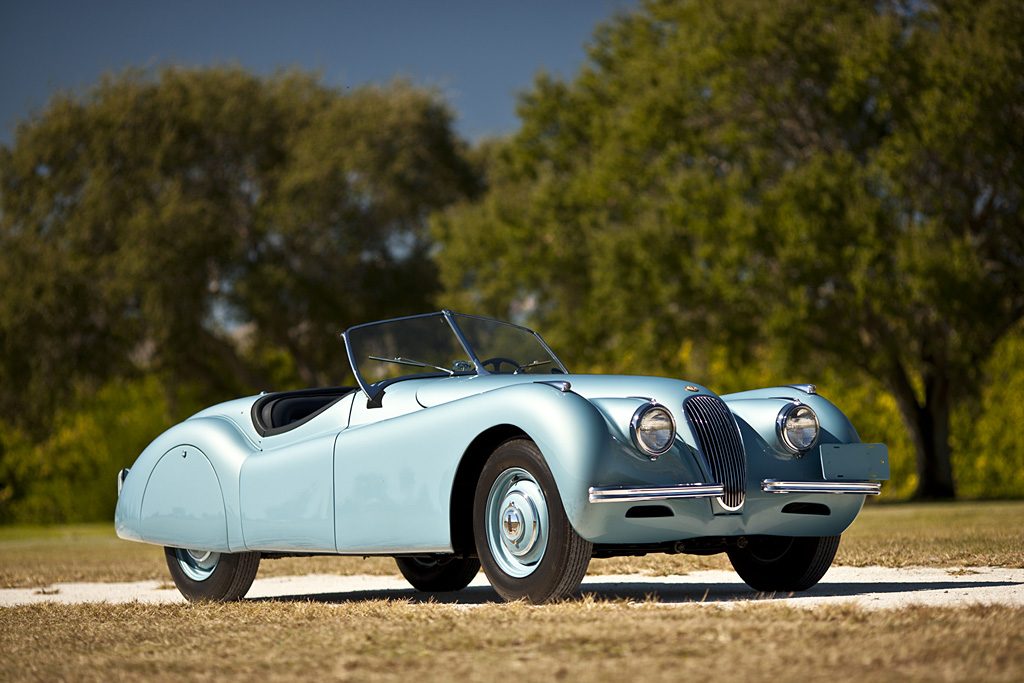
Jaguar XK120 Alloy RoadsterJaguar XK120 Alloy Roadster

Jaguar XK120 Alloy Roadster

With its French curves, 120 mph performance and a price tag of £988, the XK120 was Jaguar’s most important roadster. In 1948 it set a new standard of post-war performance which progressed into a comprehensive motor sports campaign and won the 24 Hours of Le Mans five times in seven years. Before it was allowed to race, Sir William Lyons personally tested an XK120 at Silverstone himself. He called it the ‘Super Sports Two Seater’, but after reaching 120 mph in Belgium, it was simply known as the XK120.

Inspired by Italian sports cars and the streamlined styling of the French design houses, Sir William Lyons personally sketched out the basic silhouette for the 120. In what must have been a difficult task, the panel beaters slowly embodied the simple steel chassis with a sweeping hand-hammered aluminum body. The resulting prototype was timeless, simple and instantly recognizable.

Learn more: Jaguar XK120 Alloy Roadster
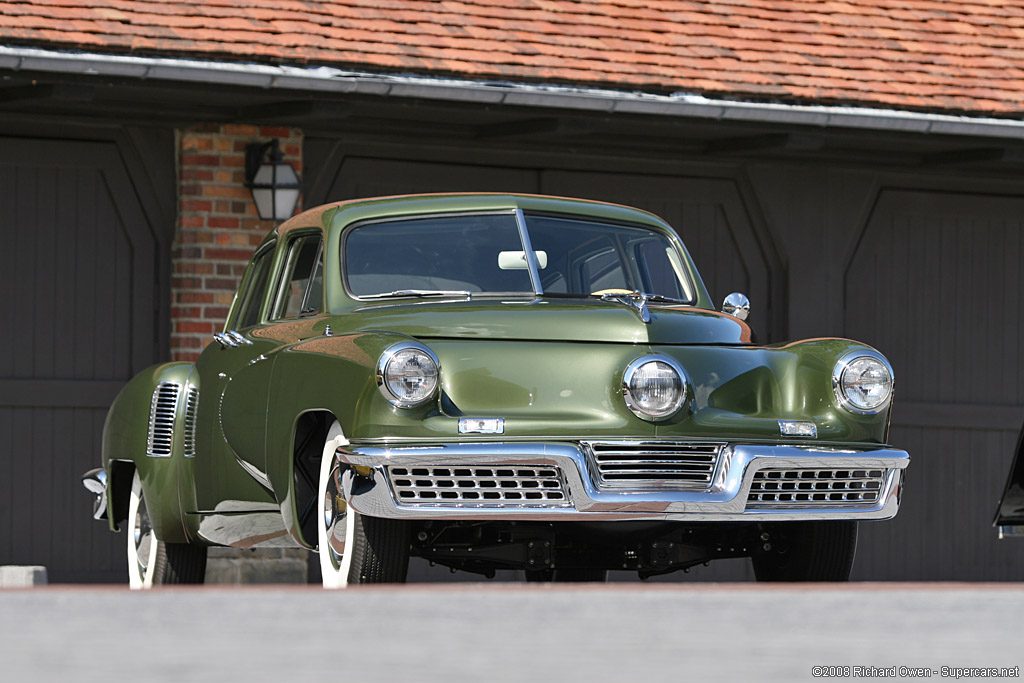
Tucker TorpedoTucker Torpedo

Tucker Torpedo

In the 1940s Preston Tucker set out to make an entirely new vehicle. His goals were to build a safe car free from traditional design. Initially known as the Torpedo and later the Model 48, this car is an icon of American film and culture.

Tuckers were immediately recognizable with their triple headlight arrangement a sloping fastback design. Along with unusual details, Tuckers offered a host of safety features and industry firsts.

One of the most interesting parts of the Tucker is its opposed, six-cylinder power unit. The engine was made mostly with Tucker designs and was loosely based off a helicopter engine. Large venture capital funds enabled Tucker to develop this distinct power plant.

Learn more: 1948 Tucker Torpedo
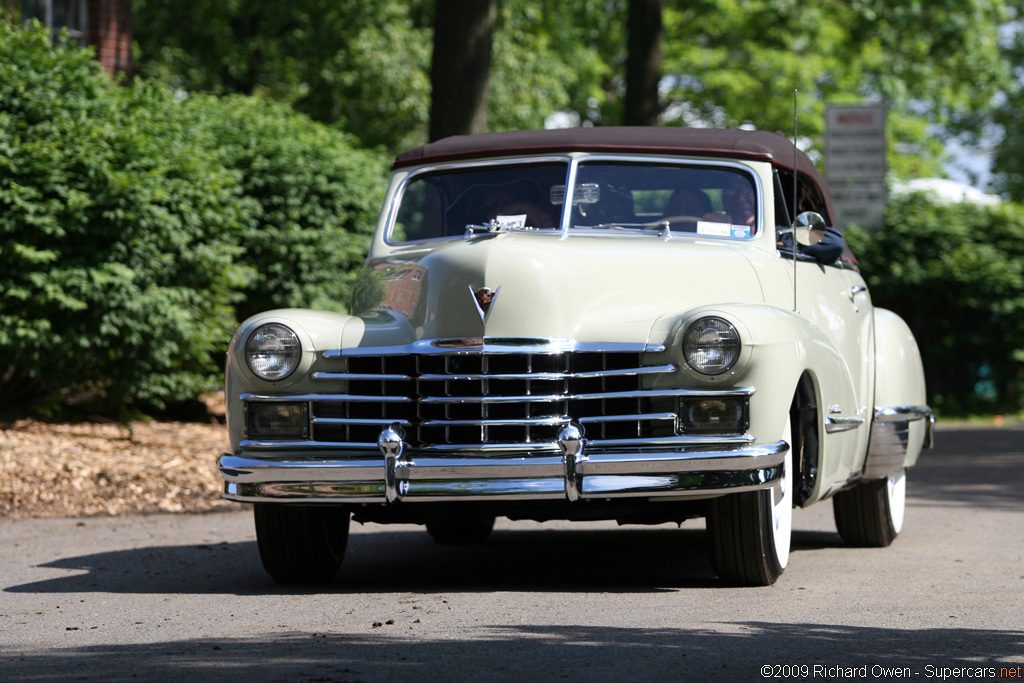
Cadillac Series 62Cadillac Series 62

Cadillac Series 62

In 1947 Cadillac slightly upgraded their model year that included a new 5-bar front grill and numerous trim differences. These include a new Cadillac fender script, stainless-steel fender guards. In 1947 Cadillac also offered optional fog lights built into the grill and Sombrero wheel covers.
Learn more: Cadillac Series 62
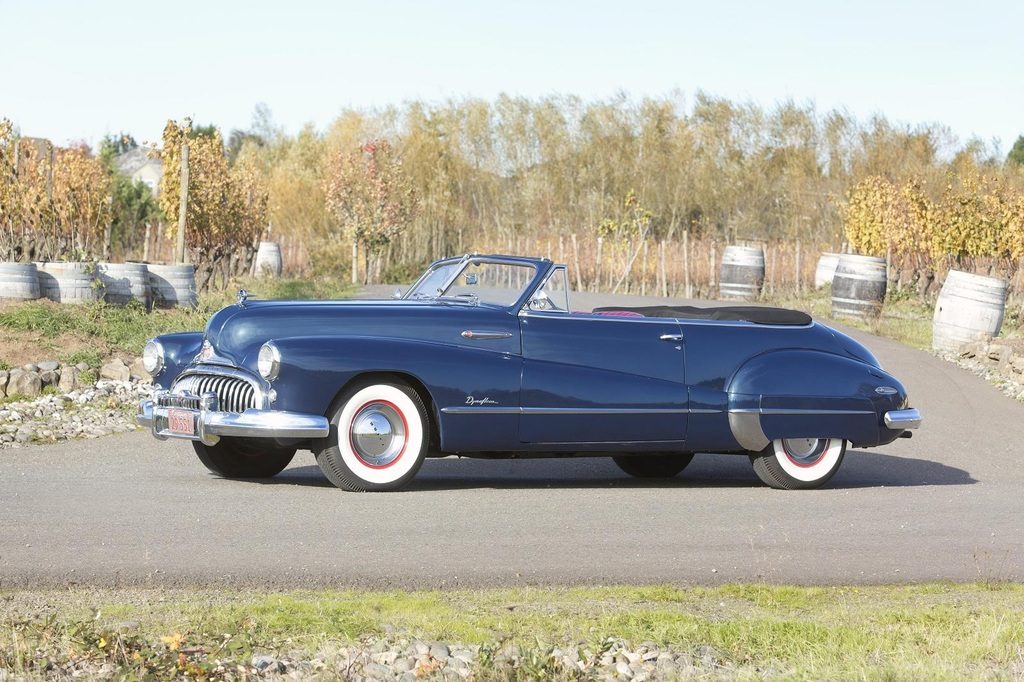
Buick Roadmaster Riviera CoupeBuick Roadmaster Riviera Coupe

Buick Roadmaster Riviera Coupe

The Riviera Coupe offered the unusual Hardtop Convertible style to the Buick line which mimicked the look of a true convertible with the top up. Like the Roadmaster, the 1949 had three portholes and the “fuselage style” body also shared with Cadillac

Learn more: Buick Roadmaster Riviera Coupe

Ferrari Teases Its New Hybrid Supercar One Last Time Ahead of Its Official Reveal

Dare To Imagine

The upcoming reveal for Ferrari’s new hybrid supercar is right around the corner. In fewer than 24 hours, the car will make its debut. Until then, Ferrari has some time to set up some good PR work and to a teaser or two. This one should honestly be the last teaser until the car’s debut, but it’s a good one. 

You get to see an outline of the front end of the car as well as a look at the headlight. While there’s little clarity about the new Ferrari hybrid supercar at this point, we won’t have to wait long to have all to glorious details. According to Carscoops, the car is codenamed F173, but it will without a doubt have a more elegant real name. 

The vehicle will get rectangular taillights and a dual exhaust that sits up high on the rear of the car. The headlights appear to be genuinely different from any others that appear on Ferrari’s vehicles and the nose of the car looks low and wide. You can watch the whole teaser below for yourself, and prepare for the impending reveal. 

Bugatti’s La Voiture Noire Snatches Up Design Award at Concorso d’Eleganza

A Warranted Accolade

Ducati’s iconic and wildly expensive La Voiture Noire appeared on exhibit at the Concorso d’Eleganza in Italy. While there, the car was awarded the Design Award. The car was designed to honor the company’s long history in making some of the finest cars out there. It was also a way to pay homage to the Bugatti Type 57 SC Atlantic, which is one of the company’s most iconic models. 

Based on the same chassis the underpins the Chiron, the La Voiture Noire is a one-off car unlike any other. The exterior feature full carbon-fiber bodywork. Every piece of bodywork is custom to set the La Voiture Noire apart from any other car on earth. The powertrain is Bugatti’s venerable quad-turbo 8.0-liter W16 powertrain. That engine is used in other Bugatti models as well and its power output is unchanged at 1,479 hp and 1,180 lb-ft of torque.

The car on display is actually a prototype. Bugatti will build the final version of it yet. According to Carscoops, the vehicle will take two years to completely finish. Then it will deliver the car to the buyer, who is unknown. Whoever purchased this car must have deep pockets, though. It’s said to cost $18.9 million with taxes included. That’s a large sum of money for a single car, even a special one-off. 

VW Jetta GLI Review: GTI With a Trunk, Or 3-Box Pretender?

As someone who may or may not have a secret GTI tattoo, I’ve often insisted that the sporty Volkswagen Golf is the best all-around enthusiast car you can buy for less than $30,000. If you’re into that hot-hatch performance but not the hatchback body, the new Jetta GLI looks to mimic the GTI’s soulful, affordable ways. That includes the optional manual transmission that VW nixed for the last Jetta GLI, making this a genuine clutch performer. Is this Jetta really a “GTI with a trunk,” as VW first pitched it as during the GLI’s 1984 debut? Let’s find out.

The Good: Like the best VWs, the Jetta will make owners feel like they’re getting away with something, thanks to a base price that’s about $1,600 less than a GTI. The VW Group’s front-drive MQB architecture, 2.0-liter turbo four and optional dual-clutch automated gearbox are all slick enough to serve duty in vastly more-expensive Audis, including the A3, Q3 and TT. This GLI is sassier looking than the somewhat proletarian Jetta, yet it’s still stealthy; When the kids are getting rousted in their Satan-red Honda Civic Si coupes or Subaru WRX sedans, cops will assume a Jetta GLI is headed to a chamber of commerce luncheon.

Who It’s For: Fresh-out-of-college types who are older (and arguably wiser) than their years. Enthusiasts and tech nerds who appreciate German design and engineering. Anyone who puts a premium on driving dynamics, and wants nothing to do with an SUV.

Watch Out For: The GLI does a fine job of quelling torque steer, but this powerful front-drive sedan — at least the stick-shift model I tested — is vexingly hard to launch smoothly from a standing start. Dropping the clutch from as little as 1,800 rpm produced nasty, jarring axle hop that stunted forward progress. Pro tip: Stick with a patient, rolling start, and the VW’s robust torque will get you back in the race.

Alternatives: The brilliant Honda Civic Si, which can be had as either a sedan or a coupe. There’s also the Subaru WRX, though that AWD model will set you back roughly $2,000 more than the Jetta. And while the Mazda3 no longer offers a genuine Mazdaspeed performance version, it’s still an entertaining and premium small car, albeit underpowered versus the VW.

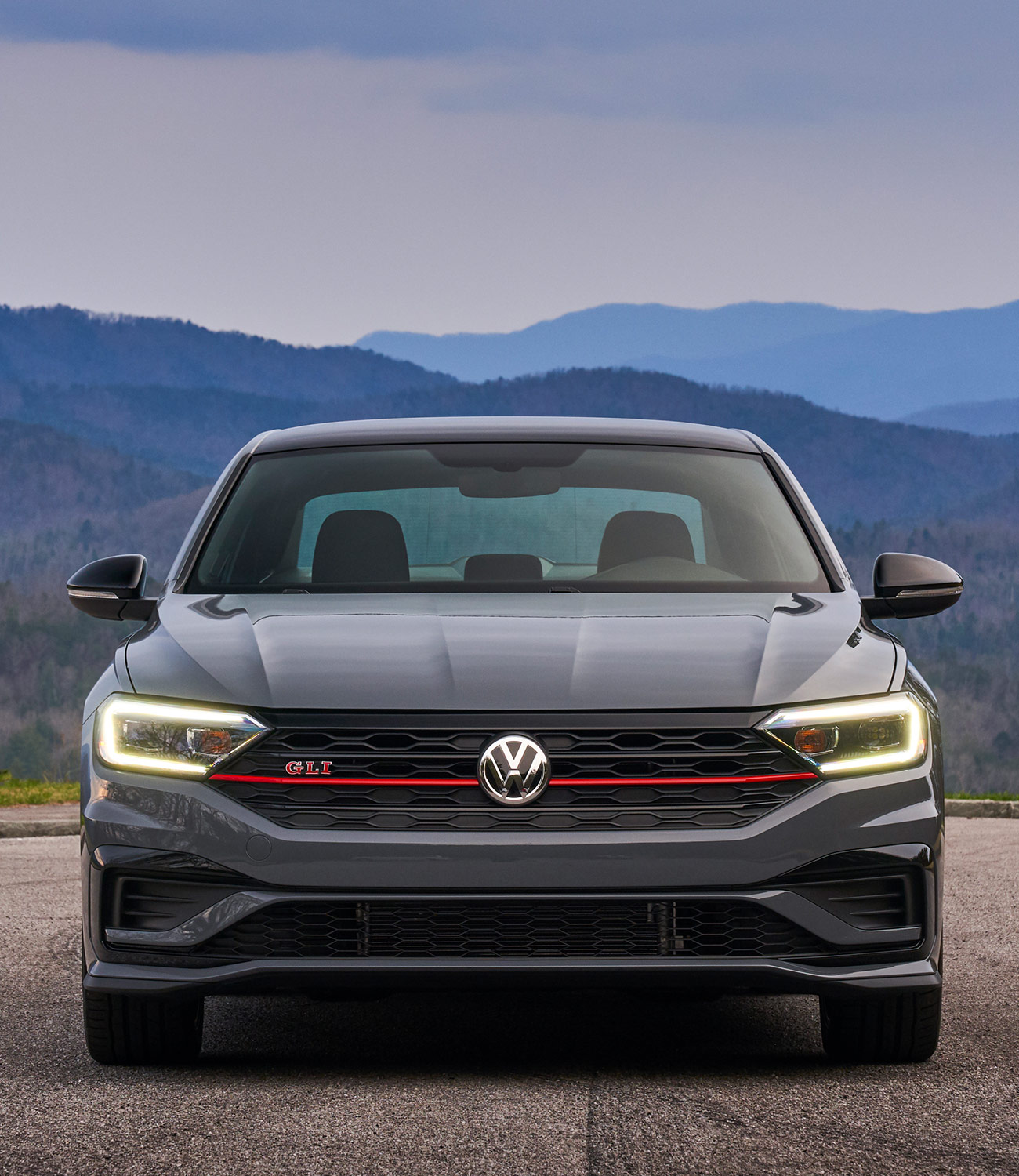
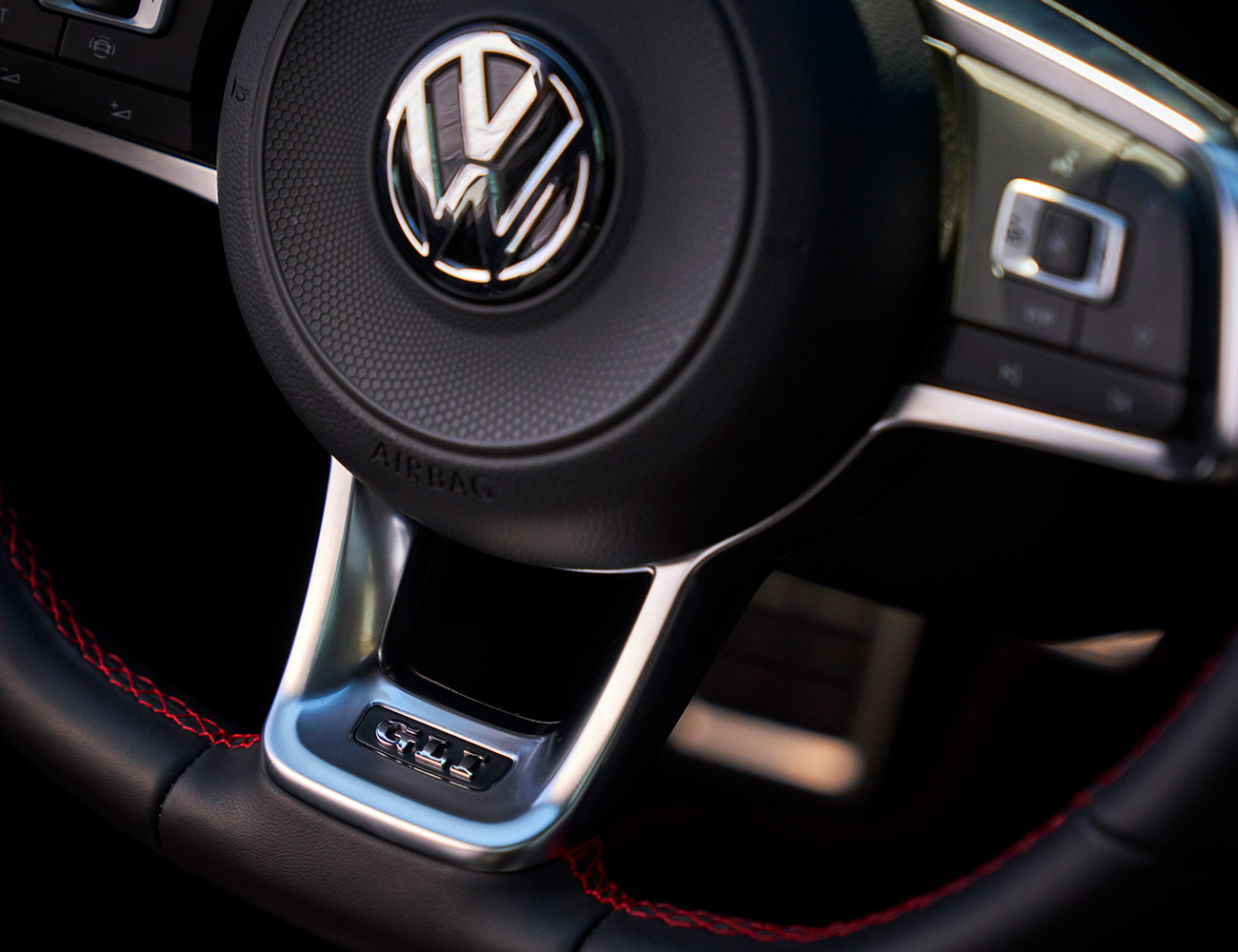
Review: The current Jetta has good bones and good genes, but it took the GLI treatment to really coax out its inherent appeal. Sporty gains include 18-inch alloy wheels with all-season tires, larger front air inlets, chunkier bumpers, side skirts, a rear spoiler and dual chrome exhaust outlets. The signature red accent stripe of a GTI bisects a black honeycomb grille, literally underlining the performance intent.

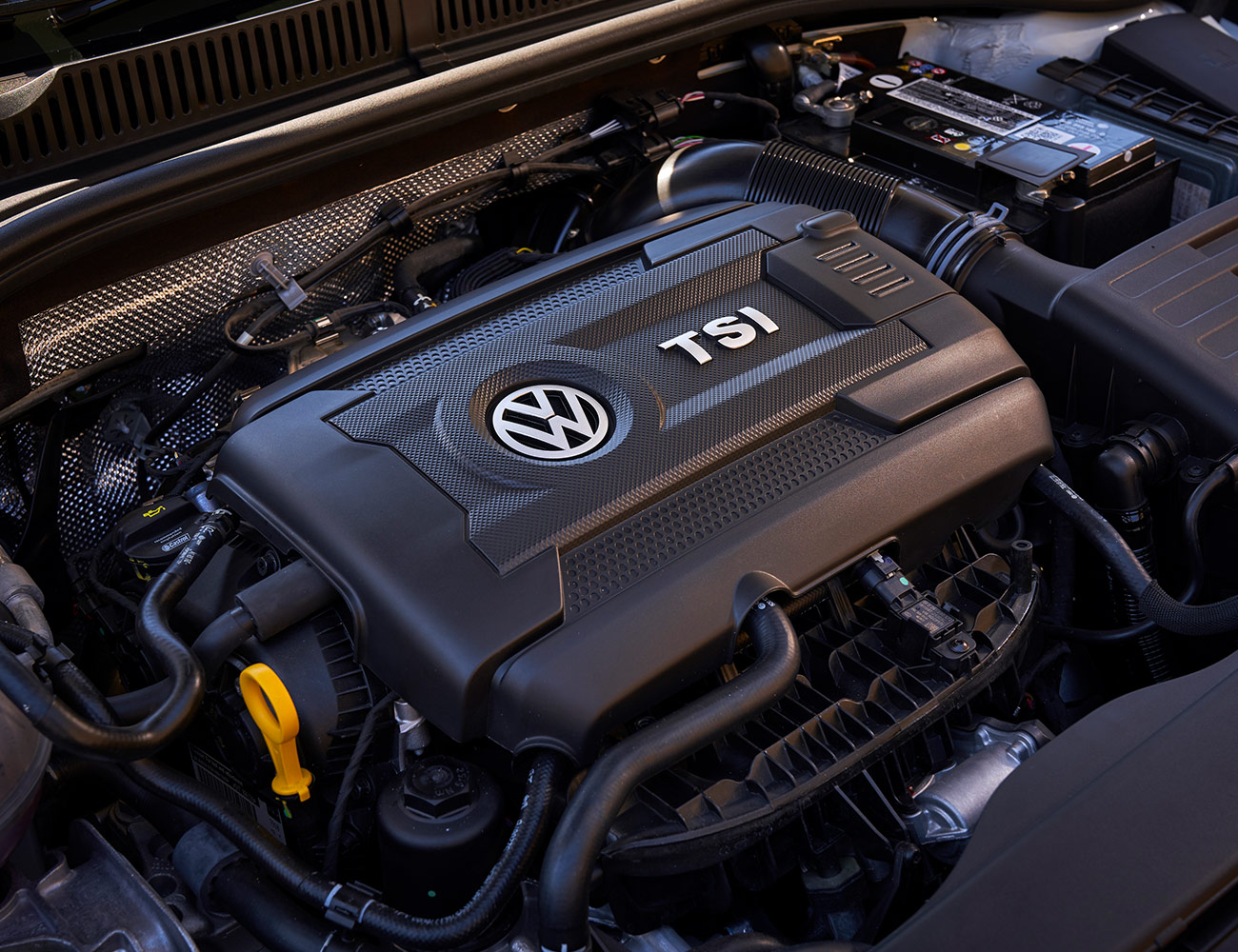
But it’s what’s under the VW’s creased hood that counts: The 2.0-liter turbo four makes 228 horsepower and 258 pound-feet, 18 horses and 51 pound-feet more than the previous GLI. VW claims the manual GLI sedan weighs just 31 pounds more than its hot hatch cousin, and just 18 more pounds in DSG trim. So with that paddle-shifted gearbox, you’re looking at a brisk 0-60 mph run in about six seconds flat with the dual-clutch gearbox, or a couple ticks more with the old-school stick. That’s almost a second quicker than a Civic Si, and nose-to-nose with a Subaru WRX. This is one quick Jetta.

The GLI makes another good case on value, including several standard features that cost extra on the hatchback: LED headlights, keyless entry, dual-zone climate control and blind-spot and forward collision monitors with automated emergency braking. VW’s latest capacitive infotainment touchscreens, available in 6.5- or 8.0-inch sizes, allow smartphone-style pinches and swipes. Other niceties include a thick-grip leather-wrapped multifunction steering wheel and stainless steel pedal caps. Only the top-dog Autobahn trim gets the upscale Volkswagen Digital Cockpit driver’s display and an adaptive suspension with selectable settings.

While the cabin is comfy and well-equipped, it doesn’t exude the almost-an-Audi vibe that makes the GTI such a standout. The sedan’s horizontal dashboard is relatively pedestrian, thanks to both its design and its plasticky trims. Front seats are civilian-issue Jetta chairs with obligatory red stitching, rather than the GTI’s luxuriously bolstered, track-worthy thrones. You can have leather seats in that Autobahn edition, but you can’t have the GTI’s knockout tartan-plaid cloth at any price.

The GLI does a better job of mimicking the hatchback’s overachieving performance. The Jetta’s suspension tuning feels a touch more complaisant, which smooths the ride but mildly dampens the hatchback’s aggressive turn-in and responses. Still, this GLI delivered the goods on some of my favorite backroads in upstate New York, setting a pace through twisties that would make any rival break a sweat to match. The electric-assisted, variable-ratio steering is overboosted for my tastes, but it imbues the Jetta with the brand’s familiar grace under fire.

An electronic limited-slip differential helps the Jetta apply its muscular torque to the pavement when it scoots out of turns. Front brakes come straight outta the mighty Golf R, including huge, 13.4-inch front rotors. Those firm-pedaled brakes ate up all the abuse I could dish out, including on long, curling descents. Pushing the handling envelope eventually summons the understeer, but that’s to be expected; this is still a front-drive Jetta, after all. Pro tip for any buyers: A simple upgrade to summer performance tires would palpably boost those limits.

For the manual version, the clutch-and-shifter combo rate as “good,” rather than the “great” of the Civic Si, thanks to factors like VW’s typically longish throw for the lever. And the manual’s gearing is very tall, so it’s best to wring out the revs to keep the Jetta from falling into the sluggish part of its powerband. But at the end of the day, I’m not complaining; these days, any sporty sedan that offers a stick registers as a delight in my book.

Verdict: Ask me whether I’d personally choose the GLI over the GTI, and the answer is a definite “no.” If you can afford one, you can likely afford the other. The GTI feels like the more-special piece: richer on the inside, a bit more focused and fun to drive, and more practical with hatchback cargo space that rivals some small SUVs. That said, some folks can’t abide a hatchback, including people who still associate the body style with Chevy Chevettes and other woe-is-me econoboxes. Sedans may be struggling in this SUV-besotted marketplace, but the idea that they’re obsolete is a crock. Sedan holdouts will be thoroughly pleased with a Jetta GLI, especially when they nail those brakes and chuck it into a fast corner.

2019 Volkswagen Jetta GLI Specs

Powertrain: 2.0-liter turbocharged inline-four, 228 horsepower, 258 pound-feet of torque; six-speed manual or seven-speed dual-clutch automatic transmission; front-wheel-drive
0-60 MPH: 5.6 seconds (automatic), 5.8 seconds (manual) (Car and Driver testing)
Top Speed: 126 mph
Roadholding: 0.98 g (C/D)
EPA Fuel Economy: 25 mpg city, 32 mpg highway

Volkswagen provided this product for review.

Read More Gear Patrol Reviews

Hot takes and in-depth reviews on noteworthy, relevant and interesting products. Read the Story
Note: Purchasing products through our links may earn us a portion of the sale, which supports our editorial team’s mission. Learn more here.

Watch the McLaren Senna Do a Blisteringly Fast Top Speed Speed Run

This Car is a Real Rocket

If you’ve been paying attention to the new McLaren Senna, then you probably know that it has a claimed top speed of 208 mph. You want to see the car reach that speed don’t you? Well, in the video below, you’ll see the Senna do a top speed run, but it doesn’t quite reach 208 mph. The car only manages to pull 204 mph. 

There could be many reasons the car didn’t quite get to the top speed that McLaren claims for the Senna. The weather could be a factor, this particular car could have an issue, or McLaren could have fibbed a little on the numbers. No matter what the cause, one thing is for sure, the Senna is wicked quick. Watch it sprint to 180 mph at an alarming rate and you don’t really care much about the fact it came up a few mph short. 

To be fair, this car isn’t much of a straight line speed demon. It was designed to go around a racetrack quickly, and having it out on a long runway like this is taking the car out of its element. The bodywork and wing on the car create so much downforce at speed that near the top end of its speed capabilities it’s hard to increase further. While there are cars out there that could beat it in a straight line, few can rival it around a racing circuit. 

[embedded content]

Novitec N-Largo Ferrari 812 Superfast Takes Things up a Notch

For When the 812 Superfast Isn’t Enough

Novitec has now released all of the Ferrari 812 Superfast upgrades with the Novitec Ferrari 812 N-Largo. The upgrades change the way the car looks and help improve performance as if the 812 Superfast was lacking in that department.

While we’d be hesitant to fuss with the 812 Superfast, we can say that the modified Prancing Horse looks pretty impressive with the Novitec body kit and forged wheels on it. The changes take the car from looking like a beautiful Ferrari GT car to looking like a serious racing car that just happens to be street legal. 

Designer Vittorio Strosek helped Novitec create the gorgeous widebody kit for the car. It offers F1-like aerodynamic features and changes the look of the car considerably. The kit is made of full carbon fiber, and it also adds a fixed rear wing to the car. The wheels you see on the car were developed specifically for Novitec and for this car in particular. They’re made through a partnership with wheel manufacturer Vossen. 

The wheels offer a staggered setup. The front wheels measure 21 inches and the rear come in at 22 inches. The concave design, and with five double spokes give the car a beautiful look. Novitec wraps those wheels with Pirelli P-Zero high-performance tires. The suspension also gets updates, including changes to the springs, ride height, and the addition of a front lift system that raises the front of the car at the touch of a button. 

Performance modifications for the engine include a new ECU mapping that boosts power to 829 hp. The 0-60 mph time should drop to 2.8 seconds. Novitec also recommends a special high-performance quad exhaust system. 

[embedded content]

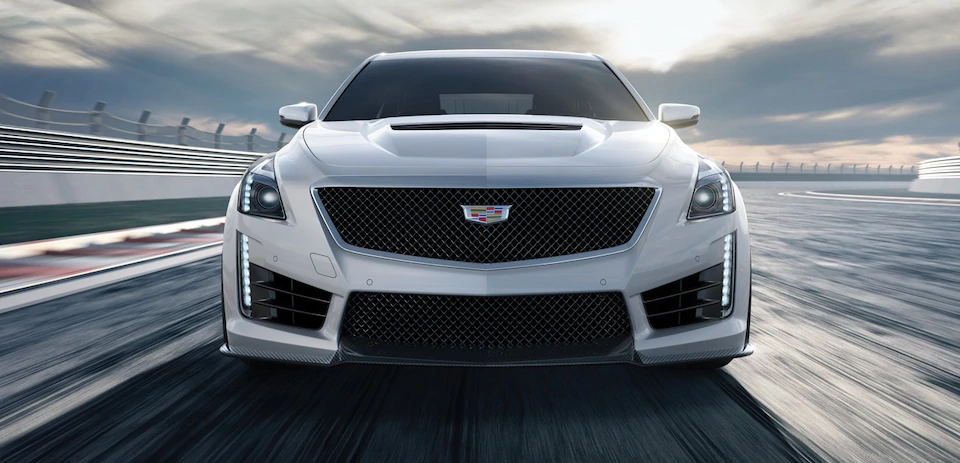
2019 Cadillac CTS-V

It takes to design a good car, and even more time to craft a perfect one. But a classic isn’t made — it happens without warning, all of a sudden, then one day it’s etched into history.

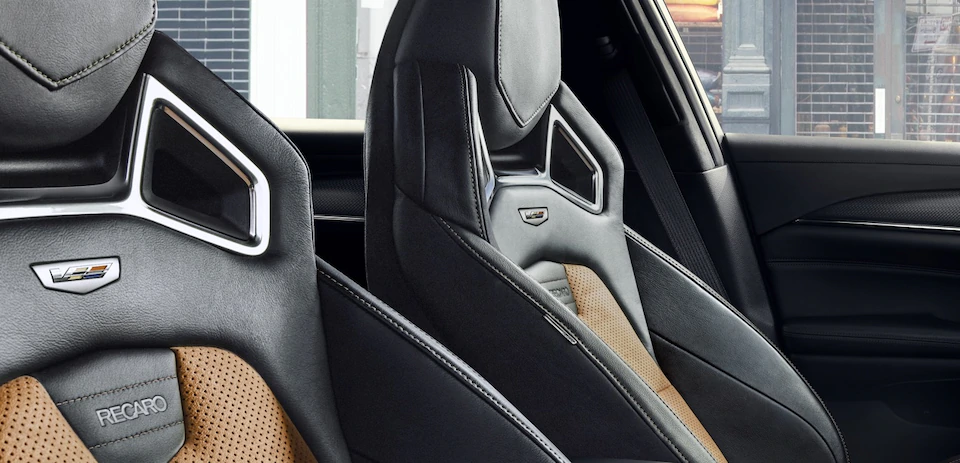
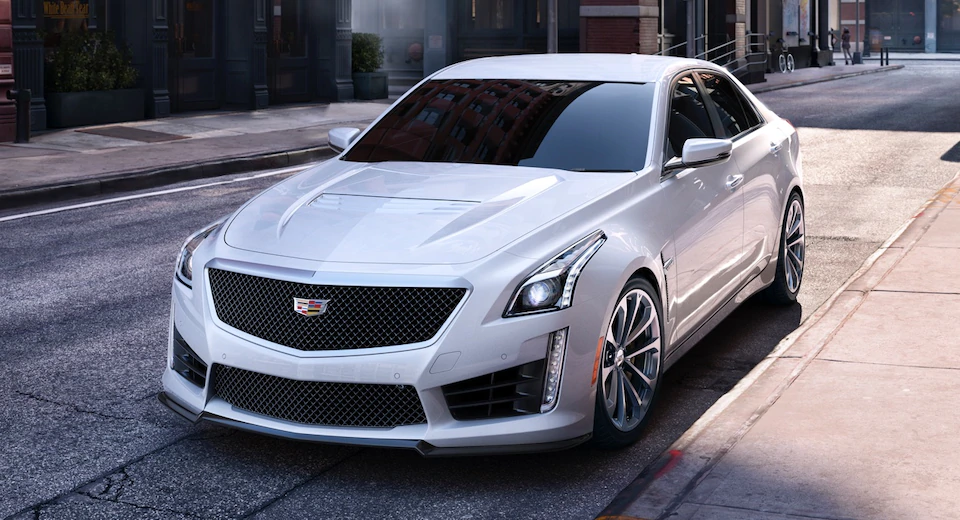
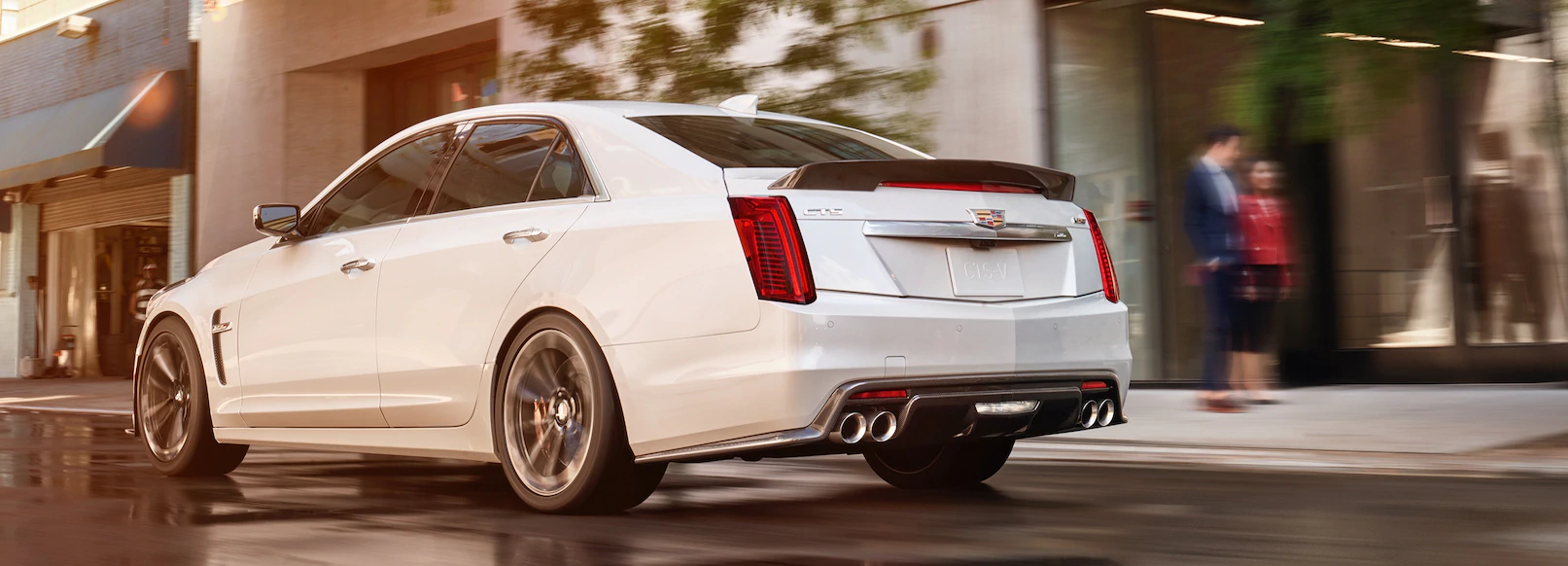
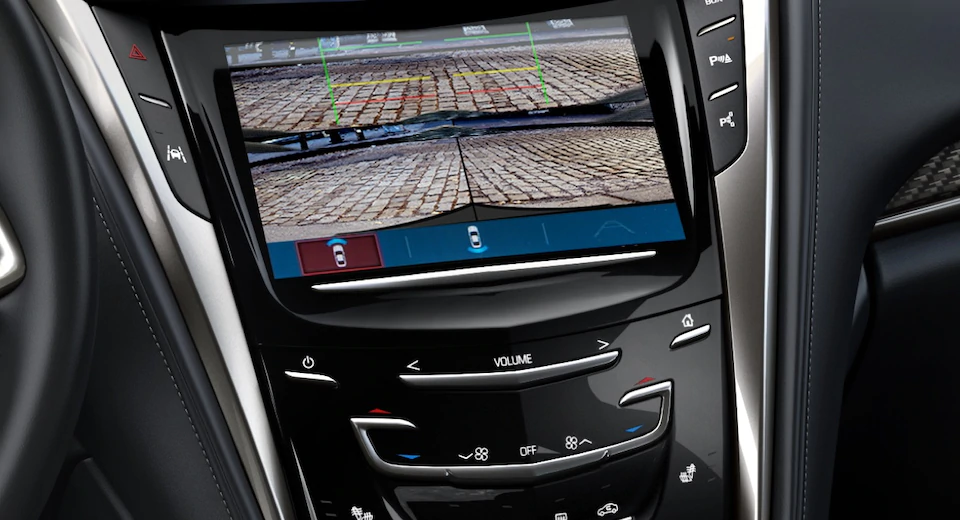
We’re not sure which of those categories we’d like to put the 2019 Cadillac CTS-V in. It’s not a classic, it’s not perfect, and it’s not merely “good.” Cadillac has done something commendable by committing over a decade and three generations to perfect its CTS-V. It all came to a high point when the third-generation came. Cadillac unveiled a fresh new design language. And to top it all off, it came with the ultra-formidable 640 horsepower supercharged V8 engine from the Corvette, too.

The CTS-V, by contrast, is more fine-tuned. Built for cannonball runs and Autobahn cruising, the ride’s dual personality is a big part of what makes it so charming, despite a crop of performance blemishes from time to time. Make no mistake, though — this is the most powerful and fastest production Cadillac ever made.

Bonus points for also being one of the best handling cars. Thanks to feats of wizard-like engineering, this car shows optimum stability even at high speeds. Tuned for the track, by the way, which explains why it behaves so excellently in the highway.

Its a way to go before anyone can call this a classic without someone batting an eye. If anything, however, the Cadillac CTS-V is a sterling, worthy wearer of the Crest brand. Let’s wait if time will be kind to this ride.

CHECK IT OUT

Photos courtesy of Cadillac

BMW 1 Series M Performance Kit

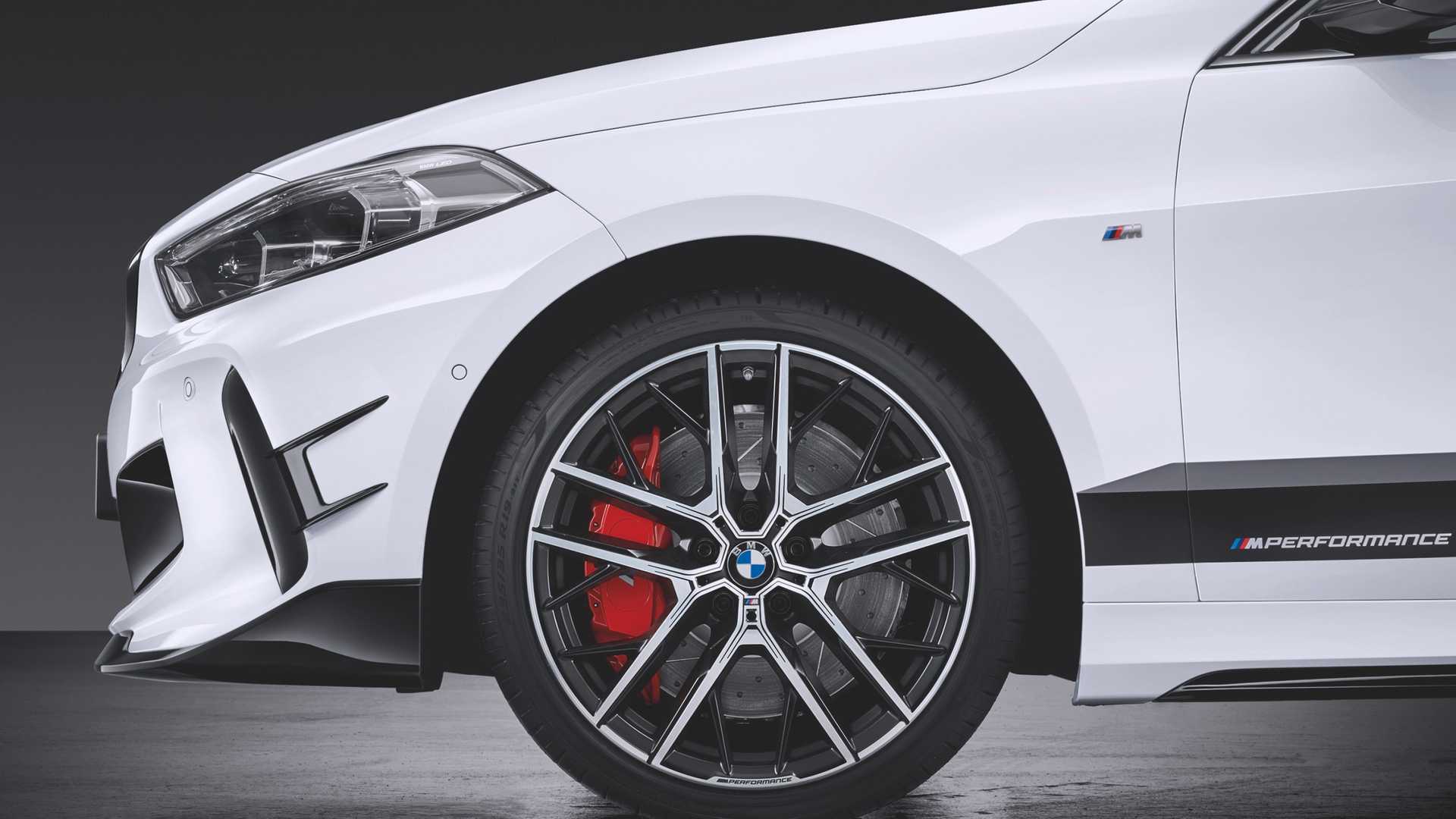
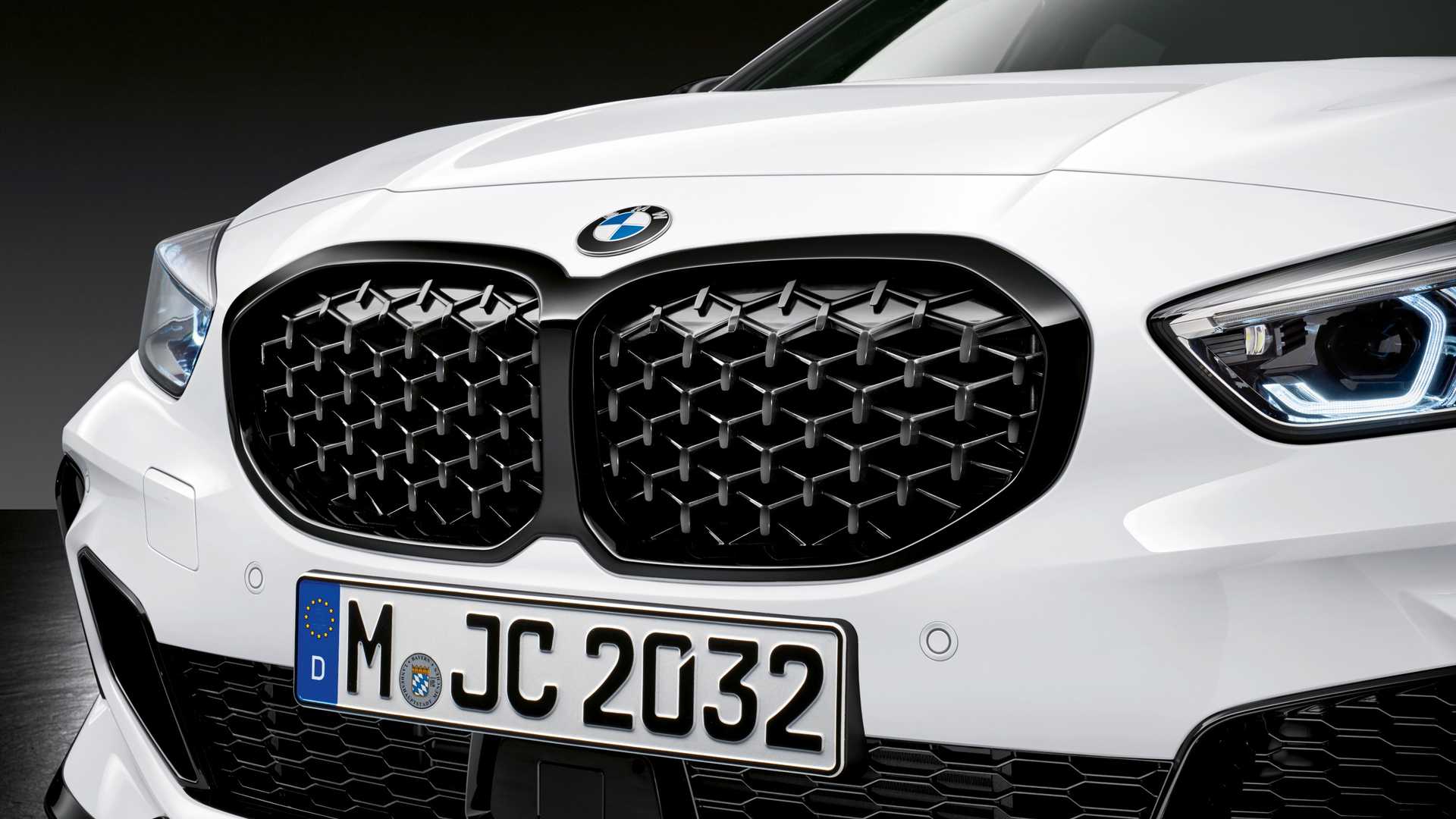
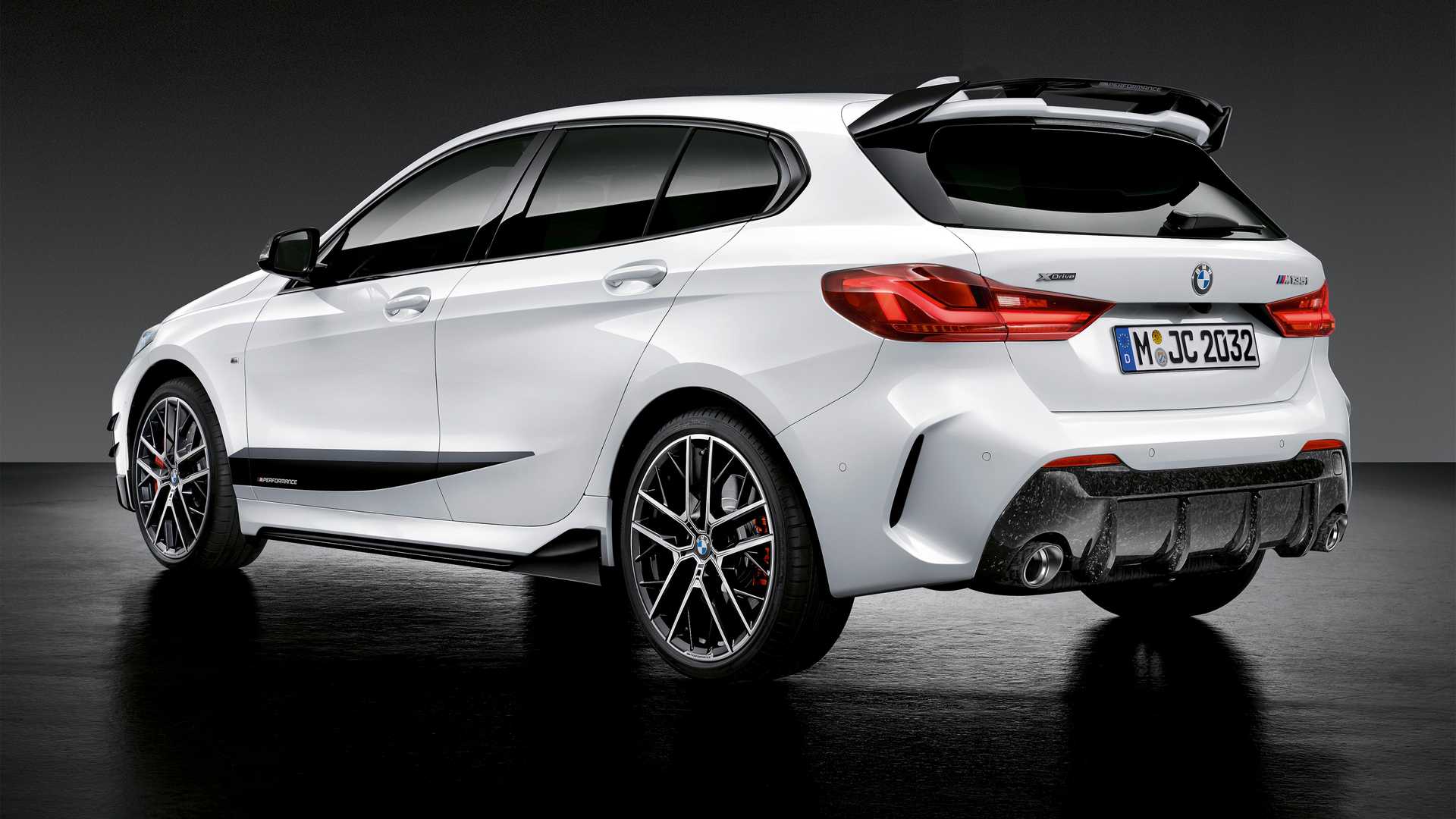
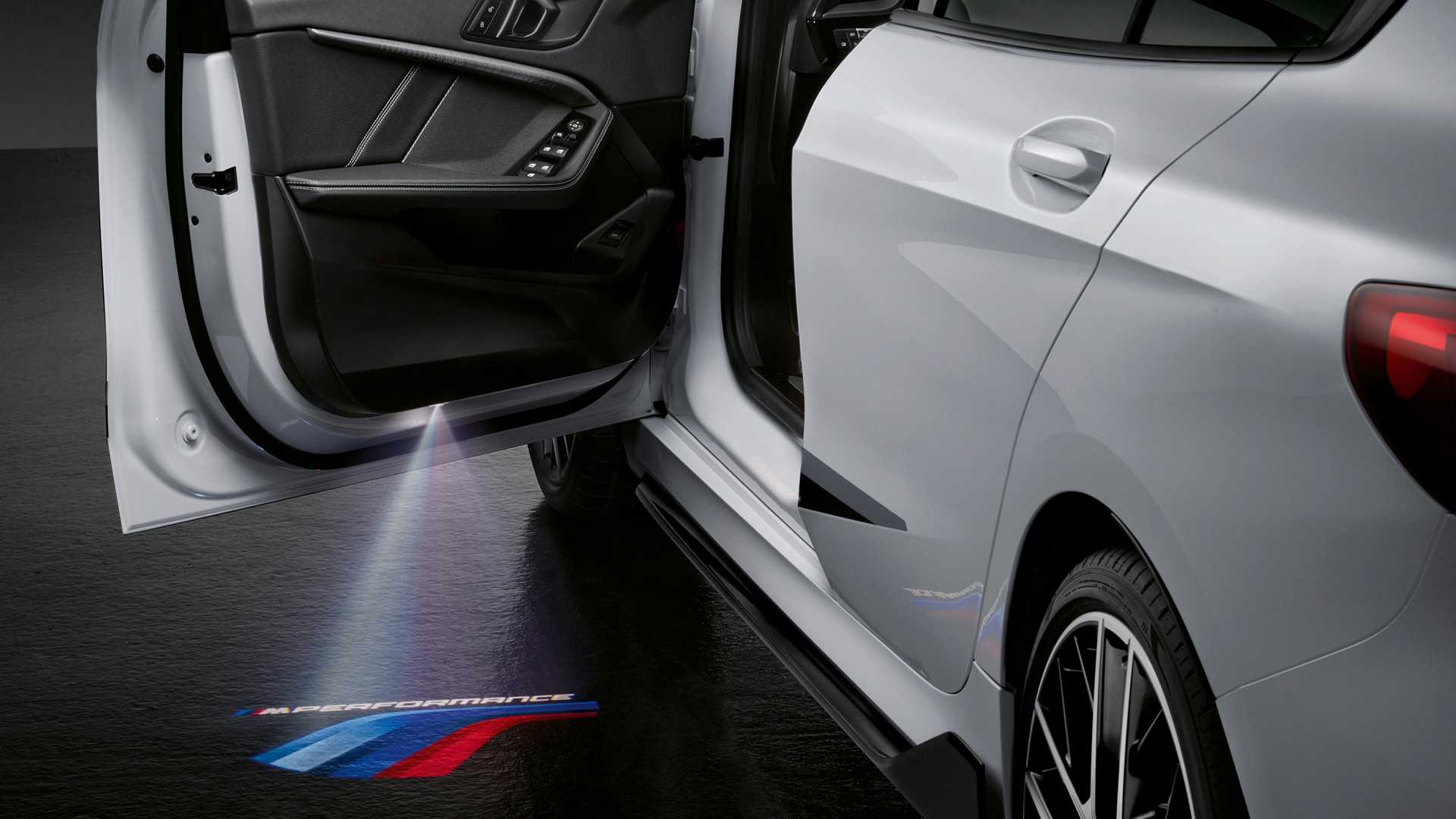
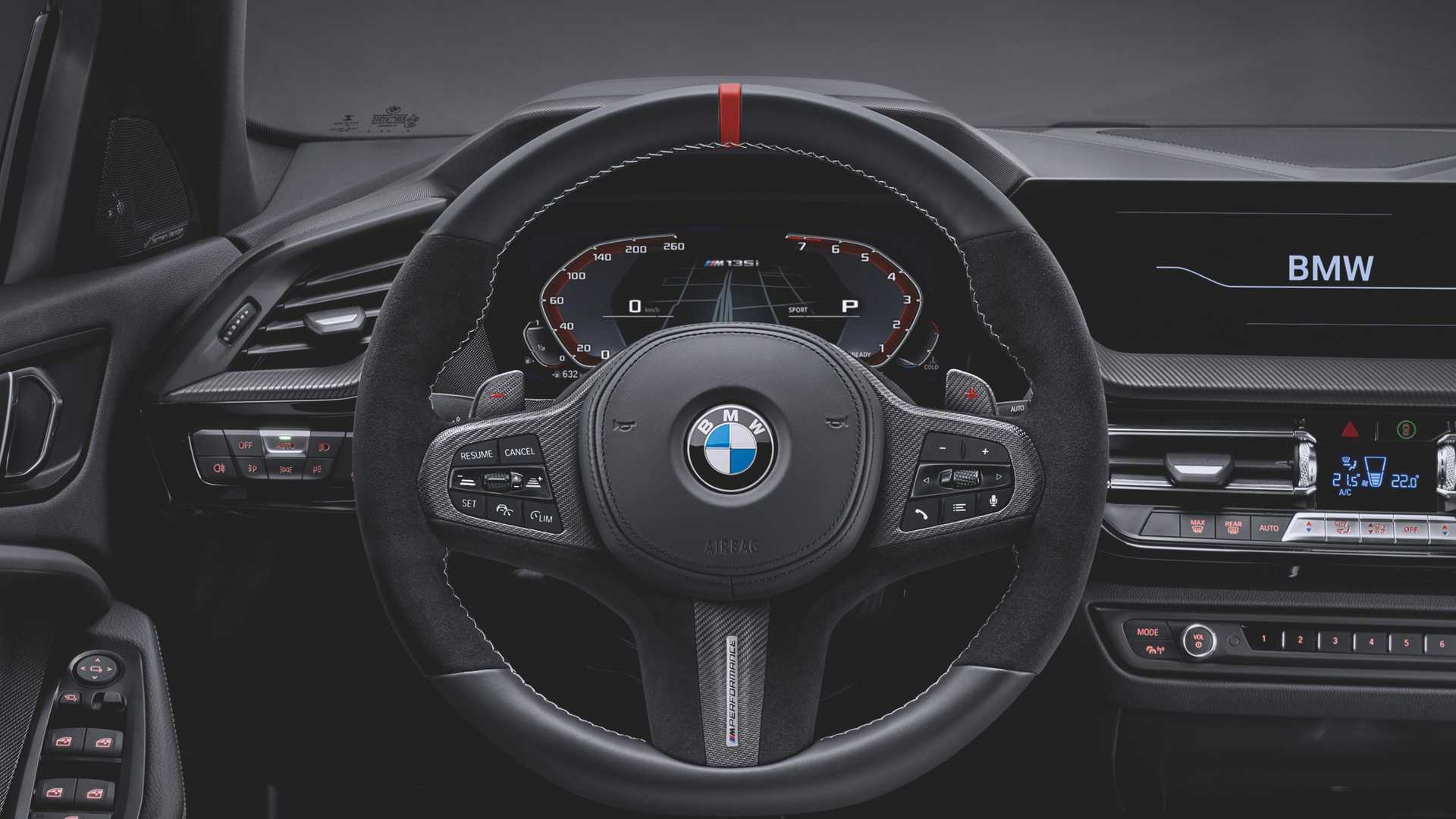
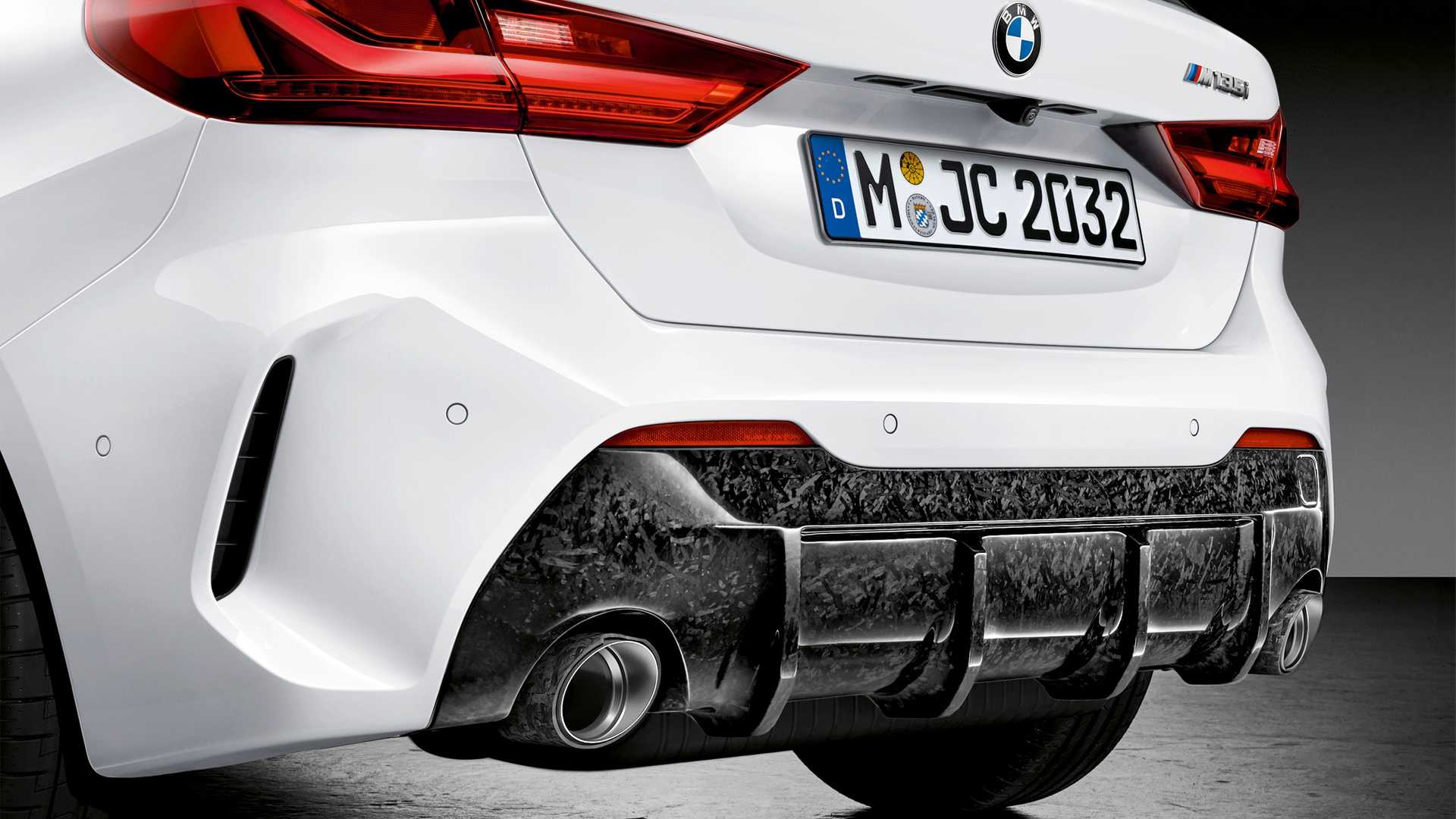
Shortly after unwrapping the BMW 1 Series, the German automaker has now also unveiled the entry-level car’s M Performance suit. As such, above you’ll see a M135i xDrive decked with Performance extras on the hot hatch.

With a new coating comes a handful of neat little tweaks, but more important here are the hardware upgrades. We’re talking, for starters, 18-inch M Performance brakes with bigger perforated and vented discs at the front axle. A touch of flair comes in the form of four-piston calipers, here made of aluminum. Those should shave off weight and dovetail perfectly with enlarged perforated and vented discs. Go all the way back and you’ll find that the brakes also take advantage of the car’s lightweight construction. And they boast single-piston floating calipers, for good measure.

The BMW 1 Series M Performance Kit also includes a selection of 18- and 19-inch alloy wheels. Some are great for summer, while some are better suited for the rough winter terrain. Some units get jet black matte rims, whole some have some sort of two-tone finish.

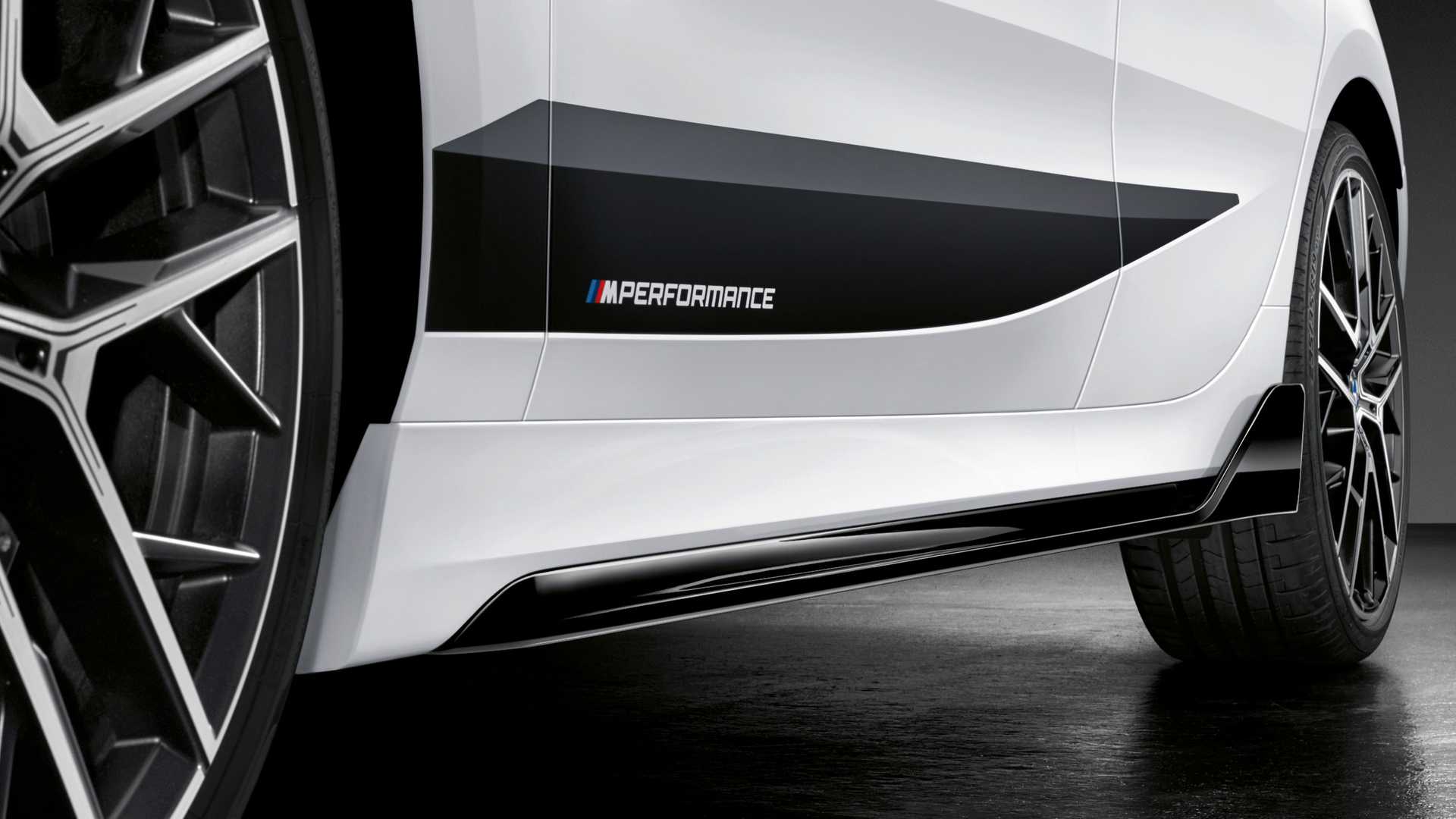
As for optics, this kit comes with black decals on the sides of the hatchback. You also get several glossy black touches on the body. The side mirror caps and thr back diffuser feature carbon fiber to save weight. And according to BMW, it optimized all the boy pieces to create aimum aerodynamic performance.

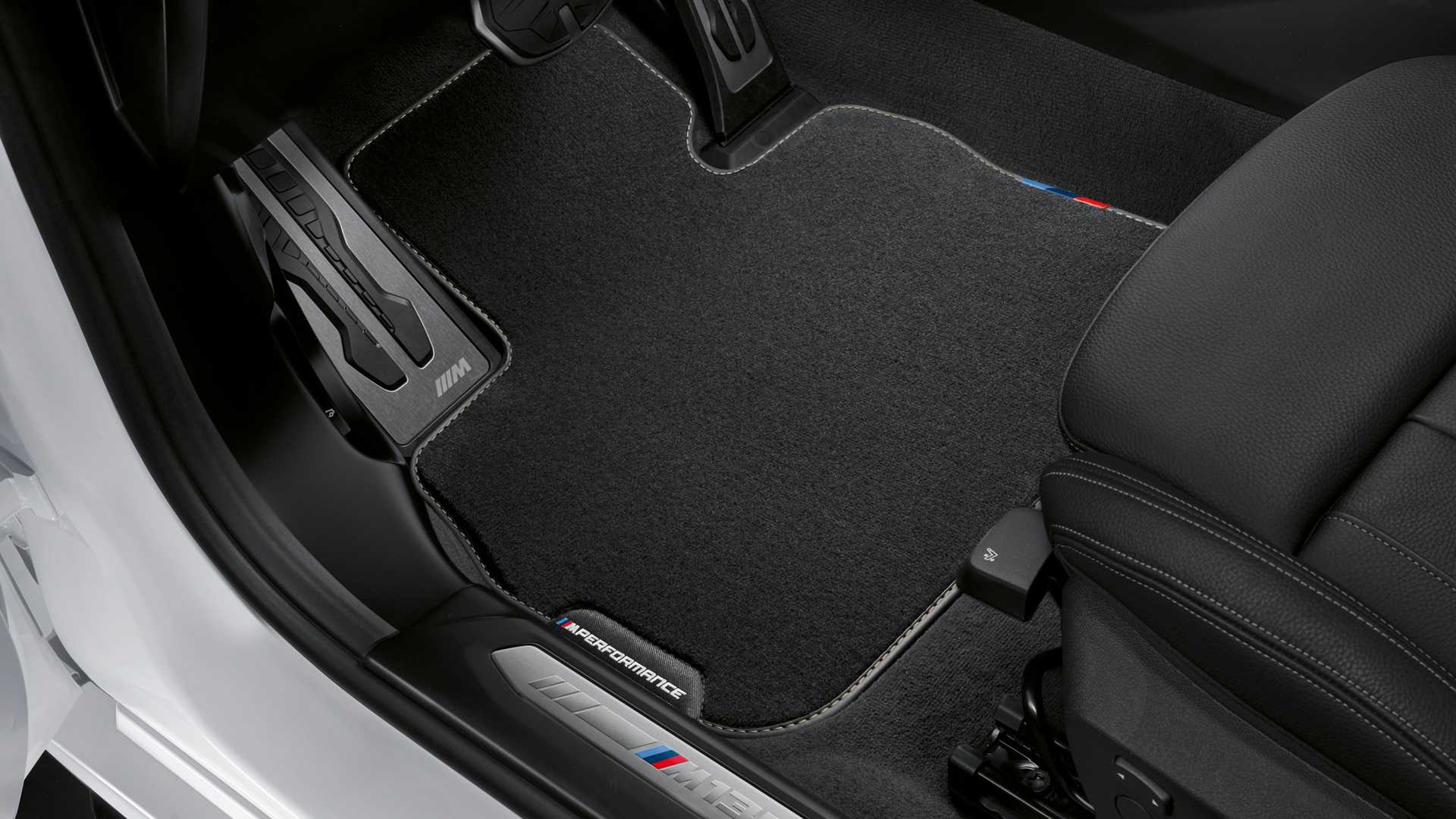
Those with automatic transmission can opt for carbon fiber shift paddles, too. Neat little visual flourishes inside this BMW 1 Series M Performance Kit serve as cherries on top. Like the velvet velour floor mats with specialized M Performance lettering.

MORE INFO HERE

Photos courtesy of BMW

Brabham Automotive already working on a more affordable road car

Brabham has opened up about its third act. The first step was getting the BT62 hypercar on the track, the second phase is preparing to enter the World Endurance Championship in 2022. The third phase is developing a more affordable supercar to be produced in higher numbers than the BT62, which will only see 70 units made. Speaking to Motoring Research, commercial director Dan Marks would only go so far as to call the next vehicle “a road car that’s well-suited to the track,” and to say it’s already in development.

Ever since Brabham’s intentions became clear last year, commenters have compared the Australian-English company to McLaren. Brabham has more modest ambitions – or more focused, depending on whom you speak to – for the time being. Said Marks, “Between 100 and 200 cars per annum sounds right” for its production goals. McLaren Automotive built more than 4,800 cars last year, and has sold more than 20,000 in the eight years since the MP4-12C debuted.

Brabham and McLaren do have a history, though. Australian Sir Jack Brabham founded his Brabham Racing three years before New Zealander Bruce McLaren founded his McLaren team, not long after both men had been teammates at the Cooper Formula 1 team. Ron Dennis worked as a mechanic at Brabham, and eventually took over McLaren. When Bernie Ecclestone owned Brabham, the team won two F1 titles with cars designed by Gordon Murray, who would also make his way to McLaren. And everyone has compared the BT62 to the McLaren Senna.

The “junior” Brabham isn’t expected for another three years, perhaps joining in the same splash as Brabham’s Le Mans entry. Backed by Australia’s Fusion Capital, the boutique maker sees a clear path to completion. Marks said that Fusion “already owns a carbon-composite shop and a commercial vehicle firm, so we have plenty of resources in-house.” We’ll see if it tilts at traditional supercars like the McLaren 720S and Ferrari F8 Tributo, or if it goes after bigger fish like Ferrari’s V8 hybrid and the Aston Martin Vanquish, the latter of which should arrive around the same time.

2019 Airstream Classic Review: The Old-School Camper Gets Smart

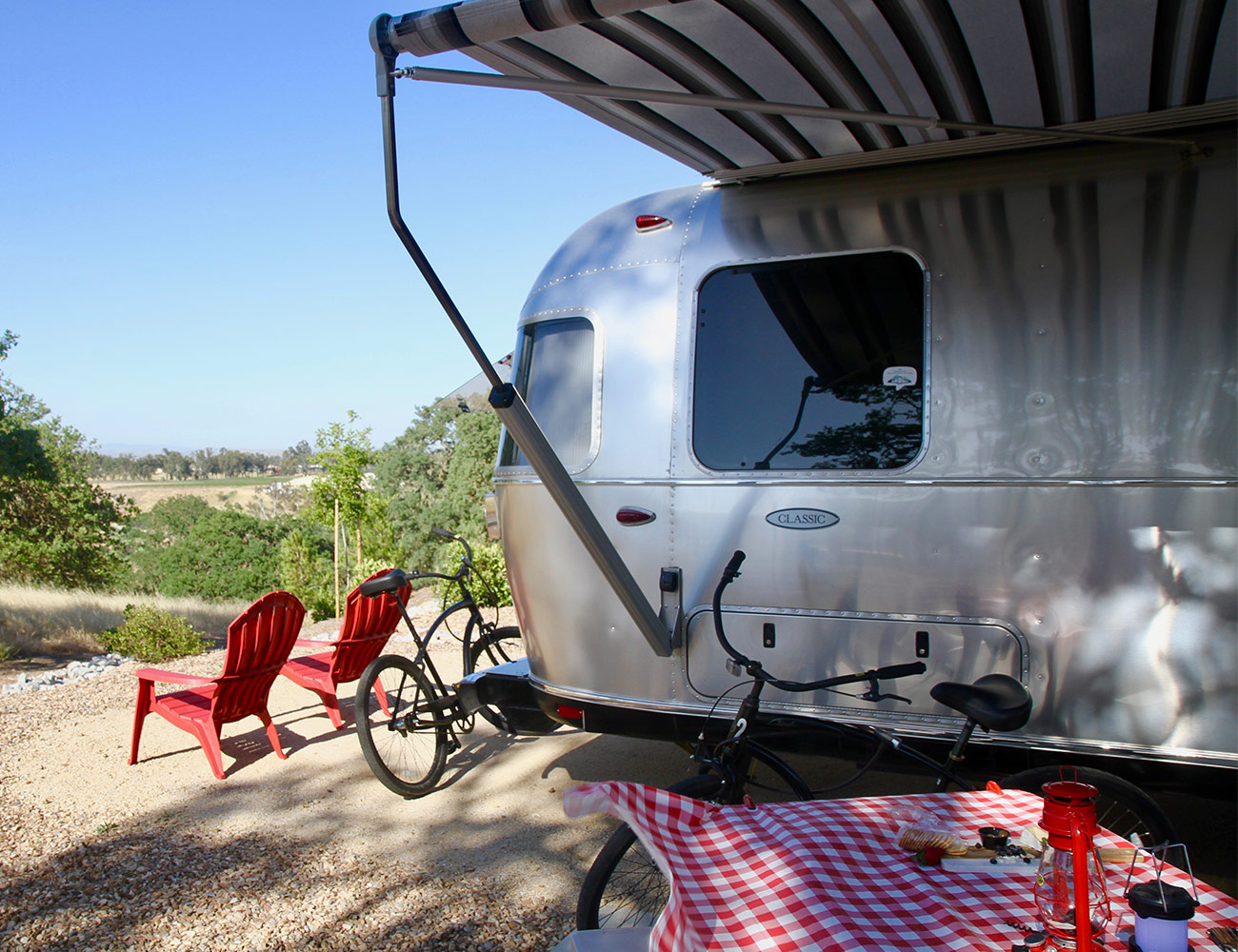
Airstream’s flagship model, the Classic, has been newly outfitted for 2019 with “smart technology,” giving users the ability to remotely control the climate, awning and lights, and monitor propane, water and battery levels via an app on a smartphone or tablet. This type of connected tech is increasingly prevalent in new cars and homes, but now, it’s been neatly integrated into an Airstream travel trailer here for the first time. It proved unobtrusive and useful during a weekend camping in sunbaked California wine country.

The Good: Airstream’s new Smart Control Technology is a handy, clever addition for a 2019 trailer, provided you have a bit of tech savvy. The finishes are all high quality, and both the oven and stove proved useful. The 19 windows bathe the interior in light, and the panoramic ones in the bedroom make for stunning views (if you know where to park). And the iconic exterior design remains largely unchanged; like a Richard Neutra or Frank Lloyd Wright mid-century home, these trailers exude a sense of timelessness.

Who It’s For: Someone who loves and needs the newest, top-of-the line toy with all the comforts of home. This trailer is has it all and does it all; it could easily be lived in for months out of the year.

Watch Out For: My experience with the trailer was a stationary loan, meaning I didn’t tow it to the nicely-appointed resort where I tested it. However, towing the 30-foot Classic requires a vehicle with at least 10,000 lbs of towing capacity–meaning an SUV probably won’t cut it. Time to buy that heavy-duty pickup you’ve been eyeing.

Alternatives: The handful of other travel trailers of this size certainly undercut Airstream in price, but the finishes and build quality are not quite as nice. Additionally, no others have smart technology. Similar (but much cheaper) build-outs include the Arctic Fox Silver Edition 32A and the Winnebago Minnie Plus 31-footer.

Review: There are several ways to experience Airstream life. You could tow something like the 22-foot Sport across the West, adventuring through the red rocks of Sedona and pinescapes of Telluride for some wilderness camping. You could hitch the tiny-home inspired Nest to your crossover for a weekend trip, winding to a perch somewhere on the California coast.

However, to really understand the lure of an Airstream — to know why the iconic trailer has spawned coffee table books and Pinterest dream boards, or cultivated online fan hives with nearly 1 million posts like Air Forum, or the Wally Byam Caravan Club, that boasts 8,000 members “living the Airstream Dream” — I recommend a weekend in the Classic.

I experienced the latest Airstream in all its luxurious, fully-connected glory by testing it at Cava Robles RV Resort in Paso Robles, California, a high-end take on typical trailer camping with wi-fi and hookups for the trailer at the site, along with a view of the oak tree-dotted Salinas River Valley from the back window.

Airstream CEO Bob Wheeler has said he was inspired to build this connected Airstream after buying a Tesla. It’s a lofty comparison, but it holds water; the interface of Airstream’s app notably echoes the look of Tesla’s screen, for example. And as in a Tesla, smart technology is integrated into the Airstream with a certain ease. It’s less “look at what my vehicle can do” and more “this is how a vehicle should function in 2019.”

In Paso Robles, the technology seemed to fade from mind once I settled in: The Sonos music system played my favorite albums on shuffle, the climate control was set adjusted, and the lighting was just right. I didn’t use the Airstream app again until the next day, when I was 15 minutes from returning while on a bike ride and used the app to set the A/C remotely. It was rather nice to return home in the hot sun of the afternoon and avoid a sweltering, stale trailer.

To take the smart technology to the extreme, I connected to the Airstream’s Internet, streamed the NBA playoffs from an app on my Android tablet, then, I screen-shared with the TV in the Airstream’s front lounge area and had the game on while cooking. There’s a certain irony to visiting a campground only to enjoy similar comforts as my living room…but there’s also a certain appeal. 

Still, the best parts of camping are often the simplest ones, and Airstream seems to keep that in mind even when rolling out new tech. About 80 percent of my app usage was to control the lights and climate, and those systems worked without a hitch. (Data-heavy tasks like video streaming will certainly require a large bit of patience for customers.) For now, the trailer includes a year of free data. After that, Airstream owners can pay $25 a month on a case-by-case basis, or pay $360 a year for unlimited data. If tech is not your thing, the trailer can of course still be controlled the old-fashioned way, using switches; however, you’ll then never know the joy of laying in bed and turning off the one light you left on in the galley.

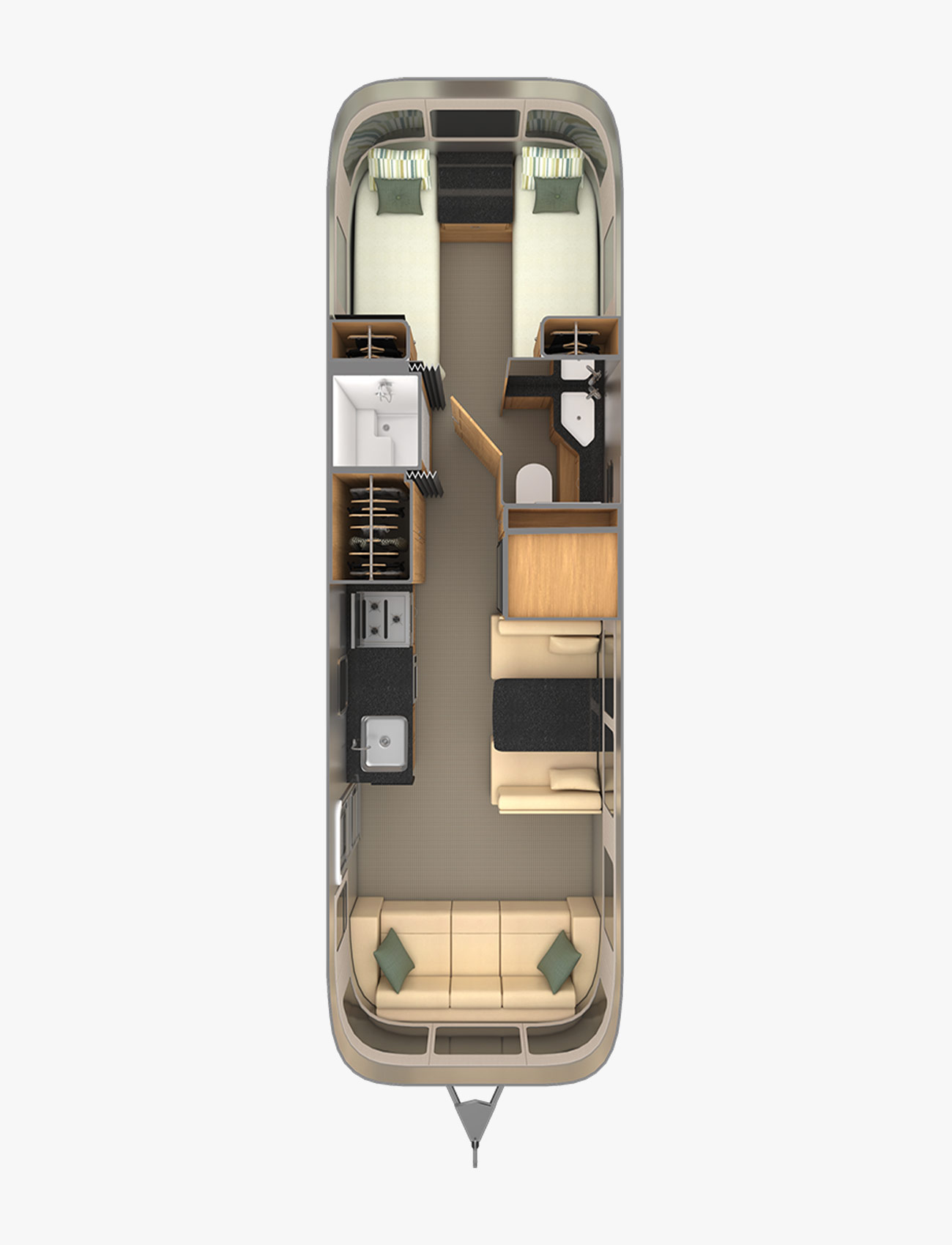
The Classic’s appeal stretches beyond the tech. The sharp, modern kitchen proved comfortable and efficient, bringing a certain joy to camp cooking. The stove top seared up some al pastor nicely, and the oven evenly browned a pair of homemade pizzas. The bathroom is spacious, and has luxuries like heated floors and towel rack. And the beds are nestled into the rounded rear of the trailer, and flanked by windows to give fresh air and unobstructed views.

The potential seems limitless, now that smart tech has come to trailers. Could you wire this whole Airstream to be powered by Alexa or Google Home? Could you program various voice-controlled scenes and settings with smart lighting? Set up a smart lock or Ring camera at your trailer door? Eventually, yes — and some ambitious Airstreamers are already cobbling it together.

Verdict: It was only a matter of time before the Internet of things seeped into the great outdoors, and Airstream has handled this initial foray with care. The new technology, thankfully, is not another failed experiment to make something “smart.” It’s well-thought out and intuitive. Sure, it’s indulgent more than it is vital, but so what? There’s a certain pleasure to lighting a campfire outside the trailer while the sun sets, and being able to indulge in the sudden whim to hear Vampire Weekend. Is it necessary? No. But an Airstream Classic isn’t about necessity. It’s about luxury. 

What Others Are Saying:

Arguably, the tech upgrade is overdue. Anyone dropping $152,000 on a vehicle in the 21st-century likely expects to be able to keep tabs on it remotely; to check the level of the propane tank while in town getting groceries, or kick on the air-conditioning in advance when returning from a long day in the great outdoors.”
— KYLE STOCK, Bloomberg

This is all in addition to the Classic’s already impressive interior that resembles a cross between a brand new studio apartment and a small yacht.”
— ROBERTO BALDWIN, Engadget

2019 Airstream Classic 30RB Twin

Length: 31 feet, 3 inches
Base Weight (with LP and batteries): 7,788 pounds
Fresh Water Capacity: 54 gallons
Sleeping Capacity: 5 people
Windows and Skylights: 19

Airstream provided this product for review.

Read More Gear Patrol Reviews

Hot takes and in-depth reviews on noteworthy, relevant and interesting products. Read the Story
Note: Purchasing products through our links may earn us a portion of the sale, which supports our editorial team’s mission. Learn more here.

Some of the Best Automotive Design Features of 2019

There’s an old cliché out there that says good design is subjective. Makes sense, right? Beauty is in the eye of the beholder, and all that. But sometimes, features in the automotive world crop up that are so arresting, so visually captivating, that it’s hard to see how anyone would say they aren’t examples of design work at its best. They may not always be your personal cup of tea — but even if you don’t like them, you can appreciate them.

Now that the cars of 2019 have all hit the streets — counting both 2019 and 2020 model vehicles amongst them — we at Gear Patrol thought this would be an excellent time to pick our favorite design elements we’ve come across so far this year. Check ’em out.

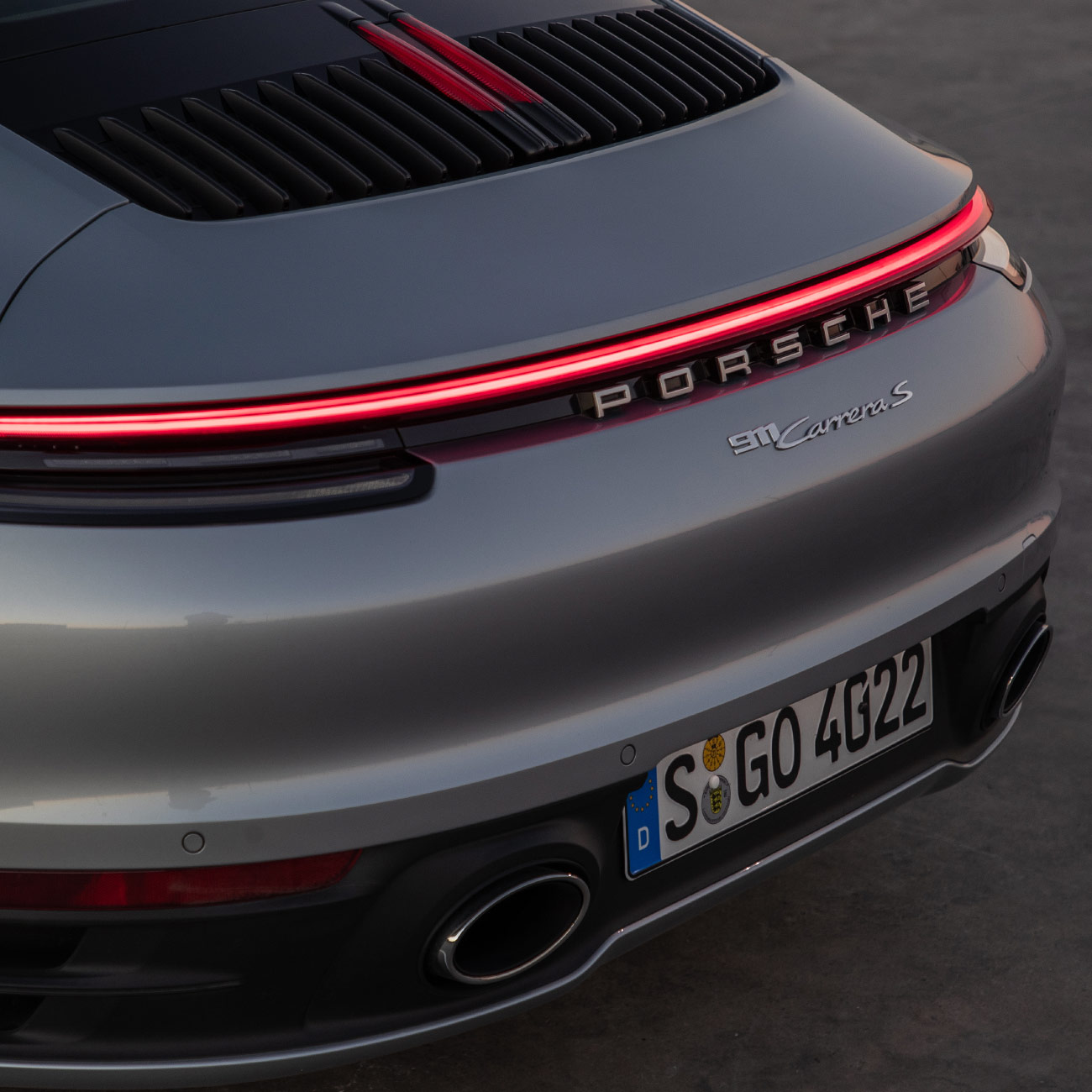
2020 Porsche 911 — Full-Width Taillight

The 992-generation of Porsche’s iconic sports car isn’t the first time the brand has stretched the taillight from wheel-arch to wheel-arch, but it’s nice to see it back after a couple decades on hiatus (minus a special edition or two that used it along the way). For 2019, the trait has become more slender and sharp, sitting nicely on the new 911’s engorged rear.

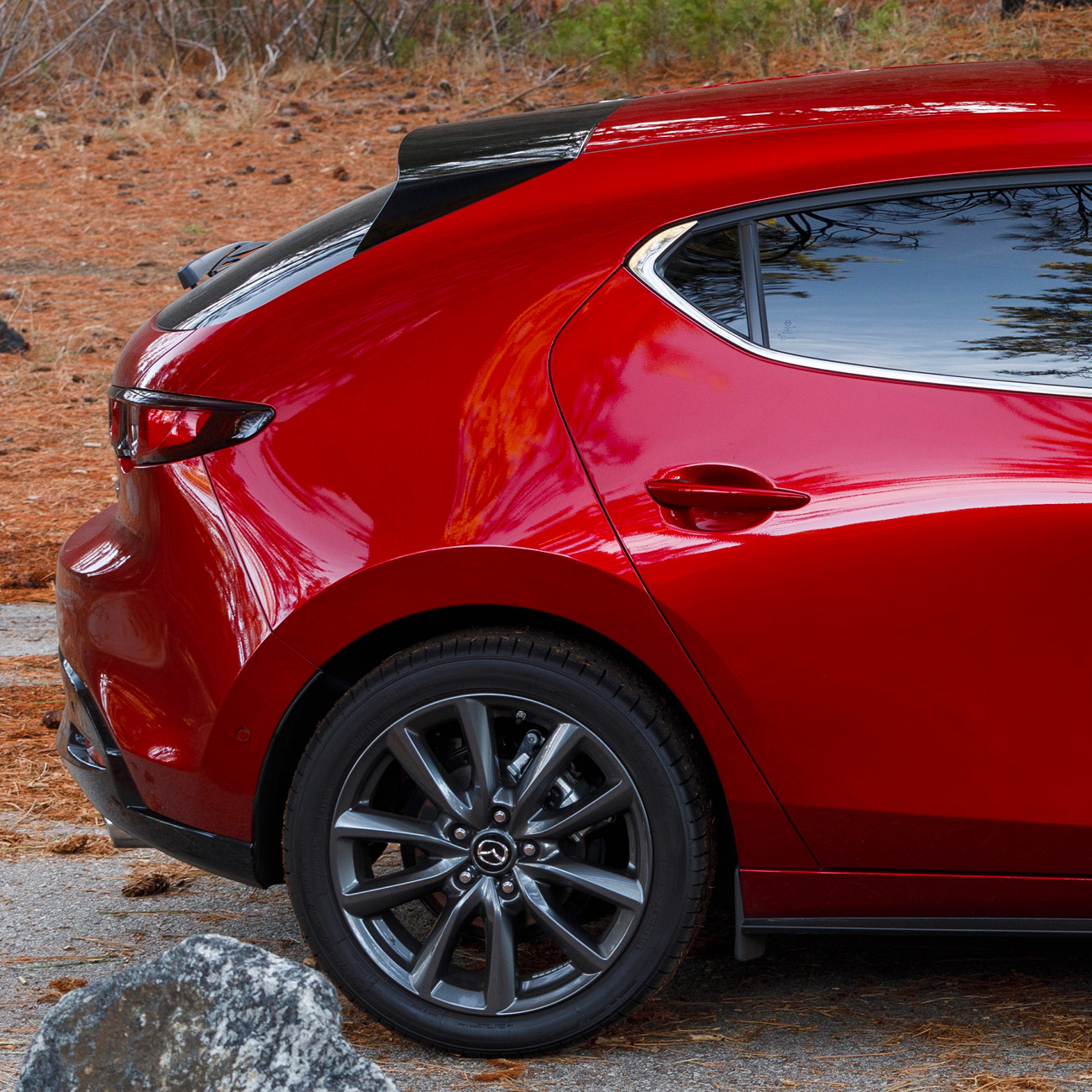
2019 Mazda3 Hatchback — C-Pillar

Mazda should be applauded for green-lighting this silky-smooth car for production with all its concept-car curves intact. In an exception to a world where designers are all too happy to over-design a surface, the Mazda3 hatchback has almost zero character lines, but the minimalist design draws your eye from front to back — culminating at the beautifully simple C-pillar.

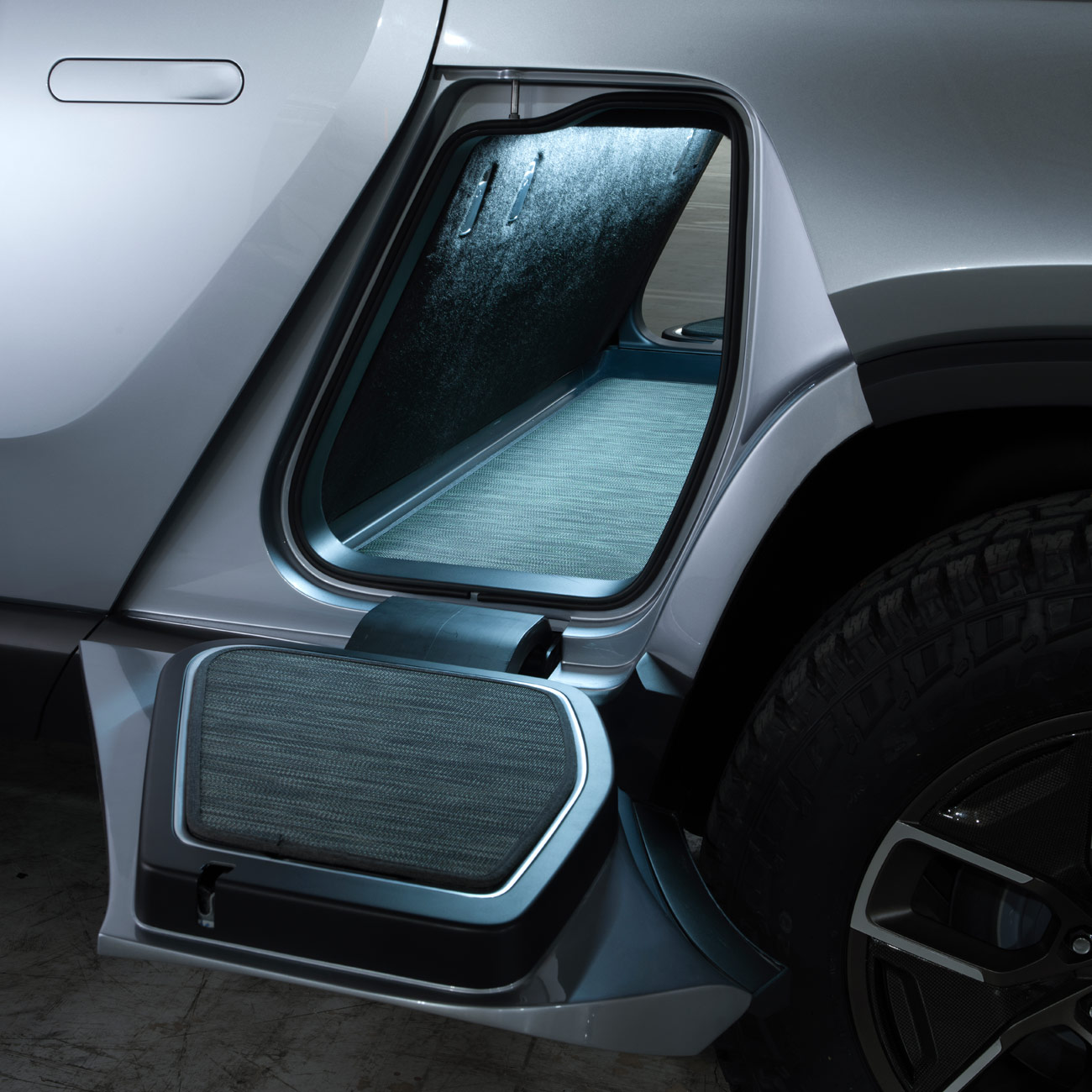
2020 Rivian R1T — Gear Tunnel

The electric Rivian R1T pickup has plenty of fun features, like its ability to tow 11,000 pounds, put 754 horsepower and 826 pound-feet of torque through all four wheels, and achieve a 400-mile range. But the under-cab storage deserves special mention: Since the R1T uses a “skateboard”-style battery architecture, there’s no drive shaft and differential taking up room — so the space under the rear passenger seat is available to provide even more storage. As far as design features go, this one is the most useful on the list by far.

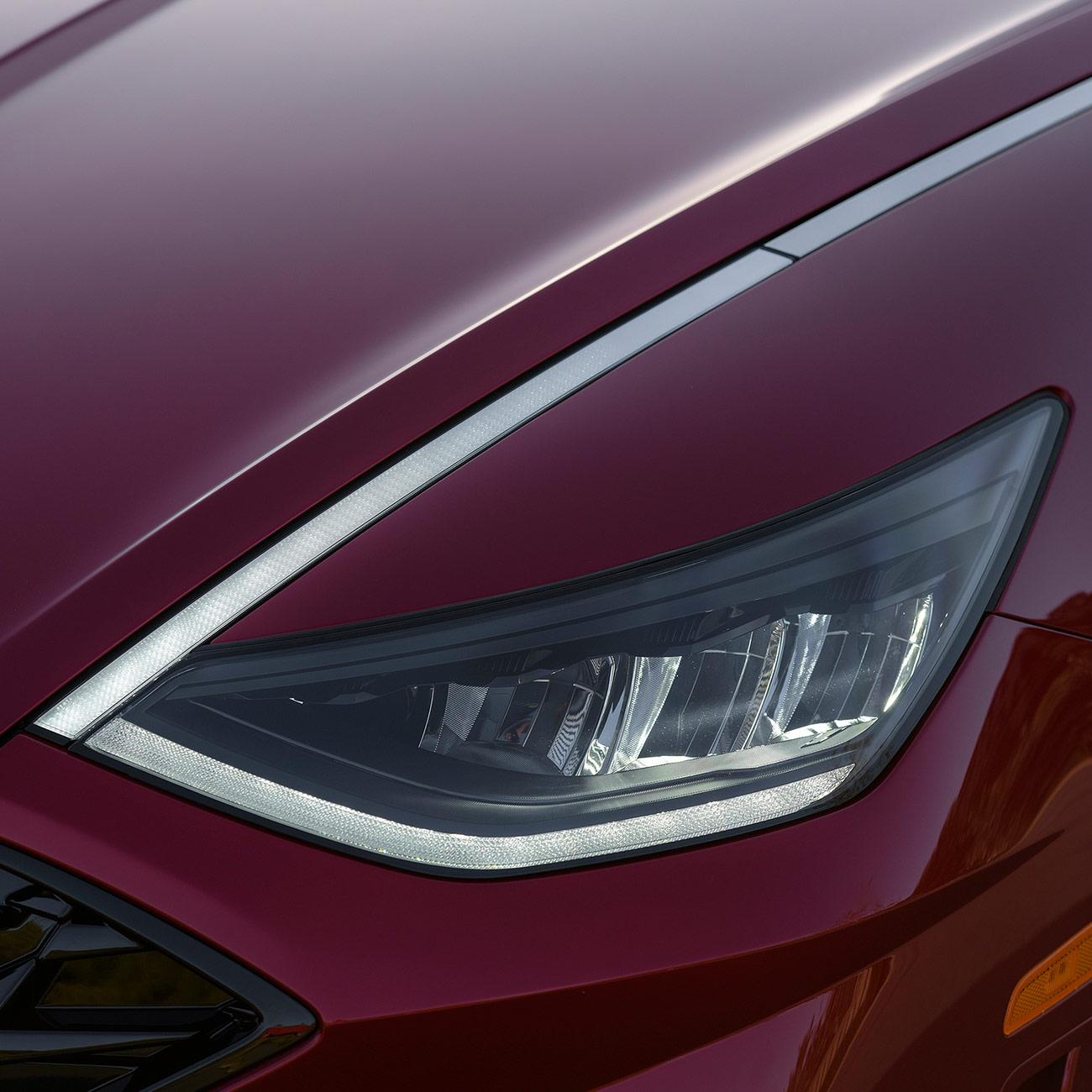
2020 Hyundai Sonata — Headlights

Hyundai is making some pretty aggressive design moves, but the 2020 Hyundai Sonata headlights stand out amongst them. The Sonata’s solid LED daytime running light fades into a metal strip that doubles as the car’s defining mid-section character line. The lighting trick is a bold move –one, hopefully, that becomes a signature look for the brand.

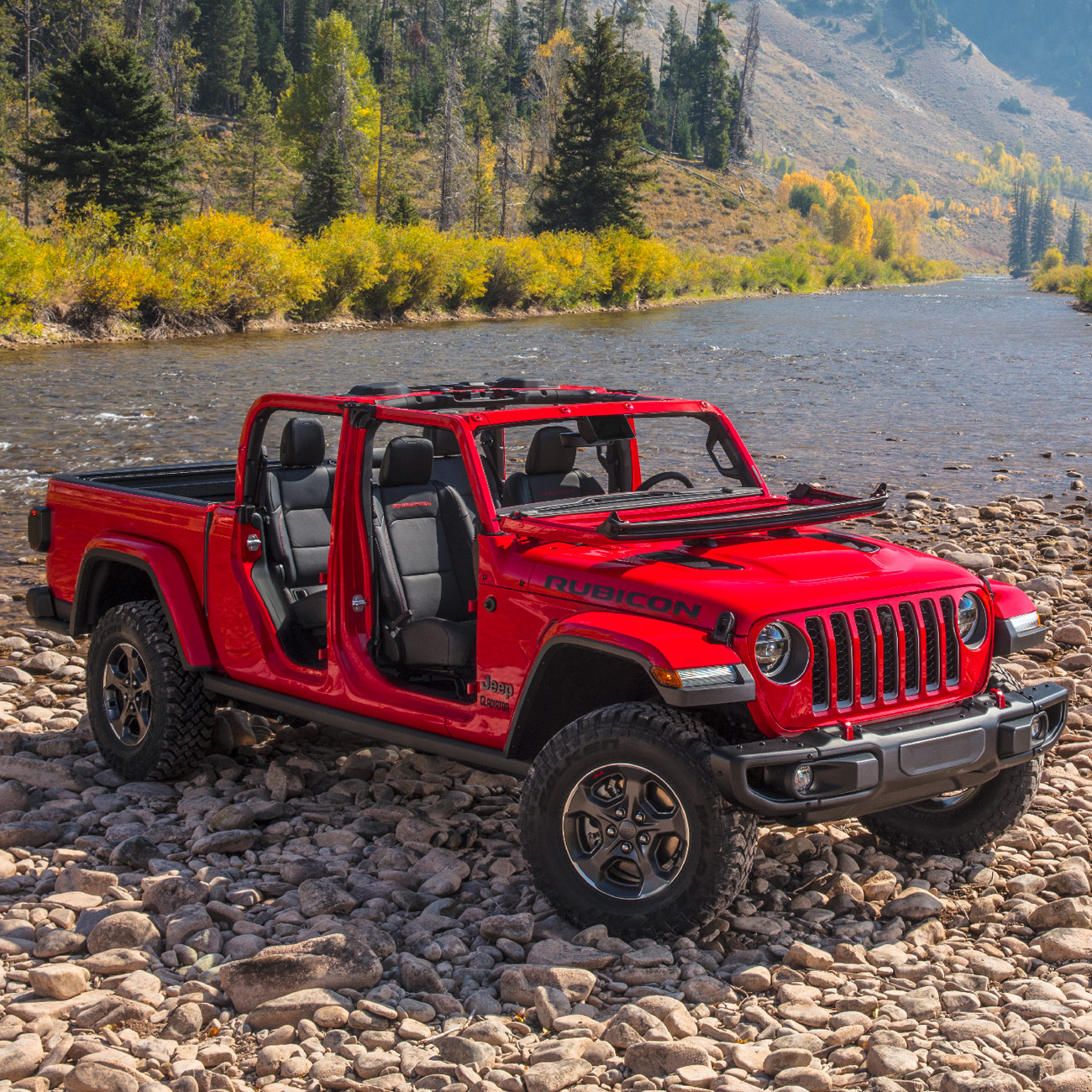
2019 Jeep Gladiator — Folding Windshield

Jeep used the fold-down windshield with the JL Wrangler in 2018, of course, but we’re happy it made its way to the Gladiator, too. Not that there would be any reason for Jeep not to bring it to the brand-new pickup, but it just adds an extra degree of open-air awesomeness to the only convertible pickup truck on the market.

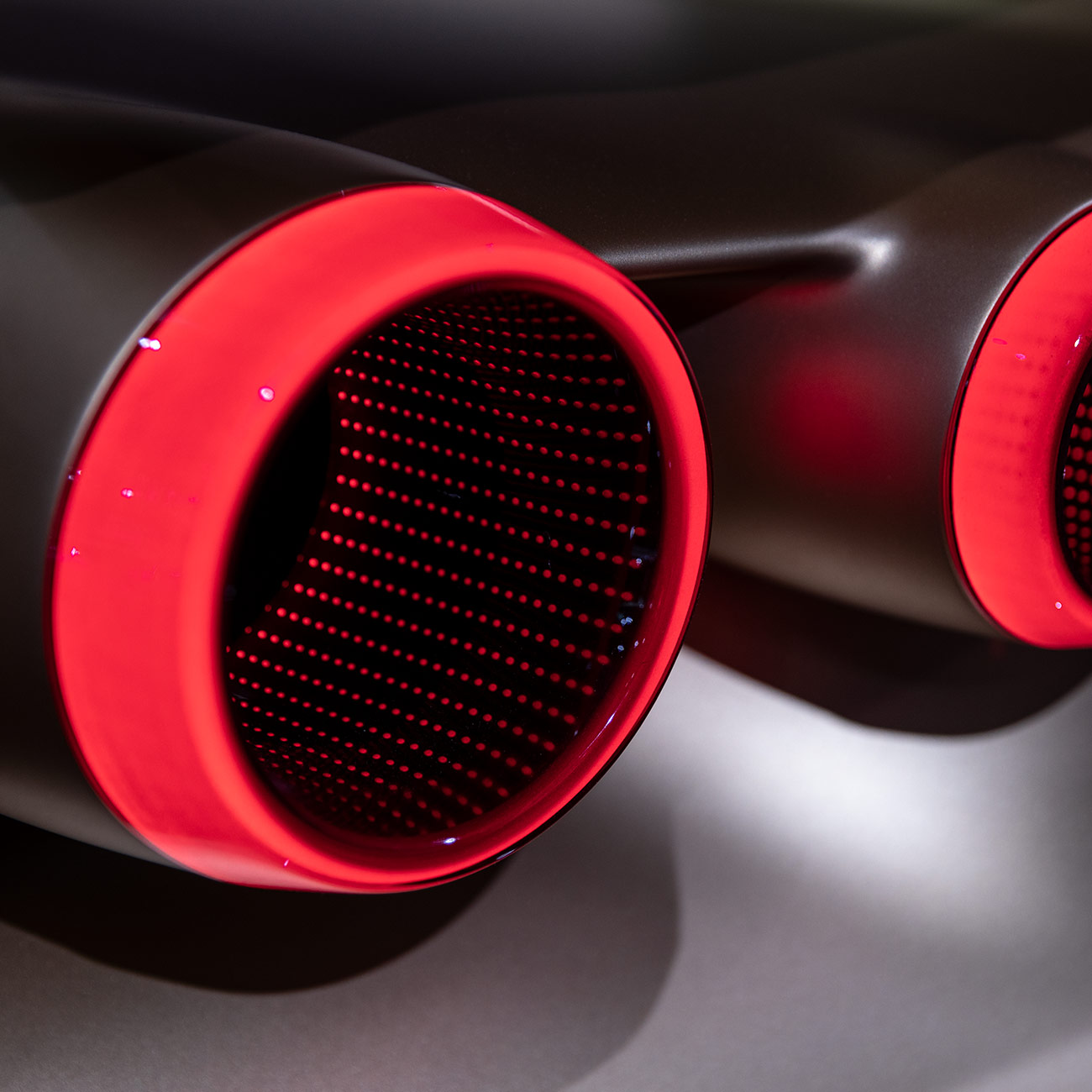
2019 Nissan GT-R50 — Taillights

Floating taillights will always be cool, which is why it’s a shame they’re mostly relegated to concepts. The GT-R50 was just a concept…but then Nissan green-lit the wild sports car for production. Albeit extremely limited production: Only 50 will see the light of day, and each costs north of $1 million.

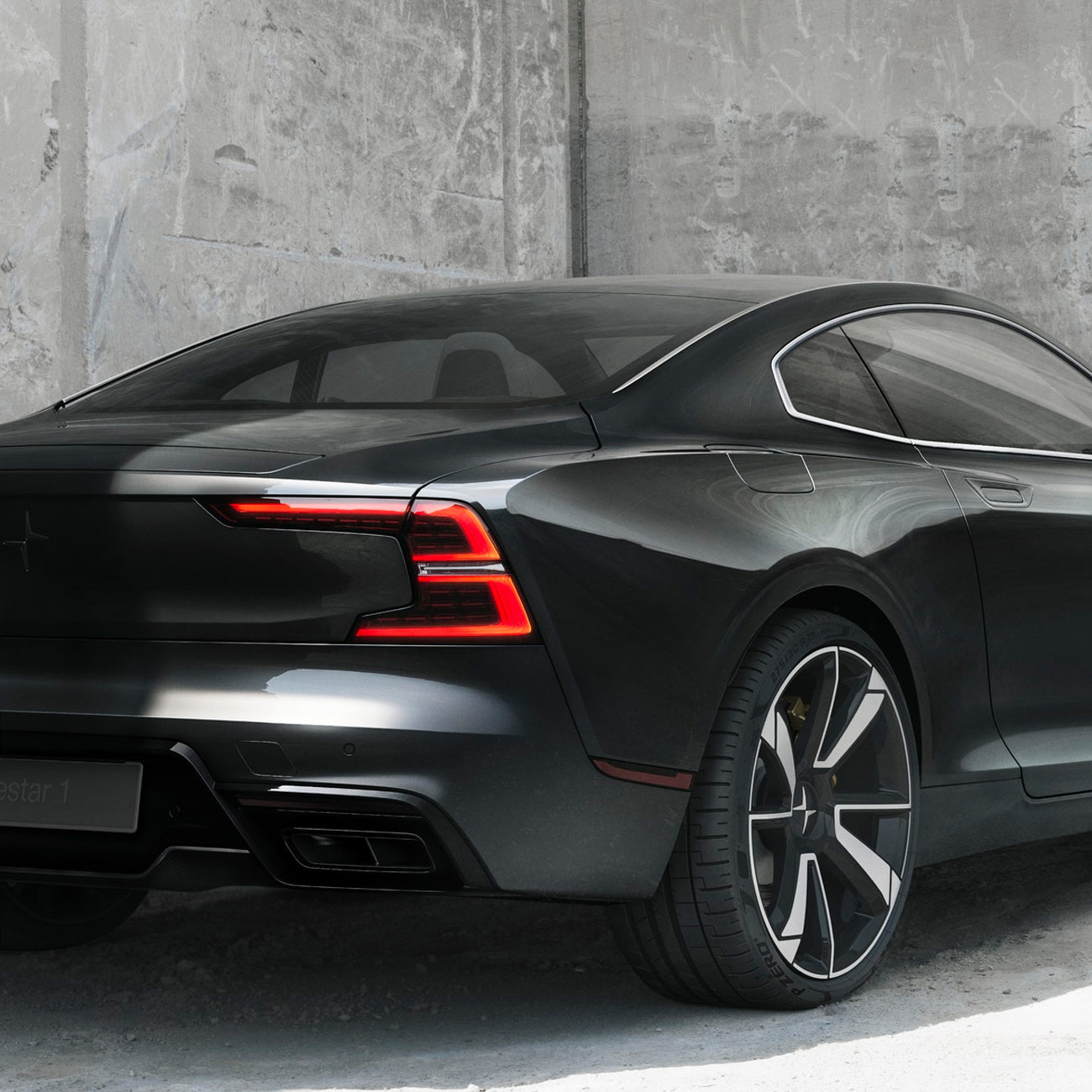
2019 Polestar 1 — Rear Three-Quarter Angle

The Polestar 1 is a stunner by both sports car and EV standards. There’s much to love, design-wise — but if we had to choose a standout angle, the rear three-quarter view takes the cake. It’s a delightful blend of Volvo’s current styling mixed with hints of the future, plus a nod or two to the iconic P1800 coupe.

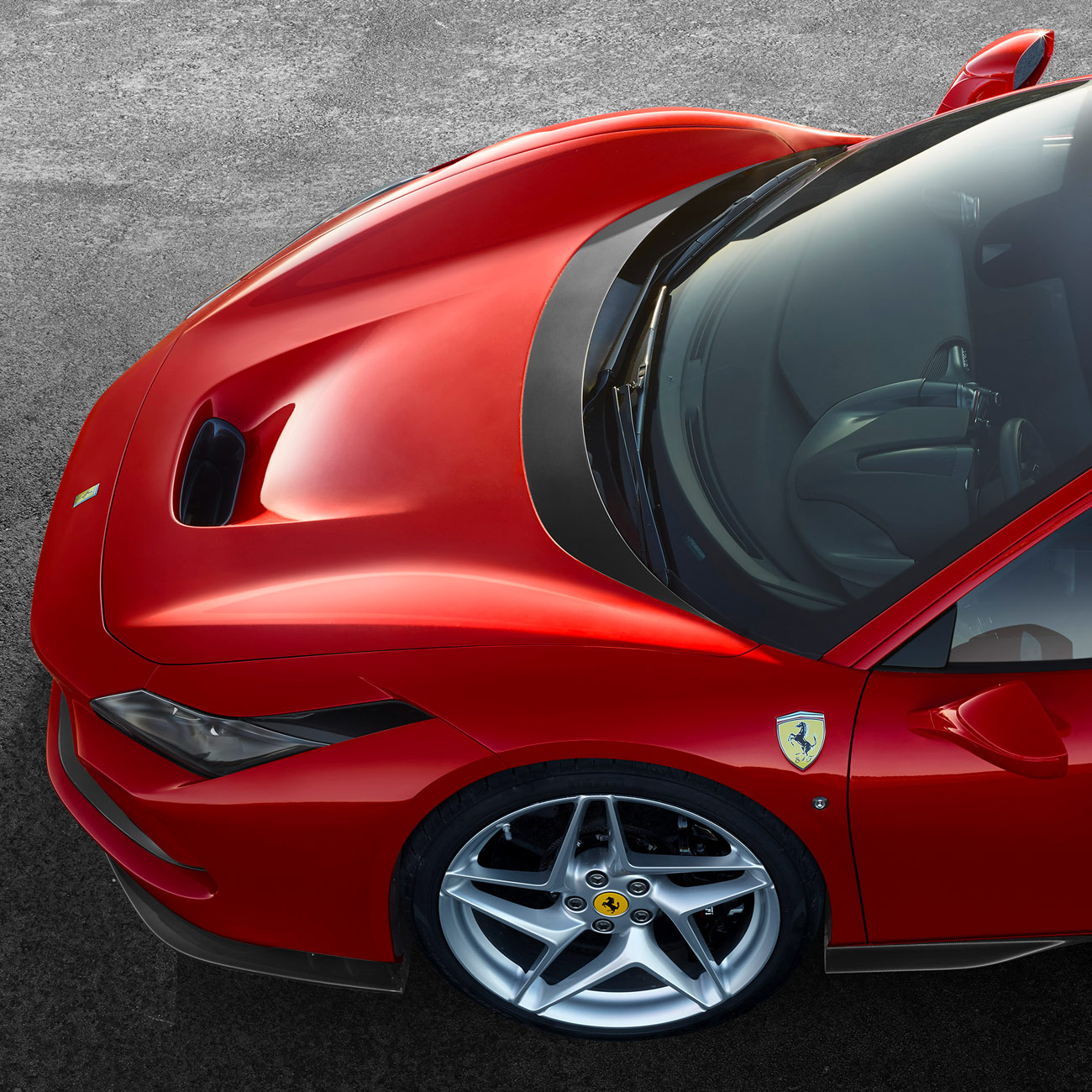
2019 Ferrari F8 Tributo — Hood Vent

Modern mid-engine V-8 Ferraris have become increasingly reliant on aerodynamics to shape the body, and the front ends suffered as a result; sharp edges and criss-crossing lines became distracting. But now that Ferrari is gaining more aerodynamically-sourced grip from the underside with the new F8 Tributo, the design topside is smoothing out for the better. The hard facets of the 488 GTB’s hood are largely gone, giving the F8 Tributo a more natural flow that starts with the cavernous front aero vent.

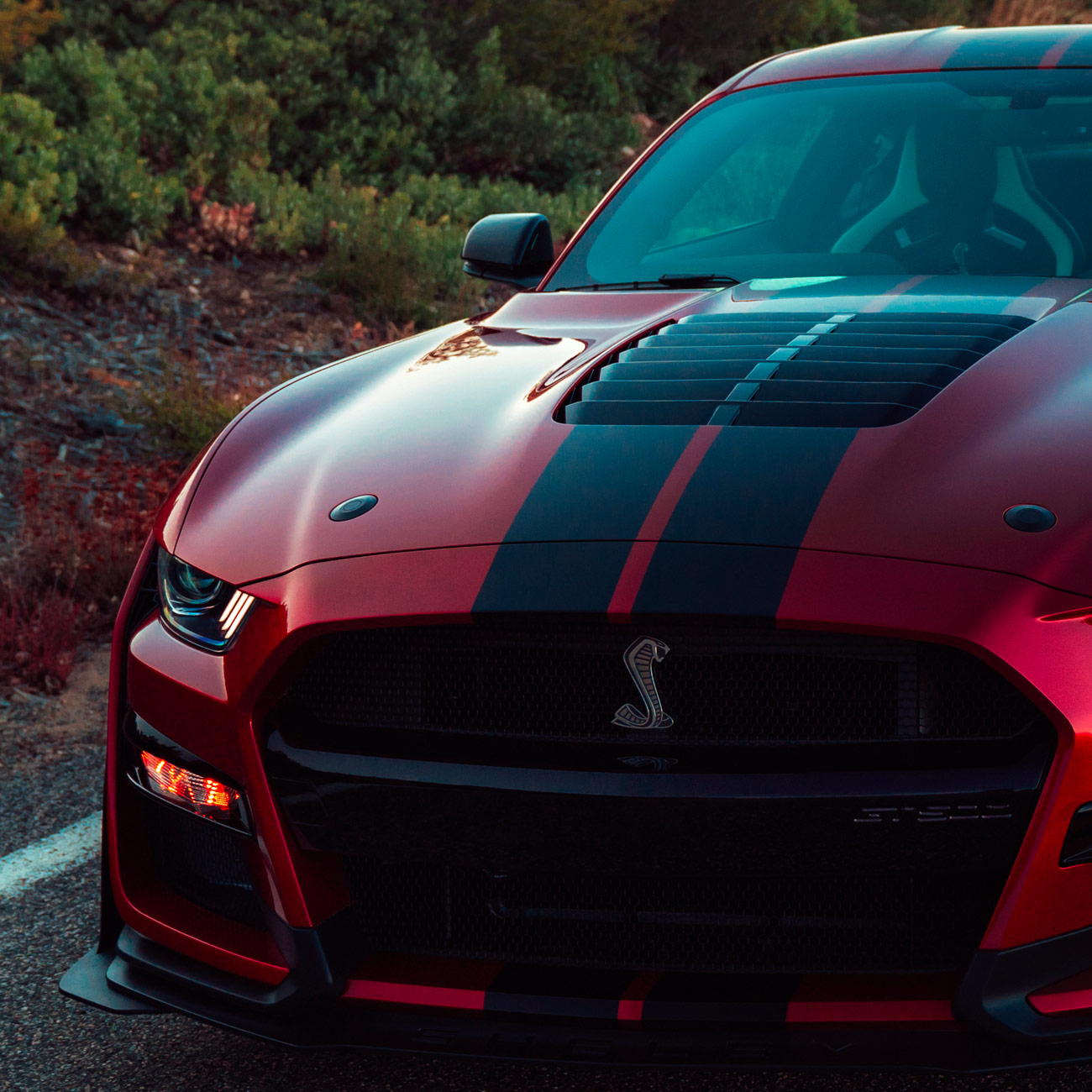
2020 Ford Mustang Shelby GT500 — Hood Pins

Hood pins aren’t anything new; they’ve been keeping the lids of high-powered cars firmly in place for years. But the set on the 2020 Ford Mustang Shelby GT500 is telling: We expect big things from a car worried about blowing off its own hood.

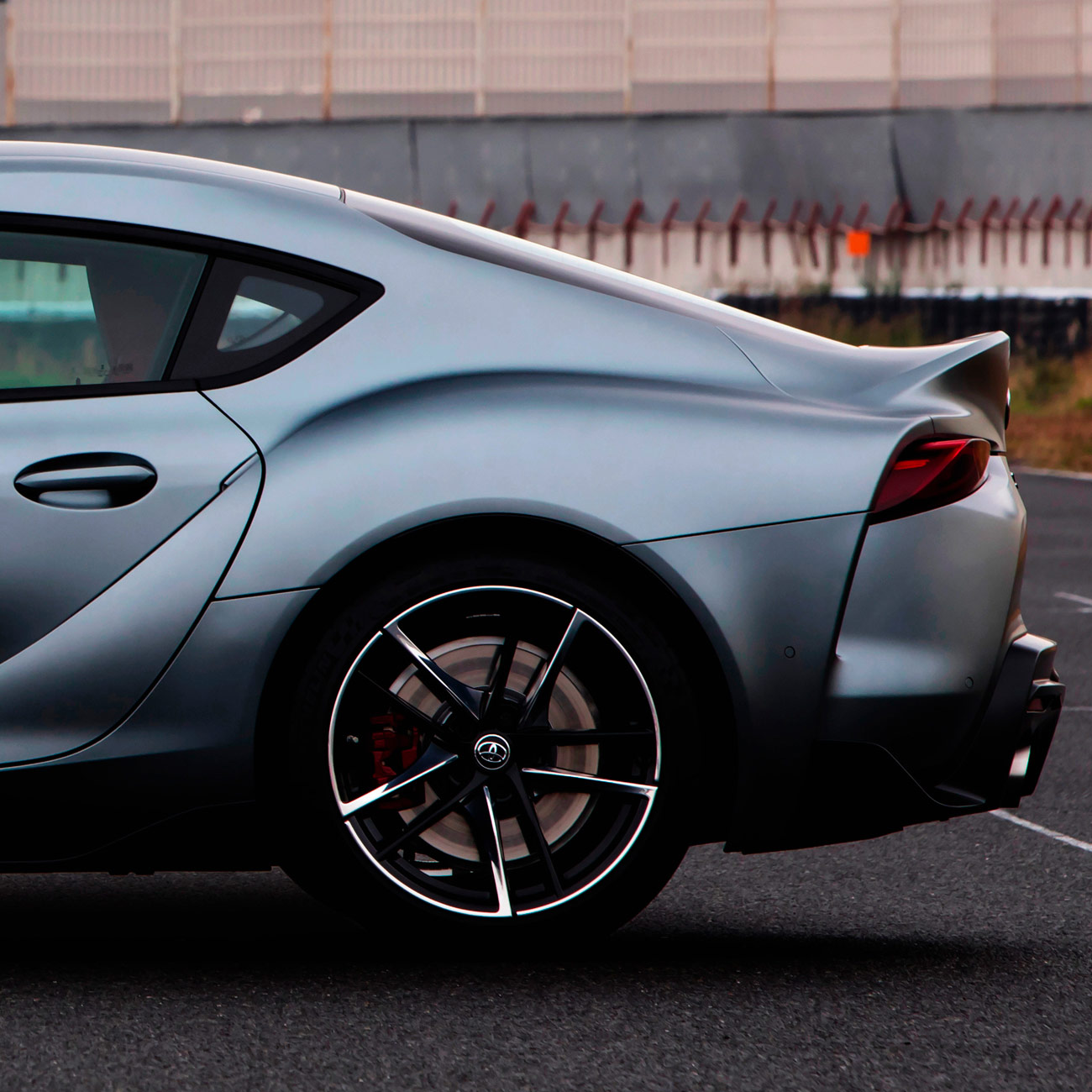
2020 Toyota Supra — Rear-Wheel Arch

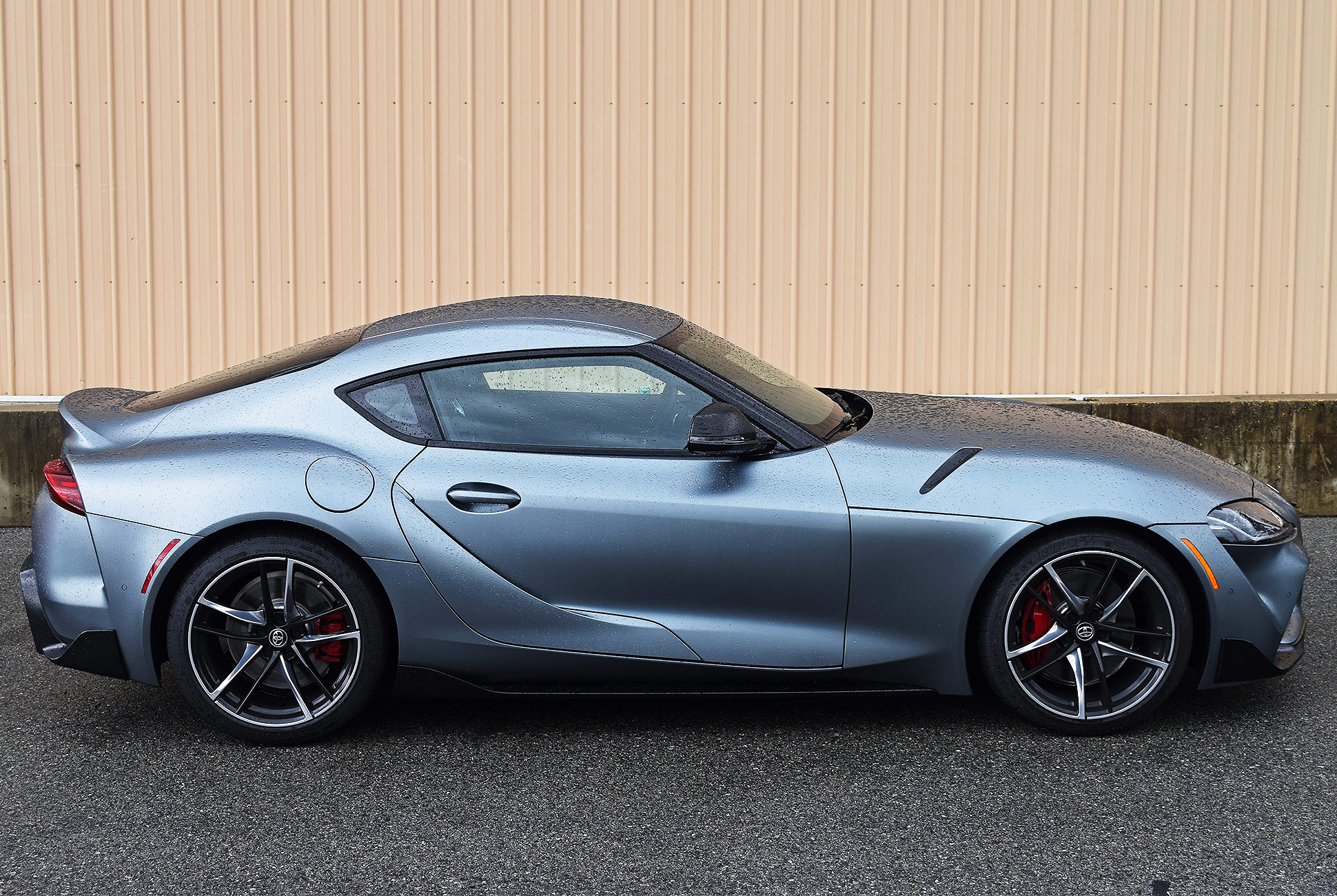
The design of the 2020 Toyota Supra is only one of the controversial aspects of this car, but there’s no denying the sculpture that is the new Supra’s rear wheel arch. There’s not a single sharp edge disrupting the surface; plus, it evokes some of the greatest sports cars in Toyota’s history, like its ancestor the 2000GT.

More Beautiful Details

When the gauges receive care, effort and attention to detail, you can often find yourself glancing down in admiration rather than checking the dials for any relevant information.Read the Story

Note: Purchasing products through our links may earn us a portion of the sale, which supports our editorial team’s mission. Learn more here.

Brabham Will Add a Road-Going Supercar to Its Lineup

Increasing Volume and Expanding Its Lineup

The Brabham BT62 hypercar is a wild machine capable of some insane track times. The company realizes its track monster isn’t for everyone, so it wants to introduce a more affordable supercar alternative. Dan Marks, Brabham’s commercial director had a little sit-down chat with Motoring Research and told the publication that the company will add a road-going model to its lineup and increase its volume of sales. 

According to the publication Marks wouldn’t give away much information about the car. However, he did say it would be “a road car that’s well-suited to the track.” That’s exciting. When it comes to the sales volume of this car, he said Brabham was looking to sell somewhere between 100 to 200 cars each year. “We’re not going down the McLaren route and building 6,000 cars each year – we don’t want to lose our focus.”

When will the car come? Likely in 2022. So, that means you have a few years to save up your pennies for what is bound to be an expensive automobile. Currently, the company’s focus is still on the BT62 hypercar and seeing it compete well in the World Endurance Championship races. 

If we had to guess, we’d say the upcoming Brabham supercar would compete with the likes of the McLaren 720S and Ferrari F8 Tributo. It will be interesting to see where this car lands in terms of performance and price.

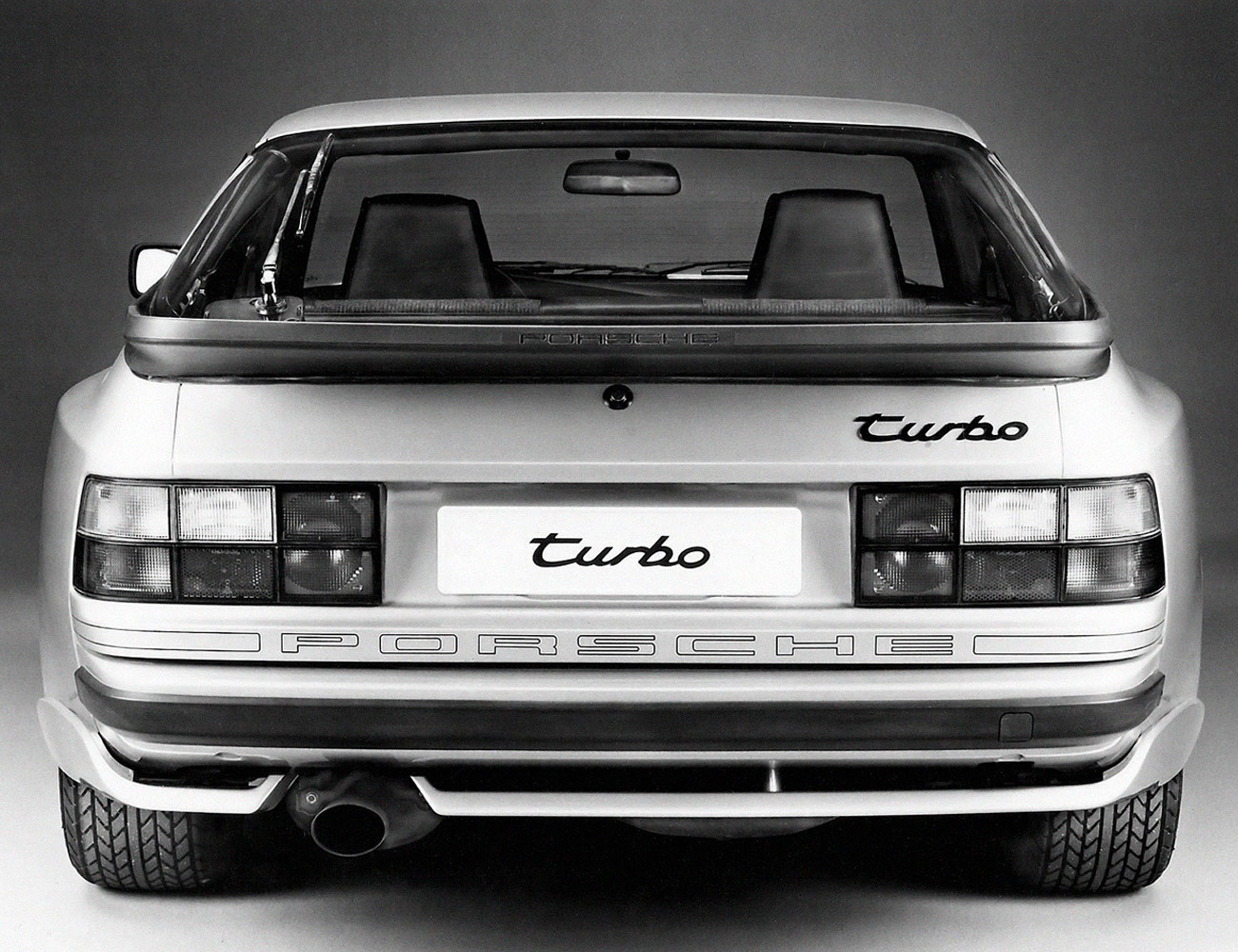
Porsche 944 Turbo Prices Are Getting Out of Hand

The Porsche 911 resale market reached the point of absurdity years ago, and has shown no signs of retreating. Most premium Mercedes-Benz or BMW models eventually depreciate to the point where commoners can afford them, but the 911 seems to have no half-life — at least, when it comes to the pre-1997 air-cooled models most valued by purists. Bargains only come with the oft-derided 996 generation some from 1999 to 2004, known for being Boxsters up front and having exploding engines in the back.

The 911 bubble’s resilience means less well-heeled Porsche enthusiasts have to buy other models. One popular choice has been the Porsche 944 of 1982-91. The 944 had timeless good looks; plus, it was a quality performer, with 50/50 weight distribution, excellent cornering, and more grunt than the Audi-powered 924 that spawned it. It was a fixture on Car and Driver‘s 10 Best lists. Sure, the base 944’s acceleration would put it behind a modern Subaru, but the Turbos and their sub-6.0 second 0-60 mile-per-hour time were genuinely quick.

Multiple factors have kept the 944 relatively affordable. Porsche snobs have held their noses toward it because it was front-engined and water-cooled. Four-cylinder engines tend not to have quite the same emotional resonance. The 944’s Japanese contemporaries offered better performance, better value, and better bases for tuning. And the 944 isn’t cheap to maintain.

Attitudes toward the 944 may be changing, though. Prices for Turbo models appear to be going up: Through the end of 2018, only four of 85 944 Turbos on Bring a Trailer had sold for more than $30,000, and none more than $40,000; this year, though, four 944 Turbos have gaveled for north of $58,000 on the site. (That’s basically the base cost of a new 718 Cayman.)

It’s not just happening on BaT, though. Elsewhere, the auction house Gooding & Co. sold a 1989 944 Turbo for $72,600 in 2018. Notable Porsche enthusiast Jerry Seinfeld bought himself a 944 Turbo this year as well.

There are some caveats. The four that sold on Bring a Trailer were in good-to-pristine condition. Three were highly sought-after Turbo S models. The highest seller, the one for $74,000, had only 5,300 miles on the clock. Any Porsche preserved in such a condition would draw a high price; models like the 912 and the 914, which some would consider glorified Volkswagens, have sold for similar prices on BaT.

Why the sudden 944 Turbo love? It’s not totally clear. 944 prices, in general, have been rising with the 911 tide: Hagerty notes that 944 prices have doubled or even tripled in some cases over the last 10 years. Recognition may be growing that the 944 Turbo was generally a great car, undervalued in the 911’s shadow.

It also may not take that many enthusiasts unconcerned with value to move a niche classic car market. The same BaT buyer that landed the $74,000 944 Turbo bid up to $58,000 on another a month later, and has bid on five 944s on the site since December.

There’s no question Porsche makes excellent cars. But increasingly, it seems bargains on them are hard to find, new or used. For some perspective, Mercedes also makes excellent cars — yet you can get a newer, more powerful, and lightly-used R129 500SL for the price of a not-so-great 944, and the $75,000-or-so for a top-end 944 Turbo could get you a 2016 Mercedes-AMG E63 S wagon. We know which we’d rather have for that price.

These Are the Best Rental Cars to Grab This Memorial Day Weekend

It’s that time of year again: Memorial Day. That, of course, means traveling to spend time with friends and family, gorging on backyard BBQ — and all too often, renting a car. But if the words “rental car” conjure up nightmarish memories of a sad Dodge Caliber your parents got stuck with on a family trip, you need to adjust your frequency: These days, rental car agencies offer plenty of models that are far more pleasurable than the rolling penalty boxes that often spring to mind at the mention of the term.

To make this last minute decision go smoothly, we at Gear Patrol did a little bit of combing through the more prominent rental car companies, and picked out the best cars they have on offer, so you can make the most of your 2019 Memorial Day holiday.

Hertz

Ford Mustang GT


What’s more ideal than cruising down to the beach on Memorial Day weekend in a Ford Mustang GT sporting a 460-horsepower 5.0-liter V-8? Not much. It might be surprising to see such a high-powered sports car available for rent, but Hertz has been offering Mustangs for decades now. Skip the Ford Fiesta this year and treat yourself to some real performance.

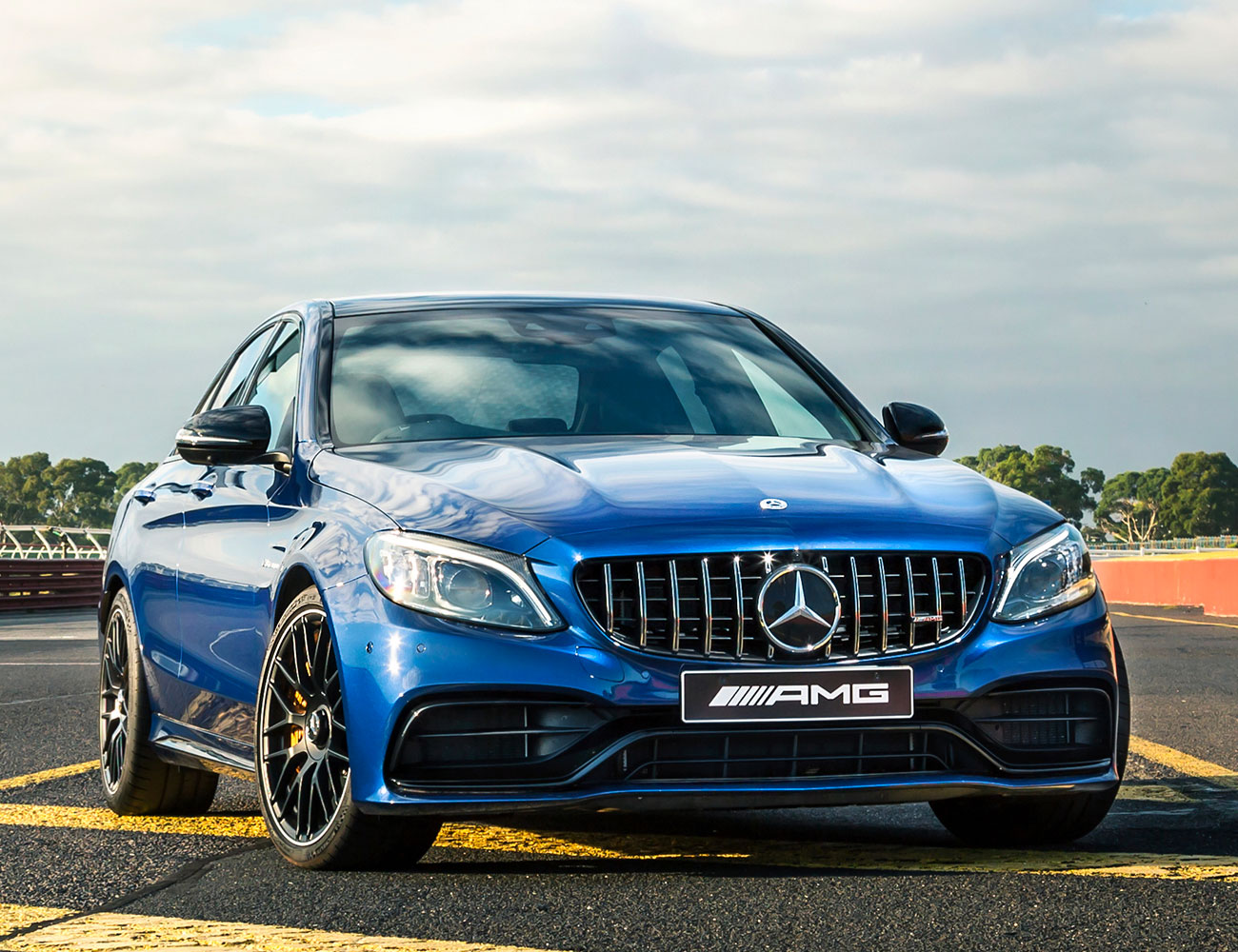
Mercedes-AMG C63


When it comes to performance, Hertz doesn’t mess around — their Dream Car selection is the antithesis of the standard rental-car fleet. So if you’re looking for an entertaining-but-somewhat-understated sport sedan, you owe it to yourself to reserve the Mercedes-AMG C63 and kick off summer in style.

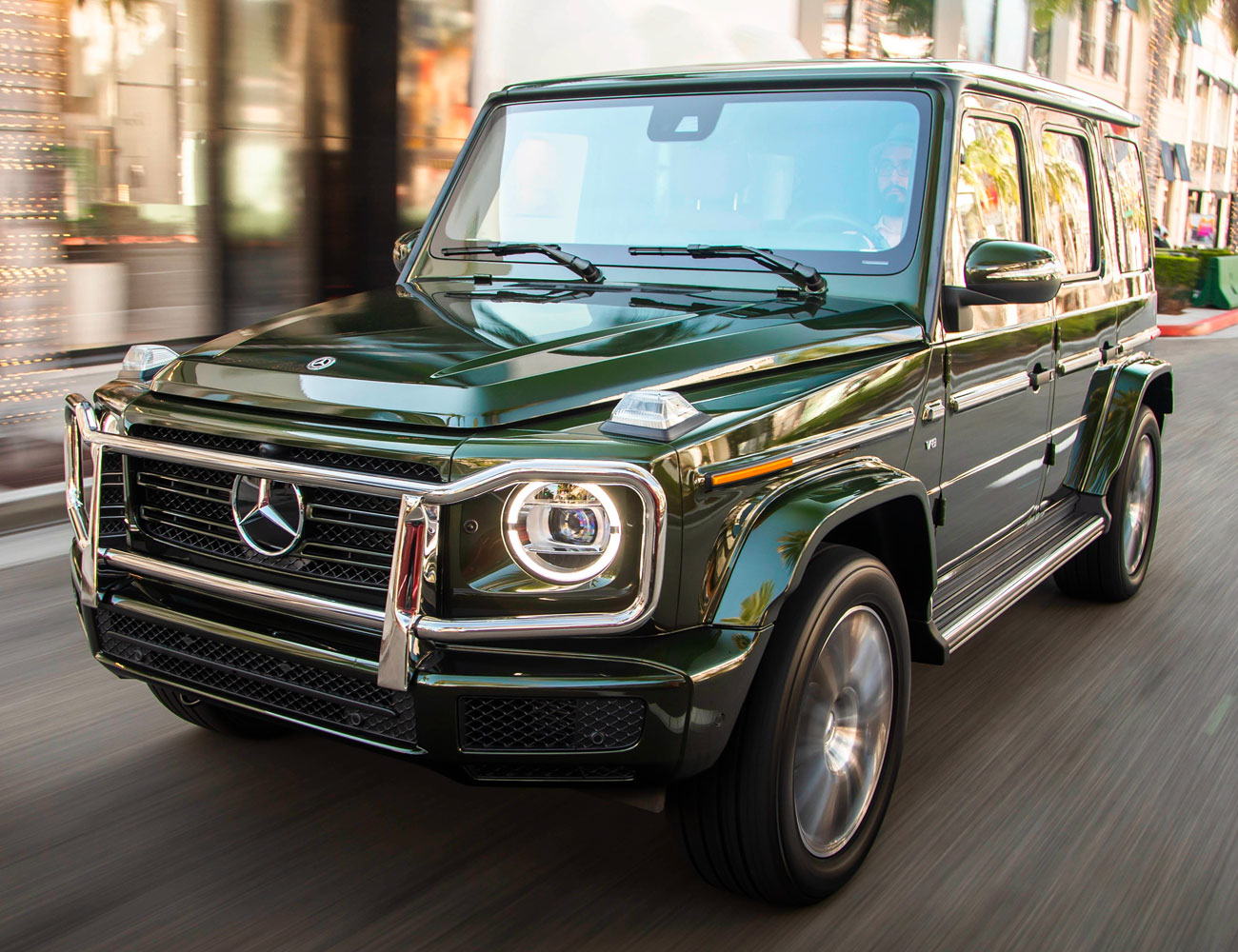
Mercedes-Benz G550

>

It might weigh 5,724 pounds, but even in base form, the Gelandewagen can still get to 60 mph in 5.7 seconds and tow 7,000 pounds (albeit not at the same time). It’s perfect for transporting all the beach gear, food and drink you’ll be living off for the next 72 hours.

Budget

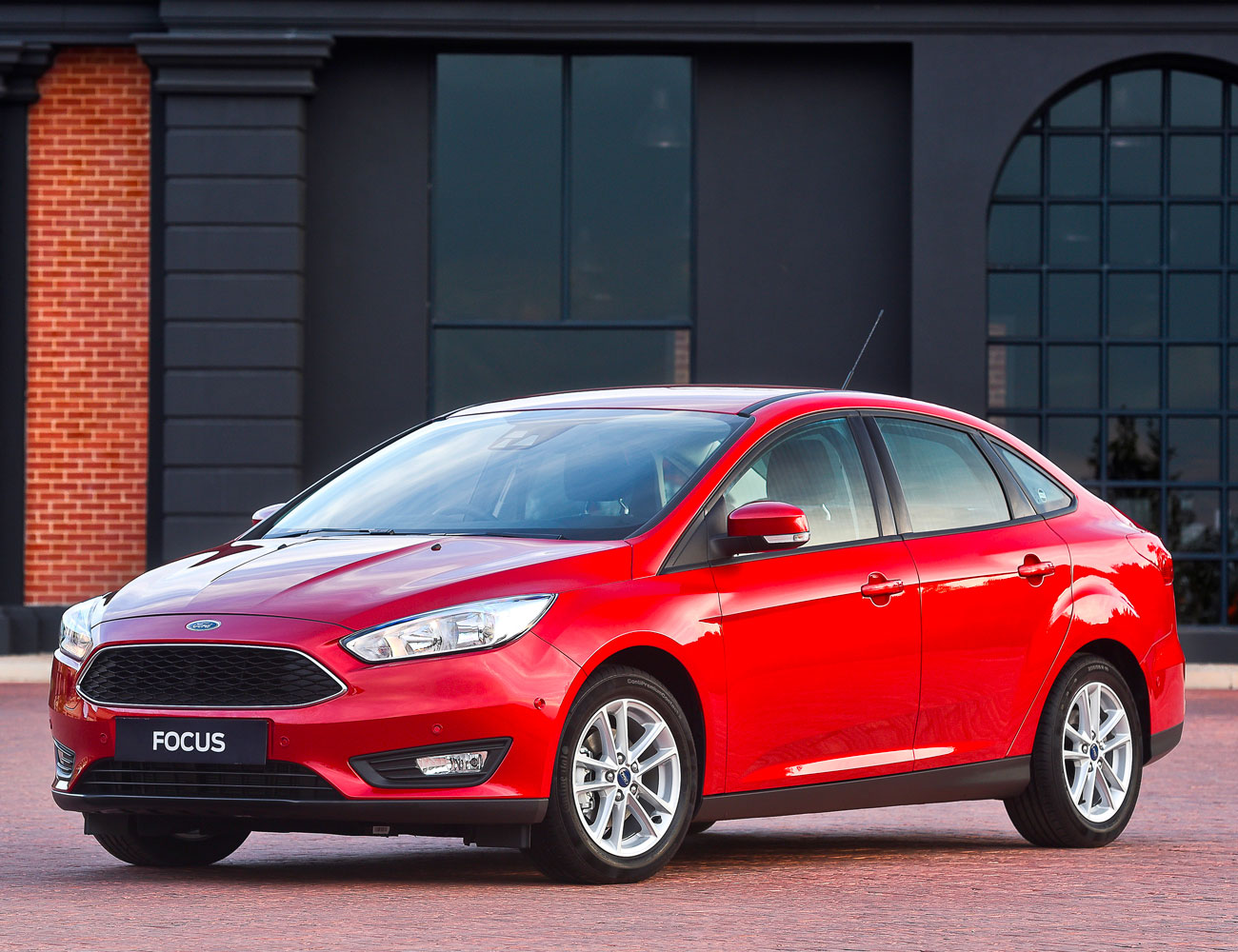
Ford Focus


Even the base-model Focus is miles ahead of your average rental car; it may be the best-handling front-wheel-drive car on the market. And more importantly, it’s a rental — you’re supposed to drive it like you stole it.

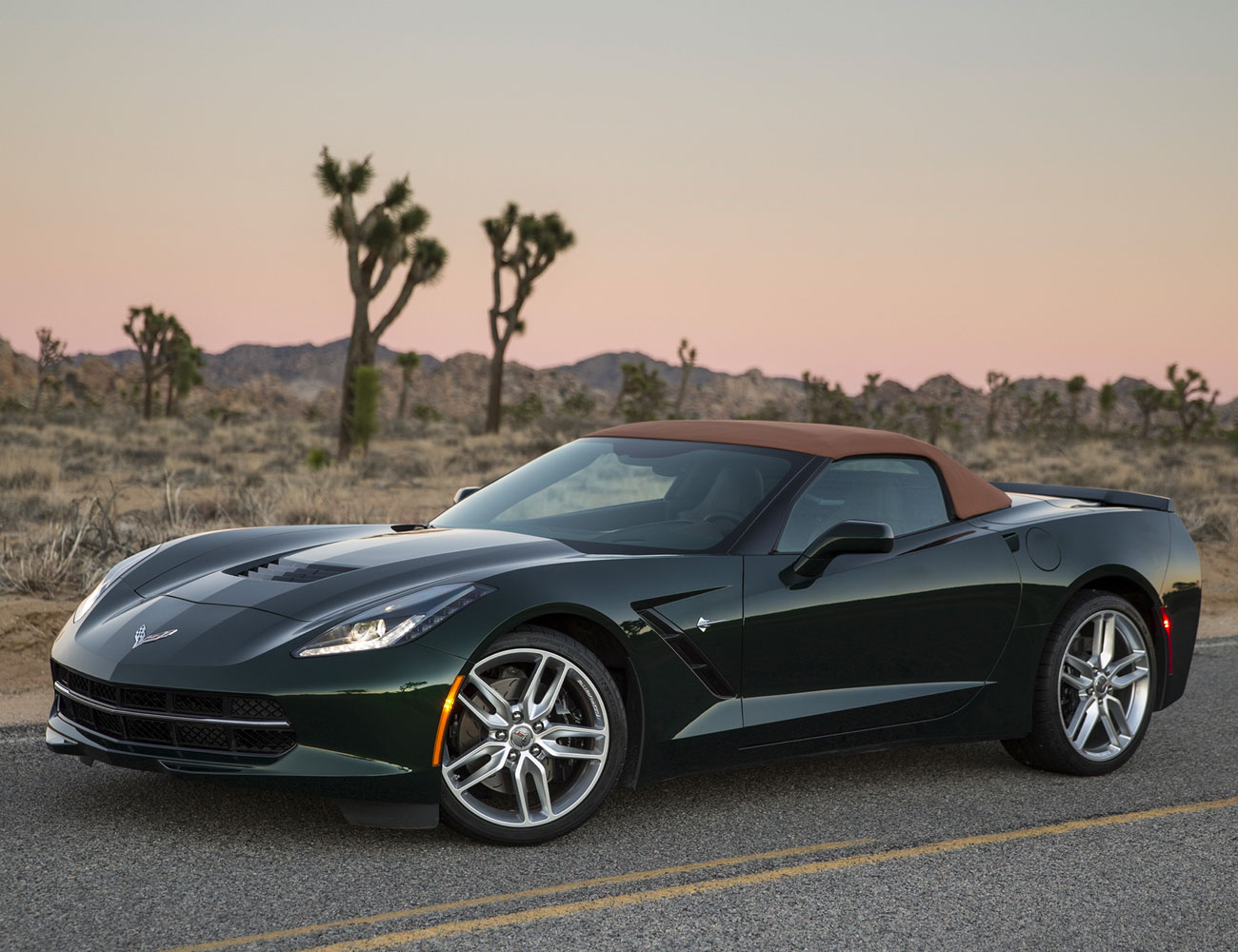
Chevrolet Corvette


Easily the best-looking Corvette since the C2, the current C7-generation ‘Vette is a damn fine way to announce your arrival to the party. The 455-horsepower 6.2-liter V-8 won’t win you any points from your eco-conscious uncle — but of all the cars on this list, the Corvette might just be the most entertaining on a winding road.

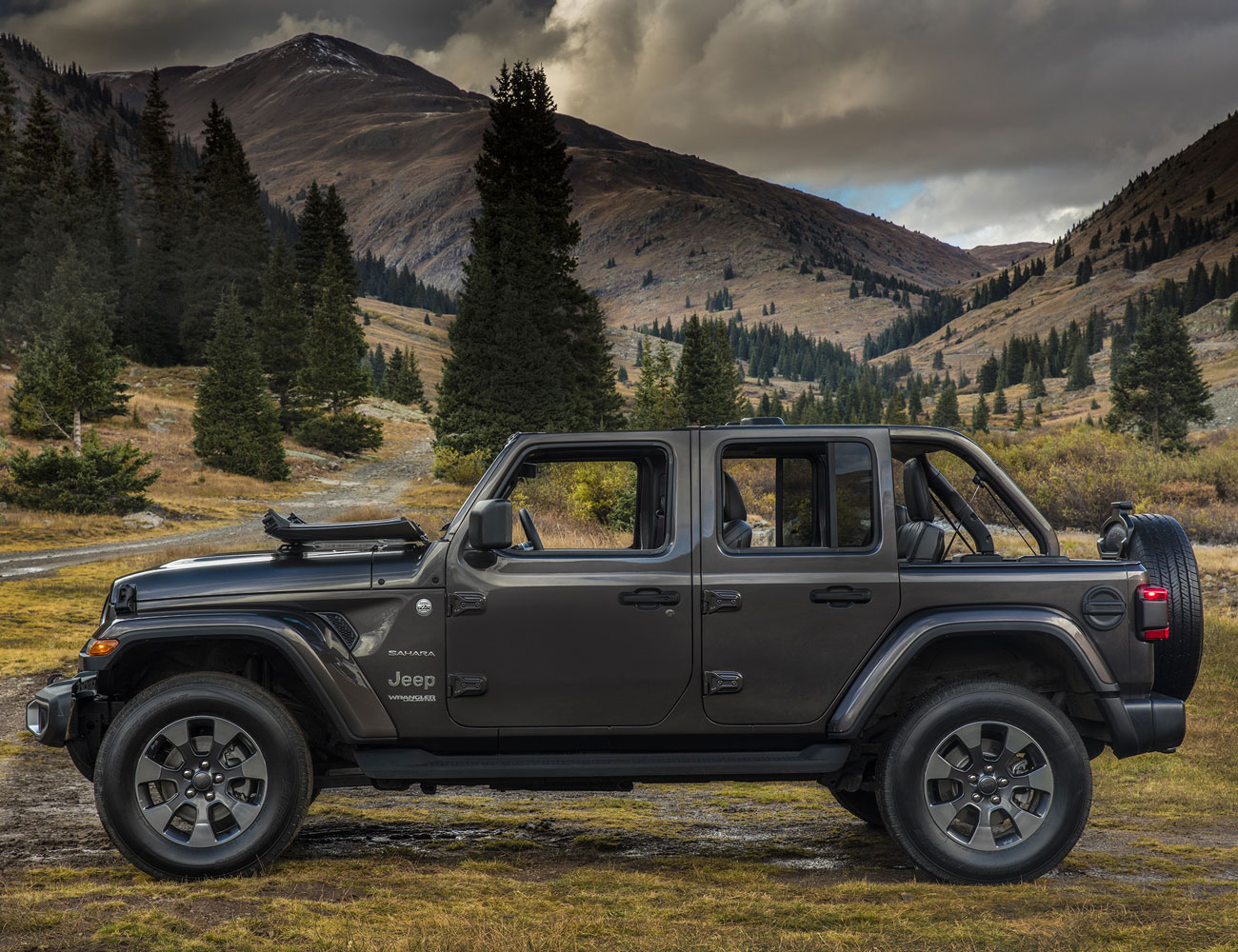
Jeep Wrangler


Even in stock trim, the Jeep Wrangler is wildly capable off-road. If your Memorial Day Weekend has you heading up to a remote lake in the mountains or trucking through the sand to get to the fire pit on the beach, the iconic four-wheeler has you covered.

Enterprise

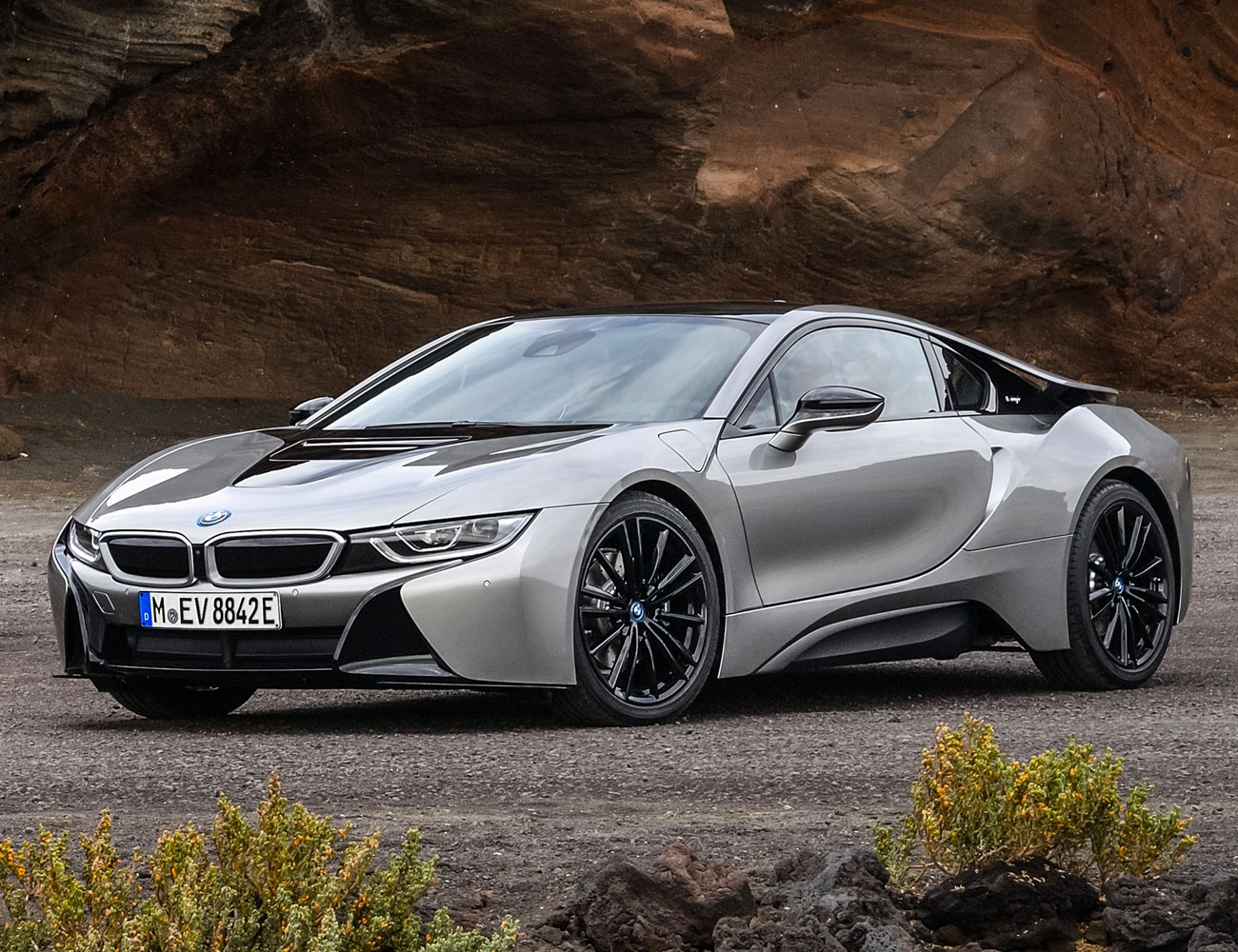
BMW i8


Easily the coolest-looking “economy car” on the list, BMW’s futuristic i8 looks like a supercar, hits 60 mph in 4.4 seconds and can still net the equivalent of 134 miles per gallon from its inline-three engine/electric motor combo. Just forgive it for pumping fake engine noise into the cabin through the speakers.

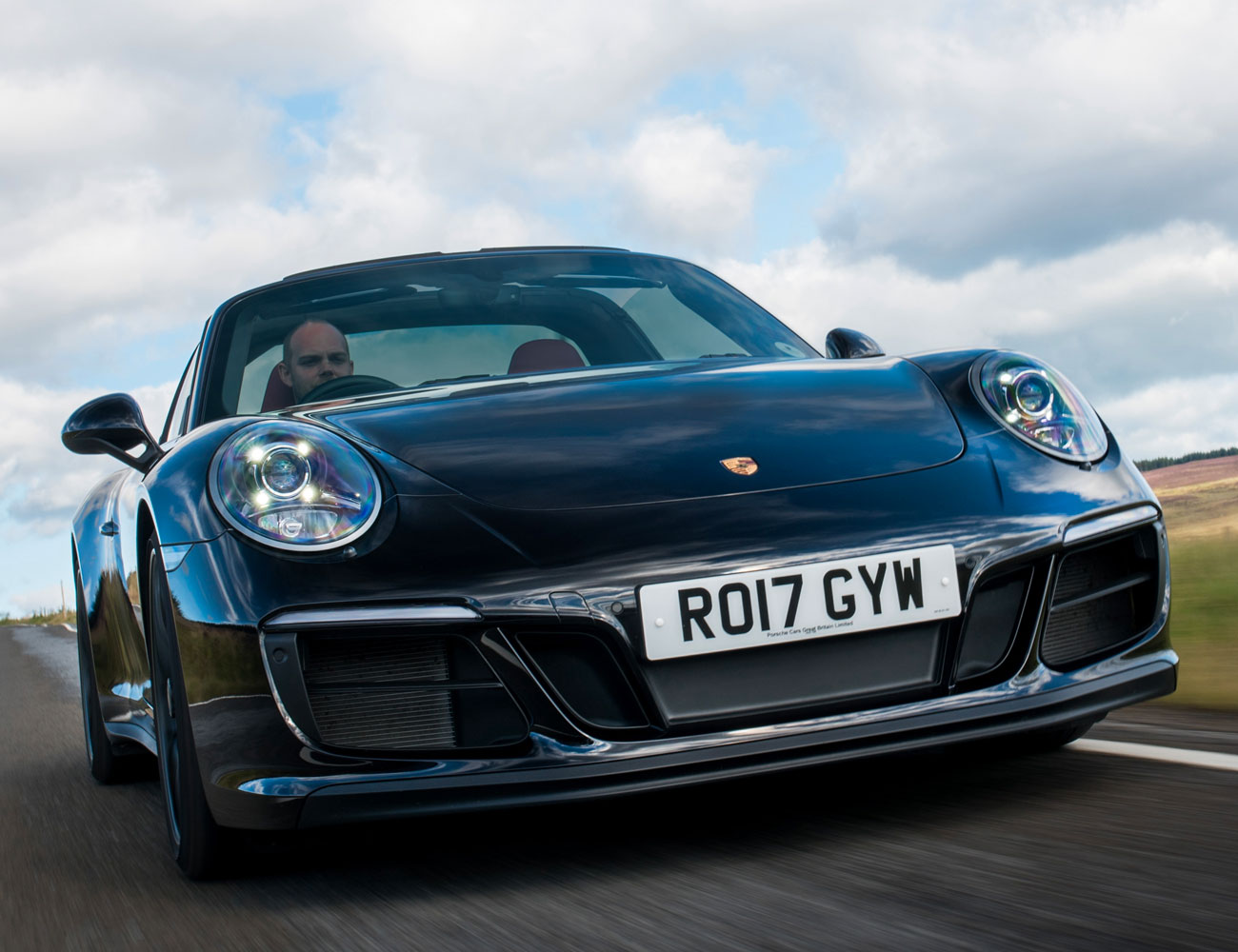
Porsche 911 Targa


The 911 Targa needs no justification. It’s one of the prettiest, roofless modern Porsches, and you’re on the threshold of summer. Go for it.

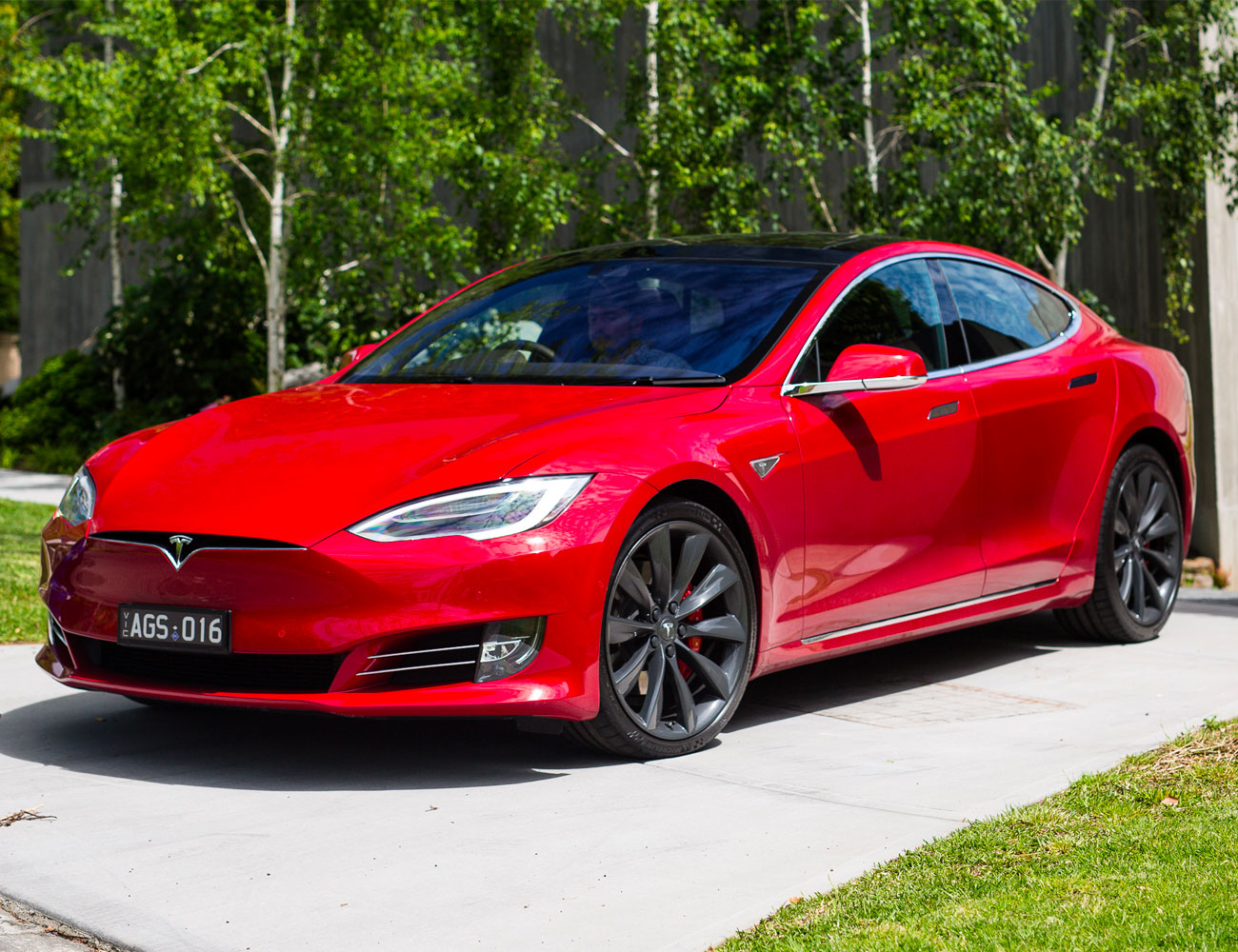
Tesla Model S


Tesla’s large four-door electric sedan offers tons of performance, extreme efficiency and killer looks. No one will assume yours is a rental.

Land Rover Range Rover


Out of the box, the Range Rover is one of the most capable SUVs on the planet. It’s a shame the majority of Range Rover owners will never know how competent it is off-road…but since yours is a rental, feel free to put its reputation to the test over the weekend.

Avis

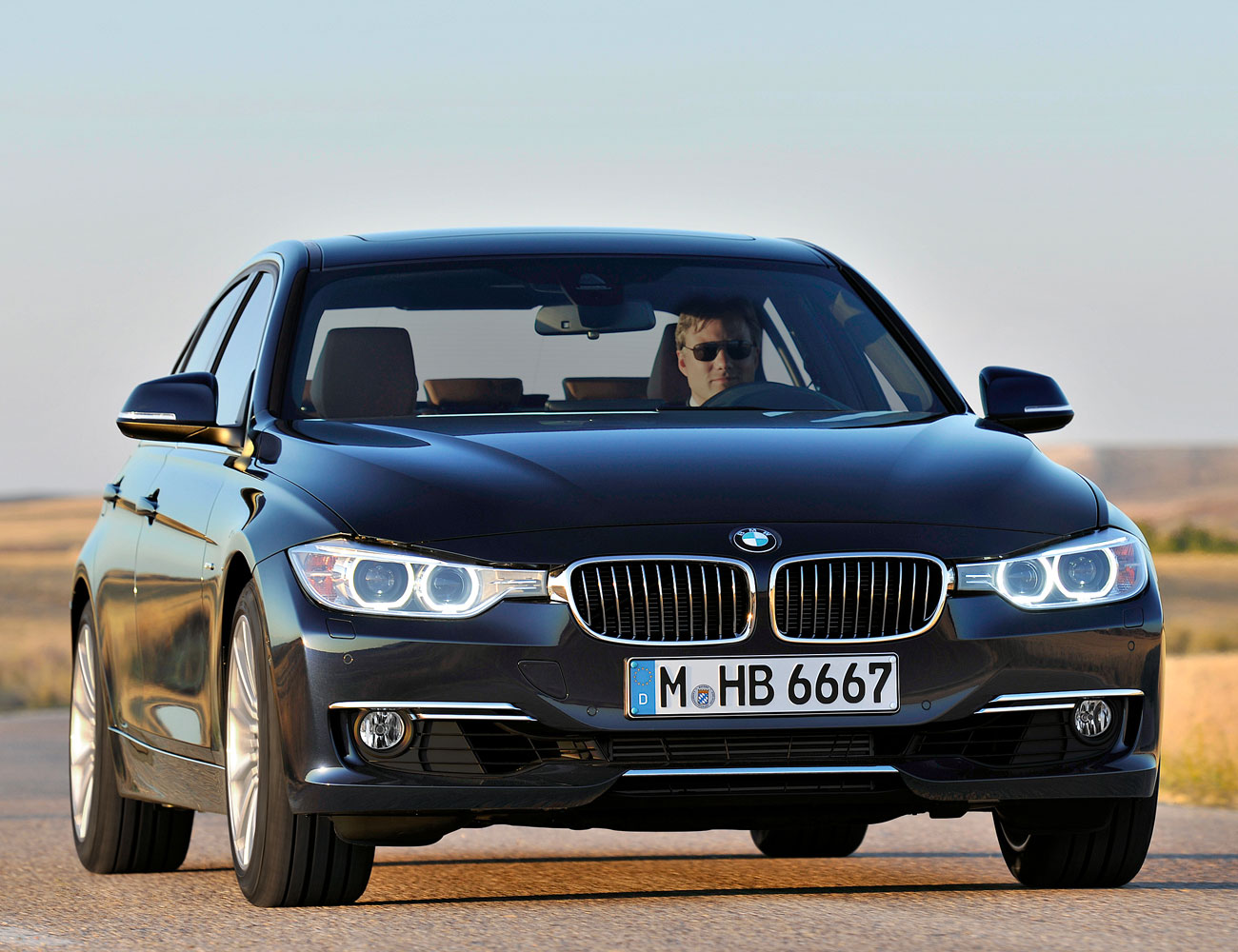
BMW 328i xDrive


The BMW 328i is the most understated car on this list. Then again, this Bimmer isn’t for showing off; it’s for you to enjoy from the driver’s seat. With perfect balance, handling and responses…when you arrive, you’ll also be seriously satisfied.

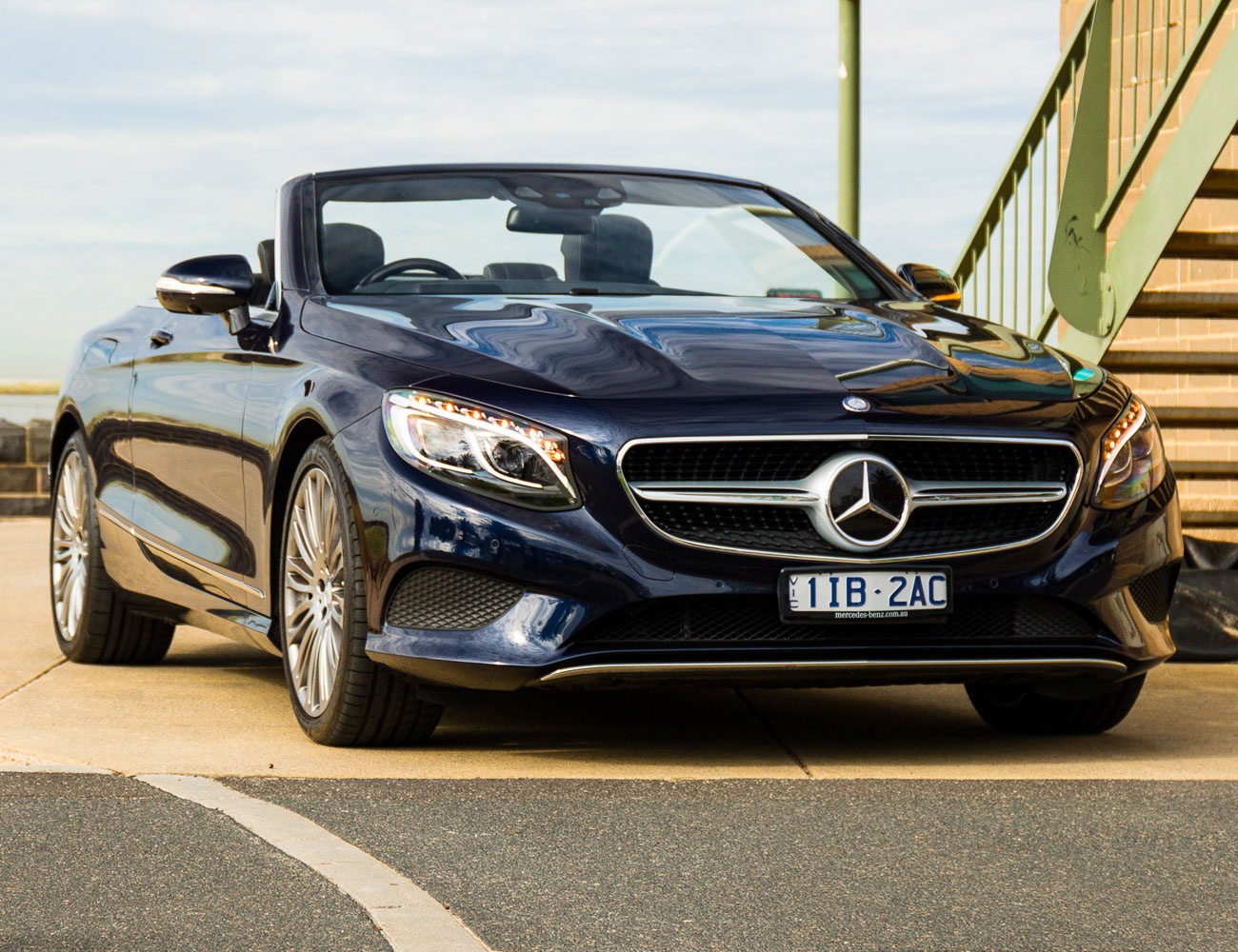
Mercedes-Benz S550 Cabriolet


If the BMW 328i is for flying under the radar, the Mercedes S550 is for letting everyone know you’re floating down the road in the lap of luxury. The 4.0-liter twin-turbo V8 is good for 463 horsepower and 516 lb-ft of torque, but the real draw of this car is the interior, which feels more like a luxury yacht than a car.

The Best Bike Racks For Any Car

Whether you’re headed on a weekend trip, to the local trail system for a lunch ride or the top of your favorite descent, a good bike rack is crucial. These are the best available now, for any type of vehicle and bike. Read the Story

2005 Ford GT Merkury 4

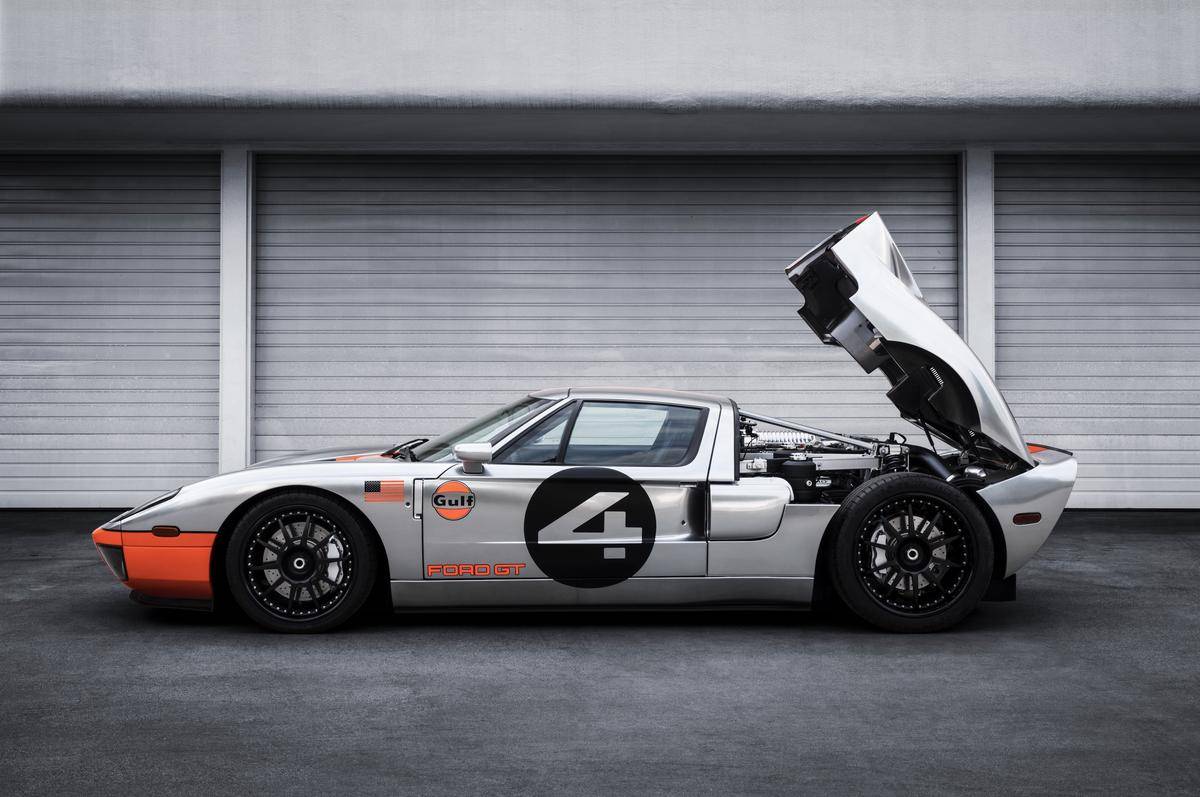
Ford is currently playing coy about a proper GT successor. No surprise, then, that other tuners have taken it upon themselves to play around with the models that are available at hand. Which brings us to this wallop — a Ford GT Merkury 4. Developed in collaboration with Camilo Pardo, no less.

Infamous Ford GT tuner GT Guy worked with original GT designer Prado on this one, you read that right. The ride features a Mirrachrome abstract custom paint job. Topped off with a florescent orange center stripe and a satin black pinstripe. The car came with HRE center-bolt rims with 275/30ZR19 front Michelin tires and 345/30ZR20 ones on the rear.

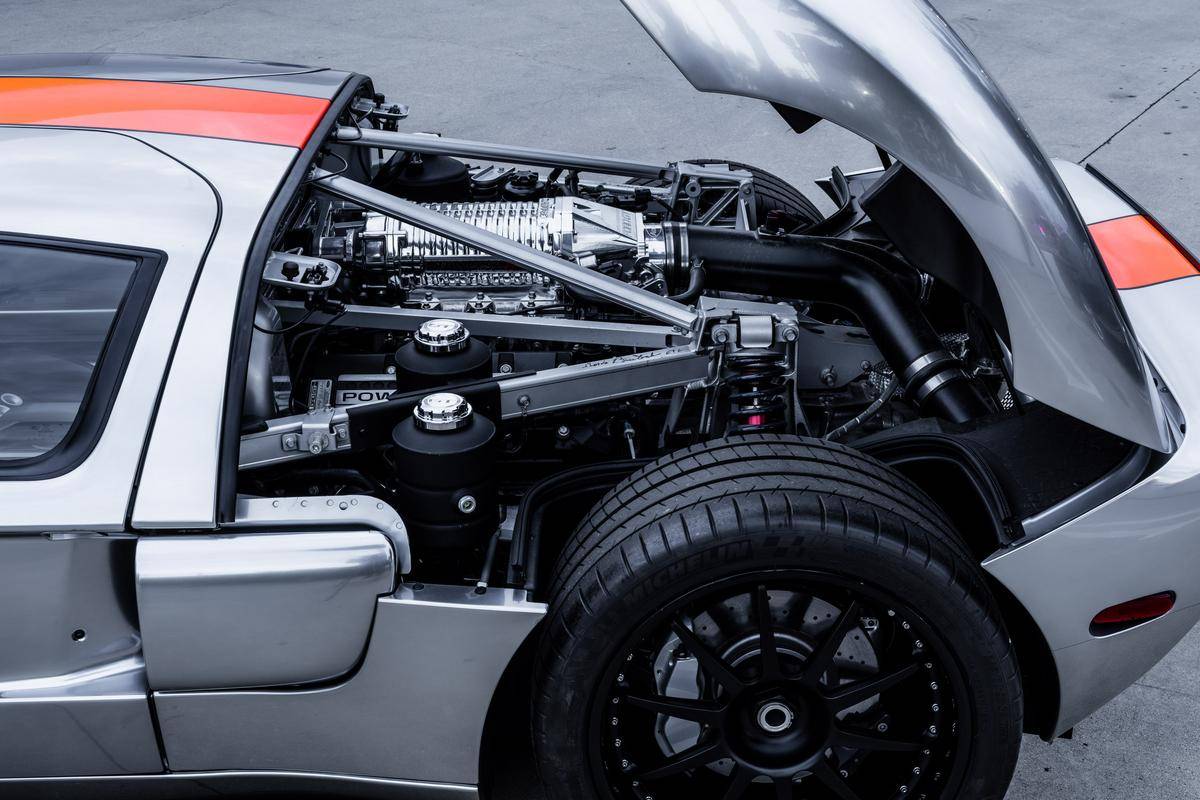
As if the base’s 5.4-liter supercharged modular V8 engine wasn’t impressive enough, the folks threw in a second-generation Whipple supercharger and a GTG cold air intake kit. As a result, the engine’s output blazes toi a whopping 725 horsepower. At 19 pounds of boost on 91 octane fuel, that is.

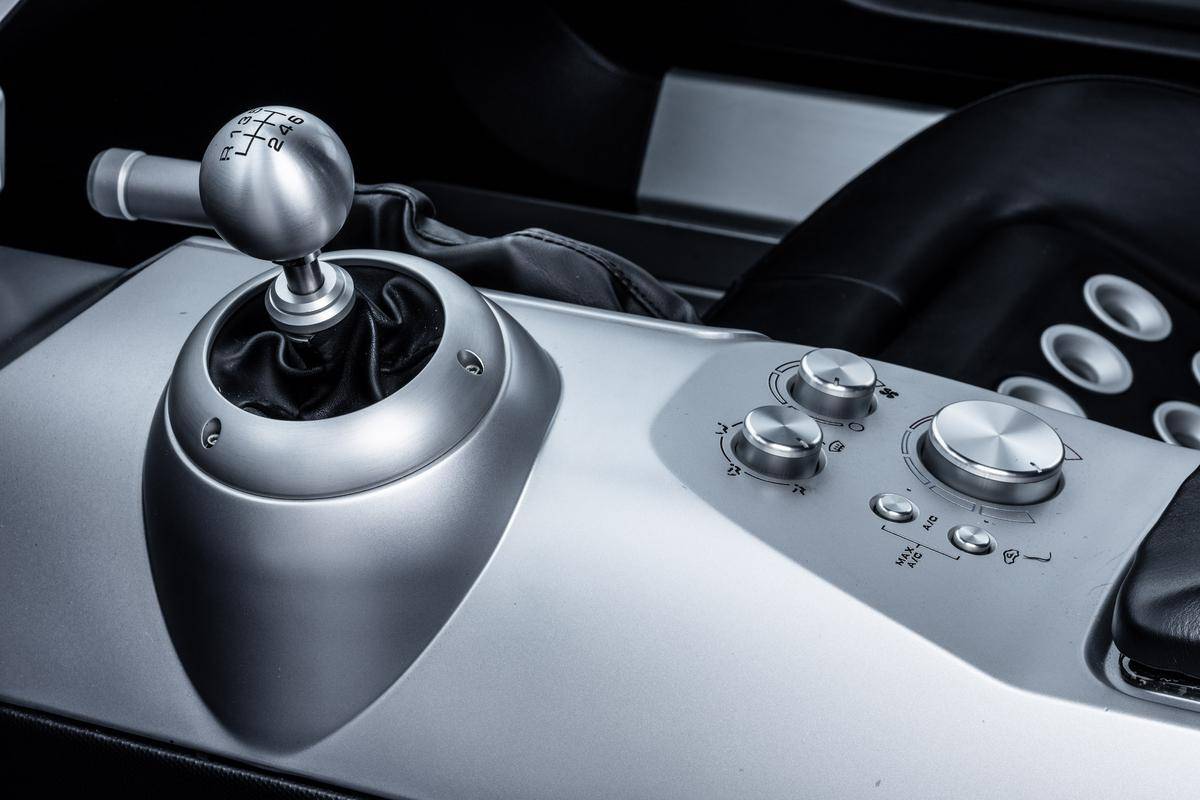
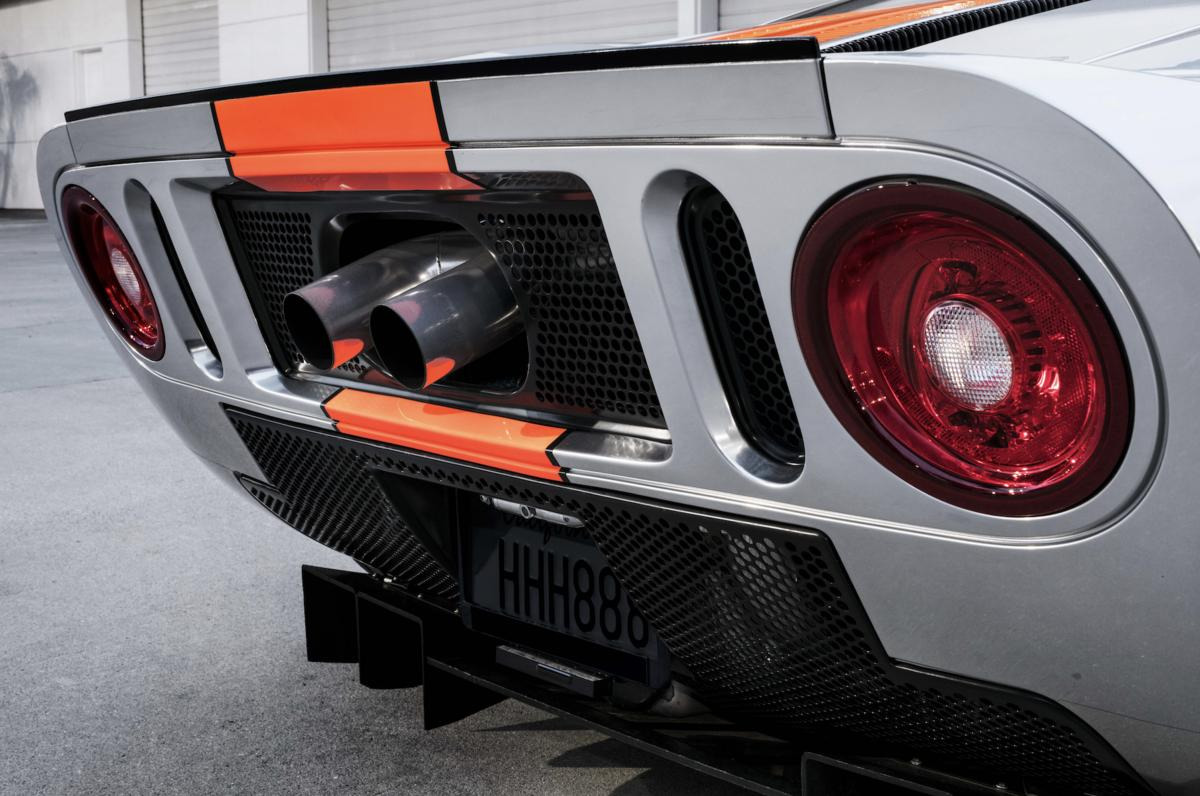
In all, the Ford GT Merkury 4 is a breathtaking vintage homage. Especially since chief Pardo himself supervised the touches and finishes. Other upgrades include a GTG “Vintage” bumper delete kit, which relocates the exhaust between the tail lamp like an original Mark II. And a ceramic-coated Ford racing exhaust, a nice detail on top of an already-packed job. The HRE center lock rims, custom “Ford GT” billet fuel door, billet clamshell center, and side clamshell vents are cherries. You’ll find twin sill badges to commemorate the build.

Having won the “Best In Show” award at the 10th Annual Ford GT National Rally in Detroit, the Ford GT Merkury 4 is no doubt one of the most significant splurges you can treat yourself to this year.

BUY IT HERE

Photos courtesy of Hemmings

2020 Toyota Supra Review: Check Your Judgement At the Door

At long last, the Toyota Supra is back.

Technically, it’s the “Toyota GR Supra” now — the two errant letters standing for “Gazoo Racing,” the new badge found on Toyota’s cars developed in part by the carmaker’s motorsports division. Don’t let that throw you off. You can still just call it the Toyota Supra. (After all, the first and second-gen cars technically went by “Celica Supra,” but you don’t see anyone complaining about the lack of the former name in common discourse.)

This new Supra, at first glance, doesn’t seem much like direct successor to the coupes that wore its name before. Those cars landed somewhere closer to the grand tourer end of the sports car spectrum, like Japanese versions of front-engined V-12 Ferraris with half the cylinders and one-third the price tag. The new one, on the other hand, is a tight little ball of energy, one that manages to be smaller, lighter, and more powerful than the A80-generation, 2JZ-powered Supra made famous in America when Paul and Vin owned a Ferrari F355-driving tool during Act II of The Fast and the Furious.

Video: 2020 Toyota GR Supra Review

Watch more of This Week In Gear video reviews.

The Good: At the launch event an hour west of Washington, D.C. Supra chief engineer Tetsuya Tada repeatedly described the vehicle as a “pure sports car,” one that — along with its BMW Z4 counterpart — would be focused on knocking down the reigning middleweight sports car champ: the Porsche 718 Cayman and Boxster. To do that, not only did the two carmakers pull from some of the best bits of Bimmer’s parts bin, but it worked with the Bavarians on the chassis hardware and tapped some of the same driving-minded engineers who helped develop the nimble Toyobaru with the folks at Subaru almost a decade ago.

Who It’s For: Supra fanboys and Japanese-performance-car lovers who can get past the Supra’s pan-Eurasian development; enthusiasts looking for an true two-seat sports car at a decent price and aren’t hung up on jalopnerd details like the lack of a manual gearbox or an on-paper power deficit; anyone mad BMW hasn’t built a new version of the M Coupe since 2002.
Watch Out For: The interior’s blatant BMW roots—everything from the steering wheel to the climate controls to the infotainment system are Bimmer bits — are sure to push the buttons of the JDM purists every time they push the car’s buttons. The helium-light electrically-assisted steering may direct the car exactly where you want it to go, but it does so without feeling or feedback. And anyone who prefers driving with the windows down will find the cabin filled with the unpleasant sound and disconcerting pressure of air buffeting about inside without a clean way out of the car. It may seem like a small complaint, but if you find yourself in that group, it just might be a dealbreaker.

Alternatives: Porsche 718 Cayman ($56,900), Chevrolet Corvette Stingray ($55,900), Nissan 370Z Nismo ($45,790), Ford Mustang GT Performance Pack 2 ($43,855)

Review: It’s not hyperbole to say the new Toyota Supra is one of the most eagerly-anticipated cars of 2019. In its roughly two-decade absence, its legend has been given the chance to flower, spreading further every year Toyota chose to revamp its Camrys and Avalons instead of releasing new two-door sports cars into showrooms.

It’d be all but impossible for the 2020 Supra to live up to the sheer tonnage of those weighty expectations. Instead of trying to judge it based on those unrealistic standards, then, it’s better to take a step back and try and view it objectively for what it is, not what many wish it could have been. And by those standards, it’s a dynamite little sports car.

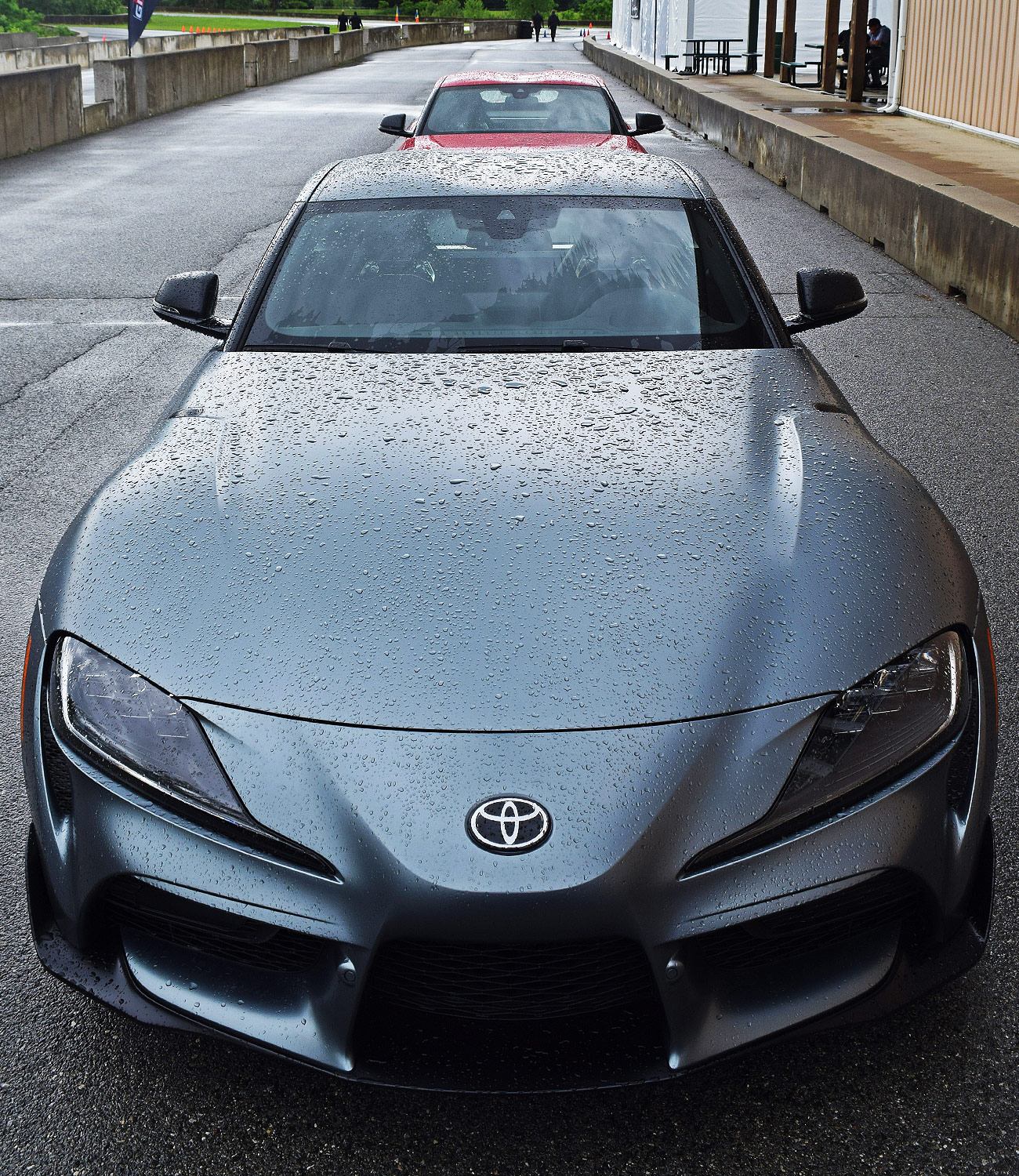
Emphasis very much on the little, by the way. You wouldn’t realize it to look at it, but the new Supra is only about the size of the Toyota 86/Subaru BRZ, with a wheelbase four inches shorter. (It’s two inches wider up front and three inches broader astern, however.) It certainly looks far different from them, though, with a thoroughly alien face in lieu of the BRZ and 86’s generically-handsome mug. The Supra’s not conventionally attractive by any stretch — the rear three-quarter view is clearly its best angle, and even that’s hardly what most would call sexy — but it is eye-grabbing enough to earn a double-take the first few times you see it.

In light of those tidy dimensions, the inline-six’s 335 horsepower don’t seem as wimpy as they might have at first blush. While it’s certainly on the mild side for sports cars with $50,000 price tags, that grouping’s average pony count has certainly been inflated by the Detroit Power Wars that have pushed the Mustang, Camaro, and Challenger models at that price point close to 500 horses. Porsche’s basic 718 twins make do with just 300 horses, and you don’t see many people whining about them being underpowered. (And that’s not even getting into reports that the Supra’s claimed output may be rather, uh, conservative.)

The small wheelbase, active limited-slip differential and readily accessible power — the peak torque of 365 pound-feet comes on at 1,600 rpm and stays flat as Nebraska all the way to 4,500 — make swinging the tail out stunningly easy; the car’s inherent neutral balance, a combination of its near-50/50 weight distribution and suspension setup, makes catching those slides even easier. It’s every bit the drift machine its smaller 86/BRZ siblings are.

It’s equally adept at taking clean lines and fast paths through the corners, too, helped by a center of gravity that sits even closer to the pavement than the Toyobaru’s. My drive partner and I cut up a section of empty, wooded Virginia two-lane at speeds capable of sticking with entry-level exotica, and never once did the Supra feel wanting for grip. Nor, in all honestly, did it feel like it needed a manual gearbox; granted, I wouldn’t have turned one down, but the ZF-sourced eight-speed automatic does a spectacular job keeping the engine spinning exactly as fast as you need it to be, whether it’s at 10/10s on the track, 6/10ths on a B-road or 1/10th on the highway.

If there’s a flaw with the drive, it lies with the steering. The wheel itself feels fine in the hands when the car is still, with a meaty rim and nice grips at 9 and 3, but once the car starts moving and you start twirling it, it’s hard not be a little taken aback by how synthetic and light it feels. BMW is occasionally criticized for adding too much artificial weight to the steering, but even fake heft would be an improvement on the Supra. You don’t notice it much when pounding the car down a tight, technical track like Summit Point Motorsports Park, where journalists tested the car, but at everyday speeds, it has all the involvement of a rheostat.

The wheel isn’t alone amongst the interior trimmings in disappointing you. If you guessed that having Bimmer switchgear inside would add a dash of class to this Toyota’s interior, you guessed wrong. It seems like Toyota pulled the cheaper pieces from the German parts bin; the buttons feel like they came from the cheapest 2 Series of 2014, while the shifter seems like a less-attractive prototype of the versions that have made their way across Bimmer lineup. (I had the chance to covertly sit in a Z4 at the Supra launch, and suffice it to say, that BMW’s BMW bits look far nicer than the Toyota’s BMW bits.)
The instrument panel also suffers from a bit of excess plastification, but at least it does so while trying to be distinct. While the gauge cluster is an all-digital 8.8-inch LCD display, a large analog tachometer arc is fixed across the middle of it, like a pillar holding up the hood shading the gauges. (The actual “needle” is digital, though, nestled inside the analog arc when the car is on.) It’s a nice way of highlighting the importance of knowing your engine speed; plenty of great sports cars place the tach front and center, but only the likes of Ferrari and Porsche so far have gone so far as to give it hallowed analog status. Seeing the Supra take a similar course is one more sign the company is taking things seriously.

Still, the overall package is a nice enough place to spend time on street or track. It may not be Lexus-level, but it feels better screwed-together than any Corvette or Mustang you’ll find at any price. The well-bolstered seats hold you snugly in place on the track, but don’t leave your butt numb on a long drive. And the carbon fiber trim spread liberally around the shifter and center console is actual carbon fiber, not some cheap knockoff like you’d find in many mainstream automakers’ sporty rides.

While the new Supra’s cost of entry may seem lofty for a Toyota — it has the third-highest base price of any car in the company’s lineup, behind only the hydrogen-powered Mirai and the massively over-engineered Land Cruiser — the company sends every America-bound copy out the door with plenty of standard equipment. In addition to the twin-turbo six, the limited-slip differential, the adaptive dampers, the Brembo brakes and the 19-inch wheels clad in Michelin Pilot Super Sports, the base model packs a 10-speaker stereo, leather and Alcantara trim, 14-way power seats, automatic emergency braking, and lane departure warning.

And in a refreshing change of pace from the norm, there’s almost no performance advantage to climbing the trim ladder. The extra $4,000 for the Premium trim nets you plenty of nice add-ons — a color head-up display, a 12-speaker JBL stereo, a larger screen for the don’t-call-it-iDrive-even-though-it’s-clearly-iDrive infotainment system, more leather — the only performative change is a slightly larger set of rear brakes. If you just want zoom above all else, the $49,995 base model is all you need.

Verdict: The 2020 Toyota GR Supra is imperfect, yes. People will be disappointed by its power, its transmission, its commonalities with BMW. But none of those things compromise its mission: to be an entertaining sports car.

Ultimately, this Supra is a product of Toyota’s now — looking forward, working with others, endeavoring to add driving fun to the lineup whenever possible — rather than a reflection of Toyota’s yesterday that’s slavishly trying to cash in on nostalgia. Sure, that may stoke short-term fanboy rage…but it winds up resulting in a far better product in the end.

2020 Toyota GR Supra Specs

Powertrain: Twin-turbo 3.0-liter inline-six; eight-speed automatic; rear-wheel-drive
Horsepower: 335
Torque: 365 pound-feet
0-60 MPH: 3.8 seconds (Car and Driver testing)
Roadholding: 1.07 g (C/D)
Top Speed: 155 mph
EPA Fuel Economy: 24 mpg city, 31 mpg highway

Toyota hosted us and provided this product for review.

Read More Gear Patrol Reviews

Hot takes and in-depth reviews on noteworthy, relevant and interesting products. Read the Story
Note: Purchasing products through our links may earn us a portion of the sale, which supports our editorial team’s mission. Learn more here.

GM shows off ‘digital vehicle platform’ enabling more in-car tech and OTA updates

It appears to have dropped the sobriquet “Global B,” but General Motors‘ new electrical architecture has bowed in drawings and video. This is the “digital vehicle platform” GM president Mark Reuss spoke to Reuters about in 2015, saying it would move a great deal of a vehicle’s computer work to the cloud and enable over-the-air updates. Reuss took the microphone for the debut, too, saying, “Our new digital vehicle platform and its eventual successors will underpin all our future innovations across a wide range of technological advancements, including EVs and expanded automated driving.”

The system will go into production later this year, appearing in dealerships first either on the 2020 Cadillac CT5 or the mid-engined 2020 Chevrolet Corvette. Yes, these are the same electronics cited for delaying the launch of the C8 Corvette over excessive draw, security and getting the more-than-100 computer modules to communicate seamlessly. When Car and Driver asked about that, GM replied with “No comment.” Volkswagen’s having the same issues with the Mk8 Golf right now, though, so GM isn’t alone, and this will be the new normal among OEMs for a while.

What’s certifiable is that the new architecture is robust enough to handle 4.5 terabytes of data per hour, which is five times what GM’s current wiring can handle. And thanks to Ethernet connections of 100 Mbps, 1 Gbs and 10 Gbs, communication within and without the vehicle happens much faster.

The advances mean better screen resolutions, better battery management for hybrids and electric vehicles, the capability for over-the-air updates and “functionality upgrades throughout the lifespan of the vehicle.” Cadillac’s Super Cruise has already been lined up as a leading candidate for constant improvements in the driving assistance suite, a key part of GM’s “vision for a world with zero crashes, zero emissions and zero congestion.” And whenever GM decides to take the plunge, it will mean a 48-volt electrical system.

More than 300 specialists worked on the digital platform, and security was a huge part of the task. We’ve already heard that GM consulted with Boeing and military contractors on how to prevent hacking. The carmaker has an internal Product Cybersecurity group that reached out to the research community, and created a “bug bounty” program to crowdsource uncovering any flaws. As told by Wired, GM had “assaults by ‘red team’ hackers probing for weaknesses” and “[benchmarked] aviation and defense systems.”

After its retail launch this year, the new electrical architecture will roll out to “most” GM vehicles around the world by 2023.

Some of the Best Engines In the World in 2019

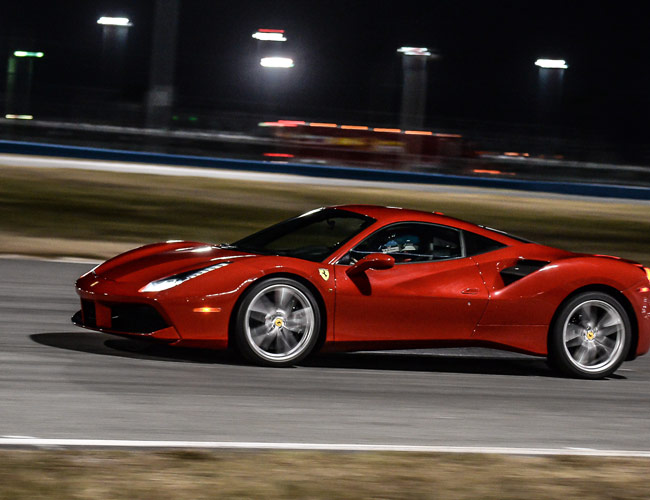
For the fourth year in a row, Ferrari won International Engine of the Year with its 3.9-liter Biturbo V8 found in the 488 GTB, 488 Spider and 488 Pista. Old man Enzo Ferrari always used to say “When you buy a Ferrari, you are paying for the engine. The rest you get for free,” because he was of the mindset his engines were the real work of art, regardless of how utterly gorgeous the surrounding metalwork always tended to look.

So would he be surprised a powerplant with his name stamped on the valve covers took top honors at the International Engine and Powertrain of the Year Awards, along with Best Performance Engine? Definitely not. Would Il Commendatore be taken aback by the prospect of Jaguar Land Rover’s Full-Electric Powertrain almost beating his gas-guzzling V8? Without a doubt. But Jaguar can take solace in knowing it won both Best New Engine and Best Electric Powertrain this year. Another notable win goes to BMW for Best Hybrid Powertrain with its 1.5-liter Three-Cylinder Electric-Gasoline Hybrid.

International Engine of the Year/ Best Performance Engine

Ferrari 3.9-liter Biturbo V8


Ferari 488 GTB: “The 488 went through the left-right-left chicane as if it were on rails, without a hint of body roll, then carved up the turn 3–4 banking (a centrifugal repeat of the banked turns 1–2) and through the slight kink in the front stretch to start another lap.” Bryan Campbell, Staff Writer

Best Hybrid Powertrain

BMW 1.5-liter Three-Cylinder Electric-Gasoline Hybrid


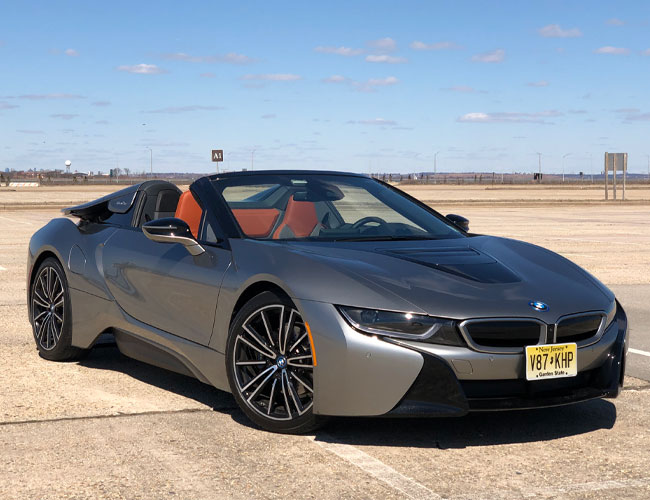
BMW i8: ” It’s hard to argue with a sports car that can accelerate from 0 to 60 miles per hour in four seconds and get the combined equivalent of 69 miles per gallon between its gas engine and battery pack. Still harder when it looks as wild as the i8 does, with its gullwing doors and aquatic predator lines.” – Will Sabel Courtney, Motoring Editor

Best New Engine/ Best Electric Powertrain

Jaguar Land Rover Full-Electric Powertrain


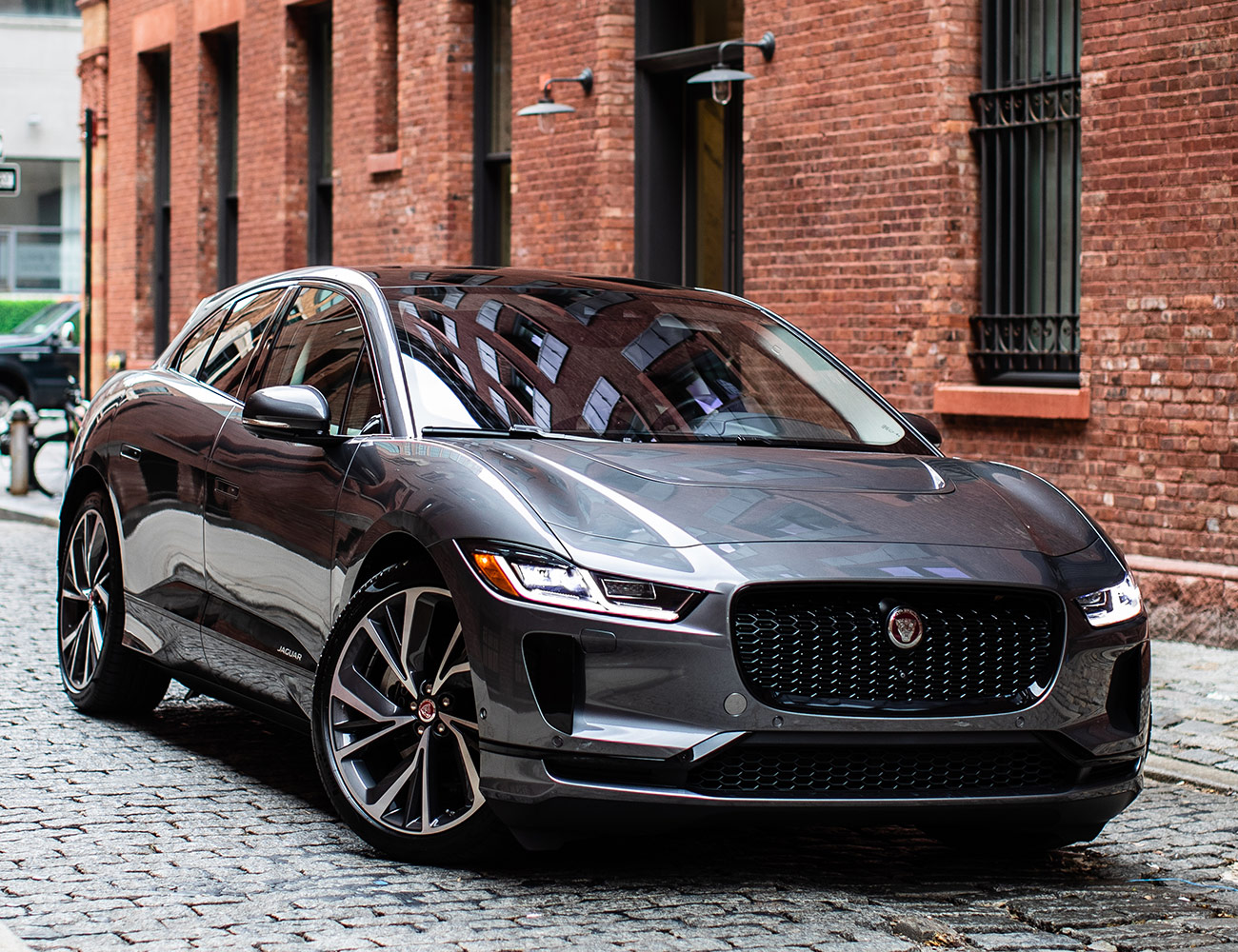
Jaguar I-Pace: “It should be clear that Jaguar knows how to make a performance car. The years of experience JLR has garnered making cars that elevate the driver experience above all else comes through in the I-Pace.” – Alex Kalogianni, Contributer