All posts in “Cars”

You Don’t Need a Massive SUV to Haul the New Airstream Trailers

Earlier this month Airstream announced it’s bringing back the Bambi and Caravel trailer lines for 2020. If you recognize the names, it’s because Airstream first introduced the two mid-sized trailers back in the ’60s as an exercise in compact, efficient design. Now, the company is introducing modern iterations that follow the same philosophy.

The Bambi and Caravel–tipping the scales at just 3,500 lbs and 4,300 lbs, respectively–are ideal for a market filled with ever-growing demand for mid-size trucks and SUVs: They’re large enough to fit a family of four, but light enough to not require a tow vehicle with mountains of torque. The two new mid-size single axle trailers fill the gap between the featherweight two-person Base Camp and Nest trailers and the bigger double-axle six-person-plus units.

On the inside, the floor plan designs cleverly use every inch of the interior without looking cluttered or claustrophobic. Whether that sense of space changes when you’ve got four adults jostling for personal space and room in the galley remains to be seen.

The smaller, more affordable Bambi comes in four sizes, ranging from 16 feet at $48,900 to 22 feet at $57,900. The more well-appointed Carvel comes in the same range of sizes, but prices range from $60,900 to $69,900. Both will be available later this year.

Production of the SSC Tuatara Begins

The 1,750 hp Hypercar Will Be Here Soon Enough

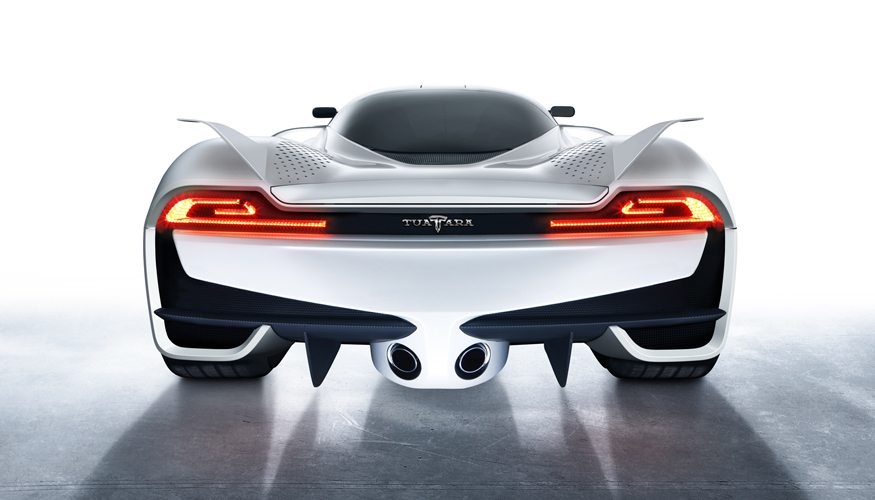
The 2019 SSC Tuatara was officially unveiled at Pebble Beach last year. Now the car has entered into production. The cars are being built in Richland, Washington. According to Carscoops, the first of these cars will be delivered in quarter three. After that first car is delivered, the company plans to keep churning the cars out.  

The 2019 SSC Tuatara will be a true force to be reckoned with. The car is said to have the lowest drag coefficient of any production car out there. The car has a drag coefficient of 0.279. That’s better than Bugatti, Koenigsegg, and Hennessey. The Tuatara is powered by a twin-turbo 5.9-liter V8. When it runs on the right fuel it will produce 1,750 hp. That means SSC should have a good chance at hitting 300 mph, which is a goal all hypercars are chasing right now. 

2011 SSC Tuatara2011 SSC Tuatara

The engine is mated to a 7-speed transmission that operates on a special hydraulic Automac AMT system. The setup should help the car make faster gear changes, which would help the car accelerate quicker. Performance numbers in terms of 0-60 mph times and top speed are still being kept secret. The number of models the company plans to produce in total was also not listed. We hope it’s a lot of them. 

2022 Aston Martin Vanquish to offer a manual transmission

The retail versions of the Aston Martin Valkyrie and Valhalla remain a ways off, but carmaker CEO Andy Palmer but has given us something to look forward to beyond the flagship hypercar and its baby brother. Palmer told Australian outlet Car Sales that the Vanquish would be offered with a manual transmission. The pledge fulfills Palmer’s previous statement “that I want to be the last manufacturer in the world to offer manual sports cars, and I want to honor that commitment.”

There’s at least one potential caveat with this: The seven-speed dogleg manual transmission recently released for the Vantage AMR forced a reduction in power numbers. The gearbox, developed with transmission maker Graziano to work with the Mercedes-AMG-sourced 4.0-liter twin-turbo V8, cut torque to 461 pound-feet compared to 505 lb-ft in the automatic-equipped coupe. The detune added 0.3 seconds to the 0-60 mph time, but we’re confident buyers were happy with the compromise and tech bits that allowed full-throttle upshifts and rev-matching downshifts.

The Vanquish will use an electrified, twin-turbocharged, 3.0-liter six-cylinder developed in-house at Aston Martin. Even so, with a lot more power and torque expected in order for the Vanquish to stand above the Vantage and battle the Ferrari F8 Tributo, McLaren 720 S, and Lamborghini Huracán, buyers could again face abridged output. Aston Martin hasn’t said a word about figures, but the F8 and 720 S already crest 700 hp and bring 568 lb-ft.

The Valhalla, which will use the same engine as the Vanquish but is predicted to pack around 1,000 hp, will forgo the manual. Palmer told Car Sales, “that car will only come with a paddleshift transmission.”

As with the Ferrari, but unlike the McLaren and the Lamborghini, the Vanquish gets a bonded aluminum tub instead of carbon. Aston Martin designed carbon tubs for the Valkyrie and Valhalla for “owners happy to sacrifice comfort for ultimate speed.” Palmer explained the Vanquish’s intended daily-driver usability drove the choice for aluminum, which permits a lower, narrower sill for easier ingress and egress. Having two architectures is more expensive for the small company, but Palmer explained, “Unlike McLaren we’re not trying to stretch the same assets over and over again. Our approach is … hopefully … a more compelling way of addressing a customer’s needs.”

When the Vanquish is unveiled in 2022, the price should start at around $450,000, putting $300,000 in daylight between it and the current Vantage. Variants to follow include the sun-kissed Volante convertible and the obligatory hardcore AMR model.

Aston Martin Will Have a Manual Available for the New Vanquish

Aston Upholding Its Promise

Aston Martin’s CEO Andy Palmer has said in the past that he wants to be the last company out there to offer a manual transmission. That means the car company will have to be able to offer one on its upcoming new models. According to Car Sales, the manual is now a definite thing in for the new mid-engine Vanquish

This is an interesting and honestly smart move by the automaker. Sure the number of people who want a manual transmission might be pretty low, but Aston will be one of the few companies out there with a mid-engine supercar with a manual transmission. This makes the Vanquish even more of an alluring car in the eyes of many people. 

What manual transmission will be used, Palmer did not say. Motor Authority suggests it would be the 7-speed that was recently added to the Vantage. 

Palmer’s comments might make you think that all of Aston’s cars will have available manual transmissions, but that’s not the case. The upcoming Valhalla will not offer a manual. When asked if  it would Palmer said, “No, now that car will only come with a paddle-shift transmission.” That’s unfortunate but not surprising. A paddle-shift transmission makes sense for that car.

McLaren 600LT gets impounded minutes after new owner drives it off the lot

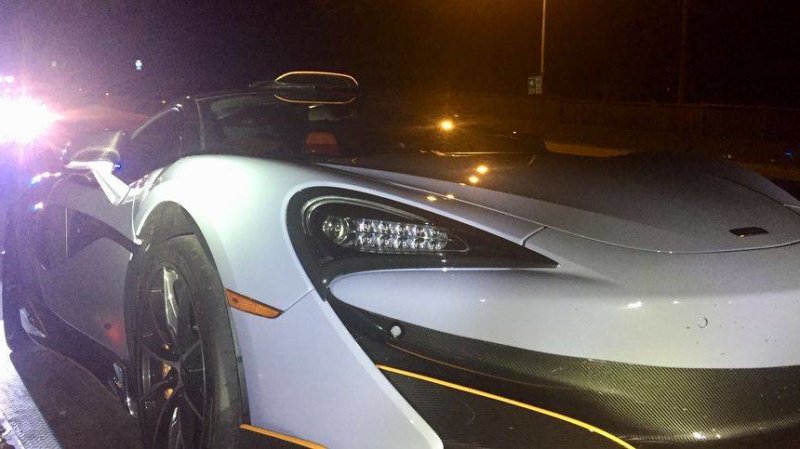
Canada doesn’t mess around with excessive speeding, as a McLaren 600LT owner just found out the hard way. The West Vancouver police department caught the 39-year-old McLaren owner doing 161 km/h (100 mph) in a 90 km/h (56 mph) zone. Unfortunately for the owner, Canada impounds cars for speeding that much, and so police impounded the McLaren. The real kicker? This guy had taken delivery of the brand-new car only 10 minutes prior, according to a police statement and local news reports. Tough luck.

Getting up to 100 mph in a 600LT takes only about 6 seconds from a dead stop. Yeah, cars are fast these days — the 600LT and 600LT Spider are especially fun to drive. Though we’re guessing any sort of plea along those lines would not have worked on the officers in charge of this decision. West Vancouver police took the liberty of photographing the car, using it as an example to other would-be supercar speeders. They also ticketed the driver $368 Canadian for the infraction. Frankly, the $368 fine can’t be much of a deterrent for folks who can afford an over-$240,000 car. It’s the weeklong separation from the car and dinged license that probably hurt the most.

Under British Columbia law, speeding at 40 km/h over the posted speed limit results in the immediate impoundment of the car. That’s equivalent to about 25 mph over the limit. This McLaren was doing 70 km/h over. So, anyone driving through British Columbia not wanting their car to be impounded, make sure to keep your speed in check. Even more so if you happened to just pick up a brand new supercar.

McLaren impounded right after delivery

Dodge Unveils the Charger Hellcat Widebody and Scat Pack Widebody

Two Widebody Muscle Sedans

Just the other day we reported on the teaser that Dodge posted for its new Charger variants. Now the company has officially revealed the cars. Meet the Charger Hellcat Widebody and the Charger Scat Pack Widebody. The two cars will be added to the Charger range in 2020. 

The Charger Hellcat Widebody is exactly what you think it is. The company took the venerable supercharged 6.2-liter V8 that’s used in other Hellcat models and put it in the Charger. Yep, 707 hp and 650 lb-ft of torque, baby. Then the boys at SRT decided to widen the car by 3.5 inches overall. The car can do a 0-60 mph sprint in just 3.6 seconds. It will run a 10.96 quarter mile time. It can also pull .96 g on the skidpad, which means it’ll handle pretty well around a track, too. It has a top speed of 196 mph.

The Scat Pack Widebody gets the same widebody treatment. Under the hood, the car gets the naturally aspirated 6.4-liter V8 engine that makes a hearty 485 hp. This car obviously isn’t quite as fast as its Hellcat brother but it’ll still do a 0-60 mph time in 4.3 seconds and run the quarter mile in 12.4 seconds. It manages to pull a slightly better .98 g on the skidpad, so it’s also a decent handling machine, too.

It’s amazing that Dodge can keep powering on with the Charger. The design is an old one that dates back more than a decade, but the company keeps finding new ways to make it enticing. These two models are by far the most impressive performance versions yet. 

[embedded content]

The Ferrari 250 GTO Recognized as a Work of Art by Italian Court

They’re Not Wrong

In a blow to companies who are seeking to make replicas of the iconic Ferrari 250 GTO, an Italian court recognized the car as a work of art, which means it can’t be copied or reproduced without consent from Ferrari. According to The Telegraph, the court decision came after Ferrari found out there was a company in Modena that planned to build replicas of the 250 GTO. The company started a petition for the design and intellectual property rights to be recognized. 

In a commercial tribunal, the court ruled in favor of Ferrari. It designated the car was a work of art. Therefore couldn’t be replicated in the manner that the company planned to. The court ruling stated, “the customization of the car’s lines and its aesthetic elements have made the 250 GTO unique, a true automobile icon.

The Ferrari 250 GTO is one of the most highly sought after classic cars out there. It makes sense that companies would want to copy its design. There were only 36 of the cars made, and those cars go for obscene prices at auction. Last year, one went up for auction and sold for $48 million. With the real item demanding that kind of price, it makes sense that people would be interested in replica cars. They’d go for a fraction of the price. That won’t be happening, though. 

Audi May Build a GT3-Inspired R8 for the Street

An Upgrade to the R8

We recently reported that the current Audi R8 would be the last R8 generation. However, that doesn’t mean Audi has plans of letting the car languish as this generation of the car moves forward. A report from PistonHeads indicated that Audi Performance boss Oliver Hoffman wants to build a higher-performance version of the model based on the GT3 racing car. This model would borrow heavily from that car but it would be a street car. 

Hoffman said that in order to meet some of the high-performance offerings from other manufacturers, like Porsche, the company should add another version of the R8 to its lineup. He said people love the GT3 R8 but they want to be able to drive that car on the street. It sounds like it could be pretty easy to make it happen, too, according to Hoffman. 

The racing car engine is almost identical to the road car’s, so that’s already proven, but we have the GT3 drivers doing chassis testing for us. For example, Frank Stippler, he’s driving our GT3 car and is also our development guy doing the Nurburgring testing for road cars.

All this is good news. It’s nice to see Audi continuing to work on and come up with new ideas for the R8 even as it draws ever closer to eventual discontinuation. We have a feeling there are still great things to expect from the V10 supercar. 

BMW Vision M NEXT Concept

Every automaker is at least thinking about an autonomous driving future, even if they’re not doing anything about it. BMW’s Vision NEXT concepts have addressed that, but now they’ve made a driver’s concept car for…

2020 Mercedes-Benz GLC-Class Review: Adding Off-Road Chops to a Comfortable Crossover

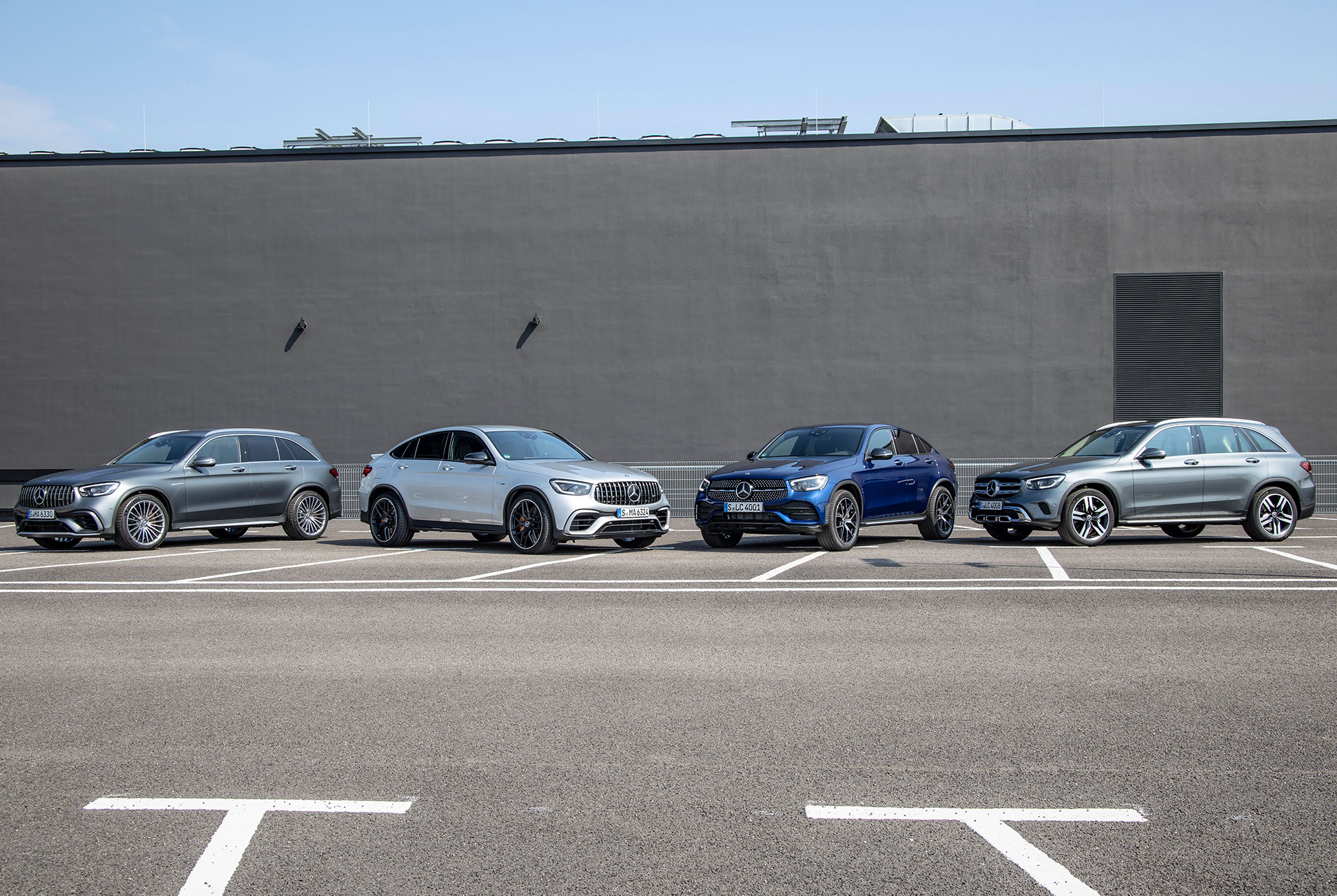
America adores a mid-size crossover, especially when it’s a luxurious one. It’s not a shocker that Mercedes-Benz’s GLC—a utility version of its popular C-Class — has enjoyed steady sales growth since the line launched in 2015. The GLC-Class family now boasts more than a dozen models, including a slew of fastback coupes — a far cry from the four models initially available. Now, five years in, Mercedes-Benz faces the delicate task of giving one of its best-sellers a mid-cycle refresh.

For the upgrades, Mercedes wisely went in with a scalpel instead of a hammer. The surgical results elevated an already-competent and poised vehicle to one that’ll leave crossover ute-lovers gushing. Gear Patrol decamped to Frankfurt to test the improved GLC family, both on curvaceous country roads surrounding the city and on an off-road course.

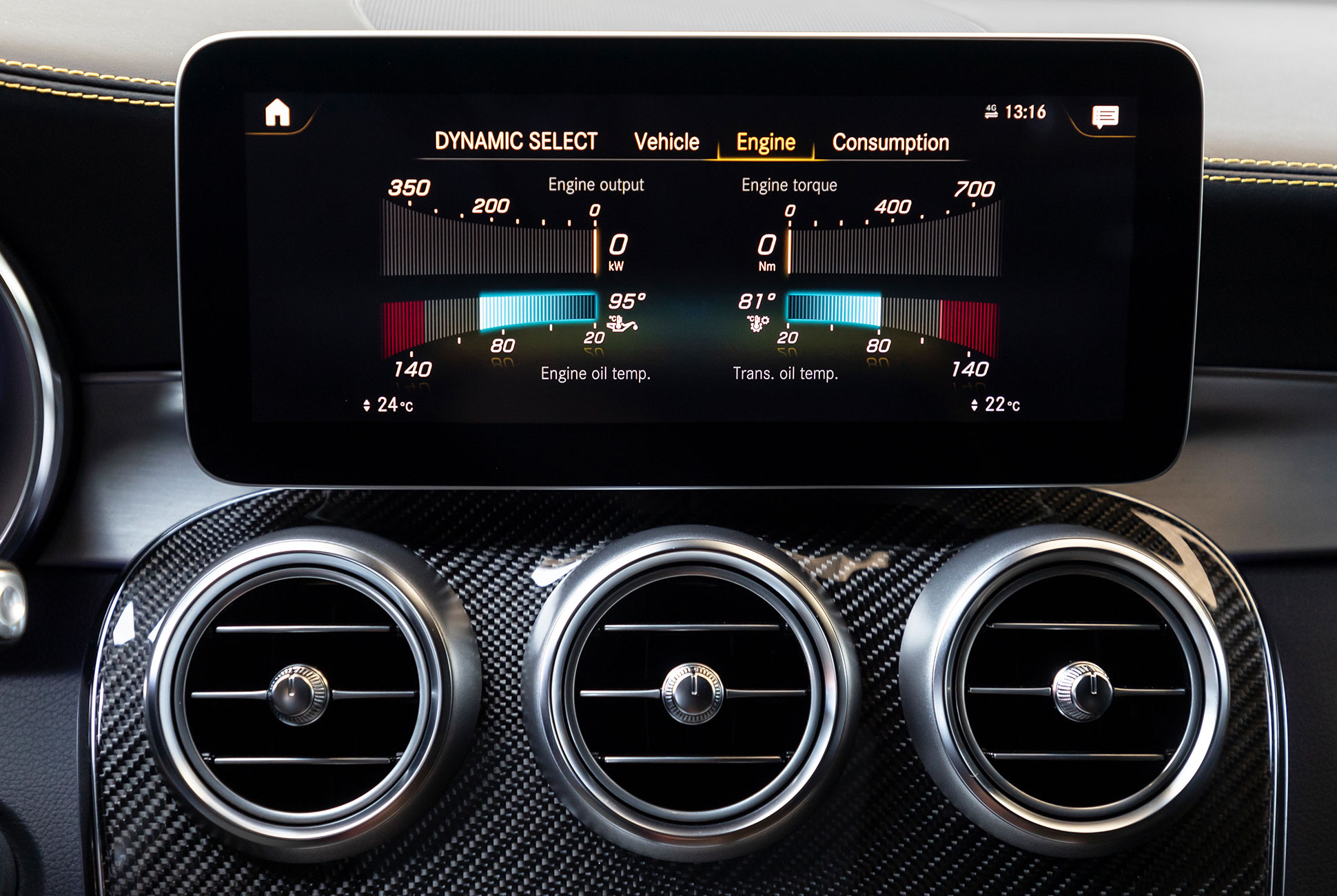
The Good: The light tweaks seem to have been applied in all the right places. Outside, there are new front and rear fasciae, adding a new grille and sleeker LED headlamps and taillights. Inside, Merc ports over the interior we’re coming to know and love from other models, which includes a central 10.3-inch floating touch screen, a haptic touchpad in lieu of the outdated clickwheel and infinitely-configurable steering wheel thumb-touch controls.

MBUX, the brand’s new infotainment system, arrives here, too. Its fresh graphics and increased utility are welcome, as is the digital assistant. Say “Hey Mercedes” to activate Merc’s version of an Alexa or Siri, aiding you in finding everything from gas to a new radio station. The only drawback here is the assistant’s eagerness. It kicks on whenever you say “Mercedes,” which is problematic if the occupants are two auto journalists discussing the brand. You end up screaming “Cancel!” at the thing a fair amount, but any mounting frustration abates after you quip, “Hey Mercedes. Tell me a joke,”  and the car responds, “I can’t. My engineers were German.” Point: Mercedes.

Who It’s For: The GLC300 is perfect for a sedate everyday driver who appreciates saving a little money at the pump, ideal for running errands around town or the work commute. The SUV’s turbocharged 2.0-liter, inline four-cylinder offers 255 horsepower and 273 pound-feet of yank regardless of whether that engine is applied to the rear- or all-wheel drive version. That’s 14 more ponies (and zero more torques) over the outgoing GLC — and while we don’t yet know the fuel-economy integers, engineers claim the new mill was designed for efficiency and reduced emissions without sacrificing power.

Though the peak torque hits at 1,800 rpm, it’s a shame we won’t get the EQ Boost (the 48-volt baby hybrid system only available on European models for now), since the electric torque bump is welcome. But whether you’re puttering around a city or trying to carve some country sweepers, the GLC300 won’t leave you wanting for more power, even if it takes a moment to deliver the oomph.

Watch Out For: You have your choice of rooflines on the GLC. Traditionalists who opt for the standard SUV will find rearward visibility adequate and familiar, along with ample cargo space and a scooch more headroom in the rear. This is the optimal choice for families who road trip. Sportier drivers who gravitate towards the fastback coupe may find rearward glances hindered by the sloping design, and there’s less room for luggage. Speeding down the autobahn, throttle stabs are met with a moment of hesitation before the GLC responds, but buyers likely won’t notice this — or if they do, likely won’t care.

Alternatives: The 2020 Mercedes-Benz GLC300 begins affordably, at $43,495 (which includes destination) for the rear-wheel-drive variant. Tack on an extra $2,000 if you want all-wheel drive, and add on another $5,500 for the Coupe line. If you’re cross-shopping, you’re likely looking at the BMW X3 ($41,000 for the RWD turbocharged four-cylinder, and $46,300 for the M Sport design variant), or the BMW X4 (about $50,000 for the base model and $60,000 for the performance-minded M-Series version). You should also consider Audi’s Q5, with a starting price of $42,950 that steps up to $53,850 for the Premium Plus model.

Review: The GLC300 is plucky when you want to mash the throttle to the floor on the autobahn, all the way to its top speed of 130 mph, and it’s cushy enough to make long hauls a snap. But the prior GLC handled the road just fine, and Mercedes-Benz wanted to showcase that the ute stands apart from the competition when it dips a rubber toe off-road.

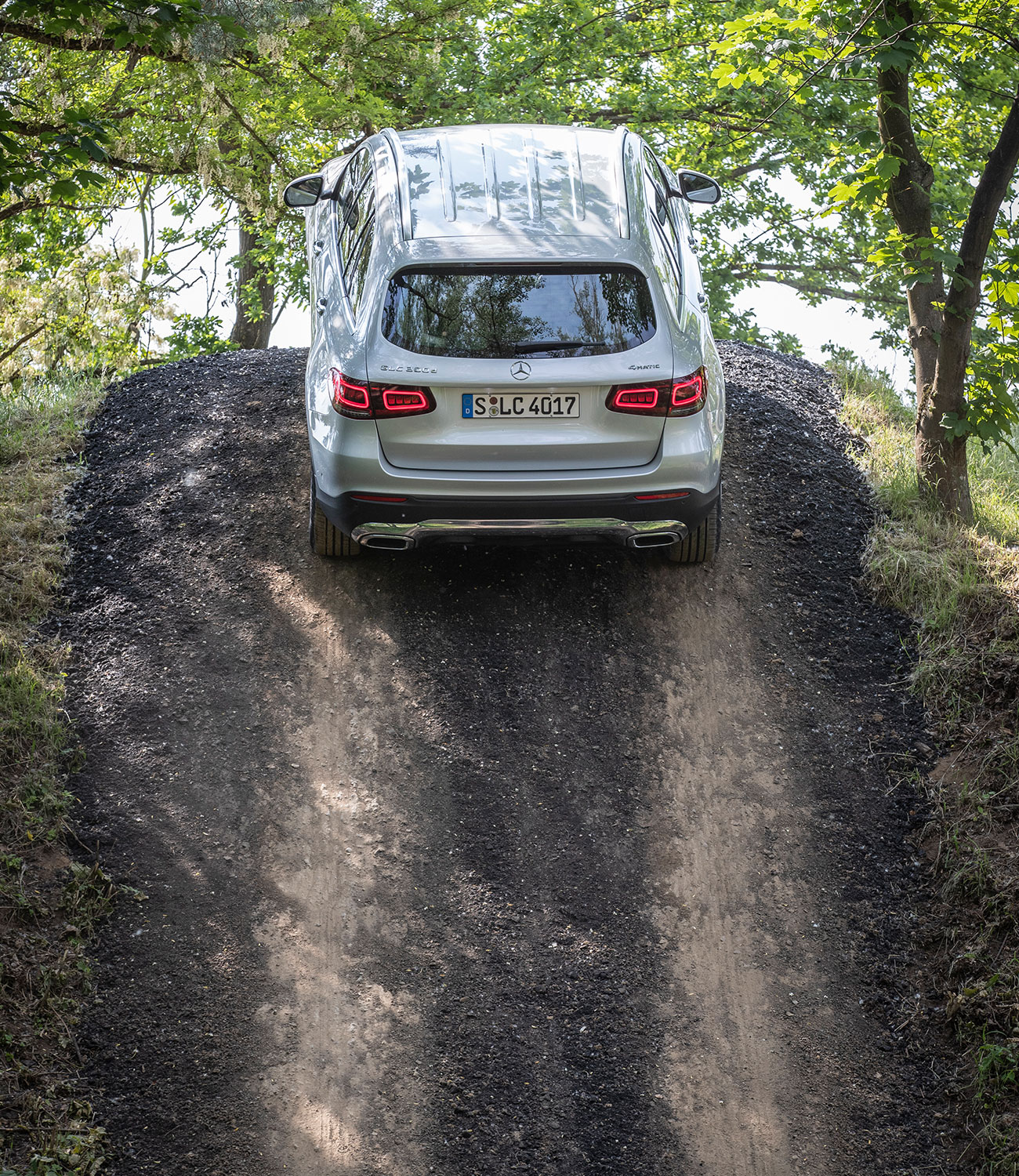
Typically, crossovers like this are more show than go when the asphalt is in the rear-view. Not the GLC. Engineers added a second level of off-road programming, aptly called Off-Road Plus. This checkbox option, along with the Airmatic air suspension, affords up to 9.6 inches of ride height. If you want to go that high, you need to go slow — less than 12 mph, in fact, as we found out at the ADAC Off-Road Center near Rüsselsheim, Germany, where a twisty and muddy course awaited.

The tester unit used for the course had an optional off-road hardware package that includes a skid plate and reinforced rocker panels to complement the software suite enabling the GLC. In this program, the car’s ESP is engaged to brake the wheels that aren’t touching the ground and push the power to those that are. Result is, you continuously keep moving forward, regardless of the terrain. With aplomb (and all-season shoes), we waded through deep water, climbed up 70 percent grades without more than momentary wheel spin, and swooshed around 35-degree banked turns. A screen in the MBUX pages displays all the off-road data, including your slope, wheel articulation, and tilt angles. The 360-degree camera system also helps you keep the wheels pointed in the right direction when all you can see from the driver’s seat is the sky.

Ask an engineer what percentage of GLC300 customers will ever utilize any of these impressive advances and the answer is swift: “Not many.” Then why do it? After a pregnant pause, the reply comes: “Because it’s cool.” Fair enough. (The engineer further noted that to improve the software wasn’t a large research and development cost, that only a few tweaks in the software were needed.)

After lunch, the range-topping GLC63 S Coupe was available, so I hopped in the 4.0-liter twin-turbocharged V-8 and snorted off. In the GLC63, that mill is good for 469 ponies and 479 lb-ft of twist; in the GLC63 S Coupe, that powerplant gets turned up to 11, notching the horsepower up to 503 and the torque to 516 lb-ft. The S Coupe looks more menacing and aggressive, sporting AMG’s Panamericana grille and a rear spoiler.

It has plenty of driving modes, too, including Sport, Sport+, and even Race. In these modes, the suspension hunkers down, the throttle response increases, it’ll hold gears longer though it’ll also give you a crisp and snappy shift whenever you ask, and the glorious active exhaust comes alive with plenty of burbles and snarls. Simply put, it’s freaking awesome. You’ll want to tinker in the individual configurations to make the most of the car, putting everything save the suspension in Race mode. (Leave the suspension in Comfort, to sop up any road imperfections.) And then you’ll want to bury that throttle. The German countryside looks beautiful as it steaks by at speeds typically reserved for the likes of an AMG GT R.

Drag the brake into a corner and you’ll be pleasantly surprised at how the nose plummets and the front end hooks up. In Race mode, with the ESP turned off, the new handling dynamics automatically switch to “Expert,” which can allow for some lengthy drifts around longer corners. The GLC63 S Coupe affords grin-inducing performance, but delivers it in a predictable manner, which makes rinsing and repeating all the more fun.

Verdict: The only negatives of the GLC63 S Coupe are low speed lurches from the nine-speed automatic that employs multiple clutches, and the fact that it costs $85,095. Still, if you’re willing to part with that amount, you’ll be rewarded with a sporty ute that’s a proper hoot. The rest of the mid-size crossover buyers who don’t need to tear from a dead stop to 60 in 3.7 seconds will be beyond satisfied with the GLC300.

2020 Mercedes-Benz GLC300 Key Specs

Powertrain: 2.0-liter turbocharged inline four-cylinder
Horsepower: 255
Torque: 273 pound-feet
0-60 MPH: 5.8 seconds
Top Speed: 130 mph

Mercedes-Benz hosted us and provided this product for review.

Read More Gear Patrol Reviews

Hot takes and in-depth reviews on noteworthy, relevant and interesting products. Read the Story
Note: Purchasing products through our links may earn us a portion of the sale, which supports our editorial team’s mission. Learn more here.

1991 Vector W8 Guide: History, Specifications, Performance, & More

Contents

Introduction

The Old Boys’ Club

Ferrari. Lamborghini. Porsche. These three manufacturers together monopolized the supercar fandom at a time when supercars were still very much an emerging aspect of automotive culture. Then the 1990s arrived, and the rest of the world seemed to have had enough of the status quo and as such, revolutionaries and determined usurpers would follow. 

New Blood

The effort to bring down the establishment appeared to be a concerted effort, as manufacturers from Asia, the U.S., and the rest of Europe looked to shake up the supercar space simultaneously. There were certainly different approaches to this goal, for example, with the Honda pioneering the ‘everyday supercar’ movement with its NSX; producing a high-performance supercar which was also reliable, comfortable and refined – a combination of characteristics simply unheard of at the time. Using the aforementioned as a template, others such as McLaren with its F1 would then take that philosophy to the next level.

An American Tale

Then we have Vector Aeromotive Corporation, who added their relatively lesser-known American flavor to this mix. Founded by industry veteran Gerald Wiegert in Wilmington, California, this company, through the production of its Vector W8 Twin Turbo, would make its entrance into the automotive establishment with a manner which would be fittingly described as “shock and awe”. 

This was probably the only tactic that Wiegert could employ, knowing very well that he could not rely on brand heritage or prestige to make a statement. “The idea is to build a reputation, not ride on one,” said Wiegert, acutely conscientious as to what this journey would entail. 

This message resonated enough to garner some enthusiasm within the right circles – and more importantly some investors – so the company was able to raise more than $13 million USD of capital and expand their operations into a 35,000 square foot facility.

A Leap of Faith

Initially dubbed the W2 in its prototype stage, the W8 Twin Turbo would eventually go on to become a 6.0L, mid-engined, rear-wheel drive, V8 supercar with 625-horsepower, and an extroverted chassis/exterior composed of carbon fiber, kevlar, and aerospace-grade materials. 

Without question, Wiegart and Vector Aeromotive Corporation abstracted the idea of a supercar further, taking it to outer space with certain on-paper specifications that wouldn’t feel out of place in a dialogue about the supercars – or even hypercars – of today. 

The Vector W8 Twin Turbo in many respects was ahead of its time; however, due to the company’s financial troubles and eventual dissolution, the car ultimately fell behind the perpetually shifting curve.

The Legend Lives On

In the end, there were only 17 customer cars builtplus two prototypes – before production was eventually ceased. Today, the W8 Twin Turbo has a small but formidable cult following of whom the nostalgia is not lost on. It is considered a classic unicorn car which is on the radar of many private collectors. Examples come up for sale every now and then and are able to fetch huge money – from $200,000 USD for restoration projects to as much as $1,000,000 USD for mint examples.

Despite things not really taking off for Vector Aeromotive Corporation, Wiegart had still achieved his goal of shaking up the automotive industry, by producing a supercar like no other before it. Some would even argue that the Vector W8 Twin Turbo has forged a distinguishable legacy, putting the U.S. on the map as a serious super(car) power by setting the stage for the production of future supercars with a ‘Made In America’ distinction, such as the Ford GT and Saleen S7.

Engine & Performance

The Vector W8 Twin Turbo had an engine which not only set the precedence of what the car itself was all about but also how future engines would be perceived – particularly in the United States. The sheer abundance of power that the mid-mounted unit produced made for remarkable specs on paper, though its real-world performance in some cases is at best, debatable.

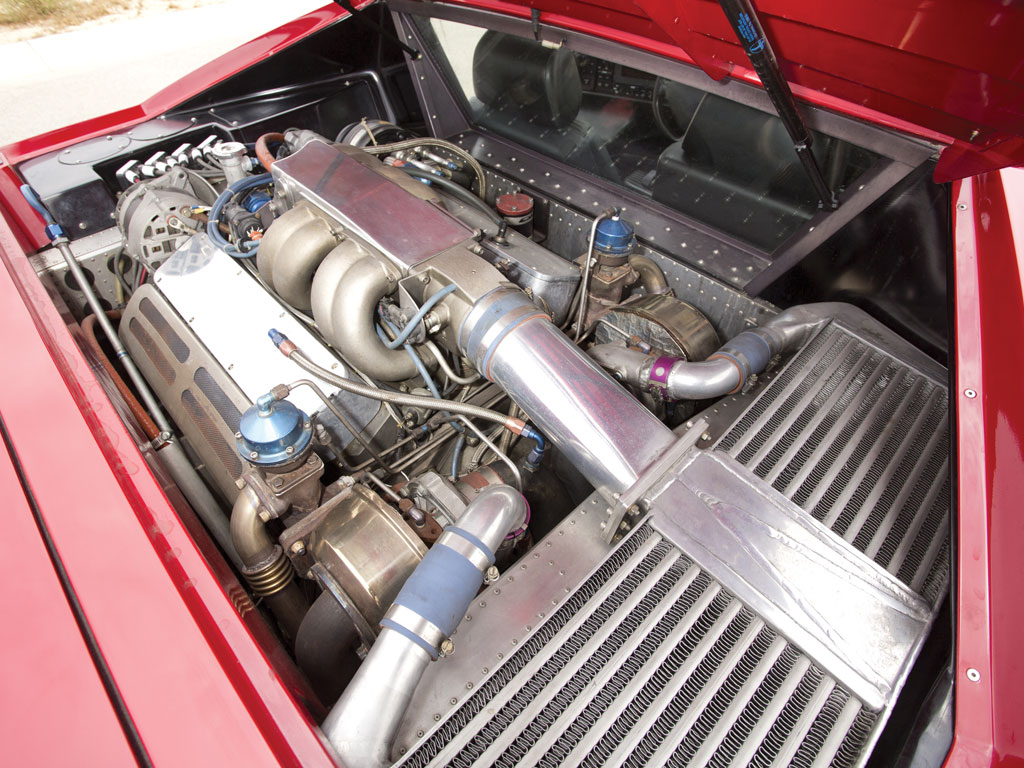
1991 Vector W8 Engine1991 Vector W8 Engine

Specifications:

  • Engine type & size: 6.0L Twin-Turbo V8
  • Horsepower: 625 hp @ 5,700 rpm
  • Torque: 649 lb-ft @ 4,900 rpm
  • O-60 mph: 4.2 seconds
  • Quarter mile: 12 seconds @ 124 mph
  • Top speed: Estimated 218 mph

The engine is a 6.0L twin-turbocharged V8 which produces an advertised 625-horsepower @ 5,700 rpm and 649 lb-ft of torque @ 4,900 rpm, operating with 8 pounds of boost. Mounted transversely in the engine bay, the aluminum block-and-head, fuel injected power plant is based on a 5.7L Chevrolet engine which had been strokered, and then provided with forced induction.

Boost pressure through the Garrett turbochargers can be adjusted by the driver up to a maximum of 14 psi, with Vector Aeromotive Corporation claiming that this would allow the engine to output an astronomical 1,200-horsepower. Mated to the engine is a three-speed automatic transmission sourced from the Oldsmobile parts catalog, which is appropriately fortified to withstand the demands of its new taskmaster and then fitted to a Gleason-Torsen differential.

All of these factors contributed to highly impressive performance figures at the time, even by today’s standards. The rear-wheel driven Vector W8 Twin Turbo was capable of achieving 0-60 mph in 4.2 seconds and could complete the ¼-mile sprint in 12 seconds @ 124 mph. 

By comparison, this meant that it was faster than a Ferrari F40, Bugatti EB 110 GT and Jaguar XJ220 – each of which held the top speed records at one point – in these metrics. It is interesting to note, however, that a top speed test was not officially conducted by Vector Aeromotive Corporation nor any third-party test drivers. Instead, a theoretical top speed was provided – 218 mph, to be exact – by making calculations based on the 3-speed’s gear ratios and the engine’s maximum rpm.

No expenses were spared by Wiegert and Co. to ensure that the engine would be a talking-point in the automotive industry.

Chassis & Handling

To achieve his vision of creating a supercar which would unbalance the oligarchy, Wiegart knew that the W8 Twin Turbo would have to be more than just brawn. Therefore, the suspension was also intricately assembled with a state-of-the-art approach, resulting in an amalgamation of parts which would give the car the dexterity and poise it needed to complement its power.

Over the front wheels, W8 Twin Turbo is equipped with a double-wishbone independent suspension with adjustable Koni shocks, concentric springs and an anti-roll bar. In the rear, a De Dion rear axle with diagonal trailing links, adjustable Koni shocks, concentric springs and an adjustable anti-roll bar complete the package.

W8 Twin Turbo is fitted with a braking setup which matches 13-inch vented rotors to aluminum 4-pot Alcon calipers, in both the front and rear. Allowing the car to meet the tarmac were specially-made Michelin XGT Plus tires (255/45/16 Front, 315/40/16 Rear) mounted to a set of bespoke wheels, forged to the specifications provided by the original buyer when ordering their allocation.
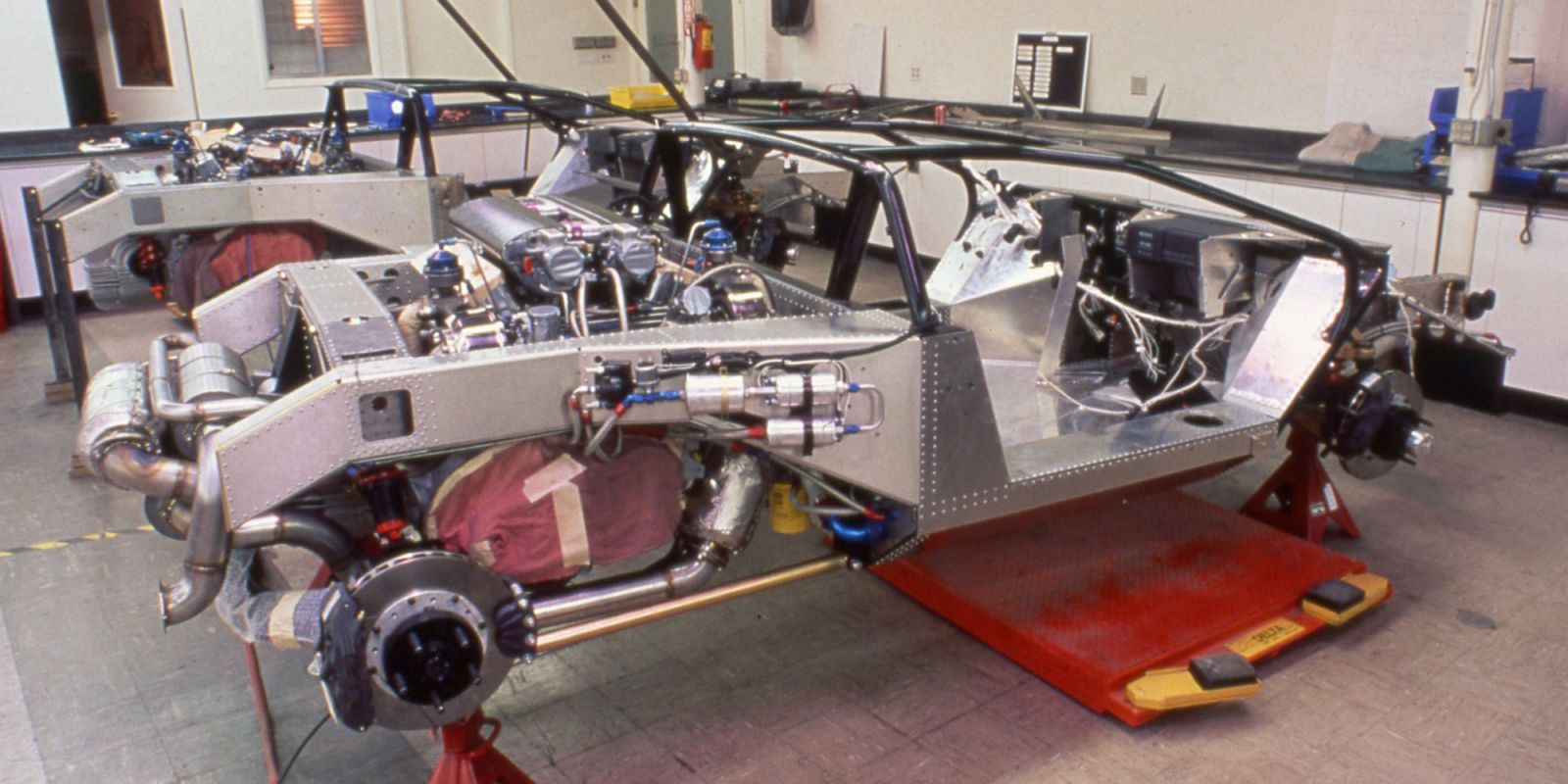
1991 Vector W8 frame1991 Vector W8 frame

Design, Styling & Interior

The two-seater supercar can be accurately described as an even more audacious version of the angular and geometric wedge-shaped Lamborghinis of the time. Although it shares characteristics with the aforementioned – such as a low-flat front and truncated tail – the Vector W8 Twin Turbo is the furthest thing you can get from a kit car/replica. In fact, the design of the W8 was actually inspired by the 1968 Alfa Romeo Carabo, which was one of the first prototypes to embrace what were then, very futuristic design elements.
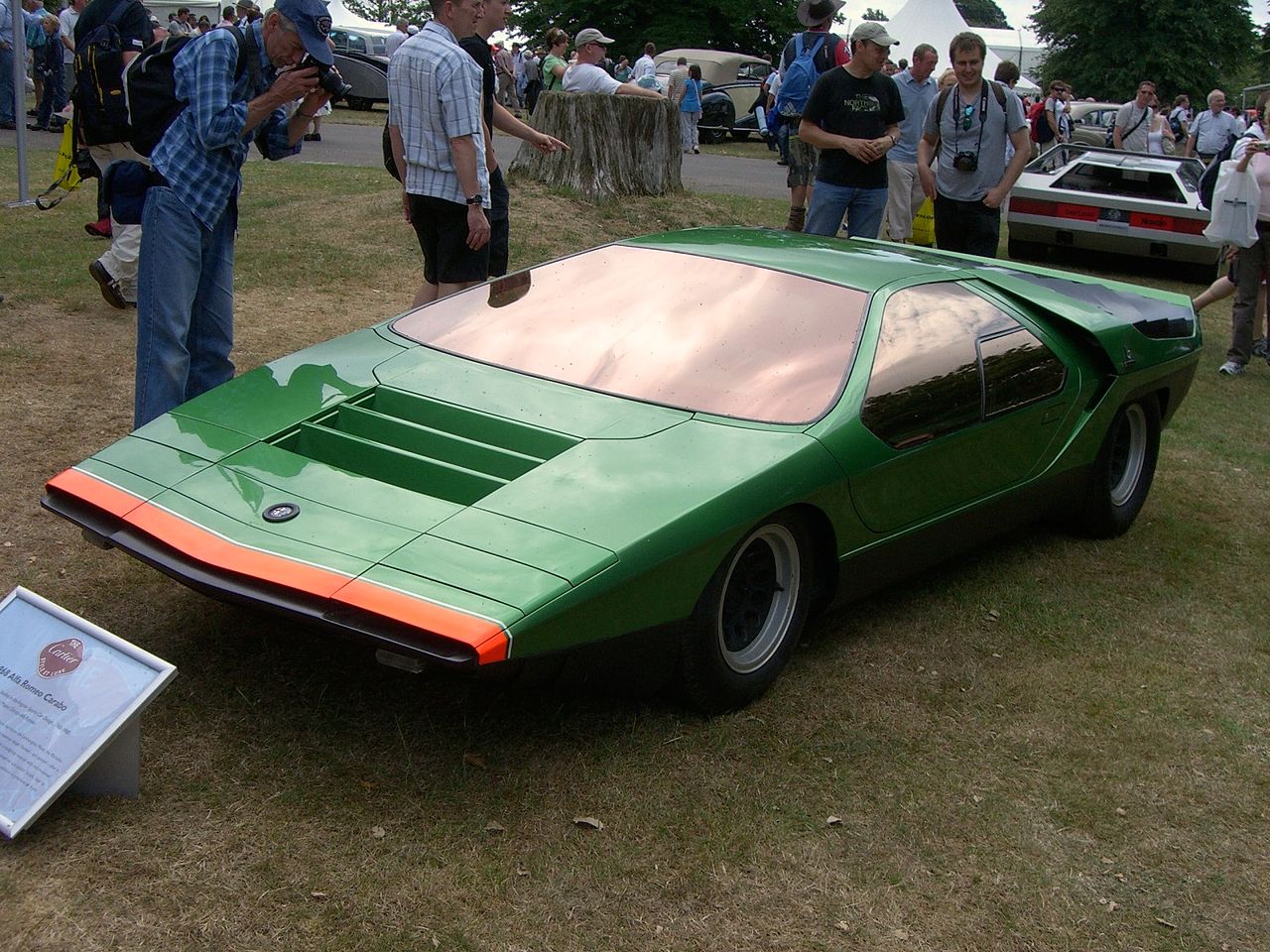
1968 Alfa Romeo Carabo1968 Alfa Romeo Carabo

Pictured above: Alfa Romeo Carabo

Utilizing a body made primarily out of carbon fiber combined with the best aerodynamic principles available at the time, the W8 Twin Turbo produced relatively low drag even with its large rear wing. Due to the somewhat bespoke privileges given to each of the initial suitors, the W8 would undergo slight changes throughout its short production run. 

These included the elimination of some gills, a lower front fascia and air splitter, and adjustments of the rear wing, mirror intakes, and front grill. The glass roof which with fitted to early examples, was eventually removed altogether.
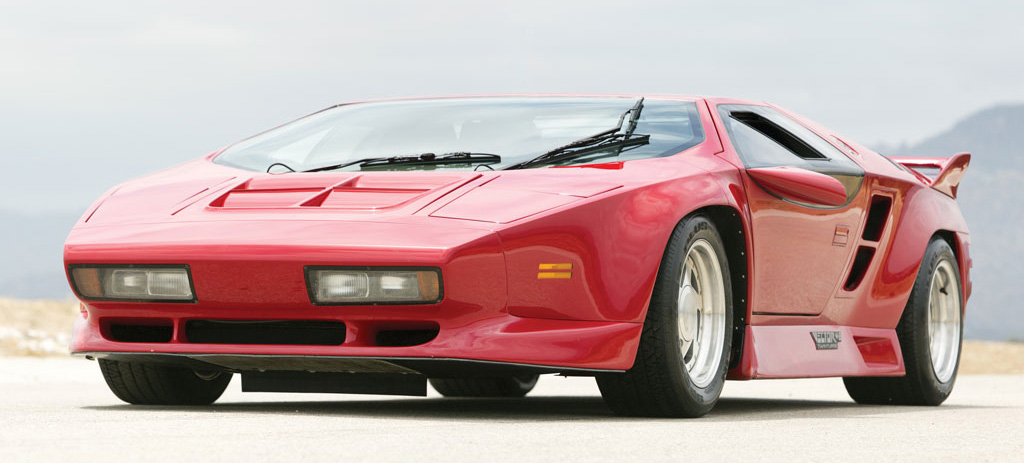
Vector W8Vector W8

Wiegart’s appreciation for fast moving vehicles was indiscriminate, as he borrowed cockpit styling queues from fighter jets for the W8 – mostly notably the sort-of-center driver’s seating position (with the shifter on the left) and digital dashboard displays straight from the Top Gun movie set. 

The dashboard consisted of four screens which displayed a variety of information about the car. Although certain conveniences such as power-steering and ABS were foregone in the name of weight savings, the car was otherwise very civil for city driving thanks to a luxurious and overall, comfortable interior.  

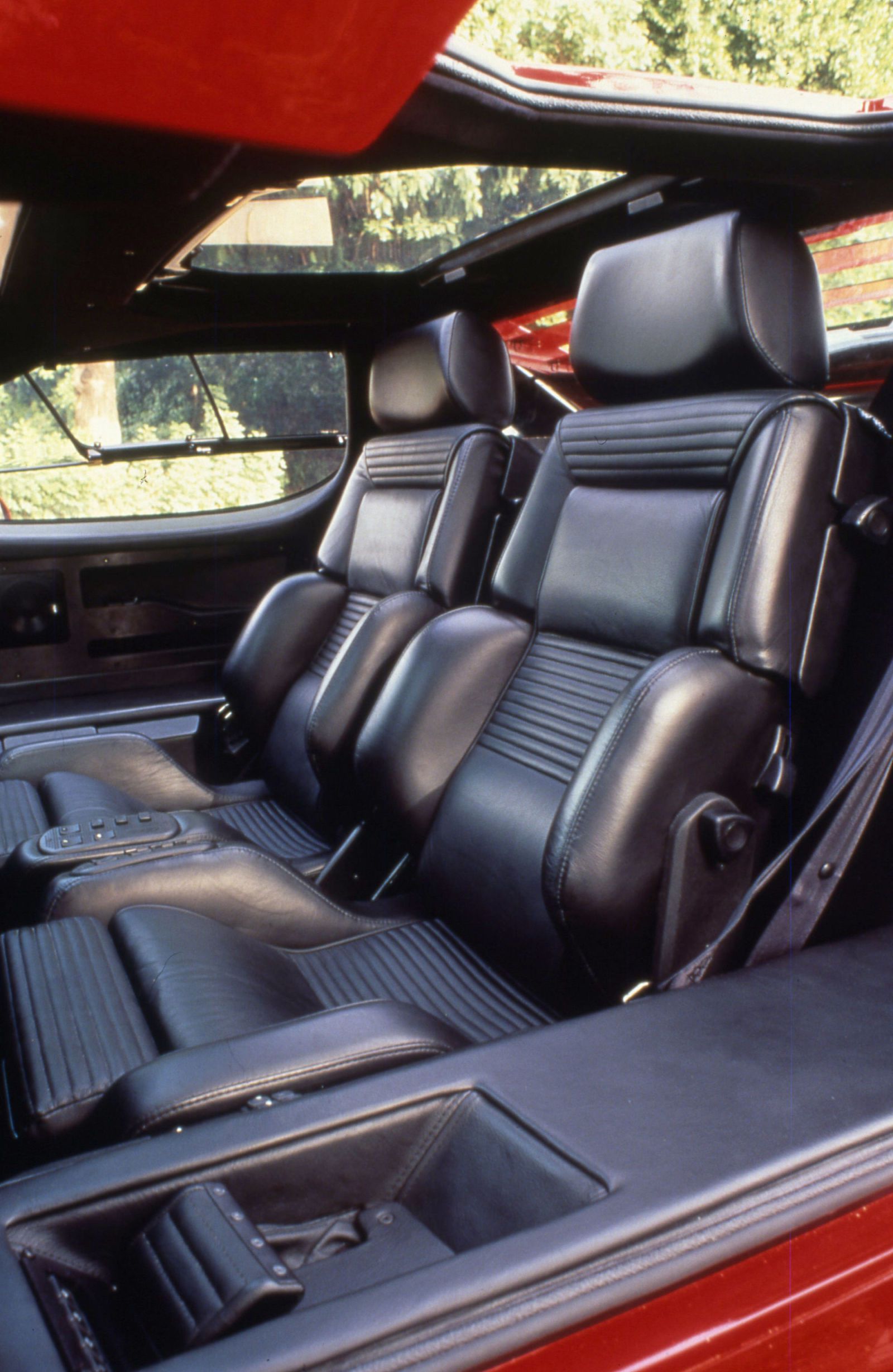
Premium leather and suede lined most of the interior panels with the floors given wool carpeting and floor mats. The generously bolstered Recaro leather seats were electrically adjustable, and air-conditioning came standard.

Pricing

Operating a boutique supercar company obviously comes with many challenges. Without the backing, experience, and structure that a large automaker would have provided, many of Vector Aeromotive Corporation’s well-intentioned promises could not be kept – and its price was one of these. 

The Vector W8 Twin Turbo was originally marketed as a $250,000 USD car but in reality, would end of costing customers more than $450,000 USD by the time it was actually delivered. That’s big money now (about $800,000 USD equivalency), and a huge amount of money in the early 90s. 

Being one of the most expensive vehicles one could (or more accurately, couldn’t) purchase, ultimately not many were sold. After running on fumes for a few years after opening its doors, the company eventually closed and with that, the W8 Twin Turbo ended its production run with just 19 examples made, 2 of which were prototypes.

So, with a now-defunct company and a vision which had capitulated, many wouldn’t be questioned in thinking that the story ends here. From a pragmatic point of view, the business was indeed a failure. 

However, the Vector W8 Twin Turbo has continued a life of its own thanks to the cult following it has garnered, in part due to the efforts of Hollywood, or some other version of celebrity. My guess is that social media and the heightening levels of nostalgia in the air these days will only help the car get more attention.

If you wanted to get your hands on a Vector W8 Twin Turbo today, first you would have to wait – possibly indefinitely – for one to come up for sale or auction. Then you would have to be ready to fork out at least $200,000 USD – and that’s for one that demands a restoration project – and up to $1,000,000 USD or more for a mint example. Not bad for a ‘failed’ venture.

Performance & Specifications Summary

Model & Price Info

Make Vector
Model W8 Twin Turbo
Car type 2-Door Coupe
Category Sports Car
Built At Wilmington, California
Introduced 1989
Units built 19

Chassis, Suspension & Powertrain

Curb Weight 3,320 lbs
Layout Mid-engine, rear-wheel drive
Body / Frame Carbon fiber, kevlar and fiberglass, tubular steel with aluminum panels and aluminum box sections
Suspension (F) Upper & lower A-arms, coil springs, adjustable tube shocks, anti-roll bar
Suspension (R) De Dion tube, upper & lower trailing links, diagonal link, coil springs, adjustable tube shocks, adjustable anti-roll bar
Steering Rack and pinion
Brakes 13” vented discs (front and rear)
Tires Michelin XGT Plus (255/45/16 front, 315/40/16 rear)
Transmission 3-Speed Automatic, 2.43:1 FDR

Engine & Output

Engine V8
Displacement (Litres) 6.0L
Aspiration Twin-turbocharged
Power (hp) 625 hp @ 5,700 rpm
Power (hp) / litre 104.2 hp / litre
Power (hp) / weight 0.19 hp / lbs
Torque 630 lb-ft @ 4,900 rpm
Average Fuel Consumption 13.5 mpg

Performance, Acceleration & Braking Stats

Top speed 218 mph (est)
0 – 60 mph 4.2 s
0 – 80 mph 5.9 s
0 – 100 mph 8.3 s
¼ mile (standing) 12.0 s @ 124 mph
60 mph – 0  145 ft
80 mph – 0 250 ft

In my opinion, The Vector W8 Twin Turbo is a classic pop-culture interpretation of what the not-so-distant future looked like for those living in the late 80s and early 90s. 

From its extravagant wedge-shape silhouette to its fighter jet display screens and extensive use of aerospace materials, it is no surprise the fanfare that the car generated back then, and even now. The car is fascinating in every sense; its storied past and the journey it has taken to be where it is now, still creating the buzz it set out to make all those years ago. 

Top Gear America does a brief feature on the Vector W8 Twin Turbo, touching base on its history while taking it for a drive on Californian backroads.  

[embedded content]

Here is a video featuring pre-production model #002, uploaded by user ‘vectorfiles’ on YouTube. They show extensive views of the cockpit and exterior and take it for a drive on city streets.

[embedded content]

DtRockstar1 tells the story about what happened to Vector Aeromotive Corporation and their most famous creation, the Vector W8 Twin Turbo.

[embedded content]

Road & Track Review – April 1991 Issue

Road & Track is the only official automotive magazine to have been given exclusive access to cover the Vector W8 Twin Turbo during its release, and is therefore the most credible source to provide a third-party verdict on the car. We have provided their article below, as it was written in 1991, which can also be viewed on their official website.  

Vector W8 Twin Turbo: First Drive

Measuring the magnitude and defining the direction of America’s supercar.

BY DOUGLAS KOTT

MAY 19, 2016

Vector W8 Twin TurboVector W8 Twin Turbo

From the April 1991 issue of Road & Track

“The idea is to build a reputation, not ride on one.” says Gerald Wiegert in a voice that manages to be both soft-spoken and intense. The president of Vector Aeromotive Corporation hasn’t had the luxury of the latter option, even though he’s been working—since 1971—at his dream of designing and producing the twin-turbocharged Vector, a 625-bhp 2-seat mid-engine supercar built of advanced materials and with aerospace systems technology. 

From sketches to foam models to a full-size mockup, the Vector was displayed for the first time at the Los Angeles Auto Expo in 1976. A running prototype was completed two years later, pieced together from components gleaned from junkyards and scoured from parts-supply houses. 

A weak economy and damaging criticism from the automotive press dashed efforts to secure financial backing, he says, and his dream of producing a ground-bound fighter plane for the street seemed destined to remain just a dream.

Wiegert deserves some sort of medal for perseverance, some award for sheer tenacity. Bucking incredible odds and ignoring the wailing ghosts of failed Tucker, DeLorean and Bricklin ventures. Vector Aeromotive Corp. in Wilmington, California is, at long last, staged for producing one car per week. 

Naysayers need only visit the final assembly area, where the two cars we photographed were being prepped for shipment to their new owners in Switzerland (the first production Vector W8 Twin-Turbo was sold to a Saudi Arabian prince, an addition to his 25-car collection, which also contains a Porsche 959 and a Bentley Turbo R). 

Under construction were about eight other Vectors in various stages of completion, from rolling chassis to nearly finished cars.
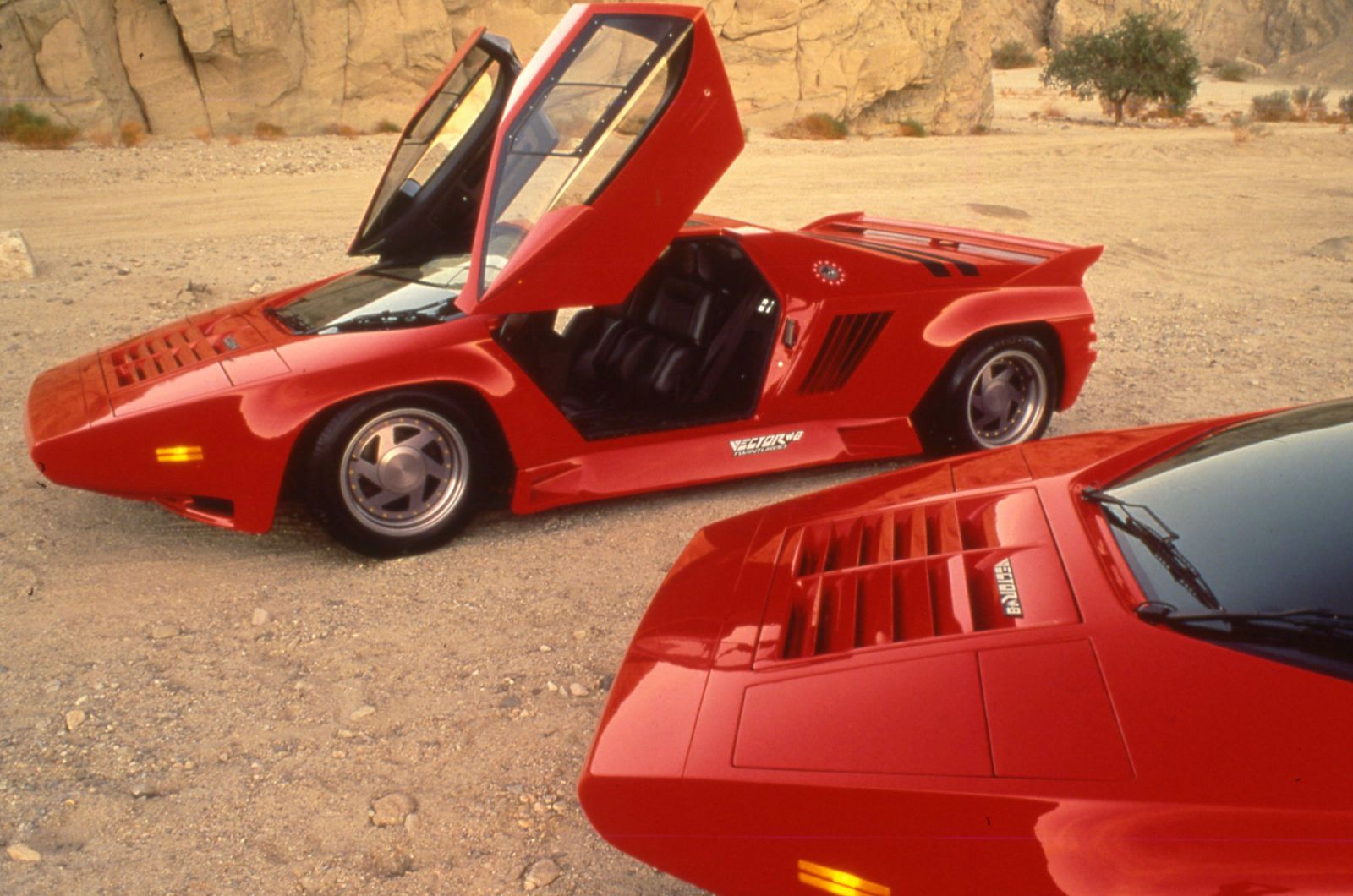
Vector W8 Twin TurboVector W8 Twin Turbo

The still-unconvinced should know that the company has grown from one building and four employees in 1988 to four buildings totaling more than 35,000 sq. ft. and nearly 80 employees as of this writing. 

And that the Vector has passed DOT crash tests with flying colors (it took just one chassis to complete the 30-mph front and rear impact, door-crush, and roof-crush tests); and emissions testing is well underway. More than $13 million worth of working capital has been raised through two public, over-the-counter stock offerings.

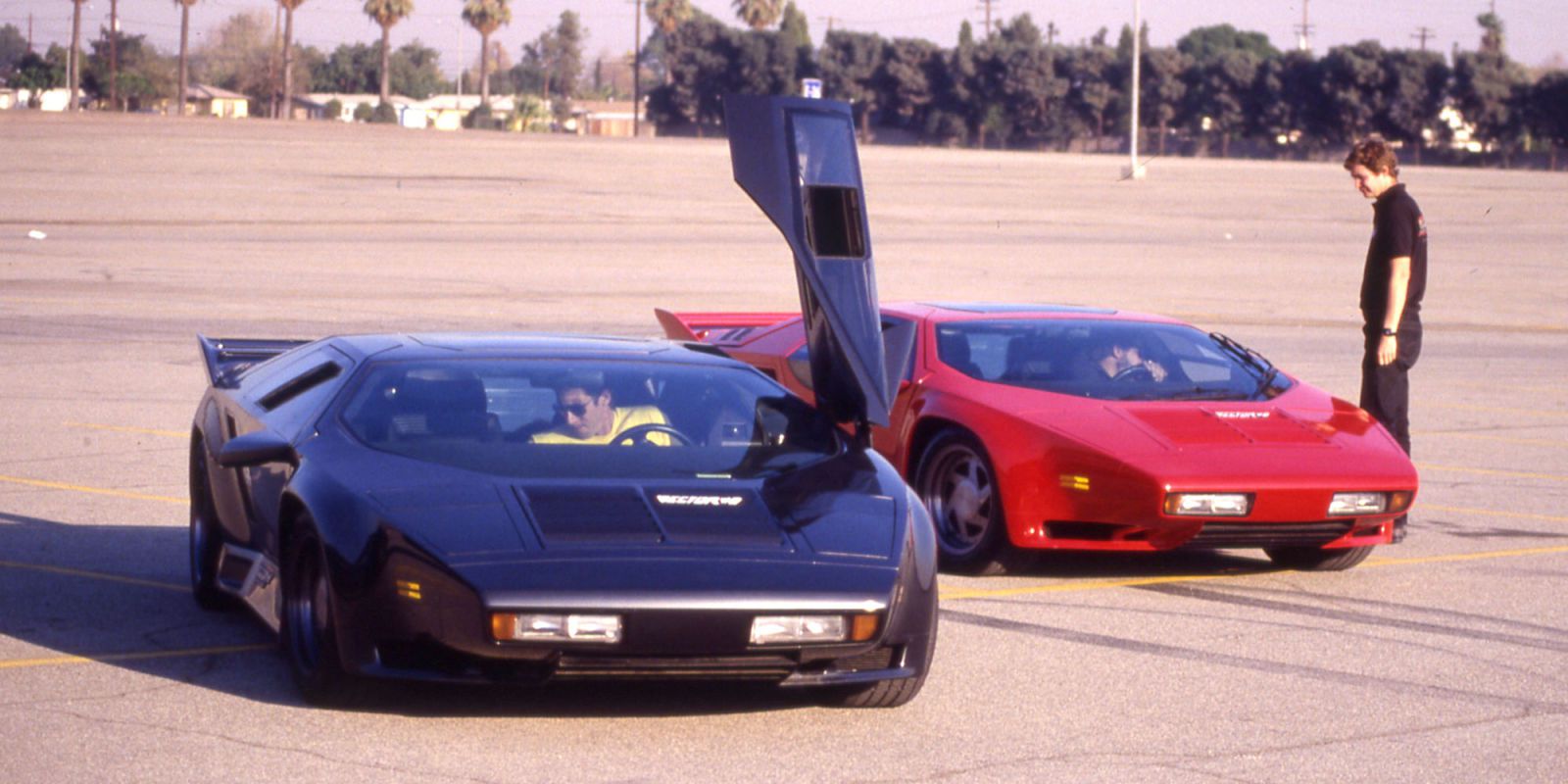
But Wiegert’s ultimate act of faith was obvious under the hot midday sun at the Pomona, California Fairgrounds. A flatbed truck, loaded with two Vector W8 TwinTurbos, made its way across the expanse of asphalt to the drag-strip. 

The two development cars were unloaded, and Road Test Editor Kim Reynolds fitted one of them with our fifth wheel and road-test computer, readying it for the first-ever performance test by an automotive magazine.

David Kostka, Vector’s vice president of engineering since 1981, gave a few pointers on how to achieve the best acceleration times. After a few loping familiarisations runs down the strip, Kim wheeled the Vector around to the staging line and reset the test computer.

Kostka’s face wore a look of concern. It should have. Ten years of 12-hour-a-day, 7-day work weeks, nearly one-third of his waking life—not to mention a sizable chunk of his soul—are invested in the car.
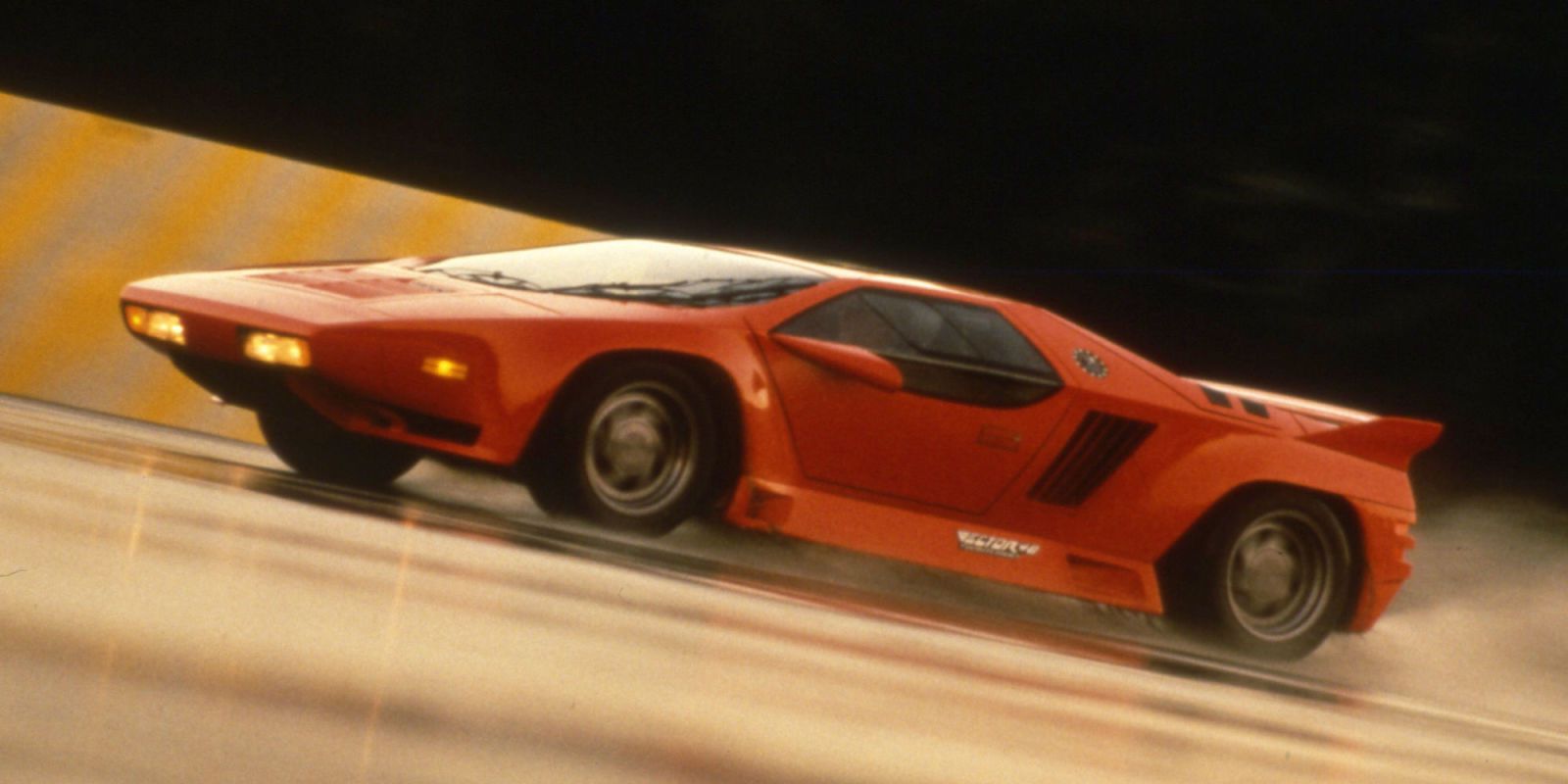
Vector W8 Twin TurboVector W8 Twin Turbo

He needn’t have worried. Kim plants his foot on the brake, selects 1st gear and applies throttle to load the drivetrain. The throb of 6.0 liters of all-aluminum V-8 intensifies and the whistling teakettle sounds of the Garrett turbos sing harmony with the whine of the Gilmer-type accessory belt drives. 

The rear brakes are fighting a losing battle with the V-8’s torque and the car inches forward, sliding locked front ties over the pavement. It’s the automotive analog of an angry pit bull straining at its leash.

The brakes are released and the Vector catapults away with a touch of wheelspin, a wisp of smoke from the fat Michelins and a slight side­ step. In a few eye-blinks—a paltry 4.2 seconds—60 mph is reached, an instant before the 1-2 shift. 

Whooping like a big-bore Can-Am car, the Vector continues its charge down the strip with increasing ferocity; vortices of sand and track debris swirl into the vacuum created as its wedgy form cleaves an opening through the air. Though nearly a quarter-mile away, the sound of the engine is still distinct as the car whistles through the traps. Speed? 124.0 mph, accomplished in just 12.0 sec.

Twelve-point-zero seconds. That figure places the Vector well ahead of such standard-bearers as the Acura NSX (14.0 sec.), Ferrari Testarossa (14.2) and Corvette ZR-1 (13.4). Its acceleration and speed are admission to a far more exclusive club, the charter members be­ ing the Ferrari F40 and yet untested Lamborghini Diablo. 

Membership has its privileges but also its costs; the Vector W8 TwinTurbo retails for a cool $283,750, pricier than the Lamborghini ($211,000) but less than the Ferrari (a U.S.-spec F40 runs about $400,000).
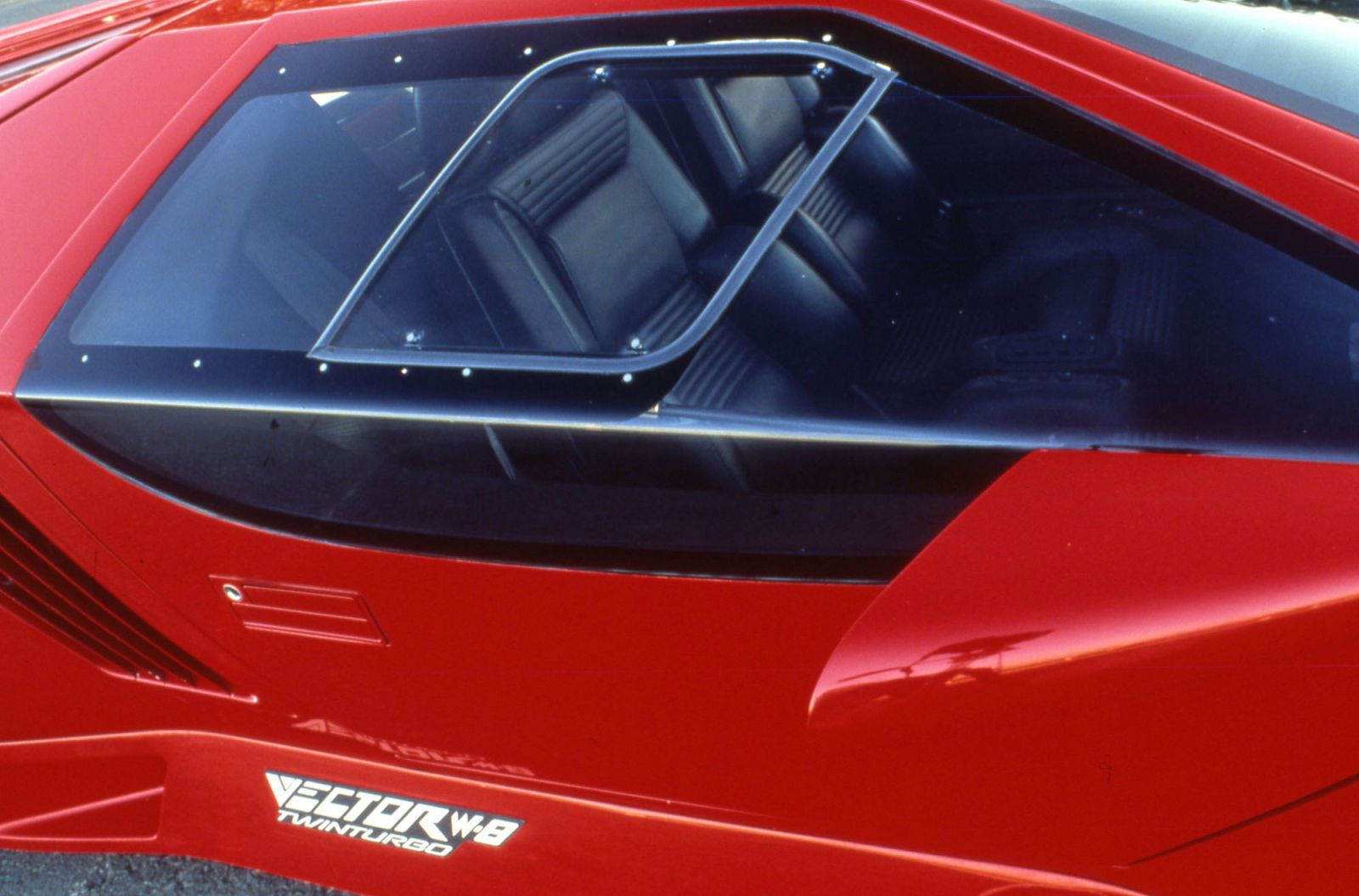
Vector W8 Twin TurboVector W8 Twin Turbo

So what makes a Vector W8 tick? To answer my every question and provide a guided tour of Vector’s facilities was Mark Bailey, vice president of production, ex-Northrop employee and past Can-Am-series competitor.

Gesturing toward the engine bay of a Vector under construction, he said, “This is not a tiny little motor tweaked to death. It’s a big motor that isn’t working that hard.”

Six liters of all­ aluminum 90-degree pushrod V-8, the block made by Rodeck, the 2-valve cylinder heads by Air Flow Research. The long blocks are assembled and dyno-tested by Shaver Specialties of Torrance, California. 

No expense is spared; the roster of engine parts reads like a circle-track racer’s Christmas list: TRW forged pistons, Carrillo stainless-steel connecting rods, stain­less-steel valves, roller rocker arms, a forged crank, a dry-sump oiling system with three separate filters. Bundles of braided stainless-steel hose, with anodized red and blue fittings, are used to route fluids throughout.

The engine’s crowning glory is its exposed intercooler package, fabricated from aluminum and polished to a blinding sheen. It can be removed from the car in minutes by unclasping four quick-release aerospace clamps. It connects to twin water-cooled Garrett turbos, composed of automotive center sections and aircraft-specific impellers and housings.
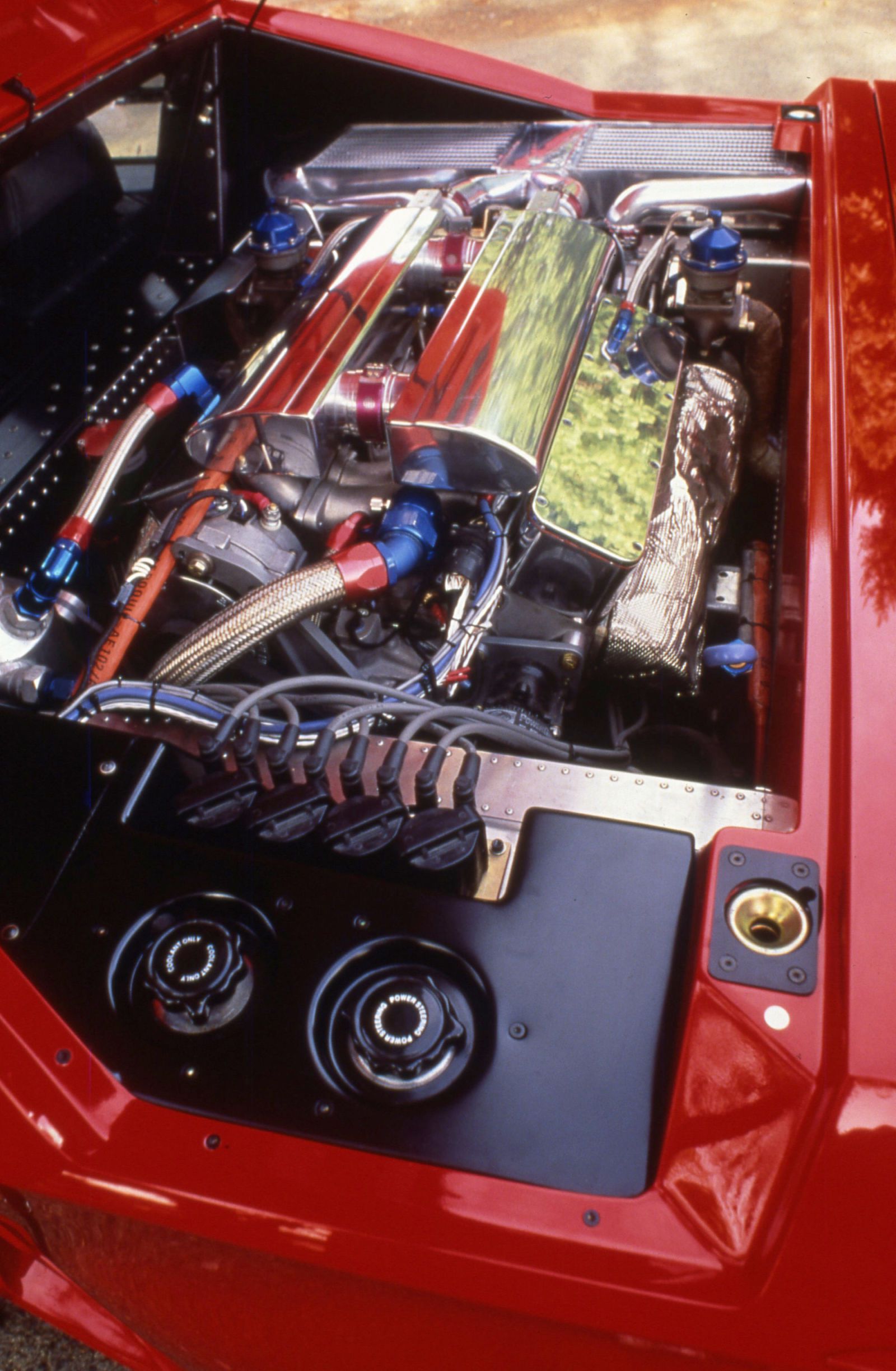
Vector W8 Twin Turbo EngineVector W8 Twin Turbo Engine

Ignition is handled by a separate coil for each cylinder, and fuel delivery is by multi­ sequential port injection, using custom-made injectors from Bosch’s research and development group. Spark and fuel are coordinated by a proprietary Vector programmable engine-management system.

As beautifully done as the engine itself are the mounting plates that position it transversely in the bay. Blue anodized and relief-milled from billets of aluminum, one bolts to the accessory side of the block, and the other doubles as an engine/transmission adapter plate. 

The transmission case is a GM Turbo Hydra-matic, the sort used in the Seventies by the V-8-powered front-drive Olds Toronado and Cadillac Eldorado. But virtually every part within the 3-speed gearbox is specially machined by a Vector subcontractor from materials able to withstand the 630 lb.-ft. of torque, the engine generates at 4900 rpm and at 7.0-psi boost.

Mark Bailey’s enthusiasm shows as he leads me through the manufacturing shop, pointing out the massive chrome-moly steel tube frame, the aluminum-honeycomb floor plan, and the aluminum panels that are epoxy-bonded and riveted to the frame to form monocoque crush zones. 

He explains, “If [the structure] is all monocoque, you get a lot of twist to it, and it’s tough to build it accurately. If it’s all space frame, you smack one area and you impact everything else because every tube takes all the load. In the Vector’s case, the energy-absorbing areas are monocoque, because that’s what they do best.” 

The body, made from varying amounts of carbon fiber, Kevlar, fiberglass mat and unidirectional fiberglass, is structurally unstressed.

Vector W8 Twin TurboVector W8 Twin Turbo

A stiff chassis is all the better to take loads from the massive suspension pieces. The Vector uses beefy double A-arms up front and an immense De Dion tube in the rear, located by four trailing arms that stretch all the way forward to the firewall. Koni adjustable shocks, with concentric springs, are used all around. 

Brakes are massive 13-in. vented discs with Alcon aluminum 4-piston calipers. Wheel bearings are similar in design to those used on 3800-lb. NASCAR stock cars, and the hubs’ machined aluminum outer housings look to be about the diameter of a coffee can. There isn’t a piece on the chassis that is substandard, or even merely adequate.

The factory tour has lasted the entire day. There’s so much to see, and Bailey has tirelessly shown me virtually every facet of the operation. I’ll have to come back to drive the car.
Vector W8 Twin TurboVector W8 Twin Turbo

Saturday arrives, and the slate gray development car we tested beckons with an outstretched swing-up door. Getting in is a bit of a task for the uninitiated, with a moderately wide sill and a fairly small space between the seats and the front of the doorjamb. 

David Kostka, with the advantage of muscle memory, slides over the sill and into the passenger seat with the grace of a gymnast; I limbo-dance into the driver’s seat with the wobbliness of a newborn deer.
Vector W8 Twin TurboVector W8 Twin Turbo

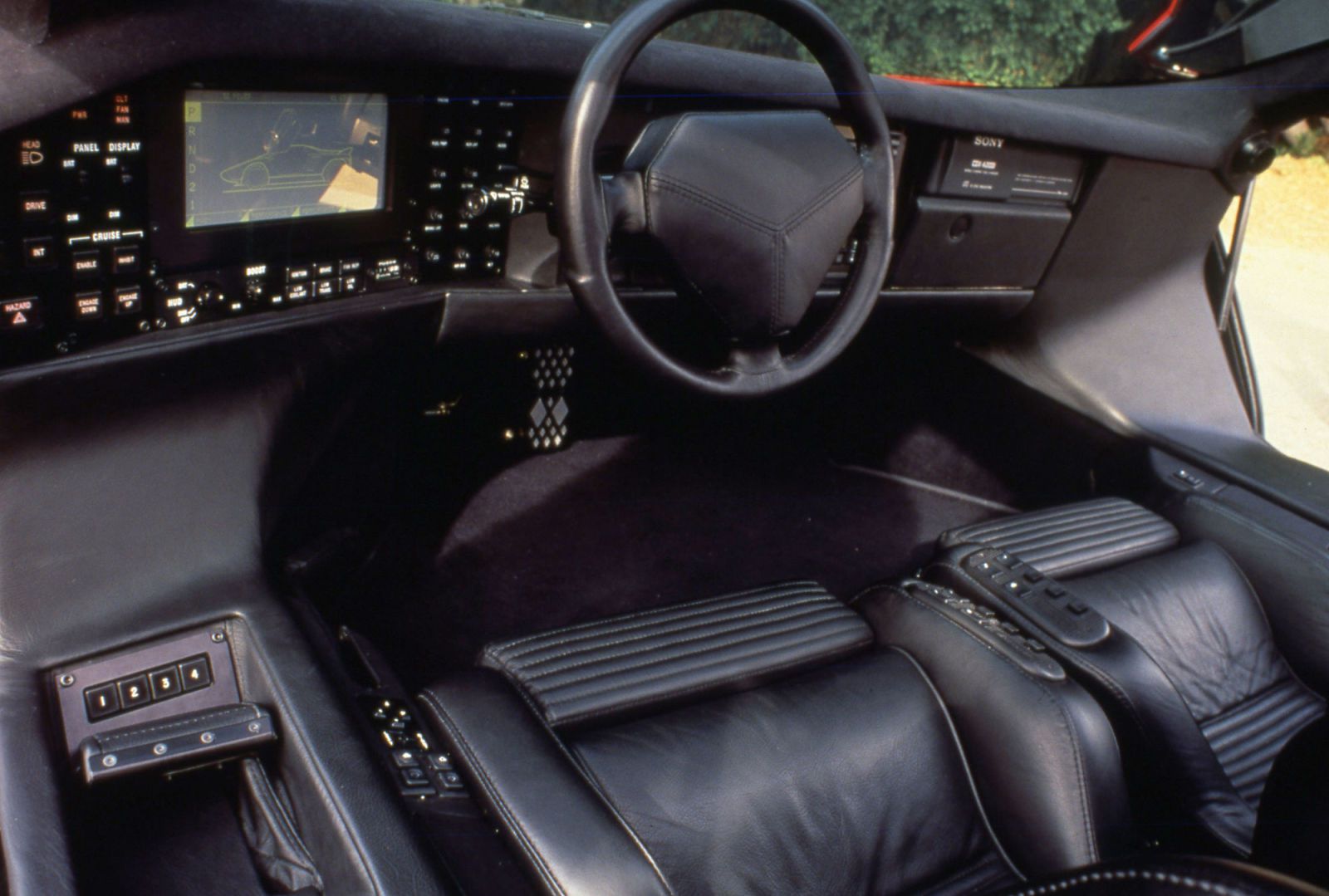
The smell of leather hangs in the air because virtually every interior surface is covered with it, save the broad expanse of the dashboard, done in a thin suede-like material. The floor, carpeted with Wilton wool, is completely flat, allowing the electrically adjustable Recaros to be placed within inches of each other. Although the wheel-arch intrusion is considerable, the central seat placement allows the driver’s legs a straight shot to the pedals.

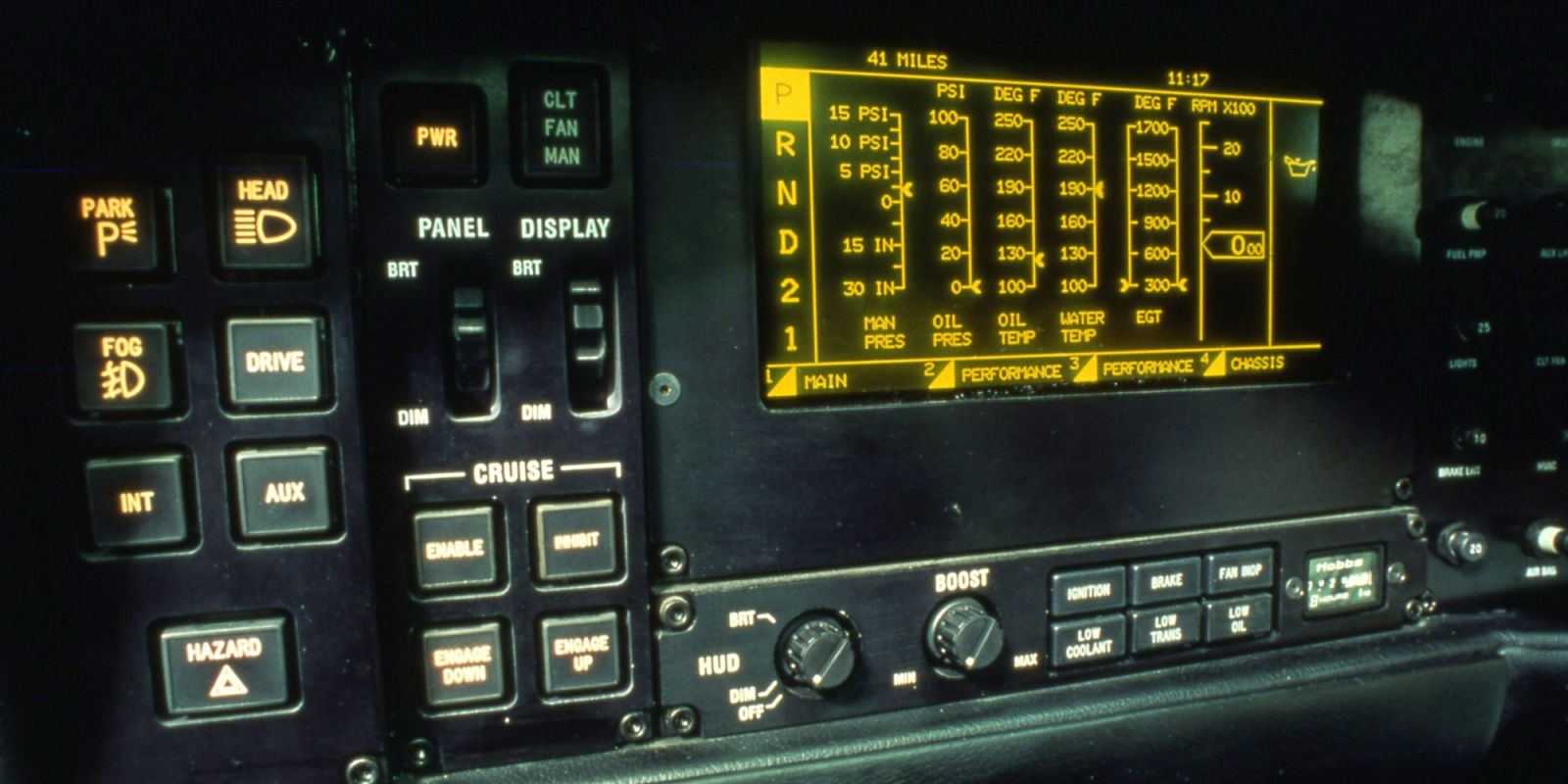
The big engine booms to life at the first twist of the key, settling down to a 900-rpm idle. Vital engine and transmission functions are displayed on what Vector terms an “aircraft-type reconfigurable electroluminescent display”—that means four different screens of information are available. 

Whatever the screen, a gear selection indicator is incorporated along its left side. The instruments—everything from a tachometer to twin exhaust-temperature pyrometers—have a “moving-tape” display that runs vertically past a fixed pointer, as well as a digital display in the window of the pointer. 

Kostka explains how the moving-tape portion gives rate-of-change information that a digital-only display can’t provide. I blip the throttle and see what he means, watching the tape scamper past the pointer to 3000 rpm or so, then back to idle.
Vector W8 Twin TurboVector W8 Twin Turbo

John Konkal

Reaching for the padded shifter handle, sunk deeply into the sill to my left, I engage reverse and tentatively back out onto the street. Drive is selected and we thread through the streets of Wilmington toward the San Diego freeway, en route to the hills above Malibu.

As with most exotics, vision to the rear is just about nonexistent, and the Vector has a blind spot that a Ford Crown Victoria would handily fit into. Craning my neck. I can see little more than windshields and antennas of cars behind me through the narrow louvers of the engine cover. Outside rearview mirrors are small though usefully placed, but it pays to keep up­ dating a mental map of traffic around you. 

Out front, what may be the world’s largest piece of windshield glass stretches out and down to meet the dash, offering an intimate view of the asphalt just a couple of yards ahead of the car.
Vector W8 Twin TurboVector W8 Twin Turbo

The steering, a power-assisted rack-and-pinion arrangement, has moderately light effort and wonderful precision. To its detriment, there’s not much self-centering feel, which makes it difficult for the unaccustomed to be smooth. 

By contrast, the non-assisted brakes take large applications of force—50 lb. for our 0.5g instrumented stops—to haul down the 3320-lb. Vector from speed. Distances of 250 ft. from 80 mph and 145 from 60 best those of the Ferrari Testarossa—though the Redhead scrubs off velocity with about half the pedal pressure. Even without ABS (a system will eventually be offered), the stops are straight and true, the bias set to lock the front tires slightly before the rears.

Kostka motions toward the freeway onramp, I oblige and soon we are in the midst of moderate northbound traffic. Gaps begin to appear between cars, revealing tempting open stretches of the fast lane. On David’s suggestion, risking license and limb. I push the shifter’s handle down about an inch deeper into its recess and tug backward, going from Drive to 2. 

With the engine on the edge of boost, I mash the large aluminum throttle pedal to the front bulkhead.
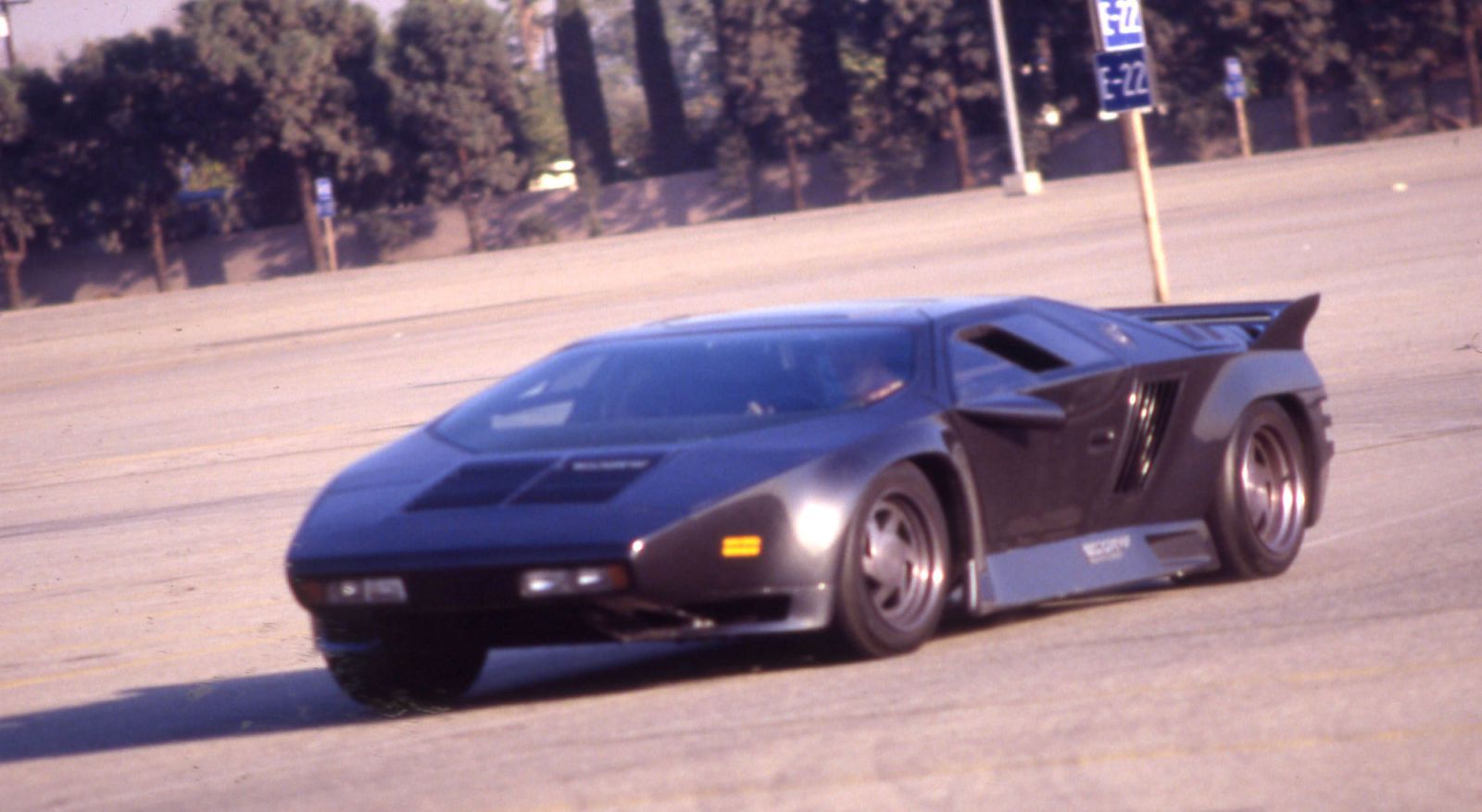
Vector W8 Twin TurboVector W8 Twin Turbo

Raw, immediate acceleration follows, the kind that forces blood from the tissues of your brain toward the back of your skull; the sort that makes you concentrate on a piece of the road far ahead, because you’ll be there in the time it takes to sneeze. 

The electronically controlled wastegates intervene at about 7 psi, bleeding off boost with a distinct, hollow whoosh. Back on the brakes hard; hope I didn’t spook the guy in the Datsun B210 ahead of me. A shame we couldn’t have been on an unrestricted stretch of Autobahn to repeat the process in top gear, free from fear of police intervention.

Judging from the W8’s impressive acceleration and wedge shape, we’re tempted to believe it’ll top 200 mph. However, Kostka reports that redline in 3rd is reachable—which works out to 218 mph (including tire growth). Unfortunately, we’ll have to wait for another day to verify this as the car’s top-speed aerodynamics are still being refined.

Later, as we trundle along Pacific Coast Highway, the Vector’s fairly civilized nature becomes apparent. It feels smaller, more nimble than its great width and rather imposing styling would suggest. 

The suspension soaks up little bumps with ease, larger ones with composure (and more important without bottoming), and has a firm, slightly jiggly ride quality that reminds me of our long-term Nissan 300ZX Turbo with the shock valving set on Tour. Checking the display screens showed all temperatures and pressures to be normal.
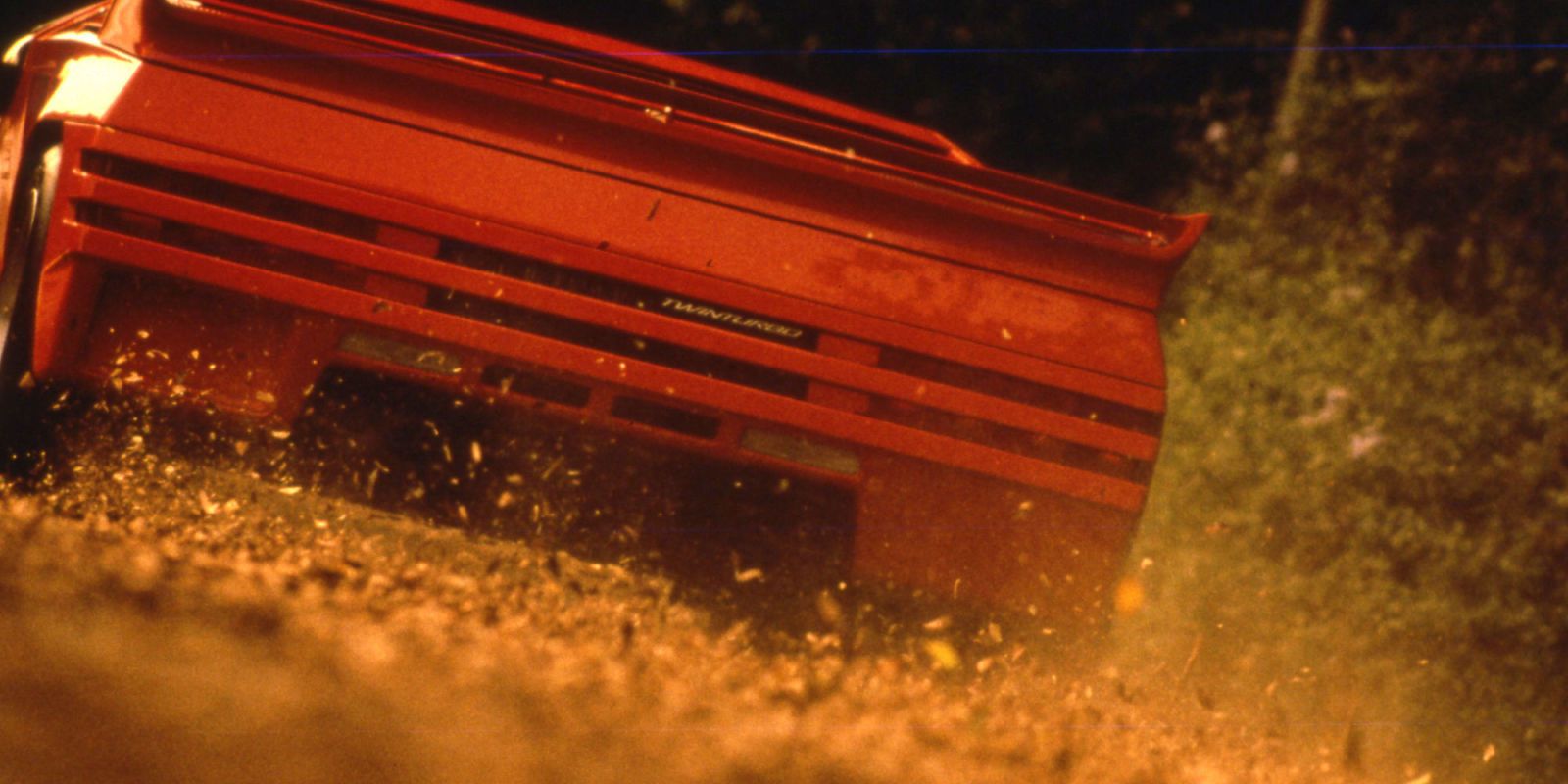
Vector W8 Twin TurboVector W8 Twin Turbo

The temperature inside the Vector’s black interior, though, was getting a little high. “Is this car fitted with air conditioning?” I ask in a voice somewhat louder than normal. David nods and pushed a button on the climate control panel. Truly effective a/c in an exotic car is something of a rarity, but a strong blast of cool air issues forth almost immediately from several black-anodized eyeball vents.

Before long, we turn north toward the foot­hills and some challenging canyon roads. During testing the day before, the Vector had generated 0.97g on the Pomona skidpad, the highest number we’ve ever recorded for any­thing other than a race car. On these roads, the massive footprint of the Michelin XGT Plus tires (255/45ZR-16s front, 315/40ZR-16s rear) does much to inspire confidence. Turn-in is immediate and razor sharp, and the flatness of its cornering stance is remarkable. 

The sizable windshield pillars tend to block the view of the apexes of tight-radius corners we encounter, and on these, the 82.0-in.-wide Vector feels a bit like a bull in a china shop. This car yearns for big, sweeping turns where the throttle can be held down and its enormous power and grip can be precisely and confidently used. As we blast through some of these big-radius bends, it’s not too much of a stretch to imagine we’re driving an endurance-racing Porsche.

And Peter Schutz, chairman of the board and CEO of Porsche from 1981 through 1988, and member of Vector’s Advisory Board since 1989, wouldn’t shrug off that comparison. “This is really more like doing a 962 or a 956 than it is doing any kind of production car,” he says. “And I think this car goes beyond the technology that went into the race cars that I had anything to do with in the early Eighties.” Hats off to Gerald Wiegert and his team of dedicated engineers, and to all others with the fortitude and determination to have their dreams see the light of day.
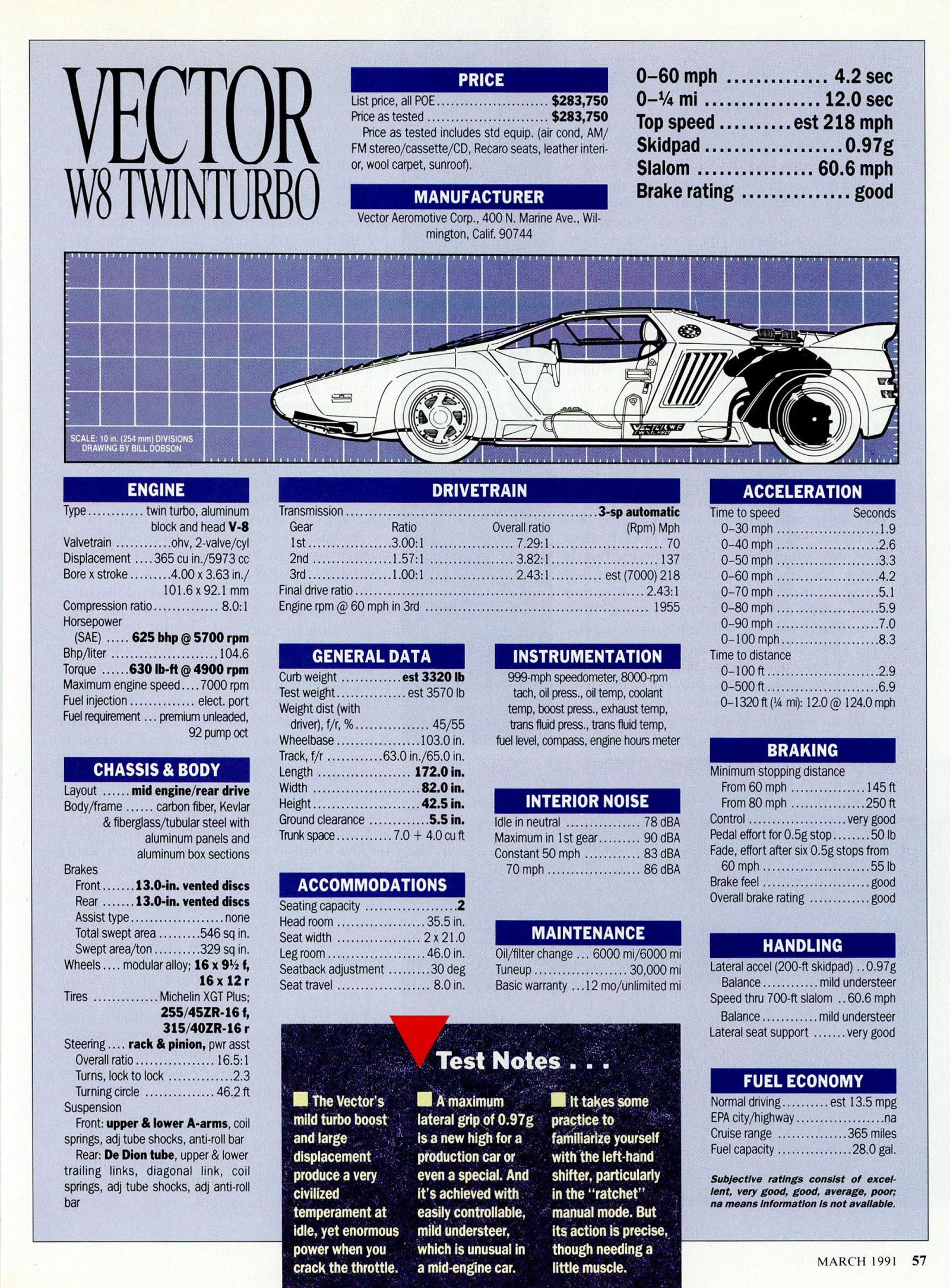

Vector W8 Twin Turbo spec sheetVector W8 Twin Turbo spec sheet

Dodge Charger Teaser Hints At Something Big

A Charger Hellcat Redeye?

Dodge’s Charger has charged on a lot longer than it has any right to. The company still manages to get a lot of sales out of the car despite the fact that it’s actually quite an old car dating back over a decade at this point. Dodge appears to be trying to get even more out of its four-door muscle sedan.

Recently, Dodge released a teaser video that showed a Dodge Charger underneath a sheet. The SRT logo was clearly displayed at the front of the car underneath the sheet. As the shot zooms out, the music intensifies, and the sheet begins to be pulled off the car. That’s when it ends. Right before you can really see anything. 

The speculation is that the Charger will be getting yet another high-performance version. That seems to be Dodge’s plan for just about anything. As vehicles age, they just throw more horsepower at them and keep churning them out. The Challenger is another example of the company doing this.

The most recent high-performance version of that car was the Hellcat Redeye, a 797 hp bull of a muscle car. It now seems that Dodge could give the Charger the Redeye treatment as well. It would likely come with the widebody package and the same engine that’s in the Challenger. However, we also wouldn’t be surprised if Dodge had some other crazy creation up its sleeve. Time will tell.

[embedded content]

LEGO Land Rover Defender

Who would’ve guessed LEGO would blow the covers off the upcoming Land Rover Defender. We’ve seen the real vehicle testing with camouflage in harsh conditions, but we didn’t imagine the reveal would show up totally…

It Looks Like Chevy Will Cancel the Camaro

Say Goodbye to the Chevy Muscle Car

The Camaro was canceled once before. That was in 2002. It made a comeback in 2010 and soldiered on until the present day. Now, it seems GM will decide to let the model die after its current generation’s lifecycle. Plans for the seventh-generation of the car have been shelved, according to Muscle Cars and Trucks. That means eventually the car will die a slow and sad death. 

According to the publication, the Camaro won’t disappear overnight. The model will continue on until 2023, so there’s still time for people to buy and enjoy the car in its current form. That form is arguably the best the muscle car has ever been. According to Carscoops, multiple publications reached out the Chevy after the report hit and the company neither confirmed nor denied the claims. Here is the official response:

We will remind you of our recently announced updates coming to the Camaro lineup this fall. An all-new LT1 model will provide customers V8 power with the design and affordability of our LT trim. The award-winning SS model will feature a new front fascia from the Camaro Shock concept. All of our updates are customer-driven to improve the car and its driving experience.

So, it’s business as usual then, right? Well, Chevy didn’t say they weren’t going to let the Camaro die after the car runs its lifecycle to the 2023 cutoff. They smartly didn’t say much of anything other than point to the fact that they have new versions of the current car in the works. According to sales data at Good Car Bad Car, Camaro sales have been on a downward trajectory since their peak in 2012, so it makes sense that Chevy would consider letting the model go. Time will tell what the company decides to do.

We May Have Found Out What Engine the New Ford Bronco Has

There are plenty of exciting new products rolling into Ford dealerships in the next few years — the 760-horsepower Shelby GT500, a Mustang-inspired electric performance crossover, a tiny off-roader — but perhaps none has whipped up as much frenzy as the 2021 Ford Bronco due to arrive next year. Ford, for the most part, has played its cards close to the vest with the new Bronco, revealing little beyond the basic silhouette. That’s left enthusiasts scrambling to find information however they can — including some odd places.

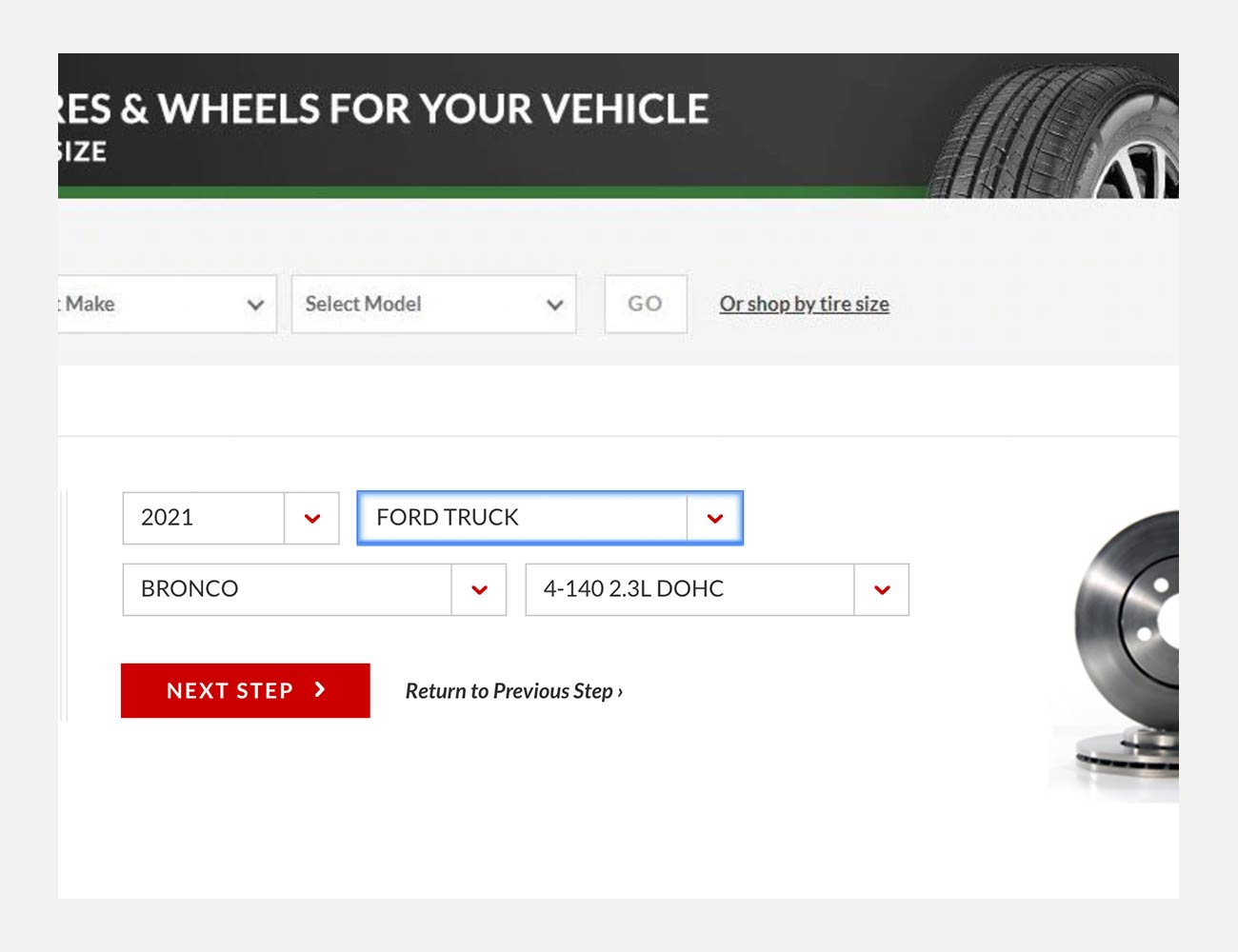
Like, for example, the auto parts reference computer at an automotive store. Which is exactly where Off-Road.com found out that the 2021 Ford Bronco will apparently pack a 2.3-liter four-cylinder engine.

One of the website’s correspondents stumbled upon the listing while poking around the parts lookup tool at a Canadian Tire. To verify this, Gear Patrol checked out the online version of the tool on Canadian Tire’s website; sure enough, searching under 2021 model year vehicles revealed a single result — a Ford Bronco with a 2.3-liter four-cylinder engine.

A quck survey of Ford’s engine lineup reveals but one engine matching that displacement: the turbocharged EcoBoost inline-four found in various states of tune under the hood of the now-defunct Focus RS, the base Mustang…and, most notably, the Ford Ranger. In Ranger form, the engine cranks out 270 horsepower and 310 pound-feet of torque, and comes connected solely to a 10-speed automatic transmission. Given that the new Bronco will be based on the Ranger’s chassis, it’s no surprise to hear that it would pack the same engine found in the pickup (at least, here in America).

Of course, it’s possible that some overzealous Canadian Tire employee simply guessed what engine will be crammed into Ford’s new off-roader, and that the new Bronco will show up with a different powertrain entirely. But our instincts tell us this seems more like an honest mistake made by someone with inside access to the Bronco’s mechanical specs than an auto parts database programmer deciding to go wild with the system. Here’s hoping Ford pulls the wraps off the vehicle soon enough and clears things up once and for all.

2020 Audi Q7 Facelift Adopts Q8 Look & Tech

Audi’s Q7 gets a mid life update today. The SUV was first unveiled in 2015 as an all-new model. Since then, Audi have been fiendishly working to refresh its premium offering with new design language pumped into the A6, A7 and Q8 models. The Audi Q7 facelift is intended to introduce some of the features developed since 2015.

The most important updates are to the exterior. People will notice the new front grille with its six upright slats. The two-part side air inlets are also new together with the headlights. The headlights are available with HD Matrix LED technology and Audi’s laser light. Towards the rear, a new chrome strip adds some additional style. The S Line package adds an additional blade in the front bumper, underbody protection at the rear with full paint finish and 19-inch wheels.

Changes are also made to the suspension setup. These relate, largely, to the optional equipment. Audi now offer the electromechanical active roll stabilization and all-wheel steering options. All Q7 models get air suspension as standard with the S line exterior using a slightly firmer adaptive air suspension which rides 15 mm lower.

All models get a revised version of the eight-speed tiptronic gearbox and permanent all wheel drive systems. Audi will offer a choice of two 3.0-litre diesel engines, producing 228 bhp and 282 bhp respectively, and a 335 bhp 3.0-litre petrol engine. All three will use Audi’s 48V mild-hybrid electrical system. A plug-in hybrid petrol version, as will an SQ7 TDI, based upon the package introduced with the SQ8 TDI.

Inside, Audi’s excellent Virtual Cockpit Assistant is standard. The old interior equipment has been removed in favour of the latest dual screen system. Technological highlights also include Car-to-X service traffic light information, the all-digital Audi virtual cockpit and adaptive cruise assist.

The new Audi Q7 will get its market launch in September with pricing information arriving soon!

BMW Vision M NEXT Revealed with 600hp Hybrid Engine

BMW M has this morning set out its vision for the immediate future. The BMW Vision M Next Concept previews what BMW considers to be its future, past the ageing BMW i8. The i8 has been a game changer in many respects, however, it now faces stiff competition with most manufacturers keen to muscle in on its eco-performance niche.

The BMW Vision M Next Concept uses a traditional petrol engine coupled with an electronic motor to produce power. The petrol unit is turbocharged and four-cylinders. Combined with the electric motors, it produces an impressive 600 hp. This, BMW states, is enough for a 300 km/h (186 mph) top speed and a 3 second 100 km/h sprint time. That power is not available all the time though. It is accessed through a BOOST+ mode, although it is not clear how long the boost is provided. It should do 100 km on battery power alone.

The looks are very similar to those of the existing i8. The BMW Vision M Next Concept remains a two-seater with a low slung, supercar type shape. It uses carbon fibre bodywork and a throwback exterior design. Looking closely at the concept, the rear view is heavily inspired by the BMW M1. Inside, things are very futuristic with a curved driver display and a dragster style steering wheel.

The replacement for the BMW i8 is expected debut at the Frankfurt Motor Show 2019 in September. The i8 is part of a wider BMW program called ‘Strategy One Next’ which aims for up to 25 electrified BMW models to be on sale by 2025. 

BMW’s Vision M Next Concept Looks to the Future

BMW Showcases New Tech in This Wild Concept

BMW has a vision for the future and that is the Vision M Next concept car. The vehicle pulls from the i8 hybrid as well as other previous BMW vehicles for inspiration. The model also has unique Laser Wire headlights, a new version of the BMW twin-kidney grille design and an overall sporty and futuristic look. 

The car’s focus is on the driver. According to Adrian van Hooydonk, the company’s senior design VP, the vehicle’s design is really about the future of sporty driving. 

Where the BMW Vision iNEXT illustrated how autonomous driving is set to transform life on board our vehicles, the BMW Vision M Next demonstrates how state-of-the-art technology can also make the experience of driving yourself purer and more emotionally engaging. In both models, the focus is firmly on the people inside. Design and technology make the ‘Ease’ and ‘Boost’ experiences more natural and more intense.

According to Carscoops, the Ease and Boost reference comes from the drive modes. Ease is the autonomous mode and Boost is the driver mode. The big news about this car is the Boost Pod, which is the instrument cluster and an augmented reality head-up display. The idea behind it is to eliminate distractions, so the driver can just focus on driving. 

The powertrain of the Vision M Next is a plug-in hybrid system that uses electric motors and a turbo four-cylinder engine. Combined power output sits at 592 hp. That makes the car good for a 0-62 mph time of three seconds flat. The car has a top speed of 186 mph and an electric-only range of 62 miles. 

[embedded content]