All posts in “Cars”

Ford Launched the GT Mk2 Track-Only Supercar at Goodwood

A Super Special Supercar

We knew Ford was going to release something special at Goodwood, and we knew it was going to be some kind of GT. The company has unveiled its latest creation. It’s the Ford GT Mk2. The car is a track-only supercar that’s a modified version of the race-spec GT. The Mk2 version of the car cannot be driven on the road, and it can’t be raced in any existing series. 

First up, the engine. Ford went over the 3.5-liter EcoBoost V6 and tuned it to make 700 hp. The company outboard-mounted air cooler with water spray technology. There’s a big hood scoop designed to bring air to auxiliary engine parts, the clutch, and transmission. The transmission is the same seven-speed, dual clutch affair, but modified for the additional power. 

Ford has also adjusted the exterior of the car, adding a new splitter, diffuser, dive planes, and a large rear wing. All told, the exterior enhancements manage to produce 400 percent more downforce than the street version of the car. This allows the car to pull 2 gs in the corners. 

Ford will sell these cars for $1.2 million. The company won’t make very many of them, though. Only 45 of the cars will be built. That means the fastest version of the GT will be a scarce sight. This is one special car. We’d imagine Ford won’t have any trouble selling them. 

2020 Mercedes-AMG CLA 45 S Revealed with 421hp!

The new Mercedes-AMG CLA 45 has been revealed ahead of its debut at the Goodwood Festival of Speed 2019 which starts this weekend. Available in two flavours, a basic CLA 45 and a powerful CLA 45 S, the specifications mirror those of the A 45 which has been released at the same time. Both cars use a new 4-cylinder engine which produces class-leading power. It has been heavily revised for the second generation and is sure to prove a sales success.

Much like the A 45, the CLA 45 gets a host of styling upgrades including that panamerican grille an with 12 vertical louvres, something that has come to define modern AMG’s. The CLA gets wider flared wheel arches, a bonnet power-dome and a wider front axel which give the CLA 45 a bodybuilder’s stance. The wheels are 18-inch designs with the S-models getting 19-inch versions. Elsewhere, AMG has developed a modified front splitter and additional flics, an additional diffuser blade, side spoiler lips on the rear apron and a rear bootlid spoiler.

Its under the bonnet of the Mercedes-AMG CLA 45 S that the real news is found though. Mercedes-AMG has opted for a 2.0 litre, four-cylinder engine putting out 421 hp, a 40 hp increase over the previous generation. It produces a peak torque output of 500 Nm. In the basic version, power is slightly reduced to just 387 hp. The CLA 45 S manages a 4 second, 100 km/h sprint with an electronically limited top speed of 250 km/h.

The new engine is rotated 180 degrees which means that the turbochargers and the exhaust manifold are mounted to the rear. This allows the flattest shape, improving air ducting with shorter distances across the engine. Roller bearings are used in the shafts of the turbochargers for the first time which reduces engine friction. Boost is also significantly higher at 2.1 bar.

The Mercedes-AMG CLA 45 S engine is coupled to an 8-speed dual clutch gearbox which delivers power to an all-wheel-drive system. AMG Torque Control acts as a differential, distributing power where it is most required. The rear gets a new set of round twin tailpipes.

The suspension is McPherson strut at the front with a 4-link setup at the rear. AMG uses frequency-selective shock absorbers. The dampers are optionally available with AMG Ride Control which offers three suspension settings. AMG Dynamic Select is standard with six driving modes ranging from Slippery for adverse weather conditions to RACE for the track.

Inside the Mercedes-AMG CLA 45 S, the latest MBUX infotainment system can be found. Sports seats are available and Artico and Dinamica are standard upholstery. The mix of black and red is typical of AMG. Costing and availability has yet to be announced.

2020 BMW X6: 3rd Generation X6 Revealed

BMW has unveiled a brand new version of the BMW X6. The original, niche-filling SUV receives a complete redesign for its third generation. The design and engine changes are of paramount importance now that BMW has strong competition in the form of the Porsche Cayenne Coupe and the Audi Q8.

BMW’s X6 completes a series of redesigned BMW SUV’s which include the X5 and X7. The design is not far removed from the outgoing X6, it does not need to be. It is 26 mm longer, with a 42 mm longer wheelbase and 15 mm of additional track. Boot capacity remains the same though, presumably occupants benefit from the increase in proportions.

A key feature of the design is the kidney grilled which are massive, in line with the modifications made the X5 last year. Elsewhere, there are new headlights (LED’s as standard with Laserlight as an option), a broader body and a sharper kind to the rear. BMW have added venting to the rear arches, a near front arch vent and a tail spoiler. There are a few interesting options too, including an illumintated kidney grille.

The new range will include two petrol engines, the xDrive40i and the M50i with its 4.4 litre V8 and 530 hp. Two diesel options will also be offered in select markets in the form of an xDrive30d and M50d with a 400 hour, six cylinder engine. All are coupled to an eight-speed steptronic transmission.

At the chassis side of things, air suspension is an optional extra with automatic self-leveling. Dynamic Damper Control is included as standard, the Adaptive M suspension Professional with active roll stabilisation and Integral Active Steering are all optional extras.

Inside, BMW’s Live Cockpit Professional and Intelligent Personal Assistant are available as standard. This consists of two 12.3 inch displays, one replacing the dahsboard dials, the other in the centre console. Standard sports seats are included together with Vernasca leather. Options include wireless charging and Bowers & Wilkins Diamond Surround Sound System.

VIDEO: Morgan Plus Six Review

A Modern Morgan? 

The new Morgan Plus Six seems wrong to us in many ways. It’s a more modern Morgan, and isn’t the point of the Morgan to revel in the experience of driving a car that harkens back to an older age of driving? Well, Henry Catchpole of Carfection had some time to find out when he reviewed the Plus Six along some twisty roads in Wales on a summer day. 

The car features Morgan’s new CX-Generation aluminum bonded platform. This car still has wood construction, but the underpinnings are mostly aluminum. As Catchpole finds out this new platform makes for the most direct and precise Morgan car yet. 

Another departure for Morgan is the BMW-derived turbocharged straight-six, the same that’s in the Z4 and the Supra. This leaves the V8 engines of the past in the dust in terms of sophistication, but it still provides the speed you’re looking for. Catchpole says the improvements to the car, while they don’t mesh with what you typically think of when you think of Morgan’s vehicles, actually don’t ruin the Morgan for what it needs to be.

“To me, if you want a Morgan, then this still does all the things you want from a Morgan in terms of that charm.” That’s exactly what we want to hear. While the Plus Six is a new chapter in the Morgan story, it’s not a completely different narrative, and that’s good news, indeed. 

[embedded content]

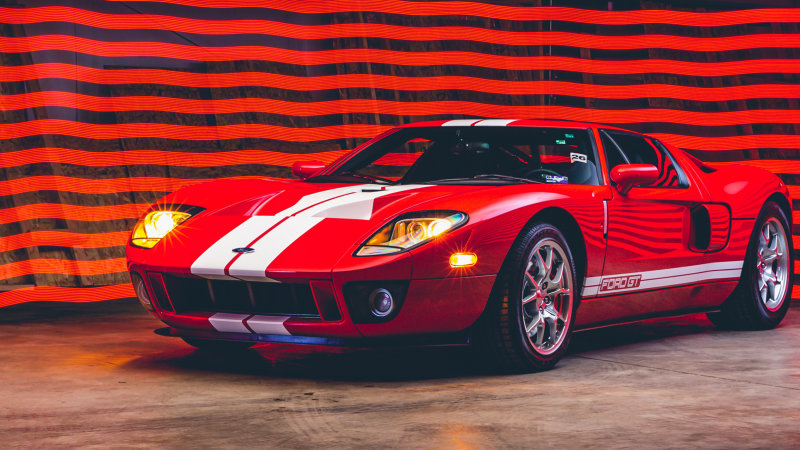
This 2006 Ford GT has racked up less than a half-marathon — 11.7 miles

Filed under: ,,,,,

Continue reading This 2006 Ford GT has racked up less than a half-marathon — 11.7 miles

This 2006 Ford GT has racked up less than a half-marathon — 11.7 miles originally appeared on Autoblog on 2019-07-03 07:45:00. Please see our terms for use of feeds.

Permalink |  Email this |  Comments

6 Iconic Automotive Brands That Could Vanish in the Next 10 Years

Look below the surface, and there are hints that bad times could be in the works for the auto industry. Trade wars are afoot. Cars are moving toward simpler, electrified powertrains. Automotive sales seem to be declining. The automotive world is hitting a transition period —  and as we’ve seen in the past, transitions in the automotive world can be painful.

The Great Recession and its aftermath saw the demise of popular brands like Saab and Hummer, and brought others right to the brink. What trouble will the next downturn bring — and who will it bring trouble to? No one knows. But based on what we know so far, we’ve put together a list of six automotive marques that could find themselves in serious trouble over the next decade.

Chrysler


Fiat-Chrysler has done a great job creating specialized brands for its offerings. Dodge does the performance cars. Ram does trucks. Jeep does SUVs (and now, smaller trucks). But that has left little room for the Chrysler marque itself. There are currently only two “Chrysler” vehicles on offer: the aging 300 sedan, whose sales are down 39 percent in 2019, and the Pacifica minivan, which has seen sales drop 29 percent.

Yes, Chrysler still has a social media presence touting that #vanlife on a daily basis. But there’s no clear route to revive the marque. Times are tough for sedan-based, lower-tier luxury brands.

Maserati

Maserati faces an ever-present conundrum: Its brand is too well known to cast aside, particularly in America — but the company’s vehices are too niche to be worth overhauling. Exciting concepts take forever to go into production. Ferrari has kept Maserati on life support with an engine-supplier deal since 2002, but Maranello plans to sever the cord early next decade to focus on its own production cars.

That leaves Maserati…well, it’s not clear where, exactly. Cribbing engines from Alfa Romeo? Launching an SRT Hellcat Quattroporte? There’s no obvious route forward with FCA as the company’s currently constituted. Even with Ferrari’s help, Maserati sales dropped by 28 percent in 2018….and the first quarter of 2019 was even worse.

Mini

Cool Britannia comes in phases. BMW cashed in with the Mini sub-brand in the early 2000s, but the nostalgia train has since moved on. Americans have stopped buying small cars. Sales for the classic two-door hardtop Mini are about a third of what they were 10 years ago. Mini has largely become a quirkily-styled SUV company, led by the Countryman — whose sales are down 35 percent year over year in 2019.

BMW reportedly has been considering closing Mini dealerships. The sub-brand will get two more pushes, with an electric Mini coming soon and the John Cooper Works cars scoring more power to compete with the Honda Civic Type R and the VW Golf R. But if the tech becomes more of a selling point than the retro styling, why wouldn’t people just buy a BMW instead?

Tesla

Tesla has the best EV tech on the market. The Model 3 was the best-selling luxury vehicle in the U.S. in 2018. Yet that success has not stabilized the company: Tesla lost $702 million over the first quarter of 2019, while major investors are dumping Tesla stock, which has fallen more than 40 percent (as of this writing) since December 2018.

Tesla has responded frenetically. Business plans and pricing have changed by the week. The company has barreled forward announcing new models and sweeping plans, such as converting its privately-held luxury vehicle roster into a taxi service.

With Porsche, Mercedes, and other companies quickly catching up with Tesla on EV tech, the company’s fate rests on a dramatic bet that they are right and every other manufacturer is wrong on a quick roll out of full automation

Cadillac

After decades at the top of the category, Cadillac lost its luxury market share in the 1980s and 1990s. Their cars underwhelmed, and competition from the likes of BMW and Lexus increased dramatically. Since then, the brand has struggled to find a new message. Building a strong performance sedan lineup starting in the 2000s seemed like a decent gambit…until Americans stopped buying sedans.

Now, Cadillac is attempting to belatedly move further into a crowded luxury SUV space (without offering much innovation) and roll out a less powerful “V Series” to expand the sub-brand’s appeal A move to become a luxury EV brand in the early 2020s will be, by GM’s own admission, Cadillac’s last shot. 

Bentley


Bentley’s place within Volkswagen AG’s future may be perilous. On the surface, Bentley seems better suited than a brand like Lamborghini to share engines and platforms; the Bentley brand is all about classic British luxury style, and fine wood and leather over Porsche-derived mechanicals is not a bad combination. The troublesome part for Bentley: the brand’s aristocratic veneer isn’t always translating to profits. At a time when Volkswagen is looking to cut costs, Bentley has been losing money on every vehicle it sells…and has received a cryptic ultimatum about profitability during the next couple of years.

Note: Purchasing products through our links may earn us a portion of the sale, which supports our editorial team’s mission. Learn more here.

The BMW M5 Competition Is the Sports Sedan Supercar

The True Ultimate Driving Machine

The 2020 BMW M5 Competition is a special car. It takes the attractive but not ridiculously sporty looking 5-Series as a base for the car and then turns the dials up to 11. The car comes with 617 hp and 553 lb-ft of torque and that power gets sent to all four wheels via a slick 8-speed dual clutch transmission. That makes for a 0-60 mph time of just 3.1 seconds and a 10.9-second quarter-mile time.

The car is even more hardcore than the standard M5. Its minor power bump is complimented by 10 percent stiffer dampers. The anti-roll bars are also stiffer, and the car rides .28 inches lower. Instead of rubber mounts for the toe links, this car gets ball joints. All told the M5 is a sharper, stiffer, and even more performance-oriented M5. It should have no trouble competing with Mercedes-AMG E 63 S, and the Audi RS7 Performance. 

BMW M5 CompetitionBMW M5 Competition
Image from BMW

Autoblog was able to take the M5 Competition to a racetrack in Monticello, New York, and came away from the experience seemingly in love with the car. Here’s a bit of what Lawrence Ulrich said in his review: 

So is the BMW fun on track? Yes, in a mildly silly, tiger-shark-out-of-water fashion. But it’s twice as fun on the street, where the M5 Competition underscores its Autobahn-style ferocity and magisterial handling. Mopar fans may howl, but in most street situations, the M5 Competition will easily smoke even a Dodge Challenger Hellcat from a stoplight – minus the smoke. Where even skilled drivers can struggle to launch the rear-driven Hellcat without the tires lighting up like Cheech and Chong, the BMW sends every molecule of rubber and scrap of torque to the pavement.

That’s high praise for any car, and you have to give it to BMW. It sounds like they have a real winner on their hands. The 2020 BMW M5 Competition starts at $110,995. The car that Ulrich of Autoblog tested came with the carbon-ceramic brakes and that made the price rise to $132,095. Pricey, but we think this is one BMW that’s worth the price. 

These 4 Cars Were Named the Best In the World This Year

Every year around Easter, the New York International Auto Show sweeps into Manhattan — and with it come the annual World Car Awards. The WCA jury is made up of over 80 automotive journalists and industry professionals from more two dozen countries, who come together to decide the absolute best cars across six different categories.

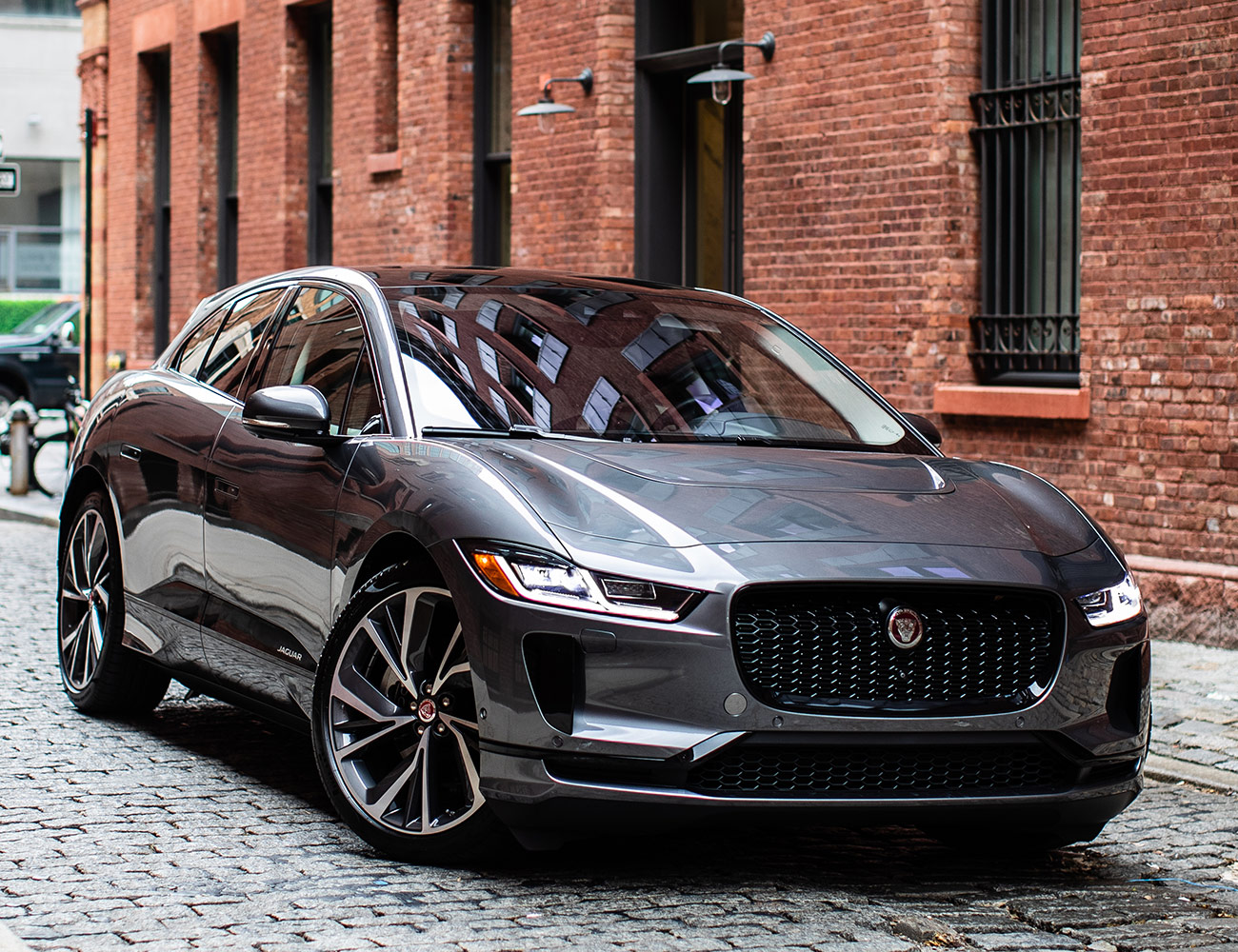
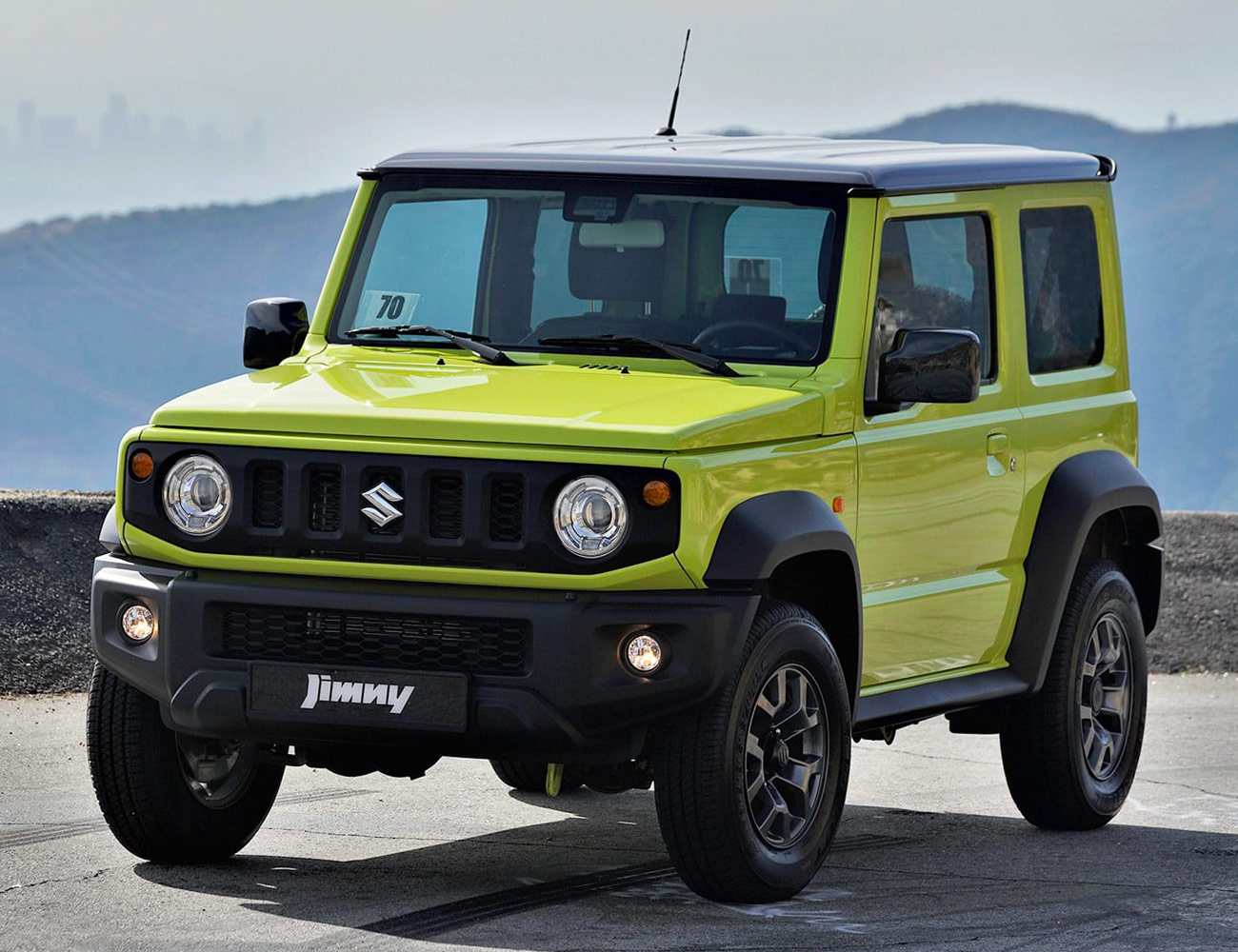
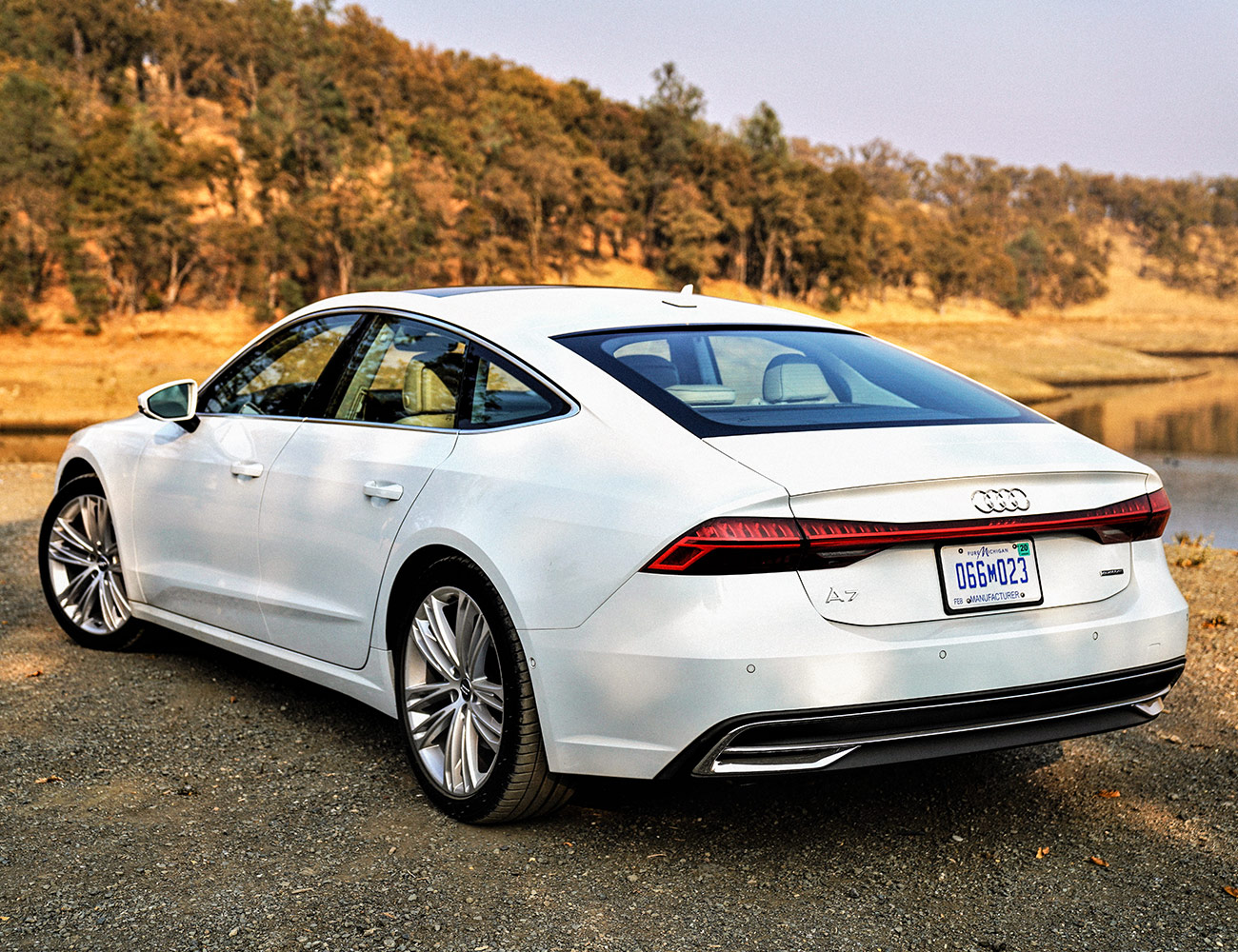
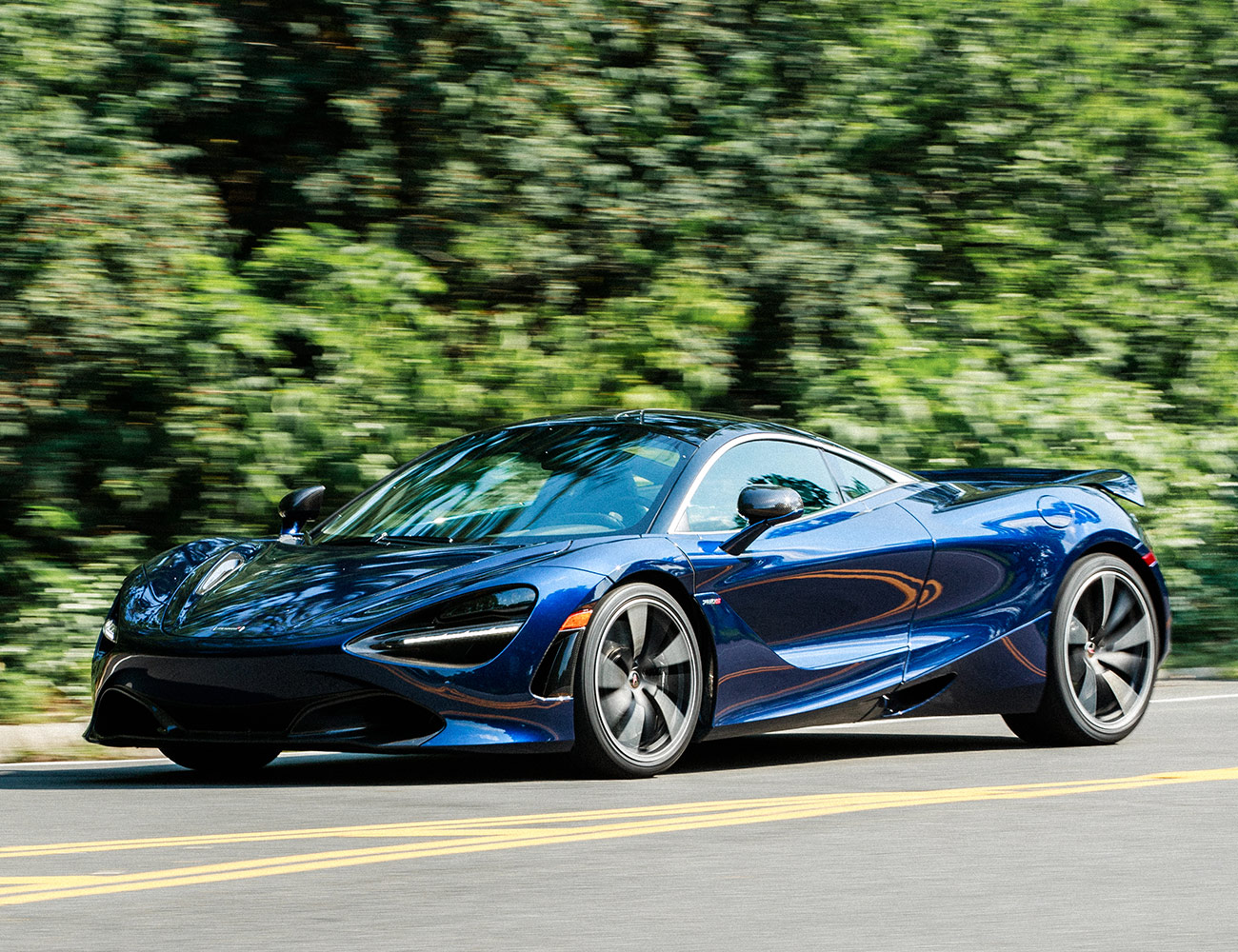
At the 2019 Wolrd Car Awards, however, only four cars took home awards. That’s because the 2019 Jaguar I-Pace not only swept up the Green Car and Design of the Year Awards, it also took home the big one: World Car of The Year. The other winners include the Audi A7, Suzuki Jimny 4×4 and McLaren 720S.

Check out the full list of winners below—and be sure to read Gear Patrol’s associated reviews of each, for more insight into what makes these cars so award-winningly special.

World Car of The Year/ Green Car of the Year/ Design of the Year

2019 Jaguar I-Pace “The I-Pace has a great deal of Jaguar DNA flowing in its shape. Jaguar designer Ian Callum’s pen is strong here, and there’s a clear through-line between this car and his other works, like the Jaguar F-Pace, though I feel like there’s even a hint of Jaguar C-X75 in its overall form.” – Alex Kalogianni, Contributor

World Urban Car

2019 Suzuki Jimny 4×4 “Would this car thrive in the U.S.? Sure. It’s cool and fun and will take you where you want to go for thousands less than its closest competitor. And yeah, it’s cute, too.” – Eric Adams, Contributor

World Luxury Car

2019 Audi A7 “An even more elegant upgrade, though, sits at the corners, with the headlights and taillights, which in the upper trims – namely the Prestige – perform brisk little light shows each time you lock and unlock the vehicle. The HD Matrix-design LED headlights feature distinctive vertical bars, and can be augmented with an optional laser light booster that doubles the reach of the headlights ahead of you.” – Eric Adams, Contributor

World Performance Car

2019 McLaren 720S “Thanks to a strong focus on ergonomics, the 720S is just as easy to park in a garage as it is to take on a road trip as it is to scream around a race track.” – Nick Caruso, Coordinating Producer

Read More Gear Patrol Reviews

Hot takes and in-depth reviews on noteworthy, relevant and interesting products. Read the Story
Note: Purchasing products through our links may earn us a portion of the sale, which supports our editorial team’s mission. Learn more here.

Chris Harris Drives the Dallara Stradale

A Lightweight Road Car Built for Speed

The Dallara Stradale is a wild machine. It looks futuristic and fast, and as Top Gear’s Chris Harris finds out, it is just that. Harris drove the car on the Top Gear track to showcase just how impressive this little car is. The Dallara Stradale is a road car, but its performance numbers mean its at home on the track. This is truly a racecar for the street. 

The Dallara Stradale can sprint from a standstill to 60 mph in a little more than three seconds. The car has a top speed of 174 mph. It’s not the fastest vehicle out there, but it’s close, and it’s lightweight and agile, meaning its perfect for a twisty road or a racetrack. 

The car is made almost entirely of carbon fiber this means it clocks around 1,900 pounds on a scale, which is about the same weight as some racecars. Pair that with all of the aerodynamic designs featured on this car, and you get a vehicle that can produce about 1808 pounds of downforce with the optional rear wing.

All told, the company says it’ll do lateral forces of around two gs. That’s force you won’t find in just about any other car on the road. Chris Harris sounds pretty excited about the car, and he is, as always fun to watch. Check out the whole video below. 

[embedded content]

Lamborghini R&D Chief Dicusses the Death of the Manual Transmission in the Company’s Cars

A Sad Reality

The death of the manual transmission is a topic hotly debated among sports car and supercar enthusiasts. It’s true that a manual transmission enhances the driving experience in many ways. It’s also true that cars are often faster without them. Maurizio Reggiani, Lamborghini’s research and design chief, recently sat down with Road and Track to discuss why you’ll never see a manual transmission in a Lambo ever again. He said the following:

All the systems that are integrated in the car need to have a dialog with one another. The clutch is one of the fuses of the system, whether you’re engaging or disengaging the torque. This creates a hole in the communication between what the engine is able to provide and how the car reacts to the power of the engine. For this reason, unfortunately, I must say I am sure that in a premium supersports car like the Huracán, we will only do a semiautomatic.

Maurizio went on to note that he understands and enjoys manual transmission cars. He said that the issue is really about chassis control. It’s easier to control the chassis of the car with the modern day semi-automatic transmissions found in vehicles like the Huracán.

He also discussed some puzzlement over the idea that manual transmissions are held up as the purest driving experience. He said almost all new manual transmissions have servos at the clutch. This helps you keep from burning up the clutch. That means there’s a filter between the driver and the clutch. It’s not as pure as many people actually think. 

High-powered Lamborghinis of the future and likely of most other cars will come with an automatic or semi-automatic transmission. With horsepower, torque, and the resulting speeds being so high, an automatic transmission simply makes more sense. 

New Audi S8 Revealed with 571 hp V8

The Audi S8 has been officially revealed. Details have been released for the performance model, confirming that the range-topping limousine uses V8 power once again. The combination of power and technology is likely to place the S8 close to the top of the pile when it comes to sports-focused limousines!

The engine fitted to the S8 should be familiar by now. It featured in the Porsche Panamera Turbo two years ago and can also be found under the bonnet of the Bentley Continental GT. A 4.0-litre TFSI unit, it uses Audi’s favoured bi-turbo setup with the turbochargers mounted inside the V, supplemented by a belt-alternator started and a lithium-ion battery. The setup allows Audi to counter turbo-lag whilst also offering strong fuel efficiency through the use of coasting and cylinder on demand.

In the S8, the power unit is rated to 571 hp and 800 Nm of torque. This is enough for a 250 km/h top speed with performance figures yet to be announced. The S8 gets iron-lined cylinder barrels and actuated flaps in the exhaust system which should mean that the sound will match to sledgehammer performance.

As with other Audi models, the A8 also runs a sophisticated suspension setup. Predictive active suspension, which features as an option on the standard A8, is now delivered as standard equipment, in combination with the adaptive air suspension. The former uses cameras to determine the road surface. The Audi drive select system differs slightly from other Audi models with five profiles, including a new “Comfort+” mode. As you would expect, the suspension parameters in this mode contribute to the smoothest possible ride with the body actively leaning into curves by as much as 3 degrees to reduce lateral forces.

All-wheel steering features on the Audi S8. A sport differential is fitted to the rear wheels which pushes power to the outside wheel under heavy cornering. Both systems are fitted as standard. The ceramic brake discs are an optional extra, measuring 420 mm at the front axle and 370 mm at the rear.

Visually, the S8 gains a set of 21-inch wheels. The front bumper is enhanced, together with the side sills. Audi’s characteristic silver mirror housings and quad tailpipes are also included as part of the package. Nine exterior colours arena option with carbon trim available inside. HD matrix LED headlights with Audi laser light and OLED rear lights are optional extras. New seats are fitted with ventilation and massage functions.

The Audi S8 will be made available in China, the US, Canada and South Korea, exclusively as a long wheelbase model. Pricing has not yet been announced.

VIDEO: Autocar Drives The Ferrari 488 Pista And Tells Us What They Think

The Ferrari 488 Pista is one of our absolute favourite supercars of the moment. It’s more focused and raw than the regular 488 GTB so has sensational handling, but is still perfectly capable and comfortable on poor roads. Now with a folding roof, then, the Ferrari 488 Pista Spider tries to retain all of those characteristics but with an open air experience too. The guys at Autocar take it for a drive around the hills around Modena to give us their verdict. 

[embedded content]

Lamborghini Miura – The Ultimate Guide

The Ultimate Guide To The Lamborghini Miura: Review, Price, Specs, Videos, Pictures, Performance & More

Miura Vitals
Production: 1966–73
Units: 764 built
Designer: Marcello Gandini at Bertone
Layout: Transverse rear mid-engine
Engine: 3929 cc Naturally Aspirated V12
Transmission: 5-speed manual

Only three years after the first Lamborghini prototype appeared at the 1963 Turin Motor Show, Miura number 1 was parked on the Place du Casino during the 1966 Monaco F1 week. The car shared its name with the fierce fighting bulls from Seville and it was completely different from anything Ferrari had on offer. Ferruccio said “the Miura is for the keenest sporting driver who wants the ultimate in looks and performance.”1 It caused a stir that weekend and had to be one of Ferruccio Lamborghini’s best moments.

Before the Miura, Ferruccio had established himself as a successful industrialist and decided to take on Ferrari with a series of high-quality grand tourers known as the 350 GT and 400 GT. These laid foundations for the Miura, such as the V12 engine designed by ex-Ferrari engineer Giotto Bizzarrini to have as much available horsepower as possible. Initially, this high-revving, 3.5-liter V12 produced a maximum output of 360 bhp at 9800 rpm and was enlarged on the SV to 3929cc for a reported 385 bhp. For the Miura, it was formed from a single aluminum casting that combined the cylinder blocks, crankcase and transmission.

Gian Paolo Dallara and assistant Paolo Stanzani designed the unique steel tub chassis that placed Bizzarrini’s V12 engine directly behind the driver in a transverse position. They were inspired by both the Lola GT, a race car developed by Eric Broadley that lent its chassis tub design to the Ford GT; and the Austin Mini with its transverse engine that had a common crankcase for the engine and transmission. The final design was first presented as a bare chassis at the 1965 Turin Motor Show where everyone could admire its radical layout and only imagine what the final product would look like.

Although the Miura chassis design could be mistakenly interpreted as a race chassis, Ferruccio had a strict no-racing attitude. He wrote a policy in the company’s bylaws that prohibited racing and avoided the pitfalls of expensive development by trying to intercept Ford vs Ferrari at Le Mans. Instead, the Miura was destined to be a road car of the highest order.

At the Turin show, design of the Miura’s body was still up for grabs and at the end of the show Ferruccio gave Nuccio Bertone the job as he was well suited for series production at Carrozzeria Bertone SpA. Initial sketches were laid out by Giorgetto Guigiario who thought he was designing a new Bizzarrini. When he left the firm, Marcello Gandini finished the work which included a lower nose that repositioned the front radiator. Bertone then sent Gandini on vacation while he finalized the design himself before submitting to Lamborghini. Due to these three talented men, the Miura didn’t have a wrong line anywhere. Later, Carrozzeria Bertone became responsible for manufacturing the Miura bodies and interiors on chassis produced by Marchersi. Final installation of the engine, transmission and suspension were completed at Lamborghini’s factory in Santa’Agata Bolognese.

The first completed prototype was painted orange and personally driven by Bertone to the 1966 Geneva Motor Show where it became the highlight of the event and overshadowed the debuting Ferrari 330GTC. Furthermore, with a press release proclaiming 198 mph, everyone in Maranello took notice. A later trip down to Monte Carlo for the F1 weekend was another resounding success.

Initially, orders exceeded production and Lamborghini had to only worry about manufacturing. Several pre-production prototypes were built and tested which varied only slightly to the final production specification. Over time, upgrades and small details were changed, but a huge update called the SV was planned in 1971 starting with chassis 4758. The main focus of the SV was a new rear suspension that made the car much wider. Longer wishbones were fitted that added 1.5 inches of length. Furthermore, larger Campagnolo cast magnesium wheels were added with wider Pirelli Cintaurato tires. Many of these changes were undertaken by chief test driver Bob Wallace in conjunction with Claudio Zampolli and greatly improved handling of the Miura.

Eventually the oil crisis and lack of demand halted Miura production in 1973 after nearly 150 cars were completed. By this time, development emphasis had been placed on the Countach which the public first saw in 1971. In April of 1972 Ferruccio sold off his controlling shares of the Lamborghini, probably because he achieved everything he had set out to do with the Miura.


Lamborghini Miura Models & Specs

Very few cars managed to change the automobile world like the Miura. It was the first true supercar. It had a radical specification in relation to common engineering of the time. The Miura was endowed with a quad-cam V12 that sat transverse and behind the drivers. Immediately, everything from Ferrari to Aston Martin looked outdated by comparison upon release. It redefined the concept of a sports car.

Lamborghini Miura PrototipoLamborghini Miura Prototipo

Miura Concept

Before the first production Miura was completed on April 20th of 1967, Lamborghini produced five developmental prototypes which were used for testing and as show cars. A total of five prototypes were built in 1966 and 1967 which progressed towards the final production specification. These cars were chassis 0502, 0862, 0706, 0961 and 0979. The first one appeared at the 1966 Geneva Motor Show as the Miura P400 GT, also known as the Sperimentale.

The first three of the prototypes featured counter-clockwise crankshaft rotation which later turned clockwise with car number four with the addition of an idler gear. These first three cars also featured a roof-mounted pop-out vents which were abandoned after car four due to leaking issues.

The first four cars benefit from a slightly lower roofline that was raised by car number five to offer additional headroom. Further distinguishing features of these cars include a lack of Lamborghini script on the rear, different rear window slats and more interior indicator lights.

Production Years: 1966 – 1967
Engine: 3.9 L Naturally Aspirated V12
Power: 350 hp @ 7,000 rpm
Torque: 300 lb-ft @ 5,500 rpm
0-60 mph: 6.3 seconds
0-100 mph: 14.3 seconds
Top Speed: 163 mph

Lamborghini MiuraLamborghini Miura

1968 Lamborghini Miura P400

The first supercar definitely stood out in looks, tech and performance. The Miura was the fastest production car in the world with a top speed of 163 mph and 0 to 60 mph in 6.3 seconds. It set new standards.

Production Years: 1966 – 1969
Engine: 3.9 L Naturally Aspirated V12
Power: 350 hp @ 7,000 rpm
Torque: 300 lb-ft @ 5,500 rpm
0-60 mph: 6.3 seconds
0-100 mph: 14.3 seconds
Top Speed: 163 mph

Lamborghini Miura SLamborghini Miura S

1968-1971 Lamborghini Miura S

The second generation Miura was released at the 1968 Turin Motor Show with a number of detail upgrades both in and out of the car. It shared the same potent transverse V12 engine and Bertine-designed body from it’s predecessor released three years earlier. Inside Lamborghini fitted power windows to the Miura S and also offered optional air conditioning for the first time. Detail differences included a locking glove box.

The engine also received an overhaul which was good for 20 additional horsepower. This included new intake manifolds and different camshafts. Outside, the car received a new chrome trim piece around the window locking strip. Around 140 cars of this type were produced until the SV replaced the model in March of 1971.

Production Years: 1968 – 1971
Engine: 3.9 L Naturally Aspirated V12
Power: 370 hp @ 7,500 rpm
Torque: 287 lb-ft @ 5,500 rpm
0-60 mph: 5.5 seconds
0-100 mph: 12.3 seconds
Top Speed: 168 mph

Lamborghini Miura RoadsterLamborghini Miura Roadster

1968 Miura Roadster

There was only one factory built Roadster and it was created in 1968 by Marcello Gandini and Bertone for the Geneva Show. Ot featured larger air intakes, lower roll-over hoop, different taillights and a larger spoiler. It was more than just a chop job, it was dramatically different from production Miuras. As released at the show, the Roadster featured larger air intakes and a lower roll-over hoop which distinguished it from any other Miura. Other modifications included different taillights and a larger spoiler. As needed, the box section structure of the chassis was strengthened up to cope with additional loads usually absorbed by the roof.

Production Years: 1968 (One Off)
Engine: 3.9 L Naturally Aspirated V12
Power: 350 hp @ 7,000 rpm
Torque: 272 lb-ft @ 5,750 rpm
0-60 mph: 6.6 seconds
0-100 mph: N/A
Top Speed: 174 mph
Lamborghini Miura SV PrototipoLamborghini Miura SV Prototipo

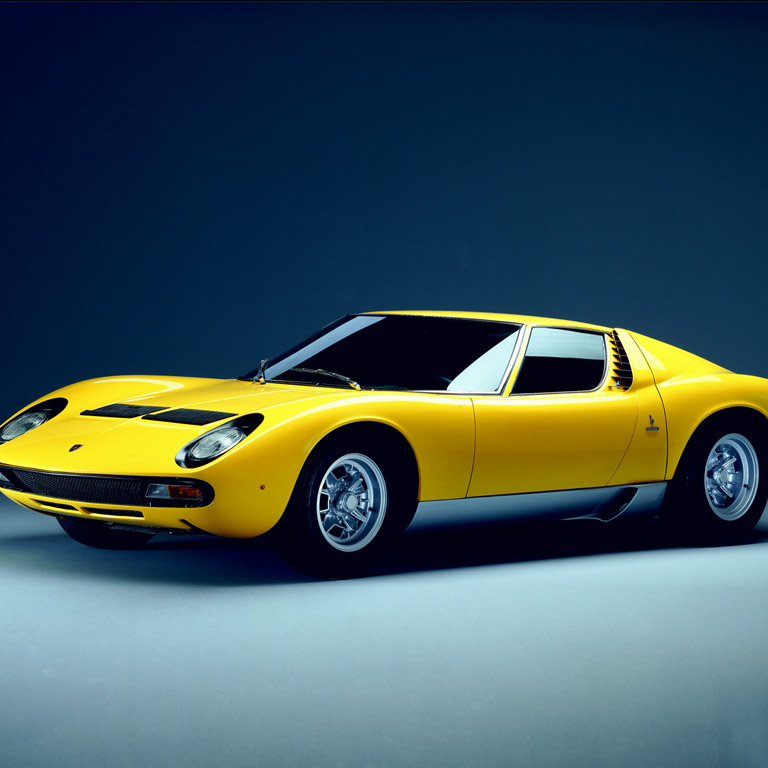
1971 Miura SV Prototipo

Over time, upgrades and small details were changed on the Miura, but a huge update called the SV was planned in 1971 starting with development chassis 4758. The main focus of the SV was a new rear suspension that made the car much wider. Longer wishbones were fitted that added 1.5 inches of length. Furthermore, larger Campagnolo cast magnesium wheels were added with wider Pirelli Cintaurato tires. Many of these changes were undertaken by chief test driver Bob Wallace in conjunction with Claudio Zampolli and greatly improved handling of the Miura.

The prototype is the first car to feature many of the SV upgrades that later typified the model. It was first displayed at the 1971 Geneva Auto Show in Fly Giallo with black leather interior. It was distinguished from the later production versions by numerous detail differences such as different front headlight surrounds, and interior details such as the ashtrays.

Production Years: 1971 (One Off)
Engine: 3.9 L Naturally Aspirated V12
Power: 385 hp @ 7,850 rpm
Torque: 295 lb-ft @ 5,750 rpm
0-60 mph: 5.75 seconds
0-100 mph: N/A
Top Speed: 170 mph
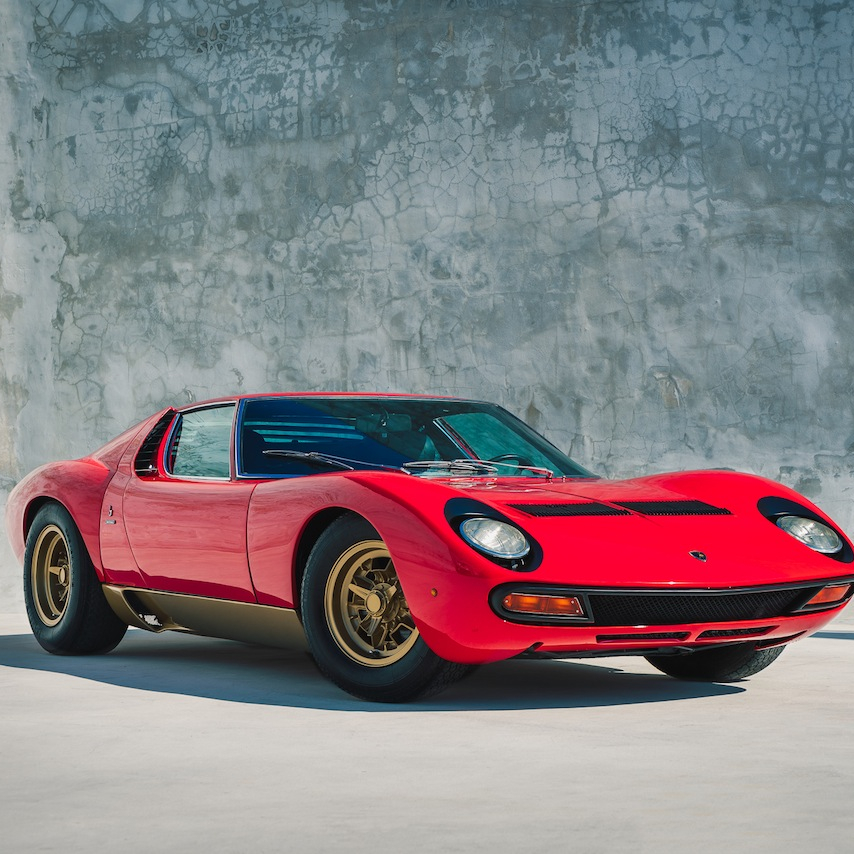
Lamborghini Miura SVLamborghini Miura SV

1971 – 1973 Lamborghini Miura SV

Over time, upgrades and small details were changed, but a huge update called the SV was planned in 1971 starting with chassis 4758. The main focus of the SV was a new rear suspension that made the car much wider. Longer wishbones were fitted that added 1.5 inches of length. Furthermore, larger Campagnolo cast magnesium wheels were added with wider Pirelli Cintaurato tires. Many of these changes were undertaken by chief test driver Bob Wallace in conjunction with Claudio Zampolli and greatly improved handling of the Miura.

To accommodate the new setup, the first SV chassis was sent to Bertone so Gandini could redesign the wider rear bodywork, but other features such as smooth headlight surrounds, Fiat Dino Spyder rear lights and better integrated front signals were added. The result was a much more aggressive car that emphasized the Miura’s rear-engine power. Options such as Borletti air conditioning were also offered for the first time and fitted as standard on cars shipped to America. Only 30 cars were fitted with this essential option.1

In the end, the Miura SV was a remarkable performer. Lamborghini’s own specification listed a horsepower of 380 bhp and a top speed of 180 mph but these were probably exaggerated figures compared to any regular production model. In fact, only around 350 bhp was produced from a standard SV engine and the top speed is actually slower than the P400S model due to the larger tires.

Production Years: 1971 – 1973
Engine: 3.9 L Naturally Aspirated V12
Power: 385 hp @ 7,850 rpm
Torque: 295 lb-ft @ 5,750 rpm
0-60 mph: 5.75 seconds
0-100 mph: N/A
Top Speed: 170 mph
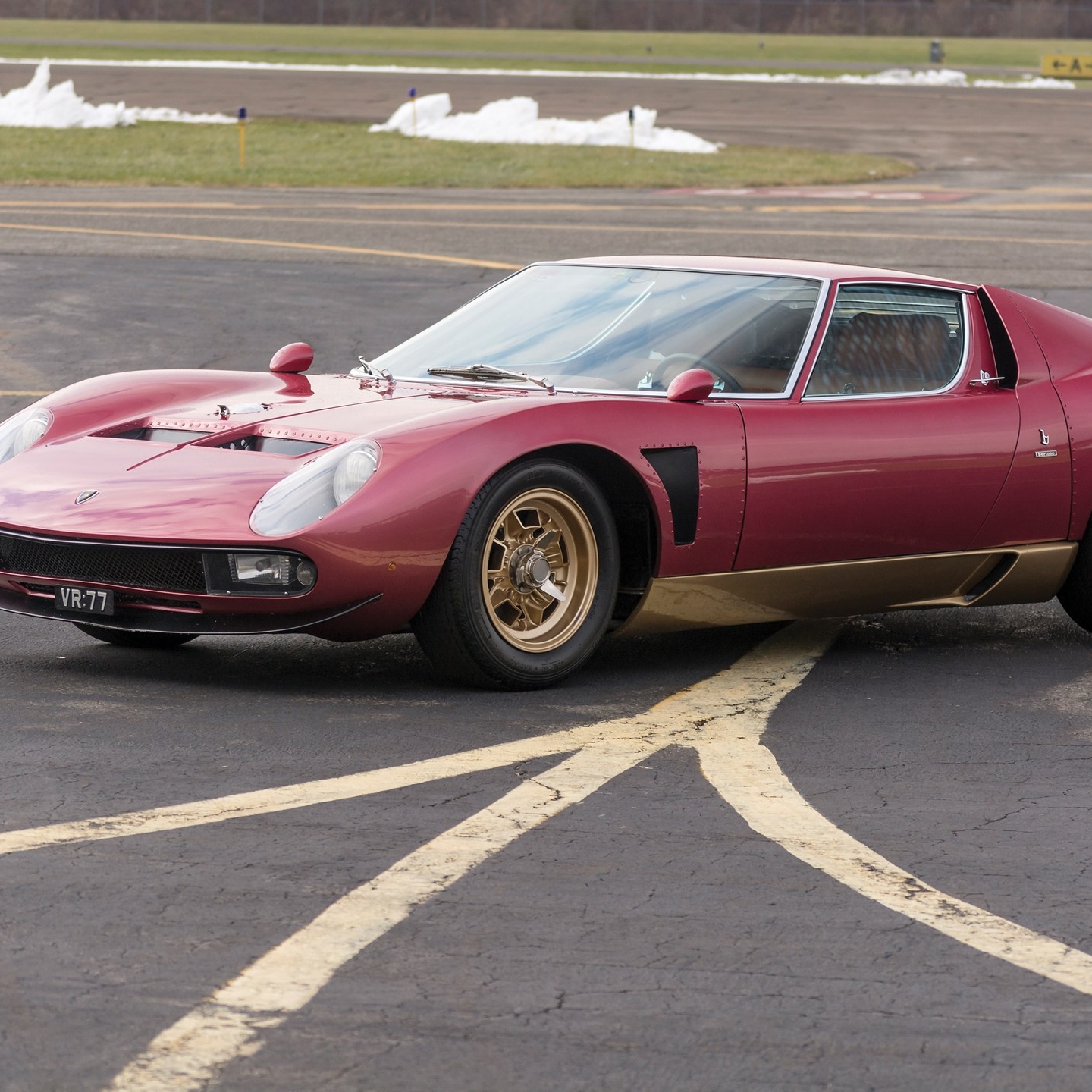
Lamborghini Miura SVJLamborghini Miura SVJ

Lamborghini Miura SVJ

As if the Miura wasn’t already radical enough, Lamborghini let test driver Bob Wallace make an experimental version that was even better. Prepared as a quasi-racecar, it had no compromises to comfort. Known internally as ‘Miura Privata’ by the factory, the project was later named Jota to potential customers. Unfortunately the original Jota was lost in the crash, but the factory fitted some Jota modifications to several road cars and these became known as the SVJ.

Only one original Miura Jota was ever made, and it was Bob Wallace’s personal test car built around chassis #5084. He used it to test various ideas that would prepare the Miura for the track and improve overall performance. Having plenty of time on his hands, the Jota became evermore radical to the point were it eclipsed standard Miura performance by several degrees.

The main focus of Bob’s modifications was to decrease and balance weight. This meant the car had a completely stripped interior, single window wiper, Plexiglas windows and fixed headlights. Most of weight savings came from the use of a light-gauge aluminum alloy called Avional which was used for the new body, floor pan and front spoiler.

Production Years: 1971 – 1975
Engine: 3.9 L Naturally Aspirated V12
Power: 440 hp @ 8,500 rpm
Torque: 296 lb-ft @ 6,500 rpm
0-60 mph: 3.6 seconds
0-100 mph: N/A
Top Speed: N/A
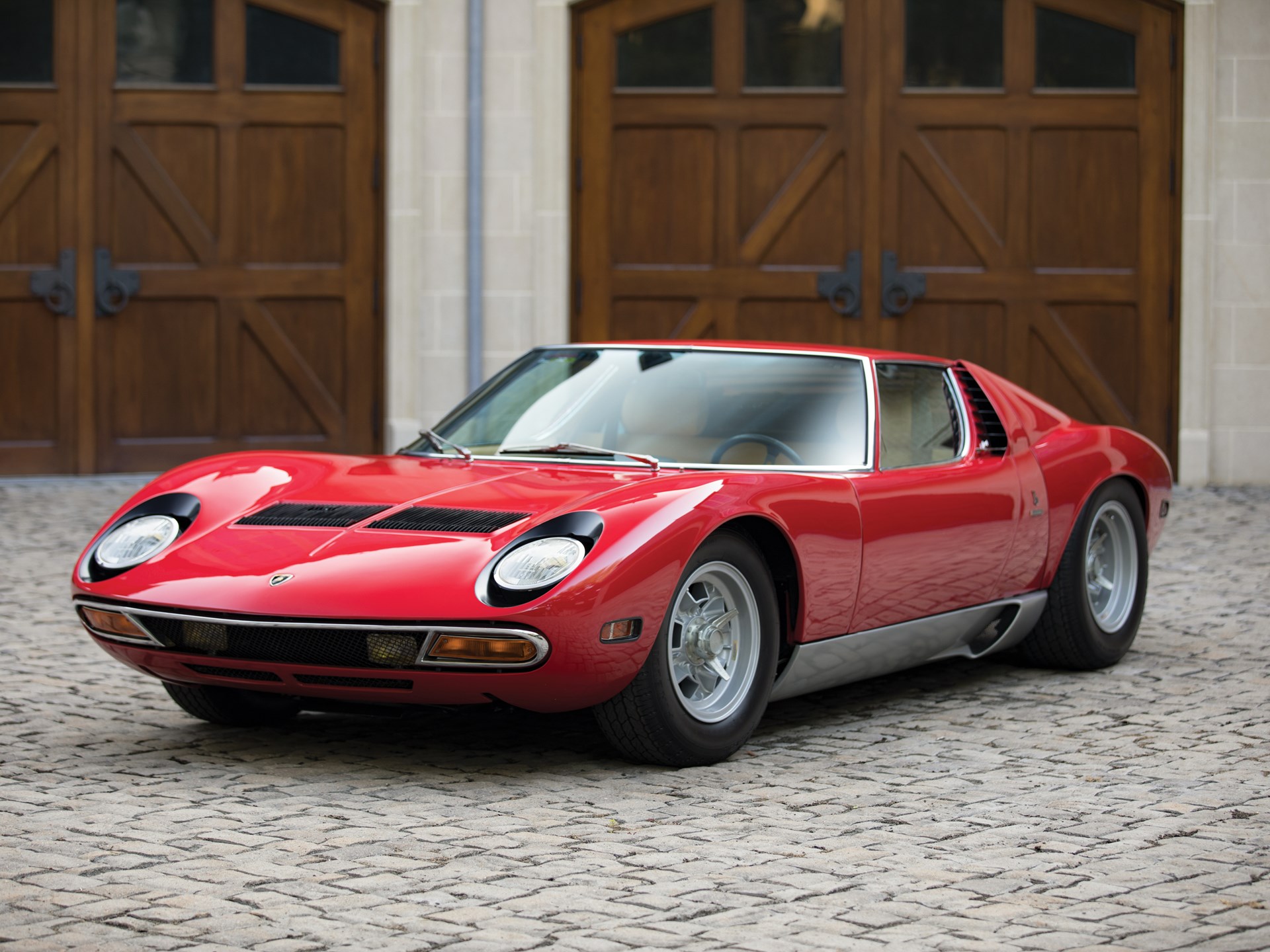

SV MiuraSV Miura

Best Lamborghini Miura – The Miura SV

This one is easy. The Lamborghini Miura SV, also known as the P400SV was easily the best Miura made. It was introduced in 1971. Essentially an updated Miura S, the SV was the last and most famous Miura. Produced in significantly smaller numbers than the previous versions, the SV is also the rarest Miura as well. Although visual updates were mostly subtle, the Miura SV featured extensive drivetrain and chassis upgrades that enhanced both the output and the handling of the car.


Lamborghini Miura Gallery & Photos

We pulled together some of our favorite photos of the Miura from our posts over the years. Don’t forget we have hundreds more photos of the Miura, just click on the models above to find them. 


Lamborghini Miura Videos

There are hundreds of Miura videos on the internet. We spent way too long watching most of them over the years. We whittled down the list to find the three best videos about the legendary Miura. The first is from our friends at Petrolicious, who take a Miura out and really make you feel what it is like to experience history. The second is a great in-person drive in a Miura with the founder of the best car magazine on the planet (EVO). The third Miura video is the intro to the Italian Job, probably one of the most iconic movie scenes and easily a spot that cemented the Miura as a star. 

[embedded content] [embedded content] [embedded content]

Aston Martin’s biggest investor considers increasing its stake

Filed under: ,,,,

The biggest investor in Aston Martin is considering buying another 3% stake, offering to increase its holding after shares in the luxury carmaker crashed almost 50% since its listing nine months ago. Strategic European Investment Group, part of the Italian private equity group Investindustrial, owns 31% of Aston Martin. It only wants to buy a maximum 3% stake but has to make an offer to all shareholders due to its already large holding.

Continue reading Aston Martin’s biggest investor considers increasing its stake

Aston Martin’s biggest investor considers increasing its stake originally appeared on Autoblog on 2019-07-01 09:30:00. Please see our terms for use of feeds.

Permalink |  Email this |  Comments

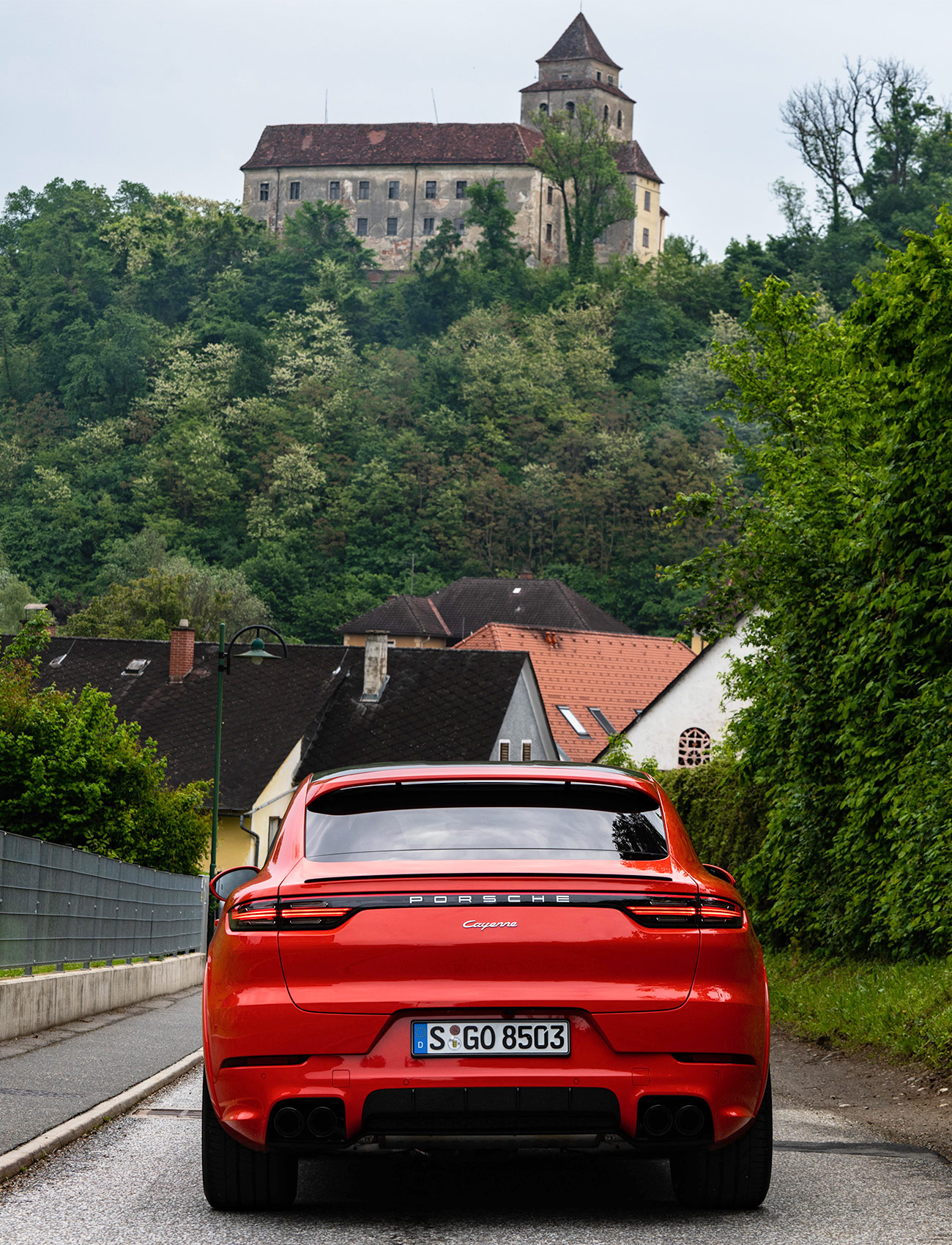
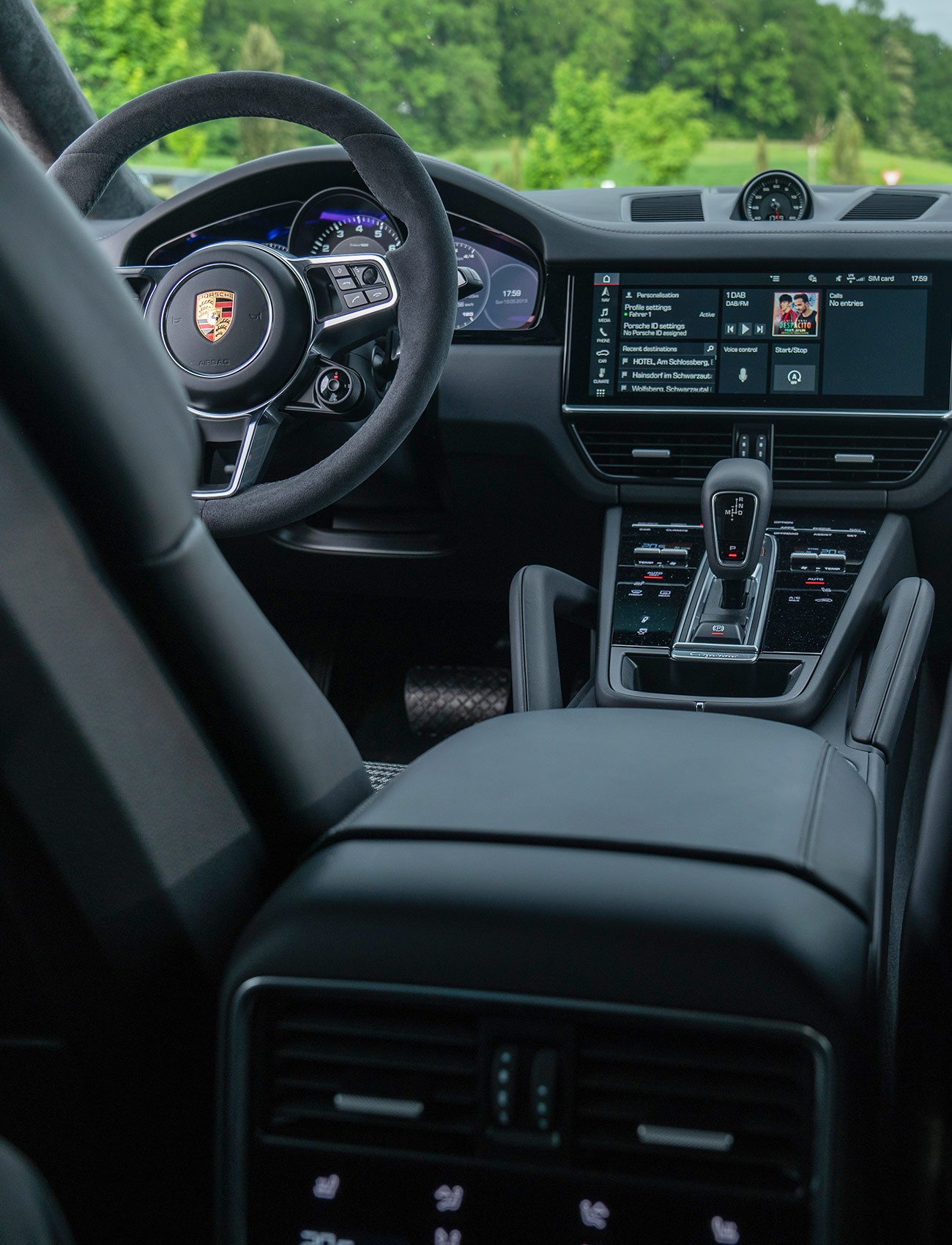
2020 Porsche Cayenne Coupe Review: Cutting the Right Corners

The coupe-ification of the automotive world continues — or perhaps more precisely, the bastardization of the word “coupe” continues. Carmakers now gleefully offer four-door sedans and SUVs that have had their backsides tidied up in pursuit of sportier styling. Some are awkward (BMW X6), others are triumphs (Audi A7).

Add to the latter category the Porsche Cayenne Coupe, a smartly coiffed, less-stuffy alternative to the otherwise excellent Cayenne. Wonder all you want about whether it’s actually a coupe, because it doesn’t matter: The tribe has spoken, and four-doors can now be coupes, too. What really matters is that buyers have additional options to choose from with relatively little extra hassle for assembly line workers.

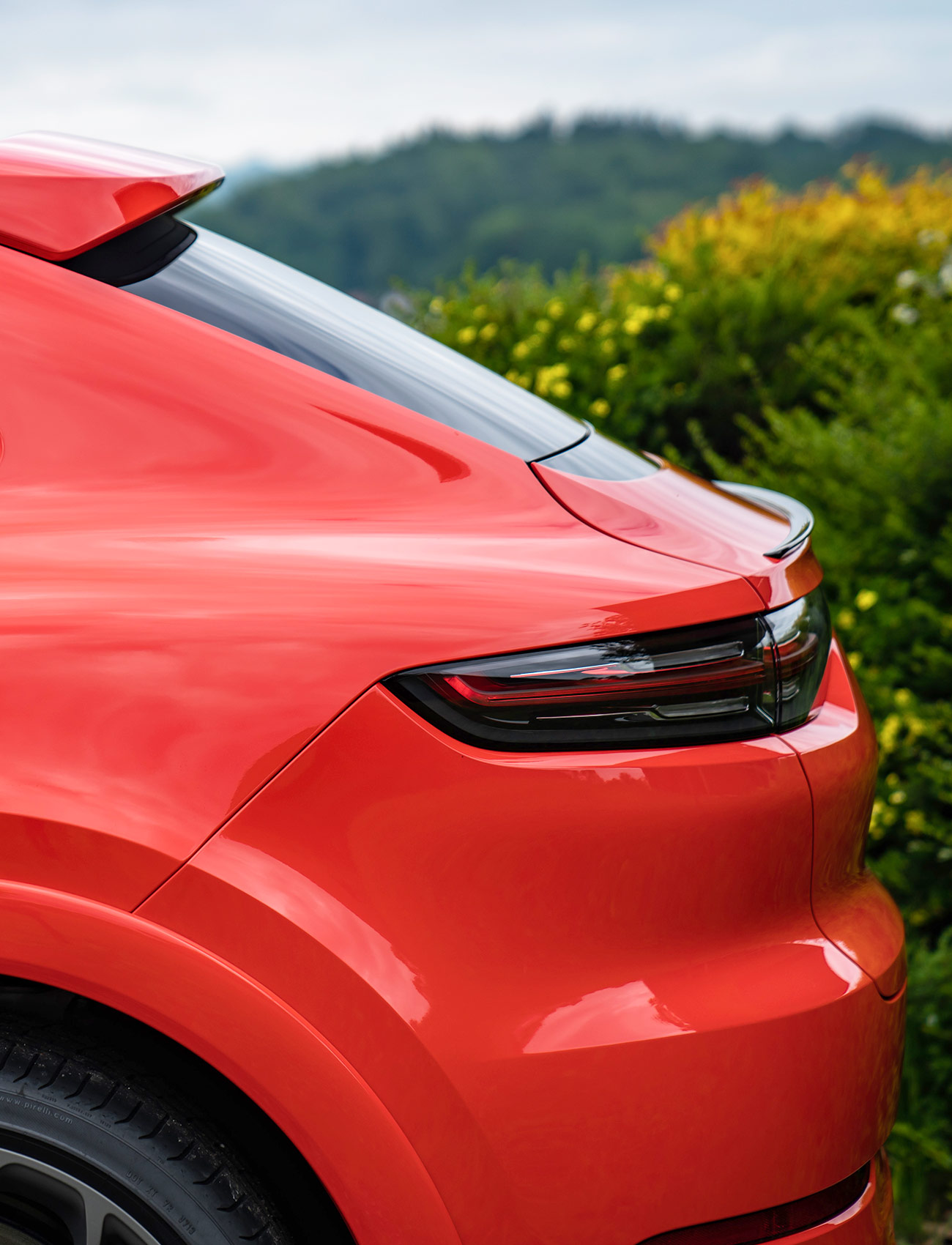
The Good: The designers went into overdrive to infuse the Coupe with enough distinction to make the effort worthwhile, without compromising space and utility or making the vehicle look too weird. The roofline at the rear is about an inch lower, and the entire backside about an equal distance wider. Inside, the rear seats sit more than an inch lower, giving back the headroom for the second-row passengers that the coupe-cut took away. The final product is sleek and well proportioned — and every version retains the Porsche-worthy handling dynamics of conventional Cayennes.

Who It’s For: Porsche buyers are a picky lot, hence the proliferation of often modestly differentiated versions within each model line, (There are, at the moment, 28 different 911’s you can buy.) This one is for Porsche enthusiasts who want a slightly sportier look — and feel, given a few key weight-reduction and aerodynamic enhancements — than those drawn to the more squarish Cayenne. Sure, it’s a highly nuanced distinction, but one Porsche readily satisfies with relative ease.

Watch Out For: Options escalation. The base model starts at $75,300, and it quickly goes up from there. The Lightweight Sport Package, which includes a sweet carbon fiber roof and 22-inch wheels, costs a hefty $14,400. The Performance Package, with adaptive air suspension and rear-wheel-steering, among other things, adds $4,900 to the final tally. Adaptive cruise control is two grand, and the soft-close doors are another $780. Many other options will see your relatively-reasonable $75K leap into six figures. In fact, the maxed-out Turbo model can soar $40,000 past its $130,100 starting point.

Alternatives: The two key SUV coupes to give a gander to are the BMW X6 and the Mercedes-Benz GLE Coupe. Both are more pronounced versions of the coupe conversion, and thus, a bit more polarizing. The Cayenne Coupe, however, feels the most naturalistic of the three from a looks standpoint — and therefore, is the better bet.

Review: Let’s be clear up front: There are minimal performance changes between the coupe models and the conventional Cayennes. The base, Coupe S and Coupe Turbo models carry over the same engines, suspension, and overall mechanicals as their counterparts. These include a 335-horsepower 3.0-liter turbocharged V6 in the base model, generating a 0-60 time of 5.7 seconds; a 434-hp 2.9-liter twin-turbo V6 in the S trim, good for 4.7 seconds to 60; and a 4.0-liter twin-turbo V8 in the Turbo model that will blast you to 60 in just 3.7 seconds.

The equally adept handling and performance revealed itself on a drive around Graz, Austria, featuring some sensationally smooth and challenging roads that the Coupes made quick work of. Though the mechanicals are the same as the two-box version, there are some tweaks that nevertheless enhanced the ride. The Coupe comes with an active rear spoiler that can extend by 5.3 inches above 56 mph, to increase rear downforce. There’s also a lightweighting option that replaces the standard panoramic glass moonroof with a carbon fiber roof, and 22-inch aluminum wheels that are each 4.4 pounds lighter than conventional alloy ones. The total weight savings on the Coupe: up to 48 pounds. It may not seem like much in a 5,000-pound car, but it does make a difference, both in the unsprung weight of the wheels and since dropping weight from the roof also has the effect of lowering the center of gravity, thereby enhancing cornering ability. These are very much the higher-performing Cayenne models.

They’re also now the best-looking. Designers can easily stumble when making derivations of existing models, but that didn’t happen here. The Coupe feels truly complete and correct, and very much its own distinct entity. It’s neither a hasty afterthought ginned up by the marketing department nor a compromise for those who must endure the profile alterations from the back seat. The car feels right and looks right; in fact, it has the effect of making the conventional Cayenne look like the slightly bloated afterthought.

As far as which models the Coupe-curious should gravitate to, the S is the one to get. The Turbo is an order of magnitude faster and louder and gnarlier, but it’s also wildly expensive. Choose that if your personality really warrants it, of course, but the S model feels nearly as great in the turns, has its own special growl, and it will hold pace with no complaint and a far more modest fuel economy price.

You can keep the final price (relatively) reasonable by avoiding the pricier options, including the Lightweight Sport Package — which on the Turbo model costs nearly $12,000 — the adaptive cruise control ($2,000) and the ceramic composite brakes ($5,580). Unless you make frequent visits to the track, the performance add-ons aren’t truly necessary. The core models are splendid enough.

Having said that, I have a bit of a thing for soft-close doors. To me, they’re the purest signifier of modern automotive luxury, in the same way that — if you’ll forgive the analogy — soft-close toilet seats are now the standard by which I judge luxury hotels. Both are well worth the extra coin, and once you’ve gotten used to them, slamming doors (and seats) suddenly becomes intolerably déclassé. So cough up that $780 for those, and enjoy the ride that much more.

Verdict: Porsche could have easily half-assed the Cayenne Coupe, slicing a little off the back and calling it a day. But the carmaker doesn’t do things by half-measures, even when it comes to asses. The newest member of the company’s crossover family is its own beast, one that can stand on its own with pride. That’s partly a tribute to the goodness of the basic Cayenne — but it’s also yet another testament to Porsche’s ever-present pursuit of making the best car possible even for the lofty prices they command. Porsche hasn’t made bad cars in a long time; the Cayenne Coupe won’t be the one to snap that streak.

What Others Are Saying:

• “Even with a modest $10,000 increase over the standard Cayenne, the Cayenne Coupe could entice buyers with its sleek styling and performance chops. It looks great and is far less outlandish than its competitors. It performs well, too, if not better than the standard crossover on which it’s based. And with minor tweaks, like a wider rear track and generously styled rear, and options like Houndstooth seats and a carbon-fiber roof, there’s enough reason for you to finally get that Coupe you’ve always wanted.” — JEFF PEREZ, MOTOR1

• “Is it a coupe? Is it a coupe-like SUV? Is it a fastback? We could quibble over semantics until the 2020 Cayenne Coupe enters the realm of classic cars without agreeing on a definite answer. What’s certain is that, whatever you choose to refer to it as, it’s a logical evolution of the Cayenne that makes zero effort to hide its sporty genes. Significantly, it lives up to the badge on its nose with tech features that are smart and useful without being intrusive, a build quality that borders on flawless, and, of course, a price tag to match.” — STEVEN EWING, ROADSHOW

• “So, why buy a Cayenne Coupe over the more functional, less expensive version? Maybe you prefer its design, or perhaps you really want those houndstooth seats (you do). I can’t really fault anyone for choosing the Coupe over a standard Cayenne when it’s fundamentally the same car. It’s attractive, comfortable and goes like hell. Call it a Coupe or just call it a Cayenne. Either way, it’s damn good.” — MIKE MONTICELLO, CONSUMER REPORTS

2020 Porsche Cayenne Turbo Coupe Specs

Powertrain: Twin-turbocharged 4.0-liter V8, eight-speed automatic, all-wheel-drive
Horsepower: 541
Torque: 567 pound-feet
0-60 MPH: 3.7 seconds
Top Speed: 177 mph

Porsche hosted us and provided this product for review.

Read More Gear Patrol Reviews

Hot takes and in-depth reviews on noteworthy, relevant and interesting products. Read the Story
Note: Purchasing products through our links may earn us a portion of the sale, which supports our editorial team’s mission. Learn more here.

Supercars.Net’s Comprehensive Guide To The 1997 Nismo 400R

Table of Contents

Introduction

Skyline Heritage

Amongst most inner circles, whether they be of the pop-culture or grassroots variety, the R33 (1993-1996) Nissan Skyline is somewhat considered the ‘blacksheep’ of the Skyline family. Critics often attribute it to being a watered-down version of the R32 which preceded it, and then it just had the tough luck of being followed by the legendary – and probably the most renowned Skyline of all – the R34.

This is definitely more so the case when comparing the more economical, rear-wheel-drive, non-GT-R models across each generation. Afterall, Nissan took the unusual step of downgrading the GTS model with a weaker engine, and discontinued the proven twin-cam engine design that was used in the R32 (and then later reintroduced in the R34 lineup). Popular opinion also finds the appearance of the R33 to be contentious, thanks to its long, awkward overhangs which make it look flabby, despite not weighing in much more, or less, than its stablemates. 

GT-R Lives Up To Its Name

The top model Nissan Skyline GT-R R33 leaves a lot less up for debate and is a brilliantly performing car in its own right. Although its longer wheelbase made it more prone to understeer than the other generations, overall handling was an improvement over its predecessor thanks to the ATTESA E-TS Pro AWD system and improved chassis rigidity. It lapped the Nürburgring faster than any production Skyline before it, clocking an impressive 7 minutes and 59 seconds. The R33 also achieved some success with versions homologated for the 24 Hours of Le Mans endurance series, which is what the car I’m supposed to be writing about is an homage to and the reason it exists.

nismo 400r nismo 400r

1997 NISMO 400R

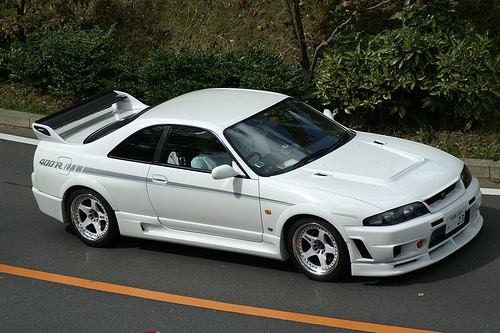
Built by Nissan’s racing division – Nissan Motorsport or more commonly known as, ‘Nismo’ – the 1997 Nismo 400R is a celebration of  the Le Mans racing car, with both aforementioned vehicles based on the Nissan Skyline GT-R R33. Although Nismo had originally planned to produce 100 units of the 400R, only 44 units were made before production of the R33 ended in 1998. Suffice to say, the 400R was a real unicorn car back then, and as time passes, this becomes even more so the case.

Even as a street-legal production car, it is far above merely being a novelty with a catchy paint job, bold racing stripes and a fancy aero package; the Nismo 400R is loaded with radical improvements over the base GT-R model in every department imaginable. In fact, the car’s name is a derivative of rather simple function – the ‘R’ stands for racing, with ‘400’ representing the engine’s output in horsepower. Fitted with all the attributes needed to take on the supercars of the day – which it did – the Nismo 400R was definitely not the R33 that could be picked on for being the oddball middle-child of the Nissan Skyline.  

Engine & Performance

Specifications:

  • Engine Type & Size: Inline-6 2.8L Twin-Turbocharged
  • Horsepower: 400 hp @ 6,800 rpm
  • Torque: 346 lb-ft @ 4,400 rpm
  • Redline: 9,000 rpm
  • O-60 mph: 4.0 seconds

At the heart of the transformation was a bored and stroked version of the factory R33 GT-R’s RB26DETT engine – dubbed the RBX-GT2 – which was built and engineer by renowned Japanese tuner shop, REIMAX. Most of the engine components had to be upgraded in order to accommodate the roughly 200 cc increase in displacement; a hardier crankshaft, forged 87 mm pistons, stronger rods, polished ports, high-lift camshafts, high-efficient oil system and larger exhaust manifolds were part of the tall order commissioned to the company. Redline was also increased to 9,000 rpm from the standard model’s 8,000 rpm.

NISMO R33 400R engineNISMO R33 400R engine

Nismo provided the finishing touches to the engine overhaul, adding a pair of N1-spec turbochargers, an upgraded exhaust, a new twin-plate clutch and larger intercooler system. All the of these changes culminated in the power plant outputting no less than 400-horsepower @ 6,800 rpm and 346 lb-ft of torque @ 4,400 rpm. Nismo also fitted the 400R with a 5-speed manual with better gear ratios to suit the RBX-GT2, than would have been the case if the standard R33 GT-R’s five-speed manual was used in this application.

This enabled the Nismo 400R to accelerate from 0–60 mph in 4.0 seconds, and a top speed of 186 mph was attainable. Definitely supercar stats for the time.

Chassis & Handling

The Nismo 400R is certainly equipped with a chassis potent enough to keep pace with its engine. Even by today’s standards, the 400R provides a remarkably ideal balance of refinement and raw performance. The Bilstein dampers, despite its stiffer spring rates, are so thoughtfully engineered that the car feels compliant and relaxed when it needs to be – rough surfaces and bumps are thoroughly absorbed – but also never fails to feel planted and grippy in any situation. The 400R could very well have been Nissan’s very first ‘everyday supercar’.

The technologically advanced active limited slip differential and rear-biased ATTESA E-TS Pro AWD system ensure efficient situational power distribution to each wheel resulting in improved turn-in, traction and overall handling. The understeer that seems to plague the other R33 Skyline models – including the GT-R to some degree – seems to be have been dialed to zero thanks to the Nismo treatment.

NISMO R33 400R driveNISMO R33 400R drive

The Nismo 400 R has excellent braking capabilities as well; utilizing the same Brembo calipers from the base R33 GT-R model, but with the addition of specially produced Nismo brake pads – which like the rest of the chassis, are competent in both street and track applications. 18-inch Nismo LM-GT1 wheels – forged, of course – are fitted in all four corners and wrapped in super beefy 275/35/18 high-performance Bridgestone RE710 tires.

Design, Styling & Interior

The Nismo 400R is adorned with a model-exclusive, original Nismo aerodynamic package. Not only did these parts improve downforce and cooling efficiency, but they also gave the 400R a look that set it apart from any other GT-R – past, present or future. 

A more aggressive, wider track is notable thanks to 25mm arch extensions over the front and rear wheel wells which house the much wider Nismo LM-GT1 wheels and tires. The front bonnet and adjustable rear spoiler are made from carbon fiber, while other elements such as a vented front bumper, broad side skirts, and redesigned rear bumper complete the package. ‘400R’ vinyl stripes are seen across each side of the car, while badging on the front grill and trunk lid signify what is ultimately, something very special.

Nismo 400R Nismo 400R

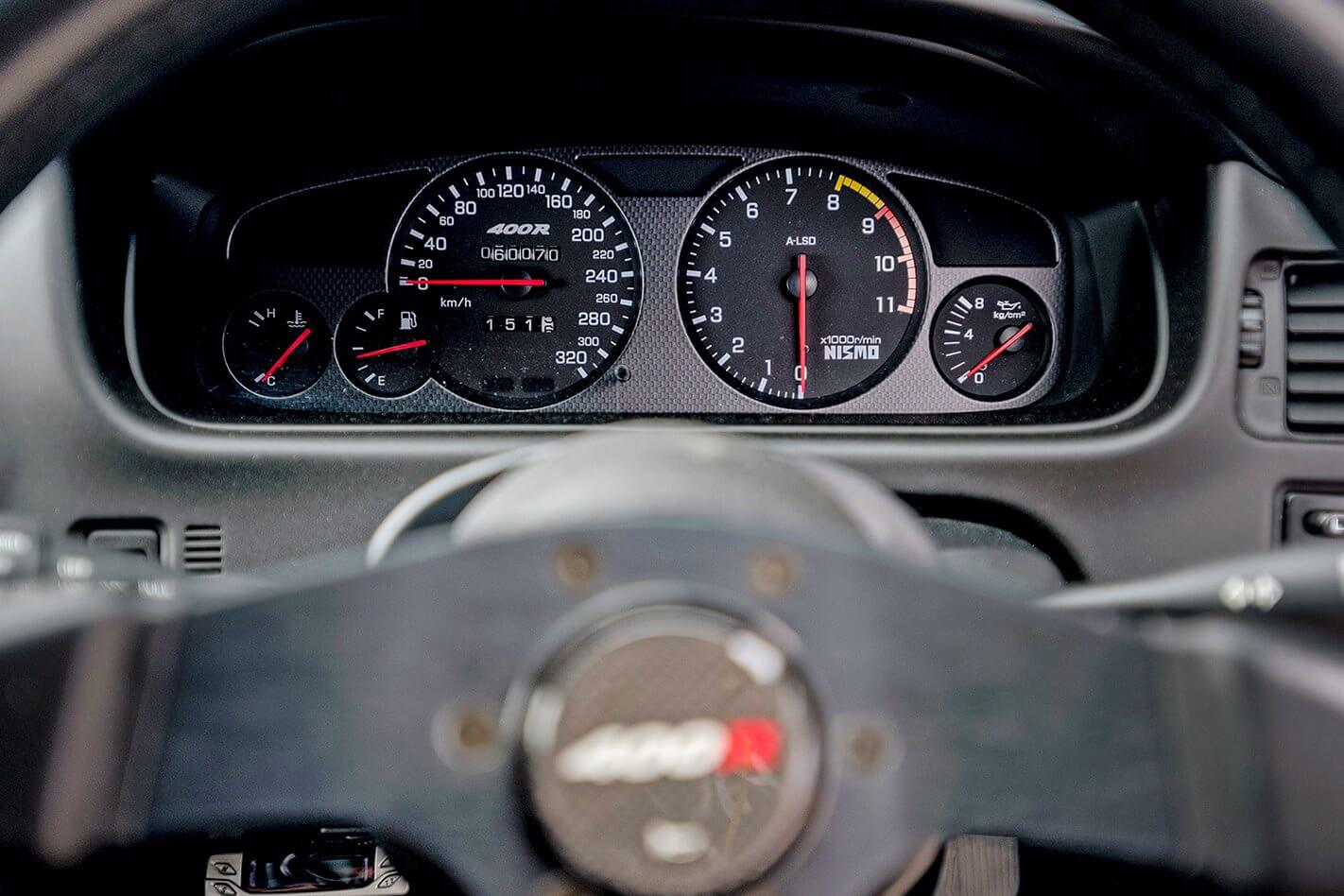
The interior follows a relatively minimalist approach, although that “extra sense of Nismo” continues to be present throughout the cabin. Nismo logos are etched into both reclinable bucket seats, while a ‘400R’ horn button can be found accenting the Nismo leather steering wheel. The gauges and instrument panel are also given the Nismo signature, with their more race-inspired appearances.  A special titanium shift knob also replaces the original leather version.

In a more subtle manner, the 400R’s tachometer goes up to a maxmimum 11,000 rpm – as opposed to the 10,000 rpm maximum in the standard GT-R – likely because the redline was respectively increased to 9,000 rpm in the 400R, from the 8,000 rpm seen in the standard GT-R.

NISMO R33 400R GAUGESNISMO R33 400R GAUGES

 Pricing

Many consider the Nismo 400R as the car that put Nismo on the map. The Playstation racing game – Gran Turismo – is credited for being the primary catalyst for the exposure it has received since the late 90s, and even until now, having featured in every one of the series’ titles over the past 20 years.

The Nismo 400R is more than just a figment of imagination or some bytes in a video game console. It is a very real, and very awesome car. It also fetches very big, and very real currency. One of my contacts – who is a JDM car importer in Canada – has told me that these days, 400Rs typically sell on auction for somewhere between $100,000 USD to $175,000 USD depending on mileage, condition, originality and other factors you would expect.

Information on what pricing was like brand new is a bit more murky – after all there were only 44 sold – with the majority going straight to private collectors, so there aren’t exactly any “sticker prices” for the car lying around anywhere. Most sources seem to indicate that a brand new Nismo 400R cost around $135,000 USD in 1998 (the equivalent of $210,000 USD today). Suffice to say, they’ve held their value very well; which after considering everything there is to know about the car, is no surprise at all.

Performance & Specifications Summary

Model & Pricing Info

Make Nismo
Model 400R
Generation R33
Car Type Coupe
Category Limited Series Production Car
Built At Musashimurayama, Japan
Introduced 1997
Base Price (US) $135,000 (est.)
Units Built 44 (100 originally planned)

Chassis, Suspension & Powertrain

Curb Weight 1,550kg (3,417 lbs)
Layout Front-engine, All-wheel Drive
Body / Frame Unitary steel monocoque
Suspension (F) Multi Link w/ Bilstein Gas Shocks
Suspension (R) Multi Link w/ Bilstein Gas Shocks
Brakes Brembo calipers w/ ventilated rotors and Nismo brake pads
Wheels & Tires 18”x10” Nismo LM-GT1 forged alloy wheels, Bridgestone RE710 275/35/18 tires (square setup)
Transmission 5-Speed Manual

Engine, Output & Performance

Engine Inline-6
Displacement (Litres) 2.8L
Position Longitudinal
Aspiration Twin-turbocharged
Power (hp) 400 hp @ 6,800 rpm
Power (hp) / litre 142.9 hp / litre
Power (hp) / weight 0.26 hp / kg
Torque 346 lb-ft @ 4,400 rpm
Top speed 186 mph
0 – 60 mph 4.0 s

The Nismo 400R does more than enough to shake off any of the less savory preconceptions that other R33 models would otherwise have brought on. As the first notable production car to have been given the works by Nismo, the 400R was their well-executed debut in every sense possible.

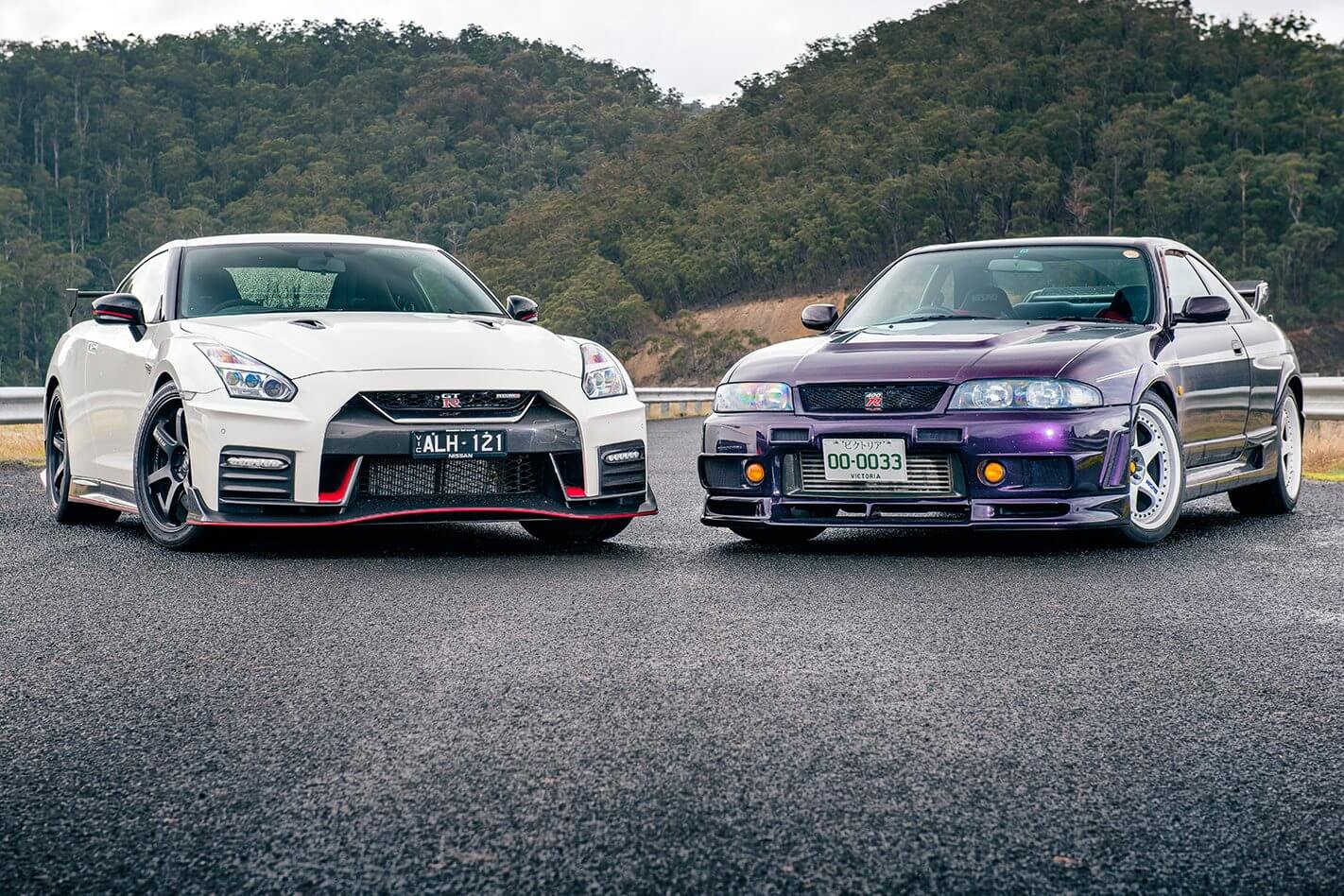
In my opinion, the Nismo 400R set the bar for what future Nismo production cars would become. Elements of the 400R are seen even in today’s Nismo GT-R, with its influence apparent in the overall philosophy of its R35 predecessor. As recognizable as it is rare, the ‘original’ Nismo GT-R is both timeless and pioneering in its approach. 

Video Review Gallery

Jethro Bovingdon of EVO provides a video review of the Nismo 400R, which is probably the most comprehensive you will find on the world wide web. He gives a charming reference to the car’s historic rise to fame through the Gran Turismo series, before going into the technical details as he puts the car through its paces.

[embedded content]

Carfection was lucky enough to take the only Nismo 400R in the UK out for a test drive – at a local race track, no less. They make direct comparisons to a modern R35 GT-R, crediting it as being a more pure and tactile driving experience. As much as it is a collector’s item, it is a car meant to be driven.

[embedded content]

Speaking of the Nismo 400R being driven, how about some in-car footage of a lap around the Nürburgring?

[embedded content]

Final Verdict

5/5

The 1997 Nismo 400R is as every bit iconic as it is a truly capable road racer, and that speaks volumes about a car that is just a Nissan, and only an R33 Skyline. It is certainly both those things – neither of which are bad – but we have Nismo to thank for it being so much more. Achieving cult status in both the virtual and real world, this car would go on to offspring a golden generation of Nissan vehicles, and in particular the GT-R line.

With there being just 44 examples (at most) of the Nismo 400R in the world, each of these hand-built machines are amongst the most rare cars – and certainly the most rare Skylines – ever produced. The former poster boy for the Gran Turismo series will surely command serious money these days, from any current owner who is crazy enough to part with theirs. 

Where agreements are made, the end price would preclude any common sense, as the car transfers from one wealthy private owner to another. Known to go for anywhere between $100,000 USD to $175,000 USD, only the most privileged collectors will have one on their radar. Even with that said, there are probably much more suitors than there are mistresses and for preservation’s sake this is a good thing. I think we’d all rather have that, than having one end up in the average fanboy’s unkempt garage and clumsy hands.

The Nismo badge today is synonymous with the highest echelons of Nissan motorsport fandom. Although more technically superior Nismo successors such as the R34 Skyline and R35 GT-R have taken over the reigns and consecutively driven the brand to the next level, the Nismo 400R will always remain the car that created the very legacy which they continue. Heroes get remembered, but legends never die.

Nissan-R33 R35 GTR Nismo duo staticNissan-R33 R35 GTR Nismo duo static

Neither Hobbs nor Shaw believe in physics in trailer No. 3

With all due respect to “John Wick,” “Hobbs & Shaw” might be the biggest action movie ever created. So big, in fact, that it has apparently transcended Earth’s pesky laws of physics. The combined gravitational power of The Rock, Jason Statham and Idris Elba have thrown the planet off its axis and completely redefined what humans, cars, motorcycles, trucks, planes, and helicopters are capable of. Don’t believe it? Just watch trailer No. 3 for the first spinoff of the “Fast & Furious” franchise.

Dwayne “The Rock” Johnson took to Instagram to announce the final official trailer before “Hobbs & Shaw” debuts Aug. 2. As expected, numero tres is more of what we saw in trailer one and trailer two. Luke Hobbs, played by The Rock, and Deckard Shaw, played by Statham, put their differences aside to work together fighting the self-proclaimed Black Superman aka Brixton aka Elba. A new character, Shaw’s sister Hattie, joins the war as well. Throughout the entire 2:25 clip, there are about 8 seconds that don’t include an explosion, gunfire, a stunt, a shirtless flex, or a combination of the four.

In addition to the usual gobs of supercars (sup, McLaren), the “Fast” franchise producers continue to lean heavily on its own custom vehicle creations. There are beefy military vehicles, autonomous motorcycles, juiced-up flatbed trucks, and tow trucks pulling helicopters.

Check out the full preview above, and get ready for the official start of summer on Aug. 2.

1969 Ferrari 365 GTS Spider

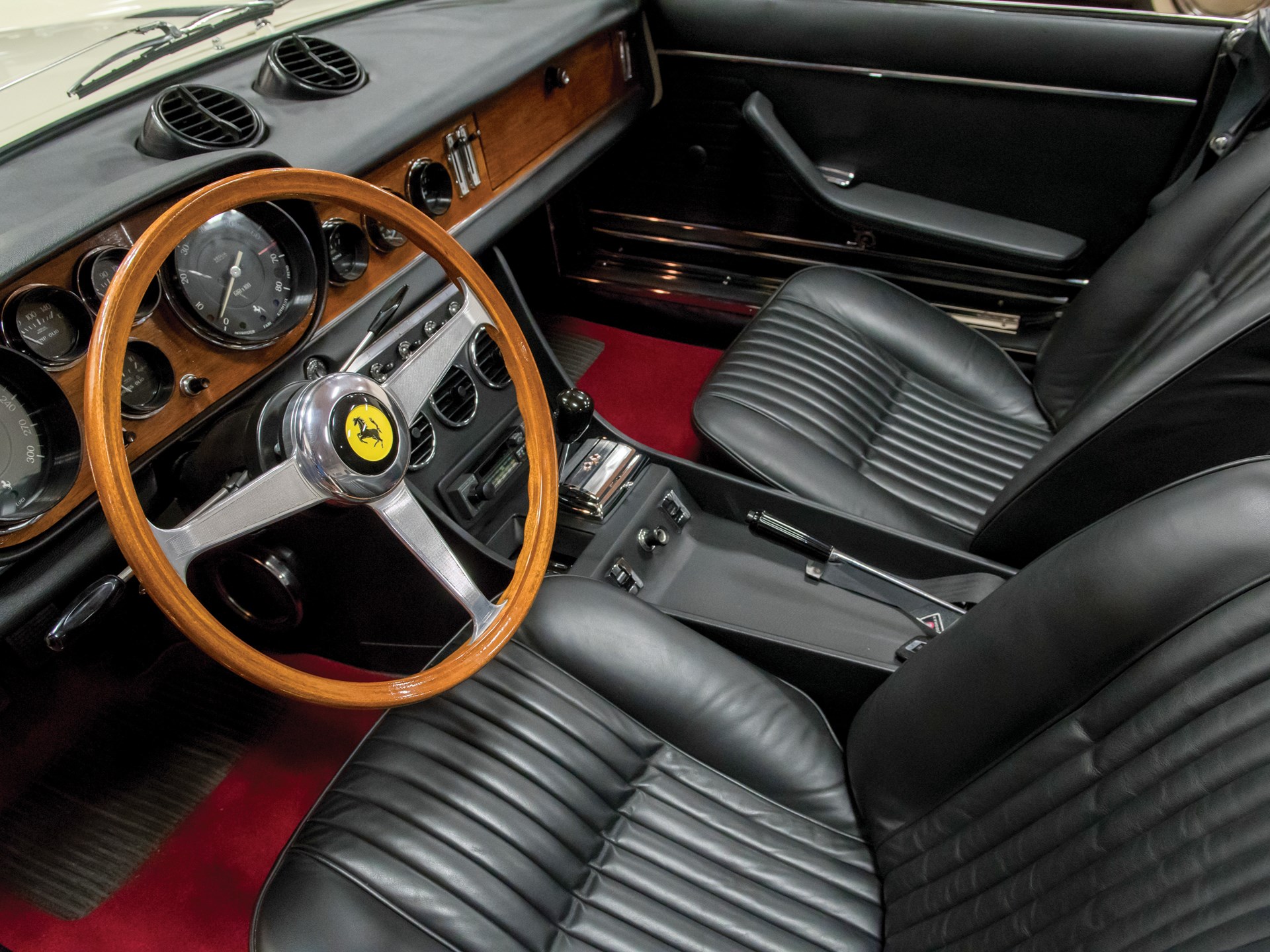
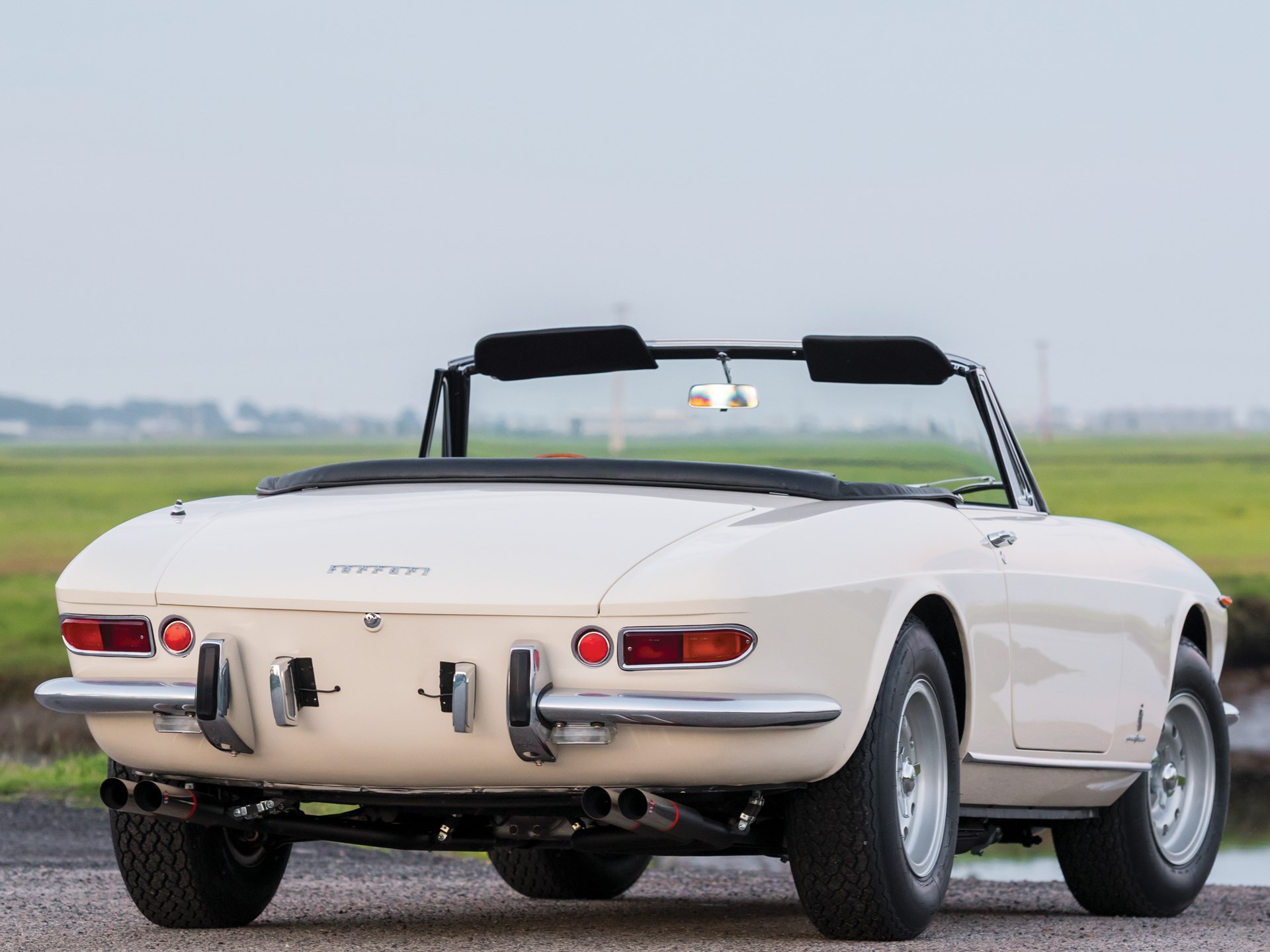
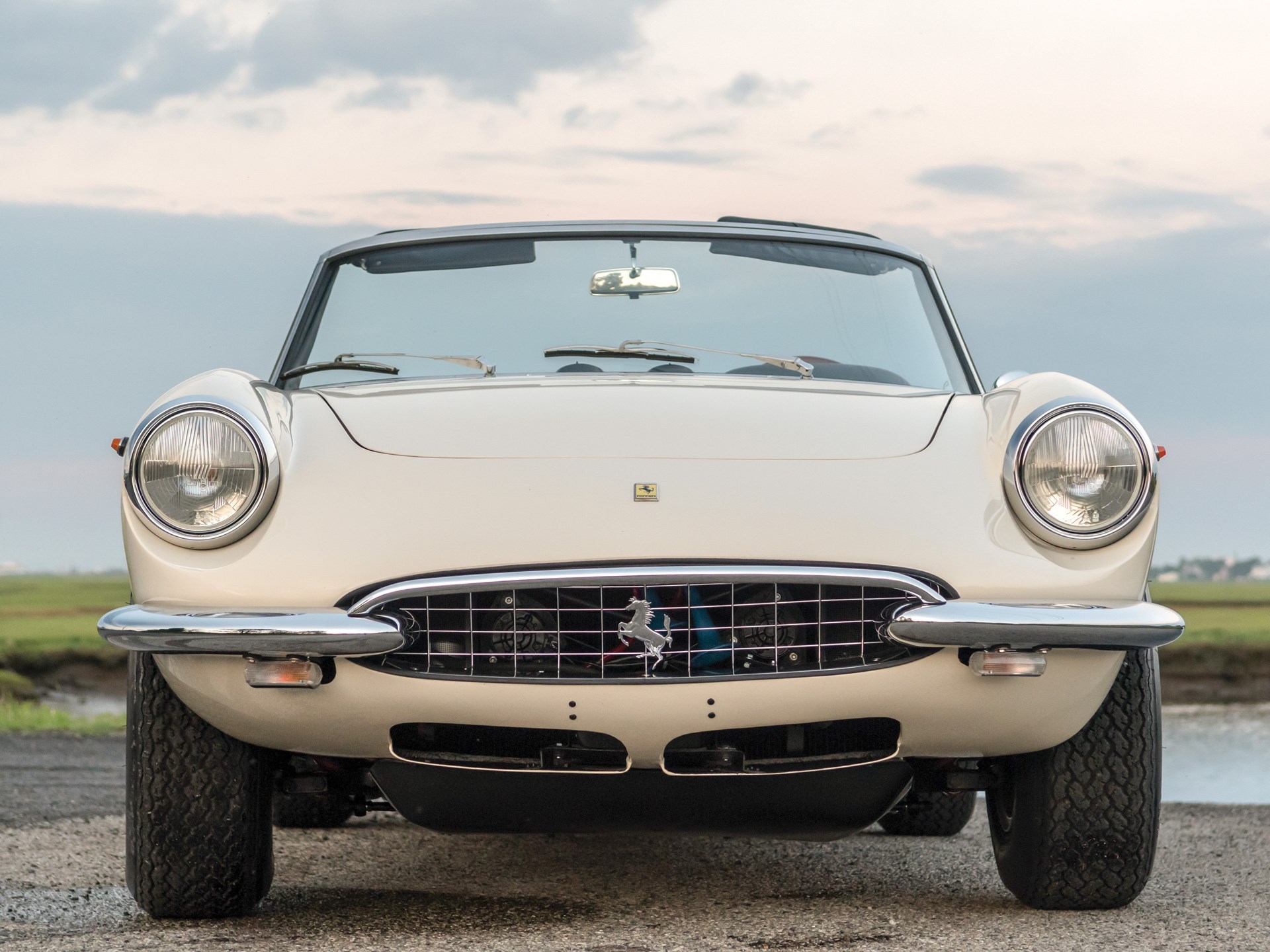
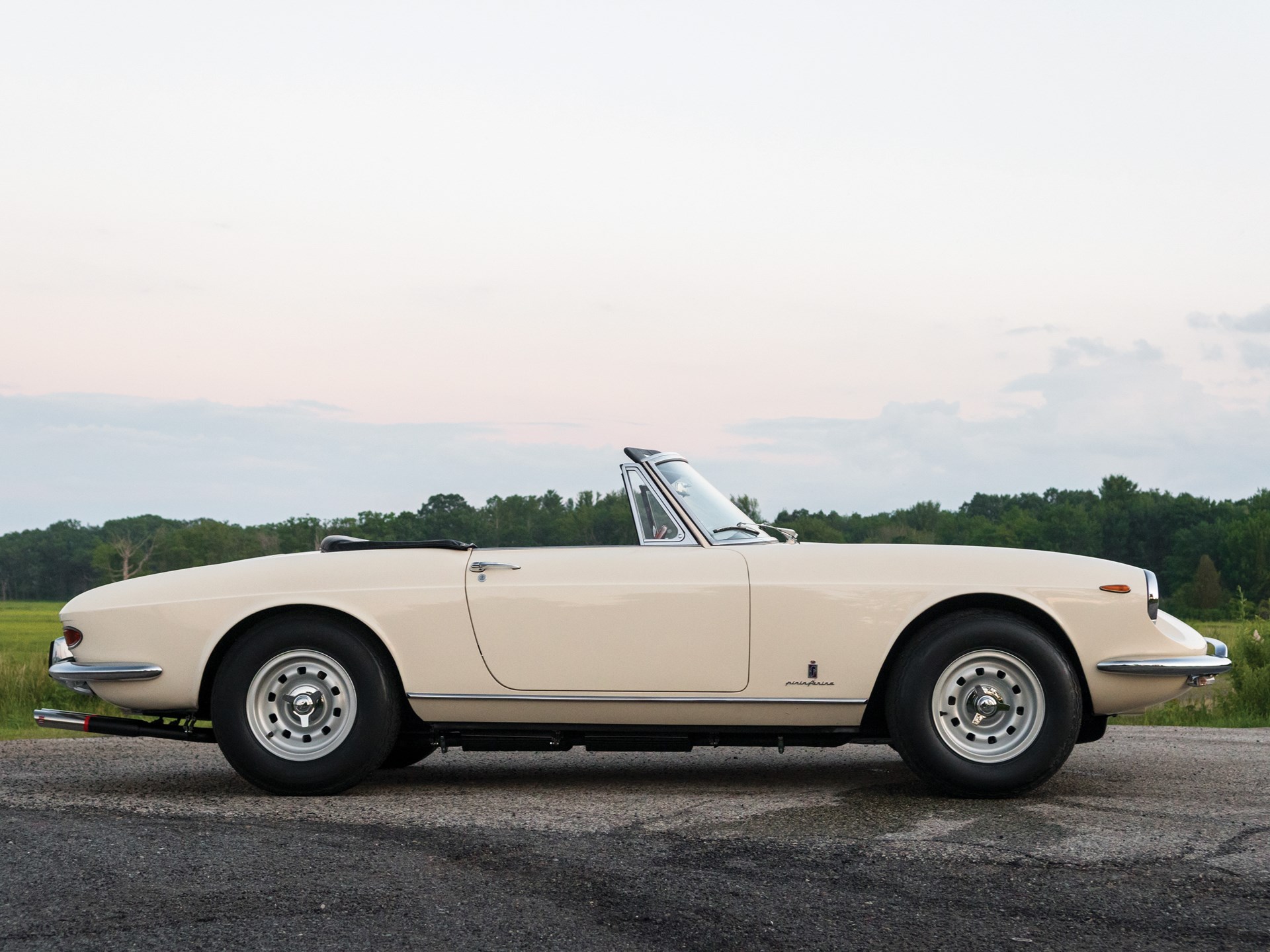
No internet bidding for this listing, unfortunately, so you’d have to pay a visit to RM Sotheby’s lots if you want a chance to store this inside your garage. Even still, that won’t stop us from talking about this utterly gorgeous ride. Meet the 1969 Ferrari 365 GTS Spider.

By the late ‘60s, Ferrari’s road cars had expanded. However, they needed something to close the gap between their sports units and lavish GTs. So, in 1966, the automaker introduced the 330 GC and convertible GTS. To absolutely no one’s surprise, they were instant hits.

In 1968, Ferrari made some modifications. They put in a 4.4-liter engine, which promptly increased the ride’s power to 320 ponies — pretty plenty in those days. They bumped the torque to 267 pound-feet, too. The 1969 Ferrari 365 GTS Spider, pictured above in its iconic paint job, is maybe the best example available. After all, it’s one of the only 20 units in its color combination. And the only one, too, with script Pininfarina logo work.

A recent restoration that cost $500,000 brought the ride in its current tiptop shape, so you don’t have to worry about parts coughing up ancient imprints of clunkiness. There’s also exhaustive documentation available, as is typical of RM Sotheby’s offerings. You also get original tool rolls and a period-correct Ferrari keychain.

This is, needless to say, a must-buy not just for Ferrari nuts, but also for vintage car collectors. Act fast, though, we’re sure this won’t stay on the market for too long. Hit the link below to view the full listing.

BID HERE

Photos courtesy of RM Sotheby’s