All posts in “Cars”

Futuristic Bentley EXP 100 GT Celebrates 100 Years of Bentley

Bentley’s Centenary takes place today. The company is 100 years old. What better way to celebrate 100 extraordinary years than with a new concept car, indicating what lies in store for the upcoming years! The Bentley EXP 100 GT has arrived!

The Bentley EXP 100 GT is not something you will be able to buy from your local Bentley dealership. It sets out Bentley’s vision for the future of “sustainable luxury mobility that is autonomous and electric”. A few years ago it would have been unthinkable that Bentley’s would be powered by anything other than a big combustion engine. Now that is no longer the case!

The first thing that strikes us is the shape. Reminiscent of that superb EXP 10 concept we saw a few years ago, it is longer, wider and more dramatic. To put the size into perspective, Bentley’s Mulsanne measures just over 2 meters, the EXP 100 GT is a full 40 cm wider!

The concept is designed to present a vision of the Bentley range in 2035. One of the biggest features is an emotionally intelligent AI that allows the human element to be removed from the driving experience. It is called the Bentley Personal Assistant and it sits as a centerpiece of the main console.

Bentley Personal Assistant tracks movements, eye and head movements and blood pressure internally with sensors monitoring temperature and environmental conditions externally to deliver the ultimate driving experience and safety in all conditions. Five modes allow for individual characteristics including Enhance, Cocoon, Capture, Re-Live and Customise. Much like BMW, Bentley places a focus on hand movements to interpret commands.

The various modes alter inputs from the outside environment including light, sound, smell and air quality. Re-Live plays highlights of your journey.

Adaptable Biometric Seating can be configured to the driver’s every movement with biometrics playing a big part of the package. The driver sits surrounded by sustainable materials such as Copper Infused Riverwood provided by the Fenland Black Oak Project which supplies 5,000 year old wood, preserved in peat bogs, lakes and rivers. Embroidery is taken care of by Hand and Lock which supply British Military Dress uniform. Bridge of Weir supply the leather as is usual for Bentley.

In terms of power, Bentley’s concept uses a pure electronic drivetrain. Bentley’s concept for the EXP 100 GT includes a four-motor system with torque of 1,500 Nm. 100 km/h is possible in just 2.5 seconds and a 300 km/h top speed. Bentley believe that battery density will improve five-fold by 2035 and so, weight will be reduced but range will remain in the 700 km region with 15 minute charges capable of realizing 80 per cent capacity. Weight is said to be 1,900 kg.

It is clear that Bentley will incorporate elements of this design concept into its upcoming models in much the same way as it did with the EXP 10 concept. The release was accompanied by an announcement that Bentley plan to offer plug-in hybrid versions of all models by as early as 2023.

Aston Martin Releases Teaser Shots of the DBS GT Zagato

It’s as Gorgeous as We Expected

Feast your eyes on the Aston Martin DBS GT Zagato that will be sold next to the Aston Martin DB4 GT Zagato Continuation. The two cars will be sold as a package that costs a whopping $7.48 million. Only 19 examples of each car will be made. 

The car is simply stunning, featuring a red paint job with carbon fiber and gold accents and wheels. Zagato and Aston Martin have a rich history together, and the DBS GT Zagato is a perfect embodiment of that relationship. The car features a massive grille with 108 different small diamond-shaped sections to it that are active. This means they open when the car is running and close when it’s parked. They open to let air get to the 6.0-liter V12 under the hood. This grille is something that Aston Martin’s Marek Reichman sounded uniquely excited about. 

Our dynamic grille gives us an opportunity to provide the car with two very different identities. When parked, DBS GT Zagato will almost look like it’s resting, but with the rear of the car still appearing muscular and primed for action. Only on start-up will the car truly become alert and ready to perform, delivering both an aural and visual treat for onlookers.

The car overall is based on the DBS Superleggera, but it has some unique Zagato styling elements and some notable updates designed to make it unique and worthy of its high price tag. In addition to the large grille, there’s also a carbon-fiber roof that will make it to the production car. It’s special because it’s one large piece. 

The DB4 GT Zagato will be a track-only car, but the DBS GT Zagato will be street legal, allowing you to take your Zagato Aston Martin just about anywhere. 

Nissan Releases Pricing on the 2020 GT-R

The Revised Lineup Gets Its Numbers

Nissan has four wonderful trim levels of its 2020 GT-R. The vehicle comes in Premium, 50th Anniversary Edition, Track Edition, and NISMO. As the date of the U.S. debut for the car approaches, Nissan has let loose with pricing for the car

The car will go on sale on July 25. When it does, it’ll come with a starting price of $113,540 for the Premium trim level. The 50th Anniversary Edition comes with a price tag of $122,040. Next up, the Track Edition is priced from $145,540. The NISMO version of the car comes in at $210,740.

The Premium version of the car gets all of the basic revisions that the car gets for 2020, including updated turbochargers, a new titanium exhaust, and active noise canceling and sound enhancement. The 50th Anniversary Edition comes with some special colors and materials inside and out.

The Track Edition gets 20-inch NISMO wheels, carbon fiber brakes, some exterior and interior aesthetic changes, and an engine tuned to 600 hp up from the base model’s 565 hp. Finally, the NISMO version of the car features a lighter overall weight, improved tires, brakes, wheels, and an improved gearbox. 

Basically, if you want a Nissan GT-R, there’s a model for you. With such a difference in price between the base model and the NISMO, anyone seriously looking for a version of Godzilla should be able to get one. 

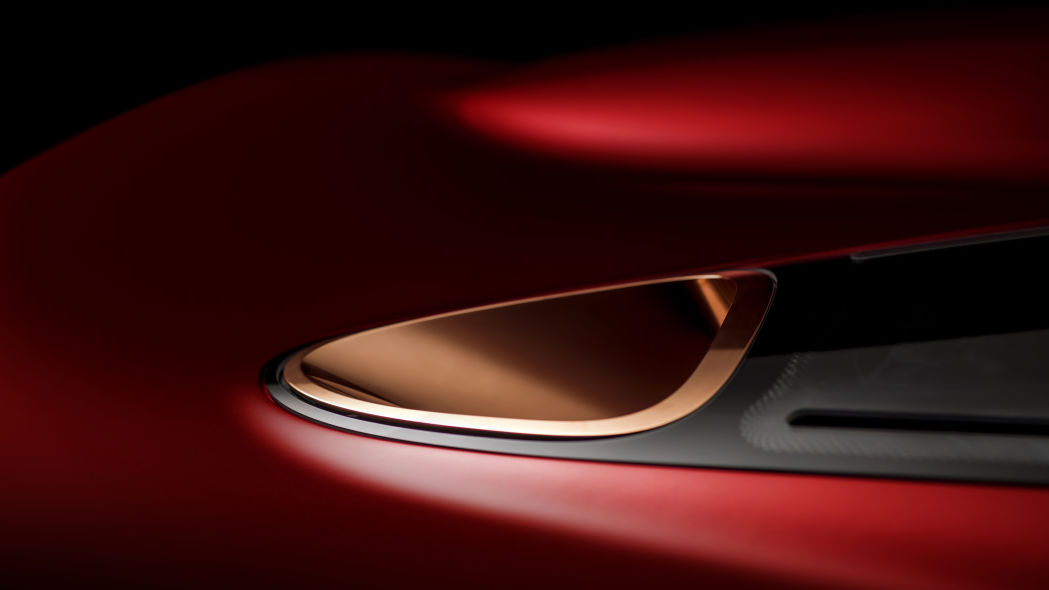
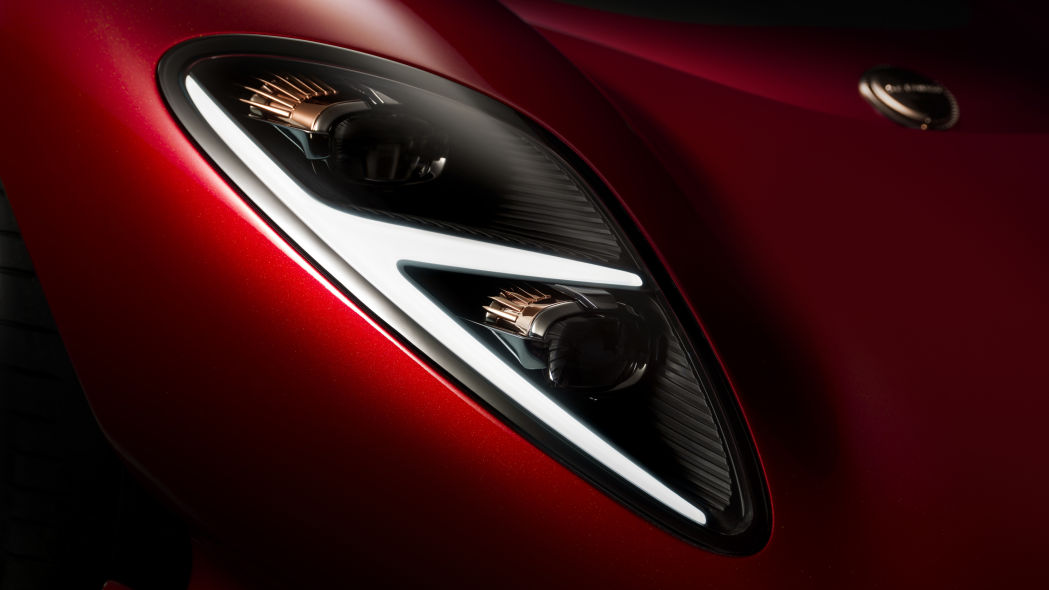
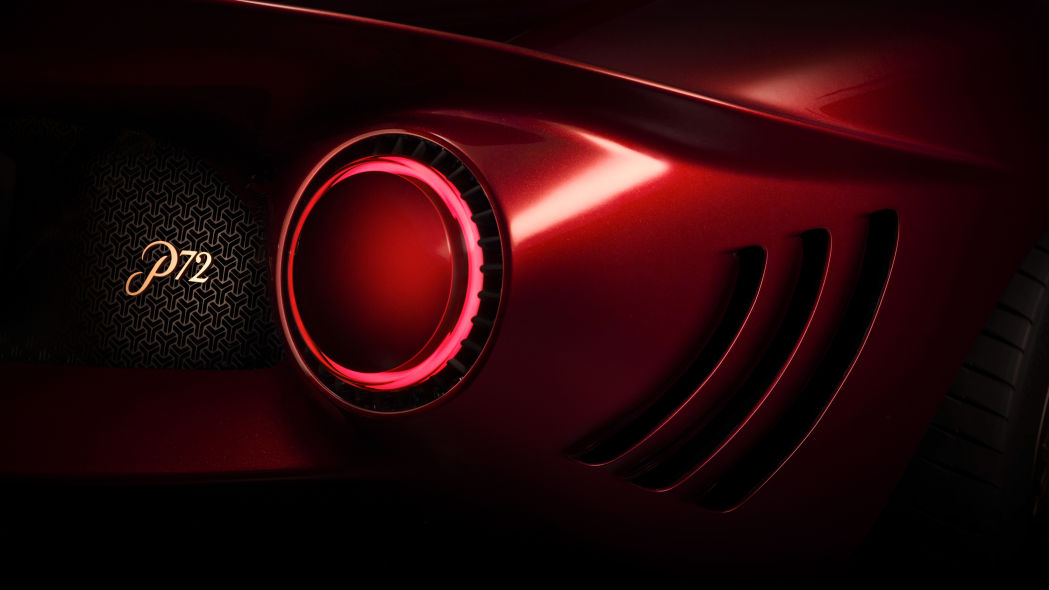
De Tomaso P72 Coupe

De Tomaso is back, baby. The name behind some of the most iconic cars like the Pantera and Mangusta is stepping under the spotlight again. Perfect timing, too, because it’s celebrating its 60th anniversary.

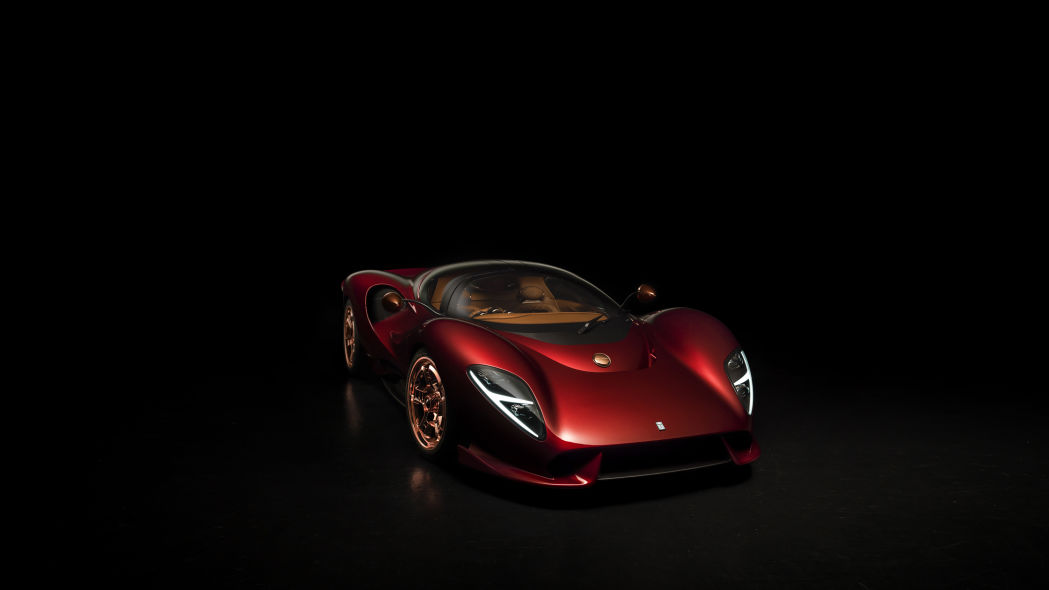
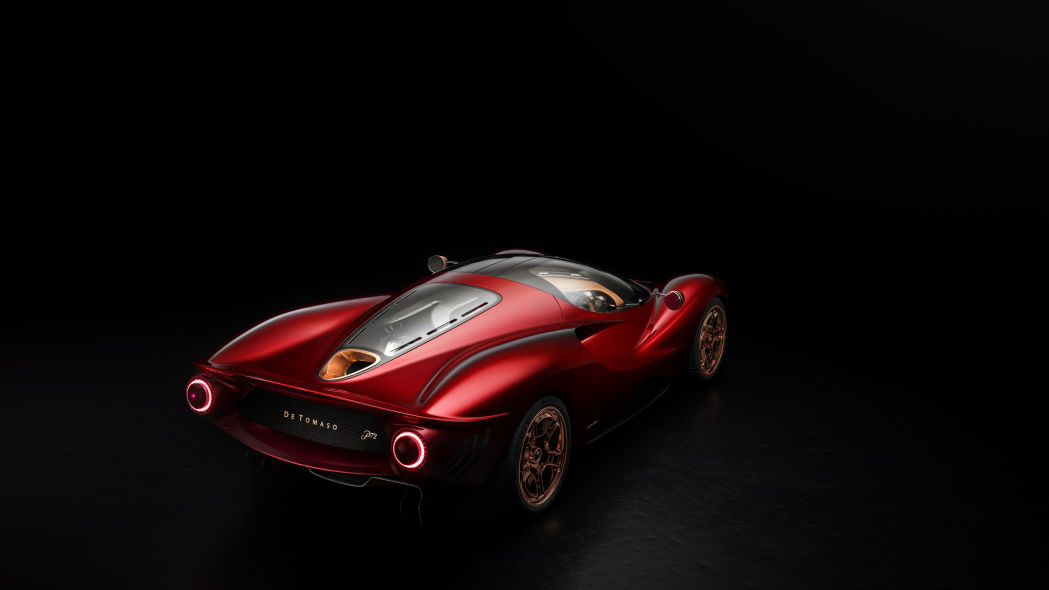
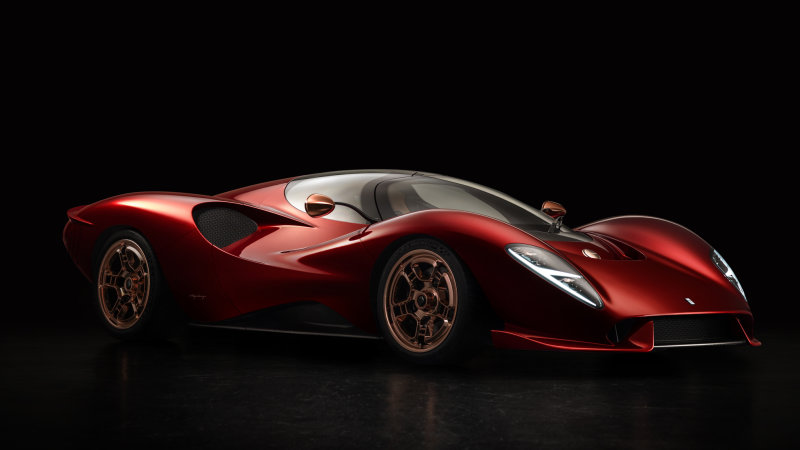
Its comeback is marked by the gorgeous De Tomaso P72 coupe, a sterling, highly luxurious ride. The automaker has released the first set of images and preliminary details of the P72, which it says picks up where the P70 left off.

Unveiled at the 2019 Goodwood Festival of Speed, the De Tomaso P72 boasts a retro aesthetic, and unlike its predecessor, it will actually go into production. The previous P70, though a beastly ride, ran into a handful of problems we don’t have time to get into now. But let’s just say the De Tomaso P72 arrives as a corrective of that somewhat failed project.

Technical specifications are thin at this point, but we’ll definitely know more over time. We do know that the car uses a bespoke carbon fiber monocoque chassis, which De Tomaso sourced from the Apollo Intensa Emozione. The exterior design is one of the key highlights of this car. With sweeping lines that snake around the ride’s profile, it screams expensive.

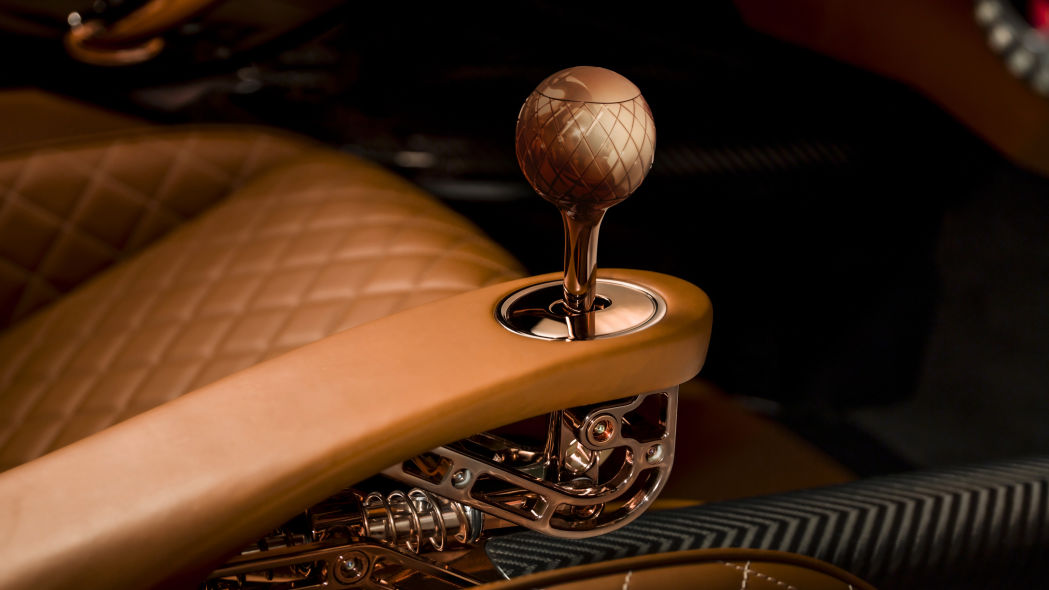
The ride boasts a manual transmission. Says De Tomaso, the production model remains faithful to the images, which you can see below. More details will come over the next few months. But it goes without saying that the car will be an expensive buy. The company lists an estimated price of $850,000. If you’re interested, De Tomaso is already accepting deposits.

CHECK IT OUT

Photos courtesy of De Tomaso

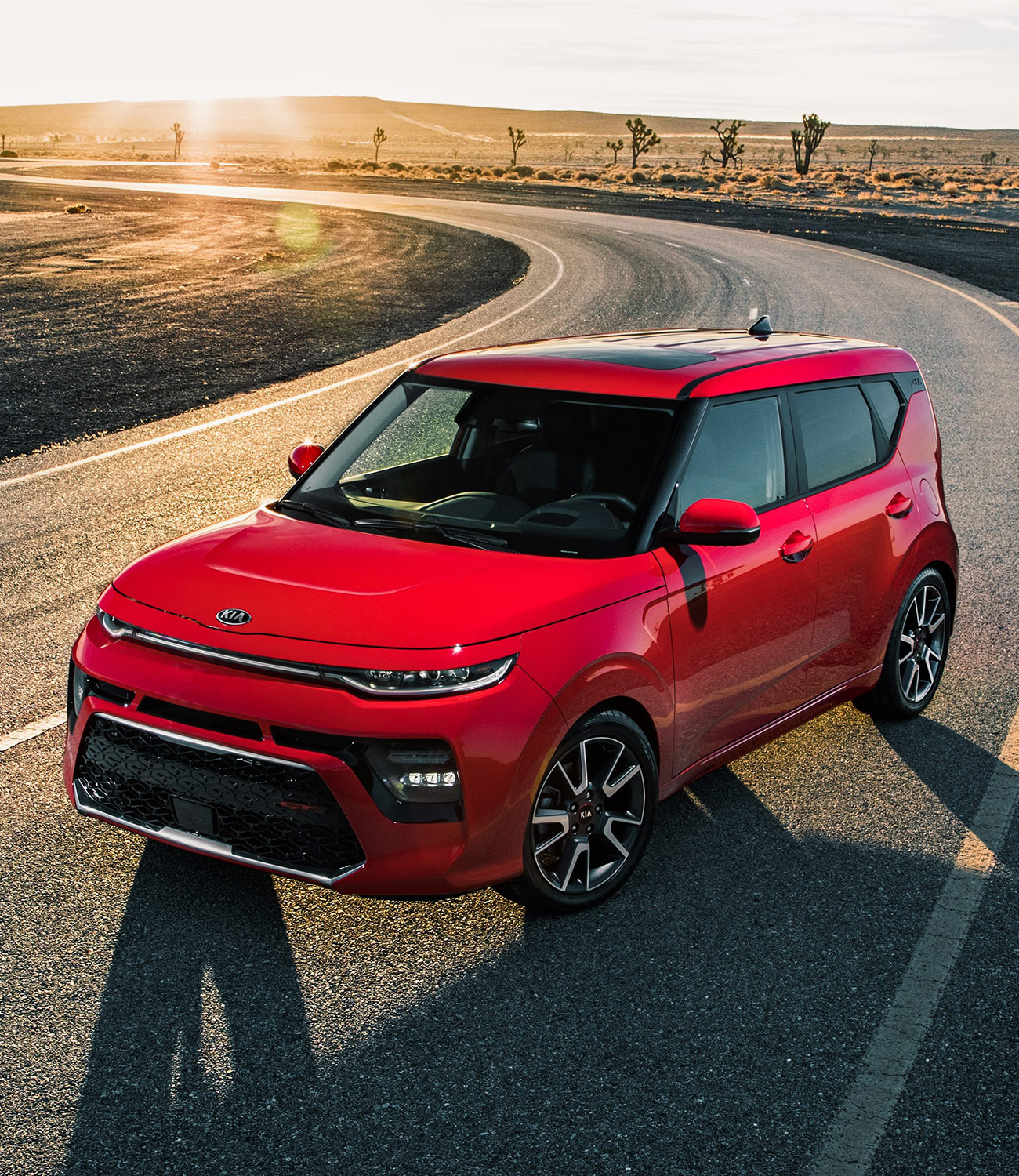
2020 Kia Soul Review: Style and Value in a To-Go Box

The Kia Soul has served as a master class in how to create an affordable, versatile, yet distinctive small car—a class that Detroit automakers especially seem to have slept through. Since 2009, Kia has sold its Soul more than 1 million times around the world, and it’s easy to see why. This third-generation 2020 model continues the Soul’s evolution into a more grown-up quasi-crossover without screwing up its successful formula: an appealing, rectilinear shape that maximizes space for people and cargo; designers that lavish attention on even tiny details; and plenty of value, even if that gets murky on the highest-priced Turbo version.

The Good: The Soul starts at just $17,490, and while it’s boxy, there’s nothing “econobox” about it, aside from some basic plastics that are unavoidable at these prices. Slim new headlamps perch below a blunt, faux-clamshell hood that’s like a homage — or maybe a “screw you” — to Range Rover. Striking LED taillamps boomerang around nearly the entire back hatch glass and the sheetmetal “island” that’s a Soul design signature. Inside, deep etchings on genuine metal front-door trim catch and reflect natural light, making them appear illuminated from below—a design touch that Audi or Lexus would be proud to claim.

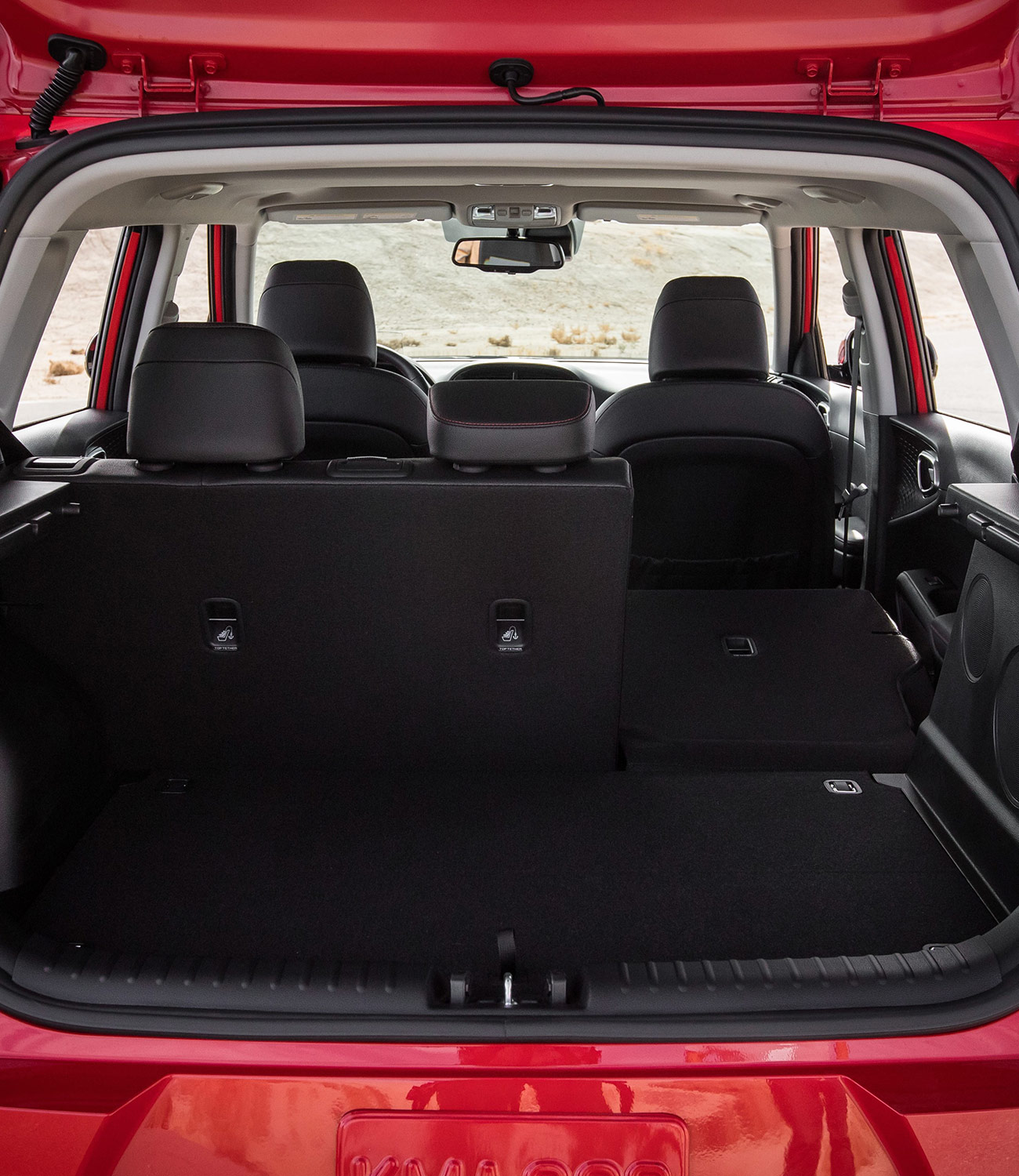
Headroom remains vast in both rows, and there’s a respective 24- and 62-cubic-feet of storage with rear seats raised or folded flat, respectively, dwarfing conventional subcompact crossovers with similar exterior dimensions. (The Soul doubles the Mazda CX-3’s cargo space behind the second row, and has nearly 50 percent more overall capacity, despite being 3.1 inches shorter than the Mazda). Ground clearance rises to a campground-friendly 6.7 inches, up from 5.9 before.

Who It’s For: Budget buyers who’d rather not draw too much attention to that fact. The children of parents who are only too cognizant of budgets, or tuition prices. City dwellers, for sure, or anyone who wants unmatched interior volume relative to a tiny exterior footprint.

Watch Out For: The old showroom bait-and-switch. My mid-level Soul X-Line test model starts from $22,485, or $22,960 as tested. It seemed worth every penny, including kicky-looking 18-inch alloy wheels, a leather-wrapped shift knob and steering wheel with audio controls, Apple CarPlay and Android Auto, a 7.0-inch center touchscreen, a rear-view camera, new driver assistance features, even — I kid you not — Hill Descent Control. The Soul EX costs $1,200 more, but you may want to stop there. Because the Soul GT-Line, with its 201-hp, 1.6-liter turbo four and dual-clutch, seven-speed automated gearbox, sends the price soaring to $28,485 — in line with, say, a Volkswagen GTI, or a smartly equipped (and relatively cavernous) Honda CR-V EX.

Considering the Kia’s mundane steering and chassis dynamics, that price seems a bridge too far for this adorable underdog. (A Soul EV with an EPA-rated 243-mile range should cost even more when it goes on sale later this year). And once again, Kia won’t deign to grant us an AWD version. It’s one feature that some crossover shoppers would happily pay extra for, whether they truly need it or not.

Alternatives: Jeep Renegade ($22,025+), Nissan Kicks ($18,640+), Toyota C-HR ($21,145+), Hyundai Kona ($19,990+)

Review: Manual fans, knock yourself out: The most-affordable Soul, the $18,485 LX Manual, gets nostalgic with a six-speed stick shift. Every other Soul ditches the previous six-speed automatic for a continuously variable transmission, or Intelligent Variable Transmission (IVT) in Kia-speak. Lo and behold, that belt-driven unit — designed in-house by Kia — is quite intelligent by CVT standards. Keep your right foot below roughly two-thirds throttle, and the CVT stays in the background where it belongs, smoothly mimicking the stepped gears of a conventional automatic transmission and rarely venturing beyond 5,000 rpm.

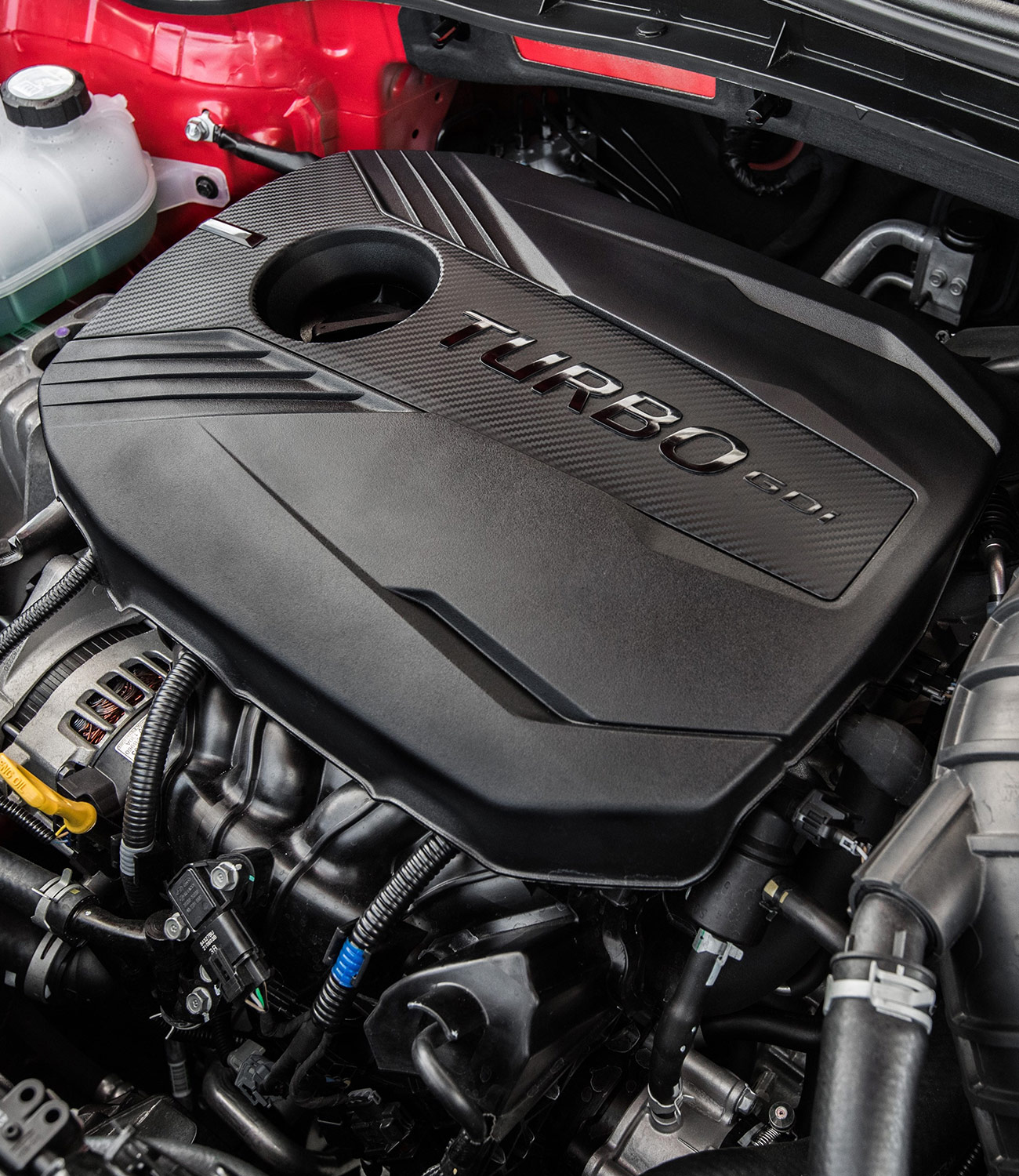
It’s mated to a new 2.0-liter four-cylinder that runs the fuel-saving Atkinson cycle, with 147 horsepower and 132 pound-feet of torque. That engine replaces both the wheezy 1.6-liter that powered the Soul’s previous starter model and an older, grittier 2.0-liter that made 164 horses. With the CVT swapping ratios at will, the new Soul can nip 60 mph in a useful 8.0 seconds, about 0.1 quicker than the old 164-hp model. Fuel economy carves out even bigger gains, to 29/35 mpg in city and highway — a 3-4 mpg jump over the old 2.0-liter and 2-3 mpg better than the limp, defunct 1.6-liter.

Slipping into the Kia’s surprisingly thick-bolstered seats with their upright, L’il Land Rover seating position, I found the Kia’s all-new platform and suspension geometry imparts a less-jittery ride over Brooklyn’s tough streets. Spurring the Kia along winding parkways north of New York, I heard less road noise, as well. Everything is smartly fitted and shipshape inside, including crisp analog gauges and a stress-free infotainment system.

Sadly, my Soul didn’t get the optional head-up display, 640-watt Harman Kardon audio system, or the latest take on the Soul’s whimsical interior “mood lighting:” The aforementioned metal door panels, along with door speaker surrounds, can pulse in multiple colors according to several preset musical moods, including “Romance,” “Traveling,” “Midnight City” and something called “Hey Yo!”

Hey Yo, Kia, if only your crossover was a little more soulful to drive. The Kia delivers almost ridiculous levels of grip, especially considering its modest Hankook Ventus S1 Noble2 all-season tires. Car and Driver found the Kia generated 0.91 g of lateral grip, more than a GTI or a Honda Civic Si on all-season rubber. But frustratingly, the Soul’s engine-and-CVT combo is unsuited to anything resembling sporty driving, unless you’re satisfied with picking a speed and coasting through every turn. Brake into a corner, and the Soul instantly drops its revs and refuses to pick them back up: Momentum, lost. Floor the gas early, and the engine surges out of proportion to the response you were seeking. Put the console shifter in manual mode, and you can sort of fake it by holding revs around 5,000 rpm in third gear — but that also results in enough engine moaning to suit a Civil War triage unit.

Steering is on the blah side, as well. The Kia goes where you point it, but even the latest Toyotas — including the Corolla and RAV4 — have more feel and less excess assistance. From a South Korean corporation that’s really gotten its performance act together — look at the zesty-handling Kia Stinger GT and Genesis G70 — the Soul’s lack of dynamic challenge to, say, a Mazda CX-3 is a mild disappointment.

Those knocks aside, the Kia obviously isn’t intended as an overtly hot hatchback, the Turbo version notwithstanding. Like soul music, the Soul is all about a smooth jam and an efficient, unhurried pace — with enough room to stuff Barry White in back.

Verdict:  Seeking a vehicle with the fuel economy of a compact car, the versatility of a crossover, and more style and better quality than many examples of either? The 2020 Kia Soul might just be the ticket.

2020 Kia Soul X-Line Specs

Powertrain: 2.0-liter inline-four; continuously variable transmission; front-wheel-drive
Horsepower: 147
Torque: 132 pound-feet
0-60 MPH: 8.0 seconds
Fuel Economy: 27 mpg city, 33 mpg highway

Kia provided this product for review.

Read More Gear Patrol Reviews

Hot takes and in-depth reviews on noteworthy, relevant and interesting products. Read the Story
Note: Purchasing products through our links may earn us a portion of the sale, which supports our editorial team’s mission. Learn more here.

Porsche Redesigned the 911 RSR for 2019

Improving a Car That’s Already Excellent

The Porsche 911 RSR is a car that has won more than 20 FIA World Endurance Championship races. Porsche hasn’t decided to rest on its laurels, though. The company didn’t even want to make evolutionary changes to its winning racecar. Instead, it replaced 95 percent of the car with all new components and parts, making the 911 RSR better than ever before. 

In the last 911 RSR, the major design change was from a rear to a mid-mounted engine position. That change remains in the new car. What also remains is the headlights, brakes, clutch, driver’s seat, and a few other small parts in the suspension, according to Car Throttle. Everything else is all-new. 

The engine grew to 4.2-liters, and now the naturally aspirated flat six-cylinder makes a strong 507 hp, which is up slightly from 503. The engine also has a wider rev band, and better power delivery and control. The transmission is a six-speed sequential constant-mesh manual gearbox.

There’s also a multi-disc, self-locking differential. Power goes to the rear wheels. The exhaust pipes have been rerouted and shorted, helping reduce weight. Porsche also reworked the exterior of the car and says it’s more aerodynamic than it has ever been before. If the old car won more than 20 races, you can bet that this one will win even more. 

[embedded content]

This Could Be the Only Remaining Australian 1945 Type 51 Volkswagen Beetle

Despite some missteps in terms of design and overall build quality during the aughts, it’s impossible to deny the impact and importance of the Volkswagen Beetle. If vintage VWs are your thing—and they should be—you…

BMW Trainees Converted an X7 into a One-Off Pick-Up Truck

The BMW X7 is certainly a capable vehicle when it comes to hauling the family, a weekend worth of stuff and maybe even some bikes on the back. But what if you want to haul…

Seinfeld’s ‘CiCGC’ trailer is chock full of stars, cars and coffee

“Oh, we’re really just eating,” Matthew Broderick says with a confused look. “Not saying anything entertaining.” Nope, you’re not, Mr. Broderick, and that’s kind of the point. Comedians in Cars Getting Coffee is essentially an extension of Seinfeld, the show about nothing. Jerry talks to his comedian friends about, well, being themselves, and there are some automotive glamour shots mixed in. Yet, the show has created enough draw to last 10 seasons, with the 11th launching this month. And we’re pumped.

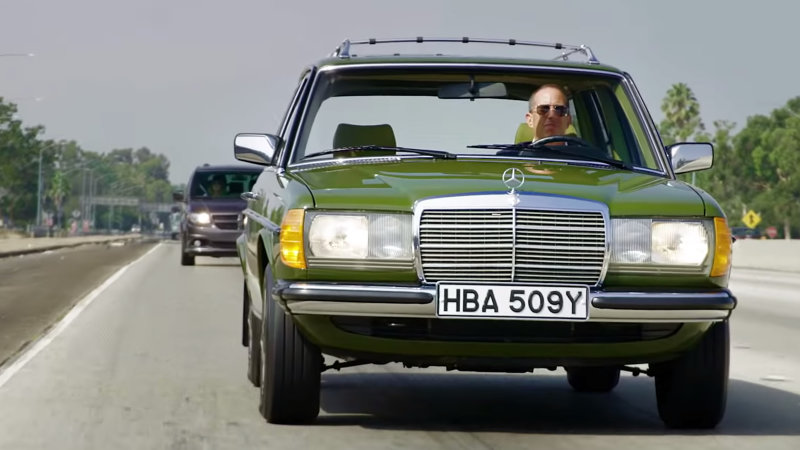
After a teaser image previewed this season’s guests, the official trailer previews the plethora of excellent vehicles that will make appearances. During the 2:38 clip, we see a Lambretta scooter, a Dodge Monaco police cruiser, a Porsche Carrera GT, a classic Mercedes-Benz station wagon, an early ’60s Cadillac coupe de Ville, a Lamborghini Huracan Performante, a VW Thing, a 1968 Maserati Mistral 4000 Spyder by Frua (we think), a Rolls-Royce Dawn, a Porsche 356 convertible police car, a Nissan Figaro, and a Vespa. 

Those cars will be joined by Eddie Murphy, Seth Rogen, Ricky Gervais, Broderick, Jamie Foxx, Sebastian Maniscalco, Martin Short, Mario Joyner, Melissa Villaseñor, Bridget Everett, and Barry Marder. Throughout the season, Seinfeld will also be visiting a number of locations outside the typical coffee shops and diners, including Mets home Citi Field, a barbershop, and most importantly, an Arby’s. 

Seinfeld starts the trailer with a message to all the shows that have copied been inspired by the CiCGC format: “If you’re gonna knock us off, get it right!” The new season debuts July 19, 2019 on Netflix. 

Lamborghini will cap its own production to maintain brand exclusivity

Lamborghinis, Ferraris, Bentleys, and so on demand high prices, and that’s not just because you’re buying incredible performance, technology and luxury. You’re also buying exclusivity. Recently, however, Wall Street and shareholders have been pressuring supercar makers to produce more cars and yield more profits. The problem is that higher production volume compromises exclusivity and dilutes the brand.

So while Lamborghini’s shareholders want the company to produce more cars, executives are seeking to impose limits and cap production.

“We must not go on growing forever. We now have to consolidate these results and preserve exclusivity,” Lamborghini CEO Stefano Domenicali told reporters at an event inaugurating the company’s newest paint and body shop at the Sant’Agata Bolognese plant in Italy.

The company announced that it plans to sell more than 8,000 cars this year, which is “the right dimension of our company with our current product portfolio,” Domenicali said.

However, that number could swell to around 10,000 cars, depending on whether the company adds another model to its small lineup. Such a case would have to be deliberated among shareholders.

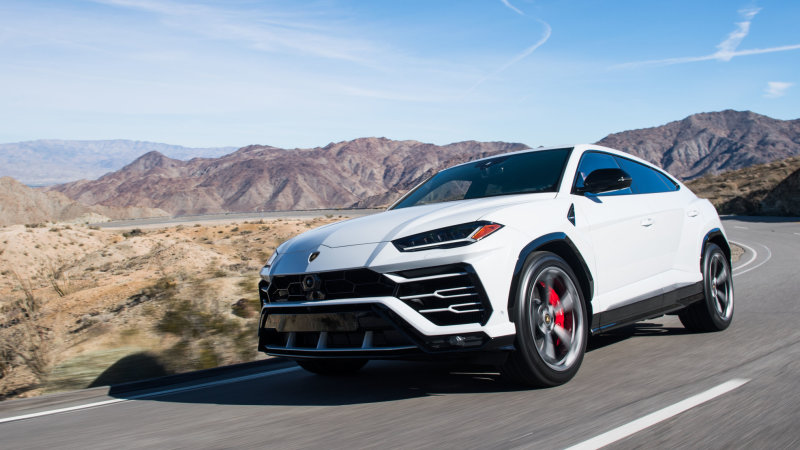
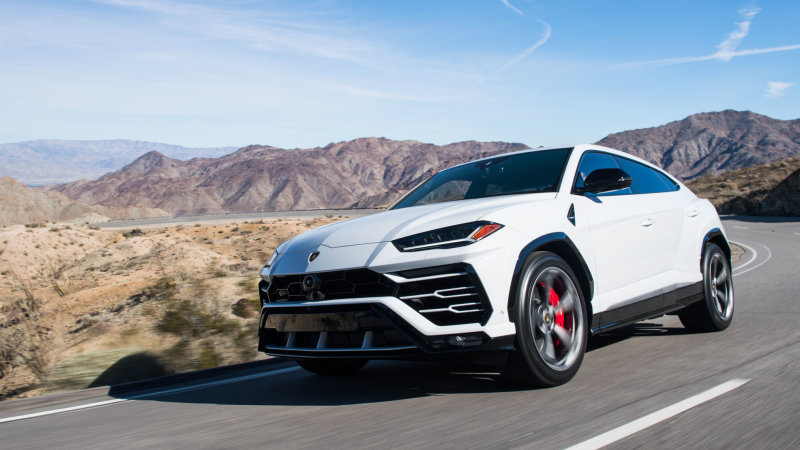
Lamborghini saw considerable growth in the first quarter of this year, likely attributed to the launch of its Urus SUV. So far, analysts are forecasting an increase in revenue to around 1.7 billion euros, or $1.92 billion USD, up from 1.42 billion euros or $1.6 billion USD in 2018, said Chief Financial Officer Paolo Poma.

At the same event, Lamborghini confirmed that an electric supercar is not in its future at this time as “customers are currently not interested,” Poma said.

However, Lamborghini is indeed seeking to add hybrid vehicles to its lineup by 2025, as it’s pressured to lower CO2 emissions and meet future mandates. The Urus is expected to be one of the cars receiving a hybrid powertrain, as it is not planned to get a V10 or V12 engine.

Lamborghini struggles to cap its own production to maintain brand exclusivity

Lamborghinis, Ferraris, Bentleys, and so on demand high prices, and that’s not just because you’re buying incredible performance, technology and luxury. You’re also buying exclusivity. Recently, however, Wall Street and shareholders have been pressuring supercar makers to produce more cars and yield more profits. The problem is that higher production volume compromises exclusivity and dilutes the brand.

So while Lamborghini’s shareholders want the company to produce more cars, executives are seeking to impose limits and cap production.

“We must not go on growing forever. We now have to consolidate these results and preserve exclusivity,” Lamborghini CEO Stefano Domenicali told reporters at an event inaugurating the company’s newest paint and body shop at the Sant’Agata Bolognese plant in Italy.

The execs are having limited success, however, as the company announced that it plans to sell more than 8,000 cars this year, which is “the right dimension of our company with our current product portfolio,” Domenicali said. A run of 8,000 cars would be an increase of 39 percent from 2018’s total of 5,750 new Lambos. It has been a strong decade for Lamborghini; a mere 1,302 vehicles were sold back in 2010.

However, that goal of 8,000 could swell to around 10,000 cars, depending on whether the company adds another model to its small lineup. Such a case would have to be deliberated among shareholders.

Lamborghini saw considerable growth in the first quarter of this year, likely attributed to the launch of its Urus SUV. So far, analysts are forecasting an increase in revenue to around 1.7 billion euros, or $1.92 billion USD, up from 1.42 billion euros or $1.6 billion USD in 2018, said Chief Financial Officer Paolo Poma.

At the same event, Lamborghini confirmed that an electric supercar is not in its future at this time as “customers are currently not interested,” Poma said.

However, Lamborghini is indeed seeking to add hybrid vehicles to its lineup by 2025, as it’s pressured to lower CO2 emissions and meet future mandates. The Urus is expected to be one of the cars receiving a hybrid powertrain, as it is not planned to get a V10 or V12 engine.

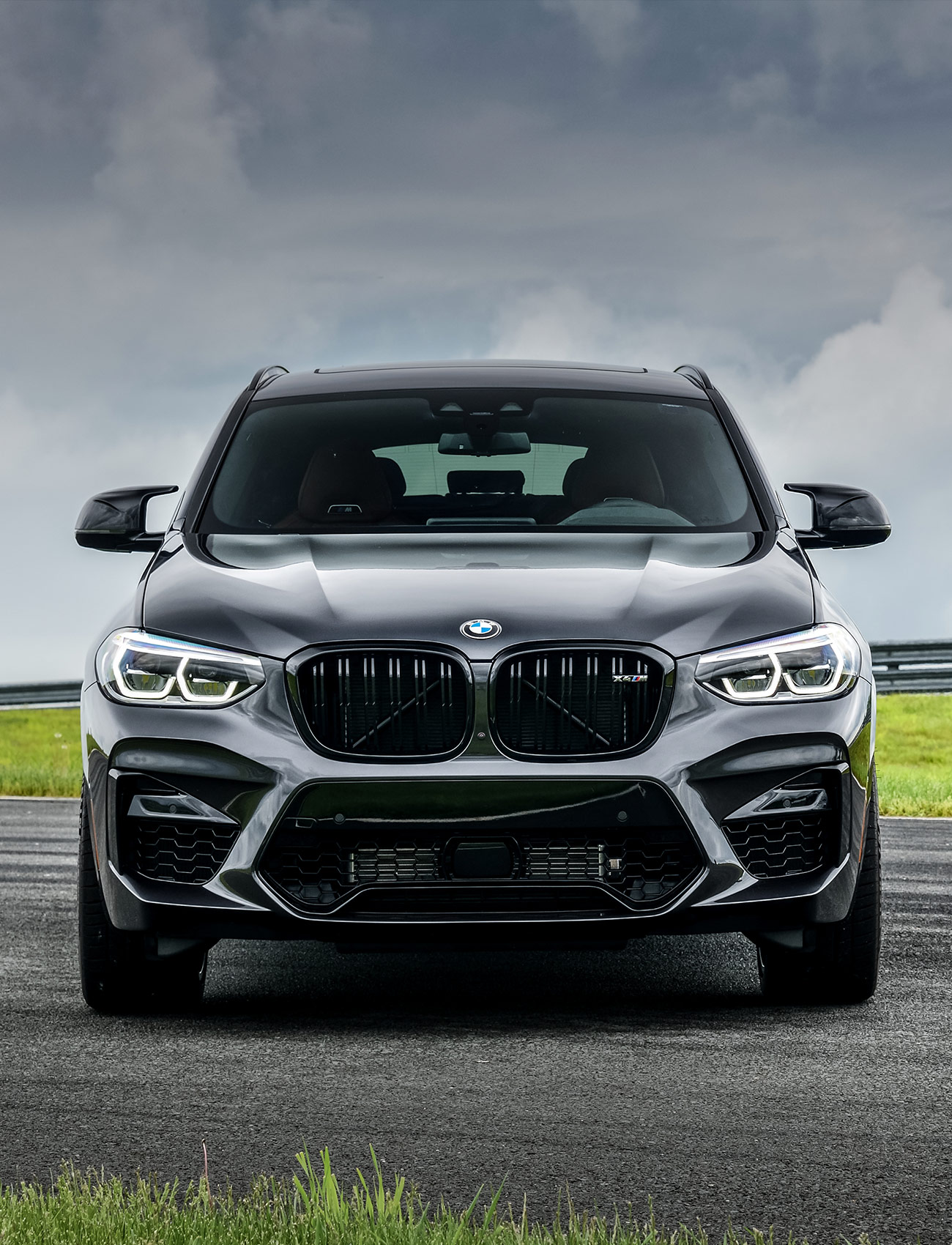
2020 BMW X3 M and X4 M Review: It’s Time to Embrace the Sport SUV

The 2020 BMW X3 M and X4 M demand that we stop thinking about SUVs in old and obsolete ways — as either trucks in a more palatable form, or as a hopeless compromise that can never perform as well as a conventional car. Here’s the new truth of the ultra-high-performance SUV: You won’t find any car that can do what the X3 M and X4 M can do, which is to attack a road or racetrack faster than most sport sedans but with cargo space and versatility no car could hope to match.

When car journalists and “purists” continue to condescend to Americans — and now global buyers — who clearly prefer the SUV formula of a tall roof, tailgate and AWD, it’s time to wonder whether it’s the purists who can’t acknowledge the automotive truth. And I say that as a lifelong lover of Lotuses, Miatas and any other tiny, laughably impractical sports cars.

The Good: I drove the X3 M and X4 M from suburban New Jersey to Monticello Motor Club in upstate New York, where BMW let us romp on MMC’s full 4.1-mile circuit. And the “good” is how deftly the Bimmers—the first full M Performance versions of the popular X3 and slope-roofed X4 — balance everyday duties and cordial neighborhood relations with acceleration, braking and handling that would have been unimaginable in an SUV even a decade ago.

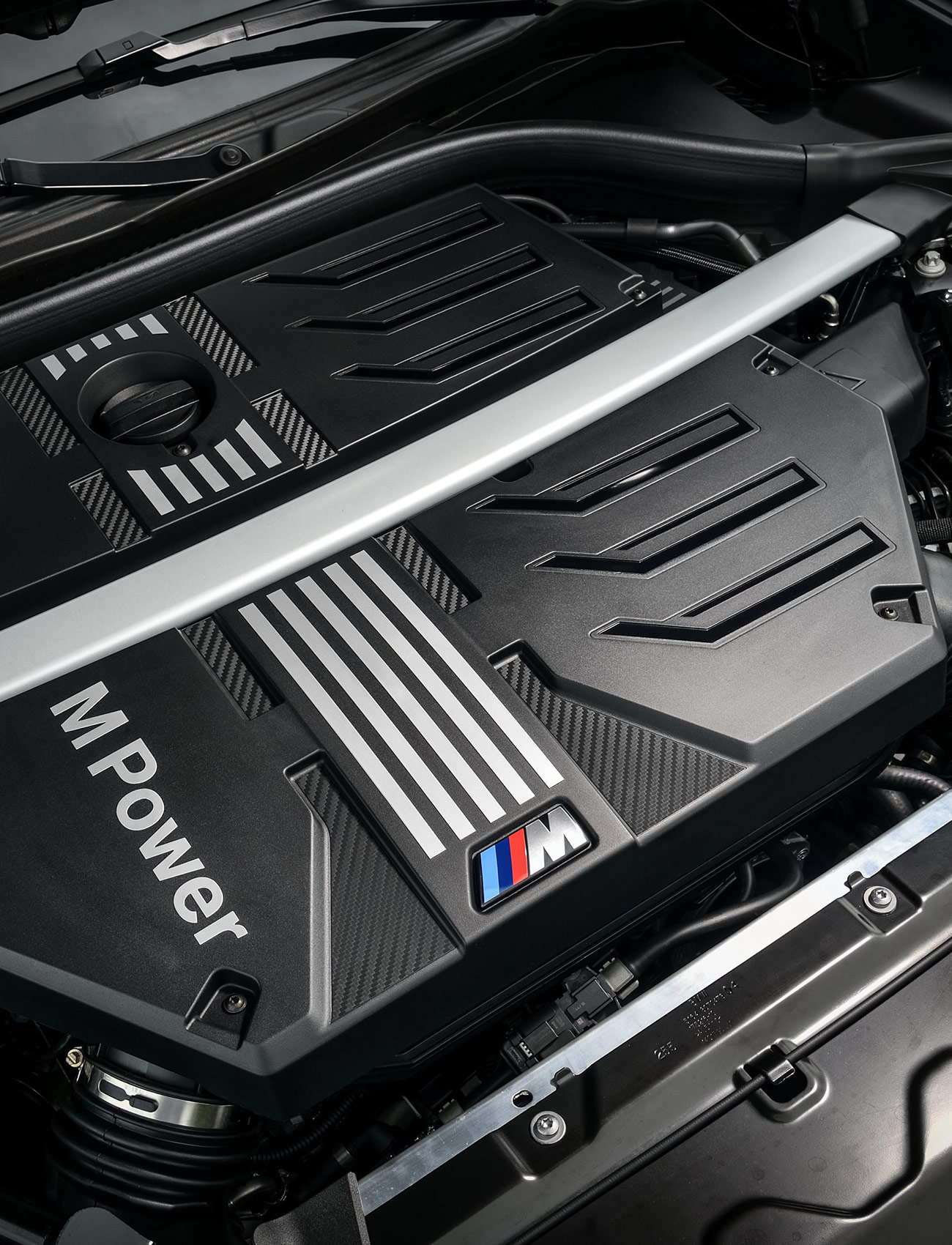
The most powerful inline six-cylinder engine in BMW history now powers these SUVs: a twin-turbo, 3.0-liter masterwork with 473 horsepower and 442 pound-feet of torque. Ante up for the Competition versions, and horsepower rises to 503, with an identical torque peak and a powerband as broad as the horizons owners will chase. More than 90 percent of this 3.0-liter’s parts are new, including its enlarged bore (and shorter stroke); forged pistons and lightened forged crankshaft; turbochargers with electrically actuated wastegates; high-pressure fuel pumps and integrated cast exhaust manifold; and two-chamber, dual-pump oil pan that BMW says works like a dry-sump unit to avoid oil starvation under extreme g-force duress.

Who It’s For: People who secretly crave a sports car, but won’t splurge on something that feels like a self-indulgent toy. Those people must still be able to afford an indulgent luxury SUV, as the X3 M starts from $70,895, or $74,395 for the X4 M. The 503-hp versions add $7,000 to the price, for a respective $77,895 and $81,305 for the X3 M Competition and X4 M Competition.

Watch Out For: After all these years, BMW’s M Division still can’t design a console shift lever for its transmissions that operates with tactile ease. Its latest affair falls awkwardly to hand, like a child’s block skinned in leather, and it’s annoying to toggle. (Thank God for paddle shifters). The “Park” button, situated low on the shifter’s face, requires an unnatural thumb stretch or finger prod. BMW’s aging navigation system also remains slow on the uptake, often failing to call out or display upcoming turns or exits until you’re practically on top of them.

On the subjective side, certain auto writers are bound to complain that the BMW should be even more aggressive, whether in visual, auditory or suspension-tuning terms. But my sense is that BMW’s M Division has found the Goldilocks mean for a sporting SUV. These are still family cars first, and if all they do is bellow, flaunt their wildness and clomp like Neanderthals over every pavement crack, then BMW families aren’t going to buy them. If you require more than 503 horsepower or a sub-four-second 0-60-mile-per-hour time in an SUV, maybe you should grab a Jeep Trackhawk.

Alternatives: Mercedes-AMG GLC 63 and GLC 63 Coupe ($70,800+), Jaguar F-Pace SVR ($79,990), Alfa Romeo Stelvio Quadrifoglio ($79,995)

Review:  The standard X3 and X4 are among the most spacious, luxurious SUVs in their respective sets, and the M treatment puts them over the top. That includes snazzy M Sport seats with Merino leather and integrated headrests, carbon fiber trim, M digital driver’s gauges, and an M steering wheel with two red-metal buttons to store performance presets for the engine, suspension, transmission, steering, active M differential and two-stage exhaust. Enlarged front openings channel air for brake cooling, and for six (yes, six) radiators to cool the engine and transmission, and to feed turbo intercoolers.

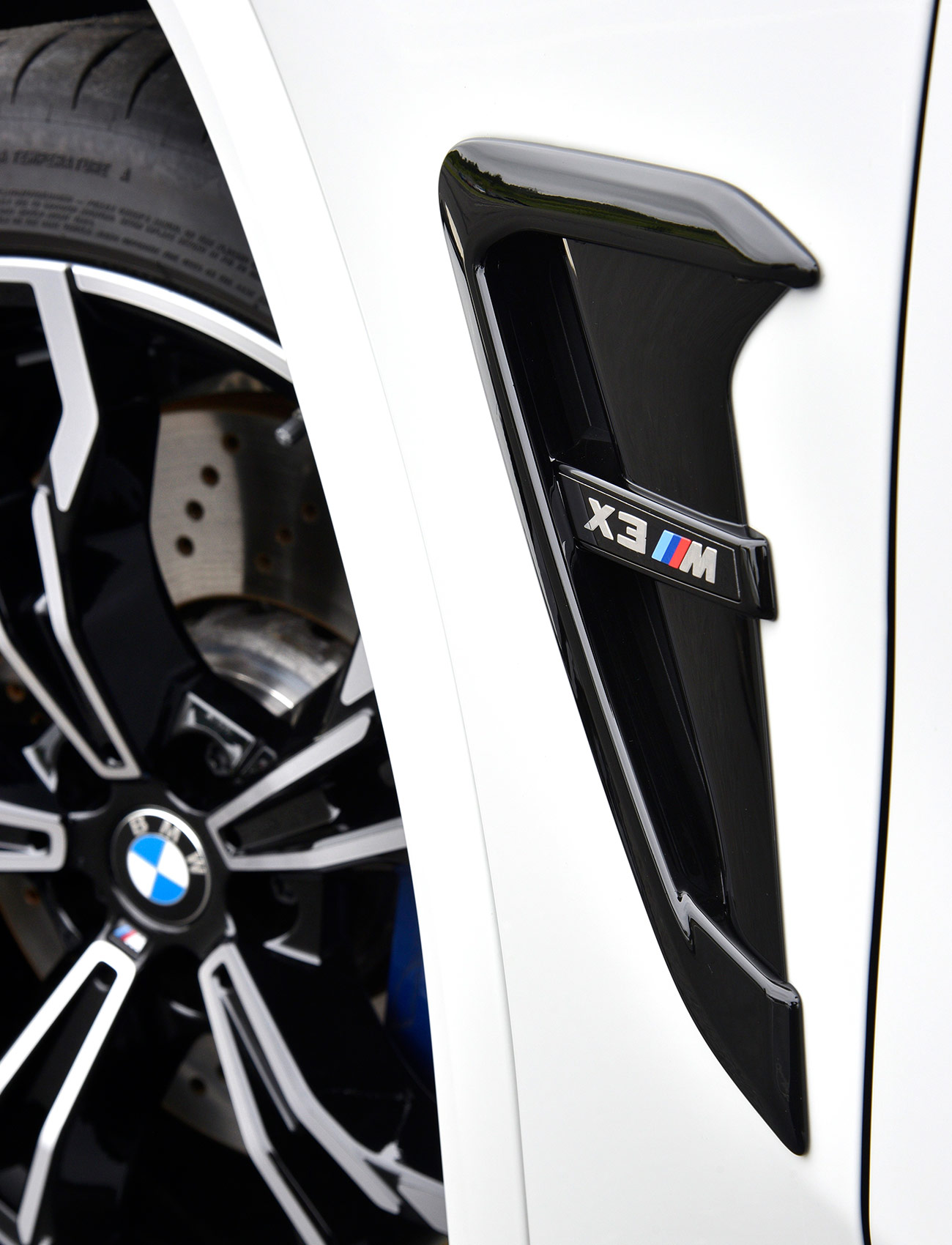
These M models also add specific side mirrors, rear apron, and air breathers on front fenders, with black body details for Competition models; and either 20- or 21-inch wheels shod with Michelin Pilot Sport 4 S summer tires.

BMW’s formidable midsize X5 M and X6 M flex even more muscle, making up to 555 horsepower from their twin-turbo, 4.4-liter V-8’s. But these smaller-scale X’s have less aerodynamic drag and a superior power-to-weight ratio. The X3 M slices 640 pounds (roughly equaling four adult passengers) from the X5 M’s curb weight, at 4,620 pounds versus 5,260 pounds; the X4 M, at 4,590 pounds, weighs 595 fewer pounds than the X6 M. BMW pegs the 0-60 mph run at 4.1 seconds for the X3 M or X4 M, and four seconds flat for the Competition models, but that sounds (and feels) like sandbagging to me: I’d expect a 0-60 run in 3.8 seconds, tops, for Competition versions.

The entire car is buttressed for speed and body control, naturally. That includes the remarkable Active M Differential that assesses multiple variables in real time—not just the differential wheel speeds of a traditional limited-slip unit, but also driving speed, throttle position, and targeted and actual yaw rate—to distribute torque across rear wheels. A handsome aluminum “precision strut” spans the top of the engine to brace the body. Suspension struts are M-specific, along with elastokinematics such as front-axle bearings, transverse links and bushings for precise wheel control. The hot handiwork is complete with M Compound brakes (four-piston front, single-piston rear) and variable-assist M Servotronic steering.

On public roads, the X3 M and X4 M’s wide spectrum of suspension and performance settings proved a high point, including various Comfort modes that delivered a surprisingly compliant ride and toned-down sound to keep the cops looking elsewhere. Dialing up the various systems dials the performance to freak-show heights, including passing maneuvers on Catskills two-laners that left passees as trembling specks in our rear-view mirrors.

It all came together at Monticello, where these five-passenger BMWs cornered on rails, finessed even the trickiest sections—such as the blind crest and left-hand plunge known as Krytpos—and never ran out of brakes, even after dozens of laps. These SUVs still feel relatively large and chunky, of course, and the steering could transmit more pure feedback. But the skillful, objective performance was undeniable, including the near-total banishment of body roll that’s becoming a signature of the best performance SUVs, including these BMWs, the Porsche Cayenne or the Lamborghini Urus. On Monticello’s tightest hairpin, I could feel that Active Differential working hard, shunting torque to help the crossovers dig toward the corner exit without losing undue traction.

Departing Monticello in an X4 M Competition, passing through the track’s imposing metal gates, I immediately began barnstorming the forested lanes nearby — delighting in the 7,200-rpm peak of this 503-hp M engine, the throaty snarl of the exhaust, and the ruthless action of the gearbox. And then I thought about how I could carry my daughter and friends in luxury and comfort, fold the seats for a serious Home Depot run, and keep driving the BMW through the worst of winter. Is, say, a BMW M2 Competition still more fun to drive? Of course. But think of all the things an M2 can’t do.

Verdict: It wasn’t long ago that people laughed at the idea of a high-performance SUV, as though no vehicle could make less sense. These days, if you need one car that really can do it all, models like the X3 M and X4 M are becoming the most sensible choice of all.

2020 BMW X3 M, X4 M Key Specs

Powertrain: 3.0-liter twin-turbo inline-six; eight-speed automatic; all-wheel-drive
Horsepower: 473 (503 in Competition models)
Torque: 442 pound-feet
0-60 MPH: 4.1 seconds (4.0 seconds for Competition models)
Top Speed: 155 mph (173 with optional M Driver’s package)

BMW provided this product for review.

Read More Gear Patrol Reviews

Hot takes and in-depth reviews on noteworthy, relevant and interesting products. Read the Story
Note: Purchasing products through our links may earn us a portion of the sale, which supports our editorial team’s mission. Learn more here.

De Tomaso P72 rebirth livens up the Goodwood Festival of Speed

A De Tomaso re-launch has two presumed starting points: Either a Pantera, the original automaker’s most popular model, or a crossover, because of the days we live in. When De Tomaso brand owners Consolidated Ideal TeamVentures (CIT) began promoting their effort earlier this year, they did so with what looked like a camouflaged Pantera. Yet execs said they spent years studying Alejandro de Tomaso’s history, vision, and products and spoke of making a much deeper impact than merely recycling a classic. They have proved their point at the Goodwood Festival of Speed with De Tomaso’s first new product, the P72. It’s the modern incarnation of a car CIT didn’t know existed before they bought the brand, the De Tomaso P70.

It’s likely hardly anyone beyond De Tomaso historians remembers the P70 (Car Design News has an excellent two-part story on it). In 1964, Carroll Shelby wanted to develop a race car to take on the big boys for the Can-Am series launching in 1966. Peter Brock had designed a car, Shelby had financing, the Texan only looking for a chassis and someone who could turn his Cobra’s 4.7-liter V8 into a lightweight, bored-and-stroked 7.0-liter. He called De Tomaso, who was working on his first road car and a 7.0-liter V8. The two men agreed to collaborate, but things didn’t go well. As the project fell behind and Shelby grew wary about De Tomaso’s interpretation of the design, and about timely delivery of the promised engine and five cars, he sent Brock to Italy to oversee the project. This offended De Tomaso, and the partnership dissolved soon after. Shelby’s withdrawal — he began working on the GT40 project — angered De Tomaso enough to finish the P70 with help from Ghia. The Argentine showed the car at the 1965 Turin Motor Show as the Ghia-De Tomaso Sport 5000, and reworked the chassis to serve his Mangusta road car.

Whereas the Apollo IE pays homages to the GT1 era from the mid-1990s, the “modern-day time machine” P72 celebrates the sixtieth anniversary of De Tomaso and the prototype racing era in the sixties. In the original vehicle, the P stood for Prototipi, the 70 stood for the expected 7.0-liter engine. The P represents the same today, but 72 stands for the number to be built. A small number, but multiples larger than the ten Apollo IEs headed for climate-controlled garages.

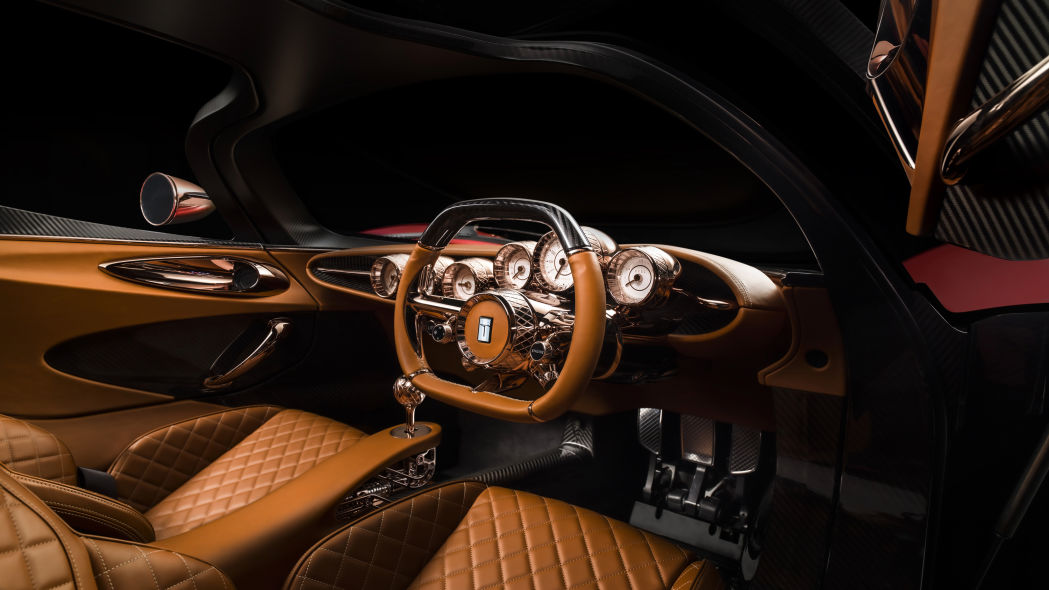
We mention Apollo because the same all-carbon chassis from the Apollo IE underpins the P72. Jowyn Wong, the man behind the Apollo’s design, penned the P72’s Le Man’s body and that captivating, wide open rear end. The interior looks like a moody dalliance between Spyker and Pagani, full of polished copper, diamond motifs on the stitched leather, on the shift knob above the exposed linkage, and the pedals, plus golden lighting. A row of analogue dials bespeaks the past and the future, the circular theme capped outside by the small round side mirrors.

The carmaker’s finalizing the specs, and hasn’t said what will power the final version. The Apollo IE uses a naturally-aspirated Ferrari-sourced V12, but based on De Tomaso’s history with V8s, don’t be surprised by a free-breathing and burly eight-cylinder. Pricing is expected to be around 750,000 euros ($842,000 U.S.). That’s a reasonable sum given the prices of low-volume custom vehicles today, exemplifying the last of De Tomaso’s six core tenets: Heritage, Passion, Racing, European Design, and World-Class Performance at Extreme Value. The company is taking deposits now, and with Miller Motorcars on board as a U.S. dealer, don’t be surprised to see the P72 here — at least, in photos — one day.

The Complete Cadillac Buying Guide: Every Model, Explained

Cadillac is General Motors’s top-tier luxury division. The company, based in Warren, Michigan, was founded in 1902 and bought by GM in 1909. Cadillac established itself as America’s premier manufacturer and a byword for grandeur (“the Cadillac of ___”) during the first half of the 20th Century, with a particular emphasis on engine technology. However, poor business decisions in the 1980s and increased luxury market competition tarnished that reputation, leaving the brand somewhat adrift compared to its rivals. These days, GM intends Cadillac to be the spearhead of its push into electric vehicles early next decade.

Traditionally, Cadillac has been associated with the sort of large sedan or coupe one of your grandparents may have driven. The brand sought to shed that image in the 2000s with an emphasis on driving performance, though its SUV lineup has also helped change perceptions of it.

Cadillac’s current model tree is somewhat in flux, as the company expands its crossover presence and dramatically pares down its sedan lineup. Distinctive styling features include sharp, powerful angles on the body and narrow vertical lights.

Cadillac’s nomenclature can be difficult to understand, as it keeps changing. The latest system is simple, alphanumeric, and Audi-like: “XT” is a crossover/SUV, while “CT” designates a car; a one-digit number following corresponds to relative size and market position. However, vehicles that predate that still use three-letter acronyms, like CTS, ATS and XTS. Then there’s the Escalade, which dates back to the company’s full-names-for-models era of the late 1990s. Moving forward, Cadillac will add to the confusion by adding number badges to signify power output; these numbers will be roughly based on a model’s torque output in metric figures.

Cadillac Terminology

Blackwing: A Cadillac-exclusive twin-turbo V8 engine with a “Hot V” alignment that nestles the turbochargers between the cylinder banks. It’s a spiritual successor to the Northstar (see below), and made its debut in the 2019 CT6-V.
CT: “Cadillac Touring.” Used for any new vehicle that is not an SUV.
Northstar: Powerful Cadillac V8 used between 1992 and 2011. Intended to help Cadillac compete with German and Japanese rivals, it was technically sophisticated and well-regarded when running, but prone to expensive repairs.
Super Cruise: Cadillac’s hands-free Level 2 semi-autonomous driving system. It permits the car to steer, accelerate, and brake on its own during certain circumstances, but requires human monitoring.
XT: “Crossover Touring.” It’s an SUV.
V Series: Specially-tuned cars from Cadillac’s performance division. It’s the equivalent of BMW’s M cars and the Mercedes-AMG offerings.
V Sport: A sporty trim level of a Cadillac model that sits below the true “V” cars.

Buying Guide

XT4
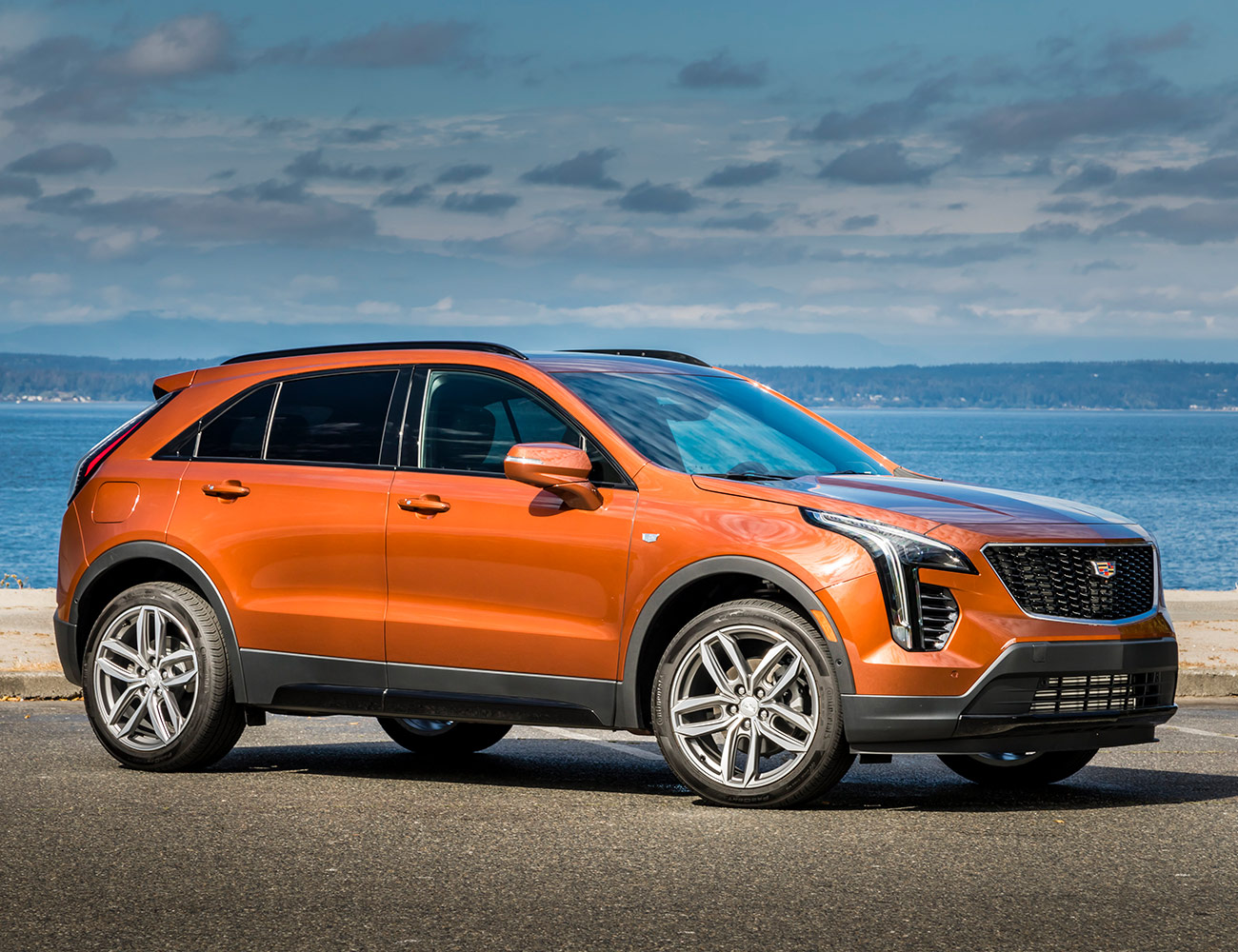
The XT4 is Cadillac’s entry-level compact crossover, new for the 2019 model year. It comes with one engine option — a 237-horsepower turbocharged 2.0-liter — and either front-wheel-drive or all-wheel-drive. The “Sport” trim, priced similarly to the “Premium Luxury” trim, offers an adaptive suspension. Reviewers have knocked it for being slower and not quite as luxurious as rivals from Mercedes, BMW and others.

Body Style: Crossover

Models:

• Luxury
• Premium Luxury
• Sport

Engines:

• Turbocharged 2.0-liter inline-four

Base MSRP: $34,795

XT5
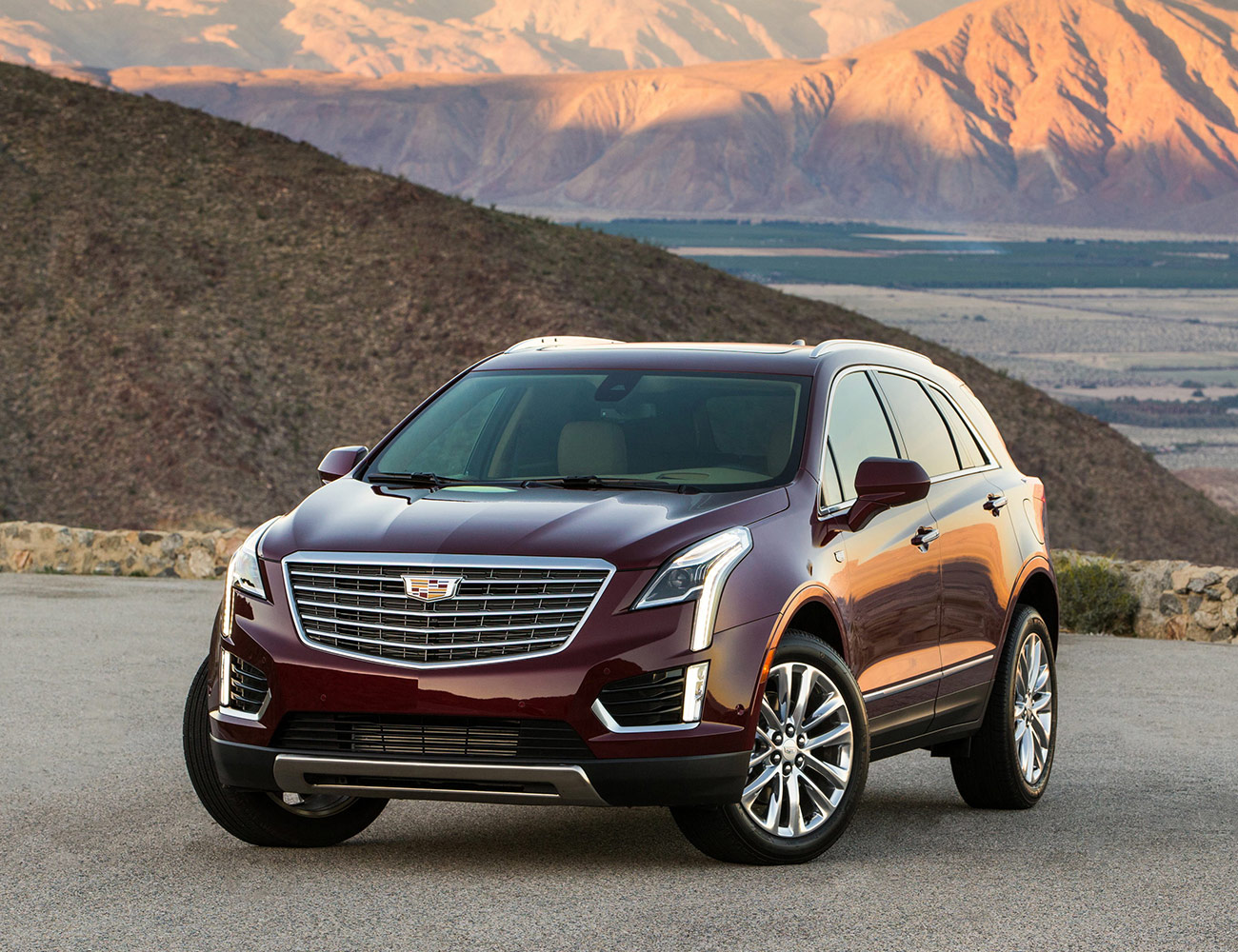
The XT5 is Cadillac’s midsize SUV. It debuted for the 2017 model year and has become Cadillac’s best-selling vehicle, despite not quite matching many other Cadillac vehicles for luxury and performance. It’s longer than the XT4, with more cargo space. It also has a larger and more powerful 310-hp 3.6-liter V6 engine. It can be fitted with FWD or AWD.

Body Style: Crossover

Models:

• Standard
• Luxury
• Premium Luxury
• Platinum (AWD only)

Engines:

• 3.6-liter V6

Base MSRP: $41,695

XT6
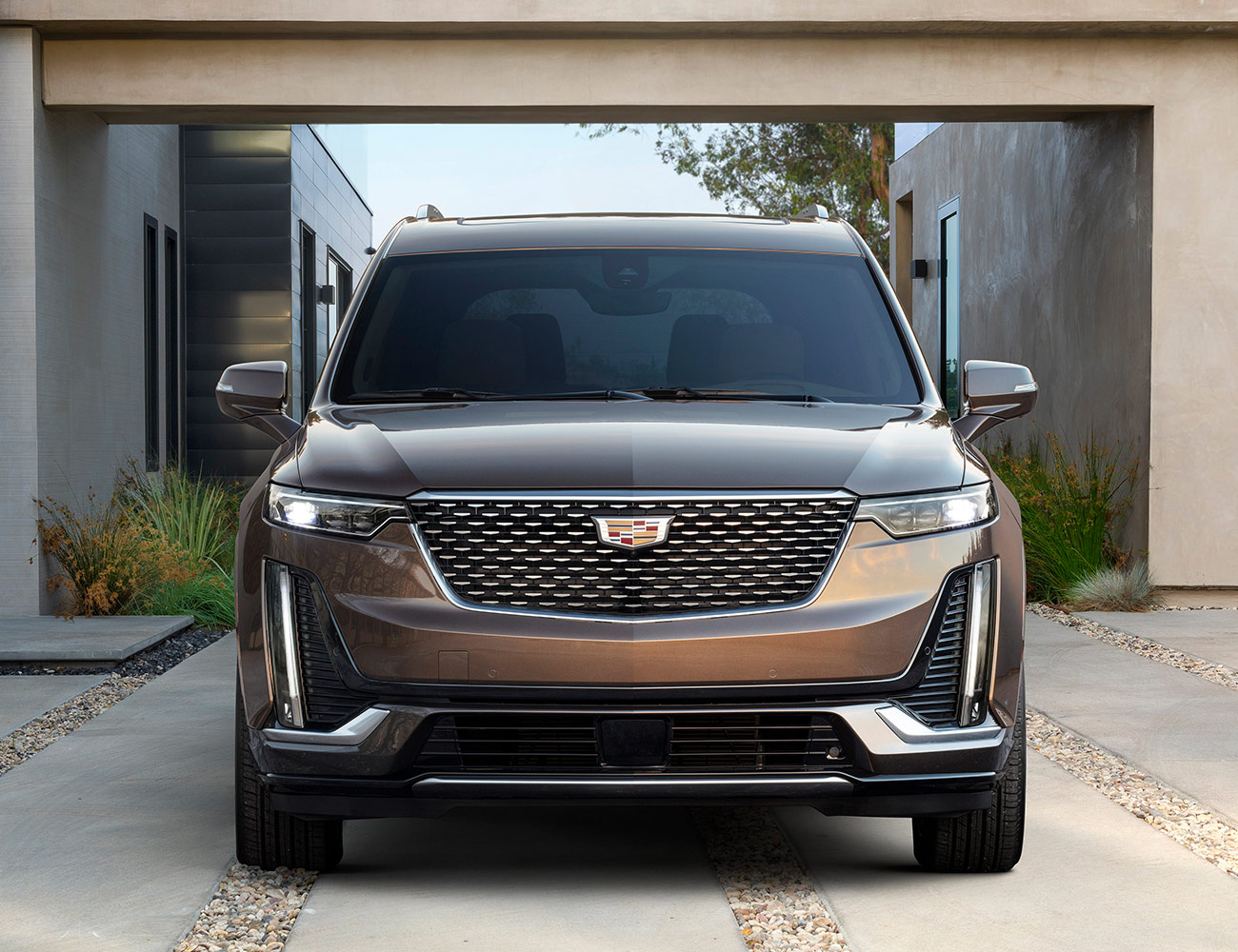
The XT6 is Cadillac’s new three-row midsize crossover. Cadillac unveiled it at the Detroit Auto Show in January 2019. It uses the same 310-hp V6 engine as the XT5, the Chevy Traverse and the Buick Enclave. It is available in either FWD or AWD. It is priced just below the Mercedes-Benz GLE 450 4MATIC and the BMW X5, though both have more powerful 3.0-liter inline six engines.

Body Style: Crossover

Models:

• Premium Luxury
• Sport

Engines:

• 3.6-liter V6

Base MSRP: $52,695

Escalade
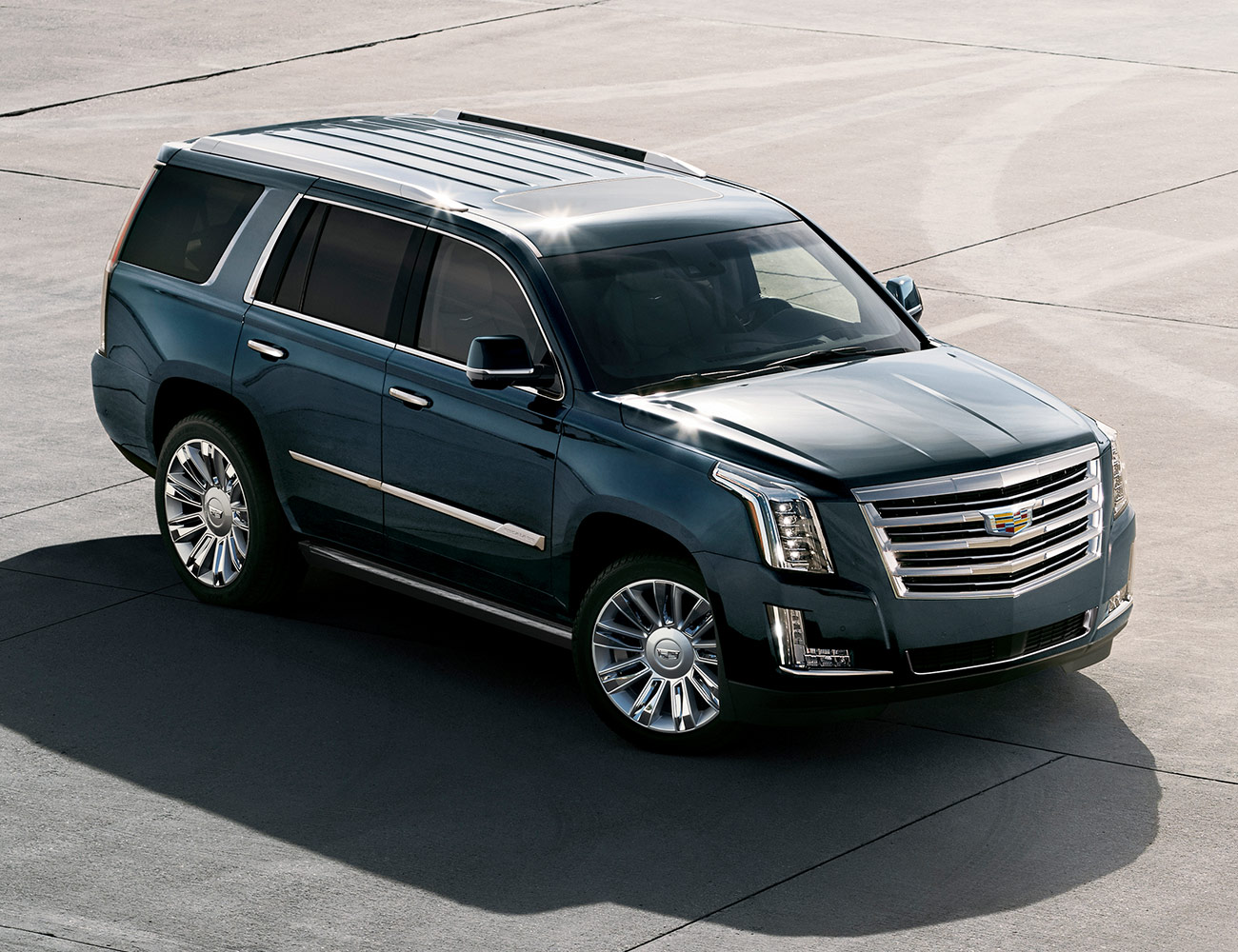
The Escalade is Cadillac’s full-sized, body-on-frame land yacht of an SUV. The Escalade is in its fourth generation since being introduced for the 1999 model year. It was a choice vehicle for early-2000s hip-hop artists, and remains a popular choice amongst executives and livery drivers. Weighing in at close to three tons, the Escalade is fitted with a 420-hp 6.2-liter V8. It has three rows and seats up to eight passengers. A long wheelbase “ESV” version is available, for a $3,000 premium. Rivals include the Mercedes-Benz GLS-Class, the Lexus LX and the Lincoln Navigator.

Body Style: SUV

Models:

• Standard
• Luxury
• Premium Luxury
• Platinum

Engines:

• 6.2-liter V8

Base MSRP: $75,195

CT4-V
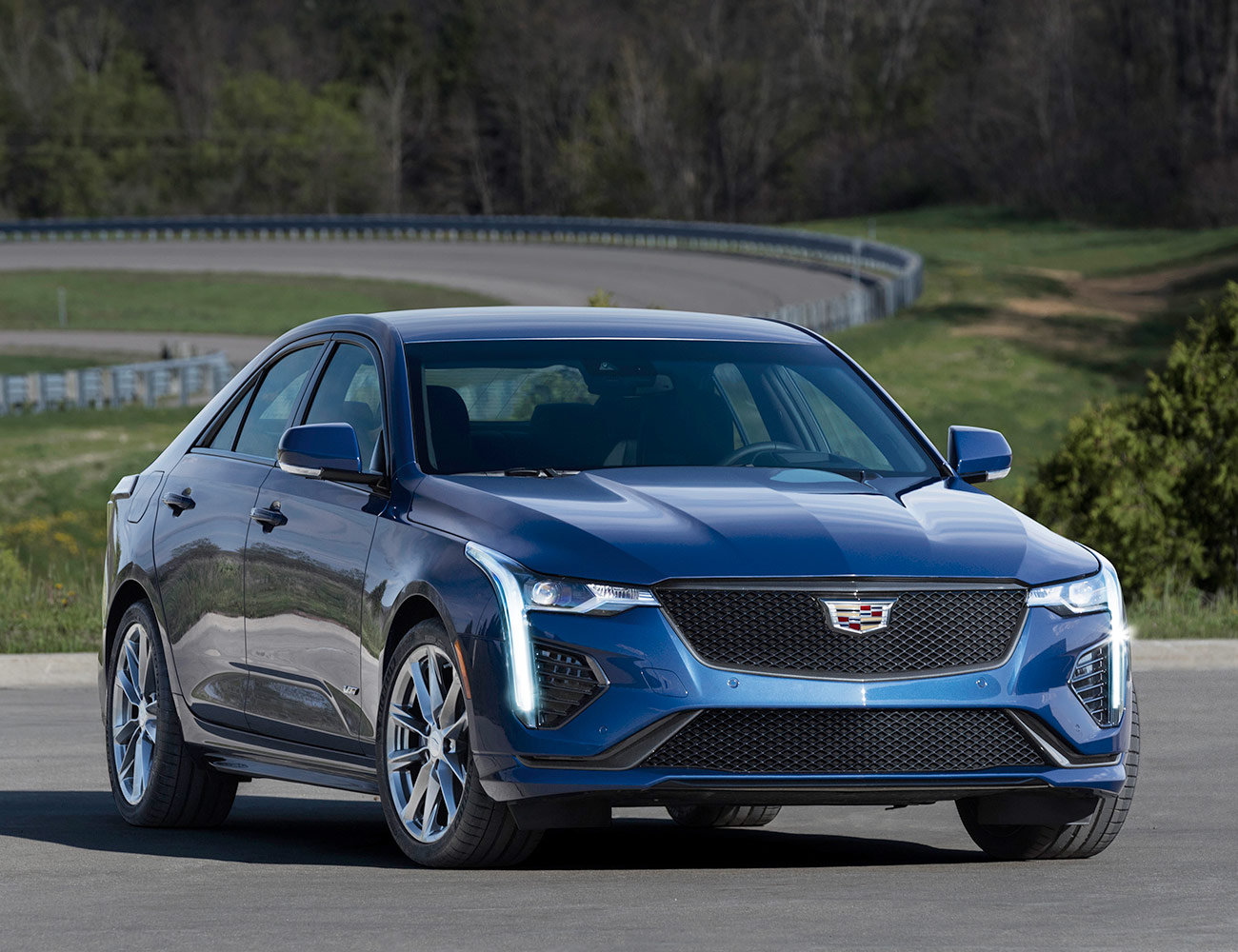
The CT4 will be Cadillac’s entry-level sedan, akin to the Mercedes-Benz A-Class. Cadillac has, thus far, released details of the performance CT4-V. It’s a replacement for the ATS-V, but will be much less powerful. (A more powerful version is expected down the line.) It uses the 320-hp turbo 2.7-liter four-cylinder from the Chevy Silverado, with a 10-speed automatic and a choice of RWD or AWD.

Body Style: Sedan

Models:

• CT4-V

Engines:

• Turbocharged 2.7-liter inline four

Base MSRP: $TBD

CT5
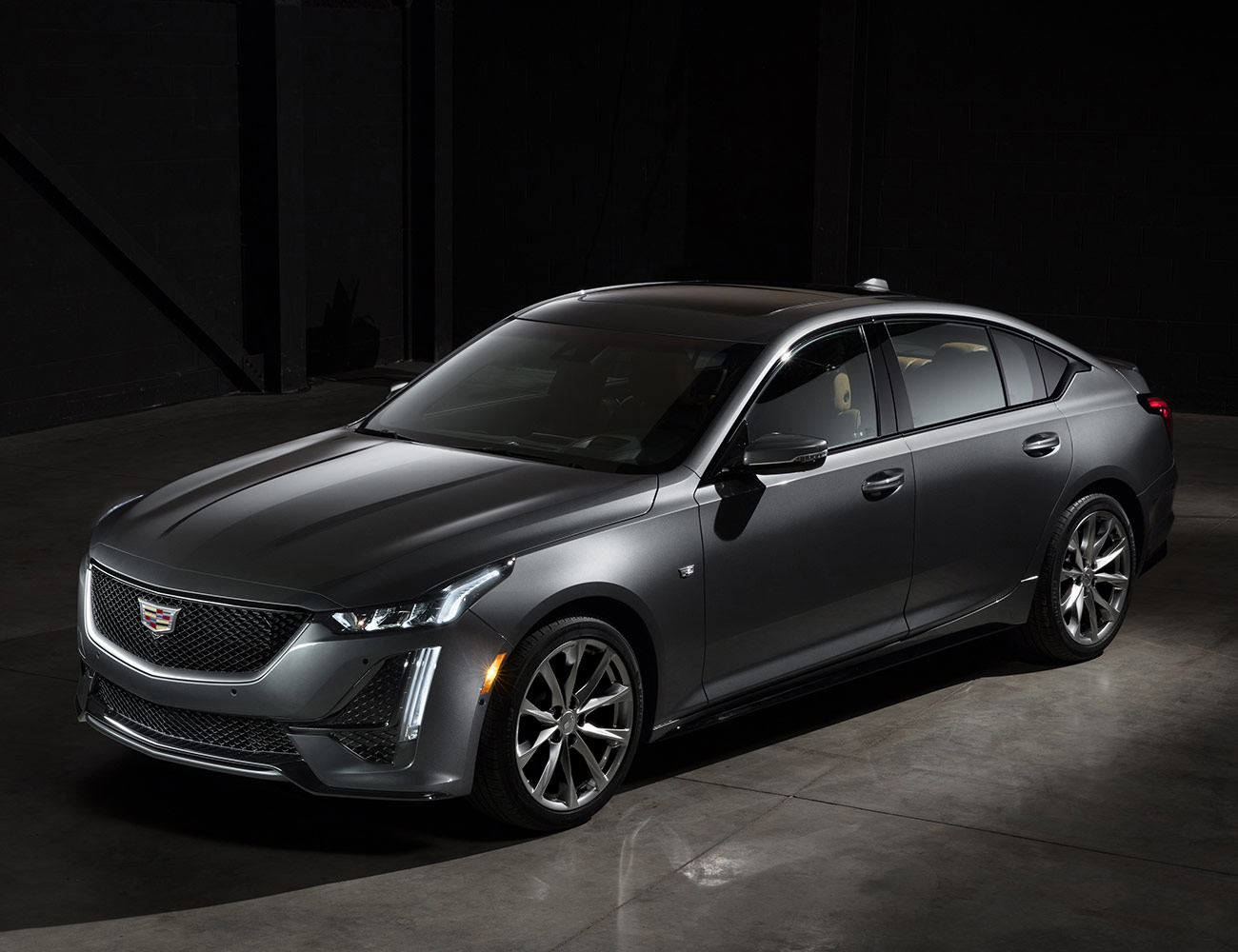
The CT5 will be Cadillac’s new midsize sedan for the 2020 model year, replacing the CTS. The sedan’s fastback-esque shape either harkens back to classic Cadillac vehicles (if you work for Cadillac) or serves as a concession to modern trends. The base engine will be a 2.0-liter inline four making 237 hp, with a twin-turbo 3.0-liter V6 making 335 hp as the upgraded option. It will have a 10-speed automatic transmission and offer either RWD or AWD.

Body Style: Sedan

Models:

• Luxury
• Premium Luxury
• Sport

Engines:

• Turbocharged 2.0-liter four cylinder
• Twin-turbocharged 3.0-liter V6

Base MSRP: $TBD

CT5-V
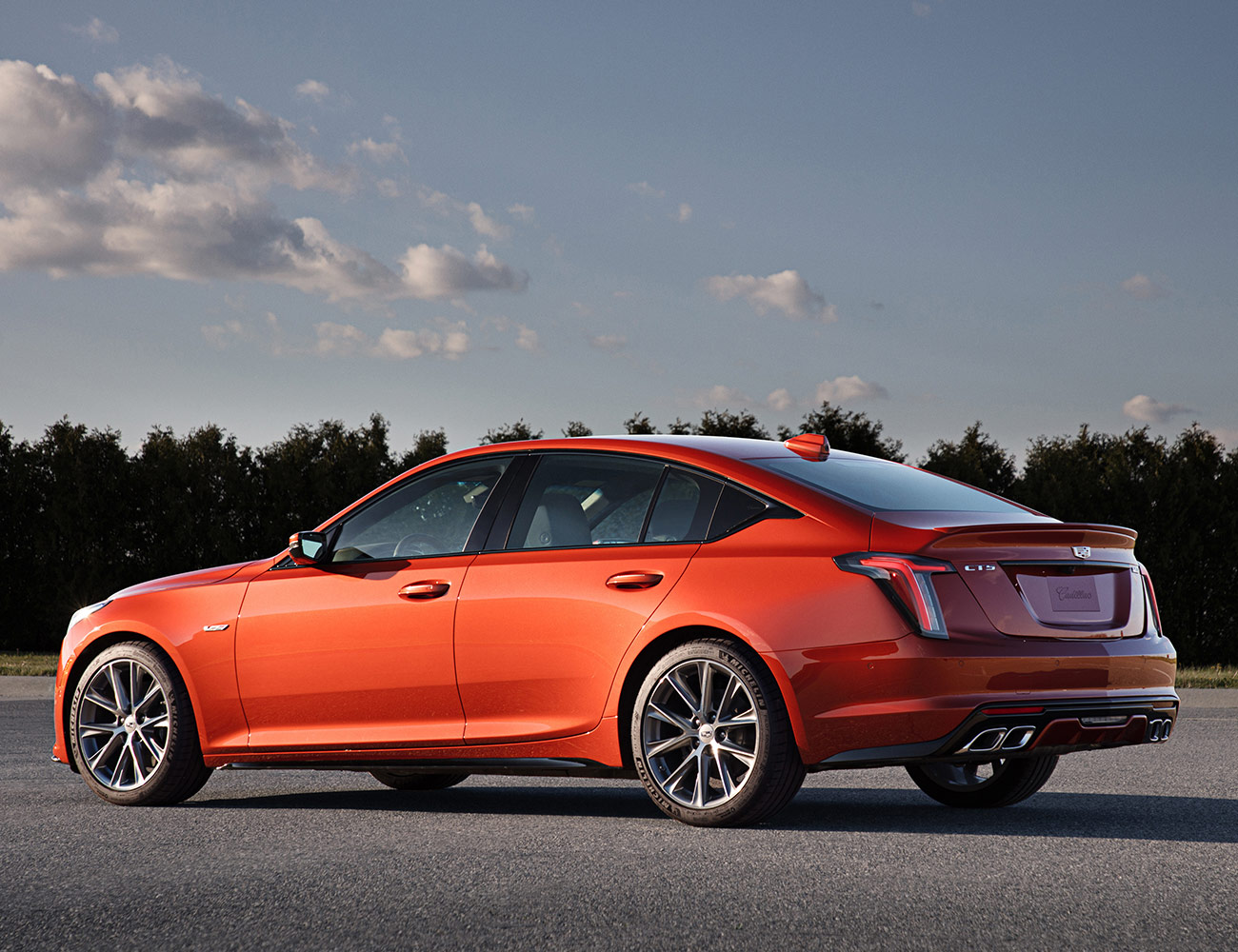
The CT5-V is a performance variant of the CT5. It will go on sale in 2020. It uses a twin-turbo 3.0-liter V6 making 355 hp. It will have a 10-speed automatic, paired with either RWD or AWD. This model only gets a 20-hp bump from the standard CT5, and is a long way off the 640-hp CTS-V. It suggests Cadillac will follow the example of Mercedes with AMG and accept a far broader definition of what constitutes a “V” car for sales purposes. A more powerful version, possibly using the Blackwing V8, is expected down the road.

Body Style: Sedan

Models:

• CT5-V

Engines:

• Twin-turbocharged 3.0-liter V6

Base MSRP: $TBD

CT6
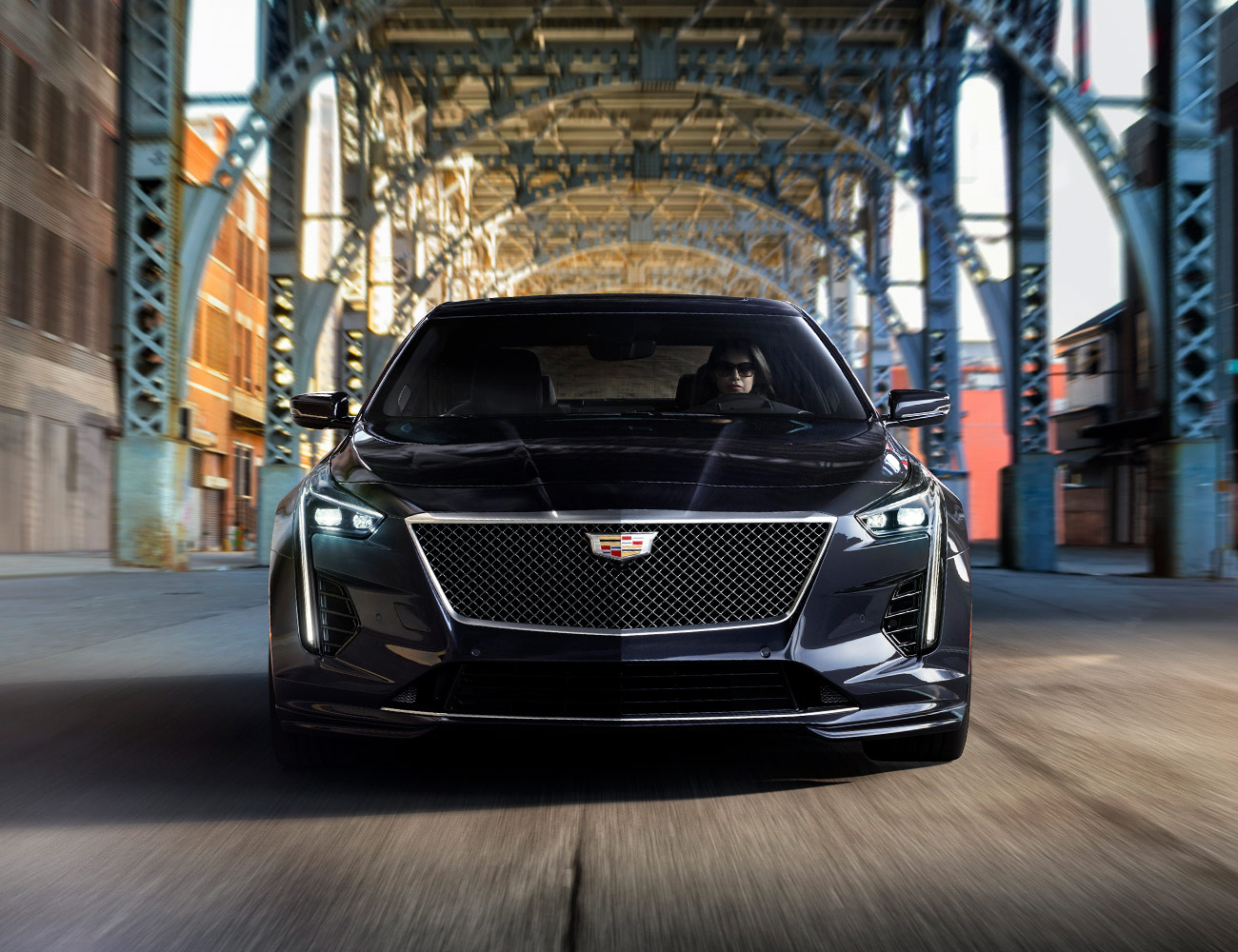
The CT6 is one of Cadillac’s full-size luxury sedans. It became the de facto flagship model when Cadillac cancelled plans for a larger CT8 sedan. The CT6 debuted for the 2016 model year. Currently, buyers can choose between a 3.6-liter V6 making 335 hp and a twin-turbo 3.0-liter V6 making 404 hp. For 2020, buyers will choose between the 3.6-liter V6 and the 4.2-liter “Blackwing V8” making 500 hp. All CT6 models are AWD. It is the only Cadillac currently available to offer the acclaimed Super Cruise system.

Cadillac is also building a CT6-V model with the 550-hp, 627-lb-ft Blackwing V8 and performance upgrades. The U.S. allotment of 275 cars sold out within a matter of hours when it went on sale in January.

Body Style: Sedan

Models:

• Premium Luxury
• Sport
• Platinum
• CT6-V

Engines:

• 3.6-liter V6
• Twin-turbocharged 3.0-liter V6
• Twin-turbocharged 4.2-liter “Blackwing” V8

Base MSRP: $62,595

CTS
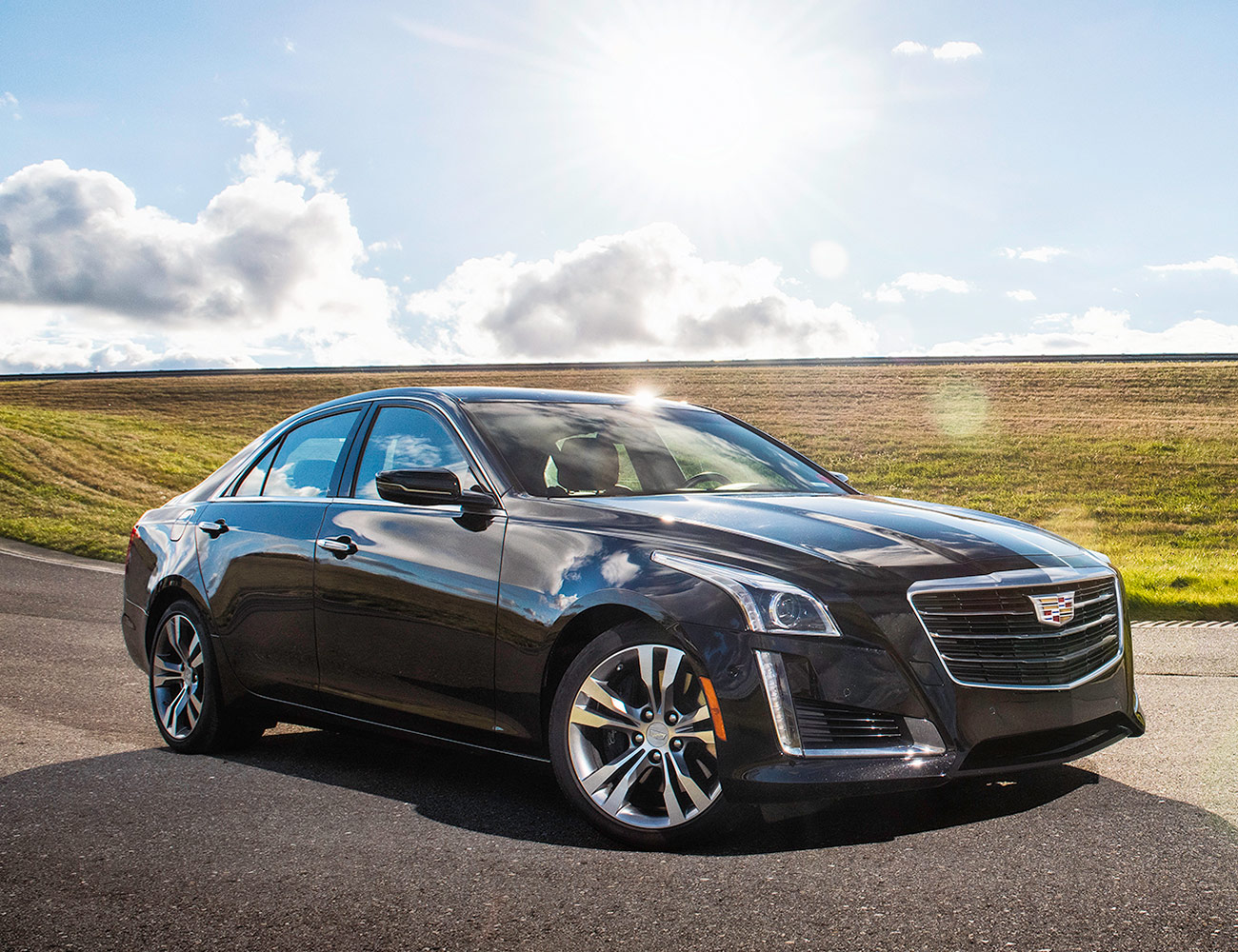
The CTS is Cadillac’s outgoing midsize luxury sedan. Its production run will end after the 2019 model year. The Standard trim has a 268-hp 2.0-liter turbo and RWD. The Luxury and Premium Luxury trims upgrade to a 3.6-liter V6 with 335 hp and AWD. V-Sport and V-Sport Premium Luxury trims get a twin-turbo 3.6-liter V6 bumped up to 420 hp and 430 lb-ft.

Body Style: Sedan

Models:

• Standard
• Luxury
• Premium Luxury
• V-Sport
• V-Sport Premium Luxury

Engines:

• Turbocharged 2.0-liter inline four
• 3.6-liter V6
• Twin-turbocharged 3.6-liter V6

Base MSRP: $46,995

CTS-V
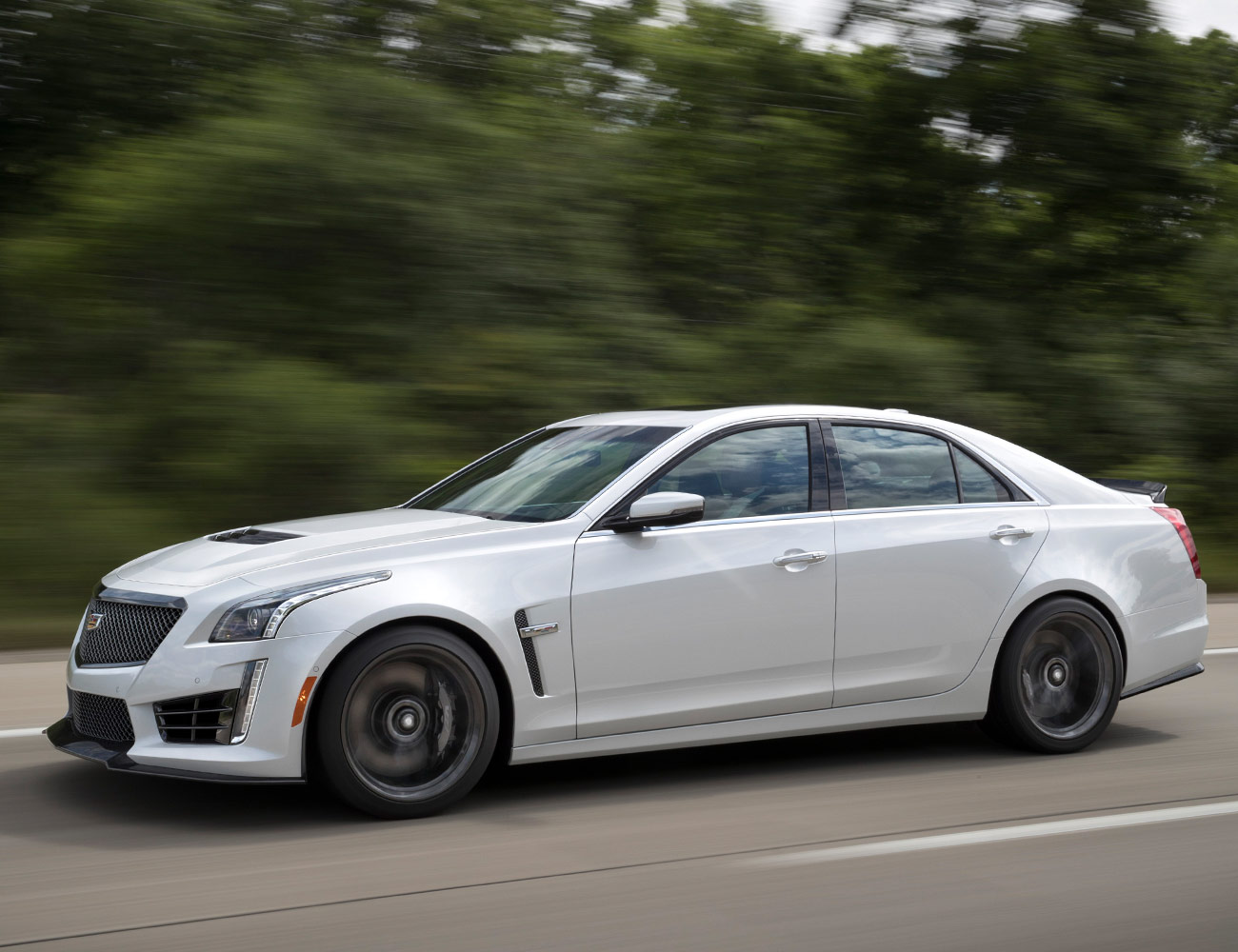
The CTS-V is a high-performance version of the CTS, also being phased out after the 2019 model year. Intended to be Cadillac’s slightly cheaper retort to the BMW M5 and the Mercedes-AMG E63, it uses a supercharged 6.2-liter V8 producing 640 hp and 630 lb-ft. It can accelerate from 0-60 mph in 3.7 seconds and reach a 200-mph top speed. The current third-generation lacks both the six-speed manual transmission and the wagon body style found in the second-generation version that remains popular with collectors.

Body Style: Sedan

Models:

• CTS-V

Engines:

• Supercharged 6.2-liter V8

Base MSRP: $86,995

XTS
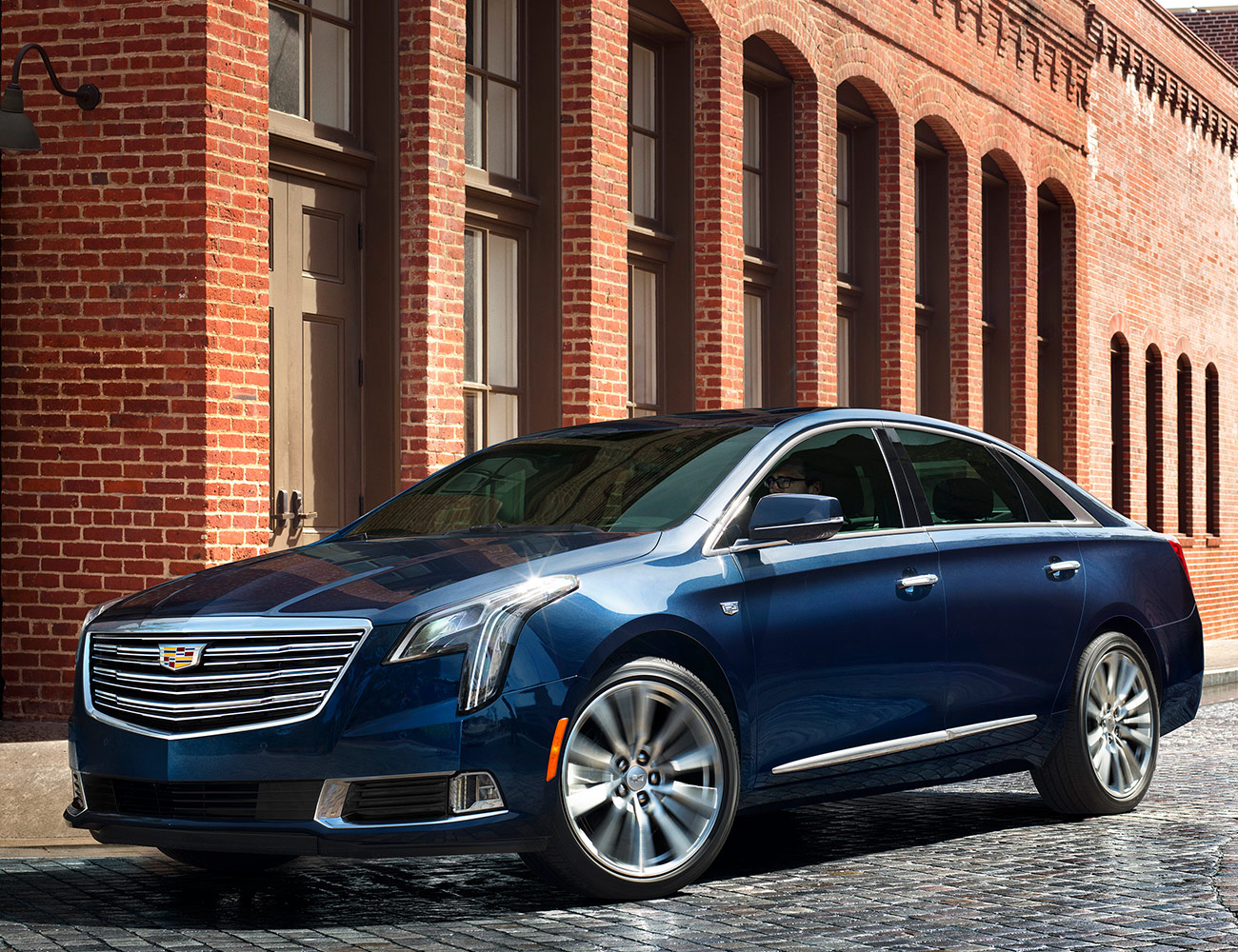
The XTS is a full-size luxury sedan that will end production after the 2019 model year. The base engine is a 3.6-liter V6 with 304 hp. The V-Sport Platinum has a twin-turbo version of the 3.6-liter V6 with 410 hp. Standard trim models are FWD, while V-Sport Platinum models have AWD. Other trims can choose between FWD and AWD.

Body Style: Sedan

Models:

• Standard
• Luxury
• Premium Luxury
• Platinum
• V-Sport Platinum

Engines:

• 3.6-liter V6
• Twin-turbocharged 3.6-liter V6

Base MSRP:$46,895

ATS
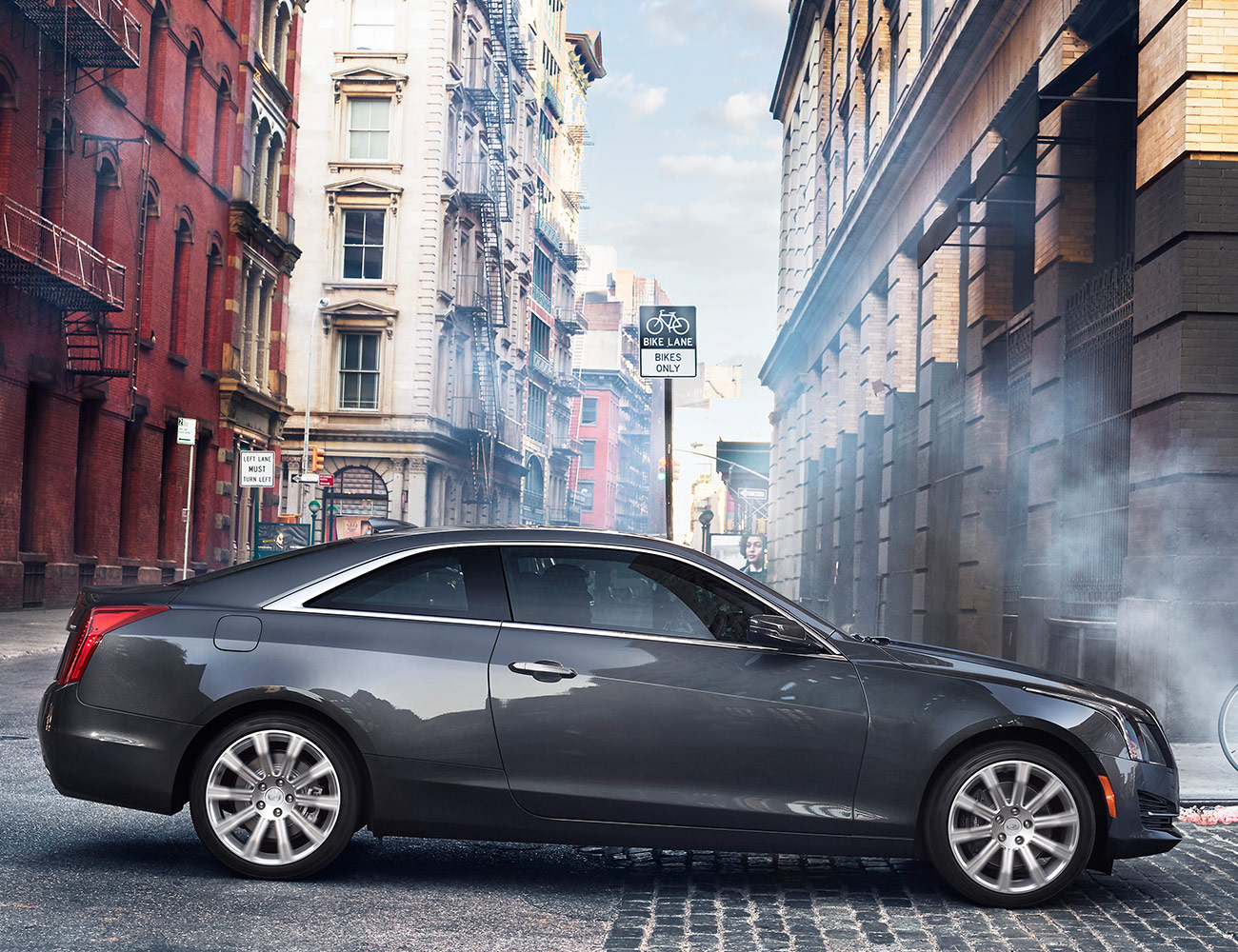
The ATS is Cadillac’s sporty compact coupe. (It was previously also available as a sedan.) It was the North American Car of the Year when it debuted for the 2013 model year. It will be discontinued after 2019. Buyers have two engine options, a 2.0-liter turbo (272 hp) and a 3.6-liter V6 (335 hp). The ATS can come in RWD or AWD. Cadillac eliminated the manual transmission option for 2019.

Body Style: Coupe

Models:

• Standard
• Luxury
• Premium Luxury
• Premium Performance

Engines:

• Turbocharged 2.0-liter inline four
• 3.6-liter V6

Base MSRP: $38,995

ATS-V
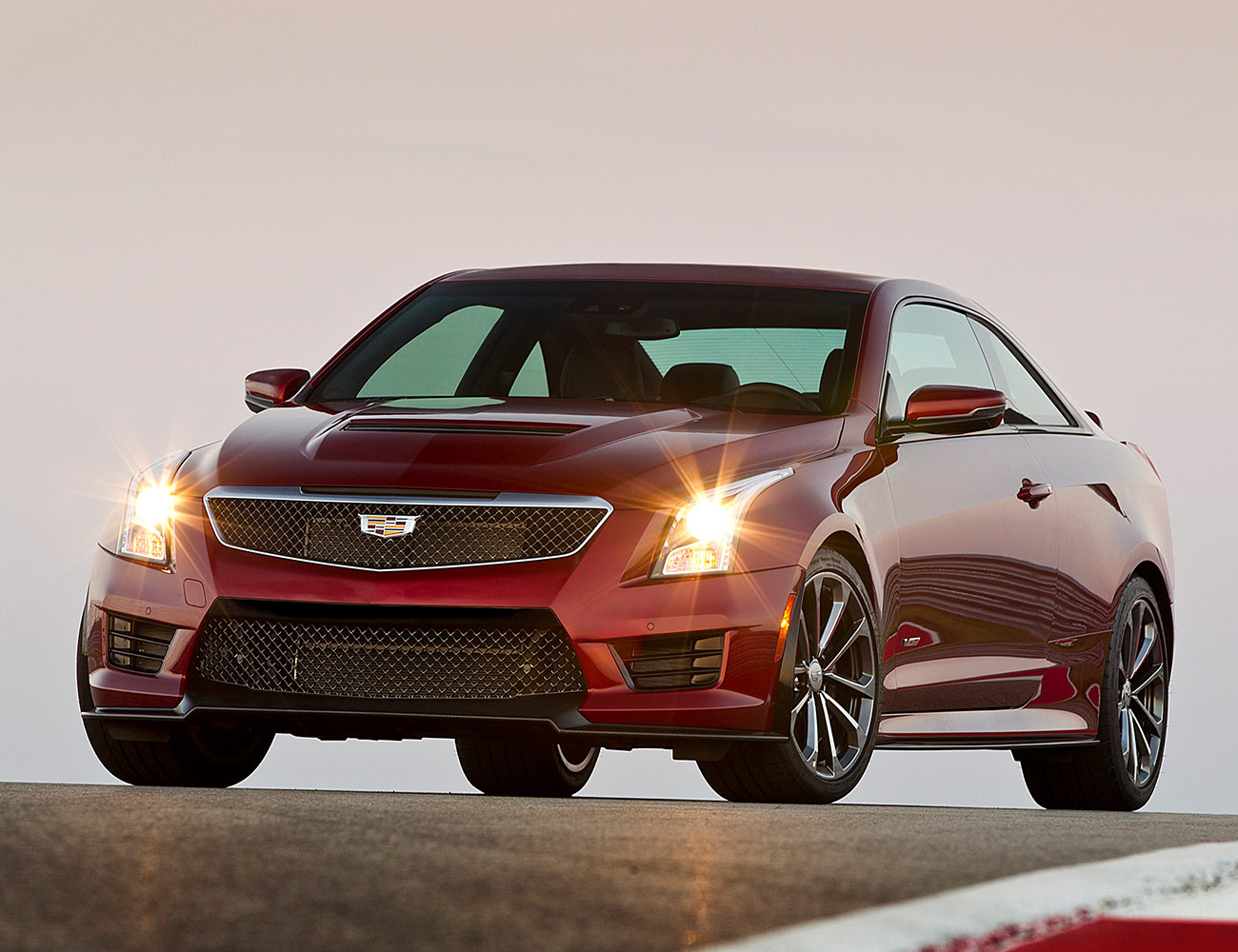
The ATS-V is a performance edition of the ATS. It will be discontinued after the 2019 model year. It uses a twin-turbocharged 3.6-liter V6 making 464 hp. It can accelerate from 0-60 mph in 3.8 seconds and reach a top speed of 189 mph. It is RWD and can be fitted with an eight-speed automatic or a six-speed manual.

Body Style: Coupe

Models:

• ATS-V

Engines:

• Twin-turbocharged 3.6-liter V6

Base MSRP: $67,795

Note: Purchasing products through our links may earn us a portion of the sale, which supports our editorial team’s mission. Learn more here.

Watch the McLaren GT Do a Run at the Goodwood Festival of Speed

Beautiful Sights and Sounds

The McLaren GT made its debut at the Goodwood Festival of Speed. This gorgeous grand touring car features a strong 4.0-liter V8 that makes 612 hp and 465 lb-ft of torque. The car is able to utilize that power on the course at Goodwood for all to see. In the video included below, you’ll see and hear the car move through the course. It’s one of McLaren’s most elegant-looking cars ever, and the engine note is something wonderful to behold. 

One of the reasons the GT sounds so good is because it has a bespoke exhaust system. While the engine itself isn’t all that different from the one found in other McLarens, the new exhaust gives it a distinctive and unique sound. This is exactly what you want from a supercar. 

The GT also stands out from the rest of the McLaren lineup because it’s a straight up bigger car. The mid-engine vehicle is longer than any other McLaren. The car also has more luggage space than any other car, meaning it can be used as an everyday car. That doesn’t keep it from being fast, though. This car can do a 0-60 mph sprint in just over three seconds. It’ll do all the way up to 124 mph in just nine seconds. The top speed is 203 mph. You can view the GT getting down at Goodwood in the video below. 

[embedded content]

1 of 9 Lamborghini Veneno Roadster for Sale in Dubai

Following the announcement that Teodorin Obiang’s Lamborghini Veneno will be auctioned in Geneva, UAE-based dealership Al Ain Class has revealed that it has secured its own Lamborghini Veneno Roadster. The iconic supercar dealership has secured one of 9 examples. If you weren’t a fan of the cream colour scheme applied to the Bonhams car, here is your opportunity for something less controversial!

The Lamborghini Veneno Roadster is one of the rarest Lamborghini’s of all time. It was built, following the release of the Veneno Coupe, on the structure of the Lamborghini Aventador and served as a precursor to the Aventador SV.

The car Al Ain Class are offering is finished in matte naked carbon fibre. Alongside the usual tricolour flag details, this car also features a red coach line at the very bottom of the bodywork and on the edge of the front fenders. Inside, there is a blend of red leather, black Alcantara and gloss carbon fibre.

Al Ain Class’ listing suggests that the vehicle is brand new. The estimate Bonhams have placed on their car is £4,2 million to £5 million, this particular example will undoubtedly sell for more with its less controversial colour scheme. It seems clear that we are looking at the most expensive modern Lamborghini.

(EDIT: This article, as originally published, suggested that the car was being sold with 820 miles on the clock. This is incorrect, it in fact had 85 kms on the clock)

De Tomaso P72: Legendary Marque Brought Back to Life

De Tomaso has returned, just in time for the company’s 60th anniversary. The Italian brand has a chequered history with the sorts of highs and lows you would expect from a low volume sports car manufacturer. It’s latest owner is hoping that it can revive those fortunes with a brand new, hypercar-level Concept car.

The Company has revealed few details about the specific engineering highlights of the vehicle. We do know that it uses the same carbon monocoque chassis as the Apollo IE, the two companies are part of a group and the design is being handled by the same sub-contractor. De Tomaso have not yet decided on an engine, yet they have, for the purpose of presenting something that moves, shoehorned a Ferrari V12 into the engine bay for the time being. We also know that the power will be routed through the rear wheels via a manual gearbox.

The interior is also impressive. The De Tomaso P72 gets traditional dials and makes do without an all-singing infotainment system. A blend of carbon fibre, tanned leather, and exposed metal work gives it a look to rival Pagani. We are told that many of the elements are polished copper. The leather gets a diamond pattern and the gear shifting mechanism is also exposed.

The De Tomaso P72 takes its inspiration from endurance car racing in the 60’s and 70’s with a low slung, mid-engined design. This is no mistake. The inspiration for the P72 can be traced to the stillborn P70 prototype racer. That particular model was a collaboration between the company’s founder, Alejandro de Tomaso and Carroll Shelby. It was never mass produced and only one example is know to exist. De Tomaso will be hoping that the P72 does not suffer the same fate.

Costing has also been announced. De Tomaso plan to produce 72 copies at a price of 750,000 euros. If you are interested, the company are accepting expressions of interest.

Radical Sportscars Reveals a 350 Horsepower Street Legal Racer Called the Rapture

Literally a Race Car for the Road

Radical Sportscars has many racing cars for sale, but it just recently released a new road legal vehicle called the Rapture at the Goodwood Festival of Speed. The car looks like a race car. That’s because, for the most part, it is a race car. The company focuses on lightweight construction and strong power. This car has both. 

The car is built for UK roads and complies with the Individual Vehicle Approval framework. While the car will start in the UK, Radical Sportscars does have plans of taking this vehicle to other markets around the world. That will come at a later date, though. So, what is the Rapture, really? 

The car is an exercise in lightweighting and aerodynamics. Its aerodynamic design means it creates plenty of downforce for track maneuvers. The car’s spaceframe chassis and composite bodywork help keep its weight down to only 1,687 pounds. Because the car is so aerodynamic and lightweight, it doesn’t need a massive engine. 

Speaking of the engine, the car features a 2.3-liter EcoBoost four-cylinder engine sourced from Ford. That engine is mated to a six-speed sequential transaxle transmission and tune to 350 hp and 320 lb-ft of torque. To say this car is fast for a street-legal car is an understatement. It’ll do 0-60 mph in three seconds flat. The sprint up to 100 mph takes 8.4 seconds. The car tops out at 164 mph.

[embedded content]

The New De Tomaso P72 is a Stunning Machine

A Car Worthy of De Tomaso’s Name

De Tomaso revealed its new P72 at the Goodwood Festival of Speed. The company was revived just in time for its 60th anniversary, and the P72 is a car worthy of the company’s name and reputation. We knew the company was coming with something, but this is on a whole other level. The vehicle is said to be a modern-day classic by De Tomaso. It definitely takes cues from the company’s history books and past iconic supercars in general.

Ryan Berris, De Tomaso General Manager said the car is a special one that will help define a new area of the market. “A similar way the Pantera created a new category when it debuted in 1970, the P72 will create a new benchmark of its own,” said Ryan Berris, De Tomaso General Manager. “We have created a modern-day time machine that pays homage to an integral part of history and a car with its own provenance.”

Ideal Team Ventures acquired the rights to De Tomaso in 2014. Since then it has been working to revive the brand and the P72 is the car that will do it. The P72 features some of the sleekest and sexiest curves we’ve seen in a long time. Inside, the cabin looks like it was crafted for a king. It has polished copper and thick-looking leather all over the place. The gear shifter looks extremely intricate. The whole car has a kind of expensive and exclusive look to it that isn’t found elsewhere. 

De Tomaso decided to keep technical specifications under wraps for a while longer. While we’d like to know, we’re also kind of glad. This allows people to fall in love with the P72 visually, and that’s not hard to do. Every inch of the car is like a piece of artwork. The details are important here, and that means the car should be quite good.