
Ecurie Ecosse LM69 Race Car

Recreating the past in perfect form is no easy feat, especially when it comes to historic race cars. But that’s exactly what rather obscure automaker Ecurie Ecosse has done with their new/old LM69 race car…
Recreating the past in perfect form is no easy feat, especially when it comes to historic race cars. But that’s exactly what rather obscure automaker Ecurie Ecosse has done with their new/old LM69 race car…
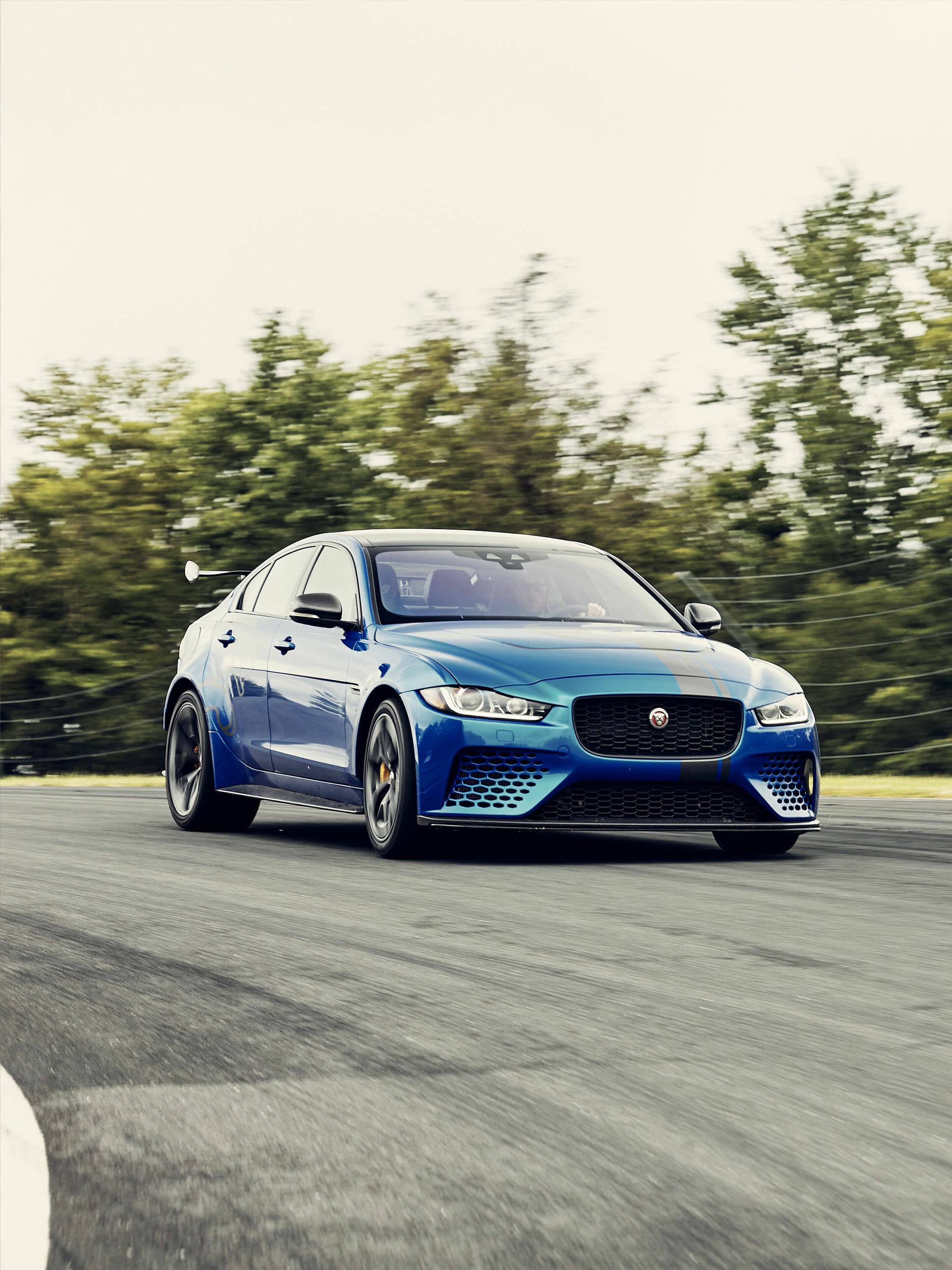
On paper, the Jaguar XE SV Project 8 seems grossly overpriced for what it is. After all, Mercedes-Benz and BMW both offer more powerful sport sedans for nearly half the price; even notoriously pricey Porsche’s 550-horsepower Panamera Turbo starts more than $35,000 cheaper than the compact cat’s MSRP.
But to judge the Project 8 on its specs alone is to sell it short. It’s not meant to take the fight to E63s and M5s any more than a Porsche 911 GT2 RS is meant to take on a BMW M8. Instead, this limited-run Jag exists to show just how wild the cats of Coventry can get — with the resulting product feeling as though a bunch of JLR engineers got plastered and decided to build the ultimate WRX STI.
The Good: Jaguar’s XE sedan is one of the sportiest, most involving luxury compact sedans on sale — and shoehorning a 592-hp engine under its hood, not surprisingly, only makes it better. The chassis never feels overwhelmed by the power; the steering remains hefty yet naturalistic, providing quick reactions and a delightful level of weightiness while refraining from being light on-center the way many cars nowadays are. And the sound bellowing forth from both under the hood and out the quad trombones in back is the sort of music gearheads will someday wistfully tell our grandchildren who’ve never heard an internal-combustion engine about. The exhaust tips of mine were already blued with fury, and it wasn’t hard to figure out why; this V8 is every bit the sort of engine you rev for the hell of it every chance you can.
Who It’s For: Wealthy track rats who want a weekend ride that’s a blast to drive but still need some semblance of a back seat; Jaguar enthusiasts who want to strut in the company’s fastest, flashiest ride; automotive eccentrics who wouldn’t be caught dead in something as cliche as an Audi R8 for their $200K.
Watch Out For: With only 300 being made for the entire planet, finding a new one at this point might be difficult. (Still, Jaguar announced back in June that it planned on serving up 15 wingless Touring Edition versions, suggesting there remained some lack of demand for the car.) Should you cop one, though, be aware that the sporty bucket seats offer something of the worst of both worlds; they’re uncomfortably constraining in everyday driving, yet don’t offer the expected levels of lateral support when tossing the car around a track.
Alternatives: Porsche 911 GT3 ($143,600+), BMW M4 CS ($104,095+), Chevrolet Corvette ZR1 ($123,000+)
Review: With most cars on sale today, you can learn more than enough about them on public roads to ascertain how they drive. The Project 8, however, manages to leap into the rarefied realm of vehicles that need a contained safe space. (Fun fact: Its 592 horses make it the most powerful production Jag ever made, and a full 50 ponies more potent than the legendary XJ220 supercar.) Hence, a trip to Monticello Motor Club in New York’s Catskills region was required to provide a chance to push this killer kitty closer to its limit.
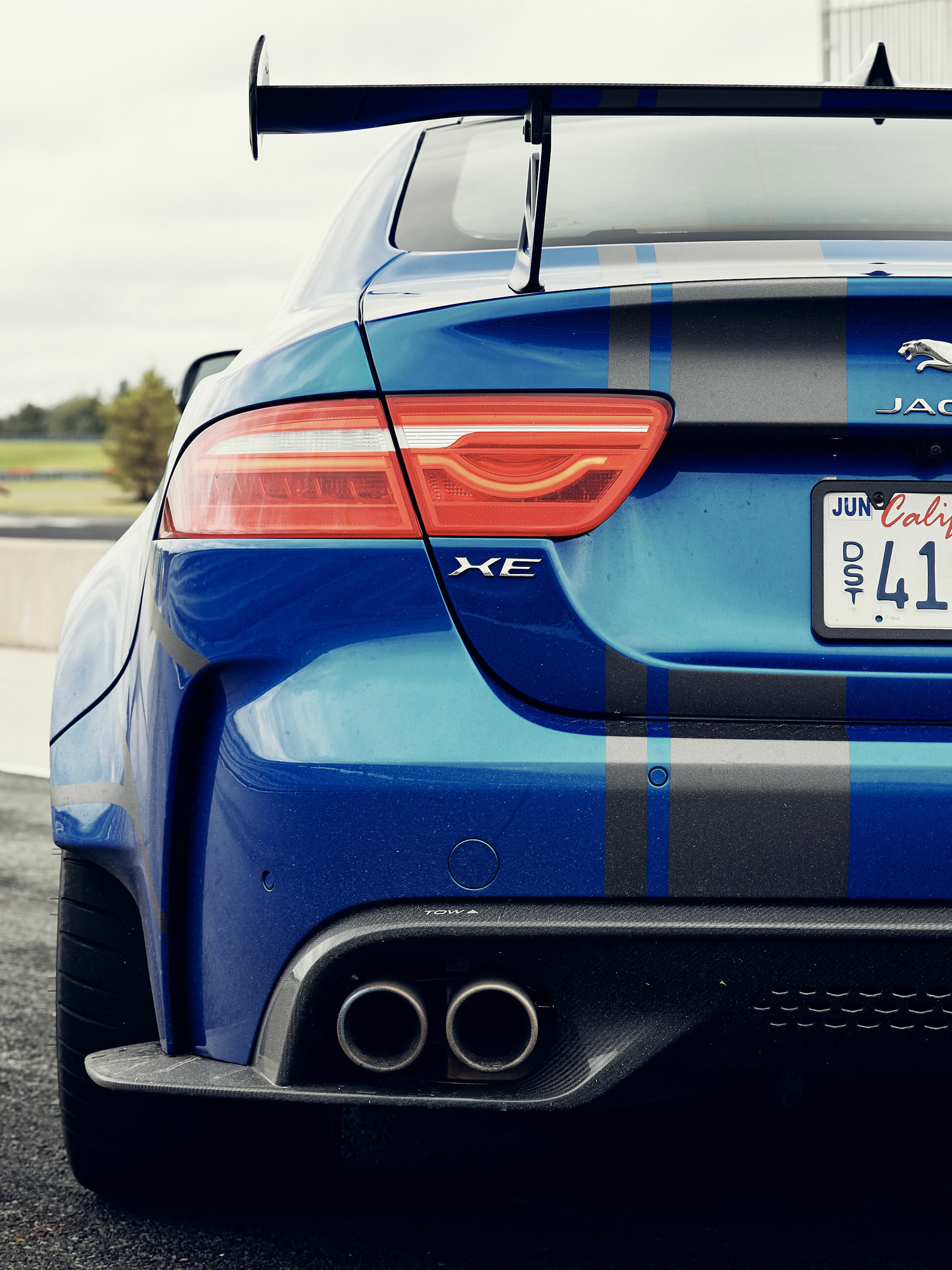
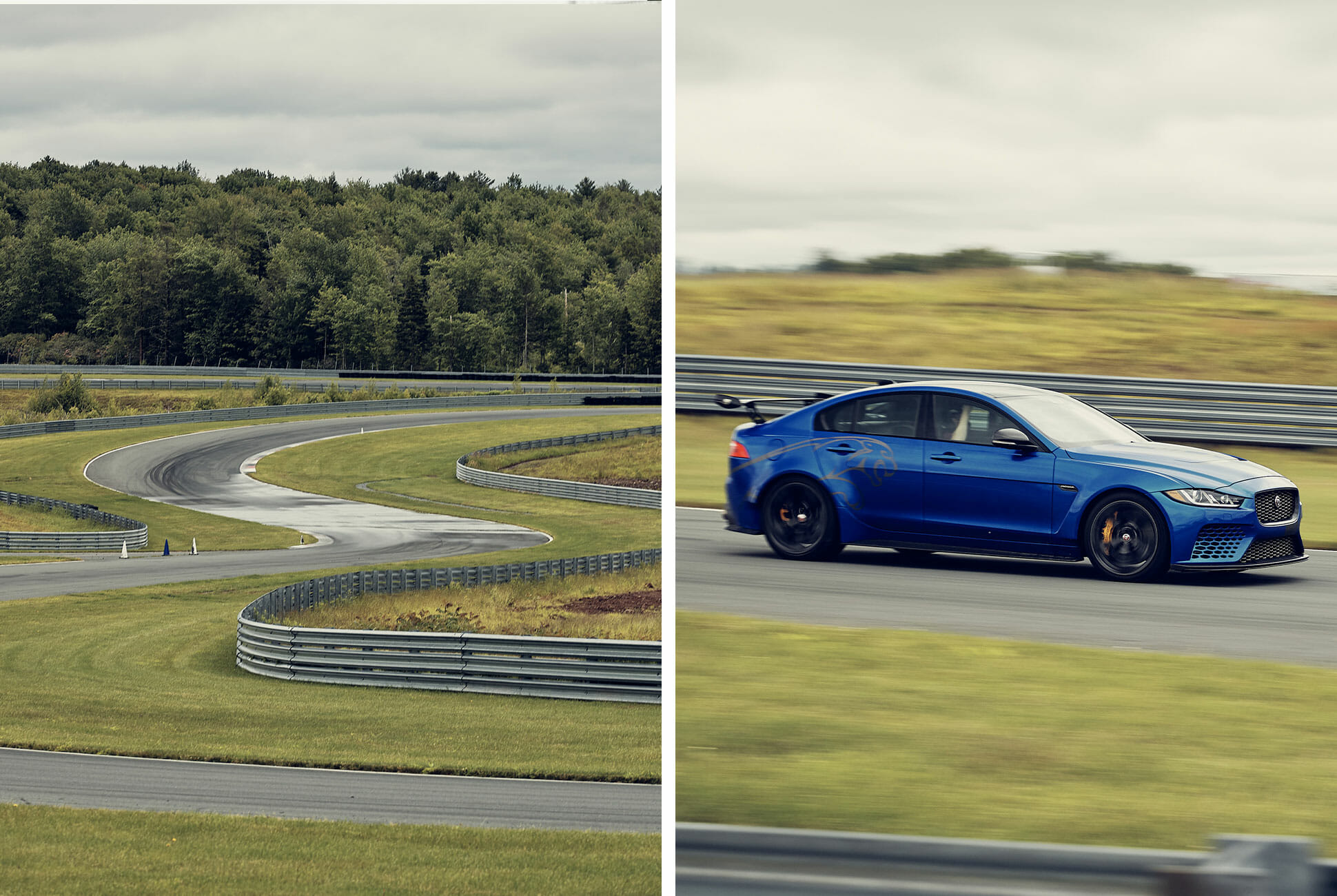
On the roads up there, in spite of the all-wheel-drive, it proved, shall we say, a mite squirrely on rain-slicked pavement. (Then again, the Jeep Gladiator driving along with me also got slideways on the same on-ramp, so that may have been more of a surfacing issue than a power-related one.) But once on the open road, the Project 8 proved a fine, if firm, highway cruiser. The ride is harsh, as you’d expect from something with that wing; still, the dampers do a decent job mitigating the car’s tightly-sprung nature.
On the plus side, the combination of the snappy eight-speed automatic, the AWD grip and the thermonuclear powerplant means every passing zone and empty bend provides a chance to engage in an endorphin-spiking burst of speed. You can leave the gearbox to its own devices and let it crack off intelligent shifts, of course, but it’s even more fun to grab the polished metal paddles behind the wheel — chilled like highball glasses from the conditioned air flowing out of the nearby vents — and crack off the shifts as you like, savoring the nuances of every thousand rpm of the powerband: a little more low-end shove here, a bit more high-end rip there.
Once on Monticello’s 3.6-mile road course, however, there’s room to dial all the systems up to max attack and set the beast loose. Dropped into the midst of one of the private track’s member days, the Jag reels in more traditionally-sporty car with ease; I close the gap on a Ferrari F430 Spider within a mile, staying glued to it until it lets me by. (At which point a Porsche 911 GT2 RS that’s been eating everything from BMW M2 track cars to Lamborghini Huracans proceeds to clamp onto my ass before passing me like I’m standing still on the back straight, but hey.)
That, and a few more laps of trying to push the Jag around, are enough to illustrate a clear point: For mere mortals like myself, the Project 8 will almost always be more capable than we are. At 8/10ths in the dry, it feels well-balanced and impossibly grippy; any errant motions are well-telegraphed, and the power is plentiful enough that gear choice doesn’t matter the way it would in many other cars.
So I move to the starboard seat and hand the keys to Chris Duplessis, Monticello’s resident hot shoe and a former rally driver who makes The Stig look like a cosplayer. He knows the track better than his kids’ faces; whereas I’m hesitant to push things to 9/10ths here, he can climb into a car cold and go straight to Spinal Tap 11/10ths within half a minute. One turn in, and in spite of the hot tires, he has the Jag pointed sideways in a drift that would make Ken Block salute.
You really have to beat the hell out of it to make it slide, he says; there’s a hefty piece of understeer at the limit that you need to compensate for. But once you do, it’s tons of fun — fun enough to leave him nostalgic for the high-performance Jaguars that once were used for the track’s performance driving program. It is, he says, kind of like driving an all-wheel-drive rally car. In other words, like an STI.
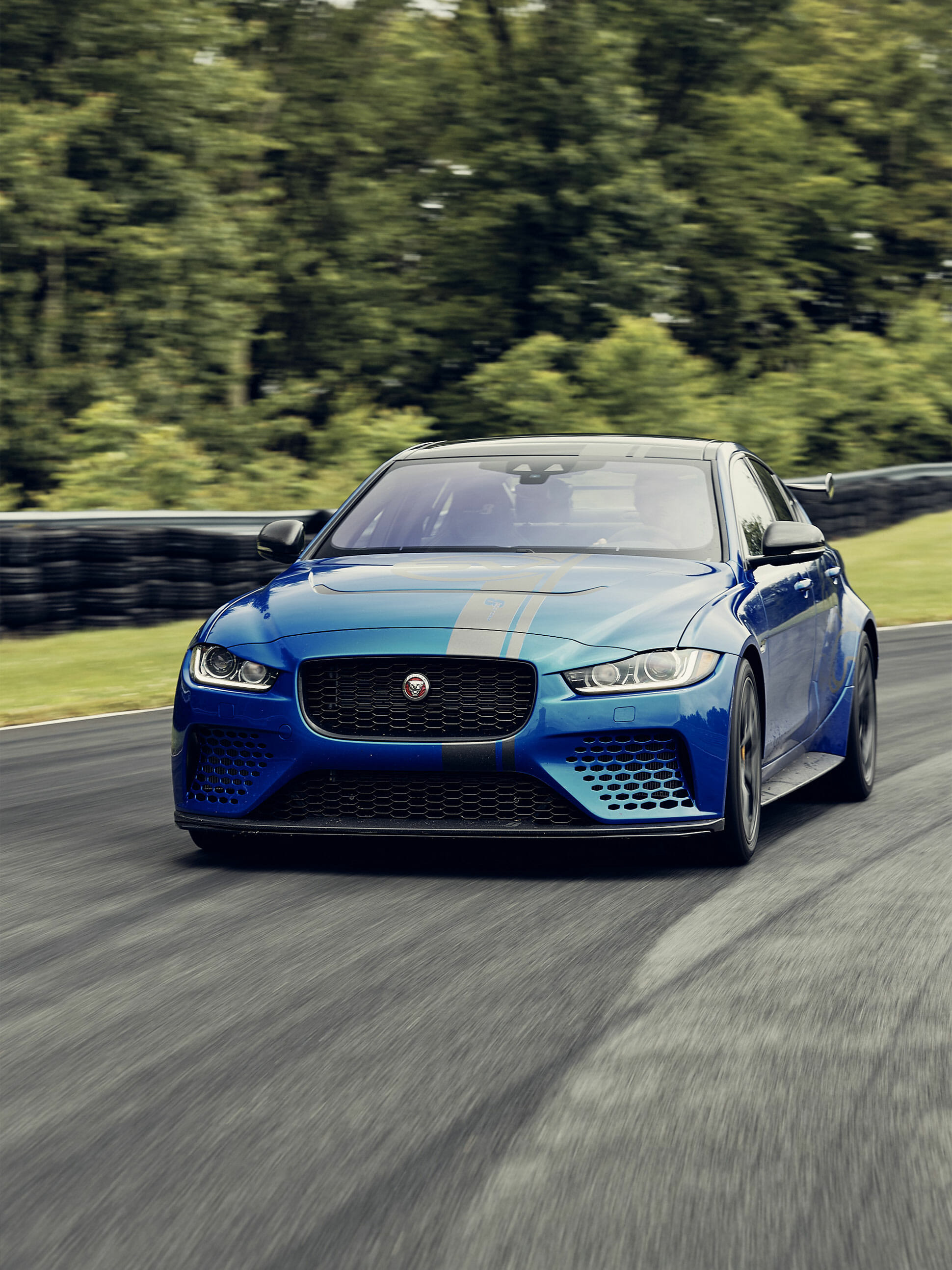
Verdict: The Jaguar XE SV Project 8 will all but certainly wind up being the sort of car to command a hefty price on websites like Bring a Trailer a few years down the road: limited in number, eye-catching, engaging to drive. Yet in some ways, in this day and age — when 600-plus sedans are shockingly common and high-end OEM track attackers increasingly easy to find — it oddly blends into the scenery. (Not literally, of course — that yuge wing alone would be enough to suck in gazes, let alone the other mighty aerodynamic elements, deep-jawed front fascia and the black-graphics-over-electric-blue-paint of my test car.)
The Project 8 is not the best car for the money; it is not the fastest, the most outlandish or the most entertaining. But it is fascinating: While every other carmaker was building its track rats out of coupes, Jaguar went and made one out of a sedan. It may fall a few paces behind the maddest street-legal race course runners out there, but none of them will let you pick up your kids on the way home and give them the ride of their lives.
Powertrain: 5.0-liter supercharged V8, eight-speed automatic, all-wheel-drive
Horsepower: 592
Torque: 516 pound-feet
0-60 MPH: 3.3 seconds (manufacturer claim)
Top Speed: 200 mph (manufacturer claim)
Jaguar provided this product for review.


PLYMOUTH, Mich. — The 2020 Chevy Corvette is just about booked up for the first year’s production run. Michael Simcoe, GM design chief, said as much at the Concours d’Elegance of America, as a gleaming C8 sat on the lawn.
“I think the orders have already hit the first year of production numbers,” Simcoe said when addressing the attentive, large crowd at the golf course. We pulled him aside afterwards, and asked Simcoe to elaborate. Turns out, the C8 is extremely close to being sold out for the 2020 model year, but it hasn’t officially hit the mark yet. “It’s nearly sold out. It’s so close that it’s bound to be sold out soon,” Simcoe told us.
What Simcoe wouldn’t elaborate on were production numbers. Chevy has been allowing folks to reserve a 2020 Corvette via an online registration process, and it was also something folks could do right on the Concours grounds today. We don’t know how many Corvettes Chevy plans on selling for the C8’s first year of production. Therefore, we also don’t know how many reservations have been placed thus far. Corvette sales numbers have bounced around a lot throughout history, but it’s surpassed 30,000 sales in many of the better years the model has been around. It’s unclear at this point if Chevy is targeting high sales numbers like that in the first year of the mid-engine car.
We do know one thing, though. Time is running short to be one of the first mid-engine Corvette owners.
A phrase frequently uttered when talking to engineers about what they think their latest creation can do is, “We’ve done the math.” If you want a taste of what kind of math they’re talking about, check out this Engineering Explained video of a whiteboard covered in figures that postulate the potential 0-60 acceleration of the mid-engined 2020 Chevrolet Corvette. If you don’t want a taste of the math but want Jason to explain the crucial whats and whys as he summarizes the sticky bits, then check out this video. It’s not only fascinating, it arrives at a very compelling figure: 2.76 seconds. That’s the potential maximum acceleration of the C8 Corvette with the Z51 package.
Don’t worry, we haven’t spoiled the video for you. One, it’s the journey that matters here, not the destination. Two, there are two more numbers that arise from all the figuring, and they’re more impressive than 2.76 seconds.
The short story is that Jason wants to show how the potential acceleration of the entry-level mid-engined Corvette with the Z51 package can shade the ultimate expression of the front-engined C7 Corvette, the ZR1. The prime mover in moving the stopwatch is Chevy having moved the engine behind the passenger cell, but the new dual-clutch transmission with shifts under 100 milliseconds, aggressive gearing, and the Michelin PS4S tires play roles, too. After that, there’s more speculation about how quickly the C8 might go, and how well it might decelerate.
For any students who want to go further, there’s another number-heavy Engineering Explained video on how to launch a rear-wheel-drive car that dissects center-of-gravity and frictional coefficients. Enjoy. And make sure you pay attention to the shapes of the tires.

Table of Contents
The Porsche Carrera GT has become one of the most iconic and sought after vehicles in the realm of exotic car idolization and ownership. It is hard to believe, that things didn’t really start off that way.
When the Porsche Carrera GT was released in 2004, it was anticipated to stir up plenty of fervor. It certainly had all the attributes to do so. It was a mid-engined V10 hypercar – one of the first to be considered a step beyond supercar status – and introduced a variety of industry-first technologies and features to the production car market.
It was hard to argue against the Carrera GT having the performance, appearance, and stature to justify its $440,000 USD price tag when brand new. Nevertheless, Porsche dealerships would have a difficult time selling them despite costing over $200,000 USD less than a new Ferrari Enzo; the Carrera GT’s intended target and rival.
The slower than forecasted sales are likely the cause for Porsche ending production after just 1,270 units. Though a run 1,500 units were originally planned, the German marque went on record to blame “changing airbag regulations” for their decision to ax the car. Thankfully, this turn of events would not prove ominous for the Porsche Carrera GT over the long run. In fact, quite the opposite.
Interestingly enough, we can thank the ongoing technological advancements taking place in the automotive industry for the Porsche Carrera GT’s resurgence into the limelight. Besides being equipped with a wicked state-of-the-art, naturally aspirated, 612-horsepower engine which was ahead of its time, the Carrera GT was otherwise an extremely analog machine and it is this very characteristic that would elevate its appeal over time.
This was helped on mainly by the fact that since the Porsche Carrera GT was released, the exotic car landscape has shifted dramatically to the production of more user-friendly, techologically refined and easy-to-live-with supercars – the fastest for the masses, if you will.
This generally means that certain features have become standard issue in today’s highest performing vehicles – electronic assists and nannies which prioritize safety, dual-clutch automatic transmissions to make driving easier, hybrid powertrains designed to lower fuel consumption, and so on. You don’t have to be a professional driver to wring out the most, if not all of the performance potential in a modern supercar – that predictably appeals to more people.
While all of these changes are welcome and generally considered to be advancements in the supercar space, the pace at which the technology has been improving often feels too fast and overwhelming. In the midst of all the craziness, people began to catch on to just how special of a car the Porsche Carrera GT really is.
That is because it is one of the last hypercars/supercars that isn’t like anything that is produced today – in all the best ways possible, of course. For instance, it is one of the last mass production supercars to be fitted with a true manual transmission.
Today, this sentiment is reflected in the Carrera GT’s sky-high prices in the used market, which would have translated to a very reasonable return on investment if you had bought one new, kept it and then decided to sell now.
Specifications:
What makes the Porsche Carrera GT engine so special is that it is technically a race car engine. Not in that loosely-based sense, often used as a sales gimmick in marketing ads these days, but in the true sense of the word.
In the late 1990s, Porsche engineers in Zuffenhausen were assigned the task of developing a naturally aspirated V10 concept engine which was to later be used in a race car for the infamous 24 Hours of Le Mans endurance race.
Sadly, the completion of that race car never came to fruition, but the efforts of the engine builders would not be wasted. Porsche decided to adapt the engine for the use in the Carrera GT and took the necessary steps to not only refine it in order to satisfy production car protocols but still managed to make it a more powerful version than the original unit.
The result is a naturally aspirated 5.7L V10 midship engine, which produces 612-horsepower @ 8,000 rpm and 435 lb-ft of torque at 5,750 rpm. This allowed the Carrera GT to accelerate to 0-60 mph in 3.8 seconds and 0-100 mph in 6.9 seconds, with a top speed of 205 mph.

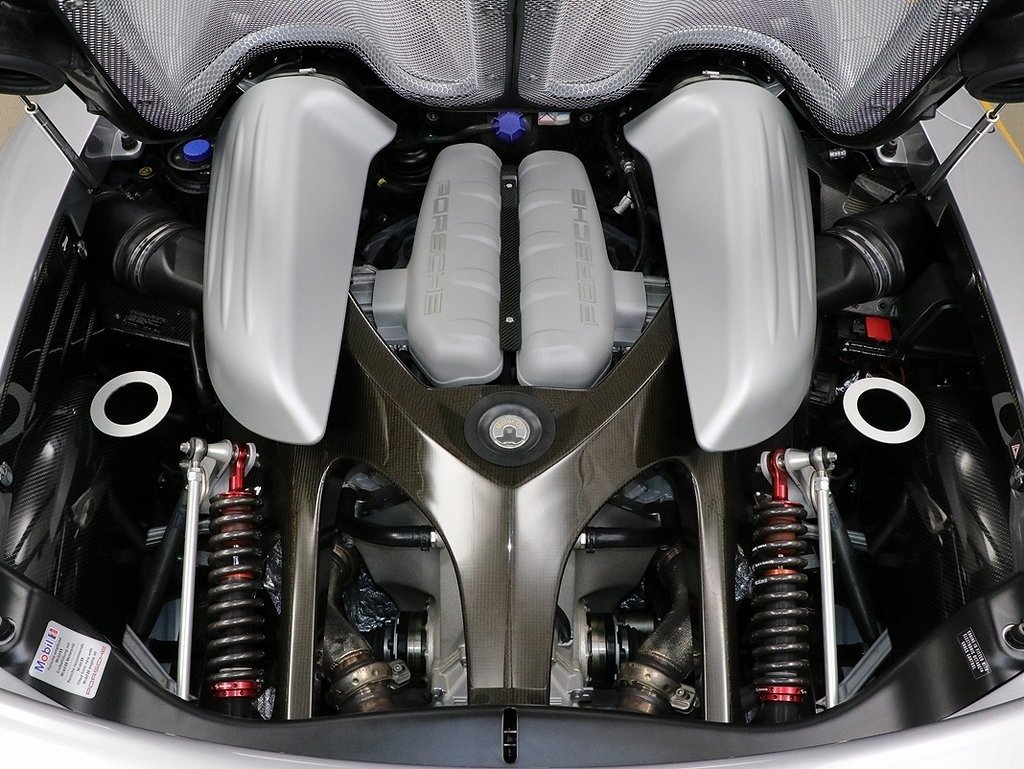
The engine wasn’t just all brawn, as it was meticulously designed to be just one element of something that was greater than the sum of its own parts. For example, the optimized V-angle of the cylinders and the extremely low-to-the-ground crankshaft helps to give the car a very low center of gravity which enhances its overall handling and chassis capabilities.
The Carrera GT’s V10 engine, in spite of its large displacement, weighs in at just 472 pounds thanks to the extensive use of lightweight forged alloy materials which provides bulletproof engine internals which have the highest levels of temperature resistance.
Mated to the powerplant is a six-speed manual transmission developed especially for the Carrera GT. Like the rest of the car’s driving components, the transmission was also designed to be compact and ideally specced to reduce overall weight and maintain an optimum weight distribution.
For the first time in a production car, Porsche introduced a factory-installed ceramic clutch known officially as Porsche Ceramic Composite Clutch – or PCCC. While sharing the characteristics of some race car clutches such as compactness and low mass, PCCC was also designed to meet or exceed the life expectancy of conventional clutch plates, making it suitable for everyday driving applications and importantly, fit for use on a production car.
The transmission, in an overall sense, is able to smoothly translate the car’s massive power into something that is as manageable as it is robust. Although the grabby and sensitive ceramic clutch will likely take some time to get acquainted with, it will soon reward the driver with solid, mechanical shifts which could be most accurately described in one word as “satisfying”.
The Porsche Carrera GT continues to benefit from the manufacturer’s experience in endurance racing, through which their carbon fiber technology had undergone the most rigorous of trials by the turn of the millennium.
The most notable use of carbon fiber in the formation of the chassis is the Carrera GT’s pure carbon fiber monocoque and subframe. This would be the foundation on which the car’s rigidity, lightweightedness and agility would be showcased.
Many of the technologies used in the Carrera GT’s suspension components were adapted from the Porsche 911 GT1 race car, which won the 1998 24 Hours of Le Mans endurance race.
The suspension configuration was designed with double-wishbone axle pushrods in the front and rear which improved the car’s responsiveness to driver inputs while enhancing road feel – something that the more common McPherson spring/strut design would not have provided adequately. The majority of the components were also made of aluminum to save weight.
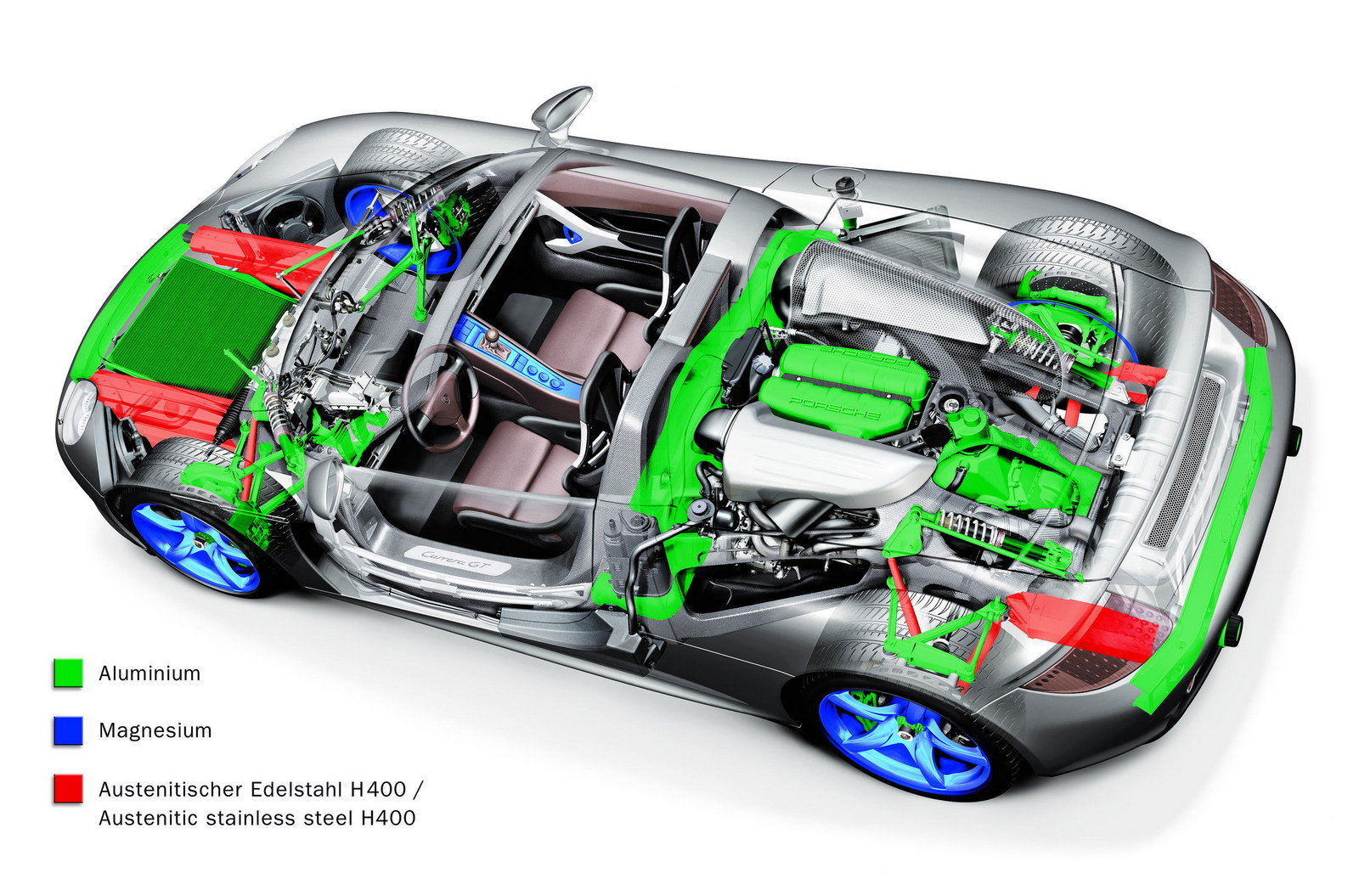
The electronic driving aids in the Carrera GT does nothing to detract from the purest of driving experiences, while at the same time allowing the car to feel compliant when driving at the limits. A meticulously thought-out power steering system accentuates the car’s agility and is perfectly weighted at both low and high speeds to elevate communication between man and machine.
The ABS and traction control systems are adaptive to a variety of different road surfaces and conditions, to allow for a spirited driving style in any circumstance. Working in tandem with each other, both systems enhance stability under hard braking and acceleration to give the driver dynamic control of the vehicle’s steering capabilities, even in the most demanding situations. Safety without sacrifice of performance or driving pleasure is paramount in the philosophy on the Carrera GT.
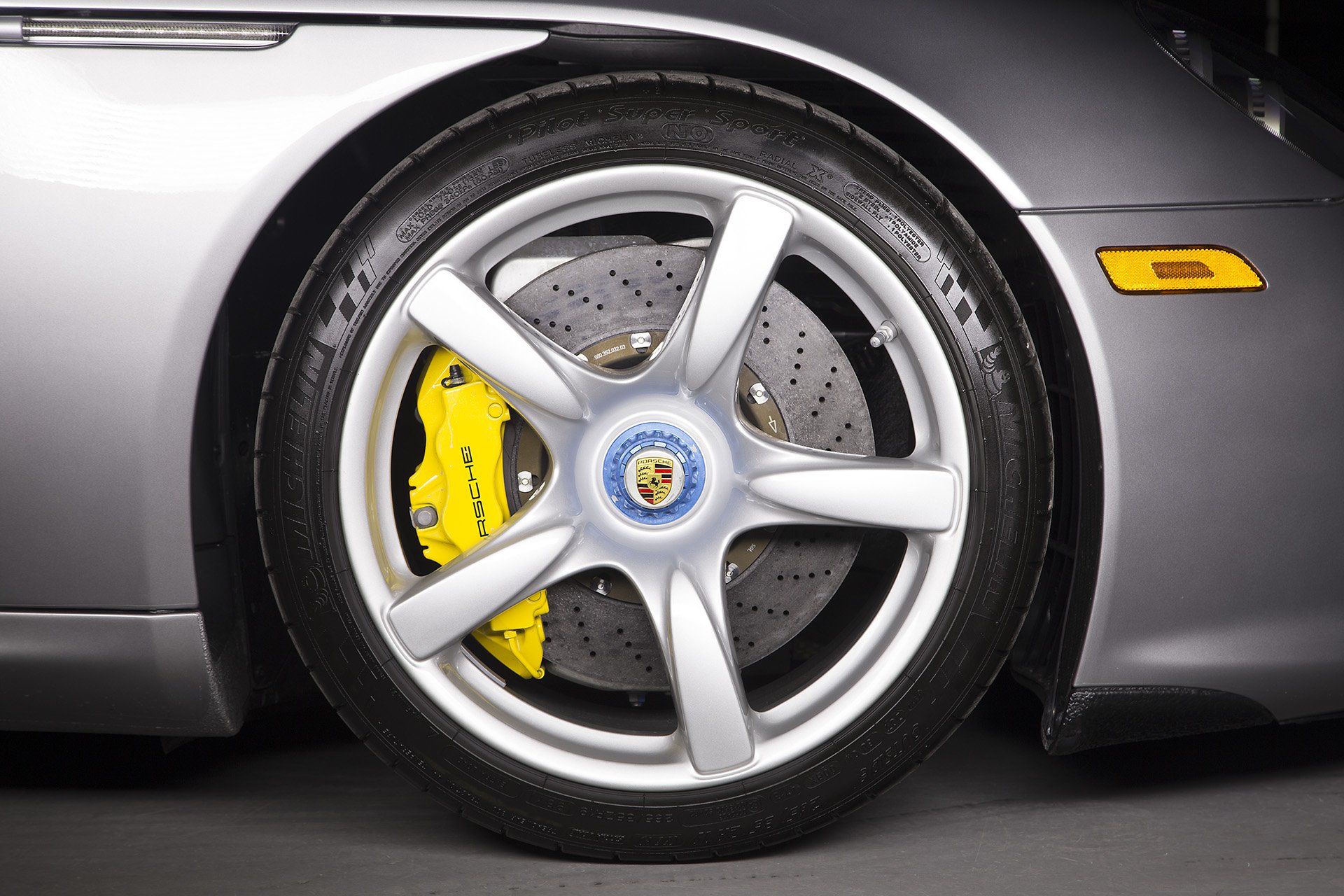
Porsche Carbon Ceramic Brakes – or PCCB – come standard on the Carrera GT and were the first of its kind in the production car world, when Porsche introduced them on the 2001 Porsche 911 GT2.
Besides being considerably lighter than conventional rotors, Porsche had the technology improved for use in the Carrera GT, which featured enlarged cross-drilled ceramic brake discs which have the highest level of heat resistance and an exceptionally consistent frictional coefficient. Completing the braking system were set 6-piston monoblock calipers, employed at all four corners of the car.
Last but not least, the Porsche Carrera GT meets the tarmac a set of staggered center-locking forged magnesium wheels wrapped in Michelin tires specially developed for the Carrera GT (F: 265/35/19, R: 335/30/20).
This combination allowed for the extremely strong and lightweight wheels to complement the chassis in its unsullied responsiveness to driver inputs, while also reducing the rate of wear on the extra-wide and grippy tires.
On the outside, there is nothing to suggest that the Porsche Carrera GT should be anything but a purpose-built super/hyper sports car. The silhouette of the car is a properly executed amalgamation of sleek and muscular features which certainly feels applicable to the Carrera GT’s overall demeanor.
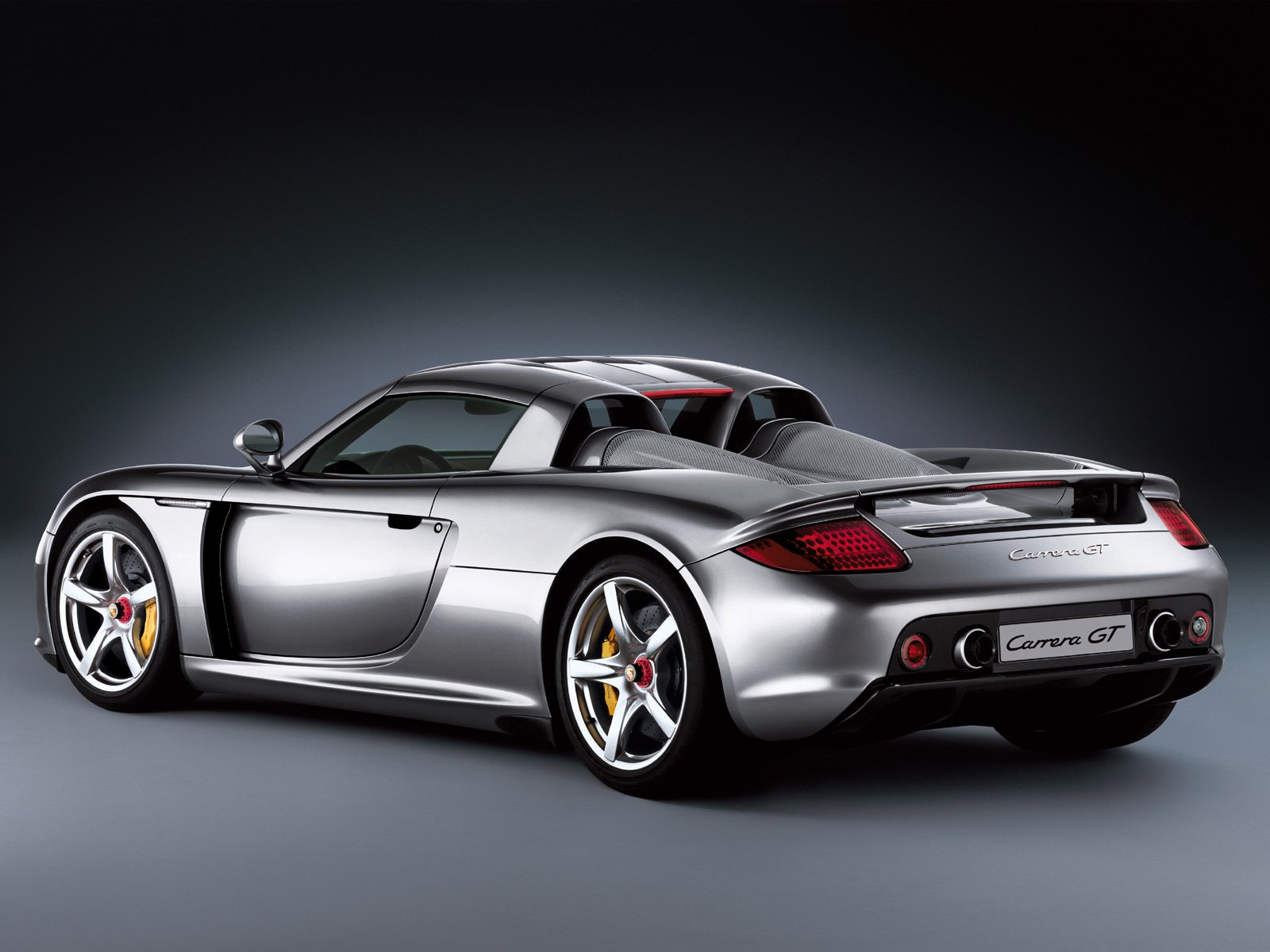
From the front particularly, the car is still undeniably a Porsche, with its headlights paying tribute to the Porsche 917 – the first Porsche race car to win at Le Mans. The bulgy front fenders extend across the doors and connect to the rear haunches of the car, which then blend into its extroverted rear deck finished off by the large, retractable rear wing.
The double-clamshell engine lid conceals the 5.7L power plant while complimenting the two roll hoops it sits purposefully behind. The windshield and windows are designed to provide maximum visibility to the driver from all angles.
The cockpit of the Carrera GT is relatively understated but still more than adequately appointed with its perfect blend of functionality, elegance, and convenience. The center console inclines at a sharp angle towards the front dash, and is fully made from carbon and bolted to the chassis of the car to promote rigidity and safety.
Mounted near the top of the center console, is one of the Carrera GT’s most quintessential features – its ergonomically located manual gearbox fitted with a laminated birchwood shift knob, which pays tribute to the heritage of Porsche motorsport.
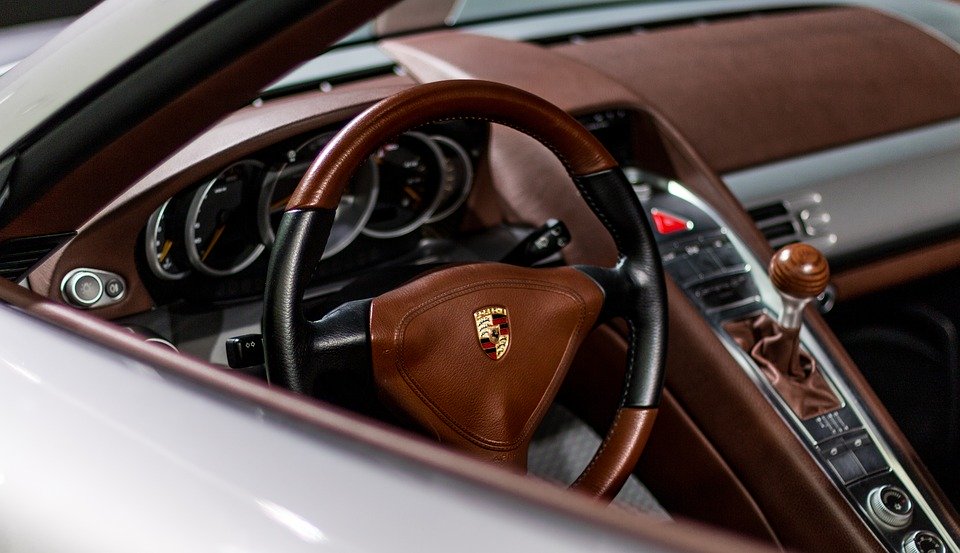
One of the Carrera GT’s world firsts for production cars was its use of sport buckets made from a special hybrid of carbon fiber and aramid fiber, which is commonly known today as carbon kevlar. This super light and durable composite meant that the seats could be upholstered in high-end leather and still weigh less than 23 pounds each. With comfort still being a paramount feature in the Carrera GT, Porsche fitted the car with power windows, air conditioning, infotainment, and BOSE speakers.
When the Porsche Carrera GT was released for the production year 2004, it had a retail price of $440,000 USD. Few would have guessed that its price would skyrocket over time to the levels they are at now – least of all Porsche, who cut production of the Carrera GT well before reaching its original target of producing 1,500 examples.
Today, a used Porsche Carrera GT can go for upwards of $700,000 USD. Some of the lowest mileage and best condition examples have been seen to fetch north of $1,000,000 USD.
Over the past 15 years, the Carrera GT has become one of the most renowned supercars in history; thanks to its unique blend of driver-focused elements and advanced road-going technologies, it epitomizes what has now become the pinnacle of an era in which cars of this ilk would be produced.
Knowing what the Carrera GT represents and possessing a rudimentary understanding of economics, my guess is that these prices will only go up as time passes.
| Make | Porsche |
| Model | Carrera GT |
| Car type | Coupe |
| Category | Limited Series Production Car |
| Built At | Zuffenhausen, Germany |
| Introduced | 2004 |
| Base Price (US) | $440,000 |
| Units built | 1,270 |
| Curb Weight | 1,380 kg (3,042 lbs) |
| Layout | Rear mid-engine, Rear-wheel drive |
| Body / Frame | Pure carbon fiber monocoque and subframe |
| Suspension (F) | Independent double-wishbone with axle push rods made from aluminum |
| Suspension (R) | Independent double-wishbone with axle push rods made from aluminum |
| Steering | Power-assisted rack-and-pinion |
| Brakes | Porsche Carbon Ceramic Brakes (380 mm carbon-ceramic brake discs and 6-piston calipers, front and rear) |
| Tires | Michelin (F: 265/35/19, R: 335/30/20) |
| Transmission | 6-Speed Manual |
| Engine | V10 |
| Displacement (Litres) | 5.7L |
| Aspiration | Naturally Aspirated |
| Power (hp) | 612 hp @ 8,000 rpm |
| Power (hp) / liter | 107.4 hp / liter |
| Power (hp) / weight | 0.44 hp / kg |
| Torque | 435 lb-ft @ 5,750 rpm |
| 0-60 mph time | 3.8 seconds |
| ¼ Mile (standing) | 11.3 seconds |
| Top Speed | 205 mph (330 km/h) |
| Average Fuel Consumption | 16 mpg (combined) |
The Porsche Carrera GT exudes a level of performance that can only exist in the highest echelons of road car hierarchy. It is rare that such a design can become so timeless in just 15 years, which can be the lifetime of a single iteration of vehicle.
In my opinion, the Porsche Carrera GT is a monument of automotive history which will only become more prominent in the years to come. It is the culmination of arguably the most ideal era of automobiles, in which technological prowess and puristic driving principles were combined in perfect harmonization. It serves as a reminder as to how powerful the connection between man and machine can be, without one overwhelming the other.
Doug DeMuro never holds back when exclaiming that the Porsche Carrera GT is ‘the single greatest car ever made’. The famed YouTube car reviewer provides an in-depth overview of the car, and takes it for a test drive in the streets near Cleveland, Ohio where he discovers that it is less intimidating to drive than it looks.
[embedded content]The most viewed review of the Carrera GT on YouTube is from Top Gear, where none other than Jeremy Clarkson admits that it is one of the most beautiful, exciting and fastest drives of his life. Also watch as the Stig attempts to beat the record-holding McLaren Mercedes, as the fastest car around the Top Gear test track.
[embedded content]I’ve always enjoyed the way in which EVO presents their video review documentaries, so here is Dickie Meaden taking the Carrera GT through its paces in an ‘ICONS’ episode. He credits the car’s analog driving experience and its engine, as positive differentiators amongst its competition which includes the Ferrari Enzo, McLaren Mercedes SLR, and Ford GT. [embedded content]Here is the only official video uploaded by Porsche on the web, which features the Carrera GT in an episode of ‘Porsche Experience TV’.
[embedded content]The Porsche Carrera GT is still counted among the most exciting sports supercars in the world, more than 15 years after it first appeared. Now, Porsche Classic has implemented a spectacular reconstruction as part of a custom order.
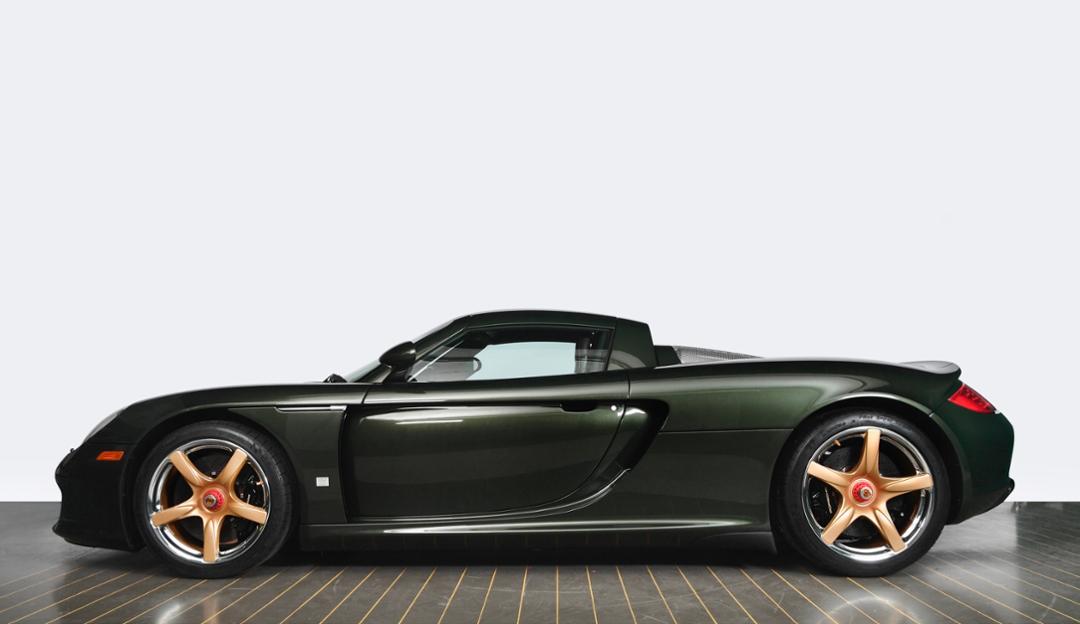
With a ten-cylinder V engine with 612 PS of horsepower derived from a Formula 1 powertrain, premium design, and – not least – the incomparable driving experience it offers, the Porsche Carrera GT remains a milestone in the world of sports supercars today, and a collector in the US has commissioned Porsche Classic to thoroughly rework one of their privately owned vehicles.
It was truly a spectacular project.
The collector wanted a complete, custom reconstruction of the vehicle, implemented at a manufacturing quality that can only be achieved by Porsche itself. The process involved the vehicle being entirely disassembled into individual parts, with every component extensively checked, and refurbished or replaced where necessary.
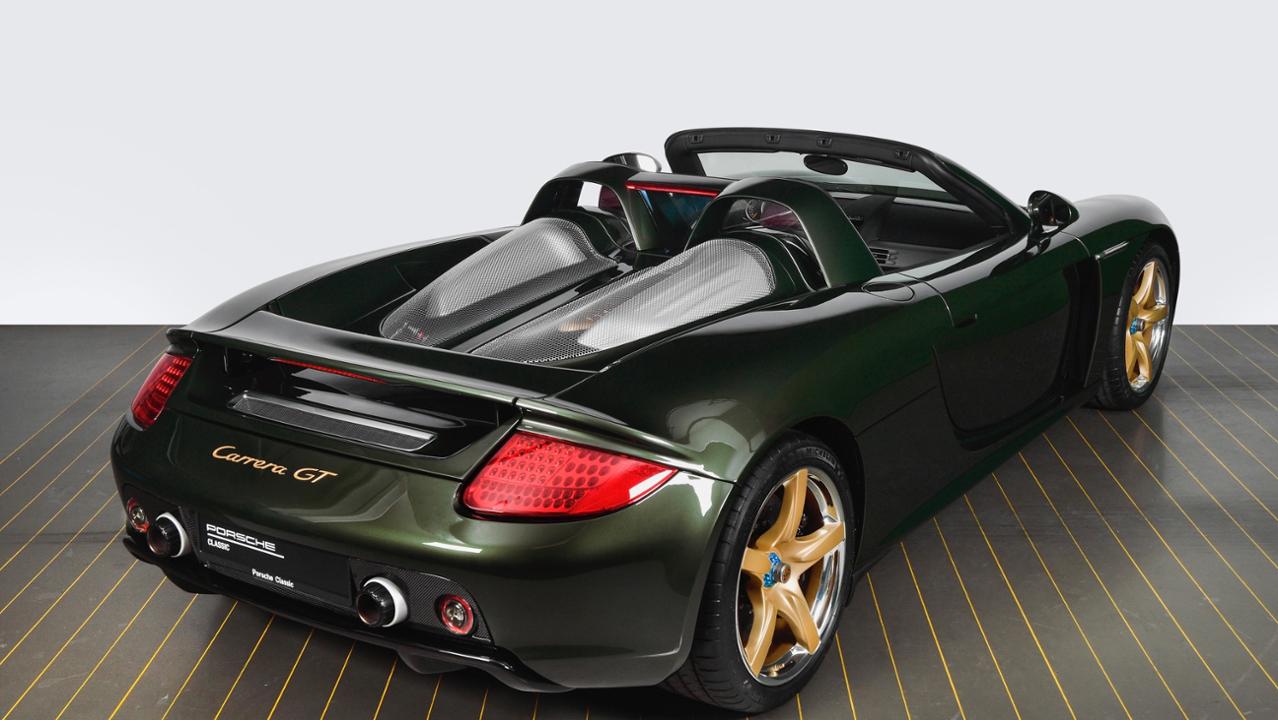
To set off the completely overhauled engine, transmission, and chassis components to their best advantage, the Carrera GT was also treated to a full refinish. Working with Porsche Classic, the owner chose Oak Green Metallic paintwork – a color that appeared for the first time in the 1970s, but which has never been available for the Carrera GT.
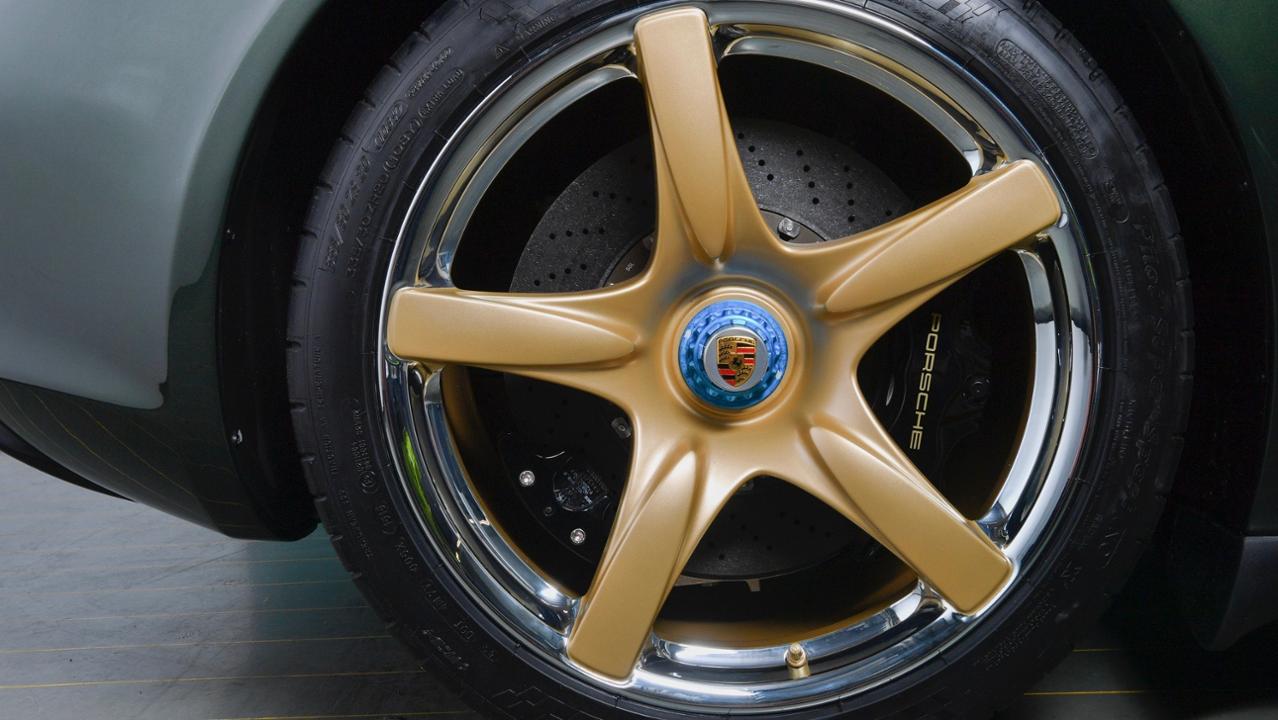
The complementary five-spoke magnesium tires were specially designed, taking their initial inspiration from the legendary motorsport tires from BBS, which had a star-spoke painted in gold and a polished rim ring.
However, material experts from the Porsche R&D center Weissach advised that polishing the rim ring would structurally alter the material in such a way that it would potentially be dangerously weakened, so an alternative engineering process was required to create the desired metallic high-gloss effect rim.
The solution to the challenge lay in using silver, a precious metal. In an innovative procedure that had never before been used in series vehicle construction, a silver layer was applied to create a visually chrome-like surface finish.
This high-gloss silver layer requires a final protective coating though because silver is second only to iron in terms of metals that most readily oxidize: where prolonged on iron results in rust, silver responds to exposure to atmospheric oxygen and water by accumulating unsightly black tarnish on its surface.
This is why the silver-coated rim ring required a protective layer of clear lacquer, and the star-spoke was painted in gold to match. Serving as a technical contrast to this is the blue-and-silver central wheel lock, bearing the Porsche emblem in color.
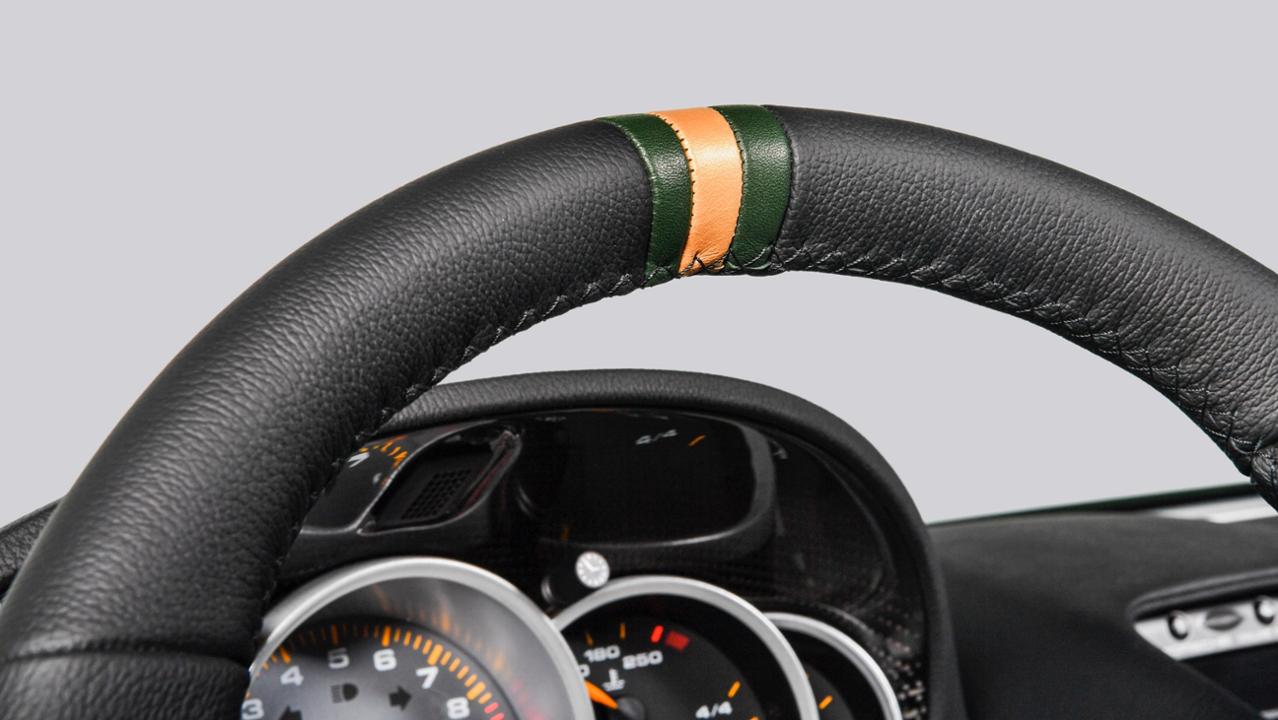
The gold of the star-spoke has also been picked up elsewhere, for example in the Porsche lettering on the brake callipers, in the engine compartment, on the intake housings, and even in the interior, where the top marking in the center of the steering wheel is adorned by a single gold stripe flanked on both sides by a stripe of Oak Green – a discreet and individual touch.
Even at this stage, the work on this special Carrera GT was far from complete. “Because the coating on older carbon fiber parts tends to yellow and fade, we spent 350 hours manually sanding and recoating all the carbon fiber components, including the monocoque,” explains Uwe Makrutzki, Manager of Porsche Classic Factory Restorations in Stuttgart.
The vehicle is now ready for delivery, and at the invitation of Porsche Cars North America, Porsche Classic has presented it for the first time at the Porsche Experience Center in Atlanta, to a select group of 100 invited guests including the car’s owner.
Porsche Classic also hosted a symposium to coincide with the event, moderated by motor journalist Pete Stout, and featuring Alexander Fabig, Head of Customer Center, Uwe Makrutzki, Manager of Porsche Classic Workshop Restoration, record-winning race driver David Donohue, and Porsche Designer Tony Hatter, who were all available to talk about the project and answer questions.
Porsche Classic takes care of all vehicles whose production end date is generally more than ten years in the past.
These include legendary sports cars, such as the 356, 914, 959 and 911 up to and including type 996, as well as all four and eight-cylinder vehicles, such as the 924, 928, 944 and 968, and the Porsche Boxster, type 986. Since 2016, Porsche Classic has also been responsible for the genuine parts supply of the Carrera GT super sportscar. Further information is available at Porsche.
As my fellow Supercars.net colleague, Nick Dellis once remarked, “The world is full of armchair commentators when it comes to cars. At Supercars.net we have a number of journalists and automotive publications we rely on when we want to get unbiased opinions from people we admire.”
Below are snippets from some of our favorite car reviewers and automotive personalities regarding the Porsche 911 Speedster. As always, we ask that you support the amazing publications they release, so that the automotive community continues to benefit from the hard work and enthusiasm they put into providing us with content that we love.
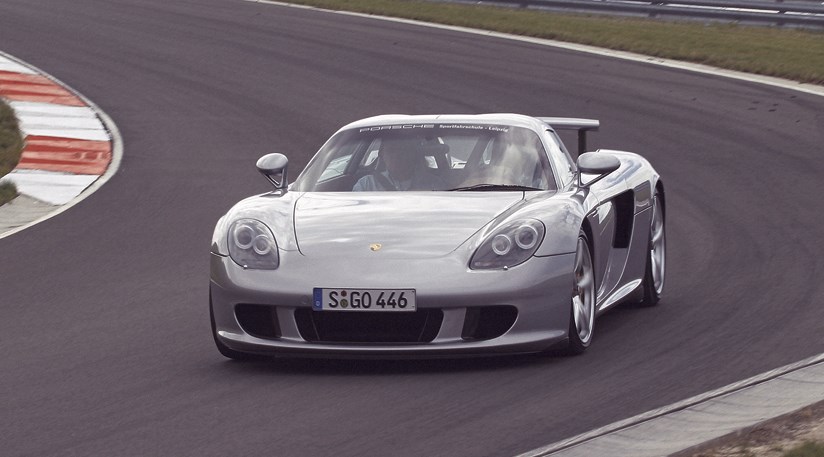
Ben Whitworth from carmagazine.co.uk reviewed the Porsche Carrera GT in 2008. He admits that the car can be a hassle to drive in low speed, stop-and-go traffic thanks to the sensitively operated clutch. Where things really start to get good are when “It’s only above 3000rpm that the ride, steering, chassis, and engine really start to work their magic. But boy, what magic.”
The Carrera GT’s handling is the perfect compliment to its engine, where he notes that “One of the car’s key attributes is its forgiving chassis and superb steering that together allow you to extract the best that fabulous engine has to offer. The more speed you add, the smoother and more fluid the ride becomes, allowing you to sew a series of bends together with real precision and confidence.”
A disclaimer to end things off though, as he reminds us that “You can drive the Carrera GT at seven-tenths all day – which by normal standards is still phenomenally quick – but you’d better have your go-fast synapses all snapping together if you push harder.”
More: Read full review
Autotrader- “…the greatest experience of my entire life.” – DOUGSCORE: 71
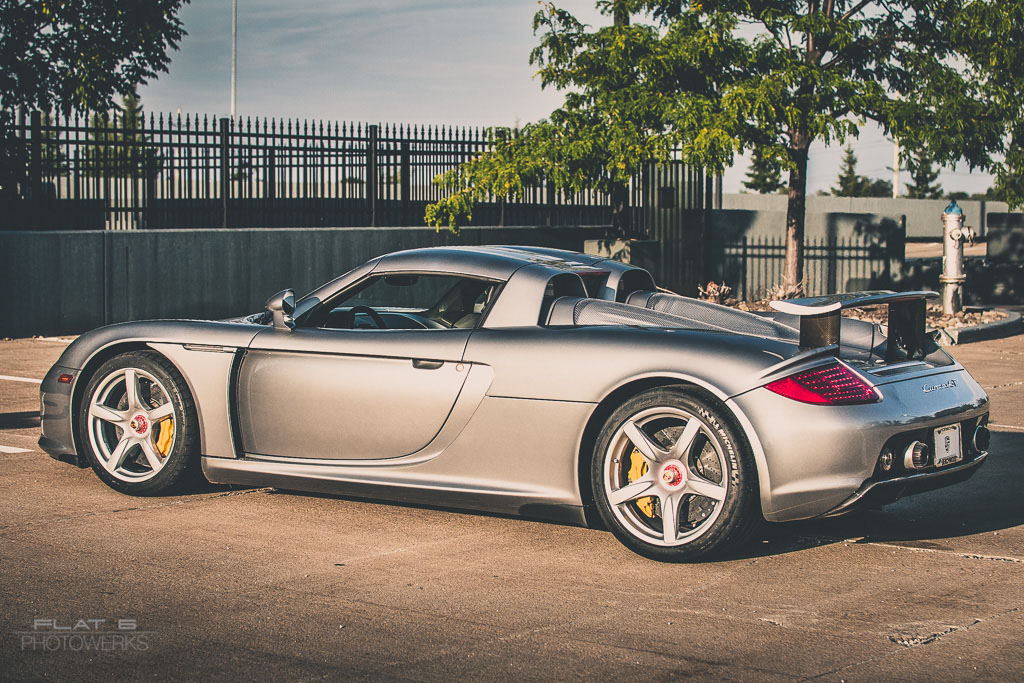
It’s easy to forget that Doug DeMuro actually writes his reviews on behalf of Autotrader, as the charismatic – and often quirky – the presenter has transcended into his own form of celebrity through his entertaining video car reviews.
His written review of the Porsche Carrera GT is a loosely based transcript of his video performance, mentioned earlier in my review. There are some things he reveals in his written article which he didn’t on Youtube, such as what was going through his mind before getting into the driver’s seat. “I’ve never felt so much pressure in my entire life. Tom Brady has never felt so much pressure in his entire life,” he remarked.
Doug knew that that car would be impressive, but he noted that “What was a surprise, however, was just how much I didn’t feel intimidated when I was behind the wheel.”, which is a testament to Porsche engineering principles.
His final word: “My all-time favorite dream car. And the greatest car ever made.”
More: Read full review
The Porsche Carrera GT is one of the most distinguished representatives of an automotive era now concluded. It was the last supercar to be fitted with a true manual transmission. It introduced world-first technologies derived from racing, in a road car. It could very well be the last driver-focused car of its kind, with no successor – spiritually or materially.
In fact, Michael Hölscher who led the development of the Carrera GT has stated regarding a second iteration, “We don’t want one. We have promised customers that there will be no successor. It would kill the value of the GT overnight. But we will always demonstrate that we are a leader in technology.”
However, we will continue to see the Carrera GT’s influence in Porsche’s production cars which have – and are yet to – come through the production pipeline. “We have learned from the Carrera GT programme how to work with carbon fiber, ceramics, and magnesium. It’s a technology that will filter down into new products.” Hölscher notes.
This is especially important as the automotive landscape is changing both drastically and exponentially, as time goes on. In a future that looks to be dominated by software and electronics, the Carrera GT will hopefully serve as a reminder for Porsche to continue engineering cars that elicit an emotional connection with their owners/drivers. I am confident that Porsche is well-positioned to be both a leader in technology, while also staying true to its heritage.
The Porsche Carrera GT will always be one of the most incredibly balanced and exquisitely engineered cars ever made. Many years into the future – perhaps when the role of the automobile as we know it, becomes obsolete – the Carrera GT will become the equivalent of scripture for the soul; something for us to deeply reflect on, as we look to rekindle our relationship with the simple and good things in life.
Ferrari Enzo
Pagani Zonda C12S
McLaren Mercedes SLR
Maserati MC12
Koenigsegg CC8S

McLaren Denver placed an order with McLaren Special Operations that turns the limited-edition 600LT Spider into the limited-to-six, 600LT Spider Pikes Peak Edition. Each car wears one of MSO’s Bespoke or Heritage exterior colors, matte black vinyl stripes, and interior embellishments. The shades come in Black Gold, White Gold, Nerello Red, Volcano Red, Aurora Blue and Midas Grey. The MSO Club Sport Pack upgrades the outside with carbon fiber cantrails, carbon fiber front fender louvers, and titanium wheel bolts to affix the Satin Speedline Gold wheels.
Inside, a Satin Gold band identifies top dead center on the steering wheel, and extended paddle shifters in Satin Gold hang out behind the wheel. Lightweight carbon fiber racing seats taken from the McLaren Senna get contrast stitching Satin Gold, the headrests embroidered with the Pikes Peak logo in the same color. A plaque reading “Pikes Peak Collection 1 of 6” alerts the world to the exclusivity.
The 600LT Spider Pikes Peak Edition remains untouched otherwise compared to the standard open-top, a 3.8-liter twin-turbo V8 providing 592 horsepower and 457 pound-feet of torque suitable for charging up 14,000-foot mountains on Pirelli P Zero Trofeo R tires. In an environment where road-holding and braking would be especially important, the 600LT Spider upgrades its game with suspension bits from the 720S, carbon ceramic brake discs, and lightweight calipers. Price remains a mystery, but expect a healthy premium over the $256,500 MSRP for the ‘regular’ 600LT Spider.
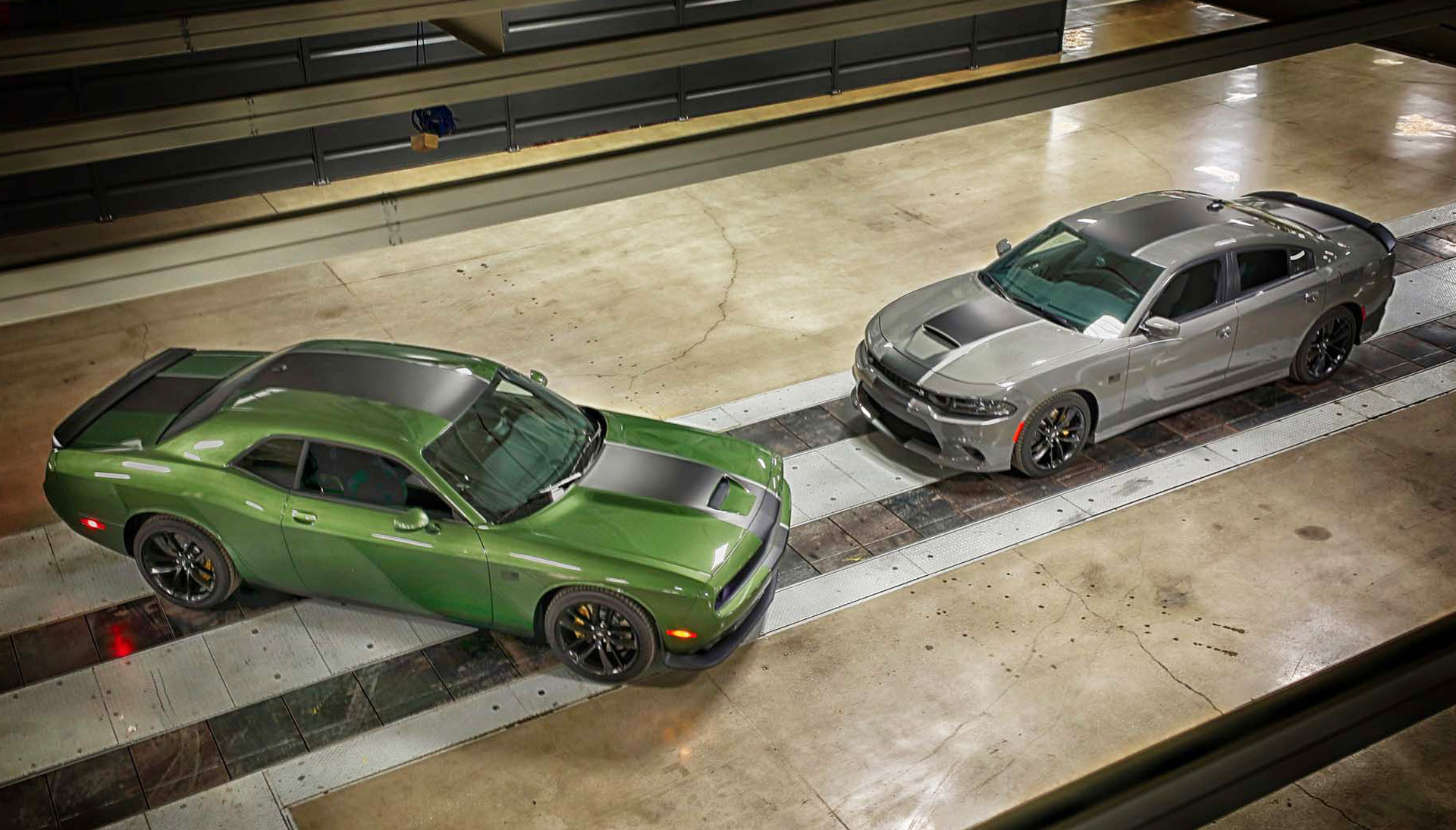
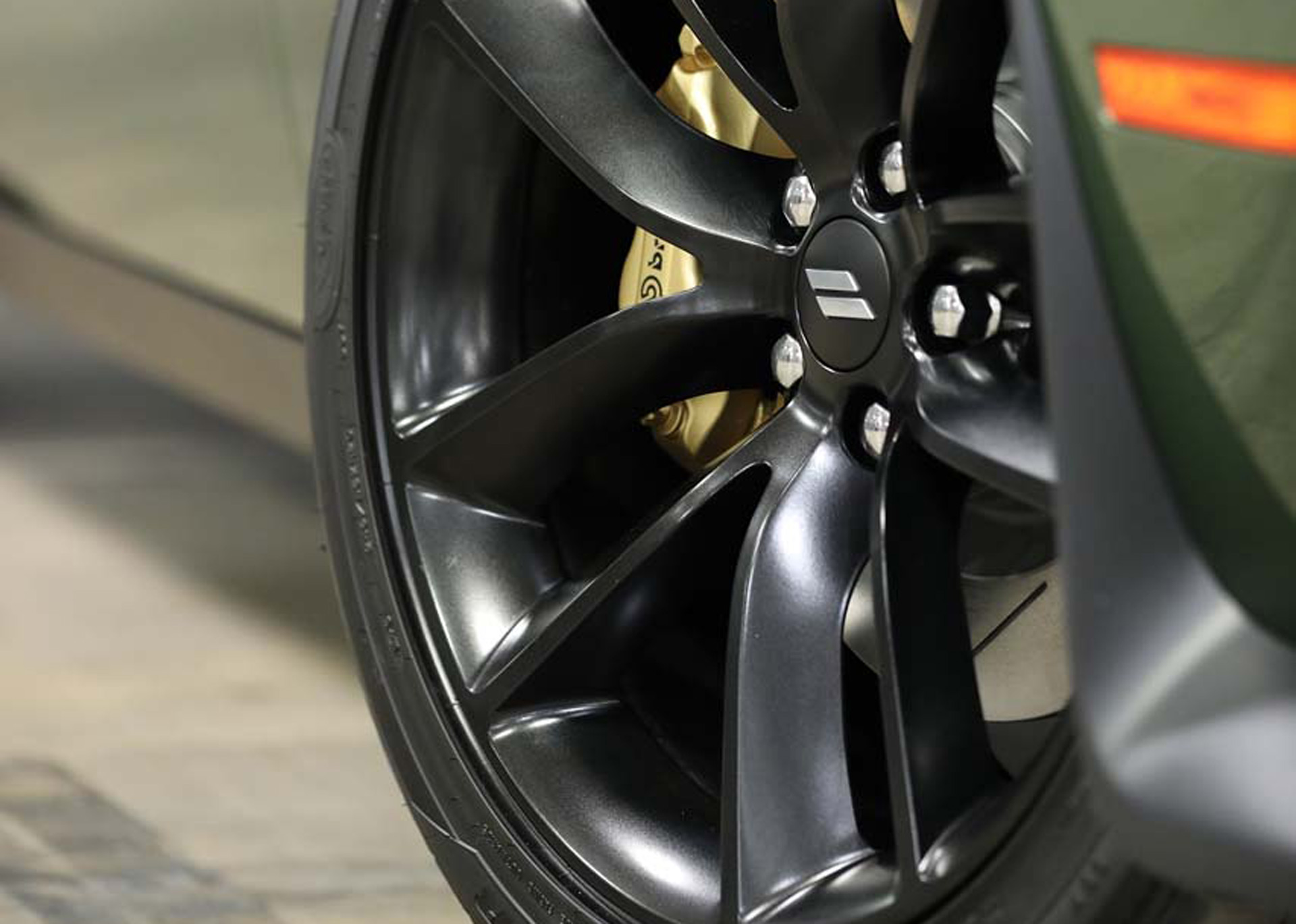
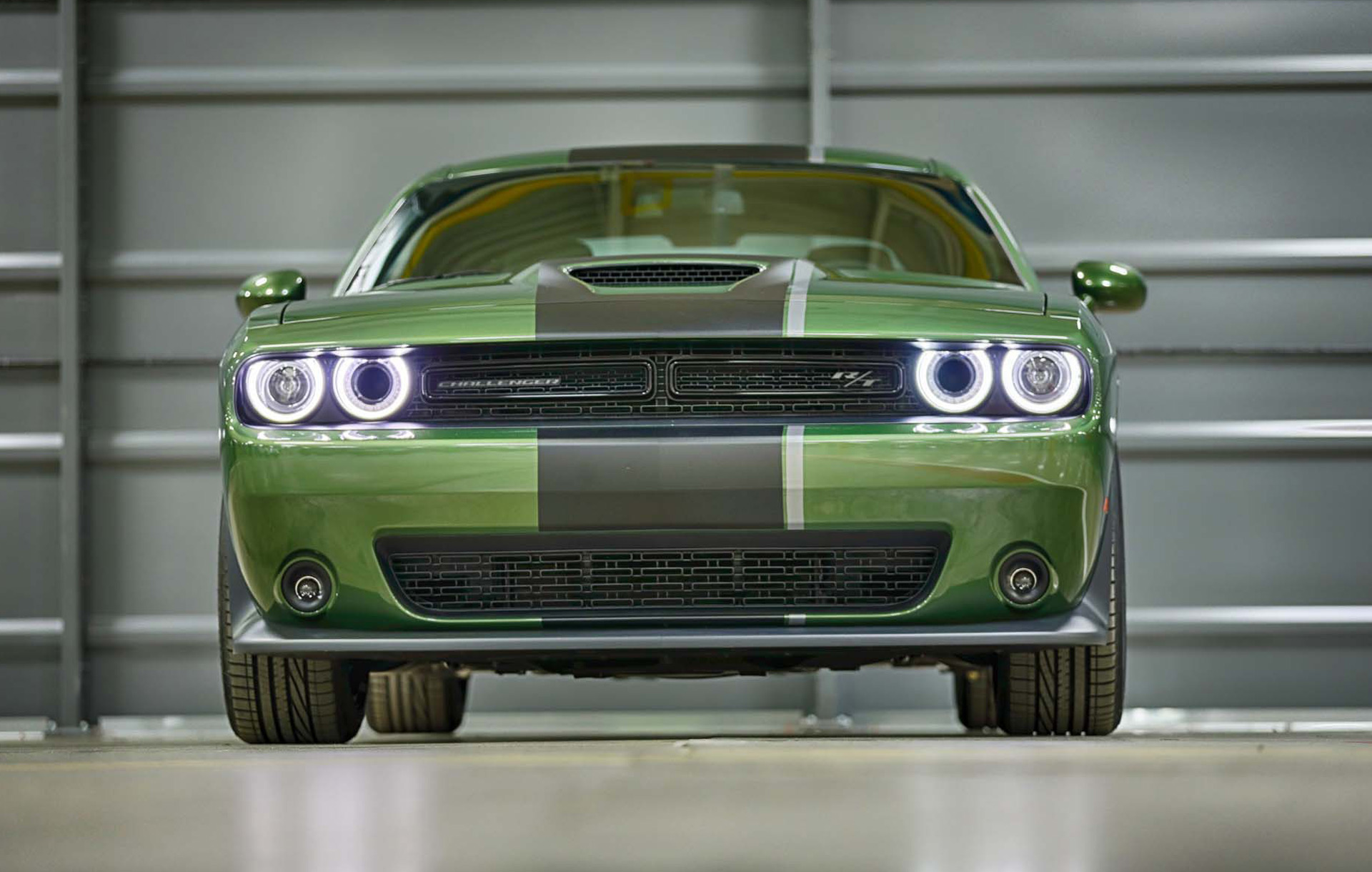
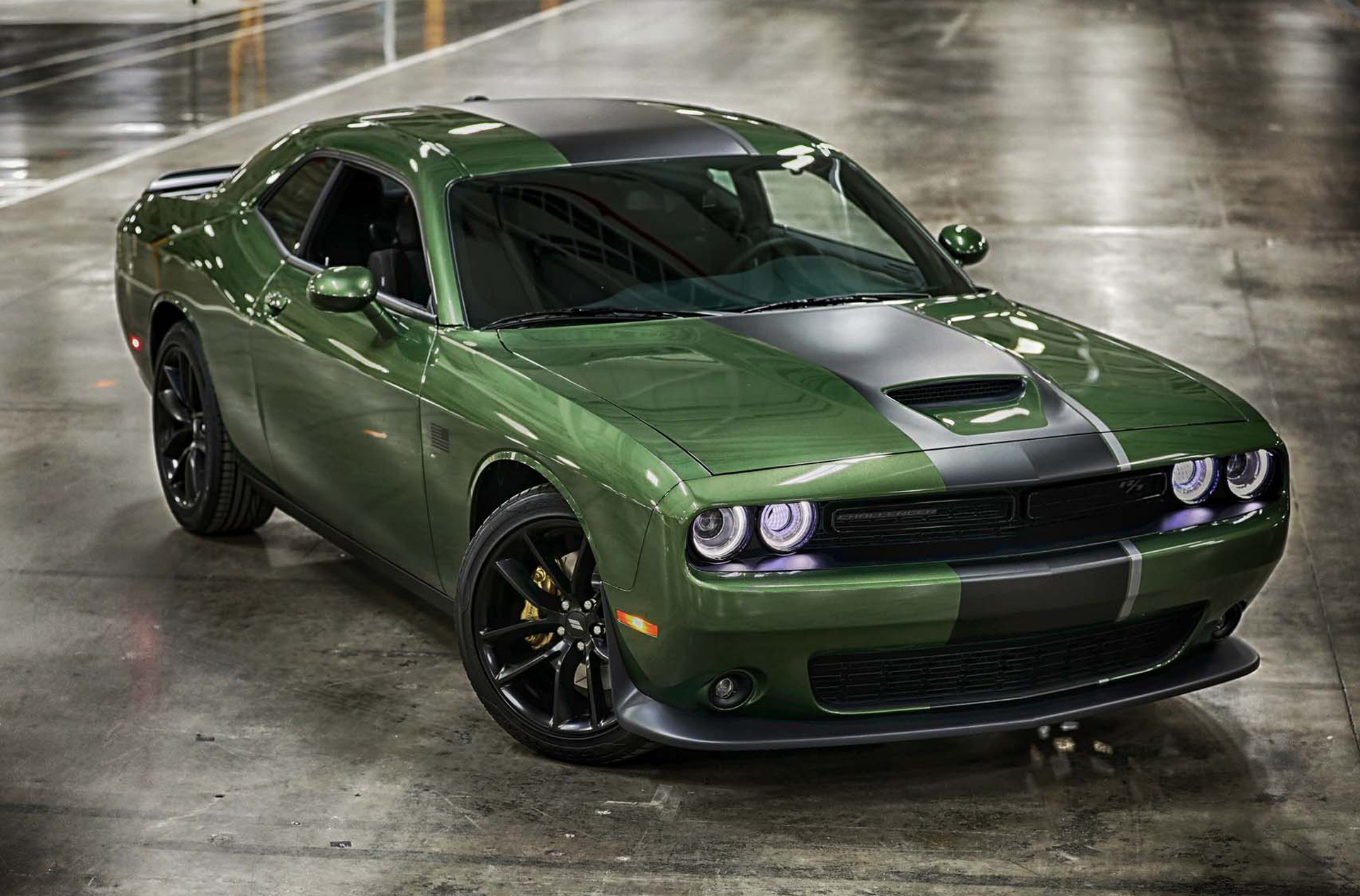
In celebration of men and women in uniform, Dodge is introducing a Stars & Stripes Edition for two of its muscle cars — the Challenger coupe and the Charger sedan.
Dodge says its brand is the most popular among American troops in the segments in which the Challenger and Charger compete. That isn’t just hype; apparently, Dodge has data to back it up. But you don’t have to wear a uniform or serve the military to love Dodge’s vehicles. In fact, according to Steve Beahm, Fiat Chrysler’s head of passenger-car brands:
“We have a strong following of buyers who are in the military, as well as many buyers who are patriotic.”
So, what’s new with this Stars & Stripes and package? Well, at $1995, you can add it on a number of Challenger and Charger variants. That includes the R/T, R/T Scat Pack, and GT trim levels. They add a touch of patriotism to a car that already screams “USA!”
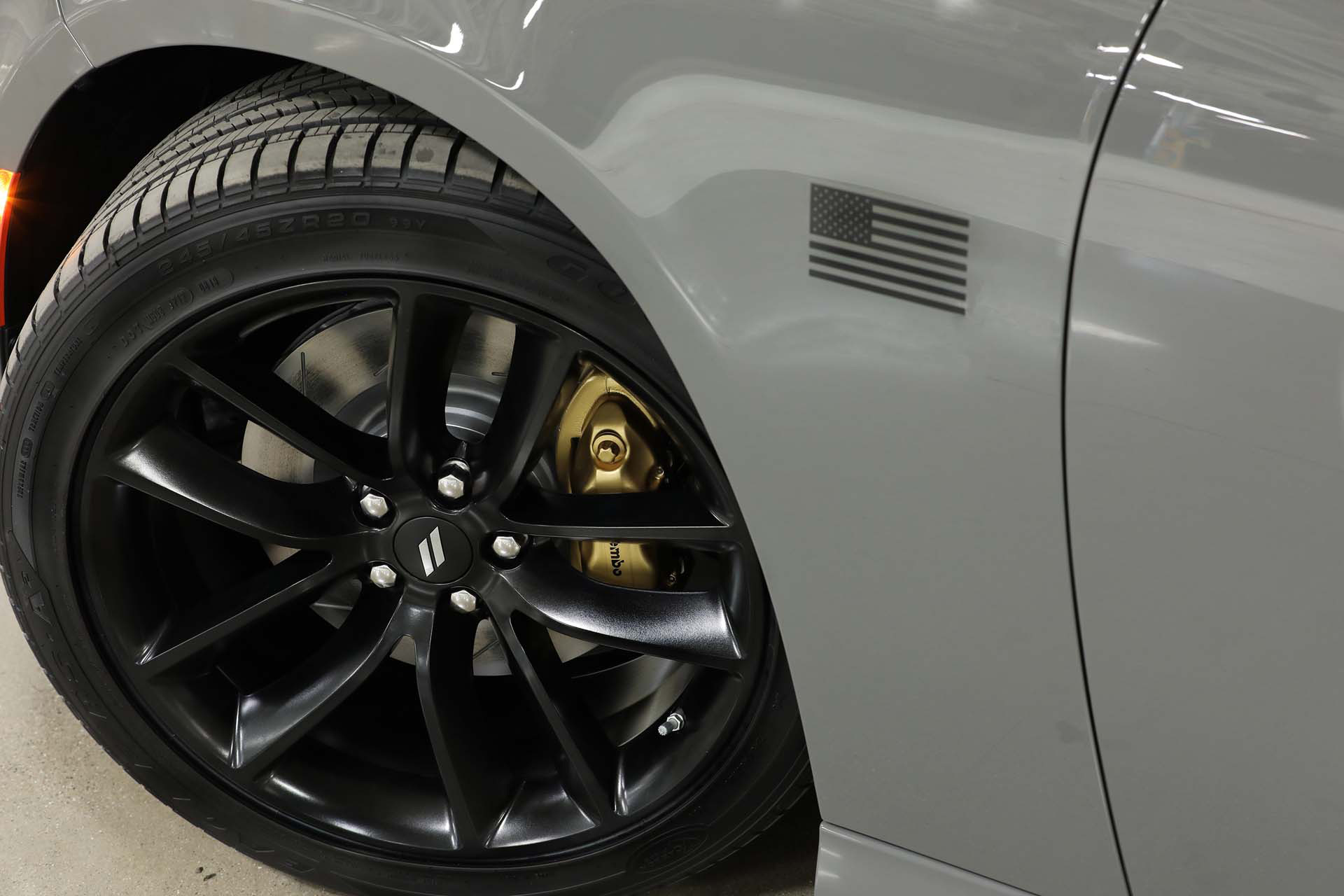
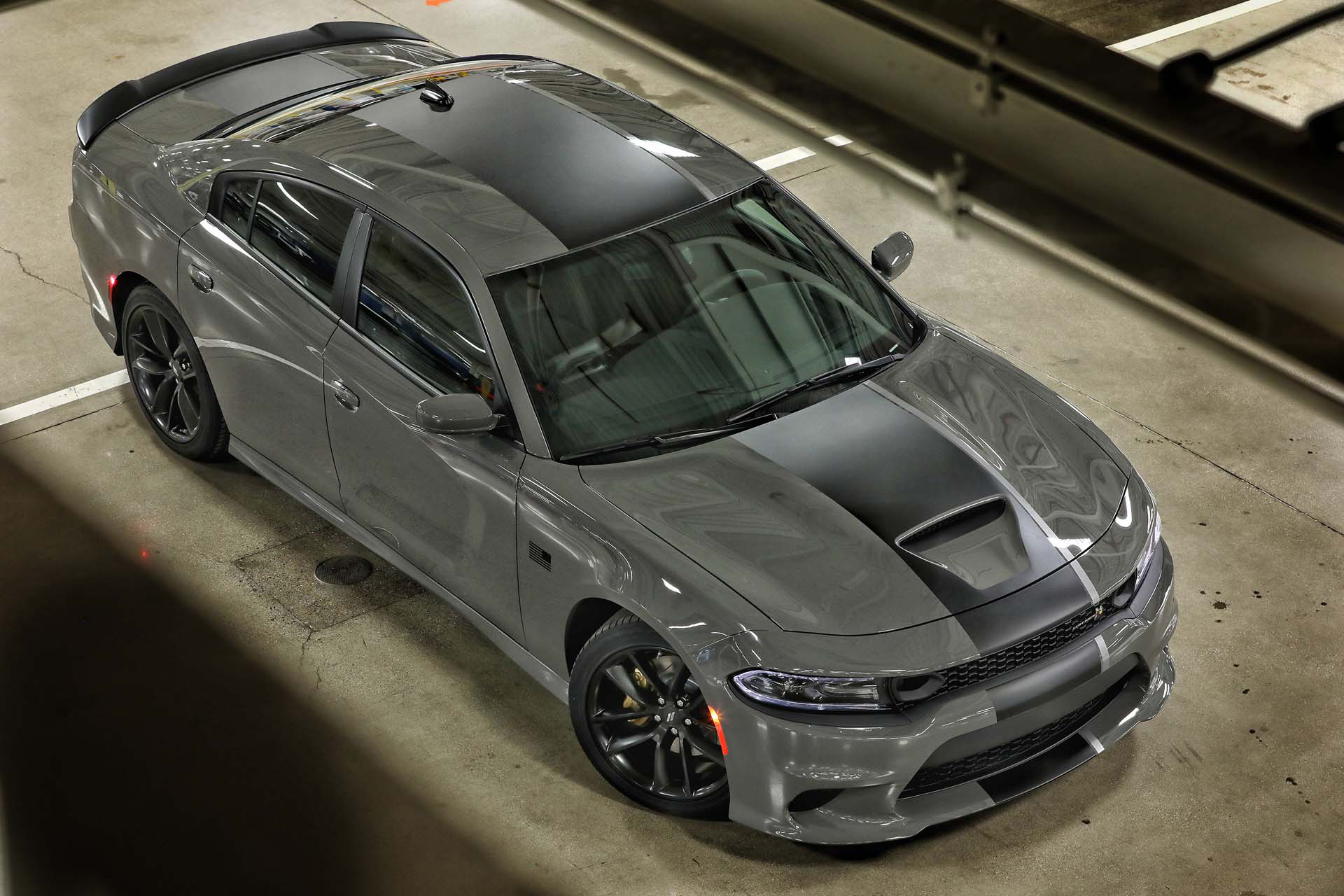
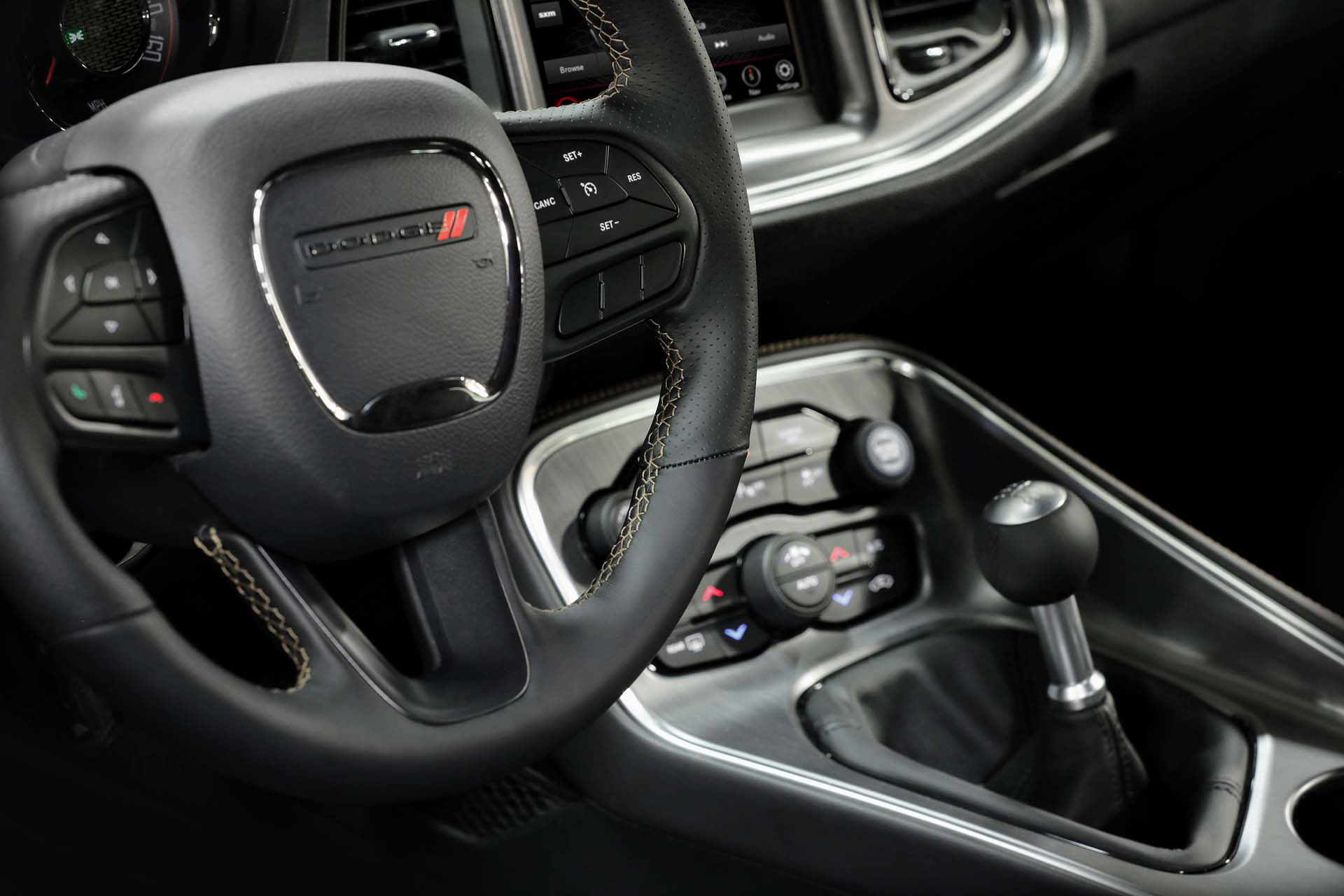
There’s an American flag decal on the fender. The kit also includes a matte black body-length stripe, 20-inch gloss-black wheels, and black-painted badges. You also have black cloth seats, a dark interior trim, bronze stitching, and a tiny bronze badge on the dashboard. On the front seats you’ll also find bronze embroideries. Service men and women are awarded the Bronze Star for exceptional valor and heroism on duty. That explains why it’s so abundant in this edition. Or perhaps that doubles as a description for Dodge’s cars, as well.
That’s certainly one way to show one’s love for the troops. Hit the link below to find out more.
Photos courtesy of Dodge
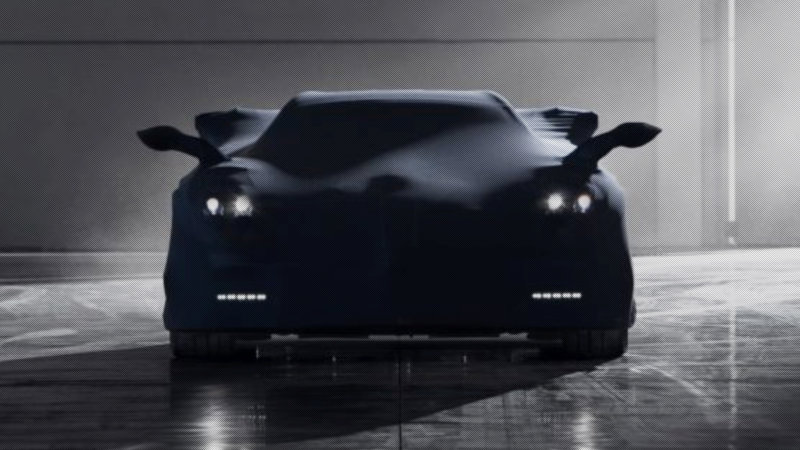
Pagani is going to reveal the next Huayra variant at Pebble Beach during Monterey Car Week this year, and now we have a teaser for what’s to come. There are already several variants of the German-powered Italian work of art for the rich and famous to eat up, but there’s no BC Roadster yet. That’s the current egg missing in the basket, so we imagine Pagani will want to reveal it in sunny California.
Pebble Beach is where much of the wealthy part of the car world converges for the weekend, so it only makes sense to reveal the $2 million-plus Pagani there. Pagani will need to step things up even more than normal for the BC Roadster, as the regular Huayra Roadster already borrows a bunch of parts from the regular BC. A few notable improvements include the HiForge aluminum suspension components, lighter transmission, and stiffer structure. We’ll expect there to be more power on the table. The Huayra Roadster makes 764 horsepower and 738 pound-feet of torque, so it’s not exactly lacking in that department. However, more is always welcome in the supercar world.
We’ve been living in the world of the Huayra for some time now. It debuted back in 2012, following the long-lived Zonda. Nobody’s particularly worried about the Pagani getting old, though. All 100 Huayra Roadsters sold out before the car even made its official debut, and we wouldn’t be surprised if the same thing happened with this variant coming to Monterey. We’re less than a month away from the massive carpalooza in California, so brace yourselves for all the ritzy, extravagant things on the way.
If you looked at the new 2020 Chevrolet Corvette and said, “Nope not the midengine car for me,” and you also don’t want a McLaren, Ferrari, Lamborghini, or any of the other exotics out there, then you should look to the aging but still lovely Lotus Evora. The company just put out a new car specifically for the North American market. It’s the Lotus Evora GT, and it’s quite lovely.
For under $100k ($96,950 to be exact) you can get your hands on the most powerful street-legal Lotus available right now. The Evora GT features either a two-seat or a 2+2 seat arrangement. It also comes with a 3.5-liter supercharged six-cylinder engine that puts out 416 hp and 317 lb-ft of torque. That engine is paired with a six-speed manual transmission or a six-speed automatic transmission (only a masochist would buy the automatic in this car).
This powertrain makes for a 0-60 mph time of just 3.8 seconds. The car’s top speed? It’s 188 mph. The automatic transmission is a tenth of a second slower, so that’s yet another reason to buy the manual gearbox. In terms of suspension, Eibach springs and Bilstein dampers are standard. The car also gets 19-inch wheels up front and 20-inch in the rear. Those wheels are wrapped in Michelin Pilot Sport Cup 2 tires.
Lotus also updated the exterior with front lip spoiler, wheel arch louvers, ducts behind the wheels, and a rear diffuser. Inside there’s Alcantara and carbon fiber materials as well as a magnesium steering wheel with Alcantara and leather. Lotus put in a 7-inch infotainment screen with Bluetooth, Apple CarPlay, Andriod Auto, and navigation. Overall, it looks like one killer driving machine.

It has been more than half a decade since Pagani revealed the Huayra, but the company continues to refine its creation with new models and improved aerodynamics, engines, and variants. The next expected version is the Huayra Roadster BC, and it should appear at Pebble Beach.
Pagani just teased the new version of the car with the shadowy image you see above. The car in the image is cloaked and you can’t see much of what is there. What you can tell is that it’s definitely the Huayra. We did some digging on the company’s website and looked at the page source of the website’s homepage. What we saw surprised us. The image below was crafted in code.


Below this was the links to the lead image which were clearly labeled “PAGANI_HUAYRA_ROADSTER_BC.” There was some speculation that the company would use that nomenclature for the car. EVO Magazine speculated on the nomenclature. Now it seems pretty clear. The car will be the Pagani Huayra Roadster BC, and it will be awesome.
There’s always the chance that the design in the codes has always been there, but we’d like to think we would have noticed it. It looks to us to be the rear of the car. Again you can’t see much, but it’s a neat element nonetheless. We looked for additional gems on the source page and failed to see anything else. We’re pumped for the official reveal of the Huayra Roadster BC at Pebble Beach.

Areas that are close to bodies of water are usually prime locations that some architects love to work with. Perhaps it’s the potential for crafting various awe-inspiring views that anyone will be the envy of everybody. Moreover, when the designer chooses to build a structure that does not take away the beauty of the scenery, the results are nothing short of jaw-dropping.
We recently featured a concept called the Türlersee Lake House, that is set on the shores of a majestic lake. However, we’re thinking the Atelier Monolit Beach House concept is our new favorite.
We’ve seen a lot of nature-inspired houses and we’ve noticed that curves play a big part in its aesthetics. This is understandable because, in a natural setting, it’s almost impossible to see a straight line. On the other hand, the Romanian studio is deliberately taking a different route with their latest project.
Their proposal starts off with a panoramic beachfront property that sits along a rocky shoreline. On this location will rise a modern geometric retreat that calls out to those who love the sea. We can already imagine chilling out with the sound of the waves as our background beat.
You can see that the Atelier Monolit Beach House comes with two floors. Taking into account that the tide occasionally comes in, the structure is elevated with stairs leading up. The first floor houses the kitchen, dining area, and a living area that faces the ocean. Climb up to the second level to enjoy the rooftop pool and lounge space that would look even better in the evening. For now, this exists only as a computer render, but can quickly become reality as long as you have the money.
Visit Atelier Monolit for more



Images courtesy of Atelier Monolit
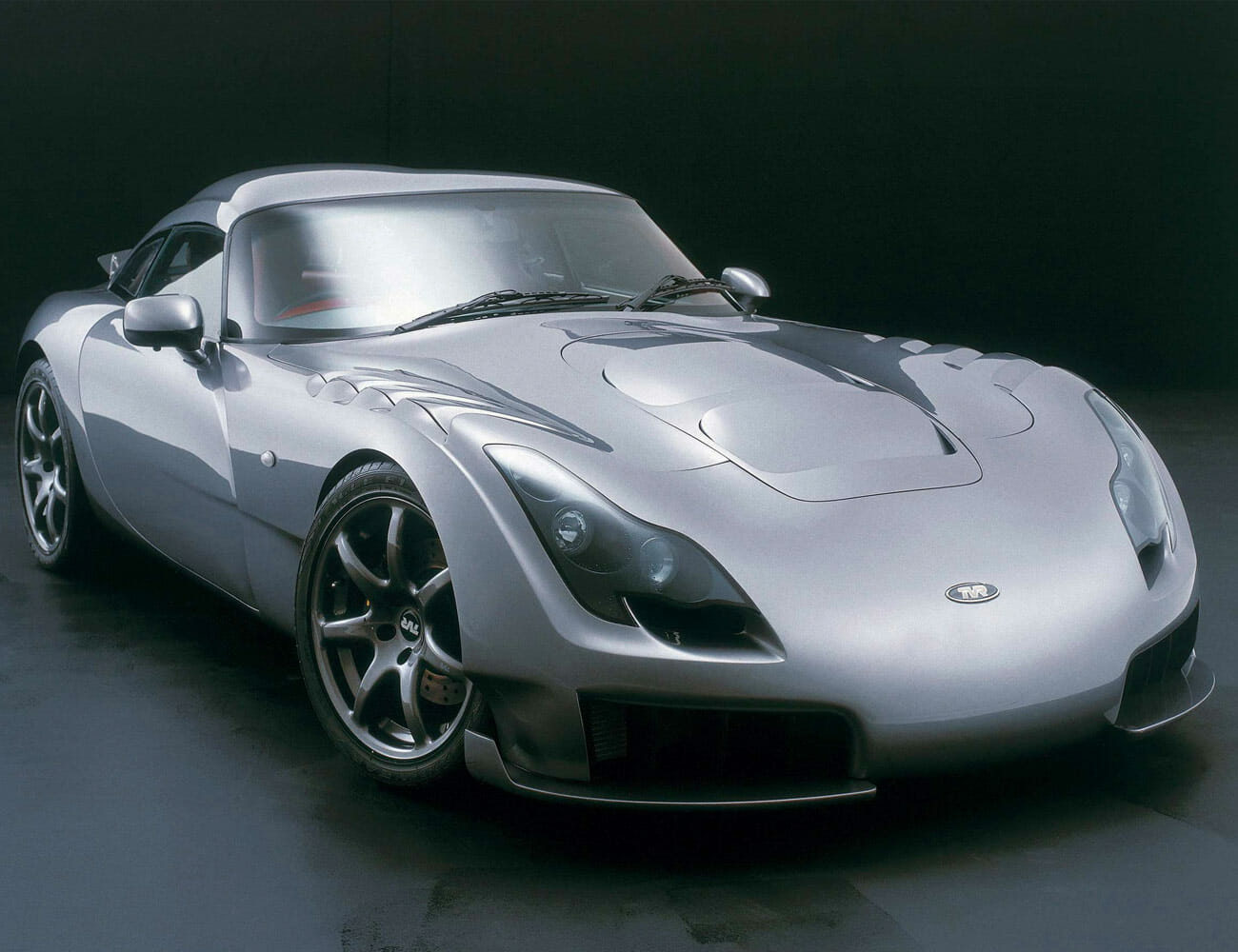
Most automotive enthusiasts are familiar with the 25-year rule. It’s the waiver that allows foreign cars older than 25 years to pass through customs in the United States without fretting about any EPA or DOT restrictions — though individual states may have their own barriers to registration. It means you can import valuable collectibles, rare special editions or even quirky favorites without excessive hassles.
The rule is becoming more and more attractive as cars from the Nineties enter the eligibility zone, bringing increased performance, efficiency and quality. For instance, you can now import mid-’90s BMW M3s, assorted Nissan Skylines, right-hand-drive Lotuses, tiny Japanese-market Kei cars and all manner of cars from brands that aren’t for sale in the U.S. In fact, the world is sort of your oyster here — assuming, of course, you’re willing to put in the homework, pay anywhere from $2,000 to $4,000 for the costs of importing it, and cross your fingers that your seller isn’t a scam artist.
If you’re mulling this option, you have basically one job: Don’t screw it up. Don’t miss a form. Don’t forget to check federal and state requirements. Don’t forget to have the vehicle inspected before you seal the deal. Don’t forget to have insurance ready for its arrival. And don’t forget to have all the paperwork you need for registration and title work, lest your new prize spend its entire life being towed to race tracks instead of enjoyed on the open road.
There are plenty of places to get information on the intricate details of the process, including directly from the source through our friends in the guv’mnt. There are also guides from companies that specialize in the process. Even the importer at the port near where you live can provide services and help manage both ends of the transaction — from ensuring the car makes it to its departure port with all the necessary paperwork to helping arrange the transfer from the boat to your driveway.
Rather than bore you with the nuts and bolts of shipping overseas, we asked collector and frequent automotive importer Jamie Kitman to clue us in to the major pitfalls of the process. His first warning: “Think about it long and hard.”
Kitman says that while the process of importing a car isn’t particularly onerous, it is time-consuming, and it will add a few grand to the purchase price. So he suggests that buyers be extremely sure that they’re making the right decision — that they’ve found the right car, and that the effort will be worth it.
The key to making your vehicle selection isn’t so much the challenge of locking onto an available target; the Internet obviously makes car-shopping a snap, and exchange rates can guide you to markets where you can find the best value. Rather, the biggest challenge is in making sure the car is in good condition — and, in fact, a real car to begin with.
“There are a lot of unscrupulous sellers out there,” says Kitman, who has imported a half-dozen cars for his collection. “That’s why you want to have a quality inspection done to ensure the vehicle is exactly as it is described, and that the seller is a real person.”
Risks to be aware of: the potential for “incorrect” model years if the seller decides, say, that he or she wants to instantly turn a 1988 Land Rover Defender into an essentially-identical 1998 Land Rover Defender; rust, if the cars comes from a humid region; or a replaced engine, which could impact your ability to title the car. Make sure you and the seller have communicated all these details, using a native-speaking translator if necessary to ensure no nuances in the language impact your understanding of the details.
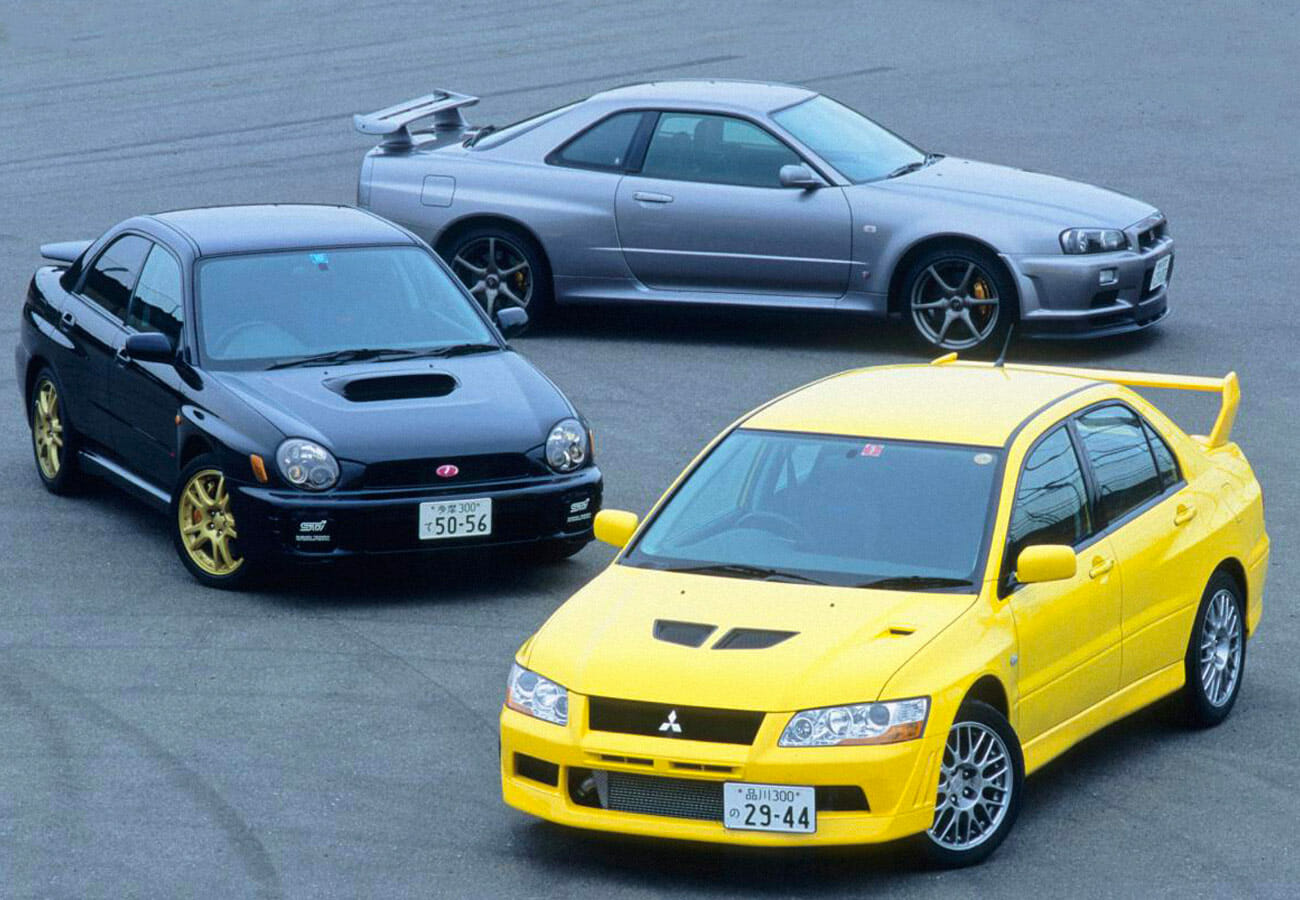
You also want to be sure you’re protected — to whatever extent you can be. Work with an importer or broker who will keep the payment in escrow until the vehicle is in your hands. This helps ensure you won’t be stiffed by a shady seller, and that the vehicle delivered is precisely the one you purchased. It won’t necessarily hedge against damage that may be incurred during shipping — Kitman notes a gamut of risks, from drained batteries to broken wing mirrors to fried clutches from shipping personnel moving the car around — but it will at least guarantee that money and car are properly exchanged.
In terms of the shipping process itself, you have two options: a dedicated container for the vehicle, or a ro-ro—short for roll-on, roll-off. (They’re the giant, odd-looking ships you may have scratched your head at after spotting them in major harbors.) The former is more expensive, but will protect your car better and allow the seller to include spare parts, extra wheels, etc. The latter, in which the car is driven on board, tied down, then driven off, is less expensive, but opens the car up to possible damage or random pilfering of parts, though Kitman says that’s never happened to any of his cars, to the best of his knowledge. There are also restrictions prohibiting extra items from being included in the car while aboard ship. If you can afford a container and the car is particularly special, consider it.
When the car arrives in the port, your importer will have the documentation that you provide proving the car is exempt from EPA and DOT regulations, and that the customs duty has been paid. You’ll also need the title document, signed by the seller. (All of this documentation will also be needed when it comes time for you to title the car.) The importer will have the car trucked to your location, or you can pick it up at the port yourself if you’re close by. At that point, you’ll finally be able to rest easy, with your new, rare — or at least, rare here—and totally legal imported ride.
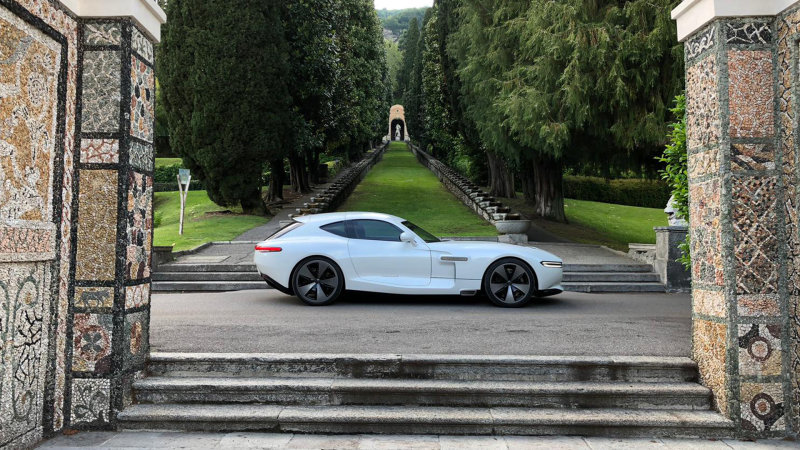
Every year another few extinct brands punch their ticket to rejoin the mortal coil. We’ve already seen two Hispano Suizas this year, one of them designed and being developed in Austria. Hailing from the same Tyrolean land we have the rebirth of Austro Daimler, announced with a super-powered hybrid called the Bergmeister ADR 630 Shooting Grand. Almost every word in that lengthy sobriquet comes packed with meaning, some a touch too self-reflective. Bergmeister refers to one of the last cars the original Austro Daimler made, the “Mountain Master” racer that won numerous hill climbs. The number 630 is a mystery, but “Shooting Grand” combines shooting brake and grand tourer. And ADR, oddly, inserts an initialism of the company into the model name.
There are more connections and allusions to be made with the powertrain. The internal combustion duties are handled by a 3.0-liter straight-six taken from the Mercedes-Benz engine stable. It’s one part of the Seripa performance plug-in hybrid powertrain, which adds three electric motors that each contribute 271 horsepower. The 55-kWh battery pack can handle 150-kW charging. Total output is a claimed 1,181 horsepower and 1,180 pound-feet of torque. An aluminum spaceframe and “lightweight body panels” render a curb weight of 3,638 pounds, and with just 3.1 pounds per horsepower the Bergmeister runs from standstill to 60 miles per hour in 2.5 seconds. The coupe doesn’t run out of beans until 205 mph, while less aggressive cruising unlocks an all-electric range of 155 miles and a total combined range of 620 miles on the WLTP cycle. And lest you think it’s too good (or strange) to be true, Austro Daimler has built one example and shown it at Villa d’Este earlier this year, where it gotten a terrific reception.
But here’s the arcane reference: Add the combined 1,198 PS system power, the 1,600 Nm of torque, and the 1,000km combined range to get the height of Austria’s tallest mountain, the 3,798 Grossglockner. Austro Daimler says there are more than 30 driver-selectable driver modes for the all-wheel drive coupe, we hope one of them is called Grossglockner and tuned to win hill climbs.
The long-hooded grand tourer front end with a front-hinged hood needed a Jenson-Interceptor-esque shooting brake rear end because the battery’s mounted under the trunk area. Somehow the Austro Daimler engineers managed to get “balanced axle load distribution” out of that setup, which we’re taking to mean 50:50 weight balance.
There are strong hints of the Mercedes SLS AMG and AMG GT aside from the humpbacked rear, which could have a much to do with the compact cabin, doubel-bubble roof, gull-wing doors, and SLS AMG door handles. Underneath those obvious cues, we’re told the AMG GT donated its windshield and suspension. The Bergmeister’s roof stands 1.7 inches higher than that of an AMG GT, but every other dimension is no more than 0.4 inches outside of the Mercedes‘ specs. We haven’t seen much of the interior yet, but it’s said to be inspired by 1930s Art Deco.
One more odd thing about this: New Atlas reported that Project Austro Daimler isn’t organized as a company, the men behind it aren’t contractually tied, and the group doesn’t own the Austro Daimler trademark. The trademark in Europe appears to still belong to Austro Daimler Puchwerke AG and dates to at least 1925, well before the original Austro-Daimler ceased business in 1934. Now that the backers have shown their first car, the next outing will be at the Salon Privé motor show at Blenheim Palace in September, after which Austro-Daimler says the coupe will go into limited production. Pricing hasn’t been mentioned yet, but the firm sold the Villa d’Este car for a price that its designer, Roland Stagl, called “really expensive.”

The Caterham Seven 485 CSR is the sharp end of the stick for the sports car company. It takes the 485 and turns it into an even more of an impressive sports car. The best news? It’s available outside of the UK, meaning all of Europe can enjoy this special Caterham for a mere $61,441 or €54,995. That’s not chump change, but when you consider the performance of such a car, it’s an absolute bargain.
The Caterham Seven 485 CSR can do a 0-62 mph sprint in just 3.9 seconds. It has a top speed of 140 mph. This kind of performance comes from the combination of the Ford Duratec 2.0-liter engine that produces 234 hp and 152 lb-ft. How does a car with so little power go so fast? Lightweighting. The 485 CSR weighs just 1,279 pounds. That gives it roughly the same power-to-weight ratio as a Lamborghini Huracan, according to Motor1.

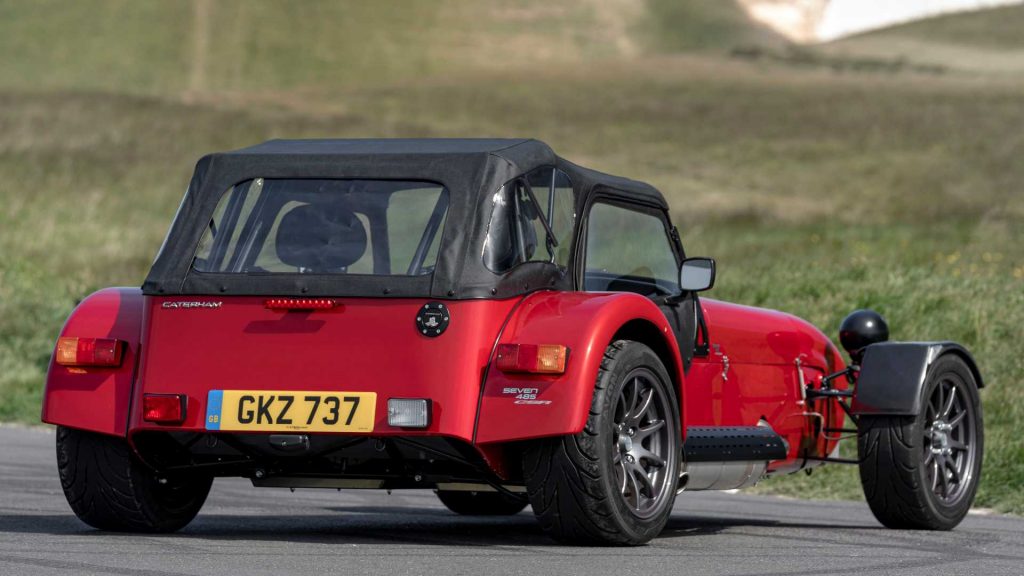
The vehicle gets inbound front suspension, double-wishbone rear suspension, and 15-inch alloys with Avon ZZS tires. Additionally, there are some aerodynamics goodies, a Momo steering wheel, carbon fiber dash, limited-slip differential, and adjustable seats clad in leather. There are some options including more carbon fiber trim, LED lights, and Alcantara on the dash.
While all of this is wonderful, the big news is that Caterham will bring the car to markets outside the UK. The CEO Graham Macdonald said this of the business choice: “We’ve had to trim our EU range because of the WLTP regulations, but I’m delighted that we can still offer our continental European customers something that really reflects what Caterham has always been about – the thrill of driving.” He also called the car the “ultimate Caterham Seven.” We agree with him.
This hardly seems like a fair race. Hennessey took the ZR1 Corvette and boosted horsepower to 1,000 and then pitted it up against the Ferrari 488 GTB. It’s clear from the start which car would win. The Ferrari is at a major displacement deficit and down on power. It was bone stock. With that said, it’s still fun to watch in the video below.
With all of the buzz out there about the new 2020 mid-engine Corvette, Hennessey had to remind people about how insane the C7 Corvette actually is. Also, the Ferrari 488 GTB while down on power compared to the heavily modified Chevy honestly performed very well. The car has a 3.9-liter V8 engine that produces 661 hp and 561 lb-ft of torque. That’s down considerably from the HPE1000 Corvette’s 1,000 hp and 966 lb-ft of torque.
Despite the Ferrari being far down in terms of power and displacement, the car performs admirably. The HPE100 should blow it away, and it does by the end of the strip, but for a split second when they first cross the cones, the Ferrari looks like it’s going to hold on. Then the Corvette begins to stretch its legs and its all over. It’s a short and entertaining video. We highly suggest you check it out.
[embedded content]
A “source aware of the car” told Autocar that McLaren is working on a new entry in the Ultimate Series range, an open-topped speedster that will “focus on exhilarating on-road driving.” The British carmaker hasn’t finished building its already-spoken-for quota of Senna GTR models, and after that, Speedtail production is slated to begin toward the end of this year. That pushes whatever this new car might be out to late 2020 or early 2021 at least, and that’s not accounting for development time.The comparison being made is that this will be the English version of Ferrari’s F8-Superfast-based Monza SP1 and SP2 speedsters, with styling reminiscent of open-cockpit prototype race cars. When The Drive asked McLaren about the rumor, the carmaker replied that it is “speaking to potential customers about a new McLaren Ultimate Series model that shares some attributes with the car that Autocar describes.”
Unlike the track-centric Senna or the aero-focused Speedtail, the new roofless car is said to “highlight the more emotional, fun side of McLaren.” That’s a bit like looking for the emotional, fun side of an electromagnetic railgun – and I mean that as a compliment to McLaren – but there’s plenty of feeling to draw from in the carmaker’s past. Autocar‘s source said to expect lines with more elegance and fluidity outside and in, capped by a set of the brand’s trademark dihedral doors. If designers can make Can-Am curves from the McLaren M1B, M6A, or M8B jive seamlessly with modern carbon and combustion internals, we’re ready for it. There’s no reason to let Ferrari – and De Tomaso and Ecurie Ecosse – bogart the retro fun.
Predictions point to the 4.0-liter twin-turbo V8 providing the power, in this application without hybrid assistance. Slinky lines and no roof could mean a car that weighs less than the 2,641-pound Senna, and since “extremely agile handling” and driver feedback are the priorities, power could be toned down from the 789-horsepower track car.
Autocar mentions a sticker price of something around 1.5 million pounds, roughly $1.9 million in our money. If that’s accurate, paying twice the price of a Senna could pay for exclusivity, with build numbers expected to be fewer than the Senna’s 500 examples. When it arrives, it will be another milestone in McLaren’s Track25 business plan that targets 18 new models and derivatives in the next six years.

Baja racing is one of the most brutal, challenging and demanding types of motorsport out there. This should come as no surprise because you and your car of choice are tackling hundreds, if not thousands,…

Americans love pickup trucks. Americans love Jeeps. Yet, for the last 27 years, the latter’s parent company Chrysler has abstained from capitalizing on what seemed like an obvious layup: slapping a cargo bed on the back of one of its off-roaders. Until 2019, at least, when at long last, Jeep created a pickup truck and dusted off the Gladiator nameplate for its made-in-Ohio tailgate.
In a stroke of genius (okay, maybe just common sense), Fiat-Chrysler chose to base its new truck not on the petite Renegade, compact Compass or soccer mom-issue Grand Cherokee, but on the exceedingly popular Wrangler — an SUV that, not coincidentally, happened to be all-new and better than ever for 2018. Not surprisingly, the Reese’s Peanut Butter Cup-simple formula — You got pickup truck in my Wrangler! You got Wrangler in my pickup truck! — has proven exceedingly popular in theory; Gladiator stories have proven a bottomless well of traffic for automotive websites, while Jeep is so confident in the model’s success, it’s offering hyper-low lease rates on the assumption the truck will hold value better than government bonds.
The Good: Take everything you like about the Wrangler — the timeless styling, the off-road prowess, the confident height, even the ability to peel off the doors and roof — and add the utility of a five-foot-long cargo bay. It’s an off-roader, a five-seat family car, a convertible and a pickup truck all in one. It’s all good.
Who It’s For: More the pickup lifestyle set than farmers or contractors. (Then again, the former tends to make up a significant chunk of the multi-million-annual-sales pickup truck market, while the latter are more apt to choose full-size pickups like the Ram 1500 or Ford F-150, if not the mightier heavy-duty rigs.)

Watch Out For: The long wheelbase needed to squeeze two rows of seats in front of a usable pickup bed gives the Gladiator added stability on the highway when compared to its stubbier Wrangler relatives, but it bites you in the ass off-road. While tackling the trails at Monticello Motor Club’s off-road course, I wound up high-centered on a dirt mound that most Jeeps could have bounced over with little more than a scuff on their skid plates.
Also, be wary of the options sheet. Chrysler apparently learned well from its brief marriage to Daimler, because it’s possible to tack on pricey items as though the Gladiator were made by Mercedes. The Overland trim starts at $40,395, but my tester’s bottom line came in at $55,485 with destination. (And with cloth seats, no less.) Fully loaded, a Gladiator Rubicon will run you more than $63,000 — just about the entry point for an E-Class station wagon.
Also also: Mopar sells a product with the serial number 82215717, designed to secure the windshield when it’s folded down so it doesn’t bounce up and crack against the A-pillar. It costs $39 on Amazon. You should absolutely buy this if you plan on folding your Gladiator’s windshield down. Don’t ask me how I know.
Alternatives: Honda Ridgeline ($29,990+), Toyota Tacoma ($25,850+), Chevrolet Colorado ($21,300+), Ford Ranger ($24,300+)
Review: Believe me, it was hard to find a way to shoehorn a Gladiator reference into the headline of this story that wasn’t as eye-rollingly obvious as “Are You Not Entertained,” but I managed: “I don’t pretend to be a man of the people,” Senator Graccus says in the 2000 film, “but I do try to be a man for the people.”
The Jeep Gladiator, as it turns out, is very much a truck for the people.
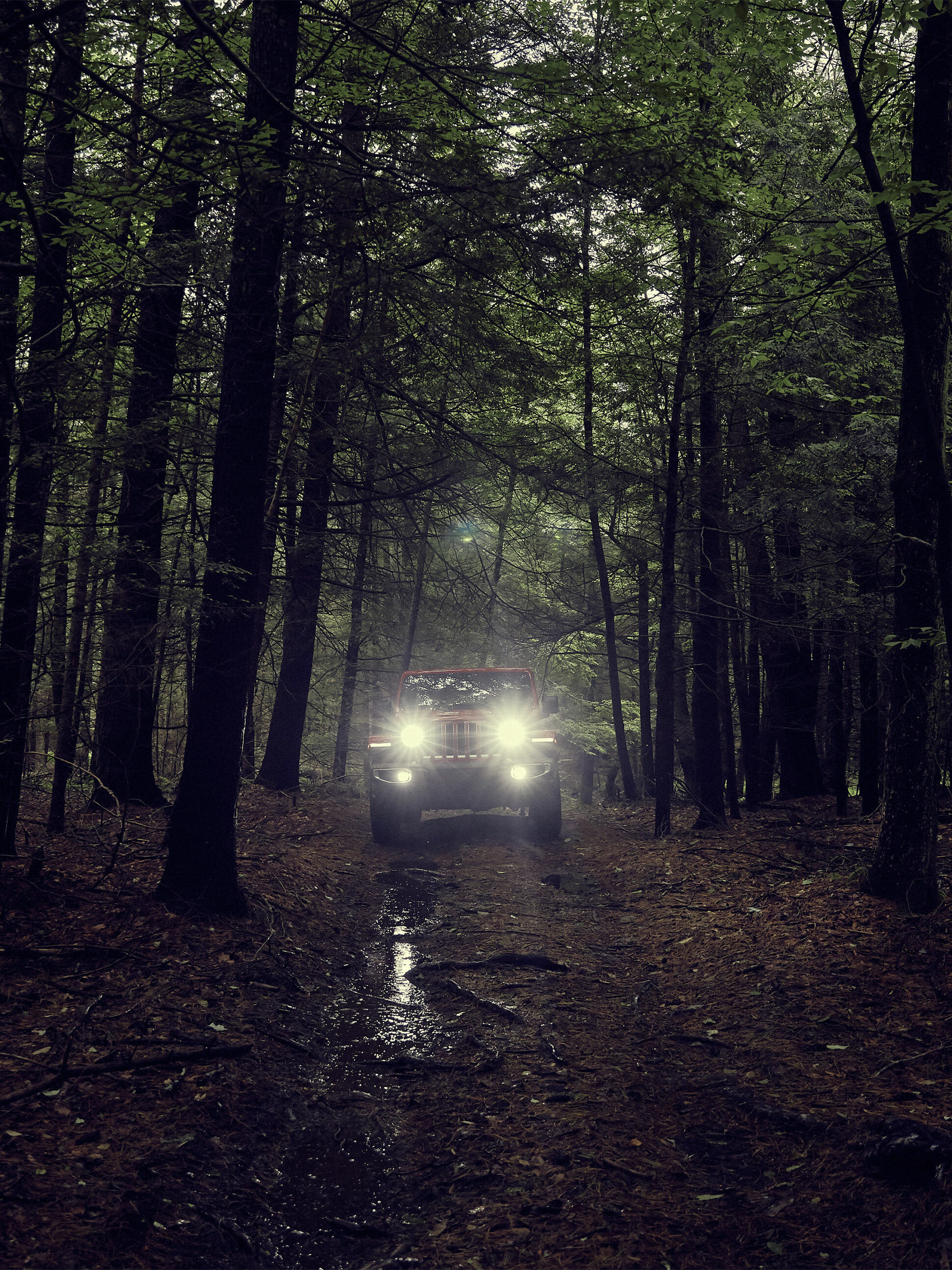
I happened to have the Gladiator the same week I was driving the Jaguar XE SV Project 8 super-sedan in all its bewinged, brilliant blue glory; despite those eye-catching traits, the crimson Jeep received at least eight times as many questions and comments as the Jag. People of all ages, races and creeds offered up unsolicited remarks, usually involving some degree of surprise: “Is that a Jeep truck?” In an America torn asunder by pretty much everything these days, the Jeep Gladiator managed to provide a little common ground.
Of course, some of the tens of thousands of Americans parking it in their driveways this year will find it a better fit than others. And those without driveways to park it in will find using one of the trademark Jeep features — the ability to drive al fresco without roof or doors — tricker than others. Removing the four portals and the hard top is fairly easy; I managed to do it solo in about 45 minutes using just the provided tools. But the aft section of the three-part Freedom Top would be almost impossible to grip and move for anyone with arms shorter than my Lincolnesque limbs — which is to say, roughly 99% of men in America. And once you’ve removed those doors and roof, those without driveways or personal garages will be left struggling with the dilemma of where to stash them.
Still, much like the Wrangler, you’d be remiss to buy this rig and not indulge in some open-air activity. Indeed, “much like the Wrangler” is basically the catchphrase for the truck’s interior; it’s basically identical, much like the exterior forward of the B-pillars, and offers up the same levels of weatherproofing and usability; FCA doesn’t get enough respect for its easy-to-use infotainment systems, and the GladiAngler version is as intuitive as scratching your ass. I can vouch firsthand for the fact that there’s enough room for four adults and a large dog to squeeze inside with ease, though as with any pickup, using all the seats leaves little space for any cargo you don’t want to chance in the bed.
Aside from the aforementioned issues involving the long wheelbase, the Gladiator behaves as well as you’d expect off-road, clomping through mud, water and dirt like a champ. (The Rubicon model, which adds on gnarly 33-inch off-road tires, Fox shocks, locking front and rear differentials, an electronic sway bar disconnect and a four-wheel-drive system with a lower 84:1 crawl ratio, would no doubt prove even more capable off-road.)
On the streets, the added length’s added mass means the 3.6-liter V6 has to work hard to keep up with a heavy foot, but the eight-speed automatic transmission does a good job clicking into the needed gear at the right moment. There is, blessedly, a six-speed manual gearbox available with this engine, but don’t expect to find many Gladiators with it on dealer lots. The steering is typical Jeep: extremely light, with just the right amount of turns lock-to-lock for off-road use but too many for high-speed driving; piloting it down a winding two-lane at state highway speeds leaves you feeling like the pilot in a Miami Vice speedboat chase scene.
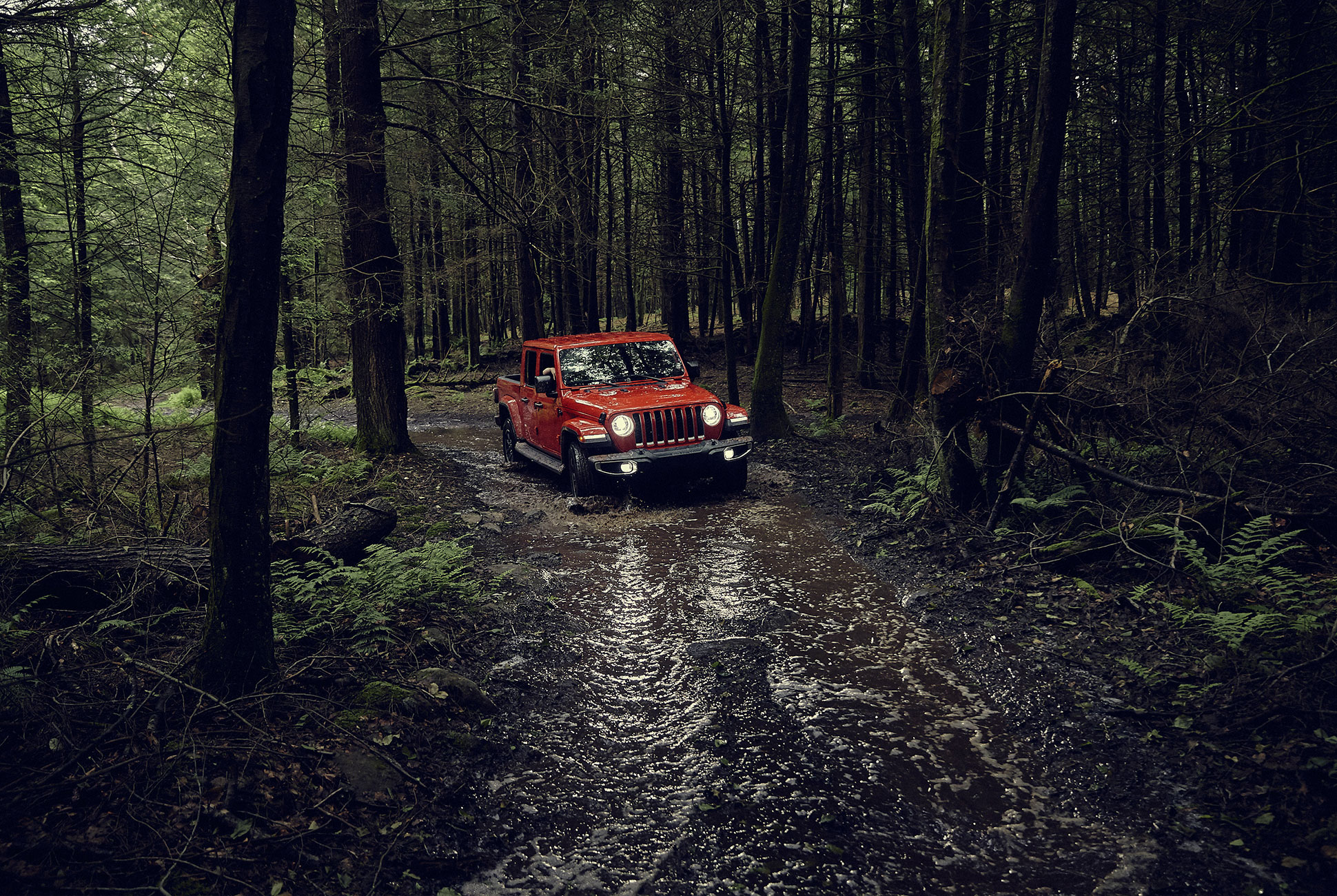
Verdict: By combining the looks, practicality and fun of a Wrangler with the utility and convenience of a pickup truck, Jeep may just have created the perfect four-wheel-drive vehicle for most of us. Plenty of vehicles can do some of what the Gladiator does, but none can do all of it. And if you can find one available for that $192-a-month lease deal, there’s basically no reason not to pick one up. At least, that’s what we keep telling our accountant.
Powertrain: 3.6-liter V6, eight-speed automatic, full-time four-wheel-drive
Horsepower: 285
Torque: 265 pound-feet
0-60 MPH: You really don’t get the point of this thing
EPA Fuel Economy: 17 mpg city, 22 mpg highway
Jeep provided this product for review.

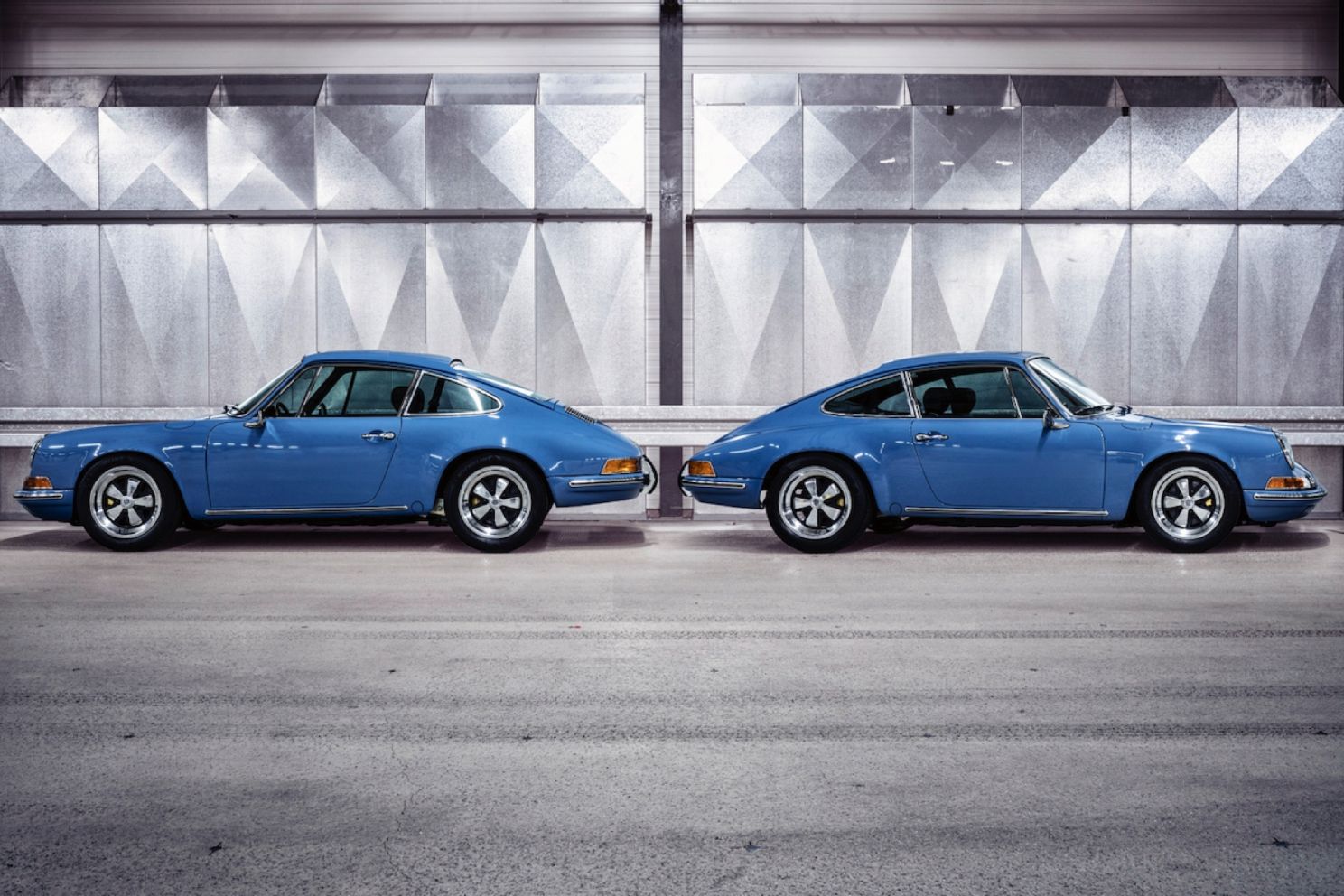
Dutch shop Voitures Extravert makes sure all the iconic cars we love are still around. Nostalgia is one thing, though. Taking something iconic and putting a spin on it is another can of worms altogether. Thankfully, since we’re a world on the brink of catastrophic environmental disasters thanks to climate change, Voitures Extravert made sure to make a few adjustments.
Which is why we now have the Voitures Extravert Quintessenza SE Electric 911. As the name suggests, it’s a Porsche 911 with a battery powertrain. What more needs to be said?
Voitures Extravert made headlines last year when it showed off an original Porsche 911 with that’s electric-powered. It returns with the 2019 Voitures Extravert Quintessenza SE Electric 911. Just 36 units will be made.
For each car, the shop uses an original Porsche 911, strips it down to its barest components, then rebuilds from there. They replace old parts with new ones in key areas. Some, they restore. For this car, buyers have the choice between the SE, styled like a 1960s 911, or the TE, which boasts the wide rear look of a 1980s model. There’s also a Targa option available if that’s more your drift.
Voitures Extravert strictly uses Porsche 911s from the 1970s and 1980s only, by the way. The company doesn’t touch 1960s models, in large part because these cars are so historically significant. As for the specs, you’ll find a single electric motor with a 58kW-hour lithium-ion battery. This delivers 222 horsepower and 664 pound-feet of torque. You’ll be going zero to 60 in just under six seconds, which isn’t that bad.
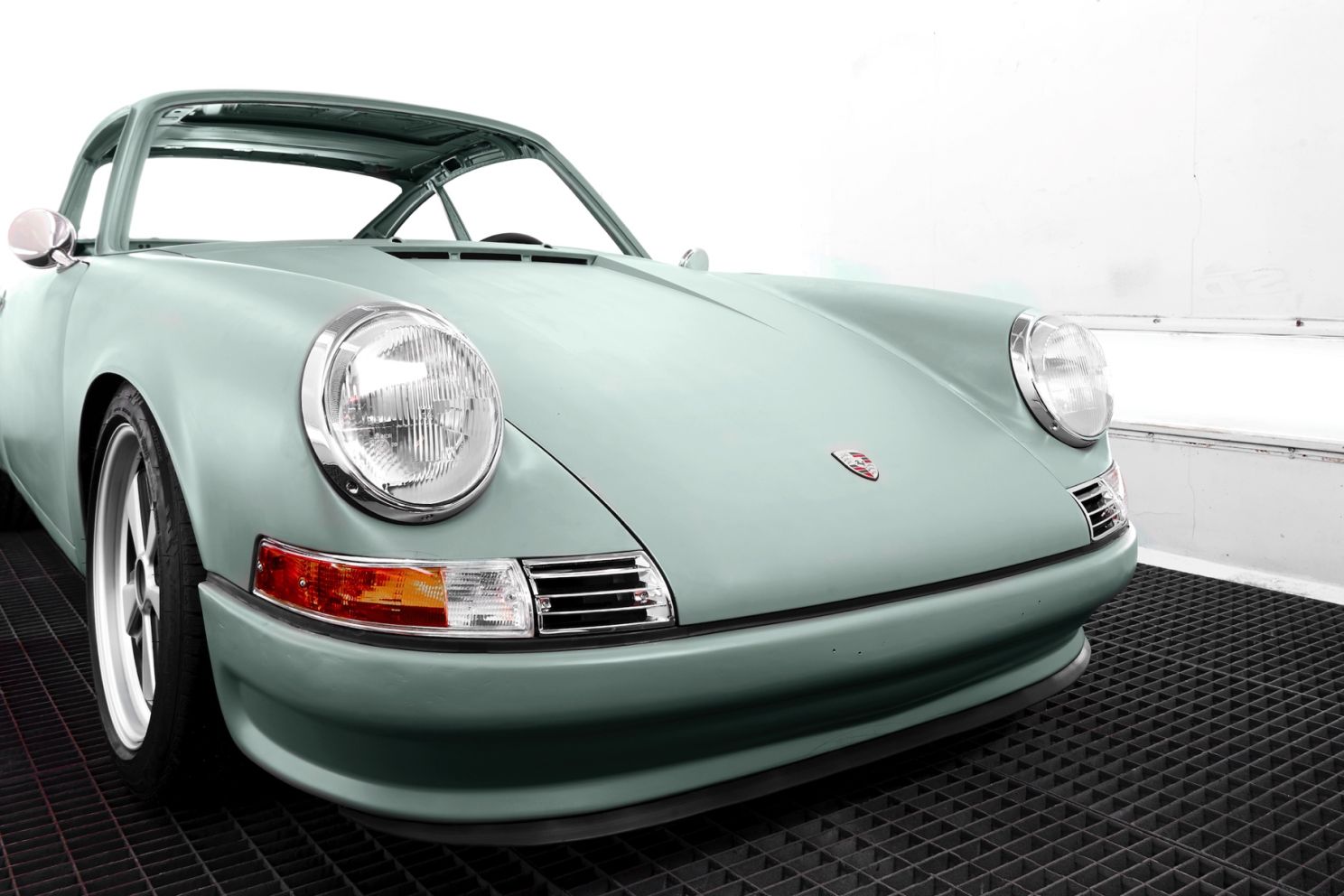

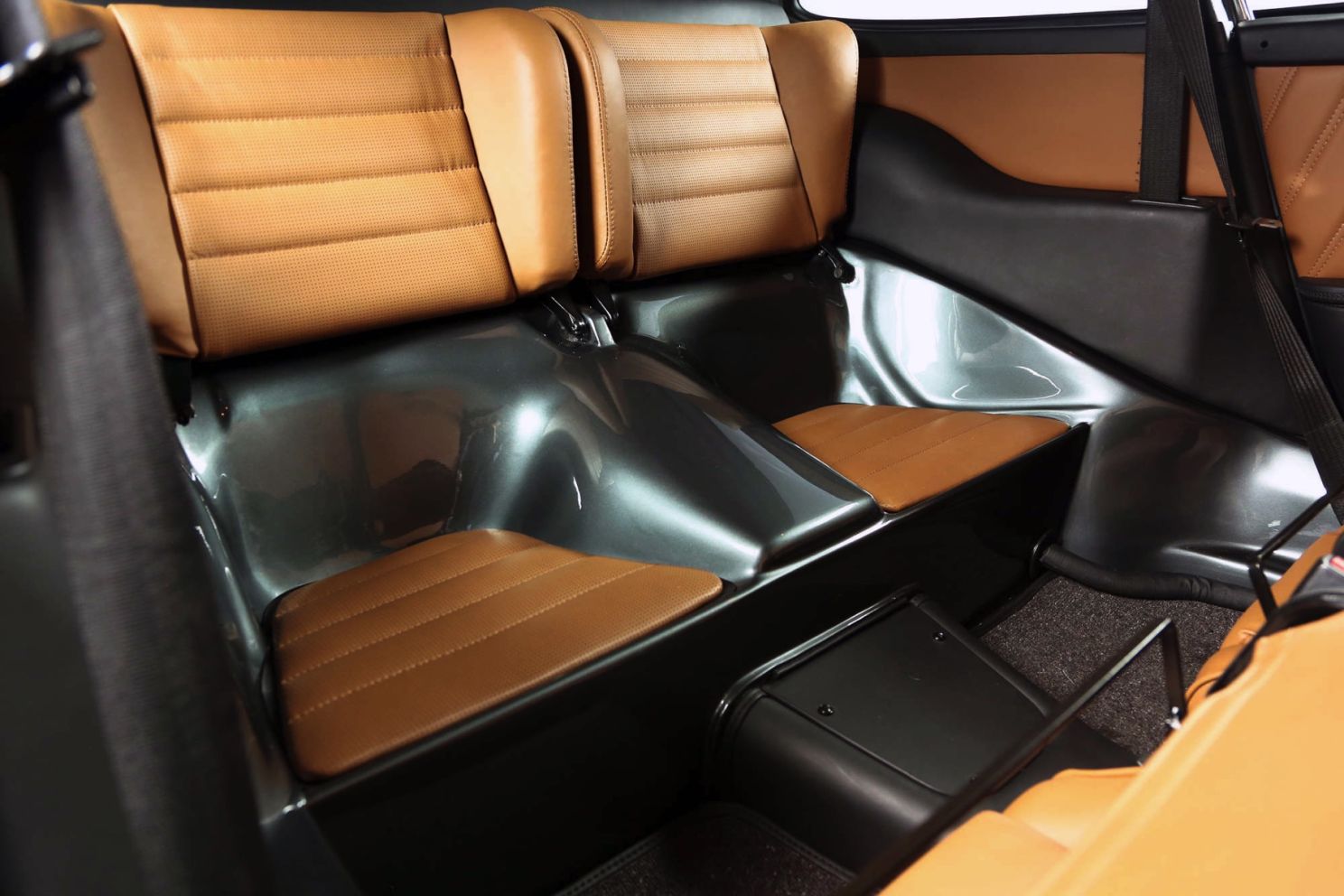
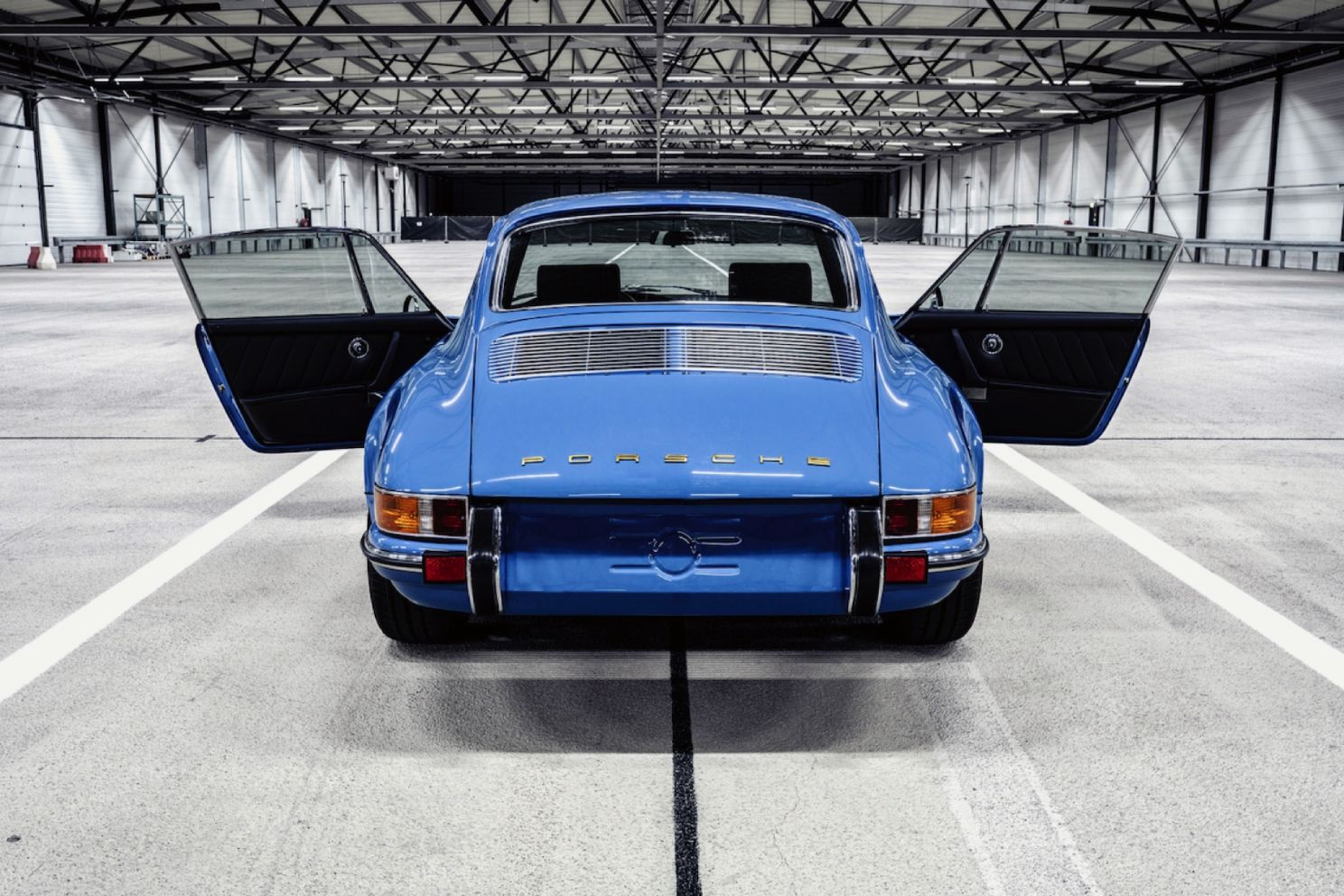
Photos courtesy of Voitures Extravert
The latest news out of McLaren suggests that a new Speedster model might be on the cards. The Ferrari Monza SP2 would be its closest rival. Except that the McLaren will use a mid-engine layout giving it an altogether different look.
The rumours emanate from popular UK magazine Autocar who suggest that the new model would be the sixth addition to its Ultimate Series. It would sit alongside the track-focused Senna and the 250mph Speedtail hyper-GT at the top of McLaren’s range.
The rumours suggest that the McLaren Speedster will focus on offering the ultimate in road-driving pleasure to complement the Senna’s track performance and the Speedtail’s GT credentials.
The design is said to feature flowing lines, taking inspiration from open-top sports-prototype racers of past. It should also get low-profile dihedral ‘butterfly’ doors, something that has become synonymous with McLaren supercars.
Power will come from McLaren’s 4.0-litre V8 twin-turbocharged petrol engine. In the Speedster, the experience will be pure, McLaren choosing not to offer any hybrid assistance. Weight will be reduced over the Senna, making the Speedster the lightest McLaren road car.
Work on the Speedster is apparently ongoing with the Speedtail McLaren’s current priority. When the Speedster arrives, expect a limited production run with a price tag to match.
The above render by Aksyonov Nikita is perhaps wishful thinking though. The thought of a can-am version of the Senna seems improbable!


