All posts in “Cars”

Bose put its most powerful sports car system ever in the 2020 Corvette

There is a lot of change between the 2019 Chevrolet Corvette and the all-new 2020 Corvette. The engine moved behind the seats, there is no manual transmission offered, and there are no chrome wheel options. But one thing remains the same: Bose is handling the sound. Bose first linked up with Chevrolet on the Corvette back in 1984, and the company claims the 2020 model houses the most powerful and best-performing system it’s ever built for a two-door sports coupe.  

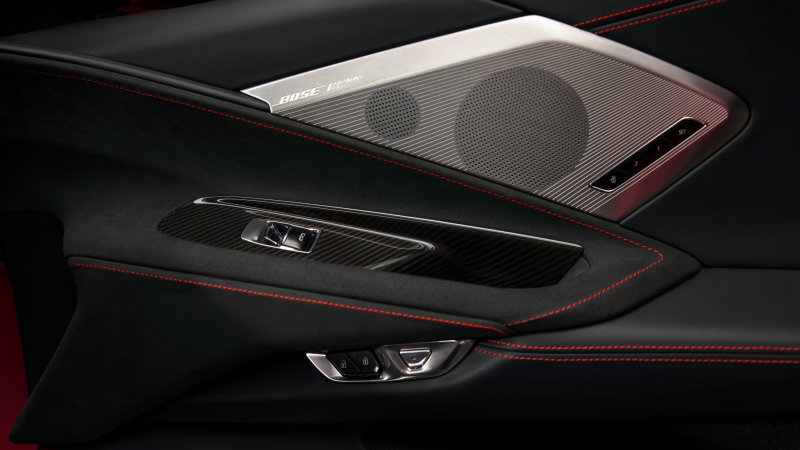
The 2020 Corvette system has 14 speakers, which Bose says is the most it has ever put into a coupe. Up front, it features 2.5-inch and 3.25-inch neodymium Twiddler speakers on the dash, with 4-inch neodymium wide-range speakers and 1-inch neodymium tweeters assisting on the upper door. Two 5.25-inch neodymium wide-range speakers and three 3.25-inch neodymium Twiddlers in the rear of the cab help create a 360-degree experience. For bass, each door has a 10-inch Nd woofer. Rather than using a box surrounding the woofers, Bose used the door cavity as the bass box to economize space.

With speakers sprinkled throughout the cabin, there is sound coming from every direction, whether it be front, back, side to side, or corner to corner. Bose calls this Centerpoint 2, and it’s tuned to create a wide front stage that is complemented by surround sound. Bose aims to create a clear enough sound that listeners will be able to pick out each instrument and where it is coming from.

The biggest Corvette change, going mid-engined, forced Bose to completely rethink the entire Corvette sound packaging. Because the distracting  engine sound is coming from the rear, Bose had to tune the system to block that out. This is called AudioPilot noise compensation technology. It uses microphones embedded within the cabin to monitor noise levels. The system reads these levels, and Bose-tuned algorithms adjust the sound signal. 

As expected, Bose’s top-of-the-line system is offered as an option, with a 10-speaker system offered as standard. Luckily, the 2020 Corvette is pegged to start at less than $60,000, which leaves plenty of cash for special features. Check out the full order guide to scroll through the features.

Watch the 2020 Supra Lap Buttonwillow Raceway Faster than a Porsche 911 GT2

The Supra Is Super Speedy

The 2020 Toyota Supra was less exciting than some people would have hoped, but there’s no denying even from its many critics that the car is an impressive and fast machine. The car might not be designed for the racetrack, but that doesn’t mean it can’t perform well on one. The guys at Evasive Motorsports proved that by taking their black Supra to the Buttonwillow Raceway. 

The car was able to lap the track with a time of 1:58.92, which is wicked fast. To put that into perspective, Carscoops notes that a 997-generation Porsche 911 GT2 around the same circuit in roughly the same conditions managed to put up a time of 1:59.7. 

The 2020 Supra is a little more than meets the eye. The stated power numbers for the car have proved to be under-reported in previous tests, so it’s clear that Toyota is able to get a lot out of this vehicle. This is good news for both people who only drive their car on the street but also the track-day bros, who want to lay down some serious lap times. 

You can check out the full video below. The guys at Evasive Motorsports put together a nice video of the car’s time at the racetrack. 

[embedded content]

The Complete Subaru Buying Guide: Every Model Explained

There are only a handful of automotive brands with a fervent, fierce base of owners — and Subaru definitely deserves a spot on that list. One of the smallest  Japanese automotive brands, Subaru originally came to market in 1950s Japan producing small, affordable “people’s cars” just after the Second World War. The company would later expand its presence and burnish its reputation in the automotive industry by venturing into one of the most grueling forms of motorsport: rally racing. It was here that Subaru proved itself to the world: With its turbocharged flat-four boxer engine and symmetrical all-wheel drive, the Subaru Impreza was practically invincible on any road surface. AWD quickly became a staple across (almost) the entire lineup; for this reason, Subies have become a  coveted vehicle in areas with variable climates, like New England and the Pacific Northwest.

When the Subaru Impreza WRX came to the US in the early 1990s, it was welcomed with open arms, proving that there was a market for fun, affordable compact cars. With the success of the WRX, Subaru expanded its lineup into the Forester, Legacy, SVX and Outback models, many of which are still going strong today.

Subaru doesn’t have a traditional alphanumeric naming systems like Lexus or Cadillac, instead, like Porsche and Lincoln, each model uses a more traditional name. Vehicle designations also include engine size (in liters of displacement) and package monikers. “Standard” models are the most affordable, with the least features. “Premium” includes all base-level features and can include upgraded safety systems and interior and exterior amenities. “Sport” variants vary little from Premium, but receive sport-inspired internal and external visual upgrades. “Limited” exampples includes many of the Premium items, with added higher-spec features such as Harmon Kardon audio systems, upgraded lighting and nicer interior materials.  Subarus badged “Touring” are fully loaded and include details like full leather interiors and the highest quality Harmon Kardon audio setups.

Subaru Terminology

CVT: Continuous Variable Transmission
Boxer: An engine with its cylinders mounted horizontally with each bank in opposition to the other. Helps lower a car’s center of gravity.
STARLINK: Subaru’s safety and security services, which include Automatic Collision Notification, Lane Keep Assist, forward and rear emergency braking intervention, Enhanced Roadside Assistance, Stolen Vehicle Recovery and the added convenience of Remote Services. It also includes Apple CarPlay and Android Auto. Starlink is standard on all Subaru models.
EyeSight: Subaru’s automotive safety system that handles the adaptive cruise control, automatic pre-collision braking, lane departure warning and sway warning with lane keep assist.
WRX: World Rally Experimental.
STI: Subaru Tecnica International. <odels that have the STI designation are among the highest=spec products offered by Subaru and include performance-tuned engines, transmissions and suspensions.
Symmetrical AWD: Subaru symmetrical AWD system consists of a longitudinally mounted boxer engine coupled to a symmetrical drivetrain with equal length half-axles. Symmetrical AWD is standard on all Subaru models except the BRZ.
DCCD: Driver’s Control Centre Differential, which allows the center differential locking of the WRX STI to be adjusted to alter its handling.
SI-DRIVE: Subaru Intelligent Drive is an advanced engine management system with driver-selectable modes tailored to suit various driving conditions and the whims of the driver.
X-MODE: Helps to maintain traction and control over the vehicle on low traction surfaces.
VDC: Vehicle Dynamics Control with Active Torque Vectoring, which helps provide sharper, more stable handling by monitoring steering and braking inputs to help keep the vehicle on the intended path.
StarDrive: Subaru’s moniker for plug-in hybrid technology.
Lineartronic CVT: Unlike a traditional automatic transmission, Subaru’s Continuously Variable Transmission uses two hydraulic adjustable pulleys connected by a chain-link and a stepless gear ratio that allows the engine to run in its optimal powerband at all times. While this technology allows a fully automatic transmission driving experience, a clutchless manual shifting mode with paddle shifters is available on many Subaru models.

Buying Guide

BRZ

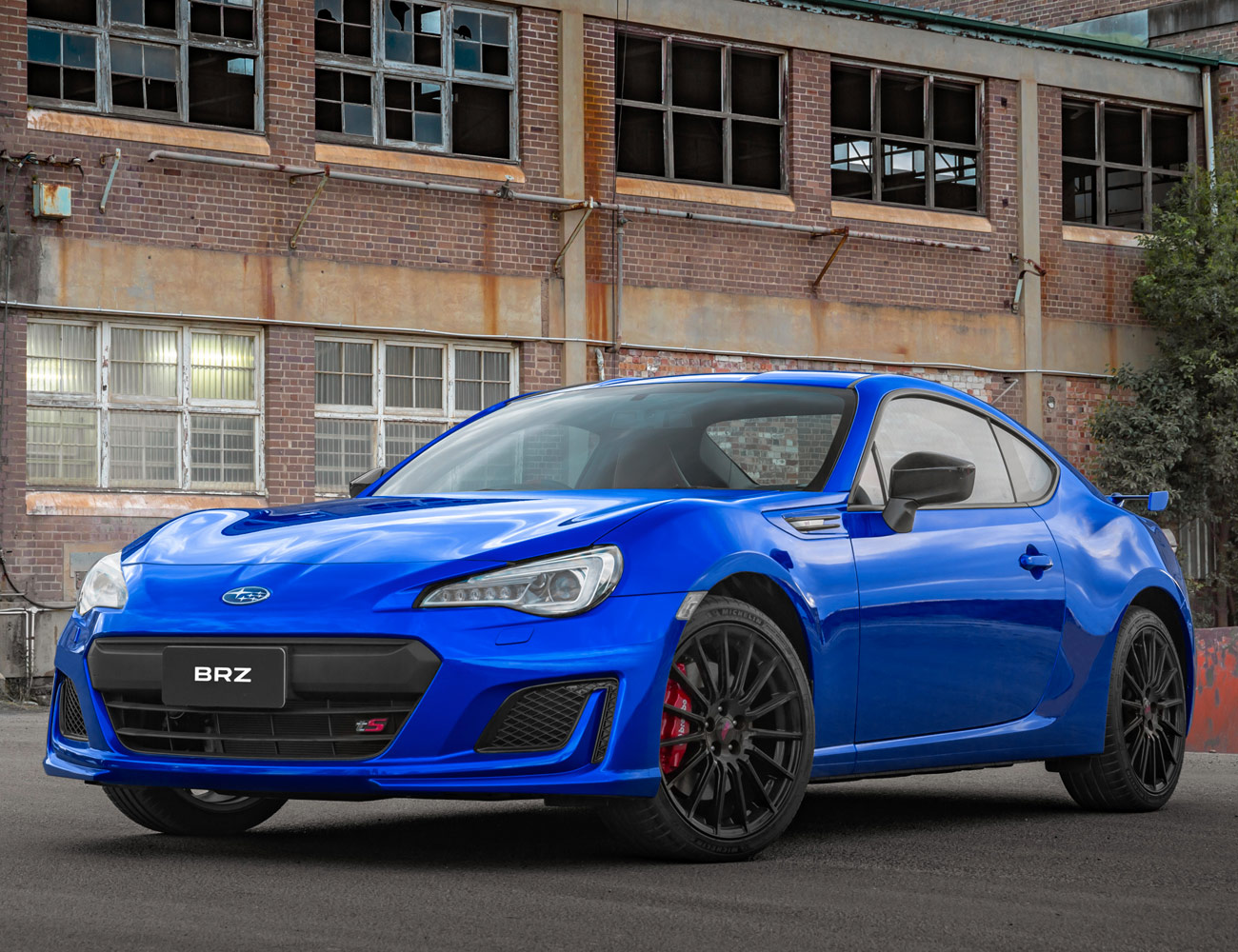
The Subaru BRZ was developed in partnership with Toyota, and shares a platform with the Toyota 86. It is the only car in the Subaru model lineup with rear-wheel drive and features a 205-horsepower 2.0-liter boxer four-cylinder engine with an choice of six-speed manual or automatic transmission. To capture that sports car feel, the BRZ features a sport-tuned suspension, quick steering ratio and Torsen limited-slip differential.

Body Style: Coupe

Models:

  • BRZ Premium
  • BRZ Limited

Engines:

  • 2.0-liter boxer four-cylinder

Base MSRP:  $25,795

Impreza

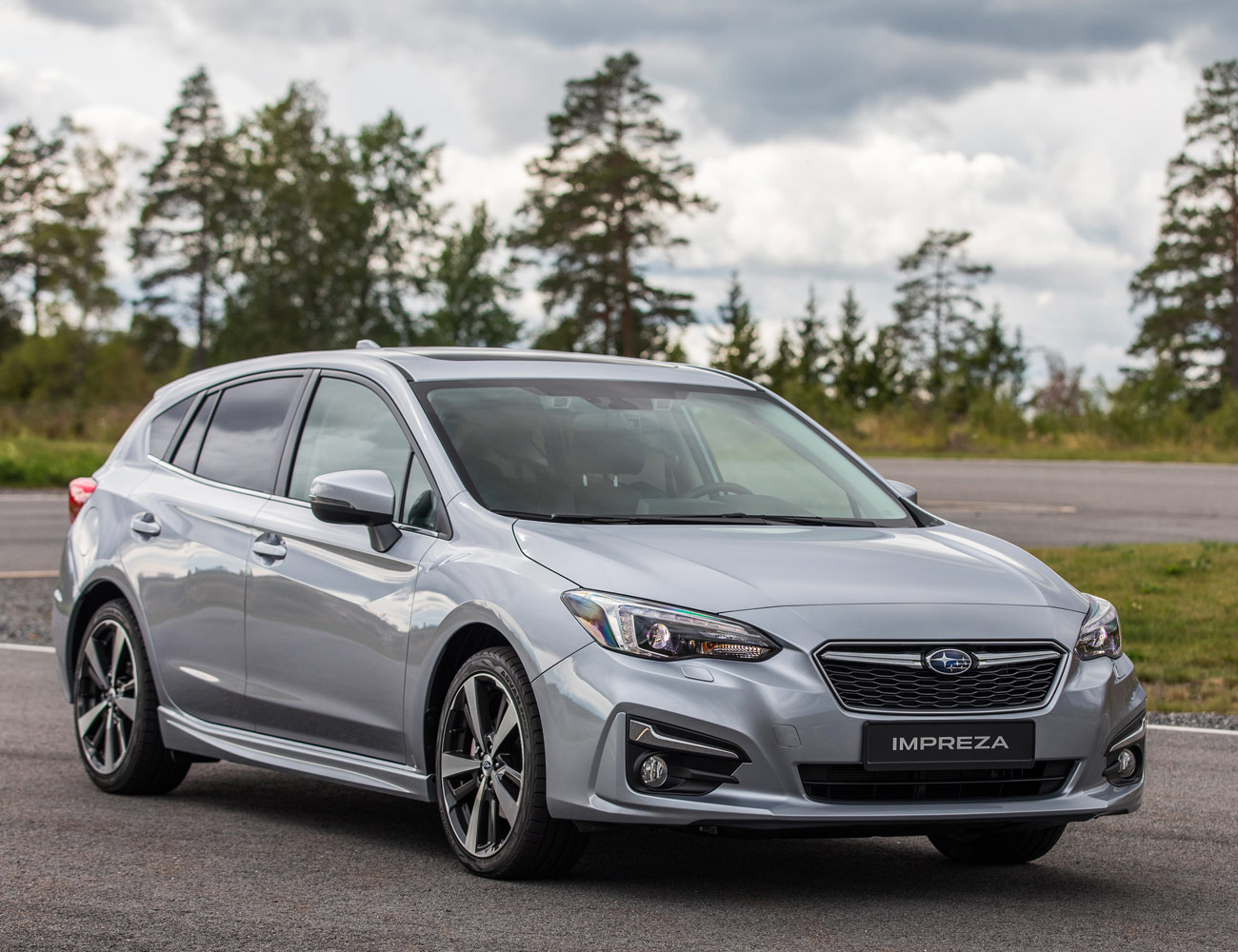
The Subaru Impreza is Subaru’s entry-level vehicle, and comes in hatchback and sedan configurations. Featuring a 152-horsepower 2.0-liter boxer four-cylinder, it is available with a five-speed manual transmission or CVT automatic.

Body Style: Sedan, Hatchback

Models:

  • 2.0i Sedan / 5-Door
  • 2.0i Premium Sedan / 5-Door
  • 2.0i Sport Sedan / 5-Door
  • 2.0i Limited Sedan / 5-Door

Engines:

  • 2.0-liter boxer four-cylinder

Base MSRP: $18,595

Crosstrek

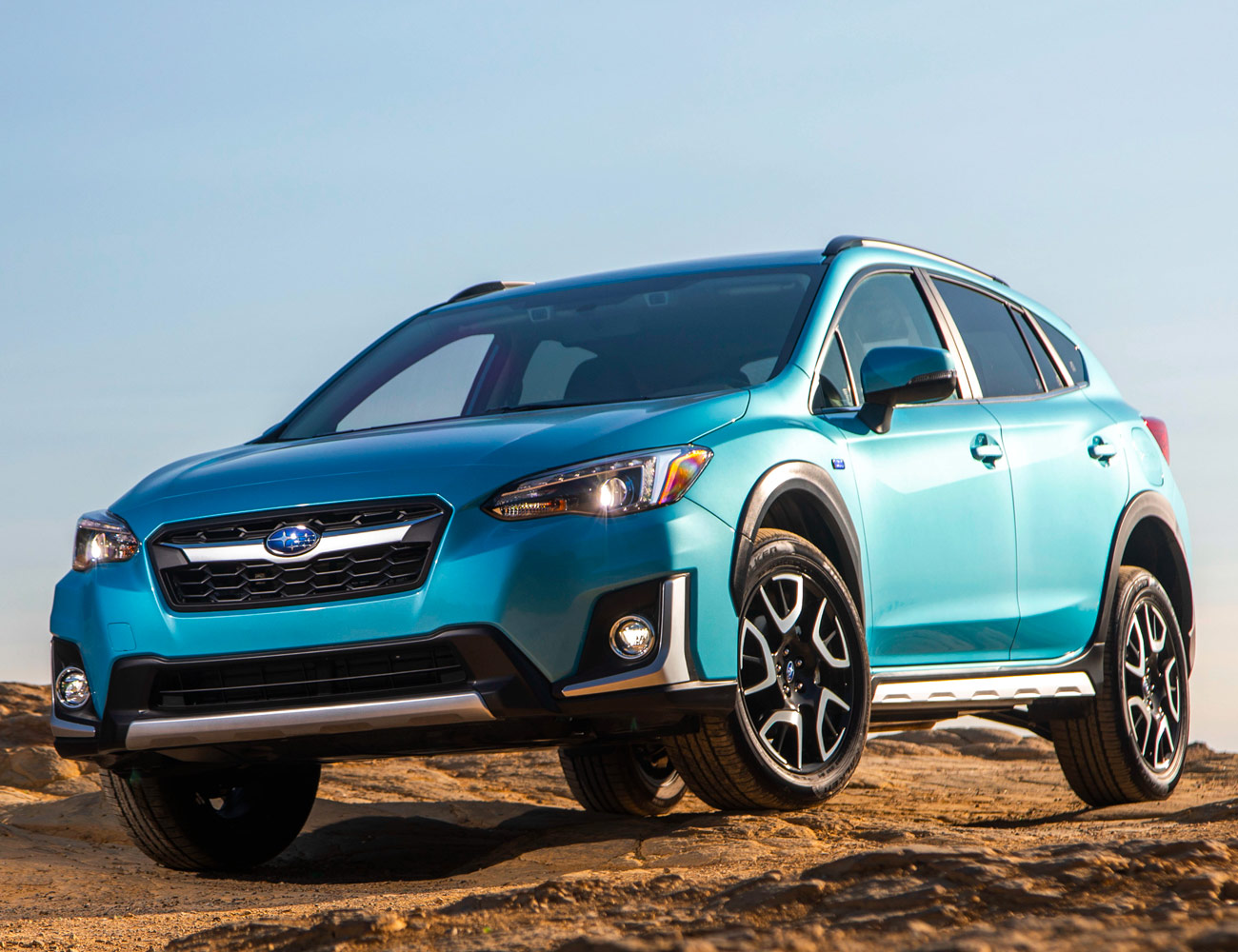
The Subaru Crosstrek can be affectionately described as a more off-road-suited version of the Impreza, with nearly all the same features and amenities. What sets the Crosstrek apart is a higher ride clearance of 8.7 inches, beefier tires and 18-inch wheels. The Crosstrek can be optioned with a Lineartronic CVT or six-speed manual transmission, and is powered by a 152-horsepower 2.0-liter boxer four-cylinder. The Crosstrek Hybrid is a plug-in hybrid making a total of 147 horsepower, and can be charged off a 120-volt outlet or 240-volt charging stations.

Body Style: Crossover / SUV

Models:

  • 2.0i Standard
  • 2.0i Premium
  • 2.0i Limited
  • Hybrid

Engines:

  • 2.0-liter boxer four-cylinder
  • 2.0-liter boxer four-cylinder with two electric motors and 8.8-kWh lithium-ion battery pack

Base MSRP: $21,895

WRX / STI

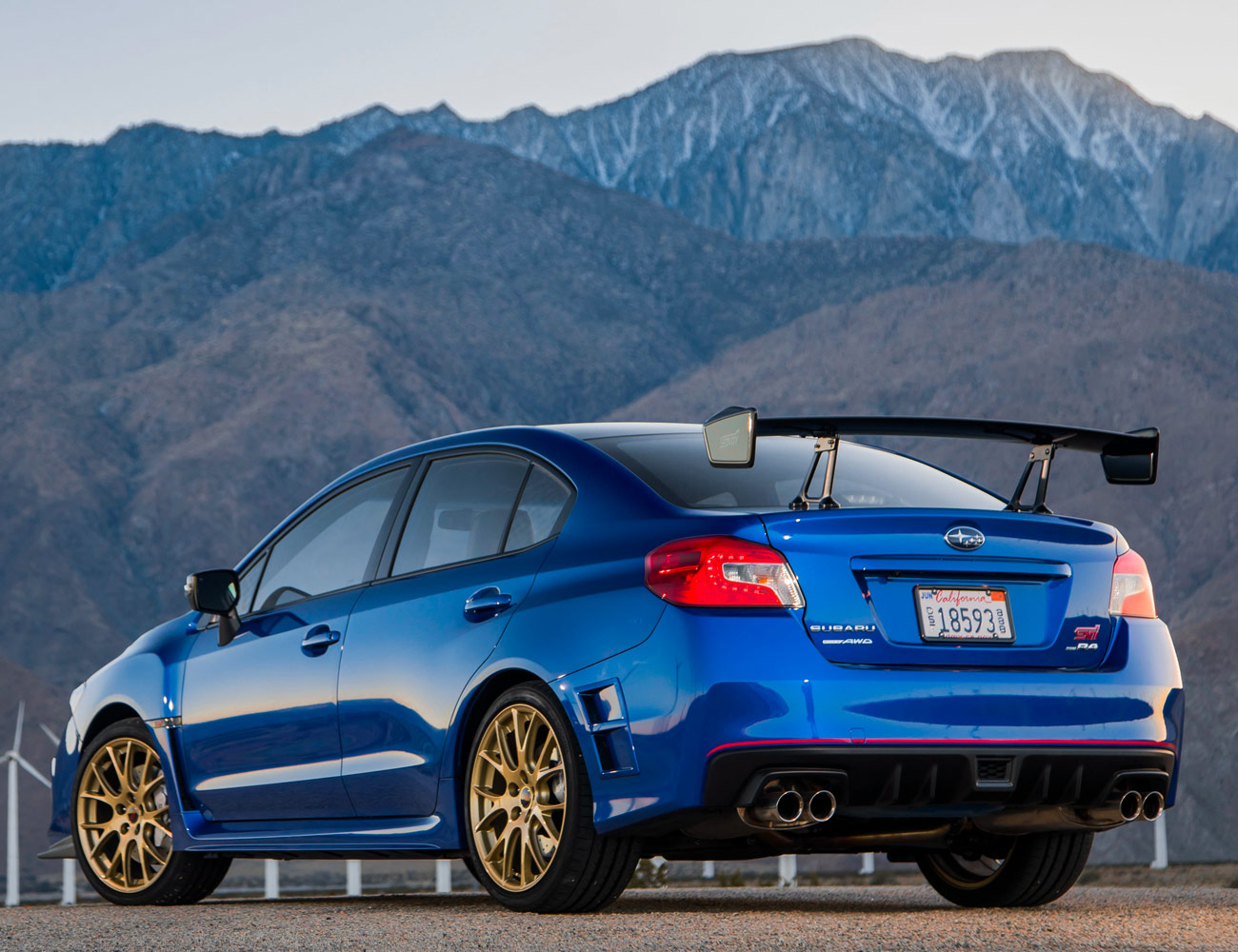
This fifth-generation iteration of Subaru’s most iconic vehicle falls squarely into the sports sedan category. The WRX features a 268-horsepower turbocharged 2.0-liter boxer four-cylinder engine, quick-ratio steering, a sport-tuned suspension, switchable traction control system and active torque vectoring. True driving enthusiasts will appreciate the top-spec WRX STI, which features a 305-horsepower turbocharged 2.5-liter boxer four-cylinder, short-throw six-speed manual gearbox, Brembo performance brakes, lightweight 19-inch wheels, Recaro racing seats and a driver-controlled center differential.

Body Style: Sedan

Models:

  • WRX
  • WRX Premium
  • WRX Limited
  • WRX STI

Engines:

  • 2.0-liter turbocharged boxer four-cylinder
  • 2.5-liter turbocharged boxer four-cylinder

Base MSRP: $27,195

Forester

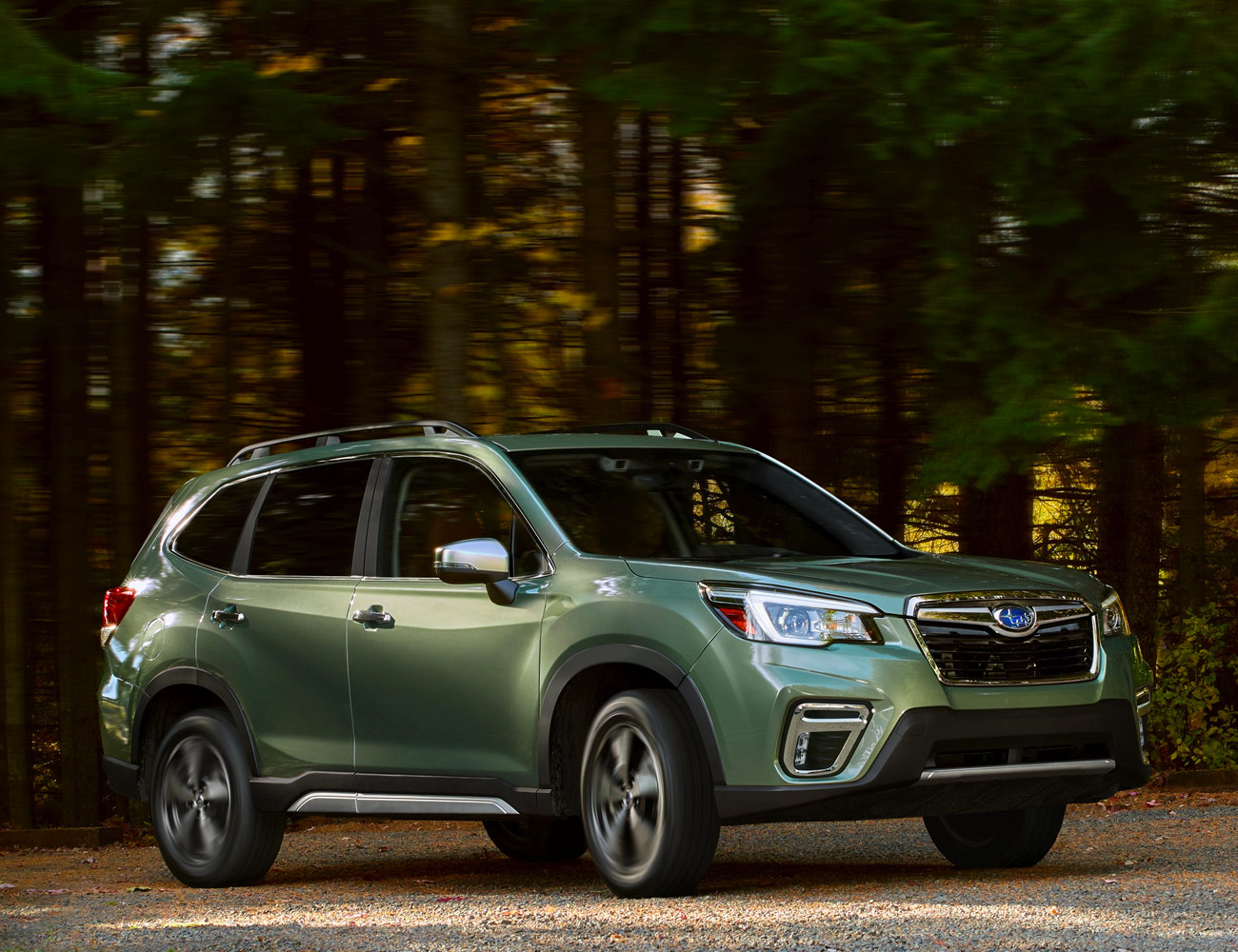
The Subaru Forester is a small SUV widely loved by families and casual overlanders alike. The Forester features a 174-horsepower 2.5-liter boxer four-cylinder engine with a Lineartronic CVT transmission, 8.7 inches of suspension travel and a spacious interior cargo area. For more off-road focused enthusiasts, the Forester comes with X-MODE and SI-DRIVE in Sport, Limited and Touring trims.

Body Style: Crossover / SUV

Models:

  • Standard
  • Premium
  • Sport
  • Limited
  • Touring

Engines:

  • 2.5-liter boxer four-cylinder

Base MSRP: $24,295

Outback

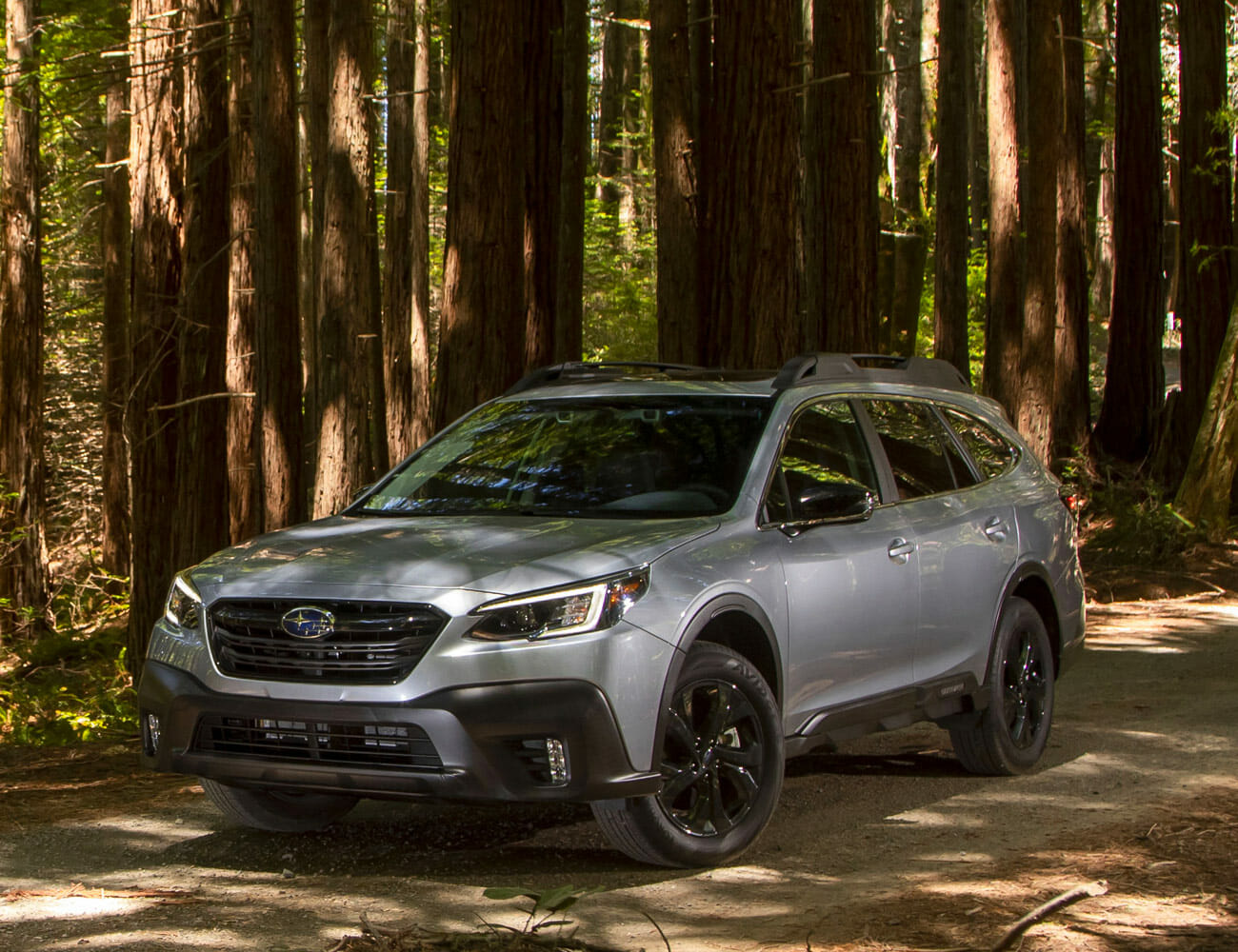
The Subaru Outback has been the best-selling Subaru model over the past couple of years. There are two engine options: a 175-horsepower 2.5-liter boxer four-cylinder or a 246-horsepower 3.6-liter six-cylinder boxer engine. Both engines utilize a Lineartronic CVT transmission. The Outback is also capable of towing up to 2,700 pounds in either engine configuration. A new model using a turbocharged 2.4-liter boxer four instead of the six-cylinder model will be arriving shortly.

Body Style: Station Wagon / Crossover / SUV

Models:

  • Standard
  • Premium
  • Limited
  • Touring

Engines:

  • 2.5-liter boxer four-cylinder
  • 3.6-liter boxer six-cylinder

Base MSRP: $26,345

Legacy

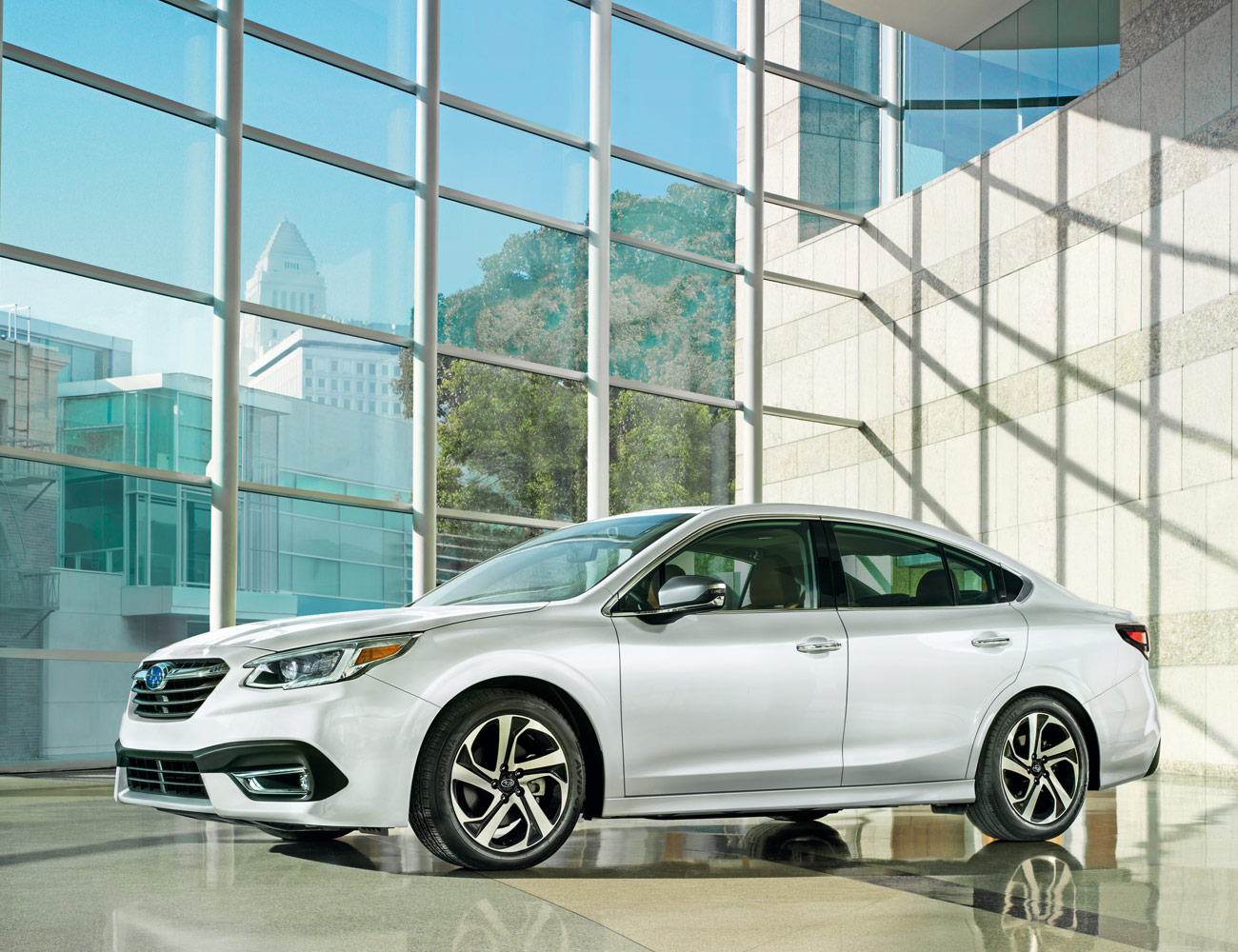
The Legacy is Subaru’s midsize sedan. It is available in two engine configurations: a 175-horsepower 2.5-liter boxer four-cylinder or a 256-horsepower 3.6-liter boxer six-cylinder. Both engine configurations come standard with a Lineartronic CVT Transmission. A new model is arriving shortly.

Body Style: Sedan

Models:

  • 2.5i Standard
  • 2.5i Premium
  • 2.5i Limited
  • 3.6R Limited

Engines:

  • 2.5-liter boxer four-cylinder
  • 3.6-liter boxer four-cylinder

Base MSRP: $22,545

Ascent

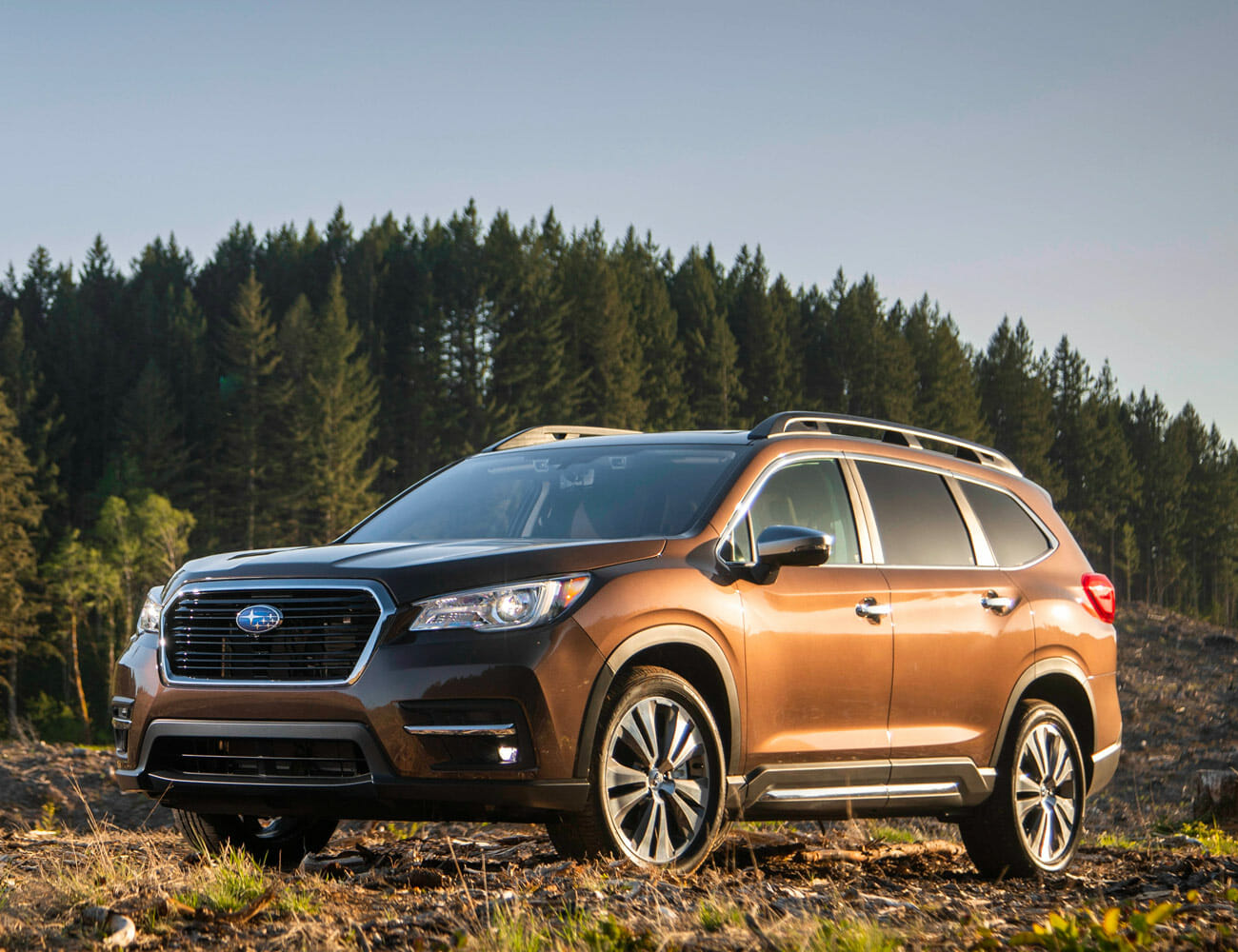
In 2018, the Subaru Ascent introduces a midsized three-row SUV back into the Subaru lineup. All configurations come standard with a 260-horsepower turbocharged 2.4liter four-cylinder boxer engine paired with a Lineartronic CVT transmission. The Ascent can seat up to eight people and tow up to 5,000 lbs.

Body Style: Crossover / SUV

Models:

  • Standard
  • Premium
  • Limited
  • Touring

Engines:

  • 2.4-liter turbocharged boxer four-cylinder

Base MSRP: $31,995

Note: Purchasing products through our links may earn us a portion of the sale, which supports our editorial team’s mission. Learn more here.

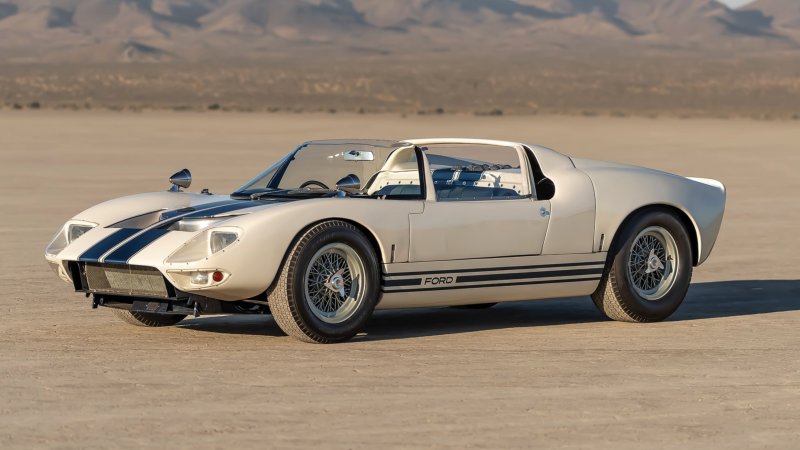
The first Ford GT40 Roadster could sell for around $10 million

One of the coolest Ford GT40s that wasn’t used as a Le Mans racecar is going up for auction at Monterey Car Week. It’s the first of five GT40 Roadster Prototypes ever built, and it’s estimated that it’ll rake in between $7 and $9 million dollars on the auction block. RM Sotheby’s is hosting the auction on August 16 this year, the Friday before the Pebble Beach Concours.

There were 12 GT40 prototypes in total, seven being hardtops and the other five Roadsters. The car appears today as it did when it was originally built — it went through a full restoration in 1983 and also received a “substantial mechanical freshening” in 2003, both times making sure it didn’t veer from its original state. Prior to all of that, it was driven by folks like Carroll Shelby, Ken Miles and Jim Clark. The auction house says it’s the only Roadster that has marched through the decades without deviating from its original form and appearance, except for restorative efforts.

This machine never went toe-to-toe with Ferrari, but it was used as a test car to develop the Mark IV cars that eventually claimed victory at Le Mans. It’s been to vintage racing events and numerous high-profile car shows, including Pebble Beach just last year. If history and lineage means something to you, this car is also said to be the only GT40 that Henry Ford II ever stepped foot into — Carroll Shelby was behind the wheel for that drive.

All the history is great stuff, but we’re rather entranced by just looking at the thing in photos. Any GT40 is stunning stuff, and this Roadster is no different.

Bugatti EB110 Tribute Build Slots are Already Sold Out

You’ll Have to Enjoy This One from Afar

Bugatti has an EB110 Tribute car that it’s keeping a very tight lid on. There’s little information out about the car beyond the fact that it should make its first appearance at Pebble Beach. While little is known about the car, we can say that it’s a for sure vehicle.

Multiple reports have surfaced saying the car does exist and should be at Pebble Beach. A new report by The Supercar Blog says that all of the build slots for the car have already been sold. 

The unnamed source told the publication that all of the 10 cars that Bugatti will make have already been spoken for. The publication also stated that each of the cars will go for €8 million, which equates to about $8.8 million. The price is expected to only go up. The Supercar Blog reported that prices are expected to climb to €10 million, or roughly $11 million after the launch. 

Despite the fact that all of the EB110 Tribute cars are spoken for, we’re excited to see what Bugatti has in the works. When the EB110 first hit the scene it was a revelation. It has since become one of the most amazing supercars of all time. If Bugatti is going to build a tribute car, it needs to have something wholly unique. 

Pagani Revealed the $3.4 Million Huayra Roadster BC

An Excercise in Excess

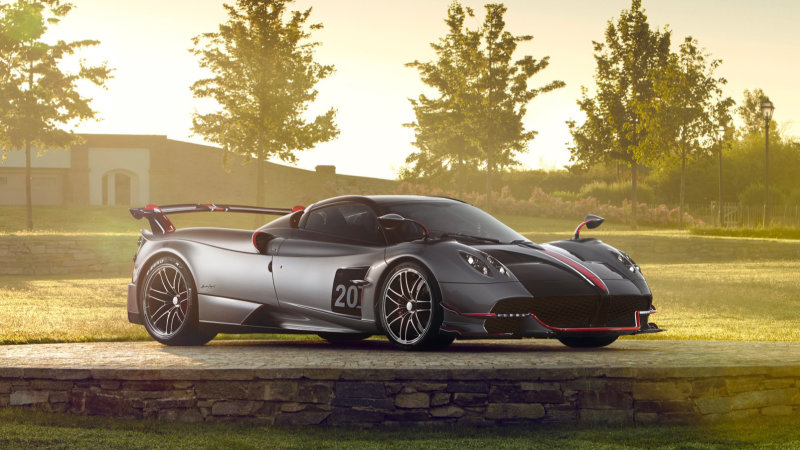
If you like your hypercars over-the-top and amazing, then the Huayra Roadster BC is for you. We’ve reported on this car before. Now it’s officially here. The car is a $3.4 million machine with a crazy powerful engine and looks that will catch the eye of anyone. Pagani recently revealed the car, and it’s a stunning example of what makes Pagani so special as a company. 

The Huayra Roadster BC features a 6.0-liter AMG V12. That engine is good for a whopping 800 hp and 774 lb-ft of torque. This means the Roadster BC is more powerful than the coupe version. The car gets a seven-speed Xtrac sequential gearbox that works to send all that power to the rear wheels.

The car weighs only 2,685 pounds. The engine power combined with the respectable weight means this car should outpace the BC Coupe. That means it should do a 0-60 mph run in under 2.5 seconds. The Roadster BC was designed for twisty roads and racetracks. Pagani says the car can pull 1.9 Gs of max lateral force in corners.

The company will make only 40 of the Roadster BC, and the car will make its first official appearance at the Monterey Car Week. 

2020 Ford Explorer Review: Setting the Benchmark for American SUVs

Ford could have waited another year to launch a completely re-designed Explorer, and thus make a big fuss over it being the 30th anniversary of the nameplate that arguably got the four-door, family-focused SUV segment rolling in earnest. The fact that they didn’t is just one of the many ways Ford is showing they’ve not only listened to customer feedback, but are acting on it as well. The outgoing fifth-generation Explorer was a run-of-the-mill crossover using a front-wheel-drive-based layout; the sixth-generation model, however, returns to a rear-wheel-drive-based layout. This brings with it a number of benefits, such as improved overall balance and handling, towing capacity and interior volume. By retaining unibody construction while switching to the rear-wheel-drive layout, customers get the best of both worlds: a capable SUV that’s as easy to drive as a midsize car.

The Good: First and foremost, the 2020 model is the best-looking Explorer Ford has built. Regardless of whether you opt for the Base, XLT, Limited, Limited Hybrid, ST or Platinum, you get nicely sculpted sheet metal, with thoughtful variations on the theme by model. A well-equipped base model with seating for seven and the standard, comparatively strong 2.3-liter turbocharged inline-four engine sets the tone for the 2020 Explorer line. The smallest engine’s quality is bolstered by the smooth shifting 10-speed automatic, but that transmissions shines brighter when paired with the high-output variant of Ford’s EcoBoost 3.0-liter V-6 found in the sporty ST.

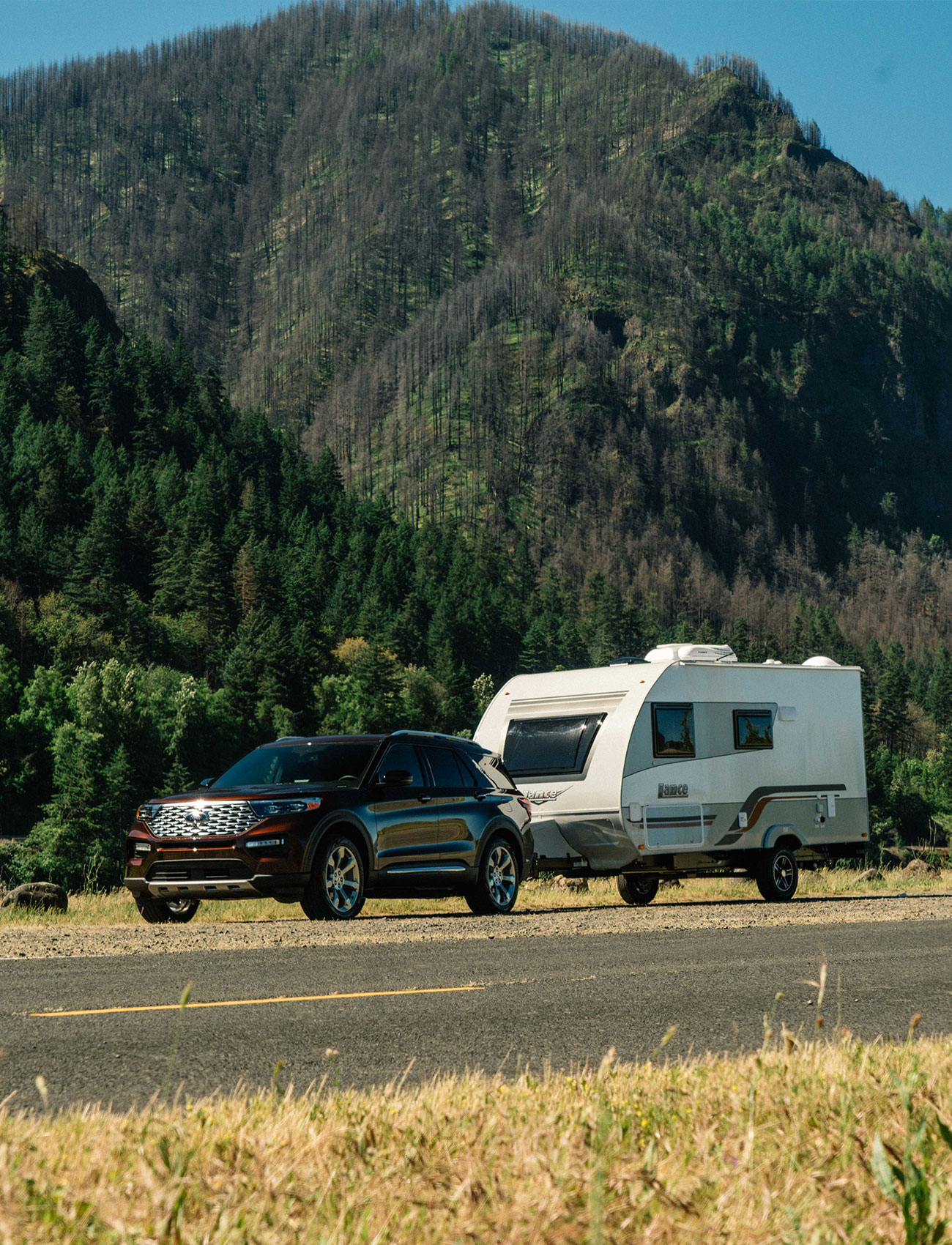
The transmission does a great job slowing the vehicle when towing a trailer, and even offers a low first-gear ratio that does a decent job mimicking a traditional 4WD vehicle’s low-range when Trail, Sand or Snow mode is selected. In fact, the Explorer is far more capable off-road than one would expect just looking at it, thanks to a short front overhang and decent departure angles.

Who It’s For: Putting visions of a Baja-spec Explorer Raptor aside, it’s easy to understand who Ford is angling to bring into the fold here. Families of various sizes and ages are the main target, especially those that often leave near-urban environments in search of rural getaways. The return to a rear-wheel-drive platform also signals that Ford wants the boat and camper crowd back, as well as the weekend warriors who might have a vintage Mustang that needs a lift to a track day. (Visions of an Explorer ST towing a Grabber Blue ‘71 Boss 302 seem delightful.)

Watch Out For: Base and Limited models are competitively priced with their competition, but there’s some standard equipment missing in the active safety system department. This has long been an underlying issue with Ford, who is as adept at serving up a la carte options as any German automaker. As a result, the price of an Explorer can easily rise from its published starting point.

Interior materials in the Limited and Platinum models don’t exactly live up to their names. Base, XLT and ST models were satisfactory, if not impressive; however, in the more upscale models, I wondered why certain touchpoints were not softer, covered with better leather or made with noticeably higher quality hard materials.

Alternatives: Toyota Highlander ($31,680), Honda Pilot ($31,450), Dodge Durango ($30,195), Chevy Traverse ($29,930)

Review: While I spent time behind the wheel of each of the six new Explorer models — on pavement and off, towing and unburdened, in RWD and AWD specs — it was the Explorer ST that seemed the most worthy of praise.  Compared to the Edge ST, which was little more than the application of a badge to an old platform, the Explorer ST is a dramatically better vehicle.

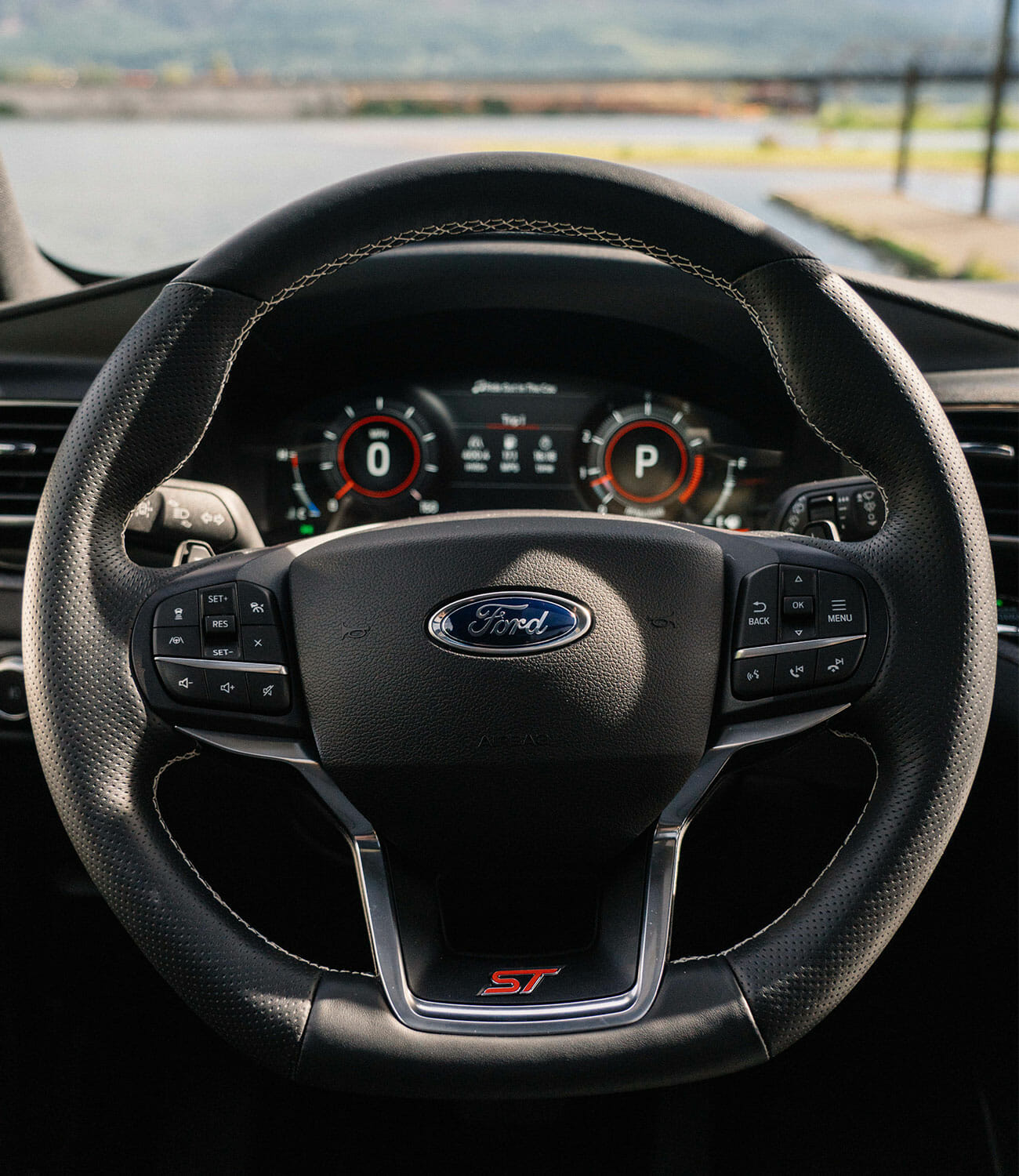
With 400 horsepower on tap, it’s fast — but more importantly, it feels fast, not an easily-accomplished feat with a three-row SUV. More surprising than the sensation of speed is how it goes around corners so nicely, without any sense that you’re battling the weight of the damn thing. Happily, the balance of purpose is maintained, so even with 21-inch wheels and a sport suspension, the ST’s remains plenty comfortable. The chunky steering wheel specific to the ST is yet another welcome surprise, and a joy to hold onto. There are purpose-built sports cars that don’t have tillers this good, let alone myriad crossovers and SUVs with sporting aspirations.

All that being said, every Ford employee I spoke with about how the Explorer ST spoke about how they sought to go beyond past Explorers in terms of sportiness, while still retaining all the traditional qualities of a family-friendly SUV. Take the front seats, for example –truly some of the best I’ve parked my butt in lately, in terms of comfort. The three-way adjustable independent lumbar support is a clear indication that Ford expects drivers to spend extended periods of time in the seat, while the six different massage options drive that point home — and embarrass a number of luxury automakers. Those folks hoping for deeply bolstered chairs like those from the Fiesta and Focus ST may be disappointed at the lack of lateral support and adjustable bolsters would be a nice option, but that remains a rarity in this segment, particularly with domestic automakers.

The use of interior space is highly efficient; from passenger seating to cargo storage, I couldn’t find any missed opportunities to make the cabin more comfortable or accommodating. There’s reconfigurable storage at the rear, the requisite power fold-flat seating and stash spots throughout — all of what you’d expect in a vehicle in this class, but all one quite right. The center armrest storage proved quite useful for holding my full-frame mirrorless digital camera and its large lens and battery grip, allowing quick access while letting me keep my camera bag secured in the back. The wireless charging mat that sits at an angle at the rear of the center console was also much appreciated. It’s a much better solution than having it take up space inside the armrest, where far too much transmission heat gets trapped, potentially damaging your device.

The giant vertically-mounted 10.1-inch tablet that anchors the dash may be off-putting to some, but it fits with the rest of the design and operates smoothly. Let’s face it, there’s not much more you can ask of an infotainment system; screens rarely beautiful, but they’ve become necessary in vehicles over the past decade, so surely we can all appreciate a thoughtful approach when we see it.

Perhaps that’s the best way to sum up not only the ST, but the new Explorer overall. Nobody is going to call it beautiful, but it’s not hard to find attractive qualities inside and out. Certainly, a lot of thought went into it — thought guided by lessons learned from past mistakes. The result is a vehicle that’s more than the sum of its parts.

Verdict: By considering what’s underneath all the metal and leather, you can understand what an undertaking redesigning the Explorer was for the folks at Ford — and how important it was to them to bring their A-game. The brand’s line of trucks and SUVs are certainly their standard-bearers and the Mustang will remain an icon for all-time, but the Explorer nameplate carries weight too — especially with Eighties babies who remember a T. rex eye appearing through the window of one in Jurassic Park. Perhaps for the first time since it was a boxy body-on-frame SUV, the Explorer is worthy of more than a passing glance, much of that due to excellent powertrains and thoughtful packaging. Ford finds themselves on solid ground with the first year of the sixth-generation Explorer, and they should be in good shape for the future if they continue to incorporate the best aspects of their past.

2020 Ford Explorer ST Specs

Price as Tested: $55,835
Powertrain: 3.0-liter twin-turbo V6, 10-speed automatic, all-wheel-drive
Horsepower: 400
Torque: 418 pound-feet
0-60 MPH: 5.5 seconds

Ford hosted us and provided this product for review.

Read More Gear Patrol Reviews

Hot takes and in-depth reviews on noteworthy, relevant and interesting products. Read the Story
Note: Purchasing products through our links may earn us a portion of the sale, which supports our editorial team’s mission. Learn more here.

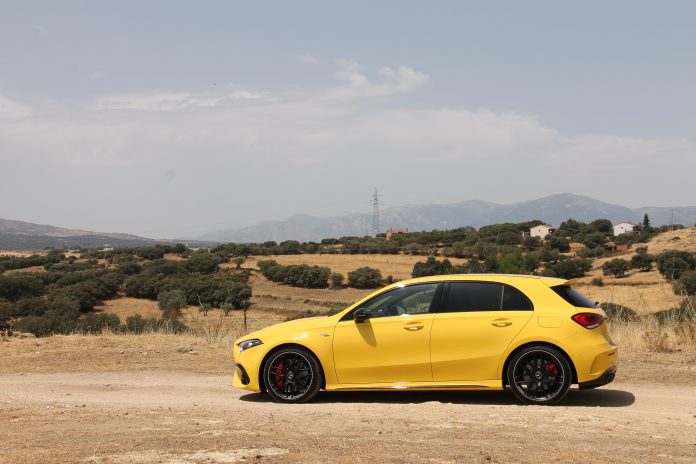
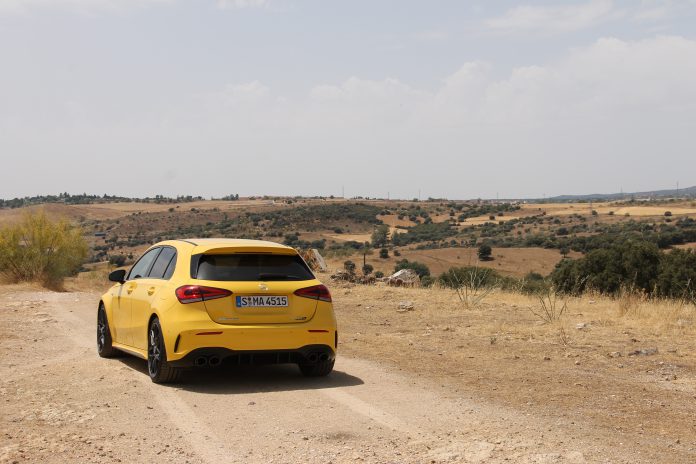
2020 Mercedes-AMG A45 S Review

The Mercedes-AMG 45S is the “Super-sportscar” of the compact class and ranging topping offering from Mercedes-Benz.
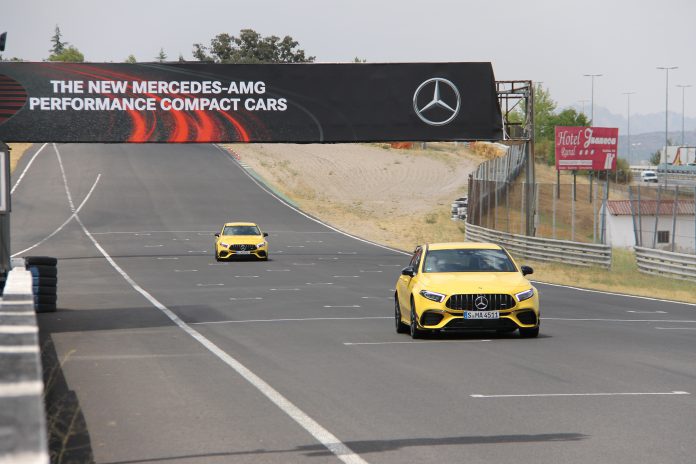
With the previous third generation Mercedes-Benz A class getting it’s first taste of the AMG treatment over six-years ago, it was time for the team in Affalterbach to give the now fourth generation A Class a new incarnation. For this we headed to Circuito del Jarama on the outskirts of Madrid, Spain.

Now at Circuito del Jarama we get our first look round the new A45S which is now fitted with the worlds most powerful turbocharged four-cylinder engine, the M139. Producing an impressive 384hp as a “standrard” A45, the A45S manages to output an outstanding 421hp! This is an improvement of 40hp over the previous M133 DE20 LA engine found in the facelift third generation Mercedes A45 AMG, and gives the M139 a output of 211hp per litre which places it on-par with engines you’d expect to find in high class ranges. As with all AMG produced engines, the powerplants found in the A45 are from Affalterbach and adhere to the “One Man, One Engine” principle. The A45S will reach 100 km/h in just 3.9 seconds and will continue on to a top speed of 270 km/h, whilst the standard A45 is 0.1 seconds slower to 100 km/h (4.0) and is electronically limited to 250 km/h, though this can be raised to 270 km/h with the optional AMG Drivers package.
The new engine has been rotated around its vertical axis 180°, meaning the turbocharger and exhaust manifold are now positioned to the rear of the engine bay, allowing for a more aerodynamically and the flattest possible front section of the car. Inside the engine, Mercedes has coated the cylinders with their patented NANOSLIDE technology that is also found in their Mercedes-AMG Petronas Formula 1 engines.
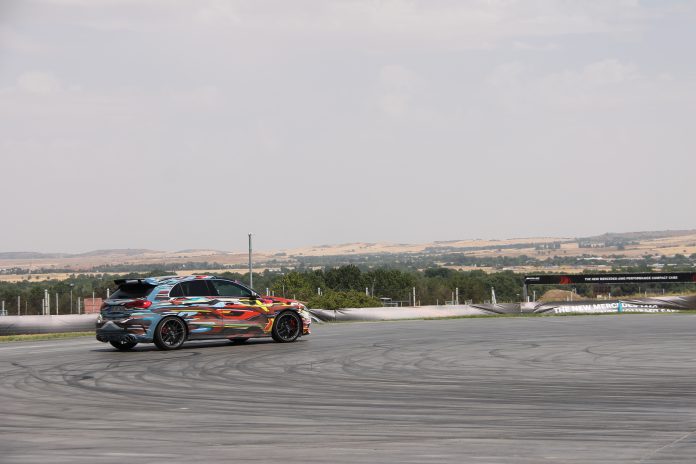
Both variants of the M139 are coupled to the eight speed AMG SPEEDSHIFT DCT-8G dual clutch transmission, which provides shifts in mere milliseconds, and comes equipped with the AMG Performance 4MATIC+ all-wheel drive. Also new for this generation of A45, is Drift mode, which comes as standard with the S and is included in the optional AMG DYNAMIC Plus package on the standard A45. Drift mode is called up when in “RACE” mode when the ESP is turned off and the transmission is in manual mode, allowing for powerslides on any road condition.

Twisting the wheel-mounted driving mode dial round to “Race” and you feel the car tighten up, the exhaust valves open and in general become more aggressive. Opening up the throttle and the power is almost instantaneous, the gearshifts are smooth and lightening quick with a little crackle and pop on every one, or when you lift of the throttle. The steering is light and responsive in conjunction with the Michelin Pilot Sport 4 S tyres, giving you feedback as you go through the corners and making you feel comfortable pushing harder into each upcoming corner.
The AMG Torque Control differential helps to bring the car back around on occasions when you find you’ve pushed a little too hard into a corner, with the font tighten up and the rear being pull round in a “powersliding” style.

Now back in the paddock area we have a better chance to look at the exterior changes on the new A45S. The most striking feature across both variants is the addition of the AMG specific grille on the A Class for the first time. The flared wheel arches and front winglets add to the aggressive look that the contoured headlamps and aerodynamic styled hood give the A45S. This continues round to the side of the car, where the AMG side skirts give the A45S a more road hugging stance, whist the wing mirrors are mounted in a similar fashion to those found on the larger coupes and sportscars. At the rear of the A45S, the thinner rear light clusters help to emphasise a wider rear, with the twin 90mm round exhaust pipes sticking out on both sides of the rear diffuser.
One optional extra that helps that were a big fan of is the AMG Aerodynamic package, which with its modified font splitter, winglets, additional diffuser blade and rear wing help to not only improve that handling abilities of the A45S through improved downforce, but also finish of the aggressive styling of the car. Other options include a range of 19-Inch alloy wheels, the AMG night package or a Silver Chrome package.

Inside the A45S the driver and passenger are seated in sports seats that have a firm lateral support and are covered in black ARTICO man-made leather and DINAMICA microfibre is timeless, and creates typical AMG highlights with double topstitching in yellow. The steering wheel comes in nappa leather/DINAMICA microfibre, with either red, yellow or black stitching, galvanised gearshift paddles nestled just behind it and an adjustable button that allows the driver to set the AMG driving mode without the need to remove their hands from the wheel. As always, the centre console is present in a gloss black finish with a touchpad that is surrounded by additional switches that control the ESP, transmission mode and exhaust mode to name a few.

The MBUX infotainment system has three AMG styles, “Classic”, “Sport” and “Supersport”. When Supersport is selected you get a striking central, round rev countrer and with the other information being moved to the side in a bar form. Mercedes have also added the AMG Track Pace as standard to the A45S, meaning the virtual race engine is fully available through the MBUX infotainment system. By measuring more than 80 different vehicle-specific data channels, the drivers are then able to analyse and improve their driving skills. Another feature of the AMG Track Pace is the ability to record your own circuits into the memory, be it major race tracks famous across the world, or you nearest club circuit, and have the ideal racing line stored and displayed.

Out on the road the ride quality is very good for a “super-sports” compact car, and it’s only when you move into Sport+ and Race that you start to feel more of the road below, it handles the highways with ease and comfort. On the more winding mountainous roads that lead up the Sierra de Guadarrama, the A45S hugs the round, staying planted in the corners with the power coming back smoothly and quickly when you punch the accelerator on the exit.

With their completely re-designed A45 models, Mercedes-AMG has showcased their competence in developing an already class-leading compact into a ground breaking “Super-sportscar” both equally comfortable at highway cruising as it is at windy country roads and race tracks.
Overall the new Mercedes-AMG 45S is a cooling looking, extremely well equipped and punchy compact class car, that has definitely raised the bar in the “Super-sportscar”, compact class market!

GTSPIRIT NEWSLETTER

$3.4M Pagani Huayra Roadster BC debuts with more power, more weight than the coupe

Once the Huayra Roadster BC digitally debuted in the mobile racing video game CSR2, Pagani wasted no time dropping the official photos and details on the new supercar in full. Not content with simply releasing a warmed-up topless version of the Huayra BC, Pagani reworked the design, structure, and performance of the car to create a new experience. The car is priced at about $3.4 million, and only 40 will roam the earth.

Pagani calls its BC models “tributes to scientific research, beauty, and uniqueness.” They enhance the already impressive Huayra supercar by reducing weight, increasing power, increasing aero, and adding unique details that set it further apart from the increasingly crowded pack of specialty performance vehicles on the market. Of course, to build a performance Roadster, adding weight is expected, as well. The Roadster BC weighs in at 2,756 pounds (1,250 kg), which is significantly less than the 2,976-pound regular Huayra coupe and 2,922-pound regular Huayra Roadster, but heavier than the 2,685-pound Huayra BC coupe. 

Pagani makes up for the weight difference by adding more power to the Roadster BC with a bespoke unit developed by Mercedes-AMG that Pagani calls “completely new.” The Mercedes-AMG-sourced 6.0-liter twin-turbo V12 in the BC coupe was rated at more than 750 horsepower and 738 lb-ft. The Pagani twin-turbocharged V12 in the Roadster BC is rated at 791 horsepower at 5900 rpm and 774 lb-ft of torque at 2,000 rpm. That power is sent to the rear wheels through a seven-speed XTrac transverse automatic transmission with an electro-mechanical differential. The supercar also wears a new titanium six-pipe exhaust setup with two extra outlets from the catalytic converters. 

The Roadster BC is made to carve hard corners, too. Underneath, it has a monocoque made of ultra-light and super-strong carbo-triax HP62 and carbo-titanium HP62 G2 with front and rear tubular steel subframes. The suspension is set up with forged aluminum alloy independent double wishbones, helical springs, and electronically controlled shock absorbers. It sits on forged monoblock aluminum alloy wheels (20-inch in the front, 21-inch in the back), which are wrapped in Pirelli P Zero Trofeo R tires (265/30 in front, 355/25 in back). Pagani claims the Roadster BC can handle more than 1.9 g of lateral force during constant running, with peak readings of up to 2.2 g. 

To achieve such performance, the vehicle needs to slip through the air, keep cool, and stay grounded, so Pagani gave the Roadster BC some new bodywork. It features a redesigned wing, tweaked inlets, and a new aerodynamics kit. Pagani claims it generates up to 1,102 pounds of downforce at 174 mph. 

Pagani lists the price for the Roadster BC, of which only 40 examples will be built, at $3,435,934 (3,085,000 €) plus VAT. It is scheduled to make its global in-person debut at the 2019 Pebble Beach festivities.

De Tomaso P72 Supercar and the P70 Will be at the Pebble Beach Concours d’Elegance

Two Amazing Cars At the Same Event

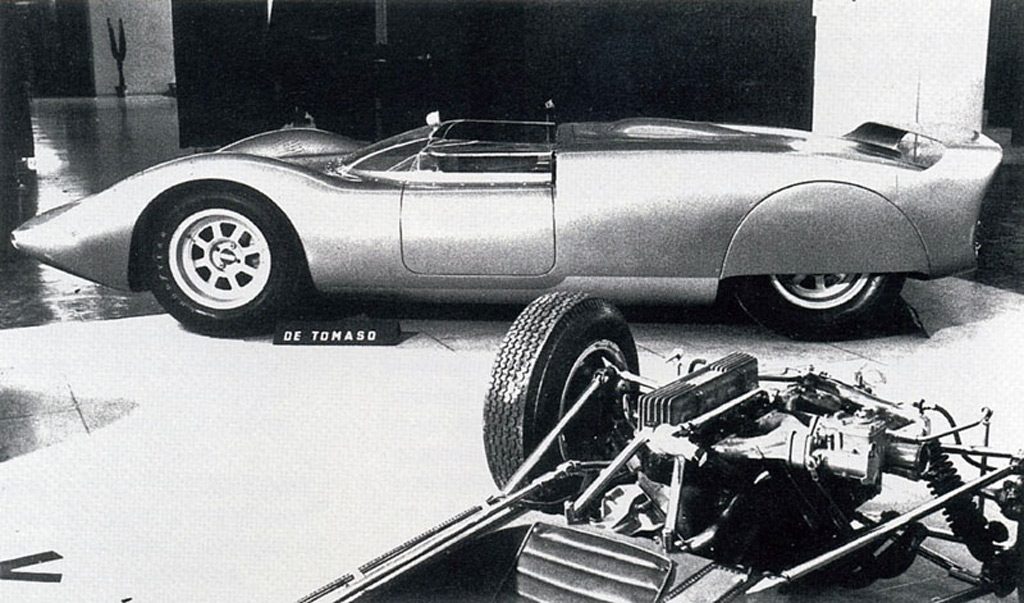
The De Tomaso P72 marks the revival of the iconic brand. The car was revealed at the Goodwood Festival of Speed. It’s a beautiful supercar inspired by the P70 that came from the brand back when it earned its reputation as one of the most iconic supercar brands. Now the two cars will both be at the Pebble Beach Concourse d’Elegance in California in August, according to Motor Authority

This will mark the P72’s first public appearance in North America. It will also mark the first time that the P70 has appeared with the P72 at the same venue. It will be nice to see these two cars together to be able to compare them both side-by-side. 

De tomaso P70

De tomaso P70

The original P70 was a car that came from a collaboration between De Tomaso and Carroll Shelby. The car used the De Tomaso’s Vallelunga sports car as its basis, but it had a Ford V8 engine in it and some special bodywork. It was presented as the Ghia De Tomaso Sport 5000 at the Turin auto show in 1965. It was an important car for the company, but not the best-known. If you can, we highly suggest you catch it and the new car in California. 

Go to the Monterey Car Week to See the Lotus Evija

It’ll Appear at The Quail: A Motorsports Gathering

Lotus told CNET Roadshow that it would bring it’s new Evija all-electric hypercar to the Monterey Car Week in California in August. The car will make its public debut at The Quail: A Motorsports Gathering on August 16. This will be your first opportunity to see the car publicly. 

In case you were under a rock when Lotus first unveiled its amazing hypercar, the vehicle is an all-electric machine with 1,973 hp and 1,250 pound-feet of torque. That makes it good for a 0-60 mph time somewhere under three seconds. Its top speed is over 200 mph. 

The Evija is more than just a marvel of electric power. The vehicle is also a revelation from an exterior and interior design standpoint. The exterior features some of the most-advanced aerodynamics on any vehicle to date. It’s also simply a stunning machine to look at, and that’s true from absolutely every angle. 

While we, unfortunately, won’t be at The Quail: A Motorsports Gathering on August 16, we would highly encourage anyone who will be near there to find a way to get there. The Lotus alone is reason enough to go there and enjoy yourself. 

$3.4 Million Pagani Huayra BC Roadster Revealed!

The next chapter in Pagani’s history has been revealed today. The Pagani Huayra BC Roadster follows on from the Coupe, revealed two years ago. The limited production run of that car has now come to an end with Pagani focusing on the Pagani Huayra Roadster at the moment. The BC Roadster will usher in a new era.

The centrepiece of the Pagani Huayra BC Roadster is a dramatic new engine. The 6.0-litre V12 power unit has been reworked for the BC Roadster, producing more power than ever before. The headline figures include 800 hp and 1,050 Nm of torque from 2,000 rpm. Mercedes-AMG has reworked the twin-turbochargers, fitted a new hydroformed manifold, throttle bodies and four water to air intercoolers. The new engine complies with all of the latest international emission standards.

The Pagani Huayra BC Roadster tips the scale at 1,250 kg, making it 30 kg lighter than the 1,280 kg Roadster and just 32 kg heavier than the 1,218 kg BC Coupe. Power is transferred to the tarmac by an Xtrac transverse seven-speed sequential gearbox.

Aerodynamics have been tweaked for the BC Roadster with a re-designed rear wing. The stems are mounted away from the edge of the wing with the wing taking on a slightly concave shape. The front bumper gains slight modifications to the front air intakes and a set of redesigned, larger, canards.

The side skirts are also an improvement over the BC Coupe. They resemble the simplistic design on the original Zonda. The rear facia has been redesigned with a smaller rear diffuser. The traditional quad exhausts are angled higher. Emissions mean that Pagani has had to incorporate two further exhausts into the rear diffuser.

The chassis monocoque uses a new carbon-titanium blend which makes 12% improvements in torsional rigidity and 20% in flexional rigidity. Named Carbon-Titanium HP62 G2, it costs 450% more to produce than its predecessor. Even the tyres are bespoke made for the Huayra BC Roadster; Pirelli PZero Trofeo R units.

Of course, the excesses of the Pagani Huayra BC Roadster come at a cost. That cost is a cool €3,085,000 plus VAT. Just 40 examples have been scheduled for production, no doubt that the entire production run is spoken for!

GTSPIRIT NEWSLETTER

2019 Ferrari Portofino Review: Every Bit a Ferrari In the Ways That Matter

The Ferrari California never received the respect it deserved. Yes, it was somewhat of a shameless attempt to steal buyers who would otherwise have bought up a Bentley Continental GT or a Mercedes-Benz SL63 AMG. Sure, the elevated rear beltline necessitated by its retractable hardtop kind of made it look like it took fashion cues from Steve Urkel. And yeah, the front end bore a “cannot unsee” resemblance to a praying mantis. But it was still a Ferrari, though — with a resonant V8 under the hood and a steering rack tuned by angels.

Maranello isn’t a place where people succeed by letting mediocre product stink up the showroom, though. The carmaker’s first crack at redoing the Cali involved a thorough facelift and the brand’s first turbocharged engine in decades (a motor that would go on to ooze into four-fifths of the lineup, as well as down the road to Maserati HQ), along with a big “T” appended to its West Coast moniker. It was faster; it was prettier; sales picked up. But it still never seemed to quite mesh with the rest of the lineup.

So Ferrari balled the California up, hurled it through the Nerf basketball hoop into the wastebin of history, and started with a clean sheet of paper to produce the Portofino. The car is new, but the mission brief hasn’t changed: Deliver a Ferrari that’s approachable enough to woo boulevardiers who generally prefer soft cruiser convertibles without losing the spirit of the brand in the process.

The Good: Uh, it’s a Ferrari. It turns, goes and stops with a verve other cars can match, but never replicate; every moment spent behind the wheel attacking a road has a tinge of magic to it. It responds to your inputs with a directness not found in most cars. It helps make even regular commutes a little less ordinary.

On a more practical note: It has one of the most intuitive, driver-focused cockpits on sale. The steering wheel feels almost aeronautical in its multifunctional efficiency, with all the controls needed for the actual act of driving are within a hand’s breadth of 9 and 3: drive modes, wipers, high beams, shifters, suspension softener and start button. Secondary controls you’ll use often — volume, cruise control, IP info panel, headlight switch — are on the dashboard, but mere inches away from your hands. Beyond that are a pair of widescreen displays that, while a bit laggy, offer plenty of physical controls for the important tasks and touchscreen capability for the rest.

Who It’s For: Enthusiasts seeking an open-top grand tourer that’s more entertaining to drive than the average convertible; wealthy showboats who simply want the image conferred by the badge.
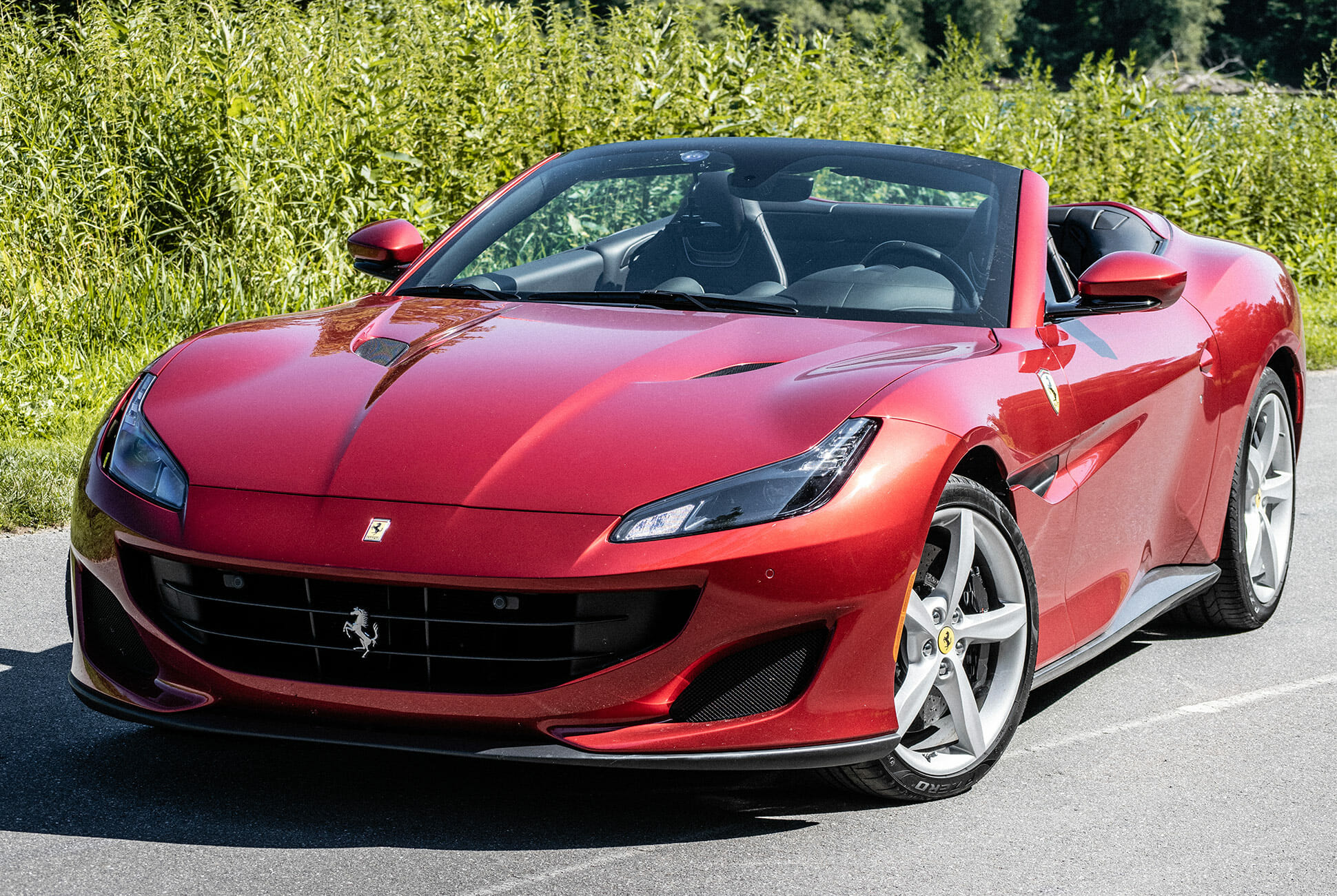
Watch Out For: A lack of trunk space — which isn’t all that surprising for a Ferrari, but is for a gran turismo. The carmaker claims 10.3 cubic feet of trunk space, which is technically true, but only if you’re storing unpackaged Cool Whip. Folded down, the top occupies a good chunk of space, leaving an open box below it large enough for a rollaboard or a couple of backpacks. Even with the top up, there’s a firm box designed to block off the folding-top-safe luggage space that prevents you from sliding larger items in there with ease. Hey, Ferrari also claims it’s a four-seater, but that second row is only good for small woodland creatures. Throw your bags back there instead. (Just make sure there’s nothing in those bags that’s temperature-sensitive, because they’ll cook in the sun.)

Also, on a moral note: Yes, Ferrari buyers view money differently than most of us, but charging $4,219 for Apple CarPlay is absurd.

Alternatives: Porsche 911 Turbo S Cabriolet ($203,000); Aston Martin DB11 Volante ($219,581); Bentley Continental GT Convertible ($218,350); Mercedes-AMG SL65 ($154,450)

Review: I will fully admit to being a tad underwhelmed at the sight of the Portofino when it rolled up in front of our Fifth Avenue office on a rainy weekday. Sure, the off-menu red paint crackled, and with the top up to keep out the rain, it looked close enough to the heartbreaking 812 Superfast to confuse even our auto-obsessed deputy photo editor. But the thought kept poking out of the back of my brain: Does this really look as grabby as a Ferrari ought to?

Then I climbed inside, and before I could even adjust my mirrors, a trio teenage girls began snapping pictures in front of the car. Never underestimate the appeal of that damn Prancing Horse.
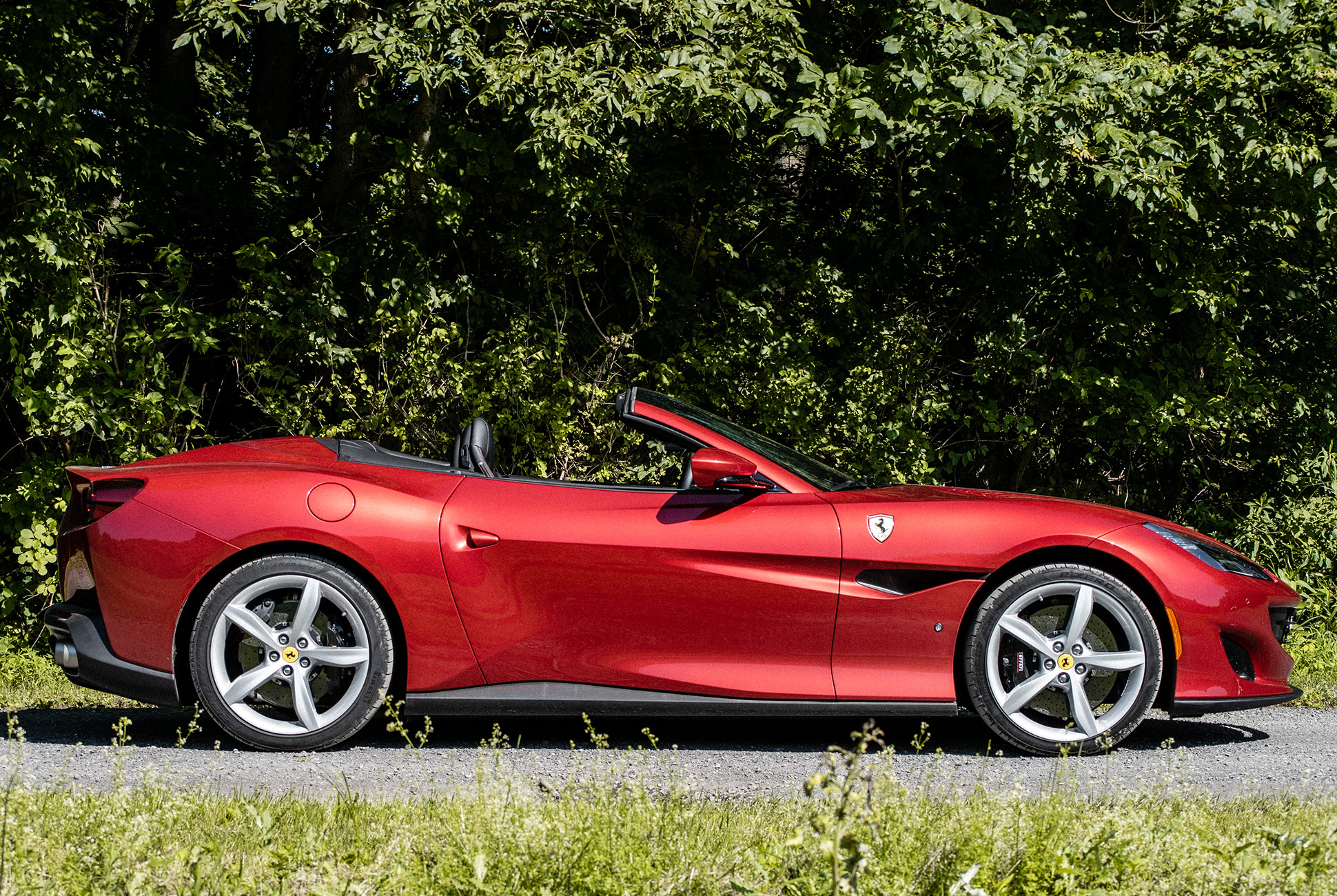
That said, it may be every bit a Ferrari to The Average Joe, but T.A.G. might find himself a little bit unimpressed when he engages it in a stoplight grand prix with his Trackhawk. It’s not slow, mind you; activate the launch control (it’s the round button marked “PS” on the shift arch), and it’ll crack off the 0-to-60-mile-per-hour dash in a claimed 3.5 seconds. But in an era where sub-three second 0-60 times are becoming shockingly common in the six-figure sports car realm, the Portofino feels almost ordinary off the line.

Some of that stems from the engine’s output of 591 horsepower and 560 pound-feet of torque, which, to keep it in horse-themed car terms, sits closer to the Shelby GT350 than the GT500; some of it also stems from the way Ferrari tuned the engine’s power delivery, deliberately moderating the torque in lower gears to smooth out the transition when the turbos spool up. The flip side, however, comes in the engine’s tractability: You can hear the turbos coming online more than you feel the change in power delivery; it just comes across as a building shove, building and building to the low-for-a-Ferrari 7,500-rpm redline.

Still, only the uninitiated think F-cars are about pure straight-line speed. Old Man Enzo’s heart lay in road racing, not drag racing; his cars are made to carry speed through turns as much as they are to gain it in the first place. The steering is quicker, the brakes bite harder right away than you’d expect from a grand tourer; that’s the inherent Ferrari-ness shining through. But once you’re dialed into how taut everything from your fingertips through the body to the suspension is, it becomes as easy to drive as a Miata.

Ferrari was one of the first automakers to integrate magnetorheological dampers in their suspension, and their time has been well-spent; the shock absorbers blot up imperfections with luxury-car grace in Comfort mode. (That is to say, the grace of modern luxury cars, which tend to ride on wheels as large as or larger than the 20-inch rims on my Portofino, and often on tires as aggressive as its Pirelli P Zeros.) Hit a patch of rough road after you’ve snapped the manettino switch from Comfort to Sport, and you can tap a small blue button near your thumb to shift the dampers back to bumpy-road mode. It’s a handy feature, though given the Portofino’s mission brief, you could probably just leave the dampers at their softest all the time; it’s not as though the car rolls like the Andrea Doria on winding roads in that setup.

Whether you’re hoofing it along the back roads or loping down the highway, you’ll want to use the paddle shifters. The seven-speed dual clutch’s automatic mode works fine enough for puttering around town, but unlike, say, Porsche’s brilliant PDK, it’s not made to outwit a clever driver. It’s there to make the tedious parts of life a little less boring, not to remove you from one of the essential tasks of driving altogether. You could have bought a Mercedes, the car seems to be saying, but you didn’t. You bought a Ferrari. Now own it. 

Verdict: With the all-wheel-drive hatchback GTC4Lusso occuping showroom space alongside it, the Portofino is effectively the last traditional grand tourer Ferrari makes — heir to a legacy that stretches back to the 1940s. That was true of the California, too, but unlike that awkward machine, the Portofino seems worthy of carrying that torch. It wouldn’t be my first pick amongst Ferraris, nor likely yours. But it might be at the top of the gran turismo convertible list, especially for anyone who really loves to drive.
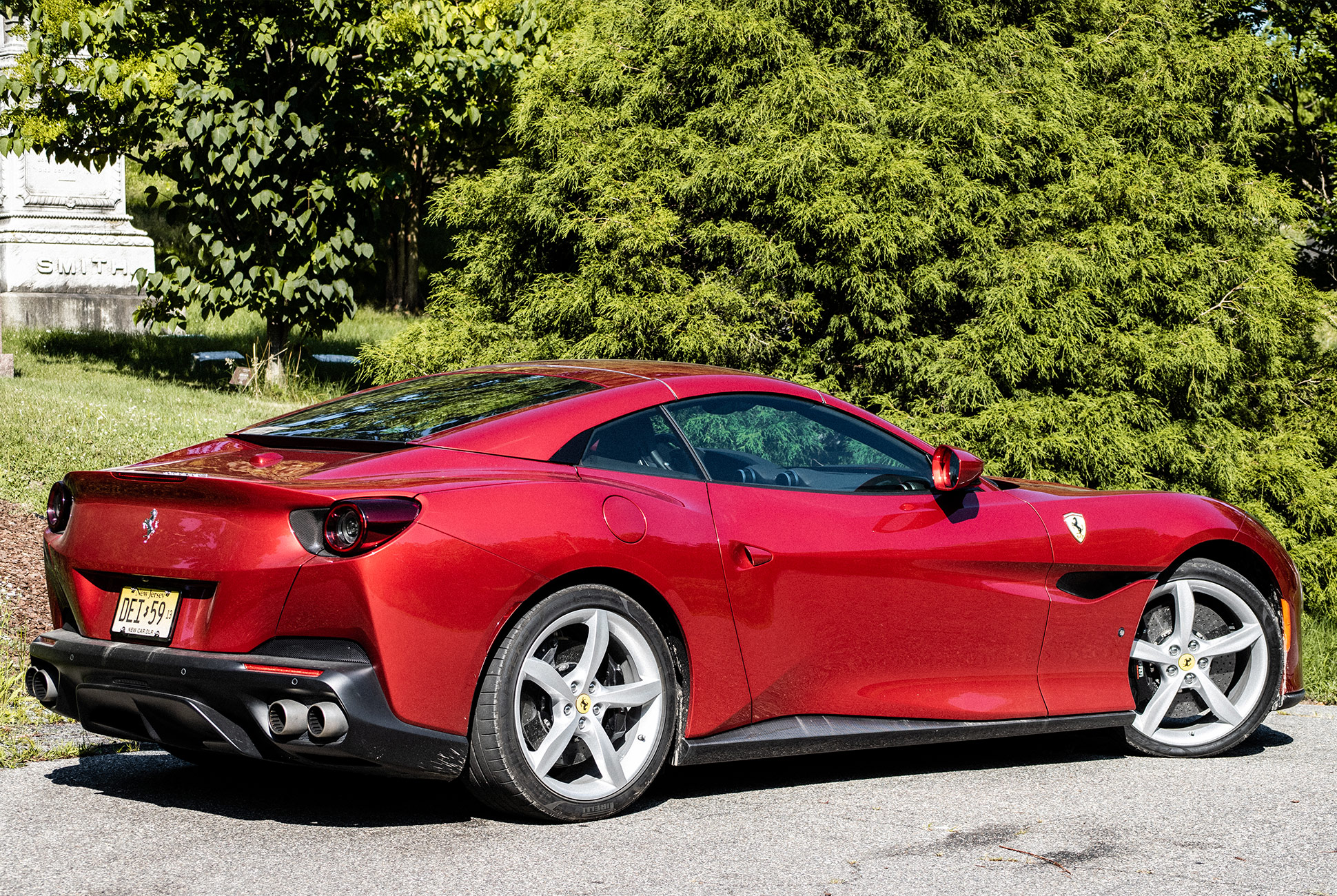
2019 Ferrari Portofino Key Specs

Powertrain: 3.9-liter twin-turbo V8; seven-speed dual-clutch automatic; rear-wheel-drive
Horsepower: 591
Torque: 560 pound-feet
0-60 MPH: 3.5 seconds (manufacturer’s estimate)
Top Speed: 199 mph
Price as Tested: $284,962

Ferrari provided this product for review.

Read More Gear Patrol Reviews

Hot takes and in-depth reviews on noteworthy, relevant and interesting products. Read the Story
Note: Purchasing products through our links may earn us a portion of the sale, which supports our editorial team’s mission. Learn more here.

Now’s the Time to Buy the Last Cheap Porsche 911

Obvious fact alert: Porsche 911s aren’t cheap. They’re not cheap when new, certainly — the just-announced base model of the latest 992-generation 911 starts at $97,400 — and they’re increasingly becoming pricey on the used market, as well. The 993-generation has long commanded a premium, thanks to its status as the last of the “classic” air-cooled 911s; that desire for the purity of retro rides has also driven the prices of other earlier 911s higher in the last couple decades. Likewise, the 997-generation 911 that’s arguably the first truly modern example of the breed still holds its value well, and the outgoing 991-generation still holds its value well enough to put it out of reach of bargain hunters.

But there’s one generation of Porsche 911 that remains a bargain: the 996.

As we’ve discussed before, the 996 — built from 1997 to 2006 — has been maligned for quite a reasons, starting with its water-cooled flat-six and its runny-egg headlights and continuing through its lackluster interior. But these are the sorts of quibbles that are easy to make when a new car winds up being a massive deviation from an iconic predecessor (or, alternatively

Here in 2019, with close to two decades between us and the 996, many of those complaints seem to be missing the forest for the trees. It still has that iconic silhouette, it still has the engine in the back, it still makes that coarse boxer roar when you mat the gas, and it still puts a smile on its driver’s face when he or she tosses it through a turn. It’s still a Porsche 911.

And while the prices of pretty much every 911 — and hell, even other less-respected Porsches — have been blasting skyward, 996 values have been flying nap-of-the-earth. A quick look at Bring a Trailer reveals that, of the 280 examples of the generation to hit the auction site over the years, the vast majority have sold for less than $30,000 — a price that puts it in league with a VW GTI or Honda Civic Si. And many cars are far cheaper.

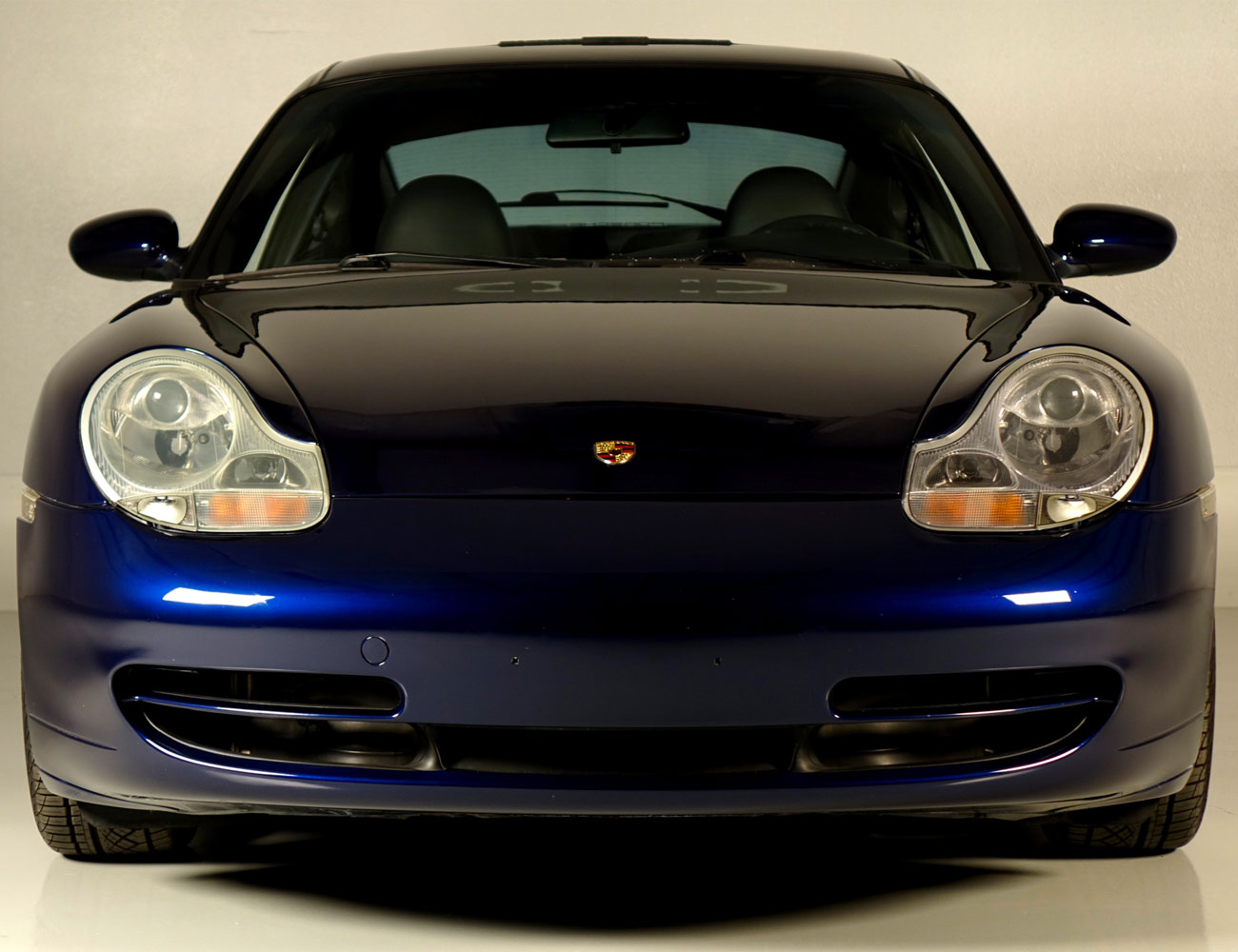
This blue beauty, a 2001 Porsche 911 Carrera with 61,000 miles and a six-speed manual? It sold for $19,996 in mid-June.

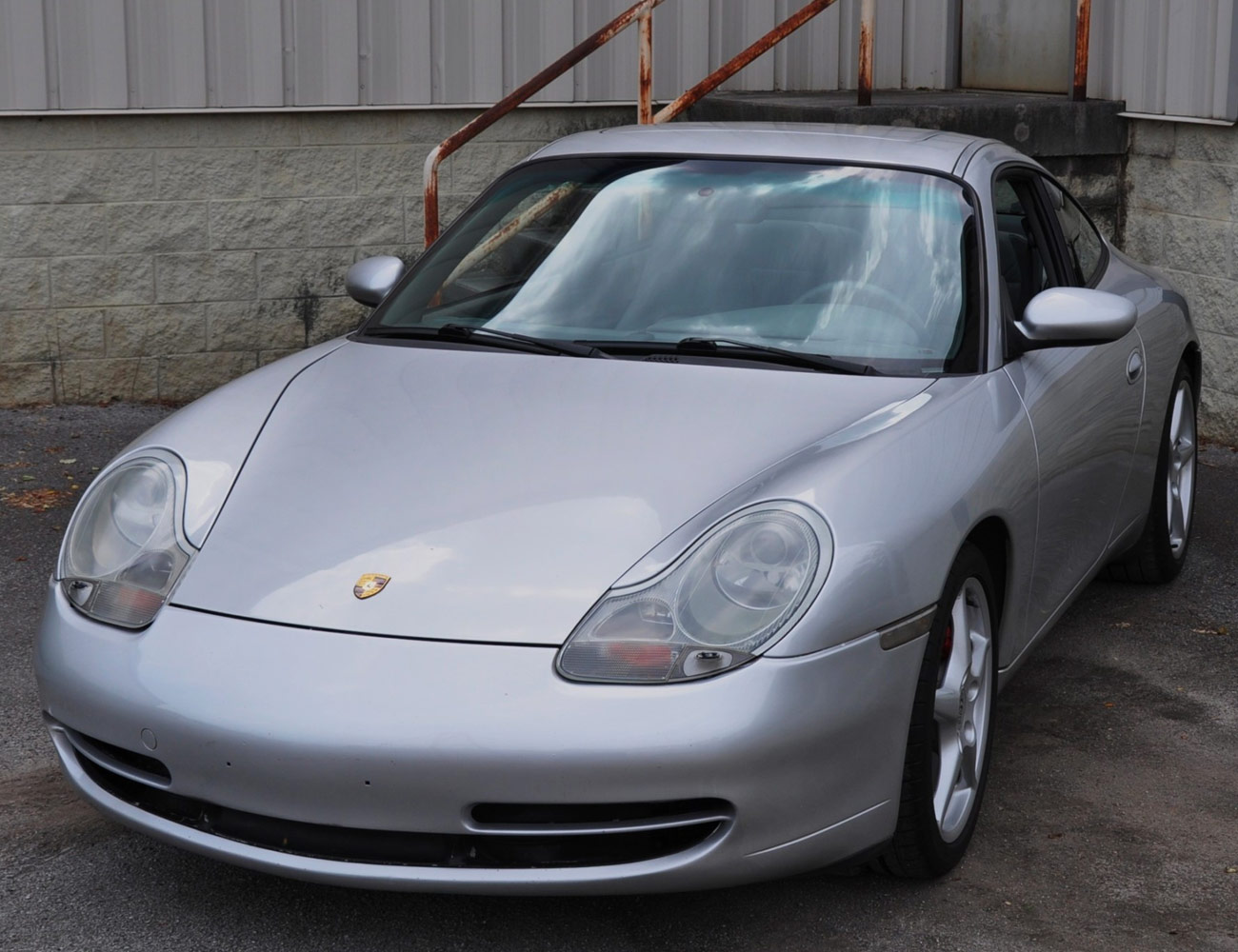
This silver Carrera, with an admittedly-intimidating 115K on the clock but still looking almost as good as new? $16,485 at auction.

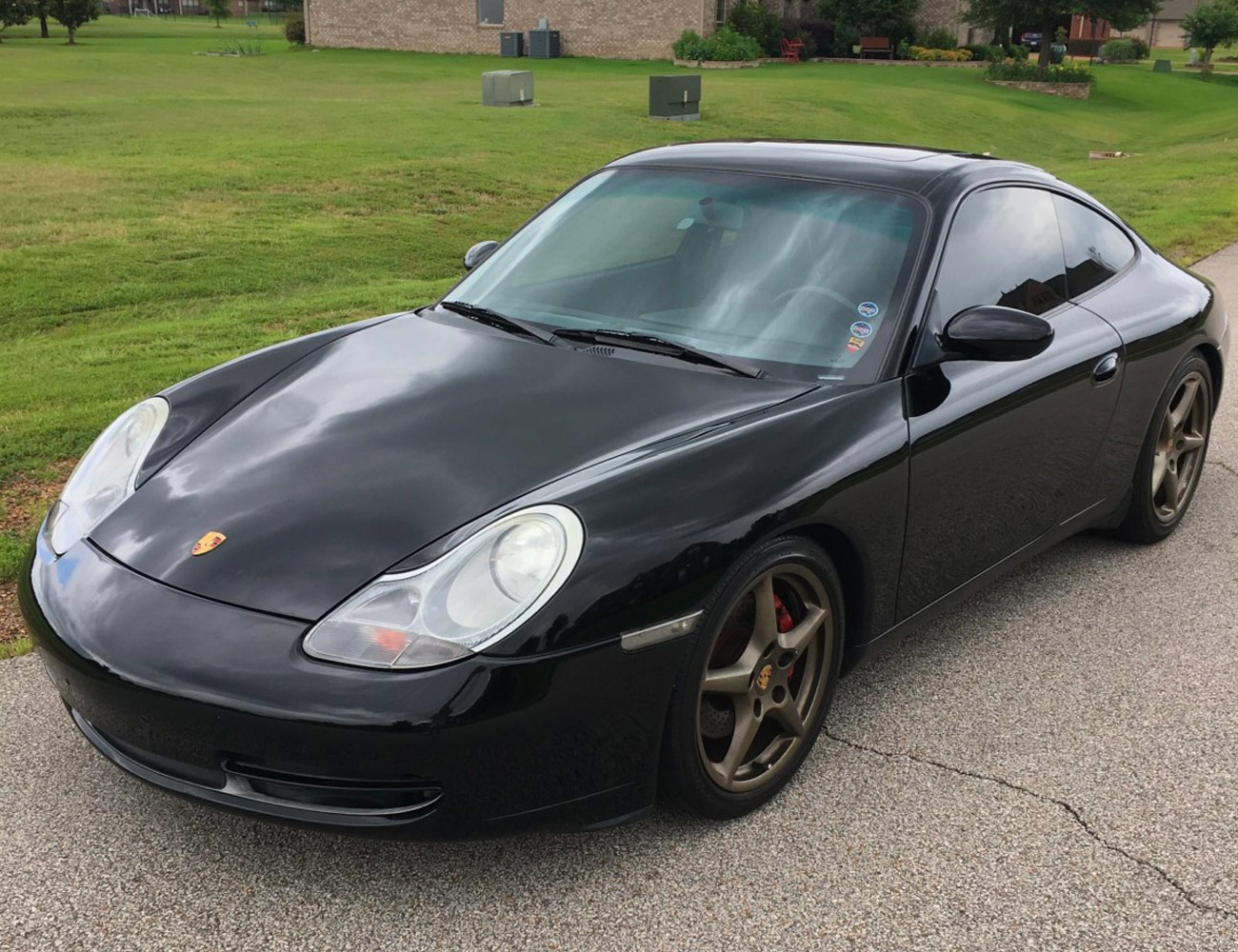
This stick-shift black ’99 Carrera with 82,000 miles? It went for $17,400 earlier this month.

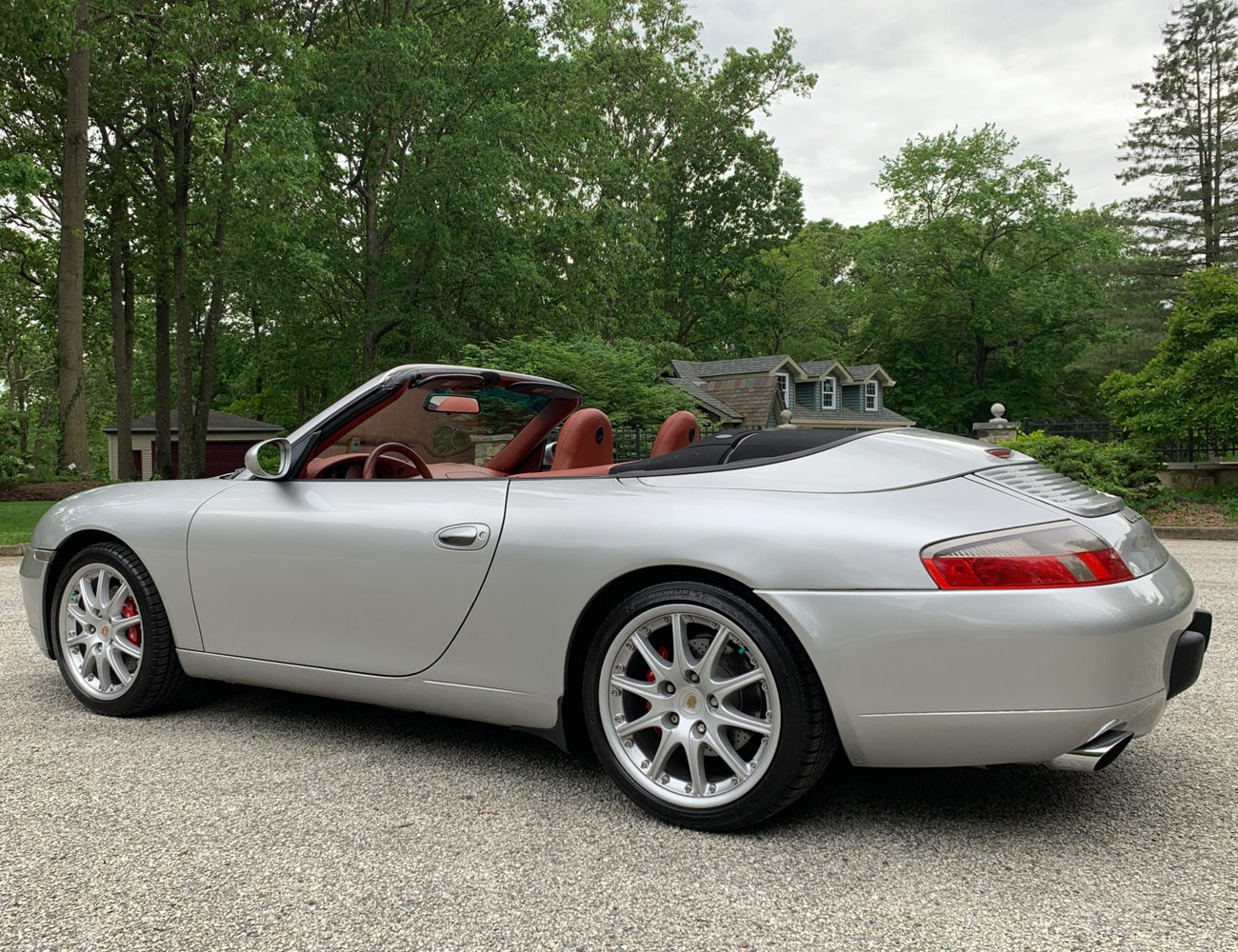
Fancy something in a droptop? This Carrera Cabriolet has a six-speed manual, an iconic color combo of silver exterior and red interior, and 74,000 miles on the odometer. Selling price? $23,000.

Prefer an automatic for the daily commute? You’re kind of a dweeb, but here’s a tasty Carrera 4S coupe with the Turbo-look widebody, a five-speed Tiptronic and 65,000 miles that sold for $27,000.

Willing to spend a little more for a choice example of the breed? This blue Carrera coupe has just 36,000 miles on the odometer, spent its whole life in the Sunbelt, and sold for $29,650.

Granted, buying a used car of any type carries with it risks, and that goes double for a Porsche; repair bills can run high. But the 996’s pain points are well-known at this point — you’ll want to make sure the IMS bearing is upgraded on high-mileage examples, for example — and the deep bench of knowledgeable enthusiasts found online on sites like Rennlist make it easier than ever to avoid problems.

If you’re feeling the itch, there are several 996 Porsche 911 Carreras currently on the block at BaT, including this stripped-down black beauty and a one-owner Carrera 4S with a stick shift. (In fact, the silver Carrera seen above is up for sale again.) But don’t wait too long to scratch. With Porsche’s plans filled with computer-aided performance machines and futuristic electric cars, it’s only a matter of time before the market for 996s starts heating up.

Live #VanLife Like Jimmy Chin by Renting His Personal Camping Van

How often do we get to experience the lives of our heroes? To live where they live, drive what they drive? Not often. But if your personal list of idols includes Oscar award-winning director and mountaineer Jimmy Chin, well, it’s your lucky day: Chin has partnered with car-hire service Turo to make that scenario a reality and give you a chance to live your best #vanlife.  

Starting today, Jimmy Chin is offering his 2012 Chevrolet AWD Express adventure van up for rent on Turo’s site. As a mountaineer and adventurer, Jimmy not only lived out of this van for years while hiking and climbing for his own expeditions; this van also served as his home while shooting and directing the Acadamey Award-winning film Free Solo. featuring climber Alex Honnold’s untethered climb up the notorious El Capitan in Yosemite National Park. This van, shall we say, has walked the walk. 

The Chevy Express left the factory stock in 2012, just like all its identical siblings that went on to be a plumber’s van or a church shuttle. But this van was destined for a life of adventure. The Chevy has been highly modified to sustain life on the road: It has a pop-top camper which stores a double bed — reminiscent of the old pop-top VW Westphalias, the archetype of the adventure van genre. It has a second double bed in the main cabin, allowing it to sleep four comfortably. It’s also fully kitted out with solar power panels on the roof and a propane stove in the kitchen. Of course, it has all-wheel-drive to handle any road or trail conditions, giving the operator the confidence to get out there.
Out of dedication to Jimmy’s desire for people to use this van for exploration and adventure, he offers a variety of outdoor adventure gear options to go along with the van and its temporary pilots: climbing rope, shoes, helmets, sleeping bags and hiking packs. The van is located in Jackson Hole, Wyoming, so there are plenty of great places within driving distance to use all those pieces of gear. 

Perhaps there’s no one better to sell you on not only this rig and what it can do than the man with the van himself: Jimmy Chin. “Taking time to travel for sports like climbing and surfing is the perfect way to reconnect with nature, to be with your family, and to just exist outside,” Chin said in a statement. “It’s also a lot of work and money to maintain the vehicles you need for that lifestyle year-round. Booking someone else’s on Turo makes a lot of sense. It’s more sustainable, more affordable, and a cool way to find that perfect car or van to fit the adventure.”

Is the New 2020 Nissan GT-R Nismo Worth It?

Henry Catchpole of Carfection Takes a Closer Look

The Nissan GT-R is an old car at this point. The car’s design dates back to 2007, which was 12 years ago. With a design this old, you might be thinking there’s no way that the GT-R can even compete with the new designs out there, but Nissan has spent a lot of time and effort fine-tuning its AWD supercar. Henry Catchpole of Carfection decided to get behind the wheel of the new Nismo version of the car to see if it’s still worth it. 

What Catchpole finds is that the updates that Nissan has made some very important updates. The car is definitely better than it was before. Nissan’s fine-tuning efforts have turned the GT-R, especially in Nismo trim, into an even more impressive machine. 
It’s clear that Catchpole feels there’s still plenty to love in the GT-R. It will be interesting to see how much longer Nissan chooses to continue on with the vehicle’s current design. We’d assume they have the next-generation GT-R in the works, but it seems like all the fine-tuning the company has done over the last several years has been worth it. 
With that said, he says that he would get the Track Edition over the Nismo version. The reason is that you get much of the notable upgrades–like the suspension and some of the fine-tuning elements–at a lower price point. 

[embedded content]

Porsche Revealed the Entry-Level 911 Carrera Coupe and Cabriolet

The Most Basic Version of the Cars

The most basic version of the Porsche 911 Carrera has now been unveiled. Porsche chose to detune the twin-turbocharged flat-six engine and downgrade some of the chassis components. These cars offer very good performance and driving dynamics for a slightly lower price. 

In the base 911 Carrera, you only get 380 hp. That’s down from the Carrera S’s 444 hp. Despite this drop in horsepower, the car is still capable of making the 0-62 mph sprint in just 4.2 seconds. The base model only comes with the eight-speed PDK automatic transmission. The model’s weight is down by about 22 pounds from the Carrera S. 

The car also features 19-inch wheels at the front and 20-inch wheels at the rear. Providing the stopping power are fou-piston calipers. These are slightly smaller than the ones on the Carrera S. When you go inside the car, you’ll notice that it features essentially the same cabin as other 911s. It offers the same 10.9-inch PCM infotainment system and central rev counter with two high-definition displays. 

According to Car and Driver, the coupe version of the car will cost $98,750 and the cabriolet version costs $111,550. These cars will go on sale at the beginning of 2020.

The 2020 Chevy Corvette was a hit in its first big public showing

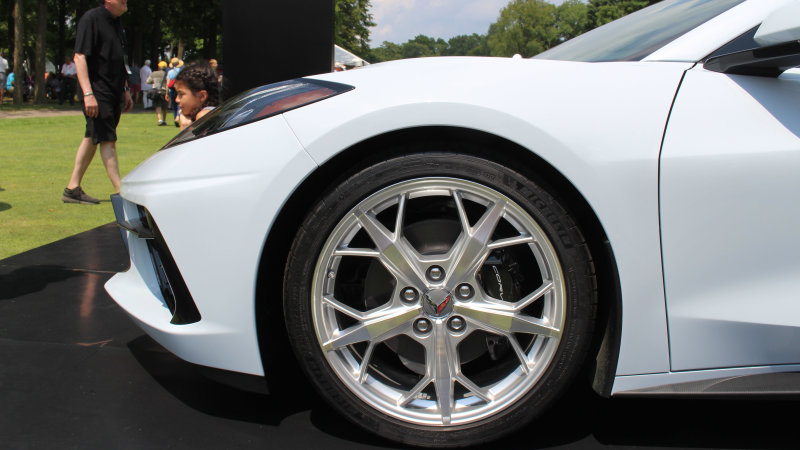
Chevy is basking in a seemingly endless afterglow of praise for the 2020 Corvette. We’ve covered the car from every angle since its grand reveal on July 18, but this past weekend we were able to take an even closer look at the design and public reaction to the C8.

GM decided to break a couple mid-engine Corvettes out at Sunday’s Concours d’Elegance of America, which gave us a chance to get up close and personal with the car. In addition to the real-life photos we were able to grab when the crowds parted, GM’s Michael Simcoe revealed to us that the 2020 model year run of C8s is “nearly sold out.”

We weren’t allowed to sit in the show cars on display, but we still got a good look at the interior with the roof removed. The C7 is rather confining, but the open-air hatch behind you does a good job making it feel more expansive. You lose that feeling in the C8, because the engine is directly behind your head. We think that’s a fair compromise to go mid-engine, but it is something to take into consideration — you won’t be throwing anything over your shoulder and into the hatch compartment anymore.

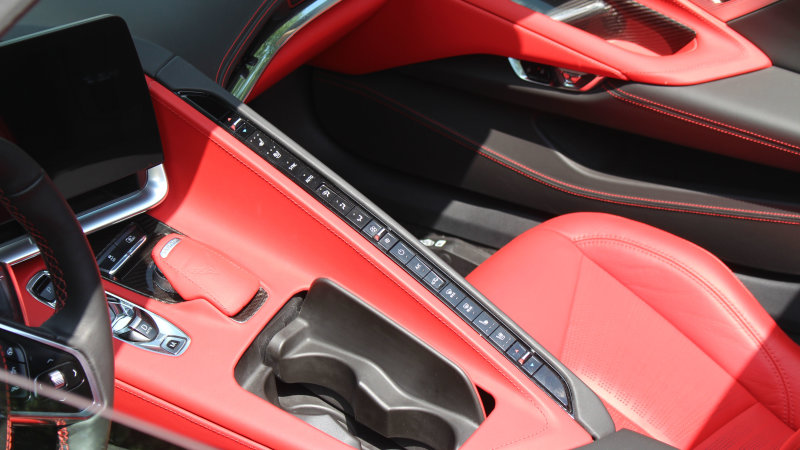
It’s impossible to judge how we like the driver-oriented cockpit without getting it out on the road in actual use, but it all looks luxurious and usable to us from a few inches away. The row of buttons slicing across the cabin looks far more intimidating in photos than it does in person, so you may not want to eliminate the C8 from your short-list for that reason alone.

As for the exterior, it’s an absolute stunner. We wouldn’t use the term “elegant,” but it turns heads in the right way, and the knowledge that it can be had for about $60,000 is mind-blowing. The glossy vents on the front and back are deceiving in photos, as though they’re just fake pieces of fancy plastic like the Civic Type R. But in reality, you can stick your fingers through these vents to the other side. We’re hoping to get a full explanation on the aerodynamics and venting from GM soon. Even the painted blade highlighting the intake looks good when you’re taking the car in as a whole.

There was more attention surrounding the Corvette than any other vehicle at the show, and that’s saying something for a Concours event of this magnitude. Chevy had a pop-up glass building in prime viewing location with a Corvette inside and a Corvette outside. There were consistent lines to get into the building to check the car out. Inside were all the wheel options, every paint color, all three seat options and every brake caliper color option hanging on a wall. You could place a reservation for one right then and there, and we imagine some folks did exactly that.

The grey C8 outside was more to our liking than the hot red Z51-packaged ‘Vette on the inside of the building. There’s a level of simplicity and cleanliness to the design when the multi-tiered rear wing and glossy black wheels are eliminated. The lines flow more smoothly throughout the car’s entire silhouette, and the understated look feels more appropriate amidst the utterly gorgeous range of cars on display around it at the Concours.

When it was time for the Corvette to roll by the grandstands for its 15 seconds of fame, everyone in the vicinity turned and watched with rapt attention. Phones and cameras were raised. The LT2 V8 roared to life with a familiar sound. People needed to see this car. It felt special, and it was. A mid-engine Corvette, in the flesh. Perhaps that feeling will wear off as GM pours thousands of them out of the factory in Bowling Green, Kentucky. But for now, the C8 is going to keep capturing the attention of anyone who chances a sighting.

SCC Will Deliver the First Tuatara at Monterey Car Week

The SSC Tuatara Will Arrive, Finally

After many years of waiting, the company SSC North America will finally deliver the first of its Tuatara hypercars. The car was first shown off nearly a decade ago, and now the first official model will appear at August 16 at The Quail, A Motorsports Gathering and be delivered to the buyer, according to Motor Authority

The SSC Tuatara is no run-of-the-mill hypercar. It’s more than a crap-ton of horsepower in a mid-engine machine. The vehicle has been purposefully and masterfully designed. For example, its aerodynamic shape offers a drag coefficient of just 0.279, lower than most other hypercars. This should help make the car capable of nearly 300 mph. The company’s CEO says it should be able to break 300 mph. 

The Tuatara comes packing a lot of heat in the form of a 5.9-liter twin-turbocharged V-8 that was developed by SSC. That engine can make up to 1,750 hp with the right fuel. The car also comes with several active aero elements, which should help with stability at speed. Pair all these impressive notes with the fact that the car only weighs 2,750 pounds, and you get the picture as to why this car is so important. 

[embedded content]