All posts in “Cars”

New Supra Variants Will Get More Power

Get Excited for a More Powerful Supra

It has recently come to light that the new Supra has more power than Toyota suggested. Dyno tests revealed the car actually makes more power than the company claimed. However, that doesn’t mean that Toyota won’t come out with new and more powerful variants of the car. According to a recent interview with the Supra’s chief engineer, Tetsuya Tada, by Autoblog revealed that more powerful Supra variants may be coming soon. 

The variants of the Supra that will be coming will use the same 3.0-liter inline-six-cylinder engine that the current one has. This is not a bad thing. The engine has plenty of more power to give to the world. In the BMW Z4, the engine makes about 50 hp more than the Supra, so it stands to reason that Toyota could add that kind of power bump without doing all that much work to the engine. 

Tada wouldn’t disclose what kind of power bump the next versions of the car would get, but he did say the following: “With a sports car, the promise is to offer more performance with each additional version.” Autoblog said that a new version could show up pretty much every year. That sounds pretty good to us. 

Another thing Tada touched on is the fact that there will be no manual transmission in future versions of the supra. “Customers who want a manual should choose the Toyota 86,” he said. That makes sense Toyota has managed to get a lot out of the 86, and anyone who wants a manual transmission has a wonderful Toyota sports car with one in the 86. However, it would still be awesome to see one offered in the Supra. 

2019 Porsche Cayenne Turbo S E-Hybrid Review

Porsche are on the dawn of a new era. In just a few weeks they will unveil a car that they hope with revolutionise the industry – the Porsche Taycan. The all electric car is the first full EV for the Stuttgart based brand, but it is by no means their first foray into the high voltage. high stakes world of electricity.

Since the 918 hybrid hypercar, there have been a plethora of series production models that have been born as a result of the technology trickling down into cars you need not be a millionaire buyer on Porsche’s VIP list to own. The Panamera and Cayenne have been fitted with hybrid drivetrains to not only lower emissions and increase fuel economy, but also to make then more potent courtesy of additional power and instant torque. It is a winning formula, and now Porsche have applied it to the updated Cayenne and Cayenne Coupe – the Turbo S E-Hybrid models to be accurate.

The results are frankly, barmy. The Turbo Coupe I drove a few months back never had me thinking more power was necessary given that it weighed in at over two tonnes and packed 542 brake horsepower from its 4-litre V8. The added 14.1 kWh battery packs boost power by 134bhp bringing the total to 676bhp, in an SUV. The Turbo S and Turbo S Coupe both share the same drivetrain which launches the car to 100 in 3.8 (one tenth quicker than the Turbo) and top out at 295km/h (286 in the Turbo).

However, the added performance comes at a cost – those batteries add an additional 130 kilograms (add around 200 more for the DC converter, charger and cables) to the already beefy Cayennes. At a total of over 2.6 tonnes, the Turbo S-E Hybrid models should handle like cruise ships…they don’t.

With the usual raft of optional tech such as four wheel steer, torque vectoring, active engine mounts and other weight masking goodies, the sporty characteristics of the Cayenne remain. The weight penalty is negated by the shove that comes courtesy of hybridisation that almost abolishes any turbo lag. In Sport+ the hybrid drivetrain in working to provide the maximum amount of power and torque wherever possible and the gains are tangible. The in gear acceleration is vicious, there seems to be no fade in the force of acceleration, something I experienced time and time again on the derestricted autobahn.

Air suspension, roll stabilisation and ceramic brakes are all fitted as standard on the S E-Hybrid models, options that help to justify the €172,604 and €176,293 base prices for the normal and Coupe bodies respectively. The price tag is hefty, but the Cayenne Turbo S E-Hybrids really are cars that can do it all.

From long journeys in extreme comfort and luxury, to blasting down the autobahn with such brute force and even doing the school run in silence in electric mode for up to 43 kilometres, the Turbo S really can do it all. The choice of body styles and the vast array of configurable specifications make the appeal of such SUVs wider still.

Personally, I must question the necessity of the added power, as I mentioned, driving the Turbo earlier in the year, I never felt that the car required more power, even when driving up valley and mountain roads. However, I am not in the market for such a car and with ever tighter emissions and regulations, the hybrid element may well be enough to persuade a few buyers to fork out the extra cash and bare the additional weight. Either way, there is no way of denying that the Cayenne Turbo S E-Hybrid is a mighty fine machine.

GTSPIRIT NEWSLETTER

Glickenhaus shows Le Mans-bound, Alfa Romeo-inspired hybrid hypercar

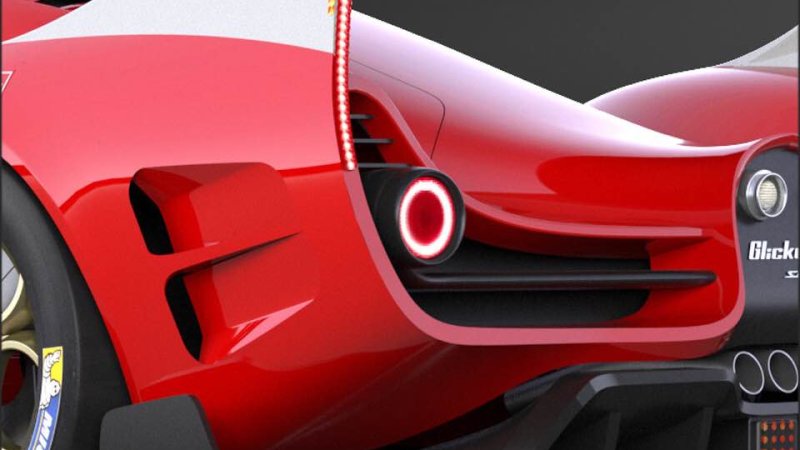
New York-based boutique automaker Scuderia Cameron Glickenhaus plans to challenge Aston Martin, Toyota, and possibly Lamborghini in the World Endurance Championship’s new hypercar category. Company founder James Glickenhaus published an enigmatic preview image to give us an early look at the upcoming race car, which will spawn an incredible street-legal model.

The photo depicts the yet-unnamed car’s rear end, and there’s a lot to take in. We see a swooping roofline that flows into a rear end accented by a pair of fins. This styling cue seemingly pays homage to the three Berlinetta Aerodinamica Tecnica (BAT) concept cars Alfa Romeo commissioned from Bertone between 1953 and 1955, which isn’t surprising considering Glickenhaus is well-versed in automotive history. The Michelin-wrapped alloy wheels are also very Alfa-like, while a sizable air diffuser suggests the car spent many hours in a wind tunnel.

While the teaser photo asks more questions that it answers, Glickenhaus added that the car’s drivetrain will consist of an engine tuned to send 650 horsepower to the rear wheels, and a Formula One-like kinetic energy recuperation system (KERS) that zaps the front wheels with a 150-horsepower electric boost. This layout delivers through-the-road all-wheel drive, and we expect it will provide jaw-dropping performance. The engine’s origins remain under wraps, however.

If that number rings a bell, it might be because the Baja Boot off-roader uses a 650-horsepower, 6.2-liter V8 engine borrowed from the Chevrolet Corvette Z06’s parts bin. We can’t help but wonder if the same time-tested supercharged eight-cylinder will also appear in the endurance racer.

Scuderia Cameron Glickenhaus might bring its next new model to Pebble Beach, California, this week. If not, the company could show it either at the Frankfurt auto show opening its doors in September, or the Los Angeles auto show taking place in November. Either way, testing will begin in the coming months, and the car will participate in its first World Endurance Championship race in 2020. The street model will likely go on sale at about the same time priced well into the six digits.

Mercedes-AMG’s Project One Hypercar Delayed Until 2021

It’s Taking Longer Than Expected

There’s a lot to be excited about with the Mercedes-AMG Project One Hypercar. One of the things we were pumped about was that it was supossed to come out soon. Well, according to the German publication Auto Moto und Sport, the car will take some more time than was originally thought. The project has been pushed out to 2021. 

Why? Well, it seems that using a Formula 1 engine in a road car and making it legal is a little more tricky than Mercedes thought it would be. The company is finding that the new emissions standards are making things difficult according to Motor1. The engineers at Mercedes seem to have underestimated the task of transforming the V6 engine into a street-legal mill. 

The emissions issue is just one part of the problem. F1 engines are very special machines with complicated startup sequences. You can’t just toss one into a car and hit the starter button. Oil needs to be brought up to temperature and F1 engines are actually started with an external starter in many cases. This means engineers have a major task on their hands of making the engine more consumer-friendly while still achieving the power outputs promised to the world. Hopefully, Mercedes will get its house in order by 2021. We can’t wait for this car to come out. 

More News of the Ferrari 812 Spider Coming In September

A Drop-Top Superfast

If you’ve always loved the 812 Superfast but were dismayed by the fact that Ferrari doesn’t sell a drop-top version, then you should listen up. According to a car collector that is intimate with Ferrari, the 812 Superfast could be coming as early as September. We reported on this news before, but now The Supercar Blog has more of a concrete confirmation due to an interview.

The publication sat down with a car collector, who just so happens to be one of the few people who will be getting the upcoming Bugatti EB110 Tribute car. It stands to reason that this person knows his or her stuff. The unnamed collector told the publication that the 812 Spider will come in September and it will get the same V12 engine that’s in the coupe. 

In the coupe, that 6.5-liter engine produces 789 hp and 530 lb-ft of torque. The power numbers likely will stay the same for the convertible version of the car. However, the convertible will likely be slightly slower than the coupe overall. That means it won’t quite achieve the 812 Superfast’s 0–62 mph time of 2.9 seconds. Still, you’re looking at something between 3.0 seconds and 3.5 seconds most likely. 

When it comes to what the car will actually look like, the verdict is still out. It will have most of the same features and bodywork as the 812 Superfast coupe, but obviously, changes will be made to the car to accommodate the folding roof. The Supercar Blog stated that the top could be a hardtop. This, however, is just speculation. The publication’s source did not say it would be a hardtop car. We’d love to see it as a hardtop, but would not be surprised if Ferrari chose to do a soft-top roof instead. 

Bugatti has already designed and shown an SUV, awaits green light

Bugatti appears to be backing itself right into the quilted leather seats of a crossover the brand swore would never happen. In January, CEO Stephan Winkelmann announced to the world, “There will be no SUV from Bugatti.” By April, reports said Bugatti was working on a “crossover-influenced sports car,” which is gobbledygook meant to avoid calling an SUV an SUV. Winkelmann also admitted then that as far as what kind of vehicle to build as a second Bugatti, “It’s not me to decide.” At the beginning of this month, Automobile magazine’s intel claimed Bugatti was considering an all-electric SUV using a Rimac platform, limited to around 600 units per year and selling for between $850,000 and $1 million. Closing the circle, when Automobile‘s man recently sat down with Winkelmann, the CEO said this in response to a question about a “three-door, ultra-premium crossover SUV:” “The design is done. Some potential customers have seen it, and they liked it.”

The Italo-German head honcho then seemed to back Automobile‘s previous reportage, saying that a potential crossover “would almost certainly be battery-powered,” and that he envisioned sales volumes between 600 and 800 per year. When “one or two influential people” from the Volkswagen Group mother ship stopped by to check out the design, they “were complimentary about it.” Since overlords haven’t signed off on any such vehicle, “there is no budget and no decision.” But this is like when a dog owner puts on his jacket, shorts, and gym shoes, grabs the leash, then tortures the dog with the pretense that they aren’t going for a walk. So don’t be surprised if [when] Bugatti reveals a crossover.

One truly surprising quote from the boss was when he said, “So far, nobody is doing a high-performance, high-end luxury CUV. Because of the battery situation, it’s too early for an electric hypercar.” To the former claim, that’s a wheelbarrow full of dirt thrown on the Bentley Bentayga Speed, as well as the Lamborghini Urus that Winkelmann shepherded to production. As for the latter, Rimac and Pininfarina would likely, respectfully, disagree. 

Another potential walk-back is an open-topped version of the Chiron. When Motor Trend asked Winkelmann last December if the carmaker planned a Chiron Grand Sport, the exec replied, “We decided in the Chiron project not to do an open-top version.” And now? Seems so many owners have pestered the boss about a Grand Sport version that it is at least a possibility, but one that — strangely — requires some re-engineering. We find it odd that a Chiron Grand Sport wasn’t in the plan from day dot. However, “if the roof must come off,” Winkelmann said, “this can only be done properly with a reengineered and much stiffer monocoque. So let’s wait and see.” 

As if that weren’t enough, remember the top-speed run that wasn’t a priority? Well, it’s “still a possibility.” Check out the Automobile piece for more on where — and how fast — the ultra-luxury brand might go with its current car and any addition to the lineup.

The 2020 Chevrolet Corvette has had its first public crash test

General Motors debuted the 2020 C8 Chevrolet Corvette Stingray in San Diego about three weeks ago. Last weekend, further north and west in the California hinterland, a GM test driver crashed the C8 Corvette. On Saturday, Jalopnik noticed that Instagram user Wrecked_Musclecars (name checks out) posted a photo of a C8 Corvette that looked like it had just finished an IIHS small overlap crash test. This Corvette, however, had made its mess on a winding mountain road. The caption with the photo said, “The first of I’m sure many 2020 Corvette Stingray wrecked on the road. Wife spotted on her drive to Yosemite here in Ca. The car was apart of a rally with GoPros mounted on the vehicle. Took a wide turn and the rear wheel off an SUV with a family in it heading opposite direction around a turn.”

Beyond that, we have no idea how the accident happened, but most important, every human involved appears to be OK.

Not long after, a Jalopnik reader submitted video of the aftermath, pinpointing the location to CA Route 120 between Moccasin and Groveland. The beginning of the video shows what we assume are GM team members toiling around the back of a Silverado. After that comes the Corvette, then the other cars involved in the accident. There’s an early model red Ford Ranger that’s had some serious nose work done, then a late model silver Chevy Equinox that was the first vehicle hit and took the brunt of the force. We can’t see the driver’s side of the Corvette, but the impact to the crossover was so strong that it sheared off Equinox’s left rear wheel and jacked the back of the crossover onto the guardrail. 

There’s no need to pine for the Elkhart Lake Blue Corvette itself; as a pre-production model, it was likely destined for the crusher anyway. We wouldn’t mind seeing some stats on crash rates of blue Corvettes on official business, though. Last year, GM EVP Mark Reuss crashed a 2019 Corvette ZR1 while leading the parade lap during the IndyCar race at Belle Isle, Detroit. That car was Admiral Blue. In February 2013, a GM test driver crashed one of the C7 Corvette prototypes on a mountain road in Arizona. The color of that car? Laguna Blue. And remember the sinkhole at the Corvette Museum? What color was the 2009 ZR1 car sitting atop the rubble, in the middle of the carnage yet looking like it hadn’t been touched? Jetstream Blue. Just sayin’.

[embedded content]

2020 Mercedes-Benz GLS-Class Review: A Few Tricks Up Its Sleeve

In fancy SUV land, the Mercedes-Benz GLS-Class is king of the hill—not just in the Mercedes lineup, but arguably everywhere else, too. So the arrival of a new version for the 2020 model year is cause for some industrial-strength examination.

Fortunately, there’s a lot going on in this thing, so your eyeballs will get a workout. It’s available in two versions at launch: the GLS 450, with a 362-hp engine, and the GLS 580, with a 483-hp V8; either way, it has gobs of tech (both new and evolved), and it treats passengers like the royalty they are. It’s also a legit off-road beast — the kind that can help bail you out of the worst jams.

The Good: There’s quite a lot to love here: smooth ride, commendable trail performance, swanky interior. But nothing will impress your friends, neighbors and strangers at stoplights more than the car’s ability to bounce rhythmically up and down. Found in Free Driving mode, the move is actually intended to help free a vehicle stuck in the sand by quickly bouncing it through the full depth of the air suspension, mimicking the rocking movement we all know from our own sand traps. But it’s also spectacularly fun at parties, and has that increasingly rare quality of being a genuine surprise.

Who It’s For: Let’s talk about that, shall we? Mercedes describes the GLS as the “S-Class of SUVs,” referencing its own market-leading luxury flagship. That’s true, but only up to a point. The S-Class has that rare quality of being a truly executive experience — replete with grace notes in the design, considerable outward elegance and endless passenger comfort and convenience. More than that, though, it has an aura of stratospheric wealth, and is the only premium-luxury full-sized sedan that arguably can truly compete with the likes of Bentley and Rolls-Royce.

The GLS…ain’t that. It’s a big, really nice SUV, but it’s no S-Class. That is to its credit, though; it makes it the perfect SUV for folks with families, a hankering for quality, capability, and luxury, and gobs of disposable income.
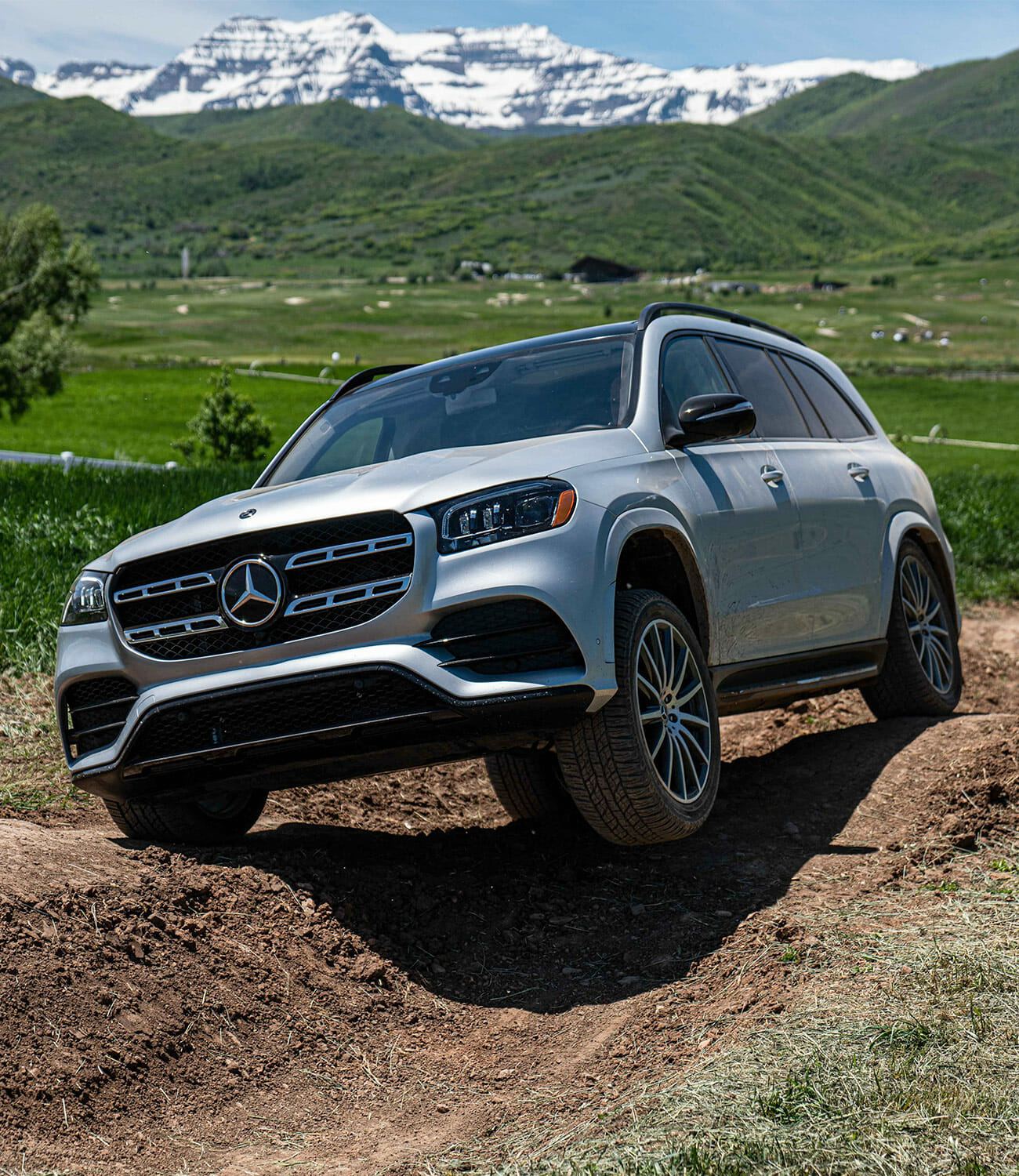
Watch Out For: MBUX, the new infotainment system introduced in Mercedes’s cars last year. It’s a fantastic, intuitive system, but it still has usability bugs. Particularly in the voice control system, which is summoned by the words “Hey Mercedes.” As presently tuned, it has a hair-trigger responsiveness that causes it to manifest if anyone dares utter the word “Mercedes” in its presence, and there’s no obvious way to tell it to go away once it starts looking for commands you don’t mean to give.

Also, the lane departure system has a new way of kicking you back into your own lane by using the brake instead of nudging the steering wheel. The effect is unnerving and jarring, as though it’s an obstacle-detection or blind-spot system rather than a simple lane-keeping assist. If you do it while driving down a road alone and changing lanes without signaling, it can inject a moment of panic when you think there’s a car there. It needs to be dialed down a hair.

Alternatives: That’s easy: The Land Rover Range Rover, Cadillac Escalade, Lincoln Navigator and BMW X7. Audi’s Q7 isn’t quite on the same level in terms of over-the-top luxury and features, and the Audi Q8 isn’t because it’s a bit smaller and sportier. Gazing upwards, you have of course the Bentley Bentayga and the Rolls-Royce Cullinan.

Review: There’s a sneering refrain among automotive media about how owners of off-road-capable SUVs “never take them beyond the pavement.” Sure. Most sports cars never see the racetrack, and most pickup trucks never haul anything more than Ikea furniture, either. But I have another theory about why people find comfort in capable SUVs. It’s not that they have aspirations for trail-riding or dune-bashing — both of which the GLS can commendably manage — but it’s that they know their rides will have their back if they ever get into trouble.

It’ll help them through snow, help them off the beach, and help them tackle a gnarly trail they didn’t expect to find themselves on. Even if it’s just used once or twice a year, it will be valued because that’s when it will matter most. Furthermore, raising the ceiling of capability enhances the quality of everything beneath it. You’ll reach the edge of adhesion on a slippery surface in an entry-level crossover far faster than you will in a GLS, given its across-the-board capability, programming and engineering. It’s a ride that does everything well, and many things really well.
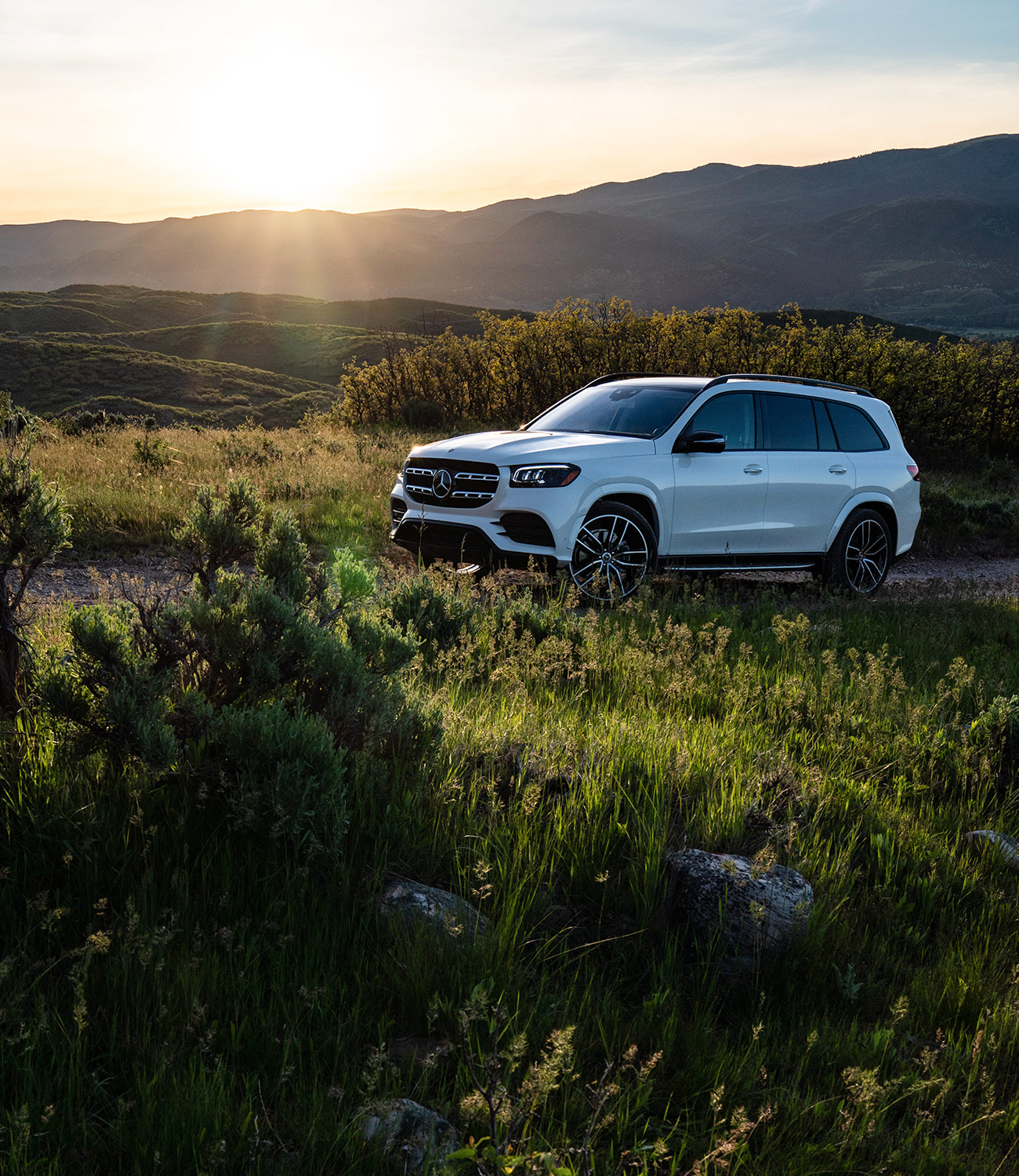
I learned this on our drive across northern Utah, which took us through some beautiful scenery and along tantalizing roads. One of the features that stood out on the latter was the E-Active Body Control and its Curve function, which leans the car into bends to help manage the experience of body roll, especially in brisker driving. You may not notice it right away, but it’s there — and is best considered a cumulative effect. G-forces “stack,” getting worse on passengers as the curves pile on; this modulates that steady accumulation of discomfort.

Regular driving was quick and confident, with both engines producing reliably thrusty performance — and the V8, obviously, delivering the most grunt overall. The 48-volt mild-hybrid system helps things along by enabling smoother start-stop capability and additional power for all the new safety, performance and comfort features infused in the GLS.

Off-road, the GLS proved itself exactly as described: a ready tool to simply bail you out or encourage exploration. We traversed fairly sketchy rock crawls and managed steep inclines. The car is so good at this stuff, Mercedes felt confident enough to gamify the experience: You can enable a scoring feature that allows the GLS to asses your off-roading prowess with a score of 0-100. You add points by appropriately managing your pace and momentum across different features and deftly articulating your way over rocks, tree limbs and other obstacles. You lose points with haphazard throttle application or clumsy, trepidatious maneuvering. It was fun, and I can see it being a novel way of competing in the off-road set as the capability trickles down to more accessible vehicles. There were times when I could quibble with its scoring, though — most notably when I was driving down a fairly featureless stretch in a way the car deemed too fast.

Inside, the GLS is perfectly lovely and comfortable, with sophisticated material selections and pairings, cushy seats containing (optional) massagers and a solid, well-constructed vibe from front to back. It feels thoroughly well-executed and runs whisper-quiet, making quick work of both rough roads and the little pavement hiccups that can wear on you during road trips or commutes. The extra advantage of being able to ditch that commute at the first sign of dirt two-tracks is merely icing on the cake.

Verdict: The new GLS-Class is the ideal evolution of the model, with multiple compelling new features and commendably enhanced ride and comfort. The gremlins are in the new tech — the voice recognition, the aggressive lane-centering. Those will surely be fixed in time, and can be disabled if they bother you. It’s disappointing that a brand as evolved as Mercedes would let them squeak through to begin with, but they’re minor glitches, given the great pile of innovation this rig delivers in general.

2020 Mercedes-Benz GLS-Class Key Specs

Powertrain: 3.0-liter turbocharged inline-six / 4.0-liter turbocharged V8; nine-speed automatic; all-wheel-drive
Horsepower: 362 / 482
Torque: 369 / 518 pound-feet
0-60 MPH: 5.9 / 5.2 seconds
Top Speed: 130 mph

Mercedes-Benz hosted us and provided this product for review.

Read More Gear Patrol Reviews

Hot takes and in-depth reviews on noteworthy, relevant and interesting products. Read the Story
Note: Purchasing products through our links may earn us a portion of the sale, which supports our editorial team’s mission. Learn more here.

Inside Bugatti Automobili ‘La Fabbrica Blu’ in Campogalliano

Romano Artioli created his Bugatti supercar dream in the early 1990s in Campogalliano. This small town on the outskirts of Modena is still home to the Bugatti Automobili factory and is not quite as abandoned as it seems. We tour the premises with Ezio Pavesi and his son Enrico that have taken care of the factory and the grounds since Bugatti Automobili’s bankruptcy in 1995.

The story of La Fabbrica Blu starts in the 1980s when Italian entrepreneur and Bugatti collector Romano Artioli acquires the Bugatti brand name. His dream is to resurrect the Bugatti name in honor of Ettore Bugatti and create the best supercar of its time in a state of the art facility. He found a suitable plot for his dream factory in Campogalliano in what is dubbed Italy’s ‘Supercar Valley’. He also considered Molsheim for his factory but the available know-how, employees and infrastructure strongly influence the decision to build the Bugatti Automobili factory in Campogalliano.

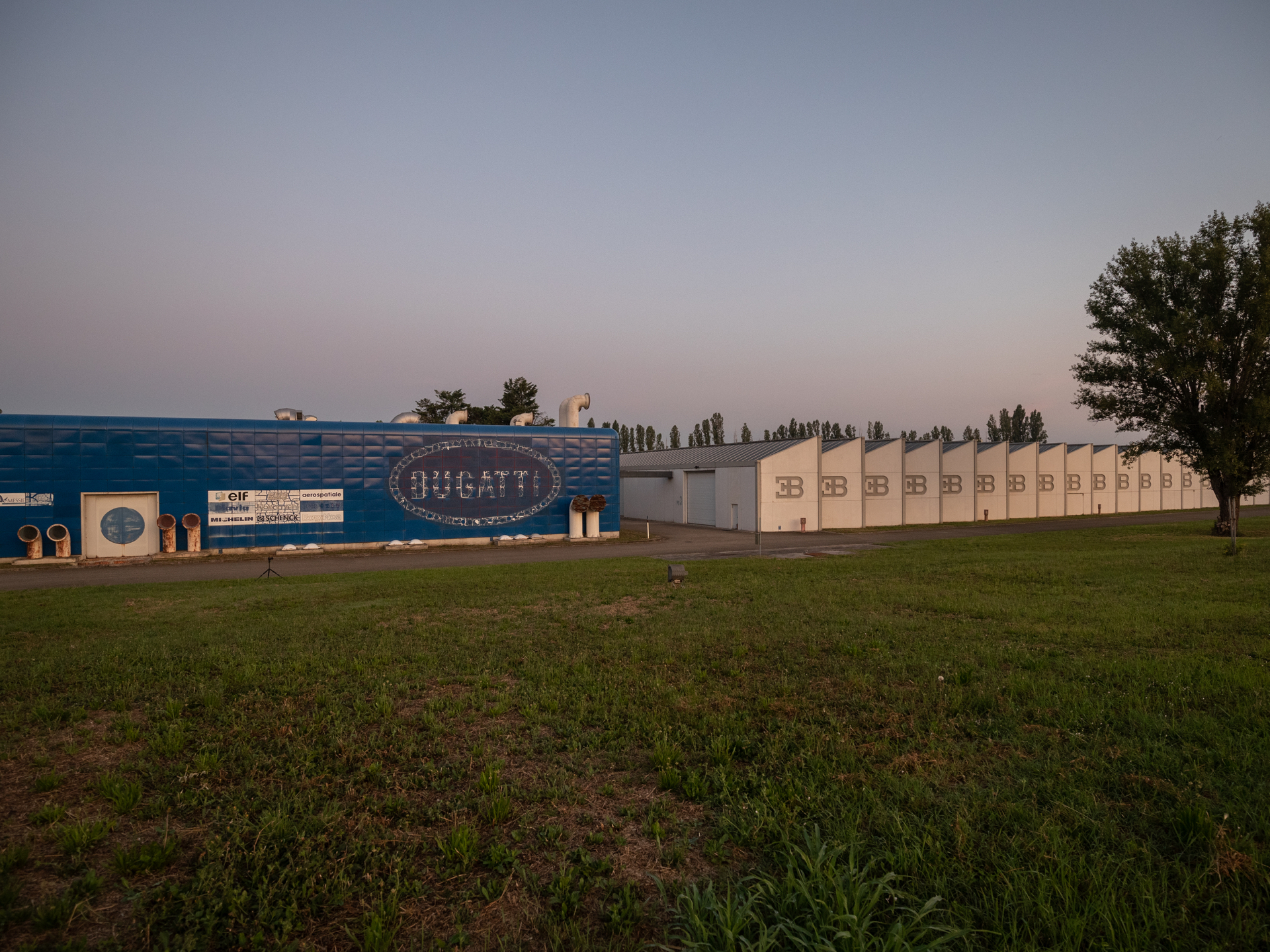
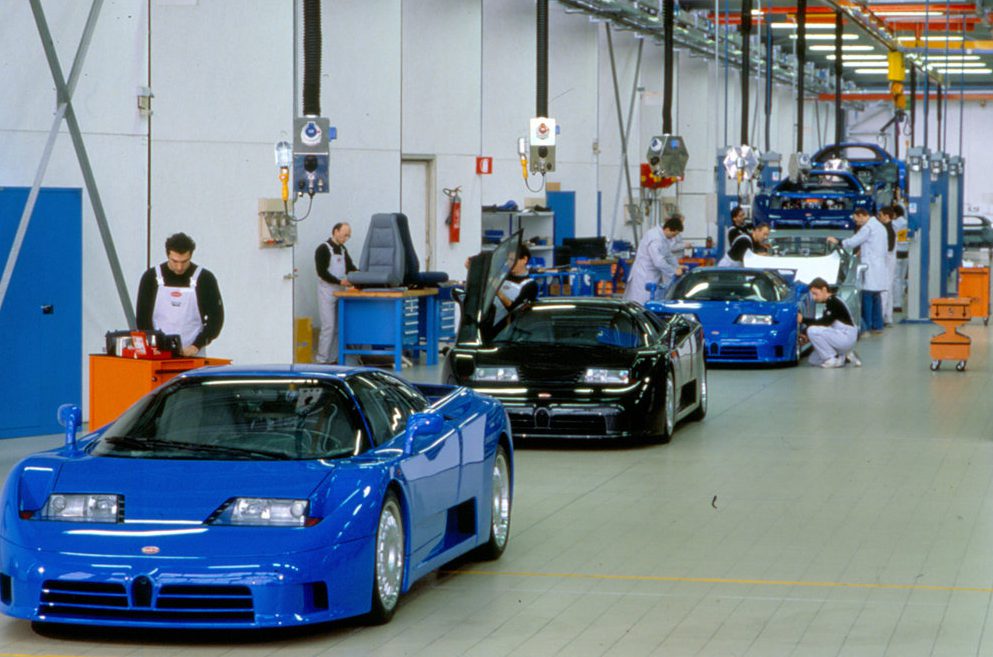
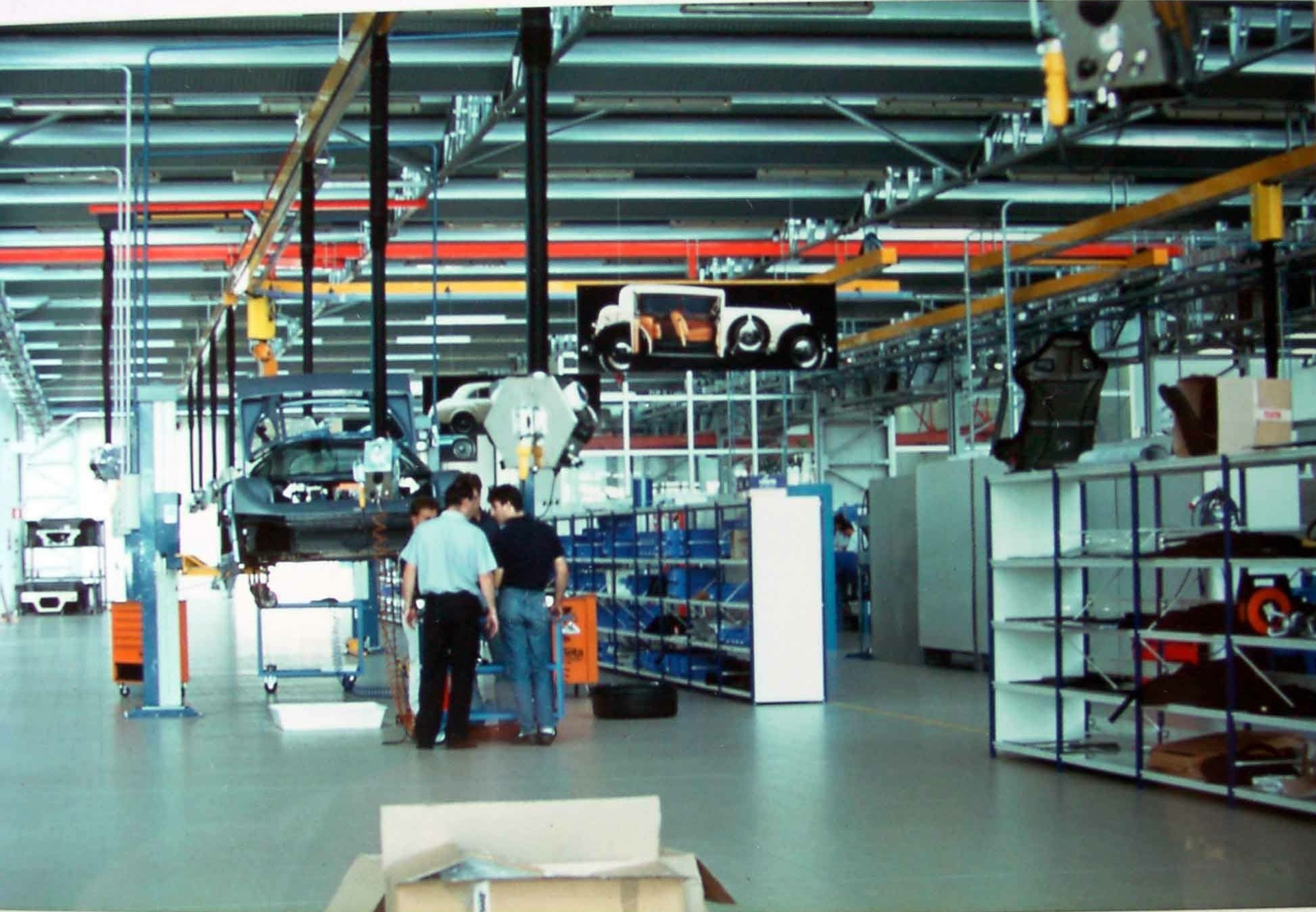
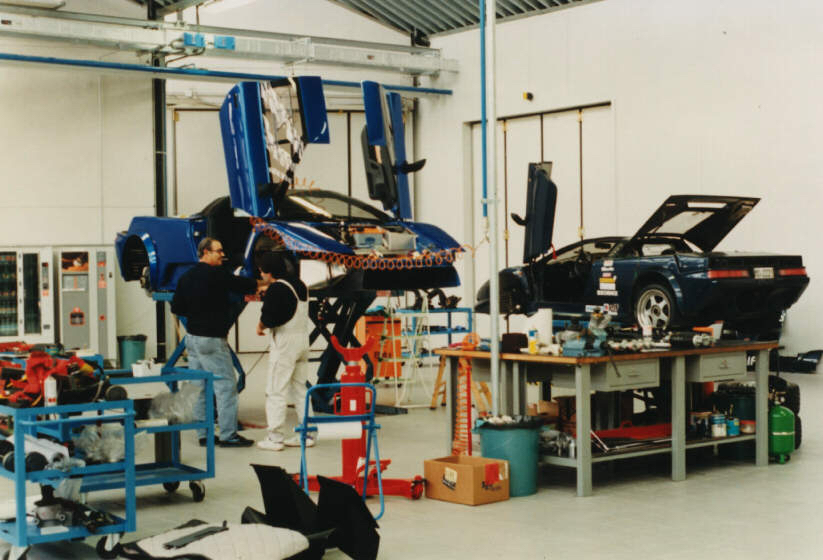
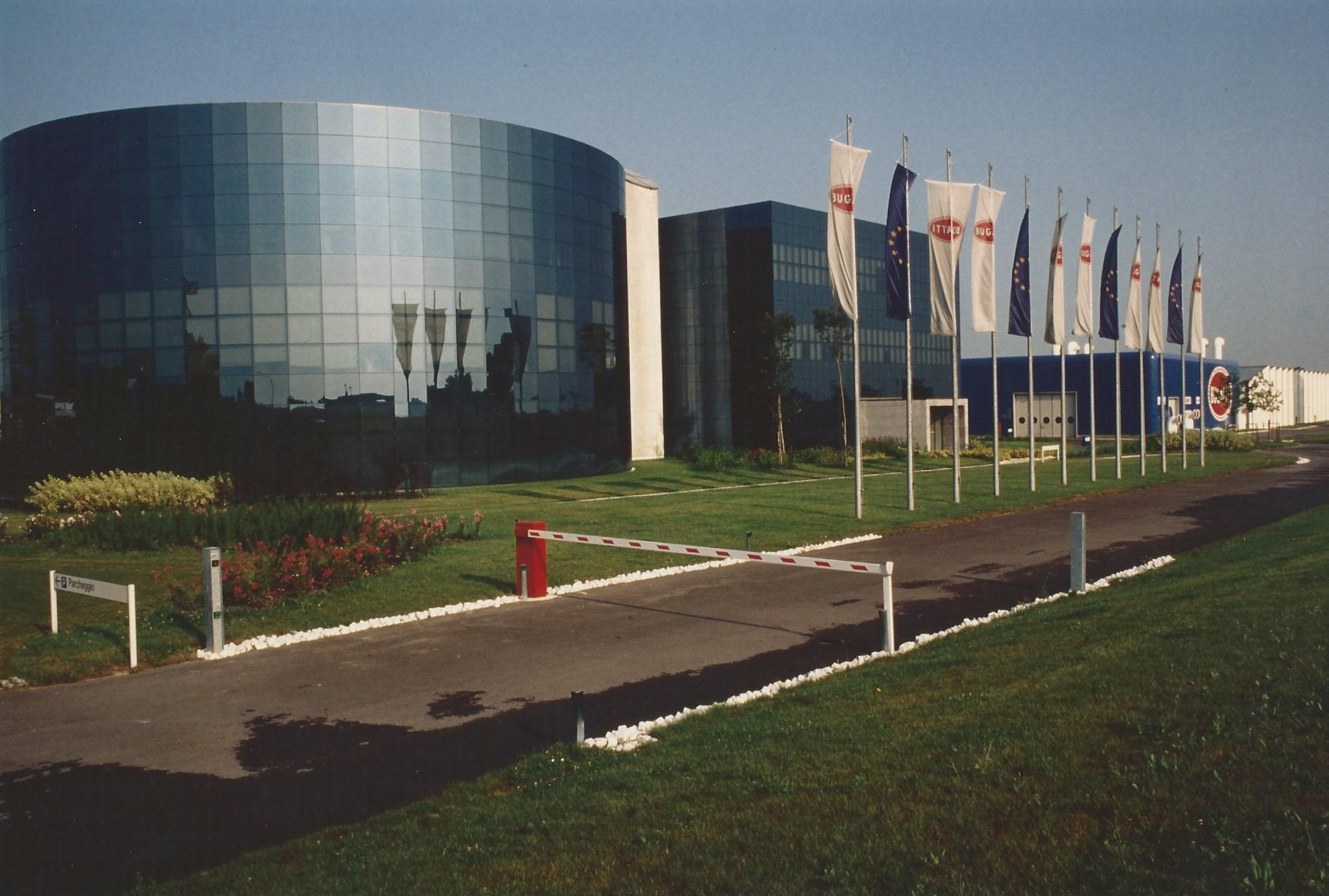
The factory was designed from the ground up with the worker and flexiblity in mind. Thick prefabricated concrete EB-branded slabs form the outer walls of the two factory halls. They are angled in such a way that they keep sunlight and heat out, while adjacent glass running between the concrete slabs from the floor to the ceiling and across the roof let in enough daylight to ensure a comfortable working climate. Inside all buildings there are hardly any fixed walls allowing the factory to be adapted to the needs at any time. Most components for the EB 110 including the engine were produced in-house and Romano Artioli wanted customers to be able to see the production process of their cars.

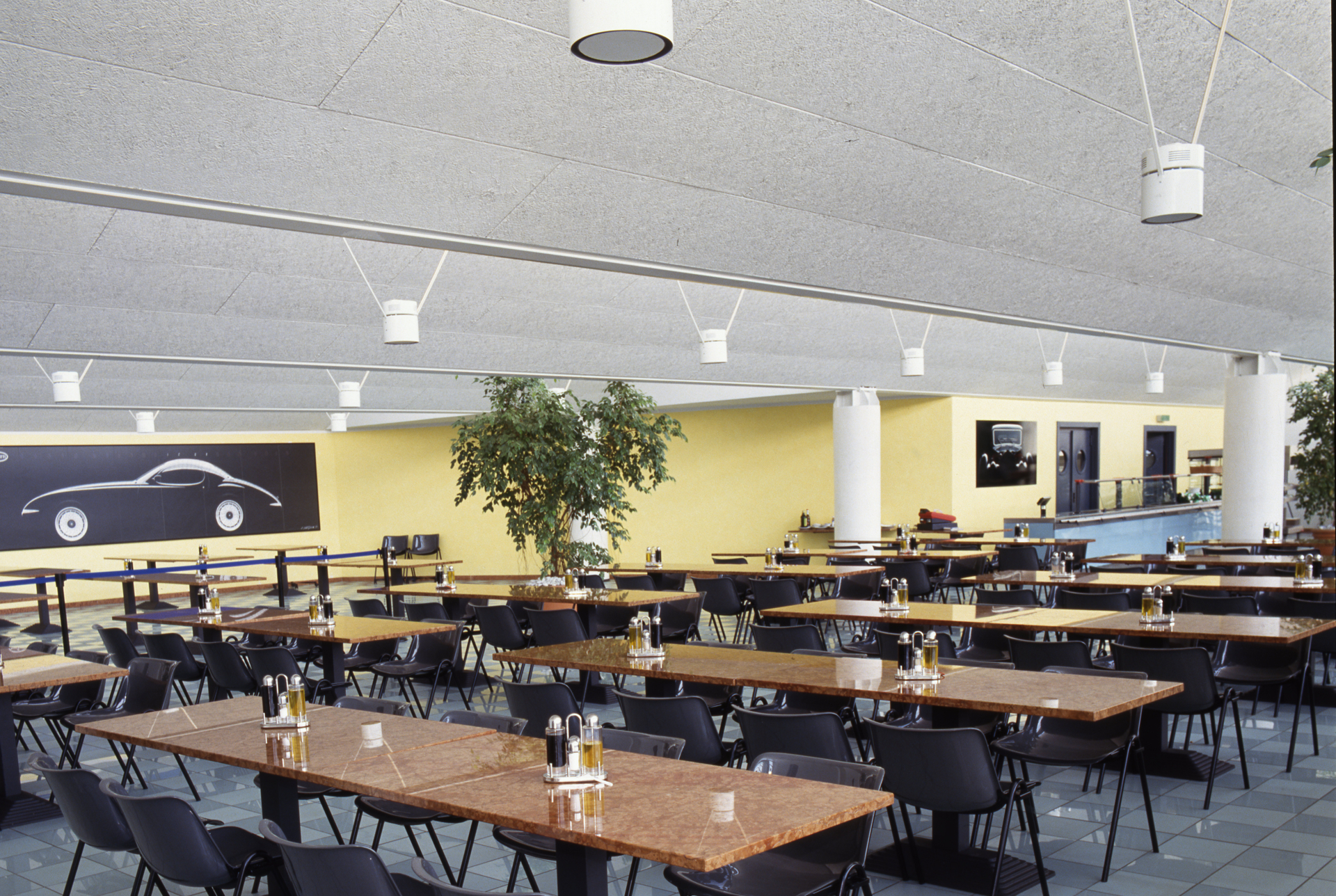
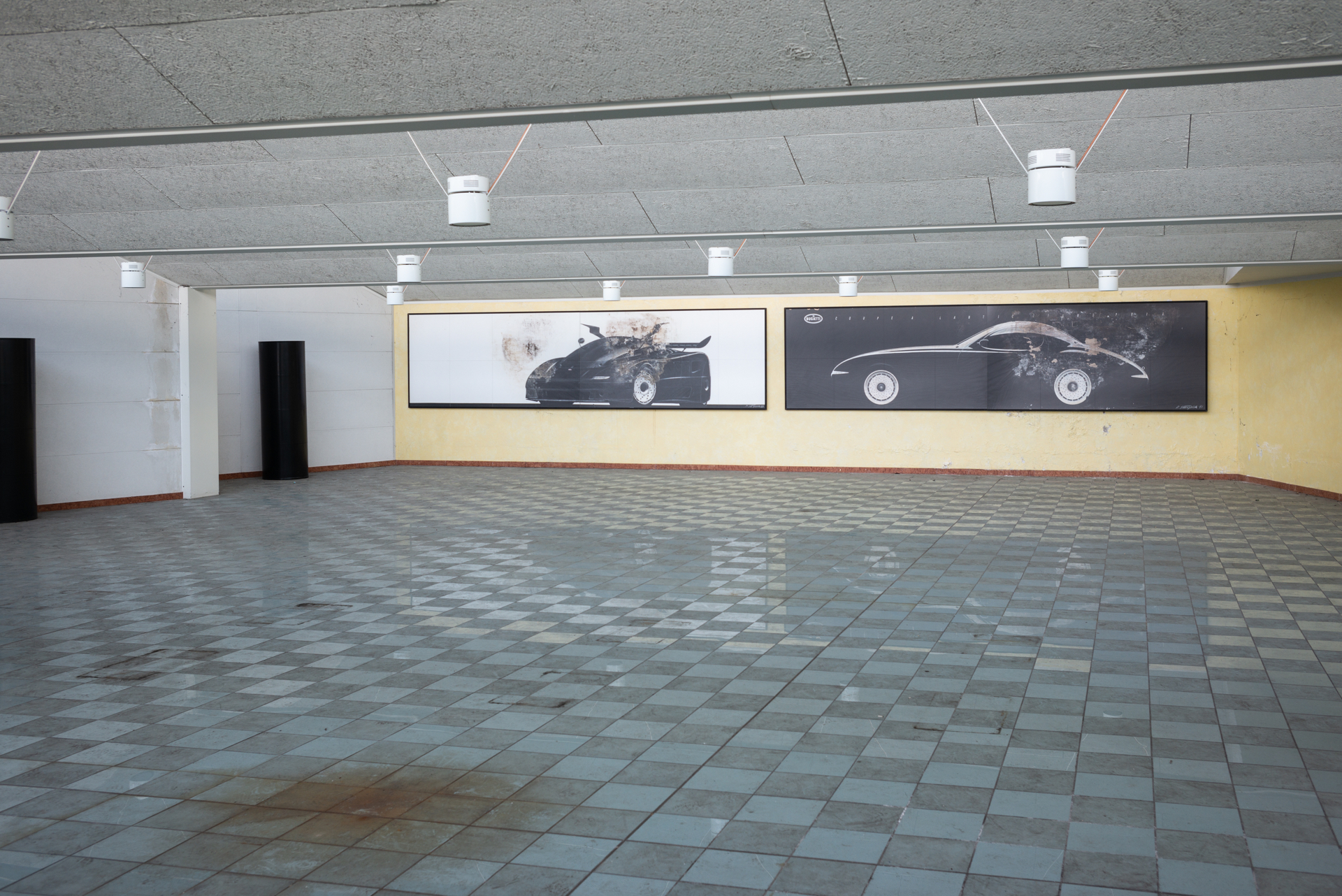
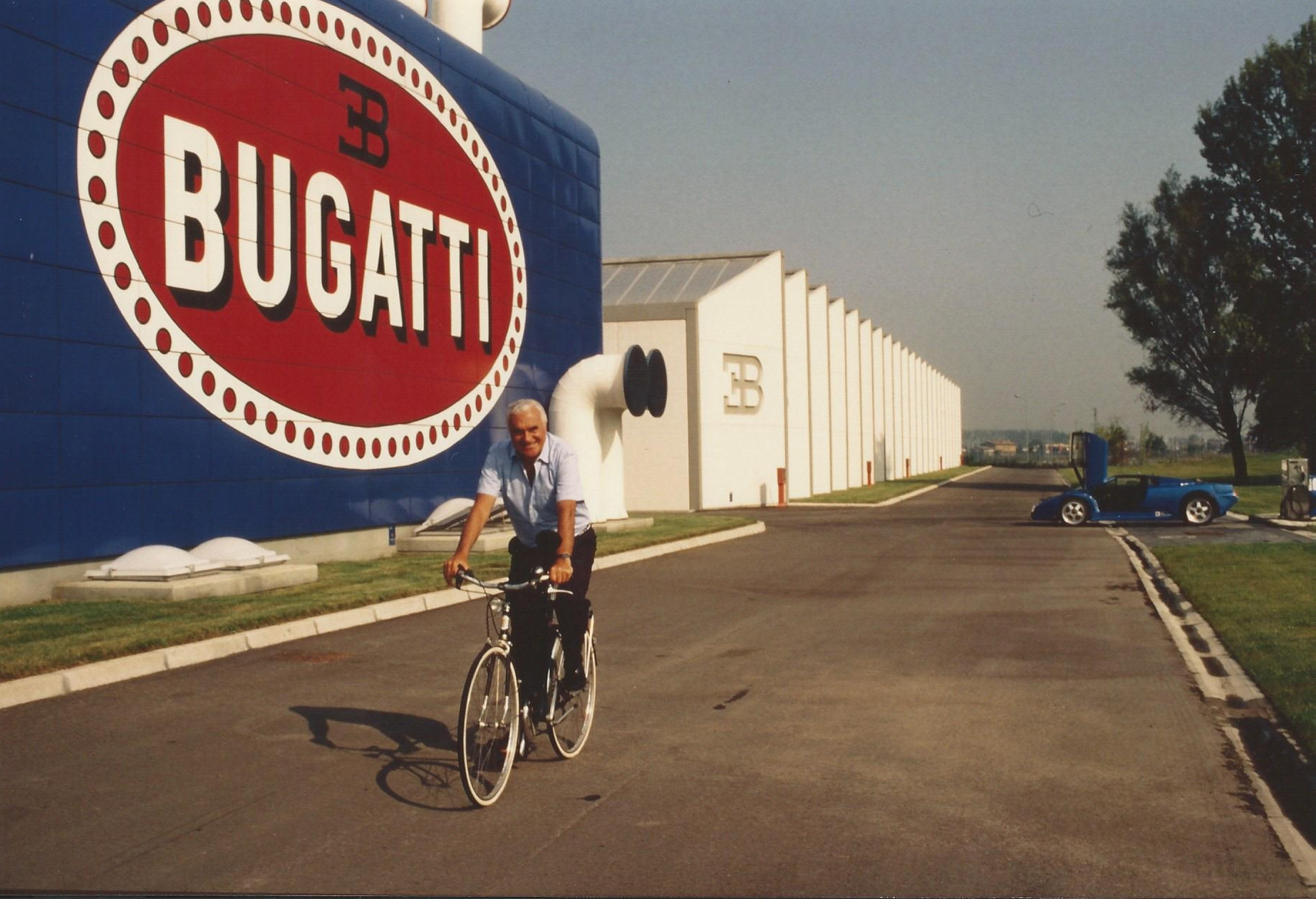
Romano Artioli could regularly be seen on his bicycle going from one department to the next for meetings and updates. In the back of the building is the canteen. “Here” says Enrico and points to an old wooden door from the original factory in Molsheim that wasn’t taken away after the bankruptcy. Upstairs in the dining room where workers and management had lunch together there are two art works on the wall that also survived. “Removing them would make them disintegrate into a hundred pieces like a Swiss highway vignet” Enrico continues.

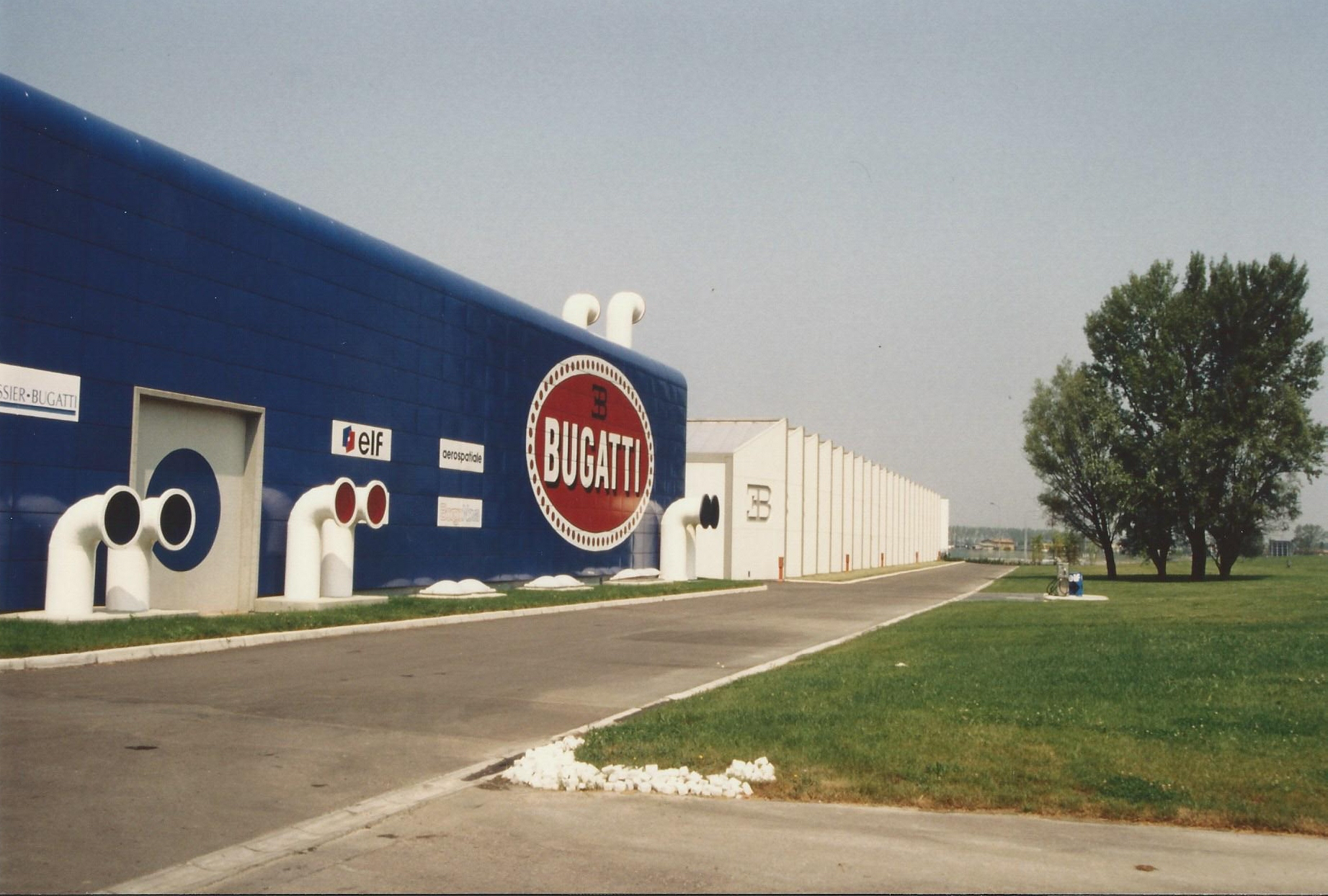
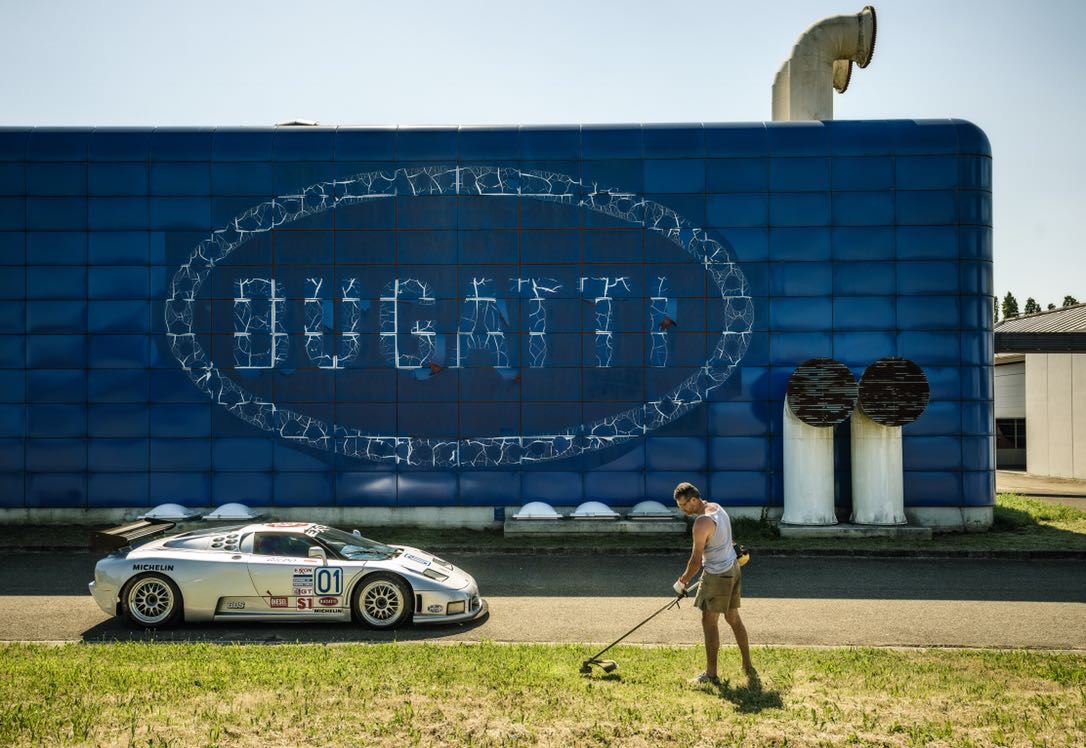
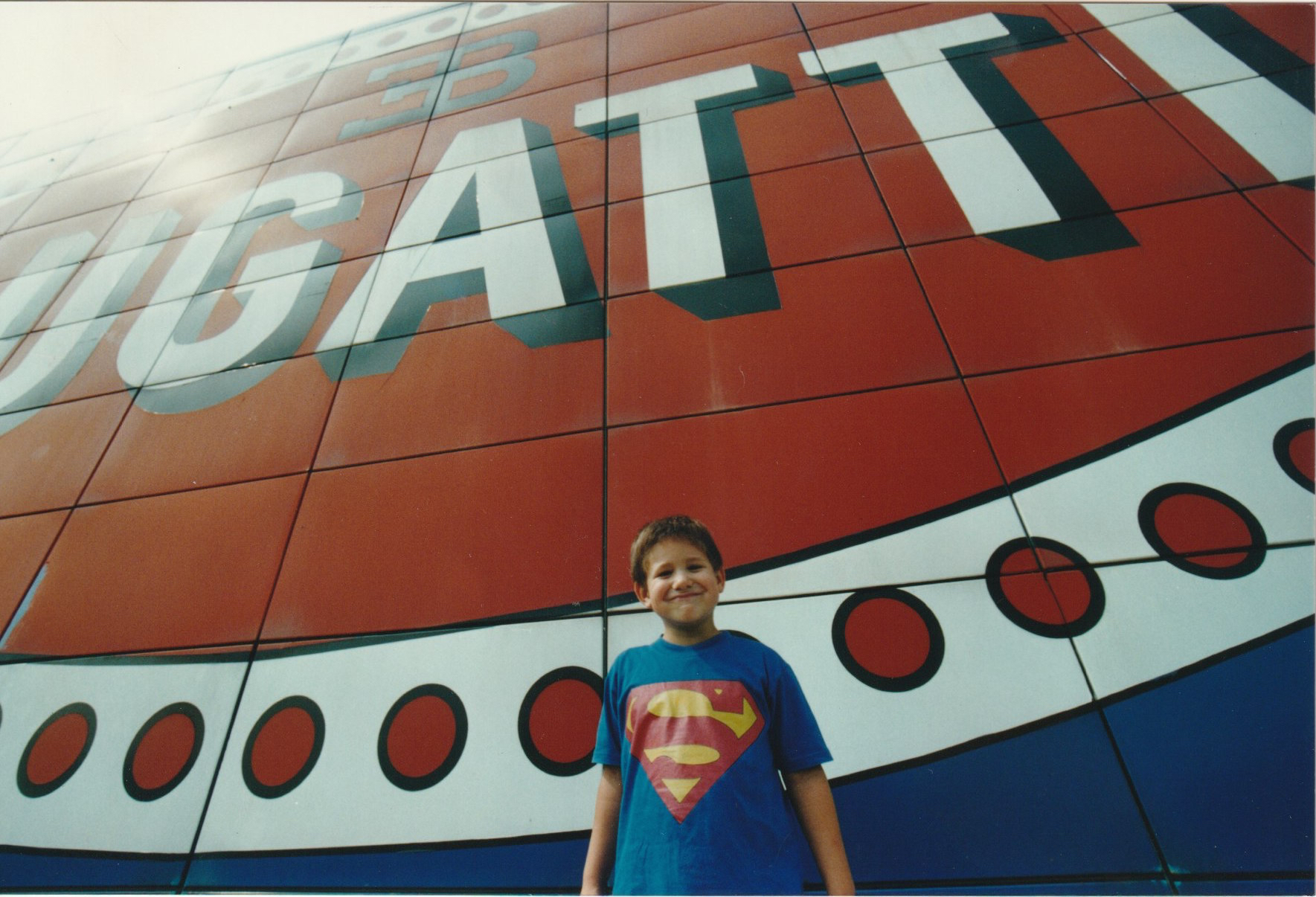
Next to the assembly hall is a distinct blue building that gave the factory it’s name “La Fabbrica Blu”. Here engine testing took place and one could find a for the time extremely rare four-wheel dyno and a fully certified emissions testing room that was used by other car manufacturers as well. The large Bugatti logo on the outside was clearly visible from the nearby A22 highway. Volkswagen asked Ezio Pavesi to remove it once they had required the rights to the brand in 1998 but instead of removing it Ezio came up with a cheaper solution: cover it with foil. Over the last 21 years the foil has slowly dissolved showing the original logo underneath like a piece of art.

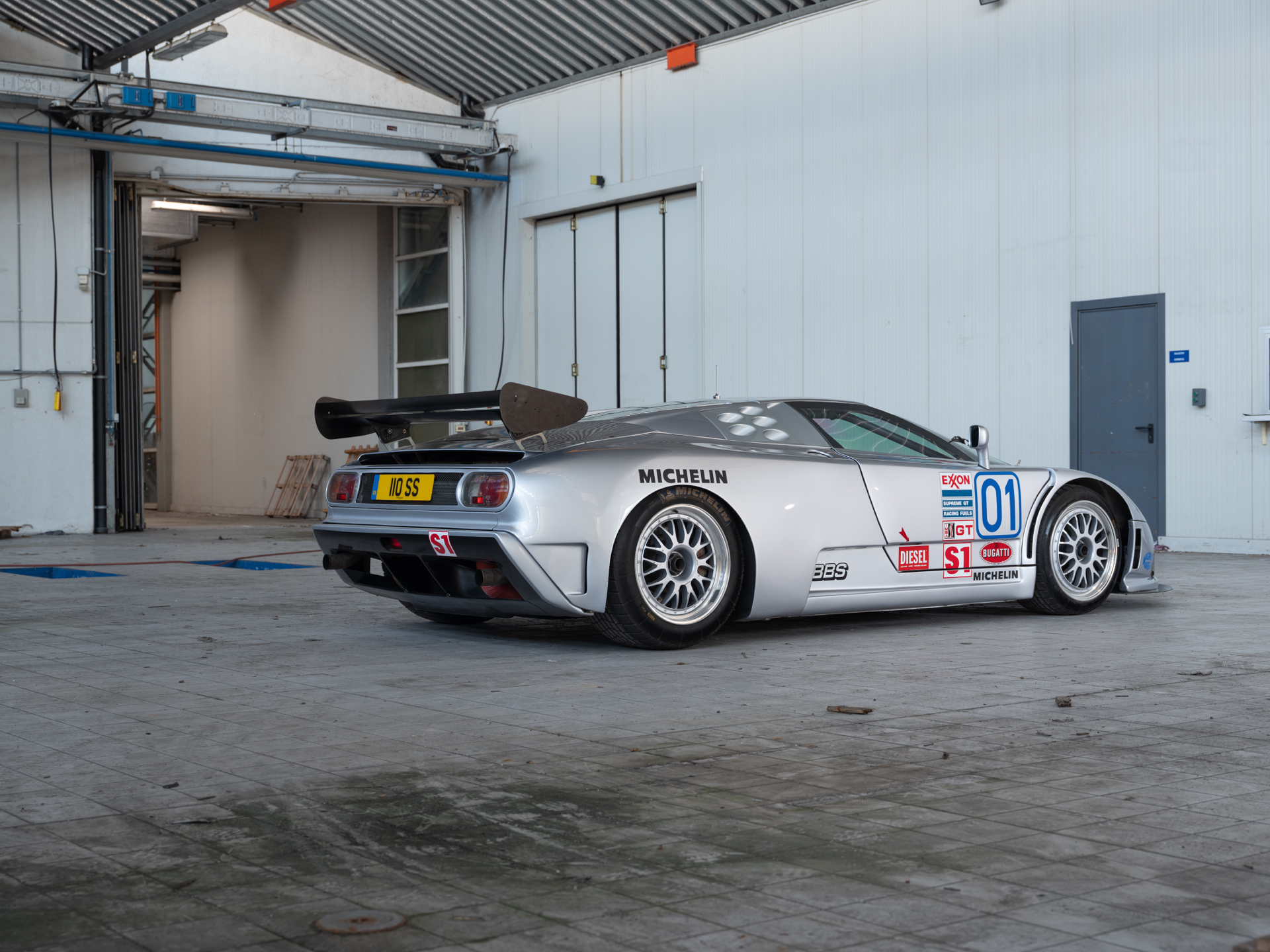
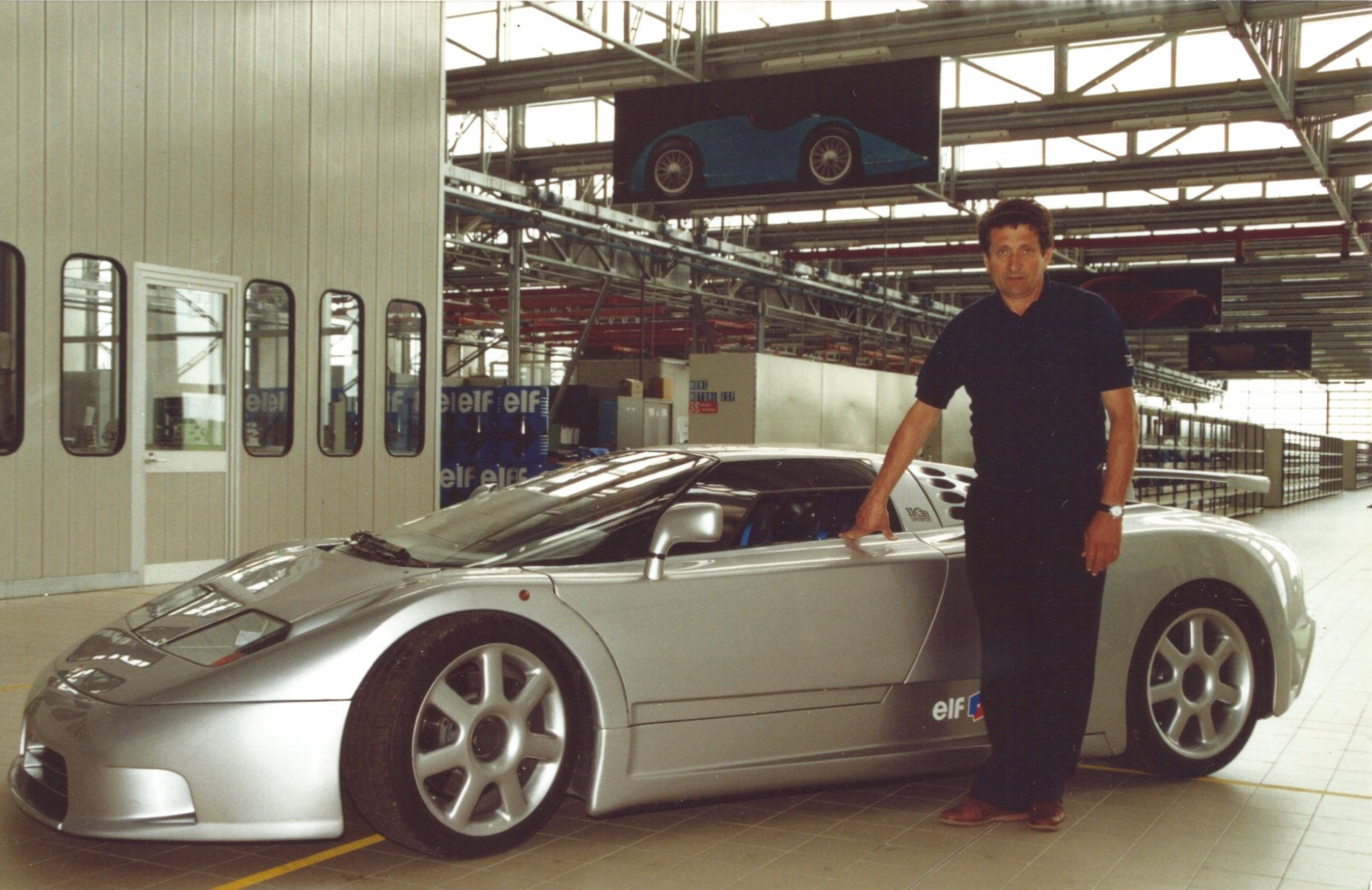
Directly around the factory buildings is a small test track that was used for testing new Bugatti prototypes. Flashlights warned employees and visitors that there was a car on track. Here we meet Loris Biccochi the former engineer and test driver with one of two EB 110 Super Sports that were used for racing. It is amazing to see and hear the Le Mans EB 110 Super Sports with Loris at the wheel make its laps around the factory. He recalls the left hand corner at the end of the assembly building was particularly scary for customers who he took around as it seemed like they would go straight into the bushes but he never missed the braking point once.

The design offices and administration are located at another building near the entrance of the factory. The circular showroom on the ground floor and the two floors with design offices are supported by concrete pillars on the outside with a large open space in the middle and glass windows all around. The design studio had an advanced lighting system that factored in light from outside to create similar lighting throughout the day. Romano Artioli had a modest office with adjacent meeting room right above the main entrance of the building.

Romano Artioli was so pleased with the work of his architect Benedini that he asked him to finalize the design of the EB 110 following a first concept created by car designer Gandini. For Benedini this was a great honor and challenge at the same time considering as an architect he had no experience in automotive design.

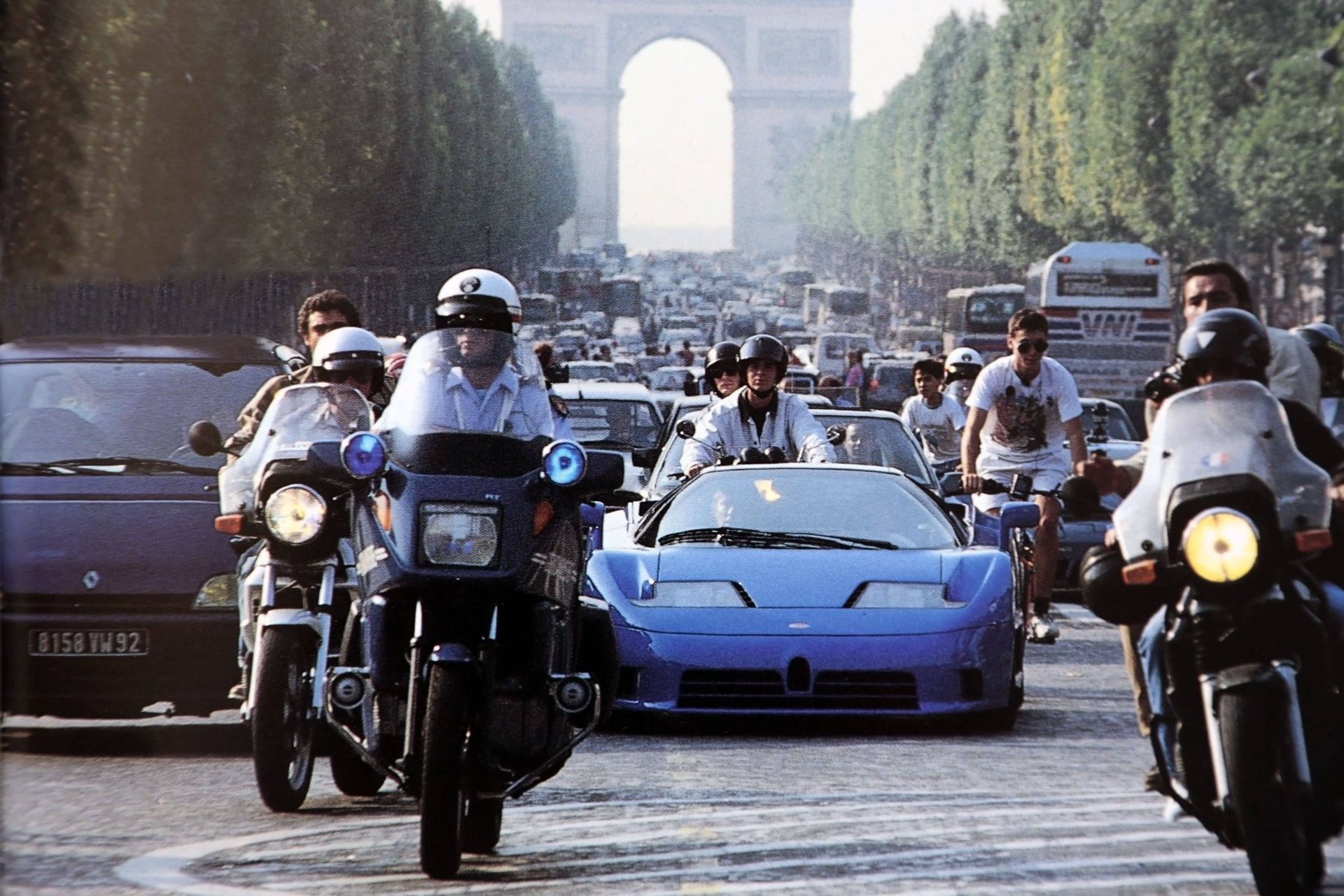
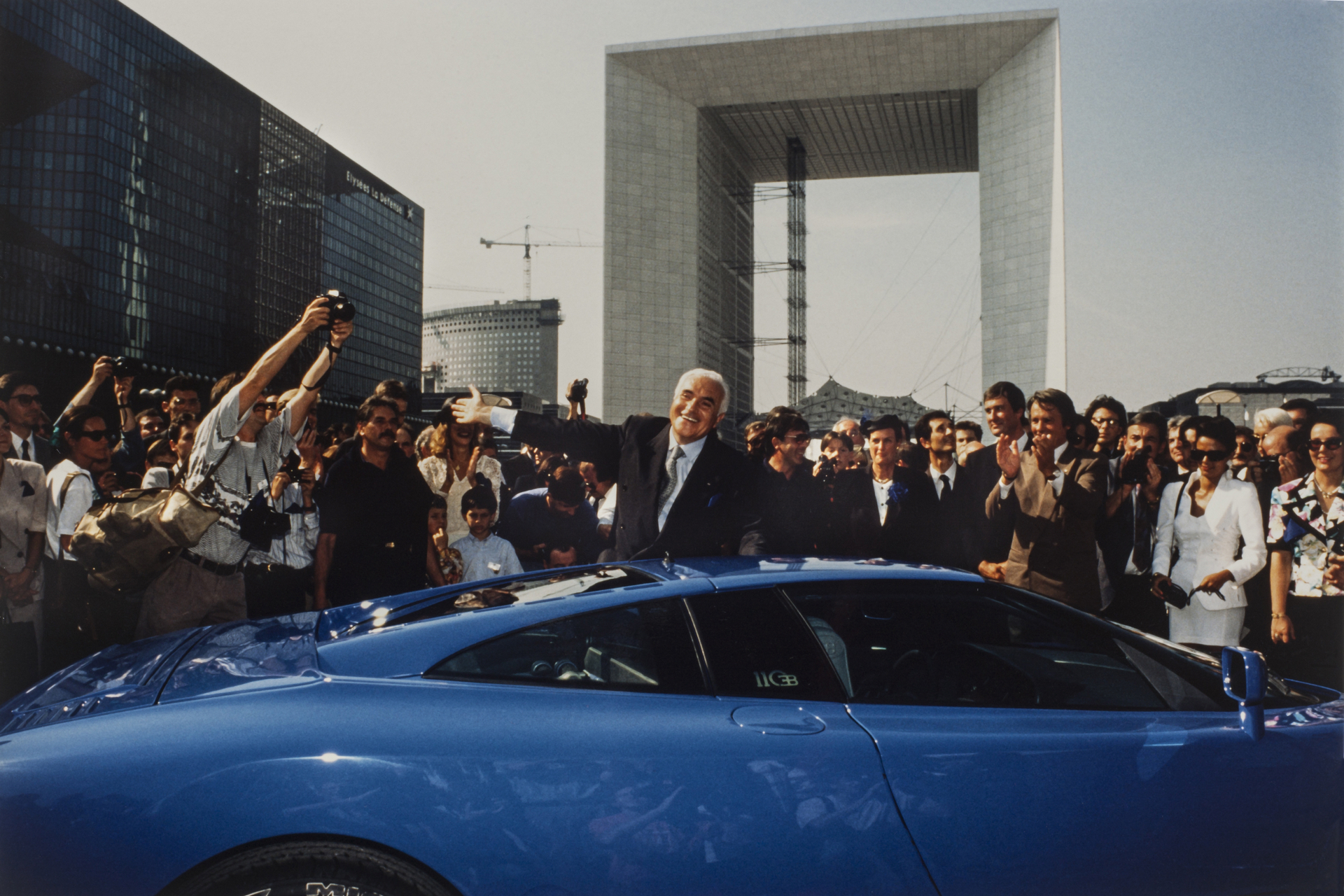
The factory opened at the end of 1991 on the day of Ettore Bugatti’s 109th birthday. The Bugatti EB 110 was launched exactly one year later on the day of Ettore’s 110th birthday in Paris. Despite building the factory in Italy it was important for Romano Artioli to maintain the link with France and cherish the heritage of the original Bugatti era in Molsheim. Romano invited all employees to the world premiere in Paris. From day 1 the EB 110 set out to gain records for top speed and acceleration and did so with great success. Sadly the success was short lived and after only just over 130 produced cars the factory had to shut and the 130 employees had to find other employment.

Ezio & Enrico Pavesi – The Caretakers

At the start of 1990 the grandfather of our guide Enrico Pavesi comes into the picture. While construction on the factory is still in full swing a Bugatti manager stops by the bar where his mother works for lunch and inquires if she knows anyone that would be interested to become the caretaker at the new supercar factory in town. A few months later Enrico’s grandfather moves into the house on the edge of the factory grounds and takes care of the factory and its 70,000 m2 grounds. His mother would later become one of the secretaries.

After the Bugatti Automobili bankruptcy is filed in September 1995 time stops at Campogalliano. Everything of value is taken away and sold. When the bankruptcy is finally settled in 1997 it is Ezio Pavesi who takes over the role as caretaker from his father. He still lives in the house on the edge of the factory grounds today and has taken care of the former factory for 22 years straight. He gets a small allowance from the current owner to cover his costs but does most of it as volunteer and out of passion and love for La Fabbrica Blu. His main duties include mowing the grass, keeping burglars and other trespassers out and maintaining the buildings.

His son Enrico Pavesi has helped him since he was a kid and hosts the English tours of the factory. He recalls racing his bicycles and later moped around the former test track as a kid. Enrico helped his father as a kid to earn some pocket money. Today they take care of the Bugatti factory in Campogalliano in addition to full time jobs elsewhere. But Enrico is quick to admit that his father does the lions share of the work and that his father has not taken a holiday in over ten years. True dedication is what kept the factory from becoming a ruin the last 25 years. The roof leaks at various places but there is not a broken window to be found.

It is not just the Pavesi family that still carries La Fabbrica Blu in their hearts. Bugatti hosted a preview of the upcoming Pebble Beach car in the former showroom and the ramp to drive the car into the showroom was missing. Turns out a nearby steal workshop who made the original ramp still had it in storage only one piece was missing. Being so happy with the attention for La Fabbrica Blu the workshop created a new piece for free. The town of Campogalliano and former employees are still extremely proud of the time Bugatti Automobili created the EB 110 there. Some employees like test driver and engineer Loris Biccochi refer to their time in Campogalliano as the best time of their life.

Bugatti embracing Bugatti Automobili

Bugatti La Fabbrica Blu Campogalliano

For the first time since Volkswagen acquired the Bugatti brand name the Italian chapter in Bugatti’s history is being embraced. Earlier this year Romano Artioli was invited to meet Bugatti CEO Stephan Winkelmann and to see the Chiron assembly at the Atelier in Molsheim for the first time. But the initiative came from Bugatti designer Achim Anscheidt who visited the former Bugatti factory in Campogalliano two years ago for the first time.

The future of La Fabbrica Blu

Bugatti Blue Factory EB 110 Campogalliano

For Enrico Pavesi it would be a dream come true to see an automotive museum open in La Fabbrica Blu. The current owner Marco Fabio Pulsoni who bought the factory at an auction around ten years ago long considered redevelopment but was persuaded not to demolish La Fabbrica Blu. He would like to sell the factory ideally to Bugatti but they have already announced that they are not interested in buying it. The current asking price is 15 million Euro.

So the future of the former Bugatti factory in Campogalliano is uncertain. But for now you can still visit it by appointment and join one of the factory tours with Ezio or Enrico. The tours take place mostly on the weekend and are free but a donation is appreciated. To visit the factory and join one of their tours contact them via Facebook.

GTSPIRIT NEWSLETTER

These 5 Cars Receive the Most Speeding Tickets

Ever wonder if the type of car you drive is more likely to cause you to get a ticket? Well, Insurify.com has compiled data on the cars whose drivers were most likely to have a speeding ticket on their driving record.

The cars at the top of the list…well, let’s just say they shouldn’t surprise you. Young people tend to speed; driving enthusiasts tend to speed. Perhaps more importantly, law enforcement expects both subgroups to speed. The most frequent ticket-getters, then, tend to be affordable drivers’ cars — particularly those with a manual transmission. Below are the top five.

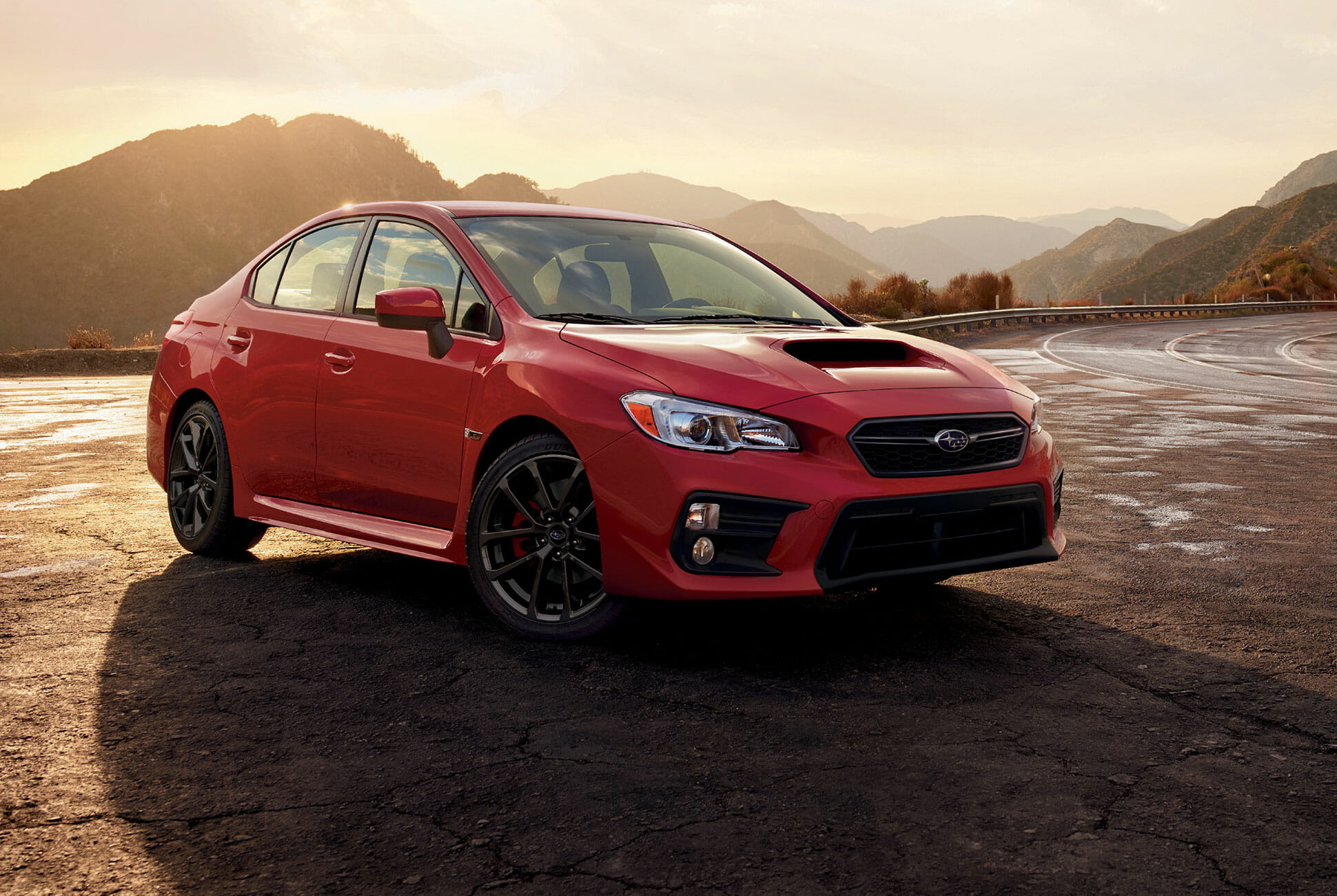
1. Subaru WRX – 20% of Drivers Have Speeding Violations

subaru wrx 2019 iihs safe top pick

Yes, the Subaru WRX is probably the first car you would have guessed. The stereotypical “Rex” driver would be a young guy wearing a backward hat and sporting a general demeanor of driving a little too aggressively. That stereotypical individual is not flying under the police radar — especially if his car has aggressive tinting, a bunch of JDM stickers and ungodly-ugly painted rims.

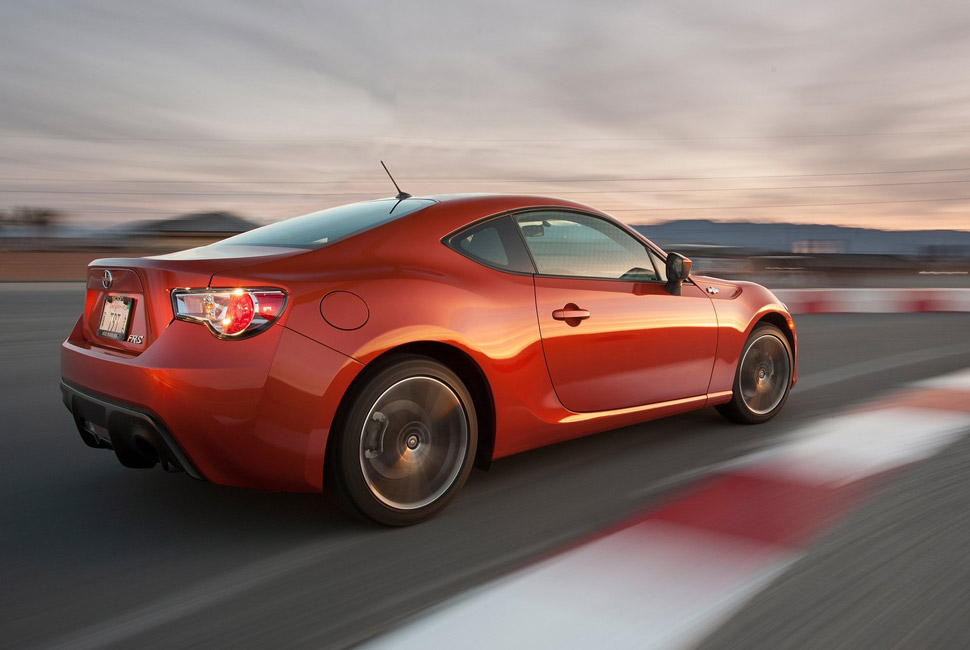
2. Scion FR-S – 19% of Drivers Have Speeding Violations

The Scion FR-S name may be gone, but it.s still sold as the Toyota 86 and the Subaru BRX. Scion was Toyota’s marque directed at “the youths” — in this case, youths who enjoy a well-balanced, sporty, rear-wheel-drive fastback coupe.

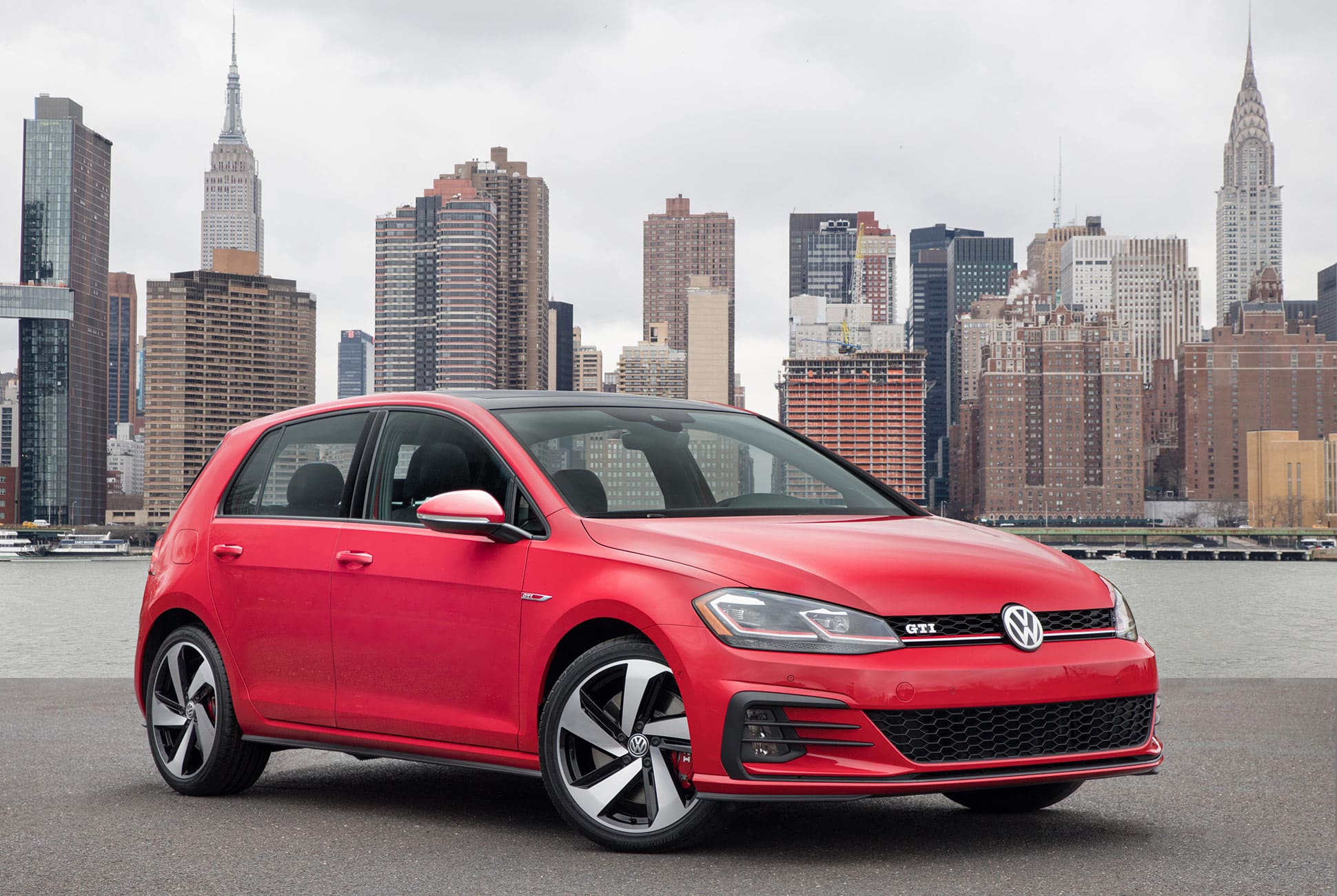
3. Volkswagen GTI – 17% of Drivers Have Speeding Violations

The GTI is the discerning choice for a driver on a budget. Or, really, a driver on any budget. It’s that good. The red lipstick and flashy rims, alas, prevent this driver from passing for an ordinary, posted-speed-limit-observing hatchback driver.

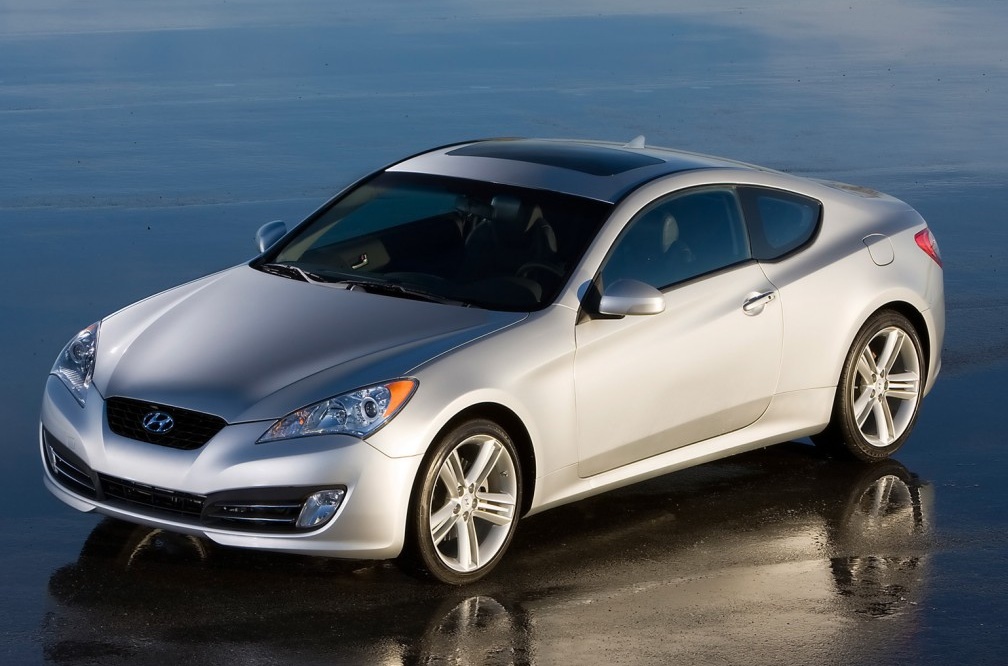
4. Hyundai Genesis Coupe – 16% of Drivers Have Speeding Violations

Hyundai is probably not the first name that comes up when you think of “speed.” But this Hyundai had a six-speed manual, rear-wheel-drive, started at 210 horsepower and could be optioned up to a 348-hp 3.8-liter V6.

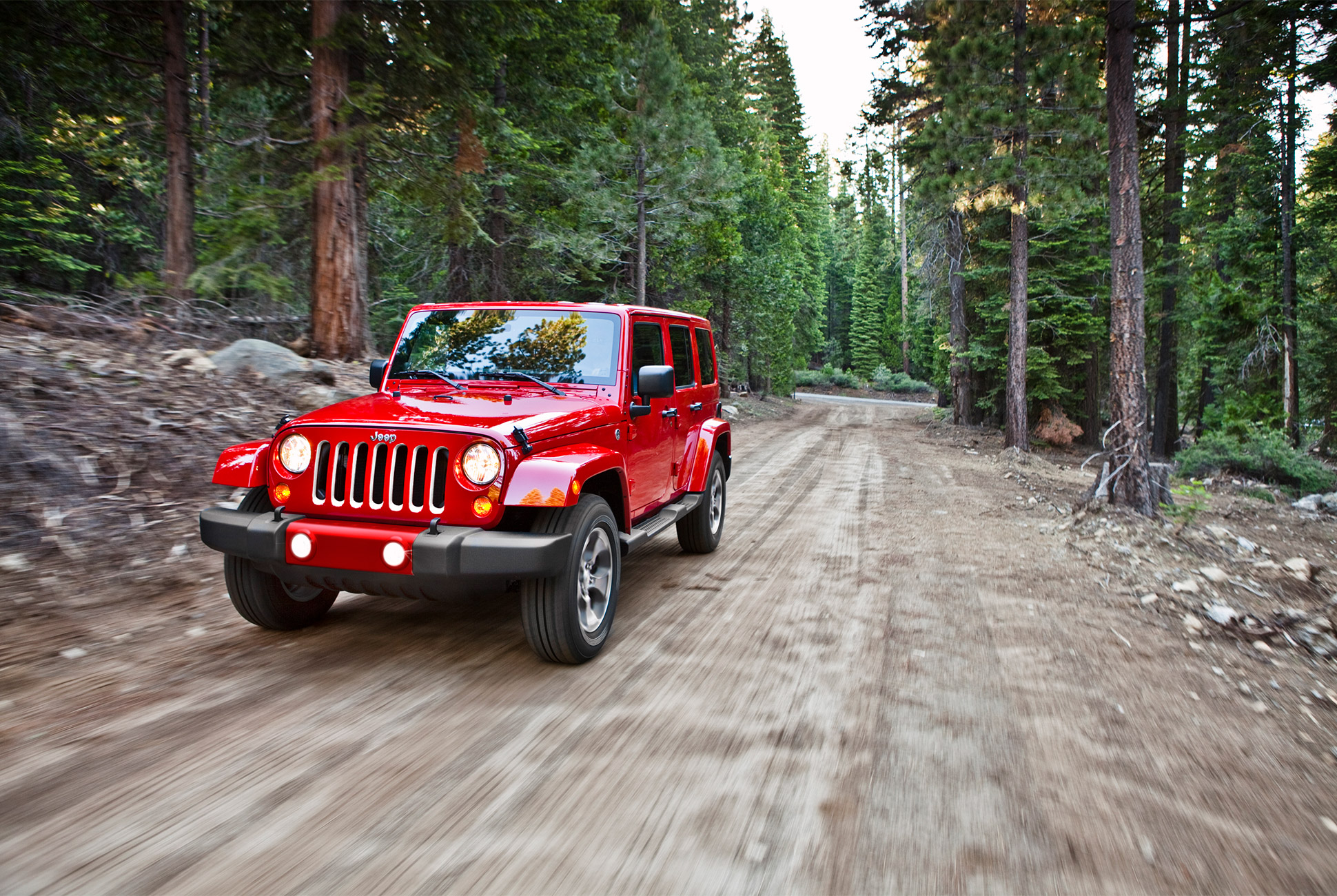
5. Jeep Wrangler Unlimited – 15% of Drivers Have Speeding Violations

The Wrangler Unlimited is the one surprise in the top five. It’s not a car for speed freaks. It’s not particularly affordable. For many people, it has become a modern equivalent to the family wagon. But, the Wrangler, unfortunately for its drivers, does stand out from the crowd — which likely draws the attention of the fuzz.

The Upcoming Bugatti EB110 Tribute Car Is Lighter and More Powerful than the Chiron

A Supremely Fast Car Will Come Soon

The Bugatti EB110 Tribute car will debut soon at Pebble Beach, but until then we’ve been looking for the latest information about the car. According to The Supercar Blog, the new EB110 Tribute will be lighter weight and more powerful than the Chiron currently is. 

The EB110 Tribute car will use an 8.0-liter W16 engine. It’s the same engine in the Chiron. Bugatti must have worked some magic on it to ensure that it will make more power because according to The Supercar Blog, a source told the publication the engine in the new car will come with “more boost.”

The publication also shared that it has confirmed there will be only 10 models made and each of them will come with a price tag of €8 million ($8.9 million) each.

There isn’t much other information out there on the vehicle. The Supercar Blog recently noted there’s a glimpse of the car under wraps in the video below. However, you don’t actually see the car. You just get a quick glimpse of it. 

[embedded content]

Cheapest Porsche 992 Launched: Carrera Coupe and Carbriolet

The cheapest Porsche 911 was recently revealed. At its launch last year, the 992 was revealed in Carrera S form. Entry level Carrera models have now been revealed, these are the lowest models in the range!

The 911 is far from ordinary. With its rear-mounted engine and distinctive design, even at entry-level, you get something special. With the Carrera, Porsche offer many of the same features as the Carrera S.

The obvious difference is power. In the Carrera, the 3.0-litre turbocharged six-cylinder unit dropped from the 450 hp of the Carrera S to 385 hp. That amounts to a 15 hp increase over the 991 generation equivalent.

In performance terms, this means that the Carrera takes 4.2 seconds to hit 100 km/h, 0.5 seconds slower than the Carrera S. it comes equipped with an eight-speed PDK dual-clutch transmission and no manual option. Top speed is 293 km/h.

Both Coupe and Cabriolet options will be available from launch. Other than mechanics, Porsche will fit slightly smaller brakes, smaller 19 inch wheels and different tailpipe covers to differentiate the model.

Pricing has been announced with the Porsche 992 Carrera Coupe starting at 104,655 euros and the Porsche 992 Carrera Cabriolet starting from 118,935 euros.

GTSPIRIT NEWSLETTER

10 of the Weirdest Branded Products Car Companies Sell Today

Automakers don’t just want to sell cars anymore. They want to engage us in holistic brand activations. As part of that effort, nearly every marque now has a “lifestyle collection,” including wardrobe lines, designer collaborations, and an assortment of branded items. We surveyed the field, curating a list of 10 odd (or oddly appropriate) items car companies will try to sell you on the Internet. Each, at the very least, should prove a guaranteed conversation starter.

AudiOpoly Board Game ($70)

Germans love their automotive-themed board games. Audi, for example, will sell you the “AudiOpoly” board game. “Pitstop” replaces jail, as no Audi owner would ever drive recklessly enough to end up there. Players buy cars instead of properties and receive both red flags and speeding tickets. No mention of whether there’s a “Chance” card that offers a check engine light that reveals nothing on a diagnostic test yet still requires a multi-thousand-dollar engine-out repair to sort out (with a dice roll to determine whether the light comes on again three days afterward).

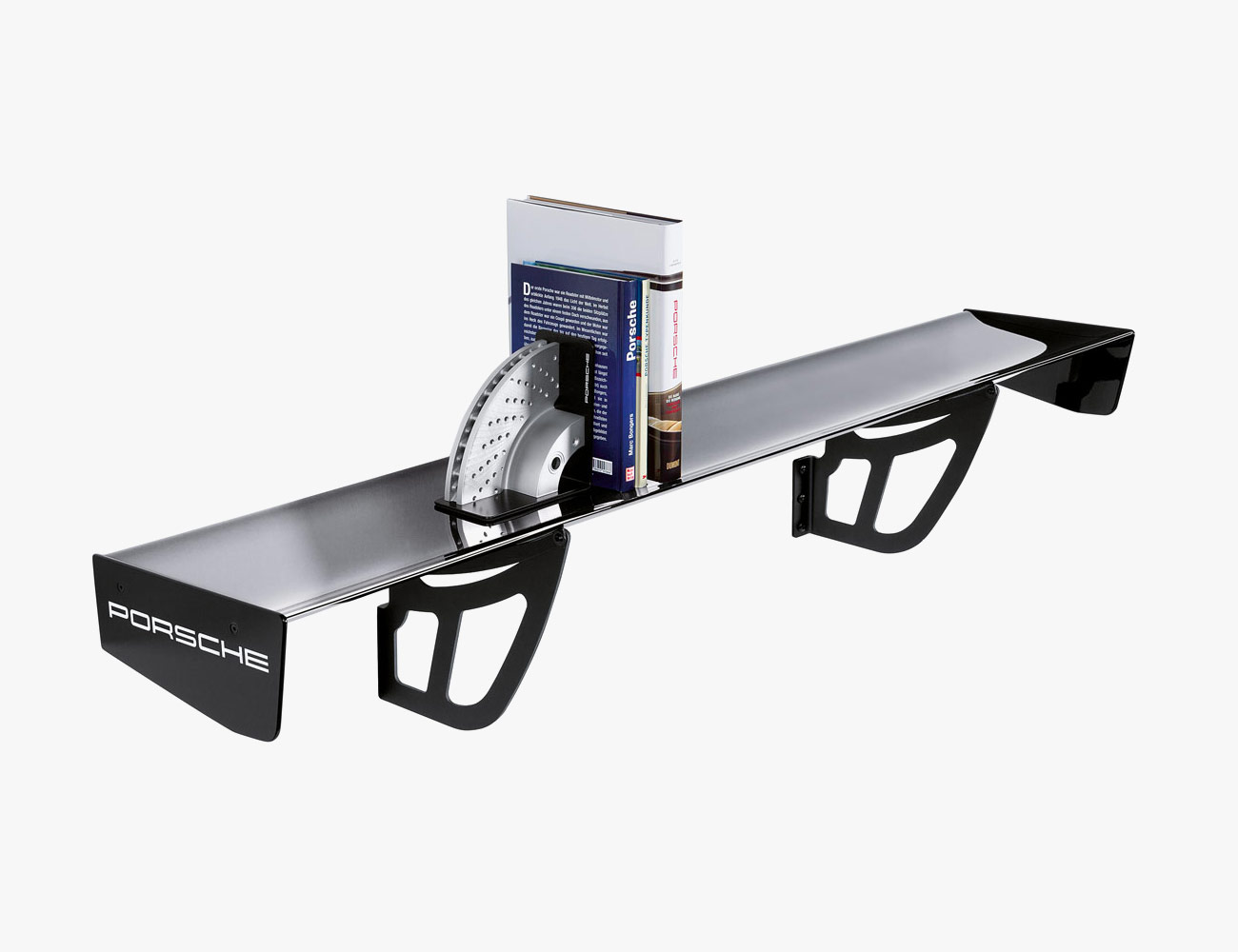
Porsche GT3 Cup Spoiler Wall Shelf ($4,230)

Porsche buyers will never believe this, but the official Porsche store offers a wide array of mundane items at a substantial markup brought on for no discernible reason other than that it’s from Porsche. Can we tempt with you a $70 infant onesie? How about a $50 coffee thermos? What better stocking stuffer could there be than this $20 set of 911 paperclips? But the true Porsche aficionado requires something a bit more premium. For that special soul, Porsche offers this $4,230 GT3 Cup Spoiler wall shelf. You can now buy a four-figure Porsche option without buying the car.

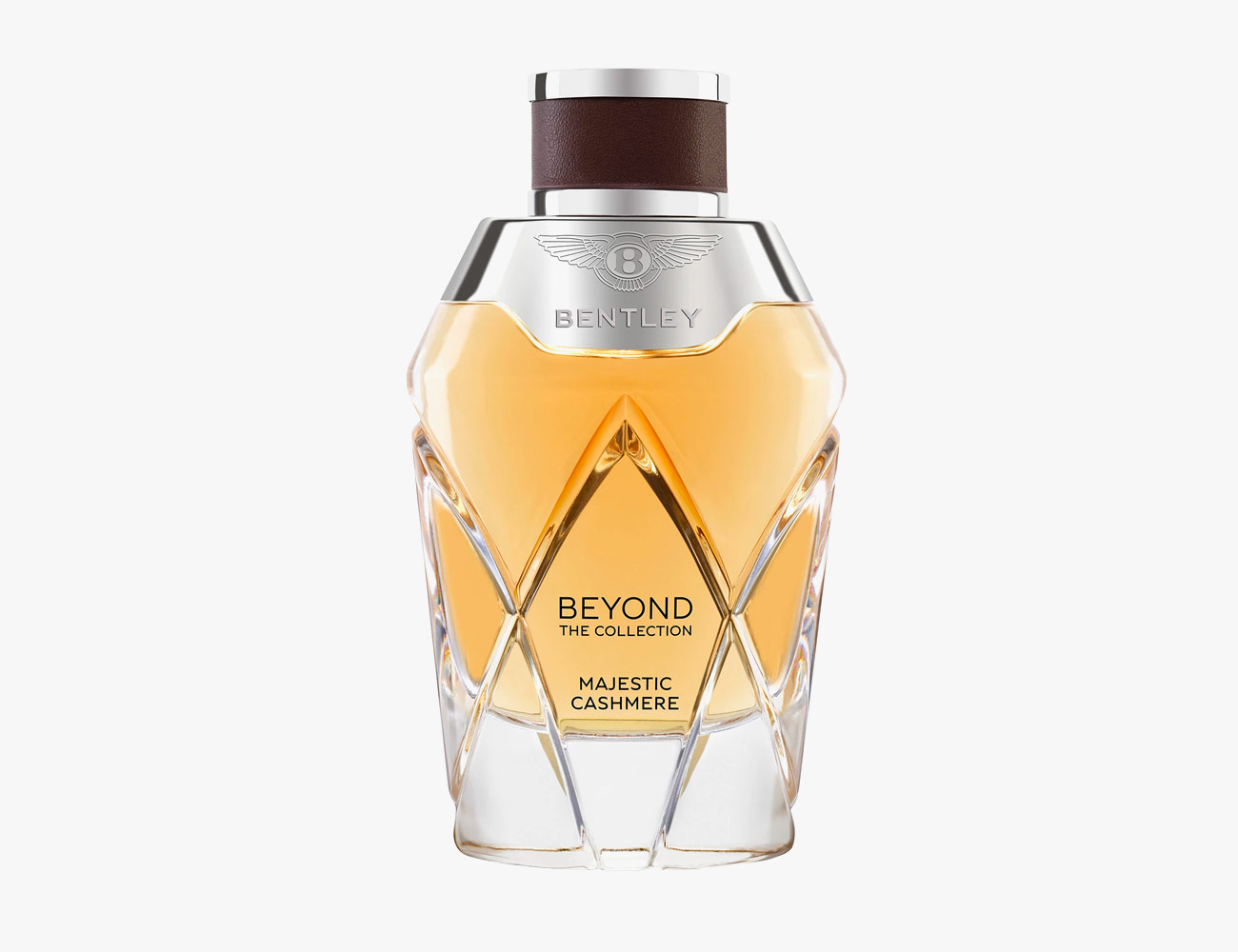
Bentley Majestic Cashmere Fragrance ($225)

Bentley ownership is a sensual experience. Without the look of the opulent wood, the feel of the supple leather and the silence of the soundproofed interior, you would just be driving an Audi. Scent may be the most evocative of the five senses, however, and Bentley has its owners more than covered with no fewer than 12 different fragrance blends. The most “Bentley” of the fragrances may be the $225 bottle of “Majestic Cashmere” eau de parfum from the “Beyond the Collection” range, suitable for both men and women. “Exotic Musk” sounded a bit too much like a fragrance Tesla should release.

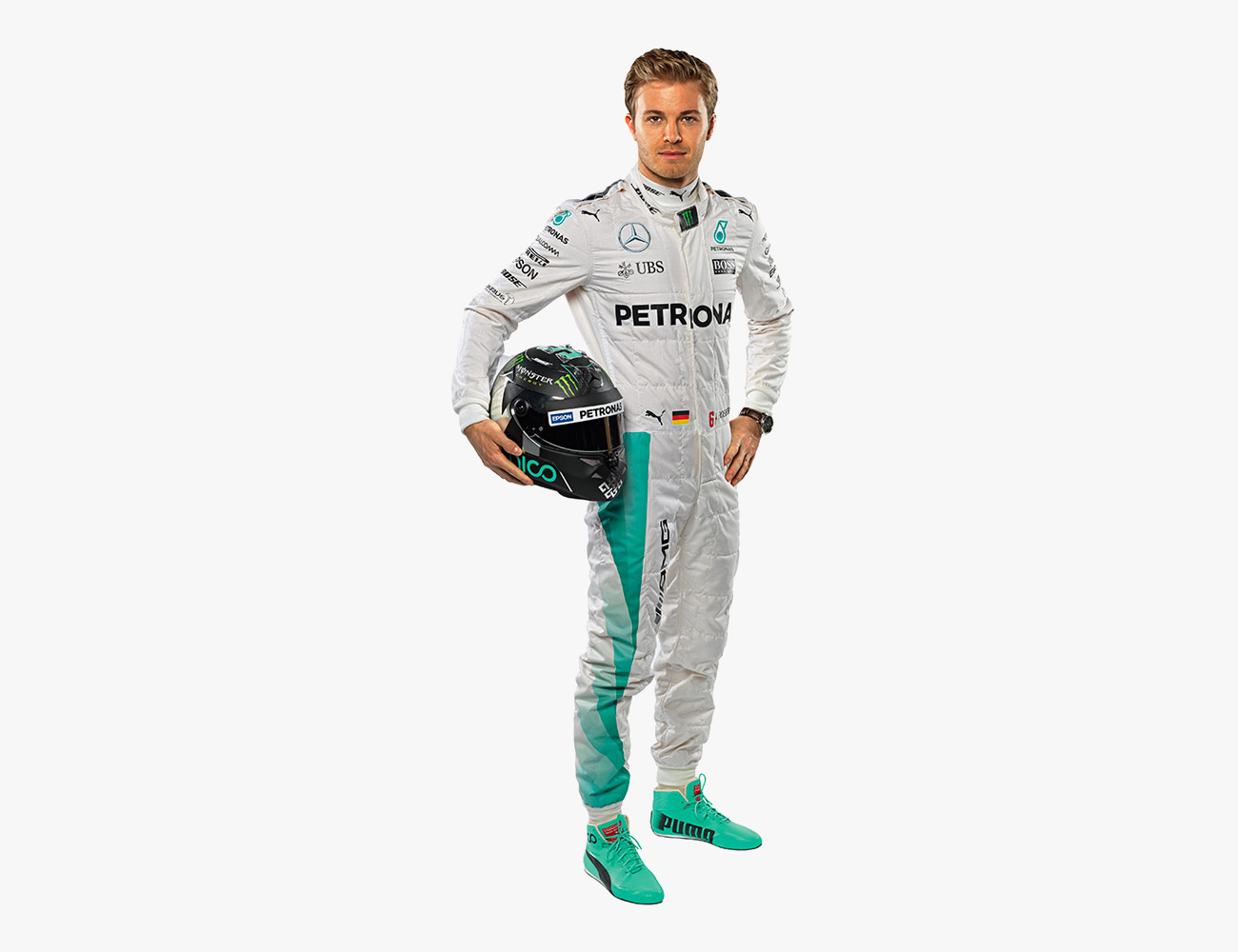
Mercedes Benz Lifesize Nico Rosberg Wall Decal ($76)

Mercedes owners tend to be sensible folk, and the company offers them a wide assortment of baseball caps and other reasonably priced gear. (We’re partial to the standard, AMG, and Maybach belts with price levels corresponding to the vehicles.) But this $76 lifesize Nico Rosberg wall decal is a true gem — one that, incredibly, has not sold out since his retirement after winning the 2016 F1 championship. Now, every F1 fan can fulfill his or her dream of a lifesize Rosberg staring intently at them while they eat, sleep or perform ablutions.

Lamborghini Carbon Fiber Bynomio Hold Suitcase ($17,388)

If Lamborghini knows one thing about its customers, it’s that they will pay a silly amount of money for functional items made out of carbon fiber. Behold the Carbon Fiber Lamborghini Bynomio Hold Suitcase Maxi, available for a totally reasonable $17,388 plus shipping and handling. This collaboration with TecknoMonster is made in Italy with “carbon fiber cured in the autoclave, fully-machined aluminum and high-grade hides.” Your complete range of Lamborghini Spring/Summer 2019 Collection clothing deserves to be transported in nothing less.

Silver Scuderia Ferrari Keyring With Shield ($320)

Gear is essential for the Ferrari brand. Very few can plunk down enough change for an 812 Superfast, but almost everyone in Italy or abroad can identify with Ferrari through a T-shirt or keychain. How, then, does the true Ferrari enthusiast distinguish him or herself from the masses? A much fancier keychain. The Silver Scuderia Ferrari Keyring with Shield retails for $320. It is made from “925 rhodium plated silver with carbon fiber.” It employs what Ferrari describes as a “complex and sophisticated manufacturing process.” And to show up those skeptics who won’t believe you spent $320 on a Ferrari keyring, it comes with a certificate of authenticity to prove to them you did just that.

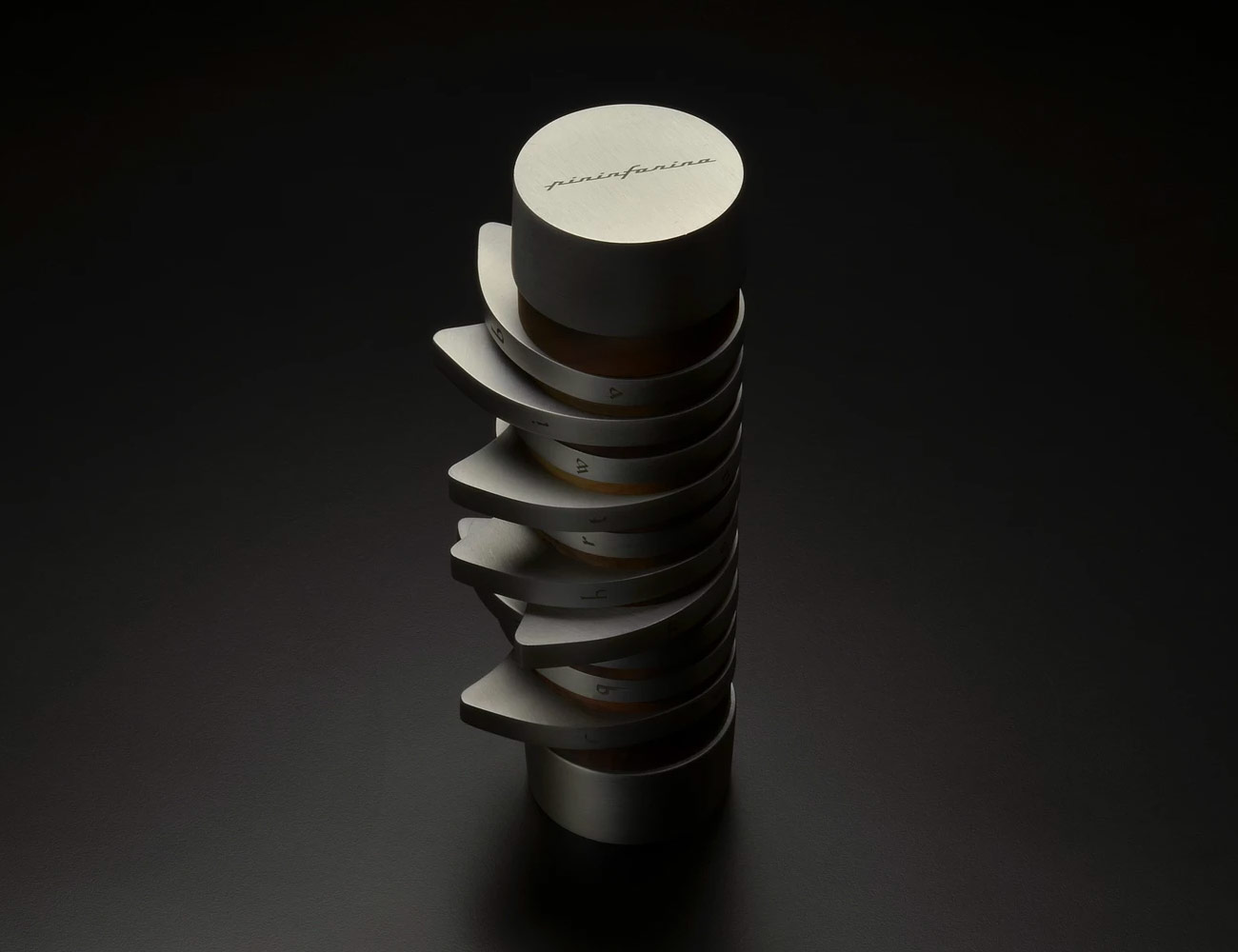
Pininfarina Codex 500TH Limited ($811)

Dan Brown’s bestselling novel “The Da Vinci Code” was all the rage in the early 2000s. Pininfarina presents an homage to that storied Italian heritage with the $811 Codex 500TH Limited. It’s an aluminum-bodied coffer with walnut inserts for holding your Pininfarina Cambiano Stylus, which also has walnut inserts. It’s meant to resemble the Leonardo “cryptex” found in the novel. Pininfarina says the codex will give your design desk “an elegant and mysterious character,” and few would quibble with Pininfarina about design.

FCA Men’s L/S Epic Easy Care Mini Herringbone Shirt ($69)

Display your corporate fandom (and next-level normcore sensibility) with the FCA Men’s Epic Easy Care Mini Herringbone shirt. It’s a versatile look that transitions seamlessly from FCA office to FCA corporate off-site event. It comes in distinctive blue and charcoal colors. Bold fashionistos may pair the shirt with the fetching FCA men’s V-neck for a daring look. If you’re wondering whether it’s the shirt’s impression or the ease of care that’s supposed to be “epic,” well, so are we.

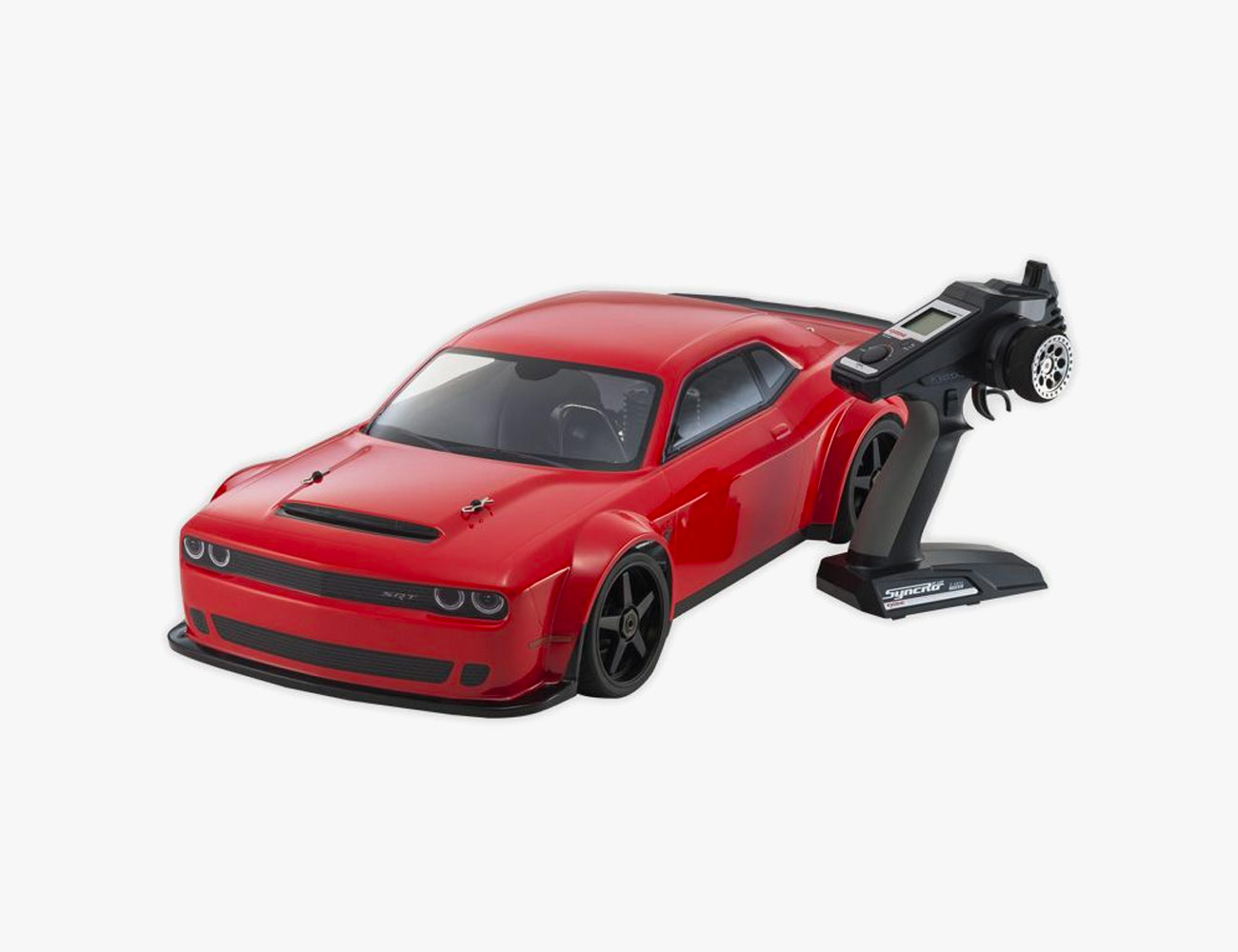
Dodge Challenger SRT Demon Remote Control Car ($700)

The Dodge Challenger SRT Demon celebrates excess. It’s hard to find a more excessive automotive accessory to pair with it than this $700 Challenger SRT Demon remote control car from Kyosho. The RC Demon is tuned for a top speed eclipsing 40 mph and has a 150-cc fuel tank for its RC-specific fuel blend. It’s safe to assume those peacocking 10-year-olds down the block won’t know what hit them.

Tesla Zero Emissions (Almost) Onesie ($25)

What do you get your self-actualized friend who has both eliminated his or her direct transportation carbon emissions by buying a Tesla and successfully procreated? How about this Tesla Zero Emissions (Almost) Onesie. (Get it?) The beauty for the new Tesla-owning parent is in the non-zero chance Elon Musk either came up with this joke himself, or at least chuckled heartily as a Tesla marketing employee channeled his renowned sense of humor with uncanny perfection.

Note: Purchasing products through our links may earn us a portion of the sale, which supports our editorial team’s mission. Learn more here.

Is an All-New Toyota Land Cruiser About to Be Revealed?

The current-generation Toyota Land Cruiser may not be any worse for wear for its many years on this planet, but that doesn’t change the fact that, well, it’s getting up there in years. (Case in point: Toyota’s media site hasn’t added any new pictures of it since the 2016 model year, because, well, they haven’t needed to.) But the current model known as the 200 Series that’s been around since 2007 may finally be about to shuffle off this mortal coil — and its replacement could be revealed as soon as this fall, according to a new report.

There’s a bit of a game of journalistic telephone at play here, so take everything with a grain of salt, but according to South African publication The Citizen‘s report on the claims found in Japanese automotive publication Best Car, development work on the new 300 Series Land Cruiser is currently under way, and the model could be revealed to the public as soon as the Tokyo Motor Show in November.

While the next-gen Land Cruiser will reportedly stick with an old-school body-on-frame chassis like previous models, as we previously mentioned, the model will allegedly axe the current 4.7-liter V8 for the twin-turbo 3.5-liter V6 found in the Lexus LS 500. It’s not a surprising turn, given both market trends favoring smaller forced-induction engines over larger naturally-aspirated ones (due to both stringent emissions tests that favor such motors, and the fact that their more-immediate torque delivery makes them feel more powerful during everyday driving) and the fact that Toyota’s gas-powered V8s have been slowly but surely slipping out of the lineup for years now.

Considering prior reports have pegged the new Land Cruiser’s on-sale date to 2021, we wouldn’t be surprised if the version revealed in November was a concept car rather than a production-ready model — if, indeed, it shows up at all. Even if the rumor is true, there’s plenty of time for Toyota management to change their mind between now and the Tokyo Motor Show. (Previous reports have claimed the SUV has been delayed due to disagreements over styling, for example.) Still, any news about a new Land Cruiser is news we’re going to pass along.

An Expert Reveals How to Successfully Sell a Car

Next to your house or apartment, your next-most significant earthly possession is probably a car. Unless it’s a complete hunk of junk, your car is probably worth a sizeable chunk of change. Which, in turn, likely has you wondering how to make the most of that value — especially when it comes time to sell. If and when you decide to dive into the used car market to offload it — either to upgrade or make a lateral purchase — you’ll want to get every penny for it you can. But selling a car for the most money possible isn’t as simple as uploading a phone pic and listing its mileage on Craigslist and sitting back to watch the bids flood your inbox.
Randy Nonnenberg, founder of massive (and still-growing) online car auction community Bring a Trailer, has seen his fair share of successes and failures. At any given moment on BaT, you may see a 1967 Toyota 2000GT listing at $560,000 next to a 2002 Volkswagen Eurovan Westfalia Weekender going for $10,000. However, as stunning and jaw-dropping as your car may be, it takes more than looks to sell.

“It’s not just about the car magazine glamour shot, with the sun going down behind it,” Nonnenburg says.

In spite of his busy schedule, Nonneberg took a little time to explain to Gear Patrol the nuances of listing and selling a car, regardless of whether it’s a gem or a junker.

Photos, photos and more photos. “They don’t necessarily have to be professional photos. We have a tutorial on the site about how you take great photos of your car with lighting and pretty low-tech cameras. The presentation is important, but on BaT, we also ask for photos underneath the car, the technical details, under the hood, under the carpets and all through the car. Our bidders love to see that stuff and we place a high bar on the seller being able to do that.”

Keep detailed service history. “Given that a lot of these cars transact long-distance, the more information out there, the better. You don’t want any mystery or weird questions remaining — bidder confidence is what makes the price go up. Historical records are really important. Paperwork, more photos are key in BaT listings. They’re not really glamorous, but they provide a lot of information about maintenance, accidents, repair work or restoration.”

Did the car live an interesting life? “Sharing a lot about what the ownership of the actual car was like is really important. Stories that go along with the car do amazingly well on BaT too, like the old lady who bought a ‘Vette brand-new and owned it for 60 years. That backstory went across and people go totally wild for those and bid those cars really high when they have a seller story to go with them. So digging into the history and story of a car is helpful, if it has one.”

Where has your car been? “Has your car been in a salt belt area, or is it a California or Arizona vehicle? It’s okay — wherever the car has been, but if it’s been in more rust-prone areas, taking extensive photos and learning where your car might be particularly susceptible to rust [is necessary]. And showing it. Because if you can show that your car is either rusty or clean, it really helps with bidder confidence.”

Transparency and friendliness are key. “Once contacted, the seller needs to have an open attitude, to be responsive. We have the comment section, and we coach and encourage sellers to be in there all the time and just be friendly and available because potential buyers usually pull back from mysterious or absent sellers. Being a cool, even-keel person is something the car industry needs more of these days. Engagement is paramount, which is why eBay auctions can be shady and Craigslist is super scary. You don’t know who the seller is.”

In the Market for a Brand New Car?

Choosing one among the endless many is no easy task. Moreover, since the average price for an SUV 2017 was just under $40,000, it’s a decision that shouldn’t be taken lightly. To cover all the bases, we bumped the budget up to $50,000 and chose the best new SUVs you can buy in 2018. Read the Story

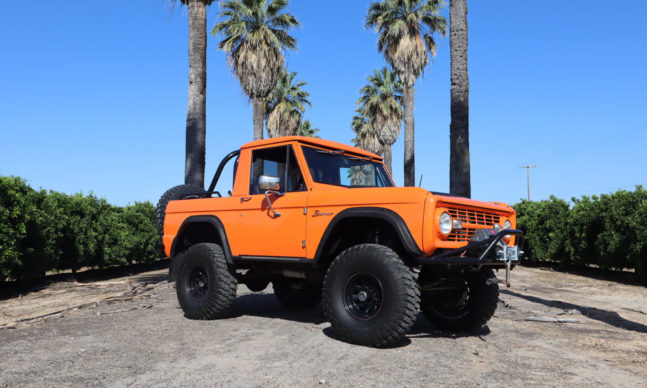
Classic Ford Broncos 1968 Ford Bronco Vail Build

There’s no denying the appeal of a recently restored vintage SUV that expertly mates old school cool with modern amenities. If the Ford Bronco is your vintage truck of choice, you’d be hard-pressed to find…

Nio EP9 slot car might be the most realistic in history

Over the decades, slot cars have become more and more realistic. They’ve added lights, rear- and all-wheel-drive powertrains, and most recently digital controls that enable lane changes and even pit stops to “refuel.” Of course, one disconnect is the fact that slot cars are electric and real cars aren’t. As such, the newly unveiled slot car version of the Nio EP9 electric supercar may be the most true-to-life slot car ever created.

The company teamed up with German slot car company Carrera to create the 1/32-scale slot car. It will be available in three colors, the metallic blue of the launch car, and two paint schemes in honor of the car’s track records at the Nurburgring and Circuit of the Americas. The cars are part of Carrera’s digital 1/32 lineup, so they can be used with controllers and track that allow lane changes and pit stops. According to Carrera’s site, the digital cars can also be used with analog track and controllers.

Launch dates for the toy car in the U.S. haven’t been revealed. If and when it goes on sale, here, it should cost around $44.99, which is the going rate for most digital 1/32-scale Carrera cars. People in China will be able to check them out at Nio showrooms from August 10 to 11 when the company will be hosting slot car racing events. The top 10 racers will then be able to compete to join the Nio slot car racing team that will participate in the Chinese Carrera slot car championship that runs from August 22 to 25. According to Nio, 300 teams will compete for a prize of 100,000 yuan, or about $14,000.

Seeing the Nio EP9 realized as a slot car has us thinking about what EVs should become slot cars next. At the top of our list is the record-smashing Volkswagen I.D. R. Formula E race cars would be an ideal choice, too, plus the Jaguar I-Pace eTrophy cars that run in Formula E’s support series. And we of course can’t forget Tesla. The first- and second-generation Roadsters would be our preference first, but Model 3, Model S and Model X would still be welcome additions.

The Tushek TS 900 H Apex Is a 937 hp Hybrid Hypercar

A Powerful Hybrid from Slovenia

The new car from the Slovenian racing driver Alijosa Tushek’s company is the TS 900 H Apex. It’s a hybrid monster that builds upon the success of the company’s first car, the Renovatio T500

The new TS 900 H Apex features carbon fiber bodywork and an Audi-sourced supercharged 4.2-liter V8 that’s combined with two electric motors for a total power output of 937 hp and 1032 lb-ft of torque. The power-split between the electric motors and the gasoline engine is roughly 50:50, according to EVO.

The engine of the car is mounted in the rear and there is an electric motor at each axle that provides about half the power. The electric motors also enable a 31-mile electric-only driving range, torque vectoring, and instant power delivery.

As we said above, the car gets a carbon-fiber body. It also gets a chrome-moly space frame to help keep weight down. The hardtop of the car is removable so owners can get some sun on nice days.

In terms of performance, you’re looking at a car that can do a 0-60 mph run in just 2.5 seconds. Its top speed? A whopping 236 mph. The car comes with a special six-speed sequential gearbox that routes power to all four of the 19-inch BBS wheels wrapped in Pirelli Trofeo R tires. Providing the stopping power are six-piston up front and four-piston rear Brembo brakes. Pricing has not yet been released.

Tushek TS 900 H Apex

Tushek TS 900 H ApexTushek TS 900 H ApexTushek TS 900 H Apex Tushek TS 900 H ApexTushek TS 900 H Apex Tushek TS 900 H ApexTushek TS 900 H Apex

You Missed Out On Buying this 1975 Beradino at Saturday’s Auction

A Truly Versatile Sports Car

Anything can happen at a car auction. A man or woman can find the car of their dreams, such as this 1975 Beradino. The gorgeous car recently sold at a Coys’ auction on August 3. The auction was set against the backdrop of the Classic Days at Schloss Dyck in Germany. Many great cars were sold, but the Beradino is the one that stands out to us. 

The Beradino was created by JP Paulussen in the 1960s. It was supossed to be timeless and classic all at once. We think he pulled it off. It was also supposed to be highly versatile. It offers a fastback shape, a notchback, and a convertible. All of these shapes are offered in one car, and the owner can change the shape in a matter of minutes.

Powering the vehicle is a flat 6-cylinder Porsche 911 engine from that same era. The car also received Porsche 911 brakes and electronics, so, as you can imagine, it’s a quick and fun car to drive. 

The particular car that was sold at auction on August 3 is German registered. Coys’ didn’t disclose the chassis number in its listing of the car online. It sold for €110,779 (about $124,000).