All posts in “Cars”

The Ugliest Crossovers and SUVs Ever Made

In recent years, SUVs and crossovers have consumed the automotive market. That dramatic sea change over the past couple of decades has put some strain on automakers: some companies rushed vehicles to market before they might have been ready; others converted cars into crossovers with a lift and a bit of cladding; a few incorporated bold design elements to distinguish their crossover from the school parking lot masses. Sometimes it worked

It took a while for companies to get things right. In the interim, however, carmakers were cranking out some spectacularly ugly vehicles. Here are five of the worst. (And you had to know which one would come first.)

Pontiac Aztek (2001-05)

Dunking on the Aztek for being ugly is like labeling Jimi Hendrix a great guitarist: It feels too obvious to mention, but it’s so apparent, it still warrants further discussion. The Aztek foresaw what would be popular with SUVs — family-friendly practicality, the appearance of off-road readiness, and even the rakish sloping roofline. Trouble was, it was just hideous. The front end looks like one Pontiac’s front end collapsed on top of another. And cheap gray plastic cladding took up approximately half the surface area of the first version.

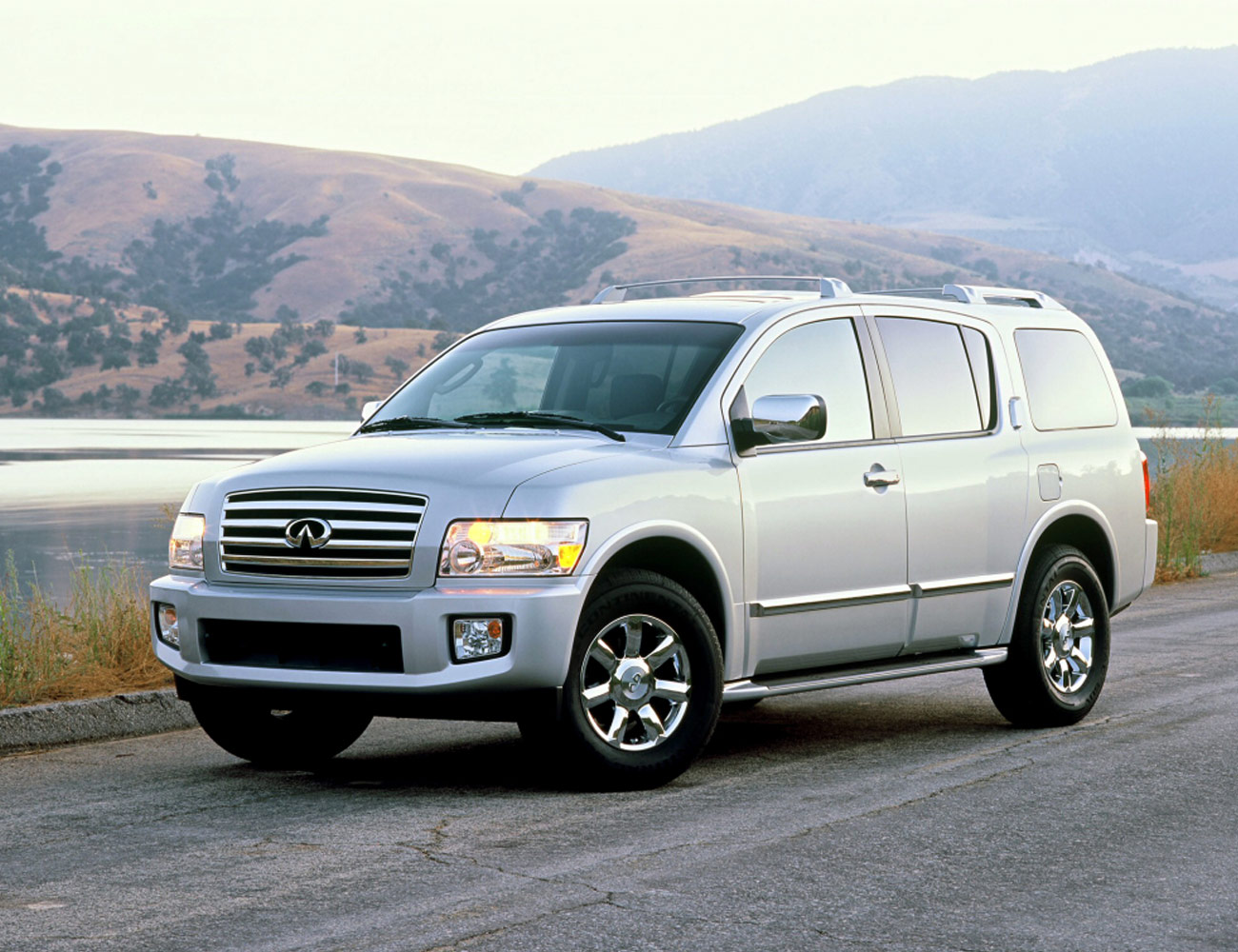
Infiniti QX56 (2004-10)

The QX56 was Nissan’s first attempt at a luxury full-size SUV. One uninspiring SUV would have been fine, but the QX56 looked like three uninspiring SUVs Photoshopped together. It had a weird sloping front end — perhaps to soften its overall look and hide that it was riding on a truck frame? Then there’s the middle part, with the humped roof. The rear of the vehicle then flattens out into a boxy, standard SUV backside. Bonus points for the rear door handles on the C-pillar to make it look sporty?

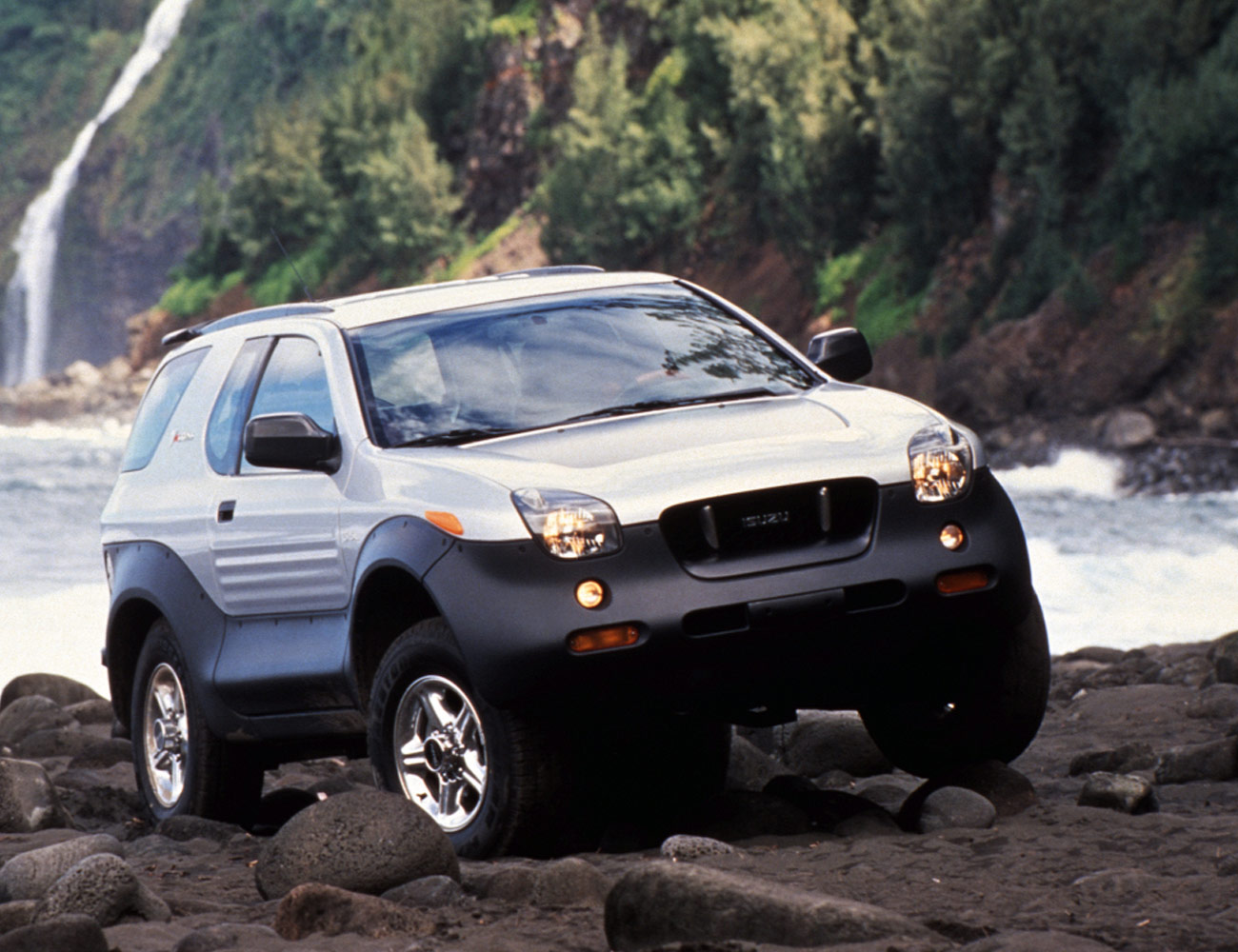
Isuzu VehiCross (1997-01)

Idiosyncratic capitalization rarely portends well in the automotive world. The Isuzu VehiCROSS, as the company styled the car’s name, had two distinct visual features. First, it had a downright obscene amount of cladding covering the entire lower half of the vehicle. Second, it had a tiny bat-face grille, replete with fangs. True enthusiasts opted for the “Ironman” edition, which said IRONMAN on the hood — complete with a stylized “M” to look like a man. It’s best driven while sporting some period-appropriate frosted tips.

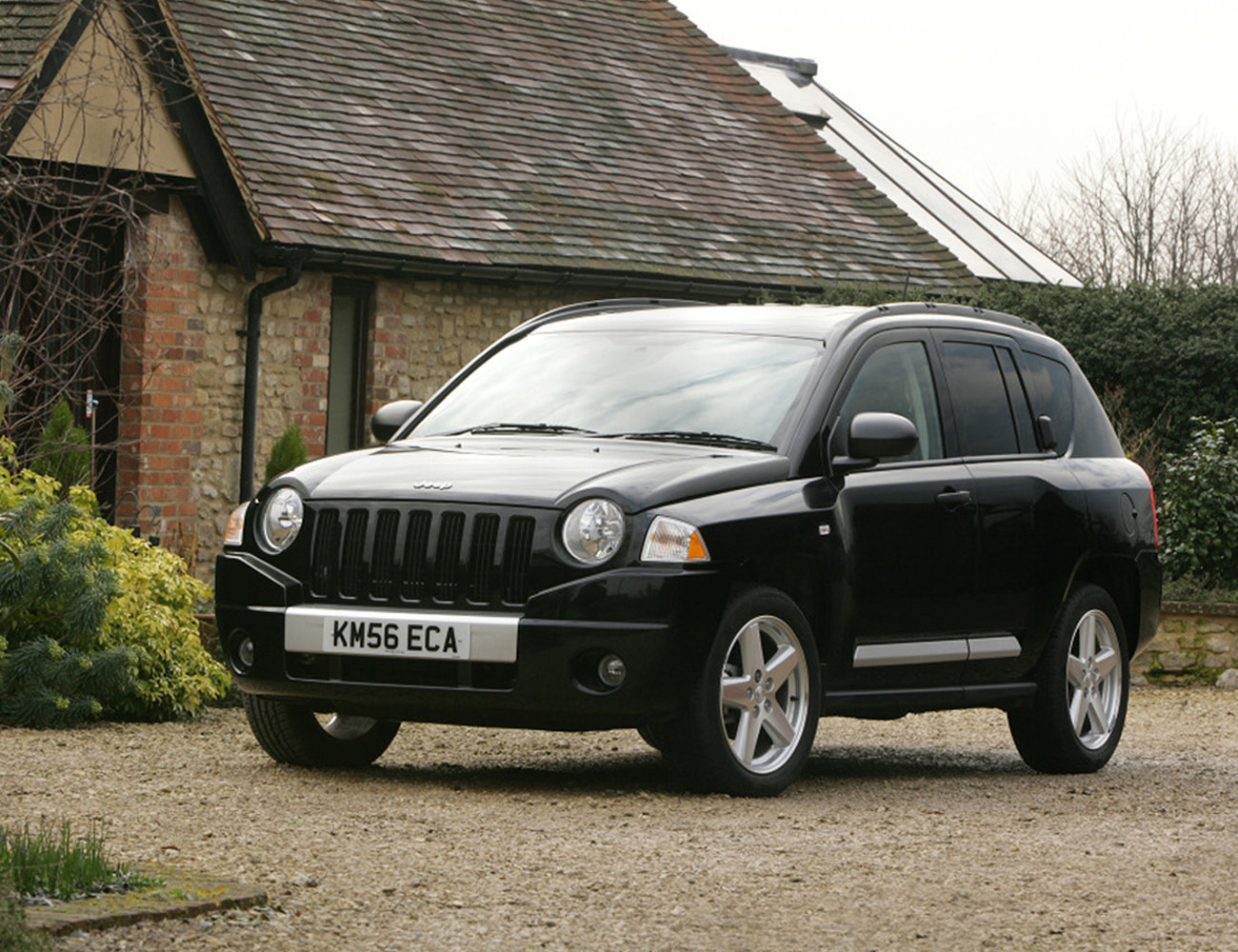
Jeep Compass (2007-10)

The current Compass is one of Jeep’s more attractive vehicles. It’s come a long way from the first generation pre-facelift version. Where to begin? The front end looks like a robot with jowls getting electroshocked. Towards the rear, Jeep threw in some sweet C-pillar door handles and weird, triangular D-pillar. The “COMPASS” badging etched into the rear bumper with an actual compass as the “O” ties the whole unfortunate look together.

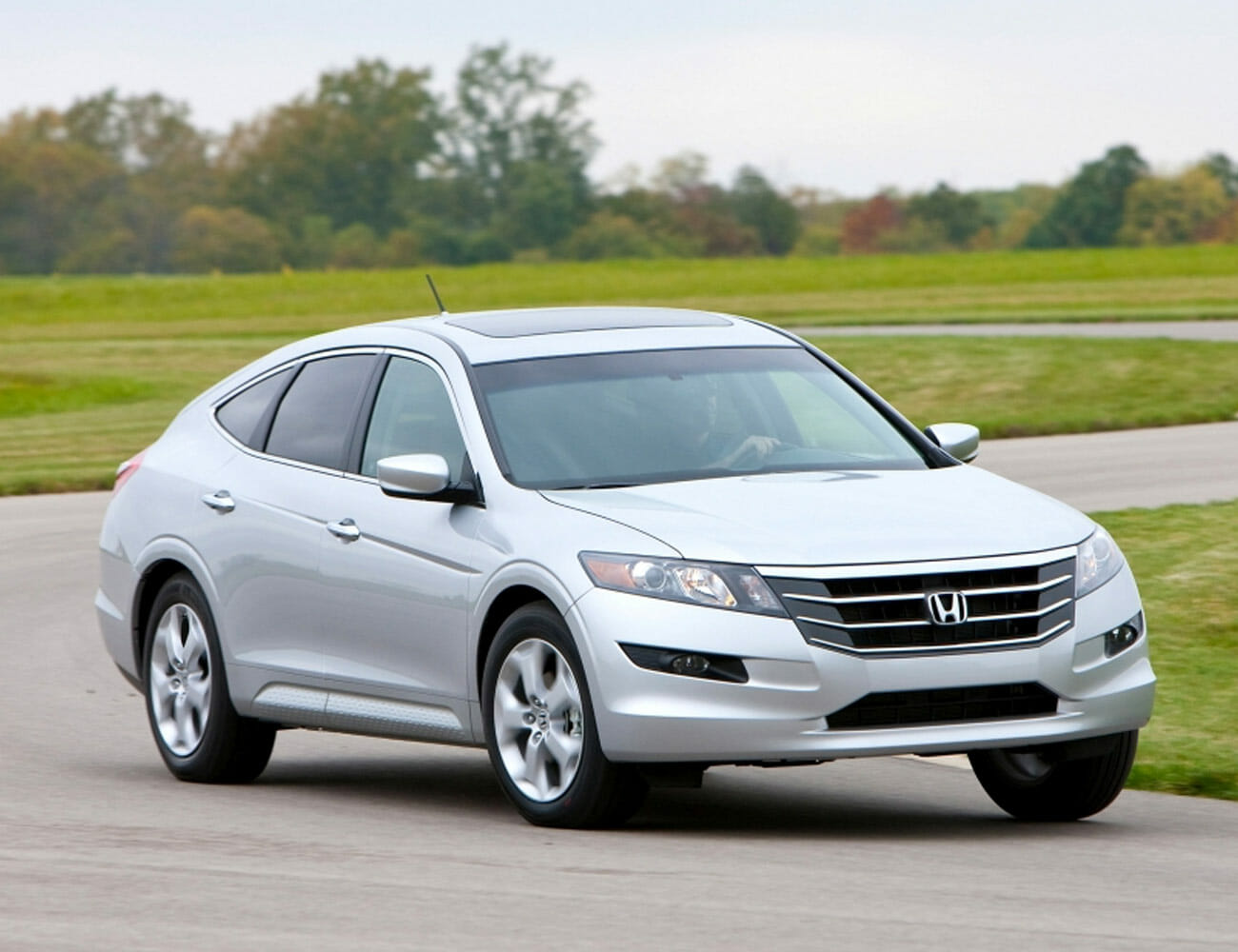
Honda Crosstour (2007-15)

Honda inflicted the Crosstour on the world beginning in the 2010 model year. Initially named the “Accord Crosstour,” Honda removed the “Accord” to deemphasize the fact it was just a lifted Honda Accord. It’s sort of like Honda couldn’t decide whether this should be a wagon, a hatchback or a crossover — and met in the precise middle between the three. Also, clearly every Honda exec who signed off only saw the one front three-quarter shot where the car looks nothing like an echidna.

2019 Monterey Car Week Mega Photo Gallery | The best of old, new, on-road and off-road

MONTEREY, Calif. – Once again, we hit nearly every major event of Monterey Car Week from the Quail to the Pebble Beach Concours. This year’s highlights included an interesting mix of upcoming supercars and some more attainable future models, as well as some highly historic cars at auction such as a James Bond Aston Martin and an ill-fated Porsche prototype. See these cars and more in our collection of galleries below.

McCall’s Motorworks Revival

Pebble Beach Tour

Quail, A Motorsports Gathering

Pebble Beach Concours d’Elegance

Pebble Beach Details

Pebble Beach Concept Car Lawn

RM Sotheby’s Auction

Bonhams Quail Lodge Auction

Gooding Pebble Beach Auction

2020 Acura NSX

Acura Type S Concept

Aston Martin Valhalla

Bugatti Centodieci

De Tomaso P72 

2020 Drako GTE

Ferrari F8 Tributo

Ferrari P80/C

Lamborghini Aventador SVJ 63 Roadster

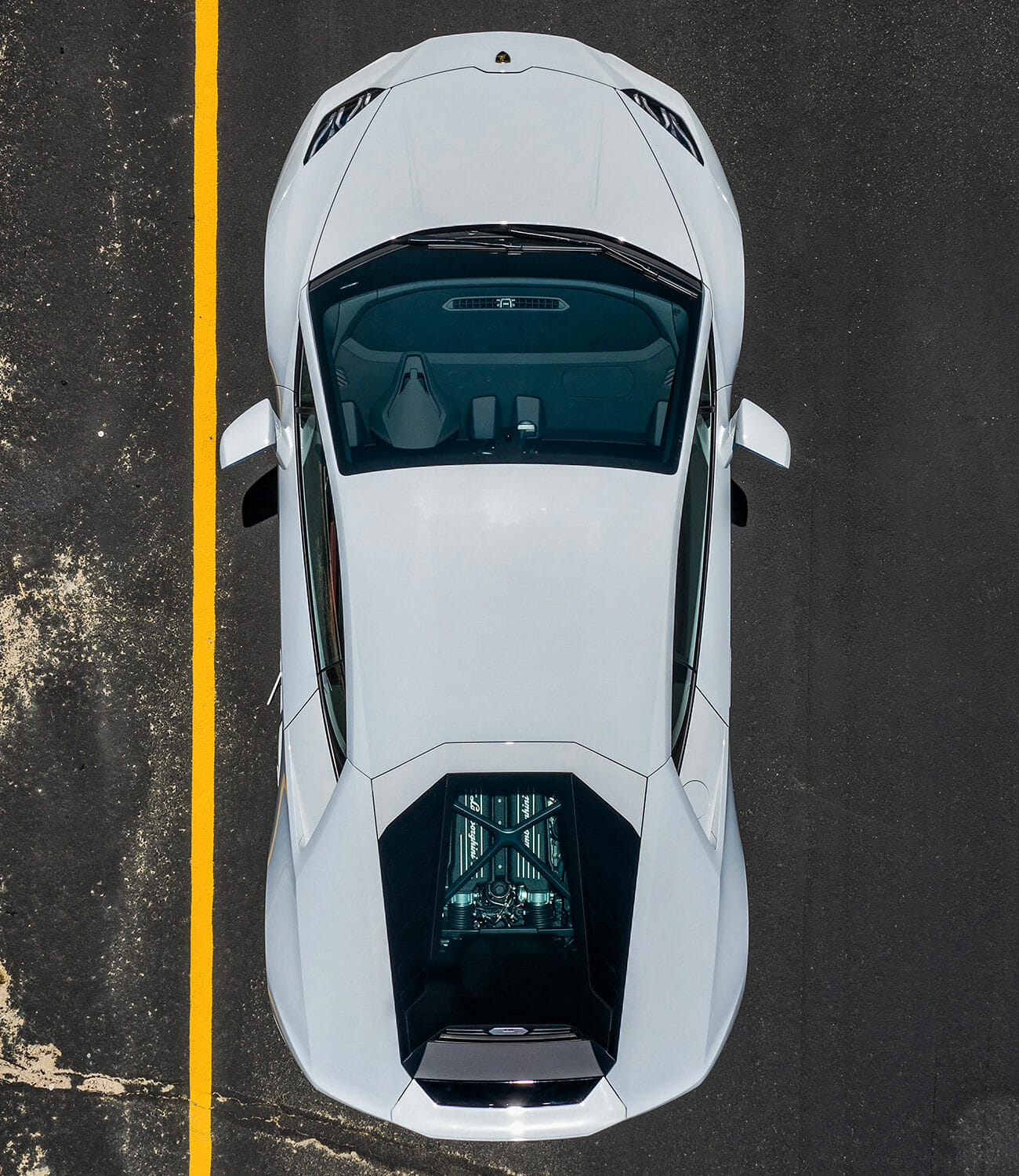
Lamborghini Huracan Evo GT Celebration

2020 Lexus LC Inspiration 

Lotus Evija

McLaren F1s at the Quail

Pagani Huayra BC Roadster

2020 Rezvani Beast

Scuderia Cameron Glickenhaus Baja Boot

SSC Tuatara

The Drako Motors GTE Is a 1,200 Horsepower Electric Supercar

A Powerful Electric Based on a Fisker Karma

The Silicon Valley startup called Drako Motors has a new all-electric supercar called the GTE. The car is based on the old Fisker Karma chassis, according to Top Gear. Unlike the Karma, the GTE isn’t some high-end luxury hybrid. It’s a bonafide electric supercar with 1,200 hp. It also comes with an absolutely insane 6,500 lb-ft of torque.

the GTE can run all the way up to 206 mph before not being able to go any further. The car comes with a 90kWh battery pack, which is similar in size to the batteries used in Tesla’s machines. Drako has not stated a range, but we’d expect it to be similar to Tesla’s cars. 

The car comes with Ohlins suspension and Brembo brakes as well as a special torque vectoring system, so it should ride, corner, and stop properly for a supercar. The company claims it will be a fatastic car on the twisties, by saying “cornering precision unlike any other supercar on the road today.” That is yet to be seen. However, the car certainly looks the part, and we’d expect the company not to be bragging too much. 

The car comes with four electric motors to produce all of that power. There’s a motor for each wheel. There are various drive modes, too, including a drift mode. The company is calling its system Quattro Manettino, which as Top Gear points out will probably annoy both Audi and Ferrari. 

Drako Motors has a fully functional prototype right now and is taking orders from customers. The company plans to build only 25 of the cars. Each one will cost $1.25 million. 

Lamborghini Reveals the Aventador SVJ 63 Roadster

A Special Roadster

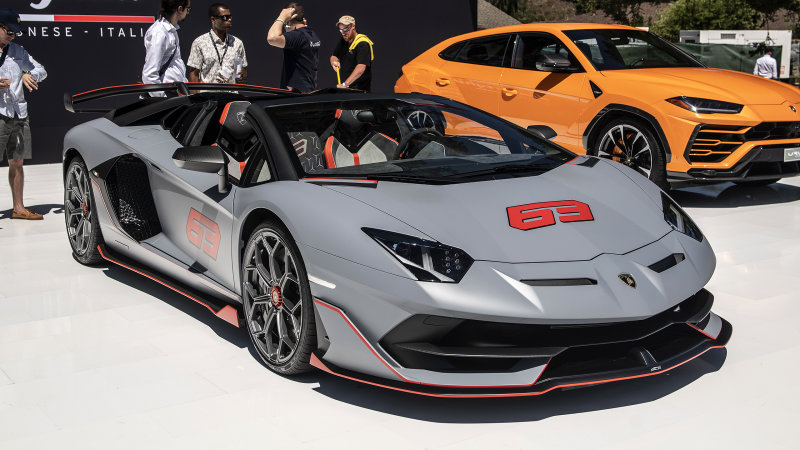
At The Quail in Monterey, California, Lamborghini unveiled a special 63 edition roadster of the Aventador SVJ. Only 63 of the cars will be made. The 63 is significant to Lamborghini due to the fact that the company started in 1963. The car is special not only because of the fact that so few will be made, but also because there will be eight different designs used for the paint and exterior and interior elements. 

The car that was shown at The Quail featured a matt grey Grigio Acheso paint job and orange Arancio Dac accents. The 63 Roadster comes with a slew of carbon fiber accents and components inside and out. The cabin is fitted with plenty of Alcantara and Lamborghini’s patented CarbonSkin. 

The roof, engine cover, air vents, rim around the windscreen, and the side mirrors are all made of carbon fiber, according to GTSpirit. Other than the unique exterior and interior components, the car is an SVJ Roadster. It gets Lamborghini’s V12 engine that puts out 770 hp and about 531 lb-ft of torque. This makes the car good for a 0-60 mph time of just 2.9 seconds. It has a top speed of over 217 mph. 

Koenigsegg hires the designer behind the Bugatti Chiron

Koenigsegg already makes a line of stunning hypercars, but the brand’s machinery might be even better looking in the future. That’s because the Swedish car company just hired Alexander “Sasha” Selipanov to be the company’s newest Head of Design. You may not know the name, but you definitely know one of his projects: the Bugatti Chiron.

The Chiron took shape while Selipanov was Bugatti’s Head of Exterior Design, as did the similar looking Bugatti Vision Gran Turismo for the Gran Turismo video game series. He later went to Genesis where he led the team that created the scintillating Genesis Essentia sports car concept and the nifty Genesis Mint compact concept car. Both of these cars were among our favorites from the last two New York Auto Shows.

Before these design highlights, Selipanov studied at Art Center College of Design in Pasadena, Calif., and then worked in design at Volkswagen starting in 2005. He also had a stint at Lamborghini in 2010. He will start his job at Koenigsegg this October.

2020 Lamborghini Huracán Evo: Staying Ahead of the Curve

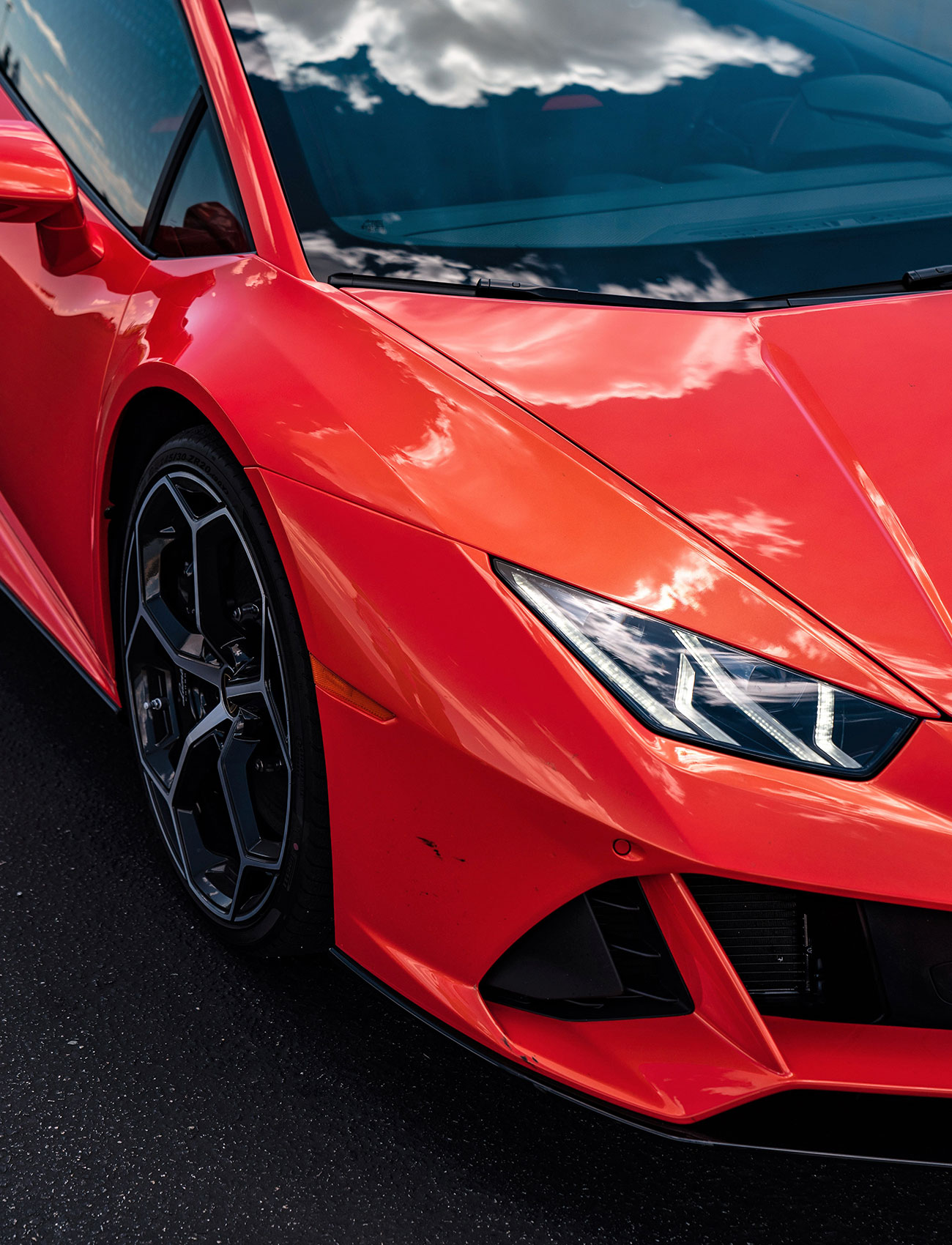
Lamborghini has gifted the world a new Huracán, and it’s way smarter than the other supercars. The new Huracán Evo jacks up the aerodynamics and power, yes — but its real magic trick is the introduction of a new centralized computer that replaces the multitude of separate units for each vehicle system found in the previous model. The result is a car that works to anticipate what the driver is about to do, whether on the track or the street, creating a harmonious man/machine interface.

The Good: Well, it’s a Huracán, so the starting point is already good. The mid-engined, two-seat supercar receives a power bump to 640 horsepower and 442 pound-feet of torque, some revised aerodynamics to enhance grip and stability at speed, and four-wheel-steering to carve through turns more precisely. Meanwhile, the new Lamborghini Dinamica Veicolo Integrata (LDVI) computer consolidates all the dynamic inputs and sensor data and metes out instructions for the car’s systems by the millisecond.

TL;DR: It’s fast, so you can go faster.

Who It’s For: Anyone with an affinity for the highest-tech enhancements to the driving experience. This is not an analog machine; it’s got a computerized dual-clutch transmission, the aforementioned digital central nervous system, and enough processing power on board to send Apollo 11 to the moon and back a million times over. In short, it’s a tech-nerd’s supercar fantasy.

Watch Out For: The system does require a bit of mental adaptation. As the car works to anticipate your moves, it can behave somewhat squirrely until your brain syncs up with what its brain is doing. (This is particularly true of the four-wheel-steering.) You have to get to know each other. This is true with any car, of course, but the Evo brings a lot of new things to the table, so it takes a few laps to get your head around it all.

Alternatives: In this universe, the competition is rare. There’s the Ferrari 488 GTB, of course — another mid-engine supercar, but with a twin-turbo 3.9-liter V8 instead of the naturally aspirated V10 in the Lamborghini. There’s also the McLaren 720S, which clocks in with even more extreme performance stats than the Ferrari.

Review: When reviewing cars like the Lamborghini Huracán Evo at a track like Willow Springs International Raceway, where journalists tried it out, you kind of have to think fast. Not because of the speeds you’re attacking the turns in — though that’s part of it — but to the brevity of the experience as a whole. Every second counts, and you need to compress your learnings into what invariably ends up being just a few hot laps.

This Huracán, with its newly-rewired digital control technology, makes that process simultaneously easy and impossible. Easy because the differences between this car and its conventional predecessors tend to stand out in relief — the four-wheel-steering, the anticipatory aligning of car and corner — but also impossible because there’s so much more to explore than in most cars.

That’s all due to the LDVI system. In short, the thinking is this: Most cars collect dynamic data from dozens of sensors and systems (brakes, suspension, engine, steering, etc.), and they all respond to one another. Lamborghini’s engineers have turned that thinking on its head. Instead of multiple computers taking input from other computers and commanding their own systems, all the data in the Huracán — supplemented by three accelerometers and three gyroscopes tucked into the car at its precise center of gravity — goes straight to a single computer, which commands all the other systems in harmony. If a regular car’s computers are jazz musicians riffing off one another, LDVI is a maestro conducting an orchestra.

All that means the Evo can analyze the road, the vehicle’s position and the driver’s movements — including the speed and intensity of those movements—and make an educated guess about what’s coming next and set up the car for each coming challenge, requiring the driver to make fewer corrective inputs.

At Willow, that proved the recipe for an exhilarating drive. The Huracán smoothed out turns brilliantly — at least, once I figured out what it was up to and stopped trying to fight it. While the computer was doing its thing (every 20 milliseconds, it should be noted), I also had the benefit of the new rear-wheel-steering system, which can pivot the back in sync with the front at higher speeds and opposite at lower ones.

Aerodynamically, there’s a new front splitter with an integrated wing and a newly redesigned rear spoiler, both conspiring to ratchet up the downforce. The car is more slippery, too, thanks to improved airflow through the front vents and past the wheels and a rear diffuser to even further clean up the air and enhance adhesion.

The full package makes the Evo far more than a mere refresh; these are serious upgrades to the Huracán. They’re also absolutely worth the price of entry. Once I’d completed my laps at Willow, now fully aware of how much the car is able to prime itself for each millisecond of drive time, I pulled into the pit and thought, for the first time, Yeah, this car gets me.

Verdict: Once you wriggle through a few introductory laps and learn the machine’s modus operandi, the Lamborghini Huracán Evo is fantastic. There’s no other car on the road that has made this profound a leap — both conceptual and practical — in vehicle dynamic control theory. In a few years, all cars will use this centralized strategy, and everything else will feel laughably archaic.

2020 Lamborghini Huracán Evo Key Specs

Powertrain: 5.2-liter V10, seven-speed dual-clutch automatic transmission, all-wheel-drive
Horsepower: 631
Torque: 443 pound-feet
0-62 MPH: 2.9 seconds
Top Speed: 202 mph

Lamborghini hosted us and provided this product for review.

Read More Gear Patrol Reviews

Hot takes and in-depth reviews on noteworthy, relevant and interesting products. Read the Story
Note: Purchasing products through our links may earn us a portion of the sale, which supports our editorial team’s mission. Learn more here.

First SSC Tuatara reportedly delivered to customer at The Quail

At the end of last month, SSC issued a press release saying the first customer delivery of its Tuatara would take place August 16 at The Quail: A Motorsports Gathering. Coronation day has come and gone, yet we’ve not heard news nor seen photos of the handover. No matter, a complete Tuatara did grace the Quail lawn, alongside a naked version stripped to its carbon fiber superstructure. We secured plenty of photos of the production hypercar hailing from the Pacific Northwest, and of its engine marked by the label, “1.3 Megawatts.” That refers to the 1,750 horsepower available from the angry 5.9-liter twin-turbocharged V8 when run on E85. Regular premium fuel will “only” get a driver 1,350 horses. At some point in the future, those performance figures are meant to add up to a 300-mile-per-hour top-speed run.

SSC’s release also said, “future customers and members of the press have had the opportunity to experience its extreme performance and track-level handling, hailing it for its comfort, drivability, and driving experience unlike any other car on the market.” Said reviews of the knee-high coupe are, like the first customer and key handover, M.I.A. at the moment. We look forward to seeing all of them sometime this quarter. Until then, enjoy the high-res gallery. We really do wish SSC would have more fun with the color choices, though; the Tuatara on Pebble Beach duty last year was bathed in a light, matte gray, and was sensational.

Lotus Evija whirs onto Quail lawn to tempt 130 prospective customers

At last, we’ve met the Lotus Evija in its compact, electric-charged glory. The carbon-fiber-bodied electric supercar looks like liquid metal poured over some skeletal biologic form. The coupe represents the first all-new Lotus since the ten-year-old Evora went on sale, the first Lotus developed wholly under Geely ownership, the first in-house all-electric vehicle from Hethel, the first Lotus with a one-piece carbon fiber monocoque tub, and the first one Hethel HQ will send to the Nürburgring to break a lap record. Lotus announced that lap record tilt saying it should be “comfortably quicker” than the all-electric NIO EP9 road-legal EV that ran a 6:45. That has since been broken by the 6:05 figure Volkswagen achieved with its ID.R, a purpose-built electric race car. The ‘Ring doesn’t yet divide EV times into classes, so we’d still like to see Lotus go for outright honors.

That is indeed unfair, but the Evija has the numbers to at least make a go of it. The four electric motors in the ID.R produce a combined 680 horsepower and 479 pound-feet of torque to move a car weighing 2,500 pounds. The Evija’s 50 percent heavier at 3,700 pounds, but has almost triple the horses and more than double the torque, its two motors making a combined 2,000 horsepower and 1,254 pound-feet of torque. It does have active aerodynamics, including a moving rear wing, but it’s still short a bunch of race aero, a giant front splitter, and a DRS button.

No matter how the German caper turns out, we expect Lotus will be able to find homes for all the Evijas it offers for sale. Only 130 will be made, each one starting at around $2.1 million.

Lamborghini unveils Aventador SVJ 63 Roadster and Huracan EVO GT Celebration

Lamborghini didn’t stop at removing the roof of the limited edition Aventador SVJ in order to create the Aventador SVJ Roadster. Instead, the Italian carmaker puts its Centro Stile design division in a room with the Ad Personam customization division, and they came up with colored-keyed takes on what’s called the Aventador SVJ 63 Roadster. The “63” refers to both the year Ferruccio Lamborghini founded his car company, and the number of open-topped SVJs that will be made. The eight exterior themes that will be exclusive to this car start with the one shown on the Pebble Beach concept lawn, in matte Grigio Acheso with details like the “SVJ” and “63” graphics in Arancio Dac. Matte Titanium center-lock wheels get Arancio locking plates. 

The interior will offer three themes in the SVJ’s usual materials, Alcantara and Lamborghini’s CarbonSkin. A badge on the steering wheel plays off the “63” logo inscribed on the back wall in lasered Alcantara and CarbonSkin. The show car’s cabin rocks it up with Grigio Octans, Grigio Cronus, and Arancio Dryope (orange), with the carbon fiber seats finished with white Q-Citura cross-stitching. The news about this car is little more than a public service announcement, though, since all 63 examples are already sold.

Lamborghini put two more surprises in its Monterey trailer, the first being the Huracán EVO GT Celebration. Thanks to the Grasser Racing Team and Paul Miller Racing, Lamborghini’s won both the 24 Hours of Daytona and the 12 Hours of Sebring two years in a row. Limited to 36 units — the combined race durations in hours — the Huracán EVO GT Celebration plucks the GRT livery motif for its street version. The display version wears Verde Egeria and Arancio Aten, but there are nine combinations possible by combining the three available primary body colors and three available secondary colors.

The Huracán’s hexagon design motif is used to frame the “11,” the number of the GRT racer that won Daytona and Sebring this year. Badges on the sides read “Daytona 24” and “Sebring 12,” and the driver’s B-pillar is adorned with a carbon fiber plate inscribed with “X of 36.” Race fans who want to go all the way can order a Lamborghini Squadra Corse shield placed on the roof between Italian and U.S. flags, and laurel wreaths on the rear fenders.

The interior borrows the primary exterior color for cross-stitching on the new racing seats introduced on this car. The Huracán EVO GT Celebration will only be offered to North American buyers, and if it isn’t sold out already, it can’t last much longer.

The final thrill comes from the Urus, which will expand its color palette for 2020. Lamborghini brought one of them to the Peninsula in Arancio Borealis, “a four-layer paint emphasizing the depth of the color.” Because no one wants a shallow orange.

Aston Martin Valhalla In Action on the Racetrack For the First Time

Aston’s Vallhalla Takes On Silverstone

To celebrate Aston’s debut of the Valhalla in North America, the company decided to showcase a video of its new car tearing around Silverstone. The video was shown at The Quail. In the video, the Valhall and the Valkyrie both shoot around the track looking like they’re right where they belong. 

The video is less than a minute long and goes by way too quickly. We could sit around a watch these things on the racetrack all day long. Still, it’s nice to see the Valhalla and Valkyrie doing their thing. The Valhalla in the video is what the company calls a dynamic concept. That means they’re still tweaking the car as it gets closer to the end of development. 

The Valhalla and Valkyrie are similar cars in many ways, but the Valhalla is designed to be a bit more livable day-to-day whereas the Valkyrie is a hardcore track monster. This is evident just by looking at them. The Valhalla is smoother and softer. It’s door entry and egress is a little easier to handle, and the interior is a little more spacious and comfortable. 

While Aston hasn’t said exactly what the car’s performance will be, it has said the vehicle will get a turbocharged V6 engine that should put power out to all four wheels. The power number is supposed to be around 1,000 hp. This should make the car good for a 0-60 mph time of about 2.5 seconds. 

[embedded content]

Lamborghini Aventador SVJ 63 Roadster Revealed – 63 Units Only

Lamborghini used The Quail at Monterey to unveil a special edition Lamborghini Aventador SVJ 63 Roadster. The special edition model follows the coupe version unveiled at Pebble Beach last year.

The 63 edition models commemorate the company’s founding year of 1963. Just 63 examples will be built as a limited edition production run of an already limited edition production run.

The Lamborghini Aventador SVJ 63 Roadster gets a range of unique features. The SVJ 63 Roadsters will be available in eight exclusive new designs. The example at Pebble Beach gets a matt grey Grigio Acheso paintjob and orange Arancio Dac details.

Each car will get matt or shiny carbon fibre upper parts including the roof, engine cover, engine air vents, windscreen rim and wing mirrors. The rims get a new matt titanium finish and the car carries the SVJ 63 livery which debuted on the coupe, as well as a ‘1 of 63’ numbered plate.

Inside, there are three alcantara variations with extensive carbon fibre and Lamborghini’s patented lightweight CarbonSkin.

Otherwise, the Lamborghini Aventador SVJ 63 Roadster remains faithful to the formula of the standard SVJ Roadster‘s. The V12 engine receives the same tuning as the Coupe. It is the most powerful V12-engined car Lamborghini have produced. It puts out 770 hp at 8,500 rpm and 720 Nm of torque at 6,750 rpm. From standing, the SVJ accelerates to 100 km/h in 2.9 seconds and on to 200 km/h in 8.8 seconds. The top speed is said to be “more than 350 km/h” with a braking distance from 100 km/h to 0 in 31 meters.

GTSPIRIT NEWSLETTER

This Ford Mustang Is the Most Famous Ever Made, and It Will Be Auctioned

The Magazine

Each issue of Gear Patrol Magazine is a deep dive into product culture. Inside, you’ll find seasonal buying guides, rich maker profiles and long-form dispatches from the front lines of product design. The stunningly designed Gear Patrol Magazine is ready for your coffee table. Quarterly. $39

The Newsletter

Get the best new products, deals, and stories from across the world, in your inbox daily.

Video Roundup: Magnus Walker’s Porsches, Hermes Edition Pagani Huayra, Mercedes-AMG GT 4-Door and More

These are the Videos That Caught Out Eye This Week

We watch a fair number of supercar and sports car videos each week on YouTube, and we come across some seriously wonderful stuff. While we will occasionally showcase a video of something, sometimes there’s just too many good videos to do a write up for each and every one. That’s why we thought it best to give a video roundup of all our favorite videos this week. 

With all that in mind, let’s take a look at some of the best videos that came out this week on YouTube that showcase some of the best and most impressive cars out there. 

Magnus Walker’s Porsche Collection

[embedded content]

Magnus Walker might look like a dirty hippy or a dirty homeless man, but the buy is an insanely cool dude who is one of the best to turn to when it comes to Porsches. In the video above, Walker takes the guys behind the YouTube channel Seen Through Glass through his collection of Porsche cars. It’s a video full of eye candy, and it showcases just how big of a Porsche enthusiast Walker is. This is our dream garage, and It’s absolutely perfect. 

Hermes Edition Pagani Huayra With Supercar Blondie

[embedded content]

If you don’t know Supercar Blondie, you should. She gets access to some of the most amazing cars in the world and showcases them on her YouTube channel. In the video above, she gets to take a close look at the first-ever Hermes Edition Pagani Huayra. Hermes is one of the most prestigious luxury brands out there and Pagani is its equivalent in the supercar world. The two make an amazing paring, and as you can see, this car in the video does not disappoint. 

Mercedes-AMG GT 4-Door Road Review by Carfection

[embedded content]

I’m a huge fan of Carfection’s YouTube channel. The publication puts out some of the best videos out there, and Henry Catchpole is one of the better car reviewers in the business. In this review, Catchpole looks at the Mercedes-AMG GT 4-Door to see how it drives on the road and to find out if it’s worth the money that Mercedes wants to charge for it. He gives an honest look at one wildly impressive four-door car. 

2020 Jaguar F-Type Checkered Flag Review by TheStraightPipes

[embedded content]

Another good channel for straight car reviews is TheStragihtPipes. The channel is run by some serious automotive journalist giving you a clear look at some of the best high-performance cars out there. This time around, the guys have their hands on the 2020 Jaguar F-Type Checkered Flag, and they go over what makes this version of the car different and if it’s worthy of your hard-earned dollars.

BMW E30 M3 vs E46 M3 CSL vs M2 Competition by Autocar

[embedded content]

Autocar is one of the older and still one of the best automotive publications out there and it’s videos like this one that set the publication’s YouTube channel apart from all of the random videos out there. In the video, the journalists put three of the best BMW models up against one another to determine what the best M Division car is. It’s an entertaining video with some awesome eye candy and excellent evaluation. 

Those are the videos that caught out eye this week. We’ll be rounding up future videos in the coming weeks so that you can catch all of the great video content being put out by various channels. 

Lexus Is Only Making 100 of the 2020 Lexus LC 500 Inspiration Series Cars

Three years ago at the North American International Auto Show in Detroit, Lexus unveiled a production coupe based on the LF-FC concept that everyone thought would be impossible to make work. It was called the…

Lamborghini Showcases an Art Car at Monterey Car Week

A Pop Art Crafted Aventador S

The car you see here is a Lamborghini Aventador S that was crafted by Skyler Grey, a 19-year-old pop artist based in Los Angeles, California. Lamborghini worked with the artist to make this art car, and it has just revealed the car at the Monterey Car Week in California. 

Paying homage to some of the best pop artists out there, Grey took the Aventador and added plenty fo bright colors and some bulls along the side, which is, of course, the emblem for Lamborghini. The Lamborghini CEO Stefano Domencali said that the car was already sold before the project even completed. 

Inside the car, you’ll find a black interior with orange contrast stitching and an intricate Bull embroidered between the seats. While all Lamborghini Aventador S models are special, this one is a true one-of-a-kind art piece. The project came about through the Ad Personam program, which personalizes customer’s cars. 

The car is also part of Lamborghini’s Lamborghini Sicura program. According to Motor Authority, the program certifies cars and works to prevent counterfeits. 

Like all Aventador S models, this special art car features a 6.5-liter V12 that produces 730 hp. The car is just as much a performer as any other Lamborghini. It features a 0-60 mph time under three seconds and a top speed of 217. Just because it looks cool and unique doesn’t mean it should be any slower. 

[embedded content]

McLaren reveals that its next Ultimate Series car is indeed a roadster

It turns out the rumor was true, the next McLaren Ultimate Series car, which is the group of cars including the Senna, Speedtail and P1, will be a roadster. The company revealed the preview rendering above, though it hasn’t announced a name. Of course one of the most distinctive parts of the car is the complete lack of both a roof and a windshield. The styling is clearly McLaren with small headlights and a highly curvaceous body. Thankfully, the design looks closer to the Speedtail and GT than the over-styled Senna.

Part of what will make this car worthy of the Ultimate Series moniker is the claim that this will be the lightest McLaren road car to date. For reference, the Senna is one of the lightest cars in the McLaren lineup right now at just under 2,900 pounds. On the topic of the Senna, the new roadster will use “the same twin-turbo V8 engine.” So it likely will make the same 789 horsepower and 590 pound-feet of torque as that supercar. McLaren says the goal of this car is to provide the most involved, connected drive of its top-tier supercars.

McLaren will reveal more details and photos of the car at its official debut sometime in 2020. It should finally have a name then, too. Prospective buyers will want to act quickly, as only 399 examples of the car will be built.

The Complete Honda Buying Guide: Every Model, Explained

Honda products have long been synonymous with reliability, efficiency, and affordability. Honda Motor Company was co-founded by Soichiro Honda and Takeo Fujisawa in 1949 with the introduction of the D-Type motorcycle, followed by the T360 small pick-up truck in 1963. Things took off in 1972, however when Honda released the Civic in the United States. It proved a game-changer for the Japanese company, launching it on a path towards global success.

With over 18 million cars sold over the past 47 years, the Civic has become one of the best-selling cars in the history of automobiles — as has its big brother, the Honda Accord. Today, Honda Motor Company has grown into one of the world’s most successful companies; while Honda remains Japan’s second-largest automobile manufacturers, the company also develops products ranging from gardening equipment to marine engines, personal watercraft and power generators.

Honda doesn’t have a traditional alphanumeric naming system like Lexus or Cadillac; instead, like Porsche and Lincoln, each model uses a more traditional name. Vehicle designations are followed by package monikers. “LX” models are the most affordable base models, with the fewest features. “Sport” variants vary, but generally receive sport-inspired internal and external visual upgrades on top of the basic LX features. “EX” includes all base-level features as well as upgraded safety systems, interior and exterior amenities. “EX-L” includes all EX items, with added higher-spec features or luxury features such as leather trim. “Touring” and “Elite” variants are fully-loaded vehicles with high-quality interior packages, lighting, audio systems, navigation and so forth.

Honda Terminology

Honda Sensing: Honda’s full suite of active safety technology, which includes: Collison Mitigation Braking System (CMBS), Lane Keep Assist (LKAS), Road Departure Mitigation (RDM) and Adaptive Cruise Control (ACC). It is either standard or available on mid-level trims and higher on most models. Honda Sensing is not available on the Civic Type R.
VTEC: Variable Valve Timing & Lift Electronic Control. A Honda-developed technology to improve the efficiency of their four-stroke internal combustion engines. The result is an engine that produces high performance at high RPM and better fuel efficiency at low RPM.
Atkinson Cycle: A type of engine combustion where the intake valves are held open for a portion of the compression stroke. The result is an increase in the expansion ratio on the power stroke, which creates an increase in fuel efficiency but a decrease in power output. Often used on hybrid vehicles, as the power loss can be made up for with electric motors.

Civic
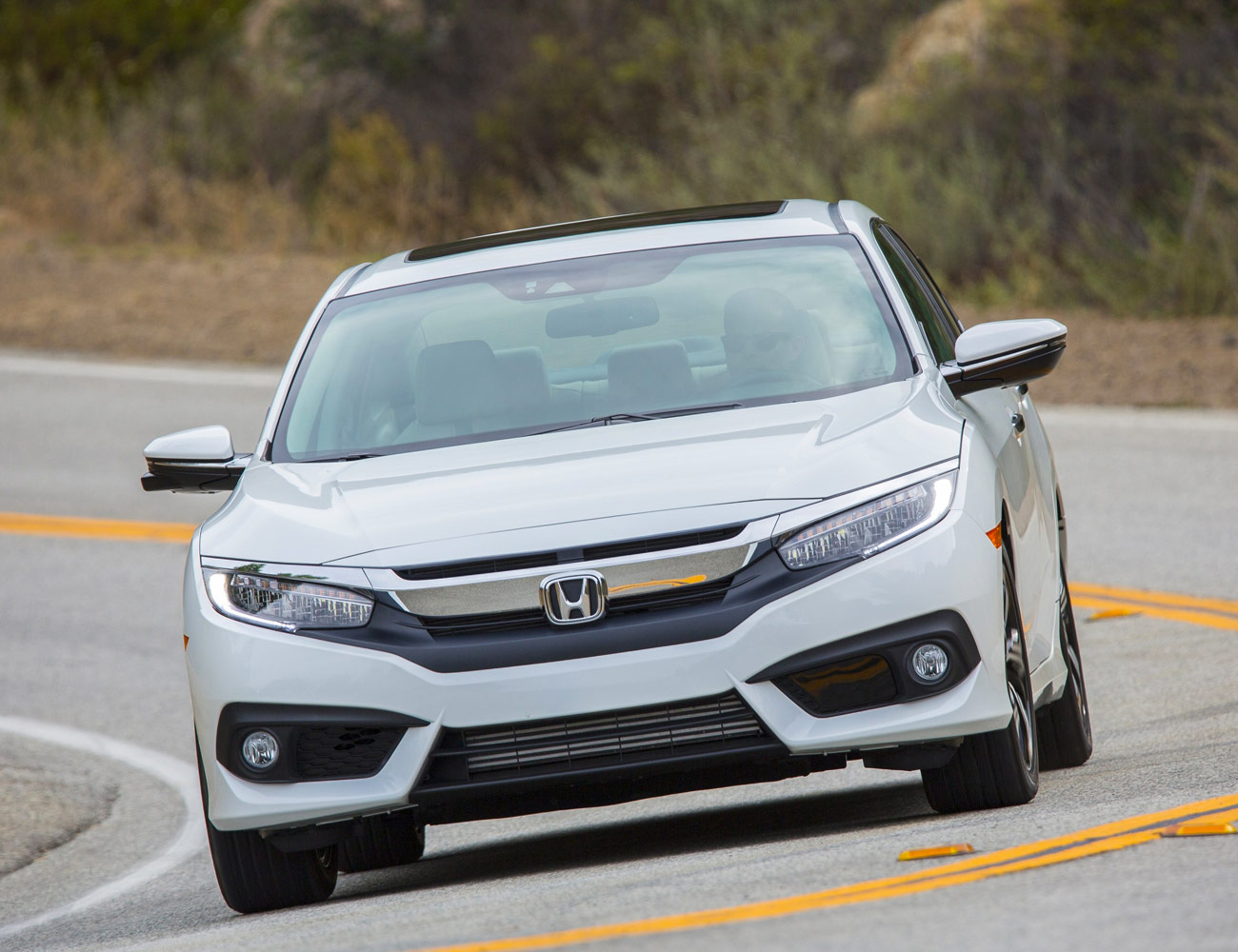
The Civic is Honda’s compact car, and comes in three body styles: coupe, sedan and hatchback. The Civic debuted in 1972 and today is one of the world’s best-selling cars. There are two engine options: a 174-horsepower turbocharged 1.5-liter four-cylinder or a 158-hp 2.0-liter four-cylinder. Both engines are only available with front-wheel drive, but can be optioned with a six-speed manual transmission or continuously variable transmission (CVT).

Body Style: Sedan / Hatchback / Coupe

Models:

• Sedan: LX, Sport, EX, EX-L, Touring
• Hatchback: LX, Sport, EX, EX-L Navi, Touring
• Coupe: LX, Sport, EX, Touring

Engines:

• 2.0-liter four-cylinder
• Turbocharged 1.5-liter four-cylinder

Base MSRP: $19,550

Civic Si
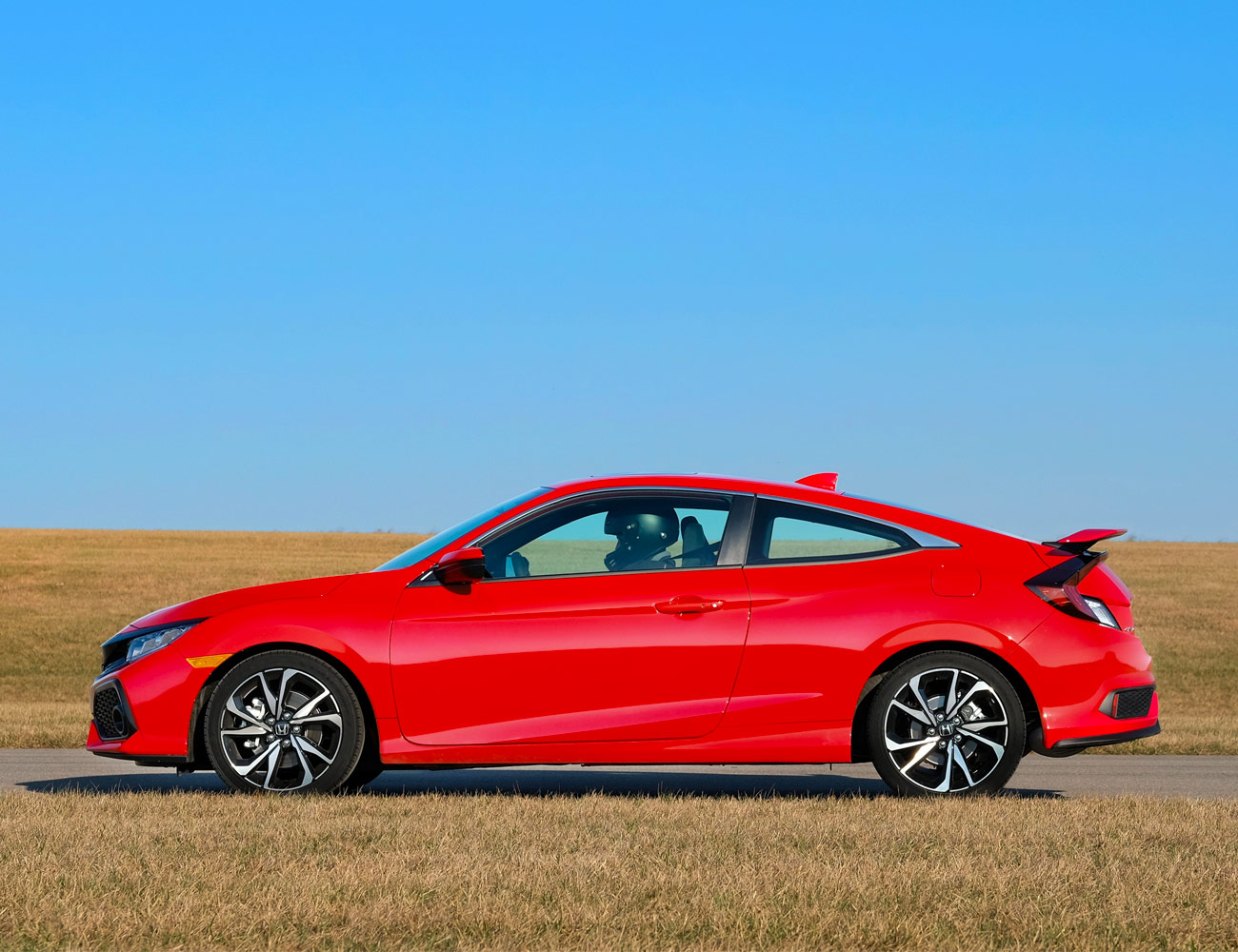
The Honda Civic Si is a sportier version of the regular Civic. It comes in both coupe and sedan forms. The biggest upgrade over the regular Civic line-up is it 205-hp turbocharged 1.5-liter four-cylinder engine. The Civic Si is only available with front-wheel drive and a six-speed manual transmission.

Body Style: Sedan / Coupe

Engines:

• Turbocharged 1.5-liter four-cylinder

Base MSRP: $24,300

Civic Type R
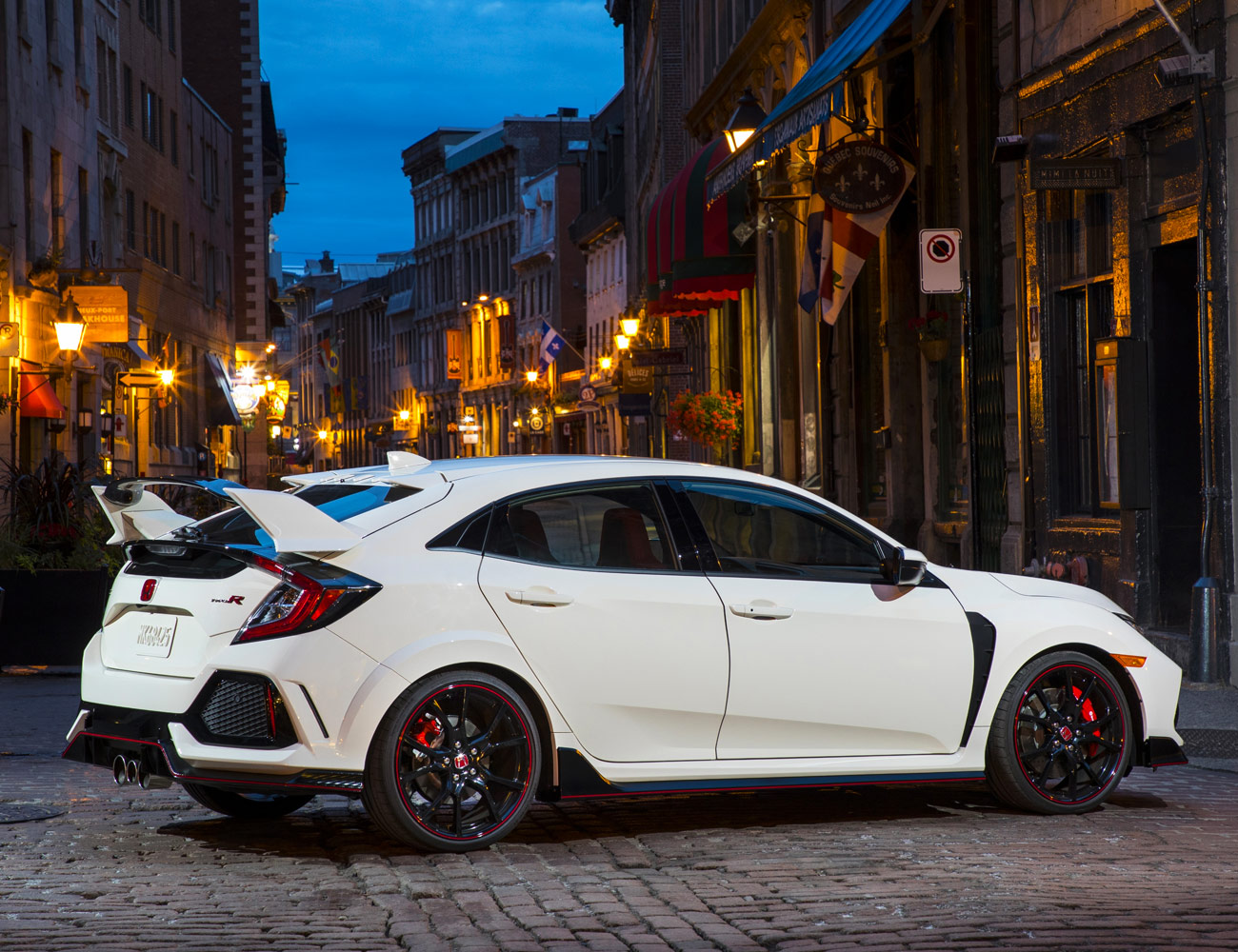
The Honda Civic Type R is regarded as one of the best-performing, most entertaining front-wheel-drive vehicles on sale. The Civic Type R came to the United States in 2017 — and with it, a 305-hp turbocharged 2.0-liter inline four-cylinder engine, a refined chassis and aggressive styling. The Type R is only available with a six-speed manual transmission.

Body Style: Hatchback

Engines:

• Turbocharged 2.0-liter inline four-cylinder

Base MSRP: $36,300

Fit
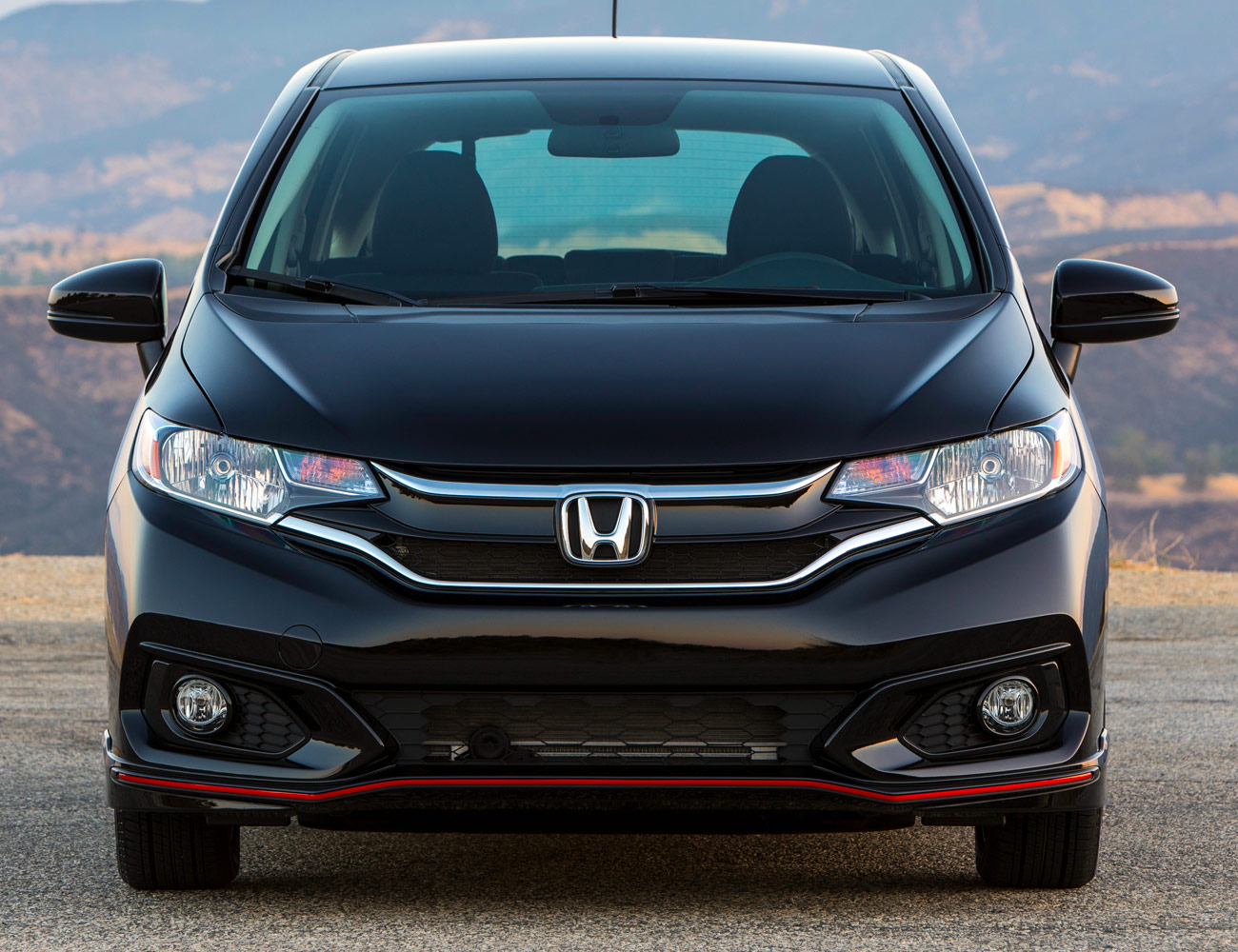
The Fit is Honda’s practical, entry-level subcompact. With a boxy design, spacious interior and lay -lat rear seats, the Fit prioritizes space and utility in a small package. The Fit is only available with front-wheel drive and a 130-hp 1.5-liter four-cylinder engine. It can be optioned with a six-speed manual transmission or a continuously variable transmission.

Body Style: Hatchback

Models:

• LX
• Sport
• EX
• EX-L

Engines:

• 1.5-liter four-cylinder

Base MSRP: $16,190

Accord
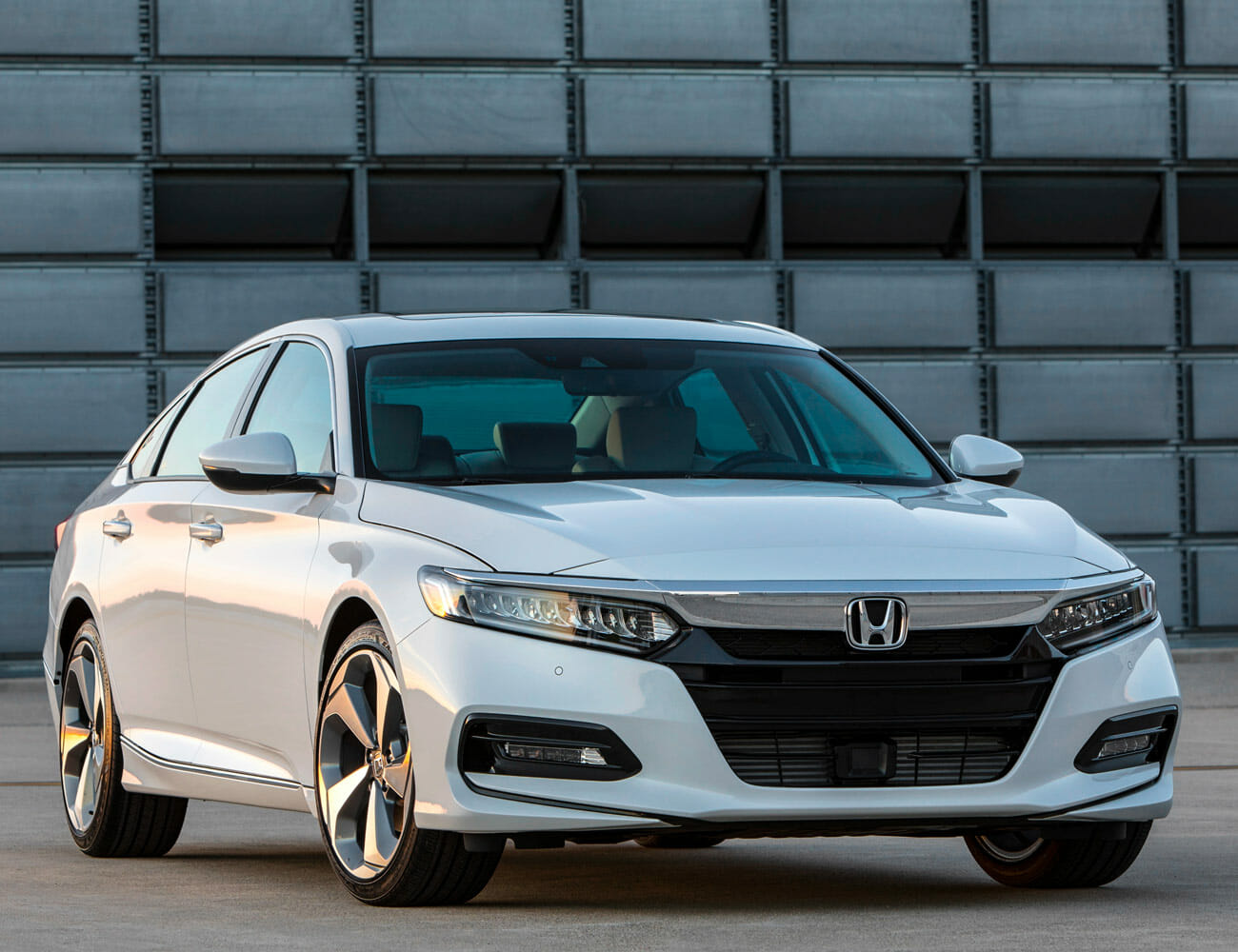
The Accord is Honda’s midsized family sedan. It first debuted in the United States in 1976, and over the years, has amassed an impressive roster of accolades. The Accord comes with three engine options: a 192-hp turbocharged 1.5-liter inline-four-cylinder, a 252-hp turbocharged 2.0-liter inline four-cylinder, and a hybrid 2.0-liter inline four-cylinder Atkinson-cycle engine with two electric motors. The Accord is front-wheel drive only and can be optioned with a six-speed manual (not available on the Hybrid), a CVT or a 10-speed automatic transmission.

Body Style: Sedan

Models:

• LX
• EX
• Touring
• Hybrid

Engines:

• Turbocharged 1.5-liter inline four-cylinder
• Turbocharged 2.0-liter inline four-cylinder
• 2.0-liter inline four-cylinder Atkinson-cycle engine with two electric motors

Base MSRP: $23,720

Insight
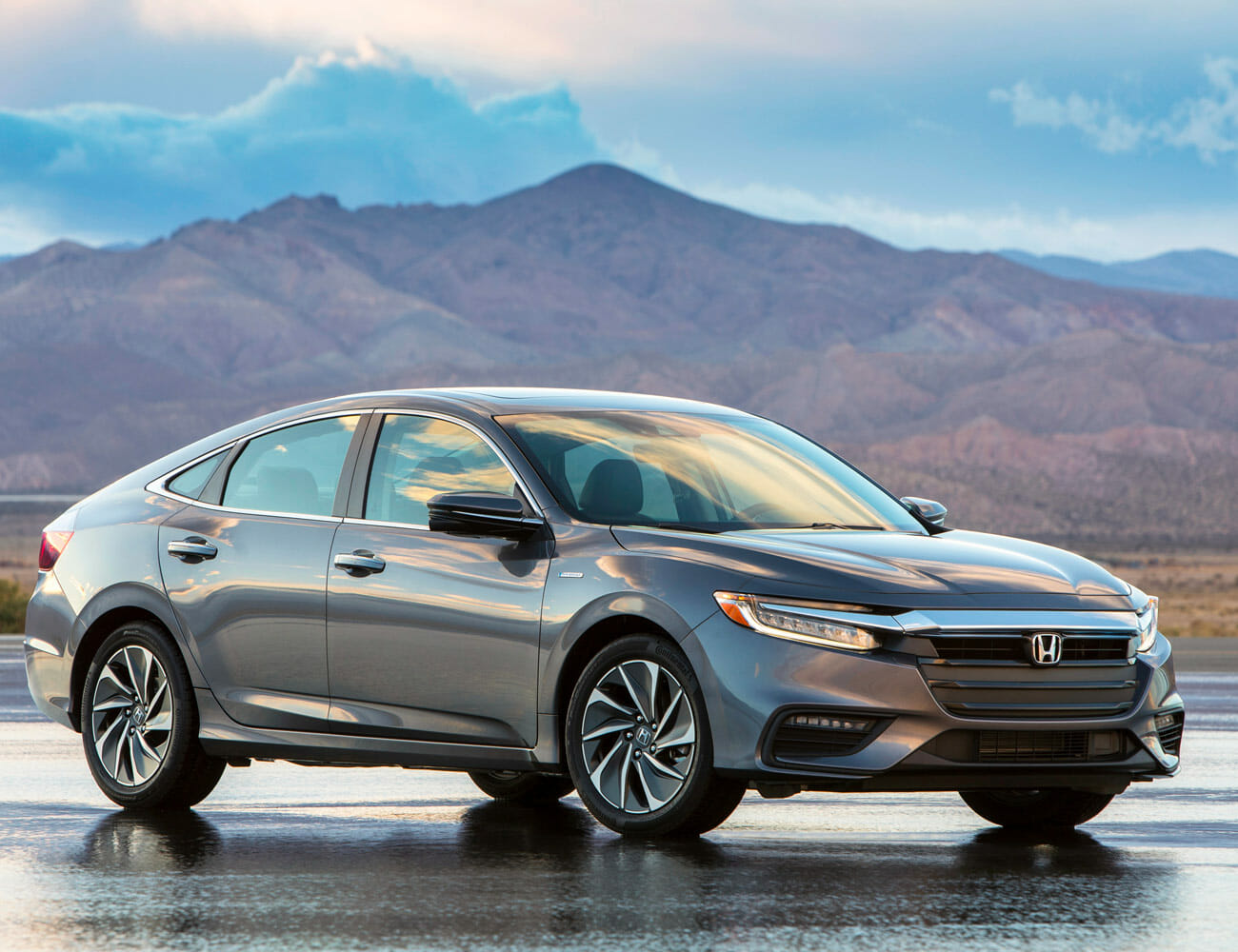
The Insight is Honda’s compact hybrid sedan. The Insight is similar to its sibling, the Civic, in wheelbase and handling, but bests it in fuel efficiency thanks to a two-motor drivetrain. The Insight produces a combined 151 hp from its 1.5-liter inline four-cylinder engine and electric motor. The Insight is only available in front-wheel drive with a continuously variable transmission.

Body Style: Sedan

Models:

• LX
• EX
• Touring

Engines:

• 1.5-liter Atkinson-cycle engine with two electric motors

Base MSRP: $22,930

Clarity
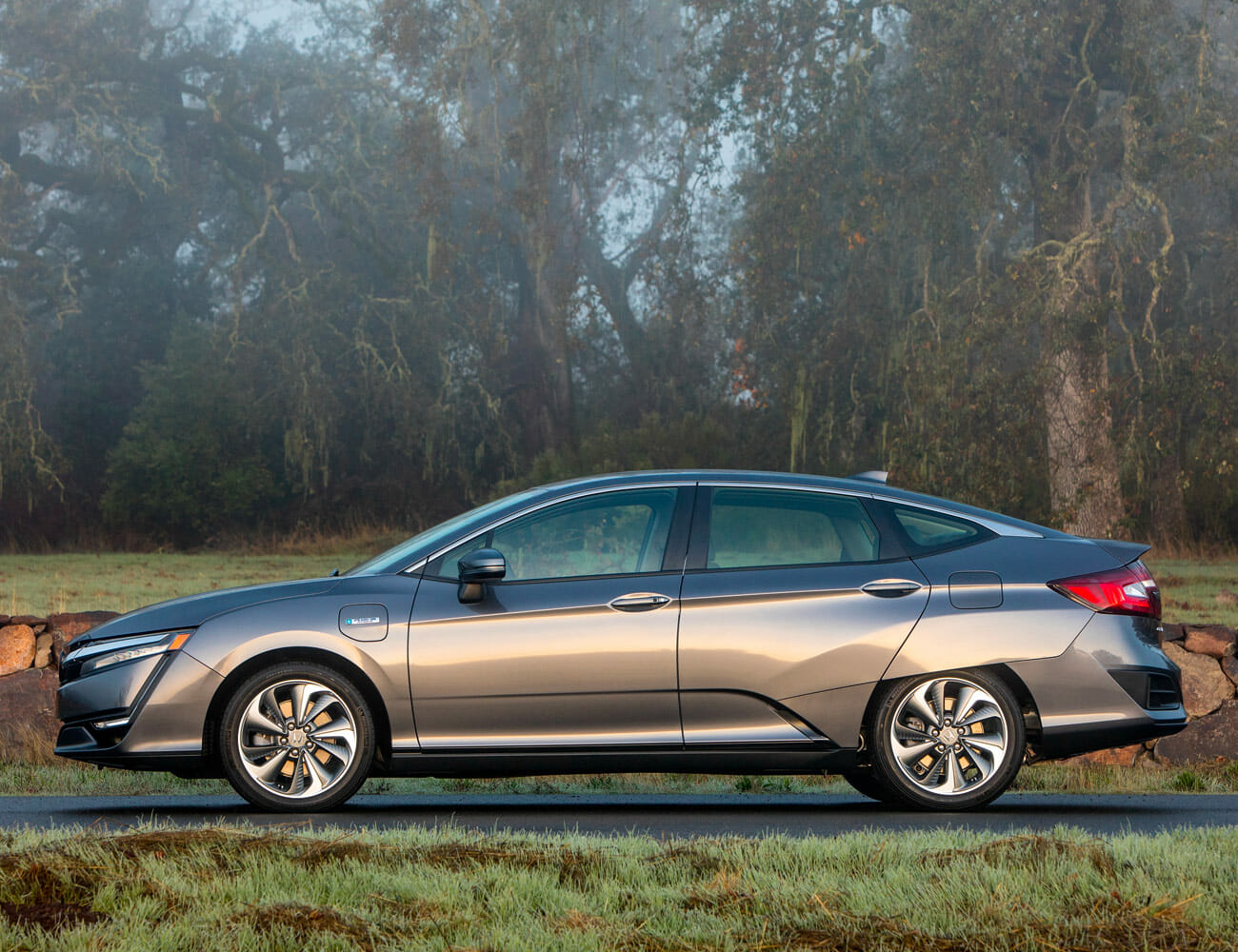
The Clarity is Honda’s premium alternative fuel sedan. It’s available in three drivetrain options; fully electric, hybrid plug-in, or hydrogen fuel cell. The Clarity Electric utilizes a 161-hp electric motor with a 25.5-kWh lithium-ion battery pack delivering 89 miles of range per charge. The Clarity Hybrid Plug-in produces a combined 212 hp courtesy of an AC motor and 17.0-kWh lithium-ion battery pack coupled with a 1.5-liter Atkinson-cycle four-cylinder engine. The Clarity Fuel Cell utilizes hydrogen as a fuel, and produces 174 hp courtesy of a proton exchange membrane fuel cell connected to a direct-drive transmission. The Clarity Fuel Cell is only available for lease, and only in California. All Clarity models are front-wheel drive.

Body Style: Sedan

Models:

• Electric
• Plug-in Hybrid
• Fuel Cell

Engines:

• 120-kW Electric motor with 25.5-kWh lithium-ion battery pack
• 1.5-liter Atkinson-cycle four-cylinder engine and two electric motors
• Proton exchange membrane fuel cell

Base MSRP: $33,400

HR-V
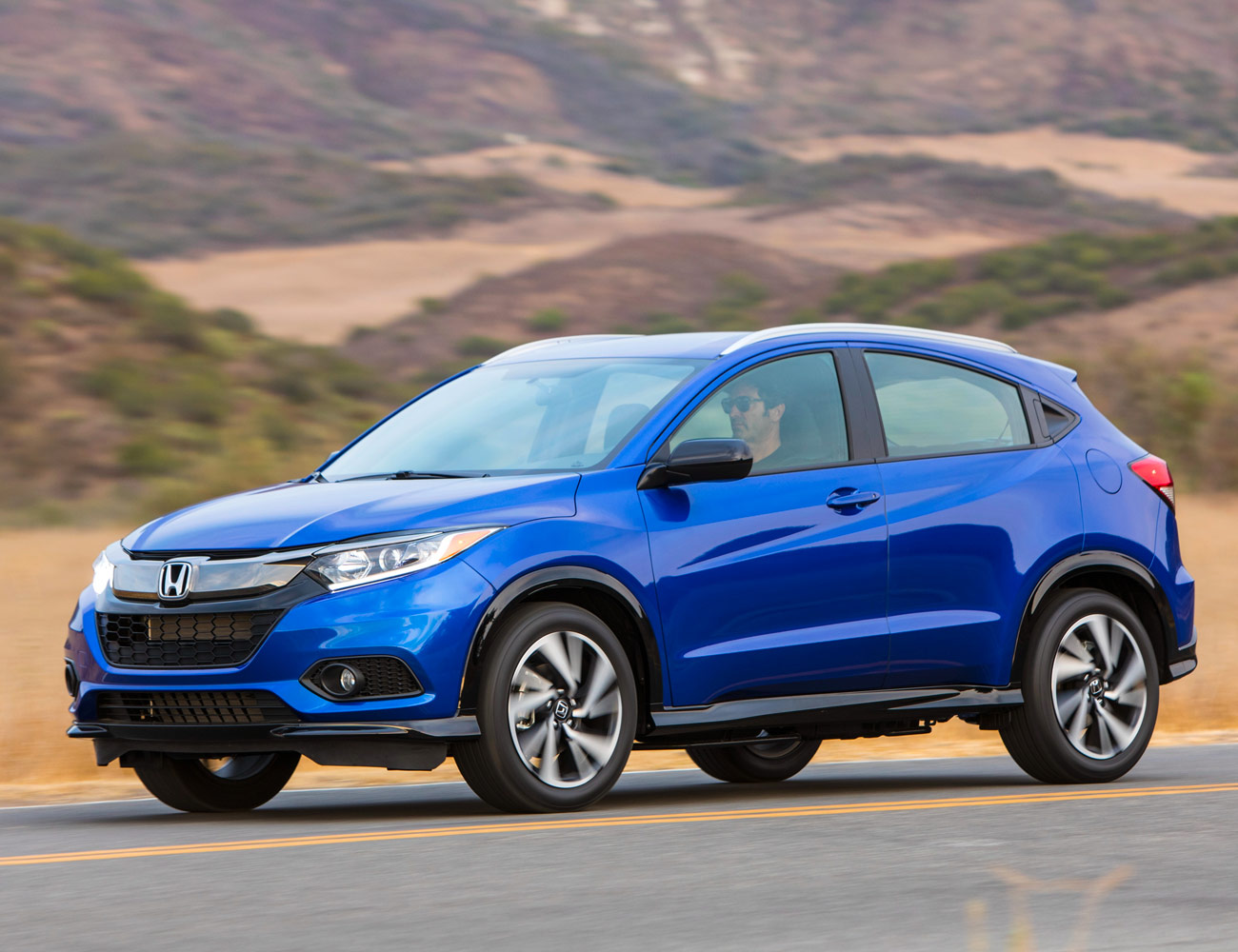
The Honda HR-V is a subcompact crossover with a spacious cabin. The HR-V has one engine: a 141-hp 1.8-liter inline-four paired with a continuously variable transmission. Front-wheel drive is standard across all trim levels, with the exception of the Touring trim, which receives all-wheel drive standard. However, all-wheel drive is an available upgrade on all lesser HR-V trims.

Body Style: SUV / Crossover

Models:

• LX
• Sport
• EX
• EX-L
• Touring

Engines:

• 1.8-liter inline four-cylinder

Base MSRP: $20,620

CR-V
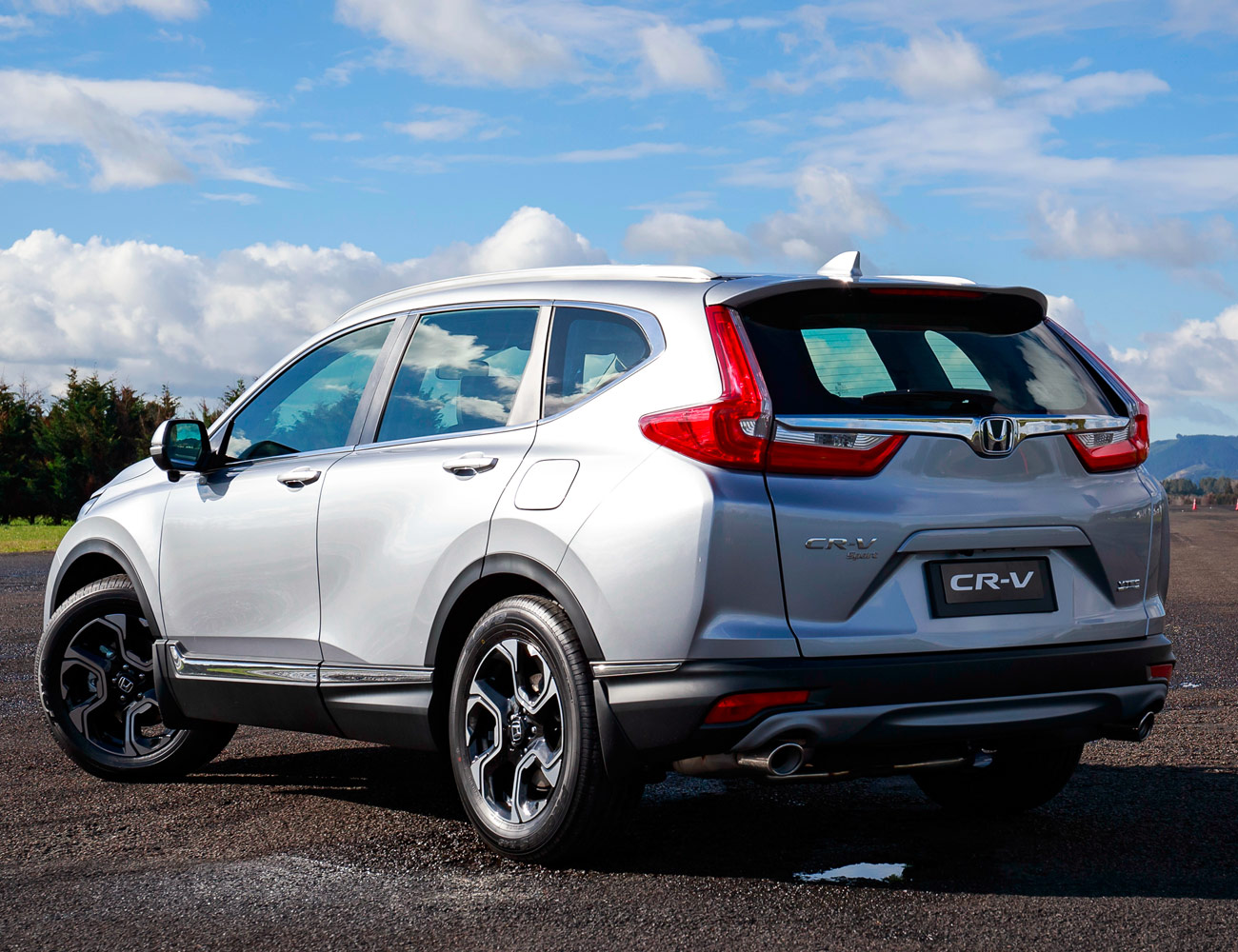
The CR-V is Honda’s compact crossover. The fifth-generation version now on sale was new for the 2017 model year. There are two engine options for the CR-V: The base LX features a 184-hp 2.4-liter inline four-cylinder, while all other trims offer a 190-hp turbocharged 1.5-liter inline-four-cylinder engine. The CR-V features a continuously variable transmission and comes standard in FWD form, with AWD available as an upgrade.

Body Style: SUV / Crossover

Models:

• LX
• EX
• EX-L
• Touring

Engines:

• 2.4-liter inline four-cylinder
• Turbocharged 1.5-liter inline four-cylinder

Base MSRP: $24,450

Passport
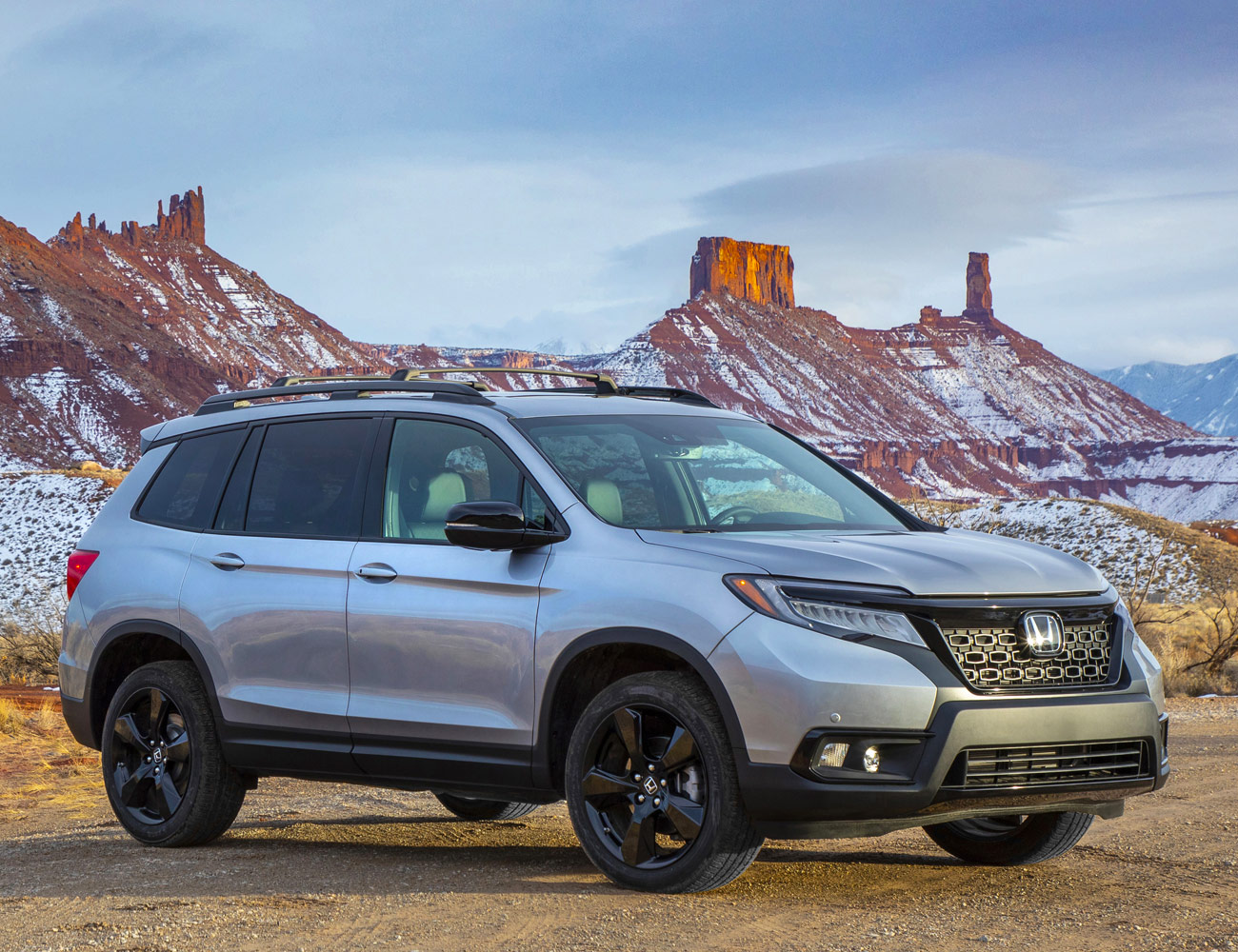
The 2019 Honda Passport returns after an 11-year hiatus from the Honda SUV lineup, slotting in above the CR-V and below the Pilot. While the Passport shares the same chassis and drivetrain as the Pilot — a 280-hp 3.5-liter V-6 paired with a nine-speed automatic transmission — the more compact Passport only seats five. Front-wheel drive is standard, with all-wheel drive available as an optional upgrade. (All-wheel drive comes standard on the Elite.) The Honda Passport is also capable of towing up to 5000 pounds.

Body Style: SUV / Crossover

Models:

• Sport
• EX-L
• Touring
• Elite

Engines:

• 3.5-liter V-6

Base MSRP: $33,085

Pilot
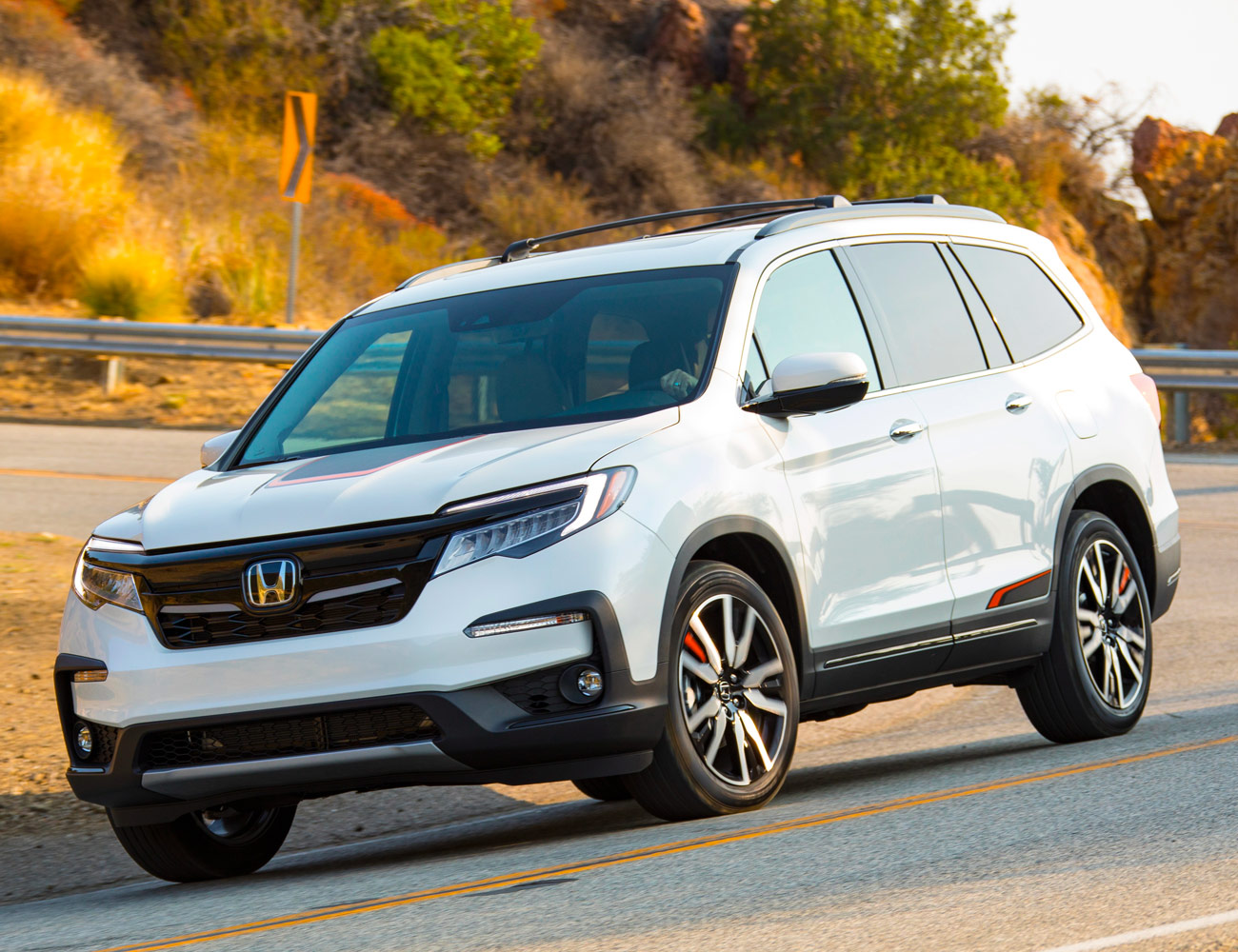
The Pilot is Honda’s full-size SUV that seats up to eight people. Compared to the Passport, the Pilot is billed as a more family-focused SUV, with a larger cargo area and kid-friendly rear-seat entertainment package. The Pilot is powered by a 280-hp 3.5-liter V-6 paired with a nine-speed automatic transmission. Front-wheel drive is standard across lower trims;  all-wheel drive is available as an optional upgrade, except on the Elite, where it comes standard. It can tow up to 5,000 lbs.

Body Style: SUV / Crossover

Models:

• LX
• EX
• EX-L
• Touring
• Elite

Engines:

• 3.5-liter V-6

Base MSRP: $32,545

Ridgeline
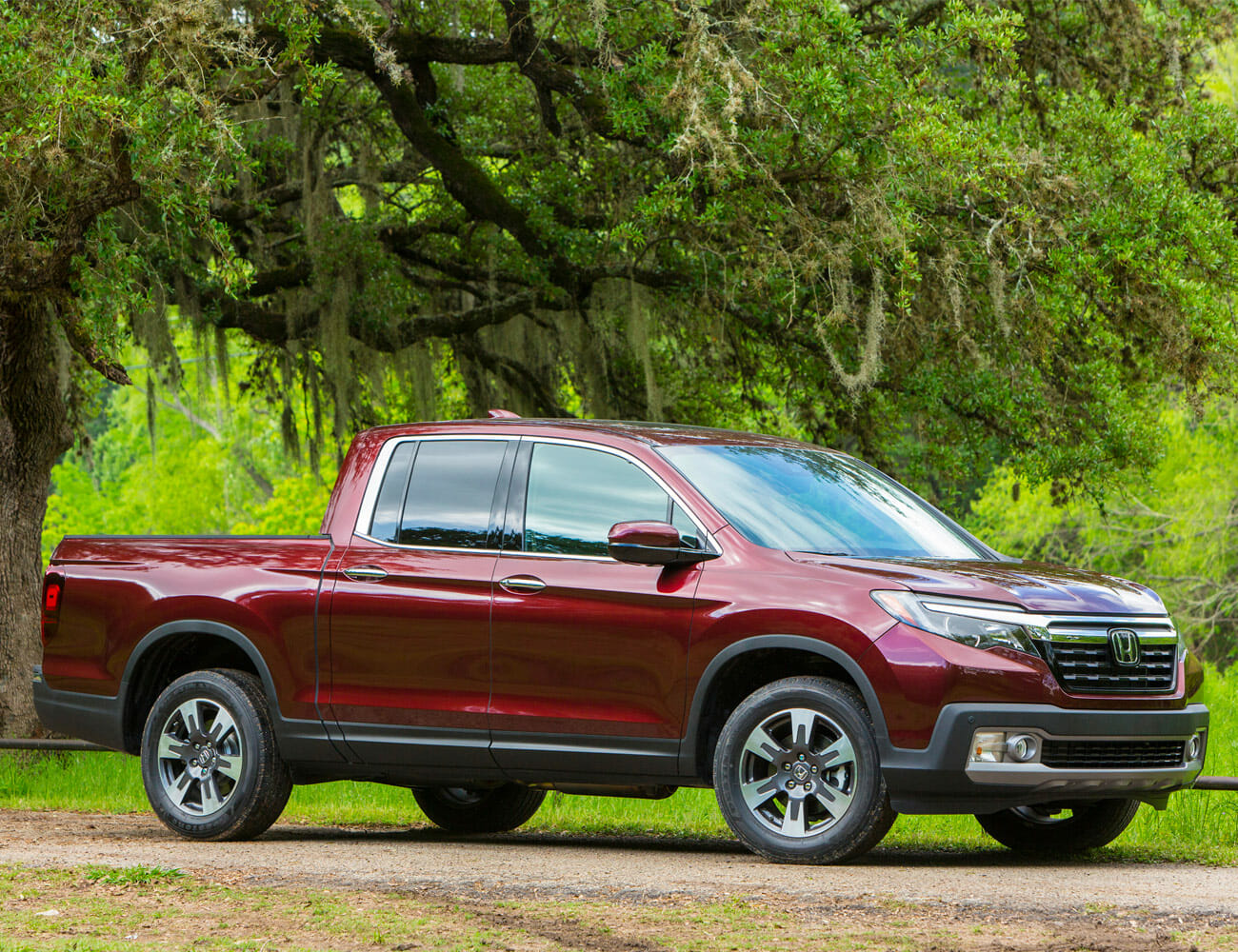
The Ridgeline is Honda’s only pickup, and comes with one powertrain: a 280-hp 3.5-liter V-6 and six-speed automatic transmission. All-wheel drive is an optional upgrade on Sport, RTL and RTL-T trims; it’s standard on RTL-E and Black Edition trims, and unavailable on the base RT. (Front-wheel drive is standard on RT, Sport, RTL, and RTL-T variants.) The Ridgeline’s tow rating ranges up from 3,500 lbs with front-wheel drive and to 5,000 lbs with all-wheel drive. The bed length on the Ridgeline is limited to 5.3 feet across all trims, with a volume of 34 cubic feet. It also features a 7.3-cubic-foot in-bed trunk with locking mechanism and weather sealing.

Body Style: Pickup Truck

Models:

• RT
• Sport
• RTL
• RTL-T
• RTL-E
• Black Edition

Engines:

• 3.5-liter V-6

Base MSRP: $31,085

Odyssey
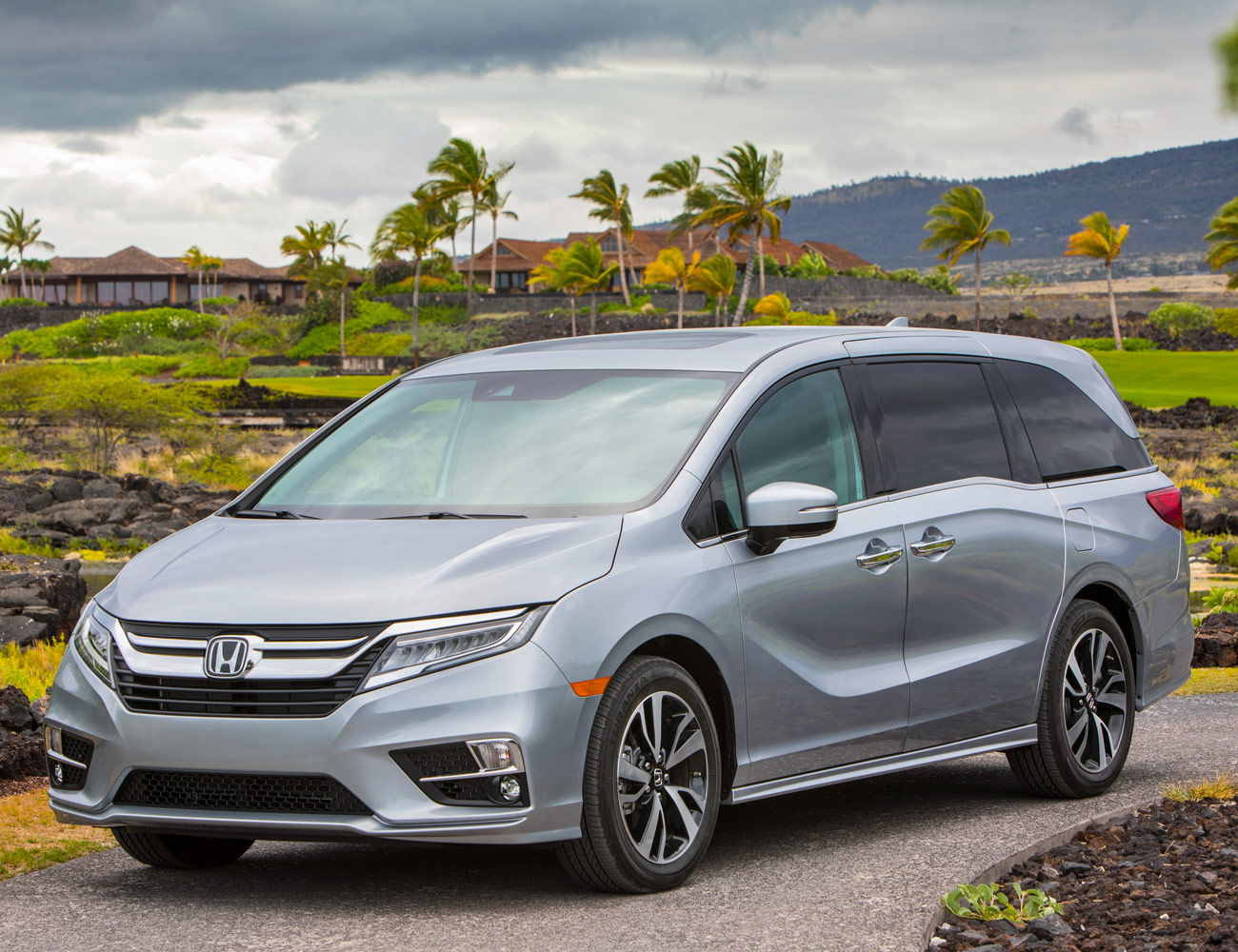
The Honda Odyssey, which received a full update in 2018, is built to ferry families around with comfort and safety in mind. The Odyssey features three-row seating and a spacious interior as standard, and options like an onboard vacuum, a video monitor to observe the aft rows and rear-seat entertainment system. Only one engine is available across all trim levels: a 280-hp 3.5-liter V6. The Elite trim gets a 10-speed automatic transmission, while all other trim levels use a nine-speed transmission. The Honda Odyssey is only available in front-wheel drive.

Body Style: Minivan

Models:

• LX
• EX
• EX-L
• Touring
• Elite

Engines:

• 3.5-liter V6

Base MSRP: $31,085

Note: Purchasing products through our links may earn us a portion of the sale, which supports our editorial team’s mission. Learn more here.

Yes, the 2020 Ford Mustang Shelby GT500 weighs about 4,225 pounds

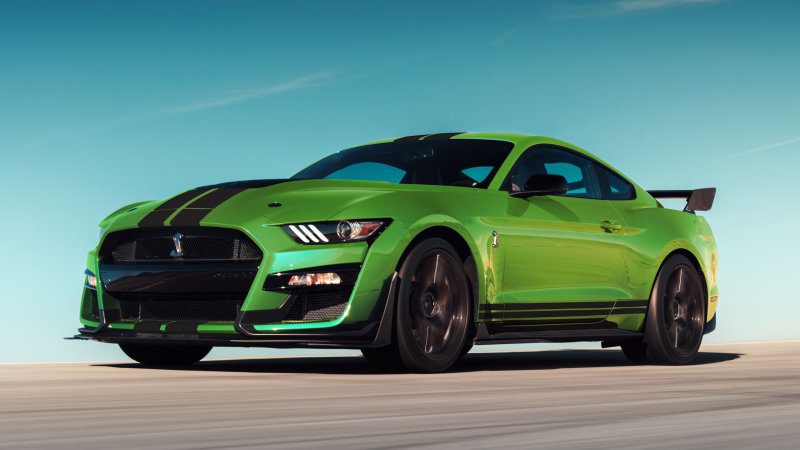
The Mustang6g forum got its digital hands on a copy of Ford’s eSourceBook for the 2020 Mustang Shelby GT500. The book serves dealerships, containing all the information salespeople need to answer a prospective customer’s questions; here’s a 139-page example for the 2018 Mustang. The eSourceBook for the coming GT500 is only 86 pages, and the biggest takeaway is, well, big. The resource lists the curb weight for the 760-horsepower coupe as approximately 4,225 pounds. That’s the same heft quoted in a leaked document Mustang6g posted a year ago, but few enthusiasts wanted to believe that leak because of spelling errors and, uh, 4,225 pounds.

The weight makes the GT500 about 335 pounds heavier than the 650-horsepower Chevrolet Camaro ZL1, or about 225 pounds lighter than the 797-hp Dodge Challenger SRT Hellcat Redeye. Inside the Ford family, the new GT500 is around 350 pounds more than the previous 662-hp GT500, and roughly 420 pounds more than the current Shelby GT350. The 56:44 weight distribution front-to-rear will put the GT500’s 16.5-inch two-piece front brake rotors on prison labor detail when the going gets fast and twisty. It’s not like Ford doesn’t know how to make a performance car, though, so we’re looking even more forward to cuing up Track Mode to find out how the GT500 feels during high-speed work. The optional Carbon Fiber Track Package could shed up to 100 pounds, and 1.5G cornering capability is no joke. Nevertheless, when the book lists one of the Shelby GT500 Pride Points as, “Produces best-ever Mustang track time,” we wouldn’t be surprised if that means in a straight line.

Noting a few more odds and ends from the booklet, drivers who want to access all the power need to run the GT500 to the cliff’s edge: 760 hp doesn’t come until 7,300 rpm, 100 rpm short of the 5.2-liter supercharged V8’s redline. At 5,000 rpm, the full 661 pound-feet of torque show up for duty, 90-percent of that torque available from 3,450 rpm. The Tremec seven-speed dual-clutch transmission gets 3.73 gearing. And the GT500’s turning circle is 44.2 feet, six feet wider than the ZL1, seven feet wider than the Challenger. Ford might want to consider making a foghorn an option. Check out the eSourceBook yourself for all the details.

Drivers of These Cars Are Most Likely to Have Accidents

Insurify.com compiled data on cars that get into the most traffic accidents. The national average was 13.64 percent of vehicles being involved in at least one previous accident. Some cars exceeded that average by a significant margin. We’re not saying drivers of these cars are likely to hit you, but you may want to give them a wide berth just in case.

Subaru Crosstrek (25.81%)

Subaru sells a full range of SUVs. The Crosstrek is the hip, affordable one that is targeted at millennials. Millennials, as the current young drivers, engage in riskier behavior behind the wheel than their wisened elders. Thus, a lot of riskier drivers are driving Crosstreks.

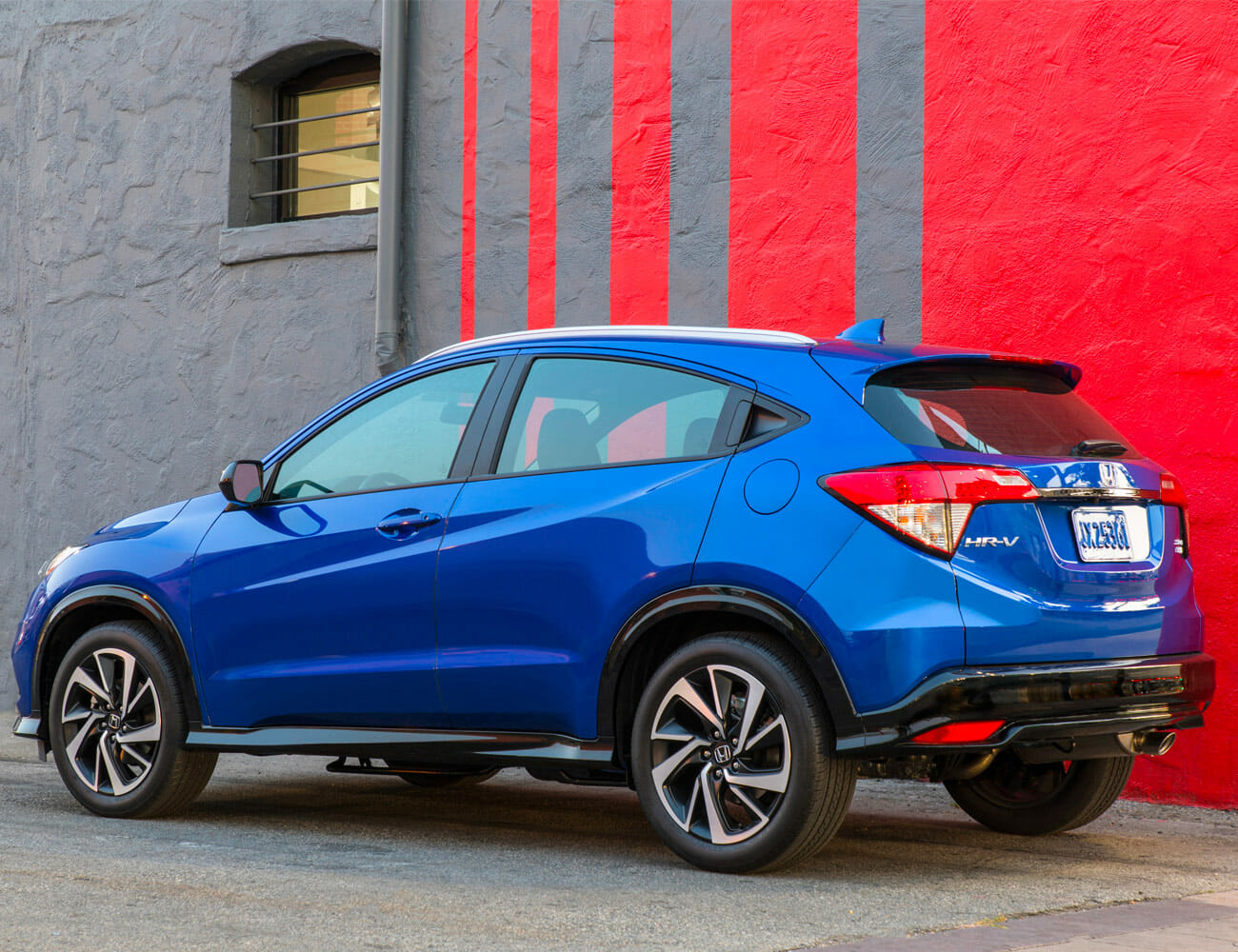
Honda HR-V (25.7%)

grey_placeholder

Car and Driver described the HR-V as “completely sufficient, wholly average and inoffensive.” That about sums it up. This is a small, affordable car, which could be enticing to young drivers. One thing worth noting is that Honda Sensing safety technology does not come standard until the third-tier EX trim.

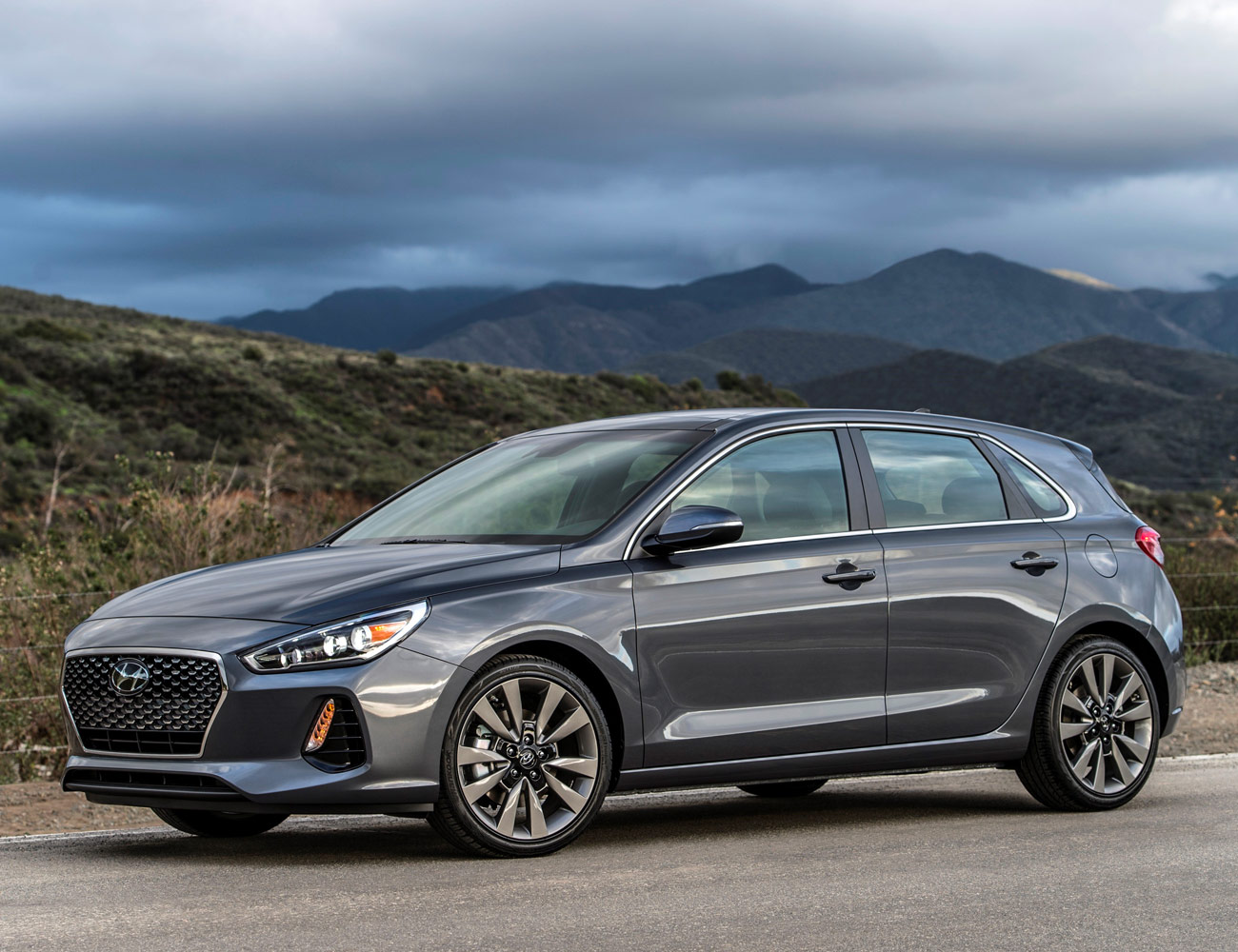
Hyundai Elantra GT (25.58%)

grey_placeholder

The Elantra GT is the more aggressive hatchback version of the Hyundai Elantra. Though, per Car and Driver, it “promises a bit more sportiness than it can deliver.”

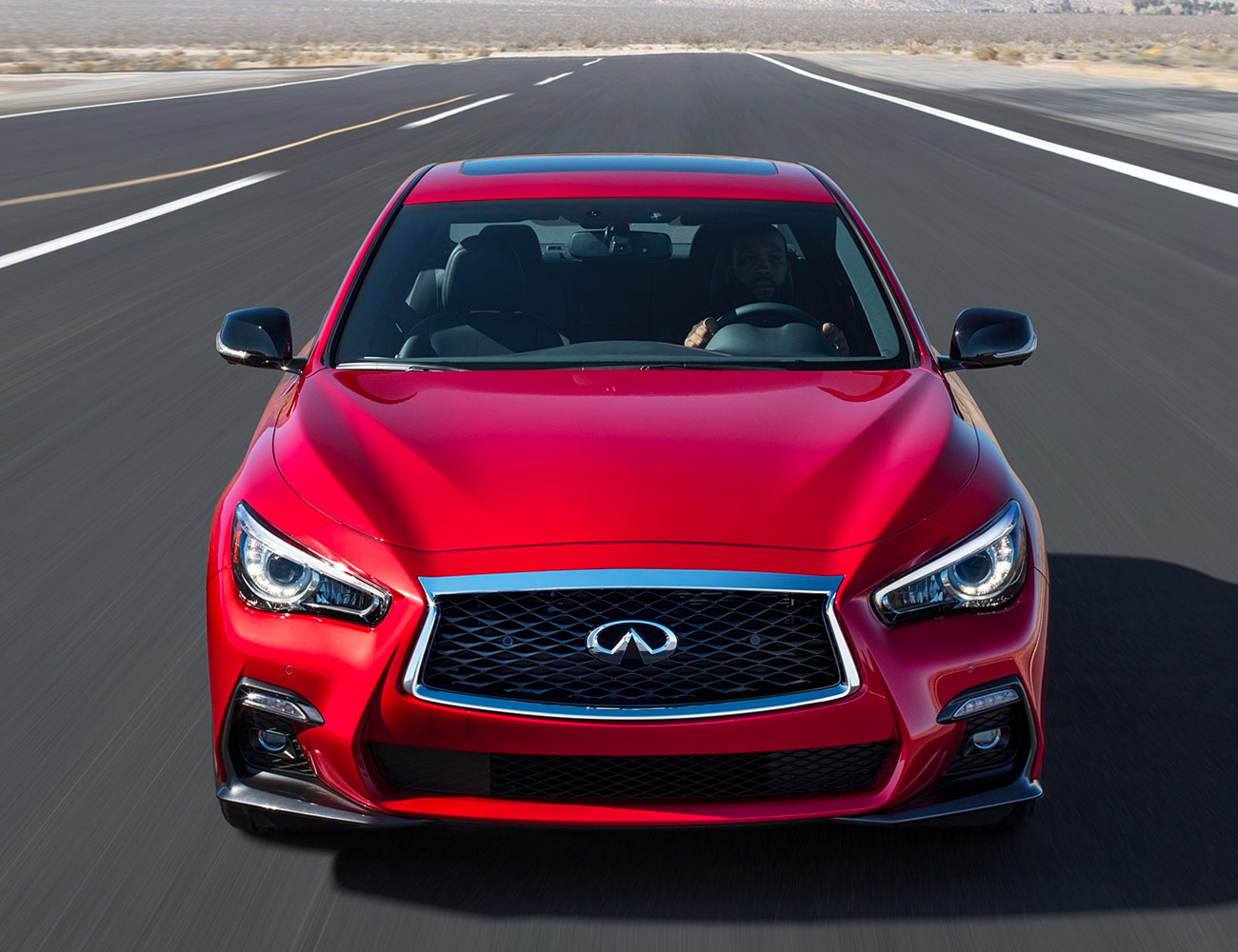
Infiniti Q50 (25.4%)

grey_placeholder

The Infiniti Q50 is the priciest car in the top five. It’s hard to find one distinctive factor about it beyond the fact you can level up the twin-turbocharged V6 to 400 hp with the top-tier Red Sport 400 edition.

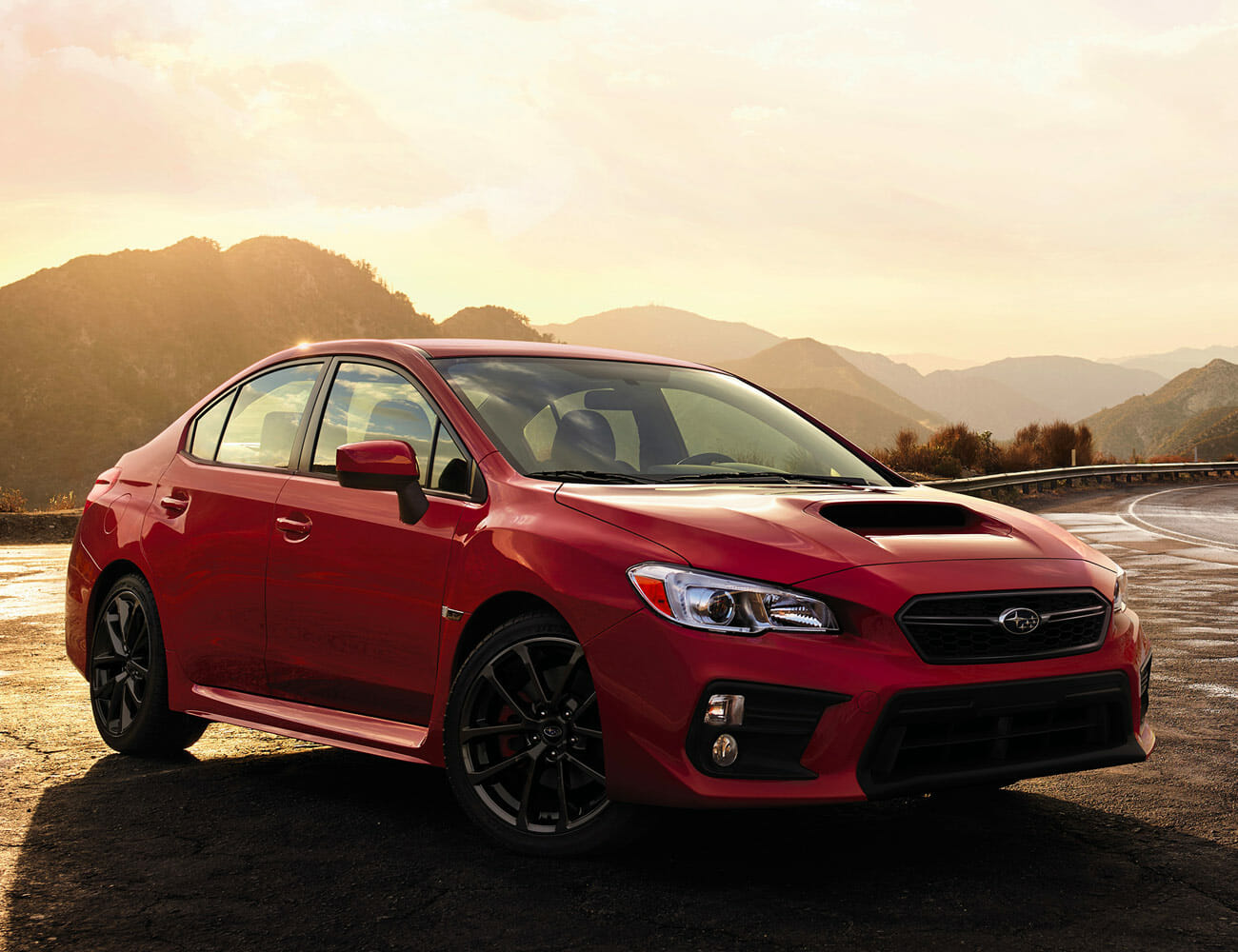
Subaru WRX (24.9%)

grey_placeholder

WRX drivers ranked No.1 for most speeding tickets. It’s no surprise there would be a strong correlation between exceeding the speed limit and getting into an accident.

Bugatti’s Monterey surprise is an homage to the EB110

Seems luxury car purveyor Girard & Co told the truth about what’s Bugatti is bringing to The Quail: A Motorsports Gathering this week. As picked up by The Supercar Blog a few weeks ago, Girard wrote on Instagram, “It is rumoured that Bugatti will be presenting a new car at Pebble Beach this year that is inspired from the original EB110SS, 10 cars to be built, with a price tag of Euro 8 million.” Now that we’re a day away from the weekend’s events, Bugatti uploaded a video hinting at the reveal, and that video is full of the EB110:

Evo says the new Chiron-based offering is called Centodieci, that being Italian for “110.” The name not only references the EB110, which was named for what would have been Ettore Bugatti’s 110th birthday year when the EB110 debuted in 1991, it happens to tie into the special edition 110 Ans released earlier this year. The special edition Chiron Sport from February used the French version of 110 years, named for the 110th anniversary of Automobiles E. Bugatti’s founding in 1909 in the then-German town of Molsheim. 

As Evo also points out, the EB110 established a template for the Bugatti brand Volkswagen resurrected. Twenty eight years ago — and a year before the McLaren F1 — Roman Artioli’s step in the supercar chain used a carbon monococque, four turbos, all-wheel drive, and active aerodynamics.

The teaser vid doesn’t give much away, but there’s not long to wait. Bugatti will unveil the new toy on at 11:20 a.m. PDT Friday, and livestream the event on its newsroom site. Here’s an embed to the livestream:

[embedded content]