All posts in “Cars”

For Millionaire Babies: Bugatti Baby II with $33,000 Price Tag

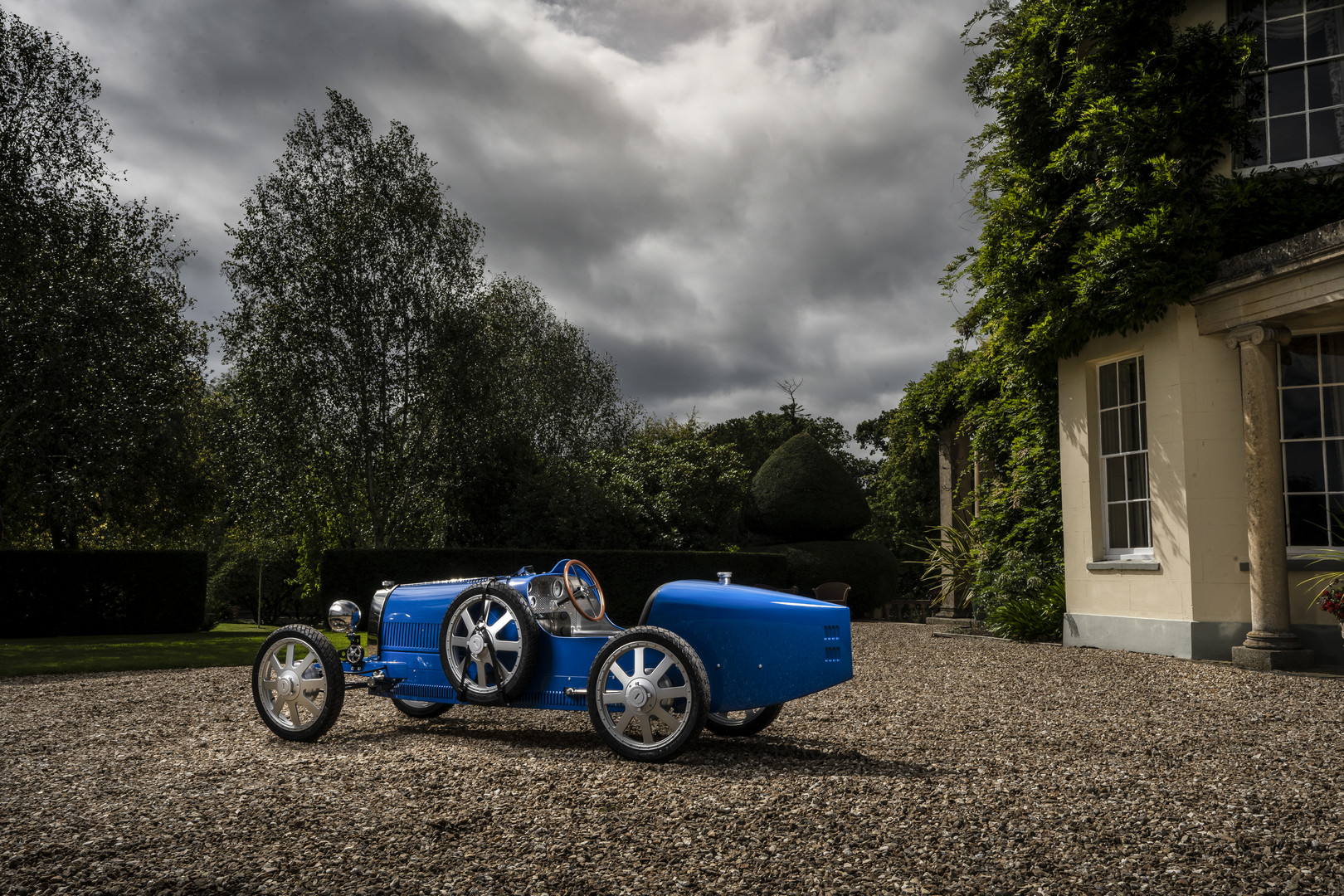
The Bugatti for children has arrived! At the Geneva Motor Show 2019, Bugatti announced that it would produce a new junior car. The first Bugatti Baby II prototype has now emerged, driven by Bugatti customers during Bugatti’s 110th-anniversary event.

The Bugatti Baby II proved popular enough, following its announcement, that Bugatti sold its entire 500-strong production run in just three weeks.

The idea derives from a car produced in 1926, a half-scale version of the Bugatti Type 35 for Ettore Bugatti’s youngest son Roland. The design soon caught the attention of Bugatti’s customers and around 500 were produced between 1927 and 1936.

The revived version has a similar set-up to the original. It gets a rear-wheel-drive layout and a battery-powered electric powertrain. It is larger than the original though at 75% scale as opposed to 50% scale of the original. It measures 2.8 metres long and 1.0 metre wide with approximately 230 kg of weight.

The design is an exact replica of the Bugatti Type 35 built for the 1924 French Grand Prix in Lyon. Bugatti’s design team digitally scanned every single component to ensure accuracy.

Bugatti Baby II Price

The Bugatti Baby II gets two selectable power modes: a 1kW ‘child mode’ with the top speed limited to 20 km/h, and a 4kW ‘adult mode’ with the top speed limited to 45 km/h. Some versions come with a ‘Speed Key’ which allows up to 10kW of power and disengages the speed limiter. Bugatti installs a Limited Slip Differential.

There are two sizes of removable battery too; a standard 1.4 kWh pack and a long-range 2.8 kWh version. The long-range battery should be good enough for a range of more than 30 km.

The Bugatti Baby II gets a composite body as standard, a Baby II Vitesse is also available with a carbon fibre body and ‘Speed Key’, the final model is the Bugatti Baby II Pur Sang with a handcrafted aluminium body and ‘Speed Key’.

Prices start at 30,000 euros plus taxes and delivery. Production starts at the beginning of 2020. The car will be manufactured by the Little Car Company in the UK, and all 500 cars will be produced over the course of 2020 and 2021.

GTSPIRIT NEWSLETTER

Scuderia Cameron Glickenhaus shows its new ‘dog of war’ — the 007 LMP1 hypercar

Early in 2019, Scuderia Cameron Glickenhaus (SCG) sent out a “state of the union” of sorts. In addition to laying out the status of the company’s projects, it also painted a picture of what was in store for the future. SCG set goals to race the Baja Boot at the Baja 1000 in the stock SUV class, race the 004 GT3 and GT4S at the 2020 24 Hours of Nürburgring, and race its 007 hypercar at the 2020/2021 World Endurance Championship and Le Mans. At the time, only initial renderings had been released of the 007, but today, we get our first glimpse of the near-finalized design. 

Dressed in red with white details on its nose and tail, this is the SCG 007 LMP1. James Glickenhaus posted the photos to social media with the caption, “Cry Havoc And Let Slip The Dogs Of War.” He also added “3L TT V6,” which reveals that the car will be powered by a 3.0-liter twin-turbo V6 engine. Interestingly, the wheels and colorway seem to be nods to Alfa Romeo, which does offer a 2.9-liter twin-turbo V6 in the Giulia Quadrifoglio.

We had previously believed the car to be a hybrid, but that is now unclear. In the March release, SCG said it had been developing a new powertrain with the same team that created the hybrid KERS system for the P4/5 Competizione. Official specs were not detailed, but the road versions of the race car were tipped to have an 800-horsepower engine, plus a 200-horsepower hybrid setup that is “similar to the system we use on our LMP1 car.” However, SCG’s Facebook has now posted reports that the car will have the TT V6 and nothing more. Additionally, in an Instagram reply, SCG said the car would have 750 horsepower “as allowed by rules.” 

SCG said in a different social media comment that the car will be ready for testing in July 2020. We’ve reached out to SCG and will update with more information as it comes.

2019 Airstream Bambi Review: The Stylish, Easy Way into Camping Trailer Life

By this point, the only way you don’t know what an Airstream is if you’re a vampire who’s been asleep in a cave for the last century. The aluminum-sided travel trailers have been rolling along America’s roads since the ’30s, their iconic design capturing eyes with the same ease they reflect sunlight. They’ve been featured in countless films and TV shows, and transformed into homes, AirBnBs and works of art.

For 2019, the eight-decade-old company has added a new model to its lineup: the diminutive, adorably-named Bambi. Ask Airstream where the name “Bambi” came from, and they’ll say founder Wally Byam named it after a type of agile deer he saw while overlanding across Africa in the ‘60s. (Dollars to donuts he actually named it after a certain Disney movie, but that’s neither here nor there.) It’s been a common nickname for the company’s small, single-axle trailers for more than half a century — but now, the name has finally been given the honor of formally becoming part of the team, signifying the two-wheeled rigs that are the most affordable way to hop aboard one of the company’s classic aluminum trailers.

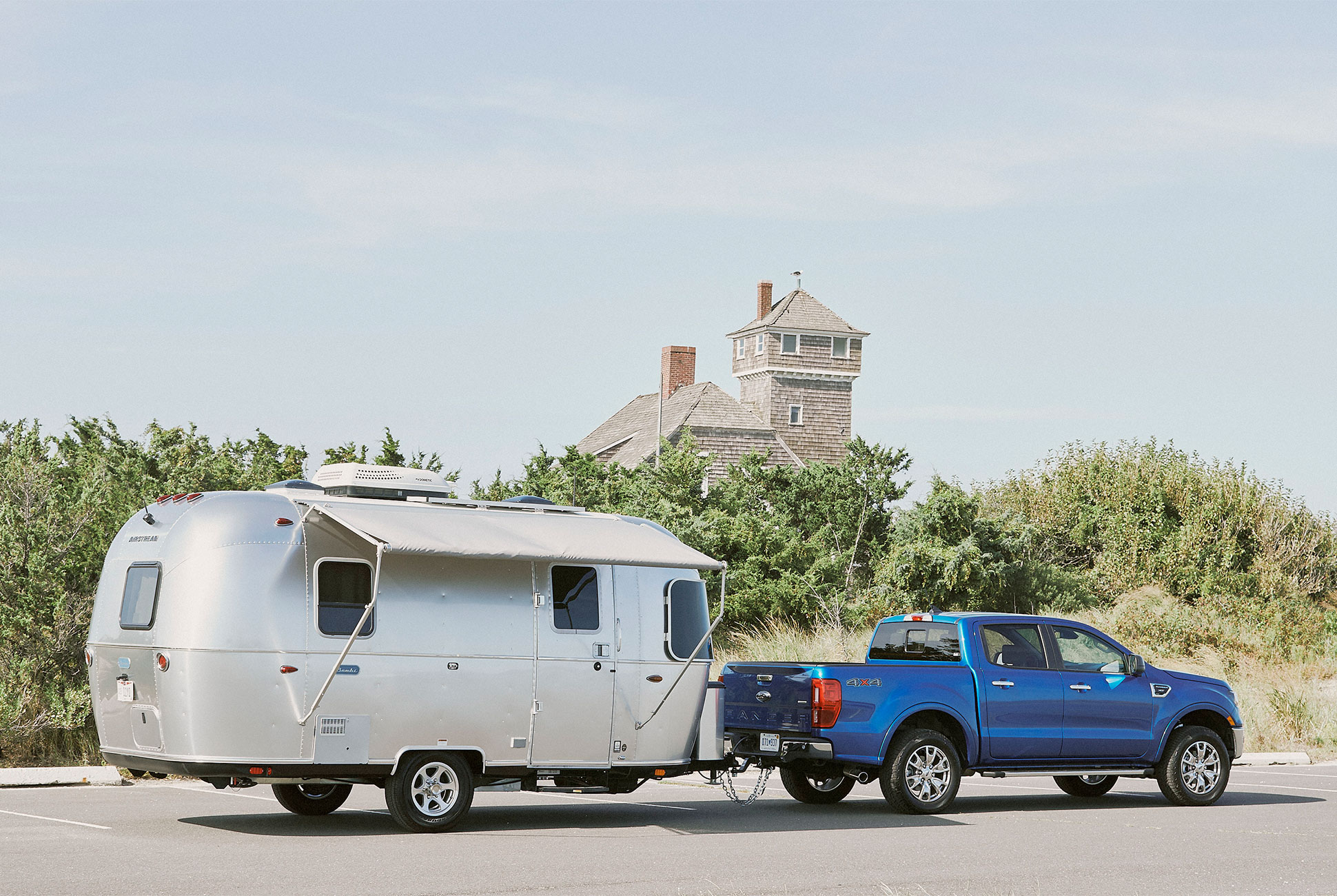
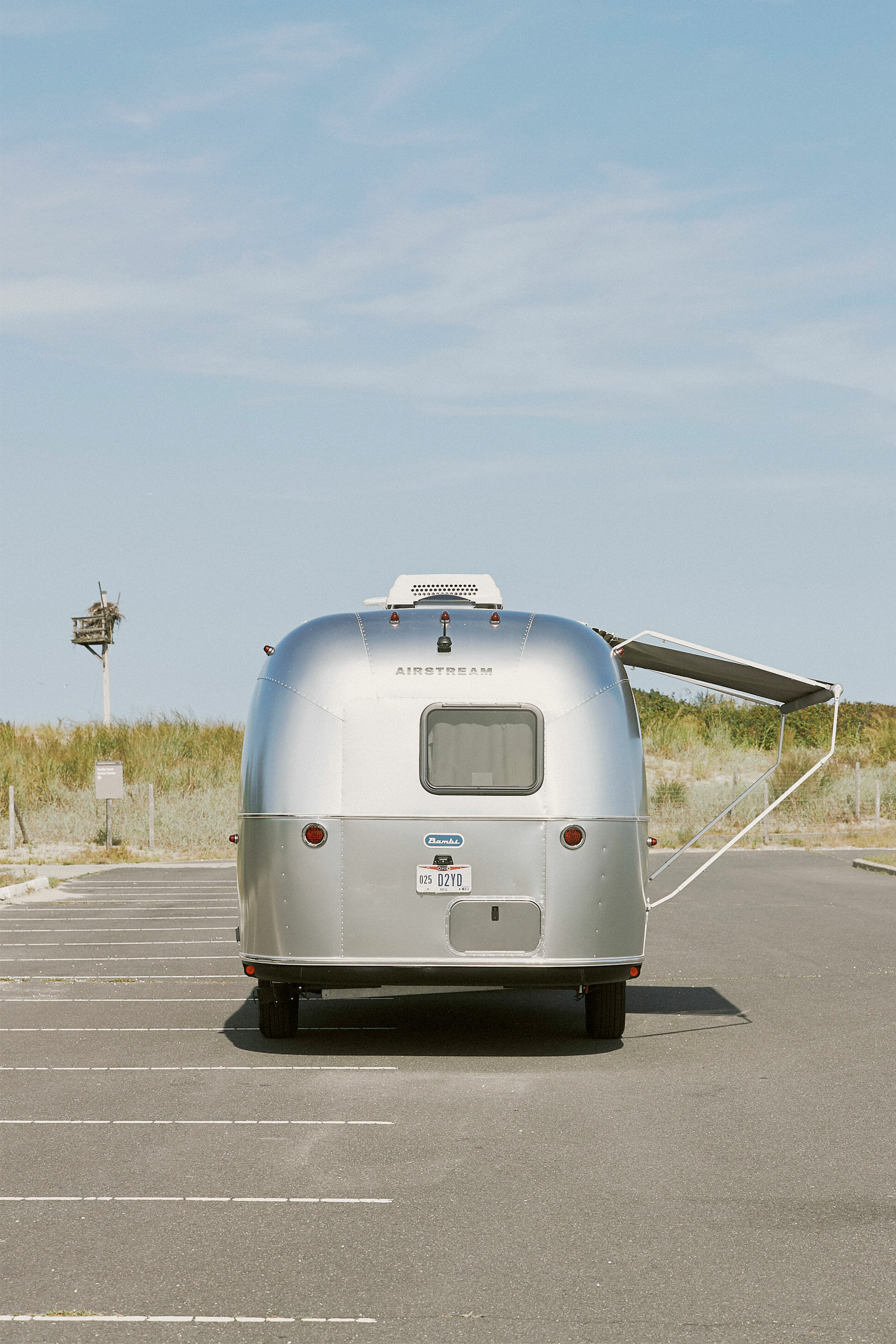
The Good: It may be compact, but the Bambi crams more usable space and features into its limited length than most studio apartments. My Bambi 19CB tester was the second-smallest variant, yet in spite of being a mere 18 feet 11 inches long — shorter than a Rolls-Royce Phantom — it had space for a two-burner gas stove, a stainless steel sink, a refrigerator and freezer, an LED television (with integrated antenna), a built-in stereo, a memory foam mattress (sized somewhere between a twin and a double), even a shower and a flushing toilet.

Even with all that gear inside, the interior has a fair amount of space to spread out. During an impromptu Brooklyn tailgate party, I managed to fit seven or eight adults (and one large dog) inside comfortably, with room to spare for snacks and a soft Yeti cooler backpack. A family with kids might find it cramped, but it’s more than spacious enough to serve as a good base of operations for a single adult or a couple.

Who It’s For: First-time Airstreamers looking to dip their toe into the world of trailering adventure; empty-nesters who want to roam freely in retirement but don’t want to wrangle giant trailers and full-size pickup trucks.

Watch Out For: Backing up. As the model that seems most likely to be adopted by trailering novices, you might think the Bambi would pack some sort of technological magic to help maneuver it in reverse more easily.

Nooooooooooooooooope.

Spinning my trailer 180 degrees required a good 30 minutes of Austin Powers-style shuffling back and forth, and that was with the help of the kind owner of the Hipcamp camp site we were staying at — a man whose own history included training people how to drive heavy equipment in the army. A backup camera is standard, though it wasn’t hooked up on mine; regardless, it wouldn’t have done much beyond tell me where I would have gone were I able to keep the thing moving in a straight line for more than three seconds. The first company to sort out some sort of idiot-proof trailer-reversing technology — brake-based torque vectoring? Computer-controlled active steering? SpaceX-inspired compressed air thrusters? — deserves to make a mint.

Alternatives: Safari Condo Alto R-Series ($29,500+); Homegrown Trailers Woodland ($39,495+); Forest River Alpha Wolf ($25,995+); Airstream Nest ($45,900)

Review: Full disclosure: In spite of more than a decade of driving and writing about automobiles, I can count the number of times I’ve towed a trailer on one hand. Actually, I can count the number of times I’ve towed that weren’t under the well-supervised confines of a media junket on one finger; that sole instance involved towing a U-Haul U-Box through a couple dozen miles of country roads, then winding up stuck at a closed bridge on a one-lane road because I couldn’t reverse to a turnaround spot.

So it was with a bit of trepidation that I hitched the Bambi up to the Ford Ranger XLT I’d borrowed as a tow vehicle for a weekend of criss-crossing New Jersey and the lower boroughs of New York City. Yet the Bambi-and-Ranger duo proved blissfully easy to handle, even when winding them through the tight streets of Brooklyn or on the open highways of the Dirty Jerz. The tidy proportions meant turns never proved a problem (at least, when going forwards); the trailer’s brakes were reassuringly dependable and solid, always snapping on in sync with the Ford’s discs; and the Ranger’s EcoBoost engine made easy work of the trailer’s weight, hauling it up to mile-per-minute velocity without issue. Going much beyond that felt a mite worrisome, however; by 70 mph, every imperfection in the road seemed to be magnified into a shimmy in the Bambi that prompted unwanted visions of tank-slapper flips or pileup-causing detachments.

Still, Airstream life isn’t about speed; it’s about taking things slow and easy, leaving troubles and stresses behind in favor of the freedom of the open road. (There’s a reason the Indiana-based company offers a Tommy Bahama trim level on some models.)

Once the driving and parking (and reversing, and re-parking) was done and I’d settled truck and trailer in the tree-lined camping spot within spitting distance of the Delaware River, the Bambi came into its own. The starboard-side awning’s coverage area is on the smaller side, but it’s enough to keep the sun off one or two chairs — or to give you a place to dry before coming aboard in a squall. The nice weather meant I parked my butt in a nearby camping chair instead, but it was nice to know it was there if needed.

My hosts provided fresh water and a power hookup, but I wound up needing neither; the on-board battery never came close to losing all its power, thanks to the solar panel mounted atop the roof. (Pre-wiring for a solar panel is standard, but the panel itself is an option; considering how well it worked, I’d suggest making it the first box you check.) Running the air conditioner built into the roof would probably guzzle the electrons faster than the solar panel could replenish them, but I never needed it, in spite of summertime temps; between the shady interior, the twin roof-mounted ventilation fans and the plentiful screened-in windows (and the screen door), the Bambi’s interior stayed breezy and cool all day long, in country and city alike.

The toilet situation, should you be curious, is best described as “acceptable.” The 19CB variant’s loo occupies an odd middle ground amongst Airstream lavatories; while smaller trailers and touring coaches place the toilet in the shower and larger ones have a miniature bathroom with an actual door, the 19-footer uses an odd W-folding wall that’s designed to offer some semblance of privacy for the tight corner. In practice, it’s less than ideal; let’s just say you should ask anyone else in the trailer to vacate the premises before using the restroom. Functionally, however, it works just fine.

Admittedly, I didn’t have a chance to use the shower — folding my frame inside that tiny space seemed like a violation of the Geneva Convention — so I can’t vouch for the efficacy of its handheld nozzle. (Exhibitionists might have better luck with the outdoor “shower,” a similar handheld nozzle with hot and cold knobs tucked away in one of the exterior ports.) That said, I never had any issues with the flow or temperature of the water blasting from either the kitchen or bathroom sink — which, like the keyholes in a nuclear missile silo, are exactly far apart enough that one person can’t use them both simultaneously — so I have no reason to assume the shower would be anything less than effective.

Another reason to assume the best from the hot water supply: the two-burner gas stove proved as adept as any found in a modern house, if a mite smaller. Same could be said for the kitchen table, which has room for four provided everyone’s comfortable rubbing flanks and knees; same goes for the fridge and freezer combo, too. (The latter can reportedly be quite the power suck; should you rather save the electrons, a good Yeti cooler and a couple bags of ice will likely be every bit as effective for 24-48 hours.)

Indeed, all told, the Bambi does an exceedingly good impression of a tiny, efficient apartment — good enough to tempt this New Yorker away from his hard-won one-bedroom. The night before I had to return the trailer, after my friends had left, I wound up laying in bed watching football on the television, eating a s’more made over the gas stove’s burner. The TV reception was better than in my apartment; the memory foam mattress was comfy than my couch; the sounds of the park beside me more relaxing than the rumble of cable trucks making their way home to their garage near my place. In that moment, it wasn’t hard to see the appeal in tossing that Great American Dream of Homeownership out in favor of living out my days in an elegant rolling apartment.

Verdict: By striking a perfect balance between size, style and comfort, the Airstream Bambi delivers the right combination of features to endear it to anyone who’s long harbored dreams of rolling across the land with a shiny trailer behind them, following the whims of the road. Sure, you can snag a new travel trailer for far less money — but doing so would mean swapping those timeless looks for the blocky looks and garish pseudo-airbrushed designs of most travel trailers and RVs, which are utterly lacking in both elegance and Instagram-ability. (Let’s not pretend the latter is unimportant.)

Indeed, the Bambi pulled off something I never would have expected: It made me into a camping trailer person. I spend my time stuck in traffic fantasizing about car camping trips out West; now I fantasize about doing it with an Airstream.

2019 Airstream Bambi 19CB: Key Specs

Length: 18 feet, 11 inches
Weight: 3,650 pounds
Windows: 11
Refrigerator Size: 4.3 cubic feet
Sleeping Capacity: Up to four people, but two of them better be tiny

Airstream provided this product for review.

Read More Gear Patrol Reviews

Hot takes and in-depth reviews on noteworthy, relevant and interesting products. Read the Story
Note: Purchasing products through our links may earn us a portion of the sale, which supports our editorial team’s mission. Learn more here.

Special Report: Dancing With The Devil – The Lister LTF-C

Lister is a British brand that has a history of building sports cars based on Jaguars. This has been happening since the 50s and Lister continues to build recreations of the successful Knobblys to this day. Along side, Lister have been tinkering with a couple of modern Jaguars, mainly the F-Type and F-Pace.

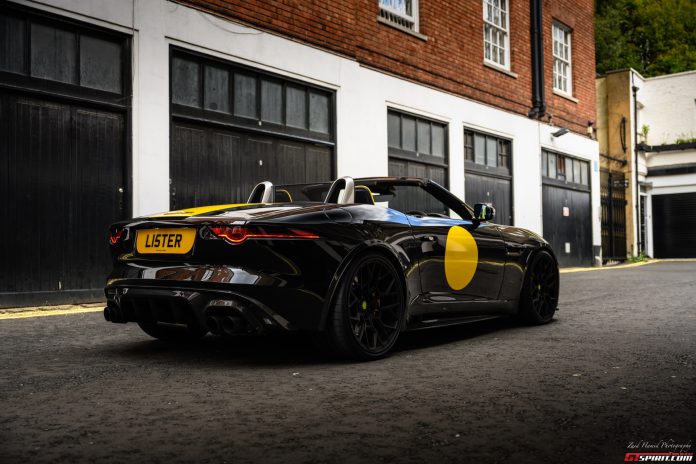
In 2018, Lister announced that they would be offering 99 Lister LFT models based on the Jaguar F-Type R, for sale. The changes did not appear to be significant – they were. To the naked eye, there were a few body panels that had been exaggerated. These include a sizeable front splitter, rear diffuser and some re-profiled air intakes, all of which are made of carbon fibre. The devilish connotations come courtesy of a boost in power to 666bhp and to help control the increase, the brakes and suspension were also uprated.

99 units not exclusive enough for you? Fear not, following the strong interest in the LFT, Lister announced the LFT-C, a convertible F-Type treated to the same tuning ad the LFT coupe. Just 10 would be built. There is one element of the project that seems particularly well suited to the convertible configuration – the exhaust.

To find out how the package works as a convertible and just how rude the exhaust really is, Lister offered me 48-hours behind the wheel of the LFT-C. First impressions are bold, as is the finish of the car. There are race car inspired roundels and an ever thickening racing stripe running the length of the car. The wheels are huge and sit tight under the wheel arches, the shorter suspension gives the car real stance and make a statement of intent. The LFT-C means business. It is still familiar F-Type, no bad thing as it remains one of the best looking cars to this day. Inside things, are again, recognisable, but with bespoke touches.

The standout feature is the stitching, yellow on black and sewn in an attractive style. There are no changes to the architecture, but the finish of the leather is far superior to that in the Jaguar on which it is based. Lister are keen to say that the choices of colours and finishes are near endless and that the only limitations are your imagination.

I strapped myself behind the (HUGE) steering wheel and what appears to be the only physical remaining Jaguar badge aside from the infotainment. Roof retracted, it was time to see what the Lister sounded like. Hint: If you’re in an enclosed space, such as a car park, be ready to scare innocent bystanders if you’ve pressed the loud exhaust button. The engine burst into life with a tremendous roar. Subtle – no, amusing – most certainly. Things are no quieter when you get moving, and it is wonderful.

Do not get me wrong, this is a car that is not for everyone. It may be painted black, but with its yellow highlights and anti-social exhaust, you cannot be someone that shies away from attention. Yes, you can leave the exhaust in quiet, but that is not why this car exists. It is designed to take a good car and make it something that makes you laugh, giggle and smile. Around town it turns heads and camera phones in abundance. Everyone within a few hundred meters can hear it coming and wants to know what it is and what the badge on it means.

Then you get out of town and start to appreciate more than its shouty exhaust and race inspired aesthetics. The power is impressive, it doesn’t feel like 666bhp to me as the car isn’t exactly Lotus light, but once you are in the upper echelons of the rev range, it does start to really pull as the supercharged 720Nms get to work. It gets off the line remarkably well, 0-60 mph is done in just 3.2-seconds thanks to a grippy getaway – the F-Type R on which the LFT-C is based sends power to all four wheels. This means that you can, on occasion and where legal, use all of that devilish power and the swelling torque. You will not be chasing lap times, but you will chase the redline in every gear to hear the V8 at full chat. Under full throttle it is difficult to articulate just how loud it is.

It is not just on power that it induces smiles, but on the brakes too. On downshifts the noises are, arguably, even more hilarious. It gargles on the overruns and there are comical pops that are so loud they can be heard streets away. The top speed suggests that my impression of it not feeling all that fast is off the mark…it will top out at a barmy 205mph (330km/h).

The Jaguar F-Type R was already an impressive piece of kit, the driving experience was dominated by the engine and that raucous exhaust note. Lister have taken that to new levels, but the car still works as a GT car that you can live with, as long as you can deal with the added attention, harsher ride and the painful scratching of the carbon splitter grating on tarmac. The changes are bespoke and they feel that little bit more special. Some of the finishing on the stitching is wonky, not ideal for an OCD plagued person such as I, but it adds charm. The levels of personalisation, Lister say, are near infinite. The base price for the LFT-C is £139,950.

GTSPIRIT NEWSLETTER

The Best Cars to Buy Right Now, According to Our Motoring Editor

Just Get This

The Best Cars to Buy Right Now, According to Our Motoring Editor


Just Get This is our straight-to-the-best-product-you-can-buy list of Editor’s Picks. That of course goes for cars, too. Check out the list below of the best cars you can buy right now.


Affordable Sports Car

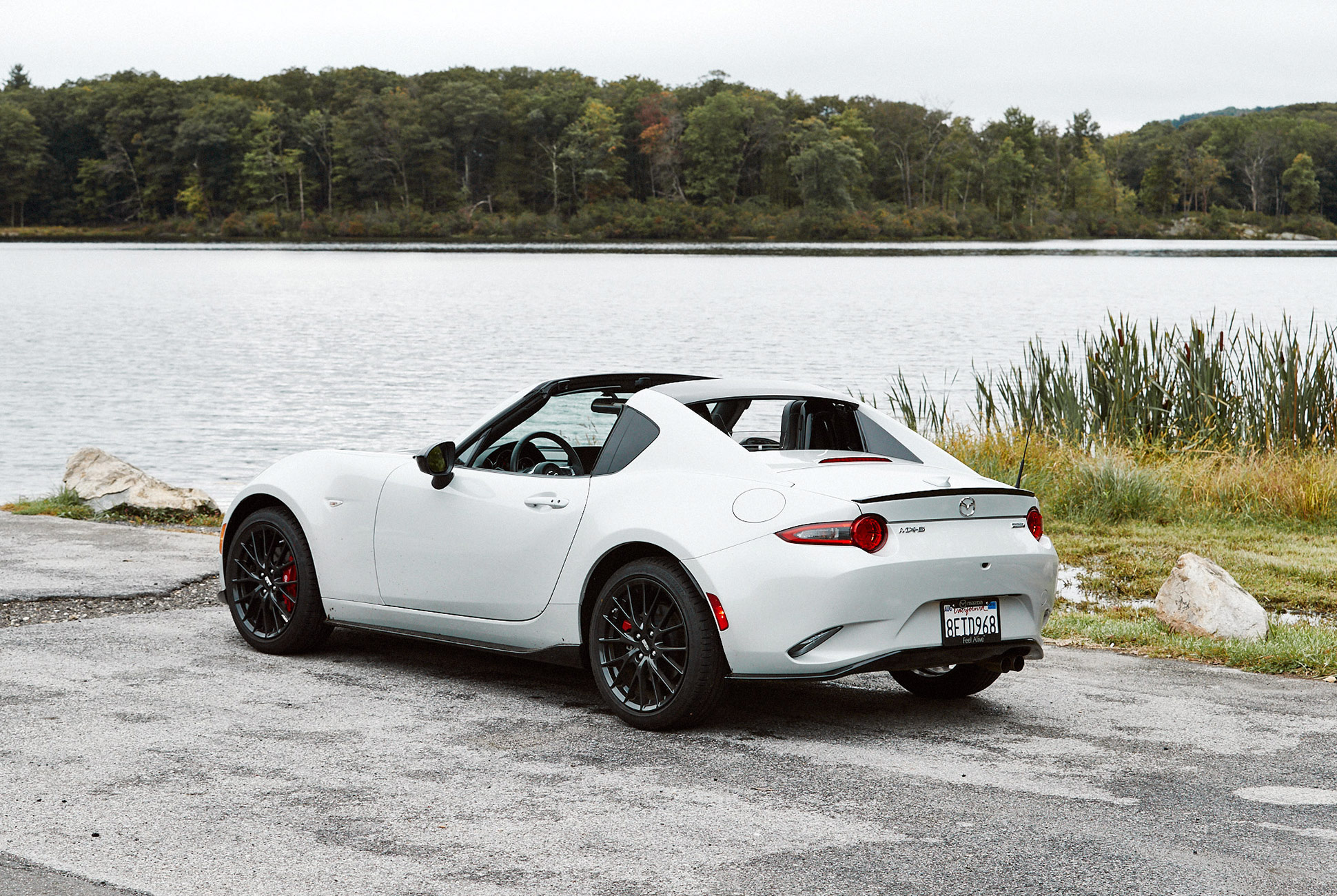
2018 Mazda MX-5

Compact Car

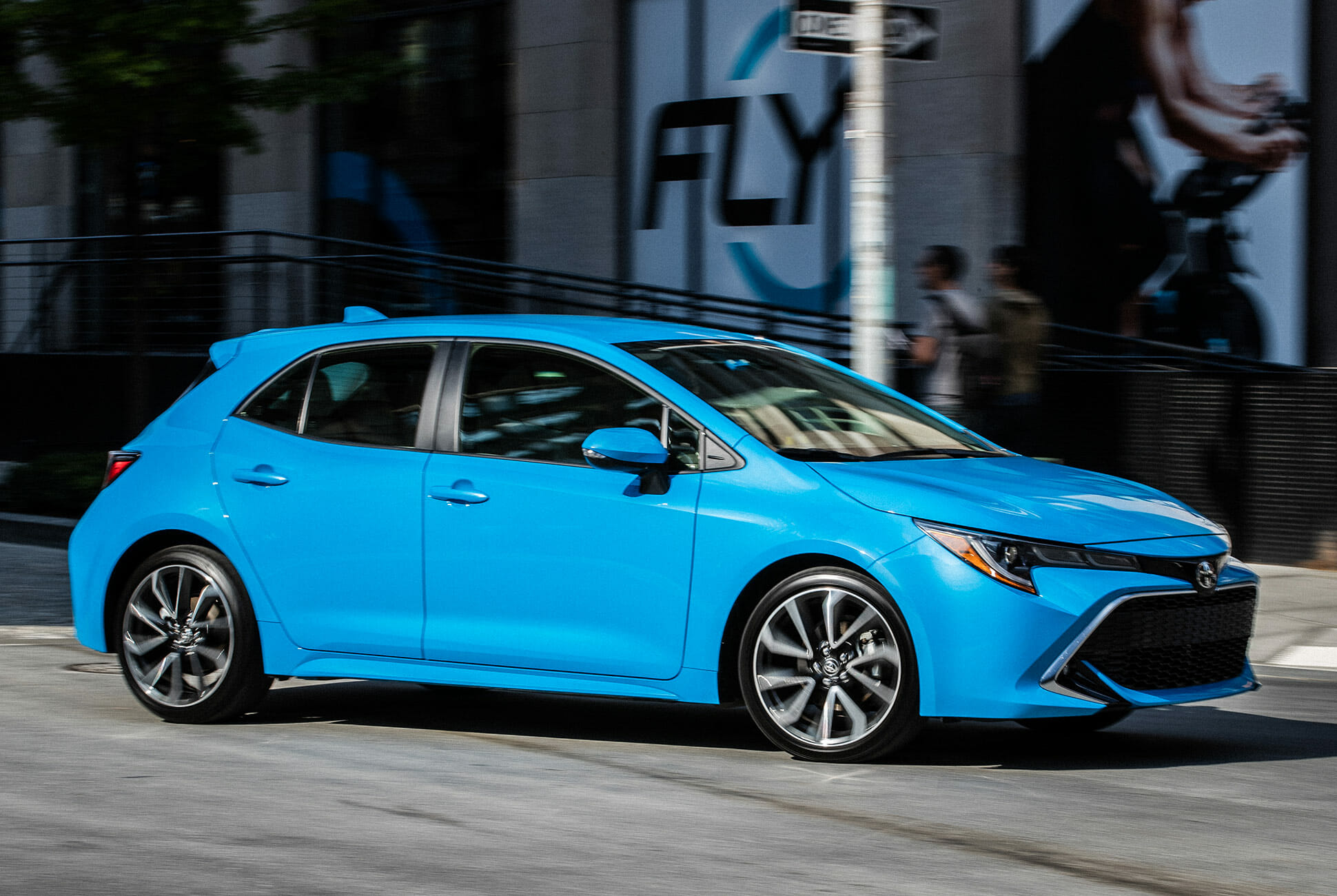
2018 Toyota Corolla XSE Hatchback

Full Sized Pickup

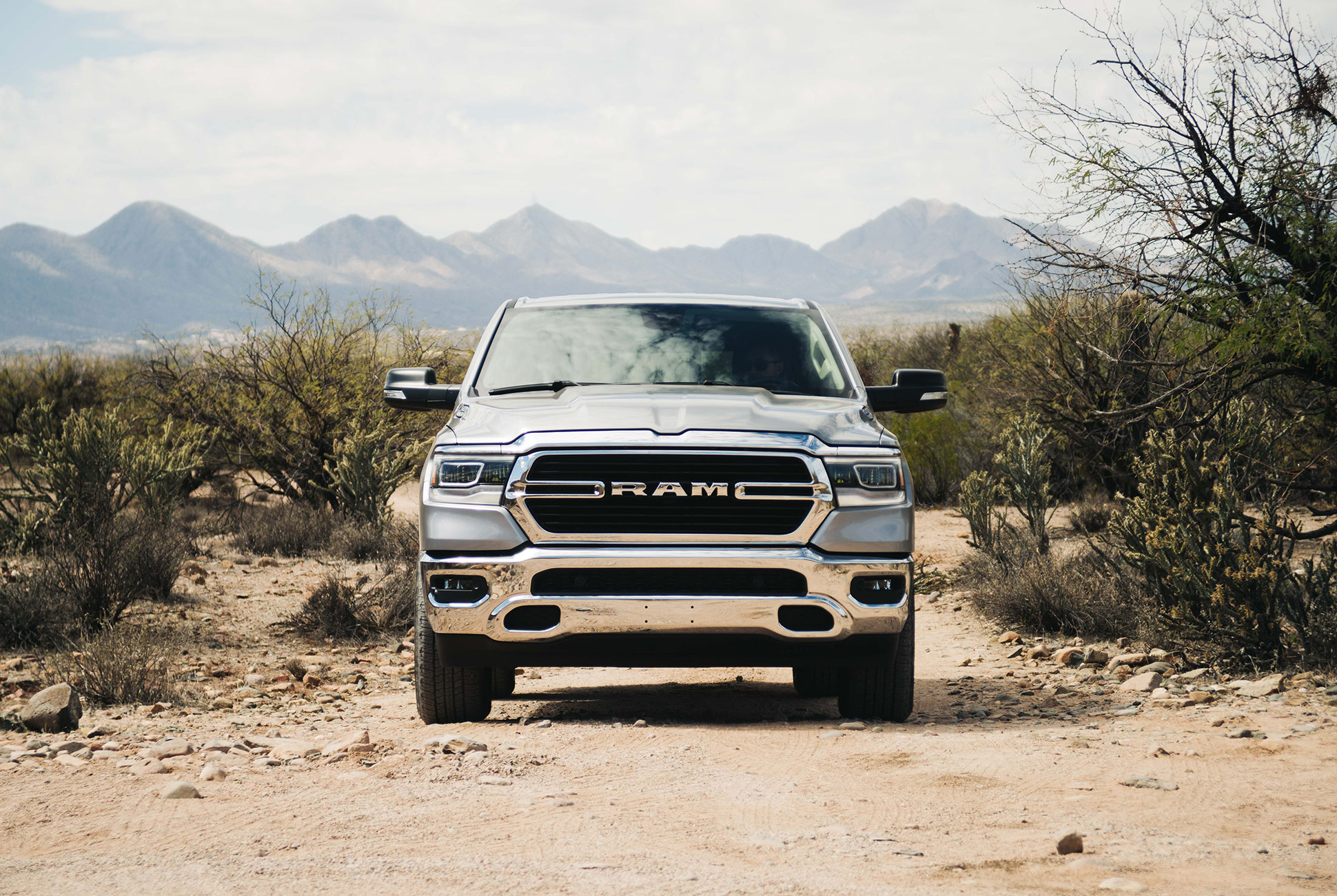
Ram 1500

Large SUV

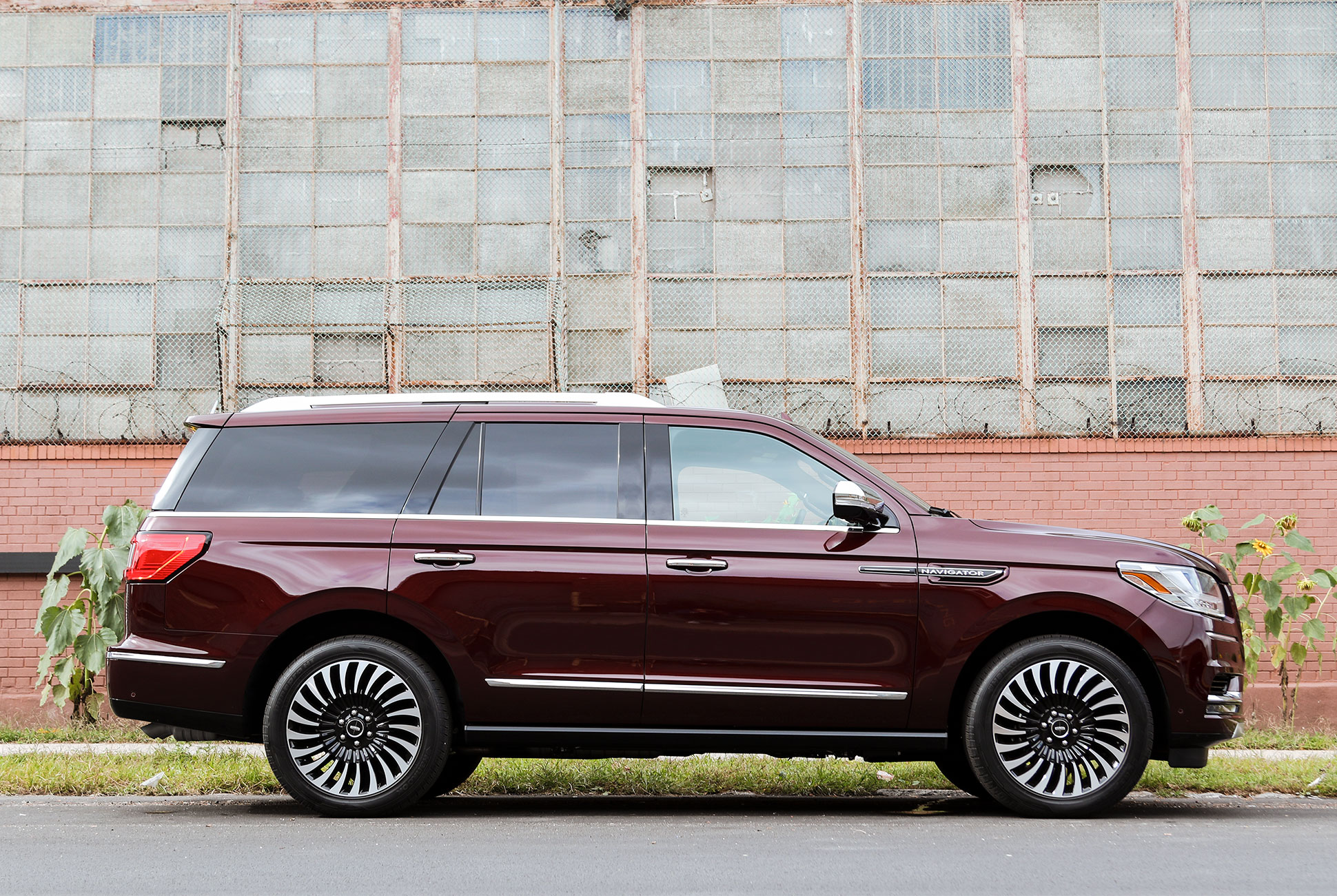
Lincoln Navigator

Midsize Truck

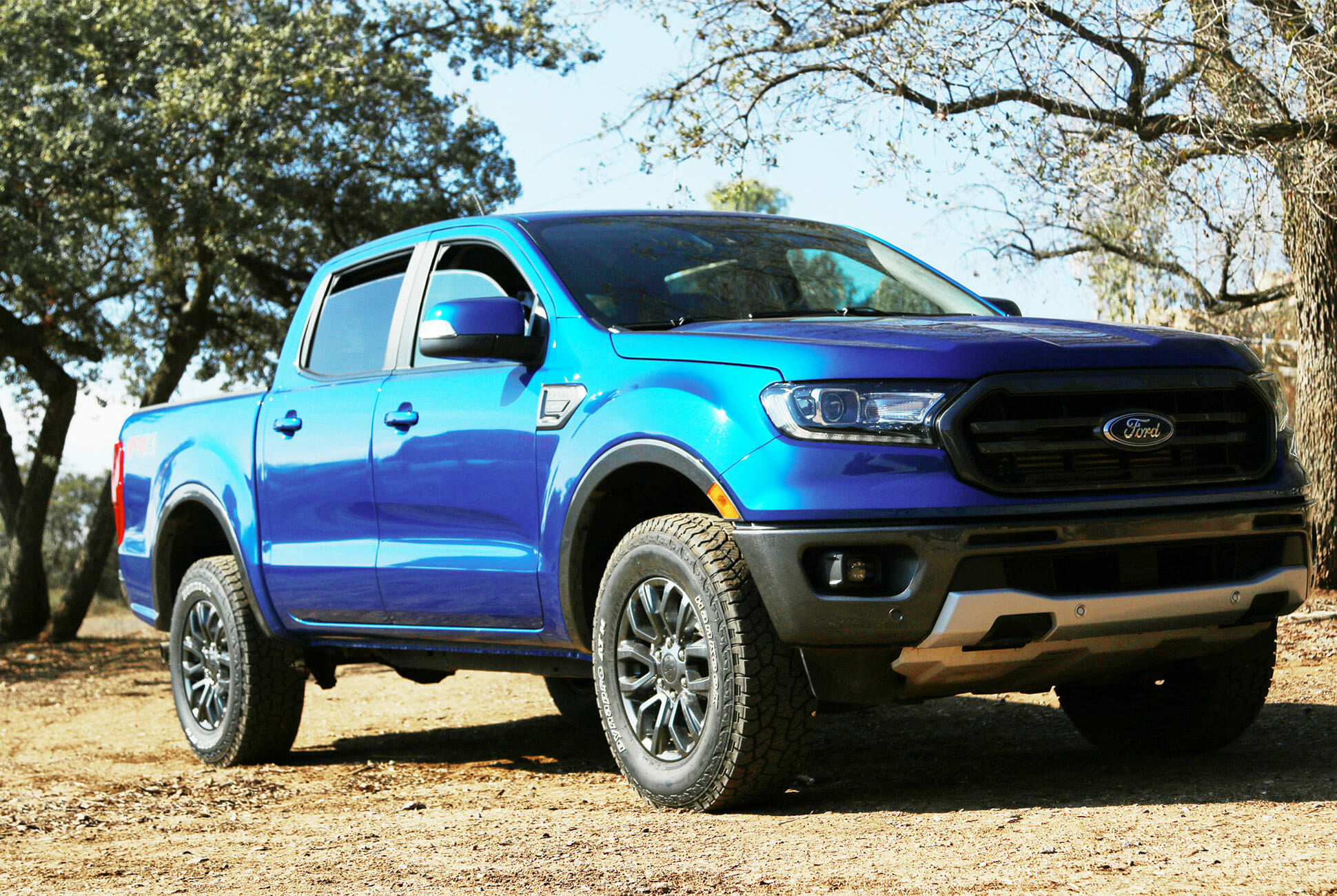
2019 Ford Ranger

Sports Car

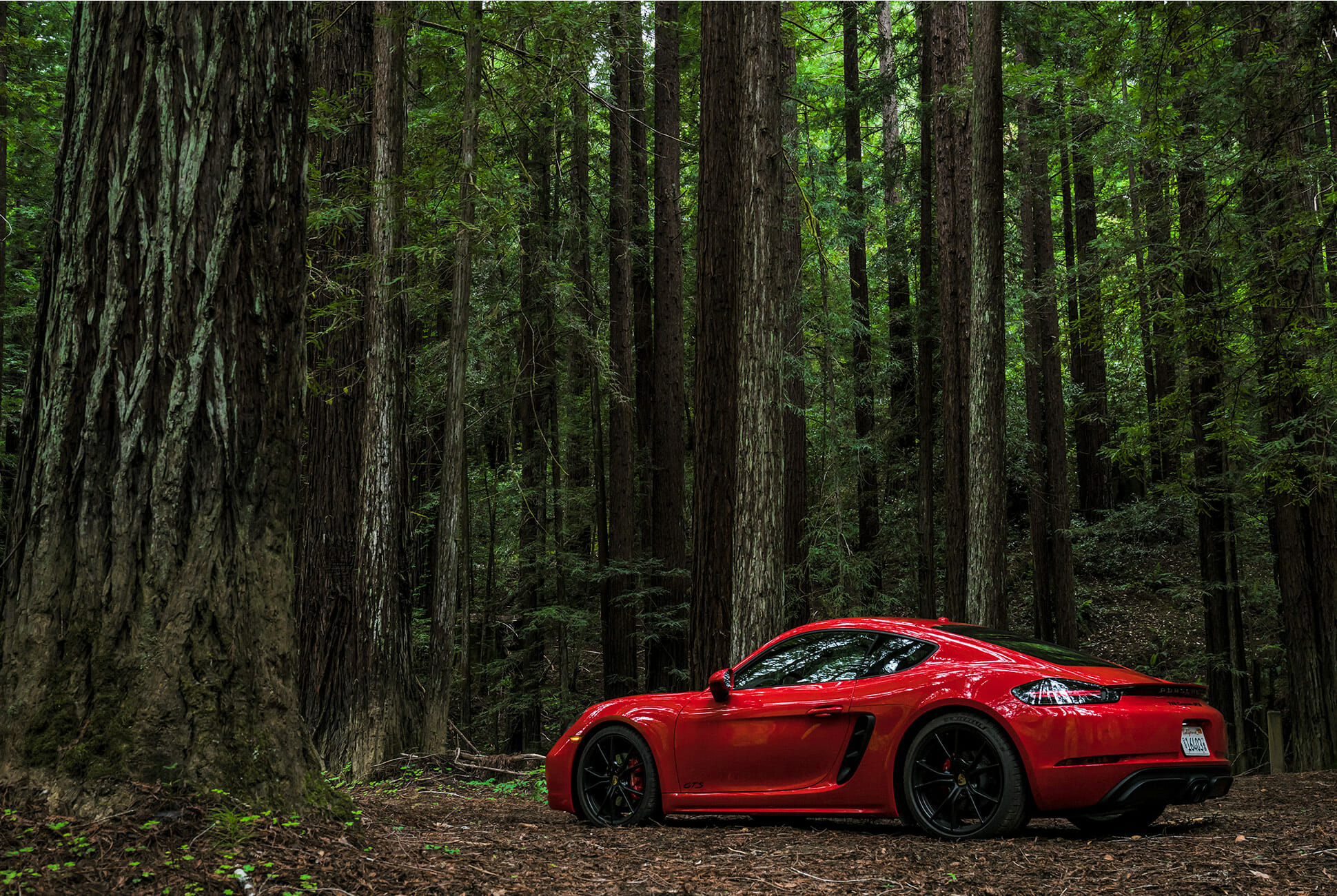
Porsche 718 Cayman/Boxster

Station Wagon

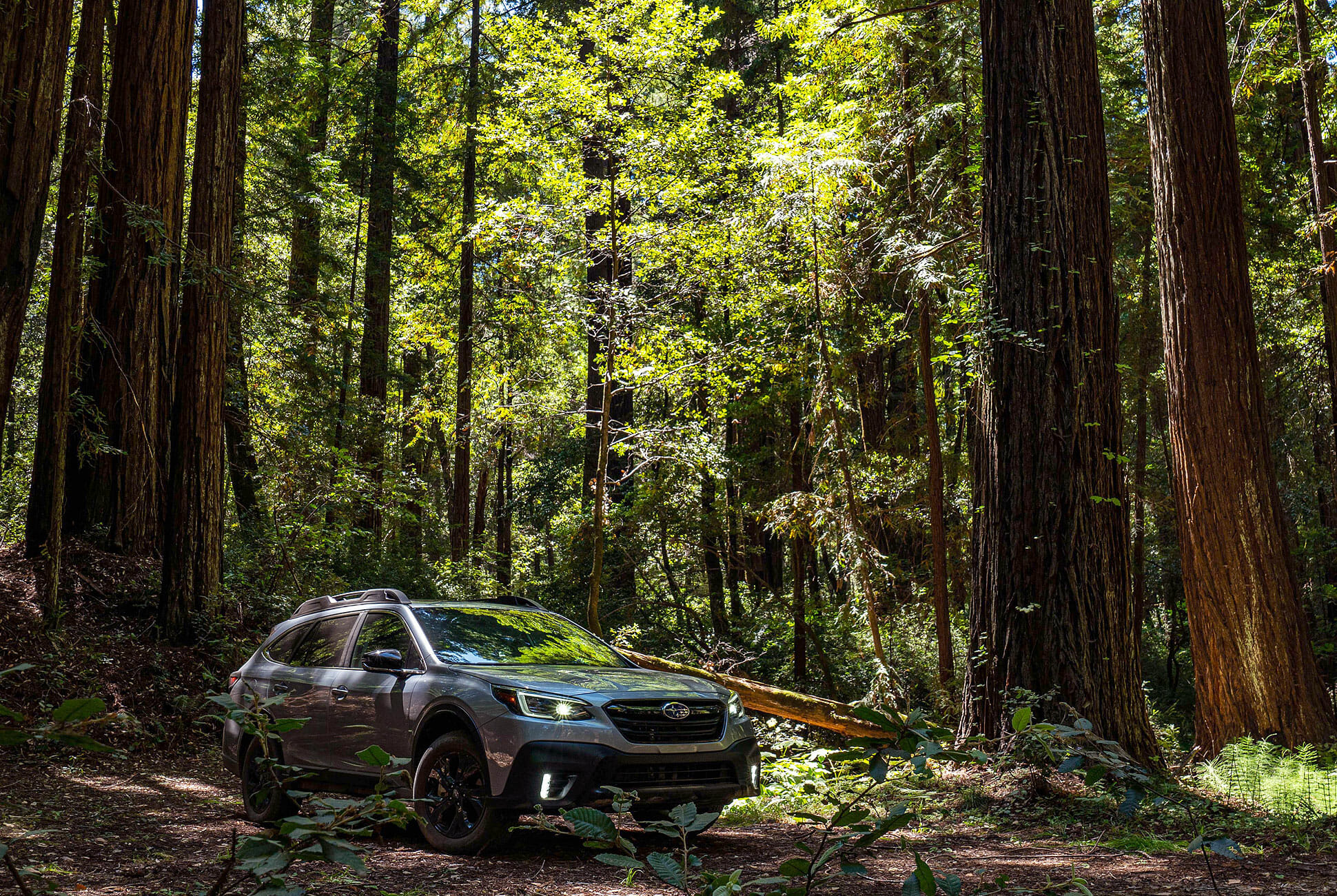
Subaru Outback

The Trials and Triumphs of Overlanding Across America in the Ford Ranger FX4

Going on an overland adventure across the United States is easier than most people think. Stock four-wheel-drive vehicles are more capable than ever; GPS tracks and maps are available online; automotive roof tents make the nights more comfortable than ever. It makes it so easy, you might even think about taking your whole family along as you attempt a 3,500-mile trip along the Continental Divide from Mexico to Canada would not only check it off your bucket list. Which is exactly what photographer Olivier de Vaulx did. 

The Milky Way seems so close it’s almost unreal. Even the most advanced computer-generated images couldn’t approach the complexity of the starry night above our heads.

We’re in New Mexico, on the first night of our Continental Divide journey, laying down on the comfortable mattress of our roof tents and enjoying a show that no movie theater will ever be able to provide. It’s only been a few hours since we started at the border between the U.S. and Mexico at the Antelope Wells port of entry, but we already feel thousand of miles away from our real lives.

My two teenagers didn’t get any cell service the whole day and never complained. Instead, they drove our two Ford Ranger FX4 pickup trucks through the red dirt of New Mexico’s backcountry, which is more fun than any video game. As the day ended, the adventure already felt like a success. But there were still 3,500 miles to go.

Warming Up in New Mexico

Kevin Glassett, avid motorcyclist and retired Hewlett-Packard engineer, put together a daily driving route for our GPS, with paved and off-road options displayed in different colors on our Trail Tech Voyager Pro. The little arrow proves hypnotic; with no risk of getting lost, we tend to drive as much as we can. (Furthermore, since the temperature outside is well above 85 degrees, nobody minds seating in an air-conditioned vehicle.)

The EcoBoost engines of the two Rangers are sipping fuel as slowly as old British lords sip their tea, giving us enough range to travel more than 250 miles a day. The power delivered by the turbos and the smooth ride provided by the FX4 heavy-duty suspensions sometimes even pushes us to switch into rally mode, speeding across the red dirt like professional WRC racers. But being here as a family instead of with a bunch of friends reminds you quickly that overlanding is more about the distance traveled than the adrenaline rush, and we quickly fall back to a more reasonable pace. (Even if the truck didn’t mind going fast.)

As the sun sets, it’s time to start what will become our daily routine: Finding a free camping spot for the night on BLM land, setting up our Tepui Explorer Kukenam and Autana roof tents and cooking some easy-but-healthy meals. Using two plastic coolers and a gas stove, we whip up recipes with enough proteins, carbs and veggies to call this trip a gastronomic experience. GSI Outdoors cooking kits help us keep everything organized for dinner and breakfast, transforming what would be a duty in the army into a genuine pleasure. Once the dishes are washed (using melted ice from the cooler instead of wasting drinkable water), it’s time for a card game or some night photography of the Milky Way. Hello, vacation mode.

Catching Cold in Colorado

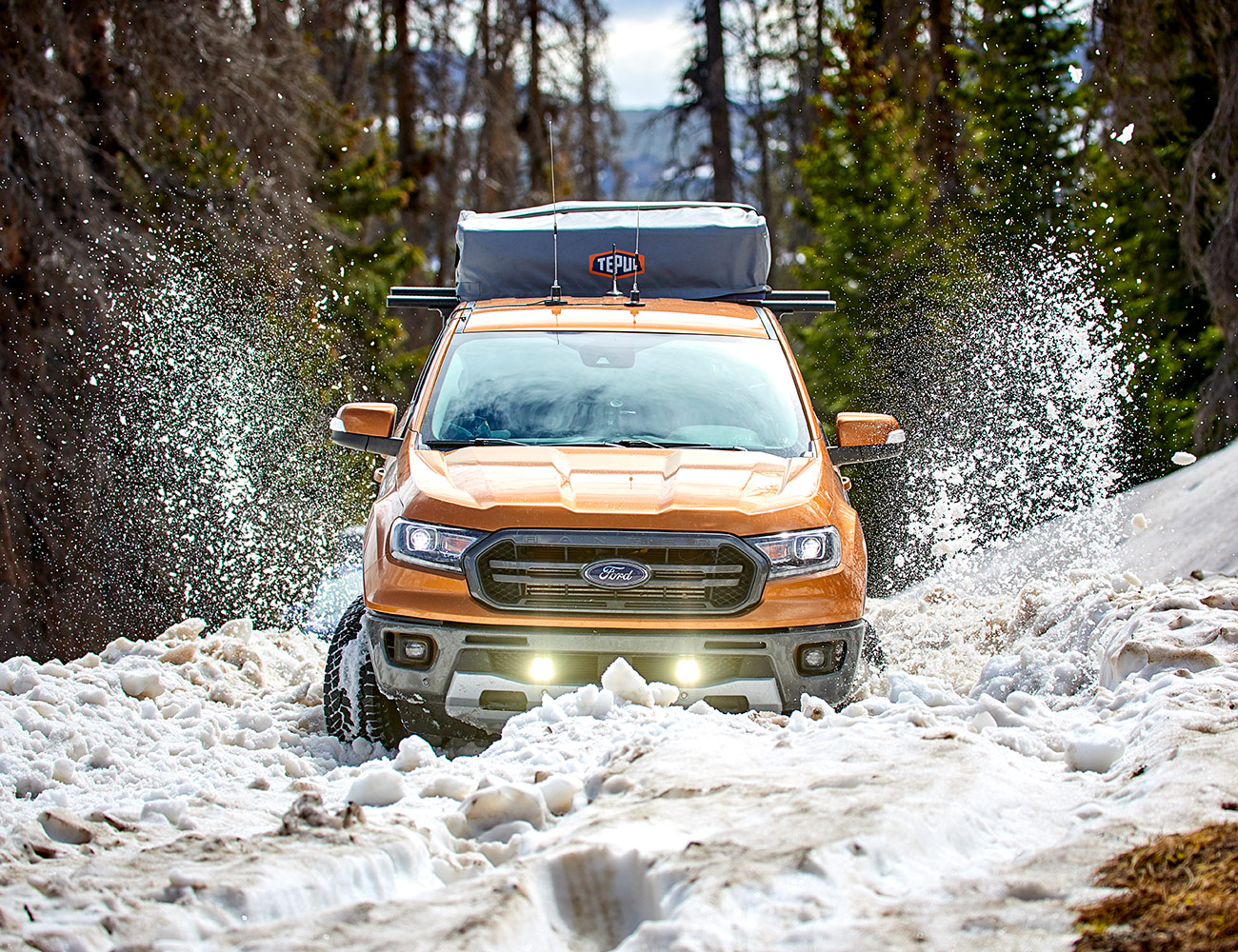
The transition between New Mexico and Colorado is somewhat brutal. The elevation rises as we reach the Golden State, and with five times more snow this winter than in previous years, most of the passes in the Rocky Mountains are still closed — as we discover first hand while trying to go over Stunner Pass, just to find a big patch of snow at the summit.

While the first two patches of snow take us only a few attempts to go through, thanks to the high clearance of the Ranger FX4s and the help of the Maxtrax MKII traction mats, the last one proves more difficult. Stuck in the snow, the first Ranger stalls, high-centered and unable to free itself. That’s why we travel with two trucks: The second Ford is able to pull out the unlucky vehicle loose in no time.

The snow being deep as it is, we could have decided to go around by (illegally) driving off the trail. Instead, we keep the overland attitude alive and start digging a path through the snow with a shovel, the whole family taking relays to clear the way. (Turns out overlanding can be a great workout.) After a few hours, we finally make it to the other side…just in time to be welcomed by a hail storm. Colorado is a tough place.

Thankfully, there’s also plenty of sweet opportunities in the state: Hiking and sledding along the snowy summits of Cinnamon Pass, the discovery of old gold mines, paddleboarding sessions in the crystal-clear lakes and watching wildlife such as deer, squirrels, foxes, marmots, moose and bears.
Going Back in Time in Wyoming

The border between states once again brings a huge geographic change. The high mountains are still in the distance, but we now drive on easy trails in the plains. Using our GPS’ ability to show the position of the other vehicle on their screens, the two trucks follow each other at a safe distance, so the second can avoid being blinded by the thick dust raised by the first crew. The long-range Midland MXT115 MicroMobile radios make chatting easy regardless of the distance, helping prevent collisions with upcoming traffic, cattle on the trails, or to request some photo stops.

The wildlife is more abundant than ever; the pronghorns make this American backcountry look like Africa’s savanna, but the bald eagles remind us that we’re still in the U.S. Raised in crowded Southern California, the two teenagers find the emptiness of these vast plains a bit worrisome at first, but they quickly get used to the feeling of freedom that comes with while travelling on this ocean of grass. For dinner, we grill meat like real cowboys, then climb in our comfortable roof tents for a quiet and restful night.

Crossing Wyoming on backcountry roads makes you feel like you’ve gone a century back in time, with barns and farms everywhere along with actual cowboys still making a living off herding cattle. On the sidewalks of the small towns where we stop to buy groceries and water, people wear leather boots and Stetson hats, and the rodeos are organized for the locals, not tourists.

The only issue that has to be addressed is — like in New Mexico, Colorado and later in Montana — the annoying presence of mosquitos. At sunset, it’s like playing roulette: Randomly enough, they can be nowhere to be seen, or everywhere at once. In the latter case, we hide inside the roof tents, the thick fabric an effective shield against the fury of these vampires.

Rock Crawling in Montana

After a couple hours zipping though Idaho, it’s time for the Rangers to confront the harsh reality of Montana. The landscape is dominated by mighty forests, where fallen logs number in the thousands and trails are often damaged by the long winter. If that weren’t enough, bear activity and washed-out trails provide plenty of opportunities for “road closed” signs to appear suddenly around the next corner. Even when the trails are open, it doesn’t mean that they’re maintained; potholes, deep ruts and boulders are sure to challenge our Ford Rangers. At one point, we cover just three miles in four hours.

In these tough conditions, the compact size of the Ford Ranger is a real advantage, since it gives it the ability to sneak between trees that would have stymied big brother F-150. River crossings filled with mud and deep ruts prove opportunities for teamwork: One person behind the wheel, transmission in 4-Low (and rock crawling mode set at low speed, usually); three spotters with hand-held radios to give directions. Doing this, we travel through the slipperiest conditions like seasoned pros.

If these technical sections are fun, the abundance of potholes in the backcountry roads makes the days feel longer. We often don’t finish until night, the Baja Design LED lights helping the (surprisingly good) headlights drill into the darkness of the forest in the quest for the perfect camping spot. The stock shocks provide a quiet ride, though; there are no creaks or rattles to be heard inside the cabins. We’re a long way from the carriages used on the Oregon Trail.

Bienvenue au Canada

Reaching the actual border is incredible: An aluminum pole planted in the middle of the forest marks the separation between the two countries. There’s nobody around; we enjoy the moment by ourselves just as the sun disappears behind the tree line. We couldn’t have asked for better timing to celebrate the end of this incredible trip.

After 3,500 miles, mostly on dirt, we not only followed the Continental Divide across the whole United States, but tightened the bonds between members of our family. Spending the whole summer together, helping each other with driving, navigating, cooking, cleaning, and more, we shared a once-in-a-lifetime experience which made us feel more connected to our country, as well as hooked on the concept of overlanding. The United States is a wonderful playground — and there are still thousands of trails waiting to be explored.

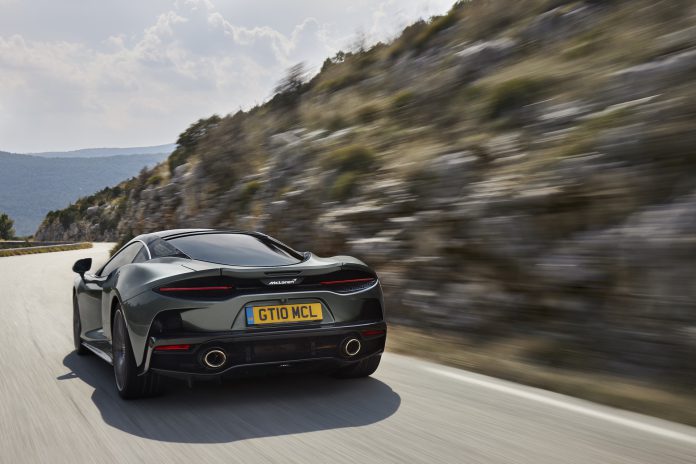
2019 McLaren GT Review

Since 2011 McLaren have been upsetting the old guard of supercar builders with their ballistically fast and dramatic creations. Every model to date has fallen into one of three categories, Sport, Super and Ultimate – until now. Meet the fourth class – GT. Bentley have the Continental GT, Aston the DB11, Mercedes-Benz the S-Class Coupe and McLaren wanted a slice of the fast grand tourer pie.

The first car in the GT class for the British brand? The…GT, creative I know. As with every McLaren, there is an expectation for this to be a savagely fast car – the numbers suggest so. 0-100km/h in 3.2, 0-200 in 9 and a top speed of 326. These figures are impressive in their own right, but even more so in the content of the GT rivals that McLaren have set out to dethrone – think DB11 and Continental GT. It is not surprising when you consider that the 612bhp, 630Nm, 4-litre V8 is mid-mounted like a supercar, not the GT cars to which it is compared. The counter argument is easy, the traditional front engined GT car allows for a bigger cabin, rear seats and full sized boot.

McLaren counter these arguments and maintain that the trade-offs are off set by the advantages of a lower centre of gravity translating into far superior handling characteristics. As the previously listed numbers suggest, the McLaren GT is tremendously fast on the road once you overcome the lag below 4,000rpm. The new engine, unique it the GT, is mated to a 7-speed SSG transmission to ‘deliver linear, seamless and relentless acceleration’. That is what the press release says and I cannot disagree, the shifts up and down are available on demand. Steel brakes are fitted as standard with the option to upgrade to carbon ceramics, I experienced the steels and they were great, providing good feel and performance. On the topic of feel, the steering is still hydraulically assisted and still feels fabulous in the GT, just a tad slower than in other models.

With the chassis and powertrain in sport, there are few things that feel as fast point-to-point on the road. Switch it all into Comfort and the McLaren does something amazing. It becomes all soft and pliant, there is a suppleness that I’ve never experienced in a McLaren before. The dampers try and predict what is coming up on the road by monitoring driver inputs. Everyone claimed that McLarens of old felt as smooth as a Rolls-Royce, hyperbole plagued their opinions, it was not true in reality – the McLaren GT comes far closer. To my buttocks the Bentley Continental GT is still in another league comfort and the 48v anti roll mechanism means it does not wallow about like older Contis did. The McLaren is clearly faster, rivals are softer.

The spokespeople of McLaren are keen to convey the idea that the GT is a car that can be used for grand touring or even for a daily commute. There is a new active exhaust that features active valves that open and close depending on the engine loads. It is relaxed and quiet when cruising or set to Comfort.

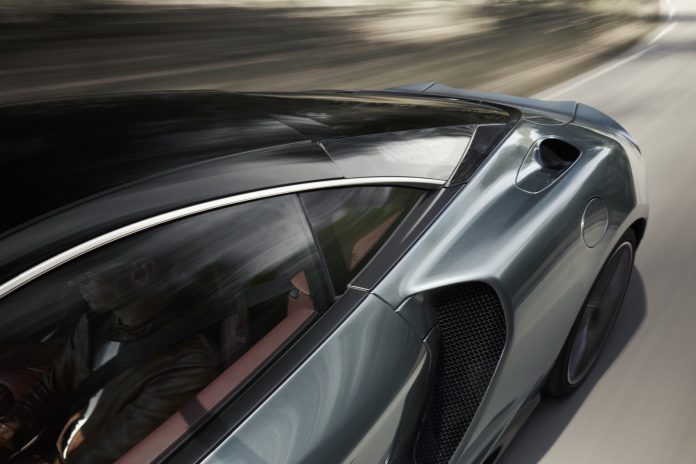
The ride height is far greater than any other McLaren, there is no need to deploy the optional nose lift, but when you do the GT adopts the same clearance as a Mercedes-Benz C-Class – impressive. To really be considered a daily driver or continent cruiser, the GT’s cabin needs to be a place where you would be happy to spend hours in. The architecture of the cabin is immediately familiar to anyone that has been in a 570S or any other Sports Series model, no bad thing. It feels different as there is a lot more leather and the introduction of other new materials such as the knurled aluminium controls that are pleasing to the eye and touch. It is familiar but differentiated. As with the 720S Spider, there is the option to have an electrochromic glass roof, an option that I would recommend as it makes the cabin feel that little more light and airy.
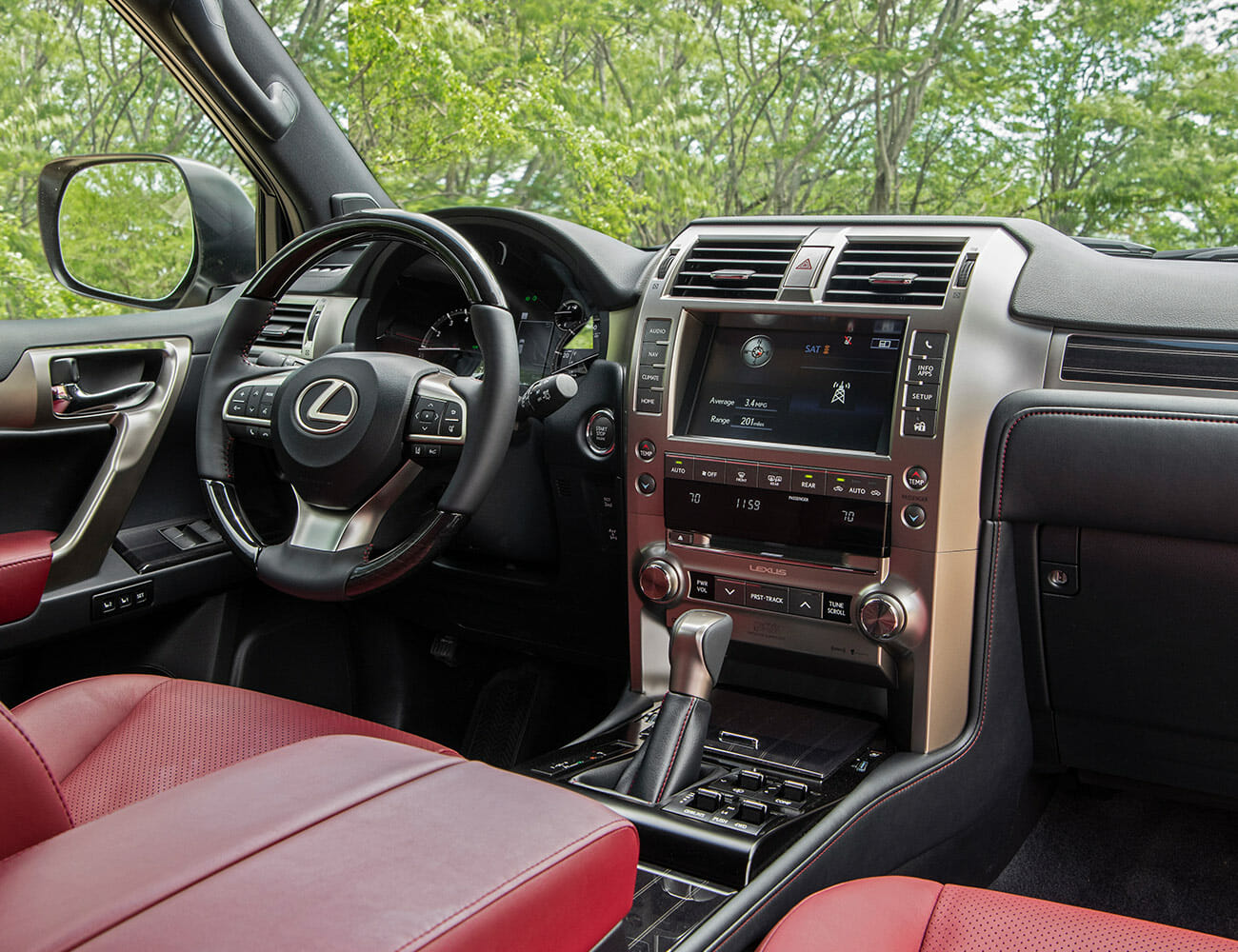
One area that has always come under scrutiny from the media and owners alike is the infotainment system. McLaren claim that the GT features the ‘most advanced infotainment system’ yet and that there is an ‘all-new touchscreen infotainment features super-quick 10-core processor’. Having experienced every system fitted to a McLaren since the 650S, I can confidently say that there have been significant improvements over the years. When piloting something as focused as a 600LT or ballistically powerful as the mighty 720S, the infotainment system is not something I pay much attention to. The systems in those cars are not of paramount importance as it is all about relishing that Sunday morning blast. In the GT it is far more important and there is vast room for improvement.

I appreciate that McLaren is not a part of a multi-billion euro conglomerate like the Volkswagen Group, nor do they want to outsource such systems as Aston Martin do. That being said, I find it to be frustrating that the brand goes to such lengths to build a GT car that will fit a set of golf clubs but one that has only has one USB port, no wireless charging capability, no Apple CarPlay/Android Auto or heads-up display.

In McLaren’s defense Apple are yet to develop to portrait oriented CarPlay system, but having the functionality would substantially improve the overall infotainment experience. On a more positive note, the B&O sound system is phenomenal and the interior ambient lighting is a gimmick but one that is particularly pleasing to the eye when you see it on the metal trim strip above the glove box.

The tech in terms of driver assistance systems that have become the norm, such as adaptive cruise control and lane assist that are useful on longer motorways drives, are absent. The Bentley Continental GT has a plethora of systems that essentially allow it to drive itself when combining active steering and cruise control on the highway.

The McLaren GT has a revised carbon fibre MonoCell II-T core, this allows for more storage than ever before. The goal was for a golf bag or two pairs of 185cm skis and boots as well as luggage can be carried with ease. Furthermore, the usual 150 litres of storage in the frunk remains and means the new McLaren GT can accommodate a total of 570 litres. Impressive, but it must be noted that the luggage compartment is rather long and not very tall.

The McLaren GT is the start of a new chapter for the brand. With the introduction of the new car comes a new GT series, to which I am sure we will see more models added to with the goal of 18 new cars or derivatives by the end of 2025 – the GT is the fourth. It certainly will appeal to a wider audience and will perhaps entice those looking for a softer supercar. With such potent performance, fabulous handling characteristics and well specced cars costing £200,000, I am not sure that the GT is an offering that will see many Bentley or DB11 orders cancelled. In my opinion, they are different cars for different buyers. Regardless, I am sure that the GT will be a success in its own right. Deliveries begin this October with prices starting at £163,00 in the UK, $210,000 in the USA and €198,000 in the EU.
GTSPIRIT NEWSLETTER

IAA 2019: The Downfall of the Frankfurt Motor Show

We have just spent four days at the IAA Frankfurt Motor Show 2019 and it is time to recap our experience at what used to be Europe’s most important auto show.

Fewer manufacturers, smaller stands and gaps filled with used cars and carpet. It doesn’t take long to see the 2019 IAA Frankfurt Motor Show is no longer what it used to be. But the pace at which the downfall of the IAA has taken place is shocking to see.

Clearly the cancellation of many car manufacturers in the run-up to the IAA this year posed challenges for the VDA, the organizer of the IAA. But the way the challenges have been handled seems to have an accelerating effect on the downfall of the show.

To make matters worse it is not just the absence of the likes of Aston Martin and Ferrari that makes the IAA so unattractive for visitors and journalists alike. But the decision from German groups to leave their top brands at home; including Bentley, Bugatti and Rolls-Royce, is something I can’t wrap my head around.

Where are the visitor highlights?

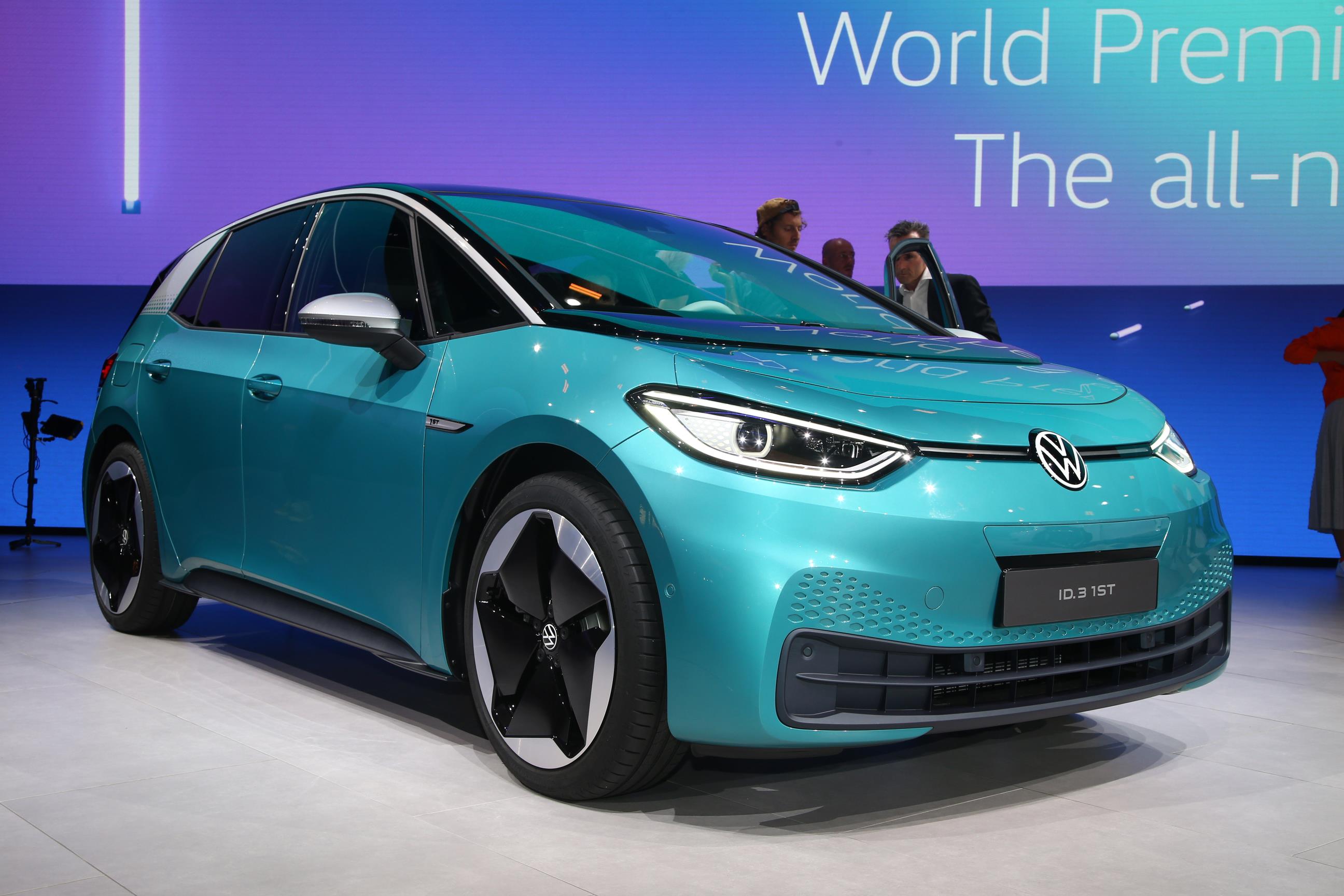
VW ID.3

Clearly those manufacturers present at this year’s IAA want to present electric models and show that they are ready to face the challenges ahead. But the reality is the green naysayers that dominate the political discussion in Germany are not visiting the IAA. The visitors that still come to IAA are interested in cars and want to see the latest and greatest there is on the market. That they can’t see the new Ferrari is a shame but that the Volkswagen Group is withholding the IAA audience from recent highlights like the Bugatti Centodieci or the Bentley EXP 100 GT gives visitors all the more reason not to come back in two years. Turning the further downfall of the IAA into a self-fulfilling prophecy.

Experience vs Display

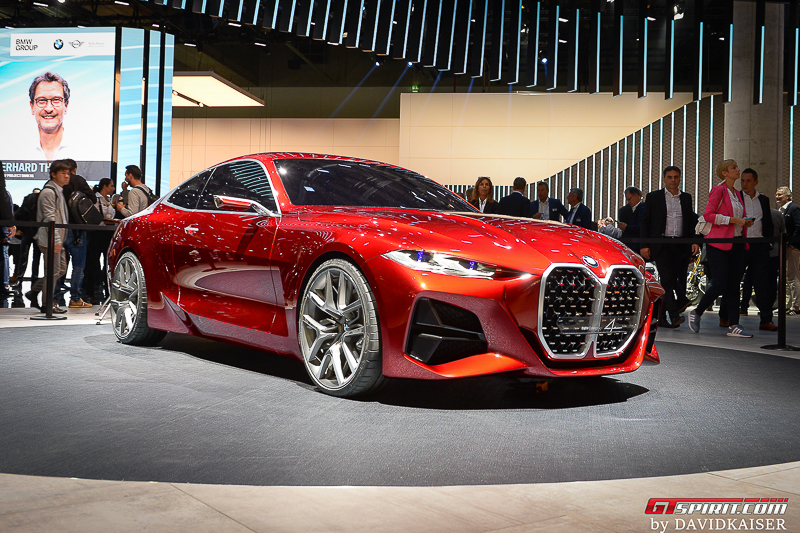
Red BMW Concept 4

Motor shows around the world are struggling so what is happening to the IAA should not come as a surprise. But the decline is about more than just the lack of halo cars but also the visitor experience. 20 years ago visitors didn’t know much about the cars they were presented. Today the average visitor knows a lot about the cars shown at the IAA when he walks through the door thanks to the plethora of information and content available online. Motor shows and manufacturers have to adapt to this new reality that just putting a car on display is no longer enough to appeal to visitors and satisfy them. Visitors should be offered experiences and interactions that they cannot get online or at a dealership.

At the same time online also offers manufacturers an alternative to the expensive motor shows, which served the key purpose of getting the word out about new models for decades. I love motor shows for the opportunity to see many different models, meet key people in the industry, get an overview of trends and see where the journey is going. I would be sad to see them go but clearly most motor shows are reluctant to change or have no answer to the changed market dynamics.

There are exceptions

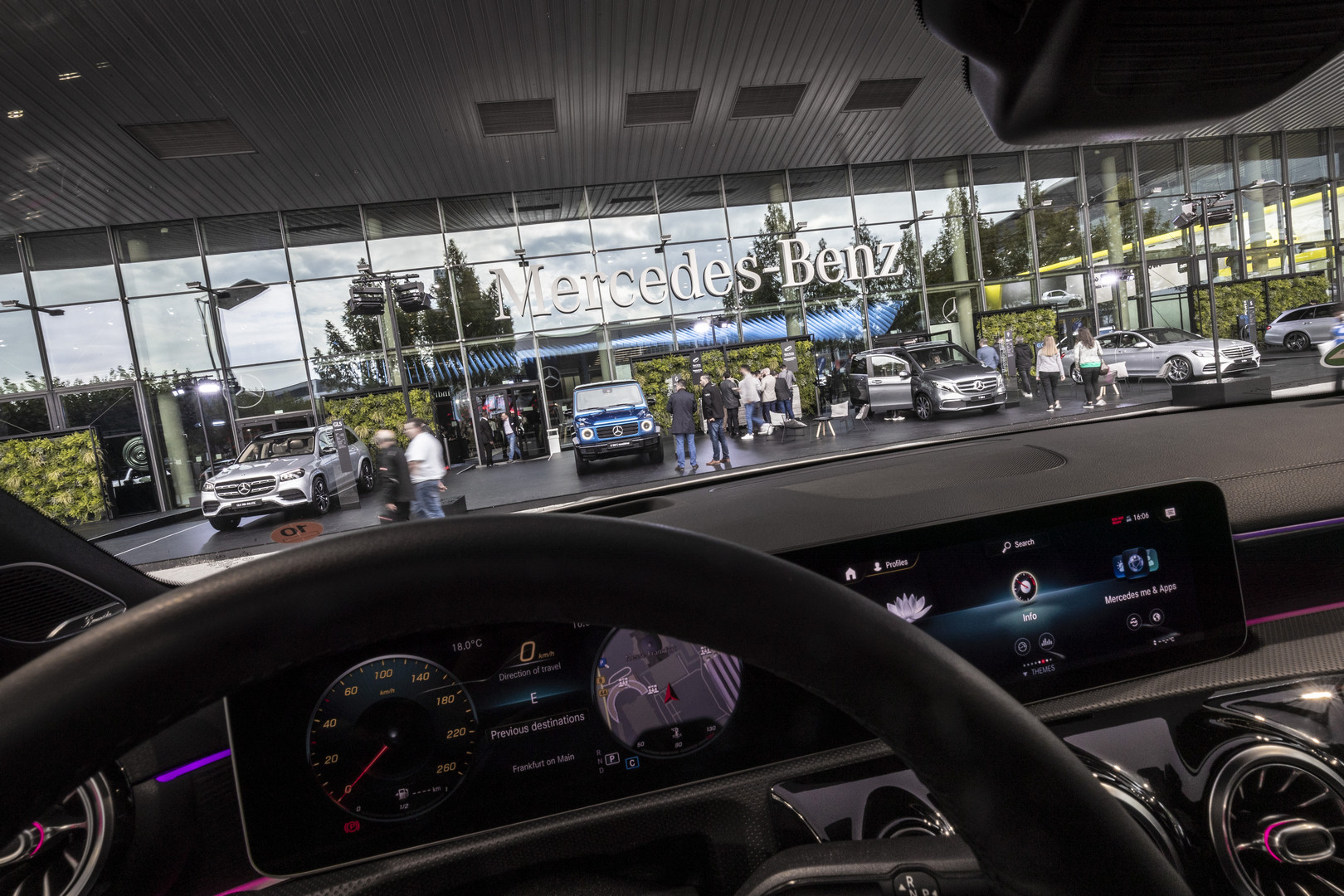
Where some brands decide to pass on the IAA altogether and others like BMW significantly downsized their presence from 11,000 m2 to 3,000 m2, Mercedes-Benz holds on to their prominent and extensive display in the festive hall and adjacent pavilion of the Frankfurt Exhibition center. In the front pavilion you will find a large number of new models on display as it used to be. But continue into the Festive Hall and a new approach concept awaits: few cars, more brand and theme experiences. Neatly integrated in the Daimler IAA presence is also the MeConvention – a future lab’ for exploring major issues and promising ideas for society, business, science and our planet. Combining new with old Mercedes-Benz hopes to satisfy both returning visitors as well as appeal to a new tech-savvy audience. However with the rest of the IAA in such an appalling state we doubt Daimler can justify their current efforts and investment for the next edition.

Mercedes-Benz-IAA-2019

On the other side of the IAA grounds we find some first-time exhibitors from China. Seemingly unaware of the ongoing decline so obvious to returning visitors of the IAA they bring a positive vibe and new inspiring products to Hall 8. The sad reality remains that the IAA this year has nowhere near the density of products, brands and innovations as it used to have.

The e-mobility push

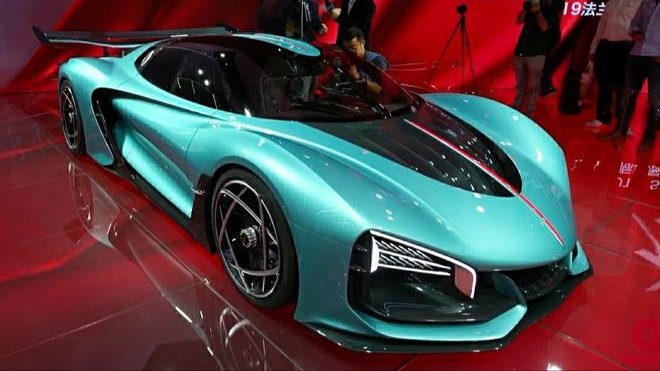
Hongqi S9

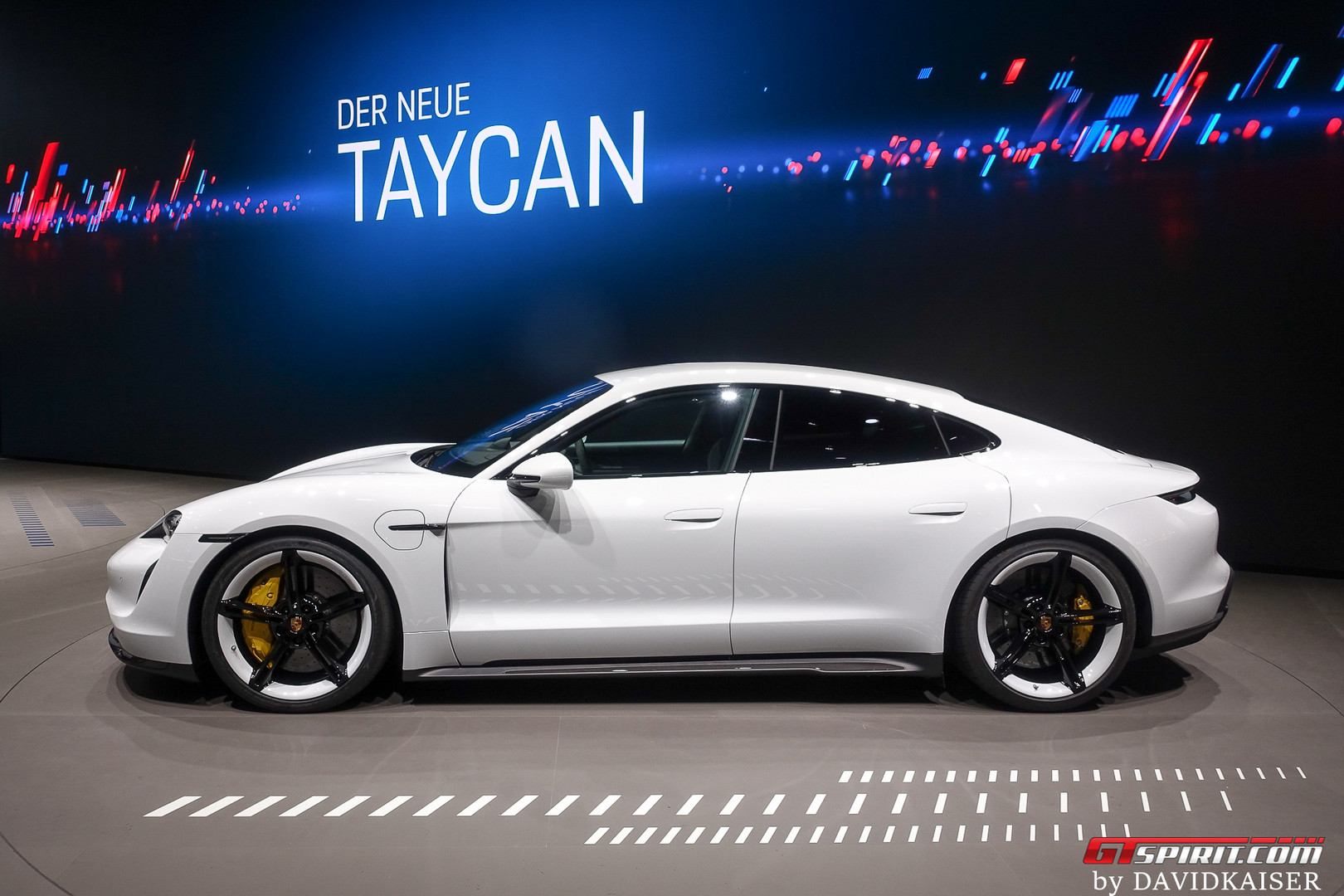
One thing that nearly all manufacturers present at this year’s IAA have in common is the seemingly endless range of electric cars in the limelight. These range from a 1,400hp Chinese hypercar called the Hongqi S9 to a modest Volkswagen e-Up. On Thursday we accompanied German Chancellor Angela Merkel through the IAA halls as she was brought up to speed about the latest innovations and products by the CEOs of major German manufacturers and suppliers. All were doing their best to show the latest and greatest electric car; from the Mercedes-Benz Vision EQS to VW ID.3 and Porsche Taycan.

Just before the end of the IAA tour Merkel unintentionally put the finger on the main issue for mass-adoption of electric cars. She asked the Opel CEO about the price difference between the new Corsa and the e-Corsa; the answer: the combustion Corsa is around 15,000 euro and the e-Corsa 30,000 euro. In the mass market segment prices will have to come down to the same level as combustion cars and even than it will be a tough sell to consumers. Until that happens e-mobility will not become mainstream and primarily a tool for the rich to buy a clean conscience and pretend they are saving the environment by driving an over-sized and over-weight electric car powered by coal power plants.

IAA 2019 Highlights

In the past we struggled to pick the 10 best cars of the IAA. This year we struggle to even fill a Top 10 at all. So we have reduced our highlights to the Top 5 cars of the IAA 2019 in random order.

Porsche Taycan

Porsche Taycan Turbo S Side

The first all-electric Porsche Taycan is celebrating its world premiere in Frankfurt. Hailed for using 800V technology and setting a new benchmark for electric driving dynamics it is without a doubt one of the few highlights in Frankfurt. Personally I’m sceptical whether or not electric (sports)cars are really a satisfying replacement for combustion cars but with 30,000 pre-orders Porsche cannot complain.

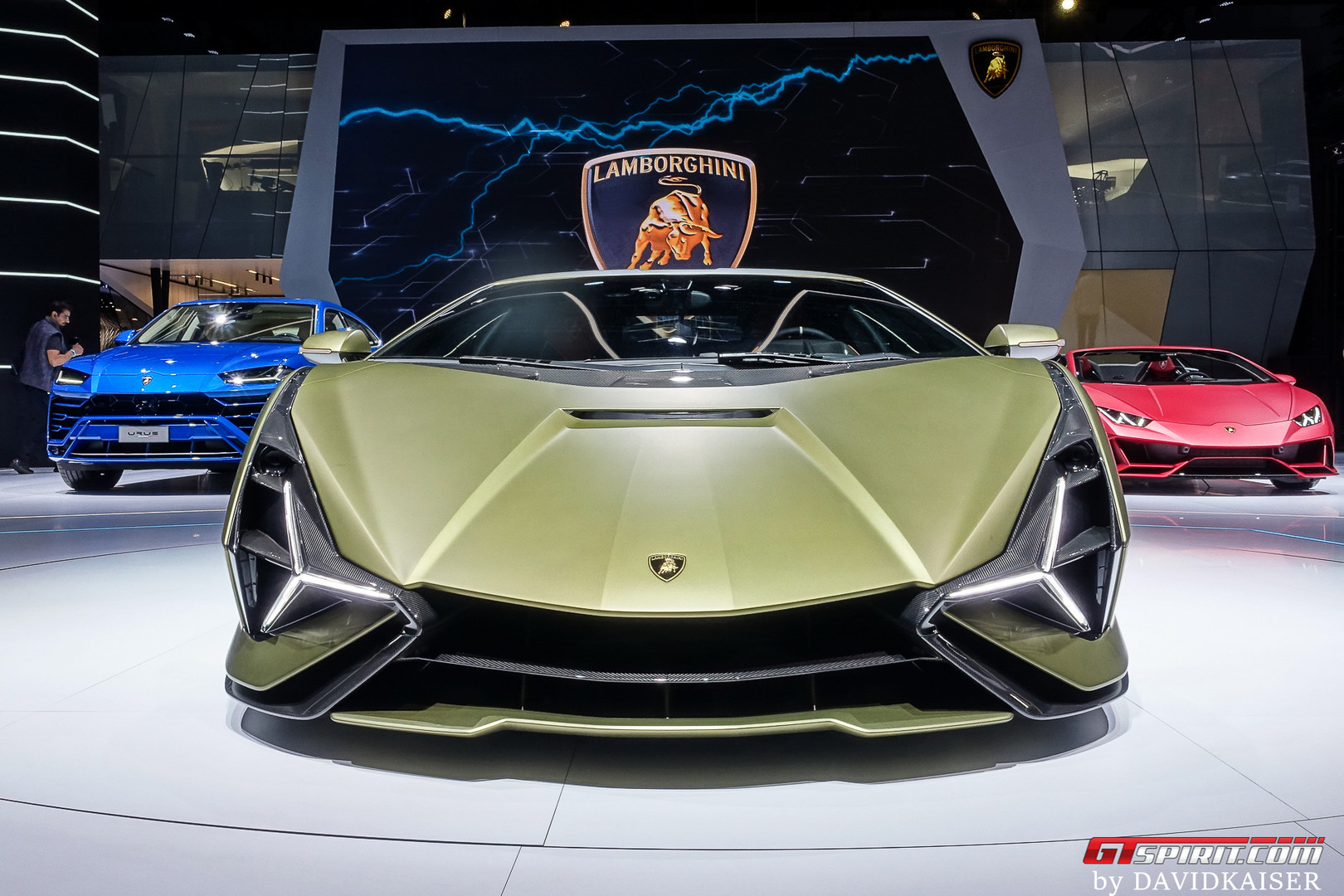
Lamborghini Sian

Lamborghini Sian Front

The first Lamborghini with a hybrid system and what a stunner the new Sian is. Just ignore the fact that it is still based on the eight year old Aventador platform and the 2 million euro price tag.

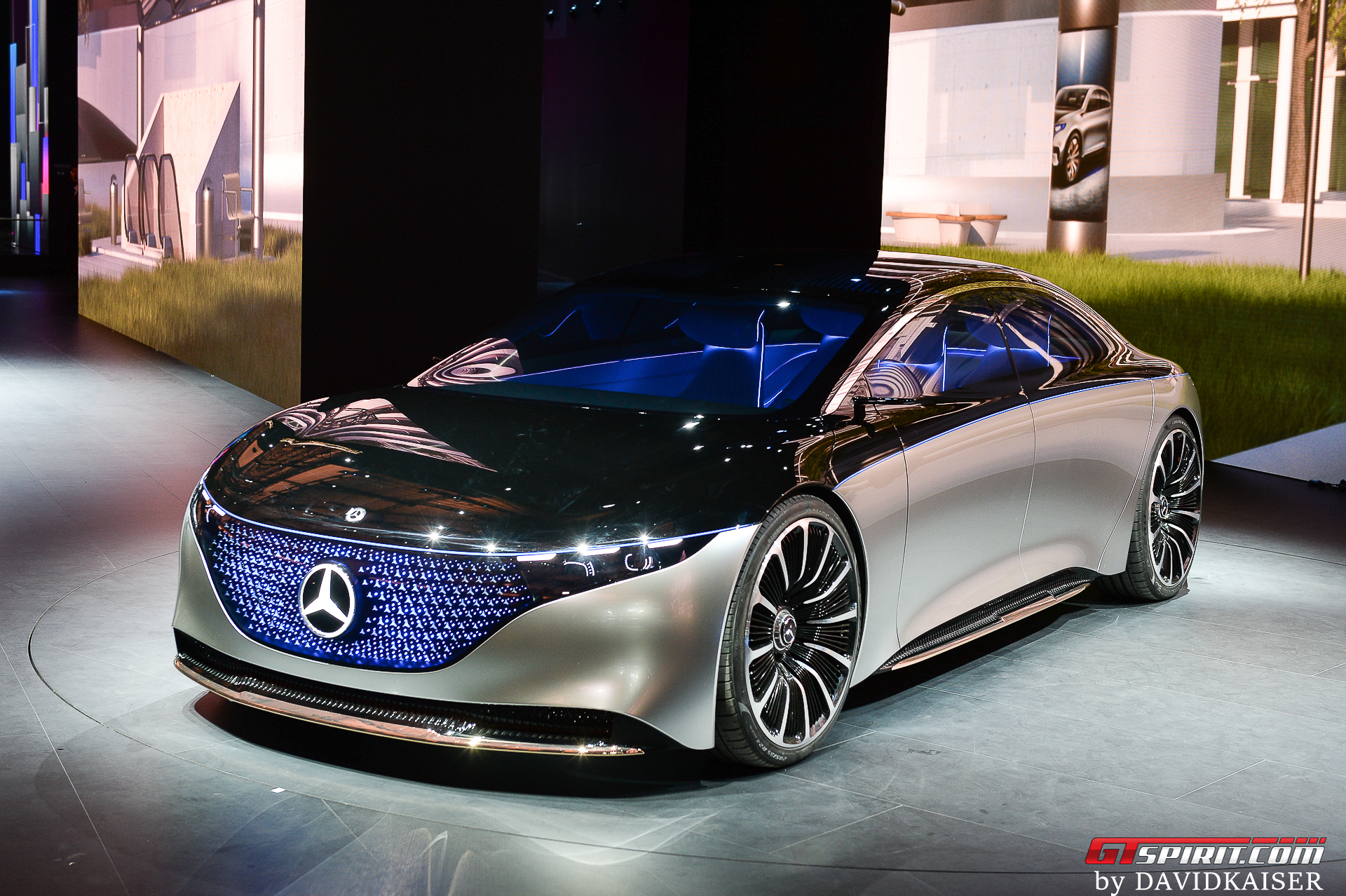
Mercedes-Benz Vision EQS

Mercedes-Benz EQS Wallpaper

Mercedes-Benz said they want to sell 50% full electric cars by 2030. A very ambitious goal which requires appealing full electric cars in their line-up. The Mercedes-Benz Vision EQS is their take on a full-electric version of the S-Class flagship limousine.

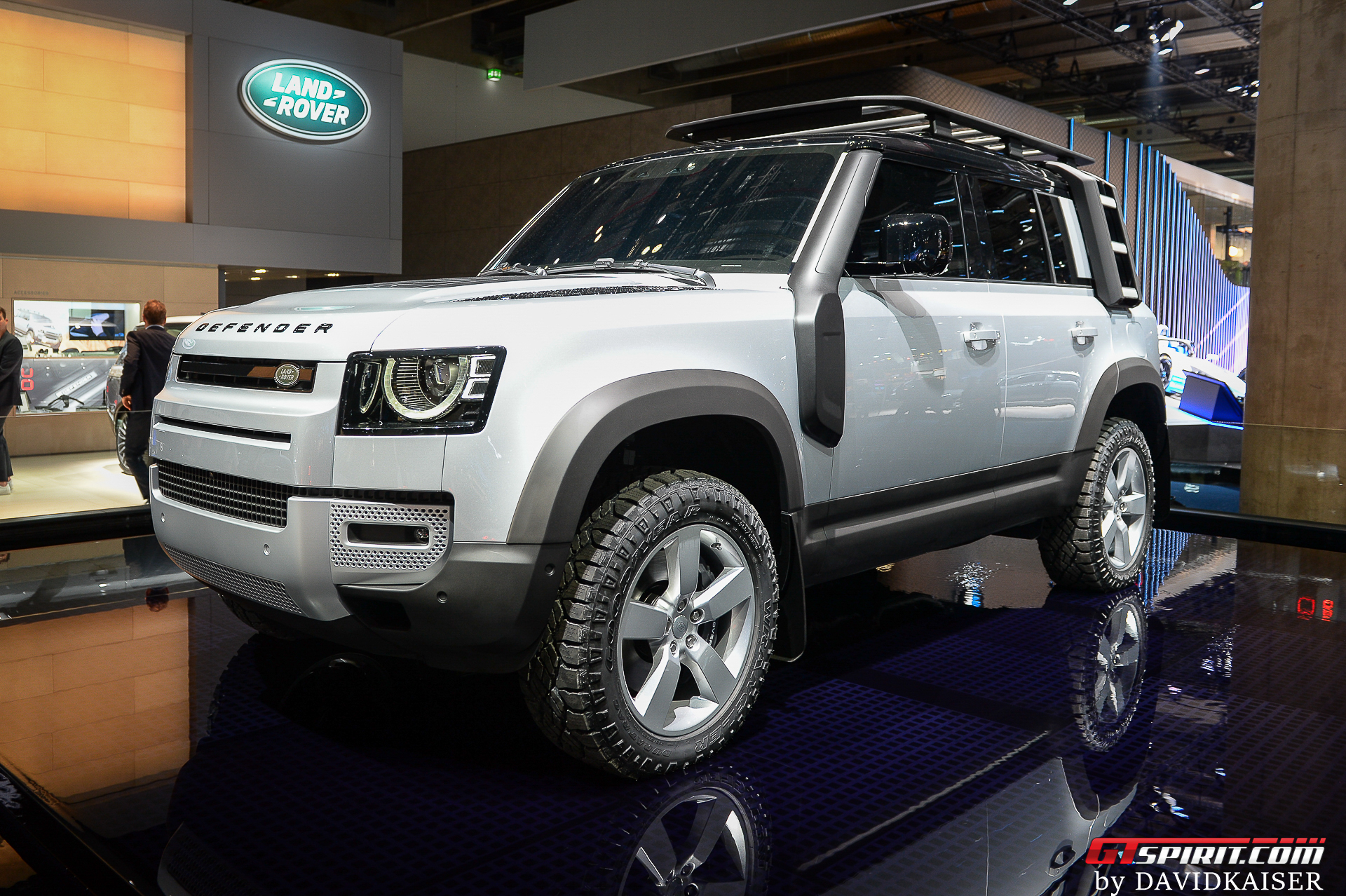
Land Rover Defender

2020 Land Rover Defender 110

The Defender is back! We like the functional design of the interior but the quality of the materials used is not the best. It suffers from an issue BMW had a while ago where parts designed to be aluminum or steel have been replaced with plastics.

Audi RS7

Audi RS7 Sportback

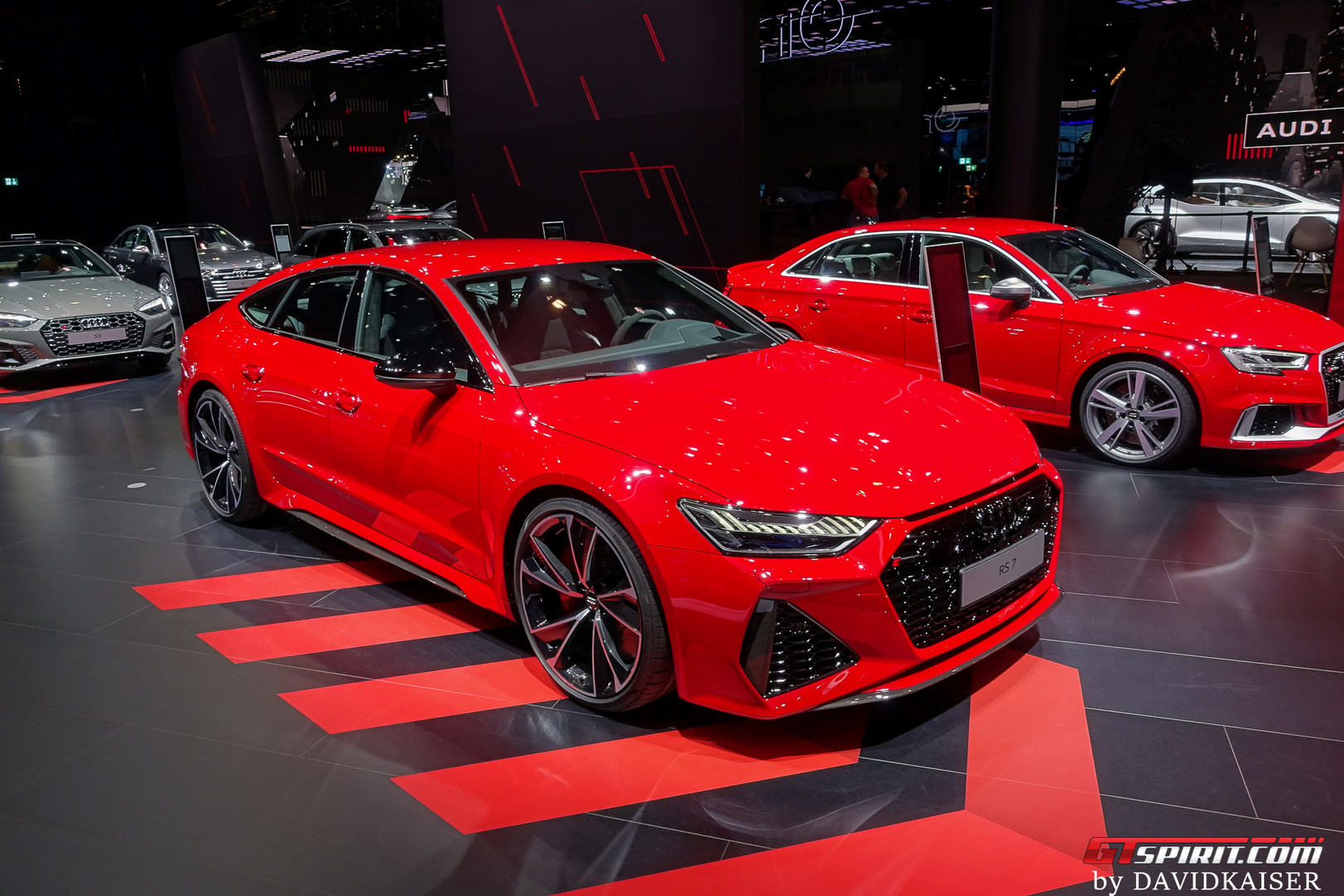
At the Audi stand you can find a full-electric off-road vehicle that looks like a moon buggy. But our attention was drawn by the world premiere of the new Audi RS7. Equipped with a new version of Audi’s 4.0 liter V8 it is even faster and more luxurious than the previous generation.

Read more about the IAA at our IAA Frankfurt Motor Show 2019 news channel.

GTSPIRIT NEWSLETTER

2019 Ford Mustang Bullitt Review: The Mustang You Really Ought to Want

The Ford Mustang has a timeless charm. Imperative to that charm is how much that car channels coolness —  and for buyers of a certain age, the Mustang has never been cooler than when Steve McQueen used it in a car chase in the 1968 film Bullitt. With the Bullitt-idolizing generation at peak disposable income, it’s not surprising Ford tapped that nostalgia well for the third time in less than 20 years for a series of special-edition Mustangs culminating in this one. 

Fortunately, the car itself supersedes the nostalgia. Forget the movie: This car is beautiful, powerful and loud in any context. It’s perhaps the purest distillation of the Mustang’s greatness (at least, in terms of versions not made for the track). But keep in mind: Coolness is seldom cheap, comfortable or practical.

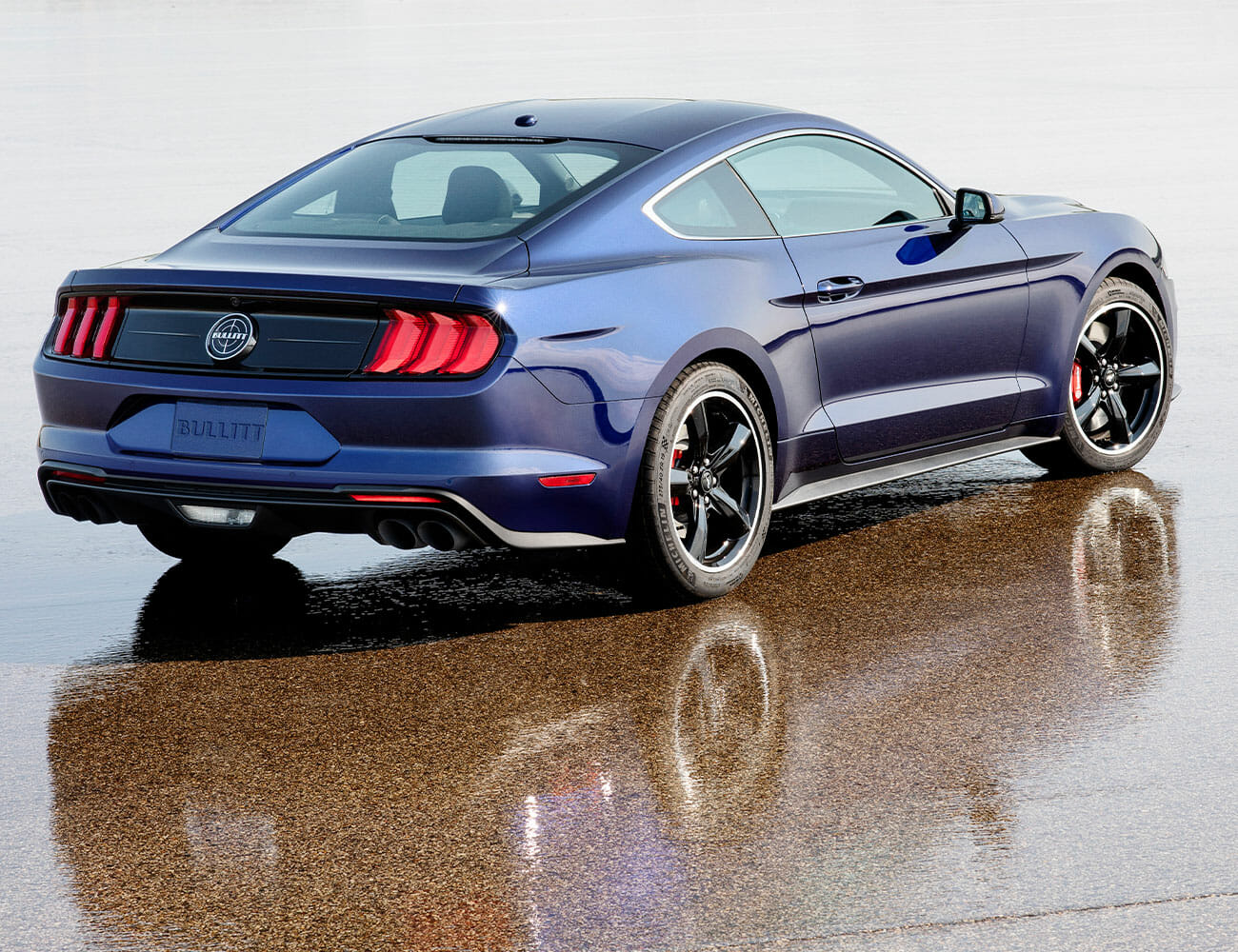
The Good: The Bullitt has a 5.0-liter naturally aspirated V8 that produces 480 horsepower and enough exhaust noise to rouse the peacefully interred. It only — only –comes with a six-speed manual transmission. The retro appearance pares down some of the model’s extraneous styling elements, reducing it to what may be the best-looking Mustang on sale.

Who It’s For: Anyone who wants a sharp-looking Mustang. Sure, it could be someone older living out a Steve McQueen fantasy — but this car does not need nostalgia to sell.

Watch Out For: Well, it’s a muscle car, so by average motor vehicle standards, the Bullitt Mustang is not particularly comfortable or practical. At 18 miles per gallon combined, it’s not very fuel-efficient, either. And introverts be warned: you should be prepared for strangers to approach you to talk about your ride.

Alternatives: The Mustang’s major rival is the Chevrolet Camaro, where the closest analog would be the 2SS trim with the 6.2-liter V8 ($42,995). There’s also the Dodge Challenger R/T Scat Pack Wide Body ($47,740).

Review: The Ford Mustang is like a cheeseburger. There are more sophisticated and more expensive menu items out there. You feel like you should like those items more than you do. You might even talk yourself into ordering them. But the cheeseburger is what you want, even if it’s not so great for the environment.

To torture that analogy a little more, the Bullitt Mustang would be a Juicy Lucy. It’s as much of what you want as you can handle.

Spare your more efficient turbochargers. The Bullitt has a naturally aspirated 5.0-liter V8 dubbed “Coyote” by Ford insiders. Thanks to its exhaust headers and some retuning, it cranks out 480 hp — a 20 hp bump over the standard Mustang GT. The Bullitt edition only comes with a six-speed manual. It has a curated rumble, with exhaust settings that can let you be heard blocks away. You only achieve 15 mpg in the city, but fuel efficiency probably does not factor into your fantasy.

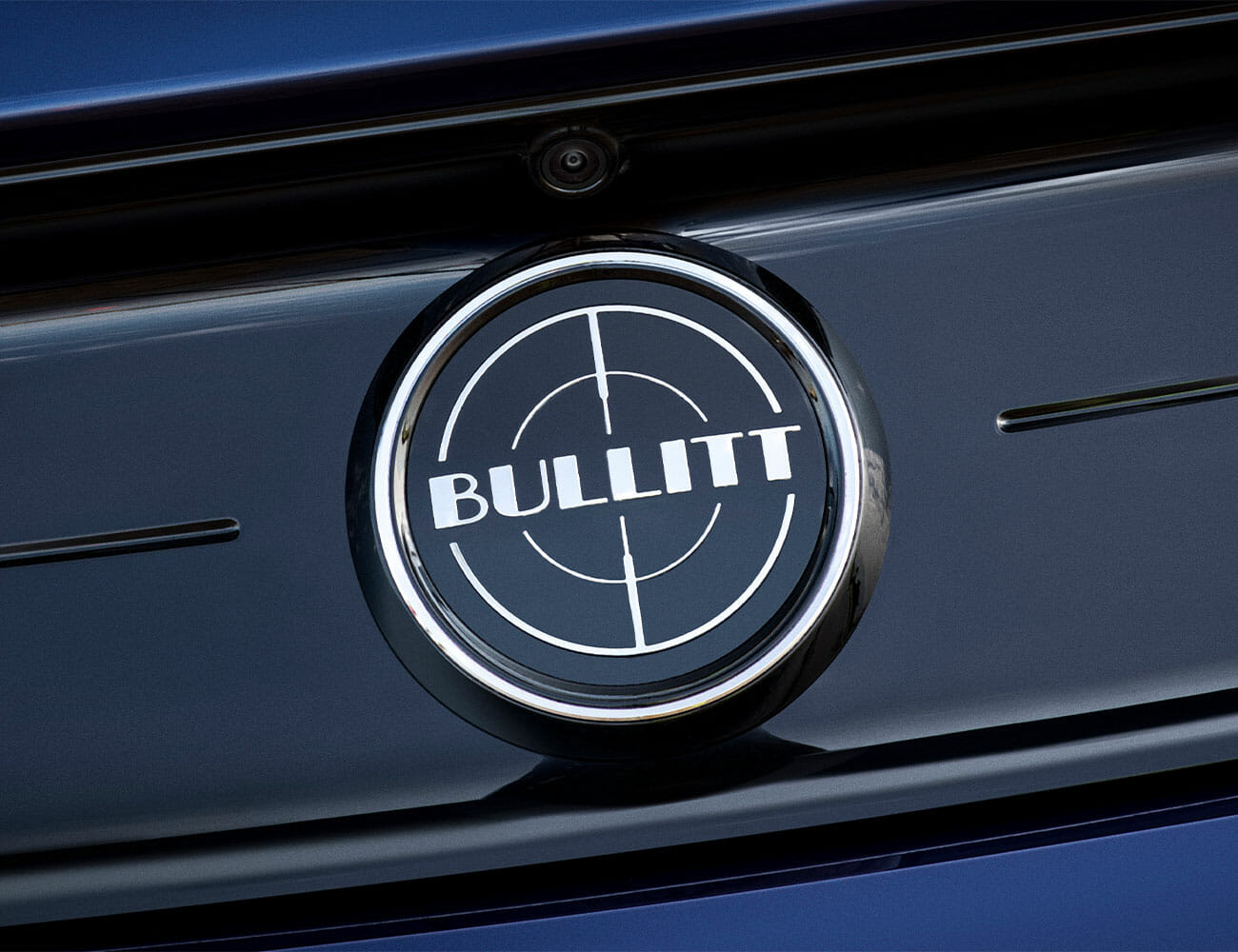
An action-film-themed nostalgia package seems like it should be cheesy, but Ford somehow evades the cheese. Instead of adding shlock, the retro-inspired package simplifies and refines the Mustang. It’s a great-looking car, even if you’re far more familiar with Fortnite than Steve McQueen. (The Highland Green paint in particular looks spectacular.) The Bullitt badging will be a sticking point for some, but it proves unobtrusive if you don’t think about it too hard. My only complaint is the unnecessary odd chrome trim around the side windows and grille.

The Bullitt is a crowd-pleaser, drawing attention and comments wherever you go. That said, expect more construction workers to roll up to you at stoplights than Jacqueline Bisset look-a-likes.

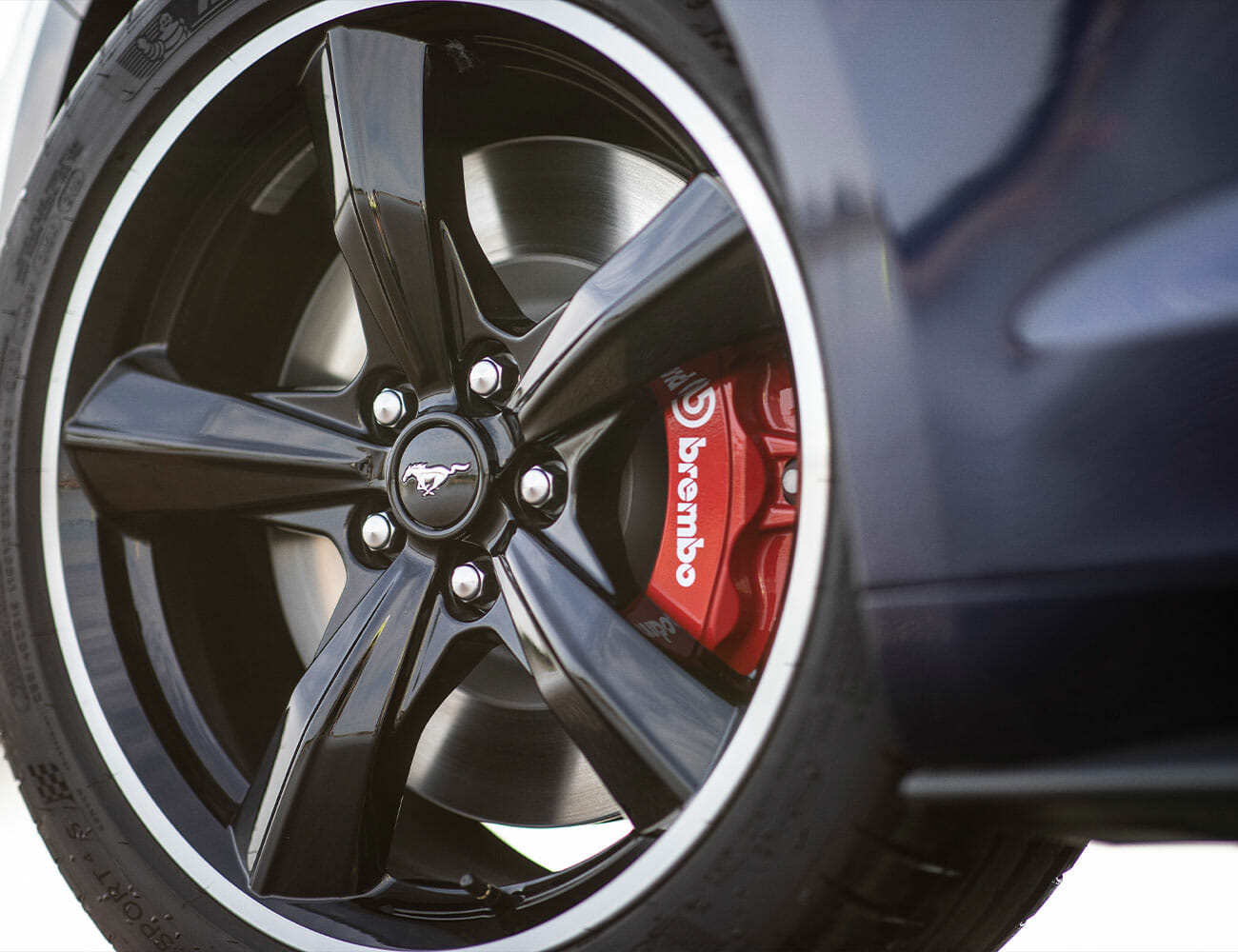
The Bullitt is meant to bridge the gap between the Mustang GT and the more track-oriented Shelby models, a task at which it largely succeeds. It has Brembo brakes, the mechanical bits from the GT’s Performance Package,and some parts from the Shelby models, automatic rev-matching, and a ton of power and grip.  If you have the space to push the Bullitt, it’s brilliant.

That’s not saying it would make for a great daily driver. It can feel tepid under low-speed driving in urban areas; you have to go high on the revs to get to the real power, higher than most will go making a run to the drug store. On the other hand, my tester came equipped with the $1,695 MagneRide suspension, which should be considered a must-have. It handled Michigan’s rocky roads fairly well, though I did encounter some mild bump steer on egregious lumps in the road.

No one buys a Mustang primarily because it’s practical or comfortable. That’s good, because the Bullitt is neither. The trunk is surprisingly spacious, but the back seat is an absolute nuisance. There were times I left it in the garage and took my Volkswagen Golf Sportwagen instead because I could not face the task of getting my son in his car seat — a maneuver that required climbing in from the opposite side of the car. Only years of yoga saved me from a pulled groin.

Setting children aside, it’s still not an ergonomically pleasant car. The seat seemed too high. When I entered a parking garage, I had to shift my head to the right, jam it into the top of the window, and thrust out the window blindly with my credit card to access the reader. I’m 5’11”; a car should be able to accommodate me. Plus, the cupholders were also a couple of inches away from the gear shifter and right in the driver’s arm line, rendering them useless.

With the Bullitt edition, Ford made what may be the best-looking and best-all-around Mustang on sale today. But you do have to pay for it. It starts at more than $8,000 above the GT Premium Fastback. Add in the necessary options like the magnetic ride suspension, and you’re looking at a car coming in significantly above $50,000. That’s a lot for a “regular” Mustang. Indeed, my kitted-out tester priced at $52,885 — not that much less than the base model GT350, which has 50-plus more horsepower and an even bigger V8.

Verdict: Owning a Mustang is primarily about having a cool-looking, cool-sounding car. For the buyer who just wants to cruise and have some old-school muscle car fun, the Bullitt may be the optimal choice.

2019 Ford Mustang Bullitt: Key Specs

MSRP as Tested: $52,885
Horsepower: 480
Torque: 420 lb-ft
0-60 MPH: 4.6 seconds
Top Speed: 163 mph

Ford provided this product for review.

Read More Gear Patrol Reviews

Hot takes and in-depth reviews on noteworthy, relevant and interesting products. Read the Story
Note: Purchasing products through our links may earn us a portion of the sale, which supports our editorial team’s mission. Learn more here.

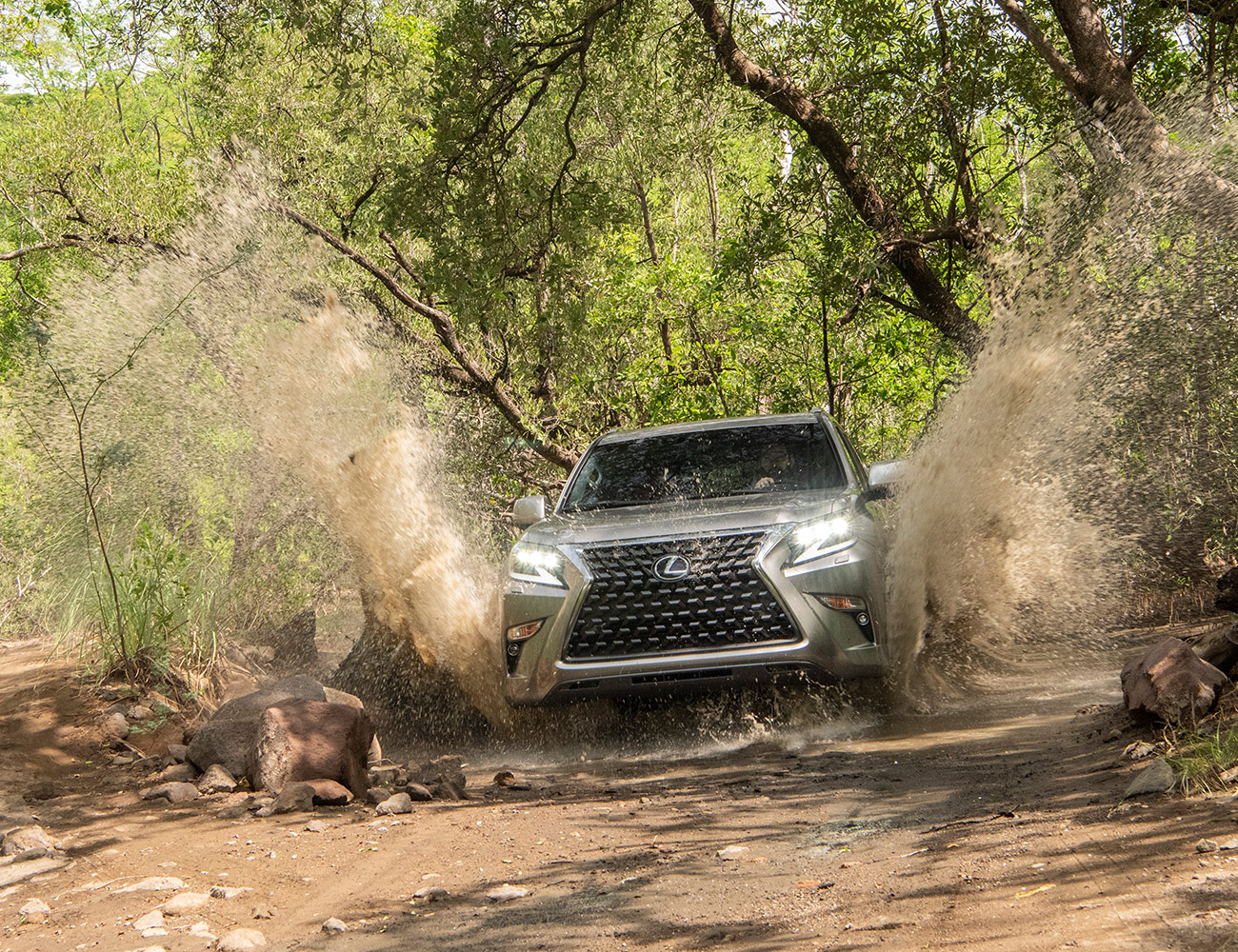
2020 Lexus GX 460 Review: The Other Leather-Lined Land Cruiser, Improved

In the decade the Lexus GX 460 has existed, it’s amassed a small (but vehemently dedicated) cadre of owners who are off-road community stalwarts. If you’re vexed as to why the GX would be the machine of choice for rock crawling and trail conquering, merely ask any of the proud 60-plus owners who turned up for the annual FJ Summit in Ouray, Colorado this year, and let them regale you with tales of how their snorkel-sporting, jacked-up GXes bested the worst Mother Nature could throw at them. 

Soccer moms these are not — though desire from the SUV buying segment remains equally rabid, considering the GX 460 is Lexus’s fourth best-selling model in the U.S. this year. Despite not having been subject to a redesign over the past 10 years, a refresh for 2020 means Lexus is banking on continuing to appeal to the full spectrum of buyers. We tested the 2020 GX 460 down in Costa Rica’s tropical Papagayo Peninsula to see if the Japanese luxury sport-ute will keep paying dividends for the brand for the next few years. 

The Good: The GX 460’s impeccable off-road credentials hail from the fact that it’s basically a Land Cruiser Prado in disguise. It’s still constructed using body-on-frame tech, a bygone method in today’s era of unibody crossovers. That imbues the mid-size SUV with durability and a sturdy platform for towing, or for when the asphalt’s in the rearview.

For 2020, Lexus provided the GX 460 with additional off-road goodies, again borrowed from Toyota. The aptly named Off-Road Package brings a multi-view camera system capable of aiding drivers through (and over) dicey obstacles, a transmission cooler, additional shielding to protect the fuel tank, Crawl Control (a five-stage version of off-road cruise control, helpful on steep inclines, enabled only in Low range) and Multi-Terrain Select, which allows you to literally dial in the optimal power settings for a host of terrain types, including sand, rocks, moguls and mud. 

Who It’s For: Lexus is hoping GX 460 buyers have a wild streak that’ll see them adventuring out off the beaten path, but without giving up a sumptuous cabin. While you get the same diligent off-road prowess as the GX’s brother-from-another-mother, the esteemed Toyota 4Runner, the GX’s interior makes the 4Runner look like a slouch who showed up to a black-tie gala in a wrinkled T-shirt. If luxury and capability are equally important to you, Lexus hopes you’ll consider the GX 460. 

Watch Out For: The interior has some weak spots. It’s full of luxurious touches and finishes such as Gray Sapele wood; and for 2020, Lexus reimagined the three-spoke tiller and the gauge cluster for the driver. But then you look at the center stack and infotainment system, and the interior starts to show its age. One glance at the busy area — full of redundant buttons and a slow, low-rez touchscreen — and you’re reminded of an era when supercomputers required warehouses.

Another issue: On Costa Rica’s pristine main roads, the truck-like handling common to vehicles with body-on-frame construction was apparent, even with the dampers set to Sport mode. There’s noticeable body roll. Go into any corner with any amount of zeal, and be rewarded with squealing tires. And the six-speed automatic transmission struggles to find the proper gear uphill.

Alternatives: If you’re just looking a plush mid-size SUV mainly for road use with some mild off-road capability, consider the Audi Q7, the BMW X5 and the Acura MDX. Headed into the proper wilds? You’d be wise to consider the Land Rover Discovery, which excels in the cabin comforts and is unflappable when the terrain gets rough. (That said, while priced similarly to the Disco, the GX 460 pulls ahead by a nose. when you factor in reliability and lifetime maintenance costs.)

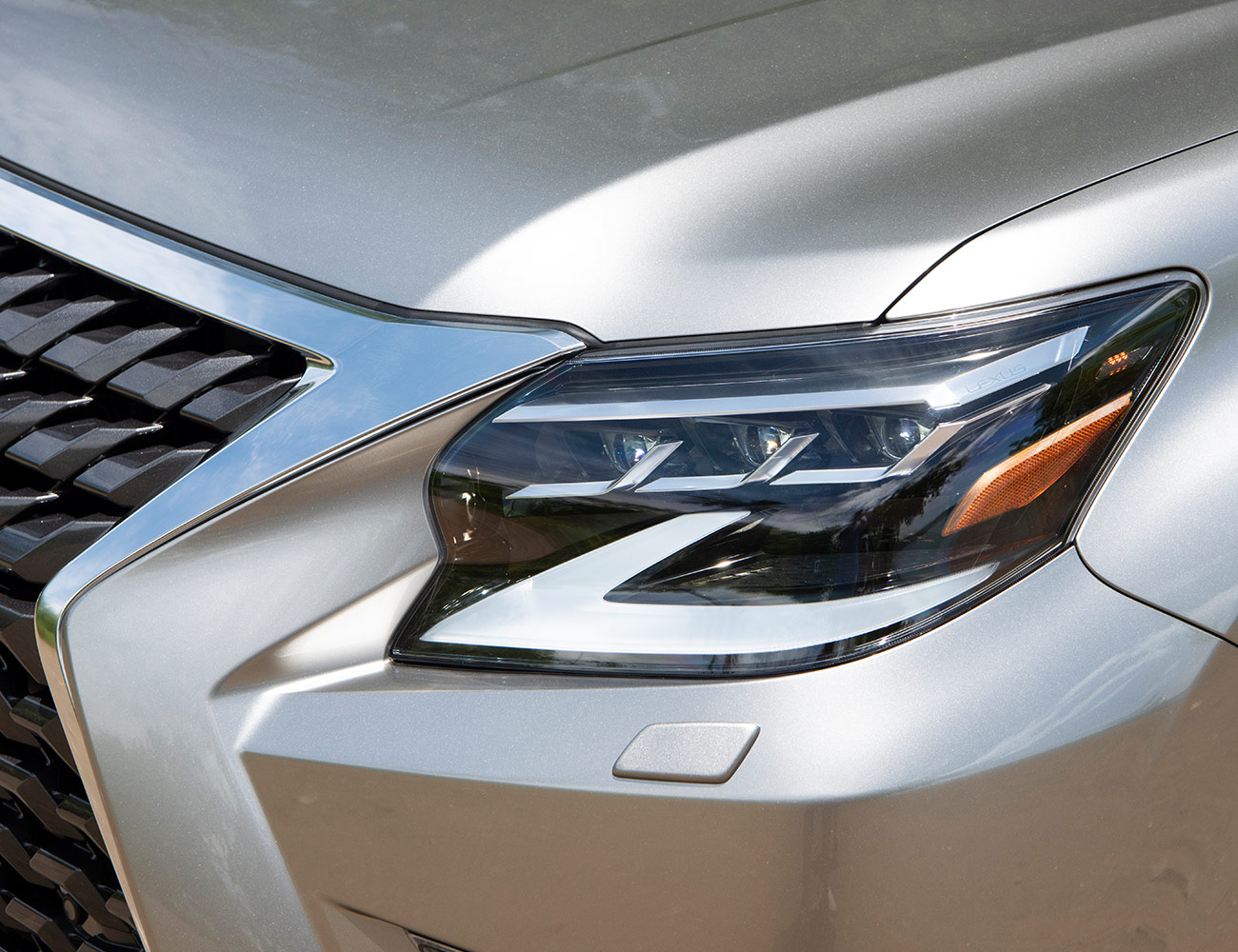
Review: A light facelift sees the gaping maw that is Lexus’ signature spindle grille make an appearance on the GX 460; triple-beam LED headlights are also new on the front end. These minimal tweaks likely won’t change your opinion of the overall aesthetics, but they do make the model feel more current. An optional Sport Design package gives it a bolder presence, thanks to a different lower-grille design, rear valence, side mirrors, gray 19-inch wheels and a black exhaust tip. 

The SUV was comfortable on the open road, but if you’re used to sporty driving, it isn’t going to curry much favor. The 4.6-liter V-8, good for 301 horsepower and 329 lb-ft of torque, is adequate enough, but the handling simply isn’t dynamic. Perhaps the legions of crossover fans wouldn’t notice or care, but the vague steering provides little road feel. Everyone will notice the hit at the pump, thanks to a meager 15 miles per gallon in the city and 18 mpg on the highway. Efficiency fans, look elsewhere. 

While we’d love to tell you about how great it was to thrash the GX 460 around Costa Rica’s jungles, we sadly cannot: Lexus limited our driving to asphalt alone. So we had to improvise. 

A number of excursions were on offer to the assembled journalists; one to the Diamante Eco Adventure Park for a ziplining and the chance to get face-to-glass with jaguars and sloths sounded intriguing. We chose wisely — partially because sloths are incredible, but more so because the two-mile path from the main road to the resort was unpaved, pockmarked and riddled with sizable rocks.

Here, the GX 460 came alive, almost making up for all of its aforementioned shortcomings. Even though our particular tester had the optional Off-Road Package, we chose to ignore many of its features, leaving it in four-wheel-drive high and sinking the accelerator pedal to the floor — and the GX 460 glided over whatever we aimed at without drama. Ginormous potholes that would swallow lesser tires? Not a problem. A swath of loose rocks, each the size of your fist? You’re barely jostled. The suspension that can be lacking on the road becomes a hero in the chop and crud. It’s no wonder that Lexus yanked a few bone-stock GX 460s to pre-run the grueling Baja 500 and 1000 races ahead of an LX 570, completing the course without an issue — when competing trophy truck teams claimed sections were impassable. 

But plenty of nifty off-road toys, including the Kinetic Dynamic Suspension System, come with the GX 460. Engage four-low and magical things happen underneath your feet, including the disabling of anti-roll bars for greater articulation and changes in rear air springs that reduce roll when trailering or crawling. The access road wasn’t rough enough to warrant any of that, but we can imagine if the GX 460 was this pleasant rollicking over a crumbling dirt road at a steady clip, it’d be great when the going gets properly tough. 

A few weeks after the Costa Rica journey, we were out in Ouray, Colorado, testing the 2020 4Runner and Tacoma when Lexus unveiled a surprise: the GX OR, a beefyversion of the 2019 GX 460 built by the company as a tribute to the enthusiasts who inspire the engineers. It was meant to look factory-made, and the powertrain was left purposefully stock — but a two-inch lift kit with adjustable valve dampening was added, along with Icon control arms and CBI skid plate protection for said control arms. Larger tires and ample custom storage for hauling all your off-road gear complete the comely build. It’s proof of the inner badass below the Lexus’s soft interior.

Verdict: If the bulk of your time behind the wheel will be spent on asphalt, you’ll have to be accepting of saggy road manners, an outdated center stack and infotainment system and mediocre fuel economy. However, if you’re going to spend any chunk of time off-road, the Lexus GX 460 won’t let you down. 

2020 Lexus GX 460: Key Specs

Powertrain: 4.6-liter V-8; six-speed automatic; four-wheel-drive
Horsepower: 301
Torque: 329 pound-feet
Curb Weight: 5,130 pounds
Cargo Capacity: 64.7 cubic feet

Lexus hosted us and provided this product for review.

Read More Gear Patrol Reviews

Hot takes and in-depth reviews on noteworthy, relevant and interesting products. Read the Story
Note: Purchasing products through our links may earn us a portion of the sale, which supports our editorial team’s mission. Learn more here.

Volkwagen Introduces ID.3, Its First All-Electric Car

Unveiled at the Frankfurt Motor Show, the ID.3 is Volkwagen’s first all-electric car. Designed for mass appeal and similar in looks to the popular Golf hatchback, it is a smart, affordable long-range EV. Available in 3 models, with 45, 58, or 77kWh batteries, they boast a top-end distance range up to 340-miles for the 77kWh. Coming to America mid-2020.

Aston Martin working on a limited-edition DBR1-inspired speedster?

The Supercar Blog has heard from its supercar-privy sources that Aston Martin might be working on a new speedster. The putative roofless model could be inspired by the most important and most valuable racer in Aston Martin’s history, the DBR1 that took overall honors at the 24 Hours of Le Mans in 1959. Thought to be limited to just 88 units, TSB said the carmaker might have held a VIP preview event during Monterey Car Week last month. If the English luxury maker is developing such a model, we can probably declare the speedster era officially open for business after the limited-edition Ferrari SP1 and SP2 Monzas, Porsche 911 Speedster, and the Ultimate Series speedster that McLaren recently admitted is on the way. As with the Aston Martin, all of the other high-bucks open-sky models take inspiration from racers of yesteryear. 

Furthermore, if Aston Martin really has such plans, the carmaker would be re-opening a six-year-old chapter in company history. In 2013, Aston Martin unveiled the CC100 Speedster (pictured) at the 2013 Nürburgring 24-Hour race, created in just six months to celebrate the 100-year anniversary of Lionel Martin and Robert Bamford deciding to build vehicles together. The CC100 was built on the VH platform utilized by the brand’s production cars, and used a 6.0-liter V12 with 565 horsepower to do 0-60 mph in four seconds and reach a top speed of 180 mph. The carmaker built two of them, sold to collectors very close to the brand. Today’s DBS Superleggera platform and its 5.2-liter, 715-hp V12 could make a suitable base, and who knows, Aston Martin — unlike Ferrari or McLaren — could go all the way and swap the DBS‘ eight-speed automatic for a manual transmission.

Another site said the speedster impetus comes from “the high interest demonstrated by multiple collectors.” No one has any insight on the symbolism of 88 units, though. Aston Martin did release a series of Dragon 88 models in 2012 for the Asian market, named for the auspicious omens associated with the number 8 in Chinese culture, and the Interush International team entered a #88 Vantage GT3 race car in the 2015 GT Asia Series, but that seems a gossamer thin connection. The Aston Martin One-77, after all, had a lot of sevens in its spec sheet, but was half named for its production volume. If there is a vintage-themed speedster on the way, we’ll know more when Aston Martin decides to admit it.

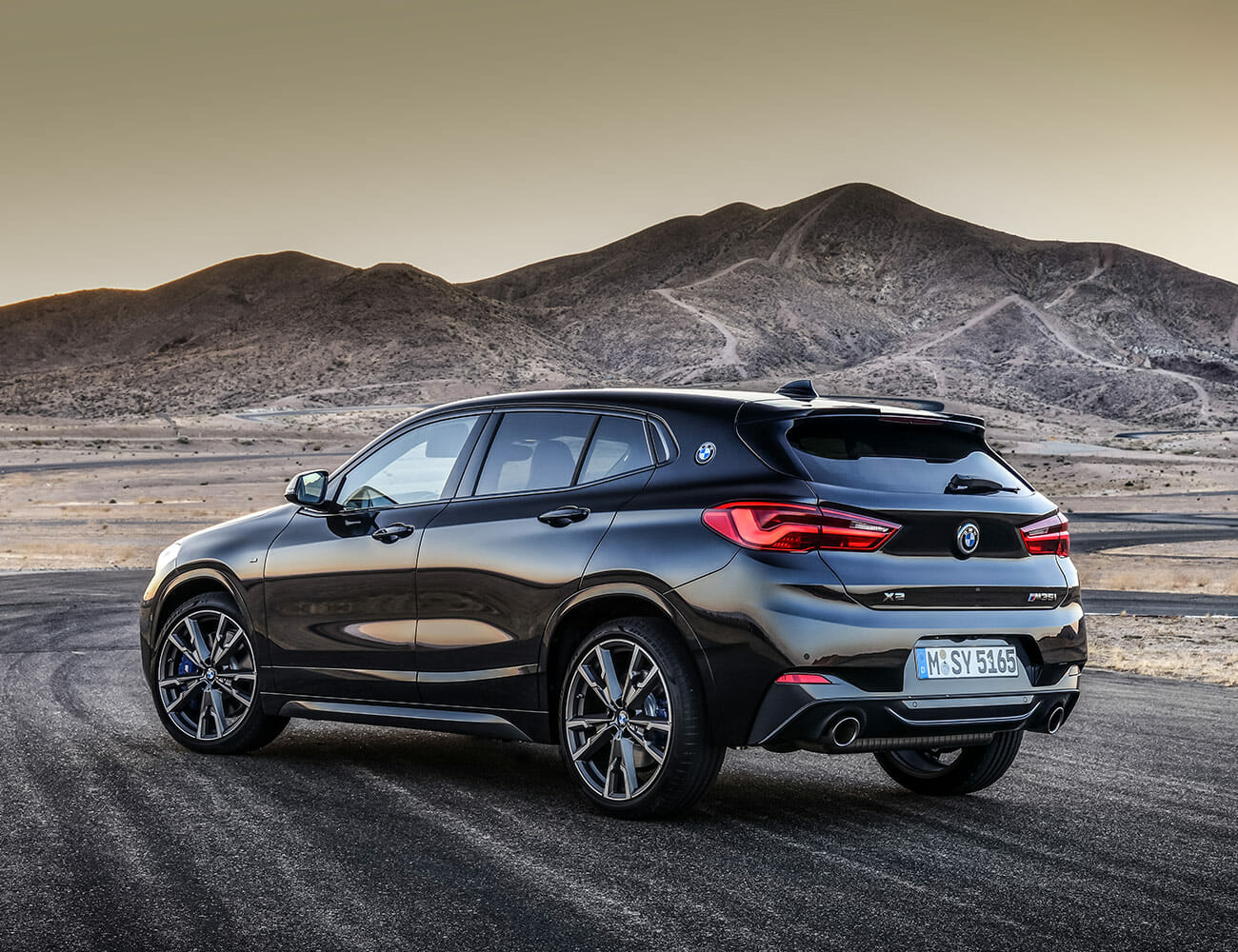
BMW X2 M35i Review: A Hot Crossover That’s a Bit Overcooked

The BMW X2 M35i is an affront to an automotive enthusiast’s sensibilities. It looks like a slick, angry hot hatch. It has what could be a wicked 300-plus horsepower 2.0-liter hot hatch engine. But it’s not a hot hatch. Instead of going after the Volkswagen Golf R, BMW lifted the car a touch and made the X2 a “sports activity coupe.” What, you could ask, has this world come to?

Alternatively, you could exhale, concede the point that no one would pay $50,000 for that hypothetical hot hatch, and judge the X2 M35i on its own terms. It’s not an abomination. It does resolve many of the problems enthusiasts have with a bland compact crossover segment. It accelerates from 0 to 60 miles per hour in less than five seconds. But does it go far enough to make those enthusiasts crossover converts?

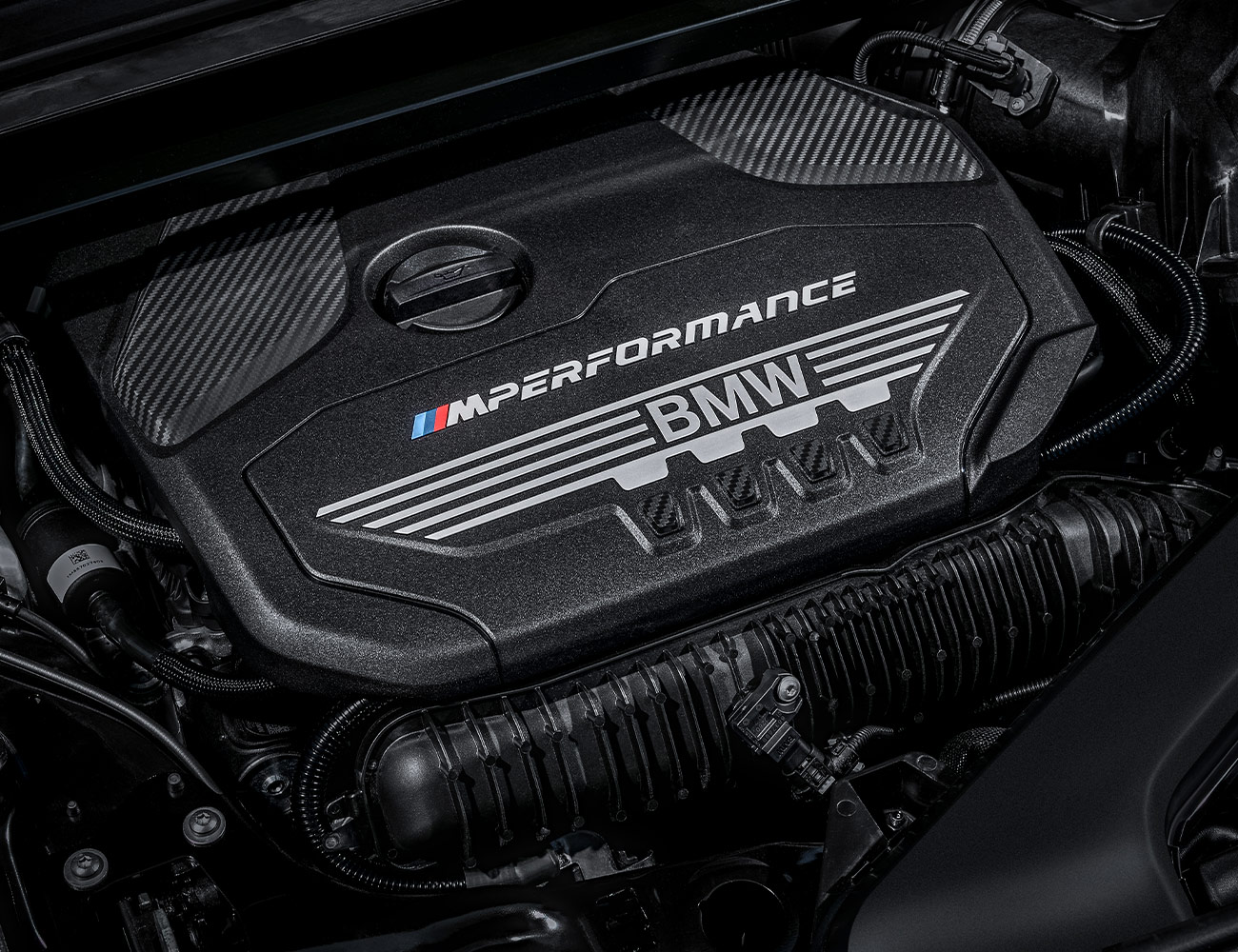
The Good: BMW built an outstanding 2.0-liter four-pot engine. It delivers a consistent abundance of power that won’t overwhelm you on public roads. The X2 M35’s sensory output reemphasizes that power. The car looks sleek and aggressive, not just for a crossover, and it has a satisfying and rowdy exhaust note.

Who It’s For: This buyer wants a sporty BMW package with the premium M brand badging, accessories, and performance upgrades (brakes, suspension, tuning). But he or she wants it in a tiny crossover coupe package instead of a manual transmission-equipped rear-wheel-drive sedan. Other traits include minimal family requirements and a willingness to splurge.

Watch Out For: The X2 M35i makes few compromises in the name of comfort. The ride quality can be jarring. Rear visibility in the X2 M35i is nearly non-existent. BMW upcharges for technology that’s standard on some cheaper cars, such as Apple CarPlay.

Alternatives: The best comparisons for this car are the Audi SQ2 and the Volkswagen T-Roc R. Neither are sold in the U.S. The Mercedes-AMG GLA 45  has the same idea, but it has a more powerful 375 hp engine and it is more expensive ($53,350). The base model Porsche Macan ($50,900) cannot match the performance, but could appeal to the same buyer looking for a sporty pedigree. 

Review: The X2 M35i has all the raw components to be the hot hatch of your dreams. But instead of taking that less lucrative route, BMW went trendy. It put that high-output 2.0-liter turbocharged engine and M packaging into a coupe-style crossover with a rakish sloping roofline. The X2 M35i is quick. It looks great. But its intended appeal may be a contradiction in terms. 

Let’s start with the good: the engine. BMW knows how to make them. The X2 M35i uses a turbocharged 2.0-liter inline-four putting out 302 hp and 332 lb-ft paired with an especially crisp-shifting eight-speed automatic. Using launch control under optimal conditions, it will accelerate to 60 mph in less than five seconds. In real-world driving, the X2 M35i provides potent power on demand. It never shortchanges you when you hit the gas, and the throaty exhaust note heightens the effect. It’s the engine you would want in a hot hatch.

The X2 M35i looks athletic, sharp and fun. It ditches the off-color cladding from the base X2 for a cleaner, more upscale look. In short, it reads more like a BMW than a small crossover. Other drivers give you a wider berth, presuming you have the aggressive BMW owner gene. My two-year-old son’s first reaction upon seeing it was “race car!”

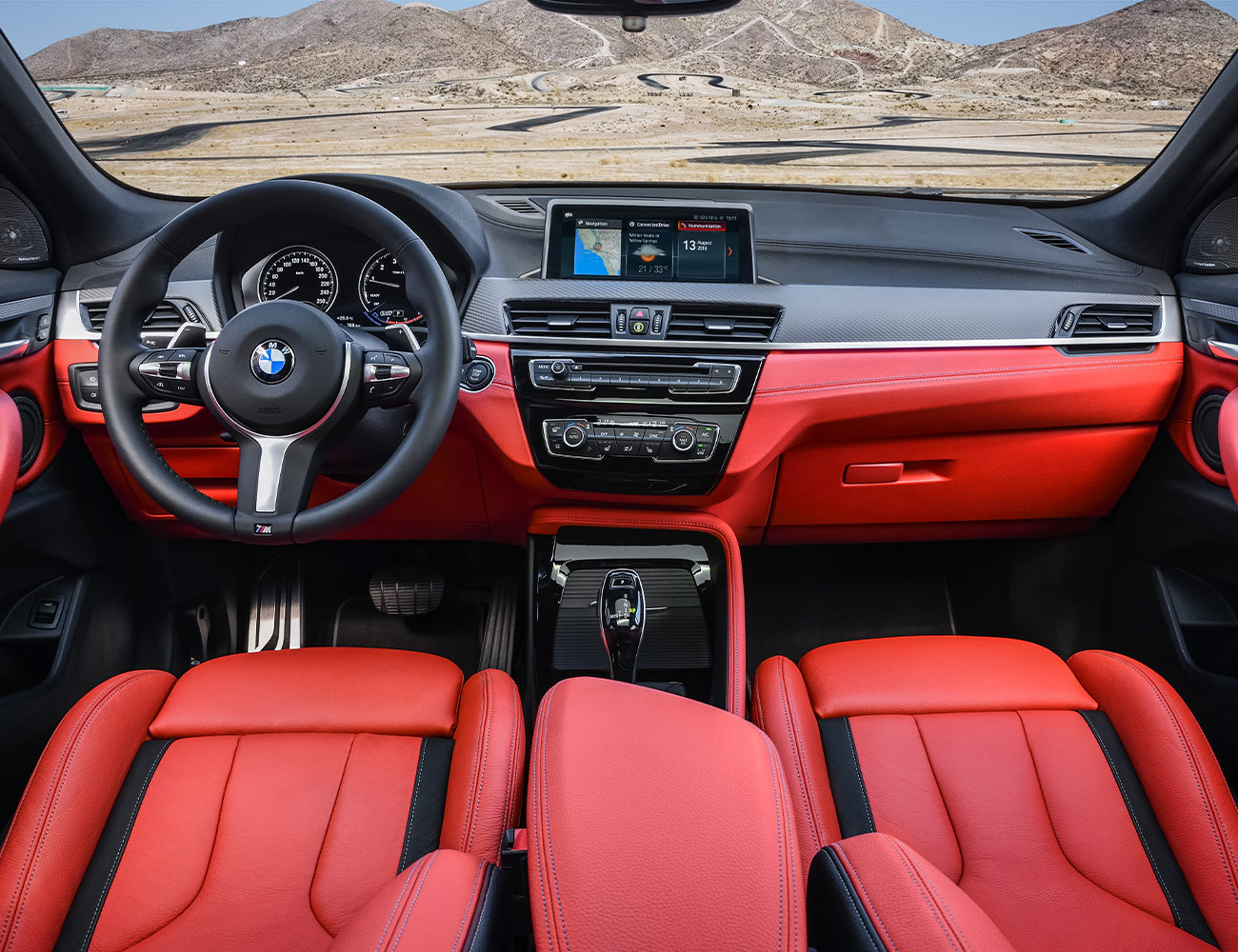
The interior can be polarizing. My tester had the Magma Red Dakota leather — or, as I called it before looking it up, orange trim. There’s a lot of it. It either will look fantastic to you (if you’re the sort of person who likes the Civic Type R‘s looks) or make your eyes feel like they are bleeding. I came down on the latter side. Fortunately, that $1,450 madness is below eye level while driving, and you can opt for a staid black instead.

The X2 M35i is about as practical as a hatchback. If you have multiple hockey-playing children, get something bigger. Given that size constraint, however, it can be useful. A small rear aperture belies a decent-sized trunk, fit for a family-sized grocery shopping trip or a couple’s romantic getaway. The netted side pocket in the trunk was a perfect fit for my wife’s bottle of rosé.

Where the X2 M35i loses its charm is its ride quality. BMW M cars are pure driver’s cars. They deliver tremendous performance, but that can come at the expense of comfort; they can feel very stiff and unforgiving for everyday driving. The X2 M35i captures that M experience a little too faithfully for a crossover. My tester had an M Sport suspension and 20-inch wheels, which permitted an intimate study of each pavement imperfection (and there are many of those in Michigan). The M sport brakes stopped abruptly. Comfort mode shift settings felt about as ready to party as Sport mode’s 

The X2 M35i is excellent when you tap that power reserve in the passing lane on a smooth highway. But the pugnacity and sharpness becomes a bit much when you’re just popping around the neighborhood running errands, which is what most crossover owners spend their time doing.

Another significant issue? You can’t see out of the back. The rear window is tiny and slanted upward. The D-pillars are chunky. Heads in the rear seats (or even the headrests to protect them) obscure what little you can see. (I laughed out loud at the note on the rear camera to check my mirrors.) The X2 M35i is about as rear camera dependent as a full-size truck.

BMW has drawn some heat — correctly in my book — for converting Apple CarPlay into a subscription service. It’s the sort of thing a $50,000-plus BMW should include (a base model Kia Soul manages it). I also blanched at my 2019 tester’s “Premium Package.” For an additional $1,800 this gave you a head-up display (invisible if you are wearing sunglasses) and navigation (redundant if you have a smartphone). BMW amended that somewhat for 2020. The premium package is now $1,400 and throws in heated seats.

You can see why BMW built the X2 M35i. There was a hole in the lineup for a hotter, more premium version of the X2 — much more so than for a hot hatch). But the X2 M35i feels like BMW overcooked it. Buyers often opt for crossovers for comfort, not just the appearance. Softer touches could have given this BMW crossover a sportier but still palatable ride without the full drawbacks of driving a sporty BMW. 

Verdict: The X2 M35i may be the cute little crossover for driving enthusiasts. But driving enthusiasts are the precise people who would be most annoyed by it being a crossover. The X2 M35i is fun, but it does not square that circle. Those same buyers can buy the Golf R they want for $10,000 cheaper. Even sticking within the BMW crossover realm, you can upgrade to an X3 M40i with an inline-six, 50 more hp, and much more cargo space for a few thousand more. Why wouldn’t you? 

2019 BMW X2 M35i: Key Specs
Price as Tested: $55,020
Horsepower: 302 hp
Torque: 332 lb-ft
o-60 MPH: 4.9 sec
Top Speed: 155 mph

BMW provided this product for review.

Read More Gear Patrol Reviews

Hot takes and in-depth reviews on noteworthy, relevant and interesting products. Read the Story
Note: Purchasing products through our links may earn us a portion of the sale, which supports our editorial team’s mission. Learn more here.

Testing Mercedes-Benz’s Toughest Off-Roaders in Their Natural Habitat

You never truly know what a vehicle is capable of until you see it pushed to its limits by a pro — someone who isn’t particularly concerned about, say, the cost of new tires. But even manufacturer demonstration drives tend to have their limits; in the case of off-road vehicles, you’ll scramble over a few gnarly boulder trails or up and down some steep slopes, sure, but all under the precise direction of helpful instructors. It’s like off-road kindergarten, where you learn and see assorted tricks and capabilities without pushing the vehicle too hard — or discovering whether you’d be able to outrun a charging elephant down a dry creek bed in the thing.

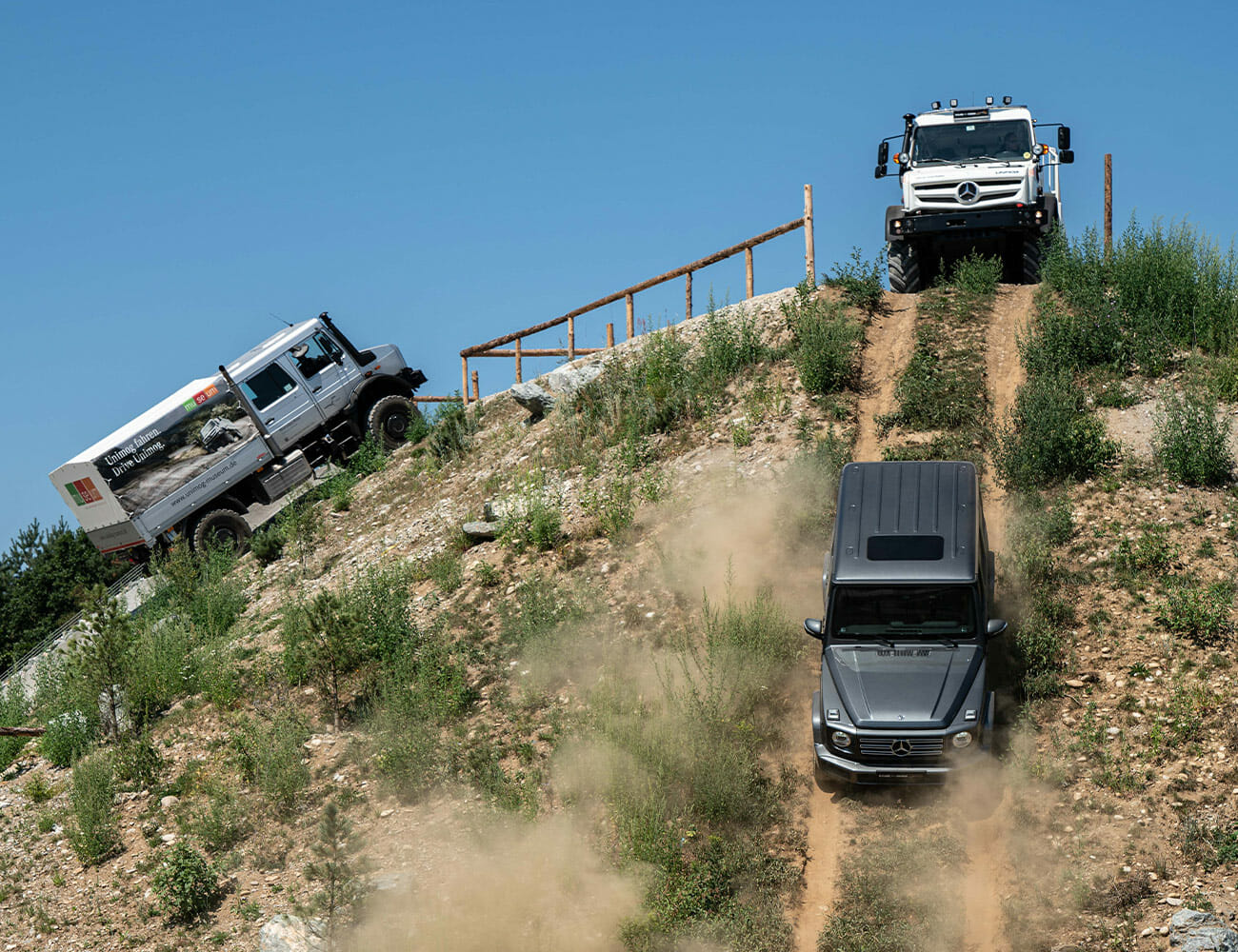
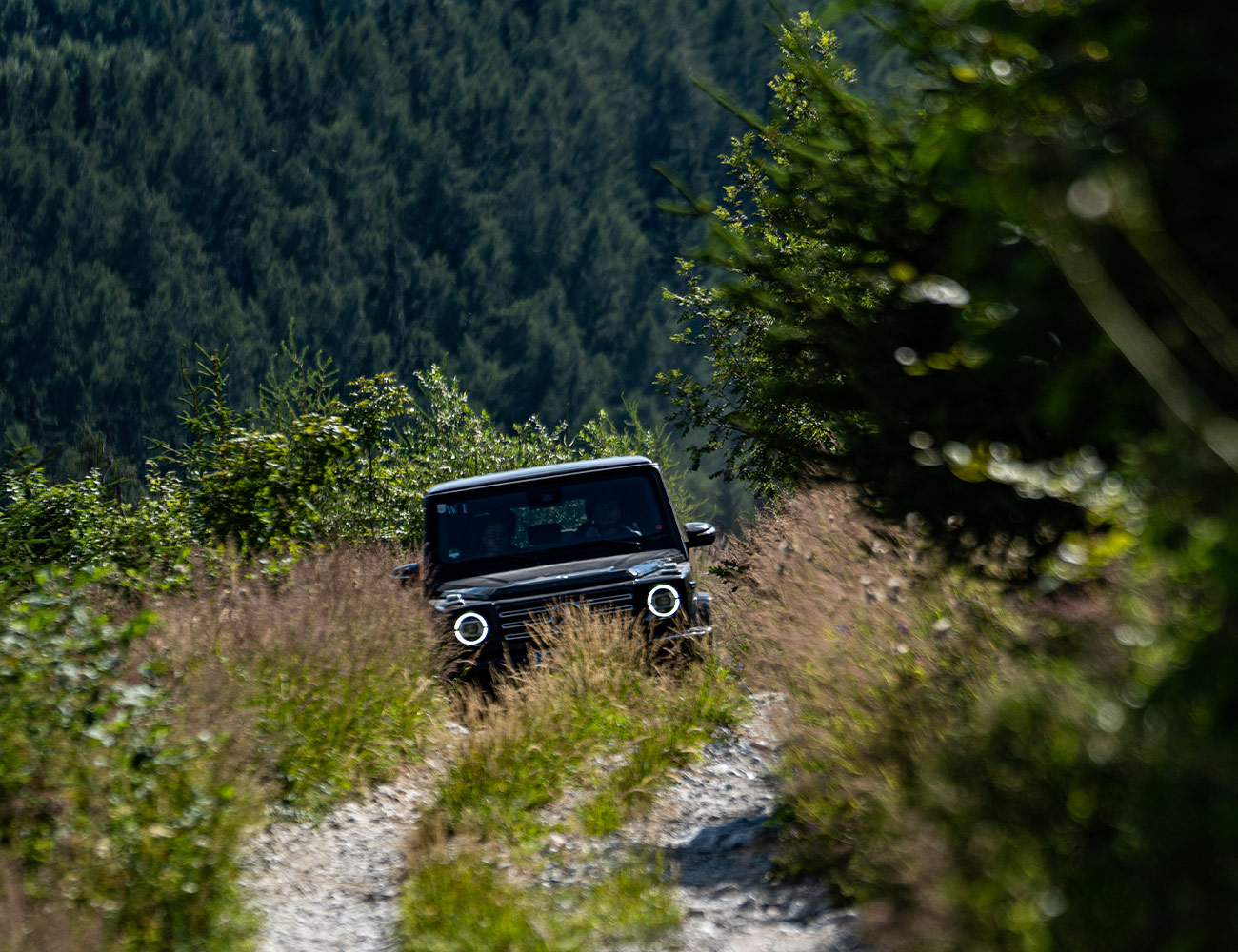
This summer, on an Austrian mountain named Schöckl where Mercedes tests its off-road offerings, the company allowed its expert drivers to show off its famed G-Class SUV’s ability to straight-up assault a steep, craggy downhill at seemingly full throttle, with nary a concern given to preserving tires or the delicate insides of the media occupants.

It was a startling experience, one that proved how little even journalists sometime know about what modern machines are capable of. Of course, these were pro drivers who know the trucks and the trail like the backs of their hands, but all that ultimately amounts to is relative certainty that there won’t be any surprises on the way down. Otherwise, keeping pace means precise but relentlessly aggressive throttle and brake applications while sawing at the wheel constantly to keep the gyrating, undulating, oscillating and cavitating vehicle on something resembling a straight line. Were it not for the steady hand of my gimbal-mounted video camera, the cockpit views would cause you to throw up.

The caravan of G-Classes kept in tight formation all the way down, the only (entirely predictable) incident being a flat tire in one of the vehicles, which the Germans swapped out in minutes without a jack, canting the truck onto a trailside berm in order to hike up the right rear wheel enough to change it.

As eye-opening as the wild freefall was — and even with my newfound appreciation for how much abuse a Gelandewagen can absorb — such adventures are best left to those with years of experience and intimate knowledge of the vehicles. Of course, one of the ways to acquire that experience is through the kind of (repeated) coaching we in the automotive circuit often benefit from. To that end, Mercedes just opened a new G-Class Experience Center on the grounds of the former Nittner Air Base, near Graz, Austria. The center won’t provide quite the hair-raising thrills of our plunge down the nearby Schöckl, but it does more than adequately demonstrate the capabilities of the G-Class via a gauntlet of challenges, from steep metal and dirt slopes to staircases to deep-water fording in a woodsy trail that’s peppered with numerous axle-twisting threats.

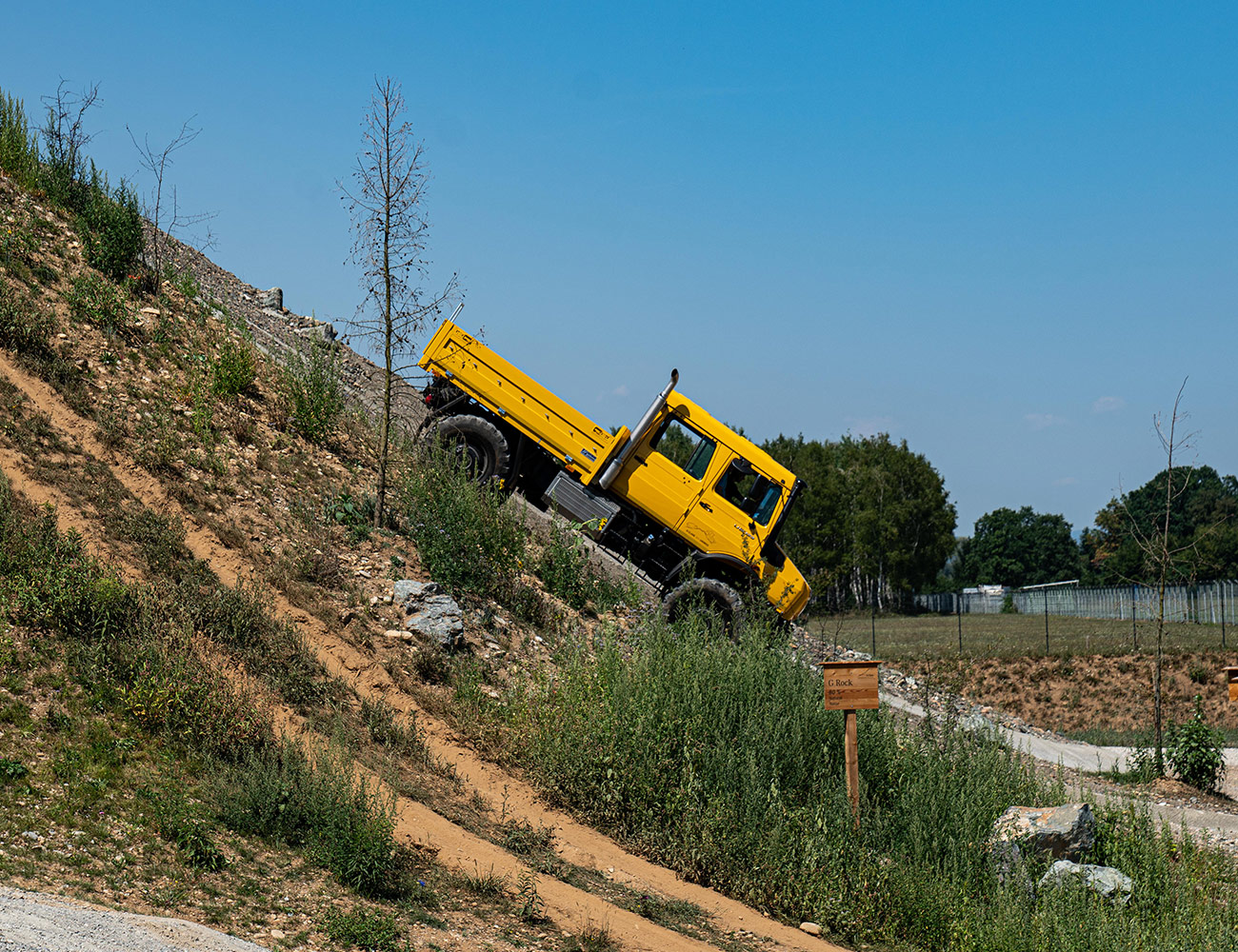
During a visit there ahead of the opening, the company provided the media with a selection of Unimogs, the legendary Mercedes-built utility vehicles that ride high on massive tires and are frequently seen embarrassing smaller vehicles on global races such as the Dakar Rally. Their appearance at the G-Class center seemed as though it was meant as much to satiate our collective desire to test the massive machines as it was to demonstrate the full spectrum of off-road prowess the company has honed over the decades. (Fun fact: The Unimog line is now 70 years old.)

Sadly, we couldn’t actually drive the snub-nosed bruisers, due to strict rules about who can drive what even on private property. But we were readily able to get a sense of their what they can do — along with enjoying the fright of riding in a tall machine that’s capable of tilting 38 degrees to the side without falling over.

The Unimog leans heavily on several key qualities: its high-torque output — 660 pound-feet from a 231-hp, 5.0-liter four-cylinder turbodiesel engine; front and rear locking differentials; adjustable tire pressure to allow for maximum surface contact; and its 16 inches ground clearance, which comes by way of portal axles that help keep the undercarriage clear of all the hardware. The ‘Mogs also have eight forward and six reverse speeds and reduction gears to optimize stability at low speeds, as well as axle articulation of up to 30 degrees, which means the chassis can contort itself over bumps and depressions simultaneously while keeping all four wheels in contact with the surface.

Rumbling around the Experience Center’s courses, my veteran driver deftly controlled  the industrial vehicle while effortlessly navigating the terrain. During the water fording, spray burped up into the cabin from gaps in the floor of the vintage model we were riding. Unlike the latest G-Wagen, the Unimog is no luxury ride, but it feels like paradise when you really need something that can do what it can.

IAA Frankfurt 2019: Alpina B3 Biturbo Touring Live Photos

Alpina’s B3 Biturbo was officially revealed earlier today at the Frankfurt Motor Show 2019. The German manufacturer has used the recently refreshed BMW 3 Series Touring as its base. Enhancements have been made to the looks, performance and driving dynamics.

The B3 Biturbo uses the latest straight-six 3.0 litre engine. 462 hp and 700 Nm of torque give enough grunt for a 300 km/h top speed. The power is routed through an 8-speed ZF gearbox to a BMW xDrive system. Performance figures are yet to be announced.

The torque distribution is rear-biased with a range of driving modes configurable through the Driving Experience Control (COMFORT+, COMFORT, SPORT, SPORT+). The Alpina sports exhaust system releases exhaust backpressure and generates an improved sound.

The Variable Damper Control system includes three modes COMFORT+, COMFORT and SPORT with similarly configurable variable steering modes; COMFORT, SPORT and SPORT+. Alpina also installs larger four-piston fixed brake callipers with 395 mm discs at the front, 345 mm at the rear. An electronically controlled rear-axle limited-slip differential is included too.

The Alpina B3 Biturbo Touring gets a new front end with optimised air intakes for increased cooling. The front and rear aerodynamics reduce lift. The green paintwork includes the classic Alpina pinstriped design.

Inside, Alpina specific MMI systems use BMW navigation, communication and infotainment structures. Each model will get an Alpina leather steering wheel, metal emblems in the floor mats and seat backrests, ALPINA door sills and a production plaque.

GTSPIRIT NEWSLETTER

IAA Frankfurt 2019: Audi RS7 Sportback Live Photos

The IAA Frankfurt Motor Show 2019 is underway. We caught up with the Audi RS7 Sportback which is attracting a lot of attention on the Audi stand. The sports sedan is one of the fastest on the market and shares its underpinnings with the Audi RS6 Avant which also receives a world premiere.

At the heart of the package sits a 4.0-litre V8 engine producing 600 hp and 800 Nm of torque. 100 km/h is dispatched in just 3.6 seconds with a 250 km/h top speed. The Dynamic package removes the limiter, pushing this up to 305 km/h.

A 48-volt system runs a belt alternator starter with car recover 12 kW of power for use between 55 and 160 km/h. The system is meant to provide instantaneous power to the drive while offering the ability to coast on electrical energy with the engine switched off. The cylinder on demand technology further aids fuel consumption.

At the suspension end of things, Audi has opted for air suspension at all four corners. Spring rates are 50% higher and automatic self-levelling control is included. The RS7 sits 20 mm lower than the standard A7. The RS7 can be raised at the touch of a button by 20 mm.

For more from the IAA Frankfurt Motor Show 2019, check out our dedicated news feed. To find out more about the Audi RS7 Sportback, check out our earlier article.

GTSPIRIT NEWSLETTER

Volkswagen’s New Electric Car Looks Amazing, But There’s a Big Catch

On Monday evening, Volkswagen launched the all-new all-electric ID.3 hatchback at the Frankfurt Motor Show. The car arrives to great fanfare, as VW’s people’s-car successor to the Golf and the Beetle and a harbinger for the company’s electric future. Early reports suggest the ID.3 should deliver on the hype.

The ID.3, judging from photographs, looks fantastic. It’s simple and well-proportioned. It resembles what European buyers would want, an updated interpretation of the base Volkswagen Golf (the market’s best-selling car). The off-color black roof and liftgate are au courant without being gaudy. The flash of chrome and logo at the front accounts for the absent grille. EVs looking like cars is a movement we can all support.

A lack of range kept VW’s e-Golf, which could only go 125 miles on a charge according to the EPA, from mass adoption. Volkswagen has resolved that anxiety with the ID.3. First editions will have the mid-range 58-kilowatt-hour battery delivering a range of 260 miles on the Euro-market WLTP cycle (probably around 220 miles EPA). The ID.3 will also have short-range 45-kWh and long-range 77-kWh batteries giving WLTP ranges of 205 miles (175-ish EPA) and 341 miles (290-ish EPA). VW says the ID.3 will absorb 180 miles of range in 30 minutes on a fast charger.

Volkswagen did not give full pricing for the ID.3. The short-range model will start below $33,000 in Germany. Beyond that, VW says prices will be “comparable to that of typical compact vehicles” after the tax subsidies. Buyers will get free charging for a year and an eight-year, 100,000-mile warranty on the battery.

We did not learn any performance details yet. Though Volkswagen says the ID.3 will have a super-low center of gravity “like in racing cars” with the battery packs, and “ideal weight distribution” thanks in part to its standard rear-axle drive. (If there’s one company you would trust to produce a practical, well-handling compact, it would be Volkswagen.)

The only downside, though, is a killer. Volkswagen has no current plans to bring the ID.3 hatchback to the North American market. Perhaps the 268-percent bump in U.S. e-Golf sales so far in 2019 will inspire VW to rethink that stance. The ID.3’s top-notch looks should at least inspire confidence that the eventual ID-platform crossover that arrives Stateside won’t be an overly futuristic ogre.

Audi AI:TRAIL quattro: Off-Roading Meets Robotic Future

The final part of Audi’s futuristic concept onslaught has arrived. The Audi AI:TRAIL quattro presents “a concept for sustainable mobility off the beaten track”. It will be joined at Frankfurt this week by the Audi Aicon, AI:ME and AI:RACE.

Among the key features of the Audi AI:TRAIL quattro is the glass pod surrounding the cabin which extends all the way to ground level. Audi points out that this helps with visibility. It might also concede that, in the most hospitable environments, could cause problems!

The glass surfaces are also at the expense of connectivity. There are no big screens on board for streaming TV series or videoconferencing; instead, broad glass surfaces provide a clear view of the surroundings. This is a true explorer. Audi has stated that it believes the one-box design will become industry standard in years to come.

The design dispenses with many features of modern off-roaders. The electric drive system is arranged around the axles and the battery in the floor, meaning that Audi could locate the wheels at the corners and avoid overhangs. The AI:TRAIL uses four electric motors for a combined system power of 320 kilowatts (430 hp) and maximum torque of 1,000 Newton-meters. Range from the lithium-ion battery is 400 to 500 kilometers.

Transverse links and MacPherson suspension struts with coil springs and adaptive dampers take care of the suspension. The huge offroad tyes allow for an additional 60 millimeters of suspension travel. With everything in, the AI:TRAIL weighs just 1,750 kilograms.

Audi’s vision is that future Audi drivers will be able to order any of the futuristic Audi models from an Audi through an on-demand vehicle pool. When ordered, the vehicle will be tailored to suit their personal preferences and requirements and be made available by lease for a limited period.

GTSPIRIT NEWSLETTER

Aston Martin’s CEO Talks “The Most Important Car In the History Of the Company”

Aston Martin CEO Andy Palmer is the sort of guy who loves his job. It’s clear as day, on his face and in his voice, even when he’s jet-lagged after hopping from Europe to California and pressed into glad-handing customers and chatting up reporters, as he was when we sat down with him during Monterey Car Week. And while some automotive chief executives seems more interest in market caps and synergy, Palmer’s love of his job clearly extends directly — and deeply — into the product portfolio. He can quote chapter and verse on the Aston lineup, and isn’t afraid to speak his truth as he sees fit.

Whether it’s his outspoken nature or just the jet lag , he doesn’t mince words when the topic of the DBX crossover, due to be revealed later this year, comes up early on.

“It’s probably the most important car in the history of the company,” he says. 

The crossover, which has only been shown in lightly camouflaged form, is expected to sell like Natty Ice in Ann Arbor on opening day of the football season — at least, by Aston sales numbers. (Which, admittedly, have lagged a bit of late.) But while it may be the brand’s first dalliance into the realm of high-riding vehicles, Palmer says they’re

“We need to be credible” as an SUV, he says. And to hear him tell the tale, the company has pulled it off. Not only will it be able to haul loads with aplomb — he describes its towing capabilities as “boat-able” —  but it’ll also be fairly capable in terms of its off-road abilities. While it’ll pack four-wheel-drive, he says, it still needs to handle, look and sound like an Aston Martin. Deliver that level of performance in a taller, 4WD platform, he says, and “naturally, you’ll have a car that’s pretty adequate on the dirt.” He cites the Porsche Cayenne as the handling benchmark for the DBX.

The Aston Martin DBX, technically wearing a disguise.

Given Aston Martin’s lengthy history of building grand tourers with their engines stuck out front, though, the DBX doesn’t seem nearly as much of a change in direction as the carmaker’s new push into mid-engined speed machines. Yet here they come, three strong at this point: first, the Formula One-inspired Valkyrie hypercar this year, then the 500-unit Valhalla supercar, after which arrives the Vanquish super sports car in 2022. Each of them will pack a turbocharged V6 engine, tuned to varying states of power and outfitted with different levels of electrical assistance.

That trickle-down strategy, he says, was very much intentional — both to develop the technology and to prepare the world for the new face of Aston Martin. (As an aside: Speaking of the faces of Aston Martin, Palmer was happy to explain the teeny tiny new headlights being outfitted to those new mid-engined cars: they reduce weight, which has become something of a crusade at the carmaker now that they’ve begun working with the Red Bull F1 team.) The endgame of the entire process, he says, was to create a competitor to the Ferrari 488, Lamborghini Huracan and McLaren 720S that was every bit as capable as them. That meant a lot of development.

The Aston Martin Vantage AMR.

Still, Palmer’s Aston Martin isn’t leaving all the pieces of the past behind. The Vantage, for example, remains a taut two-seater with the motor out front — and, as of later this year, it’ll keep the manual gearbox alive for the brand in the form of the sportier Vantage AMR. That stick shift, Palmer says, is an example of the brand living up to a promise to keep the driver involved and rowing his or her own gears. Oddly enough, while the broader American public has long since given up caring about stick shifts, the CEO says it’s been the U.S. market that has kept demand for the old-school manual alive for the brand. Indeed, demand for manual Astons has been rising as of late, Palmer says, half-jokingly, “maybe because we’re the only manufacturer who offers one.”

And while the Vantage may be keeping the stick shift alive solo for now, that might not be the case forever. Will the manual find its way into any other vehicles in the lineup? Like, say, the sultry DBS Superleggera?

“I could see places,” he says, coyly. 

Volkswagen Is Resurrecting the Beetle with the New E-Beetle Electric Concept

Earlier this year, Volkswagen officially stopped production of the VW Beetle, one of the most iconic and influential cars to ever roll off an assembly line. The modern versions had strayed pretty far from the…