All posts in “Cars”

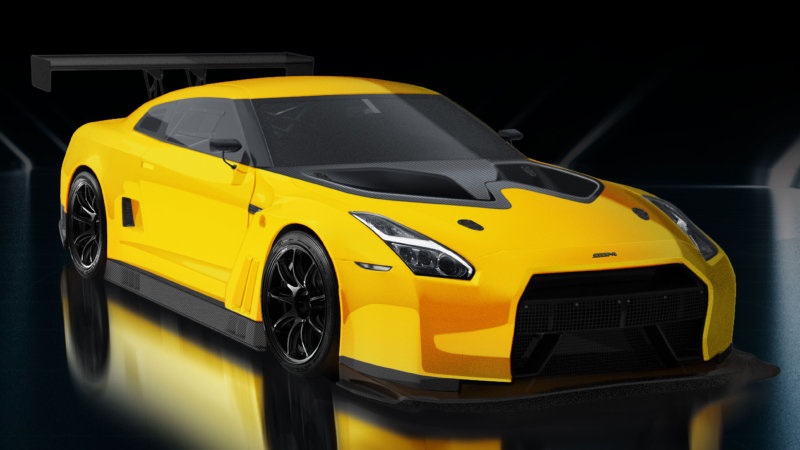
JRM GT23 a limited-edition, road-legal Nissan GT-R GT3 racer

Nissan has worked with England’s JR Motorsports (JRM) for a decade on race versions of the GT-R Nismo. JRM won the GT1 World Driver’s championship in 2011 with the GT-R Nismo GT1, and in 2012 developed the GT-R Nismo GT3 that it still engineers and sells for certain international markets. To celebrate a decade of expertise and success with the Japanese super-coupe, the engineering firm has created a road-legal version of the GT3 called the GT23, because just 23 units will be built. That means getting the 3.8-liter twin-turbo V6 in the GT3 car instead of the 5.6-liter V8 in the GT1 racer, but without FIA series restrictions, GT23 specs surpass both the competition cars. It starts with a tune to 650-horsepower, 50 hp more than the GT3 car, and a likely 510 pound-feet of torque in a package that weighs 2,811 pounds. The scale figure is about 55 pounds less than the actual GT3 racer, and a gargantuan 1,054 pounds less than a stock, 600-hp GT-R Nismo. 

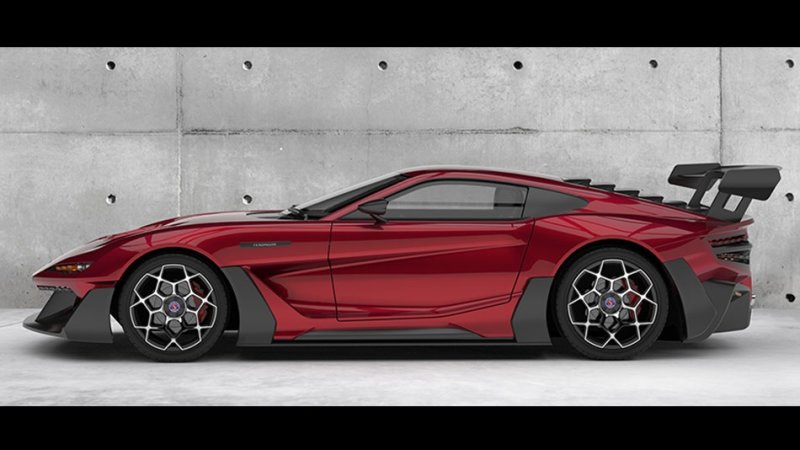
Nothing’s been untouched.The aggro aero starts up front with a mesh grille replacing the solid bumper, above a huge splitter. What’s left of the hood really only provides attachment points for an enormous duct below the cowl. The track’s been widened by 3.5 inches in front and 3.9 inches in back, covered with wider, vented fenders and underlined with extended, vented side sills. The high rear wing lords over a mostly unchanged rear end fitted with a deep diffuser and center-exit exhaust. Even with all that, the GT23 is a whole foot shorter than a stock GT-R. JRM says that with 325-width race slicks on the 18-inch wheels all around, the GT23 can max out at 2G in corners. An optional Extreme Pack ups output to 760 hp, bolts on a larger front splitter, turning vanes, and a bigger rear wing, fits an FIA roll cage, fire extinguisher, stiffer suspension and anti-roll bars, center-lock wheels, and air jacks.

Engineers swapped the GT-R’s all-wheel drive for rear-wheel drive, and moved the engine back to improve balance. The seven-speed automatic is gone, a six-speed sequential gearbox with a four-plate clutch in its place. The suspension is height-adjustable, the brakes vented all around, with six-piston calipers in front, four-piston units in back.

The interior’s been stripped to near racing standard, the gauge cluster thrown out for a compact, full-color digital display. A steering wheel with a bunch of buttons matches the new center console that’s been pared back to a push-button control center on the tunnel. And get a load of that all-encompassing race seat.

JRM will construct each GT23 at its headquarters in Daventry, England. Price starts at £380,000 British pounds ($498,383 U.S.) before options like the £59,995 Extreme Pack ($78,680 U.S.). JRM says clients can work with the design team to customize their cars as desired, deliveries will begin in Spring 2020.

These Were the Weirdest Cars of the 2010s

The 2010s were not an optimal time for weird cars to make it to production. The decade began with a global economic crisis, and ended with automotive companies streamlining and cost-cutting while prepping for a zero-emissions future. Emissions cheating fines were measured in the billions. Carmakers seldom found firm enough footing for decadence and risk-taking. At the same time, companies were growing better at analyzing sales and market data…and the data said to build more crossovers.

Not all was staid about the automotive market of the 2010s, however. For better or worse, a few genuinely oddball cars did make it through to production. Here are 10 of our favorites.

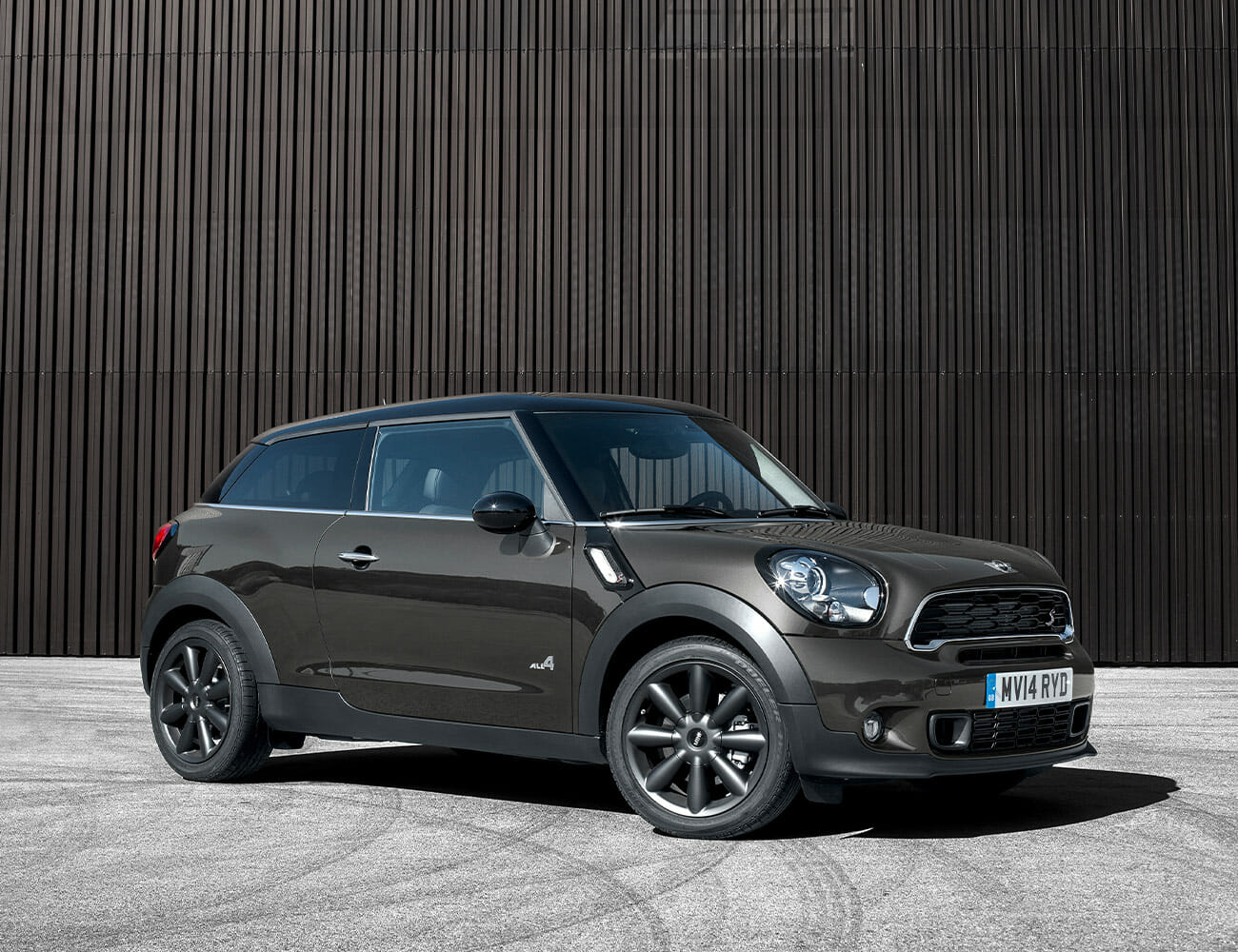
Mini Paceman (2013-16)

The Paceman was for that special customer who wanted a two-door sub-compact crossover that was just as impractical as the Mini, but sacrificed some of the fun driving dynamics for more ride height. This customer also wanted the choice of a manual transmission, apparently.

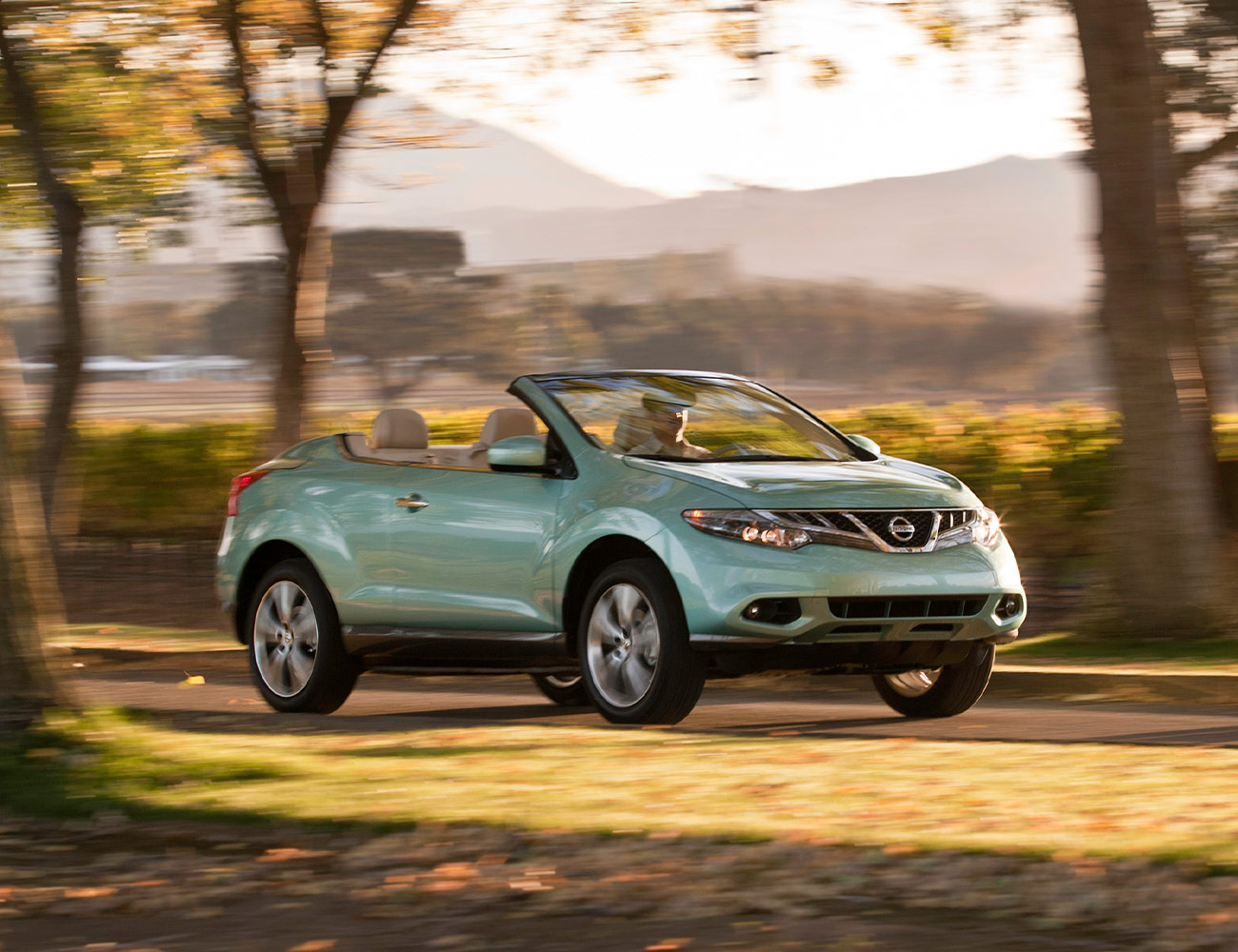
Nissan Murano CrossCabriolet (2011-14)

“This bog-standard four-door crossover needs more pizzazz. Let’s remove two doors, chop off the roof, and make sure at least 93 percent of them are produced in beige.”The Murano CrossCabriolet could have been added to the list of charges in former Nissan boss Carlos Ghosn’s indictment.

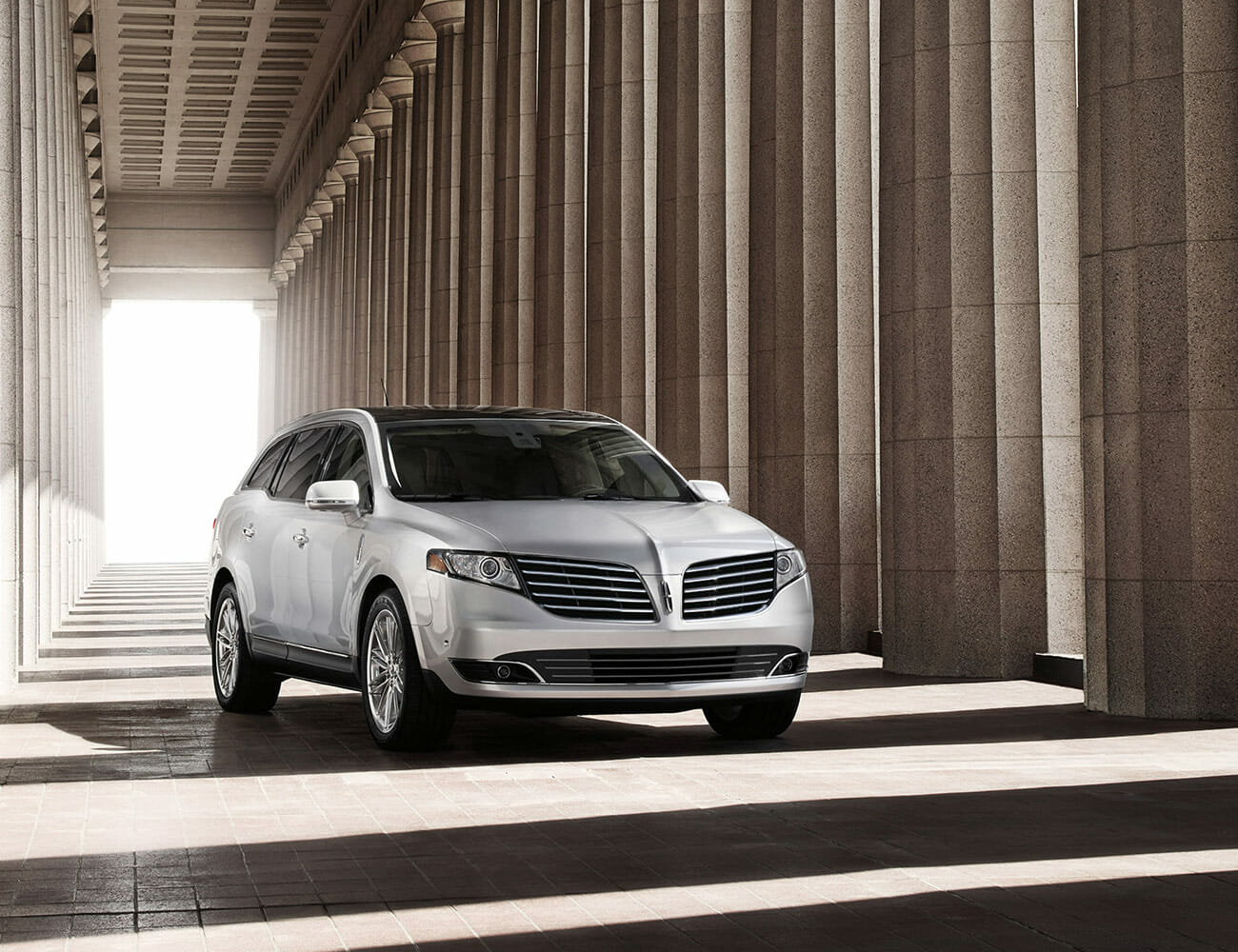
Lincoln MKT (2010-19)

The MKT wasn’t a bad car, but the proportions are off; it’s just awful to look at from all angles. It scores added weird points for being a Lincoln, which means someone had to choose this over a Ford and pay more for it. Lincoln replaced the MKT with the Aviator, which is like swapping out the weird DJ at your wedding with Bruno Mars.

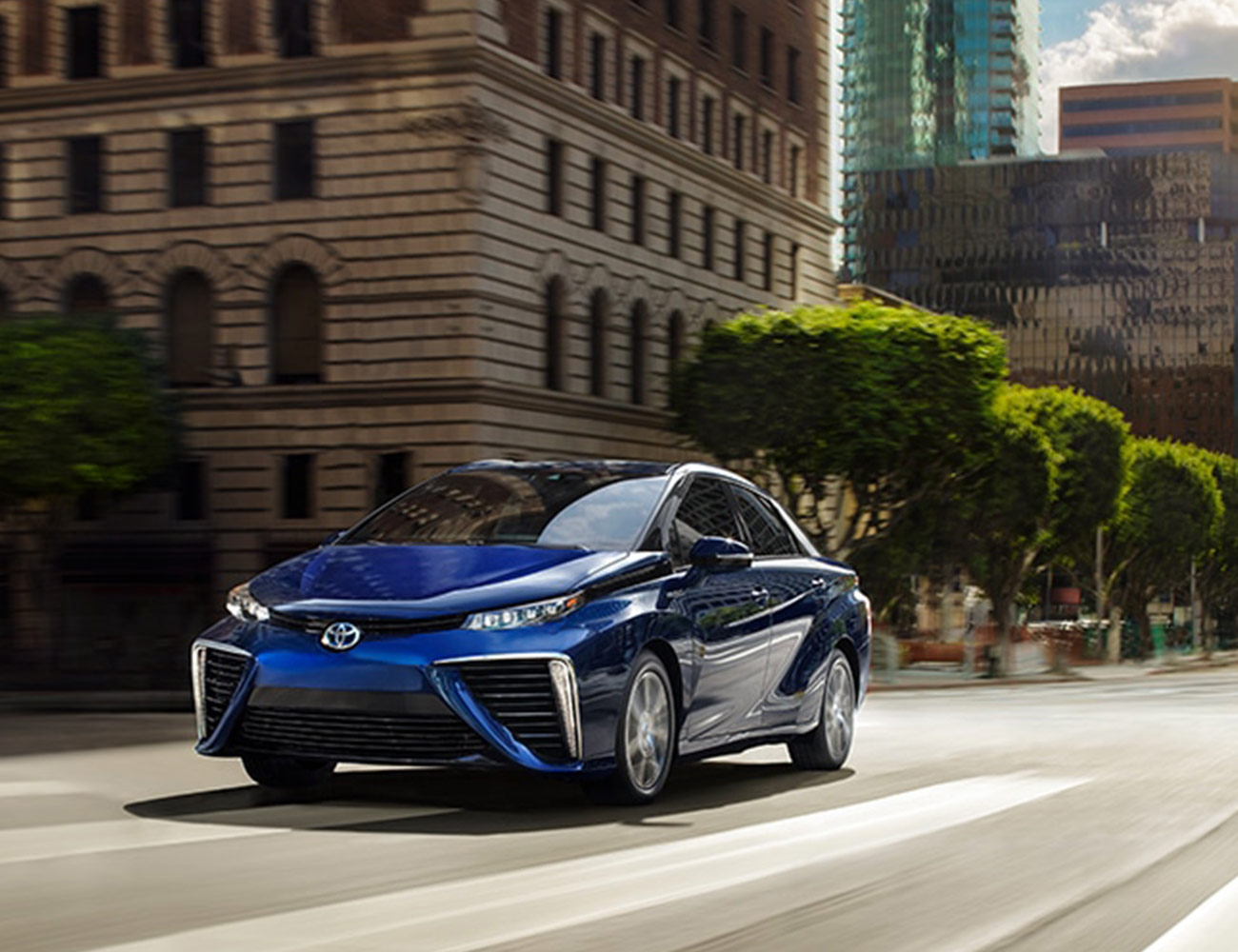
Toyota Mirai (2014-19)

Hydrogen fuel cell car? Outstanding. Bring on the zero-emissions future. But why did Toyota’s 2014 crack at it have to be so bizarre-looking? The Mirai made the Prius look fashionable. The next-gen car, thankfully, is a major step forward on the aesthetic front.

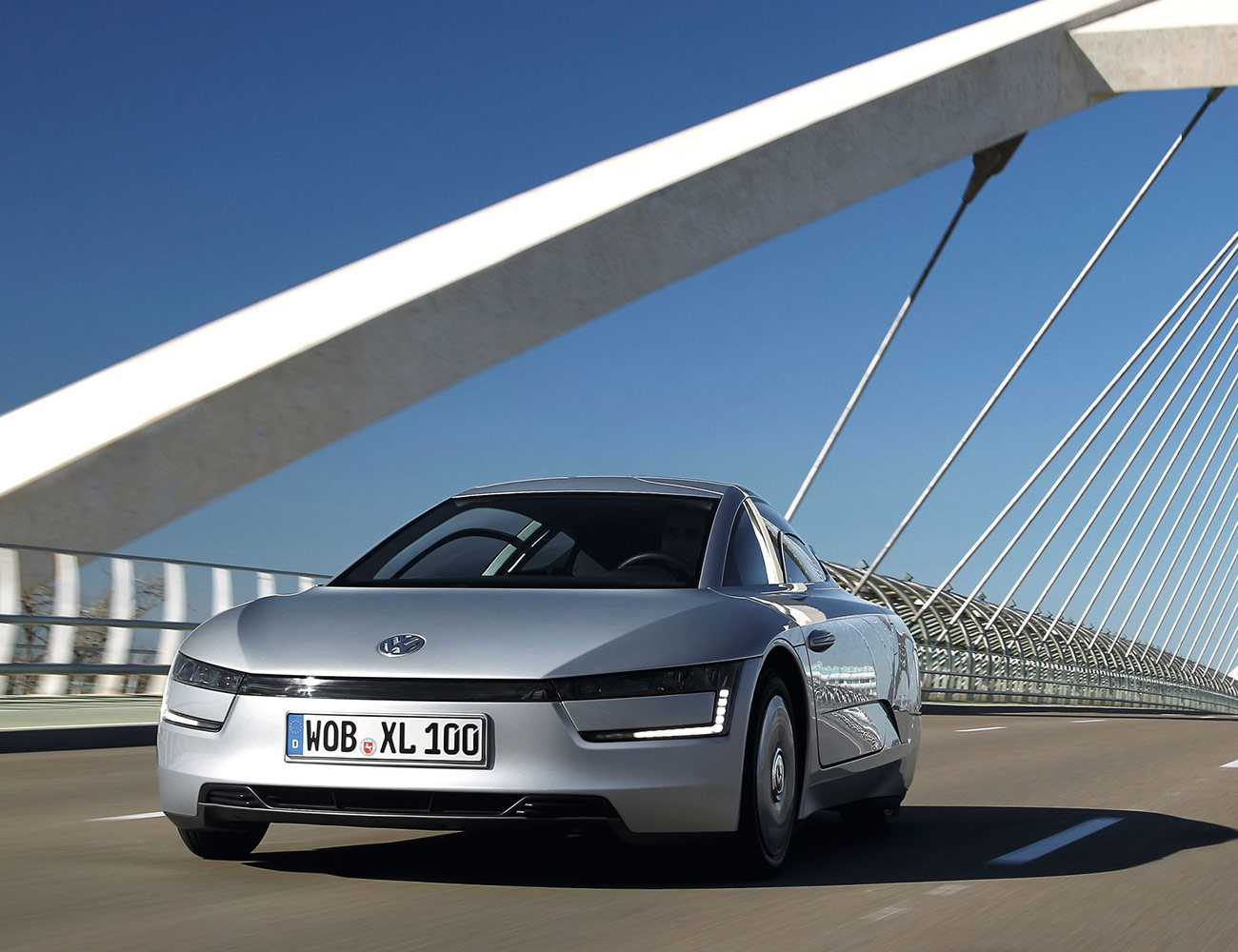
Volkswagen XL-1 (2015)

Ah, the early 2010s, when Volkswagen diesel engines earned plaudits rather than indictments. VW developed the XL-1, a limited=run, hyper-efficient and aerodynamic diesel hybrid that earned 100-plus mpg. It had practical touches like not-quite-gullwing doors, enclosed rear wheels and no rear window. There were plans to put a limited run into production. Then Dieselgate happened…

Mercedes G63 AMG 6×6 (2013-15)

For the buyer for whom the Mercedes G-Wagen was not excessive or exclusive enough, Mercedes-AMG built this small run of 6×6 sport utility trucks — which started at more than $500,000.

Range Rover Evoque Convertible (2017-19)

The Evoque is a stylish little subcompact Range Rover crossover that did not have design input from Victoria Beckham. Land Rover then decided to make it into a heavy, oddly proportioned convertible, because…? ¯\_(?)_/¯

Nissan Juke (2010-19)

The Nissan Juke has running lights that sit where the headlights should be and headlights that sit where the fog lamps should be. Toss in some very prominent wheel arches, and you’ve got one weird-looking car. Nissan went back to the drawing board for the second generation, mercifully.

Acura ZDX (2010-13)

The ZDX rocked the sloping “coupe SUV” look well before it became cool. (Or at least, “cool.” It had a rounded backside, sharp, vaguely Cadillac-like lines at the front and a rear door handle built into the window. It was fun to drive, but that was not enough to save it.

Citroën C4 Cactus (2014-17)

The C4 Cactus is a well-regarded crossover that never hit America. On top of the odd face, it came with some classic Citroën quirkiness — namely the weird “airbump” panels on the outside designed to protect the car to protect against parking lot dings.

Note: Purchasing products through our links may earn us a portion of the sale, which supports our editorial team’s mission. Learn more here.

Tyler Duffy is Gear Patrol’s Motoring Staff Writer. He used to write about sports for The Big Lead and The Athletic. He has a black belt in toddler wrangling. He’s based outside Detroit.

More by Tyler Duffy | Follow on Facebook · Instagram · Twitter · Contact via Email

VW’s New Camper Van Isn’t Coming Here, But We Drove It Anyway

Brand: Volkswagen
Product: California Ocean T6.1
Release Date: Never, at least for us Americans
Price: ~$83,729+
From: volkswagen-vans.co.uk

Volkswagen is one of the few carmakers that’s managed to create icons both within and outside of the automotive world. Since its inception in 1947, the VW Type II van has become the symbol for any wandering tribe of free-spirited individuals not only as a vehicle, but as a home. Its self-reliant nature and simple design have allowed it not only to persist, but to become cemented as a symbol of the counterculture movement of the ’60s as well as part of the camping pantheon. These German vans have become as much a symbol as they are a vehicle, representing seemingly endless possibilities. And that legacy endures to this day.

Recently, your humble scribe spent three days in Canada driving the new Volkswagen camper van, the T6.1 California Ocean, around the southern half of Nova Scotia, covering over 400 miles of pine-lined rustic shores and sprawling interior farmlands. Although VW sent us to this Canadian coastal province to drive a van named after the state son closely identified with boxy Vee-Dubs, neither Canadians nor Californians can have one; it’s not sold in North America. Volkswagen, it seems, just wanted us to know what we were missing.

What We Like

The updated looks of the 2020 California Ocean — a new front bumper and an enlarged grill for added airflow to the engine — don’t seem overly striking at first; indeed, it somehow looks both very large and compact all at the same time. But the two-tone white on copper finish that our vans had gave the VWs a retro look that simultaneously managed to be modern and chic.

The appeal was clear: whenever we stopped, someone would pull up alongside the van and ask a flurry of questions — and inevitably walk away sad when they heard they couldn’t have one. It’s no Italian sports car, but the mix of strange beauty and German practicality here is hard to deny.

With the T6.1, the California has been loaded with even more comfort- and efficiency-minded gadgets. The interior feels truly massive — at least by New York City apartment standards. The cabin has an hoest-to-god lounge feel, made possible by its driver and passenger seats’ nifty trick of turning 180-degrees, allowing them to face the rear bench (slash fold-out bed that sleeps two) and camper-van-classic fold-out table.

The list of features certainly doesn’t stop there. Y’all ready? The California also has (deep breath) a two-burner propane stovetop, refrigerator, sink, cold-water shower, on-board water and propane tanks, twin removable tables and chairs, an awning, a diesel-powered heater and more Batmobile-esque gadgets that would take years of ownership to uncover.

In spite of all those features, the interior feels well-thought-out. A few new touches include aluminum handles for the interior cabinetry, wood trim and flooring, new push-to-release mechanisms for some of the kitchen appliances and updated upholstery. Though some of these details may feel small on their own, they add up to a vehicle that feels much more like a home than a van ought to.

Of course, there are still some classic features it shares with some of the camper vans of yore. The California is still fitted with that iconic feature, the pop-top roof bed that sleeps an additional two people. Unlike the Microbuses and Westfalias of the past, these new iterations aren’t a canvas tent with a sliding piece of wood for a bed. The T6.1 has a new bed design with a built-in box spring and queen-size mattress surrounded by a sturdy, almost white-water-raft like material, and it can be deployed in less than two minutes with the push of a button. The van also has a digital pitch gauge allowing the driver to find a level spot setting up camp.

If you decide, like I did, to forgo the new alarm clock feature (in which the cabin lights gently fade on at whatever time you choose), the pop-up tent has zip-open flaps on all four walls to allow the sunrise to wake you. It’s also great for letting in some fresh air if the diesel heater has been cooking a little too hard through the night.

There is a new 12.3-inch display at the helm, which acts as the pilot’s right-hand man. This screen is home to a heap of controls for the technological wonders of the modern motoring (and camping) world. VW calls it the Volkswagen Digital Cockpit; it controls the auxiliary heater and fan, cabin lights, Apple CarPlay, sat-nav and pop-top mechanism. You can track the power you’re using from this same screen; on a full charge, the van’s camping accessories can run for nearly 40 hours. And even if you run the cabin power flat over a weekend, never fear; the motor and radio are on their own dedicated battery.

It’s easy to forget this thing is a vehicle when it’s parked, but it drives pretty well too. The turbocharged 2.0-liter inline-four provides plenty of power, while the three-way adaptive suspension provides a smooth highway ride in Comfort Mode and an appropriately responsive one when you hit the button for the rather-unexpected Sport Mode.

Watch Out For

It may be surprisingly good to drive, but that can lead you to feel a bit too trusting in the corners — a potentially hazardous issue with something that is nearly 10 feet tall and clocking in at 6,000 pounds. You really do have to keep its limitations in mind, because it is working hard to hide them from you.

The bigger issue though: it’s really expensive. Although there is a lot of value here, the price tag can be shocking: up to $99,000 for the fully-loaded Ocean package I tested. The differences between a base model and a fully-optioned one aren’t that extreme, essentially coming down to a flip-out kitchen instead of a fixed one and a handful of aesthetic items. The optioned-out model was a blast to spend a weekend in, but if these were available Stateside, I’d grab the simple, no-frills version and save tens of thousands of dollars while still having largely the same experience.

Verdict

Even though it’s too expensive for me, the new VW T6.1 California Ocean has made me even more jealous of our European friends’ ability to spend the weekend in one of the excellent new iterations of VW’s long line of adventure machines. Here’s hoping this tradition of boxy camper vans continues into Volkswagen’s electric future — and that those future campers make their way Stateside.

VW hosted us and provided this product for review.

Note: Purchasing products through our links may earn us a portion of the sale, which supports our editorial team’s mission. Learn more here.

Updated Porsche Macan GTS Revealed

A refreshed Porsche Macan GTS launched earlier this week. The GTS has become a staple model within the Porsche range. In the 911, Cayman and Boxster ranges it links the standard Carrera models to the hardcore RS range. For the Cayenne, Macan and Panamera, it sits between the standard models and the Turbo versions. It blends performance and comfort.

The latest version of the Porsche Macan GTS uses a 2.9-litre V6 engine with turbochargers mounted inside the V. It puts down 380 hp and 520 Nm, mild increases over the outgoing model. The changes are enough to propel the GTS to 100 km/h in 4.7 seconds, three tenths faster than before. It has a top speed of 261 km/h.

The GTS gets a reworked PDK dual-clutch transmission and an optional Sport Chrono package. The Porsche Active Suspension Management (PASM) damping control system has been specially tuned with the suspension sitting 15 mm lower than standard. The Macan GTS gets optional adaptive air suspension too, this drops ride height by another 10 mm.

The GTS rides on 20-inch RS Spyder Design wheels and generously sized cast iron brakes (360 x 36 millimetres at the front, 330 x 22 millimetres at the rear). Two further brake options are available including the Porsche Surface Coated Brake (PSCB) with tungsten carbide coating or the Porsche Ceramic Composite Brake (PCCB).

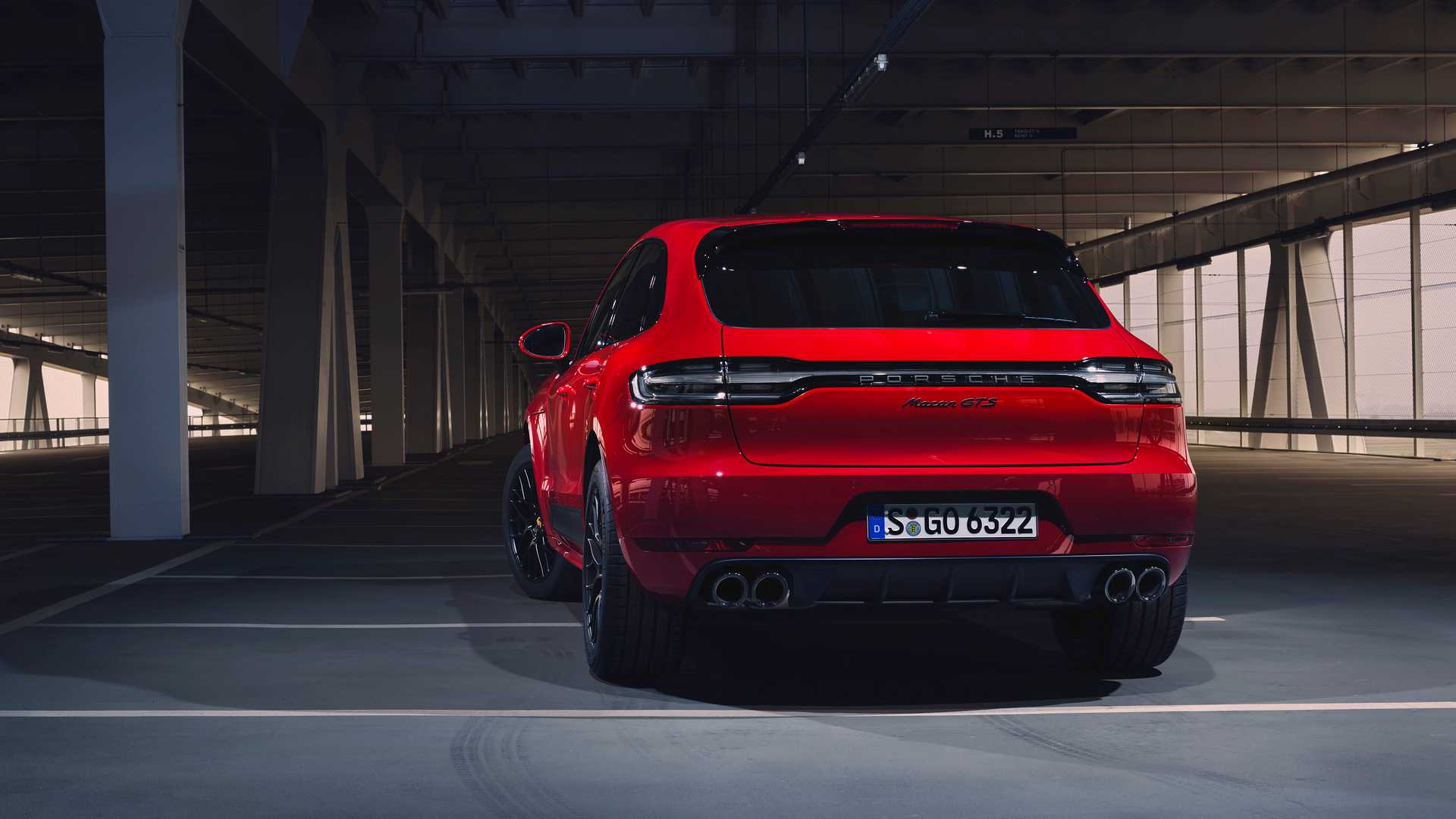
2020 Porsche Macan GTS Rear

The Sport Design package is standard with the Macan GTS with a new front trim, rear trim and side skirts. Black painted elements – a feature of all GTS models – are plentiful. The LED headlights with Porsche Dynamic Light System (PDLS) and the three-dimensional rear lights with LED light bar are darkened.

Inside, Alcantara is available on the seat centre panels, the centre console armrests and door panels. A multifunction sports steering wheel is fitted as standard. The GTS gets a unique seat set with eight-way adjustment. In Germany, prices start at 77,880 euros including VAT.

GTSPIRIT NEWSLETTER

Is Land Rover Planning to Attack the Ford Raptor With a Badass Defender?

On Wednesday, Jaguar Land Rover announced that the carmaker has bought Bowler, a British company that produces badass, off-road racing-spec versions of Land Rovers like this Defender 110 from the James Bond film Spectre and the demonic EXR S. Bowler will become part of Jaguar Land Rover’s Special Vehicle Operations, the unit responsible for high-performance vehicles such as this Jaguar F-Pace.

This development seems sure to spark excitement and speculation within the off-roading community. Land Rover has already suggested it will go the Range Rover route with the Defender, extending that nameplate over several different vehicles. Adding Bowler to the lineup makes it seem far more plausible that one of those vehicles could be a full-bore, Baja-caliber Defender designed and destined to take on specialized (and profitable) off-road vehicles like the Ford F-150 Raptor.

Having an in-house modifier to produce parts, accessories, and special editions has become a profitable necessity for automakers, even for non-off-road-centric companies like Honda. Well-heeled buyers love their add-ons, especially the aggressive kind. Land Rover building up that portion of the business makes sense. Even if the Raptor-fighting Defender is not imminent, something like a more aggressive and enhanced off-roading edition of the Discovery could still be pretty great.

Tyler Duffy is Gear Patrol’s Motoring Staff Writer. He used to write about sports for The Big Lead and The Athletic. He has a black belt in toddler wrangling. He’s based outside Detroit.

More by Tyler Duffy | Follow on Facebook · Instagram · Twitter · Contact via Email

Why Do the Subaru Outback’s Headlights Make It Less Safe than the Legacy? We Found Out

Back in November, the Insurance Institute for Highway Safety — better known as the IIHS — released its safety ratings for the all-new 2020 Subaru Legacy and Outback. The duo have long been considering among the safest cars on the road, capturing IIHS honors over and over again; the 2020 models were no different, each grabbing accolades from the independent safety-testing agency. Yet there was a slight disparity between the two models: while the Legacy received the top marks of Top Safety Pick+, the Outback only scored the penultimate rank of Top Safety Pick.

Which seemed a little odd, considering the Legacy and Outback are basically the exact same car.

Sure, the Legacy is a three-box sedan, while the Outback is a station wagon pretending to be an SUV. But apart from the added junk in the trunk and the lifted suspension, the two Subies are all but mechanically identical. They both use the same powertrain. They both are built off the same platform, boasting nearly identical wheelbases and widths. And, more importantly for the purposes of this conversation, they share the same headlights.

Yet the IIHS’s official announcement called out the Legacy’s optional curve-adaptive headlights as being the deciding factor in the TSP+ honor, even though those same lightblasters — which swivel in the direction the car is turning to throw their beams into the turn — also are offered on the Outback.

“While the 2019 Outback earned the higher-tier “plus” award, the 2020 model is limited to a Top Safety Pick due to an acceptable headlight rating,” the IIHS said by way of explanation. “That rating applies to its base headlights as well as its available curve-adaptive LEDs on models built after October 2019.”

Like any good journalists in 2019, we turned to Twitter to seek more info. And surprisingly enough, IIHS responded.

Curious to know more, we wrote back asking if IIHS generally gave worse safety rankings to higher-mounted headlights than it did to low-riding ones — an idea that seemed a little counter-intuitive to us, considering basic physics means visibility should be improved with added height. We also asked about added details regarding the “glare” IIHS mentioned.

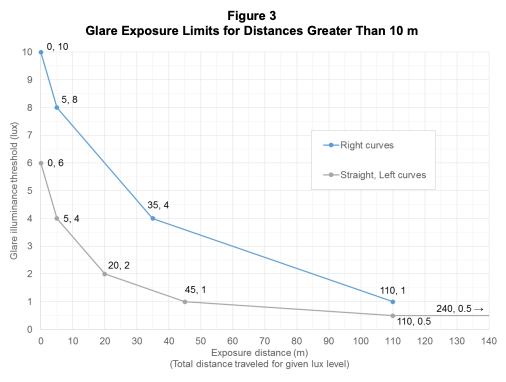
Thanks to the IIHS’s thoroughly, ridiculously comprehensive guide to its headlight testing procedures, we know that the agency says “the maximum glare for 5-10 [meters] should not exceed 10 lux” while “the glare illuminance for the remainder of the approach (i.e., 10-120 m for curves and 10-250 m for the straightaway) should not exceed the cumulative exposure distance limits shown in Figure 3.” (Figure 3, for what it’s worth, is the chart below.)

(“Lux,” in case you were wondering, is the standard unit of measurement for illumination. One lux equals one lumen of light per square meter; very roughly speaking, it’s the amount of light a candle would cast on a wall from a meter away, or a bit lighter than the ground would be on a clear night with a full moon.)

The 2020 Outback’s IIHS page, as well as the chart in the company’s tweet above, reveals that the low beams of the adaptive LED headlamps of the top-shelf Limited and Touring trims caused “some glare,” maxing out at 52.3% more than the suggested maximum at the left edge of a left turn from 250 meters (825 feet) away and 46.4% more than the limit from the right edge of a right turn from 150 meters (495 feet) away.

While the IIHS’s chart is a touch hard to decipher, as it seems somewhat outdated — the data points listed don’t correspond exactly to the distances mentioned in the Outback’s analysis — it seems to suggest that 0.5 lux is the glare cutoff for both of those aforementioned distances. Overages in the 50% range, therefore, would add up to an extra 0.25 lux — about the difference between the ground on a clear night with a quarter moon and a clear night with a full one.

So, that matter was a little more buttoned-up. Still, something about the test still seemed odd to us. We went back to Twitter once more, to find out a little about why the seemingly-arbitrary height of the test was chosen.

In other words: the Outback’s demerit, simply put, wasn’t because its headlights are worse for the driver, but because they’re worse for other drivers.

Will Sabel Courtney is Gear Patrol’s Motoring Editor, formerly of The Drive and RIDES Magazine. You can often find him test-driving new cars in New York City, cursing the slow-moving traffic surrounding him.

More by Will Sabel Courtney | Follow on Instagram · Twitter · Contact via Email

Our Favorite Cars We Drove in 2019

Every year, the writers and editors of Gear Patrol test out hundreds, if not thousands, of different products in their respective fields. For those of us on the Motoring Desk, as we call it, that means driving a lot of cars. We drive them on media junkets in far-off locales, on race tracks and desert roads, on the long highways to our ancestral homes and the crowded streets and parkways of America’s great cities.

As such, many of those cars blur together at the end of a year. The 10 on this list, however, stood out. They’re hardly the only great cars we drove in 2019…but they are at the top of the list in our minds.

Kia Telluride

grey_placeholdergrey_placeholder
The Telluride marks the latest phase in Kia’s transition from a budget brand into a high-quality one. It provides the style, substance and space you expect from a luxury SUV, but at a mid-range price. It’s a commanding and comfortable cruiser that handles like a smaller car, and can tackle any terrain short of serious off-roading. The Telluride, dare I say it, makes the three-row minivan-on-stilts SUV something a cool young person would want to own. —Tyler Duffy

Mazda MX-5

grey_placeholdergrey_placeholder
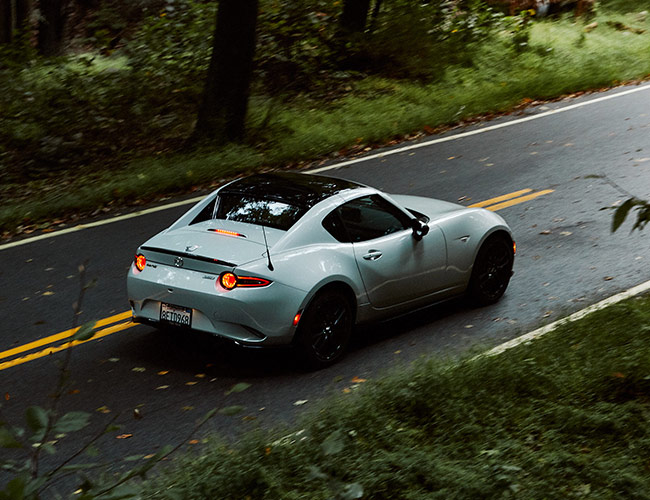
Over the summer, I had the pleasure of driving the Miata ragtop and Miata RF back-to-back for several weeks. Both, importantly, had manual transmissions. Is it cliché to say that, dollar-for-dollar, the Mazda Miata may be the perfect roadster? Yes, but for one very particular reason: it is, dollar-for-dollar, the perfect roadster. It cruises as well as it drifts; the pleasure of manually lowering the soft top from within the cabin is nigh-unparalleled; and its styling is aggressive without being ostentatious. It may be small and slow(ish), but in any form, the Miata remains the modern embodiment of “replacement for displacement.” —Nick Caruso

Mercedes-AMG G63

grey_placeholdergrey_placeholder
Few cars can match the AMG-tuned version of the latest Gelandewagen for sheer breadth of capability. Luxurious as an S-Class, off-road-capable as a Land Rover and fast as a Mustang GT in a straight line, the G63 performs a diverse array of divergent tasks far, far better than any single vehicle ought to. Sure, it may cost as much as a decent house, but can your house do 0-60 mph in less than four seconds and crawl up a 27º slope? —Will Sabel Courtney

Jeep Wrangler EcoDiesel

grey_placeholdergrey_placeholder
With the 3.0-liter EcoDiesel V6, the Jeep Wrangler finally scores the engine it deserves. It delivers a phenomenal amount of torque — 442 lb-ft at just 1,400 rpm — which makes the Wrangler an even more maniacal rock climber. Highway passing becomes a breezy, civilized affair. Oh, and the more efficient diesel averaged 30 mpg over a variety of driving conditions in our hands. You won’t miss the manual transmission, though the engine’s added cost could prove a sticking point. —Tyler Duffy

Porsche Panamera GTS

grey_placeholdergrey_placeholder
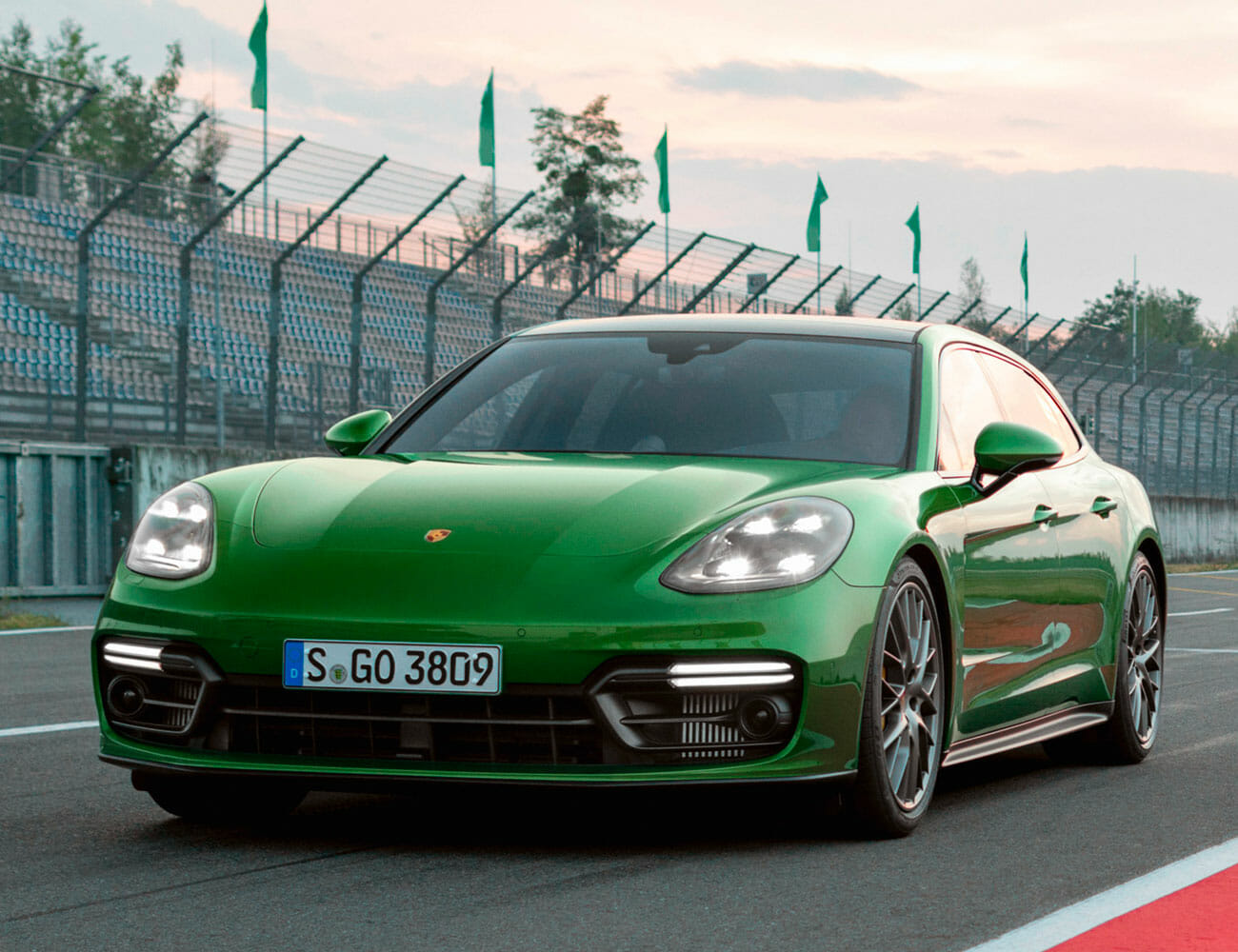
I drove the Porsche Panamera GTS around southern California for a week this fall — not a bad way to navigate sunny beachside streets and mountain roads. It’s a driver-focused version of the brand’s sport sedan, and meant to channel the 911’s sporting heritage into a four-seat conveyance. What strikes me most is the GTS’s versatility: I could cart around my parents in the morning and thrash kinky hairpins in the afternoon, feeling comfortable and confident all the while. Its twin-turbo V8 burbles and pops; the seats cement you in place; the transmission is unflappable and smart as hell. It’s not cheap, but for the 911 enthusiast with kids, you could do far worse. —Nick Caruso

Jaguar I-Pace

grey_placeholdergrey_placeholder
Even in a year where I had the chance to drive the XE SV Project 8, the I-Pace was my favorite Jaguar. Yes, the supercharged V8 track machine is an utter delight, but it’s the all-electric crossover that feels more relevant here in 2019. In fact, “crossover” is something of a misnomer; it rides lower than even a diminutive Honda HR-V, while being as fast and agile as a sport sedan. It feels like a whole new category of vehicle, one perfect for charging into the 2020s on a rush of electrons. —Will Sabel Courtney

Mercedes-AMG E53

grey_placeholdergrey_placeholder
The Mercedes-AMG E53 fuses gasoline and electricity to create an exceptionally smooth and potent hybrid. The torque comes instantly, while the car always stays glued to the road. You can’t hit its performance limits on a public road — at least, not, safely. You can crank up the raucous exhaust, or retreat to the stately sobriety of a classic Mercedes. About the only criticism that one could muster for the AMG E53 is it’s almost too perfect. Driving a car this fast feels like it should be harder. —Tyler Duffy

Jeep Gladiator

grey_placeholdergrey_placeholder
Yes, the Gladiator and the Wrangler both carved out spots on the list of our favorite cars. The Wrangler’s virtues are well-known by now, but as it turns out, they’re largely improved by adding five feet of truck bed behind the cabin. The ounce of off-road capability the Gladiator gives up to its shorter sibling is outweighed by the sheer tonnage of its added towing and cargo-carrying capability. Plus, it’s a midsize pickup truck that’s also a convertible with a six-speed manual that lets you take the doors off. How could you not love it? —Will Sabel Courtney

Ford Mustang Shelby GT500

grey_placeholdergrey_placeholder
The newest version of Ford’s most potent factory Mustang is a far cry from past GT500s; no longer a raw straight-line monster, it’s been transformed into an honest-to-god budget supercar, capable of running with far pricier European exotica on track and street alike. As someone who loved the previous version with an irrational passion, I fully expected to feel betrayed by the new Shelby GT500. I wound up walking away converted instead. Ford has made a stunning, engaging car that manages to make its 760 horsepower feel wholly usable. —Will Sabel Courtney

Ferrari 812 Superfast

grey_placeholdergrey_placeholder
Some cars define themselves in logical terms — how much they can tow, how many they can seat, how far they can go on a gallon. The 812 Superfast, in contrast, exists for purely emotional reasons; it’s a creature of id, not superego. By rational measures, there’s no reason to spend $335,000-plus on a car like this — not when other companies make vehicles that are faster or quicker or more luxurious or more technologically advanced for far less. Two minutes behind the wheel on a back road, though, and you’ll never want anything more than this car. —Will Sabel Courtney

Note: Purchasing products through our links may earn us a portion of the sale, which supports our editorial team’s mission. Learn more here.

Will Sabel Courtney is Gear Patrol’s Motoring Editor, formerly of The Drive and RIDES Magazine. You can often find him test-driving new cars in New York City, cursing the slow-moving traffic surrounding him.

More by Will Sabel Courtney | Follow on Instagram · Twitter · Contact via Email

Production Rimac C_Two coming next year in Geneva, with prototypes testing now

Rimac likes to make sure we don’t forget about them. The company consistently shares intriguing bites of news with us, like behind the scenes aero development or crash tests for its upcoming $2.1 million electric hypercar. Rimac is doing the same today, as it announced that Rimac C_Two prototype testing is beginning at various tracks and testing facilities. This will be followed by a pre-production phase starting in early 2020.

Rimac says it’s going to make 17 prototype vehicles in total. As of now, Rimac has plans to produce and sell 150 C_Twos, so 17 separate cars for testing purposes is a significant amount. As one would expect, each of the prototypes will be made with different testing purposes in mind. For example, Rimac says one will be tortured in chassis rigidity testing, while another will be used for high-performance autonomous driving development.

The final production version of the C_Two is set to be unveiled at the 2020 Geneva Motor Show, where Rimac will give the car a proper name — C_Two has only been a placeholder. Rimac went on to say that the production car will differ from the concepts we’ve seen in 2018 and 2019 “with improvements in design, ergonomics and performance.” Customer deliveries are scheduled to begin at the end of 2020.

The predicted power figures are still the same as before, as Rimac claims the C_Two will make 1,914 horsepower and 1,696 pound-feet of torque from its four electric motors.

Our Favorite Honda of the 2000s Is Back, and Better Than Ever

Honda’s accessories division, Honda Access, is building a number of custom vehicles for the 2020 Tokyo Auto Salon in January. One of those is likely to turn many automotive enthusiasts’ heads: a freshened, 20th-anniversary edition of the legendary Honda S2000 convertible.

The S2000 was one of the classic cars of the 2000s. Built from 2000 to 2009, it had a reputation for being one of the best pure driver’s cars ever. It was a rear-wheel-drive convertible, with a naturally-aspirated 2.0-liter inline-four engine putting out as much as 247 horsepower and a six-speed manual transmission. Features like a 50/50 weight distribution and a high redline showed that Honda built the car for the driver to push it to its limits.

Collectors knew what they had at the time. S2000 Auction prices on Bring a Trailer have stayed relatively reasonable, because there are so many low-mileage, well-cared-for examples kicking around. But none of those come close to being as special as this 2020 custom model.

Honda Access’s version, based on the original AP1-spec version of the car, has a Grand Prix White paint job. It features several modifications to the bodywork, including a wider grille, side sills and a new spoiler. It also received suspension and audio system upgrades.

The natural question this S2000 raises is, of course, whether it portends a return for the Honda S2000 — and whether Honda would sell that vehicle in the U.S. Hopes for a new S2000 may hang on the distinction between Honda Access labeling this a “prototype” versus a “concept” in Japanese — a distinction that seems tenuous at best. Like the Honda E electric car, a new S2000 two-seater convertible would delight journalists, but probably not sell very well in the American market. Still, never hurts to keep your fingers crossed.

The Best Holiday Gift Ideas for Men

A comprehensive roundup of our most-recommended gifts for everyone from the outdoorsman to the watch snob. Read the Story

Tyler Duffy is Gear Patrol’s Motoring Staff Writer. He used to write about sports for The Big Lead and The Athletic. He has a black belt in toddler wrangling. He’s based outside Detroit.

More by Tyler Duffy | Follow on Facebook · Instagram · Twitter · Contact via Email

2020 Genesis G90 Review: Korean S-Class Rival

It’s the car that no one saw coming: Korea’s auto industry has long dabbled in the luxury car market, but its entries were typically lacking in style, if not in substance. Like its venerable line of ancestors, from the Korea-only Hyundai Dynasty and Centennial to the recent Hyundai Equus, the pre-facelift Genesis G90 represented luxury at its most traditional. But the new model, though it is essentially a big facelift, fundamentally changes this perception, confirming the power of superior design.

The design team, led by Hyundai Group chief designer Luc Donckerwolke, had to work with the architecture and proportions of the previous G90, but they were able to change every panel of the car, with the exception of the greenhouse and the doors.

And thus the G90 received a fresh front end, with a new and large signature grille, a unique version of the quad headlights first shown on the GV80 and Essentia concept cars, and LED turn signals that stretch almost all the way to the front doors. The rear end has been uncluttered with super-thin horizontal taillights, and the G90 stands on 19-inch dish-type wheels that look a lot larger than they actually are.

While the front grille is dominant, the G90 is refreshingly devoid of those aggressive, pseudo-sporty lower air intakes and side skirts that adorn some competitors. All of this contributes to a look of cold, aloof and futuristic elegance.

With only a few changes, the new demeanor carries over into the cabin: The center section of the dashboard has been cleaned up, and the interior impresses with five colours and four wood trims to select from. Our favourite was the fully blue leather interior, complete with a microfiber headliner and accentuated by the metallic speakers by Lexicon, Harman’s upscale sub-brand. The hifi system is great, and that’s a good thing because it operates in an ideal environment: The G90’s NVH (noise, vibration and harshness) characteristics, according to Genesis, are superior to every competitor, including the Mercedes-Benz S-Class.

Genesis G90 Interior

The four-spoke steering wheel serves as a refreshing break from the forced sportiness of the competition’s three-spoke wheels, and we like the new center screen, which can now be used as a touch screen – although we wish it would have moved a bit closer to the driver. If we had a few wishes open, the interior design would greatly benefit from a frameless rearview mirror. The conventional gauges in front of the driver seem somewhat dated as well, and the housing of the head-up display is not particularly well integrated.

Genesis has added a plethora of new and additional features, including enhanced assistance systems and self-driving functions. They work remarkably well on the freeway and require less driver intervention than a BMW 7-series or a Mercedes-Benz S-Class. Remarkably, the 22-way power seats serve up recommendations for the ideal seating position, based on the driver’s data entry. Yet the seats are lacking a massage function.

In Korea, Genesis offers a stretched version of the G90 with an extra 30 cm of rear legroom, but even the standard body offers an extremely generous rear compartment with abundant legroom and elegant touches like vanity mirrors and a multitude of adjustment options. The roof-mounted “mood” light is a Korean trademark.

Genesis G90 Silver

Yet there is reason to envy the chauffeur, if not outright fire him like in the famous Porsche commercial of yore. The G90 comes with the choice of either a twin-turbocharged 370-horsepower 3.3-liter V-6 or a naturally aspirated 425-horsepower 5.0-liter V-8. Their maximum torque is almost identical, but the delivery is unique: The V-6 serves up 510 Nm from 1300 rpm to 4500 rpm, while the V-8’s 520 nm are delivered at a lofty 5000 rpm. Both engines are mated to a smooth but not exceedingly quick eight-speed automatic, and they are both available with rear-wheel drive or the Hyundai Group’s H-Trac all-wheel drive system.

The Lambda V-6 is the same unit that turns the smaller G70 into a veritable sports sedan, and it is by no means overworked on the G90. Yet we prefer the Tau V-8, not just because there is intrinsic value in a large, naturally aspirated engine: Its silky-smooth power delivery and silky sound is unsurpassed, and when pushed to the limit, it emits is a distant but ever-so-delicious wail.

While the G90 builds speed effortlessly, it doesn’t encourage the driver to hustle through corners with undue haste. It is possible to induce throttle oversteer and “Sport” mode keeps body roll to a minimum, but the somewhat disconnected steering and the sheer size of the G90 discourage aggressive driving.

It remains, after all, a true luxury sedan. But through the power of design, it now represents luxurious style at its most contemporary. Sized like a Mercedes-Benz S-Class or a BMW 7-series, it doesn’t quite match them in terms of performance, but it is priced close to far less inspired cars like the four-cylinder Volvo S90. Give Genesis one more iteration, and we suspect they will have caught up with the Germans – and left everyone else behind.

Photos: Genesis / James Lipman

GTSPIRIT NEWSLETTER

Could Tesla Be Planning a Camping Trailer Just for the Cybertruck?

Even in a year packed with big car reveals like the new Defender, the Jeep Gladiator and the Porsche Taycan, few cars made quite the splash of the Tesla Cybertruck. The electric pickup veritably broke the Internet, Kim Kardashian style, when Elon Musk revealed it in all its slab-sided glory on a late-night livestream last month. The truck’s impressive stats gathered their fair share of attention, but it was the truck’s shocking appearance — a dystopian blend of sharp angles and cold steel — that caused double-takes across the planet.

But as with everything Tesla, the initial explosion of attention shows no signs of fading any time soon. Several weeks after the reveal, the Blade Runner-esque rig continued to dominate the automotive conversation, with reports popping their heads out of the digital ether to satisfy a world craving any hint of new info about this wild rig. The latest example: the hint of a suggestion that the EV-maker might whip up something like a camping trailer attachment for the truck.

Now, before we dive too deep into the weeds here, let’s keep something in mind:

The Tesla Cybertruck Is Not Ready For Production.

The carmaker may be taking $100 pre-order deposits on it already, but that doesn’t mean the Cybertruck is ready to hit the streets in large numbers. The design is still missing a few features needed to gain the approval of federal regulators — silly little things like side-view mirrors and DOT-approved headlights, among others.

Given these missing items — and Tesla’s propensity for blowing past its planned deadlines — it seems possible that carmaker may not be able to meet the planned late-2020 on-sale date. But that could actually be good news, if it gives the company time to work on developing wild add-ons like a camping trailer.

The crux of this idea comes from the Tesla lovers at Electrek, which surfaced a quote from Elon Musk claiming that the company is working on a “sick attachment for the Cybertruck.” Considering the current growth in overlanding and vehicular camping, and the fact that Tesla showed off both a promo image of the Cybertruck dressed out with a bed tent and one of it towing a custom, similarly-edgy trailer in its launch materials, and a camping trailer seems like an obvious play for the California-based carmaker.

(We’ve reached out to Tesla for comment on this, and will update this story if we hear back from them.)

Further proof of the opening for such a rig can be found with upstart Tesla competitor Rivian, which has already revealed its plans for a pop-out camping kitchen for its electric pickup, the R1T. Electrek even highlighted a YouTuber named Motorhome Man who claims to have commissioned a custom camping trailer for his Cybertruck as proof of the market for such a rig. So while there’s no concrete proof here yet, there’s certainly enough to suggest the company could be exploring the idea — or that it should be if it’s not. As a shadowy figure once told a handsome actor playing an intrepid reporter, follow the money — and there’s tons of it in camping trailers and overlanding these days.

Of course, Musk is the guy who also said he wanted to put rocket tech-inspired maneuvering thrusters on the next Tesla Roadster and let the carmaker add “Emissions Testing Mode” to its fleet of models, so there’s ultimately no predicting what ideas may arise from his fertile brain. One thing’s for certain, though: If they do wind up making a camping trailer, it’s going to be pretty damn wild.

Will Sabel Courtney is Gear Patrol’s Motoring Editor, formerly of The Drive and RIDES Magazine. You can often find him test-driving new cars in New York City, cursing the slow-moving traffic surrounding him.

More by Will Sabel Courtney | Follow on Instagram · Twitter · Contact via Email

This Rare, Old-School Acura SUV Is Cooler Than You Realize. Here’s Why

Post-boomers enjoy 1990s nostalgia. It’s the period where many of us either were cool or were learning what being cool entailed. But that nostalgia is manifesting itself in the vintage car market where the eye-catching item may now be an exceptionally clean normcore SUV rather than a painstakingly restored muscle car.

Acura, perhaps noticing the crazy spike in Integra Type R prices, is tapping into that nostalgia. The company is bringing a rare Acura SLX—one of the many variants of the Isuzu Trooper—to RADwood LA this year. It’s not just any rehabilitated off-roader. It’s a heavily modified, 350 horsepower “Super Handling SLX.”

Essentially, Acura gutted a donor 1997 SLX body and replaced it with the best modern guts from the RDX, the SLX’s sort-of descendant. Out went the original 3.2-liter V6 engine and four-speed automatic transmission. In came a race-tuned and turbocharged 2.0-liter VTEC with a 10-speed automatic. Acura also swapped the traditional 4×4 transfer case for the modern fourth-generation Super Handling All-Wheel-Drive (SH-AWD) system, hence the name.

Acura’s PR video for the Super Handling SLX offered an oddball origin story for the vehicle involving some green ooze in a suburban garage. But the actual build required a painstaking effort from a team of engineers in Ohio. Acura’s estimated price for recreating this build was “don’t even ask.”

We give Acura an “A” for this effort. Of all the ways to promote a midsize crossover, the “Super Handling SLX” is a fun one. An “A+” would have required stocking the disc changer with some period-correct Britpop and Dave Matthews.

Tyler Duffy is Gear Patrol’s Detroit-based Motoring Staff Writer. He has a black belt in toddler wrangling. He kindly requests that you not bring up Michigan football.

More by Tyler Duffy | Follow on Facebook · Instagram · Twitter · Contact via Email

McLaren Senna Can-Am and XP special editions honor two racing icons

McLaren produced 500 examples of the Senna road car, and the entire run sold out immediately. This year it added the more powerful, track-only Senna GTR, selling out of all 75 units instantly. That’s not the end of the Senna line, however, with 26 more units divvied up between three special editions. The most numerous is the Senna LM, a street-legal version of the GTR supposedly put together by McLaren Special Operations. The bodywork’s been toned down a touch by dropping the aero flics on the front bumper and the GTR’s extended rear wing, and the LM fits a less aggressive rear diffuser. Interestingly, a spy shot shows the Senna LM also going without the windows in the lower portions of the doors. There’s no reliable intel on the engine yet, but it’s hoped that the LM fits the same 4.0-liter twin-turbo V8 as the GTR, producing 814 horsepower and 590 pound-feet of torque. The LM is reputed to cost £1.3 million ($1.7 million U.S.) 

CarBuzz reports that another special edition will be based on the Senna LM, having received an anonymous tip from a reader with one of the cars on order. Called the Senna Can-Am, McLaren would only say that this model was commissioned by a dealer. As the name implies, the coupe celebrates the legendary Can-Am cars that terrorized the series in the late 1960s and 1970s, and that are responsible for giving us the trademark orange hue McLaren remains known for. The Senna Can-Am is a specific homage to the M8B, called “the perfect race car,” that started on pole and won all 11 races during the 1967 season with Bruce McLaren and Denny Hulme driving.

In CarBuzz‘s rendering, the Can-Am is done up in McLaren orange with Canadian flags on the front fenders, and number roundels on the rear fenders along with the signatures of McLaren and Hulme. Instead of the “LM” logos on the wing endplates and embroidered into the headrests, “Can-Am” appears instead, the M8B’s race record appears on the door sills, and a black anodized throttle pedal gets the Can-Am logo. CarBuzz‘s source said the Senna Can-Am is “due to be delivered in two to four weeks,” and cost $1.5 million.

The final three special-edition examples (pictured) come from early in the life of the Senna. Beverly Hills managed to acquire three of the experimental prototypes that McLaren used to develop the Senna, and commissioned three builds now known as the Senna XP. Each car gets a name and celebrates a Formula One race track where Ayrton Senna scored an especially outstanding victory. All three are dressed in gloss black carbon fiber, accented with the colors of the F1 circuit’s country, and adorned with Ayrton’s car number on the wing endplates. The “Master of Monaco” lauds Senna’s six victories in the principality; “Lap of the Gods” hails Senna’s opening lap in the wet at Donnington in 1993 when he drove from fifth place to first in less than a lap; “Home Victory” relishes Senna’s 1991 win in Brazil.

The Senna XP uses the standard Senna’s 3.9-liter V8 with 789 hp and 590 lb-ft, costs $1,435,328, and naturally, is sold out. 

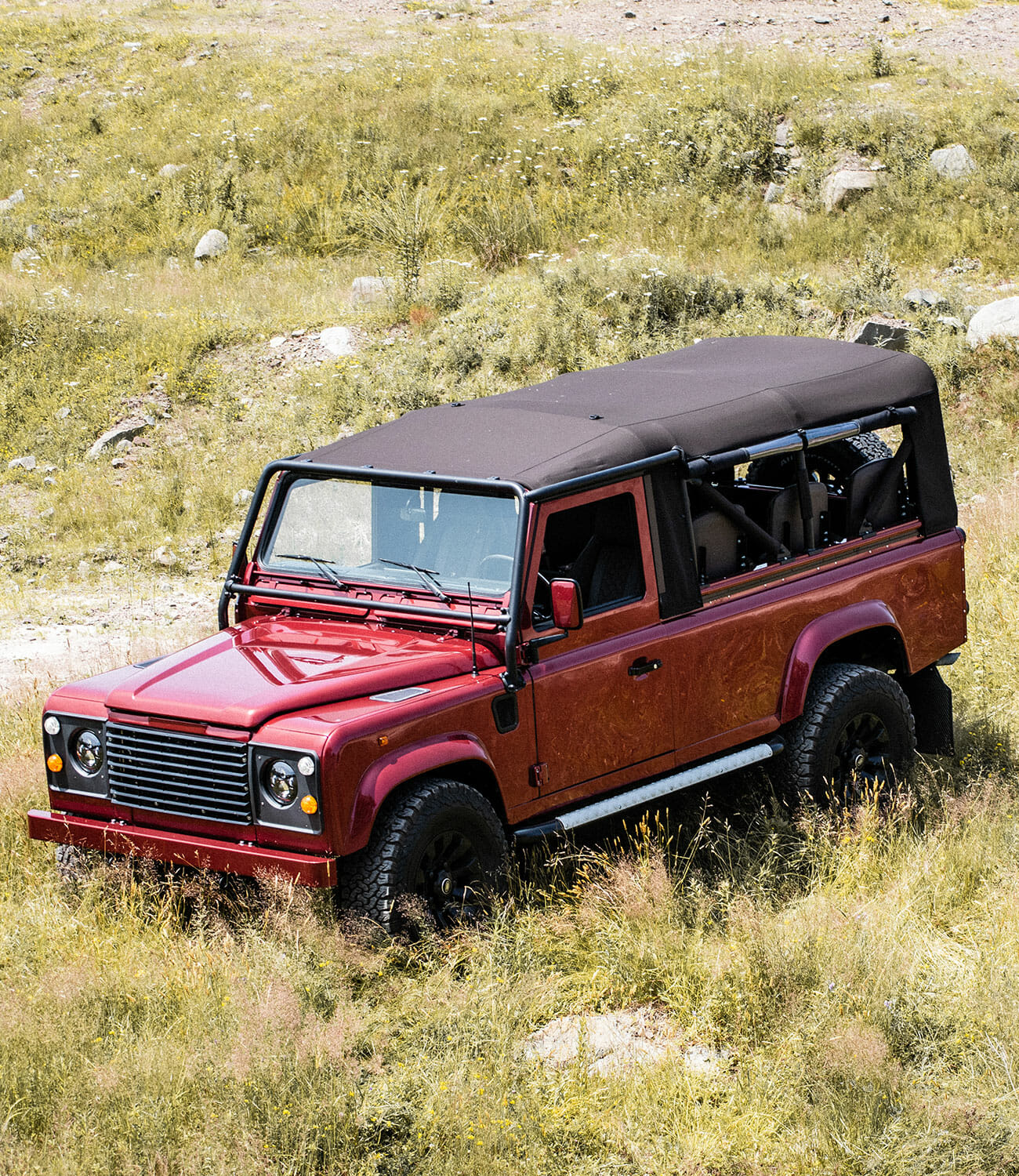
No One Should Buy a Classic Land Rover Defender. Here’s Why

Few vehicles summon up the sort of romance and nostalgia of the classic Land Rover Defender. The boxy, burly off-roader has stood for freedom and independence for decades, epitomizing the appeal of the outdoors even when trapped in the densest urban confines. Its rarity in the United States has pushed it even further into the realm of exclusivity; while most countries see them as farmland workhorses and stripped-down safari trucks, here in America, even high-mileage ones in mediocre condition often command pricetags that could buy far newer, better-driving and more reliable vehicles.

Here’s the thing, though: The old Land Rover Defender sucks.

Subjectively, sure, it’s super-cool. Objectively? It stinks. By the standards of modern vehicles, it’s crude, slow and unsafe. Hell, even by the standards of the 1990s, it was mediocre. Those final years of Defenders available in America were on sale alongside the storied likes of the third-gen Toyota 4Runner and 80-Series Land Cruiser, the XJ-gen Jeep Cherokee and the Mitsubishi Montero — all of which delivered more refinement and power than the Defender. Stacked against modern Land Rovers, Toyotas, Jeeps or other off-roaders, it’s even worse.

For the record, I’m not speaking out of a certain orifice like Ace Ventura here. Not too long ago, I was lucky enough to drive one of South Carolina-based Himalaya’s Defender by Himalaya models, which represents perhaps the best possible version of an original Defender. Off-road, traversing the deep wood trails of upstate New York at low speeds, it was delightful. But once back into the real world of, y’know, roads — paved and dirt alike — it rapidly proved irritating.

The seating position, close enough to the controls , made every shift a long, deliberate process. The open flanks that seemed so inviting in the quiet woods stirred up the air to tinnitus-inducing levels. The slow steering that helped place the front end so carefully at 10 miles per hour felt painfully, almost unsafely cumbersome at the speed limit. Which, for the record, is about as fast as you’ll go on a highway, considering the brick-like aerodynamics and lack of power.

The all-new 2020 Defender has taken its fair share of heat for being, in effect, “too civilized.” But you who likes civilization? Humans. Go ask the 2.5 billion people on Earth who lack modern sanitation what they’d think of a little more civilization. Or the 790 million without clean water at all. Civilization isn’t a bad word; it’s the reason for and the goal of mankind’s existence on the planet. Let’s not be so quick to pooh-pooh it.

Also, speaking of that new version: crash test results for the 2020 Defender haven’t been announced yet, but it’d be literally impossible for it to be less safe than the old model, because that car was pulled from the U.S. marketplace in 1997 because it no longer met safety regulations. Admittedly, that’s a compromise made with many old cars, but it’s still worth repeating, as is the following: in 1997, there were 268 million people in America and 42,013 auto-related deaths; 20 years later, there were 58 million more Americans, yet nearly 5,000 people died on the road. It ain’t because we drove less, and it sure as hell ain’t because we turned into better drivers; it’s because the cars became safer.

The chief substantive draws of the old Defender, of course, are its incredible off-road capability, compact proportions and open-air flexibility. All of which are indeed appealing, and seem like fine reasons to snap up a second vehicle. Or at least they would be, were it not for a little vehicle called…the Jeep Wrangler.

America’s homegrown off-road icon does just about everything the Defender does, and it does it on the cheap. The least-expensive beater Defender you can find on Cars.com right now, for example, still costs $15,000; all but two of the ones found on the site cost more than $20K. Wranglers from the same era, in contrast, run as cheap as $2,000. You can snag a cherry of a YJ for that same $15K, or a very nice 2010-model-year JK that still has fewer miles than that $15K Landie. And fixing up those Jeeps is all but guaranteed to be cheaper and easier alike than trying to wrangle parts for a three-decade-old British ride.

So, no: you shouldn’t buy a classic Land Rover Defender. If you want a boxy, open-top off-roader from decades past, go pick up a Wrangler. Or, if you want a compact Land Rover for city driving and off-roading alike, you can snag a lease on a Discovery Sport for $329 a month right now with $3,495 down. Neither may pack quite as much curb appeal as a Defender, but you won’t care; you’ll be sitting inside, driving the damn thing. Which is what you should be doing with it.

(That said…I mean, I still want one.)

Will Sabel Courtney is Gear Patrol’s Motoring Editor, formerly of The Drive and RIDES Magazine. You can often find him test-driving new cars in New York City, cursing the slow-moving traffic surrounding him.

More by Will Sabel Courtney | Follow on Twitter · Contact via Email

Factory Five reveals build-it-yourself F9R supercar

Factory Five is a small, Massachusetts-based company that makes kits for enthusiasts who want to build their own car, Ikea-style. Shortly after unveiling its next-generation chassis during the 2019 SEMA show, the firm released computer-generated renderings of the body designed to go over it.

Named F9R, the track-ready supercar adopts an elongated, low-slung design that’s a little Aston Martin-like when viewed from certain angles. Its long hood reveals it’s front-engined, unlike its mid-engined predecessor, and the use of composite materials like carbon fiber keeps weight in check. Factory Five expects the 46-inch high, 80-inch wide F9R will weigh less than 2,400 pounds. 

The design is by Phil Frank, the man who drew the Saleen S7, and Jim Schenk. The duo spent nearly a year working on the car, relying largely on a software named Rhinoceros 3D. The F9R depicted in the video below was envisioned as a race car. Factory Five hopes to offer a street-legal model named F9 with a less aggressive design, but it hasn’t released images of it.

[embedded content]

The chassis displayed at SEMA used a 9.5-liter V12 engine tuned to 700 horsepower and 700 pound-feet of torque. Alternatively, enthusiasts can install a crate engine from Ford or Chevrolet.

Factory Five will build the first F9R in early 2020, and it expects to begin testing the model shortly after. Pricing information remains under wraps; the car hasn’t even been approved for production yet. The company explained it poured a lot of time and resources into developing the F9R, but whether it makes the leap towards production depends on how the testing phase goes, how much it costs to manufacture, what it sells for, and, ultimately, whether it all makes sense from a business standpoint. 

2020 Porsche Taycan 4S Review

The Porsche Taycan has landed and made not just a splash, but tsunamis in the automotive world. The model was unveiled and released in Turbo and Turbo S forms at first, models that boasted tremendous power and stats aimed at dethroning Tesla as the king of AC/DC power. The Turbo models are astonishing and fulfil the brief of being high performance vehicles that sit as flagships of the range; as a result the pricing was a breathtaking as the acceleration. 750 bhp does not come cheap.

To broaden the appeal of the Taycan Porsche unveiled this, the 4S and I was shipped over to the -19 degree icebox that is Kittilä, Finland to experience the 2020 Porsche Taycan 4S. The 4S is, of course, down on power compared to the Turbo and Turbo S. As standard 523bhp is available on overboost with a range of 405 kilometres. One option that I suspect will be ordered by all customers is the Performance Battery Plus that increases power to 563bhp and the range to 462 kilometres for around €5,000. 0-100 with either battery is done in 4.0 seconds.

At this point I would love to share my driving impressions with you. I will, but it must be noted that it was horrifically cold, this really was a winter wonderland and there is no tarmac in sight, just icy surfaces and standard winter tires to connect with it. There were no spikes in sight. As a result, any feedback in muted and power statistics are almost irrelevant as traction management is far more important.

That being said, I have driven a handful of cars in similar conditions so am somewhat familiar with how cars typically handle when dancing on ice. The first part of the program was a 90-minute road drive in the darkness of the Finnish winter. First impressions are all about traction and the mighty impressive Goodyear winter tires. Although absent of spikes, traction under gentle braking and acceleration. The Taycan 4S felt balanced and incredibly quick, even on the slippery ice. The 992 steering rack that feature in the Taycan still felt well weighted, of course, there was very little feedback on the ice. Braking was still reasonable although the weight became evident when braking harder and the ABS cutting in.

The main event was the Porsche Experience set on a frozen lake, the ideal place to exploit instant torque from the 800volt batteries powering all four wheels. First up was a tight twisty circuit. The aim if the game was to understand the torque split front to rear and swing the car into delicious drift angles. It is harder than you would imagine, opposite lock doesn’t help and you have to be gentle with the power or the car does what it is meant to do and drags itself into a straight line.

Next on the list of activities is a slalom where the weight and its distribution would be tested. The 4S weighs in at 2,215 kilograms and often had me questioning just how thick the ice on this frozen lake was. It is still some 200 kilograms lighter than the Turbo S model but it is still a substantial mass for anything that is considered ‘sporty’. The slalom test highlights the impressive agility that comes courtesy of the antiroll and stability systems.

The third and final test was the drift circle. Again, this is a test of balance and the torque split and where feedback and feel are key. This is a Porsche and at times the Taycan really did feel comparable to a 911, it is spooky, but there is just a level of disconnect that you would never find in a conventional petrol burning 911. The instant torque is spectacular, the acceleration, even on ice, takes you by surprise despite this being the 4S and not a Turbo or Turbo S. The Taycan in 4S is an extremely capable car. If the greater power is not of paramount importance to potential customers, I would strongly argue that the 4S is the pick of the bunch.

The case for the 4S is further heightened by the significant saving over the Turbo models. In the United Kingdom, the 4S starts at under £90,000, a considerable £50,000 less than a base Turbo S. The 4S is the electric car that offers significant steps forward in the industry at a realistic price point with stats and prestige that make it capable and desirable in equal measure. Let’s hope Porsche can build them quickly enough.

GTSPIRIT NEWSLETTER

The 32 Best Car Features Ever: Exposed Gear Levers, $160K Clocks and More

When automotive designers and engineers get together and put forward the best they have to offer, cult followings and icon statuses just come naturally. For era-defining cars, influences from highway safety rules and crash protection regulations play just as big of a part in the final product as culture and societal trends.

If global warming wasn’t a thing and if fossil fuels weren’t going the way of, well, the dinosaurs, the Tesla Model S might not have even been a scribble on a napkin, let alone the seismic shock to the auto industry it’s become. Had it not been for the flash and excess of the ’80s, we might never have seen the V12 Ferrari Testarossa or Lamborghini Countach 5000 QV. But what these cars make us feel and think of when we hear them wailing their way towards their redline or simply sitting quietly in a parking lot is a product of all the little things that make up the big picture.

Some of the best automotive details come from form following function or vice versa, from exercises in excess and/or minimalism. Some serve no purpose whatsoever, but the car wouldn’t be the same without. Regardless of their initial intention, these are our 32 favorite car quirks of all.

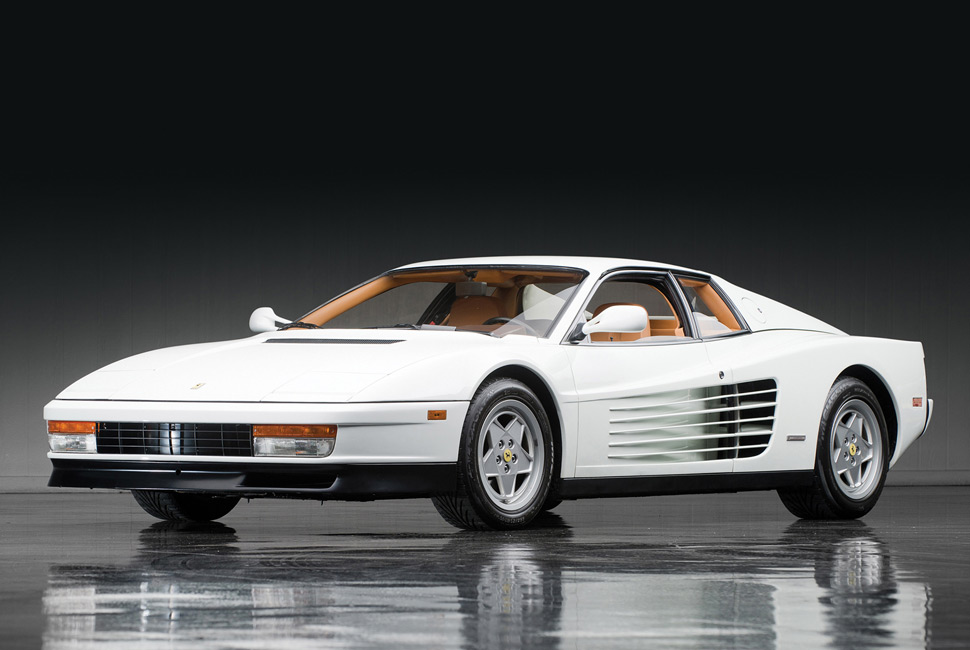
Ferrari Testarossa Side Intakes

Testarossa-Vents-Gear-PatrolTestarossa-Vents-Gear-Patrol
As big as they were, the Testarossa’s gills were completely functional. The massive intakes and long strakes served to organize turbulent air and use it to cool radiators and channel hot air through vents in the engine lid, creating downforce, and thus negating the use of a massive spoiler. Form and function, hand in hand.

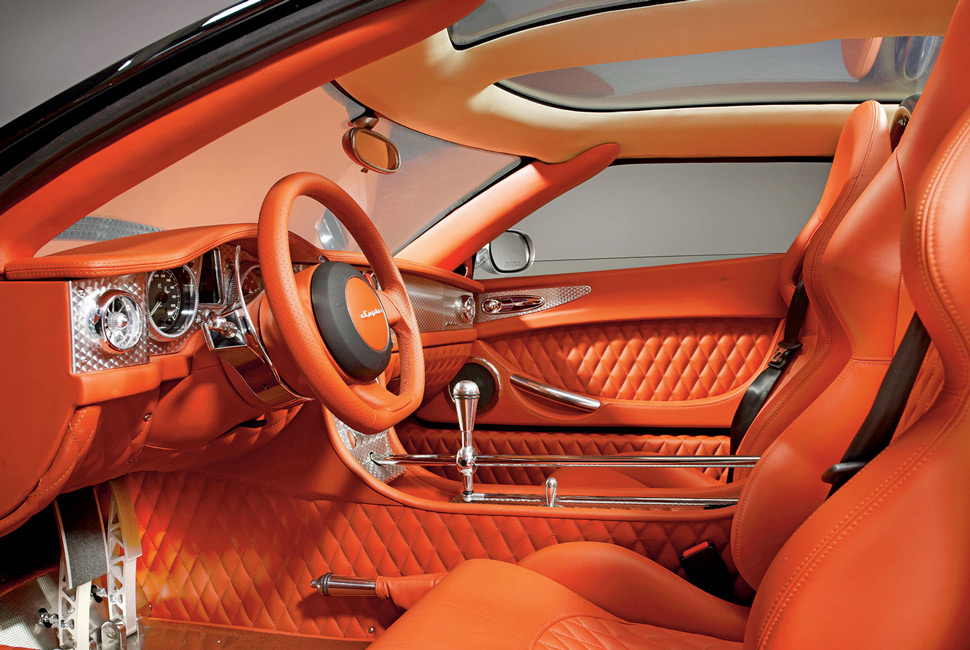
Spyker C8 Exposed Gear Lever

Spyker-Gear-SHift-Gear-PatrolSpyker-Gear-SHift-Gear-Patrol

Seeing the mechanical linkage of the shifter exposed is like looking into a grandfather clock. It’s absolutely mesmerizing to see that sort of precise engineering at work.

Porsche 930 ‘Slantnose’ Whale Tale

Porsche-Whale-Tail-Gear-PatrolPorsche-Whale-Tail-Gear-Patrol

It might have been more of a necessity on Porsche’s part to keep drivers from consistently coming out of turns the wrong way forward, but damn it if it doesn’t suit the 930’s powerful personality to a T.

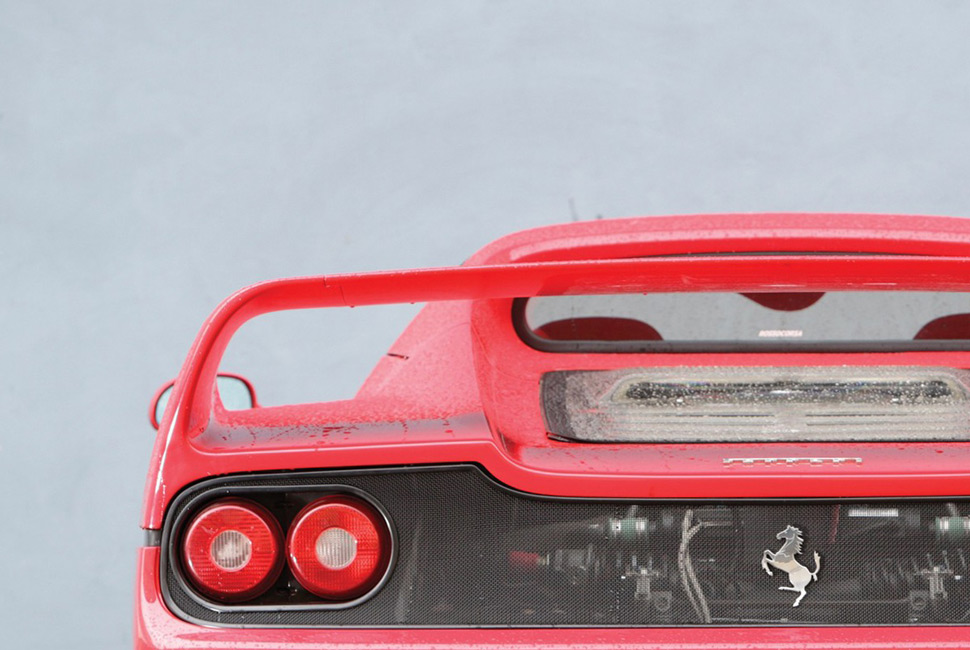
F50 Transparent Rear End

Ferrari-F50-Gear-PatrolFerrari-F50-Gear-Patrol

It’s almost a forbidden feeling catching a glimpse of the F50’s mesh rear end — like you weren’t supposed to see that glorious V12, but you can’t look away.

Pagani Zonda R Exhaust + Exhaust Note

Pagani-Zonda-Exhaust-Gear-PatrolPagani-Zonda-Exhaust-Gear-Patrol

A Mercedes-AMG hand-built V12 mated to Pagani’s even-length exhaust headers and stacked quad pipes would put the current F1 grid to shame in a sound comparison.

Koenigsegg CCX Dihedral Doors

koenigsegg-ccx-doors-gear-patrolkoenigsegg-ccx-doors-gear-patrol

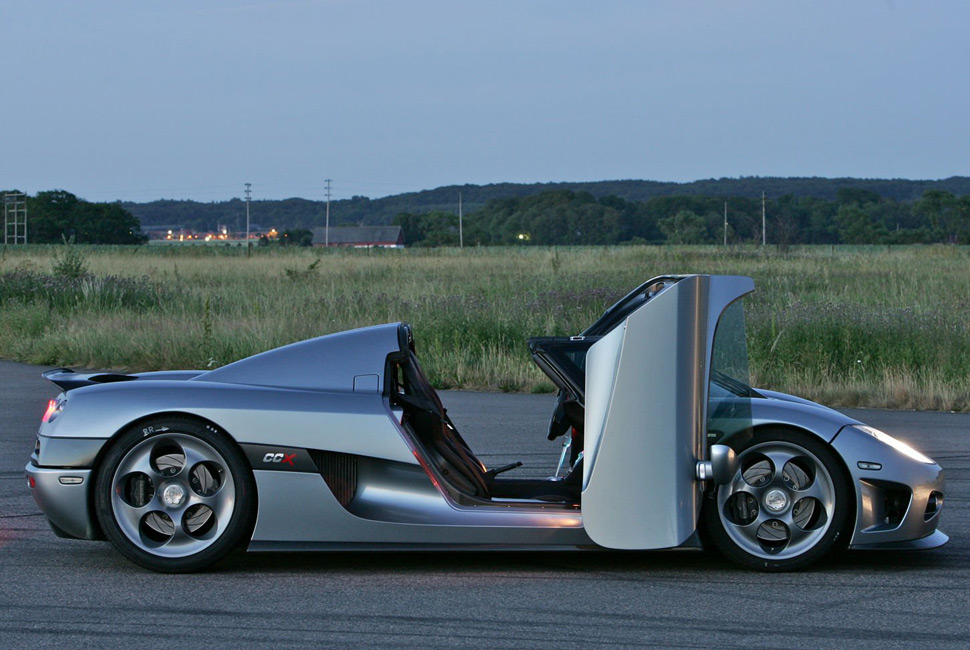
The CCX dihedral doors only serve to highlight Christian von Koenigsegg’s delightfully mad way of going about simple functions.

LFA Tachometer

Lexus-LFA-Dash-Gear-PatrolLexus-LFA-Dash-Gear-Patrol

The only way Lexus could get the tachometer to keep pace with the speed with which its V10 could rev was to go digital.

Volkswagen Phaeton Trunk Hinges

Phaeton-Hinges-Gear-PatrolPhaeton-Hinges-Gear-Patrol

There’s something to be said for beautifully milled and wonderfully complex trunk hinges on a Volkswagen.

Bentley Bentayga Breitling Mulliner Tourbillon

Bentley-Bentayga-Gear-PatorlBentley-Bentayga-Gear-Patorl

The world’s most expensive in-car clock ($160,000) in the world’s most expensive SUV ($250,000) creates a wonderful exercise in excess.

Original Mini Exterior Weld Seams

P90045991P90045991

Putting the weld seams on the outside meant Mini didn’t have to fit the welding machine in the car during assembly, meaning they could build the Mini even smaller. Brilliant.

Jaguar XJ220 Hidden Headlights

XJ220-Lights-Gear-PatrolXJ220-Lights-Gear-Patrol

When pop-up headlights were regrettably being phased out, the drop-down shields of the XJ220 made for a worthy continuation of the concept.

Bugatti Type 57 SC Atlantic Suicide Doors

Bugtti-57c-Gear-PatrolBugtti-57c-Gear-Patrol

Picking one aspect to highlight from the Bugatti Type 57 is a herculean task, but the way the suicide doors open up — as if they are welcoming you into its warm embrace — may be the most beautiful detail of all.

Jaguar D-Type Speed Hump

Jaguar-D-Type-Gear-PatrolJaguar-D-Type-Gear-Patrol

The spiritual connection to Jag’s storied Le Mans racer just oozes legendary performance and panache.

Alfa Romeo Grille

Alfa-Grille-Gear-PatrolAlfa-Grille-Gear-Patrol

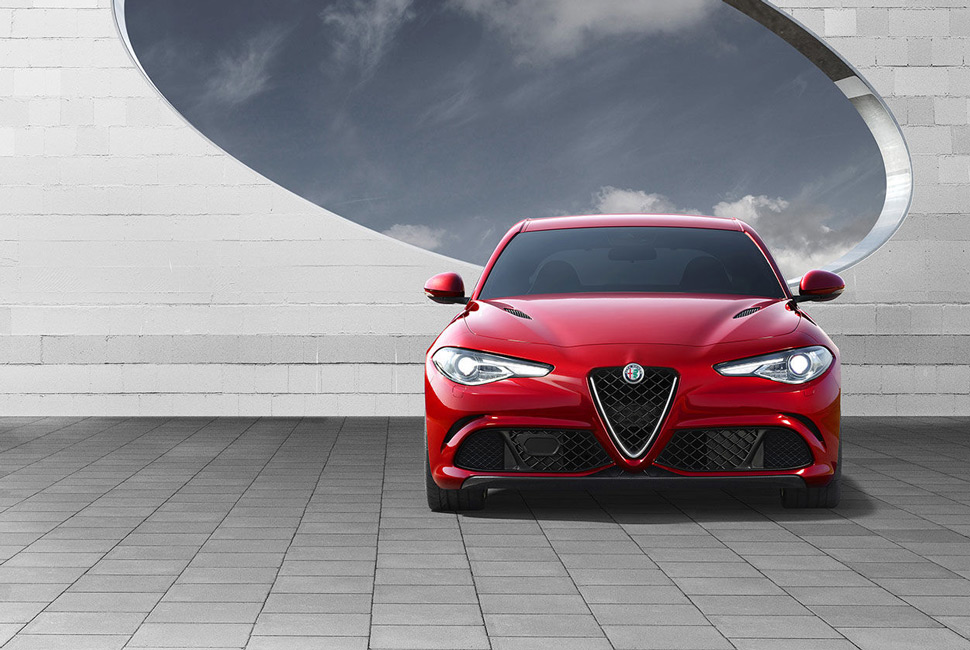
Most cars on the road today have some sort of rectangular cop-out for a grille, but that’s because few cars have the style and elegance required to sport one like Alfa Romeo’s signature fascia.

Porsche 918 Top Exit Twin Exhaust

918-Exhaust-Gear-Patrol918-Exhaust-Gear-Patrol

It had to be done to make sure the engine and hybrid system could fit in the 918 and still be low enough not to compromise the handling or design. But when fire starts spitting out of the the twin exhausts, you can’t help but applaud Porsche for “going green.”

Bugatti Chiron Side Intake

Bugatti-Chirion-Gear-PatrolBugatti-Chirion-Gear-Patrol

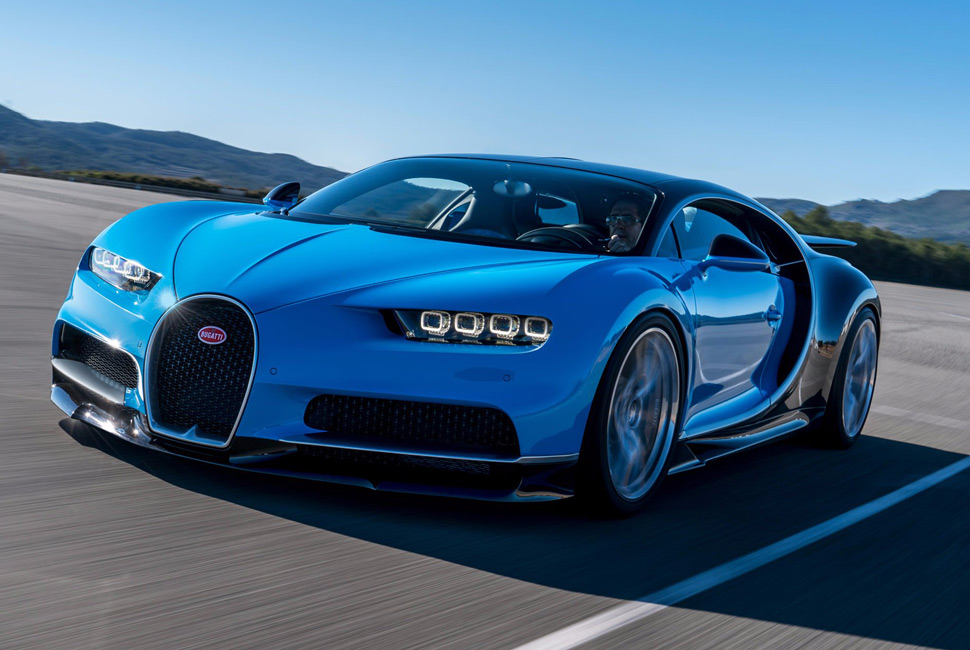
Very rarely do a concept car’s lines make it to the production model; when the side intake mimics the company founder’s signature, it deserves recognition.

BMW i8 Laser Headlights (EU only)

BMW-i8-Laser-Lights-Gear-PatrolBMW-i8-Laser-Lights-Gear-Patrol

The design alone makes every other headlight on the road look like a gaslight lantern.

Porsche Targa Top

911-Targa-Gear-Patorl911-Targa-Gear-Patorl

Simply put, it’s the better way to do a convertible.

Aston Martin Vulcan Tail Lights

Aston-Martain-Vulcain-Gear-PatrolAston-Martain-Vulcain-Gear-Patrol

Like nothing else on the road. In fact, you’d have to be aboard the Millennium Falcon at light speed with stars streaming by to see anything similar.

Mercedes 6×6 Third Axle

Mercedes-Benz G63 AMG 6x6 Showcar, Dubai 2013Mercedes-Benz G63 AMG 6x6 Showcar, Dubai 2013

The only way to describe it: necessarily unnecessary.

2016 Ford GT Rear Quarter

Ford-GT-Gear-PatrolFord-GT-Gear-Patrol

Between the separated intakes, massive flying buttress and the tail light doubling as a hot air extractor, the GT’s butt comes together as one fantastic piece of design.

Alfa Romeo TZ3 Zagato Cam Tail

Alfa-Zagato-Gear-PatrolAlfa-Zagato-Gear-Patrol

One of Zagato’s signature design elements incorporated into one of the most beautiful cars of the modern era.

BMW M4 GTS Roll Cage

BMW-GTS-Rollcage-Gear-PatrolBMW-GTS-Rollcage-Gear-Patrol

Roll cages in road cars usually seem out of place, no matter the performance or intentions of the vehicle. But the M4 GTS’s copper webbing of high-strength protection looks like a work of art.

Audi A4 Clamshell Hood

Dynamic photo, Colour: in crystal effect paint finish Ara BlueDynamic photo, Colour: in crystal effect paint finish Ara Blue

Hood shut lines can make or break a car’s design, so for a mass-production car like the new A4 to receive the extra attention and engineering to hide the necessary surface break is commendable by all accounts.

Porsche GT3 RS Fender Vents

GT3-RS-Vents-Gear-PatrolGT3-RS-Vents-Gear-Patrol

Usually when vents are put on cars for performance gains, they stick out like the dorsal fin on a sailfish. But the new GT3 RS fender vents sit just below the body panel surface as a subtle call to performance rather than an obnoxious aerodynamic catcall.

Lamborghini Aventador Ignition

Aventador-Gear-PatrolAventador-Gear-Patrol

Unleashing 700+ horsepower with the flip of a switch that looks at home on an F-22 Raptor just makes sense.

Citroen DS Steering Wheel

Citroen-DS-Gear-PatrolCitroen-DS-Gear-Patrol

Absurd. Ridiculous. Unbelievably stylish. All the reasons we love Citroen.

Shelby Cobra 427 Side Pipes

Shelby-Side-Pipes-Gear-PatrolShelby-Side-Pipes-Gear-Patrol

When there’s a 7.0-liter engine shoehorned into a car barely big enough for two people, anything other than side-mounted exhausts would be doing it a disservice.

Porsche Carrera Beechwood Shifter

Carrera-GT-Gear-PatrolCarrera-GT-Gear-Patrol

It’s an homage to the Porsche 917 race car, which is fitting for the Carrera GT considering its V10 may have started life as F1 engine development project.

Audi Virtual Cockpit

Audi-Virtual-Cockpit-Gear-PatrolAudi-Virtual-Cockpit-Gear-Patrol

In an age where infotainment systems stick out of otherwise well-designed dashboards like technological afterthoughts, Audi’s virtual cockpit gets the job done and with a stunning, customizable display.

Tesla Model 3’s Front End

Model-3-Fascia-Gear-PatrolModel-3-Fascia-Gear-Patrol

With Tesla’s “skateboard” battery pack, Elon Musk could have made the Tesla Model 3 look any way he wanted. By completely removing the grille from a car that will undoubtedly sell well, Tesla is deliberately challenging the status quo of car design.

Ferrari 599 Gated Shifter

599-GTB-Manual-Gear-Patrol599-GTB-Manual-Gear-Patrol

As it’s the last analog manual V12 Ferrari ever built, we’re glad Maranello decided not to cover up its beautiful simplicity with a leather boot.

The First 5 Things You Should Do When Buying an Electric Car

So, you’ve finally decided to do it: You’re getting an electric car. You’ve weighed the pros and cons, debated the advantages of plug-in hybrids versus pure EVs, and determined that a vehicle that forgoes internal combustion for electrons, batteries and motors is the right fit for you.

First off, congratulations. For most buyers, electric cars are likely to be more pleasant to drive than gas- or diesel-powered ones. Their powertrains aren’t just more quiet, they also deliver all their torque immediately, without a need to rev up like ICE (internal combustion engine) vehicles do, so they feel peppier from behind the wheel; their powertrains are simpler, so maintenance is generally easier and less frequent; their fuel is cheaper and, depending on where it’s sourced from, likely more eco-friendly than the fossil juice squeezed out of the ground.

Still, de-ICE-ing does involve making a few changes to your life. So to help, we’ve pulled together a guide to the first few things you should do once you’ve decided you’re going to buy an electric car.

1. Get a home charger.

Charging at home is by far one of the biggest advantages of owning an electric vehicle. But to really capitalize on this, you’ll need more than a three-prong 110-volt outlet, which only adds roughly four miles of range for every hour on the socket. You’ll want to install what EV nerds call an SAE J1772 — or, as it’s more colloquially known, a Level 2 charger. Depending on the car, these can deliver between around 12–60 miles of range per hour, though 25 miles per hour is a fair average. Still, even that’s enough to add 200-plus miles of range overnight, which can fill up an Audi E-Tron or a Jaguar I-Pace.

Installing a charger for your home can seem a bit intimidating; unless you’re an electrician or electrical engineer, it’s the sort of task best left to a professional. Luckily, the folks at Amazon have this under control; not only do they offer a bevy of EV chargers, but they also offer electric car charging installation through their Amazon Home Services department. (Angie’s List also provides references for EV charging station installers.)

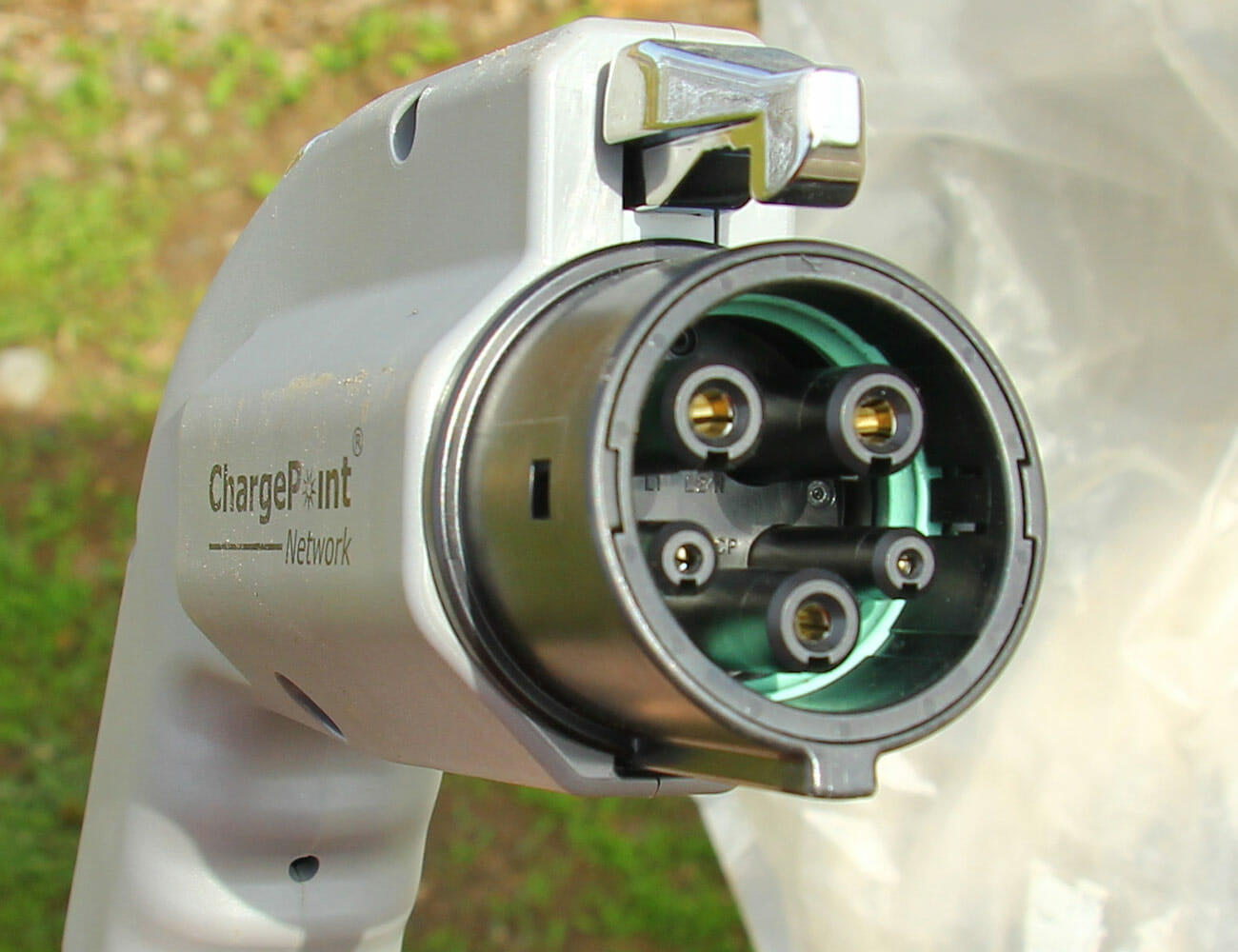
A Level 2 charger. (Photo: Michael Hicks)

If you’re feeling particularly industrious or green, you might also want to consider adding some solar panels to your roof, so you can charge that EV for free. (And, unless you live on Dracula’s schedule, a big home battery like Tesla’s Powerwall to store that power until you plug in at dinnertime.)

2. Learn about the charging networks (and download their apps).

Refueling at home may be way easier with an EV than with a gas-powered car, but the opposite holds true once you’re out of your driveway. Unlike the 168,000 gas stations found across America, electric car chargers aren’t abundant in every town, they’re not always easy to spot — and they’re not all the same.

You’ll need to learn the differences between types of chargers. While all cars sold Stateside can use the SAE J1772 Level 2 charger, Level 3 charging — also called DC fast charging — uses three different types of plugs. The best-known is Tesla’s Superchargers, which only work with the California-based company’s cars and can be found at 685 locations across the U.S. Then there’s the CHAdeMO style of charger, used solely by Nissan and Mitsubishi and found at 2,282 spots across America. Finally, there’s CCS, a.k.a. the SAE Combo Combined Charging System; this is used by all the rest of the EVs currently on sale, from the Porsche Taycan to the Smart ForTwo, and found at 2,043 sites in the U.S. (All figures via the Department of Energy, and valid as of December 2019.)

These Level 3 chargers can pump electrons into cars at far greater rates than in-home ones, with the fastest currently out there recharging even EVs with large batteries to an 80-percent state of charge or more in roughly half an hour. That said, charging speeds can vary wildly, even within this tier; some CCS chargers max out at 50 kW, for example, while others can deliver a stunning 350 kW.
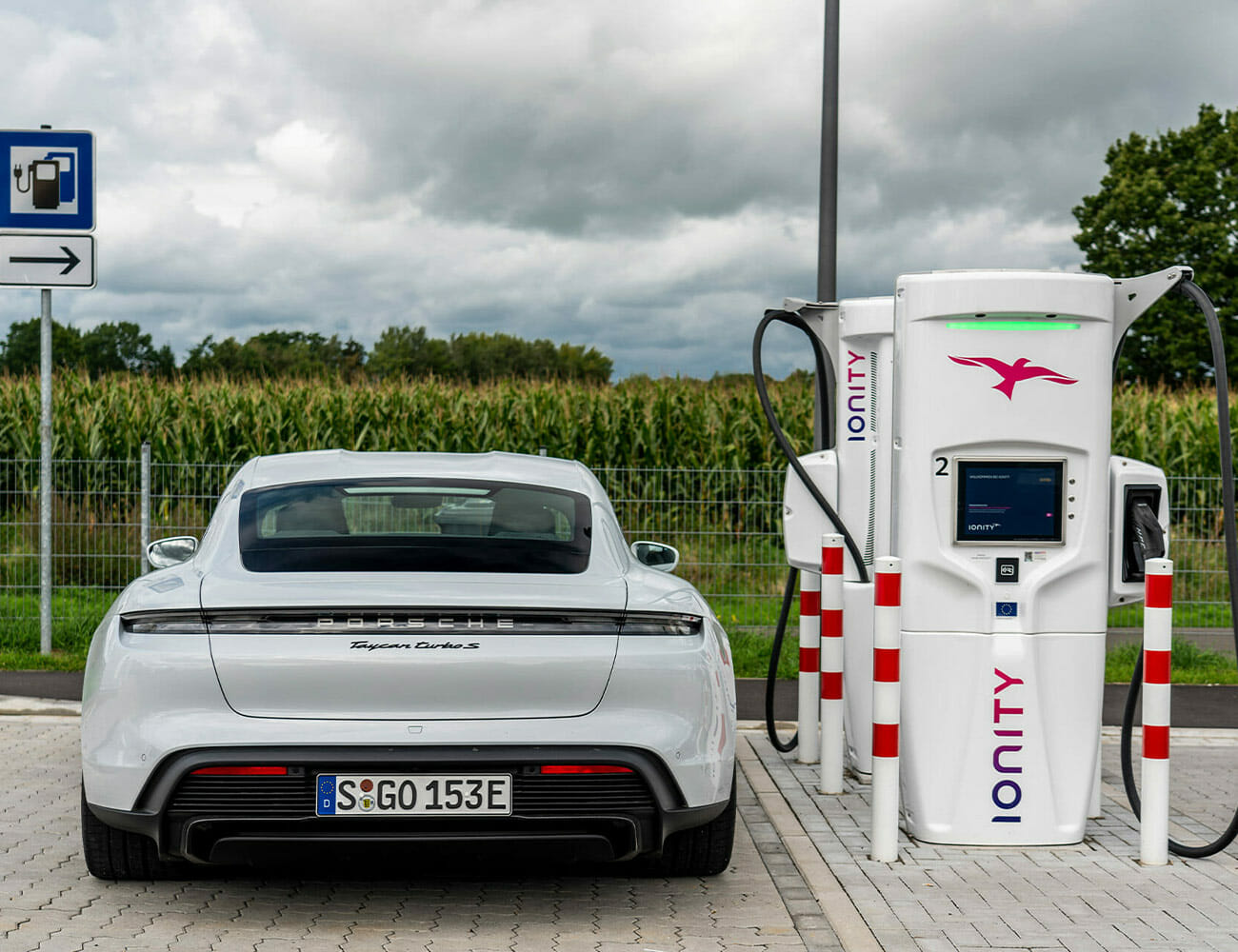
A Porsche Taycan at an Ionity charging station. Ionity is a cross-European charging network.

Different electric cars can also slurp up energy at different rates. The Taycan can take on power at levels of up to 270 kW, while the E-tron can only handle up to 150 kW, and the Nissan Leaf tops out at 100 kW. Other factors such as weather and equipment can also affect how fast the electrons flow.

The easiest way to suss out chargers is, as you might expect in this day and age, through an app or website. There are plenty of them to choose from, such as PlugShare, ChargeHub and Chargeway, with the latter notable for using a color-coded system to help you find the right type of charger for your vehicle. (Most of these apps will also tell you what level of power you can expect from a given plug.)

Many electric car charging stations are tied into networks, which allow you to set up a single account to quickly and easily pay for power from them. Tesla employs its own network, which only works with its vehicles; the other big three ones — Electrify America, ChargePoint and EVGo — are brand-agnostic. (They all also have their own apps, of course, which you can use to find chargers and pay for electricity.) As with gas prices, rates vary by region — but it’ll still almost always be cheaper than refueling an equivalent ICE vehicle.

All that said, remember: no matter how fast your car charges, it’s going to seem glacial compared to refueling an internal-combustion vehicle. Plan accordingly. (We suggest keeping a good book in the car.)

3. Look into tax breaks and other benefits.

The federal government hands out tax credits of $7,500 for the first 200,000 EVs a carmaker sells, with the credits tapering off after that figure. As of January 1, 2020, every electric car other than those made by Tesla is still eligible. (You can find out more about the forms you need to fill out here.)

In addition, many states offer their own tax credits or other financial incentives for going electric, ranging from the waiving of sales tax to as much as $5,000 in their own tax credits, in the case of Colorado. That rebate, for the record, means a Boulder resident could buy a $38,085 Hyundai Kona EV for just $25,585.

A number of municipalities, utilities and businesses also offer other benefits to EV ownership, such as the ability to drive solo in carpool lanes, credits on owners’ home electricity bills or rebates on home chargers, access to exclusive parking spots and exemptions from emissions testing. That last one, to be fair, just seems more like common sense than a perk.

Always crank up your jams before searching for EV ownership benefits.

4. Get a rental car or car-sharing membership.

Sooner or later, you’ll likely come across a task that your EV isn’t quite right for. Maybe it’s taking a long road trip through remote areas where chargers are hard to find; maybe it’s hauling home an amazing couch that won’t fit into your Tesla Model 3. When that happens, you’ll probably need a reliable way to grab a spare ride.

If you think you might need gas-powered wheels on the regular (say, every week or two), a car-sharing service like Zipcar likely makes the most sense. If you figure you’ll only need an alternative a few times a year, it’s better to stick with traditional car rental companies; just be sure to join a rewards program like Hertz Gold Plus or Enterprise Plus, so you can earn free rentals.

5. Buy some good gloves.

Since running the car’s heater exacts a much larger toll on range in an EV than in a gas-powered car (internal combustion engines spew out heat as a waste product, same as the human body; electric motors are far more thermally efficient), a good pair of gloves can be the difference between easily finishing a trip and having to seek out a charging station. Toss a nice pair like Filson’s full knit ones in the glovebox on day one and leave ’em there until you need them.

Note: Purchasing products through our links may earn us a portion of the sale, which supports our editorial team’s mission. Learn more here.

Will Sabel Courtney is Gear Patrol’s Motoring Editor, formerly of The Drive and RIDES Magazine. You can often find him test-driving new cars in New York City, cursing the slow-moving traffic surrounding him.

More by wcourtney | Follow on Twitter · Email

The Mercedes-AMG One sounds just like a Formula One car

Billed as the closest thing to a road-going Formula One car, the Mercedes-AMG One, unveiled as a close-to-production concept at the 2017 Frankfurt auto show, is still under development. Mercedes-Benz’s go-fast division released an update on the project that shows the hypercar in action.

Six-time Formula One champion Lewis Hamilton took a break from winning races around the world and trying to save the planet to check in with the team developing the One. Designing a groundbreaking hypercar is an expensive and time-consuming process, and the One stands out from its peers because it uses a street-legal version of the powertrain found in AMG’s championship-winning Formula One car. This explains why development has taken so long. Deliveries are now tentatively scheduled to begin in 2021, about two years later than originally announced, but it sounds — literally — like AMG’s most powerful street-legal model will be worth the wait.

“The sound is pretty much exactly the same as it is in the race car,” Hamilton pointed out. Video footage of the One going around a track hints it will take a turn like a race car, too.

The turbocharged, 1.6-liter V6 is the One’s main source of power, and its main source of delays. Getting it to comply with emissions regulations was easier said than done. It idles at 1,200 rpm, which is high for a road car but low for a Formula One car, which turns at a stratospheric 5,000 rpm when it’s waiting on the starting grid. The electrified part of the powertrain consists of four electric motors, including two that zap the front wheels into motion, and they also need to be fine-tuned for road use. All told, the One will put over 1,000 horsepower under the driver’s right foot. The tradeoff is that the powertrain will require a major overhaul after about 30,000 miles.

Mercedes-AMG will cap One production at 275 units, and pricing starts at $2.7 million. That’s an eye-watering sum, but the hypercar market is stronger than ever, and every build slot was spoken for before the model made its official debut. Don’t expect to bag a used example shortly after deliveries begin; AMG is going to great lengths to ensure reservation holders don’t flip their car for a profit.

Why You Should Care About the Audi E-Tron

Brand: Audi
Product: E-Tron
Release Date: May 2019
Price: $74,800+
From: audi.com

Gasoline’s supremacy hasn’t ended yet, but it’s starting to wane. After many years existing on the periphery of the automotive world, electric cars are at long last starting to find purchase. Tesla has carved out an impressive cultural and sales niche selling nothing but EVs, while mainstream manufacturers from Hyundai and Chevrolet to Porsche and Jaguar at the high end have all begun selling full-scale production cars that have no need for fuel tanks.

Into this growing category now steps Audi, leading the charge alongside the Taycan for the entire VW Group. That automotive Goliath has pledged to unleash 22 million new EVs on the planet’s roads by 2028, a plan involving no fewer than 70 new models. And the first one of those wearing the four rings on its nose is this five-person SUV.

What exactly is it?

A midsize crossover that also happens to be Audi’s first true electric car.

Which means…?

No internal combustion engine, no gas tank, no transmission, no tailpipe. No idling, no fumes, no oil changes, no risk of carbon monoxide poisoning. No atmosphere-thickening greenhouse gases. Just pure, seamless electric power running everything from the wheels to the heater.
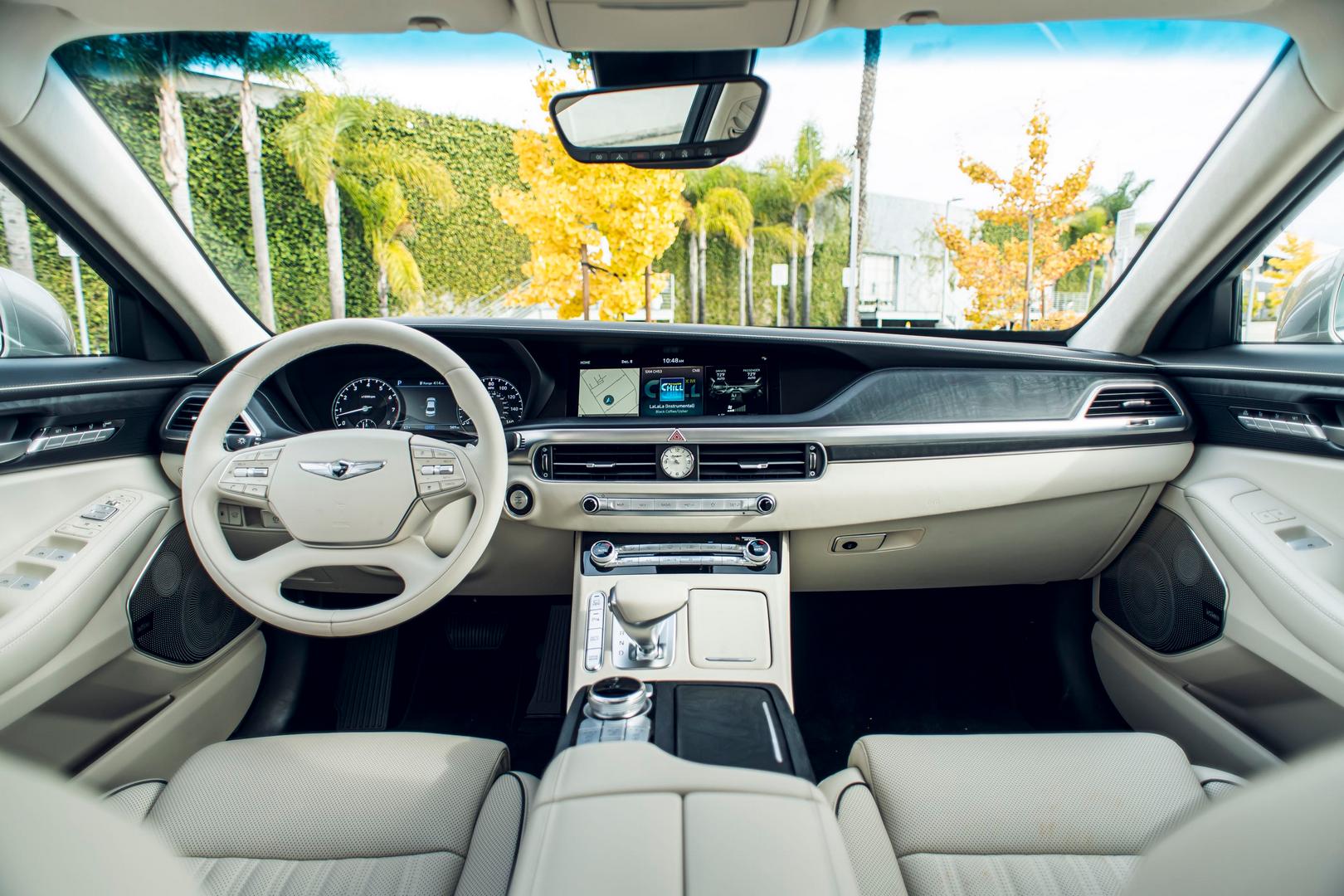
All of that comes in a high-riding hatchback body of the sort that drives buyers these days wild. At 193 inches long, the E-Tron lands roughly between the Q5 and Q7 in Audi’s SUV size spectrum; there’s no third row, but the two leather-wrapped rows that are present both offer ample, if not abundant, space. Somewhat surprisingly, the 1,540-pound battery that makes up an integral part of the floor doesn’t cut into the interior much at all.
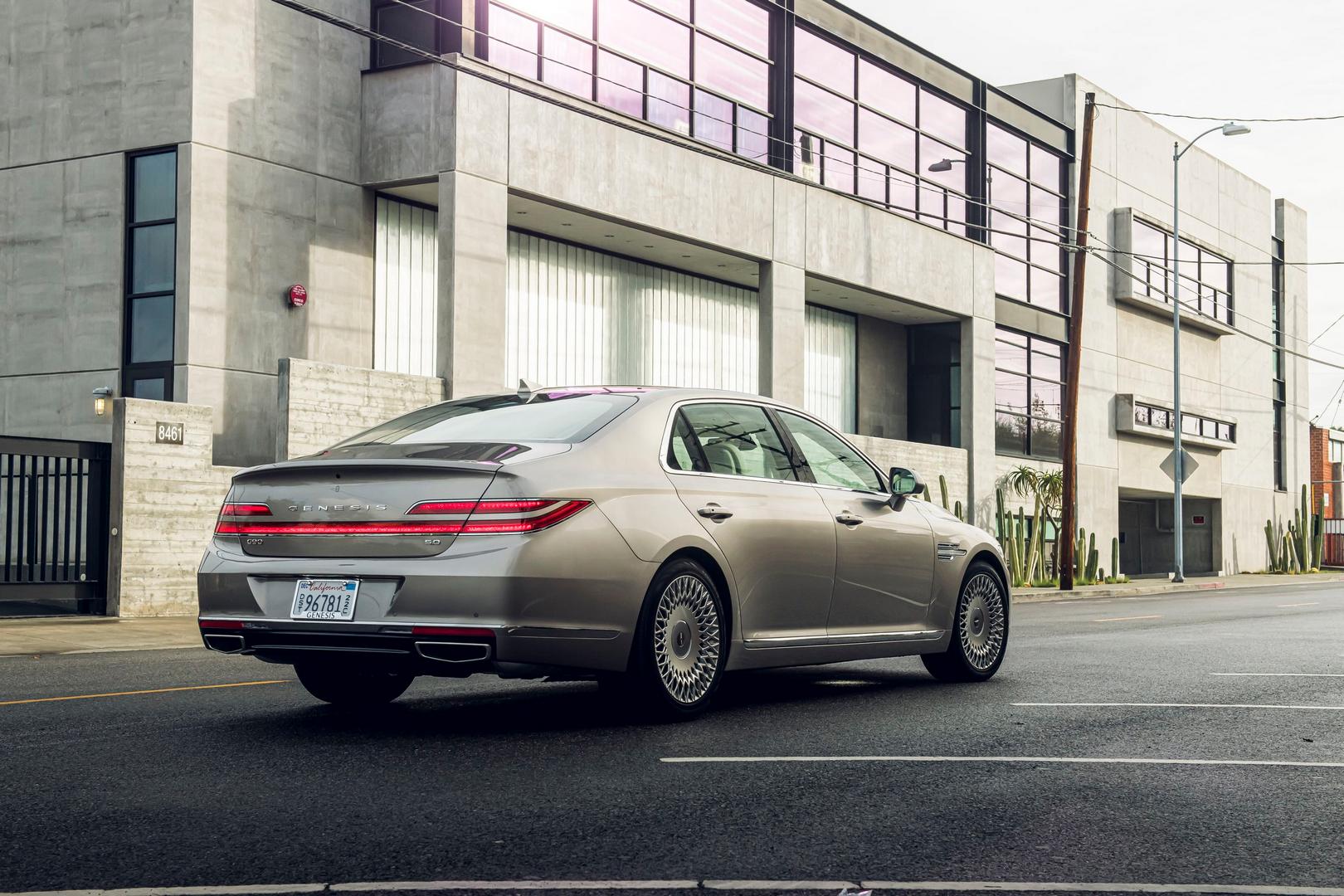
What’s special about it?

Well, there’s that whole lack of a place to stick a fuel nozzle. The E-tron’s powertrain consists of a pair of electric motors: one for the front axle, one for the rear, thus enabling the all-wheel-drive capabilities Audi has become known for. They source their flow from a 95-kilowatt-hour battery that sits beneath the passengers, though just 83.5 kWh of that is available, in the interest of long-term battery preservation. The total output of all that comes to 402 horsepower, though that’s only with the shifter in Sport mode, and only for spurts of up to eight seconds.

That said, considering it only takes 5.3 seconds to go from 0 to 60 mph, eight seconds is precisely enough time to get you up to extra-legal speed almost anywhere in America. Plus, the instant-on action of electric motors means there’s no need to rev up for full power; it’s all there the instant you breathe on the pedal. As a result, the 5,754-pound E-tron can dust practically anything short of a V8 Mustang at a stoplight in the real world.

You’d never know about its futuristic powertrain from looking at it, though. Audi played things cautious with this first foray into mainstream electrification; inside and out, it looks every bit in line with the rest of the carmaker’s lineup. (Contrast that with the Jaguar I-Pace, which wears its Tomorrowland tech proudly with unmistakable styling that looks like nothing else on the road.) It drives with the same sort of smoothness and tautness of every big Audi, be it a crossover or sedan. There’s not a whole lot of feel through the steering, but it’s well-weighted and immediate enough that you don’t mind much.

Indeed, the entire mission brief seems to have been to minimize the electric-car aspects as much as possible, in order to make it seem as unthreatening as possible to electric-curious soccer moms. Unlike Tesla, Nissan and Jaguar, for example, the E-tron doesn’t offer one-pedal driving (where the power-regenerative capabilities of the electric motors kick in as you reduce pressure on the throttle, causing it to slow down without pressing the brake).

And like the styling inside and out, the infotainment, materials and controls all seem interchangeable with any other Audi. The only time outsiders would be aware how different it is from its siblings is when they hear the odd science-fiction warble it makes at low speeds to let pedestrians know it’s nearly.

What the hell is “E-Tron,” by the way?

E-Tron is Audi’s branding for electric and plug-in hybrid vehicles. The name dates back more than a decade, first appearing on a sleek, R8-esque concept car ostensibly driven by four electric motors that Audi claimed made a combined 309 hp and 3,319 lb-ft of torque. (No, that’s not a typo.) The moniker continued to show up on a series of concept cars until 2013, when it finally reached showrooms — not as an EV like the concepts, but as a plug-in hybrid version of the A3 hatchback that could go all of 31 miles on electricity alone. So aside from an effectively inconsequential run of all-electric R8 E-trons that existed as much to make Tony Stark look cool in Iron Man 3 as anything else, this five-person crossover is the first Audi to truly live up to the E-tron brand.

What does it compete against?

The aforementioned Jaguar I-Pace is its closest competition. They share a lot in principle: they’re around the same size and start around the same price, mark their makers’ first real foray into true EVs, and are forced to deal with the infrastructural issues that challenge any non-Tesla EV. Speaking of Elon Musk’s car company: the Tesla Model X also stacks up right against the E-tron in price, though it’s a bit larger and goes much farther on a charge.

Any downsides?

The biggest issue is the current lack of current, so to speak. Right now, there’s no expansive network of easily-accessible fast chargers for Audis the way there is for Tesla drivers in the form of the Supercharger network. Audi claims the E-Tron can chug electricity at up to 150 kW, enough to add 54 miles of range on a 10-minute charge. Sounds great, in theory. In practice, it proved more difficult. I managed to find a Level 3 charger at an Audi dealership north of NYC and plugged it in with 111 miles of range remaining — only to be told it’d take an hour and 46 minutes to bring it back to max charge. That’s still faster than a Level 2 charger — those take about nine hours to replenish the battery — but it’s enough time to put a serious kibosh on the flow of your day.

(Also, a minor aside: when I tried to detach the charger, it was jammed. An Audi tech at the dealership was able to pop it loose by opening the hood and yanking the emergency release; he claimed it’s been a problem with E-trons. I can’t speak to other units, but I would recommend making sure you know how to use that emergency release before you leave the dealership.)

That wouldn’t be quite as much of a problem if the E-tron could go farther between plugs. The 204 miles of range drops to 196 with the climate control on, which makes it a more relevant number for most people. That’s a fine number for a commuter car or a weekend jaunt to a country house, but it effectively means you’ll need to budget for a lengthy charging stop every three hours or less on a road trip — and again, that’s if you can find a charger along your route.

Volkswagen’s Electrify America network of EV chargers, once fully operational and rivaling those Superchargers in scale, should help out quite a bit. For now, though, that web of plugs only has 2,000 fast chargers in 500 locations around America — compared with 168,000 gas stations across the land.

TL;DR — why should I care?

Because it’s the future — even if, like the players on Saturday Night Live in the ’70s, it’s Not Ready for Prime Time. The E-tron is Audi’s statement of intent, proof of concept for the next decade. As EVs evolve and places to plug in become more prevalent, the disadvantages will fade, leaving only the good parts: the thrilling power delivery, the lower amounts of maintenance, and of course, that whole “save the planet” thing.

The limited range and current dearth of charging stations make it hard to recommend choosing this Audi as your sole vehicle right now, unless you never, ever conceivably seeing yourself driving more than 200 miles in a day (and have a dedicated place to park every night). But if you’re looking for a second car and also thinking about trying to find an easy way into the EV pool…the E-tron will do right by you.

Audi provided this product for review.

Note: Purchasing products through our links may earn us a portion of the sale, which supports our editorial team’s mission. Learn more here.

Will Sabel Courtney is Gear Patrol’s Motoring Editor, formerly of The Drive and RIDES Magazine. You can often find him test-driving new cars in New York City, cursing the slow-moving traffic surrounding him.

More by wcourtney | Follow on Twitter · Email