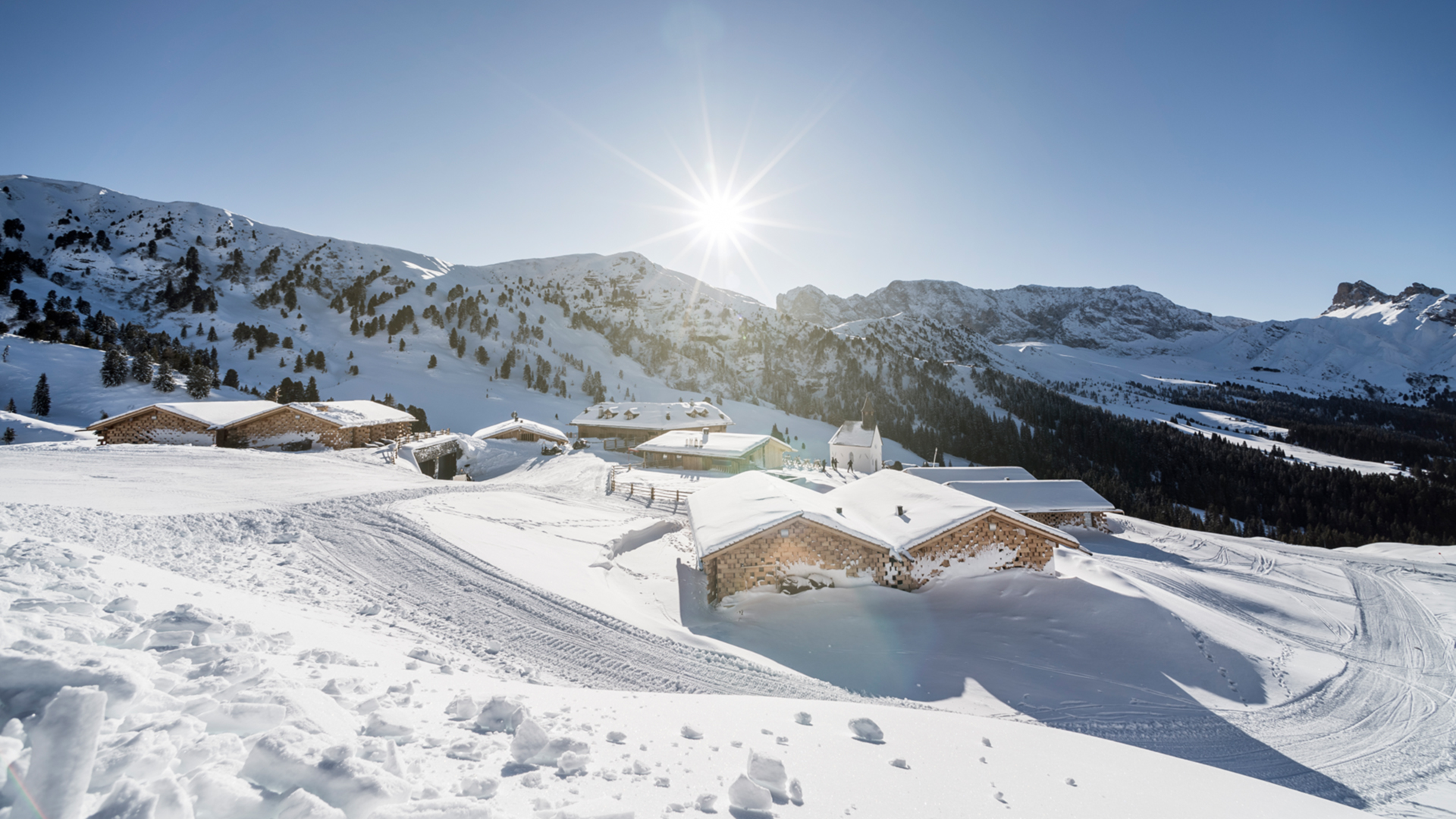
All posts in “Cars”

2020 Mercedes-AMG GLE 53 Coupe Review

One of our favorite SUVs is now also available with a Coupe body style. The GLE Coupe is being build in Tuscaloosa for the entire world along with the regular GLE and GLS models. On launch the available engine variants are limited to the 350d, 400d, AMG 53 4Matic and the plug-in hybrid 350de. We put three of them to the test.

Based on the new GLE, the new GLE Coupe looks a lot sleeker than the predecessor. The muscular front continues along the side with a strong shoulder line. The rear looks a lot better than the predecessor but is still not quite my thing. The triangular shaped rear lights look a bit out of place and the overall rear look is a bit boring.

The GLE Coupe has a 60mm shorter wheelbase than the normale GLE. This adds to better handling and a sportier character. And it has to be said, during our test drive from Innsbruck to the mountain village of Kühtai the GLE Coupe feels lighter and nimbler than you would expect from a car this size and weight. Even though the winter tires put a dampening effect on the car’s true driving dynamics it is clear that the GLE Coupe is among the sportiest SUVs out there.

Inside a modern cockpit awaits. The optional contour seats provide excellent support and comfort. The two large MBUX screens can be controlled with the touch pad in the center console – which I still need to get used to – or the two touchpads on the steering wheel. The car is packed with comfort, connectivity and convenience options. The only thing that really annoys me is the low position of the start/stop button as this is exactly where my right knee is.

Mercedes-Benz GLE Coupe 400d

The Mercedes-Benz GLE 400d comes with a 2.9 liter inline six-cylinder engine internally known as OM 656. It is paired with a 9G-Tronic automatic gearbox. The R6 engine produces 330hp and no-less than 700Nm of torque. The torque is available from as low as 1,200 rpm which allows for effortless overtaking and a sprint from 0-100 km/h in 5.8 seconds. Top speed is limited to 240 km/h.

The GLE Coupe 400d is the only model available at the moment with the excellent new E-Active Body Control suspension system. That alone should be a reason to consider the 400d variant of the GLE Coupe.

Mercedes-Benz GLE 350de

The 350de combines a small 4 cylinder diesel engine with a electric powertrain with a capacity of 31,2 kWh. According to the NEDC emission cycle this is good for 106 full electric kilometers. Combined the 350de delivers 320hp and 700Nm of torque. 0-100 km/h sprint is done in 6.9 seconds. 80% charge is reached in 20 minutes.

The normal GLE plug-in hybrid was the first hybrid with more than 100 kilometers range and the GLE Coupe is the first car in this segment with such a significant all electric range. Thanks to its exceptional fuel economy and low CO2 emissions the GLE Coupe 350de will be an attractive buy in many European countries with high CO2 taxes.

Mercedes-AMG GLE Coupe 53 4Matic

The sportiest GLE Coupe available from launch is the AMG GLE Coupe 53 4Matic. The 3.0 six-cylinder petrol engine packs 435hp and 520Nm with an additional 22hp and 250Nm of boost thanks to the 48V mild-hybrid system. 0-100 km/h is done in 5.3 seconds and the GLE Coupe 53 AMG has a top speed of 250 km/h. In Sport Plus the GLE Coupe 53 AMG provides some audible drama with enhanced engine sound in the cabin and some pops and bangs from the exhaust. Not as loud as a 63 model but still entertaining.

The suspension is firmer and the panamericana grill along with wider wheel arches, AMG sideskirts and an AMG exhaust express the sportiness of this AMG model that fills the gap between the regular line-up and the upcoming GLE Coupe 63 AMG. Inside you can find AMG specific trim and MBUX has been expanded with a AMG track pace function, even though I doubt many customers will use that in their GLE Coupes.

What to Spec?

Mercedes-AMG GLE 53 Specs

Thanks to the new WLTP emission certification process there is are a lot less individual options for customers to chose when speccing their car. Because the weight and emission effects of all optional extras have to be calculated most car manufacturers including Mercedes-Benz grouped individual options in packages to significantly reduce the number of possible configurations. But there is still something to chose so here are our recommended things to spec on your new Mercedes-Benz GLE Coupe:

E-Active Body Control – Full active suspension system which recognized bumps and holes in the road and adjusts the suspension so that you don’t feel a thing. Nice gimmick is the ‘Curve’ setting which leans the car into the corner like a boat or skier. This suspension system is what sets the GLE truly apart from the competition.

Driver Assistance Package Plus – This package includes the most important safety and driver assistance systems including the latest version of Mercedes-Benz’s Adaptive cruise control with speed limit recognition and adaption, traffic jam assist and lane assist.

Energizing Package Plus – This includes the best seats Mercedes-Benz offers today including seat heating, seat cooling and massage function.

Keyless-Go Comfort Package – Once you had this in your car you never want to go back to using the key to open and close your car.

Parking Package with 360 degree camera – Due to the sheer size of the GLE Coupe and sloping roof line with a larger than usual black spot the 360 degree camera is a big help in narrow parking garages and inner-city streets.

Conclusion

The new GLE Coupe is a very attractive car. The coupe-style body gives it a sporty appearance but obviously limits its practicality compared to the normal GLE. The optional E-Active Body Control suspension is only available on the 400d but adds a whole new dimension to comfort and driving fun which makes it an engine variant worth considering. We are obviously eager to try the upcoming GLE 63 AMG but the GLE 53 AMG provides a good alternative for people with a somewhat smaller budget that still looking for fun. The GLE 350de with 100km full-electric range is very attractive for people looking for a car to commute in.

GTSPIRIT NEWSLETTER

The Toyota Sienna May Be Old, But It Still Holds a Trump Card in the Minivan Game

You might not realize it, but the minivan category thrives on innovation. Not in form, but in the small details of functions — the convenience features that make real life easier for most of us. An in-car vacuum, fold-flat second-row seats, an amplifier to make your voice cut into the kids’ headphones? You’ll find them in minivans, and nowhere else.

As the elder statesman of the minivan class, however, Toyota’s Sienna boasts little in the way of unique convenience novelties. Yet the Sienna does boast one trump card none of its rivals can match: all-wheel-drive. Wander into a Honda, Kia or Chrysler dealership, and you’ll find minivans with vanishing seats and plug-in hybrid powertrains…but they all come with front-wheel-drive. Most people who want AWD are probably going to buy an SUV anyway, goes the logic, so why bother?

This sort of reasoning, however, deprives the public of choices with regards to ideal family transportation. If you need to lug more than four people around (or really any mix of people and gear) a minivan is the most efficient form of transportation that doesn’t carry the stigma of criminal activity; adding AWD to the mix means it has the added grip to plow through snow and mud that would stymie two-wheel-drive cars. For that reason, if nothing else, the Sienna is worthy of consideration.

(Of course, that’s only the case until late this year, when Chrysler will be adding AWD back to its minivan lineup. But for now, the Sienna is the only game in town.)

All-wheel-drive + snow tires = all the grip you’ll likely ever need.

People began flocking to SUVs because of the added traction of having power go to all four wheels, but unless you’re planning on going well beyond the ends of the roads — which very few SUV or truck buyers do — there’s really no practical reason to opt for the added size and mass that comes with choosing a taller vehicle. When paired with a good set of snow tires, all-wheel-drive makes a vehicle capable of tackling bad winter roads with aplomb.

The Sienna rides at compact crossover height and serves up similar fuel economy, but delivers full-size SUV space. Clad in the right rubber, it’s as capable as any crossover…at least, capable of handling the conditions most crossover owners come across.

It may be old, but you won’t care from behind the wheel.

A 296-horsepower V6 connected to an eight-speed automatic means this van hustles with surprising vigor when you push it; no one’s likely to mistake it for a Ferrari, but it still flows through traffic well. Its 4,605-pound curb weight may land it in crossover territory, but it has the advantage of carrying its center of gravity a good deal lower.

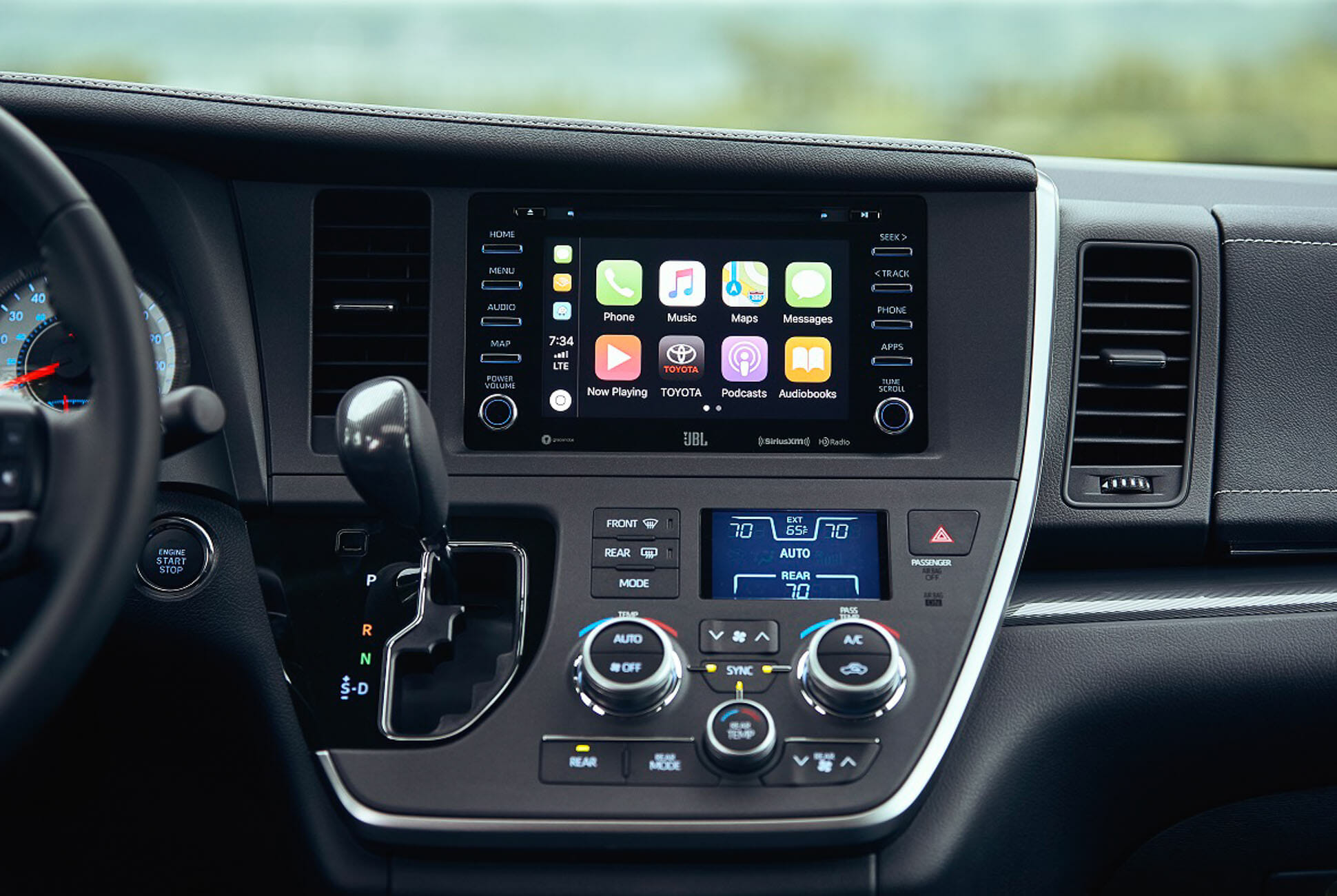
Of course, most of us don’t consider a minivan for its handling. Buyers will more likely be happy to hear about the host of modern convenience features: Android Auto and Apple CarPlay, a collision-avoidance system that detects pedestrians and cars, active cruise control, lane departure alert, automatic high beams, a tire pressure monitor and a rear-view camera all come standard; parking sonar, blind-spot monitoring, rear cross-traffic alert, a system that lets you save your voice by projecting it through the third-row speakers and a second-row multimedia system with a 16.4-inch screen that can play two separate videos at once all come as options.

Oh, there are five USB ports and a ton of cupholders, too.

You can’t beat a van when it comes to space.

No, minivans aren’t sexy. The Sienna attempts to look cooler than most with its distinctly Japanese-spec front fascia, but still, it’s ultimately a block of cheese on wheels. Yet it’s that one-box shape that makes it such a great value, as it maximizes the interior volume. Fill all eight seats, and there’s still 39.1 cubic feet of space behind them — as much as a Chevy Suburban. Fold down the third row, you can seat five and carry 87./1 cubic feet of stuff; get the second row out of the way, and you can take on a cool 150 cubic feet of gear — more than any extra-large SUV on the market.

Will Sabel Courtney

Will Sabel Courtney is Gear Patrol’s Motoring Editor, formerly of The Drive and RIDES Magazine. You can often find him test-driving new cars in New York City, cursing the slow-moving traffic surrounding him.

More by Will Sabel Courtney | Follow on Instagram · Twitter · Contact via Email

2021 Cadillac Escalade: 5th Gen of All American Luxury SUV Revealed

The Cadillac of SUV’s has been updated! The Escalade is one of Cadillac’s most successful models these days. The 5th generation model has been revealed this week. The look remains largely the same. What changes is the wide array of technology Cadillac has crammed into that interior!

There are a number of options when it comes to spec. Cadillac’s Sport trim for the first time, featuring a black mesh grille and black trim across the exterior. Luxury and Premium Luxury models feature a bright Galvano finish, while Platinum models top the range, with unique interior and exterior details.

There are few concessions when it comes to power. The Escalade gets a 6.2-litre V8 engine as standard with a power rating of 420 hp and 623 Nm of torque. A less powerful version, featuring a 3.0-litre turbo-diesel engine, is available with 277 hp and 623 Nm of torque. Both engines are matched with a 10-speed automatic transmission with electronic shift control. Cadillac’s acclaimed Super Cruise driver assistance technology is also available.

At the chassis side of things, the Escalade finally gets an independent rear suspension. Coupled with Cadillac’s signature Magnetic Ride Control and Air Ride Adaptive Suspension, the Escalade should glide over pot holes. The inclusion of an electronic limited-slip differential should improve handling too.

Inside, the Escalade offers an industry-first, curved OLED screen. At 38 inches, it is one of the biggest on the market. Three screens make up the total size including a 7.2-inch-diagonal touch control panel driver information centre to the driver’s left, a 14.2-inch-diagonal cluster display behind the steering wheel and a 16.9-inch-diagonal Infotainment screen to the driver’s right.

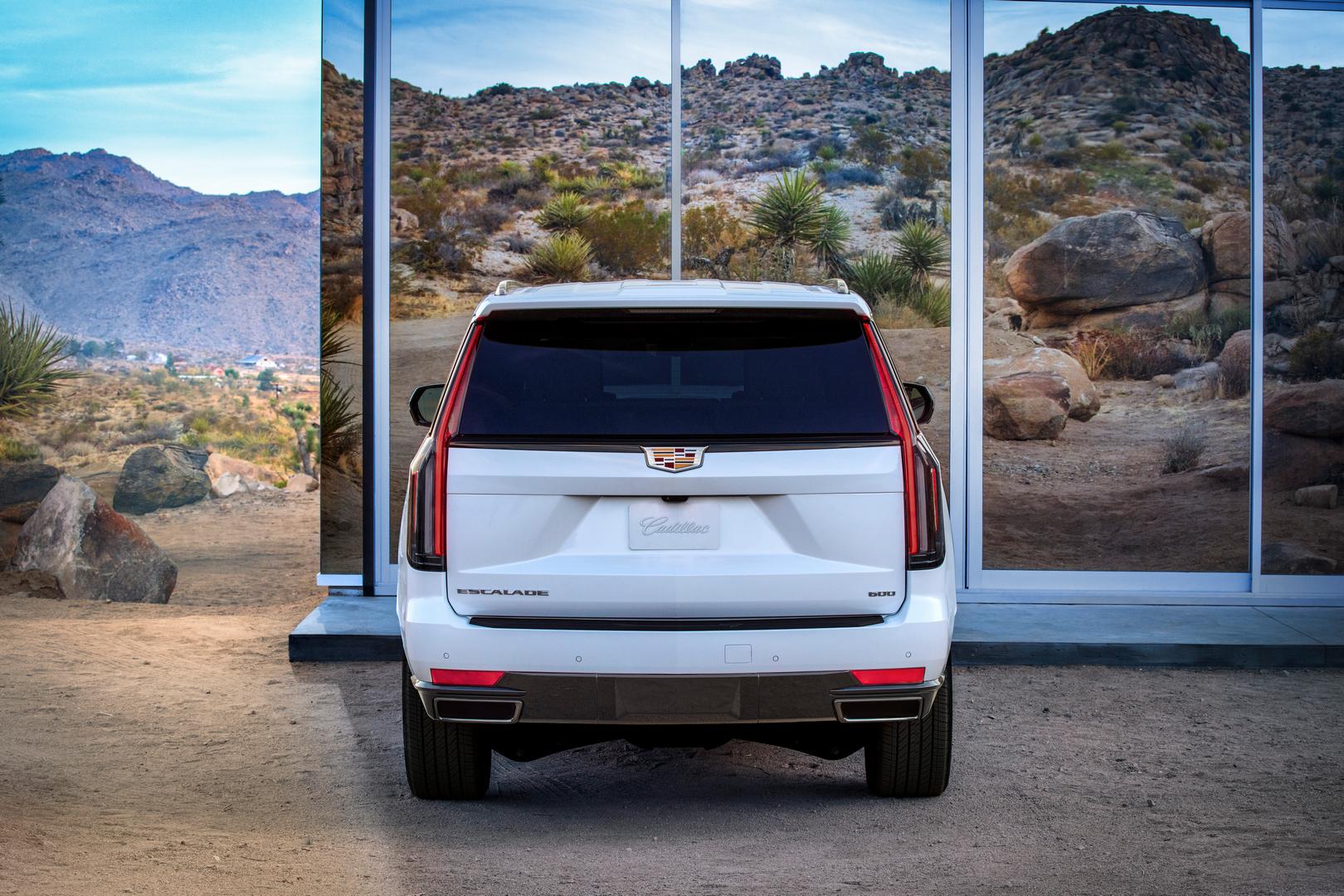
2021 Cadillac Escalade Rear

The screens incorporate a number of other important technologies. There is an all-new, Augmented Reality-enabled navigation, which uses live street views with directional overlays. Surround Vision, a standard feature that employs four exterior cameras to provide a 2-megapixel bird’s-eye view of the scene around the vehicle. A Trailering Integration Package, which offers up to nine camera views (including rear camera guidelines) to support easier hitching. Rear Camera Mirror, which streams a rear-facing camera view onto the conventional inside mirror screen. Night Vision, which uses infrared technology to enhance forward visibility. Finally, the rear-seat entertainment features a pair of 12.6-inch-diagonal independent touch displays.

Improvements have also been made to interior space. The Escalade gets 40 percent more third-row legroom and a 68 percent increase in maximum cargo space behind the third row, up to 722 litres in the standard-length model.

GTSPIRIT NEWSLETTER

The UAZ SGR Combi Van Is Built for Frigid Russian Terrain

When it comes to expedition vehicles, off-road campers or all-terrain basecamps, you’ll normally find yourself in the position of having to choose between power, performance and creature comforts because that’s the nature of the best.…

2020 Ford GT gets more power, full carbon fiber body in surprise update

Just when you thought the Ford GT was yesterday’s news, Ford hits us with an unexpected shot of supercar. With a few years of production remaining (scheduled to finish in 2022), Ford has decided to make the last half of its run of GTs a hair better than the first half. Call it a mid-cycle refresh, but for a half-million dollar supercar.

Instead of 647 horsepower from the 3.5-liter twin-turbo V6, all 2020 GTs will produce 660 horsepower. That 13 horsepower increase comes thanks to a few changes, according to Ford. Mechanical upgrades include new gallery-cooled pistons and higher energy ignition coils. This is then combined with a new engine calibration, ultimately resulting in a broader torque band — though Ford hasn’t told us what the exact difference is yet. Ford mentions that lessons learned from the track-only GT Mk II helped this upgrade along. 

Cooling to the engine is greatly improved, as Ford designed new buttress air ducts that increase airflow by 50 percent. The intercoolers are also slightly larger than before, a boon for extreme track use. Speaking of the track, Ford says it also increased the suspension stiffness in “Track” mode for even greater on-track performance. It was probably stiff enough before, but maybe you’ll be able to pick up a tenth of a second somewhere in the lap. Everybody will be able to hear you a little better on track in the new car, too, because Ford is making the optional Akropovic titanium exhaust standard equipment for 2020. It was a $10,000 option before.

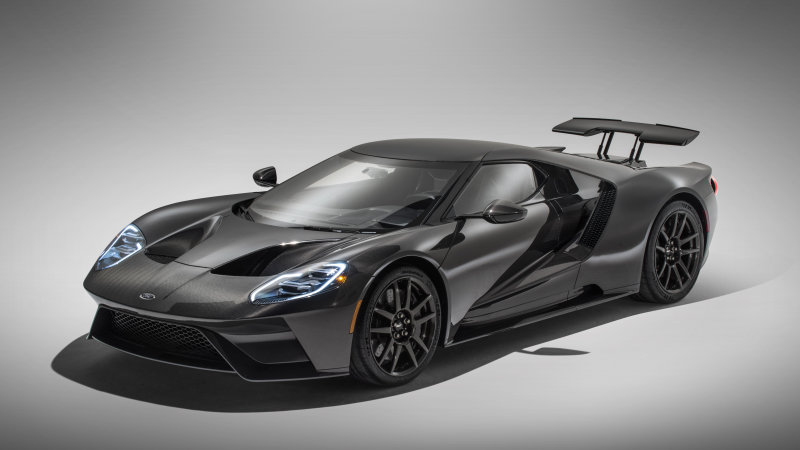
Lastly, Ford is introducing a couple new looks for the 2020 GT. The first is called Liquid Carbon, and it’s pictured at the top of this page. If you like carbon fiber, this is the GT for you. Ford eliminated the paint! Well, not all of it. There’s still a special clear coat sprayed onto the full carbon fiber body — we’ve asked Ford what kind of weight savings there are with the elimination of the paint, but it wasn’t able to provide a figure. You can bring a little color to the party in the form of optional stripes and painted mirror caps. These will be available in any of the colors offered on the regular GT. The carbon fiber wheels will be standard with this car (duh), and you can still pick an optional brake caliper color.

The last appearance package is an updated Gulf Racing Heritage livery. Ford now uses black pinstriping to surround the orange stripes, and the number has changed from a 9 (2019 car) to a 6 for 2020 as it mimics the racing numbers of the back-to-back (1968 and 1969) Le Mans winning GT40. You can also select carbon fiber wheels on the Gulf liveried car this year, an option that wasn’t available for 2019.

When we asked, Ford told us the 2020 price has increased to “approximately $500,000.” That’s up significantly from the $450,000 Ford wanted when the car first went on sale. For those who want one of the special Liquid Carbon GTs, Ford says to expect a number in the $750,000 range. As a reminder, all GTs are currently spoken for, so these updated cars already have future homes.

Related Video:

Watch: 2020 Ford Mach-E Acceleration!

Chicago – At a special technology and concept event preceeding the 2020 Chicago Auto Show, Ford allowed journalists a close up look and a complimentary test ride in the upcoming Ford Mustang Mach-E pre-production prototype.

Introduced at the 2019 Los Angeles Auto Show last November, the Mustang Mach-E surprised and impressed a lot of journalists and consumers alike. The sporty SUV has seating for four plus a spacious cargo area out back.

First, a quick look at the acceleration of the new 2020 Ford Mach-E.

Available in either RWD or AWD, and offering either a normal battery pack or an extended-range battery pack, the car should achieve a range from between 210 miles to a theoretical 300 miles depending on which drive configuration and battery are selected.

When available, the Mach-E should come with approximately 330hp and 417 lb-ft of torque, which should deliver a 0-60 time of under 5 seconds. Two performance models are in the production pipeline also, the Mach-E GT should achieve 0-60 in under 4 seconds, and the GT Performance Edition is expected to make 460hp and a staggering 612 lb-ft.

The prototype looked great in person with clean aerodynamics and curvy, muscular-looking sheet metal. Inside, the seats were well-bolstered to hold you in place, but not so bolstered that getting in and out was difficult. A large tablet-like display features prominently in the center of the dash, much like a Tesla, but the Fords is larger and clearer to read. It was interesting to note that the Ford had something that Tesla’s seem to lack – soul. The Mach-E felt less like a soulless appliance and more like a comfortable and well-loved sweatshirt, the kind you want to slip into after work. If you catch my meaning.

Our drive was conducted inside the south wing of the McCormick Place Convention Center. The floor was polished concrete so it was slippery and an excellent test of the AWD Mach-E. The driver silently pulled out of the vehicle line-up, drove to the starting line and lined us up at one end of the large room. He stepped on the brake, then the gas, and released the brake.

The Mach-E’s wheels slipped for a second, then hooked up, and we went silently shooting down the length of the room as quickly as it could, the immense torque pushing us back into our seats. The traction control system and the AWD fought to find traction and succeeded. Our impression? It’s quick. REAL quick. There’s no doubt about that. Had the floor been rough concrete, I think the acceleration would have been much quicker but the fact that it accelerated as quickly as it did on the equivalent of ice was impressive.

Ford is taking orders online now and we’re looking forward to reviewing one soon. Stay tuned!

GTSPIRIT NEWSLETTER

Ford Unveils Upgraded GT for 2020, Special Editions

Chicago – Ford unveiled their upgraded 2020 GT at a special off-site presentation to kick off the 2020 Chicago Auto Show. Beneath the black sheet lay a stunning GT, with the body done in what Ford refers to as “Liquid Carbon.” It’s essentially a high-gloss, exposed carbon fiber body. With the GT already completely constructed from carbon fiber, leaving the paint off lets one observe the unique beauty and the natural weave of the carbon fiber cloth. It lends the GT a unique and stylish alternative to the painted body.

The new 2020 Ford GT benefits from several changes learned from the GT Mk II, which is the track-only version of the GT. It has larger ducting to feed 50% more cool air to the turbo intercoolers, allowing it to run at peak performance for longer periods, revised engine calibration, mechanical upgrades like gallery-cooled pistons and higher energy ignition coils, and Ford has also made the previously optional titanium Akropovic exhaust standard, reducing weight, increasing airflow, and providing a fantastic exhaust note. These changes serve to make an additional 13hp, raising the total to 660hp. More importantly though, it makes a broader torque curve to make that power more accessible throughout the rev range.

Ford didn’t stop at the engine though. Track mode now has increased suspension damping to improve handling and reduce unwanted body movement in high-speed transitions on the track.

The Liquid Carbon body will be limited to 12 units per year as it’s a very labor-intensive hand-built car.

The other finish available is a revised Gulf Racing livery, with black pinstriping between the blue and orange. This serves to set off the colors a little more. Unlike the earlier GT’s, which featured the “9” racing number in the white circles, the new GT will feature the other historical GT40 racing number of “6”. Also, carbon fiber wheels will now be available now on Gulf Heritage racing livery.

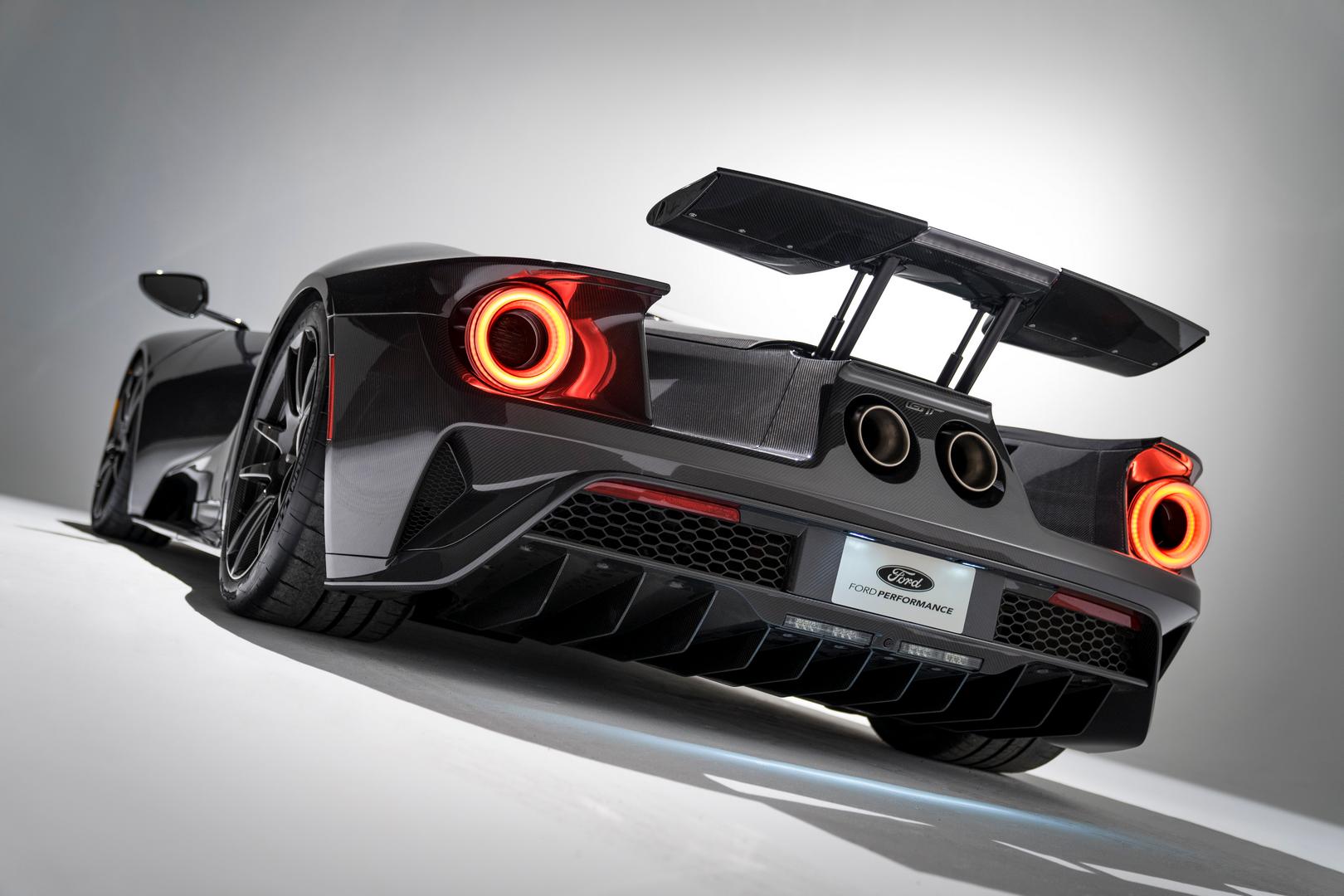
Liquid Carbon Ford GT Rear

Production of the carbon supercar will wrap up in 2022.

GTSPIRIT NEWSLETTER

Super Bowl 2020: GTspirit Assesses the Ads

The American Football League finals are over – and over 100 million viewers in the US alone watched the spectacle in Florida’s Hard Rock Stadium. This event deserves our attention not only for the sports: for many years, a battle has been raging for the best, funniest and most sophisticated ads designed to complement the football circus.

This year, beyond the usual contributions from companies such as Amazon, Google or the detergent Tide, it even got political. First, billionaire media mogul Michael Bloomberg bought a slot dedicated to Donald Trump’s gun rights policy, and the US President countered with two clips of his own.

Still, the most fascinating contributions came from the auto industry. Produced with enormous effort budget, we saw ads from – in alphabetical order – Audi, Genesis, Hummer, Hyundai, Kia, Jeep, Porsche and Toyota. Here’s our take.

Audi: No traffic for EVs

[embedded content]

Doll-like actress Maisie Williams of “Game of Thrones” fame is stuck in a traffic jam with her Audi e-tron Sportback, surrounded by decidedly more cool muscle cars from the 70s and 80s. The outside temperature: “Eight degrees above normal.” Perhaps this is the fault of those internal combustion engines? In any case, Maisie has enough: intoning the unbearably kitschy song “Let it Go” from the Disney flick “Frozen,” she bolts out of traffic, heading to another place where apparently far fewer people are heading. “Let’s drive to a more sustainable future,” Audi lectures us at the end. Thanks, we’ll stick to the muscle cars.

Genesis: A beautiful departure

[embedded content]

Stuck at a stuffy party, supermodel Chrissy Teigen is fed up with “old luxury” and seizes the opportunity to call out some of its protagonists – such that woman with botox lips or that other one who was in Asia and now considers herself “spiritual.” But alas, her husband, R&B singer John Legend, doesn’t show up in time to make the desired counterpoint. When he finally pulls up in his new Genesis GV80, Chrissy just can’t get upset at her sexy companion: off they go, leaving “old luxury” behind. A funny spot with a great car. But the question remains: What, exactly, is the automotive equivalent of “old luxury”? Audi and Mercedes-Benz, or rather the Hyundai Equus?

Hummer: Fake numbers from GM?

[embedded content]

Absolute dominance: That’s the message of Hummer, GM’s brand with the politically incorrect military background. Henceforth, Hummer will be electric, and the ad tells us we need not worry: 1000 PS, 11 500 lb-ft (almost 15 600 Nm) of torque, 0 to 60 mph in 3 seconds, all of it delivered in eerie silence. “All electric, zero emissions, zero limits,” basketball legend LeBron James asserts in a voice that doesn’t tolerate contradiction. This ad’s aesthetics are dark and monochrome. Which stands in stark contradiction to the amusement the automotive community as it is poking at Hummer for its, modestly put, interesting claim that the truck will indeed make 11 500 lb-ft of torque. Perhaps at the wheel, having been channeled through a transmission, but not at the motor. E-mobility seems to rely on fake news, for the time being.

Hyundai: Hyundai Sonata with an Accent

[embedded content]

The parking space is small and neither the friends on the sidewalk nor the dog believe that the new Hyundai Sonata will actually fit in. But the driver proves everyone wrong: using the remote control, his car works itself into the tiny gap, thanks to Hyundai’s “Smart Park” system. The spot is set in Boston, the four protagonists all have real-life ties to it, and the copy is presented in a broad Boston accent: “Smaht Pahk.” Fun, although that special connection between Hyundai and Boston remains a mystery. Still, a nice ad for an elegant car, which unfortunately will not be available in Europe.

Kia: Get out the handkerchief

[embedded content]

Guiding the new Kia Seltos through grim neighborhoods, football player Josh Jacobs, who grew up in homelessness, wonders aloud what advice he would give to himself as a child. Sure enough, his younger self appears – and gets treated to calendar wisdoms: Be harder, challenge yourself. This is exactly what Jacob did – without any time travel, which is why he is one of the most successful soccer players in the USA today and should not have to drive a Kia Seltos. The connection between Jacob and the shockingly conventional crossover SUV remains a mystery.

Jeep: An ancient movie reference

[embedded content]

It’s Groundhog Day: Jeep re-enacts the iconic film, almost three decades old, in which actor Bill Murray is doomed to relive the same day until he becomes a better person. In the one-minute Super Bowl variant of the ancient movie, the new Jeep Gladiator makes sure Murray is looking forward to every day. We’re not sure he becomes a better person by drifting through the snow sideways, but the ad is funny and will surely prompt the boomer generation to get out the VCR again.

Porsche: The unbeatable Taycan

[embedded content]

The Porsche Taycan is so quiet that the robbery in the Porsche Museum goes unnoticed until the last moment. Then hell breaks loose: The multicultural and nonstereotypical assembly of security officers immediately sets off in a phalanx of Porsche’s greatest cars in order to catch the fugitive sedan. But of course, no other Porsche ever built is faster than the Taycan, which is why only a roadblock can stop it. At this point, it emerges that the chase is just a fun routine by the security team, staged for their individual and collective pleasure. The battery charge is sufficient for a happy return trip, while the quiet Taycan is aurally drowned out by deafening music.

Toyota: Heroic feats

[embedded content]

A detonating chemical plant, a farmer’s family attacked by bandits, a fearsome monster: in each of these scenarios, a hero prepares to sacrifice himself because there is no more space in the last escape vehicle, be it a fire truck, a horse or a snowmobile. But each time, an unexpected rescue appears – in the form of a Toyota Highlander: “I have space,” the middle-aged female behind the wheel says with a smile. In the last scene, she “rescues” her own son, who just sacrificed his taxi seat on a rainy night: “Get in, Brian,” mommy says. You never know what the abundant space in this SUV is good for. It’s a fun ad.

GTSPIRIT NEWSLETTER

The Best Cars to Buy in 2020

Kelley Blue Book released its Best Buy Awards for 2020 last November. KBB editors look at “quality, comfort, driving dynamics, dependability, low ownership costs, and affordability” to determine the best new car and best car in several different segments. There are a few changes from last year. KBB added “Midsize Truck” and “Two-Row Midsize SUV” categories, and split the alternative power category into “Electric Car” and “Plug-in Hybrid” segments.

Honda proved the top manufacturer, winning five of the 15 segments. Though the Hyundai Motor Group nearly equaled them by locking down four segment wins and the title for “best new car.” Ford and Audi were the other manufacturers to lead multiple segments.

The KBB award-winners are below, as well as links to our reviews. If you know what type of car you’re looking for, the awards could be a helpful jumping-off point. If you’re more intrigued by the performance vs. value end of the spectrum, check out our favorite cars we drove in 2019.

Best New Car / Best Three-Row Midsize SUV: 2020 Kia Telluride

grey_placeholdergrey_placeholder

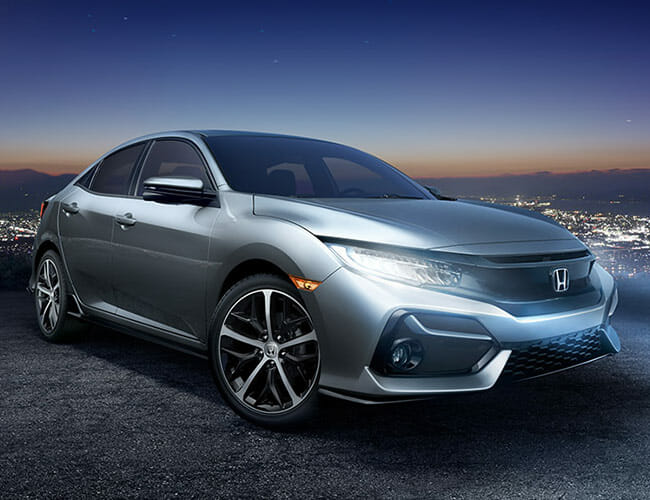
Best Compact Car: 2020 Honda Civic

grey_placeholdergrey_placeholder

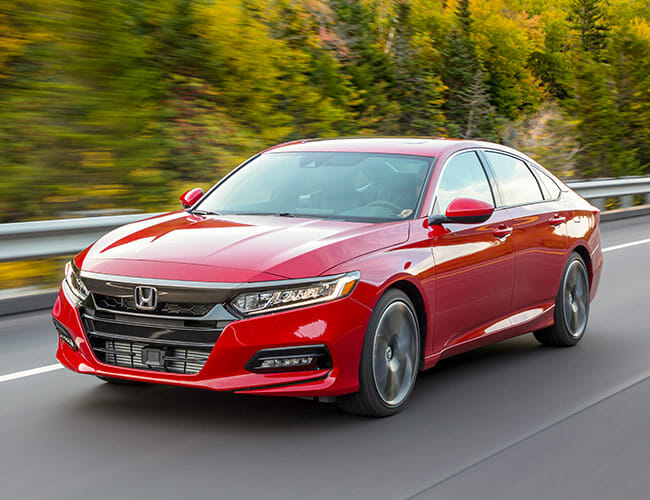
Best Midsize Car: 2020 Honda Accord

grey_placeholdergrey_placeholder

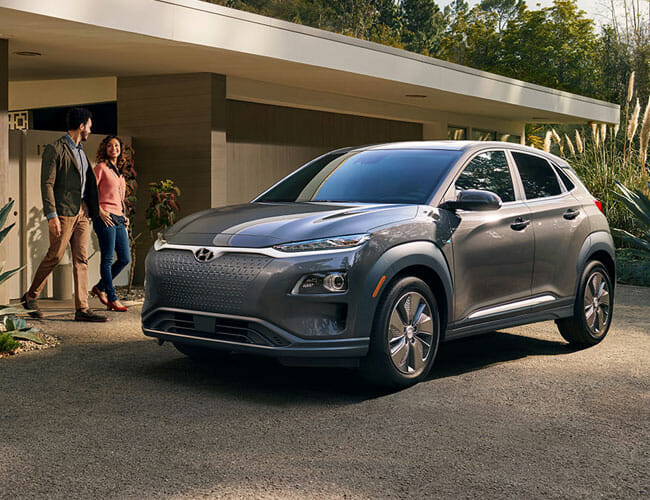
Best Subcompact SUV / Electric Car: 2020 Hyundai Kona

grey_placeholdergrey_placeholder

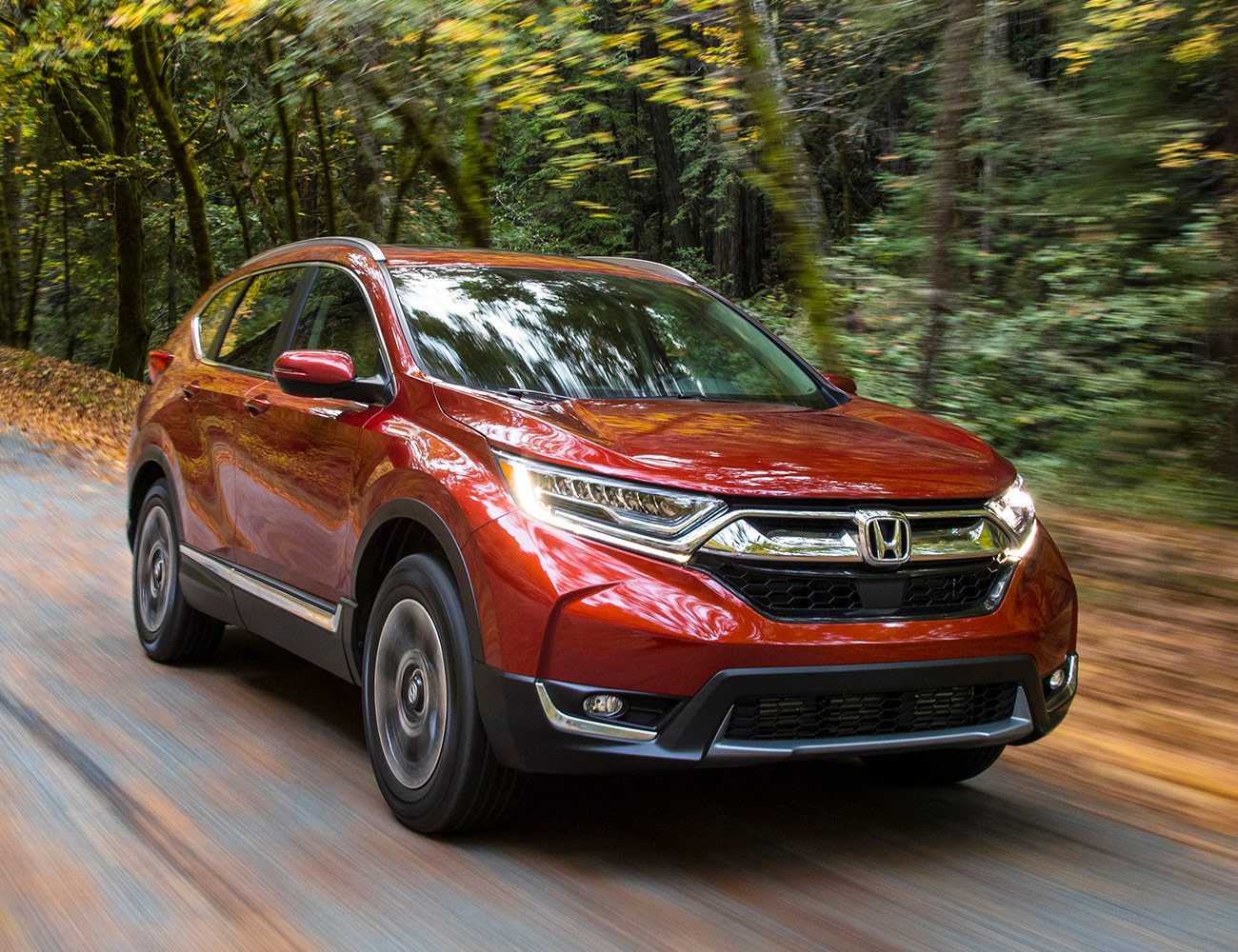
Best Compact SUV: 2020 Honda CR-V

grey_placeholdergrey_placeholder

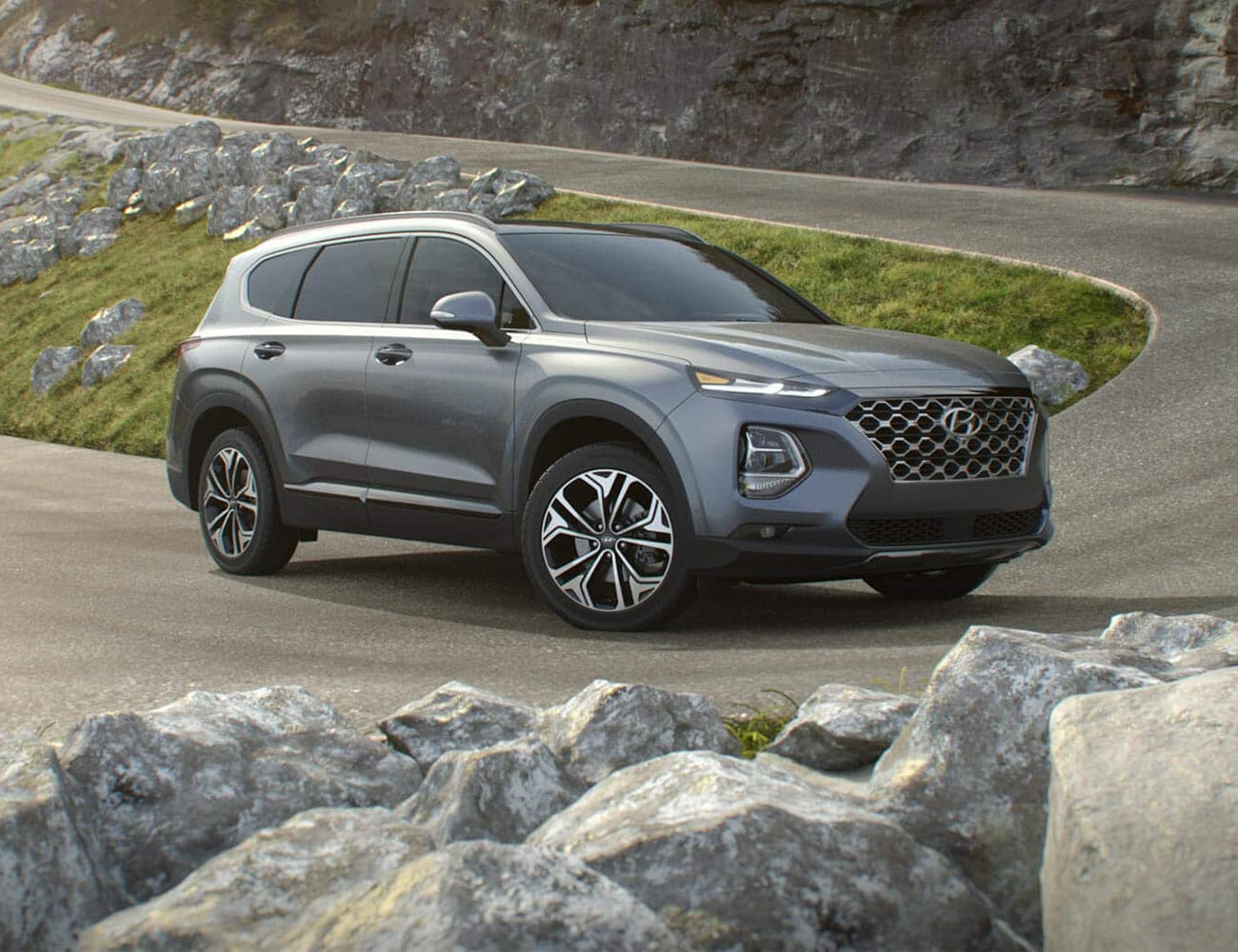
Best Two-Row Midsize SUV: 2020 Hyundai Santa Fe

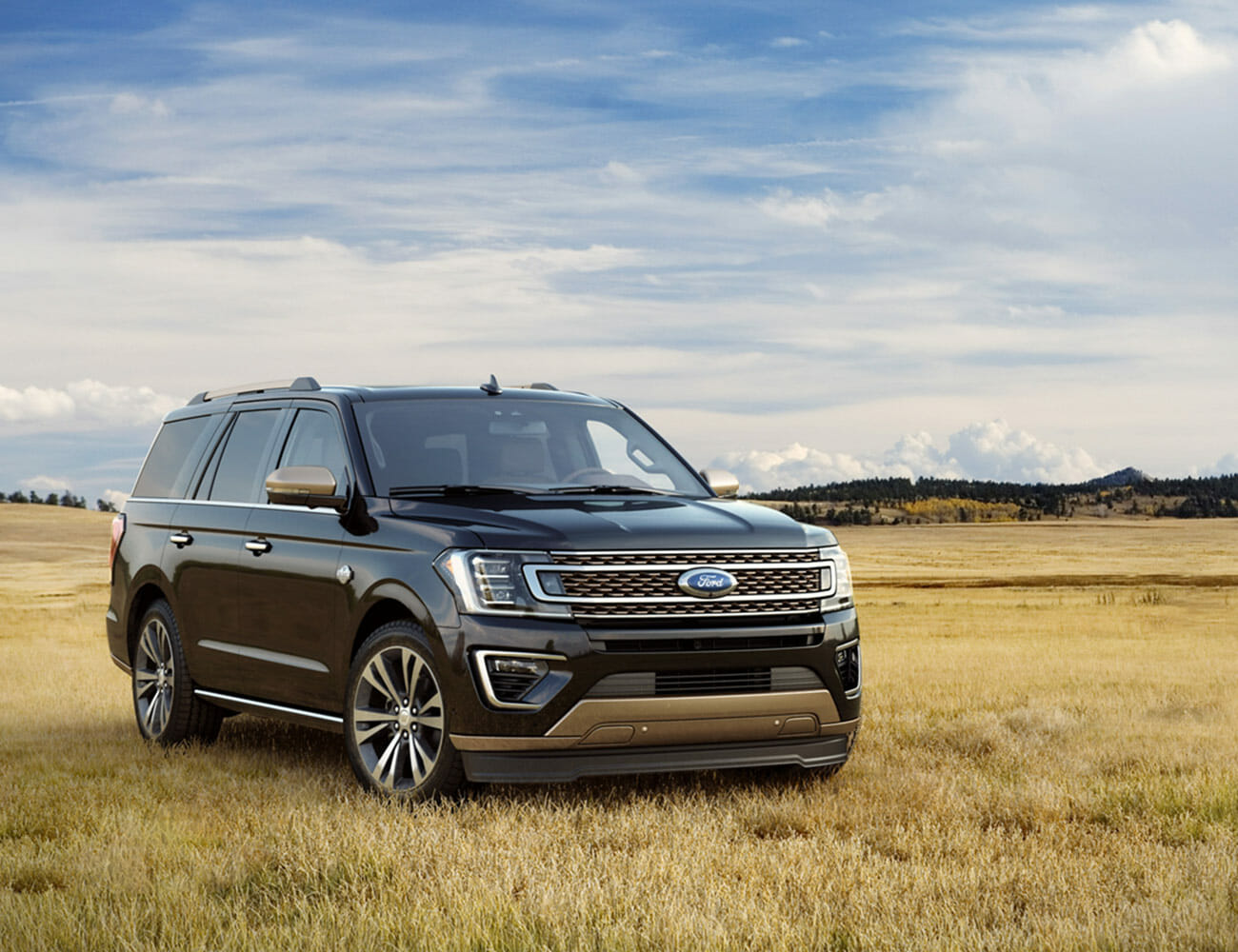
Best Full-Size SUV: 2020 Ford Expedition

grey_placeholdergrey_placeholder

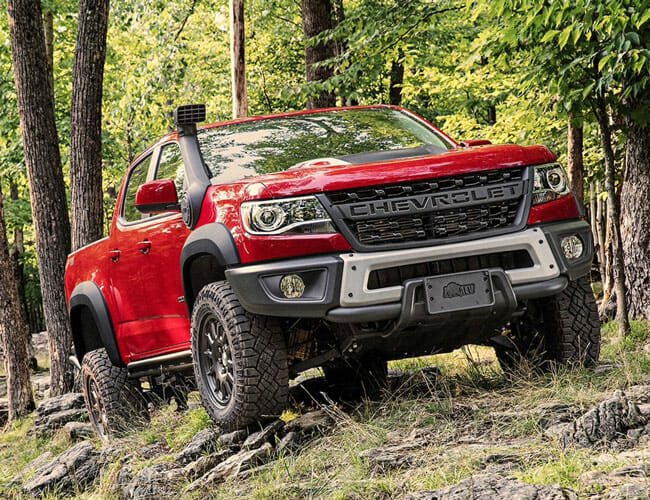
Best Midsize Pickup Truck: 2020 Chevrolet Colorado

grey_placeholdergrey_placeholder

Best Full-Size Pickup Truck: Ford F-150

grey_placeholdergrey_placeholder

Best Minivan: 2020 Honda Odyssey

grey_placeholdergrey_placeholder

Best Plug-in Hybrid Car: 2020 Honda Clarity PHEV

grey_placeholdergrey_placeholder

Best Luxury Car: 2020 Lexus ES

grey_placeholdergrey_placeholder

Best Subcompact Luxury SUV: 2020 Audi Q3

grey_placeholdergrey_placeholder

Best Compact Luxury SUV: 2020 Audi Q5

grey_placeholdergrey_placeholder

Best Midsize Luxury SUV: BMW X5

grey_placeholdergrey_placeholder

Note: Purchasing products through our links may earn us a portion of the sale, which supports our editorial team’s mission. Learn more here.
Tyler Duffy

Tyler Duffy is Gear Patrol’s Motoring Staff Writer. He used to write about sports for The Big Lead and The Athletic. He has a black belt in toddler wrangling. He’s based outside Detroit.

More by Tyler Duffy | Follow on Facebook · Instagram · Twitter · Contact via Email

5 Dirt Cheap Land Rovers You Could (But Probably Shouldn’t) Buy

We love old Land Rovers. They’re luxurious, capable and boxily beautiful, accruing charm and dignity as they age. They pair nicely with a Barbour jacket and the faint scent of pipe smoke in your pastoral, aristocratic fantasy.

The trouble with old Land Rovers, in reality, is they don’t last. They are notoriously unreliable. Something — the air suspension, a miscellaneous leak, an electrical gremlin — is bound to go wrong. And when it does, it won’t be straightforward or affordable to fix.

But, because they don’t endure like a Toyota Land Cruiser, Land Rovers don’t hold their value in the same way. Wait long enough, and they become exceedingly affordable. You can get a stylish SUV suffused with grandeur for almost nothing. You know you should resist temptation. You know it will break your heart and your bank account.

But, well…look how cheap it is!

Here are five used Land Rovers you can buy right now for less than $7,000. If you’re brave enough.

2006 Land Rover Range Rover Sport

This Range Rover Sport is a dapper-looking gent with a black exterior, gray interior, and some lovely wood trim. It also has a supercharged 4.2-liter V8. 128K miles on the odometer should concern you, but a sub-$5,000 price tag may alleviate some of those worries.

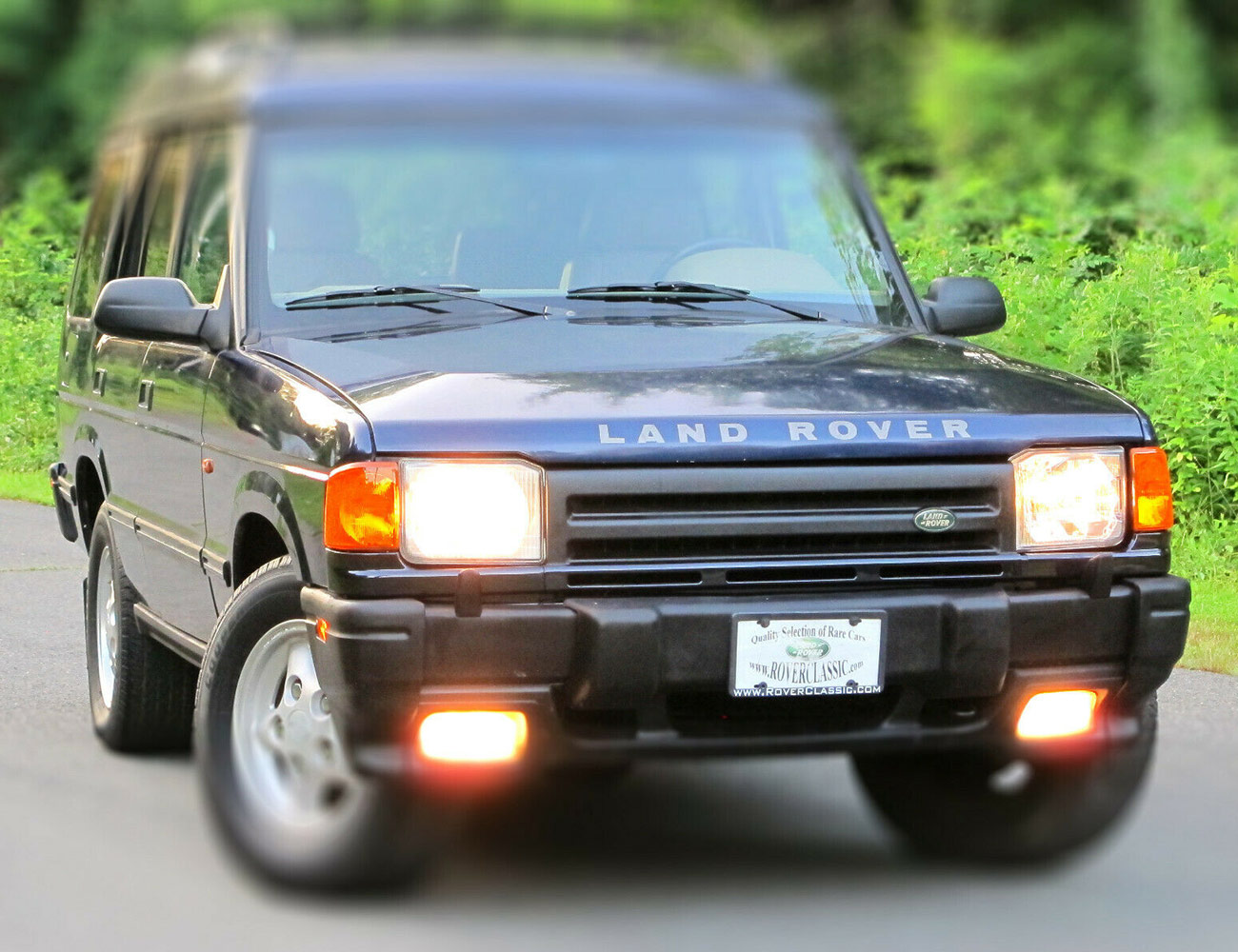
1998 Land Rover Discovery LE7

Here’s an exceptionally clean 1998 Disco with a blue exterior and tan interior. It has only 86,000 miles. Not convinced yet? Check out the rear jump seats.

2005 Land Rover LR3

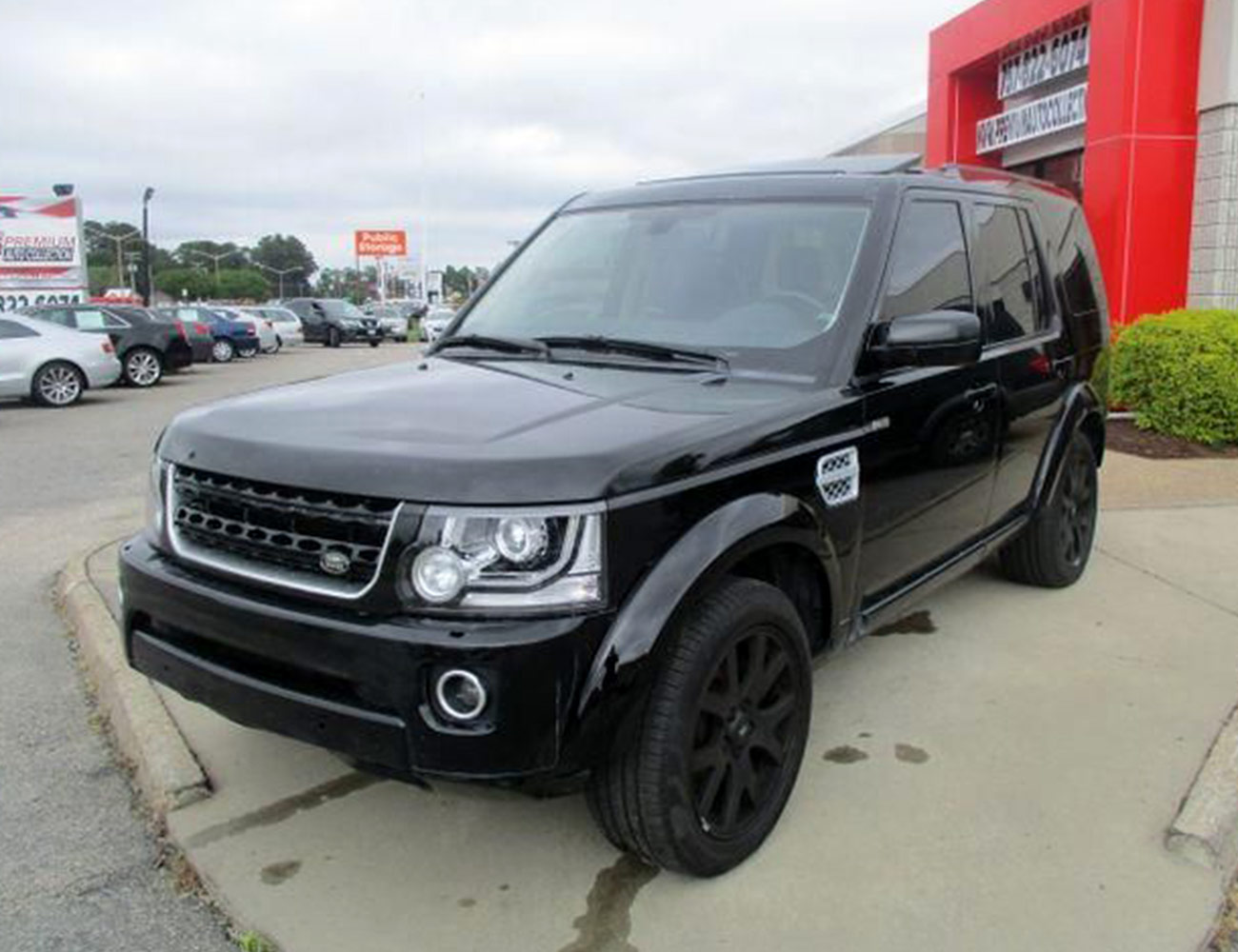
Black detailing is all the rage these days. This LR3 owner was ahead of his or her time: this sinister beauty has a black exterior, black interior, black wheels and black tinting. It also has the LR3 badging removed, so it could pass as a younger, pricier Land Rover amongst commoners.

2006 Land Rover Range Rover HSE

Photo via Autotrader.com

This Range Rover has about everything one could want from a used car. California car. Older owner. Merely 63,000 miles. You just need to sort out whatever’s going on with that paint.

1996 Land Rover Discovery SE7

Looking for a used Land Rover for overlanding? This 1996 Disco may be your option. It’s a California car with some off-road accessories, and has had extensive maintenance performed. It’s not a Defender, but it does have Defender wheels.

Note: Purchasing products through our links may earn us a portion of the sale, which supports our editorial team’s mission. Learn more here.
Tyler Duffy

Tyler Duffy is Gear Patrol’s Motoring Staff Writer. He used to write about sports for The Big Lead and The Athletic. He has a black belt in toddler wrangling. He’s based outside Detroit.

More by Tyler Duffy | Follow on Facebook · Instagram · Twitter · Contact via Email

2020 Hyundai Ioniq Hybrid Review: Efficient, Affordable and (Mostly) Normal

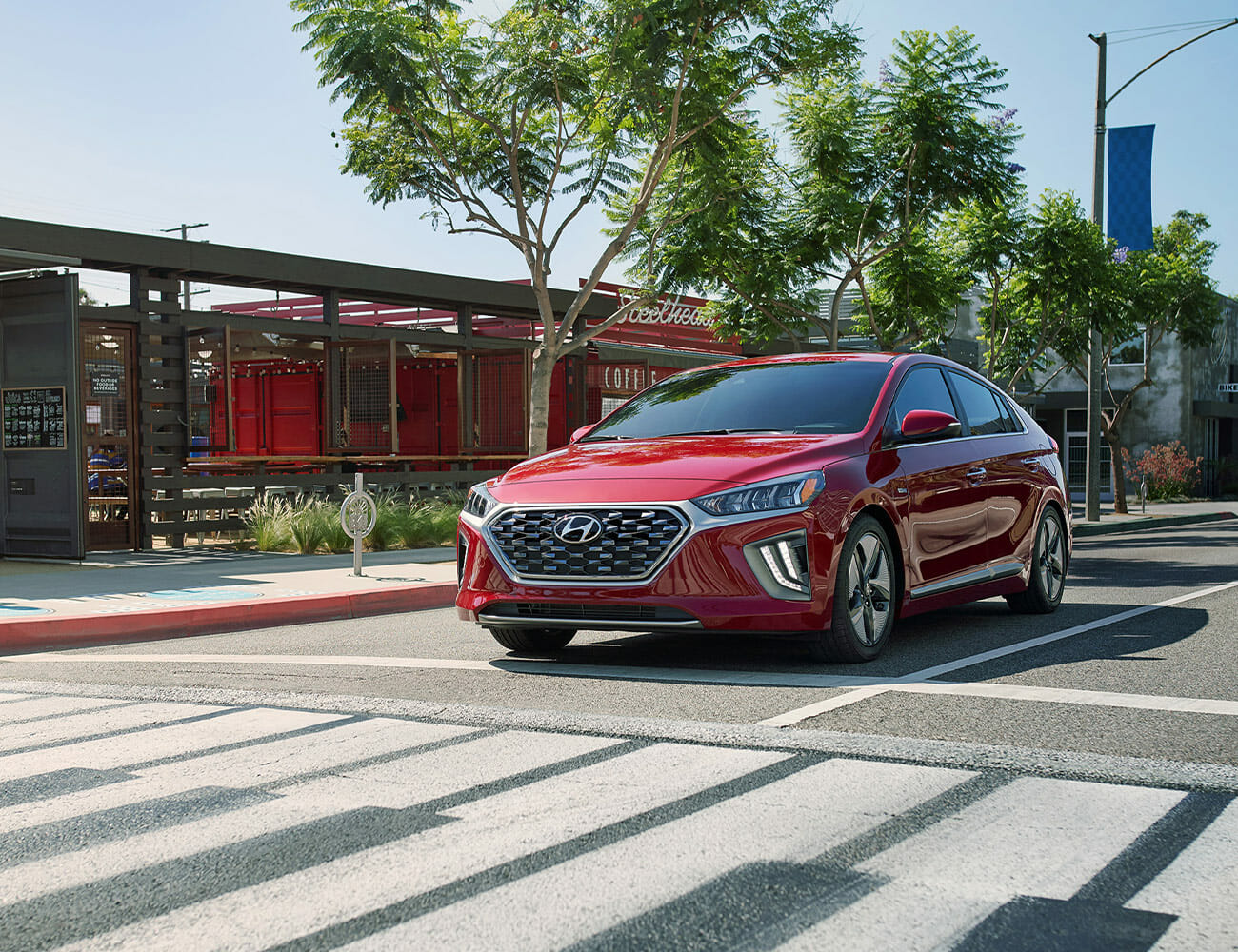
Hyundai launched the Ioniq to fight the Toyota Prius on its own turf. It’s a compact four-door liftback, landing in that busy gray area between sedan and hatchback. It comes in three versions: a limited-range EV, a plug-in hybrid and a regular mild hybrid.

The latter, which I drove for a few days, is the most fuel-efficient car sold in America — at least, among those still powered by fossils. The base model Ioniq Hybrid can earn 58 miles per gallon combined; my highfalutin’ Limited trim example is good for 55 mpg. That efficiency — not sportiness or sex appeal — is why one buys a Hyundai Ioniq. But should it be your eco-cruiser of choice?

There’s no disputing that full-electric cars are more environmentally friendly than a mild hybrid — and they’re almost always more fun to drive. Hyundai’s Kona Electric, for instance, delivers 291 lb-ft of instant torque to help accelerate through everyday traffic, and you can broadcast your zero-emissions status with a smug vanity plate.

The Ioniq Hybrid does offer one critical advantage over comparable EVs (not to mention the Toyota Prius): it’s [expletive deleted] cheap. The base Hybrid Blue trim Ioniq starts at just $22,200; that’s about $15,000 less than a bare-bones electric car and about $2,000 cheaper than a Prius. And perhaps best of all for many buyers: unlike many vehicles dedicated to being green, it feels like a normal car.

The Ioniq Hybrid Drives Acceptably

Driving a Hyundai Ioniq Hybrid is pleasantly nondescript. Quickness is not an Ioniq Hybrid’s strength; it speeds from 0-60 mph in 8.9 seconds. But that’s still as quick as many base-model Subaru SUVs, and few people are avoiding them because they’re too slow. It uses a six-speed dual-clutch automatic transmission rather than a CVT, making powertrain transitions feel far less jarring. I wouldn’t describe it as a precision instrument, but it handles itself comfortably at highway speeds, and doesn’t feel like it’s about to fall apart traversing potholes.  If your goal is to use less gasoline, the Ioniq Hybrid is just fine.

The Ioniq Hybrid Looks Normal…Almost.

Most electric and hybrid cars advertise their fuel efficiency with bright lights, dorky aggressive styling, and some prominent eco-badging. The Ioniq Hybrid looks like your bog-standard budget compact. It doesn’t present a vision of the future, and lacks weird lines.

It only has one quirky feature: the rear window(s). The trunk of the vehicle is so high, it results in a rear window that faces upward more than backward. Hyundai countered this not with a full redesign, but by adding a second glass panel on the back of the car, creating an odd split view.

I Couldn’t Match The Listed Fuel Efficiency.

I drove conservatively, keeping the Ioniq in its default “Eco-mode.” Yet I earned just 39.1 mpg instead of the EPA-listed 55 mpg over about 100 miles of mixed driving. Rather than my inveterate lead foot trying to make itself known, I suspect that the culprit was the cold weather, which can affect fuel economy. It was January in Michigan, and there was a day where it dipped below freezing.

This One Feature Drove Me Nuts.

I don’t often write about key fobs. Nowadays, you don’t even need to futz with them on most new cars; they work without even taking them out of your pocket. The trouble with the Hyundai Ioniq’s is that the fob can detach completely from the chain to reveal a physical key for emergencies. It does this via a button…one that is easy to accidentally press if you keep your keys in a pants pocket or a purse. (Thankfully, I recovered my fob from my jeans before I ran them through the washing machine.)

Tyler Duffy

Tyler Duffy is Gear Patrol’s Motoring Staff Writer. He used to write about sports for The Big Lead and The Athletic. He has a black belt in toddler wrangling. He’s based outside Detroit.

More by Tyler Duffy | Follow on Facebook · Instagram · Twitter · Contact via Email

Bentley to Join 2020 GP Ice Race with Special Continental GT

Earlier this week, Bentley teased a photo of a modified Continental GT. The car sat on ice with multiple design additions and jacked suspension. Bentley has now released full details of its one-off Continental GT which has been prepared to compete at the famous GP Ice Race in Zell am See, Austria.

The special Bentley Continental GT will be piloted by Bentley’s first female racing driver, Catie Munnings. Bentley have a history on ice. The Continental GT set Ice Speed Records in 2007 and 2011. The Ice Race Continental GT hopes to emulate that success.

The livery reflects that of the Continental GT that broke the production car record at Pikes Peak in 2019. Underneath, the two cars are identical. They both share the 6.0 litre W12 engine with 635 hp and 900 Nm of torque. Both are capable of a 0-100 km/h time of 3.7 seconds (0-60 mph in 3.6 seconds) and a top speed of 333 km/h (207 mph).

Bentley have kept things pretty standard with a few choice upgrades. The Continental GT gets a rear roll cage, on-board fire suppression system, racing seats and harnesses. The Ice Race Continental GT also gets an increase to the nominal ride height to give greater ground clearance, arch extensions to accommodate a 15 mm increase in track width, studded Pirelli Scorpion Ice Zero2 tyres, a brace of Lazer high performance lights and a custom exhaust system from Akrapovic.

GTSPIRIT NEWSLETTER

Try to spot the new Porsche 911 GT3 in this Super Bowl commercial

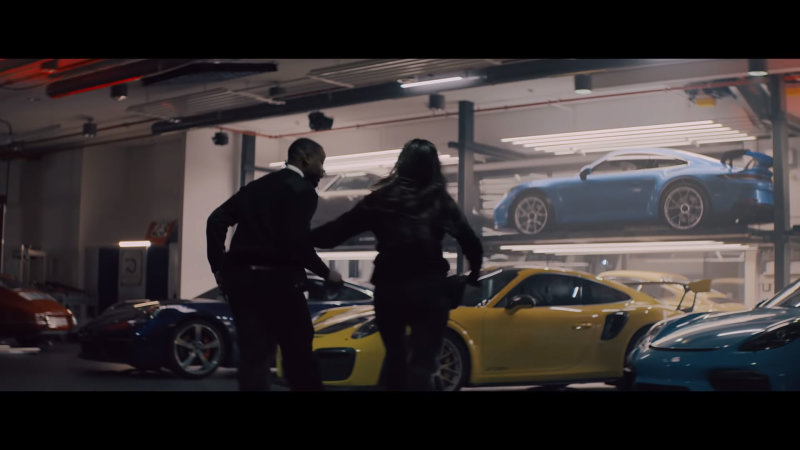
When Porsche chose YouTube for the reveal of its Super Bowl commercial, the biggest news was the Stuttgart sports car maker returning to The Big Game after 24 years away. Depending on whether you’re more interested in the annual commercial-palooza or the products therein, Porsche hid even bigger newness inside “The Heist:” A sneak peek of the 992-series 911 GT3. As far as we can tell, Motor1 was first to catch the trickery, a Porsche rep confirming the subterfuge to Motor Trend. The presentation begins at 43 seconds in the video above, ending at 49, the culprit being the blue coupe on the lift above the yellow GT2 RS.

What can we tell from these snapshots? That the prototypes haven’t lied. It’s real busy in back, with a high-rise wing above a ducktail spoiler. The current 911 GT3 uses a pair of solid supports at the base of the engine cover supporting the wing from the bottom. Prototypes we’ve seen of the new GT3 fit a pair of thick stanchions set higher up on the body, next to the backlight, that clamp the wing top and bottom. Our guess is engineers needed to make room for the ducktail spoiler across the width of the car. We can’t quite make out the arrangement on the GT3 in the commercial, but it looks like the prototype plinths have been shaved down to a pair of thin braces next to the rear glass. Beneath all that, the rear bumper shows the same recessed section across its width. And an inordinate amount of the coupe’s flanks is taken up by big, 10-spoke, center-lock wheels fronting giant rotors.

Curiously, the GT3 Touring prototypes spotted at the Nürburgring lack both the big rear wing and the ducktail spoiler.   

Don’t be surprised at a Geneva Motor Show reveal in March. Technical specs have homed in on a naturally aspirated 4.0-liter flat-six with up to 550 horsepower, the choice of a manual transmission, and a speculated ‘Ring lap time of around seven minutes, which would take about 12 seconds off the current car’s time.

Related Video:

The Awesome Lexus GX Overlander Is Even Cooler for 2020

Of all the cars, trucks and SUVs that danced across our desk last year, few were quite as delightfully surprising as the Lexus GXOR overlanding concept. That Lexus-made off-roader took the stolid SUV known as the GX 460 here in the states (and the Land Cruiser Prado elsewhere) and outfitted it with an overlander’s dream kit — a roof rack, winch, snorkel, body armor and all-terrain wheels and tires, among other tweaks.

We ogled it, we lusted after it, we imagined ourselves in the fun promotional video the carmaker released along with the concept — and then we moved on, figuring Lexus would do the same. Nope. Lexus just revealed an updated version of the GX Overland Concept at the Montréal International Auto Show in Canada, and we’ve fallen in love with it all over again.

The refreshed version, which appears to be based on the facelifted 2020 GX 460, packs a handy-dandy tent on its roof, enabling users to avoid sleeping on the Canadian permafrost when the day is done. Pop-out awnings protect the sides and rear of the vehicle when it’s stopped, while what Lexus describes as a “shower cube” serves up a way to clean off the grime accumulated from a long day sitting in that red leather interior.

Sadly, the 2.0 version of the GX Overland Concept has lost a couple features in its move to the Great White North. The sweet snorkel mounted on the passenger’s side A-pillar is gone, and while there’s a space for a winch under the massive spindle grille, there doesn’t actually appear to be one mounted there. And the understated matte black exterior is no more, now replaced with a very Canada-spec blue-white livery featuring what looks like a topographic map of…some arbitrary part of Hudson Bay? It’s not very clear.

Still, while we’d rather still have the winch and snorkel, it’s hard not to see the 2020 edition of the Lexus GX Overland as an upgrade on the previous version. That one, after all, depended on a camping trailer for a place to sleep at night, which seems a less-ideal solution than popping a rooftop tent when it’s time to hit the hay. Now we just need to convince Lexus to build a few of these for us to buy.

Note: Purchasing products through our links may earn us a portion of the sale, which supports our editorial team’s mission. Learn more here.
Will Sabel Courtney

Will Sabel Courtney is Gear Patrol’s Motoring Editor, formerly of The Drive and RIDES Magazine. You can often find him test-driving new cars in New York City, cursing the slow-moving traffic surrounding him.

More by Will Sabel Courtney | Follow on Instagram · Twitter · Contact via Email

Great Scott! You May Be Able to Buy a New DeLorean Soon

Back to the Future fans and lovers of boxy stainless steel automobiles, rejoice. The DeLorean Motor Company has told Hagerty it plans to produce a limited run of new DMC-12s.

You can thank the Low Volume Motor Vehicle Manufacturers Act, which passed in 2015, for the happy news — though some praise should be reserved for SEMA, whose lawsuit finally prompted the NHTSA to issue regulations that give the act some teeth back in December. Once those regulations are finalized, new versions of classic cars could go into production — including the DMC-12.

The new DeLoreans would be updated versions of the original, which was sold between 1981 and 1983. The body would stick close to the original, but with updated headlights. The cars would get a new 350-horsepower engine, more than double the output that came out of the original V6; with an updated interior and modern audio connectivity. (Time travel capability, however, will remain an aftermarket option.)

Speaking of time: DeLorean says production likely will not begin until early 2021 at the earliest. It is expected to be a low-volume run, with only one or two vehicles per week being cranked ouy.

That said,  you can’t wait until then to relive your Back to the Future automotive nostalgia, you could always try to score a vintage Toyota SR5 pickup.

Note: Purchasing products through our links may earn us a portion of the sale, which supports our editorial team’s mission. Learn more here.
Tyler Duffy

Tyler Duffy is Gear Patrol’s Motoring Staff Writer. He used to write about sports for The Big Lead and The Athletic. He has a black belt in toddler wrangling. He’s based outside Detroit.

More by Tyler Duffy | Follow on Facebook · Instagram · Twitter · Contact via Email

First Audi RS6 Avant Tuning Package Boosts Output to 786 hp

The Audi RS6 Avant is sure to be centre stage for many Volkswagen group tuners this year. The powertrain used by the Audi RS6 Avant underpins the RS7 and RSQ8 too, meaning that any package created for the RS6 should be possible to repeat on the rest of the range. HGP are the first to announce the results of its tuning.

HGP’s package for the Audi RS6 Avant includes a small selection of upgrades which, together, account for an increase of 186 hp over the standard model. They range from an ECU tune, including the removal of the limiters, to a new air filter box, new suction hoses, a new intake manifold and TUV certification.

The upgrades are non-destructive, meaning that a dealership should be able to continue to read diagnostics. The cost for this early kit is a staggering €8,900 including VAT with a further €1,000 including VAT for installation.

Alongside the claimed horsepower increase, up to 786 hp. HGP also report an increase in peak torque, up to 1,061 Nm.

MTM has also been working on its early stage 1 package. MTM reports that it has hit 783 hp and maximum torque of 1030 Nm. It has released performance figures, including 0 to 100 km/h in 3.1 seconds and 200 km/h in 9.8 seconds. The photos come from both HGP and MTM’s tuning efforts.

GTSPIRIT NEWSLETTER
This Giant-Sized Camper Van Is Big Enough to Be Your Second Home

Who needs a tiny home when you can live in a giant van? This week, German camper van manufacturer La Strada unveiled the Nova EB, an extended version of its top-of-the-line Nova camper van, at the CMT show in Stuttgart. It uses a Mercedes Sprinter as a base with a fiberglass monocoque body, producing a spacious vehicle that’s about 10 feet tall and seven feet wide. La Strada’s English-language site describes it as both a “mobile luxury hotel” and a “rolling space miracle.”

The Nova EB sleeps two in the rear of the vehicle, in a choice of either two single beds or a merged queen. There are internal and external storage compartments under the bed area. There’s also a wet bath and a kitchenette with a dual-burner stove, 80-liter refrigerator and sink. The front seats rotate 180 degrees to provide a four-seat dining area.

La Strada’s sleek flagship camper van isn’t cheap. The base price is $110,674, and much like a Porsche, that’s just the starting point before you begin working your way through the online configurator. Adding four-wheel-drive for some seasonal and terrain versatility costs $15,076. Upgrading to the 190-horsepower version of the diesel engine is another $4,489. You can also make smaller upgrades, like adding an MBUX infotainment system and 17-inch wheels. (The Nova EB does not include the new MBAC smartphone control system found in other Mercedes-based campers.)

Sadly, like many of our favorite camper vans, there appear to be no plans to sell the Nova EB outside Europe. Still, we can dream.

Note: Purchasing products through our links may earn us a portion of the sale, which supports our editorial team’s mission. Learn more here.
Tyler Duffy

Tyler Duffy is Gear Patrol’s Motoring Staff Writer. He used to write about sports for The Big Lead and The Athletic. He has a black belt in toddler wrangling. He’s based outside Detroit.

More by Tyler Duffy | Follow on Facebook · Instagram · Twitter · Contact via Email

Love the Environment? Don’t Buy These Cars, Study Says

If you’re a tree-hugger, these cars aren’t for you. The American Council for an Energy-Efficient Economy (ACEEE) has put out its 2020 “meanest” list that details the worst cars for the environment, according to ACEEE’s criteria. It’s not just about gas mileage; the Council considers the entire environmental impact of a vehicle, including how it’s made, the materials used in it and how easy it is to be recycled.

Ten of the 12 are SUVs, all of which are either enormous, excessively quick — or both. Only one car and one full-size truck made the list. Check out all 12 of the offending — and, admittedly, awesome — vehicles below, starting with the worst.

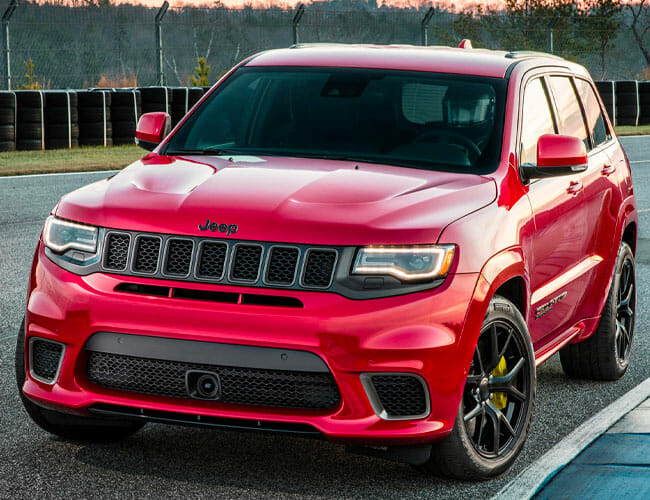
Jeep Grand Cherokee Trackhawk (Green Score: 26/100)

grey_placeholdergrey_placeholder

The Trackhawk is a 707 horsepower monster. It earns just 11 mpg in the city and 17 mpg on the highway.

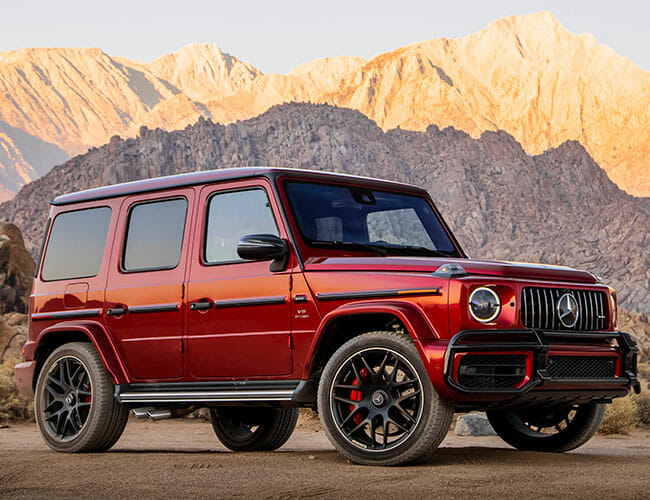
Mercedes-AMG G63 (Green Score: 27/100)

grey_placeholdergrey_placeholder

The G-Class may be the most capable vehicle on the market. But it gets just 13 mpg city and 15 mpg hwy.

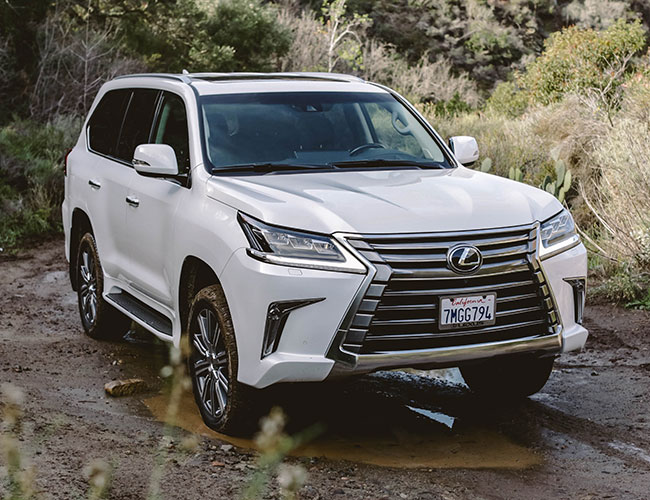
Lexus LX 570 (Green Score: 27/100)

grey_placeholdergrey_placeholder

The LX 570 is a lightly modified Toyota Land Cruiser. Somehow, those modifications make it even less efficient.

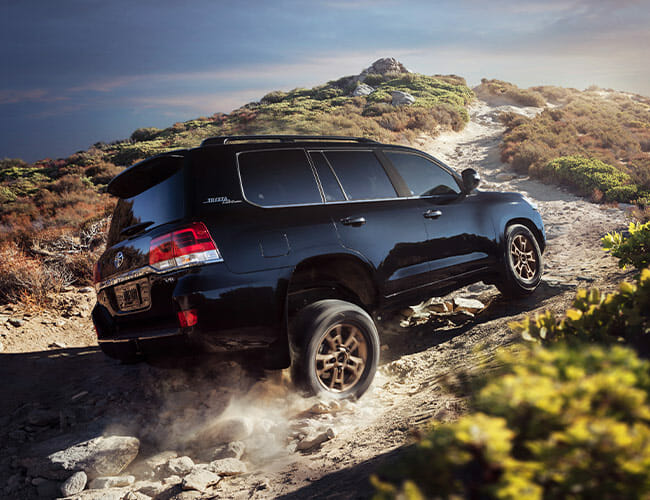
Toyota Land Cruiser (Green Score: 28/100)

grey_placeholdergrey_placeholder

The Land Cruiser is an icon — but a bloated, horribly inefficient one by modern standards.

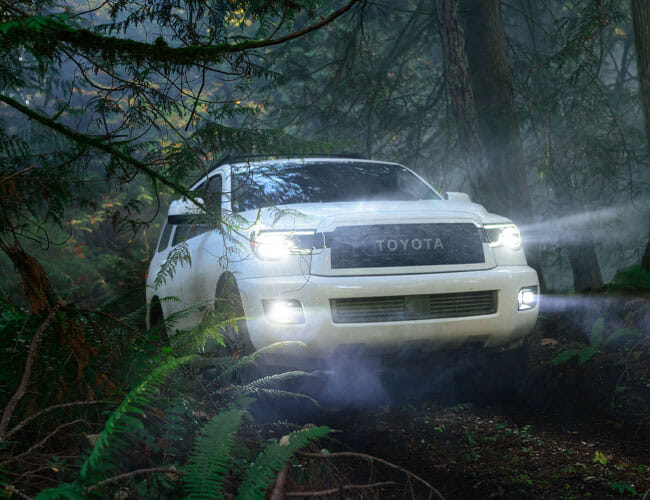
Toyota Sequoia (Green Score: 28/100)

grey_placeholdergrey_placeholder

Less capability than the Land Cruiser. Same ancient 5.7-liter V8 engine.

Toyota Tundra (Green Score: 28/100)

grey_placeholdergrey_placeholder

The Tundra is old, reliable — and, yes, uses the same 5.7-liter V8 as the Land Cruiser and Sequoia.

Ford Shelby GT500 Mustang (Green Score: 29/100)

grey_placeholdergrey_placeholder

This is the one car on the list. The Shelby GT500 may redefine what you think the Mustang can be, but it’s not an efficient daily driver.

Dodge Durango SRT (Green Score: 30/100)

grey_placeholdergrey_placeholder

The SRT version has 475 horsepower…and it’s not great for the environment.

Jeep Grand Cherokee SRT (Green Score: 30/100)

grey_placeholdergrey_placeholder

It’s hard to get a Jeep Grand Cherokee to go from zero to 60 mph in under 4.5 seconds efficiently.

Land Rover Range Rover LWB SVAutobiography (Green Score: 30/100)

grey_placeholdergrey_placeholder

Land Rover Range Rover Long Wheelbase Special Vehicles Autobiography is hard on your mouth — and not so great for the planet, either.

Infiniti QX80 (Green Score: 30/100)

grey_placeholdergrey_placeholder

The Infiniti QX80 is lavish in all respects, including its fuel consumption.

Nissan Armada (Green Score: 30/100)

grey_placeholdergrey_placeholder

More pedestrian styling than its QX80 sibling, but similar fuel consumption.

Tyler Duffy is Gear Patrol’s Motoring Staff Writer. He used to write about sports for The Big Lead and The Athletic. He has a black belt in toddler wrangling. He’s based outside Detroit.

More by Tyler Duffy | Follow on Facebook · Instagram · Twitter · Contact via Email

Lexus Designed a Handful of Space Vehicle Concepts

Lexus and Toyota have produced their fair share of otherworldly concepts over the years, but nothing like the truly out of this world collection of space vehicle concepts like the ones you see here. Created…

Winter Special: Visiting Ski Paradise Val Gardena

Our latest winter road trip destination is a famous ski destination in Northern Italy. Easily reached from Germany and most of Western Europe just over the Brenner Pass that connects Austria and Italy it is a true ski paradise. But that is not all Val Gardena has to offer!

Val Gardena, also known as Gröden in German, is a valley in the Italian Dolomites. The three main towns St. Ulrich, St. Christina and Wolkenstein are all directly connected to the ski slopes and provide direct access to over 79 lifts and 175 km of pistes. With the Dolomiti Superski pass there is even more to explore – 448 lifts and 1,258 km of slopes await visitors across 12 ski resorts all surrounded by the magnificent peaks of the Dolomites UNESCO world heritage site. Val Gardena also provides direct access to the Seiser Alm, a plateau especially suitable for families with kids and beginners.

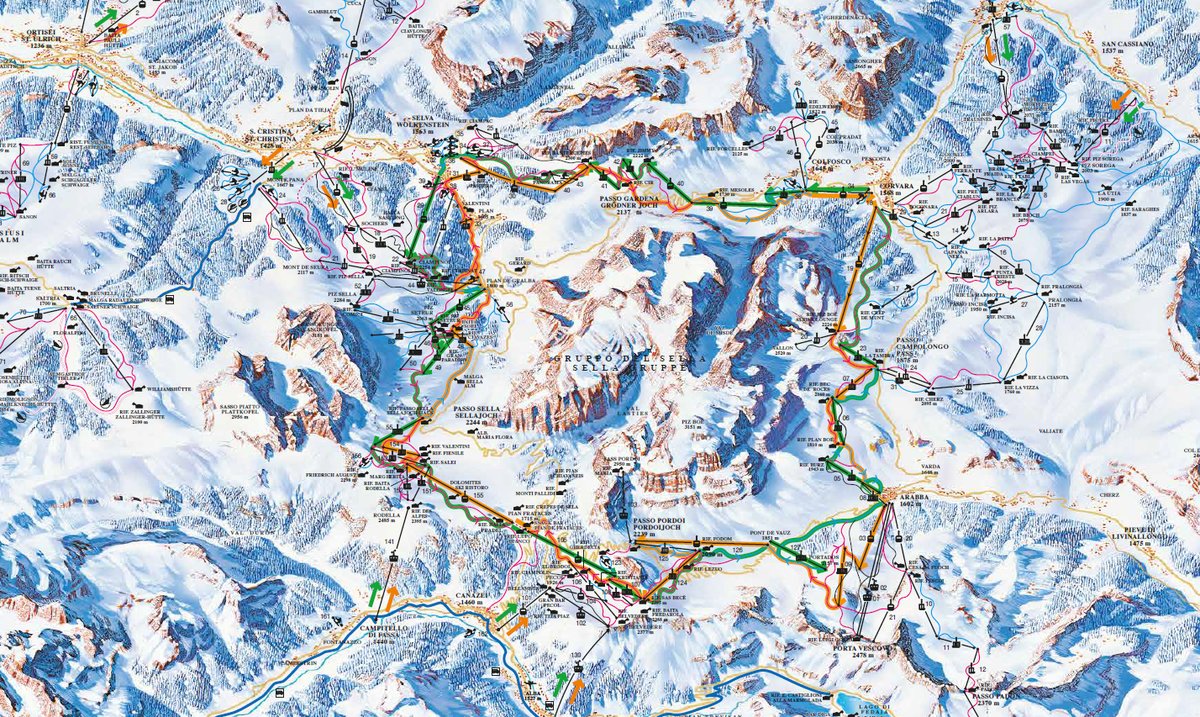
The most famous ski tour in the Dolomites is the Sella Ronda which laps the Sella mountain range. It can be skied in two directions, we prefer the green counter-clockwise variant as it crosses the Sella pass, Pordoijoch, Campolongo pass and finally the Grödner Joch before returning to the Val Gardena valley. The orange variant runs clockwise and can be started and finished from any of the four valleys it passes. The tour is about 30 kilometers skiing distance and can be done by average skiers. More advanced skiers who keep up the pace can do the Sella Ronda twice in one day.

But Val Gardena offers a lot more than Sella Ronda. We particularly enjoyed the south facing slopes in the Santa Christina’s Col Raiser area. With only a handful of lifts and slopes it is not the most extensive ski area in Val Gardena but what it lacks in numbers it makes up in sunshine and gastronomy. There are no less than 12 restaurants and bars to choose from. One even better than the other. Keep reading for an overview of our favorite mountain side restaurants.

Despite having fairly little fresh snow this season the slopes were in excellent condition. Thanks to dozens of snowmaking machines and the latest slope preparation techniques the conditions were perfect. Add modern lifts and seemingly endless slopes and it is not hard to understand why we consider Val Gardena one of the best ski resorts in the world.

Where to stay?

Val Gardena offers a large range of hotels from simple bed & breakfast to luxurious spa hotels. Here are our favorites:

Dorfhotel Beludei

The Dorfhotel Beludei in Santa Christina provides 24 rooms and suites, a modern spa, restaurant and bar. It opened in 2014 and combines modern amenities with a cozy alpine style. The young team managed by Luis Schenk provides a personal service and makes you feel at home quickly. A hotel shuttle takes guests to a from the ski slope.

Hotel Adler Dolomiti Spa & Sport Resort

This five star hotel has welcomed guests in Sankt Ulrich for more than 200 years. The Adler Dolomiti resort offers a 3,500 m2 spa and wellness area with two different indoor- and outdoor pools, waterfalls, jacuzzis and a dozen or so different sauna and steam baths. If its luxury and wellness you are after this hotel is not to be missed.

Mountain Design Hotel Eden Selva

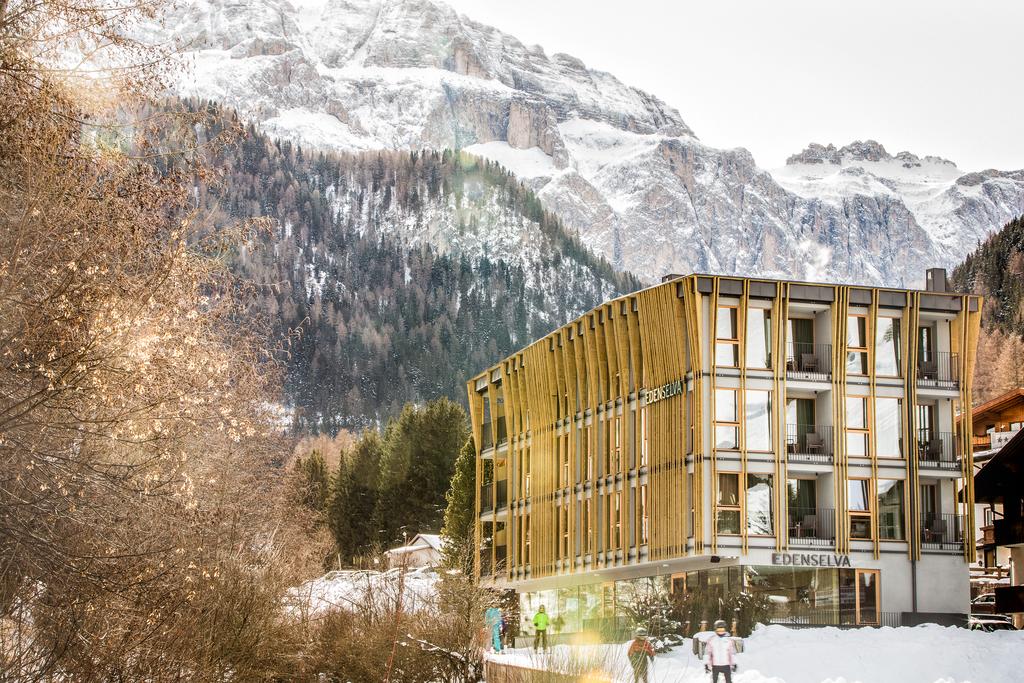
Ski-in, ski-out at Mountain Design Hotel Eden Selva. Located directly next to the slope of the Sella Ronda this new design hotel in Wolkenstein provides modern rooms and suites, a wellness area and restaurant. It is located within walking distance of Wolkenstein with its bars and restaurants.

Alpina Dolomites

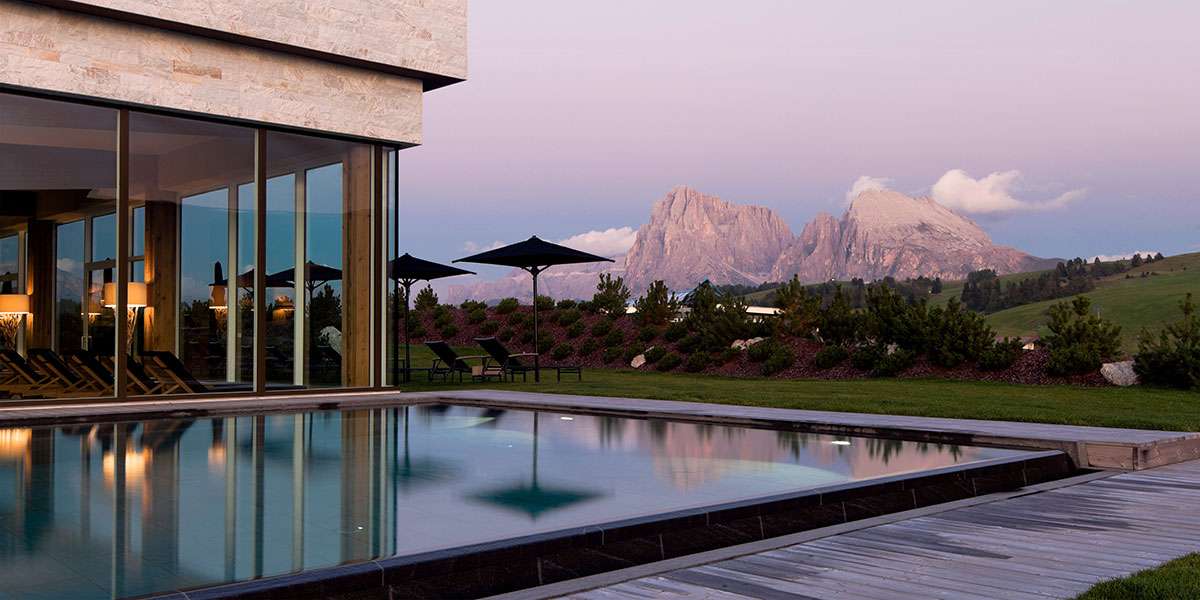
Technically the Alpina Dolomites hotel is not in Val Gardena but located up on the Seiser Alm but we still want to include it. This modern five star resort is regarded as one of the best hotels in the entire Dolomites and provides spacious rooms, an incredible wellness center with indoor- and outdoor pools and perfect service.

Where to eat?

The Dolomites are not just famous for their mesmerizing mountains and natural beauty but also for the high quality Italian food. We made a list of our favorite stops during our stay in Val Gardena:

Berghaus Zallinger

Hidden away in the furthest corner of the Seiser Alm ski area Zallinger is a true refuge. Enjoy the sun with a glass of wine and some of the fine homemade dishes served on the terrace.

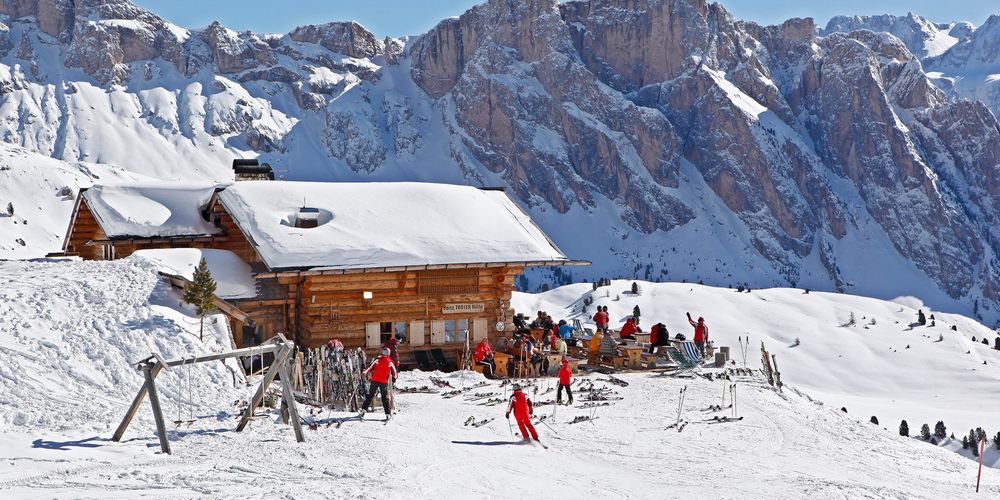
Troier Hütte

Troier Hütte

This cozy mountain hut in the Santa Cristina ski area provides authentic South Tyrolean dishes and panoramic views of Val Gardena.

Baita Daniel Hütte

A little further down from the Troier Hütte next to the main ski slope is Baita Daniel Hütte. A great place to stop for a nice lunch or a refreshing drink.

Boe Alpine Lounge

If you decide to ski the Sella Ronda you will probably want to stop at some point too. One of the nicest places is the Boe Alpine Lounge. At the top of the Boe cable car you find a pizza and burger bar, a self service restaurant and last but not least Kelina fine-dining restaurant with panoramic views of Corvara.

Where to Apres-Ski?

The Italian apres-ski does not come close to the parties you can find in Austria and France. But every town in the Gröden valley has a few bars where skiers meet for a drink or two after a long day at the slopes. These include Siglu in St. Ulrich, the snowbar at the bottom of the Saslong World Cup track in Santa Christina and La Stua and Luislkeller in Wolkenstein. Those looking for a party are best served in Wolkenstein.

GTSPIRIT NEWSLETTER