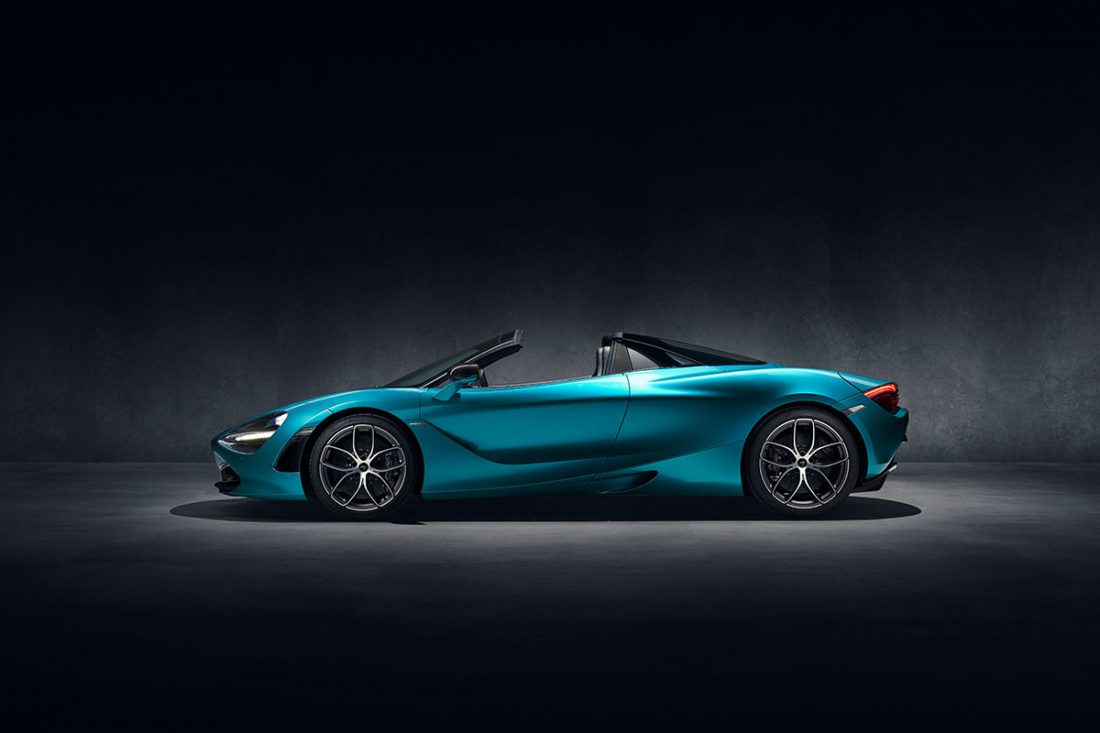
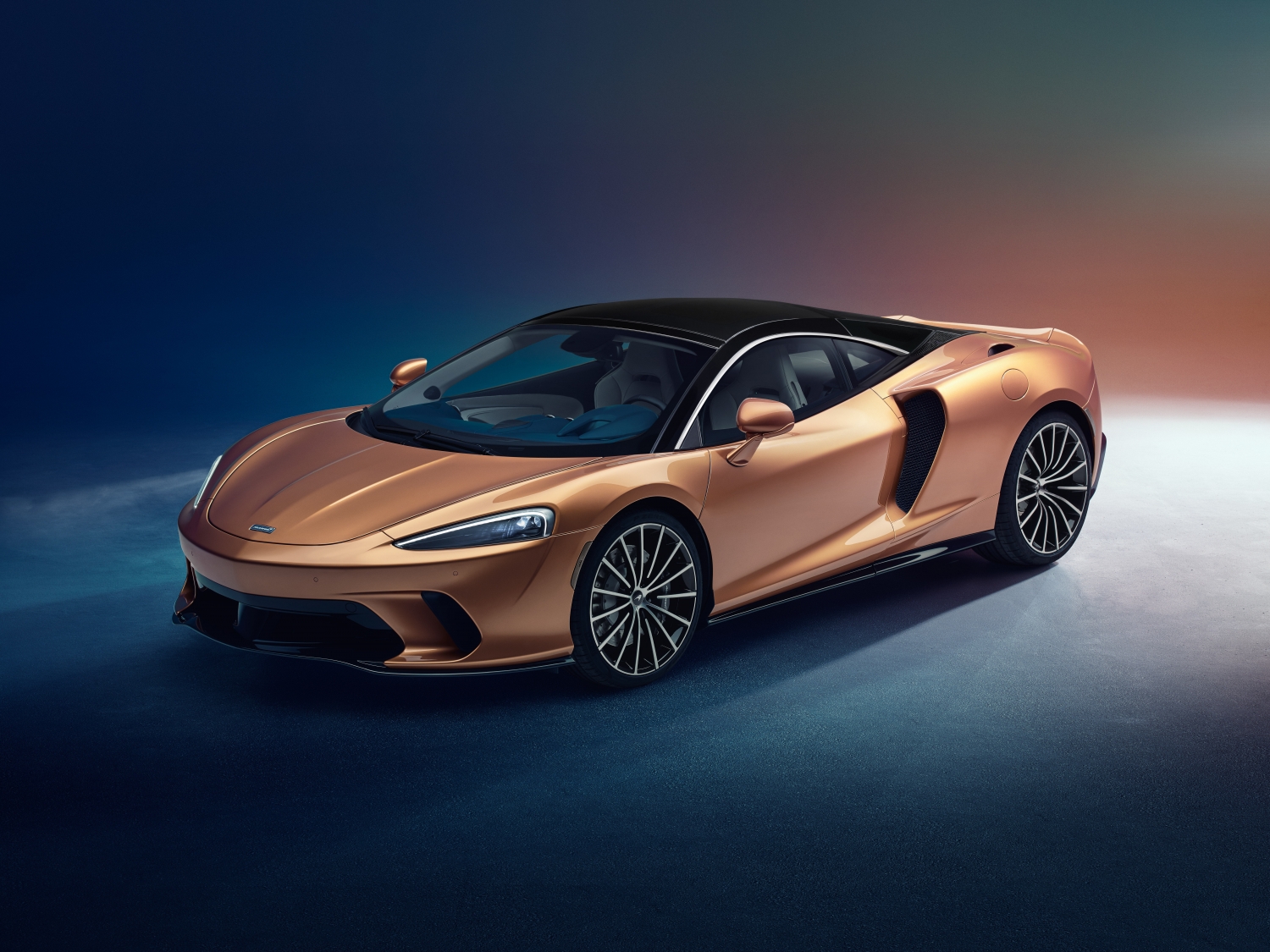
All posts in “McLaren”

McLaren Elva: New V8 Speedster Revealed, 399 Units Only

McLaren has released details of a new Speedster model. The McLaren Elva is the latest model to join McLaren’s Ultimate Series. It is also the first roadster!

The Elva makes use of an open-cockpit, two seater design, evocative of the Bruce McLaren-designed 1960’s McLaren_Elva sportscar which raced in the Group 7 category. These cars came with Oldsmobile, Chevrolet or Ford V8 engines. The new Elva takes inspiration from the design of the McLaren-Elva M1A [Mk I], M1B [Mk II] and M1C [Mk III].

In terms of design, the two seater layout uses no roof, no windsreen or side windows (a windscreen is available as an option in most markets though). It is as pure as a modern-day experience could be with a big V8 out back. The low nose an pronoucnced front fenders give the driver good visibility. The rear butresses are kept to a minimum, using deployable roll-over systems to ensure safety.

McLaren has engineered a Active Air Management System (AAMS) into the aerodynamic profile. The system channels air through the nose and our of the front clamshell to divert air over the cockpit. It raises by as much as 150 mm to create a low-pressire zone. The system is activated by a button and works best at high speed.

The new McLaren uses a 4.0 litre, twin-turbocharged McLaren engineered V8 with 815 hp. It sits inside a bespoke carbon fibre chassis. In terms of performance, the Elva sprints to 100 km/h in just under 3 seconds and 200 km/h in 6.7 seconds.

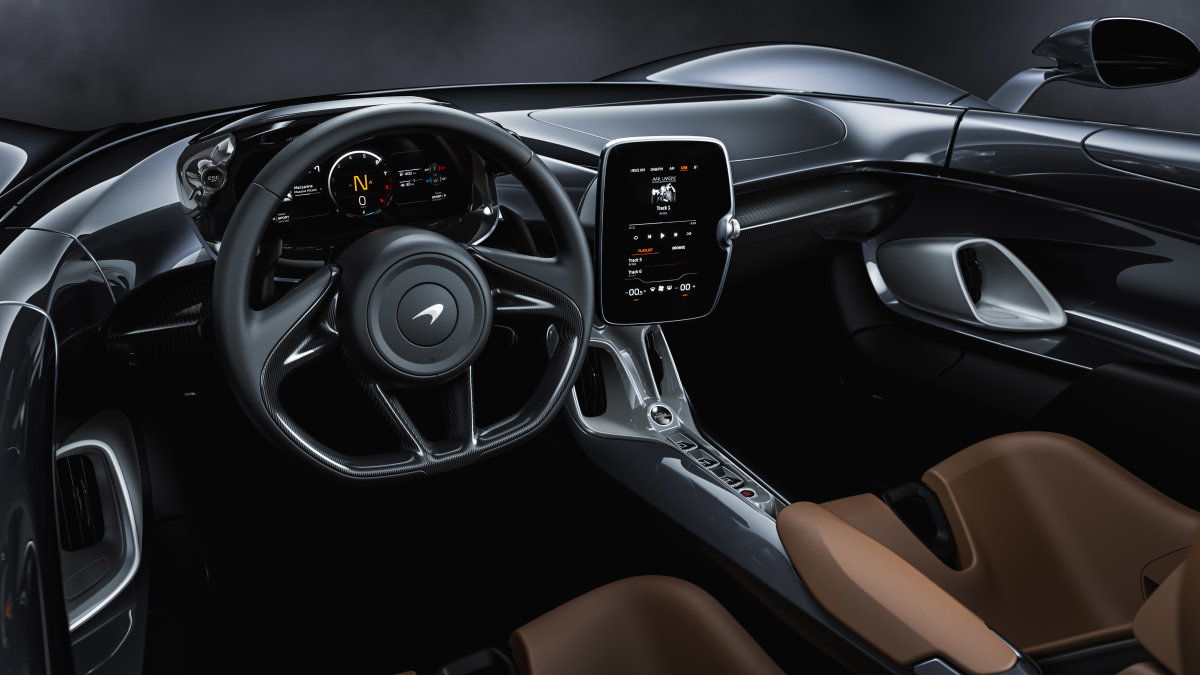
The interior is minimalist. It benefits from a new lightweight carbon fibre shell design seat. A six-point racing harness can be selected from the option list. A carbon fibre spar sweeps between the butresses and supports the engine start button, the controls and a dashboard screen. There is no audio system with weight kept to a minimum (this can be re-introduced at no additional cost).

399 examples of the McLaren Elva will be produced with prices starting from £1,425,000 including UK VAT. That price will shoot up depending upon the level of personalisation required by McLaren Special Operations.

GTSPIRIT NEWSLETTER

McLaren Elva is the next Ultimate Series model, with 800 horsepower

McLaren’s latest Ultimate Series hypercar has been revealed, and its name is Elva. The McLaren Elva is an open roadster named and themed after the open race cars built by founder Bruce McLaren and the Elva sports car company in the 1960s. This new car is the lightest and one of the quickest cars from McLaren yet.

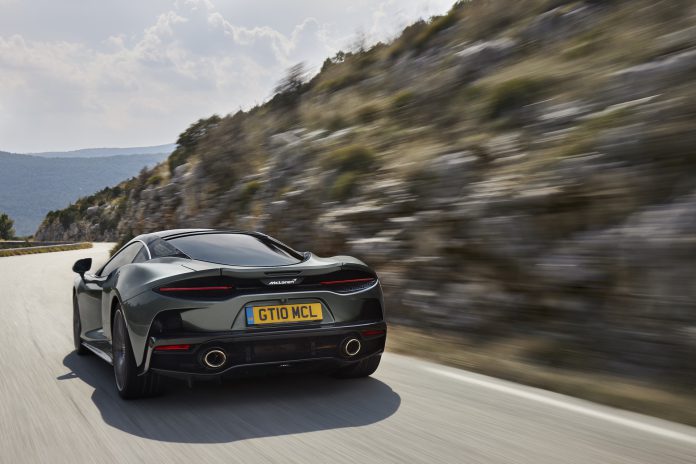
The new Elva’s resemblance to the classic race car is clear with undulating, exaggerated wheel arches, discreet rear air scoops, low nose and completely exposed cockpit. But it has trademark design cues from modern McLarens such as the squinting headlights, slender taillights and a tail dominated by air vents and a diffuser. The Elva has no roof or windows, but it does have McLaren’s typical butterfly doors, and a windshield will be available as an option.

Hidden under the voluptuous body is a version of the McLaren Senna’s twin-turbo 4.0-liter V8, but thanks to a high-flow exhaust, it now makes 804 horsepower and 590 pound-feet of torque. It’s coupled to a seven-speed transmission that sends power to the rear wheels only. McLaren says the engine will propel the car to 62 mph in under 3 seconds, and it will hit 124 mph (200 kph) in 6.7 seconds, which is faster than the Senna.

This is in part made possible by the Elva being the lightest McLaren road car yet. A final weight hasn’t been announced, but we know it’s less than the 2,900-pound Senna. Much of the credit for the weight savings goes to the new carbon fiber chassis and body, plus the lack of any kind of driver enclosure. McLaren doesn’t even include an audio system as standard (it’s a no-cost option) to help keep the weight down. The seats are made of carbon fiber. Even the brakes, which are based on the already light setup in the Senna, get titanium calipers that save about two pounds in total.

While light and serious, McLaren has still tried to make the driving experience reasonably comfortable. It has implemented a fancy set of vents, vanes and deflectors in the front of the car called the McLaren Active Air Management System to channel air around the passenger compartment. That way, the “cabin” is still tolerable even if you’re not wearing a full-face helmet. If you do decide to wear a helmet, there is a storage area under the cowls behind the seat that has space for your headgear. The seats can be covered in a variety of materials from leather with additional protective coatings to a new durable, breathable fabric. The Elva also gets McLaren’s latest infotainment system that spans eight inches and has a control wheel hanging off the side, almost like the crown on a watch. If you do plan on using the Elva purely for track use, though, you can skip adding the windshield or sound system and add the optional six-point seat harness instead. Or add all of them — McLaren will spec the car out however you want.

McLaren will spec out only 399 Elvas, though, so get your order in while you can. Make sure your bank account is healthy, too, as the base price for a McLaren Elva is $1.69 million. That’s roughly $700,000 more than the Senna, but it is a bit more exclusive, and it accelerates a little harder.

Special Report: The McLaren 720S Spider is Britain’s Finest Export

Be warned, this tale features the B word, Brex*t. The title has been coined to address the colossal saga that is the United Kingdom’s departure from the European Union and must be one of the most used words in international news in the past three years. There have been amendments, referendums, prorogations, high court rulings and even Queen’s Speeches. I shall not dwell, you’re not here for politics, but for automobiles.

Ever switch on the 10 o’clock news and see politicians being ferried from conference to conference in rather dull executive limousines? The best you can hope for is a Mercedes-Benz S Class, black on black, of course. This got me thinking, it was the night before the final European Union Summit that would be deliberating the latest iteration of the Brexit deal, Prime Minister Boris Johnson’s first attempt. Tomorrow, news agencies from across the world would crowd and jostle outside Le Berlaymont to catch a word from the 27 EU leaders that would be reviewing the latest version of proposed deal.

What if BoJo didn’t arrive in a mundane, vanilla S Class or Jaguar XJ, but instead stunned the crowds by representing British business, an example of the very businesses that will be impacted so significantly by the outcome of this tumultuous series of events? I felt Boris needed a helping hand, I took matters into my own palms. The next morning I left home at 0630 on a mission to not only improve Boris’s image, but to showcase one of the finest exports that Britain produces. It is an example of why the UK is one of the worlds leading automotive manufacturing countries, and why trade deals with the UK should never be doubted, but encouraged.

The ambassador of choice was perfect. Bentley and Rolls-Royce are British brands, but are both now parts of Audi and BMW, respectively. Jaguar is Indian and Lotus Chinese. Caterham and Morgan are British, but neither are known internationally as representing the best of British, more cottage industry forerunners. There is only one brand suited to this endeavour – McLaren.

I recently was on the continent in a McLaren GT, a car that left me somewhat conflicted and confused. Having previously driven to Paris and back to London in a single day in a 720S, I was in no doubt that it doubled as both a track monster and a capable GT car. To reaffirm my thoughts, I had a 720S Spider for the ride to Brussels to see if the additional 49 kilograms for the roof mechanism would alter the driving characteristics and if the GT would make more sense for such a journey.

One thing that does not change, roof or no roof, is the fuel economy. It is abysmal, even when trundling towards the Channel Tunnel with the cruise control set to a smudge above the speed limit. Seeing anything above 23 miles per gallon was a rare treat. Boris’s refusal to take no deal off the table had sent the pound into a tizzy and fuel prices were through the roof, premium unleaded was emptying my wallet faster than the my ex girlfriend – just as thirsty too. Best not to worry about saving fuel and instead blow it to thy kingdom come with a smile on your face and bangs and cracks coming from the twin exhaust pipes.

A grey drive to Folkestone, quick Starbucks and a deep breathe in to squeeze onto the train later, it was time to cruise across the Continent. Well, part of it at least. It is always surprising how quickly the French autoroute gives way to terrible Belgian tarmac. With the active panel engaged and the handling and drivetrain toggles in comfort, the 720S cruises quietly and somewhat comfortably. The hydraulic suspension is fabulous and plaint. It is upset by bigger holes and cracks in the road, but it is a tradeoff worth making for the terrific handling through the bends on more engaging roads. One element that, still, cannot be faulted is the steering. It remains hydraulically assisted and a pleasure to work with.

The mighty torque is impressive too. The gearshifts are as great as you would expect from a McLaren dual clutch, but when touring you need not be pulling the left carbon paddle for downshifts as you can ride the torque in the upper gears. This is, of course, when the revs are above 2,500rpm, there is a world of lag below this threshold. As the kilometres trickled by, the weather worsened and the chances of experiencing the 720S Spider with the roof down diminished. A special mention, once again, to the awesome rear window that can be lowered or raised regardless of the roof being up or down. It is a great way to enjoy both fresh air and that hard edged engine tone, even when it is raining.

This car featured a clever and very expensive option, an electrochromic glass roof panel. This meant that the panoramic glass was able to go from fully clear to dark in a couple of seconds. It is cool and strangely satisfying to press the button and watch the glass ceiling change from ‘shade mode’ to ‘full sunlight’.

Other interior highlights included the luxurious Cognac leather in this ‘Luxury’ spec 720S. The 720Ss I had previously driven were all configured in ‘Performance’ trim meaning there was far more Alcantara and less leather to be found. The quality of the leather is great, as is the colour, my opinion of course. The infotainment is a generation behind the updated McLaren GT system, but I was not a huge fan of the update and the older system felt no less capable as it also lacks Apple CarPlay and Android Auto systems.

As Brussels neared, the rain relented and there was time to relish precious minutes with the roof down. Heated seats work brilliantly to negate wind chill and the car looks utterly spectacular in shop front reflections. Say what you like about the eye-socket headlamp design, few will argue that the 720S does not look like a missile from its side profile. The well behaved demeanour from the motorway cruise continues in the congestion of Brussels. The Start-Stop system decided to go on strike, other than that the 720S Spider was flawless around town. Visibility was good, the ride supple and the turning circle…acceptable. Things are a little scarier when squeezing through narrow gaps or high kerbed car parks, more a case of driver fear and being unfamiliar with the supercars dimensions.

As the infamous Berlaymont building neared, Theresa May had been collected, riding shotgun and Boris Johnson jumped in behind the wheel. The time had come to change the bumbling Prime Ministers image once and for all. Passers by gasped and laughed in equal measure. Camera phones flashed and selfies were taken. It seemed that it was mission accomplished, a hypothesis that was all but confirmed later that day when Boris Johnson announced that Jean Claude Juncker had accepted his governments proposed deal. I’m not saying that it had anything to do with the McLaren or my mission…but maybe, just maybe, it did.

In another bizarre ‘coincidence’, McLaren CEO Mike Flewitt confirmed that McLaren Automotive will keep production entirely UK based despite Brexit in an interview to CNBC on the same day. He continued saying that the firm is ‘born and bred’ in the UK. The brand is one that is proudly British and one that should be celebrated. The McLaren F1 is, arguably, the greatest car ever and when the 12C rolled off the production line in 2011 a new era was born. McLaren seemingly came out of the blue and shattered any complacency that the likes of Ferrari, Porsche and Lamborghini had, pushing performance to new levels.

Almost 9 years on, McLaren continues to push it rivals to the extent that it is difficult to compare its offerings to that of the aforementioned rivals. The 720S is pitched against cars like the Porsche GT2 RS, Ferrari 488 Pista and Lamborghini Huracan Performante – hardcore special edition models that are stripped out track animals. The 720S obliterated the trio in a number of tests and it is the ‘standard’ car complete with creature comforts and touring credentials that make it just as usable as the McLaren GT. The LT model is expected to demolish its European rivals. McLaren Automotive represents the best, not only of British, but supercars produced anywhere in the world. Brexit or not, deal or no deal, McLaren will continue to be a flag bearer of British innovation and technology for years to come.

GTSPIRIT NEWSLETTER

2019 McLaren GT Review

Since 2011 McLaren have been upsetting the old guard of supercar builders with their ballistically fast and dramatic creations. Every model to date has fallen into one of three categories, Sport, Super and Ultimate – until now. Meet the fourth class – GT. Bentley have the Continental GT, Aston the DB11, Mercedes-Benz the S-Class Coupe and McLaren wanted a slice of the fast grand tourer pie.

The first car in the GT class for the British brand? The…GT, creative I know. As with every McLaren, there is an expectation for this to be a savagely fast car – the numbers suggest so. 0-100km/h in 3.2, 0-200 in 9 and a top speed of 326. These figures are impressive in their own right, but even more so in the content of the GT rivals that McLaren have set out to dethrone – think DB11 and Continental GT. It is not surprising when you consider that the 612bhp, 630Nm, 4-litre V8 is mid-mounted like a supercar, not the GT cars to which it is compared. The counter argument is easy, the traditional front engined GT car allows for a bigger cabin, rear seats and full sized boot.

McLaren counter these arguments and maintain that the trade-offs are off set by the advantages of a lower centre of gravity translating into far superior handling characteristics. As the previously listed numbers suggest, the McLaren GT is tremendously fast on the road once you overcome the lag below 4,000rpm. The new engine, unique it the GT, is mated to a 7-speed SSG transmission to ‘deliver linear, seamless and relentless acceleration’. That is what the press release says and I cannot disagree, the shifts up and down are available on demand. Steel brakes are fitted as standard with the option to upgrade to carbon ceramics, I experienced the steels and they were great, providing good feel and performance. On the topic of feel, the steering is still hydraulically assisted and still feels fabulous in the GT, just a tad slower than in other models.

With the chassis and powertrain in sport, there are few things that feel as fast point-to-point on the road. Switch it all into Comfort and the McLaren does something amazing. It becomes all soft and pliant, there is a suppleness that I’ve never experienced in a McLaren before. The dampers try and predict what is coming up on the road by monitoring driver inputs. Everyone claimed that McLarens of old felt as smooth as a Rolls-Royce, hyperbole plagued their opinions, it was not true in reality – the McLaren GT comes far closer. To my buttocks the Bentley Continental GT is still in another league comfort and the 48v anti roll mechanism means it does not wallow about like older Contis did. The McLaren is clearly faster, rivals are softer.

The spokespeople of McLaren are keen to convey the idea that the GT is a car that can be used for grand touring or even for a daily commute. There is a new active exhaust that features active valves that open and close depending on the engine loads. It is relaxed and quiet when cruising or set to Comfort.

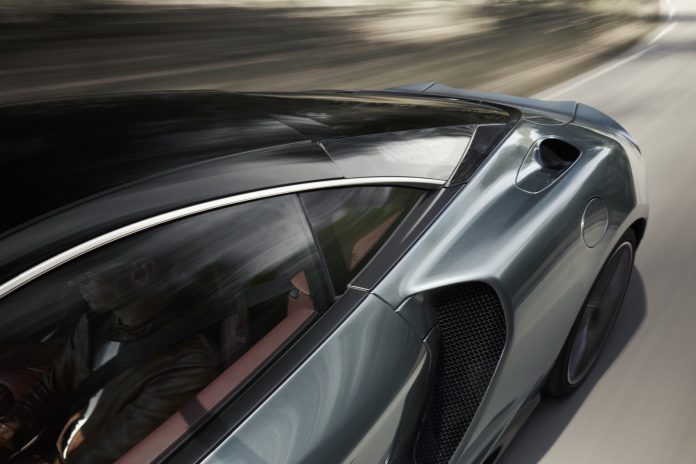
The ride height is far greater than any other McLaren, there is no need to deploy the optional nose lift, but when you do the GT adopts the same clearance as a Mercedes-Benz C-Class – impressive. To really be considered a daily driver or continent cruiser, the GT’s cabin needs to be a place where you would be happy to spend hours in. The architecture of the cabin is immediately familiar to anyone that has been in a 570S or any other Sports Series model, no bad thing. It feels different as there is a lot more leather and the introduction of other new materials such as the knurled aluminium controls that are pleasing to the eye and touch. It is familiar but differentiated. As with the 720S Spider, there is the option to have an electrochromic glass roof, an option that I would recommend as it makes the cabin feel that little more light and airy.

One area that has always come under scrutiny from the media and owners alike is the infotainment system. McLaren claim that the GT features the ‘most advanced infotainment system’ yet and that there is an ‘all-new touchscreen infotainment features super-quick 10-core processor’. Having experienced every system fitted to a McLaren since the 650S, I can confidently say that there have been significant improvements over the years. When piloting something as focused as a 600LT or ballistically powerful as the mighty 720S, the infotainment system is not something I pay much attention to. The systems in those cars are not of paramount importance as it is all about relishing that Sunday morning blast. In the GT it is far more important and there is vast room for improvement.

I appreciate that McLaren is not a part of a multi-billion euro conglomerate like the Volkswagen Group, nor do they want to outsource such systems as Aston Martin do. That being said, I find it to be frustrating that the brand goes to such lengths to build a GT car that will fit a set of golf clubs but one that has only has one USB port, no wireless charging capability, no Apple CarPlay/Android Auto or heads-up display.

In McLaren’s defense Apple are yet to develop to portrait oriented CarPlay system, but having the functionality would substantially improve the overall infotainment experience. On a more positive note, the B&O sound system is phenomenal and the interior ambient lighting is a gimmick but one that is particularly pleasing to the eye when you see it on the metal trim strip above the glove box.

The tech in terms of driver assistance systems that have become the norm, such as adaptive cruise control and lane assist that are useful on longer motorways drives, are absent. The Bentley Continental GT has a plethora of systems that essentially allow it to drive itself when combining active steering and cruise control on the highway.

The McLaren GT has a revised carbon fibre MonoCell II-T core, this allows for more storage than ever before. The goal was for a golf bag or two pairs of 185cm skis and boots as well as luggage can be carried with ease. Furthermore, the usual 150 litres of storage in the frunk remains and means the new McLaren GT can accommodate a total of 570 litres. Impressive, but it must be noted that the luggage compartment is rather long and not very tall.

The McLaren GT is the start of a new chapter for the brand. With the introduction of the new car comes a new GT series, to which I am sure we will see more models added to with the goal of 18 new cars or derivatives by the end of 2025 – the GT is the fourth. It certainly will appeal to a wider audience and will perhaps entice those looking for a softer supercar. With such potent performance, fabulous handling characteristics and well specced cars costing £200,000, I am not sure that the GT is an offering that will see many Bentley or DB11 orders cancelled. In my opinion, they are different cars for different buyers. Regardless, I am sure that the GT will be a success in its own right. Deliveries begin this October with prices starting at £163,00 in the UK, $210,000 in the USA and €198,000 in the EU.

GTSPIRIT NEWSLETTER

Iconic McLaren F1 Took 18 Months to Restore at MSO

McLaren’s special operations division, MSO, recently released details of a McLaren F1 restoration. The British company carried out an extensive restoration of a road-legal F1 on behalf of its owner.

MSO left no aspect untouched, also putting the car through its McLaren F1 Certification programme. The car in question is chassis number 63.

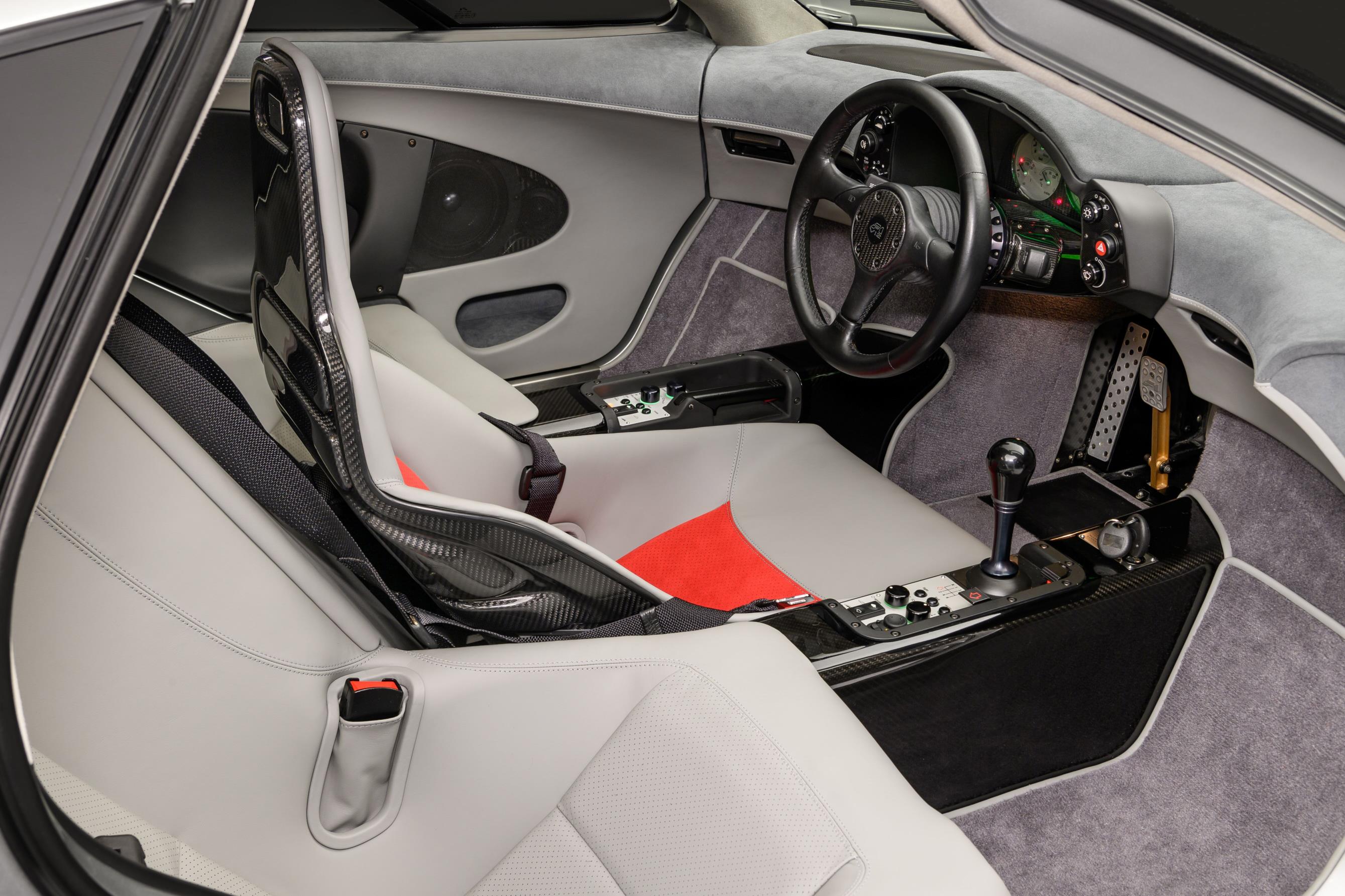
McLaren completed the restoration work in June, putting in almost 3,000 hours of work. MSO began the 18-month restoration by removing the body and drivetrain from the car. The interior was then re-trimmed in the original Semi Aniline leather, which was a one-off for this car.

The leather is finished in Woking Grey – a colour reportedly inspired by the often slate-coloured English sky. The dash is covered in Woking Grey Alcantara with the seats re-trimmed in Woking Grey leather with a red perforated Alcantara.

Once the interior was complete, McLaren set about repainting the bodywork. This F1 was originally delivered in the iconic shade of Magnesium Silver. It took MSO nearly 900 hours to complete a perfect respray.

The 6.1-litre normally-aspirated engine was then stripped and rebuilt. To ensure it produced the correct power, McLaren put the powertrain through a dyno test before reintroducing it to the chassis. Finally, the dampers were sent back to Bilstein for refurbishment and the driveshafts and hubs were also sent back to the original supplier for rebuild.

McLaren F1 Steering Wheel

It’s fair to say that this McLaren F1 is as good as new! As part of the process, the car receives a Certificate of Authenticity and the owner, a bespoke illustrated book documenting the history of their car as well as a Genesis Speed Form. It is set to debut at the Hampton Court Concours this coming weekend!

GTSPIRIT NEWSLETTER

Pikes Peak Collection: 6 McLaren 600LT Spiders Delivered in US

We have seen before how McLaren’s dealership network creates unique collections for its customers. All manner of special editions are possible through MSO, McLaren Denver recently took full advantage. This special edition run of McLaren 600LT’s has been named the Pikes Peak Collection and consists of 6 600LT Spider’s.

Each example is different to the next. The cars were revealed a month ago, inspired by the Pikes Peak International Hill Climb. Each car is finished in MSO Bespoke or MSO Heritage paintwork – Black Gold, White Gold, Nerello Red, Volcano Red, Aurora Blue and Midas Grey. All 6 get a gold and matte black vinyl stripe over the hood and roof, as well as Satin Speedline Gold Wheels.

Inside, the theme continues. A Satin Gold centre band is applied to the steering wheel, extended paddle shifters and contrast stitching. The headrest features the Pikes Peak logo in gold embroidery, and a dedication plaque reading “Pikes Peak Collection 1 of 6”. All 6 cars get the MSO Club Sport Pack, which features carbon fibre cantrails, carbon fibre front fender louvres and titanium wheel bolts, as well as the Super-Lightweight Carbon Fibre Racing seats found in the McLaren Senna.

The rest of the package is identical to the rest of the McLaren 600LT Spiders. This means power is provided by a 3.8-liter twin-turbocharged V8 which produces 600 hp and 620 Nm of torque.

GTSPIRIT NEWSLETTER

The McLaren F1 LM-Spec Sold for $19.8 Million at Auction

That’s Slightly Less Than the Estimates

The McLaren F1 LM-Spec that went up for auction at the Monterey Car Week in California sold for $19.8 million, making it the most expensive McLaren F1 to ever be sold. This impressive number, however, was still slightly below estimates, according to The Supercar Blog

The RM Sotheby’s auction was expected to see somewhere between $21 million and $23 million for the car, but the bidding never quite climbed that high. The car is the real deal. It has the production number 18 and an immaculate service record and record of ownership. 

The car’s first owner had it in Midnight Blue Pearl with a black interior. When the car sold, its second owner decided they wanted to have the car altered. So, it was sent to Surrey to the McLaren facility there to be restored and reworked. What it looked like at the auction at the Monterey Car Week is how the second owner wanted the car. 

It has a Platinum Silver exterior, cream-colored leather-clad interior, and a large rear wing was added. The owner also had McLaren work on the enigne, adding new radiators and cooling elements as well as a tune. The V12 engine now makes 680 hp over the original 627 hp. Despite the fact that the car didn’t get what the estimates expected at auction, this is still the most expensive F1 ever sold. 

MSO Has a Special McLaren GT for Pebble Beach and It’s Gorgeous

As You Might Expect, This Is a Beautiful Machine

On August 18 at Pebble Beach, McLaren will reveal a special MSO version of the GT. The car will feature special exterior and interior colors and accents. This will set it apart from other GTs that will be made. The GT is coming later this year with a price tag north of $200,000. You can bet this special edition will go for more money than that. It’s a super special GT and will be one of the eye-catching cars at Pebble Beach this year. 

The exterior of the MSO GT will feature a new bespoke paint called MSO Defined Flux Silver and Satin Graphite paint as the contrast color. This contrasting color will appear on the door skirts, front splitter, wing mirrors, rear bumper, and rear diffuser.  The car will also feature Satin Graphite Iron brake calipers and what MSO calls the Bight Pack, which is chrome trim around the windows, polished titanium exhaust tips, and gloss black wheels. 

Inside, the car gets Geoform Stitching on the seatbacks, sun visor, door cards, and armrest. The stitching pattern is inspired by the canopy design of the British Museum. There’s Satin Graphite Leather in various spots in the interior, and otherwise, most of the cabin features Flux White Leather. The MSO logo appears at various spots on the car including the headrests and doorsills. 

Mechanically, the car hasn’t been altered it will still get the 4.0-liter twin-turbocharged V8 engine that produces 612 hp. That engine is good enough to make this gorgeous car sprint from a standstill to 60 mph in just 3.1 seconds. This car should be one of the more important models at Pebble Beach this year. 

McLaren Is Working on a 720S Longtail

The March Forward With New Models Continues

In about decade, McLaren has put out eight cars. The next could be a 720S Longtail. McLaren has no plans of slowing down, and the longtail version of the 720S makes quite a lot of sense. According to PistonHeads, one of the two cars coming to the company’s lineup next year will be a 720S Longtail. The other is the already reported McLaren roadster or speedster

While the speedster or whatever, McLaren ends up calling its roofless car will be impressive, the longtail version of the 720S will arguably be the more important car because it’s more of an all-around, use-it-everyday car. The vehicle will likely get more power than the regular 720S and be improved in many of the ways that people would like to see the car improved. 

This Longtail move will also probably earn the supercar a new name. In the case of the 600LT, that car got its start as the 570S. Motor Authority suspects the name will by 750LT, but there’s no indication beyond the naming schemes of the previous Longtail cars that this will be the case. 

There are no concrete details on what McLaren will do with the model, but we suspect it will have revised styling but still fit in with the McLaren lineup easily. This should be a wonderful Longtail model, and we’re excited to see what comes of it. 

One of 58 Special Street-Legal McLaren P1 GTRs Is For Sale

For The Person Who Wants a P1 for the Road

If you’ve always dreamed of driving a McLaren P1 on the road, then you need to check out this P1 GTR that is currently for sale. Only 58 of the road-legal version of the P1 exist. Lanzante Limited is the company that handled the P1’s road conversion, and now the website Luxury and Expensive has listed one for sale, and it’s very yellow. 

McLaren originally built the P1 as a track-only car, but as you might expect something so cool and fast and innovative was eventually taken to the streets by folks with plenty of money to pay for the conversion. The British company Lansante Limited has worked with McLaren in the past and did so again to make the dreams of having a road-legal P1 a reality. 

The car in question here is number 34 of the 58 cars that underwent the changes needed to make the car legal for the road, at least in the European Union. Each of the street-legal cars is a little different, so no two are exactly alike. What doesn’t change, though, is the powertrain. All of the cars, including the one see here have a twin-turbo 3.8-liter V-8 and an electric motor. Together they put out 986 hp. 

So, what’s the price of this particular one? Well, if you’re worried about price, then you can’t afford it. The website says the price will be disclosed upon request. You can bet it will be more than the P1’s $1.15 million original price tag due to its exclusivity. 

McLaren Working on Speedster Model as Monza SP2 Rival

The latest news out of McLaren suggests that a new Speedster model might be on the cards. The Ferrari Monza SP2 would be its closest rival. Except that the McLaren will use a mid-engine layout giving it an altogether different look.

The rumours emanate from popular UK magazine Autocar who suggest that the new model would be the sixth addition to its Ultimate Series. It would sit alongside the track-focused Senna and the 250mph Speedtail hyper-GT at the top of McLaren’s range.

The rumours suggest that the McLaren Speedster will focus on offering the ultimate in road-driving pleasure to complement the Senna’s track performance and the Speedtail’s GT credentials.

The design is said to feature flowing lines, taking inspiration from open-top sports-prototype racers of past. It should also get low-profile dihedral ‘butterfly’ doors, something that has become synonymous with McLaren supercars.

Power will come from McLaren’s 4.0-litre V8 twin-turbocharged petrol engine. In the Speedster, the experience will be pure, McLaren choosing not to offer any hybrid assistance. Weight will be reduced over the Senna, making the Speedster the lightest McLaren road car.

Work on the Speedster is apparently ongoing with the Speedtail McLaren’s current priority. When the Speedster arrives, expect a limited production run with a price tag to match.

The above render by Aksyonov Nikita is perhaps wishful thinking though. The thought of a can-am version of the Senna seems improbable!

GTSPIRIT NEWSLETTER

McLaren to Build Open-Cockpit Speedster

A Limited Run Hypercar

How fast will you dare to go in an open-top speedster? How fast before the skin on your face flaps in the wind? Those are the first questions we had when we read that McLaren would produce a speedster hypercar. According to Autocar, the company plans to build a speedster that will sit at the top of the company’s model line right up there with the Senna and the Speedtail

Designed for the road, the point of the speedster will be to maximize the driver’s engagement and enjoyment. It’ll do this while still providing extremely high levels of performance and technology. According to Autocar, the unnamed source who discussed the model will feature a more fluid interpretation of the company’s design language. 

The car is supposed to have McLaren’s 4.0-litre V8 twin-turbocharged engine. The model won’t include any electrification. Official power numbers aren’t known but Autocar suspects it’ll be below the Senna’s 789 hp. The vehicle will likely get a dual-clutch gearbox and should weigh even less than the Senna. The price will likely fall around $1.9 million. 

Autocar reached out to McLaren for further details but the company wouldn’t reveal any more information and said they couldn’t comment on possible future vehicles. We’ll keep you updated with any new developments. 

LM Spec McLaren F1 to be Sold in Monterey by RM Sotheby’s

One of Only Two Cars Like It

The McLaren F1 is a car that’s burned into the brains of many motorsports and car enthusiasts as the ultimate machine. The car is a legendary one. McLaren built 64 production road cars, 28 F1 GTR racers, two long-tail GT cars, and seven prototypes. The company also built five F1 LMs, according to EVO. Two of the production road cars were later converted to LM cars. One of these will go up for auction in Monterey at the RM Sotheby’s sale in August. 

The conversion cars received complete makeovers. They also got numerous upgrades, including a full aerodynamics kit, transmission cooler, upgraded radiators, modified exhaust, 18-inch GTR alloy wheels, new air conditioning, different lights, upgraded suspension, and a new steering wheel. 

The car that will be on sale in Monterey is said to be in amazing condition. The car’s previous owners cared for it meticulously over the years. All of its history, including maintenance, has been well-documented ensuring the next owner of the car knows everything about it. While it’s unclear what the car will bring at auction, EVO Magazine notes that due to the previous sales of similar cars you can expect this model to fetch over $15 million and maybe even more than $20 million. 

Watch the McLaren GT Do a Run at the Goodwood Festival of Speed

Beautiful Sights and Sounds

The McLaren GT made its debut at the Goodwood Festival of Speed. This gorgeous grand touring car features a strong 4.0-liter V8 that makes 612 hp and 465 lb-ft of torque. The car is able to utilize that power on the course at Goodwood for all to see. In the video included below, you’ll see and hear the car move through the course. It’s one of McLaren’s most elegant-looking cars ever, and the engine note is something wonderful to behold. 

One of the reasons the GT sounds so good is because it has a bespoke exhaust system. While the engine itself isn’t all that different from the one found in other McLarens, the new exhaust gives it a distinctive and unique sound. This is exactly what you want from a supercar. 

The GT also stands out from the rest of the McLaren lineup because it’s a straight up bigger car. The mid-engine vehicle is longer than any other McLaren. The car also has more luggage space than any other car, meaning it can be used as an everyday car. That doesn’t keep it from being fast, though. This car can do a 0-60 mph sprint in just over three seconds. It’ll do all the way up to 124 mph in just nine seconds. The top speed is 203 mph. You can view the GT getting down at Goodwood in the video below. 

[embedded content]

Special Report: Intoxicating Drives With The McLaren 600LT Spider

Saturday, 0800. It’s June just outside London, summer is taking its sweet time to make an appearance – instead it’s more of a hybrid of autumnal dull juxtaposed with greens of spring. I am on a road I’ve opened many stories, such as this one, on and I’ve got butterflies akin to those of a 15-year-old being alone with his high school crush for the first time. My senses are heightened – my ears are being hammered with abusive whip cracks on gearshifts, up and down, harsh V8 noises fill the gaps in between.

My eyes are focused on the ribbon of road ahead; I’m at the head of a needle ducking and diving, stitching apexes together. They are being bordered by boisterous lime green a-pillars, a racing horse with blinkers. The smells of the morning are concentrated and heavy, courtesy of the dense country damp – I can taste it. My palms and fingers are wrapped around the soft warmth of an alcantara steering wheel that is wriggling with feel and communication, a sixth sense. This is what the McLaren 600LT is about – sensory overload.

The 600LT is a car that caused quite an upset, and not just for its competitors. McLaren invited esteemed members of the press (including GTspirit) to experience the LT just a few weeks after they had driven the McLaren Senna – with the thrill and adrenaline of the Senna likely still coursing through their veins, wordsmiths such as Henry Catchpole and Chris Harris openly claimed that they would prefer to own a 600LT than the Senna hypercar that costs almost four time the price.

You would assume that this is because the Senna is so extreme, but they went further than that, saying that the 600LT is more engaging, playful and absorbing on the edge. Bold. Then came this, the 600LT Spider and rumour had it that the 600LT really took the levels of excitement and driving experience a step further with the removal of the roof, surely then this is the ultimate adrenaline hit on four wheels for a fan of topless motoring and track day speed. An un-compromised Spider based on what many claim is the most hair-raising McLaren since the F1.

To find out what was what, I called the friendly people at McLaren and a few weeks later the vivaciously specced car you see pictured here arrived. As statements of intent go, this car screamed street legal race car with lashings of exuberantly expensive carbon, alcantara and other exotic materials. For me personally, one element above everything is the real statement of intent – the seats.

It’s for this reason that I insisted on having a test car fitted with the extraordinary ‘Senna seats’. These hallow carbon sculptures blur the lines between race and street car saving an incredible 24.6 kilograms, a feat and one that contributes heavily (pardon the pun) to the 100 kilogram saving between 570S and 600LT. Not only are they light, they are comically impractical, but in the coolest way possible. The shoulder and thigh support bolsters are enormous and share a shape more welcome in something at Le Mans than your local high street. These shells are clad with seven sponges wrapped in alcantara. Being one piece, they are frozen and cannot be adjusted. The driver’s seat moves forwards and back on traditional rails, manually of course. The passenger seat cannot be moved – at all. As statements of intent go…

It’s not just the seats that hint at what you’re letting yourself in for. McLaren removed most of the carpeting from the inside saving a few kilos, the glovebox saves one more. You could remove the AC and speakers and save around 13 kilos – don’t. Elsewhere, the wheels and Trofeo R rubber combined save 21 kgs, wishbones and uprights 10.2, exhaust 12.6, wiring 3.3, thinner glass 2.1 and a host of body panels in carbon save a further 7.2 kilograms. That’s 100 – spec the Spider and you undo half of McLaren’s hard work and stuff 50 kilograms of roof motors back in, still 50 kilograms lighter than the 570S Coupe and believe me when I say it is worth every gram.

If you’ve read or watched any reviews of the LT Spider you’ll be aware of the hype and why everyone fell in love with it. As many before me have reported, there’s a hack – keep the roof up and the rear window down. Put the drivetrain in Sport, not track, and hit it. The sound from the V8 is not tuneful but its intense. The top mounted exhausts that are situated so close to the rear window and the lack of wind noise from having the roof up combine to concentrate the brutality into an angry, merciless cacophony of tyranny. It’s like nothing else. The gear shifts in sport are just as barbarous and put the infamous Aventador changes to shame, even with a dual clutch gearbox courtesy of Ignition cut.

Want to be fast and smooth? Engage track and the LT stops being a drama queen and becomes a speed freak. Ignition cut is traded for inertia push which harnesses the engine’s torque for a feeling of positive acceleration throughout the shift. It’s wizardry that makes the shifts feel supple, smooth and blooming quick. It’s a shame that the downshifts are not always available upon command as they are with Porsche’s PDK. The dramatic shifts in sport compensate and will have you laughing.

Another point of contention is turbo lag. McLarens are heavily turbocharged and you can feel it. There is a fatty wall of lag that melts away into tyre shredding torque in the midrange, but below 3,000rpm you feel it slugging away before the explosive turbos are spinning at their best. One element that few could ever criticise is the uncorrupted steering that features a traditional hydraulic rack. Like all McLarens it is a joy to flow through the bends being fed granular, accurate feel from the front tires.

Enough technical ‘torque’, what is it like drive? As my Saturday morning introduction highlighted, the 600LT is all you could ask for and so much more if you’re looking for a car that looks, feels and is special. It gets better the harder you push and you learn more about how to access that intoxicating speed the more you drive it. It gets under your skin, one of those cars you’ll empty the milk down the sink for so you can have an excuse to tell your partner you need to nip down to the shops. For me, that’s what these cars are for, not just to set lap times on track days, that’s where the Senna is in a class of one, but to test and goad you to learn their idiosyncrasies and make you a better driver – to bring a smile to your face and hit you with a sensory overload on the way. There may be 592 brake horsepower and 620 Nms, but you feel the LT is on your side.

It’s makes you feel alive and it’s why the 600LT Spider is correctly heralded as one of the greatest car that McLaren has built – it has soul and character. Know someone that says McLarens are cold and not engaging to drive? Put them in an LT Spider and watch them smirk at the antisocial sounds and struggle to articulate to sensation of speed.

[2019 Edition] Best New McLaren to Buy

Which McLaren Should You Buy? Our Picks for the Best New McLaren Cars On Sale Today

Updated: June, 2019

Things were much simpler in the 1990s when McLaren only made the McLaren F1. If you wanted to buy a new McLaren, you looked under your mattress for a $1 million and you bought an F1. These days things are much more complicated. If you are shopping for a new McLaren today you need to understand a rather confusing and growing model range.

We decided to create this basic guide to save you some time and help you make a better decision. We recommend the best new McLaren to buy based on your desired use case and driving needs/wants. We don’t go into details on every new McLaren model, you can find that in our new McLaren models post (if you are shopping for a used McLaren check out the historical McLaren model lineup). 

As of June 2019, McLaren makes 11 cars across three different categories plus a couple of race cars if you want to buy a track-only toy. Telling the differences between cars is not easy and it is made harder by McLaren since the company uses a lot of the same technology and platforms across cars. If you are confused, don’t feel bad because most people are. 

Which McLaren is Which? Understanding the Sports, Super & Ultimate Series Ranges

First things first, let’s explain how McLaren groups their cars. There are three categories (“Series”) where models are grouped based on price, performance and focus. The groups are the Sports Series, the Super Series and them Ultimate Series. 

McLaren Sports Series

In some ways these are the perfect daily driver sports cars in the McLaren range. The Sports Series cars are not as extreme as the Super Series cars, but they are still crazy fast, awesome driving machines that are cheaper and more practical. What isn’t there to like. Think of these cars as competitors to Porsche GT models and you are right on the money. They are super light, have incredible power and a chassis designed for pure driving fun. The Sports Series model range offers unparalleled feel and connection to the road. Heart-stoppingly exciting and rewarding to drive but also highly useable. Yes please.

McLaren Super Series

Currently in its second generation of Super Series cars with the 720S and 720S Spider. We consider this McLaren’s core supercar model range. These cars use the top-end of McLaren’s performance equipment and technologies. Things like active aerodynamics and Proactive Chassis Control (PCC) are standard on the current McLaren Super Series models. Uncompromising performance and focus.

McLaren Ultimate Series

The pinnacle of the McLaren model range is the Ultimate Series. It is the top of the most extreme McLaren cars and (so far) is made up of McLaren’s hypercars and very limited edition machines. The original Ultimate Series car was the McLaren P1. The current crop of Ultimate Series McLaren models includes both the McLaren Senna and the McLaren Speedtail. McLaren have said that the original McLaren F1 is retroactively included in the Ultimate Series.

McLaren GT

It is worth mentioning the new McLaren GT. Technically the GT does not belong in any of the above “Series” groupings. McLaren says it is a true GT supercar and deserves its own standalone designation. Fine by us, just a little more McLaren confusion I guess.

Which New McLaren is Best to Buy?

We have already created a guide that goes through every current McLaren model so we are not going through every car in this post again. Instead we are just going to tell you which new McLaren to buy based on your driving needs. 

McLaren 570SMcLaren 570S

Best Entry Level McLaren

McLaren 570S

If you are contemplating the purchase of a Porsche 911 Turbo or Audi R8 V10 then the McLaren 570S coupe should be on your shortlist of potential alternatives. Technically, the McLaren 540C is the entry level McLaren, but frankly, the 570S is better and worth the premium. You can also opt for the McLaren GT and if you drive long miles on the highway, the 570GT with its more compliant ride may be the wiser choice than the 570S, but for everybody else we recommend the 570S Coupe as the best entry level McLaren. The 570S Spider is also great, but we just find the coupe a better all around proposition.

While this is the entry-level McLaren you still get a carbon fiber tub and a twin-turbocharged 3.8-litre V8 driving the rear wheels through a seven-speed dual-clutch automatic gearbox. We are talking 562 hp and 443 lb-ft of torque, so it is fair to say “entry level my a**”. This is a bonafide supercar in terms of firepower and performance.

How is the 570S different than the more expensive 720S? Instead of composite bodywork, the 570S has an aluminium structure and body parts. Instead of the advanced linked hydraulic suspension system, the 570S gets regular anti-roll bars. There are also no active aerodynamics on the 570S either. The 570S does get its own Active Dynamics system, allowing you to pick driving modes that suit your mood.

Driving the McLaren 570S is fun. The ride is flat, taut and feedback is perfect. Normal mode is enjoyable and does a decent job of smoothing rough road surfaces. You could drive this car everyday and not feel like you need back surgery once a week. Grip is tremendous and with the 570S’ class-leading steering you always feel 100% in control. The car is never hyperactive or nervous, just always fluent, predictable, tactile and absorbing. The 570S is a real pleasure to drive both slow and fast but it is clearly more at home hammering through back roads on weekends than cruising on a highway. The non-stop pull of the twin-turbo V8 is addictive and it is more than enough (if you never drove a 720S you would never ask for more performance). Sure it doesn’t have the refinement of a 911 Turbo or the sound of a naturally aspirated Audi R8, but it has a driving experience that is unmatched at this price point and enough daily utility that I would choose it over the 911 and R8 all day long.

Best entry-level McLaren? Say hello to the 570S.

McLaren 600LTMcLaren 600LT

Best Driver’s McLaren & Track Day Special

McLaren 600LT

This is the car I would buy if I had to choose the best supercar on sale today. Forget the Pista, forget the Senna, I would buy the McLaren 600LT Coupe (yes the 600LT Spider is also awesome).

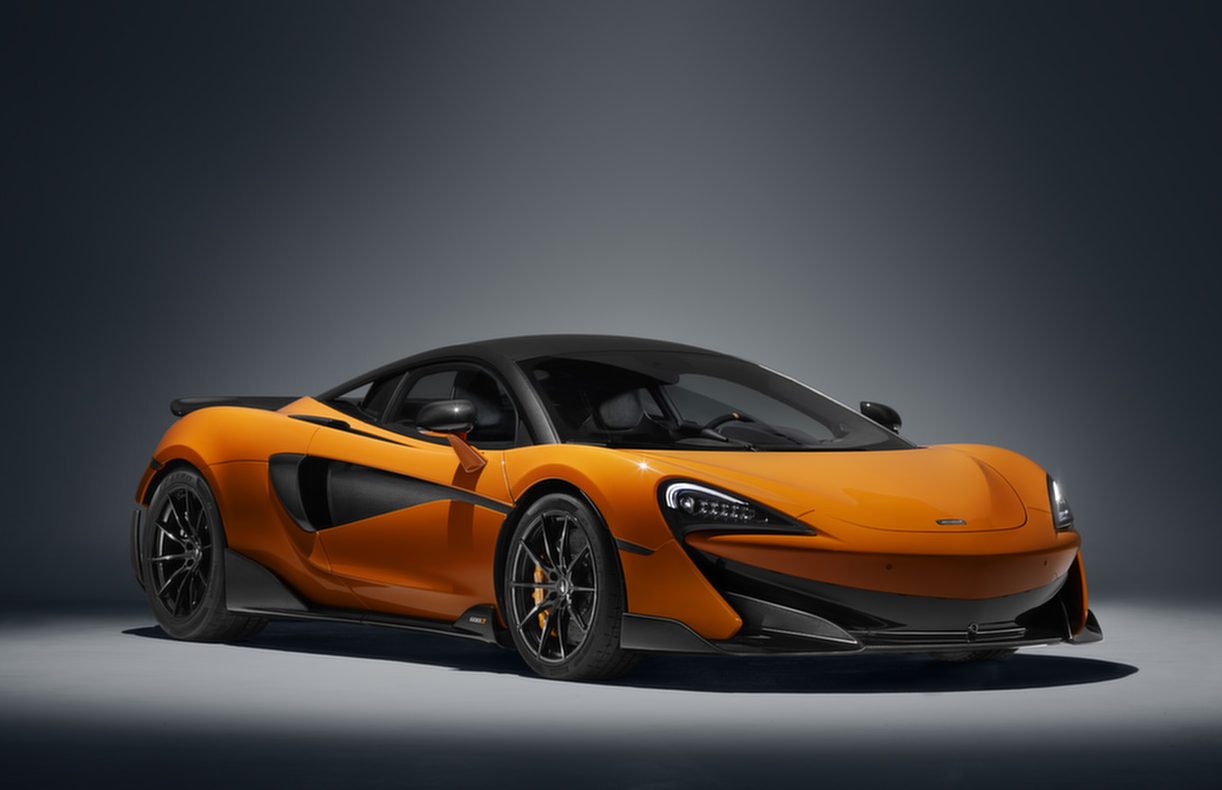
Based on the already highly impressive 570S, the LT adds power, cuts weight and puts a more uncompromising twist on driving dynamics. The 600LT gets the same 3.8-litre twin-turbo V8 and seven-speed dual-clutch as the 570S, but power increases from 562 bhp to 592 bhp and torque is up from 443 lb-ft to 457 lb-ft. Weight is also down about 220 pounds thanks to carbon seats, forged alloys, shorter top-exit exhausts and new carbon front splitter, rear diffuser and fixed rear wing. The new aero parts also increase downforce to 220 pounds at 155mph. Overall, the increase in power and weight loss means the 600LT has 474 bhp-per-tonne, 46 bhp more than the 570S on which it is based. Impressive.

Performance numbers as would expect are scintillating. The 600TL goes from a standstill to 60 mph in just 2.9 seconds, zero to 124 mph in 8.2sec to 124 mph and on to a top speed of 204 mph. The most impressive part of the 600LT is not the absurd straight-line numbers either, it is the way that the 600LT goes about its performance. There is a precision and feel that comes from all the changes that just elevates the 570S-based chassis to another level of greatness. The steering, chassis and engine work together to create a spectacular drive. The whole experience is more raw than a base 570S. The acceleration is more intense, the car carries more grip in corners and the steering wheel has more feel. It is just perfect.

To be clear, this isn’t a daily driver. The 600LT is definitely a track-focused special edition car that does compromise daily comfort for thrilling performance. With its uncompromising chassis settings, the 600LT does feel less forgiving on a bumpy road, but in what little suspension travel it does have there is exceptionally well-judged damping. That means the car can feel busy over bumps and ridges, but never brittle or uncomfortable. On smoother roads, you’ll never give the car’s ride quality a second thought.
Capable of eye-watering performance it is deserving of the LT name and it is the best drivers car that McLaren makes today.

The 600LT is the perfect drivers car. If you love getting behind the wheel on an open road and hammering around for a few hours, then this is the car for you. It’s a revelation, calibrated just perfectly and with absurd levels of performance yet able to be enjoyed by regular drivers on normal roads. This is what cars are meant to be about. 

McLaren 720S CoupeMcLaren 720S Coupe

Best McLaren Supercar

McLaren 720S Coupe

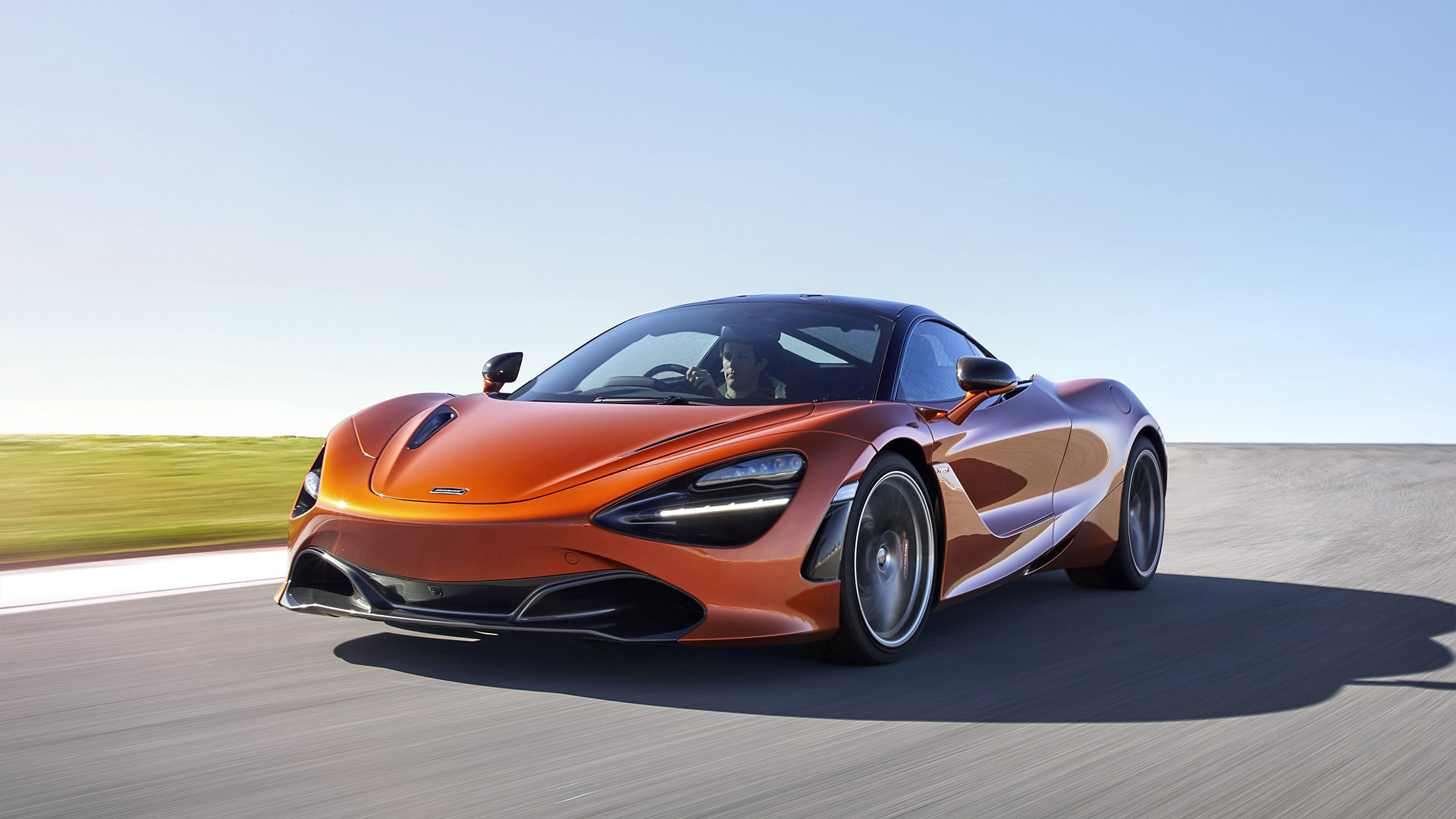
The McLaren 720S isn’t just the best supercar that McLaren makes, it is the best supercar on sale today period. It beat the Ferrari 488 in multiple tests by reputable car magazines and that says a lot because the 488 is a masterpiece. The McLaren 720S is a more sensational supercar and easily the best of the current breed.

The 720S is an exotic for sure. It is a mid-engined, rear-wheel-drive supercar with an advanced carbon fiber chassis and a twin-turbocharged 4.0-liter V-8 that produces 710 horsepower and 568 lb-ft of torque. It also has the most advanced suspension system on the market. Called Proactive Chassis Control II it gets improved sensors combined with a hydraulically connected damper system that means there’s no need for anti-roll bars. It also has the awesomely named Variable Drift Control system that ummmm is great for sideways fun.

The McLaren 720S is a performance monster. Monumentally fast, it goes from 0 – 60 mph in just 2.8 seconds and onto a top speed of 212 mph. These are hypercar-like performance numbers and indeed, flooring a McLaren 720S on road or track is not that different than the McLaren P1. It isn’t just straight line speed either because the 720S has an uncanny ability to blend pointy and balanced handling with supple ride making the chassis a work of brilliance.

Superb ride and handling, crazy performance and everyday usability, no wonder Top Gear said the 720S was “Probably the single most accomplished supercar we’ve ever driven.”  Best supercar on sale today, bar none. 

McLaren GTMcLaren GT

Best McLaren for Daily Use

McLaren GT

Ok, so we are cheating a little bit here since we have yet to drive the McLaren GT and we have yet to read any reviews either. Given that McLaren has said the GT model was built with express purpose of delivering a better overall daily car that is more comfortable and luxurious, it is hard to imagine any other McLaren being better for daily use.

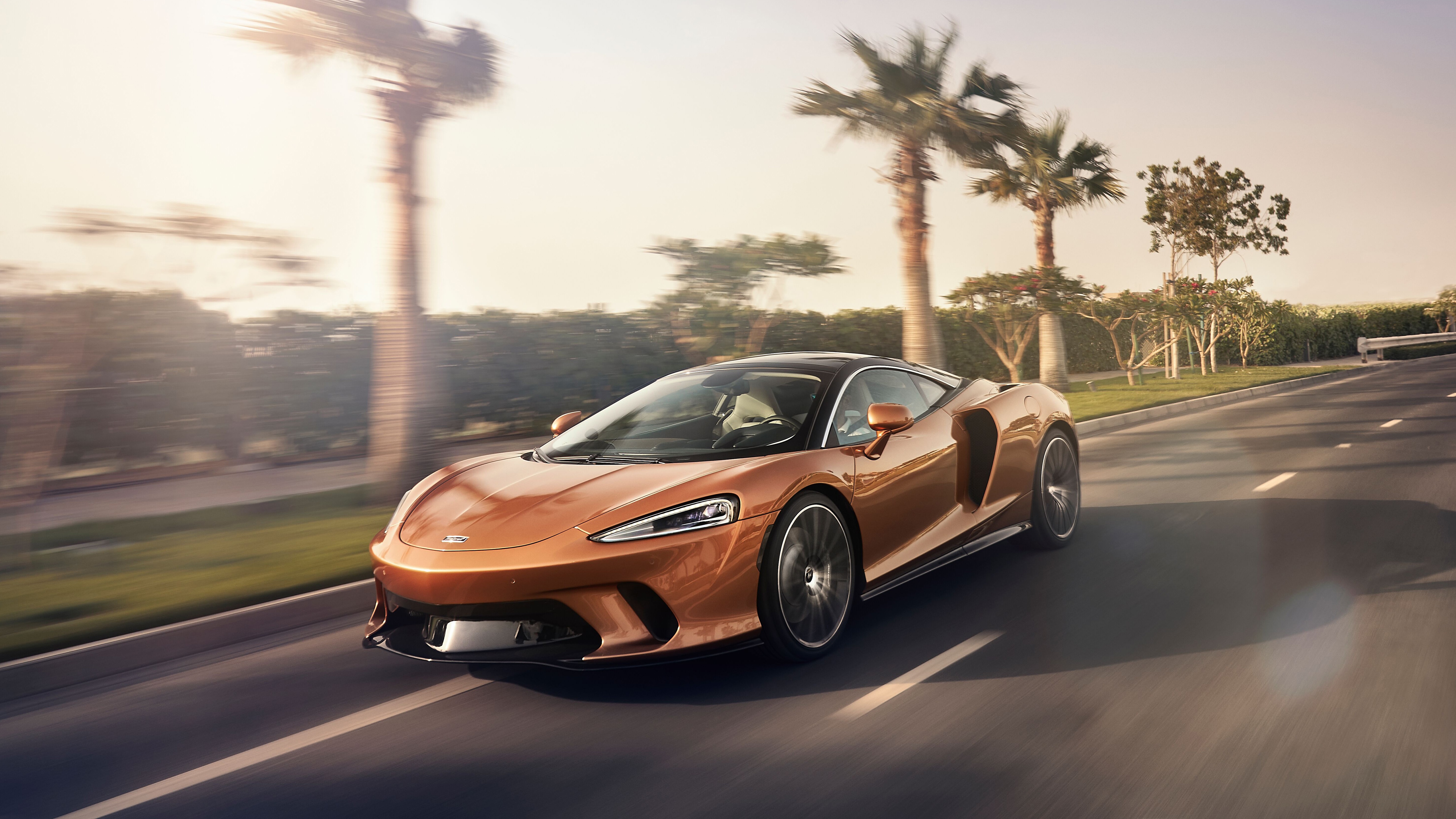
The car has a mid-engine 4.0-liter twin turbo V8 that makes 612 hp and 465 lb-ft of torque. McLaren has changed the way that power is delivered, making it different than the rest of the range in order to suit a GT-like driving experience. The car isn’t some plush boat though. It is still a McLaren and as such performance will be amazing. It can do 124 mph in nine seconds flat and has a top speed of 203 mph.

Physically, the GT is a bit longer and more elegant than the other models from the brand, creating more storage space and giving occupants a larger feeling cabin area. It sits up a little higher than the other supercars in McLaren’s lineup and offers segment-leading cabin refinement, according to the company. It also comes with a reasonably generous 14.8 cubic feet of cargo space. Add in the additional storage areas in the car and you have a combined total of over 20 cubic feet of cargo space. The infotainment system is new (thank goodness) and the interior has high-quality interior materials, including Nappa leather and Alcantara laid out in more of a luxurious manner than the rest of the range.

We think it is safe to say that the McLaren GT will be the best new McLaren for daily use on sale today.

McLaren SennaMcLaren Senna

Best Money No Object McLaren

McLaren Senna

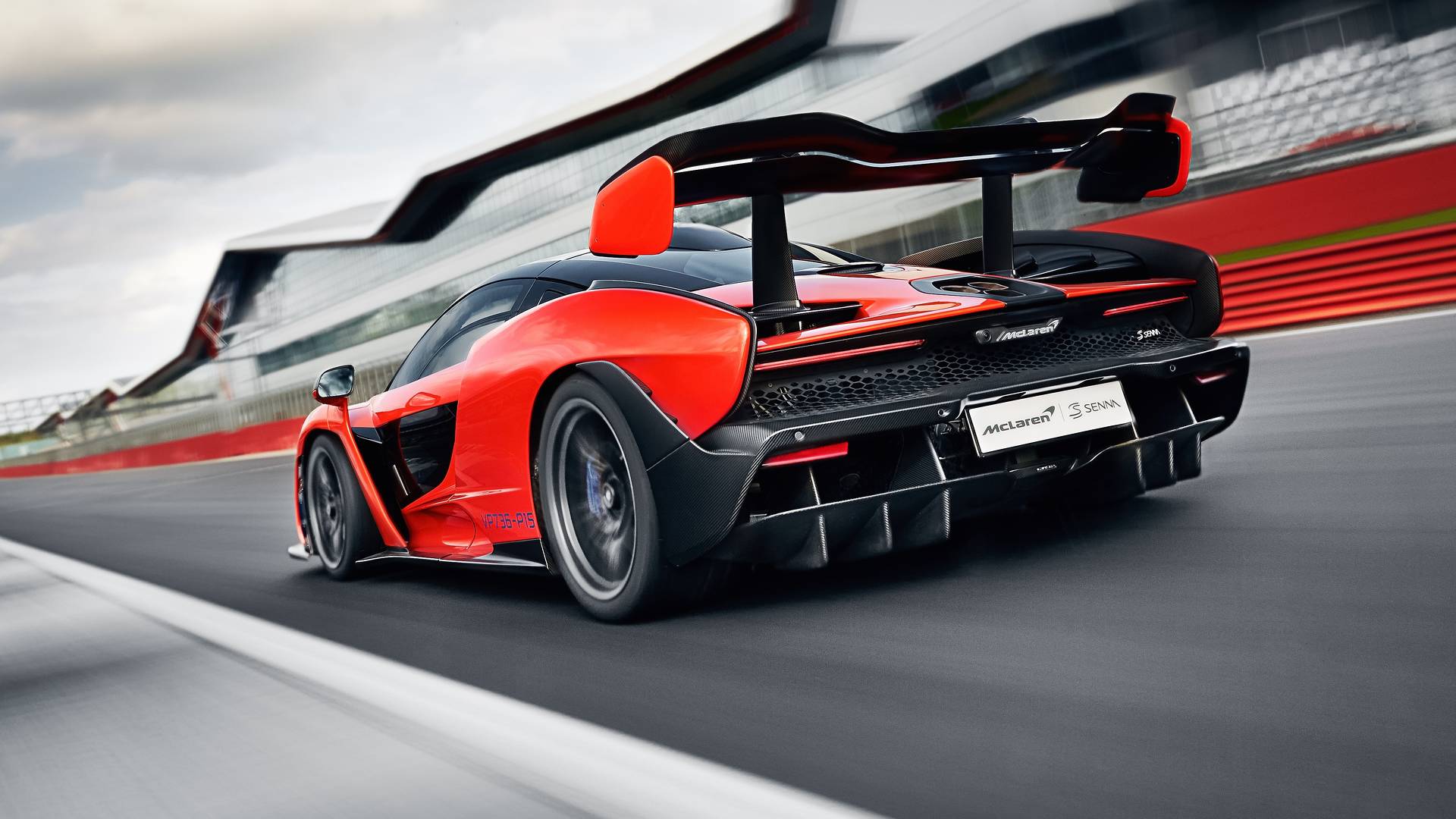
McLaren claims this is the most extreme road car it’s ever built. It was designed to smash lap records and spend days destroying circuits lap after lap. Named after Formula 1 driver Ayrton Senna, the McLaren Senna is a track-focused hypercar.

The first time you see the Senna is can be a little jarring. It certainly isn’t the prettiest car in the world but it never was meant to. Every aspect of its design is focused on making it fast around a track. The Senna is all about aerodynamics – up to 1500 pounds of air pressing the mid-engined two-seater into the tarmac at 155 mph. It could produce more, but above that speed McLaren alter the wing angles to maximise acceleration.

It makes our list because it is in fact road legal and because it really is a stunning achievement by the team at McLaren. It develops 789 hp and 590 lb-ft of torque all deployed through the rear wheels via a seven-speed twin clutch gearbox. The sprints to 62mph is over in 2.8 seconds while 124mph comes up in just 6.8 seconds. To be fast on track a car needs to be both powerful and lightweight and the Senna is a relative lightweight, weighing just 2800 pounds with all fluids and fuel. All 500 units are already sold out though so you may need to buy one second hand if you really want one.

McLaren 720S SpiderMcLaren 720S Spider

Best New McLaren – Overall Winner

McLaren 720S Spider

If your only criteria is simply, “I want the absolute best new McLaren for all conditions and driving needs” then you cannot go past the McLaren 720S Spider. I would personally buy the McLaren 600LT but that is because I am willing to live with the compromises of a track-focused car and all the rough-edges that come with a hardcore car driven on normal roads. I am also only going to drive the car once or twice a month based on my crazy schedule so those issues come up less of the time.

For everybody else, you should buy the 720S Spider. I  guarantee that anybody who buys it will be happy. It does everything exceptionally well. In fact, the 720S Spider does everything the 720S coupe does but with the added benefit of getting a tan and some fresh air when it is sunny outside.

The McLaren 720S is a sensational supercar, easily the best of the current breed. It has a twin-turbocharged 4.0-liter V-8 that produces 710 horsepower and 568 lb-ft of torque. We said it was the best supercar on sale today, bar none. It is.

Sure, the Spider weighs about 300 pounds more than the coupe, but this is a car with 710hp – you are not going to be able to feel the performance differences (the Spider is 0.1 seconds slower to 124 mph versus the coupe) . The roof has cool electric motors which means it takes just 11 seconds from open to close (and vice versa) and can be operated up to 31 mph.

The 720s Spider is a great daily driver too. Sure, the GT is more luxurious and has some more space. But, the 720S has McLaren’s special hydraulic cross-linked variable dampers and they work like magic. They make the 720S Spider ride like a luxury car over bumps and rough roads. It is uncanny in its ability to make a supercar feel like a regular luxury car, delivering a remarkable ride: flat, yet amazingly supple.

From a performance perspective it can destroy anything else on the road. Sure the Senna is faster but you can’t drive a Senna to get groceries. The 720S can be driven to work and hammered on back roads on weekends. It handles amazingly well, it has so much punch in any gear that it is legitimately scary in a great way. The performance is absolutely astonishing. The open top makes it feel more liberating and more immersive than the coupe. The 720S Spider has been so well calibrated, is so clear, clean and faithful in its responses that you have utter confidence in its manners. The steering is the best of any supercar. 

Out of this world performance, stunning looks, advanced technology and most importantly tons of soul. The best new McLaren for sale today is the McLaren 720S Spider

The Best McLaren Cars of All Time

Updated: June 2019

We recently finished creating a guide to the current McLaren range as well as a full list of every McLaren ever made. As part of that process we were awed by some of the amazing cars that McLaren has produced over the years. It is even more impressive when you consider that McLaren Automotive has technically only been around since 2010. That was the year McLaren decided to give the whole production car manufacturing thing a real business. Prior to that there were a few cars like the stillborn McLaren M6GT, the mighty McLaren F1 and a collaboration with Mercedes-Benz in the form of the Mercedes-Benz McLaren SLR.

McLaren has a rich racing history and deep technical knowhow as a company. Despite some recent woes in Formula 1, this is a team (and company) that knows how to win races and knows how to innovate when it comes to high performance machines. I was personally surprised when the 12C was released in 2011. It was way better than I expected and to McLaren’s credit they did things their own way, without copying other carmakers. From the one-piece carbon fiber tub to their inhouse M838T 3.8 liter twin-turbo V8 engine and their innovative and unique hydraulic configuration suspension, McLaren came out of the gates swinging. 

They haven’t stopped since. In fact, the pace has increased with every passing year. Sure, many pundits argue that all of McLaren’s cars are basically the same these days, but screw them. It is hard to argue that a McLaren Senna and McLaren 570S are all that close in nature so I choose to cut McLaren some slack and let the folks in Woking keep cranking out new machines.

What I do know is that in the last decade McLaren has created some simply fantastic supercars and I expect that they will continue to do so as they execute on the ambitious product roadmap in coming years. With that in mind, lets celebrate the top McLaren models of all time so far. Here is to the McLaren icons, the recent best McLaren cars and to the ones yet to come. Enjoy.

McLaren F1McLaren F1

McLaren F1

Engine: 60 Degree V12 / Power: 627.1 bhp / Torque: 479.0 ft lbs / 0-60 mph: 3.2 sec / 0-100 mph: 6.7 sec / Top Speed: 240.1 mph

The McLaren F1 is the best supercar ever made. Its top speed of 240 mph puts much of even today’s supercar crowd to shame, and ergonomic features like the driver-centered, three-seat cockpit have rarely been seen since. Sure there are cars that are faster, but nobody did it the way the F1 did it. 

Originally a concept conceived by Gordon Murray, he convinced Ron Dennis to back the project and engaged Peter Stevens to design the exterior of the car. The McLaren F1 debuted in 1992. It was the cost-no-object approach to building a car and was such a leap ahead in almost every imaginable way that it changed way we think about supercars forever. 

The McLaren F1 was a clean-sheet design, with all components except the tail lamps built specifically for it. The guiding principle was efficiency. Thus it is compact, with body panels and understructure of featherweight carbon fiber, and virtually every mechanical component of aluminum or magnesium. The obsession with weight was the stuff of legend. The Kenwood stereo, the air conditioning and the gold-plated titanium tools were all designed by their manufacturers to specific weight specifications that Murray has asked for. Completely customized for the F1 and so light that most parts manufacturers at the time were not sure they could meet the targets. 

On 31 March 1998, Andy Wallace set the record for the fastest road car in the world, topping at 231 mph (372 km/h) with rev limiter on, and 242.95 mph (391 km/h) with rev limiter removed. Many still believe that with better gearing (inclusion of a 7th gear) the McLaren was capable of even higher speeds. Drivers who got the McLaren up to top speed said the car was still pulling and only gearing stopped them for achieving more.

Most people don’t know that the F1 had a great racing history. The 220-mph GTR competition version took first, third, fourth, and fifth overall against a slew of purpose-built racers and did so almost immediately after launching. It blew the competition away.  When production of the F1 ended in 1998, McLaren had given the world seven prototypes, seventy-two street-legal examples, and twenty-eight full-on race versions. The Sultan of Brunei owns eight or so, and untold numbers have been destroyed at the hands of over-exuberant owners.

McLaren 570S CoupeMcLaren 570S Coupe

McLaren 570S Coupe

Engine: 3.8L twin-turbo V8 / Power: 562 bhp / Torque: 443 lb-ft / 0-60 mph: 3.1 sec / 0-124 mph: 9.5 sec / Top Speed: 204 mph

This one is going to seem odd but let me explain. The McLaren 12C came along and showed that McLaren could be a very fast supercar. It was innovative, insanely fast and yet it was flawed. McLaren had some bugs to work out and they did just that with the 650S a few years later. That sold well and definitely set McLaren on the right path. BUT, it is the McLaren 570S Coupe that showed that McLaren can make an everyday supercar that competed with the Porsche 911 Turbo and that is just amazing. The local McLaren dealership by me says that he is up to his eyeballs in Porsche 911 Turbo trade-ins, people making the leap from Porsche to McLaren because of the 570S. 

The reason is simple. Ultimately this entry level McLaren is simply awesome. It offers a true sports car experience in a package you could live with every day. It is driver centric with epic performance. It is also perfectly positioned car in the range. It has more performance than you could ever need on the road. It is lightweight, has direct steering and tremendous dynamics and will destroy just about anything else on the road. What more could you want from a sports/super car? 

Learn more: McLaren 570S Coupe

McLaren 600LT

Engine: 3.8L twin-turbo V8 / Power: 592 bhp / Torque: 457 lb-ft / 0-60 mph: 2.9 sec / 0-124 mph: 8.2 sec / Top Speed: 204 mph

This is the car I would buy if I had to choose the best supercar on sale today. Forget the Pista, forget the Senna, I would buy the McLaren 600LT Coupe (yes the 600LT Spider is also awesome).

On paper, the limited-edition 600LT is the ultimate version of McLaren’s 570S/GT range. It uses a variation of 570S’ McLaren’s twin-turbo 3.8-liter V8, in this guise making 592 horsepower and 457 lb-ft of torque. It has a dual-clutch automatic transmission and is rear wheel drive. The handling is perfectly balanced and reassures you with its predictable nature with the ride a little firm due to its track nature approach. Standard carbon-ceramic brake discs, extensive carbon fiber and that massive wing let you know this is a limited edition car designed for the track. Capable of eye-watering performance it is deserving of the LT name.

The 600LT is the perfect drivers car. If you love getting behind the wheel on an open road and hammering around for a few hours, then this is the car for you. It’s a revelation, calibrated just perfectly and with absurd levels of performance yet able to be enjoyed by regular drivers on normal roads. This is what cars are meant to be about. Future classic and the best car McLaren currently makes.   

Learn more: McLaren 600LT

McLaren 720S

Engine: 4.0 L twin-turbo V8 / Power: 710 bhp / Torque: 568 lb-ft / 0-60 mph: 2.9 sec / 0-124 mph: 7.8 sec / Top Speed: 212 mph

The McLaren 12C never really worried the guys at Ferrari. Sure it was fast and smooth and had some cool tech, but ultimately it lacked the soul of a Ferrari and most supercar armchair critics panned it as a great attempt but ultimately not quite there. McLaren quickly made improvements and launched the 650S and that went some way to helping McLaren in the supercar bragging rights. But it is this, the McLaren 720S and 720S Spider that finally did it. McLaren built a supercar that was the best in the world. Out of this world performance, stunning looks, advanced technology and most importantly it has tons of soul. Better than the Ferrari 488? You betcha. 

The McLaren 720S is a sensational supercar, easily the best of the current breed. It has a twin-turbocharged 4.0-liter V-8 that produces 710 horsepower and 568 lb-ft of torque. Monumentally fast, great steering and perfect high-speed balance. Top Gear said it best when they said the 720S was “Probably the single most accomplished supercar we’ve ever driven.” Best supercar on sale today, bar none. 

McLaren SennaMcLaren Senna

McLaren Senna

Engine: 4.0 L twin-turbo V8 / Power: 789 bhp / Torque: 590 lb-ft / 0-60 mph: 2.8 sec / 0-124 mph: 6.8 sec / Top Speed: 211 mph

McLaren claims this is the most extreme road car it’s ever built. It was designed to smash lap records and spend days destroying circuits lap after lap. Named after Formula 1 driver Ayrton Senna, the McLaren Senna is a track-focused hypercar.

The first time you see the Senna is can be a little jarring. It certainly isn’t the prettiest car in the world but it never was meant to. Every aspect of its design is focused on making it fast around a track. The Senna is all about aerodynamics – up to 1500 pounds of air pressing the mid-engined two-seater into the tarmac at 155 mph. It could produce more, but above that speed McLaren alter the wing angles to maximise acceleration.

It makes our list because it is in fact road legal and because it really is a stunning achievement by the team at McLaren. It develops 789 hp and 590 lb-ft of torque all deployed through the rear wheels via a seven-speed twin clutch gearbox. The sprints to 62mph is over in 2.8 seconds while 124mph comes up in just 6.8 seconds. To be fast on track a car needs to be both powerful and lightweight and the Senna is a relative lightweight, weighing just 2800 pounds with all fluids and fuel. All 500 units are already sold out. 

Learn More: McLaren Senna

McLaren 675LTMcLaren 675LT

McLaren 675LT

Engine: 3.8-liter twin-turbo V8 / Power: 666 bhp / Torque: 515 lb-ft / 0-60 mph: 2.9 sec
0-124 mph: 7.9 sec / Top Speed: 205 mph

The 675LT was McLaren’s answer to the Ferrari 458 Speciale, a harder, lighter, faster upgrade to the 650S. It is a track-focused supercar. . Track-focused but still absolutely scintillating on the road and nothing less than one of the greatest automotive experiences ever. Available as both a coupe and a spider the 657LT showed that McLaren could create the perfect package. Remember, this is a car from a time before the 600LT and before the Senna. McLaren had launched the 12C to great reviews, but it fell shorts in a few areas. To add injury to insult it seemed at first that McLaren was ignoring the feedback. They had built the 12C to be faster than any of the other supercars of the time, but it didn’t sound like a supercar and it wasn’t fun to drive, the electronic nannies and tuning of the chassis left people feeling it was too synthetic an experience. The 650S came along and was better than the 12C, but it was the 675LT that unleashed the McLaren beast.

Styling cues run from the extended carbon fibre front splitter, through an extended door blade and additional cooling intake, to the circular twin titanium exhaust pipes, giving a hint to the performance available for the most powerful and lightest model in the McLaren Super Series. The active ‘Longtail’ Airbrake is 50 percent bigger than the one fitted to the 650S yet, due its carbon fibre structure, is actually lighter. This is just one of the enhancements that add up to a dry weight of just 1,230kg.

More than 50 percent of parts have been changed in the 3.8-litre V8 engine to deliver increased levels of power, torque and driveability. Upgrades include new, more efficient turbos, detail design changes to the cylinder heads and exhaust manifolds, new camshaft and lightweight connecting rods, and a faster-flowing fuel pump and delivery system. These changes are so significant, that the engine unit receives a new, unique code – M838TL. The low weight, low inertia power unit produces, as the name suggests, a power output of 675PS and a power-to-weight ratio of 549PS per tonne.

The 675LT is as fully track-focused as it is road legal with around a third of parts modified to suit this purpose compared with the 650S Coupé and Spider that continue in production alongside it. Yet, like its iconic predecessor, the McLaren F1 GTR ‘Longtail’, from which the LT name is derived, this is a car that is as exciting to look at as it is to drive. It also embodies the key attributes of the ‘Longtail’ ethos targeting light weight, optimised aerodynamics, increased power, track-focused dynamics and driver engagement.

0-62 mph is over in 2.8 seconds, 0-124 mph in 7.9 seconds, the quarter mile in 10.5 seconds and a top speed of 205 mph. Wow. The way it gets there is what makes the 675LT special. The faster spooling twin-scroll turbochargers, lighter connecting rods, more aggressive camshafts and ECU tuning all combine to make the car more emotional and visceral driving experience. As Top Gear said when they first tested it, this is “nothing less than one of the greatest automotive experiences ever”.

Learn More: McLaren 675LT
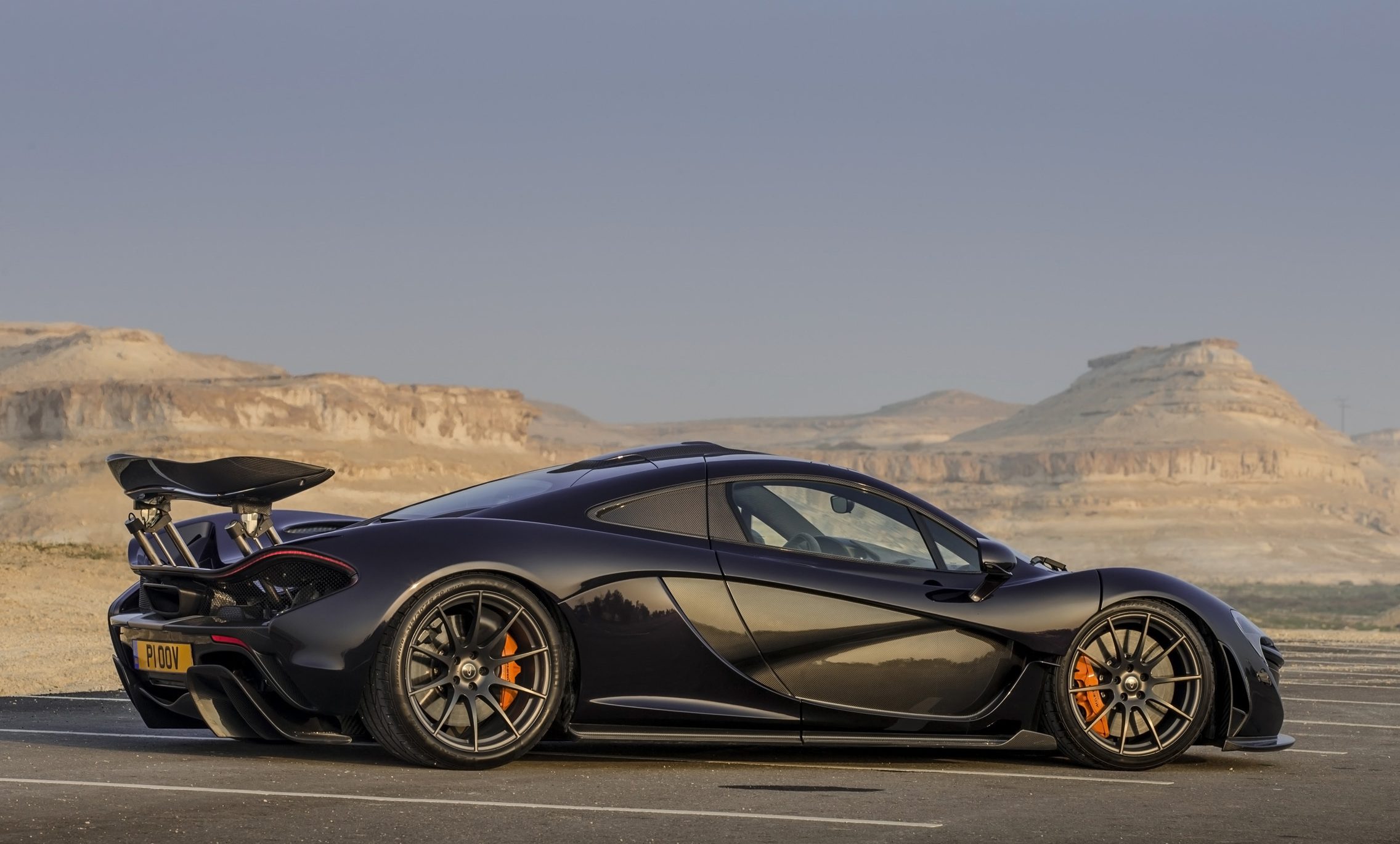
McLaren P1McLaren P1

McLaren P1

Engine: 3.8 L twin-turbo V8 + electric motor / Power: 986 hp / Torque: 774 lb/ft / 0-60 mph: 2.8 sec
0-124 mph: 6.8 sec / Top Speed: 217 mph

This is the car that won the first Hybrid Hypercar War. Compared to the controllable yet vivacious characters of the cars it met when it emerged in production in 2013 – the Ferrari LaFerrari and Porsche 918 Spyder – the P1 delivered an altogether more sinister side, gaining it a reputation for having more of a bite. It was also a better performing, better handling and outright more aggressive car. Limited production run of 375, the P1 showed people that hybrid hypercars could be astonishing from a performance perspective. Cool electric motor handily fill in the torque hole left by turbo lag. One of the best ever.

The McLaren F1, released back in the nineties, was designed to be the most technically capable sports car of its era. It surpassed expectations, becoming the world’s fastest production car – a record it held for seven years until the Koenigsegg CCR and Bugatti Veyron overtook it. By that yardstick, the McLaren P1 had a lot to live up to as the F1’s spiritual predecessor at the top of the McLaren range. But McLaren, as a company, had changed a lot since the creation of the P1.

Given the focus on performance, it’s no surprise that McLaren allowed aerodynamics to define the overall design of the P1. The carbon fibre bodywork is draped over a monocoque chassis, with a fighter-jet inspired teardrop cockpit sloping up out of the bonnet to funnel air across the rear wing, helping create a distinctly mid-engined silhouette that reveals how tightly-packaged and honed the car is. Twin air vents up front hint at a venomous undertone to the P1, while an active rear spoiler provides F1 DRS-style aero advantages on the straights as well as acting as an air-brake. This rises in “Race Mode”, as the rest of the car hunkers down – creating an athletic stance and oozing menace.

The top speed may be below the F1 – an electronically limited 217 mph to the F1’s 240+mph VMax – but absolute maximum speed is not what P1 is about. A 1547 kg car with 903hp is not going to hang about off the line, and the P1 makes the dash from 0-62mph in 2.8 seconds. 186mph comes up in just 16.5 seconds from standstill. The P1’s` power comes mostly from a twin-turbo 3.8-litre V8 – the same as used across the McLaren range, but tweaked to output 727hp and 531 lb-ft of torque – combined with a lightweight and KERS-fed electric motor, that puts a further 176 hp and 192 lb ft at the driver’s disposal. That power reaches the rear wheels via seven-speed twin clutch gearbox.

Learn More: McLaren P1
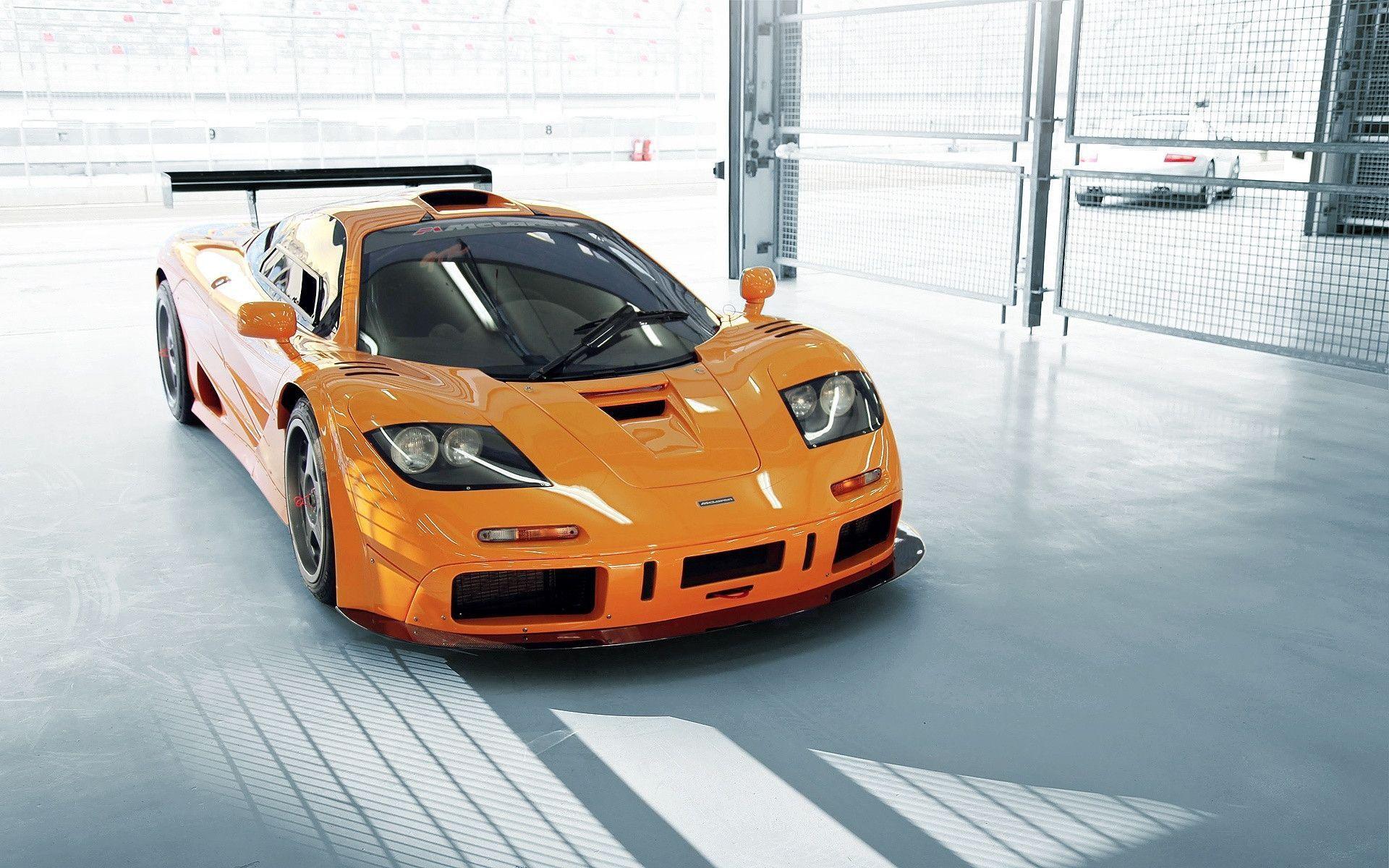
McLaren F1 LMMcLaren F1 LM

McLaren F1 LM

Engine: BMW 70/2 60 Degree V12 / Power: 668.0 bhp  / Torque: 520.0 ft lbs / 0-60 mph: 2.9 sec
0-100 mph: 5 sec / Top Speed: 225 mph

I know we included the McLaren F1 already, but the McLaren F1 LM is sufficiently awesome in its own right that it deserves to be here too. First of all, the “LM” stands for Le Mans which is cool.

Second, the McLaren road car had basically gone to Le Mans and won, so Gordon Murray decided to make a road version with the kit from Le Mans. Brilliant idea that was not so straightforward. The parts from the race car included a ground-effects underbody, unique front bodywork, a rear diffuser and a carbon fiber rear wing engraved with the legend ‘GTR-24 Heures du Mans Winners 1995’. The wheels grew in width, and from 17in to 18in in diameter, while the gearbox contained racing-style straight-cut gears.

The LM was a monster. It could go from standstill to 100 mph in less than five seconds. 

From a performance perspective the changes lead to a big increase maximum downforce, up some 50 percent. It was almost 150 pounds lighter than the standard F1 and has better ventilation and cooling. Perhaps the biggest change came from the removal of the air restrictors which meant the LM had 668 horsepower at 8500 rpm vs the regular F1’s 627 hp. Torque was also up from 479 to 520 pound-feet at 4500 rpm. Top speed was unchanged, with Gordon Murray gearing the LM for fast acceleration and quick gear shifts with closer ratios. 

The McLaren F1 LM costs just over $1 million and only five will be built. All five were painted Papaya Orange.

Learn More: McLaren F1 LM
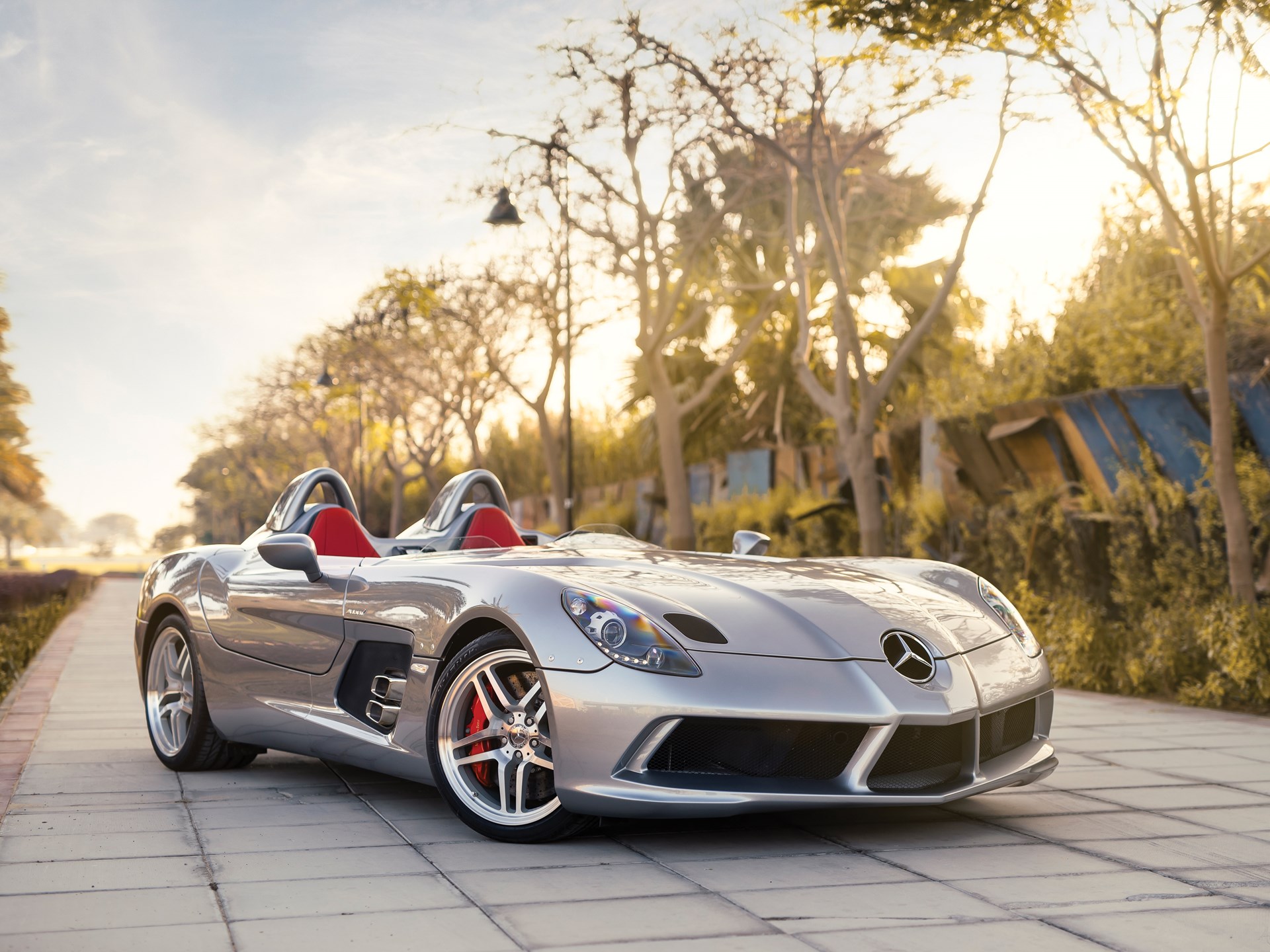
Mercedes-Benz SLR McLaren Stirling MossMercedes-Benz SLR McLaren Stirling Moss

Mercedes-Benz SLR McLaren Stirling Moss

Engine: Supercharge AMG V8 / Power: 641 bhp  / Torque: 605 ft lbs / 0-60 mph: 3.5 sec / Top Speed: 217.35 mph

We are counting this Mercedes-Benz and McLaren collaboration as an awesome McLaren car even though we know deep down that Mercedes-Benz probably did most of the work. It was the crowning glory to the highly successful SLR super sports car. We love how modern it was and just how uncompromisingly spectacular the car was. 

The SLR Stirling Moss had a supercharged V8 engine good for 650 hp. Standstill to 60 mph was over in less than 3.5 seconds. It was limited to just 75 units and cost a healthy 750,000 euros when announced in 2009. 

The SLR Stirling Moss sports an exciting, pronounced arrow-shaped form and is characterised by an elongated bonnet and a compact, muscular rear. As there is no windscreen, the exterior and interior flow smoothly into one. The bonnet also stretches from its striking tip right down into the interior, giving the vehicle body a distinctly sleek air. Even when standing still, the sports car radiates such dynamism that the observer immediately falls under its spell. The SLR Stirling Moss is the kind of high-calibre speedster coveted by the sporting gentry and enthusiasts alike. One of McLaren coolest models for sure. 
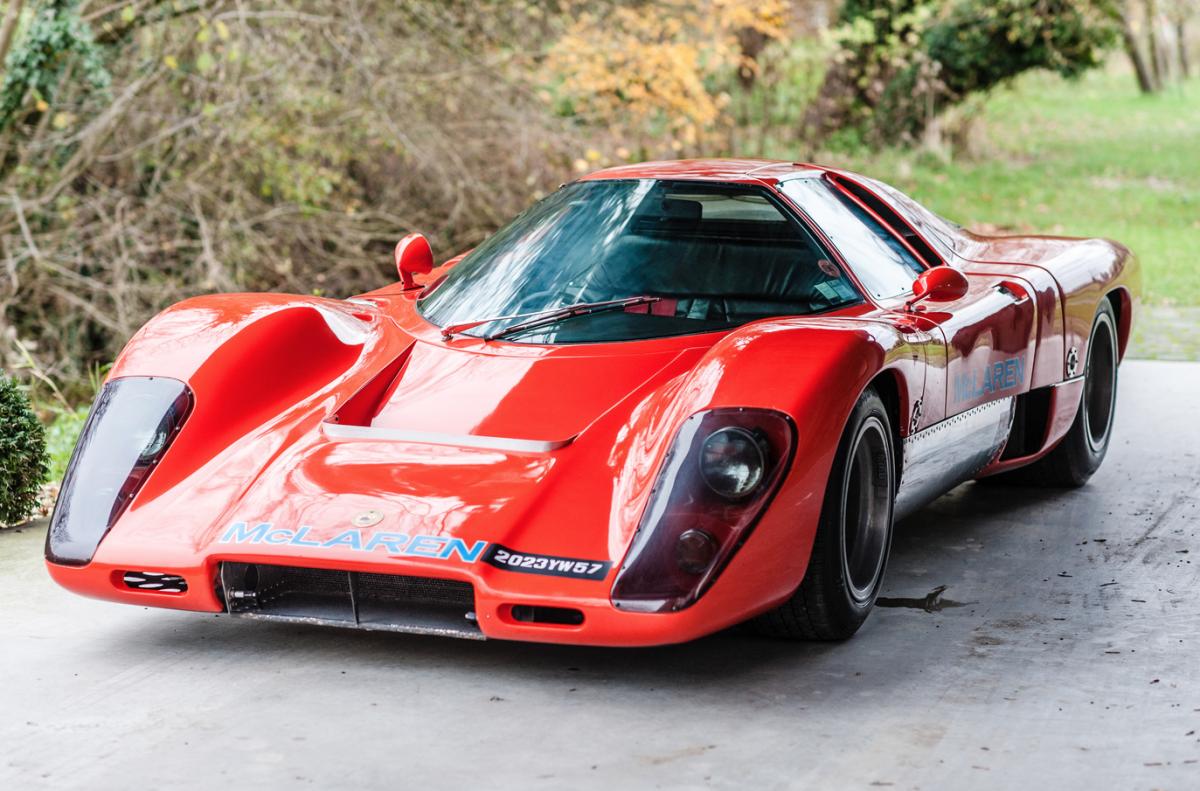
McLaren M12McLaren M12

McLaren M12

Engine: 6.4 L V8 / Power: 770 hp

Most people don’t know about the M12GT which was one of McLaren’s earliest road cars. It is very rate. The M12 was basically a road legal Can-Am car. Back in the late 1960s the M12 was McLaren’s customer car offered to privateers for the 1969 Can-Am season. Basically, it’s an upgraded version of the M6 chassis from two years earlier with a more aerodynamic body, and an 800-hp Chevy big block in the middle. That is what we consider a cool production car, something based on the M8As which successfully used to win the 1968 Can-Am season, as well as the M8Bs which the team were developing for 1969.

However, the M12s did not share everything from the M8 series. Instead, the monocoque chassis were actually based on the early M6 series initially developed in 1967. On top of this chassis, the aerodynamic bodywork of the M8A was added. The engine bays were specifically designed to house a Chevrolet V8 engine, but several customers opted for other manufacturers. All M12s were built by Trojan, rather than at McLaren’s racing headquarters

Several M12s were later modified by customers in order to cope with necessary demands. Many Can-Am M12 customers added larger rear wings for better downforce, in an attempt to keep up with competitors which had already done the same. Two M12s were imported to Japan by Toyota and received revised bodywork to allow better results at Japanese circuits as well as to fit company’s own V8 engine. 
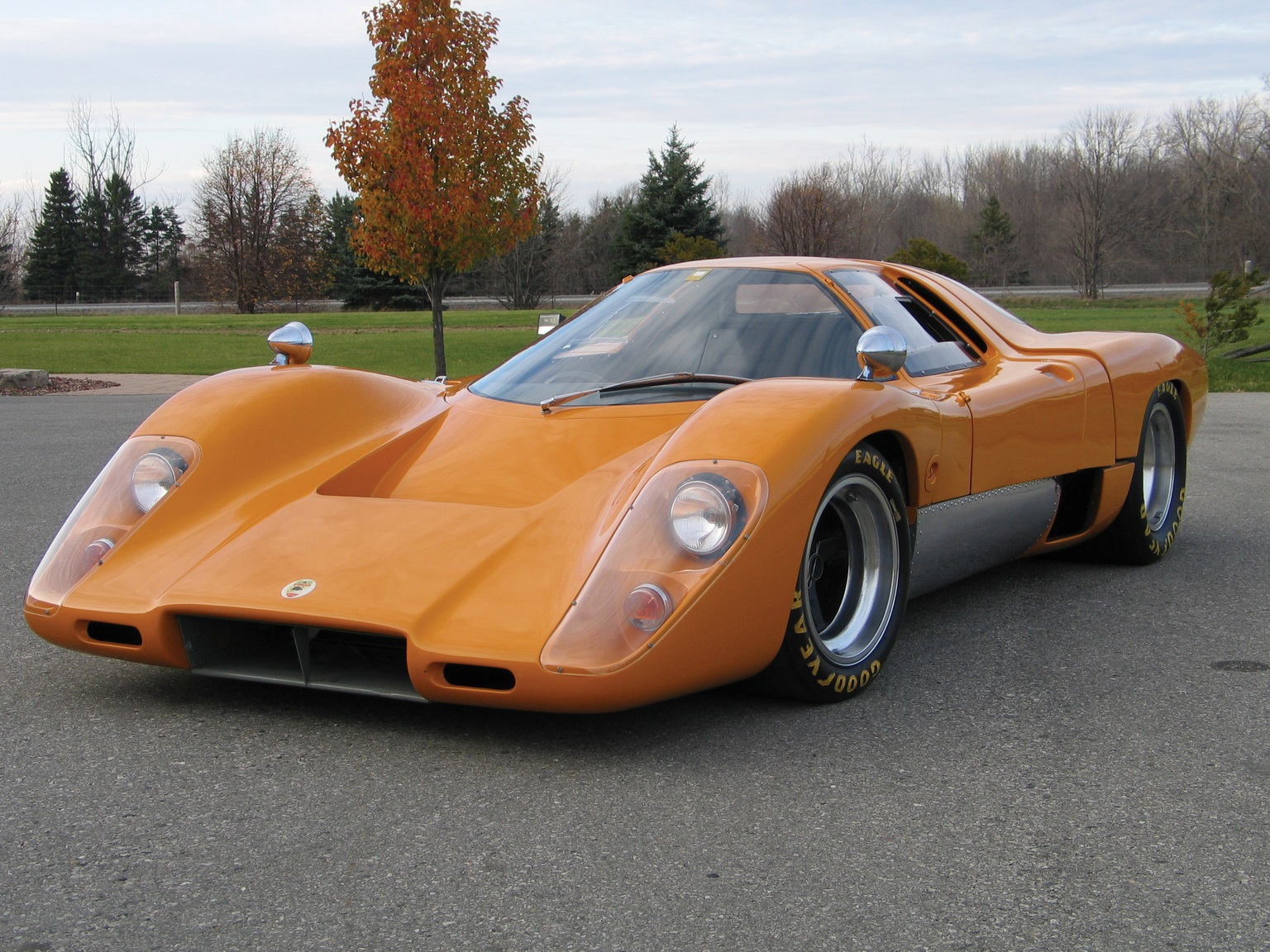
McLaren M6GT

Engine: V8 / Power: 370 bhp / Torque: 370 ft lbs / 0-60 mph: 3.2 sec / 0-100 mph: 8 sec / Top Speed: 165 mph

In the late 1960s, company founder Bruce McLaren was inspired to build a road car the likes of which the world had never seen. Bruce McLaren’s vision for the M6GT is the genesis for all McLaren road cars.

Based on the latest race technology, the M6GT was superlight, blisteringly quick, confidence inspiring and safe. It would feature a closed cockpit, the running gear from a Can Am racecar. Three prototypes were produced, each capable of zero to 100 mph in eight seconds. Bruce even drove his car ever day which says a lot about how good it was. Bruce died in 1970 and with it so did the McLaren M6GT. Unfortunately, Bruce’s death and the FIA changing the rules governing homologation for the World Championship of Makes (now requiring manufacturers to complete a minimum of 50 production examples before a car could be considered) effectively killed off the project. Unable to meet the requirement at the time, the racing project was shelved and so was the production car.

Learn More: McLaren M6 GT
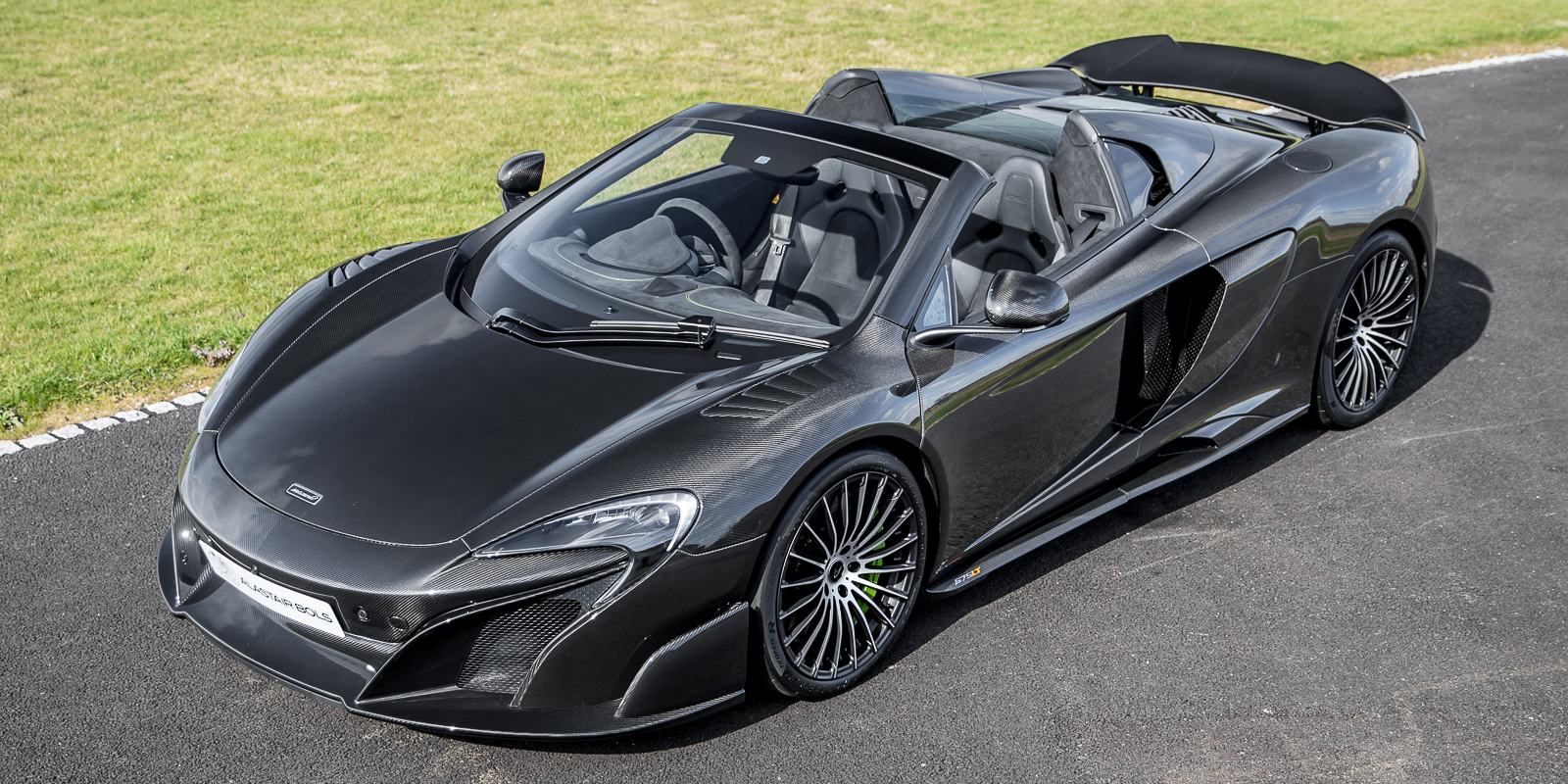
675 LTS Carbon675 LTS Carbon

MSO Carbon Series LT

I am including this limited edition (only 25 cars) MSO car because frankly I love the way it looks. The MSO team works their magic on a number of cars, but the limited production cars they create are some of my favorite McLaren’s.

Based on the 675LT Spider, the Carbon Series LT was produced in response to requests from McLaren customers captivated by the visual carbon fibre bodied McLaren P1. Staying true to the ‘Longtail’ ethos, the MSO Carbon Series LT was developed with a focus on light weight and optimised aerodynamic performance. Applying gloss carbon fibre to the entire body of the car further extends its appeal to bring a brutal beauty to the existing 675LT Spider body.

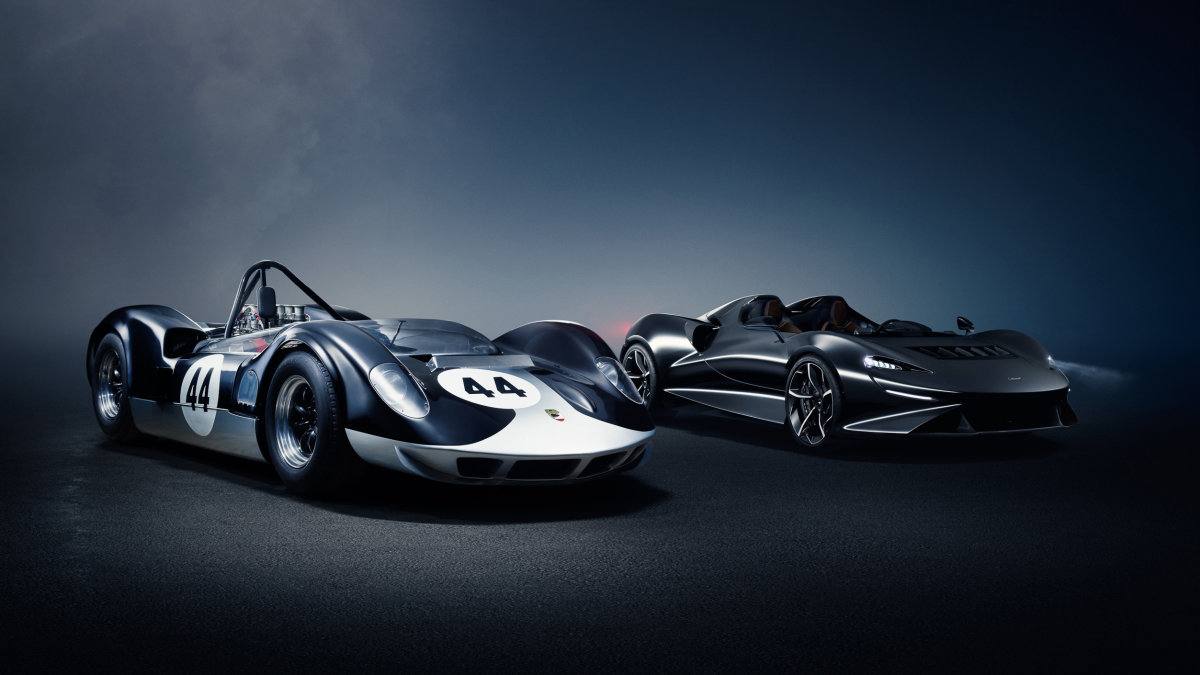
The McLaren GT Will Tour Europe

A Grand Tour for the GT

The new McLaren GT is a true grand touring car, and the company wants to prove it by taking the car to various countries in Europe. This is a move to let buyers see the car ahead of production. It will also expose the GT to a far wider in-person audience than McLaren would be able to do otherwise. According to Carscoops, the GT will start out in the UK and then travel to the Netherlands, Belgium, Germany, Switzerland, Italy, France, and Spain. 

The rest of the McLaren lineup will join the GT at the various locations across Europe. Everything from the 570S to the new Senna will be there as well. While those other cars will be on location, the GT is the main event for each spot.

David Gilbert, McLaren Managing Director for Europe, said that it only makes sense for the GT to take a tour of Europe because that’s what it’s designed to do. “We would like to invite McLaren customers and followers to visit us on the McLaren GT’s summer Grand Tour, which will be a great opportunity to admire the new car’s elegant design as well as a chance to discover more about the whole McLaren range.”

McLaren GTMcLaren GT

Here are all the cities the car will stop:

  • Bristol/Birmingham and Leeds – June 17
  • London/Ascot and Manchester – June 20
  • Utrecht – June 25
  • New Forest – June 26
  • Glasgow and Brussels – June 27
  • Hamburg, Frankfurt, and Lugano – July 2
  • Munich, Dusseldorf, and Milan – July 4
  • Zurich, Stuttgart, and Barcelona – July 10
  • Paris – July 17

Check your calendar and see if you can get away for a little while to take a look at McLaren’s latest and best grand touring car before it even hits production. 

The Difference Between the McLaren Senna and a Real GT3 Car Is Significant

The Senna Is Fast But Not GT3 Fast

The McLaren Senna is a car that pulls a lot from racing. It’s wildly fast and produces tons of power. It is, however, a car that’s legal for the street. That’s fantastic if you want a high-powered, high-priced machine that can do both. However, Chris Harris of Top Gear heard some folks saying the Senna was as fast as a GT3 car. To test that theory, he decided to show up at a racetrack with the McLaren Senna and a 650S GT3. 

Harris starts out in the Senna going after the racetrack and talking through the car’s driving characteristics. He then does the same for the 650S GT3. It’s clear from his commentary that the Senna isn’t as well connected to the road as the real racing car. It’s softer and can’t put its higher power output down to the road as easily. 

Then it’s time for timed laps. Harris takes the 650S GT3 out first this time laying down a lap time that the presenter calls a “pretty unspecial time.” Then it’s into the Senna to see if the car can match that time. The Senna comes in seven seconds behind the true racing car. That’s miles slower around a racetrack. While it’s not the most scientific of testing, it’s clear the Senna is fast, but not GT3 car fast. You can watch the whole video below. 

[embedded content]