All posts in “McLaren”

McLaren hybrid sports series prototype spied, possible 570S successor

McLaren has repeatedly said it plans to go hybrid with all of its vehicles in the future. The latest rumors out of Britain point at plans to reveal the first of this new hybrid lineup sometime this year. This heavily camouflaged prototype could be the one we’re waiting for — it even says “hybrid prototype” on the side sill.

Its size and general shape means it’s likely part of McLaren’s Sports Series. The camo does an excellent job of disguising what the sheetmetal underneath looks like. If we had to guess, this car looks like it’d be a replacement for the 570S model. Assuming we’re right about that, it’s probably hiding McLaren’s yet-to-be-revealed twin-turbo V6 engine. Add the electric power into the equation, and it’s likely going to be making much more combined power than the twin-turbo V8 is able to produce on its own now. McLaren’s hybrids are also rumored to be of the plug-in variety, capable of driving about 20 miles off electric power.

The camouflage over top of the engine bay appears to be tented, and it looks a bit like the McLaren GT because of it with the gently sloping line to the back. We don’t even get to see how large the side air intakes are since McLaren has covered these up quite well, too. The high-mounted dual exhaust has us giddy. Its placement reminds us of the 720S exhaust pipes. Under all that is a giant diffuser and wide rubber pushed to the edges of the car.

Last we heard, McLaren was going to release a hybrid model this year, and it would go on sale in 2021. We wouldn’t be surprised if these targets are pushed back due to delays stemming from the coronavirus.

Related video:

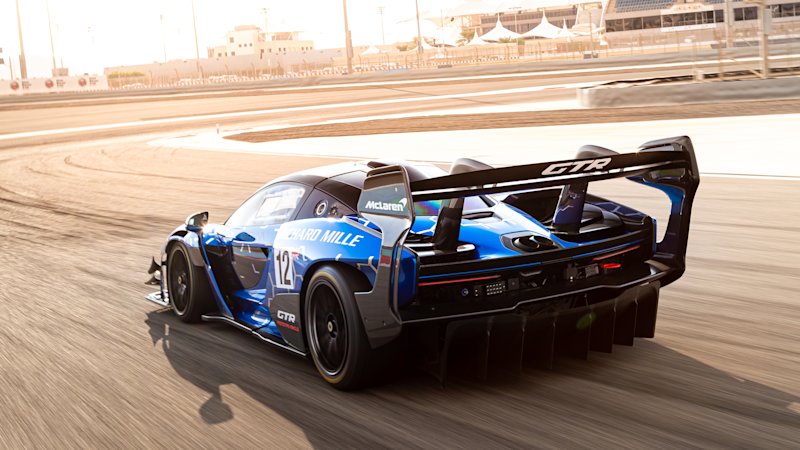
McLaren releases new Senna GTR footage and explains that giant wing

McLaren launched the McLaren Tech Club last week with a brief episode about the aerodynamic magic of the open-top McLaren Elva. In part two of the video series, McLaren continues to explain how air and wind affect a car’s design, but this time it’s in a very different way. McLaren Principal Designer Esteban Palazzo dives into how the massive wing on the McLaren Senna GTR came to be and what purpose it serves. Three extra videos also show new footage of the Senna GTR testing in Bahrain.

Like the McLaren F1 GTR and McLaren P1 GTR that preceded it, the Senna GTR’s most prominent feature is its multi-tiered, multi-layered, carbon fiber pedestal wing. Palazzo says it was not only inspired by high-performance cars of the past and aircraft design, but also by the likes and tastes of the intended customers. In the case of the Senna GTR, Palazzo mentions science fiction and architecture.

The wing, which creates about 2,204 pounds of downforce and aids vehicle stabilization, has a few features that might not be immediately noticeable from photos or video. The shape takes design cues such as the endplates from LMP1 cars. In addition to connecting to the posts, the wing is further integrated into the car’s shape with attachments to the rear diffuser. The last piece mentioned is the automatic drag reduction system (DRS), a new piece of moving technology that helps with, well, minimizing drag.

After releasing episode two of the McLaren Tech Club, the Brits followed up with three videos of the Senna GTR testing on the Bahrain International Circuit, on which the Senna GTR holds the fastest race lap in the circuit’s current configurations. The first video offers an interactive 360-degree interior view, the second video shows the driver’s point of view, and the third video is shot from the Senna’s front splitter. McLaren does not say who is in the driver’s seat.

Episode three of the McLaren Tech Club should arrive at a similar time next week.

[embedded content]
[embedded content]
[embedded content]

McLaren 765LT: How limited-edition longtail got its $385,000 price

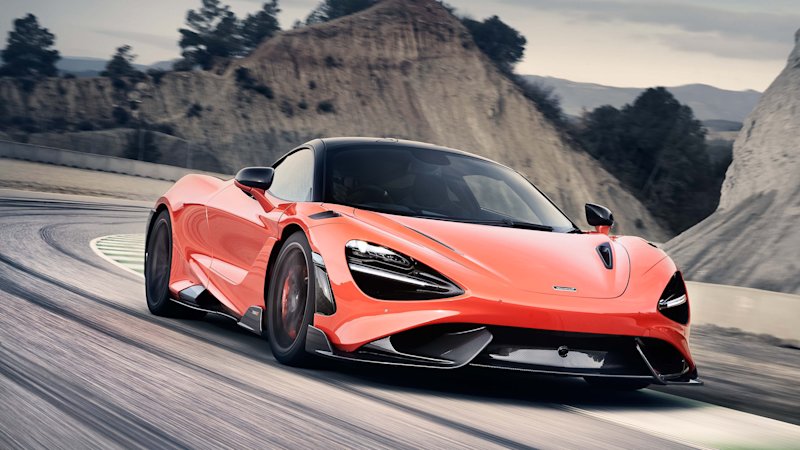
The McLaren 720S starts at $299,000 in the U.S. before the $2,500 destination charge that takes a buyer over the hump to $301,500. McLaren has announced the new, limited edition 765LT will start at $385,000 before destination and any other fees, a number guaranteed to encourage parsing as buyers and enthusiasts try to figure out if the 765LT represents $86,000 in extra goodness. Before whipping out your abacuses, however, the Woking carmaker wants all to know that the 765LT comes standard with options that would add roughly $50,000 to the price of a 720S. These include upgrades like the Exterior Carbon Fiber Pack, normally $7,070, the 10-spoke super lightweight sport wheels, normally $5,490, the parking sensors and rearview camera that together add $5,770, and colored brake calipers with a machined McLaren logo, normally $1,380. 

The rest of the dosh pays for extras that can’t be optioned from the factory, like the redesigned front fascia and longtail rear end with the bigger active spoiler that help increase downforce by about 25% compared to the 720S. The 4.0-liter twin-turbo V8 gains 45 horsepower and 22 pound-feet of torque, totaling 755 hp and 590 lb-ft, shifting through a transmission that houses F1-derived materials and provides 15% quicker in-gear acceleration. Overall weight, assuming the buyer orders the carbon fiber racing seats — saving another $6,390, as a no-cost option on the 765LT — drops DIN curb weight by 176 pounds versus the standard sibling (DIN weight is fluids and 90% full fuel tank). And the suspension has gotten even more precise, which defies belief since McLarens are already so good, thanks to knowledge from the Senna and Speedtail.

If you’d like to crunch the numbers yourself, a poster at the McLaren Life forum has graciously uploaded the 765LT options list and ordering guide. We might skip the $8,470 Double Glazed Engine Window that offers a view into the engine bay, but the $36,340 MSO Defined Gloss Finish Visual Carbon Fiber Roof Scoop would be a great place to start jacking up the price with gusto.

McLaren will make 765 examples of the 756LT for global consumption. We’re not sure how many will make it to the States, but the ones that do will begin arriving in September.

Related Video:

McLaren Elva production cut from 399 units to 249

In an interview with the Australian Financial Review, McLaren Automotive CEO Mike Flewitt revealed the production quota for the new Elva speedster will drop from 399 units to 249. The boss explained lopping volume by 38% with, “the feedback from our customers is that they think the car should be more exclusive than that, so we’ve capped it at 249.”

While it’s to be expected that owners investing $1.7 million in a specialized road car would promote exclusivity — and thereby residual values — it seems dubious that McLaren would return 150 down payments if the automaker had 399 orders. More likely, the global market for windscreen-less roadsters, no matter how technologically advanced, couldn’t absorb all 399 Elvas on top of 500 total Ferrari SP1 and SP2 Monzas, 88 Aston Martin V12 Speedsters, 40 Pagani Huayra BC Roadsters, and 12 Bentley Bacalars.   

The production revision puts the Elva in company with the McLaren F1. Ron Dennis would have built more F1 road cars, but the market (just 20 years ago!) wasn’t ready for a supercar that cost $810,000 before special requests, so production ended after 106 road and racing chassis’ and a complete set of parts for another. The Elva represents technical high points for McLaren, too, being the company’s lightest-ever car outside the F1, able to hit 62 miles per hour in under three seconds, and announcing its presence with the dual-exit “Nirvana” titanium exhaust. The handling, designed to be less intense than that of the Senna but more supple than that of the Speedtail, kept engineers up late due to the Elva being lighter than the Senna yet more powerful.

Nevertheless, even without sharing its rear lights with an Italian bus, as the F1 did, the Elva may have had a hard time convincing shoppers it deserved to be the second-most-expensive model in the carmaker’s Ultimate Series range, at the same time as being the least practical. The Elva runs about $700,000 more than the Senna and $500,000 less than the Speedtail. A lightly used P1 can be had for as low as $1.2 million.

Autocar writes that build slots are still open for the model Flewitt called “a uniquely modern car that delivers the ultimate connection between driver, car and the elements,” and if you’re in the market, their values just went up. McLaren will begin building Elvas when Speedtail production ends later this year or early next.

Related Video:

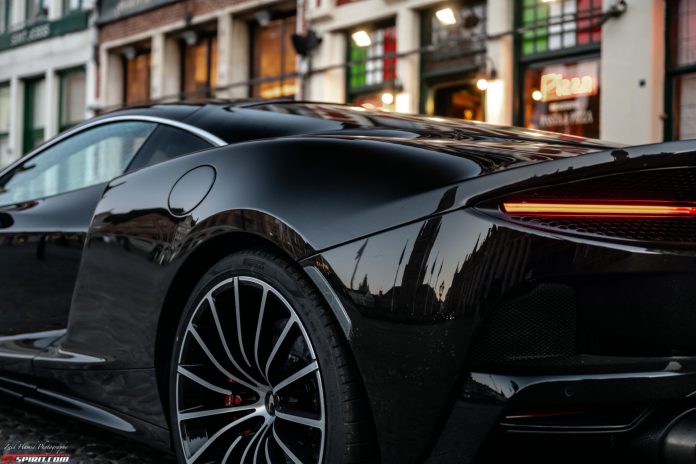
Special Report: Grand Touring in The McLaren GT

‘I’m sorry, I know it’s a Saturday, but I’ve been called into work. I’ll see you tonight if I can escape. If you can, please could you pick up cheese bread and chocolate. Everything will be closed before I’m back. I know we had plans today but I’ll make it up to you! Xx’

This really is how my weekend began. Empty bed, thwarted plans and no chocolate to drown my sorrows with. There was, however, a silver lining to be exploited – I had the keys to a McLaren GT, rather than crawling through Mayfair traffic before posing aimlessly outside Novikov, I could cancel my, now redundant, lunch reservation and do what the McLaren GT was designed to do – pick up bread, cheese and chocolate. The local Daylesford Farm Store and Wholefoods were too close to justify driving and did not present a tantalising driving experience. My partner’s insatiable workaholism was only matched by her equally unhealthy appetite for chocolate and all things sweet. It was still early, what if…

90 minutes later I’m approaching the warmly familiar check in booths at the Folkestone end of the now ironically named Eurotunnel. Why? Well, why settle for anything less than the best of chocolates when I could stretch the legs of the McLaren and bag the best chocolates anywhere in world to sweeten the mood of my horrendously overworked and under appreciated lady friend – as win win scenarios go, I can think of few better.

The Eurotunnel Terminal presents well known surroundings, this feeling continues as I recite my algebraic coffee order to the tired, eye bag plagued Starbucks barista that soullessly wishes me a safe journey. I respond to her well-wishes with ‘I’m only popping over to get some chocolate’. I imagine she feels that she is dreaming and/or delirious. I nonchalantly head back out to duck under the GT’s dihedral door before sinking into the leather and alcantara cocoon. The only smell better than warm caffeine may well be the surroundings in which I am drinking it in.

Passport checked, ‘random’ drugs test completed (they really just wanted to nose around the GT), I held my breath as the wheels of the McLaren rhythmically trundled over the metal carriage breaks just centimetres away from a gut wrenching scrape against the train’s metal curbs. My perfected imitation of a dog with its head out of the window ensures the safety of the very smart diamond cut wheels. Coffee emptied and MPH swapped to KM/H, it was time to see how good a cruiser the GT really was.

The French darkness shrouded the autoroutes and invited the GT to stretch its legs. This is a car that presents credentials that are unusual in a McLaren, but one which maintains a crucial McLaren: being ferociously fast. Ignore the 0-100km/h time of 3.2 seconds, that might seem quick, but the acceleration when you’re up and running is what really boggles the mind. In second or third gear, anything about 4,000rpm is as fast as you would expect any McLaren to be. In my mind, the performance is not where this car needs to make a point, it is every other measurable GT element that needs to shine.

This journey is not my first in the GT, I drove the car on the press launch that was set on the French Riviera. It is all too easy to get caught up in the romance of the scenario, the weather and the fabulous roads. This drive to Bruges would emulate something far more realistic, less fabricated and very varied. I had already crawled through London, felt the ride on harsh concrete British motorways leading to the English Channel and was now floating over the billiard table smooth Autoroute. France comes to end in a snoozy blink, Belgium is up next and the surface worsens. With the ‘Active’ panel engaged and handling and powertrain modes both is comfort, the ride is supple and the engine quiet, murmuring at 1,200 rpm. On a 130km/h cruise this 327km/h McLaren sips just 8l/100km (30mpg), that being said, the 72 litre fuel tank means stops are more frequent than you would hope for continent swallowing GT car. Then again, getting out to look at the car every couple of hours is no bad thing.

The reception from fellow road users, petrol station attendants and generally, anyone you pass in the car, is exceptional. Perhaps it is that it does not scream, ‘LOOK AT ME’ like an 720S or carbon clad 600LT, until you open the doors at least, but comments of the elegance and maturity of the design are plenty.

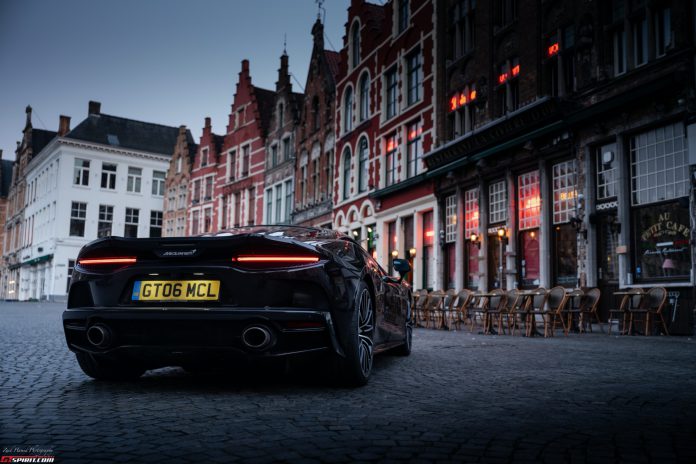
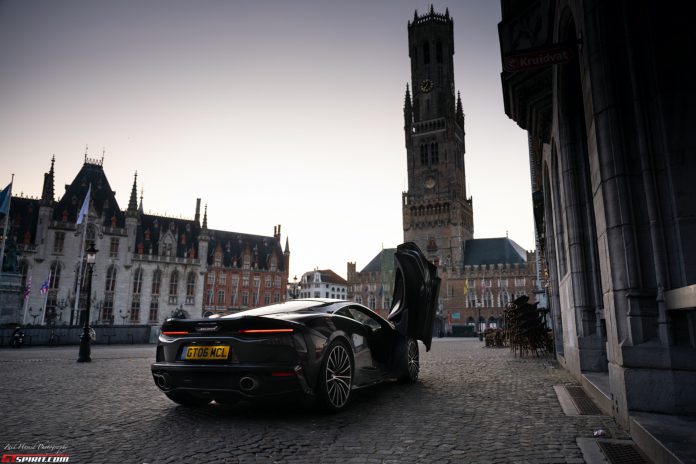
Creeping into Bruges minutes before sunrise presents the perfect opportunity to enjoy the iconic sights of the Markt Square void of the teams of tourists that are attracted by the medieval architecture and the charm of the waterways that snake in-between. Finished in Black Ingot, this is the most subdued McLaren I have piloted. The paint appears to be a rather boring black, but park it in any light, sunlight or artificial street light, and the car glistens as if coated in glitter. McLaren are unrivalled in their creativity and sparkle offered in their paint options. As the sun peeks between the turrets and spires, the complexity of the shapes that forms the body panels of the GT are highlighted. It is dramatic, but in a different way.

Enough of the architecture, I was here for a purpose. As the sun rose, the quaint shop shutters did too, the smell of fresh bread lingered in the crisp morning air. Bruges is awash with chocolatiers, all of which boast they are the best in Belgium, and therefore the world. Chocolates bagged, cheese soon followed – mission accomplished, with time to spare. A chocolate and banana waffle, two coffees and a nap in the McLaren later, it was time to crawl out of the perilously narrow car park and back to the Eurotunnel. By mid-morning all but one of the roads in the UNESCO World Heritage Site remains open to traffic to allow cars in and out of this car park. The pedestrian is king in the daylight, my cue to leave.

Upon arrival to Bruges, I felt fine with no backache or considerable fatigue. The beauty of a true GT is the absence of tiredness on a long journey, such as this. En route to Calais I begin to feel a little tired, my body was beginning to feel uncomfortable in the ‘Comfort Seats’. The noise of the V8 started to intrude and I felt the need to pull into the services to take a break. It must be said, this feeling of weariness came after 10 hours into my adventure and chances are I would have felt agitated driving a Rolls-Royce at this point, but the McLaren was taking more of a toll on my body than a Bentley Continental GT would have. A massage seat wouldn’t have gone amiss either. It is creature comforts where the McLaren lacks. It is, indeed, a McLaren and the purpose of it is to be very fast, something it does fantastically. With that in mind, the absence of massage seats, Apple Car Play and self parking capabilities are not as crucial as they would be in other cars.

It is when you write a list of missing options that it becomes clear that many GT car buyers, that are not so hellbent on going supercar fast, may start to look elsewhere. Yes, I can live without active cruise control, lane keeping assist and blind spot assist – but it is nice to know that you do have them helping you out on a long drive. You can relax and be a little fresher when you arrive at your favourite mountain pass or coastal road.

Boarding the train back to the UK gives me another chance to reflect and relish another quick nap. This is a GT car, it can do journeys like the one I was about to complete, but it will do it in its own McLaren style. It will get you to your favourite road with a boot full of luggage, then challenge you and blow your mind when you unleash its turbocharged fury. Buyers of a McLaren GT will treasure that high adrenaline, intense offering that no other GT car can offer. They will also know that there are more comfortable GTs on the market. This is the drivers GT and the tradeoff is obvious, it is unashamedly McLaren and for that I cannot help but admire it.

GTSPIRIT NEWSLETTER

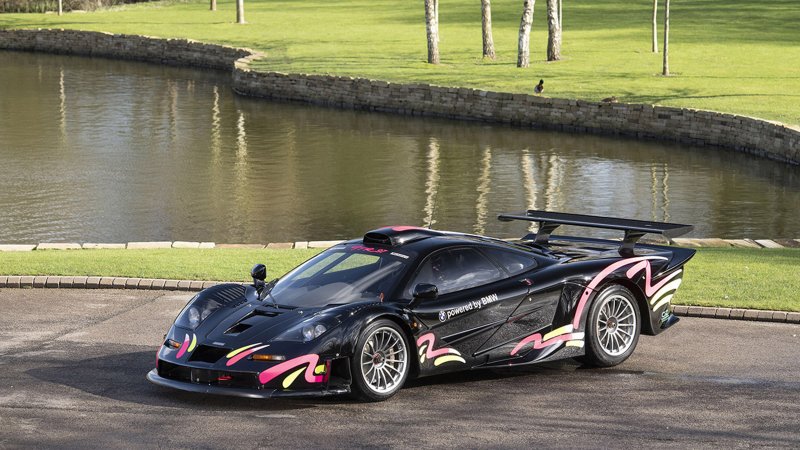
McLaren F1 GTR Longtail No. 1 is road-ready and listed for sale

The chassis number on this 1996 McLaren F1 GTR Longtail is 19R, but in the order of production, this car is No. 1. It’s the first longtail version of the GTR version of what many consider the greatest car ever made. Despite its track-intended build, it’s road-legal, and it’s currently up for sale in the United Kingdom. 

The special nature of 19R goes beyond the fact of its birth order. This car was reportedly used as a development prototype for the entire run of GTR Longtails and participated in numerous Japanese races, including the Suzuka 1000km. According to the listing, it’s also only one of two GTR Longtails in private ownership (Nick Mason owns the other), so this is likely one of few occasions in a lifetime when one will be available for purchase.

19R has another first under its belt, too. It was the first GTR Longtail to be converted to a road-legal specification. Gordon Murray, the designer of the F1, worked with Lanzante to turn the racecar version of the road car back into a road car. The unique F1 comes with a Gordon Murray Design book that documents the conversion, as well as the history of the car. All of the parts that were changed were also kept and come as part of a large spare parts package.

Although some might not see the value of the color scheme, McLaren painted it this way to draw attention to the differences between the GTR and the GTR Longtail. The vibrant markings exaggerate the changes and earned this car the nickname “Squiggles,” according to Tom Hartley Jr. 

If the paint scheme looks familiar, it might be because this car has been seen flexing its BMW Motorsport-sourced V12 at the Goodwood hillclimb (seen below). Via Road & Track, the 19R is listed without a price by Tom Hartley Jr.

[embedded content]

McLaren Elva gets another retro paint scheme from McLaren Special Operations

You may have noticed that McLaren’s official brand color is a bright shade of orange. That dates back to Bruce McLaren’s M6A Can-Am race car of 1967, the first to feature the all-orange paint scheme and the car that helped him win his first Can-Am championship that year. So what better way to honor a wild open-top race car than by painting the wild open-top McLaren Elva supercar in the same color?

The McLaren Elva M6A Theme is the second race car-themed Elva to come from McLaren Special Operations (MSO). The group offers customization services to McLaren customers, particularly unique paint and carbon fiber finishes. The special was revealed on Twitter, and it is quite faithful to the 1967 car. It’s finished in a unique orange that looks a little less bold with more of a pearl finish than the glowing solid orange of the race car. It’s paired with big simple number circles featuring the number “4” like one of the race cars. On the sides, a metallic stripe is added to mimic the chrome divider between the top and bottom sections of the Can-Am car. It also gets the same “McLaren Cars” logo and Bruce McLaren’s signature down the side. As cool as this is from a historical standpoint, the orange really shows off how the body blends right into the interior, something McLaren did to evoke the feeling of being outside and exposed to the world, rather than hidden inside the car’s cabin. The dark launch color was far less effective at conveying that feeling.

[embedded content]

As previously mentioned, MSO did another race car-themed Elva, a black and white car inspired by an older 1964 McLaren M1A race car. Clearly there will be one of each, but McLaren hasn’t put any limits on the designs, so it’s possible there may be multiple examples in the car’s 399-unit run. We also wouldn’t be surprised if McLaren rolls out some other motorsports-inspired liveries in the future, as it has many famous racecars to pull from. The reddish-orange and white Honda-powered Marlboro F1 cars of the late 1980s and the black and silver Mercedes-powered F1 cars of the early 2000s both seem like strong choices. Or if McLaren doesn’t do it themselves, maybe a rich reader could commission one painted as such. Though we wouldn’t want to tell that person how to spend their $1.69 million (or more) on their car.

Related Video:

McLaren Elva M1A Theme by MSO channels Bruce McLaren’s 1964 race car

McLaren Special Operations hit up Twitter to show a version of its new Ultimate Series speedster, christened with the full name of Elva M1A Theme by MSO. The Elva takes its design cues from the M1A race car that Bruce McLaren developed for sports car racing in the 1960s. McLaren first entered his black #4 racer in the 1964 Canadian Grand Prix and put everyone on notice; the M1A equaled the lap record at Mosport Park four times and broke the record seven times. As buyers lined up, McLaren commissioned English firm Elva to build replicas for privateers. Although the historic M1A was an advance on the McLaren’s “Jolly Green Giant” Cooper-Oldsmobile, the M1A inaugurated the McLaren lineage that would soon dominate sports car racing. This modern Elva M1A goes about as far as it can to channel its inspiration, adopting the black exterior and red seats of the original — but not the 4.5-liter Oldsmobile engine.

Instead of painting the speedster black, MSO took the much better option of coating the carbon fiber bodywork in clearcoat. The only touches of paint are the silver slash and red pinstripe running front to back, splitting into a low runner along the sills, and the white roundel with the race number. We’re not sure what’s going on with the wheels, though — they’re the same design as those on the Elva that launched in November, but in mirror image. The other big splash of color appears on the seats, topped with crimson Alcantara. 

MSO didn’t mention any limitations on this theme, so it’s possible there could be more than one among the 399-unit Elva production run; Bruce McLaren built three works versions of the original M1A, and Elva produced 24 customer cars. And yes, the historic car was powered by an all-aluminum 3.5-liter Oldsmobile V8 that Traco bored out to 4.5 liters, producing 310 horsepower breathing through four Weber carbs. Oldsmobile not being an option anymore, the Elva homage goes with a 4.0-liter twin-turbo V8 with 804 horsepower and 590 pound-feet of torque, which helps ensure buyers get their $1.69 million worth.

Related Video:

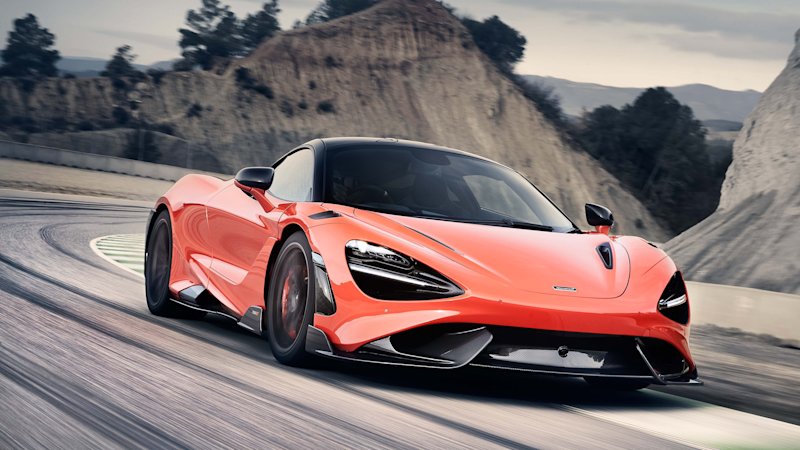
2021 McLaren 765LT is longer, lighter, and more powerful than the 720S

Supercars are proliferating in England. Built to be equally at home on the road and on the track, the McLaren 765LT picks up where the 675LT left off by giving buyers a lighter and more powerful alternative to the 720S

LT stands for Longtail, a name inaugurated in the 1990s by the track-only F1 GTR. McLaren redesigned the front splitter, the front bumper, the side skirts, the rear bumper, and the rear diffuser, but the 765LT’s most impressive party trick is its hydraulically-operated rear wing. It’s bigger than the one fitted to the 720S and it’s positioned a little bit higher even when it’s resting. The spoiler fully deploys when the driver smashes the brake pedal.

McLaren left no avenue unexplored in its quest to remove as much weight as possible. It made the body panels with a lighter, model-specific type of carbon fiber, fitted thinner glass, and removed creature comforts like the stereo as well as the air conditioning system. Fear not, brave commuters: both can be added back at no extra cost. Some of the parts inside the transmission are formed from a high-performance nickel chrome named 20NiCh commonly found in Formula One cars, and McLaren fitted a lithium-ion battery that’s 6.6 pounds lighter than the battery in the 720S. All told, the 2,709-pound 765LT weighs 176 pounds less than the 720S, with one catch: buyers need to order the car with the optional, Senna-sourced carbon fiber bucket seats to achieve that figure.

The heart of the 765LT is a twin-turbocharged, 4.0-liter V8 engine that makes 755 horsepower at 7,500 rpm and 590 pound-feet of torque at 5,500 rpm. It’s bolted to a seven-speed automatic transmission with comfort, sport, and track modes. 60 mph arrives in just 2.7 seconds, while holding the pedal to the floor for 7.2 seconds gets the 765LT to 124 mph. From there, slide your foot from the gas to the brake to decelerate to a complete stop in 361 feet. Or don’t, and the V8 will continue screaming its heart out until the speedometer shows 205 mph.

The steering is much quicker, carbon ceramic brake discs come standard, specific Pirelli tires provide tremendous grip, and engineers applied lessons learned while developing the Senna and the Speedtail to make the suspension algorithm more precise. Enthusiast who regularly drive on a track will also notice the aerodynamic add-ons give the 765LT about 25% more downforce than the 720S. Horsepower, speed, agility, and stability are difficult to argue against, especially when they’re wrapped in such a head-turning, instantly-collectible package.

McLaren will make 765 examples of the 765LT, and it’s encouraging customers who want to add one to their collection to get in touch with their nearest dealer as quickly as possible because demand will certainly exceed supply. Pricing information hasn’t been announced yet. Deliveries will begin in September of 2020.

One of the coolest features on the list of extra-cost options is a double-glazed panel embedded into the rear parcel shelf that gives the occupants a glimpse into the engine bay. Collectors who want to make their car even more unique can work hand-in-hand with McLaren Special Operations to configure a one-of-a-kind 765LT.

Related Video:

McLaren GT by MSO has a cashmere interior and next-level paint job

Because the 2020 Geneva Motor Show is canceled, McLaren declared it will digitally host a McLaren Motor Show on March 3, 2020. The main focus of the livestream will be the “world premier of the next chapter in the McLaren LT story,” but a secondary car will also show for the first time. Although it’s not a new model, the GT Verdant Theme by MSO gives another example of what bespoke options can look like.

The McLaren GT Verdant Theme has a unique paint job that’s unlike any other MSO released before it. It’s satin, it’s tri-color, and it blends in a way that gives the GT an entirely different attitude. Verdant means “green with grass or other rich vegetation” or “of the bright green color of lush grass,” and McLaren is 100% on the nose with this one. McLaren says the Verdant GT “revels in a feeling for the verdant landscapes and fresh horizons that the GT has been designed to explore.” The exterior combines Horsell Green, Arbor Green and Steppe Green, all colors bespoke to this vehicle. To accomplish the ombré look took 430 hours of prep and paintwork. 

Further building on the exterior look, MSO added hand-painted Napier Green pinstripes on the body and the front splitter. The brake calipers match with Napier Green paint, and the MSO Black Pack darkens the wheels, the upper window surround, and the exhaust tips.

Inside, McLaren claims the first manufacturer use of cashmere in a supercar. The charcoal grey cashmere covers the center tunnel, the door inserts, the lower dashboard, the sun visors, the head restraints and the upper rear back of the seats. The rest of the seats and cabin are covered in Dark Green, Laurel Green and Jet Black leather, and Laurel Green piping adds an extra layer of contrast. 

For those who prefer the GT to have a quieter presence, MSO previously customized one with MSO Defined Flux Silver paint and a Flux White interior. Either route, the options are there, and the $15,000 bespoke GT luggage set will be available to match.

Watch Chris Harris in the electric VW ID.R waste a McLaren 720S

The Volkswagen ID.R doesn’t have much in common with a McLaren 720S, other than the fact that they are both performance-crazed cars. One gets its power from batteries, the other from gas. One uses electric motors, the other a twin-turbocharged 4.0-liter V8. One is a halo prototype vehicle, the other is a road-legal supercar available for purchase. So when Chris Harris and “Top Gear decided to “race” the two against each other, it was more of a demonstration of the VW’s unreal capabilities than any sort of real competitive faceoff.

In episode five of Top Gear‘s 28th season, which just aired February 23, the trio of Harris, Freddie Flintoff and Paddy McGuinness welcomed Youtuber KSI on the show and ventured out on a luxury sports car road trip with an Aston Martin, Porsche, and Ferrari. Separately, Harris took to the track to test out Volkswagen’s golden egg of the moment, the ID.R.

As VW fully launches into its electric-vehicle push, the ID.R is meant to exhibit what battery-electric technology is capable of. With two electric motors, one on the front axle and one on the rear axle, the 2,425-pound ID.R has four-wheel drive and makes a claimed 670 horsepower. As Harris notes in the video, the ID.R. was not built for a specific regulation-bogged racing organization or competition, and thus, it’s only held back by the rules of Mother Nature and Father Physics. Since the car’s debut, it has been annihilating records around the world, including at Pike’s Peak, Goodwood, the Nürburgring, and Heaven’s Gate.

Chris Harris didn’t set any records in the ID.R., but he certainly showed how outrageous this machine is. The 710-horsepower 720S can go from zero mph to 62 mph in less than three seconds, and the ID.R has a sizable lead within that same time. Again, this wasn’t an instance of test-and-conclude, it was a show of perspective. The ID.R is a race car, so even though the 720S is one of the best supercars in the world, it never stood a chance. See for yourself above.

Related Video:

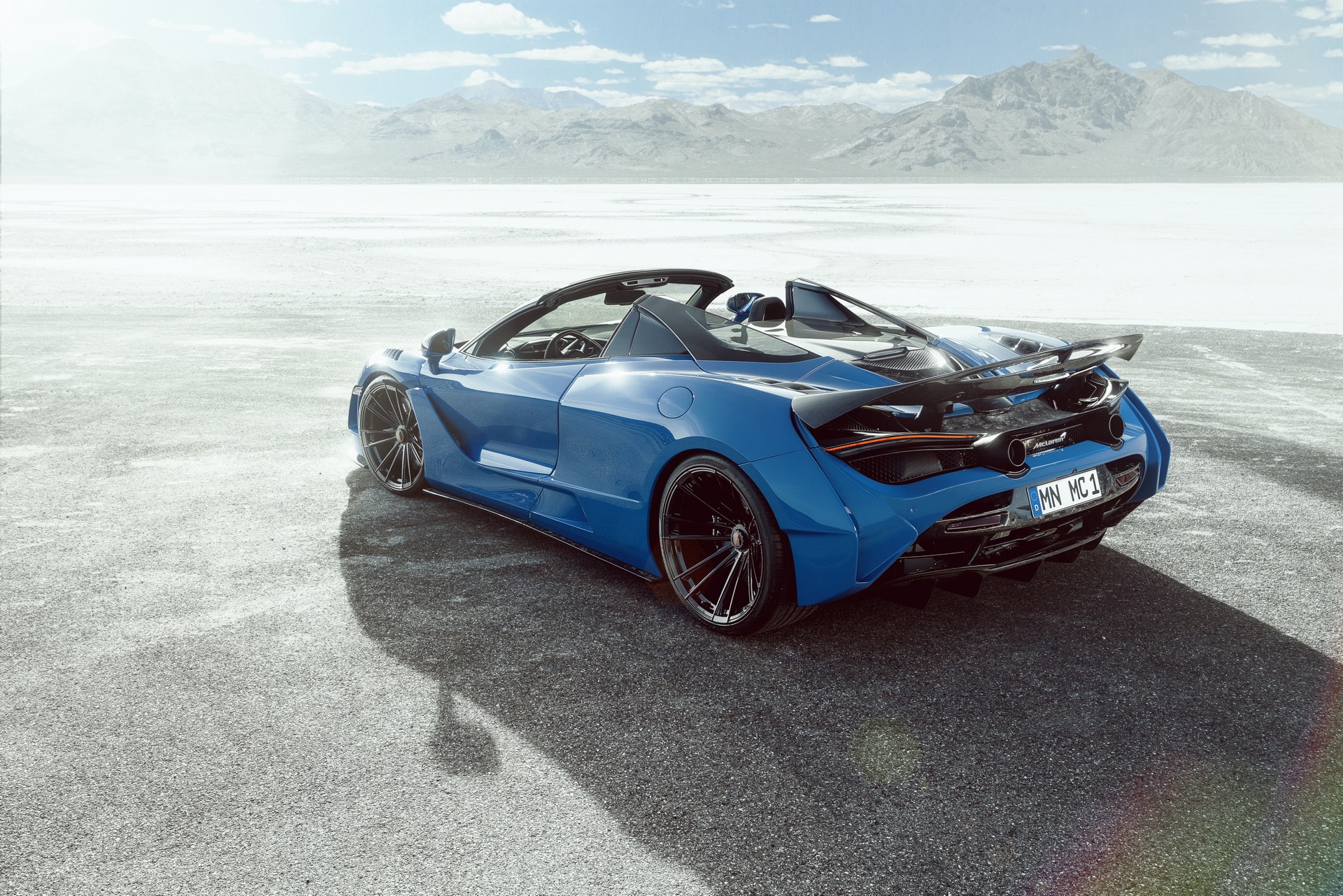
Novitec N-Largo Kit Revealed for the McLaren 720S Spider

Novitec announced an addition to its N-Largo range of body kits this week. The Novitec N-Largo 720S Spider adds a widebody look to the McLaren 720S Spider. If you have seen N-Largo kits before then you will know what to expect from the latest model.

The latest addition to the Novitec range includes a widebody kit with forged carbon elements. This gives the 720S Spider a look inspired by the McLaren Senna.

The bodywork has been created, once again, through a collaboration with German designer Vittorio Strosek. Width is increased by six centimetres at the front and by thirteen centimetres at the rear axle. The front fenders and the rear fenders are complete replacements.

The N-Largo gets a unique side skirt and a set of air intakes aft of the doors. The front bumper is entirely new with a new front blade and several naked carbon elements. The trunk lid, side mirror covers, side skirt strips and rear wing attachment, all come finished in forged carbon fibre.

It sits on 20 and 21 inch Vossen wheels. The design is MC2 and they are manufactured to customer’s individual finish. They have a centre lock look

Power receives an upgrade too. The 4.0-litre V8 engine puts out an impressive 806 hp and 878 Nm of torque. Performance gets a similar boost with 100 km/h arriving in 2.7 seconds and 200 km/h in just 7.5 seconds. Terminal velocity is 346 km/h.

Novitec N-Largo McLaren 720S Spider

Other changes include the addition of an extremely light Inconel exhaust system. The ride height can be lowered too, with a special set of Novitec sports springs. These bring the N-Largo 35 millimetres closer to the ground.

Novitec also offers a complete series of customisation options for the Novitec N-Largo 720S Spider. Just 15 examples will be made worldwide. Novitec is expecting it to sell out quickly, just like its Coupe brother! If you are after something a little less extreme, Novitec have you covered too.

GTSPIRIT NEWSLETTER

Top Gear magazine climbs all over the McLaren Elva

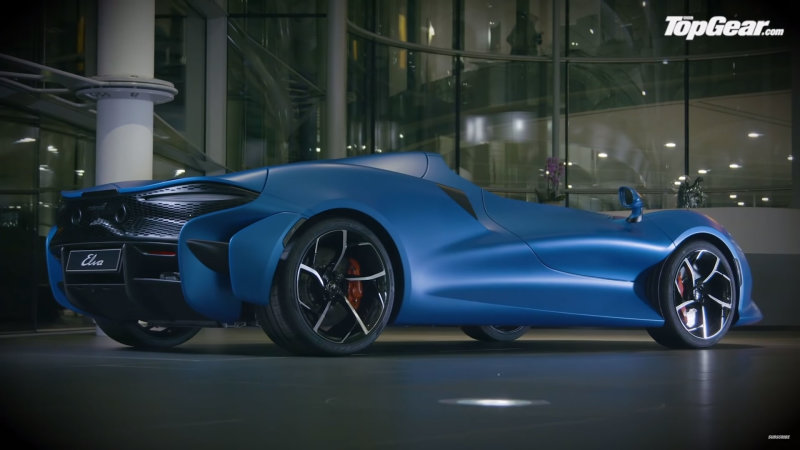
Top Gear deputy editor Jack Rix took a camera crew to McLaren’s Technology Center for a closer look at the Elva roadster. Not only did Rix provide his usual, thorough once-over and explanation of design features, but thanks to the magic of moving pictures, we get graphic demonstrations of how the Elva’s most interesting feature works. McLaren engineers needed to figure out a way to protect helmetless occupants from getting their faces painted with bugs and detritus at speed. Their solution is the Active Air Management System (AAMS), composed of a deflector and a network of vents that create a “bubble of calm” around the passenger cell. Unlike the rest of the Elva, the AAMS ain’t pretty, but beauty always loses tie-breakers to effectiveness in Woking. 

For a vehicle with so little to it, including the number of body panels, there’s a ton going on all around the open-top. The rear mesh is 3D-printed titanium. Short seat squabs combined with a moving steering wheel and gauge cluster improve ingress and egress. Four high-flow exhaust pipes are placed in two locations and pointed two directions in order to separate tones as if the exhaust were an audio system – because, in truth, it is. And there’s more, but we’ll let Rix explain. 

As an aside, for all the Elva does have, we think it’s a shame the roadster doesn’t have a roofed version. Digital artist Nikita Aksyonov drew up an Elva Coupe, and we’re fans. Better looks than the McLaren GT, in a package that appears more compact than the 720S, with a more powerful engine than the Senna? Yes. All day yes.

But we digress, so check out Rix’s take in the video.

McLaren Senna Can-Am and XP special editions honor two racing icons

McLaren produced 500 examples of the Senna road car, and the entire run sold out immediately. This year it added the more powerful, track-only Senna GTR, selling out of all 75 units instantly. That’s not the end of the Senna line, however, with 26 more units divvied up between three special editions. The most numerous is the Senna LM, a street-legal version of the GTR supposedly put together by McLaren Special Operations. The bodywork’s been toned down a touch by dropping the aero flics on the front bumper and the GTR’s extended rear wing, and the LM fits a less aggressive rear diffuser. Interestingly, a spy shot shows the Senna LM also going without the windows in the lower portions of the doors. There’s no reliable intel on the engine yet, but it’s hoped that the LM fits the same 4.0-liter twin-turbo V8 as the GTR, producing 814 horsepower and 590 pound-feet of torque. The LM is reputed to cost £1.3 million ($1.7 million U.S.) 

CarBuzz reports that another special edition will be based on the Senna LM, having received an anonymous tip from a reader with one of the cars on order. Called the Senna Can-Am, McLaren would only say that this model was commissioned by a dealer. As the name implies, the coupe celebrates the legendary Can-Am cars that terrorized the series in the late 1960s and 1970s, and that are responsible for giving us the trademark orange hue McLaren remains known for. The Senna Can-Am is a specific homage to the M8B, called “the perfect race car,” that started on pole and won all 11 races during the 1967 season with Bruce McLaren and Denny Hulme driving.

In CarBuzz‘s rendering, the Can-Am is done up in McLaren orange with Canadian flags on the front fenders, and number roundels on the rear fenders along with the signatures of McLaren and Hulme. Instead of the “LM” logos on the wing endplates and embroidered into the headrests, “Can-Am” appears instead, the M8B’s race record appears on the door sills, and a black anodized throttle pedal gets the Can-Am logo. CarBuzz‘s source said the Senna Can-Am is “due to be delivered in two to four weeks,” and cost $1.5 million.

The final three special-edition examples (pictured) come from early in the life of the Senna. Beverly Hills managed to acquire three of the experimental prototypes that McLaren used to develop the Senna, and commissioned three builds now known as the Senna XP. Each car gets a name and celebrates a Formula One race track where Ayrton Senna scored an especially outstanding victory. All three are dressed in gloss black carbon fiber, accented with the colors of the F1 circuit’s country, and adorned with Ayrton’s car number on the wing endplates. The “Master of Monaco” lauds Senna’s six victories in the principality; “Lap of the Gods” hails Senna’s opening lap in the wet at Donnington in 1993 when he drove from fifth place to first in less than a lap; “Home Victory” relishes Senna’s 1991 win in Brazil.

The Senna XP uses the standard Senna’s 3.9-liter V8 with 789 hp and 590 lb-ft, costs $1,435,328, and naturally, is sold out. 

McLaren 620R: Special Edition, Road-Legal GT4 Racer Revealed

A new McLaren has been announced. Derived from the McLaren 570S GT4, the McLaren 620R offers race car dynamics for the road. Just 350 will be made, making it one of the most exclusive McLaren’s of modern times.

The McLaren 570S GT4 has been available to customer rave teams since 2017. In a relatively short period of time, it has achieved more race wins and podiums than any other McLaren to date. The special edition Sport Series model celebrates this success in style.

Power and Chassis

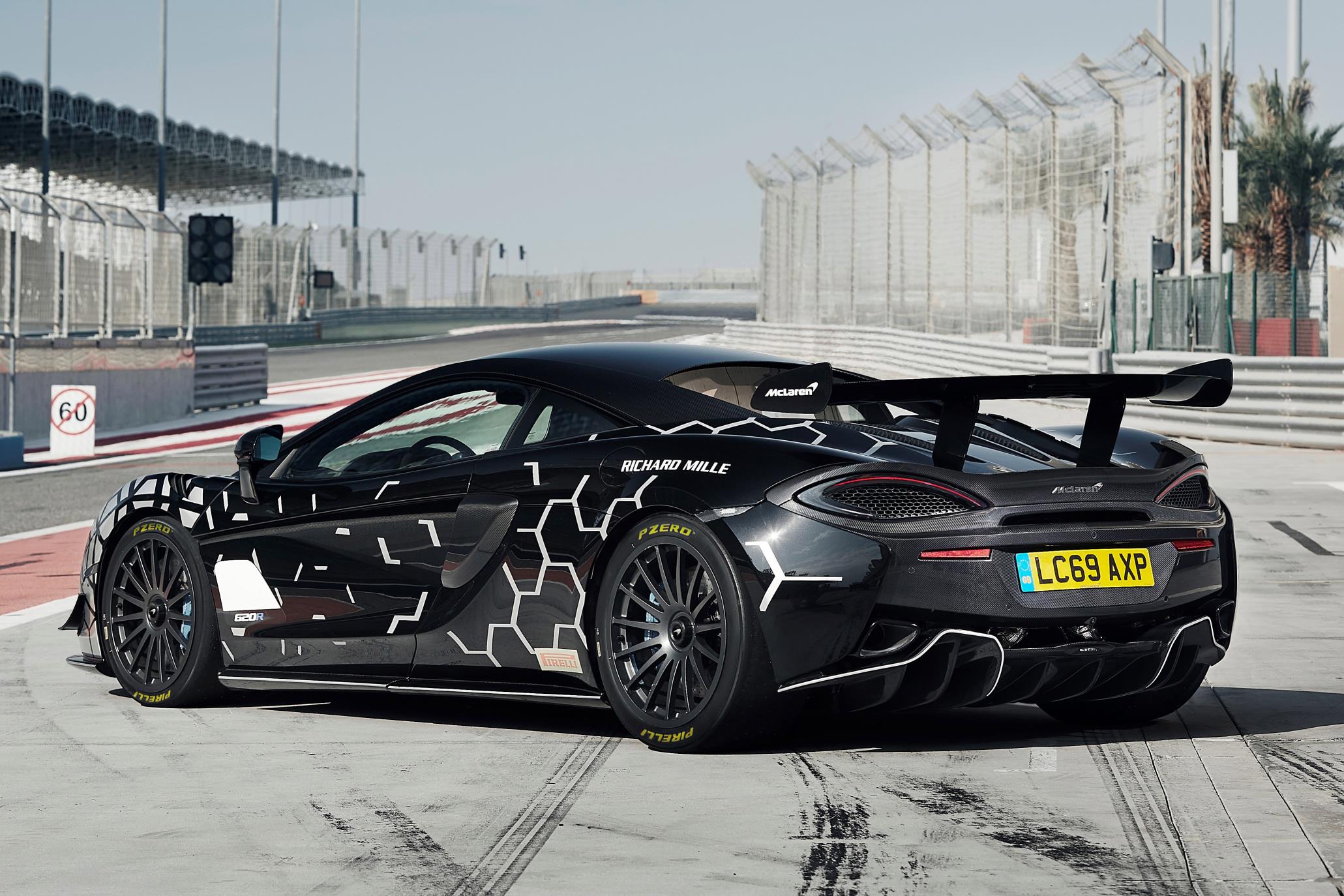
McLaren 620R Rear

At the heart of the changes is a 3.8 litre V8 engine. Relatively simple changes to the engine ECU and turbocharger management yield an additional 20 hp over the 600 LT. power is boosted to a total of 620 hp and 620 Nm of torque. This has an affect on performance with the 620 R now capable of 0-100 km/h in 2.9 seconds and 0-200 km/h in 8.1 seconds. For the first time, the 620R hits 322 km/h.

The power is transferred to the rear wheels through a 7-speed Seamless Shift Gearbox (SSG). Engine mounts have been stiffened. At the suspension side, McLaren fit the GT4’s two-way manually adjustable coilover motorsport dampers. They are adjustable through 32 clicks and save 6 kg of weight.

The changes to the suspension continue with aluminium wishbones and uprights and stiffer anti-roll bars and springs. The rubber top mounts of the 600 LT are dropped in favour of solid stainless steel alternatives for improved feedback.

Aerodynamics

McLaren 620R Rear Wing

The rear wing is lifted straight from the 570S GT4. It is adjustable and sits 32 cm above the top of the car in clean air. Customers will receive cars in the least aggressive setting. The changes contribute to a total of 185kg of downforce across the aerodynamic bodywork at 250km/h. The front bumper, splitter and bonnet have been redesigned with new dive planes at the front.

The 620 R is apparently the first road car to be designed with the ability to change from standard road cars to slicks. McLaren state that the 620R is set up to allow owners to either fit a new set of slicks to the standard rims or to switch to a new set quickly, upon arrival at the track. Carbon ceramic brakes, centre locking wheels and low-exit stainless steel sports exhaust also help with the track day credentials.

Interior

McLaren 620R Track

Inside, McLaren fit carbon fibre racing seats, 6-point racing harnesses and road seat belts. The 620R does not have a floor carpet or a glovebox. Air-conditioning, IRIS Navigation and an audio system are also missing from the standard specification, although all can be selected at no additional cost. A lightweight Bowers & Wilkins upgraded audio system is also available, as a cost option.

McLaren Track Telemetry (MTT) system is standard and is displayed on a centre-mounted 7-inch touchscreen. If buyers specify the optional MSO Roof Scoop Upgrade Pack, the MTT system can be upgraded to include the three-camera system that is also available as a standalone option. There is a choice of three McLaren racing colours – McLaren Orange, Silica White and Onyx Black.

Competition

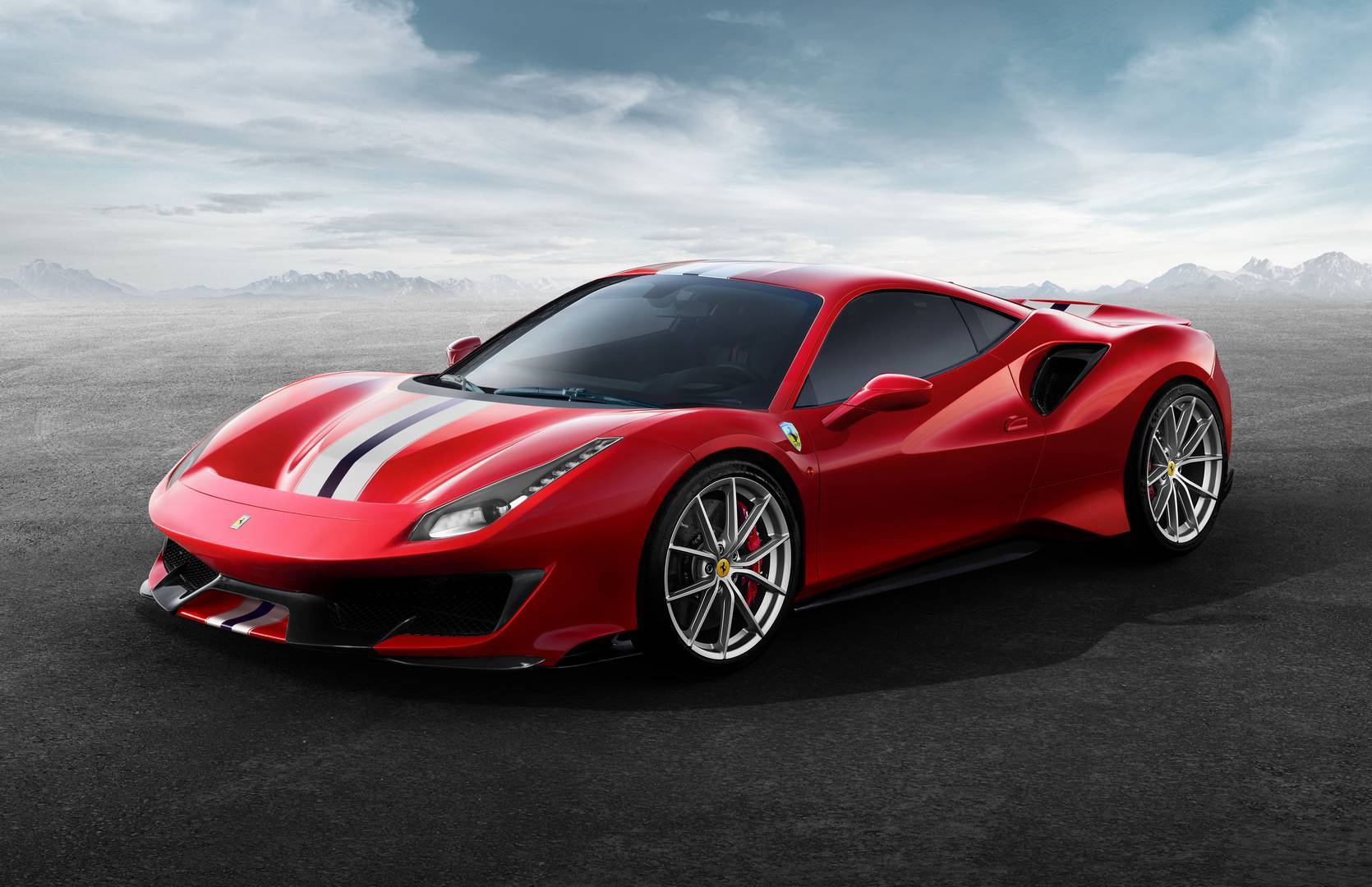
Within the £250,000 price bracket, there is little else by way of competition. The McLaren 620R is almost as quick as a 488 Pista, despite arriving with 90 hp less. It costs around the same too, however, reading through the spec list it should be clear that the 620R is intended to be harder, more of a racecar. The Pista also carries a dry weight of 1,385 kg as opposed to the 620R’s 1,282 kg dry weight figure.

A comparison with the Lamborghini Huracan Evo yeilds the same results. Despite a 20 hp advantage, the Huaracan carries a 1,422 kg bulk. With the advantage of an all-wheel drive system though, the Evo manages an identical 100 km/h sprint and a slightly higher top speed. It will almost certainly lose out in hot laps around your local circuit though.

The most likely buyer for this sort of car is a collector or someone taking a step up from a 570 S or 600 LT. It’s a hardcore racer for the road.

Availability

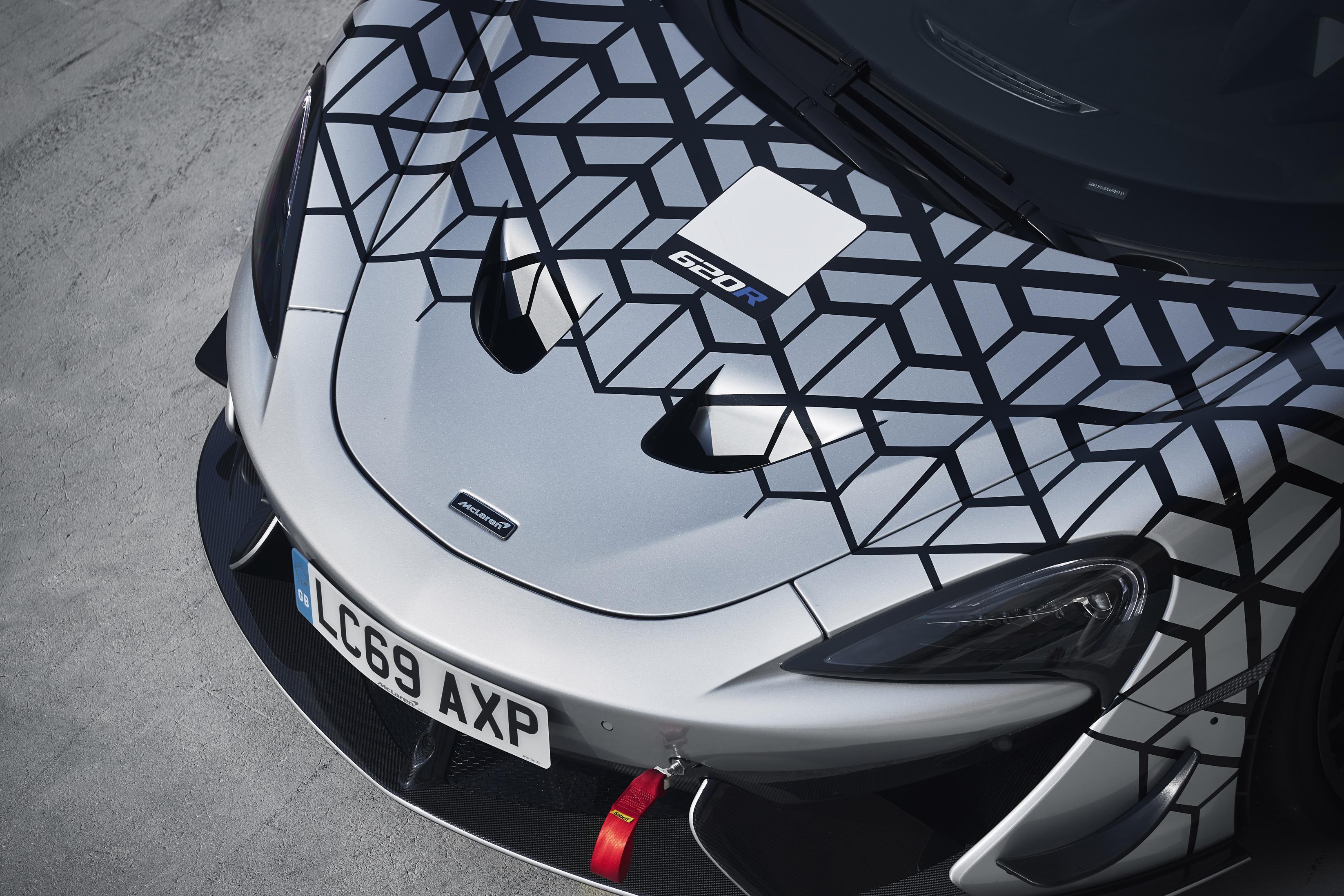
McLaren 620R Bonnet Hood

The cost will be £250,000 including taxes (UK); for buyers purchasing in Europe and the USA, the price includes a Pure McLaren Track Day, with expert driving tuition at a race circuit. Deliveries are set to begin in February 2020.

Gallery

GTSPIRIT NEWSLETTER

The McLaren 620R is revealed as a road-legal 570S GT4 race car

Perhaps you missed out on the limited-run McLaren Senna race car for the road. Those were all snapped up immediately, so it’s understandable if you did. Don’t fret, though, because McLaren just unveiled another road-legal race car that it plans to sell 350 of. It’s called the McLaren 620R, and it’s even more exclusive than the 500-unit Senna.

The 620R is truly a road-legal 570S GT4 race car at its core. McLaren simply homologated it for road use, and then took advantage of the total lack of racing regulations to make it even quicker than the race version. The end result is rather enticing.

To make it road legal, McLaren attacked a laundry list of items. The massive rear wing gained a brake light. McLaren says that cars will be delivered to customers in the most roadworthy low-downforce setting, but a McLaren retailer is able to adjust it to one of the two other more aggressive settings — in maximum attack, it can contribute 408 pounds of downforce. The front bumper and splitter were redesigned with “more pronounced aero blades” on the splitter. Dive planes were added to help accelerate air flow along the sides of the car and aid brake cooling. Then, the redesigned carbon fiber hood has two nostrils to clean up the air flowing over the top of the car and aid downforce. The full frontal aero package is able to produce up to 143 pounds of downforce.

As expected, it uses an unshackled version of the 3.8-liter twin-turbo V8 out of the GT4 race car. In this spec, it produces 612 horsepower and 457 pound-feet of torque. That’s good for a 0-60 mph sprint in 2.8 seconds and a maximum speed of 200 mph.

The dampers are straight off the GT4, too. They’re manually adjustable, and actually contribute to a 13-pound weight savings over the road version of the 570S. Still, these dampers are meant for the track, so expect them to be brutally stiff on our pockmarked roads. Lightweight aluminum wishbones and uprights are used, plus stiffer anti-roll bars as well. Carbon ceramic rotors and forged aluminum calipers are used to stop. McLaren says stopping power is spectacular with the standard Pirelli P Zero Trofeo R tires, but it’s taken to an entirely new level with the optional full slicks.

Buyers in the U.S. are allowed even more goodies than those elsewhere with this car. You’re able to spec an MSO upgrade package that features a carbon fiber roof and roof scoop for the car’s intake. The McLaren Track Telemetry system comes with this package, allowing you to record your lap times and analyze them later. The starting price is $299,000, and production will begin in January 2020.

McLaren Senna GTR Review | Driving the track-ready, race-banned hypercar

Reviewed by J.R. Hildebrand for TechCrunch. Hildebrand is a professional racing and test driver, nine-time Indianapolis 500 competitor and adjunct lecturer for The Revs Program at Stanford University.

SNETTERTON, England — The McLaren Senna GTR shouldn’t exist.

This feat of engineering and design isn’t allowed on public roads. It’s built for the track, but prohibited from competing in motorsports. And yet, the GTR is no outlier at McLaren . It’s part of their Ultimate Series, a portfolio of extreme and distinct hypercars that now serve as the foundation of the company’s identity and an integral part of its business model.

The P1, introduced in 2012, was McLaren Automotive’s opening act on the hypercar stage and was an instant success for both the brand and its business. McLaren followed it up with the P1 GTR, then went on to chart a course toward the Ultimate Series of today and beyond.

Since 2017, the automaker has added the Senna, Speedtail, Senna GTR and now the open-cockpit Elva to the Ultimate Series portfolio. While the GTR is certainly the most extreme and limited in how and where it can be used, it follows a larger pattern of the Ultimate Series as being provocatively designed with obsessive intent.

Automotive takes the wheel

Purpose-built race cars that call on every modern tool of engineering and design have historically been produced for one purpose: winning. This objective, nourished by billions of dollars of investment from the motorsports industry, has led to technological and performance breakthroughs that have eventually trickled down to automotive.

The pipeline that has produced a century of motorsports-driven innovation is narrowing as racing regulations become more restrictive. Now, a new dynamic is taking shape. Automotive is taking the technological lead.

Take the McLaren Senna road car, the predecessor to the GTR. McLaren had to constrain the design of the Senna to make it road legal. But the automaker loaded it with active aerodynamics and chassis control systems that racing engineers could only dream about.

McLaren wasn’t finished. It pushed the bounds further and produced a strictly track-focused and unconstrained race car that expands upon the Senna’s lack of conformity. The Senna GTR might be too advanced and too fast for any racing championship, but McLaren said to hell with it and made the vehicle anyway.

The bet paid off. All 75 Senna GTR hypercars, which start at $1.65 million, sold before the first one was even produced.

The Senna GTR is the symbol of a new reality — a hypercar market that thrives on the ever-more-extreme, homologation standards be damned.

Two weeks ago, I had a chance to get behind the wheel of the Senna GTR at the Snetterton Circuit in the U.K. to find out how McLaren went about developing this wholly unconstrained machine.

Behind the wheel

Rr-rr-rr-kra-PAH! The deafening backfire of the GTR’s 814-horsepower 4.0-liter twin-turbo V8 engine snapped me to attention and instantly transported me to the moment earlier in the day that provided the first hints of what my drive might be like.

Rob Bell, the McLaren factory driver who did track development for the GTR, was on hand to get the car warmed up. Shortly after he set out, the car ripped down the front-straight, climbing through RPMs with an ear-protection-worthy scream that reverberated off every nearby surface, an audible reminder of how unshackled it is.

As Bell approached Turn 1, the rear wing quickly dropped back to its standard setting from the straightaway DRS (drag reduction system) position, then to an even more aggressive airbrake as he went hard to the brakes from 6th gear down to 5th to 4th. The vehicle responded with the signature kra-PAH! kra-PAH! and then promptly discharged huge flames out the exhaust as the anti-lag settings keep a bit of fuel flowing off-throttle.

I thought to myself, ‘Holy sh*t! This thing is no joke!’

Sliding into the driver’s seat, I feel at home. The cockpit is purposeful. The track was cold with some damp spots, and the GTR is a stiff, lightweight race car with immense power on giant slick tires. Conventional wisdom would suggest the driver — me in this case — should slowly work up to speed in these otherwise treacherous conditions. However, the best way to get the car to work is to get temperature in the tires by leaning on it a bit right away. Bell sent me out in full “Race” settings for both the engine and electronic traction and stability controls. Within a few corners — and before the end of the lap — I had a good feel for the tuning of the ABS, TC and ESC, which were all intuitive and minimally invasive.

As a racing driver, it’s rare to feel a tinge of excitement just to go for a drive. As professionals, driving is a clinical exercise. But the GTR triggered that feeling.

I started by pushing hard in slower corners and before long worked my way up the ladder to the fast, high-commitment sections. The car violently accelerated up through the gears, leaving streaks of rubber at the exit of every corner.

Once the car is straight, drivers can push the DRS button to reduce drag and increase speed for an extra haptic kick. The DRS button is now a manual function on the upper left of the steering wheel to give the driver more control over when it’s deployed. After hitting the DRS, the car dares you to keep your right foot planted on the throttle, then instantly hunkers down under braking with a stability I’ve rarely experienced.

The active rear wing adds angle while the active front flaps take it out to counterbalance the effect of the car’s weight shifting forward onto the front axle, letting you drive deeper and deeper into each corner. It’s sharply reactive; the GTR stuck to the road, but still required a bit of driving with my fingertips out at the limit on that cold day. I soon discovered that the faster I went, the more downforce the car generated, and the more speed I was able to extract from it.

Tip to tail

In almost any other environment, the Senna road car is the most shocking car you’ve ever seen. Its cockpit shape is reminiscent of a sci-fi spaceship capsule. The enormous swan neck-mounted rear wing is one highlight in a long list of standout features. The Senna road car looks downright pedestrian next to the GTR.

The rear wing stretches off the back of the car with sculpted carbon fiber endplates and seamlessly connects to the rear fender bodywork. The diffuser that emerges from the car’s underbody — creating low pressure by accelerating the airflow under the car for added downforce — is massive. The giant 325/705-19 Pirelli slicks are slightly exposed from behind, giving you the full sense of just how much rubber is on the ground, and the sharp edges of the center exit exhaust tips are already a bluish-purple tint.

The cockpit shape and dihedral doors are instantly recognizable from the road car. But inside, the GTR is all business. The steering wheel is derived from McLaren’s 720S GT3 racing wheel, a butterfly shape with buttons and rotary switches aplenty. The dash is an electronic display straight out of a race car; six-point belts and proper racing seats complete the aesthetic.

Arriving at the front of the car, the active front wing-flaps are as prominent as ever, while the splitter extends several inches farther out in front of the car and is profiled with a raised area in the center to reduce pitch sensitivity given the car’s much lower dynamic ride-height. In fact, nearly the entire front end of the car has been tweaked; there are additional dive-planes, the forward facing bodywork at the sides of the car have been squared-off and reshaped, and an array of vortex generators have been carved into the outer edge of the wider, bigger splitter surface.

All of these design choices in the front point to the primary area of development from the Senna road-car to the GTR: maximizing its l/d or ratio of lift (in this case the inverse of lift, downforce) to drag.

McLaren pulled two of its F1 aerodynamicists into the GTR project to take the car’s aero to a new level. The upshot: a 20% increase in the car’s total downforce compared to the Senna road car, while increasing aero efficiency — the ratio of downforce to drag — by an incredible 50%. The car is wider, lower and longer than its road-going counterpart, and somehow looks more properly proportioned with its road-legal restrictions stripped away to take full advantage of its design freedom.

This was the car the Senna always wanted to be.

The development process of the GTR was short and to the point. When you have F1 aerodynamicists and a GT3 motorsport program in-house attacking what is already the most high-performing production track car in the industry, it can be. There were areas they could instantly improve by freeing themselves of road-car constraints — the interior of the car could be more spartan; the overall vehicle dimensions and track width could increase; the car would no longer need electronically variable ride heights for different road surfaces so the suspension system could be more purposeful for track use; the car would have larger, slick tires.

All this provided a cohesive mechanical platform upon which to release the aerodynamic assault of guided simulation and CFD.

The GTR benefits from the work of talented humans and amazing computer programs working together with a holistic design approach. What was once a sort of invisible magic, aerodynamics has become a well-understood means of generating performance. But you still have to know what you’re seeking to accomplish; the priorities for a car racing at Pikes Peak are much different than those of a streamliner at Bonneville.

The development team for the GTR sought to maximize the total level of downforce that the tires could sustain, then really kicked their efforts into gear to clean up airflow around the car as much as possible. Many of the aggressive-looking design elements that differentiate the GTR from the Senna are not just for additional downforce but to move air around the car with less turbulence — less turbulent air means less drag. You can’t see it or feel it, but it certainly shows up on the stopwatch, and is often the difference between a car that just looks fast and one that actually is.

I hadn’t asked how fast the car was relative to other GT race cars before I drove it. I think a part of me was fearful that despite its appearance and specs it might be wholly tuned down to be sure it was approachable for an amateur on a track day. And that would make sense, as that’s the likely use-case this car will have. After driving the GTR, I didn’t hesitate for a second to ask, to which they humbly said that it’s seconds faster than their own McLaren 720S GT3 car, and still had some headroom.The Senna GTR is another exercise in exploring the limits of technology, engineering and performance for McLaren, enabled by a market of enthusiasts with the means to support it. And this trend is likely to continue unless motorsports changes the rules to allow hypercars.

McLaren’s next move

The Automobile Club de l’Ouest, organizers of the FIA World Endurance Championship, which includes the 24 Hours of Le Mans, has been working for years to develop regulations that could include them. While these discussions are gaining momentum, it remains to be seen whether motorsport can provide a legitimate platform for the hypercar in the modern era.

The last time this kind of exercise was embarked on was more than 20 years ago during the incredible but short-lived GT1-era at Le Mans that spanned from 1995 to 1998. It saw McLaren, Porsche, Mercedes and others pull out all the stops to create the original hypercars — in most cases comically unroadworthy homologation specials like the Porsche 911 GT1 Strassenversion (literally “street version”) and Mercedes CLK GTR — for the sole purpose of becoming the underpinnings of a winning race car on the world’s stage.

At that time, the race cars made sense to people; the streetcars were misfits of which only the necessary minimum of 25 units were produced in most cases, and the whole thing collapsed due to loopholes, cost, politics and the lack of any real endgame.

Today, the ACO benefits from a road-going hypercar market that McLaren played a key role in developing. Considering McLaren’s success with hyper-specific specialized vehicles in recent years, I’d bet the automaker could produce a vehicle custom-tailored to a worthy set of hypercar regulations. Even if not, McLaren will continue to develop and sell vehicles under its Ultimate Series banner.

And there’s already evidence that McLaren is doubling down.


McLaren shows off the open cockpit Elva.

McLaren’s Track 25 business plan targets $1.6 billion in investment toward 18 new vehicles between 2018 and 2025. The company’s entire portfolio will use performance-focused hybrid powertrains by 2025.

The paint had barely dried on the Senna GTR before McLaren introduced another new vehicle, the Elva. And more are coming. McLaren is already promising a successor to the mighty P1. I, for one, am looking forward to what else they have in store.


McLaren hybrid tech will create one of the quickest cars in the world

McLaren’s entire range of models will be electrified by 2023, and hybrid technology will help the British firm build one of the quickest cars in the world. The company’s chief executive outlined an unnamed upcoming model that will boast an organ-displacing zero-to-60-mph time of 2.3 seconds.

Speaking about the firm’s future with Car & Driver, McLaren CEO Mike Flewitt provided crunchy new details about the next-generation platform and the gasoline-electric hybrid powertrain the firm plans to unveil in early 2020, possibly during the next edition of the Geneva Motor Show. The 2.3-second car’s secret ingredient will be an electric motor that will zap the front wheels into motion. It will work with a mid-mounted engine, likely a twin-turbocharged V8, to deliver through-the-road all-wheel drive. We expect a generous serving of carbon fiber will keep the model’s weight in check.

Though there’s much more to a sports car than an impressive zero-to-60-mph time, 2.3 seconds would put McLaren’s looming hybrid on par with the sold-out Dodge Challenger SRT Demon, and ever so slightly ahead of hypercars like the Bugatti Chiron (2.4 seconds). McLaren’s limited-edition P1 hybrid took 2.6 seconds, and the hardcore Senna (pictured) is a tenth of a second slower.

Looking ahead, McLaren will gradually replace the current members of its range with new models built on its next-generation platform. The cheaper, less powerful ones will surf the downsizing wave sweeping across the industry by adopting a V6 the company hasn’t unveiled yet, while the bigger cars with higher horsepower ratings will carry on with a twin-turbocharged V8. All of the upcoming models will come standard with hybrid power, and they’ll be capable of driving for up to 20 miles on electricity, yet they’ll weigh as little as 65 pounds more than the supercars they’ll replace. The weight difference will likely increase when all-wheel drive, a V8 engine, or both enter the equation. 

McLaren has talked about building an electric car for years, and it even turned the 720S into a test mule to put the drivetrain though its paces, but Flewitt reaffirmed the technology isn’t ready. While solid-state batteries expected to merge into the mainstream halfway through the 2020s could make an electric McLaren more feasible, Flewitt warned the firm might not completely ditch gasoline for another three decades. Profitability is a deciding factor, too, especially as the company eyes an IPO.

Finally, Ferrari’s contentious but seemingly inevitable move into the SUV segment hasn’t changed his mind about launching a high-riding model. No means no, regardless of what rivals are doing. Instead of seeking additional ground clearance, McLaren is developing the first supercar it plans to release on its new platform. The model will make its debut in late 2020, and it will go on sale in early 2021.

McLaren Senna LM Spotted: Is This The Next Project for MSO?

The McLaren Senna is already one of the most track-focused McLaren models. It’s difficult to believe that McLaren could make it any more focused. Yet that seems to be what its special projects department, MSO, is working on with the McLaren Senna LM.

Pictures of a McLaren Senna LM prototype emerged today on popular forum Pistonheads. A single photo shows a Papaya Orange model parked outside an industrial unit. It’s missing its front left fender, either the result of an accident or partway through development.

The Senna LM is parked next to another Senna, hidden under a delivery wrapping but clearly missing its rear wing. Hiding in the car wash bay is a McLaren F1 road car too.

Renderings of the McLaren Senna LM have hit the web over the past month. They appear to show a car which dispenses with the Senna’s glass door windows in favour of a flatter carbon fibre door panel.

The renders also show a GTR-look front end without the extreme canards. There is a set of fender vents, a larger roof snorkel and a re-designed side panel. The rear looks like a blend of Senna GTR and road car too with some subtle tweaks, including a new rear panel.

It remains unclear whether the McLaren Senna LM will be officially sanctioned, like the GTR, or whether it will be produced third-party, like the McLaren P1 LM by Lanzante. Hopefully, we will hear more very soon!

GTSPIRIT NEWSLETTER