All posts in “Audi”

Best New Performance Hybrids & Electric Cars

No one would argue that the past year-and-a-half has been a truly challenging period for human civilization, though it has not seemed to put even a dent in the momentum of the vehicle electrification movement. If anything, automakers were presented with a unique opportunity to showcase their credentials in this space; with the disruption of routine living circumstances, this was a moment when the global audience’s attention could be more easily procured, if done in the right way.

As it happened, a slew of new electric vehicles would be announced and even enter production during this time, bringing with them much excitement, fanfare, and most importantly a positive outlook on the future, albeit through an automotive lens. Nevertheless, automobiles are a topic that most people have in common, and the industry certainly didn’t fall short on providing its fair share of feel-good moments during this gloomy time – definitely for the car enthusiasts, and probably for the green movement too.

EVs (such as the Porsche Taycan) ordered by customers before the pandemic started, were generally delivered on-time if not ahead of schedule (like mine). During the pandemic, production levels remained vigorous, along with the unveiling of new models – some of which are simply game-changing. The emergence of cars such as the Rimac Nevera, Lotus Evija and Pininfarina Battista proved that automakers were generally unfazed by the chaos of the past 2 calendar years, delivering the goods as promised and not finding any reasons to have done anything but.

There’s no shortage of hybrid options either, with many of the world’s most impressive machines displaying the incredible potential of this technology. The likes of Ferrari’s SF90 Stradale and Lamborghini’s Sián have been showcasing that hybrid engines are not just a stop-gap measure before electrification proliferates. Rather, they are viable complement to fully-electric cars, both now and likely into the distant future. Bio fuels could play a key role in this development, and possibly even prolong the existence of the combustion engine for some time to come.

Here are 15 of the Best New Performance Hybrids & Electric Cars, you can buy today.

Acura NSX Type S

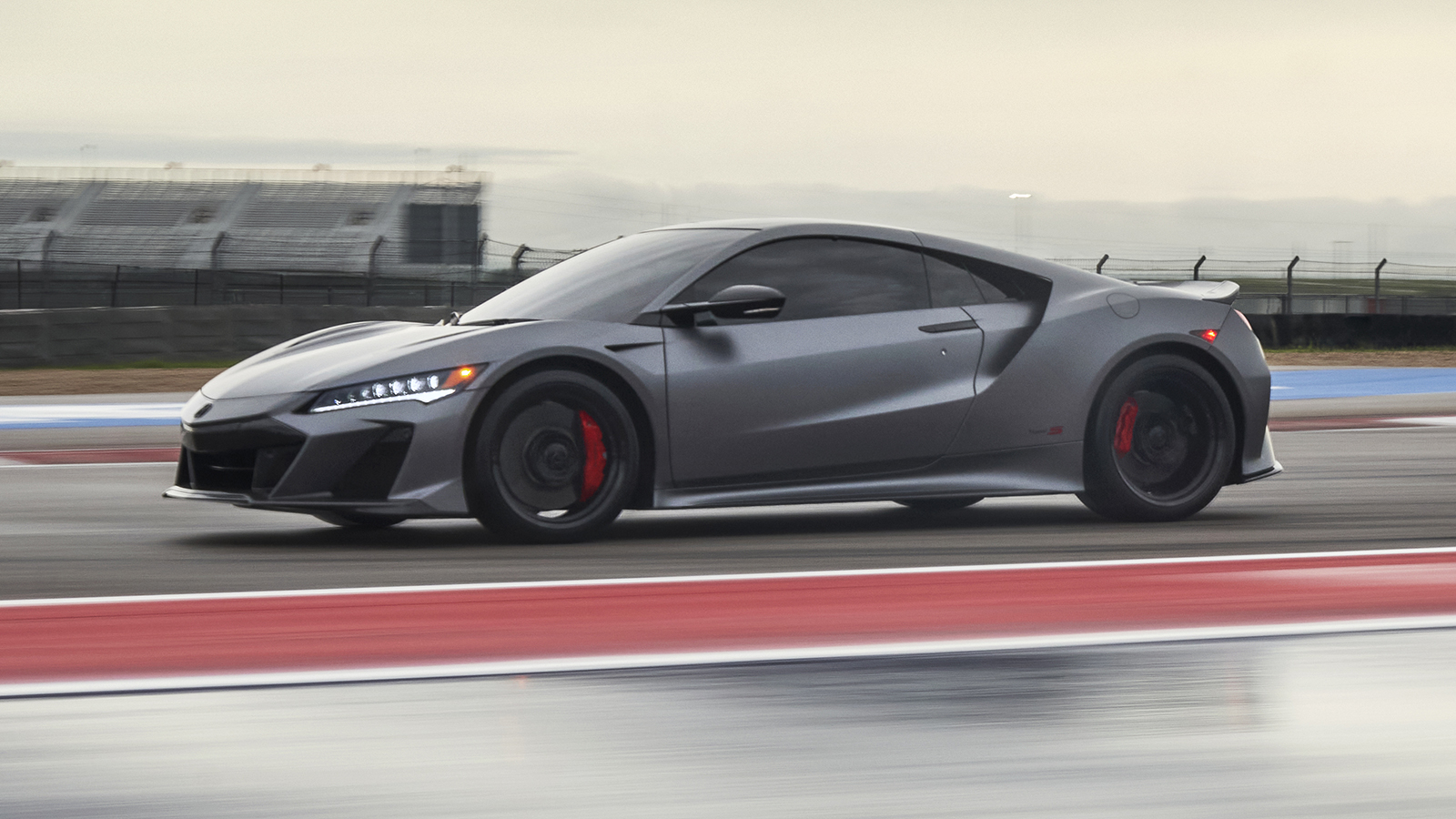
Acura RSX Type S at Race Track

Acura has just announced that they will be producing a limited-edition NSX Type S variant for the 2022 model year, which will also serve as the swan song for the brand’s halo car (now in its second generation). Officially unveiled during Monterrey Car Week, the Type S will be the “quickest, most powerful and best-handling production NSX ever” according to the automaker, with an enhanced version of the 3.5L twin-turbocharged hybrid engine now producing 600 hp and 492 lb-ft of torque. The 9-speed DCT and Super Handling All-Wheel Drive (SH-AWD) have also been optimized to get the most out of the car’s improved performance. The NSX Type S will also come standard with a carbon-fiber roof, as part of its weight reduction protocols.

Distinctive design cues and more aggressive aerodynamics are also at the core of the car’s improved driving character, with race car components – such as a GT3-inspired rear diffuser – being among the most easily distinguishable features. The NSX Type S will also come with redesigned front and rear bumpers, unique 5-spoke wheels, Pirelli P-Zero tires, and a retuned adaptive suspension system. Optional features such as Gotham Gray exterior paint and an available Lightweight Package – which includes carbon-ceramic brakes and more carbon fiber components – are also exclusive to the Type S. Limited to a production run of only 350 units.

Rimac Nevera

Rimac Nevera

Although it is not the first EV to be powered by 4 permanent magnet electric motors, the Rimac Nevera does come with its own unique electric drivetrain design. By strategically placing a pair of 200 kW electric motors in front and another two 500 kW electric motors in the rear, the engineers were able to give the rear-biased Nevera an ideal 48:52 (front:rear) weight distribution. However, a deeper inspection reveals more intricacies in the design, as the planetary gears for each of the 4 wheels are purposed in such a way that the Nevera is also optimally balanced from left to right as well. Genius.

It’s probably a good thing that this Rimac was built with a predisposition to exhibit ballet-like agility, because it’s going to need all the grace in the world to tame all that’s brewing within. In combination, all of the 4 electric motors can generate up to 1,914 hp (1.4 mW) and 1,740 lb-ft of torque (2,360 Nm). This allows the Nevera to absolutely annihilate the popular 0-60 mph benchmark in just 1.85 seconds, with an equally impressive 1/4 mile time of just 8.6 seconds – good enough to make it the fastest production vehicle ever made, by some margin. Top speed is stated as 258 mph (412 km/h).

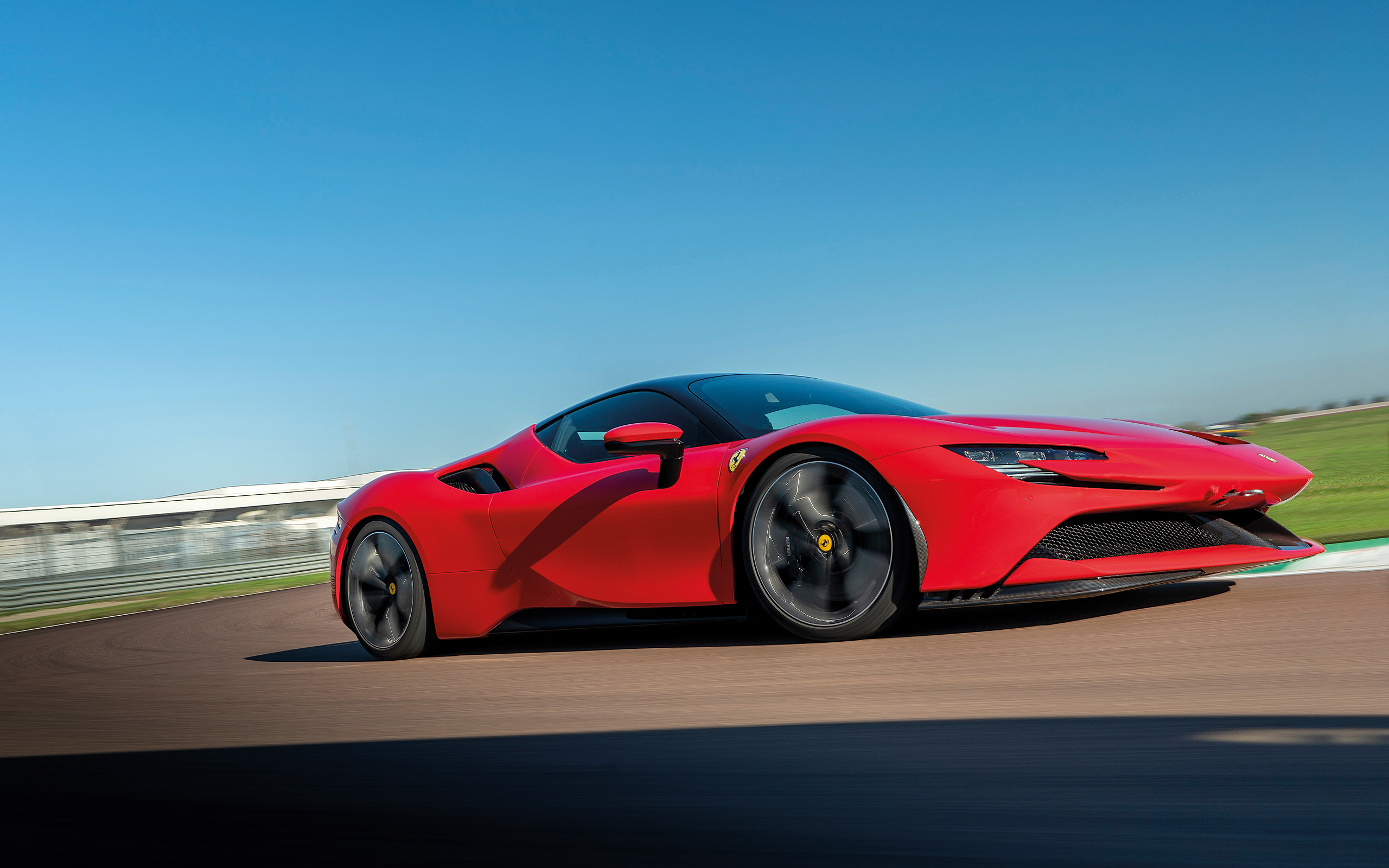
Ferrari SF90 Stradale

Ferrari SF90 Stradale at Race Track

At first glance the SF90 Stradale sounds like a car we should all fear; a soul crushing proposition. It is a plug-in hybrid electric vehicle (Ferrari’s first) with four-wheel-drive, built on a new ‘multi material‘ platform and has even more electric driver aids than ever before. It is enough to make old-school Ferrari fans and drivers run straight for the exits (probably to pick up a 458 Speciale instead). But those who are willing to consider the outcomes with an open-mind are sure to be satiated, if not entirely blown-away.

In the Ferrari SF90 Stradale, the company has partnered its F154 V8 engine with a 7.9 kWh battery, which allows the twin-turbocharged V8 hybrid to produce up to 986 hp in total. The three electric motors combine to deliver 217 hp, an can even bring the SF90 Stradale to a speed of 84 mph and complete over 15 miles, all on their own power. Aside from a mind-boggling 0-60 mph time of 2.1 seconds, this configuration also makes the SF90 the first mid-engined Ferrari to be all-wheel drive. Handling is also greatly enhanced with torque vectoring now being available on the front-axle. The car also features an all-new chassis made of carbon fiber and aluminum. The sleek body panels and its aerodynamic shape help the model make a whopping 860 lbs of downforce at speed, and the whole profile of the car is extremely low so it can slash through the air at high speeds.

Porsche Taycan Turbo S

Mamba Green Porsche Taycan Cross Turismo

The Taycan Turbo S is the ultimate Porsche EV. The absolutely mind-boggling 750 hp and 774 lb-ft of torque it instantaneously produces, rockets the car from 0-60 mph in 2.6 seconds – hypercar territory, that is. It manages to combine this with 911-level handling characteristics and is infused with the same essence we’ve come to expect in all Porsche sports cars. Porsche ceramic composite brakes (PCCB) are standard fare on the Turbo S, as are the otherwise optional 21” Mission-E Design wheels. To provide even more extra stopping force, the Turbo S is also fitted with larger front and rear rotors than what is installed on the 4S and Turbo models.

With the introduction of the new Cross Turismo range of Porsche Taycan models, we’re now entering the second act of the company’s electrification strategy. The Porsche Taycan Cross Turismo carries over the EV-platform and performance from its sedan counterpart, then amalgamates them with the utilitarianism of a sporty crossover / estate. While a number of the Cross Turismo models’ design elements bear an obvious resemblance to the sedans, they offer something very distinct as well.

Lamborghini Sián

Lamborghini Sian

Amongst this list of very special cars, the Sián is perhaps the most special. That’s because the Lamborghini Sián is the most notable example of an automobile which uses a supercapacitor – the ‘super’ added because, well, you need a really, really big capacitor to help power a car. In this configuration, the supercapacitor collects and stores energy (primarily from regenerative braking). In certain moments (such as a launch), the supercapacitor dumps all of its energy into an electric motor which immediately and briefly adds an extra 34 hp on top of what the Sián’s 785 hp 6.5L naturally-aspirated V12 engine produces. This means that up to 819 hp is sent to all 4 wheels, with the electric motor integrated into the transmission to reduce weight and improve responsiveness.

As long as the supercapacitor keeps getting recharged – which can be achieved with just seconds of hard braking – there will always be that extra bit of power boost at the car’s beckoning. Compared to an EV battery which takes much, much, longer to fully recharge, and weighs substantially more, you might be wondering why supercapacitors aren’t the dominating technology in electric or hybrid vehicles today. Well, there are a few very important reasons for this. For one, supercapacitors aren’t able to store energy for long periods of time like a battery, making them unviable to be the primary food source for an electric vehicle… at least for now.

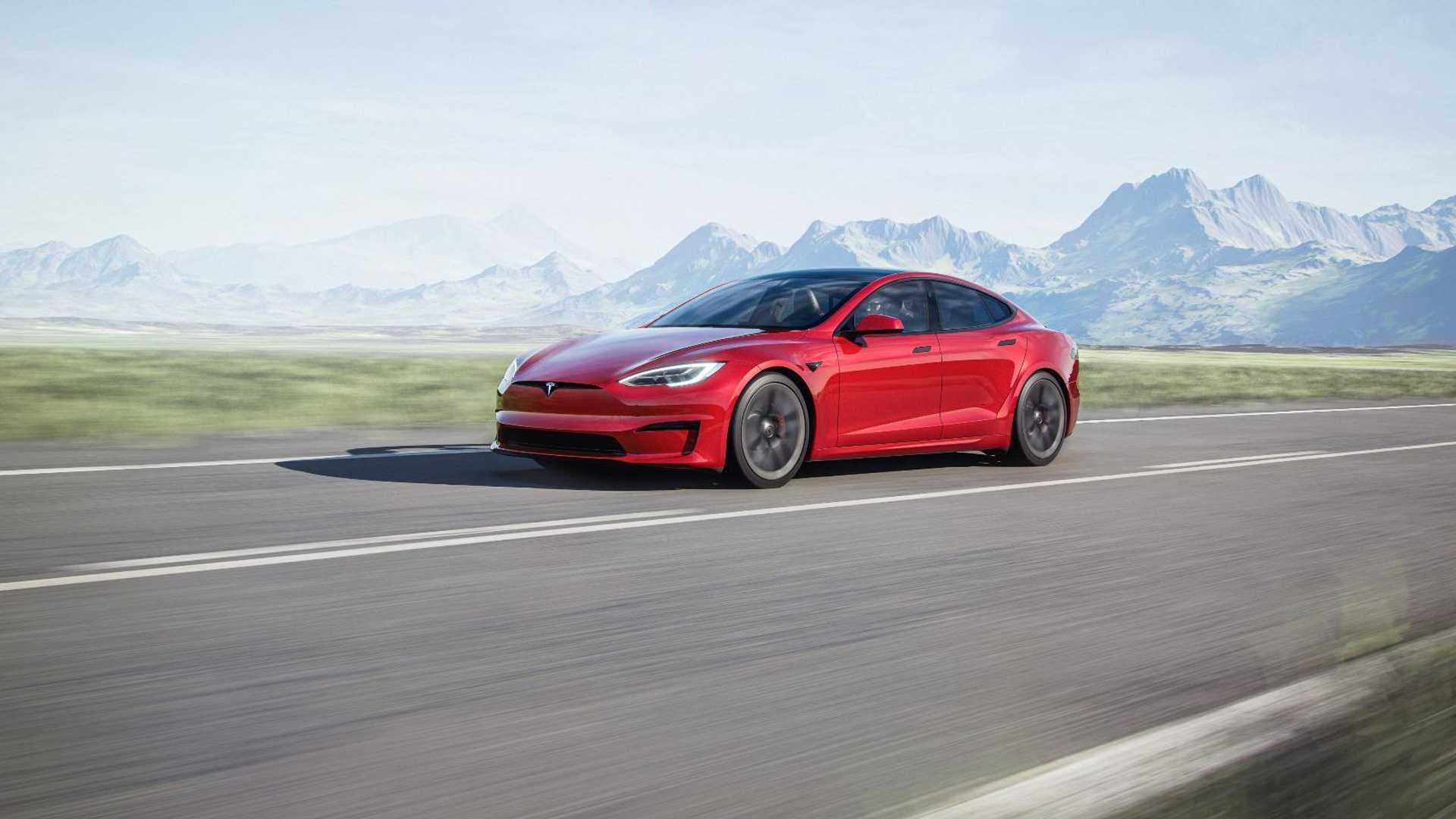
Tesla Model S Plaid+

Tesla Model S Plaid+ Rolling Shot

Tesla recently announced that they’ve added a new trim for their Model S and Model X. The base “Long Range” models will still use dual-motors, while the new high-performance models will be replaced with “Plaid”. While this is mostly down to marketing and rebranding, the Model S will have also have a Plaid+ option later this year; for performance junkies, this is the most significant news as this package incorporates Tesla’s latest battery technology. The Plaid+, with it’s brand new architecture, is said to be capable of 0-60 mph in under 2 seconds and a range of up to 520 miles on a single charge.

Needless to say, figures like those will surely lead to an upheaval of the current status quo in EV-land and will have competitors scrambling to keep up. Word is, these claims are far from anecdotal, as an 1,100 hp prototype version of the Tesla Model S Plaid+ has already beat the Mclaren P1’s lap time at the legendary Laguna Seca raceway in California, USA. Tesla is already taking orders on its website, where it starts at a price of $131,100.

Koenigsegg Regera

Koenigsegg Regera

Koenigsegg unveiled its Regera hybrid hypercar model at the 2015 Geneva Motor Show, and since then it has generated plenty of hype amongst car enthusiasts and performance junkies. Besides a regular combustion engine, the Koenigsegg Regera also utilizes 3 electric motors which dole out 700 hp and 663 lb-ft of torque via a 4.5 kWh liquid-cooled battery pack. As a result, the car now produces 1,500 hp (which the company likes to market as 1.11 MW), making it the most powerful hybrid supercar in the world. Its combustion engine is a 5.0L twin-turbocharged V8 which produces an out-of-this-world 1,100 horsepower and 922 lb-ft of torque without electric assistance.

Koenigsegg has gone on to claim that the Regera can theoretically reach top speeds of over 400 km/h, although this has not yet been made official.

Lotus Evija

Lotus Evija in London

Lotus has been hyping their new fully-electric automobile, going as far as saying that the Evija will be a “mind-blowing supercar”. The car features two electric motors which output its outrageous 2,000 hp. The battery is placed in the middle of the car where a typical internal combustion mid-engine car would have its beating heart, helping it to achieve an ideal weight distribution. Lotus sought to strike the perfect balance between a track car and a road car, and that extends to the cabin – a minimalist, driver-focused interior design but with plenty of the comfort and convenience features you’d expect in a civil grand tourer. The Lotus Evija has been named as ‘The One to Watch‘ in Top Gear’s 2021 Electric Awards .

The Lotus Evija was built with a simple goal – to be the absolute pinnacle of world-class engineering and the most powerful performance car ‘For The Drivers’. It harnesses Lotus’ technical expertise, fine-tuned over more than seven decades, to create a masterclass of automotive excellence. Judges at the IDA commented that the Lotus Evija “paves a way towards a more sustainable future whilst embodying an exceptional aerodynamic aesthetic”, and that “its seductive style elevates the Evija to be the world’s most premium sustainable car”.

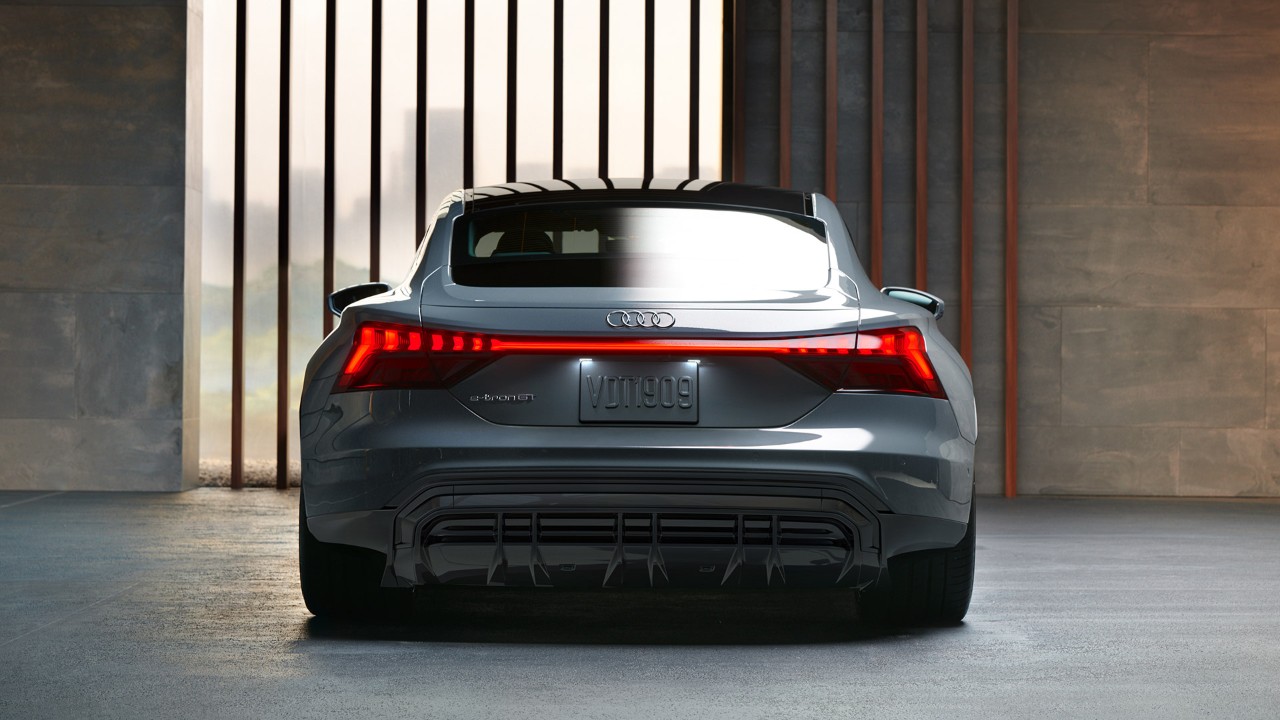
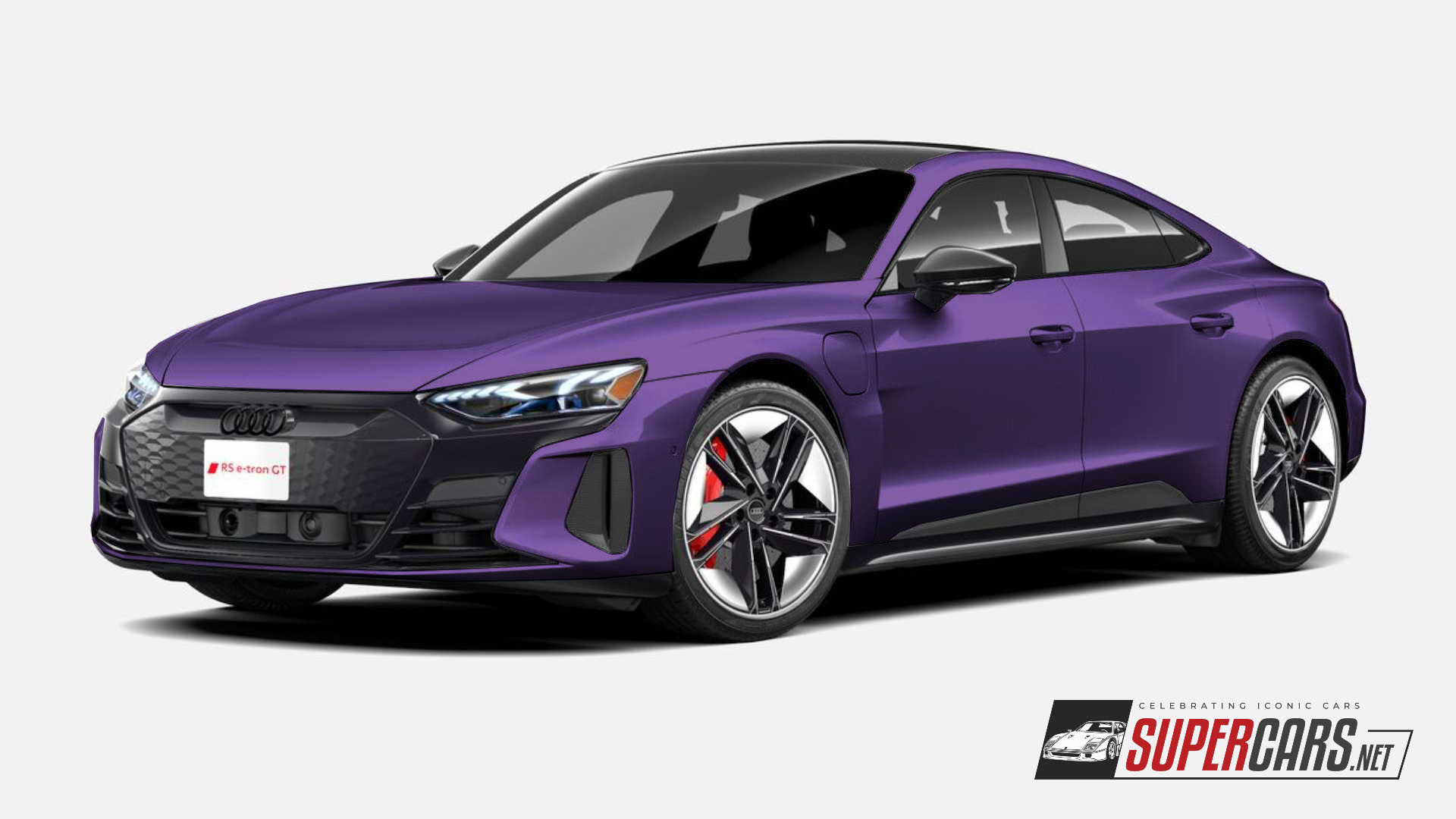
Audi e-tron RS GT

Audi e-tron GT Rolling Shot

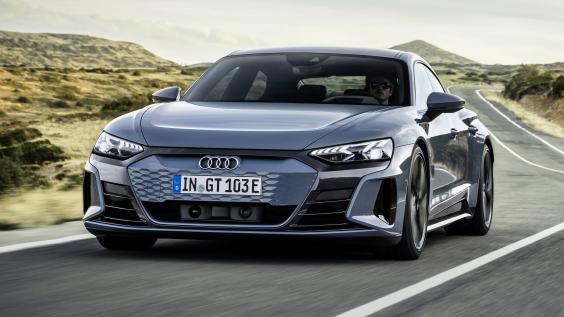
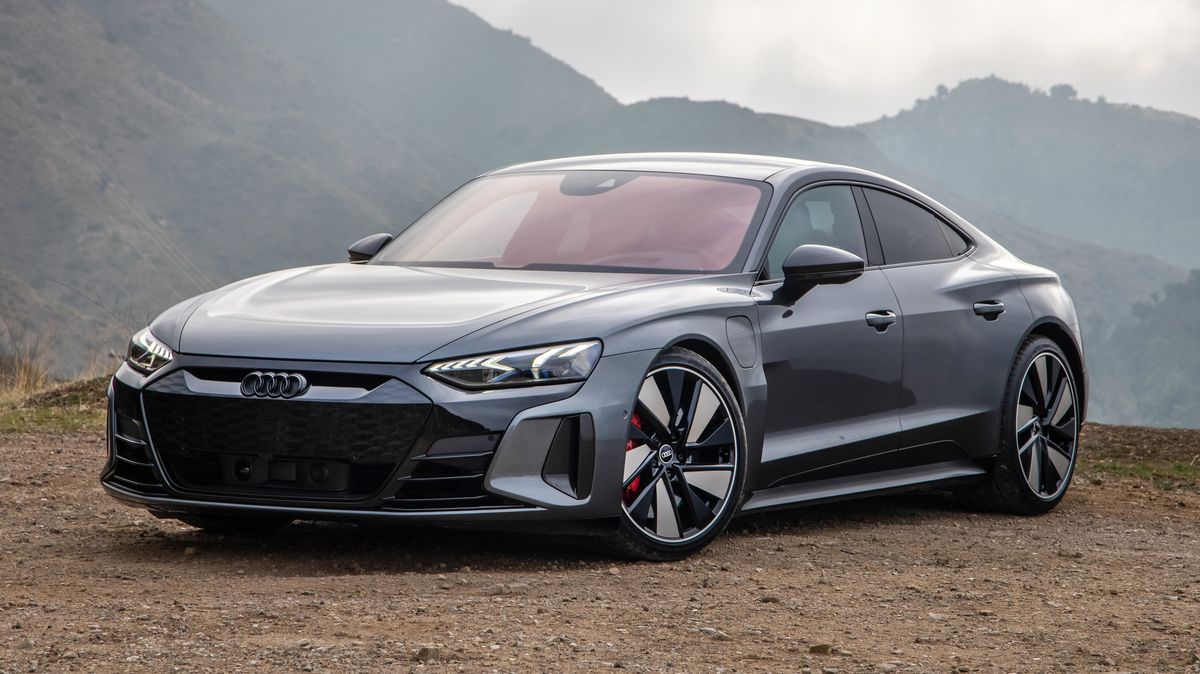
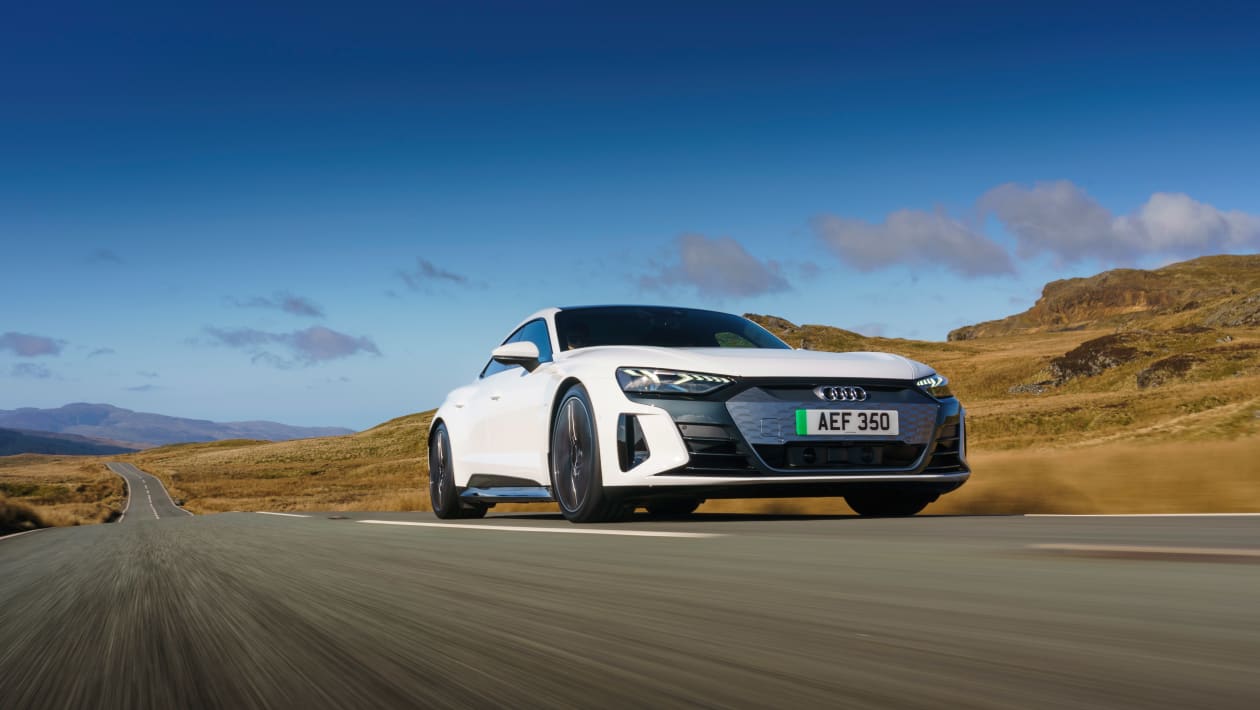
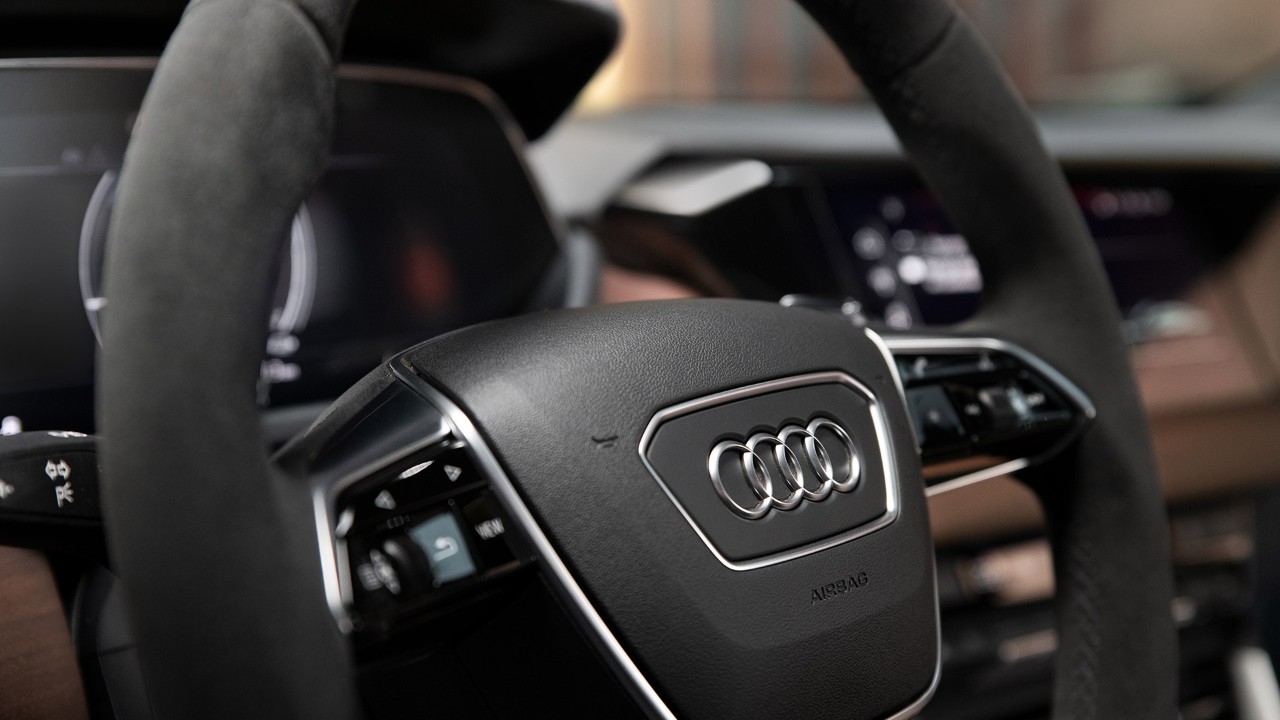
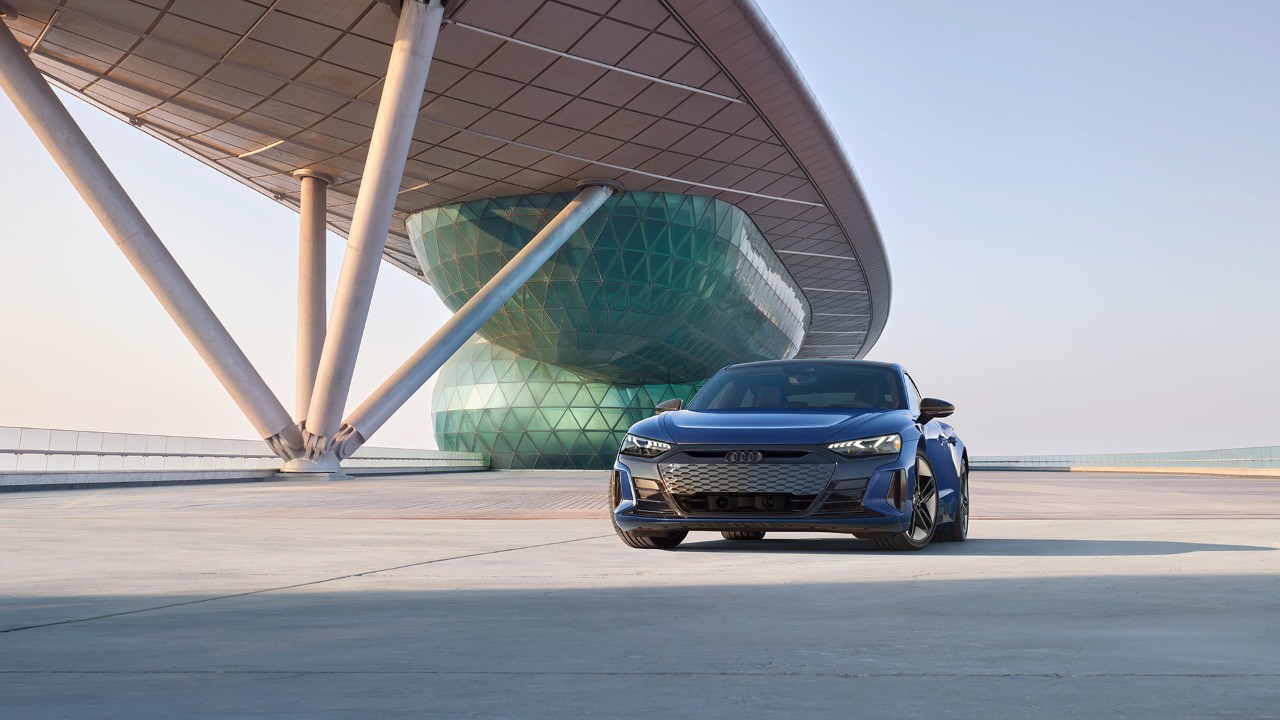
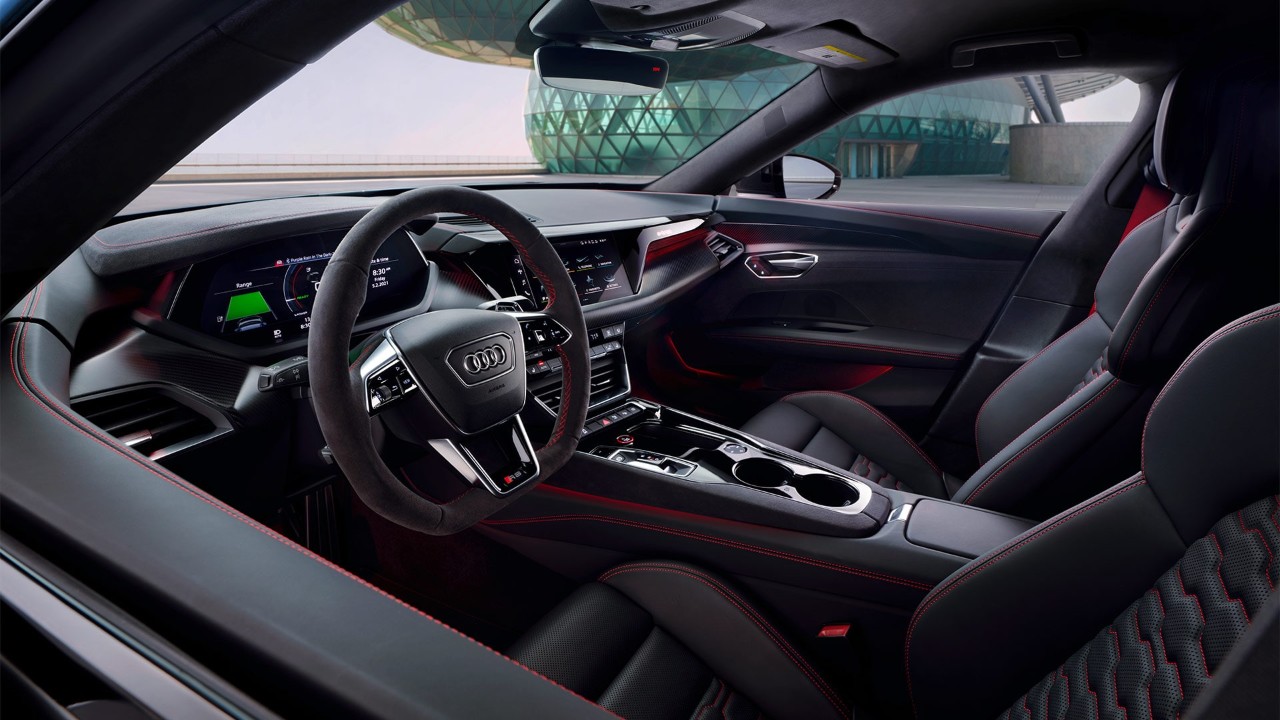
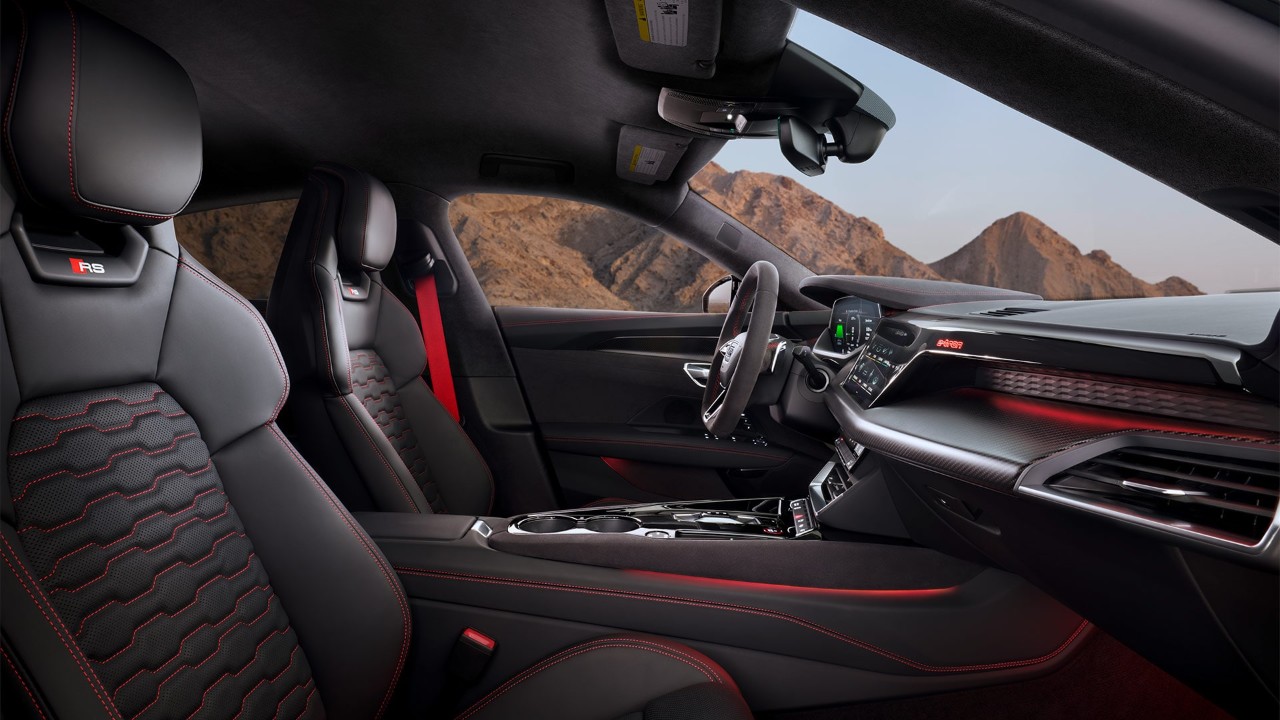
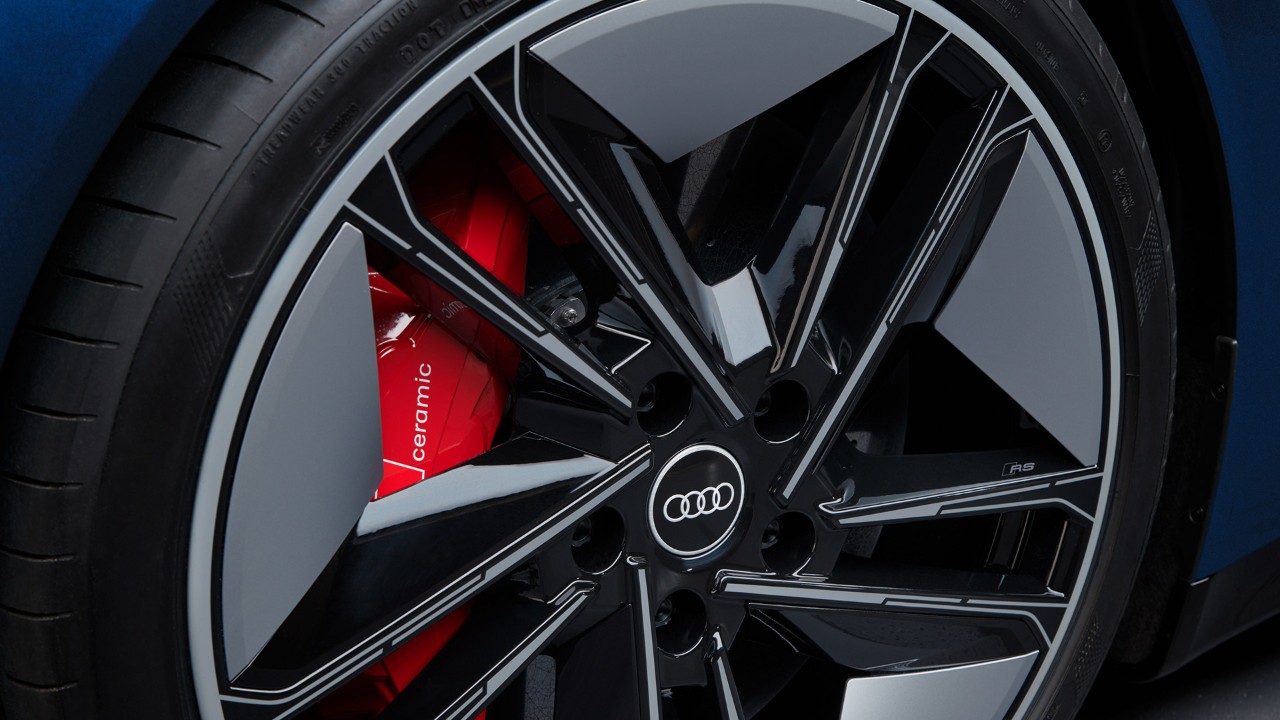
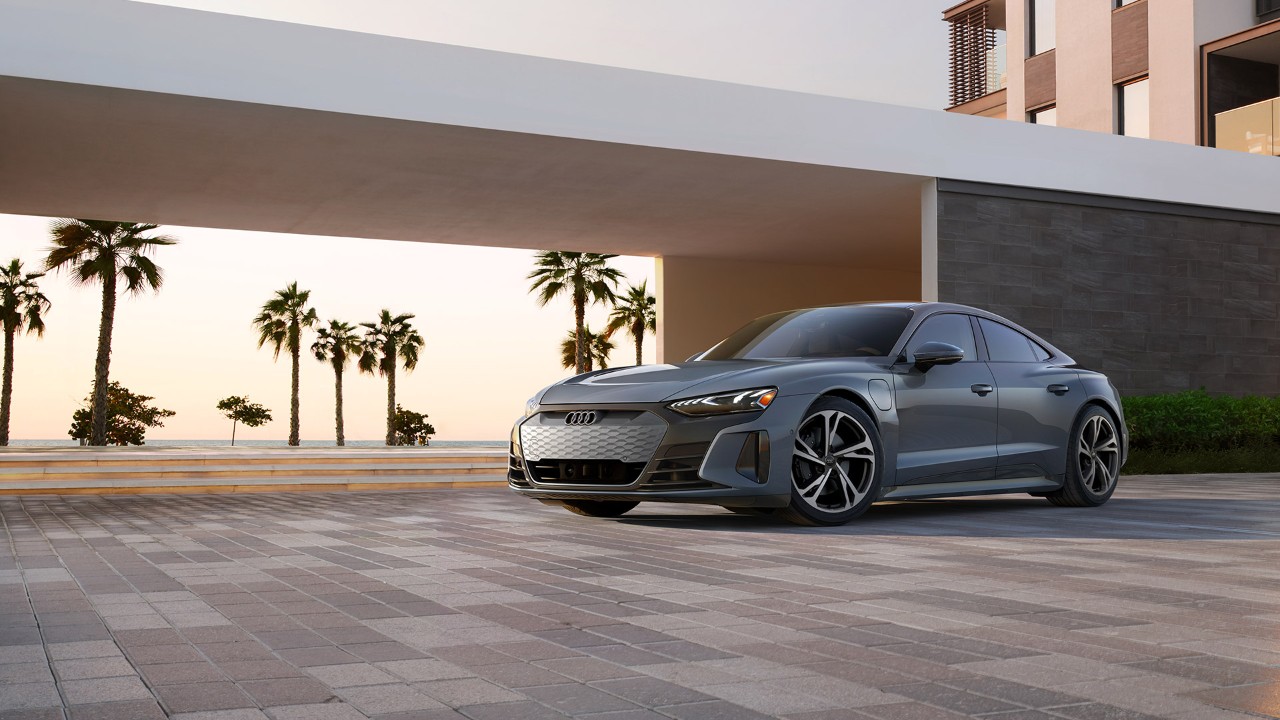
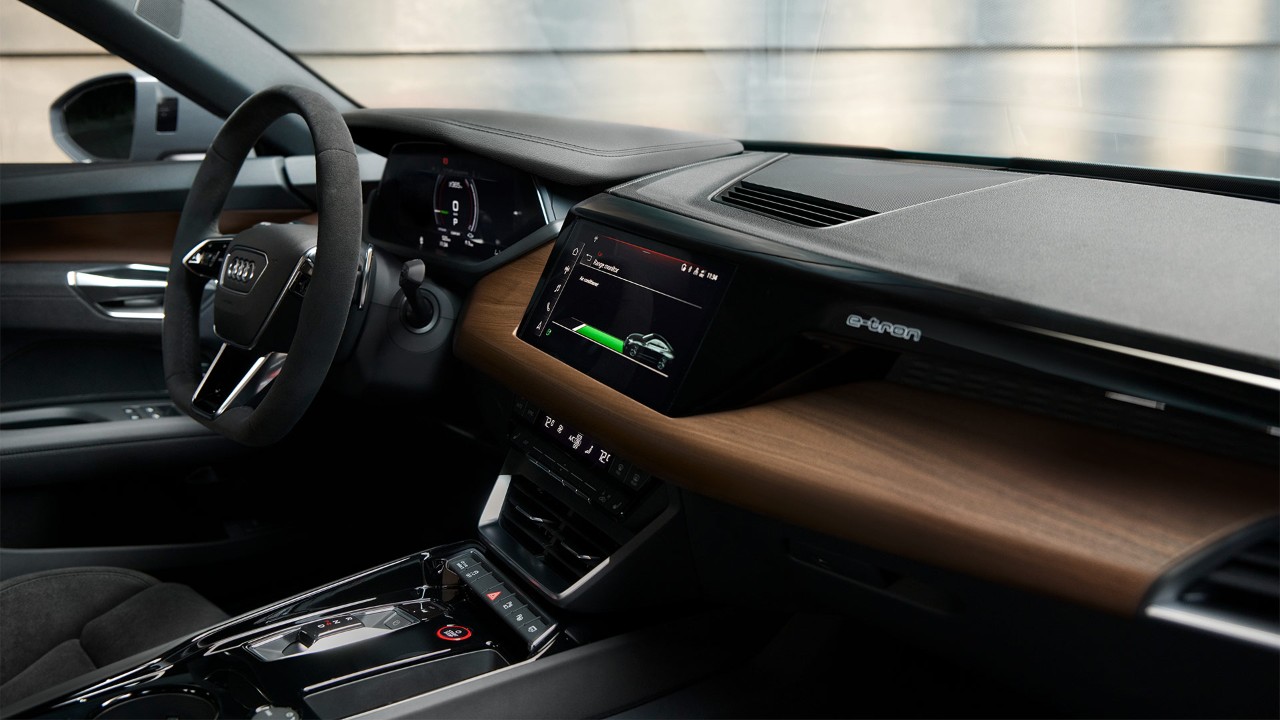
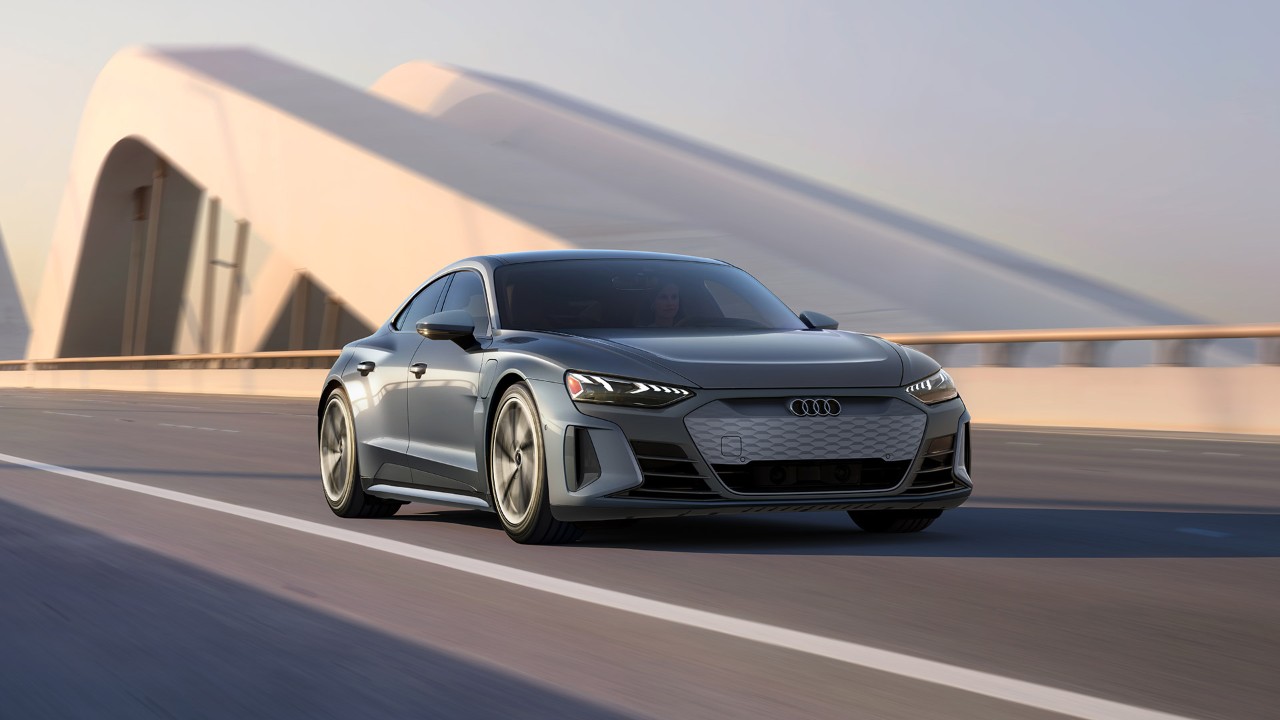
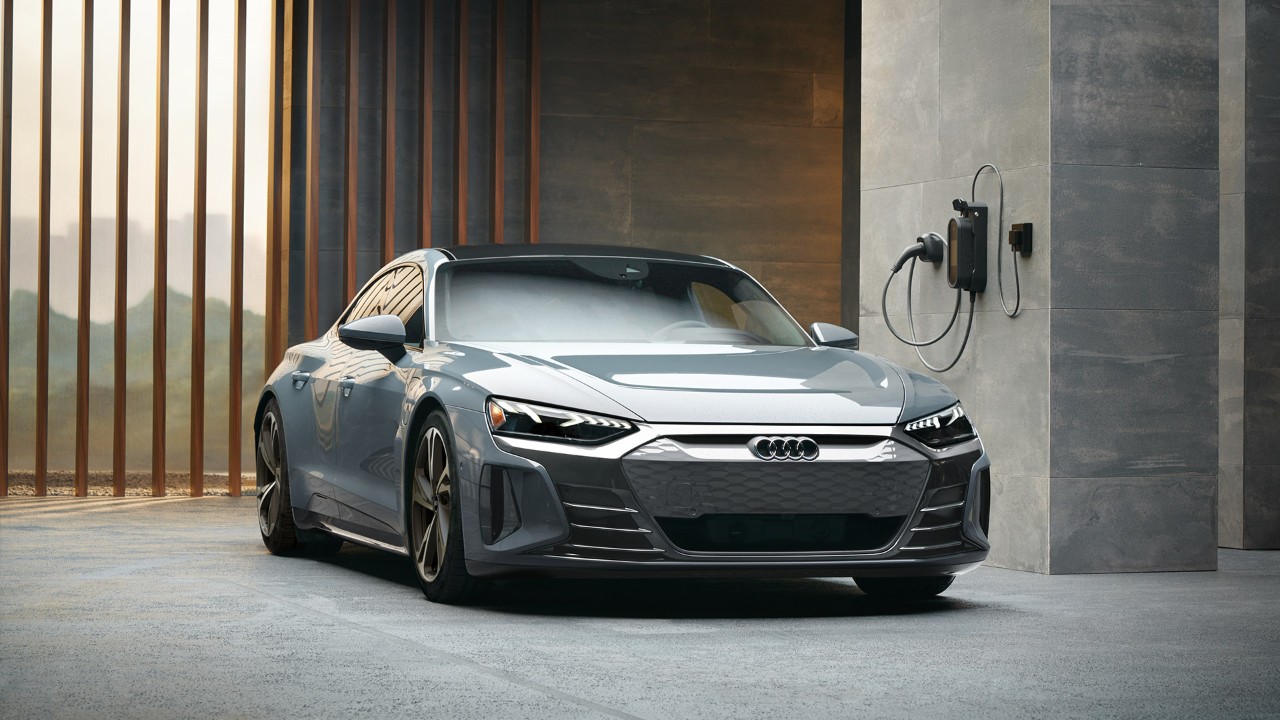
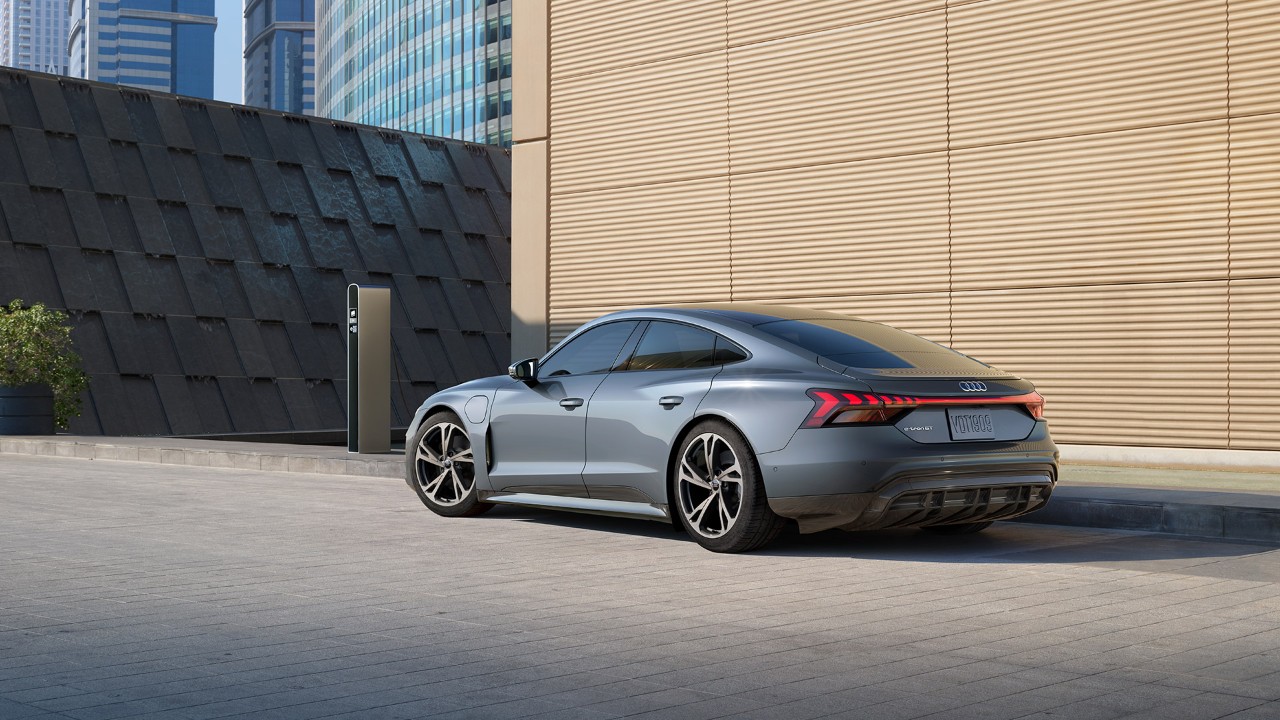
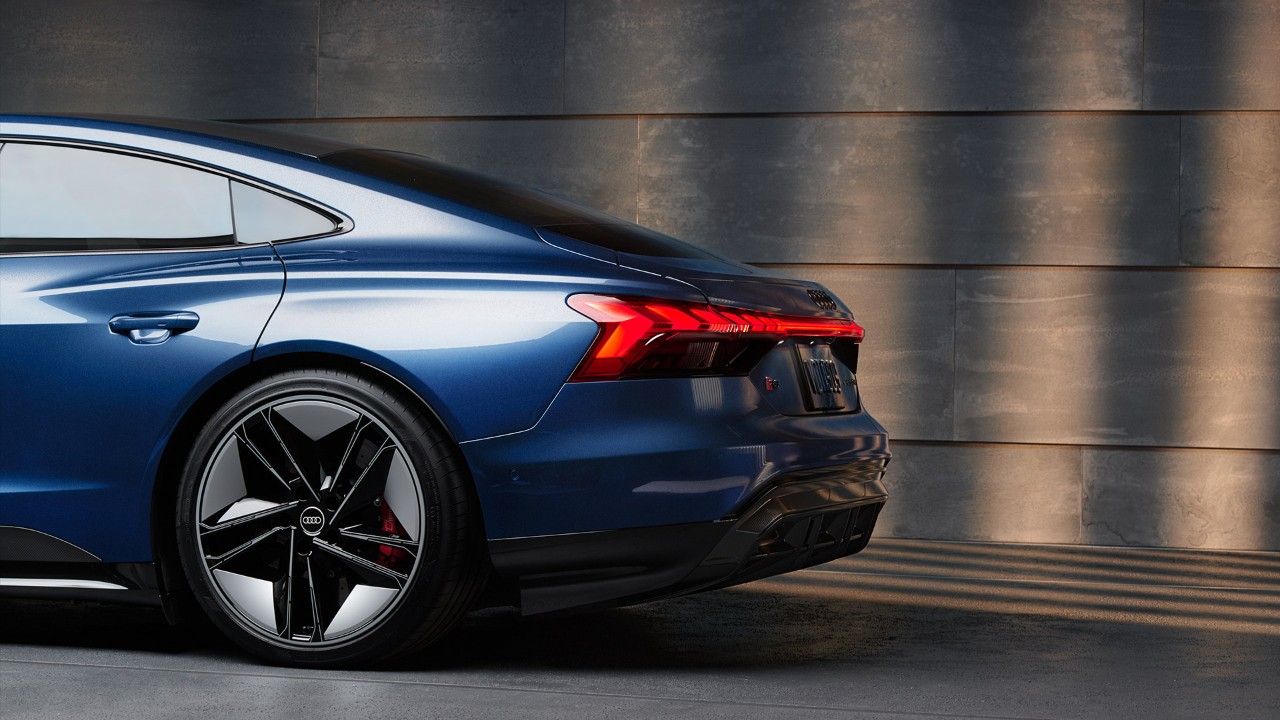
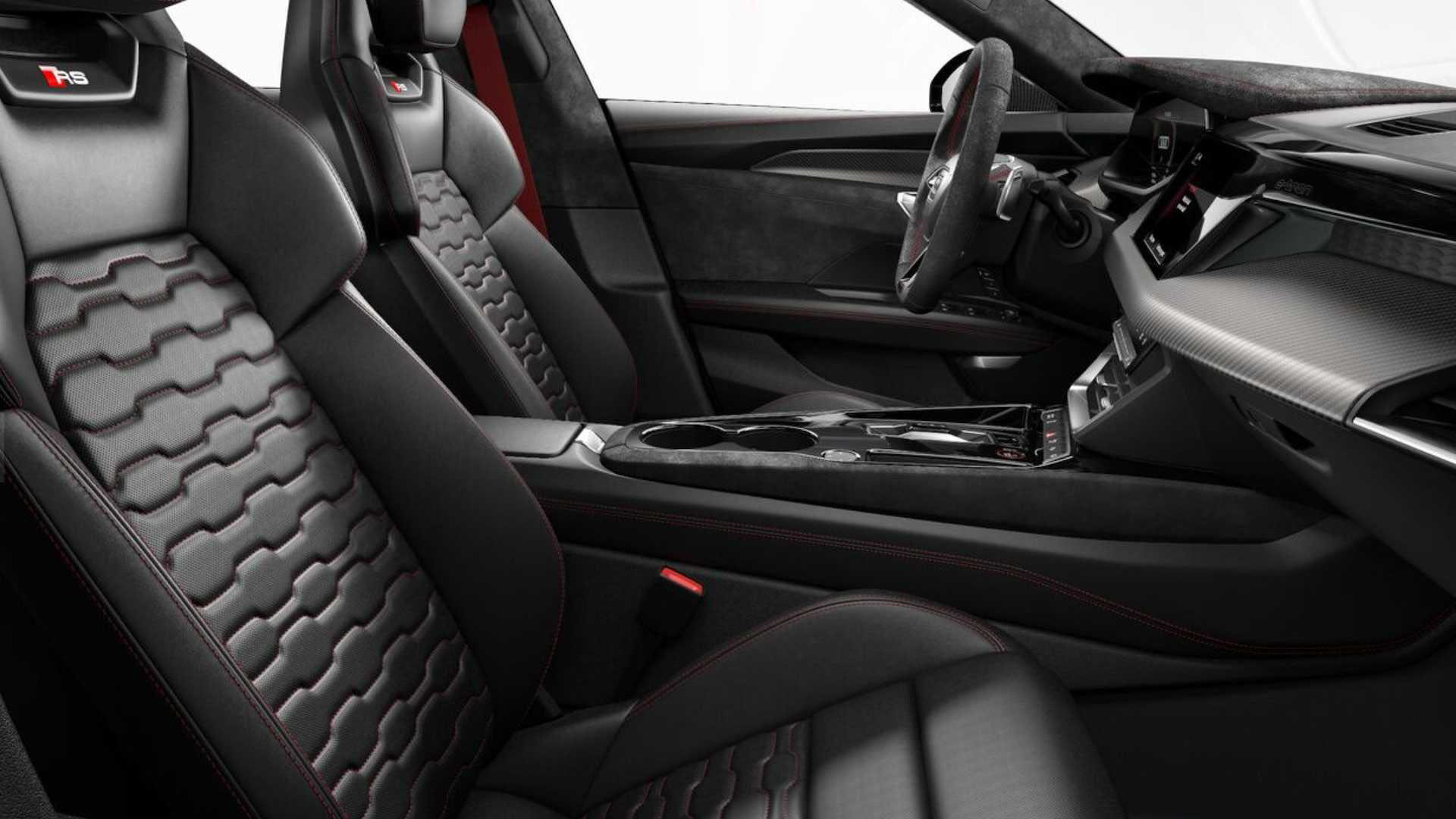
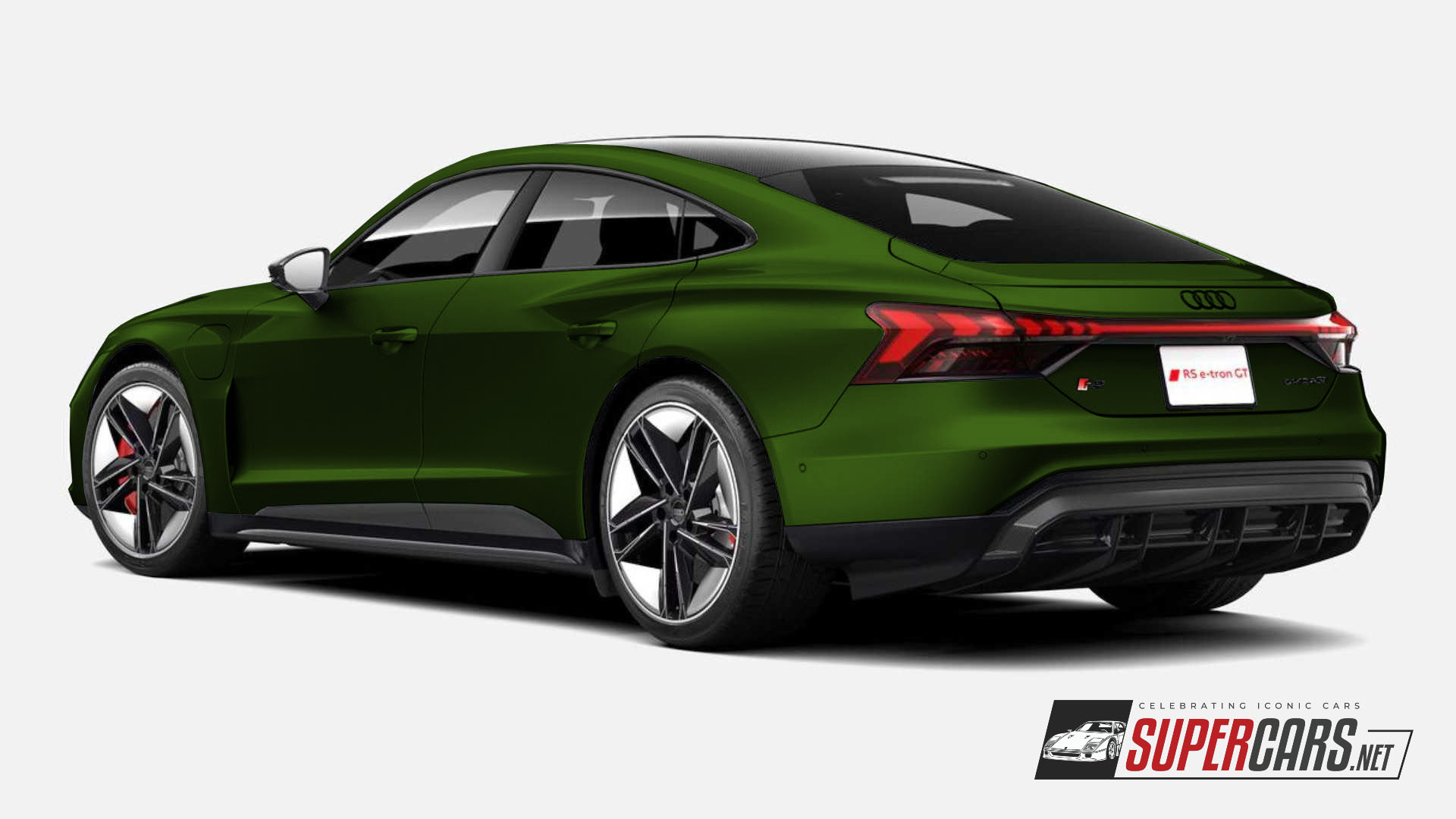
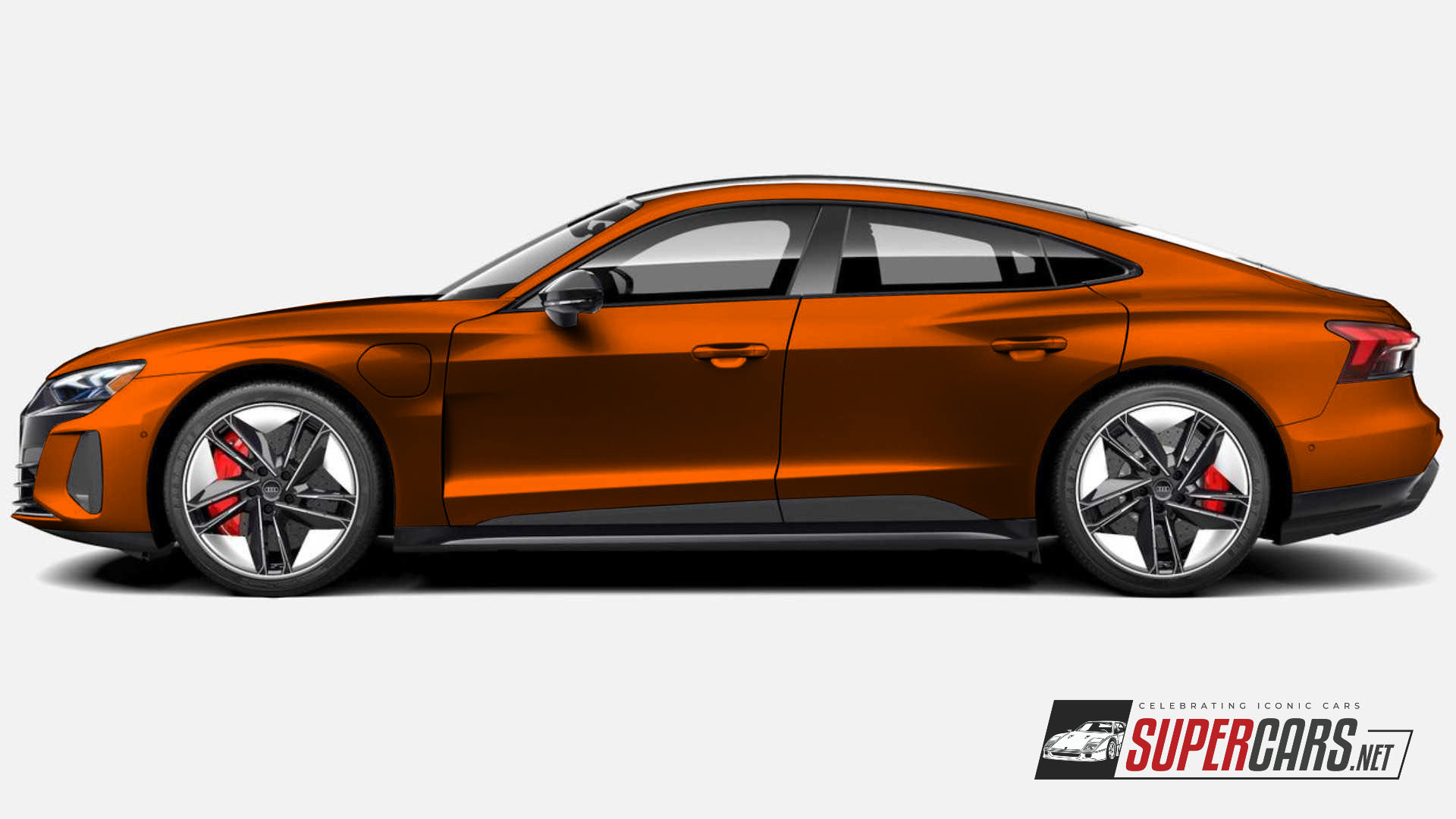
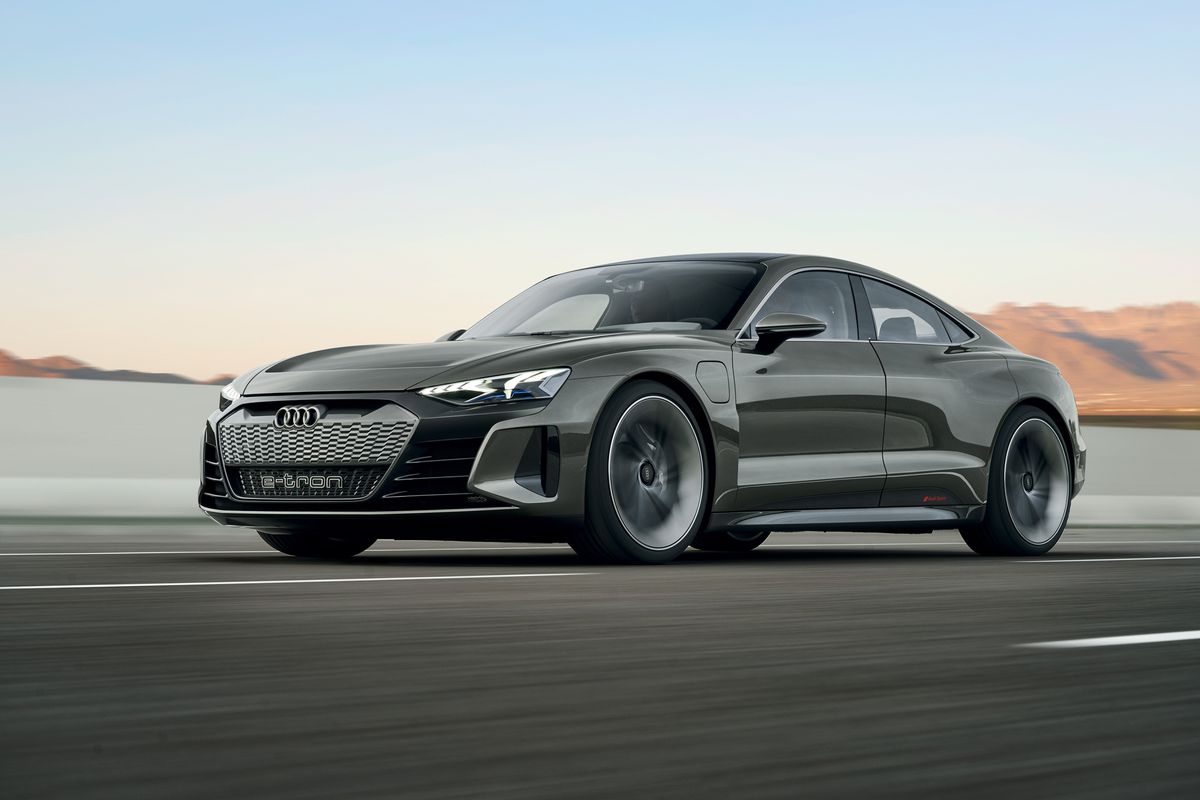
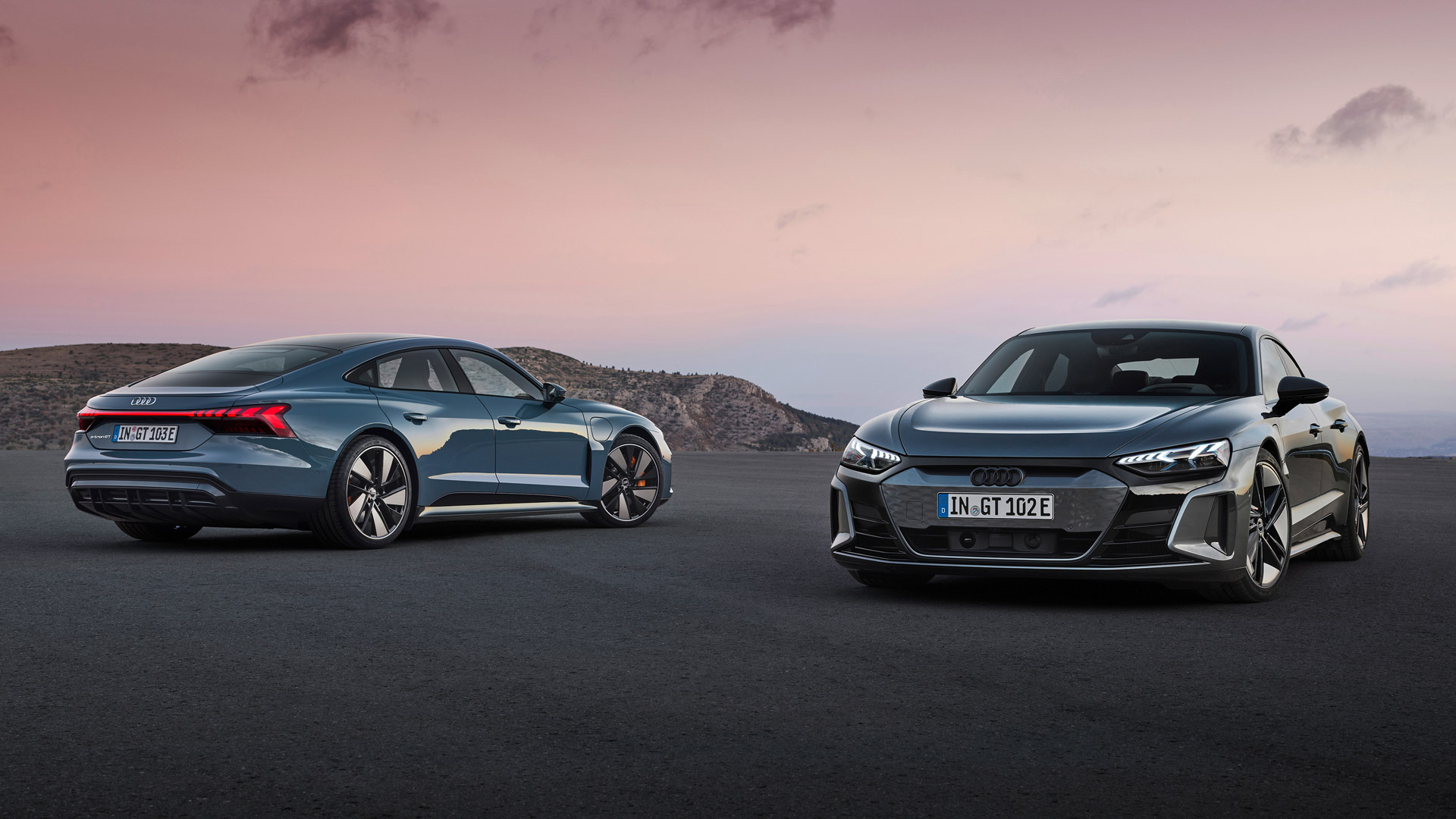
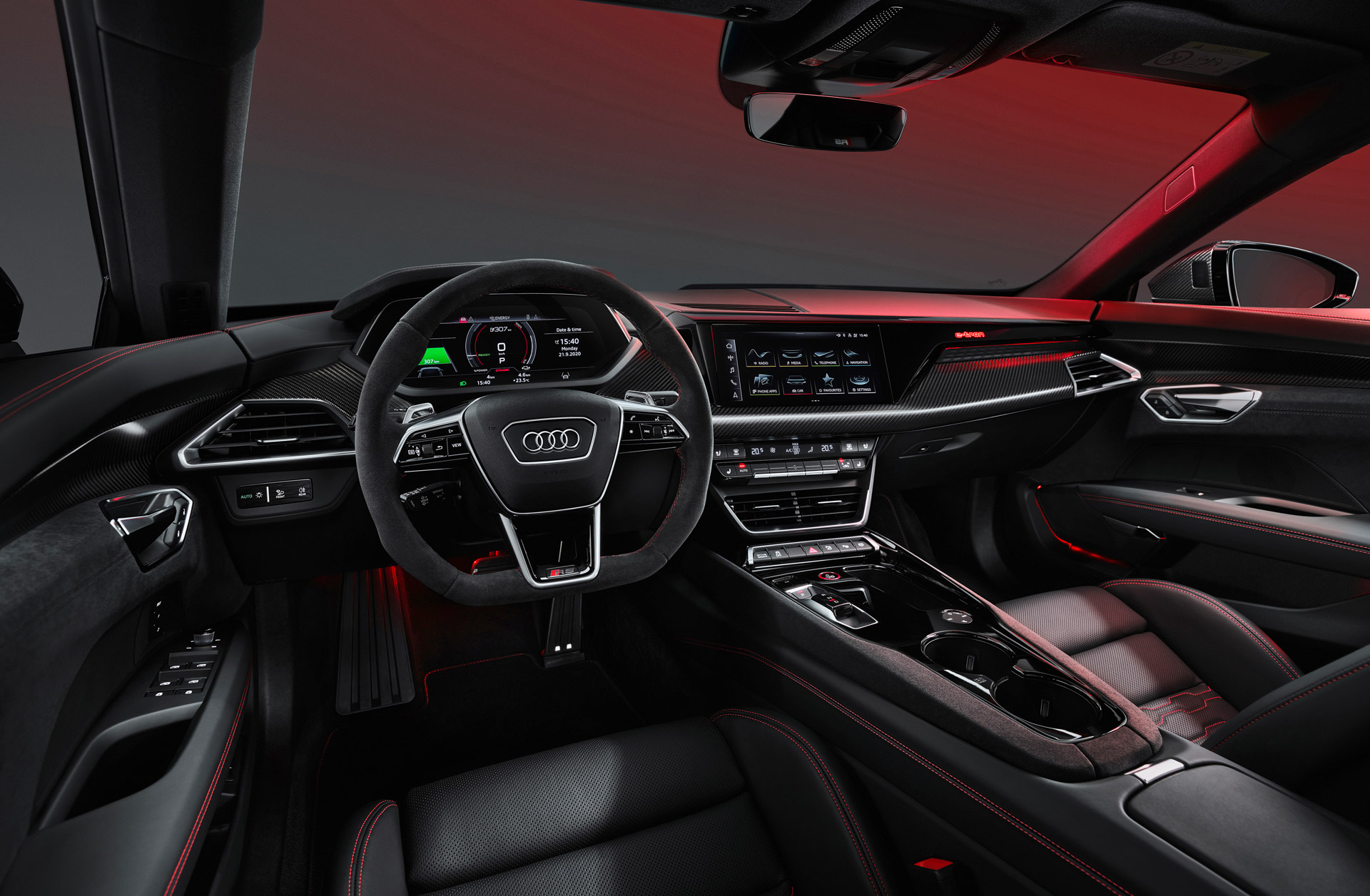
The 2022 Audi e-tron GT is the four-ringed company’s first entrant into the high-performance EV weight class. It looks to shake up a playing field which includes the likes of the Tesla Model S and Porsche Taycan, the latter of which it shares many of the same underpinnings. Audi has marketed the e-tron GT as a fully-electric grand tourer, as a opposed to a sports saloon EV like the Porsche Taycan. This sets clear expectations right away of what makes the e-tron GT an entirely unique offering – not quite as powerful (compared to the Turbo and Turbo S), a little less nimble and sharp in the handling department, slightly more utilitarian with extra cargo room and a typically impressive Audi-esque interior.

The entry-level e-tron GT  produces 469 hp, which can be boosted up to 523 hp when using launch control. This is good for 0-60 mph in 4.0 seconds and a top speed of 152 mph, making it most comparable to the Porsche Taycan 4S which ends up being a smidge quicker using the same measuring stick. Stepping up to the RS model will net you 590 hp with 637 hp available in overboost mode. This allows the RS e-tron GT to complete the 0-60 mph sprint in 3.3 seconds, which is slower than Tesla’s and Porsche’s quickest EV models by 1.3 seconds (Model S Plaid) and 0.8 seconds (Taycan Turbo S) respectively.

Pininfarina Battista

Pininfarina Battista Canyon Drive

When the Pininfarina Battista was unveiled at the Geneva Motor Show in March 2019, it was touted as the first fully-electric hypercar. Having been teased with bits and pieces up to that point, the Battista would finally secure its place in history as the first complete amalgamation of a zero-emissions hypercar. I doubt that anyone would be offended – least of all, Pininfarina – if the Battista was mistaken as ‘just another’ one of Ferrari’s super cars. Afterall, the design elements are deliberately signature from the company; and that’s really the best part of it all.

Beneath the silhouette lies something less familiar – the absence a typically mid-mounted combustion engine, for one. The Ferrari…. I mean…. Pininfarina Battista is fully-electric, and beyond that very notion, things only start to get even more crazy. The Battista utilizes 4 motors – one for each wheel – which produce a combined 1,900-horsepower and 1696 ft-lb of torque. That level of performance and technological sophistication won’t come cheap either, with each car priced at around $2.3 million USD.

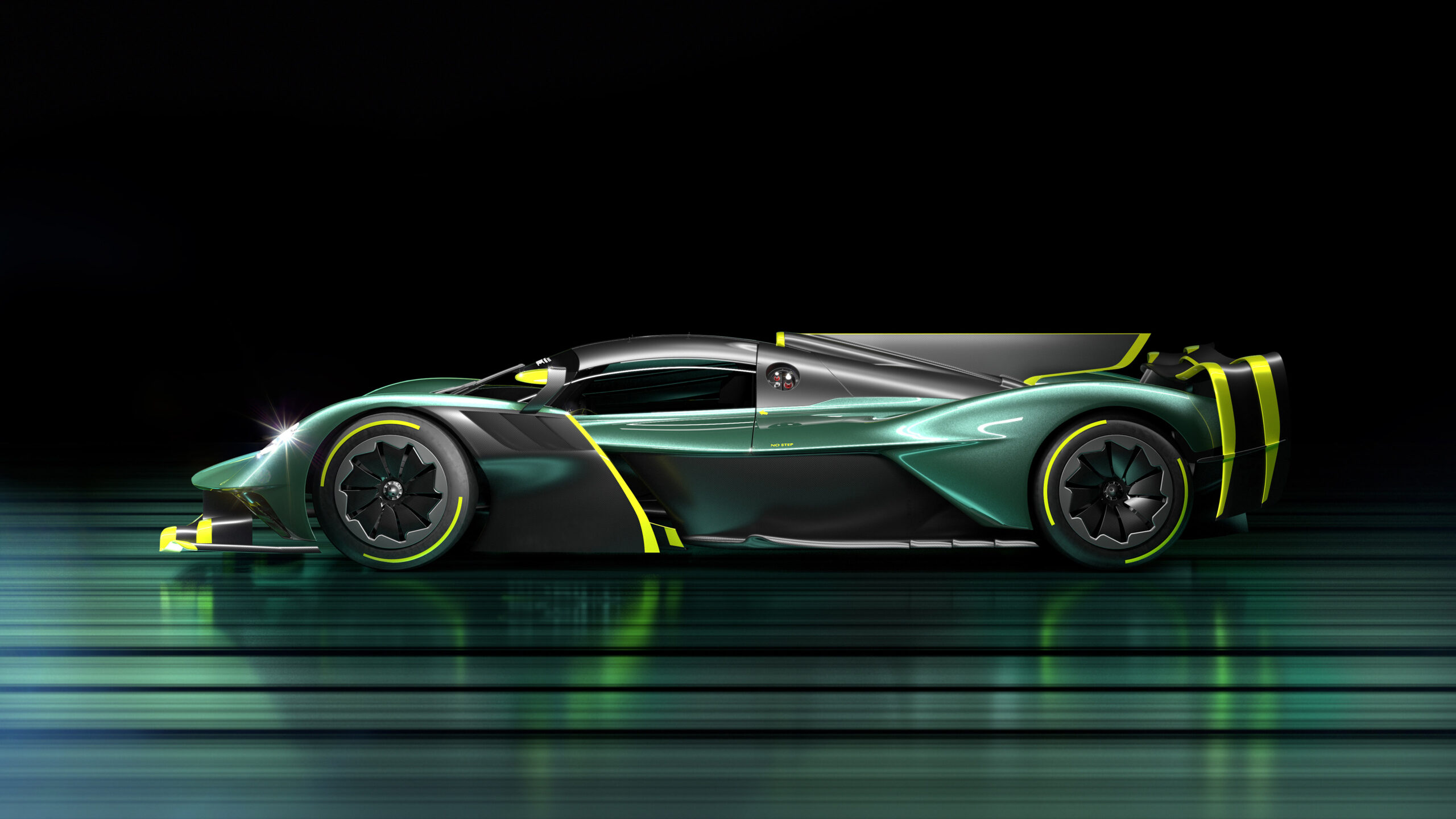
Aston Martin Valkyrie AMR Pro

Aston Martin Valkyrie AMR Pro Side Profile

The new Aston Martin Valkyrie AMR Pro isn’t just another version of the original Aston Martin Valkyrie with some added aerodynamic parts. They’ve also increased the wheelbase of the original chassis by 380 mm, and added 96 mm and 115 mm to the front and rear track width respectively. These changes effectively lengthen the entire car by 266 mm, essentially making it a ‘longtail’ version, as their rivals McLaren would call it.

The Aston Martin Valkyrie AMR Pro still uses the same Cosworth-built naturally-aspirated V12 engine with a 6.5L displacement – but now with 1,000 hp available at a screaming 11,000 rpm. Significant weight has been shed on the Valkyrie AMR Pro by removing the entire hybrid system, using an extremely light carbon fiber body, and incorporating carbon fiber suspension components. Thanks to its aerodynamic efficiency, the Valkyrie AMR Pro offers track performance previously only seen on Formula One cars.

Mercedes-AMG Project One

Mercedes AMG Project One at Race Track

After months of teasing and speculation, Mercedes-AMG has officially unveiled the world’s first road legal car equipped with a Formula 1 powertrain – the 1,000 hp Project One. Its 4-digit power output comes from an improved version of the hybrid system found inside the W08 F1 car, which also includes a turbocharged 1.6L V6 engine and four electric motors. The two front electric motors on the Project One are of the latest and greatest technologies available, with each unit being capable of revving up to 50,000 rpm and producing 160 hp on their own.

The third electric motor is integrated into the turbocharger, while the fourth is mounted directly on the car’s combustion engine, producing another 120 hp of the Project One’s total power output of “beyond 1,000 hp”. Mercedes-AMG has also claimed that the turbo lag on the Project One is not only eliminated in this setup, but the response times should now be shorter than those cars powered by a naturally-aspirated V8.

Porsche Panamera Turbo S E-Hybrid

Porsche Panamera E-Hybrid Sport Turismo Rolling Shot

Porsche has provided no shortage of options within any of its model line-ups, with the relatively recent addition of E-Hybrid models serving up even more choices for those seeking a more eco-friendly experience from the brand. While the Taycan is the only model fully-committed to electrification, the E-Hybrids are an impressive alternative for those who aren’t quiet ready to make the big step over to the other side. Currently, E-Hybrid models can be found within the Panamera and Cayenne model line-ups, and are destined to be in the mix with other models such as the Cayman, 911 and Macan in the not so distant future.

The Panamera Turbo S E-Hybrid is at the top of the food chain when it comes to the range, and is the only model (notwithstanding the Cayenne Turbo S E-Hybrid) to feature a hybridized version of Porsche’s 4.0L twin-turbocharged V8. On its own, the petrol engine produces 563 hp and 567 lb-ft of torque, with the E-Hybrid electric motor adding up to 134 hp and 295 lb-ft of torque. The Sport Turismo estate-style body would definitely be our pick, as it also provides a greater sense of both utilitarianism and style to boot.

Koenigsegg Gemera

Koenigsegg Gemera

Hinted at for a long time under the codename ‘KG12′, the latest Koenigsegg megacar has been revealed: The 2022 Koenigsegg Gemera. The Gemera is Koenigsegg’s first proper 2+2 GT car, or due to the power it produces, ‘mega-GT’ if you will. The car outputs a combined total of 1.27 MW of power, or by more traditional measurements, 1,700 HP and 2,581 lb-ft of torque. This is achieved through the combination of an extremely powerful, 2.0L twin-turbocharged camless + freevalve inline-3 engine – nicknamed the ‘Tiny Friendly Giant’ – which produces 600hp all on its own, and is partnered with three electric motors.

Two electric motors are placed at each rear wheel, with a third motor attached to the crankshaft of the engine to boost power to the front axle. All three motors have a combined output of 1,100 HP. Koenigsegg has confirmed that orders can be taken through the Expressions Of Interest website, and that the base price is $1.7 million USD.

McLaren Speedtail

McLaren Speedtail Wallpapers

Meet the new Speedtail – an aptly-named addition to McLaren’s Ultimate Series of automobiles. This limited-edition car – of which only 106 examples will be built – represents McLaren’s unyielding pursuit of maximum top-speed. Whereas other McLarens blend handling, acceleration, and driving dynamics in a harmonious package, the Speedtail has a more singular focus. That focus is speed; ludicrous amounts of it. McLaren has labeled the Speedtail a Hyper GT, which seems fitting given the excess of the car and its abilities.

This 1,055 hp car will take you to 250 mph, and then to the Opera, on the same set of tires (to paraphrase McLaren spokesperson, Wayne Bruce). More than that, the Speedtail is a car that reminds us that the automotive world serves to inspire and excite us, as much as it does in moving us from one place to the next. Though, in the case of the Speedtail, it moves us unlike anything else out there.

50 Best Engines of All Time

I’m going to steal a line from an early-2000s TV commercial starring Jacques Villeneuve on behalf on Honda, and then use it as a segue into articulating the whole purpose of this list. “In every Honda car, there’s a Honda engine” he would ultimately exclaim at the end – the brand’s powerful marketing slogan which arguably has less backing these days, but has withstood the test of time nevertheless.

Similar self-proclamations could easily be adapted for use on any one of the world’s most iconic automobiles, of which there are many, yet at the same time, so few. Whether they be small, but vivacious 4-cylinder engines in compact roadsters, versatile 6-cylinder engines which have no meaningful shortcomings despite their apparent size handicap, V8 engines which never fail to deliver a classic form of tenacity and physicality, or epic V10 and V12 engines oozing with verve, muscle and dexterity…

…there can be no doubt that each and everyone one of our favorite sports cars are a product of the power plants that breathe life, identity and purpose into them.

Here’s our shortlist for the “50 Best Engines of All Time”, curated (and categorized by # of cylinders) for your reading pleasure:

“The crème de la crème of unadulterated performance” – Best V12 Engines Ever Produced

As far as internal combustion engines go, V12 engines are at the zenith. This is while still acknowledging the omnipotent W16 motors seen in today’s Bugatti hypercars, while not forgetting the likes of mainstream automakers – such as BMW and Mercedes-Benz – also having flirted with the idea of series-production V16 engines in the past. With the 16-cylinder power plants essentially synonymous with the French automaker, the V12 is the de facto ruler for the broader spectrum of ultra-high-performance automobiles.

The diversity of this list fully demonstrates the universal appeal that V12s have around the world, to both producers and consumers alike. This unanimous and long-spanning support for the technology has helped to spawn some of the most impressive engines ever produced. The usual suspects are at play here, with Ferrari and Lamborghini making their totally not unexpected appearances. The British – via Aston Martin, Jaguar, and GMA – have shared their own highly impressive interpretations as well, while more conventional brands such as BMW, Mercedes-Benz, and even Toyota have had their say.

For the most part, these engines are naturally aspirated and characteristically rev all the way to the moon. In totality, each and every one of them is nothing short of a legend.

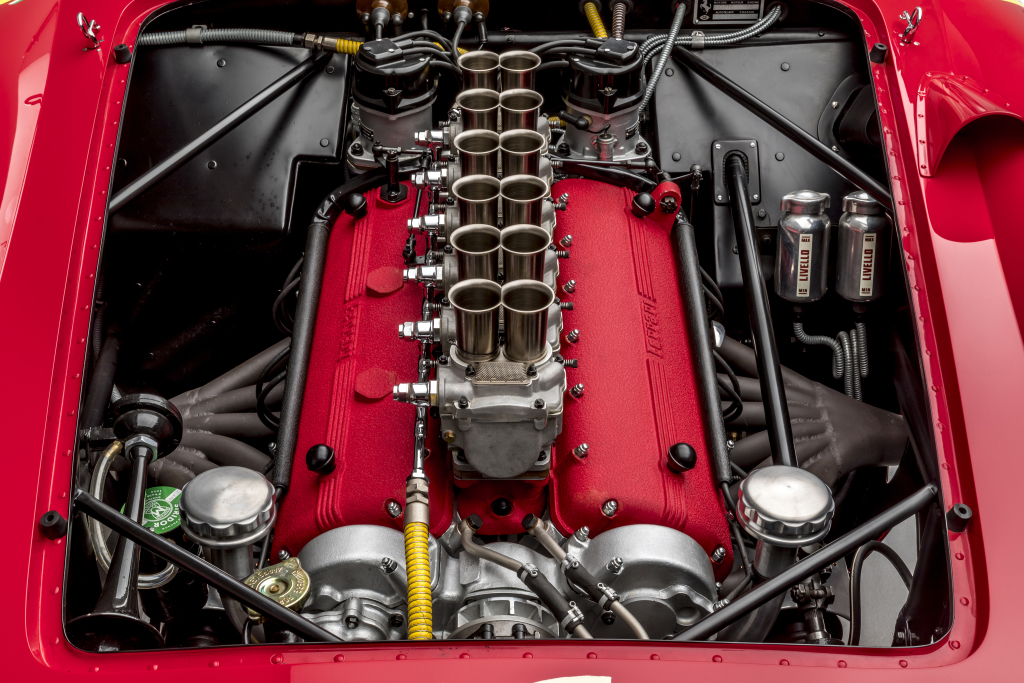
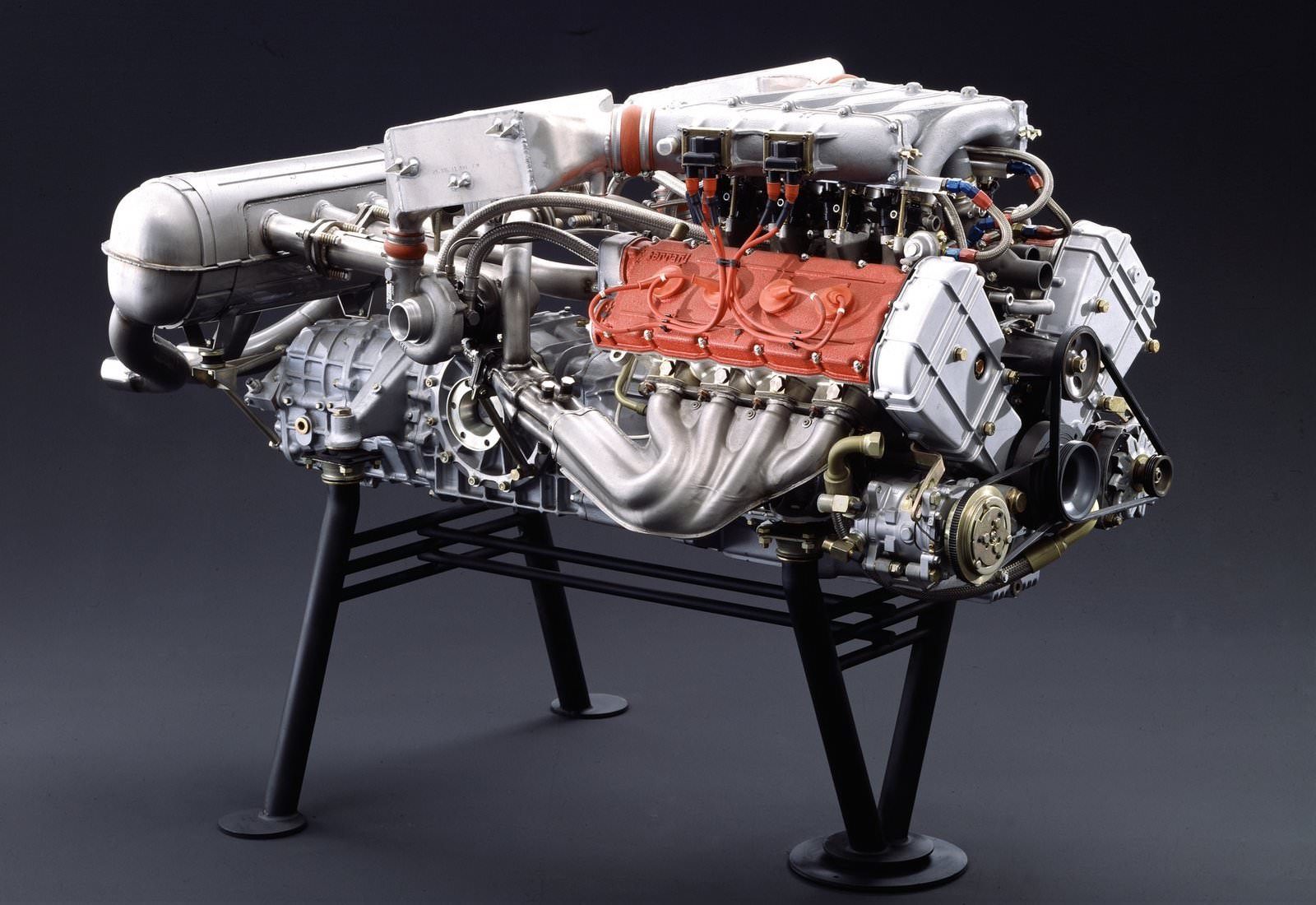
Ferrari Colombo V12Ferrari Colombo V12 Engine

Originally designed by Gioacchino Colombo, this engine can trace its roots back to the very first Ferrari-branded model designed by Ferrari Enzo – the 1947 Ferrari 125 S – where it debuted as a 1.5L V12. The core design of the engine would persevere for more than 4 decades; along the way growing in size, having various levels of forced induction, and becoming a dual-overhead-cam configuration with EFI. Many credit the motor’s longevity to its reputation for being bulletproof.

Successful in both road-going and race track derivatives, the list of Ferrari cars this engine has graced has no shortage of automotive icons; the Ferrari 250 Testa Rossa, Ferrari 250 GTO, and Ferrari 365 GTB/4, just to name a few.

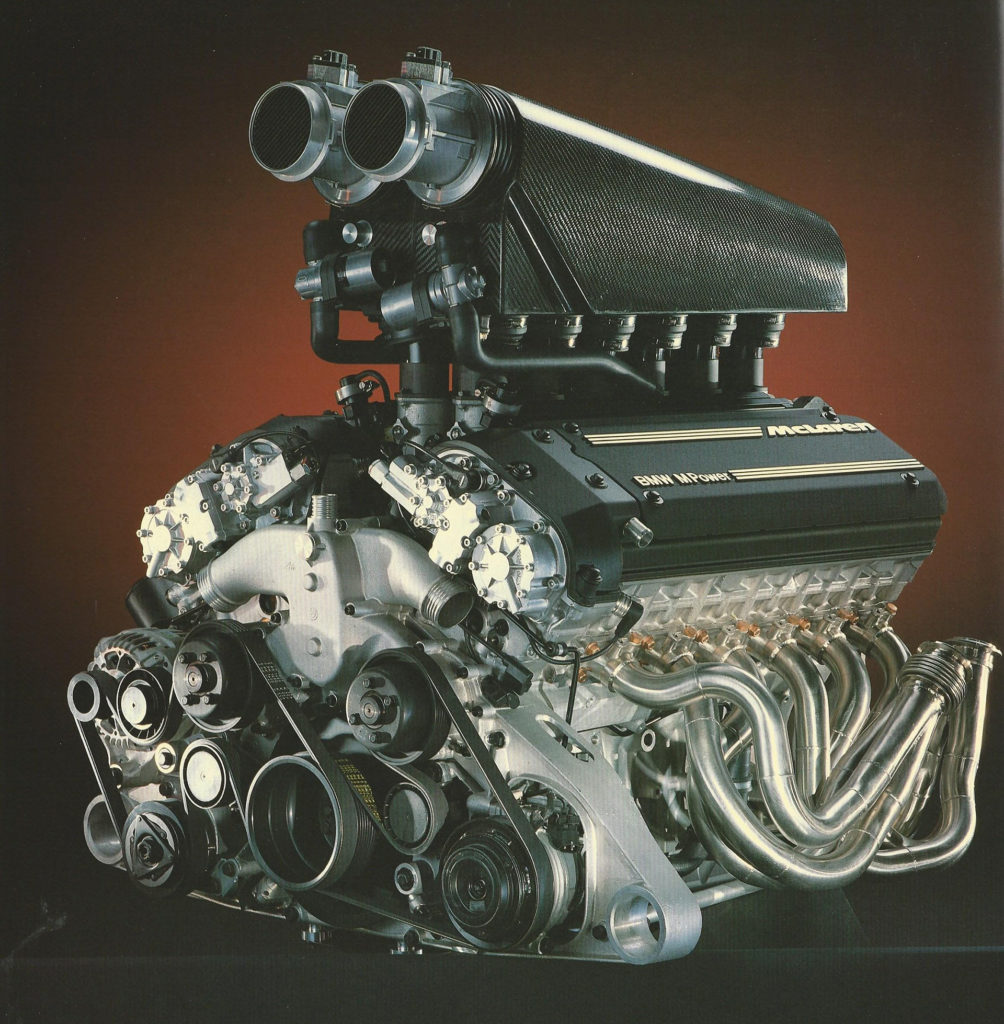
BMW S70/2

BMW S70/2 Engine

Despite being produced by BMW, the S70/2 didn’t feature in one of the Bavarian automaker’s own production cars. Nevertheless, it did end up powering none other than arguably the most iconic supercars ever made – the 1992-1998 McLaren F1. The 6.1L naturally-aspirated unit produced 627 hp and was capable of 0-60 mph in just 3.2 seconds, and had a top speed of 240 mph. It wouldn’t be until the next millennium before those figures could be surpassed.

Interestingly enough, BMW wasn’t Gordon Murray’s first choice to supply the engine for his groundbreaking supercar, with collaborations with the likes of Honda and Isuzu falling apart before they would opt for the Munich-built power plant. Whatever might’ve happened if things turned out differently, who’s to know? But what we do know is that BMW got things absolutely spot-on with the S70/2, which continues to be regarded as one of the true and timeless masterpieces in automotive history.

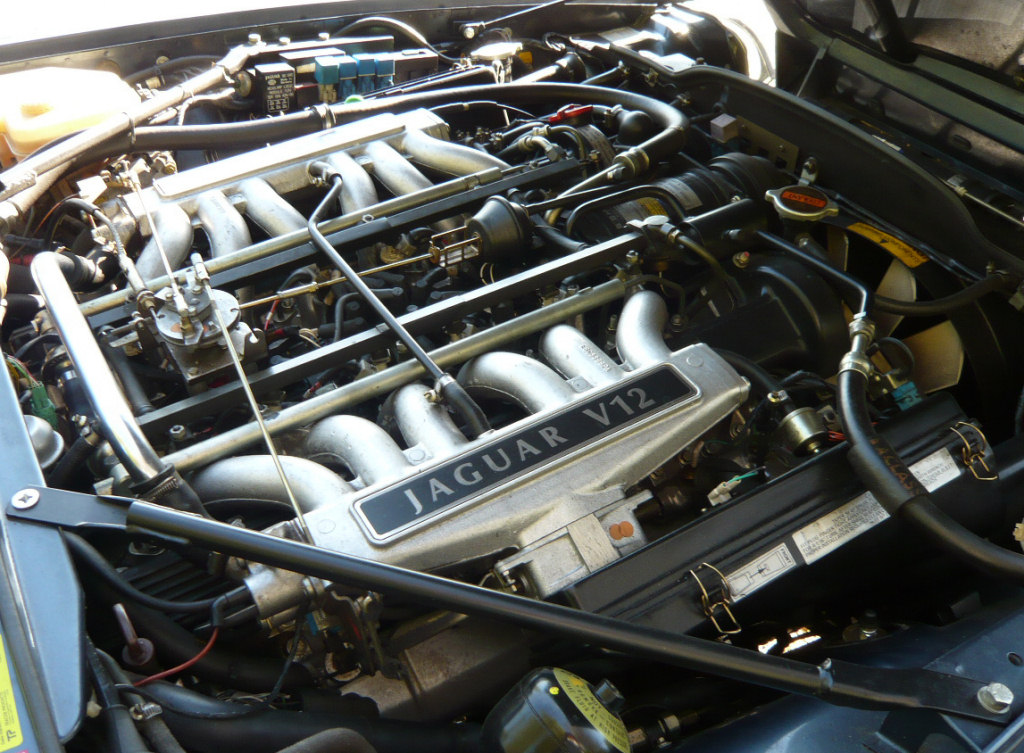
Jaguar V12

Jaguar V12 Engine

Jaguar’s first foray into the world of V12 engines began in motorsport as early as 1951, with its 1964 XJ13 Le Mans race car eventually serving as the trickle-down technology source for its production cars. For the latter, this would begin with a 5.3L naturally-aspirated unit in the 1971 Jaguar E-Type and would even go on to be used by other automakers such as Daimler and Panther. An HE (or “high-efficiency”) version of this engine would be released in 1981 – featuring on the XJ12, XJ-S, and Daimler Double-Six – which improved fuel economy by almost 50% compared to its predecessor, without affecting performance.

In its final iteration, the V12 would evolve into a 6.0L HE unit which produced as much as 333 hp and 365 lb-ft of torque. It was likely to be some variation of this engine which was initially being marketed for use on the Jaguar XJ220, before the British automaker controversially decided on a 3.5L twin-turbocharged V6 engine instead. The last Jaguar V12 engined was produced on April 17, 1997.

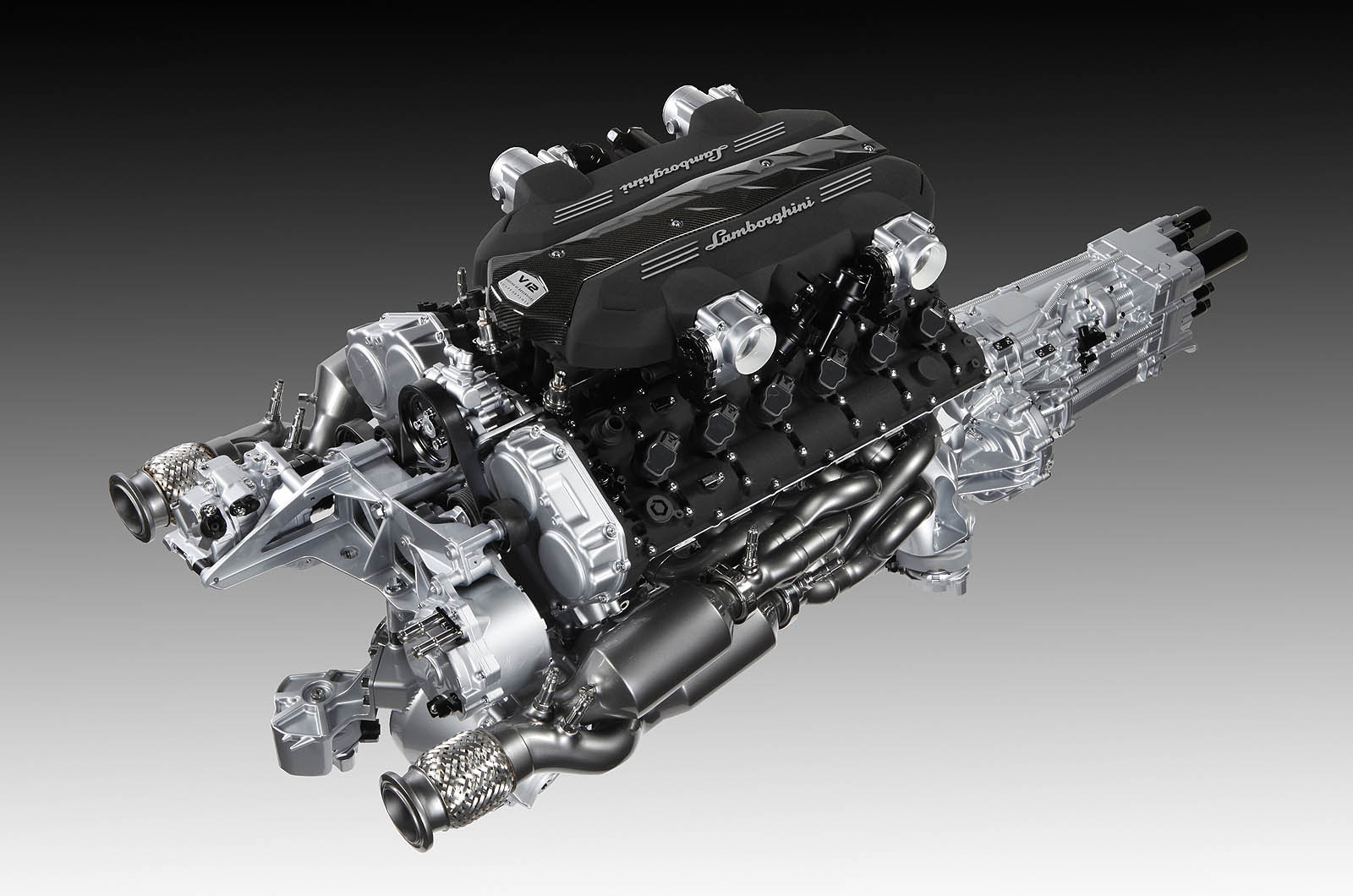
Lamborghini V12 L539

Lamborghini V12 L539 Engine

Like Ferrari, Lamborghini also has a long and storied history with V12 engines, having created its very own first version of this power plant for its mid-’60s era Lamborghini 350GT production car. Starting off as a considerably brawny 270 hp 3.5L naturally-aspirated unit, the “Bizzarrini” engine would evolve into a 661 hp 6.5L naturally-aspirated unit and be fashioned by models as recent as the 2010 Lamborghini Murciélago LP-670 SV.

As long as the Bizzarrini engine persisted, we feel that the most significant statement of Lamborghini’s V12 mastery comes in the form of its latest iteration of the engine, dubbed ‘L539’. This power plant would share its debut with the 2011 Lamborghini Aventador, of which it initially powered with 690 hp via a 6.5L naturally-aspirated configuration. With a fresh design, the new engine was over 18 kg lighter than its predecessor and was programmed with a new firing order.  The all-wheel-drive supercar would see significant improvements during its lifecycle, with the latest iteration of the L539 car producing 770 hp in the limited-edition 2021 Lamborghini Aventador Ultimae.

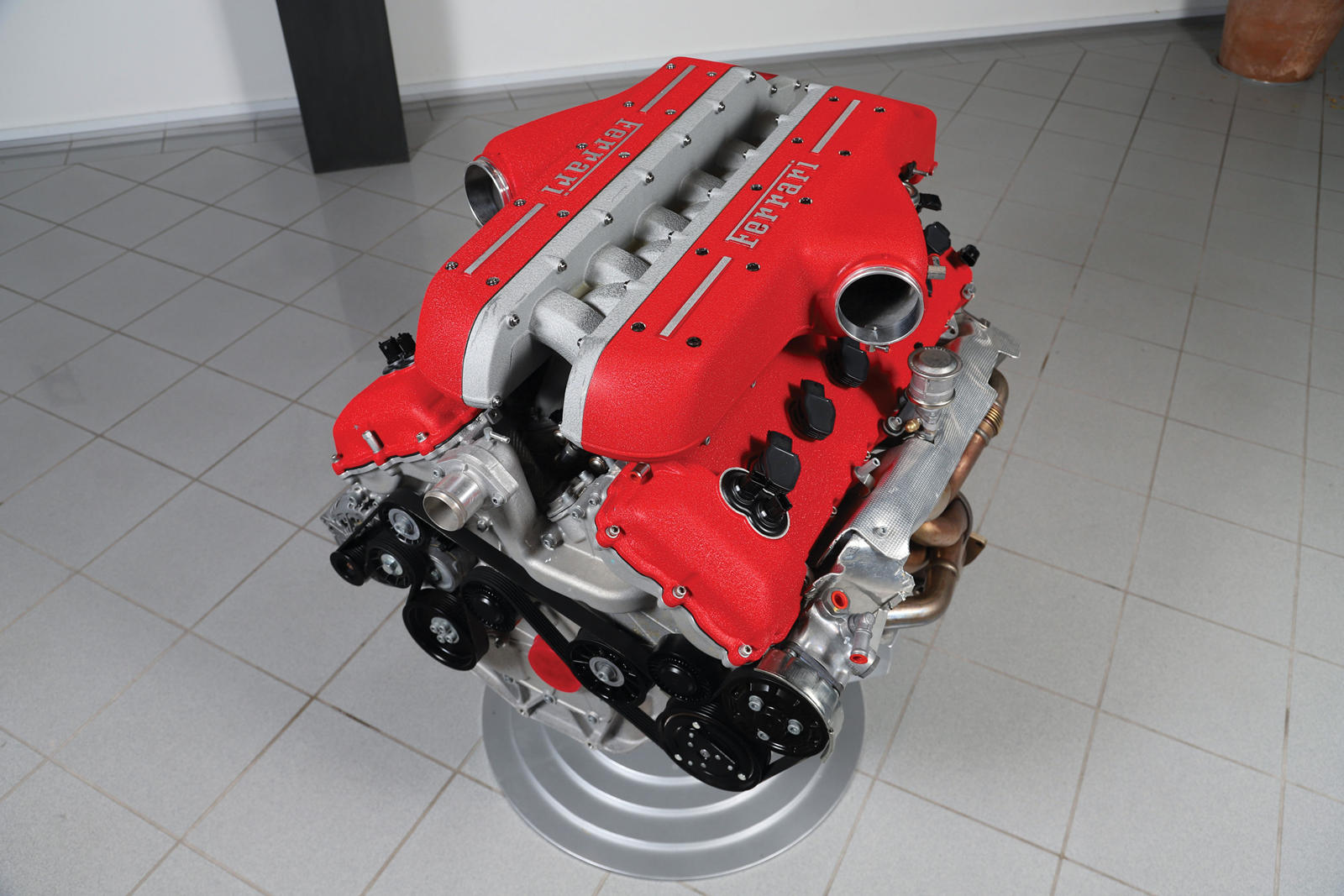
Ferrari F140

Ferrari F140 Engine

If the F140 had only powered the (2002-2005) Ferrari Enzo – the first Prancing Horse model where it featured – it would have been no less significant or legendary than it is today. The 65-degree V12 engine debuted on the Enzo as a 6.0L naturally-aspirated V12 unit which produced a staggering 651 hp @ 7,800 rpm and 458 lb-ft of torque @ 5,500 rpm. Over the years, 6.3L versions of the F140 have powered the likes of the hybrid LaFerrari and the F12berlinetta.

It has since evolved to its current peak as a 6.5L power plant – dubbed the F140 GA – which produces 789 hp @ 8,500 rpm and 530 lb-ft of torque @ 7,000 rpm in the 812 Superfast; this makes it the most powerful naturally-aspirated production car engine ever produced to this day. It is likely that this could be one of the final generations of Ferrari V12 engines – whether it be naturally aspirated, turbocharged, or even hybridized – so appreciate it while it’s still around!

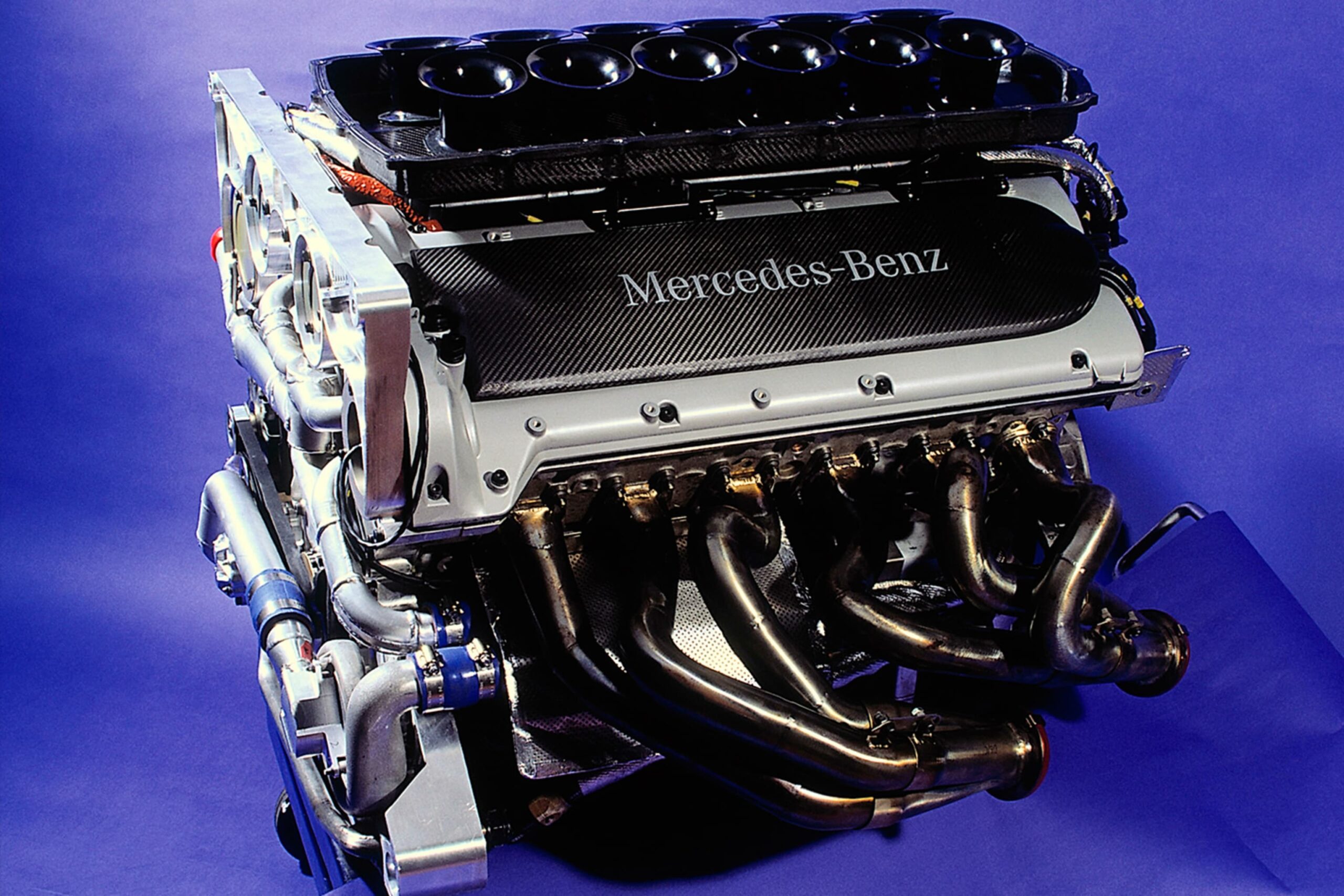
Mercedes-Benz M120 / M297

Mercedes-Benz M120 / M297 Engine

When Mercedes-Benz caught wind of archrival BMW’s side-hustle with Gordon Murray, let’s just say that there was no resting on any laurels going on at their Stuttgart headquarters. With a clever riposte, Mercedes would debut their first-ever V12 engine through the 1993 600 SEC (later to be renamed the S600 Coupé, and frequently referred to as the S-Class). The 6.0L naturally-aspirated power plant was good for 389 hp, 420 lb-ft of torque, and a top speed of 155 mph in its initial configuration.

Not only did Mercedes-Benz one-up BMW by using the engine for their own cars, but they also borrowed a page from their opponent’s playbook and had their M120 engine fashioned for use in the magnificent Pagani Zonda supercar as well. Hand-built and tuned by AMG, the M120 also featured on the Mercedes-Benz CLK GTR race car and also saw its displacement increased to 7.3L for use on the SL73 AMG and CL73 AMG – and at which point it was commonly referred to as the M297.  The most powerful iteration of the M120 features in the Pagani Zonda Revolución, with the non-street-legal car good for 789 hp and 538 lb-ft of torque.

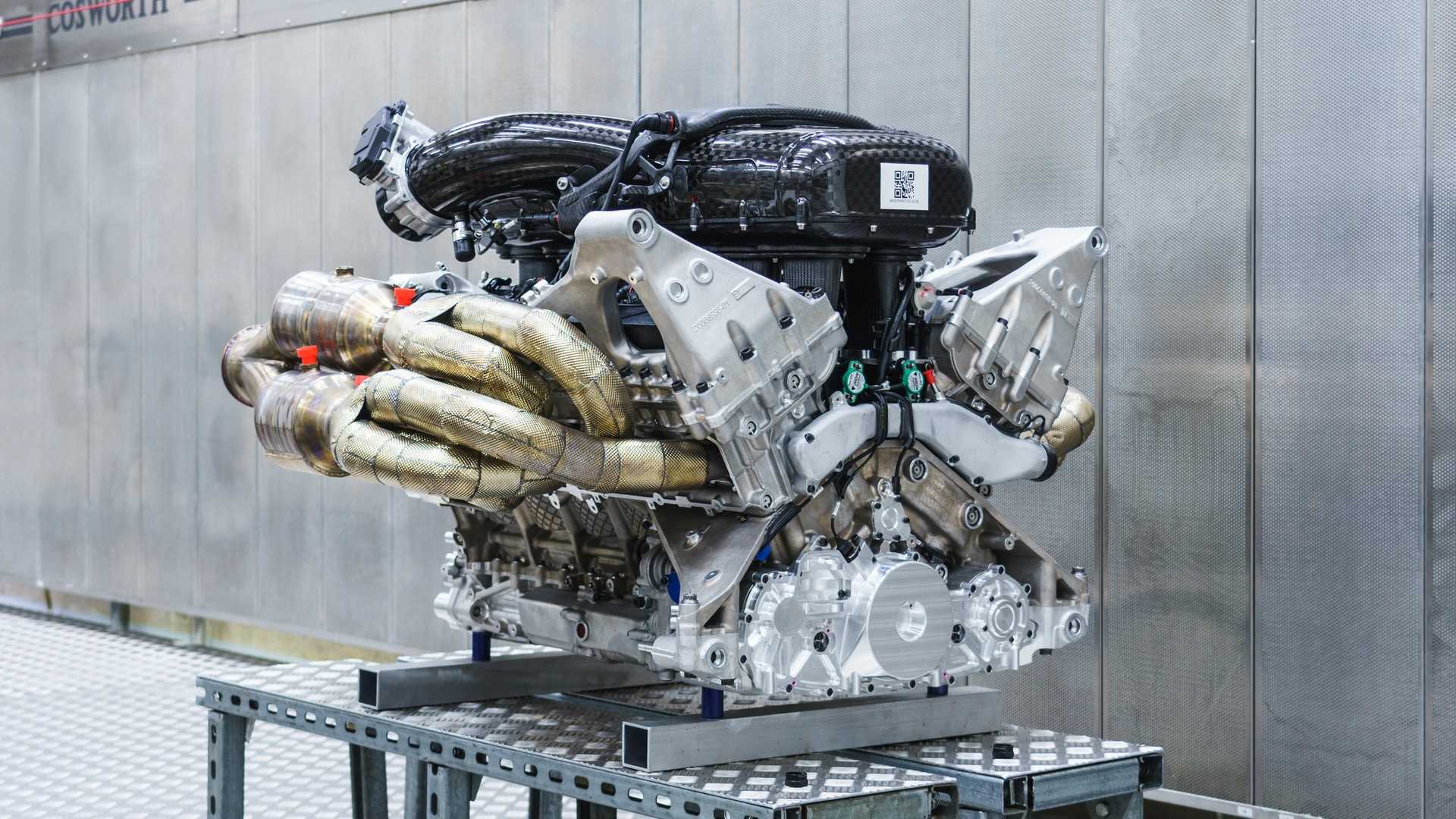
Aston Martin NA V12

Aston Martin NA V12 Engine

With one of the best sounding V12s (and automobile engines, period), the story of how the Aston Martin (naturally-aspirated) V12 came to be is rather more peculiar and convoluted. The project had less, should we say, glamorous beginnings, when things basically started off with the development of a 2.5L naturally-aspirated V6 engine. This particular unit was essentially the brainchild of Suzuki and Mazda, with the latter’s then-majority owner, Ford, then taking the blueprint to Cosworth, who would go on to build the Duratec V6.

Needless to say, the story didn’t end there, and Aston Martin would end up bolting two of those engines together to create the 5.9L naturally-aspirated V12 it would stamp its name on (and market as a 6.0L). Having more in common with a Ford Taurus than owners or enthusiasts would like to admit, the motor produced 414 hp and 398 lb-ft of torque in the 1999 DB7 V12 Vantage. Aston Martin continues to employ a V12 engine to this day, with the 2017 DB11 having fashioned a 5.2L twin-turbocharged version. More recently, the company has referred back to the naturally-aspirated configuration, with a 6.5L unit designed to power its Valkyrie hypercar with over 1,000 hp @ 10,500 rpm (plus an additional 160 hp with its hybrid-electric system).

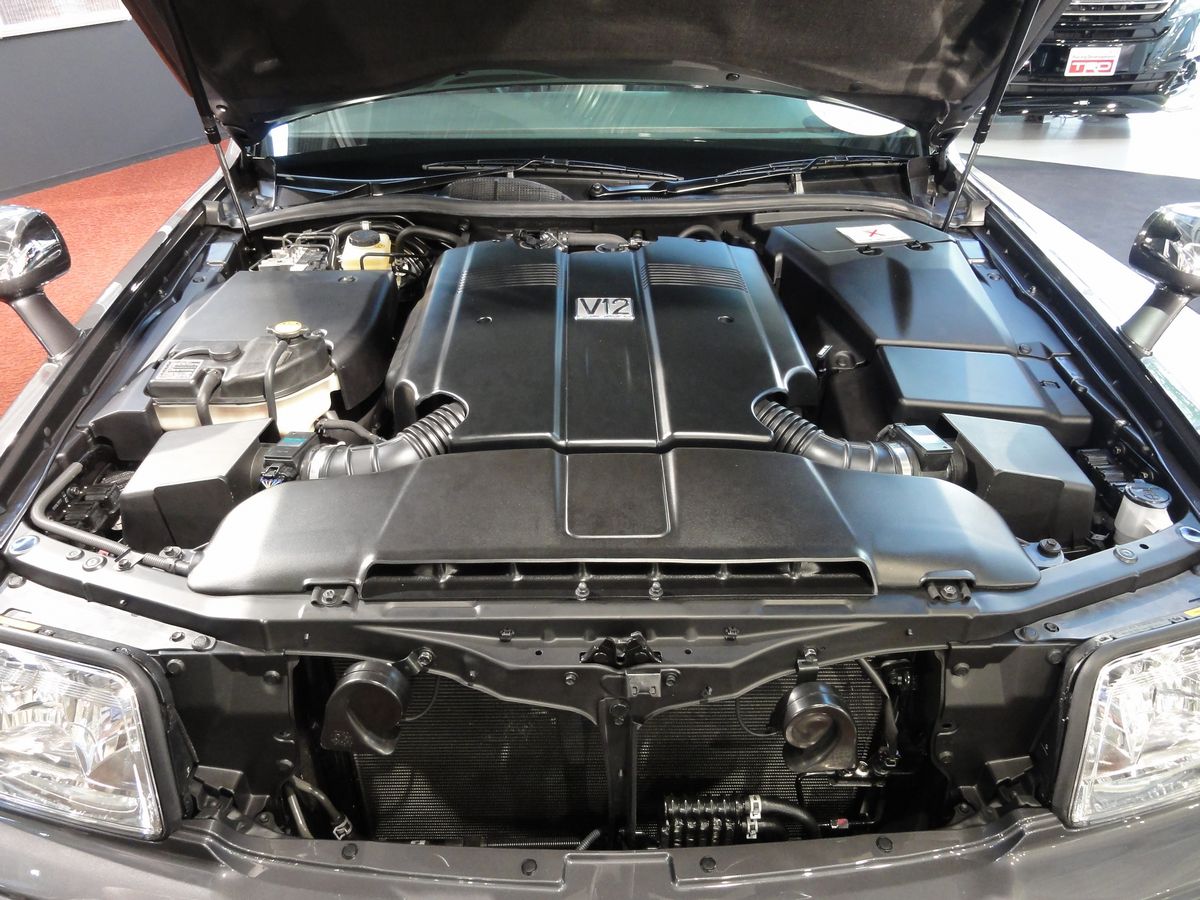
Toyota 1GZ-FE

Toyota 1GZ-FE Engine

To call Toyota’s 1GZ-FE the “Godfather” of Japanese automobile engines would be neither an understatement nor unbefitting. After all, the venerable V12 from the land of the Rising Sun – which exclusively powers the Toyota Century luxury sedan – is both one-of-a-kind and has a penchant for attracting a particular type of “underworldly” owner in its homeland. It’s the only production V12 engine to come from Japan and still manages to invoke all of the essential philosophies of Japanese craftsmanship – such as reliability, build quality, and refinement.
That being said, it’s certainly not the most powerful engine on this list and remained at around the 300 hp mark during its lengthy production run from 1997-2016. Nevertheless, it remains one of the most unique engines on this list and is no less iconic than its near-1000 hp contemporaries. This engine is prime for swapping into other platforms, with automotive personality Smokey Nagata fitting a twin-turbocharged version to his ‘Top Secret’ Toyota Supra. Thanks in large part to its distinctive engine, the Century remains a status symbol in Japan; in the way a Rolls-Royce Phantom does the same just about everywhere else.

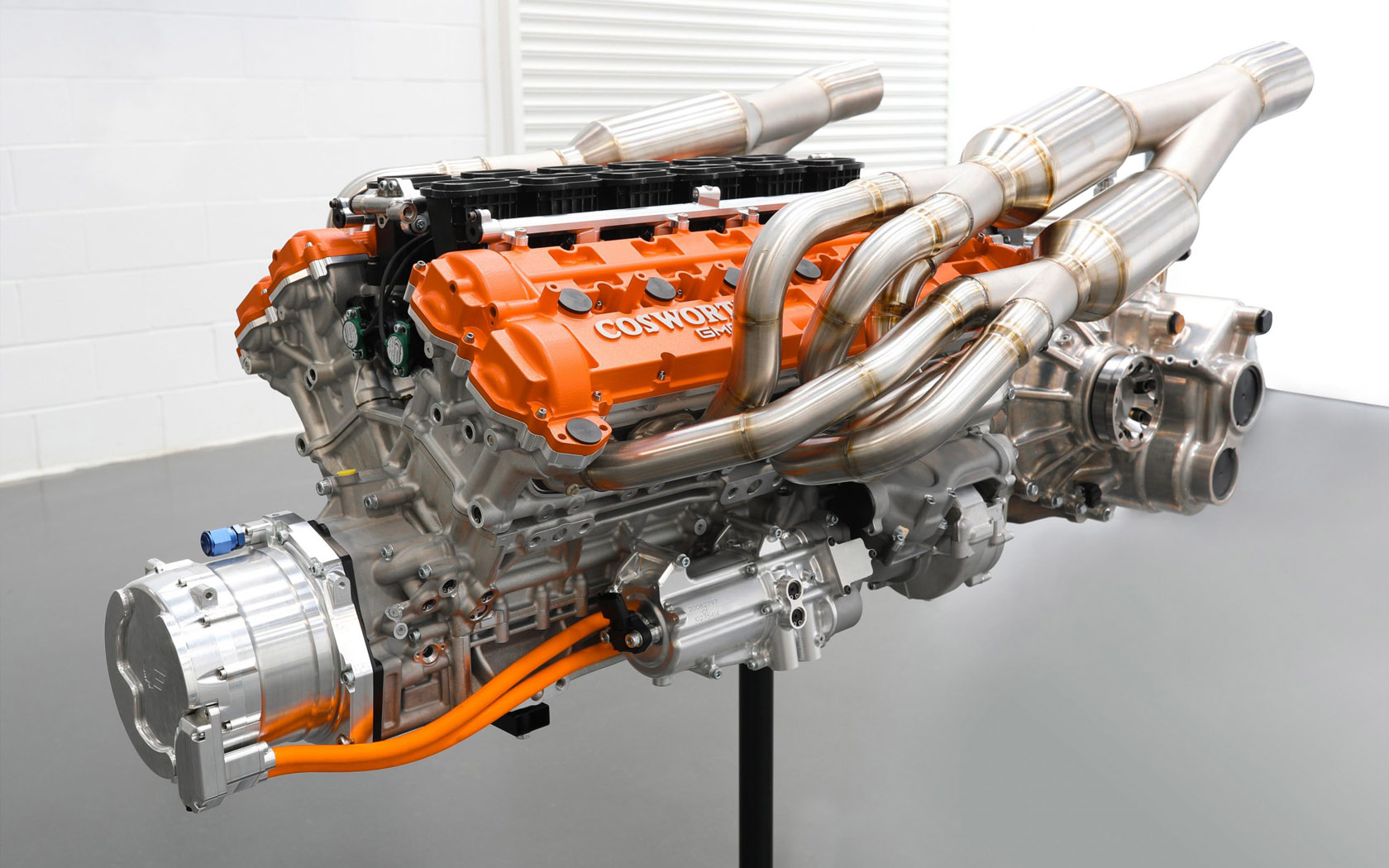
GMA Cosworth V12

GMA Cosworth V12 Engine

It’s impossible to speak about the naturally-aspirated engine in the GMA T.50, without getting into how it’s involved in so much more than just spinning the new supercar’s rear wheels, or about how other design elements of the car are built around it. As impressive as a 12,100 rpm redline sounds, its 654 hp and 345 lb-ft of torque doesn’t sound extraordinary by today’s standards. But rest assured this engine, and this car, are on the cusp of a truly “redefining” moment in automotive history. Crucially weighing at just 178 kg, the engine plays a huge factor towards the T.50’s overall curb weight of just 980 kg – about one-third that of a contemporary supercar or hypercar.

The GMA T.50 is the culmination of decades of Gordon Murray’s aerodynamic and mechanical engineering experience. Part of what makes the T.50 so exciting, is that it incorporates the design and function of the infamous Brabham BT46 “Fan Car.” A gigantic fan –  powered by the camshaft of the engine and coupled with the curved underbody of the BT46 – created an active venturi effect that quite literally vacuumed the car onto the road, and allowed it to corner at barely believable speeds and levels of grip. The T.50 will feature something similar, and likely more advanced. On a road car. We can’t wait to see this in the flesh.

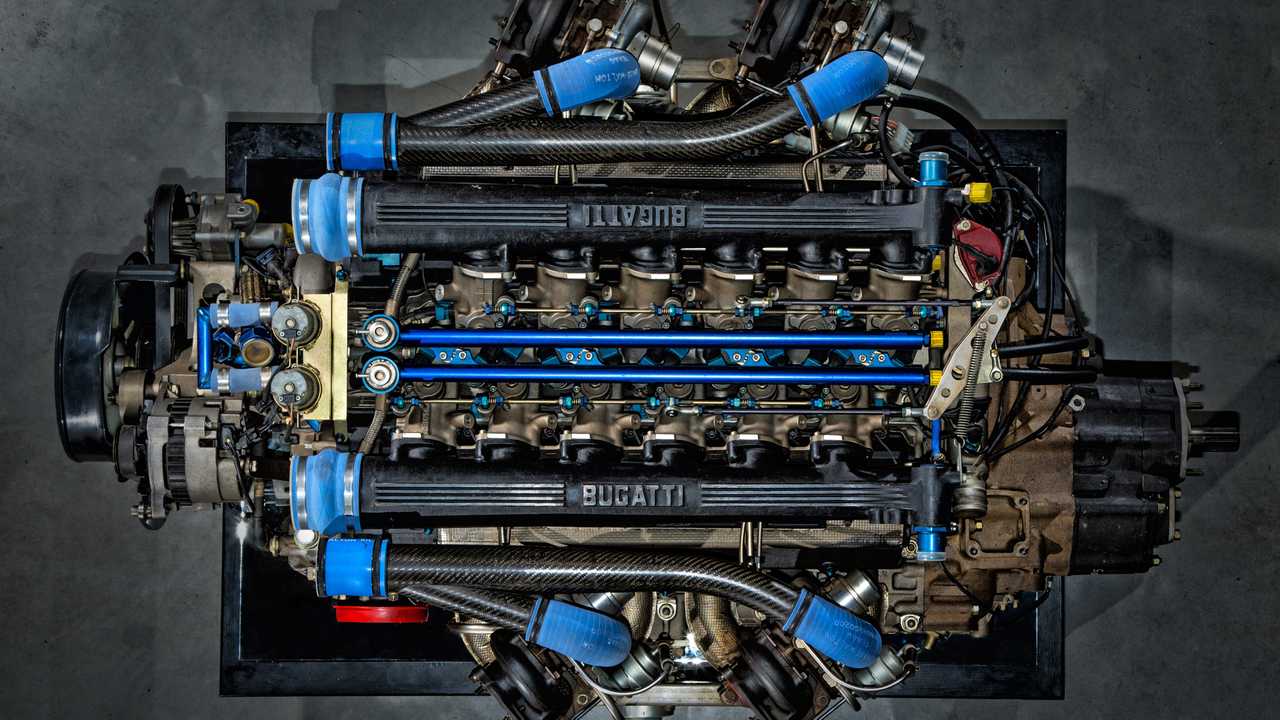
Bugatti 3.5L Quad-Turbocharged V12

Bugatti 3.5L Quad-Turbocharged V12 Engine

This Bugatti engine has had a very decorated career, albeit a short one, which makes it all the more impressive. Featured exclusively on the (1991-1995) Bugatti EB110, this 3.5L quad-turbocharged V12 is responsible for some very notable distinctions. First, it is widely regarded as being one of the catalysts in the revival of the French marque even though it failed to be directly responsible for this. It became the world’s fastest production car of its time, beating the Jaguar XJ220 in the process.

Suffice to say, it grabbed all the headlines, and really, that was the whole point. I mean, for what other purposes would the use of four turbochargers be given the green light for? Sure, it produced a whopping 553 hp and 450 lb-ft of torque, but you would have to argue that this likely could’ve been achieved with a more conventional design. After all, quad-turbocharged engines never really proliferated, and there’s probably good science behind why that’s been the case. Nevertheless, there’s nothing un-iconic about a V12 engine with almost as many turbochargers as you can count on one hand; and we love it all the same.

“10’s all around for these special and iconic high-performance motors” – Best V10 Engines Ever Produced

Most people probably don’t know it, but V10 engines are kind of the awkward middle child within the high-performance engine family. They are often overlooked for their smaller, more compact, and just-as-spirited V8 siblings, yet still somehow manage to cut a notably less brawny figure next to the larger V12 motors. In terms of outcomes, this is probably why even the most hardcore car enthusiasts will have a difficult time recalling more V10 production cars than you can count on one hand – there are less of them than you’re likely thinking, and perhaps there should be more of them for this reason; but that’s for a different discussion.

Interestingly, it’s the Volkswagen Group which currently has the monopoly on supplying this particular engine, via Lamborghini and Audi production models which are under the corporation’s umbrella (plus its namesake Volkswagen Touareg V10 TDI – more on that below). Meanwhile, you’d be forgiven for thinking that Ferrari would at the very least have delved into the art of the V10 -which they did, though only to produce such engines for Formula 1 cars from 1996 to 2005.

Quantifiably speaking, yes, there are less V10s out there than the other engines most closely related to it. However, each V10 engine mentioned on this list is undeniably iconic and rightfully potent, particulary when it comes to panache. So while this middle child might not always steal the spotlight, nor hog affection that goes to its siblings, it is in no way lacking any of the talent in its DNA.

Lamborghini / Audi 5.2L V10
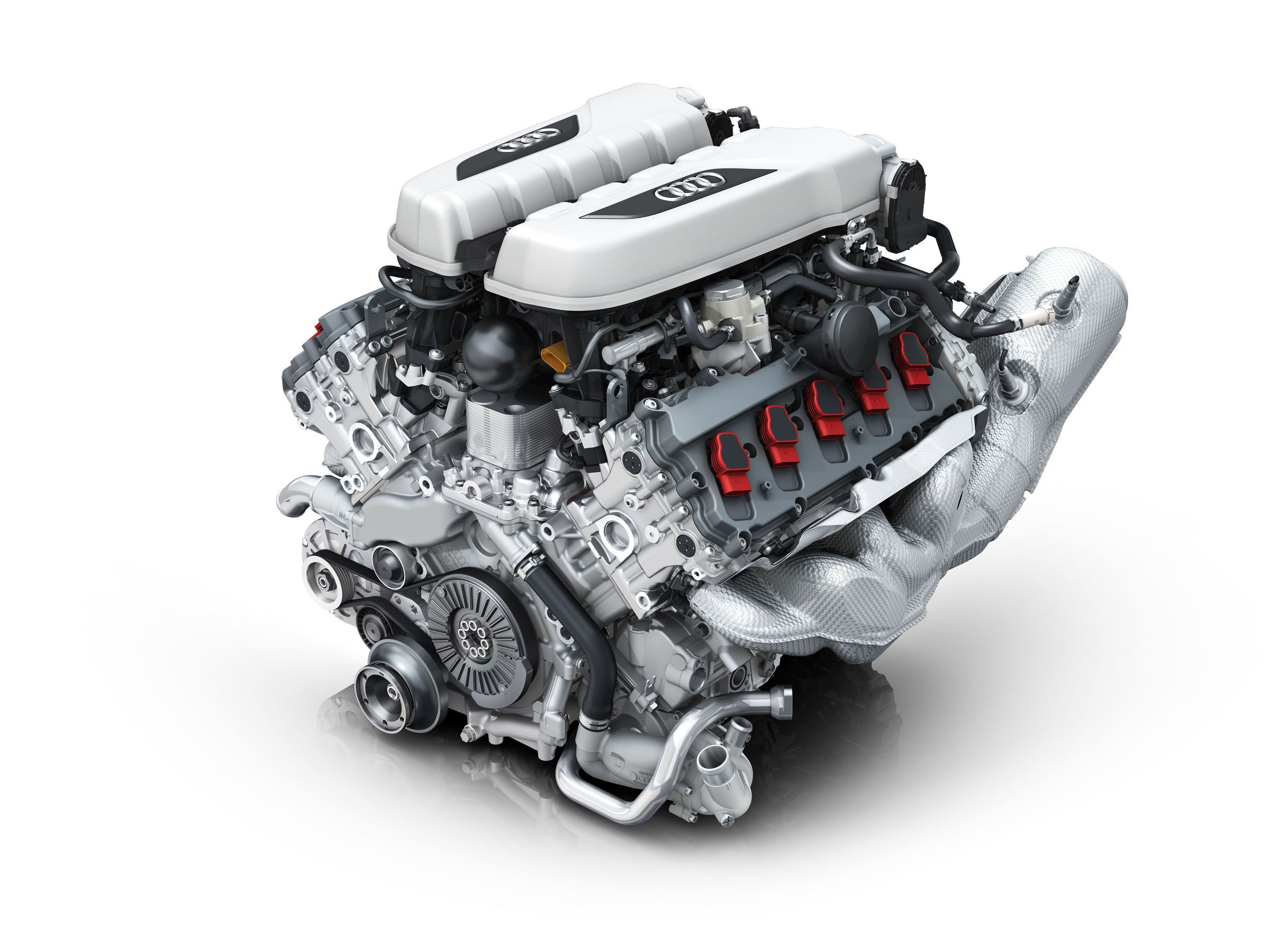
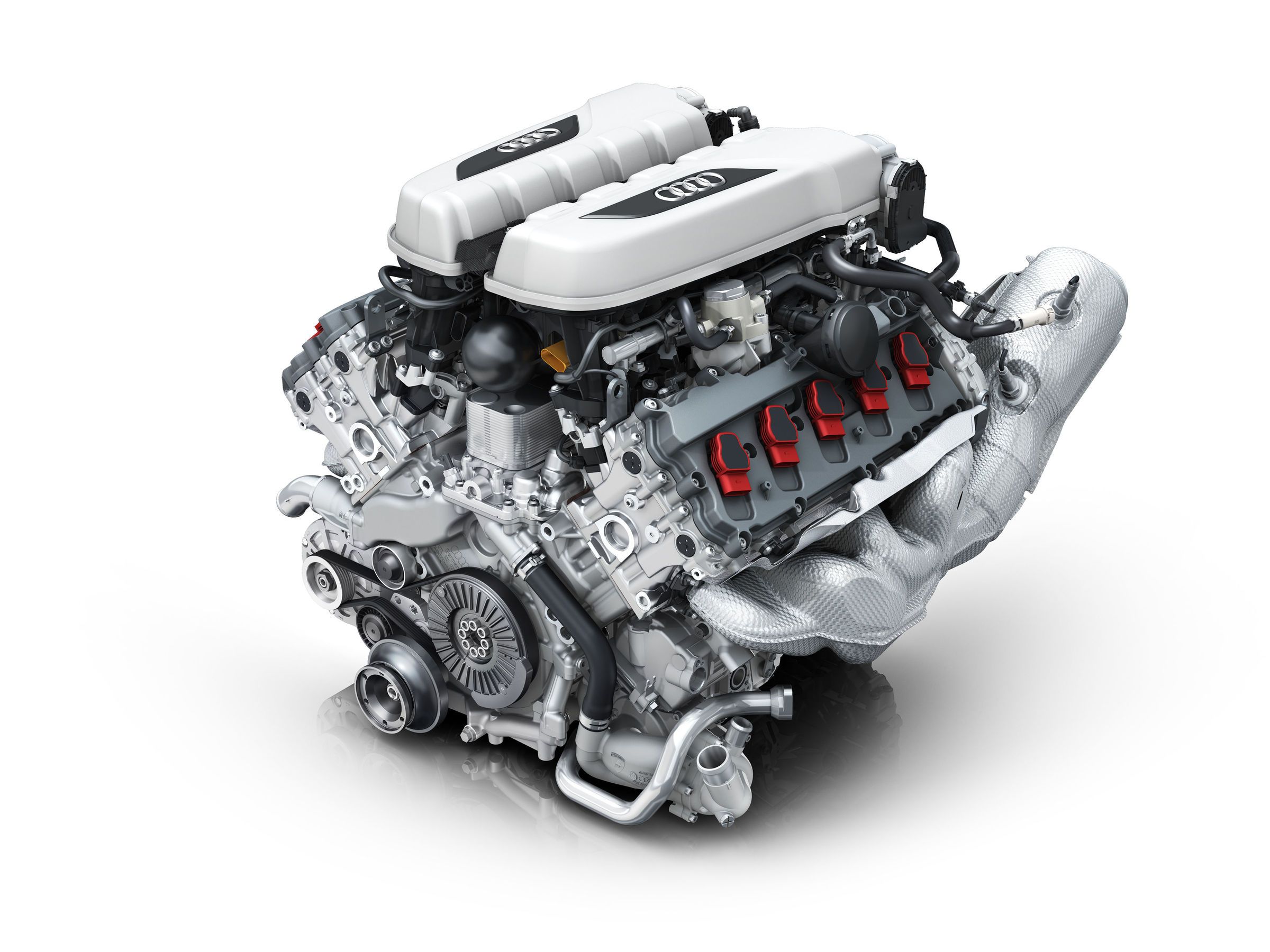
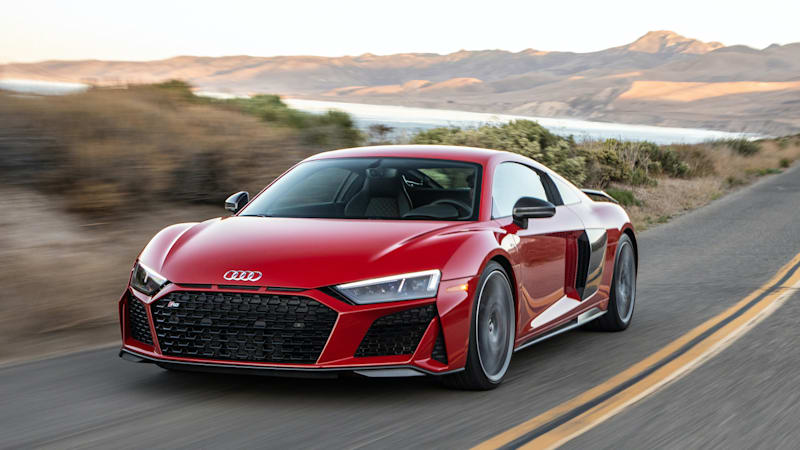
Ever since 2008 – when the refreshed Lamborghini Gallardo LP 560-4 was released – all V10 engines used in the Lamborghini line-up have been based on the 5.2L architecture. This has carried over to the Gallardo’s successor – the Lamborghini Huracán – with each and every one of its models having been fitted with the aforementioned power plant, up to this point. In the current stage of its evolution, the 5.2L naturally-aspirated V10 is mechanically identical to Audi’s version of the engine (which uses ‘Fuel Stratified Injection’) and is seen Audi’s own R8 supercar; however, power outputs vary depending on the trim levels of the respective models.

Audi 5.0L V10 Biturbo
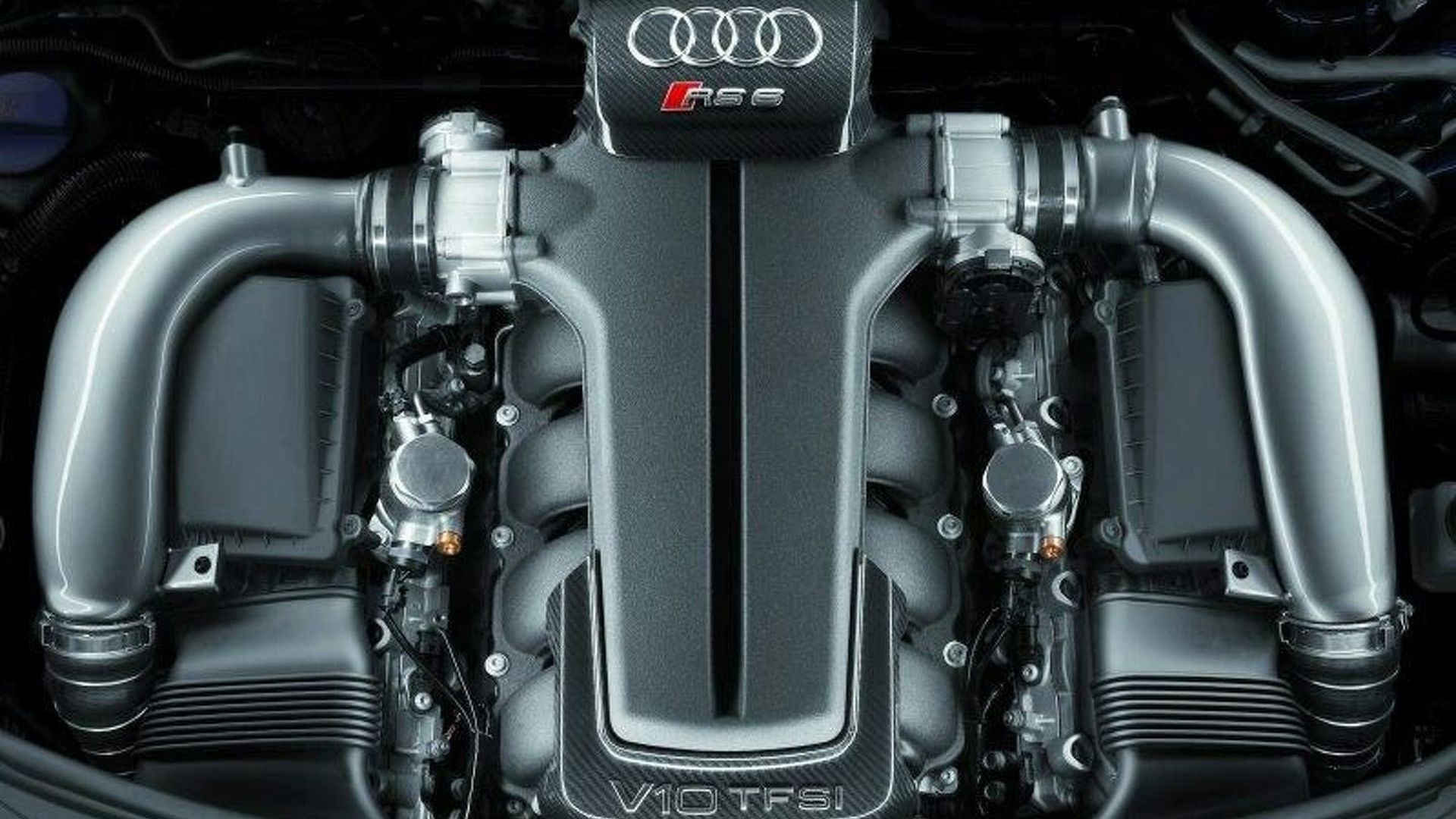
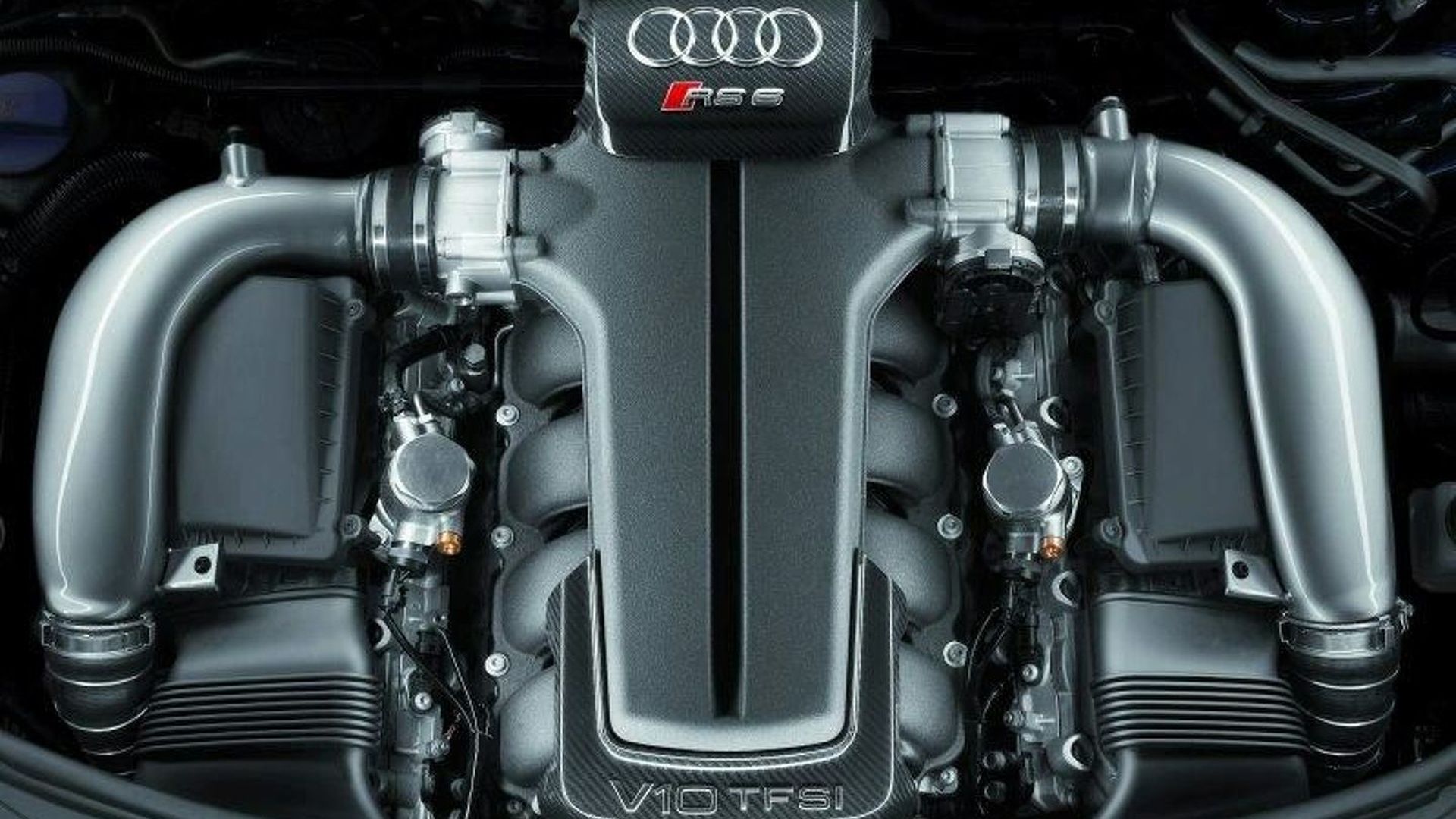
The sharing of tech (and a healthily-stocked pantry of engine parts) between Lamborghini and Audi spans back more than a decade now, and the engine used in the C6-generation Audi RS 6 has to go down as one of the best collaborations to date. Derived from the outgoing 5.0L naturally-aspirated V10 unit from the Lamborghini Gallardo, the motor in the RS 6 was repurposed with a pair of turbochargers. This allowed the super-wagon to produce 571 hp and 478 lb-ft of torque, on its way to becoming Audi’s most powerful car ever, in 2010. While it was handily more powerful than its competition – the BMW M5 and Mercedes-AMG E63 – it also cost quite a bit more (almost double, after conversion) which is likely the reason why it didn’t reach US shores.

Audi 5.2L V10 FSI 40V

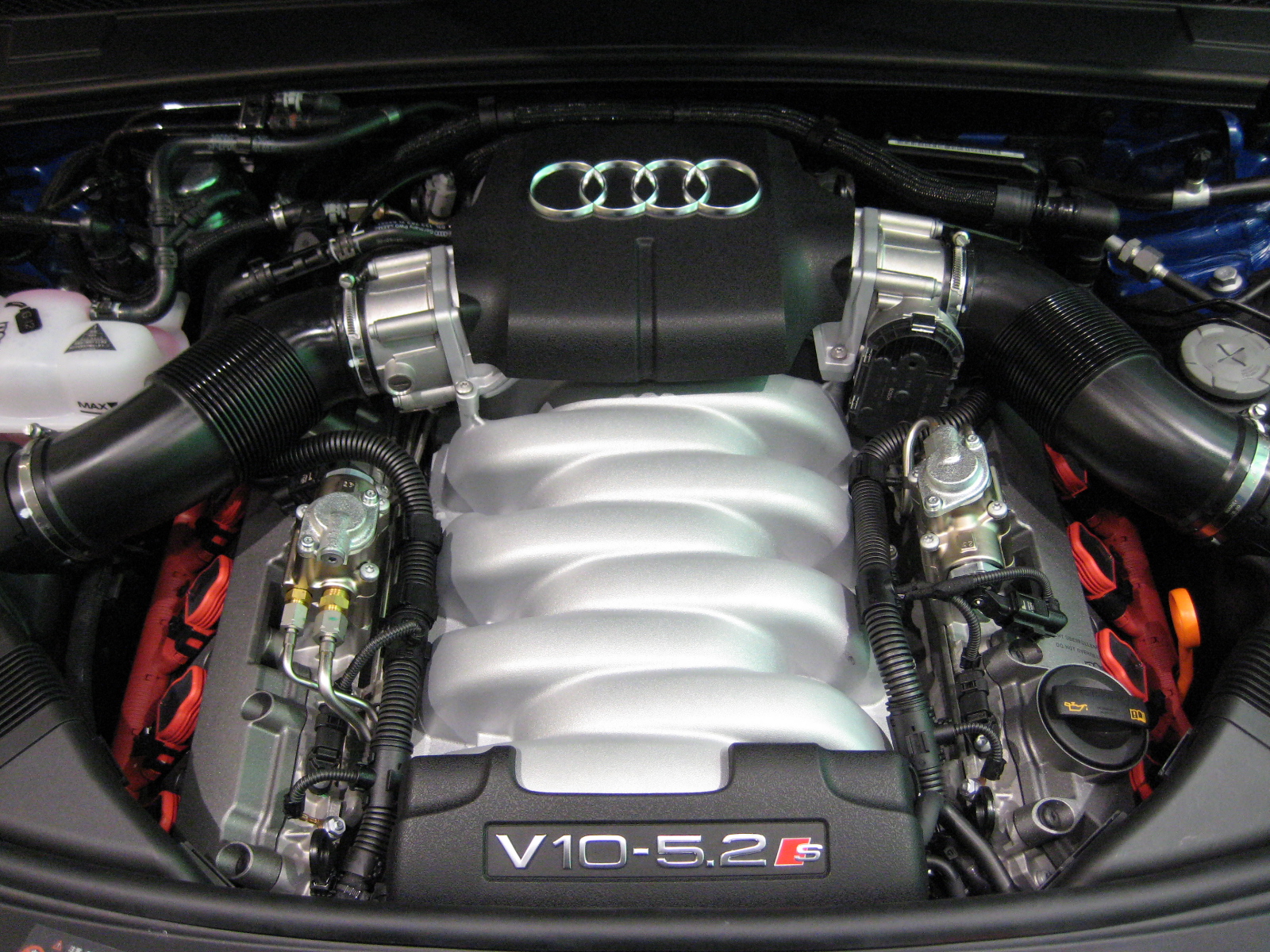
Unlike the C6-generation Audi RS 6, the 5.0L unit used in the third-generation Audi S6 is less related to a Lamborghini-equivalent and has more in common with an Audi 4.2L V8. For starters, it has a longer stroke and wider bore than the Lamborghini 5.0L V10 seen in the Gallardo, making for the better low-end power which is more befitting of the larger sedan. When considering the internals, the 5.2L motor in the S6 more closely resembles the aforementioned 4.2L V8 which was once used in the B6-generation Audi S4. Thanks to the tweaks mentioned above, this engine was good for 444 hp in the four-ringed luxury sports sedan.

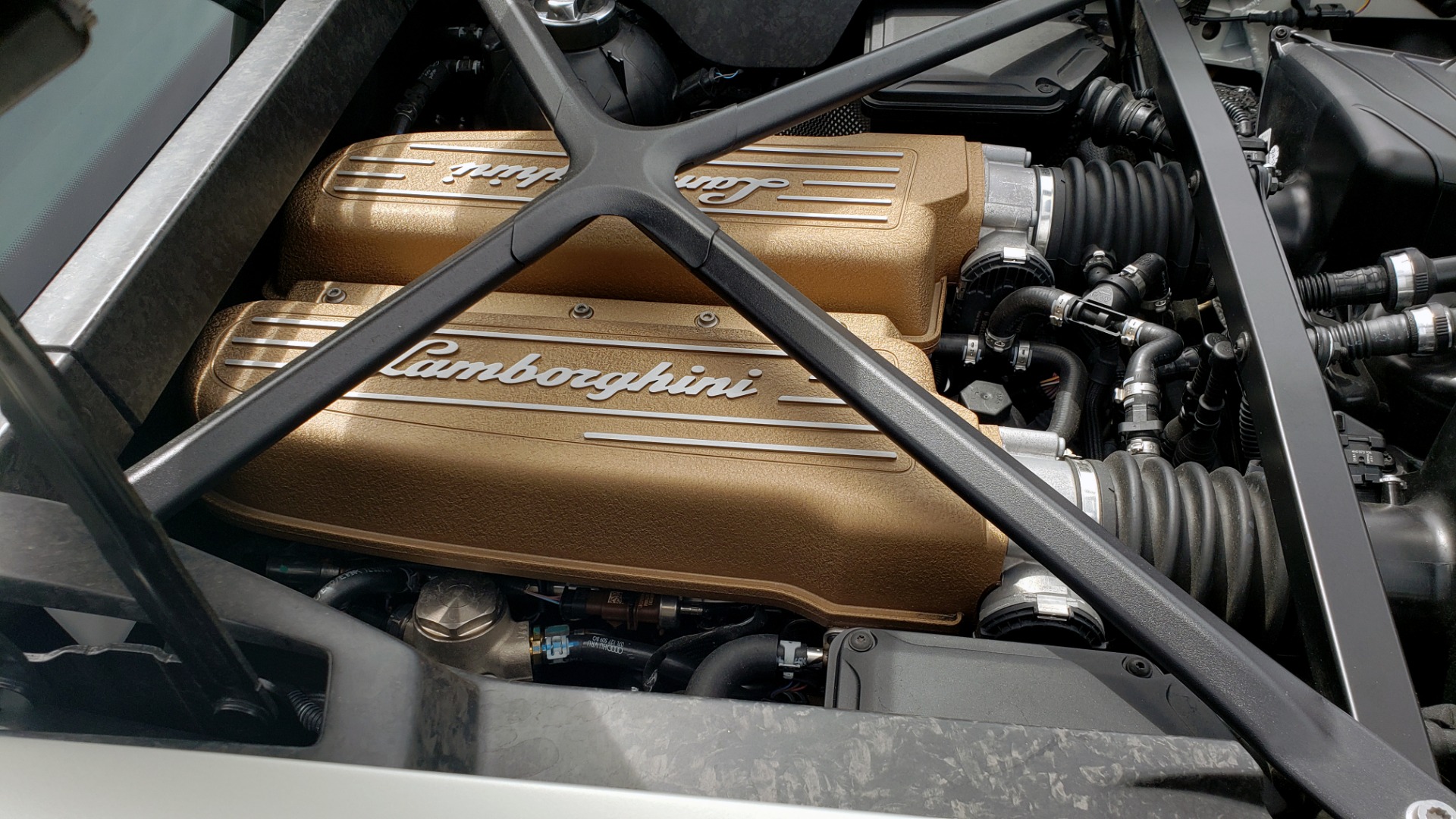
Lamborghini Huracán Performanté 5.2L V10

The 5.2L naturally-aspirated V10 power plant we’ve been speaking so much about in this list, is at the peak of its evolution via the current Lamborghini Huracán Performanté. In this configuration, the engine produces 640 hp @ 8,000 rpm and 443 lb-ft of torque @ 6,500 rpm; this makes the supercar good for 0-100 km/h in 3.1 seconds and a blistering top speed of 325 km/h, all without the assistance of any type of forced induction. Augmented with the greatest technologies available today, the motor produces its power more efficiently than ever before as well, with more than 70% of its torque already available as early as 1,000 rpm.

Dodge Viper ACR 8.4L V10
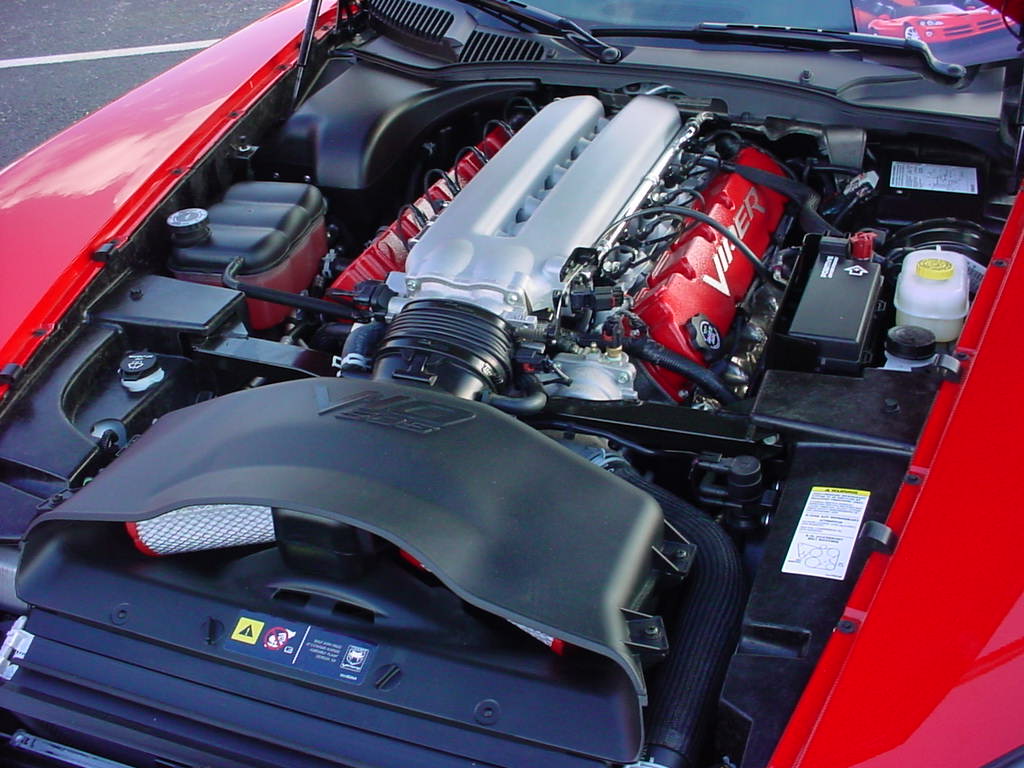
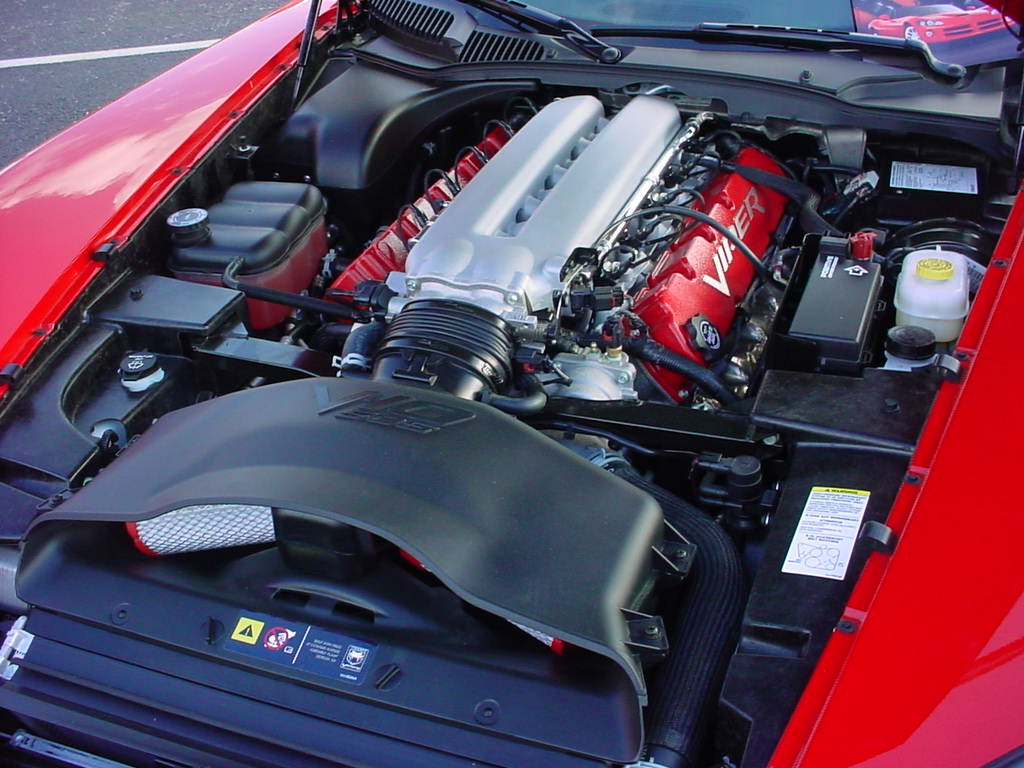
Even if the Dodge Hellcat is hogging all the headlines these days, there’s always something you have to admire about the lunacy of a naturally-aspirated 8.4L V10 engine. No, the Dodge Viper doesn’t do subtlety very well. Yes, it does happen to fall under the ‘Old Testament’ definition of “awesome”. With 640 hp and 600 lb-ft of torque being produced from that colossus of an all-aluminum engine, the Viper has the exhaust note of a semi-dormant volcano. It would make absolutely no sense at all if it wasn’t just so damn fast. Variants such as the SRT-10 and ACR-X took the road-going version of the car to the next level, with the latter being a turn-key, non-street legal race car which participates in Viper racing leagues around the world.

Lexus LFA 4.8L V10 (1LR-GUE)

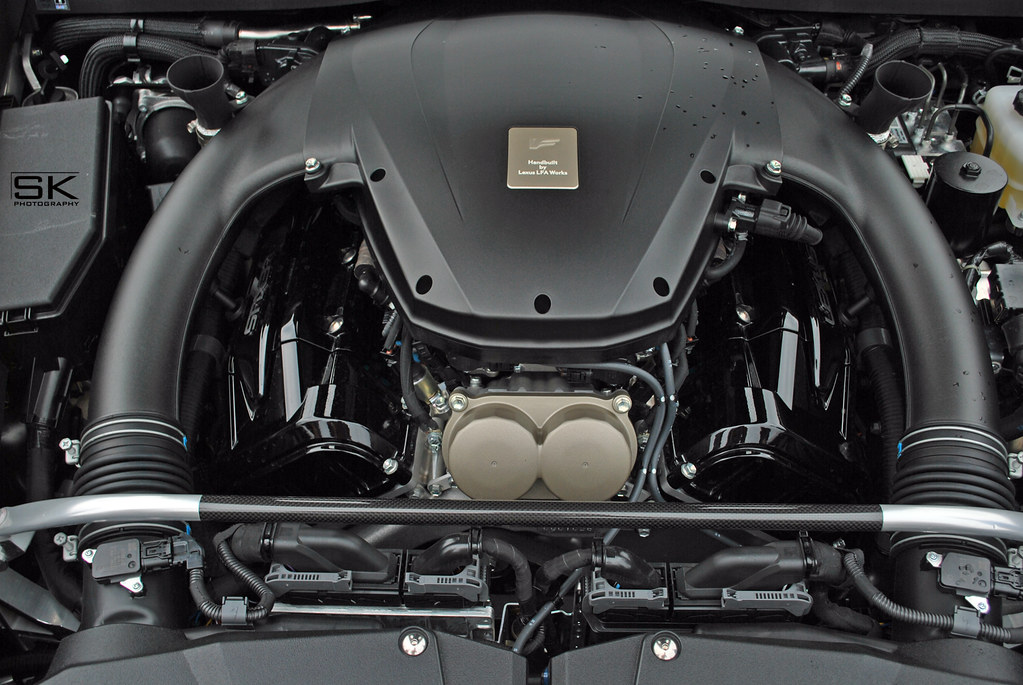
Many regard the Lexus LFA as one of the best supercars ever made. Lexus only made 500 units, and I assumed those 500 sold out quickly. I was wrong. Despite the fact that Lexus hasn’t produced the LFA since 2012, there are still seven brand new LFA supercars for sale in the US, according to Carscoops. With all that said, the LFA came with one of the best V10 engines ever produced by a Japanese automaker. The 4.8L naturally-aspirated V10 – dubbed 1LR-GUE – made 552 hp and 352 lb-ft of torque. Developed in collaboration with Yamaha, it was a free-revving engine with an exhaust note that is truly unlike any other on the planet. As the sole representative from Japan, the 1LR-GUE is certainly one for the ages.

Porsche Carrera GT 5.7L V10 (980/01)

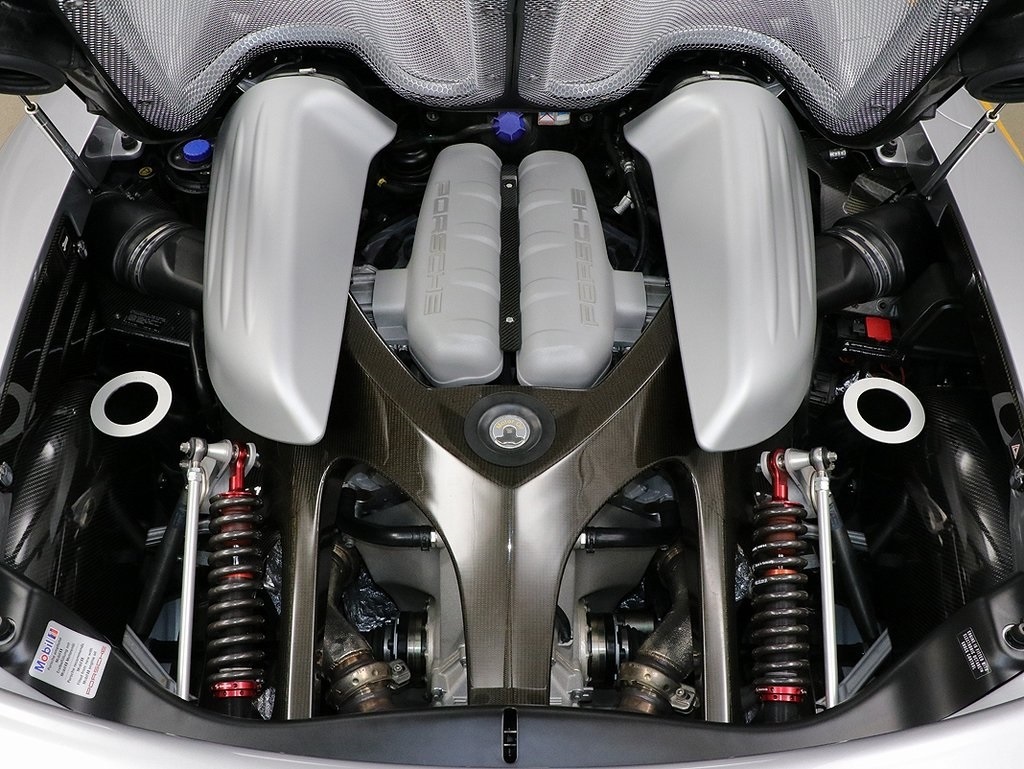
What makes the Porsche Carrera GT engine so special is that it is technically a race car engine. Not in that loosely-based sense – as is often used as a gimmick by salespeople – but in the true sense of the word. In the late 1990s, Porsche engineers in Zuffenhausen were assigned the task of developing a naturally-aspirated V10 concept engine, which was to later be used in a race car for the infamous 24 Hours of Le Mans endurance race. Sadly, the completion of that race car never came to fruition, but the efforts of the engine builders would not go to waste.

Porsche decided to adapt the engine for use in the Carrera GT and took the necessary steps to not only refine it in order to satisfy production car protocols, but also managed to make it a more powerful version than the original unit. The result is a 5.7L naturally-aspirated V10 engine, which produces 612 hp @ 8,000 rpm and 435 lb-ft of torque @ 5,750 rpm. This allowed the Carrera GT to accelerate from 0-60 mph in 3.8 seconds and 0-100 mph in 6.9 seconds, with a top speed of 205 mph.

BMW M5 V10 (S85)
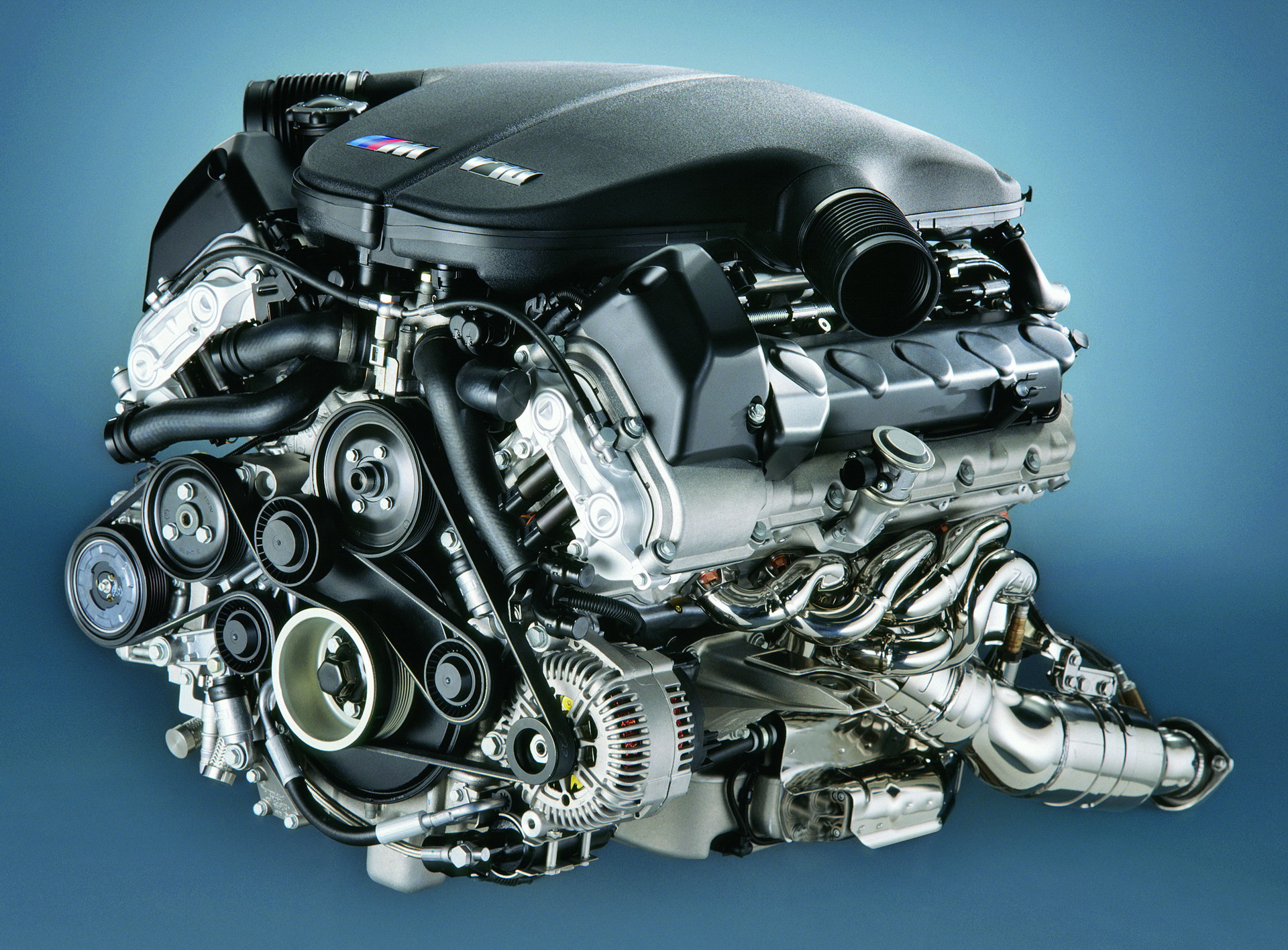
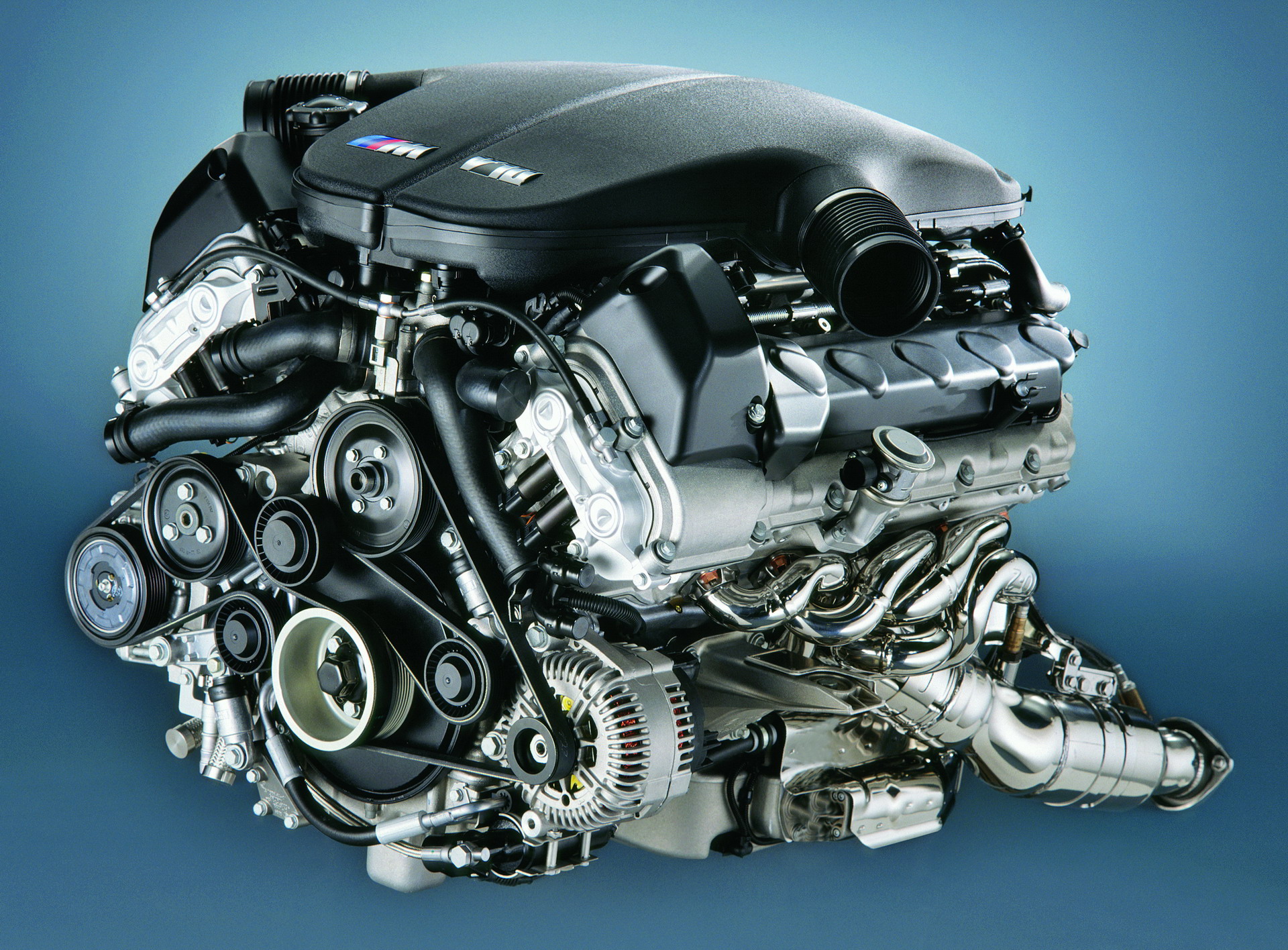
Released in mid-2005, the E60 M5 sedan featured a high-revving and ultra-powerful V10 engine, which was the only one of its kind in a series-production car at that moment in time (while also being the marque’s most powerful production car engine ever made). The 5.0L naturally-aspirated unit shared more than just the same number of cylinders with the Formula 1 engine that powered the BMW Williams F1 team. Technology forged in the heat of motorsport had enhanced the processes and components used in creating this new powerhouse. As you would expect from BMW M, this high-performance motor generates enormous pulling force over its entire speed range.

VW Touareg V10 TDI

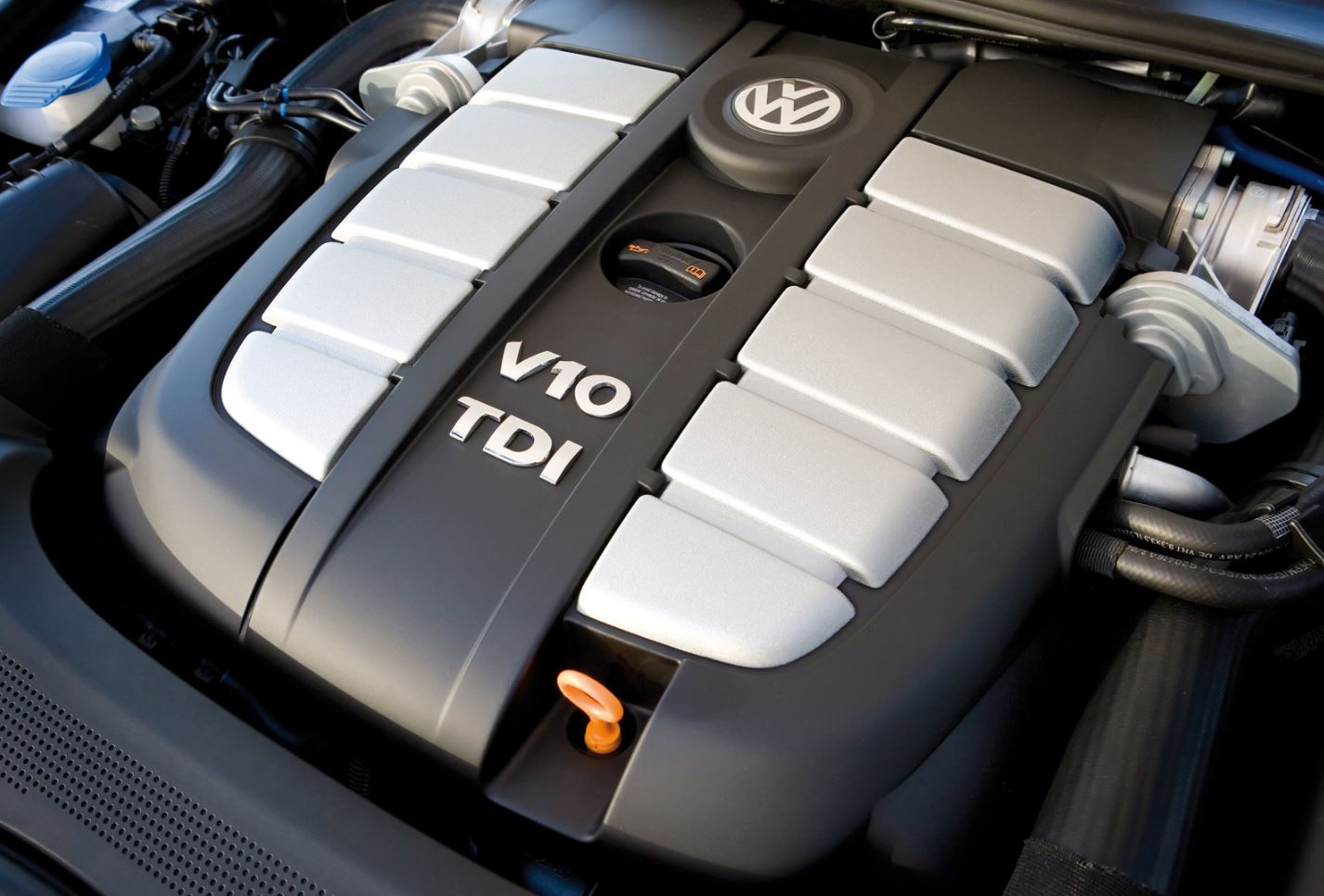
What makes this particular automobile so remarkable is not that it’s a Volkswagen, or an SUV, or diesel-powered, but that it’s all of those things with a twin-turbocharged 10-cylinder engine thrown into the mix. This Frankenstein-ish power plant would only feature for a couple of years before the whole Dieselgate fiasco, and had it not been for the calamity which ensued, it surely would have garnered more recognition than it has mustered to this day. All of its characteristics exude a bias towards low-end power, and the stats certainly reflect this – 309 hp and 553 lb-ft of torque @ 2,000 rpm. Oh, and don’t forget, a very utilitarian tow rating of 7,700 lbs.

Dodge Ram SRT-10 8.3L V10

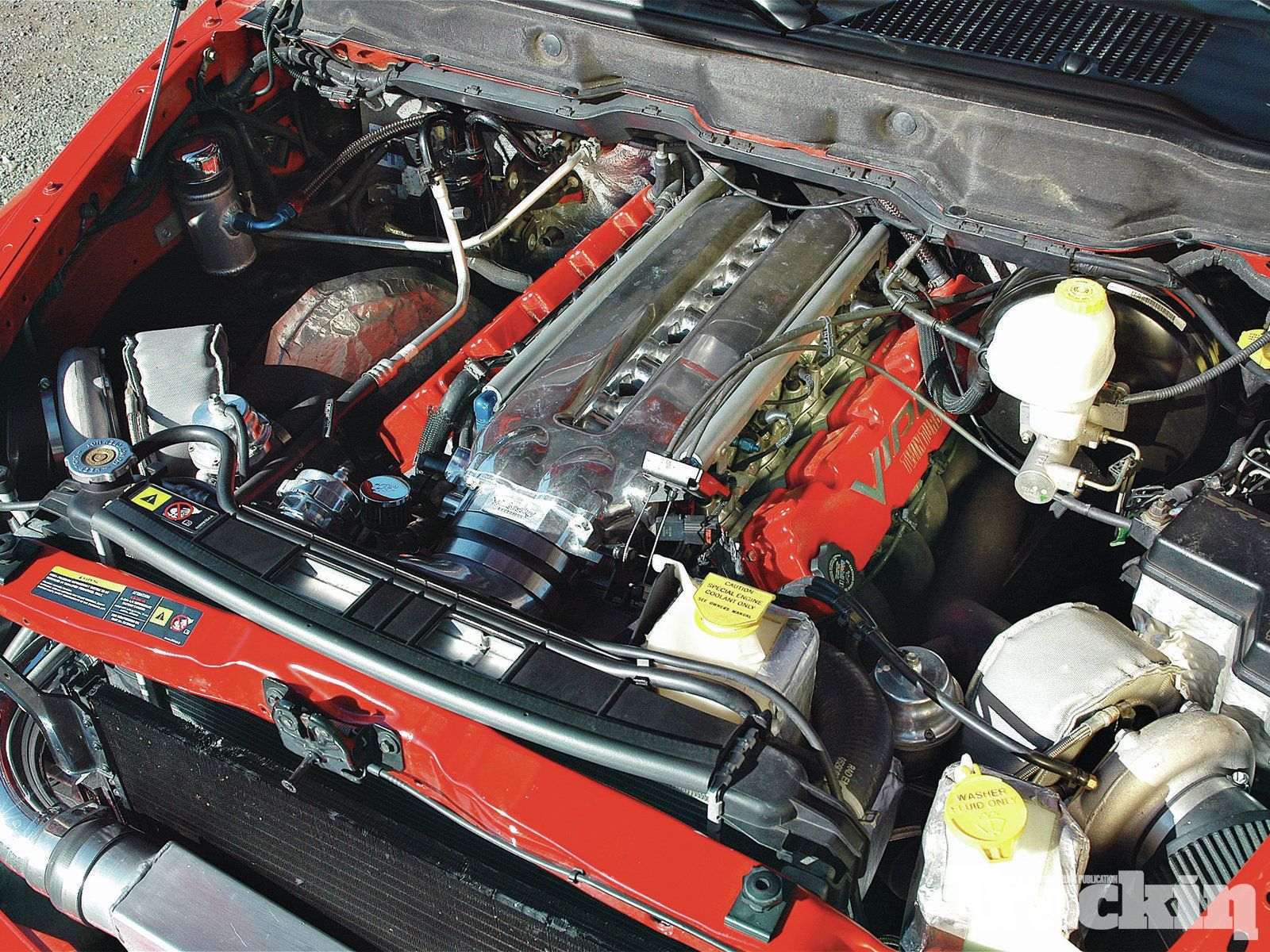
Imagine a Viper engine swapped into, then modified for use in a Dodge Ram pick-up truck, and voila. So what exactly does this magic trick entail? Well for starters, in July 2004, a Dodge Ram SRT-10 driven by NASCAR driver Brendan Gaughan, set the Guinness World Record (and the SCCA record) for the world’s fastest production truck when it achieved an average top speed of 154.587 mph. This was all possible with the help of the 500 hp and 525 lb-ft of torque that the naturally-aspirated motor produced, with 90% of its torque available at 1,500 rpm. It could even tow up to 7,500 lbs; though we would bet that most owners would forgo any procedures that might keep them from optimizing their 1/4 mile times.

“The greatest of the eight-est” – Best V8 Engines Ever Produced

In almost all cases, manufacturers who choose to equip their cars with a V8 engine do so knowingly and deliberately. After all, such engines represent the first big step in crossing over a threshold to where performance becomes the sole focus; efficiency and economy are often not even invited as guests for a ride-along in the back seat.

With a quick glance at the back mirror, those pesky 4-cylinder and 6-cylinder engines begin to disappear into the horizon. Then, with the proverbial “pedal-to-the-medal”, the V8 power plant unanimously declares “all-in” with a loud roar – because this journey is all about thrill-seeking and checking things off the bucket list.

While high-performance V8 engines have normally been reserved for exotics – and muscle cars, in the more distant past – its application has been seen more in the mainstream these days. With the proliferation of automotive technologies, the V8 engine has become a gateway into the world of attainable supercar performance; each new engine is better than the one before it.

Ferrari F106
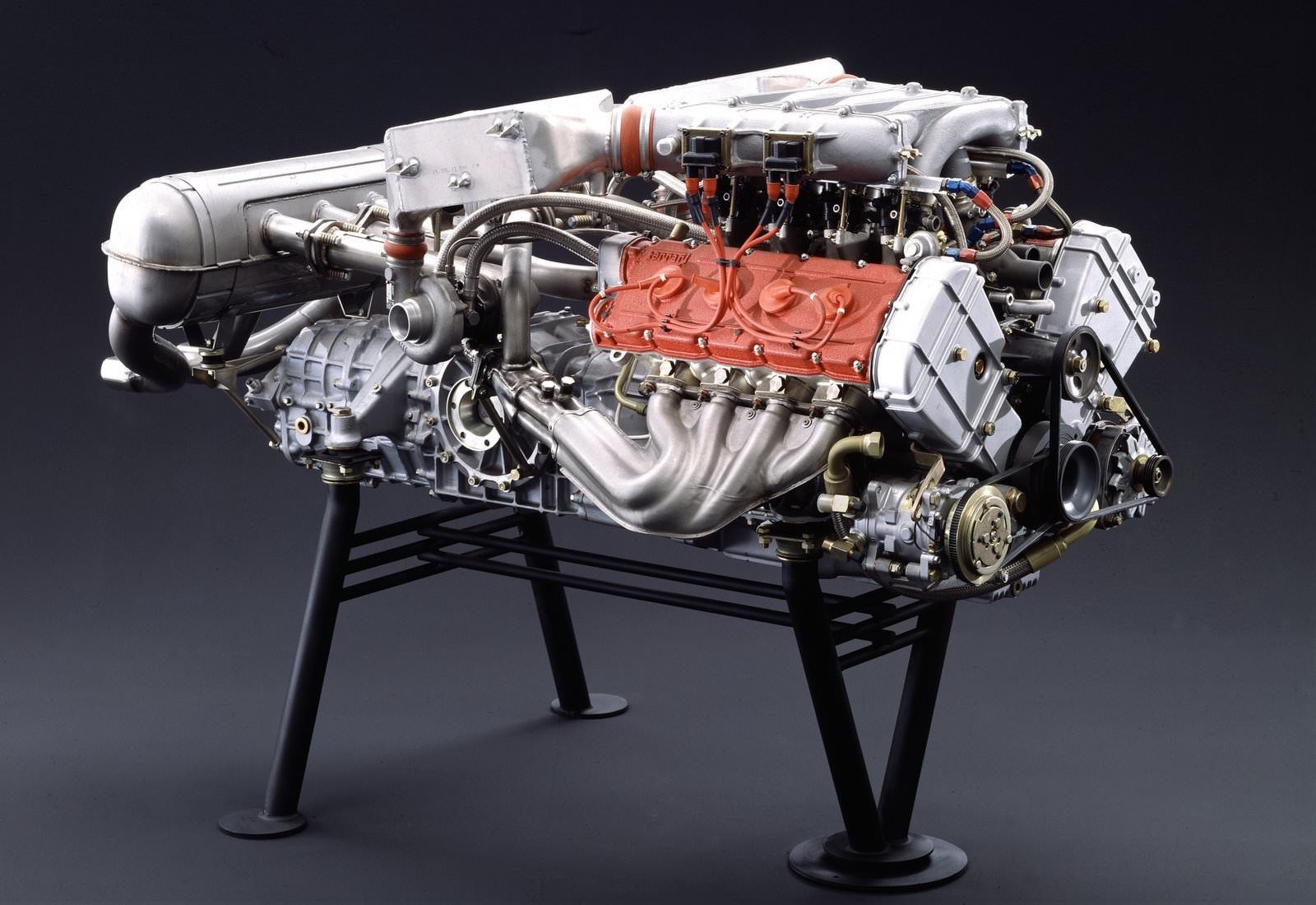
Ferrari’s F106 V8 engine dates as far back as 1973, where it first featured in the Dino 308 GT4. Right from the get go, it produced an impressive 250 hp from a 2.9L naturally-aspirated engine, which featured a flat-plane crank and dual-overhead cams.

Such was the longevity and capability of the F106 unit, that it continued to be used – with significant updates and revisions along the way, including electronic fuel injection and multi-valve heads – for more than 30 years. Notable models which were equipped with the engine include the F355, 360 Modena and arguably the most famous Ferrari of them all; the Ferrari F40, which fashioned a twin-turbocharged version of the F106 producing 471 hp.

Dodge Supercharged Hemi
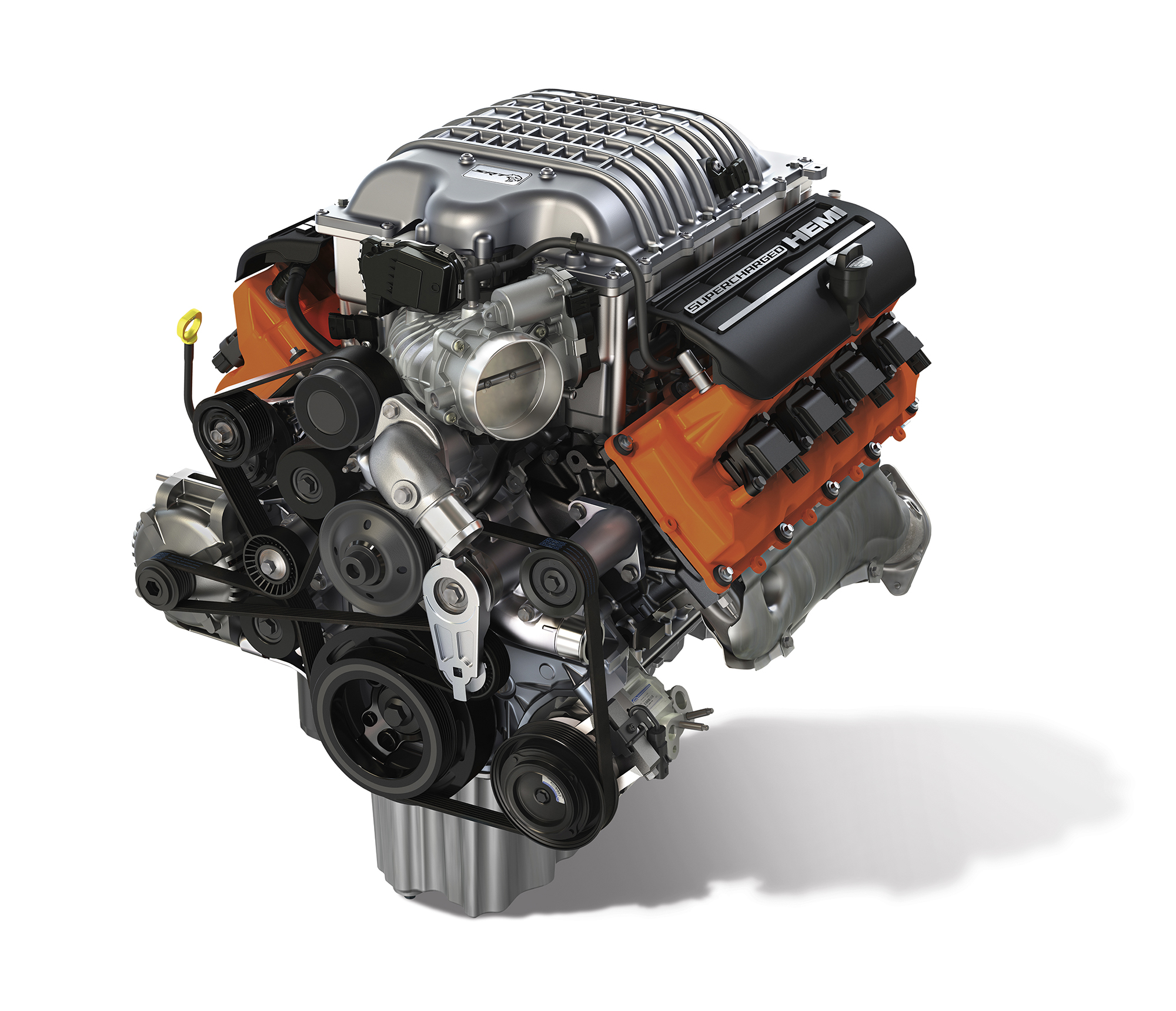
Dodge’s Hellcat series of cars have really taken the world by storm, offering almost unfathomable power in a non-exotic production vehicle – or any vehicle for that matter. It’s truly a revival of the “American muscle” movement, with the supercharged Hemi able to produce as much as 807 hp and 717 lb-ft of torque via the Dodge Challenger Hellcat Super Stock. Handling, agility, and all that other kind of stuff aside, this makes the Hellcat Challenger/Charger the quintessential American sports car which can be had for well under the 6-figure mark brand new.

The automaker is now offering the 6.2L ‘Redeye’ V8 as a crate engine (aptly nicknamed ‘Hellcrate’) through Mopar. It can be purchased at a starting price of US$21,807. The ‘Redeye’ version comes with a larger supercharger than the previous Hellcrate engine, and has been tuned for more boost, a slightly higher redline, and a host of other improvements. These are what has allowed it to improve from 707 hp and 650 lb-ft of torque, to its current 807 hp state. An absolute unit.

BMW S63
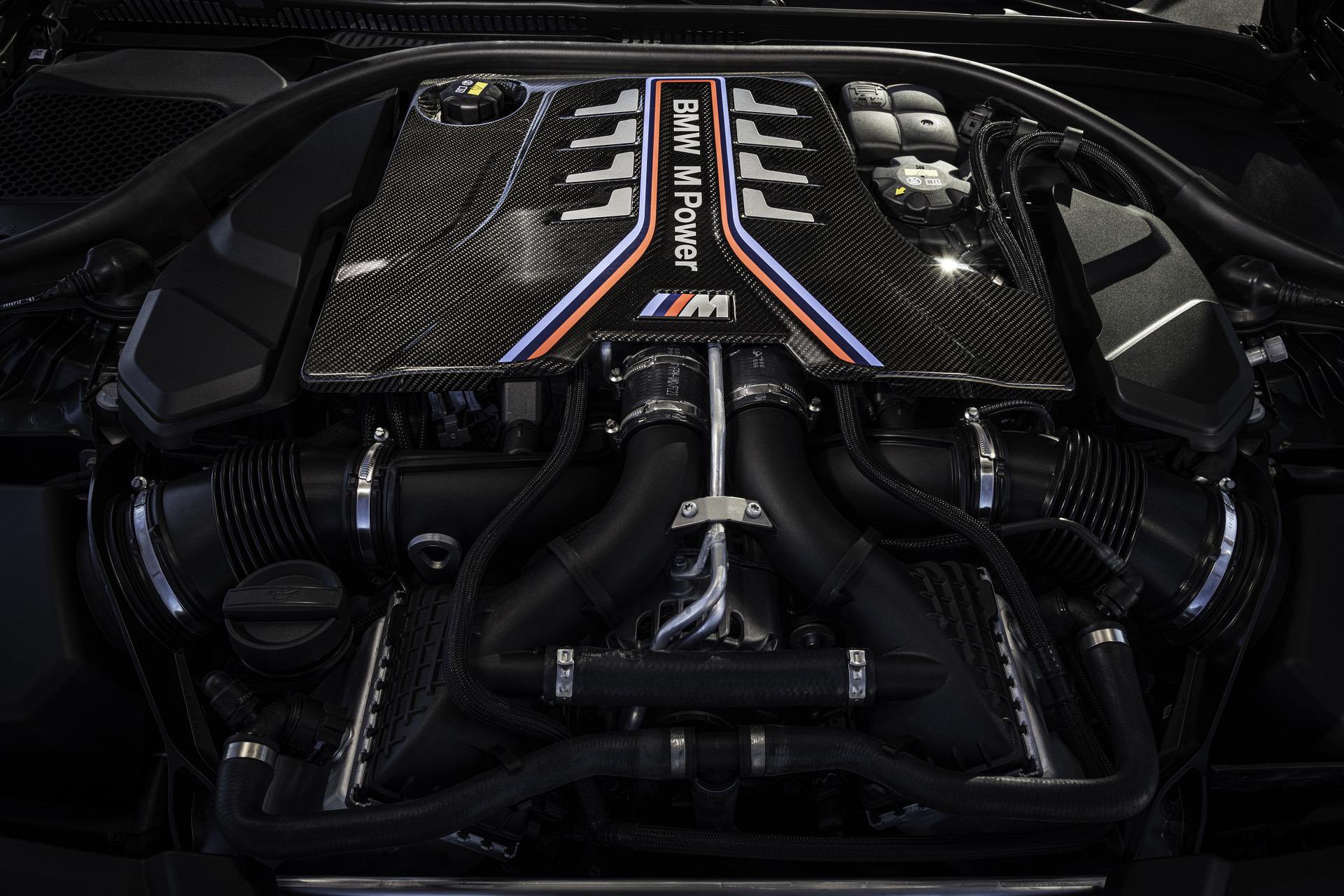
Like other automakers on this list, BMW is no stranger to producing some of the world’s best V8 engines. The latest incarnation would be its masterpiece ‘S63’ – a 4.4L twin-turbocharged engine which produces at least 600 hp and 553 lb-ft of torque in the current-gen BMW M5 sedan.

Thought its true that this grants the quintessential luxury-performance saloon some serious supercar credentials, a look back to days gone by reminds us that engines such as the ‘S62’ and ‘S65′ deserve just as much recognition for their contribution to the Bavarians’ V8 platform. Respectively, each engine displaced 4.9L and 4.0L and were both naturally-aspirated.

Lexus 2UR-GSE

The 2UR-GSE is the latest iteration of Lexus’ increasingly iconic naturally-aspirated V8 power plant. Currently reserved for the marque’s high-performance models – such as the IS F, RC F, GS F, LC 500 and brand-new IS 500 – the 5.0L engine blends typical Lexus reliability with high-revving Japanese character. In its most powerful configuration, the 2UR-GSE produces 475 hp in the Lexus LC 500. Amidst an ever-changing landscape shifting towards hybridization and electrification, we hope that Lexus’ legendary naturally-aspirated V8 lives on for as long as possible

Much like our other selections, the 2UR-GSE owes much of its distinctions to predecessors such as the 1UZ-FE which debuted in 1989. This 4.0L V8 engine has proven to be bulletproof over the test of time, in addition to universal recognition it has received for being smooth, refined and sufficiently powerful for its intended application. It has served as the platform upon which the formidable GSE would eventually be conceived.

Ferrari F136
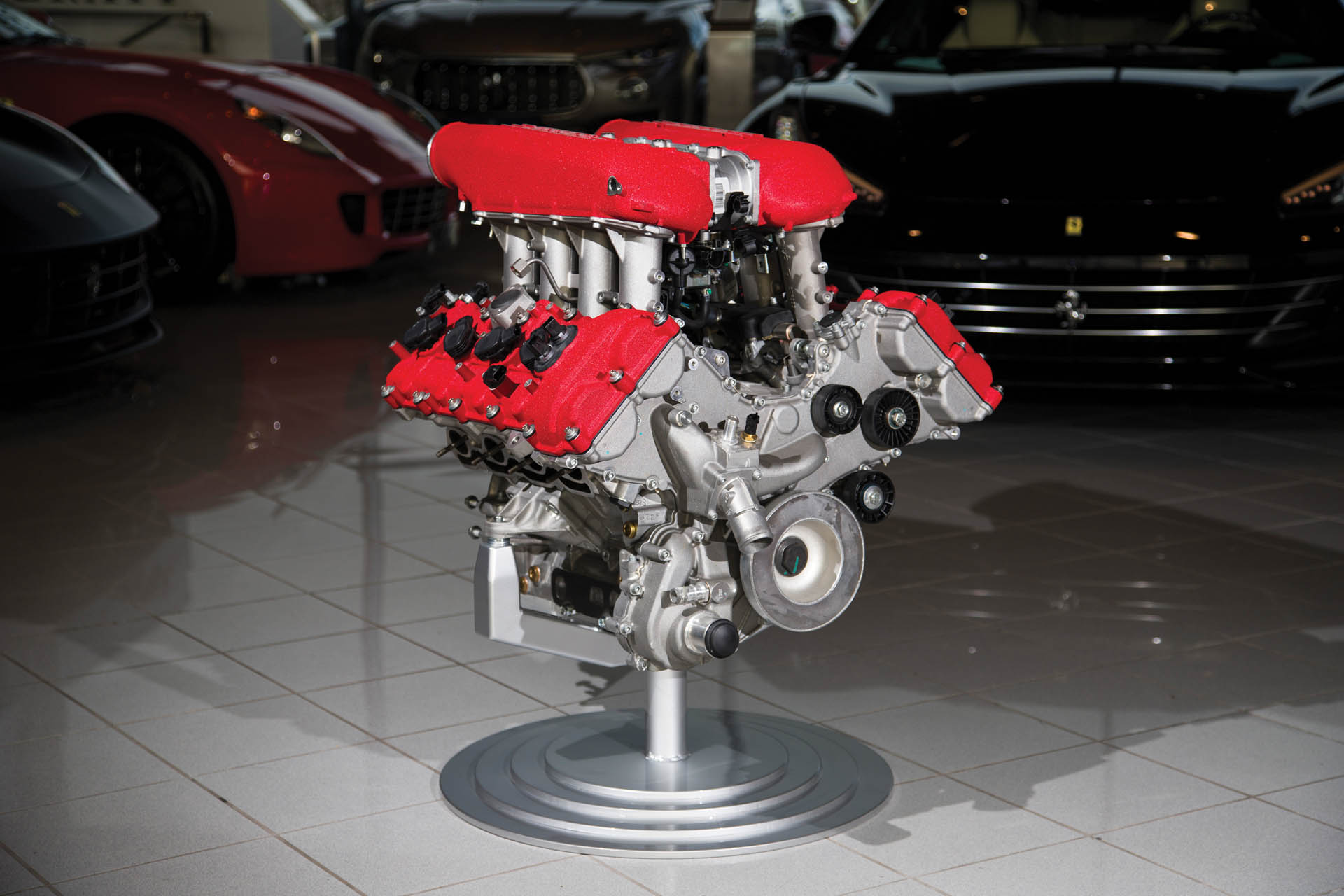
The F136 succeeded the legendary F106, first appearing as a 4.3L naturally-aspirated engine in the 2004 Ferrari F430, producing 483 hp. Like the F106, the F136 would see widespread application throughout the Ferrari lineup; however, it was also featured on a number of Maserati models in concert with the relationship between the two marques.

Most notably, a 454 hp, 4.7L version of the F136 featured on the Maserati GranTurismo and is widely regarded as having one of the best engine/exhaust notes to come out of the V8. The F136 would reach its zenith in the Ferrari 458 Italia Speciale, where it cranked out a massive 597 hp from its 4.5L naturally-aspirated power plant.

Perhaps the most significant (and regretful) fact about the F136, is that it is the last naturally-aspirated V8 engine Ferrari would ever produce. It was replaced by the twin-turbocharged F154 V8 engine in 2015, where it debuted on the Ferrari 488 GTB.

McLaren M830T / M840T

Despite only producing V8-powered automobiles since as recently as 2011 (via the MP4-12C), you could argue that McLaren are now the world’s artisans of the V8 engine, and few would dispute that. After all it’s virtually all they know these days, with every single McLaren model – bar the V6-hybrid McLaren Artura – fitted with some adaptation of their M838T or M840T twin-turbocharged V8 motors.

The 3.8L M838T is found in its Sports Series range of cars, which includes the entry-level McLaren 540C and goes all the way up to the indomitable 666 hp McLaren 675 LT. The 4.0L M840T features on all of the Super Series cars, which covers the ‘700 range’ of models, plus the addition of the McLaren GT. In its Ultimate form, the 4.0L unit – dubbed the M840TR – produces 814 hp in the McLaren Senna GTR. The McLaren Speedtail hybrid ‘hyper-GT’ produces some 1,035 hp through the combination of an M840T and electric motor.

GM Small Block LT1/LT2
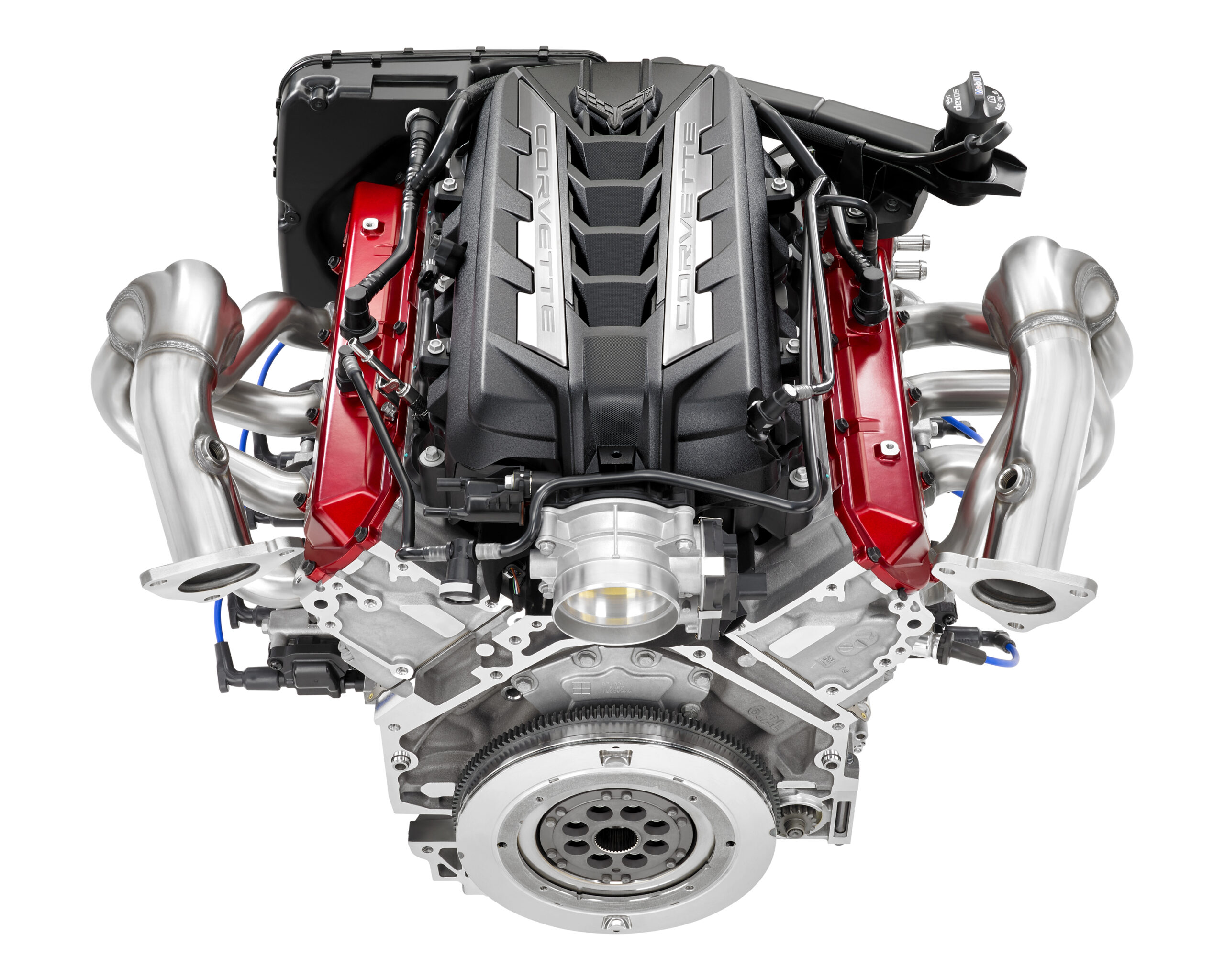
Introduced in 2014 for the C7 Corvette, the 6.2L naturally-aspirated V8 LT1 engine is part of GM’s 5th-generation small black engine family. It continues to be used on the present-day Camaro, with a new version of the engine – known as the LT2 – carrying on the bloodline via the brand new mid-engine C8 Corvette. The LT2 retains the 6.2L capacity but is more powerful that the LT1, producing at least 495 hp and 470 lb-ft in its latest configuration.

This was achieved by designing more efficient air-intakes sand exhaust manifolds, while also featuring a better lubrication system and more resilient camshaft. While it’s not a monster-out-of-the-box like say, Dodge’s Hellcat engine, the lightweight naturally-aspirated powerplant remains perfectly suited for what the Corvette is the best at delivering – brilliant all-around performance at a fraction of the cost of comparable options. The still-relevant LT1 is now being offered as a crate engine via GM’s performance division, with its 460 hp on tap for under US$10,000. Project car, anyone?

Audi 4.2L FSI
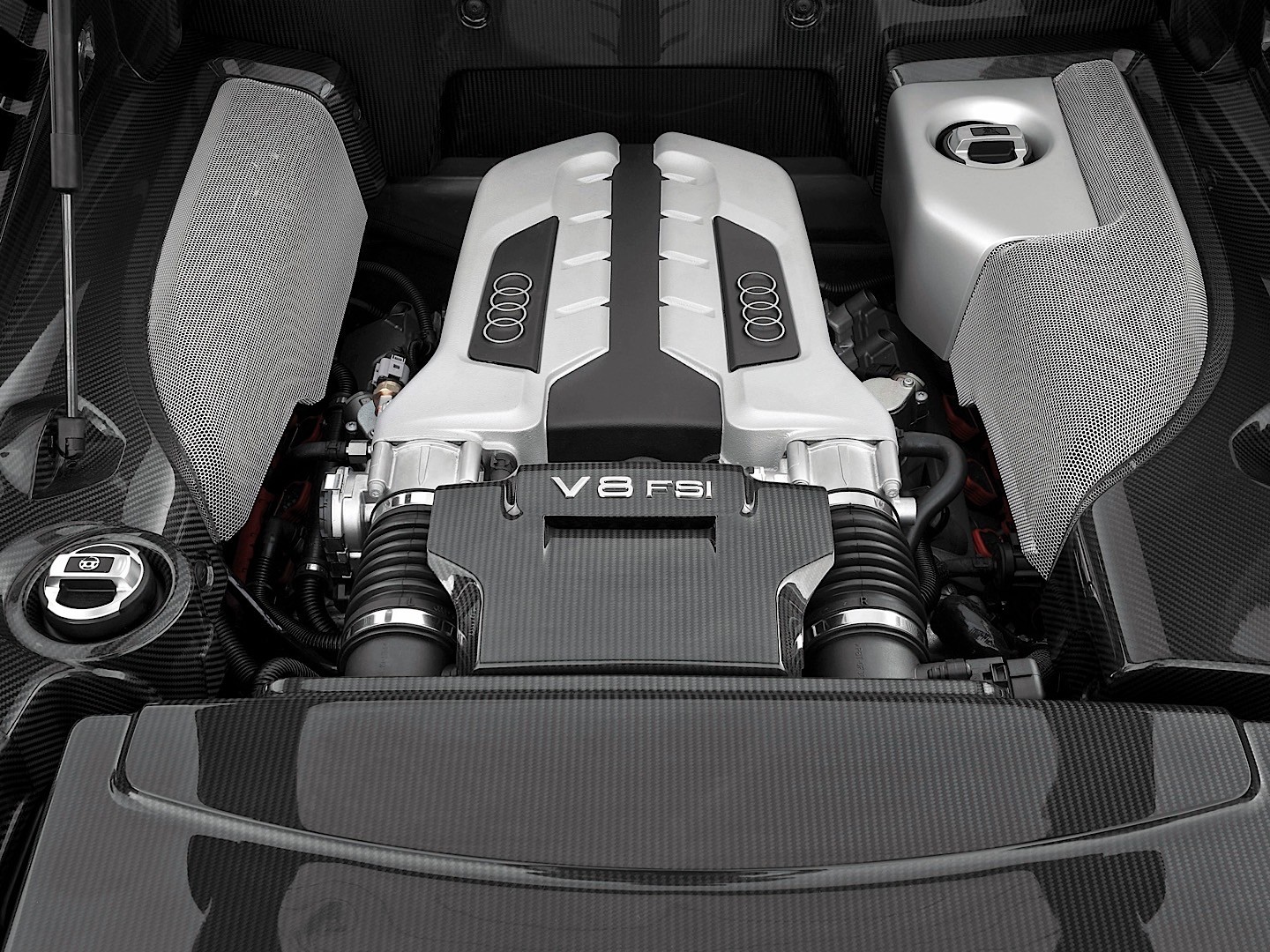
When Audi’s 4.2L FSI V8 engine was introduced, it was a bit of a departure from what Audi enthusiasts had grown accustomed to over the years. As one of the marques which helped to proliferate the use of turbochargers on production cars, the aforementioned engine first appeared in the 2006 Audi RS4 as a high-revving naturally-aspirated power plant.

Over time, it proved to be a fan-favorite in spite of its lack of forced induction and featured on such models as the RS5 and mid-engined R8. As a naturally-aspirated unit, the FSI V8 was able to rev up to 8,250 rpm and had a distinctively exotic exhaust note, regardless of the model it was mounted in.

The engine remained naturally-aspirated up until its use in the 444 hp Audi RS5; since then, recent iterations of the engine are now turbocharged and produce up to 600 hp.

Mercedes-AMG M178

The modern day Mercedes-AMG line-up is blessed with their omnipotent ‘M178’ 4.0L twin-turbocharged V8, which itself deserves all the plaudits and is a shoo-in for selection. While it’s the most advanced iteration of the automaker’s V8, our personal favorite would have to be the ‘M156’ 6.2L V8 first powered the 467 hp naturally-aspirated C63 AMG. Like its successor, the M156 would feature in almost every Mercedes-AMG model of that era, including the SL63.

The ultimate version of this V8 motor would be the ‘M159’, which was equipped in the automaker’s flagship SLS supercar, producing 622 hp. The SLS has since been succeeded by the Mercedes-AMG GT Black Series, which produces 720 hp from its twin-turbocharged ‘M178’, and recently set the new production car lap record at the Nürburgring.

Ford ‘Voodoo’ Flat-Plane
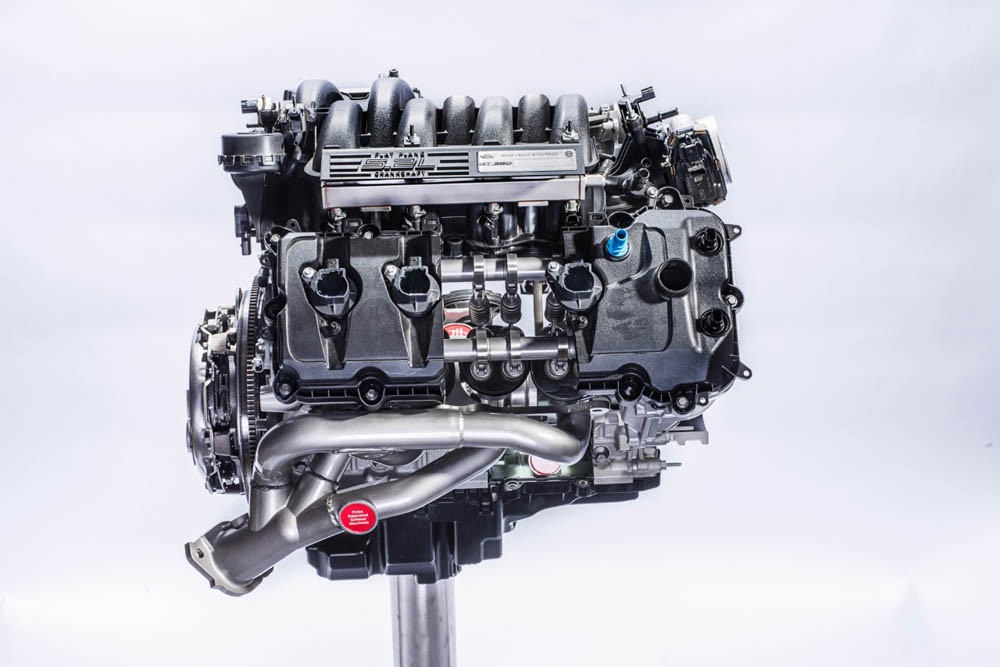
The ‘Voodoo’ engine produced by Ford is a 5.2L naturally-aspirated V8 which was made specially for cars such as the 526 hp Mustang Shelby GT350 and GT350R. Suffice to say, the Voodoo was a match made in heaven for the line-up’s most balanced and track-focused Mustang models. By utilizing a flat-plane crankshaft, the engine is weighs less and revs faster and higher (to 8,250 rpm) than the otherwise standard engines in other models. Its configuration also gives it an almost-exotic exhaust note, border-lining on ‘un-American’ – but owners won’t mind, as their domestic car hangs just fine with the exotics and other high-end sports cars on the race-track.

Following the template of past flat-plane V8 engines, the Voodoo applies the similar principles as engines that once powered hot-rods and muscle cars back in the 20th century – with impressive bang-for-buck, the engines produced big horsepower at a fraction of the cost of what was used in European sports cars and even domestic rivals. This provided owners with a rightfully potent automobile, and extra money left in the bank. It’s hard to argue with that!

“The Smooth. The Superb. The Sublime. The best 6-cylinder engines of all time” – Best 6-Cylinder Engines Ever Produced

In this modern automotive era, we are spoiled for choice when it comes to the wide array of supercars, hypercars and now EVs, to choose from. At this level of the game, the V12 engine is often seen as the standard bearer, while a V8 is the lowest benchmark. It’s no wonder the 6-cylinder engine often gets overlooked, despite continuing to power some of the world’s greatest sports cars and supercars. This isn’t just hyperbole. Case in point: the Porsche 911.

With the help of turbochargers, superchargers and in some cases, electric motors, 6-cylinder engines can often squeeze out just as much performance as their larger counterparts, while retaining the benefits of being more compact, lightweight and fuel-efficient. So while they aren’t typically as flashy nor headline-making as the V12s and V8s of the world, they are at the very least, an extremely versatile and dependable option to have in the engine war chest.

It’s no wonder the proliferation of the 6-cylinder engine has been democratized by auto manufacturers internationally, with the platform remaining ever-present across all continents. The Germans, Japanese and Italians are amongst those who persist with their undying trust in the 6-cylinder engine; so much so that it is still being improved and continues to power some of the best automobiles to this day.

Porsche M97.74
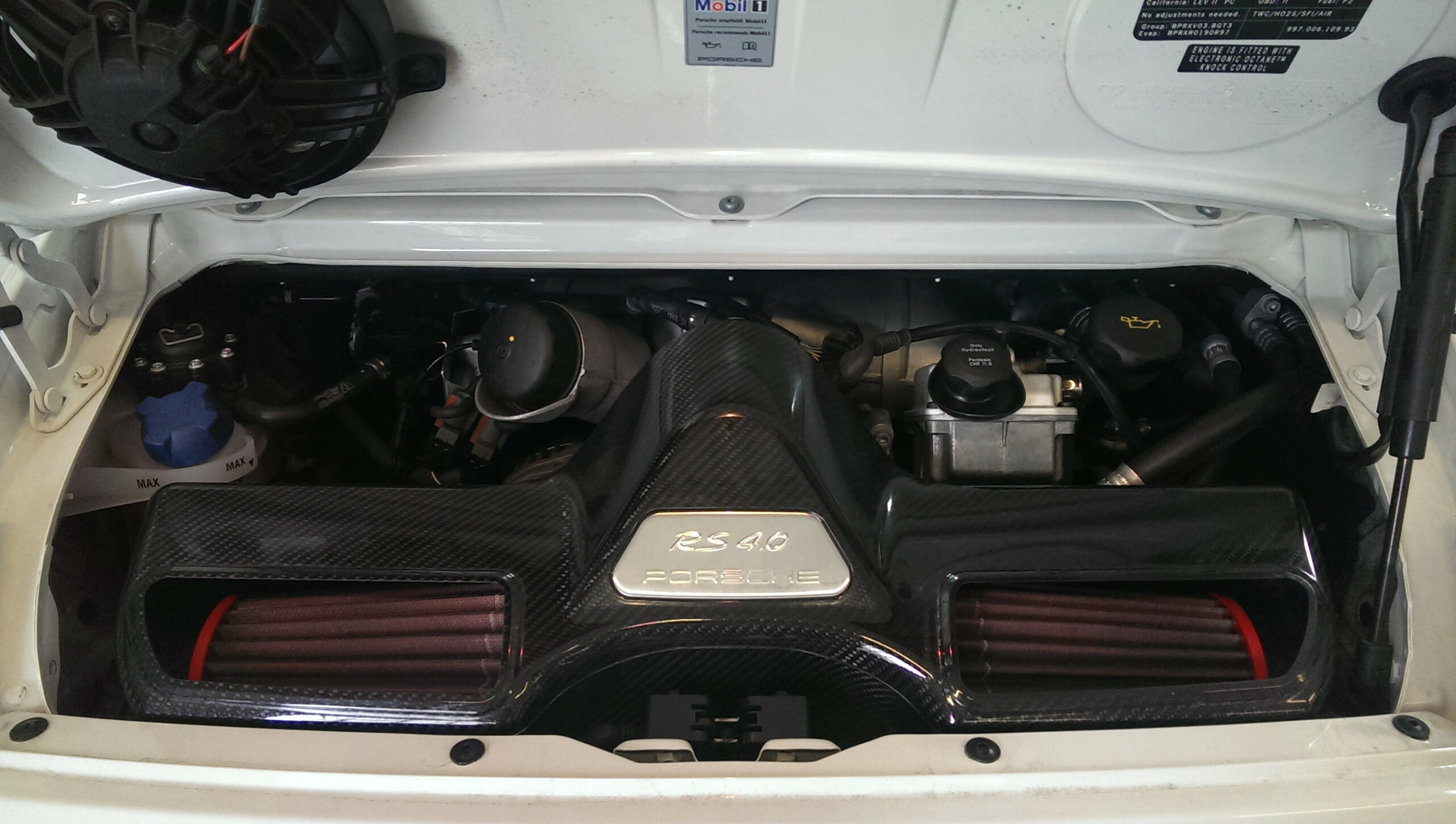
Porsche M97.74 engine

Appearing in the 997.2 GT3 RS 4.0, this truly special engine was the swan song for both the 997-generation (2005-2012) of Porsche 911 cars, as well as the Mezger engine design. Borrowing a number of components from the RSR race car, the 3.8L engine in the ‘regular’ 997 GT3 RS was then upgraded to a 4.0L flat-6 (hence the name) which produced 500 hp and 339 lb-ft of torque, while having an astronomical 8,500 rpm redline.

So convincing was this move, even to Porsche’s own brass, that the following two generations (991 and 992) of 911 cars would continue to employ the 4.0L naturally-aspirated engine in the GT3 lineup, proving that the ‘godfather’ RS 4.0 was also well ahead of its time.

With the proliferation of PDK transmissions, amongst other safety-centric technological advancements, many consider the M97.74 and the GT3 RS 4.0 it powered, to be the final rendition of the purists’ GT3 RS.

BMW S54B32

Collectively, the BMW E46 M3 (2000-2006) is one of our favorite cars here at supercars.net, and this is in no small part thanks to its S54B32 inline-6 engine. The naturally-aspirated unit is as pure as it gets from the Bavarian company, with a peak 333 hp being produced at 7,900 rpm on route to its 8,000 rpm redline. Other stand-out features include individual throttle bodies and drive-by-wire operation, further accentuating the car’s inherent rawness and driving purity.

When mated to the 6-speed manual transmission, it really doesn’t get much better than this – from BMW or any other company, for that matter. If BMW ever wanted to revert back to a more minimalist philosophy, the S54B32 and E46 M3 would be writing the playbook.

Nissan RB26DETT

Nissan RB26DETT engine

The 2.6L twin-turbocharged inline-6 from Nissan – the RB26DETT – has become something of a legend. It would take nothing short of the absolute best from the Japanese automaker to produce something worthy of powering a car amicably referred to as “Godzilla”, and the RB26DETT has never disappointed. While it was limited to 280 hp from the factory – thanks to the gentleman’s agreement between Japanese manufacturers to cap engine outputs at the time – the R34 Skyline GT-R was anything but docile, even when left untinkered.

The engine’s true capabilities were the worst kept secret in the industry, with a simple flash of the ECU (to effectively remove the restrictions) plus a few bolt-on performance modifications allowing the RB26DETT to produce much, much more.

Porsche MDH.NA

Porsche MDH.NA

Suffice to say, the 991 GT2 RS is the absolute peak of 6-cylinder performance. The GT2 RS in its entirety is more closely based on a Turbo S than it is to its closest GT relative, the 911 GT3 RS. After all, at the heart of the GT2 is a revamped version of the Turbo S engine (known as MDH.NA), while the GT3 has its own unique naturally-aspirated 4.0L power plant. The 3.8L flat-6 was fitted with larger variable-geometry turbos and was given an increase in peak boost to 22.5 psi, which is 24% higher than the Turbo S.

Larger intercoolers, a water-spray system, larger exhaust manifold primaries and redesigned pistons work in synergy with the aforementioned to provide the GT2 RS with 700 horsepower @ 7,000 rpm and 553 lb-ft of torque. Porsche has long buried the traditional notion of “turbo-lag” in its cars with VarioCam Plus and the GT2 RS is no different, making peak torque from 2,250 rpm to 4,000 rpm.

Honda C30A
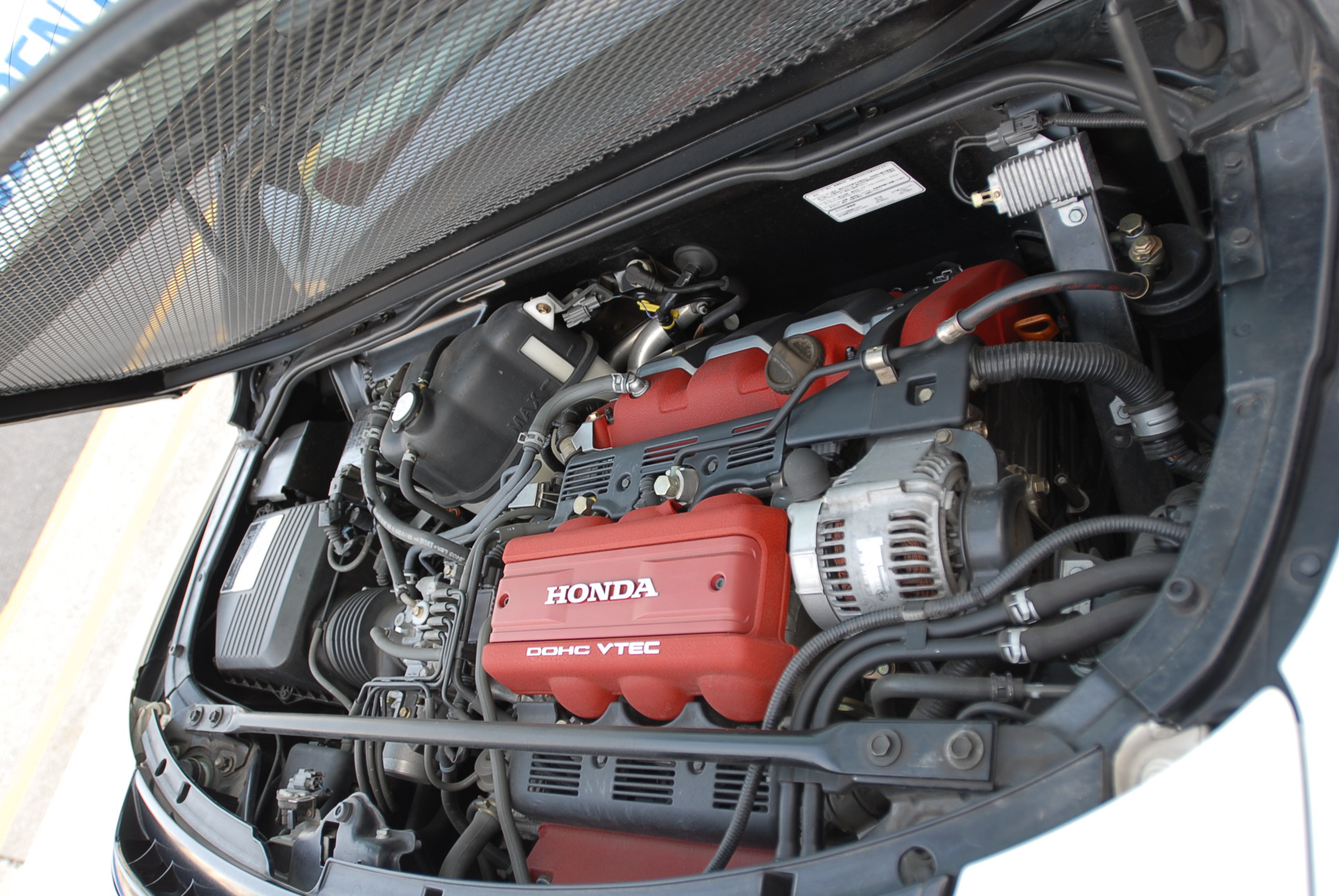
Honda C30A engine

The original 1990 Acura NSX was fitted with a 3.0L naturally-aspirated V6 engine which produced 270 hp. At the time, that was more than sufficient to go shoulder-to-shoulder with any of its supercar contemporaries; particularly Ferrari, its target rival. What truly made the C30A – and as a whole, the NSX – so special, was that it broke the mold of what a supercar could and should ought to be: reliable and useable. Almost blasphemous thinking at the time, the idea of the “everyday supercar” was still a twinkle in the eye of exotic car auto makers.

The engine demanded very little, if anything, above the expected maintenance laundry list and associated costs of keeping a Honda Accord running. It was refined. It performed. It was comfortable. You could drive it whenever you wanted to. The NSX is widely recognized as one of the forefathers of the modern supercar, going on to inspire the likes of the McLaren F1. That puts it in pretty high regard, I’d say.

Alfa Romeo ‘Busso’ V6
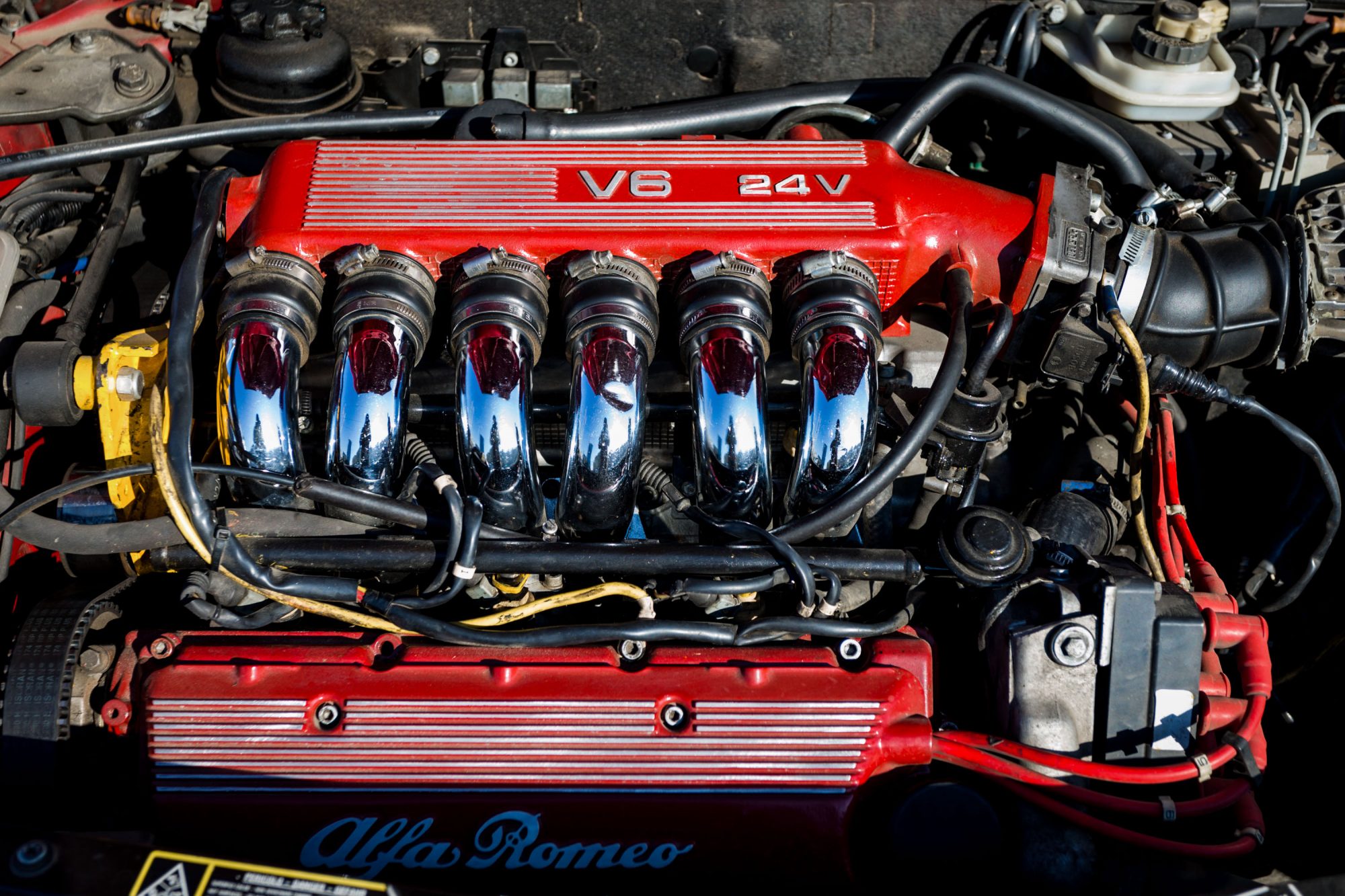
Alfa Romeo 'Busso' V6 engine

There is no other power plant on this list which has been as long-serving or as versatile as the ‘Busso’ engine. Named after its chief designer, Giuseppe Busso, the foundation of this engine was its 60° V6 configuration. From there, a colorful variation of engines were built upon it, with displacements ranging 2.0L to 3.2L plus the use of turbochargers (or none at all) depending on the intended application of the automobile it was being fitted to. This meant you could see a Busso producing as little as 130 hp in a 1983 Alfa Romeo Alfa 6, and up to 247 hp in a 2005 Alfa Romeo 156 GTA.

Regardless of its specs, every Busso engine shares the same reputation for being remarkably smooth, having good low-end power delivery, and an incredibly unique engine note at higher rpms. Needless to say, the Busso would go on to be the centerpiece of the brand for a good 30+ years.

Nissan VR38DETT

Nissan VR38DETT engine

While there was a general expectation that the latest iteration of the GT-R would (or should) be powered by a V8 engine prior to its official release, Nissan inevitably stuck to its guns and continued the tradition of powering its flagship car with its tried and trusted 6-cylinder unit. This time, the engine would be produced in a 60° V6 configuration to ensure that the massively sized and massively powerful engine, could fit under the front hood.  In the very first R35 GT-R cars, the 3.8L twin-turbocharged V6 produced 485 hp, before being upped to 545 hp for the 2012 refresh.

Since then, the hand-crafted power plants have been continuously improved over the years, with the most powerful factory version of the car – the Nissan GT-R Nismo – producing some 600 hp. Perfectly matched with Nissan’s dual-clutch transmission and proven all-wheel drive system, the VR38DETT continues a legend while forging one of its own, all at the same time.

Jaguar JRV-6

Jaguar JRV-6 engine

It’s rather humorous that the JRV-6 would not have made it on this list if not for a gaff on the part of Jaguar, who had originally marketed and went as far as promising that the XJ220 would be delivered to its first customers with a V12 engine. Nevertheless, the eventually-fitted twin-turbocharged 6-cylinder unit was borrowed from a Group B Rally car – the Rover Metro 6R4. It was rightfully potent, and actually made more power than the naturally-aspirated V12 which was originally proposed.

Able to produce up to 542 hp, the XJ220 would even go on to become the fastest production car in the world at the time, topping out at a brow-raising 217 mph. While its credentials were proven in the real world, I’m sure many buyers were still a bit miffed at the fact that the final product came with half the number of cylinders they had put down their deposits down for.

Toyota 2JZ-GTE

Toyota 2JZ-GTE engine

The Toyota Supra was equipped with the ubiquitous 3.0L inline-6 2JZ engine in all its models. The most recognized version of the Supra – the Turbo – possessed a twin-turbocharged engine known as the 2JZ-GTE, which was specced with up to 326 hp. The two turbochargers operated sequentially and not in parallel. This essentially meant that one of the turbochargers was designed to provide near-maximum torque as early as 1,800 rpm, while the second turbine would be engaged in a “pre-boost” mode until around 4,000 rpm where thereafter both turbochargers would be spinning at full blast. This translated to better low-end throttle response, less ‘turbo lag’, increased boost at higher engine speeds, and a relatively linear delivery of power – all of which was difficult to achieve in unison, with the technology available at the time.

The 2JZ-GTE-equipped Turbo model was able to sprint from 0-60 mph in just 4.6 seconds and complete the standing ¼ mile in an impressive 13.1 seconds. Top speed was recorded at 155 mph.

Alfa Romeo 690T

Alfa Romeo 690T engine

The fact that the engine in the 2021 Alfa Romeo Giulia GTA is derived from the Ferrari F154 platform, automatically puts it in some highly esteemed company. After all, other variations of the F154 are used in the likes of cars such as the Maserati Quattroporte, Ferrari F8 Tributo and even the hybridized Ferrari SF90. While the F154 takes on a V8 configuration, the Alfa Romeo variant (known as the 690T) is a 2.9L twin-turbocharged V6 which produces 540 hp. Capable of 0-60 mph in 3.6 seconds, the 690T isn’t exactly blistering by today’s standards, but it does become an integral part of the car’s overall philosophy of balance and agility; this was probably one of the main reasons Alfa Romeo chose to go with a smaller unit rather than going the copy/paste route with the Ferrari setup.

The GTA / GTAm are about as track-ready as any production car can get when also factoring in its insanely aggressive aerodynamic and chassis upgrades.

“As far as four bangers go, these are the best” – Best 4-Cylinder Engines Ever Produced

There are a variety of reasons manufacturers choose to fit a 4-cylinder engine in their cars. They’re compact, lightweight and typically more fuel-efficient compared to all other mainstream alternatives. This makes them ideal for smaller cars – particularly those with economy being top of mind – but can serve just as well in heavier cars (which are often AWD) with a turbocharger providing some assistance.

For the Japanese automakers, the proliferation of 4-cylinder engines was born mostly out of necessity; stricter emissions standards as well as restrictions on engine and vehicle sizes for their domestic market, forced them to think smaller. This would in no way become a hindrance on engineering ingenuity – quite the opposite actually – as many of these companies would become the world’s artisans for the sport compact car. This unwavering dedication to mastering one’s craft has produced the likes of the F and K Series engines from Honda, and the 4G63T and EJ25 from Mitsubishi and Subaru respectively; both of whom would go on to become one another’s legendary rival.

However, the Japanese weren’t the only ones who were both industrious and creative when it came to the art of the four banger. With the ever-growing popularity of fuel-sipping and smaller vehicles world wide, the Europeans also began to fashion their own interpretation of the ideal compact-efficient package. The Scandinavians for one, have been unapologetic about their extreme commitment to eco-friendliness for many decades now, with the likes of Swedish automakers Saab and Volvo leading the charge in their continent.

The Americans, through Ford, would eventually bring their aptly-named EcoBoost engines to the market, while Italian outfit Fiat (owned by Chrysler) produces power units that are small in scale, but never lacking in character nor performance.

Honda F20C/F22CHonda F22C engine
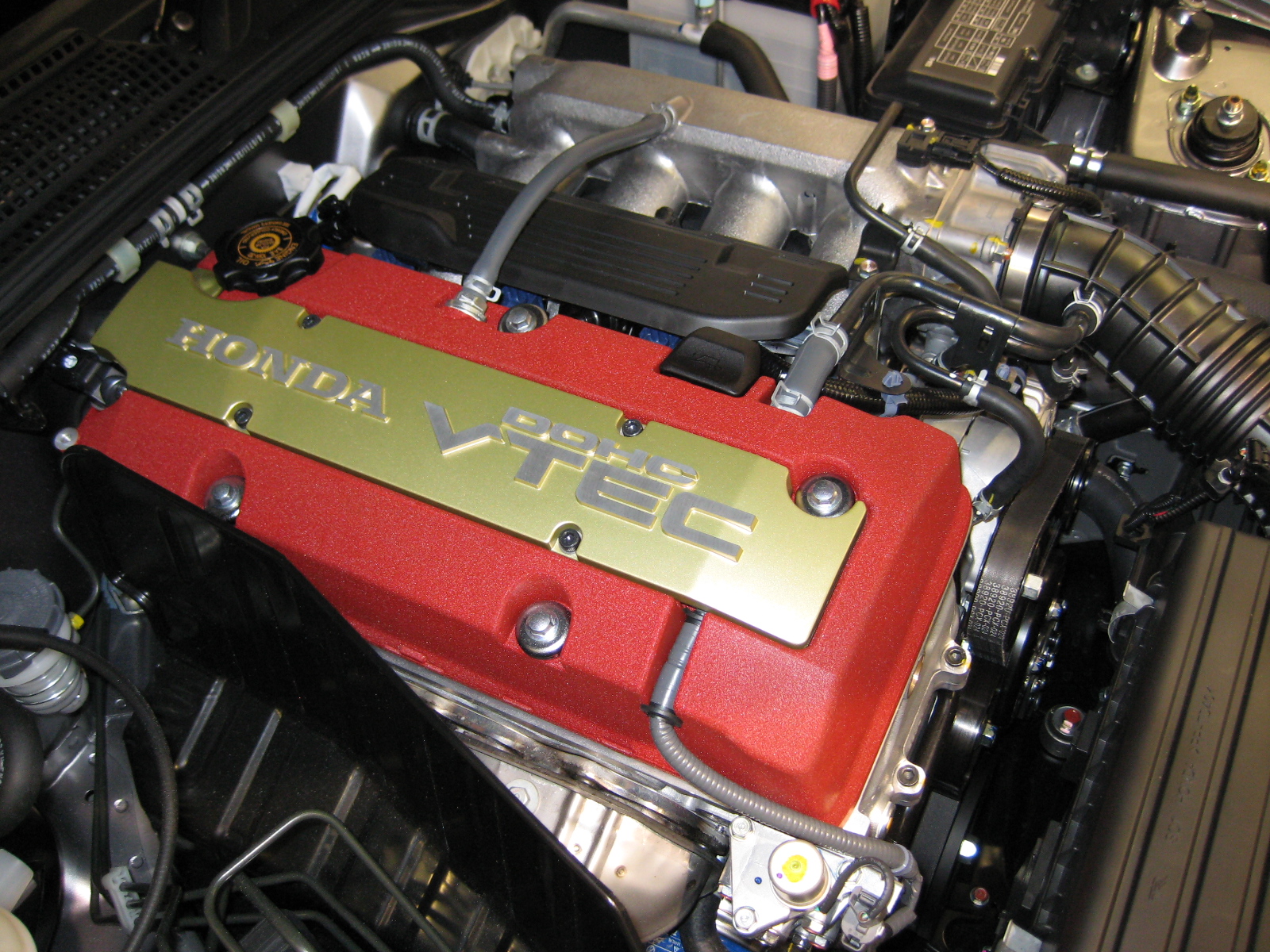
When the Honda S2000 first made its appearance in 1999, its naturally-aspirated F20C engine stole the spotlight. It was revolutionary for its time, and in many respects maintains that reputation to this day. A 9,000 rpm redline and being able to produce 120 hp/liter would be the main attractions at first, but the F series engine has also proven to be dependable and well regarded to this day.

It’s a huge reason the S2000 is one of the most sought after cars on the used market today, often fetching astronomical prices not too far off the original MSRP (or sometimes more). Halfway through the car’s lifecycle, the engine would see its displacement increase to 2.2L (with an 8,200 rpm redline) while power figures remained virtually unchanged; acceleration and low-end response were slightly improved as a result.

Volvo Redblock B230FT

Volve 2.3L B230FT engine

Volvos – particularly some of the older platforms and their engines – have been the subject of a growing following over the years, as performance enthusiasts and grassroots circuit drivers alike have discovered the now hard-to-keep-secret that is the Redblock B230FT engine. Built on a decidedly Scandinavian philosophy of minimalism and straight-forwardness, the Redblock engines have a reputation above all else, for being extremely bulletproof. This is the reason you see more of those old-school Volvo wagons and sedans (amicably referred to as “Turbo Bricks”) on the road today than maybe you should.

However, what is becoming increasingly significant about these cars is the value their engines bring to the larger automotive community. Because of their inherent indestructible qualities, the B230FT is becoming a popular choice for reliable high-horsepower builds, and even engine swaps into cars with native power plants that are otherwise less dependable.

Ford EcoBoostFord Mustang EcoBoost Engine
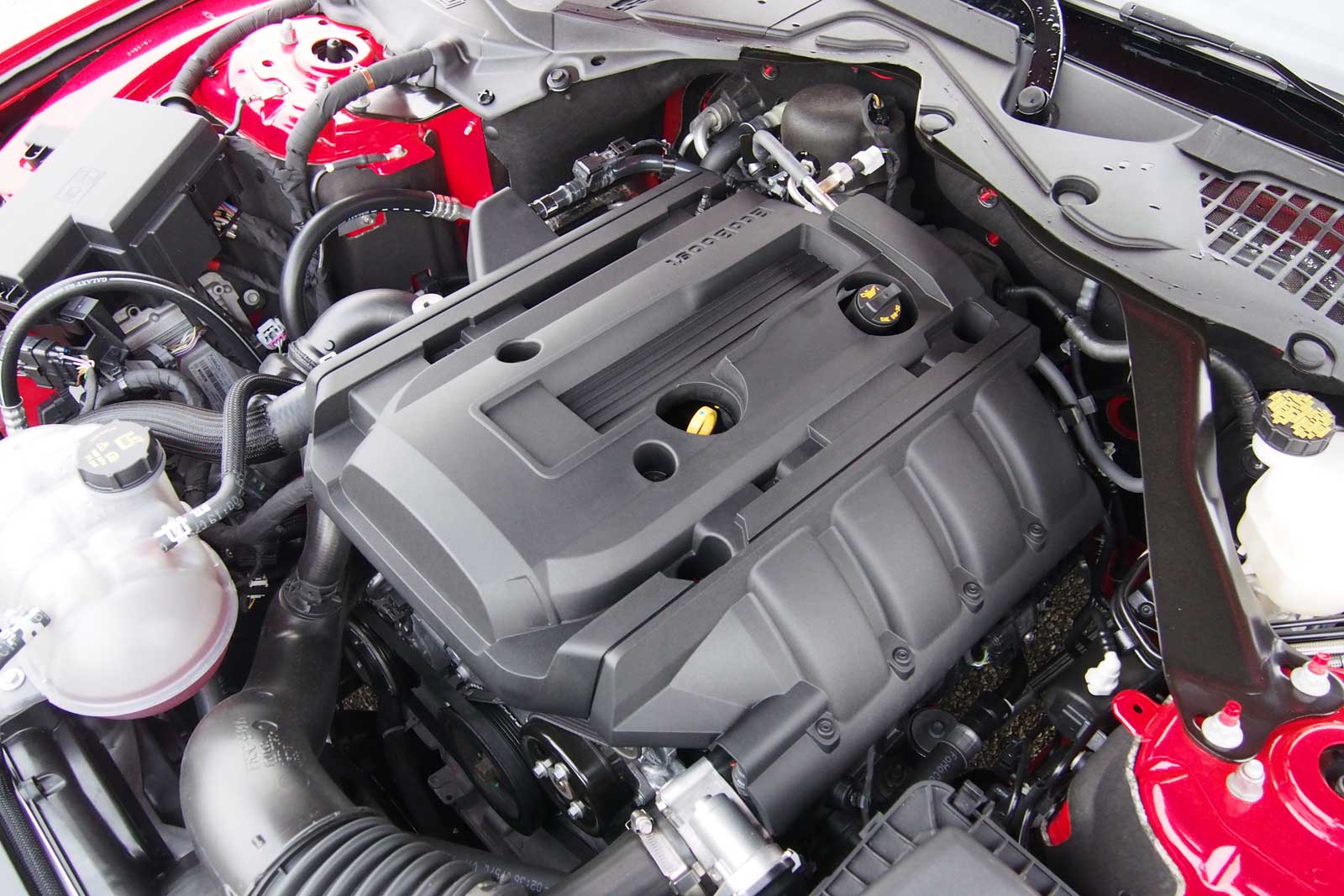
Ford’s EcoBoost engines are amongst the most recent and significant line of 4-cylinder engines being produced by any manufacturer today. While there is certainly a monumental shift towards electrification – of which Ford is very much a part of – the petrol-powered engine remains relevant and continues to be improved amidst stricter emissions standards. Besides going full-on EV or hybrid, there is no other drivetrain unit that is more fuel efficient than a modern day turbocharged 4-cylinder engine.

They’re also capable of extraordinary performance, with the 2.3L EcoBoost unit in the Ford Focus RS good for around 350 hp. Recognizing the all-around benefits of the EcoBoost, Ford has used the powerplant throughout its entire lineup; you can find one in a Ford Mustang, a Ford Ranger, and even a Ford Bronco. Though it’s true that the internal combustion engine will be phased out sooner than later, the EcoBoost will be about as good as it gets before the transition is complete.

Toyota 3S-GTE

Toyota 3S-GTE engine

It can be argued that the Toyota 3S-GTE does not get all the plaudits it deserves, because it shared the stage with the A80 Supra (and its 2JZ engine) which would ultimately end up stealing the show. But the 3S-GTE has a lot of things going for it, not least of them being that it was used to power two of the most legendary Japanese sports cars – the Toyota MR2 and Toyota Celica GT-Four.

Typical of the brand and the era, the 3S-GTE was basically bulletproof thanks to its cast iron block and forged aluminum internals. When properly cared for, the engine has a shelf life of around 180,000 miles, which is pretty impressive coming from a 2.0L turbocharged inline-4 which produced 252 hp, and was built in the mid 90s.

Honda K Series

Honda 2.0L K20C1 engine

The K Series would ultimately replace the outgoing B Series engines (which would be in the honorable mention section, if there was one) for a number of Honda vehicles, most notable of which included the likes of the Civic Type R and Integra Type R.  The most recent and advanced version of the K series engine has found its way into the current Civic Type R, with the turbocharged K20C1 supplying the company’s popular sports saloon with 316 hp and 295 lb-ft of torque.

Such is the K20C1’s reputation that Honda Performance Development has recently begun to offer crate engines for use in racing and off-highway applications. Other notable K Series engines include the K20A2 (Integra Type R, RSX Type S) and the K24A2 (Acura TSX). Honda reliability, fantastic performance – I don’t doubt that we’ll be talking about the K Series engines for many more years to come.

Mitsubishi 4G63T
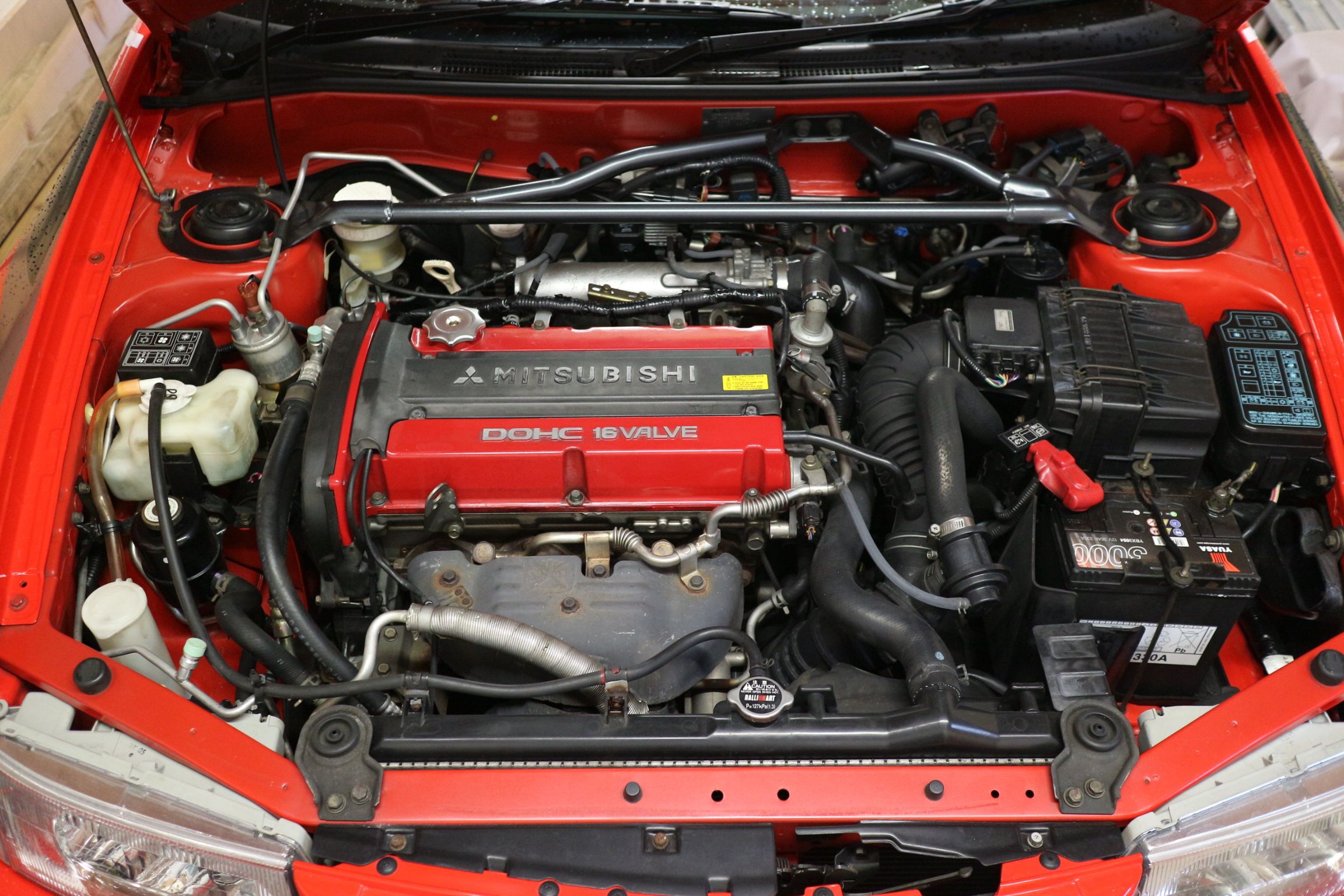
Mitsubishi 4G63T engine

Tracing its roots as far back as the early 1980s, the 2.0L 4G63 engines have truly withstood the test of time. The first turbocharged version of the engine, known as the 4G63T, was first seen in the 1998 Mitsubishi Galant VR-4. This engine would go on to become the heartbeat of the Mitsubishi Lancer Evolution line of cars from 1992 to 2007, which would go on to dominate the World Rally Championships. Suffice to say, the 4G63T, through the Lan Evo, would go on to define the brand for the greater part of two decades and also become the company’s most sought after sports car in both road-going and race-only configurations.

Today, the platform remains popular in grassroots rally racing and circuit racing and also for drag racing builds, due to the incredible amount of power it can make with the proper work.

Volkswagen EA888
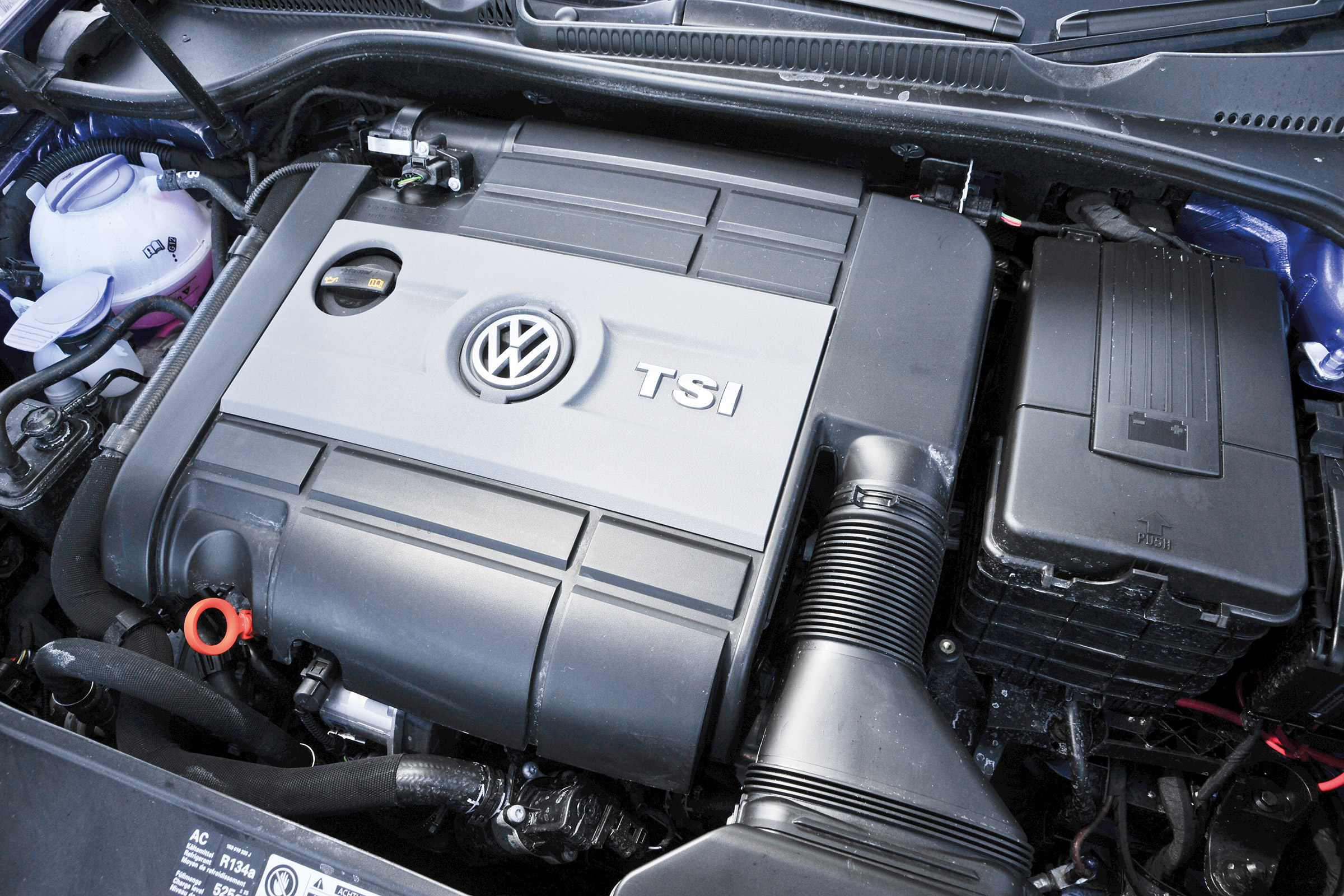
Volkswagen EA888 engine

While Volkswagen’s EA888 engine is another on this list that wouldn’t have made it if reliability was the key metric, there is no question about the powerplant’s performance potential and impressive fuel economy. Today, it most notably appears in the Volkswagen Golf R and Audi S3 where it produces a smidge less than 300 hp. This, along with being very light weight, makes it an ideal match for a modern hot-hatch and compact sedan, but owners can also benefit from relatively lower costs at the pump (provided that it’s not being hooned all the time).

The EA888 engines are extremely popular amongst the tuning community, as a simple build using mostly bolt-ons can easily yield a reliable 500+ hp. Suffice to say, the EA888 is also a solid platform upon which VAG can build more powerful and advanced versions in the future, which I’m sure we’ll be seeing in newer generations of the aforementioned cars and more.

Subaru EJ20

Subaru EJ20 engine

Ok. So while the EJ20 probably won’t go on to pip any of the other engines on this list for the “most reliable” awards, it remains a prolific engine that has powered an iconic car for the greater parts of each of the past 3 decades. The car specifically, is the WRX STi, which is one half of an epic rivalry between Japanese (and rally car) giants Subaru and Mitsubishi. Despite the well documented issues with head gasket failures and the like over the years, the EJ20 has still proven itself through the test of time, with the latest iteration of the engine being used as recently as 2019, coinciding with release of the Subaru WRX STi Final Edition.

The EJ20 has never been short on character, with its Boxer configuration and the use of unequal-length headers giving the car its distinctive “burble” – a sound which has become synonymous with the car and instantly recognizable to any moderately trained ear.

Saab B234R
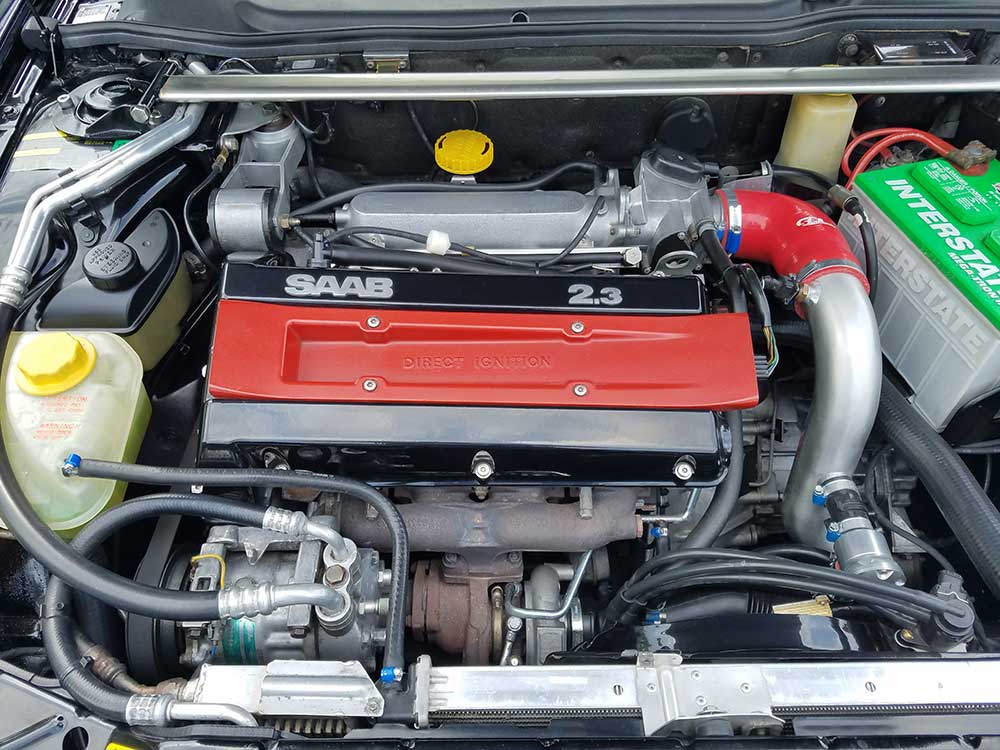
Saab B234R engine

These days, you’d be hard-pressed to find many people who remember Saab as a brand, nor as one of the pioneers of bringing turbochargers to the mainstream. But, they were most certainly both of those things, with the company’s heyday taking place during the late 1980s and early 1990s. Saab’s B234R engine was the golden boy of this era; forged internals and an iron block were the backbone of an extremely reliable platform.

In its complete packaging, the turbocharged engine – via a 5-speed manual Saab 9000 Aero – produced 225 hp and a whopping 300 ft-lb of torque. This helped propel the otherwise unassuming euro sedan from 0-60 mph in just 6.7 seconds. Undoubtedly quick for its day and capable of so much more. It’s no wonder the car has a niche (but passionate) following to this day.

Fiat MultiAir Turbo
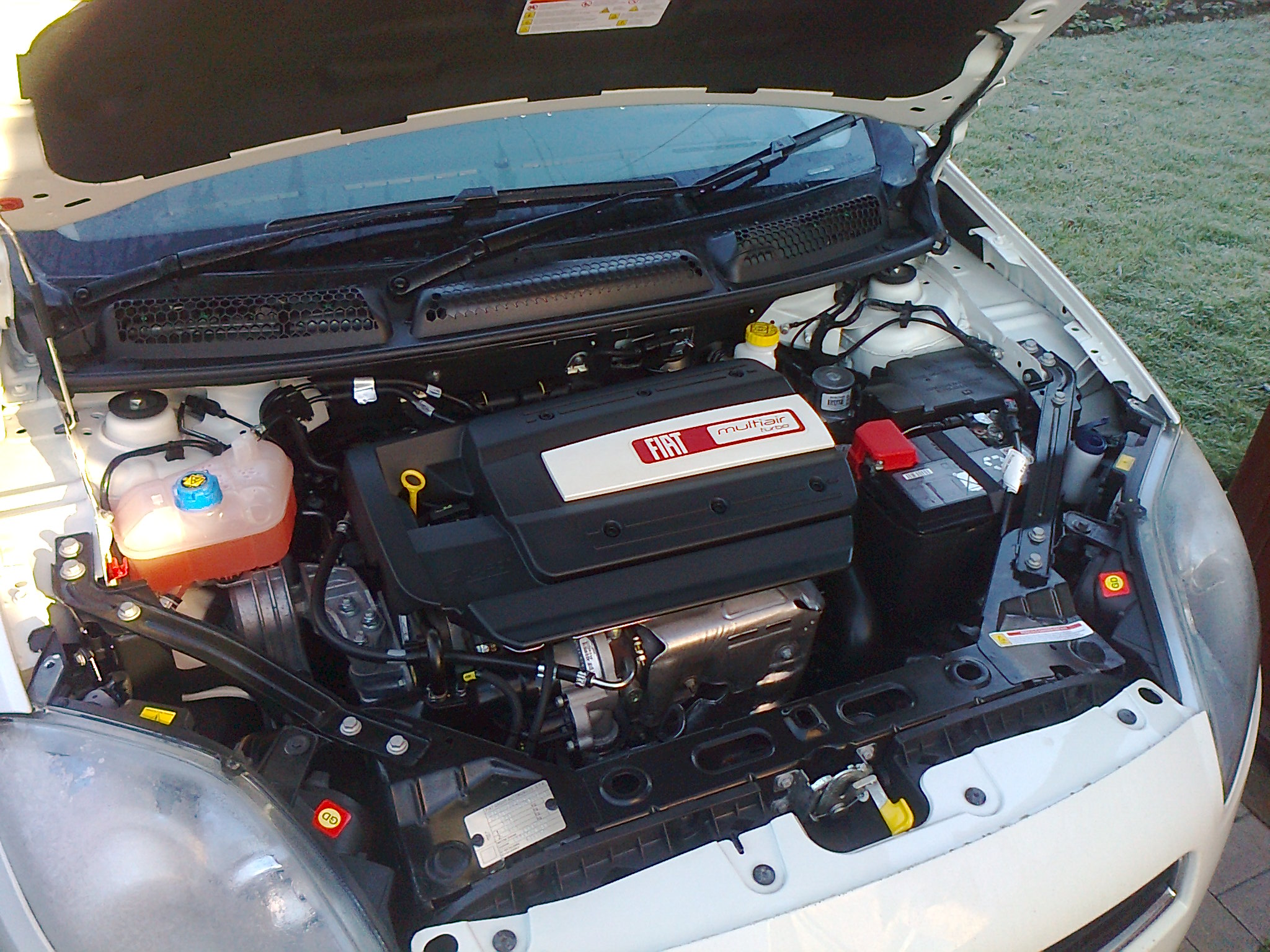
Fiat MultiAir Turbo engine

In my opinion, Fiat has become the de facto micro car producer; at least in North America, where there are far fewer options than in Europe and Asia. Without a doubt, this is in large part owed to fact that Fiat is owned by American automotive conglomerate Chrysler, who leveraged their position to become the dominant force in this market segment. While subcompact cars have yet to really take off west of the Atlantic, Fiat have proven that while micro cars need to be powered by micro engines, their performance can be anything but.

The pinnacle of this is displayed through their 1.3L and 1.4L MultiAir Turbo engines, which have gone on to win numerous awards. Currently, these engines power the Fiat 500X and 500L models, and produce 177 hp and 160 hp respectively, alongside the company’s best-ever fuel consumption and emissions figures.

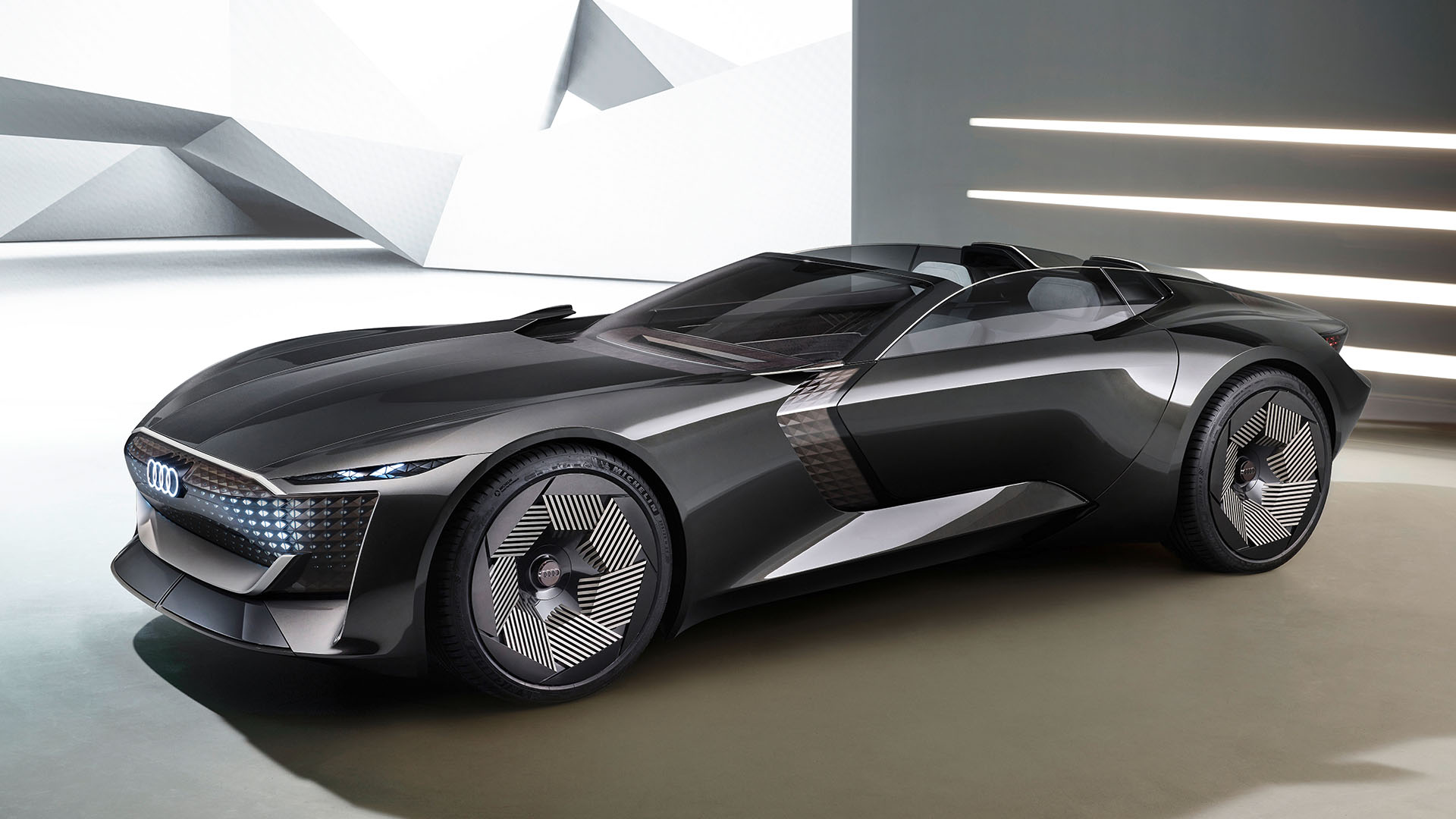
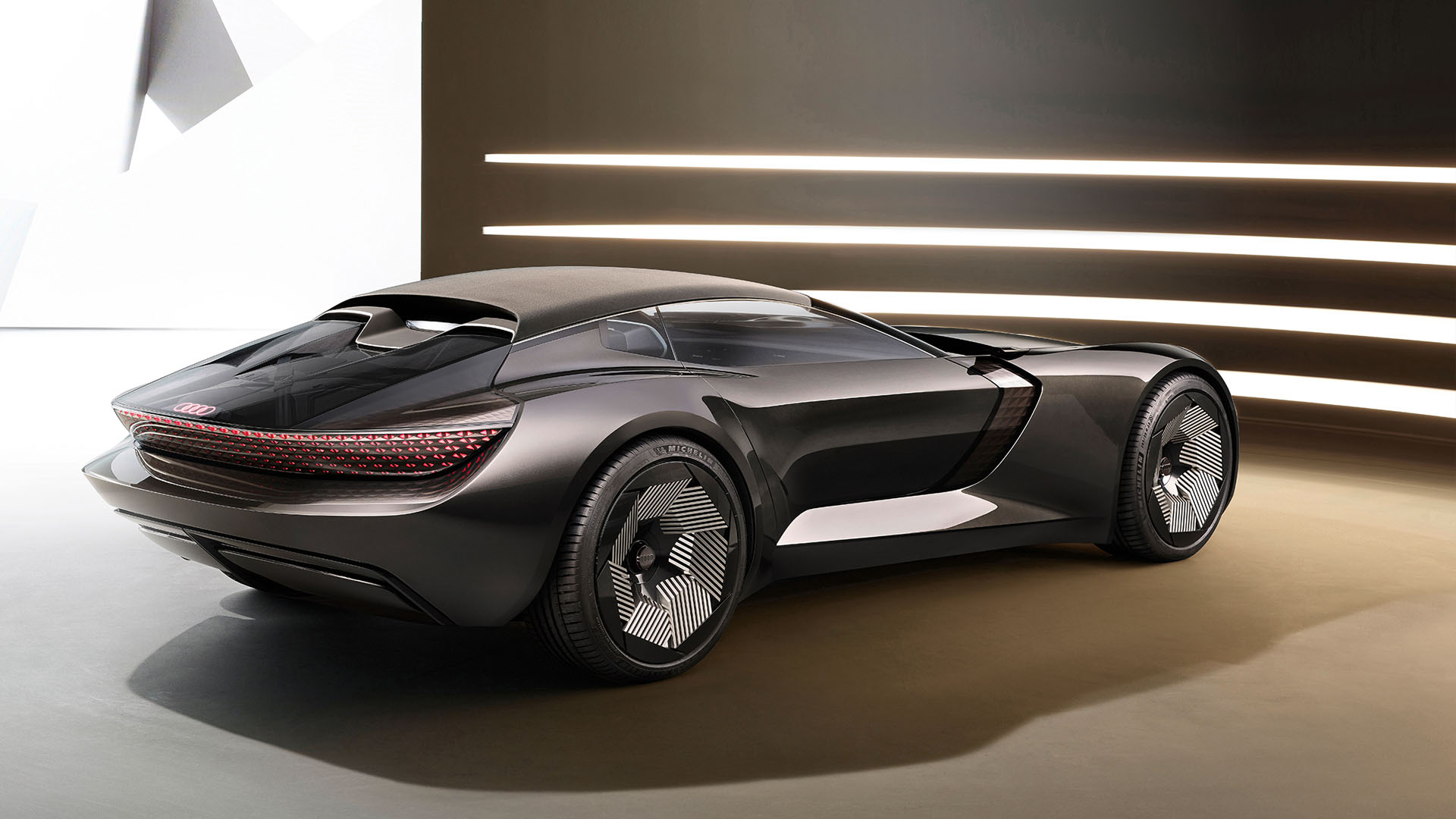
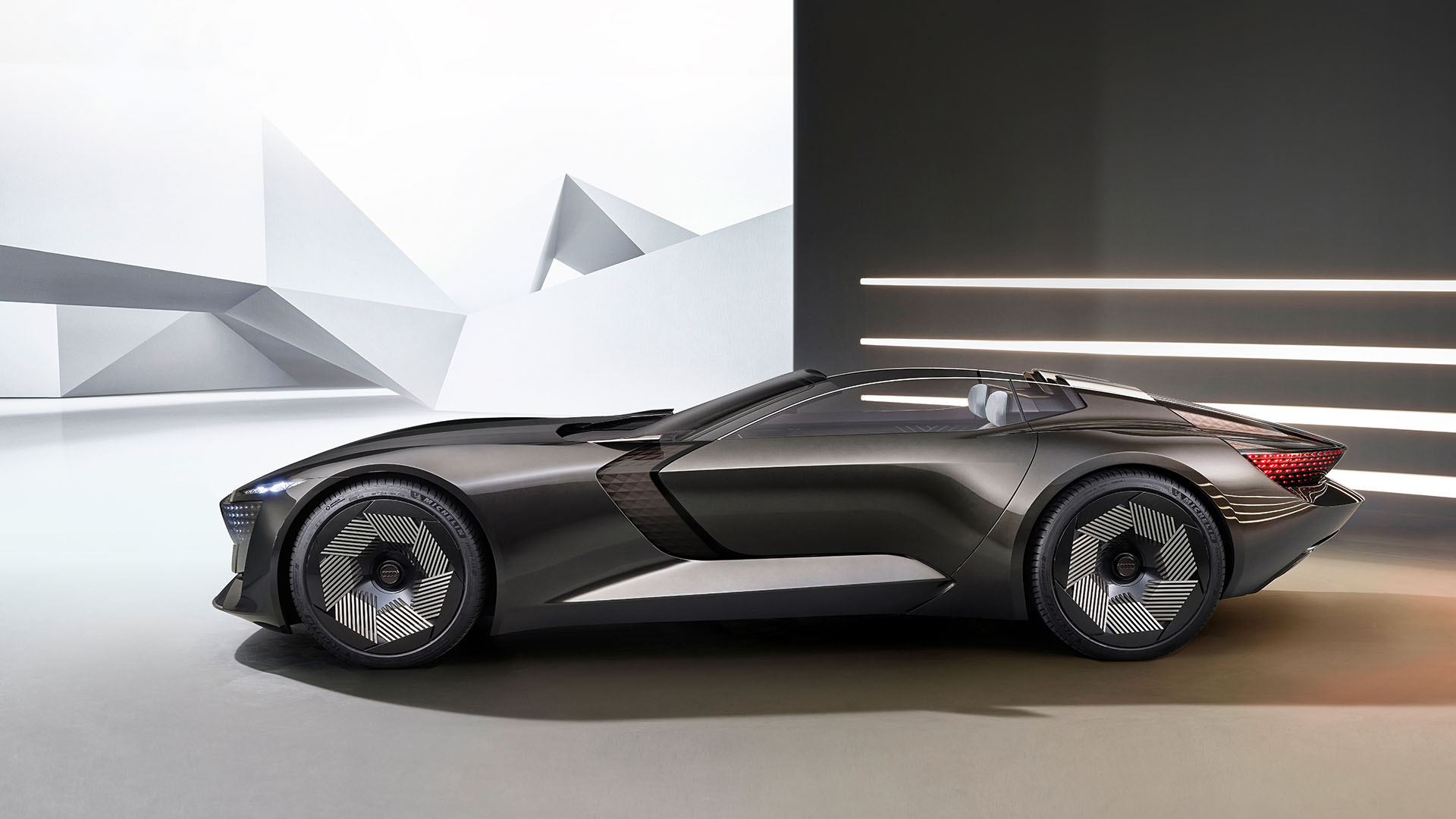
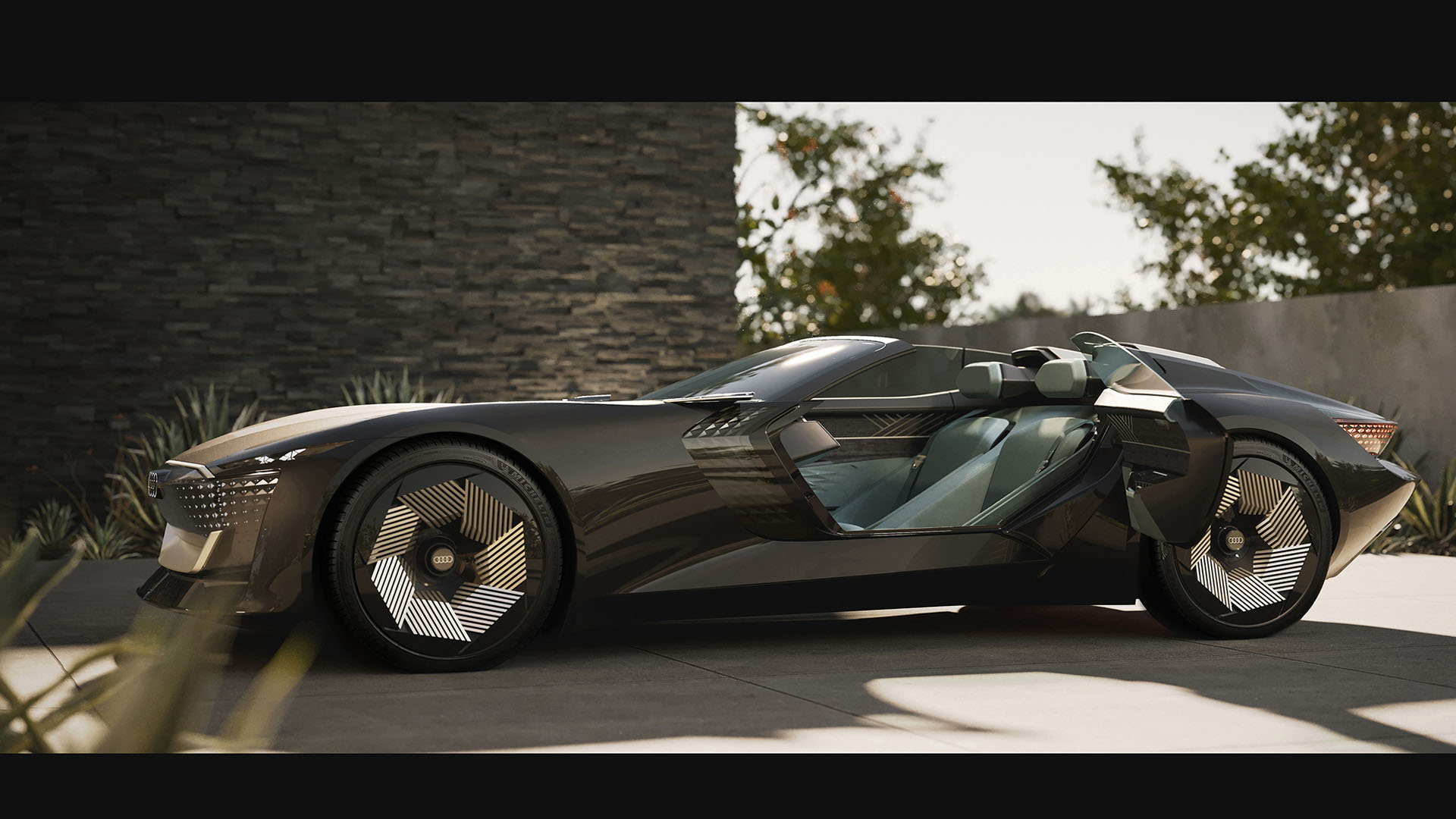
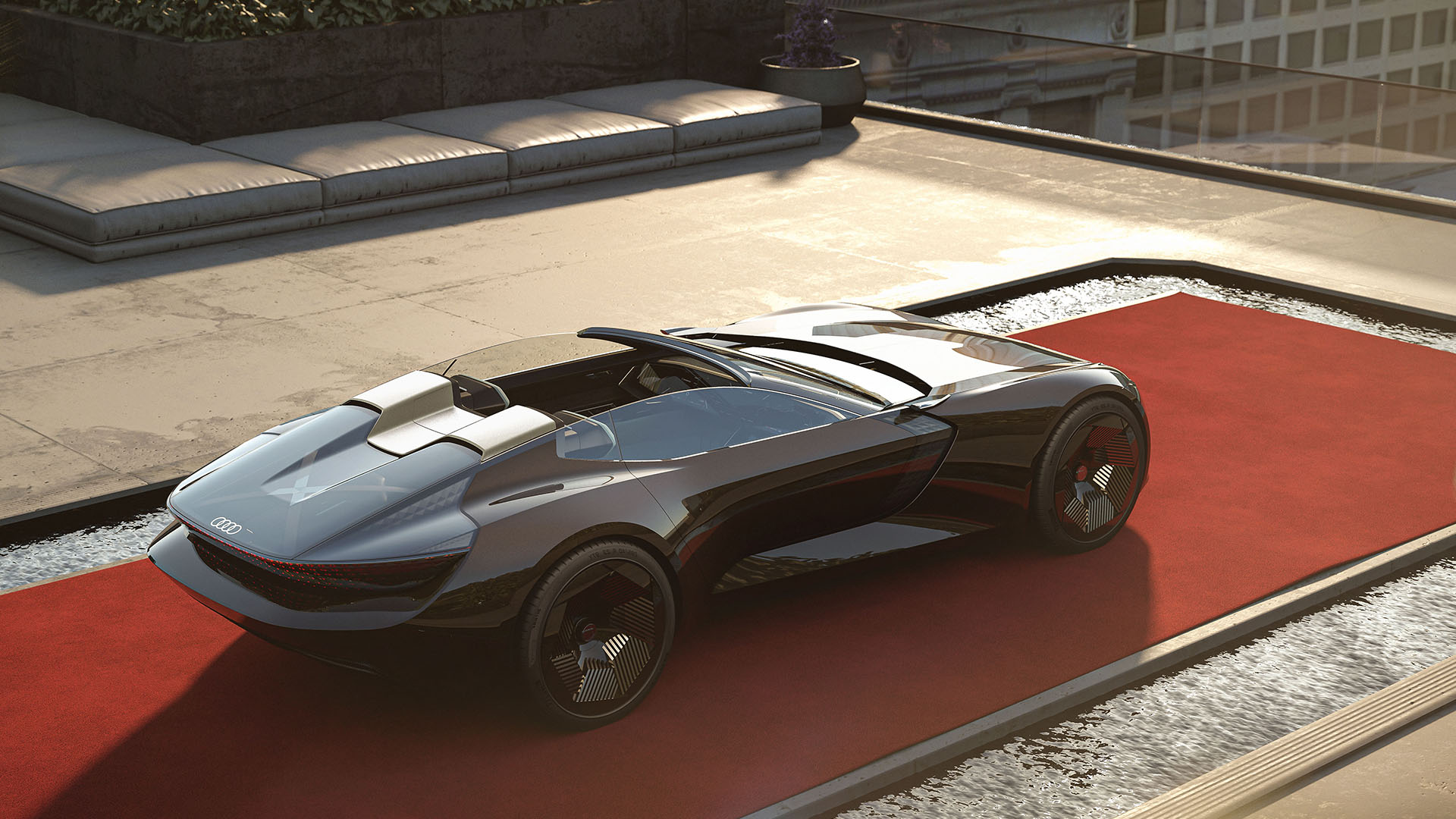
Skysphere, the electric roadster concept from Audi

The future of cars is electric, we have been told that time and time again, many car builders have already committed to stop building internal combustion engines in the not too distant future, while even supercars and hypercars are going electric, or at least hybrid for the next few years, and while I personally do love the sound of a Lamborghini V12, I know it will be a dying breed within a few years, and despite cars like the Rimac Nevera that is all-electric and would obliterate anything from Sant’Agata or Maranello in an acceleration battle, I’m old-school and would still go for a Raging Bull … but that’s just me I guess.

I do look at cars like the Porsche Taycan and the Tesla S, those are some seriously quick cars that can seat four people, but they just don’t give that same sensation in terms of looks like a Lamborghini Urus (if you really need to seat four or five people) or an Aventador, Bugatti Chiron … and other hypercars … but it seems Audi is evolving into the right direction with their latest Skysphere concept, an all-electric two-seater roadster that looks amazing.

Apart from amazing looks and a futuristic design, the Audi Skysphere comes with something really amazing … to offer the client the option of either a sportscar they drive themselves and a comfortable GT with autonomous driving in one single car, the Audi Skysphere can stretch itself by 250mm … yes, you are reading that correctly, the Skysphere can lengthen her wheelbase at the touch of a button to offer more interior space, complete with body panels that slide on top of each other in the ‘Sport’ setting, only to extend in the ‘Grand Touring’ mode.

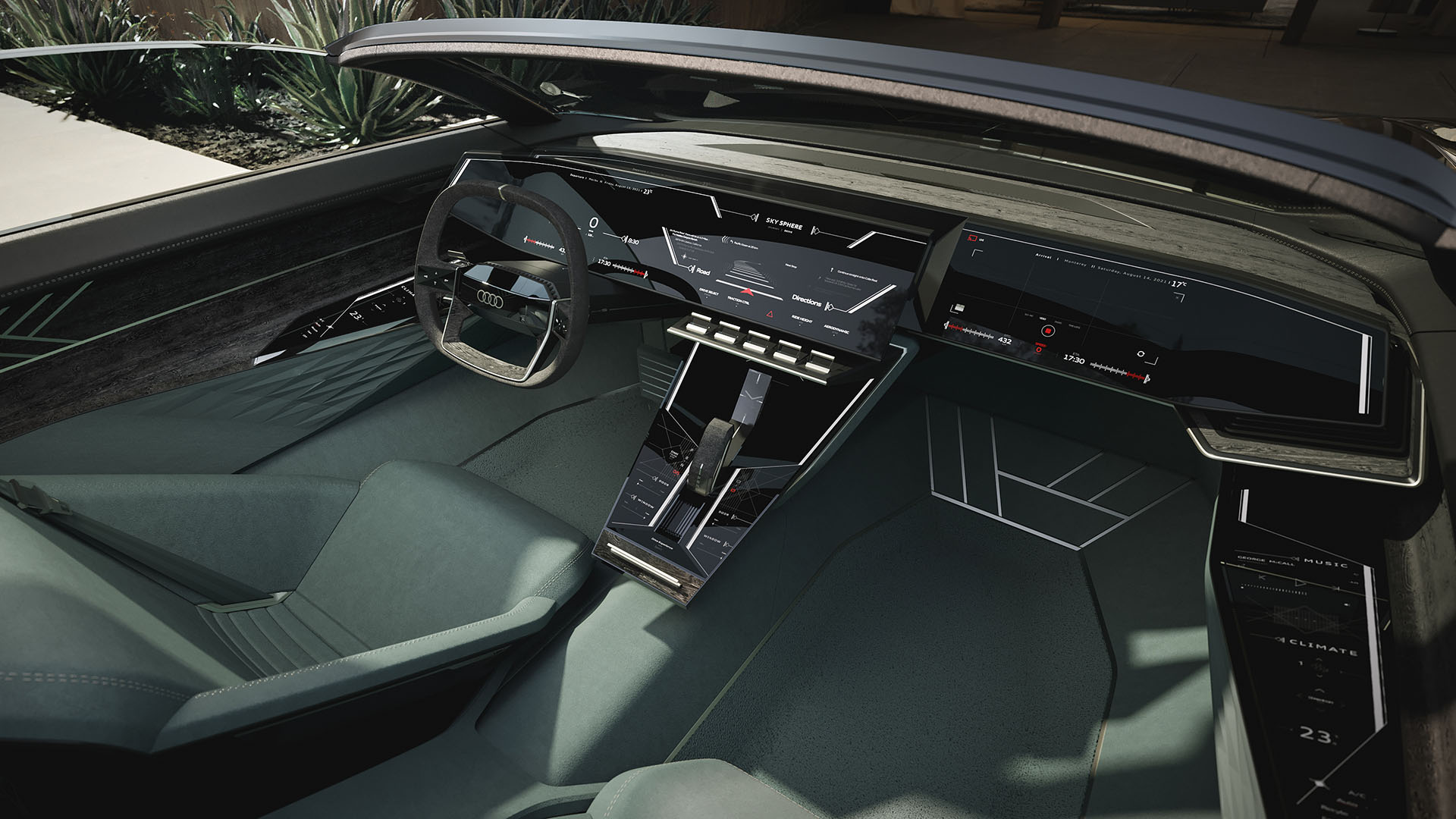
If that doesn’t blow your mind, get ready for this one … in the ‘Grand Touring’ autonomous driving mode, both the steering wheel and the pedals disappear … since you don’t need them anyway as the Skysphere drives herself, these items would take up unnecessary space in the cabin, so they are moved into an invisible area to give the passengers the best possible feeling of space while the Audi Skysphere worries about the road ahead and other drivers with multiple sensor systems to safely transport the occupants to their destination … I know about self-driving cars already, but this is another level altogether.

But Audi wants to take this autonomous driving even further, the Skysphere can pick up her passengers completely on her own, keeping track of their individual destinations, and when she dropped off the occupants, the Skysphere will drive herself onto a parking spot and take care of recharging her batteries … all on her own, no more waiting in line at the charging station when someone else has taken your spot and you see the battery level drop in fear.

Since this concept car was conceived and designed at the Audi Design Studio in Malibu, we’ll be seeing a public unveiling at the Monterey Car Week later this week, on the legendary fairways of the Pebble Beach golf course to be exact, a really nice anecdote is the fact this Audi Skysphere took inspiration from the Horch 853 roadster, an impressive convertible, that was about 5.20 meters in length that was the definition of modern luxury back in the 1930s, the Horch 853 won the Concours d’Elegance in Pebble Beach in 2009.

But unlike the Horch 5-Liter straight 8-cylinder engine, the Audi Skysphere comes with 465 kilowatts of power and 750Nm of torque from an electric motor to the rear wheels, with an overall weight of 1,800 kg, the acceleration should only take 4 seconds from 0 to 100 km/h, this is a luxury, convertible GT, not a supercar, with a battery capacity of 80 kWh the Skysphere should come with a 500 km range.

The Audi Skysphere comes with active suspension to offer different handling characteristics, in comfort or Grand Touring mode, the individual wheels are selectively raised or lowered to compensate for unevenness and undulations in the road surface taking information from the navigation system’s digital predictions and the active chassis’ sophisticated control and actuation systems. Fitted with massive, aerodynamically styled 23-inch alloy wheels with 285/30 tires the Skysphere offers both minimal rolling resistance and a sporty, active driving style with high longitudinal and lateral acceleration.

Seen from the side, the rocker panels seem to protrude into the rear wheel arch, a requirement for the varying wheelbase, being attached to the front end of the car, as it moves, the panel slides to the rear under the fixed door, during this process, the wheelbase is reduced from the standard size of an A8 L to the significantly more compact size of the curve-compatible Audi RS 5, a 25 centimetres difference. Also, note the multitude of LED lights both at the front and the rear of this Audi Skysphere change between the Sport and the Grand Touring mode.

Entering the interior is achieved via rear-hinged doors, so-called suicide doors, that unveil a very special Art Deco style design, the comfortable seats look like designer furnishings, upholstered in sustainably produced microfiber fabric, and offer legroom usually only found in first-class airplane seating, other items in the interior are made from environmentally certified eucalyptus wood and synthetically produced imitation leather.

Best V8 Engines Ever Produced

In almost all cases, manufacturers who choose to equip their cars with a V8 engine do so knowingly and deliberately. After all, such engines represent the first big step in crossing over a threshold to where performance becomes the sole focus; efficiency and economy are often not even invited as guests for a ride-along in the back seat.

With a quick glance at the back mirror, those pesky 4-cylinder and 6-cylinder engines begin to disappear into the horizon. Then, with the proverbial “pedal-to-the-medal”, the V8 power plant unanimously declares “all-in” with a loud roar – because this journey is all about thrill-seeking and checking things off the bucket list.

While high-performance V8 engines have normally been reserved for exotics – and muscle cars, in the more distant past – its application has been seen more in the mainstream these days. With the proliferation of automotive technologies, the V8 engine has become a gateway into the world of attainable supercar performance; each new engine is better than the one before it. But if you prefer roaring V10s, or hearty V12s, check these links out. However, if V8s are more your cup of tea, read on.

Here’s the shortlist of 10 such engines, curated for your reading pleasure:

Ferrari F106

Ferrari F106 Engine

Ferrari’s F106 V8 engine dates as far back as 1973, where it first featured in the Dino 308 GT4. Right from the get-go, it produced an impressive 250 hp from a 2.9L naturally-aspirated engine, which featured a flat-plane crank and dual-overhead cams.

Such was the longevity and capability of the F106 unit, that it continued to be used – with significant updates and revisions along the way, including electronic fuel injection and multi-valve heads – for more than 30 years. Notable models which were equipped with the engine include the F355, 360 Modena, and arguably the most famous Ferrari of them all; the Ferrari F40, which fashioned a twin-turbocharged version of the F106 producing 471 hp.

Dodge Supercharged Hemi

Dodge Supercharged Hemi Engine

Dodge’s Hellcat series of cars have really taken the world by storm, offering almost unfathomable power in a non-exotic production vehicle – or any vehicle for that matter. It’s truly a revival of the “American muscle” movement, with the supercharged Hemi able to produce as much as 807 hp and 717 lb-ft of torque via the Dodge Challenger Hellcat Super Stock. Handling, agility, and all that other kind of stuff aside, this makes the Hellcat Challenger/Charger the quintessential American sports car which can be had for well under the 6-figure mark brand new.

The automaker is now offering the 6.2L ‘Redeye’ V8 as a crate engine (aptly nicknamed ‘Hellcrate’) through Mopar. It can be purchased at a starting price of US$21,807. The ‘Redeye’ version comes with a larger supercharger than the previous Hellcrate engine and has been tuned for more boost, a slightly higher redline, and a host of other improvements. These are what has allowed it to improve from 707 hp and 650 lb-ft of torque to its current 807 hp state. An absolute unit.

BMW S63

BMW S63 Engine

Like other automakers on this list, BMW is no stranger to producing some of the world’s best V8 engines. The latest incarnation would be its masterpiece ‘S63‘ – a 4.4L twin-turbocharged engine that produces at least 600 hp and 553 lb-ft of torque in the current-gen BMW M5 sedan.

Though it’s true that this grants the quintessential luxury-performance saloon some serious supercar credentials, a look back to days gone by reminds us that engines such as the ‘S62’ and ‘S65′ deserve just as much recognition for their contribution to the Bavarians’ V8 platform. Respectively, each engine displaced 4.9L and 4.0L and were both naturally aspirated.

Lexus 2UR-GSE

Lexus 2UR-GSE Engine

The 2UR-GSE is the latest iteration of Lexus‘ increasingly iconic naturally-aspirated V8 power plant. Currently reserved for the marque’s high-performance models – such as the IS F, RC F, GS F, LC 500, and brand-new IS 500 – the 5.0L engine blends typical Lexus reliability with a high-revving Japanese character. In its most powerful configuration, the 2UR-GSE produces 475 hp in the Lexus LC 500. Amidst an ever-changing landscape shifting towards hybridization and electrification, we hope that Lexus’ legendary naturally-aspirated V8 lives on for as long as possible

Much like our other selections, the 2UR-GSE owes much of its distinctions to predecessors such as the 1UZ-FE which debuted in 1989. This 4.0L V8 engine has proven to be bulletproof over the test of time, in addition to the universal recognition it has received for being smooth, refined, and sufficiently powerful for its intended application. It has served as the platform upon which the formidable GSE would eventually be conceived.

Ferrari F136

Ferrari F136 Engine

The F136 succeeded the legendary F106, first appearing as a 4.3L naturally-aspirated engine in the 2004 Ferrari F430, producing 483 hp. Like the F106, the F136 would see widespread application throughout the Ferrari lineup; however, it was also featured on a number of Maserati models in concert with the relationship between the two marques.

Most notably, a 454 hp, 4.7L version of the F136 featured on the Maserati GranTurismo and is widely regarded as having one of the best engine/exhaust notes to come out of the V8. The F136 would reach its zenith in the Ferrari 458 Italia Speciale, where it cranked out a massive 597 hp from its 4.5L naturally-aspirated power plant.

Perhaps the most significant (and regretful) fact about the F136, is that it is the last naturally-aspirated V8 engine Ferrari would ever produce. It was replaced by the twin-turbocharged F154 V8 engine in 2015, where it debuted on the Ferrari 488 GTB.

McLaren M830T / M840T

McLaren M830T / M840T Engine

Despite only producing V8-powered automobiles since as recently as 2011 (via the MP4-12C), you could argue that McLaren‘s engineers are truly the world’s V8 engine artisans, and few would dispute that. After all, it’s virtually all they know these days, with every single McLaren model – bar the V6-hybrid McLaren Artura – fitted with some adaptation of their M838T or M840T twin-turbocharged V8 motors.

The 3.8L M838T is found in its Sports Series range of cars, which includes the entry-level McLaren 540C and goes all the way up to the indomitable 666 hp McLaren 675 LT. The 4.0L M840T features on all of the Super Series cars, which covers the ‘700 range’ of models, plus the addition of the McLaren GT. In its Ultimate form, the 4.0L unit – dubbed the M840TR – produces 814 hp in the McLaren Senna GTR. The McLaren Speedtail hybrid ‘hyper GT produces some 1,035 hp through the combination of an M840T and electric motor.

GM Small Block LT1/LT2

GM Small Block LT1/LT2 Engine

Introduced in 2014 for the C7 Corvette, the 6.2L naturally-aspirated V8 LT1 engine is part of GM’s 5th-generation small block engine family. It continues to be used on the present-day Camaro, with a new version of the engine – known as the LT2 – carrying on the bloodline via the brand new mid-engine C8 Corvette. The LT2 retains the 6.2L capacity but is more powerful than the LT1, producing at least 495 hp and 470 lb-ft in its latest configuration.

This was achieved by designing more efficient air-intakes sand exhaust manifolds, while also featuring a better lubrication system and more resilient camshaft. While it’s not a monster-out-of-the-box like say, Dodge’s Hellcat engine, the lightweight naturally-aspirated powerplant remains perfectly suited for what the Corvette is the best at delivering – brilliant all-around performance at a fraction of the cost of comparable options. The still-relevant LT1 is now being offered as a crate engine via GM’s performance division, with its 460 hp on tap for under US$10,000. Project car, anyone?

Audi 4.2L FSI

Audi 4.2L FSI Engine

When Audi’s 4.2L FSI V8 engine was introduced, it was a bit of a departure from what Audi enthusiasts had grown accustomed to over the years. As one of the marques which helped to proliferate the use of turbochargers on production cars, the aforementioned engine first appeared in the 2006 Audi RS4 as a high-revving naturally-aspirated power plant.

Over time, it proved to be a fan-favorite in spite of its lack of forced induction and featured on such models as the RS5 and mid-engined R8. As a naturally aspirated unit, the FSI V8 was able to rev up to 8,250 rpm and had a distinctively exotic exhaust note, regardless of the model it was mounted in.

The engine remained naturally-aspirated up until its use in the 444 hp Audi RS5; since then, recent iterations of the engine are now turbocharged and produce up to 600 hp.

Mercedes-AMG M178

Mercedes-AMG M178 Engine

The modern-day Mercedes-AMG line-up is blessed with their omnipotent ‘M178’ 4.0L twin-turbocharged V8, which itself deserves all the plaudits and is a shoo-in for selection. While it’s the most advanced iteration of the automaker’s V8, our personal favorite would have to be the ‘M156’ 6.2L V8 first powered the 467 hp naturally-aspirated C63 AMG. Like its successor, the M156 would feature in almost every Mercedes-AMG model of that era, including the SL63.

The ultimate version of this V8 motor would be the ‘M159’, which was equipped in the automaker’s flagship SLS supercar, producing 622 hp. The SLS has since been succeeded by the Mercedes-AMG GT Black Series, which produces 720 hp from its twin-turbocharged ‘M178’, and recently set the new production car lap record at the Nürburgring.

Ford ‘Voodoo’ Flat-Plane

Ford 'Voodoo' Flat-Plane Engine

The ‘Voodoo’ engine produced by Ford is a 5.2L naturally-aspirated V8 which was made especially for cars such as the 526 hp Mustang Shelby GT350 and GT350R. Suffice to say, the Voodoo was a match made in heaven for the line-up’s most balanced and track-focused Mustang models. By utilizing a flat-plane crankshaft, the engine weighs less and revs faster and higher (to 8,250 rpm) than the otherwise standard engines in other models. Its configuration also gives it an almost-exotic exhaust note, border-lining on ‘un-American’ – but owners won’t mind, as their domestic car hangs just fine with the exotics and other high-end sports cars on the race-track.

Following the template of past flat-plane V8 engines, the Voodoo applies similar principles as engines that once powered hot-rods and muscle cars back in the 20th century – with impressive bang-for-buck, the engines produced big horsepower at a fraction of the cost of what was used in European sports cars and even domestic rivals. This provided owners with a rightfully potent automobile, and extra money left in the bank. It’s hard to argue with that!

Best V10 Engines Ever Produced

Most people probably don’t know it, but V10 engines are kind of the awkward middle child within the high-performance engine family. They are often overlooked for their smaller, more compact, and just-as-spirited V8 siblings, yet still somehow manage to cut a notably less brawny figure next to the larger V12 motors. In terms of outcomes, this is probably why even the most hardcore car enthusiasts will have a difficult time recalling more V10 production cars than you can count on one hand – there are fewer of them than you’re likely thinking, and perhaps there should be more of them for this reason, but that’s for a different discussion.

Interestingly, it’s the Volkswagen Group which currently has the monopoly on supplying this particular engine, via Lamborghini and Audi production models which are under the corporation’s umbrella (plus its namesake Volkswagen Touareg V10 TDI – more on that below). Meanwhile, you’d be forgiven for thinking that Ferrari would at the very least have delved into the art of the V10 -which they did, though only to produce such engines for Formula 1 cars from 1996 to 2005.

Quantifiably speaking, yes, there are fewer V10s out there than the other engines most closely related to it. However, each V10 engine mentioned on this list is undeniably iconic and rightfully potent, particularly when it comes to panache. So while this middle child might not always steal the spotlight, nor hog affection that goes to its siblings, it is in no way lacking any of the talent in its DNA.

Here’s the shortlist of 10 such engines, which we have curated:

Lamborghini / Audi 5.2L V10

Lamborghini / Audi 5.2L V10 Engine

Ever since 2008 – when the refreshed Lamborghini Gallardo LP 560-4 was released – all V10 engines used in the Lamborghini line-up have been based on the 5.2L architecture. This has carried over to the Gallardo’s successor – the Lamborghini Huracán – with each and every one of its models having been fitted with the aforementioned power plant, up to this point. In the current stage of its evolution, the 5.2L naturally-aspirated V10 is mechanically identical to Audi’s version of the engine (which uses ‘Fuel Stratified Injection) and is seen in Audi’s own R8 supercar; however, power outputs vary depending on the trim levels of the respective models.

Audi 5.0L V10 Biturbo

Audi 5.0L V10 Biturbo Engine

The sharing of tech (and a healthily-stocked pantry of engine parts) between Lamborghini and Audi spans back more than a decade now, and the engine used in the C6-generation Audi RS 6 has to go down as one of the best collaborations to date. Derived from the outgoing 5.0L naturally-aspirated V10 unit from the Lamborghini Gallardo, the motor in the RS 6 was repurposed with a pair of turbochargers. This allowed the super-wagon to produce 571 hp and 478 lb-ft of torque, on its way to becoming Audi’s most powerful car ever, in 2010. While it was handily more powerful than its competition – the BMW M5 and Mercedes-AMG E63 – it also cost quite a bit more (almost double, after conversion) which is likely the reason why it didn’t reach US shores.
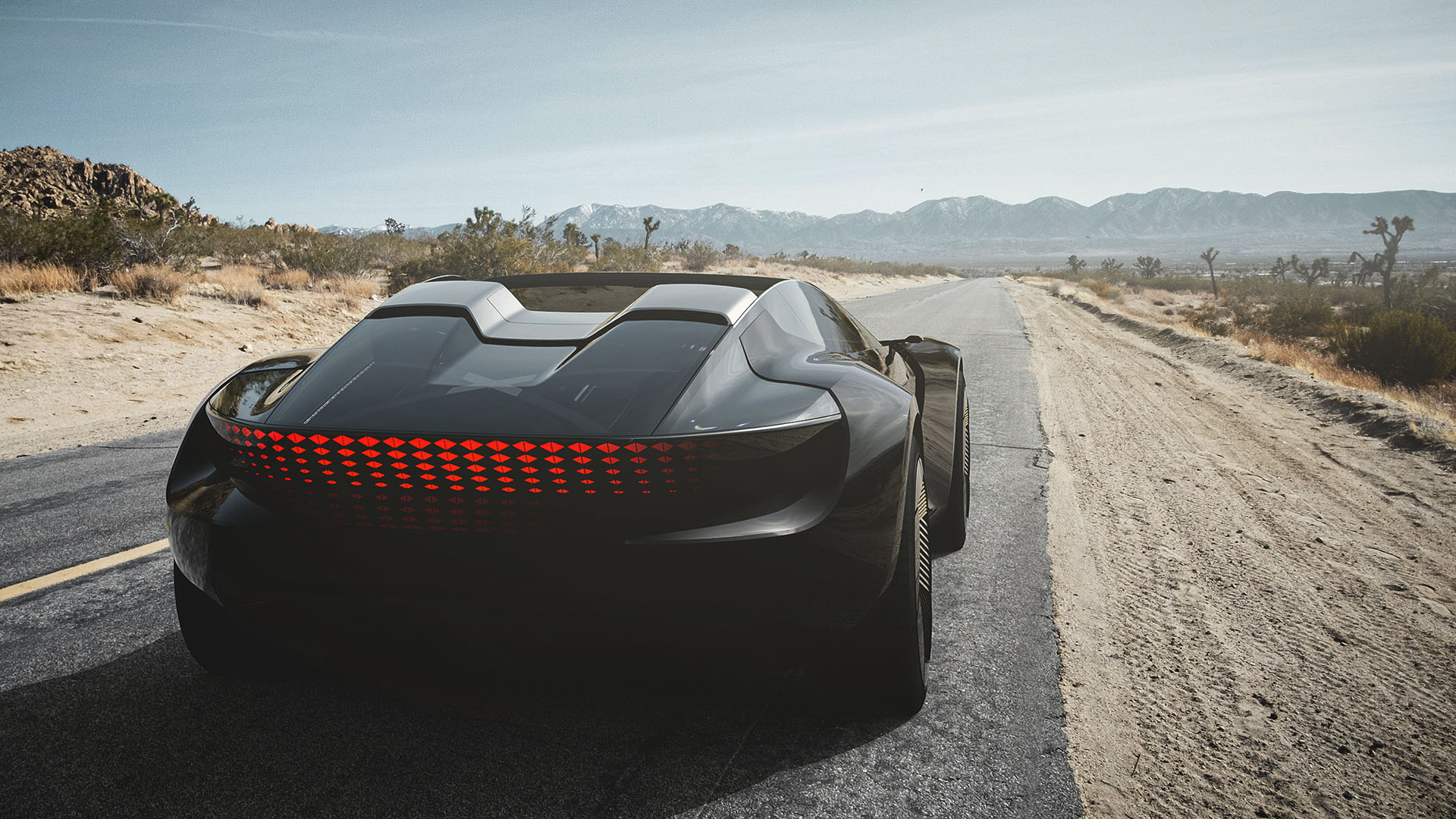
Audi 5.2L V10 FSI 40V

Audi 5.2L V10 FSI 40V Engine

Unlike the C6-generation Audi RS 6, the 5.0L unit used in the third-generation Audi S6 is less related to a Lamborghini equivalent and has more in common with an Audi 4.2L V8. For starters, it has a longer stroke and wider bore than the Lamborghini 5.0L V10 seen in the Gallardo, making for the better low-end power which is more befitting of the larger sedan. When considering the internals, the 5.2L motor in the S6 more closely resembles the aforementioned 4.2L V8 which was once used in the B6-generation Audi S4. Thanks to the tweaks mentioned above, this engine was good for 444 hp in the four-ringed luxury sports sedan.

Lamborghini Huracán Performanté 5.2L V10

Lamborghini Huracán Performanté 5.2L V10 Engine

The 5.2L naturally-aspirated V10 power plant we’ve been speaking so much about in this list is at the peak of its evolution via the current Lamborghini Huracán Performanté. In this configuration, the engine produces 640 hp @ 8,000 rpm and 443 lb-ft of torque @ 6,500 rpm; this makes the supercar good for 0-100 km/h in 3.1 seconds and a blistering top speed of 325 km/h, all without the assistance of any type of forced induction. Augmented with the greatest technologies available today, the motor produces its power more efficiently than ever before as well, with more than 70% of its torque already available as early as 1,000 rpm.

Dodge Viper ACR 8.4L V10

Dodge Viper ACR 8.4L V10 Engine

Even if the Dodge Hellcat is hogging all the headlines these days, there’s always something you have to admire about the lunacy of a naturally-aspirated 8.4L V10 engine. No, the Dodge Viper doesn’t do subtlety very well. Yes, it does happen to fall under the ‘Old Testament’ definition of “awesome”. With 640 hp and 600 lb-ft of torque being produced from that colossus of an all-aluminum engine, the Viper has the exhaust note of a semi-dormant volcano. It would make absolutely no sense at all if it wasn’t just so damn fast. Variants such as the SRT-10 and ACR-X took the road-going version of the car to the next level, with the latter being a turn-key, non-street legal race car that participates in Viper racing leagues around the world.

Lexus LFA 4.8L V10 (1LR-GUE)

Lexus LFA 4.8L V10 (1LR-GUE) Engine

Many regard the Lexus LFA as one of the best supercars ever made. Lexus only made 500 units, and I assumed those 500 sold out quickly. I was wrong. Despite the fact that Lexus hasn’t produced the LFA since 2012, there are still seven brand new LFA supercars for sale in the US, according to Carscoops. With all that said, the LFA came with one of the best V10 engines ever produced by a Japanese automaker. The 4.8L naturally-aspirated V10 – dubbed 1LR-GUE – made 552 hp and 352 lb-ft of torque. Developed in collaboration with Yamaha, it was a free-revving engine with an exhaust note that is truly unlike any other on the planet. As the sole representative from Japan, the 1LR-GUE is certainly one for the ages.
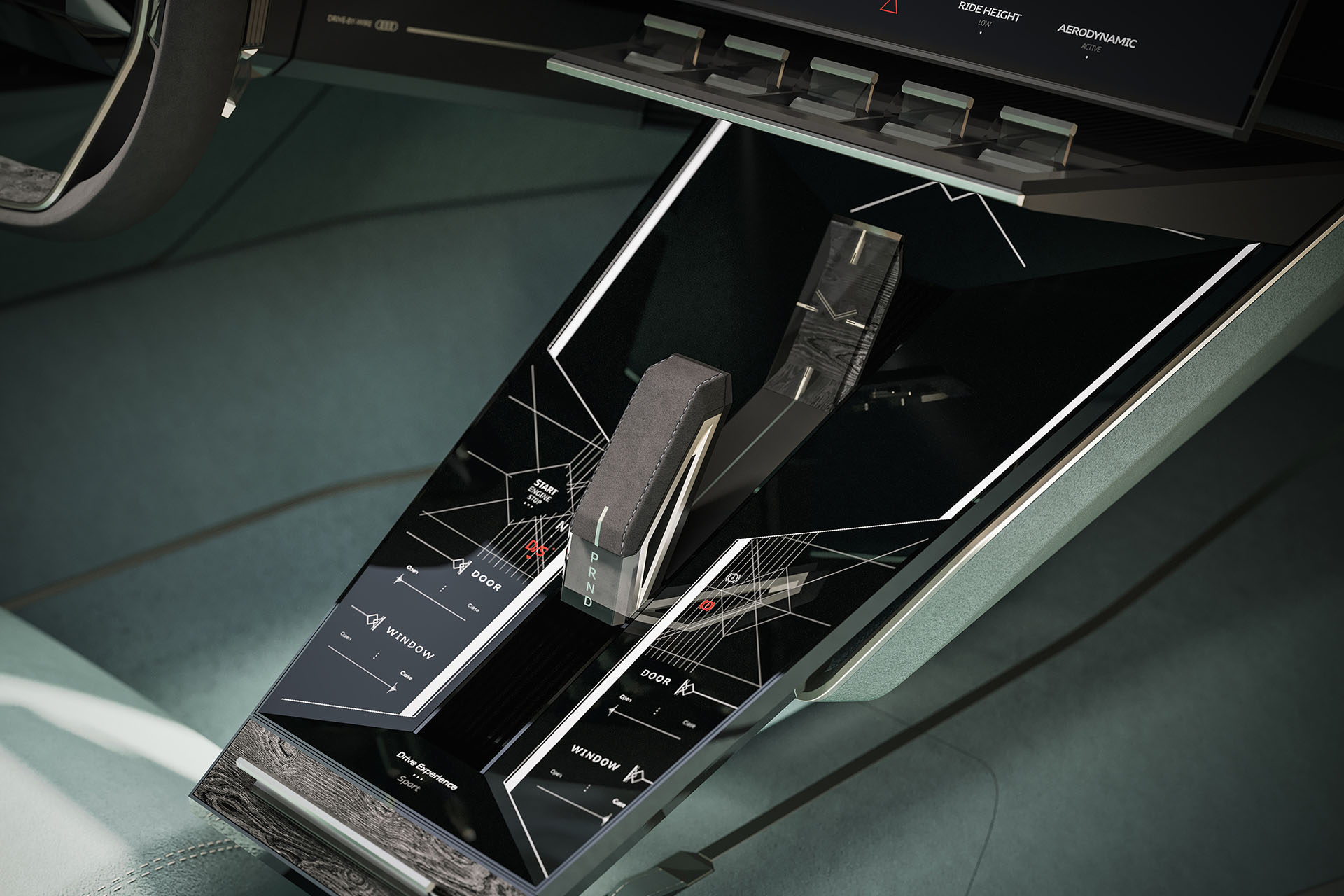
Porsche Carrera GT 5.7L V10 (980/01)

Porsche Carrera GT 5.7L V10 (980/01) Engine

What makes the Porsche Carrera GT engine so special is that it is technically a race car engine. Not in that loosely-based sense – as is often used as a gimmick by salespeople – but in the true sense of the word. In the late 1990s, Porsche engineers in Zuffenhausen were assigned the task of developing a naturally-aspirated V10 concept engine, which was to later be used in a race car for the infamous 24 Hours of Le Mans endurance race. Sadly, the completion of that race car never came to fruition, but the efforts of the engine builders would not go to waste.

Porsche decided to adapt the engine for use in the Carrera GT and took the necessary steps to not only refine it in order to satisfy production car protocols but also managed to make it a more powerful version than the original unit. The result is a 5.7L naturally-aspirated V10 engine, which produces 612 hp @ 8,000 rpm and 435 lb-ft of torque @ 5,750 rpm. This allowed the Carrera GT to accelerate from 0-60 mph in 3.8 seconds and 0-100 mph in 6.9 seconds, with a top speed of 205 mph.

BMW M5 V10 (S85)

BMW M5 V10 (S85) Engine

Released in mid-2005, the E60 M5 sedan featured a high-revving and ultra-powerful V10 engine, which was the only one of its kind in a series-production car at that moment in time (while also being the marque’s most powerful production car engine ever made). The 5.0L naturally-aspirated unit shared more than just the same number of cylinders as the Formula 1 engine that powered the BMW Williams F1 team. Technology forged in the heat of motorsport had enhanced the processes and components used in creating this new powerhouse. As you would expect from BMW M, this high-performance motor generates enormous pulling force over its entire speed range.

VW Touareg V10 TDI

VW Touareg V10 TDI Engine

What makes this particular automobile so remarkable is not that it’s a Volkswagen, or an SUV, or diesel-powered, but that it’s all of those things with a twin-turbocharged 10-cylinder engine thrown into the mix. This Frankenstein-ish power plant would only feature for a couple of years before the whole Dieselgate fiasco, and had it not been for the calamity which ensued, it surely would have garnered more recognition than it has mustered to this day. All of its characteristics exude a bias towards low-end power, and the stats certainly reflect this – 309 hp and 553 lb-ft of torque @ 2,000 rpm. Oh, and don’t forget, a very utilitarian tow rating of 7,700 lbs.
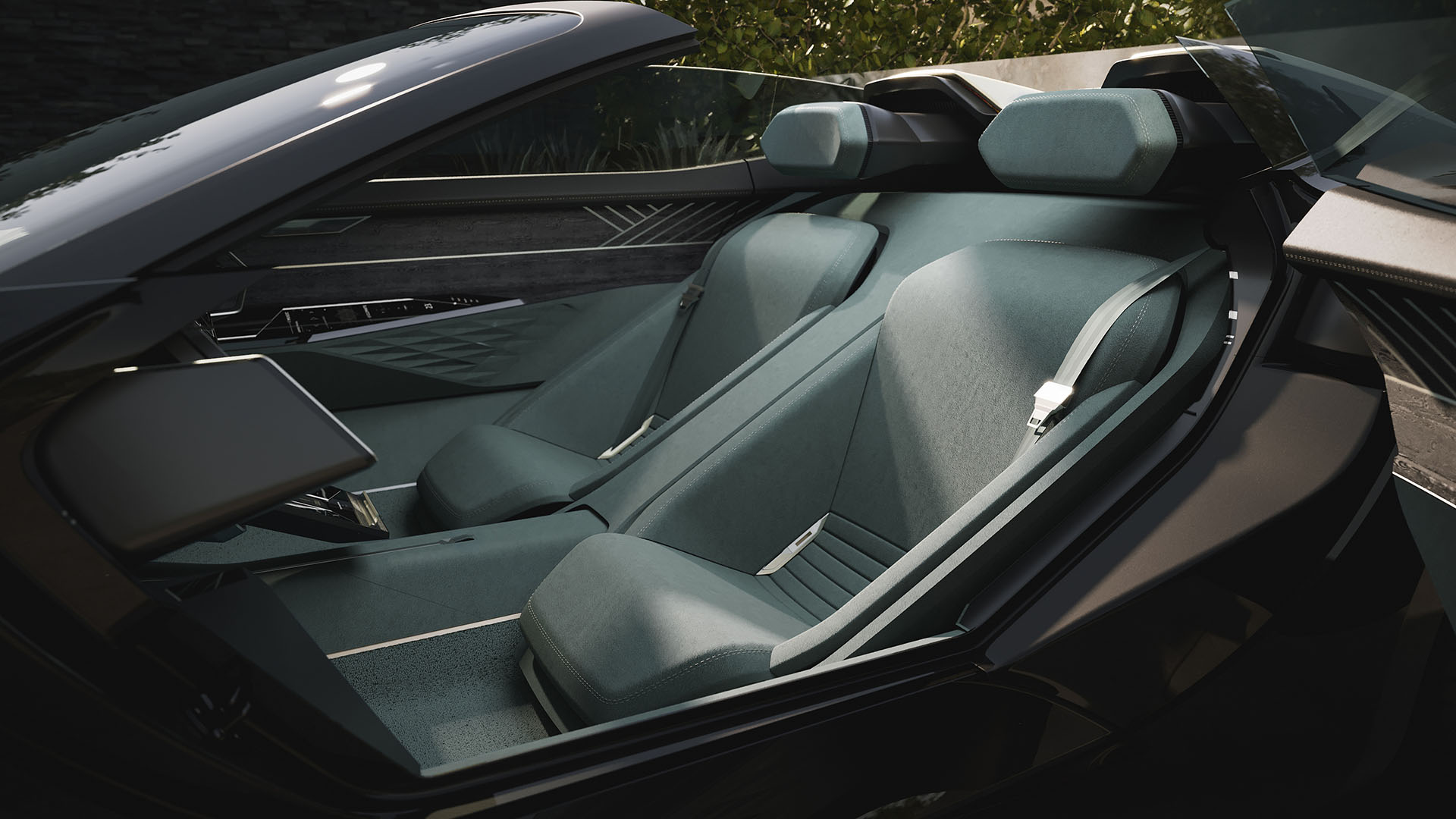
Dodge Ram SRT-10 8.3L V10

Dodge Ram SRT-10 8.3L V10 Engine

Imagine a Viper engine swapped into, then modified for use in a Dodge Ram pick-up truck, and voila. So what exactly does this magic trick entail? Well for starters, in July 2004, a Dodge Ram SRT-10 driven by NASCAR driver Brendan Gaughan, set the Guinness World Record (and the SCCA record) for the world’s fastest production truck when it achieved an average top speed of 154.587 mph. This was all possible with the help of the 500 hp and 525 lb-ft of torque that the naturally-aspirated motor produced, with 90% of its torque available at 1,500 rpm. It could even tow up to 7,500 lbs; though we would bet that most owners would forgo any procedures that might keep them from optimizing their 1/4 mile times.
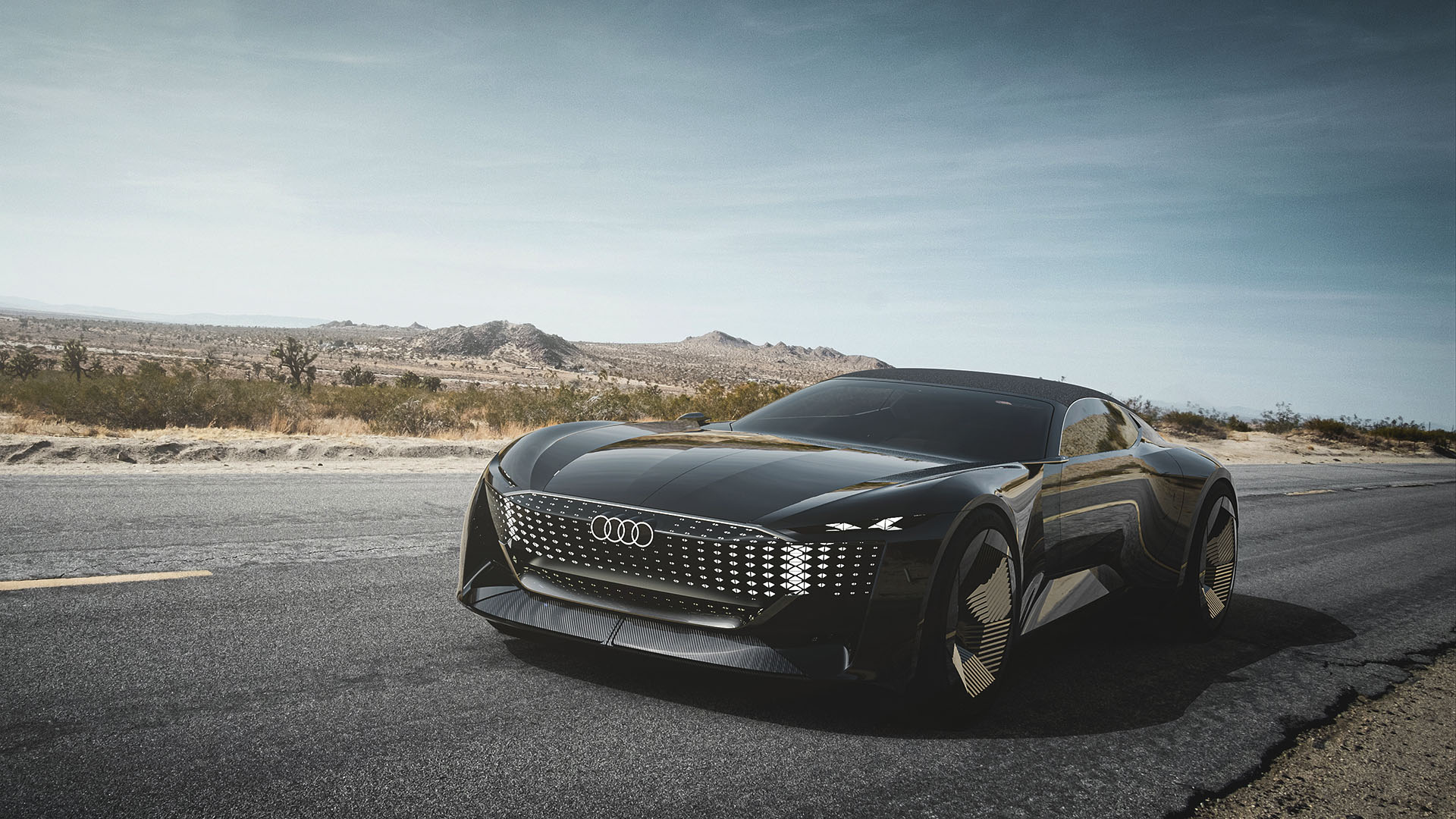
Rarest ABT ever sold out

We’ve only published the article on the release of the limited edition Johann Abt Signature Edition a few days ago, the car is based on the amazing Audi RS6, of which only 64 units would be built to celebrate the 125th anniversary of ABT Sportsline GmbH, and today the CEO Hans-Jürgen Abt already announces this celebration model is already sold out, all of the 64 units are spoken for in a matter of days.

Today ABT Sportsline GmbH is a globally recognized tuning company, but it all started back in 1896 when Johann Abt laid the foundation for the success, and as an homage, each of the 64 units of the 800 hp Johann Abt Signature Edition will come with a small part of the actual anvil Johann used to form metal on back in 1896 and the years after that before machines took over this method, keeping in mind many artisans still use what is known as the ‘English wheel’ to form metal parts to this date.

The first customer will be receiving his (or her) Johann Abt Signature Edition in July already, the car seen on these photos is the production prototype and comes with a plaque stating ‘0 of 64’, over the next ten months or so ABT will be building 6 of these individual conversions per month due to the extreme level of complexity needed to put together these high-power ‘wagons’, one motorsport mechanic will oversee the process from start to finish.

Enjoy some more photos of this amazing Audi RS6 conversion:

Super Hatch Territory: 2022 Audi RS3 to Launch in July, Rivals A45 S AMG

During a briefing on the company’s R and RS models, Audi released images of the upcoming Audi RS3 Sportback and Sedan. The official launch will take place in July and while no information on the cars was dished out, we expect the new model to usher in a new level of performance while retaining the popular 5-cylinder engine.

The outgoing RS3 model stood out as the most powerful hothatch on the market up until the launch of AMG’s A45 S. The 2017 facelift brought increased power to the 5 pot engine, a total of 395hp and 480nm of torque. This was a significant increase from the pre-facelift models that had an output of 362hp and 465nm of torque.

With the super hatch market leveling around the 400hp mark, we expect the new RS3 Sportback and Sedan to have an output within that range. 400hp on the lower end and 430hp on the higher end, 480-500nm of torque is expected.

2022 Audi RS 3 Sedan

RS6 Johann Abt Signature Edition

The Audi RS6 is already a very potent car on her own, with 590 hp in a family estate-looking car, the performance figures might make you think you’re dealing with a supercar, with all the limitations of such a car in terms of practicality … not so with the Audi RS6, there is room for more than 2 people and lots of luggage space in the rear with a large hatch for accessibility, this is a car for fast-paced families that need some room and still want to get to their destination fast.

But there are still clients out there that would like something more, even faster, more aggressive, perhaps a little less practical but with looks to make up for that … in comes German-based tuner ABT, world-famous for their Audi performance upgrades and aerodynamic kits … with the ABT RS6-R, still a wagon as it’s based on the factory original Audi RS6, but with much more aggressive styling, and more importantly, a power increase to 730 hp together with torque raised from 590 lbs-ft to 679 lbs-ft, the ABT RS6-R reaches 60 mph from a standstill in a mere 3.2 seconds.

But the ABT RS6-R was a limited production model of which only 125 were built, and it’s sold out, so it’s time for something new from ABT Sportsline GmbH: the ‘Johann Abt Signature Edition’ as an homage to the founder of the company back in 1896 and to celebrate the 125th anniversary at the same time … this time only 64 units are available, which represents the age at which Johann Abt passed away.

The current CEO, Hans-Jürgen Abt, announced this special celebration model of which they intend to build only six units each month, all hand-built by one motorsport mechanic, in a ‘one man, one vehicle’ system from start to finish, a single person will be responsible for the entire conversion of each car, which is unique and exceptional in the tuning world.

Every single unit of these 64 RS6 Johann Abt Signature Edition cars will come with a unique piece of history … a small section of the original anvil Johann Abt used for many years, this anvil is an irreplaceable piece of ABT history, but instead of hiding it inside a private museum, a piece of it will go into a time capsule inside these anniversary models.

The Johann Abt Signature Edition RS6 is all about performance, 0 to 100 km/h is reached in only 2.91 seconds, which is 0.69 seconds faster than a standard RS 6, 200 km/h takes just 9.79 seconds, and the acceleration to 300 km/h takes less than half a minute, a mere 28.35 seconds which happens to be more than 20 seconds faster compared to the production model, those are some really impressive figures … just in case you are wondering, the top speed is 330 km/h, that’s Lamborghini territory!

This performance is possible thanks to bespoke ABT turbochargers and their own AEC, the ABT Engine Control unit that takes the original power up to a massive 800 hp (589 kW) and torque goes to 980 nM with a 1,000 Nm peak as a possibility, naturally modified intercoolers and additional oil cooler are necessary to keep this kind of power cooled, which is where the new aerodynamic pack comes in to help.

ABT takes their aero package into the wind tunnel for extensive testing to make sure the add-ons actually help downforce, together with the adjustable suspension and custom 22-inch wheels, they also make the car look more pleasing to the eye as a side effect. The carbon fiber used on the exterior of the Johann Abt Signature Edition comes in ‘Signature Red’, a red metallic thread is added to the carbon fiber structure as seen on the air intakes, the front lip, the rear diffuser, the fender insert, and the rear hatch surround.

At the rear, the thundering sound is emitted from a quartet of 102mm large exhaust tips, made from stainless steel naturally, while on the interior you’ll find the finest leather with hand-sewn sport seats and contrasting, red stitching, the central armrest, and the doorsills both proudly display the ‘Since 1896’ phrase, with ABT on the headrests and the Johann Abt signature on the seatbacks, this is truly an amazing automobile.

Would Lamborghini be sold for $11.5 billion?

Last week we found an article stating a Swiss investment group called Quantum Group AG made VAG, the VW Group, an offer of €7.5 billion ($9.2 billion at today’s currency conversion) to buy Automobili Lamborghini SpA, and they did mean business, as they wanted everything, the HQ in Sant’Agata in its entirety … but the VW Group denied the offer and officially stated Lamborghini is not for sale.

If the Quantum Group came up with this offer a while ago, when we had the ‘Dieselgate’ going on, they might have had a chance to make a deal, as VAG was looking for money at that point, and there was a rumor they were looking at selling some of their ‘other’ makes like Bentley, Bugatti, Ducati, and Lamborghini.

At one point there was even a rumor of Automobili Lamborghini SpA ‘going public’, there was an intention to offer shares of Lamborghini on the stock exchange, VAG, or more precisely Audi AG, would still keep a controlling amount of shares, but people like you and me could buy a part of the company … but that never materialized either.

Quantum Group’s representative, Rea Stark mentioned to Reuters that they are still interested in buying Automobili Lamborghini SpA from Audi AG, and to make their point even more interesting, they would add up to €2 billion more for a total amount of €9.5 billion (about $11.5 billion) to cover future investments and even go as far as offering a guarantee for all employees currently under contract at Lamborghini for the next five years … if the VW Group is open to negotiations, they are even considering to go further up.

Quantum Group AG would not only buy the rights to the name Lamborghini, but also the entire factory at Sant’Agata, including the Squadra Corse department, for the first five years they would like to keep a supply chain from Audi open to be able to keep the current models in production, but the goal is to share battery development between them and Audi well into the future.

And electrification is the future, Stephan Winkelmann, CEO of Automobili Lamborghini SpA made that clear in his latest presentation, we already knew the Aventador and Huracán successors would become hybrids for sure, but Lamborghini will be investing a total of €1.5 billion over the next years to have a fully electric fourth model in the lineup by 2025, while the Aventador successor that will be available by 2023 will most likely keep a V12 engine, but get electric motors added to become the first hybrid production model from Sant’Agata.

After the first offer from Quantum Group AG, the spokesman for the VW Group made it very clear there was no intention of selling Automobili Lamborghini SpA … at that time, might an increase of more than 25% be enticing now? Only the future will tell, but Lamborghini has been making money and had a healthy production figure for the last several years, so what would make the VW Group want to sell a successful company at this point in time?

The ABT SQ8

Renowned German tuner ABT has already created a special version of the Audi RSQ8 SUV, but that was their ABT RSQ8-R, but that car was created to celebrate their 125th anniversary, so only 125 units of the RSQ8-R were built, if you are looking for the next best thing, at a considerably lower cost, ABT now also offers their magic on the Audi SQ8 version.

The Audi RSQ8 comes from the factory with 600 hp and an electronically limited top speed of 250 km/h, if you opt for the less costly AUDI SQ8 and have it modified by ABT you’ll end up with a 650 hp Sports SUV that will go up to 270 km/h … the ABT SQ8 as a complete car can be yours for €130,795 including VAT.

If you already own an Audi SQ8 and would like to get the 4-liter V8 bi-turbo petrol engine boosted from the factory original 507 hp (which isn’t bad already) to the ABT SQ8’s 650 hp thanks to the ABT Power S performance upgrade, add the stunning GR23 wheels and that impressive looking aero package … you’ll have to leave €22,900 in Kempten, Germany, and that’s without the €3,445 cost for installation and paint matching to the rest of the body.

The massive wheels are available in either satin, matt, or glossy black, all in 23-inch size, but I’m sure you will be able to convince ABT to paint these wheels in other shades too. The Aero Package is a front bumper add-on part, a rear diffuser, and a rear wing … there doesn’t seem to be a set of side skirts in this kit, however, but if you would like to get a bespoke interior inside your Sport SUV ABT SQ8, that is also an option, just get in touch with ABT and I’m sure you’ll be able to figure something out with their artisans.

2022 Audi e-tron GT: An In-depth Look

Introduction

The 2022 Audi e-tron GT is the four-ringed company’s first entrant into the high-performance EV weight class. It looks to shake up a playing field which includes the likes of the Tesla Model S and Porsche Taycan, the latter of which it shares many of the same underpinnings. Specifically, the two cars – which were developed in tandem by the Volkswagen Auto Group – both utilize an identical 800-volt battery architecture, with dual electric motors and a two-speed transmission responsible for sending power to all four wheels.

In a visual context, I would be hard-pressed to refer to the duo as “twins” as they share very little else in common – other than perhaps their side profiles – thanks to the e-tron GT having distinctly Audi signatures throughout its design elements. The cars are also packaged very different, with Audi currently only offering their product in two distinct trims – e-tron GT and RS e-tron GT – which both come exclusively with all-wheel drive, whereas Porsche offers their base Taycan with a rear-wheel drive configuration, plus a myriad of other trims with the Cross Turismo models now available.

This isn’t the marque’s first EV model, as it joins up with a roster currently occupied by Audi’s e-tron SUVs. However, the e-tron GT does have the distinction of becoming the first fully-electric car to don the company’s legendary RS badge via the highest and most expensive trim level currently on offer. The base model e-tron GT predictably comes with less of the go-faster, stop-harder and look-sexier ingredients that are typically reserved for an RS model, but it does share the same 93.4 kWh battery with its more glamorous stablemate.

Audi has marketed the e-tron GT as a fully-electric grand tourer, as a opposed to a sports saloon EV like the Porsche Taycan. This sets clear expectations right away of what makes the e-tron GT an entirely unique offering – not quite as powerful (compared to the Turbo and Turbo S), a little less nimble and sharp in the handling department, slightly more utilitarian with extra cargo room and a typically impressive Audi-esque interior.

All e-tron GT models will be produced at Audi’s Neckarsulm factory in Germany – where the same can be said for the company’s flagship R8 – with the goal of rolling up to 10,000 units off the assembly line every year. This would be less than half of the number of Taycan models delivered world-wide in 2020, so the two cars certainly can’t be compared like-for-like in that regard. Audi has ultimately done a fantastic job at making the e-tron GT look and feel like one of its own, and allays the fear about it being merely a reupholstered Porsche Taycan – it truly is a legitimate and unique player in this rapidly growing segment.

Engine, Drivetrain & Performance

The entry-level e-tron GT  produces 469 hp, which can be boosted up to 523 hp when using launch control. This is good for 0-60 mph in 4.0 seconds and a top speed of 152 mph, making it most comparable to the Porsche Taycan 4S which ends up being a smidge quicker using the same measuring stick. Stepping up to the RS model will net you 590 hp with 637 hp available in overboost mode. This allows the RS e-tron GT to complete the 0-60 mph sprint in 3.3 seconds, which is slower than Tesla and Porsche’s quickest EV models by 1.3 seconds (Model S Plaid) and 0.8 seconds (Taycan Turbo S) respectively.

Aside from the statistically-driven performance figures, the cars also differ from their competitors in less black-and-white, yet just as meaningful ways. For one, Audi engineered the e-tron GT to deliver its power in a more linear and progressive fashion – much like an internal combustion car – as opposed to being the torque-monster that we’ve come to expect from most performance-oriented EVs. This feature will certainly sway buyers who desire a more traditional driving feel, and are less inclined to be amused by the gut-busting characteristics of the e-tron GT’s closest rivals. The e-tron GT also gets more usable battery capacity, managing to squeeze out 85 kWh – compared to the Taycan’s 83.7 kWh – from its 93.4 kWh lithium-ion energy source. On paper, this should translate to a bit more range, all other things being equal.

Ultimately, the e-tron GT was always going to share certain characteristics with its German cousin through its sharing of the same platform. Afterall, the two-speed transmission which was once exclusive to Zuffenhausen, allows for an optimal balance of performance and efficiency. The e-tron GT will drive a lot more like the Porsche than the Tesla – which is a good thing in my opinion – particularly as it pertains to what is referred to in the biz as “one pedal driving”. This is where the latter cars can almost be exclusively driven using only the accelerator as merely taking the foot off the pedal is sufficient to bring the car to a stop in most situations, making the brake pedal more of a luxury than a necessity. I’m not a fan of this, but apparently many people are.

Another similarity with the Taycan is the use of an artificial “engine” noise to replace the roar of the inline-6 or V8 which would otherwise be expected to power the car. Dubbed ‘e-tron sport sound’, this sci-fi-derived soundtrack gently wails through speakers placed both inside and outside of the car and varies based on throttle inputs and speeds. This is a standard feature on the RS and optional on the base model.

Battery & Range

As mentioned before, every e-tron GT model – including the RS – comes standard with a 93.4 kWh battery (of which 85 kWh is usable). On the entry-level e-tron GT, Audi has officially claimed up to 238 miles of driving range, putting it slightly higher than that of the Porsche Taycan 4s. We’re still waiting to hear the official word on how the RS will fare in the range department, although it is expected to fall short of the aforementioned due to the extra juice required to dole out all that extra horsepower.

With regards to charging, the e-tron GT is inline with other performance oriented EVs on the market today. It is able to get from 5% to 80% of its battery capacity in around 20-odd minutes using a standard 270 kW DC fast charger.  Last but not least, the advanced cooling system integrated into the 800-volt architecture allows for more repeatable performance than your typical Tesla as overheating issues are far less likely to interrupt your customary hoon sessions.

Chassis & Handling

Like the Taycan, you can expect the e-tron GT to be remarkably responsive and precise – particularly when had with four-wheel steering – but more like the typical Audi, it could feel rather numb at lower speeds. That’s not to say that the e-tron GT doesn’t go where you’re pointing it. Just don’t expect the same level of feedback and weight tantamount to that of the Porsches. Ultimately, Audi still got the handling duly on point, especially as it pertains to being a grand tourer; if anything it does have a bit more body roll than the Taycan, but probably not enough to notice unless you were to drive each car back-to-back on a race track.

The Audi e-tron GT comes standard with a three-chamber air suspension system which allows for the driver to optimize the car for a variety of driving situations ranging from daily city excursions to canyon runs or even track use. Whether comfort or stiffness is what you require at any given moment, the selectable suspension settings have you covered. The air suspension can also lift the car by up to 0.8″ so that speed bumps and curbs can be negotiated with less fanfare.

Brakes & Tires

Braking is a similar exercise with comparable outcomes to that of the Porsche Taycan. This means that any braking forces within 0.3G are achieved entirely by the electric motors, with pad-to-rotor contact a relatively rare occurrence within the confines of non-aggressive driving. Subsequently, the standard steel brakes should suffice for just about any situation on public roads while the optional carbon ceramics are there for anyone who likes playing the min-max game when it comes to stopping power. Brake regeneration can also be toggled using controls on the steering wheel.

Working with the suspension, the e-tron GT’s ride quality is incredibly compliant when driven on the 21″ wheels and even more so when equipped with smaller 19″ wheels. Audi has looked to Goodyear to provide the OE tires on the e-tron GT as it did for its electric SUVs, this time using specially-designed Goodyear Eagle F1 Asymmetric 5 tires.
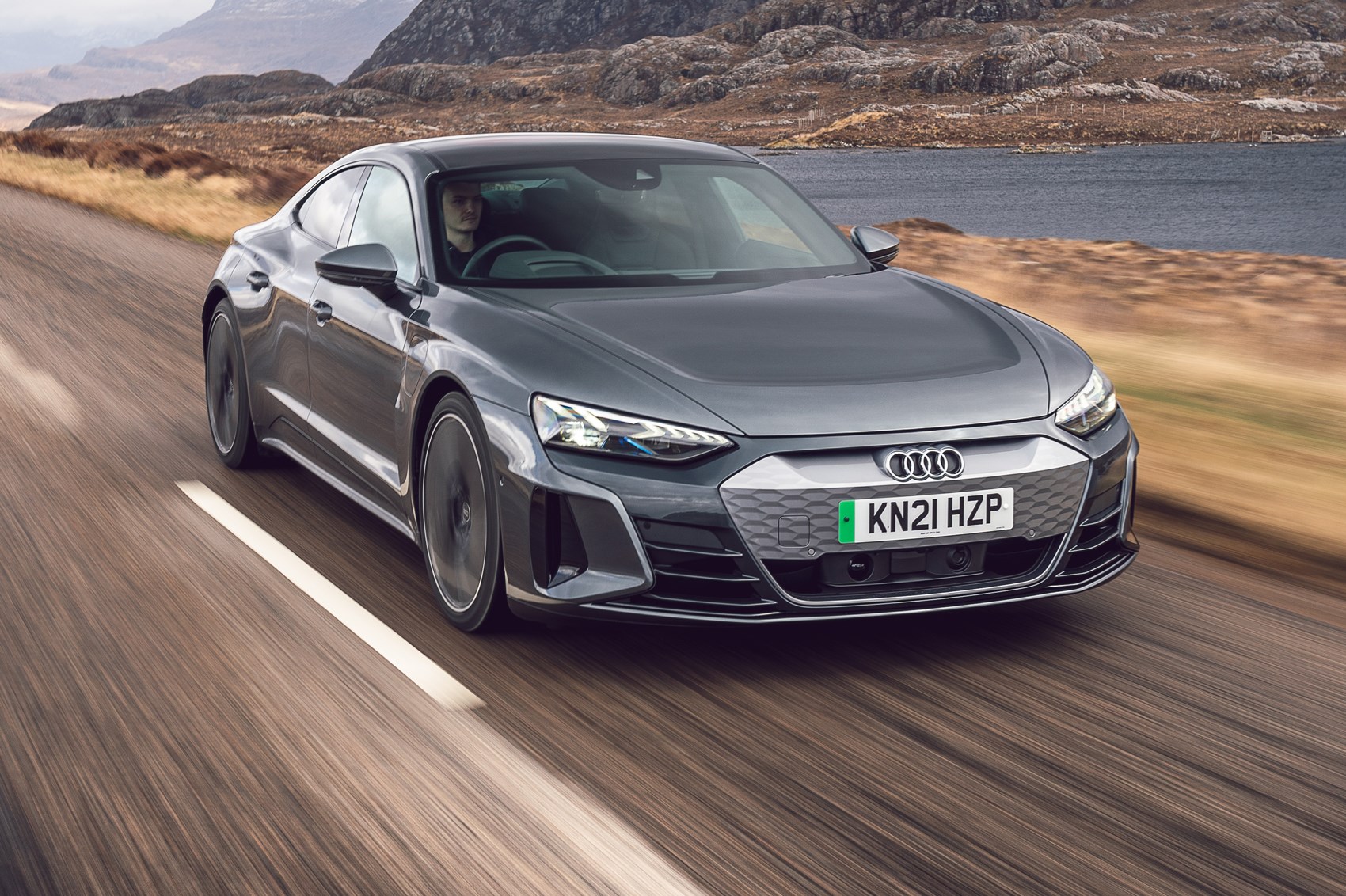
Design, Cabin & Amenities

Exterior

For those who care to measure, the Audi e-tron GT further differentiates itself from the Taycan by being a tiny bit longer, slightly narrower and just a whisker taller than the Porsche. This hardly makes it a mini-van, comparatively speaking, as the e-tron GT strikes a sleek, aggressive and sporty silhouette nonetheless. The e-tron GT has Audi’s DNA chiseled (quite literally) all over it, and that extends well beyond the four-ringed emblem sitting center stage.

At the front, there’s that familiar looking grille (albeit solid) and distinctive headlight design which doesn’t deviate far from the family tree. It’s a lot busier than the Taycan’s minimalist, yet somehow more exotic fascia, but I reckon this is a welcome change for buyers from either faction who prefer that there be less in common between the two vehicles.  The e-tron GT has one of the most exceptional looking rear ends of any car on the market today, with a rear lightbar connecting the decidedly Audi-esque LED taillights. The rear diffuser is a lot more pronounced compared to the Taycan’s as well – it looks really good, and I’m sure it’s very functional too.
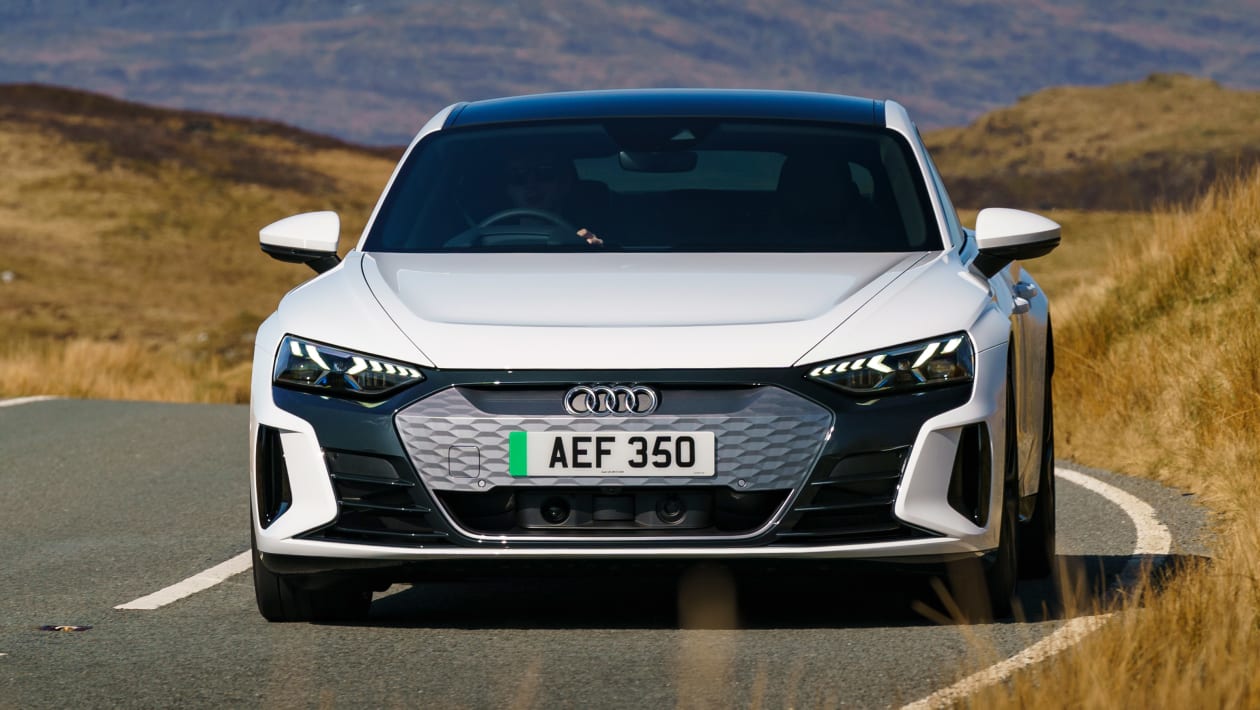
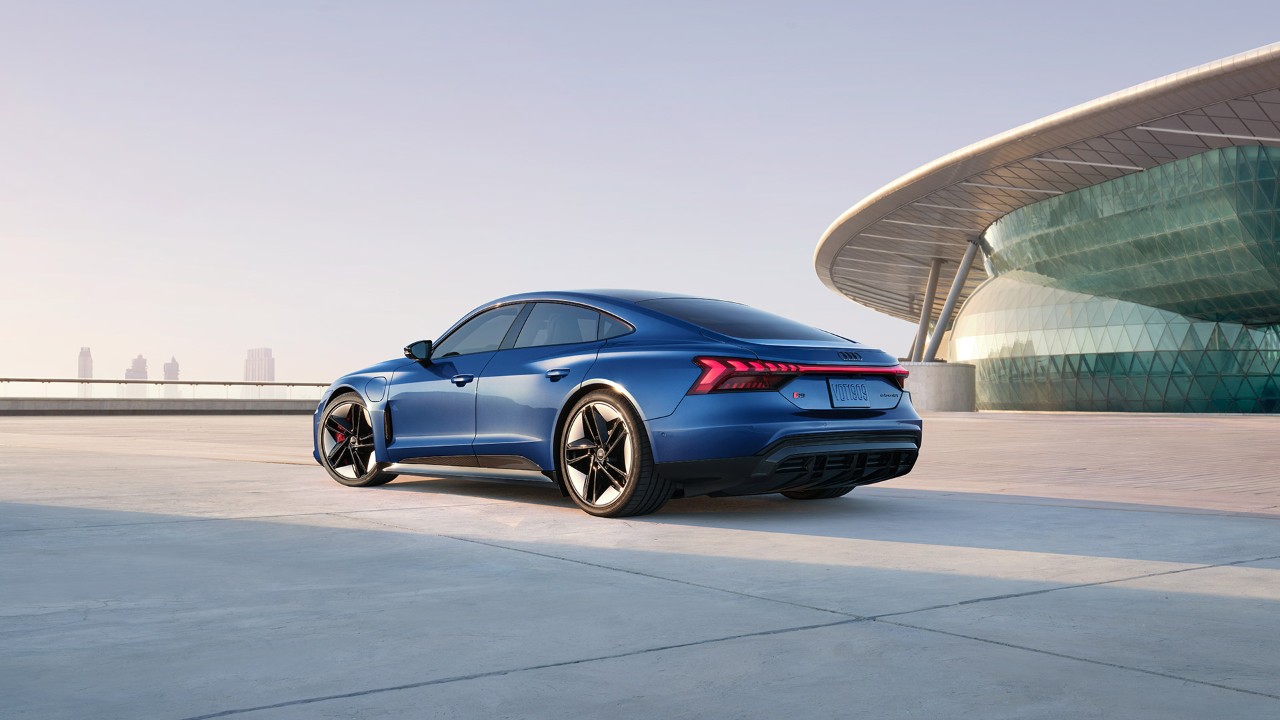
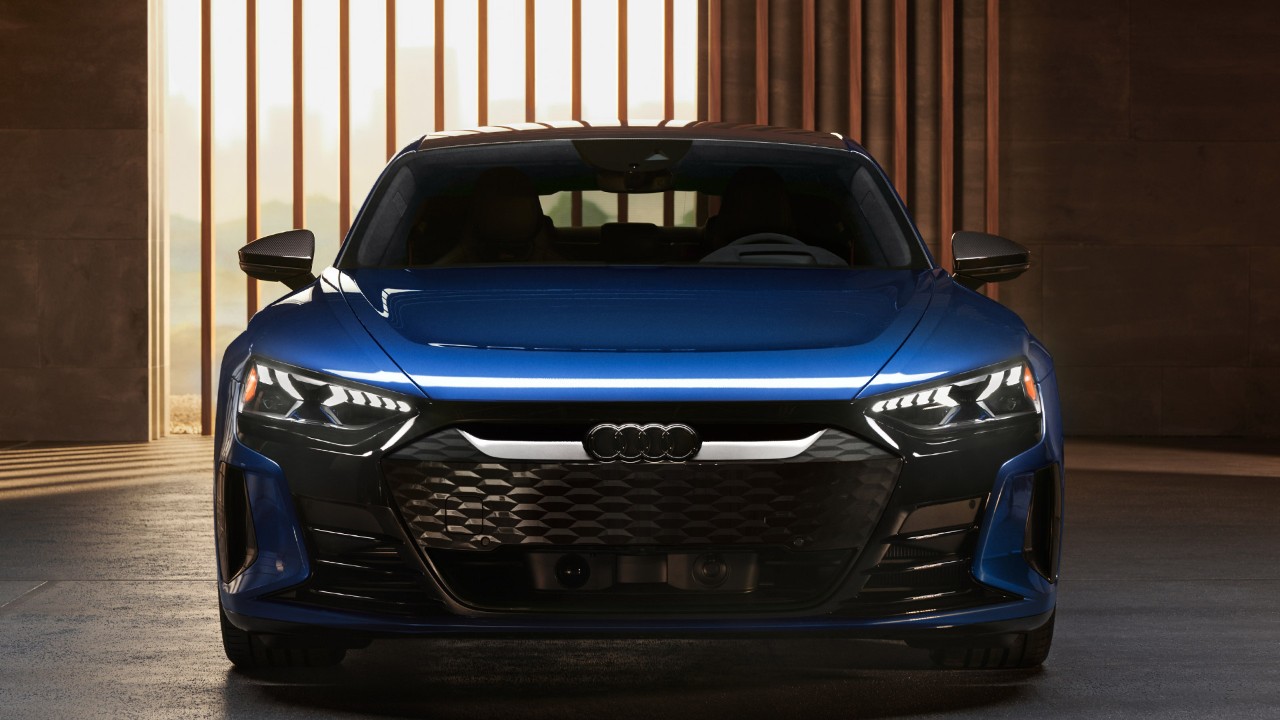
Carbon side mirrors and a full carbon roof are also options, and can also be had as part of the Carbon Black and Carbon Vorsprung packages for the RS variants. The e-tron GT also has its own unique selection of wheels, of which the pricier choices come with functional aero blades to improve help improve driving range. Manufacturer exclusive paint colors such as Tactical Green are also available to further differentiate your e-tron GT from any other car on the road.

Interior

If there is one thing that Audi is universally recognized for, it would be the quality and design of their interiors. For the e-tron GT, Audi has decided to follow the more traditional formula that has earned them this reputation rather than embark on something groundbreaking as might have been the expectation, with the e-tron GT being a new EV and all that jazz. This equates to a palatable balance of touchscreen elements and actual plastic buttons, with a 12.3″ digital instrument cluster and a 10.1″ infotainment screen surrounded by physical toggles for the likes of climate control, driving modes, heated seats, and so on.

The finishes and materials inside the cabin are that of Audi’s highest standards, with no shortage of available luxury and convenience offerings. This includes features such as ambient interior lighting, heads-up display, heated/ventilated front seats with massage, etc. The rear outboard seats provide ample legroom, but its headroom is less generous, and the middle seat is more courteous than comfortable.

Expect to see plenty of high-quality leather upholstering and metal accents, with a generous dose of Alcantara and carbon fiber coming standard in the RS. If a more vegan approach is desired, Audi offers leather-free artificial hides made from recycled plastic bottles and old fishing nets.

For driver assistance, forward-collision warning and automated emergency braking come standard while blind-spot monitoring, rear cross-traffic alert and lane-departure warning w/ lane-keeping assist are available as options.

Thanks to its dimensions, the e-tron GT is the marginally more utilitarian option compared to the Taycan with its 405L of rear cargo space plus another 81L in the ‘frunk’. That makes for ample space for luggage behind the back seats and a few grocery bags stacked up front. Two adults will be a snug but comfortable fit in the back, but rear visibility could become an issue if this arrangement is frequent enough. The standard rear-view camera and optional 360 degree camera should alleviate much of those problems, though.

Pricing

The entry-level 2022 Audi e-tron GT (Premium Plus) starts at US$99,900, while the Prestige package will add another US$7,200 on top of that. Stepping up to the RS e-tron GT will take you up to US$139,900 before options. All models come standard with all-wheel drive and a 93.4 kWh battery.

Verdict

What Other Experts Are Saying

Top Gear – 8/10

“A handsome four-door GT that plays to Audi’s strengths, with a blistering turn of pace.”

Read full review here

Car and Driver – 8.5/10

“The Audi e-tron GT excels as a stylish and sporty EV, but it’s pricier than a Tesla Model S and lacks a long driving range.”

Read full review here

EVO – 4/5

“The entry level e-tron GT is another great grand tourer but question marks remain over touring range ability.”

Read full review here

Car Magazine – 4/5

“By bravely focusing on true GT performance, Ingolstadt has diverted the e-Tron GT from an unexciting also-ran to a fascinating new addition to the Audi range.”

Read full review here

Auto Express – 4.5/5

“The Audi e-tron GT is another worthy entry in the luxury electric car market. It’s just the right mix of the new and the familiar, and it has a fair degree of separation from the Taycan because it’s a more comfortable electric grand tourer.”

Read full review here

Our Thoughts

So, what is it really? A simple reskin of the Porsche Taycan or a performance-EV contender in its own right? I think Audi addresses that big elephant in the room with a level of assertiveness that would make both e-tron GT and Taycan owners just as happy as the other with their choices.

It really comes down to looks, and to a large degree what your preference is towards either a 4-door grand touring EV, or a Sports Saloon which happens to be fully-electric. Hint: The e-tron GT is the former, as it’s literally in the name (GT is indeed meant to be an abbreviation for “grand tourer”). Think of the e-tron GT more as the gentleman and the Taycan more as the rebel; the Porsche perpetually taunting you to push it harder, while the Audi is there to keep things more civil and reserved. So, if you are a performance junkie who seeks the fun-factor above all else, you will get your fix in the Taycan, but do note that this will also come at an extra cost.

That’s because Audi made sure to play to its much-proven strengths when it came to the e-tron GT, as revolutionary as the car already is and may yet turn out to be. Dependably handsome aesthetics which are deeply rooted to the company’s philosophy. A familiarly high-class interior built around delivering comfort and quality. Superb performance and the heritage of the RS badge. All of things are done right, and done the Audi way.

With the Taycan and the e-tron GT both existing in their own elements, the latter car can also set its sights – through unmuddied waters – on the Tesla Model S. While the range and top-end performance figures are lacking behind the California-made EV, there is no doubt that the Audi provides a recognizable and trustworthy package in its electric grand tourer – comfort, elegance, and dependability, while manifesting a non-violent genre of sportiness.

It certainly deserves to be in the mix with these EV heavyweights and is by far the most exciting new car Audi has produced in quite some time. We hope that this is a sign of things to come; a car like the e-tron GT is just begging for an Avant version too, don’t you think?

Image & Video Gallery

[embedded content] [embedded content] [embedded content] [embedded content] [embedded content] [embedded content]

Audi A6 e-tron concept: Full Electric Audi A6 Previewed in China

Audi unveiled a new full-electric Audi A6 e-tron concept at the Shanghai Auto show 2021. The Premium Platform Electric (PPE) will serve as a technology platform for electric vehicles, and is directly a preview to the upcoming full electric Audi A6 model.

The new Audi A6 e-tron concept fully relies on electric power and represents a completely new design concept. The only similarity the concept car has with the current A6 are the dimensions 4.96 metres long, 1.96 metre wide and 1.44 metres in height designed as a sportback.

The concept vehicle generates an output of 350kW and 800Nm of torque. Entry level models will be capable of accelerating from 0-100km/h in 7 seconds or less whereas high-performance models will be able to sprint from 0-100km/h in under 4 seconds.

The A6 e-tron consists of an 800 volt charging technology that ensures the battery can be charged up to 270kW at any fast charging station in a very short time. Charging the battery to a level sufficient to power the car for 300km takes only 10 minutes and charging from 5% to 80% takes 25 minutes only.

The A6 e-tron concept features a cW value of 0.22 which is unmatched in the electrified C-segment and therefore means the car exhibits minimal aerodynamic drag that initially changes into lower energy consumption hence extends the range.

The vehicle appears monolithic when viewed from the side as if built from a single mould as a result of the absence of hard edges between convex and concave all around the body whereas the large 22 inches wheels and short overhangs, wide coupe roof arch and the flat cabin implicates the proportions of a sports car.

The exterior of the vehicle features flat headlight and taillights that adapt to weather, traffic, surrounding as well as communicate with other road users. The Digital LED and OLED offer maximum brightness and three high-resolution LED projectors that display warning symbols. The tail lights feature new three-dimensional OLED elements that make it possible to experience dynamic light show in 3D spatial effect.

In addition, the exterior also features quattro wheel arches connected by sculpted battery above the rocker panels, camera based exterior mirrors at the A-pillar base and large enclosed Single Frame grille fitted at the bottom to ensure optimal cooling for the drivetrain, battery and brakes of the vehicle. The car has been painted in ‘Heliosilver’ technoid color that accentuates the shape of the concept car with a three dimensional depth effect.

The Digital Matrix LED headlights achieve cinematic quality in a way that if the concept car is parked in front of a wall for a re-charge, the driver can pass the time by playing a video game projected onto the wall in XXL format instead of the small cockpit display. The players in the game can be positioned several metres next to or directly in front of the vehicle for a good view.

The PPE on the vehicle has been built exclusively for battery-electric drive systems, the future PPE models will include versions with a single electric motor that use electronic coordination to deliver AWD demand and improve the balance between driving dynamics and energy efficiency. The battery size and wheelbase of PPE cars are scalable therefore suitable for different market segments.

Audi A6 e-tron is suitable for use as a primary vehicle capable of everyday needs, short trips and even long trips depending on the drive system selected and the power output. The vehicle also features Audi air suspensions with adaptive dampers.

Audi A6 e-tron concept

Audi is giving us the four-door Audi A6 e-tron concept at the Auto Shanghai 2021 show as a preview of the future, fully electric luxury cars, taking their new “Premium Platform Electric,” or PPE for short, into production for new Audi cars on the horizon, for 2022, the first production cars using the PPE will be launched in the C-segment, later to be joined by models in the B-segment, and Audi also intends to extend their PPE platform to both SUVs and dynamically styled models with a lower ride height, such as the upcoming Audi A6 e-tron.

The Audi A6 e-tron concept to be shown at the Auto Shanghai 2021 show represents an entirely new design concept, the only thing it has in common with the current A6 are its dimensions, at 4.96-meter-long, 1.96-meter-wide, and 1.44-meter-high, the concept’s body was designed as a Sportback, and its lines are an obvious reflection of the systematic advancement of Audi’s current design language.

For its part, the PPE technology will ensure that what the car’s lines imply is actually translated into dynamic driving performance and everyday suitability befitting use as a primary vehicle. Specifically, this means that depending on the selected drive system and model version, an Audi A6 e-tron is expected to boast a range of more than 700 kilometers (based on the WLTP standard) in the future – and the most powerful member of the family is anticipated to sprint from 0 to 100 km/h in less than four seconds.

Large 22-inch wheels and short overhangs, the flat cabin, and the wide coupe roof arch give the vehicle proportions distinctly reminiscent of a sports car. The absence of hard edges results in smooth transitions between convex and concave surfaces throughout the body, as well as in soft shadows. The Audi A6 e-tron concept appears monolithic, as if from a single mold, particularly when viewed from the side.

Heliosilver is the name of the technoid-looking color of the paint, which in turn adds aesthetic presence and functionality to the appearance of the Audi A6 e-tron concept. The paint accentuates the shapes of the body with a three-dimensional depth effect, which is particularly visible in the area around the quattro wheel arches. In the front end, the Singleframe grille, also in Heliosilver, forms a striking contrast to the deep matte black color of the frame. This stark contrast also accentuates the horizontally oriented proportions in the rocker panel sections on the sides of the vehicle.

The heart of the Audi A6 e-tron concept’s drive technology, and that of all future PPE models, is the 800-volt charging technology. Like the Audi e-tron GT before it, this ensures that the Audi A6 e-tron concept’s battery can be charged with up to 270 kW in a very short time at public DC fast-charging stations. This revolutionary technology will enter the high-volume mid-range and luxury segments with the PPE for the very first time.

This technology makes charging times possible that come close to a stop to refuel a car powered by a conventional engine. Just 10 minutes at a public DC fast charger are enough to charge the battery to a level sufficient to power the car more than 300 kilometers. And in less than 25 minutes at a public DC fast charger, you can charge the Audi A6 e-tron concept’s 100 kWh battery from 5 to 80 percent.

Together with an expected range of more than 700 kilometers, depending on the selected drive system and power output, the Audi A6 e-tron concept is uncompromisingly suitable for use as a primary vehicle. Furthermore, its range and charging speed keep pace with those of combustion engines, making it the perfect universal car for everyday needs, from short trips to the store to longer road trips when going on vacation.

Audi Q4 e-tron and Q4 Sportback e-tron: Full Electric SUVs Join e-tron Family

These are the new 2021 Audi Q4 e-tron and Q4 Sportback e-tron – the first compact electric SUVs from Audi. The two models feature a range of three drive versions with a maximum output of 220kW.

For now, the 50 e-tron is the highest trim in the model range for both the SUV and SUV coupe, with a maximum output of 300hp, a 0-100km/h time of 6.2s and a top speed of 180km/h.

Both Audi Q4 e-tron and Audi Q4 Sportback e-tron share a zero local emission driving and high ranges and they can be charged in 10 minutes to a power sufficient enough to travel 130km. The two compact models consist of two battery variants and three drive variants and can be charged with different outputs using alternate current (AC) and direct current (DC) depending on the battery.

The compact battery can get up to 7.2kW with alternate current charging and up to 100kW when charged using high-power charging with direct current. The larger battery allows up to 11kW with alternate currents and 125kW with high-power charging as standard. An optional heat pump improves the efficiency for longer drives by using the waste heat from high-voltage modules and ambient air to control the climate in the interior.

There is an access to around 210,000 public charging points for Audi e-tron models in European countries, 4,400 of the charging stations are High-power, fast charging points. High-voltage batteries have been fitted between the axles of the Audi Q4 e-tron and Q4 Sportback e-tron for a balanced distribution of weight and to ensure low center of gravity.

The exterior design of the two compact SUVs feature short-front overhangs, large wheels, flat A pillars, precise lines, optional Matrix LED headlights, daytime running lights, dynamic roofline and a spoiler on the split rear window for the Q4 Sportback e-tron.

A sport suspension that lowers the body by 15mm will be available for all Q4 e-tron versions upon request, eight colors and three trims i.e basic, advanced and S-line will also be available for both models.

The interior length of the models matches that of a full-size compact SUV with no center tunnel and features a large storage compartment, knee-room on the rear passenger seats, luggage compartment, advanced cockpit fitted towards the driver, inlays and accent surfaces for the instrument panel and a new steering wheel flattened at the top and bottom for the first time ( optional). Inlays with innovative technical fabric will be available on request.

A fully digital 10.25 inch display will be available as standard as well as three level infotainment and connectivity with three different modules i.e MM1 as standard, MM1 plus and MM1 Pro will be available on request. A Natural Voice Control with online functions will be available as an option.

The market launch for the two models will be in June 2021, and the base prices in Germany for the Q4 e-tron will be 41,000 Euro and 43,900 Euro for the Sportback.

A $165,000 Audi RS e-tron GT

Some might consider the new 2022 Audi e-tron GT as a cheaper alternative to the Porsche Taycan, and while prices start at $99,900 for the Audi Premium Plus, a comparable 522 hp version from Porsche would be the Taycan 4S at $103,800, so there isn’t much difference in price at that level … but when you delve into the options list for the new Audi, things quickly change, and you get into Porsche pricing in a heartbeat.

A sample of the Audi exclusive special paint

Go for the impressive RS e-tron GT and the base price already jumps to $139,900 … that’s a $40,000 premium, and that’s before options, but now you get 637 hp with 612 lb-ft of torque, a top speed of 155 mph, and an acceleration figure of 3.1 seconds thanks to dual synchronous electric motors with 93 kWh Li-ion battery, so that’s close to Porsche Taycan Turbo specifications, but that one starts at $150,900.

Fear not, on the 2022 RS e-tron GT you can opt for the impressive Year One package at $20,350, which includes among other things 21-inch, 5-twin-spoke concept car design wheels, lots of visible carbon fiber, RS seats, RS steering wheel, carbon-ceramic brakes with red calipers, and those amazing HD Matrix-design LED headlights with Audi laser light and animation … just so you can have a show when you open or close the car.

A sample of the Audi exclusive special paint

One final way to really make your brand new Audi RS e-tron GT stand out from the crowd is to add the $3,900 Audi exclusive special paint color, which might be a good idea as the standard color palette isn’t really too extensive, to be honest, a white, some silver,  a few greys, a black, a blue, a bright red and a strange shade of green they call Tactical Green metallic, and that’s it.

A sample of the Audi exclusive special paint

But this way you will end up with a bespoke Audi RS e-tron GT in an exclusive paint, if you want to stand out of the crowd with a serious counterpart from Porsche, you’ll end up with the Taycan Turbo S that starts at $185,000 but can quickly go well beyond the $200,000 mark when you start adding options to that one too, but for some, the brand will be important too at this price level … and in the end, driving an Audi just isn’t the same as driving a Porsche.

The ABT SQ7, 500hp and 7 seats

As a family man you’ll need a big car for the school run and those groceries over the weekend … a Lamborghini Urus might not fit into the budget and an Audi RSQ8 isn’t what you’re looking for … in that case another option from the Audi stable might be just what you need, the $85,000 Audi SQ7.

Considered a mid-size SUV in the United States, over in Europe this is a large car, nonetheless with 500 hp from a V8 engine, this 2.3-tonne beast still takes only 4.1 seconds to reach 100 km/h from a standstill … something a base model Porsche 911 barely manages too.

But a nicely optioned factory spec Audi SQ7 might just be too easy for some customers, in that case ABT can help you out, they are still developing a custom ECU tune to pull more power from the V8 engine, but for now you can already make your Audi SQ7 look more aggressive with a stylish wide-body kit from this German tuner.

Abt is the world’s largest automotive aftermarket and performance parts specialist for Audi and VW, and they offer a new, aggressively designed front bumper add-on, wider wheel arch extensions, side sills, a rear diffuser fin and a set of massive tailpipe covers to fit over the standard ones.

If you’re not into wide body kits, you can also order the ‘narrow’ version that doesn’t include the fender flares. Additional options are possible in the form of a rear wing or fender inserts in either ABS or carbon fiber.

The Audi SQ7 can already come with large 21-inch wheels from the factory, but we wouldn’t be talking about ABT if they didn’t offer bigger, 22-inch replacement units for their customer, a choice between the ABT Sport GR, the ABT HR Aero, or the impressive flow-forming ABT High PerformanceHR-F.

Additional touches of carbon fiber can be added to the interior while some illuminated ABT logo can be fitted for that ‘personal’ touch to your very own ABT SQ7 SUV, I’m sure this will make dropping of the kids at school a lot more interesting …

ABT Reveals Widebody Audi SQ7 TFSI

There is a new widebody Audi SQ7 from ABT Sportsline. It comes with a full aero package, engine tuning and alloy wheels, this is the TFSI version.

The SQ7 TFSI has an output of 507 hp and can accelerate from 0-100km/h in 4.1 seconds making it faster than the current entry level Porsche 911. ABT says they are already working on a performance upgrade focused on ECU tuning.

The wide body aero package will be available for the SQ7 includes front and rear skirt add-ons, fender extension, door strip attachments and end pipe cover set. A slim body package will also be available without fender extensions. Other optional features include ABS plastic or carbon fiber, rear spoiler or fender inserts.

The standard SQ7 is equipped with 20 inch wheels but the German tuning company has further enhanced the look of the car by fitting a set of 22 inch alloy wheels. Additional wheels include the Sport GR that are finished in glossy or matt black, HR Aero in dark smoke with matt black Aero ring and high-performance HR-F in dark smoke or glossy black.

The interior of the SQ7 features dashboard and seat frame covers in carbon fiber, start-stop-switch cap with illuminated logo and integrated entrance lights.

Prices and further details on performance were not provided.

Audi’s E-Tron is the EV Answer to Porsche’s Taycan

Audi released the E-Tron GT concept about three years ago. It was marketed as Audi’s all-electric touring flagship and today the long-awaited grand tourer hits the production stage. 

At first glance, you notice it looks virtually identical to the concept design from years ago. This is every petrolhead’s hope when they lay eyes on a new concept for the first time. There’s nothing more exciting than envisioning a concept or prototype on the streets in its ultra-cool concept form, Audi has done just that with the E-Tron GT and RS E-Tron GT. 

Audi E-Tron
Photo by: Audi

The E-Tron GT produces 469 horsepower and 464 lb-ft of torque with its dual motors, though when launch control is activated horsepower jumps to 522 HP for a short 2.5-second period. The RS model achieves a massive increase in horsepower to 590 and 612 lb-ft of torque. With the launch control switched on, the RS leaps to 636 HP. The E-Tron’s are powered by an 85 kWh battery with a predicted range of 298 miles of range on a full charge based on WLTP estimates.

While the shares a lot with the Porsche Taycan, like its 270 kW DC fast charging, Audi has developed something that assists in faster charge times. Thermal constraints can wreak havoc when attempting to charge a battery quickly. Audi has developed a preconditioning feature that works alongside the navigation system to ensure optimal battery temperatures for you when arriving at a fast-charging terminal. Audi E-TronBoth E-Tron GT models have all-wheel drive and also include the Porsche Taycan’s high-tech 2-speed automatic transmission. Audi has claimed the base model has a zero to 60 time of 4.1 seconds, while the RS gets there in just 3.3 seconds. 

Handling and suspension via controlled dampers and a locking rear differential are standard on both E-Tron GT models, though the RS has the ability to control the variable lock on the differential with its multi-plate clutch. The RS’s standard three-chambered suspension can also be added to the base model as an option. Both E-Trons can be optioned with all-wheel steering in addition to carbon-ceramic brakes. The RS model includes tungsten carbide-coated discs out of the box. Audi E-TronAccording to Jalopnik, the Audi E-Tron GT’s interior was reportedly manufactured using a percentage of recycled materials. This is a refreshing feature instead of Audi pouring leather, plastics, and a bunch of other materials that ultimately go against the vision of an EV evolution. 

The E-Tron GT will start at 99,800 euros or roughly $120,000 and the RS model will start at 132,000 euros or $160,000. If compared to a similarly performing grand touring car like the Porsche Taycan 4S, the Audi E-Tron GT sits just below in terms of price but maintains the specs to back it up should they go head to head.

The ABT RSQ8-R, taking the Audi RS Q8 to the next level

Not many SUV today can show figures like this new ABT RSQ8-R, 740 hp (544 kW) and 920 Nm, acceleration from 0 to 100 km/h in 3.4 seconds, and all that while the base Audi RS Q8 isn’t much less impressive … factory fresh you get 600 hp (441 kW), making it the most powerful SUV-coupe Audi makes, but ABT Sportline takes her to the next level.

ABT Sportline is celebrating it’s 125th anniversary in 2021, that is why they will only build 125 units of this RSQ8-R, and this customer car, finished in San Marino Blue metallic is one of those, featuring a stunning carbon fiber aero kit to accentuate the aggressive looks of the original SUV even further.

A lip is added to the front bumper, a set of special side sills are fitted, as are mirror caps off course, wheel arch vents are a very nice touch indeed, while a beautifully aggressive rear diffuser just adds that final touch to the rear together with a new wing, and let’s not forget that stainless steel ABT exhaust system with four 102-mm end pipes to hear that rumble from the 4.0-liter V8 engine.

With the power increase from ABT for this special RSQ8-R edition, the top speed can be raised to 315 km/h thanks to the ABT Engine Control unit coupled to a bespoke intercooler for maximum power and reliability, add the ABT Level Control suspension which lowers the car by 15mm to 25mm depending on the setting selected.

And ABT also offers customization for the interior, with a special steering wheel, an upgrade for the armrest and center console, but ABT can also modify the already impressive AUDI RS Q8 seats, all at the customer’s request naturally.

A stunning set of 23-inch High Performance GT Wheels are available from ABT Individual, taking 295/35 R23 performance tires.