All posts in “Gear”

Yeti Cycles Just Build This Rugged Race-Ready E-MTB Called The 160E

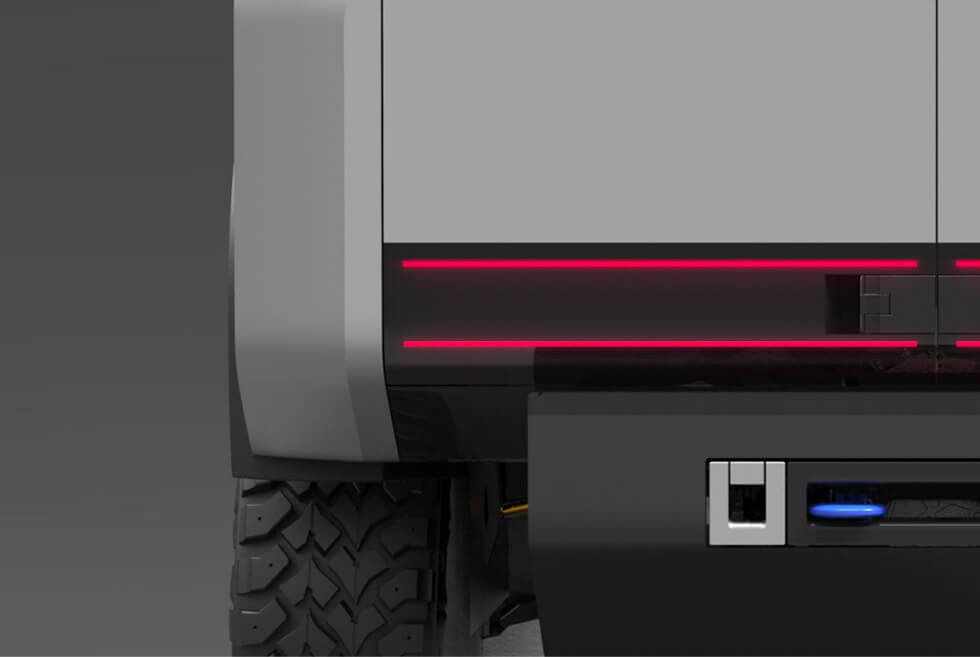
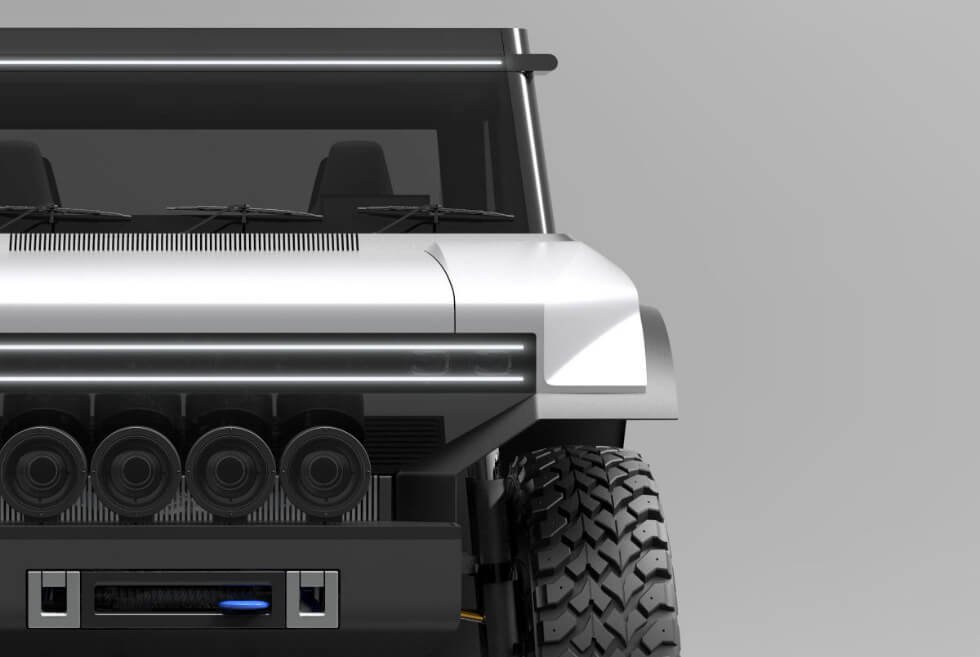
If you’re the type of person who loves to push yourself to the limit during an activity, then you’ll need gear that can keep up. Just like apparel designed for professional use, quality and performance matter. Cyclists eager to try something new might find the 160E from Yeti cycles to their liking. What your looking at here is a rugged e-MTB with cutting-edge features.   

The manufacture notes they’ve engineered this ride from the ground up. A common practice among established cycling brands is to take existing frames, slap an electric motor, and wire it up to some batteries. Not Yeti Cycles! What they have here is a two-wheeler like no other.

Their product page says the 160E is the “world’s first race specific e-MTB” and we think it lives up to the claim. What sets it apart from the rest is the innovative Sixfinity suspension system. According to Yeti Cycles, this setup increases pedaling efficiency and likewise improves traction on most surfaces.

Furthermore, users can also change the leverage positions with no negative impact on the geometry, anti-rise, and anti-squat properties of Sixfinity. For a clean silhouette, all cables are routed internally – no zip ties, no rattle. At its heart is a capable Shimano EP8 motor drawing power from a 630-Wh battery pack.

To tweak Just pair it to your smartphone via Bluetooth and access the settings through the Shimano E-tube app. Yeti Cycles offers two trims for the 160E: T1 and C1. Both share most components such as the tires, bar, grips, seats and more. Order yours now and inject more fun into your next ride.

Purchase it now

imageimageimageimage

Images courtesy of Yeti Cycles

Debunking the Biggest Myths of Vintage Watch Care

How does one break into the confusing, esoteric world of watch nerdery? Our new column, “How to Be a Watch Guy,” aims to answer all your new watch guy questions, and help you navigate the always exciting — but sometimes intimidating, complicated, and pricey — world of watches.

Interest in vintage timepieces has reached an all-time high. Some people become enamored by the watches’ stories; others seek the unique look and feel of a watch that has aged naturally over many decades. But with this enthusiasm come new questions about how to care for and what to expect from these miniature machines. These are some of their most commonly voiced questions and concerns, as well as some of the most persistent myths about vintage that need to be dispelled once and for all.

Myth #1: You Need a Watch Winder

Watch winders have become a popular trend among owners of watches with self-winding or automatic movements, the idea being that you should keep the watch moving, whereby keeping the mainspring fully wound. But the truth is that winders aren’t good for your vintage watch. Not only does the constant winding put undue wear on the winding system of the watch, it also burns through lubrication faster – think of it as leaving your vintage Porsche idling in your garage.

vintage rolex submariner atom moore

Atom_Moore

Instead, store the watch and allow the mainspring to unwind. When you come back to put it on, simply set the time (and date, if applicable) and give the crown about 15-20 clockwise turns. Almost every watch, regardless of the movement, is designed to take a manual wind. Winding the watch in this way will put a small charge into the mainspring, ‘priming’ the movement and making it easier for the automatic winding system to take over. Once it’s ticking, the watch will do the rest.

Myth #2: Your Vintage Watch Is Still Water Resistant

Many enthusiasts don’t think twice about exposing their vintage pieces to water. But the truth is that while many vintage watches were designed with water activities in mind, gasket failures can happen at any time — even on brand new watches. But where water-damaged parts such as a dial and handset can easily be replaced on a modern watch, replacing these elements on a vintage piece can be very hard, if not impossible. It’s also important to remember that gaskets are great at keeping out water droplets but struggle with keeping out water vapor.

vintage omega seamaster chronograph atom moore

Atom_Moore

Walking from an air-conditioned office into the sweltering heat exposes the watch to changes in pressure and temperature, making it easier for water molecules to sneak in, leading to some fog under the crystal. Don’t panic; let the watch acclimate and the vapor should dissipate. If your watch was produced before 1965, think twice about wearing it on a rainy day as many watches from this era — especially chronographs with snap case backs and rectangular pushers — don’t have gaskets at all. If you find yourself in a freak downpour, slide your watch into your pocket or briefcase.

Myth #3: Send a Watch Back to the Brand for Service

Many owners of vintage pieces from blue-chip brands such as Rolex and Omega think that sending their piece to the original manufacture is the best way to ensure proper servicing. While the manufactures are certainly capable of this work, they have a high standard for perfection – a patinated dial is usually seen as “worn” and will often be replaced, along with crowns, bezels, hands and crystals. Manufactures are also known to polish cases that have scratches or wear marks. For collectors of vintage watches, it is these features that makes watches desirable and valuable, meaning that a service by the watch’s manufacture can actually devalue the timepiece. To avoid this, work with a trusted service center that is familiar with working on vintage watches.

Myth #4: You Can Easily Tell If a Watch Is “Original”

The watch market has exploded recently with scads of “gentleman dealers” offering all sorts of vintage hardware. The latest trend to arise is the liberal use of the word “original.” In my experience, there are two ways to know if the parts (crystal, dial, hands, crown) of a vintage watch are original: either you are the original owner and the watch has never been serviced, or you have a time machine.

affordable vintage rolex

Analog/Shift

As single-owner pieces are increasingly rare in the vintage space, it stands to reason that no one — not even the experts — knows if the parts currently on a watch were on it when it left the factory. A trained eye can tell if parts are “genuine,” i.e., from the manufacture, and “correct” to the watch, but claims of originality should be examined closely. While originality can be ascertained and often commands a premium in collector circles, a watch that has genuine, correct parts is no less sound.

Myth #5: Vintage Watches Keep Time Like Modern Ones

So your vintage timepiece is not keeping pace with your iPhone? There’s a simple answer for that — no mechanical watch will ever, regardless of the maker or price tag, be as accurate as a digital clock. Mechanical watches, by their very nature, are as accurate as their design allows them to be. Some manufactures have focused on producing highly accurate movements while others prize robustness and reliability. These variances in production, coupled with age and use, can result in each watch having its own unique timekeeping tolerance.

As a rule of thumb, you should expect your vintage timepiece to be accurate to a minute or two a day, whereas older watches and those with simpler, less-accurate movements may operate three to five minutes fast or slow. In fact, many movements from the ’50s, ’60s and ’70s, especially those found in tool and military watches, were designed with relaxed timekeeping standards and couldn’t possibly be more accurate. This isn’t to say you should ignore poor performance in your vintage watch, but that you should know what to expect in the first place.

This content is created and maintained by a third party, and imported onto this page to help users provide their email addresses. You may be able to find more information about this and similar content at piano.io


Pour Your Favorite Brew In the Stanley Stay Chill Beer Pint So It Stays Frosty Longer

Spot check! What EDC gear do you have right now? For sure most of us prefer to take along multi-tools, pocket knives, flashlights, and other items that fit the bill for everyday carry bill. There is no clear-cut template as to what items should or should not be with you at all times, which is why we choose the Stay Chill Beer Pint from Stanley.

Most of you know the brand for their heavy-duty hand tools, but they also have a selection of EDC products. It’s immediately obvious, but the reason behind why we consider the Stay Chill Beer Pint is the bottle opener that ships with the package. Stanley cleverly makes it look like a part of the lid, it slides out when you need it.

Don’t let the name throw you off, because you can pretty much dump anything inside aside from the amber brew. Come to think of it, the design makes it discreet enough to sneak some in even when the venue prohibits the drink. Hey! It’s perfectly acceptable if you can hold your alcohol so don’t give us that look!

The Stay Chill Beer Pint can hold up to 16 ounces of whatever you want. The double-wall insulation means drinks stay cold longer. Plus, Stanley says the exterior will stay condensation-free to give you a secure grip. It’s also a perfect vessel to store coffee, tea, and other beverages you want to keep hot for up to an hour.

All the metal in the construction here – including the bottle opener – are crafted out of stainless steel. Meanwhile, the composite parts are all BPA-free and food-safe materials. Need to clean the Stanley Stay Chill Beer Pint in a jiffy? Throw it in the dishwasher! Its durability claim is even backed by a lifetime warranty.

Buy now

imageimageimageimage

Images courtesy of Stanley

Before Production Ends, Nissan Gives Us The GT-R T-Spec Limited Edition

Deep into 2021, and carmakers continue to announce exciting plans for the coming years. Lately, people have been on the lookout for what’s new in the electric vehicle segment. Most manufacturers are gradually sharing more about their roadmap for a greener future, but we’re also paying attention to other major developments. Much like this GT-R T-Spec from Nissan.

We hear that the legendary Japanese marque plans to stop production of the “Godzilla” soon. Sources that won’t happen until 2023, but it’s still somewhat sad to see go away after close to 15 years. So, those of you who plan to grab one before it’s gone for good might want to consider the limited-edition trim.

What immediately denotes its exclusivity are the two exterior color schemes: Midnight Purple and Millennium Jade. The former saw action on the R33 Skyline GT-R followed by two more renditions aptly dubbed Midnight Purple II and III. Millennium Jade, on the other hand, was on the V Spec II Nür R34.

Nissan knows they have to do more than just offer the GT-R T-Spec in unique chromatic combos. Hence, the high-performance coupe now flaunts a wider front fender and a carbon fiber rear spoiler. Moreover, it’s now wearing a set of 20-inch forged alloy wheels in gold from RAYS.

Meanwhile, Brembo carbon-ceramic brake systems with VDC tuning provides reliable stopping power for this beast. Inside the cockpit is a bespoke Mori Green theme which looks good on both the Midnight Purple and Millennium Jade version.

Next, we have Alcantara trims on the sun visors and headliners with diamond pattern stitching. Nissan wants to be doubly sure everybody knows your ride is the GT-R T-Spec. Therefore, they’re slapping T-Spec badging on the doorsill kick pates, center console, and at the rear just beside right tail lights.

Learn more

imageimageimageimageimageimageimageimageimageimageimageimageimageimageimageimageimageimageimageimageimage

Images courtesy of Nissan

Kalamazoo’s New Shokunin Kamado Grill Boasts Luxe Craftsmanship and Versatility

As autumn is already peeking around the corner, some folks are already wrapping up their gear for summer. With the weather gradually getting colder, some of us will be enjoying the creature comforts of indoor heating. Nevertheless, we don’t want outdoor barbecues to end just yet. If you do too, check out this Shokunin Kamado grill from Kalamazoo.

Most of us probably own gas grills, which is perhaps the most convenient among other types. However, even with the help of burner shields, it’s difficult to replicate the flavor and aroma of wood or charcoal. Even with the help of smokers, you can’t beat the real thing.

According to the manufacturer, “Shokunin” means artisanal in Japanese, and it fits the bill right here. This freestanding grill stands 48 inches on top of a durable ipe wood frame. The body and lid are crafted out of stainless steel with two inches of glass fiber insulation in between the structure.

This gives the Shokunin Kamado superior heat retention that would last longer than most of its kind. Flip-up grill grates make it easy to add charcoal or wood. Meanwhile, the three-level fire grates give it even more versatility. The adjustable height gives you access to various cooking styles: low for smoking, mid for roasting, and high for direct heat grilling.

To give you more control, there are four air shutters. If that’s not enough, Kalamazoo throws in two charcoal fences for offset fire management. This technique is used by professionals to quickly sear steaks and burgers on one side and then slowly cook on the other. Lastly, the integrated thermometer on the Shokunin Kamado’s lid makes it easy to manage the temperature.

Get it now

imageimageimageimage

Images courtesy of Kalamazoo

Today’s Best Deals: 55% off A Levi’s Shearling Trucker, A Yeti Rambler Deal & More

Every product is carefully selected by our editors. If you buy from a link, we may earn a commission.

Welcome to Deals of Note, where Gear Patrol captures all the best deals of the day. You can also follow all our deal posts in the Deals section.

Get Strong This Summer with Future Fitness

  • Brand: Future
  • Price: $19 for the first month, $149/month after that
  • From: future.co

    If you’re unfamiliar with Future Fitness, the digital platform that delivers personal training anytime and anywhere, you are seriously missing out. We spent a week with Future focused on improving our running (check it out here), but with the vast amount of elite coaches they offer training programs with, we needed more than just a week to experience it all. This time around, we focused on strength training.

    gps

    Gear Patrol Studios

    There’s no doubt that the gym can be an intimidating place, especially if you aren’t confident in what you’re doing or familiar with all of the equipment. Our tester wanted to focus on building strength without being chained to the gym — particularly with summer weather on the horizon. Luckily, Future offers the flexibility and customization that allows you to work out from anywhere. Our tester matched with Becca Mehling, a nationally ranked athlete who specializes in functional movement and Olympic weightlifting. Mehling has been competing at the national level for three years and taps into her varied experience to support clients by focusing on movement and skills to help them feel stronger in their everyday lives.

    What We Like

    In terms of gear, our tester had a yoga mat, mini band and dumbbells, but that didn’t stop Mehling from putting together a solid plan focused on building strength. The weekly workouts included foundational movement, power day, a midweek regeneration focusing on stretching and yoga poses (to let your body recover), total body strength and a finish strong workout and weekend run. The schedule was comprehensive, with movements that targeted each part of the body, but most importantly it was doable. The longest workout was 44 minutes and most averaged around 35 minutes, which made it pretty hard to use being busy as an excuse to skip a workout. But don’t let the short timeframes lead you on, each session was jam-packed with dynamic movements that targeted muscles while keeping the heart rate up.

    A key to building strength, especially with weights, is form. The wrong position in a squat or lunge can do some serious damage to your knees. Future makes it easy to ensure that you’re using the correct form, and you feel anything but alone when doing the workouts from home. With personalized audio coaching and a video demonstration showing how the move is done, Future’s platform makes it dead simple to make sure you’re doing everything correctly. Plus, with a “record my form” feature, you can record yourself doing the reps, send it to your coach, and receive almost immediate feedback. Our tester was feeling pain in the knees during the side lunges, and after sending a video to Mehling, she was able to make sure they were using the correct stance to alleviate any pressure in the knees.

    gps

    Gear Patrol Studios

    It’s also worth noting that Future coaches can tailor your workouts to whatever you have on hand. While our tester had a yoga mat, mini band and dumbbells, you might not — you might not have any traditional workout equipment. The beauty of Future is that because it’s personalized, coaches can make something unique to you. If you want to improve your strength like our tester did, Future coaches can design your workouts around bodyweight exercises — or even using household items as weights and workout equipment.

    Who It’s For

    gps

    Gear Patrol Studios

    A lot of fitness systems tout a one-size-fits-all, “this app is for everyone” approach, so you would be forgiven for being skeptical when Future promises a similar silver bullet. But unlike other apps, Future’s modular and customizable approach, which pairs you with a coach to help realize your goals, means that it truly is “an app for everyone.”

    People who don’t want to spend hours in the gym in order to meet their fitness goals will particularly enjoy working out with Future. With workouts that are created based on your lifestyle and your setup, you can crush whatever fitness goals you have without altering your day-to-day. If you are away every weekend this summer, or if you are up early with your kids, Future coaches will work with you to make a plan that will maximize your time and make sure you don’t have to sacrifice living your life in order to get in shape.

    Verdict

    Future is the personal training of, well, the future. It gives you a hands-on approach to meet your fitness goals at a fraction of the price of a traditional personal trainer. Plus, with an extensive list of elite coaches, you can meet your goals no matter what they are and no matter what you have planned this summer.

    Gear Patrol readers can try their first month of Future for just $19, simply click through at the link below.

    LEARN MORE


    Gear Patrol Studios

    This content is created and maintained by a third party, and imported onto this page to help users provide their email addresses. You may be able to find more information about this and similar content at piano.io
3 of the Best Modern Military Chronograph Watches You Can Buy Right Now

Chronographs and those with a military look and/or history are doubtless among the most popular watch types purchased today. So put those together, and a military chronograph is going to be a compelling proposition for a lot of people. More than the convergence of multiple cool factors, military chronographs have a genuine and interesting history.

Today, you can get new military chronographs in a few flavors: There are reissues of the watches that were actually made to government specs for use by military personnel, modern interpretive creations that might reference historical watches, and fully contemporary designs that nonetheless have an undeniable military feel.

Here are some of the best examples worth checking out.

[/editoriallinks]

Courtesy

Hamilton Khaki Field Auto Chrono

hamiltonwatch.com

$1,745.00

You know the absolute classic Hamilton Khaki Field watch, in part because we can’t stop recommending it as one of the best values out there. It’s based on a field watch Hamilton made for the military decades ago, and this new-for-2021 Automatic Chronograph is based on that. The similarities in the design are evident, with the basic case shape and dial design being adapted for a chronograph, but there’s one significant difference from the basic field watch: it’s a whopping 44mm wide as opposed to the Khaki Field’s easy-wearing typical dimensions of 38mm. Still, this is an exciting new offering from Hamilton, and it remains a strong proposition as a Swiss automatic chronograph at under $2,000.

Diameter: 44mm
Movement: ETA-based H-21 automatic

Courtesy

Sinn 158 Bundeswehr Limited Edition

watchbuys.com

$2,970.00

Heuer made a watch essentially just like this one for the German armed forces (the Bundeswehr) in the 1960s, and Sinn was contracted to refurbish them in the 1980s — some were rebranded with Sinn dials and sold to the public as the “155.” Watch enthusiasts love this kind of story and the value the watches represent (since Heuer versions are particularly sought-after), and rejoiced when Sinn recently brought back the look in its 158 chronograph. It stays pretty true to the 155, but doesn’t offer the exotic flyback function.

Diameter: 43mm
Movement: Sellita SW 510 automatic

    Courtesy

    Tutima M2 Chronograph

    tutima.com

    $5,999.00

    The German brand Tutima originally made its M2 watch for NATO forces in the 1980s. It’s a classic among military watches today, and the brand’s modern lineup draws heavily upon it. Not only does it have a badass history and unique look among chronographs and military watches in general, but it’s also a bit special for being produced in titanium. The lightweight material has all kinds of cool properties, and it should help these boldly sized watches of 46mm wear a bit easier on average-sized wrists. It’s definitely coolest on its integrated titanium bracelet, but is also available on a kevlar strap.

    Diameter: 46mm
    Movement: Valjoux 7750

    [editoriallinks id=’32a7a8e7-7df4-4f4a-ba97-f18c19191761′ align=’left’]

    This content is created and maintained by a third party, and imported onto this page to help users provide their email addresses. You may be able to find more information about this and similar content at piano.io

Chevy’s Next Silverado HD Could Pack Record-Breaking Power

Earlier this month, Chevy unveiled the Silverado refresh coming for 2022 — revealing a new Raptor-fighting off-roader, the Silverado ZR2, and interior and exterior styling upgrades for all the Silverado 1500s. With the regular trucks having just been updated, a refresh for the Silverado HD (and GMC Sierra HD) trucks should follow for the 2023 model year. And it may come with eye-popping — and record-breaking — power upgrades.

TFLTruck, citing an anonymous GM insider, reports that the refresh will include an update to GM’s 6.6-liter turbodiesel Duramax V8. Per the source, the update will push the engine’s outputs to 505 horsepower and 1,085 lb-ft of torque. That’s an additional 60 hp and 175 lb-ft of torque over the previous generation.

Both numbers would put the Silverado and Sierra HD at the top of the segment. Ford’s 6.7-liter Power Stroke V8 diesel has 475 hp and 1,050 lb-ft torque. Ram’s 6.7-liter Cummins inline-six diesel checks in with 420 hp and 1,075 lb-ft of torque.

What do those numbers mean in real life? The current Silverado 3500 HD is rated to tow 36,000 pounds. This power boost would likely push it past the Ram 3500, which has the current best-in-class tow rating of 37,100, and the Ford F-450, with a max rating of 37,000 lbs.

We suspect that most Silverado HD owners won’t get close to testing that max towing capacity. It’s not often you’re going to have to tow something like an aircraft carrier’s anchor, which still would leave you with plenty of spare capacity. But the Big Three truck battle is fierce, and being able to say you do something “best-in-class” pays dividends.

LEARN MORE

This content is created and maintained by a third party, and imported onto this page to help users provide their email addresses. You may be able to find more information about this and similar content at piano.io

Should You Buy Apple Devices on Amazon?

There’s an obvious reason why you’d buy an Apple product from Amazon rather than directly from Apple: price. Whether you’re in the market for a new iPhone or iPad, AirPods or Apple Watch, MacBook or iMac — you can almost always find a better deal on Amazon. But is it legit? Short answer: yes.

Here’s what you need to know.

Are the Apple products on Amazon real?

Yes, if you’re looking at the official Apple store on Amazon. Amazon is an officially authorized Apple reseller. So are a number of its competitors including Adorama, B&H, Walmart, Target and Best Buy.

Amazon struck a deal with Apple in late 2018 to be become an Apple Authorized Reseller, meaning it gets the devices directly from Apple and Apple has given it the green light to sell them. Effectively, it’s almost just exactly the same as buying Apple devices directly from Apple. Almost.

But! Amazon also plays host to many, many smaller third-party sellers, many of whom have a history of trying to pass off counterfeits as legitimate Apple products. This was a problem with AirPods a few years back.

Amazon has since made efforts to crack down on this behavior from sellers so there are fewer than ever. And so long as you are buying from the official Apple store on Amazon, you are getting a real Apple product.

Why are Apple products so cheap on Amazon?

The answer is pretty simple. Amazon buys Apple products in bulk, in advance and at a whole sale price (i.e. not the MSRP), which allows them to sell the devices at a discount and still make a little bit of a profit. The fact that Apple rarely ever offers discounts on its devices is a subtle nod to its resellers, to give them the advantage of selling them at a discount. This is how all Apple Authorized Resellers operate.

Do Apple products from Amazon have a warranty?

If you purchase an Apple product from Amazon, you get the exact same warranty as if you’d purchased it from Apple itself. All its products have a one-year warranty and if there’s some defect in the product within that time, you can return it to Apple (even if you purchased from Amazon). To see the warranty status of your purchase, all you need is to find the serial number of the product and enter it on Apple’s support page — here.

Amazon also sells the exact same AppleCare that Apple sells for people who want to extend the warranty of their purchase.

Is the return policy the same?

No. It’s not a given that Apple and Amazon will have the same return policy for your Apple product. If you purchase the product directly from Apple, you have a 14-day window to return it from the date you received it. If you purchase the product from Amazon, the return policy is typically within 30 days of the purchase. It can vary, however, so should double check the return policy when you make the purchase.

Are there downsides to buying Apple devices on Amazon?

The one main caveat of looking at Apple devices on Amazon is that you may not get the full picture of what’s available, especially during right after new releases have dropped. Not all new Apple products are immediately available on Amazon.

If you look at the Apple store on Amazon at the time of this writing, for example, you could be forgiven for not realizing that the iPhone 13 has been announced, because Amazon currently only shows the iPhone 12 for sale. Likewise, the Apple Amazon store doesn’t currently have any mention of the Apple Watch Series 7, which is not available for pre-order but which goes on sale later this fall.

Are there advantages from buying from Apple?

Even though you’re not likely to get the best price if you purchase a product from Apple rather than Amazon, there are still several valid reasons to opt for Apple.

Colors and configurations: Apple has a larger inventory than Amazon, of course, so if you can’t find the exact configuration and color of a product on Amazon, Apple is more likely to have it.

Special promotions: With every new purchase of an Apple product (whether you buy from Amazon or Apple), you get a free three-month trial of Apple TV Plus, Apple Arcade and Apple Music. However, sometimes Apple runs special promotions that that extend those initial free trials. And Apple only ships them with products purchased directly from its website or its store.

Free engraving: There are a number of Apple products that you can add a custom engraving (with text, numbers or emjois) at no extra charge. However, you have to purchase from Apple to get an engraving, as Amazon can’t do it. You can add a custom engraving to iPhones (all models), iPads (all models), all AirPods (all models), AirTags and an Apple Pencil (second-generation).

The employee or student discount: If you have an employee discount through your company, it’s likely that you can get a better deal if you purchase directly though Apple. Same is true if you’re a student, parent (of a college student) or somebody working in education and you quality for a discount through Apple’s Education Store (here). Amazon will occasionally match the same promotions, but they won’t through in the pair of free AirPods or discounted AppleCare that you get with a purchase through Apple.

This content is created and maintained by a third party, and imported onto this page to help users provide their email addresses. You may be able to find more information about this and similar content at piano.io

Wally Takes A Huge Step Forward With The Luxe 78.7-foot WHY200 Yacht

So far, most of the vessels we featured built by Wally are on the smaller side.It’s not exactly an issue when all you need are yacht tenders for the occasional getaway.This time around, they’re going big! Welcome their first full wide-body yacht – the WHY200. Measuring 78.7 feet long, it’s ready to sail the high seas for your pleasure.

When you love hosting parties or taking family and friends out for an excursion over open water, size matters. The blueprint for this extraordinary ship is provided by Laurent Giles Naval Architects Limited. Their vision showcases a three-deck configuration that is optimized for generous spaces.

This allows the WHY200 to match the area found on larger watercraft. Wally notes that there’s approximately 1,550 sq-ft for the exterior and an impressive 2,153 sq-ft inside. The yacht is already stunning from the outside, but the elegant interior is also curated by Vallicelli Design Studio.

If that’s not enough, how about panoramic views afforded by wrap-around glass panels of the main deck. The owner’s suite at the bow of the WHY200 gets the best seats in the house. Enjoy the breathtaking backdrops as you relax in the comfort of your spacious room.

Head on over to the beach club at the aft section of the lower deck to access the beach club. Take a dip in the sea or take out your personal watercraft to pump up the fun. The fold-out wings can accommodate more people or becoming diving platforms.

The four cabins of the WHY200 can accommodate up to 8 guests, while a crew of 5 is enough to man the vessel. Propulsion comes from four Volvo Penta D-13 IPS 1350 engines at 1,000 horsepower each. The range is 390 nautical miles with a top cruising speed of 21 knots.

Discover more

imageimageimageimageimageimageimageimageimageimageimageimageimageimageimageimageimageimageimageimageimage

Images courtesy of Wally

Bring A Trailer Just Sold This Classy 1968 Shelby Mustang GT500KR For $262,589

Classic pony cars are never going out of style. Manufacturer regularly update their lineup with modern versions of these, but the timeless appeal of old-school rides remains. Unless you own one in great condition, most people turn to restomods. When there’s no time for weekend projects like it, Bring A Trailer has a 1968 Shelby Mustang GT500KR with your name on it.

Ford’s iconic muscle car has been the favorite platform for the legendary American high-performance vehicle outfit. The one in the auction house’s possession appears to be in remarkable condition and comes in a stealthy Raven Black coat with white side stripes.

So far, true mileage is unknown but, the instruments read 30,000 miles. Let us give you a short background story about this beautiful machine. Bring A Trailer notes that it is one of 1,053 examples that were dubbed “King of the Road” fastbacks built from May to July in 1968.

Originally sold by Healy Motors LTD in Edmonton – in Alberta, Canada, the vehicle then went through a refurbishment in 2014. The current owner finally got it in 2020. Beneath the bonnet is a Ford 428 Cobra Jet V8 engine mated to a three-speed automatic transmission. It sports a set of 15″ alloy wheels wrapped in BFGoodrich rubber.

We’re also looking at a 3.50:1 Traction-Lok differential. This 1968 Shelby Mustang GT500KR now boasts power steering and air conditioning to go along with the black vinyl upholstery of the interior. Other add-ons include the fiberglass hood with ram air scoops and grille-mounted fog lights.

Despite its pristine visage, Bring A Trailer points out some negligible imperfections on the finish. Still, This 1968 Shelby Mustang GT500KR could use more upgrades. Check out our buyer’s guide for the best car dash cams to hook up to your vehicle’s head unit.

Learn more\

imageimageimageimageimageimageimageimageimageimageimageimageimageimageimage

Images courtesy of Bring A Trailer

BLUETTI AC300 Power Station and B300 Battery Module Now Available

Now you can fully harness the power of the sun with the BLUETTI AC300 Power Station. A first in the industry, this modular generator lets you pack up and power up whenever and wherever. Pair it with the brand’s new B300 battery module and you have yourself a generous power supply to run your most-used home and kitchen appliances and more.  This is a reliable indoor and outdoor machine that you want to have on hand, especially with the coming winter months when outages are unpredictable.

All-around powerful smoke-free generator

image

It’s time to ditch the noisy and archaic diesel, propane, or other fuel-powered generators and get yourself the BLUETTI AC300 Power Station. This is a more sustainable and safer approach to backup energy, as it works with durable Lithium Iron Phosphate (LiFePO4) battery cells that are supported by a cutting-edge battery management system. This way, it preserves the life of your machine for the next generations to come.

This is for heavy-duty use as it offers 3000Wh of pure sine wave inverter power, which is expandable to a whopping 12, 288Wh when hooked to four B300 battery modules. It can go high up as 24, 576Wh when paired with eight battery packs via Split Phase Bonding and using a Fusion Box Pro. Good luck running out of power with this much supply. It even offers a seamless UPS connection for uninterrupted power. You can continue doing Netflix and chill, cook, run your game console, sleep in comfort, or catch up on work at the garage like there is no outage at all.

image

Dubbed as the “Dominator,” the BLUETTI AC300 Power Station fully supports solar energy up to 2,400W using a built-in MPPT controller. This makes it the ultimate off-grid backup energy since you don’t have to rely on your home’s electrical current. But it recharges great through other means too such as a wall socket, 12V car charger, a 12V/24V lead-acid battery, or another generator. As this is a modular station, it does not come with a built-in or stored battery pack. Instead, it relies on the B300 battery modules for power.

Get the AC300 with one B300 battery module at $2899 (original price is $3699).

Not Your Ordinary Battery Pack

image

Speaking of battery, the AC300 is only compatible with the B300 Battery Modules. As mentioned above, it can support up to eight units if you want to go big. This battery runs on 3,072Wh of LiFePO4 battery with a max individual input power of 700W when simultaneously recharged with an AC socket and solar power (solar input is at 200W and AC at 500W).

As with the AC300 Power Station, this battery also comes with three outlets: 100W USB-C PD3.0, 12V car charger, and 18W USB-A port. What makes it a great alternative than its counterpart the B230 is it supports solar charging although it may be on the hefty side at 34kg. It is also bigger than at 20.5” L x 12.6” W x 10.4” D. (Read our review on the B230 Battery Module HERE).

Get the AC300 paired with two B300 battery modules at $3648 (original price is $4498).

 
Equipped With Modern Upgrades

image

The BLUETTI AC300 Power Station literally got your back. It powers your entire house and supports your outdoor adventures. It comes with modern features compatible with today’s tech. Then it has six AC outlets, two 5V USB-A ports, a couple of 18W USB-A, and two 12V/10A DC ports. Likewise, it has a 100W USB-C PD3.0, one 12V cigarette lighter, and one 12V/30 DC output. Best of all are the two 15W wireless charging pads and the app control features, which lets you monitor the status of your generator through an accompanying smartphone app. 

Fun Under the Sun

image

The AC300 Power Station and the B300 Battery Module give meaning to the saying “fun under the sun.” Both support solar charging so you can get out of sticky situations both indoors and outdoors. It literally keeps you calm and have fun amid an outage or while out on adventures.

Get the BLUETTI AC300 Power Station and B300 Battery Module HERE

Suntory Announces International Release Of It Yamazaki 55 Single Malt Whiskey

As connoisseurs tell it, certain spirits get even better as it ages. Therefore, leading distillers can only offer their best batches in limited quantities. While there are some others who prefer the diverse experience from blended scotch, folks with more discerning tastes swear by single malt only. Still, the release of the Yamazaki 55 is wonderful news for everyone.

This marks a major milestone for fans of Japanese whiskeys as Suntory debuts its oldest single malt ever. This means acquiring one will be very difficult, but you can check with your local suppliers. According to the distiller, the Yamazaki 55 is a “tribute to the passage of time” and we’ll tell you why.

The journey begins in 1960 when the amber spirit was aged in Mizunara casks under the watchful eye of founder Shinjiro Torii. Then, in 1964, the contents made their way into white oak casks. Given that when it comes to whiskey, age statements matter, which is why 55 years here is such a big deal. 

Suntory’s Fifth-generation Chief Blender Shinji Fukuyo and Third-generation Master Blender Shingo Torii are credited for carefully curating this blend. In contrast to Scotch whiskeys, which he likens to perfect Greek sculptures, Fukuyo goes on to describe the Yamazaki 55 as “more like an old Buddhist statue. Calm and mysterious.”

A whiskey this sophisticated deserves to ship in an equally intricate packaging. So Suntory commissions master craftsmen to build a Japanese Mizunara wood box. Finishing it with black lacquer, you’ll be proudly displaying this alongside the Yamazaki 55 it’s holding within. Take a sip, you deserve it.

Discover more

imageimageimageimageimageimageimageimageimageimageimage                                             

Images courtesy of Suntory

Floating Motors Will Build You A Bespoke Automotive-Inspired Watercraft

Don’t you ever experience those days when driving around in your car just feels so fun? The destination doesn’t matter anymore and it’s almost Zen-like in a way that it feels like man and machine are one. Wouldn’t it be cool if all automobiles are amphibious? That seems a little far-fetched for now, but Floating Motors doesn’t think so.

While everyone else dreams about flight, we’re just thrilled to see vehicles travel over water. Maybe it’s all the sci-fi and spy movies talking here, but Floating Motors says otherwise. The company is catering to a niche that does not have any competition right now.  

With a growing lineup of automotive-inspired watercraft, they are onto something unique and exciting. Moreover, the manufacturer is willing to build clients a bespoke machine for the right price. Just let them know what make and model you love, and their designers and engineers will handle the rest.

For starters, buyers can choose between a catamaran or hydrofoil configuration. Furthermore, Floating Motors says it can customize the hulls for specific needs. In fact, they can even equip your ride with a suspension system. We’re not sure how this affects handling, but it’s cool nonetheless.

Hence, these can serve as a leisure craft, a water shuttle, a private water taxi, and more. So far, their lineup of production-ready models all resembles iconic old-school cars. For sustainability, Floating Motors offers full-electric propulsion platforms.

So far, there are five options currently available, with the rest to follow in the future. We spot homages to Mini, Aston Martin, Volkswagen, and others ready to order. So what are you waiting for? Get in touch with Floating Motors and enjoy driving over open water.

Order now

imageimageimageimageimage

Images courtesy of Floating Motors

The Best Snowboards of 2021

Like a lot of American technological innovations, the snowboard was borne of inspired tinkering. An engineer from Michigan, Sherman Poppen, fabricated the first modern board in 1965 by bolting two kids’ skis together and attaching a rope to the unit. The rope helped riders — initially, his daughters — control the sans-binding board. His wife named the product, conflating “snow” and “surfer” — and just like that the Snurfer was born.

Fast forward more than 50 years, and while you can still get a Snurfer, snowboards have evolved in a way Poppen could not have dreamed. There are boards out there for literally every kind of riding imaginable — and choices galore.

Don’t get paralyzed by the options, though. Just do your homework and choose well. The right choice will reap daily dividends on the mountain, helping make each turn a little sweeter. Here are seven new boards we love, plus some info and tips (below the boards) to ensure epic good times whenever you hit the slopes.

Best Overall Snowboard

Courtesy

Jones Stratos Snowboard 2022

evo.com

$579.95

Jeremy Jones is one of the greatest free riders on the planet. He’s also an environmentalist: the founder and president of Protect Our Winters, an advocacy group fighting climate change, was recognized as one of President Obama’s 2013 Champions of Change.

Jones has brought his passions together, using his splitboard to ascend huge mountains that most believed were only accessible by helicopter. Teton Gravity Research documented the insanity in the films, Deeper, Further and Higher.

Even if you’re politics are different, you should still consider a Jones board. The 11-year-old company puts out some of the best free ride, powder and all-mountain boards on the planet.

Initially released last winter, the Stratos is a great do-it-all board. The board is stiffer between the bindings than at the tip and tail. This stiffness paired with camber and a narrow waist makes turn initiation quick. A soft tail and even softer nose help you cruise over chunder.

The directional freeride board loves carving and screaming down groomers. We even chased Jeremy and his crew for a few runs in Mammoth. The Stratos helped us almost keep up. Almost.

Best All-Mountain Snowboard

Courtesy

Lib Tech T.Rice Golden Orca Snowboard 2022

evo.com

$749.99

A lot of brands have been leaning into what they call volume-shifted boards. Instead of adding surface area by making the board longer, they make it thick. It’s snowboarding’s version of the difference between a wild cat that’s long and lean like a leopard and a chonky cat on Instagram.

The Golden Orca merges the original Orca with Lib Tech’s T. Rice Pro: it’s a bit stiffer and more resort-friendly. One of four Orca options, it’s for aggressive riders.

The added width makes it great in the powder and a solid choice for guys with big feet because toe drag shouldn’t be an issue. But it’s not so wide that you can’t just spend a day ripping groomers like there’s no tomorrow.

One of many Travis Rice pro models, the Golden Orca is great for short, slashy turns in tight trees, whether they’re filled with fresh snow or skied out.

Serious MagneTraction is one way this board stands out. Each sidewall has seven serrations, so when you’re scraping on hardpack or ice, the board can bite into the trail — and you can stay upright.

Not unlike Rice himself, the company has a sense of humor, punk rock edge and DIY ethos. Lib Tech brags that its boards are “built by snowboarders with jobs.” Jokes aside, the company crafts all its boards domestically, with innovative techniques for “green building” and favoring non-toxic substances.

Best Budget Snowboard

Courtesy

Endeavor Ranger Snowboard

usa.endeavorsnowboards.com

$399.00

When it comes to “budget” boards, there’s not a huge difference between entry-level and pro-level. Most company’s entry-level boards start around $400 and max out around $750. Sure, some boards cost $1,000 or more, especially splitboards, but unless it’s custom — hello, Franco Snowshapes — the qualitative upgrades once you head north of the $600 neighborhood are incremental at best.

And here’s snowboarding’s dirty little secret: some sponsored riders prefer the inexpensive decks.

The Endeavor Ranger is a great daily driver. A true twin, it’s great for riding switch all day long. With camber between the feet mixed with some rocker at the tip and tail, it finds the sweet spot between playfulness and responsiveness, which is pretty much the goal of hybrid camber.

Adjusting your stance is easy, thanks to Burton’s EST system, which requires fewer bolts, and allows incremental adjustments that four bolt hole patterns don’t. Just make sure you have the appropriate bindings or binding disk. Although Burton makes EST-specific bindings, most other binders work with this system, too.

For fans of Endeavor, it will come as no surprise to see clean, minimalist graphics. The Ranger delivers a timeless look in spades. That means it will age well for seasons to come. The classic styling also means you should be able to get decent cash for it on the used market if you want to upgrade next year.

Best Powder Snowboard

Courtesy

Weston Hatchet

westonbackcountry.com

$649.00

The short and fat revolution has hit middle-age. Big companies like K2 did a great job kicking off the “volume shift” movement that lopped off a few centimeters of board length and added it to the width, a great move for bigger riders as well as those who get more than their fair share of powder.

Weston’s freestyle-killer, Logger, did it better than any other board we know of. Same goes for the Hatchet.

Available in the tiny 152 and a not much bigger, at least for bigger riders, 156, the Hatchet is built for slashing pow lines. Its shortness makes it easy to turn, even in tight spaces. This is great news for folks who ride areas with great trees like you find on the East Coast and a lot of lower elevation resorts that include a lot of acreage below treeline in the Rockies and further West.

This is a small board for big people. With a wide waist, the Hatchet accommodates riders with Sasquatch-sized feet. The larger model accommodates at 14.5 and the smaller a 12.5. If that doesn’t work for you, maybe take these Michael Phelps flippers to the pool?

Shape? As close to being a true twin without quite being so. There’s a touch of taper in the tail that helps out on corduroy. (Due to the width of the board, it does takes some work to get a turn going on hardpack.)

Tip-to-tail carbon stringers woven between the core and the base keep the board lively and the base is quick as can be. Polyurethane sidewalls provide additional dampening and durability, and the four-year warranty is one of the best in the business. Weston even offer a 30 percent discount if you destroy your shred stick doing something stupid and want to re-up.

Covet one? Know this: global shipping delays are affecting delivery. There’s more info on the Hatchet’s website.

Best Park Snowboard

Courtesy

GNU Head Space

evo.com

$499.99

Although pro models are few and far between these days, the Head Space by Forest Bailey never disappoints. Like fellow Mervin athlete Jamie Lynn, Bailey is an artist and his handiwork adorns his freestyle deck.

It’s hard to tell at first glance, but the Head Space is asymmetrical, a design approach that GNU has been honing for years. The thought behind it? Since snowboarders stand sideways, heelside and toeside turns are biomechanically different . Accordingly, each side of the board is shaped to optimize each type of turn: a deeper sidecut on the heelside and more shallow one on the toeside.

The Head Space includes a hybrid camber with mellow rocker between the feet and camber in front and behind the bindings. With soft flex, the board doesn’t beat you up in crappy conditions. And a core that’s a combination of sustainably harvested aspen and paulownia wood delivers plenty of pop.

Best Splitboard

Courtesy

Burton Family Tree Hometown Hero

evo.com

$849.95

Days and even weeks after a snowfall, many ski areas still have lots of fresh powder not too far from lifts. The rub? You often need to “earn your turns” by ascending under your own power, using a board that basically turns into skis.

With no lift ticket needed (although some resorts will still charge you 10 bucks to hike), the costs for backcountry-specific gear are upfront: poles, climbing skins, avalanche transceiver, education… and a board that splits in two, typically at a cost of at least $750.

The Burton Family Tree Hometown Hero Camber Splitboard is a directional camber board that takes the best characteristics of an all-mountain shape and a twin. Not too twitchy, the camber includes plenty of liveliness and precision if getting to or from your line includes some exposed sections.

Want all the bells and whistles? The lightweight X version — Burton Family Tree Hometown Hero X Camber — can be yours for a cool $1,600.

Best Advanced Snowboard

Courtesy

Slash ATV

slashsnow.com

$608.00

Many high-performance shapes have been inching closer and closer to traditional camber. The most responsive board shape going, it’s great for those with a few years of riding under their belts — less so for noobs because this profile doesn’t suffer sloppy turns gladly.

The ATV camber paired with a deep sidecut loves to turn. Big trenches as well as quick, side-to-side slalom-like fun. That camber paired with the core that’s a mix of high-end lumber (paulownia, poplar and beech), plus fiberglass layers, ensures more pop than Blink-182’s back catalog.

For most of us, this board is a race car. Great for going full tilt — but with less forgiveness than a Catholic priest.

The directional twin only has a smidge of setback and there’s no taper between the nose and tail; it plays well in the park as well as any side hit you can find. At just a smidge over $600, you’ll have a tough time finding more board for less dough.

Terms to Know

Backcountry: Terrain outside resort boundaries.
Base: The bottom of the snowboard that slides on the snow.
Corduroy: The tracks left by a snowcat after grooming a trail. The grooves in the snow look like corduroy pants.
Directional: A board shape where the riders stance is off-center, typically set-back a few inches.
Duckfooted: A stance angle featuring both sets of toes pointing outward. More common for freestyle riders and riders who ride a lot of switch stance.
Edge: The metal edges that run the perimeter of the snowboard.
Effective Edge: The length of steel edge that contacts the snow when making turns.
Flat Camber: A board profile that’s neither concave nor flat.
Flex: The stiffness or lack of stiffness of a snowboard. There are two types of flex. Longitudinal flex refers to the stiffness of the board from tip to tail. Torsional flex refers to the stiffness of the width of the board.
Float: The ability of a board to stay on top of deep snow
Freeride: A style of riding focused on groomers, backcountry, and powder. Freestyle: A style of snowboarding that includes a mix of terrain park and non-terrain park riding.
Goofy: Riding with your right foot in front of your left.
Hybrid Camber: A snowboard shape that mixes reverse camber and hybrid camber profiles.
MagneTraction: A trademarked serrated metal edge on boards built by Mervin manufacturing, the parent company of GNU and Lib Tech. This is for better edgehold on ice. Other manufacturers have their own versions.
Pow: Short for powder. Fresh snow.
Rocker: The opposite of camber. Often called reverse camber.
Regular footed: Riding with your left foot in front of your right.
Reverse Camber: A snowboard shape that looks like a banana that’s concave between the tip and tail. Sometimes called “rocker” because a board with reverse camber looks like it can rock back and forth.
Shovel: Lifted sections of the board at the tip and tail.
Sidecut: The radius of the edge that runs alongside a snowboard.
Sidecountry: Terrain that’s outside resort boundaries that’s accessible from the resort.
Traditional Camber: A snowboard shape similar to a mustache AKA convex between the tip and tail.
Splitboard: A board that split into two ski-like shapes so riders can ascend the mountain like an XC skier and reassemble when it’s time to descend.
Twin tip: A board with an identically shaped nose and tail.
Waist: The most narrow part of a board between the bindings.

Understanding the Construction of a Snowboard

Building a snowboard is a lot like making a good burger. Although new and better ingredients can improve both burgers and snowboards, the process of making them hasn’t changed much.

“Board construction has remained basically the same for the last 20 years. By that, I mean there is a polyethylene plastic running base with an edge surrounding it. There is a layer of fiberglass. A wood core. A layer of fiberglass and a plastic topsheet. Those basic materials haven’t changed much. But there’s been a lot of innovation in each of the specific materials that has really driven the ride performance and the weight of the boards that we see in the market today,” said Senior Design Engineer at Burton Snowboards, Scott Seward.

One of the most important parts of your board is the core. Typically built from wood — different types change the flavor of the ride. Many manufacturers even utilize a handful of different trees in a single core. Many Lib Tech boards include three different types of wood. Some manufacturers build cores from foam. Builders sculpt cores. Thinner in areas where you need more flex and thicker in areas where you don’t. Unlike a burger, you should never see your board’s core. “If the customer ever sees the core, then I’ve done my job wrong,” said Seward.

Sustainably grown cores are more popular than ever. Monitored by Forest Stewardship Council (FSC), the FSC “ensures that products come from responsibly managed forests that provide environmental, social and economic benefits,” according to the council’s website.

Next up, the “buns” — in the form of the base. These high-tech plastics are placed in a mold with the board’s edges. Gummy paper or a strong glue helps the edges bond with the base.

The “cheese and condiments” are layers of fiberglass. Operative word: fiber. The layout of the weave of this cloth affects the ride quality of your board. Adding epoxy to the cloth turns this into fiberglass, and there’s a layer on each side of the core. Higher-end boards often have carbon stringers — narrow strips of carbon fiber running the length of the board for added stiffness and pop.

Epoxy covers each layer, holding the board and its pieces together. This isn’t your grandfather’s nasty, toxic epoxy. One of the more recent innovations by folks at companies like Lib Tech and Burton is bio-based epoxy. You can’t understate the importance of epoxy because it holds the board together, bringing its character to life.

After the second layer of epoxy, the board is ready for the topsheet. Once that’s added, the top is inserted into the mold and sent to the press where heat and pressure will do the work of the grill, bonding all of the layers together as well as setting the camber profile of the board.

Although heavy machinery is critical to building snowboards, there’s a lot of craftsmanship mixed in. “Most people are surprised at how much hand-work is done,” said Seward.

The board’s in the press for about 10 minutes. Once removed, the board goes to finishing, where craftsmen remove excess material and add sidecuts. After that, the board is ground down, to remove excess resin. After a handful of grinds, the board is either waxed or shipped.

Looking into his glass ball, Seward sees boards with a smaller carbon footprint.

“The future of snowboarding is going to see more innovation of sustainable manufacturing,” said Seward.

How to Pick a Snowboard

Picking a snowboard can be tough. With so much many different styles of boards available, paralysis of choice is a real threat if you aren’t honest with yourself. But, if you know what you want, the world is your oyster.

Before even wading into the waist-high selection of what’s available, it’s important to think about how and where you ride.

“There’s such a broad spectrum of riding styles and riding preferences, that people get to find out what’s really in their heart and soul as to where they want to find themselves on the mountain. Once you’ve figured that out, you’ll want to start looking for what’s a better tool for that discipline or trying to cover as many disciplines as possible with one snowboard,” says General Manager of Wave Rave in Mammoth Lakes, Tim Gallagher.

Most shops worth their salt will ask you a handful of questions, like: Where’s your home mountain? What type of riding do you want to do with this board? Is this board going to be a do-everything board or is it filling a specific need in your quiver? Where do you normally ride? Is there a style of riding or is there a rider you want to emulate?

They’ll also ask about your foot size and weight. The former question will ensure your board is the appropriate width. Not too narrow, so your toes and heels are hanging off the sides and not too wide, because that can make a board feel sluggish.

One of the best ways to find a good match is to do your homework and find a shop you trust. “There’s some misinformation out there. A lot of people are educating themselves. It’s not always good info. Come into a shop with an open mind, accept some guidance and try before you buy if you can,” says Gallagher. The value of a good shop is paramount. Utilize its brain trust. Another good move for folks who really like to be thorough? Talk to more than one salesperson.

Demoing a few boards is one of the best ways to ensure you make the right choice. Most good shops let customers apply part of the cost of a demo towards a purchase. Most narrow their choices down to three boards or less. “If there’s more than that, you don’t know what they want,” says Tucker Zink, the General Manager at Darkside in Killington, Vermont that includes a demo fleet of about 75 decks. Darkside’s slopeside location in Killington makes demoing boards easy because customers don’t have to leave the hill to switch up boards.

It’s also worth asking the shop near the mountain you ride the most about their most popular board. Last year at Darkside, that was Burton’s Deep Thinker, an aggressive all mountain board with some of the coolest graphics in history — artwork by skateboard legend Mark Gonzales. That deck was followed closely by a similar board: a Lib Tech Travis Rice model (he probably has more pro models per year than any snowboarder in history).

At Wave Rave, the Jones Storm Chaser was last year’s best seller. At first glance, that’s a bit surprising. It’s a powder board with a short swallowtail. Designed by surfboard shaper Chris Christenson, the Storm Chaser is inspired by the shapes of fast gliding surfboards. And many riders in Mammoth use it as their daily driver, making surfy turns down the hill all winter long on corduroy, through crud and in powder.

Part of the popularity of the Storm Chaser in Mammoth is due to the mountain’s location. The 3,500-acre resort is about five to seven hours away from some of the most popular surf spots in Southern California, so it attracts lots of surfers, many of whom love to mimic riding waves when they’re in the snow.

But that doesn’t mean, pow and the new shorter but wider boards are just for So Cal surfers. At Darkside, they sell plenty of these boards as well, many to folks who travel out west to ride. Others appreciate the short turning radius that makes these boards great for riding trees.

“There’s no right or wrong way to snowboard. If you’re having fun and you’re exploring the mountain, and you’re pushing yourself, you’re doing it right,” said Gallagher.

This content is created and maintained by a third party, and imported onto this page to help users provide their email addresses. You may be able to find more information about this and similar content at piano.io

Experimental Bourbon: Buffalo Trace’s Obsession with Finding the Future of Bourbon

The following passage was excerpted from F. Paul Pacult’s new book on the history of Buffalo Trace Distillery, Buffalo, Barrels, & Bourbon, available now wherever books and eBooks are sold. It has been lightly edited from its original version.

The 375-milliliter bottles of the Experimental Collection cost $46.99 each and are in painfully minute quantities for consumers due to the diminutive size of the experiments. This collection includes off-the-charts experiments on barrels that have been toasted and charred in varying degrees of intensity to ascertain the effects of the burnt oak on whiskey, the employment of different types of grain combinations in the mash bills, like those involving rarely used grains such as oats and rice, and the use of unusual types of wood for the late stages of the maturation process, including the use of wine barrels that previously housed zinfandel and chardonnay.

Wiley

Buffalo, Barrels and Bourbon

bookshop.org

$23.00

To give a glimpse at a recent example of this program that came out in April of 2020, the 23rd such release, the premise focused on the importance of water, according to master distiller Harlen Wheatley. This individual whiskey employed a bourbon recipe that included wheat, along with corn and barley. The whiskey was pumped into a new barrel on December 10, 2007, at 114-proof (57 percent alcohol) in Warehouse C and allowed to rest for four years. It was then pulled from the barrel, reduced with water to 100-proof (50 percent alcohol), pumped back into the same barrel and left to mature in the same warehouse for eight additional years. Said Wheatley of the experiment’s purpose, “We’ve always known water was a necessary component in making whiskey. This experiment helped us to understand how important a role water actually plays . . . The result of this experiment led us to a bourbon that is actually one of my favorite experiments.”

Another of the distillery’s experimental endeavors into the unknown is the Single Estate project. This fully agricultural undertaking utilizes 282 acres of nearby land to cultivate different strains of heirloom corn, such as Boone County White corn, which dates back to 1876; Japonica Striped corn, a purple kernel variety from the 1890s; Neon Pink Popcorn; Royal Blue; Hickory Cane White; and CF790 Conventional corn. In the autumn of 2020, an ancient strain, simply called Indian Corn, dating from 1000 BCE was harvested with middling results. The concept here is to determine how varying strains of corn that are different from the most widely employed strain, the hybrid called Yellow Dent, will fare in the production of bourbon. Since by law any straight bourbon’s makeup must contain a minimum of 51 percent corn, the outcome of this project potentially may affect the future of bourbon production in terms of the most critical base material. Every harvested crop is distilled and rested in barrels on site with the eventual purpose of becoming a new line of whiskeys termed the Single Estate collection.

Then, in the continuing saga of Buffalo Trace’s search for bourbon’s Holy Grail, there is Warehouse X, a relatively small building tucked inconspicuously into Buffalo Trace’s maze-like industrial complex. Warehouse X’s experiments examine the impact of environment on the aging process. Built in four distinct, hall-like chambers, experiments have been afoot since 2014 that include the measuring of humidity levels, airflow currents, sunlight, and temperature and their collective and individual effects on barrels of whiskey and their contents. After the first three years of operation, no less than 3.5 million data points had been collected. As of October of 2020, the single experiment that registered how changes in temperature influence a whiskey’s maturation patterns had alone yielded 1.3 million points of data.

bourbon

Courtesy

Harlen Wheatley described Warehouse X’s purpose in a 2017 interview with writer Tim Knittel of DistillerBlog, saying, “The Warehouse X project – we called it ‘The Future of Aging’. So for us it’s about how we treat our barrels in the future, to make plans for the future, based on these results, which unfortunately will take 20 years to get what we need.”

An entire battery of calibrations are taken regularly in Warehouse X, including monthly quantifications like lumen readings to monitoring sunlight levels in each chamber, temperature, airflow, humidity, and psi pressure, meaning the units of pressure expressed in pounds of force per square inch in a prescribed area. The information gathered down the road from the Warehouse X exercises will likely dictate how new warehouses should be constructed and possibly how established warehouse space can be refitted to gain the maximum advantages from the temperate north-central Kentucky environment.

Acknowledging that the commitment to innovation, revolution, and restless transformation that permeates the Buffalo Trace culture can be viewed from the outside with admiration, as well as you-must-be-kidding skepticism, master distiller Harlen Wheatley reacted by saying in 2020, “Our motto is ‘Embrace Change.’ Embracing change means not resting on our laurels.” The distillery’s quartet of major experimental projects, the Single Oak Project, the Single Estate program, the Experimental Collection, and Warehouse X, could not be conceived of and then carried out by a company that didn’t have deep resources and an equally fathomless ocean of resolve that starts at the top level of management.

Wheatley summarizes his vision on three of his pet projects like this, “Warehouse X is focused on the environment. Single Oak is focused on the trees, how they are turned into wood, which in turn are turned into the barrel, so we focused on the tree. The [Single] Estate is focused on the grain, a little bit on the soil, but mainly on the grain . . . Warehouse X is probably a minimum of 20 years. The Estate program is probably forever, there’s no end to that one. And Single Oak was kinda finite . . .” Pondering the sheer logistical complications posed by the SOP, Wheatley laughed. “It was kind of a nightmare . . .” But such can be the price of derring-do.


What Apple Didn’t Announce at Its iPhone 13 Event

Apple held its big September event today and announced what everyone expected: The iPhone 13 and Apple Watch Series 7. It also dropped a new iPad and redesigned iPad mini, which rumors originally tipped to show up later this fall.

And while the iPhone 13 event is over, it’s very likely this isn’t the end of Apple’s hardware drop this fall: too much is waiting in the wings. It may not all come this year, but chances are good that Apple will soon announce a second hardware event in October, and here’s some of what didn’t show up to day, and may show up then instead.

14-inch and 16-inch MacBook Pros

computer

Courtesy

The biggest omission from Apple’s iPhone 13 event was anythingand I mean anythingMac. Rumors have been swirling about the next generation of MacBooks for almost a year now, since Apple announced the M1-powered MacBook Air in November 2020. New, fully-redesigned MacBooks (MacBook Pros in particular), completely re-engineered to make the most of Apple’s new chips are all but certain to drop before the year is out.

The next-generation MacBook Pros are expected to have a new-and-improved version of the M1 chipset, which is reportedly being called M1X. Apple is also rumored to be working on an M2 chipset, which will have further performance and efficiency enhancements over the M1X chipset, but we’ll likely have to wait until Spring 2022 to see it integrated into any computers.

Rumors suggest that shrinking bezels will see the new MacBooks sport larger 14- and 16-inch displays, despite remaining the same general size as they were before.

LEARN MORE

A high-end Mac mini

2020 apple mac mini form factor

Apple

At last year’s event, Apple announced an updated Mac mini that looked exactly the same as the previous Mac mini, but it now had M1 processor (just like the MacBook Pro and MacBook Air) so it was way more powerful and efficient. According to Bloomberg‘s Mark Gurman, Apple is gearing up to announce a higher-end Mac mini with a second-generation “M1X” processor. This new Mac mini is rumored to have a new look —with a plexiglass top and magnetic charging connector (just like the new M1 iMac) — and more ports. It’s unlikely that Apple will announce this new Mac mini in September, however, but instead announce it alongside the higher-end MacBook Pros in October or November.

LEARN MORE

AirPods (3rd-Generation)

prime day 2021 gear patrol

Courtesy

Heavily rumored to break cover at the iPhone 13 event (which they did not), Apple is gearing up to announce the next generation of AirPods (not AirPods Pro). It’s been over two years since Apple gave us its second-generation AirPods (back in March 2019) and we’re due for an update.

The third-generation models are expected to adopt the design of the AirPods Pro — meaning shorter stems or swappable silicone ear tips — but won’t likely have all the same premium features, like noise-cancellation and transparency modes. They could have the built-in sensors (accelerometer and gyroscope) to enable spatial audio, however, which would be a big upgrade for people watching videos or movies on their iPhone.

LEARN MORE

This content is created and maintained by a third party, and imported onto this page to help users provide their email addresses. You may be able to find more information about this and similar content at piano.io

Today’s Best Deals: An Exclusive Deal on Plants, $100 off a Hyperice Massager & More

Every product is carefully selected by our editors. If you buy from a link, we may earn a commission.

Welcome to Deals of Note, where Gear Patrol captures all the best deals of the day. You can also follow all our deal posts in the Deals section.

Balumda Introduces ‘The Brew’ Drip Coffeemaker

Designed to make the ultimate cup, 16 ounces at a time, Balmuda’s debut drip coffeemaker, The Brew, serves it up hot & proper with the press of a button. The simplicity of manual controls and the aroma of open drip extraction elevate the morning ritual, while getting the job done in as quick as 4 minutes. Available in Japan, but hopefully traveling to the USA soon like its toaster.