All posts in “Gear”

The 10 Most Important Rolex Watches Ever Made

There’s watchmaking, and then there’s industrial watchmaking. The latter was pioneered in America, but with those watch factories repurposed for the war effort in the early 1940s, Switzerland took up both military and commercial watch contracts and became the powerhouse of industrial watchmaking we know today. No company innovated in the industrial approach to watchmaking more often and more successfully than Rolex, which has gone on to become not only the single most significant watch brand, but also one of the most significant brands overall along with Mercedes and, more recently, Google.

Hans Wilsdorf started Rolex in the 1920s, and the number of prescient mechanical innovations the man dreamt up until his passing in 1960 is astounding. But he was just as brilliant at marketing his innovative watches. Wilsdorf showed us adventurers climbing Mt. Everest, swimming the English Channel, flying unthinkable routes through horrible weather, performing atomic experiments, and so on, all while wearing a Rolex. If you were going to make headlines by carrying out some crazy adventure, chances were Rolex would pay you to wear one of their watches and then appear in what were the first “Advertorials” ever published.

ad patina

Ad Patina

The branding worked like a charm, turning individual Rolex watches into symbols for specific areas of adventure and innovation like SCUBA diving, aviation, mountaineering, spelunking, science, engineering, and even serving as a world leader. By the end of the 20th Century, wearing a Rolex had also become a ubiquitously understood exhibition of social standing and good taste. This symbolism has held true for Rolex in myriad subcultures around the world for decades.

But the Rolex brand can overshadow the sheer brilliance of Rolex’s approach to industrial watchmaking, which has always been deliberately conservative, iterative, and at times cloyingly slow. However, our impatience reveals our passion for what Rolex actually makes and sells: the world’s most innovative and fashionable watches to ever come pouring out of a factory in the hundreds of thousands (or more) annually, which quench a global market whose thirst for said watches has never ebbed — not even a little.

Despite being the enduring pinnacle of industrialized fashion, the notion that form follows function has always influenced, if not dominated, Rolex’s design approach. Part of that function-forward ethos derived from the need to produce thousands of relatively uncomplicated watches every day, but that ethos was also a reigning industrial philosophy in the 20th century, especially among industrial designers who believed their designs could, and should, support democratic principles. But Hans Wilsdorf, Rolex’s founder, didn’t espouse much of anything: Indeed, it’s not hyperbolic to suggest that Wilsdorf may have said all he had to say through the watches themselves, that he left his mark in the things he made. And in that regard, we might think of Wilsdorf as an artist.

Below are what we consider to be the 10 most important Rolex models. They appear in chronological order, revealing that the 1950s were something of a golden era for Rolex. Yet, all but one of these classic models has been in regular production ever since it was introduced (and that one exception, the Milgauss, returned in 2007). To have that many watch models achieve such iconic status and perennial success is nothing short of what The Beatles did with pop songs.

Here are Rolex’s Top 10 Hits.

1926: The Oyster

1926 the oyster watch

Analog / Shift

Despite earlier attempts to house a finished wristwatch inside a second waterproof case, it wasn’t until 1926, when Rolex released the Oyster, that such a watch became a reality for consumers. (To get technical, let’s say “highly water resistant.”) First displayed inside a fish tank in London’s famous Selfridges department store, the Oyster drew crowds of shocked people by keeping perfect time underwater. When Mercedes Gleitz swam The English Channel (or part of it) with an Oyster on her wrist, the entirely dry watch made headlines as part of what is arguably the first “advertorial,” giving birth to the star adventurer as watch ambassador.

The Oyster had three innovative features that assured its waterproofness: a screwed-on case back, a crystal screwed into place with the threaded bezel, and a screw-down crown. Though Rolex has since replaced the screwed-in bezel, the fluting of that early bezel remains an important aesthetic feature of modern Rolexes, especially the Datejust and Day-Date. The basic scheme for waterproofing the case remains essential to modern dive watches from all brands, and the name “Oyster” remains essential in the Rolex lexicon as indicative of a water-resistant case.

SHOP PRE-OWNED

1945: The Datejust

1945 the datejust watch

Phillips

The date mechanism had been included on watches in the early 20th century, but those mechanisms saw the date wheel take many hours to change over. Rolex’s Datejust, legend has it, either changed “just before midnight” or was always “just,” as in “accurate.” Either way, the Datejust changes its date display nearly instantaneously right around midnight, an innovation that has remained appealing to consumers ever since.

The Datejust has seen many permutations over the decades, but has remained essentially the same instantly recognizable watch. Many would argue that the Datejust’s fluted bezel and pronounced date window magnifier (often called a “cyclops”) are the most iconic features of any watch ever — and it would be hard to argue with that assertion. (Editor’s Note: not all Datejusts feature a fluted bezel, but this is arguably the feature most associated with the model.)

What people love about the Datejust today is what they’ve always loved about it: it’s versatile enough for business, socializing, and play, and it’s rugged enough to wear 24/7. In many ways, the Datejust represents the essence of Rolex in that it combines technical innovations, ruggedness, and timeless style in proportions that feel inevitable and, thus, “just right.”

LEARN MORE

SHOP PRE-OWNED

1950: The Oyster Perpetual

1950 the oyster perpetual watch

Analog / Shift

Though patents for an automatic winding rotor for a watch movement existed in the 1800s, Rolex patented an improved version in 1931. Interestingly, it wasn’t until 1950 that the company released what has become the famous Oyster Perpetual — “Oyster” for waterproof, and “Perpetual” for automatic winding. These watches required that the case back be quite deep, hence the nickname given to these early OPs: “bubbleback.”

An important technical feature of Rolex’s perpetual rotor is that it swings 360 degrees around, rather than about 200 degrees in a back-and-forth motion like rotors in “bumper watches,” which hit a spring-loaded stopper in either direction. Though it initially only wound in one direction, Rolex’s mechanism stored more power on average than bumper-driven movements, and their beefy mainspring provided around 35 hours of reserve power, a respectable specification even today for mechanical auto-winding movements.

By the mid 1950s, Rolex was selling Oyster Perpetuals with either “Air-King” or “Explorer” on the dial to enthusiasts of aviation and mountaineering respectively. The watches, however, were essentially the same as the original OP, and that remains more or less the case. Today, you can buy a brand new Rolex Oyster Perpetual in an array of sizes and styles, and it remains one of the most essential and classic sports watches ever created.

LEARN MORE

SHOP PRE-OWNED

1953: The Submariner

1953 the submariner watch

Phillips

Blancpain was the first to release a SCUBA-specific watch with a rotating bezel. However, the Rolex Sub has been in continuous production ever since 1953, has only been incrementally improved (and essentially unchanged), and remains an icon of tool watch history. Whether vintage or brand new, mint or beat to hell, the Sub is arguably the most recognizable and desirable watch of all time.

The Rolex Oyster Perpetual was the basis for the Submariner, offering waterproofness and automatic winding. But it was the rotating timing bezel and improved gasket system that set the Sub apart and made it useful for SCUBA.

By the 1980s, Rolex was making two-tone and solid gold Subs for an emerging class of folks who wore their tool watches with preppy garb at the yacht club. By the 2000s, no serious diver used a mechanical watch, and the rest, as they say, is industrial fashion history, as the Sub continues to grow in popularity today.

LEARN MORE

SHOP PRE-OWNED

1954: The GMT Master

1954 the gmt master watch

Phillips

When Pan-American Airlines held a brief monopoly on trans-Atlantic flights after WWII, the airline requested a pilot’s watch from Rolex that could manage multiple time zones. The GMT Master was Rolex’s answer. With a 24-hour hand added to the center arbor and a fixed 24-hour timing bezel, pilots could now monitor local as well as, say, GMT time. This was all housed in an Oyster case and included the “cyclops” date magnifier made popular on the Datejust.

Pilots had become heroes, sex symbols, and role models during WWII, and many commercial pilots in the 1950s had served in the war. The GMT Master swiftly became popular with world travelers who admired these pilots, but the watch wasn’t as readily available to the commercial market until the 1960s when tool watches were becoming increasingly popular for daily wear.

In 1989, Rolex released the GMT Master II with a new movement and slimmer case, and in 2007 the third generation GMT Masters were released with ceramic bezels and an even more advanced movement that hosted a suite of modern updates. Never as famous as the Sub or the Daytona, the GMT Master remains a fan favorite nonetheless and is, accordingly, pretty hard to get — especially in all steel.

LEARN MORE

SHOP PRE-OWNED

1956: The Milgauss

1956 the milgauss watch

Phillips

It’s a shame that we don’t readily celebrate scientists and engineers as heroes when we look back on the 20th Century, but we probably should. And if we did, we’d likely celebrate the Rolex Milgauss more fervently. Alas, this watch is mostly overlooked in the Rolex catalog, perhaps only because the daredevils who needed a truly a-magnetic timepiece were holed up in labs often off limits to the public (think Bell Labs and CERN), quietly received their funding through government contracts and research grants, and rarely became public figures.

However, the Milgauss — which stands for 1,000 gauss, the original a-magnetic rating — was a technical marvel worthy of all the hoopla it never received. It’s one of the few Rolex models to go out of production (in 1988), and it came back larger and more fun in 2007 with an updated case and a lightning bolt seconds hand. Though not entirely common to find at retail, the all-steel Milgauss is not impossible to get your hands on. That alone makes buying this professional steel model a stealthy move for savvy Rolex owners.

LEARN MORE

SHOP PRE-OWNED

1963: The Daytona

1963 the daytona watch

Phillips

It may sound funny to say that the most significant thing about the Daytona is that it had the word “Daytona” on the dial, but that’s about it, folks: Rolex had been putting 3rd-party chronograph movements into Oyster cases since the 1940s, and their larger, more modern chronograph with stick hands (the “pre-Daytona” ref. 6238) had been around since the early 1960s. But when Rolex began sponsoring motor races at the beachside track in Daytona, Florida in 1962, they put that famous word on their Cosmograph chronograph a year later and gave birth to a legend.

Daytonas weren’t outrageously expensive watches at around $400 at the time, but Paul Newman’s Daytona auctioned for $17.2-million in 2017, setting a hard-to-beat record for the most expensive wristwatch ever sold. Since then, these watches have become impossible to get in just about any metal, but a steel Daytona is especially hard to come by these days. As for an original “Newman” model — which features a cream dial and some very cool Bauhaus-inspired numerals — forget about it: Estimates say that there are only a few hundred in the world, and the prices are astronomical. But Rolex will always make more Daytonas to scratch that moto itch.

LEARN MORE

SHOP PRE-OWNED

1965: The Day-Date (or “President”)

1965 the day date watch

Phillips

The 1965 Day-Date was the first waterproof, automatically wound, chronometer-grade watch with an instantaneous day and date display. Cleverly laid out to spell the entire day of the week at the top of the dial, it may not seem like a big deal today, but at the time the Day-Date was one of the more complicated watches coming out of the industrial watchmaking factories of Switzerland. It went on to adorn the wrists of more US Presidents than any other single timepiece, hence its nickname: The President.

The President bracelet is also distinctive, with its crowned links in five rows reflecting light from every conceivable angle. Whether it was JFK, Ronald Regan or Tony Soprano wearing the Day-Date, people of great stature and power were generally the ones with Day-Dates glistening on their wrists.

LEARN MORE

SHOP PRE-OWNED

1967: The Sea-Dweller

1967 the sea dweller watch

Phillips

The Submariner was a great SCUBA watch, but the Sea-Dweller was ready for the increasingly deep and long-term dives carried out by commercial divers, researchers, and explorers alike. Able to sustain pressure at a depth of 4,000 feet (1,220 meters), this was nothing to scoff at in 1967. In 2007 the Sea-Dweller got an updated water resistance rating of 12,800 feet (3,900 meters), making it, however briefly, the deepest-going watch in the world.

On wrist, the Sea-Dweller looks more or less like a beefed up Submariner, which it essentially is. For some, this larger, thicker watch carries a presence and confidence that’s highly appealing, while the unthinkable depths it can withstand speaks to the legacy of human ingenuity contained in these small marvels.

Perhaps most importantly, the Sea-Dweller reflects Rolex’s commitment to ocean research, which the brand funds robustly through its various scientific initiatives. Waterproofness in nano-scale wrist watches has turned out to provide useful tech that can be ported over to small submarines, cameras, and other scientific tools that are plumbing the depths of our largely unexplored oceans.

LEARN MORE

SHOP PRE-OWNED

2012: The Sky Dweller

2012 the sky dweller watch

Rolex

People love to hate the Sky-Dweller. It’s arguably “a bit too much” aesthetically, with its 42mm case, bright and wavy fluted gold bezel, and truly bizarre dial arrangement. No other Rolex announces itself so boldly and confidently. However, the reason we feel the Sky-Dweller is an important watch is that it represents one of the best values for a significantly complicated watch on the market today — and that is quintessentially Rolex.

Inside this Oyster case (which is water-resistant to 330 feet) is the calibre 9002, which contains one of the most thoughtful complications in modern horology: This automatically wound movement drives a clever annual calendar that uses the 12 markers around the dial to indicate the month and a traditional date aperture (with “cyclops” magnifier) to indicate the date. An eccentric 24-hour timing ring provides a GMT reference time, and also serves as an AM/PM indicator. But it’s the clever way one sets those various displays that is truly special: one rotates the bezel to different positions to select the function to be set, and then one uses the crown to adjust that function. It’s just like setting a digital watch, in fact, only here rendered in full mechanical cleverness. Brilliant!

LEARN MORE

SHOP PRE-OWNED

Google equips the Pixel 6 series with its Tensor SoC and premium craftsmanship

It’s that time of the year when big-name tech brands are about to refresh their hardware. Apple is gearing up for the next iPhone, while rival Samsung is reportedly unveiling the next Fold handset. Google is not about letting its competitors draw all the publicity. Therefore, it’s announcing the Pixel 6 and Pixel 6 Pro will be shipping with their own custom chipset.

The two models are not only shipping with Google’s new silicon but revamped build quality as well. Fans of the internet search group’s handsets will appreciate the changes. Among the duo, the flagship version is the Pixel 6 Pro, which packs a 6.7-inch display with a 120-Hz refresh rate.

Google is likewise holding back on the curved edges of the screen. Other distinct features include polished aluminum frames and a 4X optical-zoom folded telephoto lens. As for the other, it comes with a 6.4-inch 90-Hz touchscreen without the curving edges. It likewise drops the telephoto shooter.

The smartphones show us that the days of flush camera modules are over. As almost every range-topping smartphone now sports powerful imaging capabilities, the sensors require more space. As such, the camera bumps on Google’s upcoming devices are somewhat on the chunky side.

Finally, we have the SoC, which Google refers to as Tensor. The company is holding off from the specifics for now but might share closer to launch. Nevertheless, the new chip should give the Pixel 6 and Pixel 6 Pro beefier capabilities. We don’t have to wait long to find out as its launch should be a few in a few months.

Discover more

imageimageimageimageimage

Images courtesy of Google

Bell & Ross presents the BR 01 Cyber Skull Sapphire for the 2021 Only Watch auction

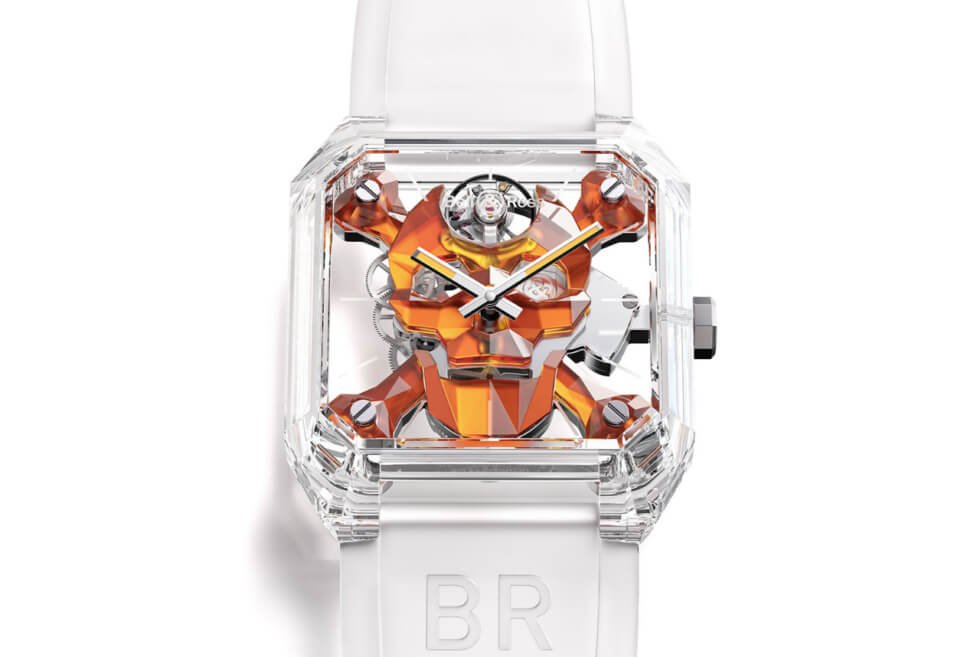
It may be difficult to find a watchmaker that can pull off a skeleton timepiece like Bell & Ross. Even though most of its lineup draws inspiration from aviation instruments, it can take it up a notch when it comes to avant-garde designs. The BR 01 Cyber Skull Sapphire is such an example that’s truly one of a kind.

Talking about exclusivity, Bell & Ross is crafting only one for the 2021 Only Watch charity auction. Proceeds from all sales made during the event will fund research into Duchenne Muscular Dystrophy. Joining the rest of the luxurious roster is the BR 01 Cyber Skull Sapphire.

With such a noble cause behind it, we’re sure several wealthy individuals are already eager to be charitable We previously featured the Defy 21 Double Tourbillon Felipe Pantone Edition from Zenith. Bell & Ross is taking cues from it and going for something extravagant in time before bidding begins in November.

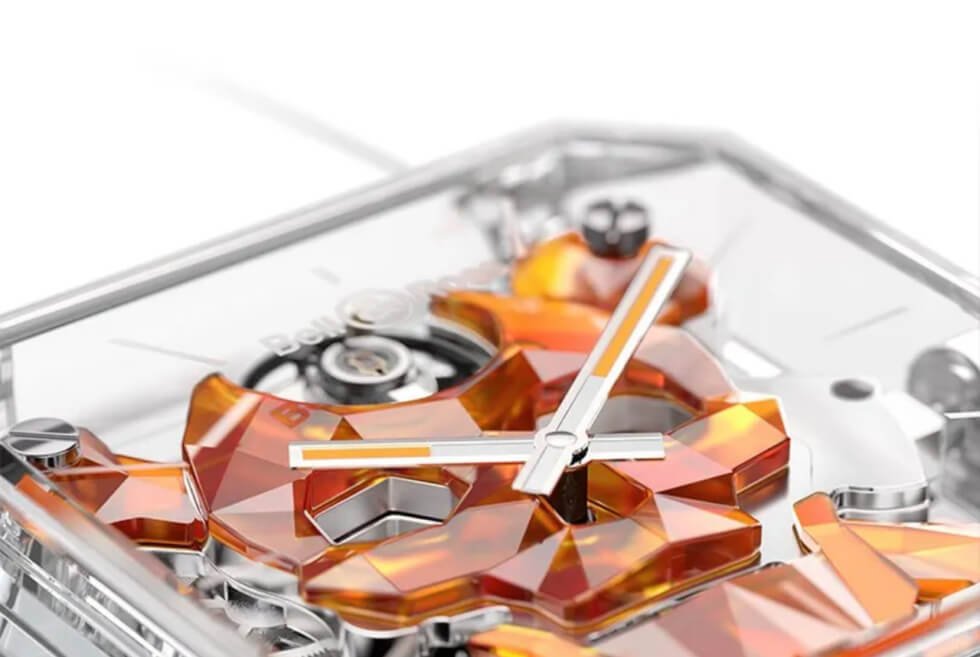
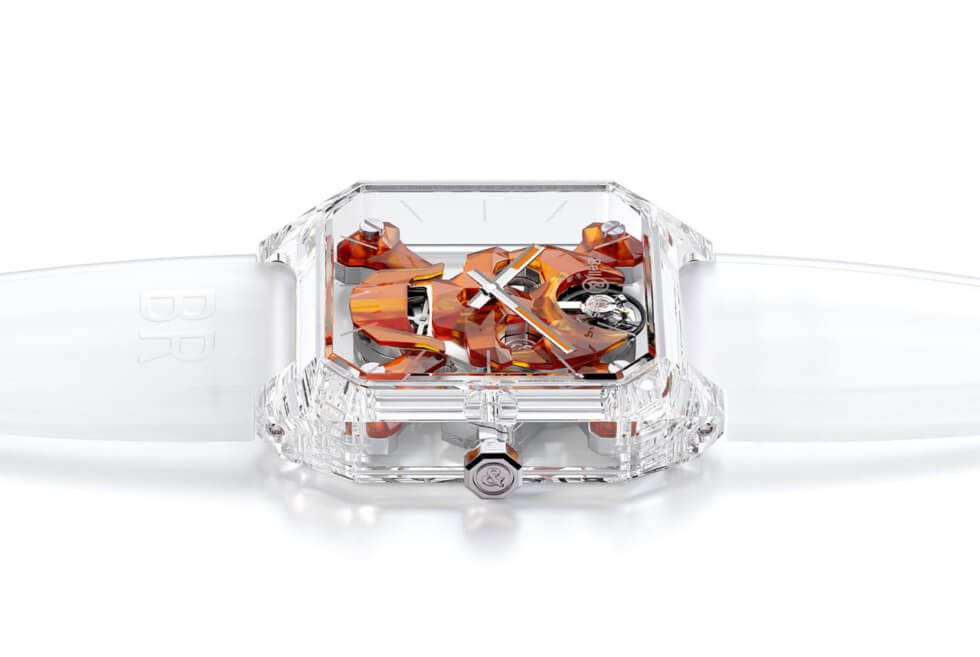
As already indicated by the name, the watch flaunts a 45-mm gemstone case. The level of expertise and engineering that goes into its production elevates it into luxe territory. Sitting within is the namesake – a faceted skull — made up of six sapphire elements with orange metallization,

The watch runs on a BR-CAL.309 hand-wound movement with a 48-hour power reserve. One cool feature of the BR 01 Cyber Skull Sapphire is the jaw which moves when you wind the crown. Bell & Ross finishes it with an FKM rubber strap that uses a 316L stainless steel pin buckle closure system.                                                                                                                                   

Learn more

imageimageimage

Images courtesy of Bell & Ross

Save Nearly $200 on a Great Pellet Grill

Looking for even more great savings? Head over to Today’s Best Deals page to see all our top deals from today.


Pellet grills are the move this summer, and we stand behind that fact so much that we did a podcast about them. Part machine and part grill, a pellet grill heats up small wood pellets (as opposed to gas or charcoal) to precisely grill and smoke to perfection with even heat distribution. And right now, Z Grills is offering Gear Patrol readers $190 off its new Backyard Warrior 70002C2E w/ code Gearpatrol.

Z Grills

Z Grills Backyard Warrior 7002C2E

Z Grills

The 7002C2E is a 2021 new arrivial and sports built-in dual temperature probes, a 24-lb pellet hopper (good for 40 hours of smoking) and 697 square inches of cooking surface. It’s currently marked down $90 from $699 but with the exclusive code you can save an extra $100 on it. What’s more, a bunch of other new Z Grill arrivals are also marked down up to 20 percent. These grills don’t get marked down this much very often, so take advantage while you still can.

SAVE NOW

This content is created and maintained by a third party, and imported onto this page to help users provide their email addresses. You may be able to find more information about this and similar content at piano.io

The Clear and Concise Guide to Men’s Haircuts

You’re here because you need a haircut, right? I get it. The process proves unnecessarily hard. And the anxiety involved in switching styles overwhelms even the coolest cat. Although the core styles haven’t changed much since the early 20th century, icons aplenty can shift and reshape the status quo with a simple visit to their high-end salon. They’ll leave with a gravity-defying haircut you envy, fetching camera-wielding paparazzi along the way.

And don’t get me wrong, the captured celeb looks great. No matter the hairdo, it seems they can do no wrong. Publications suddenly proclaim the current moment the era of the upright bob — that’s a fake haircut, but indulge me — and you’re left wondering, “Why doesn’t my hair look like that?” or “How do I even ask for that?” Stop that. Starting points abound and can act as a way forward toward your desired haircut. Using a classic style like a crew cut as the foundation, for example, one can tweak it a little to add edge or skew conservative.

Unless you’re forced to abide by rigid grooming regulations – a la the military, although they’ve since adapted their code to include ponytails, buzzcuts and dreadlocks — there’s no sense in limiting what your hair can look like. Minimal research — aka a quick Google search — reveals millions of ways to wear your hair. But look around, men’s haircuts aren’t that different from person to person, and switching styles isn’t rocket science. The good ones stick around and the bad ones are blips.

It’s also important to consider length. Some styles take months — if not years, depending on how fast your hair grows — to achieve. Others are quick yet irreversible decisions. Before you go bald or commit to billowing layers, think about it a little more simply. Look at yourself in the mirror; then at your photo reference; yourself in the mirror again; the haircut once more; envision it all over again. Bring the photo with you but be ready to make adjustments, albeit minor.

“A photo reference, whether it be some cuts you’ve seen (from a celebrity standpoint) or just looks you’ve seen on social media, can be a really great jumping-off point. At that point, you’re not necessarily discussing very strict terms in regards to texture, length or whatever it may be, but it’s more so trying to look at that photo, see if it works with that person’s personal style and then tailoring something to them that’s going to be close. There’s no such thing as one-size-fits-all for this,” Rob McMillen, co-founder of NYC barbershop Mildred, tells us. He also offers his opinions on how long you should wait between appointments. “If you keep it really short, [you should go] two to three weeks; if you keep something medium length, three to five; and if you have a longer look, maybe it’s five to seven or even longer.”

That means the haircut your favorite athlete wore last week won’t look identical on you — or your friend or your father — and especially so a week or two after it’s cut. Tailoring a style to your face shape, aesthetic, activities and schedule requires assistance from a trained barber. First, figure out your face shape. Then, seek out a style you’re interested in, find a local barber, book an appointment and get the look you’ve been yearning for — or something close to it. And bring whichever photo you need.

Before You Go, Learn the Lingo

Number (1-8): A number 1 = 1/8 of an inch, and a number 8 = 1 inch. Everything in-between progresses in 1/8 inch increments.

Neckline: Your neckline can be finished in four ways, squared, rounded, tapered and blocked. Squared sharpens the edges but fades into your skin. Rounded is the same as squared but with softer edges. Tapered doesn’t assume a shape and naturally progresses from hair to no hair. Blocked doesn’t fade from one length to another and defines a natural neckline.

Taper and Fade: These two are somewhat interchangeable. Taper means your haircut changes from one length to another. Fade is the progression from a certain length to skin (aka a cut by a clipper without a guard).

Arches: This is the outline around your hair. Higher arches work well with closer, polished cuts. Natural arches grow out less noticeably.

Sideburns: Your sideburns can be trimmed above, at or below the ear. If you’re unsure, let your barber (or how you wear your facial hair) be the guide.

Scissor Cut: Just as buzzes require clippers, some cuts call for scissors exclusively. Tell your barber to steer clear of the the plugged-in groomer if you’re seeking a more natural look.

Disconnected: This means there’s separation — a difference in length or texture — between the top and sides of your haircut.

Volume: The height and thickness of your hair.

Bulk: Excess weight that does not contribute to the hair’s volume.

Hairline: The point on your head where forehead meets hair.

Razor Cut: This is hair cut with a straight blade razor. This technique lends texture and volume.


Face Shapes

Round Face Shape

A round face shape implies your dimensions are roughly equal up and down and across. Plus, your jawline is soft, and your are cheekbones wide. Round faces should steer of buzz cuts — you’ll emphasis your ball-shaped head — and leverage volume (without adding bulk) for better angles.

Oval Face Shape

The oval face shape is characterized by dimensions that are longer than they are wide — but not drastically so. You’re an oval if your face is longer than it is wide and your forehead is wider than your jawline. Most haircuts work well with the oval shape, although bangs might muddle definition otherwise afforded by pompadours or buzz cuts.

Square Face Shape

The square face shape, like the round, is defined by nearly identical measurements all around — with one exception: your jawline is sharper and your sides straighter. This is another versatile shape, so give anything you’re interested in a try. However, steering clear of shoulder-length may help soften your jawline, which would look drastic alongside long, straightened locks.

Oblong Face Shape

The oblong face shape lends a long, vertical look. Here, the dimensions going up and down are undoubtedly more so than those going side to side. Steer clear of facial hair — it’ll only elongate your face — and stick to something sharp up top: side parts, fades and the ilk.

Heart-Shaped Face Shape

A heart-shaped face means your cheeks and forehead are wider than your jaw, which proves pointed. Haircuts with volume will soften your chin’s chisel and sharpen your hairline.

Diamond Face Shape

Just a like a diamond, this face shape proves wide at the middle — across the cheek bones — but pointed at the forehead and jaw. A textured crop or high fade will hide your width, while facial hair could soften your chin.

Triangular Face Shape

For those with a triangular face shape, the forehead is the widest part. The rest leads into the chin, which is pointed, and accentuated by an angular jawline. Haircuts with short sides will emphasize the difference between the top and bottom of your face. Opt for cuts with fringed or textured sides.

Hair Styles

Bald

Who’s worn it well? Mookie Betts

Don’t let a receding hairline ruin you. Take a page from Los Angeles Dodgers outfielder, Mookie Betts. He’s taken to cutting his own hair, a routine that consists of shaving what’s left down to the skin. Just because there’s little there doesn’t mean you don’t deserve groomed, too.

The easy way to ask for it: “Shaved to the skin all over.

Buzz Cut

Who’s worn it well? Tom Holland

The buzz cut. Oftentimes donned due to a dare or because of a dye job gone wrong, the style’s actually rather appropriate for most guys during the summer months. Free yourself from last season’s pompadour and prep for a fall and winter feeling renewed. A #1 buzz is the biggest statement, while a #4 proves thick enough to cover your skull. Tom here (to the left) probably has a #2.

The easy way to ask for it: “#2 buzz all over.”

Fades (High, Medium, Low)

Who’s worn it well? Michael B. Jordan

Fades are a surefire way to appear put together. They the natural progression from something super-short to short on the sides and nothing crazy on top. A high fade means the point where the longer hair starts is further up on your head. Medium means mid-way. Low means your neckline and just above it will be faded but the rest will be another length.

The easy way to ask for it: “High fade. Skin into a #1 with a #3 on top.”

Crew Cut

Who’s worn it well? Ryan Gosling

While the crew cut is a classic American style, it’s changed a little. The fade on the sides shouldn’t be as drastic as men used to wear it, and the top can be a little longer. Gosling (aka Ryan) probably had an eight on the sides and a scissor cut up top. See? The crew cut loosely defines as shorter on the sides and not as short on the top.

The easy way to ask for it: “Crew cut. An eight on the sides and a scissor cut, but short, on top.”

Caesar

Who’s worn it well? Majid Al Maskati

The defining feature of a caesar cut is the horizontal bang across your hairline. The hair on the sides can be short but ideally not faded. In that case, the cut would be called a French crop. The caesar’s a simple, stylish option for men with strong features — and no aversion to fringe. Between a four and a six works on the sides, while the top can be as high as an 8 — but there must be bangs.

The easy way to ask for it: “Five all over with caesar-style bangs on the front.”

Undercut

Who’s worn it well? Christian Pulisic

The undercut, though oftentimes slicked back, is represented by short, faded sides and a long, disconnected top. The two are blended together but the contrast between them is drastic. See: Brad Pitt in Fury, Christian Pulisic on the pitch.

The easy way to ask for it: “An undercut. Skin into a one on the sides and scissor cut up top.”

Crop

Who’s worn it well? Rhuigi Villasenor

The crop references both the caesar and a fade by mixing short sides with a blunt, front-brushed fringe. Rhuigi Villasenor, seen at Paris Fashion Week, has a medium fade that forms a sort of fauhawk shape — except his hairs worn longer and with more volume.

The easy way to ask for it: “A three fade on the sides and a brushed-forward crop on top.”

Side Part

Who’s worn it well? Jason Sudeikis

The cornerstone of a side part haircut is a difference between lengths on top and on the sides. But, you don’t have to buzz either. A scissor taper cut can achieve a similar polish without exposing skin. Then, when you style, you’re combing or pulling hair in either direction at your part.

The easy way to ask for it: “A taper scissor cut with a side part.”

Quiff

Who’s worn it well? Jon Hamm

The quiff’s another classic, versatile haircut you can adapt to your liking. It’s defined as a close shave on the sides — say #1, 2 or 3 — and roughly three inches on top. It’s brushed forward and then tamed with product. The only prerequisite is hair that’s longer than three inches heading into your appointment.

The easy way to ask for it: “A three on the sides and scissor cut on top to around three inches.”

Pompadour

Who’s worn it well? Hasan Minhaj

The pompadour is the graduated quiff. It can be faded on the sides, marked by a close shaved into a mid-level fade or tapered with scissors. It’s typically sharp, too, as it’s often finished by lining up your hairline and defining your hair’s arches where they lead into your sideburns. The hair on top is often longer, more so in the front and shorter as you follow it back. Clarify your intention with the cut, though, as there’s certain skill required in cutting different parts at different lengths so it lays right.

The easy way to ask for it: “I’ll take a pompadour — with a #2 fade on the sides into a scissor cut on top.”

Swept Back

Who’s worn it well? Steven Yeun

The sides of a swept back haircut are shorter but neither faded nor shaved. Versatile and very cool, it’s kept tight along the ears, while the hair on top is longer so it arches and waves backward, whichever direction you wear it. There’s a soft part, as seen on Steven Yeun, but it isn’t as drastic as Jason Sudeikis’ do.

The easy way to ask for it: “Scissor cut on the sides and top with it a little longer there. Swept back instead of parted.”

Slicked Back

Who’s worn it well? Brad Pitt

Think of the slicked back cut as an evolved swept back style. As your hair grows out, it’ll naturally fall back — as long as you train it to. Training it requires consistent style and perhaps a hat through the most awkward phases. Keep slicking it back until it sticks, but be conscious of how much product you’re using. Yes, a shiny polish on your hair might be ’50s-referencing, but it rarely looks right in modern settings.

The easy way to ask for it: “Scissor cut all over while keeping length and a little volume. I wear my hair slicked back.”

Comb Over

Who’s worn it well? Aaron Rodgers

The comb over, at least as a style name, has long been associated with balding. You might be picturing something semi-permanent – like a wig or a toupee — but it’s just the conscious styling of your hair to one side. Aaron Rodgers rocked the style well while hosting Jeopardy, but he usually wears it slicked back. A comb over can tame a longer mane for more formal occasions. Your hair must be longer at the hairline than it is in the back as to cover the entirety of your head when you comb it.

The easy way to ask for it: “A scissor trim, shorter on the sides and long on top, with a combed-in part.”

Natural

Who’s worn it well? Kingsley Ben-Adir

The natural look begins with a buzz — then it grows out. When it comes time for another cut, you’ll need to enlist a semi-amateur sculptor; or a barber confident they can cut Black hair. The sides are kept short, shaved if desired, and the top is shaped to it’s even all around.

The easy way to ask for it: “A shaped natural cut with shorter temples and arches.”

Bob

Who’s worn it well? Timothée Chalamet

Whether or not the bob works for you depends on how long your hair is and how you wear it. It’s typically defined by a nearly-center part, hair that flows past the ears and a similar length all around, although maybe a bit longer out front. It can be worn different ways — tucked behind the ears, pulled into an up-down and worn forward (like Timmy C. did here). Again, you’re going to need quite a lot of hair to get this look.

The easy way to ask for it: “Razor cut the hair for texture, while leaving the front a little longer than the back.”

Shag

Who’s worn it well? Logan Paul

I originally said co-founder of clothing brand Bare Knuckles, Cole McBride, had the best shag. Or maybe Keith Richards back in the day. But prolific internet-troll-turned-semi-professional-boxer Logan Paul, however annoying he may be, has great hair, too. It’s long in front, short over the ears, and then long again. It mixes the mullet, shag, and front-combed swoop. It’s a lot to convey colloquially, so a photo reference aids in translation.

The easy way to ask for it: “Tousled, textured, long hair styled forward.”

Mid-Length Layering

Who’s worn it well? Adam Driver

The mid-length layer works best with hair born with a bit of wave built in. Sprays and other products can recreate the texture, leaving you in charge of finding the right cut. No clippers are required for this one, as scissors work best for taking length off while retaining texture and volume.

The easy way to ask for it: “Layered scissor cut that lands at the end of my neck.”

Afro

Who’s worn it well? Trevor Noah

Growing and maintaining and afro requires patience and a few wide-toothed tools. Picks and other combs help hair gain volume. Contrary to most cuts, which lose their definition with repetitive fluffing, the act is essential to this style’s process. Proper moisturizing helps, too, a la durags, silken caps and leave-in conditioners, and usual cuts are required as well. “If you don’t consistently get haircuts, you’re going to combat split ends and long term damage, and that’s no fun,” celebrity groomer John Cotton told GQ.

The easy way to ask for it: “Trim the split ends without reducing volume or taming the texture and shape up my hairline.”

Shoulder-Length

Who’s worn it well? Jared Leto

According to the CDC, your hair grows, on average, a half-inch each month. Growing it down to your shoulders, which is about a foot from your scalp, would measure out to 24 months of work. That’s a few awkward stages and plenty of patience — plus, lots of conditioning. Cutting to this length is rare, because few go past it, but doing so proves painless. You’ll just adjustment the measurement depending on how far past the shoulders you already are.

The easy way to ask for it: “Two inches off the bottom, parted down the middle.”

Dreadlocks

Who’s worn it well? Luka Sabbat

Donning dreadlocks oftentimes requires a visit to a professional shop or studio — or at least the assistance of another person. Hair stylist Ashley Adams explains that the style takes years upon years to develop. And she also says not to “trim your dreads for at least 6-12 months after starting them to prevent them from unraveling.” Once outside this window, you can cut one to two inches off at a time. If you’re done donning them, you need to cut them all off and restart. They cannot be undone.

The Great Beyond

Who’s worn it well? Evan Mock

What is it? Well, it’s whatever you want it to be. Dye your do; put it in a ponytail; shave the lightning bolts into the back of your head. Be smart, but treat your head like a blank canvas.

The easy way to ask for it: In response to, “Are you sure?” you say, “Yes.”

This content is created and maintained by a third party, and imported onto this page to help users provide their email addresses. You may be able to find more information about this and similar content at piano.io

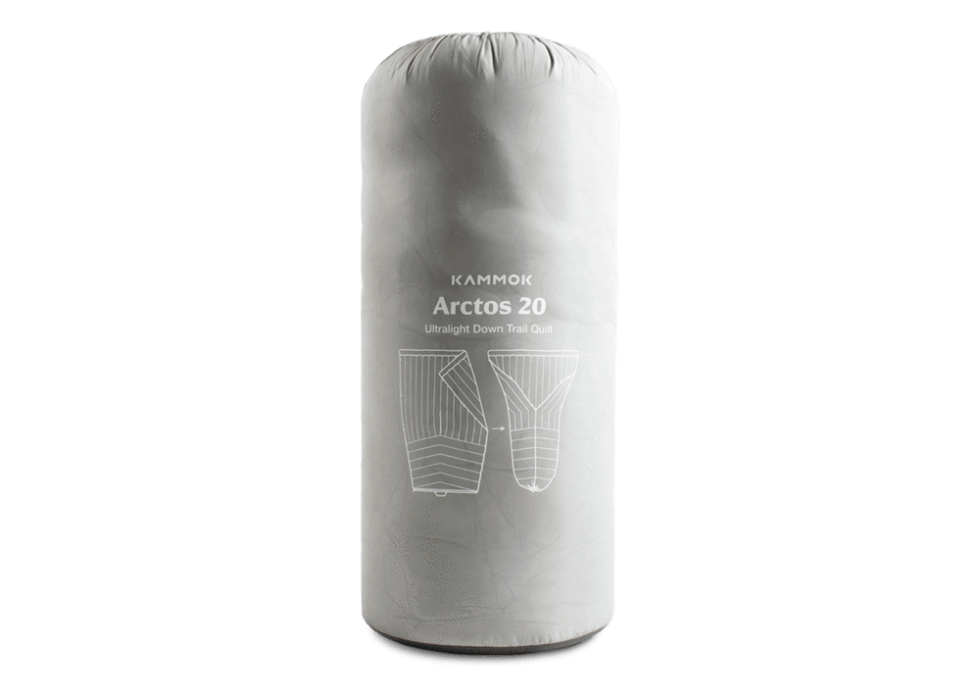
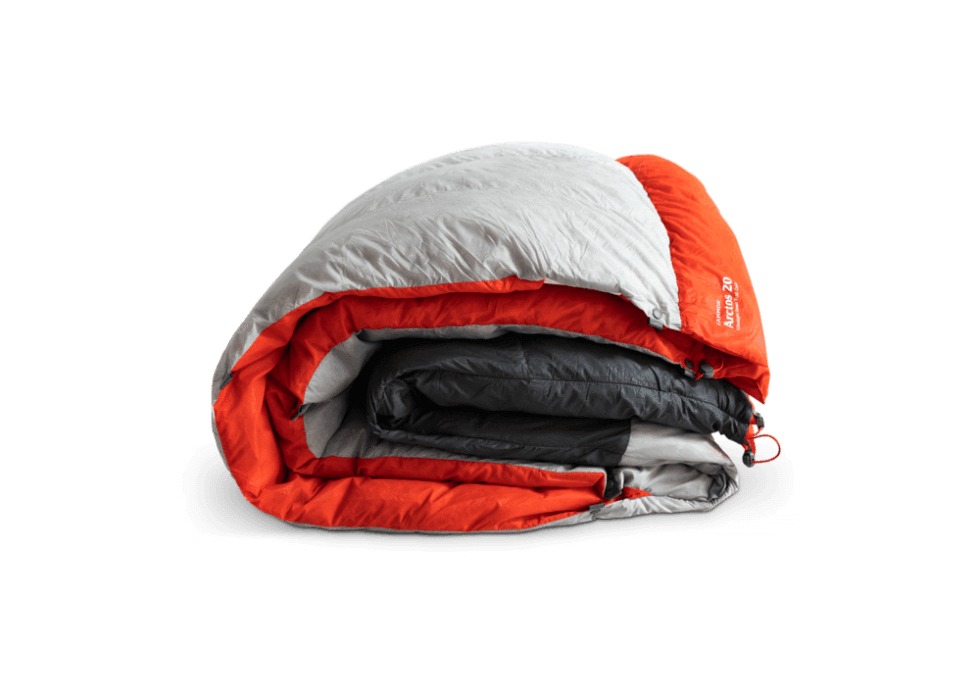
Don’t Let The Cold Bite With The Kammok Arctos 20ºF Trail Quilt

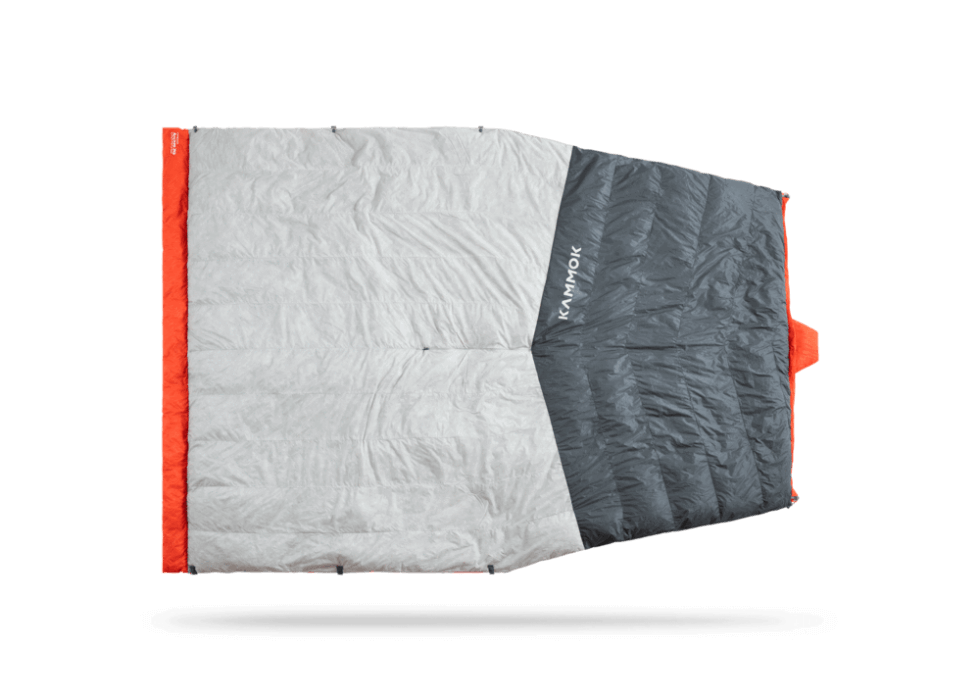
When it comes to the great outdoors, the temperatures can be tricky to work with. It can be hot in the mornings and cold during nighttime. Thus, it’s best to be prepared and you can never go wrong with a quilt in your backpack. The Kammok Arctos 20ºF trail quilt is a great choice for this matter. It works great when camping in temperatures down to 20ºF or for long-distance hiking.

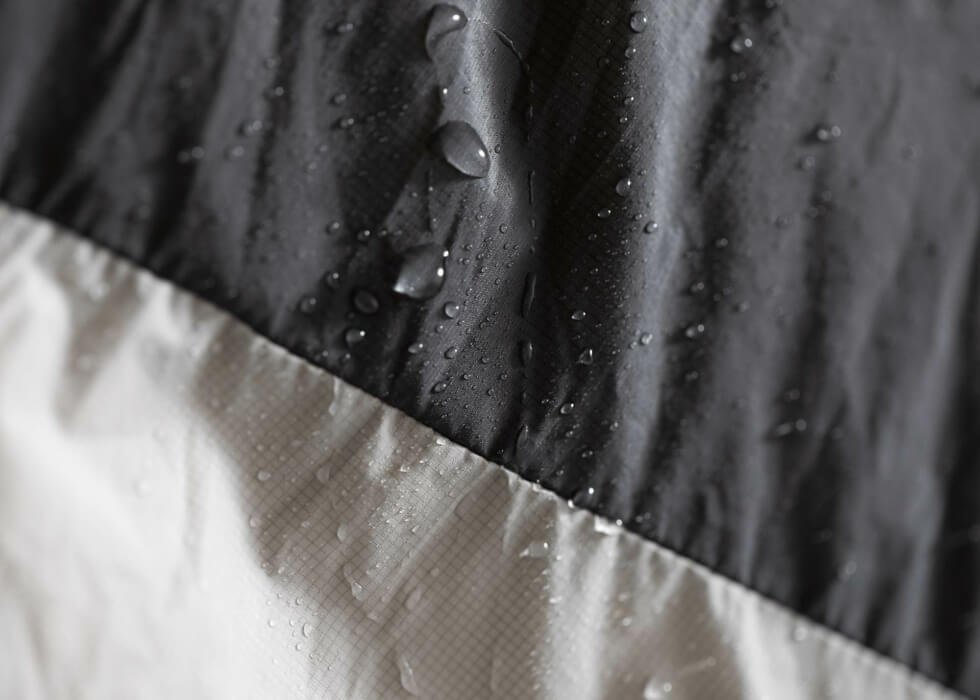
Similar to the Bobcat Trail Quilt, this versatile outdoor gear does not compromise in providing you warmth. This is the brand’s “warmest quilt yet,” with Downtek 850-fill power goose down for maximum warmth for less weight. It provides superior comfort in the desert and high alpine conditions. The down is treated with a durable, water repellent finish and is free from all PFCs to keep the quilt dry longer and dry faster when wet.

Meanwhile, vertical and horizontal baffle design prevents movement of the down from upper to lower region. Paired with internal mesh gates to lock insulation securely in place, so there are fewer cold spots and a balance of warmth all throughout the body.  Moreover, the Kammok Arctos 20ºF trail quilt uses Aura 10D water-resistant ultralight ripstop nylon fabric to make it cozy and irresistibly soft.

It boasts a tapered design that follows the contour of your body: wide on the shoulder and hips for extra wiggle room, and tapered at the zippered footbox for a secure seal against cold air and minimizes heat loss at the toes. No matter your needs, it easily works as a sleeping bag, a poncho, hammock, and a camping blanket. It features a minimalist design but works great in keeping you toasty in cold conditions.

Get It Here

imageimageimageimageimageimageimageimage

Images courtesy of Kammok

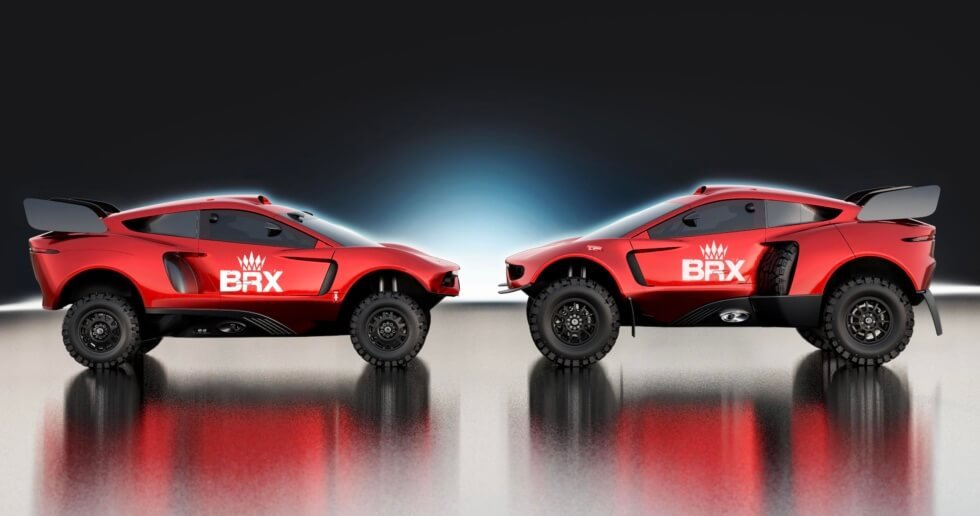
BRX is revamping its lineup for the 2022 Dakar Rally with the Prodrive Hunter T1+

The 2022 Dakar Rally is shaping up to be an exciting one with the world’s leading carmakers teasing exciting new machines. Just last week, we learned of Audi’s plan to compete with the hybrid RS Q E-Tron rally car. Now, we have Bahrain Raid Xtreme (BRX) and its Prodrive Hunter T1+ to watch out for come race day.

Instead of just mulling about their 2021 outing, the BRX team are busy learning from their mistakes and adjusting. The tweaks they are making are not only for boosting performance. These are, in fact, to abide by the latest regulations set by the FIA.

“We are very pleased the organisers have addressed the disparity in regulations between the buggies and the four wheel drive T1 cars, where larger tyres had an advantage over rough terrain,” said BRX team principal, Gus Beteli.

With the new rules in place, both 4WD and 2WD configurations will be more balanced. To be specific, the bodywork, suspension, and drivetrain are receiving some upgrades. BRX notes that the suspension now boasts longer dampers and wishbones. Travel is now set at 350 mm from 280 mm.  

Now that the Prodrive Hunter T1+ rides on bigger 17-inch wheels with 37-inch all-terrain tires and larger brake systems. What follows is a wider stance at 2.3 meters from 2 meters. As for the bodywork, BRX is keeping the familiar aerodynamic silhouette of its predecessor.

BRX is already using the T1 version, while Prodrive Hunter T1+ is under construction. The team estimates that it should be ready for testing in September. This should give their drivers enough time to adjust to the new driving dynamics and handling before the 2022 Dakar Rally.

Discover more

imageimage

Images courtesy of BRX

5 Things To Buy For Active Men

Finding the perfect present for the man in your life is not as easy as you might think. With so many products designed for men readily available on the market, a lot of people feel the whole process can be slightly overwhelming. 

With the internet at your fingertips, you can access a wide range of marketplaces and online stores in a matter of seconds. However, this might make things even harder for you if you have no idea where to start. If he likes to keep himself active, you should have no issues finding a practical gift. Because so many people like to stay active, there are plenty of fantastic products out there. In this article, we will look at some unique gift ideas that are available this year.

1.   Inflatable Stand Up Paddle Board (SUP)

image

Paddle boarding grew in popularity about 15 years ago, but very few people owned their own board. Most of these boards were over 10 feet long and were made with fiberglass. They were so heavy and big, bringing them from point A to point B proved extremely challenging. Plus, they often cost a small fortune.

But when the inflatable stand up paddle board came along, the industry exploded. Instead of hauling around a large heavy board, you could buy an inflatable that you could easily store in a bag, which made them a lot more convenient in comparison to boards made of fiberglass. Most of these boards come with the following:

       A pump: A small pump that connects to the board which allows you to manually push air into the board. It normally takes about 5 to 10 minutes to fill it with air.

      A paddle: Paddles that come with most inflatable paddle boards allow you to adjust the size so you should have no problem storing it.

      A bag: Once the board is deflated, you can store it in this large bag.

You can pick up a top of the range inflatable SUP for around $600. Most traditional surf stores and online marketplaces stock a wide variety of inflatable boards. Unlike a traditional surfboard, you don’t have to rely on strong waves to enjoy it. He can use it in almost all weather conditions, any time of the year. It is a great product that will allow him to enjoy the great outdoors and it is fantastic for building muscle.

 2.   E-Scooter

image

Electric scooters were invented in 1985, but over the past few years, they have become very popular. For those living in a city, this is an ideal energy-efficient gift that allows them to get to their destination quickly. With growing concern about global warming, a lot of guys are looking for a mode of transport that doesn’t harm the environment. Because these devices run off rechargeable batteries and not fuel, they are environmentally friendly.

There are lots of stores online that sell these quick and agile scooters, like E-Ride Hero. Not only are these devices energy efficient and practical, but they are really good fun to drive too. They allow you to weave in and out of traffic, and you don’t need a lot of space to park them. For those who work in the city, getting stuck in traffic jams can consume a lot of their time, but an e-scooter makes getting stuck in traffic a thing of the past.

Unlike cars or other motorized vehicles, e-scooters require very little maintenance. Most people who own them manage to fix and maintain the device themselves, so they don’t have to spend a lot of cash on mechanics and spare parts

3.   Protein Gift Box

image

If the man you are buying a gift for goes to the gym regularly, he probably spends a lot of his savings on protein products to gain muscle. For those who work out a lot, protein supplements can prove to be a very costly expenditure. Once you run out of protein products, you have no other choice but to buy more. Otherwise, you will eventually end up losing all your gains after some time.

Protein boxes are packed with lots of different protein products including:

      Bars

      Snacks

      Cookies

      Drinks

      Powders

If he is a vegan, you can easily find a protein box that just includes plant-based sources of protein. Protein boxes are selling really well these days, so you will have plenty of options. If you are working off a tight budget, you should be able to find a box for less than $50.

4.   Gym Membership

image

If he likes to go to the gym, or if he wants to go but hasn’t yet joined the gym, purchasing him a gym membership is a great idea. Most guys will appreciate it because it is something they really need.

If you want to go the extra mile, you can include a massage, a trainer, or even some exercise clothes. Not all gyms are the same, so it might be worth your while checking out some gyms in your area first. Some gyms offer more than others, and some even include a swimming pool and sauna. If you don’t go to a gym yourself, it might be a good idea to do some research about the different gyms in the area first. Ask around, or check out reviews posted online. A lot of gym enthusiasts post reviews on the web about the different gyms they go to. This will give you a good insight into what you are paying for. A lot of employees working there will be more than happy to give you a small tour of the gym, so don’t hesitate to ask.

5.   Green Fees for a Nice Golf Course

image

Joining the best golf courses can cost a lot of cash, so a lot of guys can’t afford it. But you can pay to use most courses for a day, so if the man you want to buy the gift for enjoys playing golf, then getting him green fees for the best golf course in the area is a great idea.

If he is new to the game, or if he has never played in his life but you think he might enjoy it, consider getting him lessons from a PGA professional golfer. In many towns and cities, there are lots of professionals that teach others how to play. If he is new to playing golf, he will love getting lessons from seasoned professionals. Even if he has been playing golf for several years, golf lessons can help him boost his skills to the next level.

Conclusion

image

If you only know the guy for a short period, consider asking his close friends or family members for advice, or scroll through his social networking account for ideas. Before you start spending your cash, know your budget so you don’t find yourself going overboard. Just in case he owns the same thing already, make sure you keep the receipt just in case he wants to change it for something else. When you’re about to pay for the item, explain to the employees that it is a gift, and ask if he can exchange it for something else if he doesn’t want it. Before shopping, make a list of all his interests and hobbies and find out what products are available in those areas.

Pick Up One of These Lightweight Vests for the Extra Pockets Alone

light layer vests

Gear Patrol

The vests below are by no means tactical vests. Aesthetics are the primary focus for each selection — although some have handy pockets that I’d happily put my phone, keys and wallet in over my cramped pant leg. Instead of wearing one of when you’re out fishing or hunting, opt for one of these lightweight vests to add layers to otherwise flat outfits. I’m not saying a T-shirt and chinos is a boring look, but the two topped off with a utility vest has a certain je ne sais quoi unfounded in other late summer/early fall outfits.

Yes, you read that right, I’m recommending you add another layer to your outfit (even in warmer climates). But all of these are unlined, and constructed from organic cotton or cotton canvas, breathable wool, or lightweight nylon, meaning you can wear them without melting. The vests on this list are also rather practical, albeit not quite as functional as a fisherman’s vest with fishing-focused compartments or hooks. Stuffing your pockets with EDC and whatever other extras is not only uncomfortable but it interferes with your outfit’s defining lines. Sure, an outfit comprising of a plain T-shirt and simple shorts doesn’t have a sultry silhouette like that of a well-tailored suit, but every curve counts. I’m not big on prescribing clothing to particular body shapes or heights, but the vest, especially in thin cotton, is a flattering top layer for all types of men.

Plus, there are lots out there to choose from. Some in eclectic patterns and colors, others with pockets in places you never knew you needed them, and even more with water-resistant finishes capable of keeping (most of) you dry. Shop our favorite lightweight utility vests below.

Advertisement – Continue Reading Below

Best Overall Light Layer Vest

Summerisle Canvas Vest

Albam

$189.00

Albam’s lightweight Summerisle Canvas Vest is constructed in Portugal from 100-percent organic cotton. Think of it as a chore coat with the sleeves cut off (and with those split hems tidied up). Two bucket pockets populate the front, a smaller chest one sits above them, and four buttons form the front closure.

Best Upgrade Light Layer Vest

Cadero Vest

The North Face

$159.00

The North Face’s Cadero Vest takes obvious cues from the company’s outdoor gear. (And technically, this vest is considered outdoor gear, too.) Cut from a blend of 57-cotton and 43-percent nylon, the vest features pockets six front pockets and ultra-breathable mesh inserts around them. It’s a versatile option capable of fitting into your hiking rotation or adding interest to a simple outfit.

Best Affordable Light Layer Vest

Utility Vest

A Day’s March

$70.00

A Day’s March admits that their Utility Vest references vintage fisherman versions. It’s obvious. The usual four pockets — one of which is equipped with a D ring – sit on both sides of the chest and below it; it zips shut in the front; it’s cut from soft, yet durable, 100-percent cotton.

Shadow Project Utility Vest

Stone Island

$770.00

Although other entries on this list at least reference streetwear style vests, which differ greatly from generic Patagonia ones, Stone Island’s is a streetwear style vest. How so? Well, there’s the eclectic “future camo” that covers the entire thing, the translucent front pocket, and the contrasting zippers. Plus, it’s from Stone Island, a venerable veteran of both Italy and the UK’s streetwear scenes.

Harriman Utility Vest

ONS

$107.50

ONS’ Harriman Utility Vest bears the closest resemblance to the types of vests you’d as part of a three-piece suit. However, its rich indigo hue and its hefty pockets — there are three — separate it from those styles, and make it something worth wearing on its own — with something on underneath, of course.

Elmwood Vest

Carhartt WIP

$198.00

The ultra-heavy canvas vest might be the only Carhartt one you can name — or at least identify. But its British counterpart, Carhartt WIP, makes more of them. Namely, ones that are both lighter and better looking. Look at the Elmwood Vest, for example. It’s made from 100-percent stretch mechanical polyester, features eight pockets, and a 100-percent water-repellant finish. 

El Museo Vest

Hermanos Koumori

$52.50

Constructed from 100-percent raw cotton denim, Mexican streetwear brand Hermanos Koumori‘s El Museo Vest is super simple yet undoubtedly unique. The neckline is far higher than others on this list and the contrasting Japanese snap-on buttons contribute to the top’s natural feel.

Tropical Chore Waistcoat

Universal Works

$189.00

Just like there are all-season wool suits, Universal Works’ wool vest — aka the Tropical Chore Waistcoat — can be worn well into the peak of summer, if you’re feeling up to it. With acetate buttons, adjustable side straps and angled pockets, it may be the most formal on our list. 

Nylon Approach Vest

Stüssy

$135.00

Of course a bonafide streetwear brand would have its own take on the tactical utility vest. Dubbed the Approach Vest, this version’s cut from nylon and lined with polyester mesh. There are five pockets on the front and matching shorts should you be interested in buying them, too.

Traveler Vest

Wasted Collective

$275.00

Wasted Collective leans into the fisherman aesthetic by finishing their Traveler Vest with buttons made from recycled fishing nets. The body’s made from 98-percent organic cotton and 2-percent polyurethane, and eight pockets can be found on the front, sides and back. There’s a duck pocket back there just in case.

This content is created and maintained by a third party, and imported onto this page to help users provide their email addresses. You may be able to find more information about this and similar content at piano.io

Advertisement – Continue Reading Below

This Is The Watch You Need If You Own a Motorcycle

“Car guys,” believe it or not, have plenty of watches to choose from that take inspiration from the automotive world. But what about motorcycle guys? Fewer options, for sure.

Well, moto dudes, your time has come: Veteran watch journalist, die-hard Italian motorcycle aficionado and unabashed Dead Head (and, to be fair, longtime contributor and friend of Gear Patrol Allen Farmelo), has partnered with historical dive watch manufacturer Alsta on a dedicated watch for motorcyclists — and we have to say, it’s pretty freakin’ dope.

The Motoscaphe 120, as it’s called, came about pretty organically: Allen began posting images of his watches paired with various motorcycles to his Instagram, and Alsta’s CEO, Angus MacFayden, reached out.

Says Allen: “(I had) about 30 years to dream up this watch, because I’ve literally been thinking about the perfect motorcycle watch for about that long. Of course you start with a dive watch, but it has to be modified significantly to work on a bike.”

alsta motoscaphe 120
The Motoscaphe 120 features a bi-directional, rotating 12-hour bezel and a left-handed crown.

Alsta X Beyond The Dial

Alsta’s dive watch provides the perfect platform for the Motoscaphe 120: The brand, which was revived by MacFayden in 2014, makes affordable, skin diver-type divers for the modern adventurer. (If you’re familiar with the brand, it may be because they produced the watch worn by Richard Dreyfuss in Jaws. Kinda badass, no?)

So what makes the Motoscaphe 120 specifically a motorcycle watch? It’s the little things, really. As Allen himself admitted, this is a dive watch at heart — something tough, utilitarian and unassuming. But it’s been modified for the rider in several ways:

First off, it’s got a bi-directional 12-hour bezel. Easy to manipulate with gloves, this type of bezel allows the rider to track elapsed hours, minutes (multiply by 5), or a second time zone. If you happen to be riding your bike over extreme long distances and need to track both local and home time, this is an extremely handy feature.

Next, the crown has been oriented on the left side of the case. Thus, when one’s left wrist is bent to the controls of the bike, the crown doesn’t dig in. (This is the case for right-handed folks, anyway. Sorry, southpaws — maybe wear the watch on your left hand when riding.)

alsta motoscaphe 120 case back
The Motoscaphe 120’s case back.

Alsta X Beyond The Dial

The watch is also highly legible for quick glances while riding, with awesome, vaguely shark tooth-looking indices. The sapphire crystal has an inner antireflective coating, and there’s no date window to get in the way. There is, however, one playful nod to the motorcycle that appears on the black dial in the form of some text: “176ft = 53.6m / sec.” That’s roughly 120mph, or the speed at which, at least in the opinion of the watch’s creator, the art of riding a motorcycle takes on a zen-like, spiritual quality.

Why 120? Allow me to quote for a moment from Allen’s own description of the watch: “This is the speed at which ‘relativistic effects’ (as described by psychologists) arise in human perception. Relativistic effects are a perceived curvature of space and the slowing down of time.” Hence the name of the watch.

Thoughtful details extend to the strap, which in this case is a perforated leather rally strap that allows for air flow while riding. The circular brushed, stainless steel case itself is a perfect 40mm wide, while the movement is an automatic Seiko NH35. The case back is engraved with Beyond The Dial’s ethos and victory wreath. (Beyond The Dial is a great watch journalism website run by Allen and a close group of friends and contributors. Shameless plug: Allen has kindly featured me in my capacity as GP’s watch editor on two episodes of BTD’s podcast.)

The whole shebang ships in a custom, oxblood red leather case that’s designed to double as a sunglass case or tool pouch on your bike, and is embossed with the Alsta and Beyond The Dial logos. At $895, this is a well priced, thoughtfully designed watch that’s suffused throughout with automotive cool.

Now, I’m not a motorcyclist myself, but I am friends with quite a few of them — Allen included — and I know how picky they can be about their gear. The Motoscaphe 120 is clear evidence of that particularity and care, and the results speak for themselves.

SHOP NOW

This content is created and maintained by a third party, and imported onto this page to help users provide their email addresses. You may be able to find more information about this and similar content at piano.io

How Can Watch Design Offer Insight on Time Itself? Ask Israeli Watchmaker Itay Noy

A watch is, most fundamentally, a timekeeper. But to Israeli designer and watchmaker Itay Noy, it can be much more: It’s a canvas for art and a vehicle for exploring philosophical ideas. From concept through production to final sale, his watches are made to order out of his studio in Jaffa in Tel Aviv, Israel — and his approach is unconventional, to say the least.

Since 2000, he’s introduced a new collection every year, each an exercise in breaking out of a received perception of time. Though they always include a compelling visual element, Itay Noy’s concepts involve alternative time displays and untraditional components that need to be invented and created especially for his purposes. Many of these he makes himself, from dials to movement modules, and he’s largely self-taught.

Producing only about 150 watches per year, Itay Noy stands out for the relative accessibility of his pieces — often around $6,000 — compared to other watchmakers offering extremely limited production and avant-garde, conceptually driven watches which tend to be very high-end. Many Itay Noy watches require a little effort to decipher at first, but offer a truly unique experience once you get the idea. What better way to understand the mind behind these creations than to speak with the man himself? Gear Patrol got the chance.

LEARN MORE

itay noy

Itay Noy

Editor’s Note: The following interview has been edited for length and clarity.

Q. How would you describe your work to someone who had never seen it?

A. I’m an independent timepiece maker – one of a few dozen throughout the world. Since 2000 I have been creating limited-edition, hand-crafted watches. Each year I reveal a new collection, trying to capture a fresh philosophical perspective on the concept of time. I make about 150 pieces a year, all my own original designs, using components and movements of the highest quality integrated with in-house dynamic dials.

Q. Was your interest in design always centered on watches? Was there a watch or experience that particularly inspired you or impacted your career trajectory?

A. I loved watches since I was a child, and when I was 22 years old I found a job in a watch store by coincidence and immediately got interested in the watch world. The watchmaker at the store taught me some basic principles in repairing watches, and It was the beginning of my dream to design my own. Later, I studied Art Jewelry (B. FA) and Industrial Design (M.DES) for six years and developed the principal value of my design – the concept behind the watches.

I’m trying to bring a new spirit, to evoke a different point of view, instead of a purely functional object. We live in a world where the wristwatch is not needed anymore because you can find the time everywhere, and I think that the watch has become an identity object and a sculpture on the wrist.

itay noy making a watch

Itay Noy

Q. You make a lot of watch components yourself. What parts do you make, and how do you select the parts you source?

A. I use only high-quality movements, which I get from small studios and suppliers in Switzerland. The movement is the heart of the watch; it must be beautiful and functions as a perfect platform.

The dial is the face of the watch (the character) and should tell the story of the watch. I look at the dial as my canvas to “paint” and express my ideas. I design and produce in-house dynamic dials. All other parts (including the case and the straps) are original designs by me.

itay noy watch parts

Itay Noy

Q. What unique skills or techniques have you learned specifically for executing your unique concepts?

A. I officially studied Art Jewelry, Craft, and Industrial Design. I have been learning most of my watch skill knowledge by researching and experimenting by myself with a lot of passion for the last 25 years. I can define myself as an autodidact timepiece maker.

We live in a world where the wristwatch is not needed anymore because you can find the time everywhere, and I think that the watch has become an identity object and a sculpture on the wrist.

Q. What was your most complicated or challenging project to date?

A. The Part Time, Chrono Gears, and the ReOrder watches were the most complicated and difficult projects to develop. I needed to think about a system that would synchronize additional gears in order to bring new functions.

In each one, the watches started from an abstract idea and, after months of researching, became what they are in at a certain moment, by coincidence (and luck). The important thing is to play, to observe, and to detect the moment that something is happening, when it is happening.

itay noy part time watch

Itay Noy

Q. You say that each new collection aims to “capture a fresh philosophical perspective on the concept of time.” What does time mean to you? Can something like art or a watch influence how someone perceives or experiences time?

A. I’m not trying to change the concept of time, but I like to make people think about the meaning of time by looking at my watches. We all share an international time system, but each one of us has a personal sense of time which is different.

The idea behind the Part Time watch is to frame moments in one day: Each window displays a partial indication about the time, and together, they complete the full information. While the left half of the dial reveals the day hours from 6am to 6pm, the right half is hidden. In turn, the right half reveals the night hours from 6pm to 6am. While one side is awake, the other is latent, and they switch roles every twelve hours.

The idea behind Chromo Gears is to show eight time situations in one day. There are three different ways of reading time in this collection: Besides the traditional analog way of reading the central hands of hours, minutes, and seconds, two Chrono Gears rotate around the dial clockwise and contain a central hand, the pointer. While one Chrono Gear indicates 24 hours (am-pm) on the lower half of the dial, the second Chrono Gear indicates eight time situations – dawn, morning, noon, afternoon, dusk, evening, midnight, and night.

itay noy chrono gear watch

Itay Noy

Q. As an Israeli watchmaker with a studio in Tel Aviv, how does your location or background affect your business or artistic approach?

A. I’m happy with the title “Israeli watchmaker.” On the one hand, most of the collectors prefer to buy a Swiss-Made watch, but on the other hand, I’m the only independent watch studio from Israel, and that’s special. My studio and gallery are located in the beautiful Old City of Jaffa, and it’s inspiring. Visitors are invited to meet me, see the process and all the timepieces.

There is a history of watchmaking in my grandmother’s family in Germany, but I only discovered it after I started making watches. I believe in personal and small production; I make all the watches directly for customers, and they have a direct contact back to me whenever they need my service or advice.

Q. What artists, designers, watchmakers or other interests inspire your work?

A. (The short list) Design world: Gijs Bakker, Jurgen Bey, Vered Kaminski and Roc Wong. Watch world: Abraham-Louis Breguet, Yvan Arpa, Konstantin Chaykin and Daniel Nebel. And most of all, my family!

Q. How do you envision the person who will wear one of your watches or the circumstances in which they’ll wear it?

A. My customers are unique people. They love art and culture and wish to support independent creation instead of following trends and big brands. Some of them are watch collectors with a lot of knowledge about watches who already have a nice collection of famous watches, and they are looking for something that no one else has.

Q. Tell me about the watch you’re wearing today.

A. Today, I’m wearing the dark blue Full Month. Every day I choose a different watch and fit it to the clothes I wear. You can see pictures with watches on my wrist on my Instagram account @itay_noy.

LEARN MORE

This content is created and maintained by a third party, and imported onto this page to help users provide their email addresses. You may be able to find more information about this and similar content at piano.io

Vollebak’s Black Algae T-Shirt Cuts Out Petroleum

For apparel visionaries Vollebak, it seems the wild ideas & creative solutions never stop coming. Their latest is the Black Algae T-shirt. Since nearly every black thing we own is likely to contain carbon black – a pigment derived from petroleum, they sought a cleaner alternative. Black Algae grows naturally in freshwater, requiring only sun; not strip-mining. A thermo treatment turns the algae into ink, which is printed onto the shirt, made of a fabric derived from Eucalyptus, beech, and spruce woods. Launching August 2021.

If You Love These Beers, You’re Running Out of Time

The Gear Patrol Podcast is our weekly roundtable discussion focused on products, their stories, and the culture surrounding them.


This content is imported from Third party. You may be able to find the same content in another format, or you may be able to find more information, at their web site.

On today’s show, we’re talking about Google’s newly unveiled Pixel 6 and 6 Plus — a phone that has us wondering if the tech giant is finally putting its shoulder into it when it comes to smartphones. Next, we’re discussing New Balances’ new collab with Levi’s, a kind of nondescript dad sneaker that may or may not hold up on closer inspection. And finally, we’ll discuss beer maker Molson Coors killing off 11 brands from its portfolio and what exactly that means. Is this just more ruthless corporate efficiency, or is it a sign of just how far the American palette has come since the 1990s?

Show Notes:

Episode Navigation:

1:25 — Google’s Pixel 6 & Pixel 6 Plus

18:17 — Levi’s x New Balance 992

30:35 — Molson Coors Kills Off Its Cheap Beer

Featured:


    Listen on Apple Podcasts, Spotify, our website, or wherever else you get your podcasts. Reach out at podcast@gearpatrol.com.

    This content is created and maintained by a third party, and imported onto this page to help users provide their email addresses. You may be able to find more information about this and similar content at piano.io

This Discounted East Fork Set Is the Perfect Dishware Upgrade

Looking for even more great savings? Head over to Today’s Best Deals page to see all our top deals from today.


If you’ve been thinking about upgrading your old dishware, now is the perfect time to do a full refresh. East Fork has packaged a bunch of its best pottery into the You’re-All-Set set and discounted it by 15 percent, which is a savings of over $30.

The set comes with a mug, bitty bowl, breakfast bowl, everyday bowl, cake plate, side plate and dinner plate — each of which is made by hand in Asheville, North Carolina. There are a handful of colors to choose from including a few seasonal options perfect for fall. We’re major fans of East Fork at Gear Patrol and it’s rare to find a deal on the handmade pottery, so make sure to jump on this while you can.

SAVE NOW

This content is created and maintained by a third party, and imported onto this page to help users provide their email addresses. You may be able to find more information about this and similar content at piano.io

This Bonkers New e-Bike Is Truly One of a Kind

The best e-bikes feature a fusion of form and function that enables you to effortlessly zip around town and not look like a dork in the process. But why stop there when you can do it style? That’s the question tackled with enthusiasm by Harley-Davidson spinoff Serial 1, which just unveiled its first single-edition custom e-bike, the Mosh/Chopper, rolling out at the 81st annual Sturgis Motorcycle Rally with an eye-popping ’60s wheelie bike aesthetic.

Part of the Serial 1’s new 1-OFF series, the Mosh/Chopper goes up for auction today and closes at 5 p.m. MDT on Tuesday, August 10th, with just one lucky bidder getting to ride it off into the sunset, presumably with the Easy Rider soundtrack playing in their head.

Brought to life by chopper builders Warren Heir, Jr. and Kendall Lutchman at JR’s Fabrication and Welding, the eBike boasts all the winning features of the standard MOSH/CTY, including the maintenance-free Gates Carbon Drive belt, powerful Brose mid-mount motor and integrated lighting.

mosh chopper

jim moy

But it also rocks a swooping banana seat, high-rise handlebar, hand pinstriping and lettering and a throwback “Street Freak” paint job: silver micro-flake basecoat covered in House of Kolor Oriental Blue Kandy.

If you still find yourself asking why, you may be missing the point, but relax, Serial 1 brand director Aaron Frank can explain. “For decades, people have been modifying their motorcycles to reflect their unique style and taste,” he says. “The 1-OFF Series applies this same spirit of individualization and personalization to eBikes.”

mosh chopper

jim moy

Serial 1 plans to release a new, run-of-one custom eBike model for auction a few times a year. We imagine they’ll look nothing like this one, which itself looks a helluva lot different from your average e-bike, no?

LEARN MORE

This content is created and maintained by a third party, and imported onto this page to help users provide their email addresses. You may be able to find more information about this and similar content at piano.io

Smart & Savior Designs’ Transforming Flashlight Blade Is The Camping Tool You Need

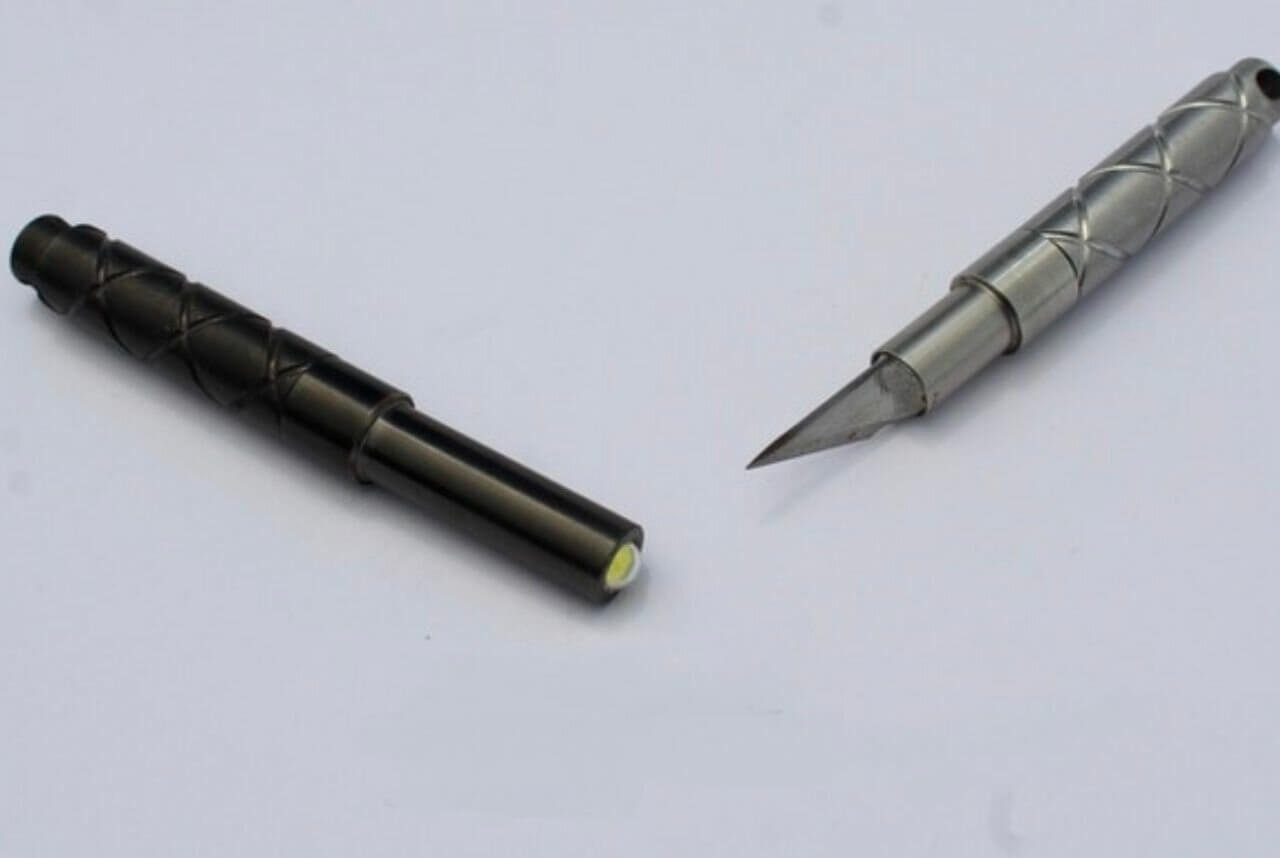
When you want to pack light, especially during outdoor or camping excursions, then it’s better to bring a versatile tool that caters to your needs. A flashlight and knife are two of the most important camping tools you should have in your bag. But if you want an even lighter carry, then Smart & Savior Designs’ Transforming Flashlight Blade is for you.

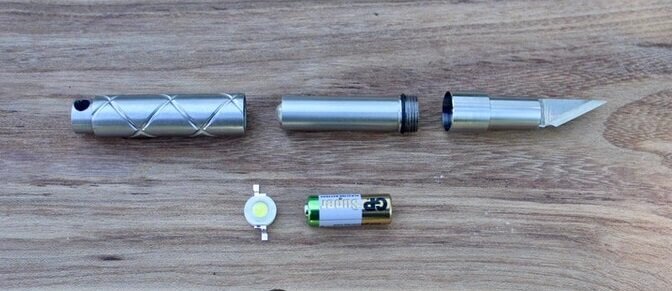
This keychain multitool, as its name suggests, packs both a mini blade and a torch. The core of the tool is stainless steel but with an outer surface made with titanium bonded with nitrogen for high corrosion resistance. The nitrogen bond creates a nano-coating of TiN that renders an anti-bacterial surface when exposed to light.

Sharpened by hand grinding, the blade can cut small ropes, hard plastic, open sealed boxes or cut and peel fruits and vegetables. The blade when deployed stays in place via a magnetic system.  Meanwhile, the flashlight emits 100 lumens from its SMD power LED bulb with a lifespan of 30,000 to 50,000 hours. It uses a single alkaline battery 29A or a set of LR 626 button cells. The battery has a life span of  60 hours with constant use and an integrated resistor prevents overheating. 

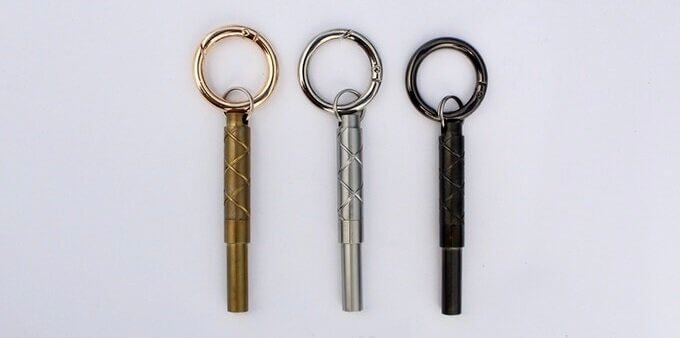
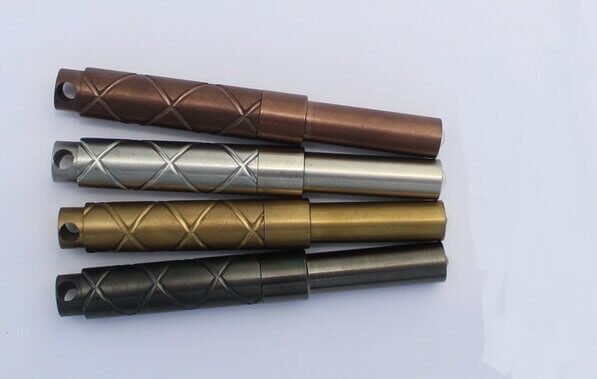
The Smart & Savior Designs’ Transforming Flashlight Blade powers with an easy twist open/off movement. It is designed to be pocket-friendly at a small size of 3.25″ long and easy in the hand and pocket with a weight of 30 grams. A keyhole makes it easy to attach to a keychain, carabiner, or tether so you can hang it on your belt, bag, or anywhere else within easy reach. Plus it looks elegant with its reverse helix shape.

Get It Here

image

imageimageimage

Images courtesy of Smart & Savior Designs

IWC Is Partnering with a Flying Car Racing Series

IWC has been pushing the limits of horology and micro-engineering since the late 19th century. It’s no wonder, then, that the Shaffhausen-based firm would partner with some of the world’s leading companies dedicated to pushing the technological and performance-based envelopes.

The latest such company is called Airspeeder, the “world’s first electric flying car racing series.” Matt Pearson, who developed the series, runs Alauda, the manufacturer of performance flying vehicles that make use of eVTOL (electric Vertical Take-Off and Landing) technology. Pearson is looking to make a global sport of of Airspeeder, and by the looks of it, he’s well on his way: The single-pilot aircraft he developed can fly at heights of up to 40m off the ground at speeds of 200km/h over electronically created tracks, obviating the need for physical infrastructure and reducing the sport’s carbon footprint.

Partnering with Airspeeder was a no-brainer for IWC and its CEO, Christoph Grainger-Herr: “The Airspeeder team are true pioneers of aviation and they are bringing together two things that are really close to IWC’s heart. From making some of the planet’s best pilots’ watches for the last eighty years to the cut and thrust of modern automotive design and racing, we have always equipped and inspired those who dare to dream.We are proud to collaborate on an endeavor that will make such a progressive impact on society,” he said.

We spoke with Matt Pearson, the brains behind the Airspeeder project, on his inspiration, how his vision has been coming to life, and why partnering with a Swiss watch brand makes so much sense for his brand.

matt pearson
Airspeeder founder Matt Pearson

Airspeeder

Can you tell me a bit about your background and how you became interested in flying car racing?

Quite simply. Flying cars are inevitable. This is future predicted as far back as the dawn of the automotive age by Henry Ford. What makes them feasible is the developments that have taken place in UAM and advanced air mobility technology. What we then must do is find a credible route to market. Racing has always played that role. It builds acceptance, helps the public fall in love with the technology and of course drives performance and safety. To me it feels a very near-term solution.

In terms of my life, I’ve lived around the world, starting life in South Africa and spending time in Europe before eventually settling in Australia. What this is given me is a restlessness and curiosity — this is perhaps why I’ve been so focused on my work across flying car racing and realizing the potential of nano-satellites through my other venture, Fleet Space technologies.

Airspeeder and our vision to accelerate this great mobility revolution’s arrival through racing is the answer to that restlessness. After enjoying success in my early entrepreneurial career, this provided the time to consider how I might apply an approach. I looked through history for precedent and saw that in mobility, competition has always driven progress. For example, at the dawn of the automobile era you only have to look to the individuals like Karl Benz and C.S Rolls — they were racing drivers who build machines to compete.

This rapidly accelerated their technological development but also built public acceptance and enthusiasm. It stands to reason that what we are doing with Airspeeder can forge giant leaps for the eVTOL industry — a new form of mobility that is already transforming advanced aerial logistics with a clean-air solution. There is no reason why we can’t take that a step further and provide a space and a place for the industry to rapidly develop passenger applications. Quite simply, by going racing, we make flying cars a much more imminent reality.

Quite simply, by going racing, we make flying cars a much more imminent reality.

Can you explain the eVTOL technology that you use and how it was developed?

To get to this landmark moment of showing the world the first ever flights of an electric flying racing car, we have gathered an extraordinary team. I think what is so interesting about what we’re doing is that it demands a truly multi-disciplinary approach from extraordinary technical minds taken from diverse backgrounds.

Our team in Adelaide comprises engineers that have worked on projects as diverse as the Boeing 747 to military jets, hyper-cars and more traditional forms of motorsport. Together they have created a technical package from a blank sheet of paper. What this means is that we have a vehicle that captures hearts and minds through an aesthetic that is redolent of the classic racing cars of the 1950s and 60s, but with a remarkable suite of safety and power delivery technologies that will filter through to mainstream use.

This has been a truly iterative process of development that takes the best of these disciplines in terms of process, collaboration and an obsession with quality, but is enormously amplified by the effect of existing with a competitive environment with such a pure brief to create a machine that delivers raw performance. It’s been gratifying to show the world exactly what we’ve been doing across secret test facilities in the deserts of South Australia, and these first flight films are just the beginning.

Our team in Adelaide comprises engineers that have worked on projects as diverse as the Boeing 747 to military jets, hyper-cars and more traditional forms of motorsport. Together they have created a technical package from a blank sheet of paper.

How far along is both the eVTOL technology and the racing program itself — have there been trial runs?

Yes, we have developed full-size, full-scale vehicles. They are 4.1m long racing octocopters. Alauda, our sister company, has developed the technology while Airspeeder builds the eco-system and the sport.

We’ve really developed the technology and the creation of an entirely new sport in parallel. (See our recent trailer.) This shows the enormous potential of our first remotely piloted series as a hugely compelling new form of motorsport. You not only see the dynamic potential of the Speeder itself as it makes rapid turns at raw speed but you also get an understanding of how we intend to bring the viewer closer to a pilot or driver’s perspective than ever before. I think this is where technology really serves the series as an entertainment entity. We think constantly about the way that fans will consume the sport and understand the path of the tracks, the performance of the Speeder and of course, the extraordinary skill of our pilots. We are so excited to show the world these first remotely piloted races this year.

airspeeder crew and the alauda built electric flying car
Airspeeder crew and the Alauda-built electric flying car.

Airspeeder

This style of racing, in addition to being completely new, seems exceedingly dangerous for myriad reasons. Can you detail some of the challenges in trying to make Airspeeder as safe as possible?

Again, racing has always provided a space and place for new forms of mobility to answer key questions around safety — clearly no motorsport isn’t without danger but the way that we inherently manage risk in every facet of our sport, and our technical approach will provide considerable benefit to the wider eVTOL industry. It will ultimately hasten the arrival of the passenger applications for the technology that premises to transform the way we navigate urban environments.

Firstly, from a spectator point-of-view, our sport does not rely on mass attendance and we fly low to the ground in remote locations. This dramatically reduces public risk and of course, environmental impact as we do not need to build the infrastructure that many other forms of motorsport relies upon. Our Speeders are then engineered by the world’s very best technical minds drawn from industries with a myopic focus on safety. Inherent redundancy is built into every system and structural element of the craft.

We are developing virtual forcefield technologies (we call them close collision avoidance tech) that allow close but ultimately safe racing. This suite of systems utilities the very latest LidAR and RADAR functions to warn a pilot through a haptic impulse before it makes impact with another Speeder. It’s clear how this particular function if our sport can massively befit much wider passenger applications for eVTOL technologies. Furthermore, we have gathered an incredible team with front-line F1 and hypercar development experience — this allows us to develop incredibly robust engineering and process solutions to ensure safety.

Clearly no motorsport isn’t without danger but the way that we inherently manage risk in every facet of our sport, and our technical approach will provide considerable benefit to the wider eVTOL industry.

What values does your company share with IWC? How did the two companies become connected?

We are blown away to be partnered with such a storied and celebrated brand. I think whenever you’re in the company of true masters of their art like IWC there is limitless scope to learn from the very best in their respective fields. Ultimately IWC and Airspeeder are driven by a shared purpose. Both brands enable the very best people to create exquisitely engineered expressions of their function. There is something very special about being aligned to IWC’s rich heritage surrounding the dawn of the aviation age and their consistent patronage of motor sport.

In fact, in conversation with their CEO Christoph Grainger-Herr, it was fascinating to draw comparisons between these dawning moments for mobility revolutions. What we both see in Airspeeder is a vision to pioneer a new form of mobility technology in the way that our forebears did at the start of the aviation age — it feels very appropriate that despite being generations apart we are bound by an extraordinary heritage of pioneering engineering enabling great feats of progress that push beyond previously accepted limitations. This is such an important knowledge sharing opportunity I feel both brands will benefit from enormously for generations to come.

pearson and one of the airspeeder engineers
Pearson and one of the Airspeeder engineers.

Airspeeder

Do you see Airspeeder becoming a truly international sport, with competing countries fielding their own teams and vehicles?

Airspeeder is a global sport from the ground up. As a truly global team we do not limit our vision in terms of race locations or teams to one location. This is a sport born in the age of global streaming, and we see an amazing opportunity to create something truly universal that will be enjoyed on every continent. Indeed, watch this space for some very exciting announcements. We will be racing in every corner of the planet, in settings where racing has never been seen before. From that perspective we are bringing in international teams who will race with us on every continent. This means our fans will see incredible racing over water, deserts, snow and mountains. Indeed, the sky is our playground and we can race without limitation.

This is a sport born in the age of global streaming, and we see an amazing opportunity to create something truly universal that will be enjoyed on every continent.

This extends to the foundation of the way that we are organized. I work from our Technical HQ in Adelaide, South Australia. From here we work within an environment that is rapidly becoming a global center of excellence of the development of advanced aerospace and even space travel technologies. The deserts that surround us are the perfect testing grounds for our race-craft and we have been able to draw upon a rapidly growing talent pool as well as able to attract the very best from around the world. In parallel, my colleague Jack Withinshaw, Airspeeder’s CCO, is located in London, England. This really places us at the center of the sports rights world, particularly in motorsport. From there he manages a team spanning the UK and with presence in New York which gives us the coverage to build really meaningful partnerships with sponsors and technical collaborators across Europe, the US, Asia and beyond.

LEARN MORE

This content is created and maintained by a third party, and imported onto this page to help users provide their email addresses. You may be able to find more information about this and similar content at piano.io

Jab & Slab: Hawke’s Brewing Co. urges folks to get vaccinated in exchange for free beer

Even with years of research and results showing that vaccines are effective against certain diseases, many are still hesitant. Governments and their healthcare officials are having a hard time convincing folks about getting their shots for COVID-19. Meanwhile, Hawke’s Brewing Co. is encouraging our friend Down Under with it Jab & Slab campaign.

Kudos to the brewer for coming up with a clever tactic for inoculation against the 2019 novel conronavirus. As the pandemic shows no signs of a slowdown anytime soon, medical professionals urge people not to fear the vaccine. Perhaps a box of Hawke’s Brewing Co. beer is the push everybody needs.

This cool initiative is unfortunately exclusive to residents of Greater Sydney. To be eligible for the Jab & Slab giveaway, you need to get your first COVID-10 vaccine dose and take a photo of the band-aid stamped are of the arm. Upload it on Instagram and tag @hawkesbrewingco with a #jabandslab hashtag.

Founders of the brewery based in Marrickville, New South Wales, David Gibson and Nathan Lennon count late Prime Minister Bob Hawke was one of their backers. “We should have been breaking vaccination records months ago. But apparently it wasn’t a race and now half the country has been impacted by lockdown again,” according to Gibson.

Perhaps other breweries in the United States would catch on and offer something similar to the Jab & Slab. COVID-19 cases are once again on the rise as people continue to reject vaccinations despite the benefits it brings to the table. Hawke’s Brewing Co. notes that only 250 slots are available.

Learn more

image

Images courtesy of Hawke’s Brewing Co.

Preorders for Heatworks’ cutting-edge Tetra countertop dishwasher are now available

If it weren’t for technology, we would still be cleaning stuff the traditional way. Vacuum cleaners, washing machines, and dishwashers are taking the effort out of the equation. These days we’re seeing compact versions of the latter two becoming available. To automate your cleanup after a meal, Heatworks presents the Tetra countertop dishwasher.

Most homes normally have their dishwashers installed beside the kitchen sink. These bulky machines normally need access to your plumbing. Although you can hook these up with the help of the user guide, others choose to have professionals handle the job instead.

The Tetra is offering a convenient solution without all the hassle. What makes it appealing is the compact physical footprint and self-contained configuration. As Heatworks points out, it does not need a direct connection to your pipes.

Basically, it boasts a plug-and-use convenience perfect for small families, dorm rooms, renters, and RVs. Not only that, the dishwasher sports an eye-catching profile with the unique shape of its lid and sleek main body. The Tetra measures 17.3 x 17 x 15.75 inches and weighs 25 lbs.

Heatworks ships it with a standard dish rack, a silverware basket, a spatula to help remove food, and a detergent cartridge. To use, just lift the lid, pour three liters of water, load it, and choose a cleaning cycle. Once complete, all that’s left to do is empty the graywater tank and that’s it.

According to the manufacturer, it uses 40% less water than your average dishwasher. The proprietary cleaning system is good for more than 20 wash cycles. Heatworks says the cartridges are recyclable and cost about the same as any premium dishwashing detergent. Moreover, the Tetra will notify you when there are approximately five washes left.

Preorder now – $399

imageimageimageimageimageimageimageimage

Images courtesy of Heatworks

SCG to compete in the 2022 Baja 1000 with the Zero Emission Hydrogen Fuel Cell Boot Pickup

Aside from battery-electric systems, another promising technology that is yet to see mainstream use are hydrogen fuel cells. Unfortunately, there are issues that stand in the way of its mass adoption. Scuderia Cameron Glickenhaus (SCG), on the other hand, envisions a different future. One wherein vehicles like its Zero Emission Hydrogen Fuel Cell Boot Pickup compete with other sustainable rides.

However, electric powertrains continue to dominate. Given the scarcity of hydrogen refueling stations, it is difficult to market vehicles that run off them. SCG’s Zero Emission Hydrogen Fuel Cell Boot Pickup could be facing an uphill battle down the line.

Nonetheless, the boutique carmaker based in Sleepy Hollow, New York says a prototype will be available soon. As suggested by its lengthy name, the SCG Zero Emission Hydrogen Fuel Cell Boot Pickup is based on the group’s Boot Buggy model.

From a design perspective, it looks like a beefy crew cab truck that would be at home on or off the road — camping anyone? Looking at the renders, it seems there are no rear seats liquid hydrogen storage tank occupies the space as well as a section of the bed.

Enhancing its off-roader stance is a roof-mounted LED light bar. Additional reinforcement bars on the front and rear bumpers give it a menacing profile. SCG is also giving the Zero Emission Hydrogen Fuel Cell Boot Pickup huge wheel wells for the chunky all-terrain rubber it’s shipping with.

According to the manufacturer, it can be used as a generator for multiple applications. To showcase what the Zero Emission Hydrogen Fuel Cell Boot Pickup can do, SCG plans to compete in the 2022 Baja 1000. Finally, mileage should be anywhere between 600 to 1,200 depending on the trim and configuration.

Learn more

Images courtesy of SCG