De Tomaso P900 uses synthetic fuel to spin past 12,000 rpm

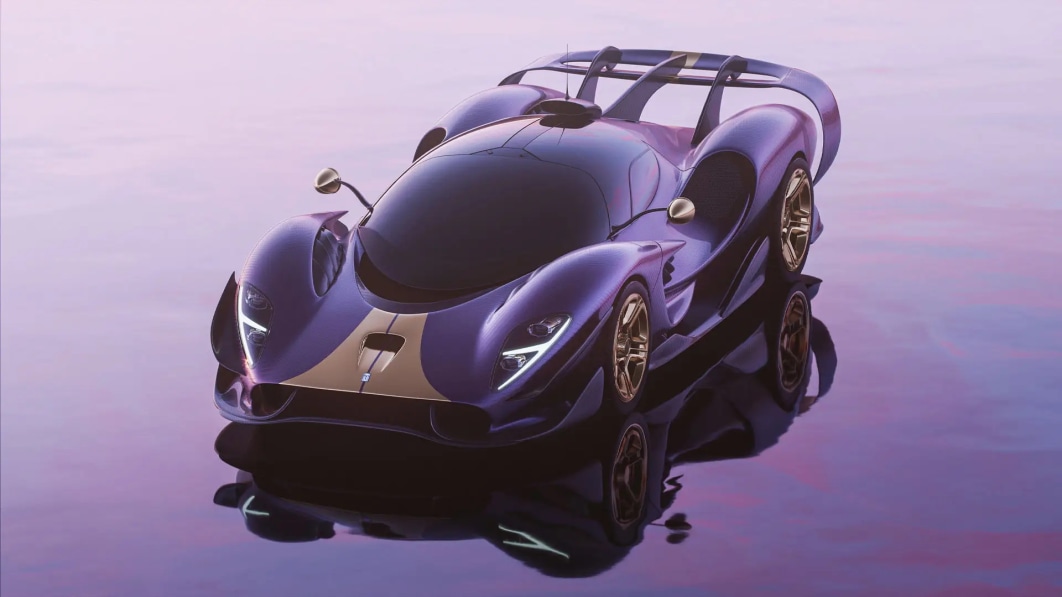
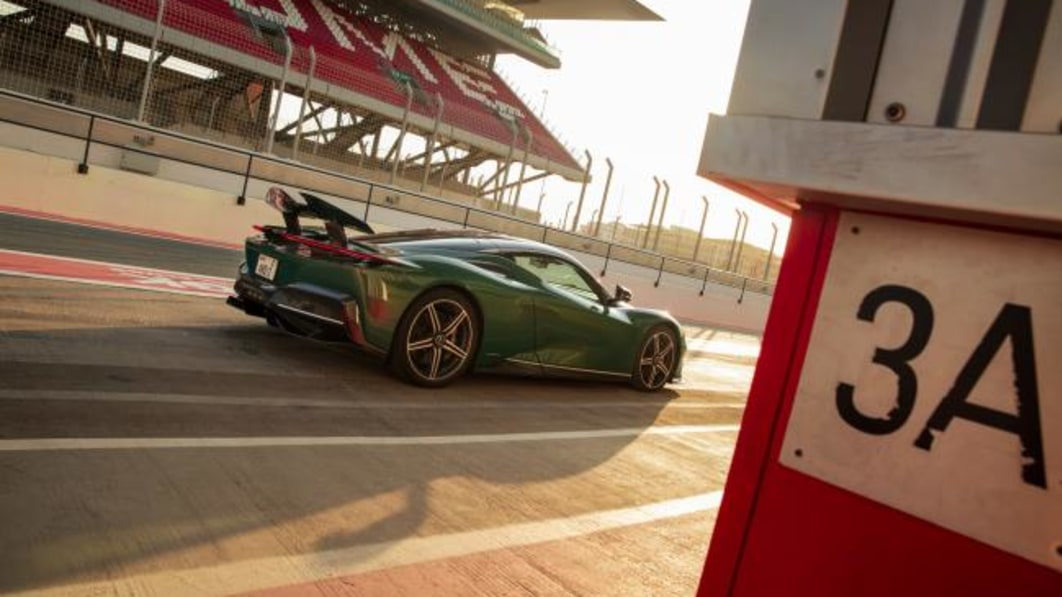
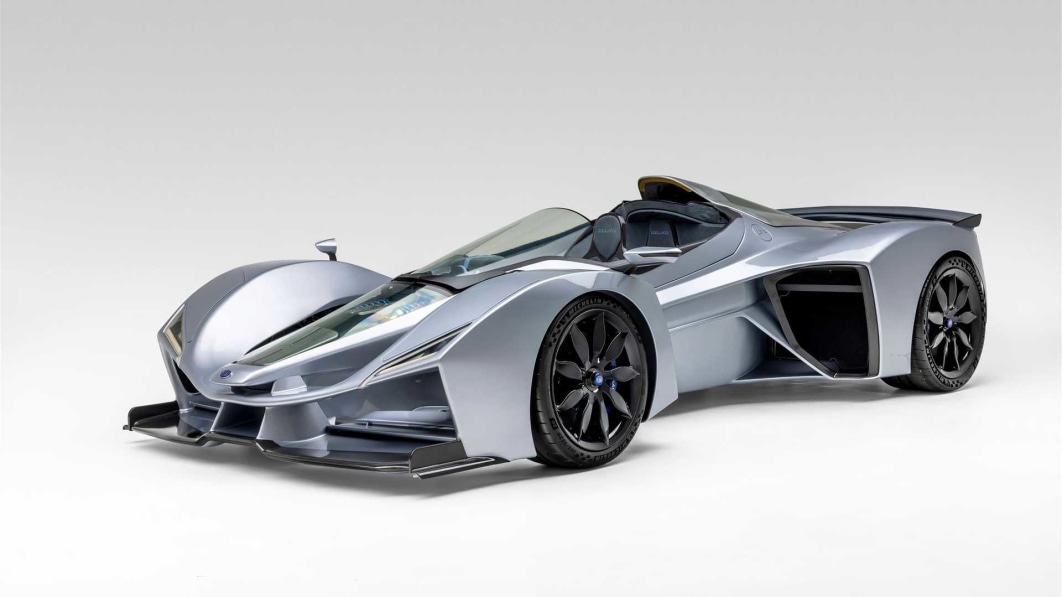
It’s not a trendy electric hyper car. The Italian-built De Tomaso P900 is another kind of anomaly in the automotive upper strata where it lives: The P900 is propelled by a V12 engine that runs solely on synthetic fuel, all the way to 12,300 rpm.

Priced at about $3 million and limited to a production run of only 18 examples, the carbon-bodied P900 weights just less that 2,000 pounds.  Its 6.2-liter powerplant accounts for about a quarter of that weight.

Although De Tomaso is hedging the full specs on the car except to customers who have ordered one, the engine is expected to generate about 900 horsepower; it’s still in development until 2024, although the model is set to be revealed officially in the spring.

For customers clamoring to show off their P900s, it will be available prior to 2024 using De Tomaso’s F1-derived V10 engine. The design of the two-seater is pure science fiction, adapted from the De Tomaso P72, which used a carbon fiber monocoque chassis constructed to LMP1 standards and a 5.0-liter supercharged Ford Coyote V8.

“As a passionate automotive enthusiast, it is difficult for me to accept a silent EV-driven future,” said Norman Choi, De Tomaso CEO, in a statement. “We believe that alternatives do exist, and the development of our new platform, driven by synthetic fuels, is our solution for keeping this shared passion for the theatre of combustion engines alive.”

In pursuit of zero-emissions mobility, Choi says this new venture doesn’t envision a future that sacrifices “the crucial element which we all hold so dear — the soul and symphony of an engine.” 

Bertone wants to make wedges great again

Of all the unheard-of brands being resurrected every day, here’s one we’re interested in. Bertone is on the way back after a couple of decades of rough going. Giovanni Bertone founded the Italian design house in 1912, but it was the postwar years while being run by Nuccio Bertone that the company penned one legend after another. Lancia Stratos, Lamborghini Miura and Countach, Ferrari Dino 308 GT4, Fiat X1/9, and so on. A 2014 bankruptcy led to being bought by Mauro and Jean-Frank Ricci, brothers who own an auto industry consultancy called Akka that’s worked with Aston Martin, Ford, and the Volkswagen Group. Their only public showcase with Bertone so far was the 2016 Smart Bertone, an electric two-seater with more than three times the horsepower of the standard Smart Electric Drive. We don’t know what the Ricci brothers are planning, but a video at Bertone’s new website and an Instagram account tell us, “The timeless icon is reborn.”

The Bertone Nuccio was the firm’s final concept before bankruptcy, a 100th anniversary celebration that attempted to combine Bertone’s hallmark flourishes into a wedgy berlinetta without much success. This new effort looks more promising. Based on the coupe in the teased image, we’ll expect something supercar-ish. Based on the rear diffuser design in the teaser video and what could be two elongated exhaust ports, it’s possible there’s an internal combustion engine behind the cockpit. The arrowhead side vent recalls the 1968 Alfa Romeo Carabo and 1970 Lancia Stratos Zero concepts, both just as important as any of the roadgoing cars. And the video reveals a ton of detailing, especially around the LED headlights and taillights and the wheels. 

This year being Bertone’s 110th anniversary and “110” featuring prominently in the teasers, it shouldn’t be long before we find out what “The dawn of a new era for contemporary Bertone” means.

Zenvo TSR-GT ends the TSR range with a 263-mph top speed

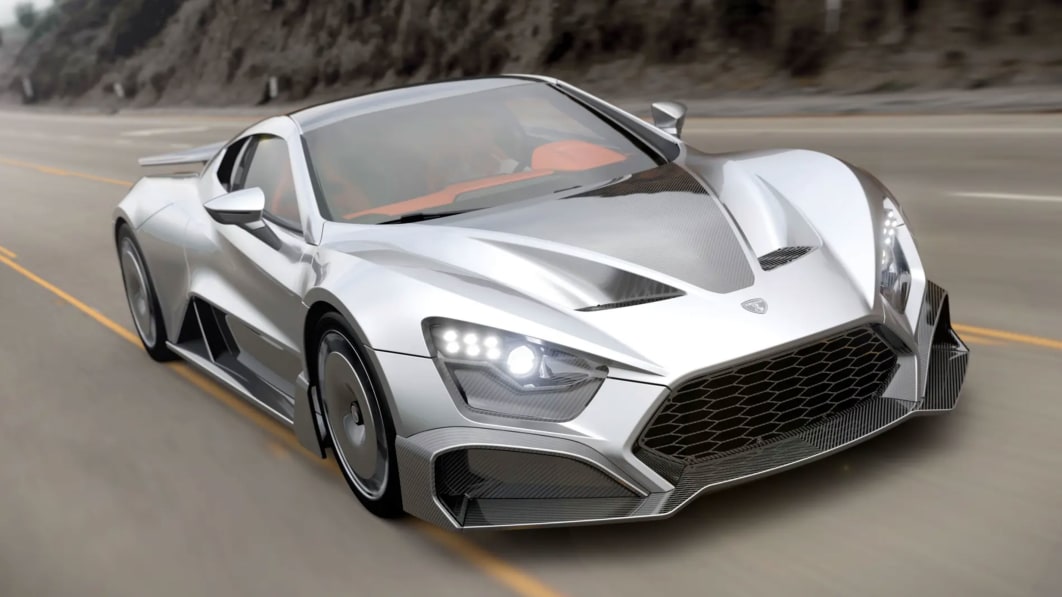
The Danes aren’t known for being flashy, which helps explain how Danish supercar maker Zenvo has been building and selling 1,000-horsepower, million-dollar coupes since the ST1 in 2008. Zenvo introduced the latest evolution of its single product in 2016, the TSR. Next year, the TSR will be replaced by an all-new model, so the company developed an end-of-life special called the TSR-GT to mark the milestone. The TSR-GT joins the TS1 GT and TSR-S trims on the same base platform, the last of which we saw in 2018 showing off its highly unconventional Centripetal Wing. The TSR-GT makes no unexpected gestures, its remit to be fast and comfortable (for a hypercar).

The first step in the achievement is more horsepower. In-house engineers developed a Power Pack for the 5.8-liter twin-supercharged flat-plane-crank V8 consisting of a new intake plenum, manifold, and ECU tuning. Upgraded with a flex fuel sensor that adds E85 capability on top of regular pump fuel, output climbs from 1,177 horsepower to 1,360 hp. 

Cutting through the air is easier thanks to the lack of a roof scoop intake, a longer, lower, fixed rear spoiler, and new aero wheel covers. Working in conjunction with the new final drive so the TSR-GT can stretch its legs further, top speed climbs from the 202 miles per hour of the TSR-S to 263 mph. That’s a little faster than the 250-mph McLaren Speedtail, a little behind the 273-mph Bugatti Chiron Super Sport 300+.

Interior comfort — as if any owner’s going to drive this like the GT in the name suggests — steps up by having leather replace naked carbon and Alcantara in places like the instrument panel, seats and steering wheel, finished with leather-trimmed velour floor mats that help reduce cabin noise. 

Zenvo’s making just three TSR-GT’s, all of them sold. Whatever arrives to replace it next year is rumored to used a twin-turbo V12 and electric motors producing a combined 1,800 horsepower.

Corvette-based Chevrolet with ‘incredible performance’ coming in 2025

GM President Mark Reuss’ Investor Day presentation has been a font of information. Most of it’s been pretty straightforward, like the info about GM service centers working on Teslas and the GMC Acadia getting larger for its third generation. This one lives at the mysterious end of the foreshadowing pool. When discussing what’s in store for the Corvette, Reuss mentioned two vehicles. As reported by Fox News, the first is a straight-up Corvette trim, “the next version of the C8,” the “next-step in performance for Chevrolet” supposedly so good “you won’t be able to imagine it from a performance standpoint.” Since Reuss’ was reportedly talking about new vehicles due in 2024, he wouldn’t have been referring to the hybrid, all-wheel drive Corvette coming in 2023. The AWD hybrid could have been the trim referred to as the Corvette Grand Sport in a potentially leaked GM document from 2020. The powertrain in that coupe will be the 6.2-liter LT2 V8 from the base Stingray combined with electric motors driving the front axle to make somewhere around a combined 600 horsepower and 500 pound-feet of torque.    

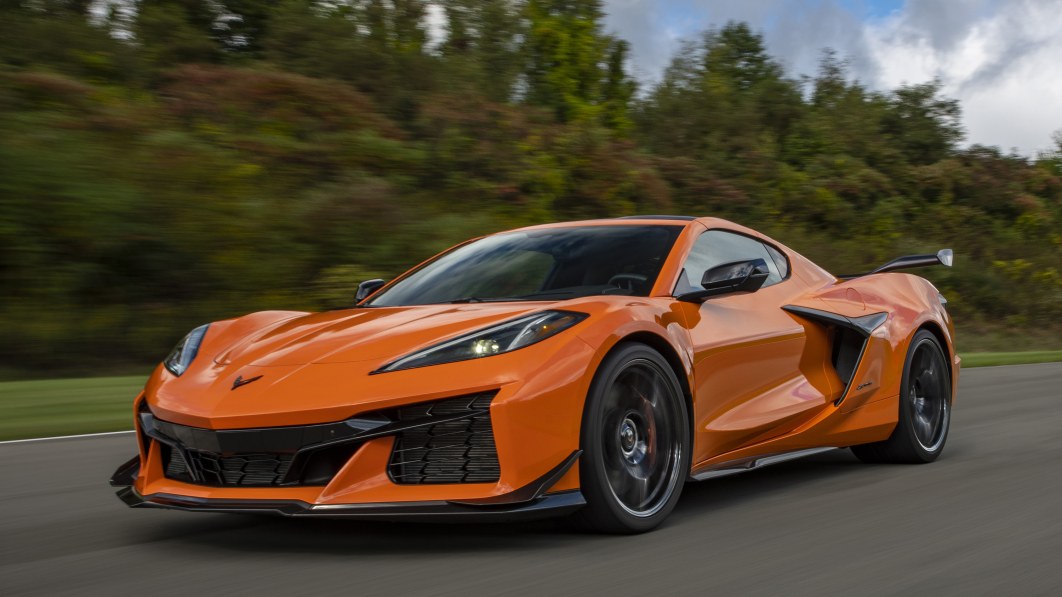
The images in Reuss’ presentation were obscured for media viewers, but we suspect he meant the ZR1. That supposed leaked doc said its due in 2024 with 850 hp and 825 lb-ft. Output will come from an LT7 engine that’s already on the testing bench if a recent clue found at the National Corvette Museum can be believed.

What will follow that is a car Reuss called an “incredible performance car” that he expects to “put the world on notice” as to what GM is capable of and “set the standard of the world for performance for Chevrolet.” Based on the trim cadence we’ve been covering for years, this sounds like the Corvette rumored to be called the Zora, which would pair the twin-turbo LT7 V8 with electric motors for more than 1,000 hp. However, Reuss didn’t call this car a Corvette; he only said it would be based on the C8 architecture. Back to that 2020 GM document, it had the ZR1 coming in 2025. That’s a year later than this mystery offering, and we can’t imagine why Reuss wouldn’t call a Corvette a Corvette.

In a LinkedIn post from April that provided video of next years AWD Corvette, Reuss wrote, “we will offer an electrified and a fully electric, Ultium-based Corvette in the future.” On that note, the only unaccounted for Corvette family vehicles we’re aware of in the rumor pipeline are the electric Corvette-inspired crossover as part of Project R, and the electric Corvette sedan said to be coming mid-decade. So stay tuned, big electric things are coming from Chevrolet.

Related video:

2023 Audi R8 to be the 17th and last year for the super coupe

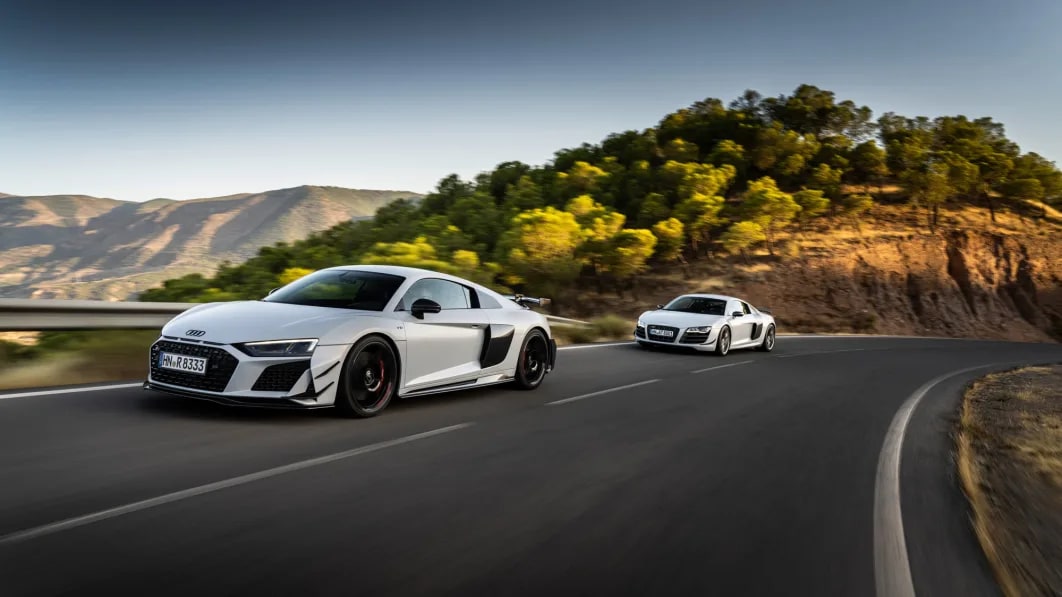
In October, Audi introduced us to the final special edition for the R8, the 2023 Audi R8 V10 GT RWD. This was the second coming of the GT name to the Audi lineup, following the 2012 Audi R8 V10 GT. Audi limited the previous car to 333 coupes and 333 Spyders. The new GT will only get 333 coupes, R8 technical manager Nils Fischer telling CarBuzz there isn’t enough overall R8 production left to squeeze in a Spyder. The Ingolstadt automaker figures to build about 2,000 R8s at for the 2023 model year, then the R8 is dead after two generations and 17 years on the market. As it stands, there’s no successor anywhere near ready to go. Fischer told Car and Driver the details of a next-gen car are still being sorted out.

The consensus has been there’s something electric headed for the top spot. Audi produced a very short lived electric R8 E-Tron with the second-gen R8, selling just 100 examples in a year before pulling the plug. As EVs became the thing, rumors of another electric R8 persisted. Sometimes the rumors were spun from conceptual cloth, like then when Audi showed the PB18 E-Tron Concept in 2018. Sometimes these were spun from unnamed insiders, like the 2019 prediction that there would be an R8 E-Tron GTR based on the Porsche Taycan’s platform. Sometimes they came from executive statements, like when a brand VIP told Automotive News in 2021 an R8 EV “won’t just be an R8 with an electric motor,” it would be, rather, “an R8 but different.” And sometimes whispers from “Audi insiders” got the rumor spigot going again, like when Autocar wrote in September of this year that “the supercar has not yet been officially signed off but is very much underway” and won’t be called R8 nor look like the R8, and when Car and Driver wrote a month later the car is codenamed Rnext and has been pushed back to 2029.

Even the powertrain is up in the air, apparently, thanks to the European Union leaving a door open to synthetic fuels for now. An Audi project manager has already said he believes the ICE could survive past 2030 in Europe. On top of this, all the shuffling going on at the VW group with respect to personnel, platforms, software, and tentpole product initiatives like Project Trinity tend to reduce visibility to just beyond arm’s length. The only sound bet is that there will be something to occupy the halo spot sometime before the end of the decade. 

Meanwhile, start saving your Christmas card money. The Audi R8 V10 Performance RWD starts at about $162,000 in the U.S., and it’s going, going, almost gone.

Pininfarina Battista hypercar’s output specified at 1,873 horsepower

Even in a galaxy far, far away, the Pininfarina Battista would stand out.

After a delay of about three years, the official specifications of the all-electric hypercar have been revealed:

  • Full power is rated at 1,873 horsepower, outputting 1,697 foot-pounds of torque.
  • Sixty-two miles per hour arrives in 1.86 seconds, with 124 mph coming in 4.75 seconds.
  • 217 mph is the estimated top speed. (The Rimac Nevera recently hit 258.)
  • The 120kWh battery pack should enable a range of about 280 miles from a single charge.

A pair of electric motors are mounted to each axle, each motor powering a specific wheel and giving the Battista full torque vectoring capability.

Pricing — and this is one of those cars that, if one has to ask, just move on — is about $2.2 million, which places it in the territory of the Bugatti Chiron. For those customers considering an upsell, a limited “anniversario” edition will comprise five of the expected 150-unit build run. It differs from the standard version by some cosmetic alterations, which lifts the price by some $70,000-plus. 0r you could buy a BMW M3 as a chase car.

The two-seater Battista is named for Battista “Pinin” Farina, who founded Carrozzeria Pininfarina in 1930. A lot of its battery, carbon-fiber chassis and motor components come from Rimac, the nascent Croatian electric supercar maker that recently paired with Porsche to take over Bugatti

Many more details about the car’s development, several photos and our driving impressions can be found in this Autoblog post from August.

Mercedes-AMG One sets Nurburgring record, could’ve gone faster: Watch the run

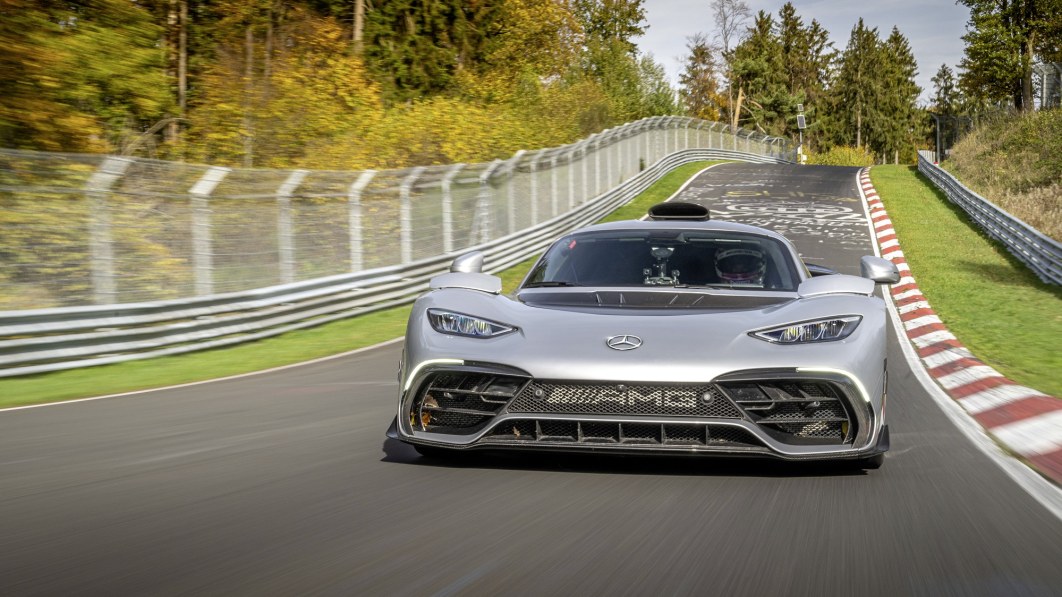
In September 2018, Mercedes-AMG claimed it didn’t see the point of using the One to set a new record on the Nürburgring. It has obviously changed its mind: The Formula One-derived hypercar just set a new record for street-legal production cars on Germany’s grueling track.

DTM pilot Maro Engel lapped the Green Hell in 6.35.183 on October 28, though the record wasn’t announced until now. In comparison, the Porsche 911 GT2 RS MR logged a time of 6:38.835 in June 2021, and the Mercedes-AMG GT Black Series took 6:43.616. It sounds like the One could have been even quicker in better weather conditions: AMG explained that the track was damp and slightly dirty.

Mercedes made no modifications to the One to set the record; if it had, it wouldn’t be eligible to claim the production car crown. The company notes it dialed in the maximum camber values before letting Engel loose on the track, however. The car’s gasoline-electric hybrid drivetrain consists of a turbocharged, 1.6-liter V6 engine and four electric motors. The system is closely related to the one that powers AMG’s championship-winning Formula One car, and it delivers 1,063 horsepower in this application. While setting a record with this much power might sound easy, Engel stresses it’s quite difficult. He notably had to make the most of the brake energy recuperation system.

“We tried to find the optimal deployment strategy during the pre-tests. Like Lewis Hamilton and George Russel on their race weekends, I also had to deploy the electrical energy of the hybrid drive in the best possible way. That’s not easy, especially with this length of track,” he said. He ultimately selected the “Race Plus” driving mode that provides the best possible aerodynamic profile and lowers the ride height.

Records are meant to be broken. While the One’s is seriously impressive, we can’t help but wonder who will manage to beat it.

Related video:

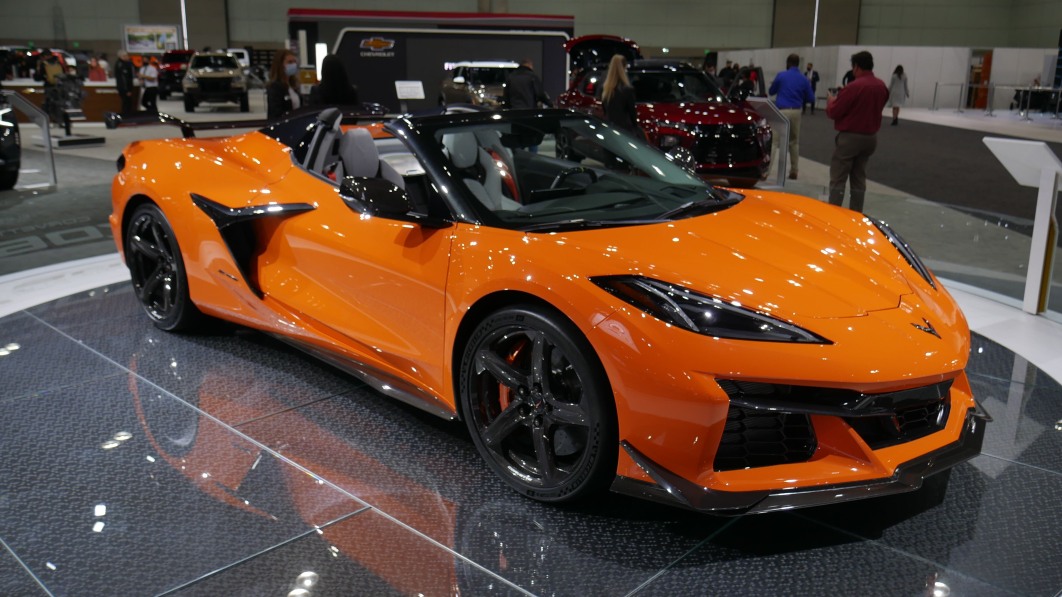
2023 Chevrolet Corvette Z06 production numbers increased

The headlines say Chevrolet has re-opened order books for the 2023 Corvette Z06 after closing them in July. Those headlines should come with asterisks. What the small print explains — and should have always explained, even here — is that GM gatekeepers lowering the drawbridge means practically nothing for anyone who didn’t get on a dealer list a long time ago. When GM stopped taking orders in July, it stopped taking names off of dealer’s lengthy lists of reservation holders. The production process seems to be going better than planned, so “re-opening the order books” means GM has increased the number of cars it plans to build for the 2023 model year and has asked dealers to submit more names for orders to fulfill. A GM spokesperson told Motor1, “We had previously shared with dealers and the public that we had accepted enough Z06 orders to fill the number of Z06 production slots we had for calendar year 2022, so we stopped elevating dealer orders to accepted orders that the plant would build. Now we are saying we’re going to accept more dealer orders to continue filling the pipeline of Z06 production through the end of model year 2023.” 

We don’t have any details to explain any of this nor put it in context. GM didn’t reveal its initial production estimate, and it hasn’t said how many orders it will add to the previous mysterious number. It was thought GM’s conservative production window had to do with a supply constraint, but even that’s not clear. We don’t know how many reservations there are, either, although a thread at Mid-Engined Corvette Forum lists more than 100 dealers and suggests just eight of them have easily more than 6,000 reservations combined. One dealer would only say its reservation list was “out to 2025.”

GM built 39,940 of the C7 Z06 from 2014 to 2019, averaging a touch under 8,000 units per year. Dealers know this, so for one to say they’re booked until 2025, the order rolls must be relatively staggering. There’s no reason for dealers to be in a hurry to get cars built, either, with some charging anywhere from $35,000 to $100,000 over the base $106,395 MSRP per vehicle according to posters.

As for verified production, Corvette Blogger wrote a week ago that 41 customer Z06 orders have been built as of the end of October, 22 of them the 70th Anniversary Editions. On top of that, it’s said 216 Z06s have been built for GM’s Captured Test Fleet used for proving and data capture. The first customer deliveries have been made, including Rick Henderson acquiring the first one off the line, a Carbon Flash 70th Anniversary Edition he bought for $3.6 million at a charity auction in January of this year.

Maurizio Reggiani talks racing, forced induction, and Lamborghini V12s

Maurizio Reggiani deserves his own chapter in Lamborghini’s history.

He joined the Italian company in 1995 and rose to the position of chief technical officer in 2006; he notably led the development of some of Lamborghini’s greatest modern-day engines, including the 6.5-liter V12 that powers the Aventador. His time as the head of Lamborghini’s research and development department ended earlier in 2022 and he now serves as vice president of motorsport. His successor, Rouven Mohr, is tasked with implementing an ambitious and far-reaching electrification strategy called Direzione Cor Tauri and outlined in 2021.

As Lamborghini prepares to enter a new era, I sat down with Reggiani for a behind-the-scenes look at nearly 30 years of V12 development.

[The following has been edited for clarity.]

RG: Lamborghini has made other engines and other companies have made V12s. Why is the V12 so often associated with Lamborghini?

MR: In a time when everybody started talking about downsizing and reducing cylinder count, we continued to say that the V12 is the flagship of the super-sports car. We were born with this: Lamborghini has made a V12 during every year of its history. We also did V8s in the time of the Jalpa, for example, but the V12 was every time the main pillar of this company. If you want to be considered the pinnacle of super-sports cars, no other engine can really speak to purists like a naturally-aspirated V12 can. In terms of power, in terms of sound, in terms of emotion, and in terms of, let me say, the coolest engine that’s possible in terms of engineering definition.

RG: What projects have stood out to you during your time at the head of Lamborghini’s R&D department?

MR: When I started my career, 40 years ago at Maserati, I worked in engine development. At Bugatti, I was responsible for powertrain, which of course includes the engine. For me, an engine is kind of like a first love, and you remain in love for all of your life. To look at an engine, to look inside, to discuss the components, to have an opinion, and to give a suggestion was my way of working every time.

One of the projects that excited me the most was the Diablo GT. For the first time, we decided to put a single throttle per cylinder, and it was a level of sophistication that was more or less never used before by Lamborghini. You take experience from the past and try to apply it to [the present]. This improved a lot the performance, and it was really super exciting. The engine in the Aventador is another highlight: it was designed together with the Aventador. That was a completely new car, we started from scratch, and you can imagine how exciting that was.

RG: You’ve taken the V10 racing; why not race a V12?

MR: We had a big discussion about this when we first started out in racing. We initially launched a one-make series in 2009, and after that we decided to also engage in the GT3 series, and the main point of discussion was that in every competition related to GT you have a balance of performance. There’s no sense to take on the weight and packaging of the V12 if after you need to put a restrictor that penalizes a lot of the performance. We decided the best compromise in order to match the balance of performance was the V10. At the end, you need to take an engine where even with the balance of performance you are close to maximum power. If you take an engine with a big output and you move its curb of efficiency to a lower part [of the graph], you cannot be competitive.

RG: Was adding forced induction, whether it’s a turbocharger or a supercharger, ever considered?

MR: We never [used forced induction] because our vision was that the sound of the V12, the frequency of the V12, cannot be done with a turbo. Clearly, today you have so many filters in the exhaust system that the sound is reduced. That are new rules that came from California where you cannot exceed a given decibel during the test. Years ago it was only in the default [driving] mode; now in all of the modes you need to be below a certain level. It’s important to maintain the frequency of the sound.

Also, the power was, let me say, enough. We reached 350 kilometers per hour (about 217 miles per hour) with the Aventador SVJ. We put much more attention to the use of the power and the shape of the torque curve because we were sure this is what customers ask. We want to give the V12 a response that’s as similar as possible to a motorcycle’s. On a motorcycle, when you twist the accelerator you have the impression that the engine is able to catch 10,000 RPM *snaps* like this. In a V12, which is a big engine, the enemy is to be able to move up and down [the rev range] as quickly as possible. This depends a lot on the weight of the pistons, the connecting rods, the crankshaft, and of course electronics. You need to tune everything as much as possible and what gives this perception is the sound you hear. 

RG: I spoke to you about carbon fiber connecting rods in 2016. What happened to that project?

MR: The parts were done in Seattle, at the University of Washington. The complexity in terms of the materials used, the necessity to have metal inside, and the difficulty of bolting the connecting rods because you need to put an insert inside of them [were issues]. And, after that you have dilatation. We built a prototype and tested it but it remained at the research level. We have several examples of development work that run, but at the end every time you need to do a decision sheet where you decide economics, reliability, reproducibility, and cost, and what we work on in R&D can’t reach production every time.

RG: What should we expect from the next V12?

MR: The V12 is part of Lamborghini’s DNA. We already announced the Aventador’s successor will keep the naturally-aspirated V12, though it’s a V12 that is radically new compared to what we have today. We use this new engine to correct some of the peculiarities that can be related to the weight and that can be related to the RPM in order to have the best level of thermal dynamics coupled with a hybrid system.

Related Video

Ferrari lifts profit forecast after strong Q3, keeps cautious stance on margins

MILAN — Luxury sports car maker Ferrari said on Wednesday it was improving its forecasts for full-year results, including for core earnings, after beating expectations in the third quarter, supported by a double-digit increase in shipments.

The company however struck a more cautious tone on the margin on those core earnings, now seen at around 35% for this year, versus a previous guidance of over 35%.

It said industrial costs and research and development expenses increased in the past quarter mainly due to higher depreciation and amortization and cost inflation.

Ferrari said its adjusted earnings before interest, tax, depreciation and amortization (EBITDA) would grow this year to over 1.73 billion euros ($1.71 billion), versus an already improved forecast of 1.70-1.73 billion euros it provided three months ago.

After briefly turning positive following the release of the results, Milan listed shares in Ferrari fell as much as 2.4%. By 1235 GMT they were down 1.4%.

In the third quarter, adjusted EBITDA rose 17% to 435 million euros, topping analyst expectations of 418 million euros, according to a Reuters poll.

($1 = 1.0107 euros)

(Reporting by Giulio Piovaccari; Editing by Keith Weir)

Related video:

1,204-hp Hennessey Venom 1200 is the new kingsnake

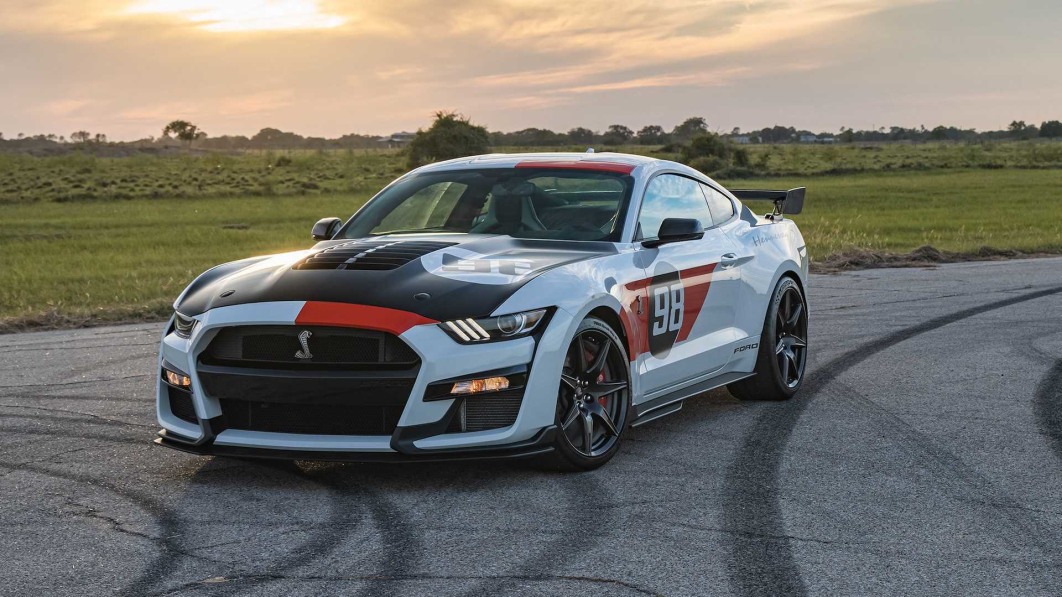
In 2019, Texas tuner Hennessey Performance did some open heart surgery on a Ford Mustang Shelby GT500, swapping the supercharger on the Mustang’s 5.2-liter Predator engine for two turbochargers. The result waved a fast goodbye to the GT500’s stock 760 horsepower and 625 pound-feet of torque. Available in two outputs and called the Venom 1000 or Venom 1200, the latter made 1,200 hp at 7,000 rpm and 1,000 lb-ft of torque at 4,800 rpm. You know what they say about one good turn, so say hello again to the Venom 1000 and Venom 1200, this time with one (really big) screw instead of two compressors. Hennessey removed the 2.65-liter supercharger from the stock GT500, laying in a 3.8-liter unit. Final specs for the bigger boy are 1,204 hp at 7,600 rpm and 902 lb-ft of torque at 5,200 rpm.

Engineers breathed on the drivetrain from the intake to the exhaust. There’s a new high-flow induction system and intercooler, upgraded belts, fittings, lines, and tensioners, an air/oil separation system and a recalibrated dual-clutch transmission to swallow all that extra oomph. Of course, new anodized billet fuel rails and injectors convey a lot more fuel from tank to nozzle. Speaking of which, the new Venoms can run on pump gas; however, the 1200 will only corral 900 horses on basic premium. They need E85 to get out the whole herd. 

The Venom 1200 conversion costs $59,950 on top of the price of a new GT500, a dealer showroom GT500 starting at $80,815 before options and all the rest. The previous Venoms weren’t capped, but the reboots are, Hennessey saying there will be just 66 of them, the number tied to Ford winning the 1966 running of the 24 Hours of Le Mans. Customers who want to make that connection public can check the box for the livery in black, red and white for $4,950. It honors the Ford GT40 Mk II that won the French race. We can’t exactly call these prices a bargain, but they’re a lot less than a similar rework Shelby American’s done to the GT500 and called the Code Red. Going the twin-turbo route, the Code Red makes 1,300 hp and 1,000 lb-ft on E85, or 1,000 hp and 780 lb-ft on pump gas. There are only 30 of them, ten a year for three model years, making them more than twice as exclusive as the Venom 1200. They’re also more than twice as costly, the stewards of Carroll Shelby’s legacy charging $209,995 for the Code Red, which doesn’t include the donor coupe. But the Code Red is sold out, making the Venom 1200 the kingsnake for now.

Related video:

Buy a Ferrari like the one driven by the Sultan of Brunei. It ain’t cheap

A video featuring a very blond blonde and a very red Ferrari? That’s certainly one way to attract some attention.

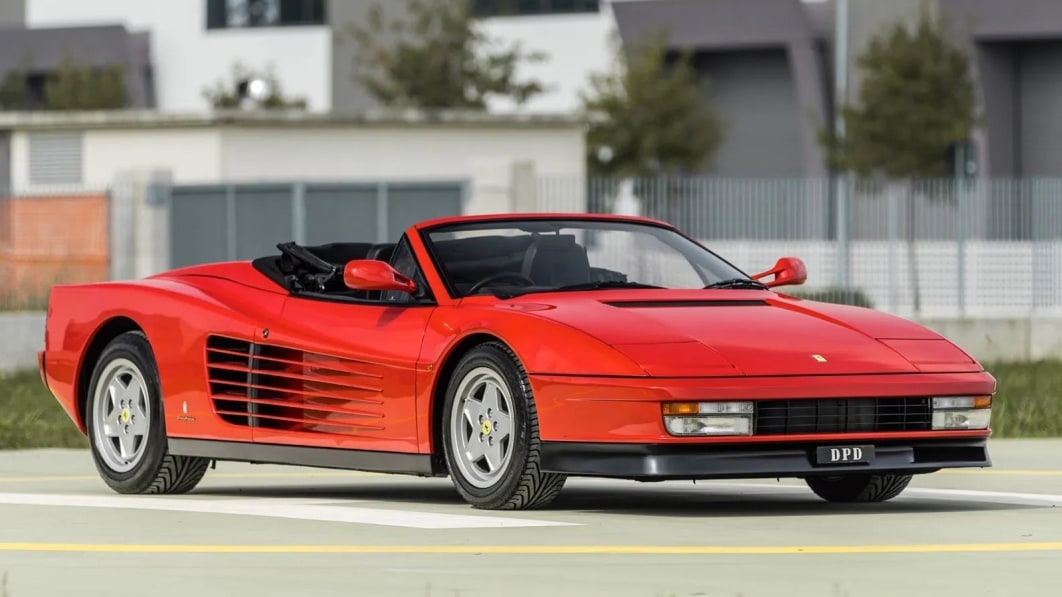
We don’t have the skinny on the lady, but the Testarossa Spider is straight out of the annals of wretched excess. It goes on the auction block in London next Saturday with opening bids at $1.6 million. The video is a teaser tweet for the event.

According to documentation offered by the auction house of RM Sotheby’s, this 1990 stunner, a “Special Production” Pininfarina-engineered convertible, was part of a custom lot of Ferraris commissioned by a high-roller in the Brunei royalty household. In 2021, when, according to Sotheby’s, it was “revived from its life-long state of static display,” the car was shuttled to two factories in Italy for “restoration.”  The cost was 94,300 Euros to repair the top’s latch and repaint the machine.  Another 83,170 Euros was budgeted to fiddle with a new clutch and “refresh” the interior. Lay those numbers on your local garage.

It’s believed, the press release goes on to say, that, in the end, Pininfarina made seven almost identical but ultimately unique “Spider” adaptations, “each finished in a different exterior and interior color combination.”  And, in addition to these Brunei cars, a very small number of Testarossa Spiders, like the one to go on auction, were built for important clients, including the current consignor, who ordered his (or hers) in 1989. There are a reported 413 kilometers on the clock.

But wait: apparently maestro Pininfarina — perhaps in the throes of an eccentric mood — rebelled back in the Eighties against the convention of assigning just a common 17-digit vehicle identification numbers to his creations, and so identified the car described above with the VIN of “EFG092.” Go figure.

Related video:

Lotus Eletre electric SUV will rock close to 900 horsepower

Eight hundred and ninety-three.

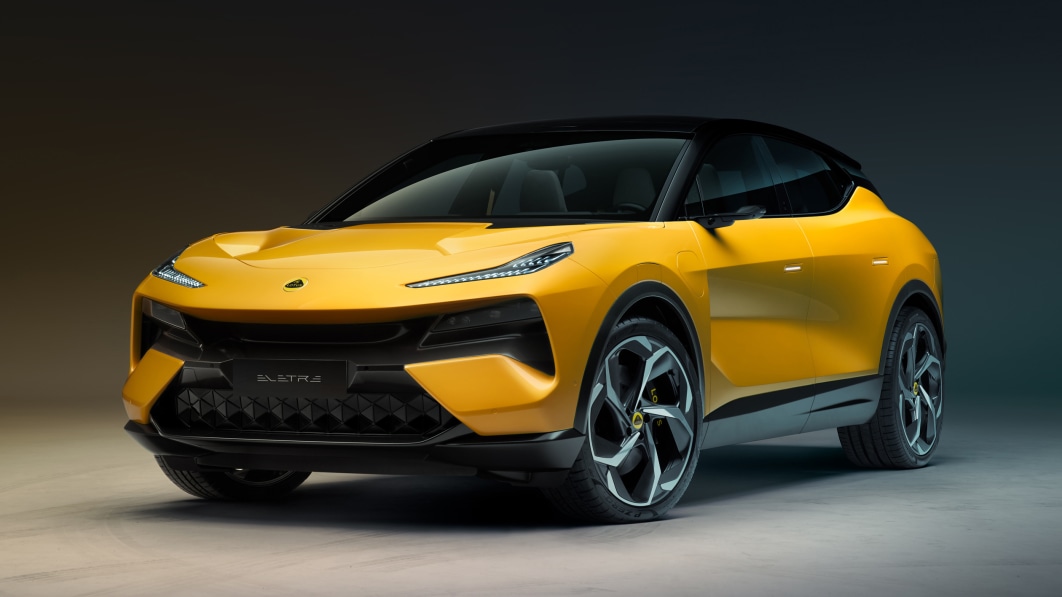
That’s the announced horsepower of the Lotus Eletre, from the venerable British house of Lotus, and it’s not attached to a difficult-to-climb-into sports car, but a “hyper” all-electric SUV. Other notable numbers: 726 pound-feet of torque, 0-to-62 mph in a hair under 3 seconds, and a top speed of 165 mph.

Due to arrive next summer, the flagship Eletre R is a wild departure from a company that regularly built featherweight cars with no more than 100 horsepower. According to Britain’s Autocar, the most powerful Eletre will cost 120,000 pounds (about $140,000) when goes on sale in the U.K. next summer.  It will likely be exported to the U.S. and China as well.

Standard equipment includes active air suspension, torque vectoring, an active front grille, LED headlights and a set of 22-inch wheels. Inside, all Eletres are fitted with electrically adjustable seats, wireless phone charging and four-zone climate control. 

Among the Eletre versions are a base model and the Eletre S making 603 horsepower and using a single-speed gearbox. The Eletre R will be the only model with a Track Mode, which lowers the ride height and gives it more aggressive damping.

Lotus, which is owned by the China-based Geely group, was founded 74 years ago by Colin Chapman. Under his direction, Lotus won seven F1 constructors’ titles and six Drivers Championships.

Looking to reserve an Eletre? The Lotus website suggests you contact your local dealer (and offers a dealer locator). Lotus says that the R model is to be the first of four that are to come from the company by 2025,

One-of-five Ferrari 288 GTO Evoluzione up for auction

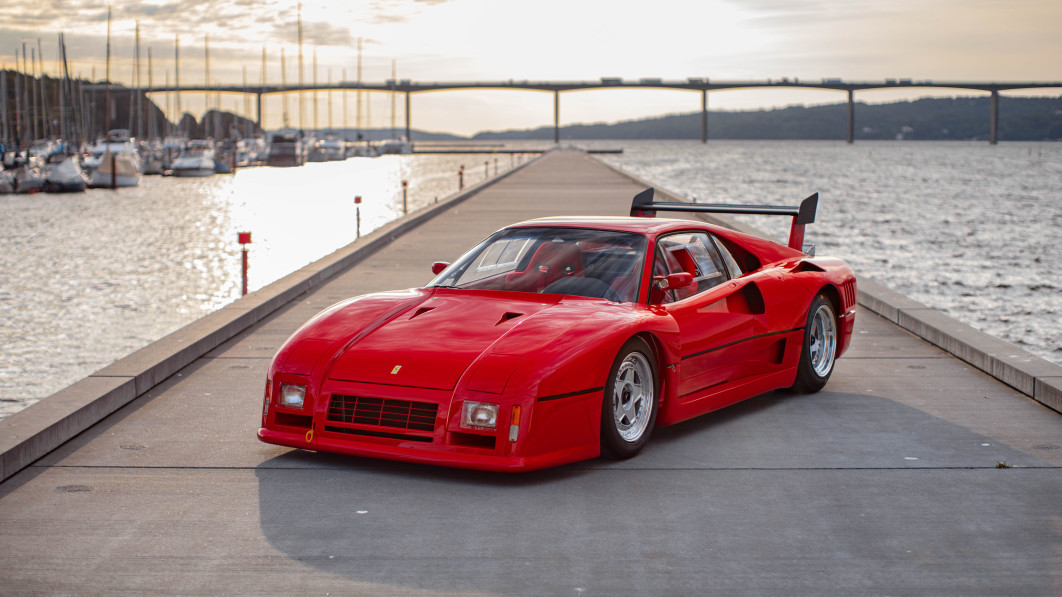
Ferrari doesn’t normally dabble in the mundane, but some of its cars are rarer than others. A perfect example is the 288 GTO Evoluzione, a race car-turned-test bench that the company built five units of in the 1980s. While these rarely come up for sale, one is currently being auctioned.

Many enthusiasts are familiar with the 288 GTO, but the Evoluzione model remains substantially more obscure. Ferrari initially developed it to compete in the Group B rally category’s tarmac events. You didn’t need to be a seasoned car-spotter to tell the Evoluzione apart from the standard 288 GTO: it featured a specific, Pininfarina-designed body made with Kevlar and fiberglass and a carbon fiber rear wing. Power came from a 650-horsepower evolution of the road car’s 2.9-liter, twin-turbocharged V8 engine. Ferrari quoted a top speed of 230 mph.

Had it raced, the 288 GTO Evoluzione could have given Ferrari’s rivals a serious run for their money. It didn’t get the chance to compete because the Fédération Internationale de l’Automobile (FIA) eliminated the Group B class from international rally events in 1986. Ferrari instead used the 288 GTO Evoluzione to test some of the features it later brought to production in the F40, and it’s not a coincidence that several styling cues link the two cars.

Built in 1987, and assigned chassis number 79888, the 288 GTO Evoluzione listed by RM Sotheby’s is the fourth example built. It was finished in 1988 and sold to Belgian pilot Jean Blaton in December of that year. The selling dealer purchased it in 1992 and kept it until a private collector in the United Kingdom bought it in 2006. The car then went through the hands of current Aston Martin chairman Lawrence Stroll, Rick White, David SK Lee, and David Raisbeck. It’s been housed in a private collection located in Europe since 2019.

RM Sotheby’s notes that Italian dealer and repair center Michelotto recently performed a €133,000 (about $130,000) service on this 288 GTO Evoluzione. The list of parts replaced includes the fuel lines, engine oil lines, brake lines, driveshaft boots, seatbelts and windows. Both turbochargers, the water pump, parts of the suspension syste, and the brake calipers were overhauled as well. And the transmission and clutch were serviced, the tires were changed, and the body was repainted in the original Rosso Corsa color.

Act fast if you want it: the auction closes on October 21, 2022, at 6:00 p.m. Paris time (that’s noon in New York and 9:00 a.m. in California). RM hasn’t provided a pre-auction estimate but this won’t be a bargain. The firm sold a standard 288 GTO for $4.4 million in August 2022.

Related Video:

Apollo shows off rolling electric supercar prototype

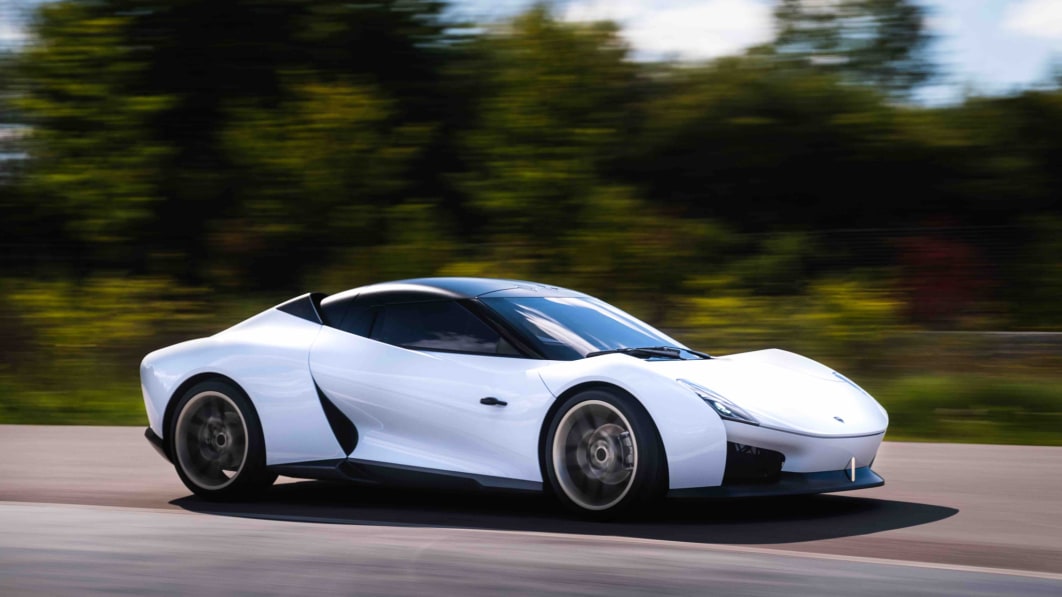
Apollo is known for building wild supercars with powerful engines and massive acceleration numbers, but the company is making a shift. Apollo just showed off a rolling engineering prototype of a new electric performance car that it says will offer performance and luxury.

The G2J Engineering Prototype has been in development for more than two years, and Apollo says it has teams from across Germany and Japan working on the project, with the German R&D team leading the effort. Apollo is focused on lightweight and composite materials and uses carbon fiber in many parts of the prototype.

Though impressive, Apollo says the prototype does not indicate how its first electric vehicle will look. Instead, the company uses the model to develop aerodynamics and test dimensions for its first electric sports car. Future vehicles will draw inspiration from other Apollo models, like the IE and Project EVO.

Roland Gumpert, the name behind the Gumpert Apollo car that debuted in the early 2000s, formerly owned Apollo before his departure in late 2016. The company has shown several impressive supercars over the years, including the Apollo Arrow and Intensa Emozione shown at Goodwood in 2017. The latter car was built in partnership with the same company that helped Mercedes build the CLK-GTR, HWA AG.

Apollo says it will reveal its first electric sports car concept in the fourth quarter of 2022 but has not given any other details. As far as costs go, the company’s cars have so far not been anywhere near affordable. The Arrow, for example, costs around $1 million, so an all-new electrified supercar won’t be cheap.

Related video:

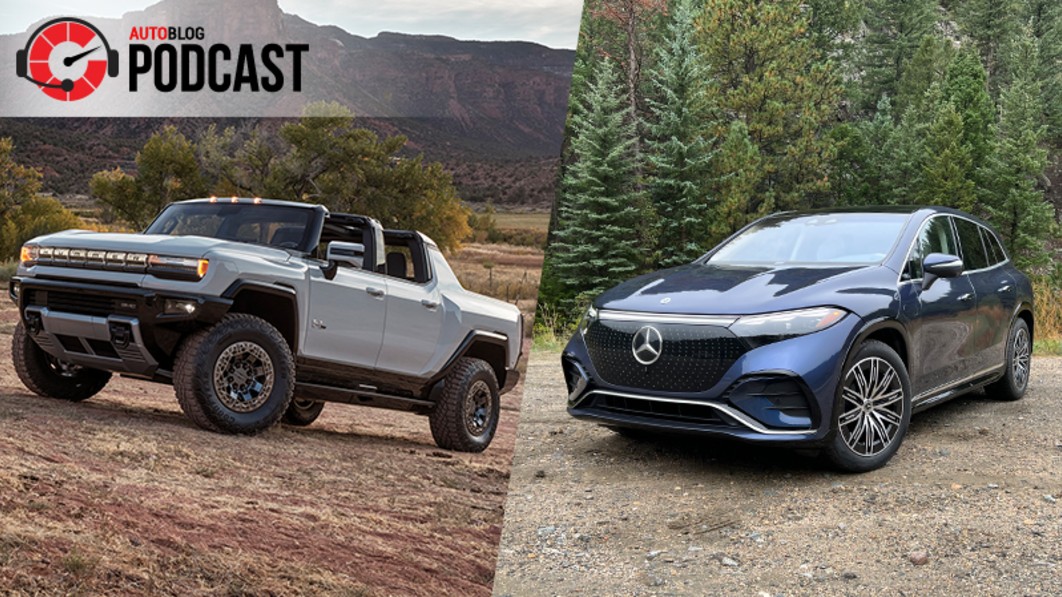
Driving the GMC Hummer EV and Mercedes-Benz EQS, EQE, EQS SUV | Autoblog Podcast #750

In this episode of the Autoblog Podcast, Editor-in-Chief Greg Migliore is joined by Senior Editor, Green, John Beltz Snyder. This week, they talk about driving Mercedes‘ fleet of EQ electric vehicles, including the EQE Sedan, the AMG EQS Sedan and the EQS SUV. They also talk about piloting the Acura NSX Type S. Next, they discuss the reveal of the 2024 Maserati GranTurismo, including the all-electric Folgore trim, as well as the Ferrari SP51 roadster. Finally, they talk about some of the best (including some unusual) car features for kids.

Send us your questions for the Mailbag and Spend My Money at: Podcast@Autoblog.com.

Autoblog Podcast #750

Get The Podcast

  • Apple Podcasts – Subscribe to the Autoblog Podcast in iTunes
  • Spotify – Subscribe to the Autoblog Podcast on Spotify
  • RSS – Add the Autoblog Podcast feed to your RSS aggregator
  • MP3 – Download the MP3 directly

Rundown

Feedback

Autoblog is now live on your smart speakers and voice assistants with the audio Autoblog Daily Digest. Say “Hey Google, play the news from Autoblog” or “Alexa, open Autoblog” to get your favorite car website in audio form every day. A narrator will take you through the biggest stories or break down one of our comprehensive test drives.

Related video:

Ultra-rare Nissan GTR-50 is up for sale in Canada

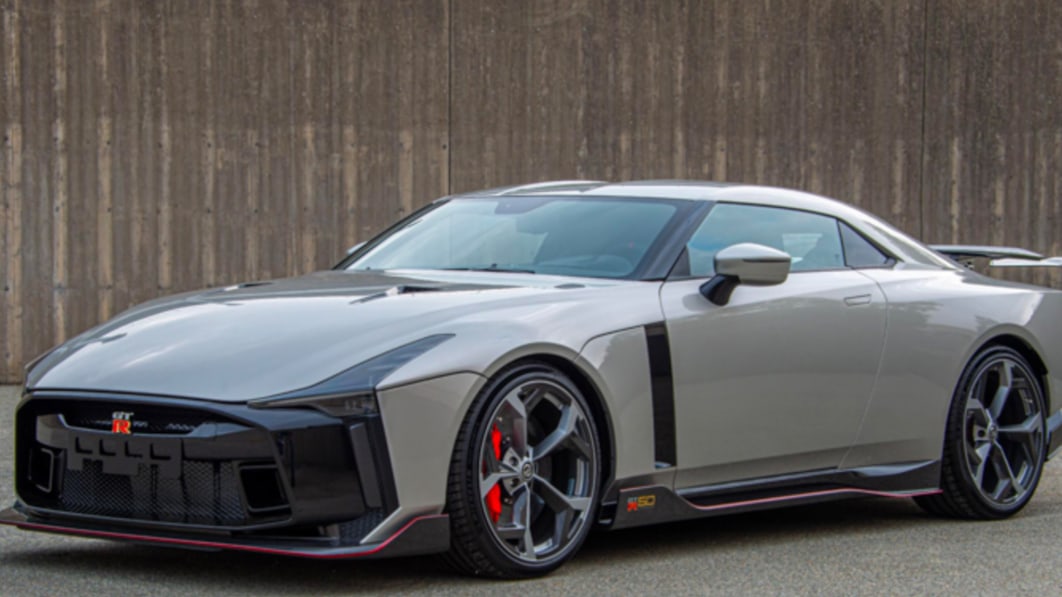
Occasionally, a super-weird concept car or rare one-off coach-built model will cross an auction block or sales listing. Their off-the-wall designs and futuristic shapes look cool, but concepts aren’t always drivable. A few years back, Nissan pulled back the curtain on its GT-R50 concept, a coach-built GT-R designed by Italdesign. Instead of the one-off concept going up for sale, the car you see here is one of 50 units Nissan/Italdesign built for the road.

This GTR-50 is offered by Legendary Motorcar in Ontario, Canada. It’s number 11 of the planned 50, though the seller notes that only 19 have been built. Nissan didn’t close the order books until July of this year but hasn’t confirmed the production totals or the number of customer sales.

The GTR-50 was a 50th birthday celebration for the GT-R nameplate and Italdesign, the shop responsible for penning the concept. People became so enamored with the car that Nissan agreed to build a limited run of 50 units. Though it’s immediately recognizable as a GT-R, the GTR-50 is a sleeker coach-built car with more interesting lines and a funky optional rear hydraulic wing.

Nissan modified the car’s twin-turbocharged 3.8-liter V6 engine with turbochargers from a GT-R GT3 car and massaged the internals with beefier pistons, a new crankshaft, and more. Those updates boosted output from the standard car’s 565 ponies (2021 model) to 710 horsepower. Torque climbed to 585 pound-feet, almost 100 more than the standard car, and Nissan updated the six-speed dual-clutch gearbox to handle the power.

Legendary Motorcar didn’t publish pricing for the GT-R50, but it’s a safe bet that it will sell for far more than the vast majority of people can afford. The 50 cars Nissan sold carried a starting price of around $1.1 million, and this car’s odometer still shows delivery mileage. Given the recent excitement (and money) surrounding other rare car sales, this one could be quite a shocker.

Lamborghini Aventador Ultimae Roadster ends non-hybrid V12 production

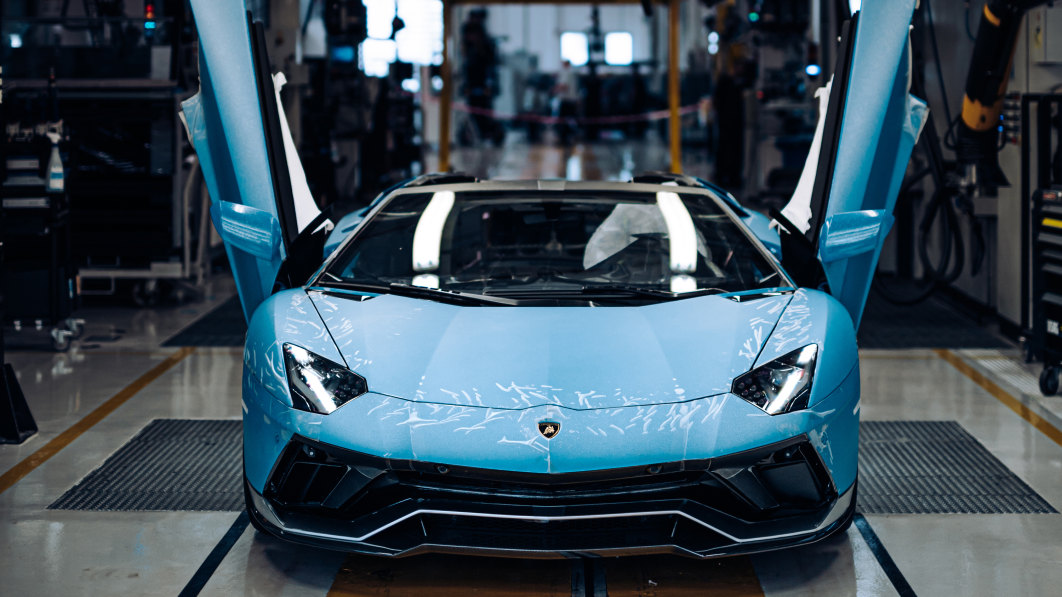
To quote Hall & Oates: “She’s gone,” the “she” here being the Lamborghini Aventador. The last of the scissor-doored supercars with a naturally-aspirated V12 rolled off the line in LP 780-4 Ultimae Roadster form colored an Ad Personam light blue, headed for a quiet life in Switzerland. That also closed the chapter on the 350 coupes and 250 roadsters made in Ultimae spec. This is a belated end-of-life, the Italian concern restarting production lines after 85 Lamborghinis, 15 of them Aventador Ultimaes destined for the U.S. market, got torched on the cargo ship Felicity Ace in March of this year. The final tally for the latest V12 spreadsheet counts 11,465 cars delivered in 11 years, more than doubling the entire sales count of its predecessor, the Murcielago, and exceeding the combined sales of every one of Lamborghini’s V12 models since the 3.5-liter V12 in the 350 GT in 1964. 

What began with the 6.5-liter 12-cylinder with 691-horsepower and 509 pound-feet of torque in 2022 ended with that engine making 760 hp and 531 lb-ft in the Ultimae. The official 0-to-62 mile per hour dash came down a tenth of a second in that time, depending on where you look, from 2.9 seconds to 2.8. Top speed rose from 217 mph to 220. Plenty fast then, plenty fast now. Between those yardposts there have been more than 10 one-offs and limited editions. The former group includes the Jota, SVJ Xago, and the SC18 Alston track car. The latter group counts the Anniversario, Veneno, Centenario, and Sian FKP 37. There were also innovations like the enclosed carbon fiber monocoque supported by “flying doctors” that traveled the world to help diagnose and repair damage that benefited owners. There was the pushrod suspension that turned a heavyweight into a flickable canyon runner, benefiting all drivers. There was the Independent Shifting Rod (ISR) single-shift transmission, which Lamborghini says was “chosen for lightweight compactness and the most emotive shift.” Given its tidal shifting motion and occasionally clumsy changes under partial throttle or when trying to figure out what the driver wanted in changing conditions, we never figured out who that benefited.

What comes next will be a hybrid V12 powertrain wrapped in looks that, based on spy shots, will evolve the latest design language with details like new lights, bladed B-pillars, and high-rise exhaust. Shouldn’t be long to wait now. But no matter what comes, to paraphrase Hall & Oates on the Aventador again: There can never be what she was to us.

Related video:

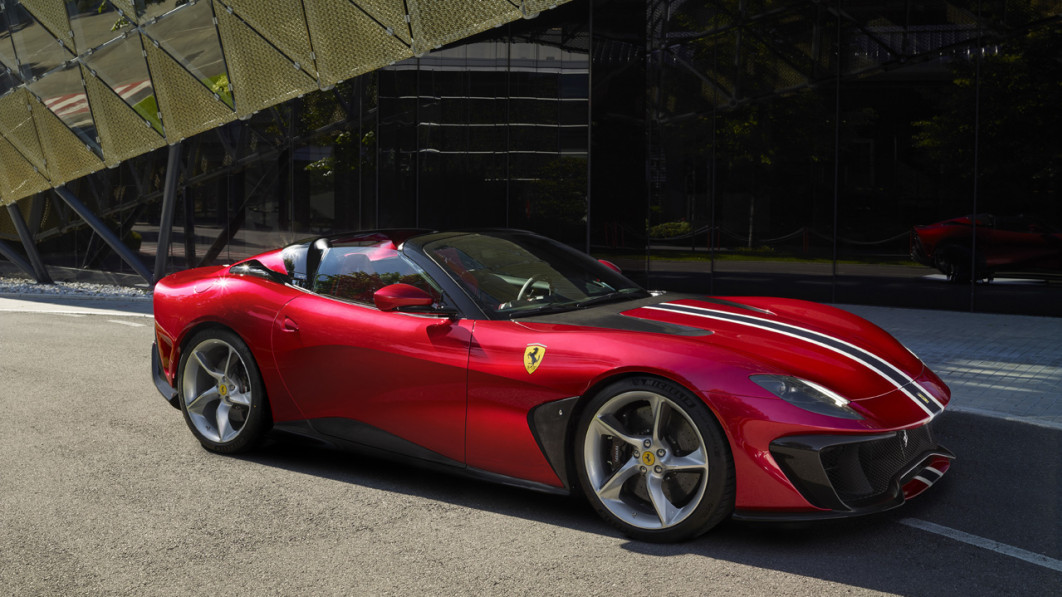
Ferrari SP51 is a V12 roadster with gorgeous paint based on the 812 GTS Spider

Ferrari says it spends an average of two years on its one-off Special Project cars such as the SP48 Unica from earlier this year, which was based on the F8 Tributo. Here’s another before the year is out, the SP51 that rides on the bones of the 812 GTS convertible. A Taiwan-based client and collector had the idea and the funds to make it happen, working with the Ferrari Styling Center on a highly advanced and proper roofless roadster that nods to historical Ferrari roadsters as well. A reshaped front fascia houses a black, carbon fiber insert below smaller headlights. Another large section of exposed carbon fiber piece below the windshield reaches forward to the hood vents, framing the center of the hood. Along the flanks, the 812’s upswept sculpting is redirected, scalloped sides rising gently to the middle of the door then descending toward the rear wheels. Above that, a pair of flying-buttress-like cowls help shape the dark lines of rear intakes behind the cabin. A carbon fiber wing runs across the car above the cowls, concealing the roll hoops.

A custom set of rims are set off by carbon fiber wing profiles in the front fenders. In back, the quad taillights peek out from below the decklid spoiler and above the deep, layered diffuser. Ferrari said it took a heap of “CFD simulations, wind tunnel and dynamic testing” in order to imbue the “ultimate in comfort in the cabin, but also the same standard of acoustic comfort and wind feel as the car that inspired it.”

That color seen outside and in is Rosso Passionale, a custom hue applied in three layers. The blue and white stripes running over the body and through the cabin pay tribute to the blue and white livery inspired by a 1955 Ferrari 410 S, an early race car powered by a 5.0-liter V12. A 410 S with chassis number 0592CM shows off that paint scheme, the roadster driven by Carroll Shelby to wins in Palm Springs the year it was delivered to owner Tony Parravano.

The cabin continues the blue and red theme, with Rosso Passionale offset by blue striping and white cross stitching on the instrument panel lower, seats, center tunnel, and doors. It can’t be bought so the price doesn’t matter, making the only real question: Would you have this, or the Ferrari Special Projects roadster from 2014, the F12 TRS

Delage D12 gets two new open-top treatments, Speedster and F1

Delage spent a long, hot American summer showing its D12 to local audiences. The reborn French brand wants to sell nine cars here and one in Canada, and it seems the job is nearly done, with CEO Laurent Tapie saying seven of the U.S. offerings have been spoken for. Unlike in other parts of the world, American owners will need to import their cars under the Show and Display exemption. Tapie said his company has already starting filling out the forms on behalf of future owners that will compel their D12s to be driven no more than 2,500 miles per year and to be stored in secure locations when not in use. We suspect those prohibitions won’t be difficult for any supercar owner to obey.

It’s possible that Delage’s stirring up the model mix helped move a few more cars. We knew there would be GT and Club versions, a 7.6-liter naturally aspirated V12 sitting behind the tandem cockpit in both. In the 3,086-pound GT, it makes 990 horsepower by itself and is aided by a 110-hp electric motor, sending the combined 1,100 hp through an eight-speed single-clutch automatic to the rear wheels. The Club’s electric motor only adds 20 horses, but the Clubsport is 200 pounds lighter than the GT and faster around a track, its e-motor for street driving, reversing, and parking. A more relevant stat for the Cars and Coffee crowd is a claimed 0-to-60 mph time of 2.4 seconds thanks in part to carbon fiber wheels wrapped in Michelin Pilot Sport Cup 2 R rubber.

The new variation is that the roof can come in three treatments. There’s the standard coupe that’s been shown, joined by two open-top versions. The D12 Speedster turns into a targa, losing the portion of its roof aft of the windshield. The D12 F1 option (pictured) sheds even that full windshield, making do with a wind deflector and a fancy helmet, which will be required when driving. Those options cost $190,000 apiece, but they are modular, so they can be bundled for the low, low price of $260,000. 

Delage still plans on production commencing before the end of this year, deliveries to start in the last quarter of next year. Each of the 30 examples Delage will make for global consumption will cost €2 million ($1.94M U.S.). It’s possible that before delivery, Delage will make the Nurburgring passenger car lap record attempt we’ve been hearing about. The Porsche 911 GT2 RS wears the crown now with a time of 6:43.300. Tapie said he wants the D12 to stop the clock at 6:40.