Brabham Automotive and the BT62 track car dead for now

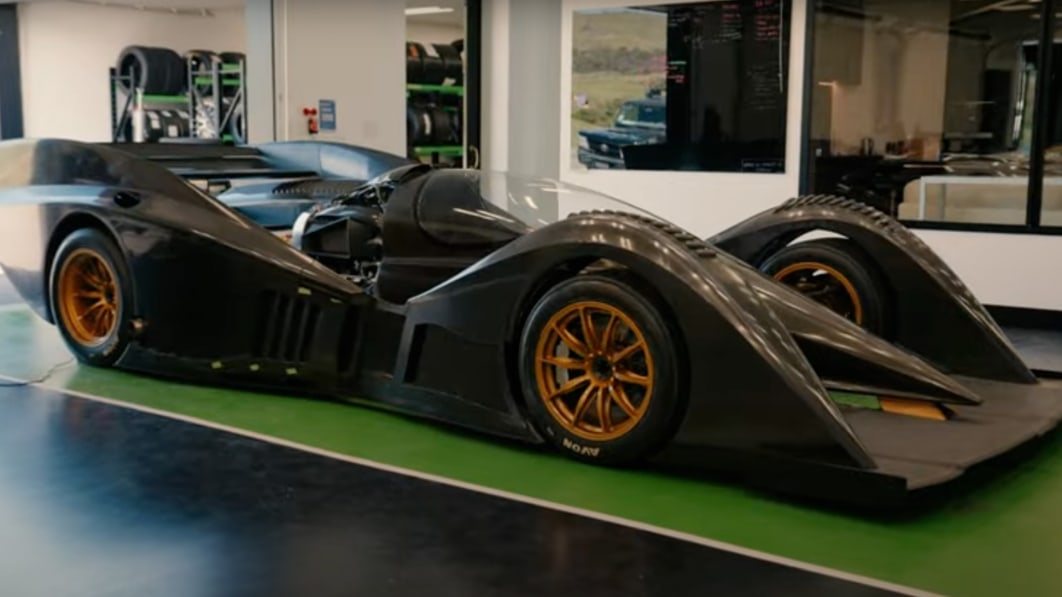
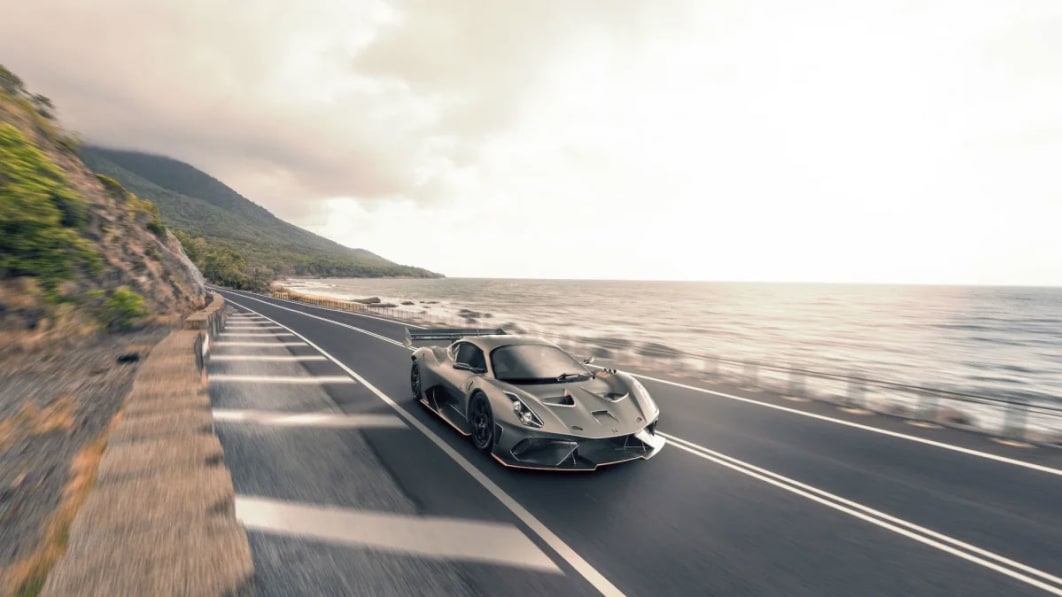
Brabham Automotive, maker of the BT62 track car, was formed through a partnership between two Australian enterprises. Private equity firm Fusion Capital, with decades of involvement in Australia’s transportation industry, worked out a deal with Brabham Group to license the Brabham name. As the “majority shareholder, sole funder, and operator of the Automotive company that bears the famous Brabham name,” Fusion Capital bankrolled the operation, with David Brabham — youngest son of three-time Formula 1 champion Sir Jack Brabham and a Le Mans winner himself — the face and soul of the brand. Sportscar 365 reports the collaboration is officially over due to differences of opinion about the “strategic direction” of Brabham Automotive.

David Brabham said in written statement, “The decision to end the relationship was made after careful consideration and what was in the best interests of all parties and the brand.” Mat Fitch, chairman of Fusion Capital, said in his own written statement that the investment firm is “committed to projects that push the limits and defy convention in the motorsport and automotive sectors.”

The breakup seems to have been a slow burn. In July last year, Australian outlet Car Expert spoke to David about what he called “a reboot” for the company, wanting to build more units of the $1.8M AUD ($1.2M U.S.) BT62 and develop a more affordable variant. At the time, Brabham said in response to detailed questions, “Some of the answers are points of discussion at the moment, so we prefer to wait till these have been sorted.”   

Looks like that’s happened. Neither man stated the source of the disagreement, but other Fitch comments as well as Fusion Capital investments suggest a major difference was over electrification. Fitch’s statement also included the line, “Powertrains are evolving, and the opportunity to challenge the mainstream OEMs has never been greater.” The company owns Australia’s Bustech, a maker of municipal buses for Australian cities that is heavily engaged in the transition to electric powertrains and clean fuels. As an offshoot, it’s reportedly looking at developing robotaxis.

Brabham Automotive had big plans for the BT62, planning to sell 70 examples of the track version, create a roadgoing variant that would enable entry into racing series’ like the World Endurance Championship, contest Le Mans, and develop a tech-heavy, one-on-one driver coaching operation. We don’t know how many ended up in private hands. It sounds like the BT62’s story isn’t necessarily over, but whatever the BT62 potentially morphs into won’t bear the Brabham name and might not be powered by a naturally aspirated, 700-horsepower, 5.4-liter Ford V8. Yet another Fitch line was, “My family and I have invested in automotive and manufacturing for over 40 years and … what we have created provides the perfect platform for the future.”  

Given more time and that road-going version, the BT62 might have been able to make more of a name for itself. The track version set a lap record at Australia’s Mount Panorama circuit, and scored a race win plus a few podiums in the GT2 European Series.

We undoubtedly haven’t heard the last of the Brabham name, either. The scion wrote, “While it is regrettable that our relationship with Fusion Capital has come to an end, the collaboration helped further evolve Brabham to a new and exciting future. … With the brand license for Automotive ended, it opens the doors for future business ventures in the Motorsport, Automotive and Heritage sectors. I would like to personally thank everyone who contributed and supported to this project over the years.”
The Best Crossovers You Can Buy in 2024

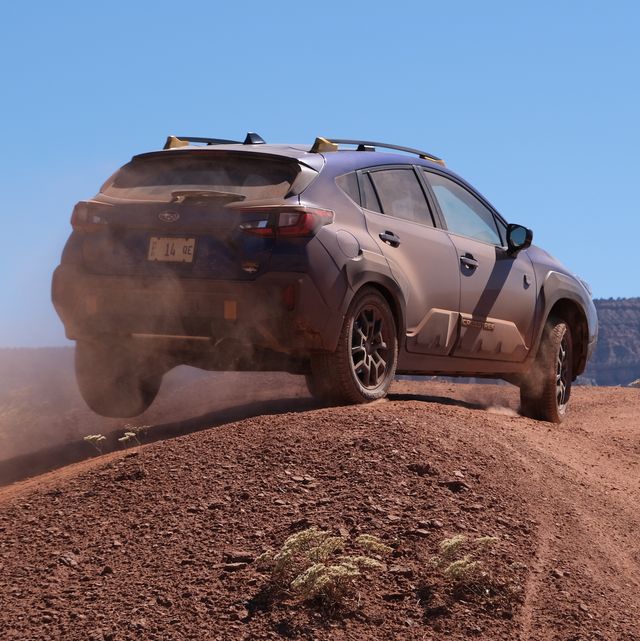
subaru crosstrek driving off road

Tyler Duffy

The crossover is the result of a simple formula. Use a unibody car platform, to keep the vehicle light and relatively well-handling compared to a Jeep Wrangler, but add of the ride height and off-road capability people like from conventional SUVs. Boom — sales success.

The fad started late in the 20th Century with early progenitors like the Jeep Cherokee XJ and Subaru Outback, and it swiftly became a phenomenon, subsuming much of the rest of the car market. Crossovers made up nearly 48 percent of vehicle sales in 2023; 14 of the top 20 bestselling non-trucks in America in 2023 were crossovers. Want more proof of the category’s dominance? Here in 2024, the Ford Motor Company — maker of iconic cars like the Taurus, the Focus, the Lincoln Town Car, the Gran Torino, and so many more — only sells a single non-crossover, non-SUV and non-truck vehicle in the U.S. — the Mustang.

And because crossovers are both what people want and what the market is selling, when we provide our best car buying advice in real life … it’s often best crossover-buying advice. To simplify matters, we’ve pulled together this list of the best crossovers you can buy in 2024.

Advertisement – Continue Reading Below

Best Subcompact Crossover: Subaru Crosstrek
  • Powertrain: 2.0-liter flat-four / 2.5-liter flat-four
  • Horsepower: 152 / 182
  • Torque: 145 lb-ft / 178 lb-ft
  • EPA Fuel Economy: 27 mpg city, 34 mpg highway / 26 mpg city, 33 mpg highway
  • Seats: 5
  • Starting MSRP: $25,195

Why We Like It: Capable off-road, especially with Wilderness package. Tremendous utility for a range of buyers. Affordable price point.

What to Watch Out For: Engine can feel anemic. No more manual.

Read our 2024 Subaru Crosstrek review

Best Compact Crossover: Honda CR-V
  • Powertrain: Turbocharged 1.5-liter inline-four / 2.0-liter inline-four hybrid
  • Horsepower: 190 / 204
  • Torque: 179 lb-ft / 247 lb-ft
  • EPA Fuel Economy: 34 mpg city, 40 mpg highway
  • Seats: 5
  • Starting MSRP: $29,500

Why We Like It: Well-tuned if not sporty driving experience. Spacious. Excellent hybrid powertrain. Fully-loaded model is still relatively affordable at $40,000.

What to Watch Out For: Had trouble matching EPA gas mileage in real-world driving with hybrid.

Read Our Honda CR-V Hybrid Review

Best Midsize Crossover: Jeep Grand Cherokee
  • Powertrain: 3.6-liter V6 / turbocharged 2.0-liter inline-four plug-in hybrid
  • Horsepower: 290 / 375
  • Torque: 257 lb-ft / 470 lb-ft
  • EPA Fuel Economy: Up to 56 MPGe
  • Seats: 5–7
  • Starting MSRP: $40,035

Why We Like It: Legit off-roader with up to 11.3 in of ground clearance in Trailhawk spec. Summit Reserve trim has one of the nicest interiors in a vehicle. Available 4xe PHEV powertrain.

What to Watch Out For: Powertrains aren’t super-refined. They should be, for the amount it costs.

Read our Jeep Grand Cherokee review

Best 3-Row Crossover: Toyota Grand Highlander
  • Powertrain: Turbocharged 2.4-liter inline-four / 2.5-liter inline-four hybrid / turbocharged 2.4-liter inline-four hybrid
  • Horsepower: 265 / 245 / 362
  • Torque: 310 lb-ft / 175 lb-ft / 400 lb-ft
  • EPA Fuel Economy: Up to 37 mpg city, 34 mpg highway
  • Seats: up to 8
  • Starting MSRP: $43,030

Why We Like It: Two compelling hybrid powertrain options (can be nearly twice as efficient as a Telluride) paired with a solid gas engine. Comfortable but controlled ride. Flexible family space with a legitimate third row. All the cupholders and USB ports you could need.

What to Watch Out For: Not exceptionally sporty. Not exceptionally sexy.

Read our Toyota Grand Highlander review

Best Luxury Compact Crossover: Genesis GV70
  • Powertrains: Turbocharged 2.5-liter inline-four / twin-turbo 3.5-liter V6
  • Horsepower: 300 / 375
  • Torque: 311 lb-ft / 391 lb-ft
  • EPA Fuel Economy: Up to 22 mpg city, 28 mpg highway
  • Seats: 5
  • Starting MSRP: $45,150

Why We Like It: Great balance and handling on road. Ample power, even from the base four-cylinder powertrain. More high-end feeling interior than rivals. Still relatively affordable.

What to Watch Out For: Second-row seating can be a tight fit for adults.

Read our Genesis GV70 review

Best Luxury Midsize Crossover: Genesis GV80
  • Powertrains: Turbocharged 2.5-liter inline-four / Twin-turbo 3.5-liter V6
  • Horsepower: 300 / 375
  • Torque: 311 lb-ft / 391 lb-ft
  • EPA Fuel Economy: Up to 21 mpg city, 25 mpg highway
  • Seats: 5/7
  • Starting MSRP: $57,700

Why We Like It: Smooth, quiet ride with ample power from both engines. Luxurious interior. Stately, Bentley-like exterior — for about one third of the price.

What to Watch Out For: Fuel economy isn’t spectacular and there’s no hybrid option.

Read our Genesis GV80 review

Best Luxury 3-Row Crossover: BMW X7
  • Powertrains: Turbocharged 3.0-liter inline-six / twin-turbo 4.4-liter V8
  • Horsepower: 375 / 523
  • Torque: 398 / 553
  • EPA Gas Mileage: Up to 21 mpg city, 25 mpg highway
  • Seats: Up to 7
  • Starting MSRP: $81,900

Why We Like It: Plenty of power from the base inline-six. Premium-feeling interior despite being leather-free. More aggressive styling post-facelift.

What to Watch Out For: Not a lot of cargo space compared to full-size, body-on-frame alternatives like the Cadillac Escalade.

Read our BMW X7 review

Best Electric Crossover: Hyundai Ioniq 5
  • Powertrains: Single-motor RWD / Dual-motor AWD
  • Horsepower: 225 / 320
  • Torque: 258 lb-ft / 446 lb-ft
  • EPA Range: Up to 303 miles
  • Seats: 5
  • Starting MSRP: $41,650

Why We Like It: Surprisingly smooth and comfortable ride. Distinctive style. Futuristic-feeling but still usable and reasonably spacious interior. True fast charging.

What to Watch Out For: Not quite as sportily tuned as the Kia EV6.

Read our Hyundai Ioniq 5 review

Best Luxury Electric Crossover: BMW iX
  • Powertrain: Dual-motor AWD
  • Horsepower: 516 / 610
  • Torque: 564 lb-ft / 749 lb-ft
  • EPA Range: Up to 324 miles
  • Seats: 5
  • Starting MSRP: $87,100

Why We Like It: Looks like a conventional BMW (in a good way). Impressive driving dynamics and quickness. More than 300 miles of range.

What to Watch Out For: Some interior materials don’t quite match the price tag.

Read our BMW iX review

Best Hybrid Crossover: Hyundai Tucson Hybrid
  • Powertrain: Turbocharged 1.6-liter inline-four hybrid
  • Horsepower: 226
  • Torque: 258 lb-ft
  • EPA Gas Mileage: 38 mpg city, 38 mpg highway
  • Seats: 5
  • Starting MSRP: $32,325

Why We Like It: Surprisingly sporty driving dynamics. Excellent fuel economy. Cargo space of 38.7 cubic feet puts some larger SUVs to shame.

What to Watch Out For: Haptic buttons can be annoying to use.

Read our Hyundai Tucson Hybrid review

Best Plug-In Hybrid Crossover: BMW X5 xDrive50e
  • Powertrain: Turbocharged 3.0-liter inline-six PHEV
  • Horsepower: 483
  • Torque: 516 lb-ft
  • EV Range: 39 miles
  • Seats: 5
  • Starting MSRP: $72,500

Why We Like It: Consistent throttle feel and response between gas, hybrid and electric modes. Quicker and sportier than you’d anticipate. 40-plus-mile range estimates on a full charge.

What to Watch Out For: Cabin space smaller than you’d anticipate. Can take a long time to charge.

Learn more about the BMX X5 xDrive50e

Best Driver’s Crossover: Porsche Cayenne
  • Powertrains: Turbocharged 3.0-liter V6 / turbocharged 3.0-liter V6 hybrid / twin-turbo 4.0-liter V8 / twin-turbo V8 hybrid
  • Horsepower: 348 / 468 / 463 / 512 / 591
  • Torque: 368 lb-ft / 442 lb-ft / 479 lb-ft / 553 lb-ft / 590 lb-ft
  • EPA Gas Mileage: Up to 17 mpg city, 23 mpg highway
  • Seats: 5
  • Starting MSRP: $79,200

Why We Like It: Successfully brings Porsche driving dynamics to the SUV realm. Torquey and potent V8 is still available. Updated interior for 2024

What to Watch Out For: Porsche option tree can get pricey. Coupe body style remains a little funky.

Read our Porsche Cayenne review

Best Affordable Driver’s Crossover: Mazda CX-30 Turbo
  • Powertrain: Turbocharged 2.5-liter inline-four
  • Horsepower: 250
  • Torque: 320 lb-ft
  • EPA Gas Mileage: 22 mpg city, 30 mpg highway
  • Seats: 5
  • Starting MSRP: $32,790

Why We Like It: Adds the oomph the standard CX-30 lacks. Excellent steering and handling. Luxurious-feeling interior at a non-luxury budget.

What to Watch Out For: Cabin can get tight with car seats. Not quite as sporty as it sounds on paper.

Read our Mazda CX-30 Turbo review

Best Chauffeur’s Crossover: Bentley Bentayga EWB
  • Powertrains: Turbocharged 3.0-liter inline-six hybrid / twin-turbocharged 4.0-liter V8
  • Horsepower: 455 / 542
  • Torque: 516 lb-ft / 568 lb-ft
  • EPA Gas Mileage: Up to 47 MPGe
  • Seats: 4
  • Starting MSRP: $229,625

Why We Like It: Smooth powerful and comfortable ride. Supremely comfortable temperature and posture monitoring “airline seats” (that may have a positive connotation if you’re in the Bentley price range). Ton of leg room. Doesn’t look too much like a stretched SUV.

What to Watch For: Options can get pricey. So is keeping a chauffeur on retainer.

Read our Bentley Bentayga EWB review

Best Off-Road Crossover: Honda Pilot Trailsport
  • Powertrain: 3.5-liter V6
  • Horsepower: 285
  • Torque: 262 lb-ft
  • EPA Fuel Economy: 18 mpg city, 23 mpg highway
  • Seats: 7
  • Starting MSRP: $48,800

Why We Like It: Impressively capable off-road with legit steel skid plates. Comfortable ride on-road. Spacious interior. Excellent torque-vectoring AWD system.

What to Watch For: Underwhelming V6 and poor fuel economy with just 18 mpg in city driving.

Read our Honda Pilot Trailsport review

Future Cars We’re Excited About

Advertisement – Continue Reading Below

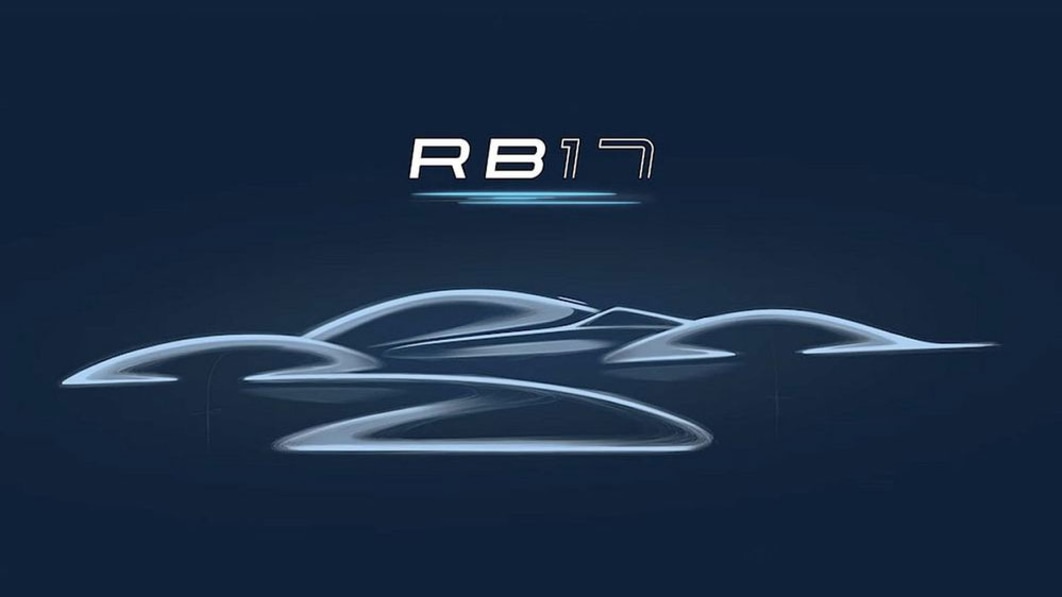
Red Bull RB17 due in 2024, makes 1,250 hp, weighs 1,984 lbs

In 2022, Red Bull Advanced Technologies (RBAT) announced the development of a new hypercar, the RB17. RBAT is the commercial technology arm for the Oracle Red Bull Racing Formula 1 team — akin to Williams Advanced Engineering, it’s a place to market technologies developed for F1 and to employ engineers cut from the F1 team when the sport introduced a cost cap. The track-only car’s rough specs in the announcement were a twin-turbocharged V8 hybrid powertrain making 1,250 horsepower, bodywork incorporating every useful F1 performance aid both legal and banned, a price of five million pounds ($6.4M U.S.) plus taxes and options, and a market launch in 2025. Evo magazine, via an interview Red Bull team principal Christian Horner gave to Sky Sports, revealed the debut’s been pushed up to this year instead of 2025 and provided a few more details on what’s inbound.

An unnamed third party is building the twin-turbo V8 engine and, if not the entire transmission, the gearsets inside. Red Bull still isn’t ready to disclose the engine maker, so we’re going to put two placeholder possibilities here. First, Red Bull announced the RB17 in June 2022, stating that the coupe was in the “advanced stages of development.” Porsche began making noises about joining F1 in 2021, then announced it would pair with Red Bull in July 2022, one month after the RB17 news. And Porsche knows all about hybridized twin-turbo V8s and racy track cars. The collaboration process went far enough to reveal that Porsche planned a ten-year project that involved taking a 50% stake in Red Bull F1. In March 2023, both parties deep-sixed the deal over a disagreement about a controlling stake, but there’s no reason the breakup would need to end a potential powertrain partnership for the RB17.

Second, the placeholder we’d love to see: A Ford engine in the RB17. One month before Red Bull and Porsche officially hit the rocks, Ford announced it would return to F1 with Red Bull in 2026. We have no idea what engine sits behind the RB17’s cockpit, and suspect the chance of it wearing a Blue Oval badge (for due cause, not badge engineering) are close enough to zero to be considered zero, but that doesn’t stop us from thinking it would be great to see.

Horner said the RB17’s target weight is 900 kilograms (1,984 pounds). Top Gear, which drove Red Bull’s most recent track-only hypercar project, the non-hybrid, V12-powered Aston Martin Valkyrie AMR Pro, said it weighs 1,009 kg (2,225 lbs). The track-only version of the road-legal Gordon Murray Automotive T.50, called the T.50s, weighs 851 kg (1,878 pounds). For comparison, last year’s minimum weight for an F1 car was 798 kg (1,759 pounds).

Red Bull’s targeting a lower center of gravity for its 900 kg than found on the Valkyrie AMR Pro. The RB17’s said to have a longer wheelbase than that of the 124-inch span on the Aston Martin, the Pro’s wheelbase itself stretched 15 inches beyond the wheelbase of the regular road Valkyrie. The RB17’s also expected with larger wheels, too, meaning hoops larger than 18 inches, a bit surprising seeing that would outdo the spec sizes for F1 and LMP1 cars as well. 

Motorsports fans have long mused on what Red Bull chief technology officer Adrian Newey could create without restrictions; Red Bull has done the same, creating virtual concepts like the X1 for Gran Turismo in 2010. The RB17 will be the first real-world demonstration, originally described with phrases like “All the tricks we’ve learned in F1” and “Adrian’s greatest hits.” 

Production begins in RBAT facilities later this year, the division capping assembly at no more than 15 per year. With a planned production run of 50 cars, that’s more than three years for builds. The multi-million-pound purchase price is said to pay for service and maintenance, access to Red Bull simulators, and on-track instruction. And Christian Horner wants everyone to know, “It will sound fantastic, like a track car should.” 

Related Video:

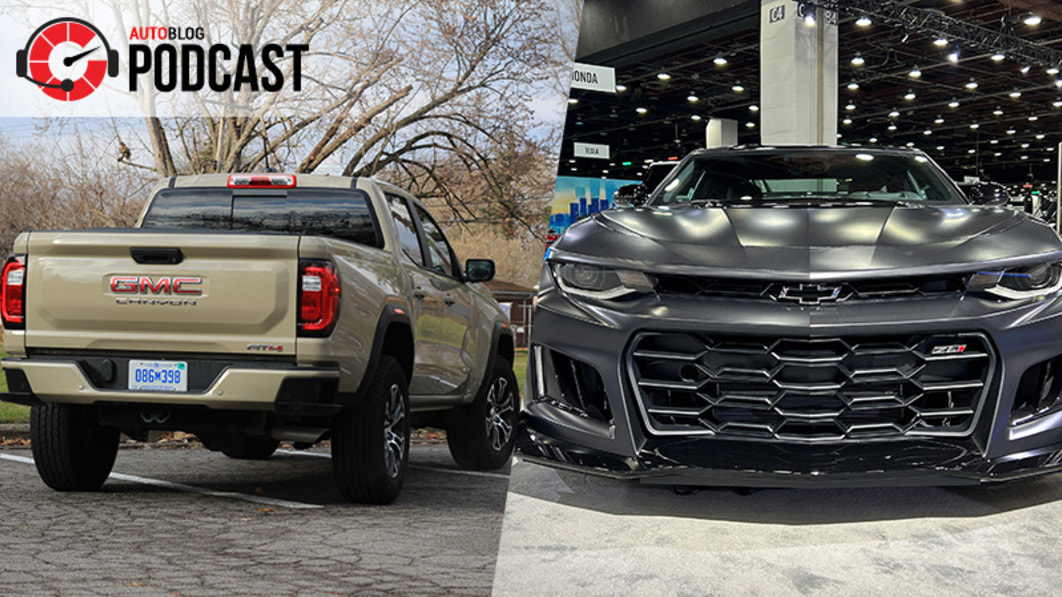
Driving the GMC Canyon, and pour one out for the Camaro | Autoblog Podcast #812

In this episode of the Autoblog Podcast, Editor-in-Chief Greg Migliore is joined by Road Test Editor Zac Palmer. They start by discussing the the cars they’ve been driving, including the 2023 GMC Canyon AT4, ECD Jaguar E-Type EV, ECD Land Rover Defender 110 and the Genesis GV60. Next, they hit the news starting with the Chevrolet Camaro production ending. Rumors about the Hyundai N Vision 74 are bandied about, and then the two discuss the latest McLaren iteration named the GTS, which is a refresh of the GT. Lastly, the pair discuss who they think were the most influential leaders in the automotive industry throughout 2023

Send us your questions for the Mailbag and Spend My Money at: Podcast@Autoblog.com.

Autoblog Podcast #812

Get The Podcast

  • Apple Podcasts – Subscribe to the Autoblog Podcast in iTunes
  • Spotify – Subscribe to the Autoblog Podcast on Spotify
  • RSS – Add the Autoblog Podcast feed to your RSS aggregator
  • MP3 – Download the MP3 directly

Rundown

  • Cars we’re driving
  • News

Feedback

Autoblog is now live on your smart speakers and voice assistants with the audio Autoblog Daily Digest. Say “Hey Google, play the news from Autoblog” or “Alexa, open Autoblog” to get your favorite car website in audio form every day. A narrator will take you through the biggest stories or break down one of our comprehensive test drives.

Related video:

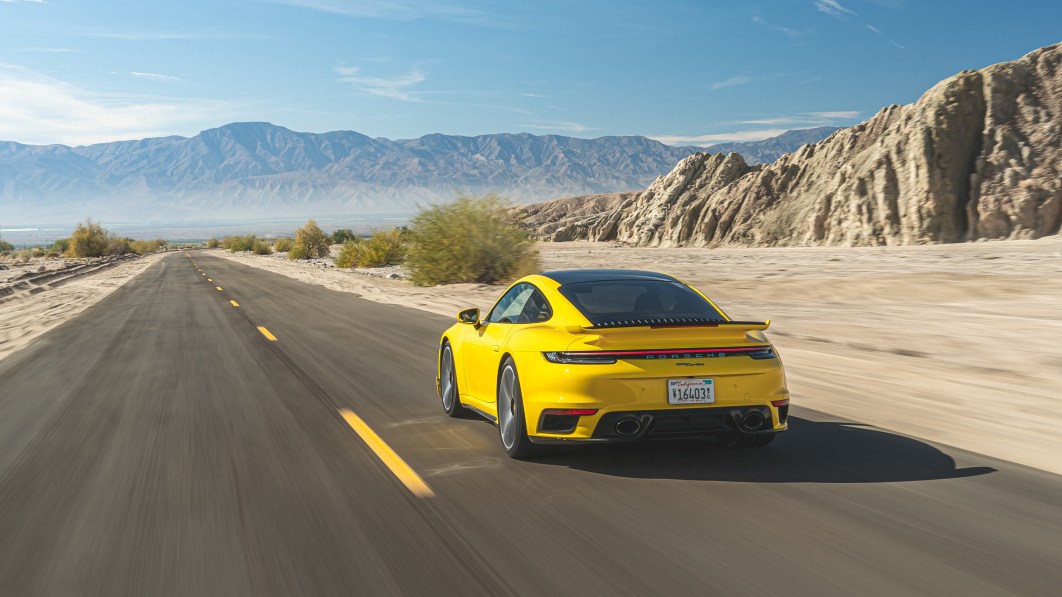
President Biden says he took a Porsche up to 171 mph

President Joe Biden went on Conan O’Brien’s podcast, “Conan O’Brien Needs a Friend,” recently, and he had a lot to say about cars. There’s plenty to unpack from the clip that you can watch above, but at one point he mentions that he recently took a Porsche up to 171 mph on the Secret Service’s private test track. Now that’s the kind of gearhead stuff we like to hear from politicians!

“I got a Porsche up to 171 mph,” Biden says while explaining how launch control works to O’Brien. Biden didn’t specify which Porsche model he was driving, but we’d bet it’s likely a 911. Of course, plenty of other Porsches are capable of 171 mph, so we don’t really know, but if any White House correspondents are reading, we wouldn’t mind if you asked Biden next time you see him.

In addition to Biden enjoying a Porsche at high speed, he said that he’s done the same with his 1967 Chevrolet Corvette, reaching 132 mph on the Secret Service airstrip test track. Biden even said that Jay Leno offered to buy his Corvette from him at one point for $144,000, but that he had to turn him down.

“They take me out to the Secret Service test track, which is an old runway. I got my Corvette up to 132 mph. It’s only a 327,” Biden remarks to O’Brien.

And speaking of Corvette news, we’ve already heard Biden spill the beans once on this topic, but yet again he makes the claim that an electric Corvette is on its way, and says it will do the 0-60 mph run in 2.9 seconds. That’s what the gasoline-powered C8 Stingray will do now with the performance exhaust, but we’re betting an electric Corvette would obliterate that time and be somewhere in the 2.0-2.5-second range.

It wasn’t just an electric Vette that Biden took to talking about, though, as he also claims to have driven an electric Ford Bronco.

“Oh and by the way, I drove one of those big Ford Broncos, electric. 4.9 seconds. Mine is 5.2,” Biden says making the comparison to his old Corvette.

We’re not exactly sure what he means by claiming to have driven an electric Ford Bronco. Such a vehicle does not exist from Ford currently, but there are restomods of original Broncos converted to electric power. There’s also the vague possibility that Biden has some inside scoop from Ford execs about future products, but it’s unclear from the interview. Regardless of the product implications, watching President Biden talk cars with O’Brien is an entertaining watch, so make sure you check out the video at the top of this post.

Rodin FZero V10 track car delivers an old-school F1 experience

Street-legal performance cars are great, but some of the most exciting vehicles on earth can only be driven on the track. The Aston Martin Valkyrie, the Ferrari FXX, and the McLaren P1 GTR are astonishing feats of engineering, but you won’t see any of them on your morning commute – at least not legally. A New Zealand company hopes its newest car reaches the bar set by those machines, and if the advertised specs are any indication, it might have a great shot.

Rodin recently announced the FZero, its V10 track car. The company has its sights set on an entry to the Formula 1 grid, and this car is said to offer an old-school F1 driving experience. Company CEO David Dicker designed the 4.0-liter V10 powering the car, which delivers 1,013 horsepower and a 10,500-rpm rev limit. Interestingly, that output only takes 11 psi of boost to develop. Rodin said it is working on a naturally aspirated version of the mill that could be offered as a crate engine for motorsport teams. The company also noted a 174-horsepower mild-hybrid system, though we don’t know if it was present during the filmed test.

Ricardo helped develop the eight-speed sequential gearbox using a 3D-printed titanium case. Rodin constructed the chassis from carbon fiber, and extensive aerodynamic bodywork generates up to 8,818 pounds of downforce. All of that adds up to a 223-mph top speed, and carbon-ceramic brakes bring everything to a screeching halt when asked. Rodin included a traction control system to help drivers cope with the power and slick tires.

Rodin hasn’t detailed a price yet, but it’s likely to climb past $1 million. The company only plans to build 27 of the cars, and as these things go, many (or all) of them are likely already sold. That’s not really a problem for most people, as the car’s price tag and track-only design place it in a highly exclusive club.

Koenigsegg details the madness of his Light Speed Tourbillon Transmission

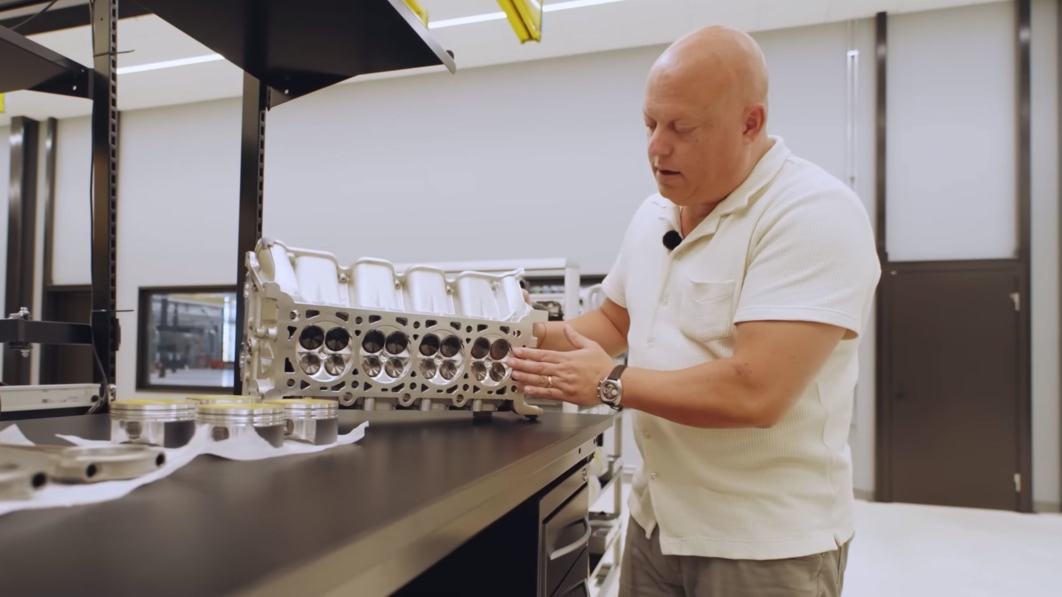
We always tune in when Christian von Koenigsegg steps in front of the camera for another tour of his car company’s new technology and facilities. He’s obviously enthusiastic about what’s being designed and built in Angelholm, Sweden, but not overly so (not in his videos, at least), he’s talks about technology in simple terms, and, best of all, the stuff coming out of those factory machines is not only innovative, it’s beautiful. The fearless leader checks all the boxes again with this quick look at the new transmission and twin-turbo 5.0-liter V8 block going in the two-seater Jesko and available for the four-seater Gemera.

A quick refresher on the LSTT, or Light Speed Tourbillon Transmission. During Gemera development, engineers wondered if the Gemera could fit the TTV8 and Light Speed Transmission (LST) from the Jesko into an engine bay designed for the Tiny Friendly Giant (TFG) three-cylinder engine and Direct Drive transmission from the Koenigsegg Regera. The engineers answered that question in the affirmative with what’s now called the LSTT, the addition of “tourbillon” referring to a mechanical feature that makes a wristwatch more accurate. On top of giving the Gemera a huge boost in available output, reworking the LST for its new employment made it smaller, lighter, and better. It’s super compact form fits nine gears and weighs just 198 pounds including the attached starter motor; the eight-speed dual-clutch Tremec TR-9090 for the Chevrolet Corvette weighs 307 pounds empty in its lightest configuration.

A tour of the 5.0-liter V8’s rotating assembly shows Koenigsegg doesn’t skimp on artwork. The ceramic coating on the top surfaces of the forged pistons is etched with the Koenigsegg logo, the connecting rods are etched with the Koenigsegg name, as are the anodized timing chain guides. Christian says the entire engine is “under 200 kilos,” or 441 pounds. That’s not far off the 445-pound weight of Ford’s Gen 3 5.0-liter V8, but the Koenigsegg carries two turbos and their ancillaries. He also shows off bits like the 3D-printed thermostat, intake plenum, and Inconel exhaust manifold, all of it art.

After that, a trip to the dyno to see what the motor can do on E85 and on our own 91 octane. If you like mechanical bits and what they can do when cost is no object, you should have a watch.

Bugatti reveals track-only Bolide’s purpose-designed interior

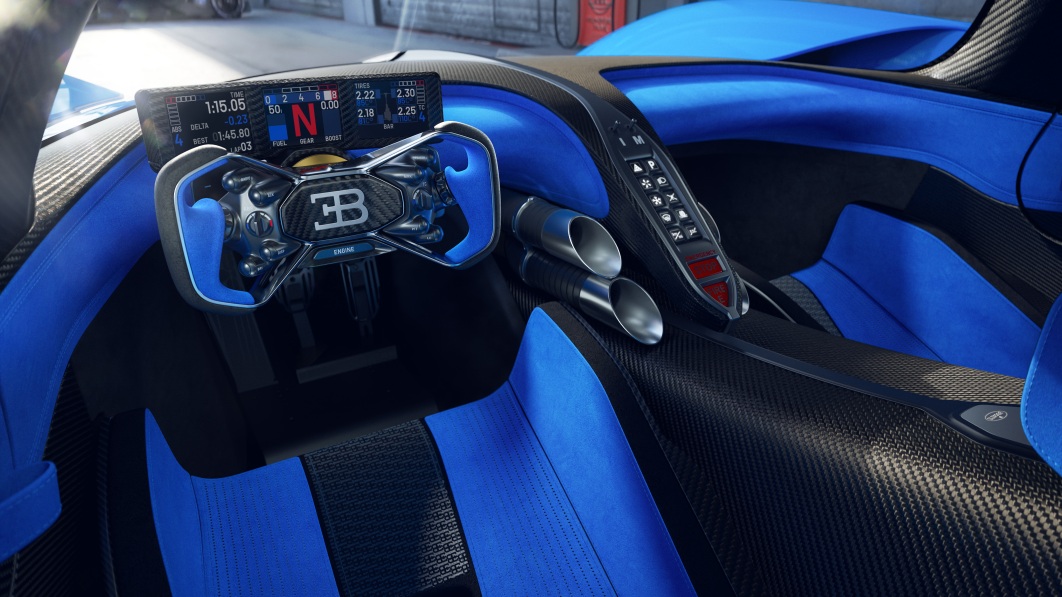
Bugatti has done a good job of documenting the Bolide’s transition from a wild-looking concept car to a limited-edition production model, but we’ve been missing one key piece of the puzzle: the interior. The wait is over, and the brand revealed what the hypercar looks like inside.

Every part of the cabin was developed specifically for the Bolide, so the overall layout looks nothing the Chiron’s. Bugatti built the model around a new carbon fiber monocoque, and starting from scratch allowed it to set a new seating position described as race car-like. Fittingly, the Bolide is being developed exclusively for track use. The brand paid special attention to the steering wheel, which features an X-shaped design that echoes the shape of the rear lights. It’s easily removable, and Bugatti notes it can serve as decoration when not in use.

The driver sits on a seat that’s layered directly onto the monocoque, meaning the Bolide is the first Bugatti model built with fixed seats. This solution saves weight because it doesn’t require seat rails, and as a trade-off the driver can adjust the steering column and the pedals to find a comfortable seating position. Buyers will have four seat packages to choose from, including one tailored to their exact dimensions. And, like every Bugatti model, the Bolide will be highly customizable: leather, Alcantara and suede are among the types of upholstery offered.

Bugatti notes that its test drivers played a significant role in shaping the Bolide’s interior. The brand put eight commonly-used buttons on the steering wheel, and it developed a digital instrument cluster with two built-in modes. The first mode displays the kind of advanced data that a test driver would want, while the second focuses on the essentials. There’s no touchscreen because there’s no infotainment system, but the slanted center console features a handful of buttons as well as four cool-looking climate control system vents shaped like exhaust outlets.

Power for the Bolide comes from an evolution of Bugatti’s familiar 8.0-liter W16 engine. In this application, it’s quad-turbocharged to develop 1,578 horsepower; that’s a lot even without context, but it becomes even more impressive when you factor in the car’s 3,196-pound weight.

Bugatti Bolide production is scheduled to start in 2024 and pricing starts at approximately €4 million excluding taxes, which represents around $4.36 million at the current conversion rate. Production is limited to 40 units globally, and the model has been sold out since 2021.

Related video:

Lamborghini Huracan STO SC 10 Anniversario won’t race, but should

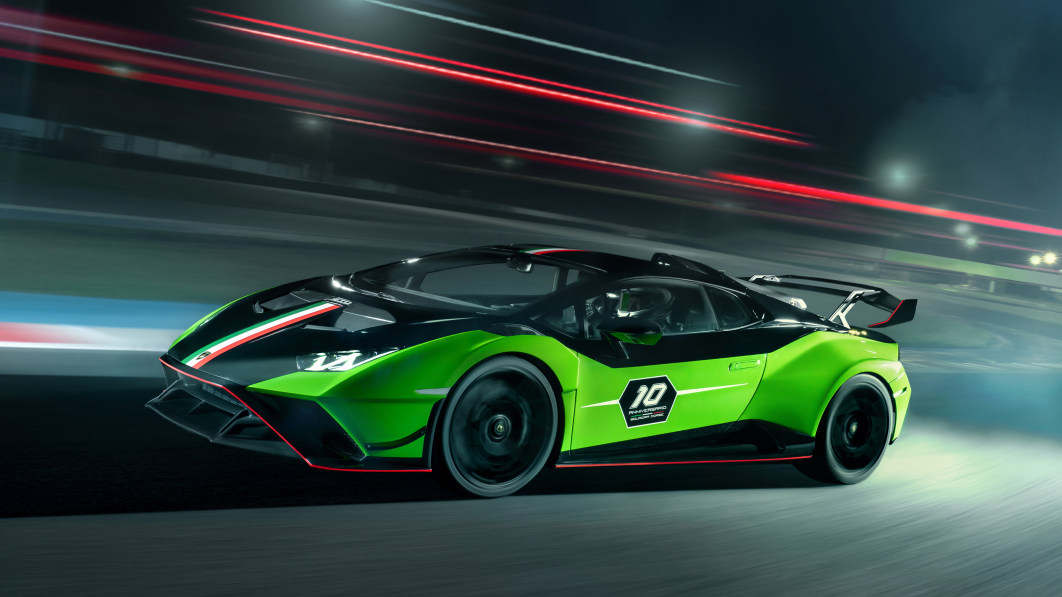
Lamborghini’s one-make Super Trofeo racing series waved its first green flag in 2009. Installing the season-ending World Finals as a cap to the series didn’t start until 2013, the same year the Italian automaker created its Squadra Corse motorsports division, making this year the 10th anniversary of both. In honor of that, and perhaps to the benefit of a client or clients, Lamborghini’s Ad Personam custom division created the Huracán STO SC 10 Anniversario, a roadgoing Huracán with a special livery and aero package tweaked by the Squadra Corse racing division.

And since the Huracán is also headed into retirement after 10 years on sale, this racing-themed special model repeats history: Lamborghini sold a run of 50 Gallardo LP-570 Squadra Corse coupes for the 2014 model year on the eve of that model concluding its 10-year production run.    

The Verde Mantis and Nero Noctis livery shouts out to the SC63 hybrid endurance racer that will compete in the IMSA’s Le Mans Daytona Hybrid class starting next year. The Huracán’s flourished in the lower classes, having won the GTD class at the Rolex 24 at Daytona three years in a row. Unique touches include the Tricolore band running down the center, “Squadra Corse 10° Anniversario” logos on the sides and rear fin, plus Rosso Mars accents along the carbon fiber package pieces. Inside, a Nero Ade seats are contrasted by Verde Fauns stitching, four-point seat belts, a roll bar, and a carbon fiber floor. 

The company says this is the first time the Squadra Corse division has fiddled with a road car. The performance and aero changes count four-way adjustable racing-derived dampers replacing the adaptive shocks, specially developed Bridgestone tires, an Akrapovic titanium exhaust, new carbon fiber flics at the leading edges of the front cover vents, and a rear wing canted an additional three degrees for more rear downforce. The Gallardo Squadra Corse coupes got more downforce from a special rear wing, too, but the racing arm wasn’t in charge of that back then.

Chief technical officer Rouven Mohr described this as “a concrete demonstration of how experience gained in motorsport can be effectively transferred to the road product, enhancing performance and driving pleasure. We firmly believe that motorsport is the most technically sophisticated and challenging test bed, and Squadra Corse’s know-how is a valuable asset that deserves to be highlighted on unique models and limited road series with a racing vocation.” Lamborghini didn’t say whether there’d be more than one of these, nor mention a price, though, so perhaps give your dealer a call and a blank check to pass along if you’re interested. 

Related video:

Mercedes-AMG halo EV due in 2025 could make 980 hp from two motors

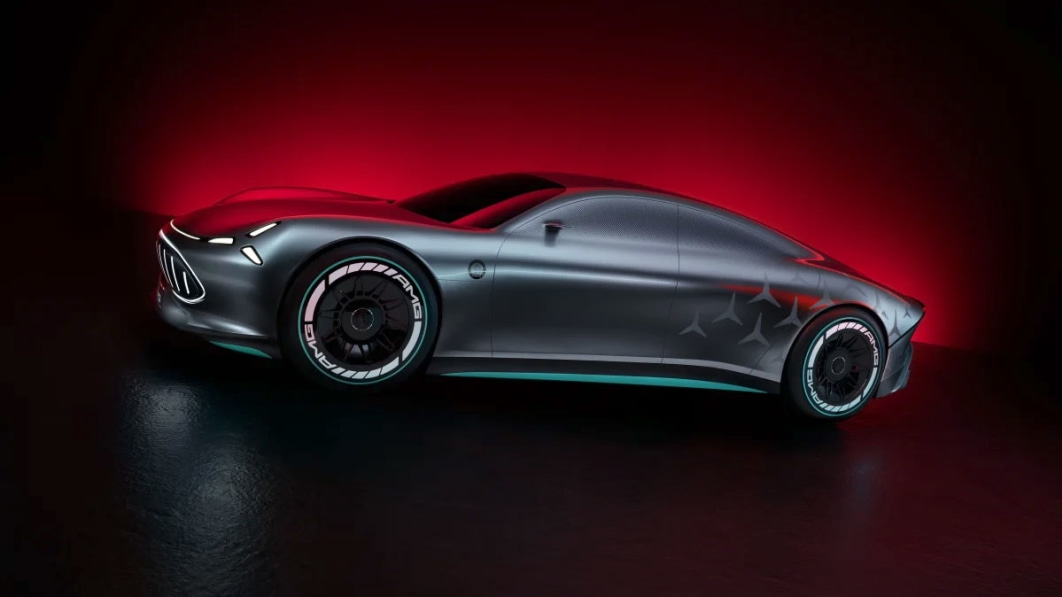
Mercedes-Benz plans four platforms to carry it into an all-electric future. There’s the Modular Mercedes Architecture (MMA) for entry-level vehicles like the production version of the Concept CLA. Then there are the three EA platforms: MB.EA for midsize and large Mercedes passenger vehicles, VAN.EA for the commercial haulers, and AMG.EA for hyper-potent stuff from the Mercedes-AMG division, the first of which is due in 2025. Engineers in Affalterbach showed what an AMG.EA brainchild could look like with the Mercedes Vision Concept from May of last year, a four-door exuding vibes of a beefier Mercedes-Benz Vision EQXX Concept while also clearly in the AMG One family. Autocar reports that the performance vision for the first pure-electric EV developed by AMG could bring close to 1,000 horsepower to the table, if not more.

The potential output comes courtesy of axial flux electric motors developed by UK company Yasa, a startup incorporated in 2009 to commercialize innovations made at Oxford University. In its short life, Yasa’s axial motors have appeared in the Jaguar CX-75 Concept, record-breaking electric racers at Pikes Peak, the Konigsegg Regera and the Ferrari SF90 Stradale. Mercedes bought Yasa two years ago, the company tasked with high-energy motors for AMG. Mercedes hasn’t spoken of figures yet, but Yasa founder and CEO Tim Woolmer has said one motor planned for AMG weighs 53 pounds and is capable of a peak 480 horsepower and 590 pound-feet of torque. This is the “exceptionally powerful and advanced” unit Mercedes hinted at when speaking on the sidelines of the One-Eleven Concept debut.

If Woolmer’s figures are representative of the motor going in the electric AMG, that’s a possible 960 hp and 1,180 lb-ft. assuming AMG restrains itself to just two motors, one on each axle. These aren’t heady numbers for luxury electric carsthe hybrid AMG One makes 1,049 hp, BMW’s quad-motor electric M3 prototype is rumored to be capable of 1,341 hp — and 2025 is a long way away in terms of electric developments, so AMG adding a third or fourth motor won’t raise eyebrows.

Powering those motors will be a pack from U.S. outfit Sila Nanotechnologies that replaces graphite anodes in the typical lithium-ion battery with silicon. The result’s said to be less expensive and more powerful, Mercedes citing a 40% increase in density for the same battery size. Along with the AMG.EA platform’s design, AMG vehicle designers will use the battery’s benefits to draw a car Autocar says will be about as long as the 199-inch AMG GT 4-Door but sit “much lower than … the EVA platform” used by the AMG EQS 53. The lowest point on the AMG GT 4-Door sits 4.6 inches off the ground, the EQS 53 limbos under that by three-tenths of an inch. A car “much lower” than that is going to qualify as a reptile.

The One-Eleven Concept provided clues to tech like a full-width high-def screen in AMG’s electric car. The AR headset necessary to engage with the complete vehicle interface will, hopefully, remain a few more years in the future.

Related video:

Watch Rimac Nevera set a speed record of 171 mph — in reverse

The Rimac Nevera is an absolute beast. This 1,914-horsepower electric hypercar has been setting records left and right, from becoming the world’s fastest electric car, to tackling the Nürburgring in just over 7 minutes, and many more. So the folks at Rimac have had to get creative to find a new challenge, but find one they did. This time, the Rimac Nevera has set a Guinness World Record for the fastest speed in reverse.

This harrowing feat saw the Nevara back up at a top speed of 171.34 miles per hour. In the onboard footage below, you can see the view from the cockpit as the landscape recedes into the distance faster and faster. The vehicle data is interesting to watch, too, with the torque being distributed between the front and rear wheels, and the steering correction as the car drifts ever so slightly off the centerline. It’s all a bit disorienting.

So how did Rimac find itself aiming the rear end of the Nevera toward such a record? “It occurred to us during development that Nevera would probably be the world’s fastest car in reverse, but we kind of laughed it off,” said Nevara chief program engineer Matija Renić. “The aerodynamics, cooling and stability hadn’t been engineered for traveling backwards at speed, after all. But then, we started to talk about how fun it would be to give it a shot. Our simulations showed that we could achieve well over 150 mph, but we didn’t have much of an idea how stable it would be — we were entering unchartered territory.”

It’s hard to imagine driving in reverse at such speeds, and as Rimac test driver Goran Drndak can attest, it’s an odd experience. “On the run itself, it definitely took some getting used to,” Drndak said. “You’re facing straight out backwards watching the scenery flash away from you faster and faster, feeling your neck pulled forwards in almost the same sensation you would normally get under heavy braking. You’re moving the steering wheel so gently, careful not to upset the balance, watching for your course and your braking point out the rear-view mirror, all the while keeping an eye on the speed. Despite it being almost completely unnatural to the way the car was engineered, Nevera breezed through yet another record.”

The $2.2 million Rimac Nevera is powered by four individual motors, giving it a total of 1,914 horsepower and 1,740 pound-feet of torque. Driving forward, it’s capable of 0-60 in just 1.7 seconds, 0-100 in 3.21 seconds and 0-200 in just under 11 seconds. It set a top speed record of 256 mph. Its 120-kilowatt-hour battery is good for 350 miles of driving range on Europe’s WLTP testing cycle.

Second, smashed 1989 Lamborghini Countach from ‘Wolf of Wall Street’ to be auctioned

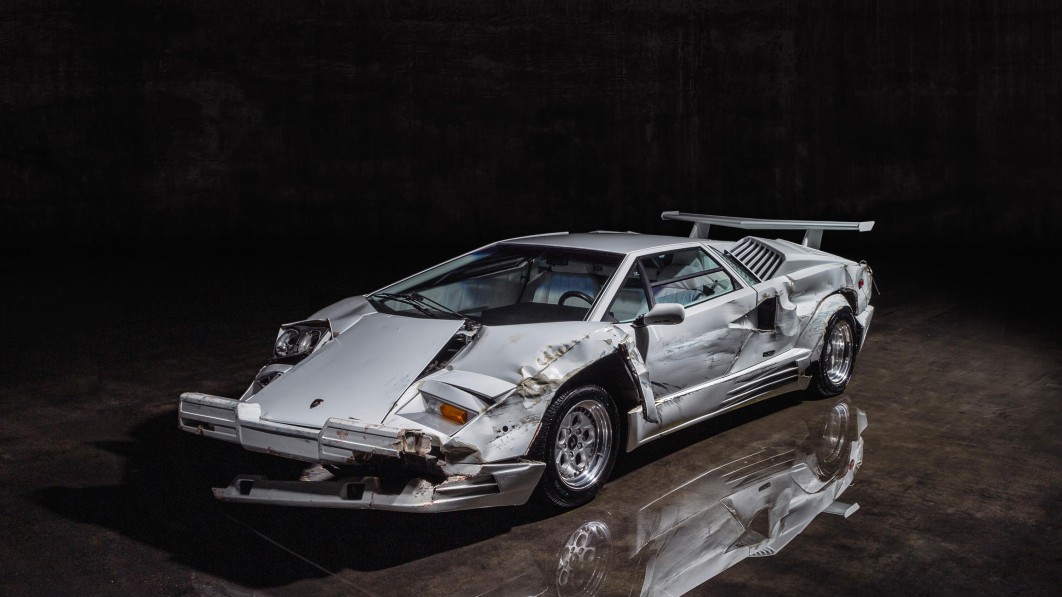
We’re not sure if we should consider this situation trying to steal someone’s thunder or, as is done in the NFL, trying to ice the kicker. In August, RM Sotheby’s announced that in December in New York it will auction a 1-of-12, white 1989 Lamborghini Countach 25th Anniversary that starred in Martin Scorsese’s “The Wolf of Wall Street.” Resplendent in Bianco Polo, the auction star was one of two cars used in the film. Notably, it was the undamaged car. The second Bianco Polo 25th Anniversary Countach was damaged rather badly as part of filming, victim of the main character driving under severe influence. We said of the second car, “The location and current condition of the other Countach are unknown, but as far as we can tell, no one has attempted to restore or auction it in the years since filming.” We now know the location and condition of the other Countach: Bonhams announced it will auction the other star car this month as part of the festivities around the season-ending Abu Dhabi Formula 1 Grand Prix, the Lamborghini in the same condition as when it was hauled off the set. 

In the listing description, Bonham’s calls its offering the “Hero Car.” Then it makes quite a bit of noise about its Lamborghini having been on screen for “approximately 3 minutes and 11 seconds” in the company of Leonardo DiCaprio as opposed to RM Sotheby’s unhurt car being on screen for approximately 16 seconds, part of which was shot by a second unit filming a stunt driver, not DiCaprio. This, we suppose, is like concours judges arguing over whether patina and original condition imbue more value than restored to original condition. Except we’re arguing about a famous, crashed Countach potentially being worth as much or more than a famous, uncrashed Countach. 

The auction houses set their pre-sale estimates in the identical range, $1.5M to $2M. Bonhams’ put some sweeteners in the lot, though: A certificate of authenticity, DiCaprio’s costume as character Jordan Belfort, the director’s chair and a clapboard signed by Martin Scorsese, Leonardo DiCaprio, and Margot Robbie, two hoodies like the kind the film crew wore, and two DVDs of the film. Frankly, the strangest twist in this drama might be someone spending $2 million on a wrecked Lamborghini and having to declare two DVDs to customs on the way home.

It’s not the star associations alone that justify the estimates. For some backstory, even though the real Jordan Belfort said he was driving a Mercedes on the cinematic night in question, Scorsese upped the stakes with a Lamborghini. The director tried using a replica, but apparently the imitation stallion didn’t crumple like the real deal. So Scorsese didn’t just buy a Countach, he bought the Silver Anniversary editions. Lamborghini sold 658 units around the world, only 23 in Bianco/Bianco reported to have made the crossing to America. Hagerty values an example in good condition at $440,000.

Bonhams’ On the Grid: The Abu Dhabi Auction happens November 25. Two weeks later, RM Sotheby’s will hold its New York auction. Our guess is one bidder will attempt to win both. That’s what a wolf would do. 

Related Video:

Turbo parts for an LT7 engine show up in GM’s parts catalog

We don’t remember a vehicle whose development was leaked and tracked almost exclusively by that vehicle’s engine, other than the Chevrolet Corvette. First came decades of predictions as to when GM’s small block would move, like Malcolm, to the middle. Then came years of chatter about the Z06 engine: In 2019, Bozi Tatarevic outed the 5.5-liter DOHC V8 designed for the C8.R race car as the 2023 Z06’s powerplant. The same year, the same Tatarevic parsed internal GM docs that hinted at two hybrid Corvettes, “both a hybrid ZR1 and a hybrid base model.” The hybrid is now suspected to be the Zora, above the ZR1, the E-Ray isn’t exactly a base model, but you get the point. Two years before that, way back in 2017, a CAD drawing leaked that was reported to be the twin-turbo 5.5-liter LT7 V8 going into the ZR1. And now? Mid-engined Corvette Forum credits “little birdies” for screenshots of the latest GM parts catalog selling turbo components for a turbocharged 5.5-liter LT7 V8.

Among the trove were listings for a baffle bolt duct resonator retainer, an air inlet adapter, and ducting to the turbo inlet. A dialog box on an initial screenshot gave a partial description of the motor as, “LT7 – Engine Gas, 8 CYL, 5.5L, DI, VVT, AFM, SC Turbo, DOHC,” before being cut off. The direct injection, variable valve timing, turbocharging, and double overhead cams line up with what we’d expect from a boosted Z06 engine. The “SC” in the turbo description is for supercharging, but a member of the Corvette Forum explained “for whatever reason, in the Parts Catalog and ECM Calibrations GM doesn’t distinguish between ‘Forced Induction‘ Turbocharger or Super Charger….they refer simply to SC/Turbo.”

The “birdie” at the center of this later clarified that AFM, which is GM’s Active Fuel Management cylinder deactivation, was a mistake. The Z06 doesn’t use AFM, and lively debates on forums question whether GM would endure the expense and complexity of engineering an AFM solution. The Z06’s LT6 uses mechanical lifters, and flat-plane-crank (FPC) engines have vibrational issues that would be exacerbated by shutting down cylinders and the ZR1’s buyers won’t fret over fuel economy.

However, other lively debates wonder if GM is going back to cross-plane with the ZR1 motor because of the motor’s relatively large displacement and to address issues around rotating mass when near the Z06’s redline of 8,500 rpm. This seems highly unlikely to us. The FPC TT V8 engines in cars like the AMG Black Series, Ferrari 488, and McLaren Senna either have smaller displacements and/or redlines below 8,500 rpm. Two further exhibits in favor of going to a lower redline (or other changes) instead of changing crank design are the Ferrari 458 Italia and the Koenigsegg Jesko. The Ferrari 458‘s naturally aspirated 4.5-liter V8 spun to a 9,000 rpm redline, the terminal limit lowered to 8,000 in the 488’s 3.9-liter. The Jesko is powered in part by a twin-turbocharged 5.0-liter V8 with a flat-plane crank and an 8,500-rpm redline. The engine alone makes 1,262 horsepower running 24.7 psi of boost, well above the ZR1’s rumored output targets of 850 horsepower and 825 pound-feet of torque. And have you seen the price of a Jesko? Another Mid-engined Corvette Forum member tried plotting output LT7 output curves, coming up with roughly 900 hp and 700 lb-ft at a 7,500-rpm redline.     

The catalog vehicle code for the engine parts is repeatedly shown as YR, referring to a new model figured to be the ZR1. This follows the YC Stingray, YG E-Ray, and YH Z06. The catalog contains a new transmission code as well, an eight-speed dual-clutch dubbed M1K, not the M1M code that applies to the Z06 transmission, M1L of the Stingray, or MLH of the E-Ray.

Whatever comes, it’s possible buyers will be able to lend a hand building their cars. The parts catalog mentions a “Customer Engine Build Program” at GM’s Performance Build Center. This was planned for the Z06 as well, then canceled after being deemed too difficult to implement.

The next royal birth in the Corvette range recently finished two weeks of testing at the Nurburgring, leaving the German hills without setting a timed hot lap. We expect it will debut next year as a 2025, but recent events in and out of the auto industry could push the launch back some. Eager buyers suspect a starting MSRP somewhere in the $130,000s or $140,000s.

Related Video

Autoblog’s Editors’ Picks: The Complete List

Filed under: ,,,,,,,,,,,,,,,,,,,,,,,,,,,,,,,,,,,,,,,,,,,,,,,,,,,

Continue reading Autoblog’s Editors’ Picks: The Complete List

Autoblog’s Editors’ Picks: The Complete List originally appeared on Autoblog on Wed, 1 Nov 2023 10:00:00 EDT. Please see our terms for use of feeds.

Permalink |  Email this |  Comments

Ferrari takes Manhattan

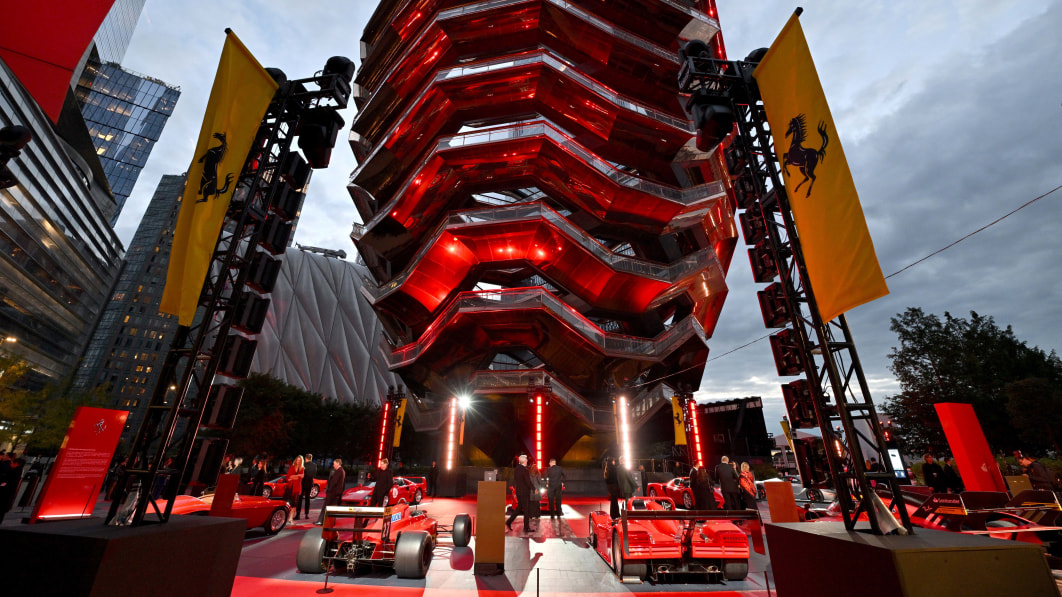
Ferrari hosted a gala for its new charitable educational foundation this week in New York City, at The Shed in the Hudson Yards on Manhattan’s West Side. As part of this, the Italian exotic carmaker displayed 14 “game changing” vintage and contemporary vehicles outside the sculptural Vessel structure. These included vehicles from the contemporary Prancing Horse lineup such as the Purosangue and 296 GTB; custom Icona cars like the Monza SP1 and Daytona SP3; vintage supercars like the Enzo, La Ferrari, F40, and F50; and racing cars like the 66M, F1-89, and 333 SP. According to a Ferrari spokesperson, 40,000 people visited the space on the first day it was open.

The brand also hosted screenings of the forthcoming Michael Mann movie, “Ferrari,” for top clients, following its premiere at the New York Film Festival. Adam Driver, who plays Enzo Ferrari in the dramatic biographical film, attended the gala along with Mann, who, in addition to being a Ferrari owner has also shot promotional video for the brand. Actor Nicholas Hoult (“The Great,” “Renfield”) who has been training to race in the Ferrari Challenge Series, also attended. A performance by musician John Legend was the evening’s entertainment.

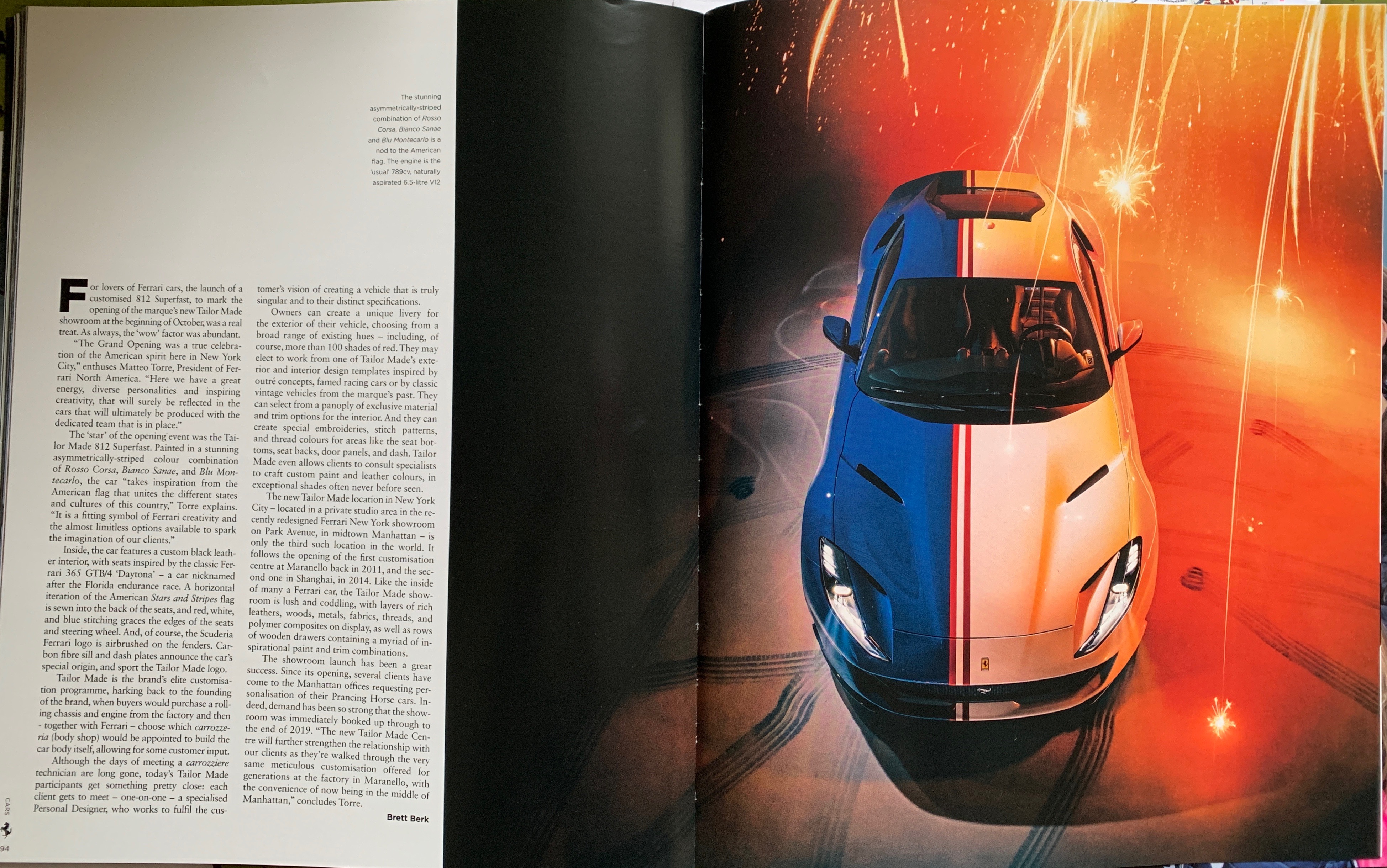
If this isn’t enough of a big-city presence, Ferrari also runs a very fancy client showroom uptown on Park Avenue, one of just three Tailor Made sites in the world (the others are in Maranello and Hong Kong), constructed to help clients customize their cars with special high-profit leathers, trim bits, paint-to-sample colors, and the like.  

All of this raises the question, why is Ferrari betting so big on New York, the least car-friendly city in America? “We wanted to have also something here in New York, on the East Coast, to be connected with the local community here,” says Enrico Galliera, the Italian marque’s chief marketing officer, as we sit together on the 24th floor of the Equinox Hotel in Hudson Yards, overlooking the events in the plaza from on high. (As we stare outside, a Ferrari spokesperson points out that the brand’s first importer in America, Luigi Chinetti, had his dealership just a few blocks south on 11th Avenue.)

As a test driver of high end sport and luxury vehicles for 15 years, a New York resident for over 30 years, and a car lover for far longer, I can attest that seeing a Ferrari driving through the city is an extremely rare experience, unless I am behind the wheel. But apparently, Ferraris are hidden all over town.

“You will be surprised to know how many Ferrari collectors there are in New York and how many big collections there are in Manhattan,” says Galliera. “When I came years ago, I went to visit one of these big collectors that is living in Manhattan, and all his collection is underground in the parking lot of his building. And he was telling me, you know, Enrico, I’m working here. Whenever I get stressed in my work, I take the elevator, I go downstairs in the basement, I decide which one, and then I jump in one, I take it out to drive, I relax, and I go back to work. So in Manhattan, maybe it’s not the best place where you can see Ferraris, but there’s a lot of Ferraris and a lot of big collectors in Manhattan.”

The Tailor Made site has also been a rousing success. “Since the beginning, we understood that there was a huge potential for the client experience. And now it has become an important center of our meetings for clients that visit in New York,” says Galliera. I note that, since it opened in late 2019, Lamborghini and Aston Martin have both opened similar sites in the city. “I didn’t visit them yet,” Galliera says, smiling. “But you know, I keep saying that as far as your competitors, I’m not saying copying. But if they try to do whatever you did before, it means that it was successful.”

At the gala, Ferrari auctioned off a customized one-off 812 Competizione for $5.1 million, as well as other Prancing Horse-branded and -adjacent ephemera, to help fund its educational initiative. The company raised a total of $7 million for the charity. So, at the end of our conversation, I asked Galliera how he would measure success for the event, and its potential continuation: Raising money? Raising awareness? Raising engagement?

“I think all these point that you said,” he said, smiling again. “But I would not measure engagement, because it’s already there.”

You can own the original Mk 1 Ford GT 40 press car

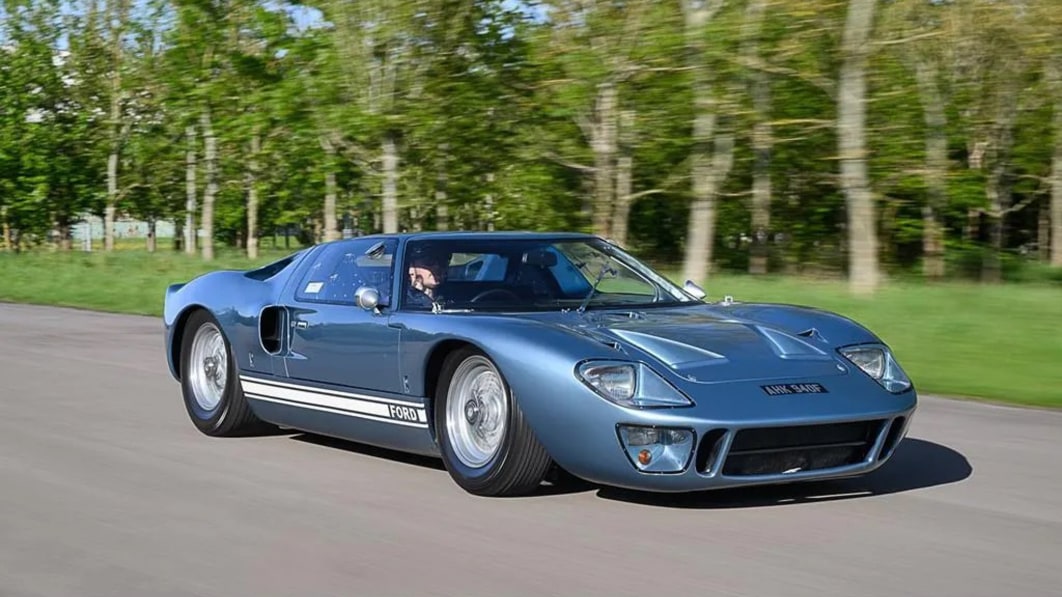
There have been plenty of Ford racing cars over the years, but none have a legacy that can hold a candle to the GT40’s. The iconic racer took Ford to victory at Le Mans, earning it a starring role in the recent film “Ford vs. Ferrari.” Though they’re exceedingly rare, GT40s occasionally pop up for sale, and one of the more interesting early examples recently surfaced on the UK’s PistonHeads car sales site.

This Ford GT40 was the original press car issued to journalists in the UK for testing and photography. It was originally used as a show and display car, appearing at the Geneva Auto Show in 1967. It was repainted during that time, changing from its factory Opalescent Silver Blue to Metallic Borneo Green.

After its modeling career and a test drive by Formula 1 champ Graham Hill, the car was sold to a collector who repainted it yellow and took it vintage racing. The GT40 also appeared at the Goodwood Revival in 2007 before being returned to street spec and repainted in its original blue hue.

The Mk 1 road cars are super rare, with only 31 produced, though the entire GT 40 production run only includes 105 cars. Race-winning cars have sold for several million dollars, and a prototype hit almost $7 million at auction 10 years ago. This car’s backstory and gorgeous spec will likely drive its price deep into the millions as well. The price is available on request, and we’re willing to bet it’s a shocker.

That said, there is no shortage of reproduction cars, though they often carry hefty price tags of their own. Superformance offers a painstakingly accurate GT 40 that is so close to the original that parts are interchangeable between new and old cars. While not “real” GT 40s, the cars start at more than $150,000 just for the rolling chassis, and complete cars can sometimes reach a quarter-million dollars.

Related video:

2025 Chevrolet Corvette ZR1 spied running the Nurburgring with massive wing

The Chevrolet Corvette Z06 may already feel like it’s the top of the mountain, but we’re far from it, and these spy shots of what is likely to be the Corvette ZR1 show us exactly why.

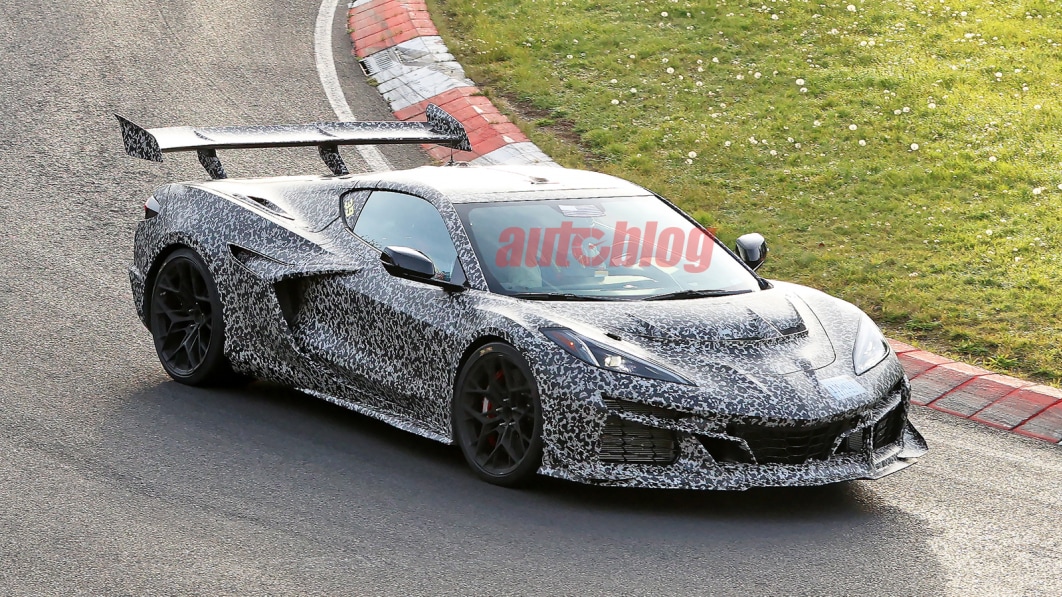
This marks the first time we’ve seen a C8 Corvette more extreme than the Z06 with most of the heavy canvas camouflage removed. In its place is a skin-tight camo wrap that reveals all of the sharp edges, extra aero elements and new design for the next wrung up in the Corvette hierarchy. Up front, the lower bumper and splitter remind of the Z06’s Z07 package with the aggressive protrusions and wide-open grilles. However, the front hood is entirely new in this test car. Instead of a largely flat hood, this one has massive intakes reminiscent of the current Porsche 911 GT3. We’ll likely need to wait and see if Chevy retains the under-hood storage for this model, or invades it for additional cooling hardware. 

A similarly massive side protrusion as you see on the Z06 is present on this test car, but an additional opening is visible behind said intake, as well. The side sills themselves largely seem to match up with the Z07 package, but look up atop the rear fender, and you’ll find yet another opening that isn’t present on the Z06. It’s pretty clear that cooling is a major priority for this C8 variant, and for good reason, because the ZR1 is rumored to get a boosted version of the 5.5-liter flat-plane crank V8 in the Z06. Adding forced induction will add a whole lot of heat and a whole lot of power to the equation, which explains all of the added venting and openings throughout the body.

There’s no bigger change in the rear of the ZR1 than the utterly massive wing hanging out the back. It’s way bigger than even the big wing that comes with the Z07 package, and we presume it will produce big downforce numbers, leading to a feisty Nurburgring lap time.

The ZR1 is rumored to come out as a 2025 model year vehicle, so the wait for a reveal won’t be terribly long at this point. And we’re only getting more and more excited about it now that we finally have a decent general outline of what this extra-quick Vette will look like.

Related video:

2024 Chevrolet Corvette prices now up between $2,300 and $5,100

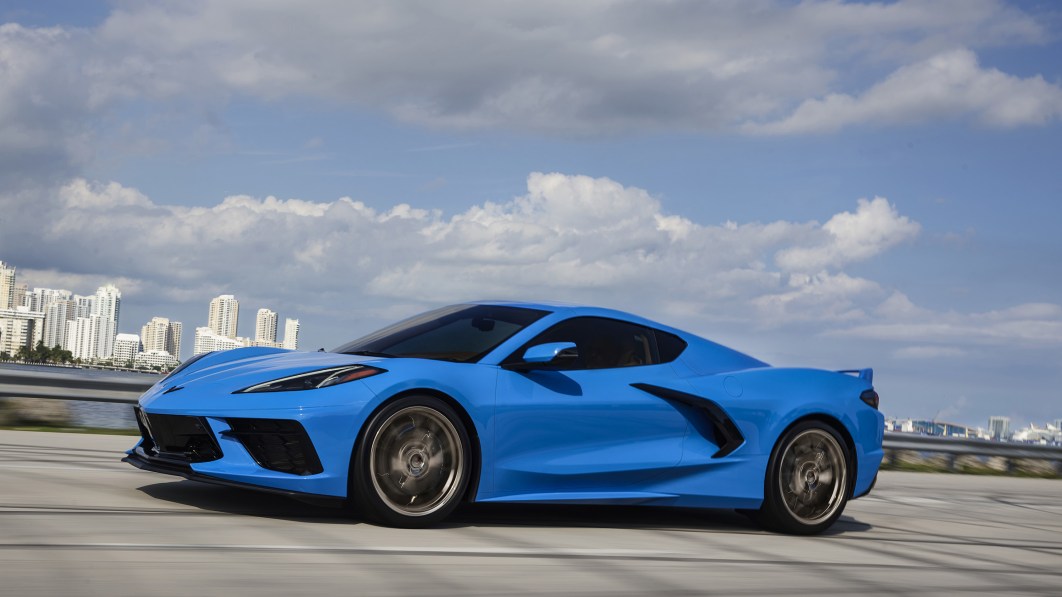
The 2024 Chevrolet Corvette is about to be unloaded on dealer lots with four-figure price increases in its frunk. Corvette Blogger got eyes on a dealer bulletin stating that, effective October 2, the starting price on all Corvettes will be $2,000 higher. That’s unwelcome enough. Even worse, the price changes and final prices are quite a bit higher. Starting with the entry Stingray, Chevy has the 2023 and 2024 models on its consumer site at the moment. Comparing Build & Price pages for each year shows a $4,100 price difference, not a $2,000 difference. It appears that what’s happened is the latest increase comes on top of an earlier $2,000 increase described in order guides that came out in July. Less than four months ago, Corvette Blogger reported that dealer Rick “Corvette” Conti revealed new pricing that would have the 2024 Stingray starting at $67,895. Instead, the new Stingray is shown as starting at $69,995. 

Exactly $100 of the $2,100 difference between now and July is an even higher destination charge that was already going up by $200, according to the July order guide. 

The total price bumps aren’t consistent across trims, though, so we’re comparing prices on the 2023 Build & Price page against the 2024 page to get the variations. For the coupe, that means:

  • 1LT Coupe: $69,995 ($4,100)
  • 2LT Coupe: $77,095 ($3,900)
  • 3LT Coupe: $81,745 ($3,900)

It’s a little less extreme on the Stingray Convertible side of the fence. The 2023 Build & Price page shows a Standard Vehicle Price of $72,000 and a destination charge of $1,395 for a 1LT Convertible, a total of $73,395. A Monroney from April of this year for a 2LT Convertible checks out against the configurator. Flip to the 2024 Corvette Convertible configurator, the 1LT starts at $75,300 with a destination charge of $1,695 at the time of writing. That’s a total of $76,995, a $3,600 difference. Back to the Monroneys, the window sticker for a 2024 3LT Corvette Convertible shows Standard Vehicle Price as $85,050 and destination as $1,595, while the configurator shows it as $87,050 with the $1,695 destination. This car would have been ordered before the October 2 price change date, explaining the difference. 

Here’s what 2024 Corvette Convertible pricing looks like on the retail site, compared to the 2023 pricing:

  • 1LT Convertible: $76,995 ($3,600)
  • 2LT Convertible: $84,095 ($3,900)
  • 3LT Convertible: $88,745 ($3,900)

Step up to the Z06 Coupe, and we find the highest increases so far. The prices on the retail site and their differences from 2023, after the $1,695 destination charge and $2,600 gas guzzler tax, are:

  • 1LZ Coupe: $114,395 ($5,100)
  • 2LZ Coupe: $120,595 ($4,800)
  • 3LZ Coupe: $125,245 ($4,800)

And here’s the outlay for your 2024 Z06 Convertible, which is up $4,800 across the board: 

  • 1LZ Convertible: $121,395
  • 2LZ Convertible: $130,295
  • 3LZ Convertible: $134,945

Finally, the 2024 Chevrolet Corvette E-Ray caught the same bug. Unlike with the Stingray and Z06, there was no 2023 E-Ray so we can’t compare pages on the consumer site. We can, however, compare to the launch price; the model wasn’t mentioned in the order guides from July. With winter approaching, buyers who want the security of hybrid all-wheel-drive are going to need $2,300 more than asked at launch — $300 of which is in the destination charge: 

  • 1LZ Coupe: $106,595 
  • 2LZ Coupe: $112,095 
  • 3LZ Coupe: $117,545

The 2024 E-Ray Convertible rises by the same amount:

  • 1LZ Convertible: $113,595
  • 2LZ Convertible: $119,095
  • 3LZ Convertible: $124,545

You’d almost think automakers — plural “automakers,” not only Chevy — uploaded new pricing to configurators without telling anybody because it’s all bad news. Or, in the Corvette’s case, is it? A Porsche 911 Carrera starts at about $116,000, a 911 GT3 starts at about $184,000. Ford’s Mustang Dark Horse starts at nearly $61,000, the take-all-comers Mustang GTD starts at the monumental-for-a-Mustang sum of $300,000. So what’s crazy about the Corvette price increases isn’t the increases, it’s the fact that even with the higher prices, for the money, the Corvette is still a screaming performance bargain. Like, screaming. What a world, eh?

Ride along with Rimac on a flying drone tour of its factory and offices

Croatian automaker Rimac has developed some of the world’s most impressive EVs, and the automaker’s joint venture with Bugatti promises to bolster that innovation with more money and engineering resources. As you might imagine, building mind-blowing cars doesn’t often happen in a makeshift factory, and Rimac recently released a stunning drone-shot tour of its manufacturing facility that shows its home base is as advanced as its cars.

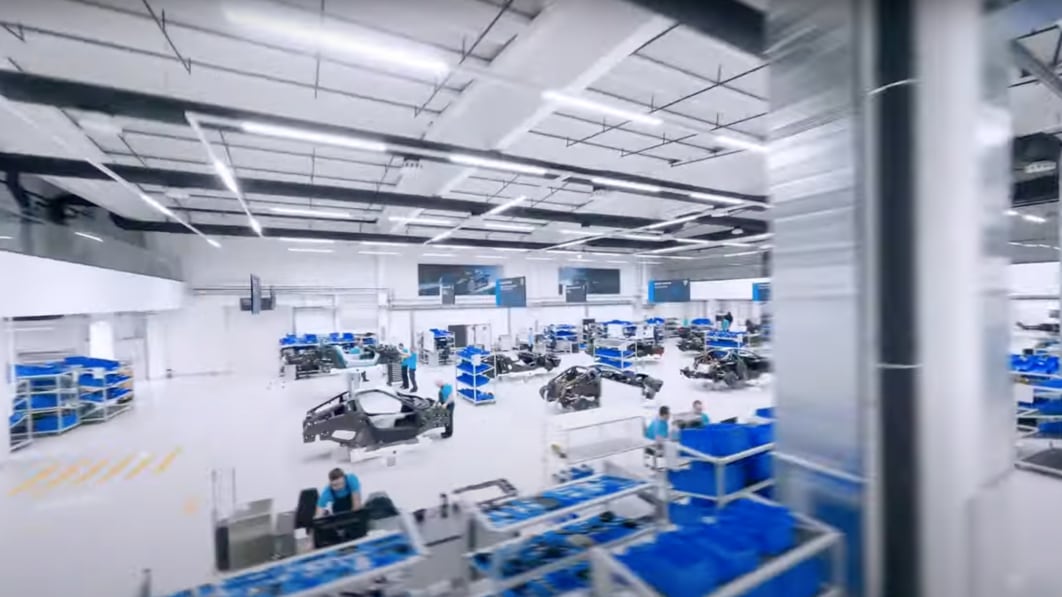
Similar to the all-in-one factories used by Formula 1 teams, Rimac’s factory houses offices and administrative functions in addition to the production lines. That said, we’re not talking about a traditional auto factory here. Rimac’s factory floor is bright and spotless, with more of an operating room vibe than anything to do with auto manufacturing.

Though short, the drone tour gives us a surprising level of access within the facility. Some of the shots bring the drone awfully close to freshly built multi-million-dollar cars, of which a handful were shown in the video. We also get shots of the company’s dynamometer facility and quality control efforts.

Rimac is currently shipping the Nevera, a 1,914-horsepower electric hypercar with two gearboxes and a boatload of performance records that include a 0-62 mph time (100 km/h) of just 1.81 seconds and a top speed of 256 mph. It also set records at the Goodwood Festival of Speed and Nürburgring this year, achieving the fastest production EV titles at both locations.