
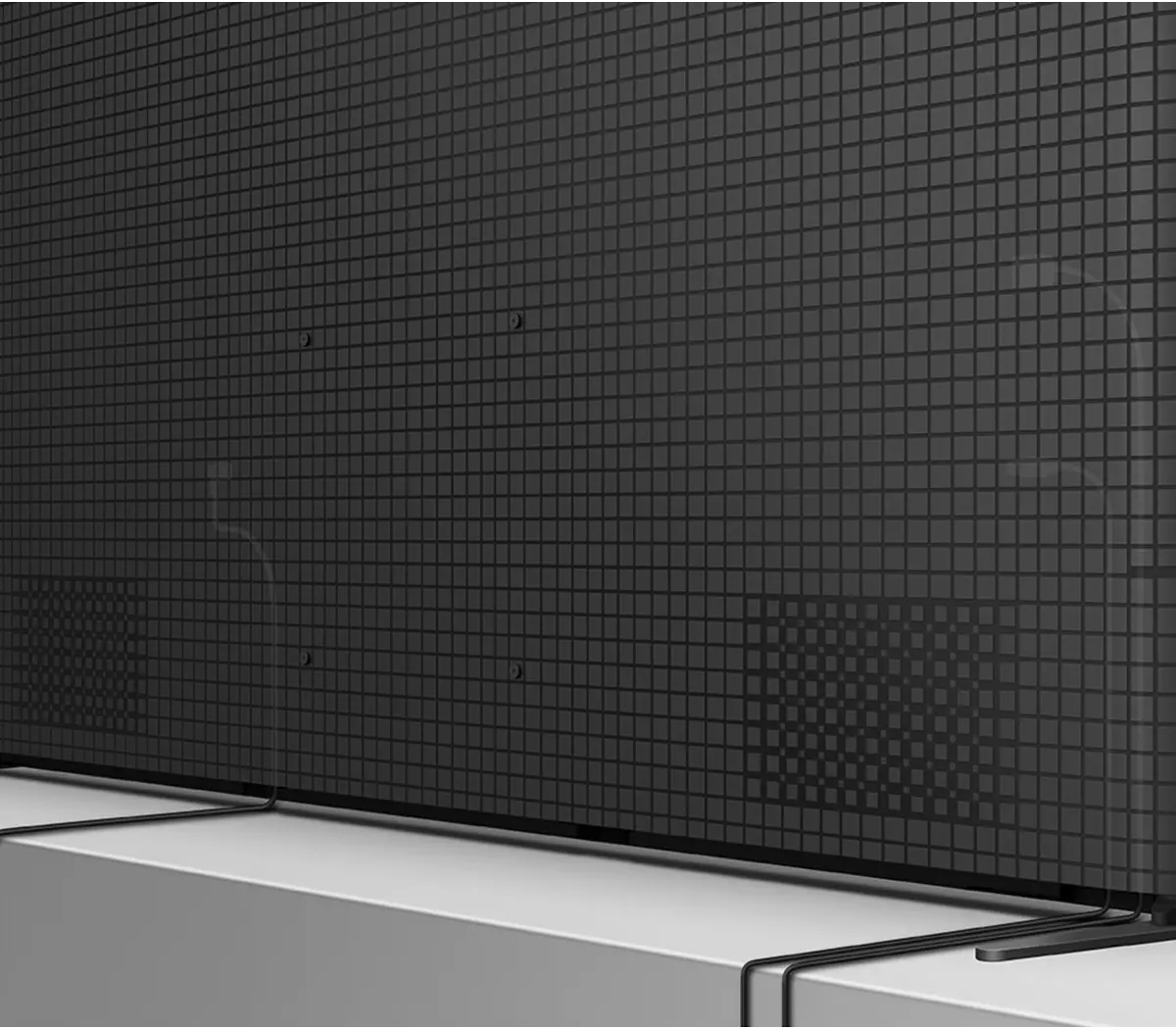
In 1995, Fujitsu released the world’s first 42-inch wide-screen color plasma display. It measured 75mm thick, astoundingly thin compared to the large box TVs that sat in most living rooms then.
While the push towards thin designs made TVs easier to place in rooms, not to mention more appealing to look at, their slim form factor also presents a downside. While audio technology has evolved in astounding ways alongside display tech, the laws of physics still present some significant audio challenges.
At the most abstract level, powered speakers transform electrical signals into sound by moving air, technically referred to as air displacement. The more air a speaker can move, the more sound pressure it can theoretically create, the intensity of which is measured in decibels (dB). Decibels measure sound intensity, which most people perceive as volume. 0 dB is often thought of as equating to silence. The more dBs a speaker can produce, the louder it will sound to most and, therefore, should be easier to hear, at least in simplistic terms.
The size and shape of a speaker driver also generally influence the kinds of audio frequencies a speaker will excel at producing, typically thought of as highs, mids, and lows/bass. This is why speaker drivers focused on low bass frequencies, like subwoofers, often tend to be bigger and boxy. In contrast, drivers specializing in high frequencies, commonly known as tweeters, are usually relatively tiny. It’s also why most speaker designs incorporate a variety of drivers in different shapes and sizes into a single unit. The combined strengths of the various-sized drivers result in richer sound reproduction overall.
As such, to some extent, smaller speaker designs inherently stand at a disadvantage over larger speaker designs, because they physically can’t move as many air molecules as their larger counterparts. “There’s no replacement for displacement” is an old audio cliche for a reason.